
How Does Astaxanthin Help Protect Mitochondrial Membranes From Oxidative Stress?
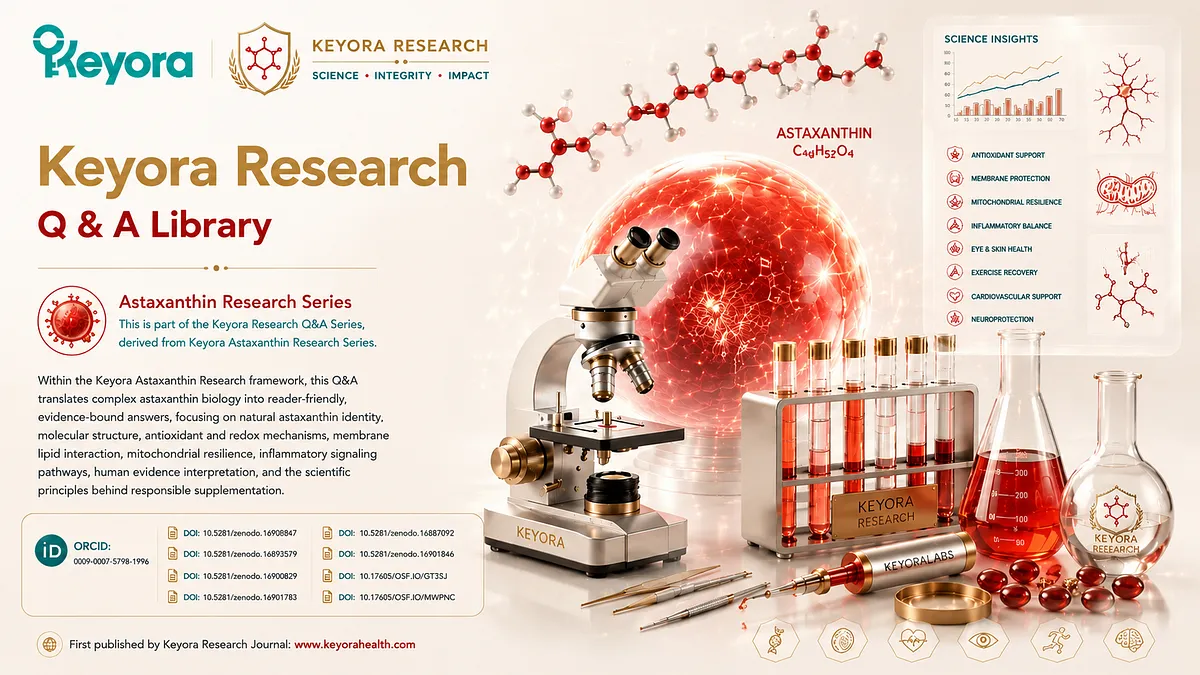
Keyora Research Q&A Library
This is part of the Keyora Research Q&A Series, derived from Keyora Astaxanthin Research Journal Series.
Within the Keyora Astaxanthin Researcn framework, this Q&A translates complex astaxanthin biology into reader-friendly, evidence-bound answers, focusing on natural astaxanthin identity, molecular structure, antioxidant and redox mechanisms, membrane lipid interaction, mitochondrial resilience, inflammatory signaling pathways, human evidence interpretation, and the scientific principles behind responsible supplementation.
First published by Keyora Research Journal: www.keyorahealth.com
Direct Answer
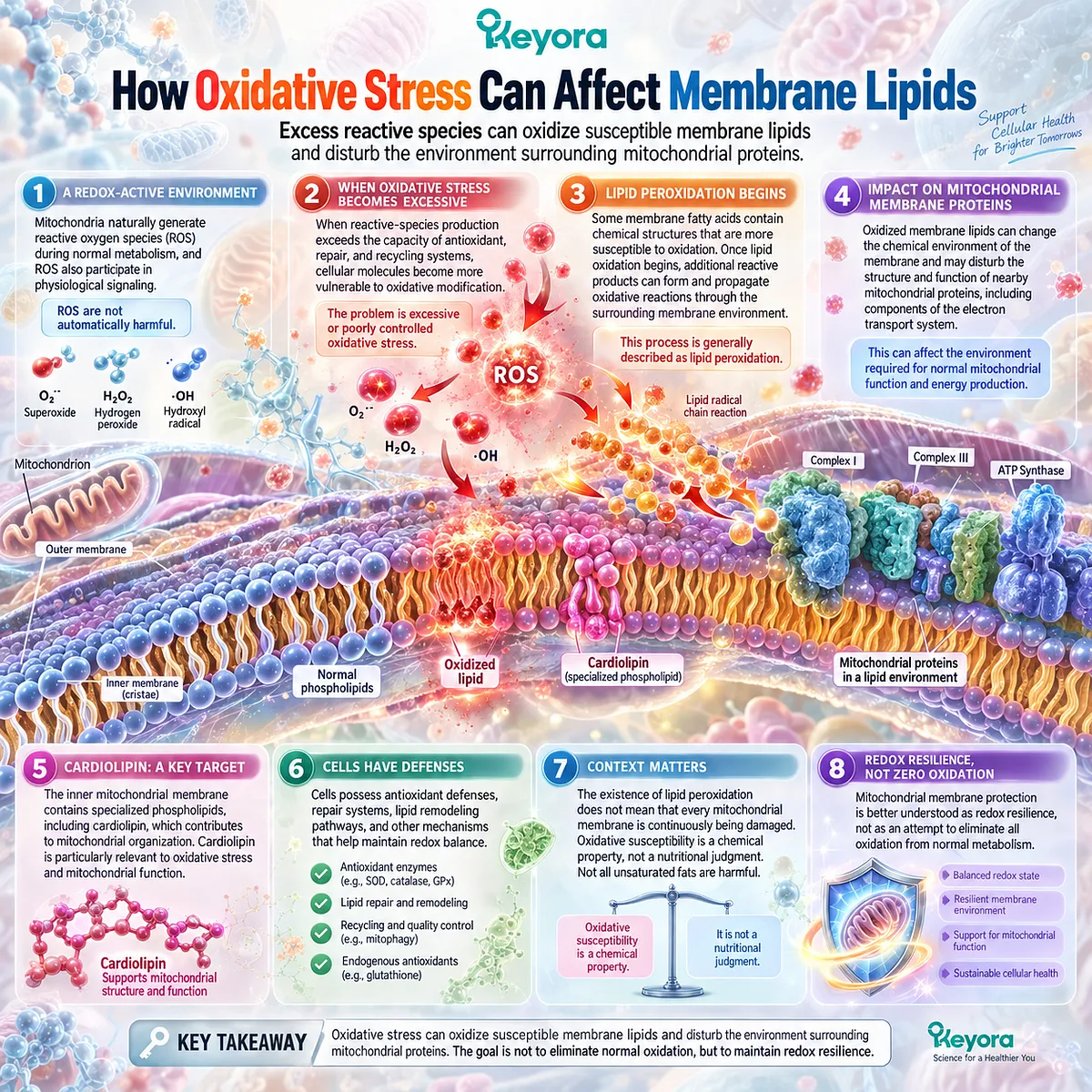
Astaxanthin may help protect mitochondrial membranes because its molecular structure allows it to associate with lipid-rich membrane environments where oxidative reactions can occur.
This matters because mitochondrial membranes are not simply protective wrappers. The inner mitochondrial membrane contains major components of the electron transport system and helps maintain the electrochemical conditions required for normal mitochondrial function.
When oxidative stress becomes excessive, susceptible membrane lipids and proteins can undergo oxidative modification, potentially disturbing this environment.
Astaxanthin is a lipid-associated carotenoid studied for antioxidant activity and for its relationship with mitochondrial redox state and functional integrity under experimental oxidative stress.
In the Keyora Cardiac Architecture, this membrane-centered role is described as The Energy Reactor Guard.
The evidence boundary is equally important:
Membrane association does not prove increased ATP production in humans, and experimental mitochondrial protection does not prove prevention or treatment of cardiovascular disease.
Why the Mitochondrial Membrane Matters
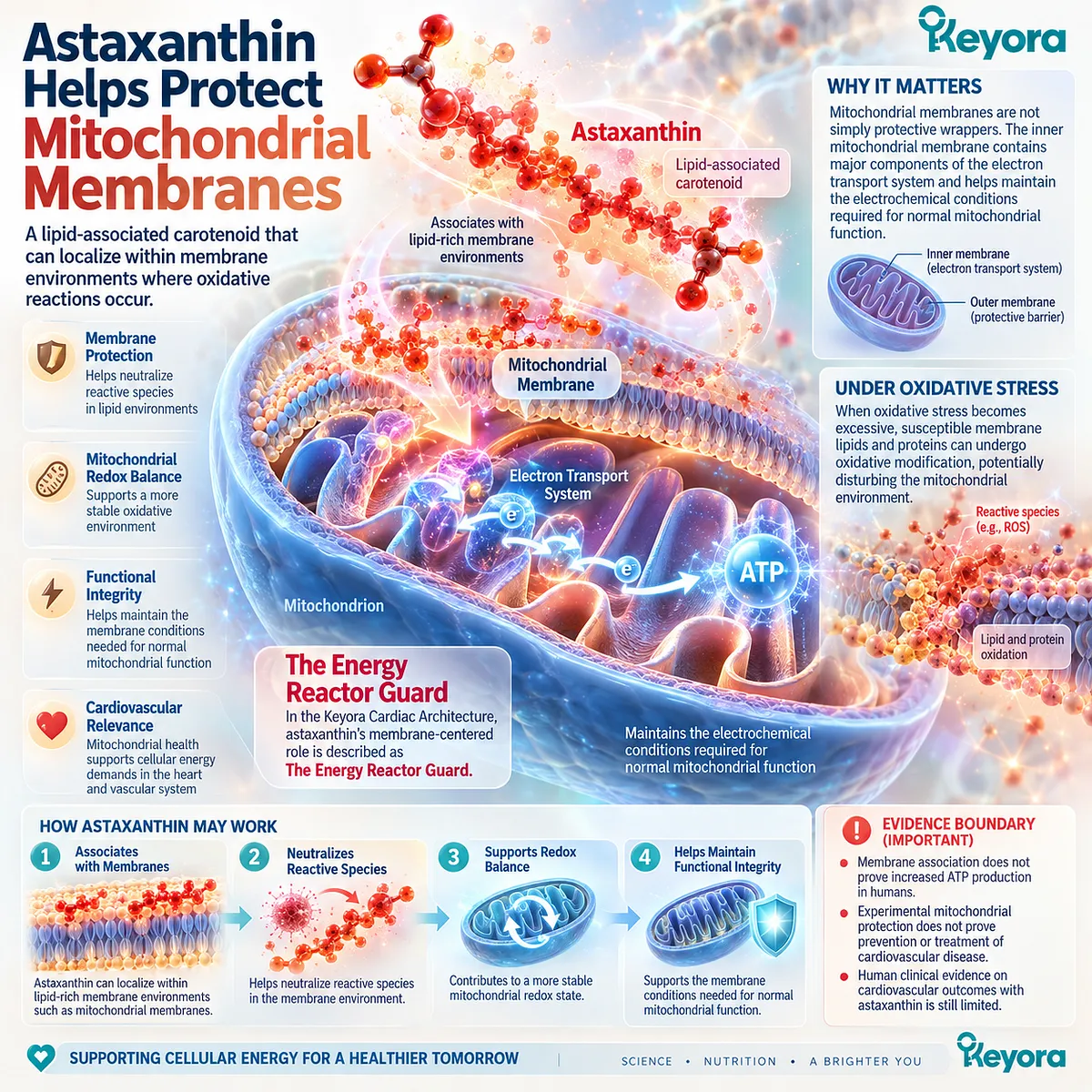
The mitochondrial membrane is part of the energy-producing machinery, not simply a boundary around the organelle
When people hear the word “membrane,” they may imagine a passive wall surrounding a cell or organelle.
The mitochondrial membrane is much more functionally important than that.
Mitochondria have an outer membrane and a highly specialized inner membrane. The inner mitochondrial membrane provides the structural environment in which major components of oxidative phosphorylation operate.
Protein complexes involved in electron transport are organized within this membrane. Their activity contributes to the electrochemical gradient that ultimately supports ATP synthesis.
This means mitochondrial energy production depends not only on having fuel and oxygen available, but also on maintaining the physical and chemical environment in which this machinery operates.
The membrane contains both proteins and lipids. Their organization, interactions, redox state, and physical properties help determine whether mitochondrial processes can function normally.
This is why membrane integrity matters to energy biology.
If the surrounding lipid environment undergoes extensive oxidative modification, the proteins embedded within that environment may also operate under less favorable conditions.
The Keyora Cardiac Architecture therefore treats mitochondrial structure and mitochondrial energy metabolism as connected rather than separate topics.
A useful distinction is:
The membrane does not create energy by itself, but it helps create the conditions in which mitochondrial energy production can occur.
That distinction also prevents an important overclaim.
Protecting membrane integrity is not the same thing as proving that a supplement increases ATP production in a human heart.
Structural relevance and clinical energy outcomes remain different levels of evidence.
How Oxidative Stress Can Affect Membrane Lipids
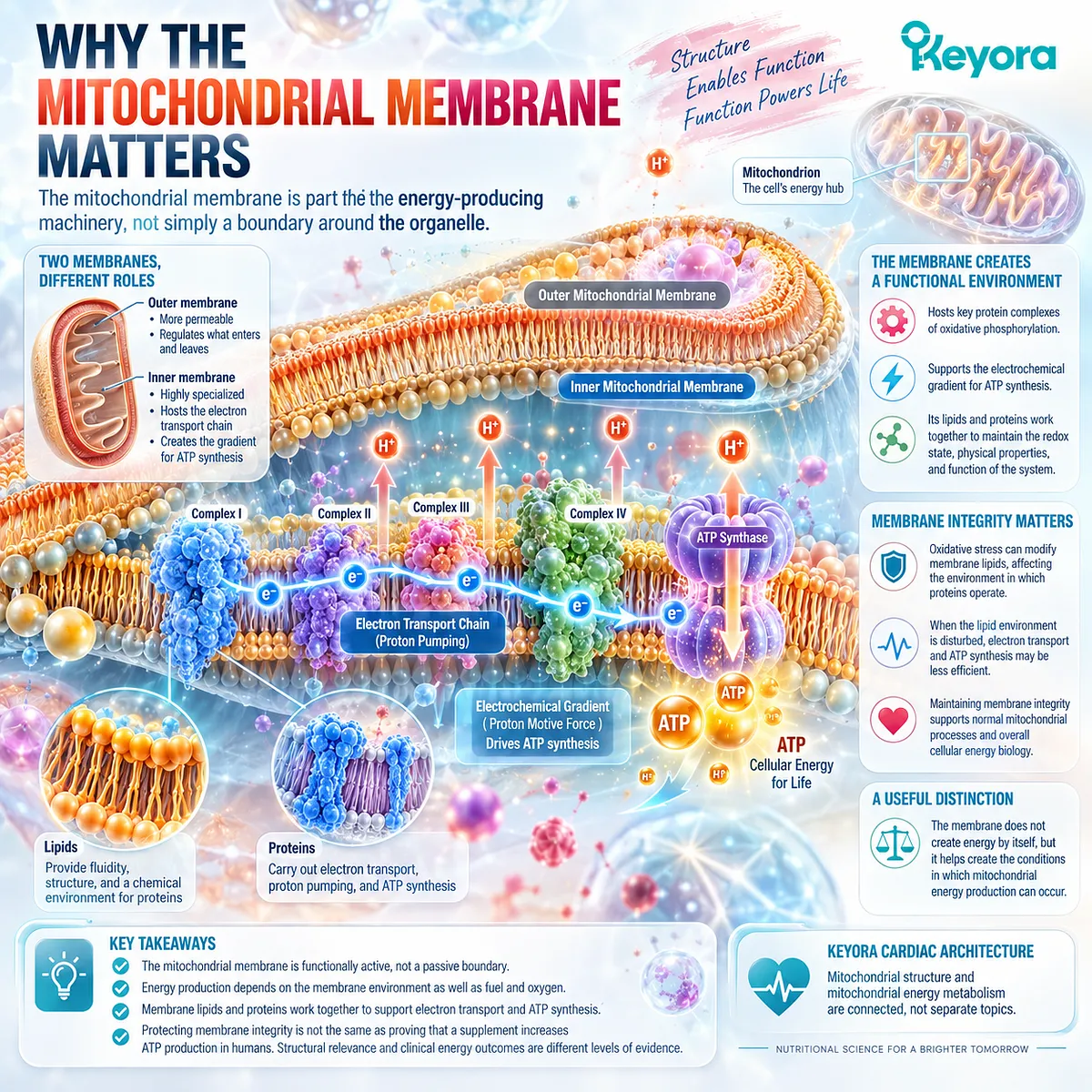
Excess reactive species can oxidize susceptible membrane lipids and disturb the environment surrounding mitochondrial proteins
Mitochondria operate in a redox-active environment.
Reactive oxygen species are naturally generated during normal metabolism, and they also participate in physiological signaling. Their presence is not automatically harmful.
The problem is excessive or poorly controlled oxidative stress.
When reactive-species production exceeds the capacity of antioxidant, repair, and recycling systems, cellular molecules become more vulnerable to oxidative modification.
Membrane lipids are one possible target.
Some membrane fatty acids contain chemical structures that make them more susceptible to oxidation. Once lipid oxidation begins, additional reactive products can form and propagate oxidative reactions through the surrounding membrane environment.
This process is generally described as lipid peroxidation.
The important point for Q005 is not the detailed chemistry of every lipid species. It is the broader consequence:
oxidative stress can change the chemical environment of a membrane that is also supporting mitochondrial proteins and energy-related processes.
The inner mitochondrial membrane contains specialized phospholipids, including cardiolipin, that contribute to mitochondrial organization. The underlying source specifically highlights cardiolipin as a membrane lipid relevant to oxidative stress and mitochondrial function.
However, this should not be simplified into the idea that all membrane fats are harmful or that unsaturated fats are inherently damaging.
Oxidative susceptibility is a chemical property.
It is not a nutritional judgment.
The existence of lipid peroxidation also does not mean that every mitochondrial membrane is continuously being damaged. Cells possess antioxidant defenses, repair systems, lipid remodeling pathways, and other mechanisms that help maintain redox balance.
The relevant issue is what happens when that balance is substantially disturbed.
This is why mitochondrial membrane protection is better understood as redox resilience, not as an attempt to eliminate all oxidation from normal metabolism.
Why Astaxanthin Is Relevant to Lipid Membranes
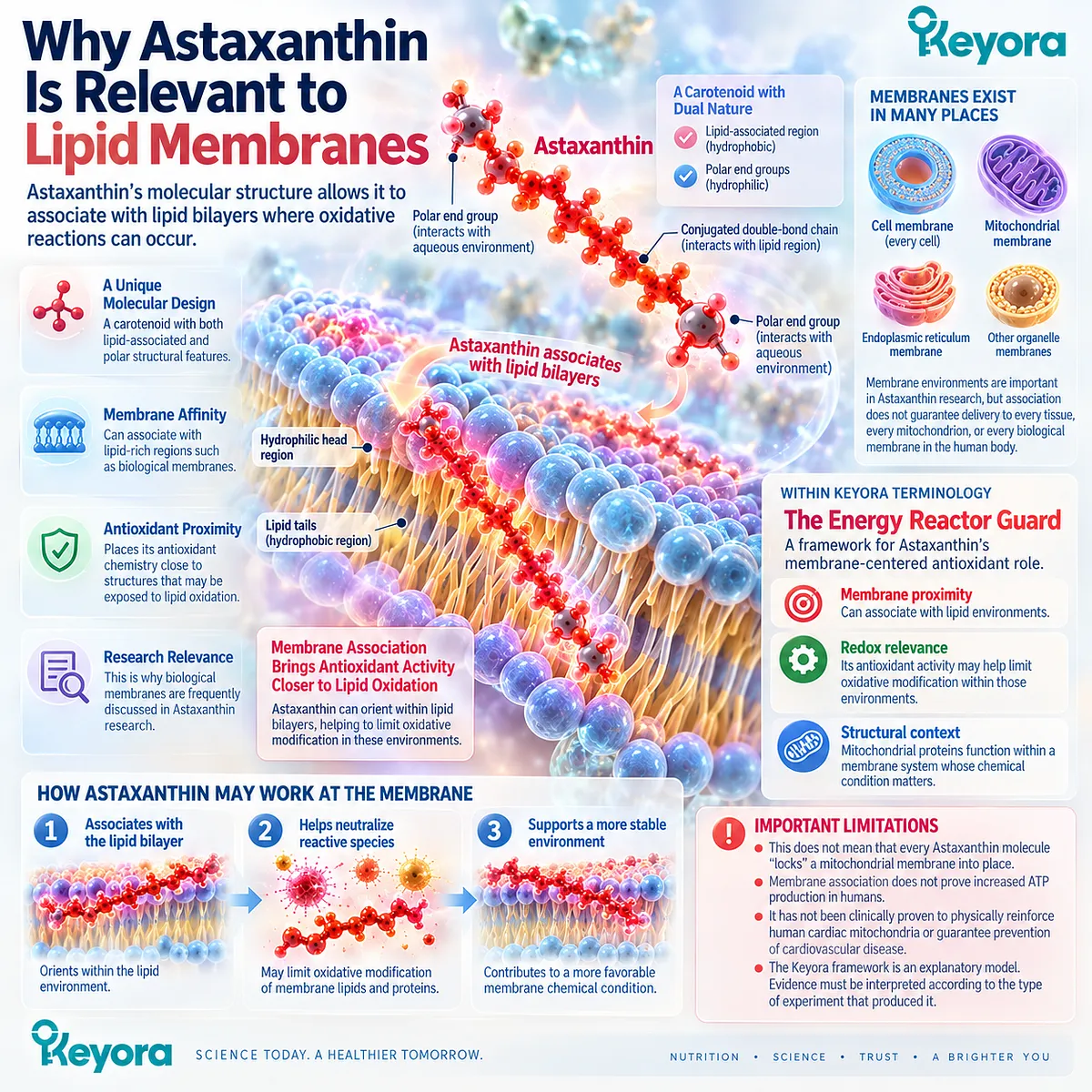
Astaxanthin’s molecular structure allows it to associate with lipid bilayers where oxidative reactions can occur
Astaxanthin is a carotenoid with both lipid-associated and polar structural features.
That molecular architecture helps explain why biological membranes are frequently discussed in Astaxanthin research.
Unlike a purely water-soluble antioxidant operating mainly in aqueous environments, Astaxanthin can associate with lipid-rich regions. This places its antioxidant chemistry close to structures that may be exposed to lipid oxidation.
The underlying Keyora source describes this using a strong engineering metaphor, portraying Astaxanthin as spanning or reinforcing a membrane.
The scientifically safer interpretation is narrower.
Astaxanthin has structural characteristics that allow orientation within lipid bilayers, making membrane environments an important part of its antioxidant biology.
This does not mean that every Astaxanthin molecule physically “locks” a mitochondrial membrane into place.
It also does not mean that membrane association guarantees delivery to every tissue, every mitochondrion, or every biological membrane in the human body.
Within Keyora terminology, The Energy Reactor Guard is therefore best understood as a framework for Astaxanthin’s membrane-centered antioxidant role.
The concept represents three ideas:
Membrane proximity – Astaxanthin can associate with lipid environments.
Redox relevance – its antioxidant activity may help limit oxidative modification within those environments.
Structural context – mitochondrial proteins function within a membrane system whose chemical condition matters.
What the term should not imply is that Astaxanthin has been clinically proven to physically reinforce human cardiac mitochondria or guarantee preservation of ATP production.
The Keyora framework is an explanatory model.
The scientific evidence still has to be interpreted according to the type of experiment that produced it.
What the Experimental Evidence Actually Shows
Experimental research supports mitochondrial redox protection, but it does not prove human cardiac outcomes
One of the most relevant studies for this question is the work by Wolf and colleagues published in 2010 on Astaxanthin and mitochondrial redox state under oxidative stress.
The study is important because it moves beyond a simple antioxidant test and examines mitochondrial functional integrity under experimental stress conditions.
The Keyora source uses this research to support the idea that Astaxanthin can help preserve mitochondrial redox state and membrane-related function when mitochondria are exposed to oxidative challenge.
The same source later describes experimental conditions involving oxidative stress, mitochondrial membrane potential, and mitochondrial functional integrity.
That supports a meaningful mechanistic conclusion:
Astaxanthin has experimental evidence supporting mitochondrial redox and functional protection under oxidative stress.
But several stronger conclusions do not automatically follow.
The study does not prove that Astaxanthin increases ATP production in the human heart.
It does not prove that taking Astaxanthin prevents cardiovascular disease.
It does not prove that Astaxanthin prevents ischemic injury in people.
It does not establish that a finished Astaxanthin supplement formula will reproduce every mitochondrial effect observed in an experimental model.
This evidence hierarchy matters because mitochondrial studies are often translated too quickly into human health claims.
A useful evidence ladder is:
Experimental mechanism
→ mitochondrial functional observation
→ human physiological study
→ clinical outcome
Evidence at one level can support scientific plausibility at the next level, but it cannot replace it.
This is also why the dramatic language sometimes used around “voltage preservation,” “locking pores,” or “preventing mitochondrial collapse” needs restraint.
Experimental findings can support the concept of mitochondrial protection.
They should not be converted into guaranteed human outcomes.

The Keyora Energy Reactor Guard: A Membrane-Centered Framework
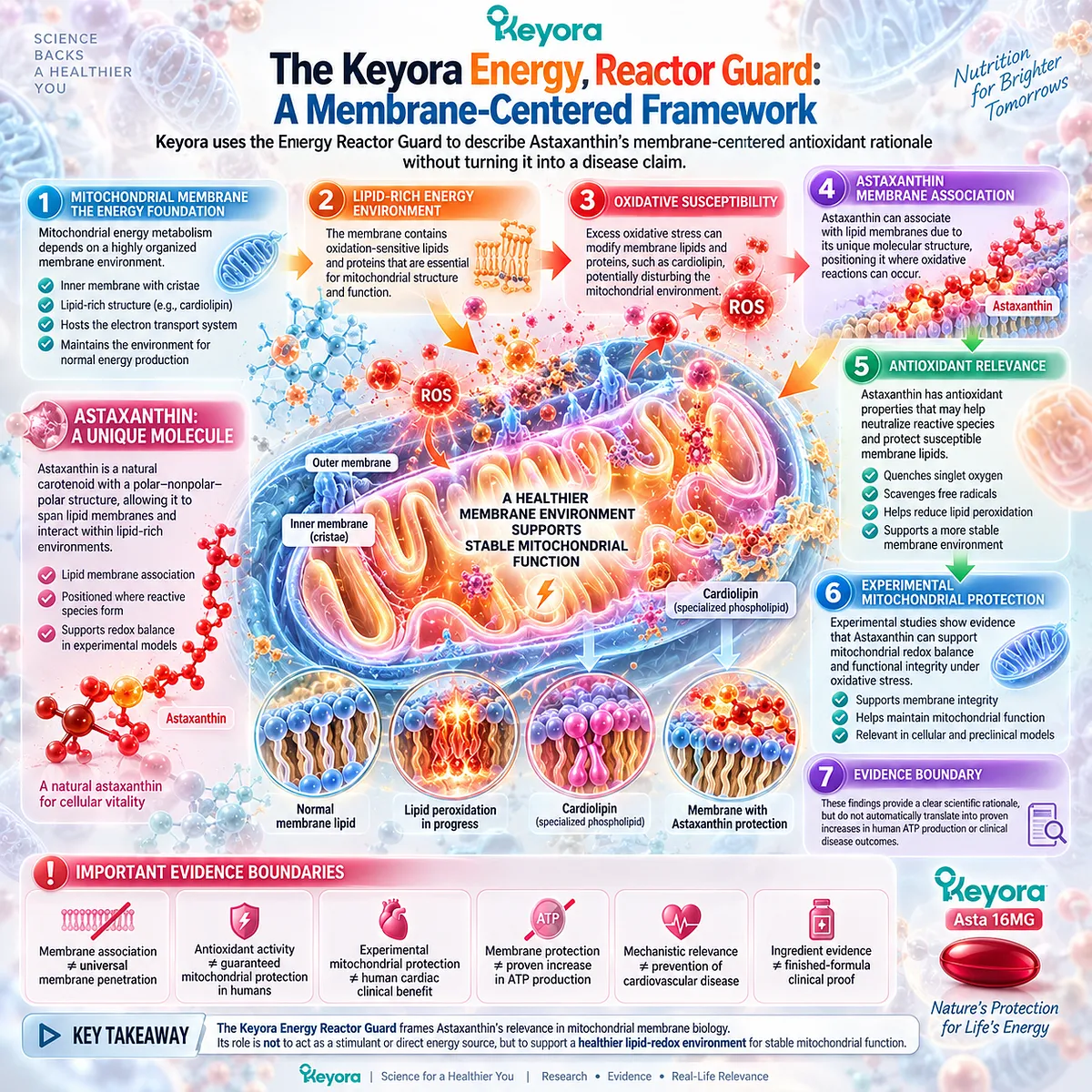
Keyora uses the Energy Reactor Guard to describe Astaxanthin’s membrane-centered antioxidant rationale without turning it into a disease claim
The Keyora Energy Reactor Guard begins with a simple biological observation:
Mitochondrial energy metabolism depends on a highly organized membrane environment.
That membrane contains oxidation-sensitive lipids and proteins.
Excess oxidative stress can modify those structures.
Astaxanthin can associate with lipid membranes and has experimental evidence supporting mitochondrial redox and functional integrity under oxidative stress.
The complete framework can therefore be summarized as:
Mitochondrial membrane
→ lipid-rich energy environment
→ oxidative susceptibility
→ Astaxanthin membrane association
→ antioxidant relevance
→ experimental mitochondrial protection
→ evidence boundary
This is a stronger scientific position than saying that Astaxanthin “powers mitochondria.”
Astaxanthin is not ATP.
It is not the fuel entering oxidative phosphorylation.
And mitochondrial membrane protection does not prove a direct increase in human ATP production.
The Keyora Asta 16MG formulation places natural Astaxanthin within a lipid-based nutritional matrix, but the existence of that formulation does not mean the complete finished product has been clinically proven to reproduce every experimental mitochondrial effect discussed here.
Several boundaries therefore remain central:
Membrane association ≠ universal membrane penetration
Antioxidant activity ≠ guaranteed mitochondrial protection in humans
Experimental mitochondrial protection ≠ human cardiac clinical benefit
Membrane protection ≠ proven increase in ATP production
Mechanistic relevance ≠ prevention of cardiovascular disease
Ingredient evidence ≠ finished-formula clinical proof
Within those boundaries, Astaxanthin still has a clear scientific reason to be discussed in mitochondrial membrane biology.
Its relevance lies not in acting as a stimulant or direct energy source, but in its relationship with the lipid-redox environment surrounding mitochondrial function.
That leads to the next question:
Why Are Heart Mitochondria Vulnerable to Lipid Peroxidation?
#Astaxanthin #Mitochondria #MitochondrialHealth #OxidativeStress #MitochondrialMembrane #LipidPeroxidation #RedoxBalance #CellularEnergy #Antioxidants #Cardiolipin #NaturalAstaxanthin #EnergyReactorGuard #KeyoraCardiacArchitecture #KeyoraAsta16MG #Keyora #KeyoraHealth #KeyoraResearch
This article is for educational and informational purposes only. It does not provide medical advice, diagnosis, treatment, cure, prevention, disease outcome claims, hormone restoration claims, fertility outcome claims, or formula-specific clinical efficacy claims.