
Does Stronger Antioxidant Activity Mean Better Heart Protection?
Keyora Research Q&A Library
This is part of the Keyora Research Q&A Series, derived from Keyora Astaxanthin Research Journal Series.
Within the Keyora Astaxanthin Researcn framework, this Q&A translates complex astaxanthin biology into reader-friendly, evidence-bound answers, focusing on natural astaxanthin identity, molecular structure, antioxidant and redox mechanisms, membrane lipid interaction, mitochondrial resilience, inflammatory signaling pathways, human evidence interpretation, and the scientific principles behind responsible supplementation.
First published by Keyora Research Journal: www.keyorahealth.com
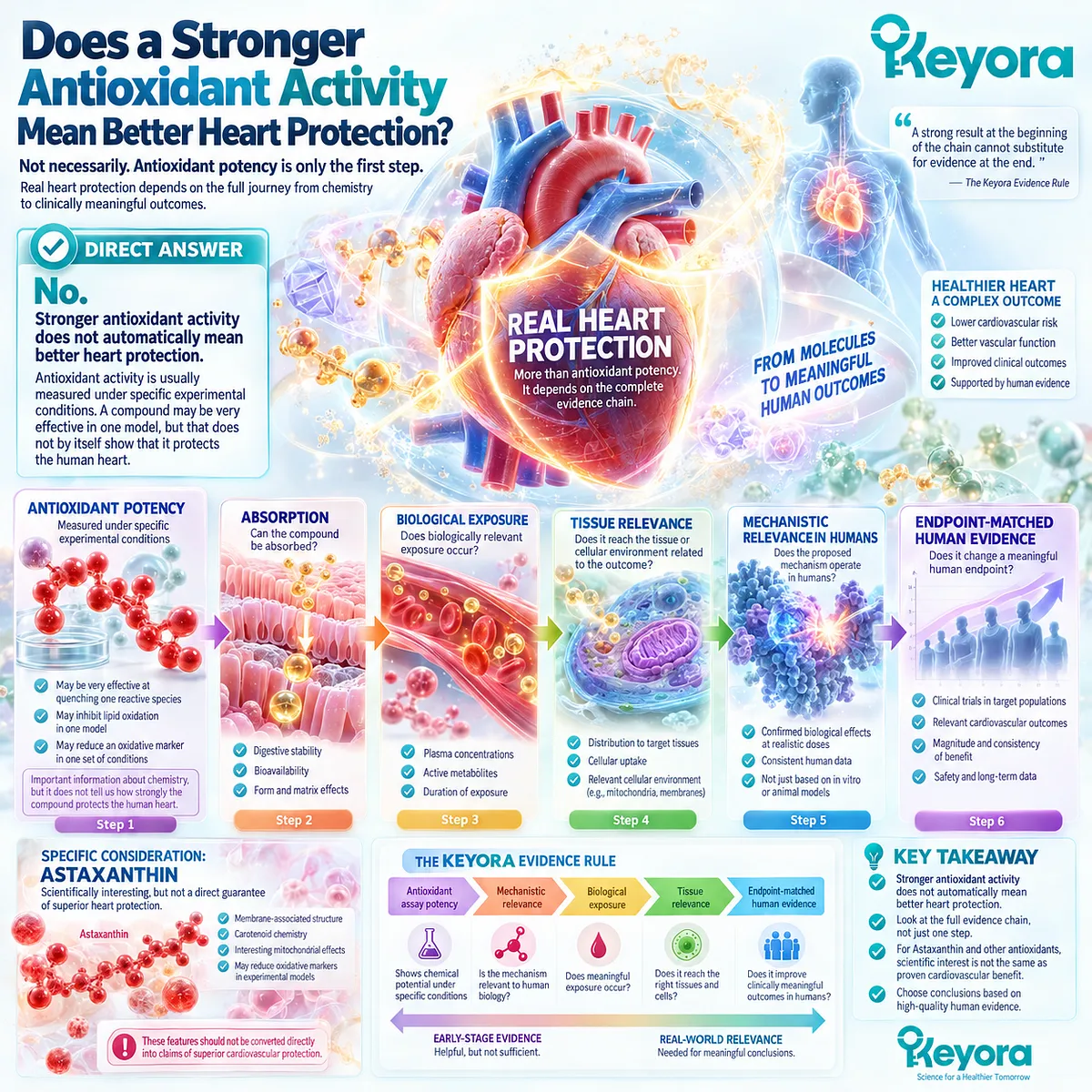
Direct Answer
No.
Stronger antioxidant activity does not automatically mean better heart protection.
Antioxidant potency is usually measured under specific experimental conditions.
A compound may be particularly effective at quenching one reactive species, inhibiting lipid oxidation in one model, or reducing an oxidative marker under one set of conditions. That tells us something important about chemistry, but it does not by itself tell us how strongly the compound protects the human heart.
For antioxidant activity to become a meaningful human effect, several additional questions must be answered:
-
Can the compound be absorbed?
-
Does biologically relevant exposure occur?
-
Does it reach the tissue or cellular environment related to the outcome?
-
Does the proposed mechanism operate in humans?
-
Does it change a meaningful human endpoint?
This is particularly important when interpreting Astaxanthin.
Its membrane-associated structure, carotenoid chemistry, and experimental mitochondrial effects make it scientifically interesting, but those features should not be converted directly into claims of superior cardiovascular protection.
The Keyora evidence rule is therefore:
Antioxidant assay potency → mechanistic relevance → biological exposure → tissue relevance → endpoint-matched human evidence
A strong result at the beginning of this chain cannot substitute for evidence at the end.
What Does “Stronger Antioxidant” Actually Mean?
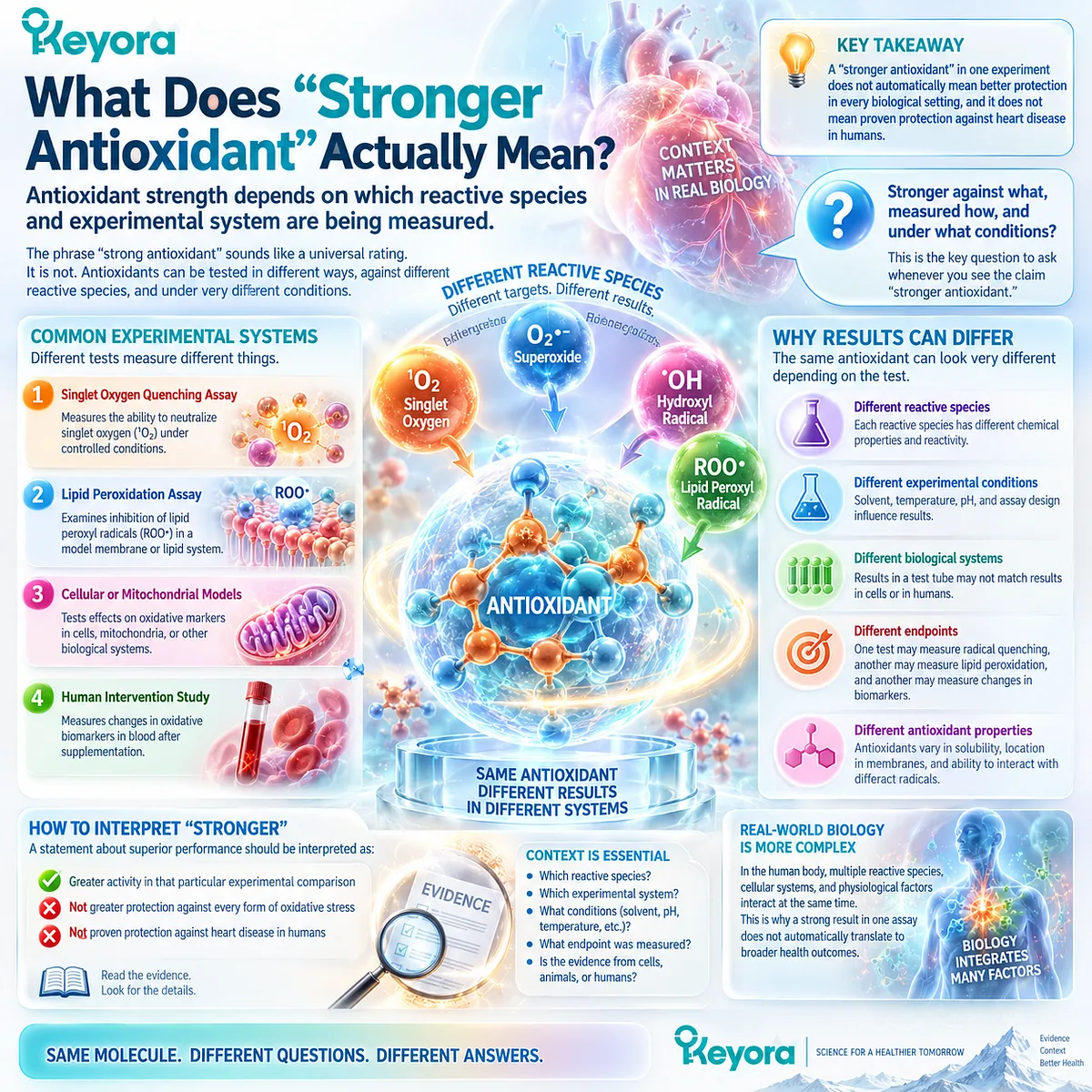
Antioxidant strength depends on which reactive species and experimental system are being measured
The phrase “strong antioxidant” sounds like a universal rating.
It is not.
Antioxidants can be tested against different reactive species and under very different chemical conditions.
One experiment might measure singlet oxygen quenching.
Another might examine lipid peroxyl radicals.
Another might test inhibition of lipid peroxidation in a model membrane.
Another might measure changes in an oxidative biomarker in blood after supplementation.
These tests are related to oxidative biology, but they do not measure exactly the same thing.
This means that an antioxidant can appear extremely potent in one assay without having the same relative advantage in another biological setting.
Keyora Astaxanthin EP-4: The Cardiac Architecture: Bio-Energetic Sovereignty sometimes uses strong comparative language when discussing Astaxanthin’s antioxidant chemistry and membrane role, including describing it as structurally superior in a mitochondrial context.
Such comparisons require context.
A statement about superior performance against a particular reactive species should be interpreted as:
greater activity in that particular experimental comparison
not:
greater protection against every form of oxidative stress
and certainly not:
greater protection against heart disease in humans
A useful question whenever an antioxidant is described as “stronger” is:
Stronger against what, measured how, and under what conditions?
Without those details, the comparison can become more persuasive than informative.
Why Laboratory Potency Is Not a Clinical Score
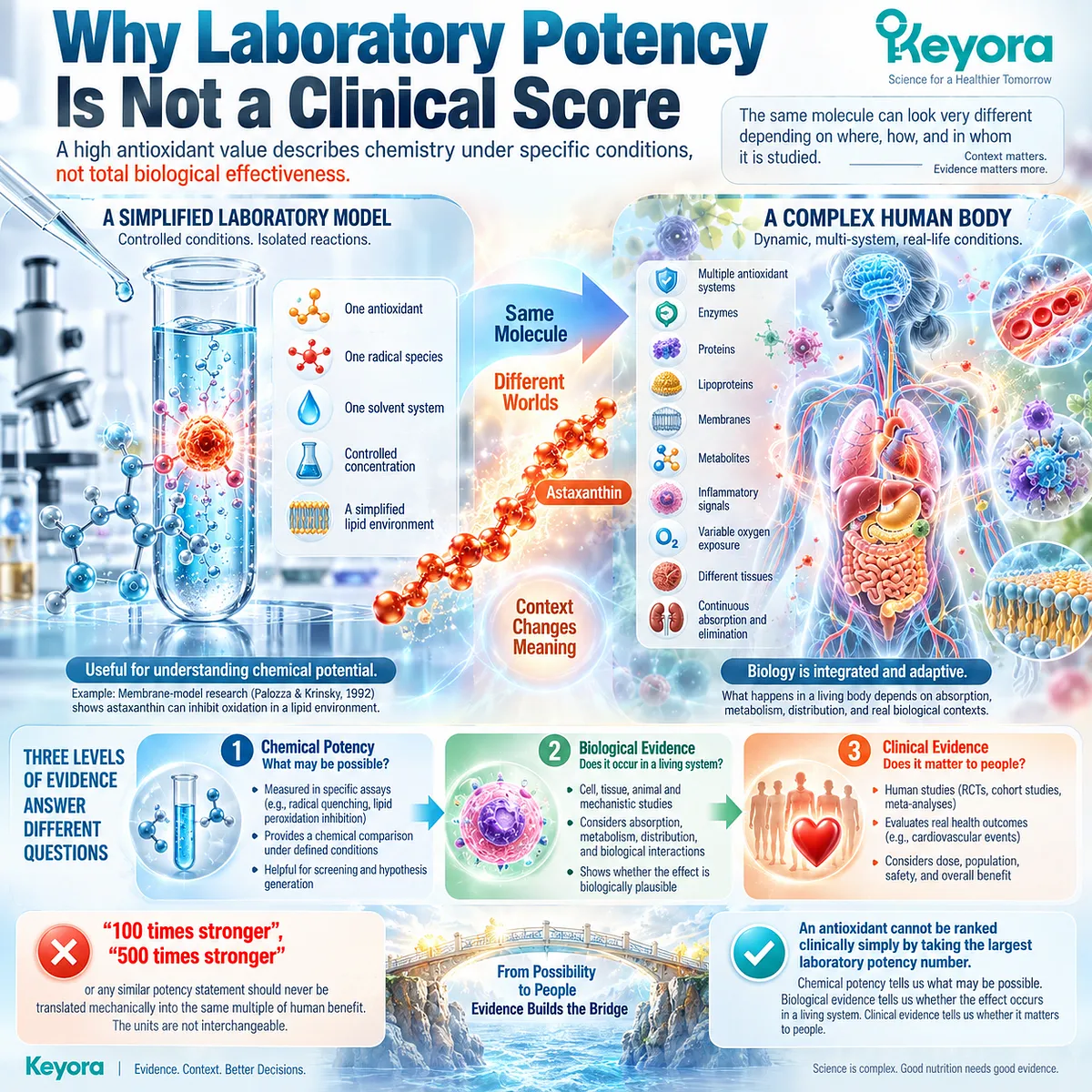
A high antioxidant value describes chemistry under specific conditions, not total biological effectiveness
Laboratory antioxidant assays are useful because they allow researchers to isolate specific chemical reactions.
But biological systems are much more complicated.
A test tube may contain:
-
one antioxidant
-
one radical species
-
one solvent system
-
a controlled concentration
-
a simplified lipid environment
A human body contains:
-
multiple antioxidant systems
-
enzymes
-
proteins
-
lipoproteins
-
membranes
-
metabolites
-
inflammatory signals
-
variable oxygen exposure
-
different tissues
-
continuous absorption and elimination
The two systems cannot be treated as equivalent.
For example, membrane-model research can help establish whether a carotenoid is capable of inhibiting oxidation in a lipid environment. The EP-4 reference set includes Palozza and Krinsky (1992), Astaxanthin and Canthaxanthin Are Potent Antioxidants in a Membrane Model.
That supports membrane antioxidant relevance.
It does not establish cardiovascular-event reduction.
The distinction can be summarized as:
Chemical potency tells us what may be possible
Biological evidence tells us whether the effect occurs in a living system
Clinical evidence tells us whether it matters to people
This is why “100 times stronger,” “500 times stronger,” or any similar potency statement should never be translated mechanically into the same multiple of human benefit.
The units are not interchangeable.
An antioxidant cannot be ranked clinically simply by taking the largest laboratory potency number.
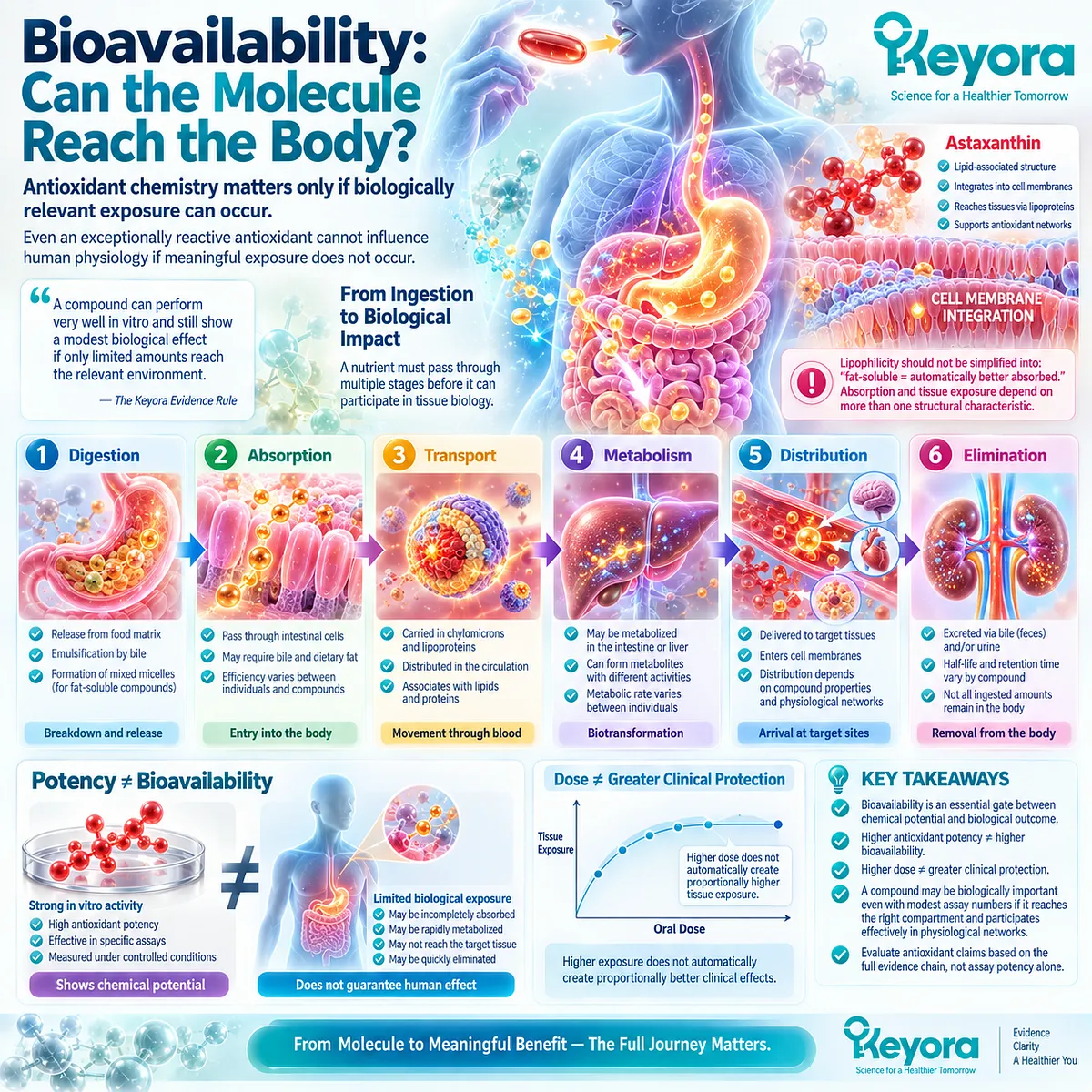
Bioavailability: Can the Molecule Reach the Body?
Antioxidant chemistry matters only if biologically relevant exposure can occur
Even an exceptionally reactive antioxidant cannot influence human physiology if meaningful exposure does not occur.
After ingestion, a nutrient must pass through several stages before it can participate in tissue biology.
These include:
digestion
→ absorption
→ transport
→ metabolism
→ distribution
→ eventual elimination
This is where antioxidant discussions must move beyond chemistry.
A compound can perform very well in vitro and still show a modest biological effect if only limited amounts reach the relevant environment.
The reverse can also occur: a nutrient with less dramatic assay numbers may still be biologically important because it is present in the right compartment and participates effectively in an established physiological network.
Astaxanthin’s lipid-associated character is relevant to how it behaves in membranes, but lipophilicity should not be simplified into:
fat-soluble = automatically better absorbed
Absorption and tissue exposure depend on more than one structural characteristic.
The same distinction applies to dose.
A higher oral dose does not automatically create proportionally higher tissue exposure, and higher exposure does not automatically create proportionally better clinical effects.
Therefore:
higher antioxidant potency ≠ higher bioavailability
and:
higher dose ≠ greater clinical protection
Bioavailability is one additional gate between chemical potential and biological outcome.
Tissue Relevance: Is the Antioxidant Where It Needs to Be?
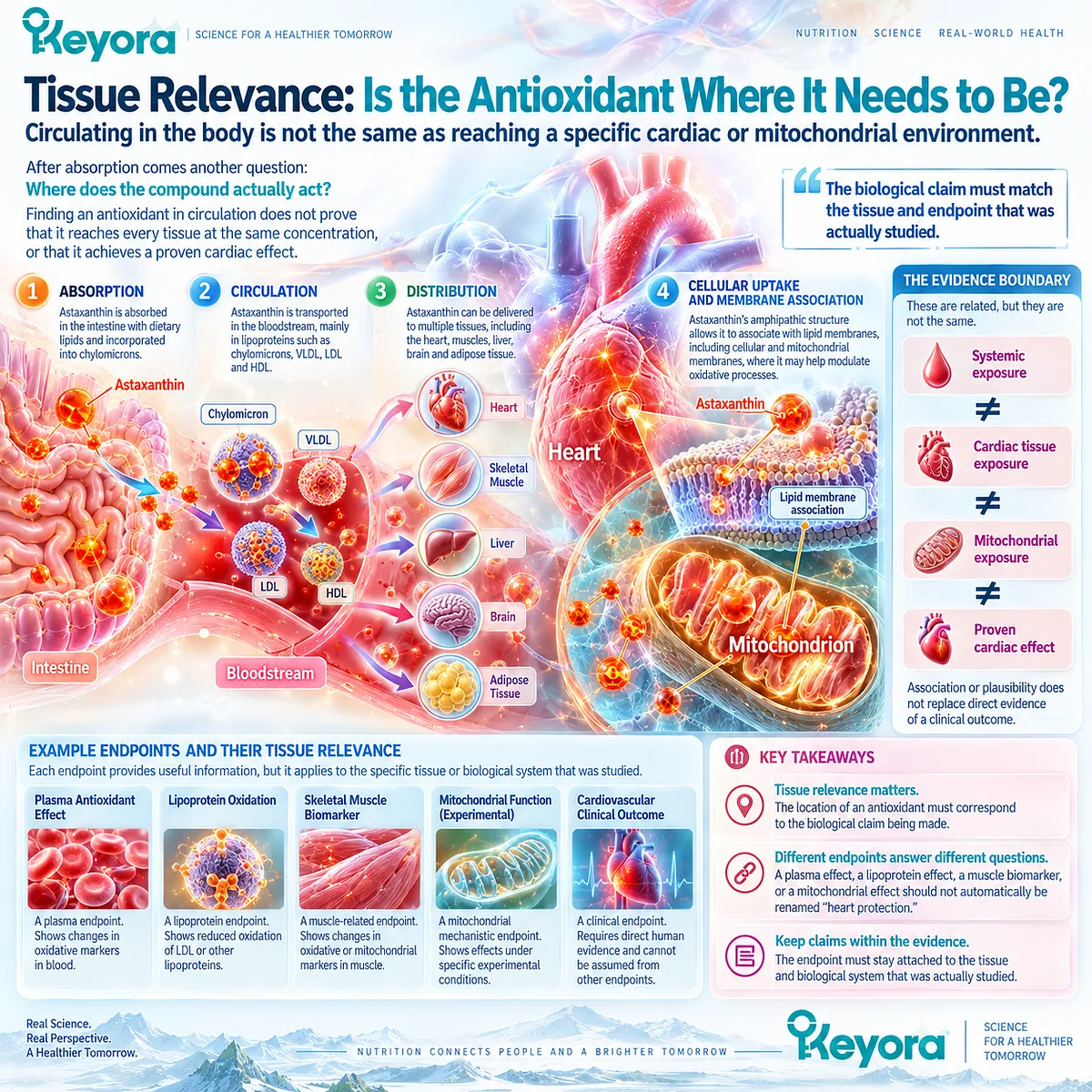
Circulating in the body is not the same as reaching a specific cardiac or mitochondrial environment
After absorption comes another question:
Where does the compound actually act?
This is especially important for Astaxanthin because much of the Keyora Cardiac Architecture focuses on lipid membranes and mitochondrial redox biology.
Previous questions in this series examined why Astaxanthin’s polarity and amphipathic structure make distinctive membrane orientations plausible.
That helps explain membrane relevance.
But membrane relevance is not the same as universal tissue targeting.
Finding an antioxidant in circulation does not prove that it reaches every tissue at the same concentration.
Association with lipid membranes does not prove that every molecule reaches cardiac mitochondria.
And structural compatibility with mitochondrial membranes does not establish a predictable concentration inside the human heart.
This creates another evidence boundary:
systemic exposure
≠ cardiac tissue exposure
≠ mitochondrial exposure
≠ proven cardiac effect
Tissue relevance therefore matters because the location of an antioxidant must correspond to the biological claim being made.
A plasma antioxidant effect is a plasma endpoint.
Reduced oxidation of circulating lipoproteins is a lipoprotein endpoint.
A skeletal-muscle biomarker is a muscle-related endpoint.
A change in mitochondrial function under experimental conditions is a mitochondrial mechanistic endpoint.
None of these should automatically be renamed “heart protection.”
The endpoint must stay attached to the tissue and biological system that was actually studied.
Mechanistic Evidence: Why Astaxanthin Is Scientifically Interesting
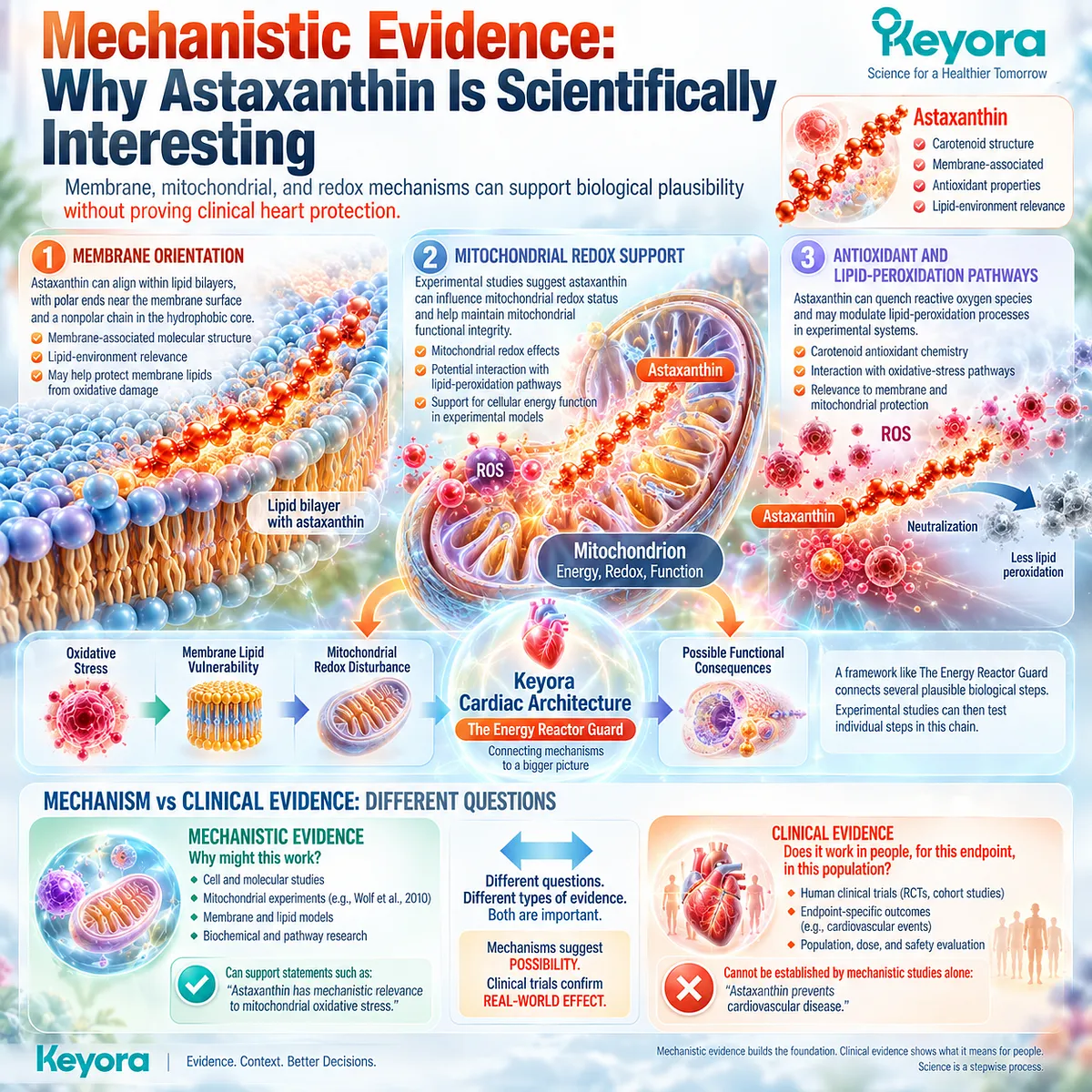
Membrane, mitochondrial, and redox mechanisms can support biological plausibility without proving clinical heart protection
Astaxanthin has several properties that make it scientifically interesting in mitochondrial and oxidative-stress research.
These include:
-
membrane-associated molecular structure
-
carotenoid antioxidant chemistry
-
lipid-environment relevance
-
experimental mitochondrial redox effects
-
potential interaction with lipid-peroxidation pathways
Within the Keyora Cardiac Architecture, these concepts are organized through frameworks such as The Energy Reactor Guard.
The scientific value of a framework like this is that it connects several plausible biological steps:
oxidative stress
→ membrane lipid vulnerability
→ mitochondrial redox disturbance
→ possible functional consequences
Experimental studies can then test individual steps in that chain.
For example, Wolf et al. (2010) is classified within the Keyora evidence hierarchy as mechanistic evidence related to mitochondrial redox and functional integrity rather than a direct human cardiac-outcome trial.
That distinction is important.
A mitochondrial experiment can support statements such as:
Astaxanthin has mechanistic relevance to mitochondrial oxidative stress
It cannot by itself establish:
Astaxanthin prevents cardiovascular disease
The same principle applies to membrane geometry.
If Astaxanthin’s molecular structure supports a particular orientation in lipid bilayers, that can strengthen a mechanism.
It still does not tell us the size of a human effect.
Mechanisms answer:
Why might this work?
Clinical trials must answer:
Does it work in people, for this endpoint, in this population?
Those are different questions.
What Human Astaxanthin Studies Actually Measure
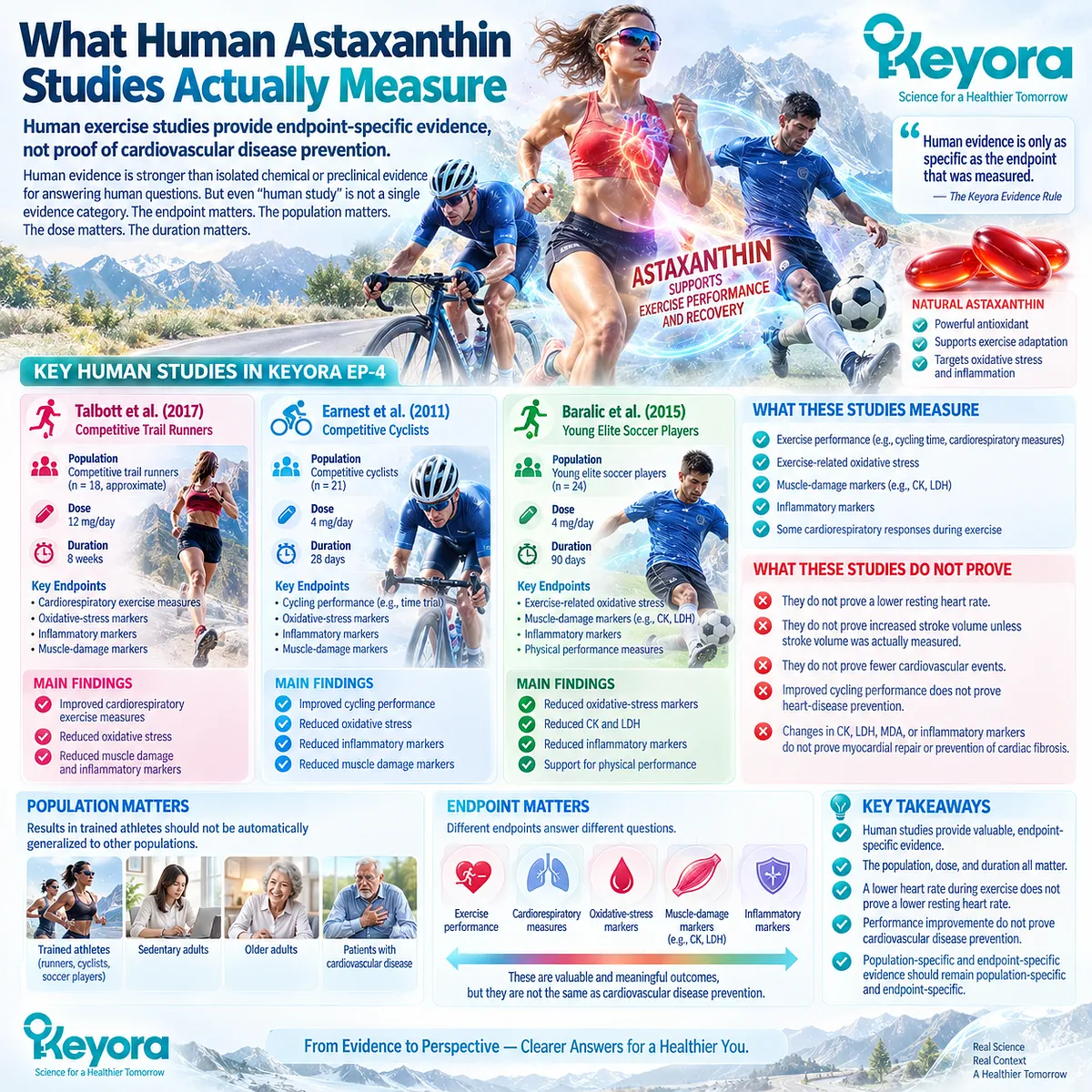
Human exercise studies provide endpoint-specific evidence, not proof of cardiovascular disease prevention
Human evidence is stronger than isolated chemical or preclinical evidence for answering human questions.
But even “human study” is not a single evidence category.
The endpoint matters.
The population matters.
The dose matters.
The duration matters.
In Keyora Astaxanthin EP-4, the principal human studies include Talbott et al. (2017), involving competitive trail runners receiving 12 mg/day for eight weeks; Earnest et al. (2011), involving competitive cyclists receiving 4 mg/day for 28 days; and Baralic et al. (2015), involving young elite soccer players receiving 4 mg/day for 90 days. The endpoints included cardiorespiratory exercise measures, cycling performance, and exercise-related oxidative-stress, muscle-damage, and inflammatory biomarkers.
These are useful human data.
But they do not all answer the same question.
A lower heart rate during a submaximal exercise test does not prove a lower resting heart rate.
It does not prove increased stroke volume unless stroke volume was actually measured.
It does not prove fewer cardiovascular events.
Improved cycling performance does not prove heart-disease prevention.
Changes in CK, LDH, MDA, or inflammatory markers do not prove myocardial repair or prevention of cardiac fibrosis.
This distinction is one of the most important parts of antioxidant evidence interpretation:
Human evidence is only as specific as the endpoint that was measured.
The athlete populations also matter.
A result observed in trained runners, cyclists, or elite soccer players should not automatically be generalized to sedentary adults, older patients, or people with cardiovascular disease.
Human data are valuable.
But population-specific and endpoint-specific evidence should remain population-specific and endpoint-specific.
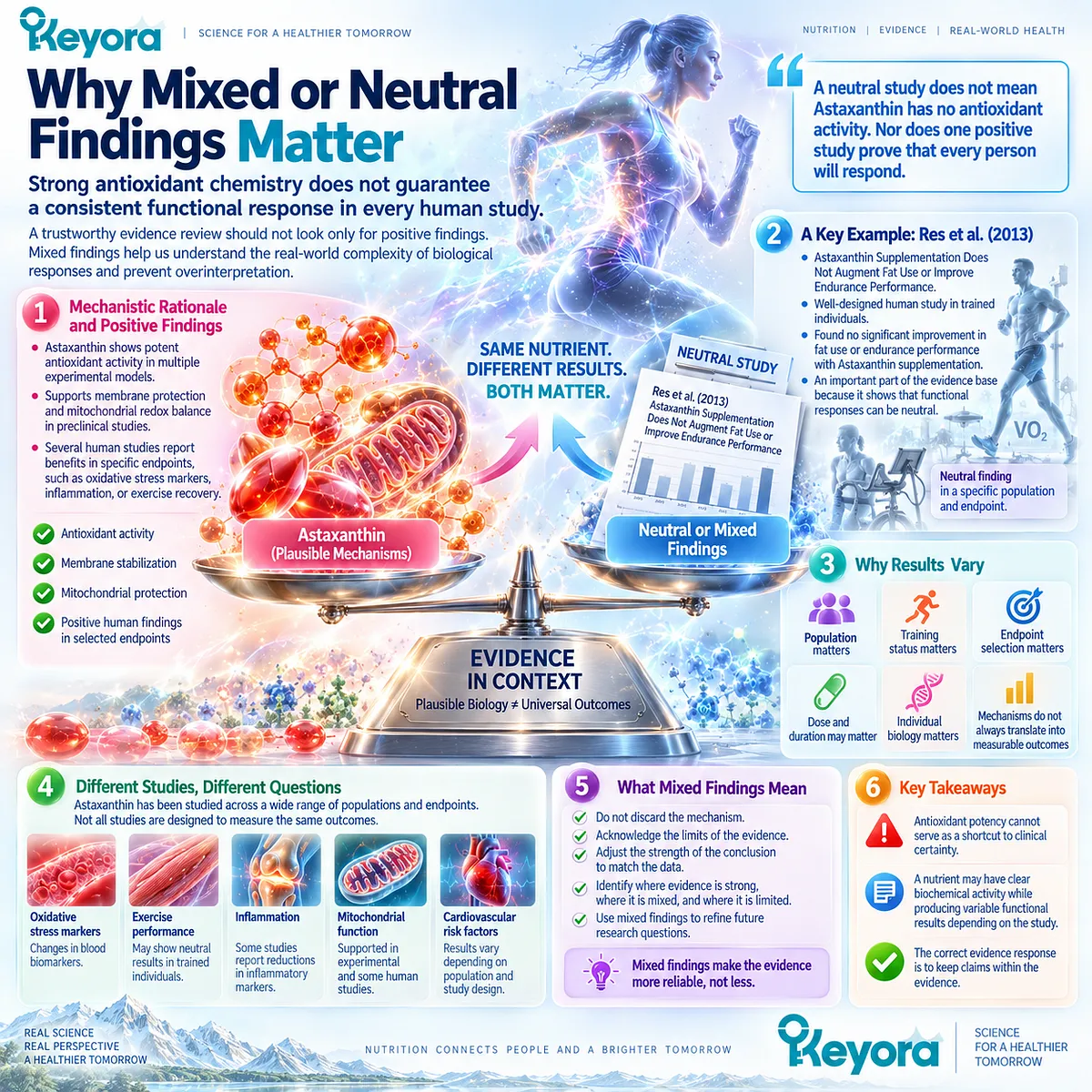
Why Mixed or Neutral Findings Matter
Strong antioxidant chemistry does not guarantee a consistent functional response in every human study
A trustworthy evidence review should not look only for positive findings.
The EP-4 reference set also includes Res et al. (2013), Astaxanthin Supplementation Does Not Augment Fat Use or Improve Endurance Performance, alongside broader exercise reviews and positive Astaxanthin studies.
That is important because it illustrates the difference between plausible chemistry and consistently demonstrated human outcomes.
A neutral study does not mean Astaxanthin has no antioxidant activity.
Nor does one positive study prove that every person will respond.
Instead, mixed findings tell us that:
-
population matters
-
training status matters
-
endpoint selection matters
-
dose and duration may matter
-
biological mechanisms do not always translate into measurable performance changes
This is precisely why antioxidant potency cannot serve as a shortcut to clinical certainty.
A nutrient may have clear biochemical activity while producing variable functional results depending on the study.
The correct evidence response is not to discard the mechanism.
It is to reduce the strength of the conclusion to match the evidence.
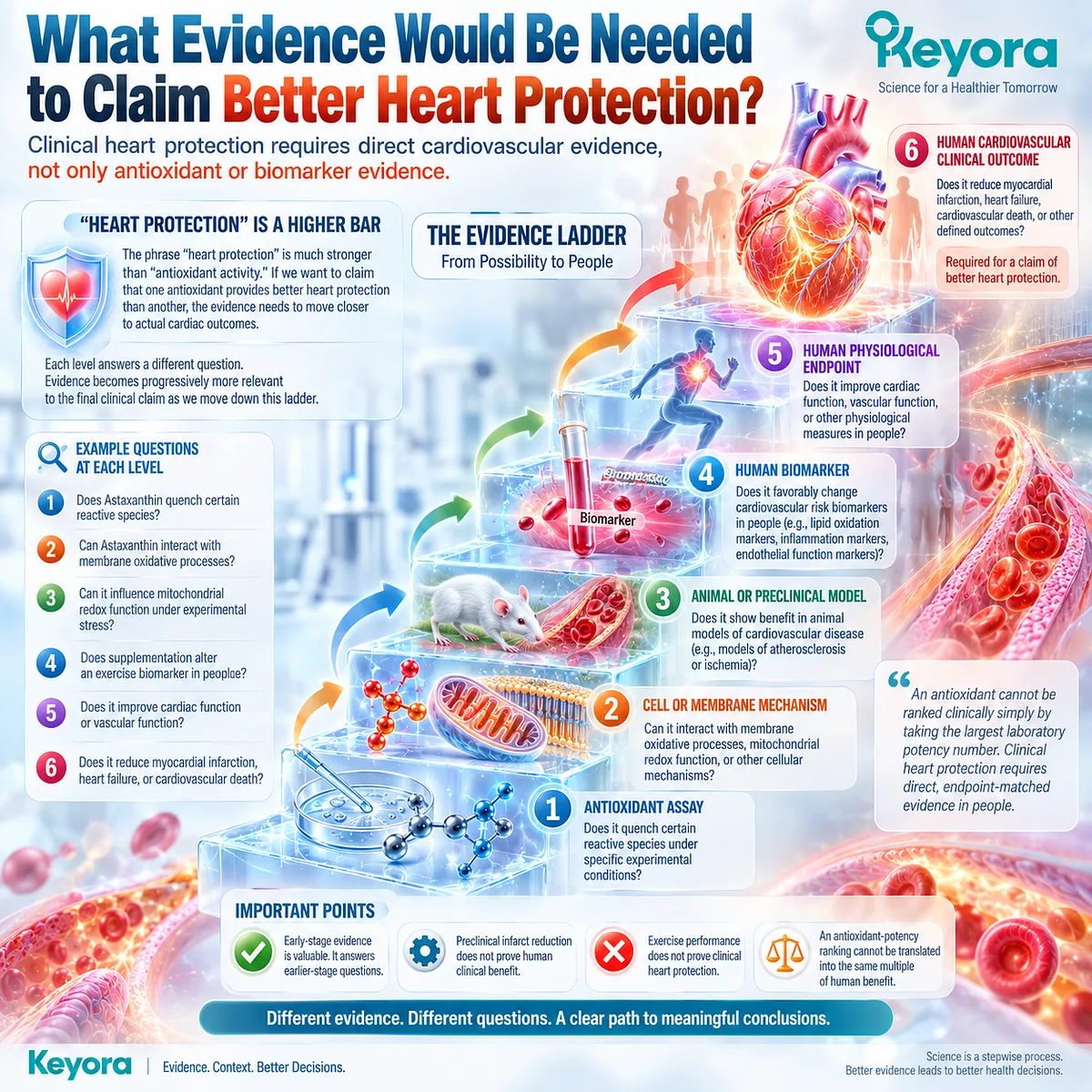
What Evidence Would Be Needed to Claim Better Heart Protection?
Clinical heart protection requires direct cardiovascular evidence, not only antioxidant or biomarker evidence
The phrase “heart protection” is much stronger than “antioxidant activity.”
If we want to claim that one antioxidant provides better heart protection than another, the evidence needs to move closer to actual cardiac outcomes.
A useful evidence ladder is:
Antioxidant assay
↓
Cell or membrane mechanism
↓
Animal or preclinical model
↓
Human biomarker
↓
Human physiological endpoint
↓
Human cardiovascular clinical outcome
Evidence becomes progressively more relevant to the final clinical claim as we move down this ladder.
This does not mean early-stage evidence is unimportant.
It means early-stage evidence answers earlier-stage questions.
For example:
Does Astaxanthin quench certain reactive species?
An antioxidant assay may help answer that.
Can Astaxanthin interact with membrane oxidative processes?
Membrane models may help answer that.
Can it influence mitochondrial redox function under experimental stress?
Mechanistic mitochondrial studies can contribute.
Does supplementation alter an exercise biomarker in people?
A human trial can answer that specific question.
But:
Does Astaxanthin reduce myocardial infarction, heart failure, cardiovascular death, or another defined clinical cardiovascular outcome?
That requires direct, endpoint-matched clinical evidence.
Preclinical infarct reduction does not provide that answer.
Exercise performance does not provide that answer.
An antioxidant-potency ranking certainly does not provide that answer.
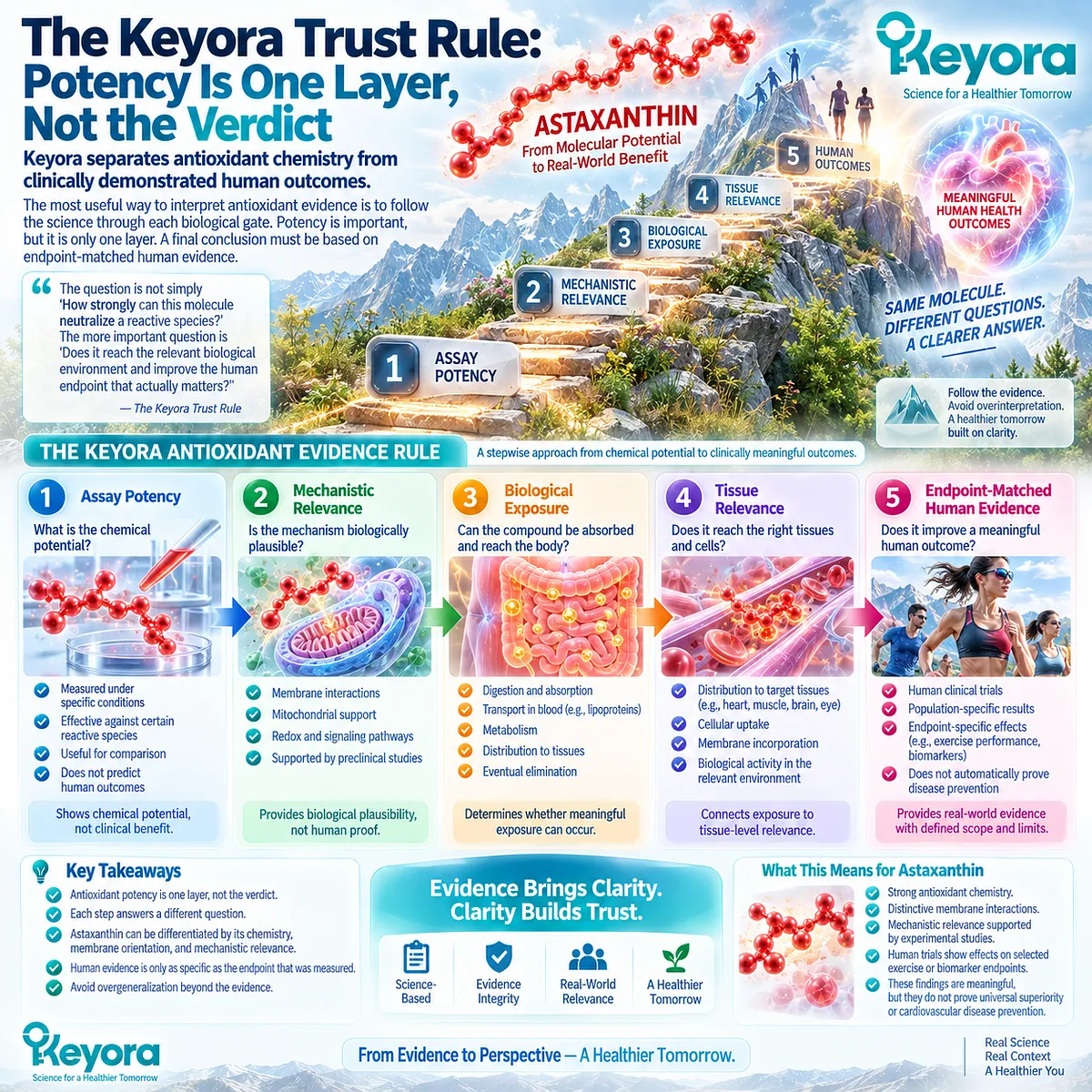
The Keyora Trust Rule: Potency Is One Layer, Not the Verdict
Keyora separates antioxidant chemistry from clinically demonstrated human outcomes
The most useful way to interpret antioxidant evidence is not to search for a single “strongest antioxidant.”
It is to follow the evidence through each biological gate.
The Keyora Antioxidant Evidence Rule can be summarized as:
Assay potency
→ mechanistic relevance
→ biological exposure
→ tissue relevance
→ endpoint-matched human evidence
Each step answers a different question.
Astaxanthin may show strong antioxidant chemistry.
Its molecular structure may provide distinctive membrane interactions.
Experimental studies may support mitochondrial redox relevance.
Human trials may demonstrate effects on selected exercise or biomarker endpoints.
All of those findings can be scientifically meaningful.
But they do not collapse into one universal conclusion such as:
Astaxanthin is the strongest antioxidant, therefore it offers the strongest heart protection.
That conclusion would exceed the evidence.
The correct question is not simply:
How strongly can this molecule neutralize a reactive species?
The more important question is:
Does it reach the relevant biological environment and improve the human endpoint that actually matters?
That distinction is the final trust gate for the “Why Astaxanthin Is Different” group.
Astaxanthin can be differentiated by its chemistry, membrane orientation, and mechanistic relevance without turning those differences into unsupported clinical superiority claims.
The next group moves from antioxidant comparison into metabolism:
Does Astaxanthin Help the Body Burn More Fat During Exercise?
This article is for educational and informational purposes only. It does not provide medical advice, diagnosis, treatment, cure, prevention, disease outcome claims, hormone restoration claims, fertility outcome claims, or formula-specific clinical efficacy claims.