
Does Poor Fat Digestion Affect Astaxanthin Absorption?
Keyora Research Q&A Library
This is part of the Keyora Research Q&A Series, derived from Keyora Astaxanthin Research Journal Series.
Within the Keyora Astaxanthin Researcn framework, this Q&A translates complex astaxanthin biology into reader-friendly, evidence-bound answers, focusing on natural astaxanthin identity, molecular structure, antioxidant and redox mechanisms, membrane lipid interaction, mitochondrial resilience, inflammatory signaling pathways, human evidence interpretation, and the scientific principles behind responsible supplementation.
First published by Keyora Research Journal: www.keyorahealth.com
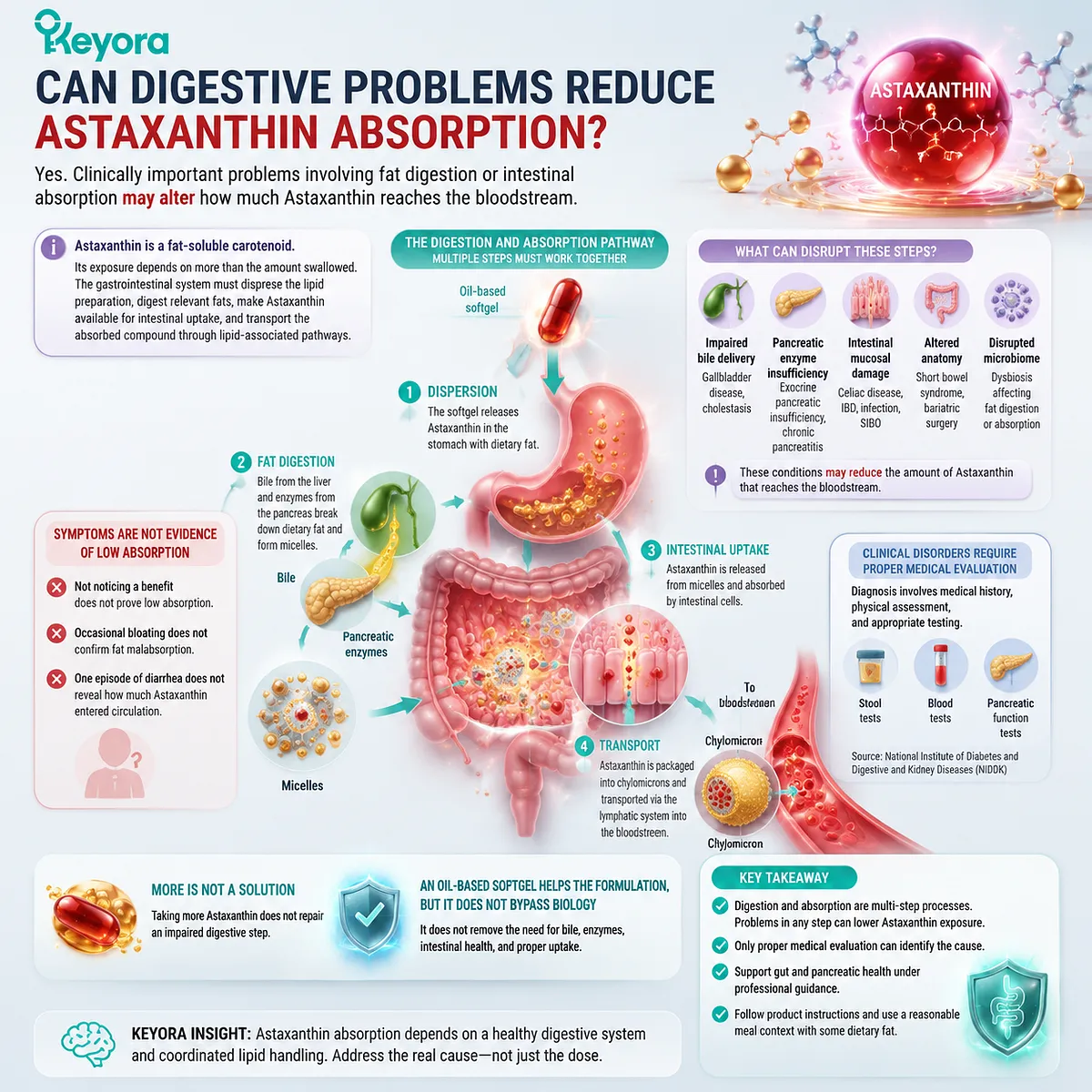
Direct Answer
Yes.
Clinically important problems involving fat digestion or intestinal absorption may alter how much Astaxanthin reaches the bloodstream.
Astaxanthin is a fat soluble carotenoid. Its exposure depends on more than the amount swallowed. The gastrointestinal system must disperse the lipid preparation, digest relevant fats, make Astaxanthin available for intestinal uptake, and transport the absorbed compound through lipid associated pathways.
Problems affecting bile delivery, pancreatic digestive enzymes, intestinal tissue, or gastrointestinal anatomy may disrupt parts of this process.
However, the size of any effect cannot be calculated from symptoms alone.
Not noticing a benefit does not prove low absorption. Occasional bloating does not confirm fat malabsorption. One episode of diarrhea does not reveal how much Astaxanthin entered circulation.
Clinical disorders involving maldigestion or malabsorption are diagnosed through medical history, physical assessment, and appropriate testing.
For example, the National Institute of Diabetes and Digestive and Kidney Diseases states that exocrine pancreatic insufficiency may cause incomplete food digestion, malabsorption, and malnutrition, and that diagnosis may involve stool tests, blood tests, and sometimes pancreatic function testing.
Taking more Astaxanthin does not repair an impaired digestive step. An oil based softgel may support formulation, but it does not bypass the need for functioning digestion and intestinal uptake.
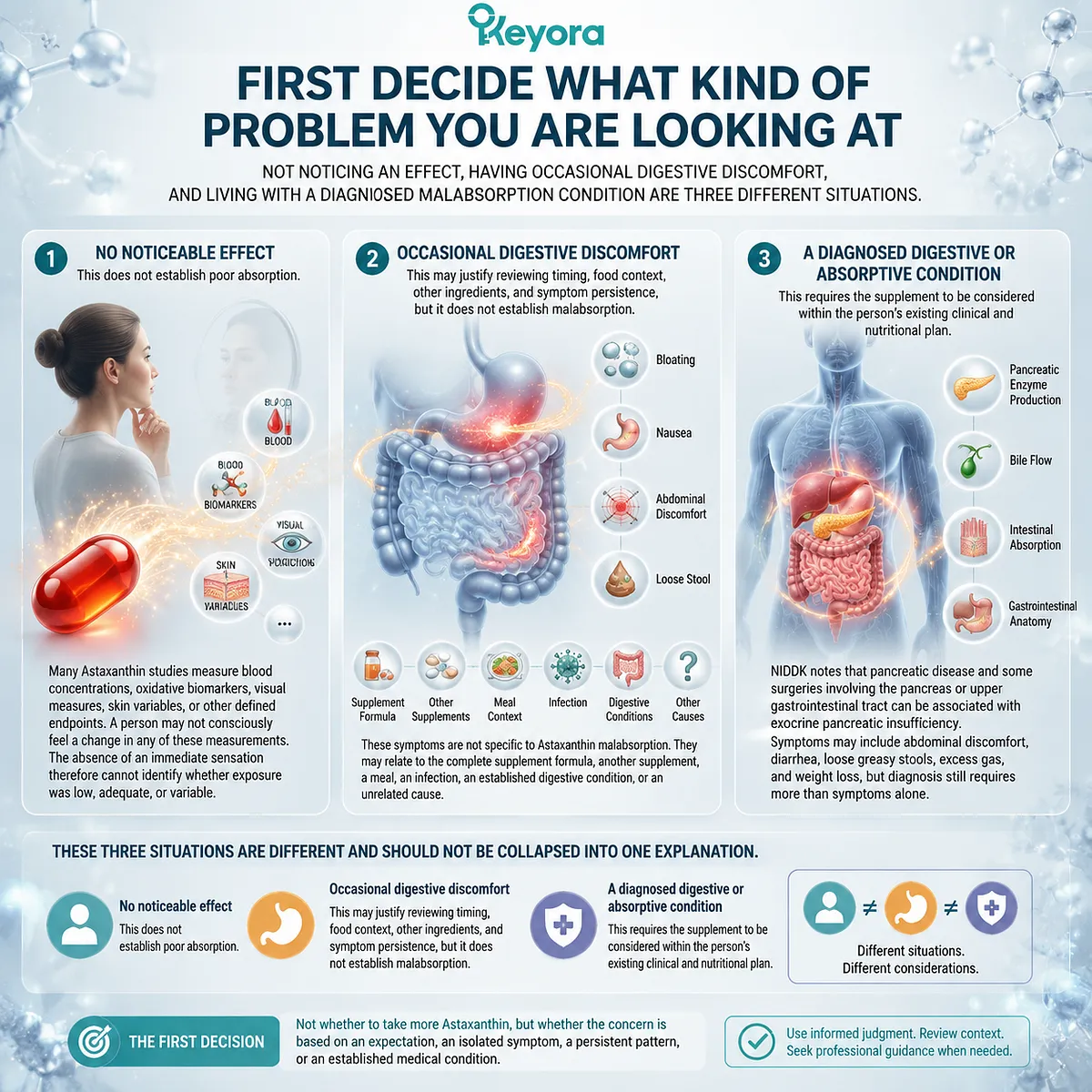
First Decide What Kind of Problem You Are Looking At
Not noticing an effect, having occasional digestive discomfort, and living with a diagnosed malabsorption condition are three different situations
A person may take Astaxanthin for several weeks and notice no obvious change. That experience may lead to the conclusion that the supplement was not absorbed.
This is not a reliable absorption test.
Many Astaxanthin studies measure blood concentrations, oxidative biomarkers, visual measures, skin variables, or other defined endpoints. A person may not consciously feel a change in any of these measurements. The absence of an immediate sensation therefore cannot identify whether exposure was low, adequate, or variable.
A second person may experience temporary bloating, nausea, abdominal discomfort, or loose stool. These symptoms are not specific to Astaxanthin malabsorption. They may relate to the complete supplement formula, another supplement, a meal, an infection, an established digestive condition, or an unrelated cause.
A third person may already have a diagnosed condition that affects pancreatic enzyme production, bile flow, intestinal absorption, or gastrointestinal anatomy. This is a different clinical context. NIDDK notes that pancreatic disease and some surgeries involving the pancreas or upper gastrointestinal tract can be associated with exocrine pancreatic insufficiency. Symptoms may include abdominal discomfort, diarrhea, loose greasy stools, excess gas, and weight loss, but diagnosis still requires more than symptoms alone.
These three situations should not be collapsed into one explanation:
No noticeable effect
This does not establish poor absorption.
Occasional digestive discomfort
This may justify reviewing timing, food context, other ingredients, and symptom persistence, but it does not establish malabsorption.
A diagnosed digestive or absorptive condition
This requires the supplement to be considered within the person’s existing clinical and nutritional plan.
The first decision is therefore not whether to take more Astaxanthin. It is whether the concern is based on an expectation, an isolated symptom, a persistent pattern, or an established medical condition.
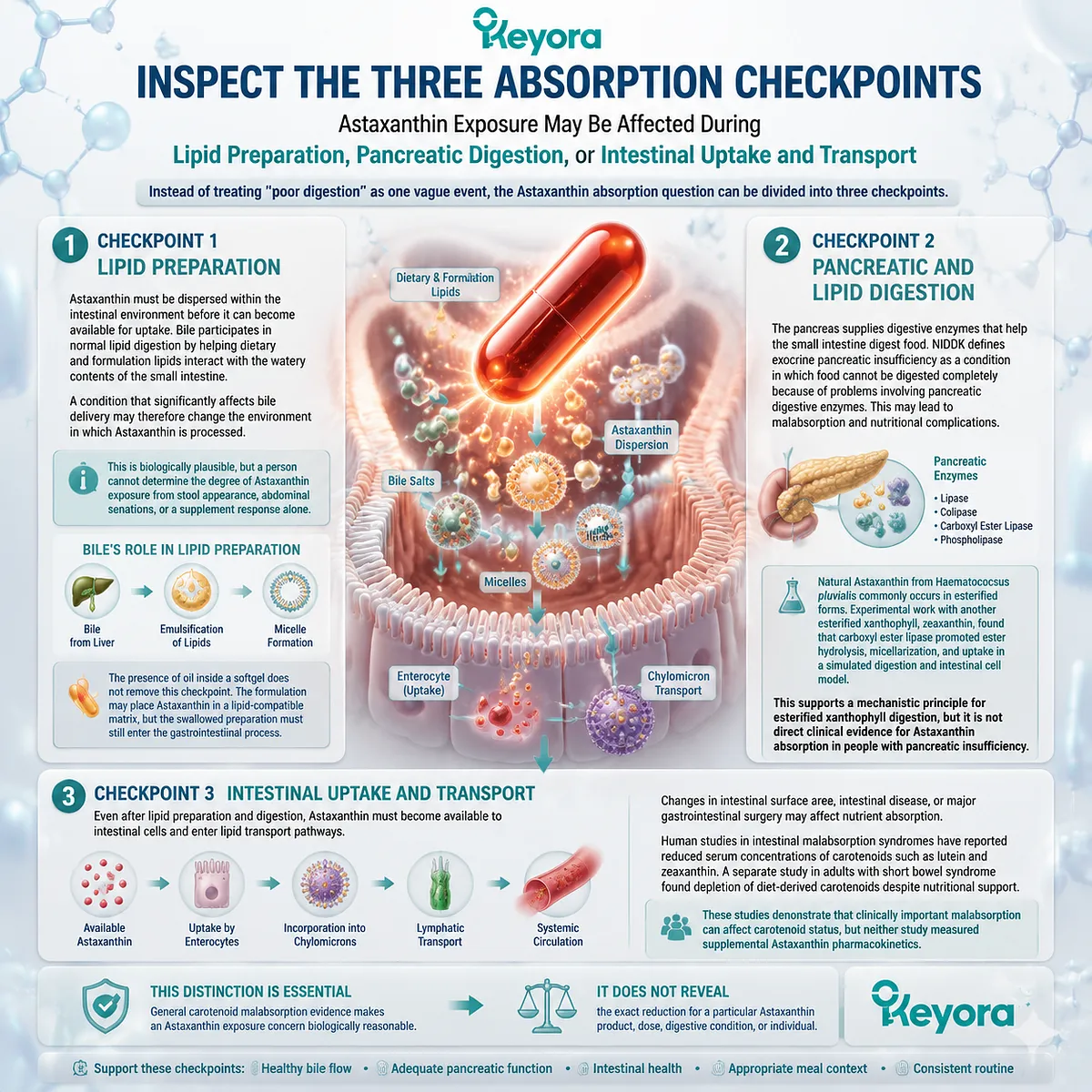
Inspect the Three Absorption Checkpoints
Astaxanthin exposure may be affected during lipid preparation, pancreatic digestion, or intestinal uptake and transport
Instead of treating “poor digestion” as one vague event, the Astaxanthin absorption question can be divided into three checkpoints.
Checkpoint 1 – Lipid preparation
Astaxanthin must be dispersed within the intestinal environment before it can become available for uptake. Bile participates in normal lipid digestion by helping dietary and formulation lipids interact with the watery contents of the small intestine.
A condition that significantly affects bile delivery may therefore change the environment in which Astaxanthin is processed. This is biologically plausible, but a person cannot determine the degree of Astaxanthin exposure from stool appearance, abdominal sensations, or a supplement response alone.
The presence of oil inside a softgel does not remove this checkpoint. The formulation may place Astaxanthin in a lipid compatible matrix, but the swallowed preparation must still enter the gastrointestinal process.
Checkpoint 2 – Pancreatic and lipid digestion
The pancreas supplies digestive enzymes that help the small intestine digest food. NIDDK defines exocrine pancreatic insufficiency as a condition in which food cannot be digested completely because of problems involving pancreatic digestive enzymes. This may lead to malabsorption and nutritional complications.
Natural Astaxanthin from Haematococcus pluvialis commonly occurs in esterified forms. Processing esterified xanthophylls may involve digestive hydrolysis before or during intestinal uptake. Experimental work with another esterified xanthophyll, zeaxanthin, found that carboxyl ester lipase promoted ester hydrolysis, micellarization, and uptake in a simulated digestion and intestinal cell model. This supports a mechanistic principle for esterified xanthophyll digestion, but it is not direct clinical evidence for Astaxanthin absorption in people with pancreatic insufficiency.
Checkpoint 3 – Intestinal uptake and transport
Even after lipid preparation and digestion, Astaxanthin must become available to intestinal cells and enter lipid transport pathways.
Changes in intestinal surface area, intestinal disease, or major gastrointestinal surgery may affect nutrient absorption. Human studies of people with intestinal malabsorption syndromes have reported reduced serum concentrations of carotenoids such as lutein and zeaxanthin. A separate study in adults with short bowel syndrome found depletion of diet derived carotenoids despite nutritional support. These studies demonstrate that clinically important malabsorption can affect carotenoid status, but neither study measured supplemental Astaxanthin pharmacokinetics.
This distinction is essential.
General carotenoid malabsorption evidence makes an Astaxanthin exposure concern biologically reasonable. It does not reveal the exact reduction for a particular Astaxanthin product, dose, digestive condition, or individual.
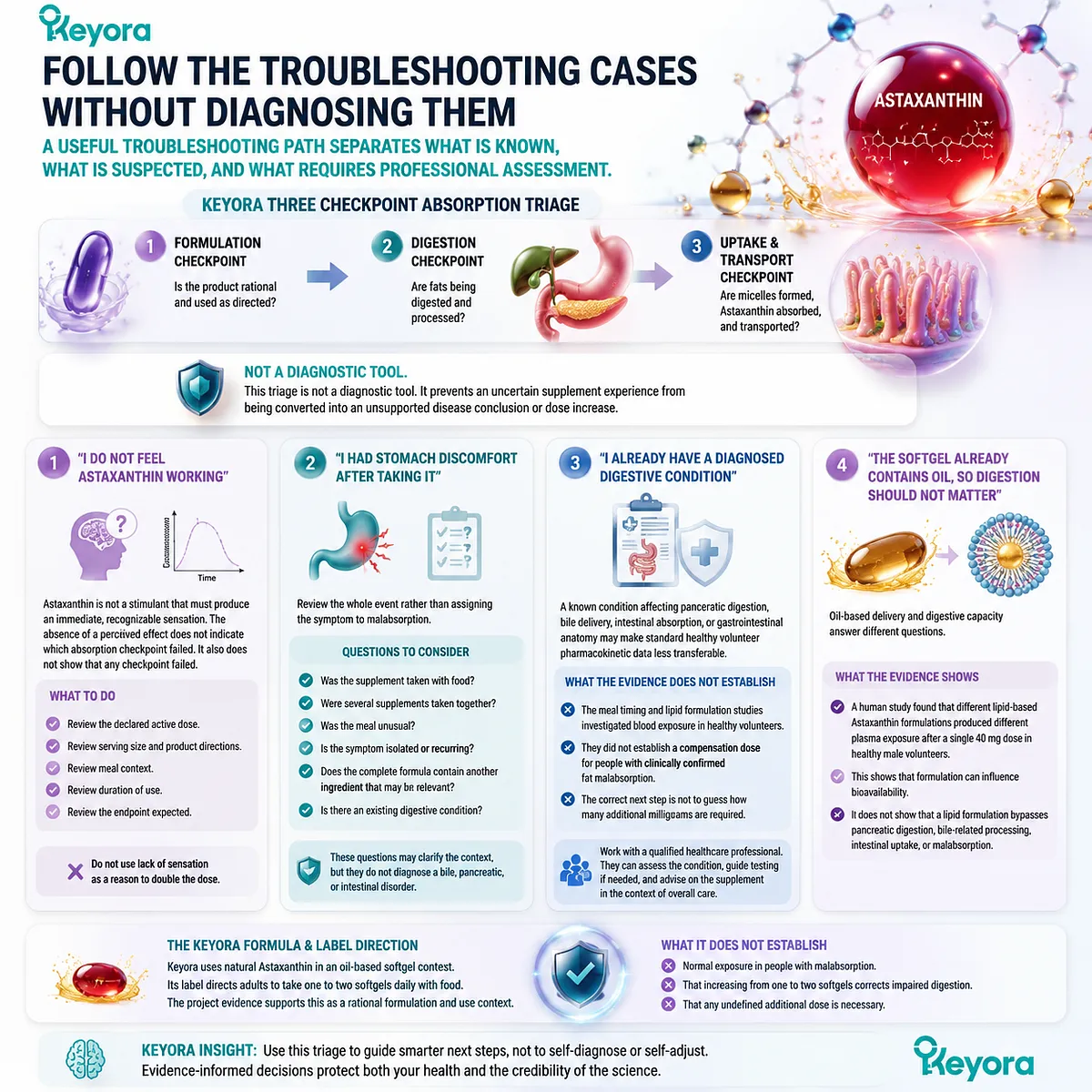
Follow the Troubleshooting Cases Without Diagnosing Them
A useful troubleshooting path separates what is known, what is suspected, and what requires professional assessment
The Keyora Three Checkpoint Absorption Triage is not a diagnostic tool. It prevents an uncertain supplement experience from being converted into an unsupported disease conclusion or dose increase.
Case 1 – “I do not feel Astaxanthin working”
Start by separating subjective experience from measured exposure.
Astaxanthin is not a stimulant that must produce an immediate recognizable sensation. The absence of a perceived effect does not indicate which absorption checkpoint failed. It also does not show that any checkpoint failed.
The defensible action is to review the declared active dose, serving size, product directions, meal context, duration of use, and the endpoint expected. Do not use lack of sensation as a reason to double the dose.
Case 2 – “I had stomach discomfort after taking it”
Review the whole event rather than assigning the symptom to malabsorption.
Questions may include:
-
Was the supplement taken with food?
-
Were several supplements taken together?
-
Was the meal unusual?
-
Is the symptom isolated or recurring?
-
Does the complete formula contain another ingredient that may be relevant?
-
Is there an existing digestive condition?
These questions may clarify the context, but they do not diagnose a bile, pancreatic, or intestinal disorder.
Case 3 – “I already have a diagnosed digestive condition”
The supplement question should be placed inside the existing care plan.
A known condition affecting pancreatic digestion, bile delivery, intestinal absorption, or gastrointestinal anatomy may make standard healthy volunteer pharmacokinetic data less transferable. The commonly cited Astaxanthin meal timing and lipid formulation studies investigated blood exposure under defined conditions, including healthy volunteers. They did not establish a compensation dose for people with clinically confirmed fat malabsorption.
The correct next step is not to guess how many additional milligrams are required.
Case 4 – “The softgel already contains oil, so digestion should not matter”
Oil based delivery and digestive capacity answer different questions.
A human study found that different lipid based Astaxanthin formulations produced different plasma exposure after a single 40 mg dose in healthy male volunteers. That result shows that formulation can influence bioavailability. It does not show that a lipid formulation bypasses pancreatic digestion, bile related processing, intestinal uptake, or clinically important malabsorption.
The Keyora formula uses natural Astaxanthin in an oil based softgel context, and its label directs adults to take one to two softgels daily with food. The project evidence supports this as a rational formulation and use context. It does not establish normal exposure in people with malabsorption or prove that increasing from one to two softgels corrects impaired digestion.
Know When the Supplement Question Becomes a Medical Question
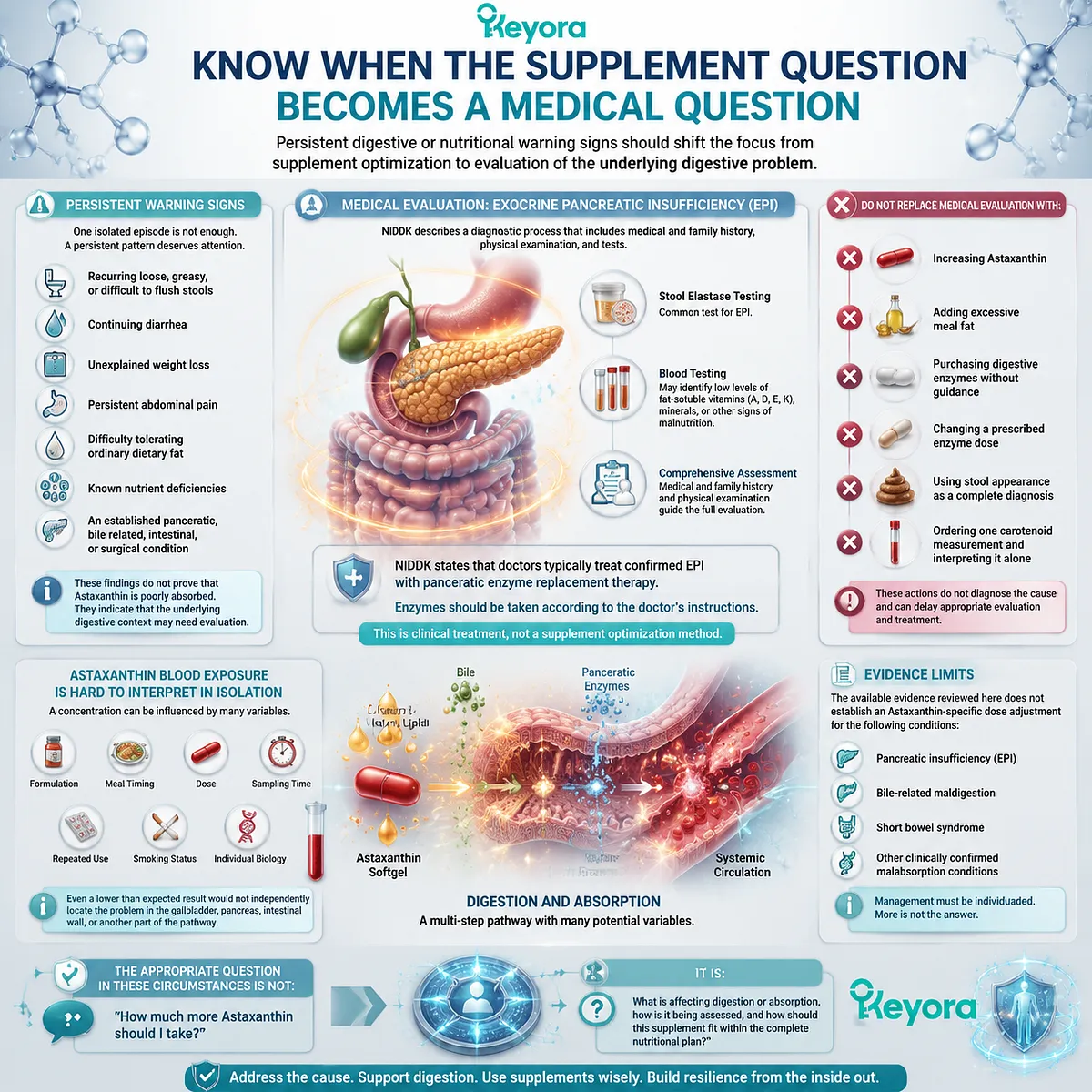
Persistent digestive or nutritional warning signs should shift the focus from supplement optimization to evaluation of the underlying digestive problem
One isolated episode of bloating or loose stool is not enough to diagnose malabsorption. A persistent pattern deserves a different level of attention.
Relevant patterns may include:
-
recurring loose, greasy, or difficult to flush stools
-
continuing diarrhea
-
unexplained weight loss
-
persistent abdominal pain
-
difficulty tolerating ordinary dietary fat
-
known nutrient deficiencies
-
an established pancreatic, bile related, intestinal, or surgical condition
These findings do not prove that Astaxanthin is poorly absorbed. They indicate that the underlying digestive context may need evaluation.
For exocrine pancreatic insufficiency, NIDDK describes a diagnostic process that includes medical and family history, physical examination, and tests. Stool elastase testing is commonly used, while blood testing may help identify low levels of fat soluble vitamins, minerals, or other signs of malnutrition.
This evaluation cannot be replaced by:
-
increasing Astaxanthin
-
adding excessive meal fat
-
purchasing digestive enzymes without guidance
-
changing a prescribed enzyme dose
-
using stool appearance as a complete diagnosis
-
ordering one carotenoid measurement and interpreting it alone
NIDDK states that doctors typically treat confirmed exocrine pancreatic insufficiency with pancreatic enzyme replacement therapy and that the enzymes should be taken according to the doctor’s instructions. This is clinical treatment, not a supplement optimization method.
Astaxanthin blood exposure would also be difficult to interpret in isolation. A concentration can be influenced by formulation, meal timing, dose, sampling time, repeated use, smoking status, and individual biology. Even a lower than expected result would not independently locate the problem in the gallbladder, pancreas, intestinal wall, or another part of the pathway.
The available evidence reviewed here does not establish an Astaxanthin specific dose adjustment for pancreatic insufficiency, bile related maldigestion, short bowel syndrome, or other clinically confirmed malabsorption conditions.
The appropriate question in these circumstances is not:
How much more Astaxanthin should I take?
It is:
What is affecting digestion or absorption, how is it being assessed, and how should this supplement fit within the complete nutritional plan?
Closing Summary
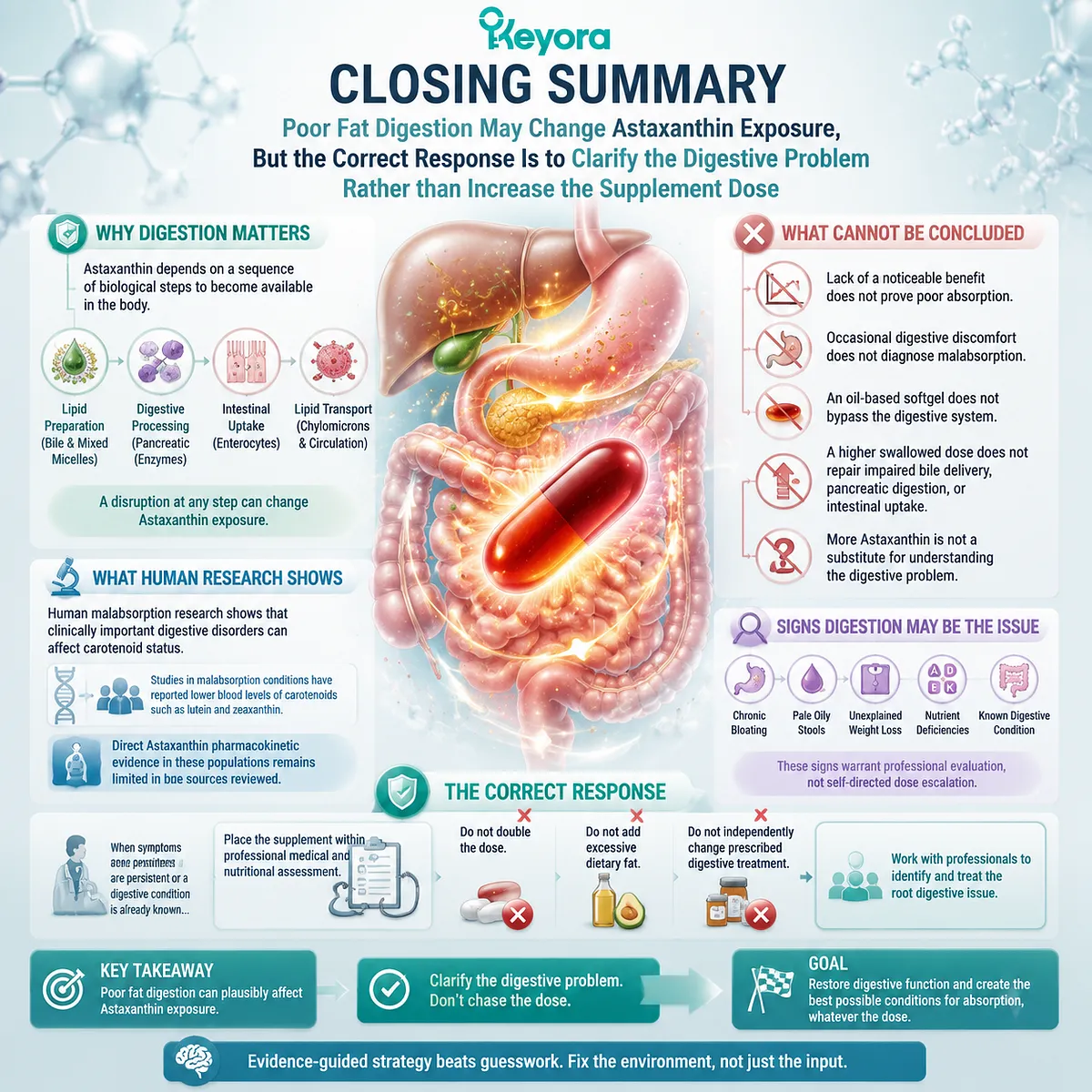
Poor fat digestion may change Astaxanthin exposure, but the correct response is to clarify the digestive problem rather than increase the supplement dose
Poor fat digestion can plausibly affect Astaxanthin exposure because the compound depends on lipid preparation, digestive processing, intestinal uptake, and lipid associated transport.
What cannot be concluded is equally important.
Lack of a noticeable benefit does not prove poor absorption. Occasional digestive discomfort does not diagnose malabsorption. An oil based softgel does not bypass the digestive system. A higher swallowed dose does not repair impaired bile delivery, pancreatic digestion, or intestinal uptake.
Human malabsorption research shows that clinically important digestive disorders can affect carotenoid status, but direct Astaxanthin pharmacokinetic evidence in these populations remains limited in the sources reviewed.
When symptoms are persistent or a digestive condition is already known, place the supplement within professional medical and nutritional assessment. Do not double the dose, add excessive dietary fat, or independently change prescribed digestive treatment.
When digestion is the uncertain variable, more Astaxanthin is not a substitute for understanding the digestive problem.
This article is for educational and informational purposes only. It does not provide medical advice, diagnosis, treatment, cure, prevention, disease outcome claims, hormone restoration claims, fertility outcome claims, or formula-specific clinical efficacy claims.