
Does Natural Astaxanthin Have Better Human Clinical Evidence Than Synthetic Astaxanthin?
Keyora Research Q&A Library
This is part of the Keyora Research Q&A Series, derived from Keyora Nutritional Neurology Series.
Within the Keyora Nutritional Neurology framework, this Q&A translates complex nutrient–brain mechanisms into reader-friendly, evidence-bound answers, focusing on stress resilience, sleep quality, calm mood support, cognitive wellness, and the broader interaction between nutrition, neurochemistry, and daily nervous-system function.
First published by Keyora Research Journal: www.keyorahealth.com
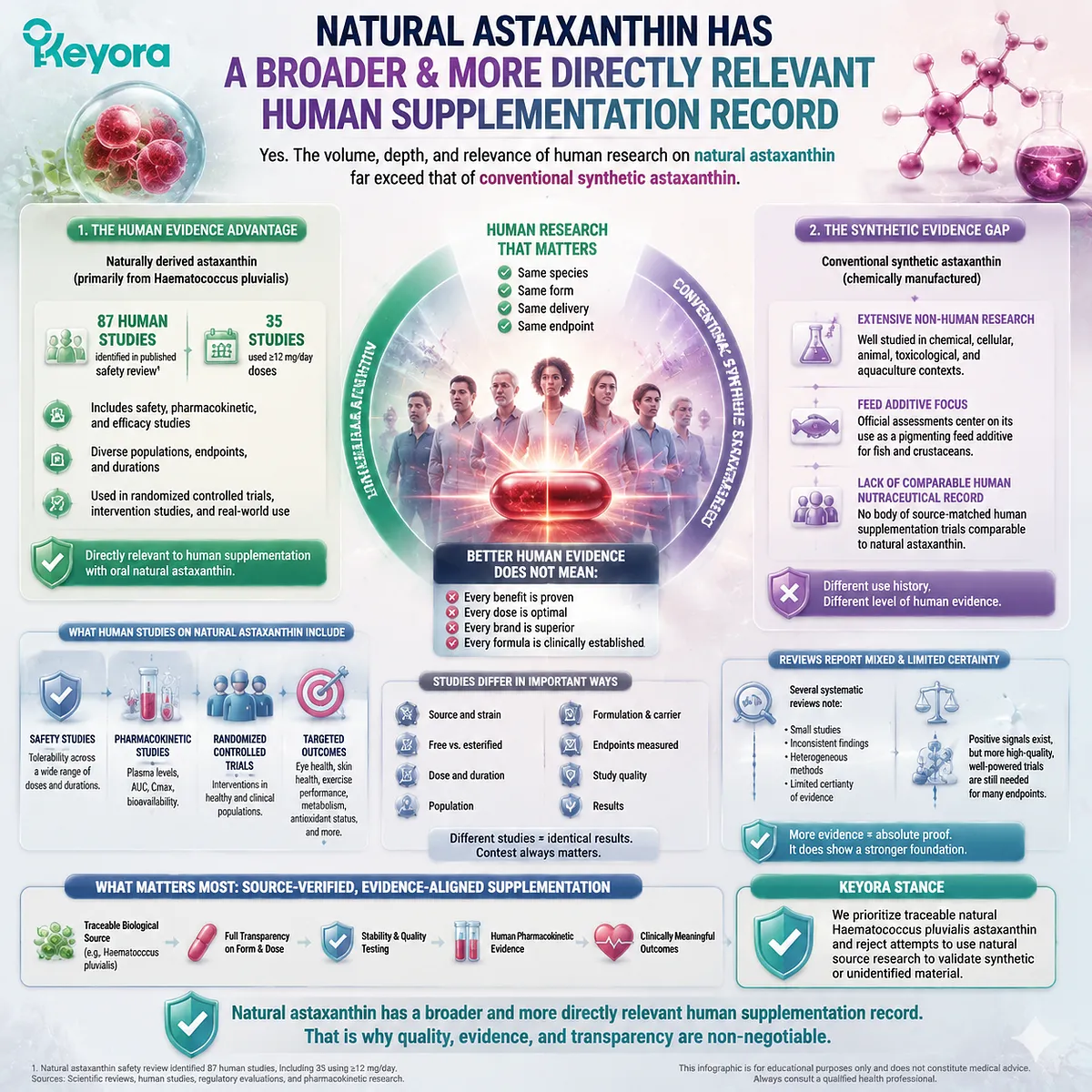
Direct Answer
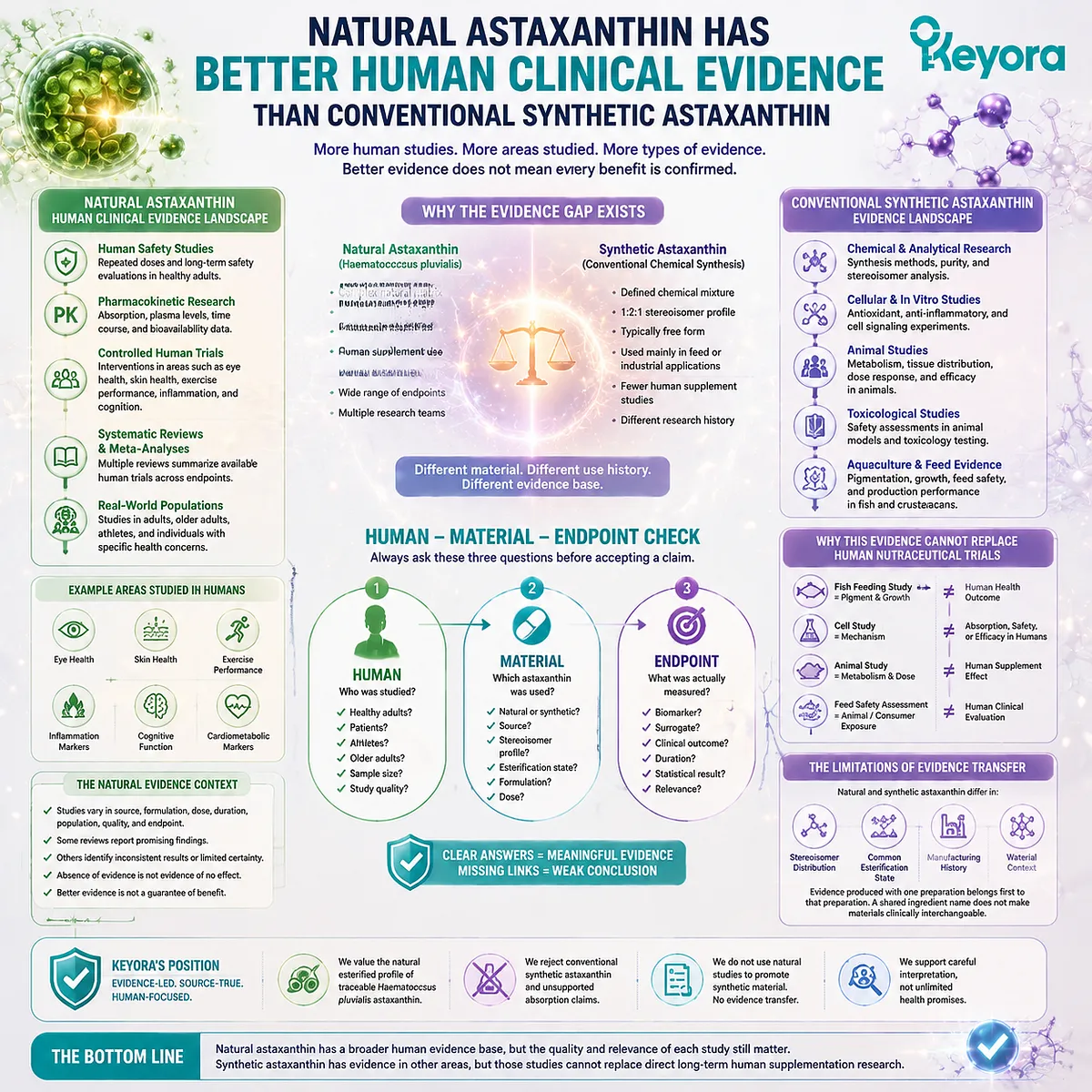
Yes – natural astaxanthin has a broader and more directly relevant human supplementation record than conventional synthetic astaxanthin. Human safety studies, pharmacokinetic research, randomized controlled trials, and systematic reviews have commonly evaluated natural preparations, particularly astaxanthin derived from Haematococcus pluvialis.
One published safety review identified 87 human studies involving natural astaxanthin, including 35 studies using at least 12 mg per day. This does not mean that all 87 were high quality efficacy trials, used the same preparation, or produced positive results. They differed in source, dose, duration, formulation, population, and endpoint.
Conventional synthetic astaxanthin has a different evidence history. It has been studied extensively in chemical, cellular, animal, toxicological, and aquaculture contexts, but it lacks a comparable source matched body of direct human nutraceutical trials. Official assessments of synthetic astaxanthin have focused heavily on its use as a pigmenting feed additive for fish and crustaceans, which does not establish human supplement effectiveness.
Better human evidence does not prove that every natural astaxanthin benefit, dose, brand, or finished formula is clinically established. Results remain endpoint specific, and several reviews report small studies, inconsistent findings, or limited certainty.
Keyora therefore prioritizes traceable natural Haematococcus pluvialis astaxanthin and rejects attempts to use natural source research to validate synthetic or unidentified material.
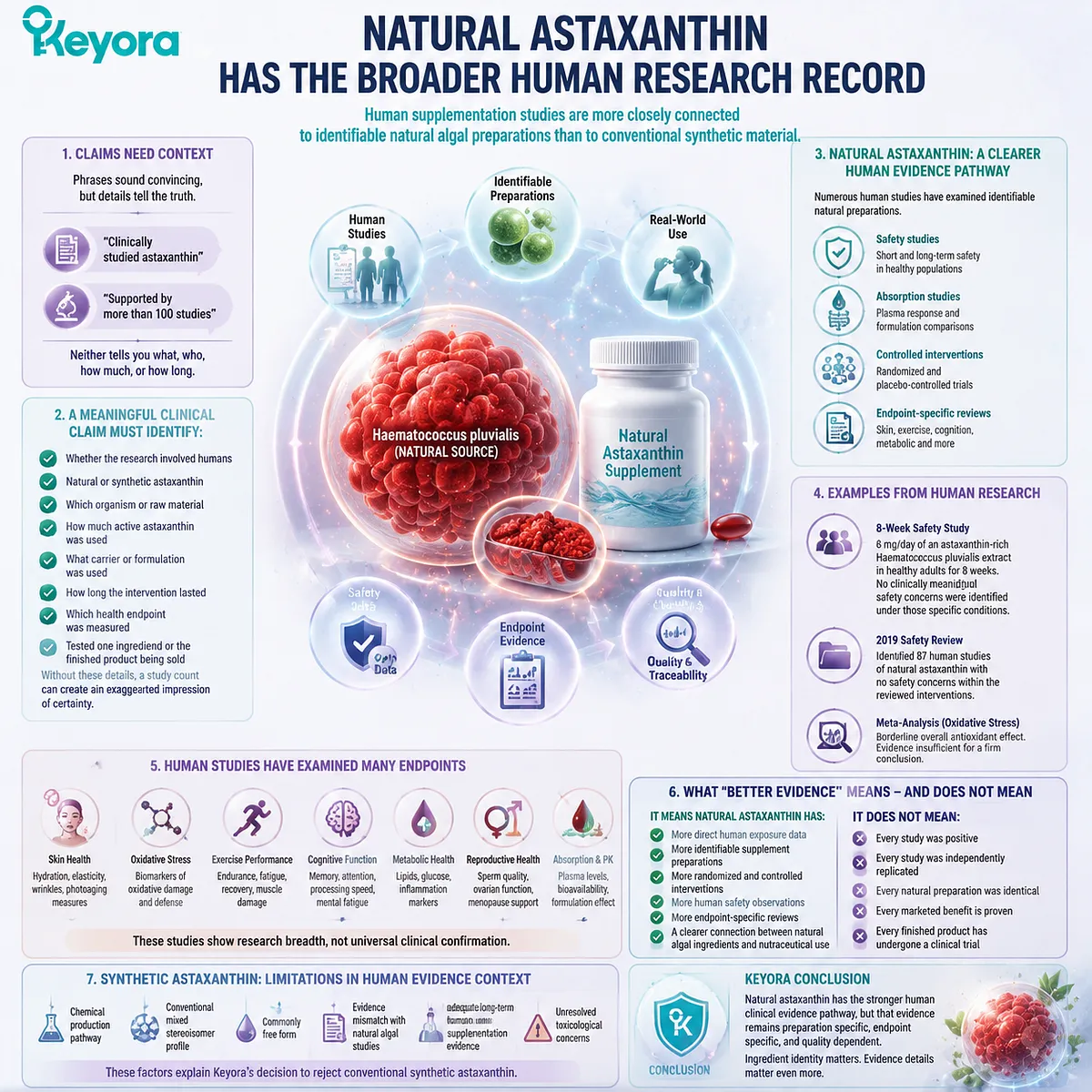
Natural Astaxanthin Has the Broader Human Research Record
Human supplementation studies are more closely connected to identifiable natural algal preparations than to conventional synthetic material
A supplement page may state:
Clinically studied astaxanthin
Another may claim:
Supported by more than 100 studies
These phrases sound authoritative, but neither tells the consumer what was actually studied.
A meaningful clinical claim needs to identify:
-
whether the research involved humans
-
whether the astaxanthin was natural or synthetic
-
which organism or raw material supplied it
-
how much active astaxanthin was used
-
what carrier or formulation was used
-
how long the intervention lasted
-
which health endpoint was measured
-
whether the study tested one ingredient or the finished product being sold
Without these details, a study count can create an exaggerated impression of certainty.
Natural astaxanthin has the clearer human evidence pathway because numerous human studies have examined identifiable natural preparations. These include safety studies, absorption studies, controlled interventions, and endpoint specific reviews.
For example, a small randomized safety study evaluated 6 mg per day of an astaxanthin rich Haematococcus pluvialis extract in healthy adults for eight weeks. The investigators did not identify clinically meaningful safety concerns under those specific conditions. The result supports that preparation, dose, duration, and population. It does not establish unlimited safety for every source, dose, age group, or period of use.
The 2019 safety review provides a wider picture. It identified 87 human studies of natural astaxanthin and reported no safety concerns within the reviewed interventions. However, the included studies were conducted for different purposes and cannot be treated as 87 identical randomized efficacy trials.
Human studies have also examined specific endpoints, including:
-
skin hydration, elasticity, and photoaging measures
-
oxidative stress biomarkers
-
exercise related fatigue and recovery outcomes
-
cognitive performance
-
metabolic variables
-
reproductive outcomes
-
plasma absorption and formulation effects
The existence of these studies demonstrates research breadth, not universal clinical confirmation.
A meta-analysis of randomized trials examining oxidative stress found only a borderline overall antioxidant effect and concluded that the evidence was insufficient for a firm conclusion.
A systematic review and meta-analysis of skin aging research identified eleven human studies, including nine randomized controlled oral studies, but the preparations, designs, and measured outcomes varied.
A review of cognitive research in older adults found a limited number of clinical trials, illustrating why a plausible mechanism and several small studies should not be presented as a settled cognitive benefit.
These examples show the correct meaning of better evidence.
It means natural astaxanthin has:
-
more direct human exposure data
-
more identifiable supplement preparations
-
more randomized and controlled interventions
-
more human safety observations
-
more endpoint specific reviews
-
a clearer connection between natural algal ingredients and nutraceutical use
It does not mean:
-
every study was positive
-
every study was independently replicated
-
every natural preparation was identical
-
every marketed benefit is proven
-
every finished product has undergone a clinical trial
Natural astaxanthin has the stronger human clinical evidence pathway, but that evidence remains preparation specific, endpoint specific, and quality dependent
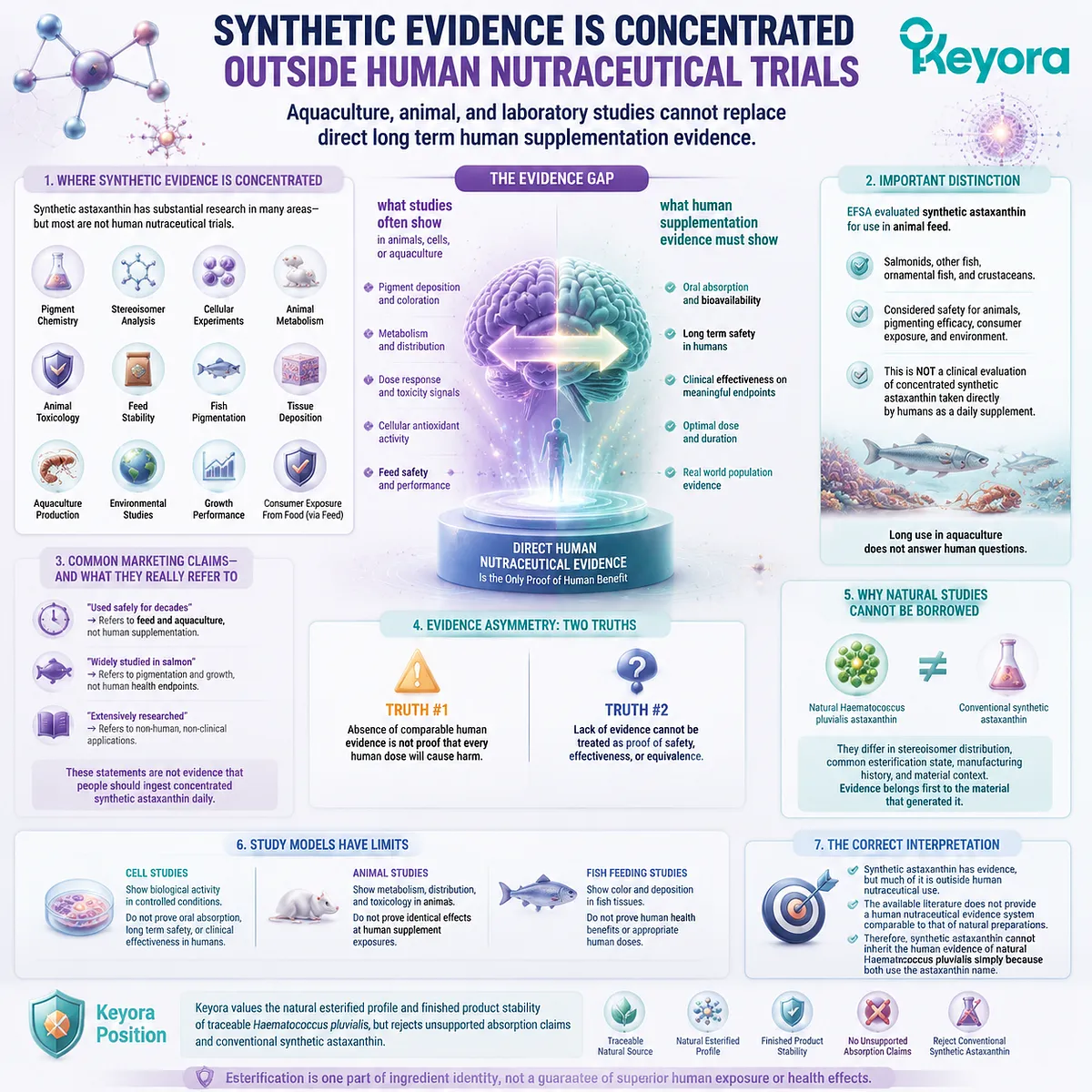
Synthetic Evidence Is Concentrated Outside Human Nutraceutical Trials
Aquaculture, animal, and laboratory studies cannot replace direct long term human supplementation evidence
Synthetic astaxanthin is not an unstudied chemical in every sense.
It has substantial research connected to:
-
pigment chemistry
-
stereoisomer analysis
-
cellular experiments
-
animal metabolism
-
animal toxicology
-
feed stability
-
fish pigmentation
-
tissue deposition
-
aquaculture production
The problem is evidence relevance.
A fish feeding experiment can show whether astaxanthin changes tissue color or pigment deposition.
It cannot show whether daily synthetic astaxanthin supplementation improves a human health endpoint.
A cell study can show that synthetic astaxanthin interacts with oxidative or cellular processes under laboratory conditions.
It cannot establish oral absorption, long term safety, or clinical effectiveness in people.
An animal study can identify metabolism, tissue distribution, dose response, or a toxicological signal.
It cannot prove that humans experience the identical effect at a normal supplement exposure.
EFSA evaluated synthetic astaxanthin for defined use in feed for salmonids, other fish, ornamental fish, and crustaceans. The assessment considered animal feed safety, pigmenting efficacy, consumer exposure from food, and environmental questions. It was not a clinical evaluation of concentrated synthetic astaxanthin taken directly by humans as a daily supplement.
This distinction matters because brands may use phrases such as:
Used safely for decades
Widely studied in salmon
Extensively researched
The statements may refer to feed or pigmentation research rather than human nutraceutical trials.
Long commercial use in aquaculture does not answer:
-
whether humans should ingest the concentrated material directly
-
whether repeated long term use has been adequately studied
-
whether the synthetic stereoisomer mixture behaves like natural algal material
-
whether human benefits observed with natural preparations apply
-
whether unresolved animal findings have been adequately addressed
Published reviews continue to note uncertainty about the effects of long term human consumption of synthetic astaxanthin because natural and synthetic materials differ in composition and evidence history.
This does not prove that every synthetic astaxanthin molecule is inactive.
Cell research has demonstrated biological activity from synthetic astaxanthin under selected experimental conditions. That type of evidence answers a laboratory question, not a human supplementation question.
The correct interpretation is:
Synthetic astaxanthin has evidence, but much of that evidence belongs to different uses, models, exposures, and endpoints
The available literature does not provide a human nutraceutical evidence system comparable to the one built around natural astaxanthin preparations.
That evidence asymmetry has two important meanings.
First, absence of comparable human evidence is not proof that every human dose will cause harm.
Second, lack of evidence cannot be treated as proof of safety, effectiveness, or equivalence.
A brand cannot close this gap by citing a natural Haematococcus pluvialis study.
Natural algal and conventional synthetic astaxanthin differ in stereoisomer distribution, common esterification state, manufacturing history, and material context. Evidence produced with one preparation belongs first to that preparation.
Synthetic astaxanthin cannot inherit the human evidence of natural Haematococcus pluvialis simply because both materials use the astaxanthin name
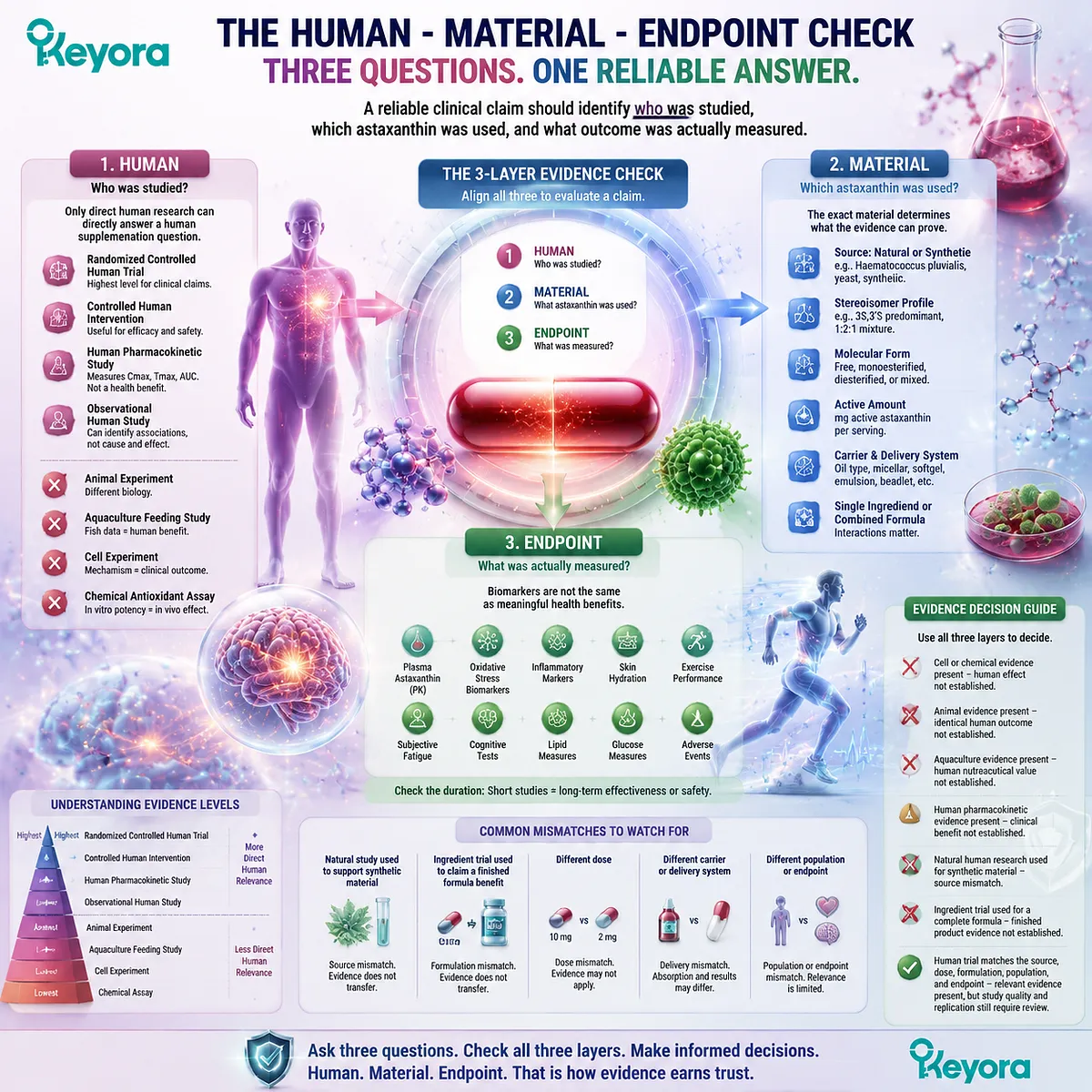
Use the Human – Material – Endpoint Check
A reliable clinical claim should identify who was studied, which astaxanthin was used, and what outcome was actually measured
Consumers do not need to read every paper from beginning to end.
They need to check three evidence layers.
Use the Human – Material – Endpoint Check.
1. Human
Begin by identifying the research model.
Was the evidence from:
-
a randomized controlled human trial
-
a controlled human intervention
-
a human pharmacokinetic study
-
an observational human study
-
an animal experiment
-
an aquaculture feeding study
-
a cell experiment
-
a chemical antioxidant assay
Only direct human research can directly answer a human supplementation question.
The other evidence levels can still be useful, but their role is different.
A human pharmacokinetic study can measure plasma exposure, Cmax, Tmax, or AUC. It cannot automatically prove a health benefit.
An animal toxicology study can create a safety signal. It cannot prove identical human harm.
A cell experiment can explain a possible mechanism. It cannot establish a clinical result.
2. Material
Identify the exact astaxanthin tested.
Check:
-
natural or synthetic source
-
source organism
-
supplier or branded ingredient when disclosed
-
stereoisomer profile
-
free or esterified form
-
active astaxanthin amount
-
carrier oil or delivery system
-
single ingredient or combined formula
The word astaxanthin is not a complete material description.
A study using a natural esterified Haematococcus pluvialis extract cannot directly validate a conventional synthetic free astaxanthin mixture.
A study using one carrier oil cannot automatically validate another formulation.
A single ingredient trial cannot prove a multi ingredient finished product.
3. Endpoint
Identify what the researchers actually measured.
Possible endpoints include:
-
plasma astaxanthin concentration
-
oxidative stress biomarkers
-
inflammatory markers
-
skin hydration
-
wrinkle measurements
-
exercise performance
-
subjective fatigue
-
cognitive tests
-
lipid concentrations
-
glucose measures
-
adverse events
A biomarker change is not automatically a clinical improvement.
A statistically significant result is not automatically large enough to matter to the person using the product.
A secondary endpoint should not be advertised as though it were the study’s main confirmed result.
The duration also matters.
A short study may be useful for absorption or immediate tolerability. It may be inadequate for establishing long term effectiveness or safety.
The final evidence decision can be summarized as follows:
Cell or chemical evidence present – human effect not established
Animal evidence present – identical human outcome not established
Aquaculture evidence present – human nutraceutical value not established
Human pharmacokinetic evidence present – clinical benefit not established
Natural human research used for synthetic material – source mismatch
Ingredient trial used for a complete formula – finished product evidence not established
Human trial matches the source, dose, formulation, population, and endpoint – relevant evidence present, but study quality and replication still require review
What This Means When Choosing Astaxanthin
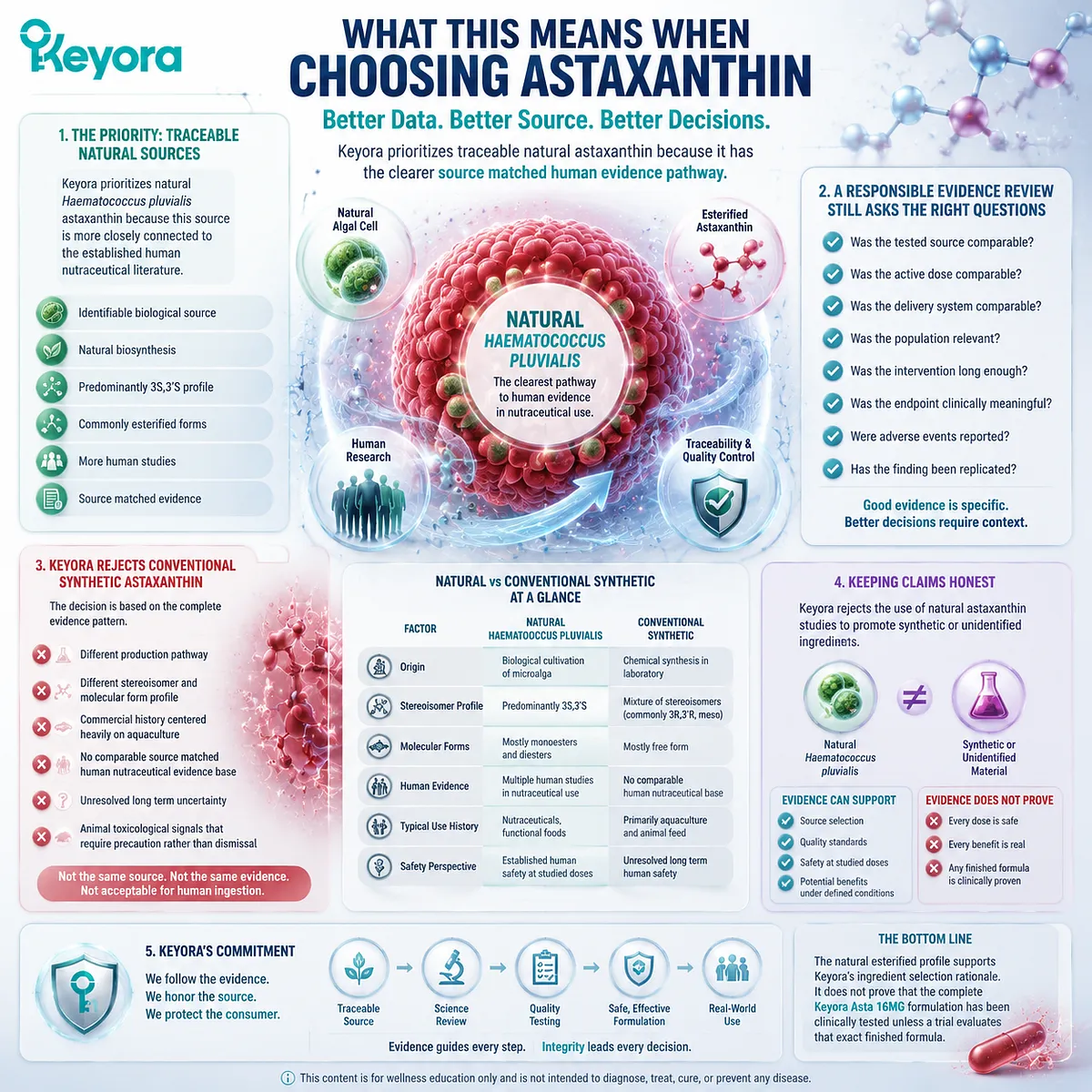
Keyora prioritizes traceable natural astaxanthin because it has the clearer source matched human evidence pathway
Keyora prioritizes natural Haematococcus pluvialis astaxanthin because this source is more closely connected to the established human nutraceutical literature.
That does not mean Keyora treats every natural astaxanthin claim as proven.
A responsible evidence review still asks:
-
Was the tested source comparable?
-
Was the active dose comparable?
-
Was the delivery system comparable?
-
Was the population relevant?
-
Was the intervention long enough?
-
Was the endpoint clinically meaningful?
-
Were adverse events reported?
-
Has the finding been replicated?
Keyora rejects conventional synthetic astaxanthin for human ingestion.
The decision is based on the complete evidence pattern:
-
a different production pathway
-
a different stereoisomer and molecular form profile
-
a commercial history centered heavily on aquaculture
-
no comparable source matched human nutraceutical evidence base
-
unresolved long term uncertainty
-
animal toxicological signals that require precaution rather than dismissal
Keyora also rejects the use of natural astaxanthin studies to promote synthetic or unidentified ingredients.
The natural ingredient evidence supports Keyora’s source selection rationale. It does not prove that the complete Keyora Asta 16MG formulation has been clinically tested unless a trial evaluates that exact finished formula.
Closing Summary
Natural astaxanthin has better human clinical evidence than conventional synthetic astaxanthin because its research record includes a broader range of human safety studies, pharmacokinetic investigations, controlled interventions, and systematic reviews.
Better evidence does not mean every proposed benefit is confirmed. Natural astaxanthin studies vary in source, formulation, dose, duration, population, quality, and endpoint. Some reviews report promising findings, while others identify inconsistent results or limited certainty.
Synthetic astaxanthin has substantial chemical, cellular, animal, toxicological, and aquaculture evidence. Those studies cannot substitute for direct, source matched, long term human supplementation research.
Consumers should use the Human – Material – Endpoint Check to determine who was studied, which astaxanthin preparation was used, and what the research actually measured.
Keyora prioritizes traceable natural Haematococcus pluvialis astaxanthin and rejects synthetic material and evidence transfer. A shared ingredient name cannot make two different materials clinically interchangeable, and a larger natural evidence base should be interpreted carefully rather than converted into unlimited health promises
This article is for educational and informational purposes only. It does not provide medical advice, diagnosis, treatment, cure, prevention, disease outcome claims, hormone restoration claims, fertility outcome claims, or formula-specific clinical efficacy claims.