
Does Astaxanthin Support Memory and Cognitive Function?
Keyora Research Q&A Library
This is part of the Keyora Research Q&A Series, derived from Keyora Astaxanthin Research Journal Series.
Within the Keyora Astaxanthin Researcn framework, this Q&A translates complex astaxanthin biology into reader-friendly, evidence-bound answers, focusing on natural astaxanthin identity, molecular structure, antioxidant and redox mechanisms, membrane lipid interaction, mitochondrial resilience, inflammatory signaling pathways, human evidence interpretation, and the scientific principles behind responsible supplementation.
First published by Keyora Research Journal: www.keyorahealth.com
Direct Answer
Yes
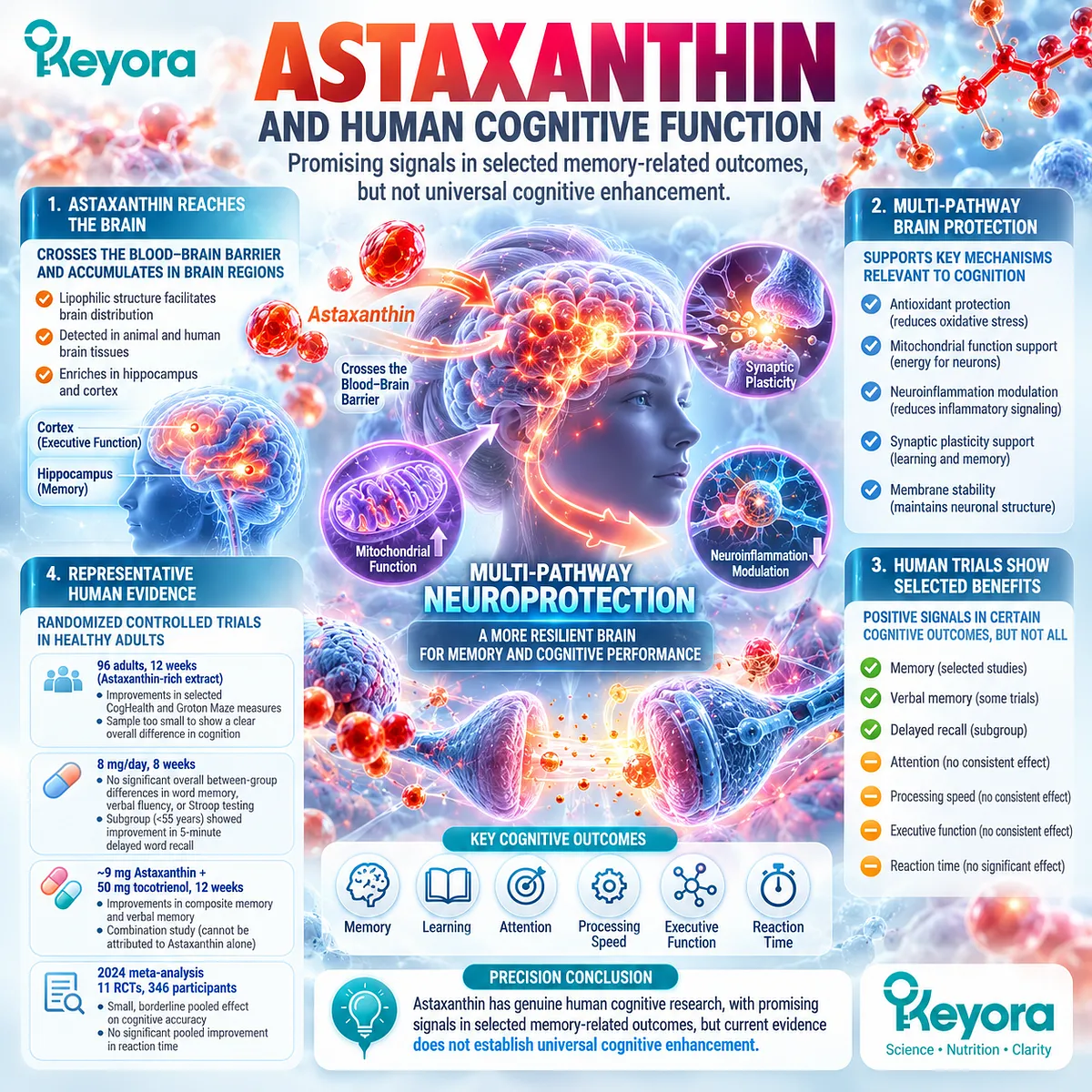
Astaxanthin has been studied in randomized human trials for memory and cognitive function, and several studies have reported positive signals in selected cognitive outcomes.
However, the evidence does not show that Astaxanthin consistently improves every aspect of cognition, such as memory, attention, processing speed, accuracy, working memory, and reaction time at the same time.
This distinction matters because “cognitive function” is not one measurable ability.
A person can improve on a delayed-recall task without becoming faster on a reaction-time task.
A study can report improvement in verbal memory while showing no significant difference in attention or executive function.
One favorable endpoint therefore should not be converted into a claim of global cognitive enhancement.
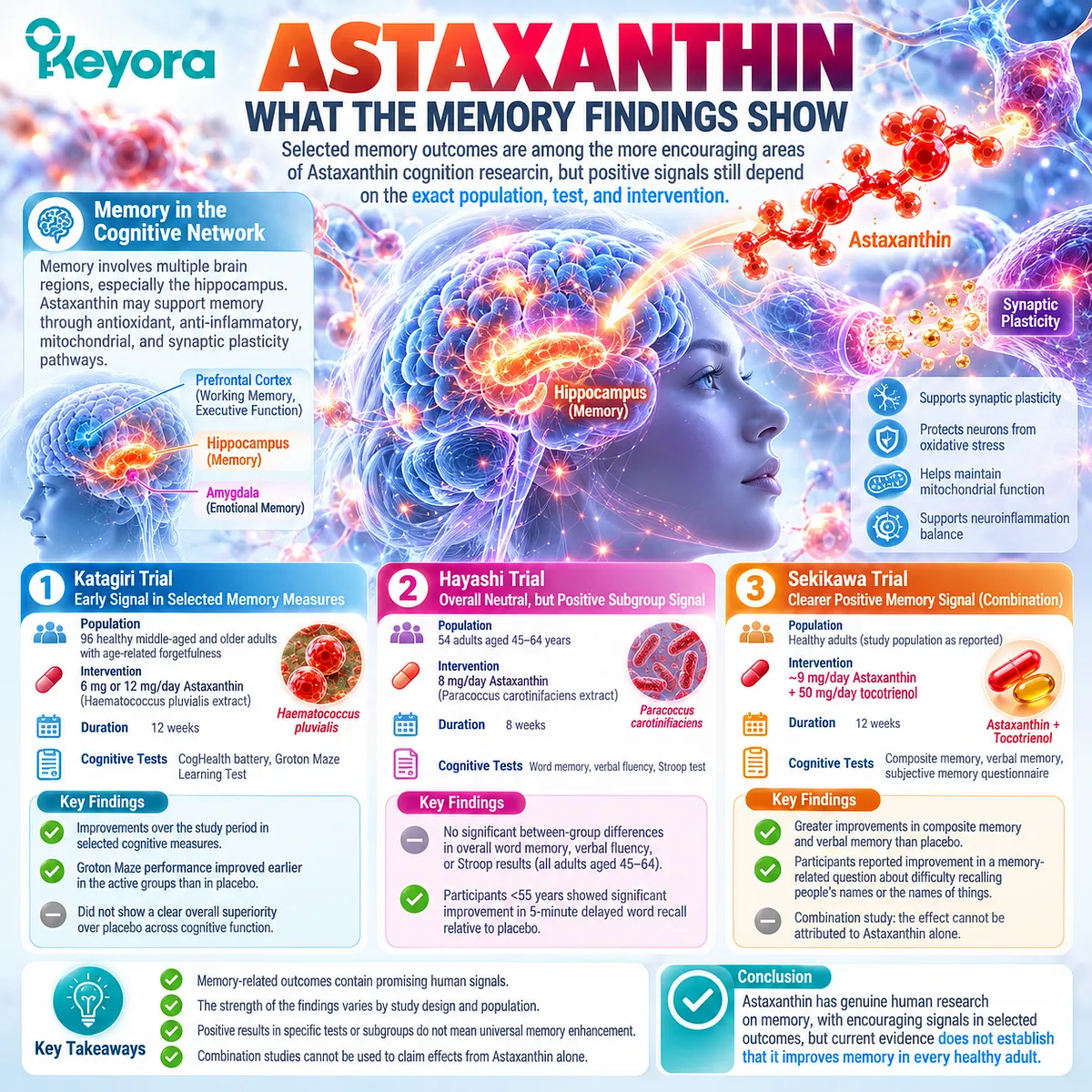
An early randomized trial by Katagiri and colleagues studied 96 healthy middle-aged and older adults who reported age-related forgetfulness.
Participants received an Astaxanthin-rich Haematococcus pluvialis extract or placebo for 12 weeks. Improvements appeared in selected CogHealth and Groton Maze measures, but the investigators also stated that the sample was too small to demonstrate a clear overall difference in cognitive function between the Astaxanthin and placebo groups.
A later study using 8 mg Astaxanthin per day for eight weeks found no significant overall between-group differences in word memory, verbal fluency, or Stroop testing.
A subgroup analysis did, however, identify improvement in five-minute delayed word recall among participants younger than 55 years.
Another randomized trial reported improvements in composite memory and verbal memory after 12 weeks, but that intervention contained approximately 9 mg Astaxanthin plus 50 mg tocotrienol, so the findings belong to the tested combination rather than Astaxanthin alone.
At the highest evidence level, a 2024 meta-analysis of 11 randomized controlled trials involving 346 healthy participants found only a small, borderline pooled effect on cognitive accuracy and no significant pooled improvement in reaction time.
The evidence therefore supports a precise conclusion:
Astaxanthin has genuine human cognitive research, with promising signals in selected memory-related outcomes, but current evidence does not establish universal cognitive enhancement.
This interpretation develops the human-evidence axis of Keyora Astaxanthin EP-5: The Neural Fortress: A Mechanistic Analysis of Astaxanthin in Lipidomics Re-engineering and Neural Oxidative Debt, while keeping measured human outcomes separate from broader mechanistic interpretation.
What Does “Cognitive Function” Actually Mean?
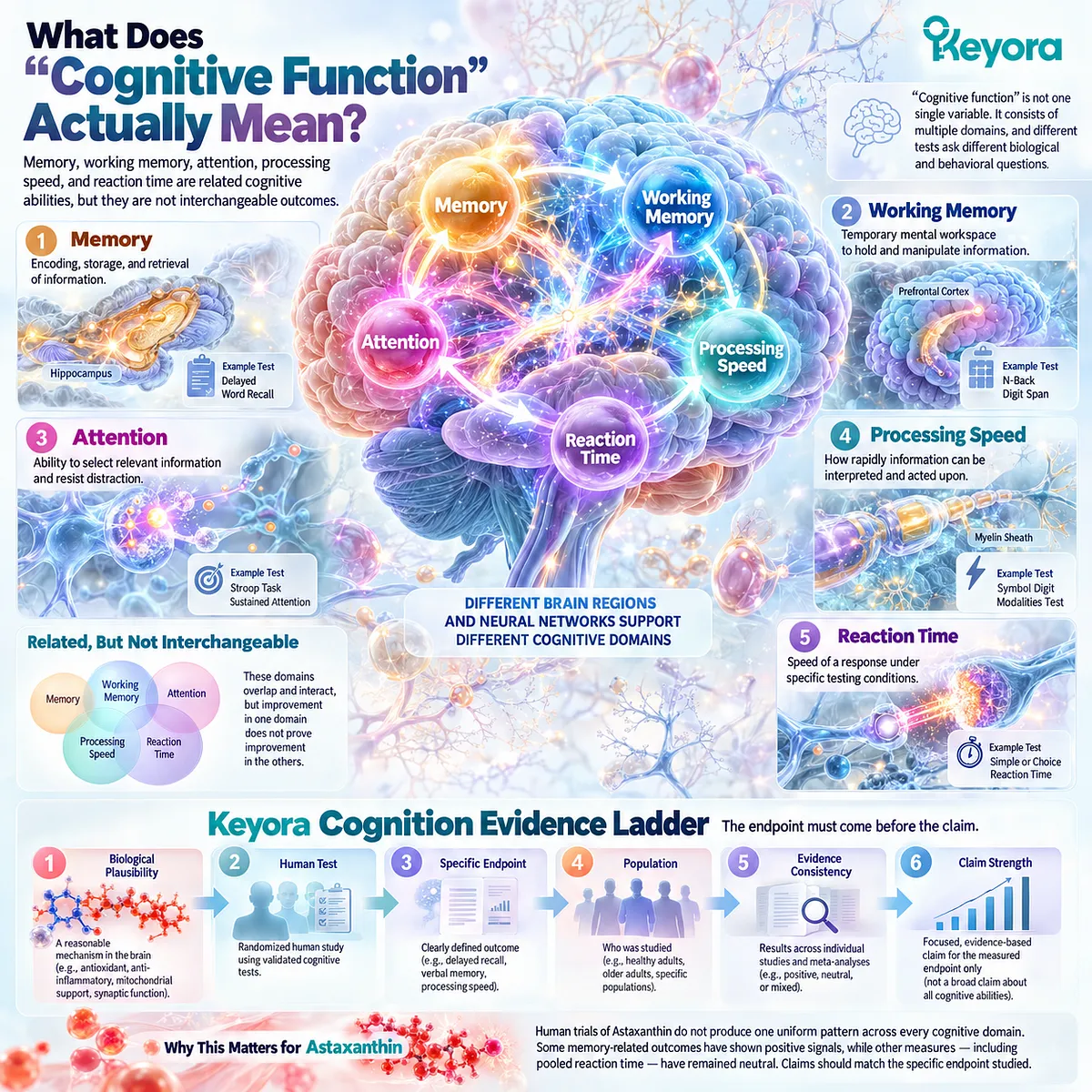
Memory, working memory, attention, processing speed, and reaction time are related cognitive abilities, but they are not interchangeable outcomes
When consumers read that a nutrient “supports cognition,” the phrase can sound as though scientists have measured one master variable called cognitive function.
They have not.
Cognition consists of multiple domains, and different tests ask different biological and behavioral questions.
Memory concerns the encoding, storage, and retrieval of information. A delayed word-recall test, for example, asks whether information presented earlier can still be retrieved after a defined interval.
Working memory is different. It describes the temporary mental workspace used to hold and manipulate information while performing a task. Remembering a phone number long enough to type it, mentally reorganizing a sequence, or keeping several steps of an instruction active all rely partly on working memory.
Attention concerns the ability to select relevant information and resist distraction.
Processing speed concerns how rapidly information can be interpreted and acted upon.
Reaction time measures the speed of a response under specific testing conditions.
These domains overlap, but improvement in one does not prove improvement in the others.
This is particularly important for Astaxanthin because the human trials do not produce one uniform pattern across every domain. Some memory-related outcomes have shown positive signals, while other measures – including pooled reaction time – have remained neutral.
Keyora therefore uses a Cognition Evidence Ladder:
Biological Plausibility → Human Test → Specific Endpoint → Population → Evidence Consistency → Claim Strength
The endpoint must come before the claim.
If a study measured delayed recall, the conclusion should remain about delayed recall.
If a study measured verbal memory, the conclusion should remain about verbal memory.
This approach prevents a small cognitive signal from being transformed into unsupported claims about intelligence, mental speed, productivity, or overall brain performance.
What Human Astaxanthin Trials Have Actually Tested
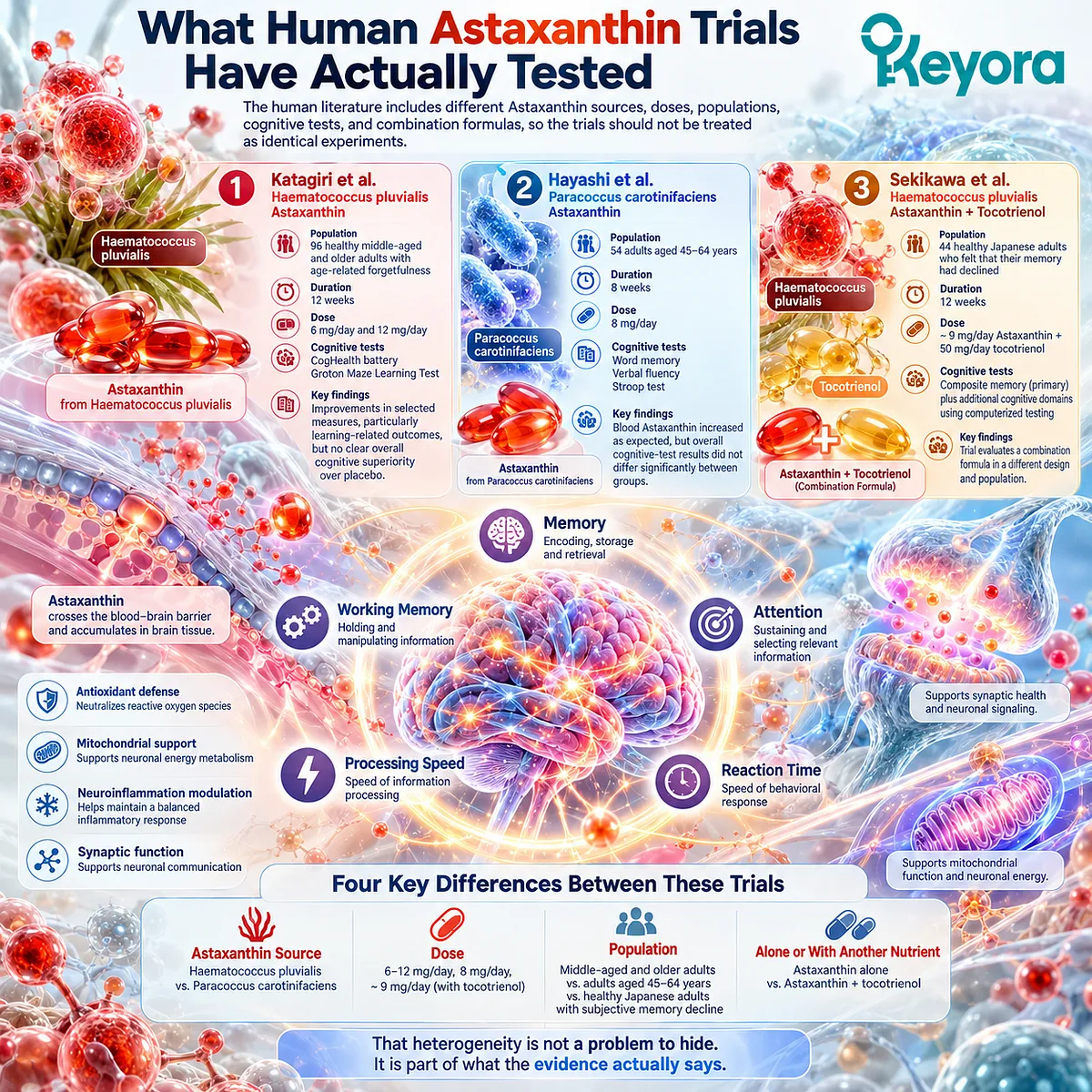
The human literature includes different Astaxanthin sources, doses, populations, cognitive tests, and combination formulas, so the trials should not be treated as identical experiments
The Katagiri trial remains an important starting point because it used Haematococcus pluvialis-derived Astaxanthin in a population directly concerned about memory.
Ninety-six healthy middle-aged and older adults reporting age-related forgetfulness were followed for 12 weeks.
Cognitive performance was assessed repeatedly using the CogHealth battery and Groton Maze Learning Test. The study evaluated Astaxanthin exposures of 6 and 12 mg/day and observed improvements over time in selected measures, particularly in learning-related outcomes.
Yet the authors explicitly noted that the study did not establish a clear overall cognitive superiority over placebo.
Hayashi and colleagues tested a different material and population.
Fifty-four adults aged 45–64 years completed an eight-week placebo-controlled trial.
Twenty-eight participants received 8 mg/day of Astaxanthin-rich extract derived from Paracoccus carotinifaciens and 26 received placebo.
Testing included word memory, verbal fluency, and the Stroop test. Blood Astaxanthin increased as expected, but the overall cognitive-test results did not differ significantly between groups.
This material distinction is important.
Paracoccus carotinifaciens-derived extract should not automatically be treated as identical to a Haematococcus pluvialis-derived intervention.
Sekikawa and colleagues then tested another design.
Forty-four healthy Japanese adults who felt that their memory had declined were randomized to an active intervention or placebo for 12 weeks.
The active softgel contained approximately 9 mg/day of Haematococcus pluvialis-derived Astaxanthin plus 50 mg/day tocotrienol.
Composite memory was designated as the primary cognitive outcome, with additional cognitive domains evaluated using computerized testing.
These trials therefore differ in four important ways:
-
Astaxanthin source
-
Dose
-
Population
-
Whether Astaxanthin was tested alone or with another active nutrient
That heterogeneity is not a problem to hide.
It is part of what the evidence actually says.
What the Memory Findings Show
Selected memory outcomes are among the more encouraging areas of Astaxanthin cognition research, but positive signals still depend on the exact population, test, and intervention
The Katagiri trial provides an early signal.
The 6 mg and 12 mg Astaxanthin groups showed improvements over the study period in selected cognitive measures, and Groton Maze performance improved earlier in the active groups than in placebo.
However, those findings did not become a broad demonstration that Astaxanthin significantly outperformed placebo across cognitive function as a whole.
The Hayashi trial provides an equally useful counterexample.
Across all adults aged 45–64 years, 8 mg/day for eight weeks did not significantly outperform placebo on the overall word-memory, verbal-fluency, or Stroop results.
Yet in participants younger than 55, five-minute delayed word recall improved significantly relative to placebo.
This illustrates why subgroup findings require careful interpretation.
A subgroup result may identify a potentially responsive population or generate a useful hypothesis. It does not convert an overall neutral trial into proof of a universal effect.
The Sekikawa trial produced a clearer positive memory signal.
After 12 weeks, the Astaxanthin–tocotrienol group showed greater improvements in composite memory and verbal memory than placebo.
Participants also reported improvement in a memory-related subjective question concerning difficulty recalling people’s names or the names of things.
But this trial creates a different attribution problem.
Because the intervention contained both Astaxanthin and tocotrienol, the positive memory effect belongs scientifically to the tested combination. It cannot be assigned exclusively to Astaxanthin.
Taken together, these studies justify interest in memory – but not the claim that Astaxanthin has conclusively been shown to improve memory in every healthy adult.
The more accurate interpretation is:
Memory-related outcomes contain promising human signals, but their strength varies by study design and population.
What About Working Memory, Accuracy, and Reaction Time?
Positive memory findings should not be automatically extended to faster thinking, sharper attention, or improved reaction time
Consumers often treat “memory,” “focus,” “mental speed,” and “cognition” as interchangeable.
Clinical trials do not.
Some Astaxanthin studies include tasks that involve working memory, attention, processing speed, or executive control, but the results across these domains are less consistent than a simple “brain booster” narrative would suggest.
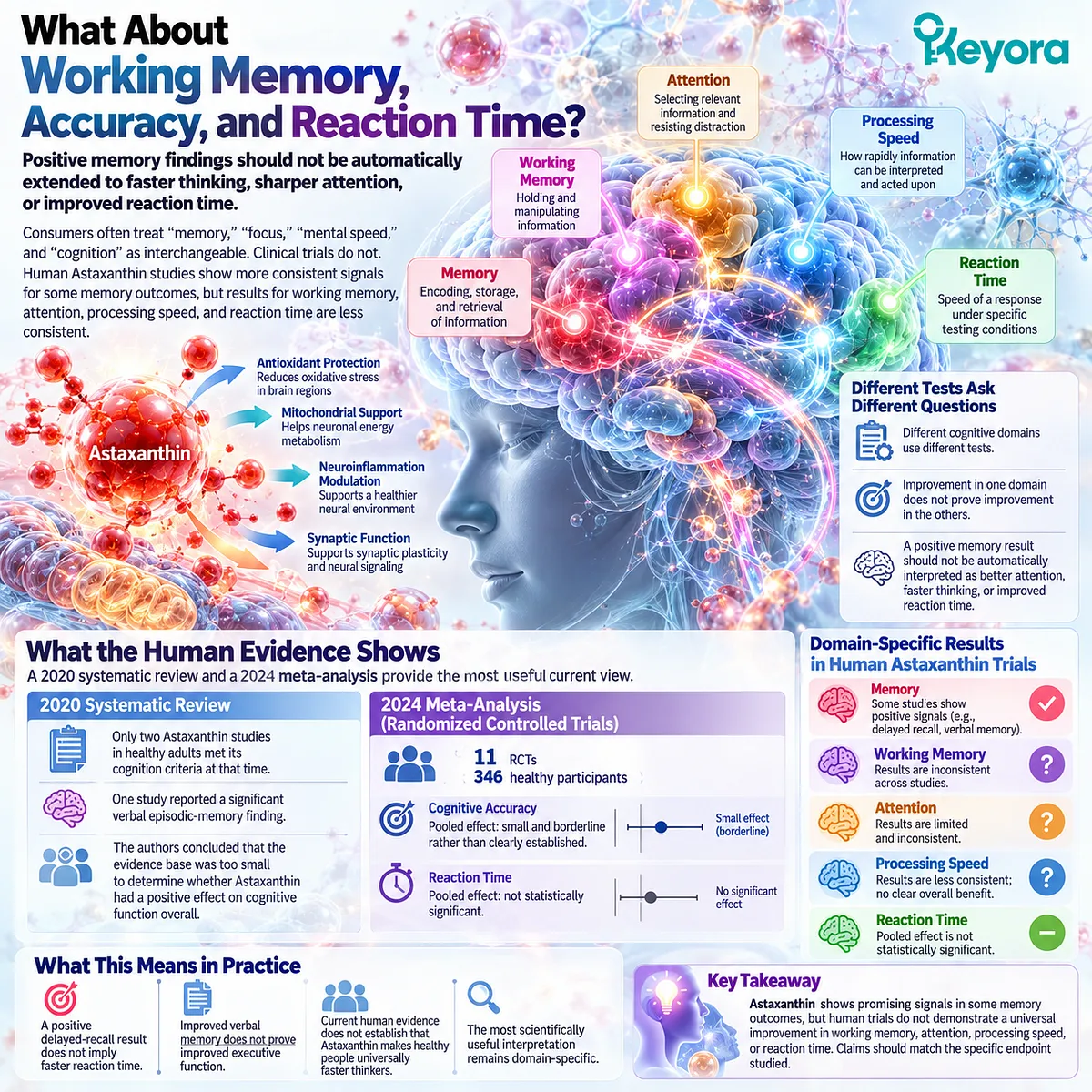
A 2020 systematic review of randomized trials in healthy adults found only two Astaxanthin studies meeting its cognition criteria at that time.
One contained a significant verbal episodic-memory finding, but the authors concluded that the evidence base was too small to determine whether Astaxanthin had a positive effect on cognitive function overall.
The larger 2024 meta-analysis provides a more useful pooled view.
Across 11 randomized controlled trials and 346 healthy participants, the pooled effect on cognitive accuracy was small and borderline rather than clearly established.
For reaction time, the pooled effect was not statistically significant.
This is important for real-world expectations.
Current human evidence does not establish that Astaxanthin makes healthy people universally faster thinkers.
A positive delayed-recall result does not imply faster reaction time.
Improved verbal memory does not prove improved executive function.
The most scientifically useful interpretation remains domain-specific.
Why the Overall Evidence Is Mixed
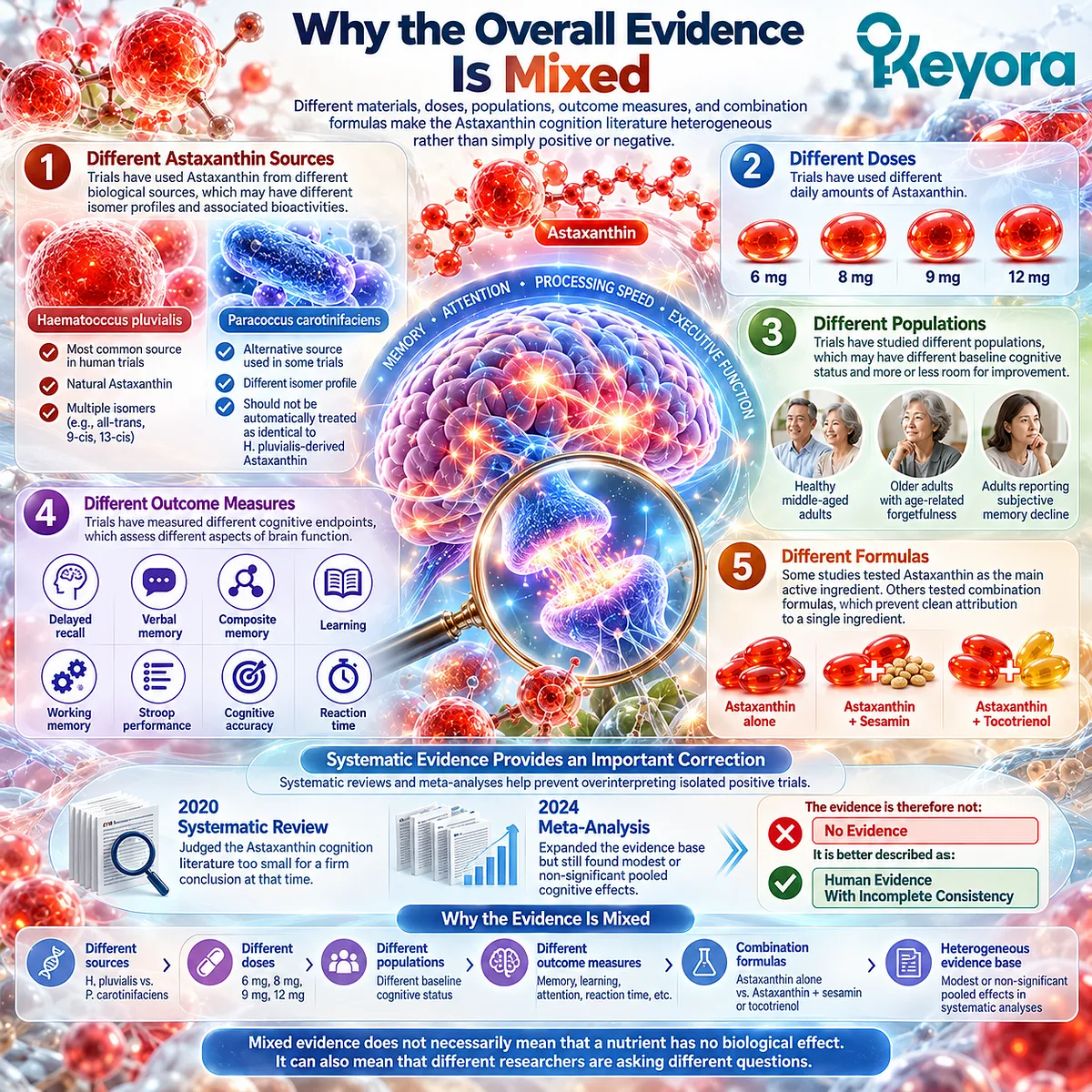
Different materials, doses, populations, outcome measures, and combination formulas make the Astaxanthin cognition literature heterogeneous rather than simply positive or negative
Mixed evidence does not necessarily mean that a nutrient has no biological effect.
It can also mean that different researchers are asking different questions.
The cognition trials have used Astaxanthin from different biological sources, including Haematococcus pluvialis and Paracoccus carotinifaciens.
They have used different daily amounts, including approximately:
-
6 mg
-
8 mg
-
9 mg
-
12 mg
They have studied different populations:
healthy middle-aged adults
older adults with age-related forgetfulness
adults reporting subjective memory decline
They have measured different endpoints:
-
delayed recall
-
verbal memory
-
composite memory
-
learning
-
working memory
-
Stroop performance
-
cognitive accuracy
-
reaction time
Some studies tested Astaxanthin as the main active ingredient.
Others tested Astaxanthin plus sesamin or Astaxanthin plus tocotrienol.
These differences matter because a nutrient may plausibly influence one cognitive domain more than another, one population may have more room for measurable improvement, and combination formulas prevent clean attribution to a single ingredient.
Systematic evidence therefore acts as an important correction against overinterpreting isolated positive trials.
The 2020 systematic review judged the Astaxanthin cognition literature too small for a firm conclusion.
The later 2024 meta-analysis expanded the evidence base but still found modest or non-significant pooled cognitive effects.
The evidence is therefore not:
No Evidence
It is better described as:
Human Evidence With Incomplete Consistency
That is a much more useful conclusion.
Why Membrane and Redox Biology Still Matter
Mechanistic evidence helps explain why Astaxanthin is biologically relevant to cognition, but it should support human findings rather than replace them
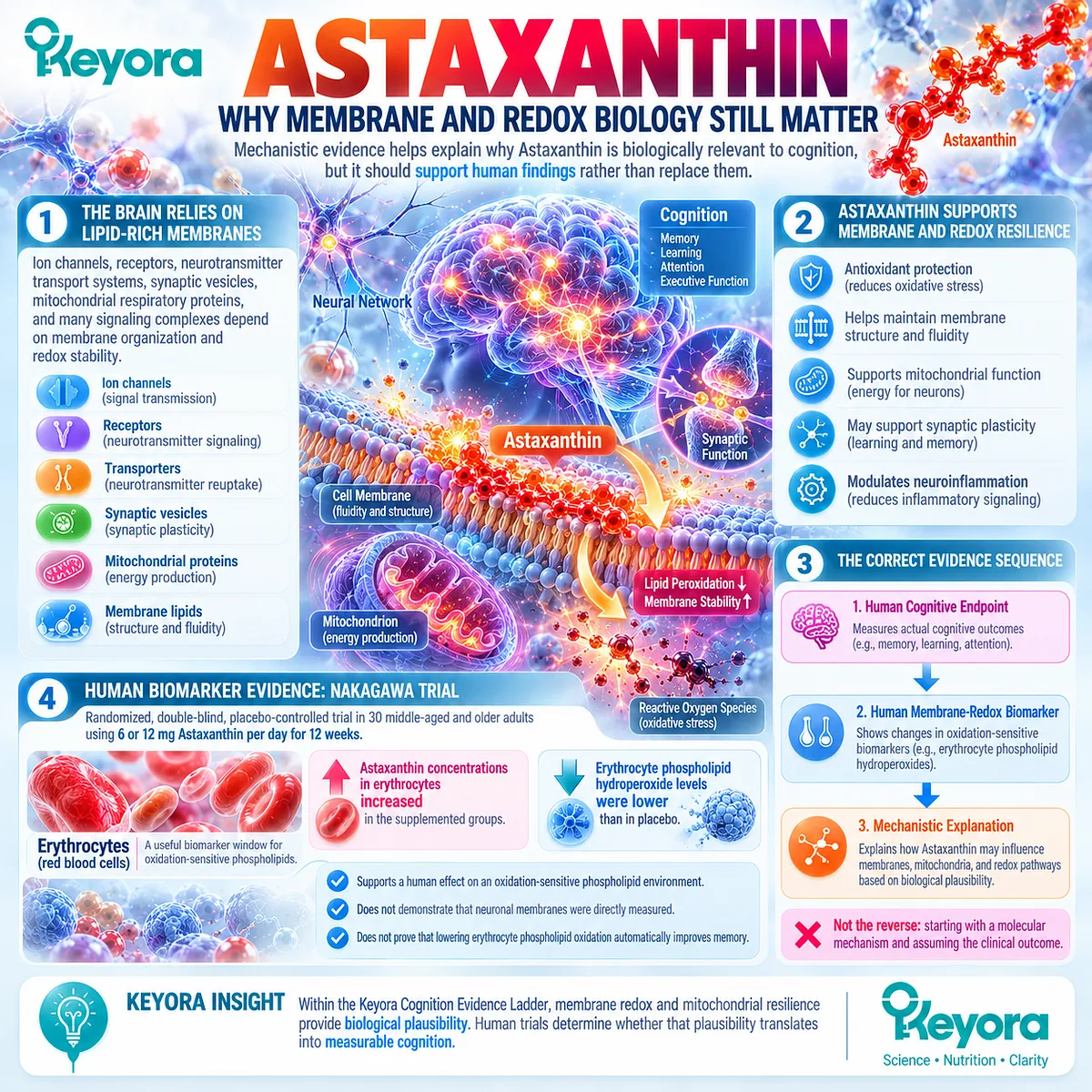
The brain operates through lipid-rich cellular and mitochondrial membranes.
Ion channels, receptors, neurotransmitter transport systems, synaptic vesicles, mitochondrial respiratory proteins, and many signaling complexes depend on membrane organization and redox stability.
Astaxanthin is a lipid-soluble xanthophyll, which is why its interactions with membrane-rich environments and lipid oxidation have attracted substantial research interest.
There is also a useful human biomarker anchor.
Nakagawa and colleagues conducted a randomized, double-blind, placebo-controlled trial in 30 middle-aged and older adults using 6 or 12 mg Astaxanthin per day for 12 weeks.
Astaxanthin concentrations increased in erythrocytes, while erythrocyte phospholipid hydroperoxide levels were lower in the supplemented groups than in placebo.
That result supports a human effect on an oxidation-sensitive phospholipid environment.
It does not demonstrate that neuronal membranes were directly measured.
It also does not prove that lowering erythrocyte phospholipid oxidation automatically improves memory.
The correct evidence sequence is therefore:
Human Cognitive Endpoint
↓
Human Membrane-Redox Biomarker
↓
Mechanistic Explanation
This is the opposite of starting with a molecular mechanism and assuming the clinical outcome.
Within the Keyora Cognition Evidence Ladder, membrane redox and mitochondrial resilience provide biological plausibility.
Human trials determine whether that plausibility translates into measurable cognition.
This distinction prevents terms such as “neural protection” or “mitochondrial support” from becoming unsupported claims of increased intelligence.
Where Keyora Asta 16MG Fits
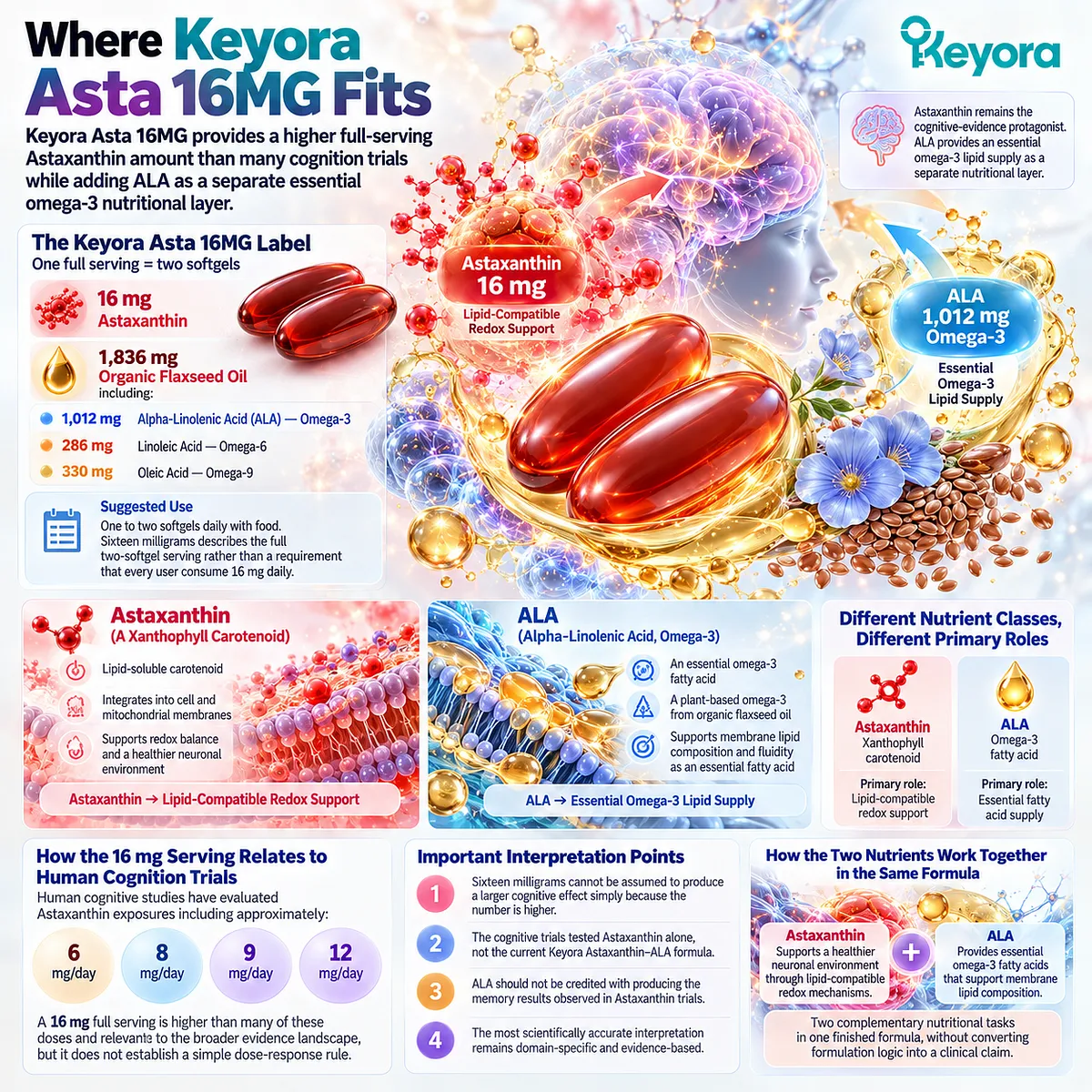
Keyora Asta 16MG provides a higher full-serving Astaxanthin amount than many cognition trials while adding ALA as a separate essential omega-3 nutritional layer
The current Keyora Asta 16MG label defines a full serving as two softgels.
That serving provides:
16 mg Astaxanthin
1,836 mg Organic Flaxseed Oil
including:
-
1,012 mg Alpha-Linolenic Acid — Omega-3
-
286 mg Linoleic Acid — Omega-6
-
330 mg Oleic Acid — Omega-9
The suggested use is one to two softgels daily with food, meaning that 16 mg describes the full two-softgel serving rather than a requirement that every user consume 16 mg daily.
This dose should be interpreted carefully against the cognition literature.
Human cognitive studies discussed above have evaluated Astaxanthin exposures including approximately 6, 8, 9, and 12 mg/day.
Those studies make a 16 mg full serving relevant to the broader Astaxanthin evidence landscape, but they do not establish a simple dose-response rule.
16 mg cannot be assumed to produce a larger cognitive effect simply because the number is higher.
The Keyora formula also contains a second nutritional layer:
ALA
ALA is an essential omega-3 fatty acid, whereas Astaxanthin is a xanthophyll carotenoid. These are different nutrient classes with different primary biological roles.
In this article, Astaxanthin remains the cognitive-evidence protagonist.
ALA should not be credited with producing the memory results observed in Astaxanthin trials because those trials did not test the current Keyora Astaxanthin–ALA formula.
Instead:
-
Astaxanthin → Lipid-Compatible Redox Support
-
ALA → Essential Omega-3 Lipid Supply
This allows the finished formula to be understood without converting formulation logic into a clinical claim.
What the Evidence Supports Today
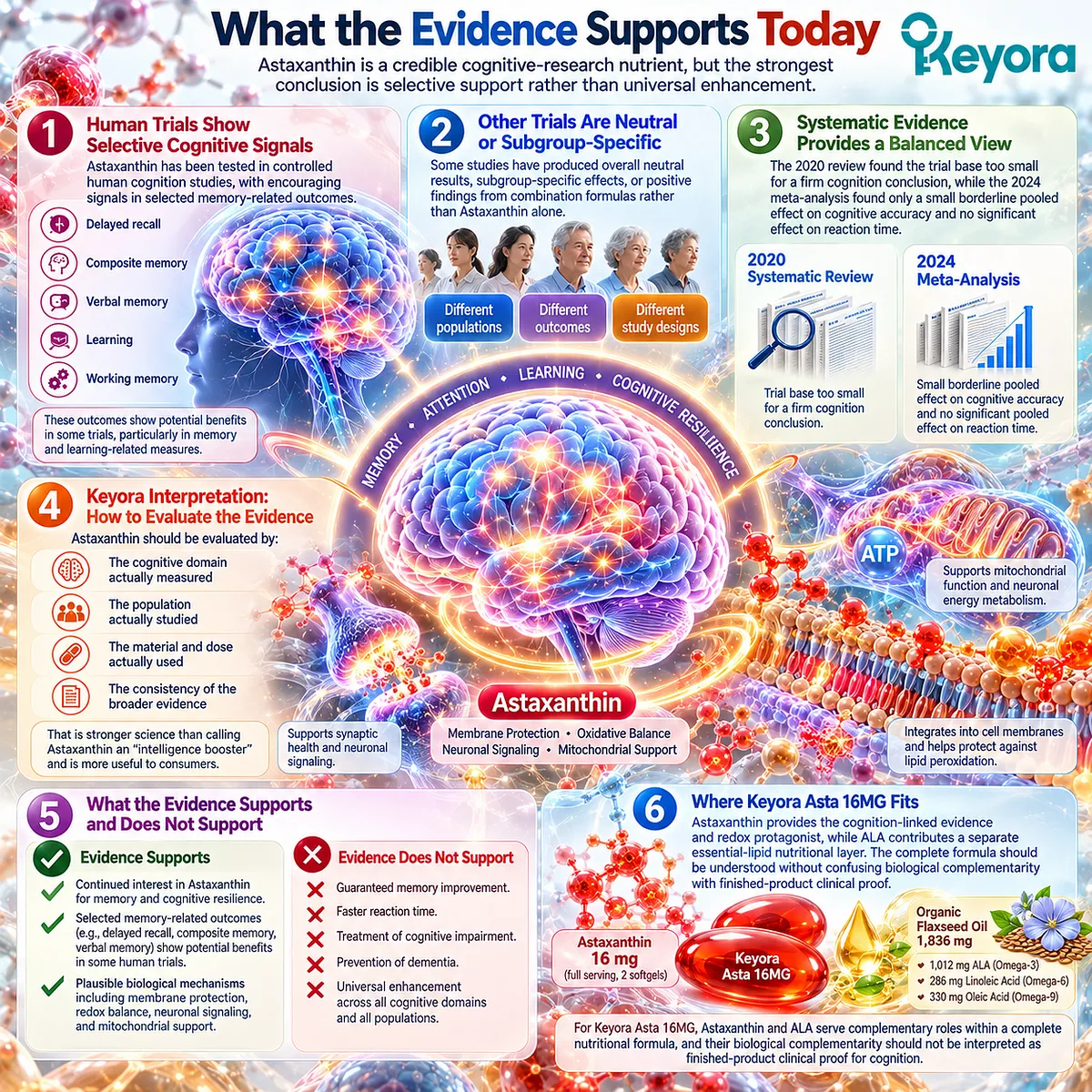
Astaxanthin is a credible cognitive-research nutrient, but the strongest conclusion is selective support rather than universal enhancement
The available human evidence answers the original question with a qualified yes.
Astaxanthin has been tested in controlled human cognition studies.
Selected memory-related outcomes – including delayed recall, composite memory, and verbal memory – have produced encouraging signals in some trials.
At the same time, other studies have produced overall neutral results, subgroup-specific effects, or positive findings from combination formulas rather than Astaxanthin alone.
Systematic evidence reinforces that distinction.
The 2020 review found the Astaxanthin trial base too small for a firm cognition conclusion, while the later 2024 meta-analysis found only a small borderline pooled effect on cognitive accuracy and no significant pooled effect on reaction time.
The Keyora interpretation is therefore straightforward:
Astaxanthin should be evaluated by the cognitive domain actually measured, the population actually studied, the material and dose actually used, and the consistency of the broader evidence.
That is stronger science than calling Astaxanthin an “intelligence booster.”
It is also more useful to consumers.
Current evidence supports continued interest in Astaxanthin for memory and cognitive resilience, particularly where human trial signals align with its membrane-redox biology.
It does not establish guaranteed memory improvement, faster reaction time, treatment of cognitive impairment, or prevention of dementia.
For Keyora Asta 16MG, the appropriate evidence-based position is:
Astaxanthin provides the cognition-linked evidence and redox protagonist, while ALA contributes a separate essential-lipid nutritional layer; the complete formula should be understood without confusing biological complementarity with finished-product clinical proof
This article is for educational and informational purposes only. It does not provide medical advice, diagnosis, treatment, cure, prevention, disease outcome claims, hormone restoration claims, fertility outcome claims, or formula-specific clinical efficacy claims.