
Does Astaxanthin Reduce Inflammation – and What Do NF-kB and Nrf2 Have to Do With It?
Keyora Research Q&A Library
This is part of the Keyora Research Q&A Series, derived from Keyora Astaxanthin Research Journal Series.
Within the Keyora Astaxanthin Researcn framework, this Q&A translates complex astaxanthin biology into reader-friendly, evidence-bound answers, focusing on natural astaxanthin identity, molecular structure, antioxidant and redox mechanisms, membrane lipid interaction, mitochondrial resilience, inflammatory signaling pathways, human evidence interpretation, and the scientific principles behind responsible supplementation.
First published by Keyora Research Journal: www.keyorahealth.com
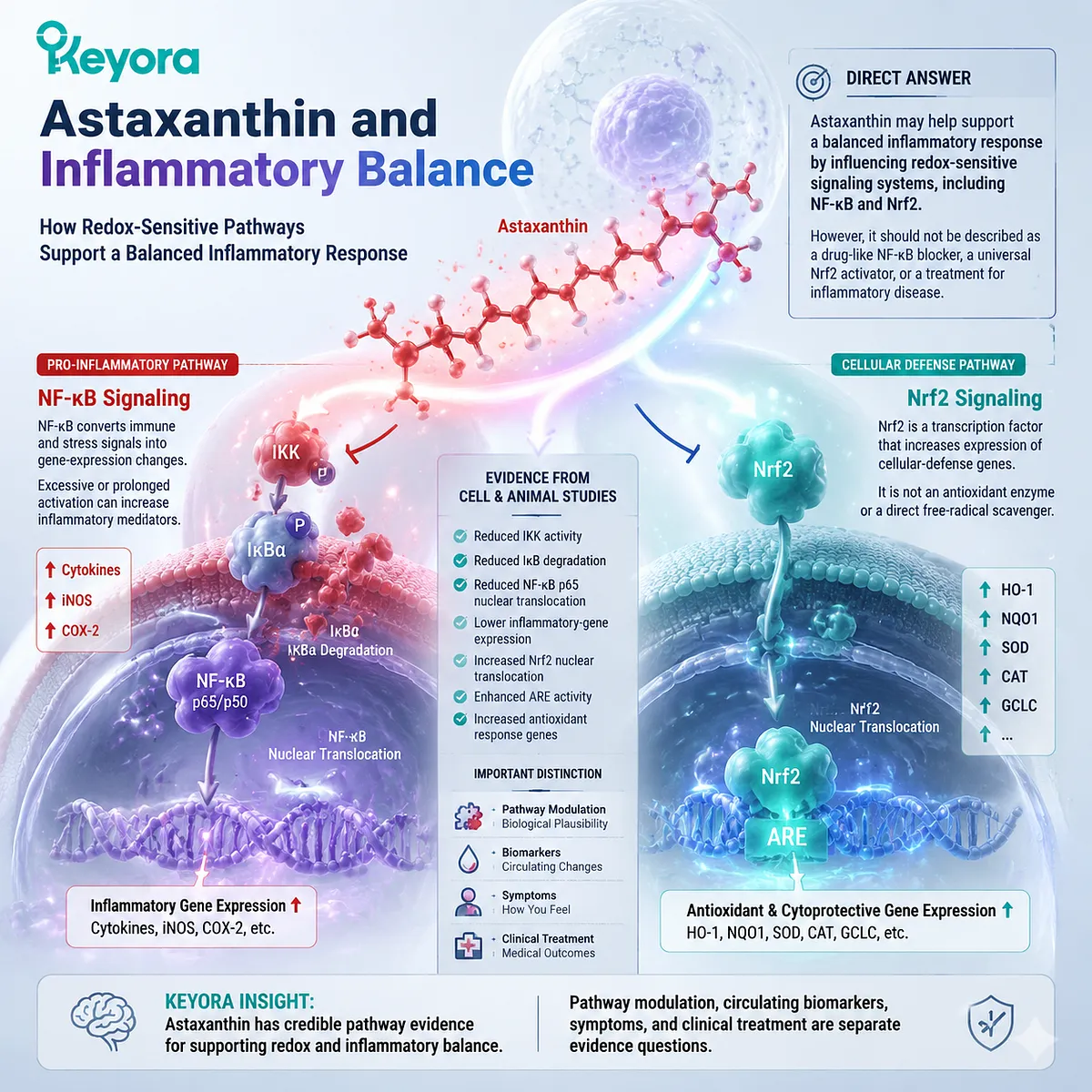
Direct Answer
Astaxanthin may help support a balanced inflammatory response by influencing redox-sensitive signaling systems, including NF-kB and Nrf2. However, it should not be described as a drug-like NF-kB blocker, a universal Nrf2 activator, or a treatment for inflammatory disease.
NF-kB is a family of transcription factors that helps cells convert immune and stress signals into changes in gene expression. Under selected inflammatory conditions, excessive or prolonged NF-kB activation can increase expression of cytokines, inducible nitric oxide synthase, or iNOS, and cyclooxygenase-2, or COX-2.
Nrf2 performs a different role. It is not an antioxidant enzyme or a molecule that directly neutralizes free radicals. Nrf2 is a transcription factor that can increase expression of selected cellular-defense genes, including heme oxygenase-1, or HO-1, and other antioxidant-response systems.
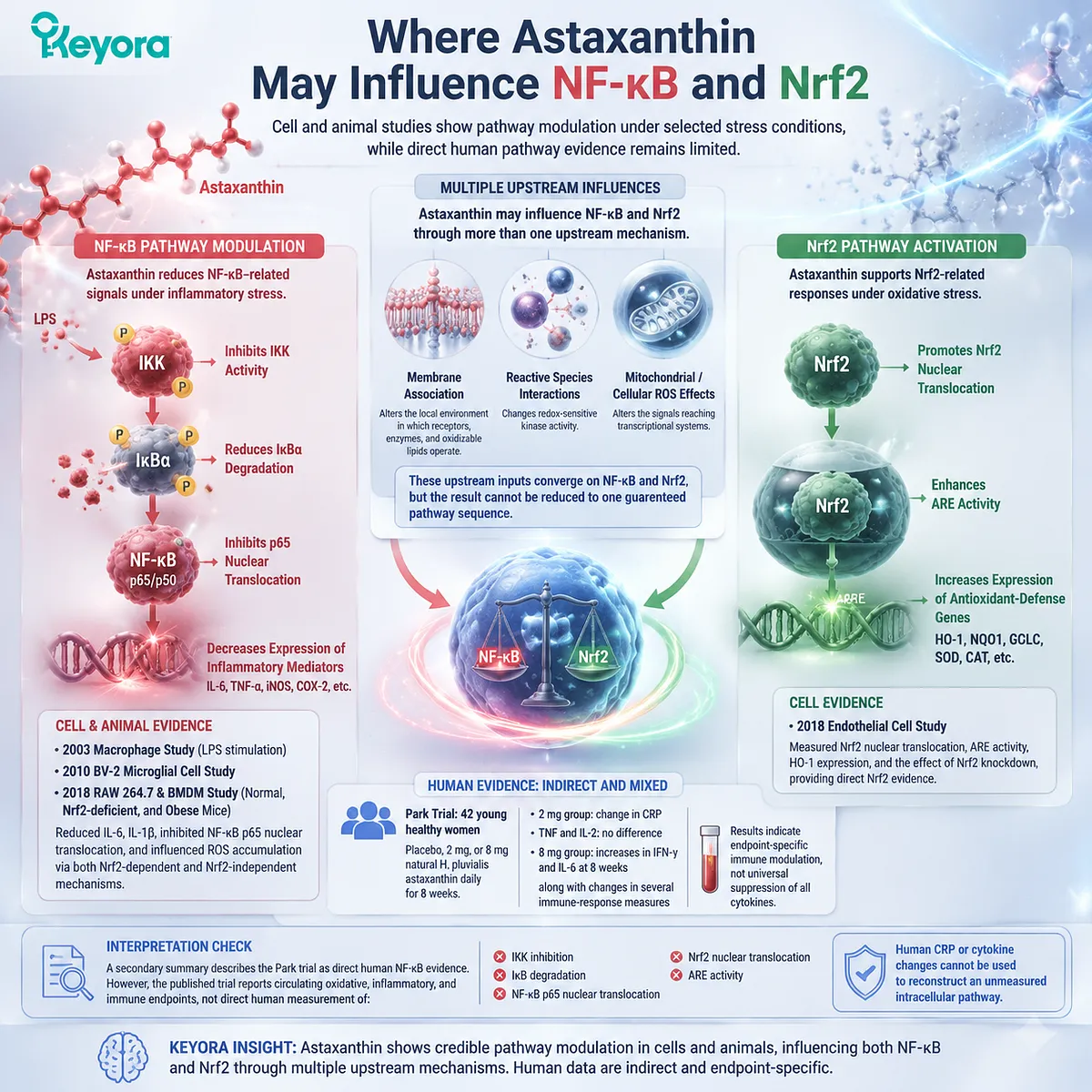
Cell and animal experiments show that Astaxanthin can reduce selected NF-kB-related signals and enhance Nrf2-related responses under defined stress conditions. Research has reported changes in IKK activity, IκB degradation, NF-kB p65 nuclear translocation, inflammatory-gene expression, Nrf2 nuclear translocation, and antioxidant response element activity.
These endpoints support biological plausibility. They do not prove that oral Astaxanthin shuts down inflammation throughout the human body.
Astaxanthin has credible pathway evidence for supporting redox and inflammatory balance, but pathway modulation, circulating biomarkers, symptoms, and clinical treatment are separate evidence questions.
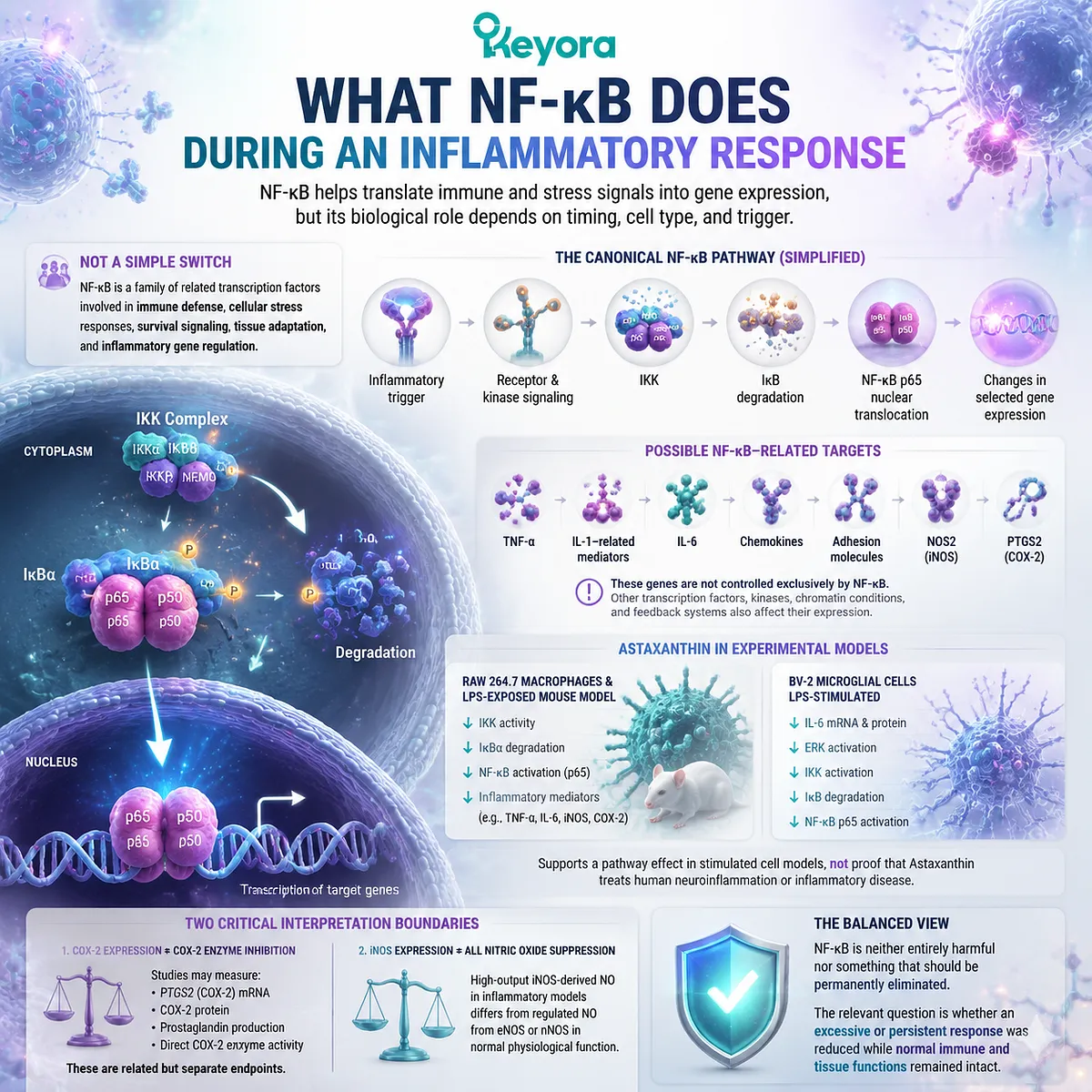
What NF-kB Does During an Inflammatory Response
NF-kB helps translate immune and stress signals into gene expression, but its biological role depends on timing, cell type, and trigger
NF-kB is not one molecule acting as a simple inflammation switch. It is a family of related transcription factors involved in immune defense, cellular stress responses, survival signaling, tissue adaptation, and inflammatory gene regulation.
In one common canonical pathway, NF-kB-containing complexes are restrained in the cytoplasm by inhibitory proteins called IκBs. An inflammatory trigger may activate the IκB kinase complex, or IKK, which promotes phosphorylation and degradation of IκB. This allows NF-kB complexes containing the p65 subunit to move into the nucleus and influence gene transcription.
A simplified pathway is:
Inflammatory trigger
→ receptor and kinase signaling
→ IKK activation
→ IκB degradation
→ NF-kB p65 nuclear translocation
→ changes in selected gene expression
This sequence is useful for explaining many experiments, but it is not identical in every cell. NF-kB activation can vary in strength, duration, oscillation pattern, protein composition, and target-gene selection.
Possible NF-kB-related targets include:
-
TNF-alpha
-
IL-1-related mediators
-
IL-6
-
chemokines
-
adhesion molecules
-
NOS2, which encodes iNOS
-
PTGS2, which encodes COX-2
These genes are not controlled exclusively by NF-kB. Other transcription factors, kinases, chromatin conditions, and feedback systems also affect their expression.
An early Astaxanthin experiment used LPS-stimulated RAW 264.7 macrophages, primary macrophages, and an LPS-exposed mouse model. Astaxanthin reduced production or expression of selected inflammatory mediators and was associated with lower IKK activity, less IκB-alpha degradation, and reduced NF-kB activation in that experimental setting.
A later BV-2 microglial-cell study reported lower LPS-stimulated IL-6 mRNA and protein together with changes in ERK, IKK, IκB, and NF-kB p65-related activation. This supports a pathway effect in an experimentally stimulated microglial cell line, not proof that Astaxanthin treats human neuroinflammation.
Two interpretation boundaries are especially important.
First, lower COX-2 expression is not necessarily the same as directly inhibiting the COX-2 enzyme. A study may measure PTGS2 mRNA, COX-2 protein, prostaglandin production, or direct enzyme activity. These are related but separate endpoints.
Second, lower iNOS expression does not mean that all nitric oxide should be suppressed. High-output iNOS-related nitric oxide in an inflammatory model differs from regulated nitric oxide produced through endothelial or neuronal nitric oxide synthases.
NF-kB is therefore neither entirely harmful nor something that should be permanently eliminated. The relevant question is whether an excessive or persistent response was reduced while normal immune and tissue functions remained intact.
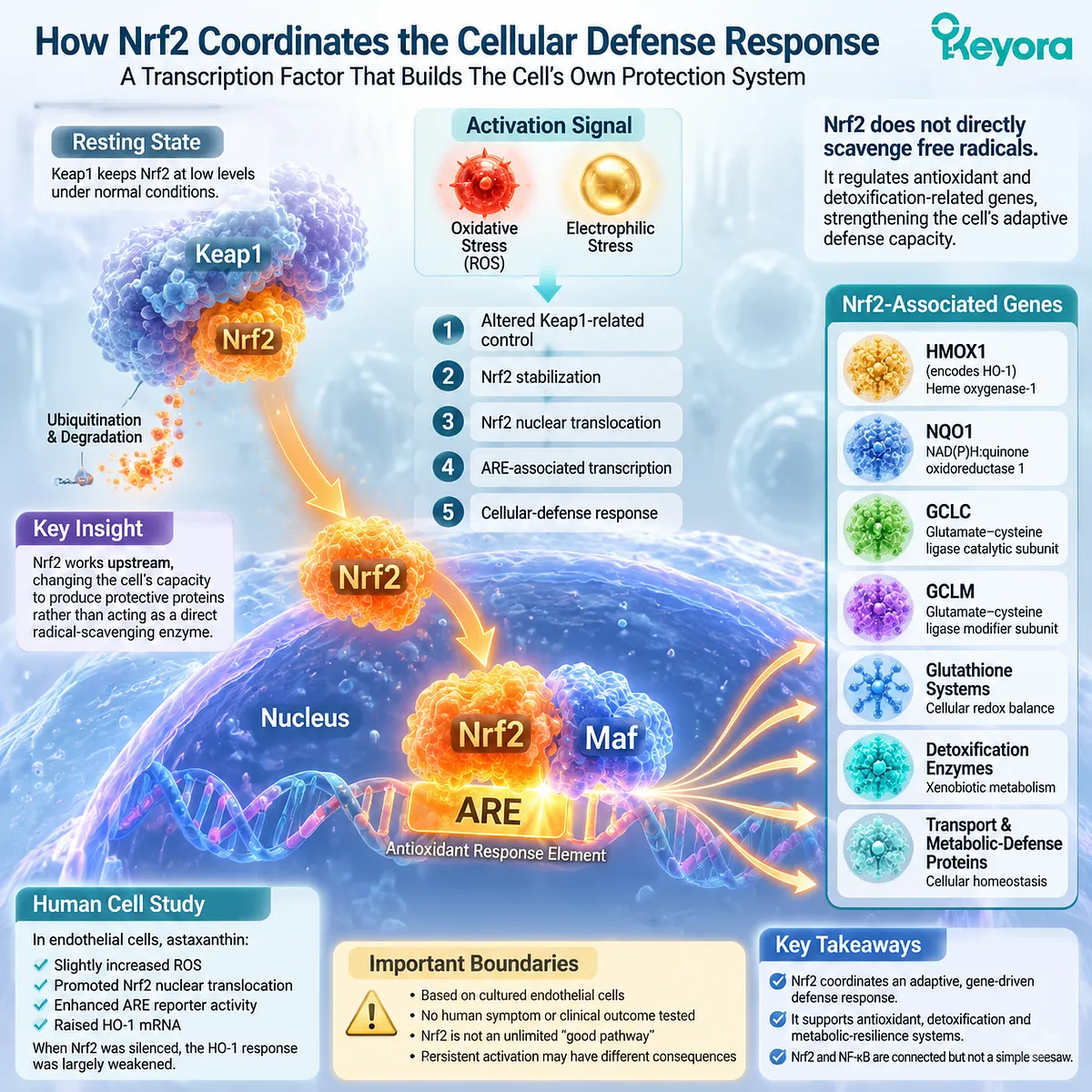
How Nrf2 Coordinates the Cellular Defense Response
Nrf2 regulates antioxidant and detoxification-related genes rather than acting as a direct radical-scavenging enzyme
Nrf2 is a transcription factor that helps cells adapt to oxidative and electrophilic challenges.
Under many resting conditions, the protein Keap1 helps target Nrf2 for continual degradation. This keeps Nrf2 activity relatively low when a major defensive response is unnecessary. Primary mechanistic research established Keap1 as an important negative regulator of Nrf2 and antioxidant response element-dependent gene expression.
When cellular conditions alter Keap1-related sensing, more Nrf2 can become available. Nrf2 may then enter the nucleus, interact with small Maf proteins, and bind regulatory sequences known as antioxidant response elements, or AREs.
The pathway can be summarized as:
Oxidative or electrophilic signal
→ altered Keap1-related control
→ Nrf2 stabilization
→ Nrf2 nuclear translocation
→ ARE-associated transcription
→ cellular-defense response
Depending on cell type and experimental context, Nrf2-associated genes may include:
-
HMOX1, which encodes HO-1
-
NQO1
-
GCLC
-
GCLM
-
selected glutathione-related systems
-
detoxification enzymes
-
transport and metabolic-defense proteins
Nrf2 does not directly break down hydrogen peroxide or capture a lipid radical. Instead, it changes the cell’s capacity to produce proteins involved in defense, metabolism, detoxification, and recovery.
A human umbilical-vein endothelial-cell study illustrates this difference. Astaxanthin increased small amounts of cellular ROS in that model, promoted Nrf2 nuclear translocation, increased ARE-driven reporter activity, and raised HO-1 mRNA. When researchers reduced Nrf2 expression with small interfering RNA, the HO-1 response was substantially weakened.
This finding is important because it does not fit the simplistic model that an antioxidant must always reduce every ROS signal immediately. In that experiment, a limited signal appeared to participate in activation of an adaptive defense pathway.
The study still has clear boundaries:
-
it used cultured endothelial cells
-
Astaxanthin concentrations were controlled experimentally
-
nuclear translocation and gene expression were measured
-
no human symptom or clinical outcome was tested
-
it did not prove that more Nrf2 activation is always better
Persistent Nrf2 activation can have different consequences from a temporary adaptive response. The pathway also participates in metabolism, cell survival, drug processing, and abnormal-cell biology. It should not be promoted as an unlimited “good pathway.”
NF-kB and Nrf2 can influence overlapping redox and transcriptional environments, but they are not a simple seesaw. Nrf2 activation does not automatically switch NF-kB off, and reduced NF-kB activity does not prove that Nrf2 caused the change.
Where Astaxanthin May Influence NF-kB and Nrf2
Cell and animal studies show pathway modulation under selected stress conditions, while direct human pathway evidence remains limited
Astaxanthin may influence NF-kB and Nrf2 through more than one upstream mechanism.
Its membrane association may alter the local environment in which receptors, enzymes, and oxidizable lipids operate. Its interactions with selected reactive species may change redox-sensitive kinase activity. Effects on mitochondrial or cellular ROS may alter the signals reaching transcriptional systems.
The result cannot be reduced to one guaranteed pathway sequence.
The 2003 macrophage study supports an NF-kB-related mechanism involving IKK activity, IκB degradation, inflammatory mediators, iNOS, and COX-2 under LPS stimulation. The 2010 BV-2 study adds microglial-cell evidence involving IL-6 and several phosphorylation and translocation-related signals.
The 2018 endothelial-cell study provides more direct Nrf2 evidence. It measured Nrf2 nuclear translocation, ARE activity, HO-1 expression, and the effect of Nrf2 knockdown rather than inferring Nrf2 activation from a general antioxidant measurement.
Farruggia and colleagues tested Astaxanthin in RAW 264.7 macrophages, bone-marrow-derived macrophages from normal and Nrf2-deficient mice, and cells from obese mice. Astaxanthin reduced LPS-induced IL-6 and IL-1-beta-related expression, inhibited NF-kB p65 nuclear translocation, and influenced ROS accumulation through both Nrf2-dependent and Nrf2-independent mechanisms.
That result prevents an overly simple conclusion.
Astaxanthin did not act only by “turning Nrf2 on.” Some effects remained in Nrf2-deficient macrophages, while others differed according to Nrf2 status. The biological response depended on the gene, cell type, inflammatory trigger, and endpoint.
Human evidence is more indirect.
In the Park trial, 42 young healthy women received placebo, 2 mg, or 8 mg of natural Haematococcus pluvialis Astaxanthin daily for eight weeks. The 2 mg group showed a change in CRP, while TNF and IL-2 did not differ. At eight weeks, IFN-gamma and IL-6 increased in the 8 mg group, alongside changes in several immune-response measurements.
These mixed results do not support a simple claim that Astaxanthin suppresses all inflammatory cytokines. They are more consistent with endpoint-specific immune modulation.
A secondary summary in the supplied project corpus describes the Park trial as direct human NF-kB evidence. However, the published trial should be interpreted more narrowly: it reports circulating oxidative, inflammatory, and immune endpoints, not direct human measurement of IKK inhibition, IκB degradation, NF-kB p65 nuclear translocation, Nrf2 nuclear translocation, or ARE activity.
Human CRP or cytokine changes therefore cannot be used to reconstruct an unmeasured intracellular pathway.
Use the Keyora Activation – Gene – Outcome Check
Three questions separate a measured signaling change from a claim of immune suppression or inflammatory-disease treatment
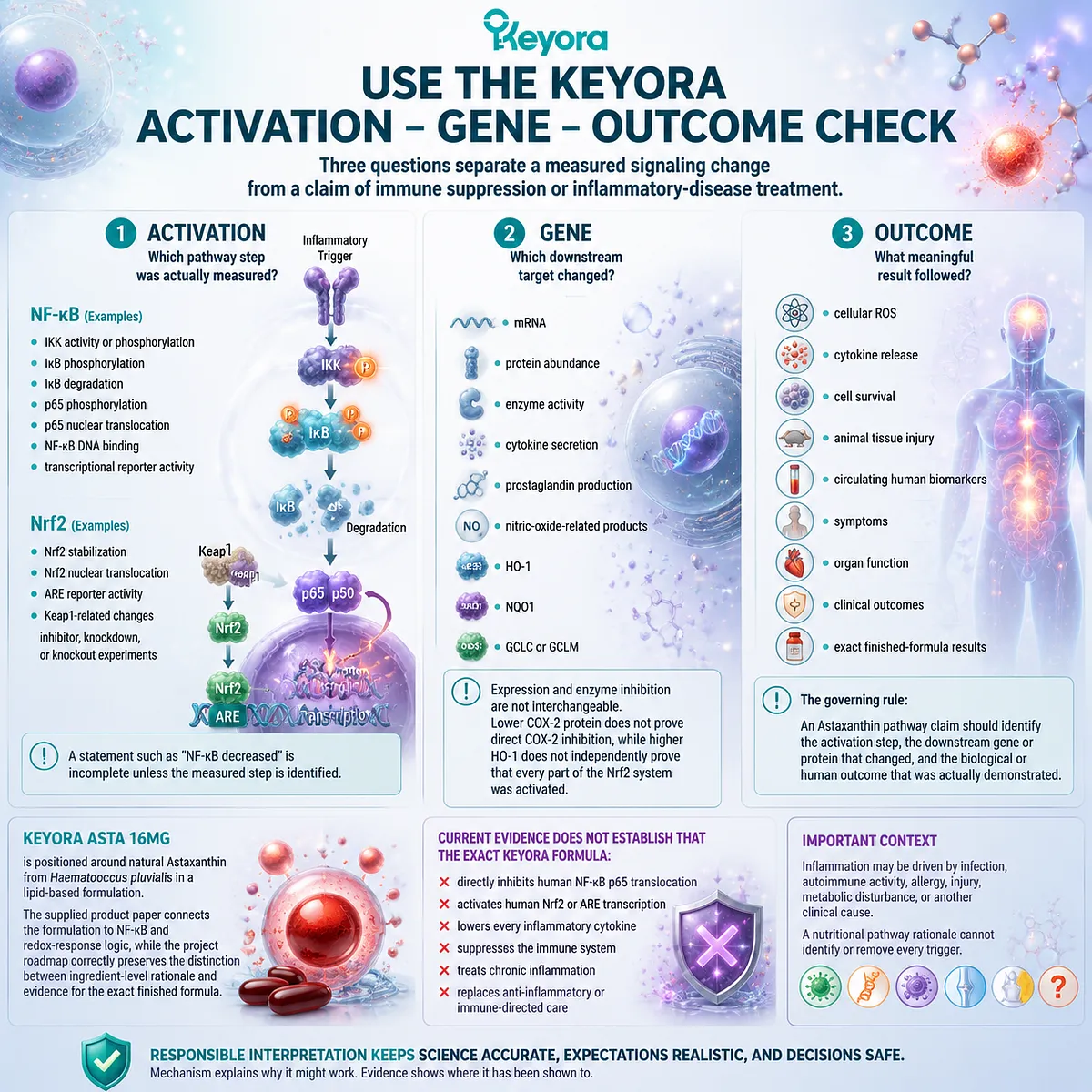
The Keyora Activation – Gene – Outcome Check provides a practical way to evaluate Astaxanthin pathway claims.
1. Activation
Which pathway step was actually measured?
For NF-kB, look for:
-
IKK activity or phosphorylation
-
IκB phosphorylation
-
IκB degradation
-
p65 phosphorylation
-
p65 nuclear translocation
-
NF-kB DNA binding
-
transcriptional reporter activity
For Nrf2, look for:
-
Nrf2 stabilization
-
Nrf2 nuclear translocation
-
ARE reporter activity
-
Keap1-related changes
-
inhibitor, knockdown, or knockout experiments
A statement such as “NF-kB decreased” is incomplete unless the measured step is identified.
2. Gene
Which downstream target changed?
Check whether researchers measured:
-
mRNA
-
protein abundance
-
enzyme activity
-
cytokine secretion
-
prostaglandin production
-
nitric-oxide-related products
-
HO-1
-
NQO1
-
GCLC or GCLM
Expression and enzyme inhibition are not interchangeable. Lower COX-2 protein does not prove direct COX-2 inhibition, while higher HO-1 does not independently prove that every part of the Nrf2 system was activated.
3. Outcome
What meaningful result followed?
Possible endpoints include:
-
cellular ROS
-
cytokine release
-
cell survival
-
animal tissue injury
-
circulating human biomarkers
-
symptoms
-
organ function
-
clinical outcomes
-
exact finished-formula results
The governing rule is:
An Astaxanthin pathway claim should identify the activation step, the downstream gene or protein that changed, and the biological or human outcome that was actually demonstrated.
Keyora Asta 16MG is positioned around natural Astaxanthin from Haematococcus pluvialis in a lipid-based formulation. The supplied product paper connects the formulation to NF-kB and redox-response logic, while the project roadmap correctly preserves the distinction between ingredient-level rationale and evidence for the exact finished formula.
The current evidence does not establish that the exact Keyora formula:
-
directly inhibits human NF-kB p65 translocation
-
activates human Nrf2 or ARE transcription
-
lowers every inflammatory cytokine
-
suppresses the immune system
-
treats chronic inflammation
-
replaces anti-inflammatory or immune-directed care
Inflammation may be driven by infection, autoimmune activity, allergy, injury, metabolic disturbance, or another clinical cause. A nutritional pathway rationale cannot identify or remove every trigger.
Closing Summary
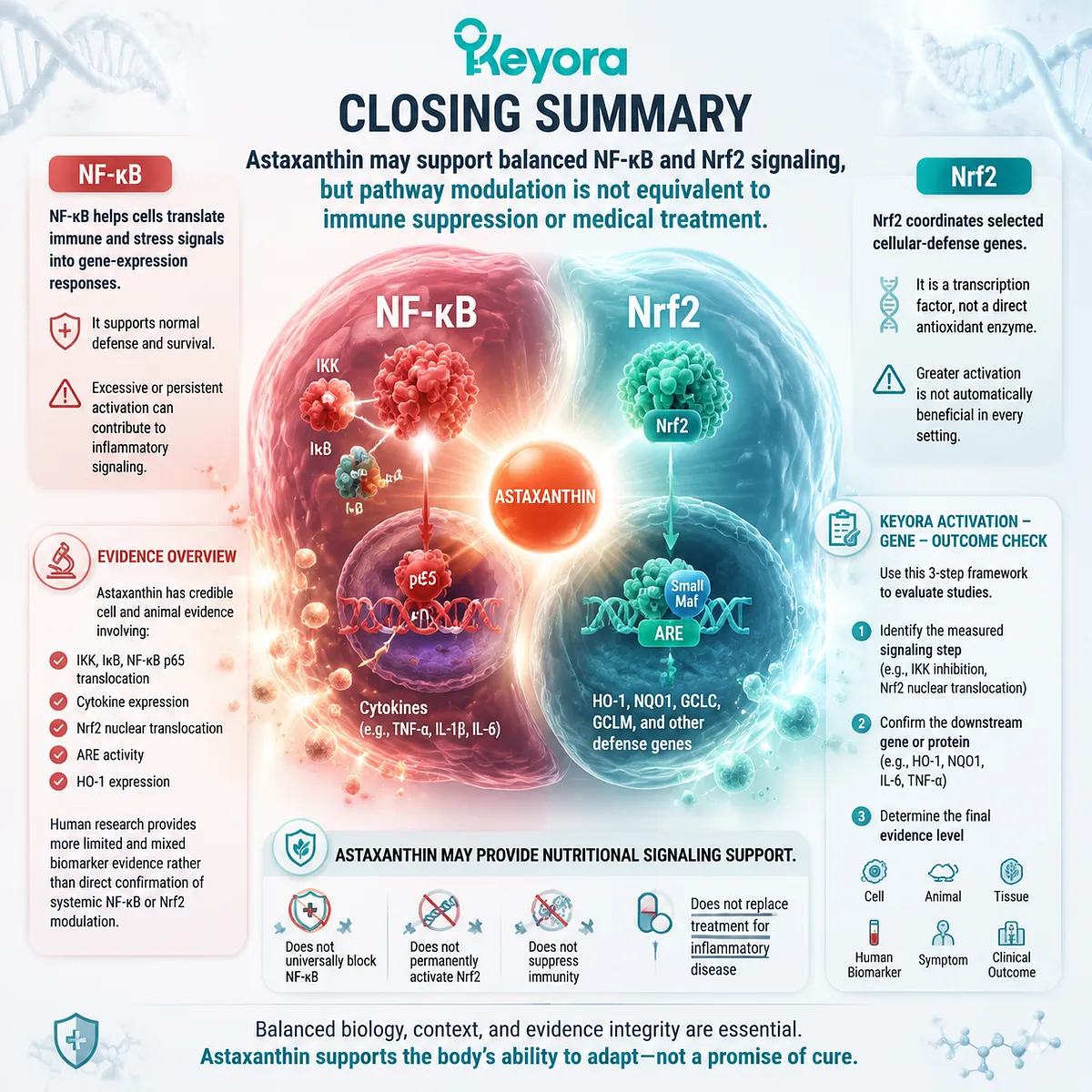
Astaxanthin may support balanced NF-kB and Nrf2 signaling, but pathway modulation is not equivalent to immune suppression or medical treatment
NF-kB helps cells translate immune and stress signals into gene-expression responses. It supports normal defense and survival, although excessive or persistent activation can contribute to inflammatory signaling.
Nrf2 coordinates selected cellular-defense genes. It is a transcription factor, not a direct antioxidant enzyme, and greater activation is not automatically beneficial in every setting.
Astaxanthin has credible cell and animal evidence involving IKK, IκB, NF-kB p65 translocation, cytokine expression, Nrf2 nuclear translocation, ARE activity, and HO-1. Human research provides more limited and mixed biomarker evidence rather than direct confirmation of systemic NF-kB or Nrf2 modulation.
Use the Keyora Activation – Gene – Outcome Check.
Identify the measured signaling step, confirm the downstream gene or protein, and determine whether the final evidence concerns a cell, animal tissue, human biomarker, symptom, or clinical result.
Astaxanthin may provide nutritional signaling support. It does not universally block NF-kB, permanently activate Nrf2, suppress immunity, or replace treatment for inflammatory disease.
This article is for educational and informational purposes only. It does not provide medical advice, diagnosis, treatment, cure, prevention, disease outcome claims, hormone restoration claims, fertility outcome claims, or formula-specific clinical efficacy claims.