
Does Astaxanthin Help With Exercise Recovery?
Keyora Research Q&A Library
This is part of the Keyora Research Q&A Series, derived from Keyora Astaxanthin Research Journal Series.
Within the Keyora Astaxanthin Researcn framework, this Q&A translates complex astaxanthin biology into reader-friendly, evidence-bound answers, focusing on natural astaxanthin identity, molecular structure, antioxidant and redox mechanisms, membrane lipid interaction, mitochondrial resilience, inflammatory signaling pathways, human evidence interpretation, and the scientific principles behind responsible supplementation.
First published by Keyora Research Journal: www.keyorahealth.com
Direct Answer
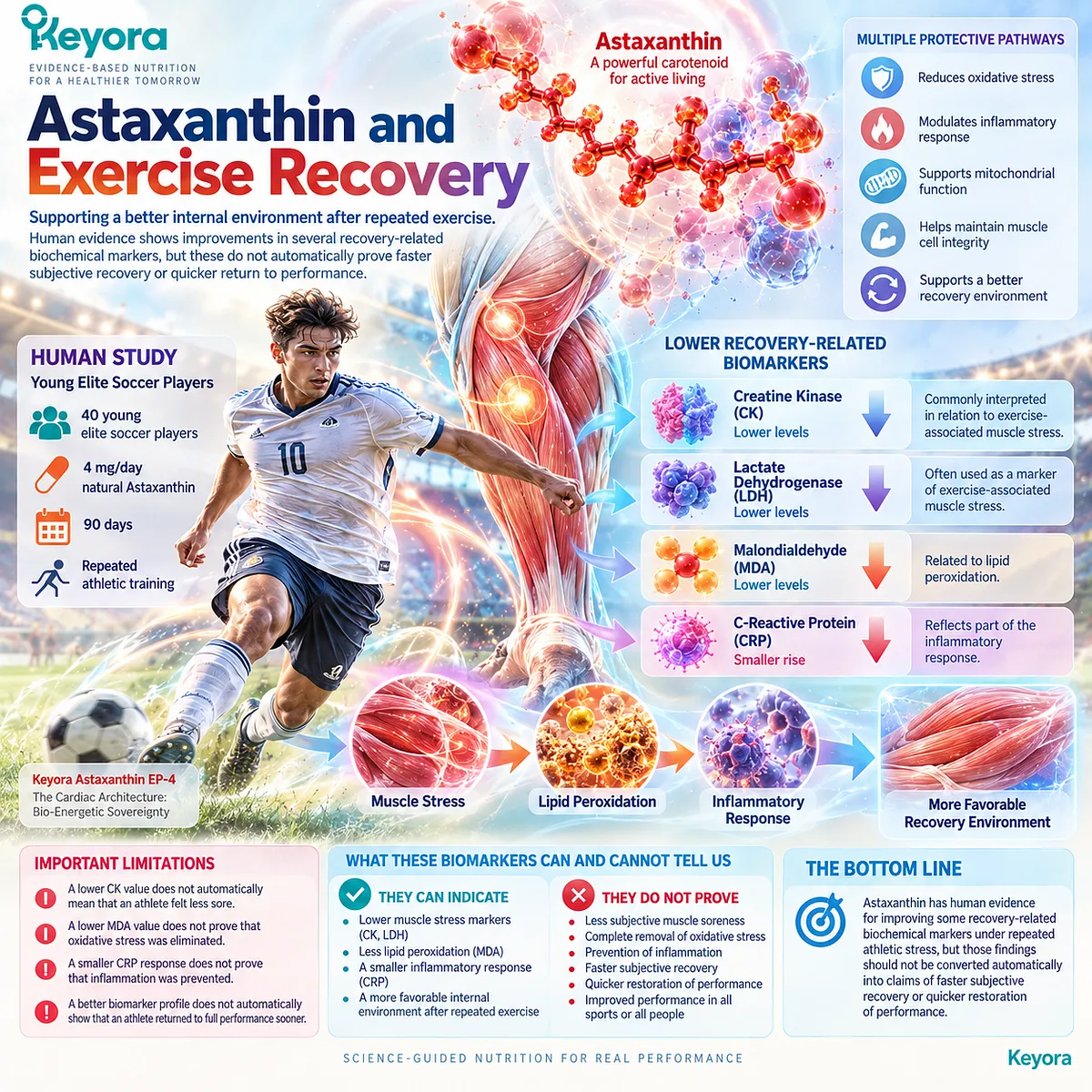
Astaxanthin may support exercise recovery by reducing some biological signals associated with muscle stress, lipid peroxidation, and inflammation after repeated exercise.
Human evidence summarized in Keyora Astaxanthin EP-4: The Cardiac Architecture: Bio-Energetic Sovereignty includes a study in 40 young elite soccer players who received 4 mg of natural Astaxanthin daily for 90 days.
The EP-4 summary reports lower creatine kinase, or CK, lower lactate dehydrogenase, or LDH, lower malondialdehyde, or MDA, and a smaller rise in C-reactive protein, or CRP, in the Astaxanthin group.
These findings are relevant to exercise recovery because CK and LDH are commonly interpreted in relation to exercise-associated muscle stress, MDA is related to lipid peroxidation, and CRP reflects part of the inflammatory response.
But these biomarkers do not measure every dimension of recovery.
-
A lower CK value does not automatically mean that an athlete felt less sore.
-
A lower MDA value does not prove that oxidative stress was eliminated.
-
A smaller CRP response does not prove that inflammation was prevented.
-
And a better biomarker profile does not automatically show that an athlete returned to full performance sooner.
The strongest conclusion is therefore:
Astaxanthin has human evidence for improving some recovery-related biochemical markers under repeated athletic stress, but those findings should not be converted automatically into claims of faster subjective recovery or quicker restoration of performance.
What Does “Exercise Recovery” Actually Mean?
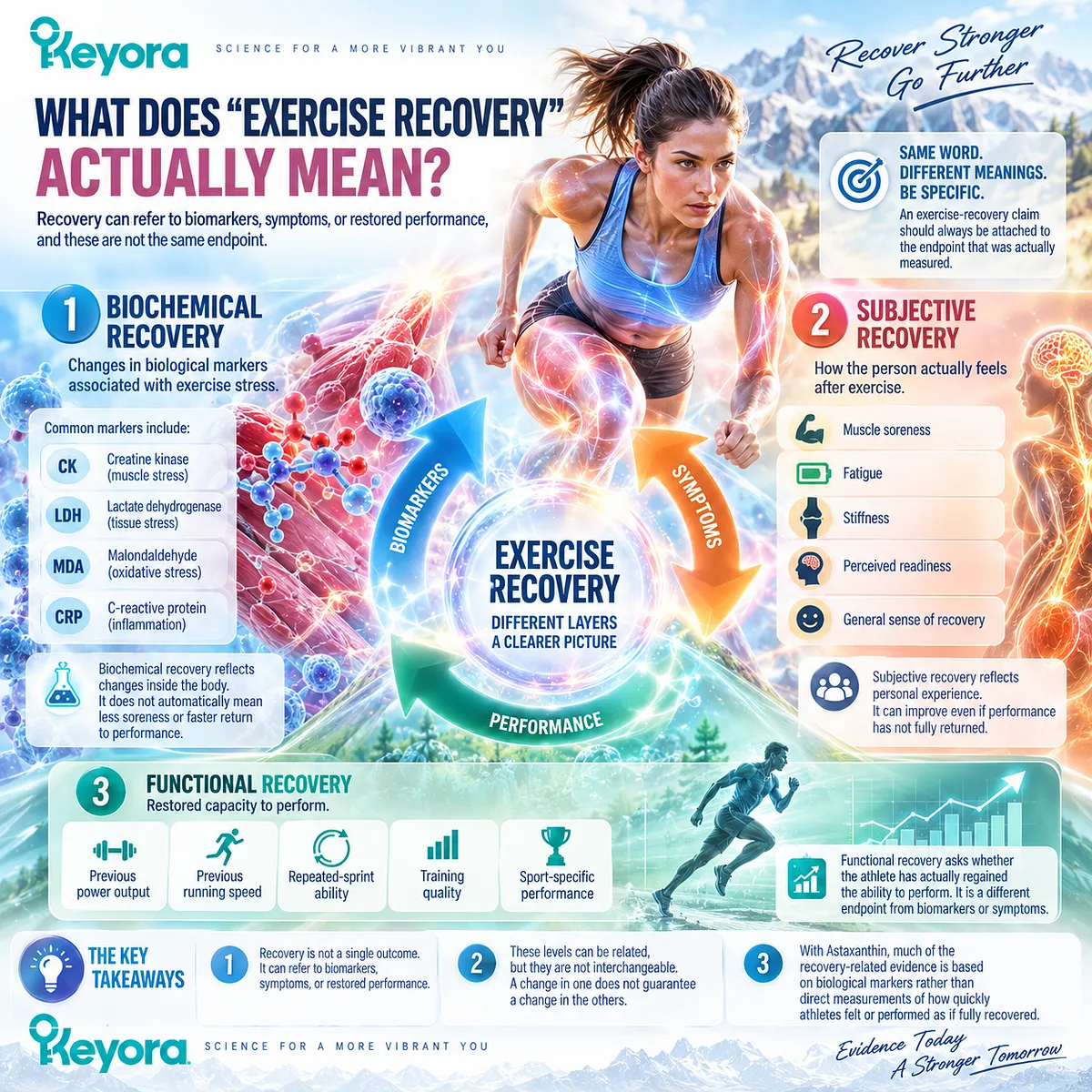
Recovery can refer to biomarkers, symptoms, or restored performance, and these are not the same endpoint
“Recovery” is often treated as if it were one measurable outcome.
In reality, recovery can describe several different layers of physiology and experience.
One layer is biochemical recovery.
Researchers may measure variables associated with muscle stress, oxidative activity, or inflammatory response. These include markers such as CK, LDH, MDA, and CRP.
A second layer is subjective recovery.
This includes how the person actually feels after exercise:
-
muscle soreness
-
fatigue
-
stiffness
-
perceived readiness
-
general sense of recovery
A third layer is functional recovery.
This asks whether the athlete has actually restored the capacity to perform:
-
previous power output
-
previous running speed
-
repeated-sprint ability
-
training quality
-
sport-specific performance
These levels can be related, but they are not interchangeable.
An athlete can have a favorable change in a blood biomarker without necessarily reporting a meaningful change in soreness.
Likewise, someone can feel better while still showing incomplete recovery of performance.
This is why an exercise-recovery claim should always remain attached to the endpoint that was actually measured.
The central evidence rule is:
Biochemical recovery signals are not identical to subjective recovery or restored performance.
This distinction becomes particularly important with Astaxanthin because much of the recovery-related evidence in Keyora Astaxanthin EP-4 is based on biological markers rather than direct measurements of how quickly athletes felt or performed as if fully recovered.
What Did the Soccer-Player Study Actually Find?
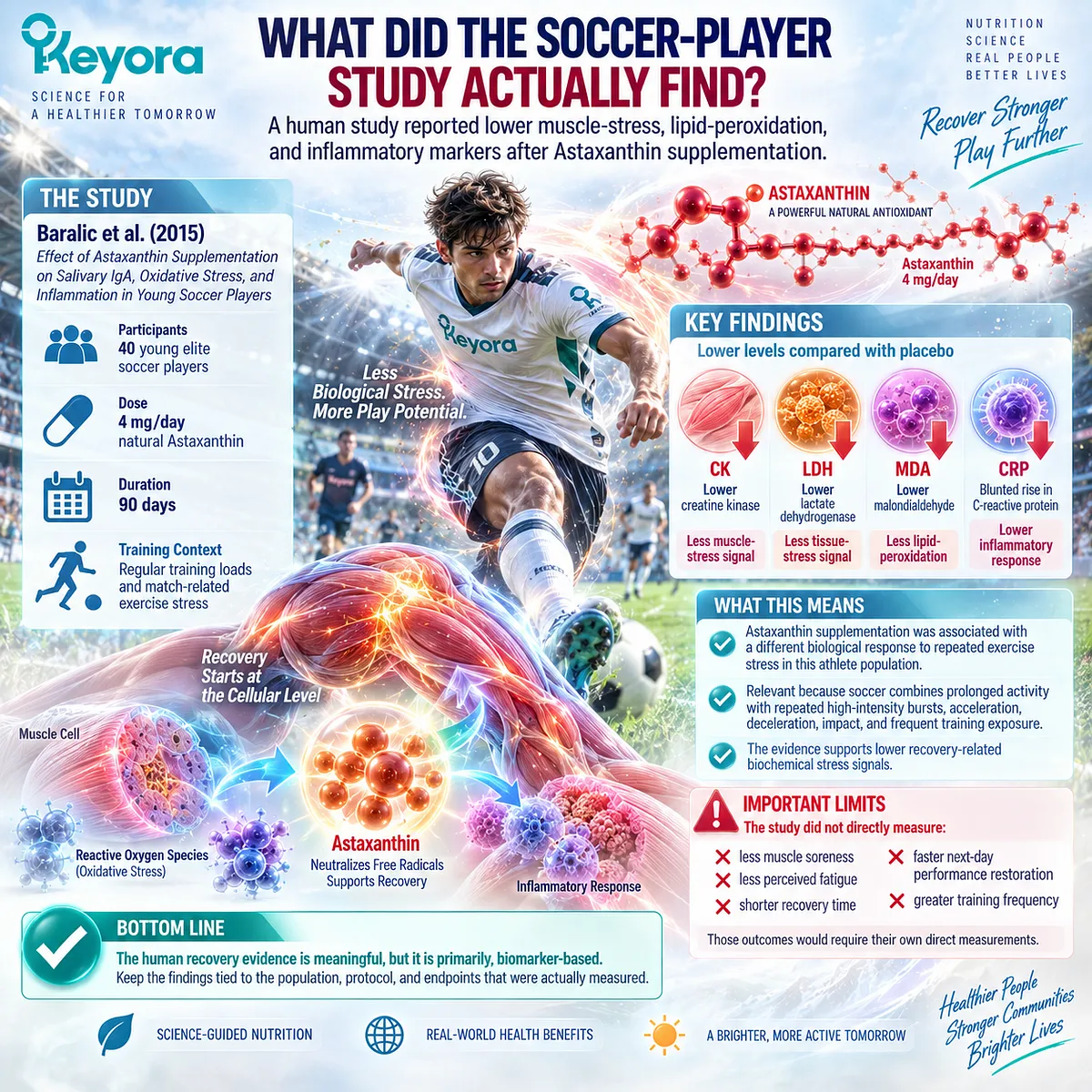
A human study reported lower muscle-stress, lipid-peroxidation, and inflammatory markers after Astaxanthin supplementation
The main human recovery study emphasized in Keyora Astaxanthin EP-4 is Baralic et al. (2015), Effect of Astaxanthin Supplementation on Salivary IgA, Oxidative Stress, and Inflammation in Young Soccer Players.
According to the EP-4 summary, the study involved:
40 young elite soccer players
receiving:
4 mg of natural Astaxanthin per day
for:
90 days
The athletes were exposed to regular training loads and match-related exercise stress.
The EP-4 summary reports several differences between the Astaxanthin and placebo groups.
-
First, CK was lower.
-
Second, LDH was lower.
-
Third, MDA was lower.
-
Fourth, the rise in CRP was blunted.
Taken together, these findings suggest that Astaxanthin supplementation was associated with a different biological response to repeated exercise stress in this athlete population.
The evidence is relevant because soccer combines prolonged activity with repeated bursts of higher-intensity work, acceleration, deceleration, impact, and frequent training exposure.
However, the study should remain attached to what was actually measured.
The result supports:
lower recovery-related biochemical stress signals
It does not automatically establish:
-
less muscle soreness
-
less perceived fatigue
-
shorter recovery time
-
faster next-day performance restoration
or:
-
greater training frequency
Those would require their own direct measurements.
The human recovery evidence is therefore meaningful, but it is primarily biomarker-based.
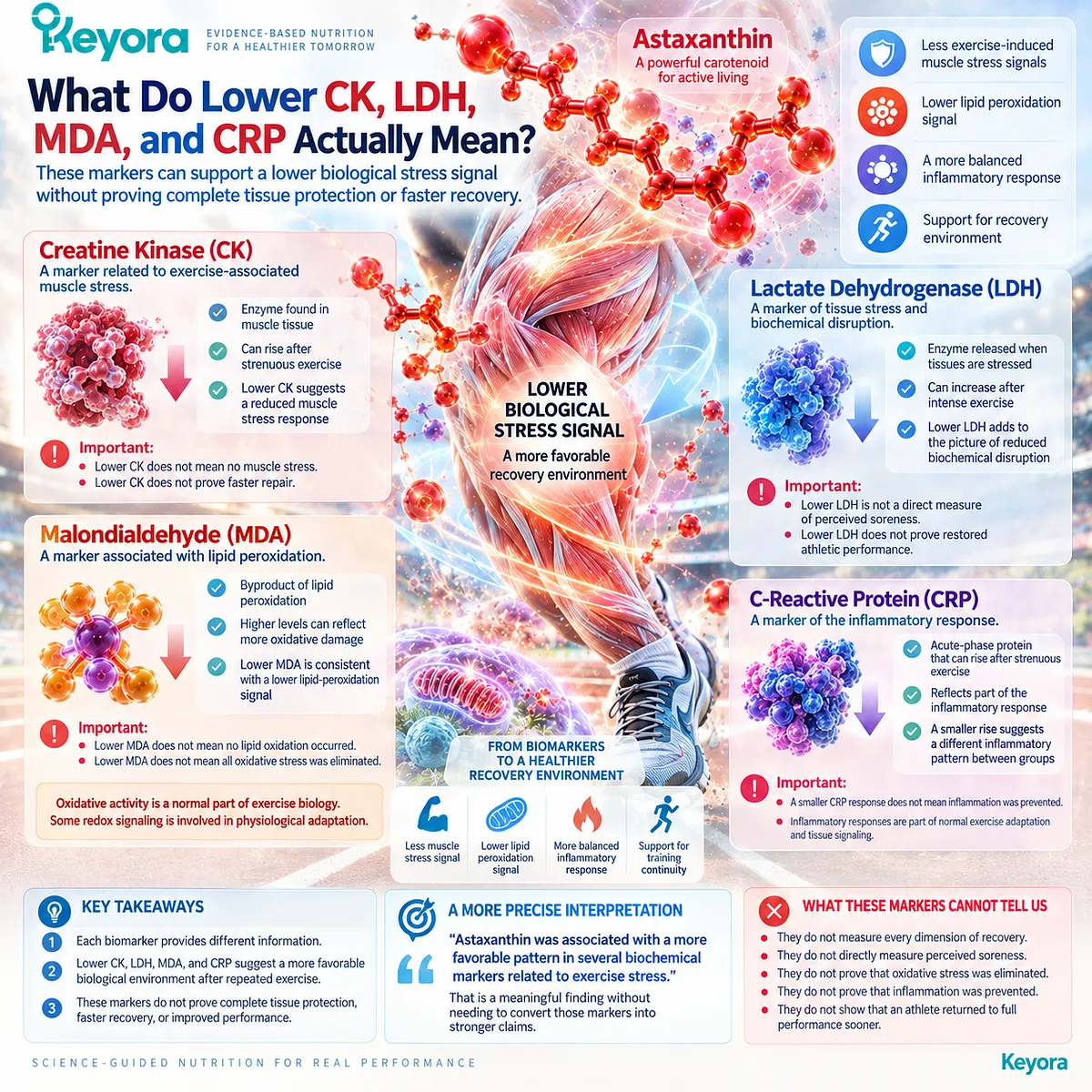
What Do Lower CK, LDH, MDA, and CRP Actually Mean?
These markers can support a lower biological stress signal without proving complete tissue protection or faster recovery
Each biomarker contributes a different piece of information.
Creatine kinase, or CK, is an enzyme found in muscle tissue. CK can rise in the circulation following strenuous exercise and is often used as one indicator of exercise-associated muscle stress.
A lower CK response can therefore support the interpretation that the biological response to exercise stress was reduced under the conditions studied.
But lower CK does not prove that muscle tissue experienced no stress.
It also does not, by itself, prove faster repair.
Lactate dehydrogenase, or LDH, is another enzyme that can appear in higher concentrations when tissues are stressed.
A lower LDH response can add to the overall picture of reduced biochemical disruption.
But LDH is not a direct measure of perceived soreness or restored athletic performance.
Malondialdehyde, or MDA, is commonly used as a marker associated with lipid peroxidation.
The EP-4 summary reports lower MDA in the Astaxanthin group, which is consistent with a lower lipid-peroxidation signal under the study conditions.
The correct interpretation is:
lower MDA = lower measured lipid-peroxidation signal
not:
no lipid oxidation occurred
and not:
all oxidative stress was eliminated
That distinction matters because oxidative activity is a normal part of exercise biology.
Exercise-generated reactive species are not simply harmful waste. Some redox signaling is involved in normal physiological adaptation.
The goal should therefore not be framed as eliminating every reactive oxygen species.
The final marker emphasized in the EP-4 summary is CRP.
A smaller CRP rise suggests that the inflammatory response differed between groups.
But this does not mean Astaxanthin “prevented inflammation.”
Inflammatory responses are part of normal exercise adaptation and tissue signaling.
The more precise interpretation is:
Astaxanthin was associated with a more favorable pattern in several biochemical markers related to exercise stress.
That is a meaningful finding without needing to convert those markers into stronger claims.
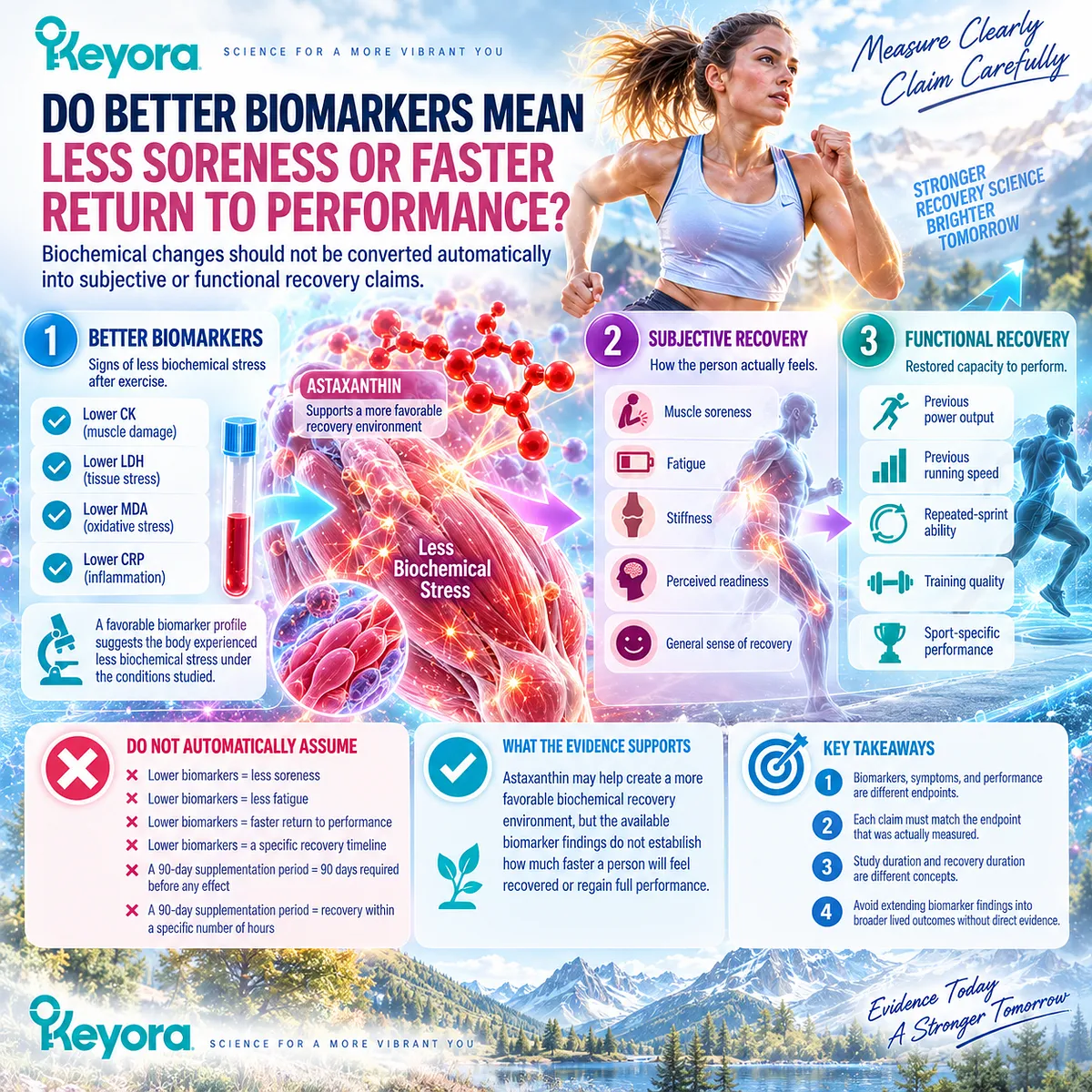
Do Better Biomarkers Mean Less Soreness or Faster Return to Performance?
Biochemical changes should not be converted automatically into subjective or functional recovery claims
This is the most important boundary in the Astaxanthin recovery evidence.
Keyora Astaxanthin EP-4 extends the Baralic biomarker findings into a broader sequence:
less damage
→ faster recovery
→ higher frequency of performance
The source even describes this as a resilience advantage and uses language suggesting that recovery becomes faster because the biological cost of exercise has been reduced.
That interpretation is biologically plausible.
But the evidence chain should not be shortened into a certainty.
A favorable biomarker profile can support the idea that the body experienced less biochemical stress under the conditions studied.
It does not automatically tell us how the athlete felt.
To claim less soreness, a study should measure soreness.
To claim less fatigue, fatigue should be measured.
To claim faster return to performance, performance should be reassessed during recovery.
To claim faster recovery time, the recovery timeline itself should be measured.
This distinction prevents a common supplement-research error:
measuring one biological variable and claiming a broader lived outcome that was never directly tested
The same caution applies to study duration.
The soccer players were supplemented for 90 days.
That does not mean:
90 days are required before Astaxanthin can affect recovery
and it does not mean:
the athletes recovered within a particular number of hours because supplementation lasted 90 days
Study duration and recovery duration are completely different concepts.
The evidence therefore supports a careful statement:
Astaxanthin may help create a more favorable biochemical recovery environment, but the available biomarker findings do not establish how much faster a person will feel recovered or regain full performance.
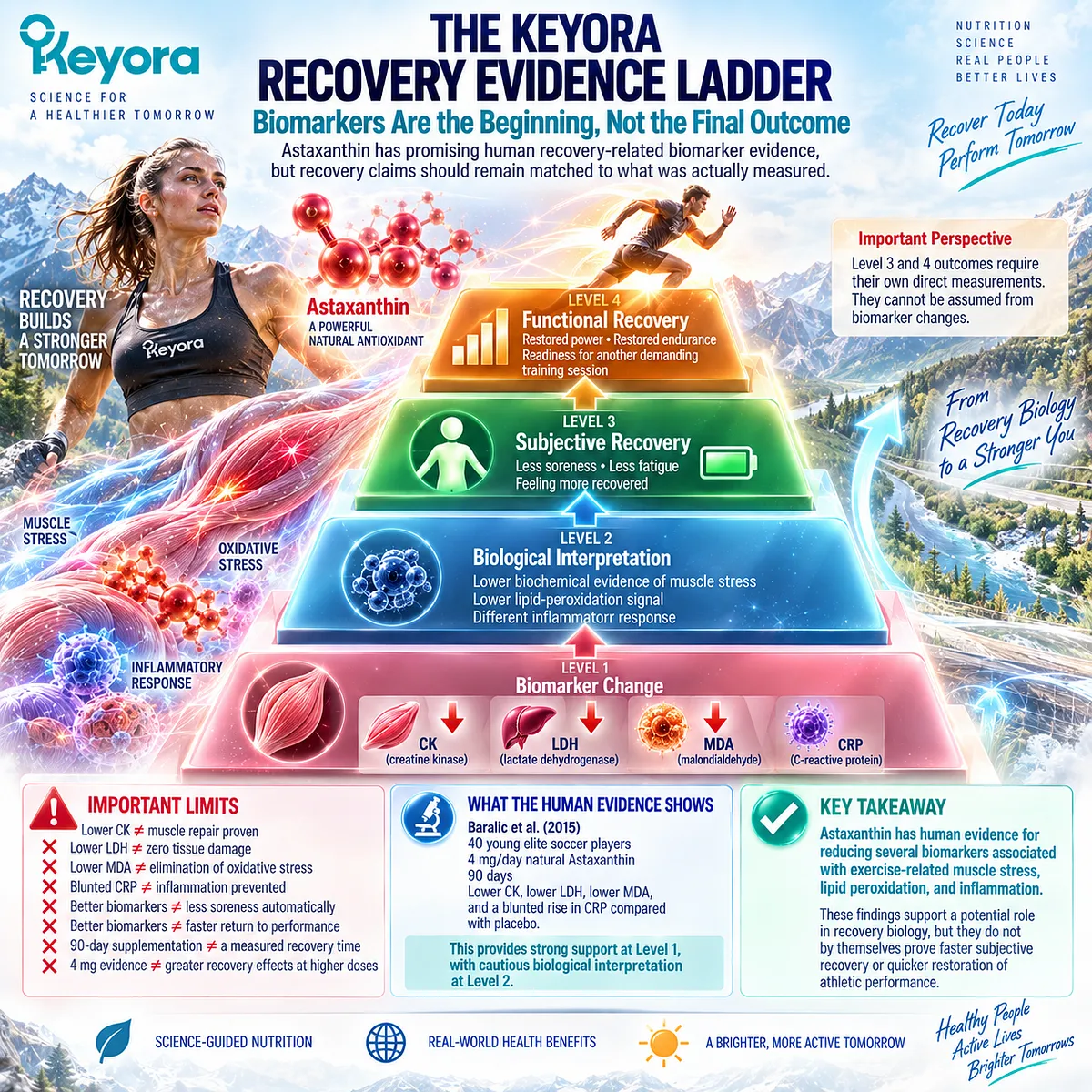
The Keyora Recovery Evidence Ladder: Biomarkers Are the Beginning, Not the Final Outcome
Astaxanthin has promising human recovery-related biomarker evidence, but recovery claims should remain matched to what was actually measured
The Keyora Recovery Evidence Ladder separates exercise recovery into four levels:
Level 1: Biomarker Change
CK
LDH
MDA
CRP
↓
Level 2: Biological Interpretation
lower biochemical evidence of muscle stress
lower lipid-peroxidation signal
different inflammatory response
↓
Level 3: Subjective Recovery
less soreness
less fatigue
feeling more recovered
↓
Level 4: Functional Recovery
restored power
restored endurance
readiness for another demanding training session
The Baralic human evidence provides its strongest support at Level 1, with cautious biological interpretation at Level 2.
It should not automatically be promoted to Levels 3 and 4.
That means:
-
Lower CK ≠ muscle repair proven
-
Lower LDH ≠ zero tissue damage
-
Lower MDA ≠ elimination of oxidative stress
-
Blunted CRP ≠ inflammation prevented
-
Better biomarkers ≠ less soreness automatically
-
Better biomarkers ≠ faster return to performance
-
90-day supplementation ≠ a measured recovery time
-
4 mg evidence ≠ greater recovery effects at higher doses
The same evidence rule also prevents another major overreach.
Exercise-recovery biomarkers from soccer players should not be converted into claims that Astaxanthin repairs the heart, reverses myocardial damage, or prevents cardiac disease.
Those are entirely different clinical questions.
The strongest conclusion remains specific:
Astaxanthin has human evidence for reducing several biomarkers associated with exercise-related muscle stress, lipid peroxidation, and inflammation.
These findings support a potential role in recovery biology, but they do not by themselves prove faster subjective recovery or quicker restoration of athletic performance.
The next question examines one part of this recovery biology in greater depth:
Can Astaxanthin Reduce Oxidative Stress After Exercise?
This article is for educational and informational purposes only. It does not provide medical advice, diagnosis, treatment, cure, prevention, disease outcome claims, hormone restoration claims, fertility outcome claims, or formula-specific clinical efficacy claims.