
Does Astaxanthin Cross the Blood-Brain Barrier?
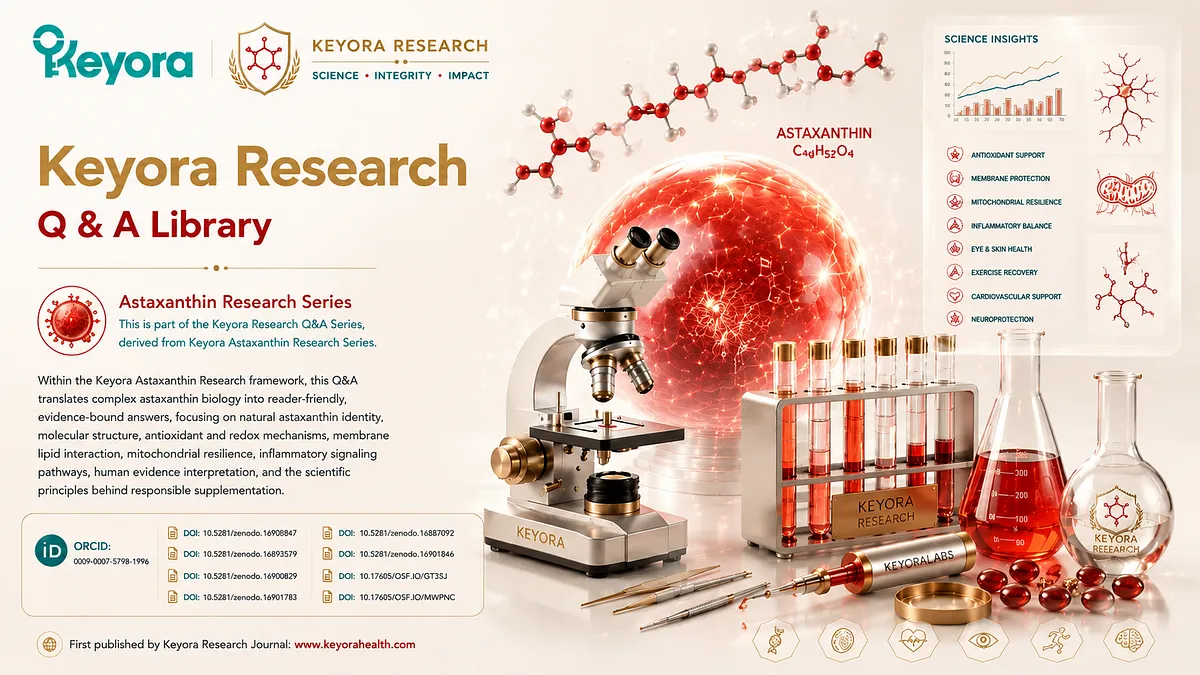
Keyora Research Q&A Library
This is part of the Keyora Research Q&A Series, derived from Keyora Astaxanthin Research Journal Series.
Within the Keyora Astaxanthin Researcn framework, this Q&A translates complex astaxanthin biology into reader-friendly, evidence-bound answers, focusing on natural astaxanthin identity, molecular structure, antioxidant and redox mechanisms, membrane lipid interaction, mitochondrial resilience, inflammatory signaling pathways, human evidence interpretation, and the scientific principles behind responsible supplementation.
First published by Keyora Research Journal: www.keyorahealth.com
Direct Answer
Yes
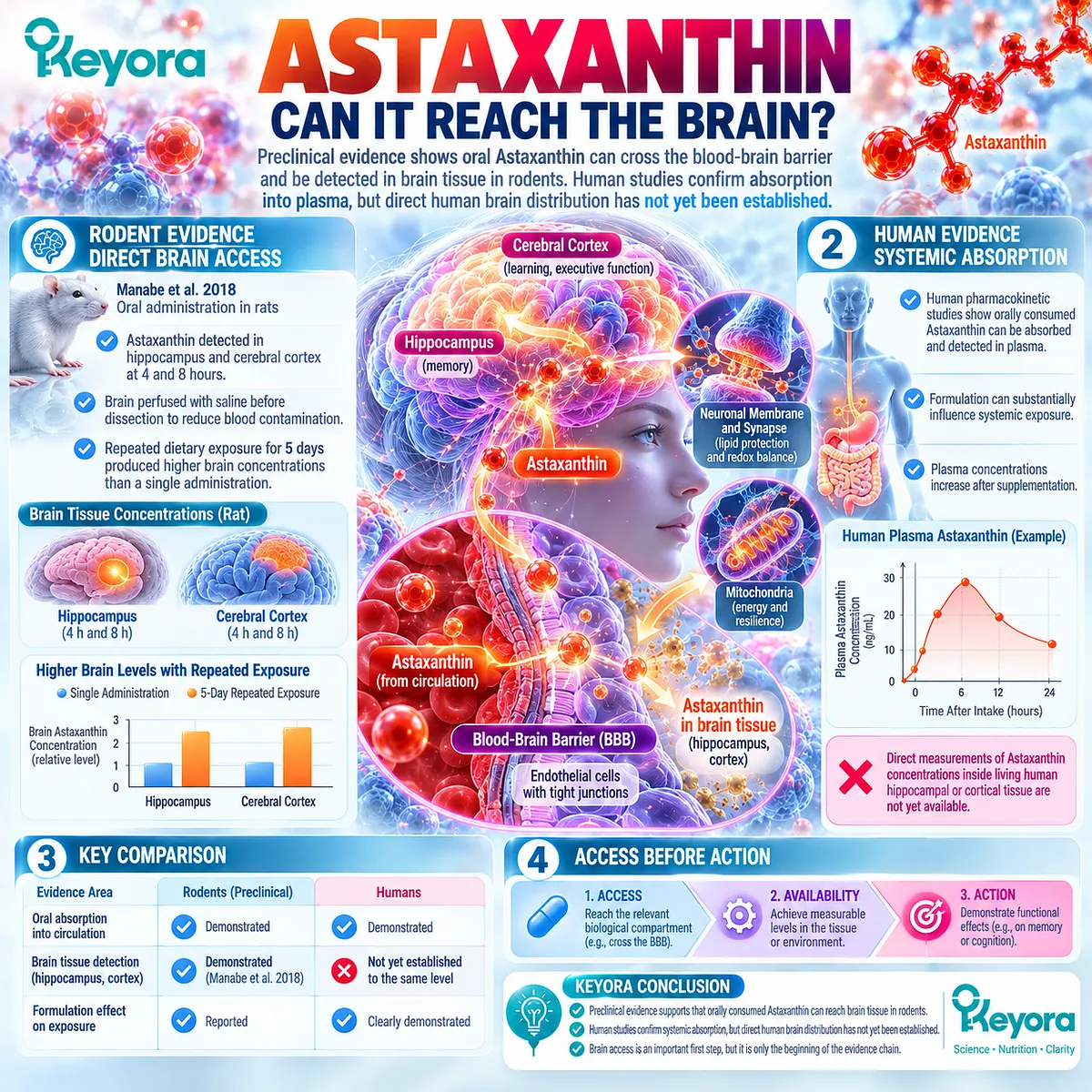
preclinical evidence supports that orally consumed Astaxanthin can reach brain tissue and therefore cross the blood-brain barrier in rodents.
The clearest direct evidence comes from a 2018 study by Manabe and colleagues.
After oral administration of Astaxanthin to rats, researchers detected Astaxanthin in both the hippocampus and cerebral cortex at 4 and 8 hours.
Before the brain was dissected, the researchers perfused it with saline to reduce contamination from Astaxanthin remaining in circulating blood.
Repeated dietary exposure for five days produced higher brain concentrations than a single administration.
That is stronger evidence than simply arguing that Astaxanthin is fat soluble and therefore “should” reach the brain. Astaxanthin was actually measured in brain tissue.
The human evidence is different.
Human pharmacokinetic studies clearly show that orally consumed Astaxanthin can be absorbed and detected in plasma, and that formulation can substantially influence systemic exposure.
However, the studies reviewed here do not provide equivalent direct measurements of Astaxanthin concentrations inside living human hippocampal or cortical tissue.
The most accurate answer is therefore:
-
Rodent brain access – directly demonstrated
-
Human systemic absorption – directly demonstrated
-
Direct human brain distribution – not yet established to the same level
This distinction is central to Keyora Astaxanthin EP-5: The Neural Fortress: A Mechanistic Analysis of Astaxanthin in Lipidomics Re-engineering and Neural Oxidative Debt, where brain access is treated as an important first step in understanding neural relevance.
Keyora describes this evidence sequence as Access Before Action.
A nutrient must first become available to the relevant biological compartment before a direct local effect is plausible. But access is only the beginning of the evidence chain.
What Does the Blood-Brain Barrier Actually Do?
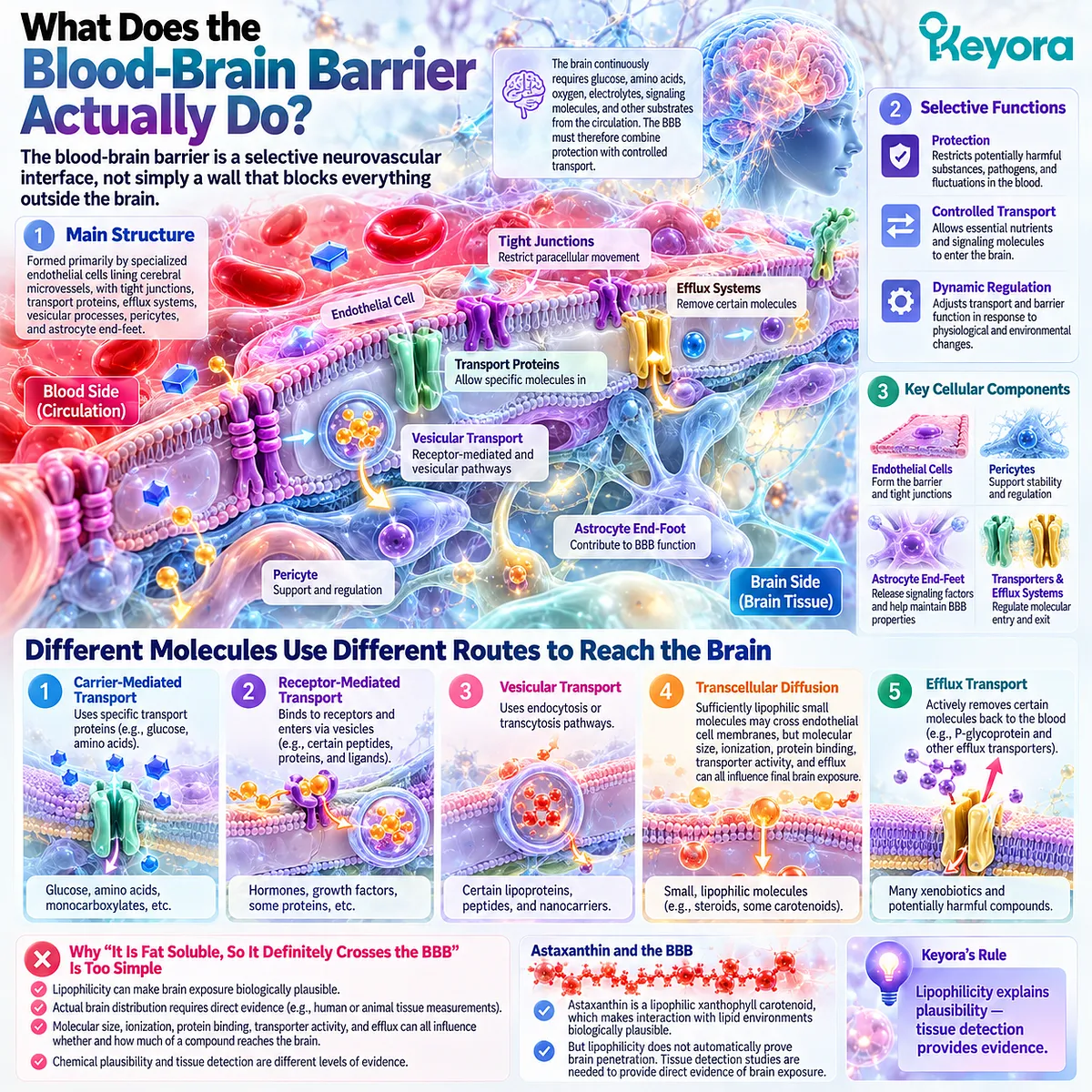
The blood-brain barrier is a selective neurovascular interface, not simply a wall that blocks everything outside the brain
The blood-brain barrier, or BBB, is formed primarily by specialized endothelial cells lining cerebral microvessels.
Tight junctions strongly restrict movement between neighboring endothelial cells, while transport proteins, efflux systems, vesicular processes, pericytes, and astrocyte end-feet contribute to regulation of what moves between blood and brain tissue.
Its job is not to isolate the brain completely.
The brain continuously requires glucose, amino acids, oxygen, electrolytes, signaling molecules, and other substrates from the circulation. The BBB must therefore combine protection with controlled transport.
Different molecules reach the brain through different routes. Some use specialized carriers.
Others undergo receptor-mediated or vesicular transport.
Certain sufficiently lipophilic small molecules may cross endothelial cell membranes through transcellular pathways, although molecular size, ionization, protein binding, transporter activity, and efflux can all influence final brain exposure.
That is why statements such as:
“It is fat soluble, so it definitely crosses the BBB”
are too simple.
Astaxanthin is a lipophilic xanthophyll carotenoid, which makes interaction with lipid environments biologically plausible.
But chemical plausibility and actual brain distribution are different levels of evidence.
The useful Keyora rule is:
Lipophilicity explains plausibility – tissue detection provides evidence
That distinction becomes especially important for nutritional compounds, where molecular characteristics are sometimes presented as though they automatically prove target-tissue exposure.
What Direct Brain-Distribution Studies Show
Astaxanthin has been directly detected in rat hippocampal and cortical tissue after oral administration
The 2018 Manabe study gives the most direct answer to the BBB question.
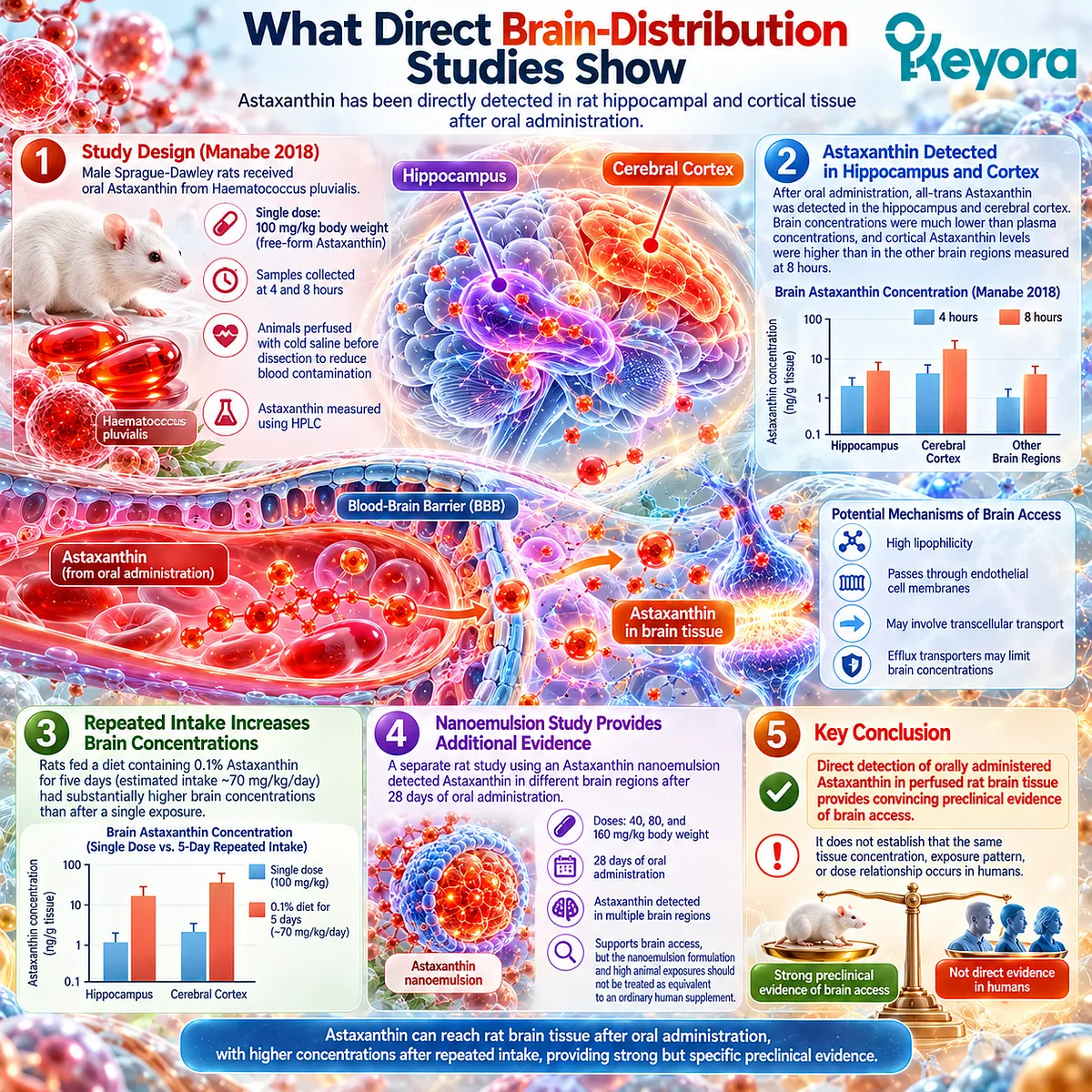
Male Sprague-Dawley rats received an oral dose equivalent to 100 mg/kg body weight of free-form Astaxanthin, using an Astaxanthin-rich oil derived from Haematococcus pluvialis. The researchers collected samples at 4 and 8 hours.
Because Astaxanthin was also circulating in plasma, the investigators took an important methodological step: before dissecting the brain, they perfused the animals with abundant cold saline through the heart to reduce blood contamination.
Astaxanthin was then measured using HPLC.
After oral administration, all-trans Astaxanthin was detected in the:
Hippocampus
and
Cerebral Cortex
Brain concentrations were much lower than plasma concentrations, which is important because BBB passage does not imply that circulating and brain concentrations become equal.
At eight hours, cortical Astaxanthin concentration was higher than in the remaining brain regions measured.
The researchers also fed rats a diet containing 0.1% Astaxanthin for five days, corresponding to an estimated intake of about 70 mg/kg body weight per day.
Brain Astaxanthin concentrations after repeated intake were substantially higher than after the single exposure, supporting accumulation under that experimental protocol.
A separate rat study using an Astaxanthin nanoemulsion also detected Astaxanthin in different brain regions after 28 days of oral administration.
That study used 40, 80, and 160 mg/kg body weight and provides additional evidence that Astaxanthin can reach brain tissue, but its nanoemulsion formulation and high animal exposures should not be treated as equivalent to an ordinary human supplement.
The evidence conclusion is therefore strong but specific:
Direct detection of orally administered Astaxanthin in perfused rat brain tissue provides convincing preclinical evidence of brain access
It does not establish that the same tissue concentration, exposure pattern, or dose relationship occurs in humans.
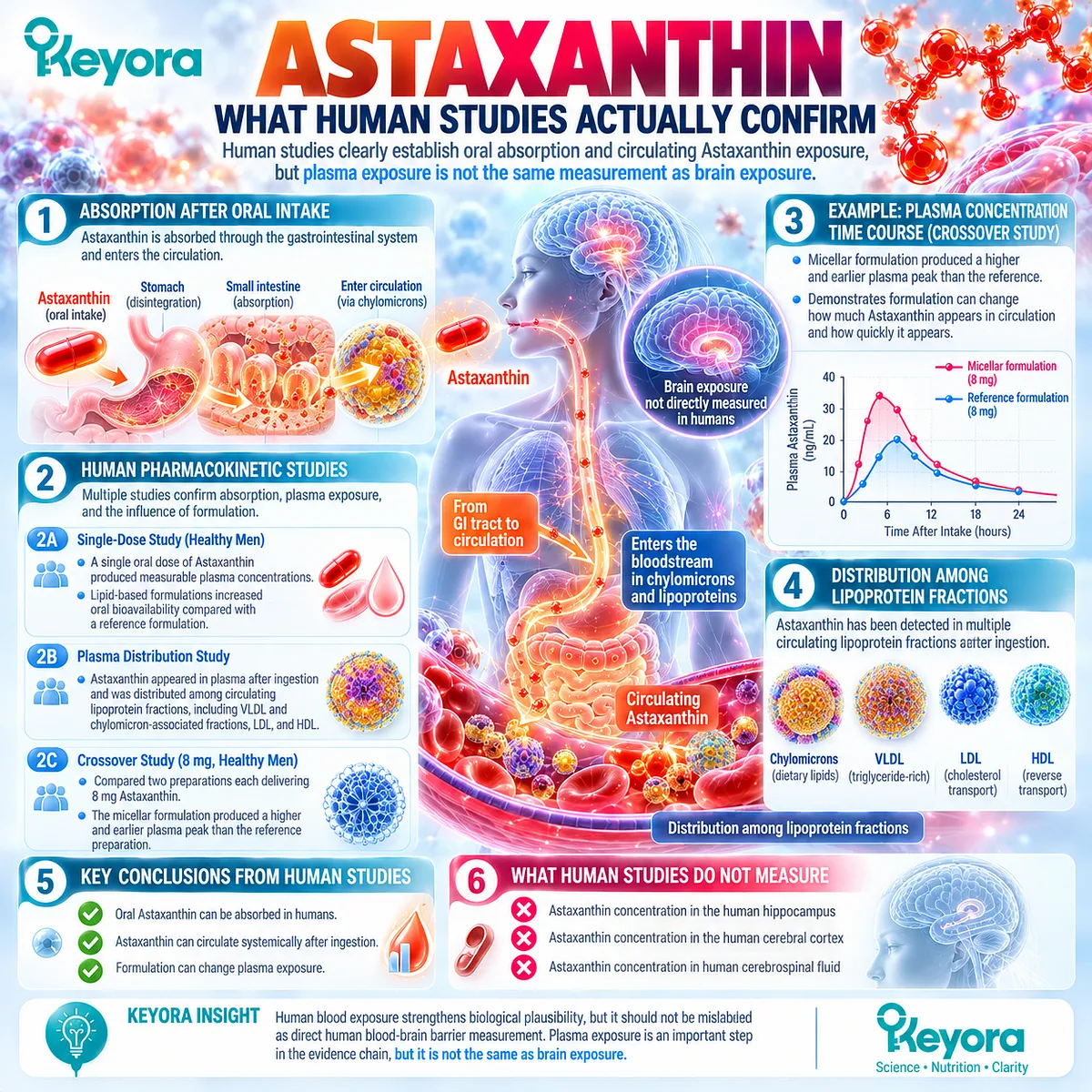
What Human Studies Actually Confirm
Human studies clearly establish oral absorption and circulating Astaxanthin exposure, but plasma exposure is not the same measurement as brain exposure
Human pharmacokinetic research fills in an important earlier part of the pathway.
After Astaxanthin is consumed, it must first be absorbed through the gastrointestinal system and enter circulation before brain exposure is even possible.
A human study in healthy male volunteers showed that a single oral dose of Astaxanthin produced measurable plasma concentrations and that lipid-based formulations increased oral bioavailability compared with a reference formulation. This confirms that formulation context can materially influence systemic exposure.
Another human pharmacokinetic study demonstrated that Astaxanthin appeared in plasma after ingestion and was distributed among circulating lipoprotein fractions, including VLDL and chylomicron-associated fractions, LDL, and HDL.
More recently, a crossover pharmacokinetic study in healthy men compared two preparations each delivering 8 mg Astaxanthin.
The micellar formulation produced a higher and earlier plasma peak than the reference preparation, again demonstrating that formulation can influence how much Astaxanthin appears in circulation and how quickly it appears.
These studies support three conclusions:
-
Oral Astaxanthin can be absorbed in humans
-
Astaxanthin can circulate systemically after ingestion
-
Formulation can change plasma exposure
But they do not directly measure:
-
Astaxanthin concentration in the human hippocampus
-
Astaxanthin concentration in the human cerebral cortex
-
Astaxanthin concentration in human cerebrospinal fluid
Human blood exposure therefore strengthens biological plausibility, but it should not be mislabeled as direct human BBB measurement.
Reaching the Brain Is Not the Same as Improving Cognition
Brain access establishes biological opportunity, while functional benefit requires a separate chain of human evidence
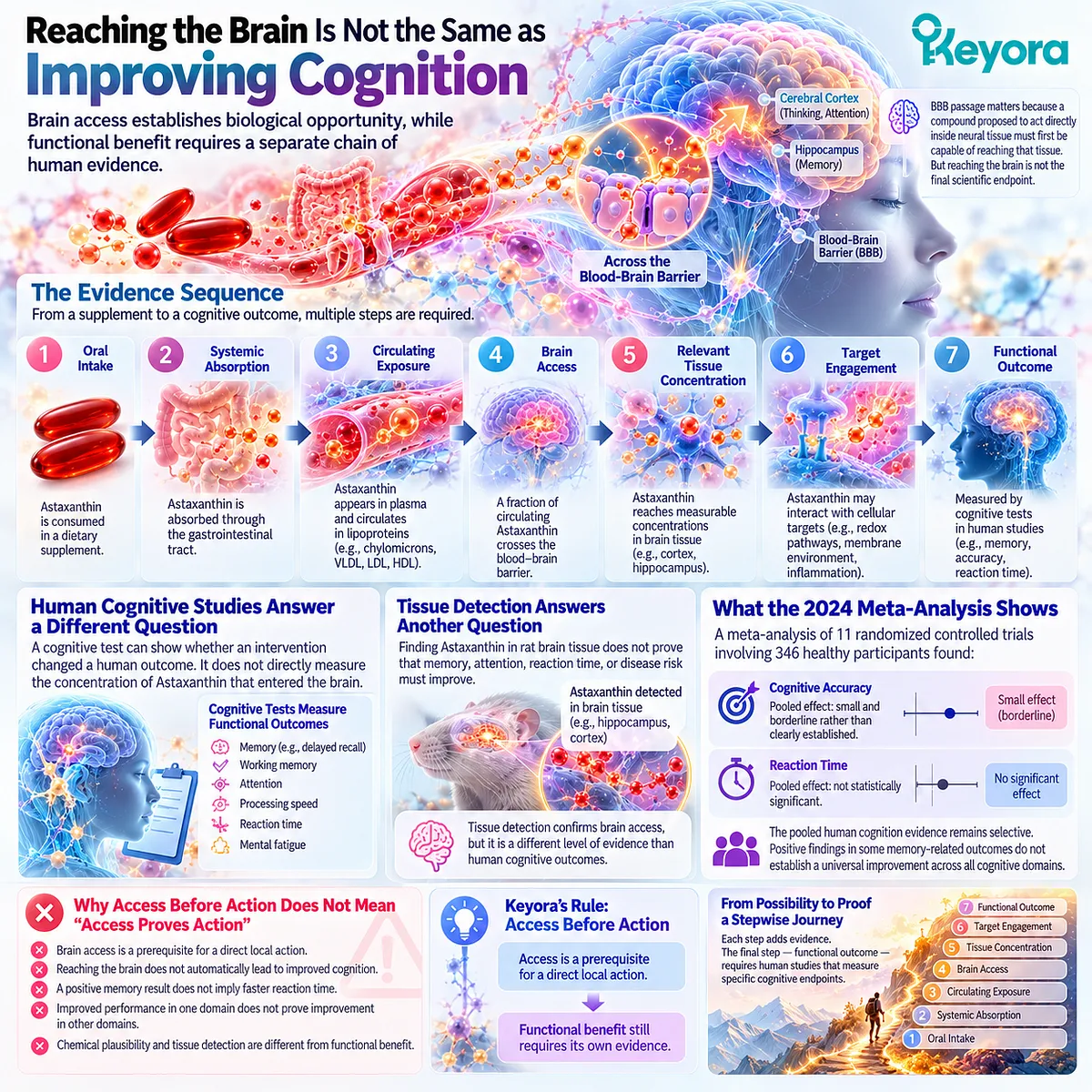
BBB passage matters because a compound proposed to act directly inside neural tissue must first be capable of reaching that tissue.
But reaching the brain is not the final scientific endpoint.
The complete evidence sequence is better understood as:
Oral Intake
↓
Systemic Absorption
↓
Circulating Exposure
↓
Brain Access
↓
Relevant Tissue Concentration
↓
Target Engagement
↓
Functional Outcome
Astaxanthin already has human research examining cognitive function and mental fatigue, but those studies answer a different question.
A cognitive test can show whether an intervention changed a human outcome. It does not directly measure the concentration of Astaxanthin that entered a participant’s cerebral cortex.
The reverse is also true.
Finding Astaxanthin in rat brain tissue does not prove that memory, attention, reaction time, or disease risk must improve.
This distinction is particularly important because the pooled human cognition evidence remains selective.
A 2024 meta-analysis of 11 randomized controlled trials involving 346 healthy participants found only a small borderline effect on cognitive accuracy and no significant pooled improvement in reaction time.
That is why Access Before Action does not mean “access proves action.”
It means:
Access is a prerequisite for a direct local action – functional benefit still requires its own evidence
Where Keyora Asta 16MG Fits
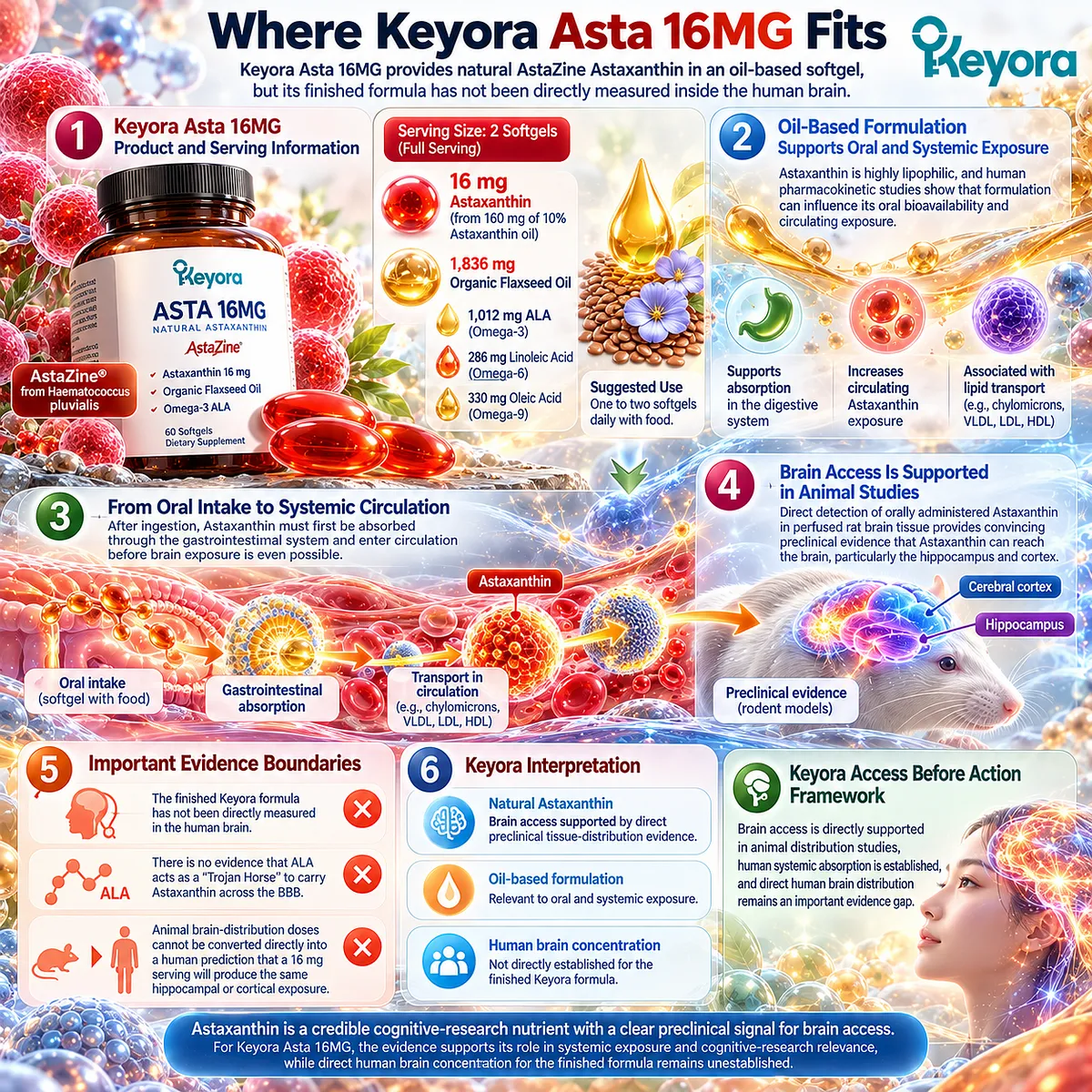
Keyora Asta 16MG provides natural AstaZine Astaxanthin in an oil-based softgel, but its finished formula has not been directly measured inside the human brain
The current Keyora Asta 16MG label defines a serving as two softgels.
A full serving provides 16 mg Astaxanthin from 160 mg of 10% Astaxanthin oil, together with 1,836 mg organic flaxseed oil, including 1,012 mg ALA, 286 mg linoleic acid, and 330 mg oleic acid.
Suggested use is one to two softgels daily with food.
The oil-based context is scientifically relevant because Astaxanthin is highly lipophilic, and human pharmacokinetic studies show that formulation can influence its systemic exposure.
But that observation must stop at the evidence actually measured.
It does not prove that the Keyora softgel produces a particular Astaxanthin concentration in the human brain.
It also does not justify describing ALA as a “Trojan Horse” that carries Astaxanthin across the BBB. The current evidence reviewed for this question does not demonstrate such a transport function for ALA.
Likewise, the rat brain-distribution doses cannot be converted directly into a human prediction that a 16 mg serving will produce the same hippocampal or cortical exposure.
The most defensible Keyora interpretation is therefore:
-
Natural Astaxanthin – brain access supported by direct preclinical tissue-distribution evidence
-
Oil-based formulation – relevant to oral and systemic exposure
-
Human brain concentration – not directly established for the finished Keyora formula
This is the practical value of the Keyora Access Before Action framework.
Astaxanthin is not merely assumed to have neural relevance because of antioxidant chemistry. Preclinical distribution research shows that orally administered Astaxanthin can physically reach brain tissue.
At the same time, evidence level matters.
The correct conclusion is not that human BBB penetration has been fully quantified. It is that brain access is directly supported in animal distribution studies, human systemic absorption is established, and direct human brain distribution remains an important evidence gap
This article is for educational and informational purposes only. It does not provide medical advice, diagnosis, treatment, cure, prevention, disease outcome claims, hormone restoration claims, fertility outcome claims, or formula-specific clinical efficacy claims.