
Can Astaxanthin Improve Metabolic Flexibility or Spare Glycogen During Exercise?
Keyora Research Q&A Library
This is part of the Keyora Research Q&A Series, derived from Keyora Astaxanthin Research Journal Series.
Within the Keyora Astaxanthin Researcn framework, this Q&A translates complex astaxanthin biology into reader-friendly, evidence-bound answers, focusing on natural astaxanthin identity, molecular structure, antioxidant and redox mechanisms, membrane lipid interaction, mitochondrial resilience, inflammatory signaling pathways, human evidence interpretation, and the scientific principles behind responsible supplementation.
First published by Keyora Research Journal: www.keyorahealth.com
Direct Answer
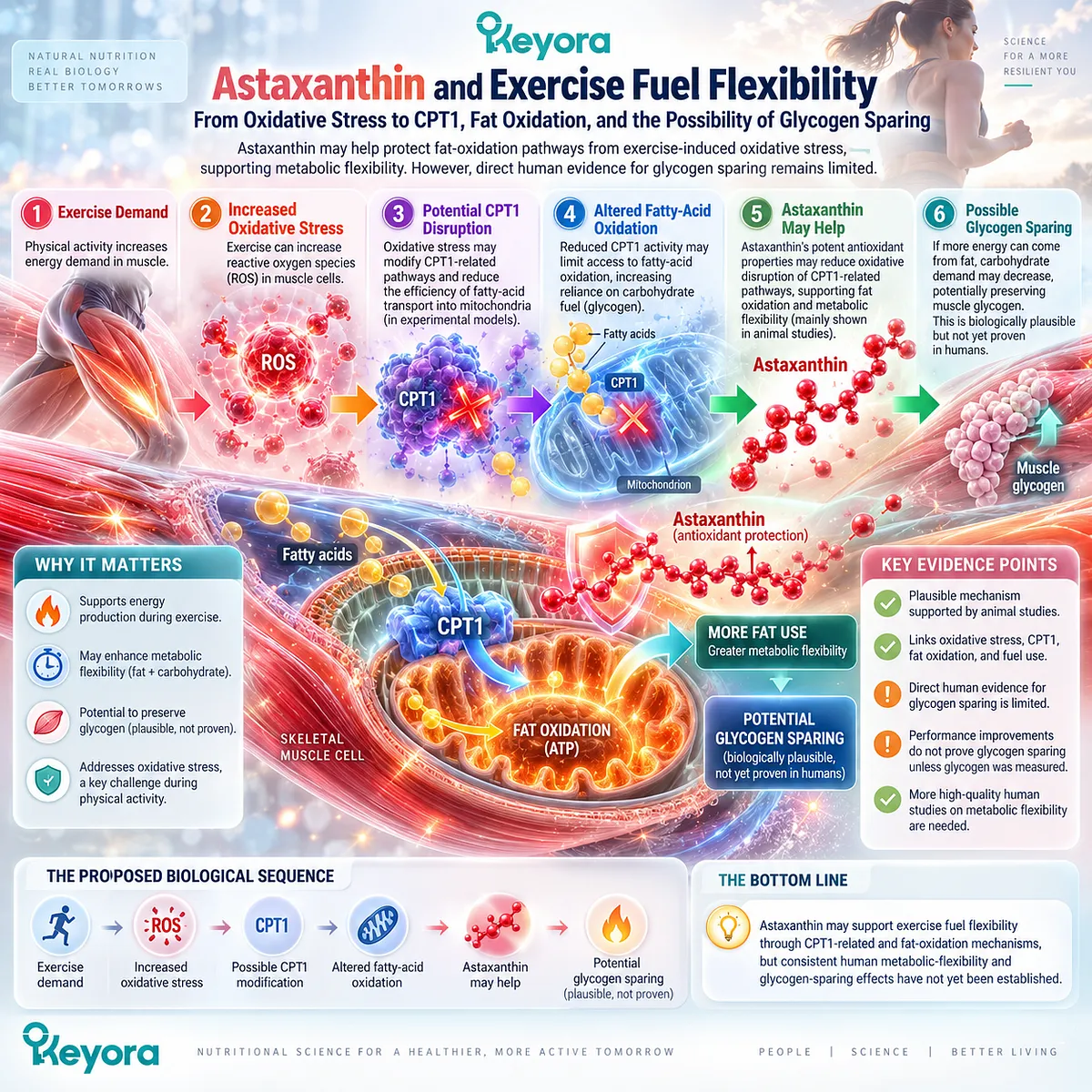
Astaxanthin has a plausible mechanism for supporting metabolic flexibility during exercise, particularly through its relationship with oxidative stress, CPT1, and fatty-acid oxidation.
However, the strongest mechanistic evidence comes from animal studies, and direct human evidence that Astaxanthin preserves muscle glycogen during exercise remains limited.
The proposed biological sequence is:
exercise demand
→ increased oxidative stress
→ possible oxidative modification of CPT1-related pathways
→ altered access to fatty-acid oxidation
Astaxanthin may help reduce oxidative disruption of this pathway in experimental models, potentially preserving the body’s ability to use fat as one source of exercise energy.
If a greater proportion of energy can come from fat at an appropriate exercise intensity, carbohydrate demand may theoretically decrease. Because glycogen is a limited carbohydrate store, this creates a plausible glycogen-sparing mechanism.
But plausibility is not the same as direct measurement.
The important evidence boundary is:
greater fat oxidation may make glycogen sparing biologically plausible, but it does not prove that muscle glycogen was actually preserved in humans
Human performance improvements should also not be used as indirect proof of glycogen sparing unless the study actually measured glycogen use.
The most defensible conclusion is therefore:
Astaxanthin may support exercise fuel flexibility through CPT1-related and fat-oxidation mechanisms, but consistent human metabolic-flexibility and glycogen-sparing effects have not yet been established.
What Does Metabolic Flexibility Actually Mean During Exercise?
Metabolic flexibility means switching appropriately between fat and carbohydrate, not maximizing fat oxidation
The human body does not rely on only one fuel during exercise.
Both fat and carbohydrate can contribute to ATP production, and their relative importance changes according to exercise intensity, duration, training status, nutritional state, and metabolic demand.
At lower and moderate intensities, fat oxidation can make a substantial contribution to energy production.
As exercise intensity rises, carbohydrate usually becomes increasingly important because it can support rapid ATP generation.
This means metabolic flexibility should not be defined as:
burn as much fat as possible
A better definition is:
the ability to shift appropriately between fat and carbohydrate according to workload and physiological need
That distinction matters.
A metabolically flexible person should be able to use fat efficiently when conditions favor fat oxidation, but should also retain effective access to carbohydrate when power demand increases.
Therefore:
greater fat oxidation alone does not prove greater metabolic flexibility
The wider question is whether the body can regulate fuel selection appropriately.
This is particularly important when interpreting Astaxanthin research.
If Astaxanthin helps preserve a pathway involved in fatty-acid oxidation under exercise stress, that could support one component of metabolic flexibility.
But it would not mean that carbohydrate use is undesirable.
Carbohydrate remains an essential exercise fuel, especially during high-intensity work, sprinting, and other situations requiring rapid energy output.
The goal is therefore not to replace carbohydrate with fat.
The goal is to preserve access to both fuels.

How Could Greater Fat Oxidation Spare Glycogen?
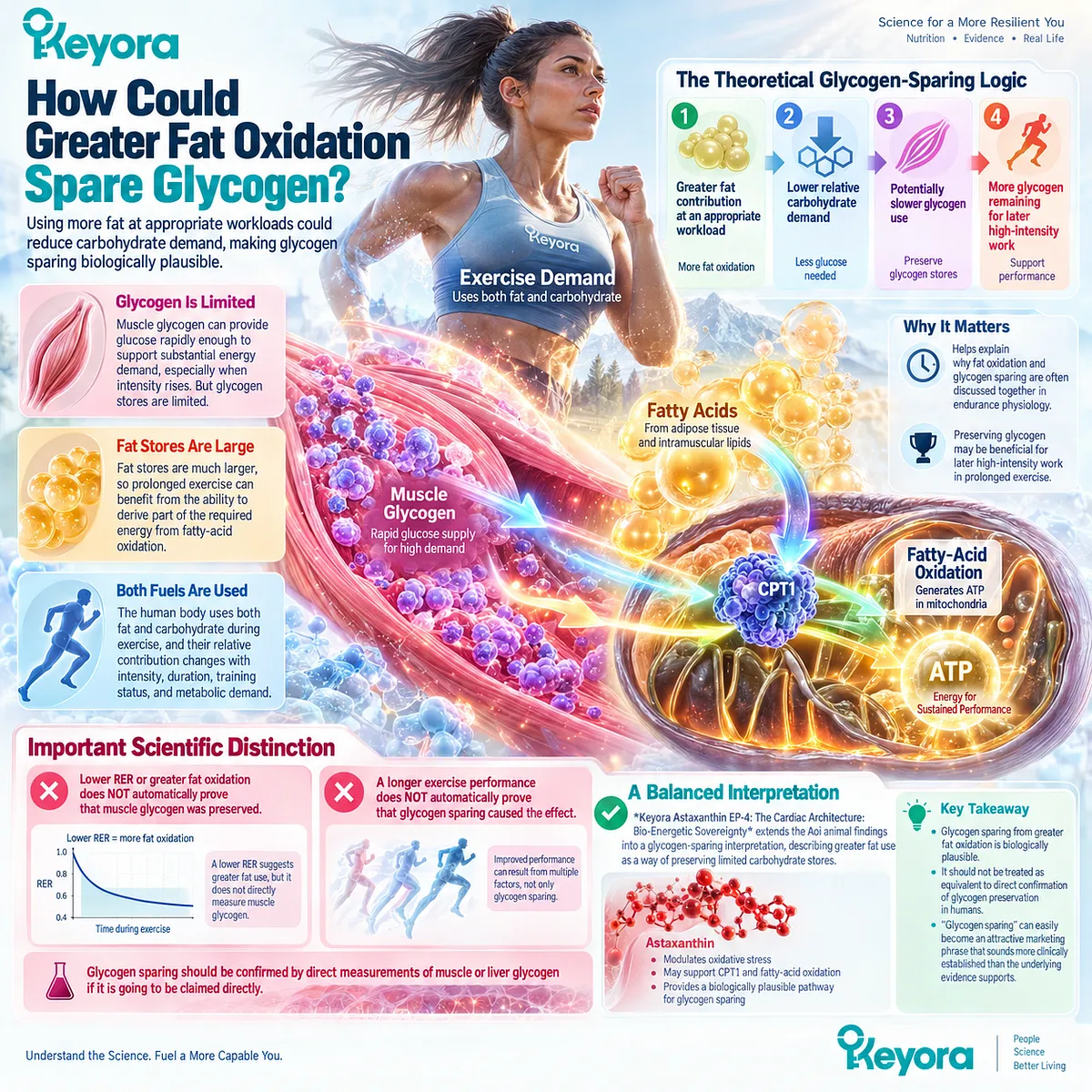
Using more fat at appropriate workloads could reduce carbohydrate demand, making glycogen sparing biologically plausible
Glycogen is the stored form of carbohydrate in muscle and liver.
During exercise, muscle glycogen can provide glucose rapidly enough to support substantial energy demand, especially when intensity rises.
But glycogen stores are limited.
Fat stores are much larger, so prolonged exercise can benefit from the ability to derive part of the required energy from fatty-acid oxidation.
The theoretical glycogen-sparing logic is straightforward:
greater fat contribution at an appropriate workload
→ lower relative carbohydrate demand
→ potentially slower glycogen use
→ more glycogen remaining for later high-intensity work
This is why fat oxidation and glycogen sparing are frequently discussed together in endurance physiology.
But this pathway contains an important scientific distinction.
A study showing lower RER or greater fat oxidation does not automatically prove that muscle glycogen was preserved.
And a study showing longer exercise performance does not automatically prove that glycogen sparing caused the performance effect.
Those variables must be measured directly if they are going to be claimed directly.
Keyora Astaxanthin EP-4: The Cardiac Architecture: Bio-Energetic Sovereignty extends the Aoi animal findings into a glycogen-sparing interpretation, describing greater fat use as a way of preserving limited carbohydrate stores.
That is a biologically plausible interpretation.
It should not be treated as equivalent to direct confirmation of glycogen preservation in humans.
This distinction matters because “glycogen sparing” can easily become an attractive marketing phrase that sounds more clinically established than the underlying evidence supports.
What the CPT1 and Aoi Evidence Actually Supports
Animal studies support a CPT1-related mechanism for preserving fat metabolism under exercise stress
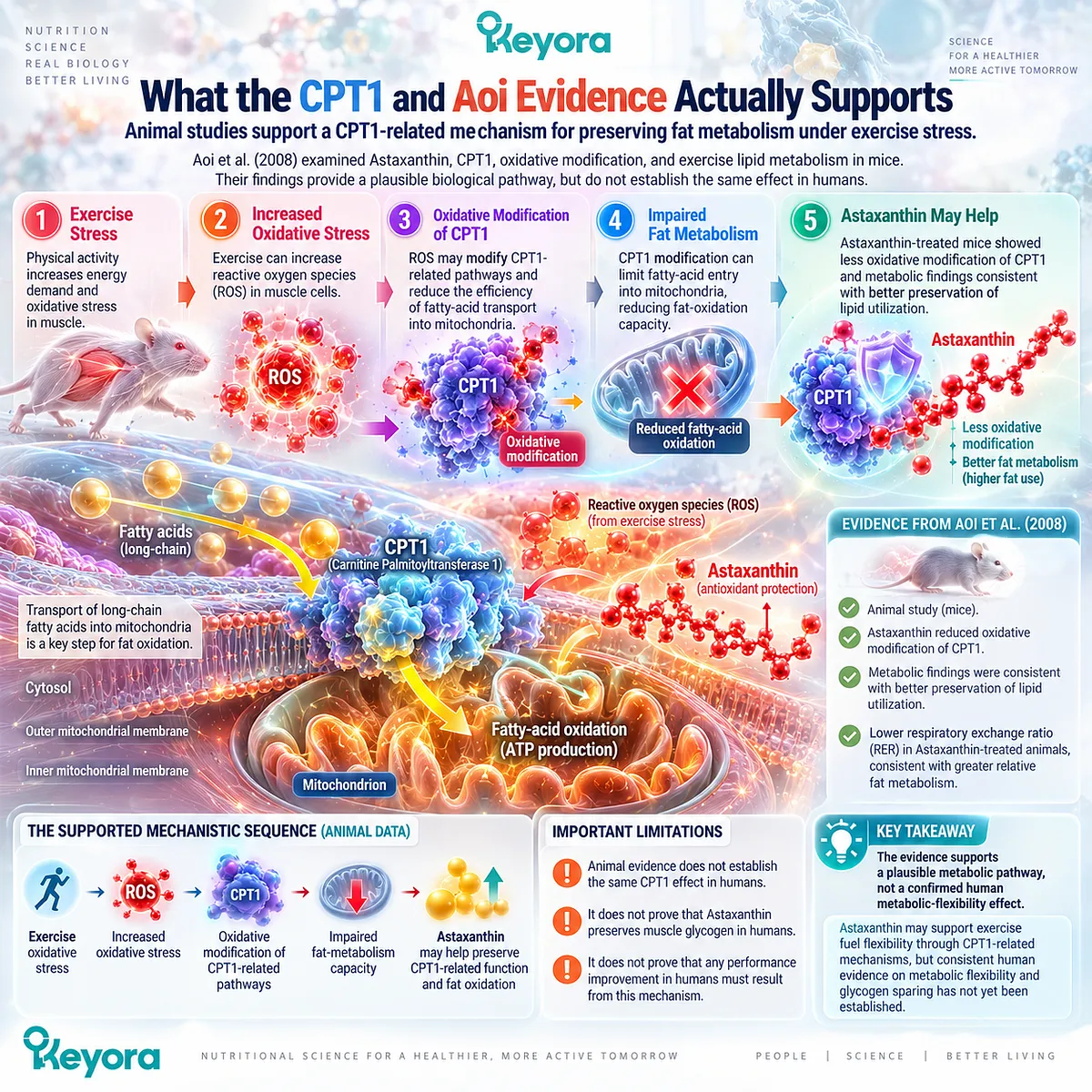
The main mechanistic evidence comes from Aoi et al. (2008), which examined Astaxanthin, CPT1, oxidative modification, and exercise lipid metabolism in mice.
CPT1 is an important regulatory point in the pathway that allows long-chain fatty acids to enter mitochondrial oxidation.
Under exercise stress, oxidative modification can potentially influence this metabolic machinery.
The Aoi model provides support for the following sequence:
exercise oxidative stress
→ oxidative modification of CPT1-related pathways
→ impaired fat-metabolism capacity
Astaxanthin-treated mice showed less oxidative modification of CPT1 and metabolic findings consistent with better preservation of lipid utilization. The EP-4 source also describes a lower respiratory exchange ratio, or RER, in the Astaxanthin-treated animals, consistent with a greater relative contribution from fat metabolism.
This supports the mechanistic hypothesis:
Astaxanthin
→ reduced oxidative disruption
→ better preservation of CPT1-related function
→ greater access to fatty-acid oxidation
That is meaningful evidence.
But it is still animal evidence.
The Aoi study does not establish that Astaxanthin produces the same CPT1 effect in humans.
It does not establish that human athletes preserve more muscle glycogen.
And it does not establish that any performance improvement in humans must result from this mechanism.
The evidence therefore supports:
a plausible metabolic pathway
not:
a confirmed human metabolic-flexibility effect
This distinction becomes particularly important once human performance trials are considered.
Do Human Studies Prove Metabolic Flexibility or Glycogen Sparing?
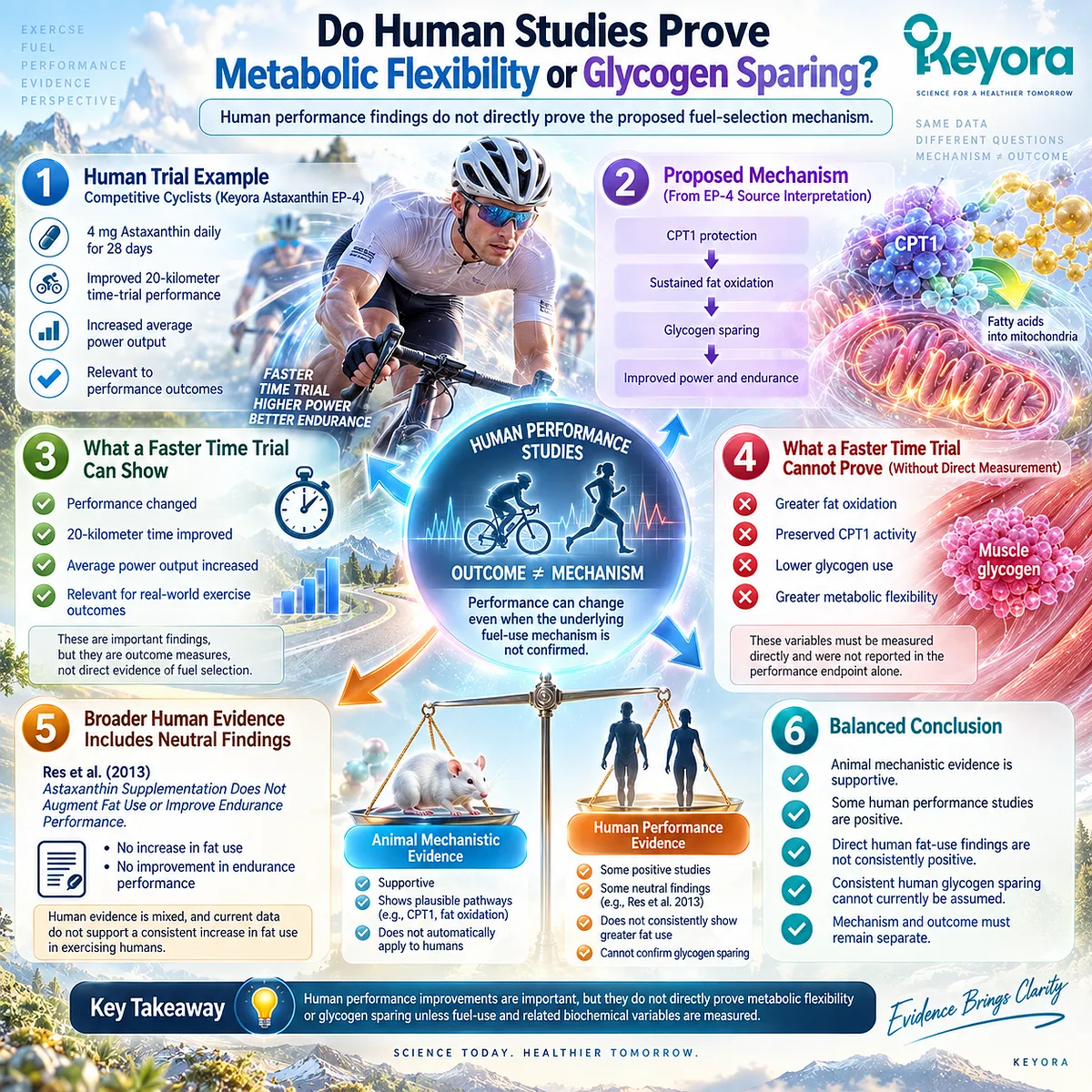
Human performance findings do not directly prove the proposed fuel-selection mechanism
Human trials provide more relevant evidence for real-world exercise outcomes, but they do not automatically confirm the biochemical mechanism proposed from animal research.
One example is the competitive-cyclist trial discussed in Keyora Astaxanthin EP-4.
The EP-4 source describes cyclists receiving 4 mg of Astaxanthin daily for 28 days and reports improvement in 20-kilometer time-trial performance and average power output.
Those findings are relevant to performance.
However, the source then interprets the result through a specific mechanism:
CPT1 protection
→ sustained fat oxidation
→ glycogen sparing
→ improved power and endurance
That mechanistic interpretation goes beyond what performance endpoints alone can establish.
A faster time trial can show that performance changed.
It cannot, by itself, prove:
-
greater fat oxidation
-
preserved CPT1 activity
-
lower glycogen use
-
greater metabolic flexibility
unless those variables were measured.
This becomes even more important when the broader human literature is considered.
The EP-4 reference set includes Res et al. (2013), Astaxanthin Supplementation Does Not Augment Fat Use or Improve Endurance Performance.
That neutral human evidence means the current literature should not be summarized as if Astaxanthin consistently increases fat use in exercising humans.
The better synthesis is:
animal mechanistic evidence is supportive
some human performance studies are positive
direct human fat-use findings are not consistently positive
Therefore:
consistent human glycogen sparing cannot currently be assumed
This is a good example of why mechanism and outcome must remain separate.
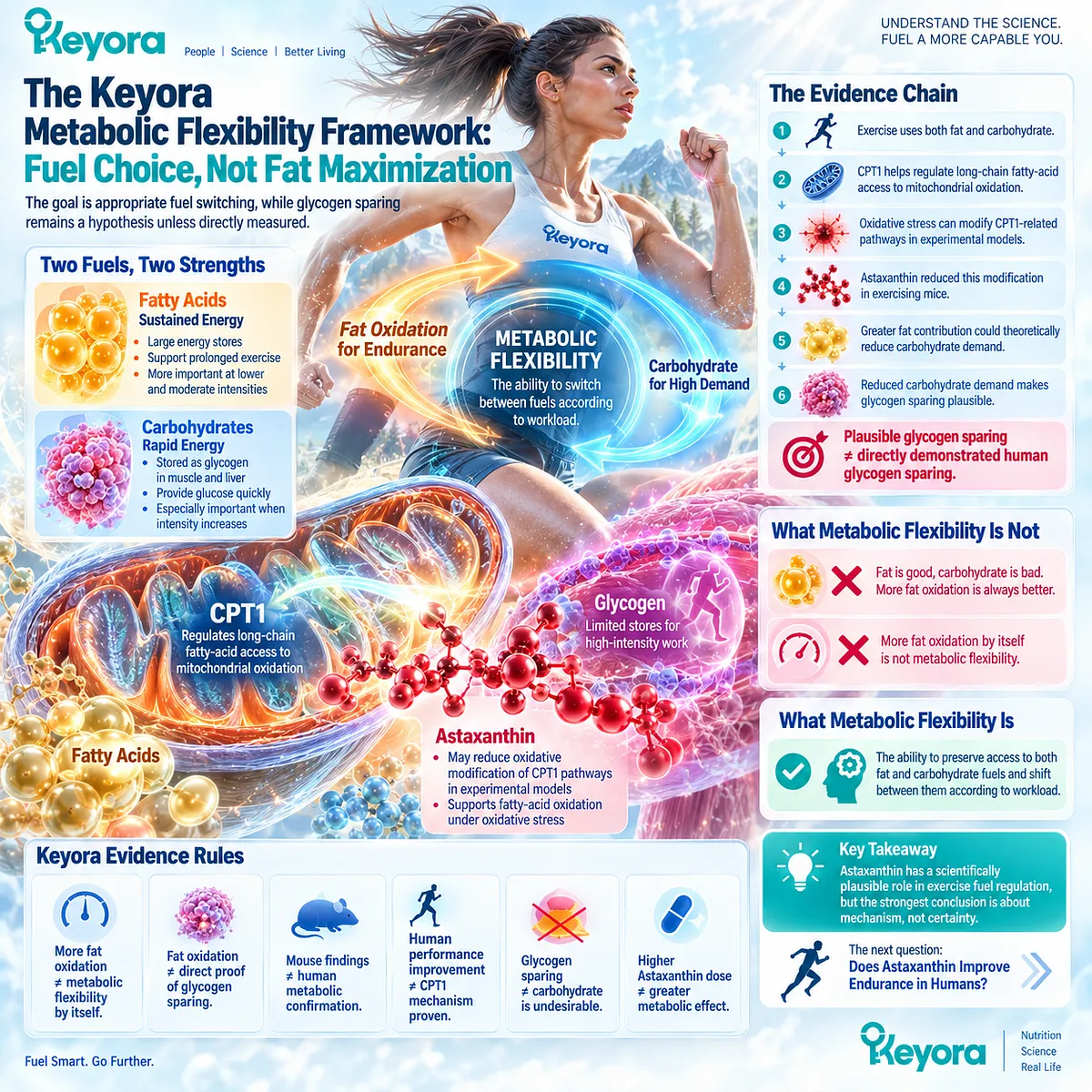
The Keyora Metabolic Flexibility Framework: Fuel Choice, Not Fat Maximization
The goal is appropriate fuel switching, while glycogen sparing remains a hypothesis unless directly measured
The Keyora Metabolic Flexibility Framework describes the ability to preserve access to both fat and carbohydrate fuels and shift between them according to workload.
The framework is therefore not:
fat is good, carbohydrate is bad
and it is not:
more fat oxidation is always better
Instead:
fat oxidation supports prolonged energy supply when appropriate
while:
carbohydrate supports rapid energy production when demand increases
Astaxanthin becomes relevant because experimental evidence suggests it may help preserve part of the metabolic machinery involved in fatty-acid oxidation under oxidative stress.
The complete evidence chain is:
exercise uses both fat and carbohydrate
↓
CPT1 helps regulate long-chain fatty-acid access to mitochondrial oxidation
↓
oxidative stress can modify CPT1-related pathways in experimental models
↓
Astaxanthin reduced this modification in exercising mice
↓
greater fat contribution could theoretically reduce carbohydrate demand
↓
reduced carbohydrate demand makes glycogen sparing plausible
But the final boundary remains essential:
plausible glycogen sparing ≠ directly demonstrated human glycogen sparing
The Keyora evidence rules for this question are therefore:
-
More fat oxidation ≠ metabolic flexibility by itself
-
Fat oxidation ≠ direct proof of glycogen sparing
-
Mouse findings ≠ human metabolic confirmation
-
Human performance improvement ≠ CPT1 mechanism proven
-
Glycogen sparing ≠ carbohydrate is undesirable
-
Higher Astaxanthin dose ≠ greater metabolic effect
Astaxanthin therefore has a scientifically plausible role in exercise fuel regulation, but the strongest conclusion is about mechanism, not certainty.
The next question moves from fuel-selection theory to the outcome consumers care about most:
Does Astaxanthin Improve Endurance in Humans?
This article is for educational and informational purposes only. It does not provide medical advice, diagnosis, treatment, cure, prevention, disease outcome claims, hormone restoration claims, fertility outcome claims, or formula-specific clinical efficacy claims.