
Can Astaxanthin Improve Blood Flow to the Brain?
Keyora Research Q&A Library
This is part of the Keyora Research Q&A Series, derived from Keyora Astaxanthin Research Journal Series.
Within the Keyora Astaxanthin Researcn framework, this Q&A translates complex astaxanthin biology into reader-friendly, evidence-bound answers, focusing on natural astaxanthin identity, molecular structure, antioxidant and redox mechanisms, membrane lipid interaction, mitochondrial resilience, inflammatory signaling pathways, human evidence interpretation, and the scientific principles behind responsible supplementation.
First published by Keyora Research Journal: www.keyorahealth.com
Direct Answer
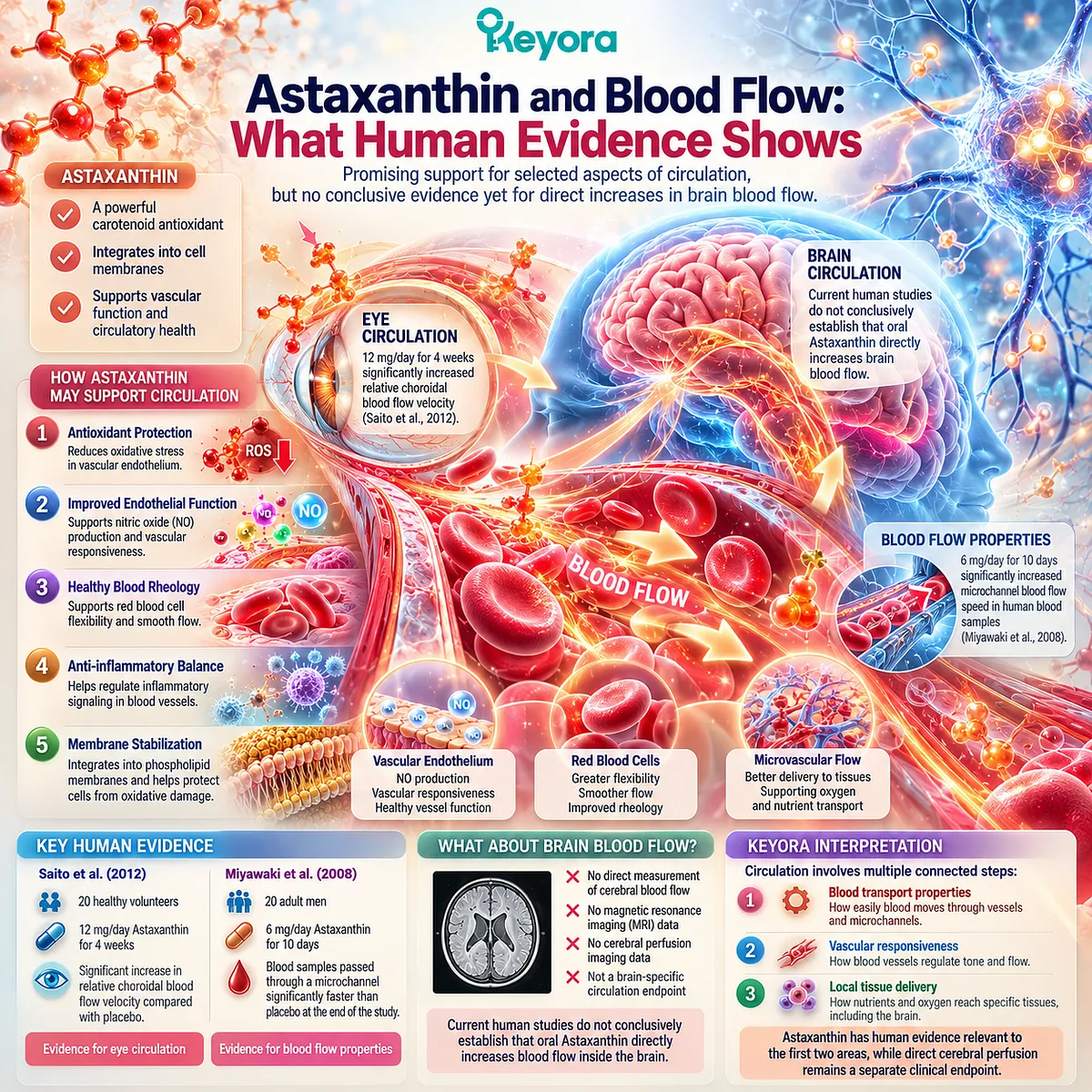
Astaxanthin has promising human evidence for supporting selected aspects of blood circulation, but current human studies do not conclusively establish that oral Astaxanthin directly increases blood flow inside the brain.
This distinction matters because blood flow is not one measurement.
The speed at which a collected blood sample passes through artificial microchannels, the relative blood flow velocity in the eye, and the actual volume of blood perfusing human brain tissue represent different physiological endpoints.
Two human studies provide particularly relevant evidence.
In 2012, Saito and colleagues conducted a randomized, double-blind, placebo-controlled trial involving 20 healthy volunteers.
Participants consumed 12 mg Astaxanthin daily or placebo for four weeks. Researchers observed a significant increase in a measure of relative choroidal blood flow velocity within the Astaxanthin group after four weeks.
Earlier, Miyawaki and colleagues studied 20 adult men using 6 mg Astaxanthin daily for ten days. Blood samples collected from the supplemented participants passed through a microchannel analyzer significantly faster after supplementation, with a significant difference from placebo at the end of the study.
Together, these findings establish an important scientific direction: oral Astaxanthin has demonstrated measurable effects on human blood flow related physiology.
However, neither study directly measured cerebral blood flow using magnetic resonance imaging, cerebral perfusion imaging, or another brain-specific circulation technique.
This question develops the vascular supply concept introduced in Keyora Astaxanthin EP-5: The Neural Fortress: A Mechanistic Analysis of Astaxanthin in Lipidomics Re-engineering and Neural Oxidative Debt.
The practical Keyora interpretation is straightforward: circulation involves blood transport properties, vascular responsiveness, and local tissue delivery. Astaxanthin has human evidence relevant to the first two areas, while direct cerebral perfusion remains a separate clinical endpoint.
Why the Brain Depends on Continuous Blood Supply
Brain function requires a responsive vascular network that continuously delivers oxygen and metabolic substrates to active neural tissue
Consider what happens during several hours of sustained concentration.
You may be reading, analyzing data, studying, making decisions, or moving between demanding cognitive tasks. Although these activities appear physically quiet, the neural networks involved remain metabolically active.
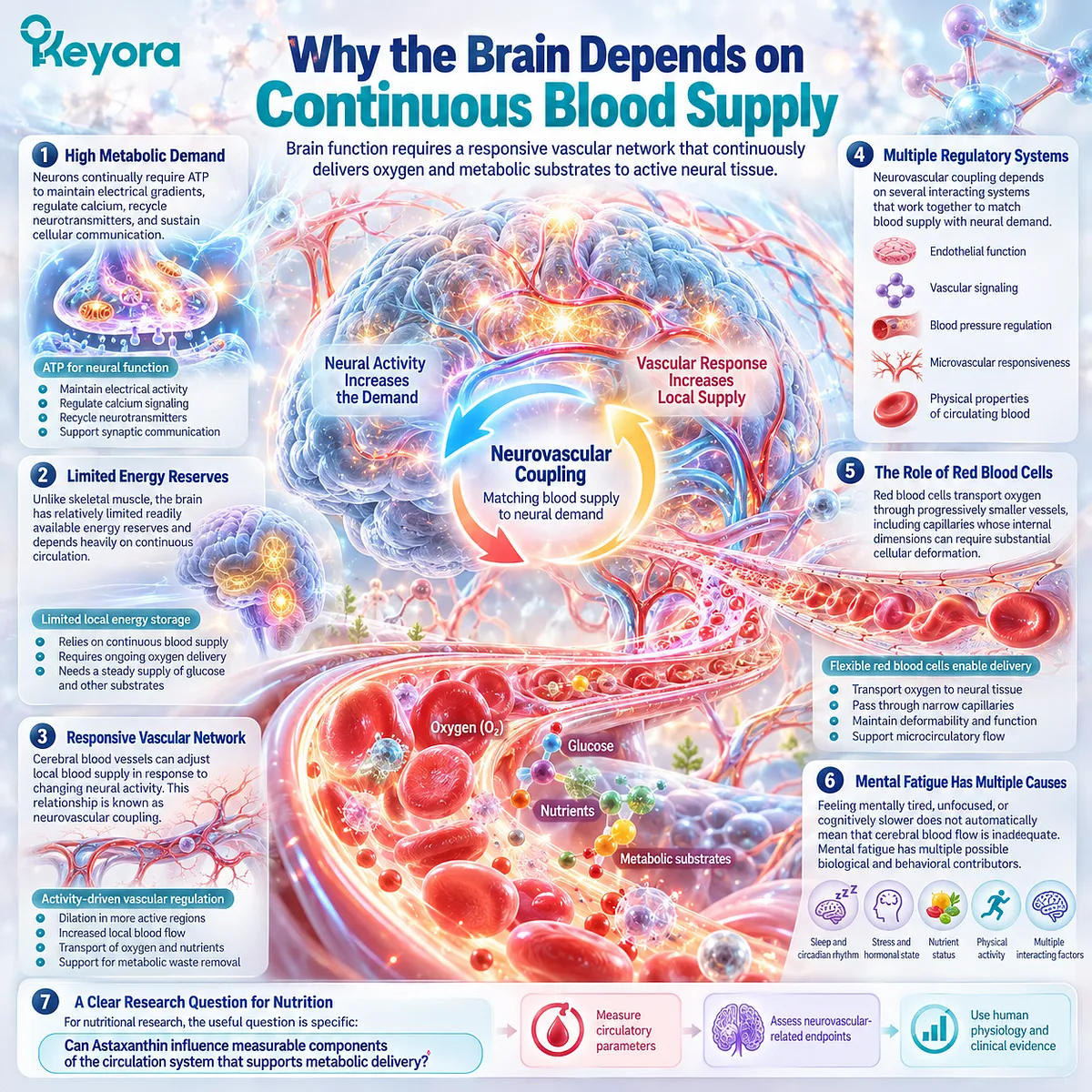
Neurons continually require ATP to maintain electrical gradients, regulate calcium, recycle neurotransmitters, and sustain communication between cells.
Unlike skeletal muscle, the brain has relatively limited readily available energy reserves. It therefore depends heavily on continuous circulation to maintain oxygen and substrate delivery.
Cerebral blood vessels are also capable of adjusting local blood supply in response to changing neural activity. This relationship is known as neurovascular coupling.
When particular neural networks become more active, local vascular regulation helps match metabolic delivery to the requirements of those regions.
That process depends on several interacting systems, including endothelial function, vascular signaling, blood pressure regulation, microvascular responsiveness, and the physical properties of circulating blood.
Red blood cells are especially important because they transport oxygen through progressively smaller vessels, including capillaries whose internal dimensions can require substantial cellular deformation.
Yet a distinction is necessary: feeling mentally tired, unfocused, or cognitively slower does not automatically mean that cerebral blood flow is inadequate.
Mental fatigue has multiple possible biological and behavioral contributors.
For nutritional research, the useful question is more specific: can Astaxanthin influence measurable components of the circulation system that supports metabolic delivery?
That question can be investigated through human physiology rather than inferred from subjective mental clarity alone.
What Does Improving Blood Flow Actually Mean?
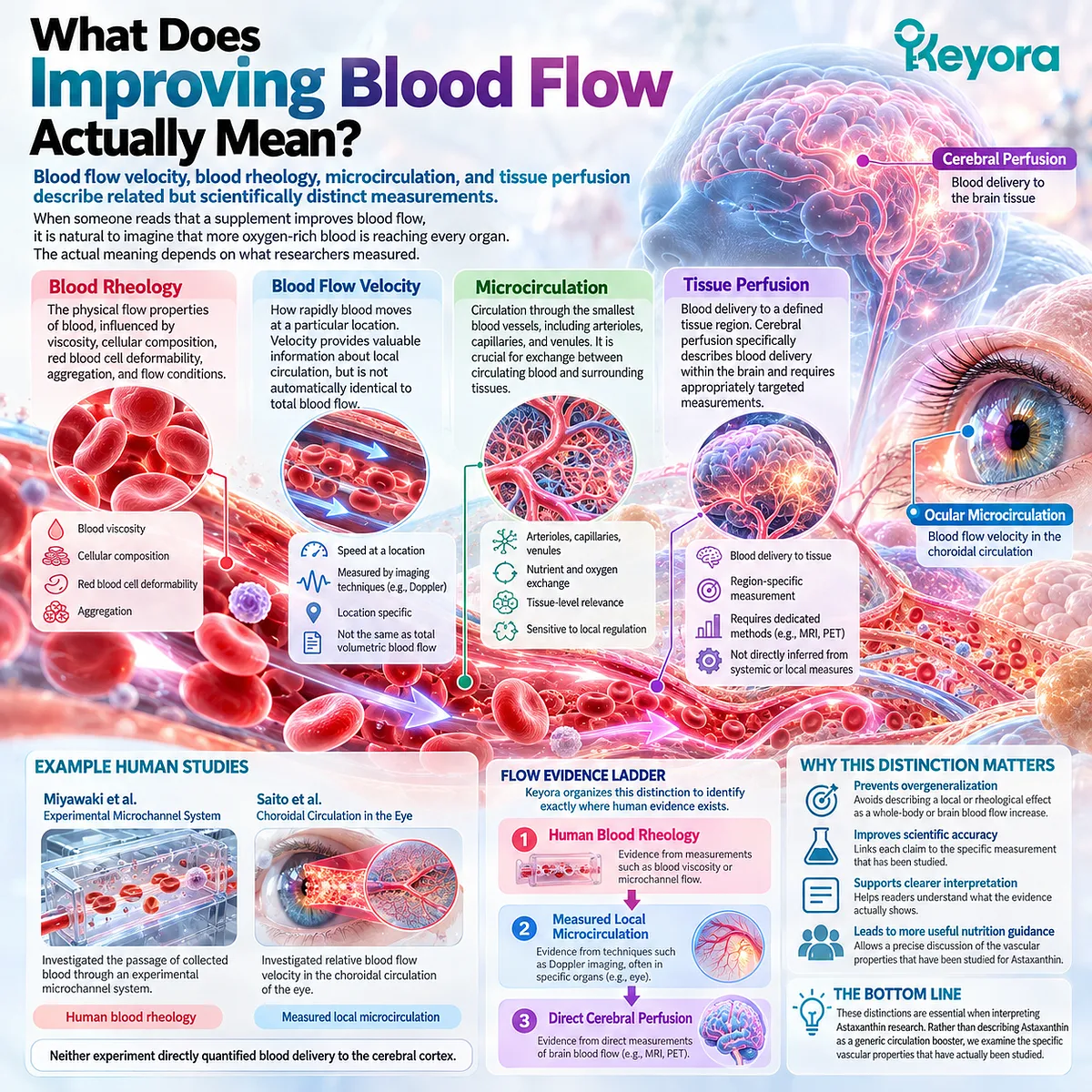
Blood flow velocity, blood rheology, microcirculation, and tissue perfusion describe related but scientifically distinct measurements
When someone reads that a supplement improves blood flow, it is natural to imagine that more oxygen-rich blood is reaching every organ.
The actual meaning depends on what researchers measured.
-
Blood rheology concerns the physical flow properties of blood. These properties are influenced by blood viscosity, cellular composition, red blood cell deformability, aggregation, and the conditions under which blood moves.
-
A laboratory test can investigate rheology by measuring how quickly collected blood passes through standardized microchannels.
-
Blood flow velocity describes how rapidly blood moves at a particular location. Measuring velocity can provide valuable information about local circulation, but velocity is not automatically identical to total volumetric blood flow.
-
Microcirculation refers to circulation through the smallest blood vessels, including arterioles, capillaries, and venules. It is particularly relevant to exchange between circulating blood and surrounding tissues.
-
Tissue perfusion concerns blood delivery to a defined tissue region. Cerebral perfusion specifically describes blood delivery within the brain and requires appropriately targeted measurements.
These distinctions are essential when interpreting Astaxanthin research.
Miyawaki investigated the passage of collected blood through an experimental microchannel system.
Saito investigated relative blood flow velocity in the choroidal circulation of the eye.
Neither experiment directly quantified blood delivery to the cerebral cortex.
Keyora organizes this distinction through a Flow Evidence Ladder:
Human Blood Rheology
↓
Measured Local Microcirculation
↓
Direct Cerebral Perfusion
The purpose of this framework is to identify exactly where human evidence exists before translating a physiological observation into a nutritional claim.
It also makes the research more useful. Rather than describing Astaxanthin as a generic circulation booster, we can examine the specific vascular properties that have actually been studied.
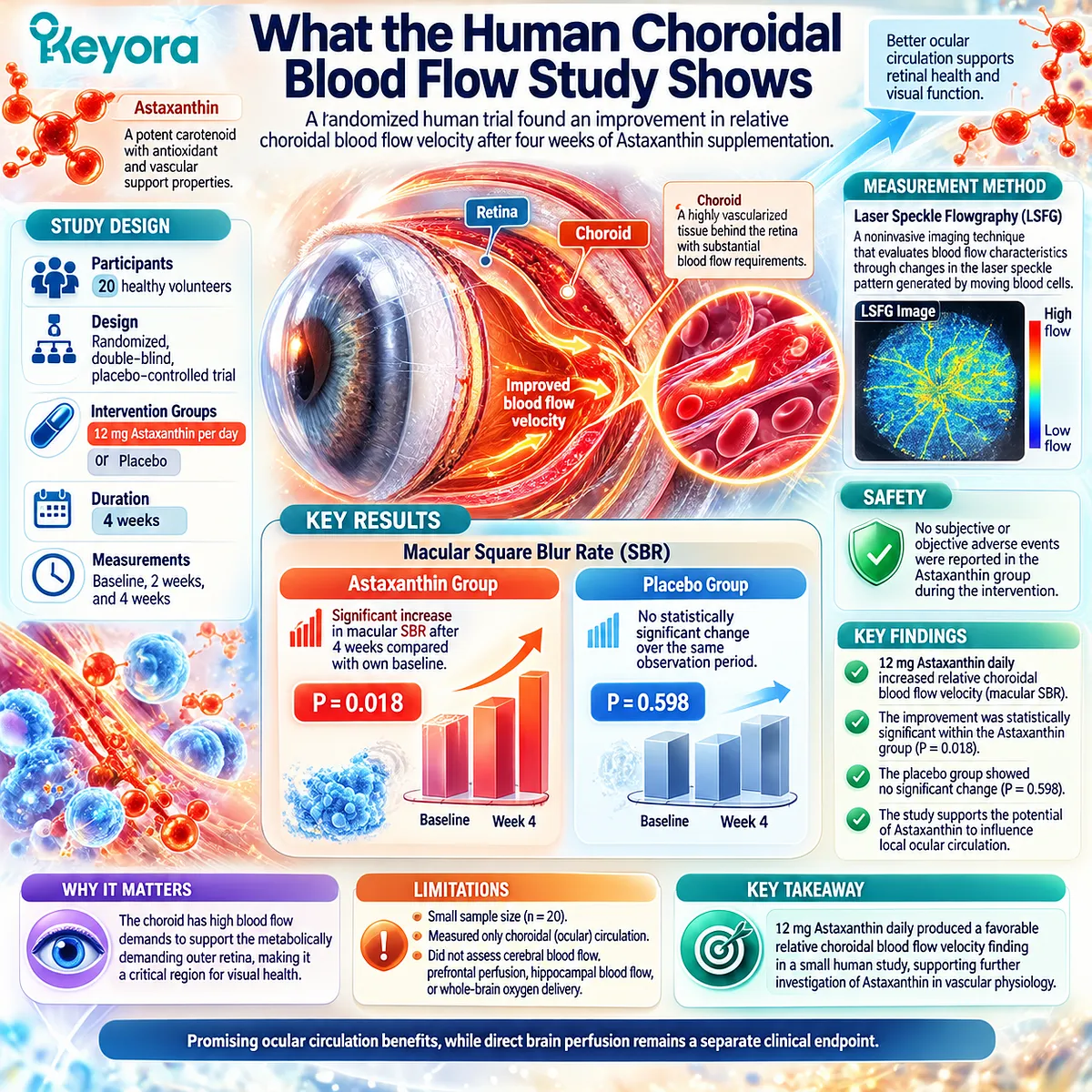
What the Human Choroidal Blood Flow Study Shows
A randomized human trial found an improvement in relative choroidal blood flow velocity after four weeks of Astaxanthin supplementation
One of the most relevant human studies was published by Saito and colleagues in Graefe’s Archive for Clinical and Experimental Ophthalmology in 2012.
The investigators examined whether continuous oral Astaxanthin supplementation could influence blood flow velocity within the choroid, a highly vascularized tissue located behind the retina.
The study enrolled 20 healthy volunteers using a randomized, double-blind, placebo-controlled design.
Participants received either:
12 mg Astaxanthin per day
or
Placebo
for four weeks.
Researchers conducted measurements before supplementation and again after two and four weeks.
They used laser speckle flowgraphy (LSFG), a noninvasive imaging technique that evaluates blood flow characteristics through changes in the laser speckle pattern generated by moving blood cells.
The study calculated a parameter called the square blur rate (SBR), which served as an index of relative choroidal blood flow velocity.
After four weeks, the Astaxanthin group showed a statistically significant increase in macular SBR compared with its own baseline:
P = 0.018
The placebo group did not show a statistically significant change over the corresponding observation period:
P = 0.598
These values describe the reported within-group findings and should not be confused with a separately established significant between-group treatment effect.
No subjective or objective adverse events were reported in the Astaxanthin group during the intervention.
The study provides meaningful evidence that Astaxanthin supplementation may influence local ocular circulation over a defined period.
It is particularly relevant because the choroid has substantial blood flow requirements associated with supporting the metabolically demanding outer retina.
However, the choroid is not the cerebral cortex.
The research did not measure prefrontal perfusion, hippocampal blood flow, or whole-brain oxygen delivery.
The appropriate conclusion is that 12 mg Astaxanthin daily produced a favorable relative choroidal blood flow velocity finding in a small human study, supporting further investigation of Astaxanthin in vascular physiology.
What the Human Blood Rheology Study Shows
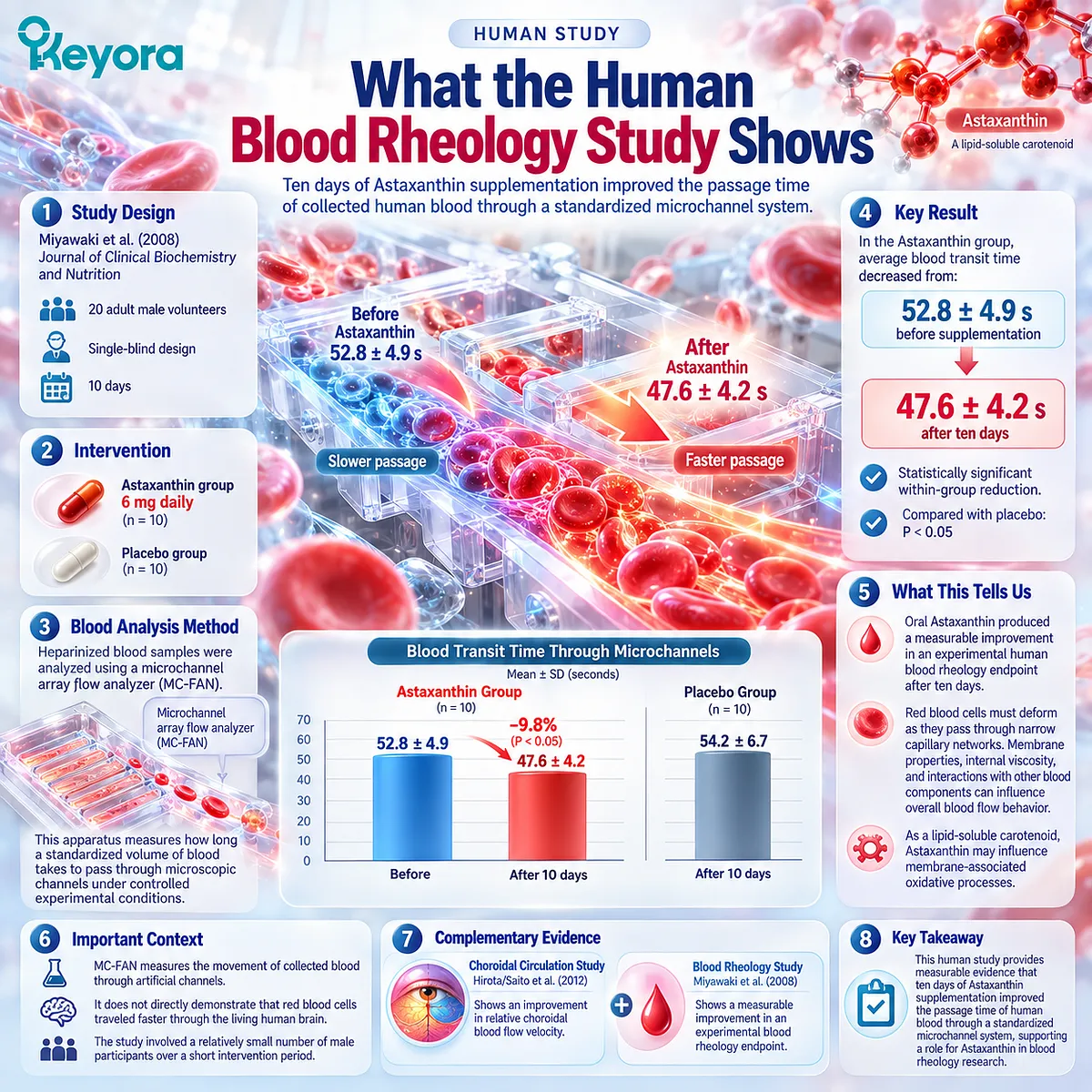
Ten days of Astaxanthin supplementation improved the passage time of collected human blood through a standardized microchannel system
A second important human study was published by Miyawaki and colleagues in the Journal of Clinical Biochemistry and Nutrition in 2008.
Rather than observing circulation inside a particular organ, the researchers investigated whether Astaxanthin could influence the physical flow properties of human blood.
The study involved 20 adult male volunteers, divided into an Astaxanthin group and a placebo group under a single-blind design.
Participants received:
6 mg Astaxanthin daily
or
Placebo
for ten days.
The researchers collected heparinized blood samples and analyzed them using a microchannel array flow analyzer (MC-FAN).
This apparatus measures how long a standardized volume of blood takes to pass through microscopic channels under controlled experimental conditions.
In the Astaxanthin group, average blood transit time decreased from:
52.8 ± 4.9 seconds
before supplementation to:
47.6 ± 4.2 seconds
after ten days.
This represented a statistically significant within-group reduction.
At the end of the intervention, the placebo group showed an average transit time of:
54.2 ± 6.7 seconds
The difference between the Astaxanthin and placebo groups was also statistically significant, with P less than 0.05.
The study therefore provides a measurable human result relevant to blood rheology.
What makes this finding interesting is its connection to microvascular physiology.
Red blood cells must deform as they pass through narrow capillary networks. Their membrane properties, internal viscosity, and interactions with other blood components can influence overall blood flow behavior.
Astaxanthin is a lipid-soluble carotenoid, making its relationship with membrane-associated oxidative processes a plausible area for investigation.
However, MC-FAN measures the movement of collected blood through artificial channels. It does not directly demonstrate that red blood cells traveled faster through the living human brain.
The study also involved a relatively small number of male participants over a short intervention period.
Its strongest contribution is therefore specific:
Oral Astaxanthin produced a measurable improvement in an experimental human blood rheology endpoint after ten days
This complements the choroidal circulation research by examining a different part of the vascular delivery system.
How Nitric Oxide and Oxidative Stress Affect Circulation
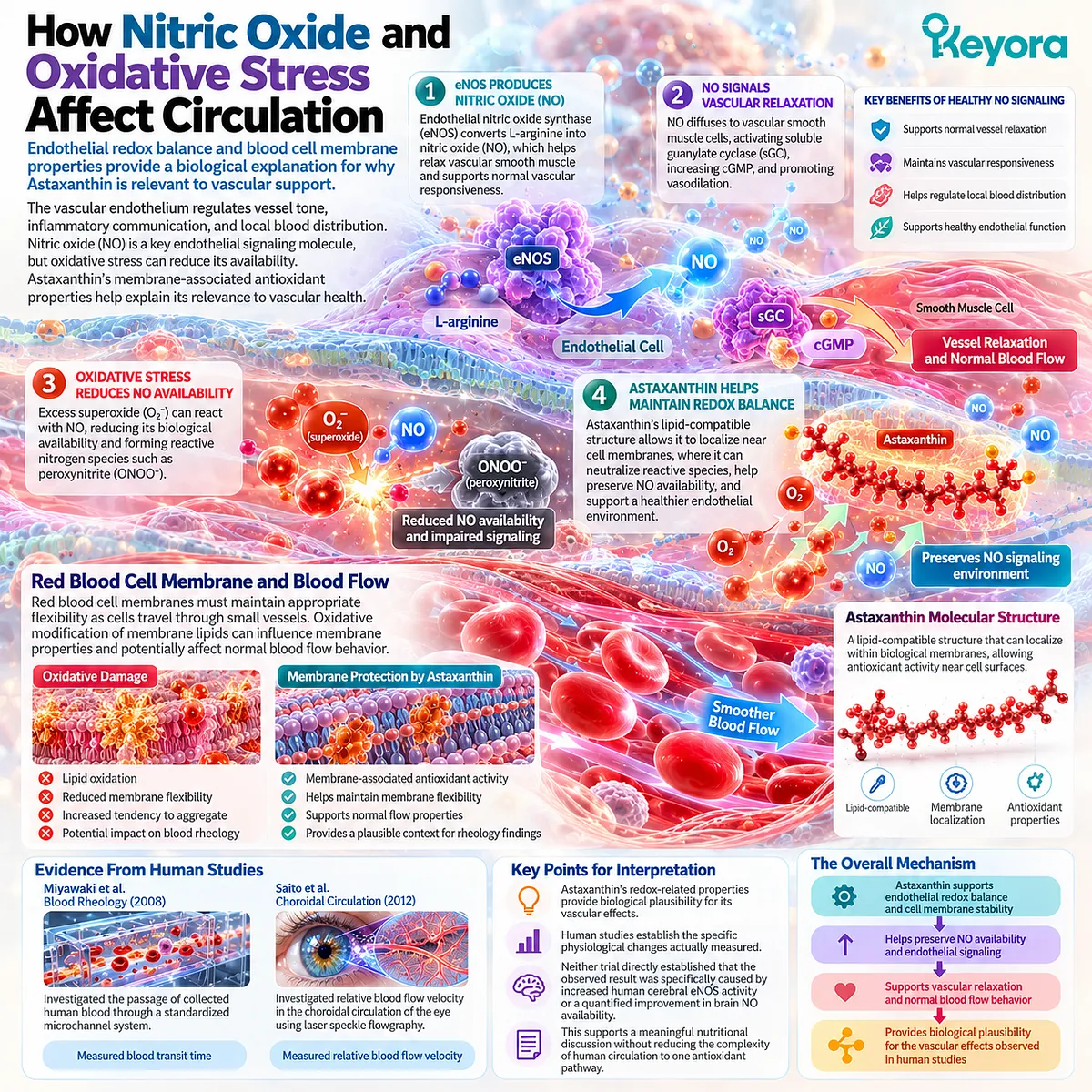
Endothelial redox balance and blood cell membrane properties provide a biological explanation for why Astaxanthin is relevant to vascular support
Blood circulation depends on more than the heart pumping blood through a network of vessels.
The vascular endothelium actively participates in regulating vessel tone, inflammatory communication, and local blood distribution.
One important endothelial signaling molecule is nitric oxide (NO).
Under physiological conditions, endothelial nitric oxide synthase (eNOS) helps produce NO, which participates in vascular smooth muscle relaxation and supports normal vascular responsiveness.
Oxidative stress can interfere with this environment.
For example, excess superoxide can react with NO, reducing its biological availability while contributing to the formation of reactive nitrogen species.
This creates a mechanistic reason to investigate nutrients associated with antioxidant and redox regulation in vascular physiology.
Astaxanthin is especially interesting because of its lipid-compatible molecular structure and its experimental relevance to oxidative processes occurring near biological membranes.
The same general logic applies to circulating blood cells.
Red blood cell membranes must maintain appropriate structural flexibility as cells travel through small vessels.
Oxidative modification of membrane lipids can influence membrane properties and potentially affect normal blood flow behavior.
Astaxanthin’s membrane-associated antioxidant activity offers a plausible explanatory context for the rheology findings observed by Miyawaki.
However, it is important to preserve the distinction between a measured outcome and its proposed biological explanation.
Saito measured relative choroidal blood flow velocity.
Miyawaki measured blood transit time.
Neither trial directly established that its observed result was specifically caused by increased human cerebral eNOS activity or a quantified improvement in brain NO availability.
The appropriate mechanistic interpretation is therefore:
Astaxanthin’s redox-related properties provide biological plausibility for its vascular effects, while human studies establish the specific physiological changes actually measured
This supports a meaningful nutritional discussion without reducing the complexity of human circulation to one antioxidant pathway.
Why Better Eye Circulation Does Not Automatically Prove Better Brain Perfusion
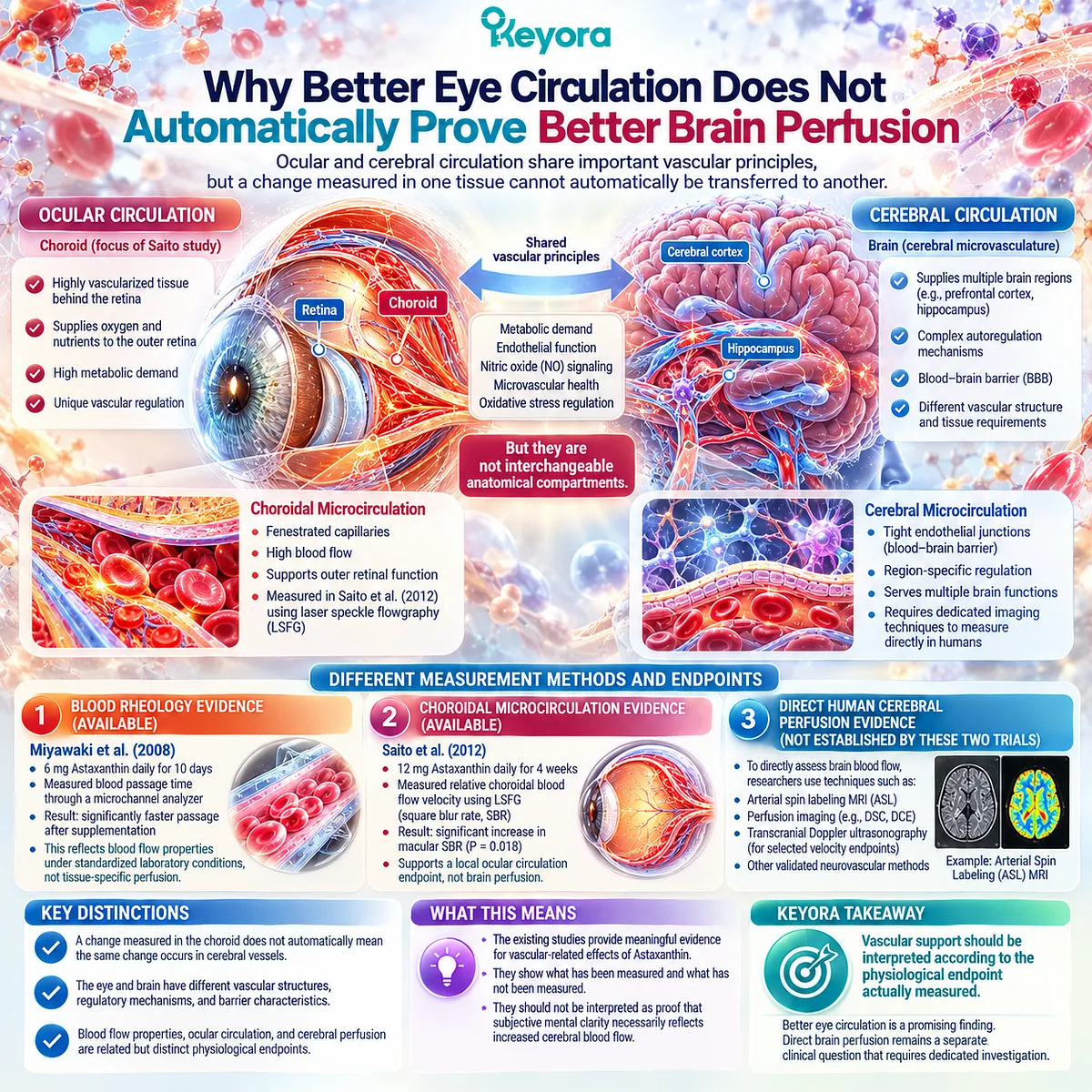
Ocular and cerebral circulation share important vascular principles, but a change measured in one tissue cannot automatically be transferred to another
The eye and brain both contain metabolically demanding neural tissue and specialized vascular systems.
This relationship explains why ocular circulation is scientifically interesting in discussions of neurological and systemic vascular health.
Yet the choroid and cerebral microvasculature are not interchangeable anatomical compartments.
They differ in local structure, vascular regulation, barrier characteristics, tissue requirements, and measurement methods.
The Saito study provides a positive observation within the eye. It cannot independently establish that the same percentage change occurred in cerebral vessels.
Likewise, the Miyawaki finding demonstrates a change in the flow behavior of collected human blood under standardized laboratory conditions. It does not establish how cerebral autoregulation responded to Astaxanthin supplementation.
The distinction becomes clearer when considering how direct cerebral blood flow is investigated.
Researchers can use techniques such as arterial spin labeling MRI, perfusion imaging, transcranial Doppler ultrasonography for selected vascular velocity endpoints, or other validated neurovascular methods.
These approaches address cerebral circulation more directly than an ocular flow measurement or an ex vivo blood rheology test.
This creates three different evidence categories:
-
Blood Rheology Evidence – Available
-
Choroidal Microcirculation Evidence – Available
-
Direct Human Cerebral Perfusion Evidence – Not established by these two trials
That does not make the existing research unimportant.
Instead, it identifies what the findings contribute and what an additional clinical study would need to measure.
It also prevents consumers from assuming that subjective mental clarity necessarily reflects a change in cerebral blood flow.
The relevant Keyora principle is that vascular support should be interpreted according to the physiological endpoint actually measured.
Where Keyora Asta 16MG Fits
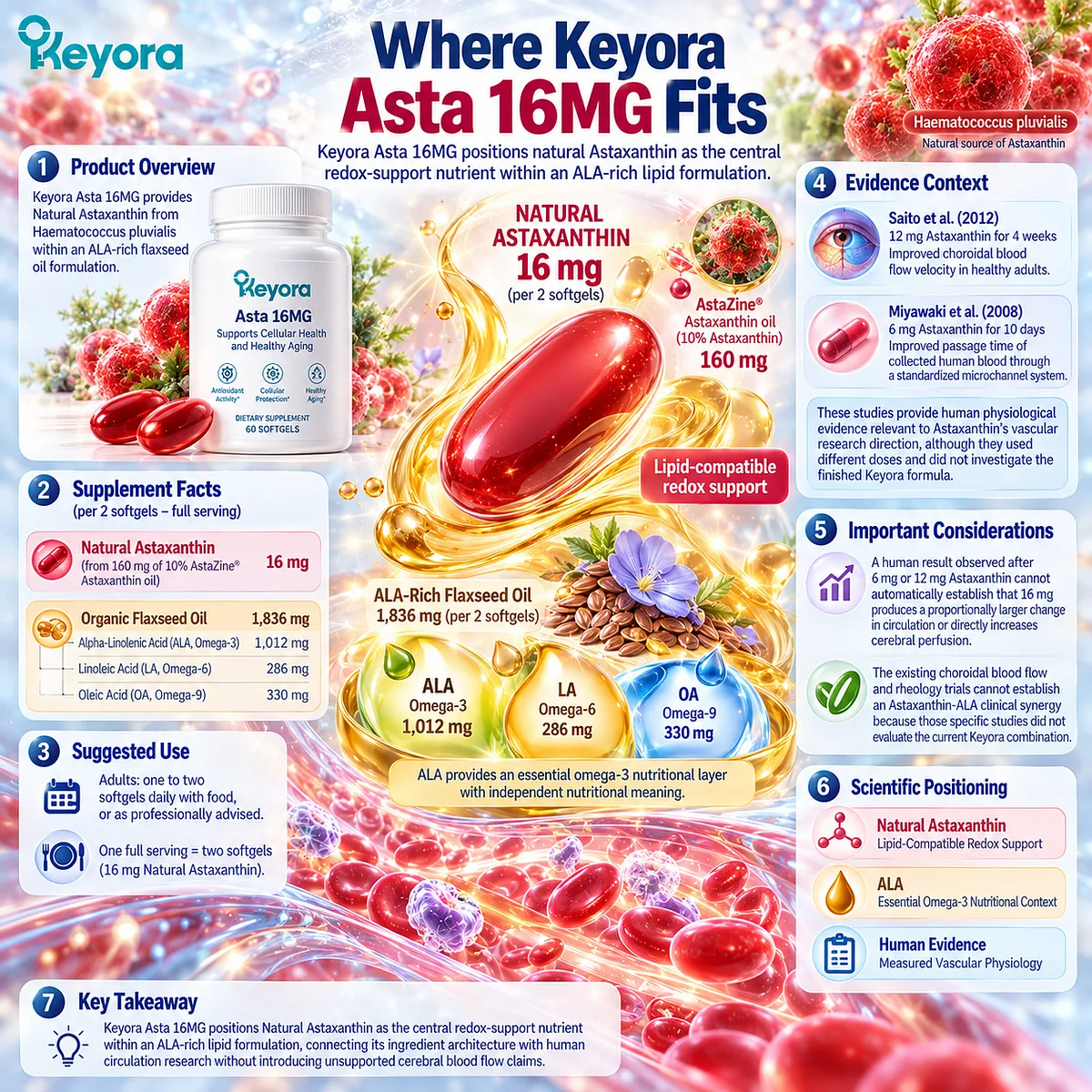
Keyora Asta 16MG positions natural Astaxanthin as the central redox-support nutrient within an ALA-rich lipid formulation
The current Keyora Asta 16MG Supplement Facts define one full serving as two softgels.
Each full serving provides:
16 mg Natural Astaxanthin, supplied by 160 mg of 10% AstaZine® Astaxanthin oil from Haematococcus pluvialis.
The formulation also provides 1,836 mg organic flaxseed oil, including:
-
1,012 mg Alpha-Linolenic Acid (ALA), Omega-3
-
286 mg Linoleic Acid (LA), Omega-6
-
330 mg Oleic Acid (OA), Omega-9
The suggested adult use is one to two softgels daily with food, or as professionally advised.
For this particular question, Natural Astaxanthin remains the scientific protagonist.
The Saito and Miyawaki studies provide human physiological evidence relevant to Astaxanthin’s vascular research direction, although they used different doses and did not investigate the finished Keyora formula.
This matters when interpreting the full-serving amount.
A human result observed after 6 mg or 12 mg Astaxanthin cannot automatically establish that 16 mg produces a proportionally larger change in circulation or directly increases cerebral perfusion.
ALA contributes a separate essential omega-3 nutritional layer.
Its presence gives the flaxseed oil component independent nutritional meaning rather than reducing it to an inactive carrier. However, the existing choroidal blood flow and rheology trials cannot establish an Astaxanthin-ALA clinical synergy because those specific studies did not evaluate the current Keyora combination.
For this article, additional products and nutrients are not necessary.
The most useful formula interpretation remains:
-
Natural Astaxanthin – Lipid-Compatible Redox Support
-
ALA – Essential Omega-3 Nutritional Context
-
Human Evidence – Measured Vascular Physiology
This positioning allows Keyora Asta 16MG to connect its ingredient architecture with human circulation research without introducing unsupported cerebral blood flow claims.
What Realistic Brain Circulation Support Looks Like
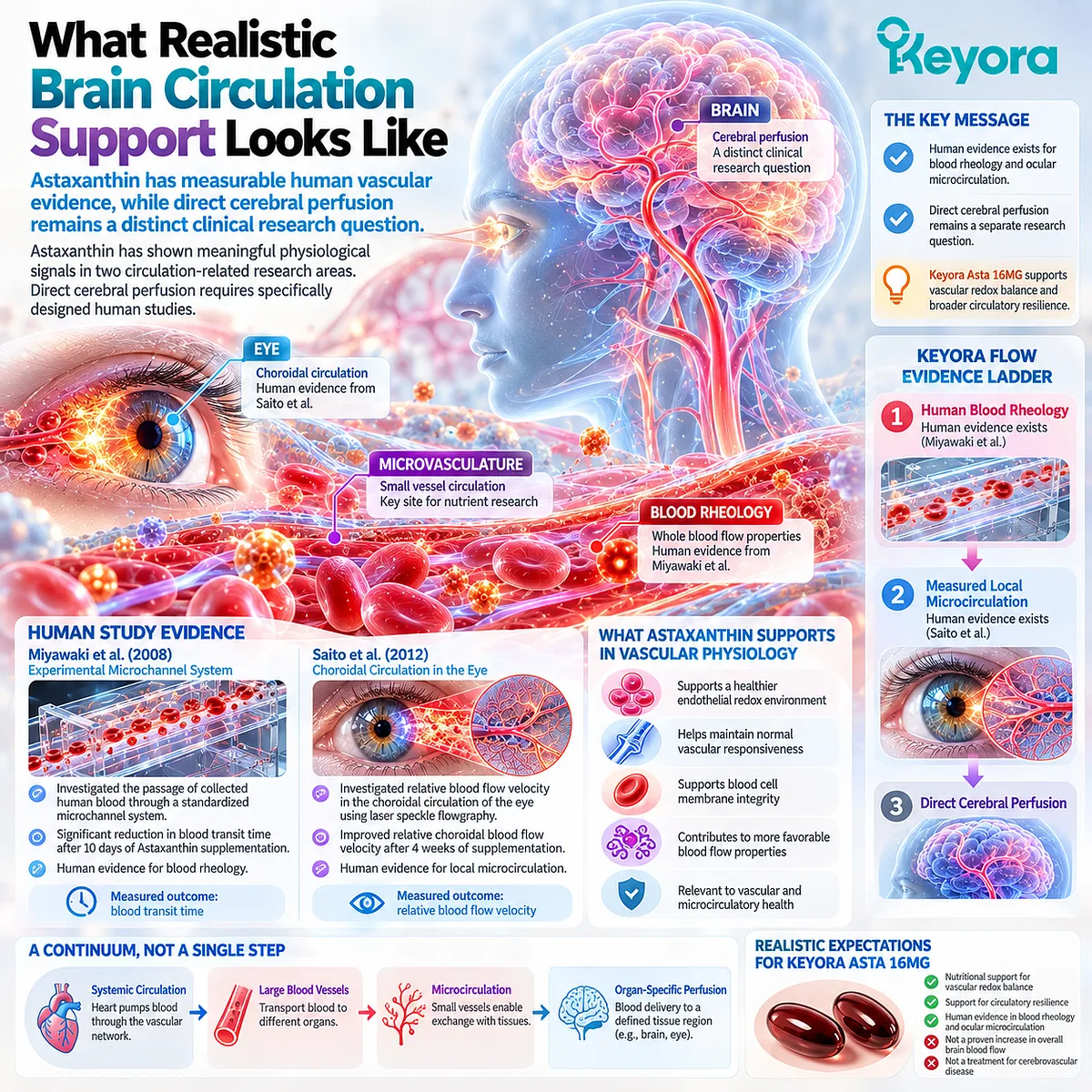
Astaxanthin has measurable human vascular evidence, while direct cerebral perfusion remains a distinct clinical research question
The most useful conclusion is not that Astaxanthin has already been proven to increase blood flow throughout the human brain.
It is that Astaxanthin has demonstrated meaningful physiological signals in two circulation-related research areas.
Saito and colleagues observed improved relative choroidal blood flow velocity after four weeks of supplementation.
Miyawaki and colleagues demonstrated a significant reduction in experimental whole blood transit time after ten days.
These findings support continued investigation of Astaxanthin as a nutrient relevant to vascular and microcirculatory physiology.
The Keyora Flow Evidence Ladder helps preserve that distinction:
Human Blood Rheology
↓
Measured Local Microcirculation
↓
Direct Cerebral Perfusion
The first two areas have relevant human Astaxanthin evidence. The third requires specifically designed human cerebral circulation studies.
For Keyora Asta 16MG, the evidence-aligned nutritional direction is therefore vascular redox support and broader circulatory resilience, rather than a promise of increased brain blood flow, faster intelligence, or treatment of cerebrovascular disease.
The distinction is important because better nutritional decisions begin with understanding not only what a study found, but also exactly where researchers looked.
This article is for educational and informational purposes only. It does not provide medical advice, diagnosis, treatment, cure, prevention, disease outcome claims, hormone restoration claims, fertility outcome claims, or formula-specific clinical efficacy claims.