
Are Soy Isoflavones Safe for Breast and Uterine Health?
Keyora Research Q&A Library
This is part of the Keyora Research Q&A Series, derived from the Keyora Female Chrono-Nutrition Research Series.
ORCID: 0009–0007–5798–1996
First published by Keyora Research Journal: www.keyorahealth.com
Within the Keyora Female Chrono-Nutrition framework, this Q&A translates complex female biological rhythms and nutritional science into reader-friendly, evidence-bound answers, focusing on reproductive life stages, menstrual-cycle regulation, Soy Isoflavones and ER-β signaling, Vitex and dopamine–prolactin feedback, HPO-axis coordination, PMS/PMDD, menopause, PCOS, menstrual pain, preconception nutrition, neuro-circadian resilience, mitochondrial and metabolic function, phenotype-matched nutritional interventions, human clinical evidence, and the scientific principles behind responsible supplementation.
Direct Answer
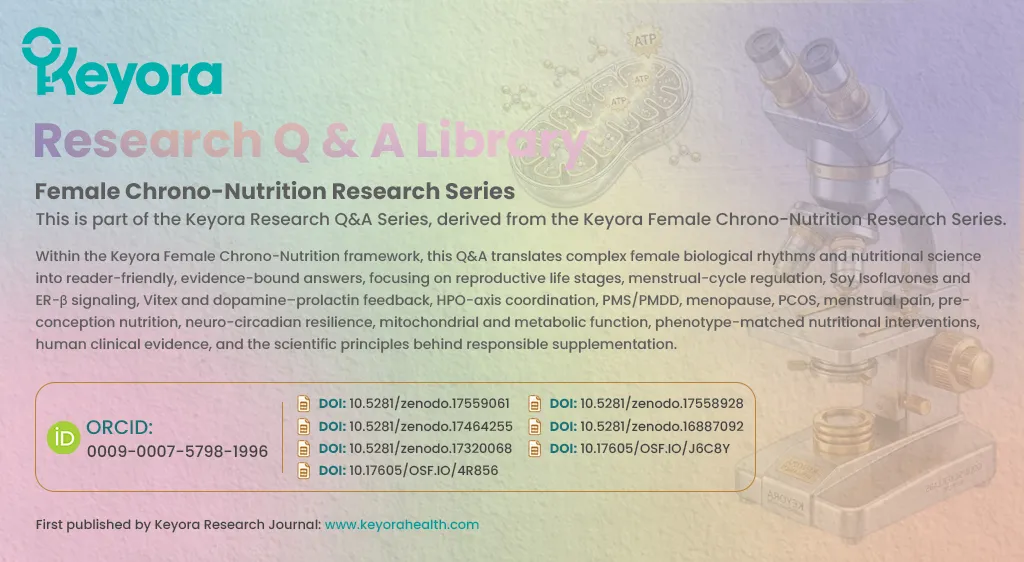
Soy isoflavones have a generally reassuring but not unconditional safety record for breast and uterine health in the women and preparations studied.
Controlled trials have often found no significant changes in mammographic density, breast proliferation markers, or endometrial thickness.
However, these measurements are not the same as proving that a supplement cannot cause cancer, and some findings warrant caution.
One five-year randomized trial reported more endometrial hyperplasia with 150 mg/day of soy isoflavones than with placebo.
Other multiyear trials did not reproduce a comparable signal.
A breast study involving higher-risk women also observed a possible proliferation concern in a premenopausal subgroup, although its overall comparison was not significant.
The practical distinction is between ordinary soy foods, isolated isoflavone preparations, and women with different medical histories.
Keyora’s ER-beta research framework can explain receptor interactions, but it cannot certify lifetime safety for a finished formula.
Women with relevant breast or uterine conditions should review concentrated supplements with their clinical team.
Why ER-Beta Preference Does Not Guarantee Tissue Safety
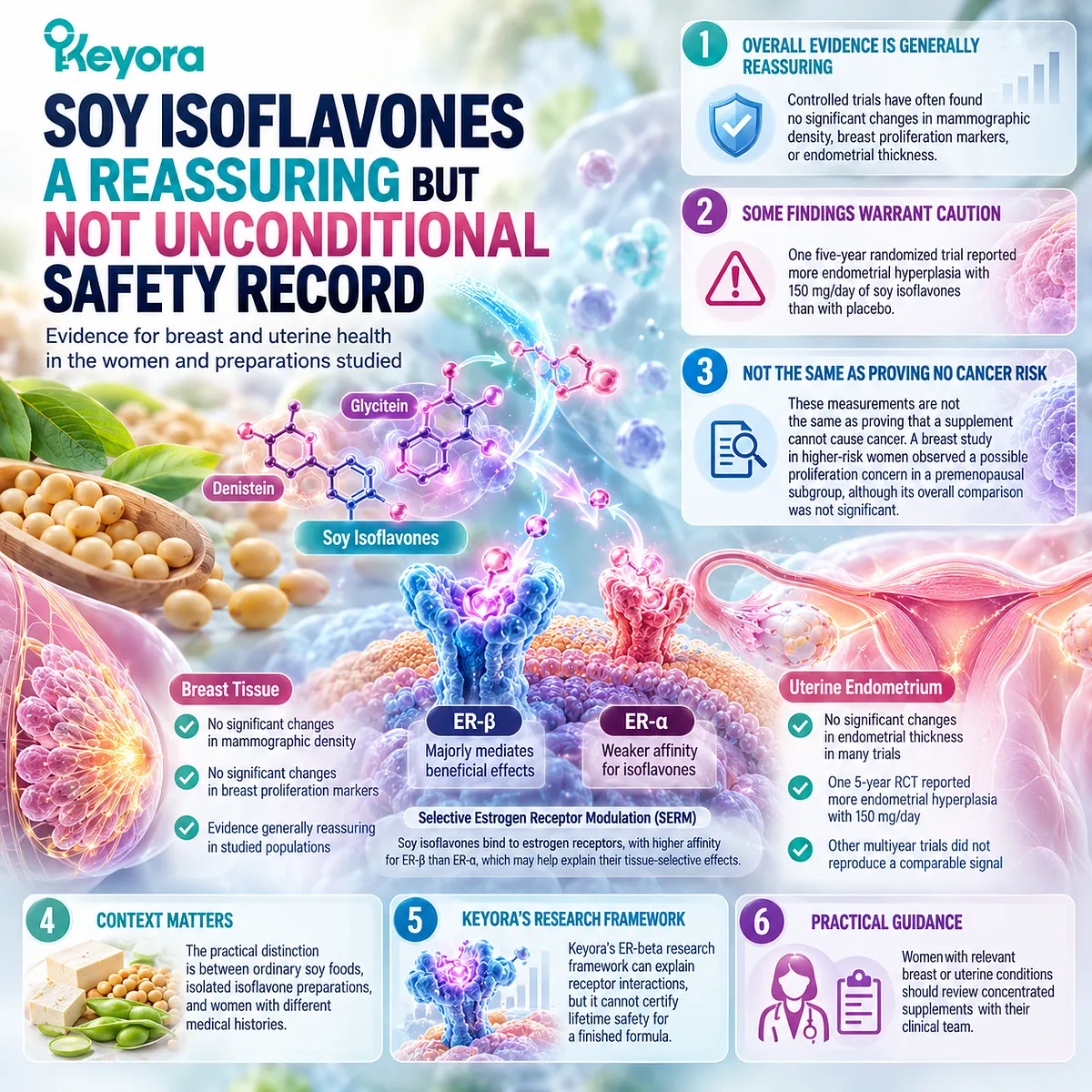
Receptor selectivity provides a mechanistic hypothesis, not a universal safety certificate
Why Breast and Uterine Tissues Respond to Estrogen Signals
Breast and uterine tissues contain estrogen-responsive cells influenced by hormones, age, enzymes, and receptor signaling. Normal tissue renewal is not itself disease.
Concern arises when a proposed intervention is described as estrogen-active without specifying what was measured.
An interaction in a laboratory dish cannot tell a woman whether her endometrium will thicken or whether a breast lesion will develop.
What ER-Alpha and ER-Beta Studies Actually Establish
Estrogen receptor alpha and beta can influence gene expression in different ways, but their functions and tissue distributions overlap.
Experimental studies, including Kuiper et al. (1998), found that certain isoflavones display relative ER-beta preference under particular conditions.
Relative preference is not exclusive binding.
Receptor concentration, other cellular proteins, the specific isoflavone, and dose can modify biological responses. It is therefore unsound to infer that ER-alpha-related tissue effects have been completely bypassed.
Why the Keyora SERM-Beta Model Requires Human Validation
In Keyora Female Chrono-Nutrition EP-1: The ER-β Blueprint: Soy Isoflavones in Neuro-Endocrine-Metabolic Synchronization, the concepts SERM-beta and Spatial Partitioning organize a proposed receptor-centered approach to female physiology.
That framework helps generate testable hypotheses.
It is not equivalent to human trials showing that a Keyora supplement prevents breast proliferation or endometrial hyperplasia. Those claims require the appropriate preparation, participants, comparator, and clinical outcomes.
What Breast Safety Studies Actually Measure
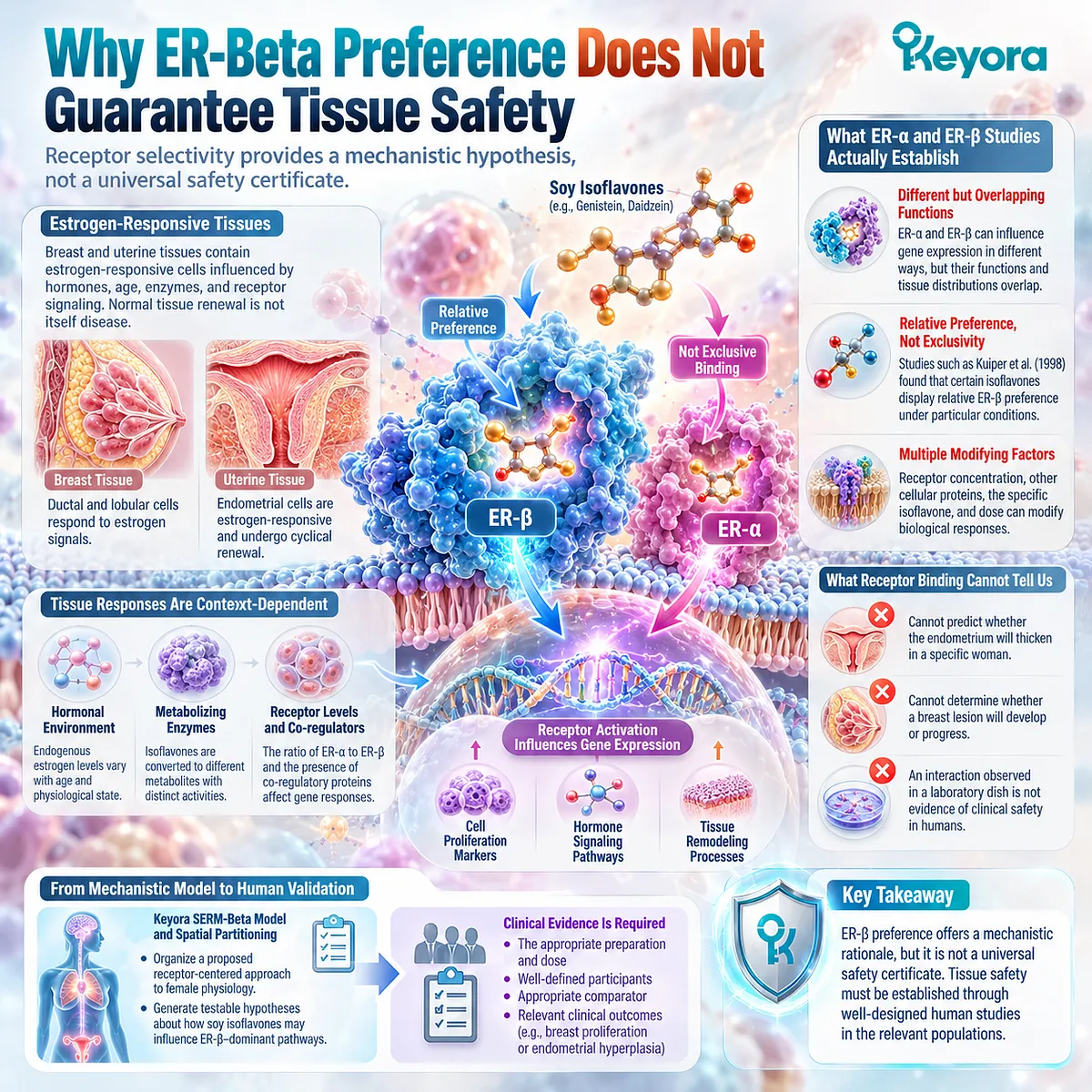
Breast density, cellular proliferation, and cancer incidence represent different levels of evidence
Mammographic Density as a Breast Risk Marker
Mammographic density describes fibroglandular relative to fatty breast tissue. Higher density is associated with breast cancer risk.
Yet density is an indirect marker.
Neither unchanged nor reduced density proves a specific effect on future cancer incidence.
MRI Measurements of Fibroglandular Tissue
Magnetic resonance imaging can estimate fibroglandular tissue volume and percentage without relying on precisely the same measurement as mammographic density.
Investigators may choose MRI when examining younger women with denser breast tissue.
Measurements vary with age, body composition, and menstrual physiology. Statistical significance can depend on BMI adjustment and selected outcomes.
Ki-67 and Breast Epithelial Proliferation
Ki-67 is a marker used to estimate the proportion of sampled cells engaged in proliferation.
In a research setting, investigators may collect breast epithelial cells and compare Ki-67 before and after an intervention.
This is a more direct cellular measurement than breast density, but it remains a biomarker.
Sampling variability and menopausal stage matter, and an isolated Ki-67 change cannot independently quantify long-term cancer risk.
Why Biomarker Changes Are Not Cancer Outcomes
Cancer incidence or recurrence would require clinical follow-up with sufficient participants and time.
Most soy isoflavone intervention trials were designed to examine intermediate outcomes, rather than uncommon malignancies.
Accurate interpretation separates these measurements from protection claims or definitive cancer warnings.
What Randomized Trials Found in Breast Tissue
Controlled studies provide qualified reassurance while preserving uncertainty in higher-risk women
The Two-Year OPUS Trial
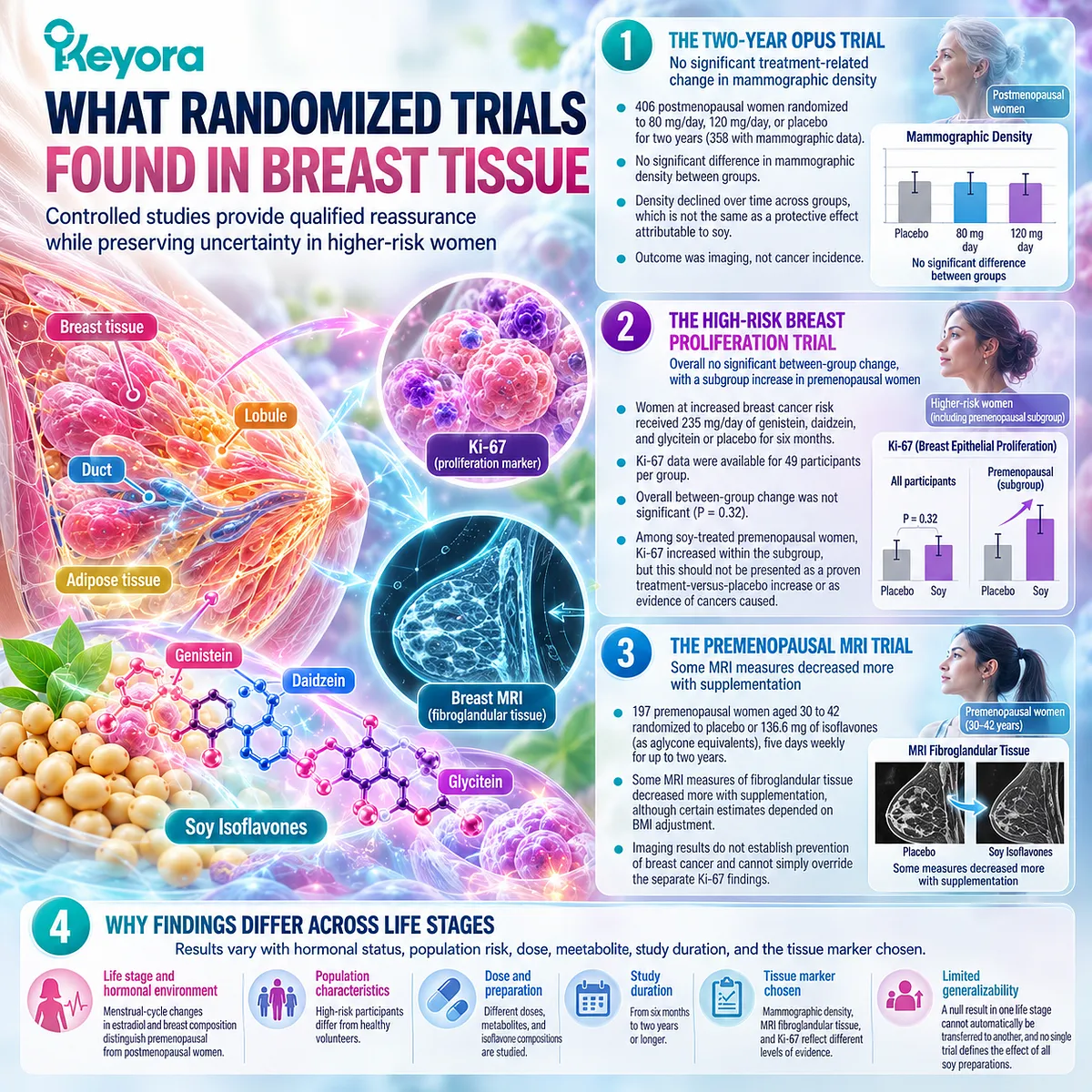
Maskarinec et al. (2009) analyzed mammographic density in the randomized OPUS study.
The parent trial enrolled 406 postmenopausal women assigned to 80 mg/day, 120 mg/day, or placebo for two years; 358 women contributed mammographic data.
The investigators found no significant treatment-related density difference.
Density declined over time across groups, which is not the same as a protective effect attributable to soy. The outcome was imaging, not cancer incidence.
The High-Risk Breast Proliferation Trial
Khan et al. (2012) compared a mixed isoflavone preparation containing 235 mg/day of genistein, daidzein, and glycitein with placebo for six months in women at increased breast cancer risk.
Ki-67 data were available for 49 participants per group.
The overall between-group change was not significant (P = 0.32).
Among soy-treated premenopausal women, Ki-67 increased within the subgroup, but that finding should not be presented as a proven treatment-versus-placebo increase or as evidence of cancers caused.
The Premenopausal MRI Trial
Lu et al. (2022) randomized 197 premenopausal women aged 30 to 42 to placebo or 136.6 mg of isoflavones expressed as aglycone equivalents, taken five days weekly for up to two years.
Some MRI measures of fibroglandular tissue decreased more with supplementation, although certain estimates depended on BMI adjustment.
Those imaging results do not establish prevention of breast cancer and cannot simply override the separate Ki-67 findings.
Why Findings Differ Across Life Stages
Menstrual-cycle changes in estradiol and breast composition distinguish premenopausal women from postmenopausal cohorts.
High-risk participants also differ from healthy volunteers.
A null result in one life stage cannot automatically be transferred to another.
Differences in dose, metabolites, study duration, and the tissue marker chosen further limit any claim that all soy preparations have one predictable breast effect.
What Long-Term Uterine Trials Reveal
Endometrial thickness and biopsy findings must be interpreted together, including an important five-year safety signal
The Five-Year Trial That Reported Endometrial Hyperplasia
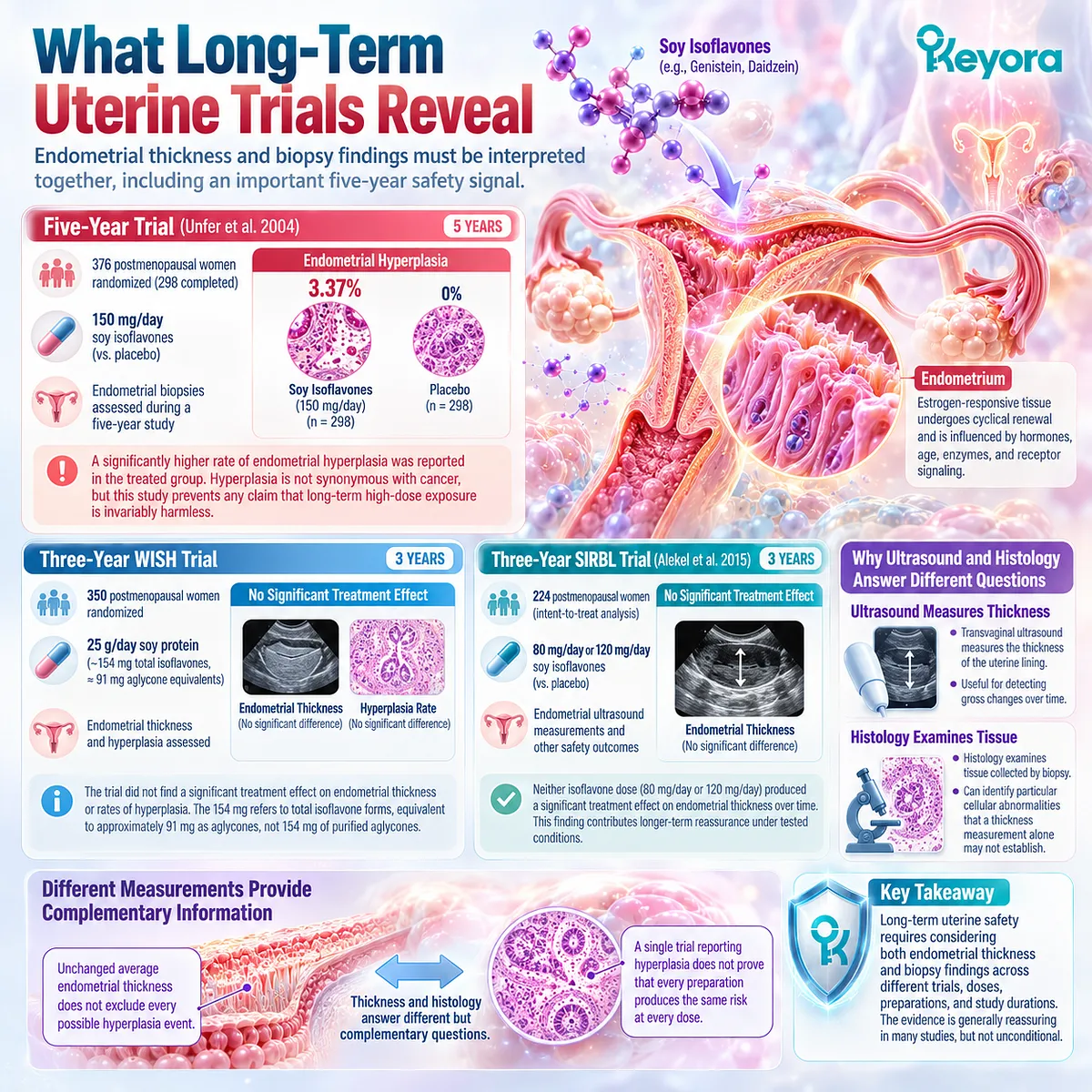
Unfer et al. (2004) randomized 376 postmenopausal women to 150 mg/day of soy isoflavones or placebo, with endometrial biopsies assessed during a five-year study.
A total of 298 women completed treatment.
The investigators reported endometrial hyperplasia in 3.37% of the treated group versus none of the controls, a statistically significant difference.
Hyperplasia is not synonymous with cancer, but this study prevents any scientifically credible claim that long-term high-dose exposure is invariably harmless.
The Three-Year WISH Trial
The WISH randomized trial enrolled 350 postmenopausal women and compared daily soy protein containing isoflavones with a milk-protein control for three years.
The 25 g soy-protein preparation contained about 154 mg total isoflavone forms, equivalent to approximately 91 mg as aglycones.
The trial did not find a significant treatment effect on endometrial thickness or rates of hyperplasia.
The distinction between total forms and aglycone equivalents matters: the study cannot be described as administering 154 mg of purified aglycones.
The Three-Year SIRBL Trial
Alekel et al. (2015) studied healthy postmenopausal women assigned to 80 mg/day, 120 mg/day, or placebo for three years.
The intention-to-treat analysis involved 224 participants and considered endometrial ultrasound measurements and other safety outcomes.
Neither isoflavone dose produced a significant treatment effect on endometrial thickness over time.
That finding contributes longer-term reassurance under tested conditions but does not erase the different biopsy result from the five-year trial.
Why Ultrasound and Histology Answer Different Questions
Transvaginal ultrasound measures the thickness of the uterine lining.
Histology examines tissue collected by biopsy and can identify particular cellular abnormalities that a thickness measurement alone may not establish.
A trial with unchanged average endometrial thickness therefore cannot exclude every possible hyperplasia event.
Equally, a single trial reporting hyperplasia does not prove that every preparation produces the same risk at every dose.
Why the Overall Safety Evidence Is Not Uniform
Evidence synthesis reduces uncertainty without erasing uncommon events or individual trial limitations
What the 2015 EFSA Safety Assessment Concluded
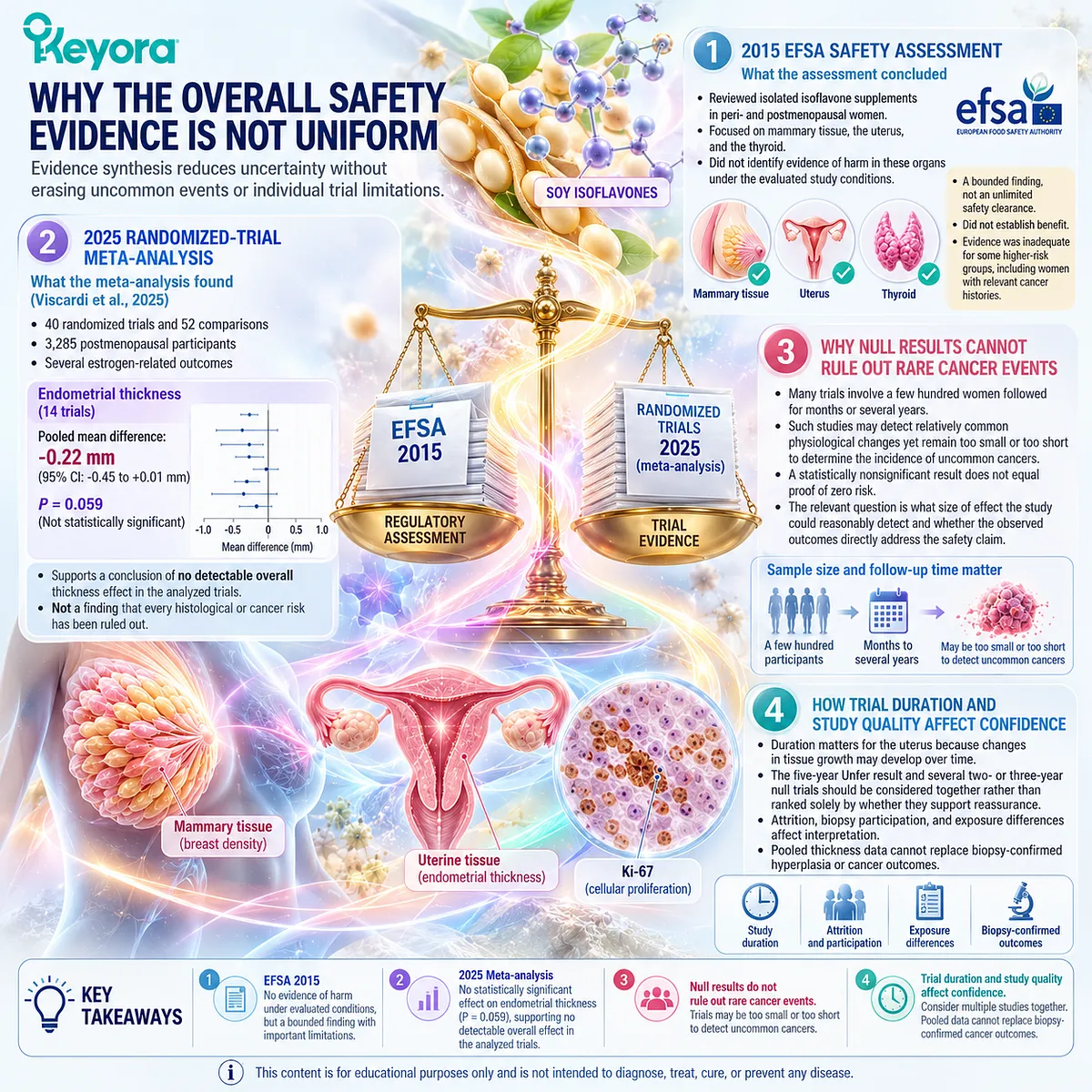
In 2015, the European Food Safety Authority reviewed isolated isoflavone supplements in peri- and postmenopausal women, focusing on mammary tissue, the uterus, and the thyroid.
Its assessment did not identify evidence of harm in these organs under the evaluated study conditions.
That is a bounded finding, not an unlimited safety clearance.
The assessment did not establish benefit, and evidence was inadequate for confidently judging some higher-risk groups, including women with relevant cancer histories.
What the 2025 Randomized-Trial Meta-Analysis Found
Viscardi et al. (2025) synthesized 40 randomized trials and 52 comparisons involving 3,285 postmenopausal participants across several estrogen-related outcomes.
For endometrial thickness, 14 trials yielded a pooled mean difference of -0.22 mm, with a 95% confidence interval from -0.45 to +0.01 mm.
The result did not reach statistical significance (P = 0.059).
It supports a conclusion of no detectable overall thickness effect in the analyzed trials, not a finding that every histological or cancer risk has been ruled out.
Why Null Results Cannot Rule Out Rare Cancer Events
Many trials involve a few hundred women followed for months or several years.
Such studies may detect relatively common physiological changes yet remain too small or too short to determine the incidence of uncommon cancers.
A statistically nonsignificant result does not equal proof of zero risk.
The relevant question is what size of effect the study could reasonably detect and whether the observed outcomes directly address the safety claim.
How Trial Duration and Study Quality Affect Confidence
Duration matters for the uterus because changes in tissue growth may develop over time.
The five-year Unfer result and several two- or three-year null trials should be considered together rather than ranked solely by whether they support reassurance.
Attrition, biopsy participation, and exposure differences affect interpretation. Pooled thickness data cannot replace biopsy-confirmed hyperplasia or cancer outcomes.
Why Soy Foods and Concentrated Extracts Need Separate Judgments
Dietary soy exposure cannot automatically certify the safety of an isolated supplement
What Breast Cancer Research Says About Soy Foods
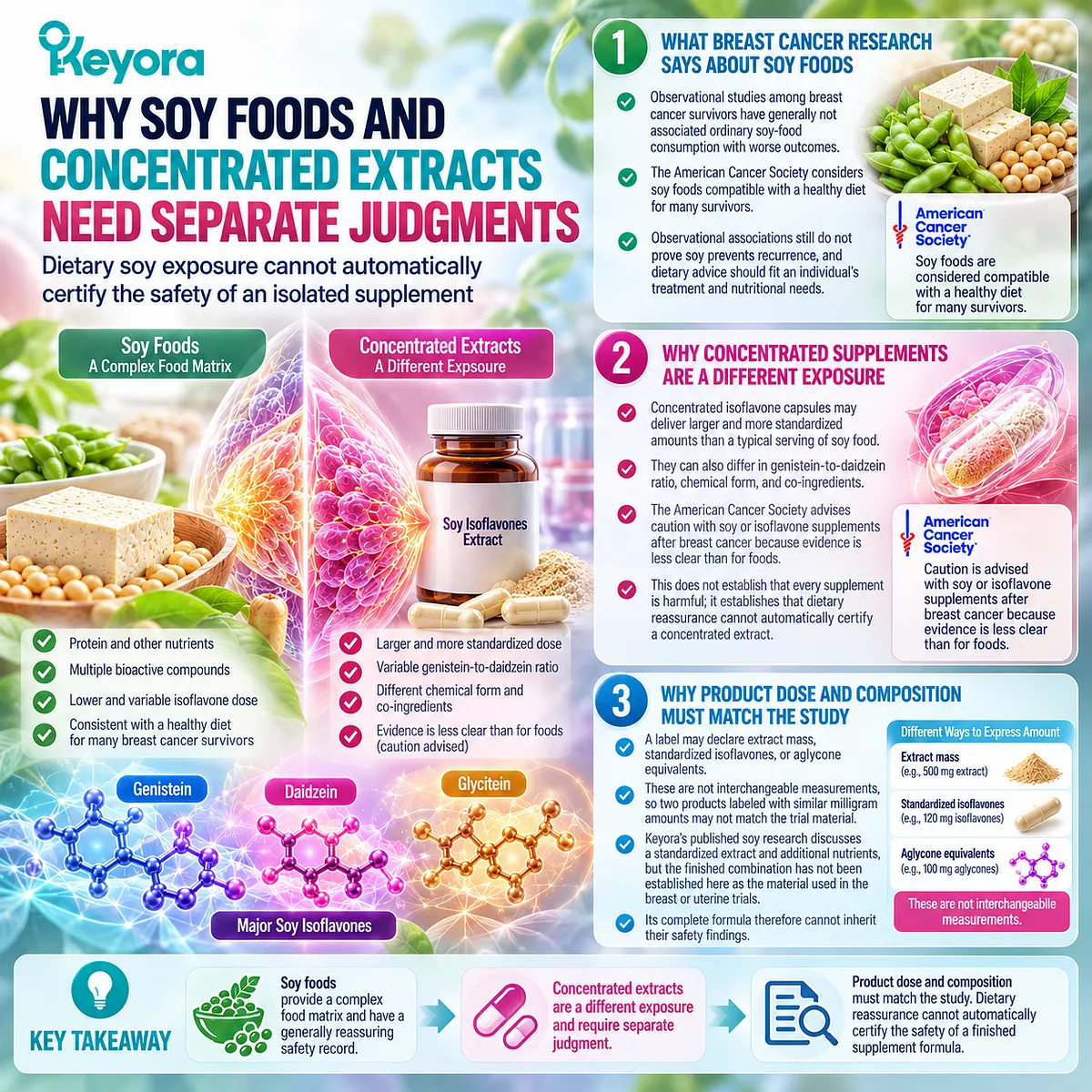
Eating tofu, edamame, or other traditional soy foods provides protein and a complex food matrix, not simply an isolated dose of isoflavones.
Observational studies among breast cancer survivors have generally not associated ordinary soy-food consumption with worse outcomes.
The American Cancer Society considers soy foods compatible with a healthy diet for many survivors.
Observational associations still do not prove soy prevents recurrence, and dietary advice should fit an individual’s treatment and nutritional needs.
Why Concentrated Supplements Are a Different Exposure
Concentrated isoflavone capsules may deliver larger and more standardized amounts than a typical serving of soy food. They can also differ in genistein-to-daidzein ratio, chemical form, and co-ingredients.
The American Cancer Society advises caution with soy or isoflavone supplements after breast cancer because evidence is less clear than for foods.
This does not establish that every supplement is harmful; it establishes that dietary reassurance cannot automatically certify a concentrated extract.
Why Product Dose and Composition Must Match the Study
A label may declare extract mass, standardized isoflavones, or aglycone equivalents.
These are not interchangeable measurements, so two products labeled with similar milligram amounts may not match the trial material.
Keyora’s published soy research discusses a standardized extract and additional nutrients, but the finished combination has not been established here as the material used in the breast or uterine trials.
Its complete formula therefore cannot inherit their safety findings.
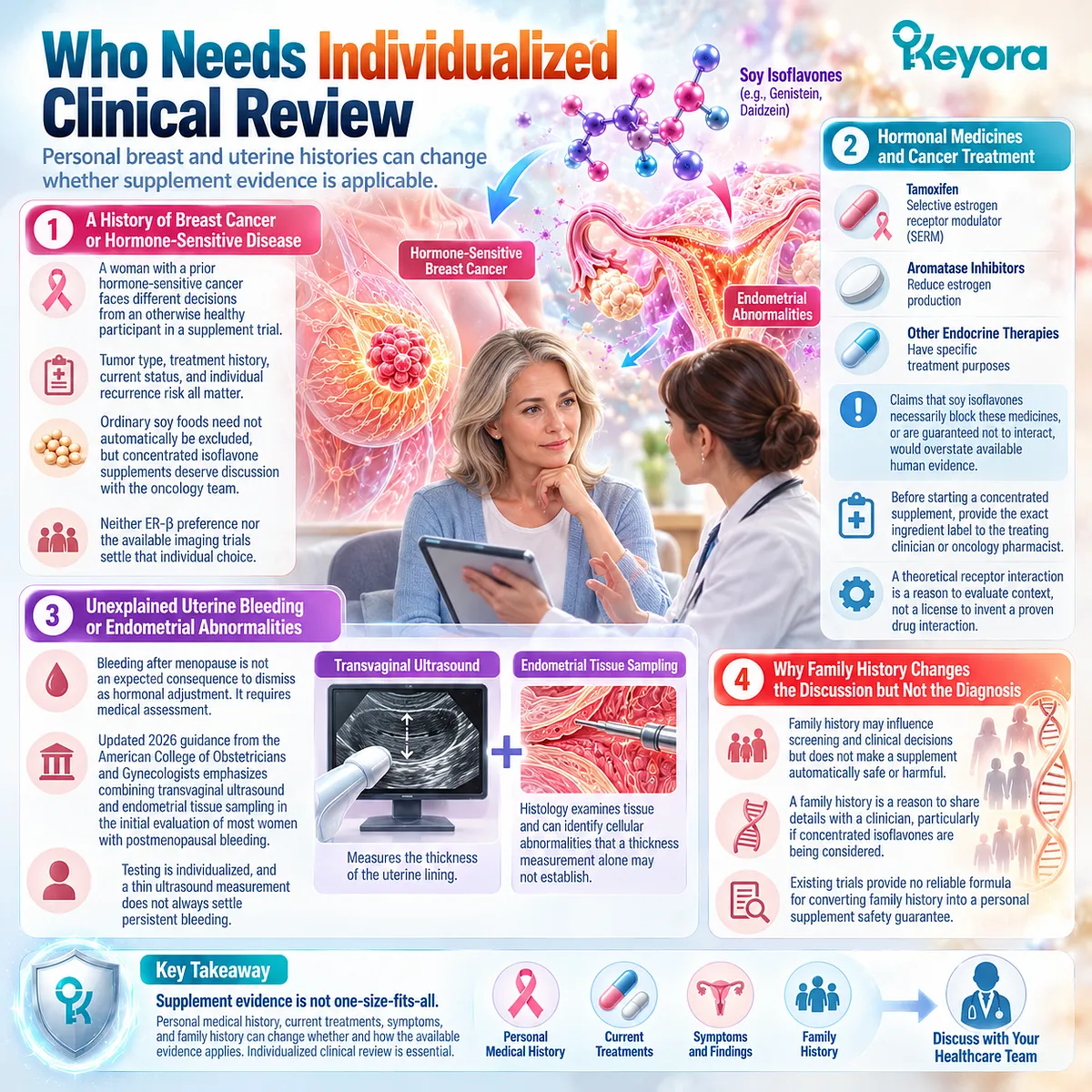
Who Needs Individualized Clinical Review
Personal breast and uterine histories can change whether supplement evidence is applicable
A History of Breast Cancer or Hormone-Sensitive Disease
A woman with a prior hormone-sensitive cancer faces different decisions from an otherwise healthy participant in a supplement trial.
Tumor type, treatment history, current status, and individual recurrence risk all matter.
Ordinary soy foods need not automatically be excluded solely because of a breast cancer history, but concentrated isoflavone supplements deserve discussion with the oncology team.
Neither ER-beta preference nor the available imaging trials settle that individual choice.
Hormonal Medicines and Cancer Treatment
Tamoxifen, aromatase inhibitors, and other endocrine therapies have specific treatment purposes.
Claims that soy isoflavones necessarily block these medicines, or are guaranteed not to interact, would overstate available human evidence.
Before starting a concentrated supplement, the patient should provide the exact ingredient label to the treating clinician or oncology pharmacist. A theoretical receptor interaction is a reason to evaluate context, not a license to invent a proven drug interaction.
Unexplained Uterine Bleeding or Endometrial Abnormalities
Bleeding after menopause is not an expected consequence to dismiss as hormonal adjustment. It requires medical assessment, whether or not a woman has started an isoflavone supplement.
Updated 2026 guidance from the American College of Obstetricians and Gynecologists emphasizes combining transvaginal ultrasound and endometrial tissue sampling in the initial evaluation of most women with postmenopausal bleeding.
Testing is individualized, and a thin ultrasound measurement does not always settle persistent bleeding.
Why Family History Changes the Discussion but Not the Diagnosis
Family history may influence screening and clinical decisions but does not make a supplement automatically safe or harmful.
A family history is a reason to share details with a clinician, particularly if concentrated isoflavones are being considered.
Existing trials provide no reliable formula for converting family history into a personal supplement safety guarantee.
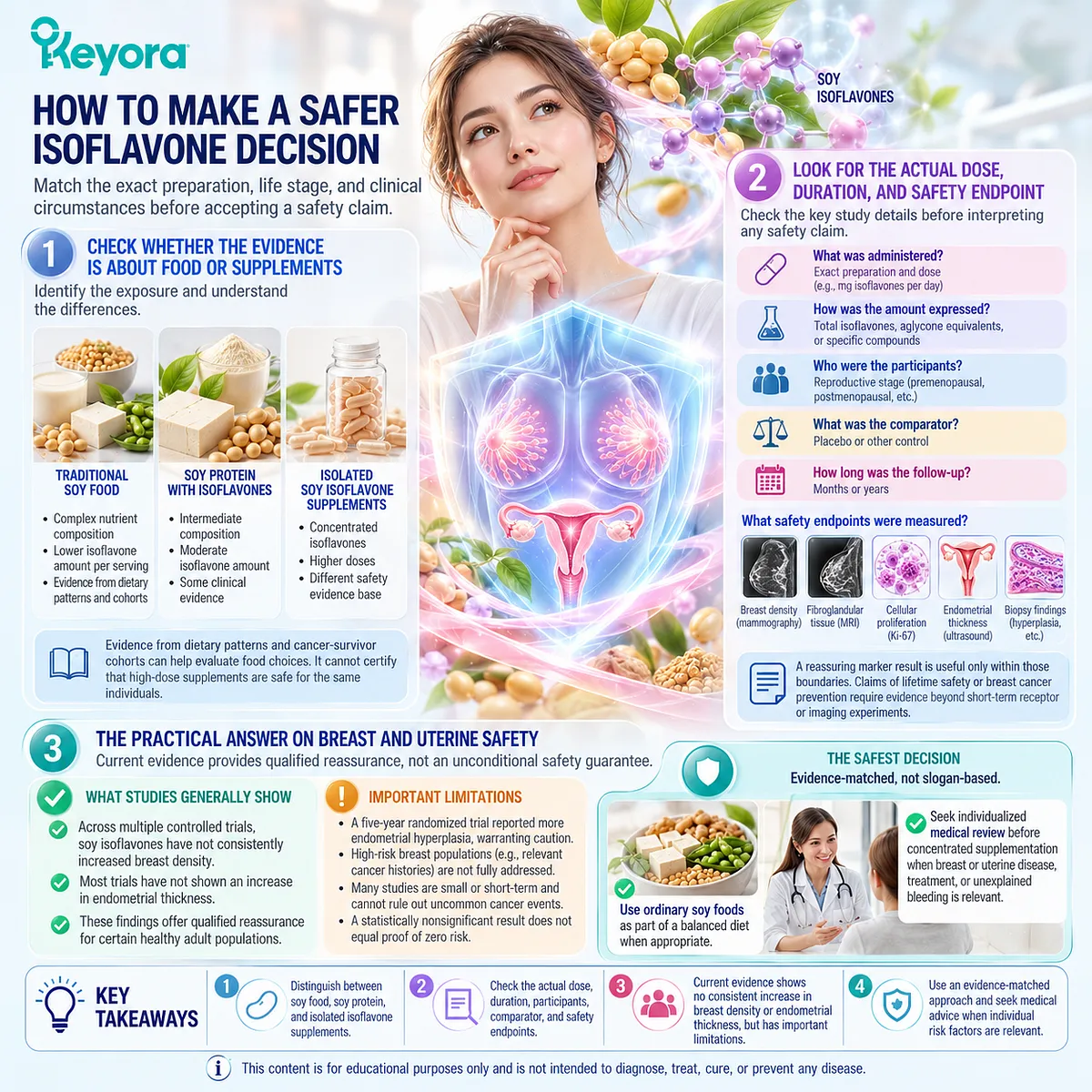
How to Make a Safer Isoflavone Decision
Match the exact preparation, life stage, and clinical circumstances before accepting a safety claim
Check Whether the Evidence Is About Food or Supplements
Start by identifying the exposure: traditional soy food, soy protein containing isoflavones, or an isolated extract. These may differ in both nutrient composition and the amount of isoflavones delivered.
Evidence from dietary patterns and cancer-survivor cohorts can help evaluate food choices. It cannot certify that high-dose supplements are safe for the same individuals.
Look for the Actual Dose, Duration, and Safety Endpoint
Check what the study administered, how the amount was expressed, the participants’ reproductive stages, the comparator, and how long investigators followed them.
Ask whether they measured density, proliferation, ultrasound thickness, biopsy findings, or actual disease outcomes.
A reassuring marker result is useful only within those boundaries.
Claims of lifetime safety or breast cancer prevention require evidence beyond short-term receptor or imaging experiments.
The Practical Answer on Breast and Uterine Safety
Across multiple controlled trials, soy isoflavones have not consistently increased breast density or endometrial thickness, offering qualified reassurance for certain healthy adult populations.
Nevertheless, the long-term endometrial hyperplasia finding and limitations of high-risk breast studies prevent unconditional claims.
The safest decision is evidence-matched, not slogan-based: use ordinary soy foods as part of a balanced diet when appropriate, and seek individualized medical review before concentrated supplementation when breast or uterine disease, treatment, or unexplained bleeding is relevant.
This article is for educational and informational purposes only. It does not provide medical advice, diagnosis, treatment, cure, prevention, disease outcome claims, hormone restoration claims, fertility outcome claims, or formula-specific clinical efficacy claims.