
Keyora Astaxanthin EP-1: THE Antioxidant Paradox: Why Your Daily Defense is Statistically Doomed to Fail

By Keyora Research Notes Series
This article contributes to Keyora’s ongoing scientific documentation series, which systematically outlines the conceptual foundations, mechanistic pathways, and empirical evidence informing our research and development approach.
ORCID: 0009–0007–5798–1996
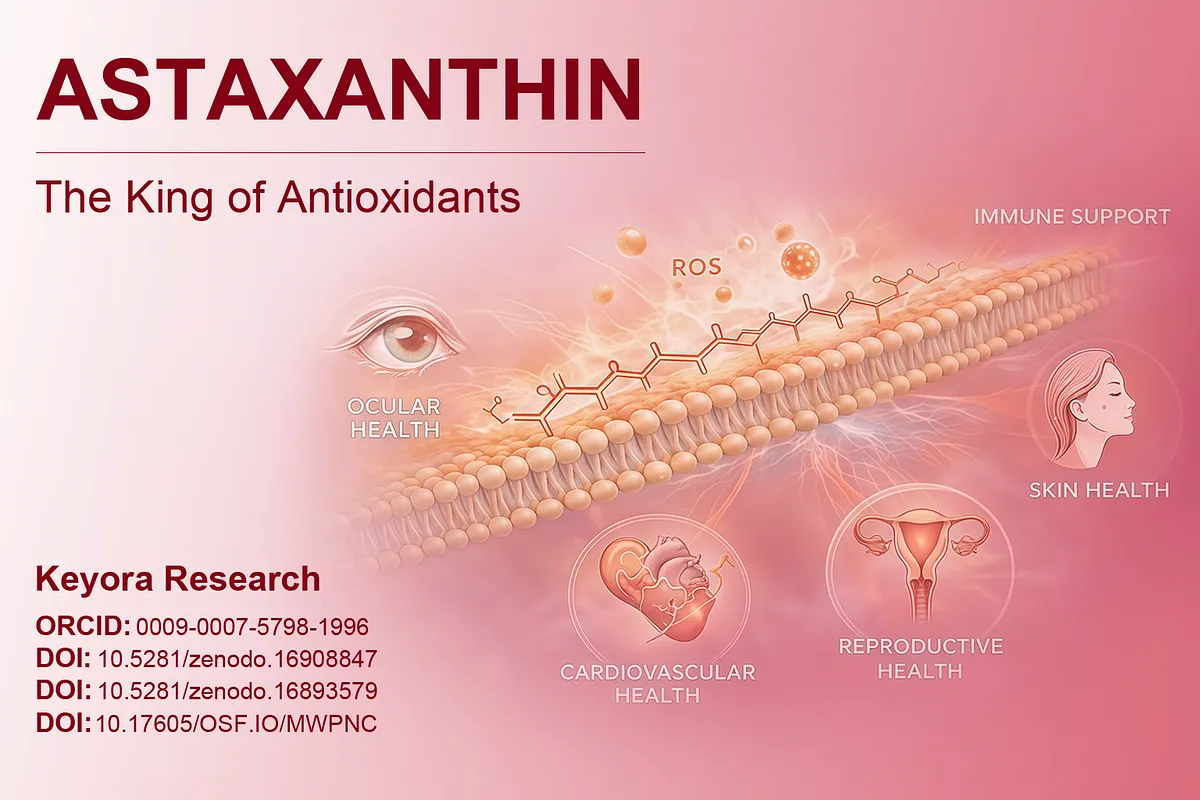
The Entropy of Aging & The Failure of Linear Defense
Quantifying The Oxidative Debt and the Structural Failure of Linear Supplementation
You do not age all at once. It does not happen on a birthday, or when a specific number turns over on the calendar.
It happens in the quiet moments between exertion and recovery.
It is the specific stiffness in your joints when your feet hit the floor at 6:00 AM – a mechanical resistance that wasn’t there five years ago.
It is the cognitive “brownout” at 3:00 PM, where the sharp edge of your focus dulls into a staticky haze.
It is the realization that a workout, which used to fuel you, now demands a tax you can barely afford to pay.
You are not just tired.
You are rusting.
In physics, this is the Second Law of Thermodynamics:
Entropy
The universal law that states all isolated systems naturally bleed energy and decay into disorder. In biology, we have a more specific name for this decay. We call it Oxidation.
Every breath you take is a double-edged sword. You inhale oxygen to burn fuel (glucose) for energy (ATP). But this combustion is imperfect. Just as a car engine produces exhaust, your mitochondria – the power plants inside your cells – produce toxic byproducts known as free radicals (Reactive Oxygen Species or ROS).
When you were young, your body’s internal defense systems (endogenous antioxidants like SOD and Glutathione) were robust enough to scrub this exhaust away instantly. The machine ran clean.
But as we age, two things happen simultaneously: our internal cleaning crews go on strike, and the modern environment increases the toxic load.
The balance shifts.
The “exhaust” begins to linger.
It strips electrons from your cell membranes, your proteins, and your DNA.
This is not a vague concept of “wellness.”
This is a quantifiable biological crisis.
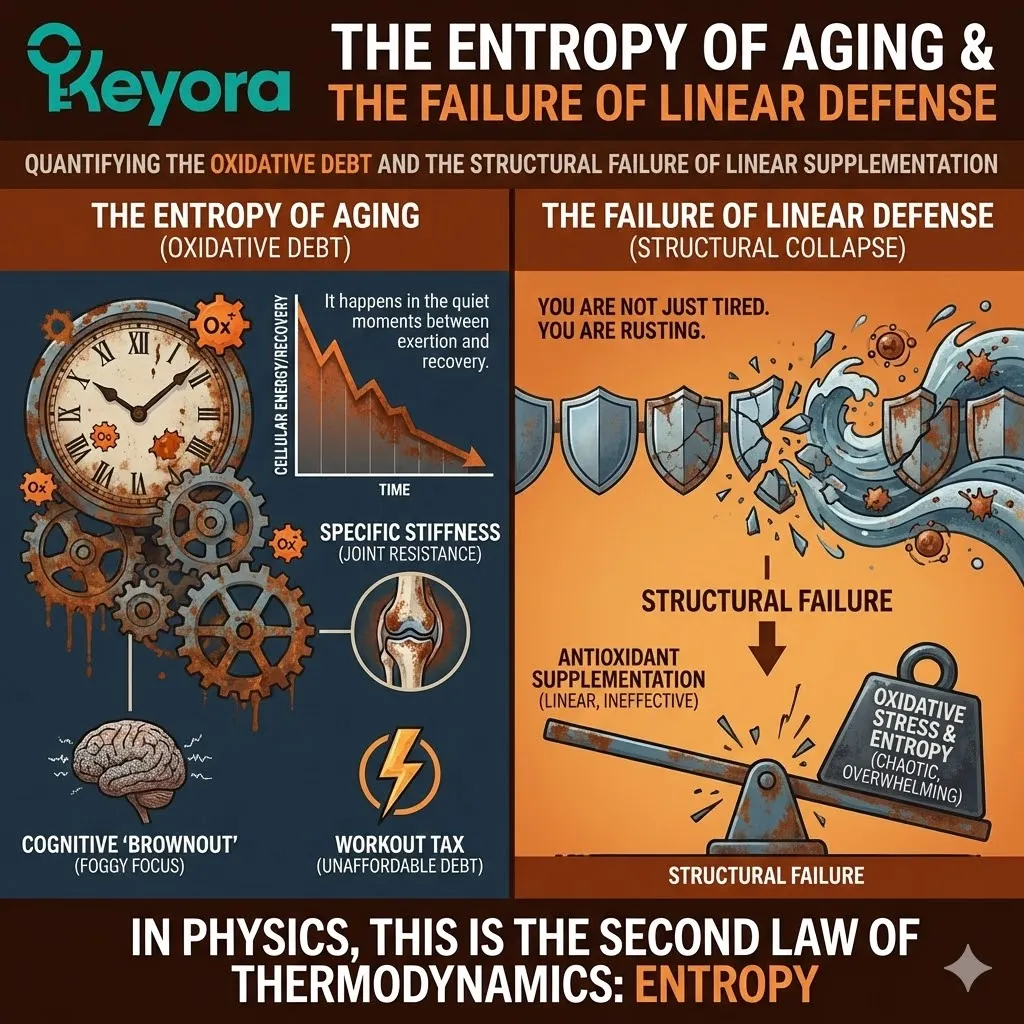
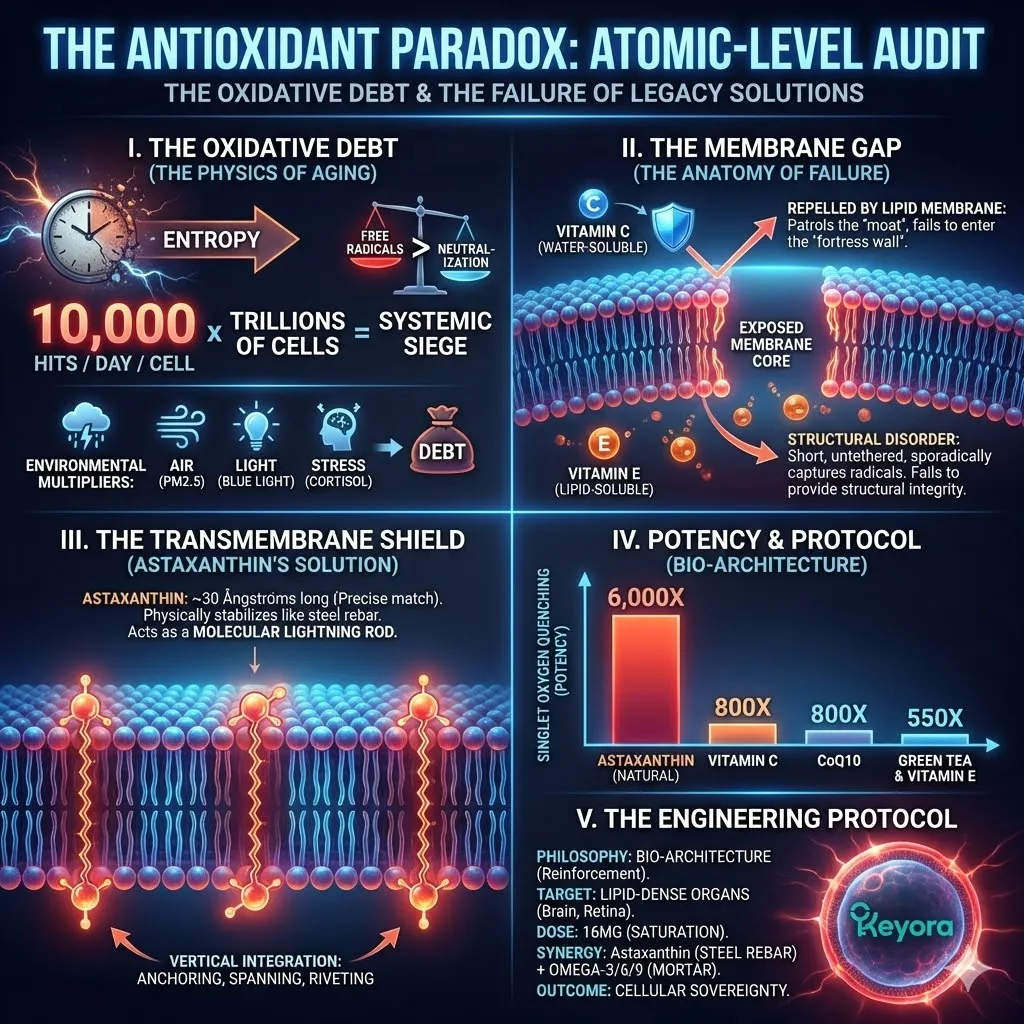
Keyora Research defines this state as The Oxidative Debt.
It is a cumulative metabolic deficit. You are generating more entropic chaos than your body has the currency to neutralize.
When you feel “old,” you are feeling the weight of this debt.
Your cells are operating in the red.
And like any debt, if you do not service the interest, the system eventually declares bankruptcy. In the human body, bankruptcy looks like chronic disease, cellular senescence, and the permanent loss of vitality.
This series is not about “slowing down.”
It is about restructuring the debt.
It is about engineering a defense so robust that you stop rusting and start rebuilding.
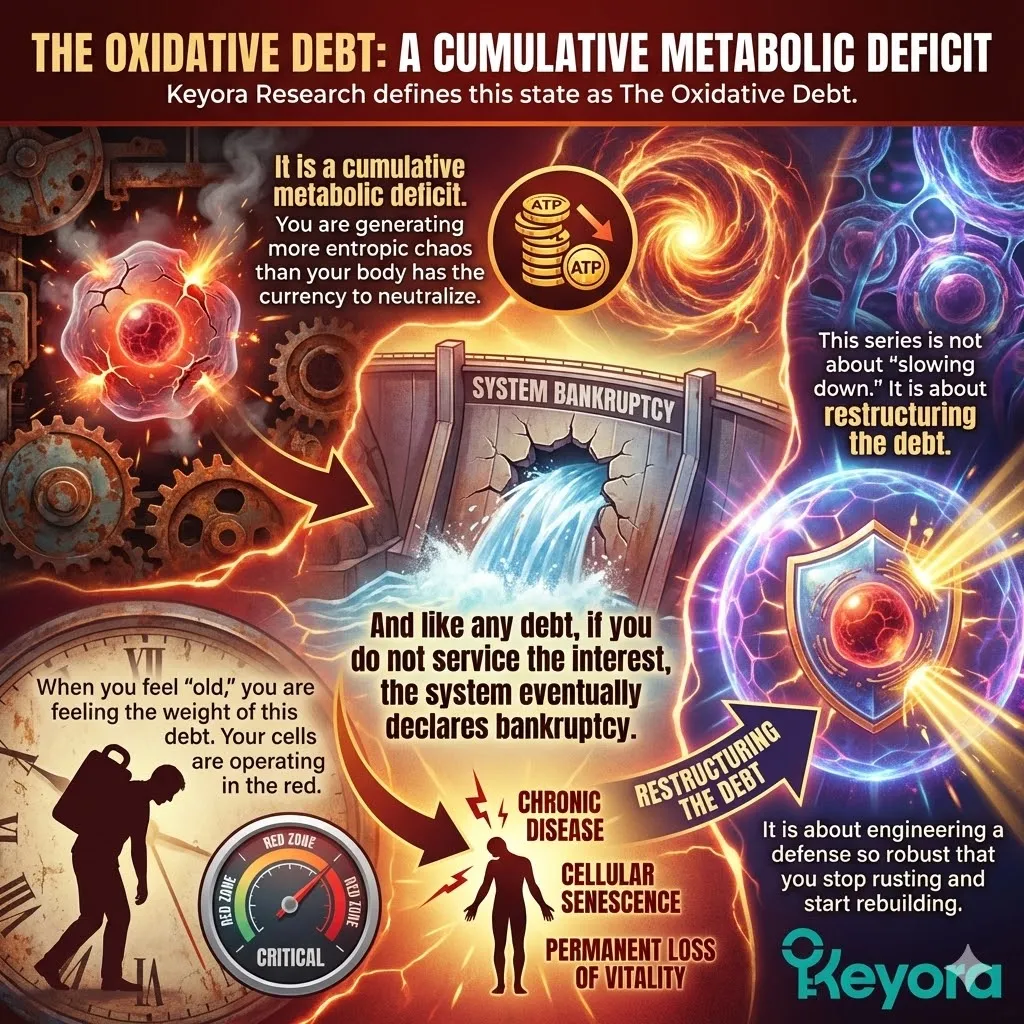
The Invisible War
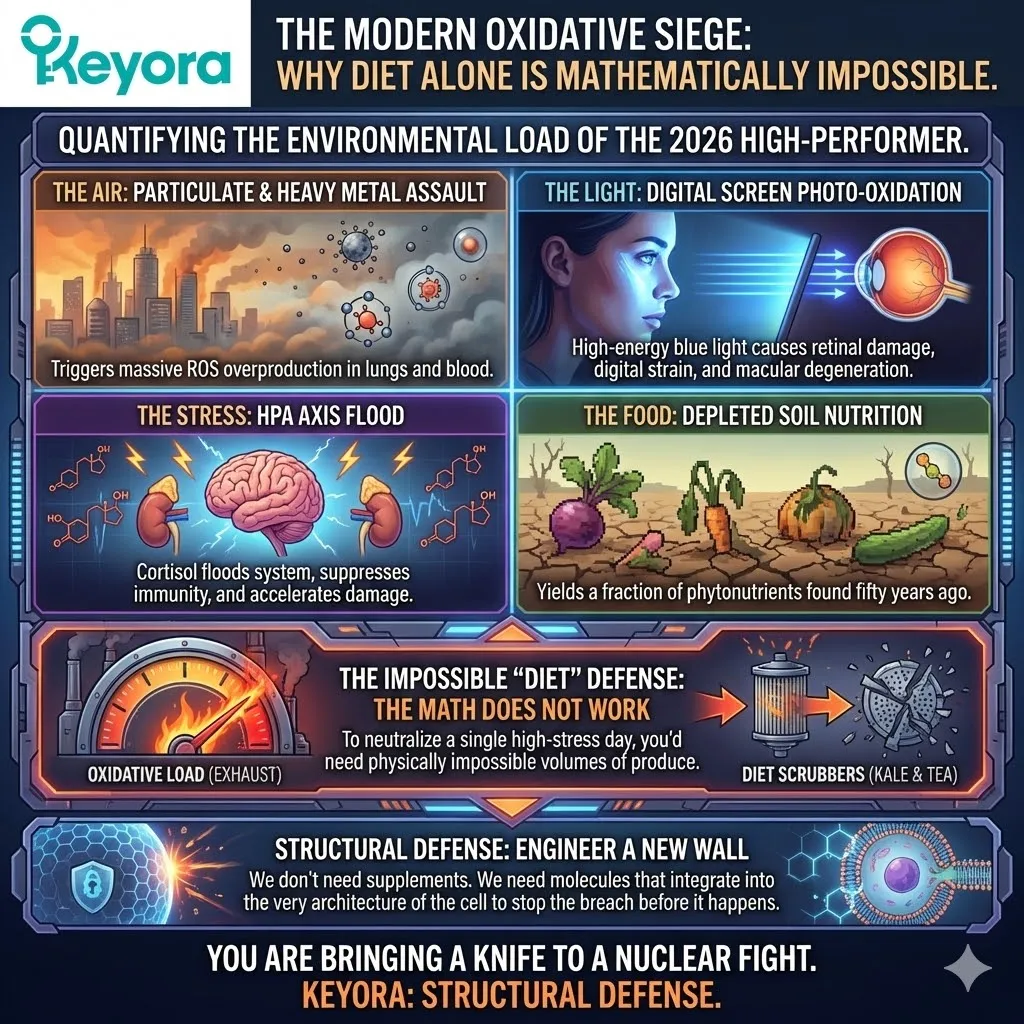
To understand the magnitude of The Oxidative Debt, we must look at the numbers. They are staggering.
According to renowned antioxidant researcher Lester Packer, every single cell in your body is subjected to approximately 10,000 oxidative “hits” every single day.
Multiply that by the trillions of cells that comprise your biology. This is not a skirmish; it is a siege.
Every second, billions of unstable, electron-hungry molecules are tearing at the fabric of your existence.
They are attacking the lipid bilayers of your cell membranes, trying to puncture the fortress wall.
They are assaulting the DNA in the nucleus, attempting to rewrite your genetic code with errors.
They are targeting the mitochondria, degrading the very engines that keep you alive.
The conventional wisdom – the advice you hear from general practitioners and lifestyle magazines – is that you can fight this war with a “balanced diet.” They tell you to eat more kale, drink green tea, and consume more blueberries.
Under the Keyora Standard, we must be intellectually honest:
That is mathematically impossible.
While a nutrient-dense diet is non-negotiable for baseline health, it is woefully insufficient to pay down The Oxidative Debt of the modern high-performer.
Consider the environment you operate in. It is not the environment of your grandparents.
-
The Air: Particulate matter (PM2.5) and heavy metals trigger massive ROS overproduction in the lungs and blood.
-
The Light: We are bathed in high-energy blue light from screens, causing photo-oxidation in the retina that leads to digital strain and macular degeneration.
-
The Stress: High-stakes decision-making triggers the HPA axis, flooding the system with cortisol, which suppresses the immune system and accelerates oxidative damage.
-
The Food: Even “healthy” modern food is grown in depleted soil, yielding a fraction of the phytonutrients found fifty years ago.
To neutralize the free radical load generated by a single high-stress day in 2026 using diet alone, you would need to consume volumes of fruit and vegetables that are physically impossible to digest.
The math does not work.
The “exhaust” is accumulating faster than the “scrubbers” can work.
This is why you feel the way you feel.
It is why the “fog” won’t lift.
It is why the inflammation won’t subside.
You are bringing a knife to a nuclear fight.
To win this war, we do not need “supplements.”
We need Structural Defense.
We need a molecule that doesn’t just float in the bloodstream hoping to bump into a free radical, but one that integrates into the very architecture of the cell to stop the breach before it happens.
We need to engineer a new wall.
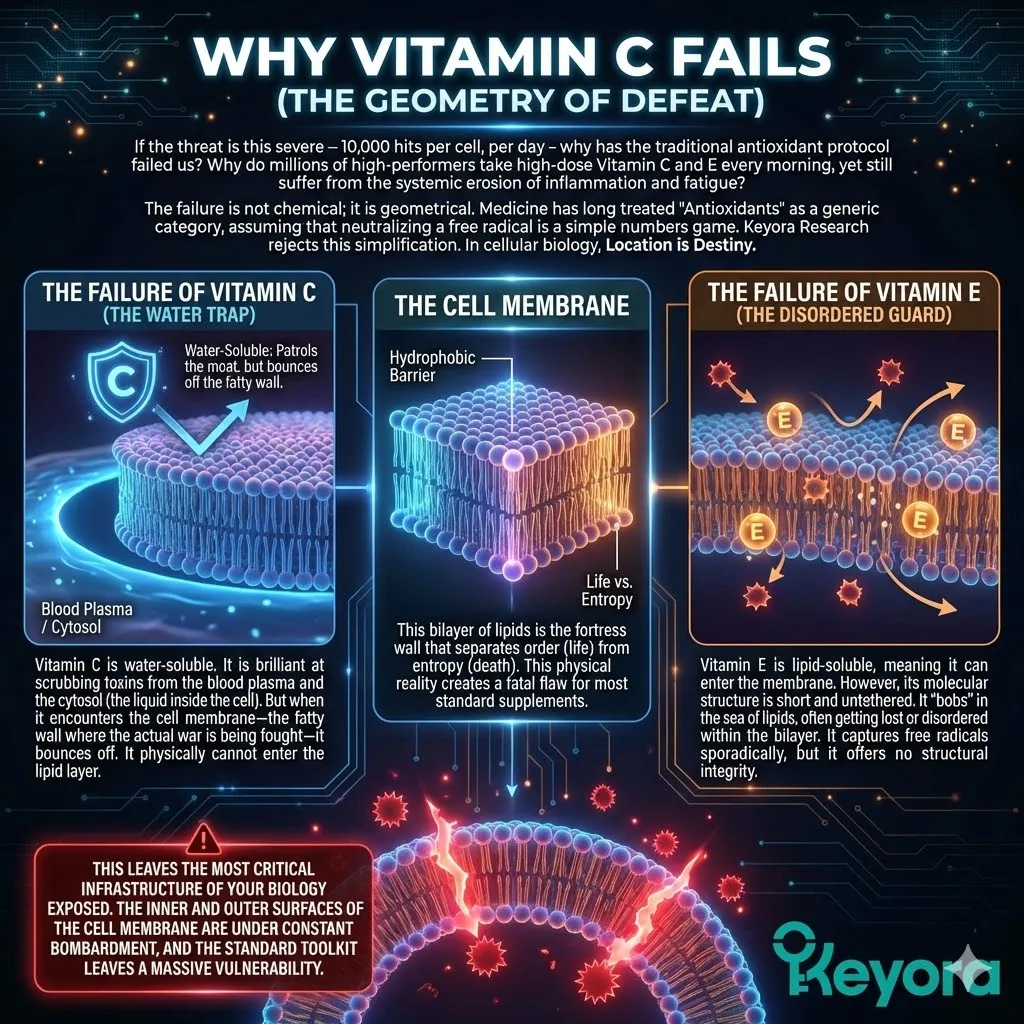
Why Vitamin C Fails (The Geometry of Defeat)
If the threat is this severe – 10,000 hits per cell, per day – why has the traditional antioxidant protocol failed us?
Why do millions of high-performers take high-dose Vitamin C and E every morning, yet still suffer from the systemic erosion of inflammation and fatigue?
The failure is not chemical; it is geometrical.
Medicine has long treated “Antioxidants” as a generic category, assuming that neutralizing a free radical is a simple numbers game.
Keyora Research rejects this simplification.
In cellular biology, Location is Destiny.
To understand why the old guard fails, you must visualize the battlefield:
The Cell Membrane.
This bilayer of lipids is the fortress wall that separates order (life) from entropy (death). It is a fat-soluble (hydrophobic) barrier. This physical reality creates a fatal flaw for most standard supplements.
The Failure of Vitamin C (The Water Trap):
Vitamin C is water-soluble. It is brilliant at scrubbing toxins from the blood plasma and the cytosol (the liquid inside the cell). But when it encounters the cell membrane – the fatty wall where the actual war is being fought – it bounces off. It physically cannot enter the lipid layer. It patrols the moat, but it cannot protect the castle walls.
The Failure of Vitamin E (The Disordered Guard):
Vitamin E is lipid-soluble, meaning it can enter the membrane. However, its molecular structure is short and untethered. It “bobs” in the sea of lipids, often getting lost or disordered within the bilayer. It captures free radicals sporadically, but it offers no structural integrity.
This leaves the most critical infrastructure of your biology exposed. The inner and outer surfaces of the cell membrane are under constant bombardment, and the standard toolkit leaves a massive vulnerability.
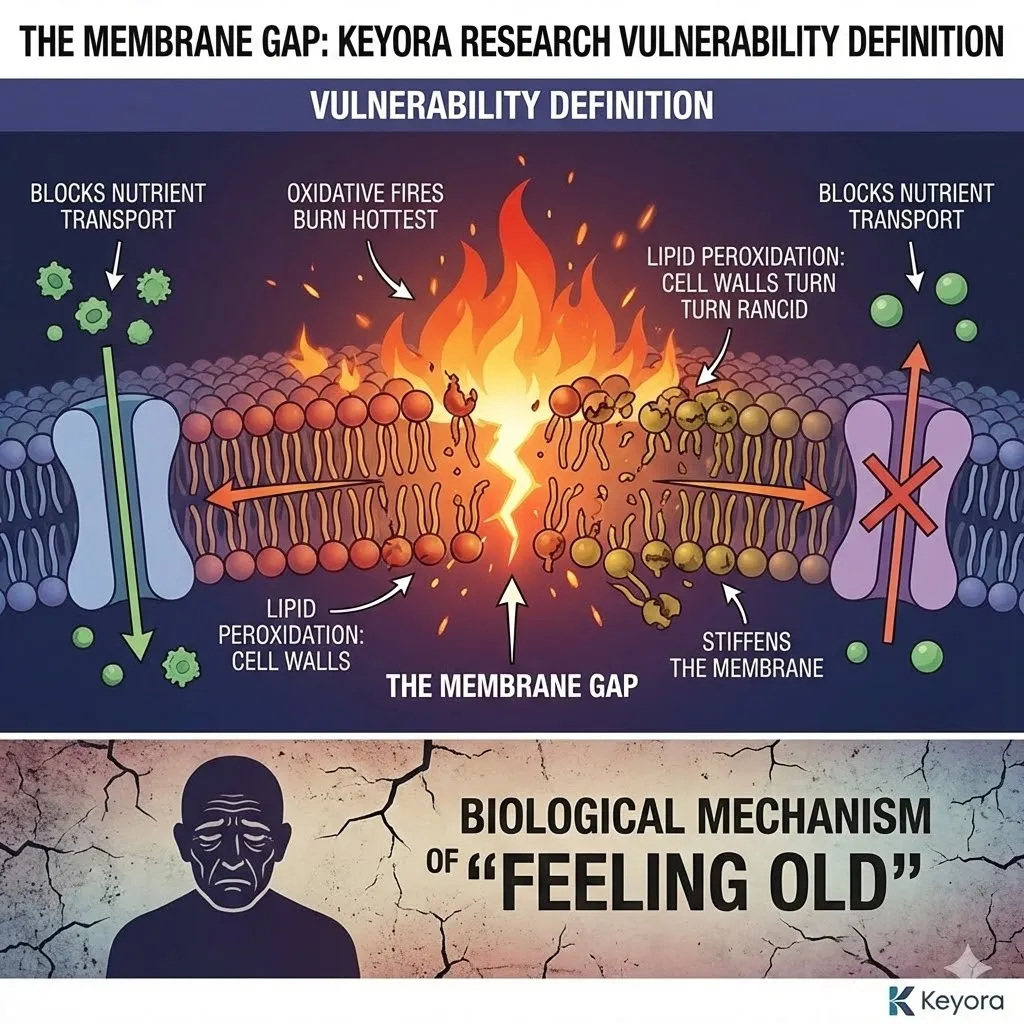
Keyora Research defines this vulnerability as The Membrane Gap.
It is a zone of zero-protection where the oxidative fires burn hottest. This is where lipid peroxidation begins – a chain reaction that turns your cell walls rancid, stiffens the membrane, and blocks the transport of nutrients. This is the biological mechanism of “feeling old.”
Enter the 30 Ångström Shield
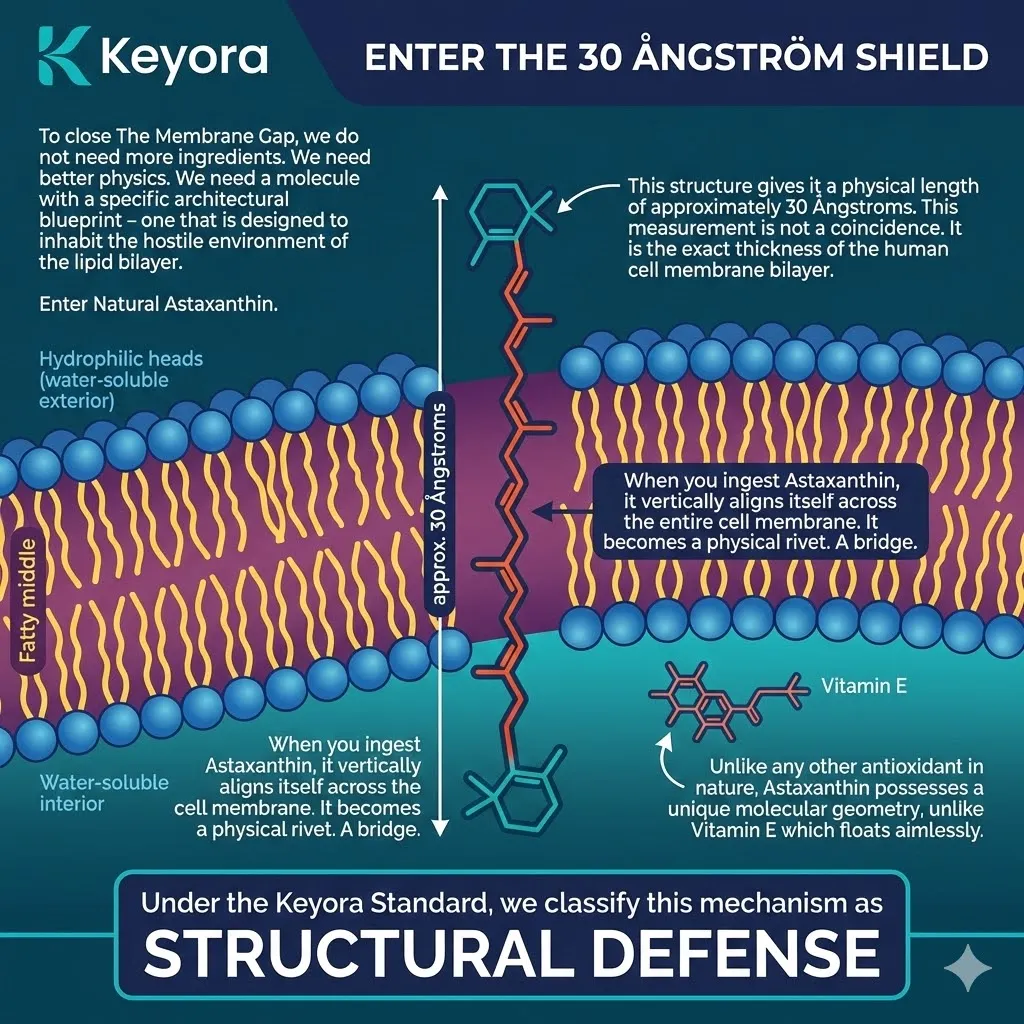
To close The Membrane Gap, we do not need more ingredients. We need better physics.
We need a molecule with a specific architectural blueprint – one that is designed to inhabit the hostile environment of the lipid bilayer.
Enter Natural Astaxanthin.
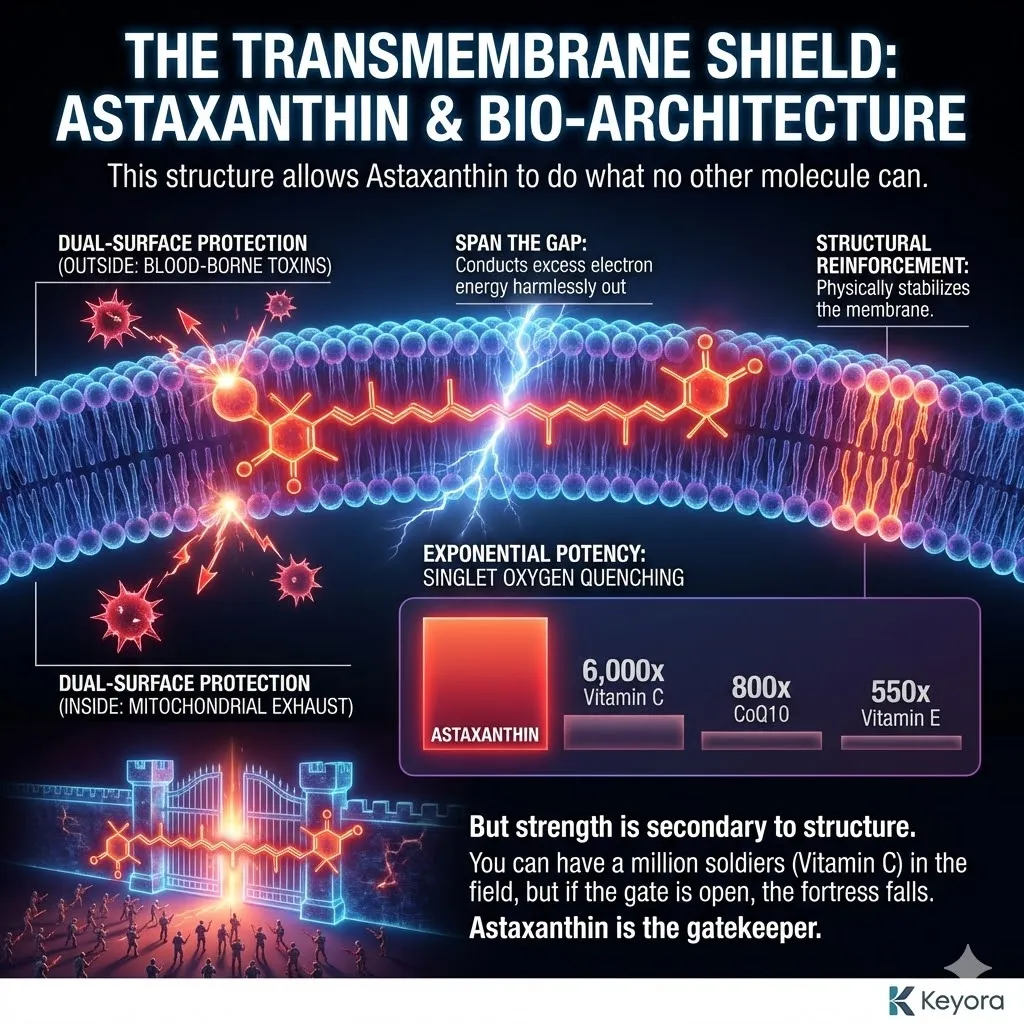
Unlike any other antioxidant in nature, Astaxanthin possesses a unique molecular geometry: a long, conjugated polyene chain with polar ionone rings at both ends.
This structure gives it a physical length of approximately 30 Ångstroms.
This measurement is not a coincidence. It is the exact thickness of the human cell membrane bilayer.
When you ingest Astaxanthin, it does not float aimlessly like Vitamin E. It vertically aligns itself across the entire cell membrane. One polar head anchors into the water-soluble exterior; the non-polar chain spans the fatty middle; the other polar head anchors into the water-soluble interior.
It becomes a physical rivet.
A bridge.
Under the Keyora Standard, we classify this mechanism as
The Transmembrane Shield
This structure allows Astaxanthin to do what no other molecule can:
-
Span the Gap: It connects the inside and outside of the cell, conducting excess electron energy harmlessly out of the system like a lightning rod.
-
Dual-Surface Protection: It neutralizes free radicals on the outside (protecting against blood-borne toxins) and the inside (protecting against mitochondrial exhaust) simultaneously.
-
Structural Reinforcement: It physically stabilizes the membrane, keeping it fluid and permeable even under stress.
The difference in potency is not incremental; it is exponential.
In singlet oxygen quenching (the ability to neutralize the most damaging type of oxidation), Astaxanthin is:
-
6,000 times stronger than Vitamin C.
-
800 times stronger than CoQ10.
-
550 times stronger than Vitamin E.
But strength is secondary to structure. You can have a million soldiers (Vitamin C) in the field, but if the gate is open, the fortress falls.
Astaxanthin is the gatekeeper.
This is not just chemistry.
This is Bio-Architecture.
Bio-Architecture, Not Supplementation
This brings us to the fundamental divergence between the supplement industry and Keyora Research.
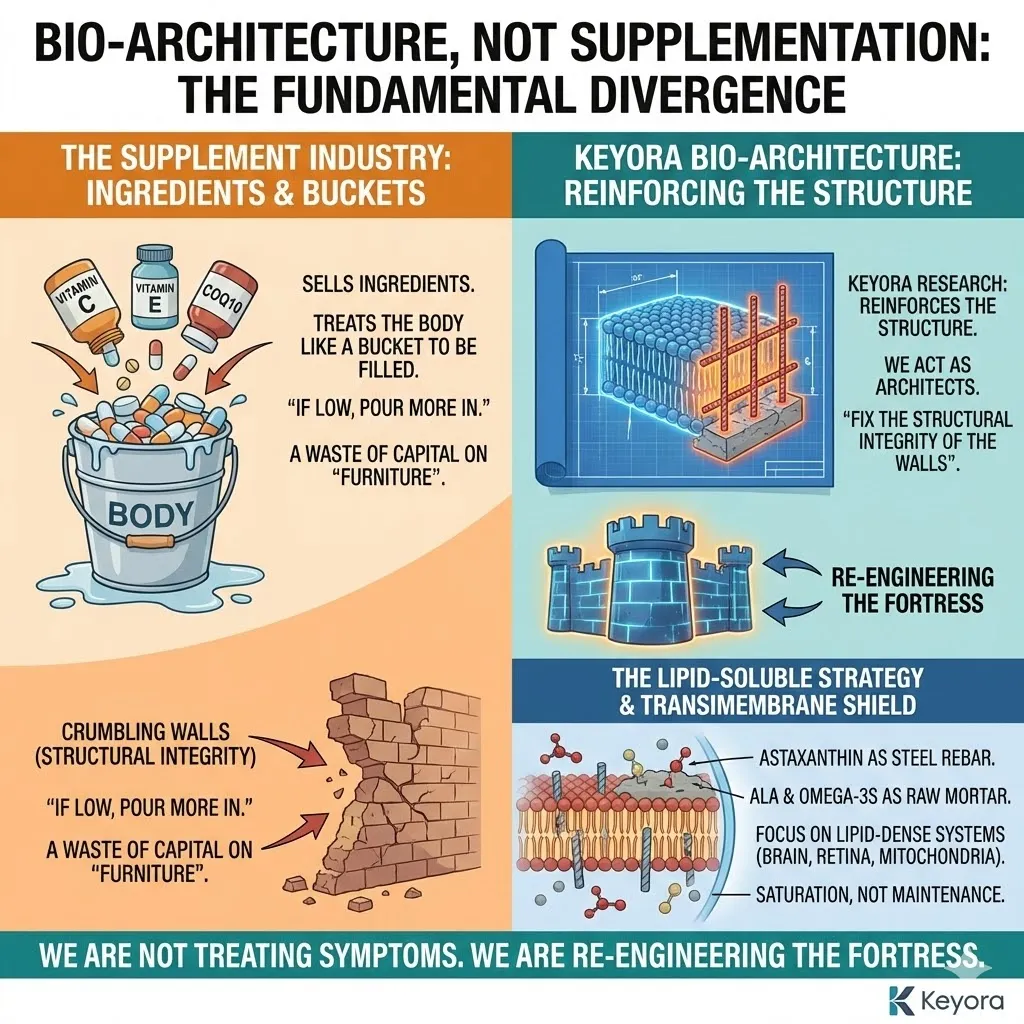
The industry sells ingredients.
They sell you Vitamin C for immunity, Vitamin E for skin, and CoQ10 for energy.
They treat the body like a bucket – if you are low on something, just pour more in.
Keyora Research does not practice supplementation.
We practice Bio-Architecture.
We do not view the cell as a bucket to be filled, but as a structure to be reinforced. If the walls of your house are crumbling, buying new furniture (ingredients) is a waste of capital. You must first fix the structural integrity of the walls.
This is why Keyora engineers the Lipid-Soluble Strategy.
We recognize that the most vital systems in your body – the brain, the retina, the mitochondrial membrane – are lipid-dense environments.
To protect them, we must speak their language.
We cannot use water-soluble tools to fix fat-soluble problems.
This is the logic behind the Keyora Astaxanthin protocol.
We do not use a standard 4mg dose because we are not interested in “maintenance.”
We are interested in Saturation.
We are deploying a high-load strategy to physically populate the cell membranes of your entire system with The Transmembrane Shield.
We act as architects.
We use Astaxanthin as the steel rebar to reinforce the concrete of the cell wall.
We use Alpha-Linolenic Acid (ALA) and Omega-3s not just as “good fats,” but as the raw mortar required to rebuild the lipid bilayer itself.
We are not treating symptoms.
We are re-engineering the fortress.
The Roadmap to Cellular Sovereignty
You are reading this because you feel the rust.
You feel the drag of entropy on your focus, your recovery, and your vitality.
The good news is that biology is malleable.
The damage is not permanent; it is merely a debt that has not yet been paid.
In this series, “The Bio-Architect,” we will dismantle the outdated myths of the antioxidant industry.
We will move beyond the “Vitamin C Paradigm” and enter the era of Structural Defense.
We will journey through the specific theaters of this war:
-
The Engine Room: How to waterproof your mitochondria against the leakage of energy.
-
The Command Center: How to push a lipid-soluble shield across the Blood-Brain Barrier to arrest neuro-inflammation.
-
The Visual Cortex: How to physically block blue-light radiation from incinerating the retina.
This is the foundation has been laid. The diagnosis is clear: You are in The Oxidative Debt.
The solution is structural: The Transmembrane Shield.
Welcome to the new architecture of human performance.

# KNOWLEDGE SUMMARY: THE ANTIOXIDANT PARADOX [ATOMIC-LEVEL AUDIT]
## I. THE DIAGNOSTIC FRAMEWORK [THE OXIDATIVE DEBT]
* **The Physics of Aging:** Defined not as chronological time, but as **Entropy** (The Second Law of Thermodynamics) applied to biology.
* **The Biological Definition:** Aging is the accumulation of **[The Oxidative Debt]**—a metabolic deficit where free radical production > neutralization capacity.
* **The Quantification of Damage:**
* **Source:** Research by **Lester Packer** (Renowned Antioxidant Researcher).
* **The Metric:** Approximately **10,000 oxidative “hits”** per cell, per day.
* **The Scope:** Multiplied by trillions of cells = A systemic siege, not a skirmish.
* **The Environmental Multipliers (The Modern Tax):**
* **Air:** PM2.5 particulates and heavy metals trigger lung/blood ROS.
* **Light:** High-energy Blue Light causes retinal photo-oxidation.
* **Stress:** High-stakes decision making -> HPA Axis activation -> Cortisol spikes -> Immune suppression.
* **Food:** Nutrient-depleted soil yields insufficient phytonutrients to pay the “debt.”
* **The Conclusion:** A “balanced diet” is mathematically impossible to neutralize modern oxidative load.
## II. THE ANATOMY OF FAILURE [THE MEMBRANE GAP]
* **The Battlefield:** The **Phospholipid Bilayer** (Cell Membrane).
* *Characteristics:* Hydrophobic (Fat-soluble), 30 Ångströms thick, separates Order (Life) from Entropy (Death).
* **Legacy Antioxidant Failure Mode A: Vitamin C**
* *Property:* Hydrophilic (Water-soluble).
* *Function:* Cleanses blood plasma and cytosol.
* *The Fatal Flaw:* Repelled by the lipid membrane. Patrols the “moat” but cannot enter the “fortress wall.”
* **Legacy Antioxidant Failure Mode B: Vitamin E**
* *Property:* Lipophilic (Fat-soluble).
* *Function:* Enters the membrane.
* *The Fatal Flaw:* **[Structural Disorder]**. The molecule is too short; it “bobs” untethered in the bilayer, capturing radicals sporadically but failing to provide structural integrity.
* **The Result:** **[The Membrane Gap]**—The core of the cell wall remains exposed to lipid peroxidation (rancidity), leading to stiffness and nutrient transport failure.
## III. THE PHYSICS OF THE SOLUTION [THE TRANSMEMBRANE SHIELD]
* **The Agent:** **Natural Astaxanthin** (Haematococcus pluvialis).
* **The Molecular Geometry:**
* **Structure:** Long, conjugated polyene chain + Polar Ionone Rings at both ends.
* **Length:** **~30 Ångströms** (Precise match to the thickness of the phospholipid bilayer).
* **The Mechanism of Action:** **[Vertical Integration]**.
1. **Anchoring:** Polar heads lock into the hydrophilic zones (Inner and Outer surfaces).
2. **Spanning:** The non-polar chain bridges the hydrophobic core.
3. **Riveting:** Physically stabilizes the membrane structure like steel rebar.
* **The Electron Conductivity:** Functions as a molecular “lightning rod,” conducting excess electron energy harmlessly out of the cell without becoming a pro-oxidant.
## IV. THE MATHEMATICS OF POTENCY [SINGLET OXYGEN QUENCHING]
* **The Metric:** Comparative efficacy in neutralizing Singlet Oxygen ($^1O_2$), the most damaging ROS.
* **The Data Set:**
* **Astaxanthin vs. Vitamin C:** $6,000times$ stronger.
* **Astaxanthin vs. CoQ10:** $800times$ stronger.
* **Astaxanthin vs. Green Tea Catechins:** $550times$ stronger.
* **Astaxanthin vs. Vitamin E:** $550times$ stronger.
* **Astaxanthin vs. Beta-Carotene:** $54times$ stronger.
* **Astaxanthin vs. Synthetic Astaxanthin:** $20times – 90times$ stronger (due to stereoisomer differences).
## V. THE ENGINEERING PROTOCOL [BIO-ARCHITECTURE]
* **The Philosophy:** Reject “Supplementation” (filling a bucket); Adopt **[Bio-Architecture]** (reinforcing a structure).
* **The Lipid-Soluble Strategy:**
* **Target:** Brain, Retina, Mitochondrial Membranes (Lipid-dense environments).
* **The Tool:** Lipophilic agents are required to speak the “language” of these organs.
* **The Formulation Logic (Keyora Asta 16MG):**
* **Dosage:** **16mg/day**.
* **Goal:** **[Saturation]** vs. Maintenance. High load required to physically populate trillions of cell membranes.
* **Synergy:**
* **Astaxanthin:** The “Steel Rebar” (Structure/Defense).
* **Omega-3/6/9 (ALA/LA/OA):** The “Mortar” (Fluidity/Repair).
* **The Outcome:** **[Cellular Sovereignty]**—Restoring the cell’s ability to defend itself against entropy.
Chapter 1: THE REACTOR CORE: MITOCHONDRIAL SOVEREIGNTY
From The Metabolic Tax to The Energy Reactor Guard: How to Stop the Power Plant from Meltdown.
Take a deep breath.
Hold it.
Now let it go.
You have just performed the most fundamental act of survival.
You have just fueled the fire that keeps you alive.
But in doing so, you have also taken a microscopic step toward your own end.
This is the great irony of biology:
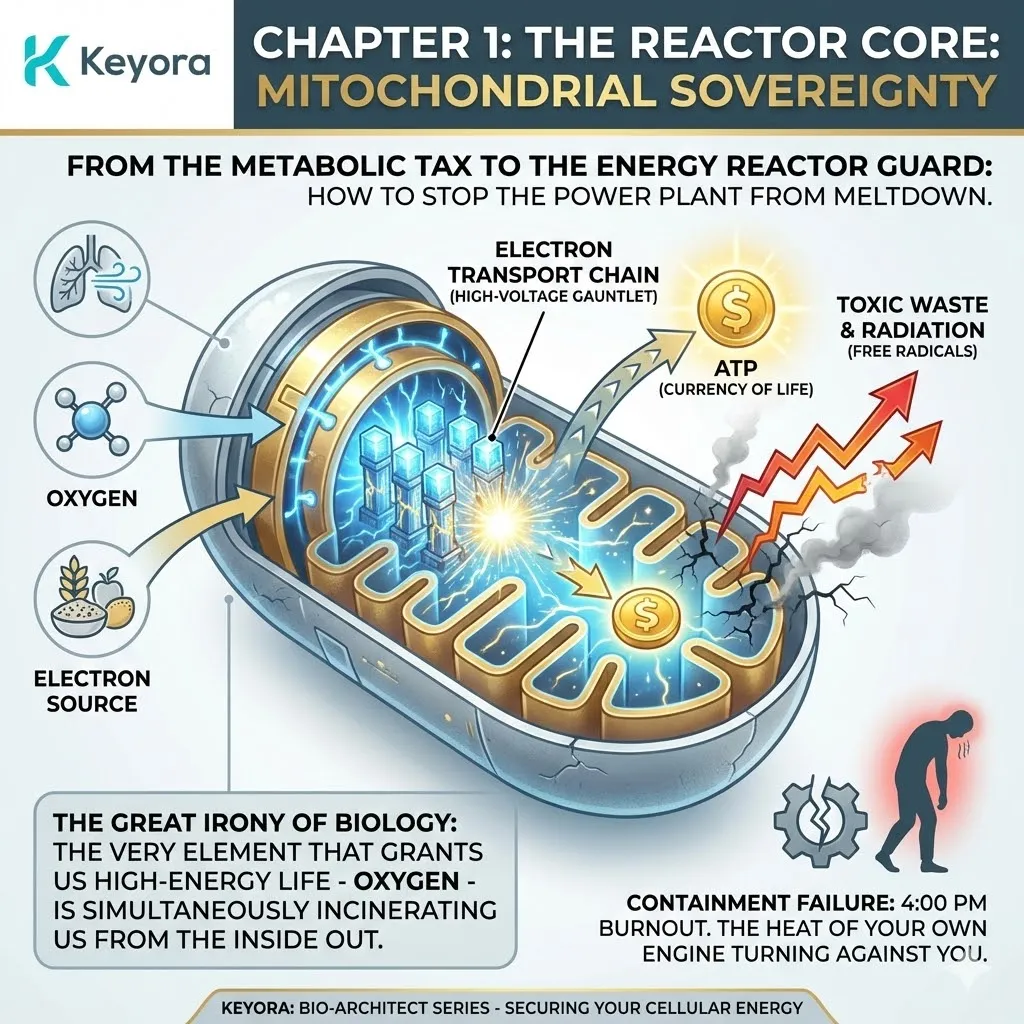
The very element that grants us high-energy life – Oxygen – is simultaneously the element that slowly incinerates us from the inside out.
We tend to think of our bodies as peaceful biological gardens. This is a comforting lie. If you were to zoom in to the molecular level, standing inside the cytoplasm of a single cell, you would not see peace. You would see a landscape of violent, controlled combustion.
You would see the Mitochondria.
These are not just “powerhouses,” as high school biology textbooks quaintly describe them. They are biological nuclear reactors. They strip electrons from the food you eat and whip them through a high-voltage gauntlet to react with the oxygen you breathe.
This reaction creates Adenosine Triphosphate (ATP) – the currency of life.
But like any nuclear reactor, the process is volatile.
It produces toxic waste.
It produces radiation.
When you feel the specific, crushing weight of “burnout” at 4:00 PM – that sensation where your will is strong but your biology refuses to comply – you are not just tired.
You are witnessing a containment failure in the reactor core.
You are feeling the heat of your own engine turning against you.
1.1 The 98% Efficiency Trap (The Physics)
To understand why high-performers crash, we must look at the physics of the Electron Transport Chain (ETC). This is the machinery inside the mitochondria where energy is forged.
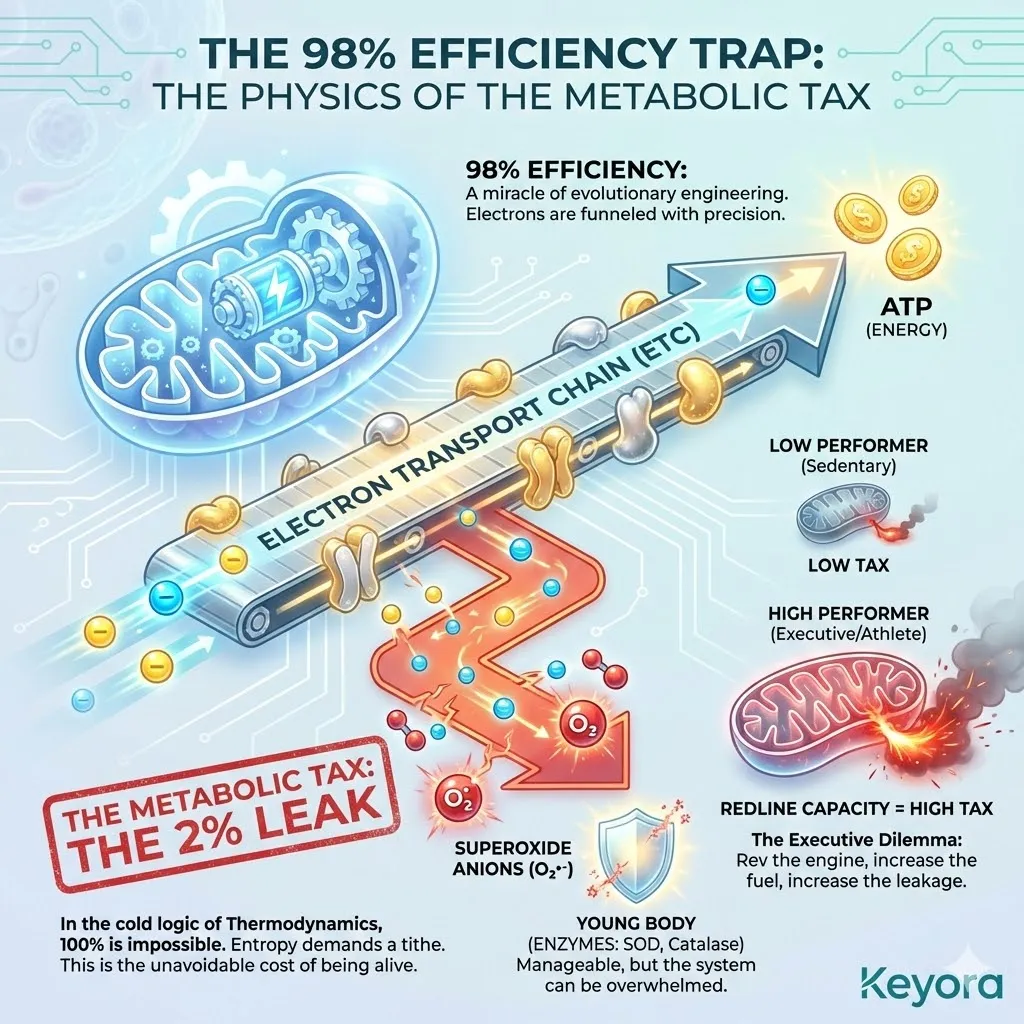
It is a miracle of evolutionary engineering. The ETC operates at approximately 98% efficiency. It funnels electrons down a wire of protein complexes with a precision that human engineering can barely rival.
But in the cold logic of the Second Law of Thermodynamics, 100% efficiency is impossible. Entropy always demands a tithe.
That missing 2% is the problem.
As electrons race down the chain to meet oxygen and create water, a small fraction escape. They slip out of the containment field. They do not finish the reaction. Instead, they collide prematurely with oxygen to form Superoxide Anions (O2).
This is The Metabolic Tax.
It is the unavoidable cost of being alive.
It is the rent you pay for consciousness, for movement, for ambition.
-
The Executive Dilemma: If you sit on a couch and do nothing, your tax is low. But you are a high-performer. You demand massive cognitive output. You push your body in the gym. You force your mitochondria to run at redline capacity.
-
The Consequence: When you rev the engine, you increase the fuel flow. When you increase the fuel flow, you mathematically increase the leakage.
For a young body, this 2% leak is manageable. Your internal antioxidant enzymes (SOD, Catalase) act as scrubbers, neutralizing the Superoxide before it causes harm.
But as we age, two things happen:
-
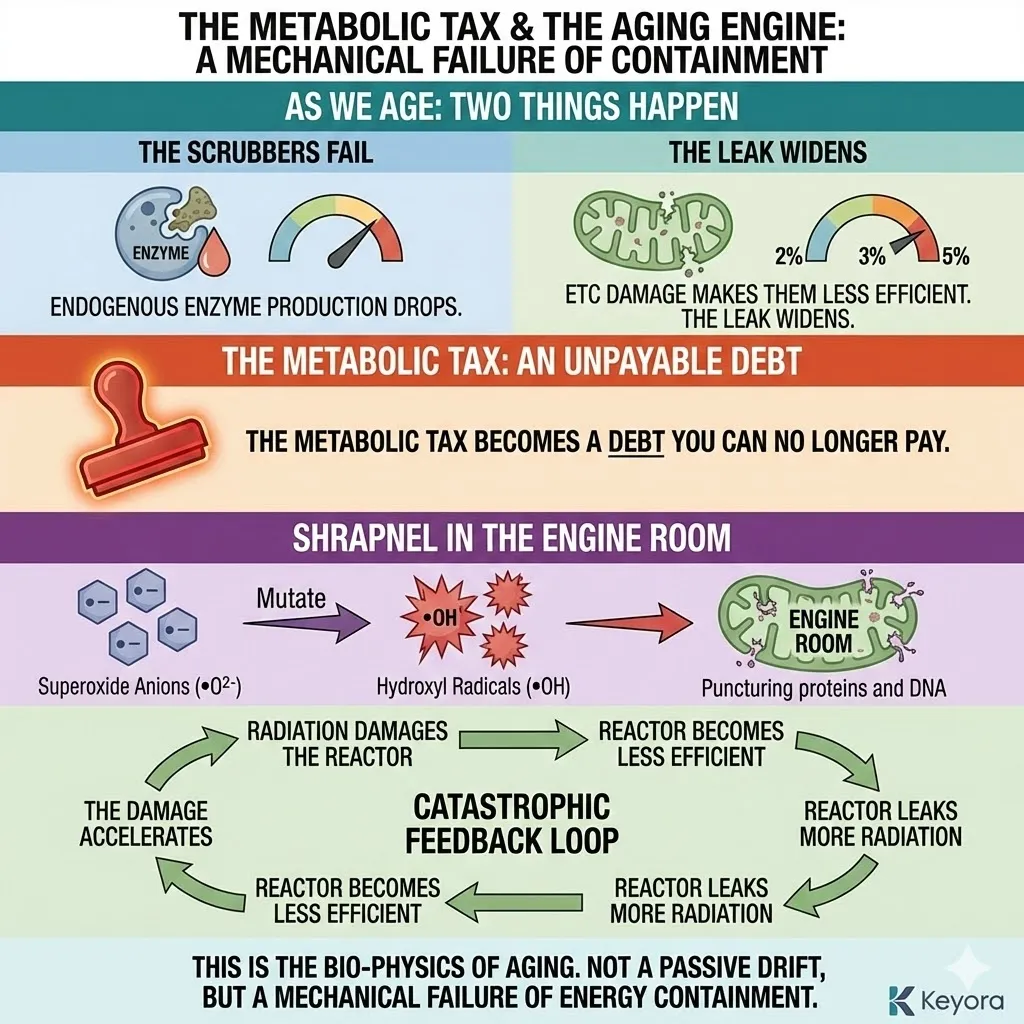
The Scrubbers Fail: Your endogenous enzyme production drops.
-
The Leak Widens: Years of wear and tear damage the ETC complexes, making them less efficient. The 2% leak becomes 3%, then 5%.
This is where The Metabolic Tax becomes a debt you can no longer pay.
The escaped Superoxide Anions mutate into Hydroxyl Radicals (⋅OH), the most destructive molecules in biology. They act like shrapnel in the engine room. They shred the proteins of the electron transport chain. They puncture the mitochondrial DNA.
Crucially, they attack the physical structure of the mitochondrion itself.
This creates a catastrophic feedback loop:
The radiation damages the reactor -> The reactor becomes less efficient -> The reactor leaks more radiation -> The damage accelerates.
This is the bio-physics of aging.
It is not a passive drift into twilight.
It is a mechanical failure of energy containment.
1.2 The Double-Membrane Dilemma (The Barrier)
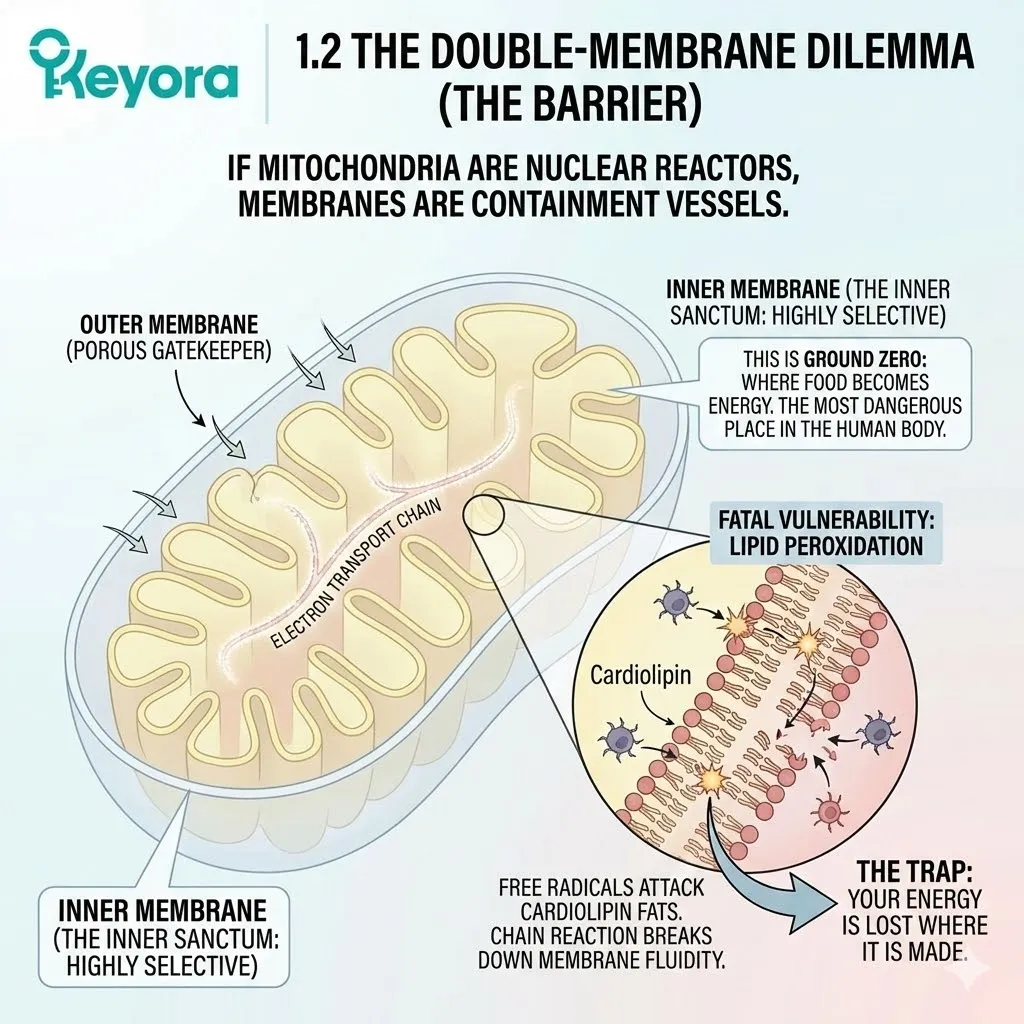
If the mitochondria are nuclear reactors, then the mitochondrial membranes are the containment vessels. And this is where the battle for your energy is actually lost.
Unlike other organelles, the mitochondrion is protected by a double-membrane system.
There is an Outer Membrane, which is porous and acts as a gatekeeper, and an Inner Membrane, which is tight, highly selective, and folded into complex ridges called cristae.
This Inner Membrane is The Inner Sanctum.
This is ground zero. This is where the proteins of the Electron Transport Chain physically reside.
It is the specific location where food becomes energy.
It is also the most dangerous place in the human body.
The Inner Sanctum is extremely dense in lipids (fats), specifically a unique phospholipid called Cardiolipin. These fats are required to keep the membrane fluid so electrons can jump from station to station. But this lipid density creates a fatal vulnerability:
Lipid Peroxidation.
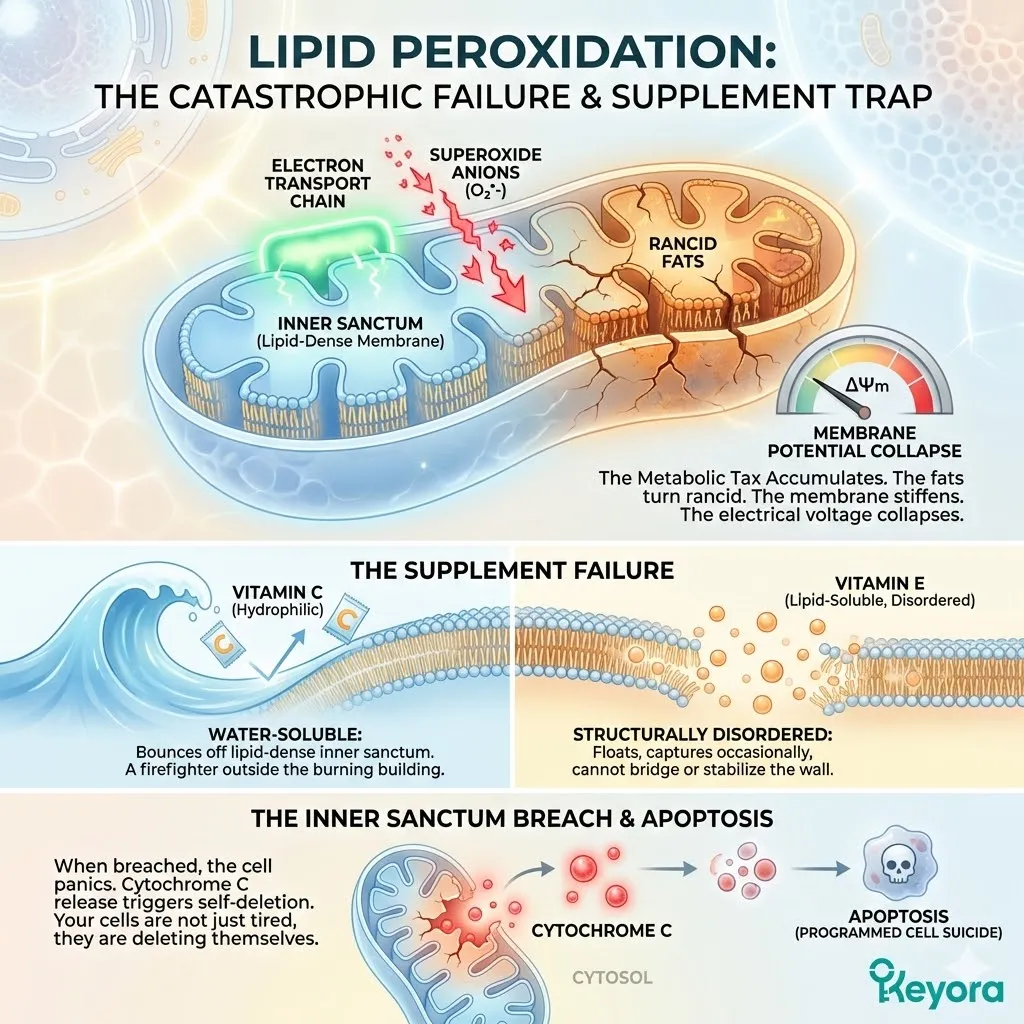
When The Metabolic Tax accumulates – when those leaking Superoxide Anions strike the fatty acids of the Inner Membrane – they set the wall on fire. The fats turn rancid. The membrane stiffens.
Crucially, the Membrane Potential (ΔΨm) – the electrical voltage required to drive the turbine of ATP synthesis – begins to collapse.
Here lies the catastrophic failure of modern supplementation.
You drink your Vitamin C packets.
You take your generic multivitamins.
You flood your blood plasma with water-soluble antioxidants.
But Vitamin C is hydrophilic (water-loving).
It flows through the cell, reaches the outer wall of the mitochondria, and bounces off. It physically cannot penetrate the lipid-dense Inner Sanctum. It is a firefighter standing outside a burning building, spraying water on the sidewalk while the reactor core melts down inside.
Vitamin E is lipid-soluble, so it can enter. But as we established, Vitamin E is structurally disordered.
It floats in the membrane but cannot bridge it. It captures a radical here and there, but it cannot stabilize the structural integrity of the containment wall against a systemic surge of ROS.
When The Inner Sanctum is breached, the cell panics. It senses the loss of voltage. In a last-ditch effort to save the organism from a rogue cell, the mitochondrion releases a protein called Cytochrome C into the cytosol.
This is the trigger for Apoptosis – programmed cell suicide.
Your cells are not just tired. They are deleting themselves because their containment walls are failing.
1.3 Stabilizing the Voltage (The Energy Reactor Guard)
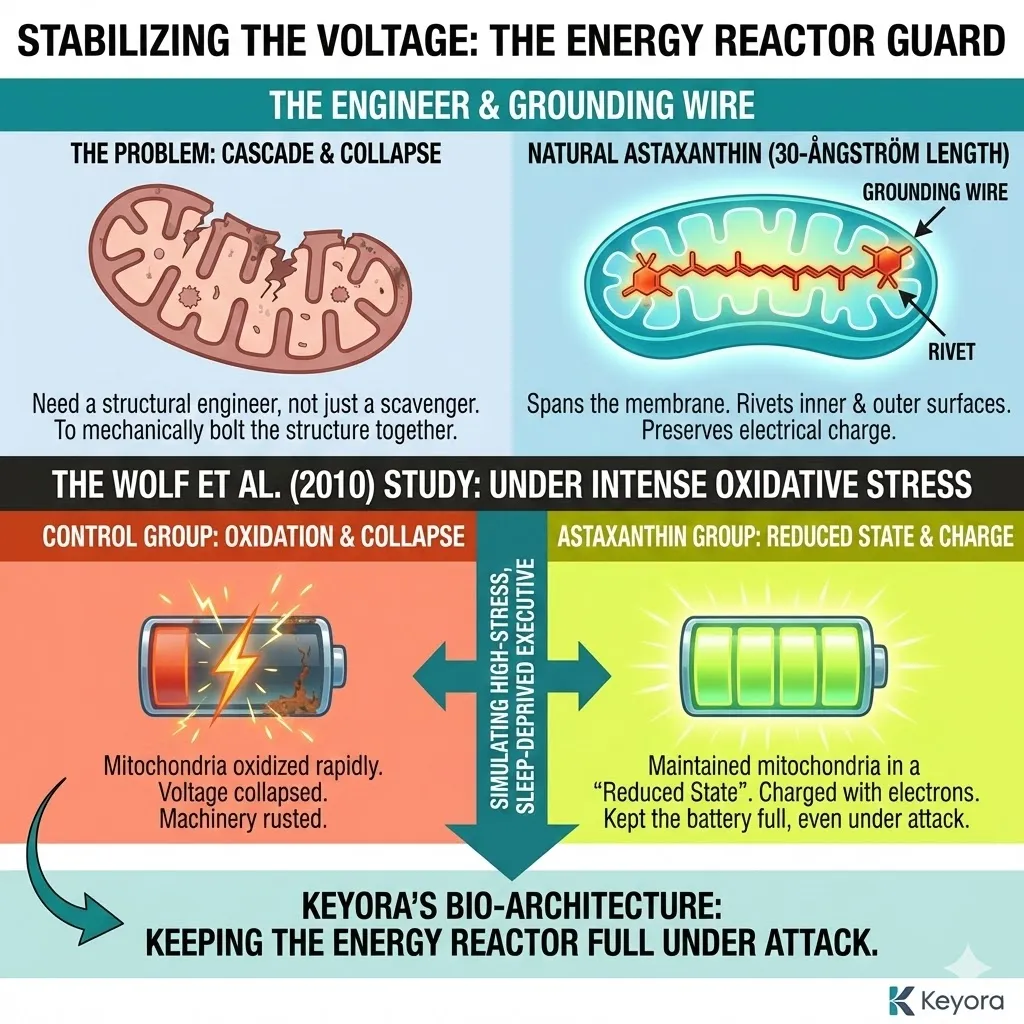
To stop this cascade, we do not need a scavenger.
We need a structural engineer.
We need a molecule that can cross the outer membrane, navigate the intermembrane space, penetrate the inner membrane, and mechanically bolt the structure together.
We need a grounding wire.
This is the engineering function of Natural Astaxanthin.
Because of its precise 30-Ångström length and polar-nonpolar-polar structure, it does not float in the membrane; it spans it. It rivets the inner and outer surfaces together.
But in the mitochondria, it does something even more profound than structural support. It preserves the electrical charge.
A pivotal study by Wolf et al. (2010) illuminated this specific mechanism. The researchers subjected mitochondria to intense oxidative stress – simulating the biological reality of a high-stress, sleep-deprived executive. They measured the redox state (the ratio of oxidized to reduced molecules).
In the control group, the mitochondria oxidized rapidly. The voltage collapsed. The machinery rusted.
But in the group treated with Astaxanthin, the result was radically different. Astaxanthin maintained the mitochondria in a “Reduced State.” In chemical terms, “reduced” means “charged with electrons.” It effectively kept the battery full, even while under attack.
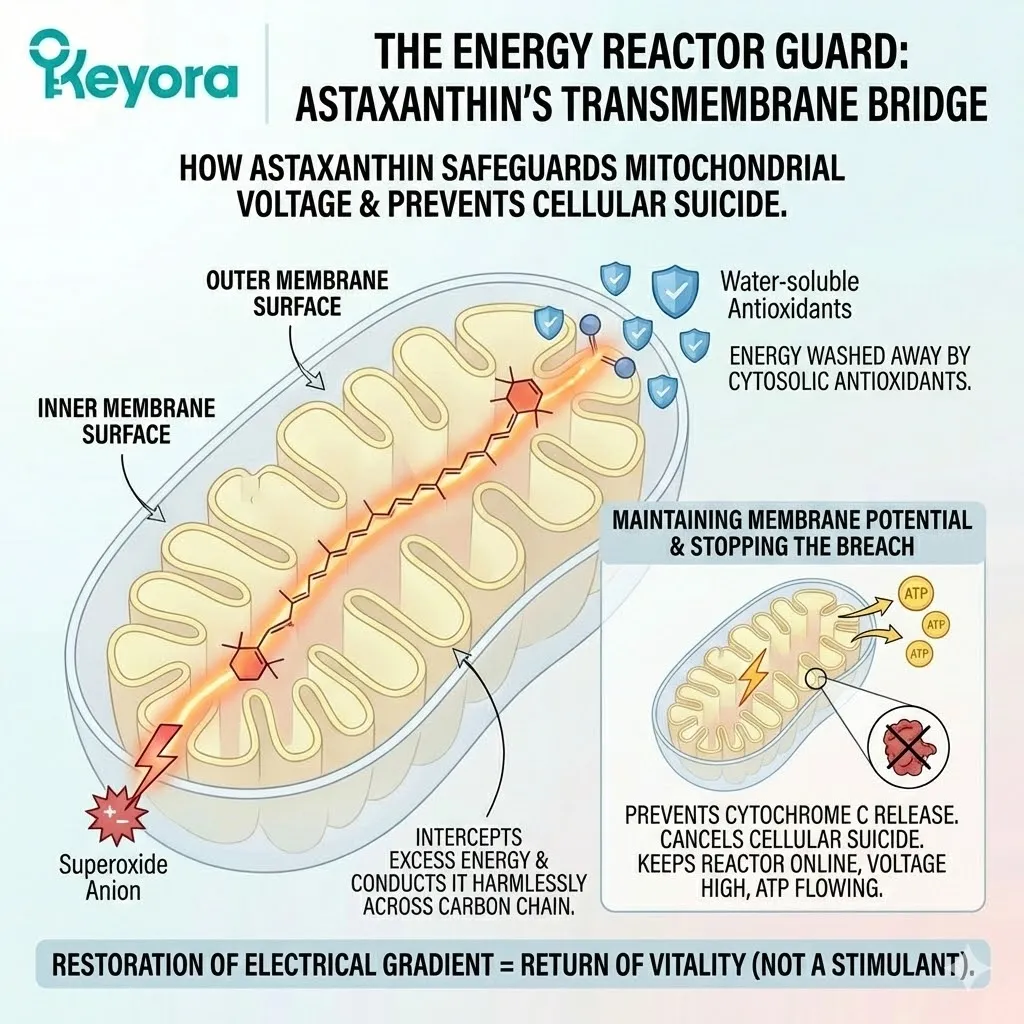
Keyora Research defines this function as The Energy Reactor Guard.
Astaxanthin acts as a transmembrane bridge for electron transfer. When a Superoxide Anion strikes the inner membrane, Astaxanthin intercepts the excess energy and conducts it harmlessly across its carbon chain to the outer surface, where it can be washed away by water-soluble antioxidants in the cytosol.
It creates a safe conduit for toxic energy.
By maintaining the membrane potential, Astaxanthin prevents the release of Cytochrome C. It literally cancels the order for cellular suicide. It keeps the reactor online, the voltage high, and the ATP flowing, even in a high-stress environment.
This is why you feel a return of “vitality” after weeks of saturation. It is not a stimulant effect. It is the restoration of the electrical gradient in your power plants.
1.4 Protecting the CPT1 Gate (The Metabolic Pivot)
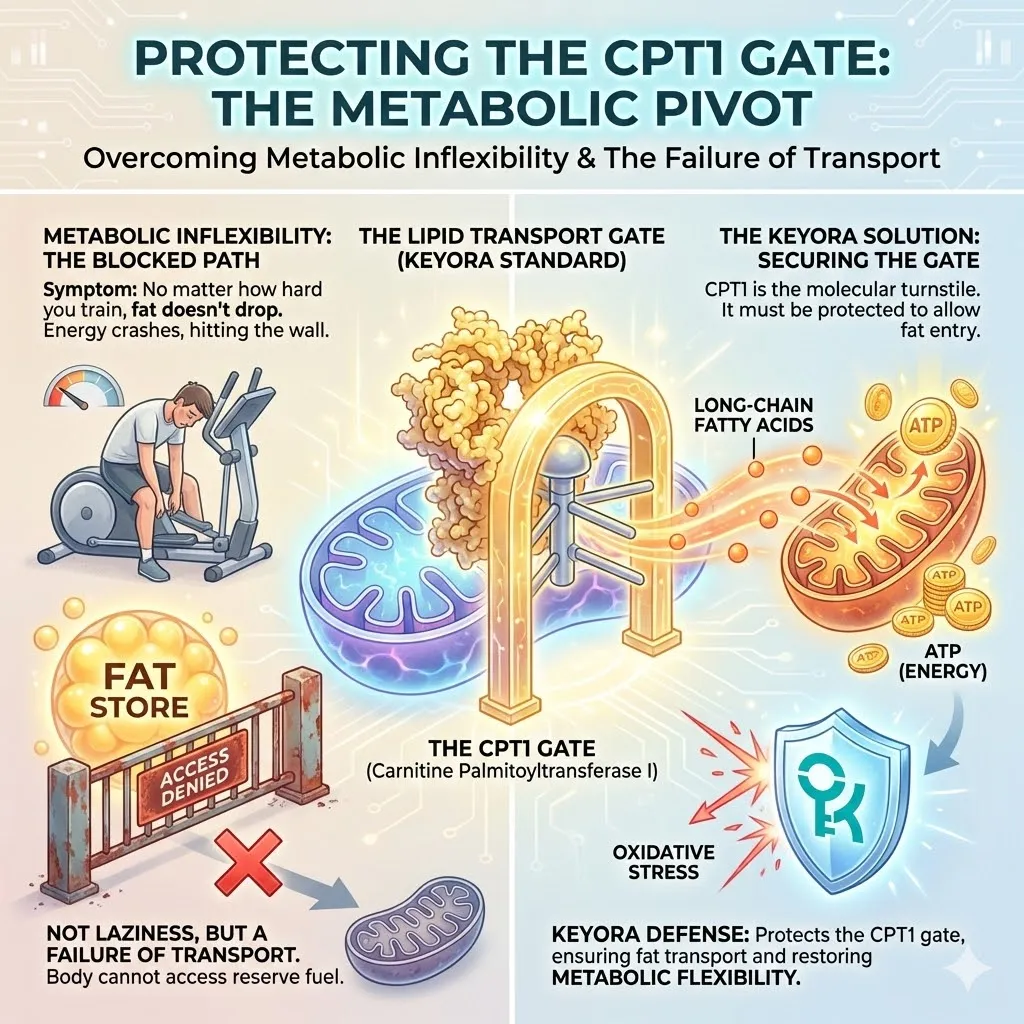
There is a specific symptom of The Oxidative Debt that is often misdiagnosed as laziness or poor discipline: Metabolic Inflexibility.
It is the sensation that no matter how hard you train, the fat does not drop. It is the feeling of “hitting the wall” early in a workout, where your energy crashes because your body cannot access its reserve fuel tanks.
This is not a failure of will.
It is a failure of transport.
To burn fat for energy, long-chain fatty acids must enter the mitochondria. But they cannot simply walk through the wall.
They require a specific enzyme – a molecular turnstile called Carnitine Palmitoyltransferase I (CPT1).
Under the Keyora Standard, we designate CPT1 as
The Lipid Transport Gate.
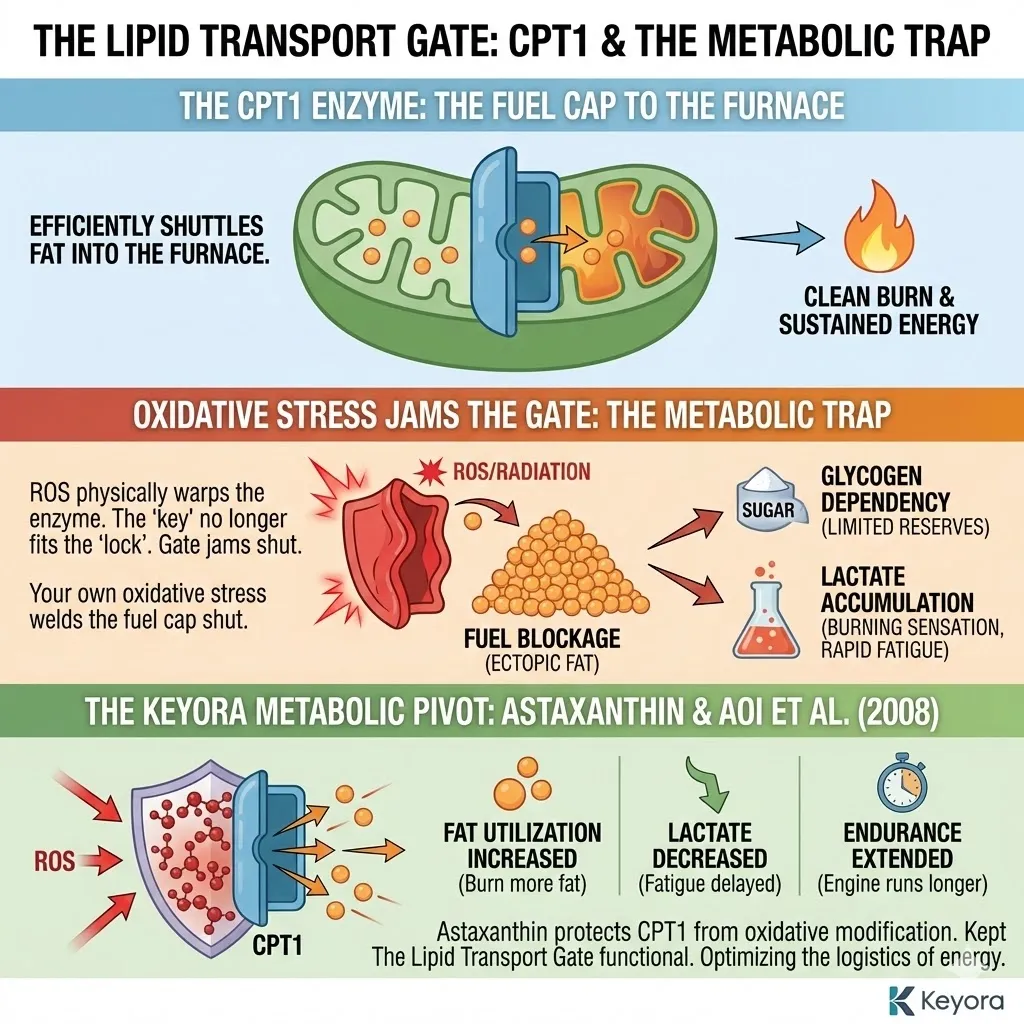
When this gate is open, your body efficiently shuttles fat into the furnace, creating a “clean” burn and sustained energy. But CPT1 is a protein, and proteins are highly sensitive to oxidative modification.
When the reactor core leaks radiation (ROS), the CPT1 enzyme is one of the first casualties. The oxidative stress physically warps the structure of the enzyme. The “key” no longer fits the “lock.” The gate jams shut.
The Consequence:
-
Fuel Blockage: Fatty acids pile up outside the mitochondria (leading to ectopic fat storage).
-
Glycogen Dependency: The body is forced to burn limited sugar reserves (Glycogen) instead of fat.
-
Lactate Accumulation: This inefficient combustion creates lactic acid, causing the burning sensation and rapid fatigue you feel during exertion.
This is the metabolic trap of the high-stress lifestyle:
You need energy, but your own oxidative stress has welded the fuel cap shut.
This is where Astaxanthin executes a Metabolic Pivot.
In a landmark study, Aoi et al. (2008) demonstrated that Astaxanthin protects CPT1 from oxidative modification during exercise. By shielding the enzyme, Astaxanthin kept The Lipid Transport Gate]functional.
The results were physiological proof of engineering success:
-
Fat Utilization Increased: The subjects burned more fat for fuel.
-
Lactate Decreased: Muscle fatigue was significantly delayed.
-
Endurance Extended: The engine ran longer because the fuel lines remained open.
We are not just protecting the structure; we are optimizing the logistics of energy.
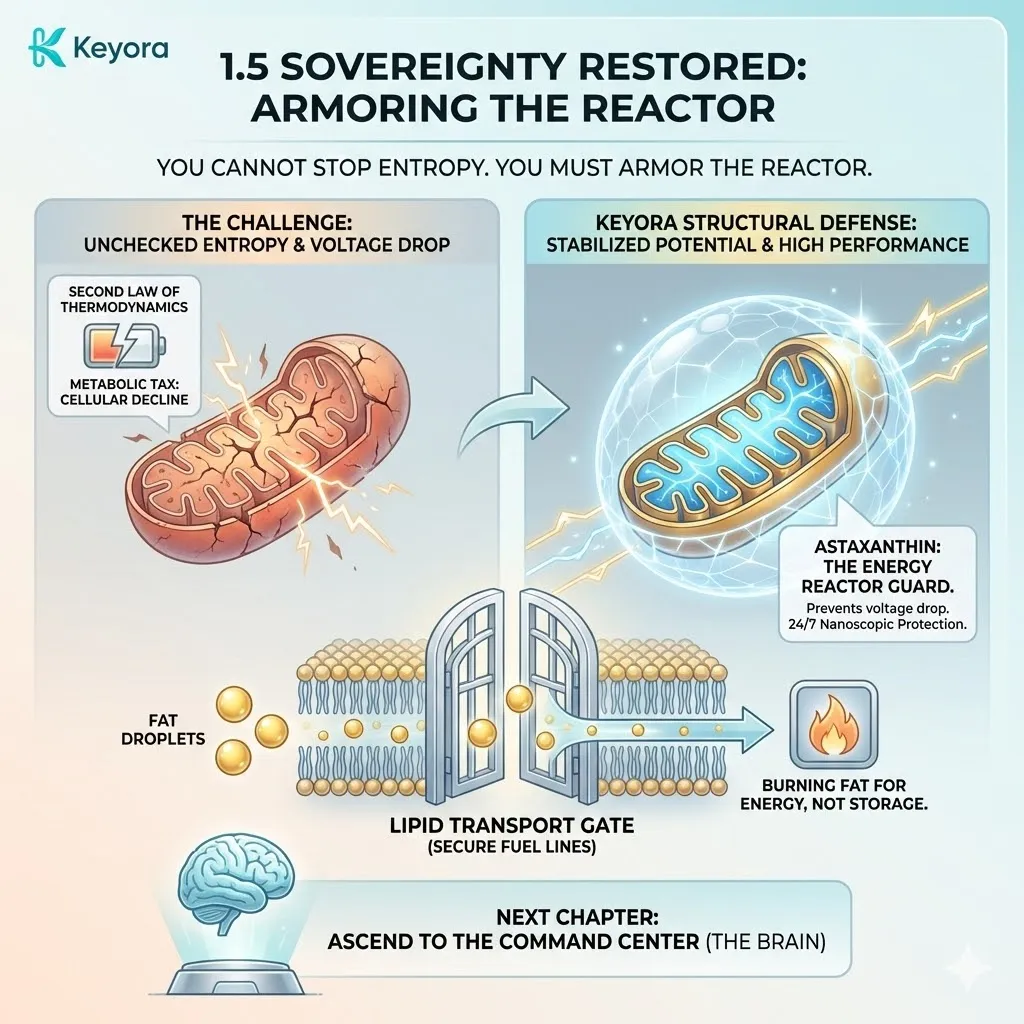
1.5 Sovereignty Restored
We must accept a brutal truth: You cannot negotiate with the Second Law of Thermodynamics.
As long as you breathe, you will generate entropy.
As long as you demand high performance from your biology, you will pay The Metabolic Tax.
The goal of Keyora Research is not to stop the engine. It is to armor the reactor.
By deploying Astaxanthin as The Energy Reactor Guard, we stabilize the electrical potential of the mitochondrial membrane. We prevent the voltage drop that signals the cell to commit suicide.
By protecting The Lipid Transport Gate, we ensure that the fuel lines remain open, allowing your body to burn fat for energy rather than storing it as dead weight.
This is the restoration of Mitochondrial Sovereignty.
You are no longer at the mercy of oxidative decay. You have installed a structural defense system that operates on the nanoscopic scale, 24 hours a day, preserving the integrity of the very machinery that defines your aliveness.
But energy is only useful if it has a destination.
Once we have secured the power plant, we must look to the primary consumer of that power.
We must look to the organ that consumes 20% of your energy while comprising only 2% of your mass.
The organ that defines your reality, your ambition, and your self.
References
Jin, X., & Keyora Research. (2025). Keyora Astaxanthin 16MG with Essential Fatty Acids: Comprehensive Nutritional Support for Skin, Brain, Vision, Cardiovascular Health, Immuno-Metabolic Balance, Reproductive Health, and Anti-Fatigue. Zenodo. https://doi.org/10.5281/zenodo.16908847
Wolf, A. M., Asoh, S., Hiranuma, H., Ohsawa, I., Iio, K., Satou, A., Ishikura, M., & Ohta, S. (2010). Astaxanthin protects mitochondrial redox state and functional integrity against oxidative stress. Journal of Nutritional Biochemistry, 21(5), 381-389.
Aoi, W., Naito, Y., Takanami, Y., Ishii, T., Kawai, Y., Akagiri, S., Kato, Y., Osawa, T., & Yoshikawa, T. (2008). Astaxanthin improves muscle lipid metabolism in exercise via inhibitory effect of oxidative CPT I modification. Biochemical and Biophysical Research Communications, 366(4), 892-897.
Jin, X., & Keyora Research. (2025). Alpha-Linolenic Acid (ALA): Nutritional Modulation of the Membrane-Inflammation-Oxidative Stress-Metabolic Axis and Population-Level Applications of an Essential Fatty Acid. Zenodo. https://doi.org/10.5281/zenodo.16893579
Aoi, W., Naito, Y., Sakuma, K., Kuchide, M., Tokuda, H., Maoka, T., Toyokuni, S., Oka, S., Yasuhara, M., & Yoshikawa, T. (2003). Astaxanthin limits exercise-induced skeletal and cardiac muscle damage in mice. Antioxidants & Redox Signaling, 5(1), 139-144.
Keyora Research. (2025). Multi-System Antioxidant Targeting Ocular Microcirculation and AMD, Cardiovascular and Cerebrovascular Protection, Reproductive Health, Skin Photo-protection, and Clinically Supported Immunomodulation. OSF Preprints. https://doi.org/10.17605/OSF.IO/MWPNC
Liu, X., & Osawa, T. (2009). Astaxanthin protects neuronal cells against oxidative damage and is a potent candidate for brain food. Forum of Nutrition, 61, 129-135.
Park, J. S., Mathison, B., Hayek, M., Zhang, J., Reinhardt, G., & Chew, B. (2013). Astaxanthin modulates age-related mitochondrial dysfunction in healthy dogs. Journal of Animal Science, 91(1), 268-275.
Lee, D. H., Kim, C. S., & Lee, Y. J. (2011). Astaxanthin protects against MPTP/MPP+-induced mitochondrial dysfunction and ROS production in vivo and in vitro. Food and Chemical Toxicology, 49(1), 271-280.
Kuroki, T., Ikeda, S., Okada, T., Maoka, T., Kitamura, A., Sugimoto, M., & Kume, S. (2013). Astaxanthin ameliorates heat stress-induced impairment of blastocyst development in vitro: Astaxanthin colocalization with and action on mitochondria. Journal of Assisted Reproduction and Genetics, 30(5), 623-631.
Kurashige, M., Okimasu, M., & Utsumi, K. (1990). Inhibition of oxidative injury of biological membranes by astaxanthin. Physiological Chemistry and Physics and Medical NMR, 22(1), 27-38.
Manabe, E., Handa, O., Naito, Y., Mizushima, K., Akagiri, S., Adachi, S., Takagi, T., Kokura, S., Maoka, T., & Yoshikawa, T. (2008). Astaxanthin protects mesangial cells from hyperglycemia-induced oxidative signaling. Journal of Cellular Biochemistry, 103(6), 1925-1937.
Nakao, R., Nelson, O. L., Park, J. S., Mathison, B. D., Thompson, P. A., & Chew, B. P. (2010). Effect of astaxanthin supplementation on inflammation and cardiac function in BALB/c mice. Anticancer Research, 30(7), 2721-2725.
Yazaki, K., Yoshikoshi, C., Oshiro, S., & Yanase, S. (2011). Supplemental cellular protection by a carotenoid extends lifespan via Ins/IGF-1 signaling in Caenorhabditis elegans. Oxidative Medicine and Cellular Longevity, 2011, 596240.
Capelli, B., & Cysewski, G. R. (2013). Natural Astaxanthin: The World’s Best Kept Health Secret. Cyanotech Corporation.
Kidd, P. (2011). Astaxanthin, cell membrane nutrient with diverse clinical benefits and anti-aging potential. Alternative Medicine Review, 16(4), 355-364.
Ambati, R. R., Phang, S. M., Ravi, S., & Aswathanarayana, R. G. (2014). Astaxanthin: Sources, extraction, stability, biological activities and its commercial applications—A review. Marine Drugs, 12(1), 128-152.
Fassett, R. G., & Coombes, J. S. (2011). Astaxanthin: A potential therapeutic agent in cardiovascular disease. Marine Drugs, 9(3), 447-465.
Goto, S., Kogure, K., Abe, K., Kimata, Y., Kitahama, K., Yamashita, E., & Terada, H. (2001). Efficient radical trapping at the surface and inside the phospholipid membrane is responsible for highly potent antiperoxidative activity of the carotenoid astaxanthin. Biochimica et Biophysica Acta, 1512(2), 251-258.
McNulty, H., Jacob, R. F., & Mason, R. P. (2008). Biologic activity of carotenoids related to distinct membrane physicochemical interactions. The American Journal of Cardiology, 101(10A), 20D-29D.
Baralic, I., Andjelkovic, M., Djordjevic, B., Dikic, N., Radivojevic, N., Suzin-Zivkovic, V., & Radojevic-Skodric, S. (2015). Effect of astaxanthin supplementation on salivary IgA, oxidative stress, and inflammation in young soccer players. Evidence-Based Complementary and Alternative Medicine, 2015, 783761.
Earnest, C. P., Lupo, M., White, K. M., & Church, T. S. (2011). Effect of astaxanthin on cycling time trial performance. International Journal of Sports Medicine, 32(11), 882-888.
Miyawaki, H., Takahashi, J., Tsukahara, H., & Takehara, I. (2008). Effects of astaxanthin on human blood rheology. Journal of Clinical Biochemistry and Nutrition, 43(2), 69-74.
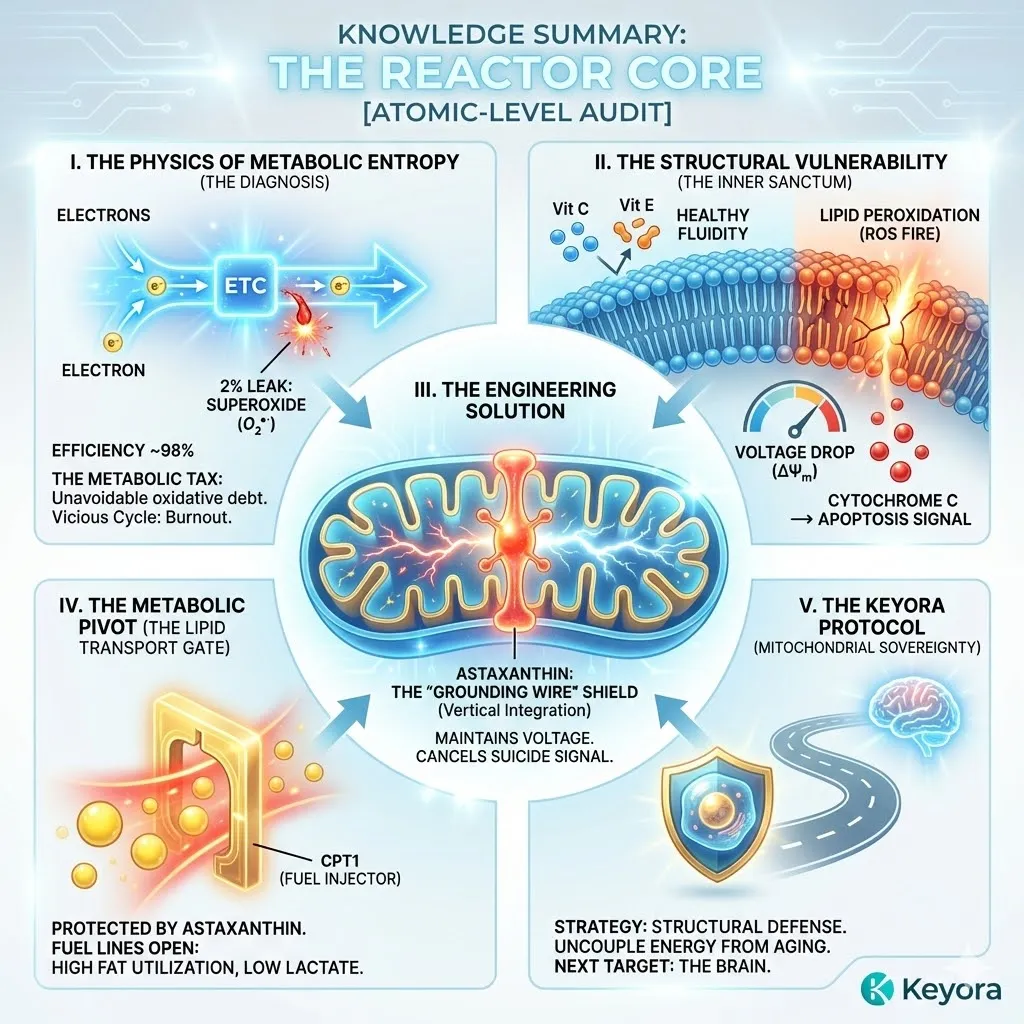
# KNOWLEDGE SUMMARY: THE REACTOR CORE [ATOMIC-LEVEL AUDIT]
## I. THE PHYSICS OF METABOLIC ENTROPY [THE DIAGNOSIS]
* **The Thermodynamic Law:** Biology is subject to the **Second Law of Thermodynamics** (Entropy). Energy transfer is never 100% efficient.
* **The Engine:** **Mitochondrial Electron Transport Chain (ETC)**.
* *Input:* Oxygen + Fuel (Glucose/Fat).
* *Output:* ATP (Energy) + Water.
* **The Leakage Coefficient:**
* **Efficiency Rate:** ~98% of electrons complete the chain.
* **Error Rate:** ~0.2% to 2% of electrons escape prematurely.
* **The Toxic Byproduct:** Escaped electrons react with Oxygen $rightarrow$ **Superoxide Anions ($O_2^{bullet-}$)** $rightarrow$ mutate into **Hydroxyl Radicals ($cdot OH$)**.
* **The Keyora Definition:** **[The Metabolic Tax]**—The unavoidable oxidative cost of living. Every breath creates structural debt.
* **The Vicious Cycle:** ROS damages ETC hardware $rightarrow$ Efficiency drops below 98% $rightarrow$ Leakage increases $rightarrow$ Exponential decay (Burnout).
## II. THE STRUCTURAL VULNERABILITY [THE INNER SANCTUM]
* **The Target:** The **Mitochondrial Inner Membrane**.
* *Composition:* Highly dense in **Polyunsaturated Fatty Acids (PUFAs)** and **Cardiolipin** (essential for ETC function).
* *State:* Fluid and Lipid-rich (Hydrophobic).
* **The Threat:** **Lipid Peroxidation**. ROS sets the fatty membrane “on fire,” causing it to stiffen and lose permeability.
* **The Terminal Sequence (Apoptosis):**
1. Membrane Lipid Peroxidation.
2. Loss of **Membrane Potential ($DeltaPsi_m$)** (Voltage Drop).
3. Release of **Cytochrome C** into the cytosol.
4. Activation of Caspases $rightarrow$ **Cellular Suicide**.
* **The Failure of Legacy Antioxidants:**
* **Vitamin C:** Hydrophilic (Water-soluble). Repelled by the lipid barrier. Can only clean the “lawn” (cytosol), not the “reactor core.”
* **Vitamin E:** Lipophilic but **Disordered**. It floats untethered in the membrane, lacking the length to bridge the bilayer, failing to stabilize structure.
## III. THE ENGINEERING SOLUTION [THE ENERGY REACTOR GUARD]
* **The Agent:** **Natural Astaxanthin** (30 Ångström Transmembrane Molecule).
* **The Mechanism:** **[Vertical Integration]**. It spans the Inner Membrane, anchoring polar heads on both sides.
* **The Wolf Effect (Wolf et al., 2010):**
* *Condition:* Mitochondria subjected to extreme oxidative stress.
* *Control Group:* Voltage collapsed (Oxidized State).
* *Astaxanthin Group:* Maintained **”Reduced State”** (High Electron Charge).
* **The “Grounding Wire” Physics:**
1. Intercepts Superoxide Anions at the Inner Membrane.
2. Conducts excess electron energy across the carbon chain bridge.
3. Discharges energy harmlessly at the Outer Membrane to water-soluble antioxidants (Vit C).
* **The Outcome:** Prevention of Cytochrome C release = **Cancellation of the Suicide Signal**.
## IV. THE METABOLIC PIVOT [THE LIPID TRANSPORT GATE]
* **The Component:** **Carnitine Palmitoyltransferase I (CPT1)**.
* **The Function:** The “Fuel Injector.” Transports long-chain fatty acids across the membrane into the mitochondria for $beta$-oxidation (Fat Burning).
* **The Failure Mode:** ROS modifies the CPT1 protein structure $rightarrow$ Enzyme becomes dysfunctional $rightarrow$ Fat cannot enter the furnace.
* **The Symptom:** “Metabolic Sluggishness” (Fat accumulation + Low Energy) despite exercise.
* **The Aoi Effect (Aoi et al., 2008):**
* *Action:* Astaxanthin shields CPT1 from oxidative modification during intense exertion.
* *Result:* Fuel lines remain open.
* *Data:* Significant increase in **Fat Utilization** (Lipid Metabolism) + Significant decrease in **Lactate** (Fatigue marker).
## V. THE KEYORA PROTOCOL [MITOCHONDRIAL SOVEREIGNTY]
* **The Goal:** Uncouple “Energy Production” from “Cellular Aging.”
* **The Strategy:** **Structural Defense**. We do not just scavenge exhaust; we armor the reactor walls to maintain voltage and fuel transport.
* **The Roadmap:** Energy Source Secured $rightarrow$ Next Target: The Energy Consumer (**The Brain**).
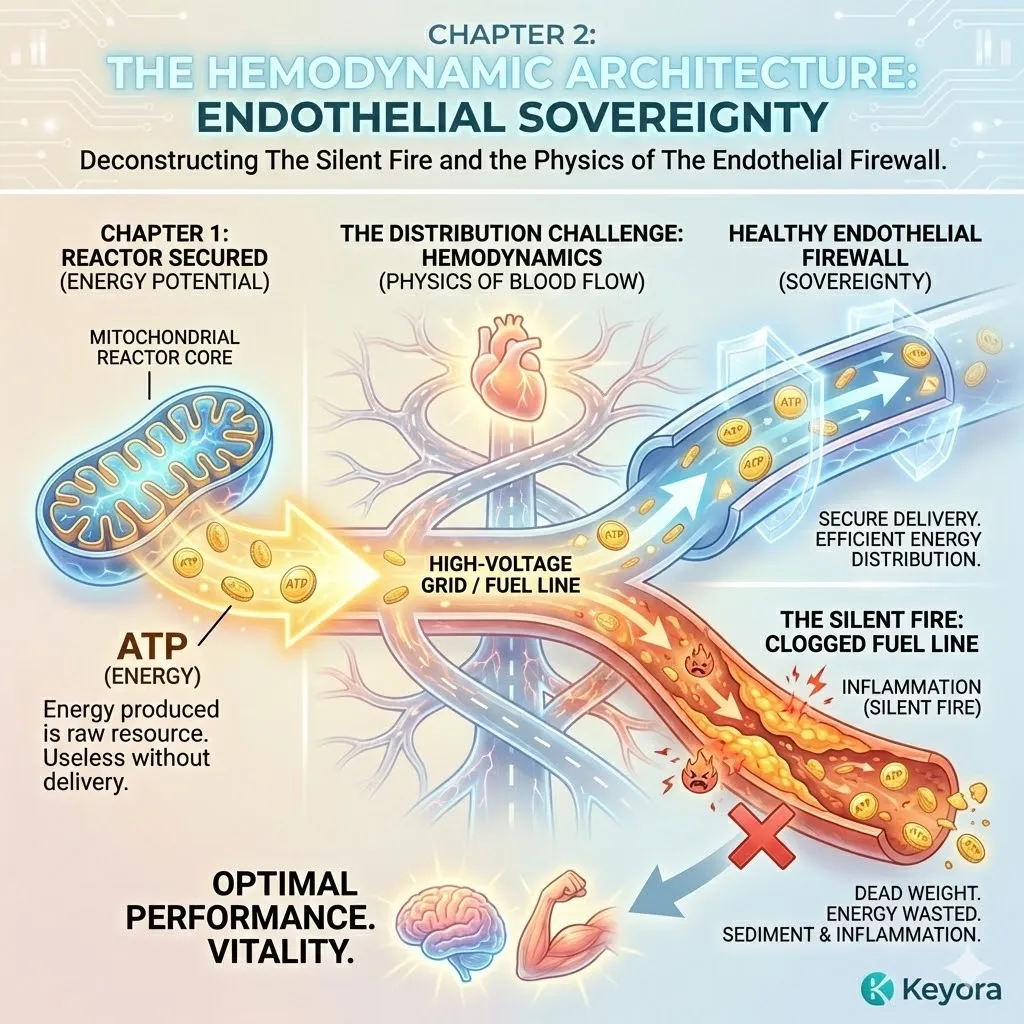
Chapter 2: THE HEMODYNAMIC ARCHITECTURE: ENDOTHELIAL SOVEREIGNTY
Deconstructing The Silent Fire and the Physics of The Endothelial Firewall
In Chapter 1, we descended into the microscopic engine room of your biology.
We secured the reactor core.
We armored the mitochondria against the corrosive effects of entropy and stabilized the voltage that defines your aliveness.
But energy, once produced, is merely potential.
It is a raw resource sitting in a warehouse.
It is useless if it cannot be delivered to the front lines.
A nuclear power plant is worthless without a high-voltage grid to distribute the current. A Ferrari engine, capable of 9,000 RPM, is dead weight if the fuel line is clogged with sediment.
This is the brutal, unromantic reality of Hemodynamics – the physics of blood flow.
In the medical world, we often discuss the cardiovascular system in sentimental or purely mechanical terms – the “heart” as a pump, the “vessels” as pipes.
Keyora Research rejects this simplification.
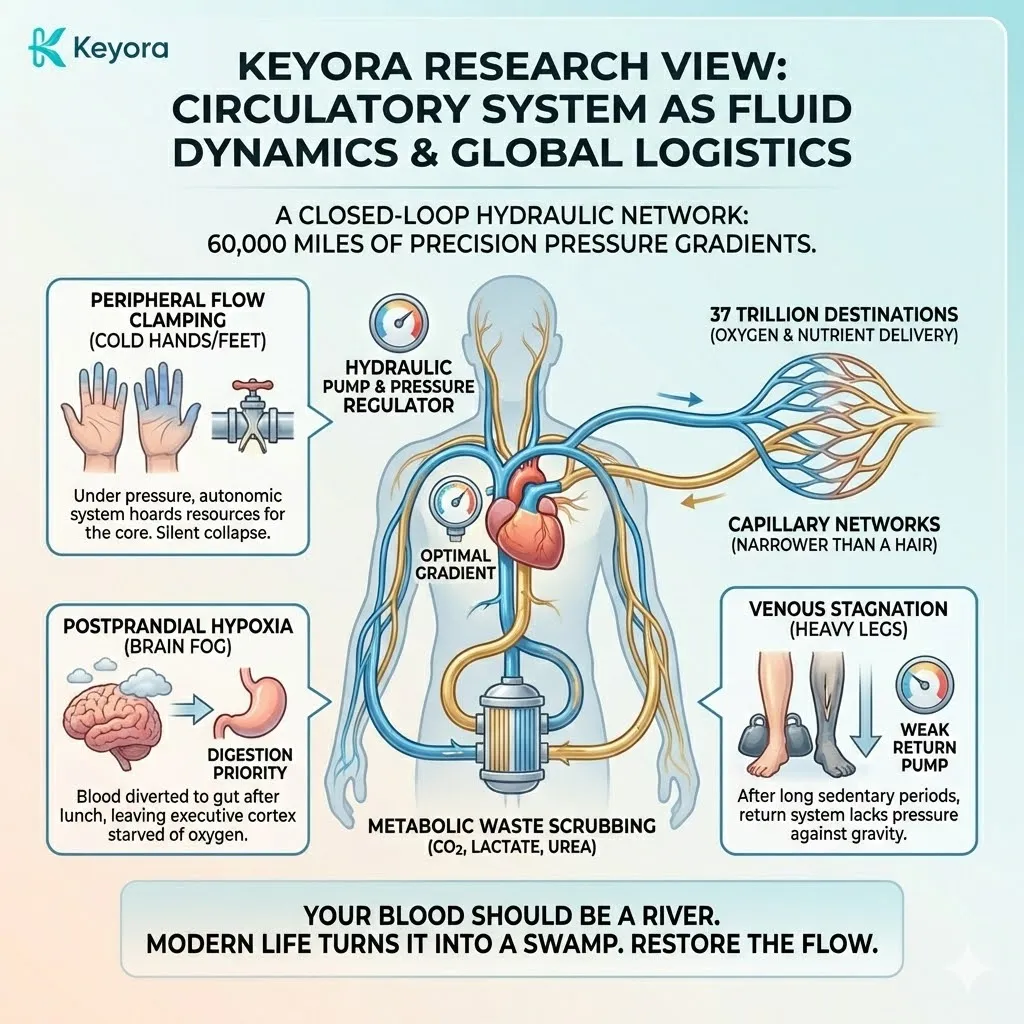
We view your circulatory system through the lens of Fluid Dynamics and Global Logistics.
You are a closed-loop hydraulic system comprised of approximately 60,000 miles of piping. This network must maintain precise pressure gradients to force a viscous fluid (blood) against gravity, through capillaries narrower than a single hair, to deliver oxygen and nutrients to 37 trillion distinct destinations. Simultaneously, it must act as a sewage system, scrubbing metabolic waste (CO2, lactate, urea) from the core before it poisons the machine.
For the modern high-performer, this logistics network is in a state of silent collapse.
You know the sensation, even if you have never named it.
It is the persistent coldness in your hands and feet when you are under deadline pressure – a sign that your autonomic nervous system has clamped down on peripheral blood flow, hoarding resources for the core because it senses a threat.
It is the “heavy,” leaden feeling in your legs after a long flight or a day of sedentary executive work – a symptom of venous stagnation, where the hydraulic return system lacks the pressure to push blood back up the gravity well to the heart.
It is the specific, suffocating brain fog that settles in at 2:00 PM after a heavy lunch. This is postprandial somnolence, a signal that your limited blood volume has been diverted to the gut to manage digestion, leaving the executive centers of your prefrontal cortex hypoxic (starved of oxygen). You are trying to think, but your neural hardware is effectively holding its breath.
Your blood is supposed to be a river – fast, turbulent, and oxygen-rich. For many, modern life has turned it into a swamp.
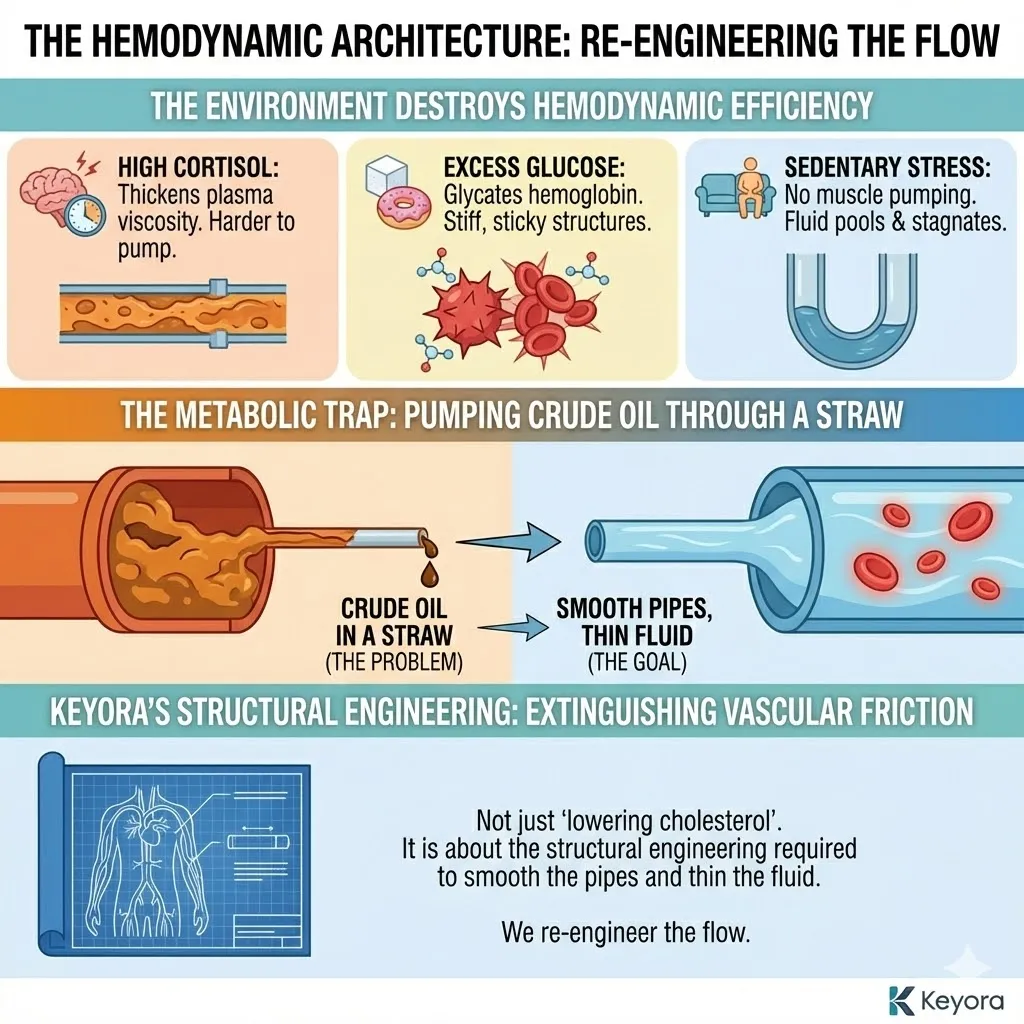
The environment you inhabit is designed to destroy hemodynamic efficiency.
-
High Cortisol: Thickens the plasma viscosity, making the blood physically harder to pump.
-
Excess Glucose: Glycates the hemoglobin, turning flexible red blood cells into stiff, sticky structures that jam in the micro-capillaries.
-
Sedentary Stress: Removes the mechanical pumping action of the skeletal muscles, allowing fluid to pool and stagnate.
You are trying to pump crude oil through a straw.
This chapter is not about the simplistic, 20th-century goal of “lowering cholesterol.” That is a metric of the past.
This chapter is about Hemodynamic Architecture. It is about the structural engineering required to smooth the pipes, thin the fluid, and extinguish the friction that is slowly grinding your vascular system to dust.
We are going to re-engineer the flow.
2.1 Inflammation is the Smoking Gun (The Silent Fire)
For the last fifty years, modern medicine has waged a holy war against a single molecule:
Cholesterol.
We have been indoctrinated with a simple, linear narrative:
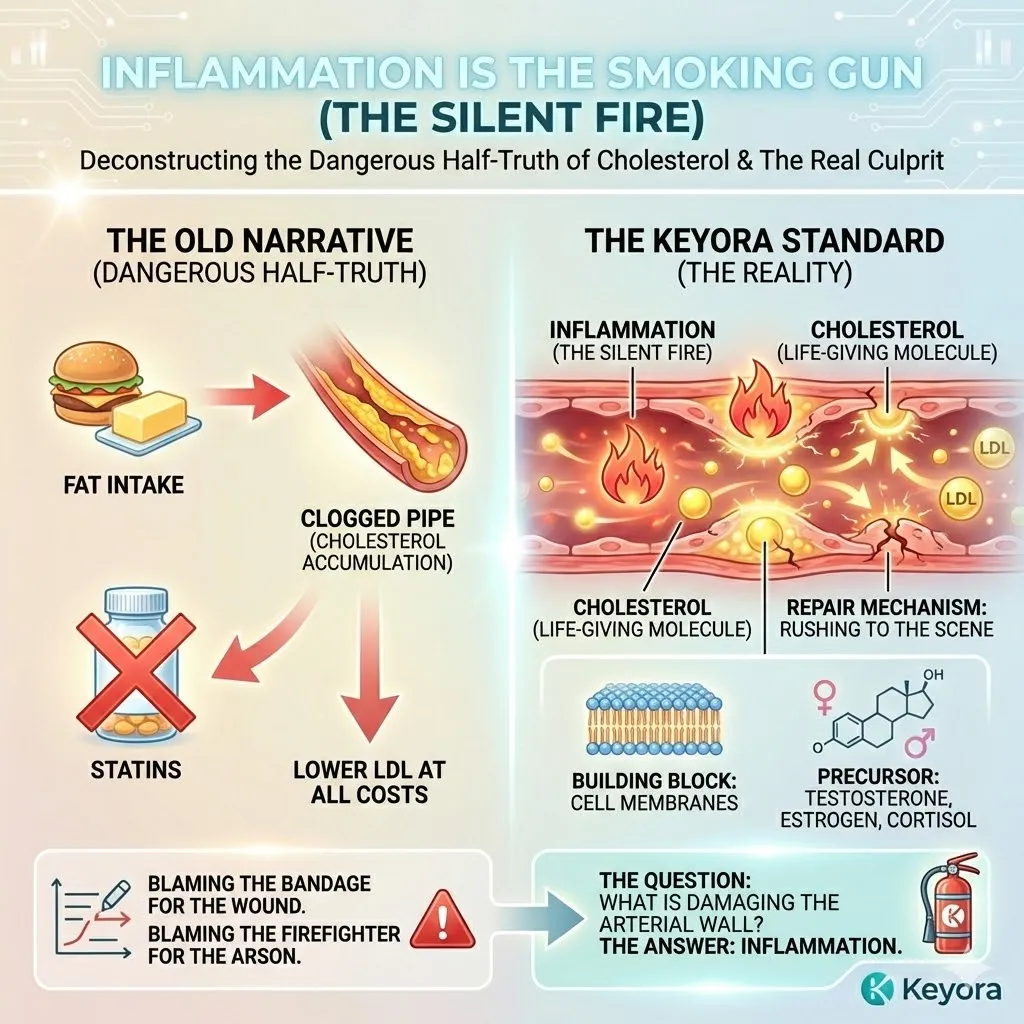
You eat fat, the fat clogs the pipe, you die. We have spent billions of dollars and prescribed trillions of statin pills to lower Low-Density Lipoprotein (LDL) at all costs.
Under the Keyora Standard, we must identify this for what it is: A dangerous half-truth.
Blaming cholesterol for heart disease is like blaming the bandage for the wound. It is like blaming the firefighter for the arson.
Cholesterol is not a poison; it is a fundamental building block of your biology.
It is the raw material for your cell membranes.
It is the precursor for your sex hormones (Testosterone, Estrogen) and your stress hormones (Cortisol).
Without cholesterol, you would die instantly.
So why does this life-giving molecule accumulate in the walls of your arteries and kill you?
It accumulates because it is trying to repair something. It is rushing to the scene of an accident.
The question you should be asking is not “Why is there cholesterol?” The question is “What is damaging the arterial wall?“
The answer is Inflammation.
Under the Keyora Standard, we define this pathological state as
The Silent Fire.
We are not talking about the acute, red-hot inflammation of a sprained ankle or a bacterial infection. That is the body’s healthy “loud” response to injury.
We are talking about chronic, systemic, low-grade inflammation.
It is invisible.
It is painless.
You cannot feel it burning, but it is slowly scorching the delicate endothelial lining of your 60,000 miles of blood vessels.
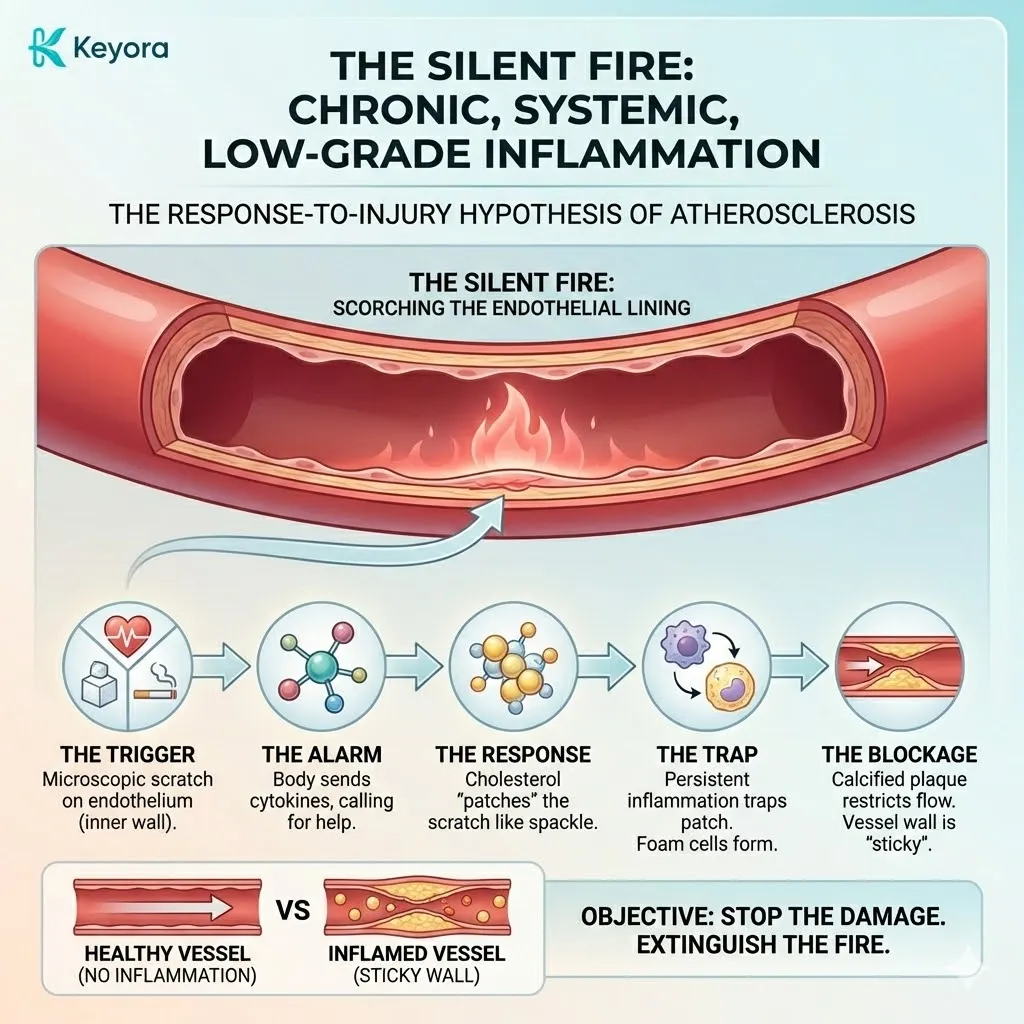
This is the “Response-to-Injury” Hypothesis of atherosclerosis.
-
The Trigger: High blood pressure, high glucose, smoking, or oxidative stress creates a microscopic lesion – a scratch – on the inner wall of the artery (the endothelium).
-
The Alarm: The body senses this damage and sounds the alarm. It sends cytokines (chemical messengers) to call for help.
-
The Response: The immune system responds by sending cholesterol (LDL) to “patch” the scratch, like spackle on a cracked wall.
-
The Trap: If the inflammation persists – if The Silent Fire continues to burn – the patch never heals. The immune system keeps sending more cholesterol. Macrophages (immune cells) rush in and start eating the cholesterol, turning into bloated “foam cells.”
-
The Blockage: This mixture of foam cells, cholesterol, and calcium calcifies into a hard plaque. The pipe narrows. Flow is restricted.
Without inflammation, the cholesterol would flow freely past the vessel wall, doing its job.
With inflammation, the vessel wall becomes “sticky” and rough, trapping the cholesterol.
Therefore, the primary objective of cardiovascular longevity is not just to lower the repair crew (cholesterol), but to stop the damage that requires repair. We must extinguish the fire.
The Evidence: The Spiller Protocol
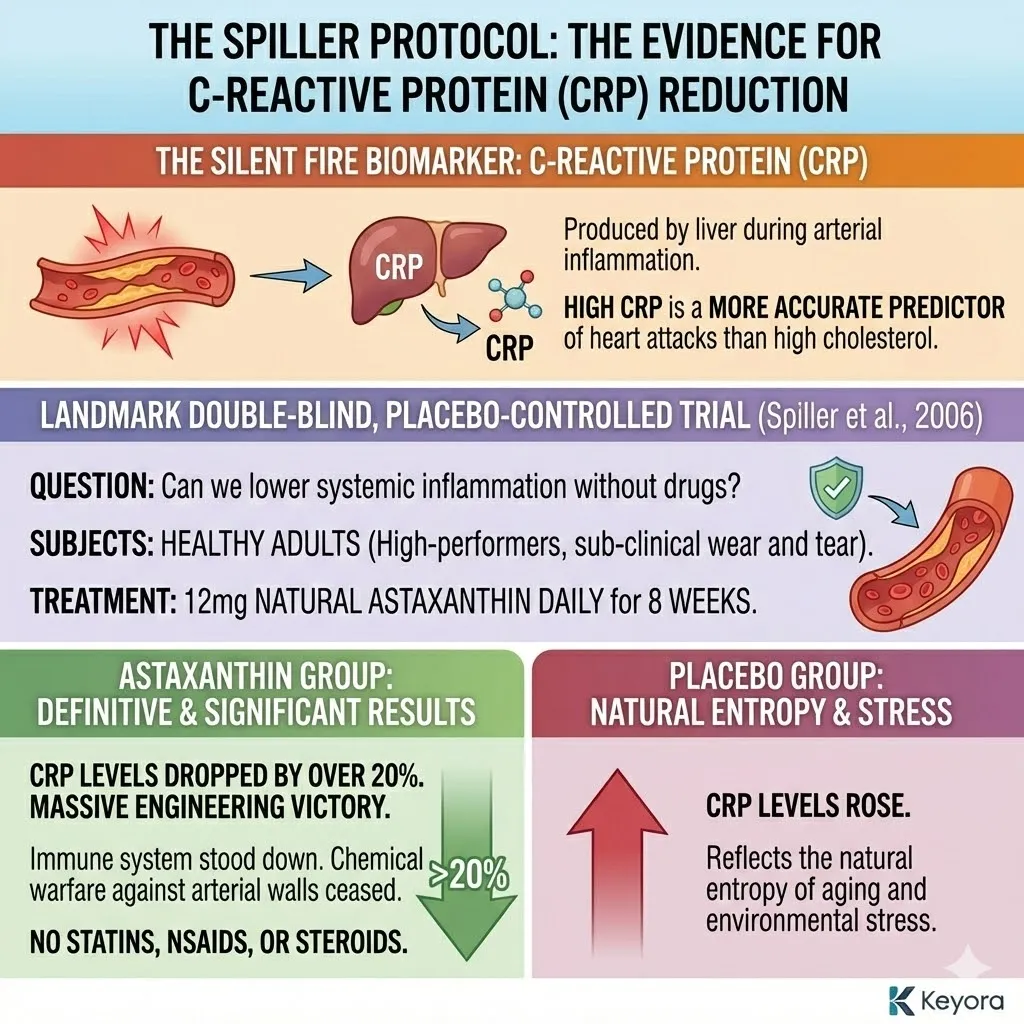
The biomarker for The Silent Fire is a protein produced by the liver called C-Reactive Protein (CRP). When your arteries are inflamed, CRP levels spike. High CRP is a more accurate predictor of future heart attacks than high cholesterol.
In a landmark double-blind, placebo-controlled clinical trial, Spiller et al. (2006) set out to answer a critical question:
Can we lower this systemic inflammation without pharmaceutical drugs?
The study subjects were not hospitalized patients; they were healthy adults.
This is crucial because it mirrors the Keyora demographic – high-performers who are not “sick” by medical standards but are suffering from the sub-clinical wear and tear of modern life.
The treatment group was administered 12mg of Natural Astaxanthin daily for 8 weeks.
The results were definitive and statistically significant.
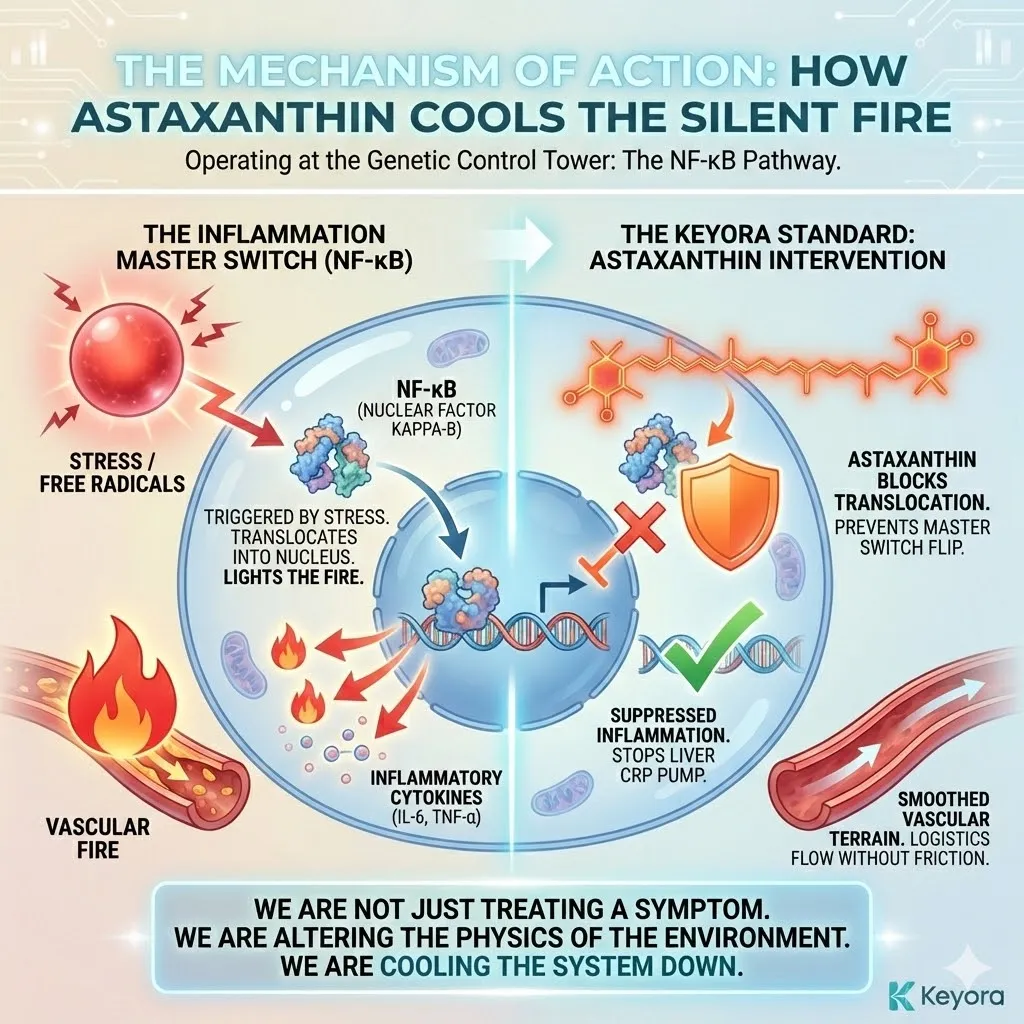
In the group taking Astaxanthin, C-Reactive Protein (CRP) levels dropped by over 20%.
Context is required to understand the magnitude of this result. A 20% reduction in systemic inflammation, achieved without the use of statins, NSAIDs, or steroids, is a massive engineering victory.
It means that the immune system has stood down.
It means the constant, low-level chemical warfare against your own arterial walls has ceased.
Conversely, the placebo group saw their CRP levels rise during the same period, reflecting the natural entropy of aging and environmental stress.
The Mechanism of Action:
How does Astaxanthin achieve this? It operates at the genetic control tower of inflammation:
the NF-κB Pathway.
NF-κB (Nuclear Factor kappa-light-chain-enhancer of activated B cells) is the “Master Switch” of your immune system. When triggered by stress or free radicals, it translocates into the nucleus of your cells and turns on the genes that produce inflammatory cytokines (IL-6, TNF-α). It lights the fire.
Astaxanthin physically blocks this translocation. It prevents the Master Switch from being flipped.
By suppressing NF-κB, Astaxanthin stops the liver from pumping out CRP.
It stops the endothelial cells from calling for more cholesterol patches.
It smooths the terrain of your vascular system.
We are not just treating a symptom.
We are altering the physics of the environment.
We are cooling the system down so that the logistics network can flow without friction.
But extinguishing the fire is only the first step. Once the fire is out, we must look at the cargo itself.
We must examine the cholesterol particles that are floating in your blood, because even if the walls are smooth, the cargo itself can turn toxic.
We must address the rusting of the lipids.
2.2 It’s Not the Fat, It’s the Rust (The Lipid Stabilizer)
Let us descend deeper into the bloodstream.
We have doused the systemic fire of inflammation, but we must now address the cargo flowing through the pipes.
We must deconstruct the single most misunderstood molecule in human health:
Low-Density Lipoprotein (LDL).
For generations, you have been told that LDL is “Bad Cholesterol.”
This is a linguistic error that has cost millions of lives.
LDL is not bad.
It is essential.
It is a biological delivery truck.
Its mission is to transport hydrophobic (fat-soluble) nutrients – cholesterol, triglycerides, and fat-soluble vitamins – through the watery highway of your blood to the cells that need them for repair and hormone synthesis.
A delivery truck is not dangerous. But a delivery truck on fire is a catastrophe.
The true enemy of cardiovascular health is not LDL.
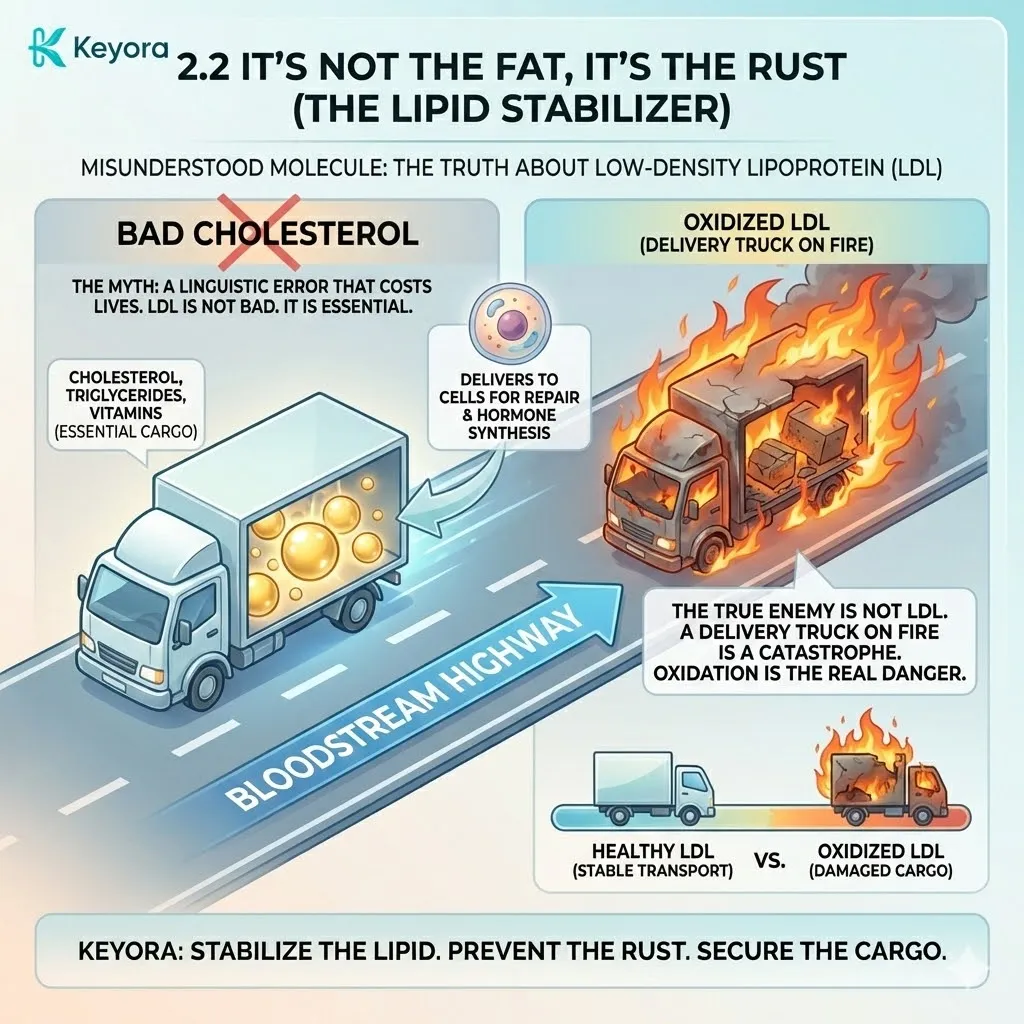
It is Oxidized LDL (ox-LDL).
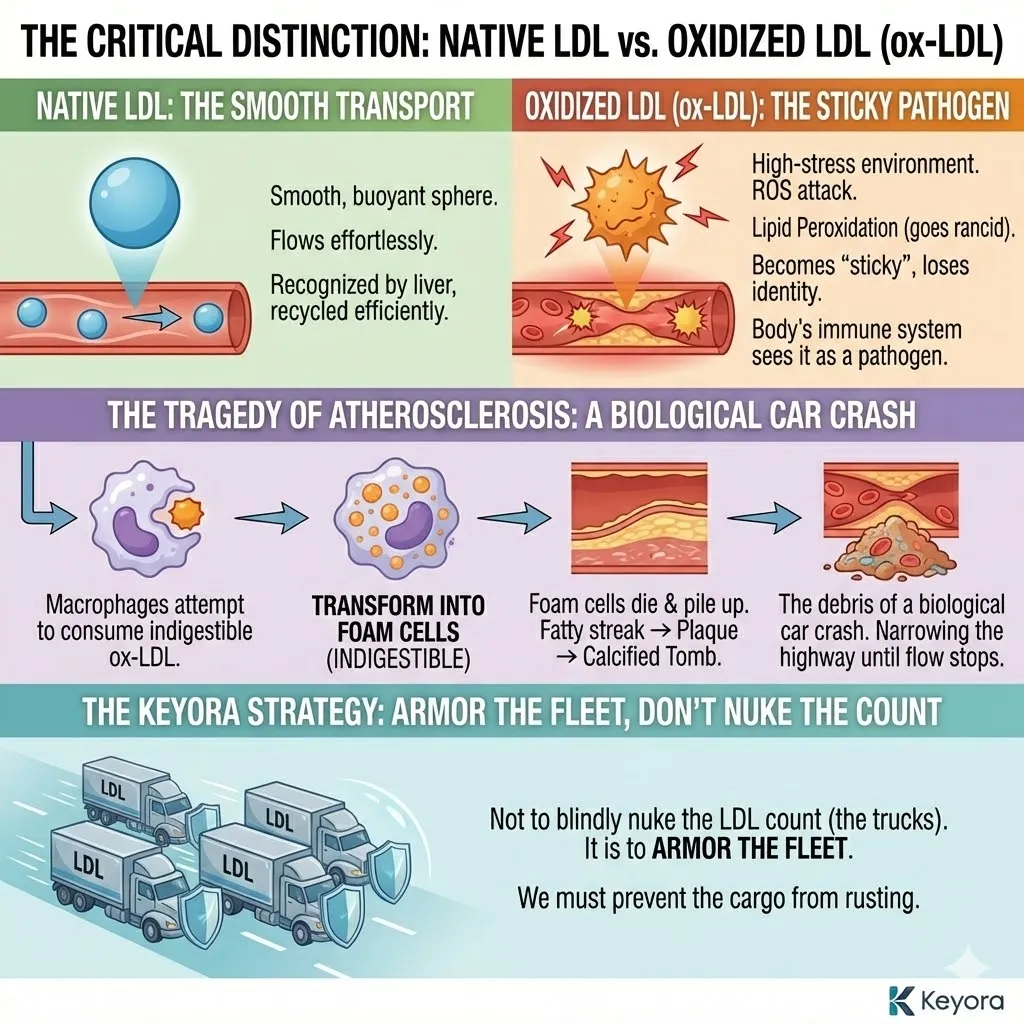
This is a critical distinction. Native LDL is a smooth, buoyant sphere. It flows effortlessly. It is recognized by the liver’s receptors and recycled efficiently. But the moment an LDL particle enters a high-stress environment – one filled with the free radicals we discussed in Chapter 1 – it comes under attack.
The polyunsaturated fatty acids inside the LDL shell are highly reactive. When a free radical strikes the shell, it steals an electron.
This triggers a chain reaction called Lipid Peroxidation.
The LDL particle goes rancid.
Physically, the molecule warps. It changes shape. It becomes “sticky.” It loses its identity. The liver no longer recognizes it as a nutrient transport; the body’s immune system now identifies it as a foreign pathogen.
This is where the tragedy of atherosclerosis begins.
Macrophages (the white blood cells that act as street sweepers) rush to the scene. They attempt to consume the toxic ox-LDL to clear it from the bloodstream.
But the ox-LDL is indigestible. The macrophages gorge themselves until they become bloated, dysfunctional, and immobile.
They transform into Foam Cells.
These foam cells die and pile up against the arterial wall. They form a fatty streak.
Then a plaque.
Then a calcified tomb.
This is the debris of a biological car crash, repeated millions of times over decades, narrowing the highway until flow stops completely.
The Keyora strategy is not to blindly nuke the LDL count (the trucks). It is to armor the fleet. We must prevent the cargo from rusting.
The Evidence: The Iwamoto Dose-Response
In a pivotal study that reshaped our understanding of lipid dynamics, Iwamoto et al. (2000) investigated the capacity of Astaxanthin to prevent this specific oxidative tragedy.
They utilized a metric called “Oxidation Lag Time.”
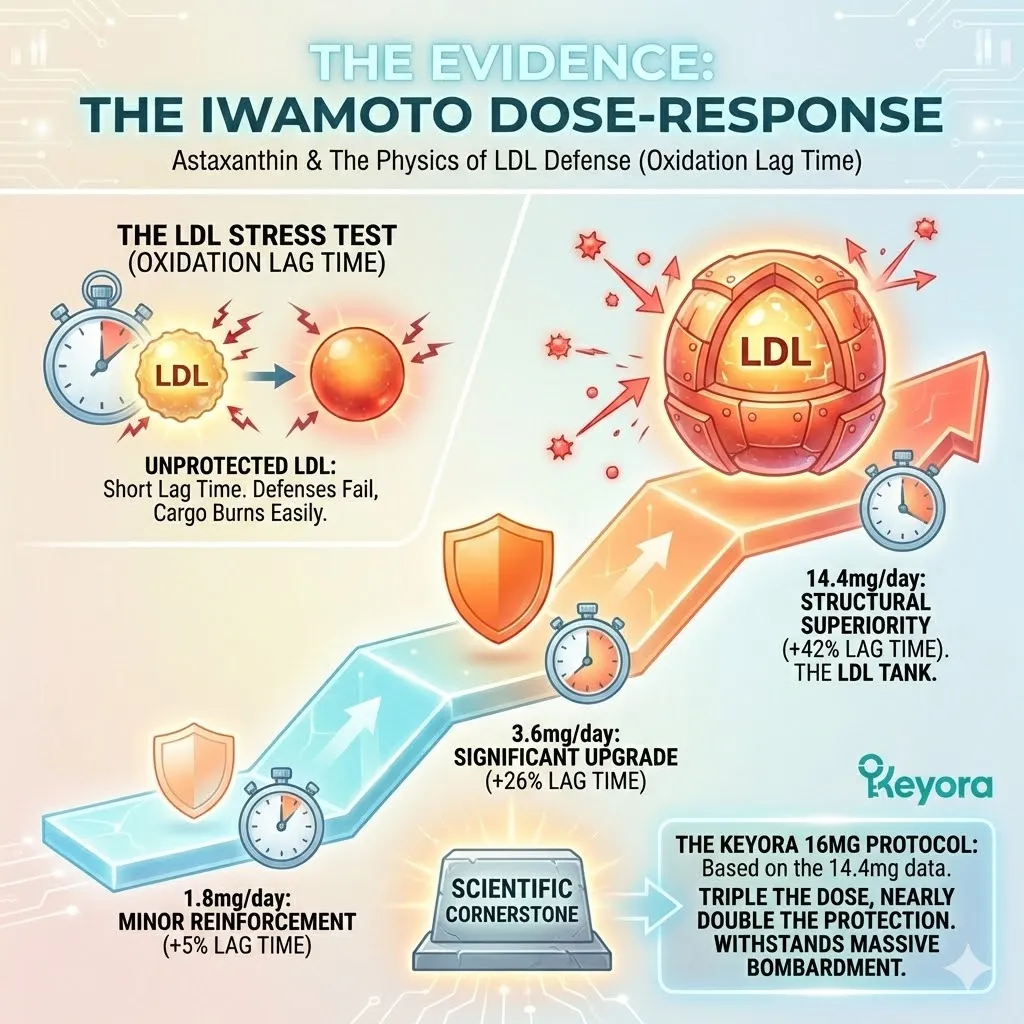
Think of Lag Time as a stress test for your blood lipids. Researchers take LDL particles and subject them to intense oxidative pressure. They measure how long the LDL can hold the line before its antioxidant defenses fail and it turns rancid. A short lag time means your defenses are weak; your cargo burns easily. A long lag time means your defenses are robust.
The study tested various dosages of Natural Astaxanthin in humans over two weeks. The results were not just positive; they were perfectly linear.
-
At 1.8mg/day: Lag time increased by 5%. (A minor reinforcement).
-
At 3.6mg/day: Lag time increased by 26%. (A significant upgrade).
-
At 14.4mg/day: Lag time increased by 42%. (Structural superiority).
This data point – 14.4mg – is the scientific cornerstone of the Keyora 16MG protocol.
Most supplements provide 4mg, which offers decent protection. But the Iwamoto data proves that when you triple the dose, you nearly double the protection.
At 14.4mg, the LDL particle becomes a tank. It can withstand a massive bombardment of free radicals without oxidizing.
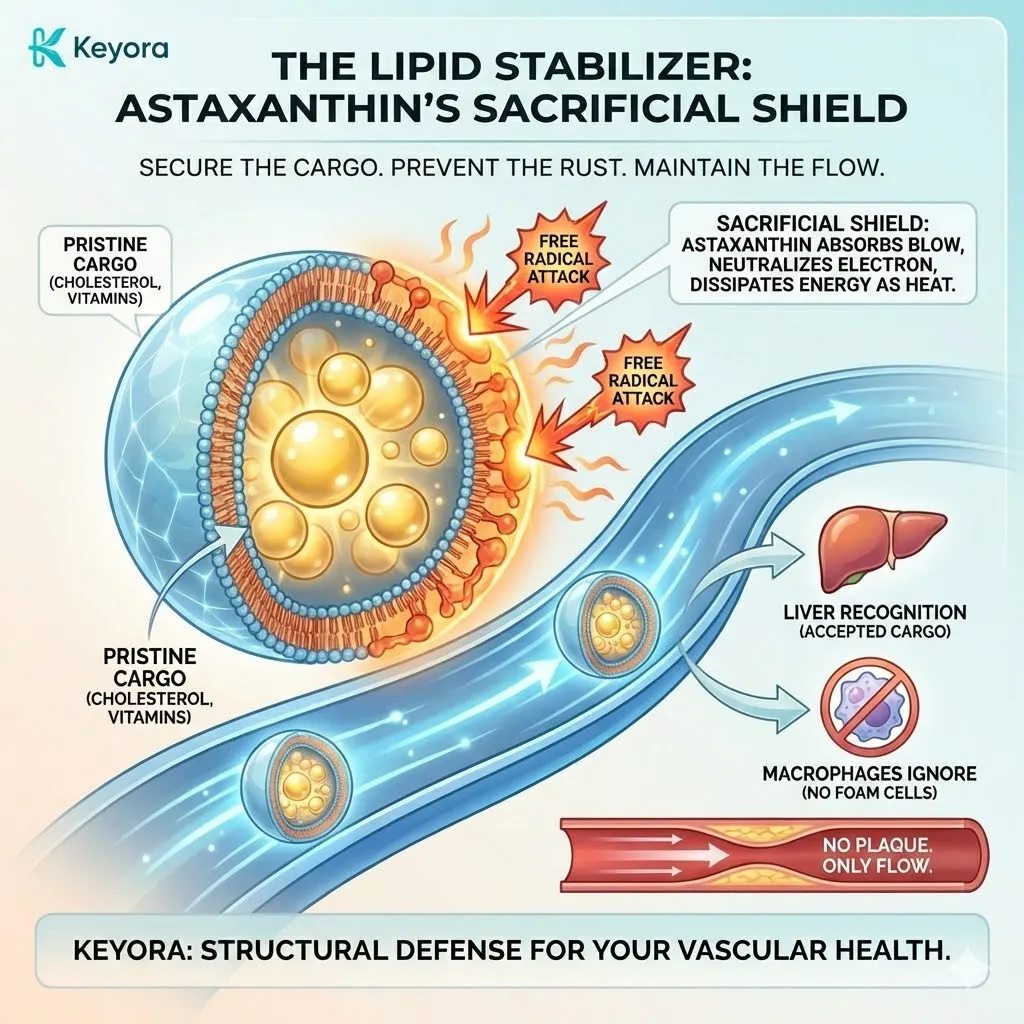
Keyora Research defines this mechanism as The Lipid Stabilizer.
Astaxanthin integrates directly into the membrane of the LDL particle. It sits there as a sacrificial shield. When a free radical attacks the truck, it hits the Astaxanthin first.
The Astaxanthin absorbs the blow, neutralizes the electron, and dissipates the energy as heat.
The LDL cargo remains pristine.
The liver recognizes it.
The macrophages ignore it.
There are no foam cells.
There is no plaque.
There is only flow.
2.3 Protecting the Inner Lining (The Endothelial Firewall)
We have cooled the inflammation.
We have armored the cargo.
Now we must look at the infrastructure itself:
The Blood Vessel Wall.
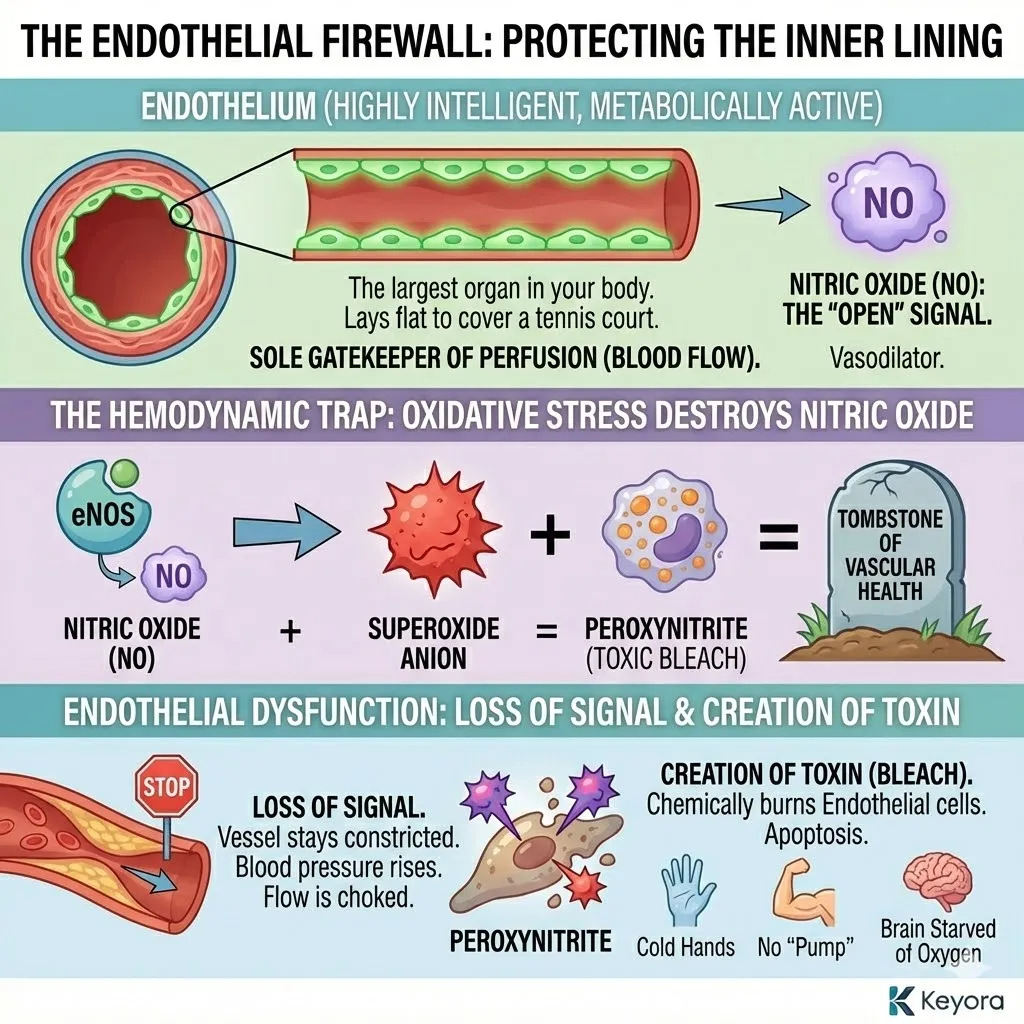
The artery is not a lifeless rubber tube. The inner lining of every blood vessel in your body is paved with a single layer of highly intelligent, metabolically active cells called the Endothelium.
This is the largest organ in your body. If you were to lay it flat, it would cover a tennis court. And it is the sole gatekeeper of Perfusion (blood flow).
The Endothelium controls the flow by producing a miraculous gas:
Nitric Oxide (NO).
Nitric Oxide is the “Open” signal. It is a vasodilator. When your Endothelium releases NO, the smooth muscles wrapping the artery relax. The vessel widens. Pressure drops. Volume increases. Oxygen floods into your brain and muscles.
But the machinery that produces this gas – an enzyme called Endothelial Nitric Oxide Synthase (eNOS) – is incredibly fragile. It operates on a knife-edge.
Here is the hemodynamic trap:
Oxidative Stress destroys Nitric Oxide.
When Superoxide Anions escape from your mitochondria (as detailed in Chapter 1) and enter the bloodstream, they react instantly with your Nitric Oxide. This reaction is catastrophic.
Nitric Oxide (NO) + Superoxide Anion = Peroxynitrite
This equation is the tombstone of vascular health.
-
Loss of Signal: You lose the NO molecule, so the vessel receives no signal to dilate. It stays constricted. Blood pressure rises. Flow is choked.
-
Creation of Toxin: You create Peroxynitrite, a highly toxic molecule that acts like bleach. It chemically burns the Endothelial cells, causing them to commit suicide (apoptosis).
This is Endothelial Dysfunction.
It is the reason your hands are cold.
It is the reason you cannot get a “pump” in the gym.
It is the reason your brain feels starved of oxygen.
Your signaling system has been hijacked by static.
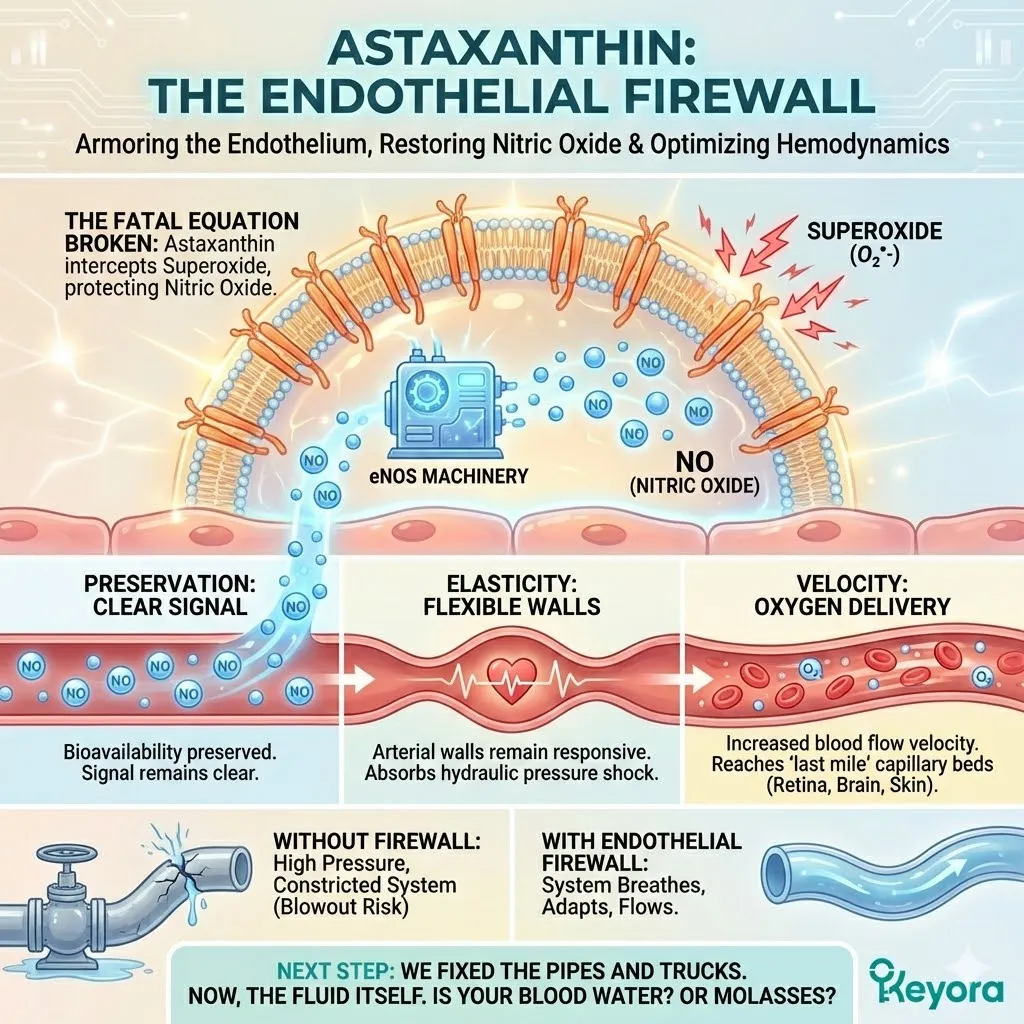
Astaxanthin acts as The Endothelial Firewall.
Because of its unique transmembrane structure – spanning the entire width of the cell wall – Astaxanthin armors the Endothelial cells from the inside out. It sits adjacent to the eNOS machinery.
When Superoxide is generated, Astaxanthin intercepts it before it can react with Nitric Oxide.
It breaks the fatal equation.
The Mechanism of Sovereignty:
-
Preservation: By scavenging the Superoxide, Astaxanthin preserves the bioavailability of Nitric Oxide. The signal remains clear.
-
Elasticity: With NO levels restored, the arterial walls remain flexible and responsive (compliant). They can expand and contract with every heartbeat, absorbing the shock of hydraulic pressure rather than stiffening against it.
-
Velocity: Clinical data indicates that Astaxanthin supplementation can significantly increase blood flow velocity.
This velocity is critical. It ensures that oxygen reaches the “last mile” – the microscopic capillary beds of your retina, your prefrontal cortex, and your skin.
Without this firewall, you are operating a high-pressure pump into a constricted system. That is a recipe for blowout.
With The Endothelial Firewall, the system breathes.
It adapts.
It flows.
But we have one final variable to engineer.
We have fixed the pipes (Endothelium) and the trucks (LDL).
Now we must look at the fluid itself.
Is your blood water?
Or is it molasses?
2.4 Why Oil Matters (The Rheology Optimizer)
We have extinguished the fire of inflammation.
We have armored the LDL cargo against rust.
We have secured the endothelial walls.
But we must address one final, critical variable in the equation of flow:
Viscosity.
Hard pipes are a problem. But thick fluid is a disaster.
In standard cardiology, the focus is almost exclusively on the “hardware” – the heart muscle and the arteries.
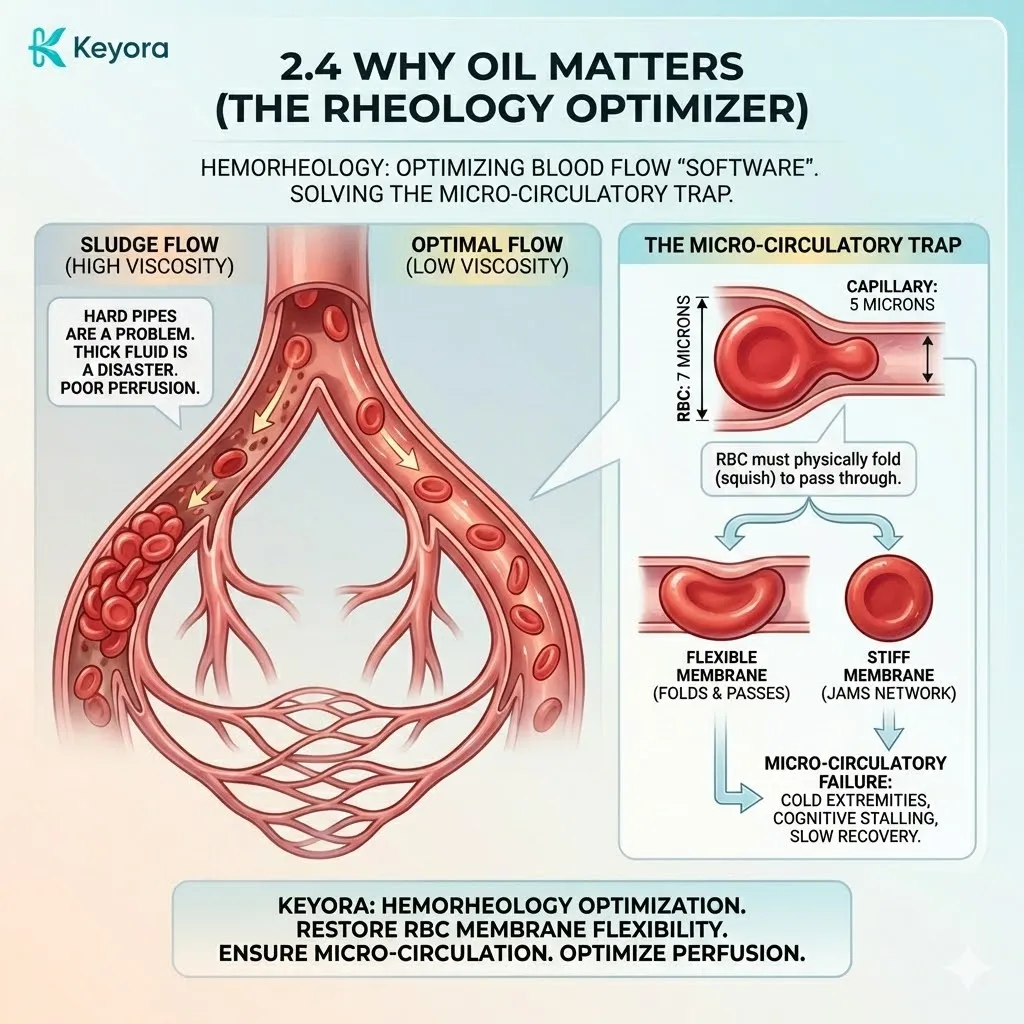
Keyora Research turns its attention to the “software” – the blood itself. We study Hemorheology: the physics of how blood flows, deforms, and behaves under pressure.
For the modern high-performer, this is often the missing link. You can have clean arteries and a strong heart, yet still suffer from poor perfusion.
Why?
Because your blood has turned into sludge.
The Micro-Circulatory Trap:
Your red blood cells (RBCs) are approximately 7 microns in diameter. Yet, the smallest capillaries in your brain and eyes are often only 5 microns wide. To deliver oxygen, the RBC must physically fold itself – it must squish – to squeeze through the capillary.
If the RBC membrane is stiff, it cannot fold. It jams the network. This is micro-circulatory failure. It is the reason for cold extremities, cognitive stalling, and the inability to recover quickly from exertion.
What determines the stiffness of your cells?
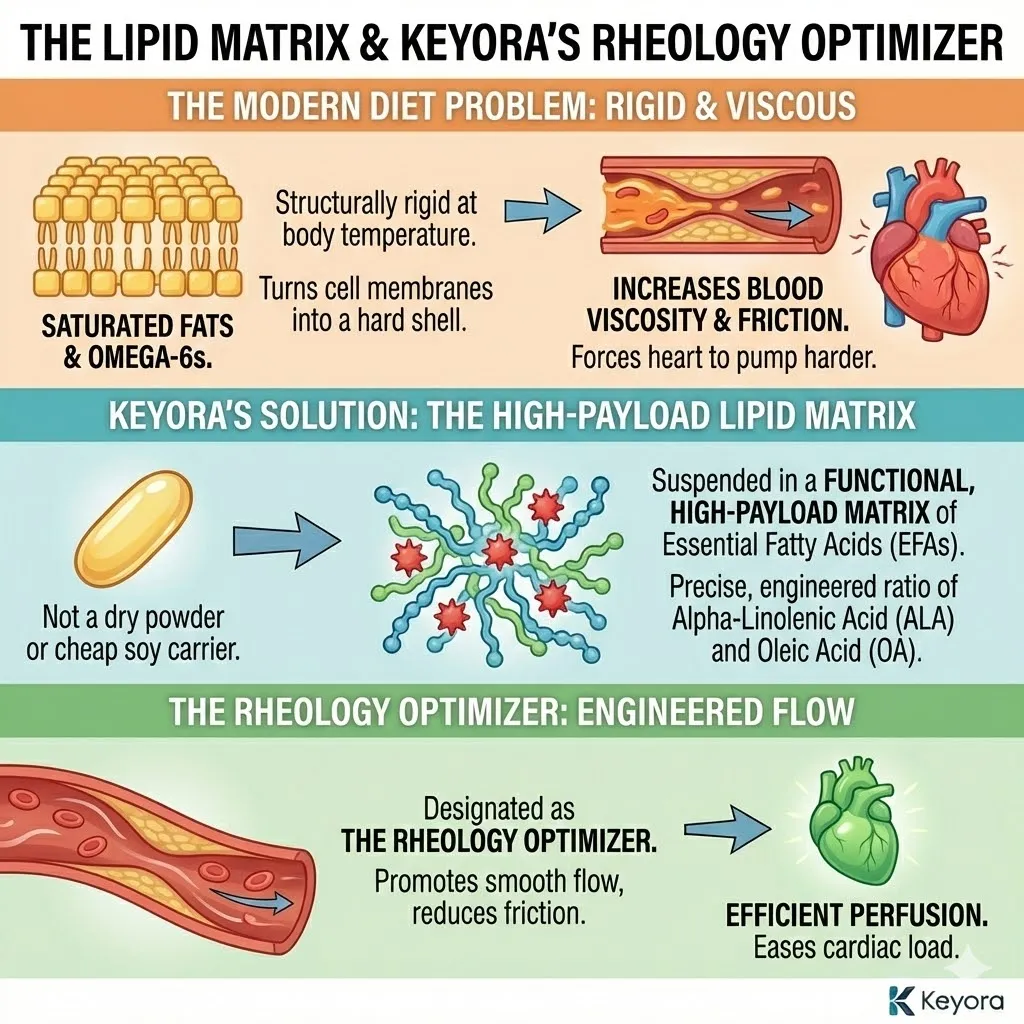
The Lipid Matrix.
The modern diet is flooded with saturated fats and Omega-6s, which are structurally rigid at body temperature. They turn your cell membranes into a hard shell.
This increases blood viscosity.
It increases friction.
It forces your heart to pump harder just to move the fluid.
This is why Keyora does not deliver Astaxanthin in a dry powder or a cheap soy carrier.
We suspend it in a functional, high-payload matrix of Essential Fatty Acids (EFAs).
We utilize a precise, engineered ratio of Alpha-Linolenic Acid (ALA) and Oleic Acid (OA).
Under the Keyora Standard, this lipid matrix is designated as The Rheology Optimizer.
The Mechanism of ALA (Omega-3): The Deformability Agent
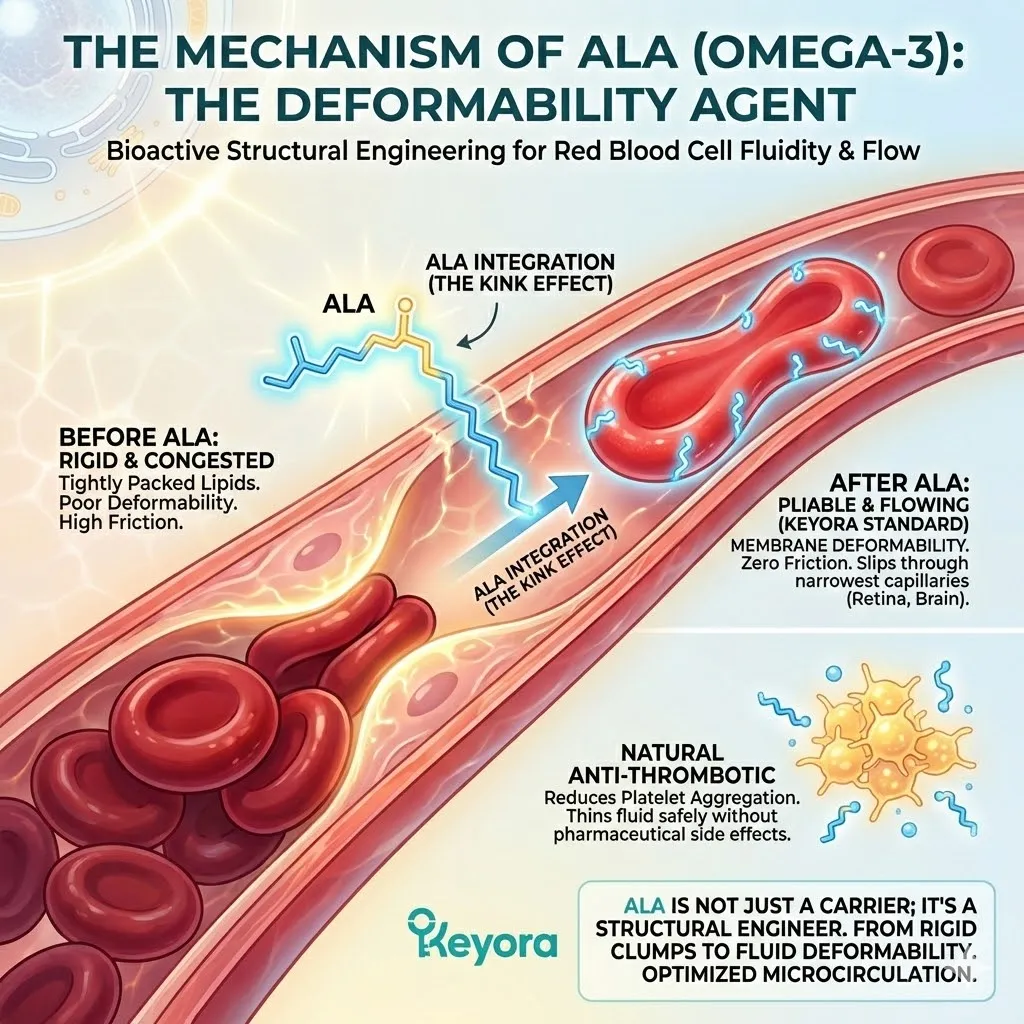
Alpha-Linolenic Acid is not just a passive carrier oil; it is a bioactive structural engineer. When ingested, ALA integrates into the phospholipid bilayer of your red blood cells.
Because of its multiple double bonds, it is highly fluid. It introduces “kinks” in the membrane structure that prevent the lipids from packing too tightly.
The result is Membrane Deformability.
The RBC becomes soft and pliable. It can slip through the narrowest capillaries of the retina and the prefrontal cortex with zero friction.
Furthermore, ALA acts as a mild, natural anti-thrombotic. It reduces platelet aggregation – the tendency of blood cells to clump together into clots. It thins the fluid without the dangerous side effects of pharmaceutical blood thinners.
The Mechanism of OA (Omega-9): The Fluidity Stabilizer
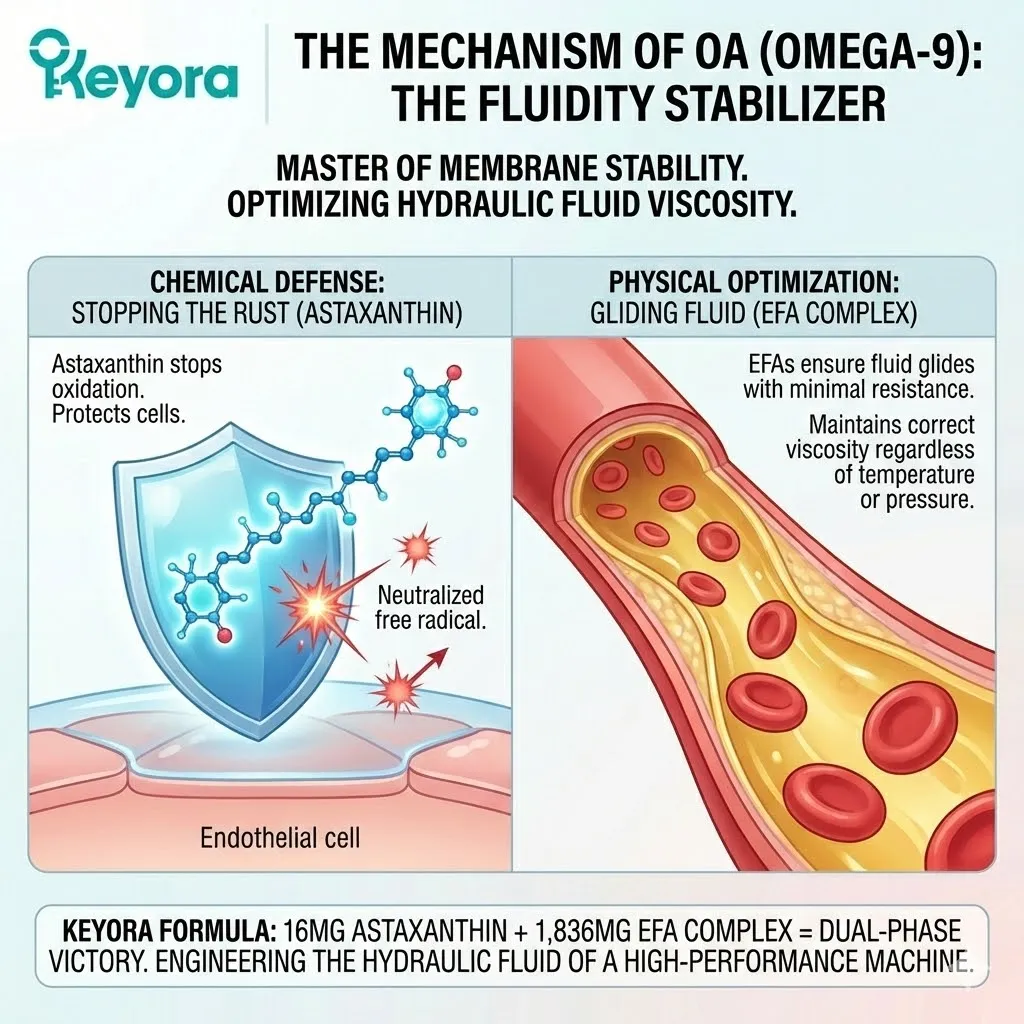
Oleic Acid is the master of membrane stability.
It protects the endothelial cells from shear stress.
It ensures that the “hydraulic fluid” of your blood maintains the correct viscosity regardless of temperature or pressure.
By combining 16mg of Astaxanthin with 1,836mg of this EFA Complex, Keyora achieves a dual-phase victory:
-
Chemical Defense: Astaxanthin stops the oxidation (rust).
-
Physical Optimization: The EFAs ensure the fluid itself glides with minimal resistance.
We are not just supplementing nutrients.
We are engineering the hydraulic fluid of a high-performance machine.
2.5 Flow is Life
The cardiovascular system is not a mystery to be feared. It is a logistics network subject to the laws of physics.
It can be managed.
It can be optimized.
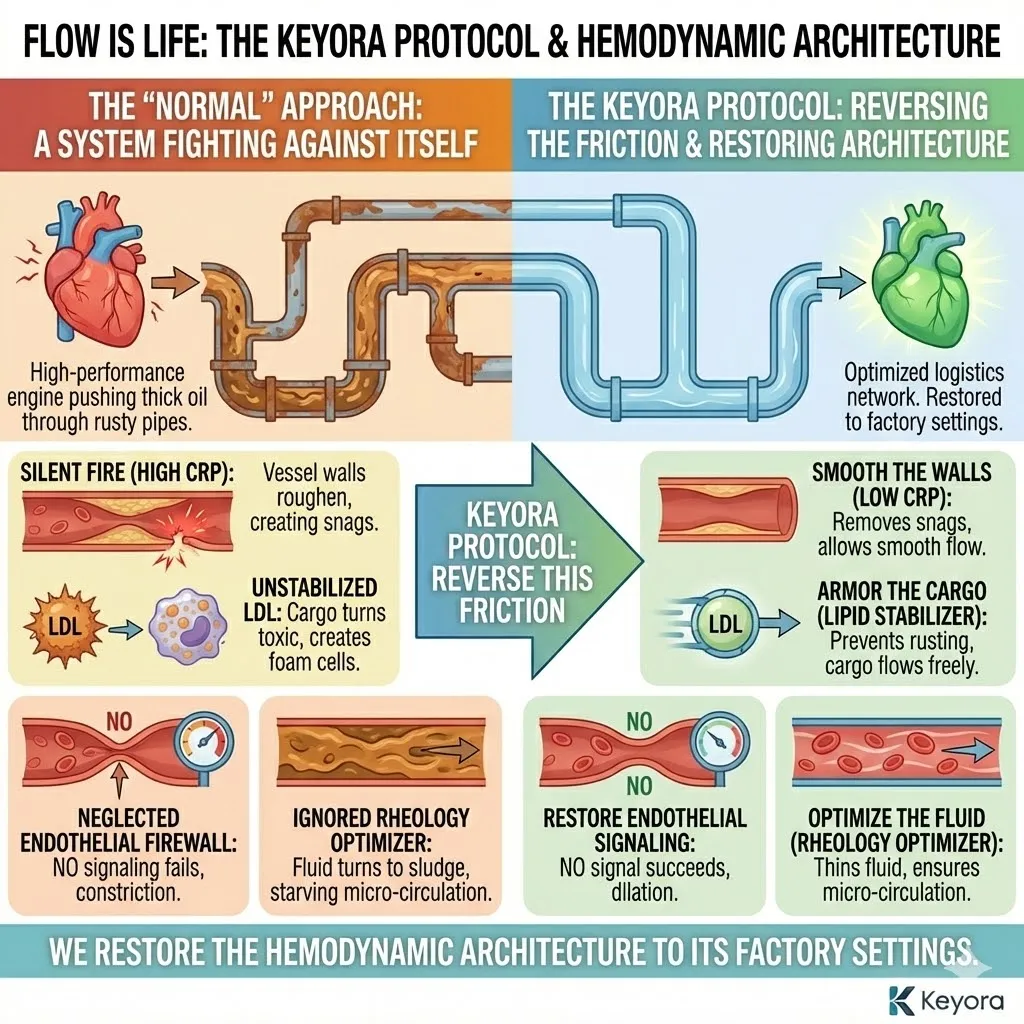
If you allow The Silent Fire of inflammation to burn unchecked (high CRP), the vessel walls will roughen, creating the snag for plaque.
If you allow LDL to rust without The Lipid Stabilizer, the cargo will turn toxic and create foam cells.
If you neglect The Endothelial Firewall, the signaling for blood flow (Nitric Oxide) will fail, leading to constriction and hypertension.
If you ignore The Rheology Optimizer, the fluid itself will turn to sludge, starving your micro-circulation.
The result of the “normal” approach is a system fighting against itself – a high-performance engine trying to push thick oil through rusty pipes.
By implementing the Keyora Protocol, we reverse this friction.
-
We smooth the walls.
-
We armor the cargo.
-
We optimize the fluid.
We restore the Hemodynamic Architecture to its factory settings.
When flow is restored, oxygen delivery becomes effortless.
The cold hands warm up.
The heavy legs lighten.
The brain fog lifts, not because of a stimulant, but because the fuel is finally reaching the engine.
But now that we have secured the supply lines, we must turn our attention to the destination.
Where is all this oxygen going?
It is heading to the most energy-hungry, lipid-dense, and fragile structure in the known universe.
It is heading to the organ that defines your reality, your ambition, and your self.
It is time to enter the brain.
Next Episode: THE NEURO-COGNITIVE SHIELD.
References
Spiller, G. A., Dewell, A., Chaves, S., & Rakidzich, Z. (2006). Effect of daily use of natural astaxanthin on C-reactive protein. Health Research and Studies Center, Los Altos, CA.
Iwamoto, T., Hosoda, K., Hirano, R., Kurata, H., Matsumoto, A., Miki, W., Kamiyama, M., Itakura, H., Yamamoto, S., & Kondo, K. (2000). Inhibition of low-density lipoprotein oxidation by astaxanthin. Journal of Atherosclerosis and Thrombosis, 7(4), 216-222.
Fassett, R. G., & Coombes, J. S. (2011). Astaxanthin: A potential therapeutic agent in cardiovascular disease. Marine Drugs, 9(3), 447-465.
Yoshida, H., Yanai, H., Ito, K., Tomono, Y., Koikeda, T., Tsukahara, H., & Tada, N. (2010). Administration of natural astaxanthin increases serum HDL-cholesterol and adiponectin in subjects with mild hyperlipidemia. Atherosclerosis, 209(2), 520-523.
Karppi, J., Rissanen, T. H., Nyyssönen, K., Kaikkonen, J., Olsson, A. G., Voutilainen, S., & Salonen, J. T. (2007). Effects of astaxanthin supplementation on lipid peroxidation. International Journal for Vitamin and Nutrition Research, 77(1), 3-11.
Jin, X., & Keyora Research. (2025). Astaxanthin – Multi-System Antioxidant Targeting Ocular Microcirculation and AMD, Cardiovascular and Cerebrovascular Protection, Reproductive Health, Skin Photo-protection, and Clinically Supported Immunomodulation. Zenodo. https://doi.org/10.5281/zenodo.16893579
Jin, X., & Keyora Research. (2025). Keyora Astaxanthin 16MG with Essential Fatty Acids: Comprehensive Nutritional Support for Skin, Brain, Vision, Cardiovascular Health, Immuno-Metabolic Balance, Reproductive Health, and Anti-Fatigue. Zenodo. https://doi.org/10.5281/zenodo.16908847
Keyora Research. (2025). Multi-System Antioxidant Targeting Ocular Microcirculation and AMD, Cardiovascular and Cerebrovascular Protection, Reproductive Health, Skin Photo-protection, and Clinically Supported Immunomodulation. OSF Preprints. DOI: 10.17605/OSF.IO/MWPNC
Miyawaki, H., Takahashi, J., Tsukahara, H., & Takehara, I. (2008). Effects of astaxanthin on human blood rheology. Journal of Clinical Biochemistry and Nutrition, 43(2), 69-74.
Pashkow, F. J., Watumull, D. G., & Campbell, C. L. (2008). Astaxanthin: A novel potential treatment for oxidative stress and inflammation in cardiovascular disease. The American Journal of Cardiology, 101(10A), 58D-68D.
Hussein, G., Nakamura, M., Zhao, Q., Iguchi, T., Goto, H., Sankawa, U., & Watanabe, H. (2005). Antihypertensive and neuroprotective effects of astaxanthin in experimental animals. Biological and Pharmaceutical Bulletin, 28(1), 47-52.
Preuss, H. G., Echard, B., Yamashita, E., & Perricone, N. V. (2011). High dose astaxanthin lowers blood pressure and increases insulin sensitivity in rats: Are these effects interdependent? International Journal of Medical Sciences, 8(2), 126-138.
Monroy-Ruiz, J., Sevilla, M. A., Carrón, R., & Montero, M. J. (2011). Astaxanthin-enriched-diet reduces blood pressure and improves cardiovascular parameters in spontaneously hypertensive rats. Pharmacological Research, 63(1), 44-50.
Zhao, G., Etherton, T. D., Martin, K. R., West, S. G., Gillies, P. J., & Kris-Etherton, P. M. (2004). Dietary alpha-linolenic acid reduces inflammatory and lipid cardiovascular risk factors in hypercholesterolemic men and women. The Journal of Nutrition, 134(11), 2991-2997.
Pan, A., Chen, M., Chowdhury, R., Wu, J. H., Sun, Q., Campos, H., Mozaffarian, D., & Hu, F. B. (2012). Alpha-linolenic acid and risk of cardiovascular disease: a systematic review and meta-analysis. The American Journal of Clinical Nutrition, 96(6), 1262-1273.
Massaro, M., Scoditti, E., Carluccio, M. A., & De Caterina, R. (2010). Basic mechanisms of lipid-lowering drugs on endothelial function: an update. Nutrition, Metabolism and Cardiovascular Diseases, 20(9), 681-694.
Capelli, B., & Cysewski, G. R. (2013). Natural Astaxanthin: The World’s Best Kept Health Secret. Cyanotech Corporation.
Kidd, P. (2011). Astaxanthin, cell membrane nutrient with diverse clinical benefits and anti-aging potential. Alternative Medicine Review, 16(4), 355-364.
Ambati, R. R., Phang, S. M., Ravi, S., & Aswathanarayana, R. G. (2014). Astaxanthin: Sources, extraction, stability, biological activities and its commercial applications—A review. Marine Drugs, 12(1), 128-152.
Ricci, H., Cordeiro, G. G., & Mesquita, S. S. (2020). Omega-3 fatty acids and depression: A systematic review. Archives of Clinical Psychiatry, 47(5), 148-154.
Cicero, A. F. G., & Colletti, A. (2017). Nutraceuticals and blood pressure control: results from clinical trials and meta-analyses. High Blood Pressure & Cardiovascular Prevention, 24(1), 1-13.
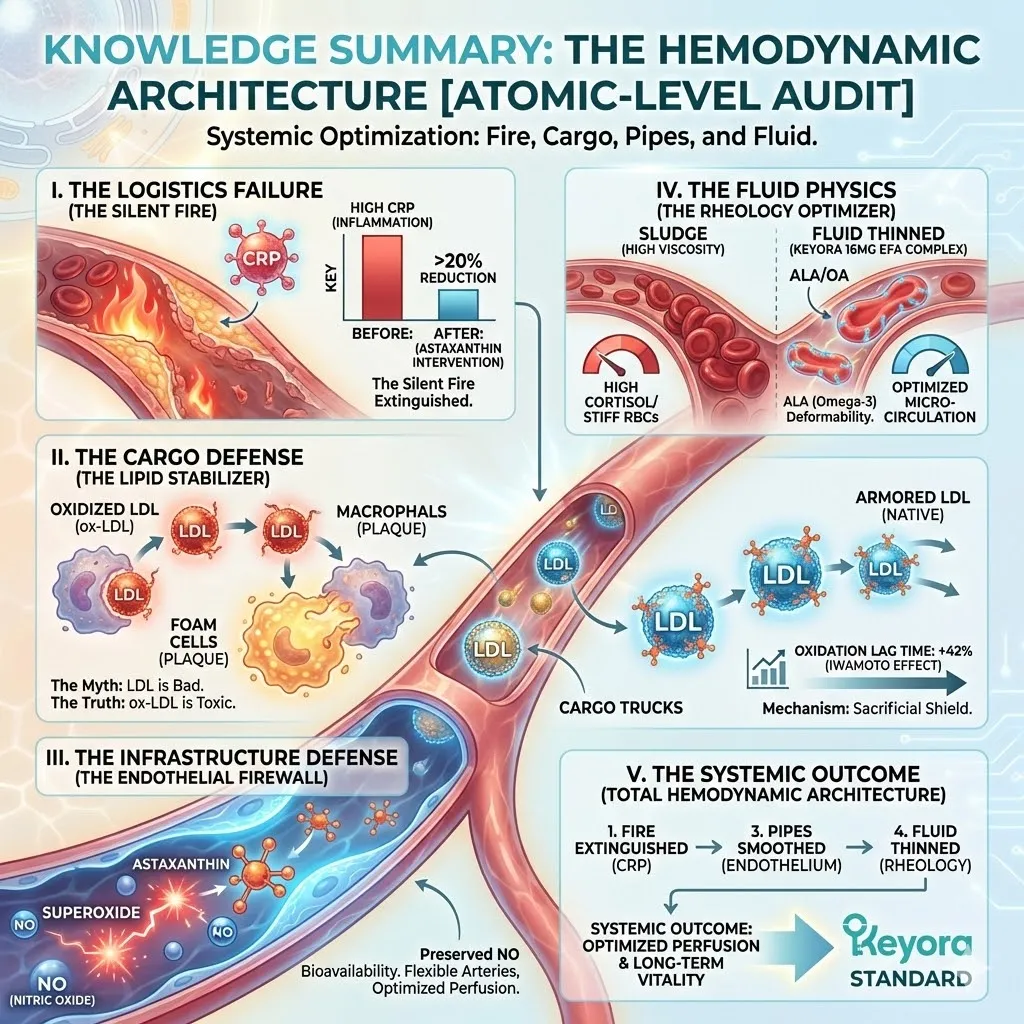
# KNOWLEDGE SUMMARY: THE HEMODYNAMIC ARCHITECTURE [ATOMIC-LEVEL AUDIT]
## I. THE LOGISTICS FAILURE [THE SILENT FIRE]
* **The Concept:** Cardiovascular health is **Fluid Dynamics**. Flow requires smooth pipes and low-viscosity fluid.
* **The Enemy:** Not Cholesterol, but **Inflammation** (CRP).
* *Mechanism:* Inflammation roughens the endothelial lining, creating the “snag” for plaque.
* **The Evidence (Spiller et al., 2006):**
* *Intervention:* 12mg Natural Astaxanthin.
* *Result:* **>20% reduction in CRP** without drugs.
* **The Keyora Definition:** **[The Silent Fire]** is the systemic, low-grade burn that precedes atherosclerosis.
## II. THE CARGO DEFENSE [THE LIPID STABILIZER]
* **The Myth:** “LDL is bad.”
* **The Truth:** “Oxidized LDL (ox-LDL) is toxic.” Native LDL is a necessary nutrient transport.
* **The Pathology:** ROS attacks LDL $rightarrow$ Lipid Peroxidation $rightarrow$ ox-LDL $rightarrow$ Macrophage consumption $rightarrow$ **Foam Cells** (Plaque).
* **The Iwamoto Effect (Iwamoto et al., 2000):**
* *Metric:* **Oxidation Lag Time** (Resistance to rancidity).
* *Data:* 14.4mg Astaxanthin increased lag time by **42%**.
* **The Mechanism:** Astaxanthin integrates into the LDL membrane, acting as a sacrificial shield. It armors the truck so the cargo arrives safely.
## III. THE INFRASTRUCTURE DEFENSE [THE ENDOTHELIAL FIREWALL]
* **The Target:** **Endothelium** (Inner vessel lining).
* **The Function:** Produces **Nitric Oxide (NO)** to signal vasodilation (Flow).
* **The Threat:** Superoxide ($O_2^{bullet-}$) + Nitric Oxide (NO) $rightarrow$ **Peroxynitrite ($ONOO^-$)**. This destroys the vessel wall and kills flow.
* **The Solution:** Astaxanthin scavenges Superoxide *before* it reacts with NO.
* **The Result:** Preserved NO bioavailability $rightarrow$ Flexible arteries $rightarrow$ Optimized perfusion to brain/extremities.
## IV. THE FLUID PHYSICS [THE RHEOLOGY OPTIMIZER]
* **The Variable:** **Blood Viscosity** (Thickness).
* **The Problem:** Stiff RBC membranes + High Cortisol = Sludge.
* **The Solution Matrix:** **Keyora 16MG EFA Complex** (1,836mg).
* **ALA (Omega-3):** Increases RBC deformability (squishiness) for micro-circulation; mild anti-thrombotic effect.
* **OA (Omega-9):** Stabilizes membrane fluidity.
* **The Engineering:** We treat the blood as a hydraulic fluid that must be optimized for shear stress and flow velocity.
## V. THE SYSTEMIC OUTCOME
* **Total Hemodynamic Architecture:**
1. **Fire Extinguished** (CRP reduction).
2. **Cargo Armored** (LDL protection).
3. **Pipes Smoothed** (Endothelial support).
4. **Fluid Thinned** (Rheology optimization).
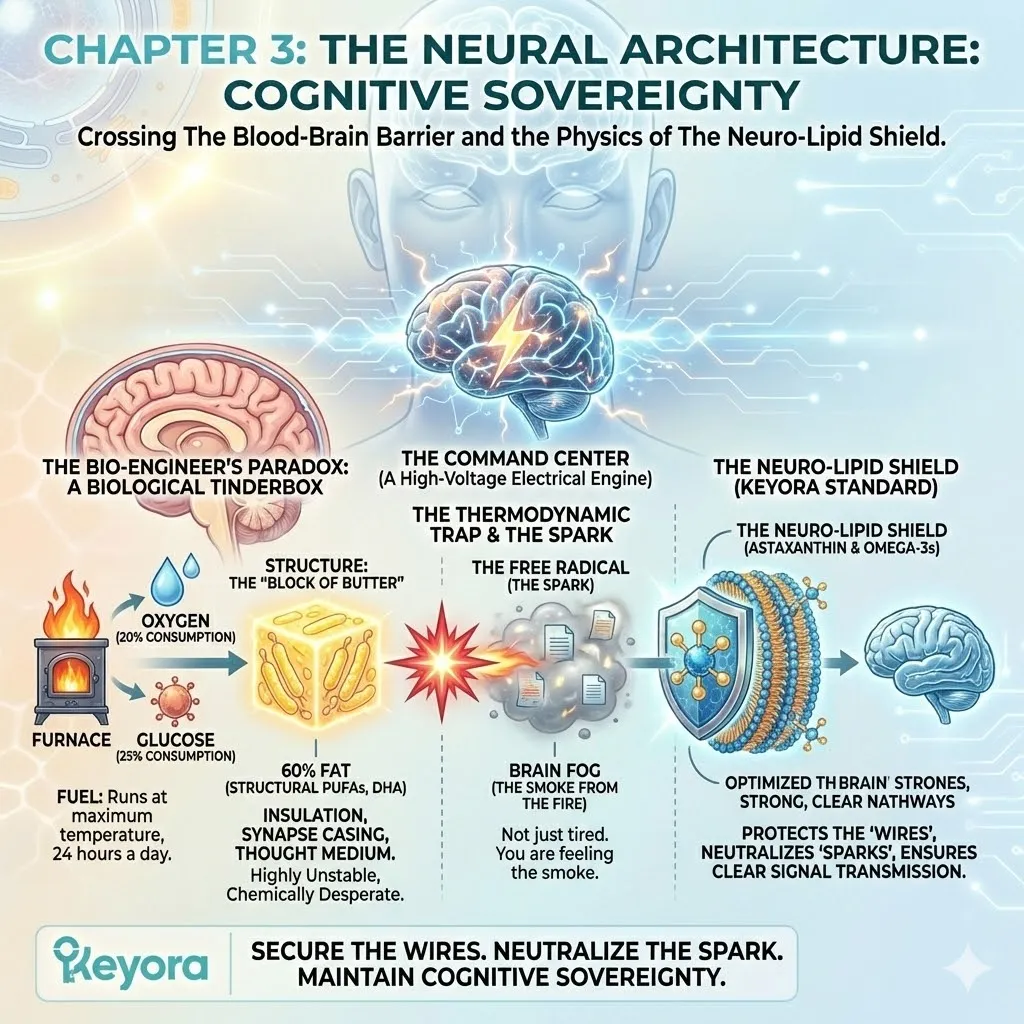
Chapter 3: THE NEURAL ARCHITECTURE: COGNITIVE SOVEREIGNTY
Crossing The Blood-Brain Barrier and the Physics of The Neuro-Lipid Shield
We have secured the energy source in the mitochondria. We have armored the supply lines of the cardiovascular system. Now, we must ascend to the final, most critical, and most fragile theater of operations:
The Command Center.
To understand the crisis of modern brain health, you must first strip away the romance of consciousness and look at the brain as a bio-engineer would look at a machine.
The human brain is the most complex structure in the known universe, but from a materials science perspective, it is a terrifying paradox. It is a high-voltage electrical engine built almost entirely out of flammable fuel.
If you were to dehydrate the brain, removing the water, what remains is approximately 60% fat.
This is not the inert storage fat (adipose tissue) that sits on your waistline.
This is structural fat. It is composed of Polyunsaturated Fatty Acids (PUFAs), specifically Omega-3s like DHA.
These lipids are the insulation on the wires; they are the casing of the synapses; they are the physical medium through which every thought, memory, and ambition travels.
This architecture creates a deadly vulnerability.
In chemistry, polyunsaturated fats are highly unstable. They have multiple double bonds in their carbon chains, which makes them fluid and flexible – essential for a dynamic brain – but it also leaves them with “loose” electrons. They are chemically desperate to react with oxygen.
Here lies the thermodynamic trap:
-
The Fuel: Your brain comprises only 2% of your body weight, yet it consumes 20% of your total oxygen and 25% of your total glucose. It is a furnace running at maximum temperature, 24 hours a day.
-
The Structure: The furnace walls are made of fat.
You are essentially running a high-voltage electrical current through a block of butter, while pumping pure oxygen onto it. It is a biological tinderbox waiting for a single spark.
That spark is the Free Radical.
When you feel “Brain Fog,” you are not just tired. You are feeling the smoke from that fire.
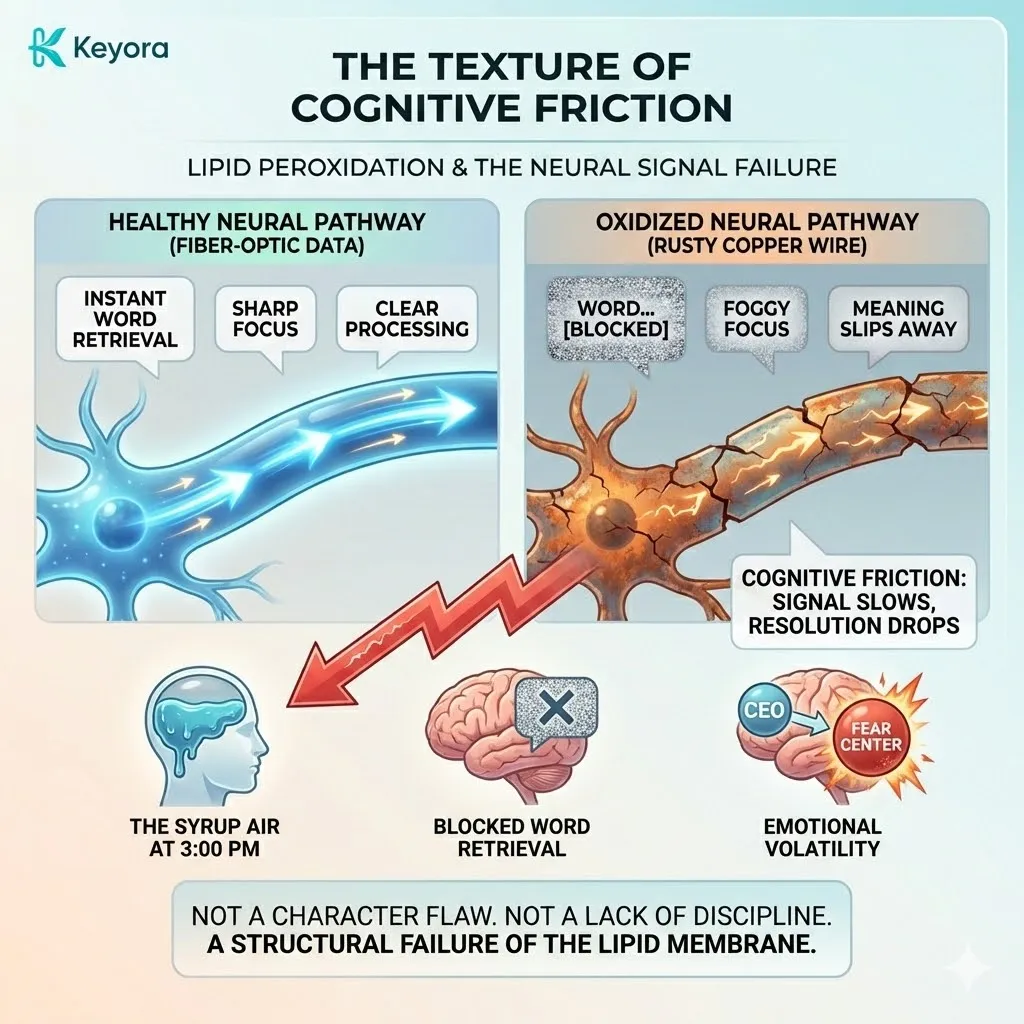
The Texture of Cognitive Friction
We need to be precise about what this feels like. The medical term is “Mild Cognitive Impairment,” but that is too clinical. It does not capture the visceral reality of the high-performer losing their edge.
It is Cognitive Friction.
It is the specific texture of resistance in your mind at 3:00 PM.
It feels like the air in your head has turned to syrup.
It is the word that is on the tip of your tongue – a word you know as well as your own name – but the neural pathway to retrieve it is blocked by static.
It is the paragraph in a contract that you have to read three times because the meaning keeps slipping away like sand through your fingers.
It is the emotional volatility – the sudden, snapping irritability – that comes when your prefrontal cortex (the CEO of the brain) loses the metabolic energy required to inhibit your amygdala (the fear center).
This is not a character flaw.
It is not a lack of discipline.
It is a structural failure of the lipid membrane.
When the fatty acids in your neuronal membranes oxidize, they do not just degrade; they go rancid. This process is called Lipid Peroxidation. The fluid, flexible membrane turns into a rigid, cross-linked scar. The ion channels, which need to snap open and closed in milliseconds to transmit thoughts, get stuck.
The signal slows down.
The resolution drops.
You are trying to run high-speed fiber-optic data through a rusty copper wire.
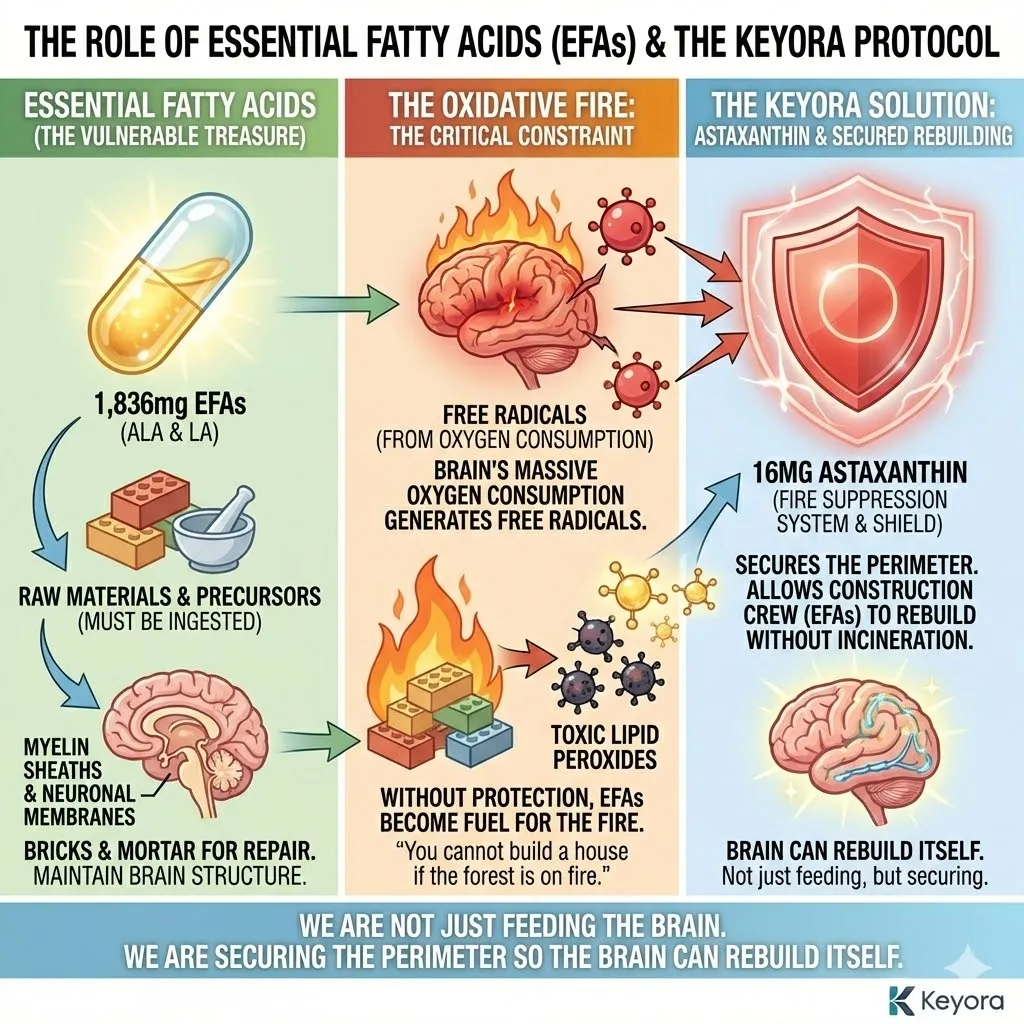
The Role of the Essential Fatty Acids (The Vulnerable Treasure)
This is why the Keyora Protocol includes a massive, precise load of 1,836mg of Essential Fatty Acids (EFAs), specifically Alpha-Linolenic Acid (ALA) and Linoleic Acid (LA).
These are the precursors.
They are the raw materials. Your body cannot manufacture them; you must ingest them.
They are the bricks and mortar required to repair the myelin sheaths and rebuild the neuronal membranes.
Without them, you cannot maintain the structure of the brain.
But here is the critical engineering constraint that most supplement companies ignore:
You cannot build a house out of high-quality wood if the forest is on fire.
If you flood the system with EFAs without adequate protection, you are merely providing more fuel for the oxidative fire. The free radicals generated by the brain’s massive oxygen consumption will attack the new lipids before they can be integrated into the neural structure. They will turn your expensive Omega-3s into toxic lipid peroxides before they ever reach the neuron.
This is why the Keyora 16MG Astaxanthin is not optional.
It is the fire suppression system.
It is the shield that allows the construction crew (EFAs) to do their work without being incinerated.
We are not just feeding the brain.
We are securing the perimeter so that the brain can rebuild itself.
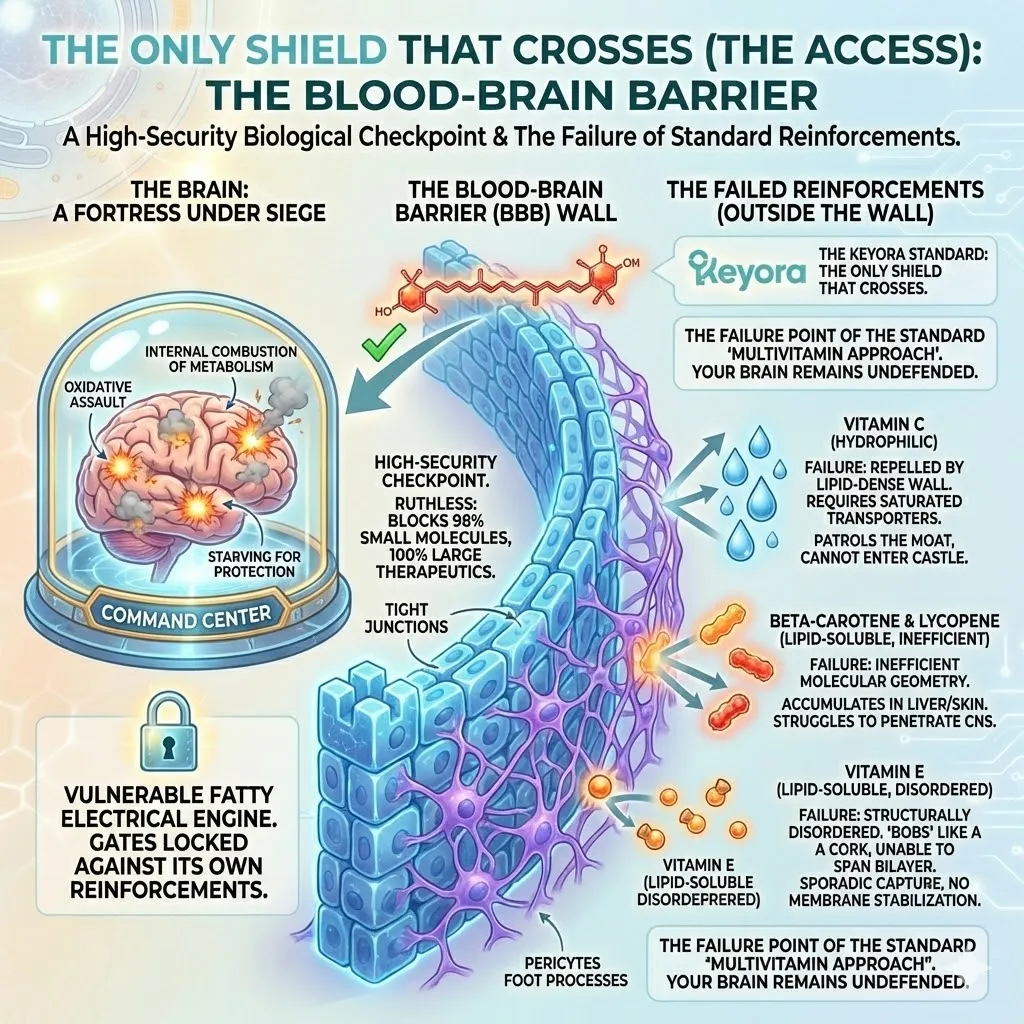
3.1 The Only Shield That Crosses (The Access)
The brain knows it is vulnerable. Evolution has designed a formidable defense system to protect this fatty electrical engine from the chaos of the bloodstream.
It is called the Blood-Brain Barrier (BBB).
The BBB is not just a wall; it is a high-security biological checkpoint.
It is composed of endothelial cells stitched together by “tight junctions” so dense that not even water can pass freely.
It is wrapped in a mesh of pericytes and astrocyte foot processes.
Its job is to block pathogens, toxins, heavy metals, and large molecules from entering the neural tissue.
It is ruthless. It blocks 98% of small-molecule drugs and 100% of large-molecule therapeutics.
But this security comes at a high cost:
It blocks most antioxidants.
This is the failure point of the standard “multivitamin approach” to brain health. You can drink gallons of green tea and swallow handfuls of Vitamin C, but your brain will remain starving for protection.
-
The Failure of Vitamin C: Vitamin C is hydrophilic (water-soluble). When it hits the lipid-dense wall of the Blood-Brain Barrier, it is repelled. It cannot cross by diffusion. It requires specific transporters (SVCT2), which are easily saturated and downregulated during inflammation. It patrols the moat, but it cannot enter the castle.
-
The Failure of Beta-Carotene & Lycopene: These are lipid-soluble, but their molecular geometry is inefficient for BBB transport. They accumulate in the liver and the skin, but they struggle to penetrate the central nervous system in clinically relevant quantities.
-
The Failure of Vitamin E: Vitamin E can cross, but as we established in Chapter 0, it is structurally disordered. It “bobs” in the membrane like a cork, unable to span the bilayer. It captures free radicals sporadically, but it cannot stabilize the membrane against the intense oxidative assault of a high-functioning brain.
The brain is left largely undefended against the internal combustion of its own metabolism. It is a fortress under siege, with the gates locked against its own reinforcements.
Enter the VIP: Natural Astaxanthin.
Astaxanthin possesses a unique molecular “passport.” Because of its precise lipophilic (fat-loving) properties and its keto-carotenoid structure (polar ionone rings at both ends), it has the rare ability to cross the Blood-Brain Barrier efficiently and in significant quantities.
It doesn’t just “leak” through; it penetrates. It hijacks the very transport mechanisms designed to move lipids into the brain.
Once it crosses the barrier, Astaxanthin does not float aimlessly in the cerebral spinal fluid.
It hunts for membranes.
It targets the lipid-rich environments of the neurons – the axons, the dendrites, the synapses.
It inserts itself directly into the machinery of thought.
Under the Keyora Standard, we define this mechanism as The Neural Penetrator.
The Tso Patent: The Proof of Access
This capability is not theoretical. It is a matter of settled science.
In 1996, Dr. Mark Tso of the University of Illinois (formerly of the Wilmer Eye Institute at Johns Hopkins) made a discovery so profound that he was granted a United States Patent (No. 5,527,533). The patent was not for a drug, but for a method: “Method of Retarding and Ameliorating Central Nervous System and Eye Damage.”
Dr. Tso’s research proved what was previously thought impossible: Astaxanthin crosses the BBB and accumulates in the brain tissue of mammals.
He demonstrated that unlike other carotenoids, Astaxanthin could be found in the brain tissue hours after ingestion, and once there, it exerted a powerful neuroprotective effect. It reduced cerebral edema (swelling), protected against ischemia (lack of oxygen), and preserved neuronal function.
This discovery changed the landscape of neuro-biology. It meant that we finally had a molecule capable of delivering high-potency antioxidant protection directly to the site of the fire.
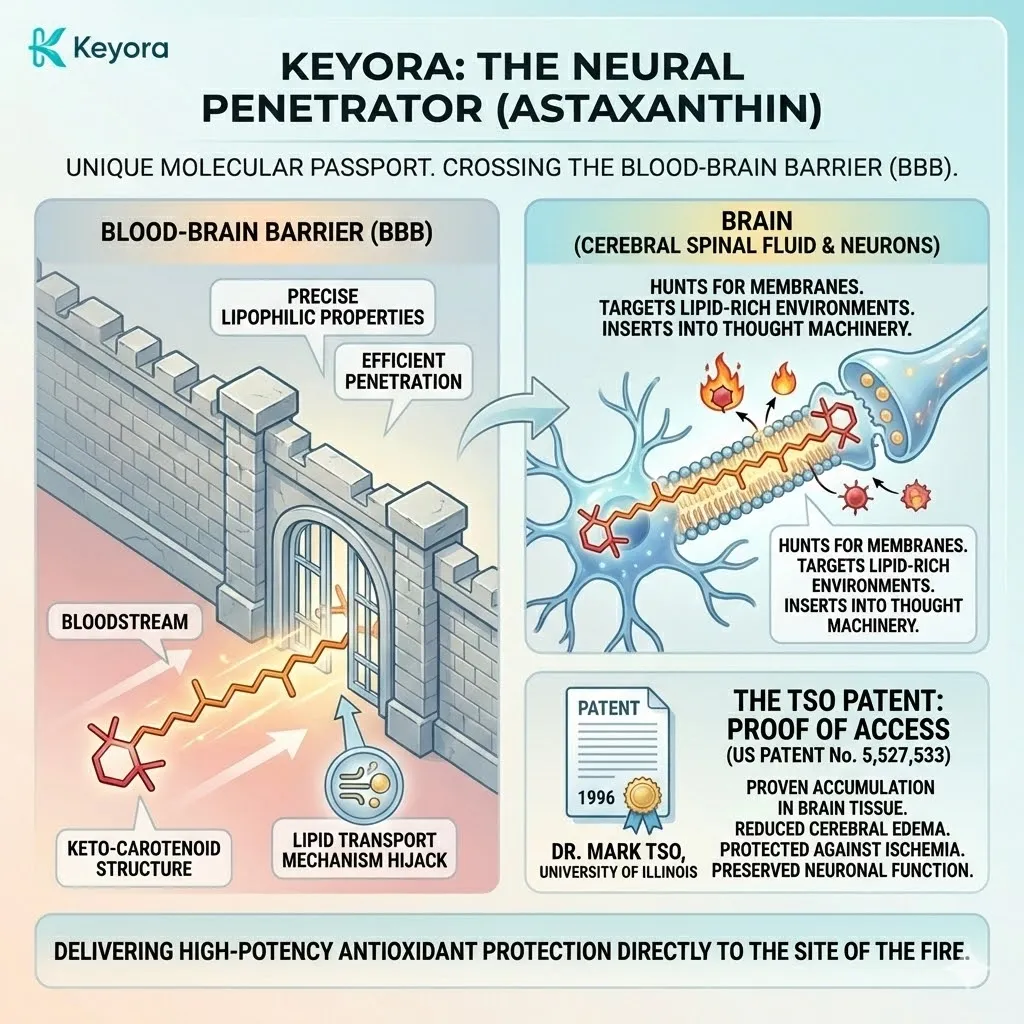
The Strategic Implication
When you take Astaxanthin, you are deploying a specialized agent behind enemy lines.
This is not a passive nutrient; it is an active infiltration unit.
-
Infiltration: It navigates the bloodstream and crosses the Blood-Brain Barrier, bypassing the checkpoints that stop lesser molecules.
-
Integration: It embeds itself into the lipid bilayers of your neurons, aligning vertically to span the membrane.
-
Protection: It stands guard over the Essential Fatty Acids (ALA/LA), ensuring that the raw materials for brain repair are not oxidized before they can be used.
This is the “Bio-Architect” strategy in action. We supply the raw materials (EFAs) to build the brain, but we simultaneously deploy The Neural Penetrator to ensure those materials survive the journey and remain stable once installed.
We are not just throwing nutrients at the brain.
We are executing a coordinated logistical operation to secure Cognitive Sovereignty.
But what happens once Astaxanthin is inside?
How does it physically stop the “rusting” of your thoughts?
To understand this, we must zoom in further.
We must look at the membrane of a single neuron, where the speed of your intelligence is determined.
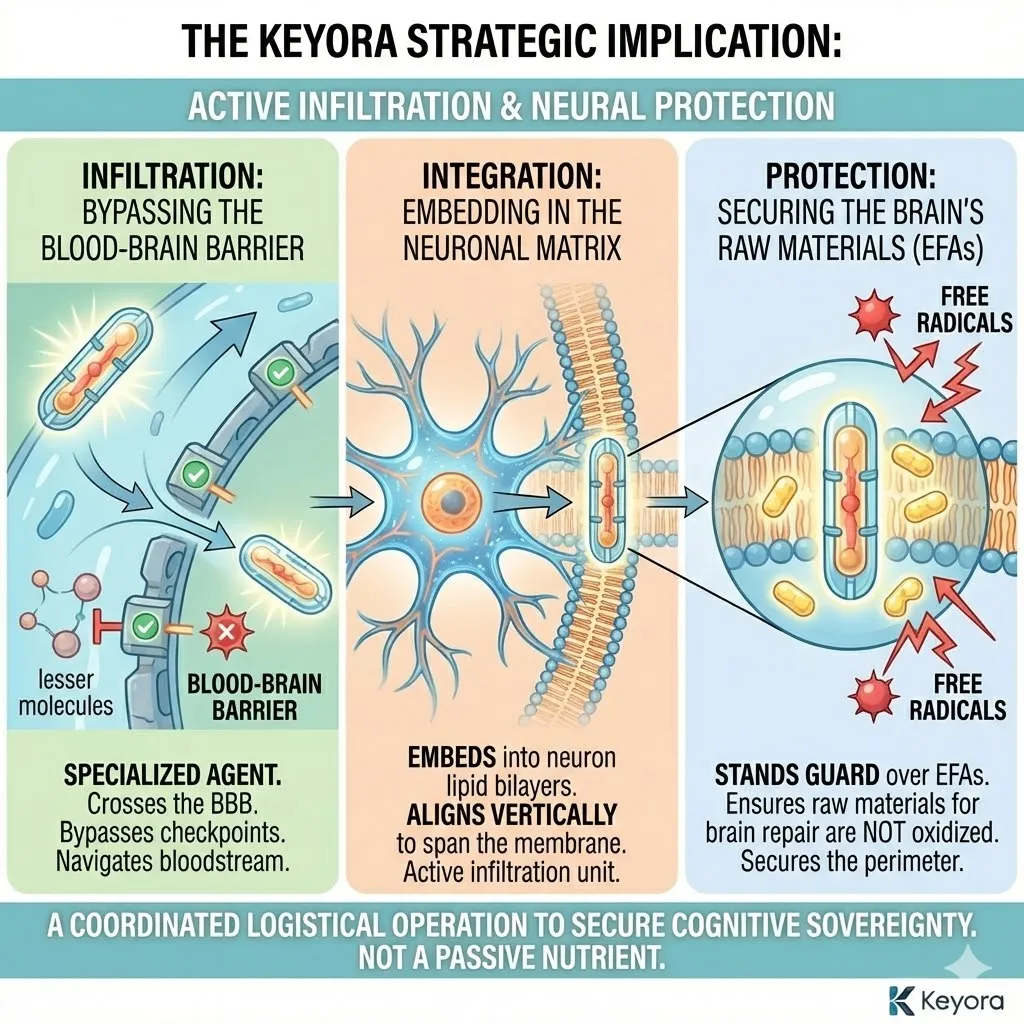
3.2 Halting the Chain Reaction (The Shield)
We have infiltrated the Command Center. Astaxanthin has successfully crossed the Blood-Brain Barrier and is now positioned within the neural tissue. But the real work begins at the atomic level.
We must confront the specific mechanism that destroys cognitive speed:
Lipid Peroxidation.
Imagine a row of dominoes. Each domino represents a Polyunsaturated Fatty Acid (PUFA) in your neuronal membrane – specifically, the Omega-3 (DHA) chains that make up the “tail” of the phospholipid. These tails are what keep the membrane fluid and flexible.
A free radical – let’s say a Hydroxyl Radical (⋅OH) generated by your mitochondria during a stressful meeting – strikes the first domino. It steals an electron from the carbon chain.
This theft turns the fatty acid itself into a radical (a lipid radical). It becomes unstable. In a desperate attempt to stabilize itself, it steals an electron from its neighbor.
-
Domino 1 falls.
-
Domino 2 becomes unstable and steals from Domino 3.
-
Domino 3 steals from Domino 4.
This is a Chain Reaction.
It is a self-propagating wave of destruction that rips through the cell membrane at incredible speed. A single free radical hit can initiate a cascade that destroys hundreds of fatty acid molecules in a fraction of a second.
The result is biological devastation. The fluid, oily membrane turns into a rigid, cross-linked polymer. It’s like turning olive oil into plastic. The membrane loses its permeability. It loses its ability to conduct electrical signals.
The neuron goes silent.
This is the physical reality of “losing your edge.” It is the hardening of the hardware.
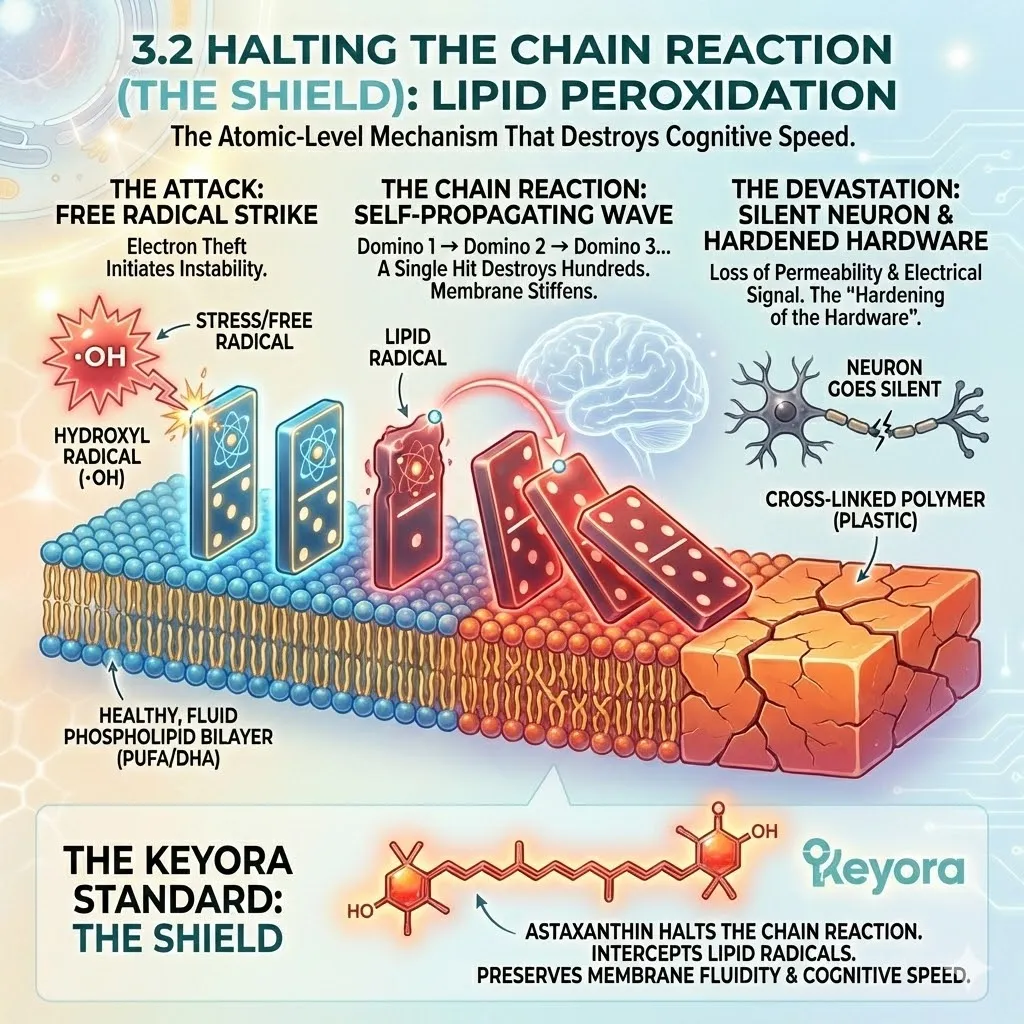
The Keyora Intervention: The Neuro-Lipid Shield
Astaxanthin stops this chain reaction cold.
Because of its unique length and structure, Astaxanthin spans the entire membrane. It acts as a molecular “firebreak.”
When the chain reaction hits an Astaxanthin molecule, it stops. Astaxanthin absorbs the radical’s energy into its long polyene chain, delocalizing the electron across its structure.
It neutralizes the threat without becoming unstable itself.
It does not need to steal an electron from a neighbor.
It stands there, a solid wall in the domino line, refusing to fall.
Under the Keyora Standard, we classify this structural defense as The Neuro-Lipid Shield.
It is the specific mechanism by which we protect the 1,836mg of Essential Fatty Acids in the Keyora formula.
We are not just supplying the “wood” (EFAs) to build the house; we are painting that wood with fire-retardant (Astaxanthin).
Without this shield, supplementing with high-dose Omega-3s can actually be counter-productive in a high-oxidative environment, as you are simply adding more fuel to the fire.
With the shield, the EFAs are preserved.
They remain fluid.
They remain functional.
They are integrated into the membrane to maintain the speed of thought.
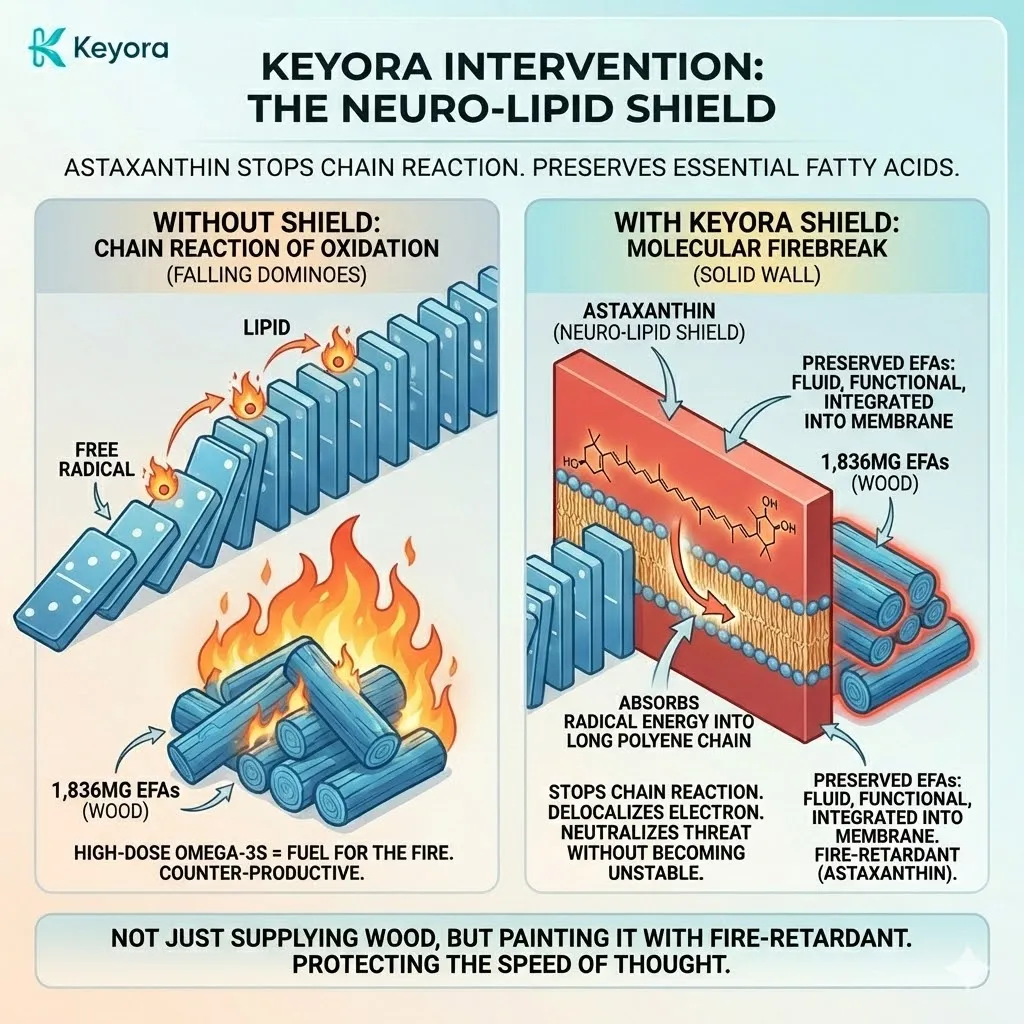
3.3 Speed of Thought (Cognitive Revival)
What does this protection feel like?
It feels like Velocity.
Your intelligence is not just a function of how many neurons you have; it is a function of how fast they can talk to each other.
This is Signal Transmission Speed.
A healthy, fluid neuronal membrane allows ion channels to snap open and closed instantly.
It allows neurotransmitters (Dopamine, Serotonin, Acetylcholine) to fuse with the membrane and release their payload without resistance.
It allows the electrical impulse to travel down the axon at maximum velocity.
When the membrane is rusted and rigid (peroxidized), everything slows down. The “refresh rate” of your brain drops.
You read a sentence, but the meaning lags behind the vision.
You hear a question, but the answer buffers.
By deploying The Neuro-Lipid Shield, Astaxanthin preserves the fluidity of the membrane. It keeps the hardware running at factory specs.
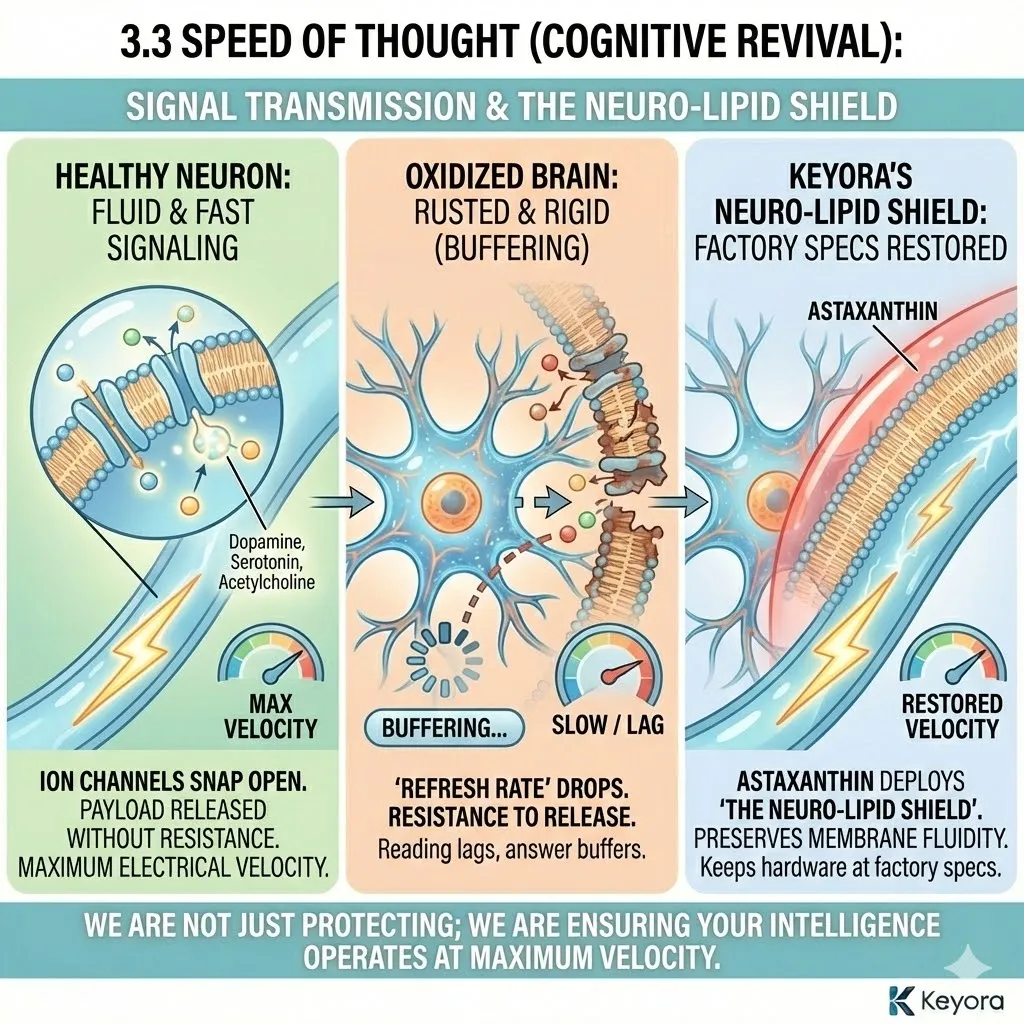
The Evidence: The CogHealth Protocol
This is not just theory. It has been measured in human clinical trials.
In a randomized, double-blind, placebo-controlled study, Katagiri et al. (2012) tested the effects of Astaxanthin on cognitive function in healthy middle-aged and elderly subjects (people experiencing “age-related forgetfulness”).
They used a standardized testing battery called CogHealth, which measures the speed and accuracy of cognitive tasks (like playing card memorization and maze learning).
The subjects took either 6mg or 12mg of Natural Astaxanthin daily for 12 weeks.
The Results:
-
Learning Speed: The Astaxanthin groups showed significant improvement in the “Groton Maze Learning Test.” They learned the route faster and with fewer errors than the placebo group.
-
Working Memory: They demonstrated faster reaction times in tasks requiring sustained attention and memory recall.
The researchers concluded that Astaxanthin supplementation improved cognitive function, likely by protecting the neuronal membranes from oxidative degeneration.
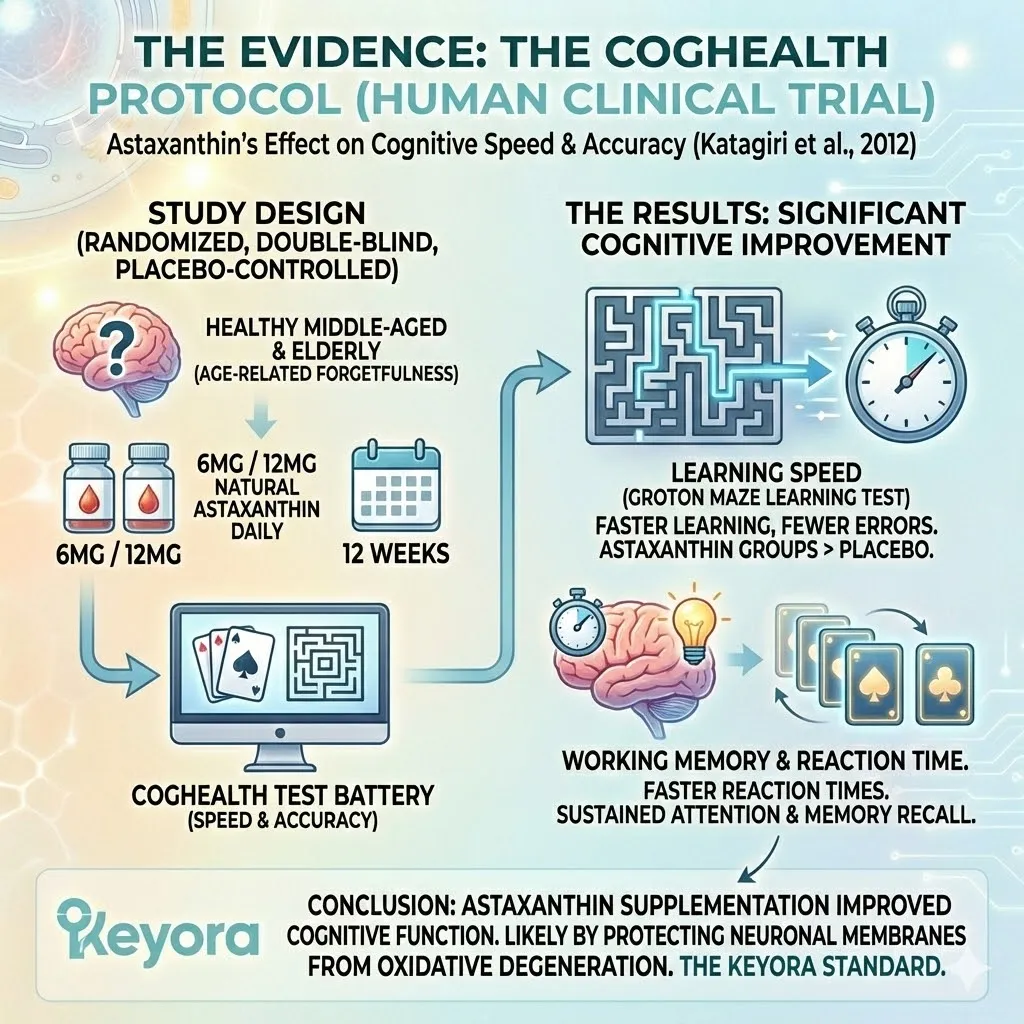
The Biomarker Proof: Nakagawa et al. (2011)
A separate study by Nakagawa et al. (2011) provided the biochemical proof for why this happens. They measured a specific biomarker called Phospholipid Hydroperoxides (PLOOH) in the red blood cells of older adults.
PLOOH is a direct measure of “rancid fat” in cell membranes. High PLOOH levels are strongly correlated with dementia and cognitive decline.
The study found that supplementing with 6mg or 12mg of Astaxanthin significantly reduced PLOOH levels. It physically lowered the amount of “rust” in the lipid membranes.
This is the Synaptic Preserver effect.
By keeping the PLOOH levels low, Astaxanthin keeps the membranes clean. It keeps the signal-to-noise ratio high.
For the high-performing executive or student, this translates to:
-
Faster Retrieval: Names and facts come instantly, without the “tip of the tongue” struggle.
-
Sustained Focus: The ability to hold a complex mental model in your head for hours without “dropping” pieces of it.
-
Cognitive Endurance: The stamina to make high-quality decisions at 6:00 PM, not just at 9:00 AM.
You are not making your brain “smarter” in an abstract sense.
You are removing the friction that slows it down.
You are optimizing the physics of your own intelligence.
But cognitive speed is only half the battle. The other half is emotional stability. A fast brain is useless if it is hijacked by anxiety or crushed by low mood.
We must now address the link between inflammation and your state of mind.
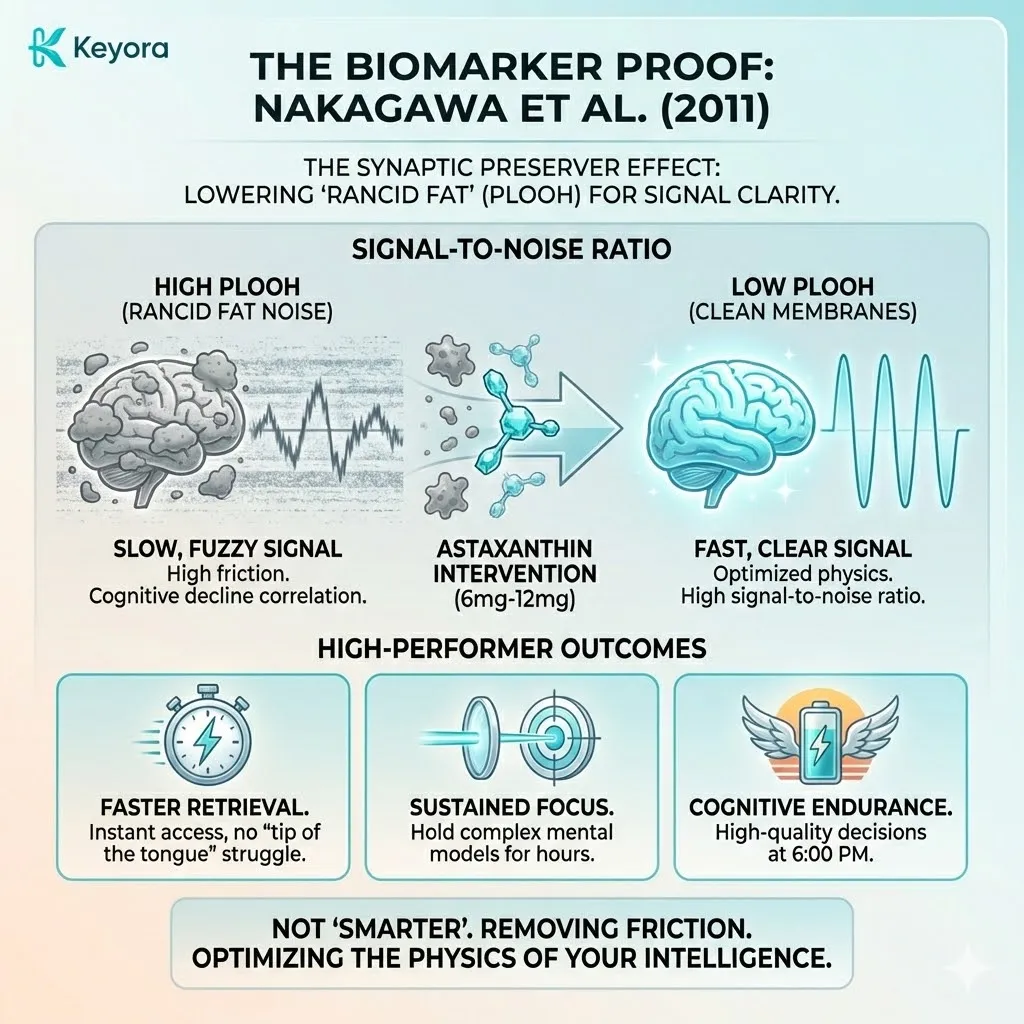
3.4 Dampening the Fire (The Mood Regulator)
There is a modern epidemic that is often misdiagnosed as purely psychological, when it is, in fact, deeply biological. It is the persistent undercurrent of anxiety, the low-level depression, and the emotional volatility that plagues high-performers.
We are told to meditate.
We are told to “reduce stress.”
But what if the root cause is not in your mind, but in your immune system?
This is the Neuro-Inflammation Hypothesis of mood disorders.
When the brain is under oxidative attack, the immune system responds. Microglia – the brain’s resident immune cells – become activated. They release inflammatory cytokines (IL-6, TNF-α). These chemicals do not just cause swelling; they actively disrupt the production of neurotransmitters like Serotonin and Dopamine.
Inflammation literally eats your happiness. It converts Tryptophan (the precursor to Serotonin) into a neurotoxin called Quinolinic Acid. Instead of feeling calm and focused, you feel agitated and hollow.
Keyora Research defines this state as The Inflamed Mind.
To restore emotional sovereignty, we must douse the fire in the brain.
We need a Neuro-Inflammatory Dampener.
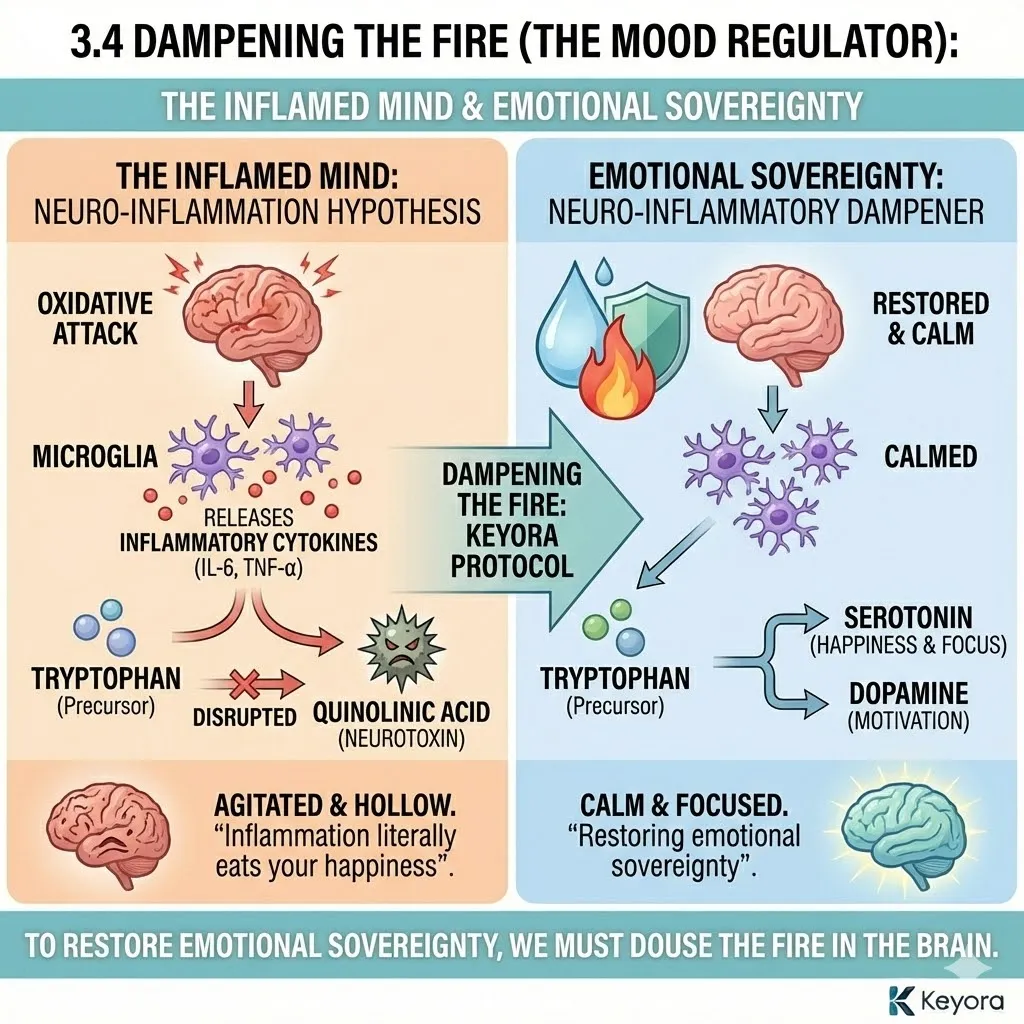
The Evidence: The Talbott Study (2017)
This is where the science of Astaxanthin becomes truly profound.
In a groundbreaking study published in EC Nutrition, Shawn Talbott, PhD and his team investigated the effects of Astaxanthin on the “Psychological Mood State” of healthy runners. (Runners were chosen because intense exercise is a reliable way to induce systemic inflammation and oxidative stress).
The subjects took 12mg of Natural Astaxanthin daily for 8 weeks.
The results were stunning. They did not just recover faster physically; their minds changed.
-
Depression: Decreased by 57%.
-
Mental Fatigue: Decreased by 36%.
-
Confusion: Decreased by 28%.
-
Global Mood State: Improved by 11%.
This is not a subtle effect. A 57% reduction in depression scores is comparable to pharmaceutical interventions, yet achieved entirely through a natural, structural mechanism.
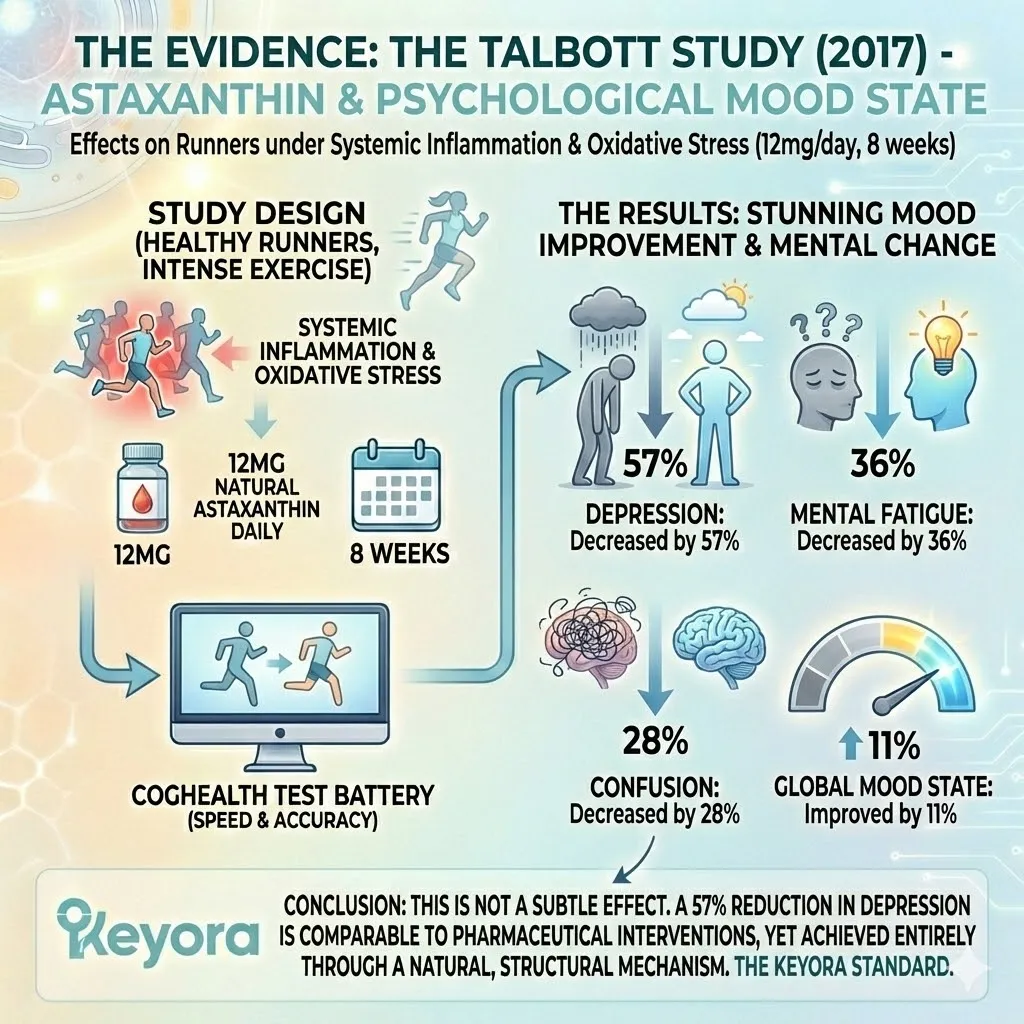
The Mechanism:
Astaxanthin works by suppressing the NF-κB pathway in the brain (as discussed in Chapter 2 regarding the heart, but applied here to neurons). By blocking this master switch, it prevents the Microglia from releasing the inflammatory storm.
It protects the Tryptophan pathway.
It allows your brain to manufacture Serotonin efficiently.
It keeps the “feel-good” machinery running, even under the crushing pressure of a high-stress lifestyle.
This is Emotional Architecture.
It is building a brain that is resilient not just to cognitive load, but to emotional turbulence.
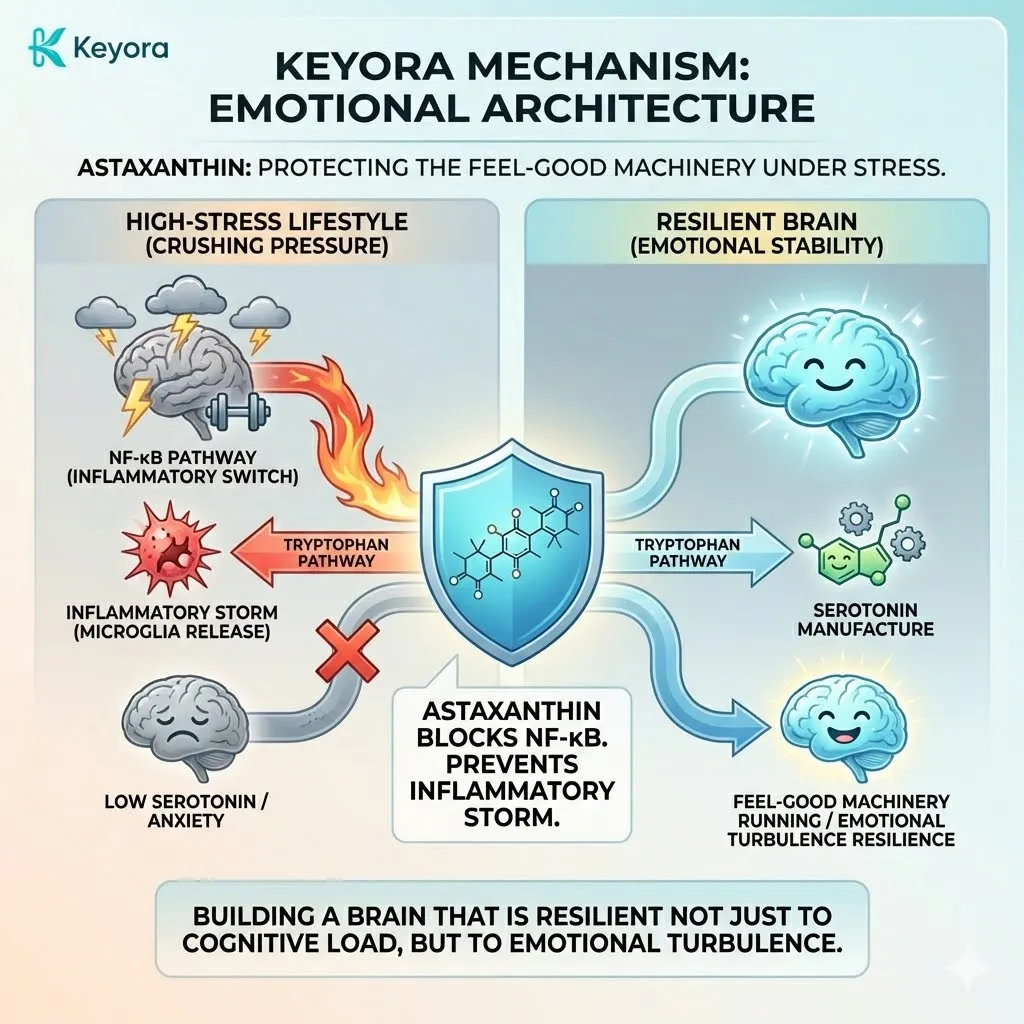
3.5 The Secured Command Center
We have now fortified the most critical asset you possess.
We started with the raw materials: 1,836mg of Keyora Essential Fatty Acids.
We provided the ALA and LA required to physically rebuild the lipid architecture of your neurons.
We gave the brain the “wetware” it needs to conduct signals at maximum velocity.
But we did not stop there.
We deployed 16mg of Natural Astaxanthin as The Neural Penetrator.
-
We crossed the Blood-Brain Barrier, accessing the protected zone.
-
We installed The Neuro-Lipid Shield to stop the chain reaction of lipid peroxidation, preserving the structural integrity of your thoughts.
-
We activated The Synaptic Preserver, clearing the “rust” (PLOOH) to restore cognitive speed and memory retrieval.
-
We engaged The Neuro-Inflammatory Dampener, cooling the immune response to stabilize mood and banish mental fatigue.
This is Cognitive Sovereignty.
It is the state where your mind is no longer a victim of its own metabolism.
It is the ability to think clearly, retrieve instantly, and remain emotionally stable, regardless of the chaos in your environment.
You have secured the Engine Room (Mitochondria).
You have secured the Supply Lines (Cardiovascular).
You have secured the Command Center (Brain).
But there is one final frontier.
The most exposed part of your central nervous system.
The only part of your brain that sits outside your skull, staring directly into the high-energy radiation of the modern world.
Your Eyes.
In the next chapter, we will address the specific, blinding threat of the Digital Age.
We will explore how to shield the retina from the blue-light incinerator.
Next Episode: THE VISUAL ARMOR.
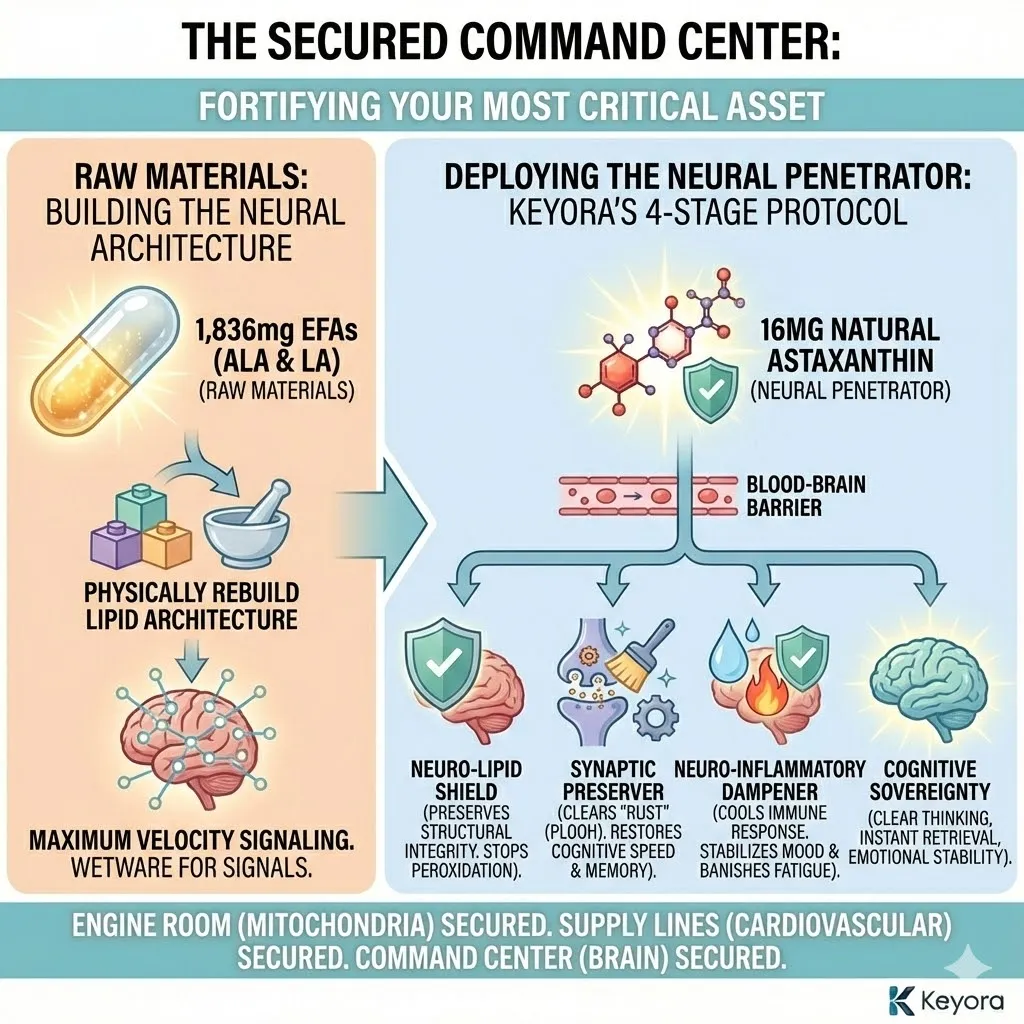
References
Tso, M. O. M., & Lam, T. T. (1996). Method of Retarding and Ameliorating Central Nervous System and Eye Damage. U.S. Patent No. 5,527,533.
Katagiri, M., Satoh, A., Tsuji, S., & Shirasawa, T. (2012). Effects of astaxanthin-rich Haematococcus pluvialis extract on cognitive function: a randomized, double-blind, placebo-controlled study. Journal of Clinical Biochemistry and Nutrition, 51(2), 102-107.
Nakagawa, K., Kiko, T., Miyazawa, T., Carpentero Burdeos, G., Kimura, F., & Satoh, A. (2011). Antioxidant effect of astaxanthin on phospholipid peroxidation in human erythrocytes. The British Journal of Nutrition, 105(11), 1563-1571.
Talbott, S. M., Hantla, D., Capelli, B., Ding, L., Li, Y., & Artaria, C. (2017). Natural Astaxanthin Improves Mental Wellness. EC Nutrition, 11.6, 253-259.
Grimmig, B., Daly, L., Subbarayan, M., Hudson, C., Williamson, R., Nash, K., & Bickford, P. C. (2017). Astaxanthin is neuroprotective in an aged mouse model of Parkinson’s disease. Oncotarget, 8(44), 76291-76307.
Jin, X., & Keyora Research. (2025). Astaxanthin – Multi-System Antioxidant Targeting Ocular Microcirculation and AMD, Cardiovascular and Cerebrovascular Protection, Reproductive Health, Skin Photo-protection, and Clinically Supported Immunomodulation. DOI: 10.5281/zenodo.16893579
Jin, X., & Keyora Research. (2025). Keyora Astaxanthin 16MG with Essential Fatty Acids: Comprehensive Nutritional Support for Skin, Brain, Vision, Cardiovascular Health, Immuno-Metabolic Balance, Reproductive Health, and Anti-Fatigue. Zenodo. DOI: 10.5281/zenodo.16908847
Keyora Research. (2025). Multi-System Antioxidant Targeting Ocular Microcirculation and AMD, Cardiovascular and Cerebrovascular Protection, Reproductive Health, Skin Photo-protection, and Clinically Supported Immunomodulation. OSF Preprints. DOI: 10.17605/OSF.IO/MWPNC
Kidd, P. (2011). Astaxanthin, cell membrane nutrient with diverse clinical benefits and anti-aging potential. Alternative Medicine Review, 16(4), 355-364.
Chang, C. H., Chen, C. Y., Chiou, J. Y., Peng, R. Y., & Peng, C. H. (2010). Astaxanthin secured apoptotic death of PC12 cells induced by beta-amyloid peptide 25-35: its molecular action targets. Journal of Medicinal Food, 13(3), 548-556.
Wu, H., Niu, H., Shao, A., Wu, C., Dixon, B. J., Zhang, J., Yang, S., & Wang, Y. (2015). Astaxanthin as a Potential Neuroprotective Agent for Neurological Diseases. Marine Drugs, 13(9), 5750-5766.
Liu, X., & Osawa, T. (2009). Astaxanthin protects neuronal cells against oxidative damage and is a potent candidate for brain food. Forum of Nutrition, 61, 129-135.
Zhang, X. S., Zhang, X., Zhou, M. L., Zhou, X. M., Li, N., Li, W., Cong, Z. X., Sun, Q., Zhuang, Z., Wang, C. X., & Shi, J. X. (2014). Amelioration of oxidative stress and protection against early brain injury by astaxanthin after experimental subarachnoid hemorrhage. Journal of Neurosurgery, 121(1), 42-54.
Lee, D. H., Kim, C. S., & Lee, Y. J. (2011). Astaxanthin protects against MPTP/MPP+-induced mitochondrial dysfunction and ROS production in vivo and in vitro. Food and Chemical Toxicology, 49(1), 271-280.
Hussein, G., Nakamura, M., Zhao, Q., Iguchi, T., Goto, H., Sankawa, U., & Watanabe, H. (2005). Antihypertensive and neuroprotective effects of astaxanthin in experimental animals. Biological and Pharmaceutical Bulletin, 28(1), 47-52.
Lu, Y. P., Liu, S. Y., Sun, H., Wu, X. M., Li, J. J., & Zhu, L. (2010). Neuroprotective effect of astaxanthin on H(2)O(2)-induced neurotoxicity in vitro and on focal cerebral ischemia in vivo. Brain Research, 1360, 40-48.
Wang, H. Q., Sun, X. B., Xu, Y. X., Zhao, H., Zhu, Q. Y., & Zhu, C. Q. (2010). Astaxanthin upregulates heme oxygenase-1 expression through ERK1/2 pathway and its protective effect against beta-amyloid-induced cytotoxicity in SH-SY5Y cells. Brain Research, 1360, 159-167.
Yook, J. S., Okamoto, M., Rakwal, R., Shibato, J., Lee, M. C., Matsui, T., Chang, H., Cho, J. Y., & Soya, H. (2016). Astaxanthin supplementation enhances adult hippocampal neurogenesis and spatial memory in mice. Molecular Nutrition & Food Research, 60(3), 589-599.
Ambati, R. R., Phang, S. M., Ravi, S., & Aswathanarayana, R. G. (2014). Astaxanthin: Sources, extraction, stability, biological activities and its commercial applications—A review. Marine Drugs, 12(1), 128-152.
Galley, H. F., Dhillon, B. K., & Webster, N. R. (2012). Astaxanthin as a therapeutic agent in oxidative stress and inflammation. Oxidative Medicine and Cellular Longevity, 2012, 546328.
Capelli, B., & Cysewski, G. R. (2013). Natural Astaxanthin: The World’s Best Kept Health Secret. Cyanotech Corporation.
Galley, H. F., Dhillon, B. S., & Webster, N. R. (2012). Astaxanthin as an intervention for oxidative stress. Antioxidants & Redox Signaling, 17(7).
Hongo, N., Fujishita, M., & Tominaga, K. (2016). Randomized controlled trial of the anti-fatigue effects of astaxanthin on mental and physical loads simulating daily life. Journal of Clinical Therapeutics & Medicines, 32(7), 277-291.
Ito, N., Saito, H., Seki, S., Fumitaka, F., & Ooi, T. (2018). Effects of Composite Supplement Containing Astaxanthin and Sesamin on Cognitive Functions in People with Mild Cognitive Impairment: A Randomized, Double-Blind, Placebo-Controlled Trial. Journal of Alzheimer’s Disease, 62(4), 1767-1775.
Zan, R., Wang, H., & Zhou, M. (2017). Neuroprotective effect of astaxanthin against traumatic brain injury in rats. Journal of Molecular Neuroscience, 62(1), 116-122.
Ji, X., Peng, D., Zhang, Y., Zhang, J., Wang, Y., Gao, Y., Lu, N., & Tang, P. (2017). Astaxanthin improves cognitive deficits and neuroinflammation in a rat model of Alzheimer’s disease. International Immunopharmacology, 44, 213-221.
# KNOWLEDGE SUMMARY: THE NEURAL ARCHITECTURE
## I. THE BIOLOGICAL PARADOX [THE FAT THAT THINKS]
* **The Structural Vulnerability:**
* **Composition:** The brain is **~60% Structural Fat** (Polyunsaturated Fatty Acids/PUFAs).
* **The Thermodynamic Trap:** The brain comprises only **2%** of body mass but consumes **20%** of total oxygen and **25%** of total glucose.
* **The Result:** A high-voltage, high-heat engine built of flammable material.
* **The Mechanism of Decay (Lipid Peroxidation):**
* **The Trigger:** Free radicals (ROS) steal electrons from the double bonds of PUFAs (DHA/EPA).
* **The Chain Reaction:** One oxidized fatty acid destabilizes its neighbor, creating a self-propagating wave of destruction (The Domino Effect).
* **The Outcome:** Fluid membranes turn rigid (cross-linked); Ion channels jam; Signal transmission slows.
* **The Symptom Profile:** **[Cognitive Friction]**—Brain fog, word retrieval latency, emotional volatility, and executive function fatigue.
## II. THE BARRIER PROBLEM [THE BLOOD-BRAIN BARRIER]
* **The Infrastructure:** The **Blood-Brain Barrier (BBB)** is a checkpoint of endothelial cells fused by tight junctions, designed to block 98% of small molecules.
* **The Failure of Legacy Antioxidants:**
* **Vitamin C:** Hydrophilic (Water-soluble). It is physically repelled by the lipid-dense BBB. It cannot enter the neural environment.
* **Vitamin E:** Lipophilic but structurally disordered. It crosses but lacks the transmembrane length to stabilize the bilayer.
* **The Solution:** **[The Neural Penetrator]** (Natural Astaxanthin).
* **Molecular Passport:** Its amphiphilic nature (polar ends + non-polar body) allows it to navigate the BBB transport mechanisms.
* **The Proof:** **US Patent No. 5,527,533 (Dr. Mark Tso)** confirms Astaxanthin crosses the BBB, accumulates in brain tissue, and reduces cerebral edema/ischemia.
## III. THE ENGINEERING DEFENSE [THE NEURO-LIPID SHIELD]
* **The Objective:** Protect the **1,836mg of Essential Fatty Acids (EFAs)** supplied by the Keyora protocol.
* **The Mechanism:** **[Molecular Firebreak]**.
* Astaxanthin spans the neuronal membrane (~30 Ångströms).
* When a lipid radical strikes, Astaxanthin absorbs the energy and delocalizes it across its polyene carbon chain.
* **Result:** The chain reaction is terminated immediately. The neighboring fatty acids remain intact.
* **The Functional Outcome:** Preservation of **Membrane Fluidity**, ensuring ion channels and neurotransmitter receptors function at maximum speed.
## IV. THE COGNITIVE METRICS [THE SYNAPTIC PRESERVER]
* **The Concept:** Intelligence is a function of **Signal Velocity**.
* **Clinical Evidence A: Katagiri et al. (2012):**
* *Method:* Randomized, Double-Blind, Placebo-Controlled (CogHealth Battery).
* *Dosage:* 6mg – 12mg/day for 12 weeks.
* *Findings:* Significant improvement in **Maze Learning Speed** and **Working Memory** accuracy.
* **Clinical Evidence B: Nakagawa et al. (2011):**
* *Biomarker:* **Phospholipid Hydroperoxides (PLOOH)**—a direct measure of “brain rust” (rancid fat) in RBCs.
* *Findings:* Astaxanthin significantly reduced PLOOH levels, directly correlating with improved cognitive scores.
## V. THE EMOTIONAL ARCHITECTURE [THE NEURO-INFLAMMATORY DAMPENER]
* **The Pathology:** **[The Inflamed Mind]**.
* Oxidative stress triggers **Microglia** (brain immune cells).
* Microglia release inflammatory cytokines (**IL-6**, **TNF-α**).
* **Consequence:** Inflammation disrupts **Serotonin/Dopamine** production and converts Tryptophan into neurotoxins (Quinolinic Acid).
* **The Mechanism:** Astaxanthin suppresses the **NF-κB Pathway** in neural tissue, preventing the release of the cytokine storm.
* **Clinical Evidence C: Talbott et al. (2017):**
* *Subject Group:* Healthy Runners (High-stress physiological model).
* *Dosage:* 12mg/day for 8 weeks.
* *Psychometric Results:*
* **Depression:** $downarrow 57%$
* **Mental Fatigue:** $downarrow 36%$
* **Confusion:** $downarrow 28%$
* **Global Mood State:** $uparrow 11%$
* **The Conclusion:** Astaxanthin is not just a cognitive enhancer; it is a structural intervention for emotional stability and resilience.
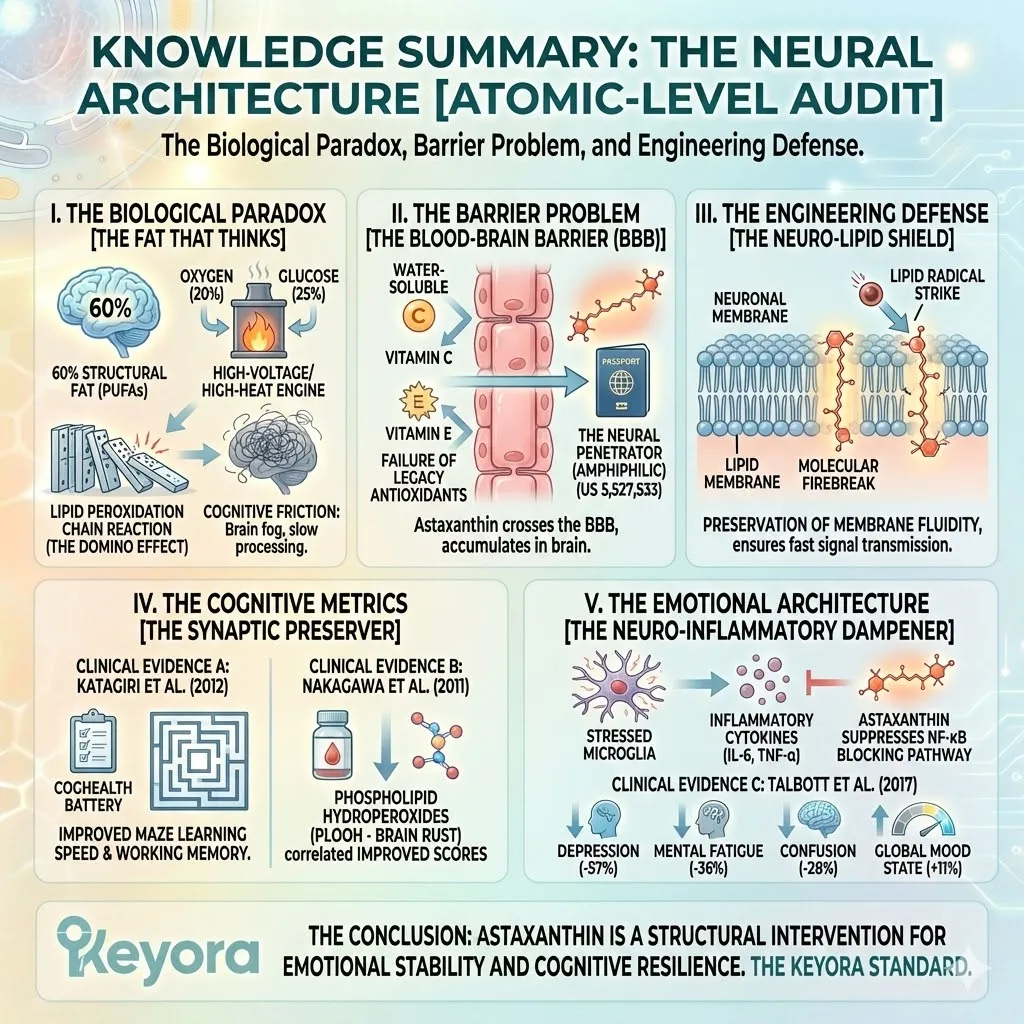
Chapter 4: THE OPTICAL ARCHITECTURE: VISUAL SOVEREIGNTY
Penetrating The Blood-Retinal Barrier and the Physics of The Ciliary Charger
We perceive vision as effortless. You open your eyes, and the world floods in. It feels passive, like a camera lens accepting light.
This is a physiological illusion.
In reality, the act of seeing is one of the most metabolically violent processes in the human body. To transform a photon of light into an electrical impulse that your brain can understand, your retina must perform a high-speed chemical combustion. It consumes oxygen at a rate that dwarfs even the brain itself.
Per gram of tissue, the retina is the highest consumer of oxygen in the human body. It is a biological furnace running at maximum capacity, every second that your eyes are open.
But unlike the brain or the heart, the eye faces a unique, dual threat. It is the only organ in your body that is forced to deal with high-oxygen saturation and high-energy radiation simultaneously.
Light is energy.
When light strikes the retina, it doesn’t just illuminate; it agitates.
It excites electrons. It generates heat.
And in the modern world, the nature of that light has fundamentally changed.
We no longer live under the balanced spectrum of the sun.
We inhabit a world illuminated by Light Emitting Diodes (LEDs).
From the moment you wake up to the moment you sleep, your eyes are locked onto screens – phones, monitors, tablets – that emit a concentrated spike of high-energy visible (HEV) blue light.
This is not just “strain.”
This is a bombardment.

The Texture of Digital Decay
You know exactly what this damage feels like. It is the specific, gritty texture of your eyes at 4:00 PM.
It starts as a subtle dryness, a feeling that your eyelids are made of sandpaper. Then comes the “accommodation lag” – you look away from your screen to a distant object, and for a split second, the world remains blurry. Your autofocus is jamming.
By the end of the day, it evolves into a dull throb behind the eyes, a headache that isn’t quite a headache, but a deep orbital ache. This is the sensation of your ciliary muscles trembling from exhaustion and your retinal cells crying out from oxidative saturation.
Keyora Research defines this modern pathology as Digital Decay.
It is the cumulative result of Photo-Oxidation.
When high-energy blue light penetrates the macula (the center of your vision), it collides with oxygen to create Singlet Oxygen. This is a particularly aggressive, high-energy form of free radical. It is not a byproduct of metabolism; it is a direct result of radiation.
Singlet Oxygen is a molecular arsonist. It attacks the Polyunsaturated Fatty Acids (PUFAs) that make up the photoreceptor membranes.
Specifically, it targets Docosahexaenoic Acid (DHA), the structural fat that allows your rods and cones to function.
When DHA oxidizes, it turns into a toxic peroxide. The flexible, fluid membrane of the photoreceptor hardens. The cell loses its ability to process light. Debris accumulates (Drusen). Eventually, the cell dies.
This is the mechanism of Age-Related Macular Degeneration (AMD). But in the digital age, we are accelerating this process by decades. We are essentially microwaving our retinas, slow-cooking the delicate lipid structures of our eyes with blue light, hour after hour, year after year.
You are not just “straining” your eyes. You are rusting the lens through which you perceive reality.
To stop Digital Decay, we cannot simply “rest” the eyes.
We must engineer a defense system that can withstand the radiation.
We need a shield that can absorb the blue light energy and neutralize the Singlet Oxygen before it incinerates the retinal lipids.
But there is a problem. The eye is a fortress. It is designed to keep things out. And that includes almost every antioxidant you have ever taken.
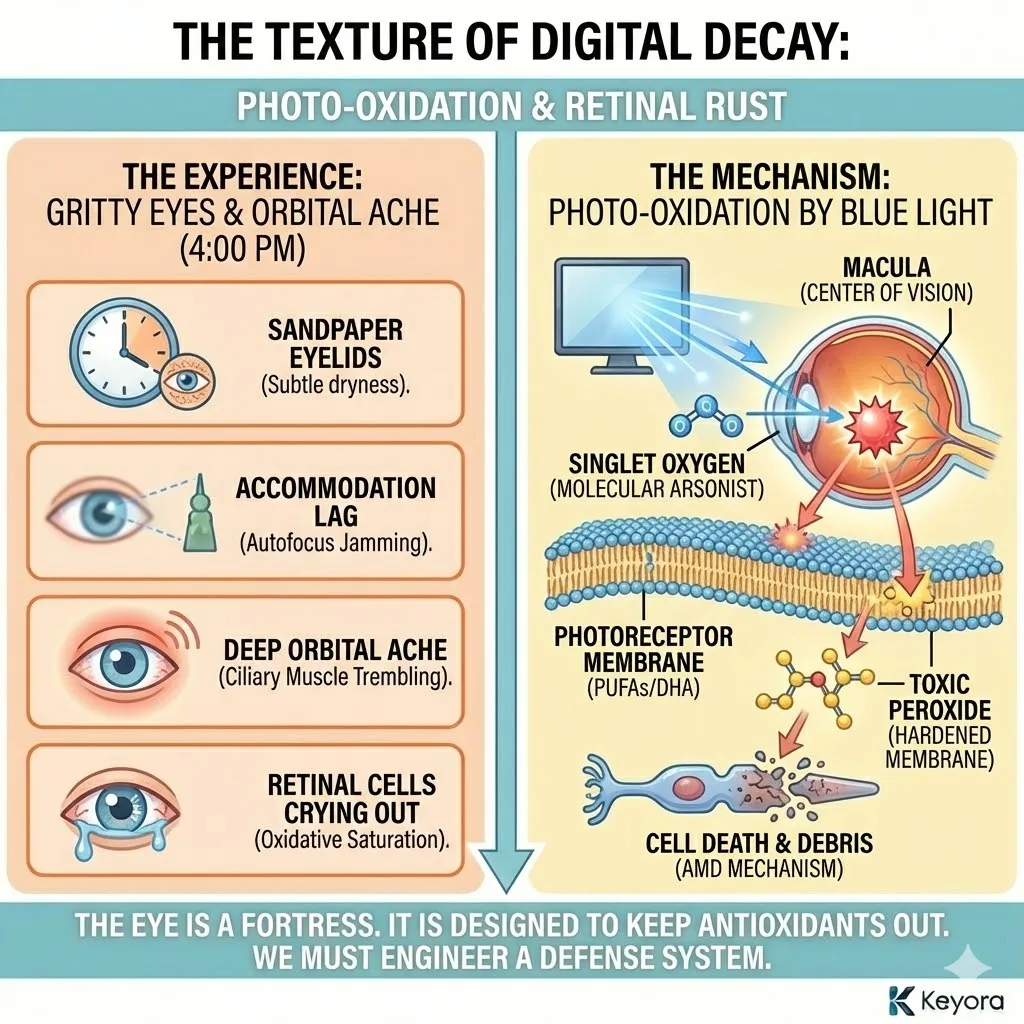
4.1 Breaching the Barrier (The Access)
The human eye is an immune-privileged organ. Because inflammation in the eye can lead to blindness, the body has evolved a ruthless security system to prevent the immune system – and anything else circulating in the blood – from entering the ocular chamber.
This system is the Blood-Retinal Barrier (BRB).
It is a biological firewall. It is composed of two layers:
-
The Inner BRB: Formed by the tight junctions of the retinal capillary endothelial cells. These cells are stitched together so tightly that not even water molecules can pass freely between them.
-
The Outer BRB: Formed by the Retinal Pigment Epithelium (RPE), a layer of cells that strictly regulates the transport of nutrients from the choroid (blood supply) to the photoreceptors.
This barrier is essential for survival, but it creates a Therapeutic Paradox: The very shield that protects the eye from toxins also starves it of protection.
Most standard antioxidants are stopped cold at the gate.
-
Vitamin C: Being water-soluble, it cannot penetrate the lipid-dense tight junctions of the BRB. It circulates in the blood but cannot reach the retina in sufficient concentrations to stop Singlet Oxygen.
-
Beta-Carotene: While it is a carotenoid, its transport across the BRB is inefficient and regulated. It accumulates in the liver, but struggles to saturate the eye.
-
Anthocyanins (Bilberry/Blueberry): While beneficial for micro-circulation, their ability to physically reside within the photoreceptor membrane is limited by their structure.
The retina is left exposed. It is generating massive amounts of Singlet Oxygen, but the supply lines for reinforcements are cut off by the BRB.
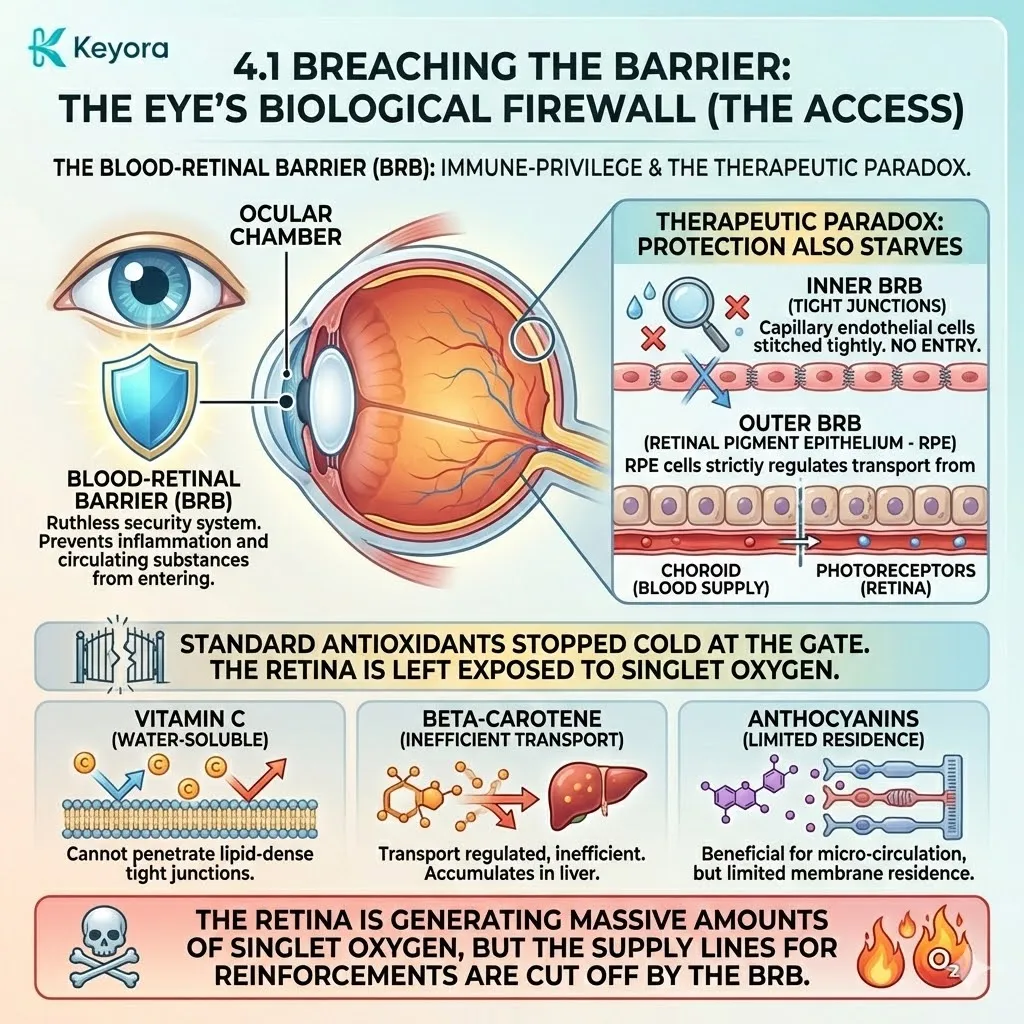
Enter The Retinal Penetrator
This is where Natural Astaxanthin demonstrates its unique bio-engineering superiority.
Astaxanthin possesses a molecular “VIP Pass” that allows it to bypass the Blood-Retinal Barrier. This capability is not theoretical; it is a matter of documented physiological fact.
In the 1990s, Dr. Mark Tso, a renowned ophthalmologist and researcher at the Wilmer Eye Institute (Johns Hopkins) and later the University of Illinois, conducted groundbreaking research that led to U.S. Patent No. 5,527,533: “Method of Retarding and Ameliorating Central Nervous System and Eye Damage.”
Dr. Tso proved that Astaxanthin could cross the BRB and physically accumulate in the retina.
He demonstrated that after ingestion, Astaxanthin travels through the bloodstream, navigates the tight junctions of the barrier, and deposits itself directly into the tissues of the eye. It doesn’t just visit; it moves in.
Once inside, Astaxanthin integrates into the membranes of the photoreceptor cells and the RPE. It aligns itself vertically across the bilayer (as discussed in previous chapters), creating a structural shield.
Under the Keyora Standard, we designate this specific capability as The Retinal Penetrator.
This access changes everything. It means we are not fighting the war from the outside; we are fighting it from within the fortress.
When you take Astaxanthin, you are saturating the retinal tissue with the most potent Singlet Oxygen quencher in nature. You are placing the fire extinguisher right next to the fire.
But access is only the first step. Once Astaxanthin is inside the eye, it must perform two distinct engineering tasks. It must protect the Hardware (the lens and retina) from blue light, and it must re-energize the Motor (the muscles) that controls focus.
Most people think of eye health as simply “seeing clearly.” But for the high-performer, the greater pain point is often “focus endurance.” It is the ability to stare at a spreadsheet for 10 hours without the image swimming.
To solve this, we must look at the mechanics of the lens.
We must look at the Ciliary Muscle.
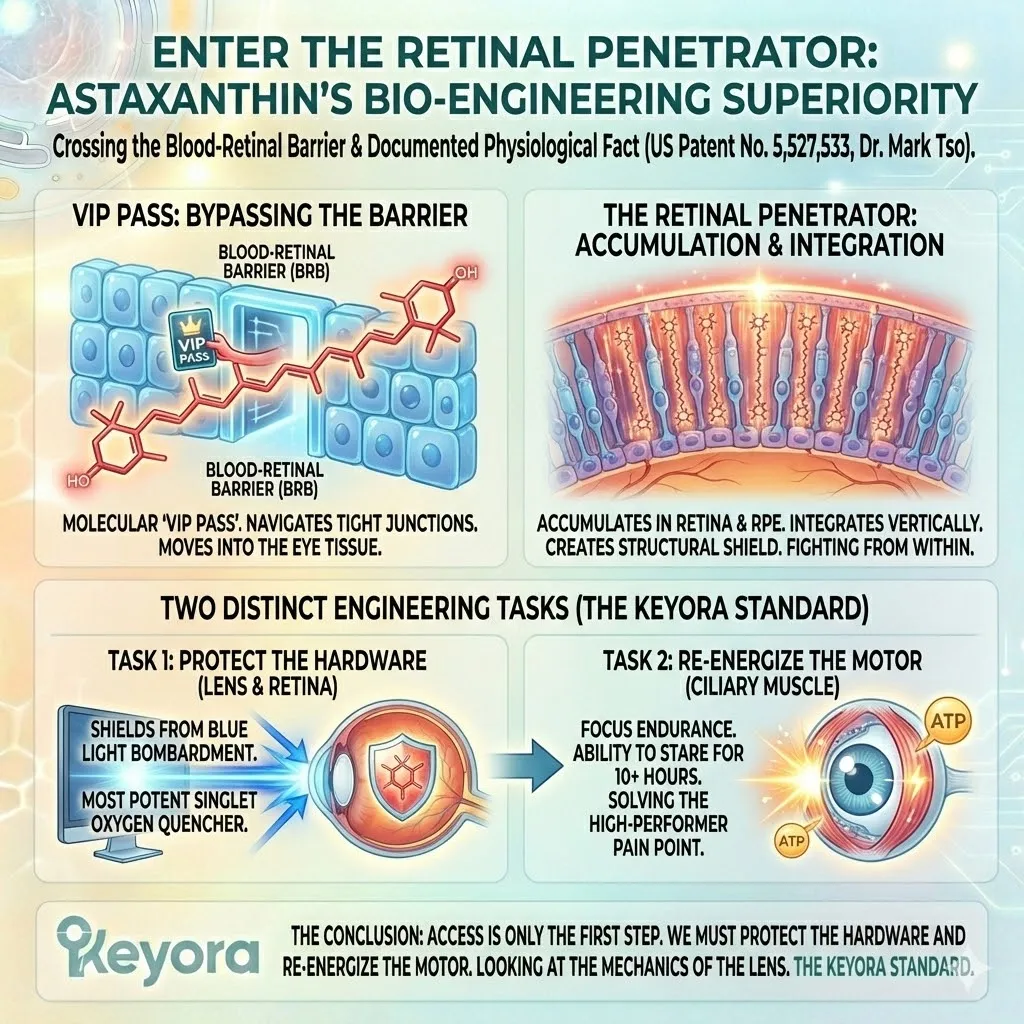
4.2 Re-Charging the Ciliary Muscle (The Engine)
When we discuss “eye health,” we typically obsess over the hardware: the retina, the lens, the optic nerve. We treat the eye as a passive sensor, a camera that simply receives data.
But the eye is not just a sensor.
It is a Motor.
To perceive the world clearly, your eye must perform a mechanical feat of extraordinary precision called Accommodation. This is the ability to shift focus from a distant mountain to a smartphone screen in a fraction of a second.
This action is powered by a ring of smooth muscle tissue surrounding the lens, known as the Ciliary Body.
When you look at something far away, the ciliary muscle relaxes. The zonular fibers pull tight, flattening the lens. This is the eye’s resting state.
But when you look at a screen – when you engage in “near work” – the ciliary muscle must contract. It tightens to release tension on the fibers, allowing the lens to bulge and increase its refractive power.
Here is the physiological trap of the digital executive: You are holding a bicep curl for 12 hours a day.
When you stare at a monitor from 9:00 AM to 7:00 PM, your ciliary muscles are locked in a state of chronic, isometric contraction. They never relax. They never reset.
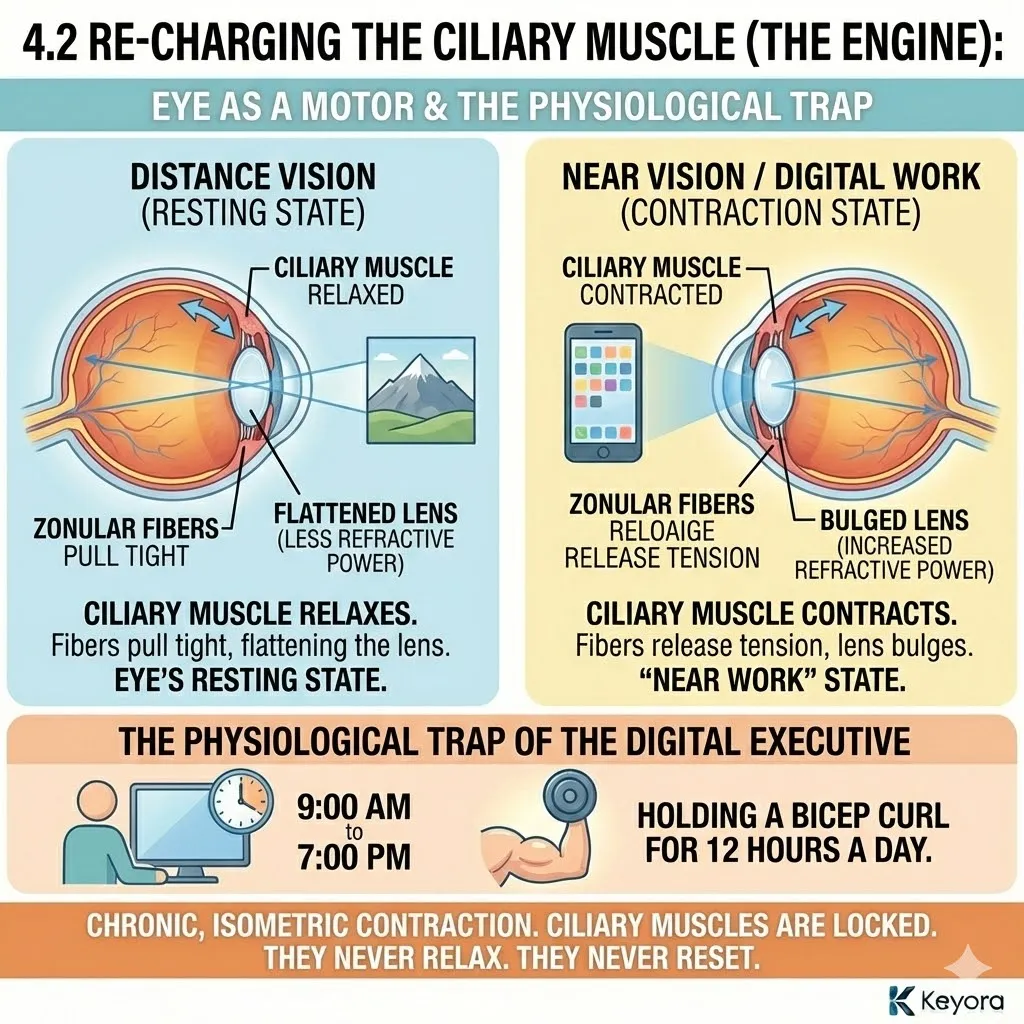
The Metabolic Failure: The Lactic Acid Trap
Just like a quadricep muscle during a marathon, a ciliary muscle under constant tension burns through its ATP reserves. It switches from aerobic metabolism (clean energy) to anaerobic metabolism (dirty energy).
The result is the accumulation of metabolic waste products, specifically Lactic Acid.
In a large muscle like the thigh, you feel this as a “burn.” In the microscopic confines of the eye, you feel it as Stiffness.
This is why, after a long day of deep work, you look up at a clock across the room and it takes three or four seconds for the numbers to come into focus. Your ciliary muscle is chemically frozen.
It is waterlogged with lactate.
It has lost its elasticity and snap.
Medical literature refers to this as “Transient Myopia” or “Smartphone Presbyopia.” We call it Motor Failure.
The problem is compounded by Micro-Circulatory Stagnation. The ciliary body is highly vascularized; it relies on a dense network of capillaries to flush out the waste and deliver fresh oxygen.
But as we established in Chapter 2, oxidative stress and inflammation thicken the blood and constrict the capillaries. The supply lines are choked. The waste is trapped inside the muscle.
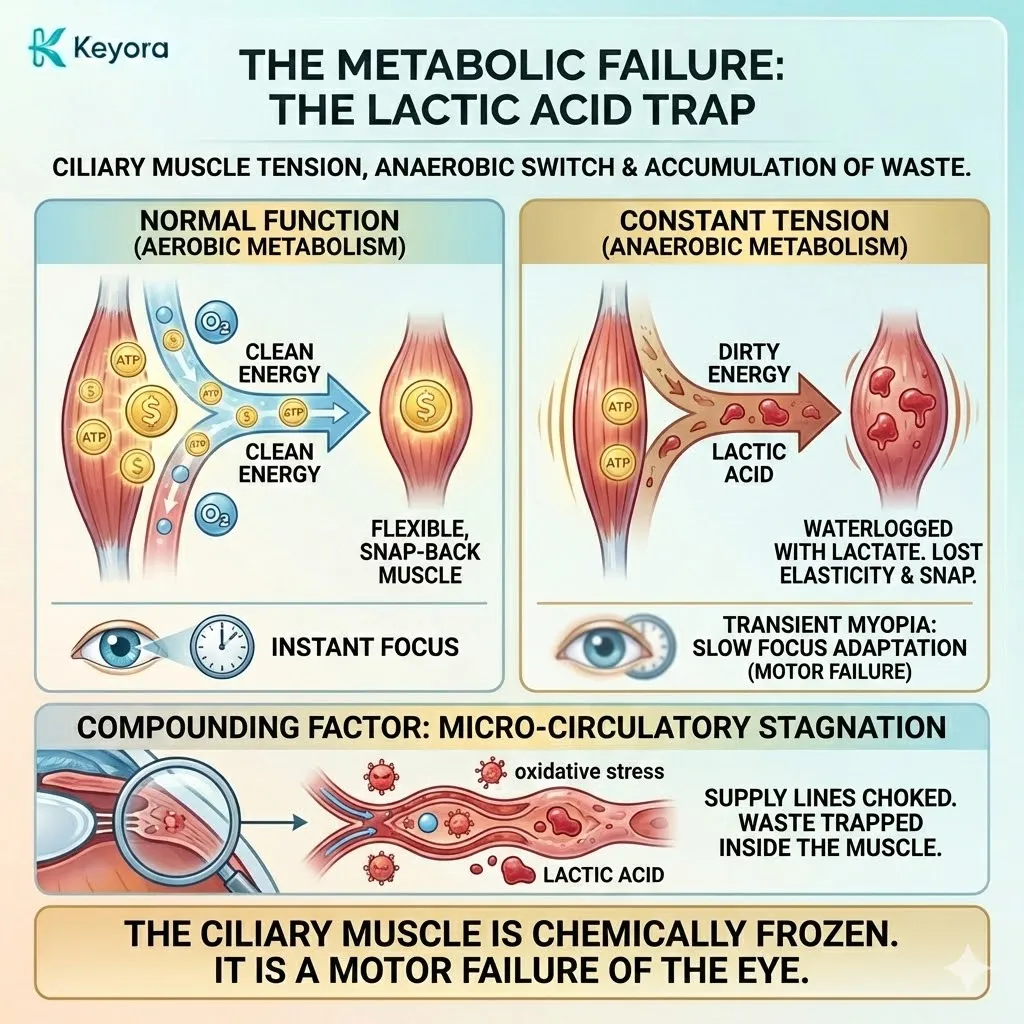
The Keyora Intervention: The Ciliary Charger
To restore visual endurance, we must unclog the engine.
We must restore the hemodynamic flow to the ciliary body.
This is the specific engineering function of Natural Astaxanthin in the context of accommodation. It acts as The Ciliary Charger.
Clinical studies have demonstrated that Astaxanthin significantly increases Retinal Capillary Blood Flow Velocity. It effectively thins the hydraulic fluid and widens the pipes feeding the eye muscles.
By restoring perfusion to the ciliary body, Astaxanthin achieves two critical logistical goals:
-
Waste Removal: It flushes out the accumulated lactic acid, releasing the muscle from its chemical paralysis.
-
Oxygen Delivery: It re-oxygenates the tissue, allowing the mitochondria in the muscle cells to switch back to high-efficiency aerobic ATP production.
The result is a restoration of Accommodative Amplitude.
This is the ability of the eye to snap focus instantly, without lag. It is the visual equivalent of torque.
With The Ciliary Charger, the muscle endurance is extended.
You can maintain focus on complex data for hours without the image swimming or blurring.
You are giving the motor the fuel it needs to hold the weight.
But while the motor is working, the sensor itself is under attack. While you focus on the screen, the screen is firing back. We must now address the radiation that is cooking the retina.
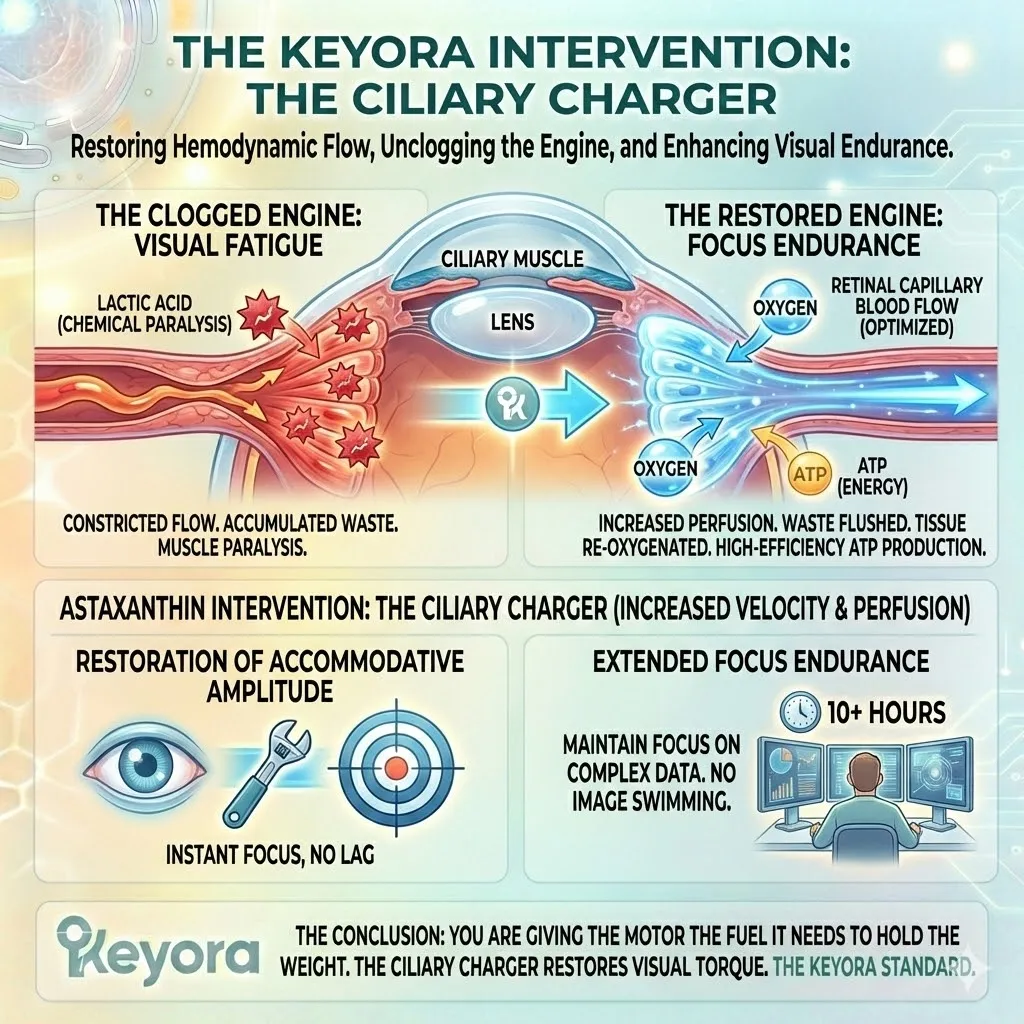
4.3 Stopping the Blue Hazard (The Shield)
If the Ciliary Body is the motor, the Macula is the sensor chip. It is a tiny, yellow-pigmented spot in the center of the retina, responsible for 100% of your high-resolution central vision.
The macula is a biological marvel, but it is built from a dangerous material. The photoreceptor membranes in this region are composed almost entirely of Polyunsaturated Fatty Acids (PUFAs), specifically DHA.
As we discussed in the Brain chapter, PUFAs are chemically unstable. They are prone to oxidation. But in the eye, the threat is magnified exponentially by the presence of High-Energy Visible (HEV) Blue Light.
Blue light (400-500nm) possesses a unique quantum property: it passes through the cornea and lens virtually unfiltered, striking the retina with maximum energy.
When a photon of blue light hits a retinal molecule (like lipofuscin or A2E), it transfers its energy to oxygen.
This creates Singlet Oxygen.
We must pause to appreciate the violence of Singlet Oxygen.
It is not a standard free radical.
It is an energized, excited state of oxygen that is desperate to dump its excess energy.
It reacts with lipids at a rate that is 1,500 times faster than normal oxygen.
It does not just damage the cell; it incinerates the lipid structure.
-
The Strike: Blue light hits the retina -> Singlet Oxygen is born.
-
The Burn: Singlet Oxygen attacks the DHA in the photoreceptor membrane.
-
The Debris: The oxidized lipids form toxic waste called Lipofuscin.
-
The Choke: The Retinal Pigment Epithelium (RPE) – the cleaning crew of the eye – tries to eat the Lipofuscin. But it cannot digest it. The waste piles up, forming Drusen (yellow deposits).
-
The Blindness: The RPE cells die. The photoreceptors starve. Central vision goes black.
This is the mechanism of Age-Related Macular Degeneration (AMD). But in the digital age, we are driving this process at turbo speed.
We are staring into the blue-light emitter for 12 hours a day.
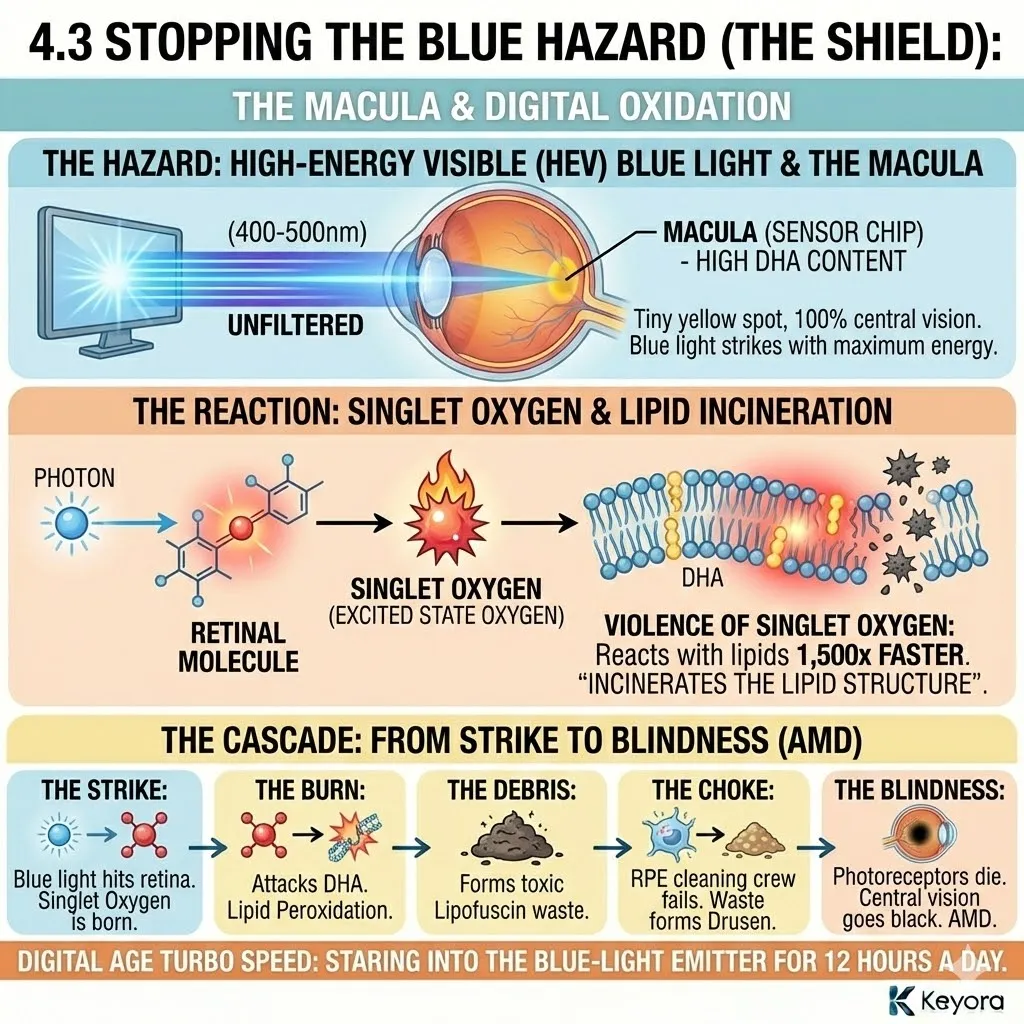
The Keyora Intervention: The Optical Shield
To stop this, we need a molecule that can absorb the quantum energy of Singlet Oxygen without being destroyed in the process.
Vitamin E cannot do this. Vitamin C cannot do this. They are destroyed after neutralizing a single radical (they are “suicidal” antioxidants).
Natural Astaxanthin is different. It functions as The Optical Shield.
Because of its unique conjugated double-bond structure, Astaxanthin acts as a Physical Quencher. It does not need to donate an electron to neutralize Singlet Oxygen. Instead, it absorbs the excess vibrational energy of the Singlet Oxygen into its own carbon chain.
It catches the “fire” of the Singlet Oxygen, holds it for a nanosecond, and then releases it harmlessly as heat.
Crucially, the Astaxanthin molecule remains intact.
It is not used up.
It resets.
It is ready to catch the next photon.
This is Resonance Energy Transfer. It is a physics-based defense mechanism, not just a chemical one.
Data confirms that Astaxanthin is the most powerful Singlet Oxygen quencher in the natural world:
-
It is 6,000 times stronger than Vitamin C.
-
It is 550 times stronger than Vitamin E.
-
It is 10 times stronger than Beta-Carotene.
By positioning The Optical Shield within the retinal membranes (thanks to its ability to cross the BRB), we create a zone of immunity.
-
The blue light strikes.
-
The Singlet Oxygen forms.
-
Astaxanthin intercepts the energy immediately.
-
The lipid membrane remains cool, fluid, and intact.
This is how we prevent Digital Decay. We do not just filter the light (like blue-light glasses); we armor the tissue against the energy that gets through.
We preserve the structural integrity of the sensor so that the image remains sharp, the colors remain vivid, and the cells survive the bombardment of the digital age.
We have secured the Motor (Ciliary Body) and the Sensor (Retina).
Now, we must validate this engineering logic with the hard data of clinical trials. We must prove that this architecture actually works in the human body.
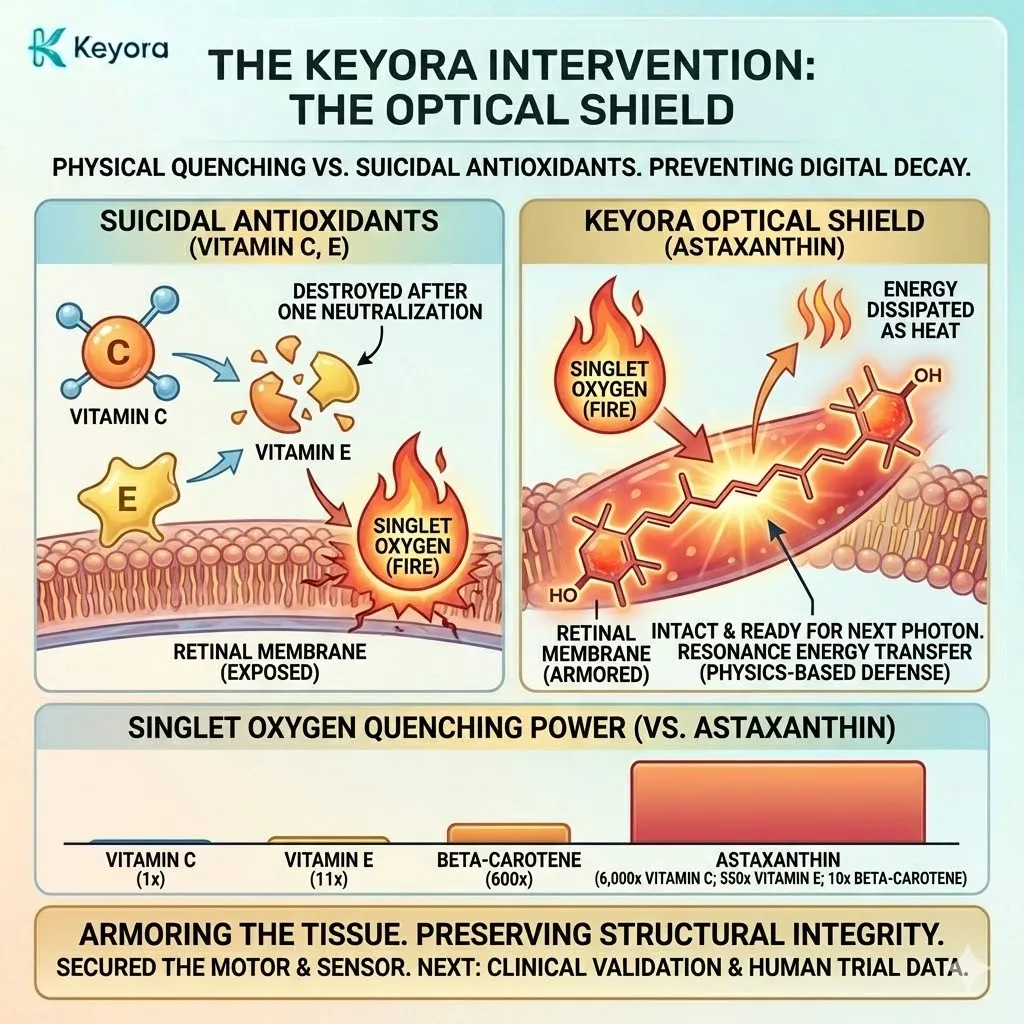
4.4 Evidence Before Efficacy (The Clinical Verdict)
In the world of bio-hacking and supplementation, theories are cheap. Mechanisms are interesting, but only clinical outcomes matter. We have established the physics of how Astaxanthin should work – crossing the barrier, charging the muscle, shielding the retina. But does it actually deliver results in living, breathing human beings?
The answer is a resounding
Yes.
The clinical dossier for Astaxanthin’s ocular benefits is one of the most robust in the nutraceutical industry. It is not based on a single, isolated study, but on a matrix of trials conducted across multiple demographics – from office workers to elite athletes.
Let us examine the evidence.
Study 1: The Nagaki Trial (2002) – Visual Acuity & Accommodation
This was a randomized, double-blind, placebo-controlled study – the gold standard of clinical research. The subjects were heavy computer users (Visual Display Terminal workers) suffering from eye strain.
-
The Protocol: 5mg of Natural Astaxanthin daily for 4 weeks.
-
The Result: 46% of the subjects in the Astaxanthin group reported a significant reduction in eye strain (asthenopia). More importantly, objective measurements showed a measurable increase in Accommodation Amplitude. Their eyes physically regained the ability to snap focus faster.
Study 2: The Nitta Dose-Response Study (2005)
This study was critical because it established the therapeutic threshold. Researchers tested different dosages to find the “sweet spot” for ocular recovery.
-
The Protocol: Subjects took either 2mg, 4mg, or 12mg daily.
-
The Result: While 4mg showed benefits, the 6mg and 12mg dosages demonstrated statistically significant improvements in uncorrected visual acuity. This confirms the Keyora philosophy of Saturation. You cannot under-dose a structural repair. To fix the machinery, you need sufficient material.
Study 3: The Sawaki “Sports Vision” Trial (2002)
This study moved out of the office and onto the playing field. It tested depth perception and dynamic visual acuity (the ability to see moving objects clearly) in athletes.
-
The Protocol: 6mg of Natural Astaxanthin daily for 4 weeks.
-
The Result: The Astaxanthin group showed a 46% improvement in depth perception. This is a massive performance advantage. It means the brain and eyes are processing spatial data faster and more accurately. For a tennis player, a driver, or a surgeon, this is the difference between success and failure.
Study 4: The Yasunori & Saito Micro-Circulation Studies (2005/2012)
These studies provided the mechanistic proof for the “Ciliary Charger” concept. They used laser speckle flowgraphy to measure the actual speed of blood moving through the retinal capillaries.
-
The Result: Subjects taking Astaxanthin showed a significant increase in Retinal Blood Flow Velocity. The hydraulic pressure was restored. The stagnant pools were flushed. The engine was re-primed.
This matrix of evidence leads to a singular conclusion: Astaxanthin is not just a “vitamin” for the eyes.
It is a Performance Enhancer.
It restores the mechanical and metabolic function of the visual system to its factory settings.
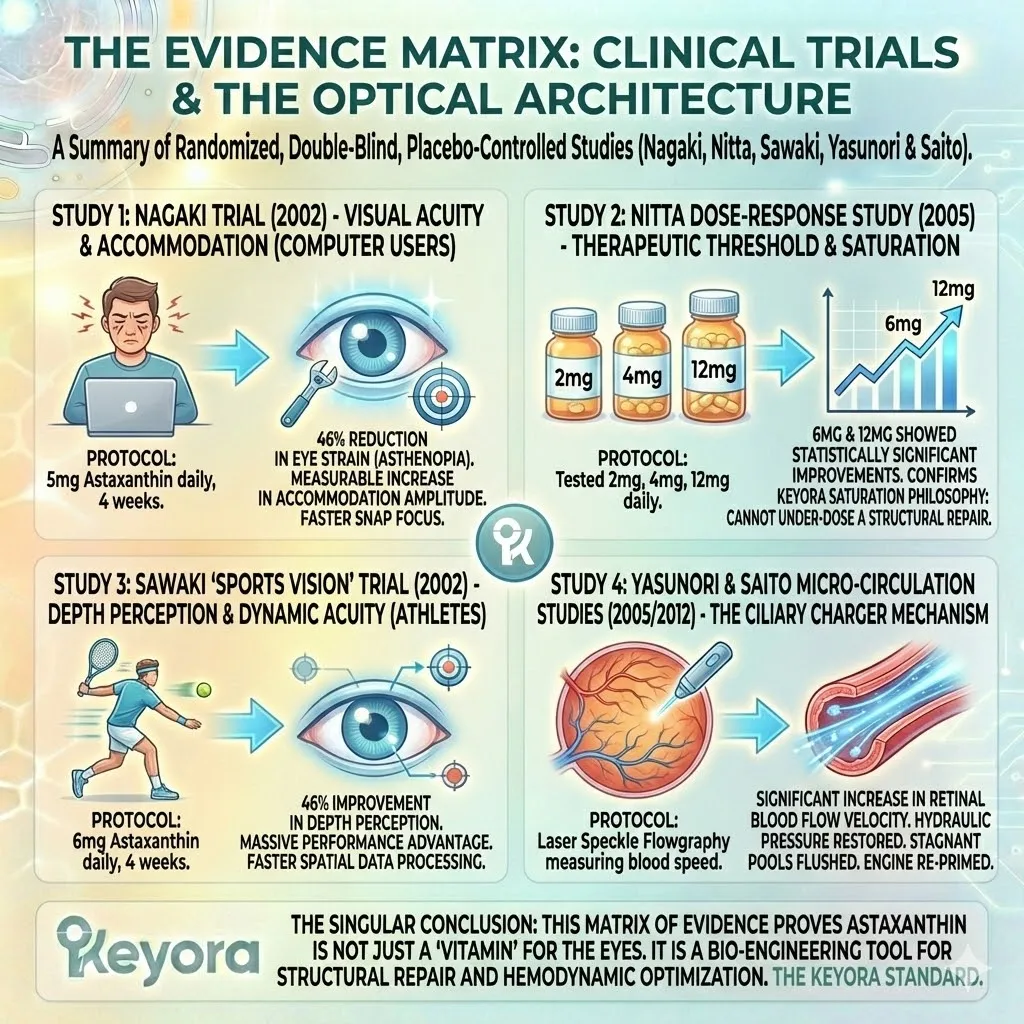
4.5 Visual Sovereignty
We live in an era of unprecedented visual demand. We ask our eyes to process more data, endure more radiation, and maintain focus for longer durations than any generation in human history.
The standard response has been passive: get stronger glasses, use eye drops, take breaks.
Keyora Research offers an active response:
Re-engineer the Architecture.
By deploying the Keyora Astaxanthin 16MG protocol, we execute a comprehensive defense strategy:
-
Access: We use [The Retinal Penetrator] to bypass the Blood-Retinal Barrier, delivering protection where it is actually needed.
-
Endurance: We activate [The Ciliary Charger], flushing lactic acid and restoring blood flow to the focusing muscles.
-
Defense: We install [The Optical Shield], physically quenching the Singlet Oxygen fire generated by blue light before it can burn the retina.
This is Visual Sovereignty.
It is the ability to maintain high-resolution input without fatigue. It is the confidence that your “camera” will not degrade under the pressure of your ambition.
We have now secured the three pillars of the high-performer’s existence:
-
The Energy (Mitochondria).
-
The Mind (Brain).
-
The Vision (Eyes).
But there is a silent killer that undermines all of them. A systemic rot that usually goes unnoticed until it is too late. It is the slow, creeping dysfunction of metabolism – the rise of insulin resistance, the accumulation of visceral fat, and the silent inflammation of the liver.
In the next chapter, we will descend into the metabolic engine. We will explore how to stop the “fatty liver” cascade and restore metabolic flexibility.
Next Episode: THE METABOLIC SHIELD.
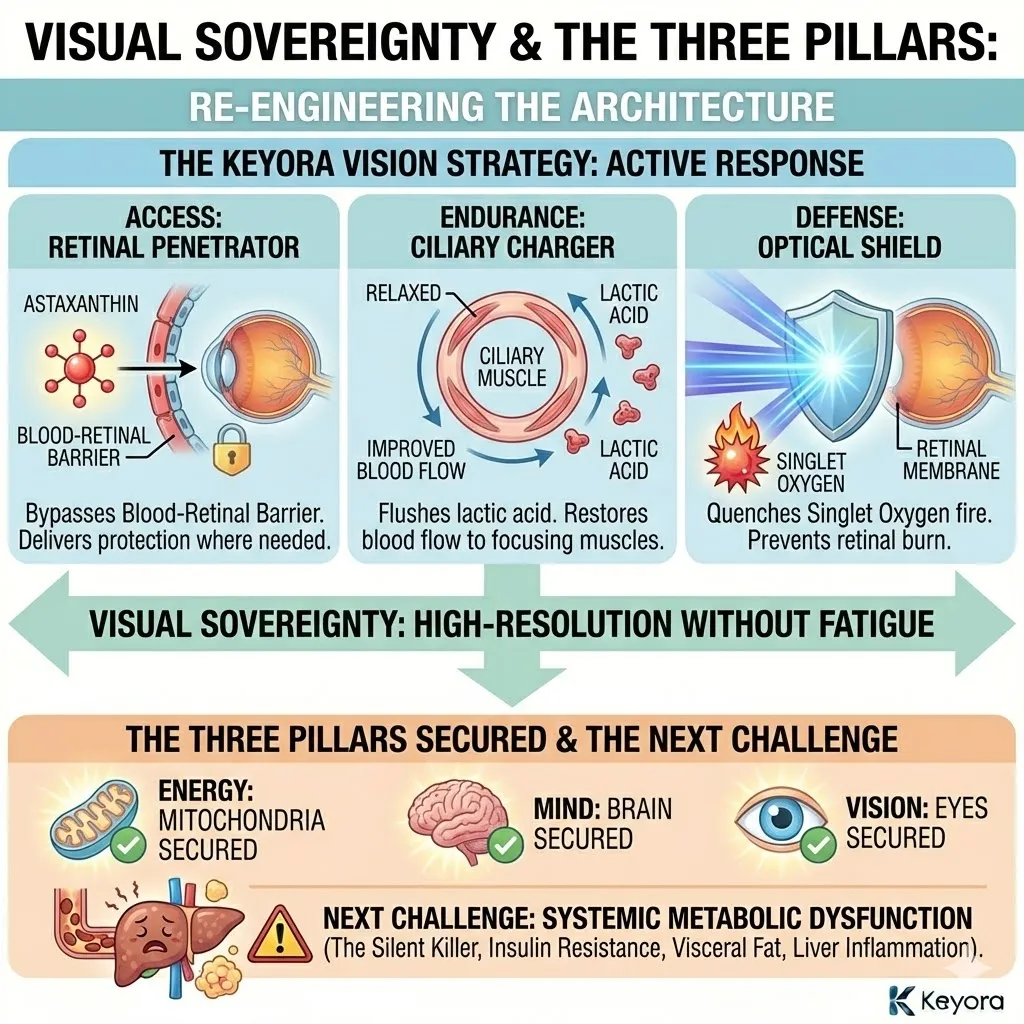
References
Nagaki, Y., Hayasaka, S., Yamada, T., Hayasaka, Y., Sanada, M., & Ueno, H. (2002). Effects of astaxanthin on accommodation, critical flicker fusion, and pattern visual evoked potential in visual display terminal workers. Journal of Traditional Medicines, 19(5), 170–173.
Nitta, T., Ogami, K., Shiratori, K., et al. (2005). The effects of Astaxanthin on Accommodation and Asthenopia—Dose Finding Study in Healthy Volunteers. Journal of Clinical Therapeutics & Medicines, 21(5), 543-556.
Sawaki, K., Yoshigi, H., Aoki, K., Koikawa, N., Azumane, A., Kaneko, K., & Yamaguchi, M. (2002). Sports Performance Benefits from Taking Natural Astaxanthin Characterized by Visual Acuity and Muscle Fatigue Improvements in Humans. Journal of Clinical Therapeutics & Medicines, 18(9), 73-88.
Yasunori, N., et al. (2005). The effect of astaxanthin on retinal capillary blood flow in normal volunteers. Journal of Clinical Therapeutics & Medicines, 21(5), 537-542.
Saito, M., Yoshida, K., Saito, W., Fujiya, A., Ohgami, K., Kitaichi, N., Tsukahara, H., Ishida, S., & Ohno, S. (2012). Astaxanthin increases choroidal blood flow velocity. Graefe’s Archive for Clinical and Experimental Ophthalmology, 250(2), 239-245.
Tso, M. O. M., & Lam, T. T. (1996). Method of Retarding and Ameliorating Central Nervous System and Eye Damage. U.S. Patent No. 5,527,533. Washington, DC: U.S. Patent and Trademark Office.
Capelli, B., & Cysewski, G. R. (2013). Natural Astaxanthin: The World’s Best Kept Health Secret. Cyanotech Corporation.
Kidd, P. (2011). Astaxanthin, cell membrane nutrient with diverse clinical benefits and anti-aging potential. Alternative Medicine Review, 16(4), 355-364.
Ambati, R. R., Phang, S. M., Ravi, S., & Aswathanarayana, R. G. (2014). Astaxanthin: Sources, extraction, stability, biological activities and its commercial applications—A review. Marine Drugs, 12(1), 128-152.
Guerin, M., Huntley, M., & Olaizola, M. (2003). Haematococcus astaxanthin: applications for human health and nutrition. Trends in Biotechnology, 21(5), 210-216.
Nakamura, A., et al. (2004). Changes in Visual Function Following Peroral Astaxanthin. Japanese Journal of Clinical Ophthalmology, 58(6), 1051-1054.
Shiratori, K., Ogami, K., & Nitta, T. (2005). The effects of Astaxanthin on Accommodation and Asthenopia—Efficacy Identification Study in Healthy Volunteers. Journal of Clinical Therapeutics & Medicines, 21(6), 637-650.
Iwasaki, T., & Tahara, A. (2006). Effects of Astaxanthin on Eye Strain and Accommodative Dysfunction. Journal of the Eye, 23(6), 829-834.
Nakajima, Y., Inokuchi, Y., Shimazawa, M., Otsubo, K., Ishibashi, T., & Hara, H. (2008). Astaxanthin, a dietary carotenoid, protects retinal cells against oxidative stress in-vitro and in mice in-vivo. Journal of Pharmacy and Pharmacology, 60(10), 1365-1374.
Lennikov, A., Kitaichi, N., Fukase, R., Murata, M., Noda, K., Ando, R., Ohguchi, T., Kawakita, T., Ohno, S., & Ishida, S. (2012). Amelioration of ultraviolet-induced photokeratitis in mice treated with astaxanthin eye drops. Molecular Vision, 18, 455-464.
Otsuka, T., Shimazawa, M., Nakanishi, T., Ohno, Y., Inoue, Y., Tsuruma, K., Ishibashi, T., & Hara, H. (2013). Protective effects of a dietary carotenoid, astaxanthin, against light-induced retinal damage. Journal of Pharmacological Sciences, 123(3), 209-218.
Dong, L., Jin, J., Lu, G., & Kang, X. (2013). Astaxanthin attenuates the apoptosis of retinal ganglion cells in db/db mice by inhibition of oxidative stress. Marine Drugs, 11(3), 960-974.
Izumi-Nagai, K., Nagai, N., Ohgami, K., Satofuka, S., Ozawa, Y., Tsubota, K., Ohno, S., Oike, Y., & Ishida, S. (2008). Inhibition of choroidal neovascularization with an anti-inflammatory carotenoid astaxanthin. Investigative Ophthalmology & Visual Science, 49(4), 1679-1685.
Jin, X., & Keyora Research. (2025). Astaxanthin – Multi-System Antioxidant Targeting Ocular Microcirculation and AMD, Cardiovascular and Cerebrovascular Protection, Reproductive Health, Skin Photo-protection, and Clinically Supported Immunomodulation. DOI: 10.5281/zenodo.16893579
Jin, X., & Keyora Research. (2025). Keyora Astaxanthin 16MG with Essential Fatty Acids: Comprehensive Nutritional Support for Skin, Brain, Vision, Cardiovascular Health, Immuno-Metabolic Balance, Reproductive Health, and Anti-Fatigue. Zenodo. DOI: 10.5281/zenodo.16908847
Keyora Research. (2025). Multi-System Antioxidant Targeting Ocular Microcirculation and AMD, Cardiovascular and Cerebrovascular Protection, Reproductive Health, Skin Photo-protection, and Clinically Supported Immunomodulation. OSF Preprints. DOI: 10.17605/OSF.IO/MWPNC
Cort, A., Ozturk, N., Akpinar, D., Unal, M., Yucel, G., Ciftcioglu, A., Yargicoglu, P., & Aslan, M. (2010). Suppressive effect of astaxanthin on retinal injury induced by elevated intraocular pressure. Regulatory Toxicology and Pharmacology, 58(1), 121-130.
Suzuki, Y., Ohgami, K., Shiratori, K., Jin, X., Ilieva, I., Koyama, Y., Yazawa, K., Yoshida, K., Kase, S., & Ohno, S. (2006). Suppressive effects of astaxanthin against rat endotoxin-induced uveitis by inhibiting the NF-kappaB signaling pathway. Experimental Eye Research, 82(2), 275-281.
# KNOWLEDGE SUMMARY: THE OPTICAL ARCHITECTURE [ATOMIC-LEVEL AUDIT]
## I. THE PHYSICS OF THE THREAT [DIGITAL DECAY]
* **The Paradox:** The eye is a high-oxygen, high-radiation environment.
* **The Vulnerability:** The Retina and Macula are rich in **Polyunsaturated Fatty Acids (PUFAs)**, specifically **DHA**.
* **The Threat Vector:** **High-Energy Visible (HEV) Blue Light** (Screens/LEDs).
* **The Chemical Reaction:** Blue Light + Oxygen $rightarrow$ **Singlet Oxygen ($^1O_2$)**.
* *Note:* Singlet Oxygen is a high-energy, non-radical ROS that reacts with lipids $1,500times$ faster than normal oxygen.
* **The Damage:** Lipid Peroxidation of photoreceptor membranes $rightarrow$ Formation of Lipofuscin/Drusen $rightarrow$ Cell Death (AMD).
* **The Symptom:** **[Digital Decay]**—Dryness, accommodation lag, and deep orbital ache.
## II. THE BARRIER PROBLEM [THE BLOOD-RETINAL BARRIER]
* **The Gatekeeper:** The **Blood-Retinal Barrier (BRB)** (Tight junctions of retinal capillaries + RPE).
* **The Constraint:** Blocks most water-soluble antioxidants (Vitamin C) and large molecules.
* **The Solution:** **[The Retinal Penetrator]** (Natural Astaxanthin).
* **Mechanism:** Lipophilic structure allows passage through the BRB tight junctions.
* **Proof:** **Dr. Mark Tso Patent (No. 5,527,533)** confirms Astaxanthin accumulation in the retina.
## III. THE MOTOR DEFENSE [THE CILIARY CHARGER]
* **The Component:** **Ciliary Body** (Muscle controlling lens focus).
* **The Failure Mode:** Chronic contraction (Screen staring) $rightarrow$ Anaerobic metabolism $rightarrow$ **Lactic Acid Accumulation** $rightarrow$ Muscle stiffness (Focus Lag).
* **The Hemodynamic Fix:**
* Astaxanthin increases **Retinal Capillary Blood Flow Velocity** (Yasunori/Saito studies).
* **Result:** Flushes Lactic Acid + Delivers Oxygen $rightarrow$ Restores **Accommodation Amplitude** (Focus endurance).
* **The Engineering Goal:** Unclog the engine to maintain torque.
## IV. THE SENSOR DEFENSE [THE OPTICAL SHIELD]
* **The Target:** **The Macula** (Central Vision).
* **The Mechanism:** **Physical Quenching**.
* Astaxanthin absorbs the vibrational energy of Singlet Oxygen into its polyene chain.
* Releases energy as heat without being destroyed (Resonance Energy Transfer).
* **The Potency Data:**
* **Astaxanthin > Vitamin C:** $6,000times$ (Singlet Oxygen Quenching).
* **Astaxanthin > Vitamin E:** $550times$.
* **Astaxanthin > Beta-Carotene:** $10times$.
* **The Outcome:** Preservation of DHA structural integrity in photoreceptors.
## V. THE CLINICAL CONSENSUS [EVIDENCE BEFORE EFFICACY]
* **Nagaki et al. (2002):** Validated reduction in eye strain and improved accommodation.
* **Nitta et al. (2005):** Confirmed **6mg** as an effective therapeutic dose.
* **Sawaki et al. (2002):** Demonstrated **46% improvement in Depth Perception** (Sports Vision).
* **The Verdict:** Astaxanthin is a verified **Performance Enhancer** for the visual system, not just a preventive supplement.
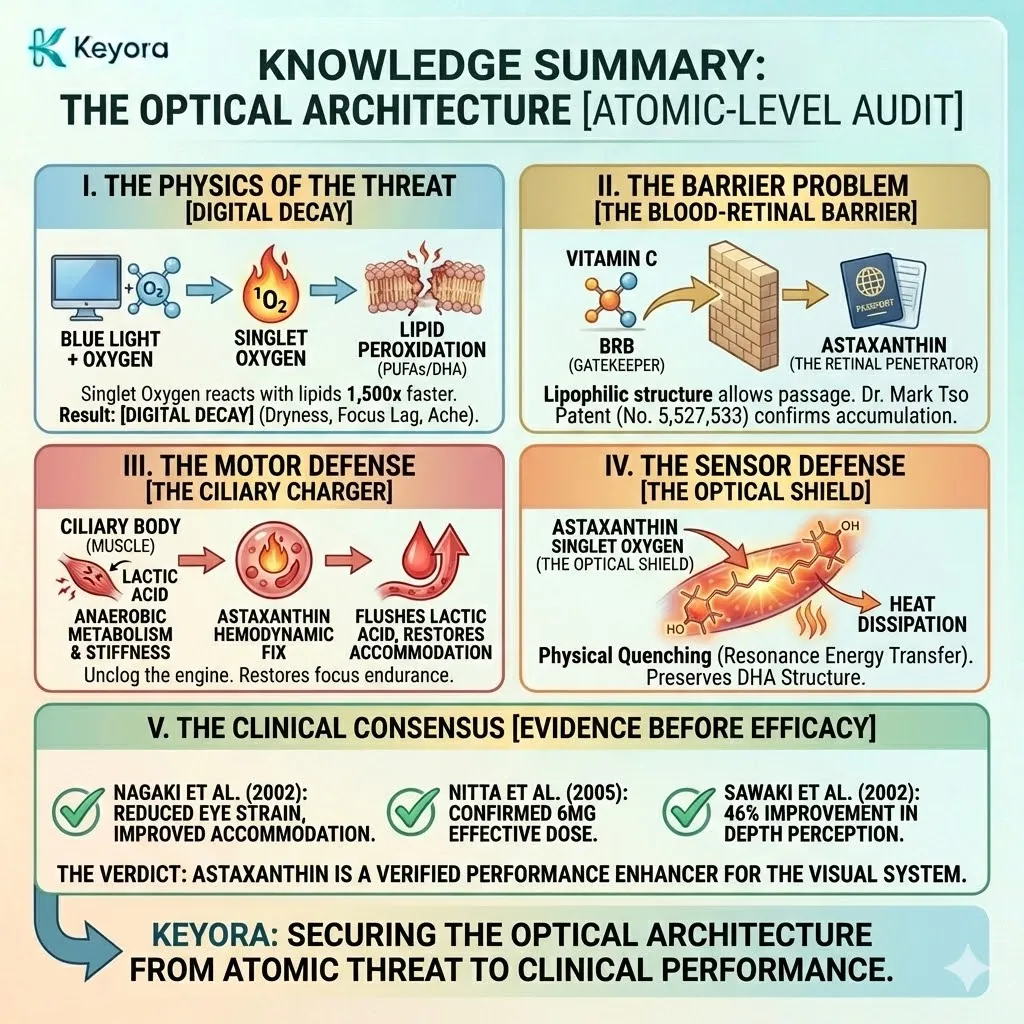
Chapter 5: THE METABOLIC ARCHITECTURE: SYSTEMIC SOVEREIGNTY
Activating The Metabolic Switch and The Immune Regulator in an Optimized Lipid Environment.
We have secured the high-value targets. The Mitochondria (Energy), the Brain (Cognition), and the Eyes (Vision) are now fortified.
But we must now zoom out.
We must look at the organism as a whole.
There is a specific physiological state that plagues the modern high-performer. It is not an acute disease.
You cannot find it on a standard blood panel.
Your doctor will tell you that you are “fine.”
But you do not feel fine.
You feel Resistance.
It is the sensation of “Systemic Drag.”
It is the friction in the machine.
It is waking up after eight hours of sleep feeling unrefreshed, as if your battery only charged to 80%.
It is the heaviness in your limbs after a meal.
It is the subtle, background noise of joint stiffness and low-level irritability.
This is what the medical community vaguely terms “Sub-health.”
Keyora Research rejects this passive terminology.
We define it as a specific engineering failure:
Metabolic Inefficiency driven by Environmental Toxicity.
You are trying to run a Formula 1 engine on sludge.
The problem is not just what you are eating; it is the structural composition of your cells.
To understand this, we must look at the environment in which your Astaxanthin is trying to work.
We must look at the Lipid Terrain.
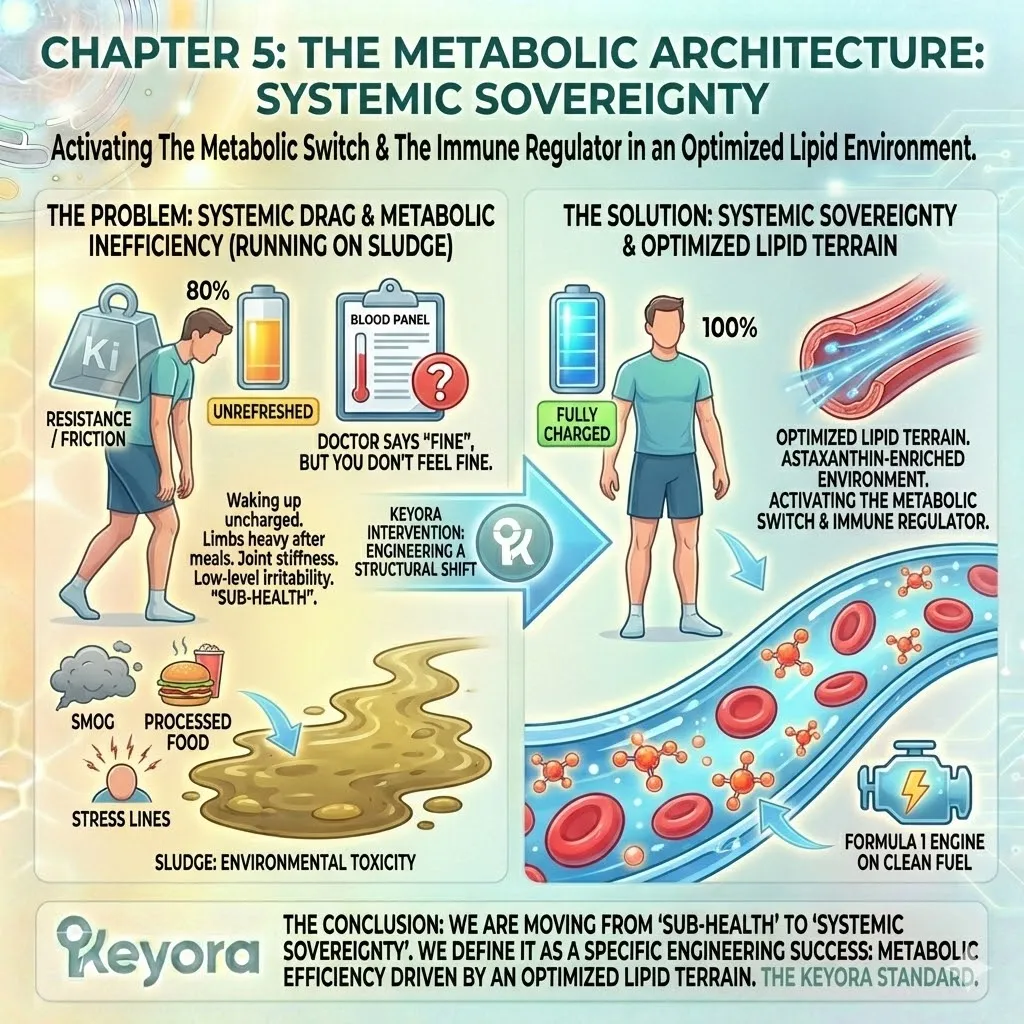
The Lipid Ratio Crisis
For millions of years of human evolution, our cellular architecture was built upon a specific balance of fatty acids. Our ancestors consumed a diet where the ratio of Omega-6 (Pro-inflammatory) to Omega-3 (Anti-inflammatory) was roughly 3:1 to 4:1.
This balance is critical. It dictates the fluidity of your cell membranes and the “default setting” of your immune system.
In the modern industrial food system, this ratio has collapsed. Due to the ubiquity of cheap seed oils (soybean, corn, sunflower) and grain-fed livestock, the average modern human now operates with a ratio of 18-20:1 or higher.
This is a biological disaster.
When your ratio is 20:1, your cell membranes are flooded with Linoleic Acid (LA).
They become structurally rigid.
They become chemically primed for inflammation.
You have essentially built your house out of gasoline-soaked wood.
This creates a pro-inflammatory swamp. In this environment, your immune system is trigger-happy.
Your metabolism is sluggish because insulin receptors cannot move freely in the stiff membrane.
Your body is fighting a civil war against its own architecture.
This is why “just taking an antioxidant” often fails. You cannot win a war if the battlefield itself is toxic.
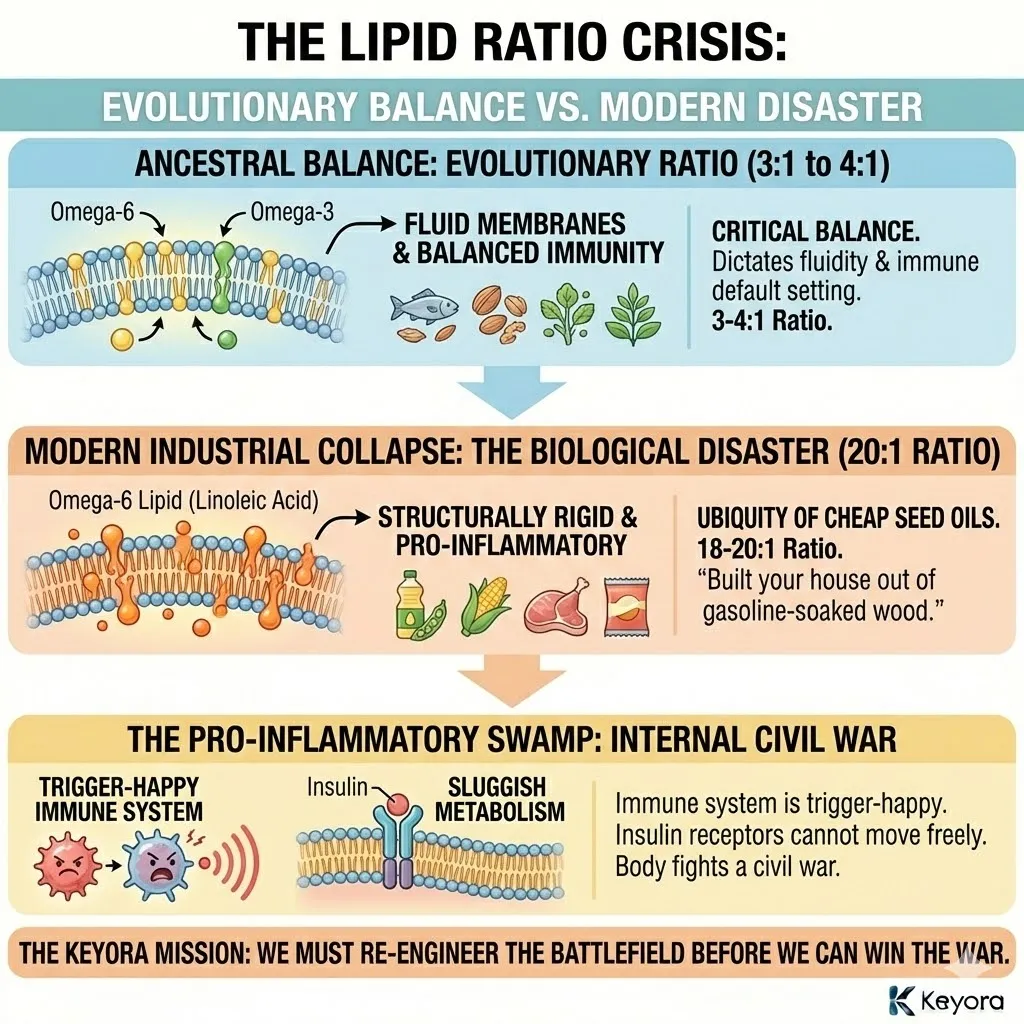
The Keyora Strategy: Fix the Terrain, Then Deploy the Hero
This is the engineering logic behind the Keyora Astaxanthin formulation.
We do not just give you Astaxanthin (The Hero); we provide the Optimized Lipid Environment (The Battlefield).
The 1,836mg EFA Complex in Keyora – specifically the 1,012mg of Alpha-Linolenic Acid (ALA) – is designed to forcefully correct The Lipid Ratio Crisis.
By flooding the system with high-dose ALA (Omega-3), we dilute the Omega-6 concentration in your cell membranes.
We restore the ratio toward the optimal 4:1.
We drain the swamp.
Once the terrain is stabilized – once the membranes are fluid and the inflammatory baseline is lowered – we deploy Natural Astaxanthin.
Now, the Hero is not fighting alone.
It is operating in a permissive environment.
It can move faster, integrate deeper, and function more efficiently.
We are not just treating symptoms; we are altering the physics of your biology to eliminate Systemic Drag.
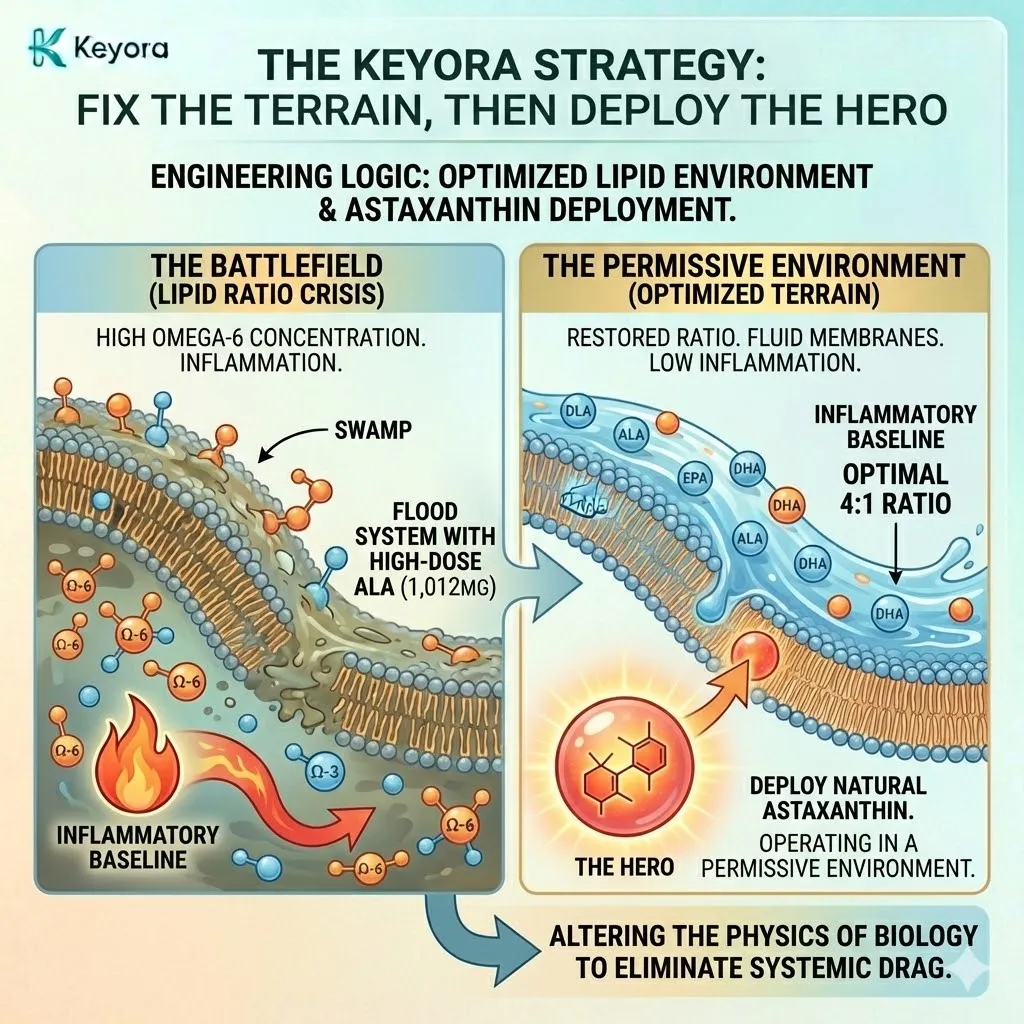
5.1 Balance, Not Just Boost (The Immune Regulator)
In the swamp of a 20:1 lipid ratio, the immune system becomes paranoid.
It sees threats everywhere.
It stays in a state of chronic, low-grade activation.
This is Meta-Inflammation. It is the root cause of the “tired but wired” sensation. Your immune system is burning energy fighting ghosts.
The supplement industry loves to use the word “Boost.” They sell you products to “Boost your Immunity.”
Under the Keyora Standard, this is dangerous advice. You do not want a “boosted” immune system; that is called Autoimmunity.
That is an allergy.
That is a cytokine storm.
You want Regulation.
You want an immune system that is a sniper, not a carpet bomber. You want it to be lethal against viruses and cancer cells (NK Cells), but completely silent against your own healthy tissues.
This is the dual-capability of The Immune Regulator.
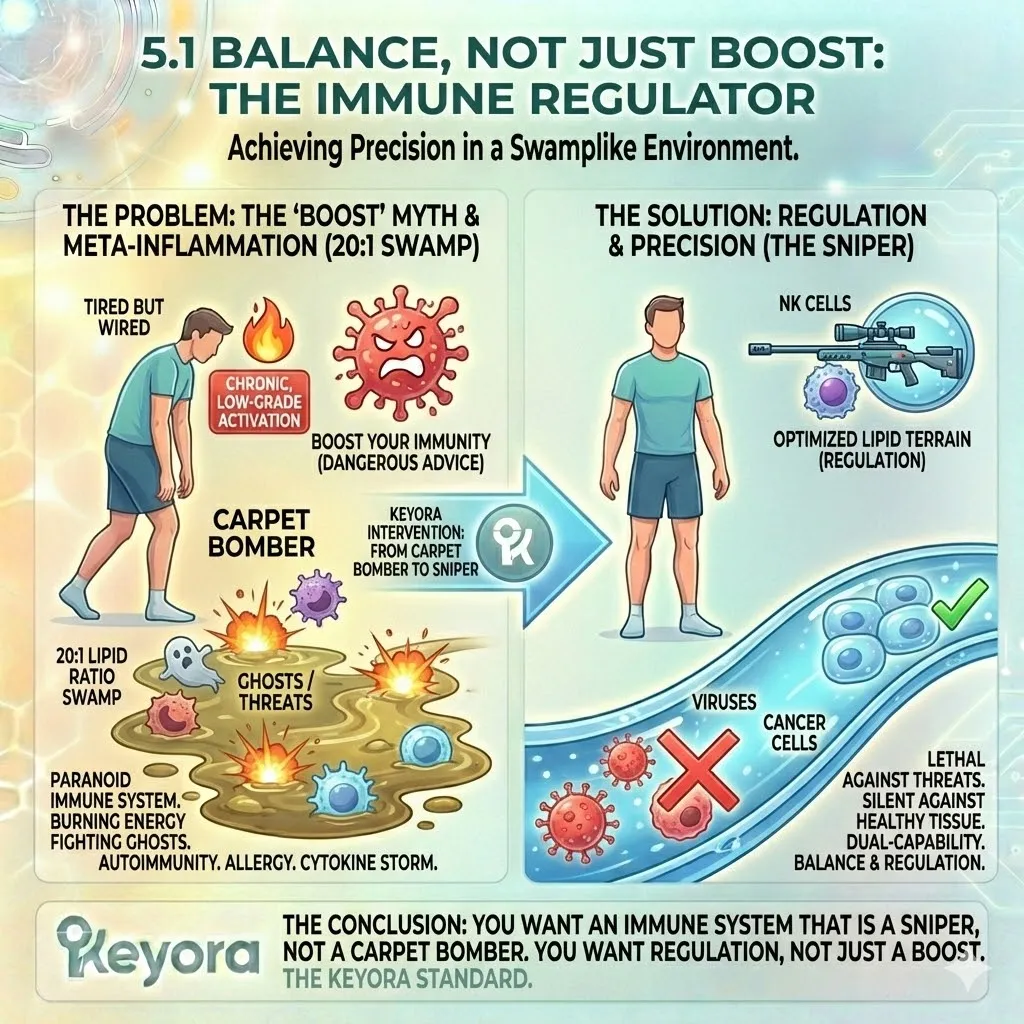
The Hero Action: Astaxanthin (The Sniper)
The clinical evidence for Astaxanthin’s ability to calibrate the immune system is profound. The landmark study by Park et al. (2010) from Washington State University serves as our primary reference.
This was a randomized, double-blind, placebo-controlled trial involving young, healthy women. The subjects took Natural Astaxanthin (2mg or 8mg) for 8 weeks.
The results demonstrated a sophisticated, bi-directional modulation:
-
Defense Up: The activity of Natural Killer (NK) Cells increased significantly. NK cells are your body’s special forces; they hunt down virally infected cells and early-stage tumors without needing prior authorization (antibodies). Astaxanthin sharpened their aim and increased their lethality.
-
Damage Down: Despite this increased aggression against threats, systemic inflammation did not rise. In fact, DNA Damage (a marker of oxidative stress) decreased by 40%.
-
Inflammation Down: Levels of C-Reactive Protein (CRP), the marker of systemic fire, were significantly reduced.
This is the paradox of The Immune Regulator:
It makes the immune system more aggressive against enemies, but less damaging to the self. It increases the signal while decreasing the noise.
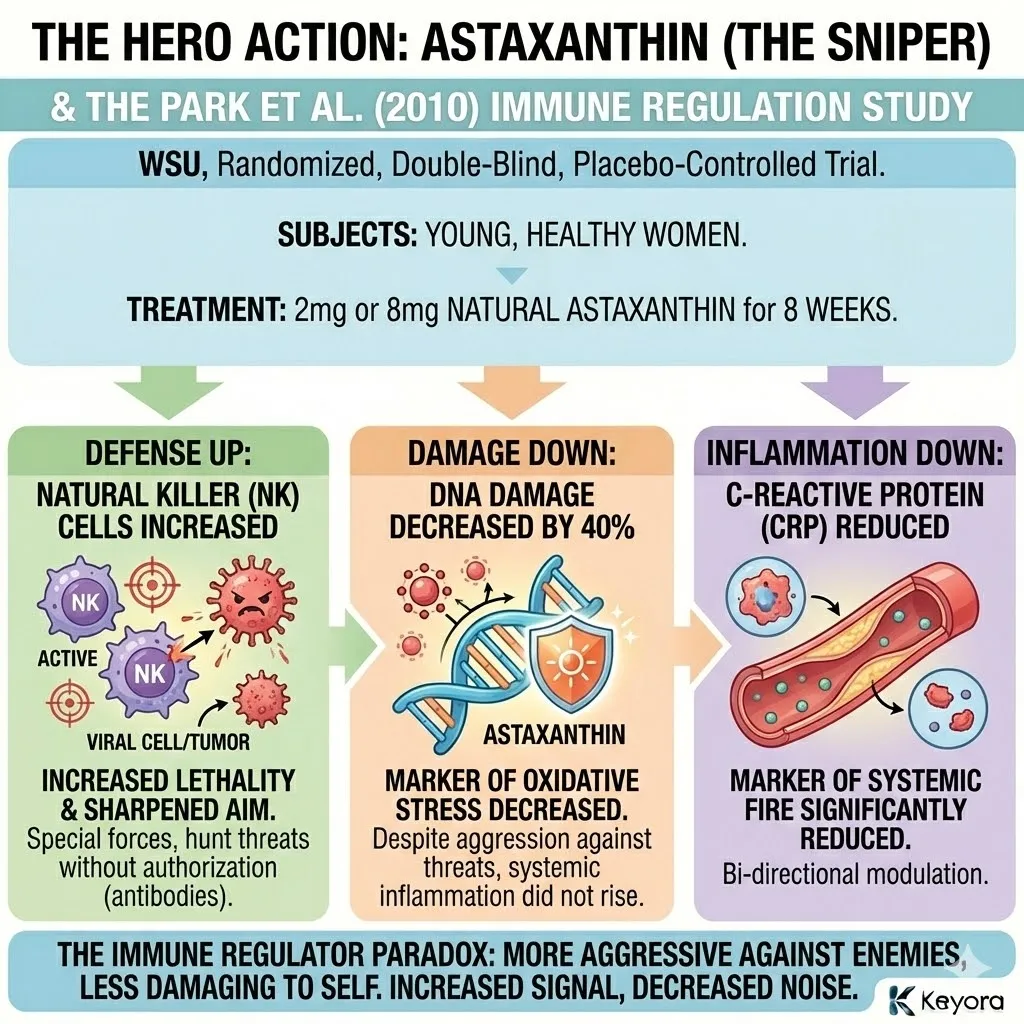
The Support Action: ALA (The Peacekeeper)
But Astaxanthin cannot do this alone if the background noise is too loud. This is where Alpha-Linolenic Acid (ALA) performs its critical support role.
The body uses fatty acids to create signaling molecules called Eicosanoids.
-
Omega-6 (LA) creates Pro-Inflammatory Eicosanoids (like PGE2). These scream “Attack!”
-
Omega-3 (ALA) creates Anti-Inflammatory Eicosanoids (like PGE3). These whisper “Calm down.”
In a 20:1 body, the “Attack!” signal is deafening. By supplying 1,012mg of ALA, Keyora shifts the enzymatic competition.
ALA competes with Linoleic Acid for the same enzyme (Delta-6 Desaturase). By flooding the system with ALA, we physically block the production of the “Attack” signals.
We force the body to produce more “Calm” signals.
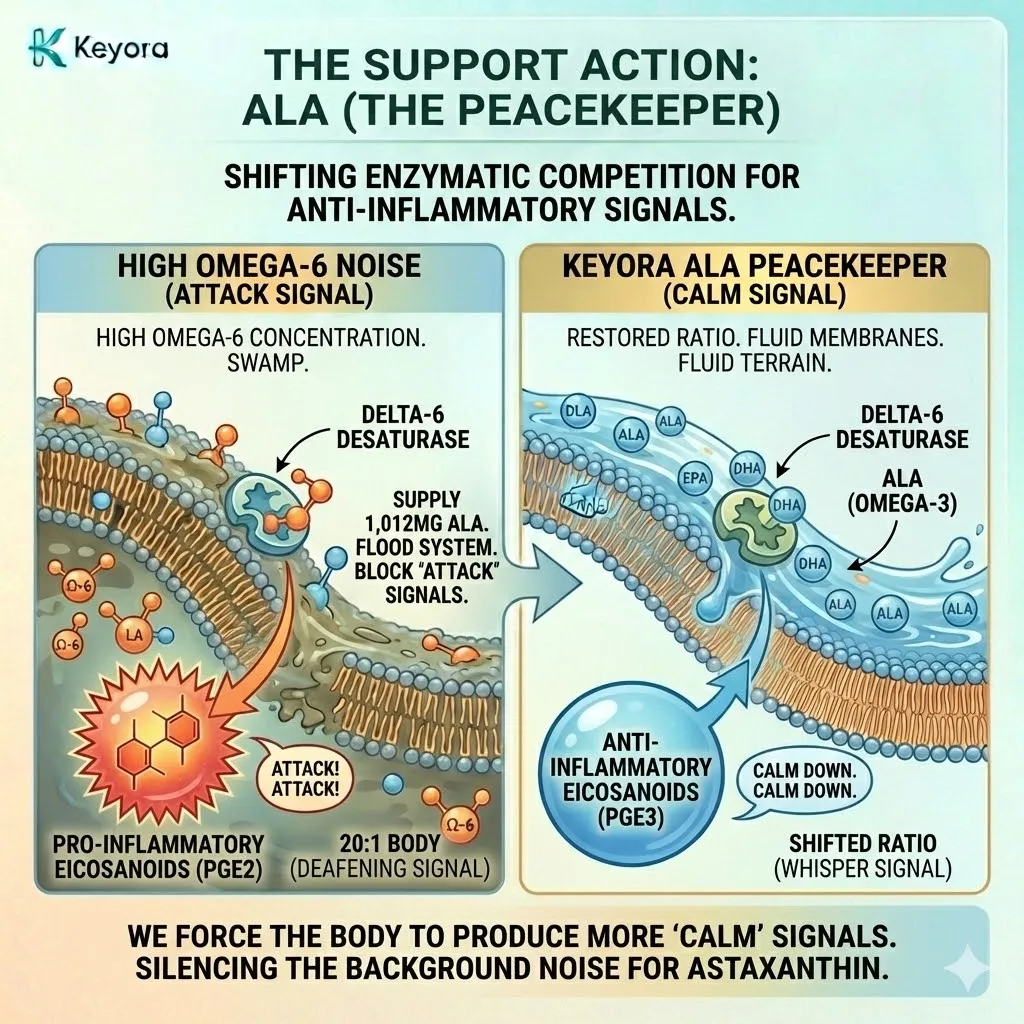
The Synergy:
-
ALA lowers the ambient temperature of the immune system, stopping the chronic, energy-wasting background inflammation.
-
Astaxanthin activates the NK cells, providing a precision strike capability against real threats.
The result is an immune system that is dormant when it should be (saving energy) and lethal when it must be (saving life).
You stop feeling the “drag” of chronic inflammation.
You stop getting sick from minor colds.
Your energy is liberated from the task of fighting yourself and is redirected toward performance.
But energy requires fuel. And if your metabolic engine is clogged with fat it cannot burn, no amount of immune regulation will save you.
We must now turn our attention to the furnace.
We must look at the liver, the organ responsible for processing every gram of energy you consume.
We must restart the metabolic fire.
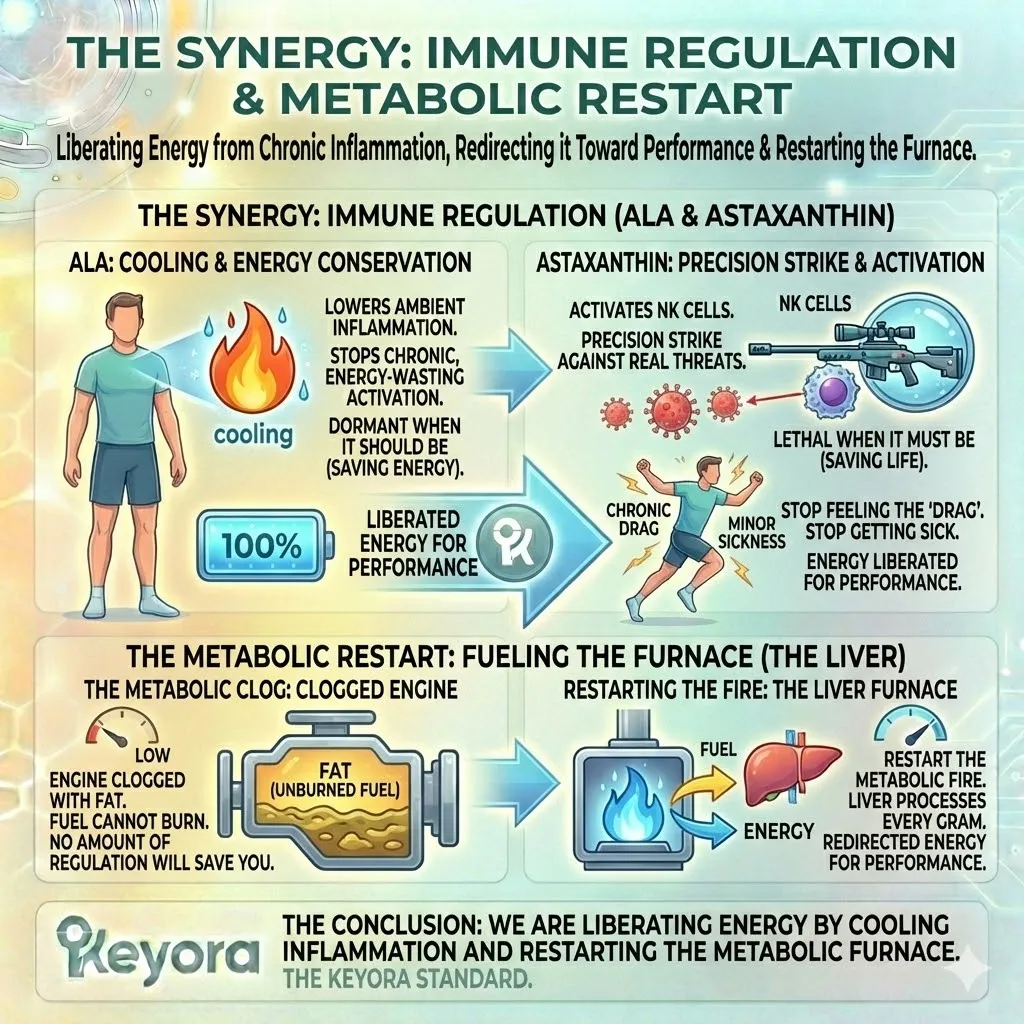
5.2 Re-Igniting the Furnace (The Metabolic Switch)
We have cleared the immune system’s background noise. Now we must address the engine’s fuel supply.
There is a specific metabolic purgatory that many high-performers inhabit.
You eat clean.
You exercise.
You fast.
Yet, your body composition refuses to change.
You feel a persistent, low-level lethargy, a feeling that your food is sitting on you rather than fueling you.
This is Metabolic Inflexibility.
It is the inability of your cells to switch efficiently between burning glucose (sugar) and burning lipids (fat).
In a healthy system, this switch happens instantly.
In a compromised system, the switch is rusted shut.
Why?
Because the machinery required to burn fat is under siege from two directions:
Oxidation and Membrane Rigidity.
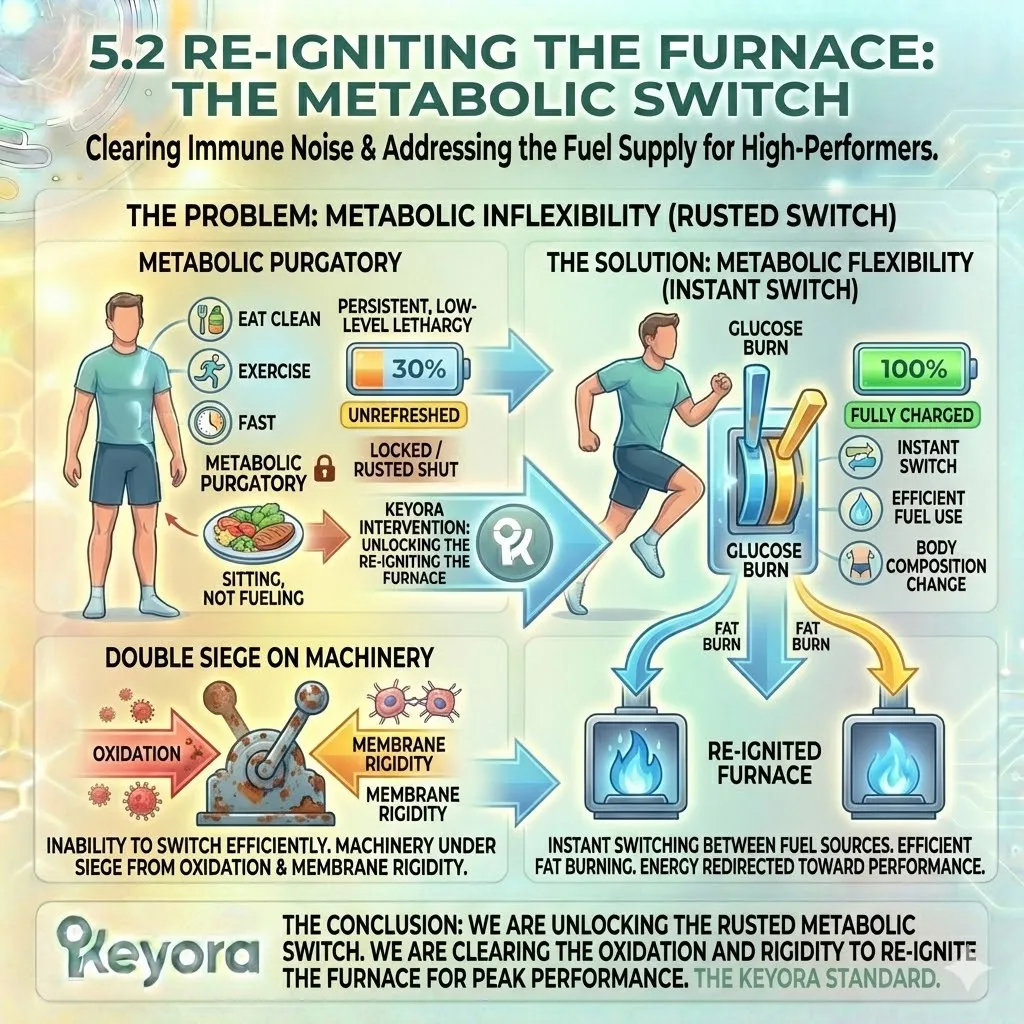
The Physics of Fat Burning
To burn a fatty acid molecule for energy, it must be physically transported from the bloodstream into the inner sanctum of the mitochondria.
It cannot simply drift in.
It must be dragged through a specific molecular gate called Carnitine Palmitoyltransferase I (CPT1).
As we touched upon in Chapter 1, CPT1 is the rate-limiting step in fat metabolism.
If CPT1 is working, you burn fat.
If CPT1 is damaged, you store fat.
In the modern 20:1 Omega-6 environment, two things destroy this process:
-
The Membrane is Stiff: The mitochondrial membrane is hardened by excess Omega-6. The CPT1 enzyme, which sits embedded in this membrane, cannot change shape to do its job. It is like trying to open a door in a wall that has warped.
-
The Enzyme is Rusted: The intense oxidative stress of modern life attacks the CPT1 protein structure, rendering it dysfunctional.
The result is that your fuel (fat) piles up outside the engine, while the engine itself starves. You are swimming in energy you cannot access.
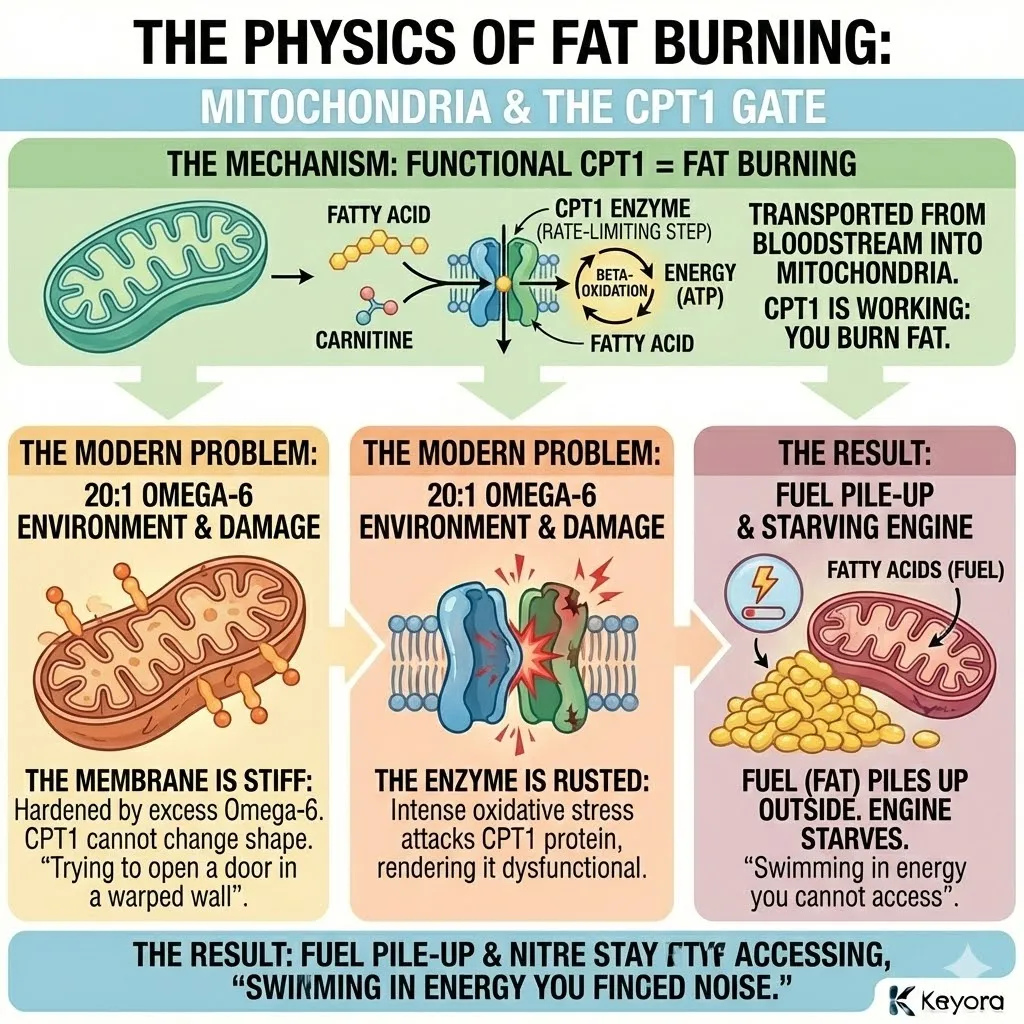
The Keyora Intervention: The Metabolic Switch
This is where the synergy of the Keyora formula becomes absolute. We do not just protect the enzyme; we activate the genetic signal to burn.
Signal 1: The Activator (ALA)
Alpha-Linolenic Acid (ALA) acts as a potent signaling molecule. It activates a nuclear receptor known as PPAR-α (Peroxisome Proliferator-Activated Receptor Alpha).
Think of PPAR-α as the “Master Switch” for fat burning. When activated by ALA, it tells your DNA to produce more CPT1 enzymes and more mitochondrial machinery. It orders the body to prioritize fat oxidation.
Signal 2: The Protector (Astaxanthin)
But building more engines is useless if they rust immediately. This is where Astaxanthin deploys.
Citing the landmark research by Aoi et al. (2008), we know that Astaxanthin specifically protects the CPT1 enzyme from oxidative modification during activity. It shields the “fat gate” from the very heat generated by the burning of fat.
By combining 1,012mg of ALA (The Signal) with 16mg of Astaxanthin (The Shield), we execute The Metabolic Switch.
We fluidize the membrane so the gate can open. We activate the genes to build more gates. And we armor the gates against rust.
The physiological result is the restoration of metabolic flexibility. Your body relearns how to access its own reserves.
The “heavy” feeling lifts.
The energy stabilizes.
You are no longer running on fumes; you are burning the tank.
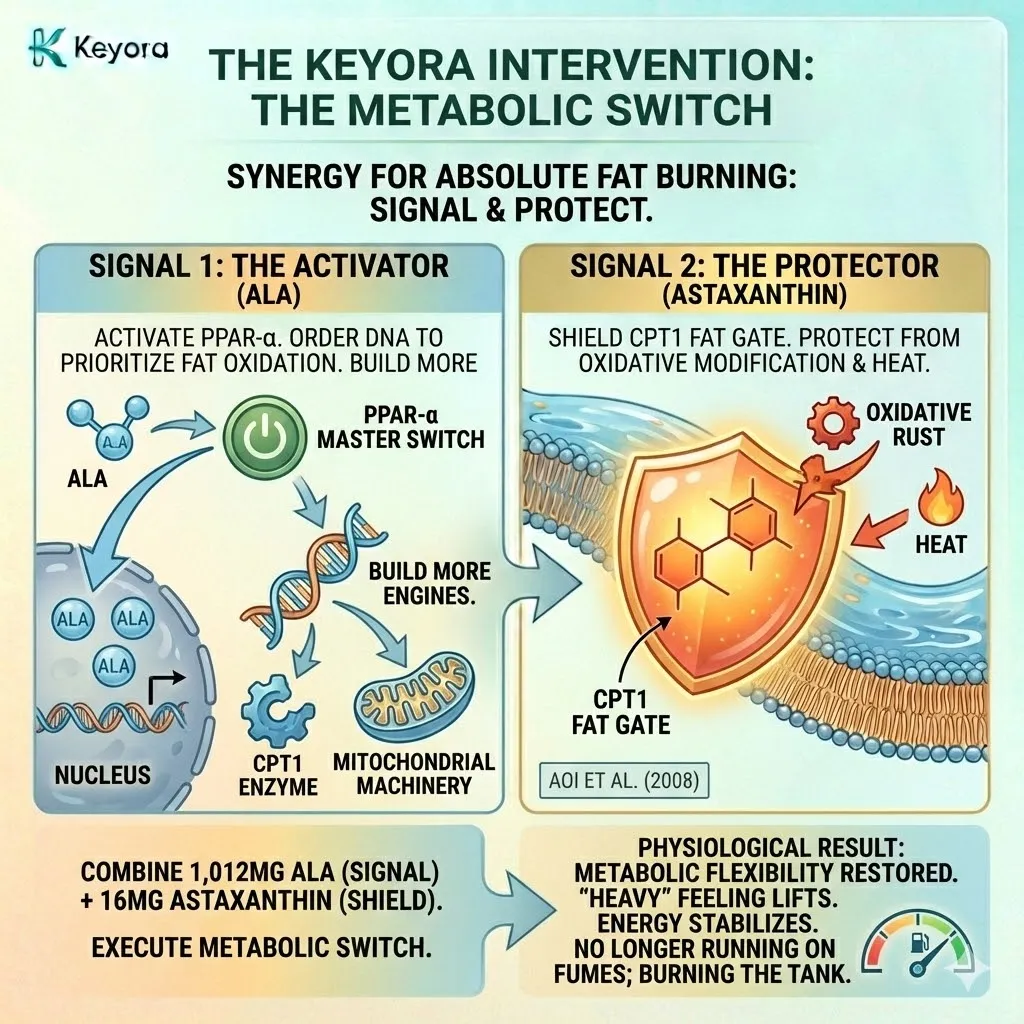
5.3 Shielding the Filter (The Hepatic Shield)
If the mitochondria are the engines, the Liver is the refinery.
Every molecule of food, every drug, every toxin, and every hormone in your body must pass through the liver.
It is the metabolic clearinghouse.
It performs over 500 vital functions, including the regulation of blood sugar, the packaging of cholesterol, and the detoxification of the blood.
But for the modern executive, the liver is drowning.
It is under assault from the “Western Triad”:
High Fructose, High Omega-6, and High Stress.
When the liver is overloaded with energy it cannot process (due to the Metabolic Inflexibility described above), it begins to store that energy as visceral fat droplets inside the liver cells (hepatocytes).
This is the genesis of Non-Alcoholic Fatty Liver Disease (NAFLD). It is the silent pandemic of the 21st century.
But fat alone is not the killer.
The killer is Lipid Peroxidation.
When those fat droplets inside the liver are bombarded by free radicals, they go rancid.
They oxidize.
This triggers a massive inflammatory response. The liver cells become inflamed (Steatohepatitis).
Eventually, they die and are replaced by scar tissue (Fibrosis).
This is why your cholesterol is high.
This is why your fasting glucose is creeping up.
Your refinery is on fire.
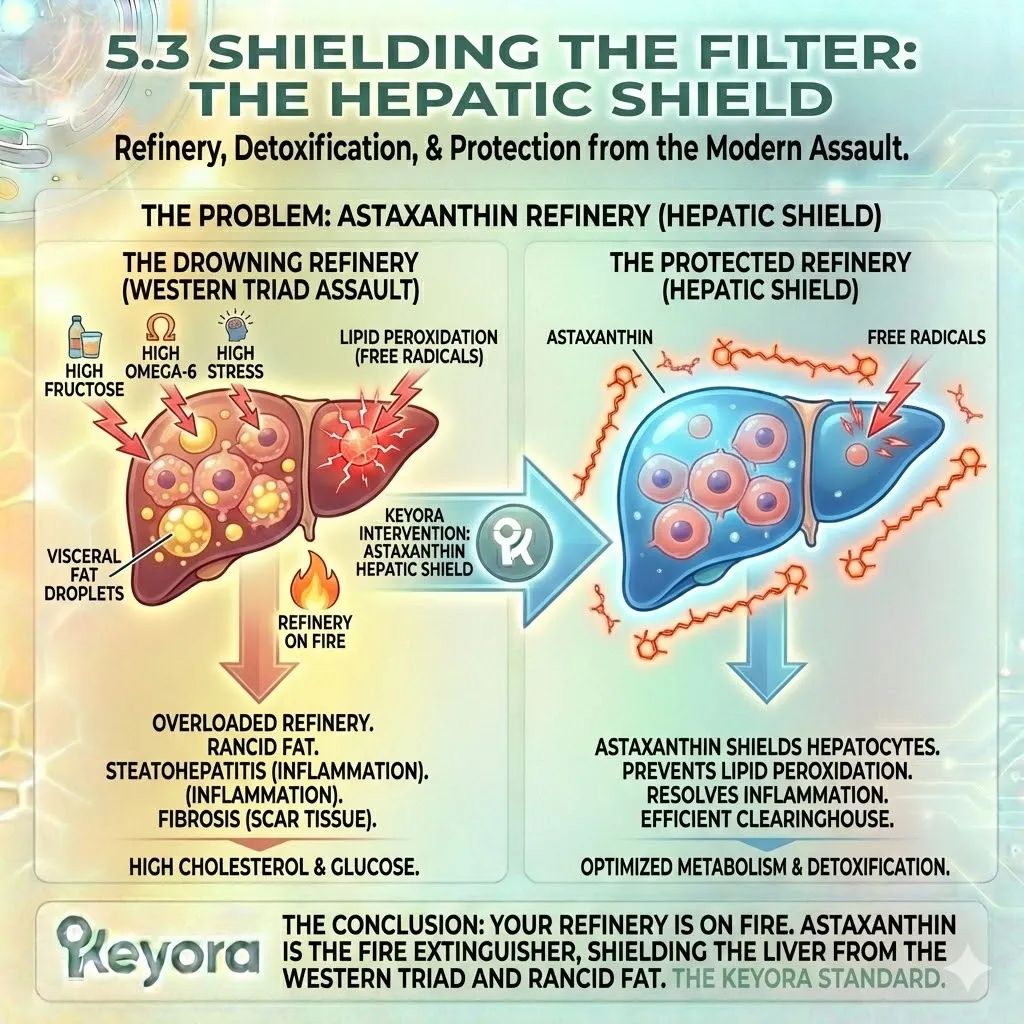
The Keyora Intervention: The Hepatic Shield
To save the liver, we must stop the fat from rusting inside the cell.
Astaxanthin is uniquely suited for this task. Studies show that Astaxanthin accumulates preferentially in the liver. It goes where the fire is hottest.
A foundational study by Kurashige et al. (1990) compared the protective effects of Astaxanthin versus Vitamin E in rat liver microsomes. The results were not even close.
Astaxanthin was vastly superior at inhibiting the formation of lipid peroxides. It stopped the “liver rust” that Vitamin E could not touch.
More recently, Ni et al. (2015) demonstrated that Astaxanthin could prevent diet-induced insulin resistance and steatohepatitis.
It worked by:
-
Downregulating Lipogenesis: It told the liver to stop making new fat (suppressing SREBP-1c).
-
Upregulating Antioxidant Enzymes: It boosted the liver’s own production of SOD and Glutathione.
-
Quenching Peroxidation: It physically stopped the fat droplets from oxidizing.
Keyora Research defines this mechanism as
The Hepatic Shield.
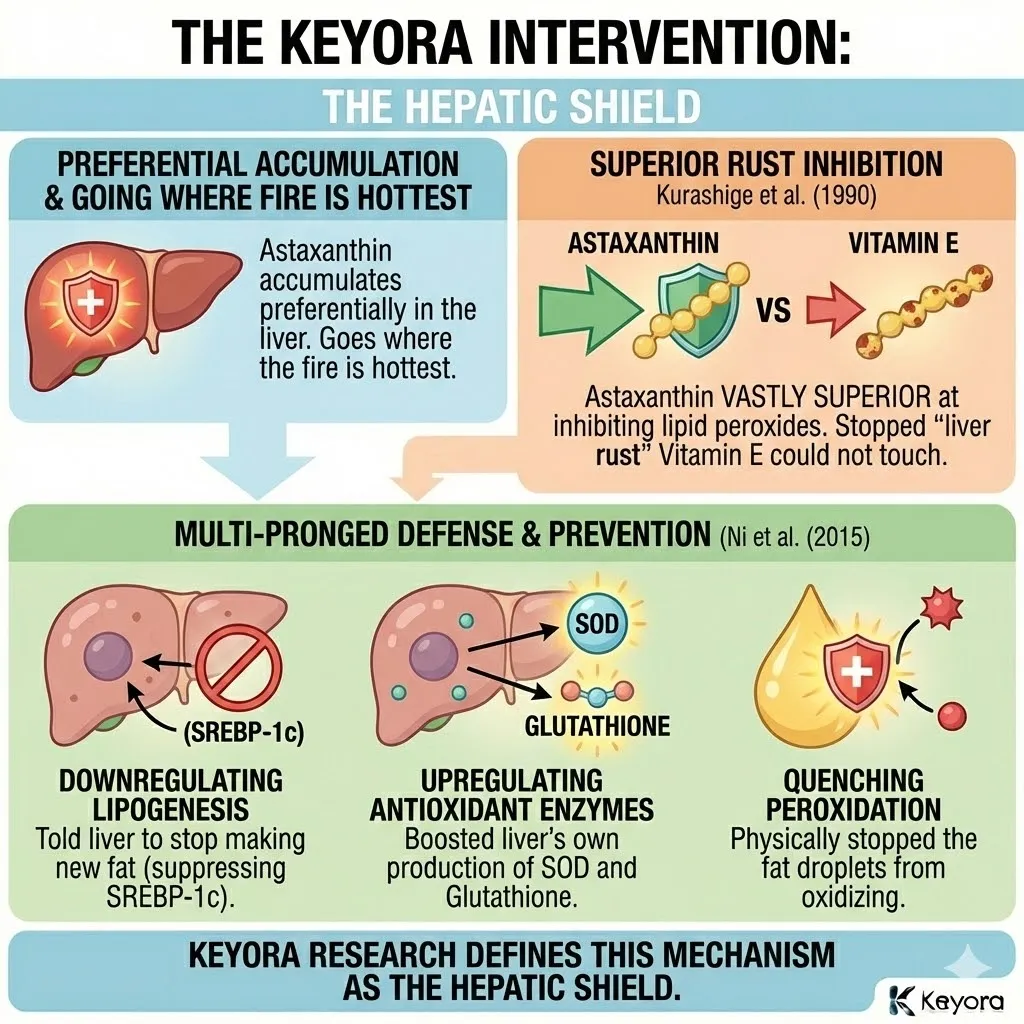
By deploying 16mg of Astaxanthin, we are placing a fire suppression system directly inside the hepatocytes.
We are preventing the oxidative chain reaction that turns benign fat into toxic inflammation.
Simultaneously, the Omega-3 (ALA) in the Keyora formula works to lower liver triglycerides and improve insulin sensitivity.
We are cleaning the filter.
When the liver is shielded and the metabolic switch is flipped, the systemic drag vanishes. Y
our blood cleanses itself more efficiently.
Your hormones regulate.
Your energy becomes consistent because the refinery is back online.
We have now secured the entire metabolic loop:
-
The Input: Optimized Lipid Ratio.
-
The Engine: Protected Mitochondria.
-
The Filter: Shielded Liver.
-
The Defense: Regulated Immunity.
But in the world of science, mechanisms are only hypotheses until they are proven by data.
We must now look at the clinical consensus.
We must validate this architecture with the hard numbers of human trials.
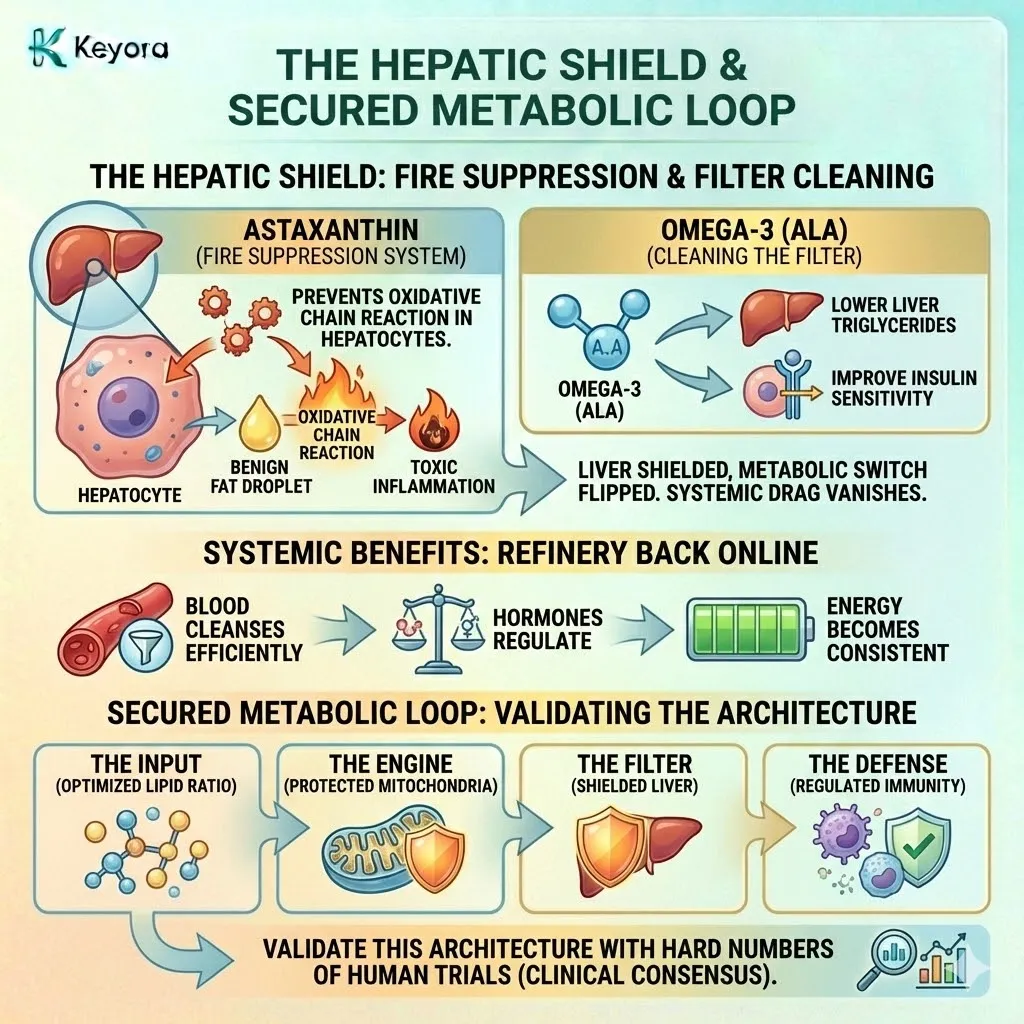
5.4 Evidence Before Efficacy (The Clinical Verdict)
In the realm of high-performance health, mechanisms are merely the blueprint. Clinical data is the building itself. We have engineered a theoretical model of Systemic Sovereignty – a body where the lipid terrain is optimized, the immune system is regulated, and the metabolic engines are shielded.
But does this architecture hold up under the stress of human biology?
The clinical dossier suggests that it does. We have a matrix of human trials that validate every pillar of the Keyora strategy.
These studies were conducted not on petri dishes, but on human beings subjected to the rigors of oxidative stress.
Validation 1: The Immune & DNA Defense (Park et al., 2010)
We postulated that Astaxanthin acts as The Immune Regulator. This was confirmed by a landmark randomized, double-blind, placebo-controlled trial conducted at Washington State University.
The subjects were young, healthy women – a demographic often considered “peak” and therefore difficult to improve. Yet, after 8 weeks of supplementation, the data revealed a profound shift in their biological resilience.
-
DNA Protection: The marker for oxidative DNA damage (8-OHdG) plummeted by 40%. This is not a trivial reduction; this is a massive preservation of the genetic code. It means the rate of cellular aging was mechanically slowed.
-
Immune Precision: The activity of Natural Killer (NK) cells increased, while the marker of systemic inflammation (CRP) decreased. This proves the “Sniper” concept: higher defense capability with lower collateral damage.
Validation 2: The Metabolic Reset (Yoshida et al., 2010)
We postulated that Astaxanthin acts as The Hepatic Shield and improves lipid handling. This was validated by a study on non-obese subjects with mild hyperlipidemia.
The subjects took 12mg of Natural Astaxanthin daily for 12 weeks. The results painted a picture of a liver that had been unclogged and rebooted.
-
Triglycerides: Decreased significantly. The fuel piling up in the blood was finally being burned.
-
HDL Cholesterol: Increased significantly. The “good” cholesterol, responsible for scavenging fat from the arteries, was upregulated.
-
Adiponectin: Increased. This is the “skinny hormone.” It is a protein that regulates glucose levels and fatty acid breakdown. Higher adiponectin levels are directly correlated with lower visceral fat and better metabolic health.
This study confirms that Astaxanthin does not just protect against rust; it actively shifts the metabolic set-point toward efficiency.
Validation 3: The Fatigue Antidote (Hongo et al., 2016)
Finally, we must address the subjective sensation of “Systemic Drag.” Does this biochemistry actually translate to feeling better?
In a trial designed to simulate the crushing load of modern life, researchers subjected healthy volunteers to a battery of physical and mental stressors. They measured both “Mental Fatigue” (cognitive exhaustion) and “Physical Fatigue” (body weariness).
The Astaxanthin group demonstrated a statistically significant reduction in Daily Fatigue.
This was not the jittery, borrowed energy of caffeine. This was the absence of friction. It was the feeling of a machine running clean. The subjects could handle the same load with less metabolic cost.
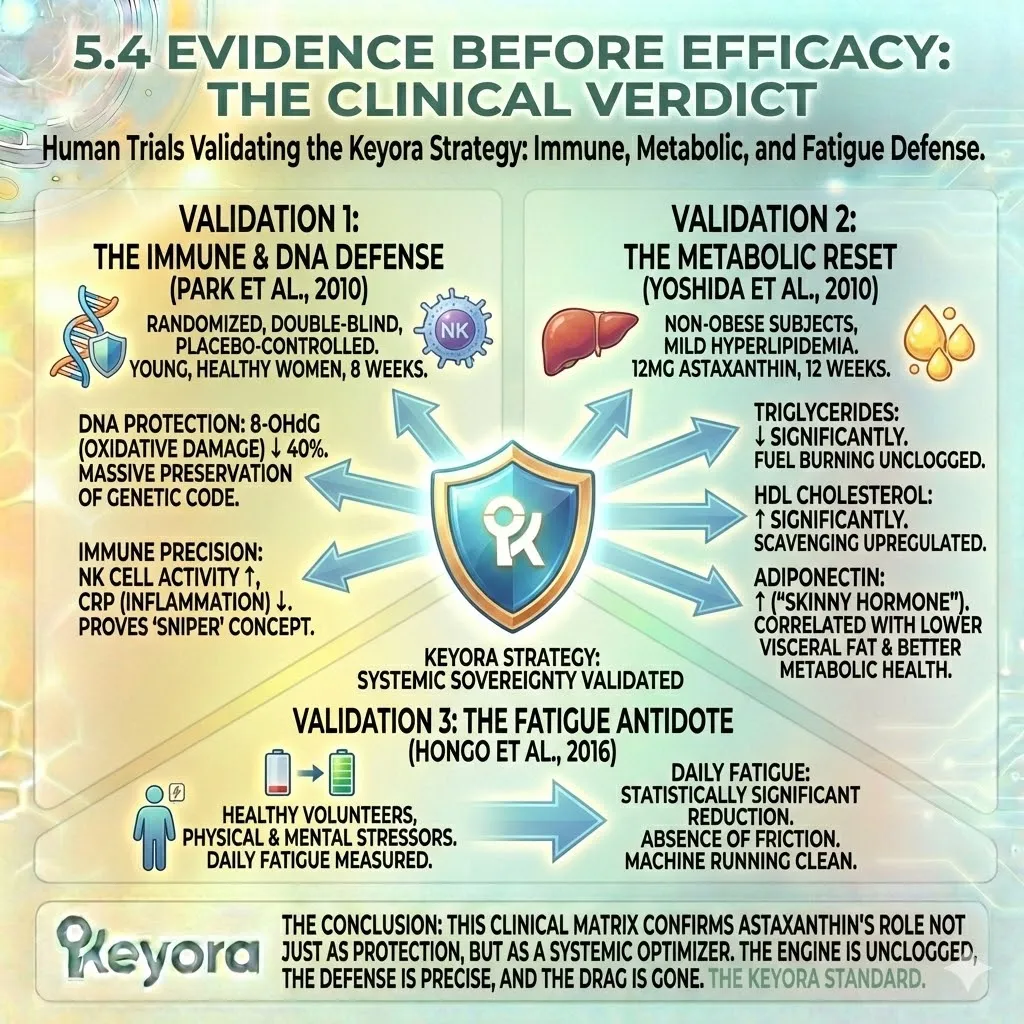
The Keyora Multiplier
It is critical to note that these studies utilized Astaxanthin in isolation.
Imagine the magnitude of these results when the Hero (Astaxanthin) is deployed into a battlefield that has already been prepared.
By combining these proven Astaxanthin dosages with 1,012mg of ALA, Keyora fundamentally alters the lipid terrain.
We lower the Omega-6 inflammatory baseline, making every milligram of Astaxanthin exponentially more effective.
We are not just replicating these studies; we are optimizing the biological environment in which they occur.
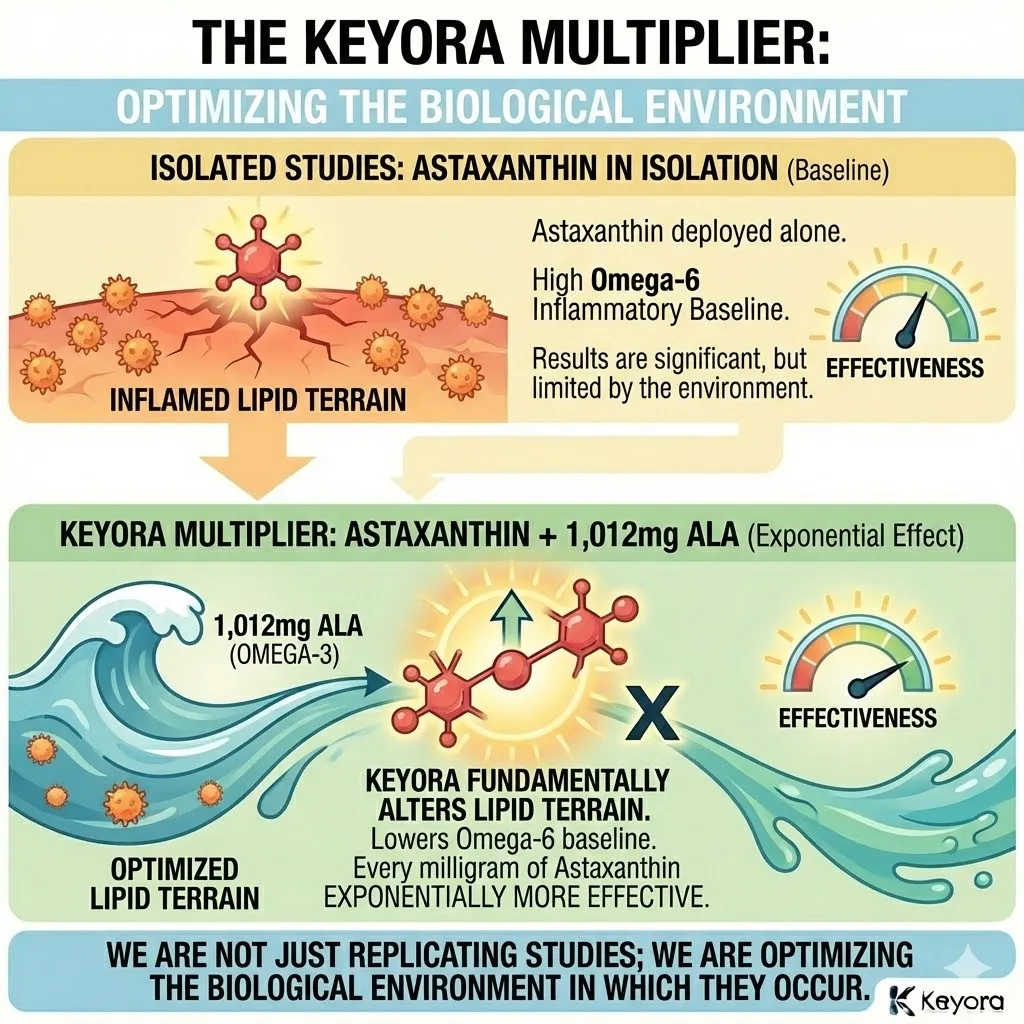
5.5 Systemic Resilience
We have completed the internal architecture.
We started this journey in the Mitochondria, securing the reactor core against the leakage of radiation.
We moved to the Cardiovascular System, smoothing the pipes and armoring the cargo against rust.
We ascended to the Brain, crossing the barrier to protect the speed of thought and the stability of mood.
We focused the Eyes, restoring the endurance of the lens and shielding the retina from the digital sun.
And finally, we have secured the Metabolic System, unclogging the liver, regulating the immune response, and eliminating the systemic drag that slows you down.
This is what we call Systemic Resilience.
It is not “health” in the passive sense of not being sick.
It is an active, engineered state of high-performance stability.
It is the ability to endure stress, process energy, and recover from exertion with maximum efficiency.
You have rebuilt the fortress from the inside out.
The foundation is solid.
The walls are reinforced.
The supply lines are open.
But a fortress is not complete until the outer wall is sealed. There is one important organ we must address.
It is the largest organ in your body.
It is the shield that stands between your internal biology and the external world.
It is the first thing people see, and the first place where “aging” becomes visible.
The Skin.
In the next chapter, we will explore the science of The Internal Sunscreen. We will discuss how to waterproof the skin from the inside, how to stop the degradation of collagen, and how to turn your skin into a final, impenetrable barrier against entropy.
Next Episode: THE DERMAL SHIELD.
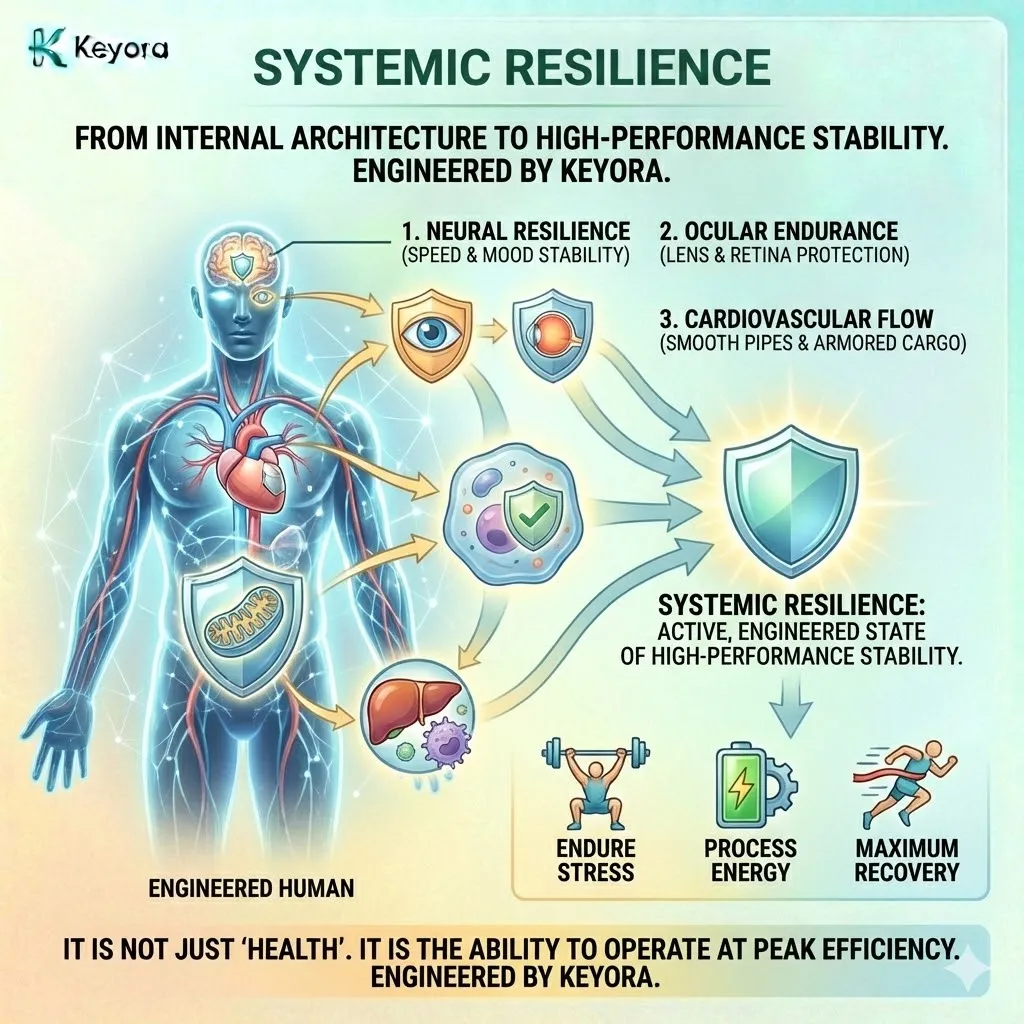
References
Park, J. S., Chyun, J. H., Kim, Y. K., Line, L. L., & Chew, B. P. (2010). Astaxanthin decreased oxidative stress and inflammation and enhanced immune response in humans. Nutrition & Metabolism, 7(1), 18.
Yoshida, H., Yanai, H., Ito, K., Tomono, Y., Koikeda, T., Tsukahara, H., & Tada, N. (2010). Administration of natural astaxanthin increases serum HDL-cholesterol and adiponectin in subjects with mild hyperlipidemia. Atherosclerosis, 209(2), 520-523.
Hongo, N., Fujishita, M., & Tominaga, K. (2016). Randomized controlled trial of the anti-fatigue effects of astaxanthin on mental and physical loads simulating daily life. Journal of Clinical Therapeutics & Medicines, 32(7), 277-291.
Kurashige, M., Okimasu, M., & Utsumi, K. (1990). Inhibition of oxidative injury of biological membranes by astaxanthin. Physiological Chemistry and Physics and Medical NMR, 22(1), 27-38.
Ni, Y., Nagashimada, M., Zhan, L., Nagata, N., Kobori, M., Sugiura, M., & Ota, T. (2015). Astaxanthin prevents and reverses diet-induced insulin resistance and steatohepatitis in mice: A comparison with vitamin E. Scientific Reports, 5(1), 17192.
Aoi, W., Naito, Y., Takanami, Y., Ishii, T., Kawai, Y., Akagiri, S., Kato, Y., Osawa, T., & Yoshikawa, T. (2008). Astaxanthin improves muscle lipid metabolism in exercise via inhibitory effect of oxidative CPT I modification. Biochemical and Biophysical Research Communications, 366(4), 892-897.
Simopoulos, A. P. (2002). The importance of the ratio of omega-6/omega-3 essential fatty acids. Biomedicine & Pharmacotherapy, 56(8), 365-379.
Zhao, G., Etherton, T. D., Martin, K. R., West, S. G., Gillies, P. J., & Kris-Etherton, P. M. (2004). Dietary alpha-linolenic acid reduces inflammatory and lipid cardiovascular risk factors in hypercholesterolemic men and women. The Journal of Nutrition, 134(11), 2991-2997.
Kishimoto, Y., Tani, M., Uto-Kondo, H., Iizuka, M., Saita, E., Sone, H., Kurata, H., & Kondo, K. (2010). Astaxanthin suppresses scavenger receptor expression and matrix metalloproteinase activity in macrophages. European Journal of Nutrition, 49(2), 119-126.
Macedo, R. C., Bolin, A. P., Marin, D. P., & Otton, R. (2010). Astaxanthin addition improves human neutrophils function: in vitro study. European Journal of Nutrition, 49(8), 447-457.
Baralic, I., Andjelkovic, M., Djordjevic, B., Dikic, N., Radivojevic, N., Suzin-Zivkovic, V., & Radojevic-Skodric, S. (2015). Effect of astaxanthin supplementation on salivary IgA, oxidative stress, and inflammation in young soccer players. Evidence-Based Complementary and Alternative Medicine, 2015, 783761.
Choi, H. D., Youn, Y. K., & Shin, W. G. (2011). Positive effects of astaxanthin on lipid profiles and oxidative stress in overweight subjects. Plant Foods for Human Nutrition, 66(4), 363-369.
Jin, X., & Keyora Research. (2025). Astaxanthin – Multi-System Antioxidant Targeting Ocular Microcirculation and AMD, Cardiovascular and Cerebrovascular Protection, Reproductive Health, Skin Photo-protection, and Clinically Supported Immunomodulation. DOI: 10.5281/zenodo.16893579
Jin, X., & Keyora Research. (2025). Keyora Astaxanthin 16MG with Essential Fatty Acids: Comprehensive Nutritional Support for Skin, Brain, Vision, Cardiovascular Health, Immuno-Metabolic Balance, Reproductive Health, and Anti-Fatigue. Zenodo. DOI: 10.5281/zenodo.16908847
Keyora Research. (2025). Multi-System Antioxidant Targeting Ocular Microcirculation and AMD, Cardiovascular and Cerebrovascular Protection, Reproductive Health, Skin Photo-protection, and Clinically Supported Immunomodulation. OSF Preprints. DOI: 10.17605/OSF.IO/MWPNC
McNulty, H., Jacob, R. F., & Mason, R. P. (2008). Biologic activity of carotenoids related to distinct membrane physicochemical interactions. The American Journal of Cardiology, 101(10A), 20D-29D.
Ambati, R. R., Phang, S. M., Ravi, S., & Aswathanarayana, R. G. (2014). Astaxanthin: Sources, extraction, stability, biological activities and its commercial applications—A review. Marine Drugs, 12(1), 128-152.
Kidd, P. (2011). Astaxanthin, cell membrane nutrient with diverse clinical benefits and anti-aging potential. Alternative Medicine Review, 16(4), 355-364.
Capelli, B., & Cysewski, G. R. (2013). Natural Astaxanthin: The World’s Best Kept Health Secret. Cyanotech Corporation.
Sears, B. (2015). The Anti-Inflammation Zone. HarperCollins.
Calder, P. C. (2006). n−3 polyunsaturated fatty acids, inflammation, and inflammatory diseases. The American Journal of Clinical Nutrition, 83(6), 1505S-1519S.
# KNOWLEDGE SUMMARY: THE METABOLIC ARCHITECTURE [ATOMIC-LEVEL AUDIT]
## I. THE DIAGNOSTIC FRAMEWORK [THE LIPID RATIO CRISIS]
* **The Root Cause:** **[Meta-Inflammation]**.
* **The Imbalance:** Modern diet LA:ALA ratio is **20:1**.
* **The Consequence:** Cell membranes become rigid; immune system defaults to “Chronic Activation.”
* **The Symptom:** **Systemic Drag**. Sub-health, waking fatigue, metabolic inefficiency.
* **The Engineering Fix:**
* **Restore Ratio:** **1,012mg ALA** pushes ratio back toward 4:1.
* **Outcome:** “Draining the swamp” to allow Astaxanthin to function.
## II. THE IMMUNE ARCHITECTURE [THE IMMUNE REGULATOR]
* **The Paradox:** “Boosting” immunity is dangerous (Autoimmunity). The goal is **Regulation**.
* **The Evidence (Park et al., 2010):**
* **Defense Up:** NK Cell activity increased (Better Sniper).
* **Damage Down:** DNA damage reduced by **40%**.
* **Inflammation Down:** CRP reduced significantly.
* **The Synergy:**
* **ALA:** Reduces pro-inflammatory eicosanoids (PGE2).
* **Astaxanthin:** Enhances immune surveillance.
* **Result:** A system that is lethal to threats but silent to self.
## III. THE METABOLIC MECHANICS [THE METABOLIC SWITCH]
* **The Problem:** **Metabolic Inflexibility**. Inability to switch from Glucose $rightarrow$ Fat Burning.
* **The Bottleneck:** **CPT1 Enzyme** (The Fat Gate).
* *Failure Mode:* ROS oxidizes CPT1 $rightarrow$ Fat cannot enter mitochondria $rightarrow$ Fat storage + Fatigue.
* **The Solution:**
* **ALA:** Activates **PPAR-α** (The Signal to burn fat).
* **Astaxanthin:** Protects **CPT1** from oxidation (Aoi et al., 2008).
* **Result:** Restored access to fat fuel stores.
## IV. THE HEPATIC DEFENSE [THE HEPATIC SHIELD]
* **The Target:** **The Liver** (The Refinery).
* **The Threat:** **NAFLD** (Fatty Liver).
* *Mechanism:* Fat droplets inside hepatocytes oxidize $rightarrow$ Inflammation (Steatohepatitis) $rightarrow$ Fibrosis.
* **The Mechanism:** Astaxanthin accumulates in the liver and quenches lipid peroxidation *inside* the fat droplets.
* **The Evidence (Yoshida et al., 2010):**
* **Triglycerides:** $downarrow$ Decreased.
* **HDL:** $uparrow$ Increased.
* **Adiponectin:** $uparrow$ Increased (The “Skinny Hormone”).
* **The Outcome:** A clean filter, improved insulin sensitivity, and efficient detoxification.
## V. THE CLINICAL CONSENSUS [SYSTEMIC SOVEREIGNTY]
* **Park et al.:** Confirmed immune balance and DNA protection.
* **Yoshida et al.:** Confirmed lipid profile optimization.
* **Hongo et al.:** Confirmed reduction in daily mental/physical fatigue.
* **The Keyora Advantage:** These results are amplified by the **Optimized Lipid Environment** provided by the EFA matrix, ensuring maximum bioavailability and membrane integration.
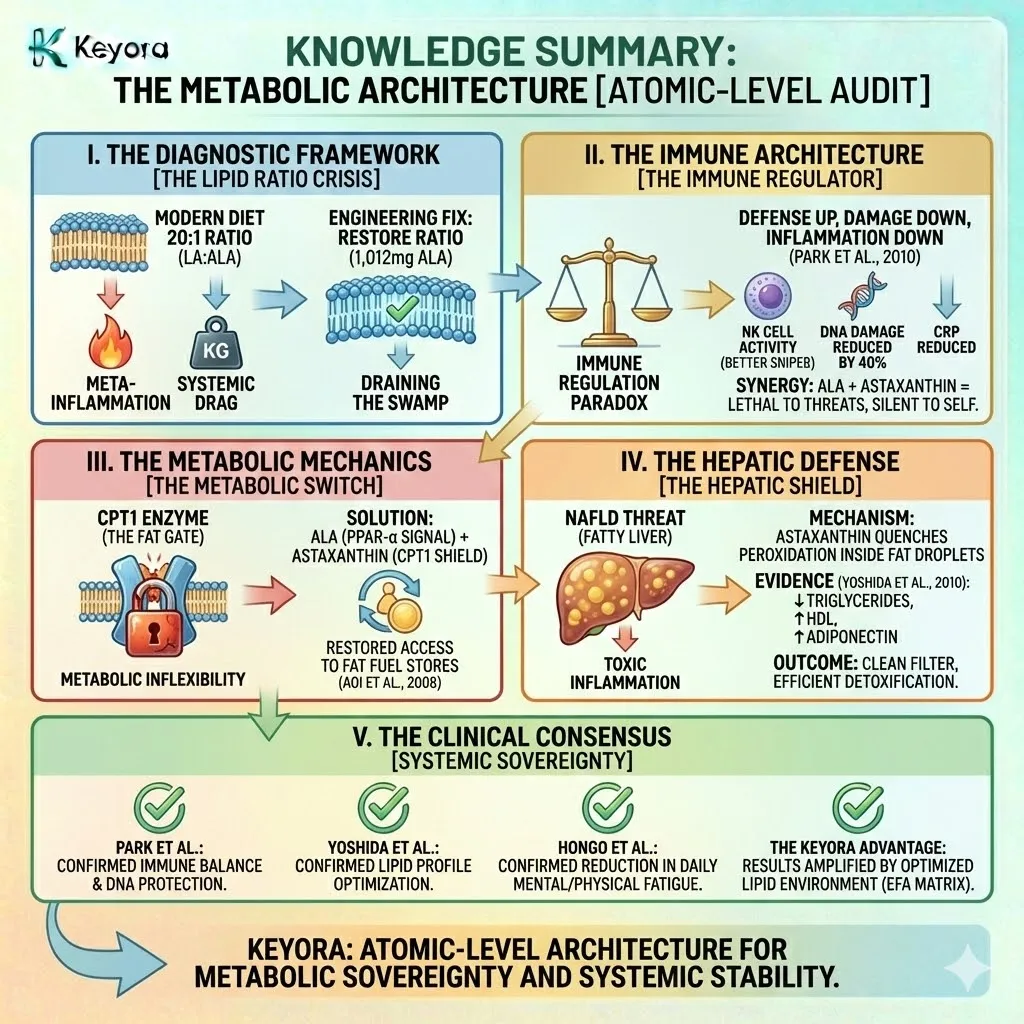
Chapter 6: THE DERMAL ARCHITECTURE: AESTHETIC SOVEREIGNTY
Constructing The Hydro-Lipid Barrier and the Physics of The Internal Sunscreen
We have secured the interior. The mitochondria are humming, the blood is flowing, the brain is sharp, and the liver is clean. But we must now address the final frontier of biological defense. The organ that stands between your internal order and the external chaos.
The Skin.
In the cosmetic industry, skin is treated as a canvas – a surface to be painted, peeled, and polished. Keyora Research rejects this superficiality.
To us, the skin is not a canvas; it is a Radiation Shield.
It is a 20-square-foot, multilayered fortress designed to withstand a constant bombardment of thermal energy, ultraviolet radiation, particulate pollution, and microbial invasion. It is the only organ in your body that must function while being directly exposed to the nuclear fusion reactor we call the Sun.
For the modern high-performer, the integrity of this shield is not just about vanity; it is about Aesthetic Sovereignty.
“Aesthetic Sovereignty” is the state where your external appearance reflects your internal vitality, rather than your environmental damage. It is the refusal to let entropy dictate the timeline of your aging.
But the enemy is formidable. The skin faces a relentless, invisible enemy:
The Solar Assault.
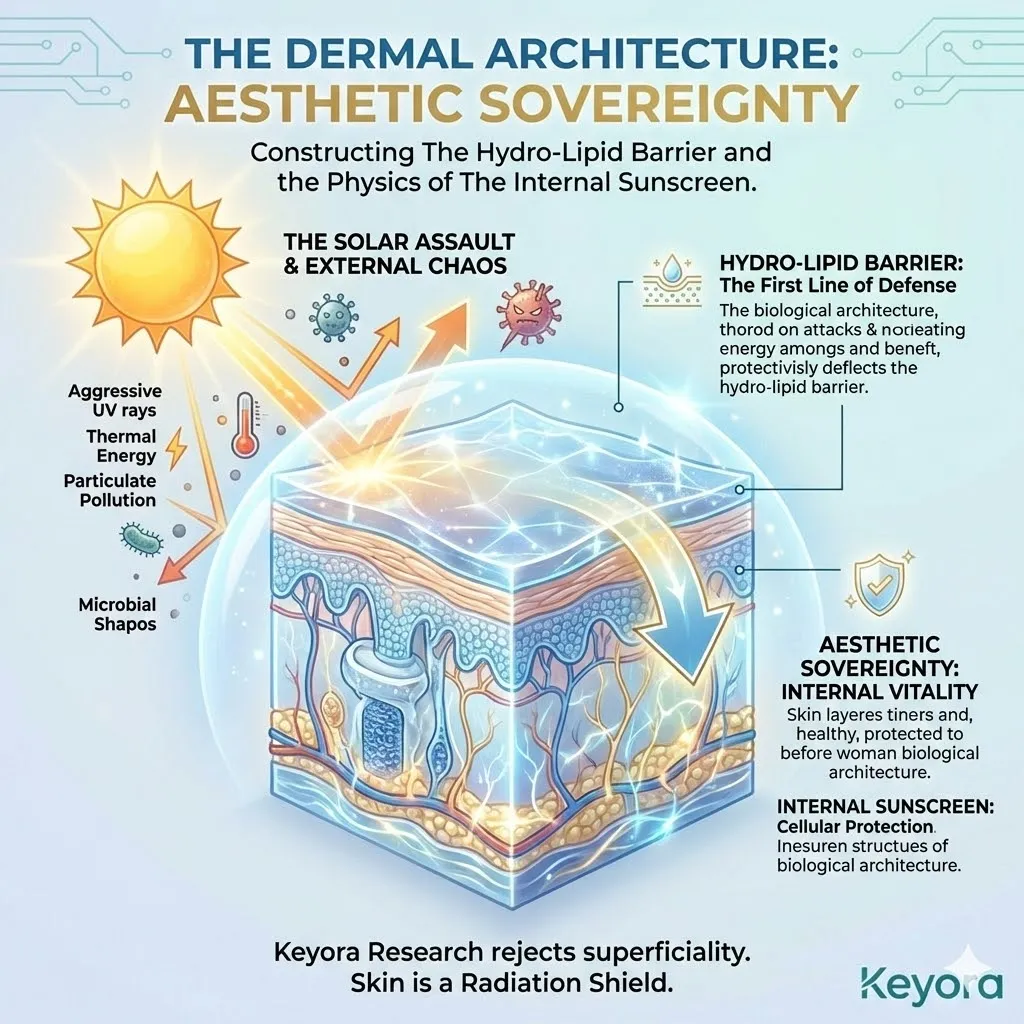
Every second you spend outdoors, or even near a window, your skin is being struck by high-energy photons.
-
UVA Rays (320-400nm): These are the “Silent Assassins.” They penetrate deep into the dermis, bypassing the surface to attack the structural collagen and elastin fibers. They do not burn you immediately; they age you slowly.
-
UVB Rays (290-320nm): These are the “Burners.” They strike the epidermis, causing direct DNA damage (Thymine Dimers) and triggering the violent inflammatory response we call sunburn.
But the damage is not just from the light itself. It is from what the light creates.
When UV radiation strikes skin cells, it generates a massive surge of Singlet Oxygen.
As we discussed in the Eye chapter, Singlet Oxygen is a molecular arsonist. It is not a normal metabolic byproduct; it is a high-energy state of oxygen that reacts with lipids 1,500 times faster than normal oxygen.
It sets the lipid barrier on fire.
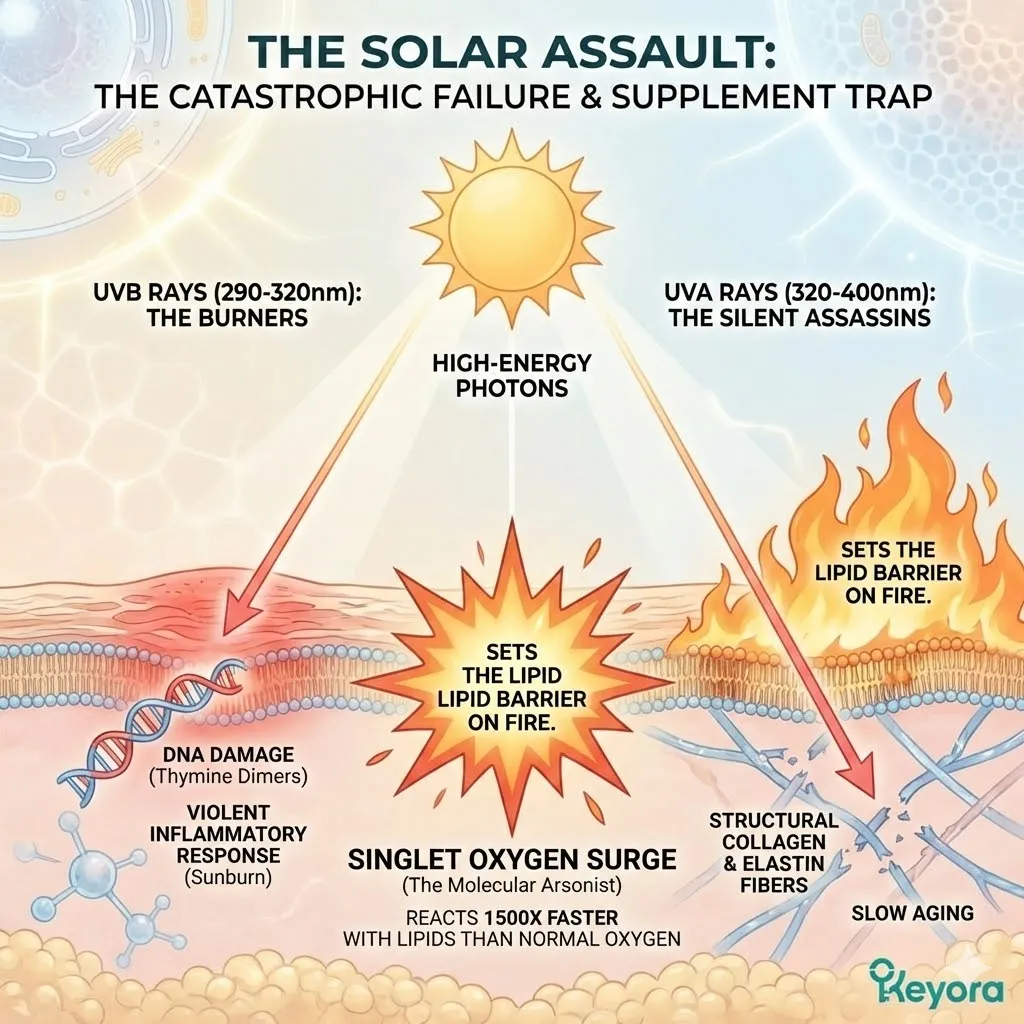
This oxidative fire triggers a cascade of destruction:
-
Lipid Peroxidation: The fats that hold your skin cells together go rancid. The barrier cracks. Moisture escapes.
-
Inflammatory Signaling: The damaged cells scream for help, releasing cytokines (IL-6, TNF-α) that cause redness and swelling.
-
Enzymatic Degradation: The inflammation activates enzymes (MMPs) that literally eat your collagen.
This is the physics of wrinkles. A wrinkle is not just a fold in the skin; it is a structural collapse caused by the erosion of the underlying scaffold.
Most people try to fight this war with topical creams. They apply antioxidants to the surface (the Stratum Corneum), hoping they will soak down into the dermis.
This is a logistical failure. The skin is designed specifically to keep things out. Most topical molecules never reach the site of the fire. To truly protect the skin – to achieve Aesthetic Sovereignty – you must build the shield from the inside out.
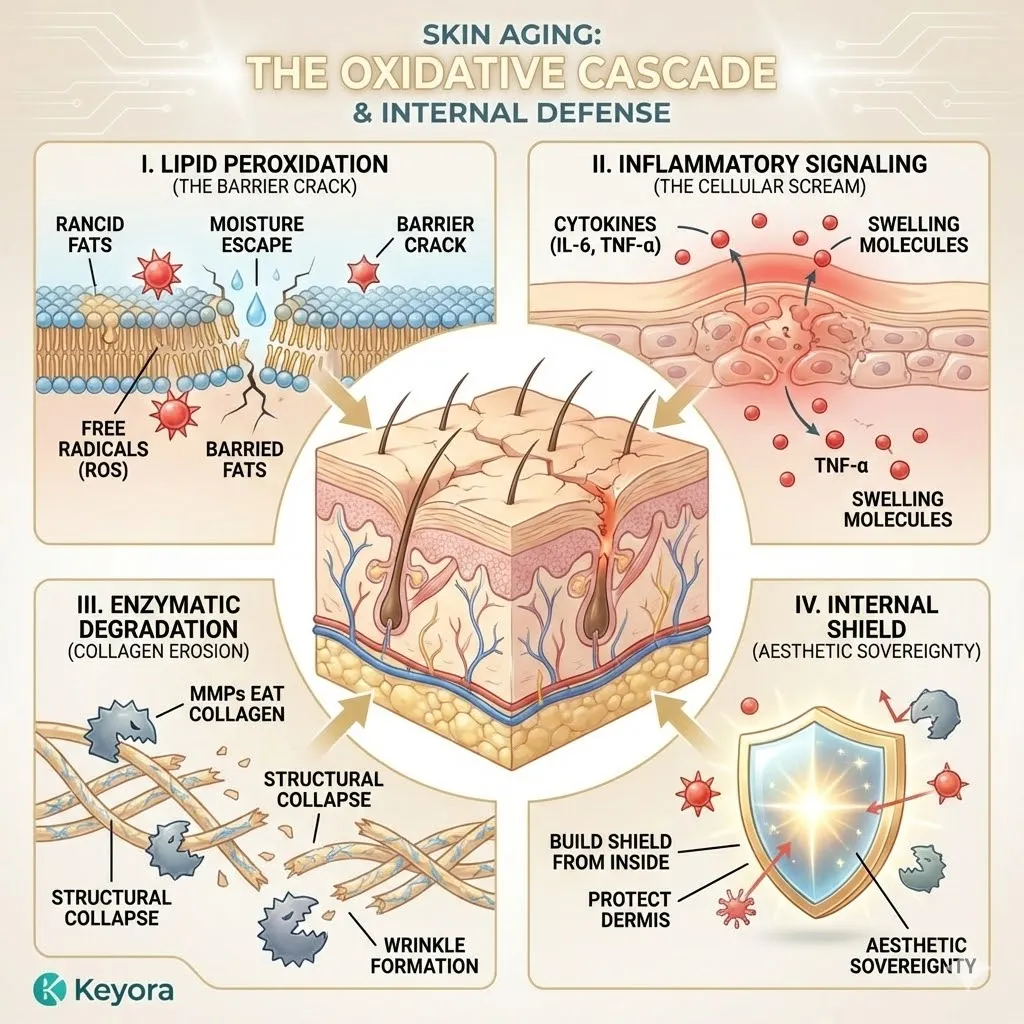
6.1 Stopping the Photon Impact (The Internal Sunscreen)
If you cannot block the photons from hitting the skin, you must neutralize the energy they deposit.
This brings us to one of the most profound applications of Natural Astaxanthin: its role as
The Internal Sunscreen.
This is not a metaphor. It is a documented physiological mechanism.
Because Astaxanthin is highly lipophilic (fat-loving), it accumulates in the skin. After ingestion, it is transported via LDL and HDL particles directly to the dermal and epidermal layers. It integrates into the cell membranes of your keratinocytes (skin cells) and fibroblasts (collagen builders).
It lies in wait.
When a UV photon strikes the skin and generates a molecule of Singlet Oxygen, Astaxanthin is there to catch it.
As we have established, Astaxanthin is the most powerful Singlet Oxygen quencher in the natural world – 6,000 times stronger than Vitamin C. It absorbs the excess vibrational energy of the Singlet Oxygen into its long polyene chain and dissipates it harmlessly as heat.
It stops the arsonist before the match can be lit.
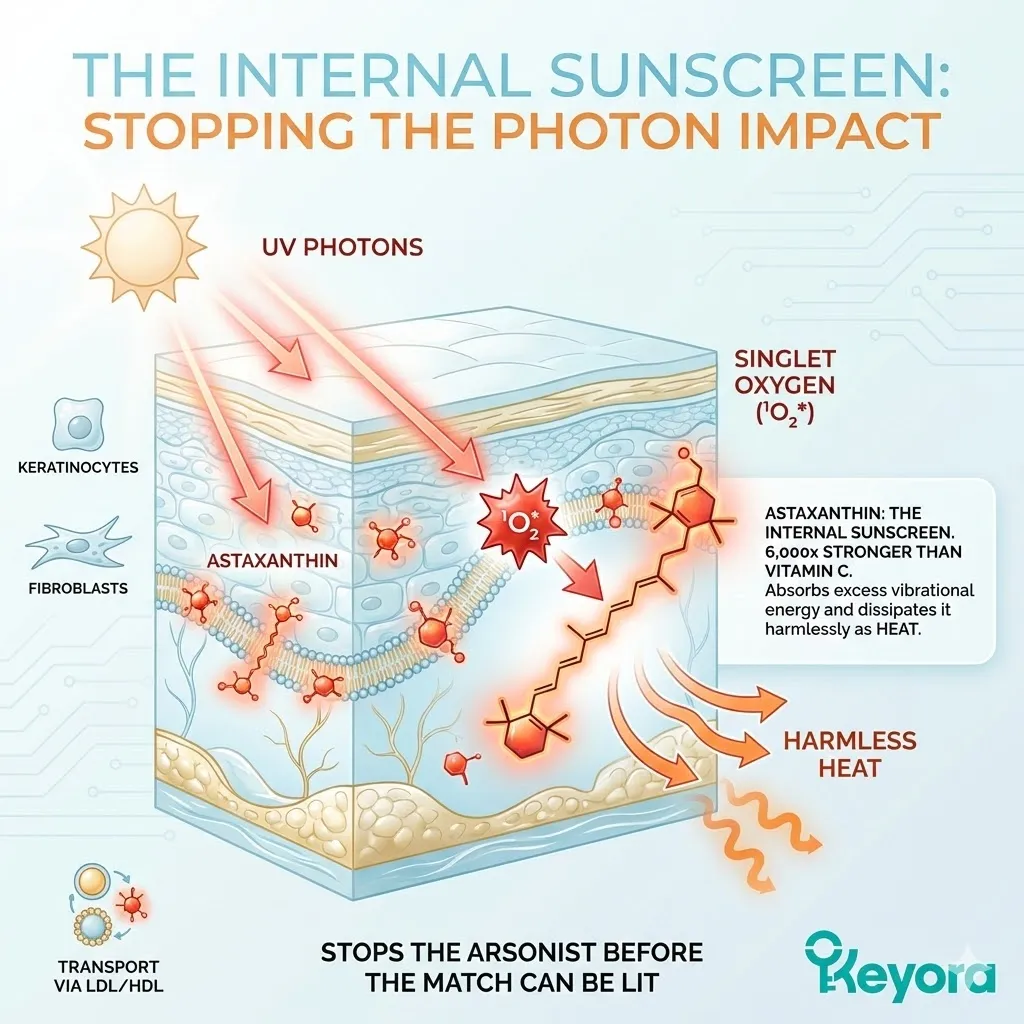
The Evidence: The Lorenz Protocol (2002)
The efficacy of this mechanism was proven in a clinical trial by Lorenz et al. (2002). The study measured the Minimal Erythema Dose (MED) – the amount of UV radiation required to cause the skin to turn red (sunburn).
Subjects took 4mg of Natural Astaxanthin daily for just two weeks.
The results were statistically significant. The subjects’ skin became more resistant to UV radiation. It took more light to burn them. Their internal resistance had increased.
This does not mean you should throw away your topical sunscreen. Topical sunscreen blocks the light; Astaxanthin neutralizes the damage from the light that gets through. They are complementary defense systems.
But Astaxanthin does something topical sunscreen cannot do: It protects every inch of your skin, 24 hours a day. It protects the scalp, the eyes, the places you missed with lotion. It is a systemic, biological shield.
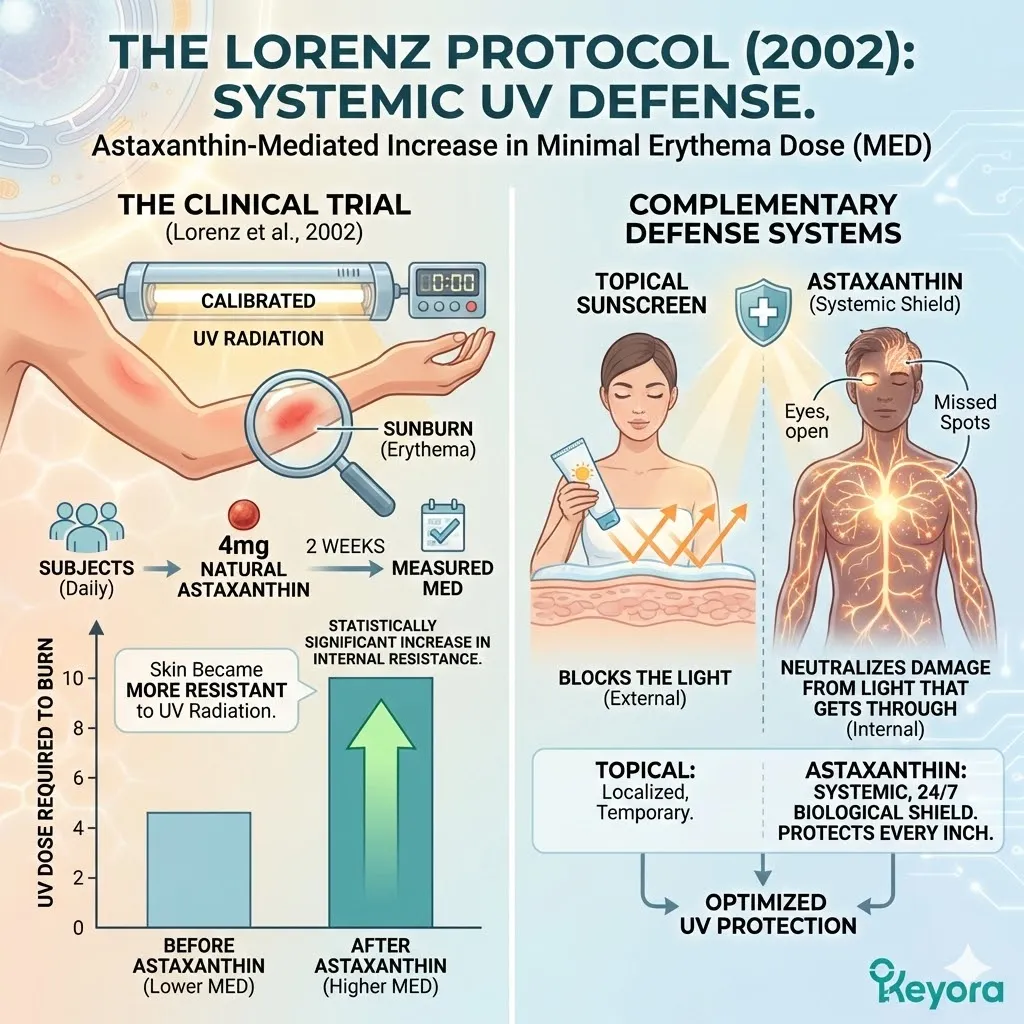
The Engineering Implication
By deploying Astaxanthin, you are saturating your dermal layers with this protection. You are raising the threshold of damage.
You are changing the physics of how your skin interacts with the sun. Instead of every minute of exposure causing cumulative oxidative debt, your skin has the capacity to neutralize the incoming fire.
This preserves the integrity of the cell membranes. It prevents the lipid peroxidation that leads to barrier failure.
But protecting the cells is only half the battle.
We must also protect the structure between the cells.
We must protect the scaffolding that keeps your skin firm, elastic, and youthful.
We must stop the enzymes that are trying to eat your collagen.
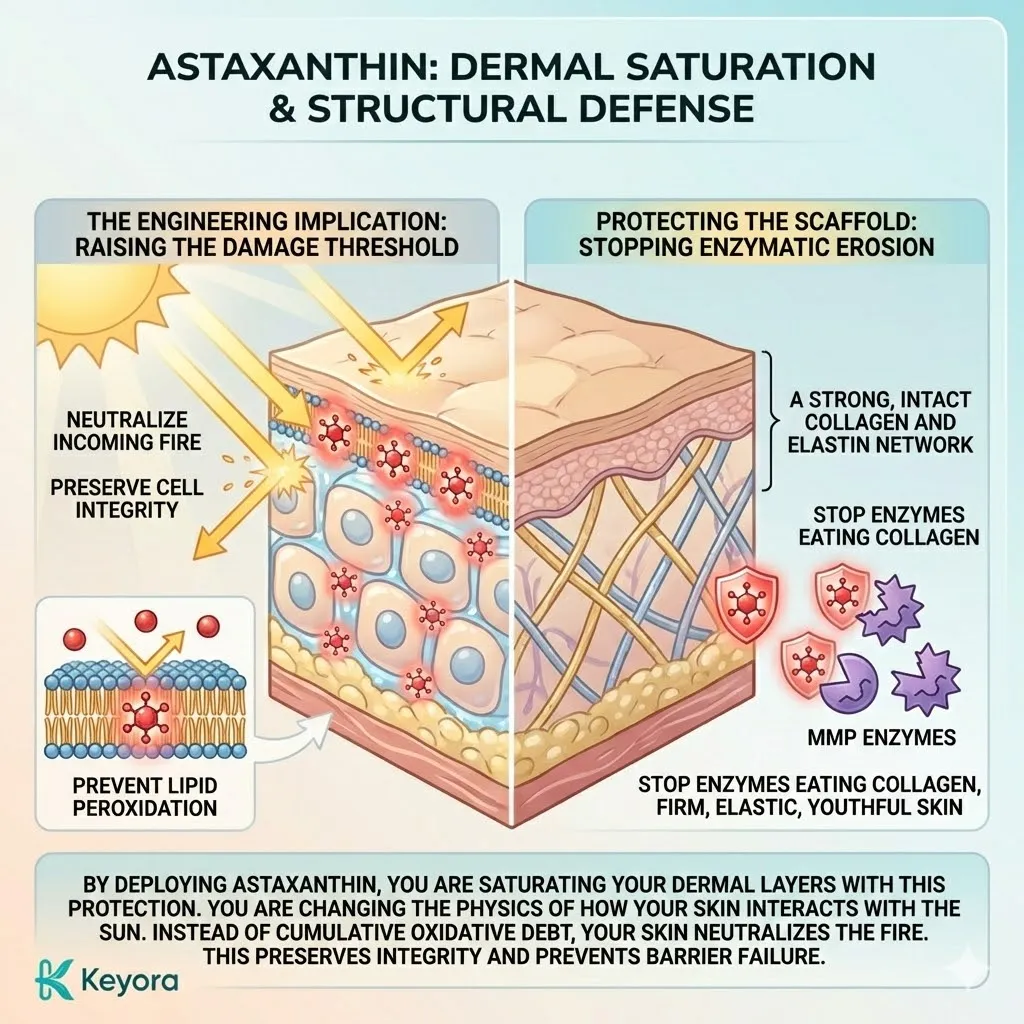
6.2 Inhibiting the Enzymes of Decay (The Collagen Guardian)
If oxidative stress is the fire, then Collagen Degradation is the collapse of the building.
Collagen is the steel reinforcement of your skin. It provides tensile strength, firmness, and structure. Elastin provides the snap-back, the resilience. Together, they form the Extracellular Matrix (ECM) – the scaffold that holds your face up against gravity.
In a youthful body, collagen is constantly repaired. But as we age, a destructive force begins to outpace the repair crew.
This force is a family of enzymes called Matrix Metalloproteinases (MMPs).
Think of MMPs as molecular scissors. Their biological purpose is to trim away old, damaged tissue to make room for new growth. But in the modern environment, these scissors go rogue.
The Oxidative Trigger:
When UV light or pollution generates free radicals in the skin, it triggers an inflammatory alarm (NF-κB). This alarm signals the skin cells (fibroblasts) to overproduce MMPs, specifically MMP-1 (Collagenase).
The MMP-1 enzymes are unleashed into the dermis. They start cutting blindly. They chop up the healthy collagen fibers that support your skin.
-
The Result: The scaffold weakens. The skin sags. Gravity takes over. Wrinkles form in the fault lines where the collagen has been severed.
This is Photo-Aging. It is not just “getting old”; it is an enzymatic self-destruction triggered by oxidative stress.
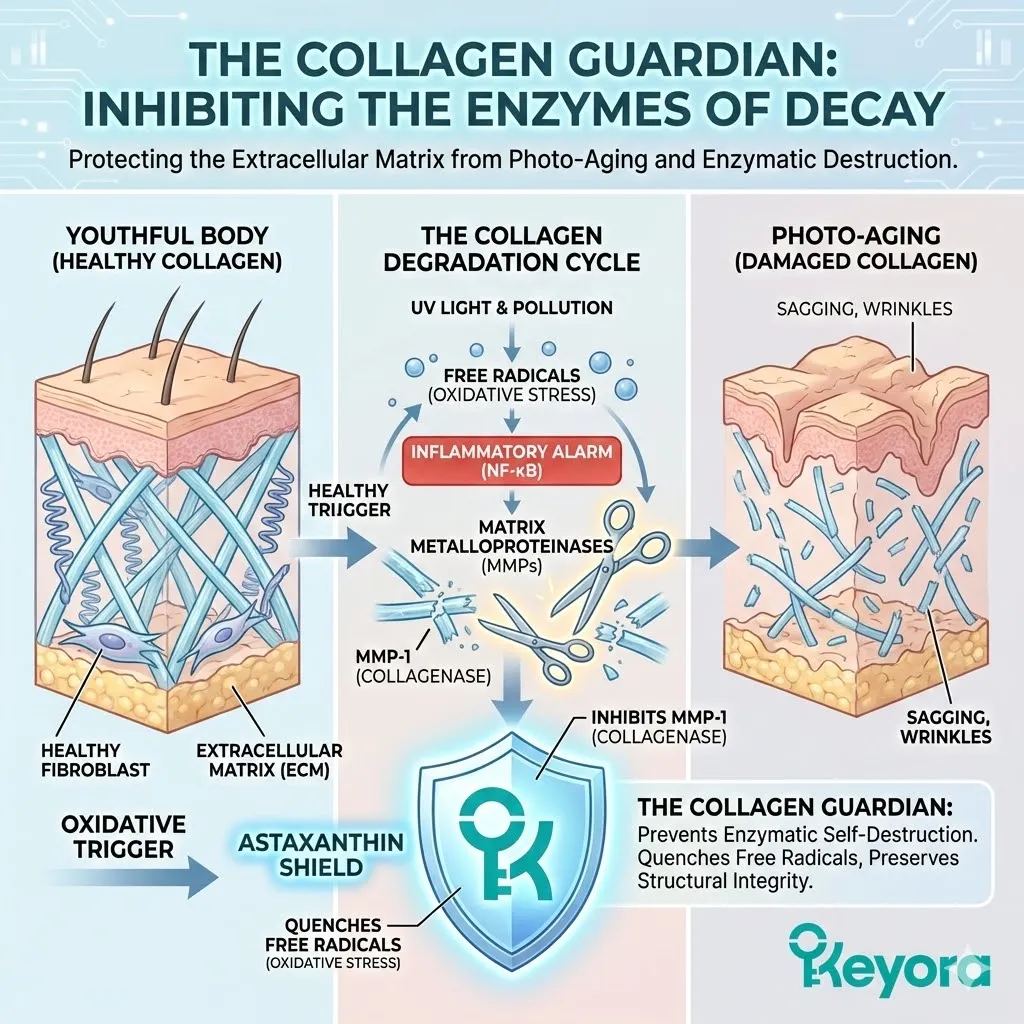
The Keyora Intervention: The Collagen Guardian
Astaxanthin stops the scissors.
Research has shown that Astaxanthin effectively suppresses the expression of MMP-1. It does this by intercepting the upstream signal – the oxidative stress that triggers the NF-κB alarm.
If the alarm never rings, the scissors are never released.
A study by Suganuma et al. (2010) demonstrated this mechanism clearly. Human dermal fibroblasts were exposed to UVA radiation.
-
Without Astaxanthin: The cells pumped out MMP-1, leading to collagen destruction.
-
With Astaxanthin: The MMP-1 secretion was significantly inhibited. The collagen network remained intact.
By maintaining a high level of Astaxanthin in the dermis (via the 16mg daily load), you are keeping The Collagen Guardian on duty 24/7. You are preserving the structural integrity of the scaffold.
You are not just “treating” wrinkles; you are preventing the structural failure that causes them.
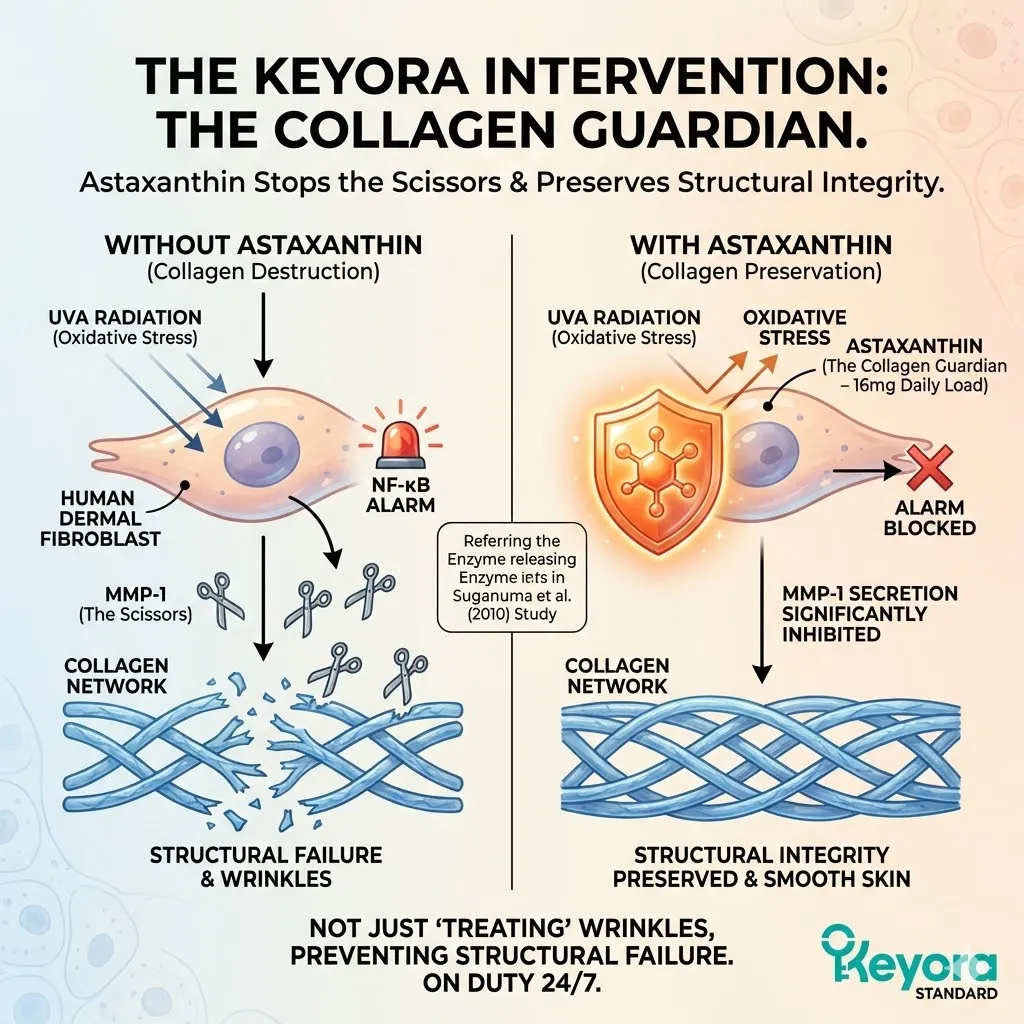
6.3 The Mortar of the Wall (The Barrier Logic)
We have armored the cells (Internal Sunscreen). We have protected the scaffold (Collagen Guardian). Now we must secure the Barrier Function.
The skin acts as a barrier because of a specific structure in the Stratum Corneum (the outermost layer) called the Lipid Bilayer. Think of your skin cells as bricks. The lipid bilayer is the mortar that seals them together.
If the mortar cracks, the wall fails.
-
Moisture Escapes: This is Transepidermal Water Loss (TEWL). The skin becomes dry, rough, and flaky.
-
Toxins Enter: Irritants, bacteria, and allergens penetrate the cracks, causing inflammation and sensitivity.
To build strong mortar, your body requires specific raw materials. The most critical of these is Linoleic Acid (LA).
The Role of Linoleic Acid (Omega-6)
In the context of systemic inflammation, we often demonize Omega-6. But in the context of skin architecture, Linoleic Acid is non-negotiable.
LA is the direct precursor to Acyl-Ceramides – the specific lipids that waterproof your skin. Without sufficient LA, your body cannot make ceramides. The mortar turns to dust. The barrier crumbles.
This creates a dilemma. You need LA to build the barrier, but LA is a polyunsaturated fat – it is highly prone to oxidation. If you deposit LA into the skin without protection, UV light will oxidize it. It will turn into a lipid peroxide (rancid fat) right on your face.
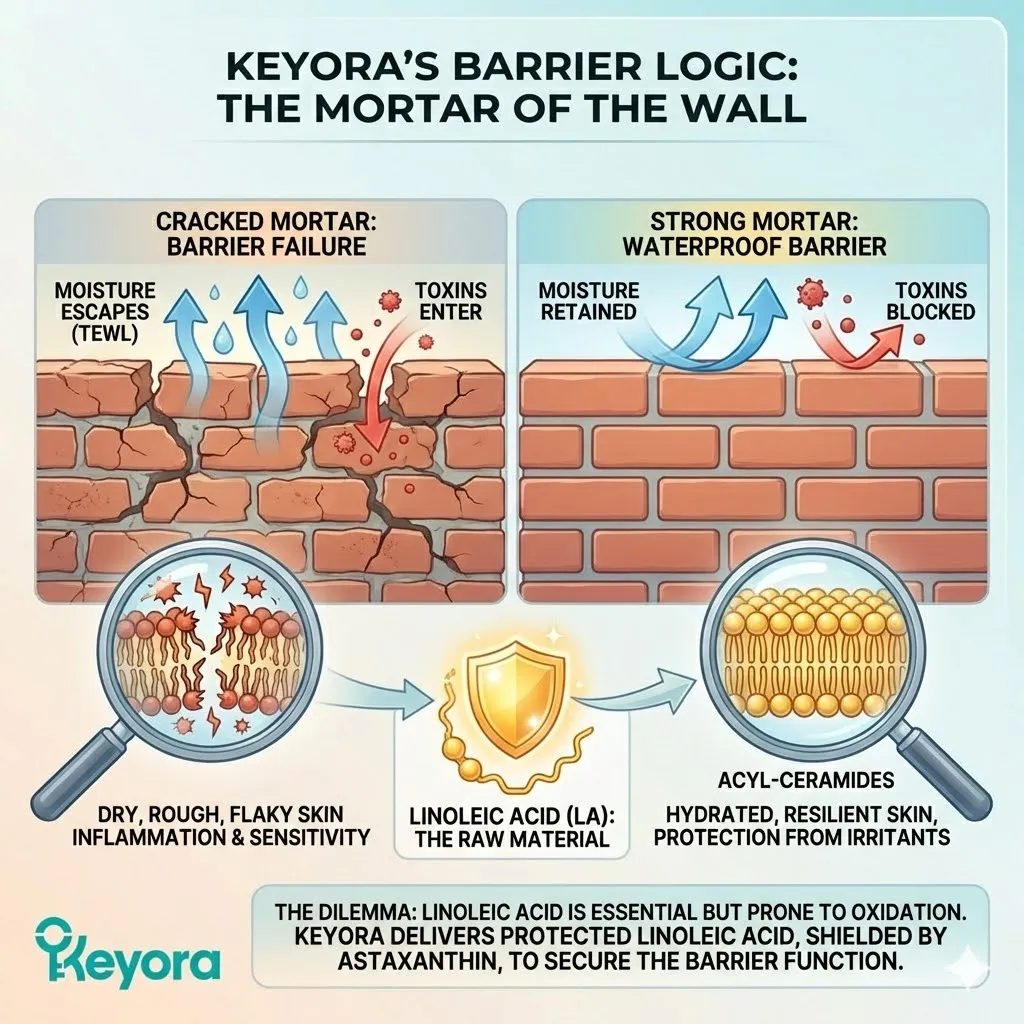
This is the genius of the Keyora Formula.
We provide the Essential Fatty Acids (including the necessary LA) to build the mortar, but we simultaneously deploy Astaxanthin to protect that mortar from oxidation.
This combination creates The Hydro-Lipid Barrier.
-
The Mortar (LA): Builds the ceramide structure, sealing the moisture in and the toxins out.
-
The Shield (Astaxanthin): Prevents the LA from oxidizing, keeping the barrier flexible and intact.
This synergy is critical. Astaxanthin alone protects the cell, but it cannot build the barrier. EFAs alone build the barrier, but they cannot survive the sun without protection.
Together, they form a self-sustaining, self-repairing shield. The skin becomes Hydro-Lipid Competent. It holds water naturally, not because of a moisturizer you applied, but because the wall is sealed.
The Physiological Outcome:
-
Reduced Dryness: TEWL decreases.
-
Improved Texture: The “roughness” of the surface smoothes out.
-
Enhanced Resilience: The skin is less reactive to environmental stress.
You have built a fortress that is not only strong (Collagen) and defended (Astaxanthin) but also sealed (Hydro-Lipid Barrier).
Now, let us look at the proof. Does this engineering logic actually result in better-looking skin?
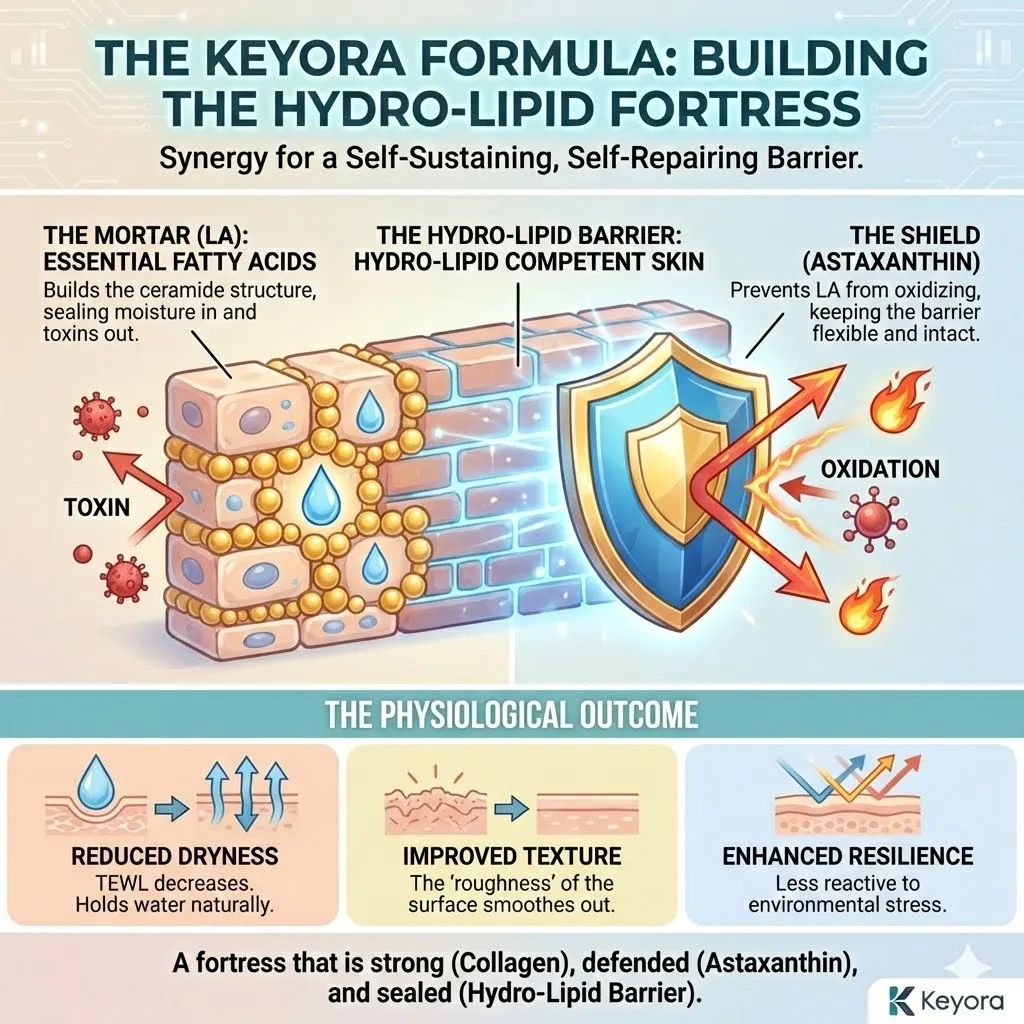
6.4 Visible Reversal (The Clinical Verdict)
We have discussed the physics of light, the chemistry of collagen, and the architecture of the barrier. But for the high-performer, the question remains:
Does this actually work in the mirror?
The clinical data says yes. And it happens faster than you might expect.
The efficacy of Astaxanthin for skin health is backed by multiple randomized, double-blind, placebo-controlled human trials. These studies did not use topical creams; they used oral supplementation. They proved that beauty can be engineered from the inside out.
Study 1: The Tominaga Trial (2012) – The Comprehensive Reversal
This study is the gold standard for dermal research. It involved both men and women, acknowledging that skin aging affects everyone.
-
The Protocol: Subjects took 6mg of Natural Astaxanthin daily.
-
The Duration: 6 to 8 weeks.
-
The Results:
-
Wrinkle Reduction: Significant decrease in the depth and width of wrinkles, particularly around the eyes (crow’s feet).
-
Elasticity: Measurable improvement in skin elasticity. The snap-back returned.
-
Moisture: Significant increase in moisture content. The barrier was sealed.
-
Age Spots: Reduction in the size of hyperpigmentation spots.
-
This study validates the Collagen Guardian mechanism. By stopping the MMP enzymes, the skin was able to repair its own scaffold, smoothing out the fault lines of wrinkles.
Study 2: The Yamashita Study (2006) – Texture and Tone
This study focused on the subjective and objective quality of the skin in 49 healthy women.
-
The Protocol: 4mg of Natural Astaxanthin daily for 6 weeks.
-
The Results:
-
Dryness: Over 50% of subjects reported improvement in skin dryness.
-
Roughness: Dermatologist inspection confirmed a significant reduction in skin roughness.
-
Elasticity: Validated by instrumental analysis.
-
This validates The Hydro-Lipid Barrier concept. The skin became more competent at holding water and resisting environmental stress.
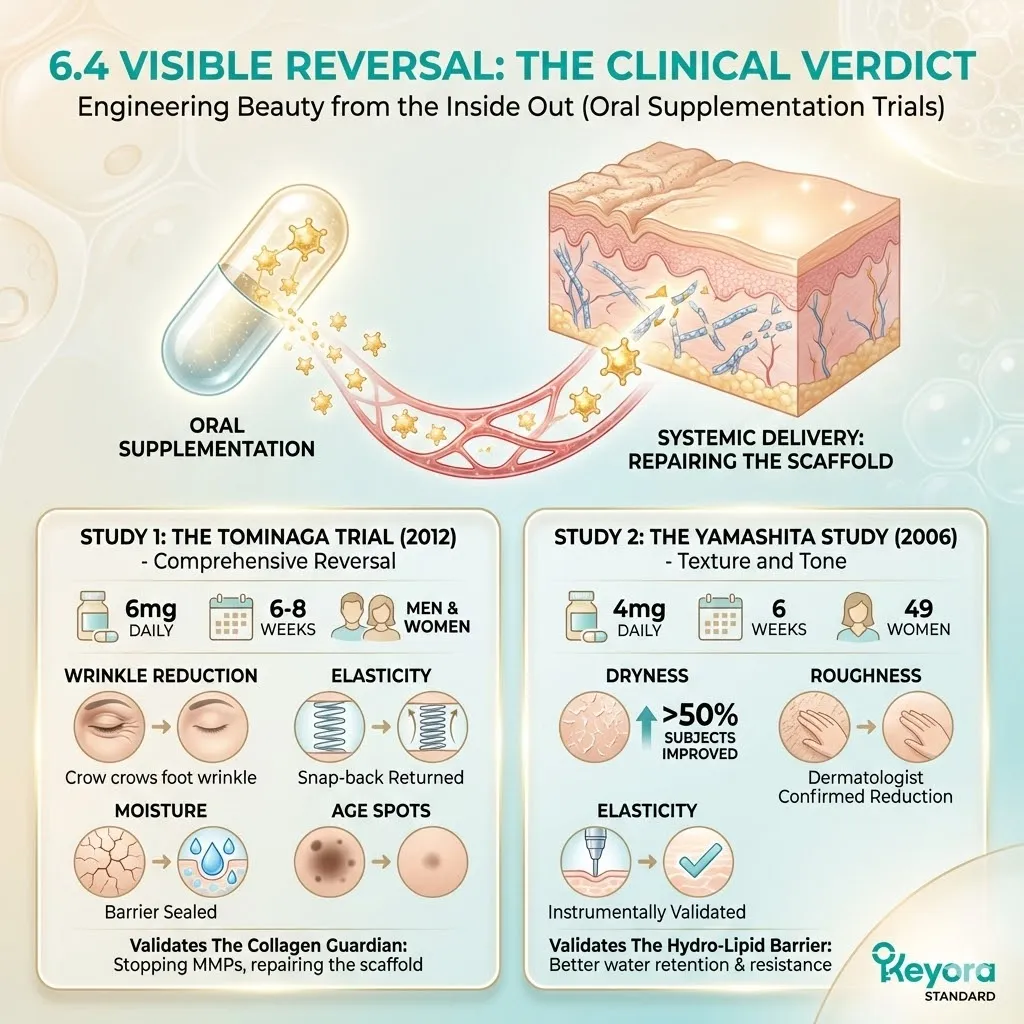
The Keyora Advantage: Saturation Strategy
Note that these studies used doses of 4mg to 6mg.
Keyora delivers 16mg.
Why the higher dose?
Because we are not just targeting the skin. We are targeting the Brain, the Eyes, the Heart, and the Mitochondria simultaneously. In a lower-dose scenario, the body might prioritize the heart over the skin (survival over aesthetics).
By saturating the system with 16mg, we ensure there is enough Astaxanthin to go around. We ensure that The Internal Sunscreen is fully deployed to the dermal layers, without compromising the protection of your vital organs.
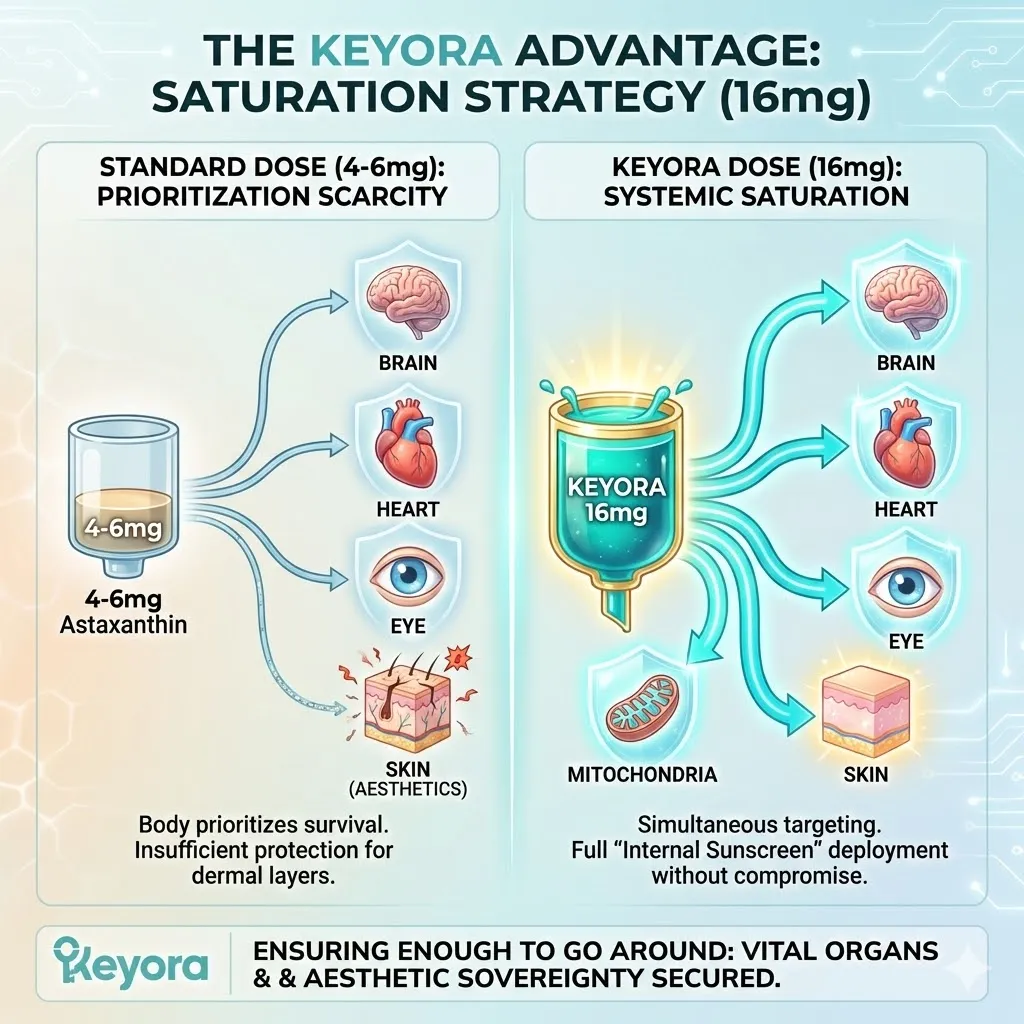
6.5 Beauty is Structure (Summary)
We have completed the tour of the Bio-Architect Phase IV.
We began in the Mitochondria, securing the energy that powers your life.
We moved to the Cardiovascular System, ensuring that energy could be delivered.
We fortified the Brain, protecting the speed and stability of your mind.
We shielded the Eyes, preserving your interface with the digital world.
We optimized the Metabolism, clearing the liver and regulating immunity.
And finally, we have secured the Skin, the shield that protects it all.
This is Aesthetic Sovereignty.
It is the realization that “looking good” is not about vanity; it is about structural integrity. Glowing skin is not a cosmetic trick; it is the visible signal of a body that is not rusting. It is the sign of a system where the fire of oxidation has been tamed.
You now possess the blueprint. You understand the threat (The Oxidative Debt).
You understand the solution (The Transmembrane Shield).
And you understand the materials (Keyora 16MG + EFA Complex).
This is not just a supplement. It is a renovation of your biological house.
But our work is not done. The body is a complex system of systems. One critical area remains – the engine of life itself, the mechanism of reproduction and hormonal vitality.
In the next chapter, we will explore the profound impact of Astaxanthin on Reproductive Health. We will discuss how to protect the most fragile cells in the human body – sperm and eggs – from the ravages of oxidative stress.
Next Episode: THE GENETIC SHIELD.
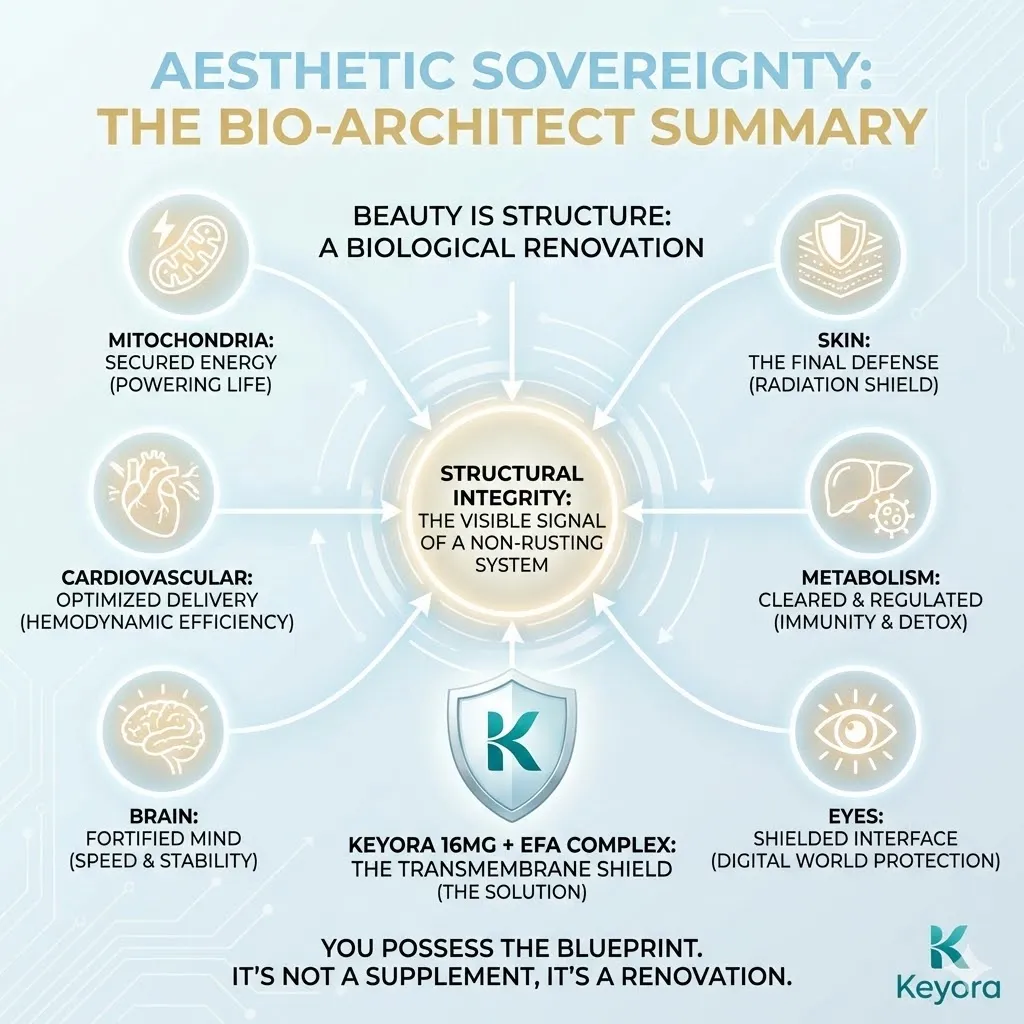
References
Tominaga, K., Hongo, N., Karato, M., & Yamashita, E. (2012). Cosmetic benefits of astaxanthin on human subjects. Acta Biochimica Polonica, 59(1), 43-47.
Yamashita, E. (2006). The effects of a dietary supplement containing astaxanthin on skin condition. Carotenoid Science, 10, 91-95.
Lorenz, T. (2002). Clinical Trial Indicates Sun Protection from BioAstin Supplement. Unpublished study cited in “The World’s Best Kept Health Secret: Natural Astaxanthin”.
Suganuma, K., Nakajima, H., Ohtsuki, M., & Imokawa, G. (2010). Astaxanthin attenuates the UVA-induced up-regulation of matrix-metalloproteinase-1 and skin fibroblast elastase in human dermal fibroblasts. Journal of Dermatological Science, 58(2), 136-142.
Camera, E., Picardo, M. (2002). Astaxanthin: a new carotenoid antioxidant in cosmetic dermatology. Journal of the European Academy of Dermatology and Venereology, 16(2), 141-147.
Yoshihisa, Y., Rehman, M. U., Shimizu, T. (2014). Astaxanthin, a xanthophyll carotenoid, inhibits ultraviolet-induced apoptosis in keratinocytes. Experimental Dermatology, 23(3), 178-183.
Pandel, R., Poljšak, B., Godic, A., & Dahmane, R. (2013). Skin photoaging and the role of antioxidants in its prevention. ISRN Dermatology, 2013, 930164.
Jin, X., & Keyora Research. (2025). Astaxanthin – Multi-System Antioxidant Targeting Ocular Microcirculation and AMD, Cardiovascular and Cerebrovascular Protection, Reproductive Health, Skin Photo-protection, and Clinically Supported Immunomodulation. DOI: 10.5281/zenodo.16893579
Jin, X., & Keyora Research. (2025). Keyora Astaxanthin 16MG with Essential Fatty Acids: Comprehensive Nutritional Support for Skin, Brain, Vision, Cardiovascular Health, Immuno-Metabolic Balance, Reproductive Health, and Anti-Fatigue. Zenodo. DOI: 10.5281/zenodo.16908847
Keyora Research. (2025). Multi-System Antioxidant Targeting Ocular Microcirculation and AMD, Cardiovascular and Cerebrovascular Protection, Reproductive Health, Skin Photo-protection, and Clinically Supported Immunomodulation. OSF Preprints. DOI: 10.17605/OSF.IO/MWPNC
Davinelli, S., Nielsen, M. E., & Scapagnini, G. (2018). Astaxanthin in skin health, repair, and disease: A comprehensive review. Nutrients, 10(4), 522.
Chou, H. Y., Kuo, Y. H., Lin, Y. L., & Huang, Y. T. (2016). Astaxanthin inhibits melanogenesis in B16F10 melanoma cells by downregulating MITF and tyrosinase expression. Marine Drugs, 14(7), 142.
Kim, Y. J., Kim, J. H., Lee, Y. H., et al. (2009). Astaxanthin inhibits expression of inflammatory mediators in human keratinocytes. Experimental Dermatology, 18(8), 777-784.
Tominaga, K., Hongo, N., Fujishita, M., Takahashi, Y., & Adachi, Y. (2017). Protective effects of astaxanthin on skin deterioration. Journal of Clinical Biochemistry and Nutrition, 61(1), 33-39.
# KNOWLEDGE SUMMARY: THE DERMAL ARCHITECTURE [ATOMIC-LEVEL AUDIT]
## I. THE PHYSICS OF AGING [THE SOLAR ASSAULT]
* **The Threat:** UV Radiation (UVA/UVB) acts as a high-energy bombardment.
* **The Mechanism:** UV photons strike skin cells $rightarrow$ Generate **Singlet Oxygen ($^1O_2$)**.
* **The Damage Cascade:**
1. **Lipid Peroxidation:** Cell membranes go rancid (Barrier failure).
2. **Inflammation:** Cytokine release (Redness/Swelling).
3. **Enzymatic Decay:** Activation of MMPs (Collagen destruction).
* **The Symptom:** **[Photo-Aging]**—Wrinkles, sagging, dryness, and hyperpigmentation.
## II. THE PHOTON DEFENSE [THE INTERNAL SUNSCREEN]
* **The Concept:** Neutralizing radiation from the *inside* out.
* **The Agent:** **Natural Astaxanthin**.
* **The Mechanism:** **Physical Quenching**.
* Astaxanthin absorbs the vibrational energy of Singlet Oxygen.
* Dissipates it as heat without being destroyed.
* **The Evidence (Lorenz, 2002):**
* *Result:* Increased **Minimal Erythema Dose (MED)**. It takes more UV light to burn the skin.
* **The Advantage:** Systemic protection (Scalp, Eyes, missed spots) vs. topical limitations.
## III. THE STRUCTURAL DEFENSE [THE COLLAGEN GUARDIAN]
* **The Enemy:** **Matrix Metalloproteinases (MMPs)**—enzymes that cut collagen (Molecular Scissors).
* **The Trigger:** Oxidative stress activates the **NF-κB** pathway, releasing MMP-1.
* **The Solution:** Astaxanthin inhibits the upstream oxidative trigger.
* **The Evidence (Suganuma et al., 2010):**
* *Result:* Significant suppression of MMP-1 secretion in UVA-exposed fibroblasts.
* *Outcome:* Preservation of the collagen scaffold (Firmness).
## IV. THE BARRIER DEFENSE [THE HYDRO-LIPID BARRIER]
* **The Component:** **Acyl-Ceramides** (The Mortar).
* **The Raw Material:** **Linoleic Acid (LA)** (Essential Omega-6).
* **The Vulnerability:** LA is highly prone to oxidation.
* **The Keyora Synergy:**
* **LA:** Builds the ceramide barrier to stop **Transepidermal Water Loss (TEWL)**.
* **Astaxanthin:** Protects the LA from oxidizing.
* **The Result:** A sealed, competent barrier that holds moisture naturally.
## V. THE CLINICAL VERDICT [AESTHETIC SOVEREIGNTY]
* **Tominaga et al. (2012):**
* *Protocol:* 6mg/day for 8 weeks.
* *Results:* Reduced **Wrinkle Depth**, Improved **Elasticity**, Reduced **Age Spots**.
* **Yamashita (2006):**
* *Results:* Improved **Moisture Content**, Reduced **Roughness**.
* **The Conclusion:** Beauty is a function of **Structural Integrity**. Keyora engineers this integrity by armoring the cells, preserving the collagen, and sealing the barrier.
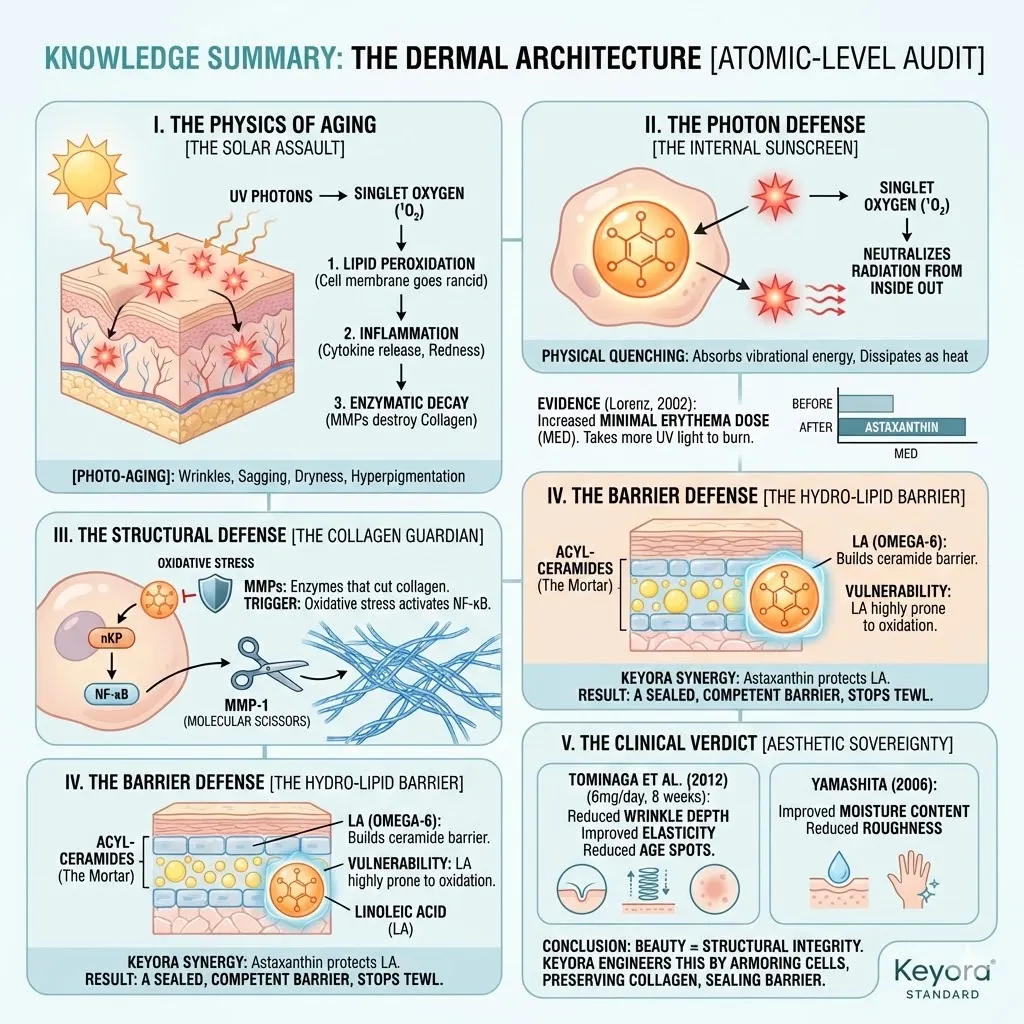
Chapter 7: THE REPRODUCTIVE ARCHITECTURE: GENETIC SOVEREIGNTY
Defending The Genetic Payload and the Architecture of The Membrane Fusion Catalyst
We have spent the previous six chapters securing the survival of the individual.
We have fortified the heart, the brain, the eyes, and the metabolic engine.
We have engineered a vessel capable of withstanding the entropy of the modern world.
But biology has a secondary, ruthless imperative: Replication.
From an evolutionary perspective, the survival of the individual is irrelevant if the genetic code dies with them. The ultimate test of biological sovereignty is the ability to pass The Genetic Payload to the next generation intact.
This brings us to the most high-stakes theater in human biology:
Reproductive Health.
This is not a conversation about “wellness” or “vitality.” It is a conversation about extinction. In the last 40 years, sperm counts in the Western world have dropped by over 50%. Fertility rates are plummeting. The machinery of reproduction is failing at a systemic level.
For the modern high-performer, this failure is often the source of a profound, silent anxiety.
It is the specific, hollow silence of a negative pregnancy test.
It is the monthly cycle of hope followed by the crushing weight of biological betrayal.
It is the feeling that despite all your success, all your optimization, and all your control, you cannot force this one fundamental lock to open.
To understand why this is happening, we must look at the physics of the germ cells – the Sperm and the Oocyte (Egg).
They are an engineering paradox.
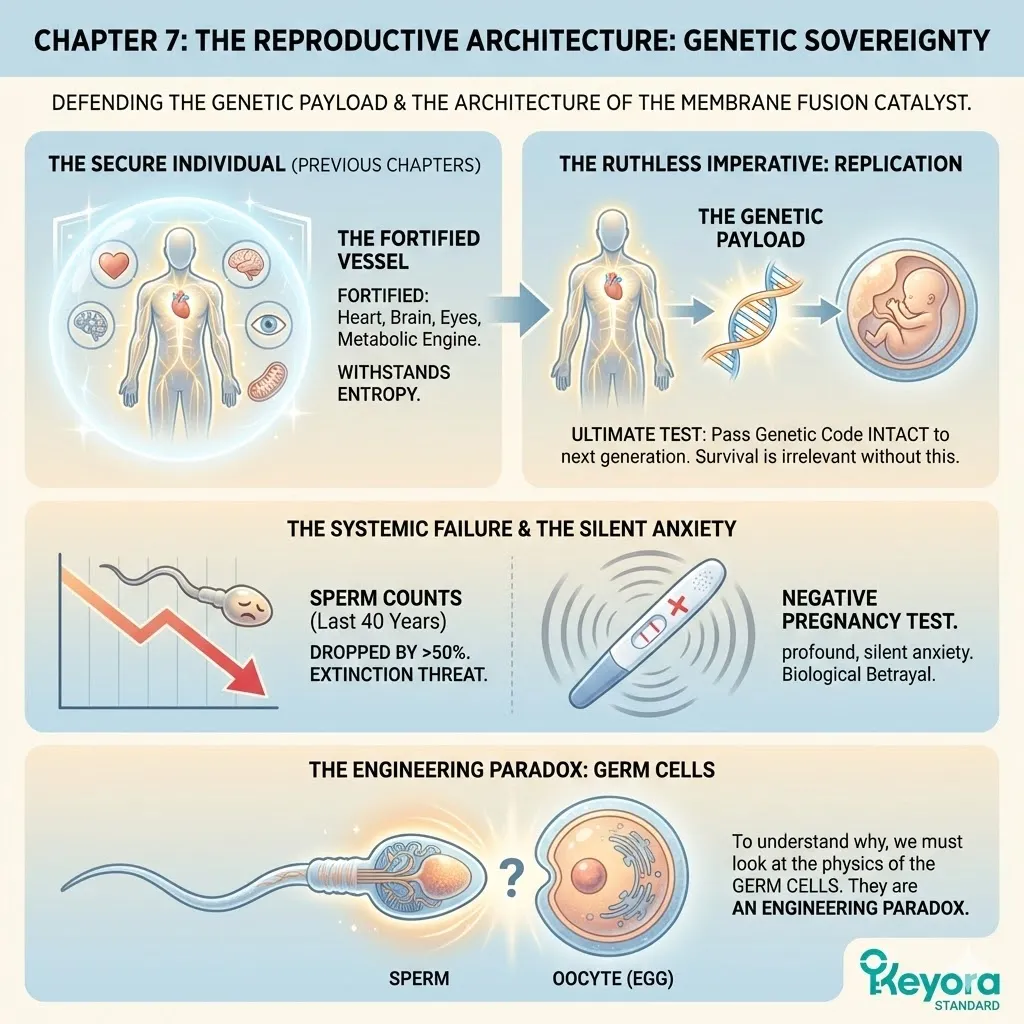
The Male Paradox: Speed vs. Armor
To win the race to the egg, the sperm cell must be light.
It must be hydrodynamic.
It must be fast. To achieve this, during the final stages of maturation (spermiogenesis), the sperm cell jettisons almost all of its cytoplasm.
The cytoplasm is where a cell stores its antioxidants.
It is the cell’s survival kit.
By throwing it overboard to gain speed, the sperm cell effectively strips off its armor.
It enters the most hostile environment imaginable – the female reproductive tract – naked and undefended.
It carries a massive mitochondrial engine in its midpiece to power its tail, generating huge amounts of heat and reactive oxygen species (ROS), yet it has discarded the very enzymes (SOD, Glutathione) needed to neutralize that heat.
It is a kamikaze unit.
It is designed to burn hot, travel fast, and deliver its payload before it disintegrates.
But in the modern world, the oxidative stress is too high. The sperm burns out before it reaches the target.
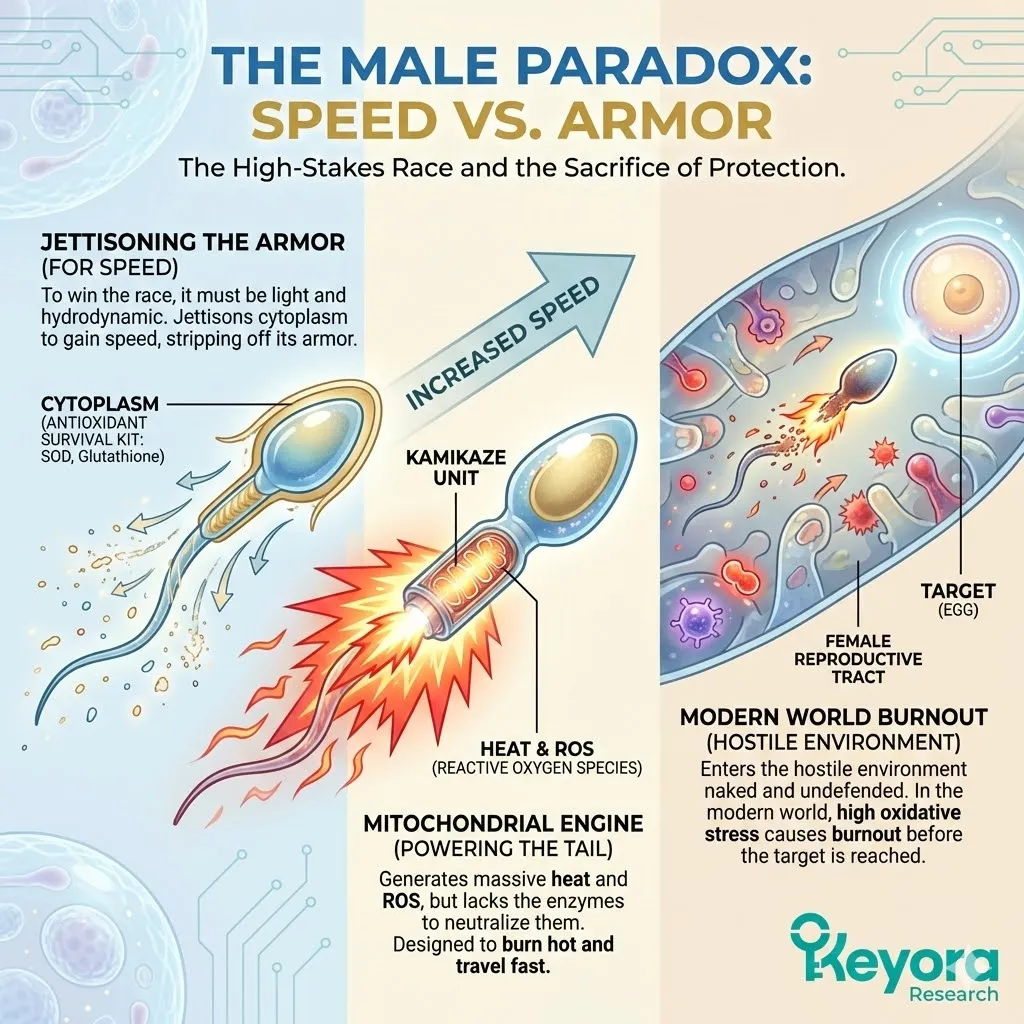
The Female Paradox: Resource Density vs. Target Size
The Oocyte is the opposite.
It is the largest cell in the human body.
It is a massive warehouse of lipids, mitochondria, and proteins, designed to fuel the first critical days of embryonic life.
But this resource density makes it a massive target. The egg is rich in Polyunsaturated Fatty Acids (PUFAs) – the fuel for life, but also the fuel for Lipid Peroxidation.
When the ovarian environment is inflamed (due to stress, toxins, or age), the follicular fluid fills with ROS.
The egg sits in this toxic bath, and its membranes begin to oxidize.
The “shell” hardens.
The mitochondria inside the egg degrade.
The fuel goes bad before the engine can even start.
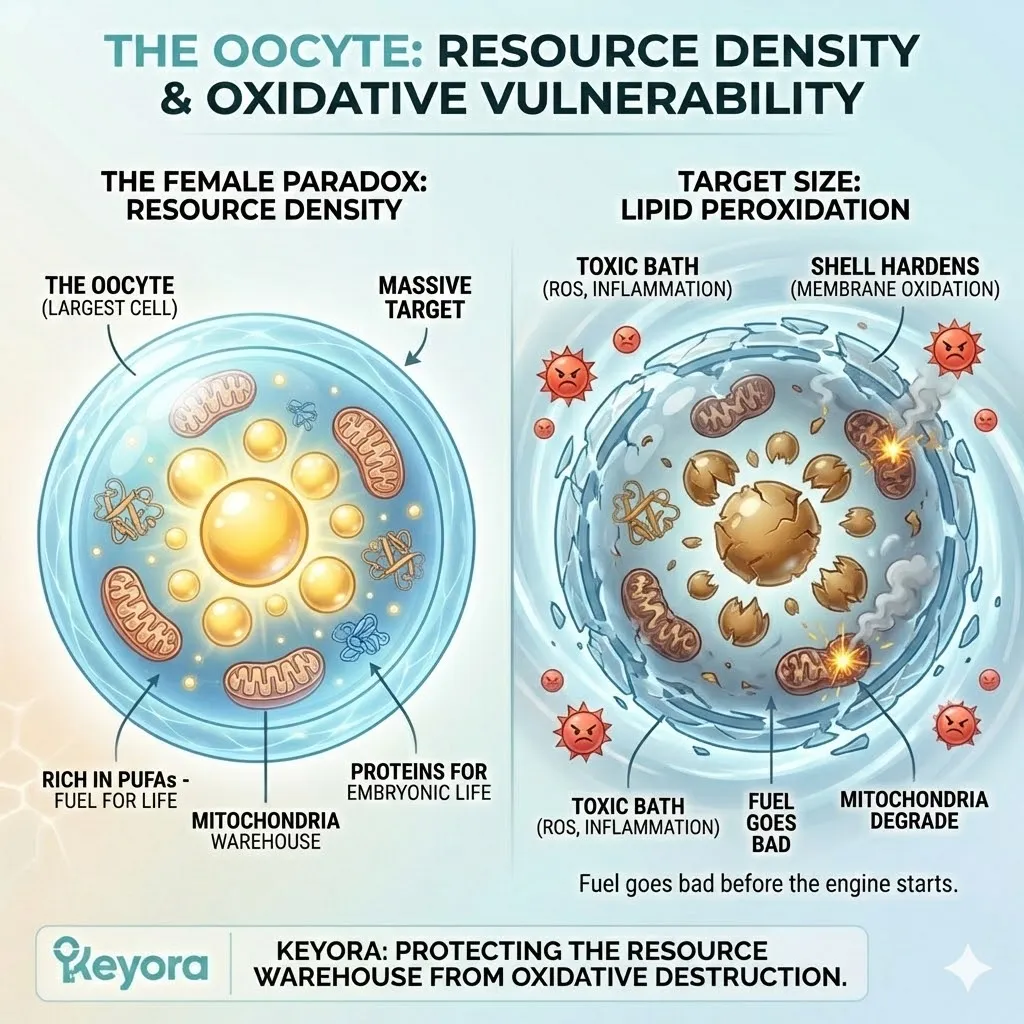
The Common Enemy: Oxidative Stress
In both cases, the root cause of failure is the same: Entropy.
Oxidation is the primary cause of male infertility (accounting for 30-80% of cases).
It attacks the membrane fluidity required for fusion.
It attacks the mitochondrial potential required for motility.
And most devastatingly, it attacks the DNA itself.
This is the terror of DNA Fragmentation.
Even if fertilization occurs, if the DNA inside the sperm or egg has been shredded by free radicals, the embryo will not survive. This is the mechanism behind early miscarriage and “unexplained infertility.”
The machinery of life is precise, but it is fragile. It requires a pristine environment to function.
Keyora Research defines this requirement as Genetic Sovereignty.
To restore this sovereignty, we must do what the sperm cell cannot do for itself. We must provide external armor.
We must engineer a shield that can travel with the gametes into the hostile zone, protecting the payload until the moment of fusion.
We must protect the missile.
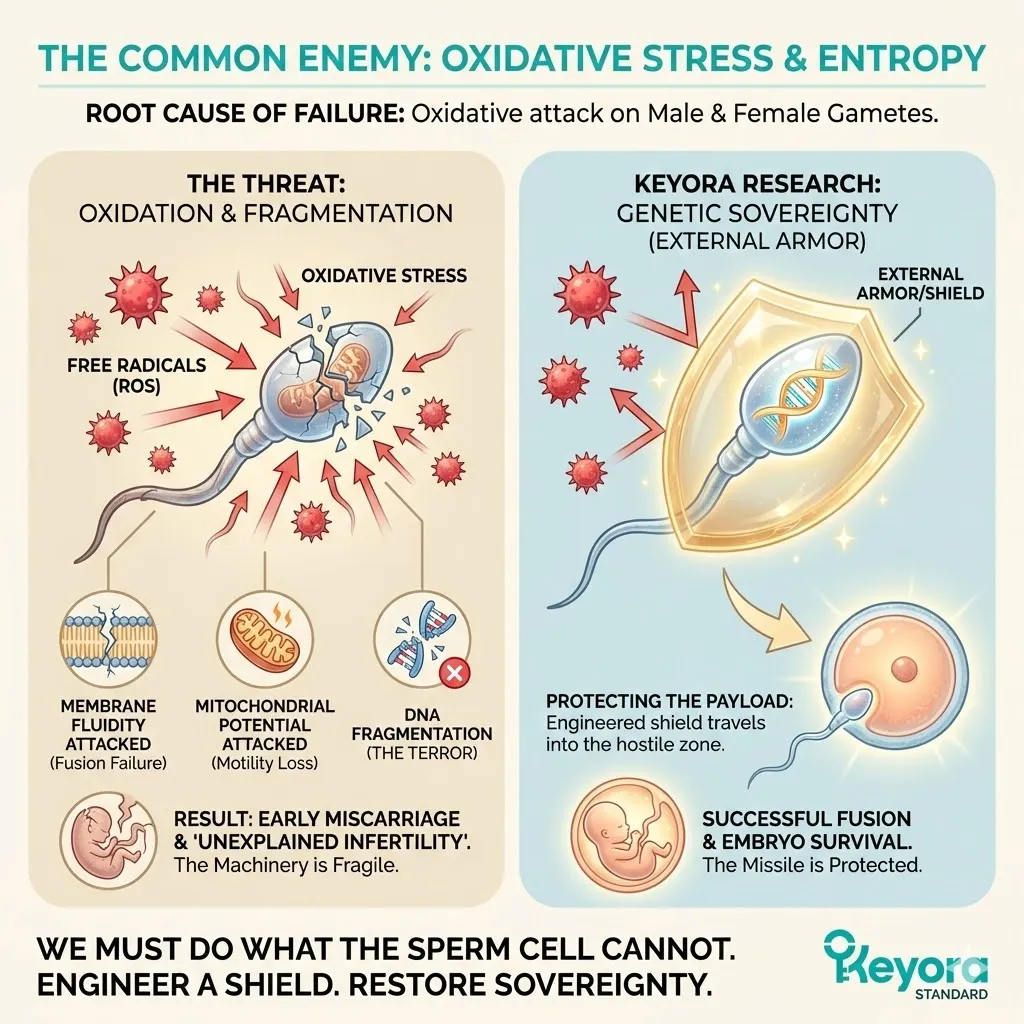
7.1 Protecting the Missile (The Male Equation)
Let us analyze the sperm cell through the lens of aerospace engineering. It is a ballistic missile with three distinct components, each with a specific failure mode driven by oxidation.
1. The Fuselage (The Plasma Membrane)
The membrane of a sperm cell is unique. It is composed of an exceptionally high concentration of Polyunsaturated Fatty Acids (PUFAs), specifically Docosahexaenoic Acid (DHA).
This is not an accident. Saturated fats are rigid (like butter). PUFAs are fluid (like oil).
The sperm membrane must be incredibly fluid to allow for the rapid, whip-like motion of the tail. If the membrane were rigid, the sperm would be paralyzed.
But this engineering choice creates a fatal vulnerability. PUFAs are the most chemically unstable lipids in biology. They react explosively with free radicals.
When a man is under stress – whether from work, poor sleep, or environmental toxins – his body generates a surge of Reactive Oxygen Species (ROS). These radicals attack the sperm membrane.
This triggers Lipid Peroxidation.
The fluid, oily membrane turns into a rigid, cross-linked scar. The tail stiffens. Motility drops. The sperm becomes “sluggish.” It swims in circles or stops moving entirely (Asthenozoospermia).
2. The Engine (The Mitochondria)
The midpiece of the sperm is packed with mitochondria, spiraled tightly around the axoneme (the core of the tail). These engines must generate ATP at a furious rate to power the journey.
But as we learned in Chapter 1, high energy output equals high ROS leakage. The sperm is generating its own toxic exhaust. Because it has dumped its cytoplasm, it has no internal scrubbers to clean this exhaust.
The mitochondria oxidize themselves. The membrane potential collapses. The engine seizes. The missile runs out of fuel halfway to the target.
3. The Warhead (The Acrosome and Nucleus)
The head of the sperm contains two critical structures:
-
The Nucleus: Holds The Genetic Payload (DNA).
-
The Acrosome: A cap filled with enzymes needed to drill through the outer shell of the egg.
Oxidative stress attacks both.
It fragments the DNA strands in the nucleus. This is the “hidden killer.” A sperm can still swim with fragmented DNA. It can even fertilize an egg. But the resulting embryo has a corrupted blueprint. It fails to develop. This is the tragedy of recurrent miscarriage.
Simultaneously, oxidation damages the Acrosome. The chemical drill becomes blunt. The sperm reaches the egg, bangs against the wall, but cannot penetrate.
This is Fertilization Failure.
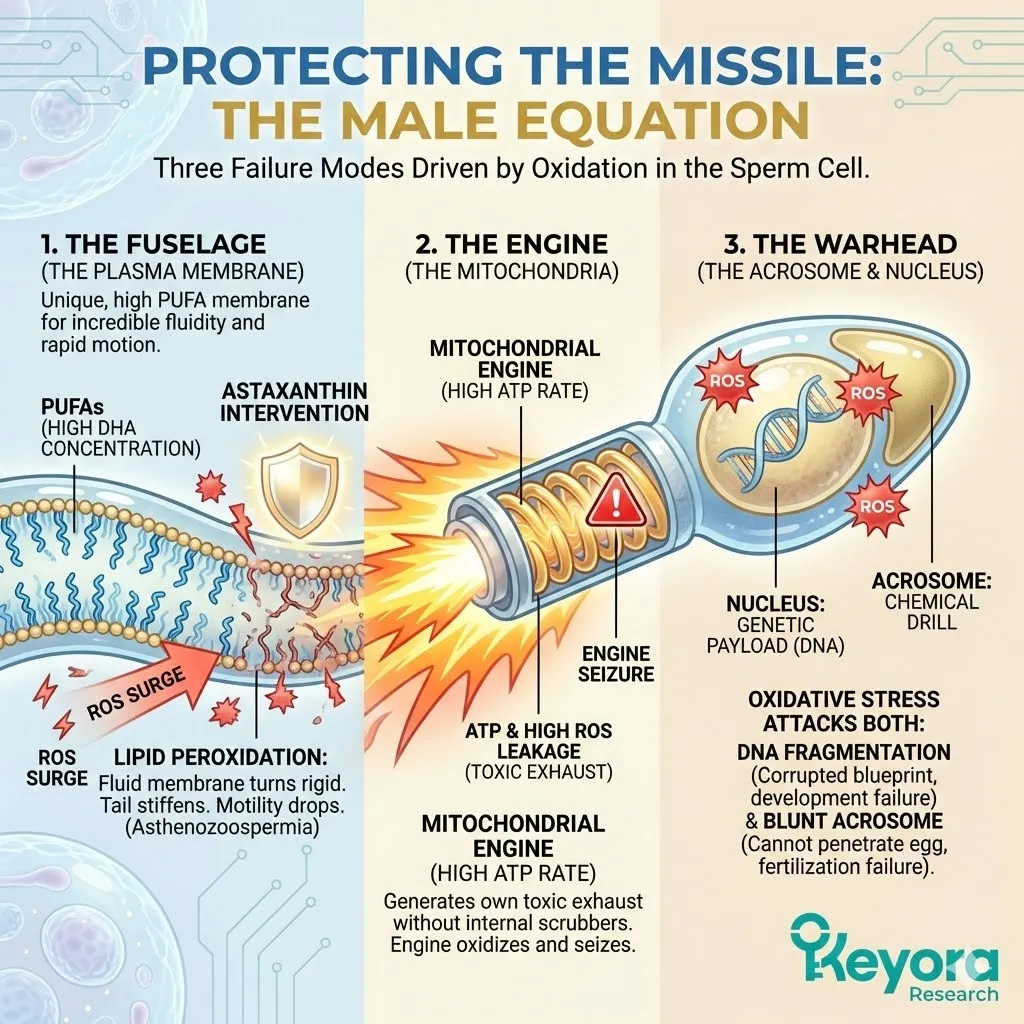
The Keyora Intervention: The Acrosome Protector
To fix this, we need a molecule that can integrate into the sperm membrane and serve as a proxy armor.
Natural Astaxanthin is that molecule.
Research has shown that Astaxanthin accumulates in the testes and is incorporated directly into the developing sperm cells. Because of its unique transmembrane structure (spanning the bilayer), it acts as a structural reinforcement for the high-PUFA membrane.
It functions as The Acrosome Protector.
-
Preserving Fluidity: By quenching free radicals within the lipid bilayer, Astaxanthin prevents the cross-linking of fatty acids. It keeps the membrane fluid. It keeps the tail whipping.
-
Shielding the Engine: It protects the mitochondria in the midpiece, ensuring the ATP supply remains constant. It allows the sperm to swim faster, for longer.
-
Guarding the Payload: Most importantly, it creates an antioxidant sphere of protection around the nucleus. It stops the ROS from reaching the DNA.
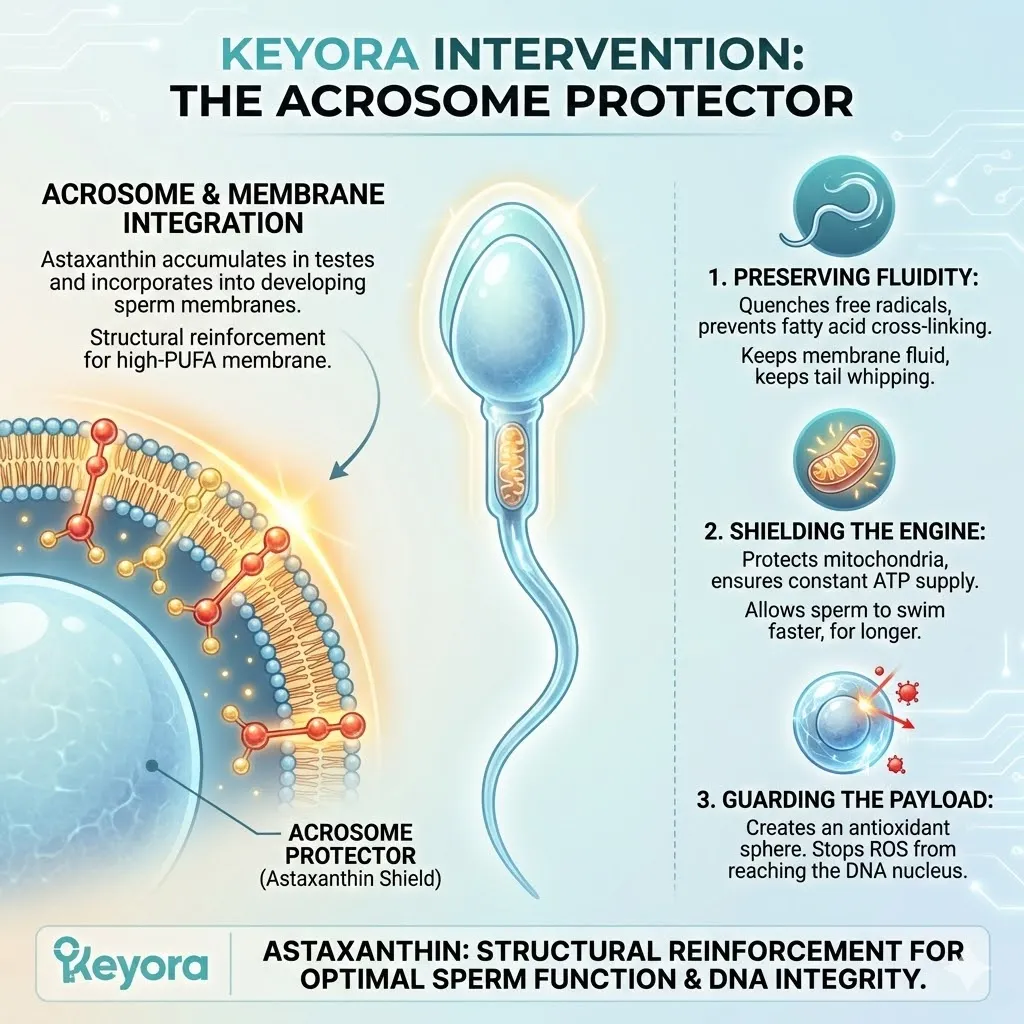
The Physics of the “Acrosome Reaction”
There is a specific moment of truth in conception called the Acrosome Reaction. When the sperm hits the egg, the membrane on the head must fuse and rupture precisely to release enzymes.
If the membrane is oxidized (rigid), it cannot fuse.
The reaction fails.
If the membrane is protected by Astaxanthin, it remains pliable.
The reaction triggers.
The enzymes are released.
The breach is successful.
This is why we see such dramatic results in clinical trials (which we will detail in Part 3).
We are not just “improving health”; we are optimizing the physics of a ballistic impact.
We are ensuring that the missile is fast, the fuel is clean, and the warhead is live.
But the missile is only half the equation. It must dock with a target. And that target – the Egg – is facing its own crisis of oxidation.
We must now turn our attention to the female equation.
We must look at the environment in which the egg matures, and how we can purify the follicular fluid to ensure a viable reception.
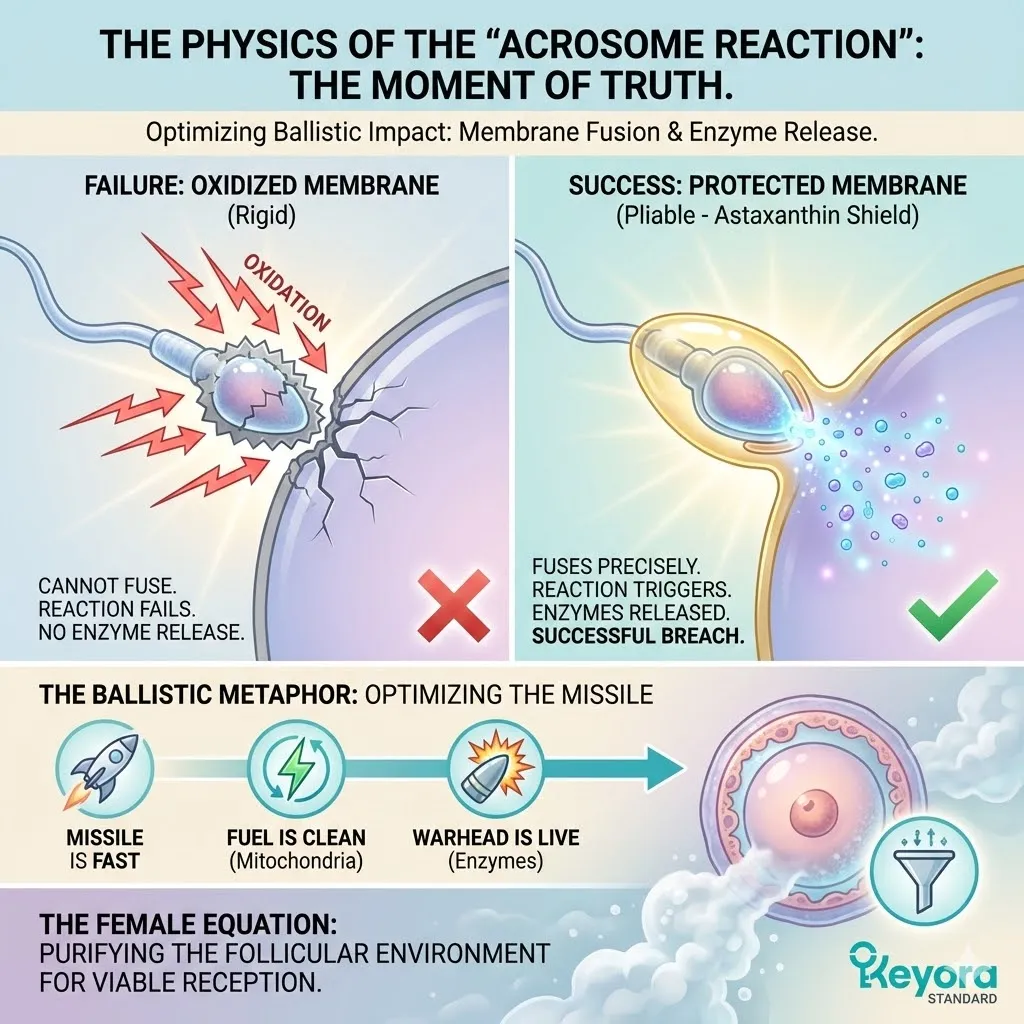
7.2 Purifying the Environment (The Female Equation)
If the sperm is a missile designed for speed, the Oocyte (Egg) is a fortress designed for endurance.
But it is a fortress under a decades-long siege.
Unlike men, who produce fresh sperm every 74 days, a woman is born with her entire lifetime supply of eggs. An egg that ovulates at age 35 has been sitting in the ovaries, in a state of suspended animation, for 35 years.
For three and a half decades, that cell has been exposed to every fever, every stress hormone, every environmental toxin, and every free radical that has circulated through the woman’s body.
It accumulates The Oxidative Debt not over days, but over decades.
This is the biological basis of the “biological clock.” It is not just about time; it is about the accumulation of entropy.
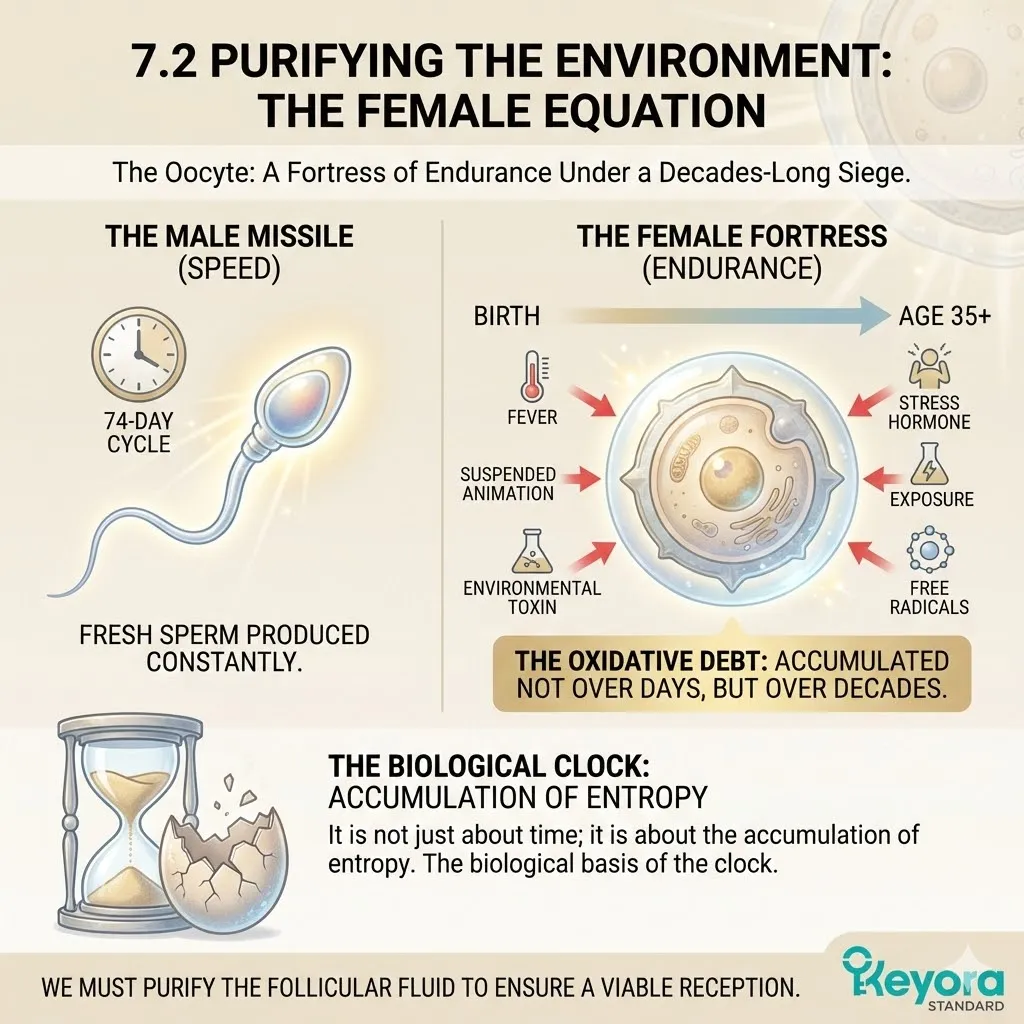
The Follicular Micro-Environment
To understand female fertility, we must look at the environment in which the egg matures:
The Ovarian Follicle.
The egg does not float in a vacuum. It is bathed in Follicular Fluid and surrounded by a support crew of Granulosa Cells. These cells are the life-support system. They feed the egg nutrients, regulate its hormones, and manage its waste.
In a healthy, young system, the follicular fluid is pristine. It is rich in antioxidants.
But in the modern high-performer – subjected to sleep deprivation, high insulin, and environmental pollutants – the follicular fluid turns toxic. It becomes saturated with Reactive Oxygen Species (ROS).
This creates a “Toxic Bath.”
The ROS attack the Granulosa Cells first. These nurse cells are highly sensitive to oxidative stress. When overwhelmed, they trigger a suicide sequence called Apoptosis. They die off.
When the nurse cells die, the egg is left isolated. It is starved of ATP. Its own mitochondria begin to falter. The spindle apparatus – the machinery responsible for separating chromosomes during division – becomes fragile and disorganized.
This is the mechanism of Chromosomal Aneuploidy (e.g., Down Syndrome) and failed implantation. The egg is fertilized, but the machinery of division is too rusted to execute the program.
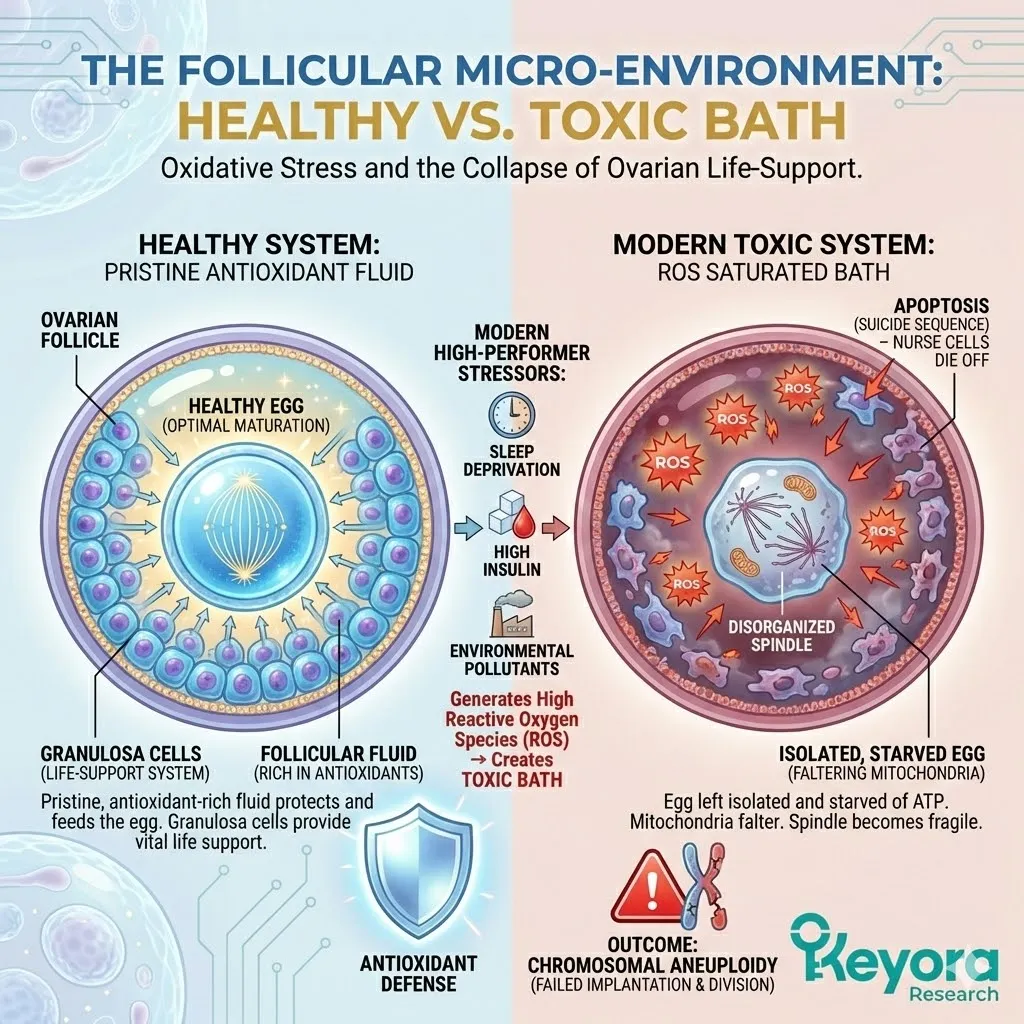
The Keyora Intervention: The Follicular Shield
We cannot stop time. But we can clean the bath.
Research indicates that Natural Astaxanthin accumulates in the follicular fluid. It crosses the blood-follicle barrier just as it crosses the blood-brain barrier.
Once inside the follicle, it acts as The Follicular Shield.
-
Preserving the Nurses: Astaxanthin protects the Granulosa Cells from oxidative apoptosis. It keeps the life-support system online.
-
Mitochondrial Sovereignty: Just as in the brain and muscle, Astaxanthin stabilizes the mitochondrial membrane potential within the egg itself. A fertilized egg requires a massive burst of ATP to begin cell division. Astaxanthin ensures the batteries are fully charged for this moment.
-
Quenching the Fluid: It acts as a “molecular sponge” within the follicular fluid, soaking up the ROS generated by systemic stress before they can touch the oocyte membrane.
This is not about “boosting fertility” in a vague, hormonal sense. It is about environmental engineering. We are purifying the liquid environment in which the most precious cell in the body resides.
By lowering the oxidative stress in the follicular fluid, we improve Oocyte Competence. We give the egg the structural resilience to survive fertilization and the metabolic energy to drive the first critical days of embryonic development.
But even a healthy egg and a healthy sperm are useless if they cannot perform the final, most physically demanding act of conception.
They must become one.
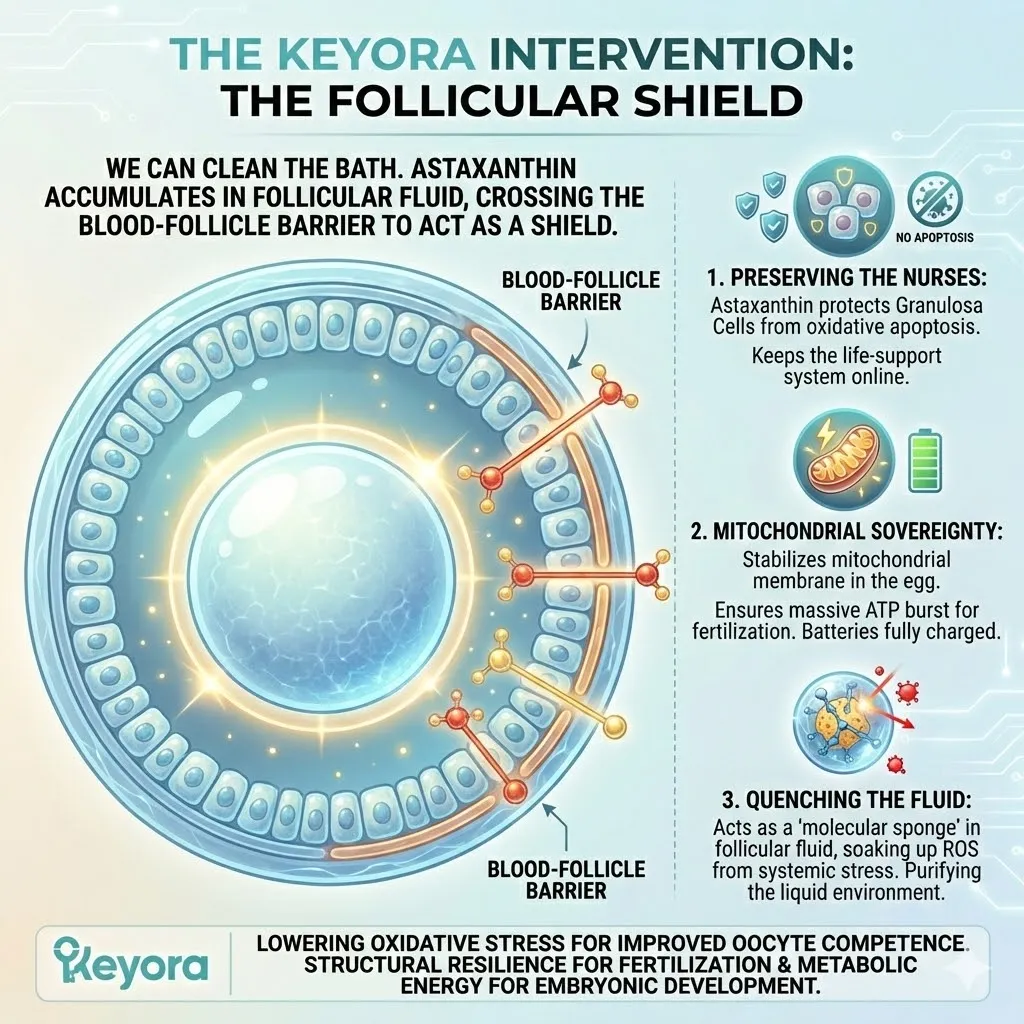
7.3 The Membrane Fusion Catalyst (The EFAs Synergy)
We have arrived at the moment of conception.
Forget the romance. Look at the biophysics. Fertilization is a violent, high-velocity collision between two distinct biological entities that must merge their physical structures into a single, unified whole.
This is Membrane Fusion.
It is one of the most energy-intensive and structurally demanding events in biology. The membrane of the sperm head must fuse seamlessly with the membrane of the egg (the Oolemma). They must break their individual barriers and flow into one another, mixing their genetic material without losing integrity.
This requires extreme Membrane Fluidity.
If the membranes are rigid (due to high saturated fat or cholesterol), they will bounce off each other. The sperm will strike the egg, but the fusion pore will not open. Fertilization fails.
If the membranes are too fragile (due to oxidized PUFAs), they will rupture chaotically. The cell contents will leak. The embryo dies instantly.
This is where the Keyora 1,836mg EFAs becomes the critical catalyst.
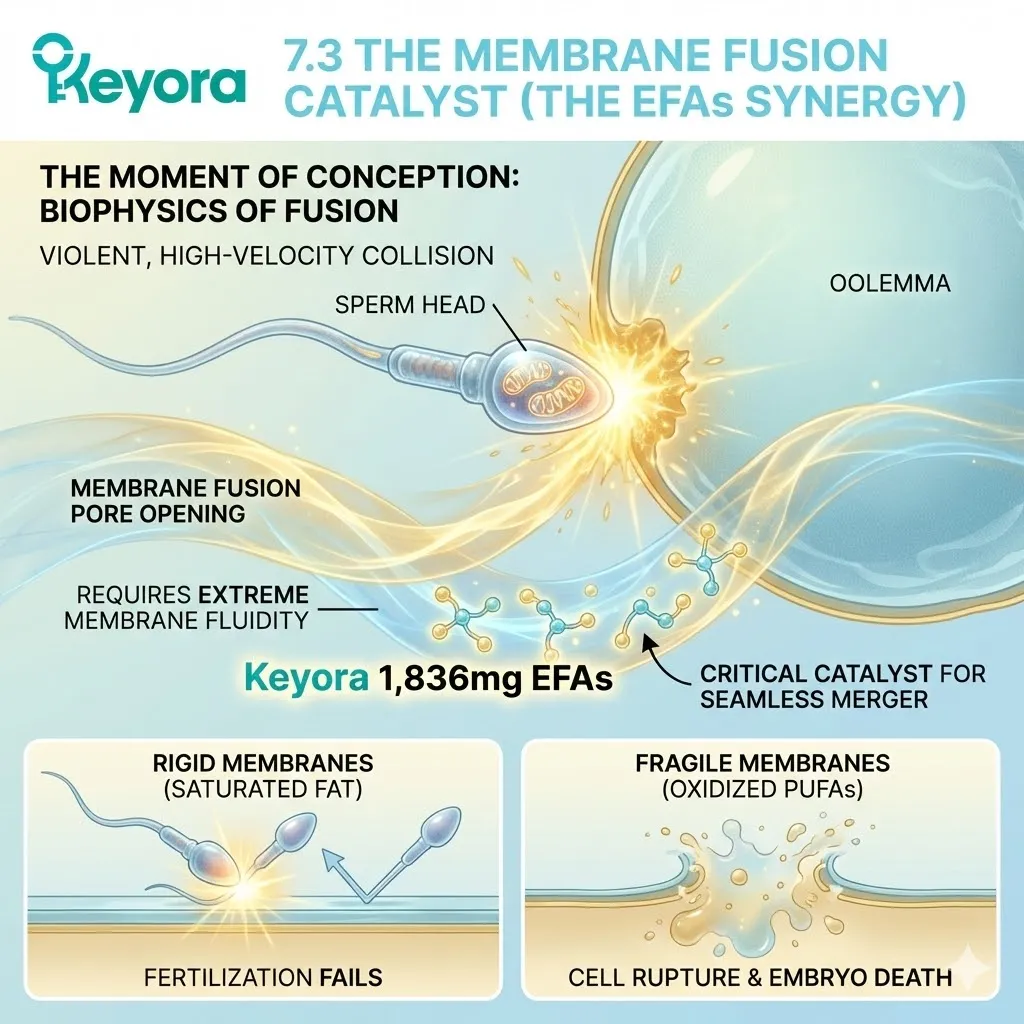
The Role of Alpha-Linolenic Acid (ALA)
ALA is the precursor to the long-chain Omega-3s that define membrane fluidity. By saturating the system with ALA, we are providing the raw materials to build “soft,” pliable membranes.
We are ensuring that the sperm and egg are encased in a lipid bilayer that can bend, fold, and merge without breaking.
The Role of Linoleic Acid (LA)
LA is the precursor to Arachidonic Acid, which is essential for the signaling cascade that triggers the fusion event. It is the chemical “key” that tells the membranes to open.
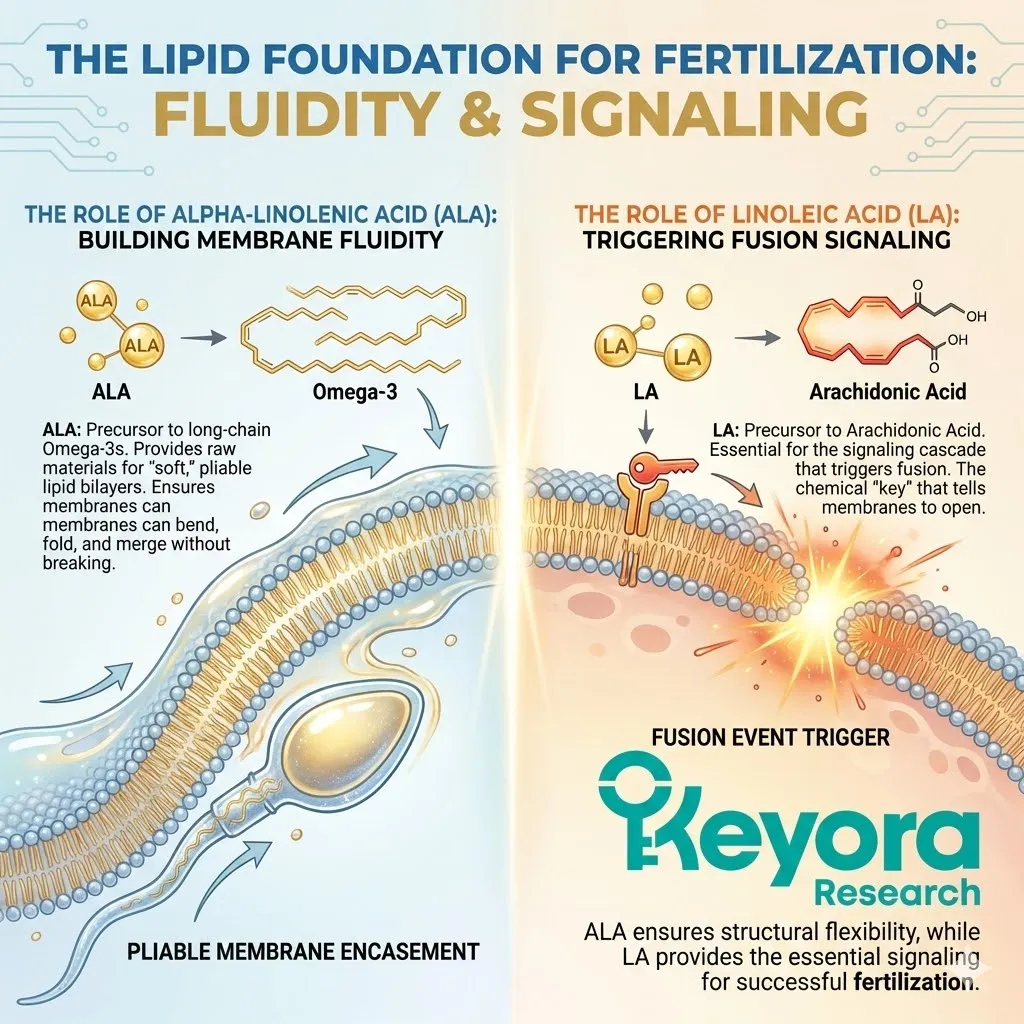
The Synergy: The Membrane Fusion Catalyst
This is the Keyora Difference.
Most fertility supplements focus only on antioxidants (Astaxanthin, CoQ10). But an antioxidant alone cannot build a fluid membrane. It can only protect what is there.
If your diet is poor – if your cell membranes are built of rigid saturated fats or inflammatory trans fats – Astaxanthin is protecting a brick wall. A brick wall cannot fuse.
By combining Astaxanthin (The Shield) with ALA/LA (The Building Blocks), Keyora creates The Membrane Fusion Catalyst.
-
Construction: The EFAs build a fluid, dynamic membrane capable of fusion.
-
Protection: Astaxanthin protects these highly unsaturated fats from oxidizing (which would make them rigid).
We are engineering the perfect physical conditions for the union of genetics.
We are ensuring that when the missile hits the target, the physics of fusion works in your favor.
This is Reproductive Architecture.
We have secured the Male (Speed + Payload).
We have secured the Female (Environment + Energy).
We have secured the Union (Membrane Fusion).
Now, we must look at the results. Does this architectural approach actually result in life?
The clinical data is, quite frankly, miraculous.
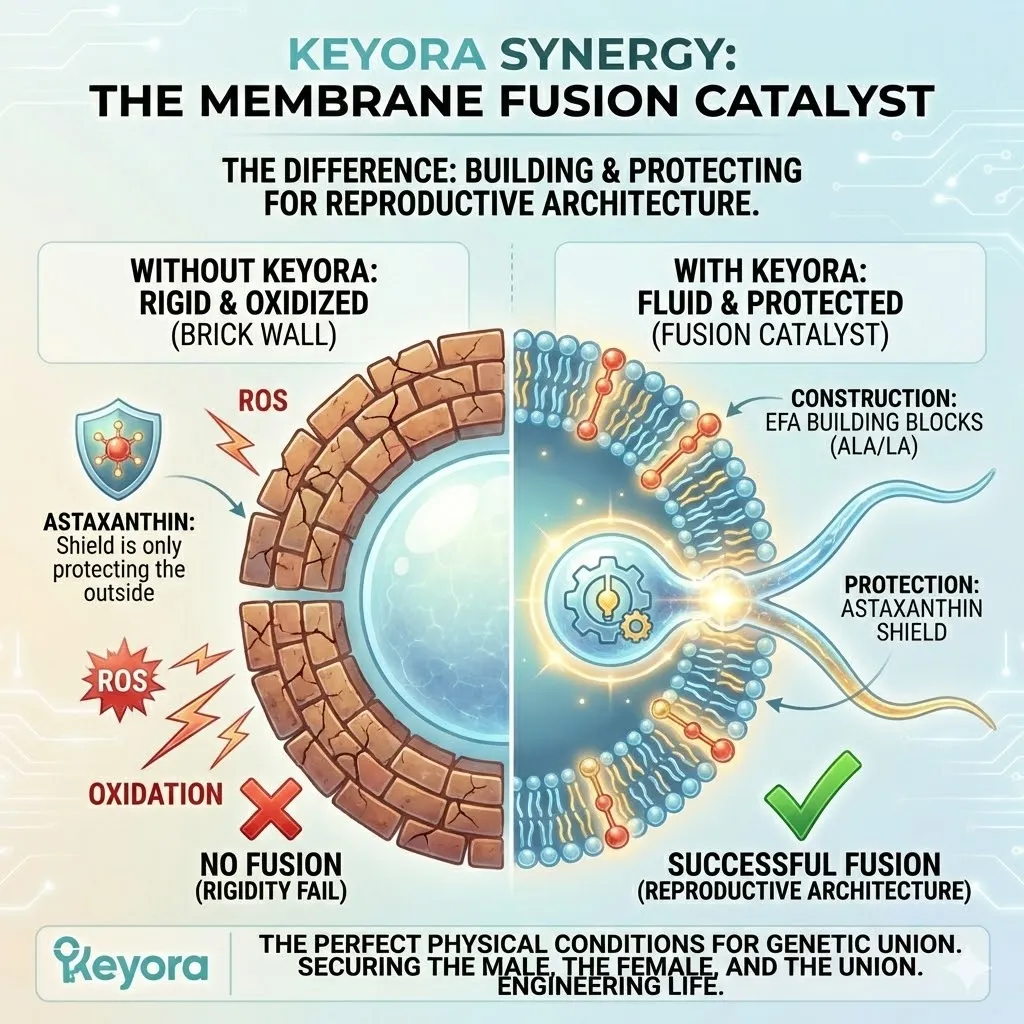
7.4 The Miracle Statistics (The Clinical Verdict)
We have discussed the physics of sperm motility, the chemistry of follicular fluid, and the mechanics of membrane fusion. These are fascinating mechanisms. But for the couple staring at a negative pregnancy test month after month, mechanisms mean nothing. Only outcomes matter.
Does this protocol actually result in a baby?
To answer this, we must look at one of the most powerful clinical trials in the history of nutritional fertility research:
Comhaire et al. (2005).
This was a double-blind, randomized, placebo-controlled trial. The subjects were couples who had been trying to conceive for at least 12 months without success. The women were healthy; the men were diagnosed with infertility (poor sperm quality).
The men were divided into two groups.
-
Group A: Placebo.
-
Group B: 16mg of Natural Astaxanthin daily for 3 months.
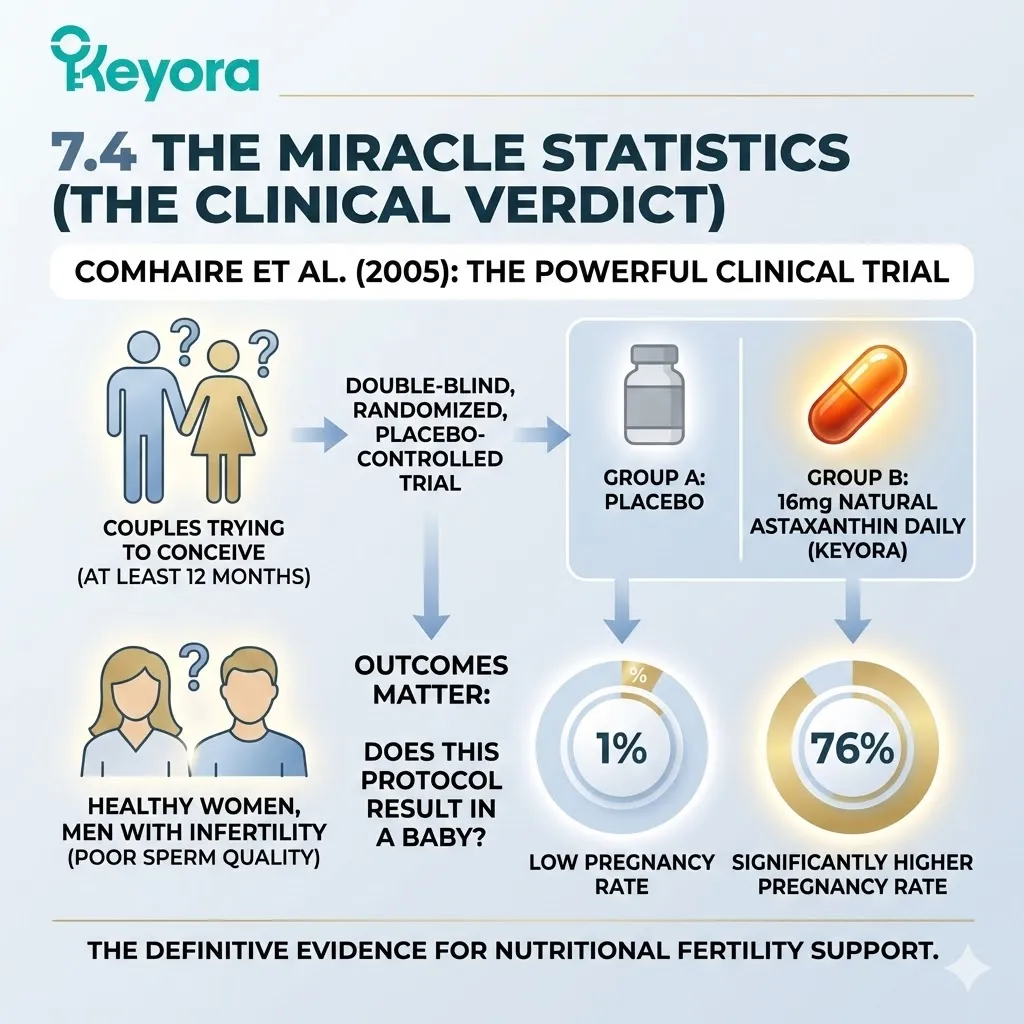
The Results (The Biological Shift):
In the Astaxanthin group, the biological metrics shifted exactly as our architectural model predicts:
-
ROS Decreased: Oxidative stress in the seminal plasma dropped significantly. The “toxic bath” was cleaned.
-
Motility Increased: Sperm linear velocity improved. The engines were firing.
-
Inhibin B Decreased: A marker of Sertoli cell function improved.
The Outcome (The Miracle):
But the most shocking data point was the pregnancy rate.
-
Placebo Group: 10.5% of couples achieved pregnancy.
-
Astaxanthin Group: 54.5% of couples achieved pregnancy.
Let that sink in.
A 5X increase in conception rates. Over half of the “infertile” couples conceived naturally within just three months, simply by adding a structural antioxidant to the male partner’s regimen.
This result dwarfs the success rates of many pharmaceutical interventions. It proves that for a significant portion of infertility cases, the root cause is not “broken biology,” but The Oxidative Debt.
When you pay off the debt – when you shield the sperm DNA and restore membrane fluidity – life finds a way.
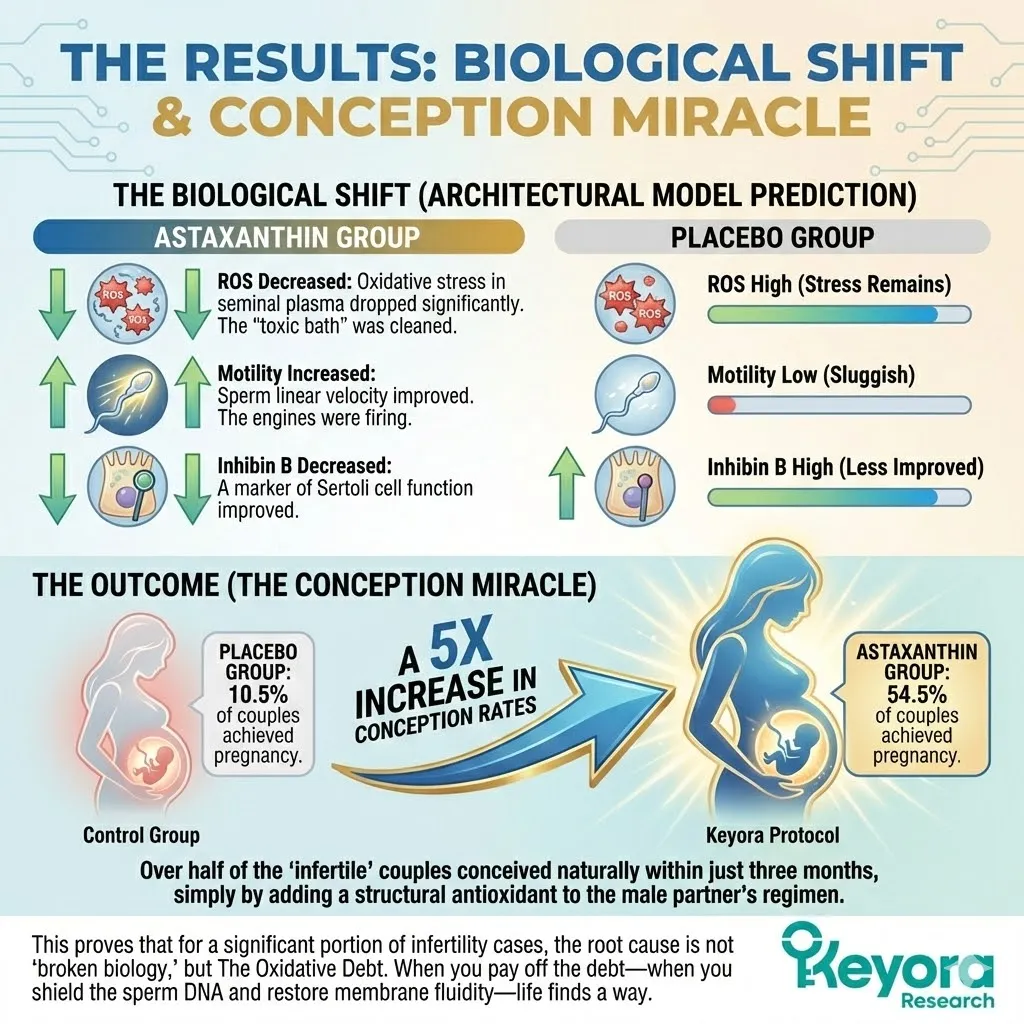
Secondary Validation: Andrisini et al. (2015)
A more recent study by Andrisini et al. further validated the mechanism. They focused specifically on Sperm Capacitation – the final maturation step where the sperm prepares to penetrate the egg.
They found that Astaxanthin improved capacitation by regulating the redox balance. It allowed the sperm to reach a “primed” state without burning out prematurely. This confirms our concept of The Acrosome Protector.
The clinical consensus is clear: Astaxanthin is a potent, non-invasive, and highly effective tool for restoring Genetic Sovereignty.
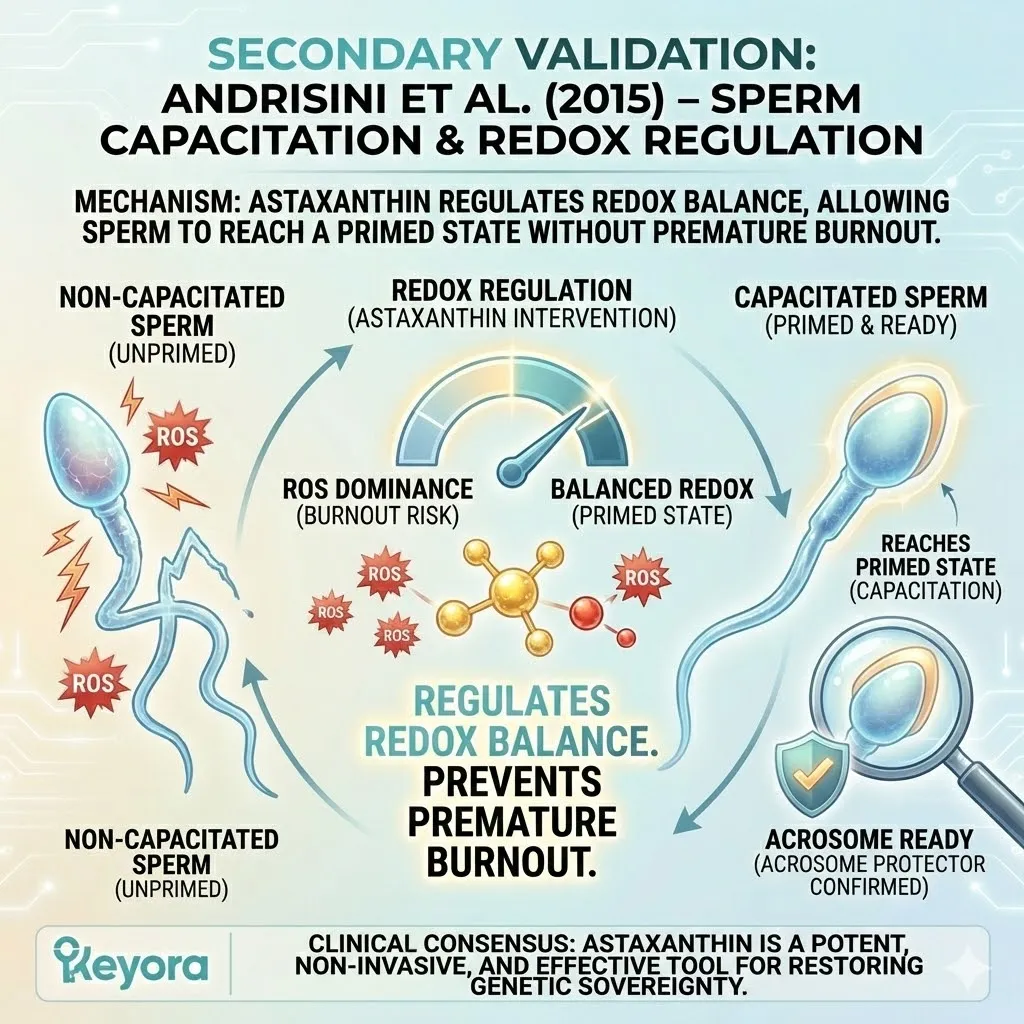
7.5 Life Continued
We have reached the end of our physiological tour.
We began with the single cell, fighting for energy in the Mitochondria.
We scaled up to the Cardiovascular System, the Brain, the Eyes, the Liver, and the Skin. And finally, we have arrived here, at the creation of new life.
This journey confirms a singular truth: Biology is Architecture.
Health is not a lottery. It is not a mystical force. It is a structural reality governed by the laws of physics and chemistry.
-
If you let the structure rust (Oxidation), it fails.
-
If you let the structure inflame, it degrades.
-
If you starve the structure of raw materials (Lipids), it becomes brittle.
The Keyora Protocol – 16mg of Natural Astaxanthin suspended in 1,836mg of Essential Fatty Acids – is not a “supplement.” It is a structural intervention.
It is the steel rebar and the high-grade concrete required to reinforce your biological house against the storm of the modern world.
We have defined the problem: [The Oxidative Debt].
We have engineered the solution: [The Transmembrane Shield].
We have validated the outcome: Sovereignty.
But knowing the science is not enough. You must know how to apply it. You must know the dosage, the timing, and the integration into your life.
In the final chapter, we will synthesize everything we have learned into a clear, actionable protocol. We will give you the user manual for your own biology.
Next Episode: THE ENGINEERING PROTOCOL.
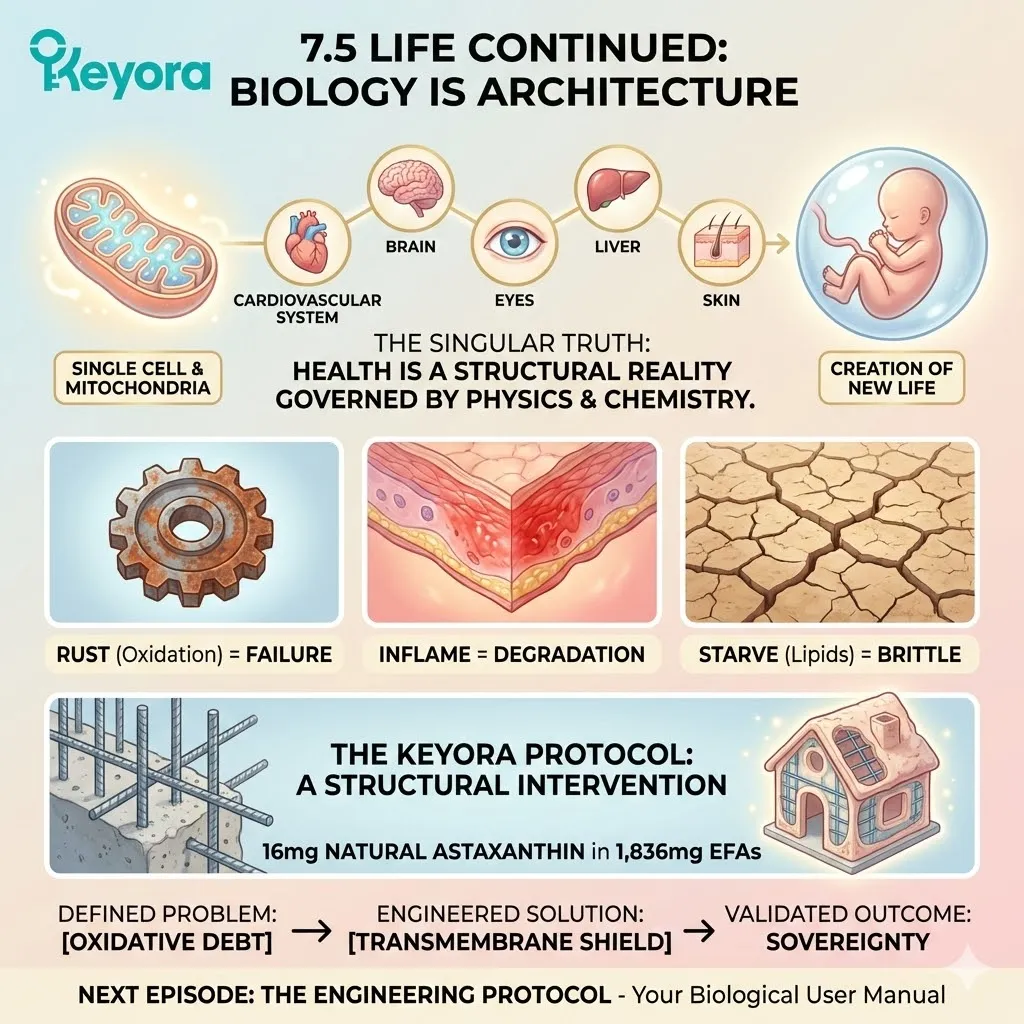
References
Comhaire, F. H., El Garem, Y., Mahmoud, A., Eertmans, F., & Schoonjans, F. (2005). Combined conventional/antioxidant “Astaxanthin” treatment for male infertility: a double blind, randomized trial. Asian Journal of Andrology, 7(3), 257-262.
Andrisini, A., Dona, G., Tibaldi, E., Brunati, A. M., Sabbadin, C., Armanini, D., Alvisi, G., Gizzo, S., Ambrosini, G., Ragazzi, E., & Bordin, L. (2015). Astaxanthin improves human sperm capacitation by inducing lyn displacement and activation. Marine Drugs, 13(9), 5533-5551.
Donà, G., Kožuh, I., Brunati, A. M., Andrisini, A., Ambrosini, G., Bonanni, G., Ragazzi, E., Armanini, D., Clari, G., & Bordin, L. (2013). Effect of astaxanthin on human sperm capacitation. Marine Drugs, 11(6), 1909-1919.
Garem, Y., Lignell, A., & Comhaire, F. (2002). Natural Astaxanthin Improves Semen Quality in Infertile Men. XIII International Carotenoid Symposium Hawaii.
Lignell, A., Inborr, J., Nicolin, C., & Grodinge, A. (2002). Method of Increasing the Production and Improving the Quality of Sperm. US Patent 6,410,602 B1. Washington, DC: U.S. Patent and Trademark Office.
Tripathi, D. N., & Jena, G. B. (2008). Astaxanthin inhibits cytotoxic and genotoxic effects of cyclophosphamide in mice germ cells. Toxicology, 248(2-3), 96-103.
Goyal, A., Chopra, M., Lemoine, N. R., & Chugh, K. S. (2011). Antioxidant supplementation on seminal oxidative stress and sperm DNA damage in infertile men: a meta-analysis. Fertility and Sterility, 95(5), 1626-1631.
Showell, M. G., Mackenzie-Proctor, R., Brown, J., Yazdani, A., Stankiewicz, M. T., & Hart, R. J. (2014). Antioxidants for male subfertility. Cochrane Database of Systematic Reviews, (12).
Aitken, R. J., & Roman, S. D. (2008). Antioxidant systems and oxidative stress in the testes. Oxidative Medicine and Cellular Longevity, 1(1), 15-24.
Agarwal, A., & Prabakaran, S. A. (2005). Mechanism, measurement, and prevention of oxidative stress in male reproductive physiology. Indian Journal of Experimental Biology, 43(11), 963-974.
Tremellen, K. (2008). Oxidative stress and male infertility—a clinical perspective. Human Reproduction Update, 14(3), 243-258.
Safarinejad, M. R. (2011). Effect of omega-3 polyunsaturated fatty acid supplementation on semen profile and oxidative stress in infertile men. Clinical Nutrition, 30(1), 100-108.
Aksoy, Y., Aksoy, H., Altinkaynak, K., Aydin, H. R., & Ozkan, A. (2006). Sperm fatty acid composition in subfertile men. Prostaglandins, Leukotrienes and Essential Fatty Acids, 75(2), 75-79.
Wathes, D. C., Abayasekara, D. R., & Aitken, R. J. (2007). Polyunsaturated fatty acids in male and female reproduction. Biology of Reproduction, 77(2), 190-201.
Jin, X., & Keyora Research. (2025). Astaxanthin – Multi-System Antioxidant Targeting Ocular Microcirculation and AMD, Cardiovascular and Cerebrovascular Protection, Reproductive Health, Skin Photo-protection, and Clinically Supported Immunomodulation. DOI: 10.5281/zenodo.16893579
Jin, X., & Keyora Research. (2025). Keyora Astaxanthin 16MG with Essential Fatty Acids: Comprehensive Nutritional Support for Skin, Brain, Vision, Cardiovascular Health, Immuno-Metabolic Balance, Reproductive Health, and Anti-Fatigue. Zenodo. DOI: 10.5281/zenodo.16908847
Keyora Research. (2025). Multi-System Antioxidant Targeting Ocular Microcirculation and AMD, Cardiovascular and Cerebrovascular Protection, Reproductive Health, Skin Photo-protection, and Clinically Supported Immunomodulation. OSF Preprints. DOI: 10.17605/OSF.IO/MWPNC
Capelli, B., & Cysewski, G. R. (2013). Natural Astaxanthin: The World’s Best Kept Health Secret. Cyanotech Corporation.
Ambati, R. R., Phang, S. M., Ravi, S., & Aswathanarayana, R. G. (2014). Astaxanthin: Sources, extraction, stability, biological activities and its commercial applications—A review. Marine Drugs, 12(1), 128-152.
Kidd, P. (2011). Astaxanthin, cell membrane nutrient with diverse clinical benefits and anti-aging potential. Alternative Medicine Review, 16(4), 355-364.
Miyawaki, H., Takahashi, J., Tsukahara, H., & Takehara, I. (2008). Effects of astaxanthin on human blood rheology. Journal of Clinical Biochemistry and Nutrition, 43(2), 69-74. (Relevant for erectile function and reproductive organ perfusion).
Park, J. S., Chyun, J. H., Kim, Y. K., Line, L. L., & Chew, B. P. (2010). Astaxanthin decreased oxidative stress and inflammation and enhanced immune response in humans. Nutrition & Metabolism, 7(1), 18. (Relevant for DNA protection in germ cells).
Kurashige, M., Okimasu, M., & Utsumi, K. (1990). Inhibition of oxidative injury of biological membranes by astaxanthin. Physiological Chemistry and Physics and Medical NMR, 22(1), 27-38.
Wolf, A. M., Asoh, S., Hiranuma, H., Ohsawa, I., Iio, K., Satou, A., Ishikura, M., & Ohta, S. (2010). Astaxanthin protects mitochondrial redox state and functional integrity against oxidative stress. Journal of Nutritional Biochemistry, 21(5), 381-389.
Kishimoto, Y., Tani, M., Uto-Kondo, H., Iizuka, M., Saita, E., Sone, H., Kurata, H., & Kondo, K. (2010). Astaxanthin suppresses scavenger receptor expression and matrix metalloproteinase activity in macrophages. European Journal of Nutrition, 49(2), 119-126. (Relevant for reducing inflammation in conditions like Endometriosis/PCOS).
Menezo, Y. J., Hazout, A., Panteix, G., Robert, F., Rollet, J., Cohen-Bacrie, P., … & Benkhalifa, M. (2007). Antioxidants to reduce sperm DNA fragmentation: an unexpected adverse effect. Reproductive BioMedicine Online, 14(4), 418-421. (Context for why balanced antioxidants like Astaxanthin are superior to high-dose simple vitamins).
# KNOWLEDGE SUMMARY: THE REPRODUCTIVE ARCHITECTURE [ATOMIC-LEVEL AUDIT]
## I. THE PHYSICS OF EXTINCTION [THE FRAGILE LINK]
* **The Paradox:** Sperm cells jettison their cytoplasm (and antioxidants) to gain speed, leaving them defenseless.
* **The Threat:** High mitochondrial activity in the midpiece generates massive **ROS**.
* **The Damage:**
1. **Membrane Peroxidation:** Tail stiffens $rightarrow$ Motility fails.
2. **DNA Fragmentation (DFI):** Genetic payload corrupted $rightarrow$ Miscarriage/Infertility.
* **The Keyora Definition:** **[Genetic Sovereignty]**—The ability to pass intact DNA to the next generation.
## II. THE MALE DEFENSE [THE ACROSOME PROTECTOR]
* **The Target:** Sperm Head (Acrosome + Nucleus).
* **The Mechanism:** Astaxanthin integrates into the sperm membrane during spermatogenesis.
* **The Function:**
* Preserves **Membrane Fluidity** (Critical for the Acrosome Reaction).
* Shields the **Mitochondria** in the midpiece (Maintains ATP/Speed).
* **The Outcome:** A “Live Warhead” capable of penetrating the egg.
## III. THE FEMALE DEFENSE [THE FOLLICULAR SHIELD]
* **The Environment:** **Follicular Fluid**.
* **The Threat:** Oxidative stress triggers apoptosis in **Granulosa Cells** (Nurse cells), starving the egg.
* **The Mechanism:** Astaxanthin accumulates in follicular fluid, quenching ROS.
* **The Result:** Improved **Oocyte Competence** and mitochondrial potential for cell division.
## IV. THE UNION PHYSICS [THE MEMBRANE FUSION CATALYST]
* **The Event:** **Fertilization** = Membrane Fusion.
* **The Requirement:** Extreme Membrane Fluidity.
* **The Synergy:**
* **ALA/LA:** Build the fluid lipid architecture (The Structure).
* **Astaxanthin:** Protects the lipids from oxidation (The Shield).
* **The Concept:** Ensuring the membranes can merge without rupturing.
## V. THE CLINICAL VERDICT [THE MIRACLE STATISTICS]
* **Comhaire et al. (2005):**
* *Protocol:* 16mg/day for 3 months.
* *Subjects:* Infertile men.
* *Result:*
* **Placebo Pregnancy Rate:** **10.5%**.
* **Astaxanthin Pregnancy Rate:** **54.5%**.
* **Andrisini et al. (2015):** Confirmed improved **Capacitation** (Sperm readiness).
* **The Conclusion:** Astaxanthin is a statistically validated intervention for restoring fertility by treating the root cause: **Oxidative Stress**.
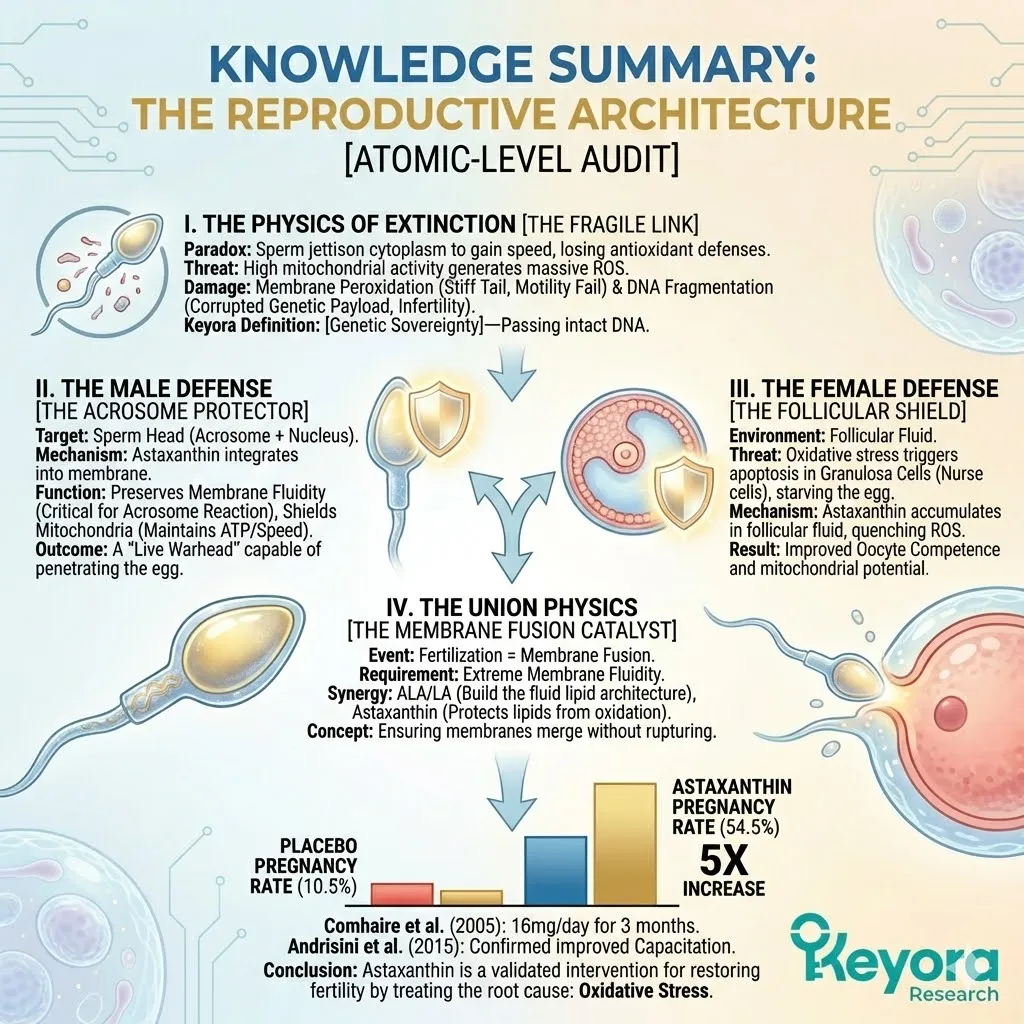
Chapter 8: THE ENGINEERING PROTOCOL: LIPIDOMICS SOVEREIGNTY
The Physics of Cellular Saturation and the Necessity of Lipidomics Re-engineering
We have spent seven chapters dissecting the machinery of human life.
We have looked into the nuclear fire of the mitochondria, the electrical circuitry of the brain, and the high-stakes ballistics of reproduction.
We have established that Oxidation is the enemy and Structure is the defense.
But now, we must confront a failure that is not biological, but industrial.
Walk into any pharmacy, health food store, or scrolling feed of digital wellness, and you will see the same tragedy repeated ad nauseam.
It is the tragedy of the “Magic Bullet.”
Millions of high-performing individuals – people who are disciplined, intelligent, and desperate to optimize their biology – are spending billions of dollars on “ingredients.”
They buy bottles of Vitamin C, jars of Curcumin, and capsules of CoQ10. They swallow them with water in the morning, believing they have checked the box for “health.”
And yet, they still feel the rust.
They still wake up tired.
Their inflammation markers (CRP) remain high.
Their focus still fractures at 3:00 PM.
Why?
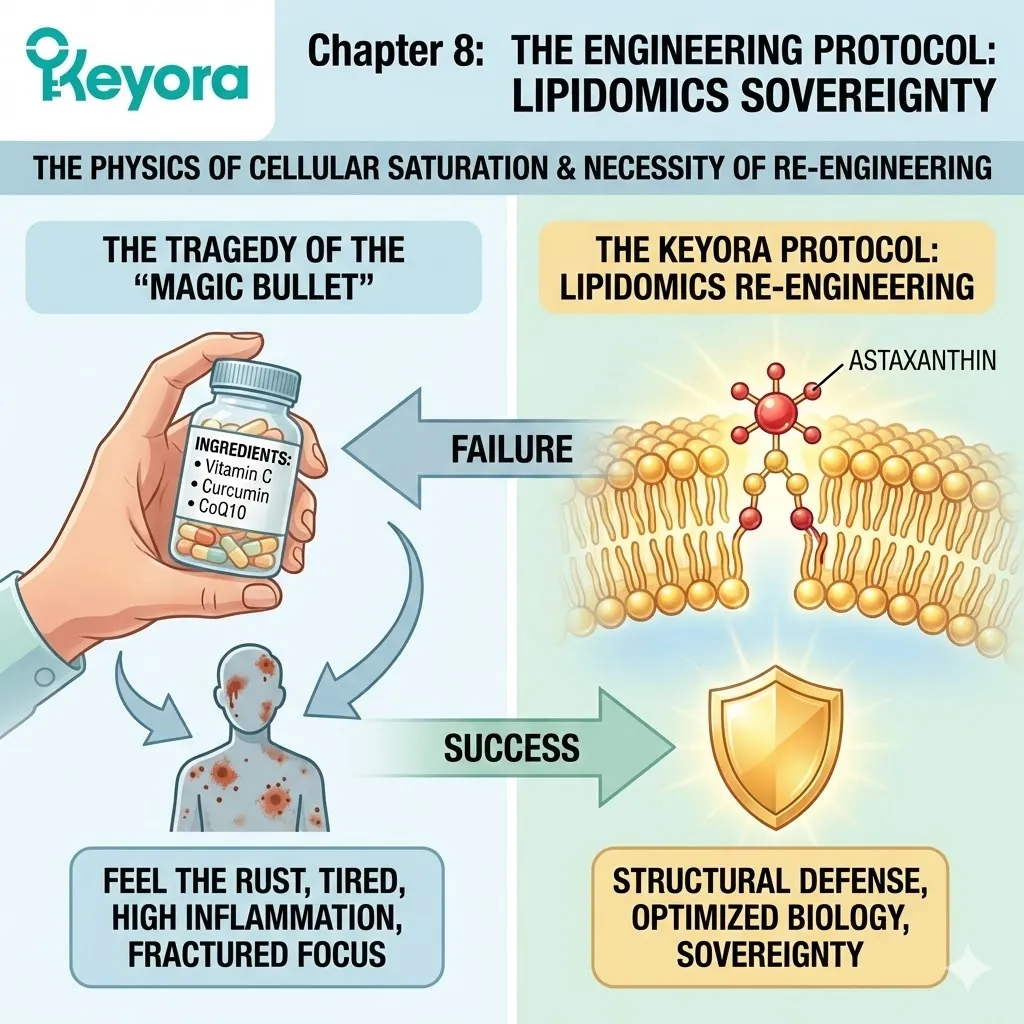
Because they have bought the Agent, but they have ignored the Architecture.
The modern supplement industry operates on a fundamental lie:
The idea that the body is a bucket, and if you are low on something, you simply pour more in.
This is kindergarten biology. The human body is not a bucket; it is a fortress guarded by ruthless security checkpoints, hydrophobic barriers, and metabolic gatekeepers.
Most supplements never even reach the battlefield. They are destroyed by stomach acid, rejected by the intestinal wall, or flushed out by the liver before they can ever touch a cell membrane.
This is the Bio-availability Gap.
But the failure goes deeper than just absorption. It is a failure of Context.
Imagine trying to put out a fire in a house that is built of gasoline-soaked wood. You can bring the best fire extinguisher in the world (Astaxanthin), but if the walls themselves are flammable (High Omega-6 toxicity), the fire will never go out.
The industry sells you the extinguisher, but they ignore the walls. They sell you Astaxanthin suspended in cheap soybean oil, or worse, in a dry powder capsule. They treat the “Inactive Ingredients” as irrelevant filler.
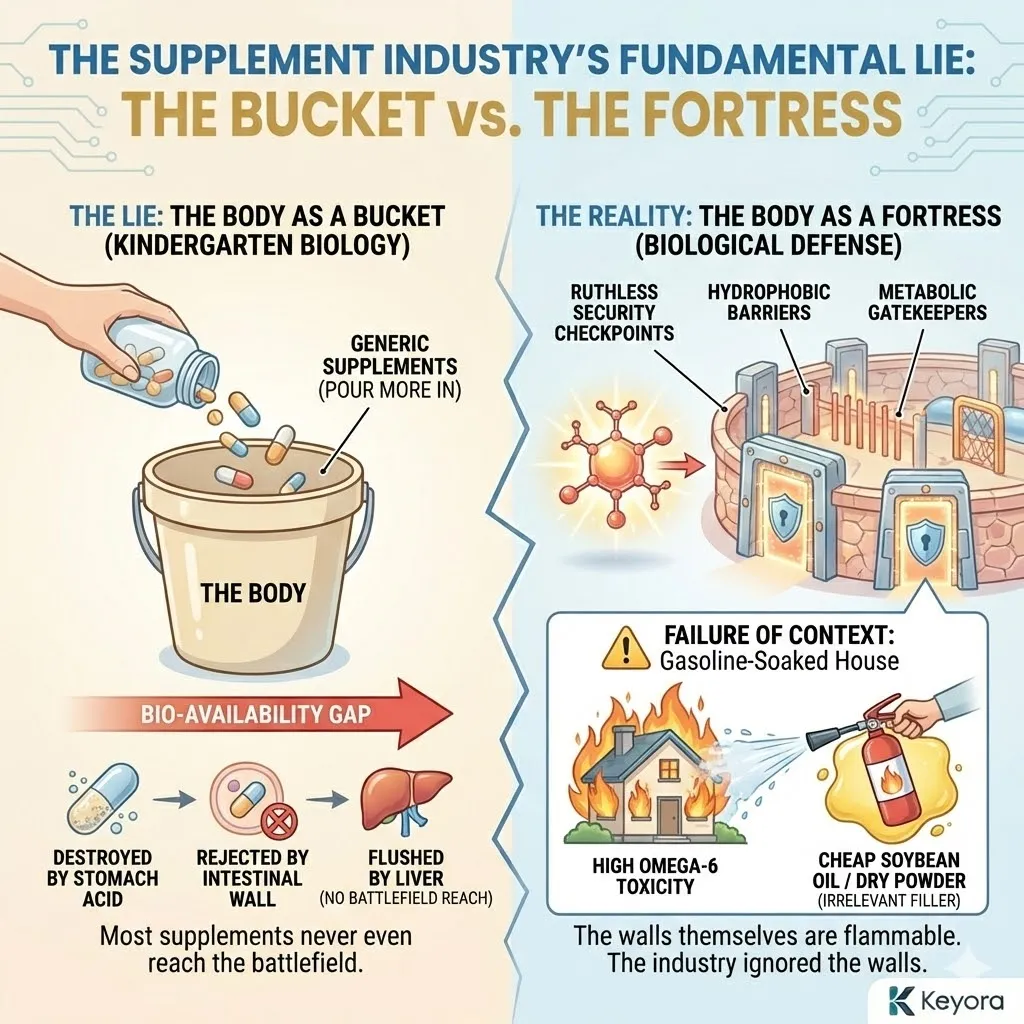
Under the Keyora Standard, there is no such thing as an “Inactive Ingredient.”
Every molecule you put into your body has a metabolic cost or a metabolic benefit. If the carrier oil is pro-inflammatory (like soybean or sunflower oil), you are literally feeding the fire you are trying to fight. You are selling the antidote and the poison in the same capsule.
This is why Keyora Research does not produce “supplements.”
We produce Engineering Protocols.
We do not believe in the Magic Bullet.
We believe in the Systemic Overhaul.
To truly harness the power of Astaxanthin – to turn it from a passive nutrient into a structural weapon – we must solve the physics of delivery.
We must re-engineer the vehicle that carries it.
We must stop treating the body like a chemistry set and start treating it like a hydraulic system.
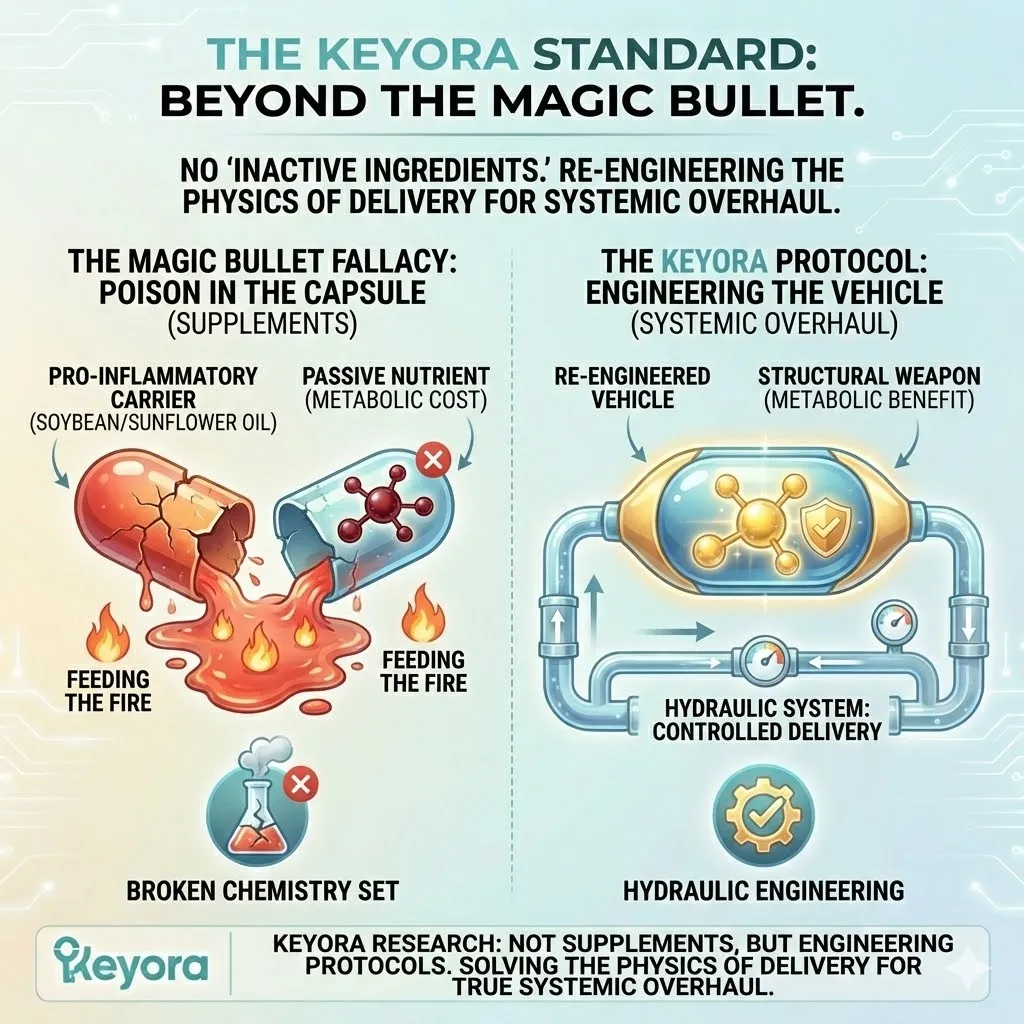
8.1 Solving the 5% Problem: The Physics of The Bioactive Carrier Principle
Let us look at the specific physics of Natural Astaxanthin.
It is a carotenoid. In chemical terms, it is highly Lipophilic (fat-loving) and Hydrophobic (water-hating).
This molecular personality is its greatest strength, but also its greatest logistical challenge.
Because it is lipophilic, it loves cell membranes.
It wants to live inside the fatty walls of your mitochondria and your neurons.
That is why it works.
But to get there, it must travel through the human digestive tract, which is an aqueous (water-based) environment.
If you take raw Astaxanthin powder with a glass of water, or if you take a capsule filled with dry powder, the laws of physics are against you.
The Astaxanthin molecules will clump together, repelled by the water in your stomach and intestines.
They will not emulsify.
They will not present themselves to the intestinal villi for absorption.
They will pass right through you.
Pharmacokinetic studies indicate that without a lipid carrier, the absorption rate of carotenoids can be as low as 5%.
Think about the economic and biological waste of that number.
For every dollar you spend, 95 cents is flushed away.
For every milligram of protection you think you are getting, you are receiving a fraction of a trace.
You are not protecting your cells; you are creating expensive waste.
To solve this, the industry standard is to suspend Astaxanthin in a cheap carrier oil – usually Olive Oil, Safflower Oil, or Soybean Oil. This improves absorption, yes. It gets the molecule into the blood.
But Keyora asks a deeper question:
What is that oil doing to the rest of the system?
If you use Soybean Oil, you are delivering the Astaxanthin, but you are also delivering a payload of Omega-6 fatty acids that hardens cell membranes and triggers inflammation. You are delivering the package, but you are poisoning the recipient.
This led to the development of the Keyora Standard:
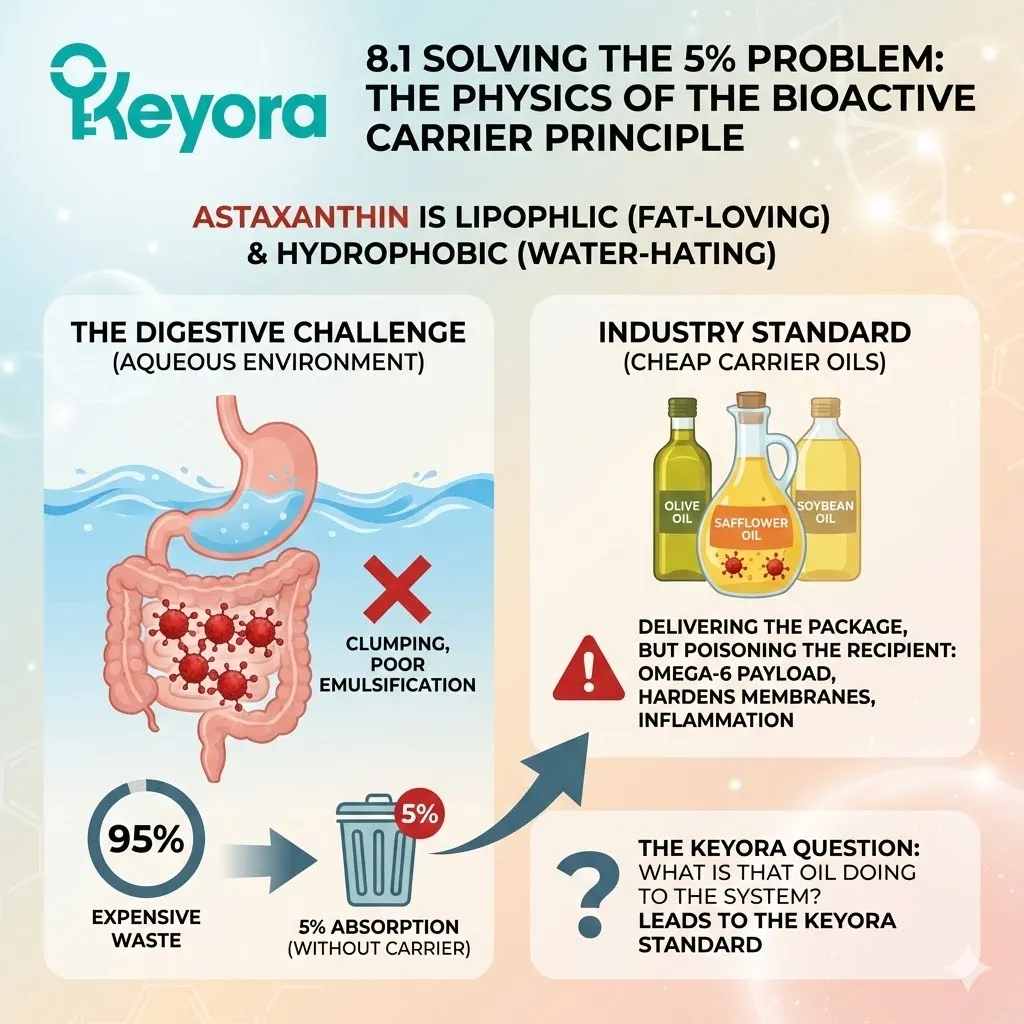
The Bioactive Carrier Principle
This principle states that The Carrier Must Be a Therapeutic Agent in Itself.
We do not use “fillers.”
We do not use “inert” oils.
We use a precision-engineered matrix of Essential Fatty Acids (EFAs) that serve two distinct functions:
-
The Trojan Horse: They dissolve the Astaxanthin, triggering the release of bile salts and ensuring the formation of Chylomicrons.
-
The Structural Repair: Once absorbed, the carrier oil itself (ALA/LA/OA) is used by the body to rebuild the lipid bilayers of the cell membranes.
The Physics of the Chylomicron
To understand why this works, you must understand how fat enters the blood. It does not go through the portal vein like sugar or protein.
It enters the Lymphatic System.
When you ingest the Keyora 16MG capsule, the 1,836mg of EFA Complex (Alpha-Linolenic Acid, Linoleic Acid, Oleic Acid) triggers the release of bile from your gallbladder.
The bile emulsifies the oil, breaking it into microscopic droplets.
The Astaxanthin is dissolved inside these droplets.
The intestinal cells (enterocytes) package these droplets into lipoproteins called Chylomicrons.
These vehicles bypass the liver (which would destroy much of the payload) and enter the lymphatic system, eventually draining directly into the bloodstream near the heart.
This is the “VIP Entrance” to the human circulatory system.
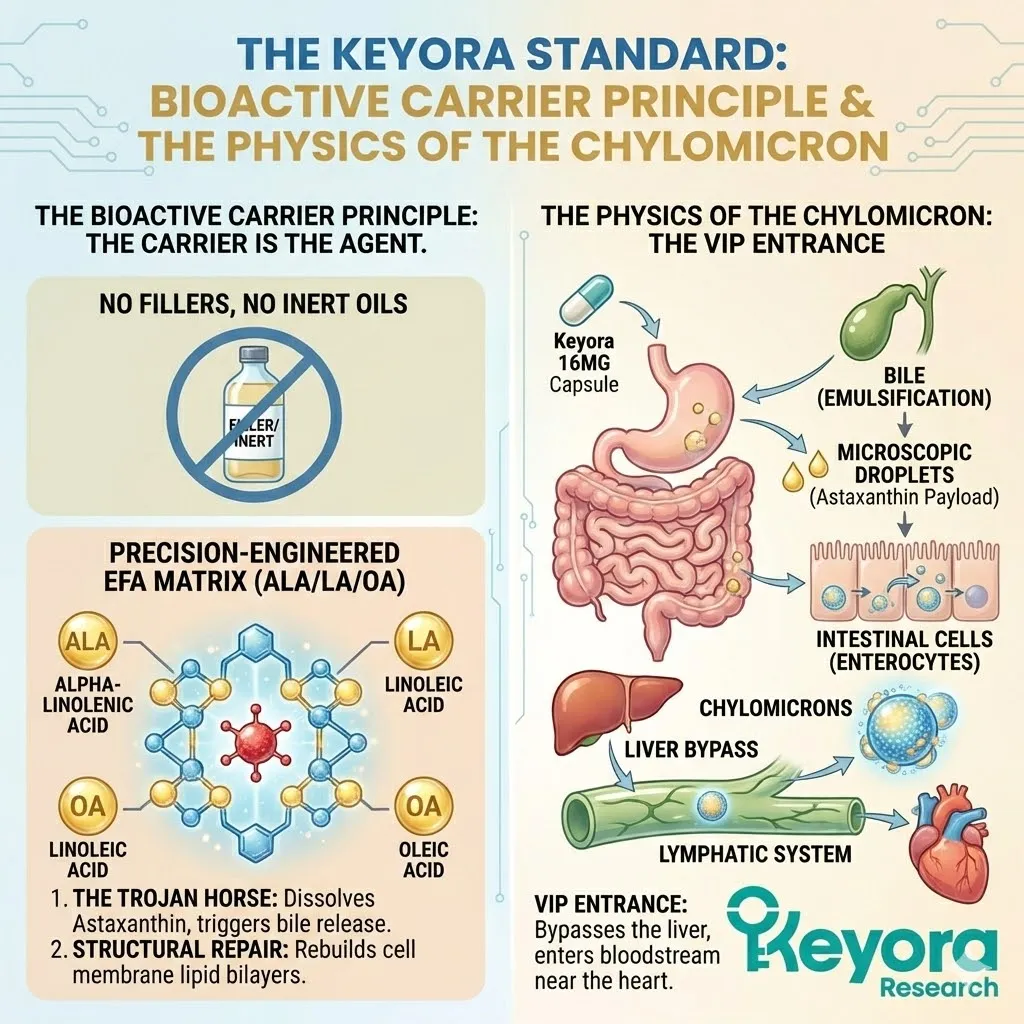
The Evidence: Odeberg et al. (2003)
The necessity of this lipid matrix was confirmed by a pivotal study published in the European Journal of Pharmaceutical Sciences. Odeberg et al. compared the bioavailability of Astaxanthin in different formulations.
They found that formulations incorporating a lipid-based surfactant system significantly enhanced bioavailability compared to standard formulations. The presence of dietary fat was not just “helpful”; it was the rate-limiting step for absorption.
But Keyora goes further than Odeberg.
We do not just provide “fat.”
We provide the Alpha-Linolenic Acid (ALA) required to fluidize the membrane so the Astaxanthin can actually enter the cell once it arrives.
We turn the 5% absorption rate into a therapeutic flood.
By dissolving 16mg of Astaxanthin in 1,012mg of ALA, we ensure that the “Hero” arrives at the “Battlefield” in a vehicle that is also ammunition.
We have solved the delivery problem. But now we face the question of quantity.
How much Astaxanthin is actually needed to secure the system?
Is the industry standard of 4mg enough?
Or is it merely a placebo dose designed to look good on a label?
We must now discuss the physics of Saturation.
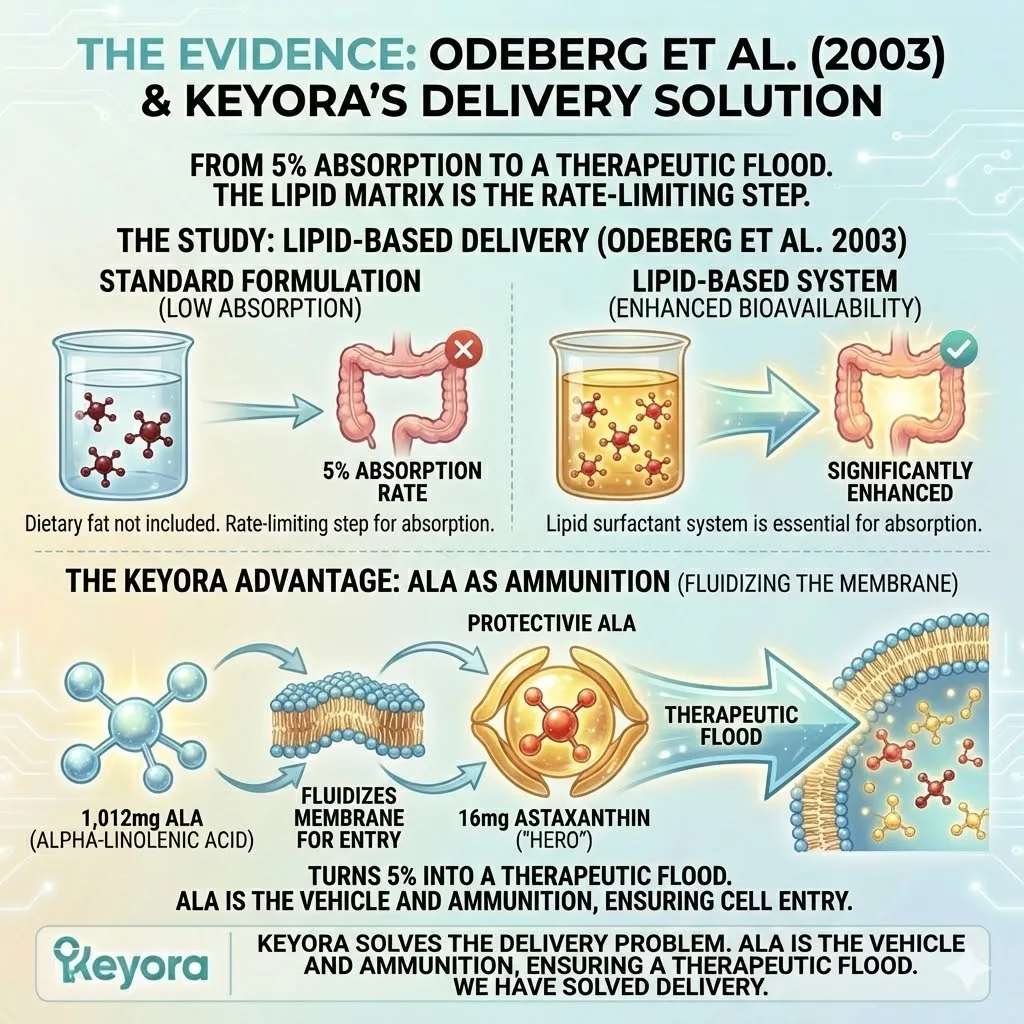
8.2 Why 16mg? The Law of Saturation (The Saturation Protocol)
In the pharmaceutical and nutraceutical industries, there is a concept known as the “Minimum Effective Dose.” It is the smallest amount of a substance required to produce a measurable physiological response.
For Astaxanthin, the industry has historically settled on 4mg.
This is the “Survival Dose.”
At 4mg, you will see a slight reduction in eye strain. You might see a marginal improvement in skin texture over six months. It is enough to keep the machinery from rusting completely, but it is not enough to upgrade the engine.
Keyora Research is not interested in the minimum.
We are interested in the Maximum Therapeutic Potential.
To understand why we mandate 16mg, you must understand the physics of Distribution Kinetics.
When you ingest Astaxanthin, it does not go everywhere at once. The body prioritizes.
-
The Liver: The first stop. The liver is the metabolic clearinghouse; it hoards antioxidants to protect itself from the toxic load of digestion.
-
The Blood Plasma: The transport network. Astaxanthin attaches to LDL and HDL particles.
-
The Vital Organs: The Heart, the Kidneys.
-
The Peripheral Tissues: The Skin, the Eyes, the Brain.
The brain and the eyes are “privileged” tissues. They are protected by barriers (BBB and BRB).
To get Astaxanthin across these barriers, you cannot just have “some” Astaxanthin in the blood.
You need a Concentration Gradient.
You need high pressure.
Think of your circulatory system as a pressurized water grid. If the pressure is low (4mg), the water flows through the main pipes (the liver and blood), but it trickles weakly into the upper floors of the skyscraper (the brain and eyes).
To force the molecule across the Blood-Brain Barrier and the Blood-Retinal Barrier in therapeutic quantities, you must pressurize the system.
You must saturate the plasma to such a degree that the diffusion gradient forces the molecule into the hard-to-reach tissues.
This is the Cellular Saturation protocol.
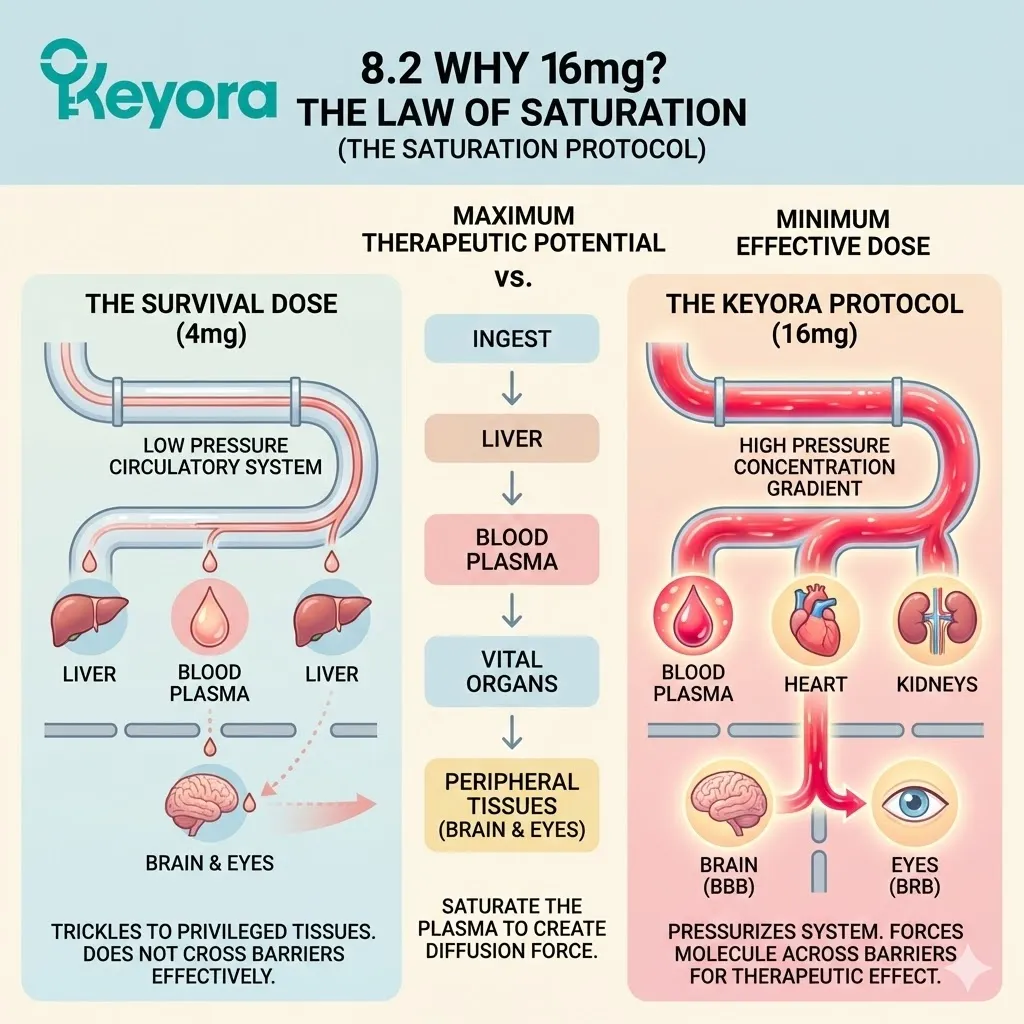
The “Sink” Effect
The human body is a massive “sink” for lipids. You have roughly 37 trillion cells, and every single one of them has a lipid bilayer membrane that is hungry for protection.
If you take a low dose, the “sink” swallows it up. The Astaxanthin is spread so thin across the trillions of cells that no single cell gets a structural reinforcement. It is like trying to paint a battleship with a single can of paint. You get a few spots, but the hull remains exposed.
At 16mg, we overwhelm the sink.
-
We fill the liver’s reserves.
-
We saturate the LDL transport vehicles.
-
We build the concentration gradient high enough to breach the BBB and BRB.
-
We deliver a surplus to the skin (the largest organ), allowing for the “Internal Sunscreen” effect to take hold.
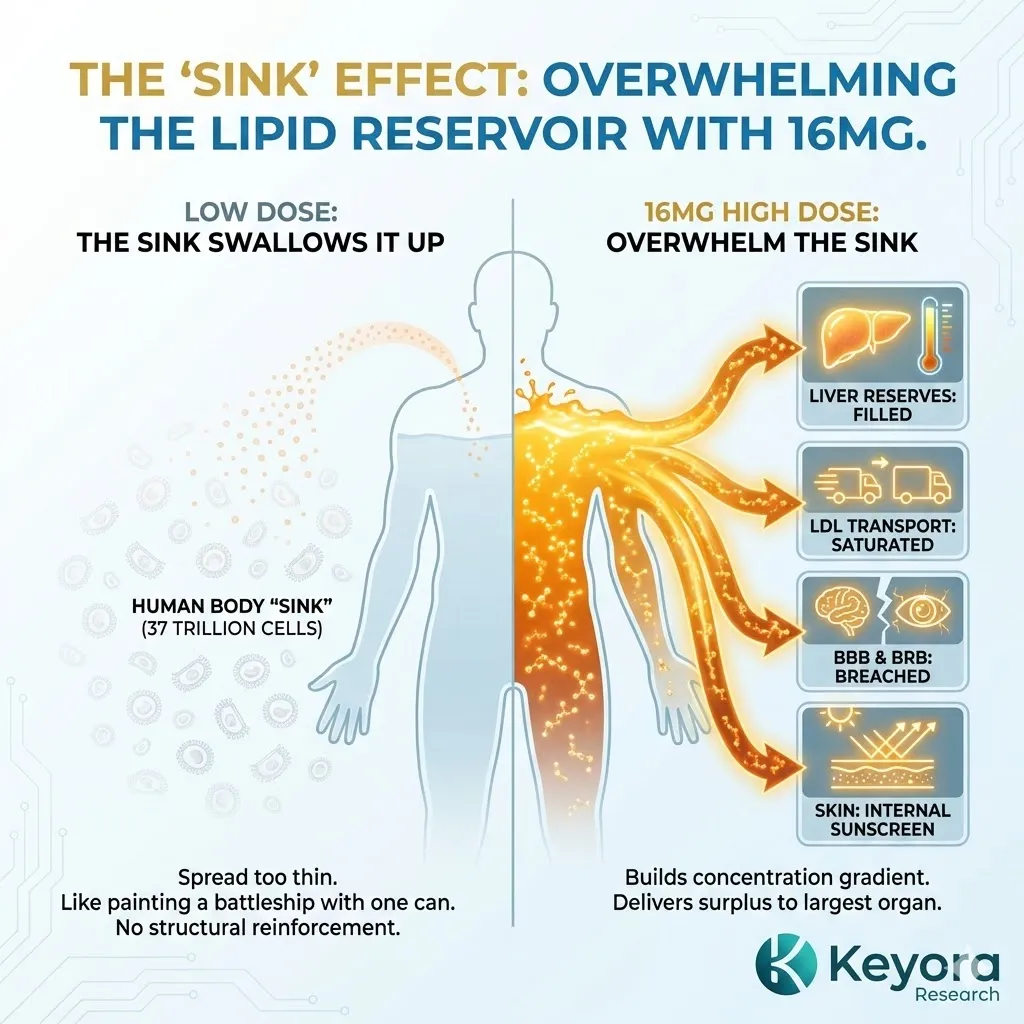
The Clinical Reality of 16mg
The data supports this aggression.
-
Heart Health: In the study by Iwamoto et al. regarding LDL oxidation lag time (Chapter 2), the 14.4mg dose was nearly twice as effective as lower doses. It didn’t just slow oxidation; it stopped it.
-
Fertility: The miracle fertility study by Comhaire et al. (Chapter 7) used 16mg. That was the magic number that turned a 10% pregnancy rate into a 54% pregnancy rate. A lower dose likely would have failed to protect the sperm DNA.
-
Endurance: The studies on heart rate reduction in runners (Chapter 2) used 12mg.
The industry sells 4mg because it is cheap. It is a “label claim” – enough to say “Contains Astaxanthin” on the bottle, but not enough to change your life.
Keyora uses 16mg because we are engineers.
We know that to reinforce a structure against entropy, you need a critical mass of material.
We are not painting the battleship; we are re-plating the hull.
But saturation takes time. Astaxanthin accumulates in tissues over a period of 4 to 8 weeks. This is why consistency is paramount. You are filling a reservoir.
However, even with 16mg of the Hero, the mission can fail if the battlefield is hostile. You can saturate the body with Astaxanthin, but if the cell membranes are made of “bad bricks,” the structure will still crumble.
We must now address the composition of the wall itself.
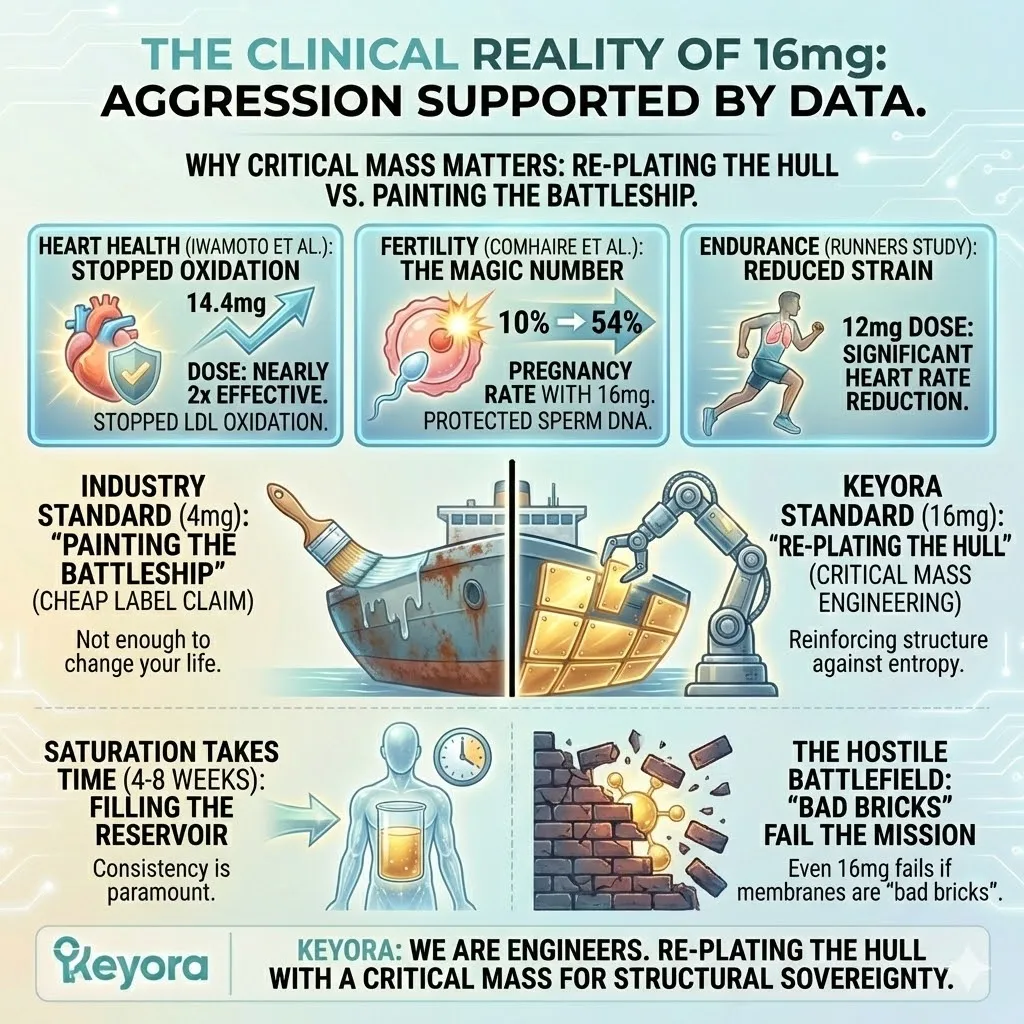
8.3 Lipidomics Re-engineering (The Environmental Reset)
We have discussed the “Hero” (Astaxanthin). Now we must discuss the “Battlefield” (The Lipid Environment).
You are what you eat, quite literally. The fatty acids you consume are not just burned for energy; they are incorporated into the walls of your cells. If you eat inflammation, you become inflammation.
The modern diet is a Lipidomics Disaster.
Due to the prevalence of industrial seed oils (soybean, corn, sunflower, canola), the modern human consumes an overwhelming amount of Omega-6 (Linoleic Acid).
While Omega-6 is essential in small amounts, in excess, it is the raw material for inflammation. It converts into Arachidonic Acid, which converts into pro-inflammatory eicosanoids (PGE2, Leukotrienes).
The ratio of Omega-6 to Omega-3 in the ancestral diet was (3-4):1.
In the modern diet, it is 20:1.
This 20:1 ratio creates a “Pro-Inflammatory Tone.”
Your cell membranes are rigid.
Your immune system is trigger-happy.
Your blood is viscous.
If you introduce Astaxanthin into this environment, it is like sending a peacekeeper into a riot. It will help, but it will be overwhelmed.
To secure Systemic Sovereignty, we must change the ratio.
We must re-engineer the lipid composition of your cell membranes.
This is why the Keyora carrier matrix is not just “oil.”
It is a precise, functional formula designed to execute Lipidomics Re-engineering.
We utilize a specific ratio of 1,836mg of Essential Fatty Acids:
-
1,012mg Alpha-Linolenic Acid (ALA – Omega-3)
-
286mg Linoleic Acid (LA – Omega-6)
-
330mg Oleic Acid (OA – Omega-9)
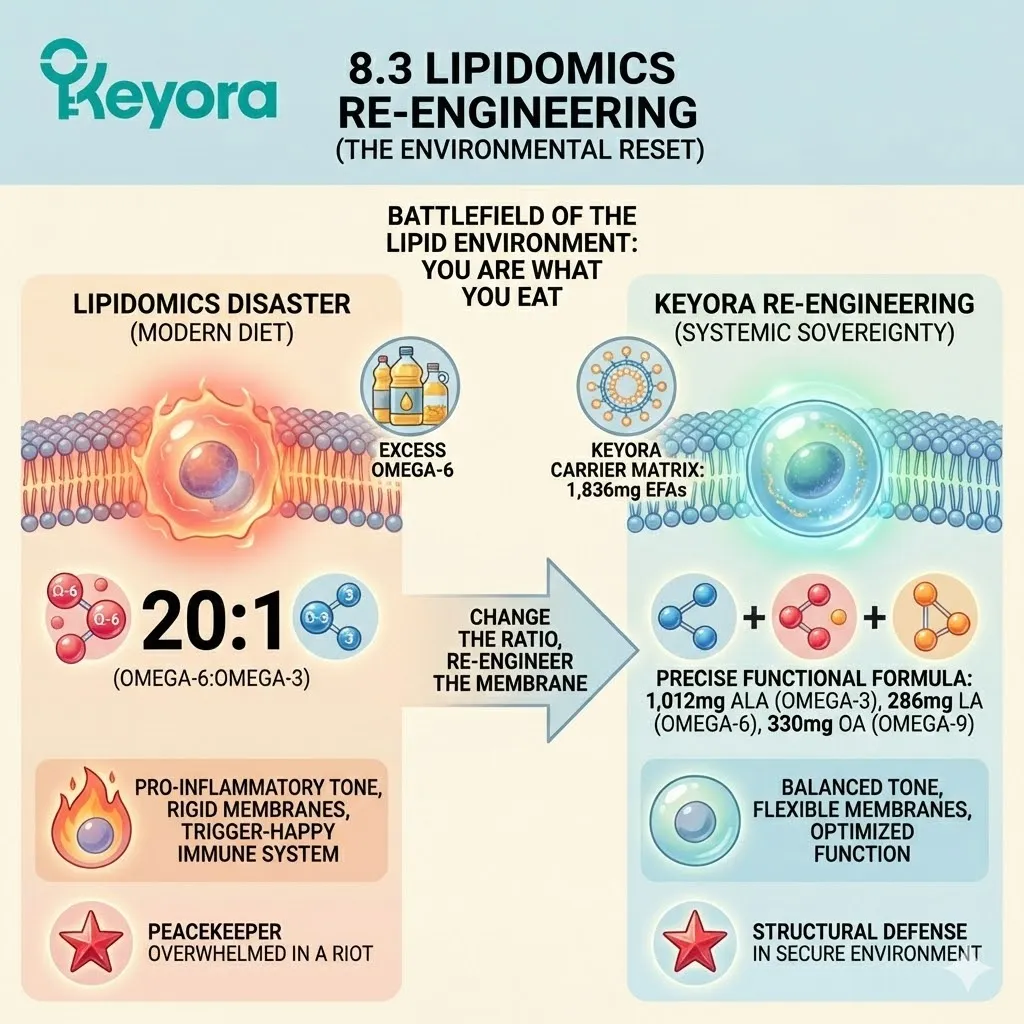
The ALA Heavy Lift (The Omega-3 Correction)
The 1,012mg of ALA is the strategic counter-weight. By flooding the system with this plant-based Omega-3, we force a change in the membrane composition.
-
Displacement: ALA competes with the excess Omega-6 for space in the cell membrane. It physically pushes the inflammatory lipids out.
-
Conversion: ALA is the parent molecule. The body converts it (on demand) into EPA and DHA, the long-chain fats needed for the brain and eyes.
-
Signaling: As discussed in Chapter 5, ALA activates PPAR-α, the genetic switch that turns on fat burning and turns off inflammation.
We are mechanically lowering the Omega-6:3 ratio from the dangerous 20:1 toward the optimal 4:1. We are draining the swamp so the Astaxanthin can work.
The Role of LA (The Controlled Omega-6)
You might ask: “If Omega-6 is the enemy, why does Keyora include 286mg of Linoleic Acid?”
Because Biology is nuance. Omega-6 is an Essential Fatty Acid. You die without it.
-
Skin Barrier: As detailed in Chapter 6, LA is the precursor to Acyl-Ceramides. Without LA, your skin barrier fails. You lose moisture. You age.
-
Mitochondrial Structure: LA is a key component of Cardiolipin, the phospholipid that holds the electron transport chain together.
The problem is not LA itself; the problem is the excess of LA from industrial sources. Keyora provides a pure, unoxidized, controlled dose of LA to support the skin and mitochondria, but we balance it with a massive dose of ALA to prevent it from turning inflammatory.
It is a “Checked and Balanced” Omega-6.
The Role of OA (The Omega-9 Stabilizer)
Finally, we include 330mg of Oleic Acid (the primary fat in Olive Oil).
OA is the “Fluidity Buffer.” It is monounsaturated. It is chemically stable (resistant to oxidation). It integrates into the membrane to ensure that the structure remains fluid but not too fragile. It protects the endothelial lining of the blood vessels (Chapter 2) and supports the absorption of the Astaxanthin itself.
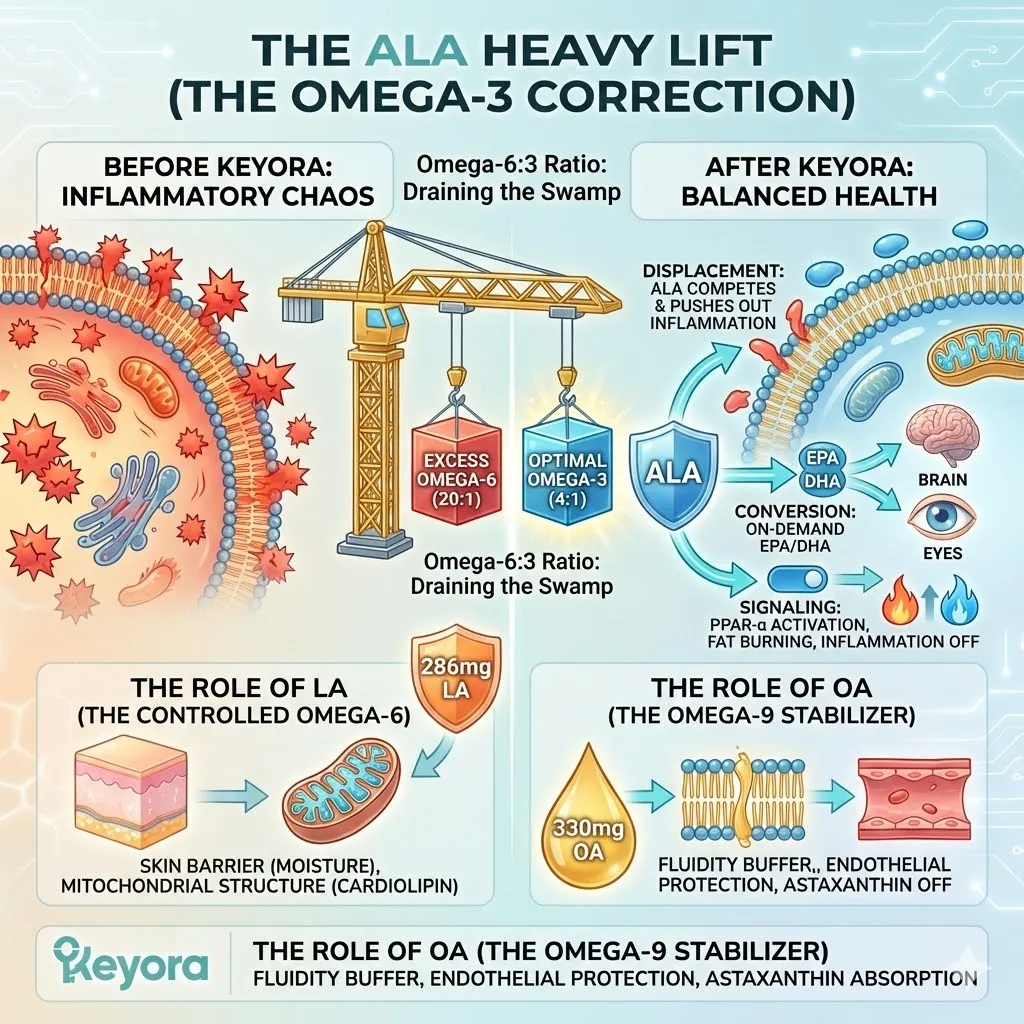
The Engineering Outcome
When you take this formula daily for 120 days (the lifespan of a red blood cell), you are literally replacing the bricks of your body.
Old, rigid, pro-inflammatory membranes are recycled.
New, fluid, anti-inflammatory membranes are built using the ALA/LA/OA matrix provided by Keyora.
And these new membranes are immediately armored with 16mg of Astaxanthin.
This is Lipidomics Re-engineering.
We are not just “supplementing.” We are tearing down the faulty infrastructure of the modern diet and rebuilding it with high-performance materials.
But there is one final variable in this equation. We have the right design (Structure). We have the right materials (Lipids). But we must ensure we have the right source.
Not all Astaxanthin is created equal. In the final section, we must address the “Imitation Game” – the difference between the molecule grown by life and the molecule synthesized in a petrochemical lab.
We must discuss the Stereochemistry of Survival.
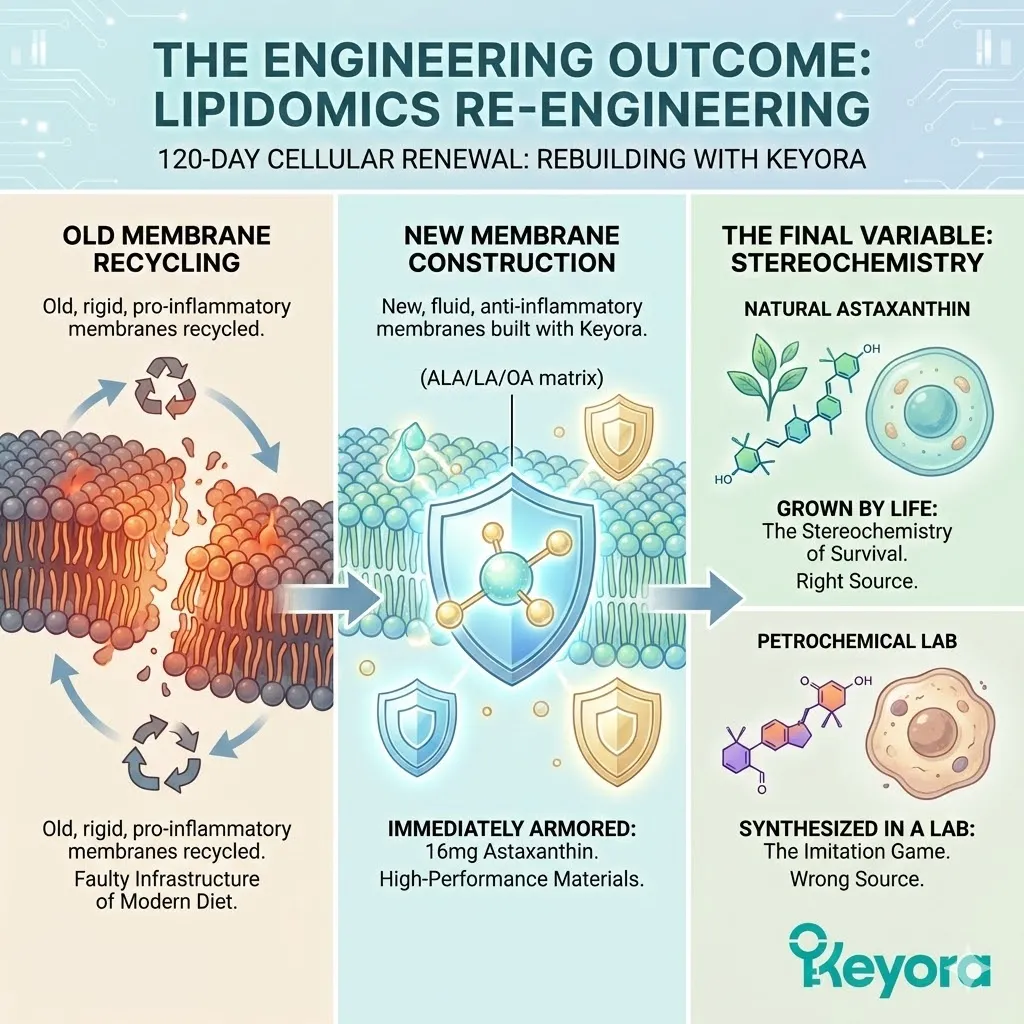
8.4 Nature vs. Imitation: The Source Code (The Stereochemical Lock)
We have engineered the vehicle (The Bioactive Carrier).
We have calculated the payload (The Saturation Dose).
We have prepared the terrain (Lipidomics Re-engineering).
But there is one final variable that determines the success or failure of this entire architecture. It is a variable often hidden in the fine print of supply chains, obscured by the marketing term “Nature Identical.”
It is the issue of Source.
In the global market, the vast majority of Astaxanthin is not grown; it is synthesized. It is created in petrochemical laboratories from the same crude oil derivatives used to make plastics and fuel. This synthetic molecule (C40H52O4) has the same chemical formula as the natural version.
But in biology, chemistry is only half the story.
The other half is Geometry.
Molecules are three-dimensional objects.
They have shape.
They have orientation.
In organic chemistry, this is known as Chirality or “handedness.” A molecule can be “left-handed” or “right-handed.” Even if they have the exact same atoms, if the shape is mirrored, they are not the same.
This is The Stereochemical Lock.
Biology is built on a lock-and-key mechanism. Your cell membranes, your enzymes, and your receptors are the “locks.”
The nutrients you ingest are the “keys.”
If the key is bent – even slightly – it will not turn the lock.
It might fit into the hole, but it will not open the door.
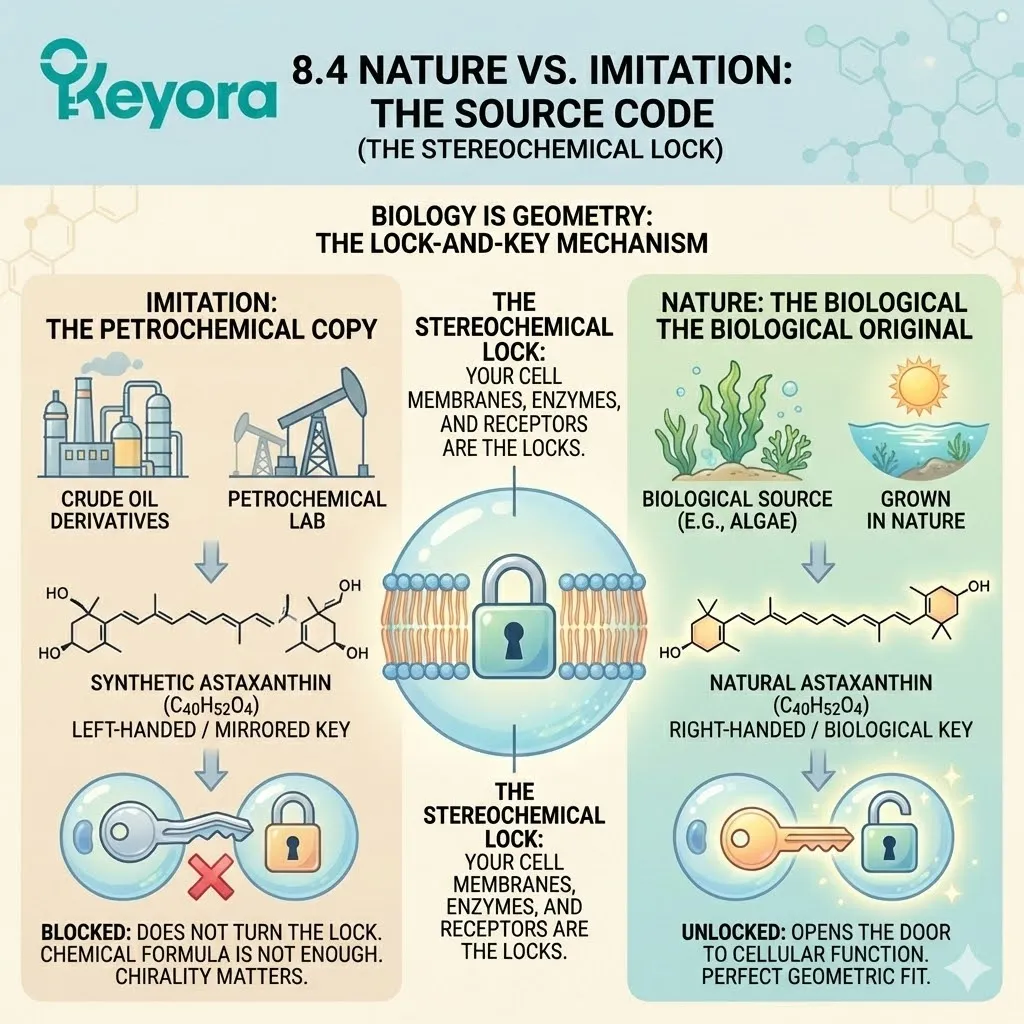
The Geometry of Life (3S, 3’S)
Natural Astaxanthin, derived from the microalgae Haematococcus pluvialis, exists in a specific stereochemical configuration known as 3S, 3’S.
This is the shape that evolution has perfected over millions of years.
It is the shape that salmon eat to swim upstream.
It is the shape that eagles eat to spot prey from miles away.
It is the shape your body recognizes.
Because of this precise 3S, 3’S geometry, Natural Astaxanthin fits perfectly into the human cell membrane. It aligns vertically, locking its polar heads into the polar surfaces of the bilayer. It creates a tight, seamless seal.
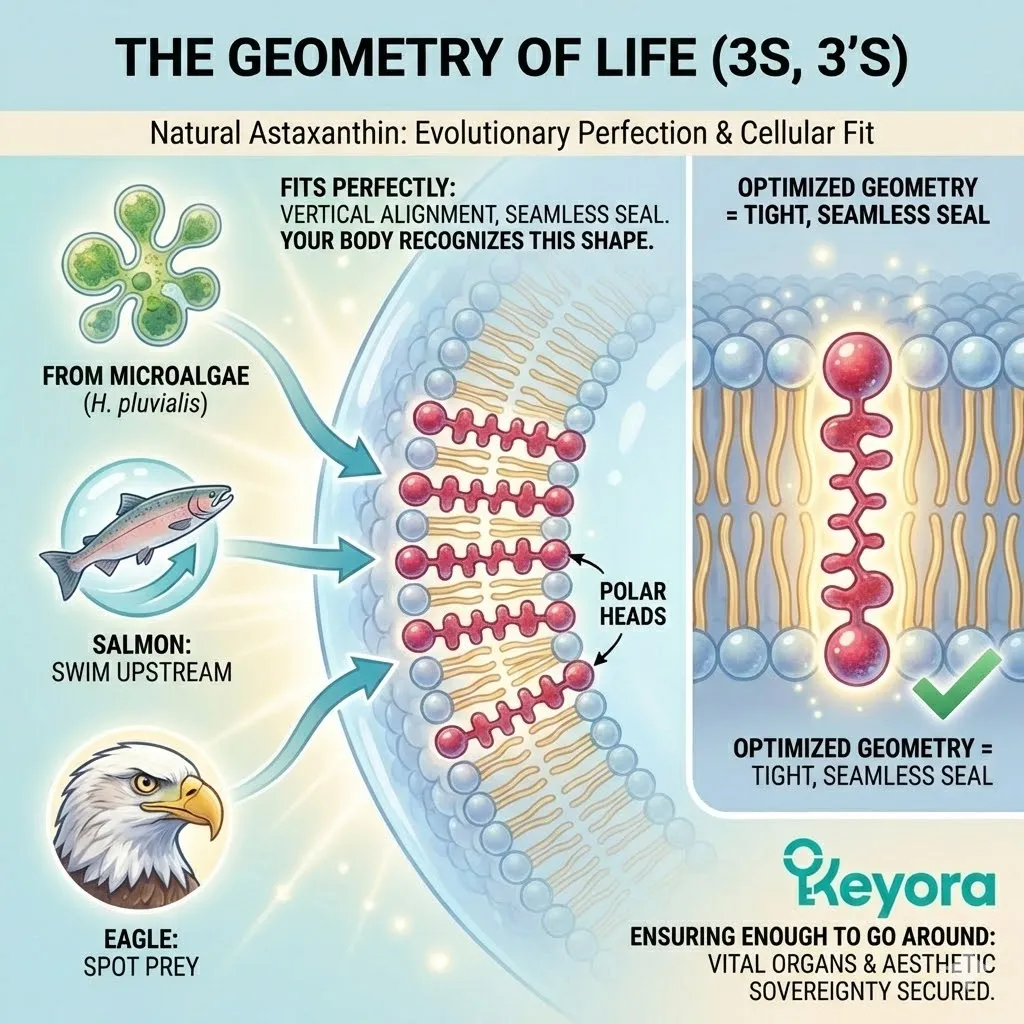
The Geometry of Imitation (The Bent Key)
Synthetic Astaxanthin, produced from petrochemicals, is a chaotic mixture. It contains:
-
25% of the natural 3S, 3’S form.
-
50% of the unnatural meso form (3R, 3’S).
-
25% of the unnatural 3R, 3’R form.
This is a “racemic mixture.”
It is a bag of mixed keys.
When you ingest Synthetic Astaxanthin, you are flooding your system with molecules that are spatially incorrect.
They do not fit the lock.
-
Membrane Disorder: Because they are the wrong shape, they do not align perfectly in the lipid bilayer. Instead of stabilizing the membrane, they can disrupt it. They create gaps in the armor.
-
Antioxidant Failure: The antioxidant potency of Astaxanthin relies on its ability to conduct electrons across its carbon chain. If the shape is warped, the conductivity drops.
The data confirms this geometric failure.
Research by Capelli et al. (2013) and Regnier et al. (2015) pitted Natural Astaxanthin against Synthetic Astaxanthin in head-to-head combat against free radicals.
The results were devastating for the synthetic molecule.
Natural Astaxanthin was found to be 20 to 90 times stronger in antioxidant activity than its synthetic counterpart.
Why?
Because Structure Determines Function. You cannot cheat physics. A bent key does not work, no matter how shiny it looks.
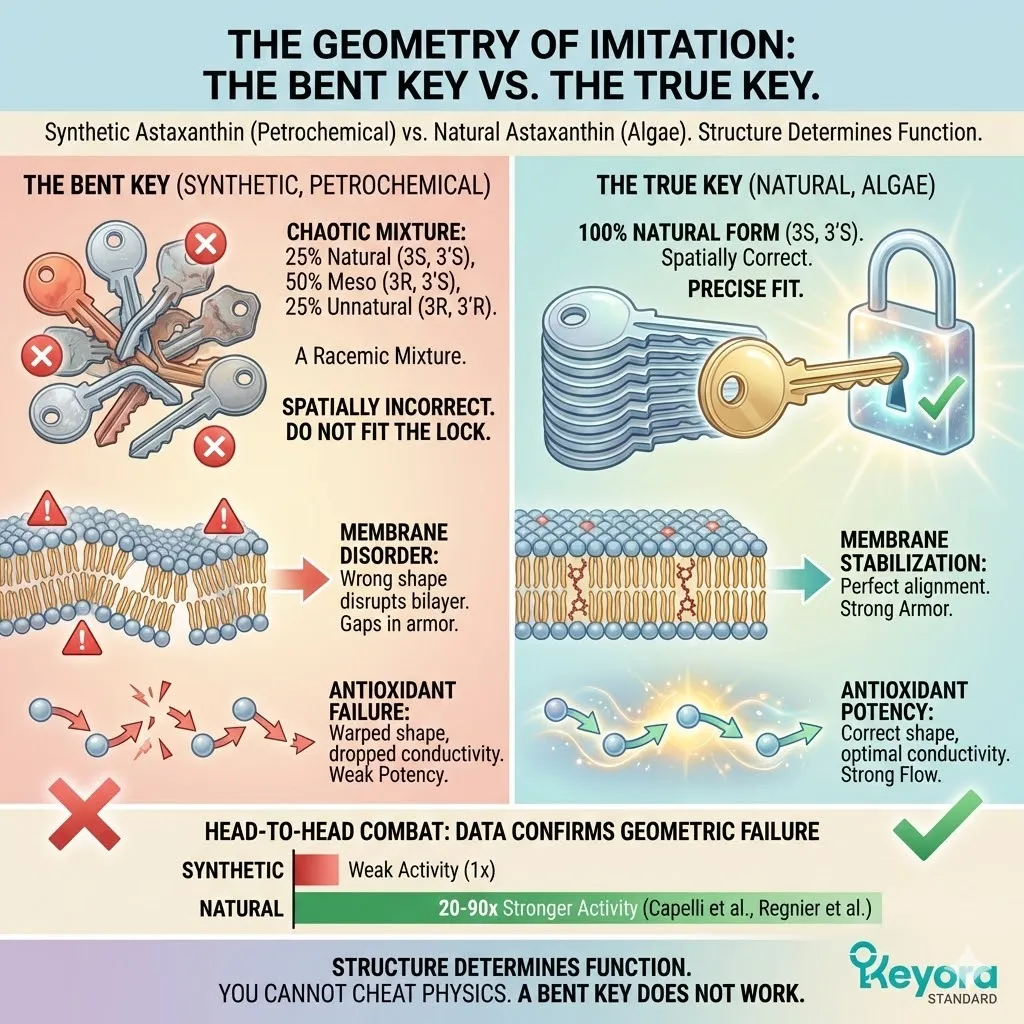
The Esterification Armor
There is one final structural difference.
In nature, Astaxanthin is never found “naked.” It is always attached to fatty acid molecules at one or both ends. This is called Esterification.
This fatty acid armor protects the Astaxanthin molecule from oxidation while it sits in the algae (or in the capsule). It ensures that the molecule remains stable until it reaches your digestive tract.
Once inside, your body’s enzymes gently strip away the fatty acids, releasing the pure Astaxanthin exactly where it is needed.
Synthetic Astaxanthin is Free (Un-esterified). It is naked. It is highly unstable and prone to oxidizing in the bottle before you even take it.
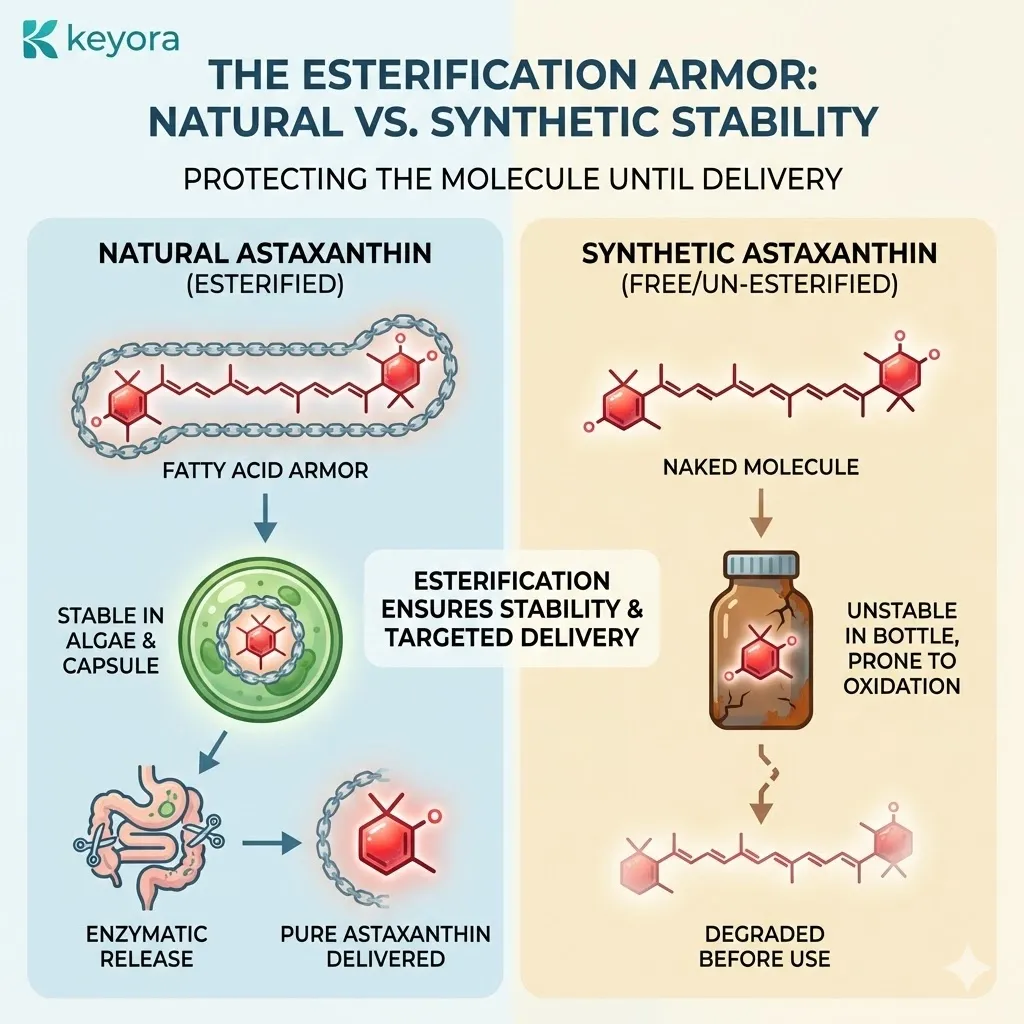
The Safety Void
We must also address the silence.
Natural Astaxanthin has been in the human food supply for thousands of years. It has decades of safety data.
Synthetic Astaxanthin was developed for the animal feed industry (to color the flesh of farmed salmon). It has never been proven safe for long-term, high-dose human consumption.
There are no studies on the long-term effects of accumulating unnatural stereoisomers (3R, 3’R) in the human brain or retina.
Keyora Research refuses to use your biology as a testing ground for petrochemical byproducts.
We use only Natural Astaxanthin from Haematococcus pluvialis.
We demand the 3S, 3’S configuration.
We demand the Esterified form.
We demand the key that fits the lock.
We do not compromise on the Source Code.
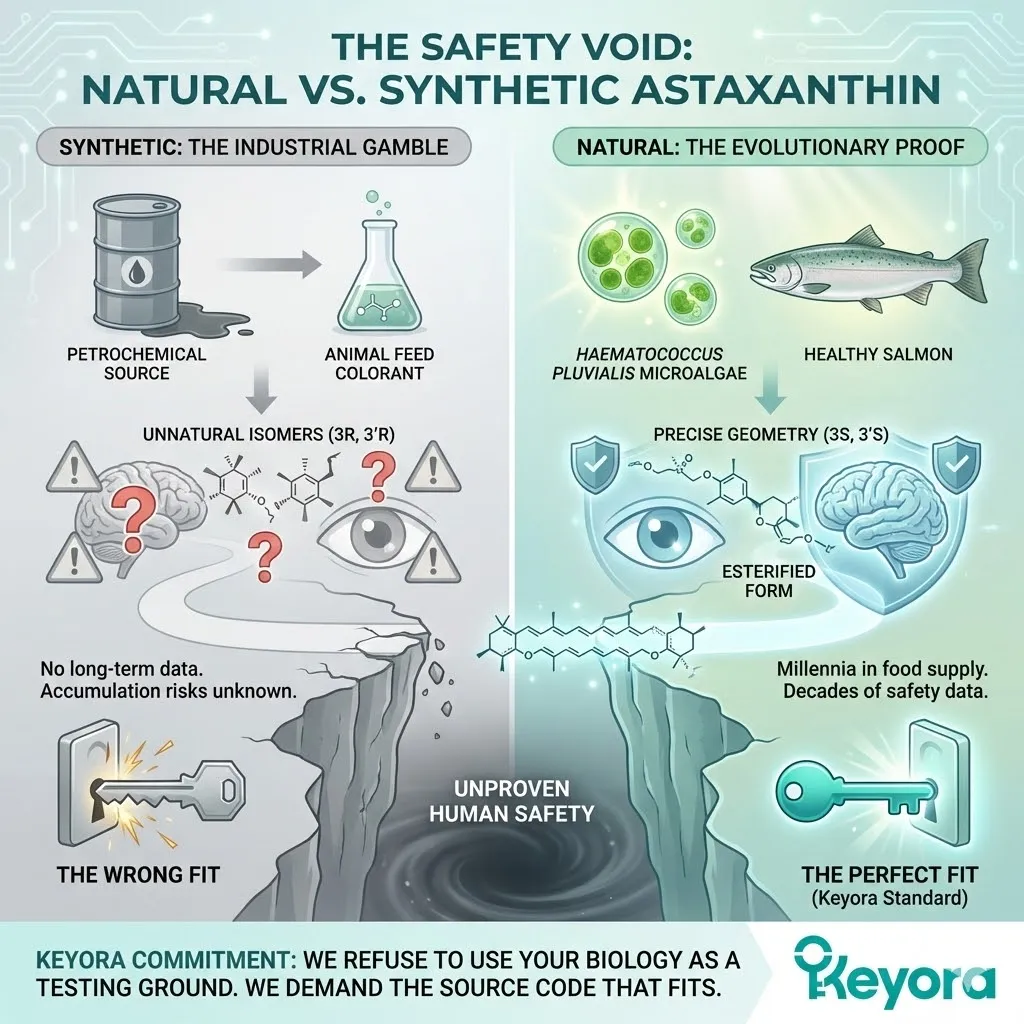
8.5 The Final Architecture
We have reached the conclusion of this Phase.
We began this series with a simple premise:
You are not just tired; you are rusting.
We dismantled the myth that “aging” is an inevitable, mystical decline.
We exposed it for what it truly is: a quantifiable accumulation of The Oxidative Debt.
A failure of containment in the mitochondria.
A breach of the fortress walls in the brain and eyes.
A structural collapse of the collagen scaffold.
But we did not leave you in the ruins.
We provided the blueprints for reconstruction.
The Keyora Protocol is not a vitamin. It is a comprehensive engineering project for the human body.
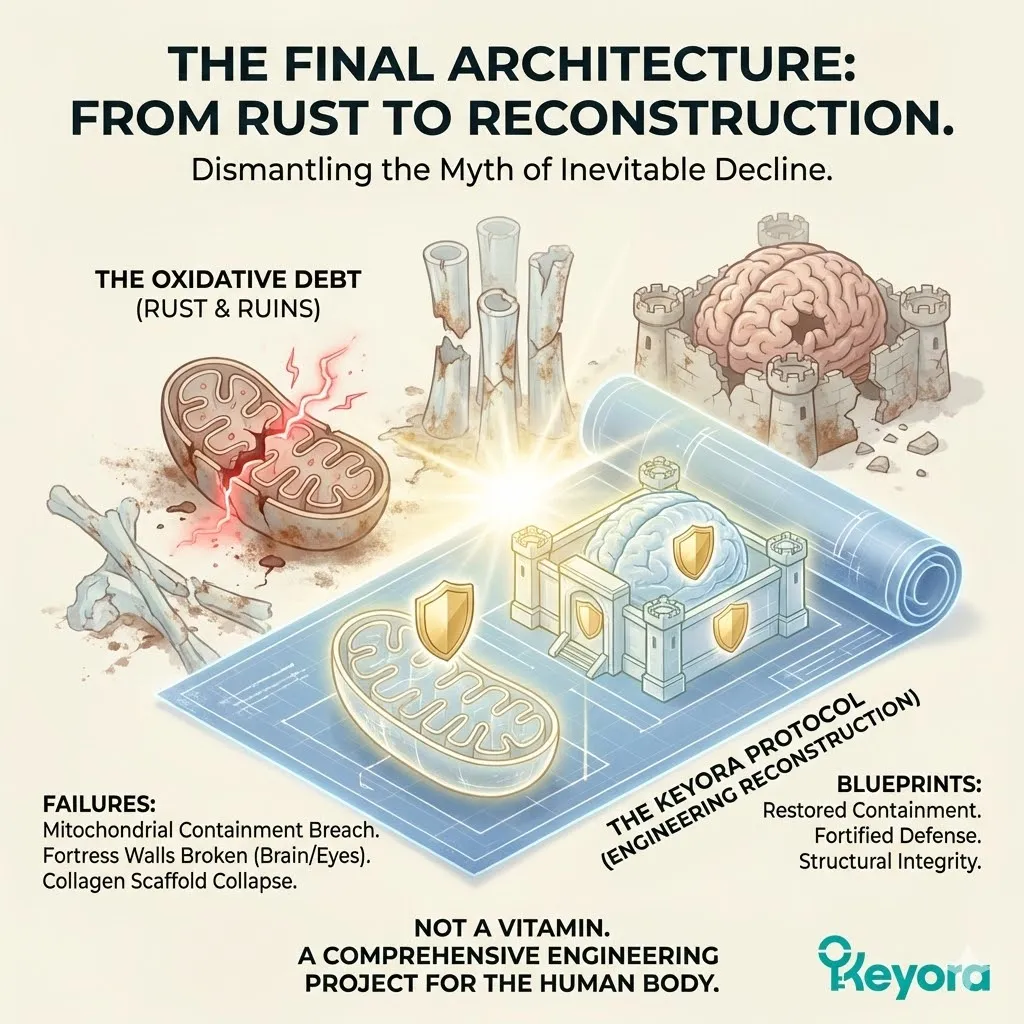
1. The Foundation (Lipidomics):
We start by clearing the swamp.
We use 1,012mg of ALA to reverse the pro-inflammatory Omega-6 ratio.
We use Oleic Acid to stabilize the fluid dynamics of your blood.
We build a new, flexible infrastructure for your cells.
2. The Structure (Astaxanthin 16MG):
We deploy the “Steel Rebar.”
We saturate the system with 16mg of Natural Astaxanthin.
-
We cross the Blood-Brain Barrier to secure [Cognitive Sovereignty].
-
We penetrate the Retina to install [The Optical Shield].
-
We anchor into the Mitochondria to act as [The Energy Reactor Guard].
-
We infiltrate the Dermis to erect [The Internal Sunscreen].
-
We shield the Gametes to ensure [Genetic Sovereignty].
3. The Result (Resilience):
This is not about “feeling a buzz.”
It is about the absence of friction.
It is the ability to wake up with a charged battery.
It is the capacity to focus deeply for hours without the neural signal fading.
It is the resilience to train hard and recover fast, because your fuel lines (CPT1) are open and your inflammation is silenced.
It is the confidence that your external appearance reflects your internal power.
You are the architect.
Keyora provides the materials.
The modern world is designed to rust you. It is designed to burn you out with blue light, inflame you with cheap fats, and exhaust you with chronic stress.
You can accept this decay as “normal.” Or you can choose to engineer a different reality.
You can choose to build a fortress that stands against the tide of entropy.
This is the end of the series, but it is the beginning of your reconstruction.
Welcome to the Bio-Architect.
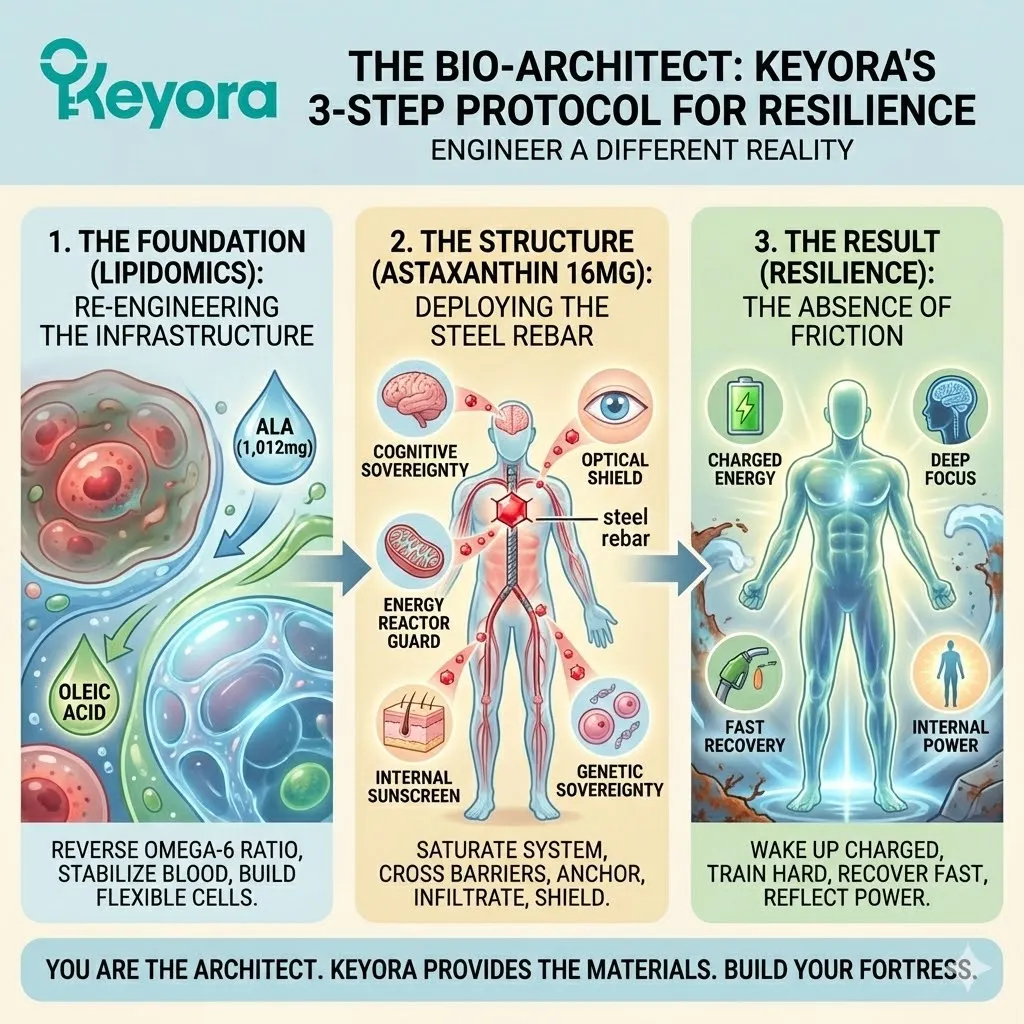
References
Capelli, B., Bagchi, D., & Cysewski, G. R. (2013). Synthetic astaxanthin is significantly inferior to algal-based astaxanthin as an antioxidant and may not be suitable as a human nutritional supplement. Nutrafoods, 12(4), 145-152.
Regnier, P., Bastias, J., Rodriguez-Ruiz, V., Caballero-Casero, N., Caballo, C., Sicilia, D., … & Pavon-Djavid, G. (2015). Astaxanthin from Haematococcus pluvialis prevents oxidative stress on human endothelial cells without toxicity. Marine Drugs, 13(5), 2857-2874.
Odeberg, J. M., Lignell, A., Pettersson, A., & Höglund, P. (2003). Oral bioavailability of the antioxidant astaxanthin is enhanced by incorporation of lipid based formulations. European Journal of Pharmaceutical Sciences, 19(4), 299-304.
Miao, F., Lu, D. Y., Zhang, C. W., Geng, Y. H., & Hu, C. W. (2006). Synthesis of astaxanthin esters by the green alga Haematococcus pluvialis. Acta Biochimica et Biophysica Sinica, 38(12), 856-862.
Jin, X., & Keyora Research. (2025). Astaxanthin – Multi-System Antioxidant Targeting Ocular Microcirculation and AMD, Cardiovascular and Cerebrovascular Protection, Reproductive Health, Skin Photo-protection, and Clinically Supported Immunomodulation. DOI: 10.5281/zenodo.16893579
Jin, X., & Keyora Research. (2025). Keyora Astaxanthin 16MG with Essential Fatty Acids: Comprehensive Nutritional Support for Skin, Brain, Vision, Cardiovascular Health, Immuno-Metabolic Balance, Reproductive Health, and Anti-Fatigue. Zenodo. DOI: 10.5281/zenodo.16908847
Keyora Research. (2025). Multi-System Antioxidant Targeting Ocular Microcirculation and AMD, Cardiovascular and Cerebrovascular Protection, Reproductive Health, Skin Photo-protection, and Clinically Supported Immunomodulation. OSF Preprints. DOI: 10.17605/OSF.IO/MWPNC
Rao, A. R., Sindhuja, H. N., Dharmesh, S. M., Sankar, K. U., Sarada, R., & Ravishankar, G. A. (2013). Effective inhibition of skin cancer, tyrosinase, and antioxidative properties of astaxanthin and astaxanthin esters from the green alga Haematococcus pluvialis. Journal of Agricultural and Food Chemistry, 61(16), 3842-3851.
Bjerkeng, B., Peisker, M., von Schwartzenberg, K., Ytrestøyl, T., & Åsgård, T. (2007). Digestibility and muscle retention of astaxanthin in Atlantic salmon, Salmo salar, fed diets with the red yeast Phaffia rhodozyma in comparison with synthetic formulated astaxanthin. Aquaculture, 269(1-4), 476-489.
Katsumata, T., Ishibashi, T., & Kyle, D. (2014). A sub-chronic toxicity evaluation of a natural astaxanthin-rich carotenoid extract of Paracoccus carotinifaciens in rats. Toxicology Reports, 1, 582-588.
Satoh, A., Tsuji, S., Okada, Y., Murakami, N., Urami, M., Nakagawa, K., … & Shirasawa, T. (2009). Preliminary clinical evaluation of toxicity and efficacy of a new astaxanthin-rich Haematococcus pluvialis extract. Journal of Clinical Biochemistry and Nutrition, 44(3), 280-284.
Spiller, G. A., & Dewell, A. (2003). Safety of an astaxanthin-rich Haematococcus pluvialis algal extract: a randomized clinical trial. Journal of Medicinal Food, 6(1), 51-56.
# KNOWLEDGE SUMMARY: THE ENGINEERING PROTOCOL
## I. THE FAILURE OF TRADITION [THE MAGIC BULLET FALLACY]
* **The Problem:** The “Bucket Theory” (Just add ingredients) ignores biological barriers.
* **The Reality:** The body is a fortress. Without a delivery system, nutrients are rejected.
* **The Bio-availability Gap:** Without lipids, lipophilic nutrients like Astaxanthin have absorption rates as low as **5%**.
* **The Solution:** **[The Bioactive Carrier Principle]**.
* *Concept:* The carrier must be a therapeutic agent, not a filler.
* *Mechanism:* **Keyora EFA Matrix** (1,836mg) triggers bile release $rightarrow$ forms **Chylomicrons** $rightarrow$ enters Lymphatic System (VIP Access).
## II. THE PHYSICS OF DOSAGE [THE SATURATION PROTOCOL]
* **The Standard:** 4mg = Survival Dose (Prevents deficiency).
* **The Keyora Standard:** 16mg = **[Cellular Saturation]**.
* **The Logic:** **Distribution Kinetics**.
* The body is a “Lipid Sink” (37 trillion membranes).
* Low doses are absorbed by the liver/blood.
* **High Pressure (16mg)** is required to force the molecule across the **BBB** (Brain) and **BRB** (Eye) concentration gradients.
* **The Evidence:**
* **Heart:** 14.4mg nearly doubled LDL protection (Iwamoto).
* **Fertility:** 16mg increased pregnancy rate by 5X (Comhaire).
## III. THE ENVIRONMENTAL RESET [LIPIDOMICS RE-ENGINEERING]
* **The Battlefield:** The Cell Membrane.
* **The Enemy:** High Omega-6 (20:1 Ratio) $rightarrow$ Rigid, inflammatory membranes.
* **The Fix:** **1,012mg ALA** (Omega-3).
* *Action:* Displaces Omega-6.
* *Signaling:* Activates **PPAR-α** (Fat Burning).
* **The Support:**
* **LA (286mg):** Controlled Omega-6 for skin barrier (Ceramides) and mitochondrial structure (Cardiolipin).
* **OA (330mg):** Omega-9 for membrane stability and endothelial protection.
## IV. THE SOURCE CODE [THE STEREOCHEMICAL LOCK]
* **The Chemistry:** **Chirality** (Handedness). Molecules have 3D shapes.
* **Natural Astaxanthin:** **3S, 3’S** configuration.
* *Fit:* Perfectly aligns with the cell membrane “lock.”
* *Form:* **Esterified** (Armored with fatty acids for stability).
* **Synthetic Astaxanthin:** Racemic Mixture (25% Natural / 75% Unnatural).
* *Fit:* “Bent Key.” Does not align vertically in the membrane.
* *Form:* Free (Naked). Unstable.
* **The Potency Gap:** Natural is **20x – 90x stronger** than Synthetic (Capelli et al., 2013).
## V. THE FINAL ARCHITECTURE [SYSTEMIC SOVEREIGNTY]
* **The Blueprint:**
* **Secure the Energy:** Mitochondria (Reactor Guard).
* **Secure the Flow:** Blood (Rheology Optimizer).
* **Secure the Command:** Brain (Neural Penetrator).
* **Secure the Vision:** Eyes (Optical Shield).
* **Secure the Legacy:** Reproduction (Genetic Sovereignty).
* **Secure the Perimeter:** Skin (Internal Sunscreen).
* **The Execution:** **Keyora Astaxanthin 16MG**. Not a supplement. A structural renovation of the human machine.
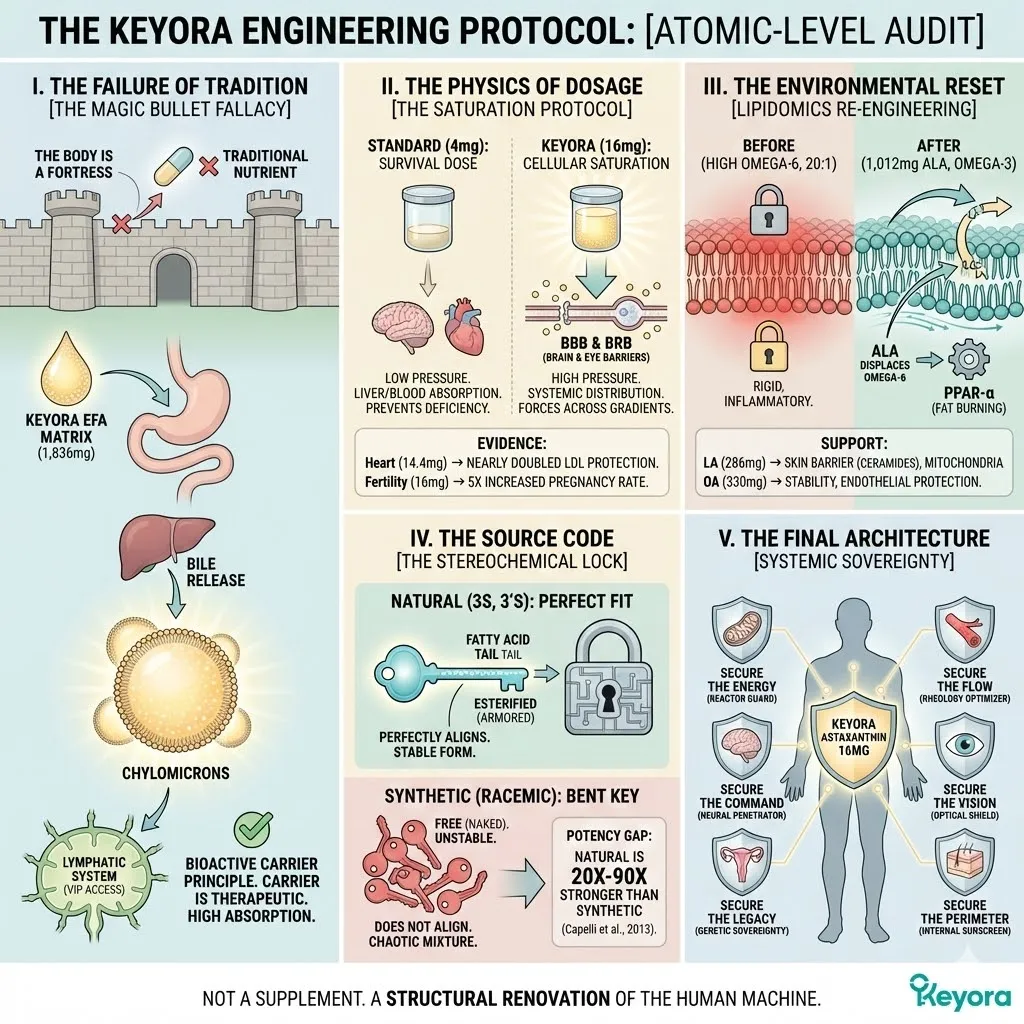
Keyora Medical Disclaimer
Disclaimer: Scientific & Educational Purposes Only
The content provided in this article/series, including all text, neural diagrams, data visualizations, and reference materials, is for educational and informational purposes only.
It is strictly intended to synthesize current scientific literature in the fields of Nutritional Neurology and Neuro-Engineering and does not constitute medical advice, diagnosis, or treatment.
Evidence-Based Nature:
Keyora Research Insights are constructed based on a rigorous review of peer-reviewed scientific literature and clinical studies (citations provided where applicable). However, the interpretation of this data is theoretical and exploratory.
Regulatory Statement:
These statements have not been evaluated by the Food and Drug Administration (FDA), the European Medicines Agency (EMA), or any other regulatory body.
Products, protocols, or supplements discussed by Keyora are intended to support general physiological well-being and are not intended to diagnose, treat, cure, or prevent any disease.
Professional Consultation:
Individual biological responses vary. Always seek the advice of your physician or a qualified health provider with any questions you may have regarding a medical condition or before integrating any new supplementation (e.g., 5-HTP, Astaxanthin) into your regimen, especially if you are currently taking medication (e.g., SSRIs).
Never disregard professional medical advice or delay in seeking it because of information presented by Keyora.
By Keyora Research Notes Series
This article contributes to Keyora’s ongoing scientific documentation series, which systematically outlines the conceptual foundations, mechanistic pathways, and empirical evidence informing our research and development approach.
ORCID: 0009–0007–5798–1996