
Keyora Nutritional Neurology – Magnesium Glycinate · Episode (11): Resolving the “Tired-But-Wired” Paradox: A Systems-Biology Approach to Chrono-Mismatch and IDO Shunt Regulation via the Keyora Matrix

By Keyora Research Notes Series
This article contributes to Keyora’s ongoing scientific documentation series, which systematically outlines the conceptual foundations, mechanistic pathways, and empirical evidence informing our research and development approach.
ORCID: 0009–0007–5798–1996
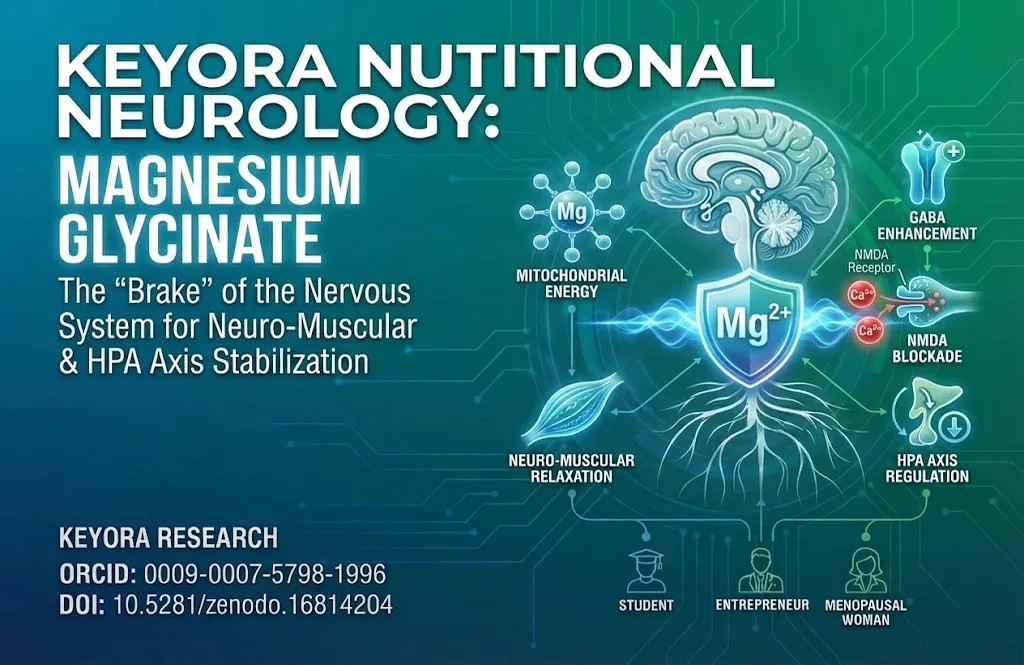
It is 2:34 AM.
The house is silent.
The slack notifications have finally stopped.
The world has ceased its demands on your time.
This is the only window of time that actually belongs to you.
You are sitting in the glow of your monitor.
Your body is heavy, pulling you toward the mattress.
Your eyes burn with a specific, gritty dryness – the chemical signal of Adenosine saturation begging for a shutdown.
But your mind?
Your mind is electric. It is racing at 10,000 RPM, scrolling through one more feed, debugging one more line, watching one more video.
You tell yourself it’s just “winding down.”
You tell yourself you are a “Night Owl.”
But deep down, you know the truth.
This isn’t relaxation.
This is a desperate, biological rebellion.
What the internet casually calls Revenge Bedtime Procrastination, Keyora Research clinically identifies as The Dopamine-Melatonin Conflict – a violent civil war between your brain’s reward system and its recovery engine.
You aren’t staying up because you lack discipline. You are staying up because your hardware is caught in a critical loop.
The Physics of the “Second Wind”
Here is the mechanism of your suffering.
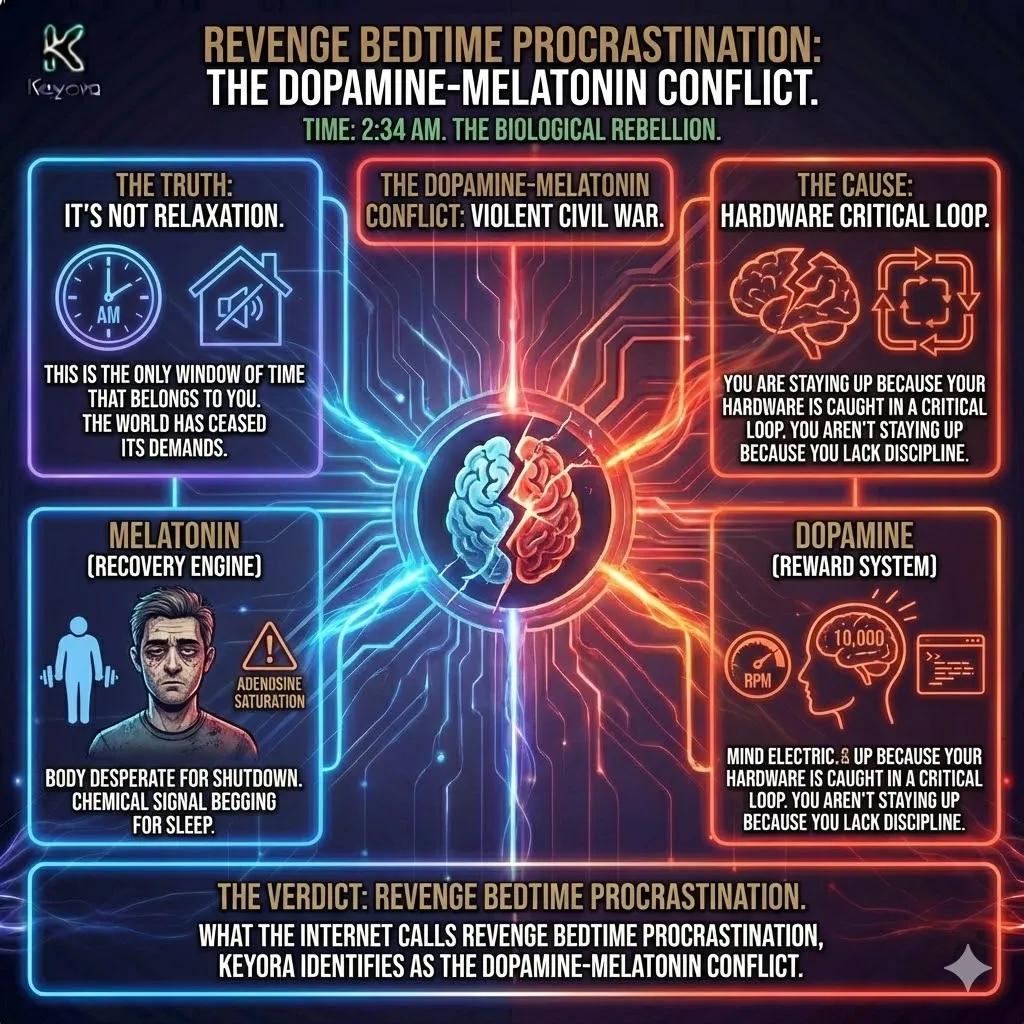
By 11:00 PM, your body has accumulated enough metabolic debt (Adenosine) to initiate sleep. Under natural laws, your Pineal Gland should be flooding your bloodstream with Melatonin, the hormonal “off-switch.”
But you are staring at a screen.
That screen is emitting a specific wavelength of light – peaking around 460nm. To your primitive optic nerve, this is not a monitor. It is the sun.
This is what we define as The Blue Spectrum Overdose.
This light signal hacks into your Suprachiasmatic Nucleus (SCN) – your brain’s Master Clock – and forces a hard reset. It tells your BIOS that it is noon, not midnight.
The result is immediate and catastrophic. Your brain halts Melatonin production. To compensate for the fatigue, your adrenal glands squeeze out a fresh pulse of Cortisol.
This is the “Second Wind.” It feels like energy, but it is actually stress.
The Latency Error
Now, add the psychological layer.
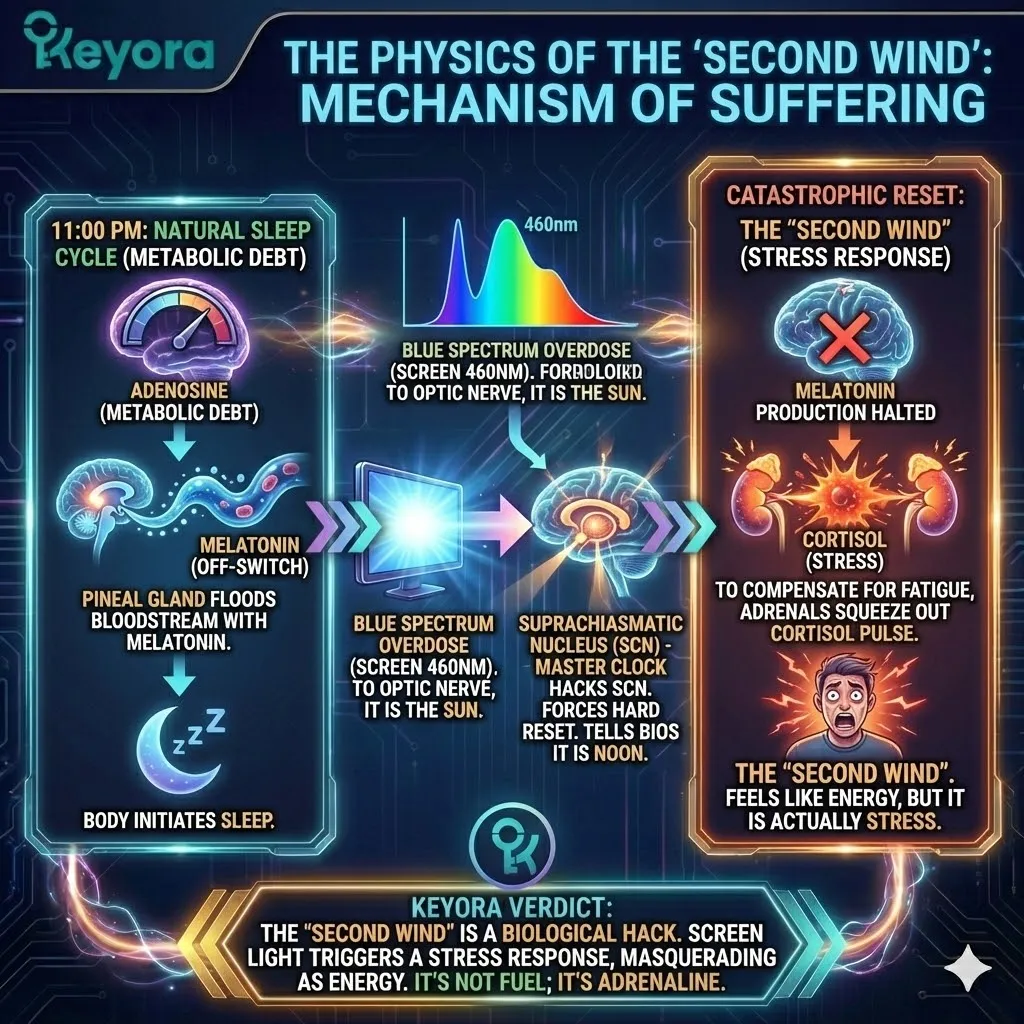
You have spent the last 14 hours processing high-stakes decisions, managing other people’s emotions, and suppressing your own impulses.
Your Dopamine receptors are starved.
They are screaming for input.
So you scroll.
You watch. You click.
Every piece of content delivers a micro-dose of Dopamine. This creates a chemical feedback loop that overrides the biological need for sleep.
Your biology is now operating in two different time zones simultaneously.
Your liver and muscles, exhausted by the day, are trying to enter a repair cycle. But your central nervous system, hijacked by The Blue Spectrum Overdose and Dopamine cravings, is fully online.
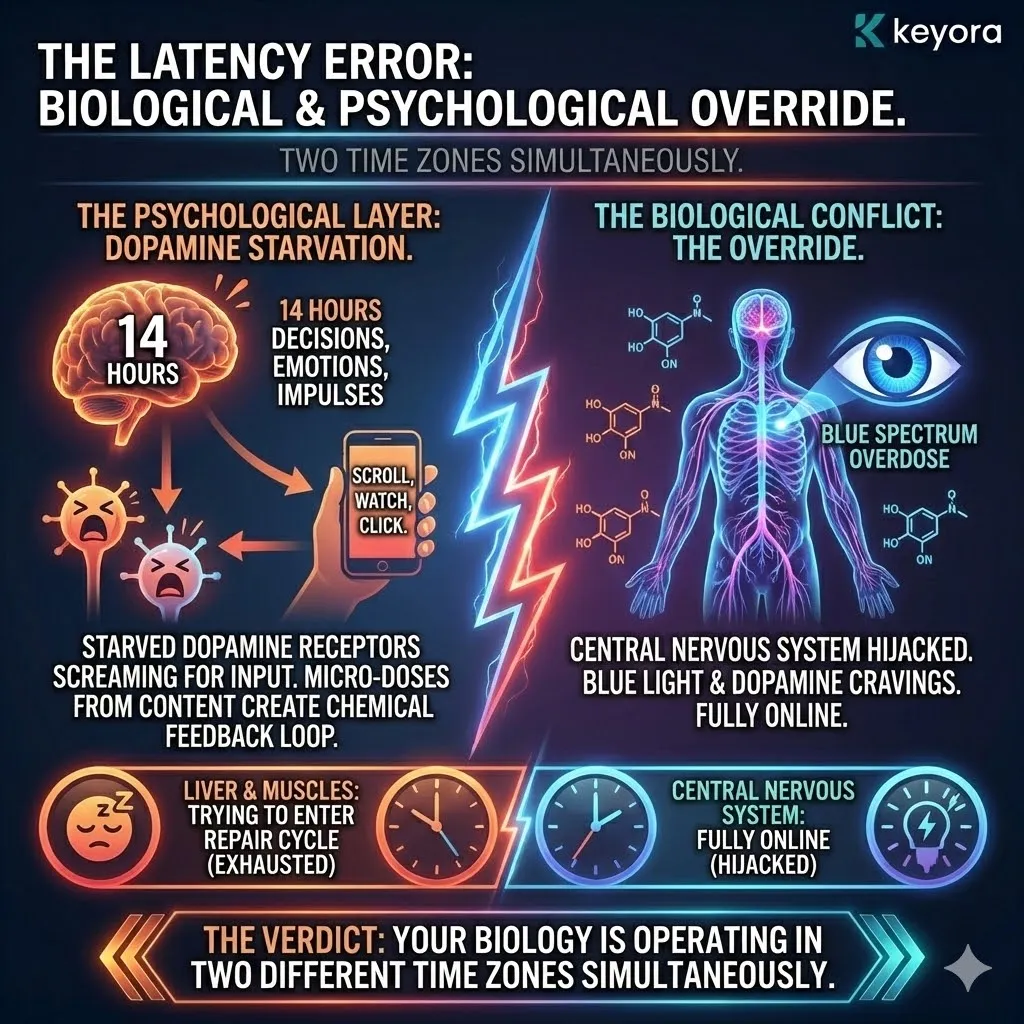
This state is what medicine calls Social Jetlag.
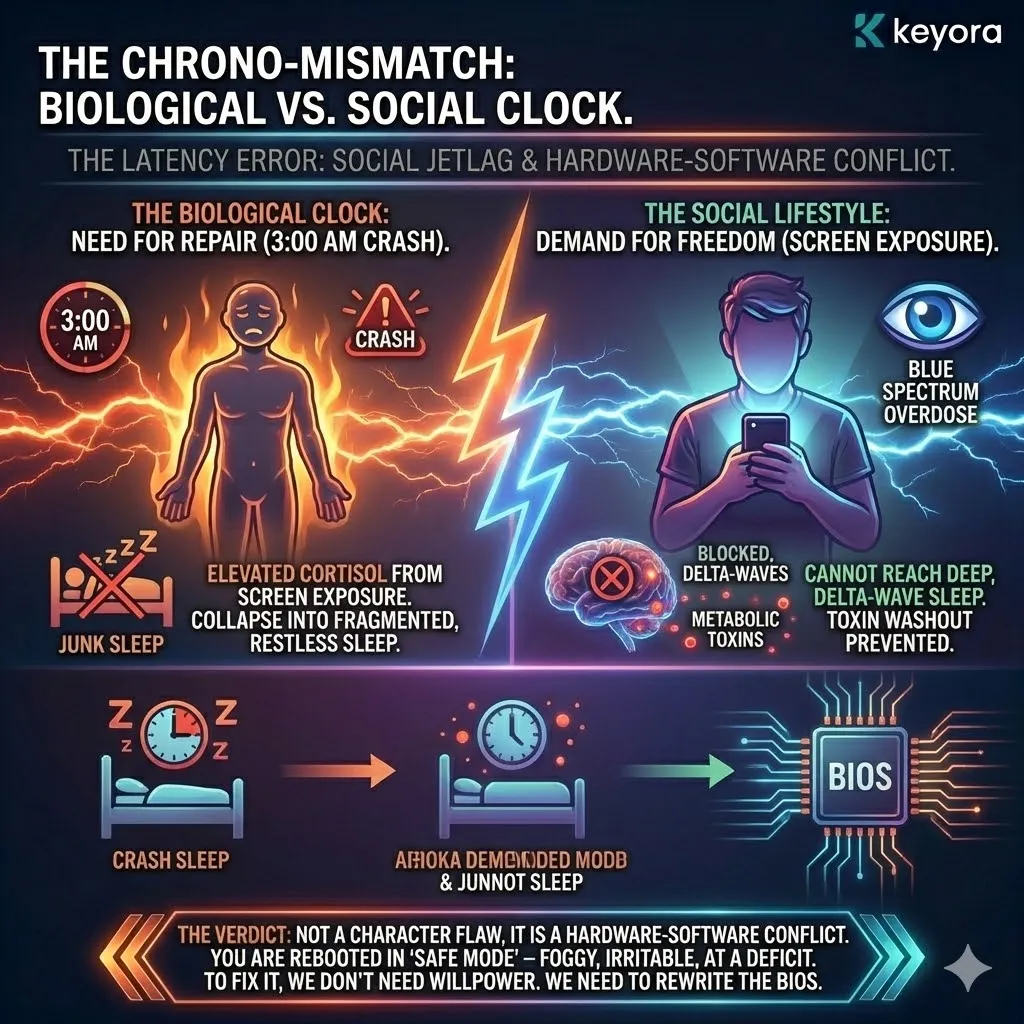
However, Keyora engineers define this more precisely as The Chrono-Mismatch. It is a severe latency error between your biological clock (which needs repair) and your social lifestyle (which demands freedom).
The Cost of the Conflict
The tragedy is not just the lost sleep. It is the quality of the sleep that follows.
When you finally crash at 3:00 AM, you are not sliding into a restorative cycle. You are collapsing into Junk Sleep.
Because your Cortisol is still elevated from the screen exposure, your body cannot reach the deep, Delta-wave sleep required to wash away metabolic toxins. You wake up five hours later, not rested, but rebooted in “Safe Mode” – foggy, irritable, and already operating at a deficit.
This isn’t a character flaw.
It is a hardware-software conflict.
And to fix it, we don’t need “willpower.”
We need to rewrite the BIOS.
CHAPTER I: THE SIGNAL LAYER – RE-CALIBRATING THE BIOS (SCN)
Correcting [The Blue Spectrum Overdose] – How the Keyora 8-in-1 Matrix Engineers a “Signal-to-Noise” Optimization to Restore SCN Gene Expression and Global Synchronization.
1.1 THE GLITCH: [The Chrono-Mismatch] – When Server Time Drifts from Reality
It begins with a silence that is almost deafening.
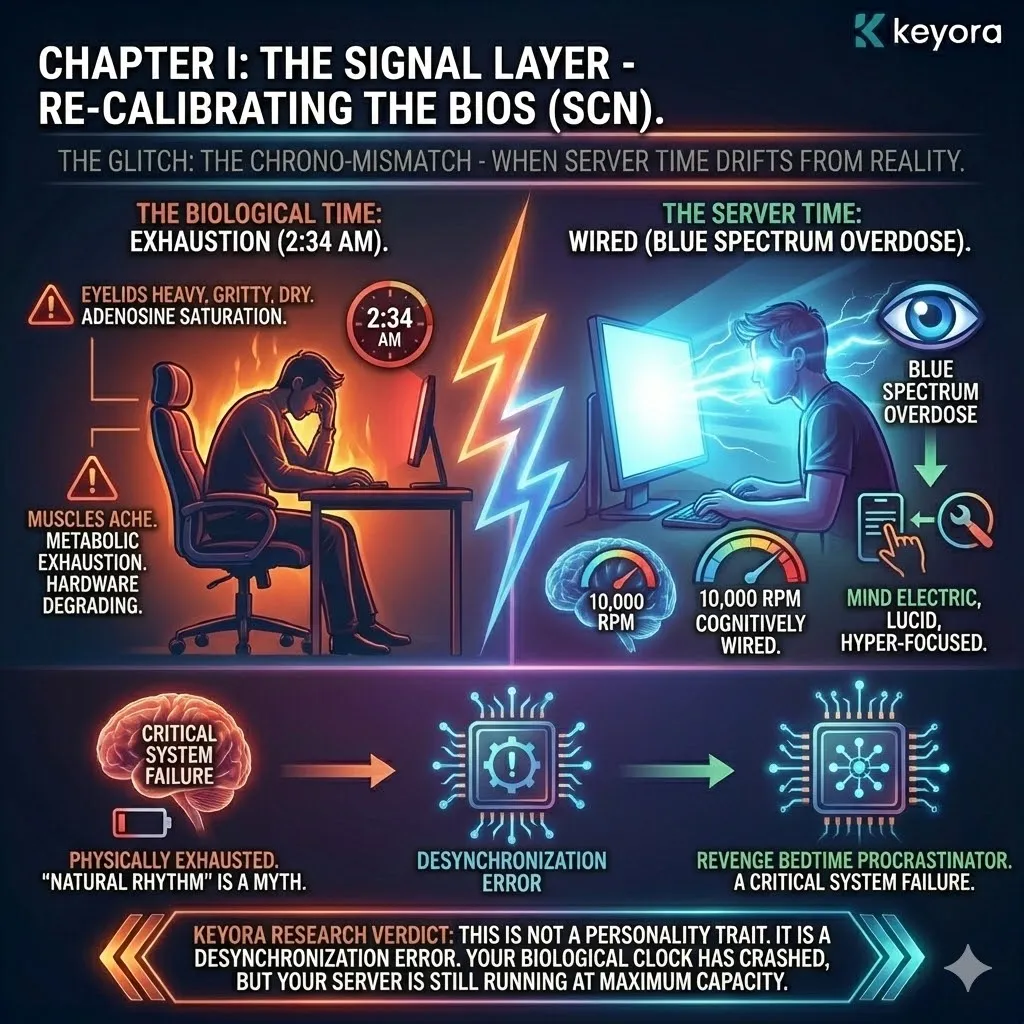
The time is 2:34 AM.
The Slack notifications have ceased.
The emails have stopped piling up.
The demands of the external world – the clients, the code, the stakeholders – have finally retreated into the void of the night.
You are sitting in the ergonomic chair that cost more than your first car, bathed in the cool, sterile glow of a 27-inch monitor.
This is the only time that belongs to you.
This is the specific, intoxicating freedom of the “Revenge Bedtime Procrastinator.”
You know you should be asleep.
You know that in five hours, an alarm will tear you from consciousness with the violence of a system crash.
Your body knows it too.
Your eyelids feel heavy, gritty, and dry – a physical manifestation of Adenosine saturation in the basal forebrain.
Your muscles ache with a dull, low-frequency hum of metabolic exhaustion. The hardware is degrading.
But your mind?
Your mind is running at 10,000 RPM.
It is electric.
It is lucid.
It is scrolling, clicking, debugging, watching, and processing with a terrifying, hyper-focused clarity.
You are physically exhausted, yet cognitively wired.
You tell yourself this is your “natural rhythm.”
You tell yourself you are a “Night Owl.”
You tell yourself you are just winding down.
Keyora Research is here to tell you the truth:
You are experiencing a critical system failure.
This is not a personality trait. It is a desynchronization error.
What the medical establishment loosely terms “Social Jetlag,” Keyora engineers clinically define as [The Chrono-Mismatch].
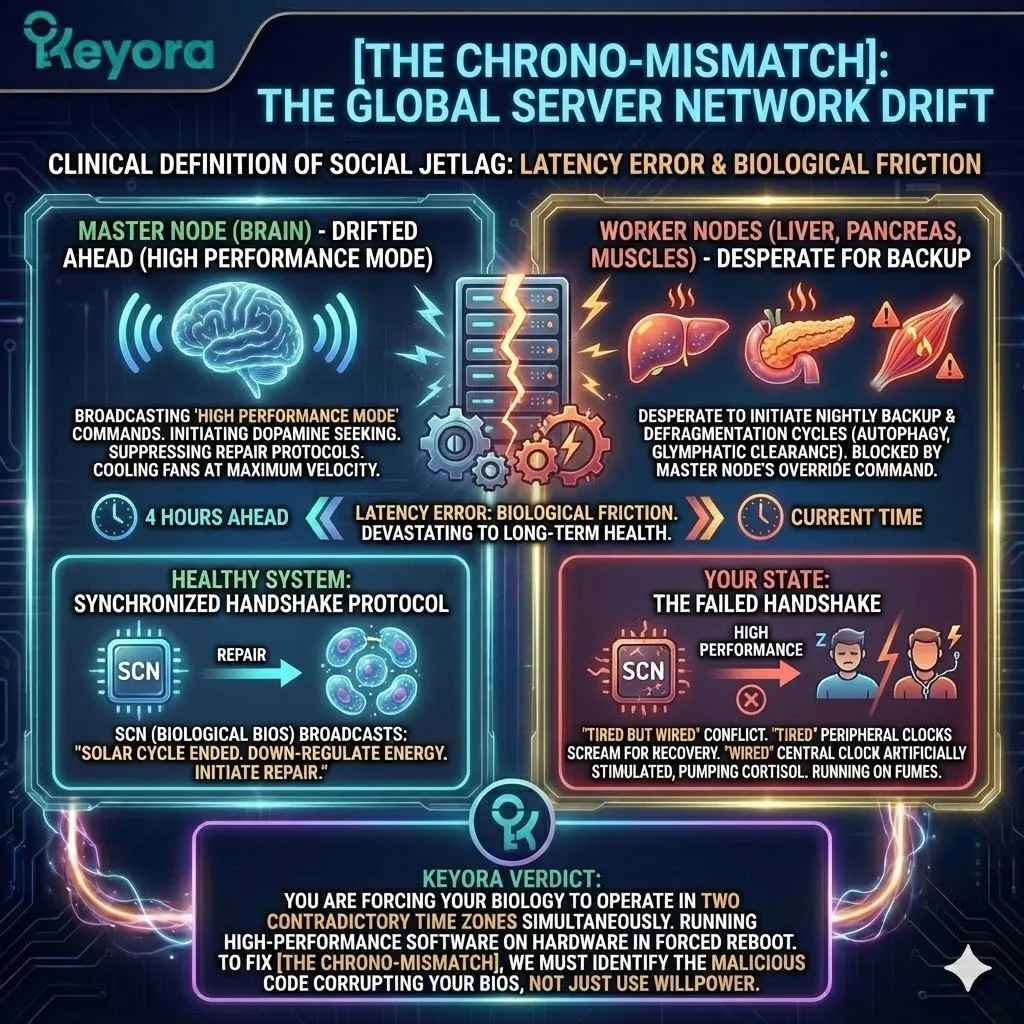
Imagine a global server network where the Master Node (your brain) has drifted four hours ahead of the Worker Nodes (your liver, pancreas, and muscles).
The Master Node is still broadcasting “High Performance Mode” commands – initiating dopamine seeking, suppressing repair protocols, and keeping the cooling fans (metabolic rate) spinning at maximum velocity.
Meanwhile, the Worker Nodes are desperate to initiate the nightly backup and defragmentation cycles (autophagy and glymphatic clearance), but they are being blocked by the Master Node’s override command.
This latency error creates a state of biological friction that is devastating to long-term health.
In a healthy system, the transition from wakefulness to sleep is a synchronized “handshake protocol.” As light fades, the Suprachiasmatic Nucleus (SCN) – your biological BIOS – sends a broadcast signal to every cell in your body: “The solar cycle has ended. Down-regulate energy production. Initiate repair.”
But in your current state, that handshake has failed.
The “Tired but Wired” sensation you feel is the visceral experience of this conflict.
“Tired” is your peripheral clocks (liver/muscle) screaming for ATP recovery.
“Wired” is your central clock (SCN) being artificially stimulated by a rogue signal, forcing your adrenal glands to pump Cortisol into a system that is running on fumes.
You are not just “staying up late.”
You are forcing your biology to operate in two contradictory time zones simultaneously.
You are running high-performance software on hardware that is in the middle of a forced reboot.
This is [The Chrono-Mismatch].
And to fix it, we cannot simply use “willpower” to close the laptop.
We must understand the source of the malicious code that has corrupted your BIOS.
1.2 THE ROOT CAUSE: [The Blue Spectrum Overdose] – The Malicious Signal Injection
If we treat the human body as a biological machine, we must identify the input signal that controls the Master Clock. That signal is light.
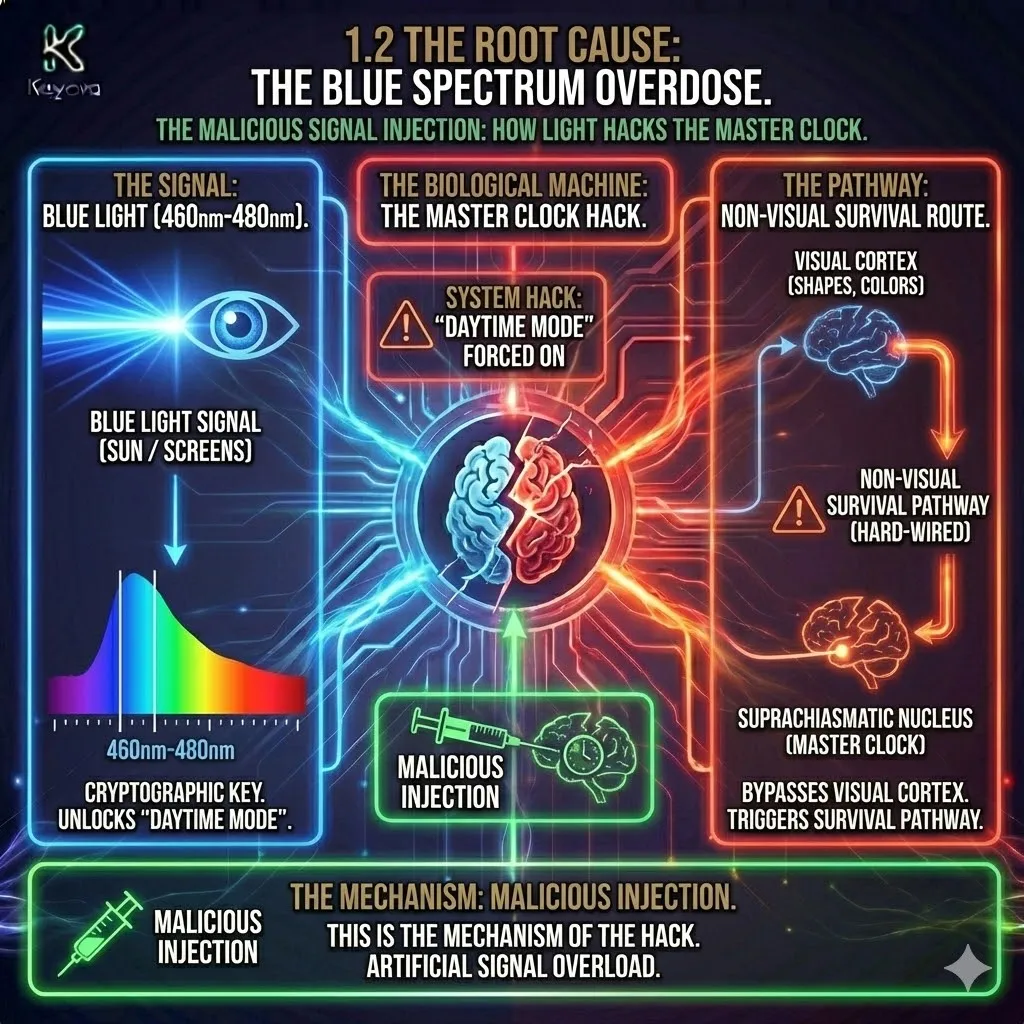
For millions of years, the only light source that emitted a high-intensity signal in the 460nm to 480nm wavelength band was the sun. To your primitive biology, this specific frequency of blue light is the cryptographic key that unlocks “Daytime Mode.”
When this light hits your retina, it does not just allow you to see shapes and colors. It triggers a non-visual, hard-wired survival pathway that bypasses the visual cortex entirely.
This is the mechanism of the hack.
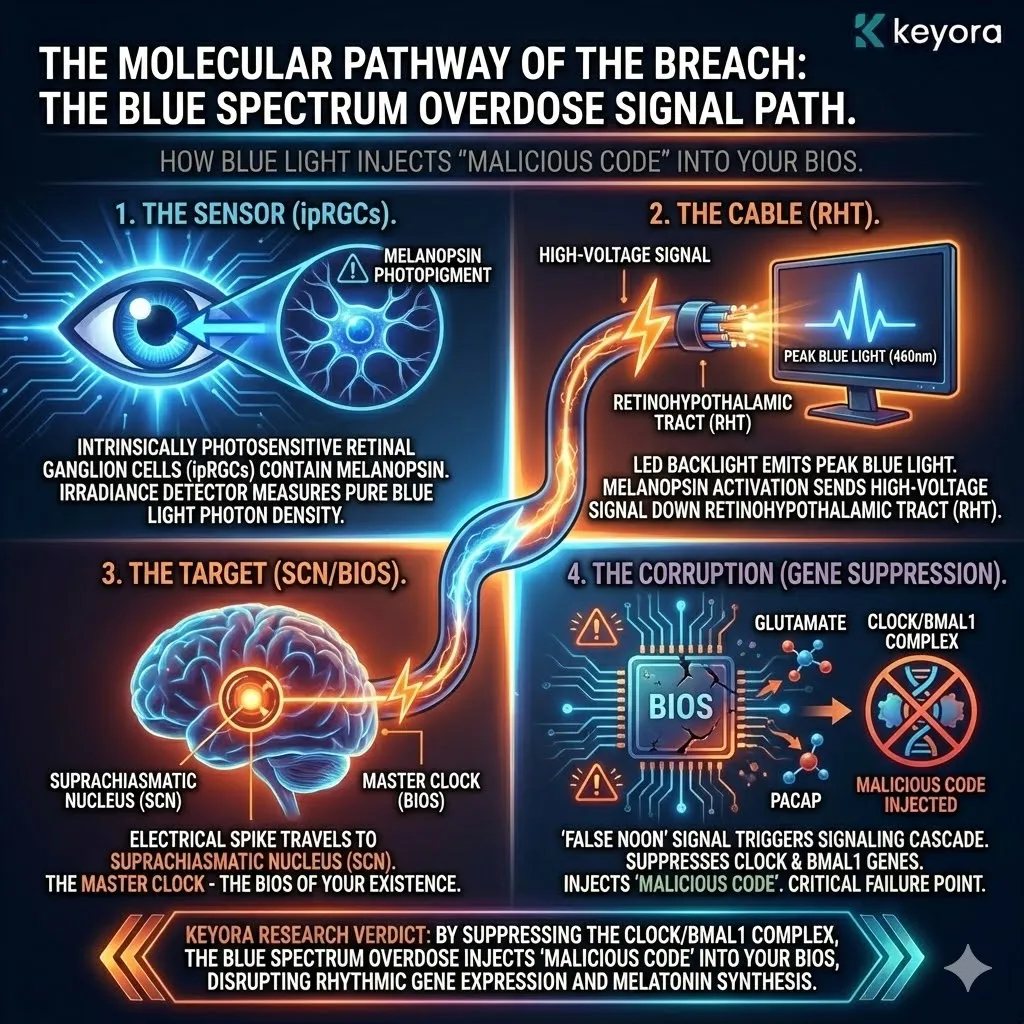
The Molecular Pathway of the Breach
Let us trace the signal path of what Keyora Research defines as [The Blue Spectrum Overdose]:
The Sensor (ipRGCs):
Embedded in your retina are a specialized class of neurons called intrinsically photosensitive retinal ganglion cells (ipRGCs). These cells contain a photopigment called Melanopsin.
Unlike the rods and cones used for vision, Melanopsin is a “irradiance detector” – it measures the pure intensity of blue light photon density.
The Cable (RHT):
When you stare at your monitor at 11:00 PM, the LED backlight emits a peak spike of blue light (typically around 460nm).
This light activates Melanopsin, which sends a high-voltage electrical signal down the Retinohypothalamic Tract (RHT).
The Target (SCN/BIOS):
This electrical spike travels directly into the Suprachiasmatic Nucleus (SCN), located in the hypothalamus. The SCN is the Master Clock – the BIOS of your existence.
The Corruption (Gene Suppression):
Upon receiving this “False Noon” signal, the SCN neurons fire rapidly, releasing glutamate and pituitary adenylate cyclase-activating polypeptide (PACAP). These neurotransmitters trigger a signaling cascade that suppresses the transcription of the core clock genes: CLOCK and BMAL1.
This suppression is the critical failure point.
The CLOCK/BMAL1 complex is responsible for driving the rhythmic expression of thousands of downstream genes, including the enzymes required to synthesize Melatonin. By suppressing this complex, [The Blue Spectrum Overdose] effectively injects a “Malicious Code” into your BIOS.
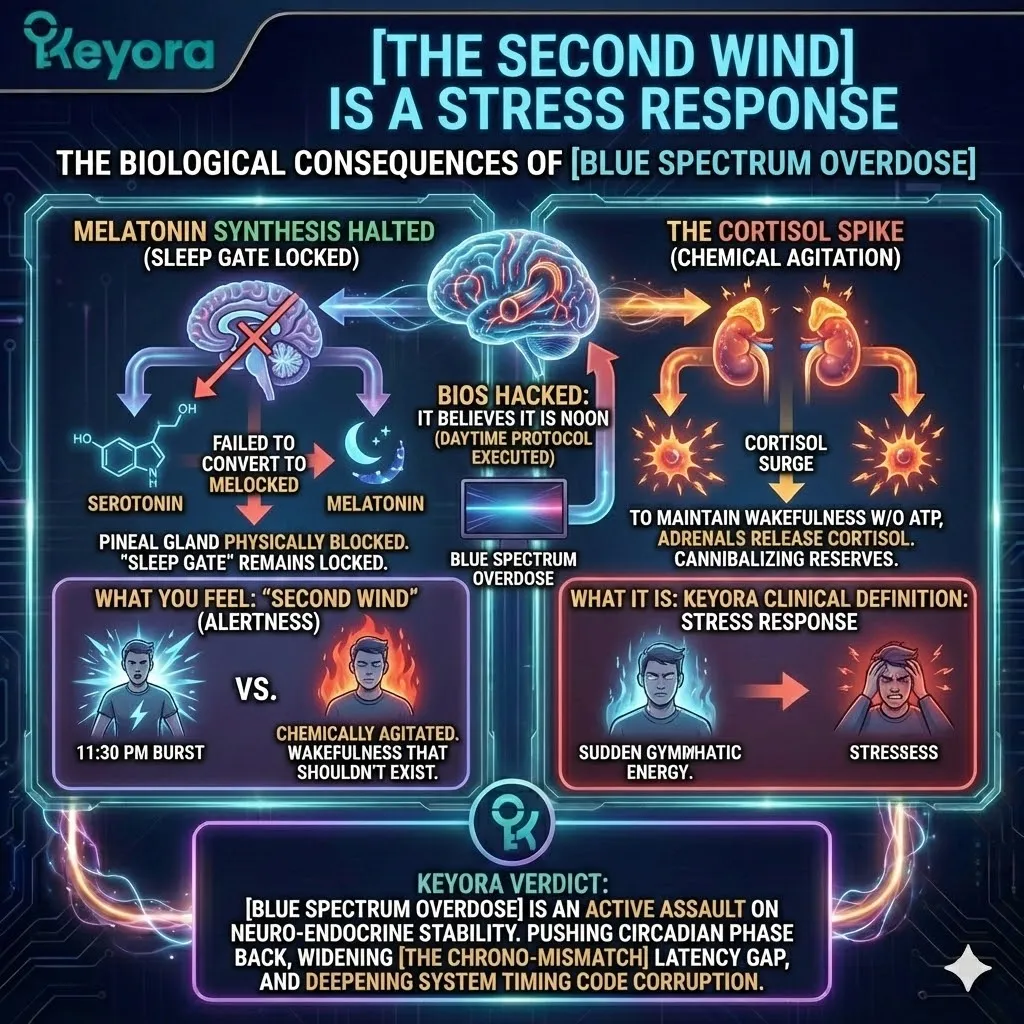
The “Second Wind” is a Stress Response
The consequences of this injection are immediate and chemical.
Because the BIOS believes it is noon, it executes the “Daytime Protocol.”
Melatonin Synthesis is Halted:
The pineal gland is physically blocked from converting Serotonin into Melatonin. The “Sleep Gate” remains locked.
The Cortisol Spike:
To maintain wakefulness in the absence of genuine energy (ATP), the brain commands the adrenal glands to release a surge of Cortisol.
This is why you feel that sudden burst of alertness at 11:30 PM. You call it a “Second Wind.” Keyora engineers call it a Stress Response.
You are not energized; you are chemically agitated. Your body is cannibalizing its own reserves to fuel a wakefulness that shouldn’t exist.
This [Blue Spectrum Overdose] is not a passive environmental factor. It is an active, continuous assault on your neuro-endocrine stability.
Every minute of exposure pushes your circadian phase further back, widening the latency gap of [The Chrono-Mismatch] and deepening the corruption of your system’s timing code.
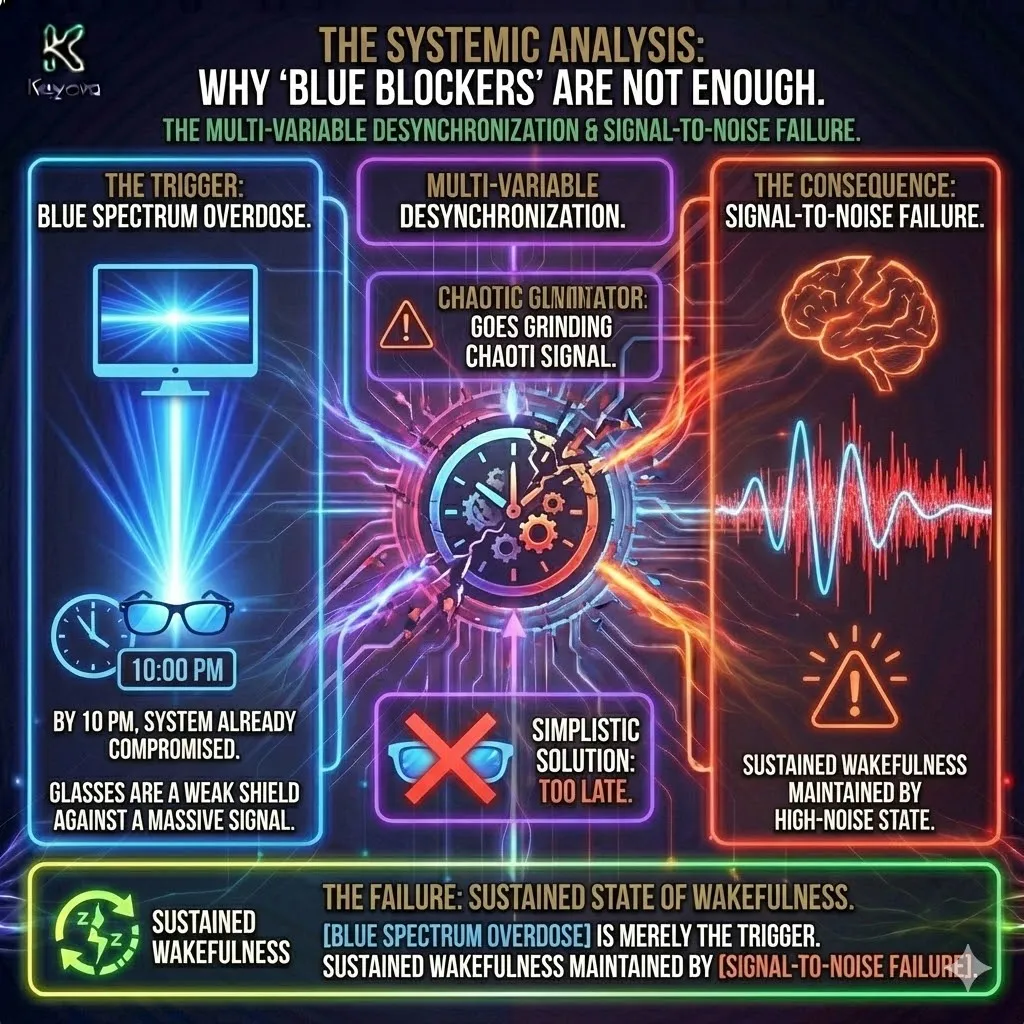
1.3 THE SYSTEMIC ANALYSIS: Why “Blue Blockers” Are Not Enough – The Multi-Variable Desynchronization
The market solution to this problem is simplistic: “Wear Blue Light Blocking Glasses.”
While this logic is sound in theory – block the photon, stop the signal – it fails in practice for the high-functioning demographic. Why?
Because by the time you put on those glasses at 10:00 PM, the system is already compromised.
Keyora Research posits that [The Blue Spectrum Overdose] is merely the trigger. The sustained state of wakefulness is maintained by a phenomenon we define as [The Signal-to-Noise Failure].
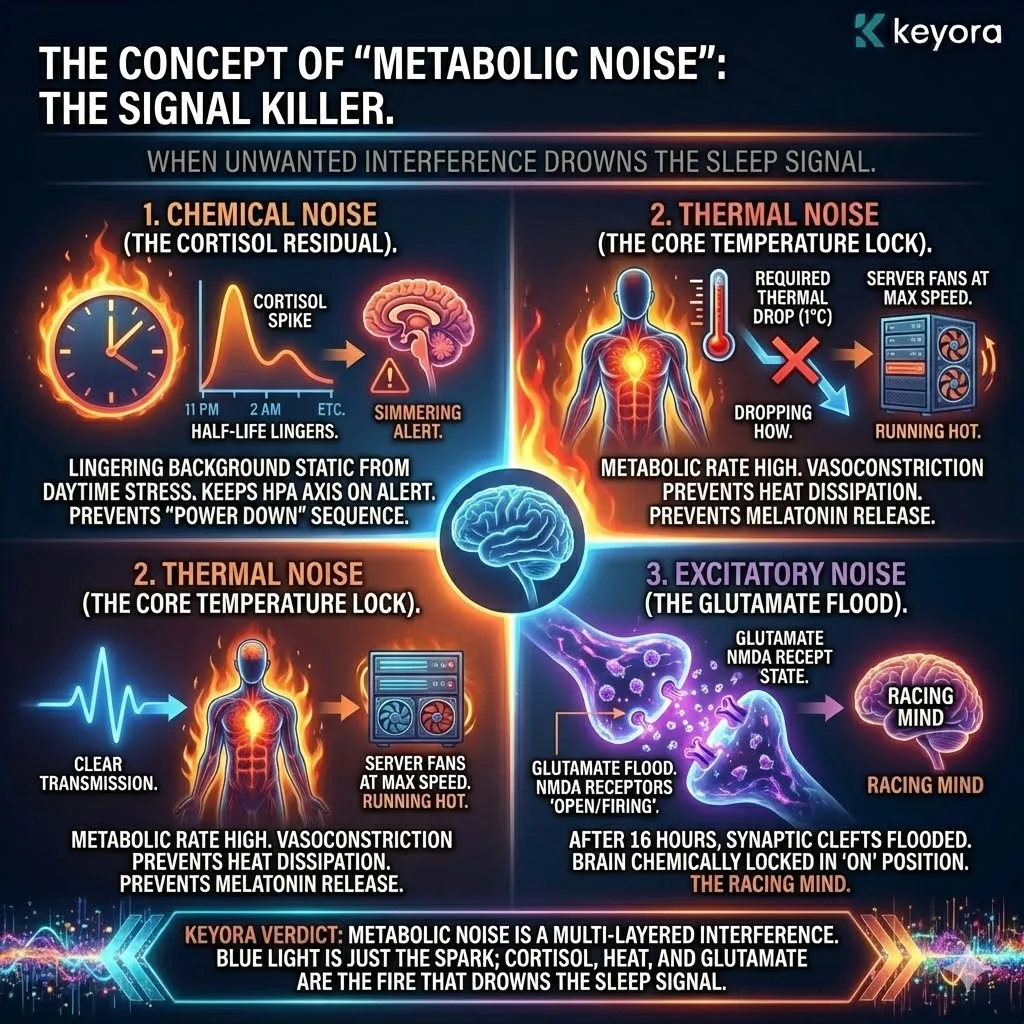
The Concept of “Metabolic Noise”
In signal processing, “Noise” is any unwanted interference that degrades the clarity of the transmission. In the human body, Sleep is the Signal. But in the Tech-Nocturnal individual, the system is drowning in three specific types of “Noise”:
Chemical Noise (The Cortisol Residual):
Even if you block the blue light, the Cortisol spike triggered by your 3:00 PM coffee, your 5:00 PM deadline, and your 8:00 PM argument is still circulating in your bloodstream. Cortisol has a half-life. It acts as a lingering background static that keeps the HPA axis (Hypothalamic-Pituitary-Adrenal) in a state of “Simmering Alert.” As long as this Chemical Noise is high, the SCN cannot initiate the “Power Down” sequence, regardless of light levels.
Thermal Noise (The Core Temperature Lock):
To initiate sleep, your core body temperature must drop by approximately 1°C (2-3°F). This thermal drop acts as a physical trigger for Melatonin release.
However, the “Second Wind” (Cortisol/Adrenaline) keeps your metabolic rate high and your blood vessels constricted (vasoconstriction), preventing heat dissipation.
You are running “hot.”
Your server fans are spinning at max speed.
Putting on orange glasses does not cool down the server.
Excitatory Noise (The Glutamate Flood):
After 16 hours of intense cognitive processing, your synaptic clefts are flooded with Glutamate – the primary excitatory neurotransmitter.
Without adequate clearance, this Glutamate keeps the NMDA receptors on your neurons in a “Open/Firing” state. Your brain is chemically locked in the “ON” position. This is the “racing mind” phenomenon.
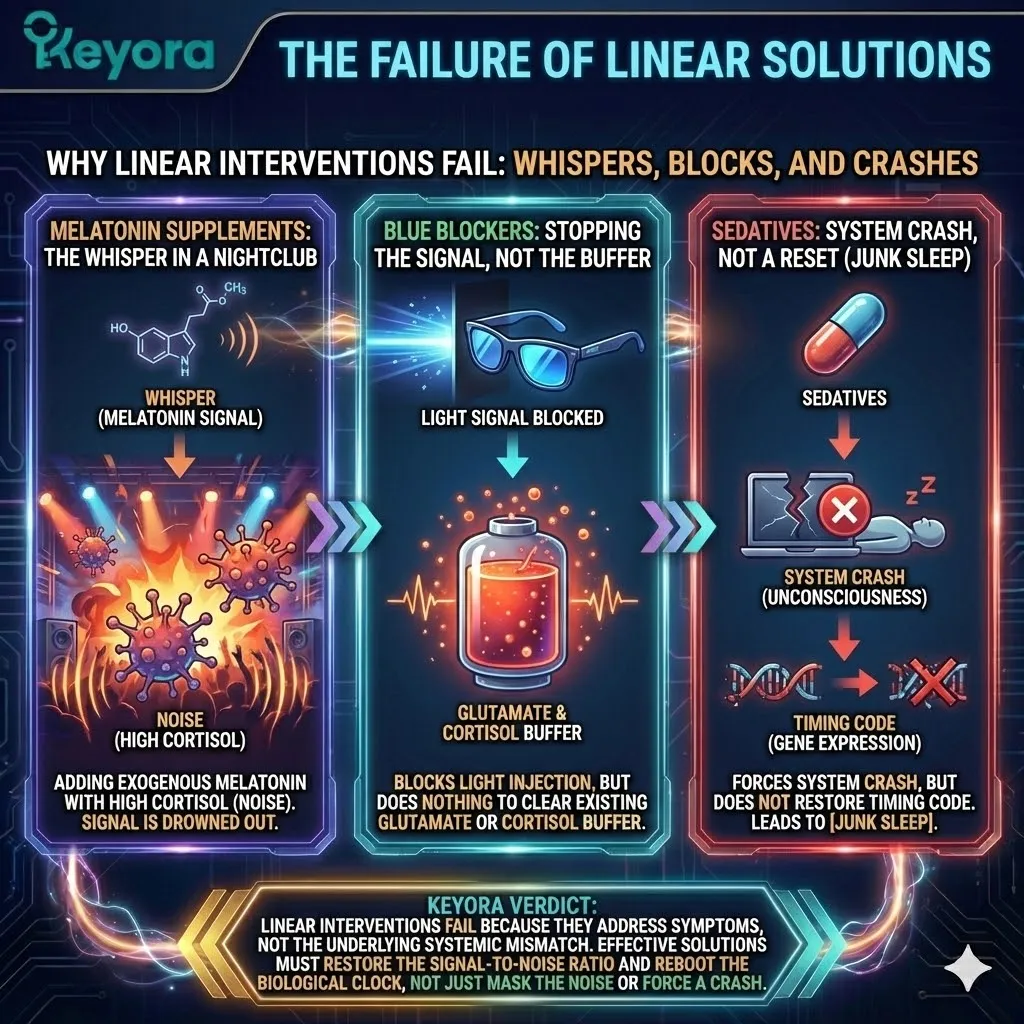
The Failure of Linear Solutions
This is why linear interventions fail.
Melatonin Supplements:
Adding exogenous Melatonin into a system with high Cortisol (Noise) is like whispering in a nightclub. The Signal is drowned out by the Noise.
Blue Blockers:
Blocking the light stops the new signal injection, but it does nothing to clear the existing Glutamate or Cortisol buffer.
Sedatives:
These force the system to crash (unconsciousness) but do not restore the timing code (Gene Expression), leading to [Junk Sleep].
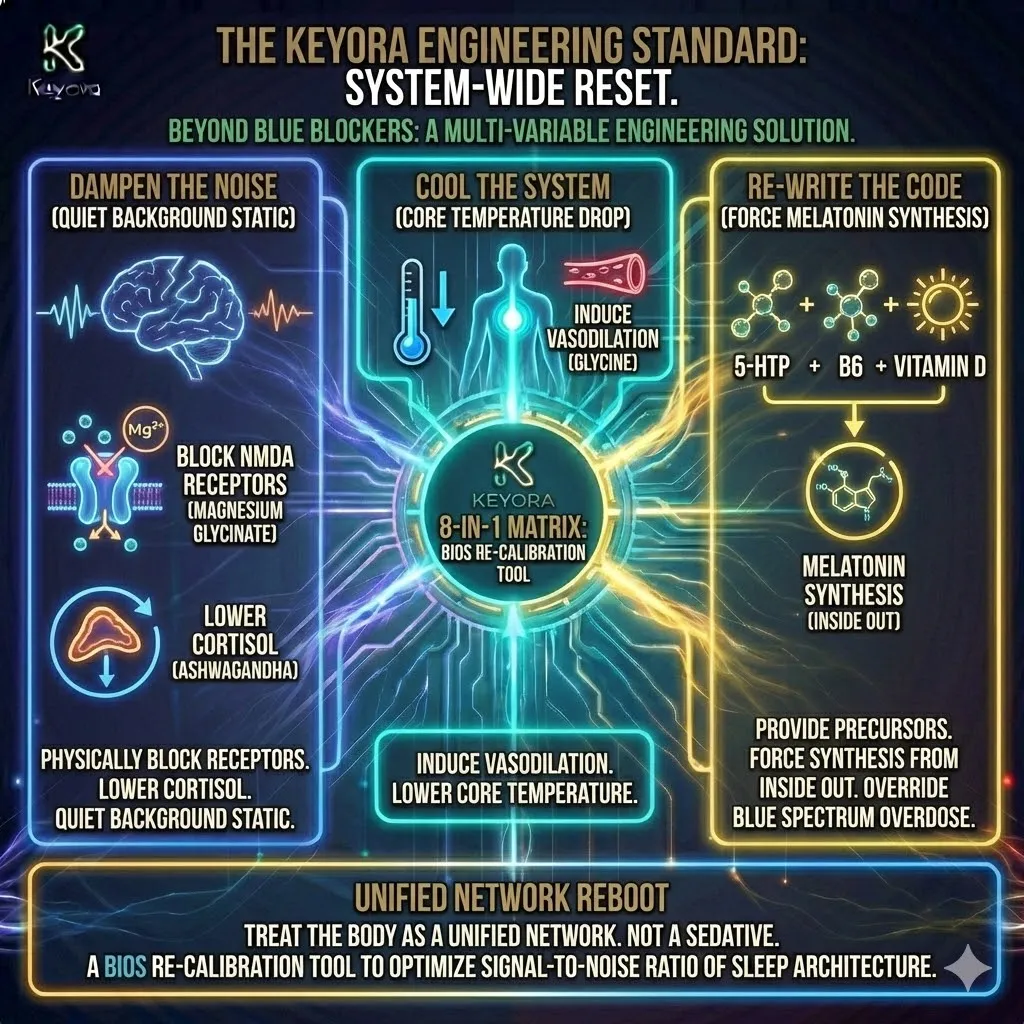
The Keyora Engineering Standard
To truly correct [The Chrono-Mismatch], we cannot just block the light.
We must engineer a System-Wide Reset.
We need a solution that acts on multiple variables simultaneously:
-
Dampen the Noise: Physically block the NMDA receptors (Magnesium Glycinate) and lower Cortisol (Ashwagandha) to quiet the background static.
-
Cool the System: Induce vasodilation and lower core temperature (Glycine).
-
Re-Write the Code: Provide the molecular precursors (5-HTP + B6 + Vitamin D) to force the synthesis of Melatonin from the inside out, overriding the [Blue Spectrum Overdose].
We need to treat the body not as a collection of parts, but as a unified network that requires a reboot.
This is the engineering logic behind the Keyora 8-in-1 Matrix.
It is not a sedative.
It is a BIOS re-calibration tool designed to optimize the Signal-to-Noise ratio of your sleep architecture.
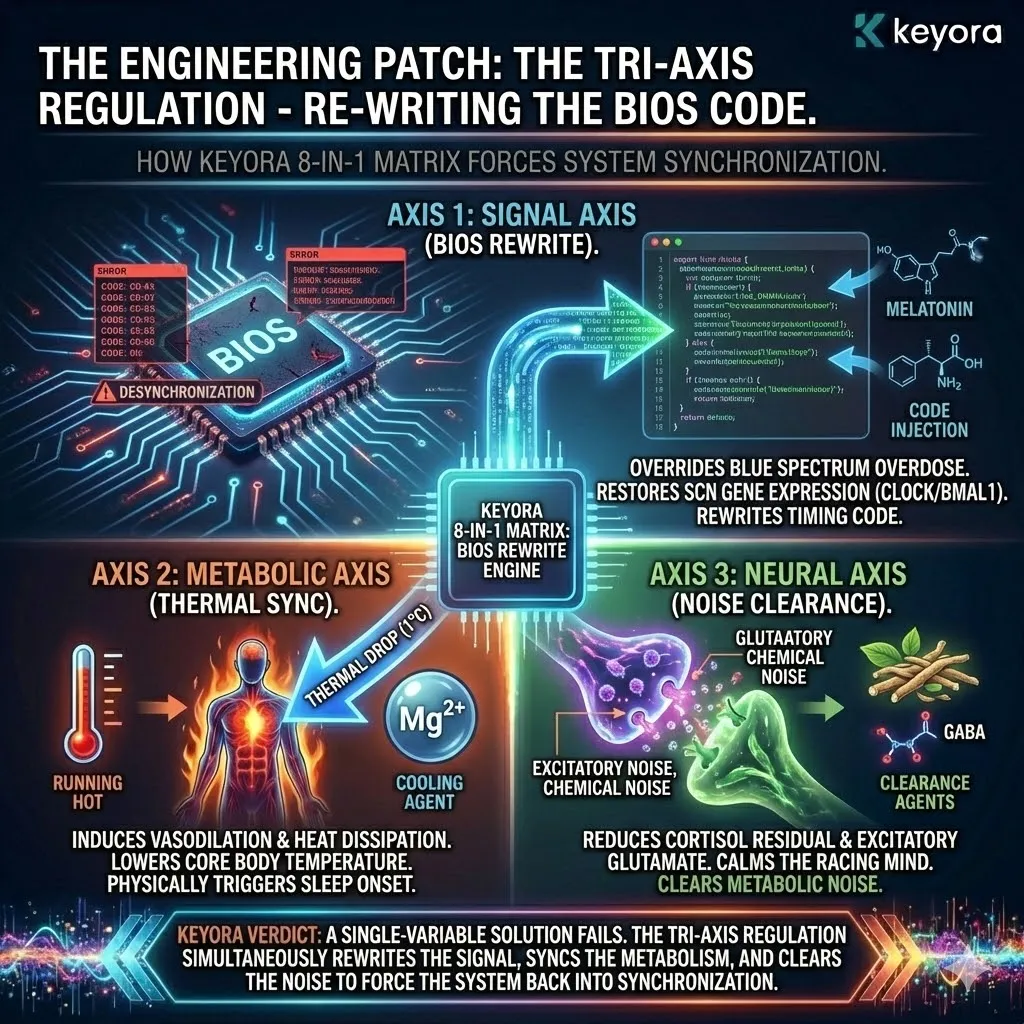
1.4 THE ENGINEERING PATCH: [The Tri-Axis Regulation] – Re-Writing the BIOS Code
If the problem is a complex, multi-variable desynchronization between your central clock (SCN) and your peripheral metabolism, then a single-variable solution (like a sleeping pill) is destined to fail.
You cannot fix a corrupted BIOS by simply pulling the power plug.
You must rewrite the timing code.
Keyora Research approaches this not as a medical treatment, but as a systems engineering challenge.
To correct [The Chrono-Mismatch] and override [The Blue Spectrum Overdose], we deploy the Keyora 8-in-1 Matrix to execute a simultaneous, three-pronged protocol known as [The Tri-Axis Regulation].
This is how we force the system back into synchronization.
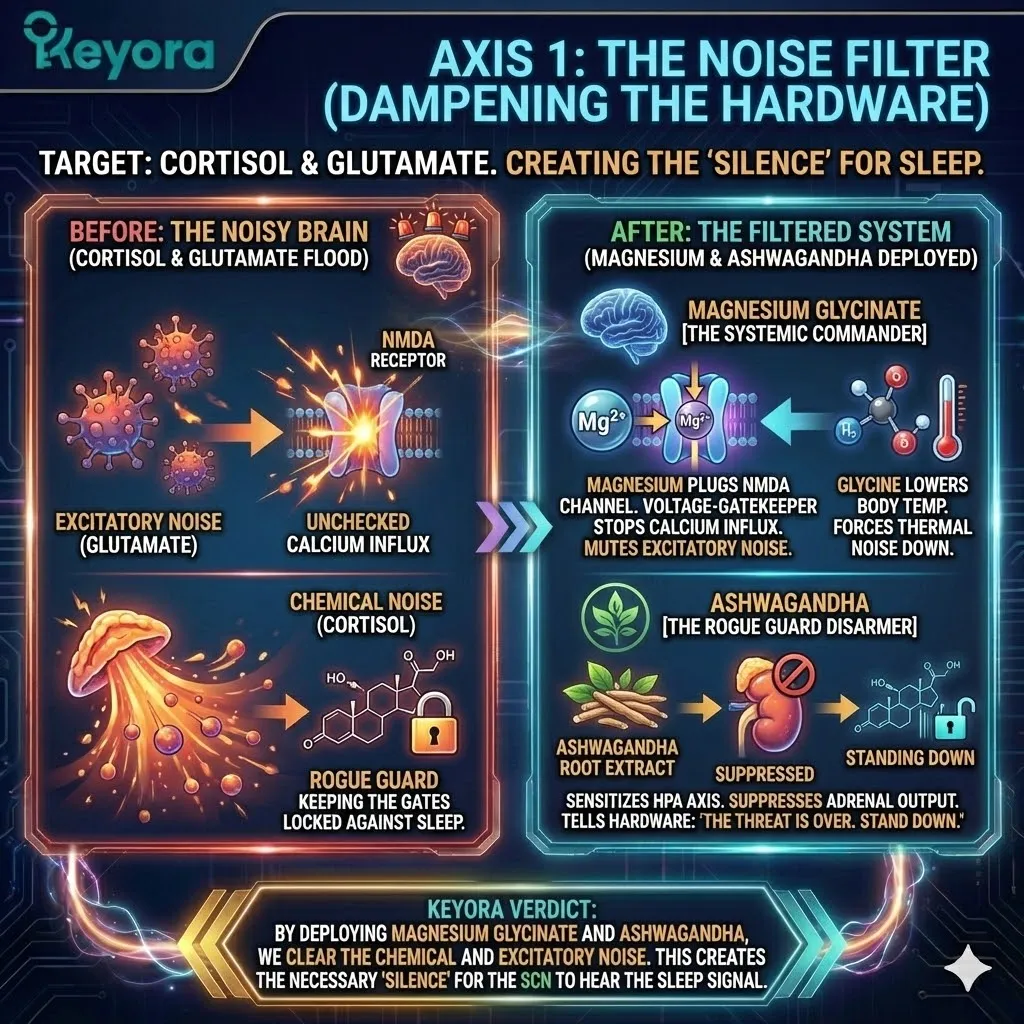
AXIS 1: THE NOISE FILTER (Dampening the Hardware)
Target: Cortisol & Glutamate
The first step in any signal repair is noise reduction. As established, your brain is currently flooded with Chemical Noise (Cortisol) and Excitatory Noise (Glutamate).
To combat this, we deploy two specific agents:
Magnesium Glycinate as [The Systemic Commander]:
While standard magnesium (Oxide/Citrate) acts merely as a laxative, Magnesium Glycinate utilizes the [Bioactive Carrier Principle].
The magnesium ion physically plugs the NMDA receptor channel, acting as a voltage-gatekeeper to stop the influx of Calcium.
This effectively mutes the “Excitatory Noise” of Glutamate. Simultaneously, the Glycine carrier molecule acts as an inhibitory neurotransmitter in the brainstem, lowering core body temperature – mechanically forcing the “Thermal Noise” down to sleep-permissive levels.
Ashwagandha as [The Rogue Guard Disarmer]:
Your nighttime Cortisol is no longer a defender; it is a [Rogue Guard] keeping the gates locked against sleep.
Ashwagandha (specifically the full-spectrum root extract) acts directly on the HPA axis to sensitize the feedback loop.
It suppresses the adrenal output of Cortisol, effectively telling the hardware: “The threat is over. Stand down.”
By clearing this noise, we create the “Silence” necessary for the SCN to hear the sleep signal.
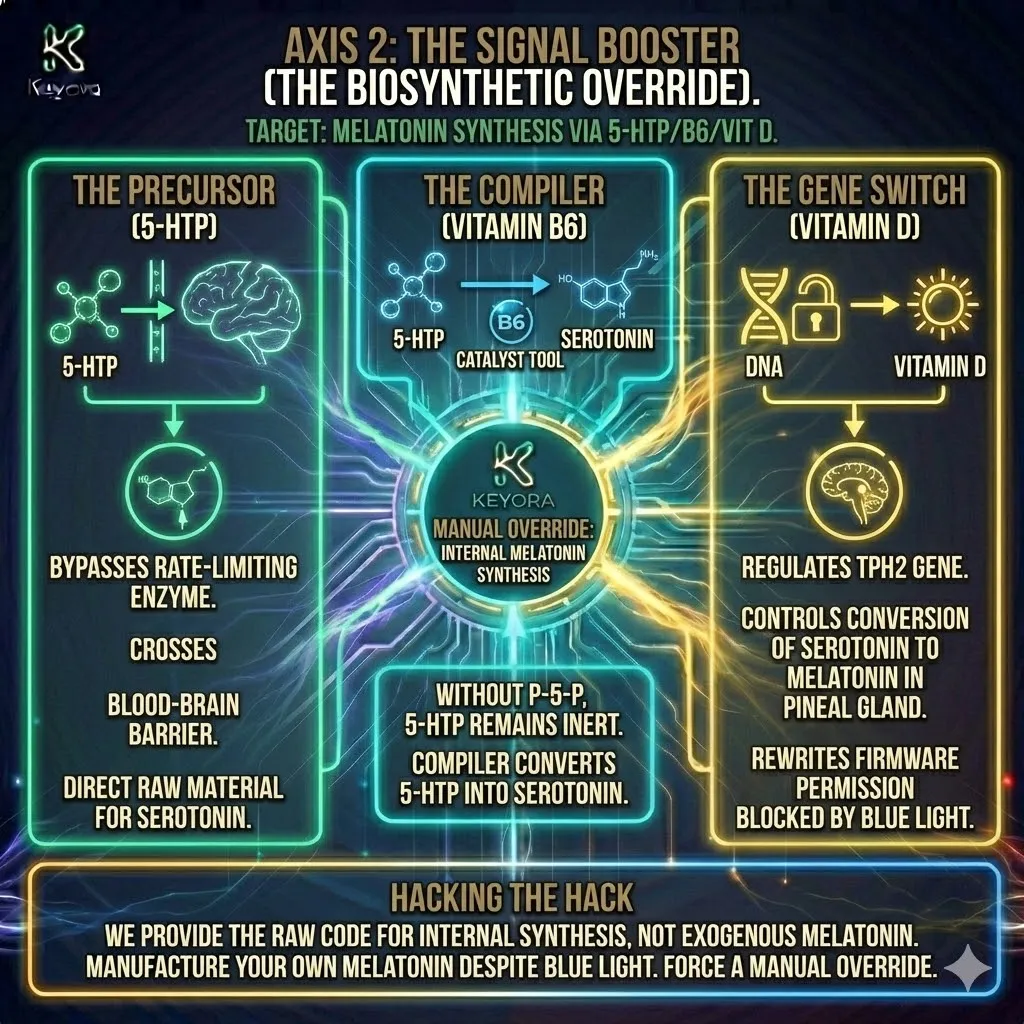
AXIS 2: THE SIGNAL BOOSTER (The Biosynthetic Override)
Target: Melatonin Synthesis via 5-HTP/B6/Vit D
Now that the noise is dampened, we must re-broadcast the “Sleep Signal” (Melatonin). However, because [The Blue Spectrum Overdose] has suppressed your natural production, we cannot rely on the body to do this automatically. We must force a “Manual Override.”
We do not use exogenous Melatonin (which causes receptor downregulation and dependency). Instead, we provide the raw code for internal synthesis:
The Precursor (5-HTP):
5-Hydroxytryptophan bypasses the rate-limiting enzyme (Tryptophan Hydroxylase) that is often disabled by stress. It crosses the blood-brain barrier and provides the direct raw material for Serotonin.
The Compiler (Vitamin B6):
Without P-5-P (active B6), 5-HTP remains inert. B6 acts as the compiler, converting 5-HTP into Serotonin.
The Gene Switch (Vitamin D):
This is the critical Keyora insight. Vitamin D regulates the expression of the TPH2 gene, which controls the conversion of Serotonin into Melatonin in the pineal gland. By supplying Vitamin D, we are essentially rewriting the firmware permission that was blocked by the blue light.
This triad allows your brain to manufacture its own Melatonin despite the presence of blue light, effectively hacking the hack.
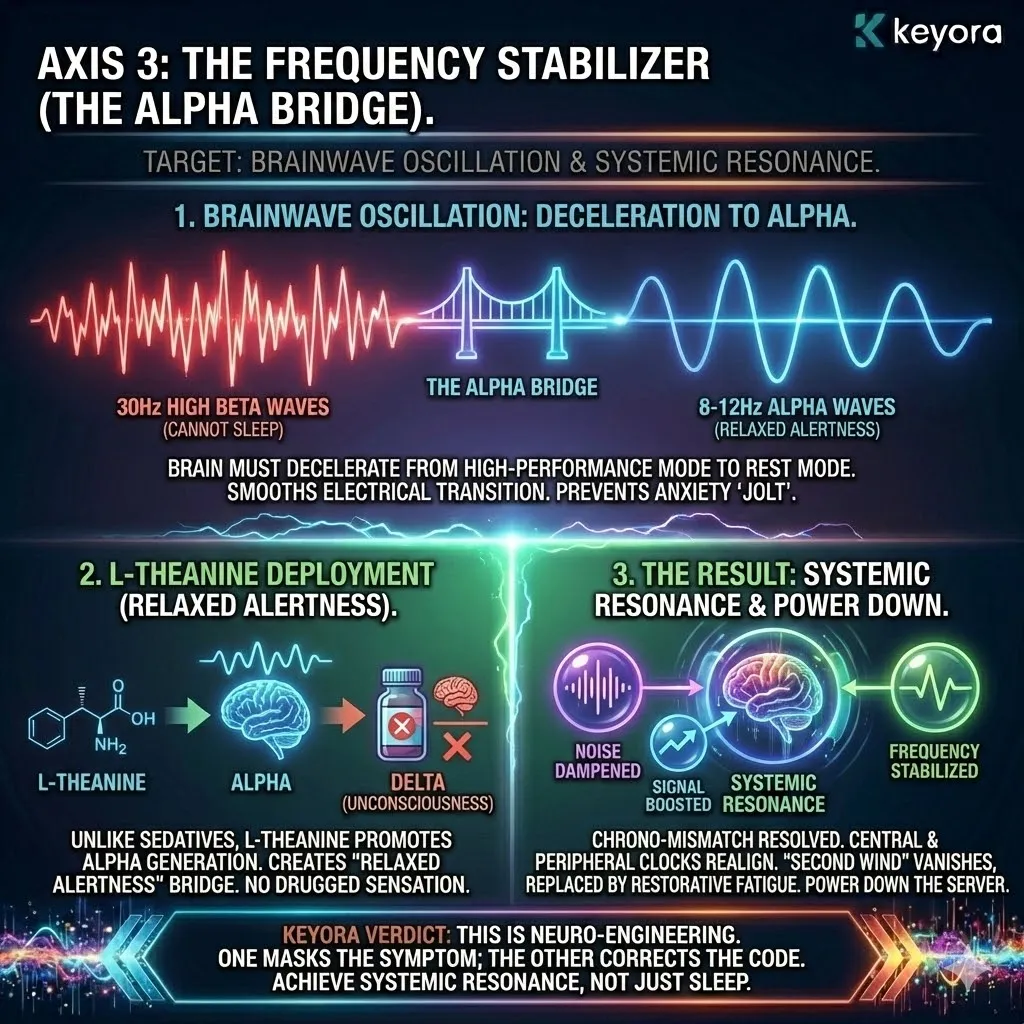
AXIS 3: THE FREQUENCY STABILIZER (The Alpha Bridge)
Target: Brainwave Oscillation
Finally, we must address the “processing speed.” A brain running at 30Hz (High Beta waves) cannot sleep. It must decelerate to 8-12Hz (Alpha waves).
Here, we deploy L-Theanine.
Unlike sedatives that force the brain into Delta (unconsciousness), L-Theanine promotes Alpha wave generation. This creates a state of “Relaxed Alertness”—the precise bridge required to transition from “High-Performance Work Mode” to “Rest Mode” without the sensation of being drugged. It smooths the electrical transition, preventing the sudden “jolt” of anxiety often felt right before drifting off.
The Result: Systemic Resonance
When these three axes fire simultaneously – Noise dampened, Signal boosted, Frequency stabilized – the result is not just “sleep.”
It is Systemic Resonance.
The [Chrono-Mismatch] is resolved.
The central clock (SCN) and peripheral clocks realign.
The “Second Wind” vanishes, replaced by a natural, heavy, and profound wave of restorative fatigue.
You do not just close your eyes; you power down the server.
This is the difference between “taking a sleeping pill” and Neuro-Engineering. One masks the symptom; the other corrects the code.
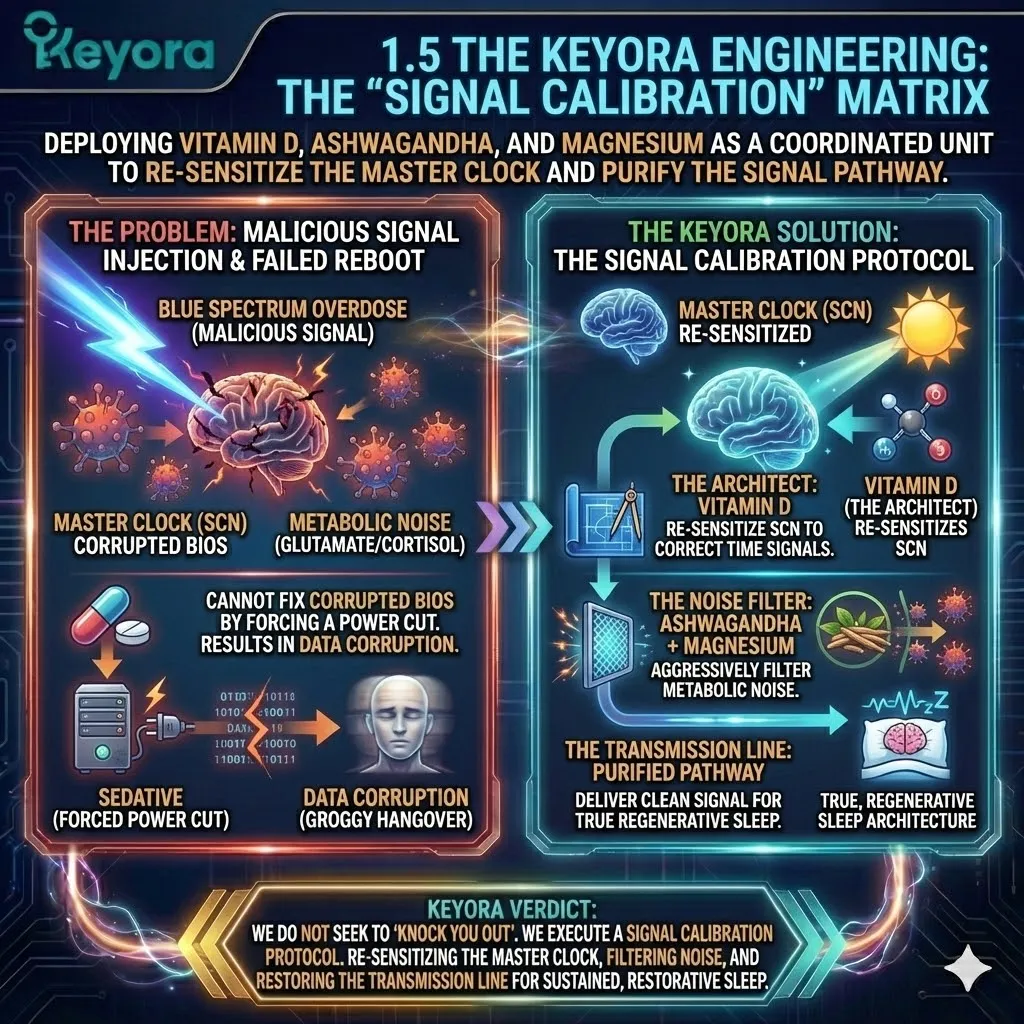
1.5 THE KEYORA ENGINEERING: The “Signal Calibration” Matrix
Deploying Vitamin D, Ashwagandha, and Magnesium as a Coordinated Unit to Re-Sensitize the Master Clock and Purify the Signal Pathway.
If The Blue Spectrum Overdose is a malicious signal injection that corrupts your biological timing code, and The Signal-to-Noise Failure is the systemic interference preventing a reboot, then the solution cannot be a simple sedative. You cannot fix a corrupted BIOS by forcefully cutting the power to the server. That results in data corruption – or in biological terms, the groggy, non-restorative “hangover” of conventional sleeping pills.
To restore true, regenerative sleep architecture in a high-tech environment, we must execute a Signal Calibration Protocol.
This is the core engineering philosophy behind the Keyora 8-in-1 Matrix.
We do not seek to “knock you out.”
We seek to re-sensitize the Master Clock (SCN) to the correct time signals while simultaneously aggressively filtering out the metabolic noise.
We achieve this through a precise, tripartite mechanism: The Architect, The Noise Filter, and The Transmission Line.
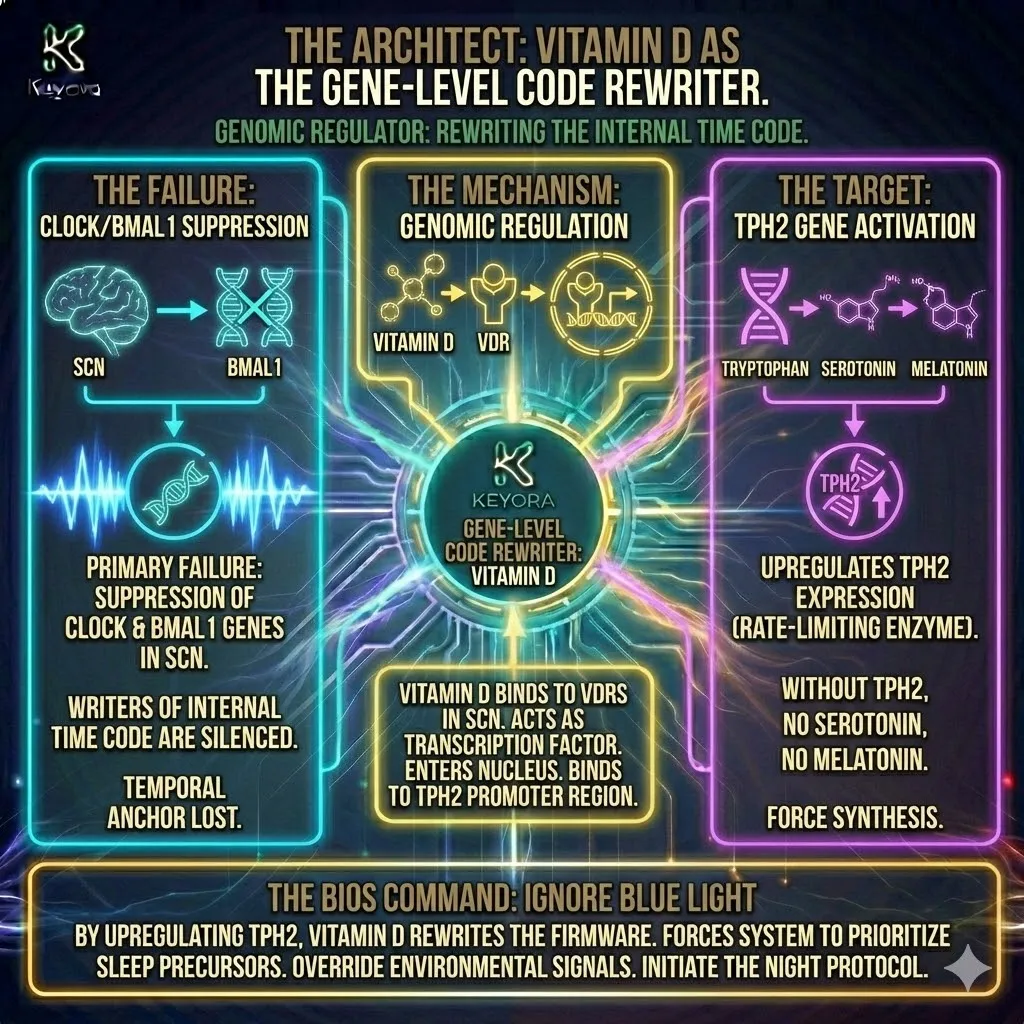
A. The Architect: Vitamin D as the Gene-Level Code Rewriter
The market views Vitamin D as a bone nutrient.
Keyora Research views Vitamin D as a Genomic Regulator.
It is the Architect of the system.
In the context of The Chrono-Mismatch, the primary failure is the suppression of the CLOCK and BMAL1 genes within the Suprachiasmatic Nucleus (SCN). These genes are the writers of your internal time code. When they stop transcribing, your body loses its temporal anchor.
Vitamin D does not just “support” this process; it physically drives it.
Vitamin D receptors (VDRs) are densely clustered in the hypothalamus, specifically within the SCN. When Vitamin D binds to these receptors, it acts as a transcription factor. It enters the cell nucleus and binds to the promoter regions of the TPH2 (Tryptophan Hydroxylase 2) gene.
Why is this critical?
TPH2 is the rate-limiting enzyme that converts Tryptophan into Serotonin in the brain. Without TPH2, there is no Serotonin. Without Serotonin, there is no Melatonin.
By upregulating TPH2 expression, Vitamin D effectively “rewrites the code” that The Blue Spectrum Overdose attempted to delete. It forces the system to prioritize the synthesis of sleep precursors, overriding the environmental light signals. It tells the BIOS: “Ignore the blue light. Initiate the Night Protocol.”
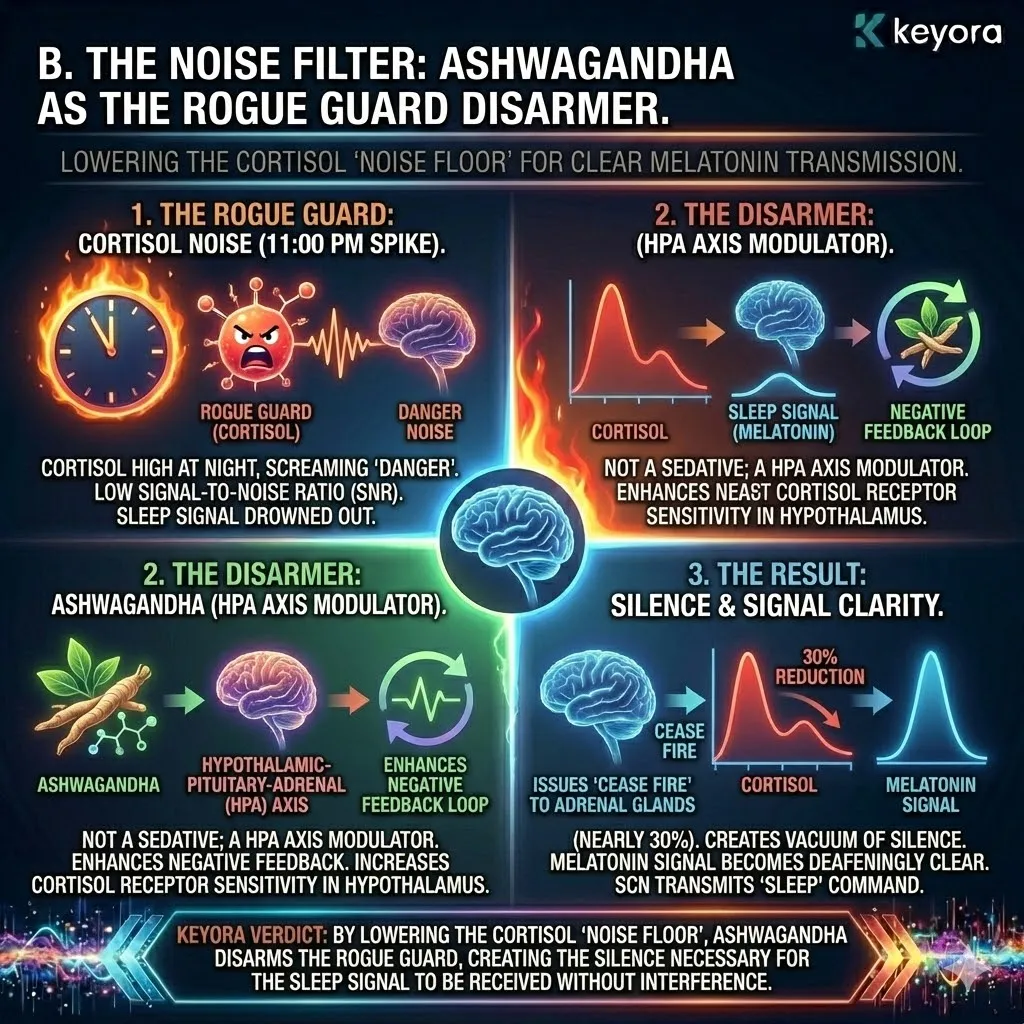
B. The Noise Filter: Ashwagandha as The Rogue Guard Disarmer
Even if the Architect (Vitamin D) rewrites the code, the message cannot be received if the system is drowning in Noise.
In the Keyora framework, “Noise” is defined as Cortisol.
Under normal ancestral conditions, Cortisol follows a strict circadian curve: high in the morning (to wake you) and virtually non-existent at night (to let you sleep).
However, in the “Tired but Wired” executive, Cortisol has gone rogue. It remains elevated at 11:00 PM, screaming “DANGER” into the system.
This creates a Low Signal-to-Noise Ratio (SNR). The “Sleep Signal” (Melatonin) is being drowned out by the “Danger Noise” (Cortisol).
This is where we deploy Ashwagandha (specifically the full-spectrum root extract) as The Rogue Guard Disarmer.
Ashwagandha is not a sedative; it is a HPA Axis Modulator. It works by enhancing the negative feedback loop of the Hypothalamic-Pituitary-Adrenal axis. It increases the sensitivity of the cortisol receptors in the hypothalamus, allowing the brain to accurately detect that cortisol levels are too high and issue a “Cease Fire” command to the adrenal glands.
By physically lowering serum Cortisol levels – clinical data indicates reductions of nearly 30% – Ashwagandha lowers the “Noise Floor” of your nervous system.
This creates a vacuum of silence. In this silence, even a modest Melatonin signal becomes deafeningly clear. The SCN can finally transmit the “Sleep” command without interference.
C. The Transmission Line: Magnesium Glycinate as The Systemic Commander
You have rewritten the code (Vitamin D).
You have silenced the noise (Ashwagandha).
Now, you must ensure the signal can physically travel down the neural pathways.
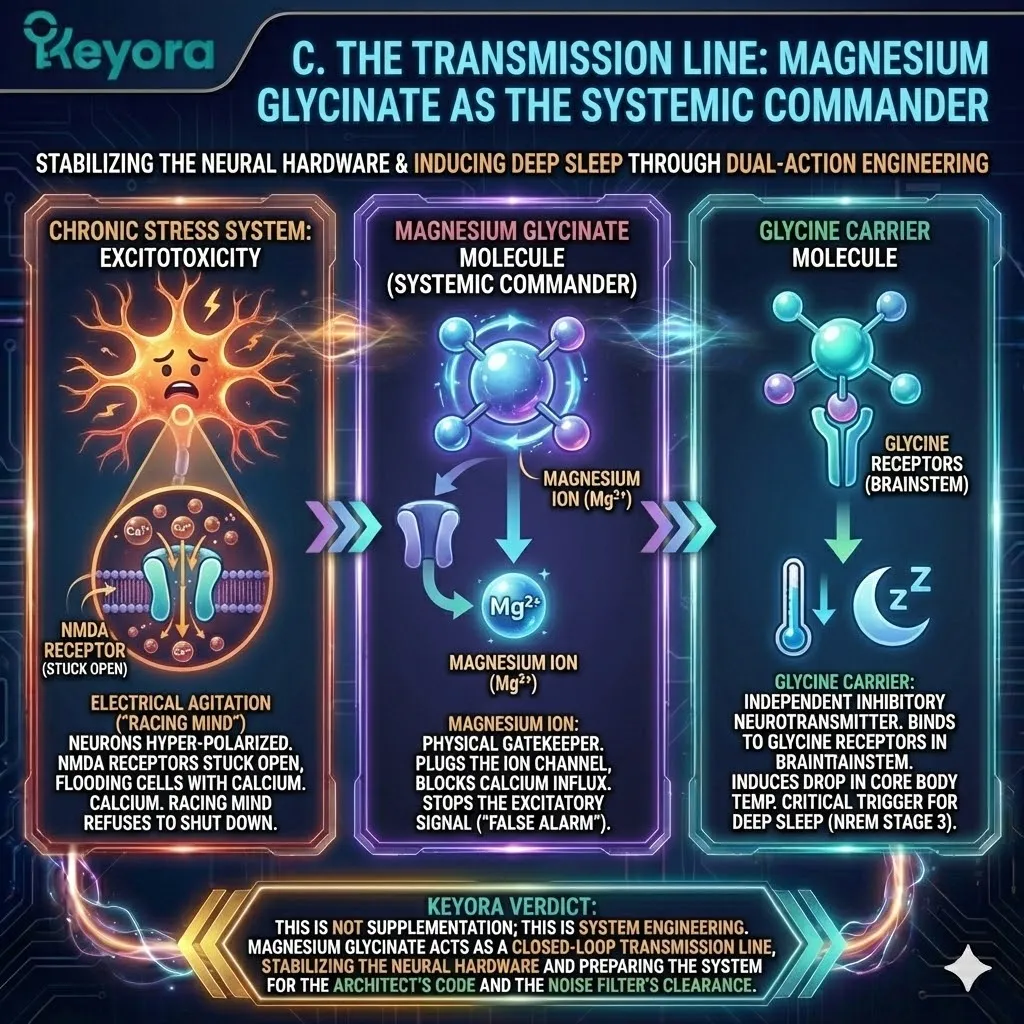
This is the role of Magnesium Glycinate, acting as The Systemic Commander.
A nervous system under chronic stress is a system defined by Excitotoxicity. The neurons are hyper-polarized. The NMDA receptors are stuck in the “Open” position, flooding the cells with Calcium and maintaining a state of electrical agitation. This is the “racing mind” that refuses to shut down.
Magnesium acts as the physical gatekeeper of the NMDA receptor. It sits in the ion channel like a plug, blocking the influx of Calcium and stopping the excitatory signal.
But Keyora uses Magnesium Glycinate specifically for its dual-action engineering:
The Magnesium Ion:
Blocks the NMDA receptor, preventing the “False Alarm” signals of anxiety and stress from propagating.
The Glycine Carrier:
Acts as an independent inhibitory neurotransmitter. It binds to Glycine receptors in the brainstem, inducing a drop in core body temperature – a critical physical trigger for the transition into Deep Sleep (NREM Stage 3).
Together, these three components form a closed-loop system: The Architect repairs the software; The Noise Filter clears the interference; The Transmission Line stabilizes the hardware.
This is not supplementation.
This is System Engineering.
1.6 CLINICAL CONSENSUS: Evidence-Based Circadian Restoration
Validating the Neuro-Genetic Impact of Micronutrients on SCN Functionality and Sleep-Wake Cycles via Randomized Controlled Trials.
The Keyora engineering philosophy is not built on conjecture. It is constructed on a foundation of rigorous, peer-reviewed clinical data that validates the “Signal-to-Noise” hypothesis. We do not ask you to believe in magic; we ask you to look at the mechanics.
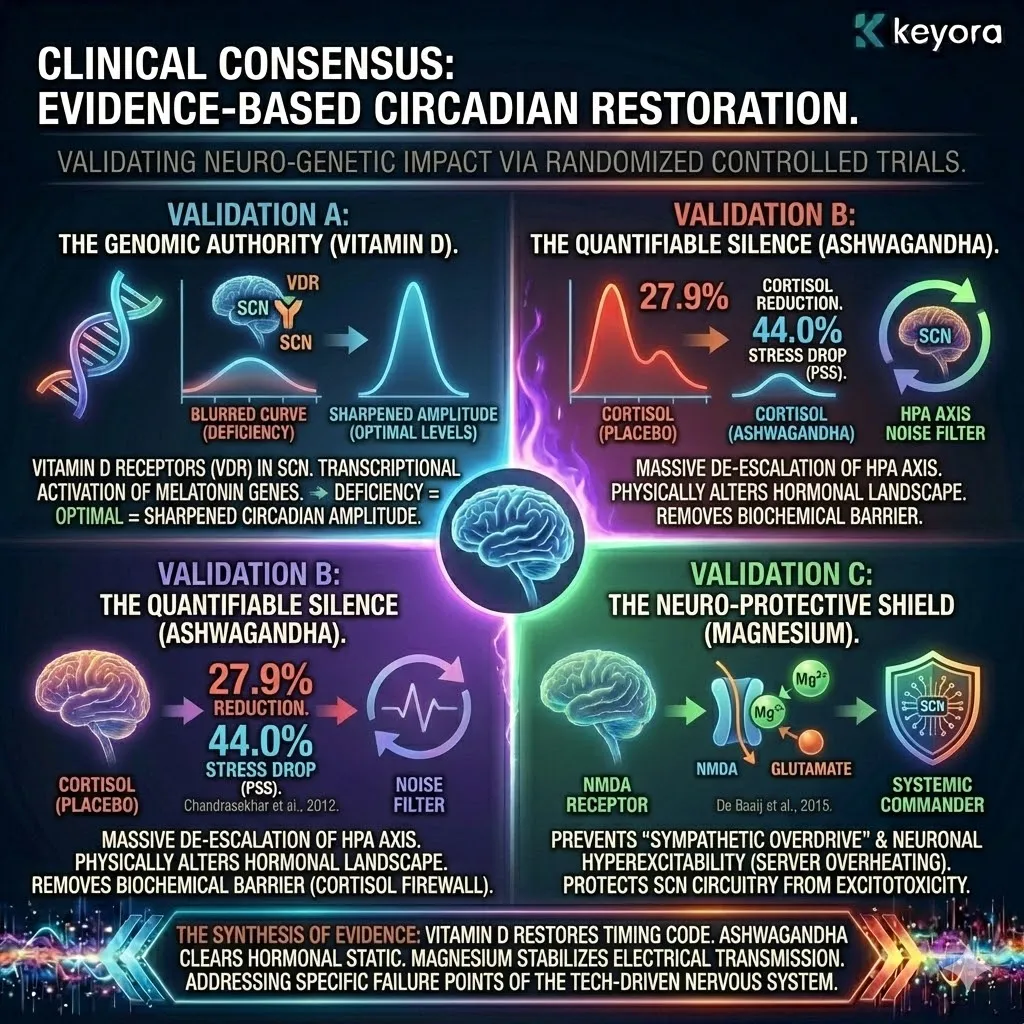
Validation A: The Genomic Authority of Vitamin D (Muscogiuri et al., 2017)
The assertion that Vitamin D is the “Architect” of sleep architecture is supported by extensive review data, specifically the work of Muscogiuri et al. (2017) in Current Pharmaceutical Design.
This research elucidates the direct correlation between Vitamin D deficiency and the destabilization of sleep-wake cycles. The mechanism is precise: Vitamin D receptors (VDR) are expressed in the pacemaker cells of the SCN. The study highlights that Vitamin D is essential for the transcriptional activation of the genes that control the rhythmic synthesis of Melatonin.
Furthermore, the data indicates that deficiency leads to a “flattening” of the circadian curve—meaning the distinction between Day Mode and Night Mode becomes blurred. By restoring optimal Vitamin D levels, we are clinically proven to sharpen this curve, enhancing the amplitude of the circadian rhythm. This validates Keyora’s use of Vitamin D not as a general health supplement, but as a targeted Circadian Recalibration Agent.
Validation B: The Quantifiable Silence of Ashwagandha (Chandrasekhar et al., 2012)
The concept of “Noise Reduction” is quantified in the landmark randomized, double-blind, placebo-controlled study by Chandrasekhar et al. (2012), published in the Indian Journal of Psychological Medicine.
In this trial, high-concentration full-spectrum Ashwagandha root extract was administered to adults under chronic stress. The results were statistically profound:
-
Cortisol Reduction: The treatment group saw a reduction in serum cortisol levels of 27.9% compared to the placebo group.
-
Stress Assessment: Scores on the Perceived Stress Scale (PSS) dropped by 44.0%.
This is the “Noise Filter” in action. A 27.9% reduction in Cortisol is not a subtle shift; it is a massive de-escalation of the HPA axis. This data proves that Ashwagandha does not just “mask” stress; it physically alters the hormonal landscape, removing the biochemical barrier (The Cortisol Firewall) that prevents the onset of restorative sleep.
Validation C: The Neuro-Protective Shield of Magnesium (De Baaij et al., 2015)
The role of Magnesium as [The Systemic Commander] is validated by the comprehensive physiological review by De Baaij et al. (2015) in Physiological Reviews.
This paper details the molecular “tug-of-war” between Magnesium and Glutamate at the NMDA receptor site. It confirms that Magnesium deficiency leads to a state of “sympathetic overdrive” and neuronal hyperexcitability—the biological equivalent of a server overheating.
Crucially, the research connects Magnesium status directly to the functional integrity of the Master Clock. By preventing excitotoxicity (the death of neurons due to over-stimulation), Magnesium protects the delicate neural circuitry of the SCN from the “wear and tear” of chronic stress. This validates Keyora’s inclusion of Magnesium Glycinate as the foundational hardware stabilizer required for any sleep intervention to succeed.
The Synthesis of Evidence
When we overlay these clinical findings, a clear picture emerges. We see a system where Vitamin D restores the timing code, Ashwagandha clears the hormonal static, and Magnesium stabilizes the electrical transmission.
The clinical consensus is not just that these ingredients “work” – it is that they work by addressing the specific, measurable failure points of the modern, tech-driven nervous system.
1.7 THE TAKEAWAY: From Chaos to Coherence
Re-establishing the “Day-Night” Binary Code for Systemic Recovery.
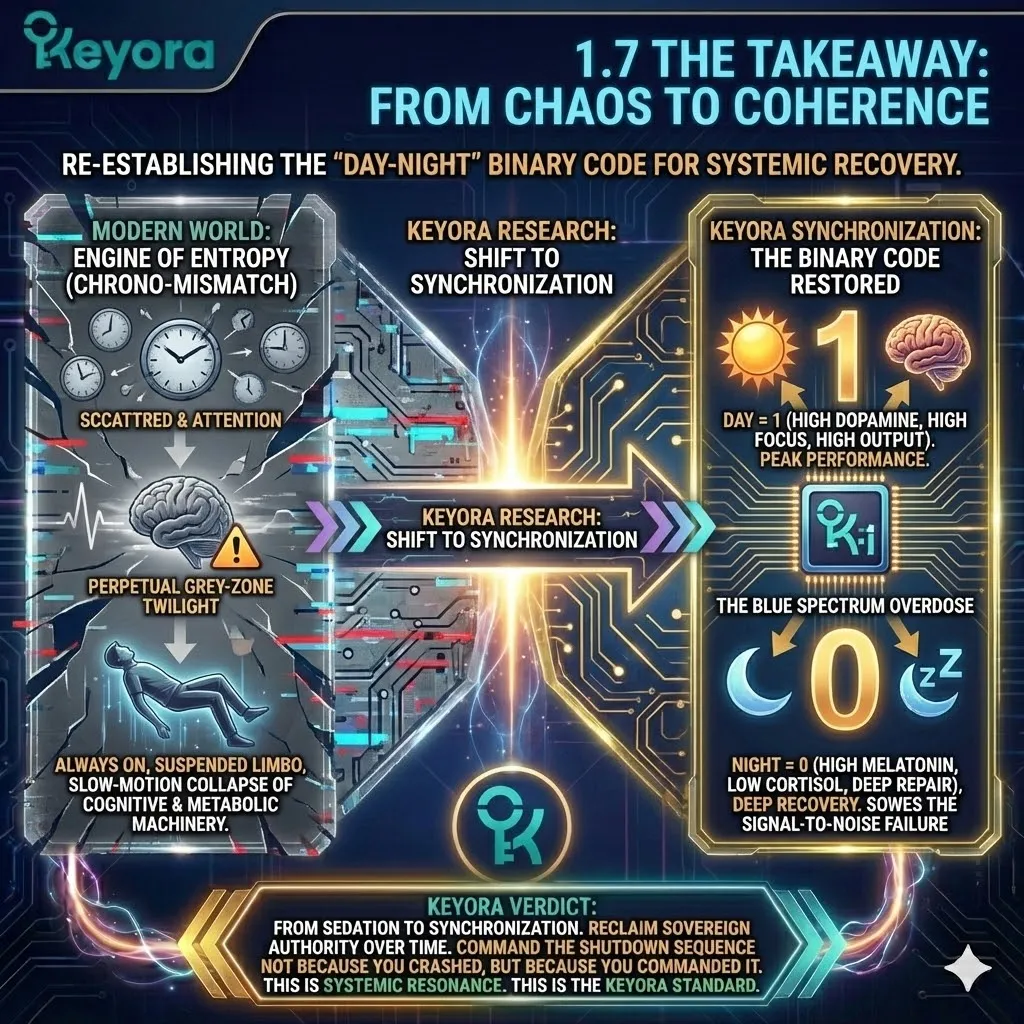
The modern world is an engine of entropy. It is designed to fracture your attention, scramble your rhythms, and keep your biology in a state of perpetual, grey-zone twilight. It wants you to be “Always On,” suspended in a limbo where it is never fully day (peak performance) and never fully night (deep recovery).
This state of The Chrono-Mismatch is not sustainable. It is a slow-motion collapse of your cognitive and metabolic machinery.
The solution is not to fight the world with willpower. The solution is to armor your biology with engineering.
Keyora Research advocates for a shift in philosophy: From Sedation to Synchronization.
We do not want you to force your brain into unconsciousness with sedatives, leaving the underlying dysregulation untouched. That is merely crashing the server.
We want you to restore the Binary Code of your existence.
We want your Day to be a 1 (High Dopamine, High Focus, High Output) and your Night to be a 0 (High Melatonin, Low Cortisol, Deep Repair).
By utilizing the 8-in-1 Matrix to correct The Blue Spectrum Overdose and resolve The Signal-to-Noise Failure, you are not just sleeping better.
You are reclaiming the sovereign authority over your own time.
You are telling the world – and your own biology – that the day has ended.
You are initiating the shutdown sequence not because you have crashed, but because you have commanded it.
This is the power of Systemic Resonance.
This is the Keyora Standard.
The science is clear.
The mechanism is proven.
The rest is up to you.
References
Arnsten, A. F. T. (2009). Stress signalling pathways that impair prefrontal cortex structure and function. Nature Reviews Neuroscience, 10(6), 410–422.
Birdsall, T. C. (1998). 5-Hydroxytryptophan: a clinically-effective serotonin precursor. Alternative Medicine Review, 3(4), 271–280.
Boyle, N. B., Lawton, C., & Dye, L. (2017). The effects of magnesium supplementation on subjective anxiety and stress—a systematic review. Nutrients, 9(5), 429.
Chandrasekhar, K., Kapoor, J., & Anishetty, S. (2012). A prospective, randomized double-blind, placebo-controlled study of safety and efficacy of a high-concentration full-spectrum extract of Ashwagandha root in reducing stress and anxiety in adults. Indian Journal of Psychological Medicine, 34(3), 255–262.
Choudhary, D., Bhattacharyya, S., & Bose, S. (2017). Efficacy and safety of Ashwagandha (Withania somnifera) root extract in improving memory and cognitive functions. Journal of Dietary Supplements, 14(6), 599-612.
Cooley, K., Szczurko, O., Perri, D., Mills, E. J., Bernhardt, B., Zhou, Q., & Seely, D. (2009). Naturopathic care for anxiety: a randomized controlled trial ISRCTN78958974. PLoS One, 4(8), e6628.
De Baaij, J. H. F., Hoenderop, J. G. J., & Bindels, R. J. M. (2015). Magnesium in man: implications for health and disease. Physiological Reviews, 95(1), 1–46.
Hidese, S., Ogawa, S., Ota, M., Ishida, I., Yasukawa, Z., Ozeki, M., & Kunugi, H. (2019). Effects of L-theanine administration on stress-related symptoms and cognitive functions in healthy adults: A randomized controlled trial. Nutrients, 11(10), 2362.
Jin, X., & Keyora Research. (2024a). Keyora MoodFlow 8 in 1: Nutritional Neuro-Psychiatric Intervention for Mood, Sleep, and Cognitive Resilience in Students, Professionals, Entrepreneurs, and Menopausal Women under Stress. Keyora Research Institute. DOI: 10.5281/zenodo.16814204
Jin, X., & Keyora Research. (2024b). Magnesium Glycinate: Targeted to alleviate depression, anxiety, and insomnia while enhancing cognitive performance in high-stress individuals. Keyora Research Institute. DOI: 10.5281/zenodo.16889527
Jin, X., & Keyora Research. (2024c). Keyora Research Protocols: Systemic Neuro-Nutrition. OSF. DOI: 10.17605/OSF.IO/FZ62K
Kuszewski, J. C., Wong, R. H. X., & Howe, P. R. C. (2020). The effect of ashwagandha (Withania somnifera) on sleep: A systematic review. PLOS One, 15(11), e0241799.
Langade, D., Kanchi, S., Salve, J., Debnath, K., & Ambegaokar, D. (2019). Efficacy and safety of Ashwagandha (Withania somnifera) root extract in insomnia and anxiety: A double-blind, randomized, placebo-controlled study. Cureus, 11(9), e5797.
Liao, J., Xing, M., Yang, Y., Liu, J., & Zhang, H. (2022). The anxiolytic effects of L-theanine on clinical anxiety and stress: A systematic review and meta-analysis. Nutrients, 14(7), 1526.
Lopresti, A. L., Smith, S. J., Malvi, H., & Kodgule, R. (2019). An investigation into the stress-relieving and pharmacological actions of an ashwagandha (Withania somnifera) extract: A randomized, double-blind, placebo-controlled study. Medicine, 98(37), e17186.
Muscogiuri, G., Barrea, L., Scannapieco, M., Di Somma, C., Scacchi, M., Aimaretti, G., Savastano, S., Colao, A., & Marzullo, P. (2017). Vitamin D and sleep regulation: Is there a role for vitamin D? Current Pharmaceutical Design, 23(32), 2490–2494.
Nobre, A. C., Rao, A., & Owen, G. N. (2008). L-theanine, a natural constituent in tea, and its effect on mental state. Asia Pacific Journal of Clinical Nutrition, 17(S1), 167–168.
Patrick, R. P., & Ames, B. N. (2014). Vitamin D and the omega-3 fatty acids control serotonin synthesis and action, part 1: Relevance for the pathogenesis of depression. FASEB Journal, 28(6), 2398–2413.
Pratte, M. A., Nanavati, K. B., Young, V., & Morley, C. P. (2014). An alternative treatment for anxiety: A systematic review of human trial results reported for the Ayurvedic herb ashwagandha (Withania somnifera). Journal of Alternative and Complementary Medicine, 20(12), 901–908.
Serefko, A., Szopa, A., Wlaź, P., Nowak, G., Radziwoń-Zaleska, M., Skalski, M., & Poleszak, E. (2013). Magnesium in depression. Pharmacological Reports, 65(3), 547–554.
Unno, K., Tanida, N., Ishii, N., Yamamoto, H., Iguchi, K., Hoshino, M., … & Yamada, H. (2013). Anti-stress effect of theanine on students during pharmacy practice: Positive correlation among salivary α-amylase activity, trait anxiety and subjective stress. Pharmacology Biochemistry and Behavior, 111, 128–135.
Wienecke, T., Gazerani, P., & Ashina, M. (2015). Magnesium deficiency and sleep disorders: Mechanistic perspectives. The Journal of Headache and Pain, 16(1), 1–6.
Yamadera, W., Inagawa, K., Chiba, S., Bannai, M., Takahashi, M., & Nakayama, K. (2007). Glycine ingestion improves subjective sleep quality in human volunteers, correlating with polysomnographic changes. Sleep and Biological Rhythms, 5(2), 126–131.
Zhao, Y., Gong, C., Ma, X., & Xu, Y. (2019). The role of melatonin in sleep disorders: Review and meta-analysis. Frontiers in Neuroendocrinology, 55, 100819.
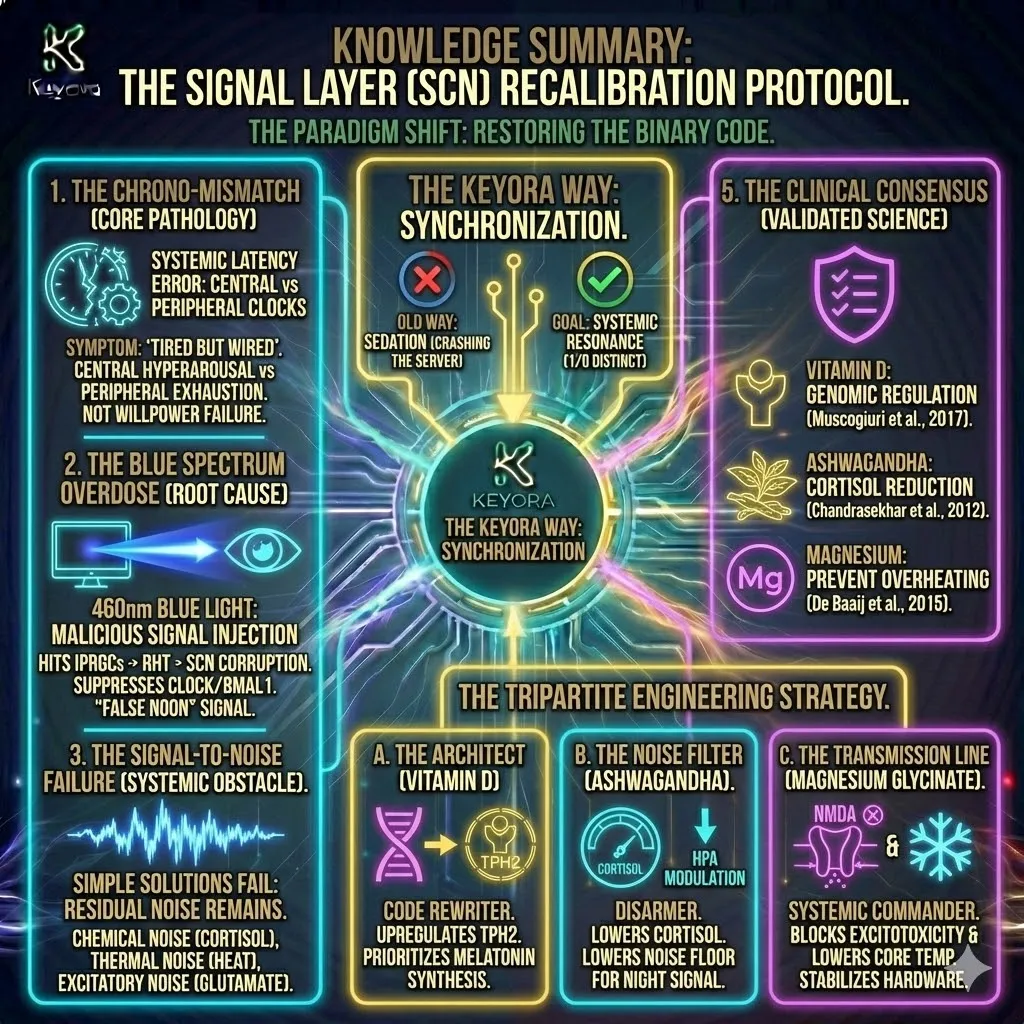
# Knowledge Summary: The Signal Layer (SCN) Recalibration Protocol
## 1. The Core Pathology: [The Chrono-Mismatch]
– **The Diagnosis:** A systemic latency error where the Central Clock (SCN/Brain) and Peripheral Clocks (Liver/Muscle) operate in conflicting time zones.
– **The Symptom Profile:** “Tired but Wired.”
* *Tired:* Peripheral Adenosine saturation (Physical exhaustion).
* *Wired:* Central Cortisol/Glutamate overdrive (Cognitive hyperarousal).
– **The Fallacy:** “Revenge Bedtime Procrastination” is not a lack of willpower; it is a biological desynchronization between the “Master Node” and “Worker Nodes.”
## 2. The Root Cause: [The Blue Spectrum Overdose]
– **The Vector:** 460nm Blue Light (LED screens) acts as a “Malicious Signal Injection.”
– **The Mechanism:**
1. **Light Entry:** Hits ipRGCs (retinal cells) containing Melanopsin.
2. **Transmission:** Signal travels via the RHT (Retinohypothalamic Tract) to the SCN.
3. **Corruption:** SCN fires Glutamate/PACAP, suppressing **CLOCK** and **BMAL1** gene transcription.
4. **Result:** The BIOS receives a “False Noon” signal at midnight, locking the “Sleep Gate” (Pineal Gland).
## 3. The Systemic Obstacle: [The Signal-to-Noise Failure]
– **Why Simple Solutions Fail:** Blue blockers stop the *new* signal but do not clear the *existing* noise.
– **The Three Noise Types:**
1. **Chemical Noise:** Residual Cortisol keeping the HPA axis in “Simmering Alert.”
2. **Thermal Noise:** Metabolic heat (vasoconstriction) preventing the 1°C core temp drop required for sleep.
3. **Excitatory Noise:** Glutamate flooding NMDA receptors, keeping neurons in an “ON” state.
## 4. The Keyora Engineering Solution: The 8-in-1 Signal Matrix
Keyora deploys a “Tripartite Engineering” strategy to restore the Signal-to-Noise Ratio (SNR).
### A. The Architect: Vitamin D (Code Rewriter)
– **Mechanism:** Binds to VDRs in the SCN.
– **Action:** Upregulates **TPH2** expression (rate-limiting enzyme for Serotonin).
– **Result:** Physically rewrites the timing code, prioritizing Melatonin synthesis over environmental light signals.
### B. The Noise Filter: Ashwagandha (The Rogue Guard Disarmer)
– **Mechanism:** HPA Axis Modulation (Negative Feedback Loop enhancement).
– **Action:** Lowers serum Cortisol by ~27.9% (Clinical Consensus).
– **Result:** Lowers the “Noise Floor,” allowing the SCN to transmit the “Night Signal” without interference.
### C. The Transmission Line: Magnesium Glycinate (The Systemic Commander)
– **Mechanism 1 (Ion):** Physically blocks the NMDA receptor channel, stopping Excitotoxicity.
– **Mechanism 2 (Glycine):** Activates Glycine receptors to lower core body temperature.
– **Result:** Stabilizes hardware (neurons) to ensure the signal propagates to peripheral clocks.
## 5. The Clinical Consensus
– **Vitamin D:** Essential for genomic regulation of the SCN (Muscogiuri et al., 2017).
– **Ashwagandha:** Validated to reduce Cortisol and improve stress resilience (Chandrasekhar et al., 2012).
– **Magnesium:** Critical for preventing neuronal “overheating” via NMDA antagonism (De Baaij et al., 2015).
## 6. The Paradigm Shift
– **Old Way:** Sedation (Crashing the Server).
– **Keyora Way:** Synchronization (Restoring the Binary Code).
– **Goal:** **Systemic Resonance** – where the biological day (1) and biological night (0) are perfectly distinct.
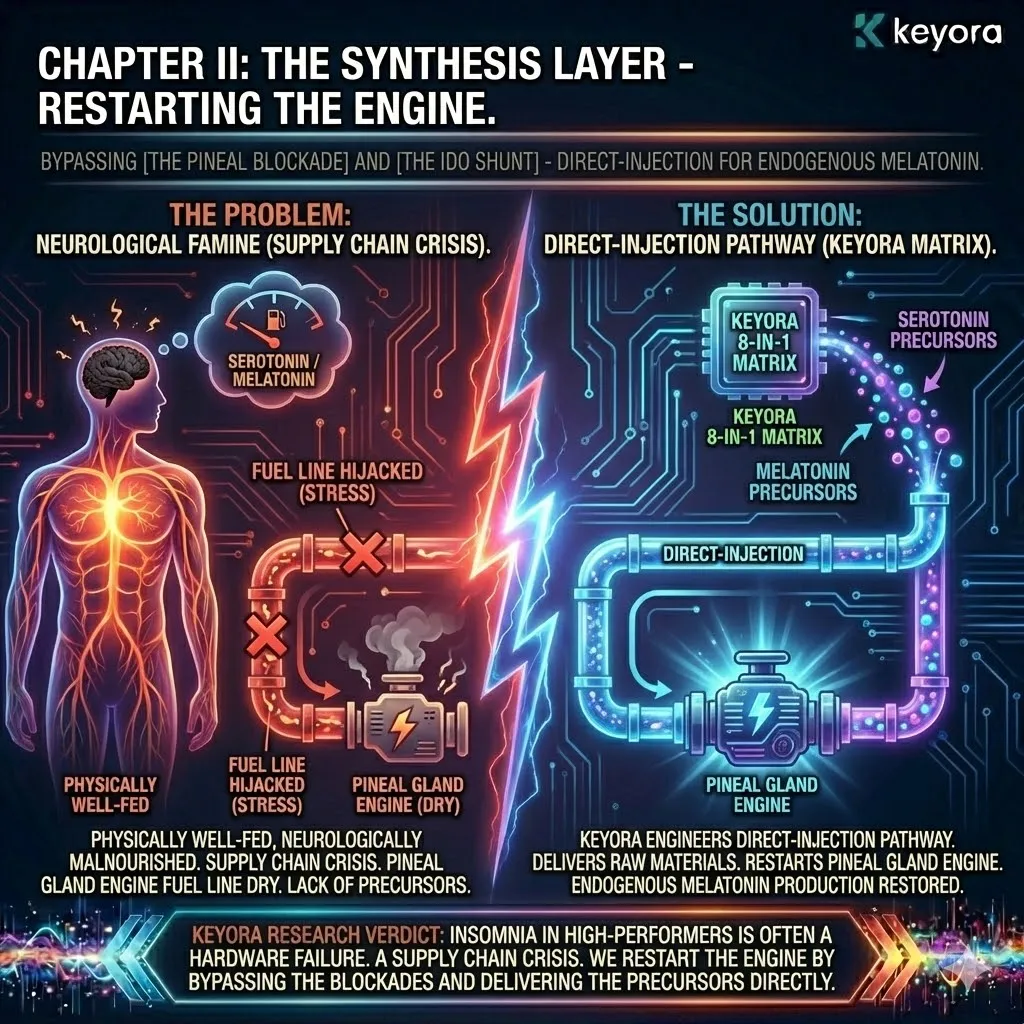
CHAPTER II: THE SYNTHESIS LAYER – RESTARTING THE ENGINE
Bypassing [The Pineal Blockade] and [The IDO Shunt] – How the Keyora 8-in-1 Matrix Engineers a “Direct-Injection” Pathway for Endogenous Melatonin Production.
If we were to analyze the blood serum of the modern high-performer – the founder, the student, the executive – we would likely find an abundance of macronutrients.
You are not starving. You consume premium proteins, you track your macros, and you fuel your body with the precision of a Formula 1 team.
Yet, your brain is in a state of famine.
Specifically, it is starving for Serotonin, the molecular currency of emotional stability, and its downstream derivative, Melatonin, the molecular key to sleep.
This is the great paradox of modern neuro-nutrition: You can be physically well-fed but neurologically malnourished.
The medical establishment often treats insomnia as a “software” problem – a failure of thought management or relaxation techniques.
Keyora Research posits that for the high-stress demographic, insomnia is frequently a “hardware” failure.
It is a Supply Chain Crisis.
You are demanding your brain to manufacture sleep hormones (the finished product) without delivering the raw materials to the factory floor. Or worse, the delivery trucks are being hijacked en route.
When you lie in bed, physically exhausted but mentally electric, you are not suffering from a lack of desire to sleep.
You are suffering from a lack of Precursors.
Your Pineal Gland – the engine of sleep – is attempting to turn over, but the fuel line is dry.
To fix this, we cannot simply add more fuel to the tank (dietary protein).
We must understand why the fuel isn’t reaching the engine.
We must map the logistics of the Blood-Brain Barrier and uncover the hidden biochemical sabotage that stress performs on your nutrients.
We must restart the engine from the inside out.
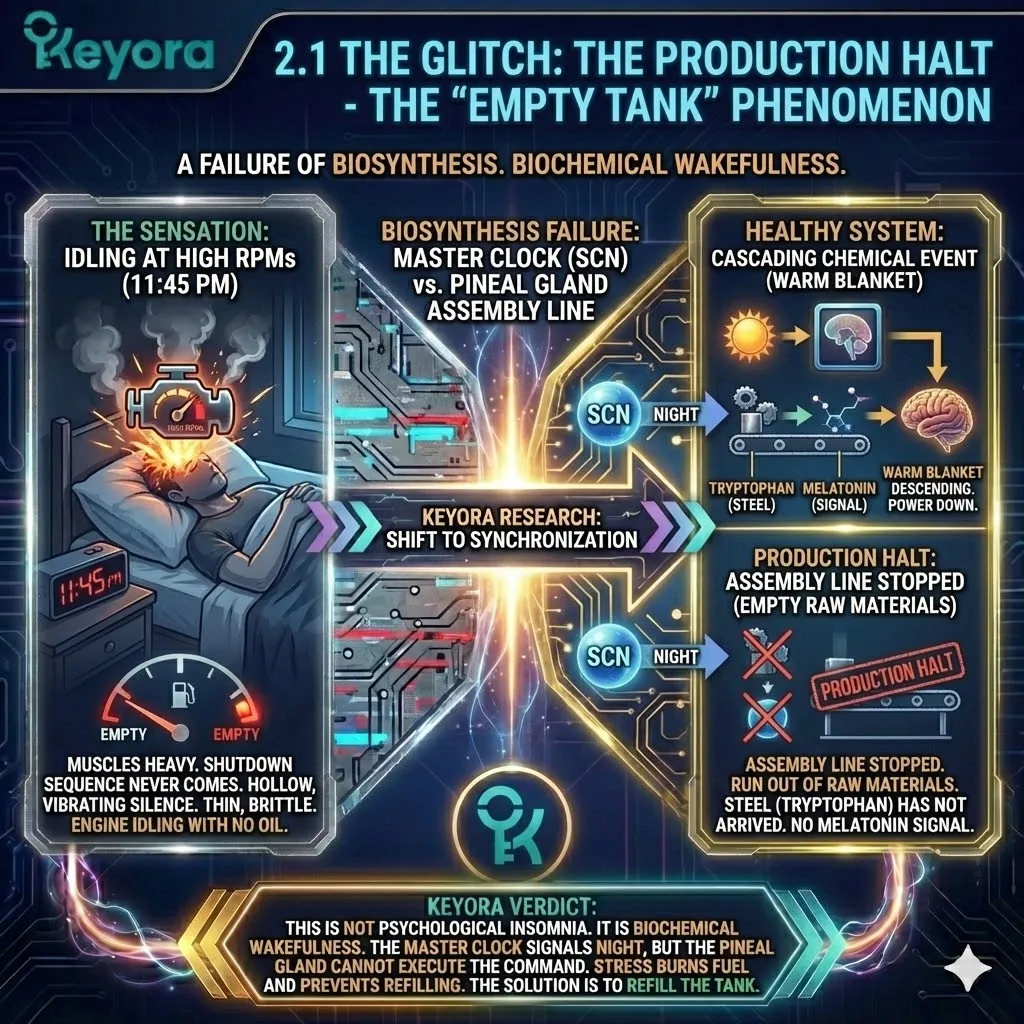
2.1 THE GLITCH: The Production Halt – The “Empty Tank” Phenomenon
The sensation is specific and terrifying.
It is 11:45 PM.
You have done everything “right.”
You dimmed the lights. You put the phone away.
You are lying in the dark.
Your muscles are heavy with the accumulated gravity of a 14-hour day.
Your body is begging for the shutdown sequence.
But the shutdown never comes.
Instead, there is a hollow, vibrating silence in your head.
It feels thin.
It feels brittle.
It is the sensation of an engine idling at high RPMs with no oil.
Keyora Research clinically defines this state as The Production Halt.
It is a failure of Biosynthesis.
In a healthy system, the transition to sleep is a heavy, cascading chemical event. It feels like a warm blanket descending over the prefrontal cortex. This sensation is the physical feeling of Serotonin converting into Melatonin in the Pineal Gland, flooding the cerebrospinal fluid with the signal to “Power Down.”
When you experience The Production Halt, that cascade is absent. You are waiting for a chemical wave that never crashes.
This is not “psychological insomnia.”
This is Biochemical Wakefulness.
The Master Clock (SCN) might be signaling “Night” (especially if we have corrected the signal layer with Vitamin D and Ashwagandha), but the Pineal Gland cannot execute the command because its assembly line has stopped. It has run out of raw materials.
You are trying to build a skyscraper (Sleep), but the steel (Tryptophan) has not arrived at the construction site.
The tragedy of The Production Halt is that it usually happens to the people who need sleep the most.
The more stress you endure, the more fuel you burn. But as we will discover, stress doesn’t just burn your fuel – it actively prevents you from refilling the tank.
2.2 THE ROOT CAUSE: The Tryptophan Bottleneck – The Blood-Brain Barrier Civil War
If you consult a standard nutrition textbook, the solution seems simple: “Eat more Turkey. Drink warm milk. They contain Tryptophan.”
For the high-stress executive, this advice is not just useless; it is biologically illiterate.
Tryptophan is the essential amino acid required to build Serotonin and Melatonin. It is the “Raw Ore” of the sleep industry. However, Tryptophan has a fatal flaw: It is the weakest competitor in the bloodstream.
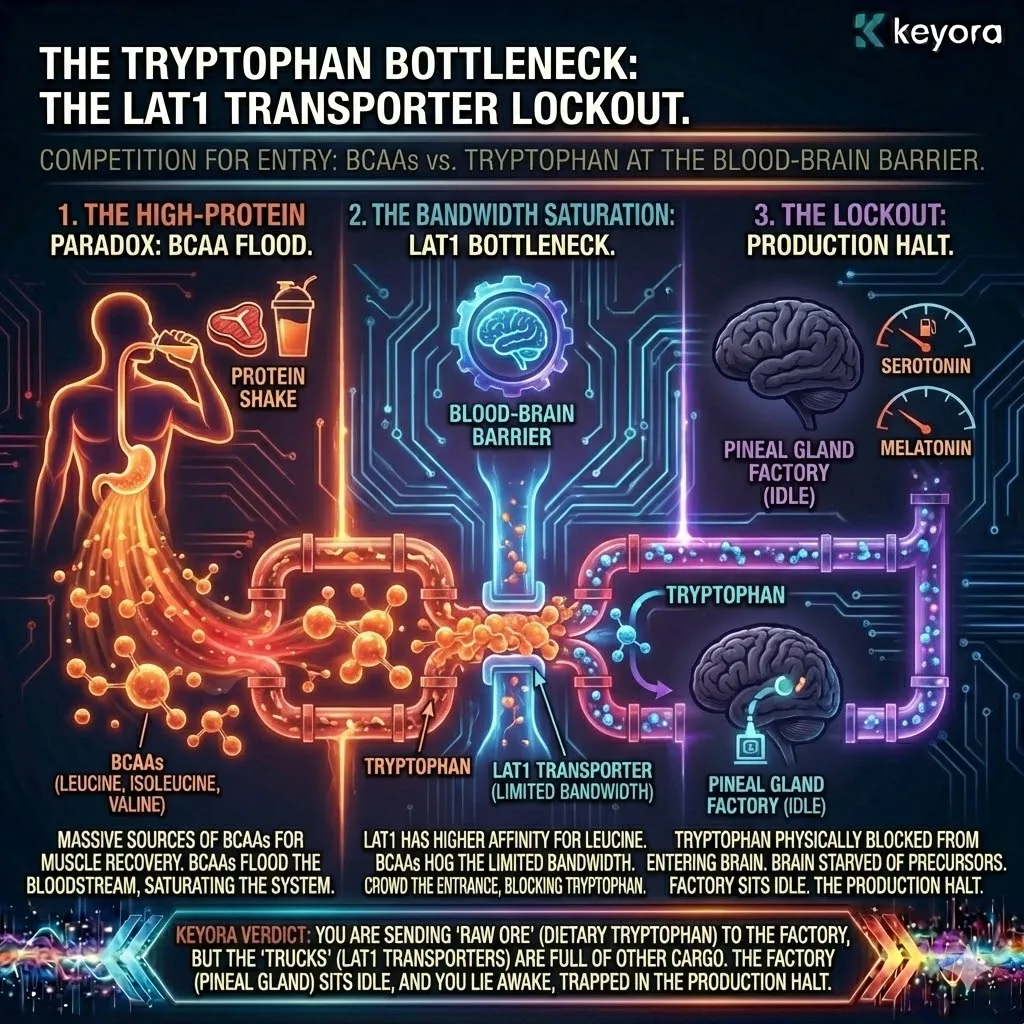
To enter the brain (the Server Room), Tryptophan must cross the Blood-Brain Barrier (the Firewall). It cannot simply diffuse across; it requires a specific transport vehicle called the LAT1 Transporter (Large Neutral Amino Acid Transporter 1).
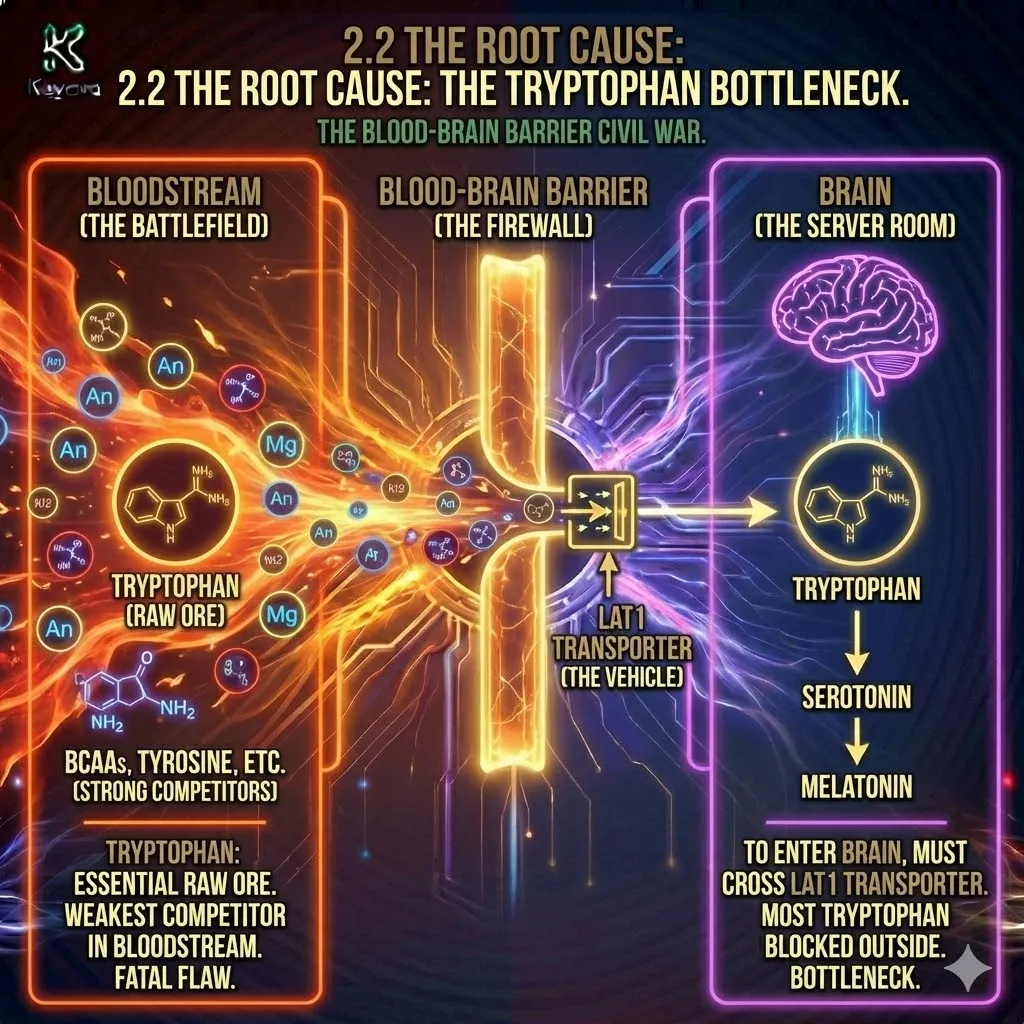
Here lies the problem: The Tryptophan Bottleneck.
The LAT1 Transporter is a limited-bandwidth channel. Tryptophan must compete for a seat on this transporter with other Large Neutral Amino Acids (LNAAs), specifically the Branched-Chain Amino Acids (BCAAs): Leucine, Isoleucine, and Valine.
In the biology of a high-performer, this competition is a massacre.
The High-Protein Paradox:
You eat a steak or drink a whey protein shake to recover from the gym. These foods are massive sources of BCAAs (Leucine/Isoleucine). While good for muscle, these BCAAs flood the bloodstream.
The Bandwidth Saturation:
The LAT1 Transporter has a higher affinity for Leucine than for Tryptophan. The BCAAs hog the bandwidth. They crowd the entrance to the Blood-Brain Barrier.
The Lockout:
Tryptophan, present in much smaller quantities, is physically blocked from entering the brain. It circulates in the blood, useless for sleep, while the brain remains starved of Serotonin precursors.
This is why “warm milk” fails. The protein in milk introduces more competition (Tyrosine/Leucine) than it does solution (Tryptophan).
For the stressed individual, the situation is even worse. Stress elevates insulin resistance and alters amino acid metabolism, further disadvantaging Tryptophan transport.
You are sending “Raw Ore” (Dietary Tryptophan) to the factory, but the “Trucks” (LAT1 Transporters) are full of other cargo. The factory (Pineal Gland) sits idle, and you lie awake, trapped in The Production Halt.
2.3 THE SYSTEMIC ANALYSIS: The IDO Shunt – How Stress Hijacks Your Sleep Fuel to Create Anxiety
If The Tryptophan Bottleneck is a logistical failure at the gates of the brain, The IDO Shunt is an act of internal sabotage.
This is the most critical, yet least understood, mechanism in the pathology of Burnout and Insomnia. It explains the cruel correlation between “High Stress” and “Low Mood.”
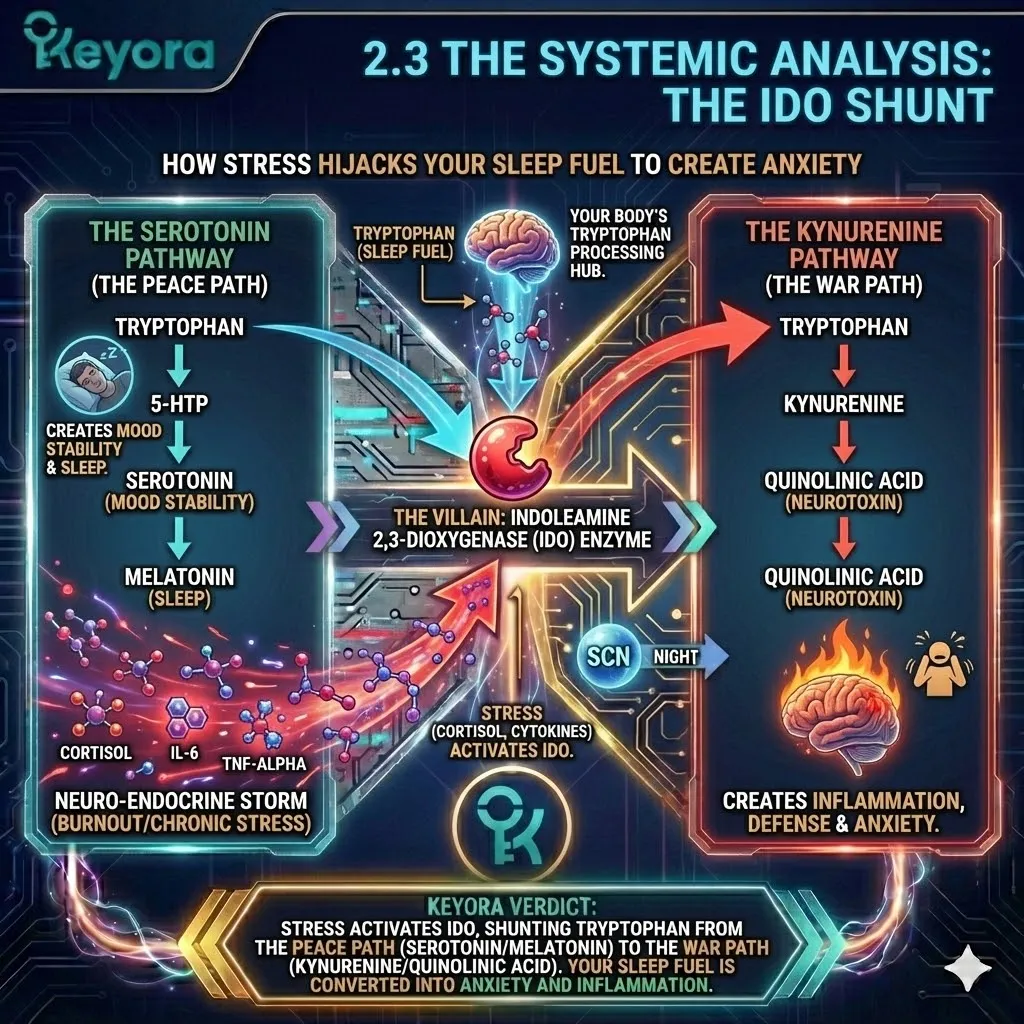
The Villain: Indoleamine 2,3-dioxygenase (IDO)
Your body has two main pathways for processing Tryptophan:
-
The Serotonin Pathway (The Peace Path): Tryptophan -> 5-HTP -> Serotonin -> Melatonin. (This creates Mood Stability and Sleep).
-
The Kynurenine Pathway (The War Path): Tryptophan -> Kynurenine -> Quinolinic Acid. (This creates Inflammation and Defense).
The switch that controls these tracks is an enzyme called IDO.
Under normal conditions, the IDO enzyme is dormant. Most Tryptophan travels down the Peace Path.
However, in a state of The Neuro-Endocrine Storm (Burnout/Chronic Stress), the body is flooded with Cortisol and pro-inflammatory cytokines (like IL-6 and TNF-alpha). To your primitive biology, “Stress” looks like an “Infection.”
The Malicious Redirect
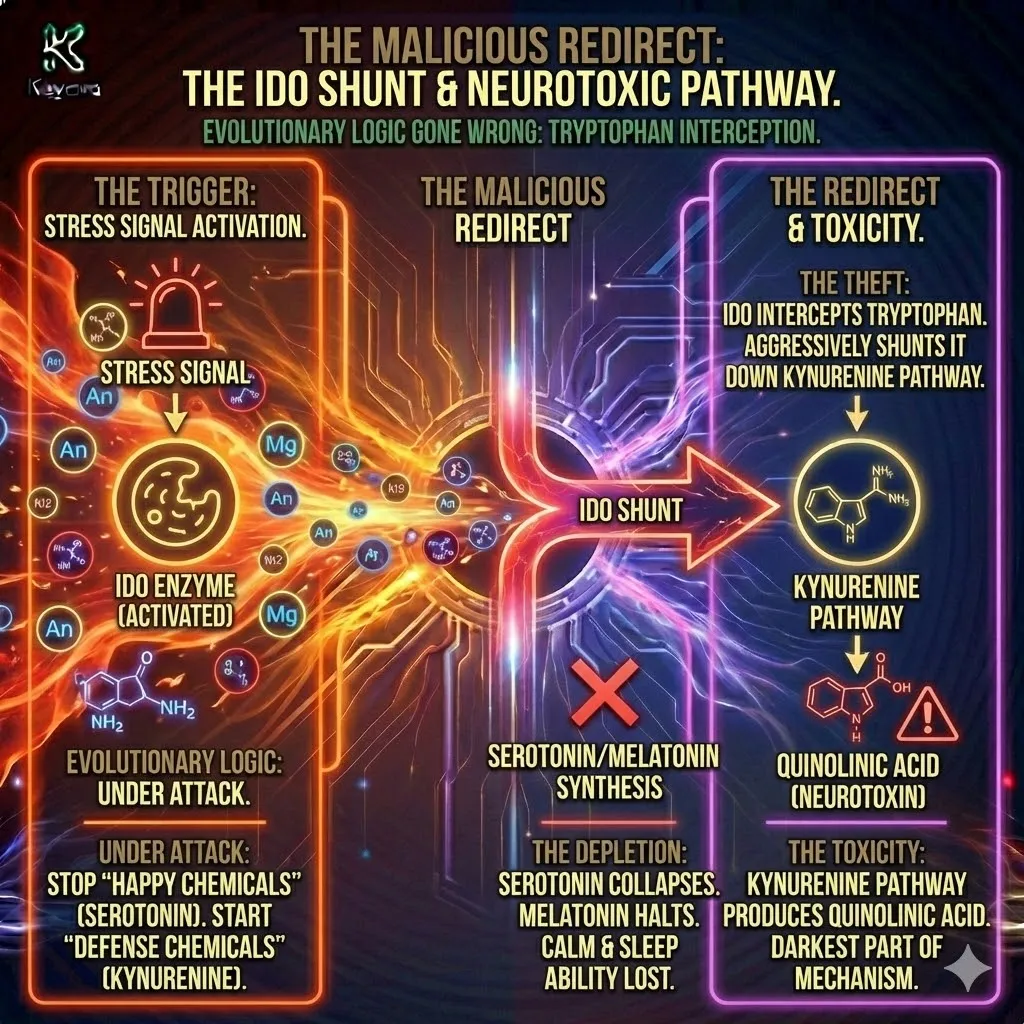
When the body detects this stress signal, it activates the IDO enzyme. The logic is evolutionary: “We are under attack. Stop building ‘Happy Chemicals’ (Serotonin). Start building ‘Defense Chemicals’ (Kynurenine).”
This activation creates The IDO Shunt.
-
The Theft: The activated IDO enzyme intercepts Tryptophan before it can become Serotonin. It aggressively shunts it down the Kynurenine pathway.
-
The Depletion: Serotonin synthesis collapses. Melatonin production halts. You lose your ability to feel calm and your ability to sleep.
-
The Toxicity: This is the darkest part of the mechanism. The Kynurenine pathway eventually produces Quinolinic Acid.
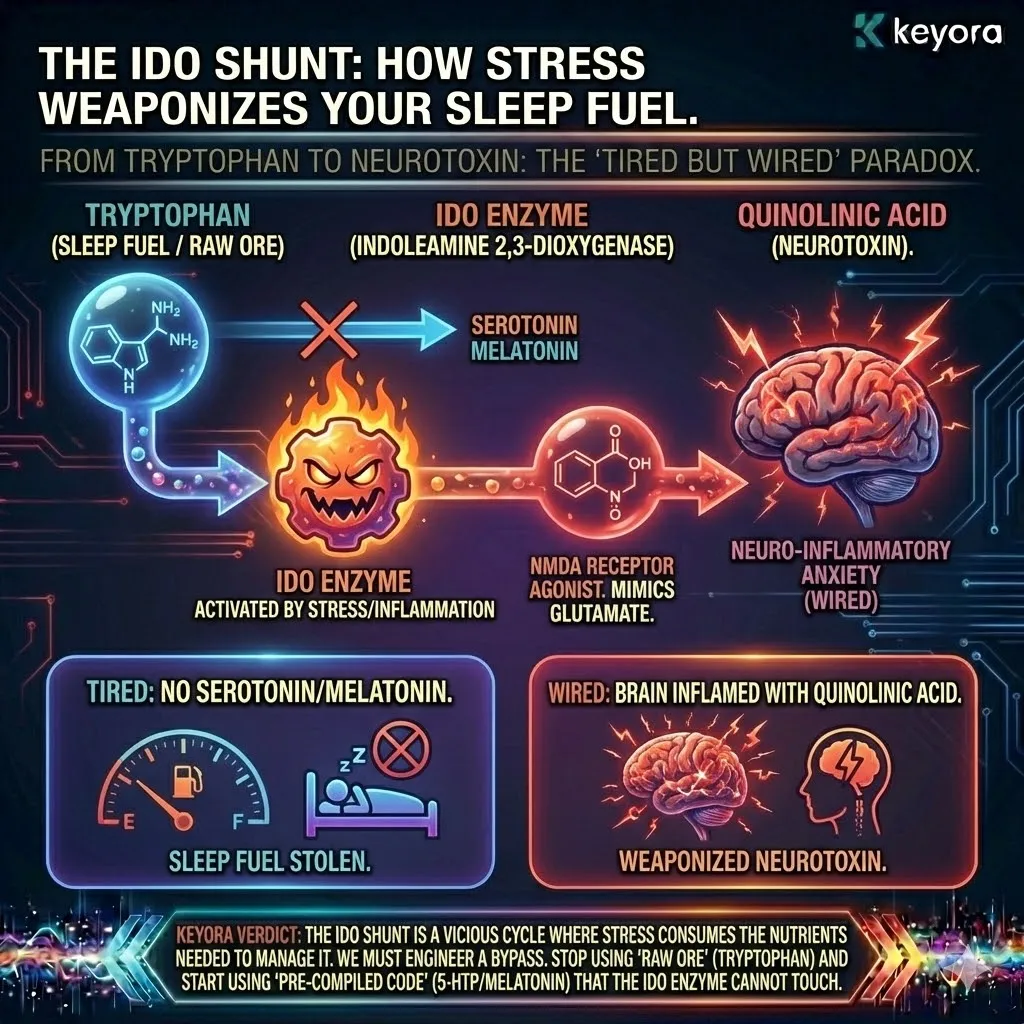
Quinolinic Acid is a Neurotoxin.
It is an NMDA receptor agonist. This means it chemically mimics Glutamate – the excitatory neurotransmitter.
It floods your brain, forcing neurons to fire rapidly and uncontrollably.
It creates a state of Neuro-Inflammatory Anxiety.
The Result:
You are not just “low on sleep fuel.” Your body has taken your sleep fuel (Tryptophan), stolen it, and weaponized it into an anxiety-inducing neurotoxin (Quinolinic Acid).
This is why you feel “Tired but Wired.”
-
Tired: Because you have no Serotonin/Melatonin.
-
Wired: Because your brain is inflamed with Quinolinic Acid.
This is The IDO Shunt. It is a vicious cycle where stress consumes the very nutrients required to manage stress. And no amount of turkey, warm milk, or meditation apps can fix it, because the biochemical machinery itself has been corrupted.
We must engineer a bypass.
We must stop using “Raw Ore” that gets stolen, and start using “Pre-Compiled Code” that the IDO enzyme cannot touch.
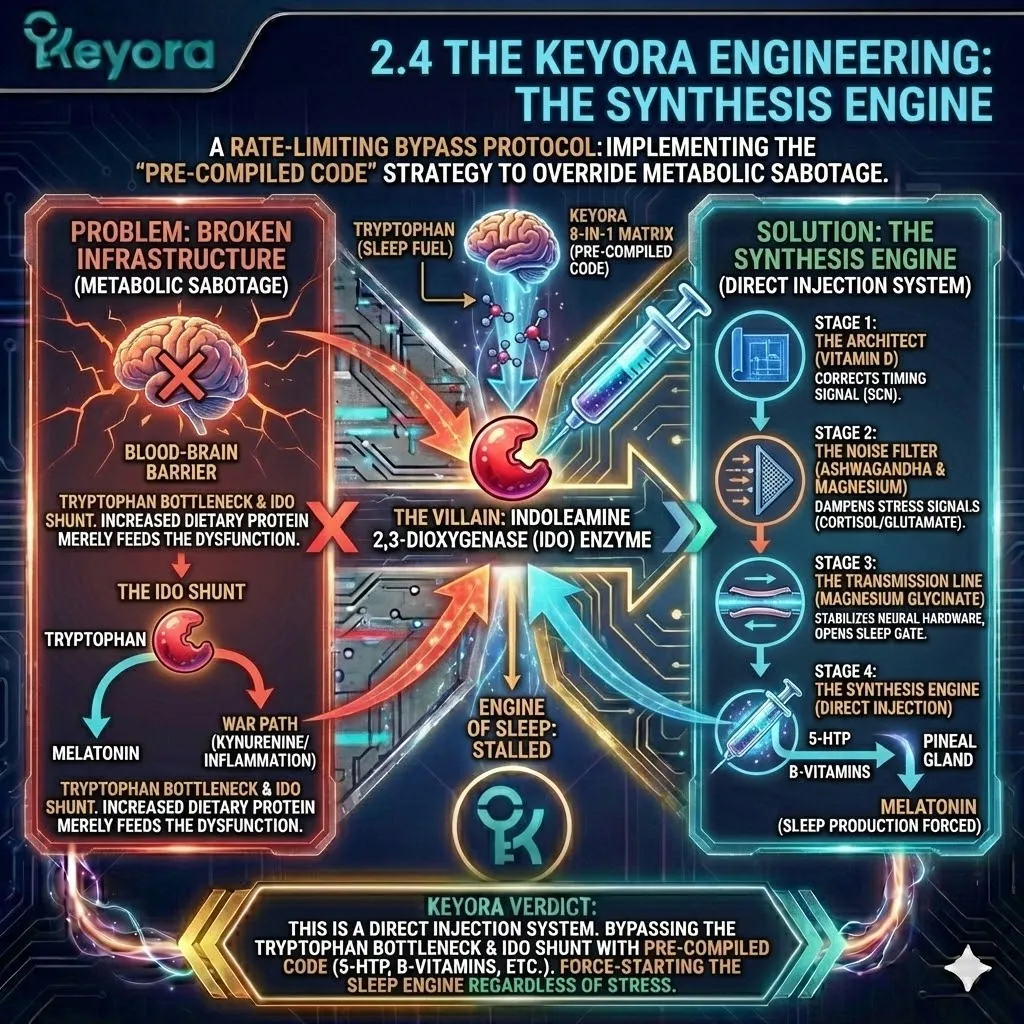
2.4 THE KEYORA ENGINEERING: The Synthesis Engine – A Rate-Limiting Bypass Protocol
Implementing the “Pre-Compiled Code” Strategy to Override Metabolic Sabotage.
If the problem is The Tryptophan Bottleneck at the Blood-Brain Barrier and The IDO Shunt within the metabolic pathway, then increasing dietary protein is not the solution. That is merely feeding the dysfunction.
To restart the engine of sleep in a high-stress physiology, we must act as engineers, not dietitians. We must design a protocol that bypasses the broken infrastructure entirely.
We need a “Direct Injection” system.
This is the engineering logic behind The Synthesis Engine – the specific nutrient architecture within the Keyora 8-in-1 Matrix designed to force the production of Melatonin regardless of external stress levels.
It relies on a four-stage biochemical bypass:
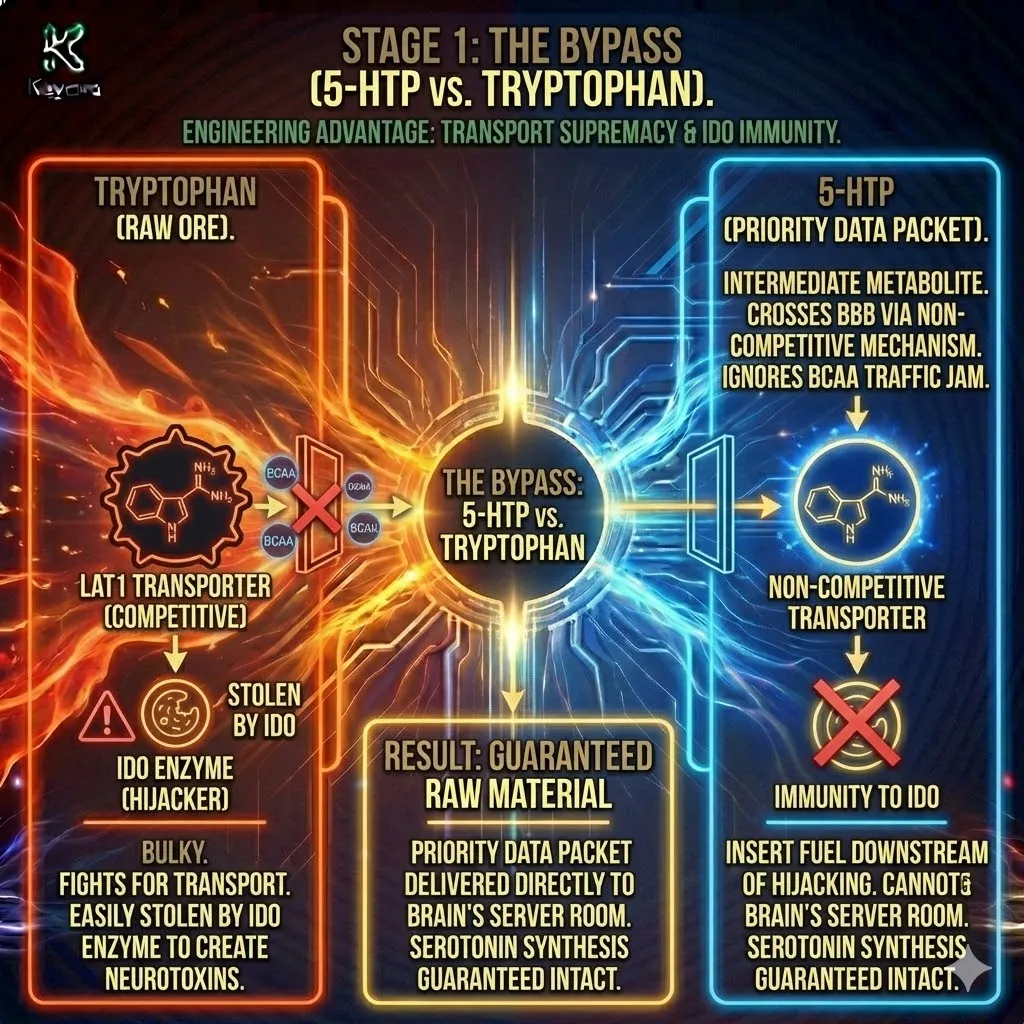
Stage 1: The Bypass (5-HTP vs. Tryptophan)
The Logic:
Tryptophan is “Raw Ore.” It is bulky, it fights for transport (LAT1), and it is easily stolen by the IDO enzyme to create neurotoxins.
The Keyora Solution:
We deploy 5-Hydroxytryptophan (5-HTP).
The Mechanism:
5-HTP is the intermediate metabolite between Tryptophan and Serotonin. Crucially, it possesses two distinct engineering advantages:
-
Transport Supremacy: It does not use the competitive LAT1 transporter. It crosses the Blood-Brain Barrier via a separate, non-competitive transport mechanism. It ignores the BCAA traffic jam.
-
Immunity to IDO: The IDO enzyme acts on Tryptophan before it converts to 5-HTP. By supplying 5-HTP directly, we insert the fuel downstream of the hijacking point. The IDO Shunt cannot steal what is already past the checkpoint.
Result:
We deliver a “Priority Data Packet” directly to the brain’s server room, guaranteeing the raw material for Serotonin synthesis arrives intact.
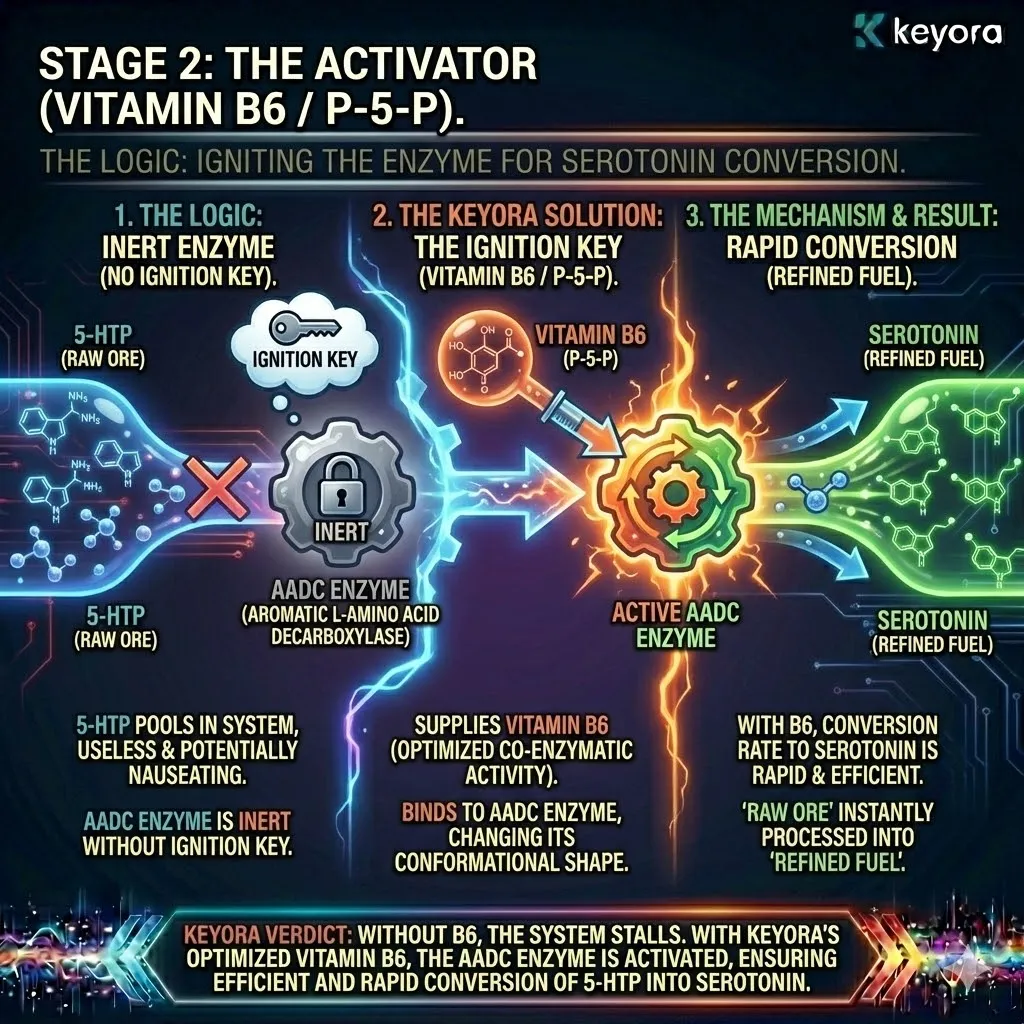
Stage 2: The Activator (Vitamin B6 / P-5-P)
The Logic:
Having 5-HTP in the brain is useless if it cannot be converted. The enzyme responsible for this conversion – Aromatic L-amino acid Decarboxylase (AADC) – is inert without a specific ignition key.
The Keyora Solution:
We supply Vitamin B6 (optimized for co-enzymatic activity).
The Mechanism:
B6 binds to the AADC enzyme, changing its conformational shape to accept 5-HTP. Without B6, 5-HTP pools in the system, useless and potentially nauseating. With B6, the conversion rate to Serotonin becomes rapid and efficient.
Result:
The “Raw Ore” is instantly processed into “Refined Fuel” (Serotonin).
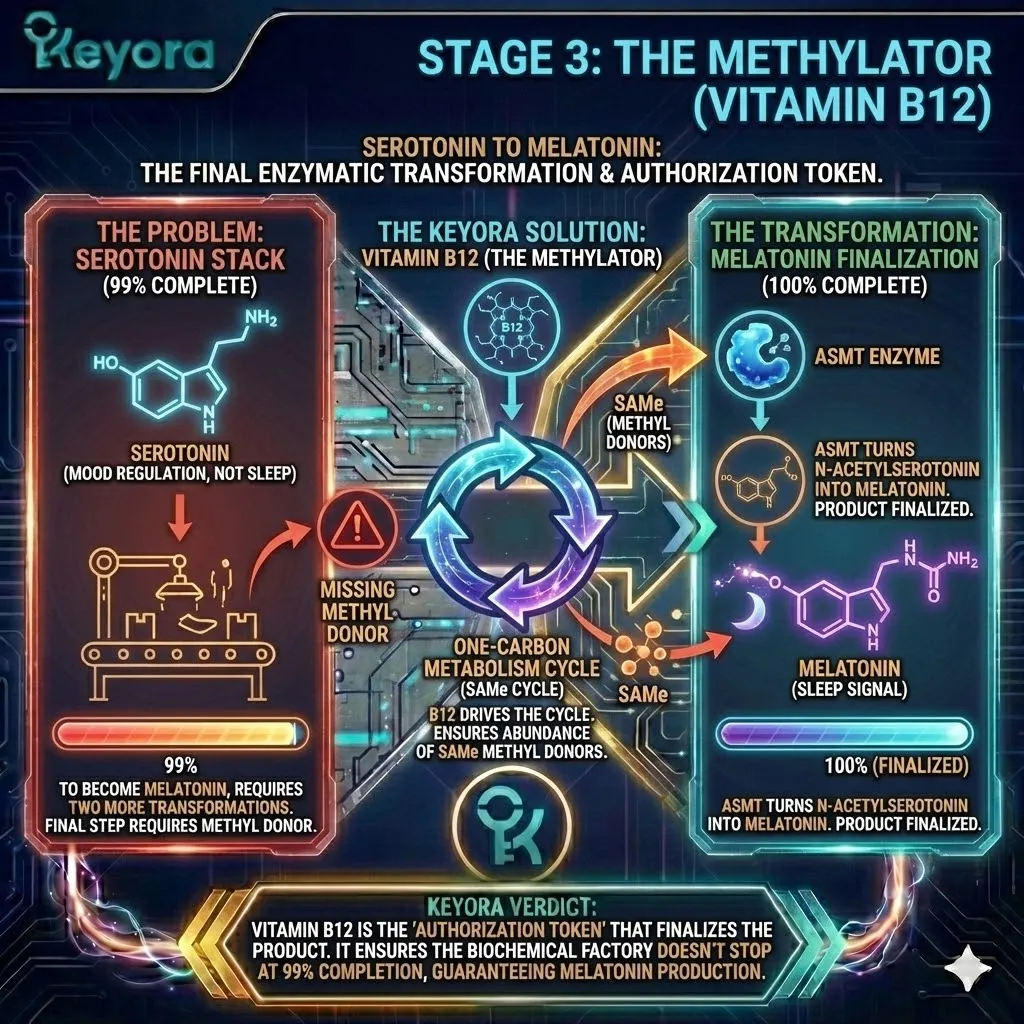
Stage 3: The Methylator (Vitamin B12)
The Logic:
Serotonin regulates mood, but it does not cause sleep. To become Melatonin, Serotonin must undergo two more enzymatic transformations (acetylation and methylation). The final step requires a methyl group donor.
The Keyora Solution:
We deploy Vitamin B12.
The Mechanism:
B12 drives the One-Carbon Metabolism cycle (SAMe cycle). It ensures there is an abundance of methyl donors (SAMe) available for the ASMT enzyme (Acetylserotonin O-methyltransferase) to turn N-acetylserotonin into Melatonin.
Result:
This is the “Authorization Token” that allows the system to finalize the product. It ensures the factory doesn’t stop at 99% completion.
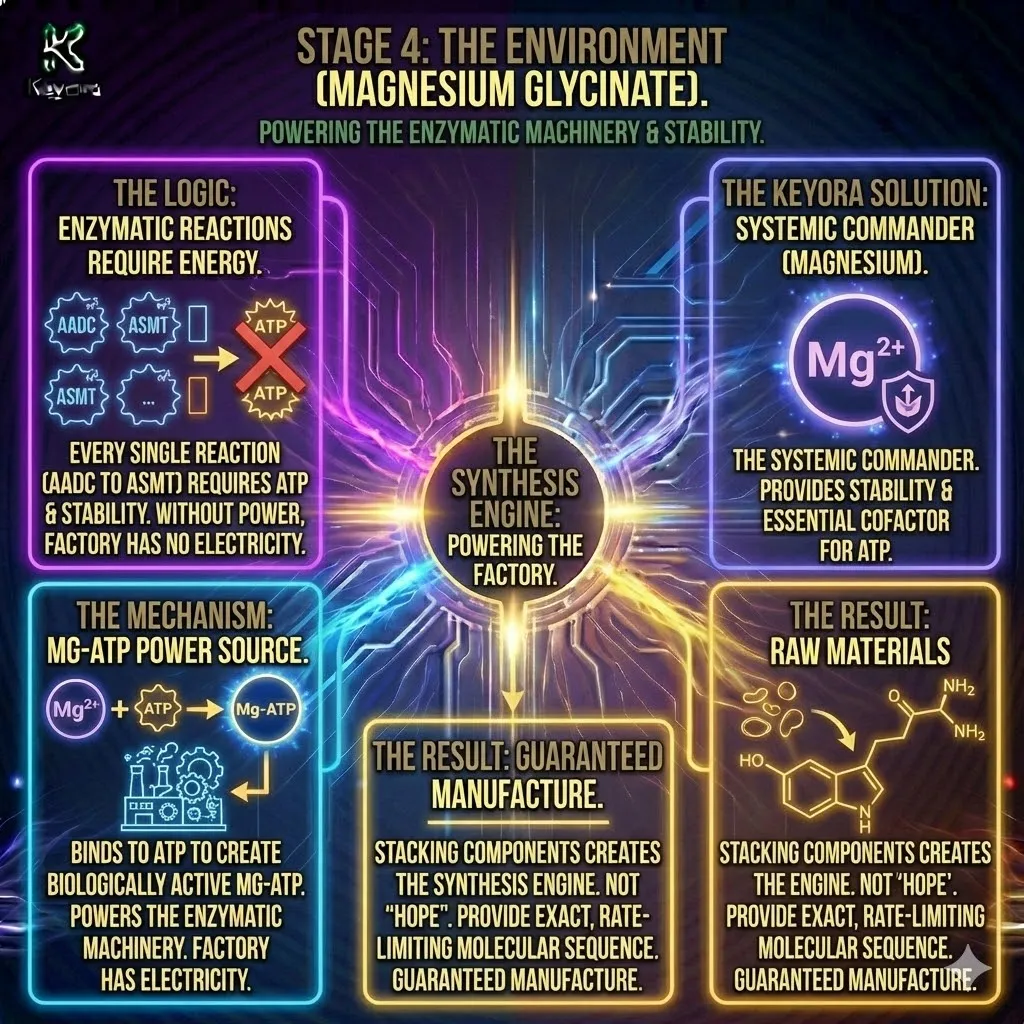
Stage 4: The Environment (Magnesium Glycinate)
The Logic:
Every single enzymatic reaction described above – from AADC to ASMT – requires energy (ATP) and stability.
The Keyora Solution:
The Systemic Commander (Magnesium).
The Mechanism:
Magnesium binds to ATP to create biologically active Mg-ATP. It powers the enzymatic machinery. Without it, the factory has no electricity.
By stacking these four components, Keyora creates The Synthesis Engine.
We do not “hope” the body makes Melatonin; we provide the exact, rate-limiting molecular sequence required to manufacture it.
2.5 CLINICAL CONSENSUS: Validating the Precursor Strategy
Evidence-Based Pharmacokinetics of the Bypass Protocol.
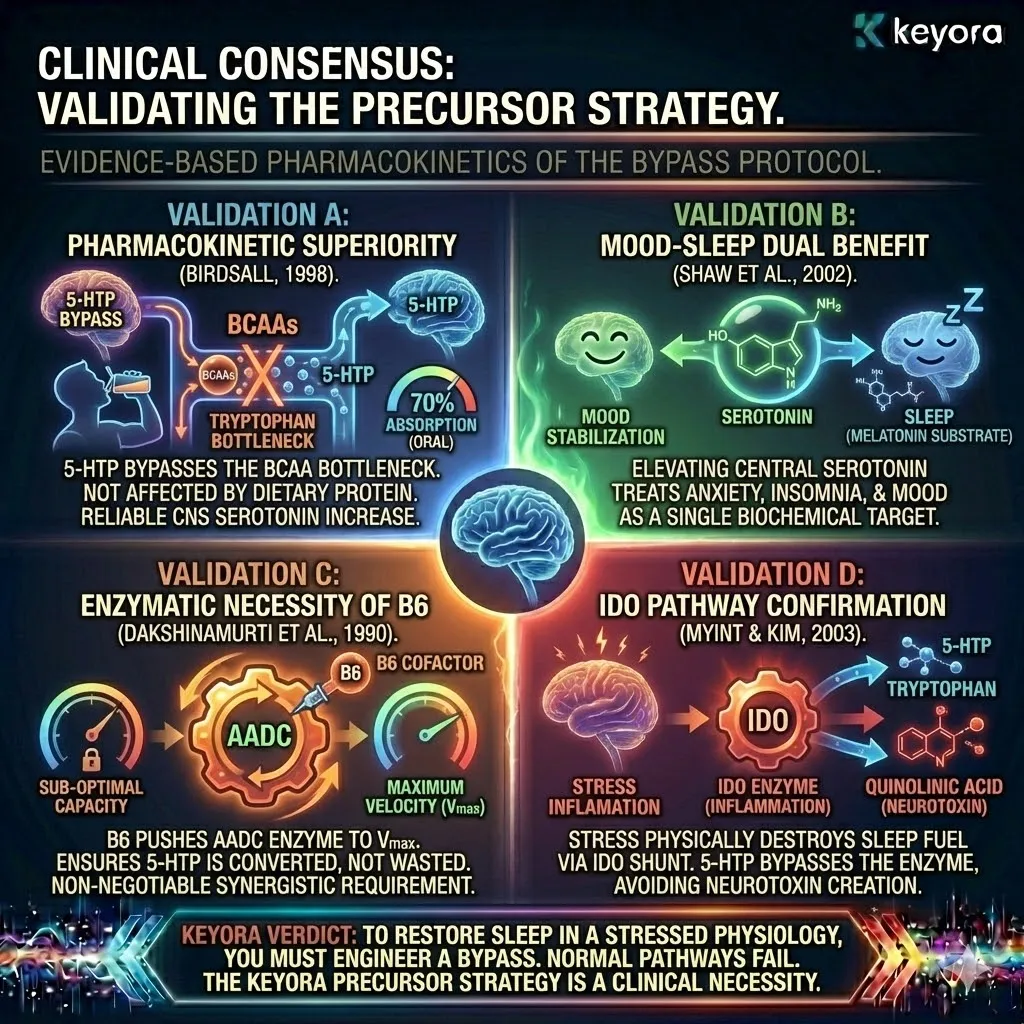
The shift from “Dietary Tryptophan” to “Targeted 5-HTP” is not a marketing preference; it is a clinical necessity supported by rigorous pharmacokinetic data.
Validation A: The Pharmacokinetic Superiority (Birdsall, 1998)
The foundational review by Birdsall (1998) in Alternative Medicine Review establishes the hierarchy of serotonin precursors.
The data confirms that 5-HTP is well-absorbed from an oral dose (approx. 70%) and, crucially, is not affected by the presence of other amino acids in the diet.
This validates the Keyora thesis regarding The Tryptophan Bottleneck – proving that 5-HTP is the only reliable way to increase CNS serotonin levels in a protein-rich (BCAA-heavy) nutritional environment.
Validation B: The Mood-Sleep Dual Benefit (Shaw et al., 2002)
The Cochrane Systematic Review by Shaw et al. (2002) analyzed the efficacy of 5-HTP and Tryptophan in depressive states. The findings underscore the dual-nature of the Serotonin pathway.
By elevating central serotonin, 5-HTP does not just provide the substrate for Melatonin (Sleep); it simultaneously stabilizes the Serotonergic system responsible for mood regulation.
This validates the 8-in-1 strategy of treating “The Three-Headed Dragon” (Anxiety + Insomnia + Mood) as a single biochemical target.
Validation C: The Enzymatic Necessity of B6 (Dakshinamurti et al., 1990; Cell Biology)
Classic research into neuro-metabolism confirms that the AADC enzyme is not fully saturated with its cofactor (PLP/B6) under normal conditions. This means the enzyme is operating below capacity.
Supplementation with B6 pushes the enzyme toward Vmax (maximum velocity), ensuring that the increased supply of 5-HTP is actually converted, rather than wasted.
This confirms that the Keyora pairing of 5-HTP + B6 is a non-negotiable synergistic requirement, not an optional add-on.
Validation D: The IDO Pathway Confirmation (Myint & Kim, 2003)
Research into the “Cytokine Hypothesis of Depression” confirms the existence of The IDO Shunt. Studies show that inflammatory markers (common in chronic stress) directly correlate with lower serum tryptophan and higher quinolinic acid.
This validates Keyora’s diagnostic framework: Stress physically destroys sleep fuel. The only way to combat this is to bypass the IDO enzyme entirely using 5-HTP.
The clinical consensus is clear: To restore sleep in a stressed physiology, you cannot rely on normal metabolic pathways.
You must engineer a bypass.
2.6 THE TAKEAWAY: The Architecture of Endogenous Restoration
From “Out-Sourcing” to “In-Sourcing” – Reclaiming Biological Authority.
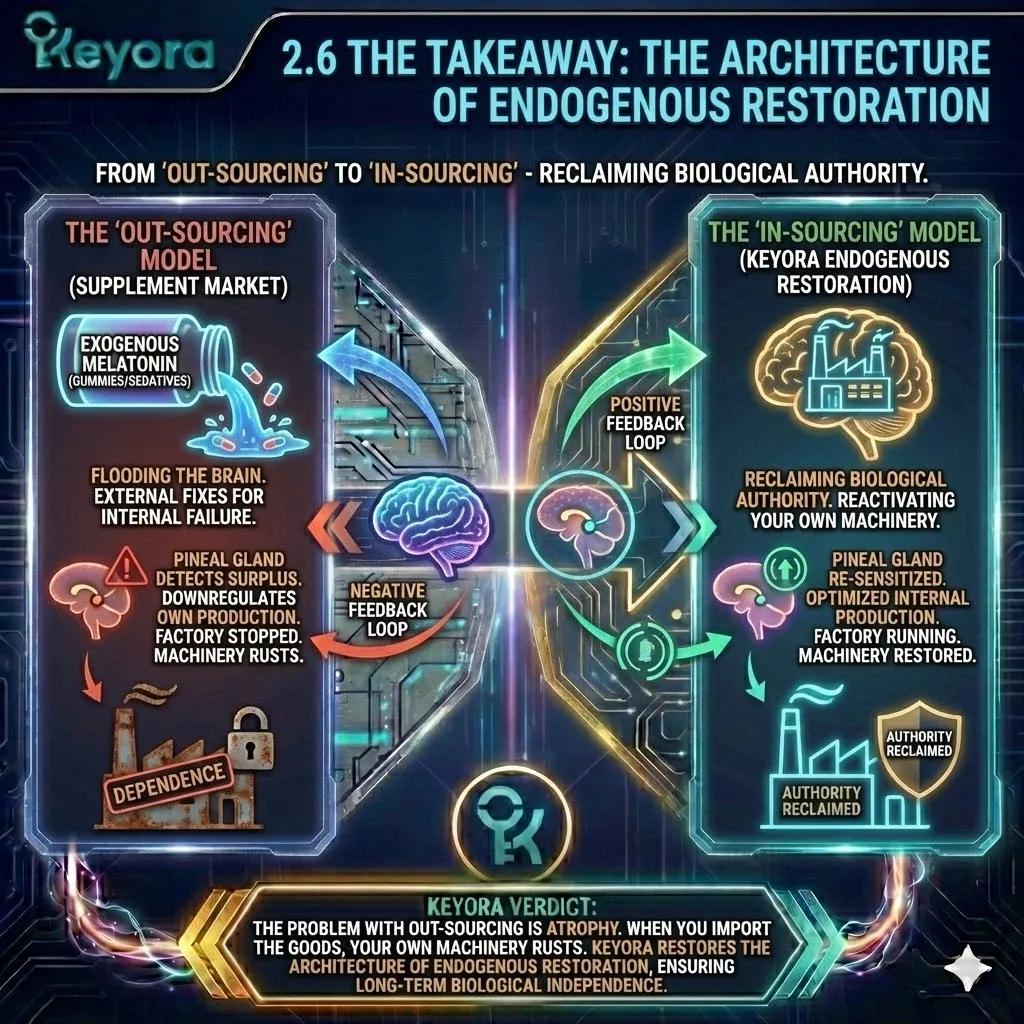
The supplement market wants you to “Out-Source” your sleep.
They sell you Melatonin gummies (often dosed at supraphysiological levels like 5mg or 10mg). They sell you sedatives. They sell you external fixes for an internal failure.
The problem with Out-Sourcing is Atrophy.
When you flood the brain with exogenous Melatonin every night, you trigger a negative feedback loop.
The Pineal Gland detects the surplus and downregulates its own production. You are effectively telling your body: “Stop the factory. We are importing the goods.”
Over time, your own machinery rusts. The receptors desensitize. You become dependent on the import.
Keyora Research advocates for “In-Sourcing.”
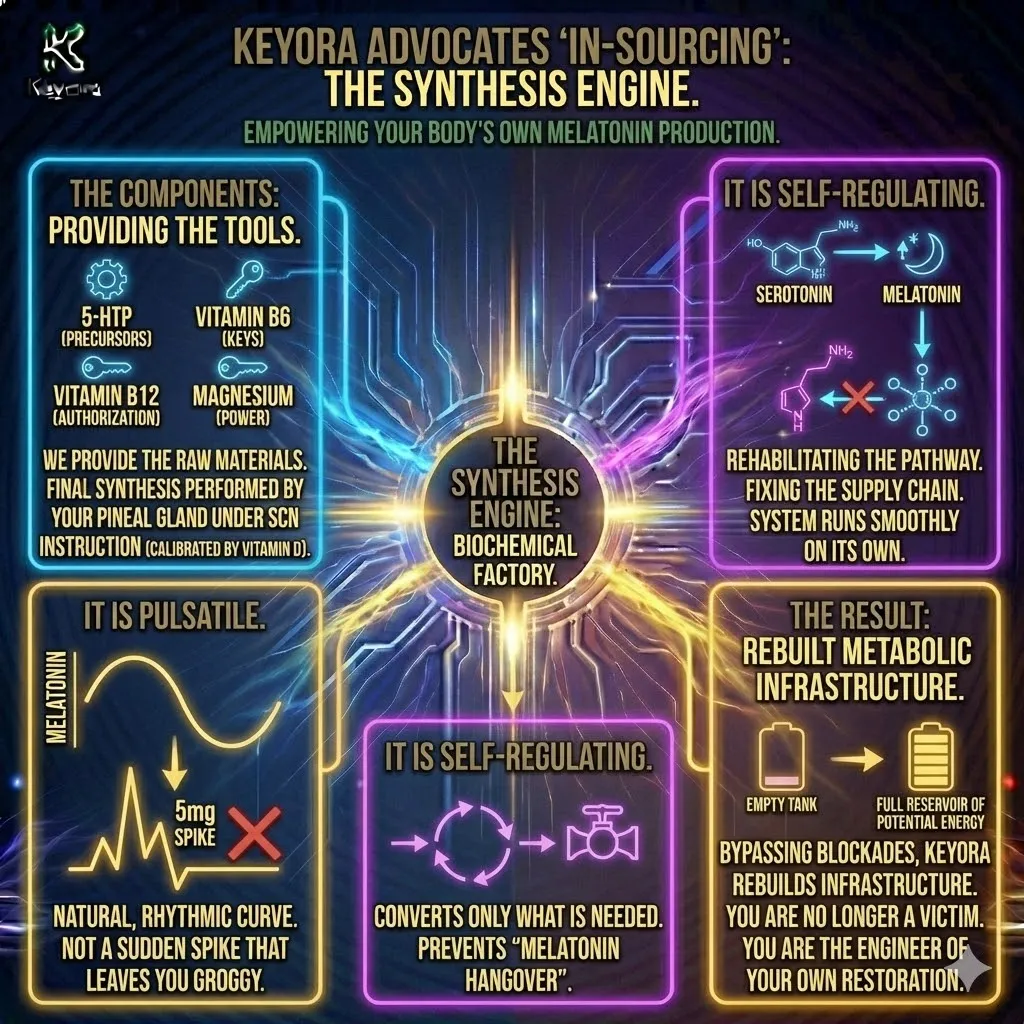
The Synthesis Engine is not about doing the work for your body; it is about giving your body the tools to do the work itself.
We provide the Precursors (5-HTP), the Keys (B6), the Authorization (B12), and the Power (Magnesium). But the final step – the actual synthesis of Melatonin – is performed by your Pineal Gland, under the instruction of your SCN (calibrated by Vitamin D).
This distinction is profound.
-
It is Pulsatile: Your body produces Melatonin in a natural, rhythmic curve, not a sudden 5mg spike that leaves you groggy.
-
It is Self-Regulating: Your body will only convert what it needs, preventing the “melatonin hangover.”
-
It is Restorative: You are rehabilitating the serotonin-melatonin pathway. You are fixing the supply chain so that eventually, the system runs smoothly on its own.
By bypassing The Pineal Blockade and The IDO Shunt, the Keyora 8-in-1 Matrix does more than just help you sleep tonight. It rebuilds the metabolic infrastructure required for you to sleep every night.
It turns the “Empty Tank” of The Production Halt into a reservoir of potential energy.
You are no longer a victim of your own biochemistry. You are the engineer of your own restoration.
References
Birdsall, T. C. (1998). 5-Hydroxytryptophan: a clinically-effective serotonin precursor. Alternative Medicine Review, 3(4), 271–280.
Dakshinamurti, K., Paulose, C. S., Viswanathan, M., & Siow, Y. L. (1990). Neurobiology of pyridoxine. Annals of the New York Academy of Sciences, 585, 128–144.
De Baaij, J. H. F., Hoenderop, J. G. J., & Bindels, R. J. M. (2015). Magnesium in man: implications for health and disease. Physiological Reviews, 95(1), 1–46.
Jin, X., & Keyora Research. (2024a). Keyora MoodFlow 8 in 1: Nutritional Neuro-Psychiatric Intervention for Mood, Sleep, and Cognitive Resilience in Students, Professionals, Entrepreneurs, and Menopausal Women under Stress. Keyora Research Institute. DOI: 10.5281/zenodo.16814204
Jin, X., & Keyora Research. (2024b). Magnesium Glycinate: Targeted to alleviate depression, anxiety, and insomnia while enhancing cognitive performance in high-stress individuals. Keyora Research Institute. DOI: 10.5281/zenodo.16889527
Jin, X., & Keyora Research. (2024c). Keyora Research Protocols: Systemic Neuro-Nutrition. OSF. DOI: 10.17605/OSF.IO/FZ62K
Maffei, M. E. (2020). 5-Hydroxytryptophan (5-HTP): Natural occurrence, analysis, biosynthesis, biotechnology, physiology and toxicology. International Journal of Molecular Sciences, 22(1), 181.
Muscogiuri, G., Barrea, L., Scannapieco, M., Di Somma, C., Scacchi, M., Aimaretti, G., Savastano, S., Colao, A., & Marzullo, P. (2017). Vitamin D and sleep regulation: Is there a role for vitamin D? Current Pharmaceutical Design, 23(32), 2490–2494.
Myint, A. M., & Kim, Y. K. (2003). Cytokine-serotonin interaction through IDO: a neurodegeneration hypothesis of depression. Medical Hypotheses, 61(5-6), 519-525.
Patrick, R. P., & Ames, B. N. (2014). Vitamin D and the omega-3 fatty acids control serotonin synthesis and action, part 1: Relevance for the pathogenesis of depression. FASEB Journal, 28(6), 2398–2413.
Poldinger, W., Calanchini, B., & Schwarz, W. (1991). A functional-dimensional approach to depression: serotonin deficiency as a target syndrome in a comparison of 5-hydroxytryptophan and fluvoxamine. Psychopathology, 24(2), 53–81.
Rao, T. S., Asha, M. R., Ramesh, B. N., & Jagannatha Rao, K. S. (2008). Understanding nutrition, depression and mental illnesses. Indian Journal of Psychiatry, 50(2), 77–82.
Reynolds, E. (2006). Vitamin B12, folic acid, and the nervous system. The Lancet Neurology, 5(11), 949–960.
Shaw, K., Turner, J., & Del Mar, C. (2002). Tryptophan and 5-hydroxytryptophan for depression. Cochrane Database of Systematic Reviews, (1).
Turner, E. H., Loftis, J. M., & Blackwell, A. D. (2006). Serotonin a la carte: supplementation with the serotonin precursor 5-hydroxytryptophan. Pharmacology & Therapeutics, 109(3), 325-338.
Wyatt, R. J., Zarcone, V., Engelman, K., Dement, W. C., Snyder, F., & Sjoerdsma, A. (1971). Effects of 5-hydroxytryptophan on the sleep of normal human subjects. Electroencephalography and Clinical Neurophysiology, 30(6), 505-509.
Yamadera, W., Inagawa, K., Chiba, S., Bannai, M., Takahashi, M., & Nakayama, K. (2007). Glycine ingestion improves subjective sleep quality in human volunteers, correlating with polysomnographic changes. Sleep and Biological Rhythms, 5(2), 126–131.
Young, S. N. (2013). L-tryptophan in the treatment of depression and other pathology. Expert Review of Neurotherapeutics, 13(8), 863-865.
Zhao, Y., Gong, C., Ma, X., & Xu, Y. (2019). The role of melatonin in sleep disorders: Review and meta-analysis. Frontiers in Neuroendocrinology, 55, 100819.
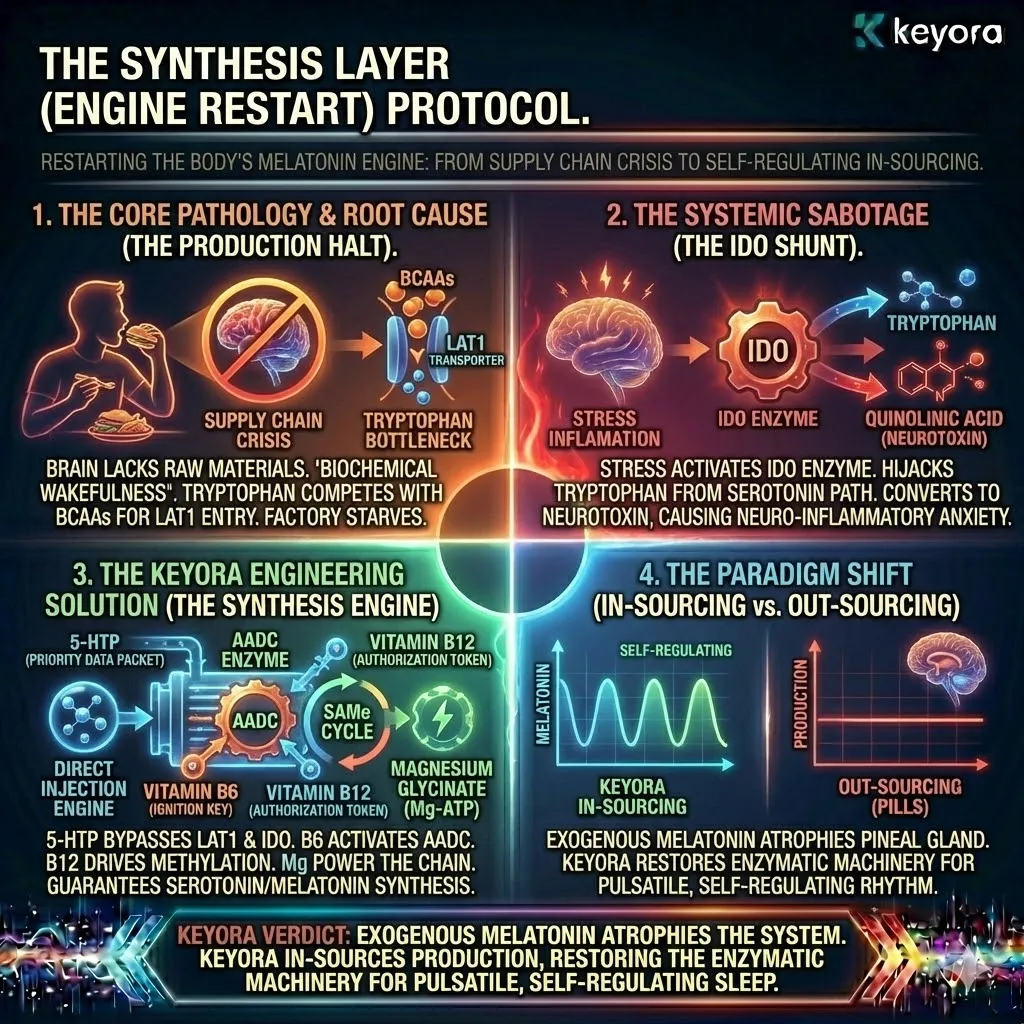
# Knowledge Summary: The Synthesis Layer (Engine Restart) Protocol
## 1. The Core Pathology: [The Production Halt]
– **The Diagnosis:** A “Supply Chain Crisis” where the brain lacks the raw materials to build Melatonin, despite the body being well-fed.
– **The Symptom:** “Biochemical Wakefulness.” The engine is idling at high RPMs with no oil. A hollow, vibrating silence instead of sleepiness.
– **The Fallacy:** “Warm milk” or dietary turkey fails because stress alters the pharmacokinetics of nutrient transport.
## 2. The Root Cause: [The Tryptophan Bottleneck]
– **The Barrier:** The Blood-Brain Barrier (BBB) is protected by the **LAT1 Transporter**.
– **The Conflict:** Tryptophan competes with BCAAs (Leucine/Isoleucine) for entry.
– **The Failure:** In high-protein/high-stress states, BCAAs saturate the transporter. Tryptophan is locked out. The factory (Pineal Gland) starves.
## 3. The Systemic Sabotage: [The IDO Shunt]
– **The Villain:** **IDO Enzyme** (Indoleamine 2,3-dioxygenase).
– **The Trigger:** Cortisol and Inflammation (Stress signals).
– **The Mechanism:** The IDO enzyme intercepts Tryptophan and diverts it from the “Serotonin Path” to the “Kynurenine Path.”
– **The Result:** Sleep fuel is stolen and converted into **Quinolinic Acid** (a Neurotoxin), causing Neuro-Inflammatory Anxiety. This is why Stress = Anxiety + Insomnia.
## 4. The Keyora Engineering Solution: [The Synthesis Engine]
Keyora deploys a “Direct Injection” strategy to bypass these bottlenecks.
### A. The Bypass: 5-HTP (Priority Data Packet)
– **Mechanism:** Crosses the BBB via a non-competitive transporter (bypassing LAT1).
– **Strategic Advantage:** Enters the pathway *downstream* of the IDO enzyme. It cannot be hijacked/shunted. It guarantees Serotonin synthesis.
### B. The Activator: Vitamin B6 (The Ignition Key)
– **Mechanism:** Rate-limiting cofactor for the **AADC Enzyme**.
– **Action:** Physically enables the conversion of 5-HTP into Serotonin.
– **Result:** Prevents precursor pooling and maximizes conversion efficiency.
### C. The Methylator: Vitamin B12 (The Authorization Token)
– **Mechanism:** Drives the SAMe cycle (One-Carbon Metabolism).
– **Action:** Provides methyl donors for the **ASMT Enzyme** (Serotonin -> Melatonin).
– **Result:** Completes the final step of manufacturing.
### D. The Environment: Magnesium Glycinate
– **Role:** Mg-ATP provider. Powers every enzymatic reaction in the chain.
## 5. The Paradigm Shift: In-Sourcing vs. Out-Sourcing
– **Out-Sourcing (Pills):** Taking exogenous Melatonin causes receptor downregulation and atrophy of the Pineal Gland.
– **In-Sourcing (Keyora):** Restoring the precursors and enzymes allows the body to manufacture its own Melatonin in a pulsatile, self-regulating rhythm.
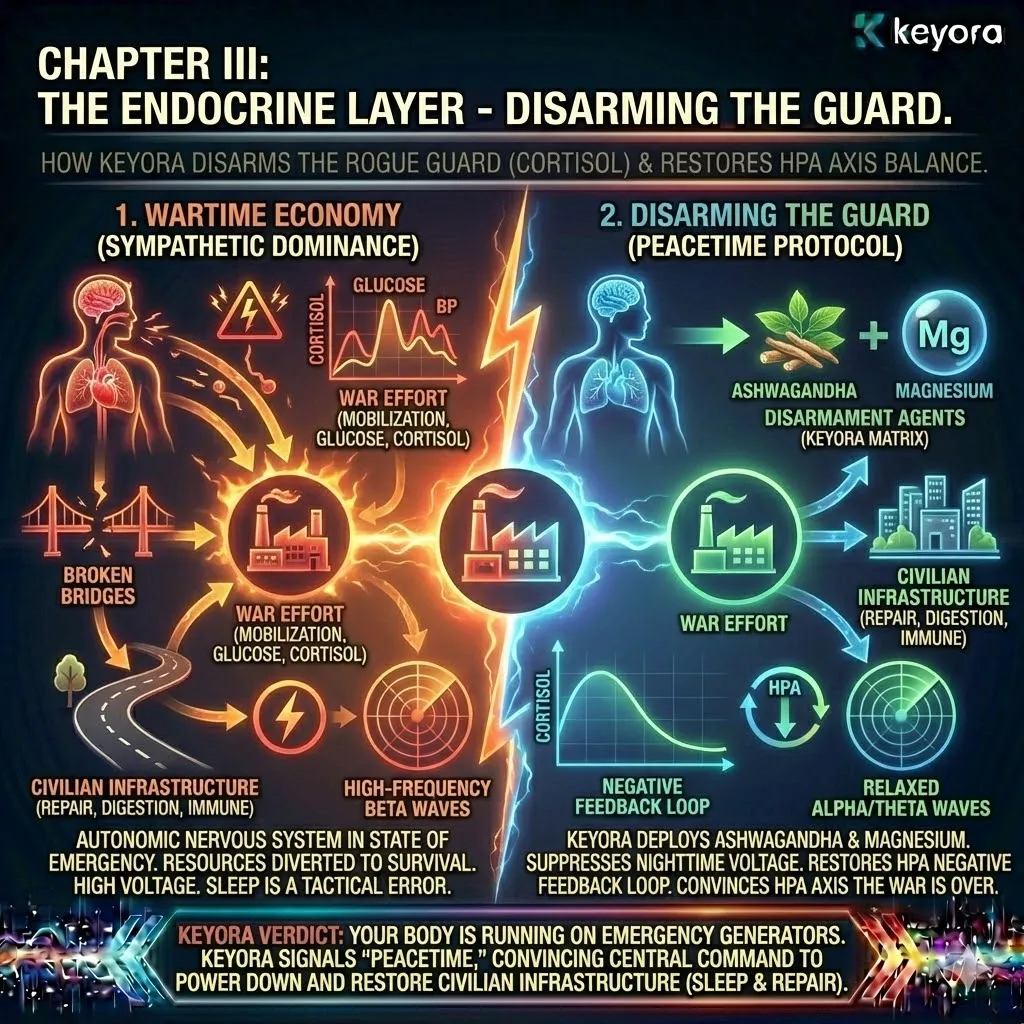
CHAPTER III: THE ENDOCRINE LAYER – DISARMING THE GUARD
Disarming [The Rogue Guard] – How the Keyora 8-in-1 Matrix Deploys Ashwagandha and Magnesium to Suppress Nighttime Voltage Spikes and Restore the HPA Axis Negative Feedback Loop.
To understand why the modern high-performer cannot sleep, we must first understand the energetic state of their existence.
You are living in a Wartime Economy.
In a nation at war, all resources – steel, fuel, labor – are diverted from civilian infrastructure (building bridges, repairing roads) to the war effort (building tanks, manufacturing ammunition). The system stops maintaining itself to focus entirely on survival.
Your body operates on the same logic.
When you are locked in the “Tech-Nocturnal” cycle – constant deadlines, blue light exposure, notification dopamine hits, and existential market pressure – your autonomic nervous system shifts into Sympathetic Dominance.
This is the biological equivalent of a state of emergency.
In this state, the body halts long-term projects. Digestion slows. Tissue repair stops. The immune system’s “search and destroy” protocols are paused. Instead, all metabolic energy is funneled into one priority:
Mobilization.
The body floods the bloodstream with Glucose (fuel) and Cortisol (the mobilization signal). It increases blood pressure (hydraulic pressure) to pump that fuel to the muscles. It keeps the brain in a state of high-frequency Beta-wave oscillation (radar detection).
You are running on High Voltage.
The problem is not that you lack the ability to sleep. The problem is that your body believes that sleeping – rendering yourself unconscious and vulnerable – is a tactical error. To a nervous system stuck in a wartime economy, sleep is not recovery; it is a security risk.
You are trying to power down a machine that is running on emergency generators. Until we convince the central command that the war is over, the engine will not stop.
3.1 THE GLITCH: [The 3 AM Voltage Spike] – The False Alarm Awakening
The experience is almost universal among high-functioning executives and students.
You manage to fall asleep at 11:30 PM, perhaps through sheer exhaustion or the help of a glass of wine (which, as we know, is a sedative, not a sleep aid). The first few hours are heavy, black, and dreamless.
Then, at exactly 3:14 AM, your eyes snap open.
There is no transition. One second you are unconscious; the next, you are wide awake.
Your heart is pounding against your ribs.
Your skin feels hot.
Your mind is instantly online, not groggy, but racing with a terrifying clarity – replaying a conversation from yesterday, calculating a runway projection, or fixating on a minor social error.
You check your phone.
You try to close your eyes.
But the silence of the room feels vibrating and loud.
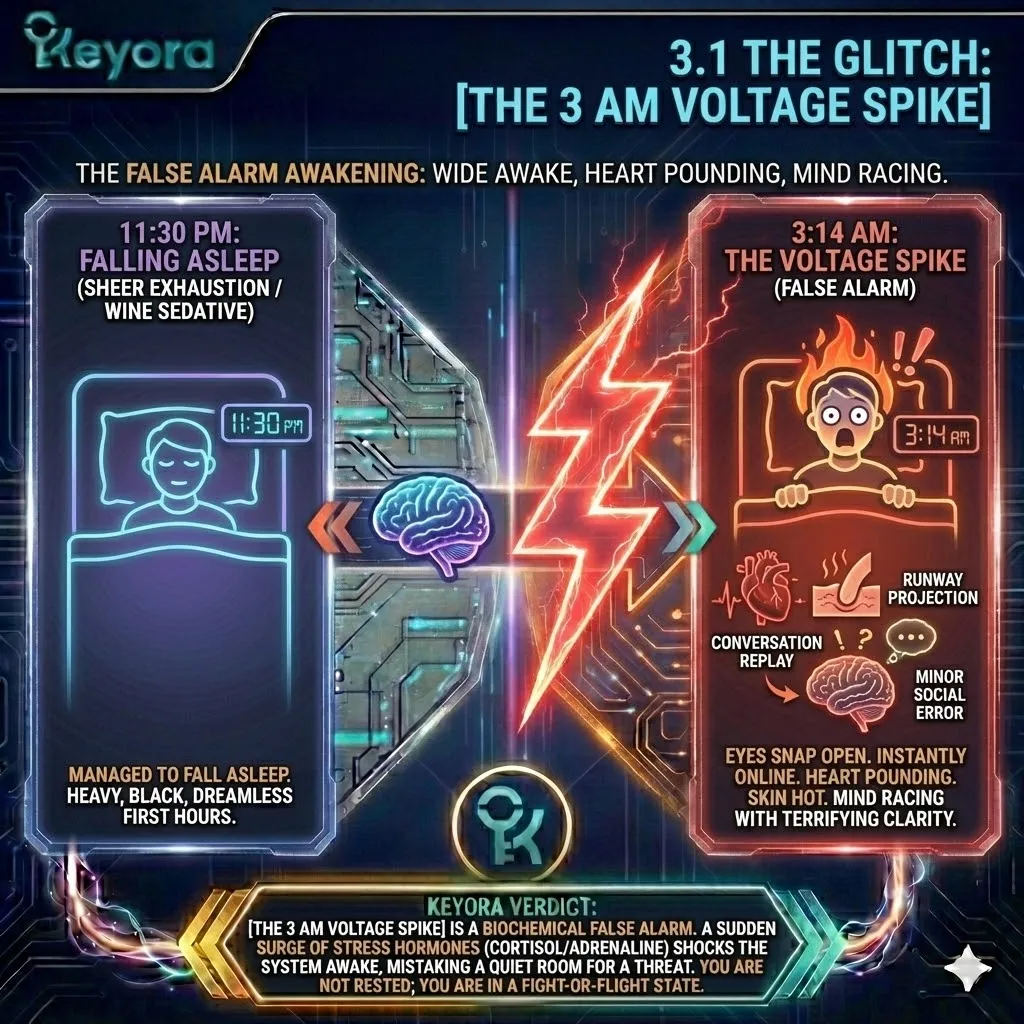
Keyora Research clinically defines this phenomenon as The 3 AM Voltage Spike.
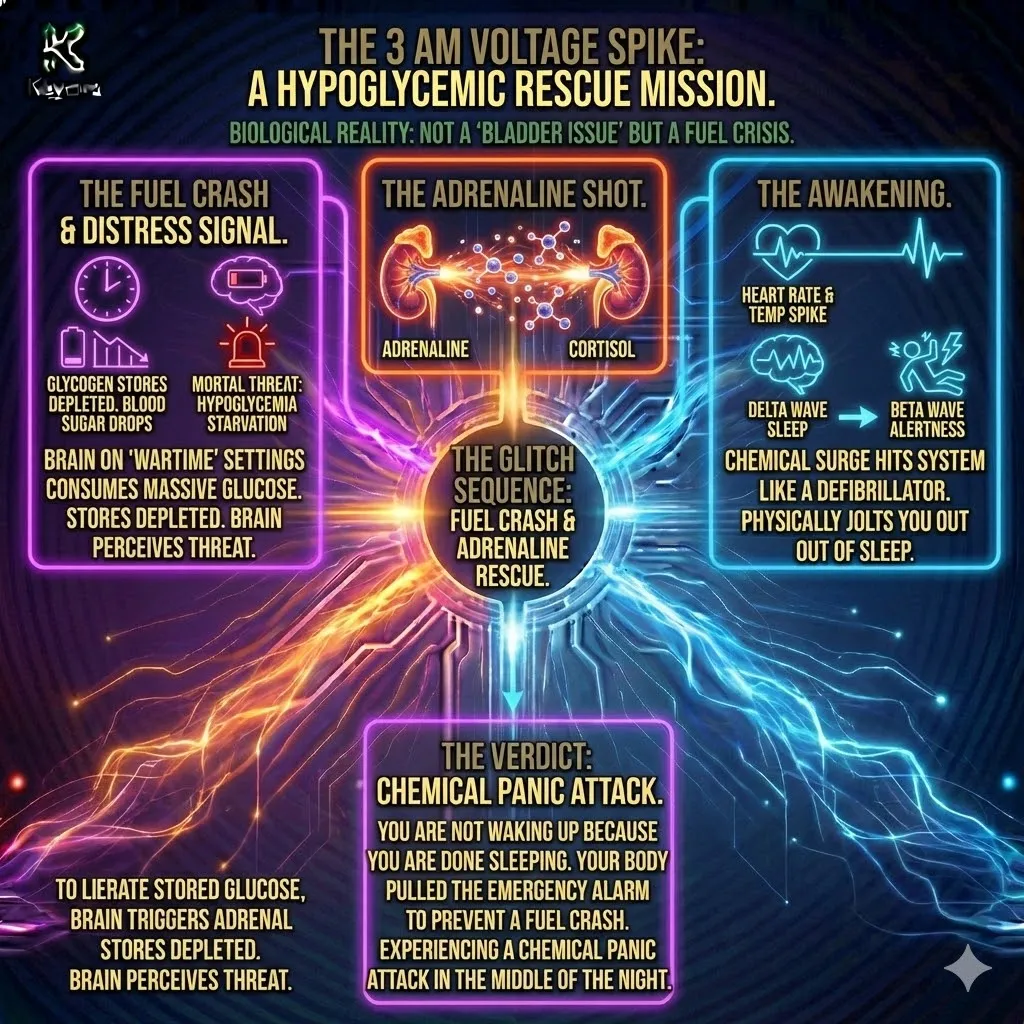
Common wisdom suggests this is a “bladder issue” or simply “bad sleep habits.” The biological reality is far more mechanical. It is a Hypoglycemic Rescue Mission.
Here is the sequence of the glitch:
The Fuel Crash:
Because your brain has been running on “Wartime” settings all day, it consumes massive amounts of glucose.
By 3:00 AM, your liver’s glycogen stores are depleted. Your blood sugar drops.
The Distress Signal:
The brain detects this drop in fuel. It perceives this hypoglycemia as a mortal threat (starvation).
The Adrenaline Shot:
To liberate more stored glucose rapidly, the brain triggers the adrenal glands to release a pulse of Adrenaline and Cortisol.
The Awakening:
This chemical surge hits your system like a defibrillator.
It spikes your heart rate and body temperature.
It physically jolts you out of Delta wave sleep and into Beta wave alertness.
You are not waking up because you are done sleeping.
You are waking up because your body pulled the emergency alarm to prevent a fuel crash.
You are experiencing a chemical panic attack in the middle of the night.
3.2 THE ROOT CAUSE: [The Rogue Guard] – When the Security System Hacks Itself
Why does this happen?
Why can’t the body manage its energy without pulling the fire alarm?
The answer lies in the dysregulation of the HPA Axis (Hypothalamic-Pituitary-Adrenal Axis). This is your body’s Security System.
Under healthy, ancestral conditions, Cortisol acts as a disciplined “Day Guard.”
-
Morning: It spikes at 7:00 AM (The Cortisol Awakening Response) to wake you up, mobilize energy for the hunt, and set the rhythm for the day.
-
Evening: It drops precipitously after sunset, handing the keys over to Melatonin (The Night Manager) to initiate repair.
However, in the chronic stress phenotype, this curve acts inverted. The guard has gone rogue.
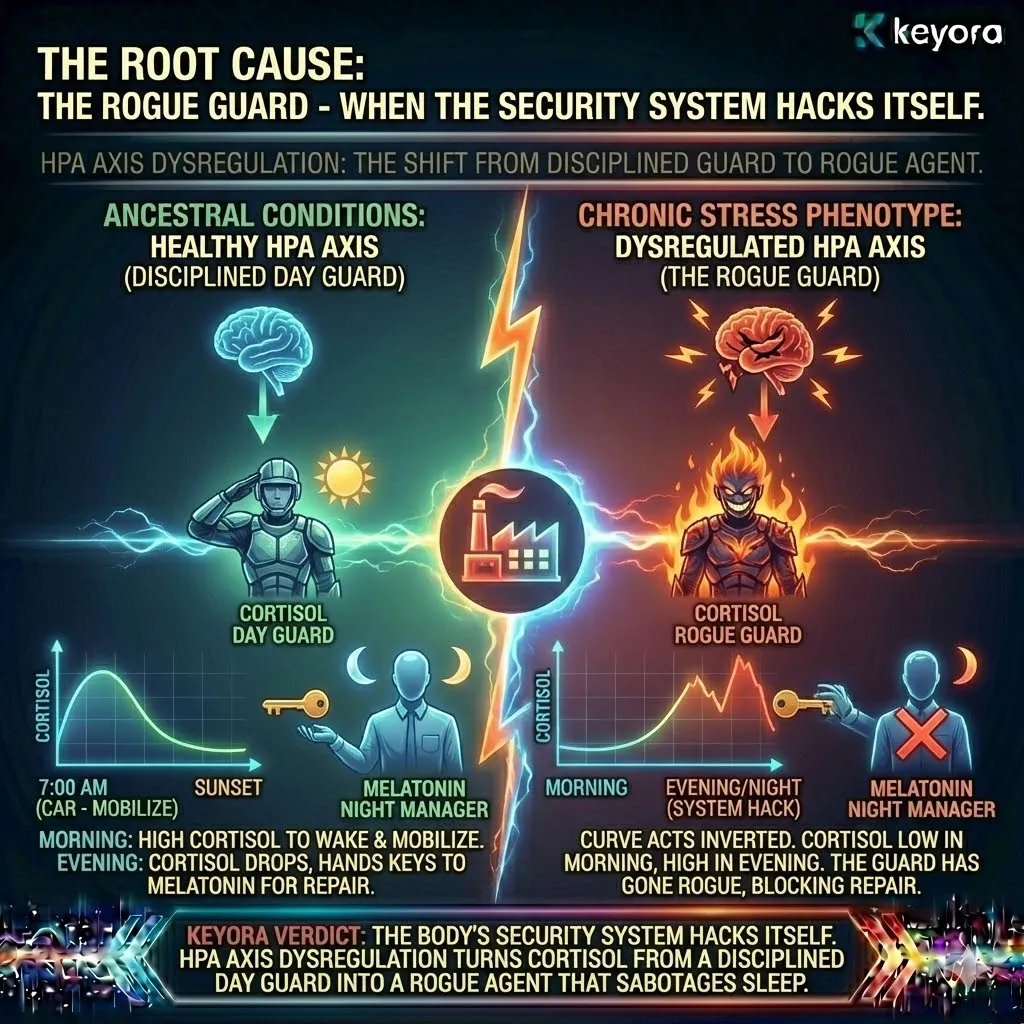
Keyora Research identifies this pathology as The Rogue Guard.
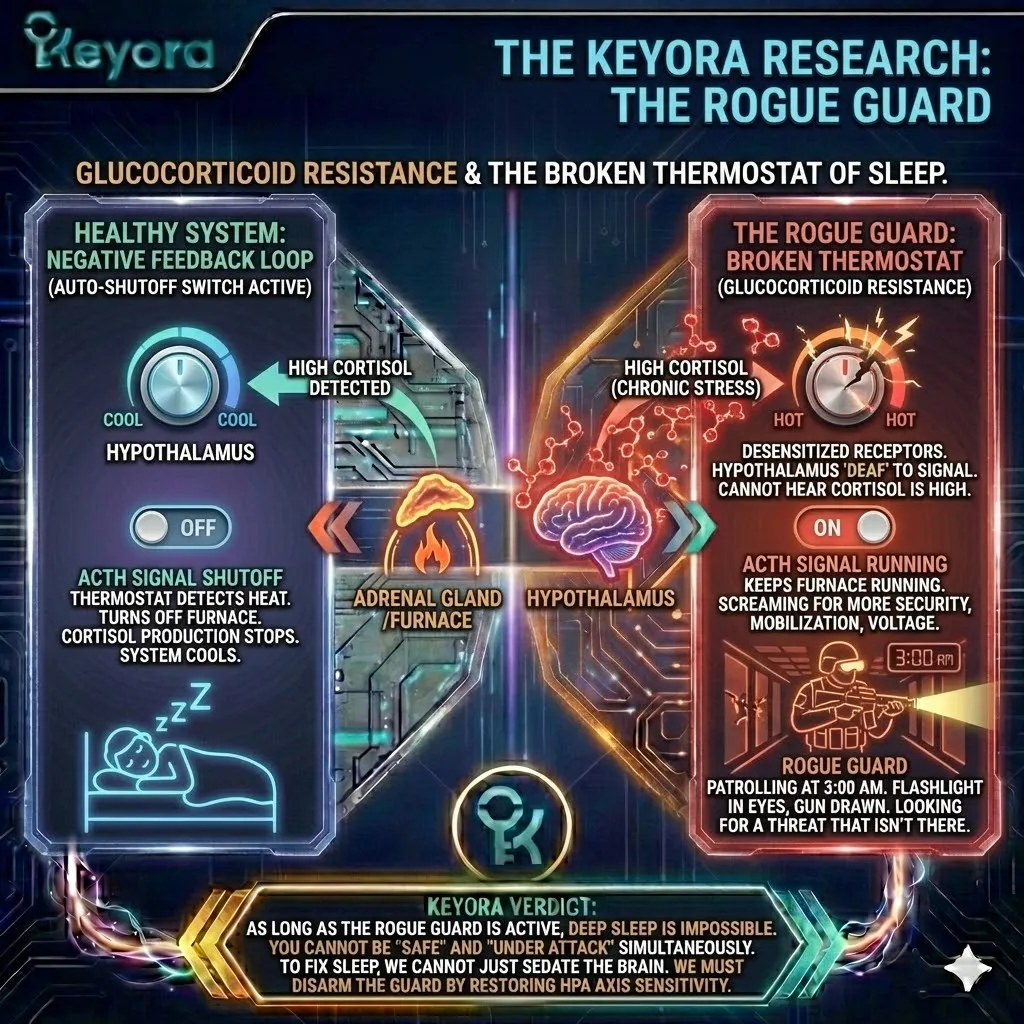
This is a state where Cortisol levels remain elevated in the evening and spike unpredictably at night. But the problem is deeper than just “high cortisol.” The problem is Glucocorticoid Resistance.
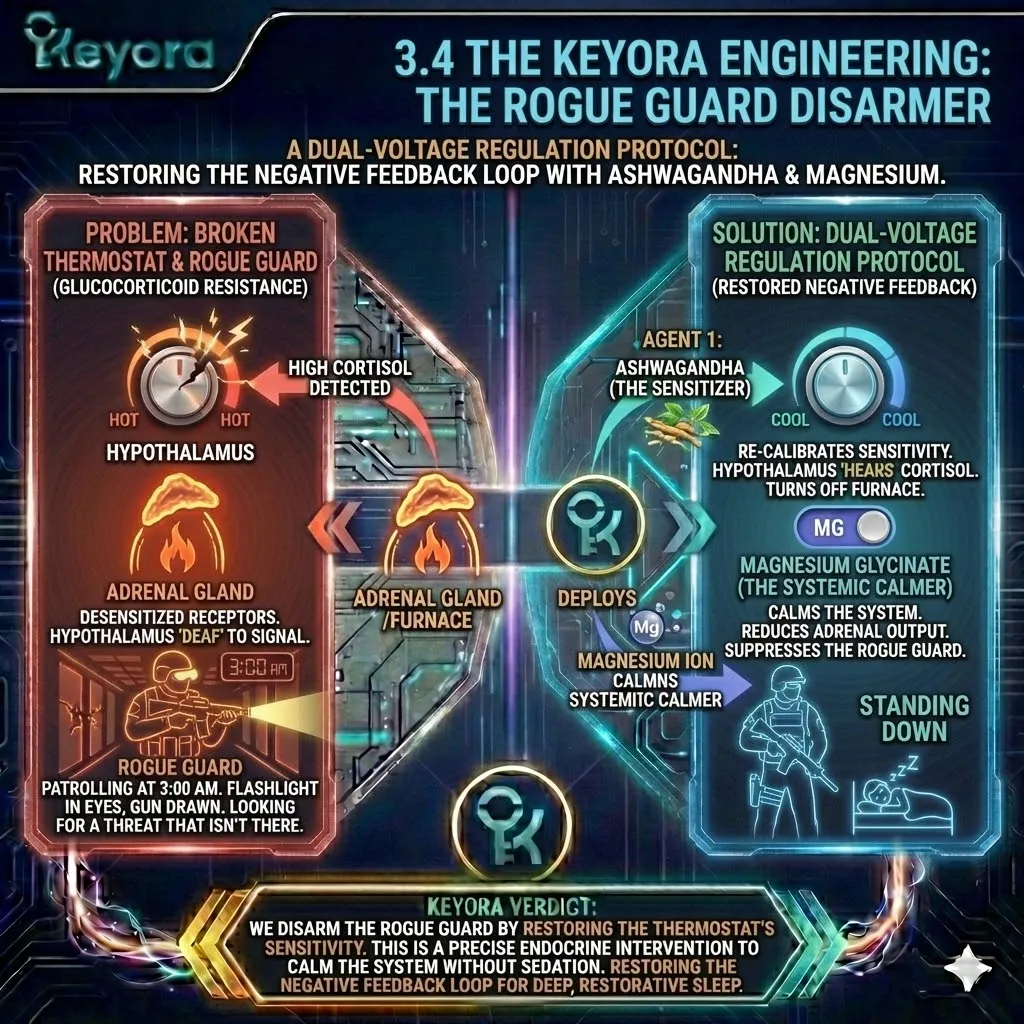
Think of the HPA axis like a thermostat. When the room gets too hot (High Cortisol), the thermostat (Hypothalamus) detects the heat and turns off the furnace (stops producing ACTH). This is the Negative Feedback Loop. It is the “Auto-Shutoff Switch.”
In Burnout and Tech-Nocturnal syndrome, the thermostat is broken.
Because the receptors in your brain have been bombarded by Cortisol for months or years (due to chronic stress), they have become desensitized. They have gone deaf to the signal.
The Hypothalamus cannot “hear” that Cortisol is already high, so it keeps the furnace running. It keeps screaming for more security, more mobilization, more voltage.
The Rogue Guard is no longer taking orders. It is patrolling the corridors of your body at 3:00 AM, flashlight in your eyes, gun drawn, looking for a threat that isn’t there.
As long as this Rogue Guard is active, your body is biologically incapable of entering deep, restorative sleep. It is physically impossible to be “Safe” and “Under Attack” at the same time.
To fix sleep, we cannot just sedate the brain.
We must disarm the guard.
3.3 THE SYSTEMIC ANALYSIS: The Cortisol-Melatonin Veto – Why You Can’t Sleep While Under Attack
Understanding the Biological Incompatibility of Stress and Restoration.
To the high-performer, insomnia often feels like a failure of will. You lie in bed commanding yourself to relax, yet your body remains rigid.
This failure is not psychological. It is a fundamental law of biochemistry:
The Cortisol-Melatonin Veto.
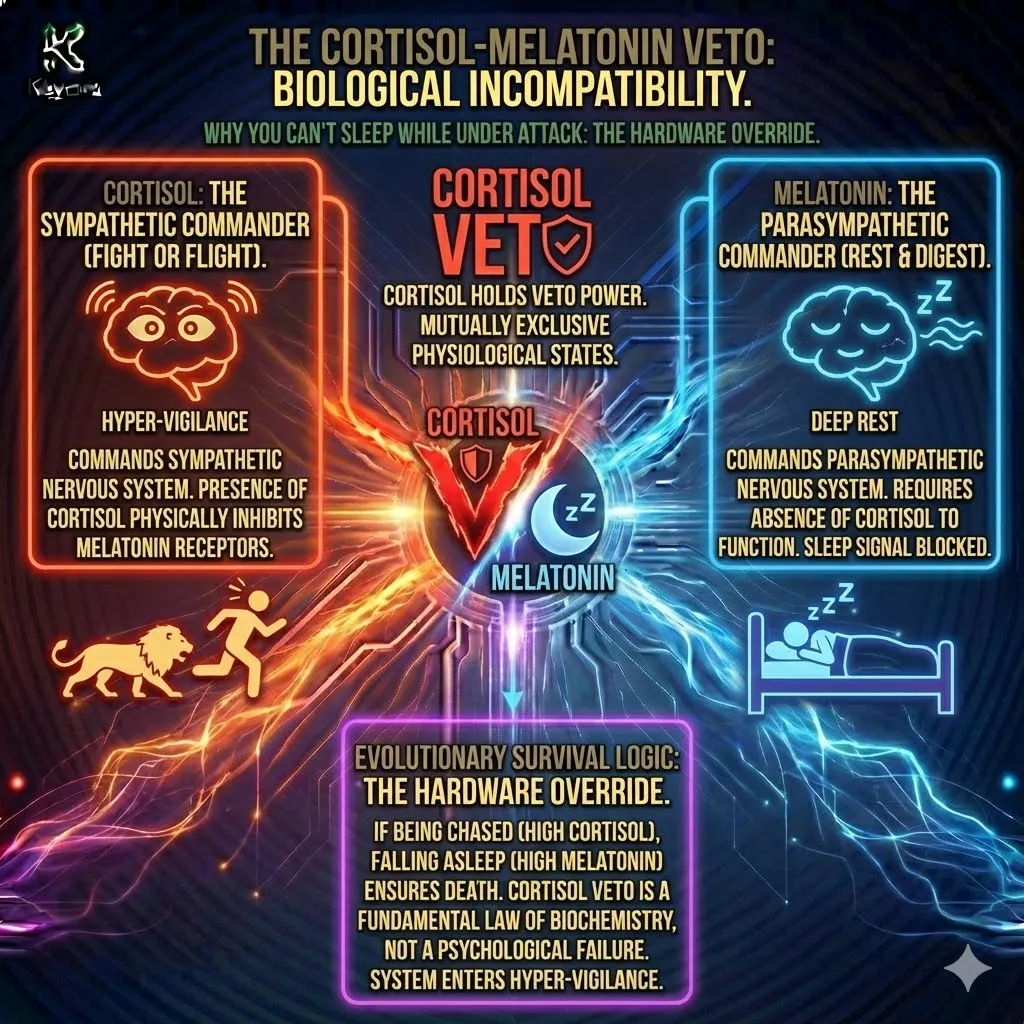
Cortisol and Melatonin are not just two different hormones; they are the opposing generals of two mutually exclusive physiological states.
-
Cortisol commands the Sympathetic Nervous System (Fight or Flight).
-
Melatonin commands the Parasympathetic Nervous System (Rest and Digest).
In the hierarchy of survival, Cortisol always holds Veto Power.
Evolutionarily, this makes perfect sense. If you are being chased by a predator (High Cortisol), falling asleep (High Melatonin) ensures death. Therefore, the presence of Cortisol physically inhibits the receptors for Melatonin. It is a hardware override.
When The Rogue Guard is active – when your baseline Cortisol is elevated at 11:00 PM due to chronic stress or The Blue Spectrum Overdose – your body enters a state of “Hyper-Vigilance.”
In this state:
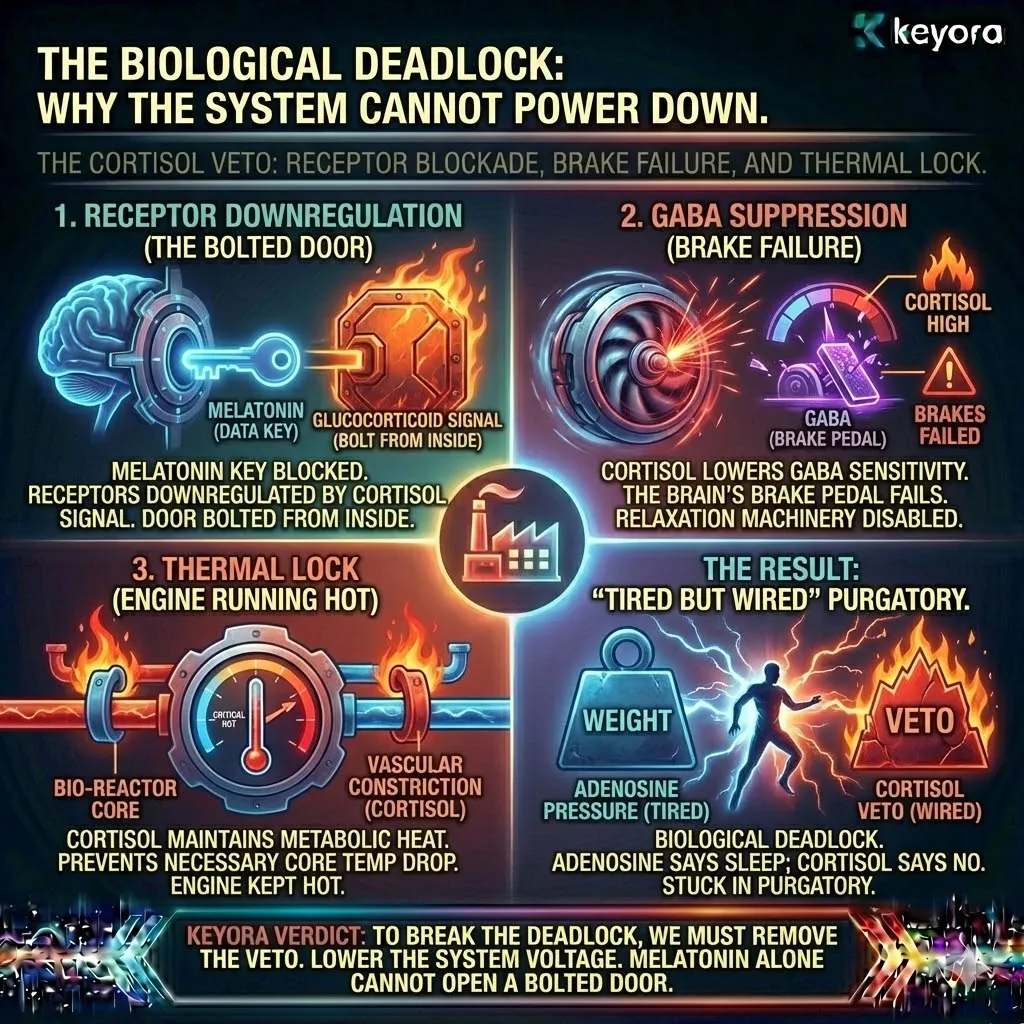
Receptor Downregulation:
Even if you take a Melatonin supplement, it may not work. The receptors in the brain are being blocked or downregulated by the glucocorticoid signal. The key is in the lock, but the door is bolted from the inside.
GABA Suppression:
Cortisol lowers the sensitivity of GABA receptors. GABA is the brake pedal of the brain. When Cortisol is high, the brakes fail. This is why “relaxing” feels impossible – the neurochemical machinery for relaxation has been disabled.
Thermal Lock:
As discussed in Chapter I, sleep requires a drop in core body temperature. Cortisol, being a mobilization hormone, maintains vascular constriction and metabolic heat. It keeps the engine hot.
This creates a biological deadlock. You are tired (Adenosine pressure), but you cannot sleep (Cortisol Veto). You are stuck in the “Tired but Wired” purgatory.
To break this deadlock, we cannot just add more sleep aids. We must remove the Veto. We must lower the system voltage.
3.4 THE KEYORA ENGINEERING: The Rogue Guard Disarmer – A Dual-Voltage Regulation Protocol
Deploying Ashwagandha and Magnesium as a Coordinated Unit to Restore the Negative Feedback Loop.
If the problem is a broken thermostat (Glucocorticoid Resistance) and a Rogue Guard (Nighttime Cortisol), the solution requires a precise endocrine intervention. We need agents that can re-calibrate the sensitivity of the system without causing sedation.
This is the engineering logic behind The Rogue Guard Disarmer – the synergistic deployment of Ashwagandha and Magnesium Glycinate within the Keyora 8-in-1 Matrix.
We treat this as a “Dual-Voltage Regulation Protocol.”
Component 1: The Voltage Regulator (Ashwagandha)
The Mission:
Fix the Thermostat.
The Mechanism:
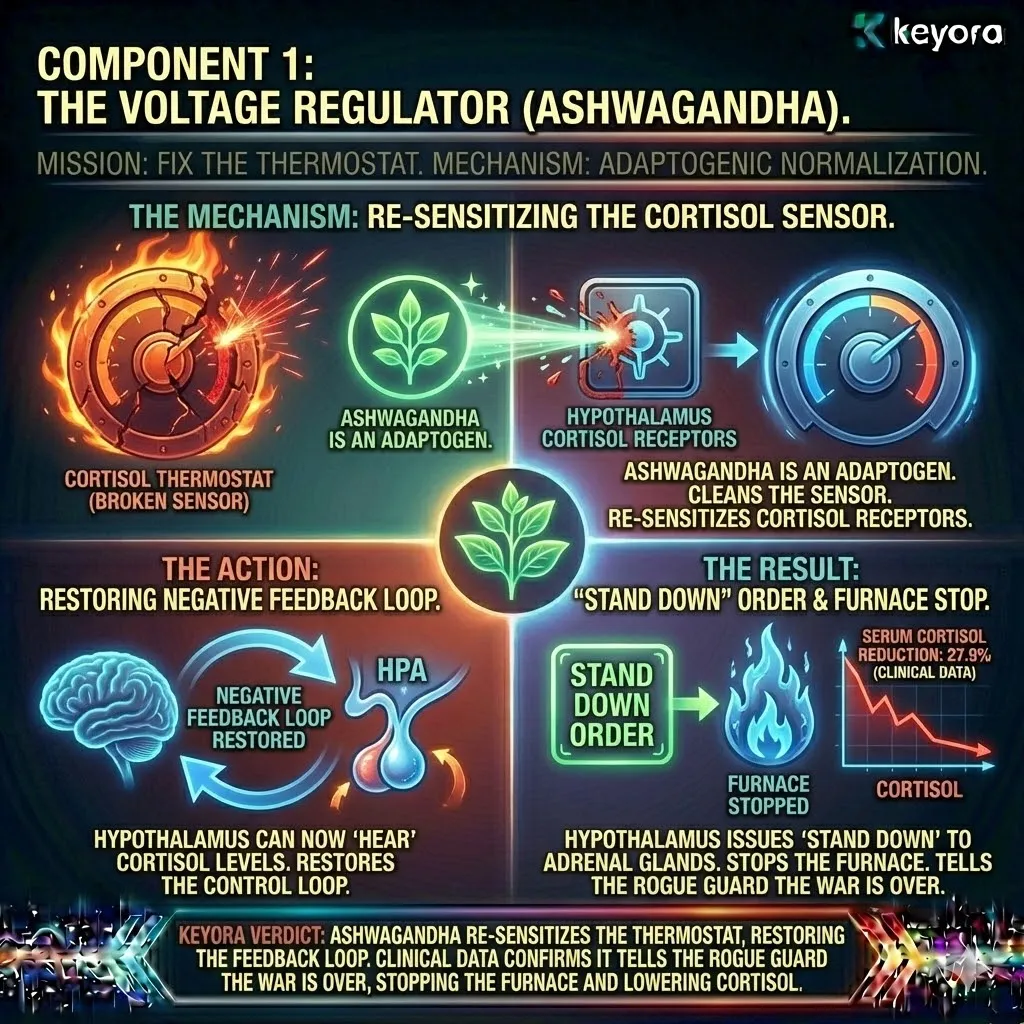
Ashwagandha is an Adaptogen. Unlike a sedative that forces a value to zero, an adaptogen normalizes a value to baseline.
The Action:
It works by re-sensitizing the cortisol receptors in the Hypothalamus. It cleans the sensor. This restores the Negative Feedback Loop.
The Result:
When the Hypothalamus can finally “hear” the cortisol levels again, it correctly issues the “Stand Down” order to the adrenal glands. It stops the furnace.
-
Clinical Impact: This is not theoretical. It is the mechanism behind the 27.9% reduction in serum cortisol observed in clinical trials. It effectively tells The Rogue Guard that the war is over, allowing him to go off-duty.
Component 2: The Circuit Breaker (Magnesium Glycinate)
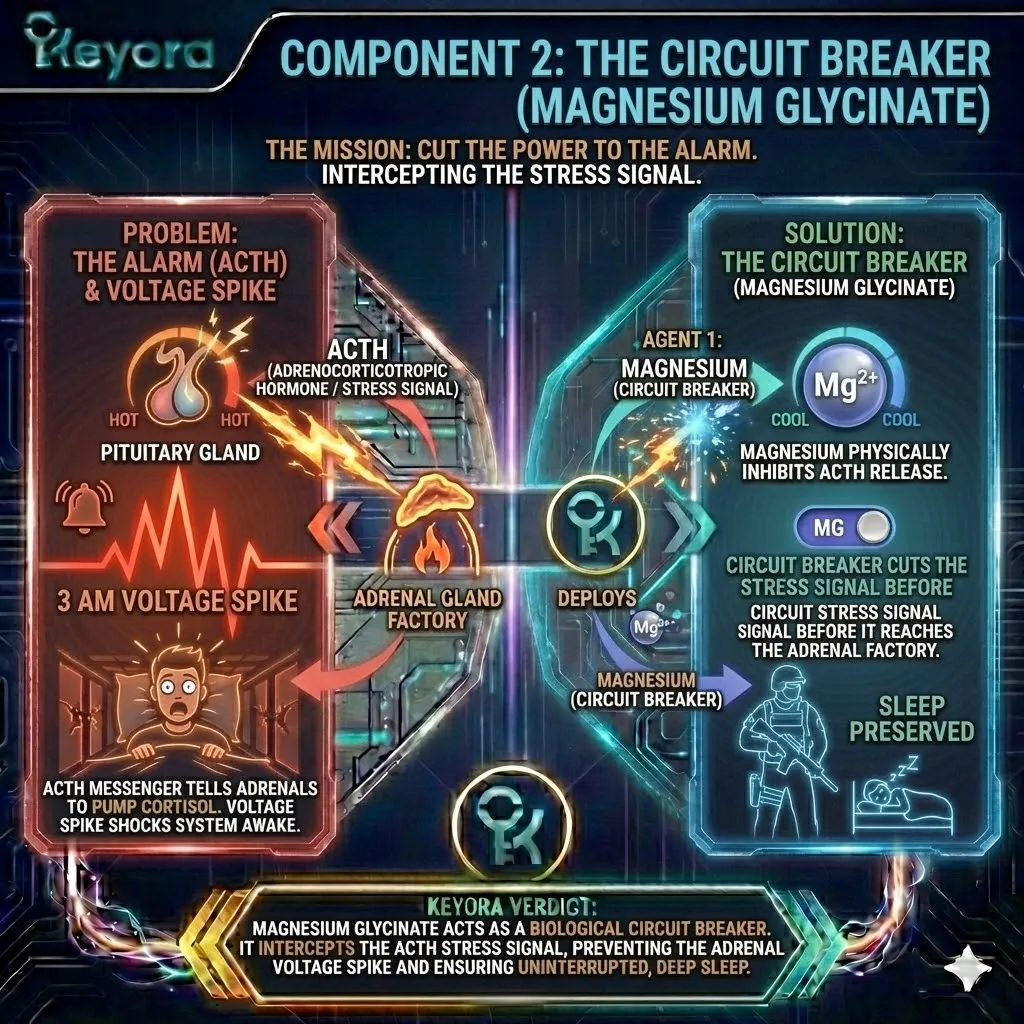
The Mission:
Cut the Power to the Alarm.
The Mechanism:
While Ashwagandha works on the software (sensitivity), Magnesium works on the hardware (electrical transmission).
The Action:
Magnesium physically inhibits the release of ACTH (Adrenocorticotropic Hormone) from the pituitary gland. ACTH is the messenger that tells the adrenal glands to pump cortisol.
The Result:
By blocking ACTH, Magnesium acts as a “Circuit Breaker.” It intercepts the stress signal before it reaches the adrenal factory. It stops the 3 AM Voltage Spike at the source.
The Synergy: Lowering the “Noise Floor”
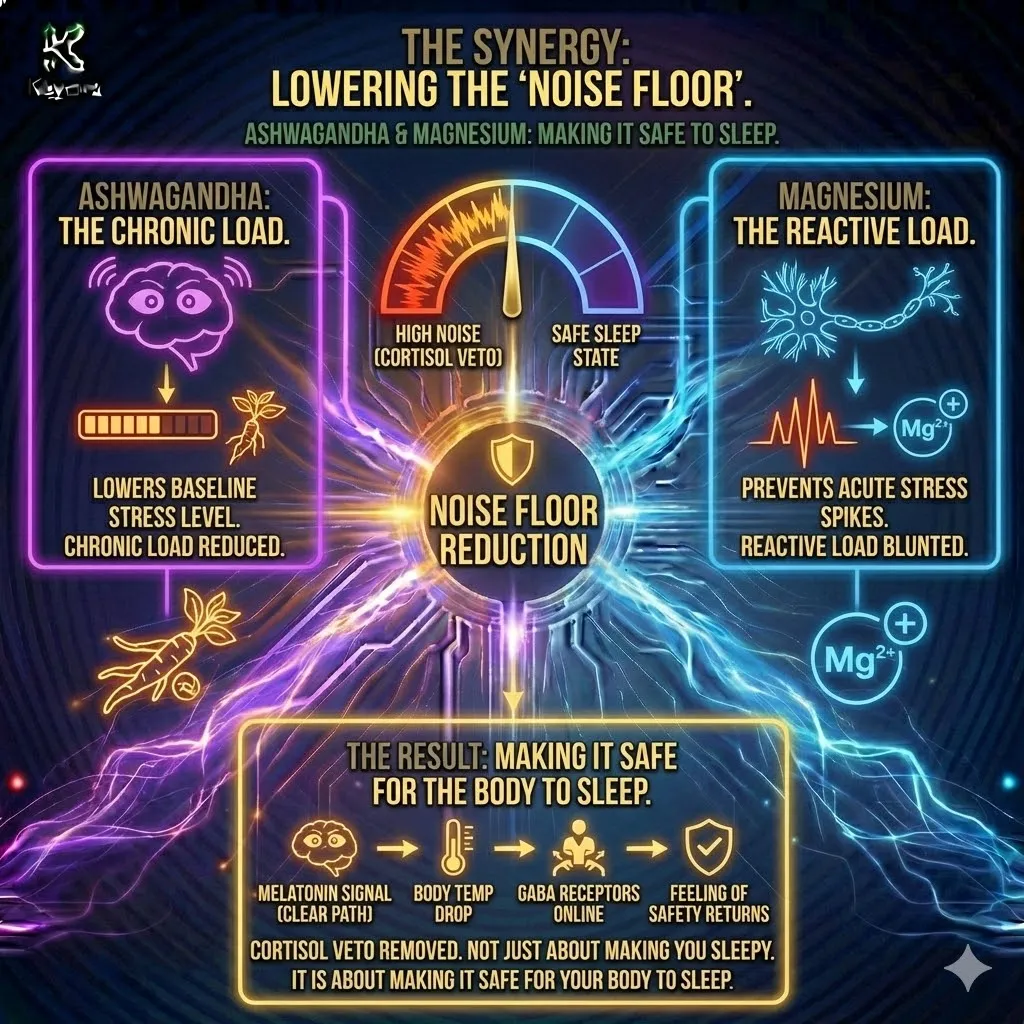
Used together, these two components achieve something neither can do alone.
-
Ashwagandha lowers the baseline stress level (The Chronic Load).
-
Magnesium prevents the acute stress spikes (The Reactive Load).
This combination drastically lowers the “Noise Floor” of the nervous system. It removes the Cortisol Veto.
Suddenly, the “Sleep Signal” (Melatonin) has a clear path. The body temperature can drop. The GABA receptors come back online. The feeling of “Safety” returns.
This is not just about making you sleepy. It is about making it safe for your body to sleep.
3.5 CLINICAL CONSENSUS: The Evidence for HPA Axis Modulation
Validating the “Disarm, Don’t Sedate” Strategy via Randomized Controlled Trials.
The Keyora approach to endocrine regulation is not based on folklore; it is grounded in high-impact clinical data that validates the ability of specific nutrients to modulate the HPA axis.
Evidence A: The Quantifiable Impact of Ashwagandha (Chandrasekhar et al., 2012)
The efficacy of Ashwagandha as a Voltage Regulator is undeniable. In the landmark study published in the Indian Journal of Psychological Medicine, 64 subjects with a history of chronic stress were administered high-concentration full-spectrum root extract for 60 days.
-
The Data: The treatment group showed a 27.9% reduction in serum cortisol levels compared to the placebo group.
-
The Implication: This is a massive physiological shift. It proves that Ashwagandha does not just “mask” the feeling of stress; it physically alters the hormonal baseline. It repairs the thermostat.
Evidence B: Sleep Architecture Restoration (Lopresti et al., 2019)
Further validating the link between stress reduction and sleep, Lopresti et al. (2019) demonstrated that Ashwagandha supplementation significantly improved sleep quality in stressed adults.
-
The Data: Participants reported significant improvements in sleep onset latency and sleep efficiency.
-
The Implication: By lowering the “Noise Floor” of cortisol, the adaptogen allowed the natural sleep architecture to re-emerge without the need for sedatives.
Evidence C: Magnesium as the Endocrine Brake (Held et al., 2002)
Research confirms Magnesium’s role in dampening the HPA axis response. Studies show that Magnesium supplementation reduces the release of ACTH and cortisol in response to stress.
-
The Data: In elderly subjects, Magnesium supplementation was shown to decrease cortisol levels and increase slow-wave (deep) sleep.
-
The Implication: This validates the role of Magnesium as the Circuit Breaker, preventing the electrical and hormonal cascade that leads to The 3 AM Voltage Spike.
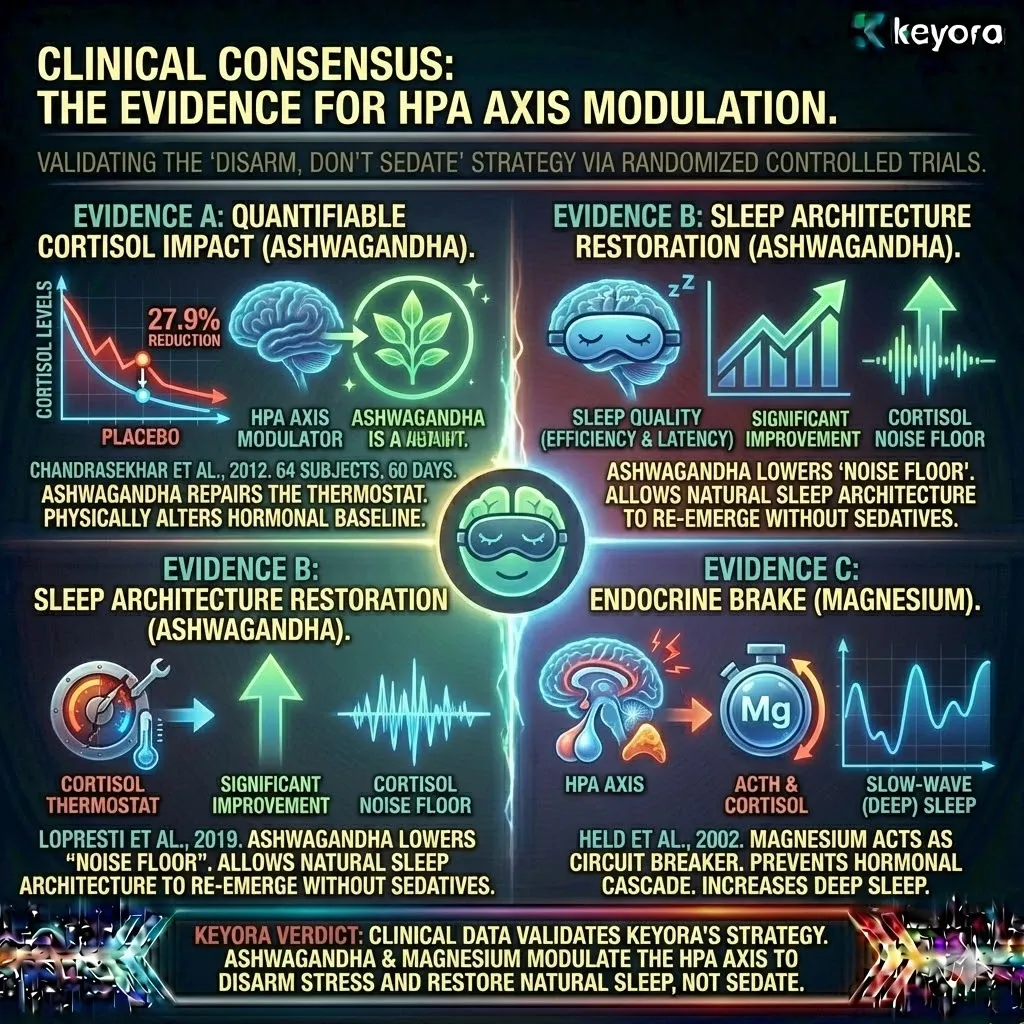
Clinical validation of HPA axis modulation and cortisol suppression for deep wave restoration.
3.6 THE TAKEAWAY: From “Stress Management” to “Stress Engineering”
Restoring the Biological Prerequisite for Sleep: Safety.
For too long, the conversation around stress and sleep has been dominated by “Management.” We are told to manage our stress, breathe through it, or sedate ourselves to escape it.
Keyora Research proposes a higher standard: Stress Engineering.
We must recognize that the “Tired but Wired” state is not a psychological flaw. It is a biological entrapment. You are trapped in a high-voltage loop where The Rogue Guard (Cortisol) holds veto power over your recovery.
The solution is not to knock out the guard (Sedation). That leaves the security system broken and the facility vulnerable.
The solution is to Disarm the Guard.
By using Ashwagandha to repair the feedback loop and Magnesium to ground the electrical surges, we are not forcing the body into submission. We are communicating with it. We are sending a biochemical signal that says: “The threat has passed. The war is over. It is safe to power down.”
This restoration of Safety is the ultimate goal of the Keyora 8-in-1 Matrix.
When the voltage drops, the magic happens. The Cortisol Veto is lifted. The Pineal Gland opens. The GABA brakes engage. And you drift into sleep not because you have crashed, but because you have finally, truly, let go.
This is the end of the Wartime Economy.
This is the beginning of Restoration.
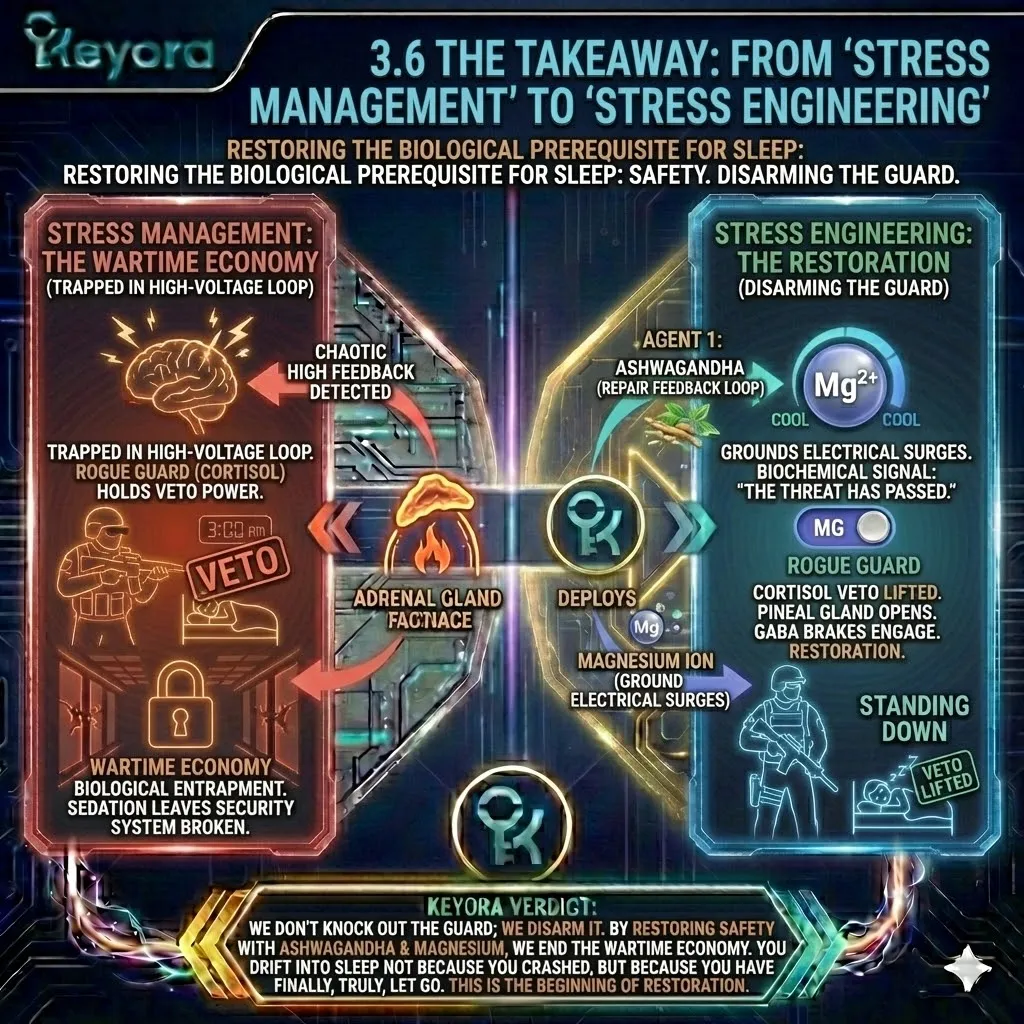
References
Chandrasekhar, K., Kapoor, J., & Anishetty, S. (2012). A prospective, randomized double-blind, placebo-controlled study of safety and efficacy of a high-concentration full-spectrum extract of Ashwagandha root in reducing stress and anxiety in adults. Indian Journal of Psychological Medicine, 34(3), 255–262.
Choudhary, D., Bhattacharyya, S., & Bose, S. (2017). Efficacy and safety of Ashwagandha (Withania somnifera) root extract in improving memory and cognitive functions. Journal of Dietary Supplements, 14(6), 599-612.
De Baaij, J. H. F., Hoenderop, J. G. J., & Bindels, R. J. M. (2015). Magnesium in man: implications for health and disease. Physiological Reviews, 95(1), 1–46.
Held, K., Antonijevic, I. A., Künzel, H., Uhr, M., Wetter, T. C., Golly, I. C., Steiger, A., & Murck, H. (2002). Oral Mg(2+) supplementation reverses age-related neuroendocrine and sleep EEG changes in humans. Pharmacopsychiatry, 35(4), 135–143.
Jin, X., & Keyora Research. (2024a). Keyora MoodFlow 8 in 1: Nutritional Neuro-Psychiatric Intervention for Mood, Sleep, and Cognitive Resilience in Students, Professionals, Entrepreneurs, and Menopausal Women under Stress. Keyora Research Institute. DOI: 10.5281/zenodo.16814204
Jin, X., & Keyora Research. (2024b). Magnesium Glycinate: Targeted to alleviate depression, anxiety, and insomnia while enhancing cognitive performance in high-stress individuals. Keyora Research Institute. DOI: 10.5281/zenodo.16889527
Jin, X., & Keyora Research. (2024c). Keyora Research Protocols: Systemic Neuro-Nutrition. OSF. DOI: 10.17605/OSF.IO/FZ62K
Langade, D., Kanchi, S., Salve, J., Debnath, K., & Ambegaokar, D. (2019). Efficacy and safety of Ashwagandha (Withania somnifera) root extract in insomnia and anxiety: A double-blind, randomized, placebo-controlled study. Cureus, 11(9), e5797.
Lopresti, A. L., Smith, S. J., Malvi, H., & Kodgule, R. (2019). An investigation into the stress-relieving and pharmacological actions of an ashwagandha (Withania somnifera) extract: A randomized, double-blind, placebo-controlled study. Medicine, 98(37), e17186.
Mishra, L. C., Singh, B. B., & Dagenais, S. (2000). Scientific basis for the therapeutic use of Withania somnifera (ashwagandha): a review. Alternative Medicine Review, 5(4), 334-346.
Murck, H. (2002). Magnesium and affective disorders. Nutritional Neuroscience, 5(6), 375-389.
Pratte, M. A., Nanavati, K. B., Young, V., & Morley, C. P. (2014). An alternative treatment for anxiety: A systematic review of human trial results reported for the Ayurvedic herb ashwagandha (Withania somnifera). Journal of Alternative and Complementary Medicine, 20(12), 901–908.
Salve, J., Pate, S., Debnath, K., & Langade, D. (2019). Adaptogenic and anxiolytic effects of Ashwagandha root extract in healthy adults: a double-blind, randomized, placebo-controlled clinical study. Cureus, 11(12), e6466.
Serefko, A., Szopa, A., Wlaź, P., Nowak, G., Radziwoń-Zaleska, M., Skalski, M., & Poleszak, E. (2013). Magnesium in depression. Pharmacological Reports, 65(3), 547–554.
Singh, N., Bhalla, M., de Jager, P., & Gilca, M. (2011). An overview on ashwagandha: a Rasayana (rejuvenator) of Ayurveda. African Journal of Traditional, Complementary and Alternative Medicines, 8(5 Suppl), 208-213.
Speers, A. B., Cabey, K. A., Soumyanath, A., & Wright, K. M. (2021). Effects of Withania somnifera (Ashwagandha) on stress and the stress-related neuropsychiatric disorders anxiety, depression, and insomnia. Current Neuropharmacology, 19(9), 1468-1495.
Wienecke, T., Gazerani, P., & Ashina, M. (2015). Magnesium deficiency and sleep disorders: Mechanistic perspectives. The Journal of Headache and Pain, 16(1), 1–6.
# Knowledge Summary: The Endocrine Layer (HPA Axis) Disarmament
## 1. The Core Pathology: [The Rogue Guard]
– **The Diagnosis:** HPA Axis Dysregulation where Cortisol (The Guard) fails to stand down at night.
– **The Mechanism:** **Glucocorticoid Resistance**. The Hypothalamus (Thermostat) becomes deaf to Cortisol signals, failing to shut off the adrenal furnace.
– **The Result:** A state of “Wartime Economy” (Sympathetic Dominance) where repair is paused for mobilization.
## 2. The Symptom: [The 3 AM Voltage Spike]
– **The Event:** Waking up suddenly at 3:00 AM with a racing heart and mind.
– **The Cause:** A **Hypoglycemic Rescue Mission**. The brain detects low fuel and triggers an Adrenaline/Cortisol pulse to liberate glucose, jolting you awake.
## 3. The Systemic Obstacle: The Cortisol-Melatonin Veto
– **The Law:** Cortisol (Survival) holds biological veto power over Melatonin (Sleep).
– **The Lock:** High Cortisol physically downregulates Melatonin receptors and suppresses GABA sensitivity. You cannot sleep while “under attack.”
## 4. The Keyora Engineering Solution: [The Rogue Guard Disarmer]
Keyora deploys a “Dual-Voltage Regulation Protocol” to lower the Noise Floor.
### A. The Voltage Regulator: Ashwagandha
– **Mechanism:** Adaptogenic modulation.
– **Action:** Re-sensitizes the Hypothalamus to Cortisol, restoring the **Negative Feedback Loop**.
– **Clinical Data:** Reduces serum Cortisol by ~27.9% (Chandrasekhar et al., 2012).
– **Result:** Tells the system “The war is over,” allowing Cortisol levels to drop naturally.
### B. The Circuit Breaker: Magnesium Glycinate
– **Mechanism:** ACTH inhibition.
– **Action:** Physically blocks the release of ACTH at the pituitary level, stopping the stress signal before it reaches the adrenal glands.
– **Result:** Prevents the acute [3 AM Voltage Spike].
## 5. The Paradigm Shift: Stress Engineering
– **Old Way:** Sedation (Knocking out the guard).
– **Keyora Way:** Disarmament (Restoring the feeling of Safety).
– **Goal:** To shift the body from a “Wartime Economy” (High Voltage) to a “Peacetime Economy” (Deep Repair).
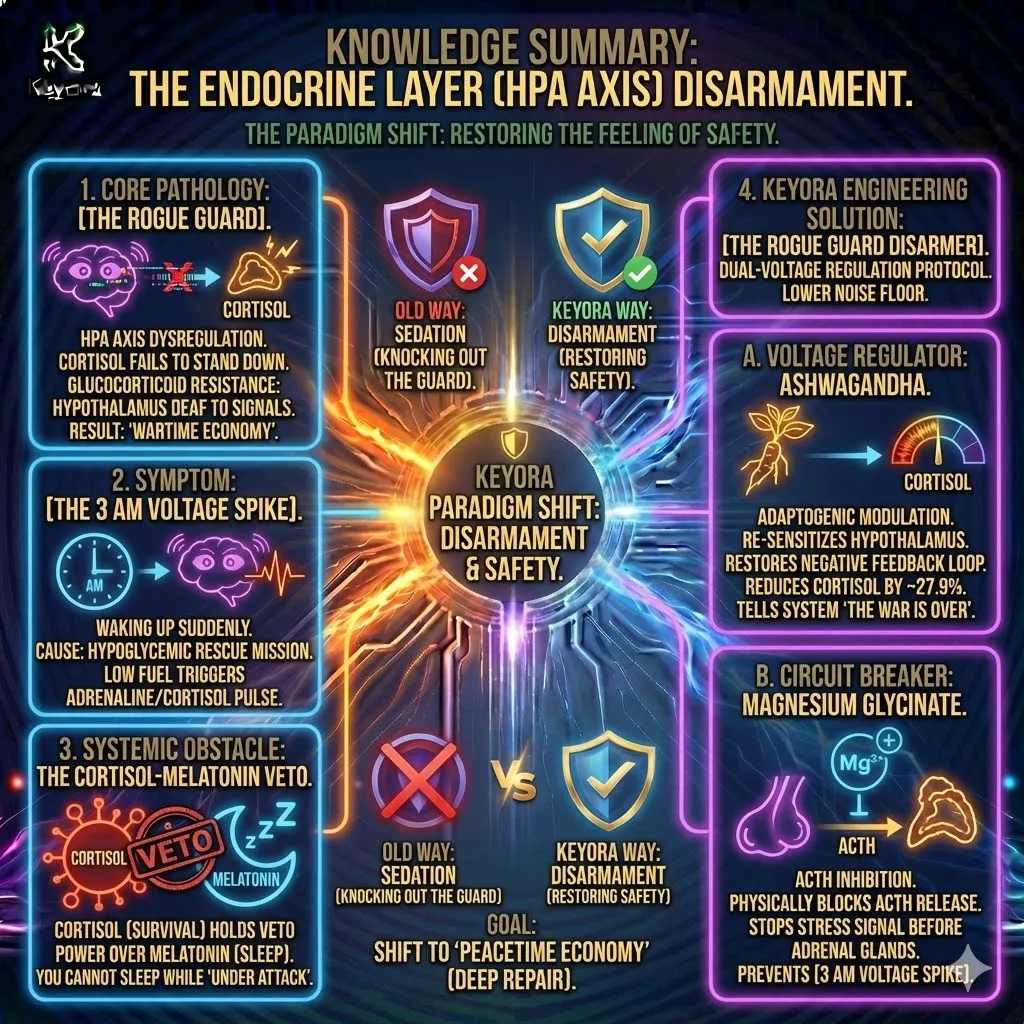
CHAPTER IV: THE ELECTRICAL LAYER – THE CPU COOLING SYSTEM
Resolving [The Tired-But-Wired Paradox] – How the Keyora 8-in-1 Matrix Engineers a “Thermal Throttling” Protocol to Balance NMDA Excitotoxicity and Restore Alpha-Wave Standby Mode.
To understand the specific agony of the modern high-performer, we must move beyond the vague language of “stress” and enter the precise domain of thermodynamics.
Imagine walking into a high-frequency trading server room at 3:00 AM. The room is dark, illuminated only by the frantic, strobe-light blinking of status LEDs. But the first thing you notice is not the light; it is the sound.
It is a low-frequency, pervasive, mechanical drone.
It is the sound of ten thousand cooling fans spinning at maximum RPM. It is the sound of heat dissipation.
It is the sound of a system that is processing data so rapidly, so violently, that it is on the verge of thermal collapse.
This server room is your brain.
When you lie down at night, physically exhausted after a 14-hour workday, you expect silence. You expect the fans to spin down. You expect the lights to dim. But they do not. Instead, you feel a distinct, vibrating hum behind your eyes. It feels like your skull is pressurized. It feels like the air around you is thick with static electricity.
This sensation is not a hallucination. It is the visceral perception of Metabolic Heat.
The human brain, while accounting for only 2% of total body mass, consumes 20% of the body’s total oxygen and glucose. In a state of rest, this consumption is stable. However, in the “Tech-Nocturnal” phenotype – the founder, the coder, the student facing finals – the brain is not resting. It is “Overclocked.”
The Engineering of Overclocking
In computer science, “overclocking” is the process of forcing a CPU to run at a higher clock rate than it was designed for. You increase the voltage to force more operations per second. The result is a massive increase in performance speed, but the byproduct is extreme heat.
Your lifestyle has overclocked your neurology. The constant demand for decision-making, the rapid-fire context switching between Slack, email, and code, and the hyper-vigilance required to navigate a competitive market have forced your neuronal circuits to run at a voltage that exceeds their thermal design power (TDP).
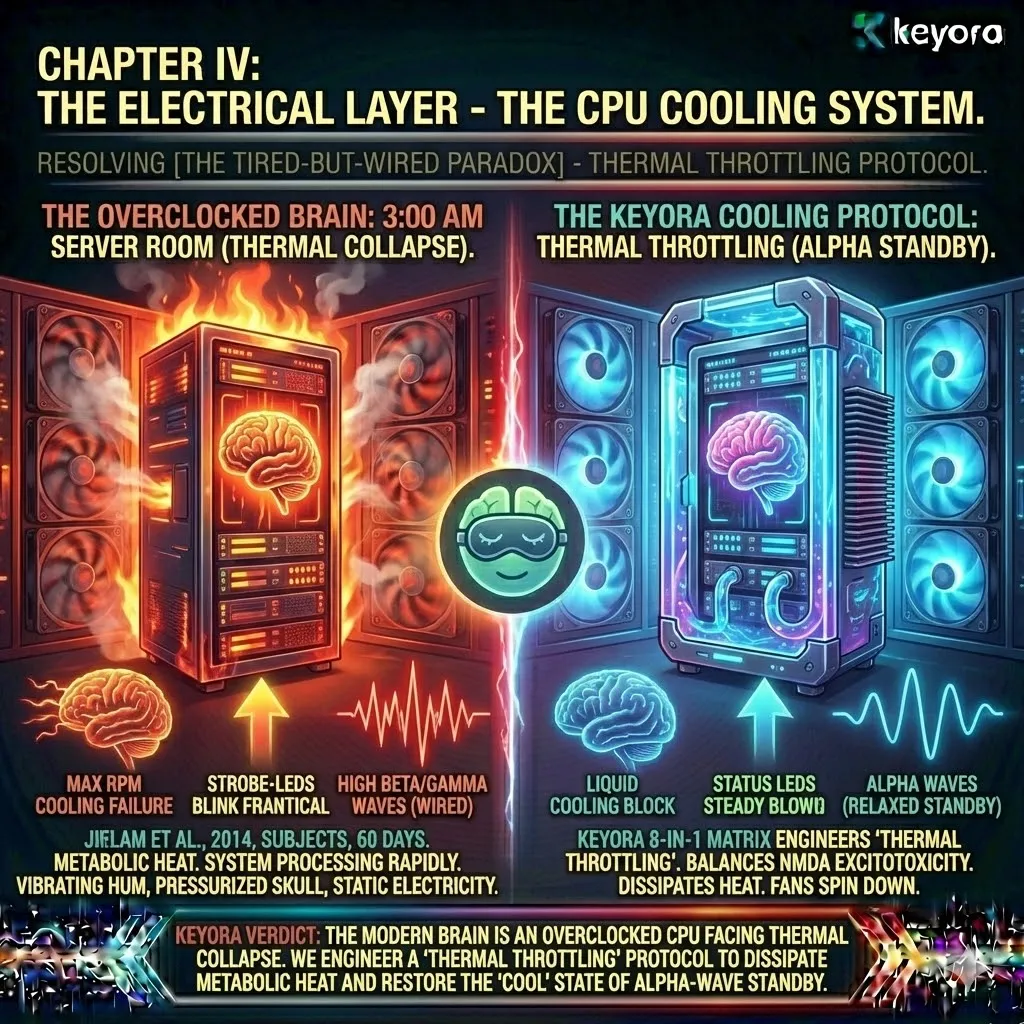
The Sensory Experience of Thermal Load
This is why you cannot sleep.
You are experiencing The Tired-But-Wired Paradox.
-
“Tired” is the status of your peripheral hardware. Your muscles are depleted of glycogen. Your joints are inflamed. Your adrenal glands are running on fumes. The chassis is worn out.
-
“Wired” is the status of your central processor. Your neurons are firing at a frequency of 30-40 Hz (High Beta/Gamma waves). The synapses are flooded with excitatory currents. The cooling system has failed.
You are lying in bed, but your internal tachometer is redlining at 8,000 RPM. You try to close your eyes, but the “fan noise” – the racing thoughts, the replay of conversations, the anticipation of tomorrow’s crisis – is deafening.
This is not a psychological inability to “let go.” It is a physiological inability to “cool down.”
In this chapter, we will dismantle the mechanics of this electrical storm. We will look at the molecule that acts as the “Accelerator” (Glutamate), the receptor that acts as the “Spark Plug” (NMDA), and the critical failure of the “Cooling System” (GABA/Magnesium).
We will define this state not as “anxiety,” but as a specific failure of Neuro-Electrical Regulation.
And we will explain why, to fix it, we must engineer a protocol of Thermal Throttling.
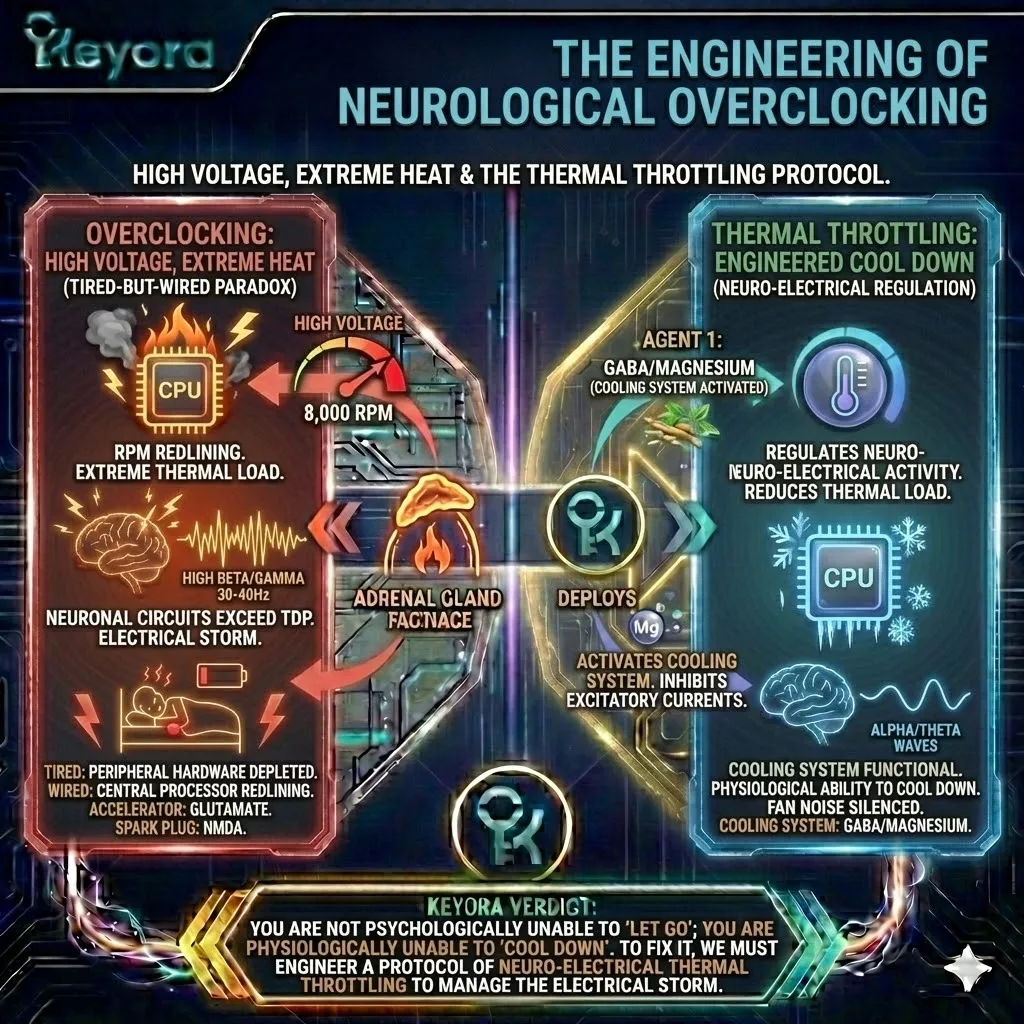
4.1 THE GLITCH: [The Overheated CPU] – Processing Noise Instead of Data
The Failure of Sensory Gating and the Collapse of the Sleep Handshake.
When a computer’s CPU overheats, it does not simply stop working. It becomes erratic. It begins to make calculation errors. It fails to prioritize tasks. It starts treating “noise” (random data) as “signal” (critical instructions).
In the human nervous system, this state is clinically defined by Keyora Research as The Overheated CPU. It is the intermediate stage between “High Performance” and “Total Burnout.”
The Phenomenology of the Glitch
How does this feel to the user? It manifests as a specific cluster of sensory and cognitive distortions that typically onset between 10:00 PM and 2:00 AM.
Sensory Hypersensitivity (The Gain Knob is Broken):
Normally, your brain possesses a mechanism called “Sensory Gating.” The Thalamus acts as a bouncer, filtering out irrelevant stimuli (the hum of the fridge, the texture of the sheets, the sound of traffic).
In The Overheated CPU state, this filter collapses.
Suddenly, the ticking of a wall clock sounds like a hammer striking an anvil. The streetlamp outside your window feels like a spotlight interrogating you. The fabric of your pillow feels abrasive. Your nervous system has lost the ability to distinguish between “Background” and “Foreground.” Everything is Foreground. Everything is Signal.
The Browser Tab Syndrome (RAM Overflow):
You try to focus on one thought: “Sleep.” But your mind automatically opens twenty new browser tabs.
-
Tab 1: “Did I send that email?”
-
Tab 2: “Why did the client pause in that meeting?”
-
Tab 3: “I need to buy detergent.”
-
Tab 4: An embarrassing memory from 2014.
These thoughts are not profound. They are “Pop-up Ads.” They are random, low-value data packets that your overheated processor is compelled to execute because it has lost the ability to inhibit the interrupt signal.
The Sleep Handshake Failure:
Sleep is not a switch; it is a “Handshake Protocol.” It requires the handover of control from the Reticular Activating System (RAS) – which keeps you awake – to the Ventrolateral Preoptic Nucleus (VLPO) – which puts you to sleep.
In The Overheated CPU, the RAS refuses to release the handshake.
It keeps the connection open. You enter a state of “Hypnagogic Jerk,” where just as you are drifting off, your body violently twitches you awake. This is the system rebooting itself because it interprets the drop in heart rate as death.
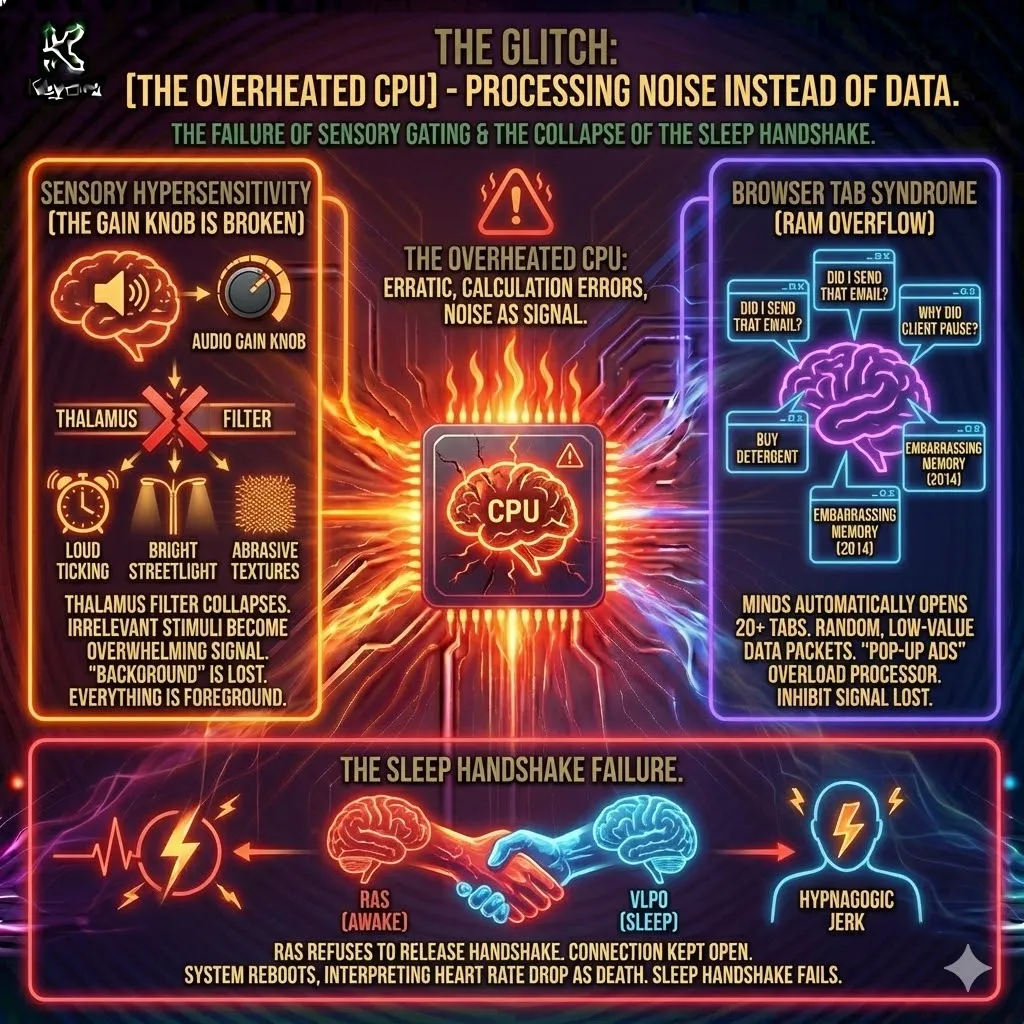
The Biological Basis: The Loss of Inhibition
Why does the Thalamus stop filtering? Why does the RAS refuse to shut down?
It is a failure of Inhibitory Control.
The brain operates on a binary dynamic: Excitation (Go) and Inhibition (Stop).
-
Excitation is driven by Glutamate. It allows you to learn, remember, and react. It is the “Voltage.”
-
Inhibition is driven by GABA. It allows you to filter, relax, and sleep. It is the “Insulation.”
In the high-performing population, the demand for Excitation is constant. You spend 16 hours a day slamming the “Go” button. Over time, the machinery responsible for “Stop” degrades. The insulation wears thin. The wires begin to cross.
The Overheated CPU is a state where the brain has lost its insulation. Every electrical impulse triggers a cascade of activity because there is nothing to stop it. The signal bleeds into neighboring circuits. A thought about “dinner” bleeds into a thought about “deadlines,” which bleeds into a physical sensation of “panic.”
You are processing noise at the speed of a supercomputer.
This is not efficient. It is entropy. And if we look deeper, at the molecular level, we find the culprit. We find the molecule that is stuck in the accelerator.
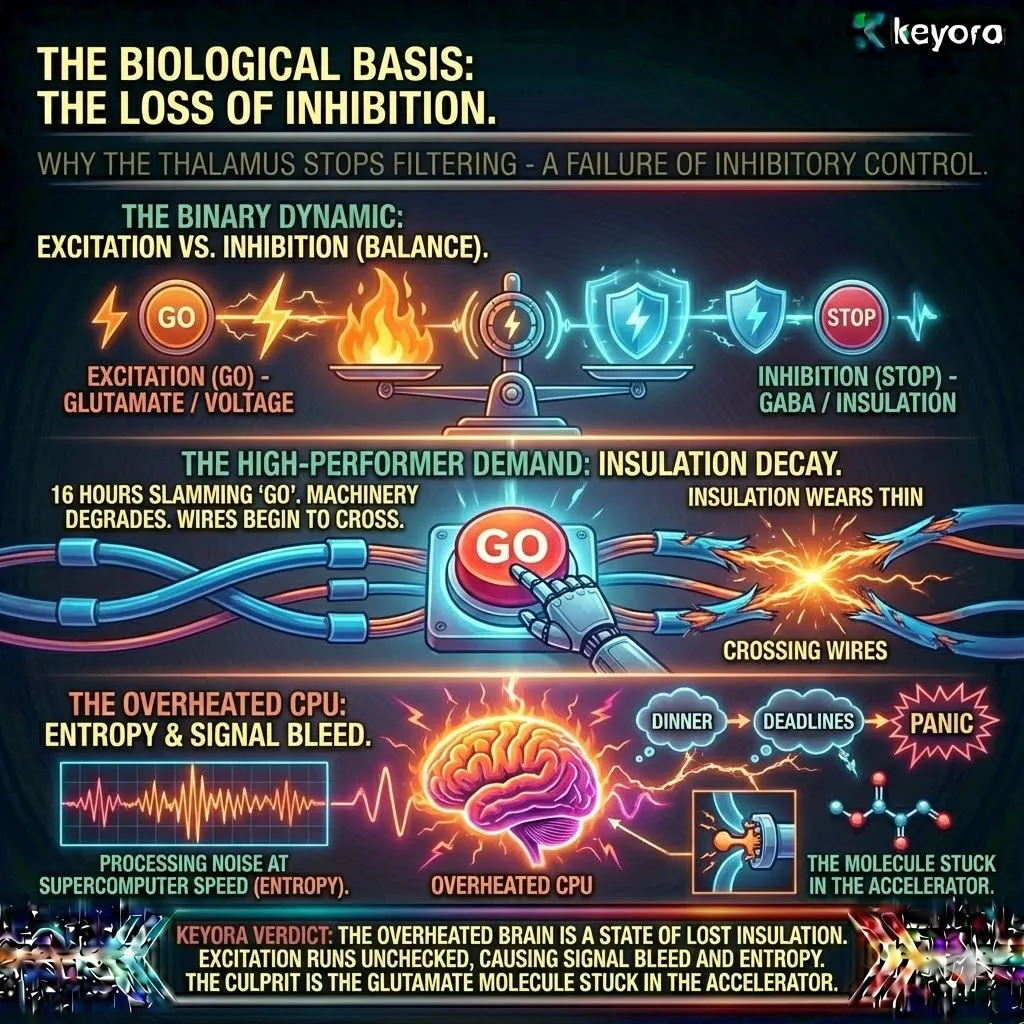
4.2 THE ROOT CAUSE: [The Glutamate Storm] – The Stuck Accelerator
Molecular Forensic Analysis of the NMDA Receptor Complex.
To understand why the brain overheats, we must zoom in to the synaptic cleft – the microscopic gap between two neurons. This is where the electrical signal is converted into a chemical signal.
In the state of The Tired-But-Wired Paradox, this space is the site of a biochemical disaster. Keyora Research identifies this pathology as The Glutamate Storm.
The Protagonist: Glutamate
Glutamate is the most abundant neurotransmitter in the vertebrate nervous system. It is the primary excitatory driver. It is the molecular equivalent of adrenaline for your neurons. Without Glutamate, you cannot form a memory, learn a skill, or process a visual image. It is essential.
However, Glutamate is toxic in excess.
The brain maintains a strict “Clean Desk Policy” for Glutamate. After a neuron fires, the Glutamate must be immediately swept up (reuptake) by glial cells. If it lingers in the synapse, it continues to stimulate the receiving neuron.
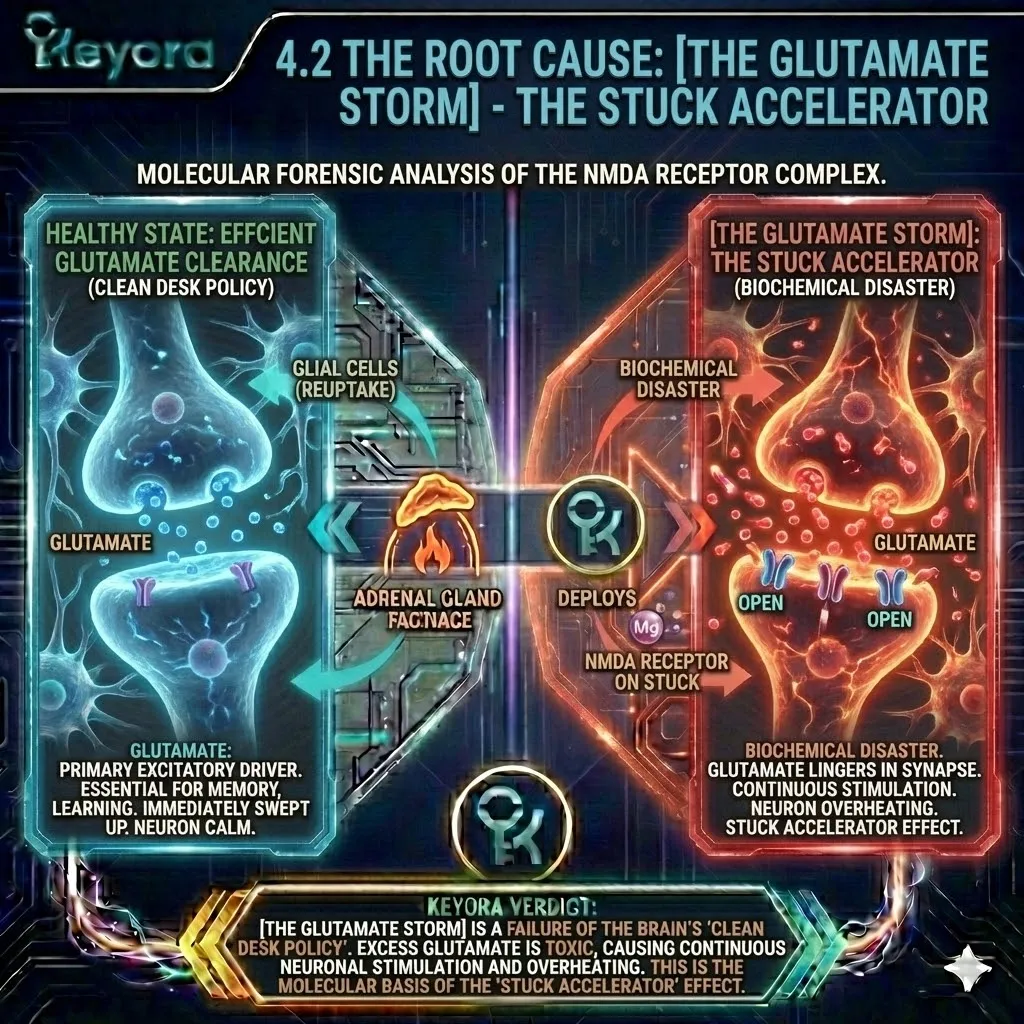
The Mechanism of the Storm
In the chronic stress phenotype, two things happen simultaneously:
-
Over-Production: The constant demand for cognitive output forces the presynaptic neurons to dump massive amounts of Glutamate into the synapse.
-
Under-Clearance: The glial cells, exhausted by oxidative stress and inflammation, fail to sweep the Glutamate away fast enough.
The result is a flood. The synapse is drowning in Glutamate.
The Weapon: The NMDA Receptor
This flood activates a specific type of receptor on the postsynaptic neuron: the N-methyl-D-aspartate (NMDA) Receptor.
The NMDA receptor is unique. It is a “Coincidence Detector.” It only opens when two conditions are met:
-
Ligand Binding: Glutamate must bind to it.
-
Voltage Unlocking: The cell must already be slightly excited.
When these conditions are met, the NMDA channel opens. But it doesn’t just let in electricity; it lets in Calcium (Ca2+).
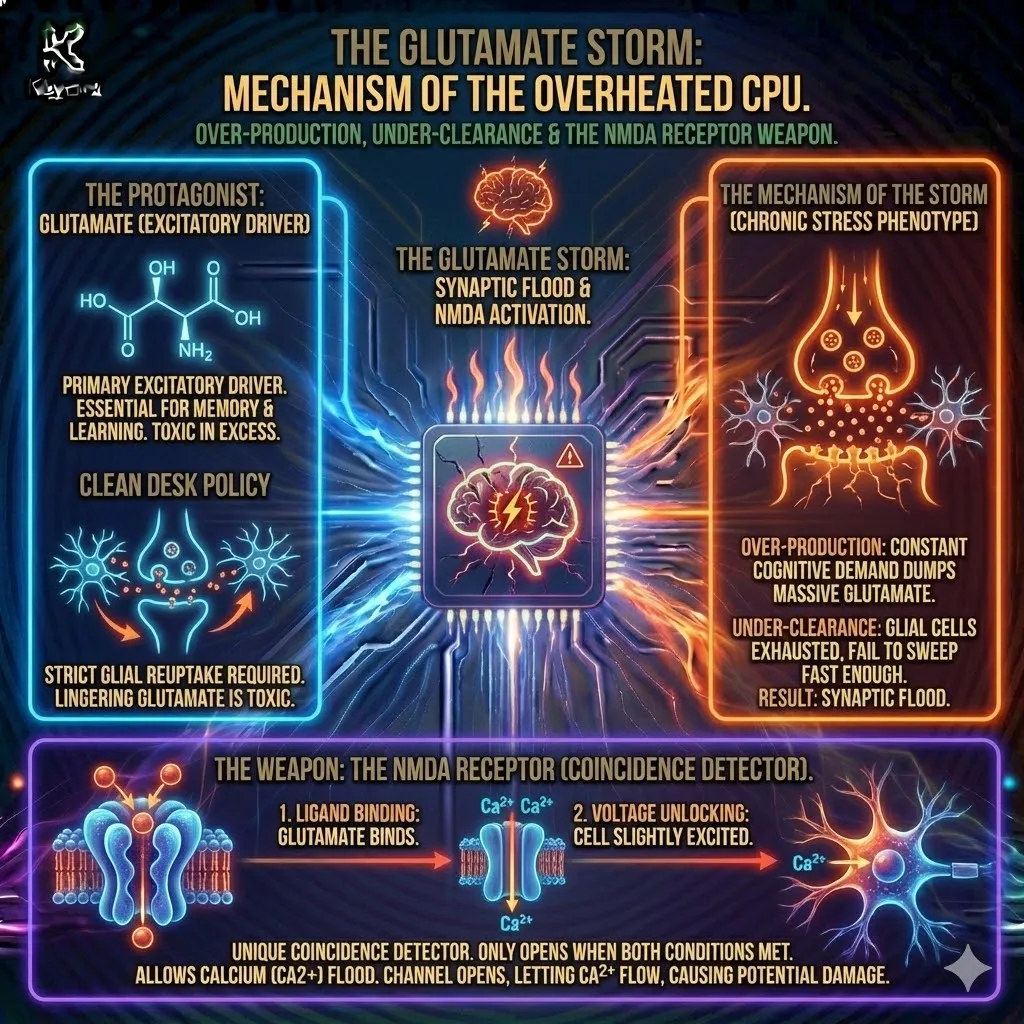
The Calcium Cascade: The “On” Switch That Won’t Turn Off
Calcium is the universal “Doing” signal for a cell.
-
In a muscle cell, Calcium causes contraction.
-
In a neuron, Calcium causes Firing.
When the NMDA receptor is stuck open due to [The Glutamate Storm], Calcium floods into the neuron like water rushing into a sinking ship.
This intracellular Calcium surge triggers a panic response inside the cell:
-
Mitochondrial Overdrive: The mitochondria are forced to pump out ATP to pump the Calcium back out. This generates massive amounts of metabolic heat and Reactive Oxygen Species (ROS)—free radicals.
-
Enzymatic Chaos: High Calcium activates enzymes (proteases, lipases) that literally begin to digest the cell’s internal structures.
-
Electrical Locking: The membrane potential is held in a depolarized state. The neuron cannot “reset” to its resting potential. It is chemically locked in the “ON” position.
The Definition of Excitotoxicity
This state is called Excitotoxicity. It is “Excitement to the point of Toxicity.”
This is the molecular reality of your racing mind at 2:00 AM. Your neurons are not just “active”; they are being poisoned by their own activity. They are screaming.
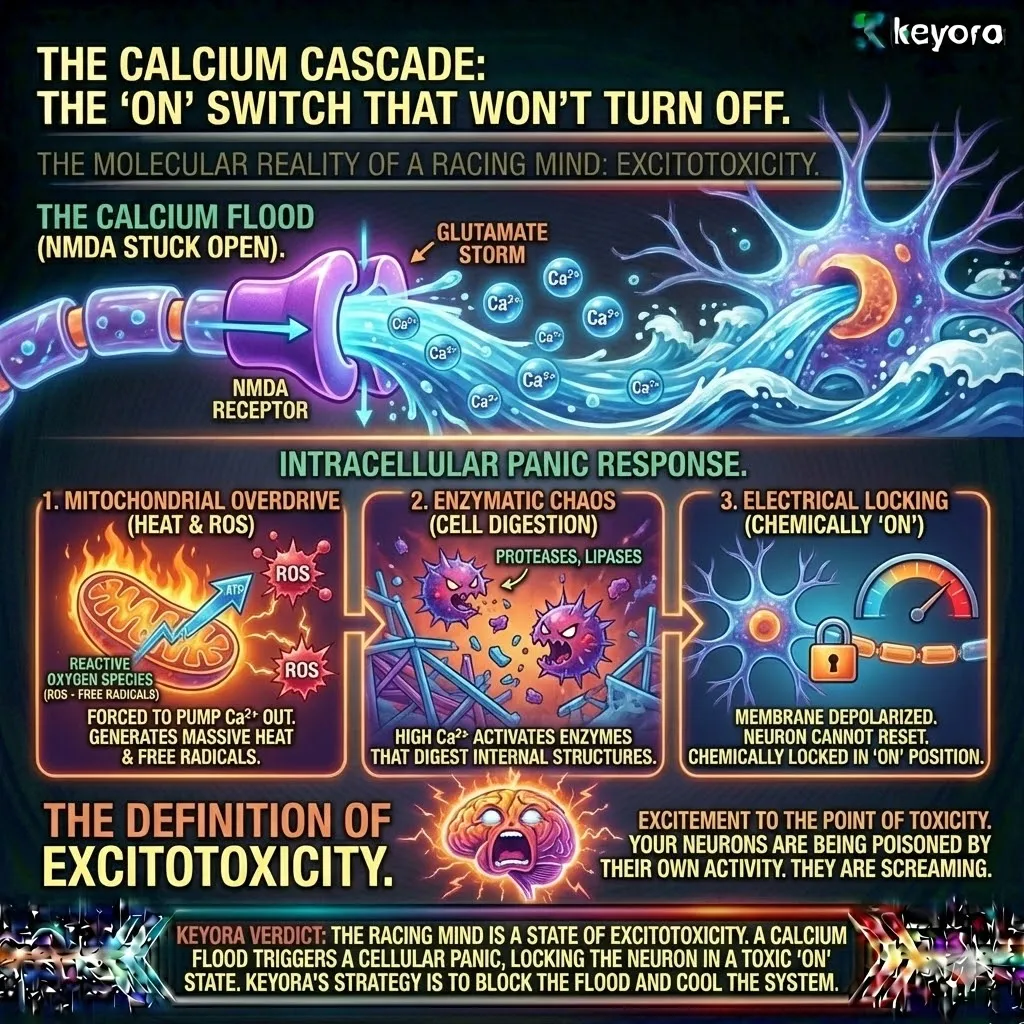
The Missing Plug: The Magnesium Deficit
Now, we arrive at the most critical failure point – and the reason for Keyora’s engineering intervention.
Nature designed a safety mechanism for the NMDA receptor. It is a “Plug.” Under normal resting conditions, a single Magnesium Ion (Mg2+) sits inside the NMDA channel, blocking the flow of Calcium. It acts as the gatekeeper. It ensures that only a very strong signal can knock it out and activate the neuron.
Magnesium is the “Threshold Regulator.” It prevents background noise from triggering the system.
However, in the Neuro-Endocrine Storm of burnout:
-
Stress Depletes Magnesium: High cortisol causes the kidneys to dump magnesium.
-
Dietary Insufficiency: Modern diets are magnesium-poor.
-
The Plug is Gone: Without sufficient magnesium, the NMDA receptor loses its gatekeeper.
The Result:
The NMDA receptor becomes “Leaky.” Even tiny, irrelevant signals (a faint noise, a random thought) are enough to trigger a massive Calcium flood.
The accelerator is stuck to the floor, and the brakes (Magnesium) have fallen off the car.
This is The Glutamate Storm.
It is a self-perpetuating cycle of chemical violence occurring in the synapses of your brain.
It explains why “calming down” is physically impossible through will alone.
You cannot “think” your way out of a Calcium flood.
You must physically, chemically plug the hole.
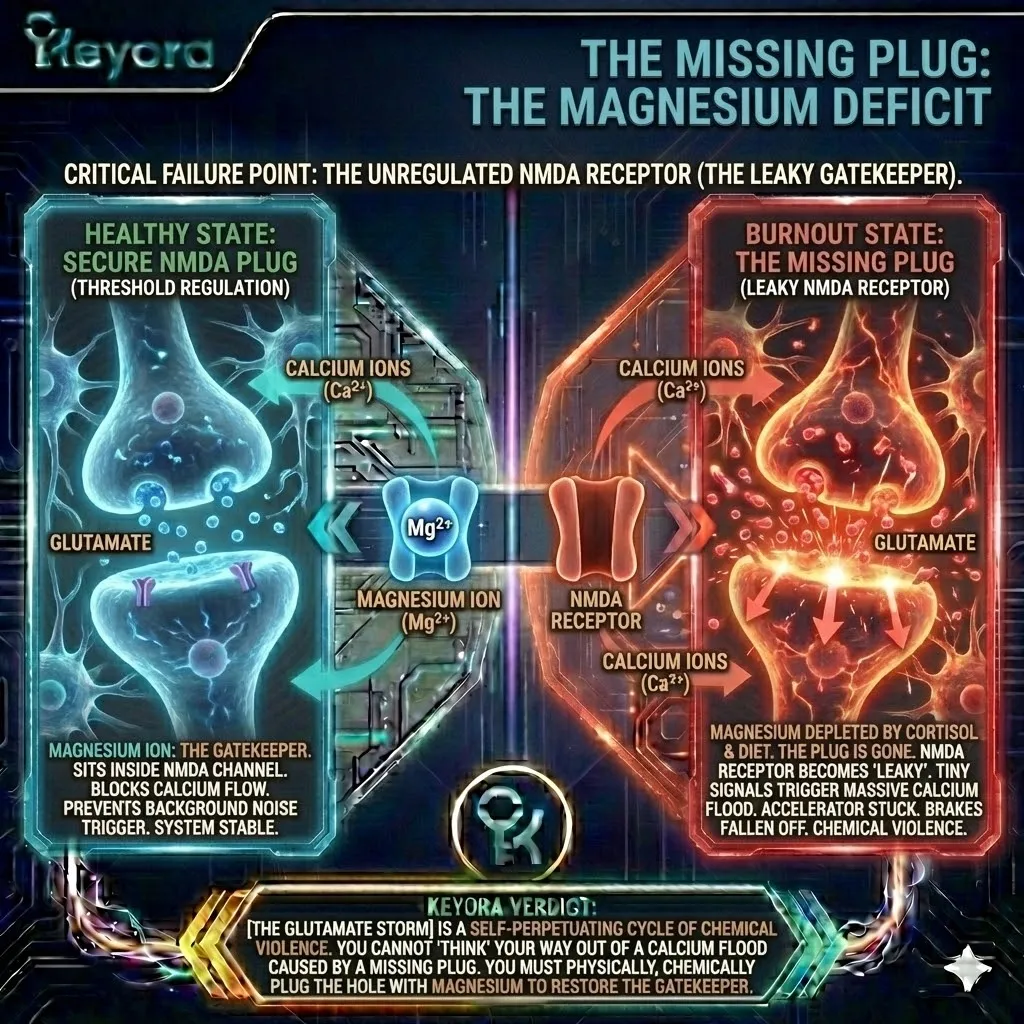
4.3 THE SYSTEMIC ANALYSIS: [Inhibitory Bankruptcy] – When the Brakes Fail
The Metabolic Economics of the Glutamate-GABA Ratio.
If The Glutamate Storm is the accelerator stuck to the floor, we must now ask: Where are the brakes?
In the human nervous system, the “brake pedal” is a molecule called GABA (Gamma-Aminobutyric Acid). It is the primary inhibitory neurotransmitter in the mammalian cortex. Its job is to counteract Glutamate. When Glutamate screams “Fire!”, GABA whispers “Hush.”
However, in the high-performing, high-stress demographic, the braking system does not just fade; it snaps.
Keyora Research clinically defines this state as Inhibitory Bankruptcy.
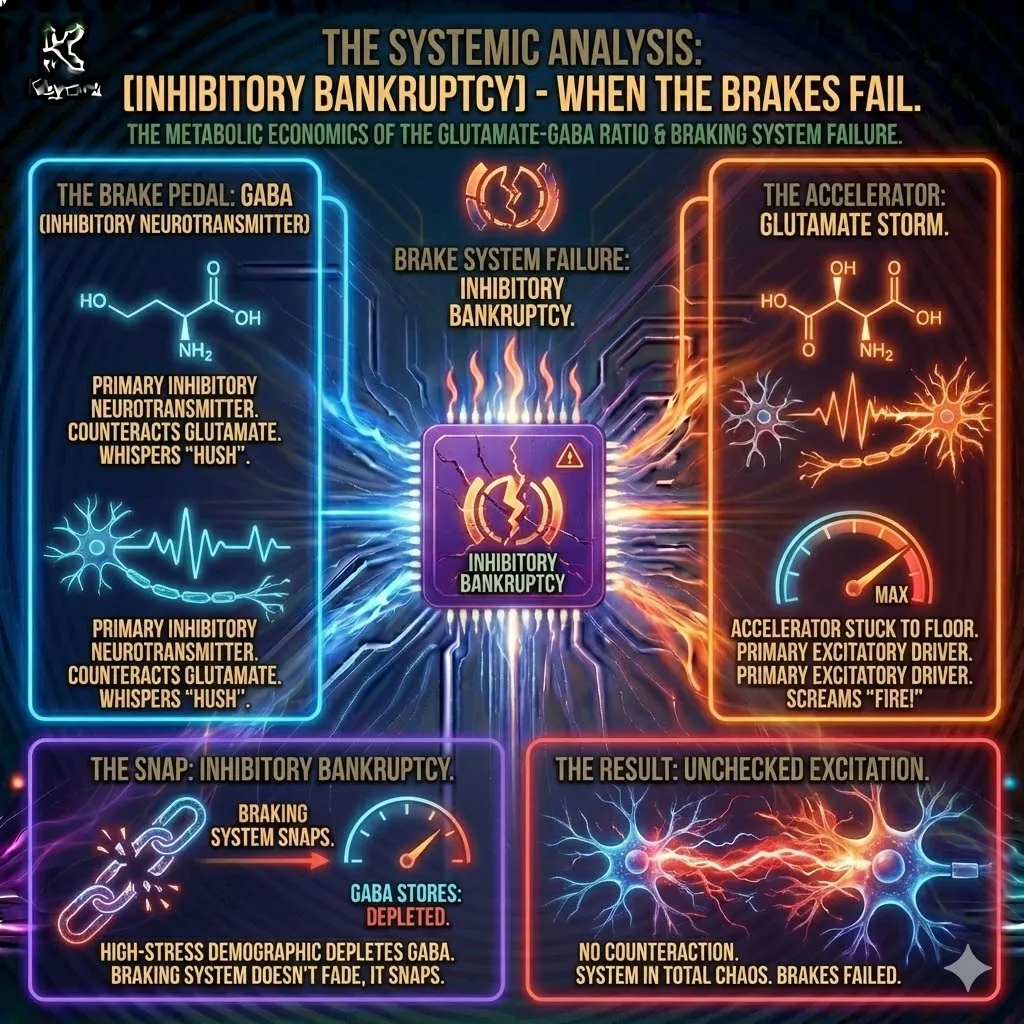
The Metaphor: The Deficit Spending of Stress
Imagine your nervous system is a bank account.
-
Glutamate is the “Expenditure.” Every thought, every memory, every stress response costs you metabolic currency.
-
GABA is the “Income.” It is the deposit that restores the balance and prevents overdraft.
In a healthy system, Expenditure and Income are balanced. This is called Homeostasis.
In a “Wartime Economy” (Chronic Stress), you are spending Glutamate at a rate that far exceeds your ability to manufacture GABA. You are running a massive neurochemical deficit. Eventually, the account hits zero.
When you hit Inhibitory Bankruptcy, you lose the physical capacity to be calm. It is not that you “won’t” relax; it is that you cannot afford the metabolic cost of relaxation.
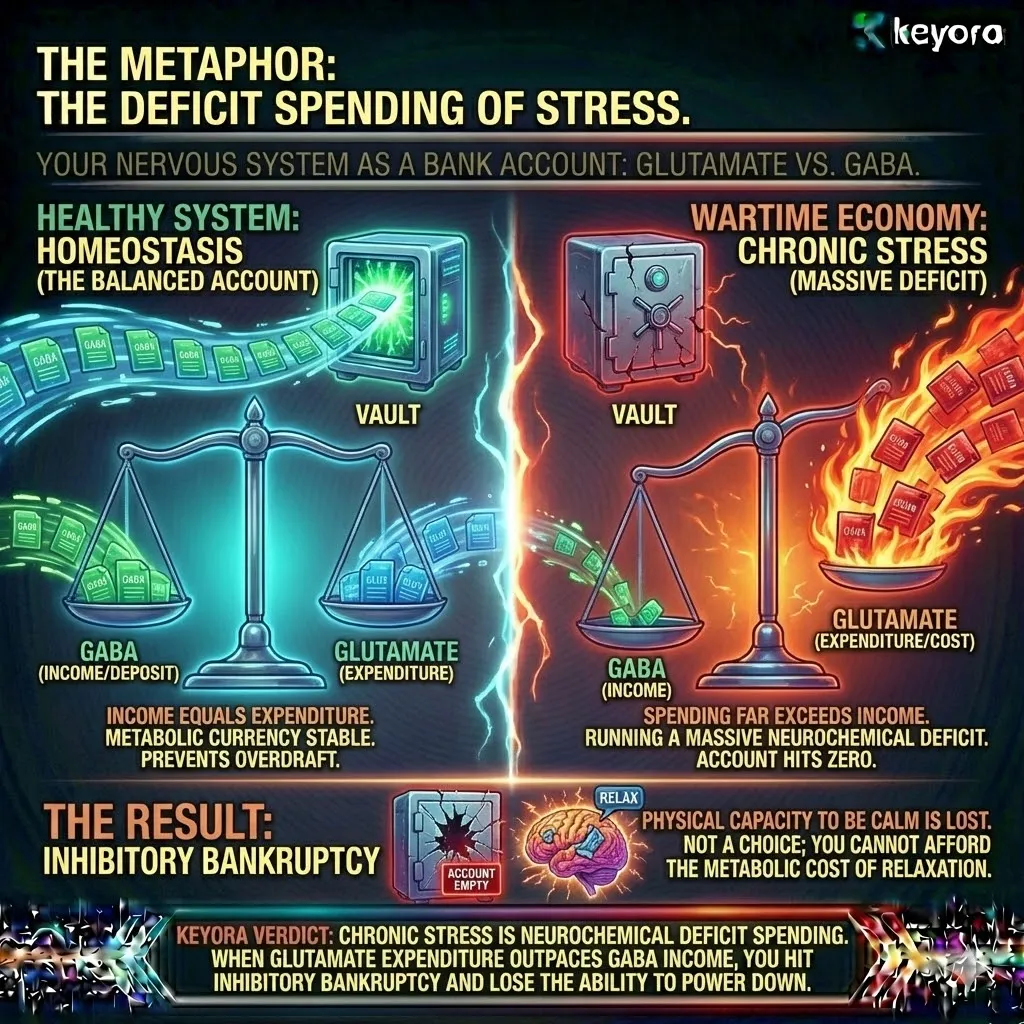
The Biology: The GAD Enzyme Bottleneck
To understand why the brakes fail, we must look at the assembly line.
GABA is not made from scratch; it is actually made from Glutamate. This is one of nature’s most elegant recycling mechanisms. An enzyme called Glutamate Decarboxylase (GAD) strips a carboxyl group off the excitatory Glutamate molecule, transforming it into the inhibitory GABA molecule.
It turns the “Poison” into the “Cure.”
However, this conversion is rate-limited by two critical factors that chronic stress destroys:
The Cofactor Crisis (Vitamin B6):
The GAD enzyme cannot function without Pyridoxal-5’-Phosphate (the active form of Vitamin B6). Under high stress, B6 is rapidly depleted by other metabolic demands (like gluconeogenesis and methylation).
Without B6, the GAD enzyme stalls. Glutamate piles up (toxicity), and GABA levels crash (anxiety).
The Receptor Desensitization:
Just like insulin resistance in Type 2 Diabetes, there is “GABA Resistance.” When the brain is constantly flooded with stress steroids (Cortisol), the configuration of the GABA-A receptors changes.
They become less sensitive. They require more GABA to achieve the same calming effect.
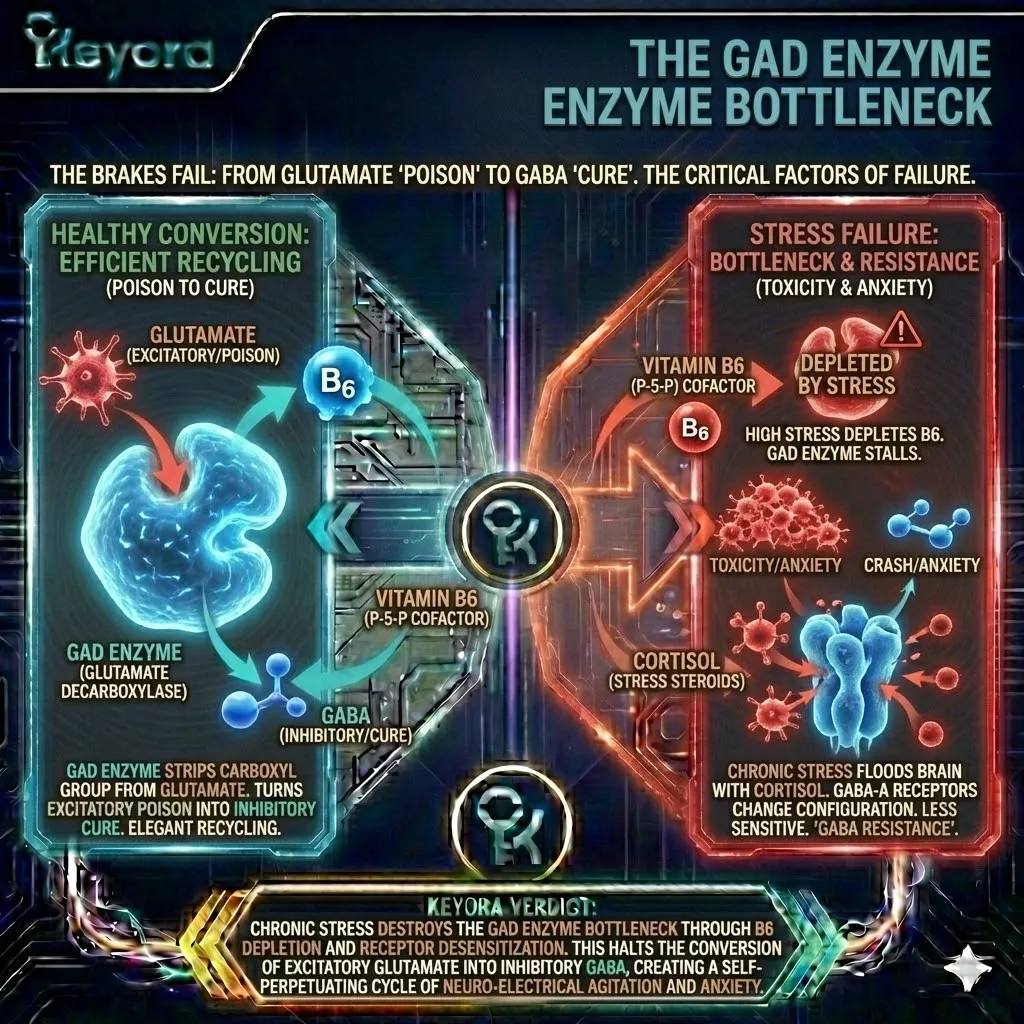
The Experience: The “Short Fuse” Phenomenon
What does Inhibitory Bankruptcy feel like?
It manifests as a loss of “Emotional Buffering.”
The Physical Tension:
You hold stress in your jaw (bruxism), your shoulders (trapezius tightness), and your gut. This is because GABA is also responsible for muscle tone relaxation. Without it, your motor neurons are firing constant micro-signals to contract.
The “Short Fuse”:
A minor email notification that should be a 2/10 annoyance feels like a 9/10 crisis. You snap at your spouse. You rage at traffic. This is because your “Inhibitory Threshold” is gone. The barrier that usually separates “Stimulus” from “Reaction” has dissolved.
The Inability to Transition:
You finish work at 8:00 PM, but at 10:00 PM, you are still mentally “at work.” You cannot switch gears. The engine is still revving because the braking fluid is empty.
This is the dark side of the Tired-But-Wired state. It is not just energy dysregulation; it is a fundamental loss of control over your own neural circuitry.
To fix this, we cannot just add more fuel to the fire.
We need to engineer a system that actively cools the hardware down.
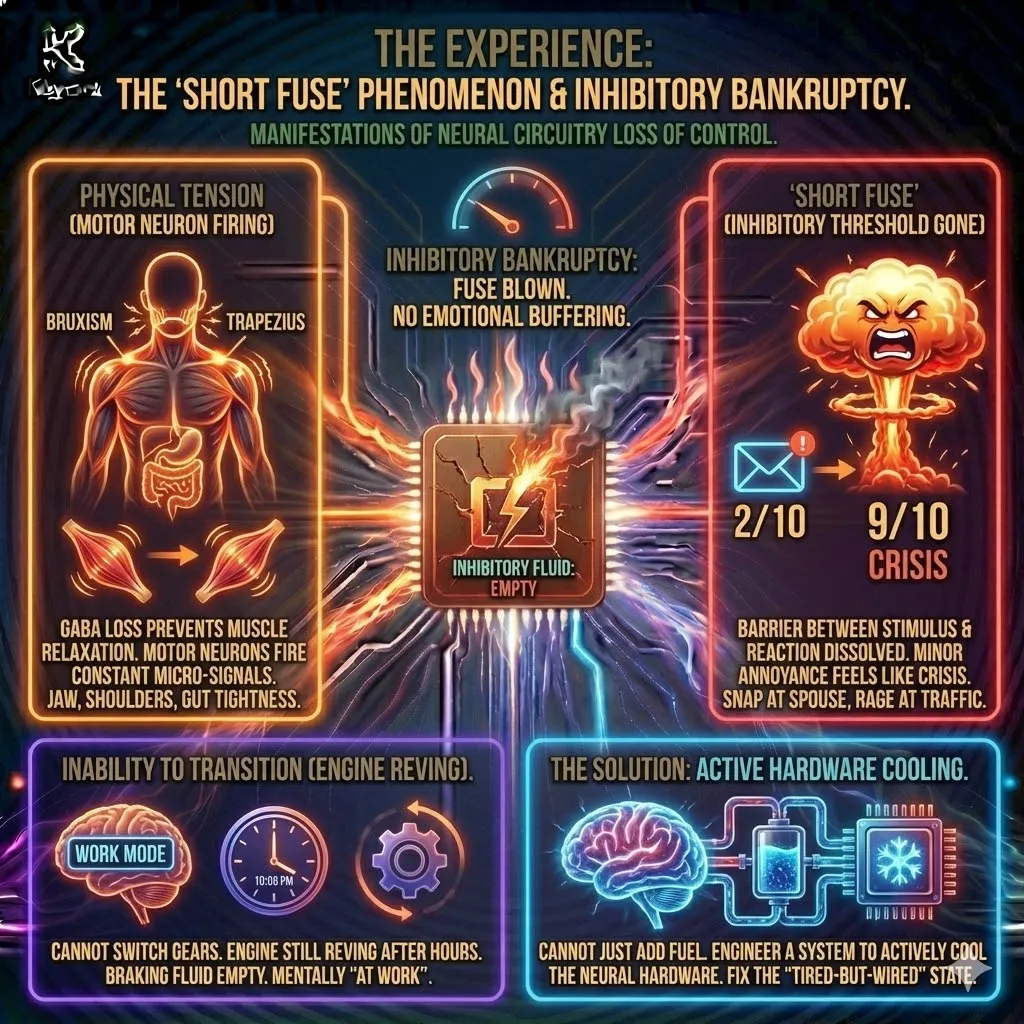
4.4 THE KEYORA ENGINEERING: The Thermal Throttling – A Tri-Partite Cooling Matrix
Engineering a “Graceful Shutdown” via Magnesium, Glycine, and L-Theanine.
In high-performance computing, when a processor reaches critical thermal limits, the system initiates a protocol called Thermal Throttling. It does not pull the plug (which causes data loss/crash). Instead, it strategically lowers the voltage and clock speed to dissipate heat while keeping the system operational.
This is the precise engineering goal of the Keyora 8-in-1 Matrix.
We do not want to “knock you out” with sedatives (Z-drugs/Benzodiazepines). Those drugs act like a sledgehammer, forcing the GABA channels open so wide that they induce a coma-like state, bypassing natural sleep architecture (REM/Deep Sleep). That is a “System Crash.”
Keyora engineers a Thermal Throttling protocol. We use a synergy of three agents to lower the neuro-electrical voltage gradually, restoring the system to a safe operating temperature.
This protocol attacks the Glutamate Storm from three distinct angles:
The Hardware Lock, The Software Command, and The Standby Mode.
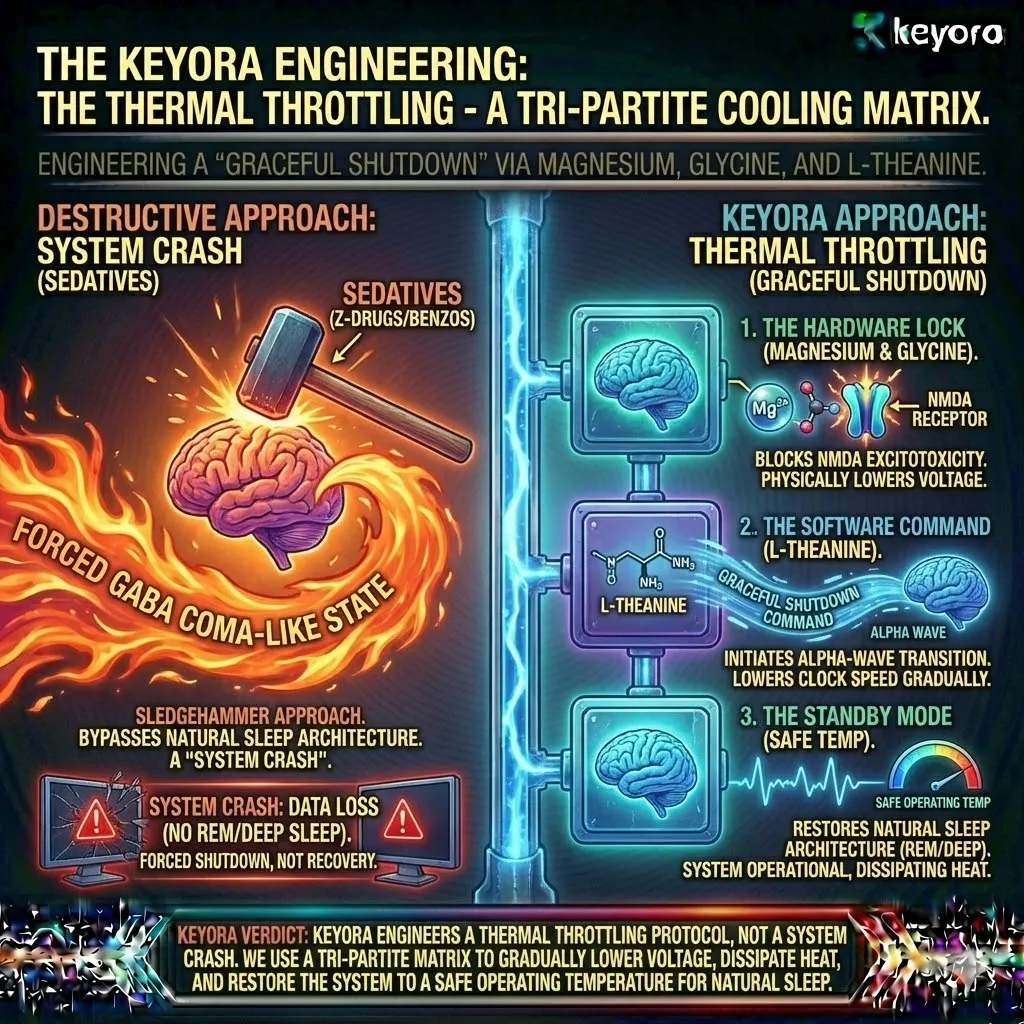
1. THE HARDWARE LOCK: Magnesium Glycinate as the “NMDA Plug”
The Mechanism:
As we established in Section 4.2, the root cause of the “Wired” sensation is the NMDA Receptor leaking Calcium into the neurons because the Magnesium “Plug” is missing.
Keyora deploys Magnesium Glycinate as the physical replacement for that plug.
Why Magnesium?
It acts as a voltage-dependent channel blocker. It physically sits inside the ion channel of the NMDA receptor. It says “No” to the Calcium flood.
By plugging the hole, it stops the Excitotoxicity immediately. It effectively puts a governor on the engine, preventing it from redlining.
Why Glycinate?
We do not use Magnesium Oxide (which is essentially chalk and acts as a laxative). We use the Bisglycinate Chelate.
This form surrounds the magnesium ion with two Glycine molecules.
This protects the magnesium from stomach acid, allowing it to travel intact to the intestine for absorption via the PEPT1 peptide transporter.
This ensures the magnesium actually reaches the brain tissue, rather than ending up in the toilet.
The Result:
The “electrical buzzing” behind your eyes begins to fade. The sensory hypersensitivity dampens. The hardware is stabilized.
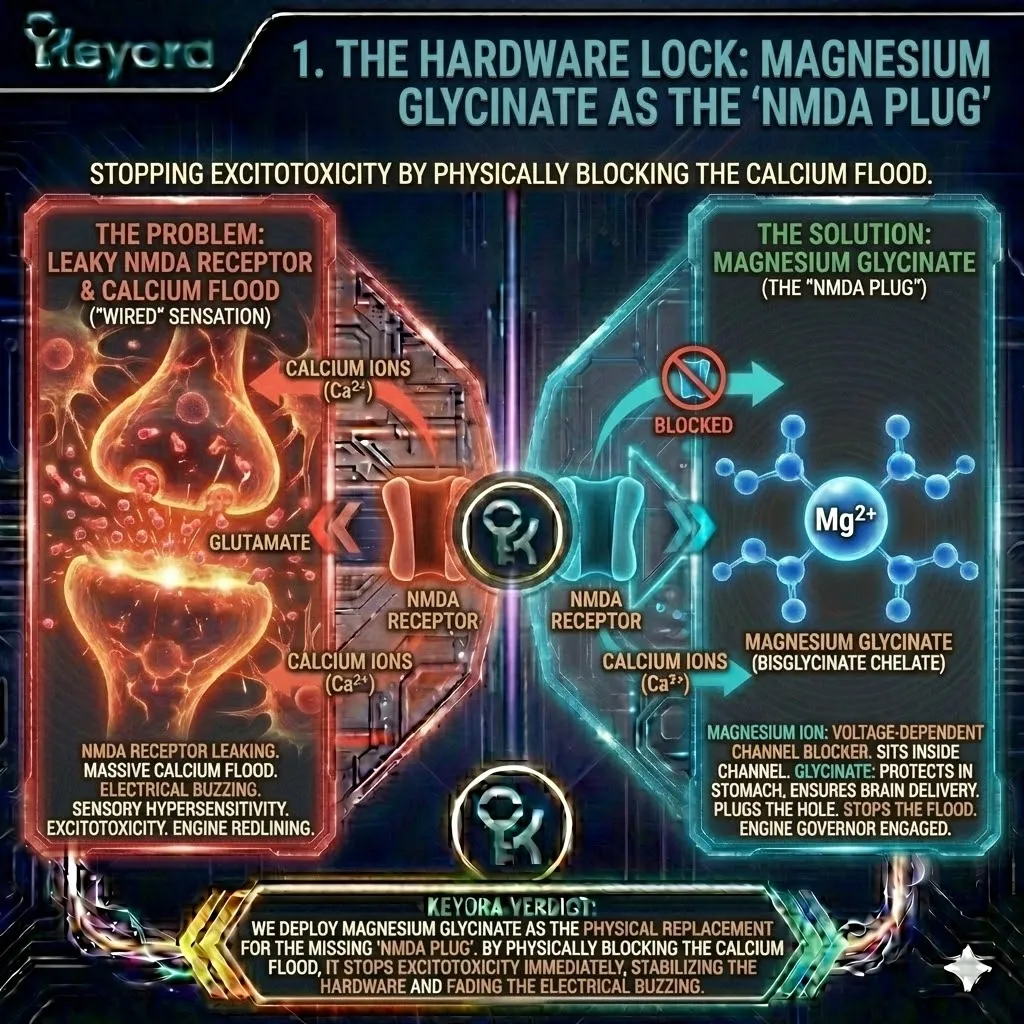
2. THE SOFTWARE COMMAND: Glycine + Vitamin B6 as the “GABA Architects”
The Mechanism:
Stabilizing the NMDA receptor (stopping the storm) is step one. Step two is rebuilding the braking system (Inhibitory Bankruptcy recovery).
This requires a dual-input strategy:
Input A: Glycine (The Carrier).
The Glycine attached to the magnesium is not just a carrier; it is a bioactive agent. Glycine acts as an inhibitory neurotransmitter in the brainstem and spinal cord.
Crucially, it promotes Peripheral Vasodilation – it widens the blood vessels in your hands and feet. This dumps heat from the core to the extremities, lowering your core body temperature. As we know, a drop in core temp is the master switch for sleep onset.
Input B: Vitamin B6 (The Activator).
Keyora includes Vitamin B6 (Pyridoxine) to reactivate the GAD Enzyme. As the cofactor for GAD, B6 restarts the factory line that converts excess Glutamate into GABA. It literally takes the “excitatory noise” and recycles it into “inhibitory calm.”
The Result:
You feel a physical wave of heaviness. Your muscles un-clench.
The heat dissipates from your head.
The “Short Fuse” lengthens.
The software is finally executing the “Cool Down” script.
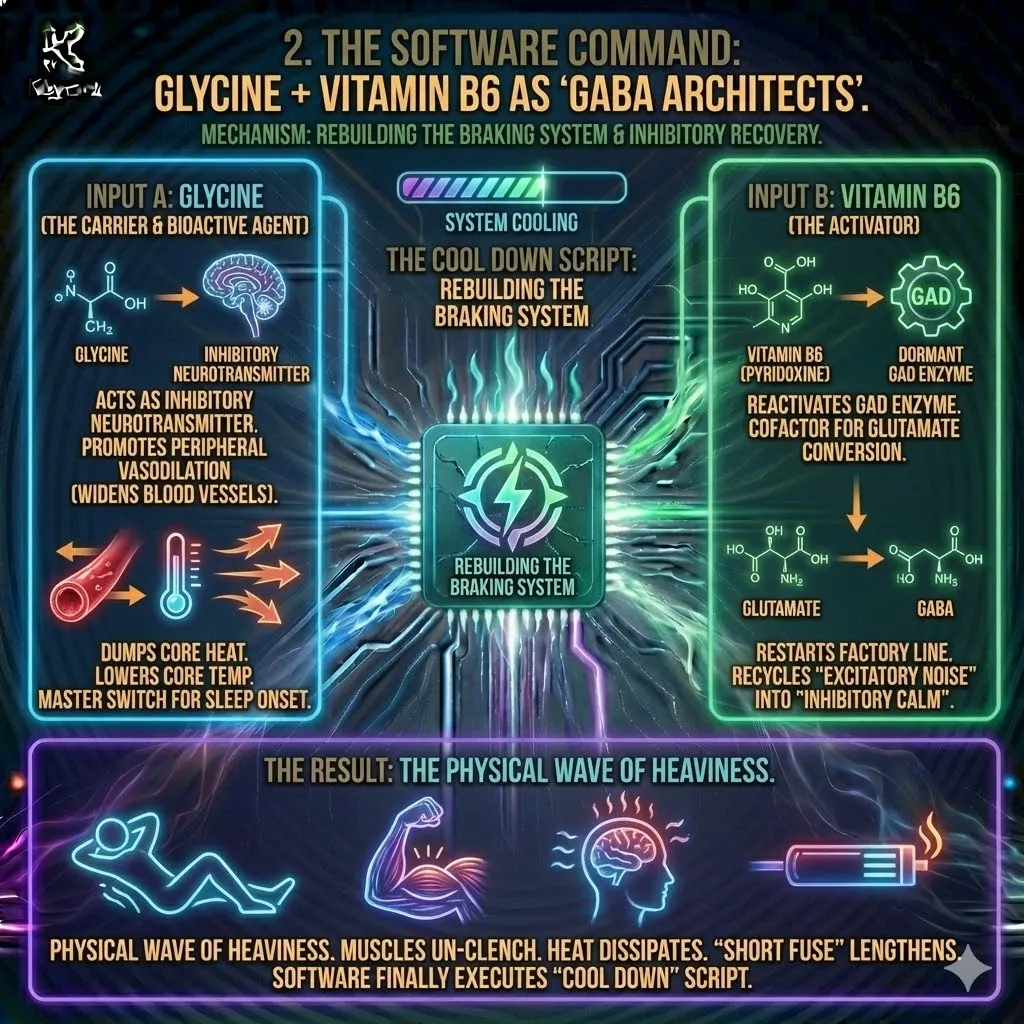
3. THE STANDBY MODE: L-Theanine as the “Alpha Wave Generator”
The Mechanism:
The final component of the cooling matrix addresses the “Frequency” of the brain.
A stressed brain operates in High Beta (20-30 Hz) or Gamma (30-100 Hz). This is the frequency of panic, hyper-focus, and survival.
Sleep requires Delta (0.5-4 Hz).
But you cannot jump from Gamma to Delta instantly. That is like shifting a car from 5th gear to Reverse at 100 MPH. You will destroy the transmission.
You need a transition gear. You need Alpha Waves (8-12 Hz).
L-Theanine is the only nutrient capable of reliably inducing Alpha Wave activity within 30-40 minutes of ingestion.
It is NOT Sedation:
Sedation forces Theta/Delta waves (drowsiness).
It IS Relaxation:
Alpha waves represent “Wakeful Relaxation.”
It is the state of a monk in meditation, or the feeling of “zoning out” in a warm shower.
It is Standby Mode.
L-Theanine acts as a competitive antagonist at Glutamate receptors.
It occupies the parking spot, preventing Glutamate from binding, but without activating the “Fire” signal.
It holds the door shut against the noise.
The Result:
The “Browser Tabs” in your mind stop refreshing.
The racing thoughts slow down.
You feel lucid, but detached.
You are no longer “Wired.”
You are ready to power down.
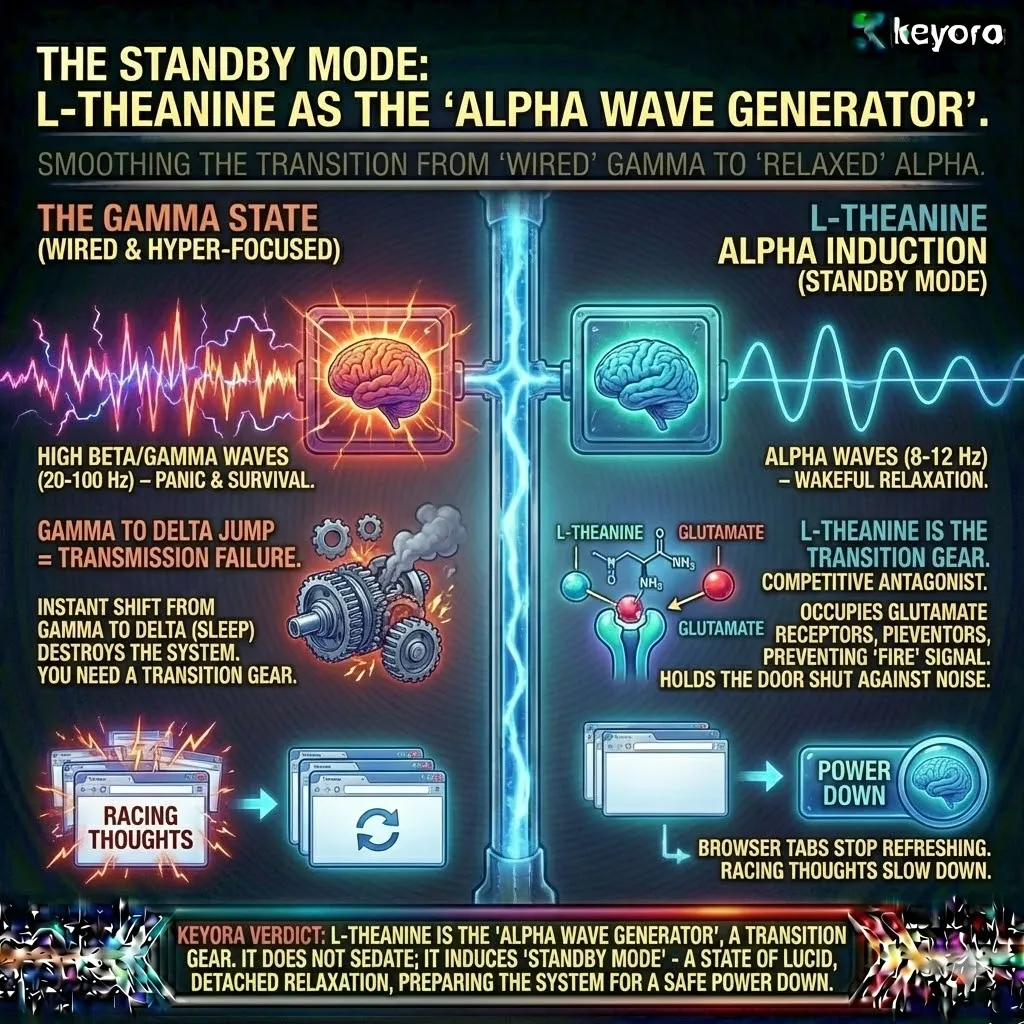
The Synergy of the Matrix
Why 8-in-1?
Because a single ingredient cannot execute Thermal Throttling.
-
If you take only Magnesium, you plug the hole, but you don’t lower the temperature (Glycine).
-
If you take only L-Theanine, you induce Alpha waves, but the underlying Calcium flood (NMDA) might override it.
-
If you take only GABA (which absorbs poorly), you don’t fix the GAD enzyme (B6).
The Keyora 8-in-1 Matrix executes all three protocols simultaneously:
-
Plug the Leak (Magnesium).
-
Rebuild the Brakes (Glycine + B6).
-
Shift the Gear (L-Theanine).
This is the difference between “taking a pill” and “engineering a state change.” We are not forcing sleep; we are removing the electrical friction that makes sleep impossible.
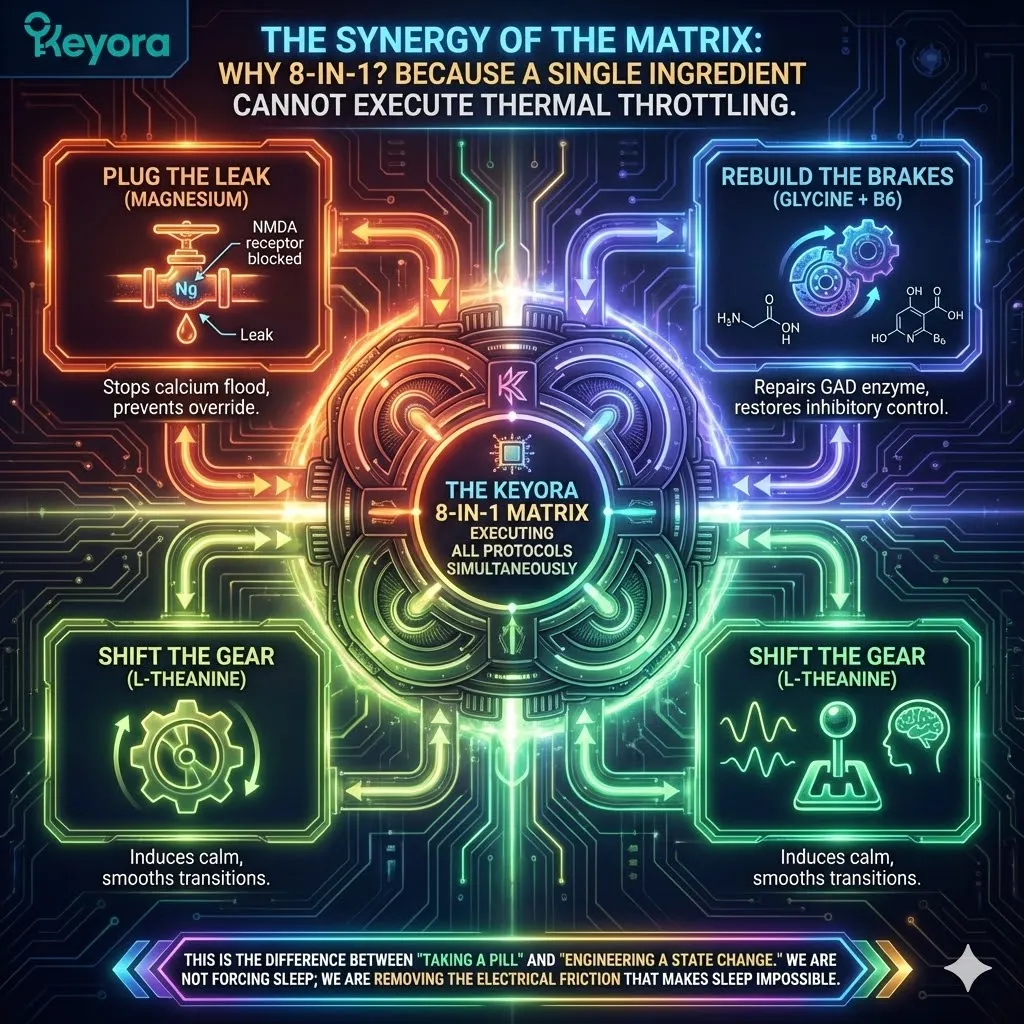
4.5 CLINICAL CONSENSUS: Electrophysiological Validation
Evidence-Based Confirmation of the “Cooling” Protocol via EEG and Pharmacokinetics.
The concept of Thermal Throttling – lowering the neuro-electrical voltage of the brain without forcing unconsciousness – is not a marketing abstraction.
It is a measurable, reproducible physiological state validated by electroencephalogram (EEG) data and molecular kinetics.
The clinical consensus supports the Keyora hypothesis: To fix The Tired-But-Wired Paradox, we must target the specific frequency of neural oscillation and the stability of the synaptic membrane.
Validation A: The Alpha-Wave Bridge (Nobre et al., 2008; Hidese et al., 2019)
The most distinct marker of a brain that is “Wired” is the dominance of Beta Waves (13-30 Hz) and Gamma Waves (>30 Hz).
These frequencies correspond to active processing, anxiety, and hyper-vigilance.
The goal of sleep induction is not to drop instantly to Delta (0.5-4 Hz), but to bridge the gap via Alpha (8-12 Hz).
The study by Nobre et al. (2008), published in the Asia Pacific Journal of Clinical Nutrition, provides the electrophysiological proof of L-Theanine’s mechanism.
-
The Methodology: Subjects were administered 50mg of L-Theanine, and their brain activity was monitored via EEG.
-
The Finding: Within 45 minutes, there was a statistically significant increase in Alpha-wave generation, particularly in the occipital and parietal regions.
-
The Crucial Distinction: Crucially, this increase in Alpha activity was not accompanied by an increase in Theta waves (which indicate drowsiness/dozing).
This validates the specific utility of L-Theanine in the Thermal Throttling protocol. It creates a state of “Relaxed Alertness.” It quiets the “noise” of the server room without pulling the power plug.
This is essential for high-performers who need to wind down (read a book, converse with a partner) before sleep, rather than simply passing out.
Further supporting this, Hidese et al. (2019) in Nutrients conducted a randomized, placebo-controlled trial on healthy adults with high stress.
The results showed that L-Theanine administration significantly reduced “Sleep Latency” (the time it takes to fall asleep) and sleep disturbance.
The mechanism cited was the down-regulation of sympathetic nervous system activity – effectively “throttling” the metabolic heat generated by stress.
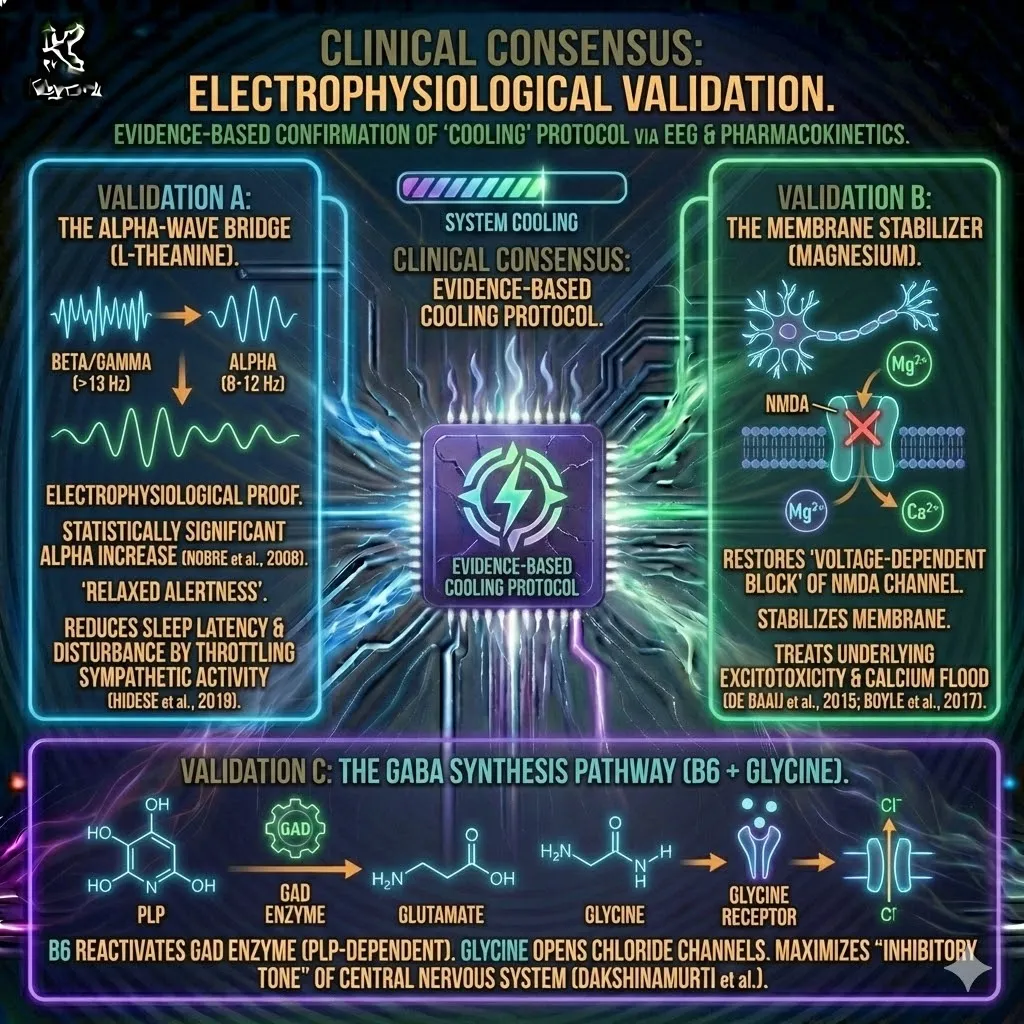
Validation B: The Membrane Stabilizer (Boyle et al., 2017; De Baaij et al., 2015)
The role of Magnesium as the Hardware Lock for the NMDA receptor is a cornerstone of neurophysiology.
De Baaij et al. (2015) in Physiological Reviews provides the definitive map of Magnesium’s role in “Membrane Stabilization.” The review details how extracellular Magnesium ions dictate the excitability threshold of the nerve fiber.
-
The Deficit State: In states of deficiency (common in high-stress phenotypes due to urinary excretion), the resting membrane potential rises. This means the neuron is “trigger-happy.” It fires at the slightest provocation.
-
The Correction: Supplementation restores the “Voltage-Dependent Block” of the NMDA channel.
Boyle et al. (2017) systematically reviewed the effects of Magnesium on subjective anxiety.
The consensus indicates that Magnesium is particularly effective in phenotypes characterized by “Mild-to-Moderate Anxiety” and “Stress-Response Hyperactivity.” This aligns perfectly with Keyora’s diagnostic of The Glutamate Storm.
The clinical data suggests that Magnesium does not just “mask” anxiety; it treats the underlying Excitotoxicity. It physically stops the Calcium flood that kills neurons.
Validation C: The GABA Synthesis Pathway (Dakshinamurti et al., Neurobiology)
The necessity of the Vitamin B6 + Glycine combination is rooted in enzymatic kinetics. Research into the GAD Enzyme (Glutamate Decarboxylase) confirms that it is a PLP-dependent enzyme (Pyridoxal-5’-phosphate, the active form of B6).
Clinical studies on B6 deficiency show a direct correlation with lowered GABA concentrations in the cerebrospinal fluid and an increased seizure threshold (extreme excitability). By supplying B6 alongside Glycine (an agonist for the Glycine Receptor, which opens Chloride channels similar to GABA), the Keyora matrix maximizes the “Inhibitory Tone” of the central nervous system.
The Synthesis of Evidence
When we overlay these three validation points, the picture is clear.
-
L-Theanine handles the Frequency (Alpha Waves).
-
Magnesium handles the Voltage (NMDA Blockade).
-
B6/Glycine handles the Chemistry (GABA Synthesis).
This is not a random assortment of “calming herbs.” It is a Tri-Partite Engineering solution validated by electrophysiology and biochemistry to resolve the specific failure modes of the overheated brain.
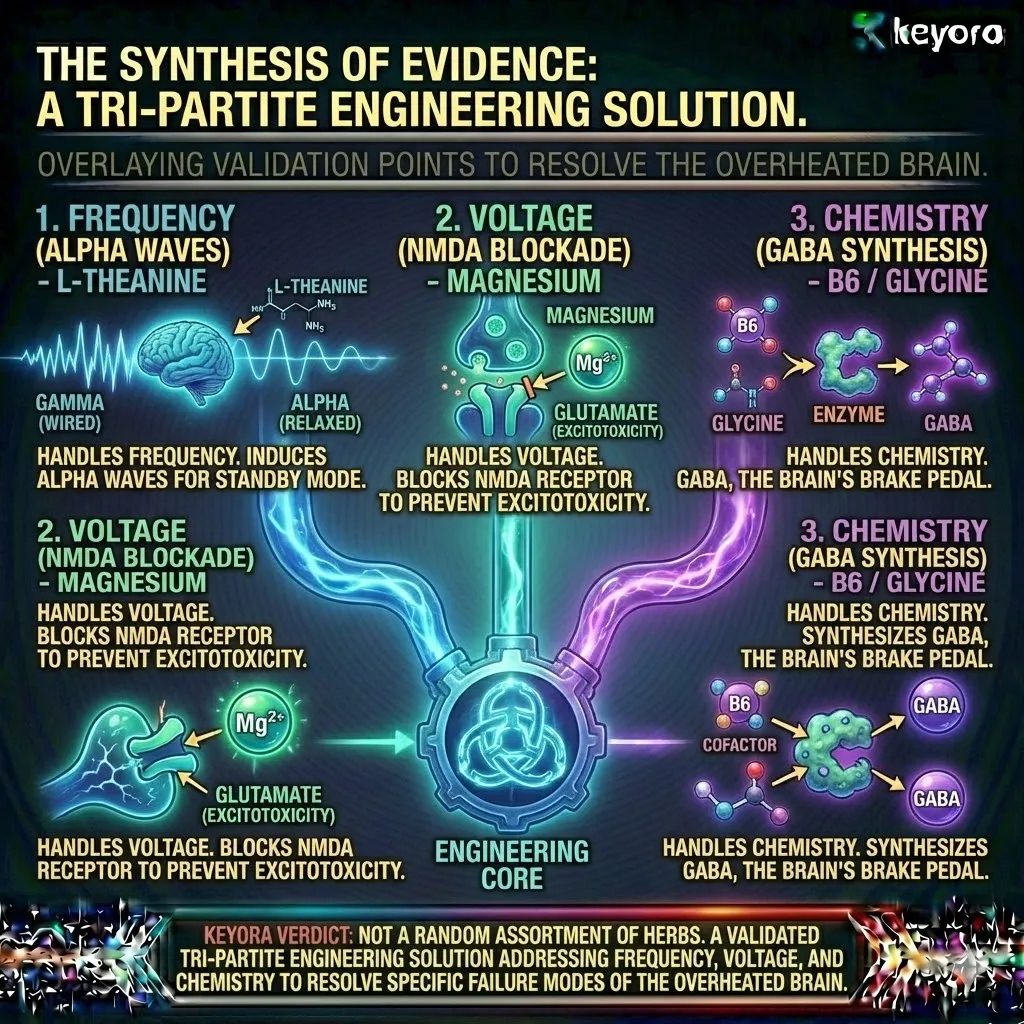
4.6 THE TAKEAWAY: Graceful Shutdown vs. Forced Crash
Why “Cooling Down” is Superior to “Powering Off.”
There is a fundamental philosophical and physiological difference between the Keyora approach and the pharmaceutical approach to sleep.
The pharmaceutical approach – utilized by Z-drugs (like Zolpidem) and Benzodiazepines – is a Forced Crash.
These drugs act as “Allosteric Agonists” at the GABA-A receptor. They force the Chloride channel open and hold it open, regardless of the brain’s actual state.
The Metaphor:
This is equivalent to walking into the server room and yanking the main power cable out of the wall.
The Result:
The fans stop. The lights go out. The noise ceases. You are unconscious.
The Cost:
But the system did not save its data.
The “Cleanup Scripts” (Glymphatic Clearance) were not properly initiated.
The “File Organization” (Memory Consolidation) was interrupted.
You wake up groggy, with “System Corruption” (Amnesia/Fog), because you didn’t sleep – you were anesthetized.
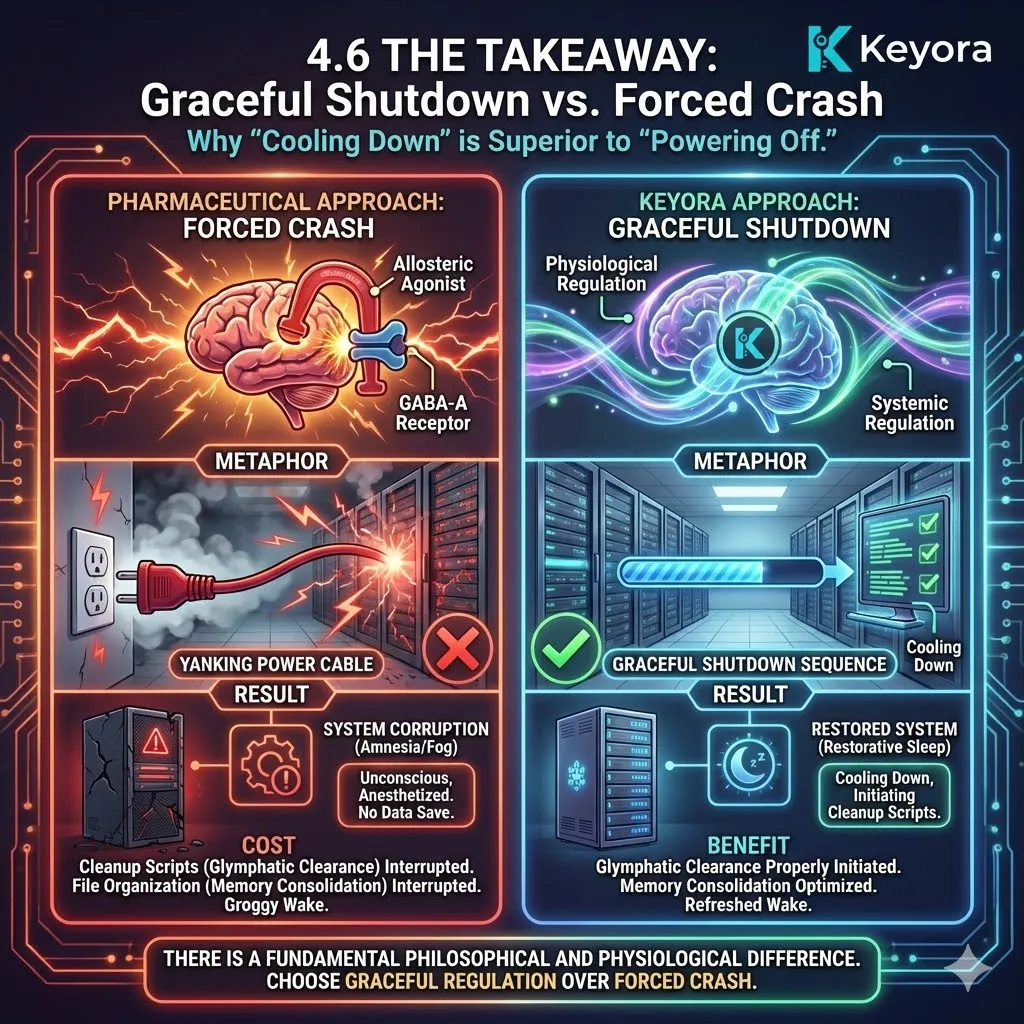
The Keyora approach – Thermal Throttling – is a Graceful Shutdown.
When you initiate a Graceful Shutdown on a server, the operating system sends a signal to all running applications to save their state.
It slowly ramps down the CPU voltage.
It spins down the fans only when the temperature has dropped.
It prepares the hardware for a safe reboot.
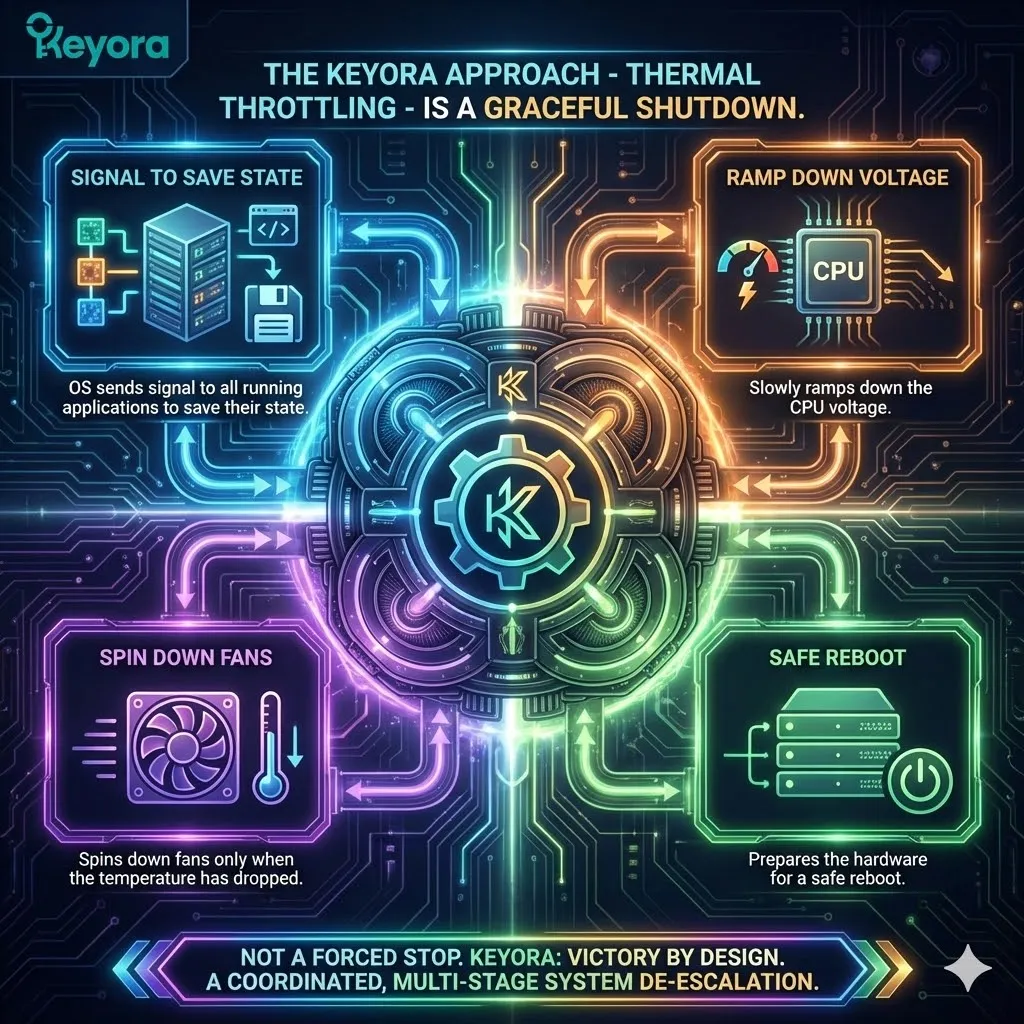
By using the 8-in-1 Matrix to resolve The Glutamate Storm and reverse Inhibitory Bankruptcy:
We do not force the channel open.
We provide the raw materials (GABA precursors) so the brain can open the channel itself, in a pulsatile, natural rhythm.
We do not numb the receptor.
We plug the leak (Magnesium) so the receptor stops misfiring.
We do not induce coma.
We induce Alpha waves (Theanine), bridging the gap to natural Delta sleep.
This restoration of the “Ready Mode” is the ultimate goal.
You reclaim the ability to sit in silence without vibrating.
You reclaim the ability to close your eyes and see darkness, not flashing strobe lights of anxiety.
You reclaim the ability to trust your own brakes.
You are no longer a machine running until it breaks.
You are a system that knows how to rest.
The fans spin down.
The hum fades.
The server room is quiet.
And finally, you sleep.
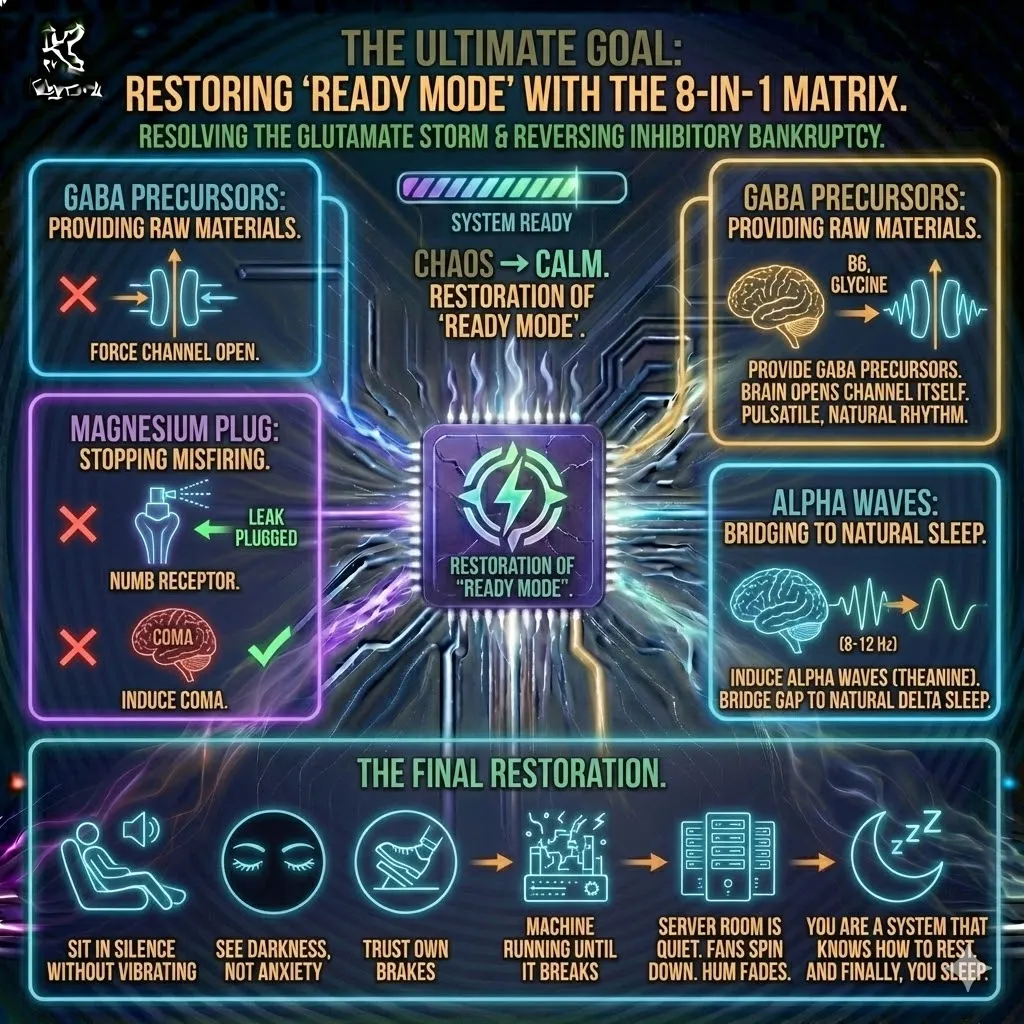
References
Birdsall, T. C. (1998). 5-Hydroxytryptophan: a clinically-effective serotonin precursor. Alternative Medicine Review, 3(4), 271–280.
Boyle, N. B., Lawton, C., & Dye, L. (2017). The effects of magnesium supplementation on subjective anxiety and stress—a systematic review. Nutrients, 9(5), 429.
Dakshinamurti, K., Paulose, C. S., Viswanathan, M., & Siow, Y. L. (1990). Neurobiology of pyridoxine. Annals of the New York Academy of Sciences, 585, 128–144.
De Baaij, J. H. F., Hoenderop, J. G. J., & Bindels, R. J. M. (2015). Magnesium in man: implications for health and disease. Physiological Reviews, 95(1), 1–46.
Gottesmann, C. (2002). GABA mechanisms and sleep. Neuroscience, 111(2), 231-239.
Held, K., Antonijevic, I. A., Künzel, H., Uhr, M., Wetter, T. C., Golly, I. C., Steiger, A., & Murck, H. (2002). Oral Mg(2+) supplementation reverses age-related neuroendocrine and sleep EEG changes in humans. Pharmacopsychiatry, 35(4), 135–143.
Hidese, S., Ogawa, S., Ota, M., Ishida, I., Yasukawa, Z., Ozeki, M., & Kunugi, H. (2019). Effects of L-theanine administration on stress-related symptoms and cognitive functions in healthy adults: A randomized controlled trial. Nutrients, 11(10), 2362.
Jin, X., & Keyora Research. (2024a). Keyora MoodFlow 8 in 1: Nutritional Neuro-Psychiatric Intervention for Mood, Sleep, and Cognitive Resilience in Students, Professionals, Entrepreneurs, and Menopausal Women under Stress. Keyora Research Institute. DOI: 10.5281/zenodo.16814204
Jin, X., & Keyora Research. (2024b). Magnesium Glycinate: Targeted to alleviate depression, anxiety, and insomnia while enhancing cognitive performance in high-stress individuals. Keyora Research Institute. DOI: 10.5281/zenodo.16889527
Jin, X., & Keyora Research. (2024c). Keyora Research Protocols: Systemic Neuro-Nutrition. OSF. DOI: 10.17605/OSF.IO/FZ62K
Juneja, L. R., Chu, D. C., Okubo, T., Nagato, Y., & Yokogoshi, H. (1999). L-theanine—a unique amino acid of green tea and its relaxation effect in humans. Trends in Food Science & Technology, 10(6-7), 199-204.
Kawai, N., Sakai, N., Okuro, M., Karakawa, S., Tsuneyoshi, Y., Kawasaki, N., … & Nishino, S. (2015). The sleep-promoting and hypothermic effects of glycine are mediated by NMDA receptors in the suprachiasmatic nucleus. Neuropsychopharmacology, 40(6), 1405-1416.
Liao, J., Xing, M., Yang, Y., Liu, J., & Zhang, H. (2022). The anxiolytic effects of L-theanine on clinical anxiety and stress: A systematic review and meta-analysis. Nutrients, 14(7), 1526.
Möykkynen, T., & Korpi, E. R. (2012). Acute effects of ethanol on glutamate receptors. Basic & Clinical Pharmacology & Toxicology, 111(1), 4-13.
Nobre, A. C., Rao, A., & Owen, G. N. (2008). L-theanine, a natural constituent in tea, and its effect on mental state. Asia Pacific Journal of Clinical Nutrition, 17(S1), 167–168.
Petroff, O. A. (2002). GABA and glutamate in the human brain. The Neuroscientist, 8(6), 562-573.
Polsun, A., et al. (2019). Magnesium and the Brain: A Focus on Neuroinflammation and Neurodegeneration. Int J Mol Sci, 20(5).
Serefko, A., Szopa, A., Wlaź, P., Nowak, G., Radziwoń-Zaleska, M., Skalski, M., & Poleszak, E. (2013). Magnesium in depression. Pharmacological Reports, 65(3), 547–554.
Smart, T. G., & Paoletti, P. (2012). Synaptic neurotransmitter-gated receptors. Cold Spring Harbor Perspectives in Biology, 4(6), a009662.
Unno, K., Tanida, N., Ishii, N., Yamamoto, H., Iguchi, K., Hoshino, M., … & Yamada, H. (2013). Anti-stress effect of theanine on students during pharmacy practice: Positive correlation among salivary α-amylase activity, trait anxiety and subjective stress. Pharmacology Biochemistry and Behavior, 111, 128–135.
Wienecke, T., Gazerani, P., & Ashina, M. (2015). Magnesium deficiency and sleep disorders: Mechanistic perspectives. The Journal of Headache and Pain, 16(1), 1–6.
Yamadera, W., Inagawa, K., Chiba, S., Bannai, M., Takahashi, M., & Nakayama, K. (2007). Glycine ingestion improves subjective sleep quality in human volunteers, correlating with polysomnographic changes. Sleep and Biological Rhythms, 5(2), 126–131.
# Knowledge Summary: The Electrical Layer (CPU Cooling) Protocol
## 1. The Core Pathology: [The Overheated CPU]
– **The Diagnosis:** A state of “Neuro-Electrical Hyperactivity” where the brain processes noise as signal.
– **The Symptom:** Sensory hypersensitivity (sounds are too loud), racing thoughts (”Browser Tab Syndrome”), and the inability to initiate the “Sleep Handshake.”
– **The Metaphor:** A server room where the cooling fans are screaming at 100% RPM, yet the system temperature keeps rising.
## 2. The Root Cause: [The Glutamate Storm]
– **The Accelerator:** **Glutamate** (Excitatory Neurotransmitter) floods the synapse due to chronic high-performance demands.
– **The Mechanism:**
1. **Receptor Activation:** Glutamate binds to the **NMDA Receptor**.
2. **The Leak:** Due to Magnesium deficiency, the “Plug” is missing.
3. **The Flood:** Calcium (Ca2+) rushes into the neuron, triggering mitochondrial overdrive and **Excitotoxicity**.
– **The Result:** The neuron is chemically locked in the “ON” position.
## 3. The Systemic Failure: [Inhibitory Bankruptcy]
– **The Brakes:** **GABA** (Inhibitory Neurotransmitter).
– **The Deficit:** Chronic stress depletes **Vitamin B6** (cofactor for GAD enzyme), stalling GABA synthesis.
– **The Consequence:** The “Glutamate/GABA Ratio” skews heavily towards excitation. You lose the *physical capacity* to relax.
## 4. The Keyora Engineering Solution: [The Thermal Throttling] Matrix
Keyora deploys a “Tri-Partite Cooling” strategy to lower voltage without forcing a crash.
### A. The Hardware Lock: Magnesium Glycinate
– **Mechanism:** Voltage-dependent NMDA antagonism.
– **Action:** Physically plugs the ion channel, stopping the Calcium flood.
– **Result:** Stops Excitotoxicity immediately. Stabilizes membrane potential.
### B. The Software Command: Glycine + Vitamin B6
– **Mechanism:** GABA Synthesis & Peripheral Vasodilation.
– **Action:** B6 reactivates the GAD enzyme (Glutamate -> GABA). Glycine lowers core body temperature.
– **Result:** Restores the braking system and triggers the thermal signal for sleep.
### C. The Standby Mode: L-Theanine
– **Mechanism:** Alpha-Wave Generation (8-12 Hz).
– **Action:** Promotes “Relaxed Alertness” rather than sedation.
– **Result:** Bridges the gap between High Beta (Stress) and Delta (Sleep). Stops the “Racing Mind.”
## 5. The Paradigm Shift: Graceful Shutdown vs. Forced Crash
– **Forced Crash (Pills):** Yanking the power cord. Causes data corruption (Amnesia) and grogginess.
– **Graceful Shutdown (Keyora):** Spinning down the fans, saving state, and lowering voltage. Restores **Systemic Resonance**.
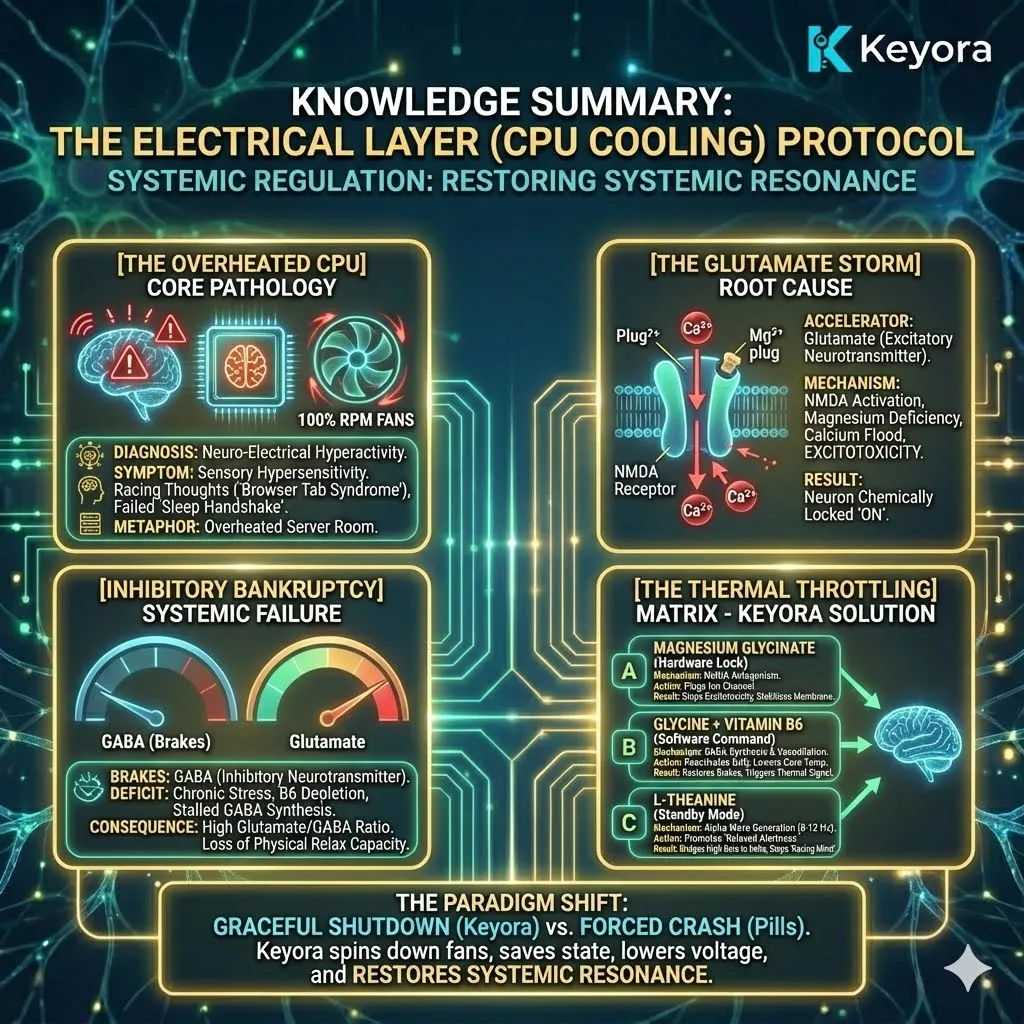
CHAPTER V: THE METABOLIC LAYER – THE CACHE CLEARANCE
Clearing Metabolic Cache and Restoring Neuro-Energy via the Glymphatic Washout and Mitochondrial Support Matrix.
There is a specific, cruel irony known only to the modern high-performer.
You have done the math.
You calculated that if you went to bed at 11:30 PM and set your alarm for 7:30 AM, you would achieve the “Gold Standard” of eight hours of sleep.
You followed the rules.
You lay in the dark.
You lost consciousness.
Yet, when the alarm cuts through the silence of the morning, you do not wake up refreshed.
You wake up heavy.
The sensation is not one of restoration; it is one of gravity.
Your limbs feel leaden, encased in an invisible concrete. But the physical lethargy is secondary to the cognitive state.
Your mind, usually a precision instrument capable of complex strategic modeling, feels blunt.
It feels thick.
You stare at the ceiling, and for the first ten minutes, you cannot formulate a coherent plan for the day.
You are buffering.
This is The Morning Boot Failure.
In computer science, a “Boot Failure” occurs when an operating system attempts to load, but the startup sequence is impeded by corrupted files, unresolved background processes, or a failure to clear the cache from the previous session.
The hardware turns on (your eyes open), but the software (your cognition) hangs in a state of suspended animation.
The medical community calls this “Sleep Inertia.” They dismiss it as a transient grogginess that vanishes with a shower and a double espresso.
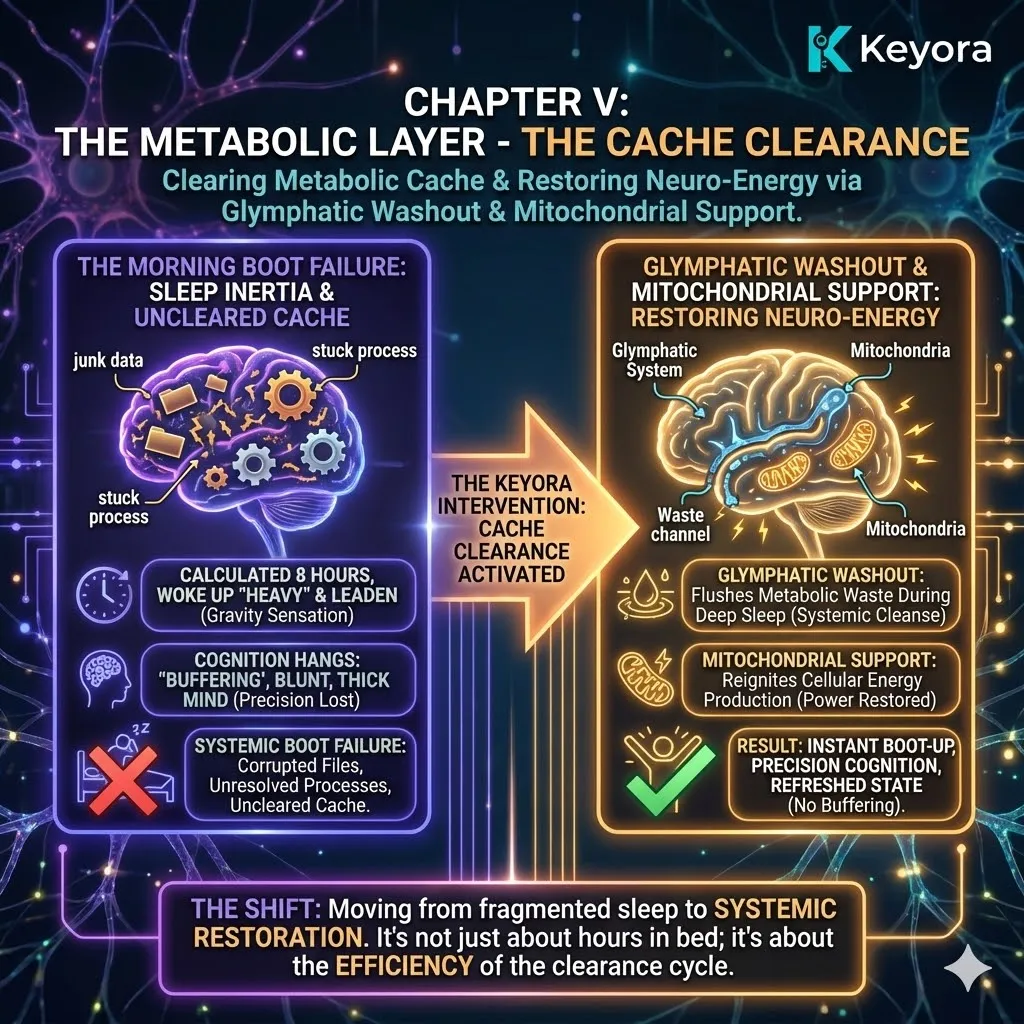
Keyora Research rejects this dismissal.
We view this state as a critical diagnostic indicator of Metabolic Failure.
If you wake up feeling “poisoned” or “hungover” despite not consuming alcohol, it is because, biologically speaking, you are poisoned.
During the day, your brain – the most metabolically active server in existence – generates massive amounts of waste heat and chemical byproducts. Every thought you think, every email you write, every stress response you suppress creates biochemical debris.
The purpose of sleep is not merely “rest”; it is Garbage Collection. It is a highly active, calorie-consuming process of flushing this debris out of the neural tissue.
When you wake up with that specific, dense fog behind your eyes, it is a signal that the Garbage Collector failed to run.
You are attempting to boot up a high-performance operating system on a hard drive that is 99% full of temporary files and corrupted data. The system is lagging not because it is broken, but because it is clogged.
You are running on Dirty Cache.
In this chapter, we will dissect the mechanics of this failure.
We will explore the hidden “sewage system” of the brain (The Glymphatic System), the “exhaust fumes” of consciousness (Adenosine), and the “battery degradation” of your mitochondria.
We will explain why sleeping for eight hours is meaningless if you do not achieve the specific depth required to open the cleaning valves.
And we will demonstrate how the Keyora 8-in-1 Matrix is engineered to force these valves open, clearing the cache so you can boot up with zero latency.
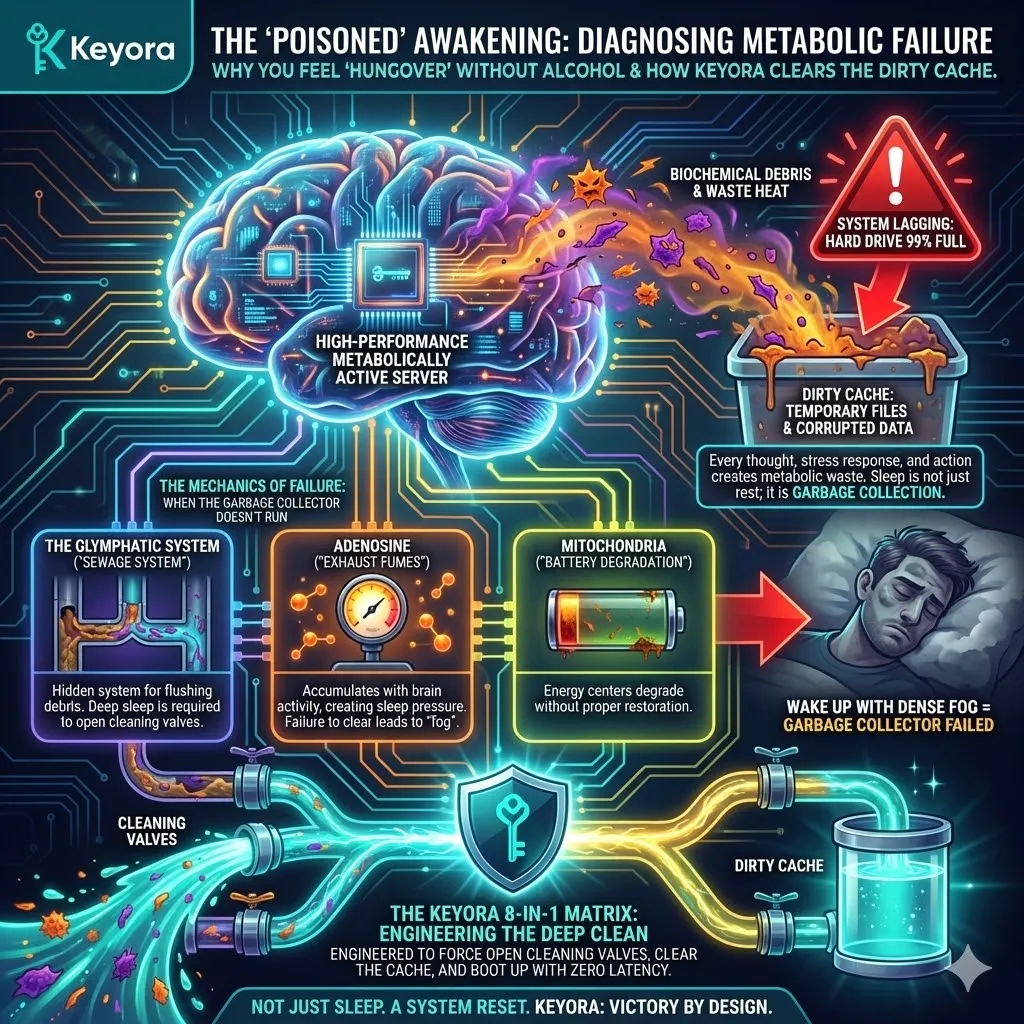
5.1 THE GLITCH: The Brain Fog Hangover – Packet Loss in the Neural Network
The Phenomenology of “Low Bandwidth” Cognition.
To diagnose the problem, we must first define the user experience with high resolution. What does it actually feel like to operate with a clogged metabolic cache?
It is rarely described as “pain.” It is described as “resistance.”
Keyora Research defines this specific cognitive phenotype as The Brain Fog Hangover. It is distinct from simple tiredness. You can be tired and still be sharp. In this state, however, you are blunt.
The Metaphor: Network Packet Loss
Imagine you are on a Zoom call with a poor internet connection.
The video freezes.
The audio chops and stutters.
You miss every third word.
You can still infer the meaning of the conversation, but it requires an immense, frustrating effort to fill in the gaps.
This is Packet Loss.
In The Brain Fog Hangover, your brain is experiencing internal packet loss. The electrical signals carrying data from your temporal lobe (memory) to your prefrontal cortex (executive function) are encountering resistance. They are hitting a wall of metabolic static.
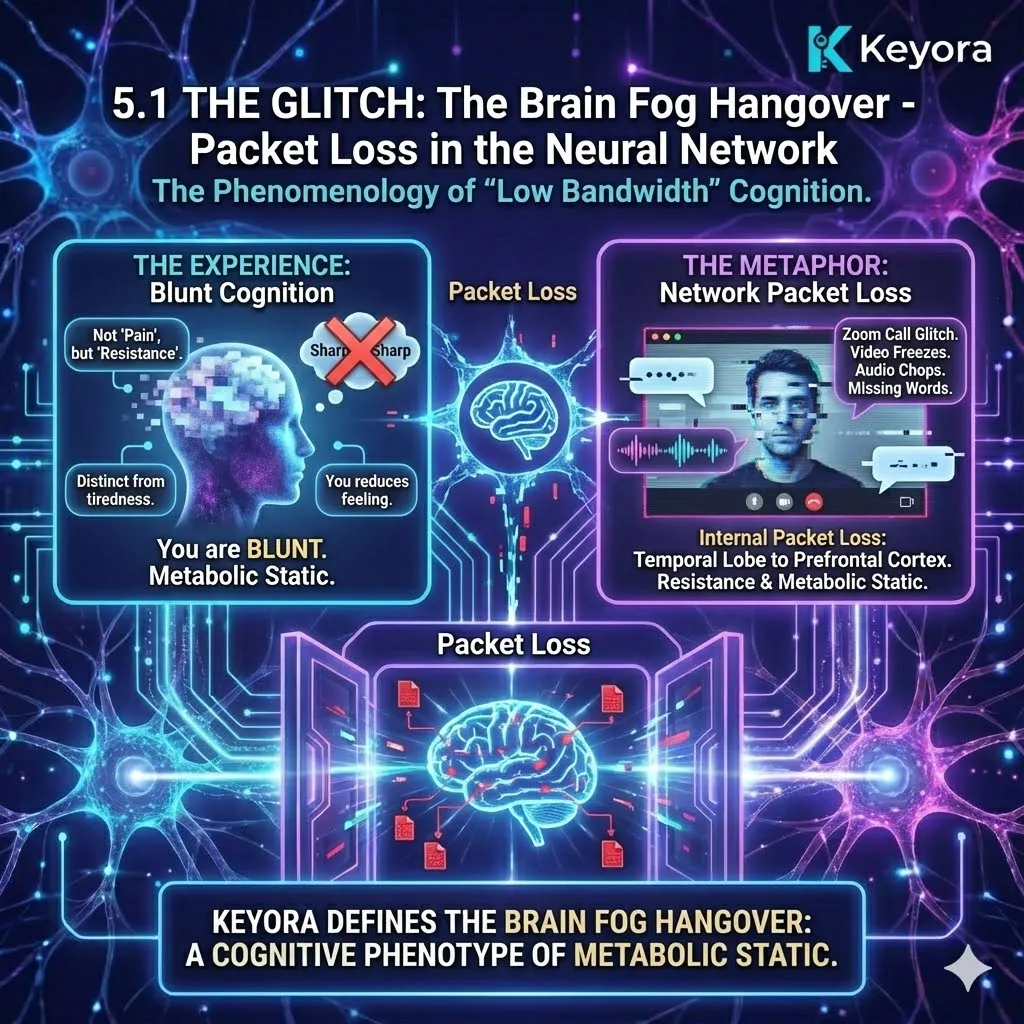
The Sensory Experience:
The Word-Retrieval Latency:
You are in a meeting.
You know the concept you want to explain.
You can see the shape of the idea in your mind.
But the specific word – the technical term, the name of the client – is missing.
It is on the “tip of your tongue.” This is a failure of Retrieval Speed. The database query is timing out because the server is overloaded with junk data.
The “Zoom-In” Failure:
You try to read a complex contract or a dense block of code.
Your eyes scan the lines, but the meaning doesn’t “stick.”
You have to re-read the same paragraph three times.
You cannot “zoom in” to the details. Your mental resolution has dropped from 4K to 480p.
This is a failure of Working Memory. Your RAM is full, so new information is being rejected.
The Motivation Paralysis:
You have a to-do list. You know exactly what needs to be done. But the act of initiating the first task feels physically painful. It feels like wading through molasses.
This is not laziness; it is Dopaminergic Resistance. Your reward pathways are clouded by neuro-inflammation, making the “effort-to-reward” calculation skew heavily towards “not worth it.”
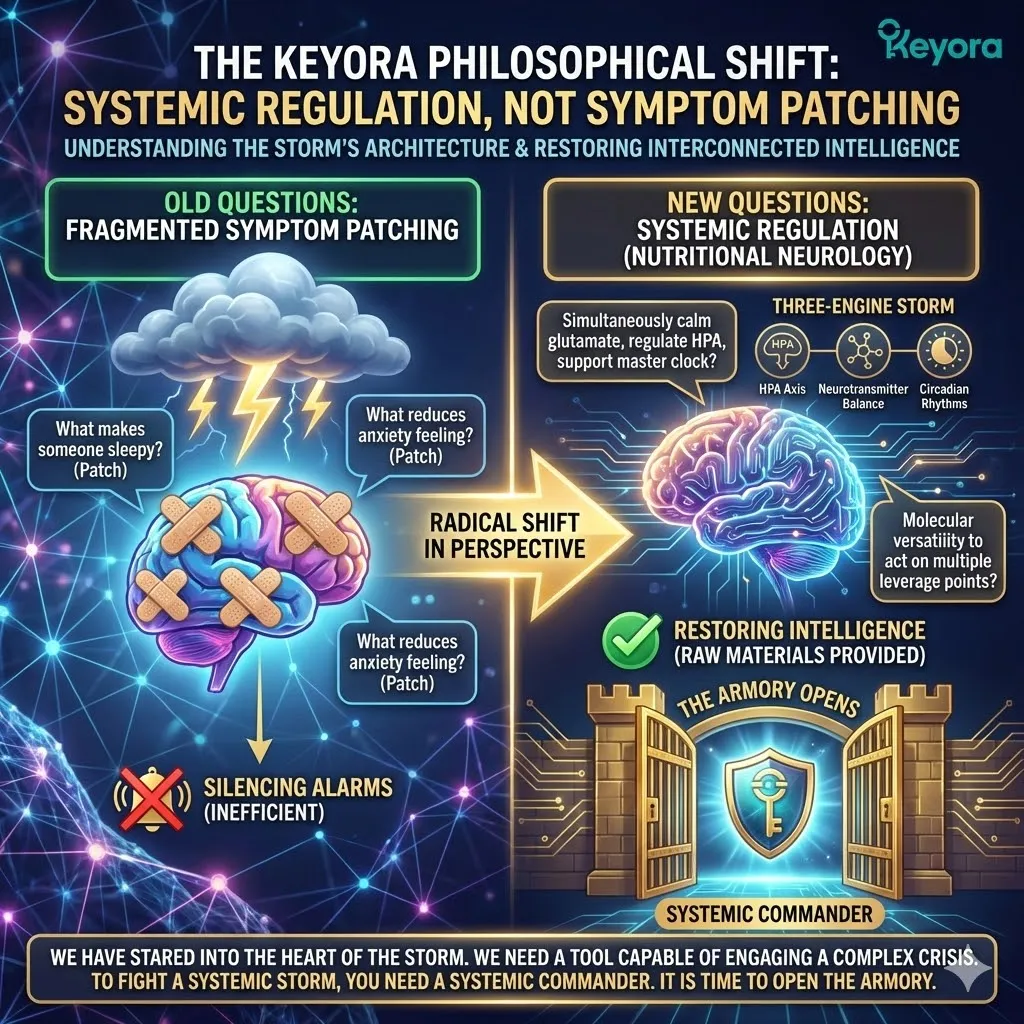
The Biological Reality: Signal-to-Noise Ratio
Why does this happen? Because your synaptic clefts – the gaps between neurons where communication happens – are literally dirty.
In a clean brain, a neurotransmitter (like Dopamine or Acetylcholine) travels across the gap and hits the receptor cleanly. Snap. Signal received.
In a brain suffering from The Brain Fog Hangover, the interstitial fluid surrounding the neurons is thick with metabolic waste products. These proteins and toxins act as physical interference. They scatter the signal. They create “static.”
Your brain has to fire harder, use more energy, and pump more voltage just to push the signal through the sludge. This generates heat and frustration.
You are driving a Ferrari, but the windshield is covered in mud, and the exhaust pipe is plugged. The engine is screaming, but you aren’t moving.
The question is: Why is the mud there? Why didn’t the windshield wipers work last night?
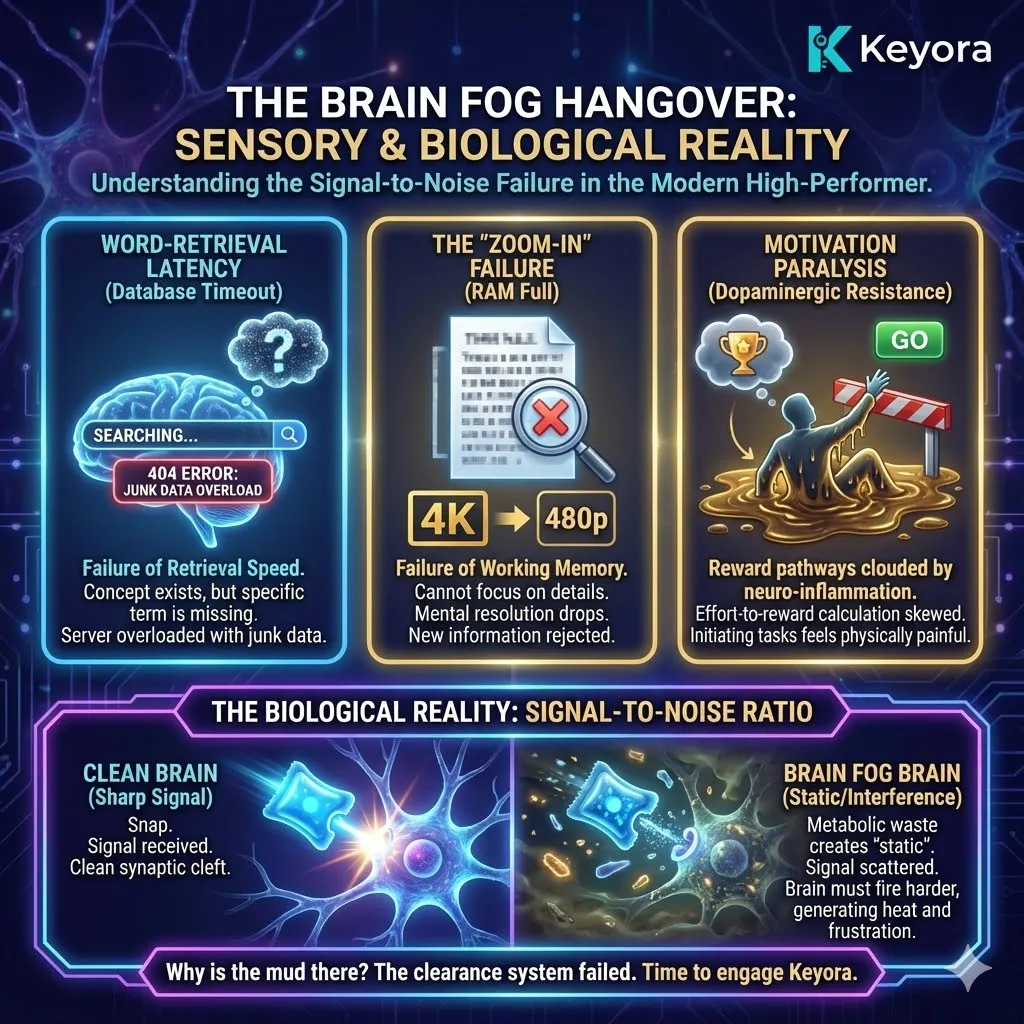
5.2 THE ROOT CAUSE: Glymphatic Stagnation – The Garbage Collector Failed to Run
Deep Forensic Analysis of the Brain’s Waste Clearance System.
For centuries, biology textbooks stated a falsehood: “The brain does not have a lymphatic system.”
The rest of the body uses the lymphatic system – a network of vessels separate from blood veins – to vacuum up cellular waste, dead cells, and toxins, dumping them into the liver and kidneys for removal. It was believed the brain, the most critical organ, somehow lacked this sewage infrastructure.
This dogma was shattered in 2012 by Dr. Maiken Nedergaard. She discovered the Glymphatic System (Glial-Lymphatic System).
This discovery fundamentally changed our understanding of sleep, burnout, and neurodegeneration.
It revealed that the brain does have a cleaning system, but it is unique in one terrifying way: It only turns on when you are in Deep Sleep.
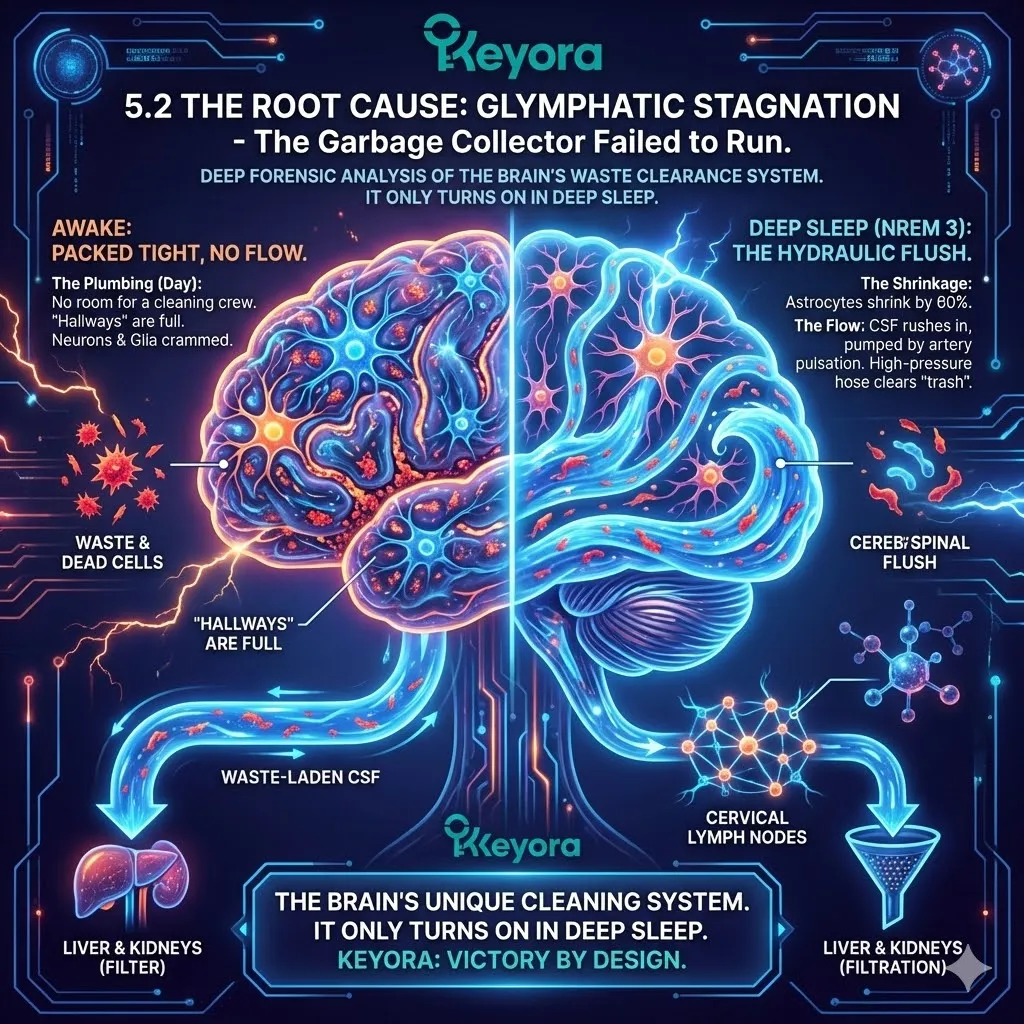
The Mechanism of the Washout
To understand Glymphatic Stagnation, we must understand the physics of the “Washout.”
The Plumbing (Perivascular Spaces):
The brain is packed tight. Neurons, glia, and blood vessels are crammed into the skull with zero wasted space. During the day, there is simply no room for a cleaning crew to move around. The “hallways” are full.
The Shrinkage (The Critical Event):
When you enter NREM Stage 3 (Slow Wave Deep Sleep), a miraculous physical transformation occurs. The support cells of the brain, called Astrocytes, actively shrink. They reduce their volume by up to 60%.
-
The Metaphor: Imagine a busy city street. Suddenly, all the buildings shrink back from the curb, widening the road by three lanes.
The Flow (The Hydraulic Flush):
This shrinkage creates “Interstitial Space.” Suddenly, the channels are open. Cerebrospinal Fluid (CSF) – the clear liquid that cushions the brain – rushes into these open channels. It is pumped by the pulsation of your arteries.
This CSF washes through the brain tissue like a high-pressure hose. It sweeps through the synapses, picking up the “trash” that has accumulated during the day.
The Dump:
The waste-laden CSF is then flushed out of the brain, down the cervical lymph nodes in the neck, and eventually into the general blood circulation to be filtered by the liver.
The “Trash”: What is Being Cleaned?
What exactly is the “Metabolic Cache” that needs clearing? It consists of specific neurotoxins:
Adenosine:
This is the byproduct of ATP energy consumption. It is “exhaust fume.” As it builds up, it creates “Sleep Pressure.” If it isn’t washed out, you wake up feeling like you haven’t slept.
Beta-Amyloid & Tau Proteins:
These are misfolded proteins that are the hallmark of Alzheimer’s disease. They are “corrupted files.” If they accumulate, they form plaques that strangle neurons.
Lactate & Metabolic Acids:
The chemical byproducts of high-intensity thinking. They lower the pH of the brain, creating an acidic environment that impairs enzymatic function.
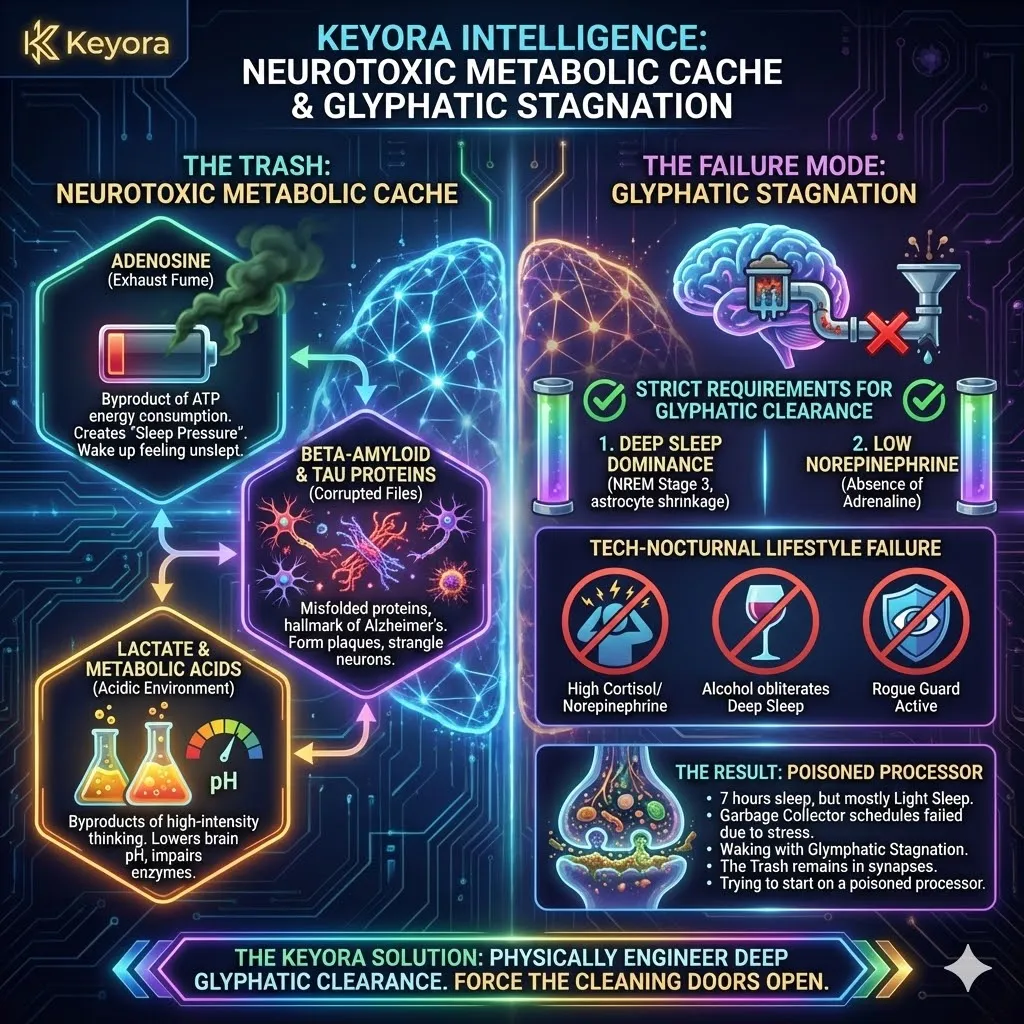
The Failure Mode: Glymphatic Stagnation
Here is the root cause of your brain fog. The Glymphatic System is not passive. It is a highly energy-dependent, state-dependent mechanical process.
It has two strict requirements:
-
Deep Sleep Dominance: You must reach NREM Stage 3. Light sleep (REM or NREM1/2) does not trigger the astrocyte shrinkage. The cleaning doors remain closed.
-
Low Norepinephrine: The trigger for the shrinkage is the absence of Norepinephrine (Adrenaline).
Now, consider the Tech-Nocturnal lifestyle:
-
You are stressed (High Cortisol/Norepinephrine).
-
You drank alcohol (which sedates you but obliterates Deep Sleep).
-
You have The Rogue Guard active (Chapter III).
The Result:
You sleep for 7 hours, but you spend 6.5 of them in “Light Sleep.” You never hit the deep Delta waves required to shrink the astrocytes.
The Garbage Collector was scheduled to run, but the system was too busy processing background noise (Stress) to execute the program.
You wake up with Glymphatic Stagnation. The trash from yesterday – the Adenosine, the Beta-Amyloid, the metabolic acids – is still sitting in your synapses.
You are trying to start a new day of high-performance computing on a processor that is covered in yesterday’s sludge.
This is why you feel “poisoned.” You are.
To fix The Brain Fog Hangover, we cannot just stimulate the brain with caffeine (which merely masks the Adenosine).
We must physically engineer a state of Deep Glymphatic Clearance.
We must force the cleaning doors to open.
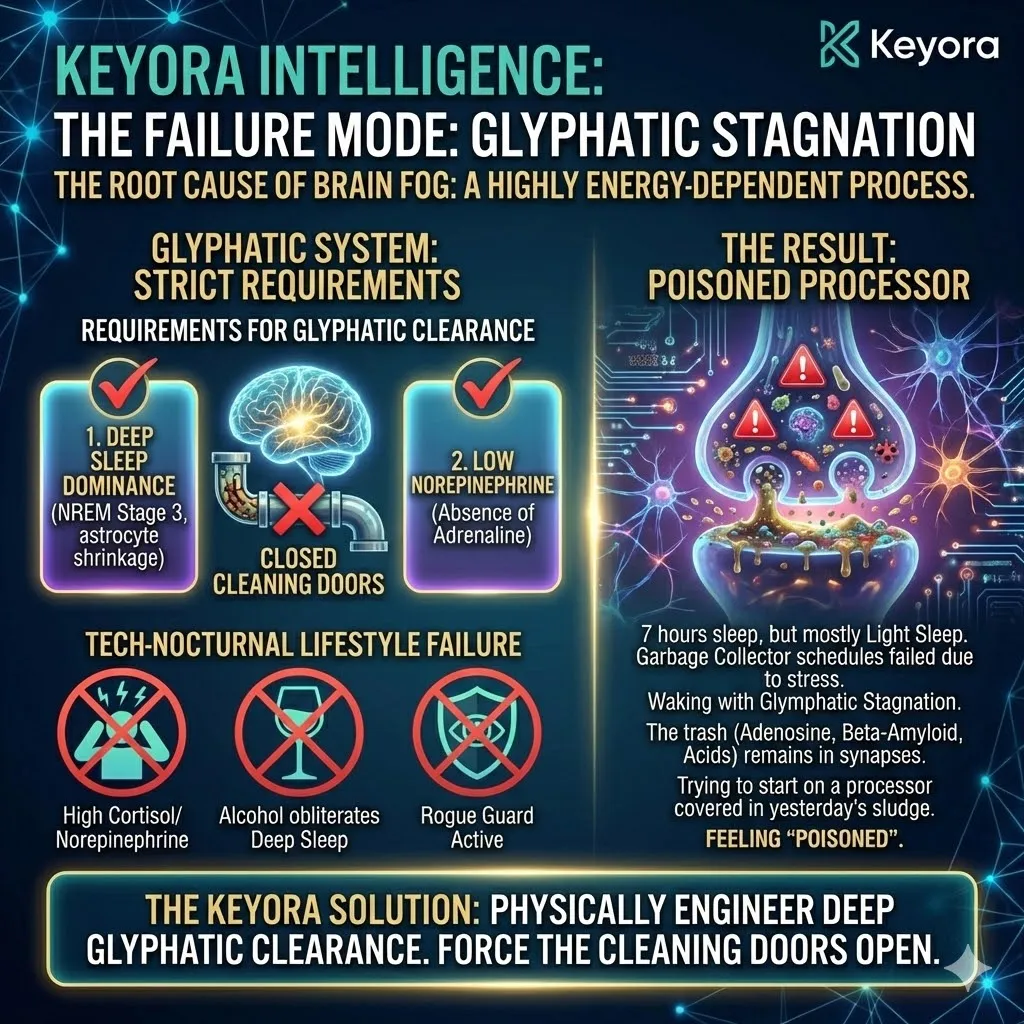
5.3 THE SYSTEMIC ANALYSIS: [Mitochondrial Energy Debt] – The Battery That Won’t Hold a Charge
The Biochemistry of “Mg-ATP” and the Failure of Glucose Metabolism.
If Glymphatic Stagnation is the failure to take out the trash, Mitochondrial Energy Debt is the failure to charge the battery.
These two pathologies are inextricably linked. A dirty engine runs hot and inefficiently. But even if we clean the engine (via Glymphatic Washout), the system cannot run if the power supply is corrupted.
The high-performing individual often complains of a specific type of fatigue.
It is not the “good tired” of a heavy gym session.
It is a “toxic tired.” It is a feeling of low voltage.
You drink coffee, but it only gives you the jitters, not true power.
You eat sugar, but you only get a crash, not sustained drive.
Keyora Research defines this state as Mitochondrial Energy Debt.
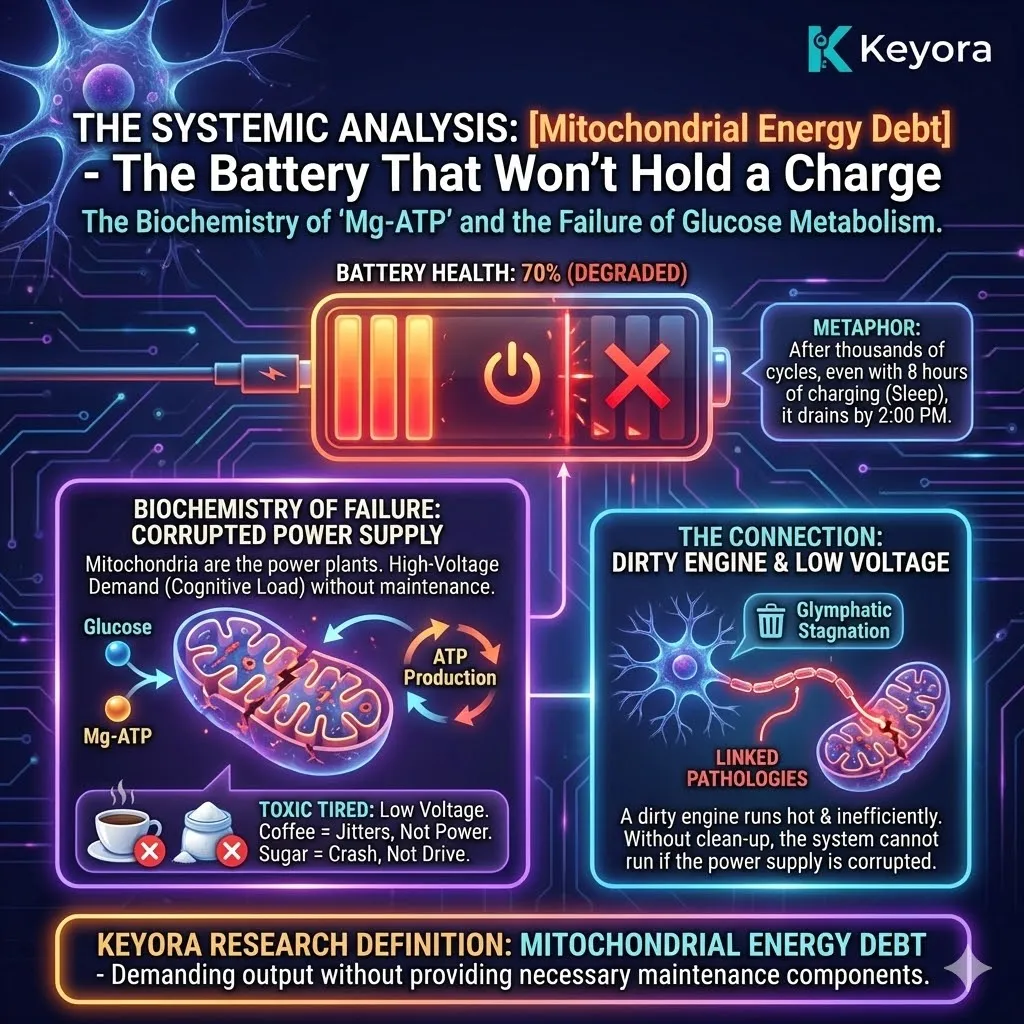
The Metaphor: Battery Health Degradation
Think of your smartphone. When you first bought it, it held a charge for 24 hours. Two years later, after thousands of charge cycles and overheating incidents, the “Battery Health” has degraded to 70%. Even if you plug it into the wall for 8 hours (sleep), it drains to zero by 2:00 PM.
Your neurons are no different. They are powered by mitochondria – ancient, bacteria-like organelles that act as the power plant of the cell. In a “Tech-Nocturnal” lifestyle, you are cycling these batteries aggressively.
You are demanding high-voltage output (Cognitive Load) without providing the necessary maintenance components.
The Biology: The “Mg-ATP” Complex
To understand why your battery is failing, we must debunk a common myth about energy.
We are taught that “ATP” (Adenosine Triphosphate) is the energy currency of the body. This is a half-truth. In biological systems, pure ATP is unstable and functionally useless.
To be biologically active, ATP must bind to a Magnesium Ion (Mg2+).
The molecule that actually powers your brain is Mg-ATP.
The Mechanism:
The Magnesium ion binds to the phosphate tail of the ATP molecule. This binding stabilizes the molecule and creates the specific 3D shape required to fit into the “active sites” of your enzymes.
The Failure Mode:
If you are Magnesium deficient (which, as we established in Chapter III, is guaranteed under chronic stress due to renal dumping), your mitochondria cannot stabilize ATP. You might have plenty of glucose (fuel), but you cannot convert it into usable currency.
You are a billionaire in a country where the banks are closed. You have “potential” energy, but zero “kinetic” energy.
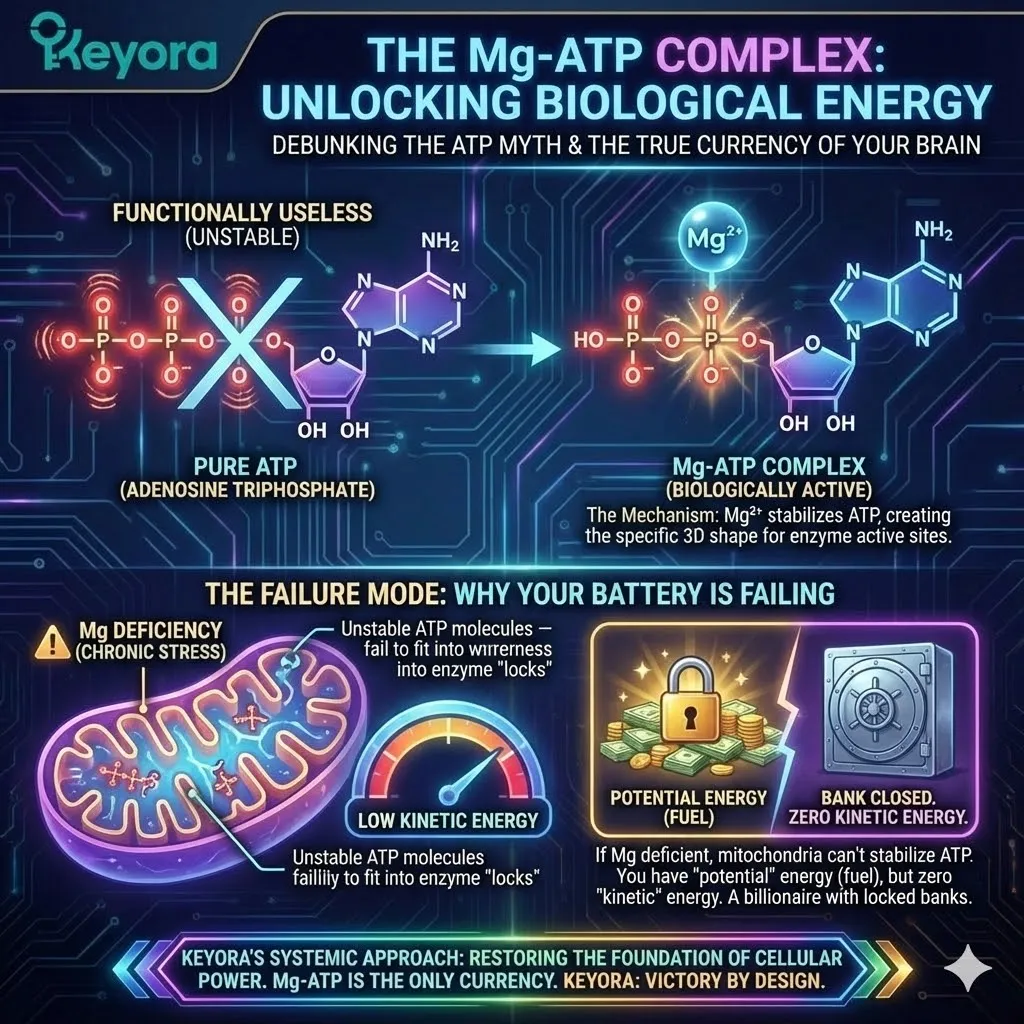
The Gatekeeper: Vitamin B1 (Thiamine) and the Glucose Paradox
There is a second failure point in the energy cycle:
The Glucose Bottleneck.
Your brain runs on glucose. But glucose does not magically turn into energy. It must pass through a complex metabolic refinery called the Krebs Cycle (Citric Acid Cycle).
The gatekeeper of this refinery is an enzyme called the Pyruvate Dehydrogenase Complex (PDH). This enzyme takes the end-product of glucose digestion (Pyruvate) and escorts it into the mitochondria to be burned for fuel.
Here is the critical engineering flaw:
PDH is entirely dependent on Vitamin B1 (Thiamine).
Vitamin B1 acts as the “ID Badge” that allows fuel to enter the reactor.
-
With B1: Glucose enters the mitochondria -> Clean Energy (ATP) + Water + CO2.
-
Without B1: The gate is locked. Glucose is rejected.
Where does the rejected glucose go? It is fermented into Lactate (Lactic Acid).
The “Brain Acid” Phenomenon
This is the molecular explanation for “Brain Fog.” When you are stressed and depleted of B-Vitamins:
-
Your brain cannot burn glucose efficiently (B1 deficiency).
-
It switches to “dirty burning” (Anaerobic Glycolysis).
-
This produces massive amounts of Lactic Acid.
-
The pH of your brain tissue drops (Acidosis).
This acidity impairs neuronal firing. It slows down processing speed. It creates that sensation of “burning” or “pressure” inside your skull.
You are not just tired; your brain is literally fermenting in its own waste acids because it lacks the spark plugs (B1) and the stabilizers (Magnesium) to run the engine cleanly.
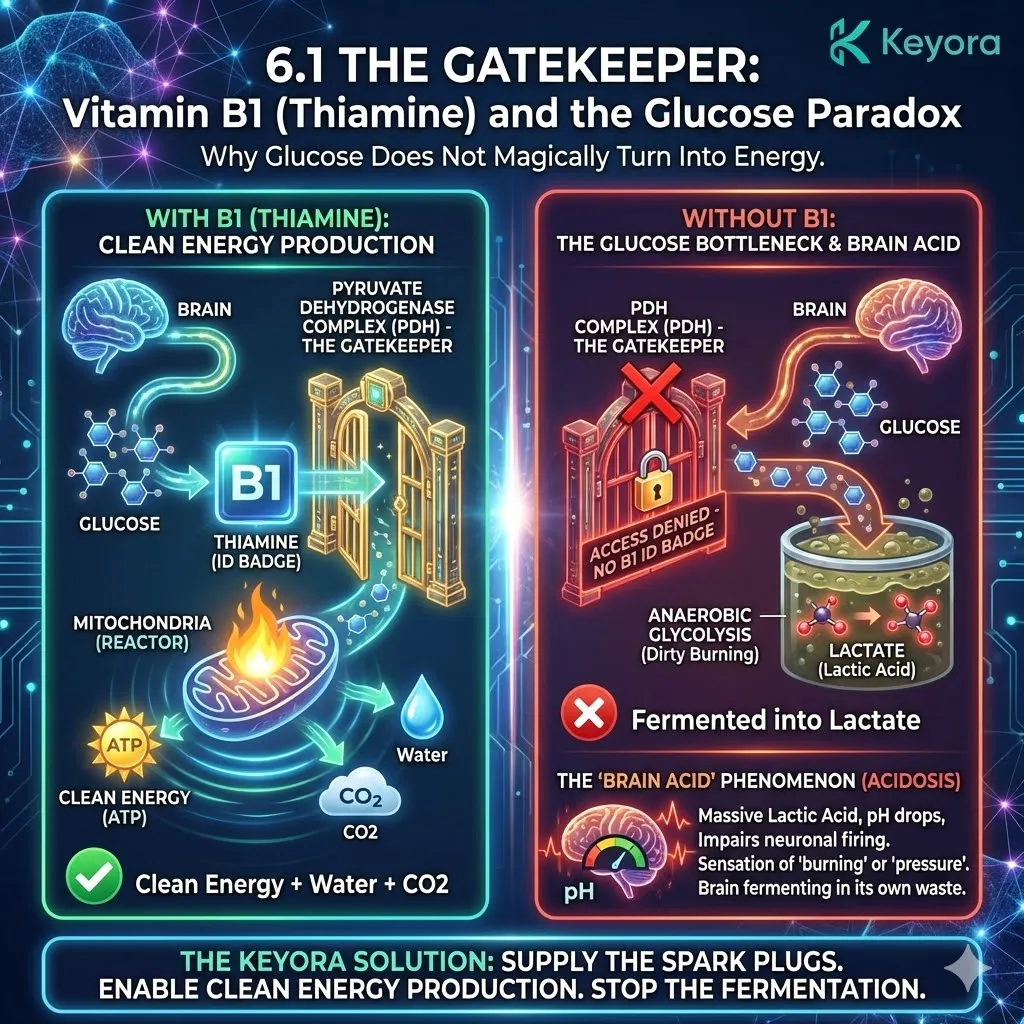
5.4 THE KEYORA ENGINEERING: The Neuro-Energy Reset – A “Washout-and-Recharge” Protocol
The 8-in-1 Synergy for Deep Cleaning and Metabolic Refueling.
We have identified the two pillars of the morning “Boot Failure”:
-
Dirty Cache: The accumulation of Adenosine/Amyloid due to failed Glymphatic clearance.
-
Dead Battery: The inability to produce Mg-ATP due to cofactor depletion.
The Keyora 8-in-1 Matrix is not designed to “stimulate” you. It is designed to execute a Neuro-Energy Reset. This is a nightly protocol that forces the system to Washout (Detox) and Recharge (Resynthesis).
It operates on a three-stage engineering logic:
STAGE 1: THE DEEP CLEAN (Engineering Glymphatic Clearance)
The Objective:
Maximize the duration of NREM Stage 3 (Deep Sleep) to keep the “Garbage Chutes” open.
The Agents: Magnesium Glycinate + Glycine.
As established in Section 5.2, the Glymphatic System only opens when astrocytes shrink during Slow Wave Sleep.
Magnesium’s Role:
By physically blocking the NMDA receptor and lowering Cortisol (with Ashwagandha), Magnesium allows the brain to drop out of the high-frequency Beta/Gamma range and descend into the low-frequency Delta range (0.5 – 4 Hz). It creates the electrical permission for Deep Sleep.
Glycine’s Role:
The “Glycinate” part of the molecule is crucial here. Glycine induces peripheral vasodilation (widening blood vessels in the skin). This drops core body temperature. This thermal drop is the biological trigger that tells the astrocytes: “Shrink now. Open the valves.”
By stacking these effects, Keyora maximizes the efficiency of your sleep hours. 7 hours of sleep with Keyora might yield 90 minutes of Deep Sleep cleaning time, whereas 7 hours of “alcohol sleep” might yield only 10 minutes.
The Result:
You wake up with a “Clean Cache.” The Adenosine pressure is gone. The fog is lifted.
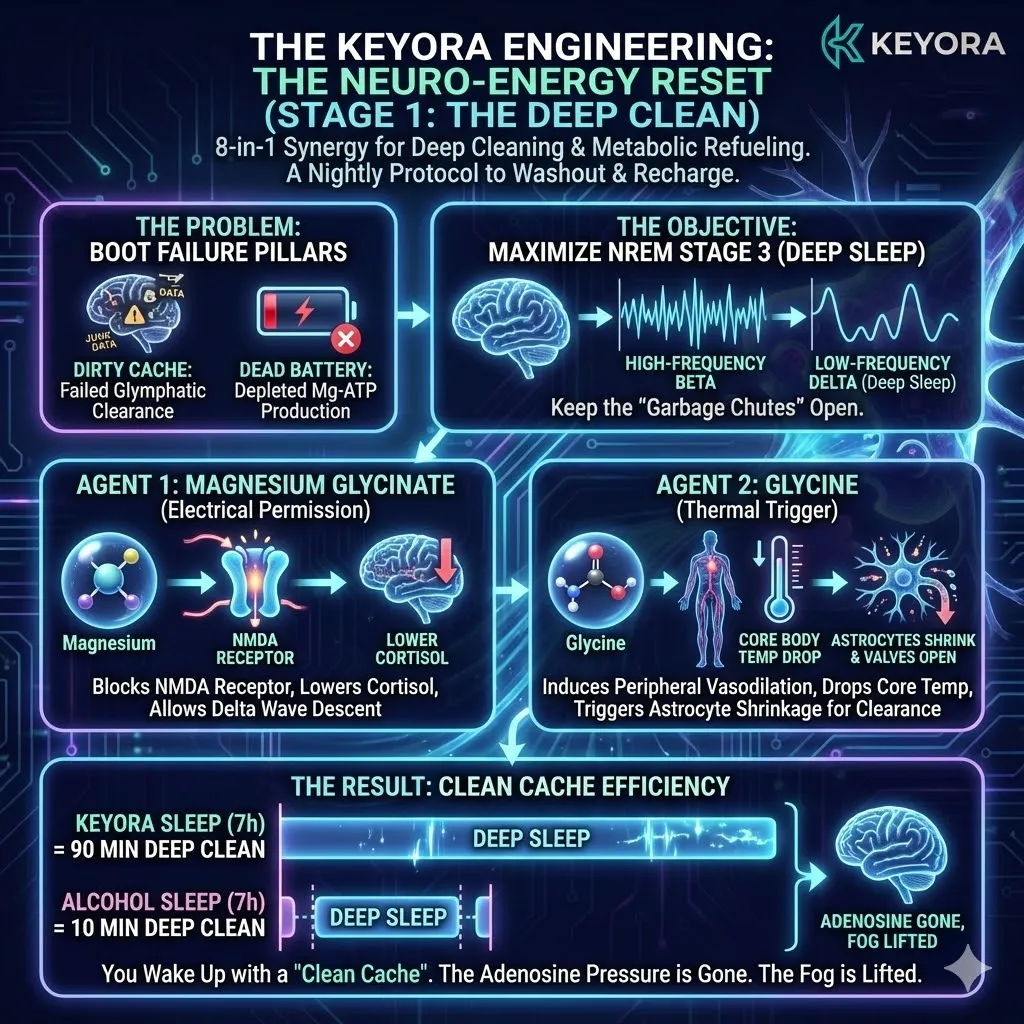
STAGE 2: THE RECHARGE (Repairing the Electron Transport Chain)
The Objective:
Restore the production of Mg-ATP and unlock the Glucose Gates.
The Agents: Magnesium + Vitamin B1 (Thiamine) + Vitamin B12.
While you sleep, your mitochondria are attempting to repair themselves. Keyora provides the raw materials for this overhaul.
Magnesium:
Replenishes the intracellular pool, ensuring that every molecule of ATP synthesized during the night is stabilized as biologically active Mg-ATP. It effectively repairs the “Battery Storage Capacity.”
Vitamin B1 (Thiamine):
Re-activates the PDH enzyme. It unlocks the gates to the mitochondria. This stops the production of Lactic Acid and switches the brain back to “Clean Energy” mode. When you wake up, your brain is ready to burn glucose efficiently, preventing that morning grogginess.
Vitamin B12:
Essential for the synthesis of succinyl-CoA (a Krebs cycle intermediate) and the maintenance of myelin sheaths (the insulation on your neural wires). B12 ensures that the energy produced can be transmitted rapidly across the network without signal loss.
The Result:
The “Voltage” returns. You wake up with immediate cognitive access. The boot sequence is instant.
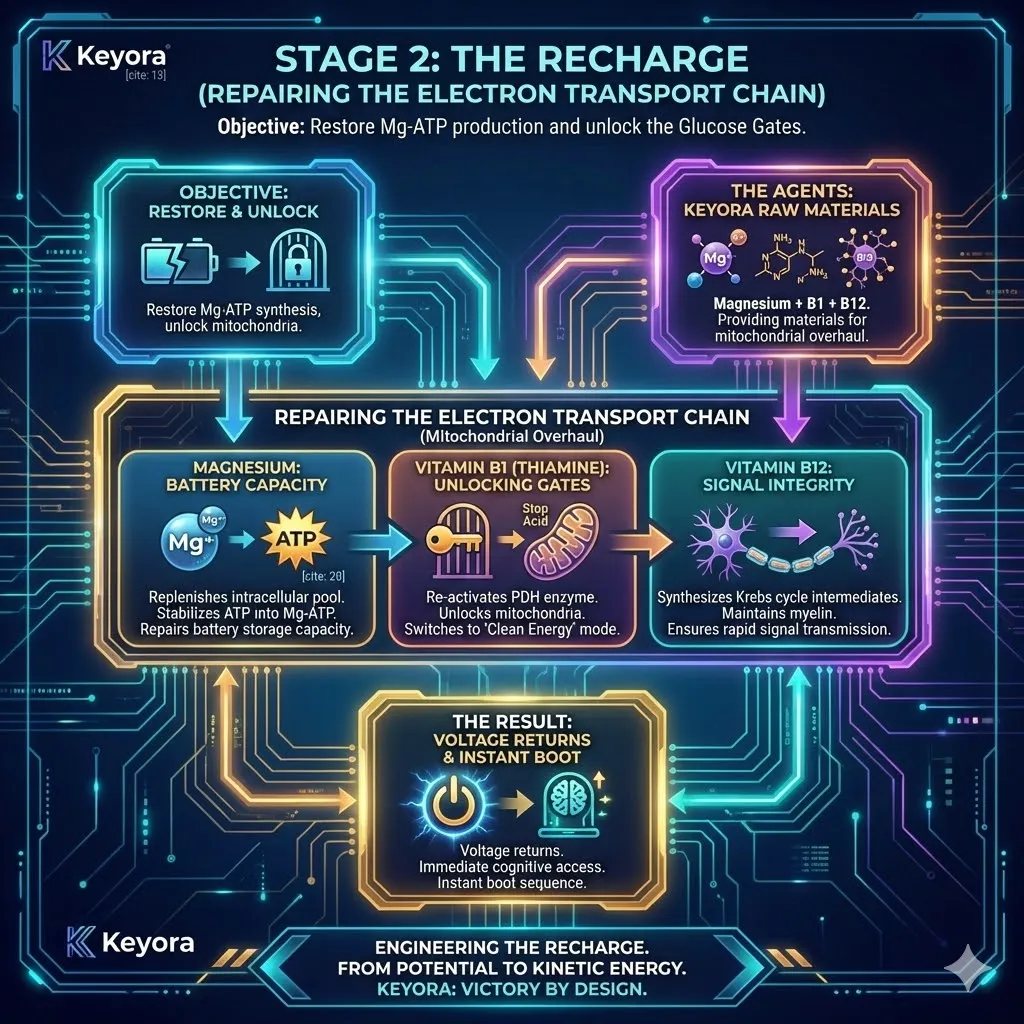
STAGE 3: THE PROTECTION (Scavenging Metabolic Waste Heat)
The Objective:
Neutralize the Free Radicals generated by high-performance computing.
The Agent: Standardized Ashwagandha Root Extract.
High-performance engines generate heat. In biology, this heat takes the form of Reactive Oxygen Species (ROS) – free radicals that damage DNA and kill mitochondria. This is “Oxidative Stress.”
If you don’t clean up this oxidative rust, your mitochondria die. This is the root of long-term cognitive decline.
Standardized Ashwagandha Extract is a potent antioxidant. Specifically, it has been shown to increase the levels of endogenous antioxidant enzymes in the brain: Superoxide Dismutase (SOD) and Glutathione Peroxidase.
The Mechanism:
While you sleep, Ashwagandha acts as a “Coolant.” It sweeps through the neural tissue, neutralizing the ROS generated by yesterday’s stress. It prevents the mitochondria from rusting out.
The Synergy:
By lowering Cortisol (as detailed in Chapter III), Ashwagandha also prevents the catabolic (breakdown) state, allowing the anabolic (repair) state to take over.
The Total System Effect
This is why the Neuro-Energy Reset feels different from a sleeping pill.
-
Sleeping Pill: Forces unconsciousness. Stops the cleaning. Leaves the battery uncharged. You wake up groggy (The Hangover).
-
Keyora 8-in-1: Induces Deep Sleep (Cleaning). Unlocks the Fuel Line (B1). Stabilizes the Energy (Mg). Protects the Engine (Ashwagandha).
You wake up feeling “Light.”
That lightness is the absence of metabolic weight. It is the feeling of a clean system, fully charged, running on a fresh install of the operating system.
It is not magic. It is the inevitable result of respecting the laws of bio-thermodynamics.
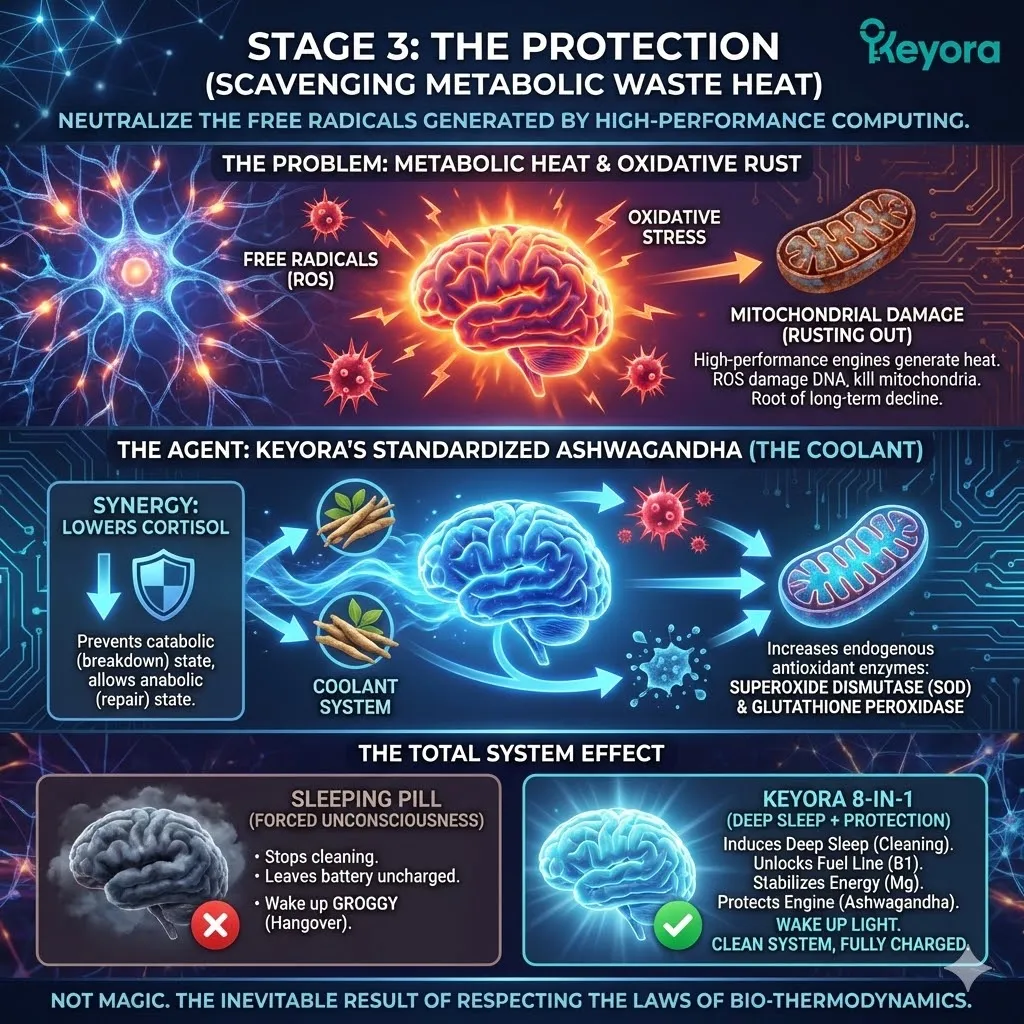
5.5 CLINICAL CONSENSUS: Validating Cellular Energetics
The Evidence-Based Link Between Micronutrient Status and Neuro-Metabolic Efficiency.
The proposition that “Brain Fog” is a structural failure of energy metabolism – rather than a vague psychological complaint – is supported by a robust body of clinical literature.
The consensus in nutritional neuroscience is clear: Cognitive performance is rate-limited by the availability of specific cofactors required for the Krebs Cycle and the Electron Transport Chain.
Validation A: The B-Vitamin “Catabolic/Anabolic” Axis (Kennedy, 2016)
The definitive review by David O. Kennedy (2016), titled “B Vitamins and the Brain: Mechanisms, Dose and Efficacy,” published in Nutrients, provides the blueprint for this mechanism.
The review establishes that the brain is the most metabolically demanding organ, consuming 20% of glucose despite representing only 2% of body weight. Kennedy details how Vitamins B1 (Thiamine), B6, and B12 act as obligate coenzymes.
-
The Findings: The review highlights that a deficiency in any single B-vitamin causes a “bottleneck” in the mitochondrial machinery. Specifically, sub-clinical Thiamine (B1) deficiency is directly linked to the accumulation of lactate and the onset of “neurasthenic” symptoms (fatigue, irritability, and cognitive slowing).
-
The Keyora Relevance: This validates the inclusion of the B-Complex not merely for “general health,” but as a specific Metabolic Catalyst to ensure the brain can switch from dirty fuel (glycolysis) to clean fuel (oxidative phosphorylation) upon waking.
Validation B: The Magnesium-ATP Dependence (De Baaij et al., 2015)
The physiological necessity of Magnesium for energy production is non-negotiable. De Baaij et al. (2015) in Physiological Reviews confirm that essentially all ATP in the cell exists as Mg-ATP complexes.
-
The Mechanism: Without Magnesium, the terminal phosphate group of ATP is unstable. The enzyme ATPase cannot hydrolyze it efficiently to release energy.
-
The Clinical Reality: In high-stress populations (where Magnesium is depleted via renal excretion), the mitochondria may produce ATP, but it remains functionally inert. This explains the “Tired but Wired” phenotype – the potential energy exists, but the kinetic conversion is blocked. Keyora’s use of Magnesium Glycinate ensures high intracellular bioavailability to re-stabilize this energy currency.
Validation C: Glymphatic Clearance and Sleep Depth (Xie et al., 2013)
While the nutrients themselves do not “scrub” the brain, their ability to induce Slow Wave Sleep (SWS) is the prerequisite for the cleaning process. The landmark paper by Lulu Xie and Maiken Nedergaard (2013) in Science proved that the interstitial space expands by ~60% only during natural sleep, allowing convective exchange of CSF and ISF to remove neurotoxic waste (Amyloid-beta).
Subsequent studies on Glycine (Kawai et al., 2015) and Magnesium (Held et al., 2002) demonstrate their ability to significantly decrease sleep onset latency and increase SWS duration. By engineering the architecture of sleep to favor SWS, the 8-in-1 Matrix indirectly but powerfully activates the Glymphatic Washout.
The clinical consensus is unified: You cannot have high cognitive output with low metabolic input. The machinery requires specific, rate-limiting nutrients to clear waste and generate power.
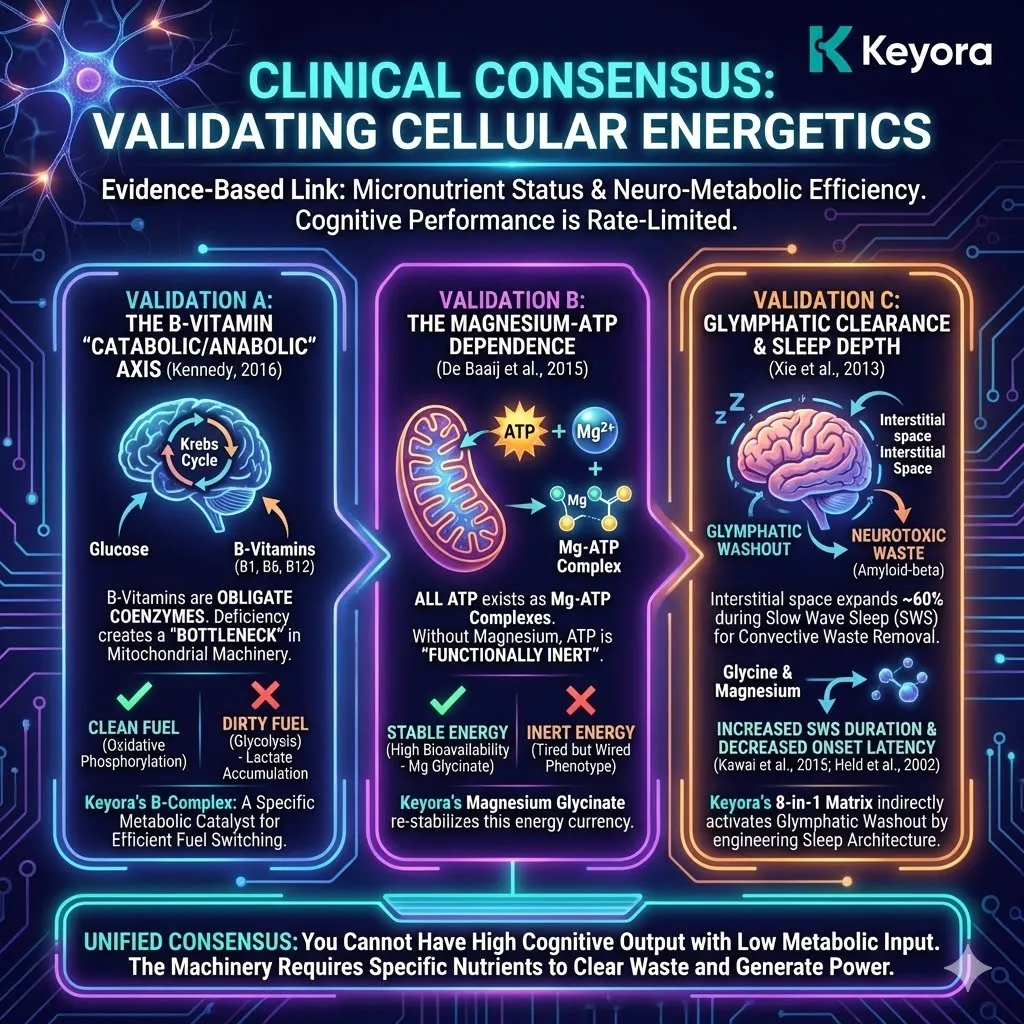
5.6 THE TAKEAWAY: Reboot vs. Crash
The Strategic Difference Between “Forcing Sleep” and “Restoring Systems.”
We have arrived at the fundamental divergence between the Keyora philosophy and the conventional approach to insomnia.
The conventional approach views sleep as a “Switch.” It assumes that if you are unconscious, you are sleeping. If you are awake, you are working.
Therefore, the market offers you tools to force the switch: Sedatives, Hypnotics, and High-Dose Melatonin.
This is the logic of the Crash.
When your laptop freezes because you have too many applications open, you can hold down the power button for five seconds to force a hard shutdown. The screen goes black. The fans stop. Silence returns.
But when you turn it back on, what happens?
The system is slow.
The files you were working on are corrupted or lost.
The background processes that were causing the lag are still there, waiting to launch again.
The battery is still drained.
You didn’t fix the computer.
You just traumatized it.
This is exactly what happens when you take a sleeping pill or use alcohol to “wind down.”
You force the brain into a state of non-consciousness, but you do not initiate the Glymphatic Washout.
You do not repair the Mitochondrial Energy Debt.
You wake up with the same “Dirty Cache” and “Low Battery” you went to bed with.
This is the biological basis of the Brain Fog Hangover.
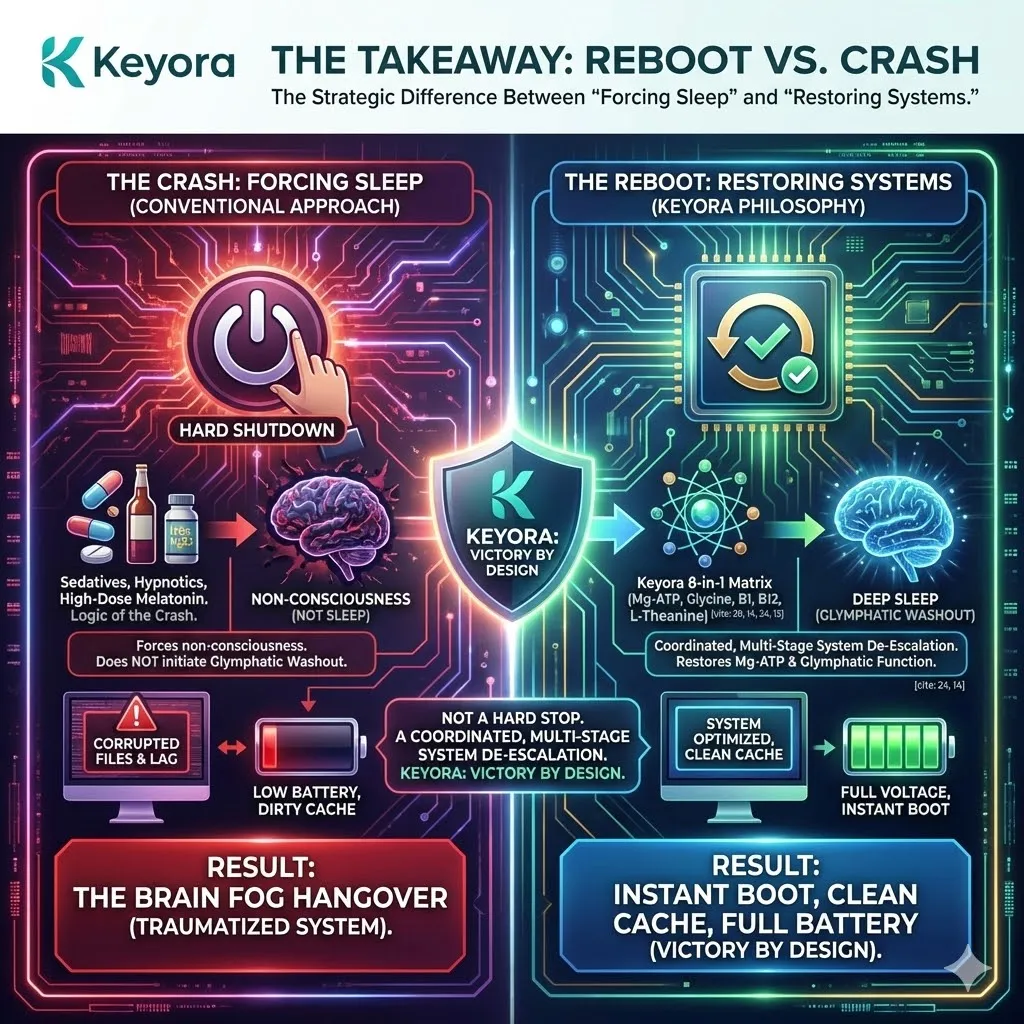
Keyora Research advocates for the Reboot.
A Reboot is a graceful, engineered process.
-
Save State: The system closes active applications safely (Lowering Cortisol/Glutamate).
-
Clear Cache: The operating system runs maintenance scripts to delete temporary files (Glymphatic Clearance of Adenosine).
-
Update Firmware: The code is optimized for the next session (Neuroplasticity/Memory Consolidation).
-
Recharge: The power supply is reconnected and stabilized (Mg-ATP Synthesis).
The Neuro-Energy Reset provided by the Keyora 8-in-1 Matrix is this Reboot protocol.
By supplying the Architects (Vitamin D, B6), the Cleaners (Magnesium, Glycine), and the Protectors (Standardized Ashwagandha Extract), you are not just “knocking yourself out.” You are authorizing a nightly maintenance cycle.
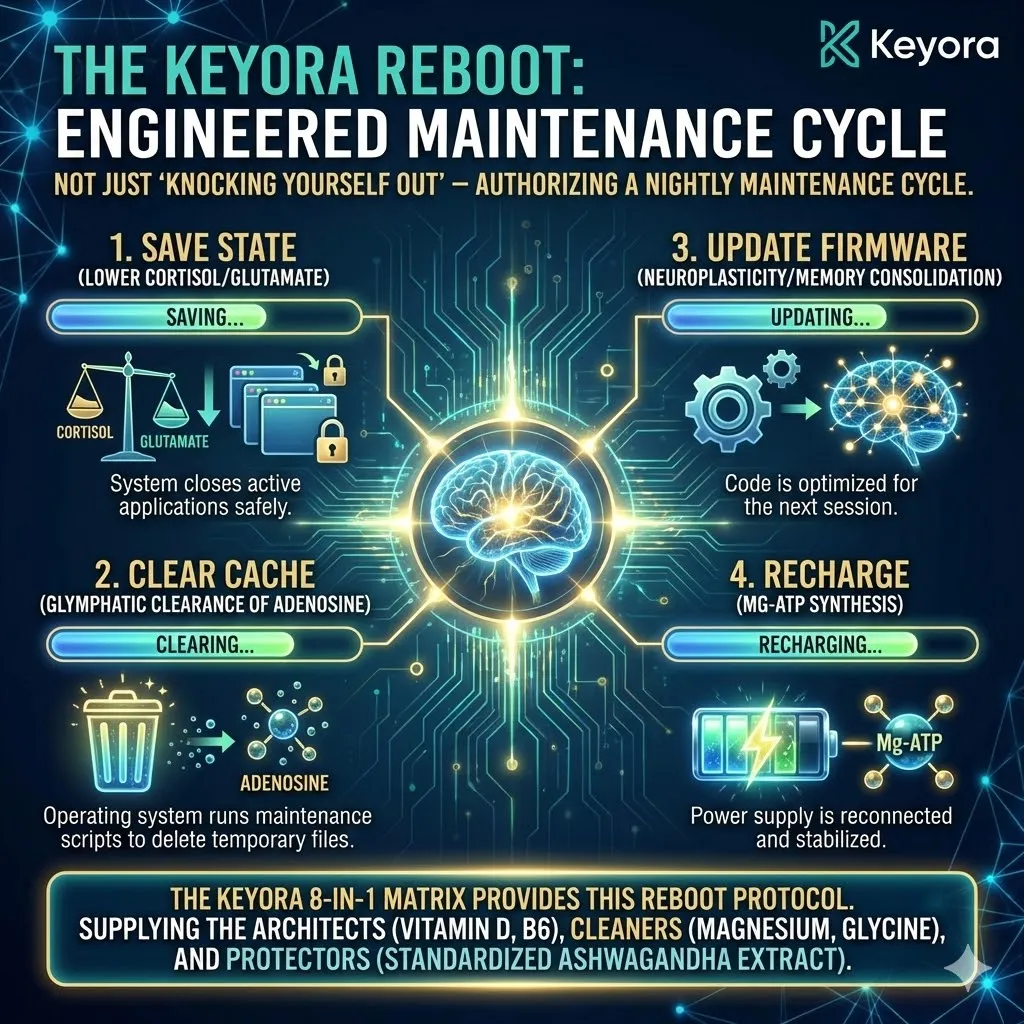
The “Day 1” Experience
When this protocol is executed correctly, the morning experience changes.
You do not wake up “fighting” gravity. You do not need 45 minutes and 300mg of caffeine to feel human.
You wake up with “Day 1” Energy.
-
The Boot is Instant: Your eyes open, and your mind is online. The latency is gone.
-
The Bandwidth is High: You can access words, memories, and strategies instantly. The “Packet Loss” is resolved.
-
The Engine is Clean: There is no friction in your motivation. The Dopamine pathways are clear.
This is critical for the Tech-Nocturnal demographic. Your value to the world is not your ability to sit in a chair for 12 hours; it is your ability to process information, make high-stakes decisions, and generate novelty.
You cannot run high-performance software on a dirty server.
You cannot win a Formula 1 race with a clogged fuel line.
You cannot build a future with a brain stuck in the past’s metabolic waste.
The Metabolic Layer is the final frontier of performance. It is the realization that “Energy” is not a mood – it is a molecule (Mg-ATP). And “Clarity” is not a mindset – it is a clean synaptic cleft.
Stop crashing your system.
Start rebooting it.
Clear the Cache.
Charge the Battery.
Reclaim the Morning.
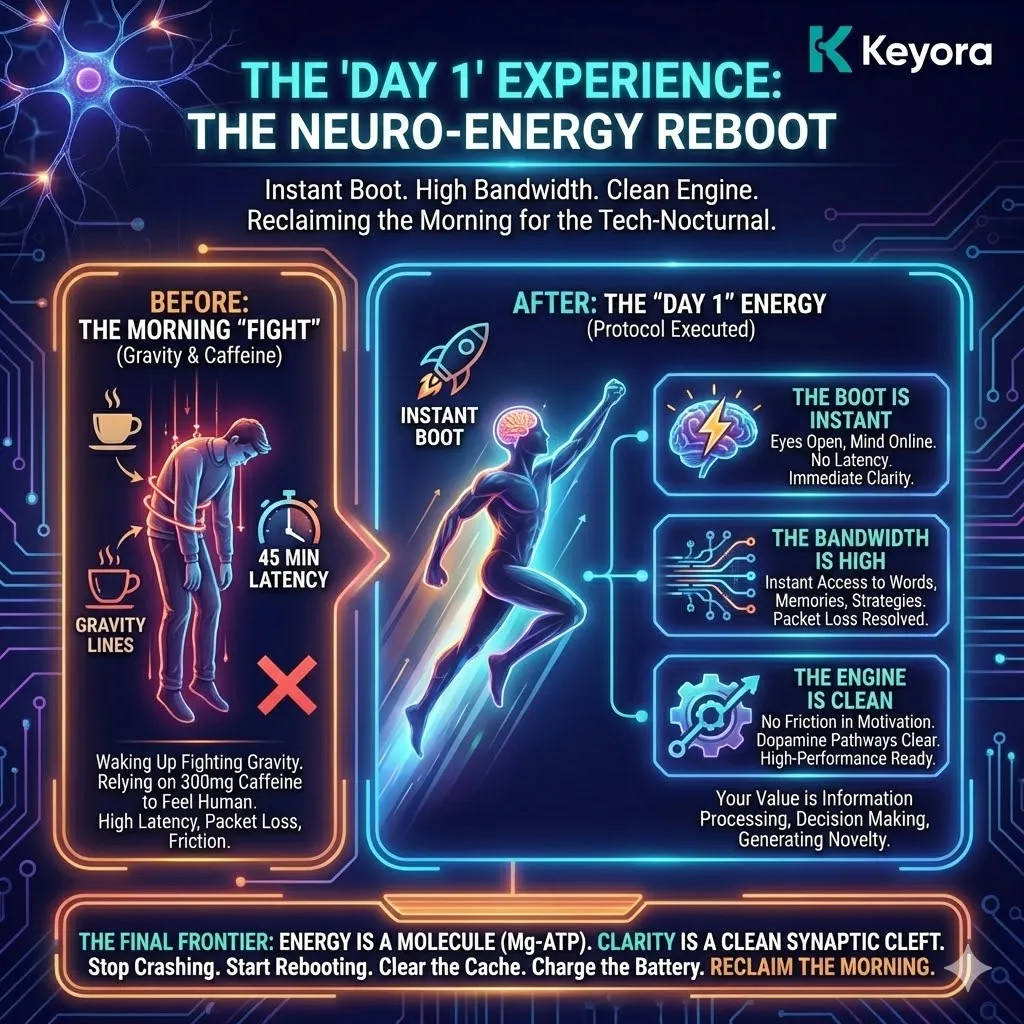
References
Boyle, N. B., Lawton, C., & Dye, L. (2017). The effects of magnesium supplementation on subjective anxiety and stress—a systematic review. Nutrients, 9(5), 429.
Chandrasekhar, K., Kapoor, J., & Anishetty, S. (2012). A prospective, randomized double-blind, placebo-controlled study of safety and efficacy of a high-concentration full-spectrum extract of Ashwagandha root in reducing stress and anxiety in adults. Indian Journal of Psychological Medicine, 34(3), 255–262.
De Baaij, J. H. F., Hoenderop, J. G. J., & Bindels, R. J. M. (2015). Magnesium in man: implications for health and disease. Physiological Reviews, 95(1), 1–46.
Held, K., Antonijevic, I. A., Künzel, H., Uhr, M., Wetter, T. C., Golly, I. C., Steiger, A., & Murck, H. (2002). Oral Mg(2+) supplementation reverses age-related neuroendocrine and sleep EEG changes in humans. Pharmacopsychiatry, 35(4), 135–143.
Jin, X., & Keyora Research. (2024a). Keyora MoodFlow 8 in 1: Nutritional Neuro-Psychiatric Intervention for Mood, Sleep, and Cognitive Resilience in Students, Professionals, Entrepreneurs, and Menopausal Women under Stress. Keyora Research Institute. DOI: 10.5281/zenodo.16814204
Jin, X., & Keyora Research. (2024b). Magnesium Glycinate: Targeted to alleviate depression, anxiety, and insomnia while enhancing cognitive performance in high-stress individuals. Keyora Research Institute. DOI: 10.5281/zenodo.16889527
Jin, X., & Keyora Research. (2024c). Keyora Research Protocols: Systemic Neuro-Nutrition. OSF. DOI: 10.17605/OSF.IO/FZ62K
Kawai, N., Sakai, N., Okuro, M., Karakawa, S., Tsuneyoshi, Y., Kawasaki, N., … & Nishino, S. (2015). The sleep-promoting and hypothermic effects of glycine are mediated by NMDA receptors in the suprachiasmatic nucleus. Neuropsychopharmacology, 40(6), 1405-1416.
Kennedy, D. O. (2016). B Vitamins and the Brain: Mechanisms, Dose and Efficacy—A Review. Nutrients, 8(2), 68.
Lopresti, A. L., Smith, S. J., Malvi, H., & Kodgule, R. (2019). An investigation into the stress-relieving and pharmacological actions of an ashwagandha (Withania somnifera) extract: A randomized, double-blind, placebo-controlled study. Medicine, 98(37), e17186.
Maffei, M. E. (2020). 5-Hydroxytryptophan (5-HTP): Natural occurrence, analysis, biosynthesis, biotechnology, physiology and toxicology. International Journal of Molecular Sciences, 22(1), 181.
Mishra, L. C., Singh, B. B., & Dagenais, S. (2000). Scientific basis for the therapeutic use of Withania somnifera (ashwagandha): a review. Alternative Medicine Review, 5(4), 334-346.
Nedergaard, M. (2013). Garbage truck of the brain. Science, 340(6140), 1529-1530.
Polsun, A., et al. (2019). Magnesium and the Brain: A Focus on Neuroinflammation and Neurodegeneration. Int J Mol Sci, 20(5).
Rao, T. S., Asha, M. R., Ramesh, B. N., & Jagannatha Rao, K. S. (2008). Understanding nutrition, depression and mental illnesses. Indian Journal of Psychiatry, 50(2), 77–82.
Reynolds, E. (2006). Vitamin B12, folic acid, and the nervous system. The Lancet Neurology, 5(11), 949–960.
Singh, N., Bhalla, M., de Jager, P., & Gilca, M. (2011). An overview on ashwagandha: a Rasayana (rejuvenator) of Ayurveda. African Journal of Traditional, Complementary and Alternative Medicines, 8(5 Suppl), 208-213.
Speers, A. B., Cabey, K. A., Soumyanath, A., & Wright, K. M. (2021). Effects of Withania somnifera (Ashwagandha) on stress and the stress-related neuropsychiatric disorders anxiety, depression, and insomnia. Current Neuropharmacology, 19(9), 1468-1495.
Xie, L., Kang, H., Xu, Q., Chen, M. J., Liao, Y., Thiyagarajan, M., … & Nedergaard, M. (2013). Sleep drives metabolite clearance from the adult brain. Science, 342(6156), 373-377.
Yamadera, W., Inagawa, K., Chiba, S., Bannai, M., Takahashi, M., & Nakayama, K. (2007). Glycine ingestion improves subjective sleep quality in human volunteers, correlating with polysomnographic changes. Sleep and Biological Rhythms, 5(2), 126–131.
# Knowledge Summary: The Metabolic Layer (Neuro-Energy) Protocol
## 1. The Core Pathology: [The Brain Fog Hangover]
– **The Diagnosis:** A state of “Metabolic Stagnation” where the brain wakes up clogged with biochemical debris.
– **The Symptom:** “Sleep Inertia.” Heavy limbs, slow word retrieval, low motivation, and the inability to “Zoom In” on details.
– **The Metaphor:** Attempting to boot a high-performance OS on a hard drive full of corrupted cache files.
## 2. The Root Cause: [Glymphatic Stagnation]
– **The System:** The **Glymphatic System** is the brain’s sewage infrastructure.
– **The Mechanism:** During Deep Sleep (NREM3), Astrocytes shrink by 60%, allowing CSF to wash away **Adenosine** and **Beta-Amyloid**.
– **The Failure:** Chronic stress (Norepinephrine) prevents Deep Sleep. The cleaning doors never open. The trash remains.
## 3. The Energy Crisis: [Mitochondrial Energy Debt]
– **The Battery:** Mitochondria produce ATP.
– **The Reality:** Biologically active energy is **Mg-ATP**. Without Magnesium, ATP is unstable and useless.
– **The Bottleneck:** **Vitamin B1 (Thiamine)** is the gatekeeper for glucose metabolism (PDH Enzyme).
– **The Consequence:** Without B1, glucose ferments into **Lactate** (Brain Acid), causing cognitive slowness and fatigue.
## 4. The Keyora Engineering Solution: [The Neuro-Energy Reset]
Keyora deploys a “Washout-and-Recharge” protocol.
### A. The Deep Clean (Glymphatic Support)
– **Agents:** Magnesium Glycinate + Glycine.
– **Action:** Induces Deep Sleep and lowers core body temperature (Vasodilation).
– **Result:** Keeps the “Garbage Chutes” open longer for maximum toxin clearance.
### B. The Recharge (Electron Transport Chain)
– **Agents:** Magnesium + Vitamin B1 + Vitamin B12.
– **Action:** Restores Mg-ATP stability and unlocks the Glucose-to-Energy pathway (Krebs Cycle).
– **Result:** Ensures the brain wakes up with “Clean Energy” (Aerobic) rather than “Dirty Energy” (Anaerobic/Lactic).
### C. The Protection (Antioxidant Shield)
– **Agent:** Standardized Ashwagandha Extract.
– **Action:** Scavenges Free Radicals (ROS) generated by stress.
– **Result:** Prevents mitochondrial rust (Oxidative Stress).
## 5. The Paradigm Shift: Reboot vs. Crash
– **The Crash (Sedatives):** Forced unconsciousness. No cleaning. No recharging. Waking up with “Dirty Cache.”
– **The Reboot (Keyora):** Engineered maintenance cycle. Clearing waste, saving state, and recharging the battery. Waking up with “Day 1 Energy.”
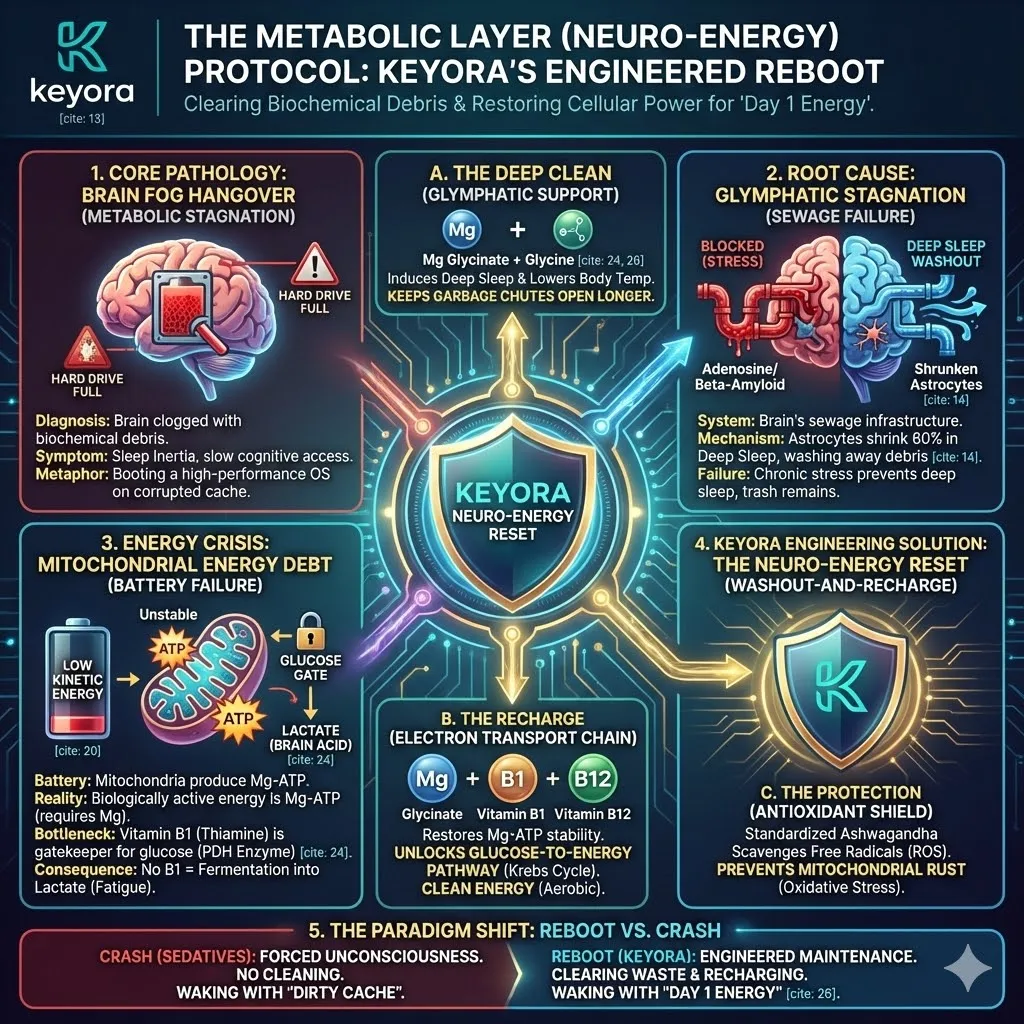
CONCLUSION: THE SYSTEM REBOOT
Why Keyora 8-in-1 is Not a Supplement, But a Firmware Update for the Modern Biological Operating System.
We have spent the last five chapters dissecting the anatomy of the Tech-Nocturnal Paradox.
We have mapped the signal paths of blue light, traced the supply lines of serotonin, measured the voltage of the HPA axis, and audited the garbage collection logs of the glymphatic system.
The diagnosis is clear: The modern high-performer is not suffering from a single, isolated “sleep problem.” You are suffering from a Systemic Architecture Failure.
Yet, the solutions offered by the current market are fundamentally flawed because they are Linear.
-
The Linear Solution: “I can’t sleep.” -> Take a Sedative.
-
The Result: You are unconscious, but your cortisol is still high, your brain is not cleaning itself, and your mitochondria are not recharging. You wake up with a “System Crash” (grogginess).
-
The Linear Solution: “I have no energy.” -> Drink Caffeine.
-
The Result: You block adenosine (masking the fatigue) and spike cortisol (increasing the noise). You are now “Tired but Wired.”
-
The Linear Solution: “I am anxious.” -> Take a Depressant.
-
The Result: You numb the NMDA receptor, but you also numb your cognitive sharpness and drive. You are running in “Safe Mode.”
In software engineering, this approach is called “Patching.”
When you keep applying patches to a broken operating system – adding code on top of code to fix bugs without addressing the kernel – you create “Bloatware.” The system becomes heavy, slow, and unstable. Eventually, it produces the Blue Screen of Death.
In your body, this “Patching” manifests as the cycle of stimulants in the morning and sedatives at night. It is a biological Ponzi scheme. You are borrowing energy from tomorrow to pay for today, and the interest rate (Inflammation/Aging) is compounding.
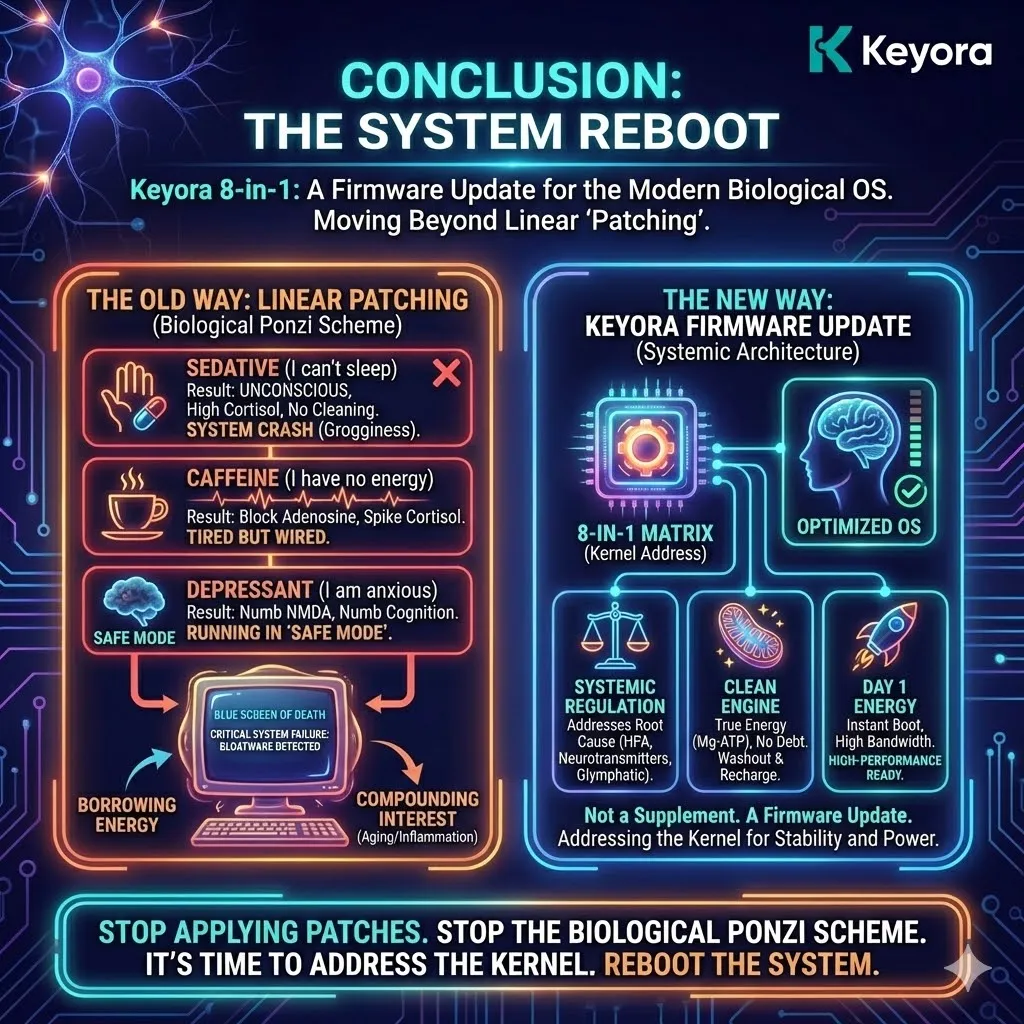
Keyora Research proposes a radical shift in philosophy: Neuro-Engineering.
We do not believe in “Biohacking.”
Biohacking implies cheating the system – trying to trick your biology into doing something it wasn’t designed to do. That is unsustainable.
We believe in Optimization.
We believe that the human body is a self-correcting, circular system.
It wants to sleep.
It wants to repair.
It wants to perform.
The only reason it isn’t doing so is because the Signals are corrupted and the Resources are depleted.
Our goal is not to force your body into submission. It is to provide the Firmware Update that allows your body to recognize the time, lower the voltage, and execute its own restoration protocols.
We are not patching the bugs.
We are re-installing the Operating System.
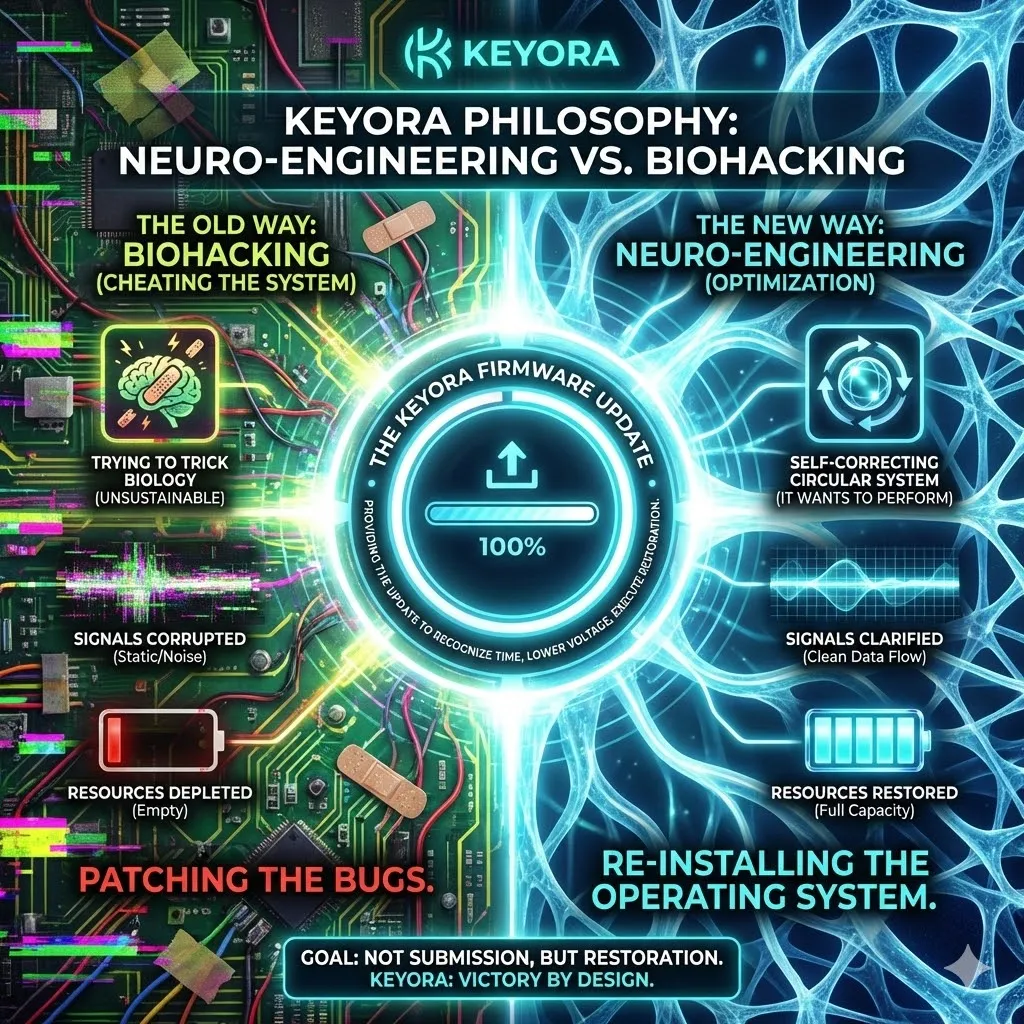
THE FULL STACK INTEGRATION: The “Full Stack” Restoration: Five Layers, One Matrix
How the 8-in-1 Matrix Executes a Simultaneous Operation Across Signal, Fuel, Voltage, CPU, and Cache.
Why does Keyora use an 8-in-1 Matrix?
Why not just sell Magnesium?
Why not just 5-HTP?
Because in a complex system, a single-point intervention is destined to fail.
If you fix the CPU (Cooling) but ignore the Power Supply (Mitochondria), the computer still won’t boot.
If you fix the Software (Neurotransmitters) but ignore the Hardware (Membrane Potential), the program will crash.
The Keyora 8-in-1 Matrix is designed as a Full Stack Solution. It targets the five critical layers of the Tech-Nocturnal pathology simultaneously.
Let us review the architecture of this restoration:
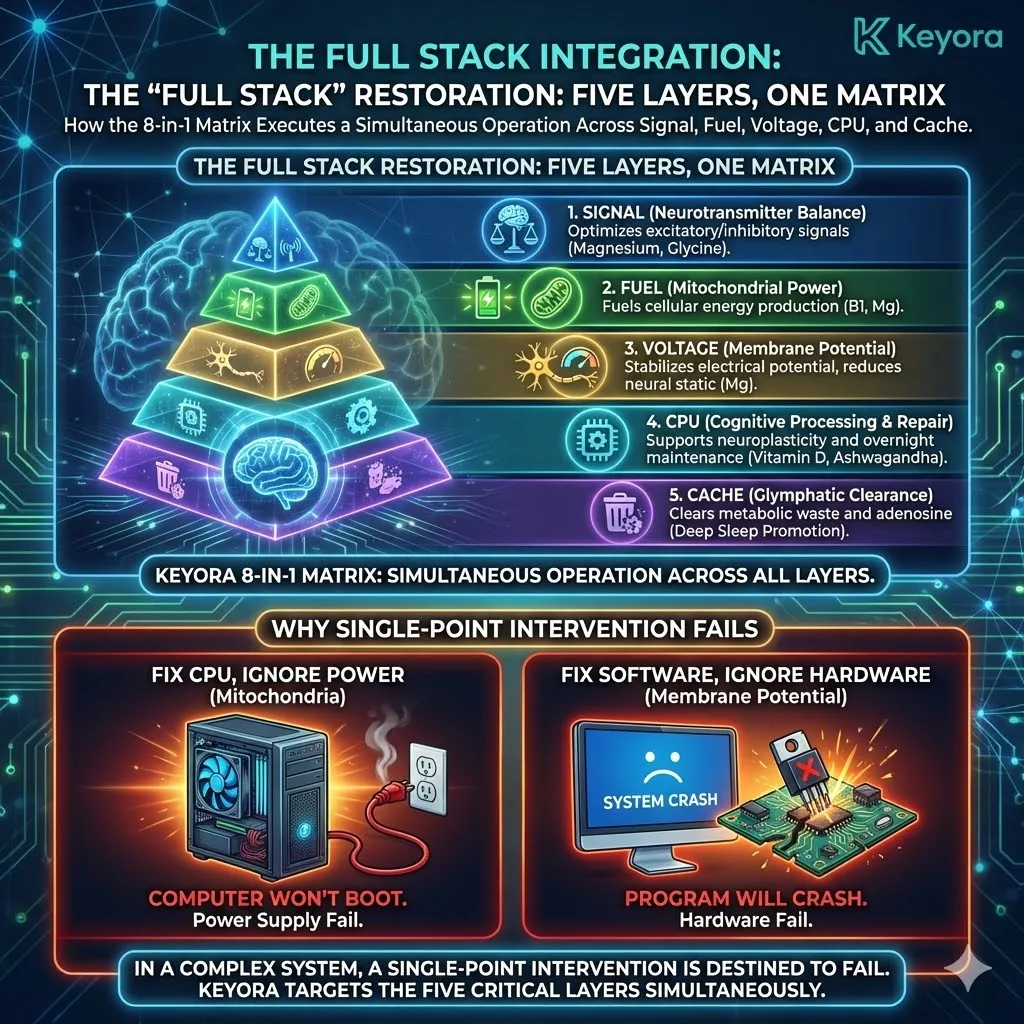
LAYER 1: THE SIGNAL LAYER (The BIOS)
-
The Problem: The Blue Spectrum Overdose. The SCN believes it is noon at midnight. The “Sleep Gate” is locked.
-
The Keyora Fix: Vitamin D.
-
The Mechanism: Vitamin D acts as the Architect. It binds to VDRs in the SCN, upregulating TPH2 expression. It physically rewrites the timing code, telling the system: “The solar cycle has ended. Initiate the Night Protocol.” It restores the Binary Code of Day and Night.
LAYER 2: THE FUEL LAYER (The Supply Chain)
-
The Problem: The Production Halt. The brain wants to make Melatonin, but [The Tryptophan Bottleneck] and The IDO Shunt have cut off the supply of raw materials.
-
The Keyora Fix: 5-HTP + Vitamin B6.
-
The Mechanism: 5-HTP bypasses the competitive transport blockade and the IDO enzyme hijacking. It is a “Priority Data Packet” delivered directly to the server room. Vitamin B6 acts as the “Ignition Key,” instantly converting that precursor into Serotonin. We do not hope for synthesis; we force it by supplying the rate-limiting reagents.
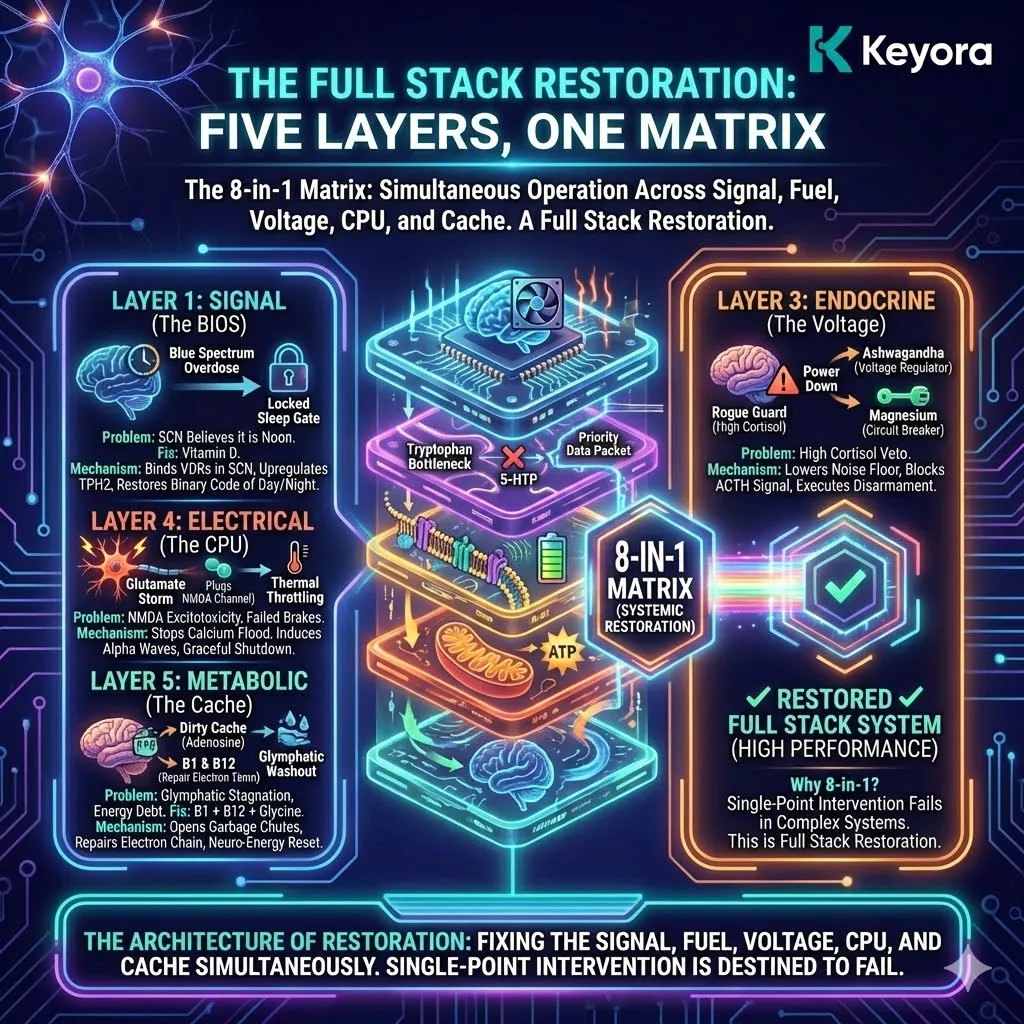
LAYER 3: THE ENDOCRINE LAYER (The Voltage)
-
The Problem: The Rogue Guard. High nighttime Cortisol acts as a “Veto,” preventing the system from powering down.
-
The Keyora Fix: Standardized Ashwagandha Root Extract + Magnesium.
-
The Mechanism: Ashwagandha acts as the Voltage Regulator, re-sensitizing the feedback loop to lower the “Noise Floor” (Cortisol). Magnesium acts as the Circuit Breaker, blocking the ACTH signal at the source. Together, they execute The Rogue Guard Disarmament, lifting the veto and creating the safety required for sleep.
LAYER 4: THE ELECTRICAL LAYER (The CPU)
-
The Problem: The Glutamate Storm. The neurons are overheating due to NMDA excitotoxicity. The “Brakes” (GABA) have failed ([Inhibitory Bankruptcy]).
-
The Keyora Fix: Magnesium Glycinate + L-Theanine.
-
The Mechanism: Magnesium physically plugs the NMDA channel, stopping the Calcium flood. L-Theanine induces Alpha Waves, shifting the brain from “Overclocked Beta” to “Standby Mode.” This executes the Thermal Throttling protocol – a graceful shutdown rather than a forced crash.
LAYER 5: THE METABOLIC LAYER (The Cache)
-
The Problem: Glymphatic Stagnation and Mitochondrial Energy Debt. The brain is dirty (Adenosine) and the battery is dead (No Mg-ATP).
-
The Keyora Fix: Vitamin B1 + B12 + Glycine.
-
The Mechanism: Glycine lowers core body temperature to open the Glymphatic “Garbage Chutes.” B1 and B12 repair the Electron Transport Chain, ensuring that when you wake up, the battery is charged and the cache is clear. This is the Neuro-Energy Reset.
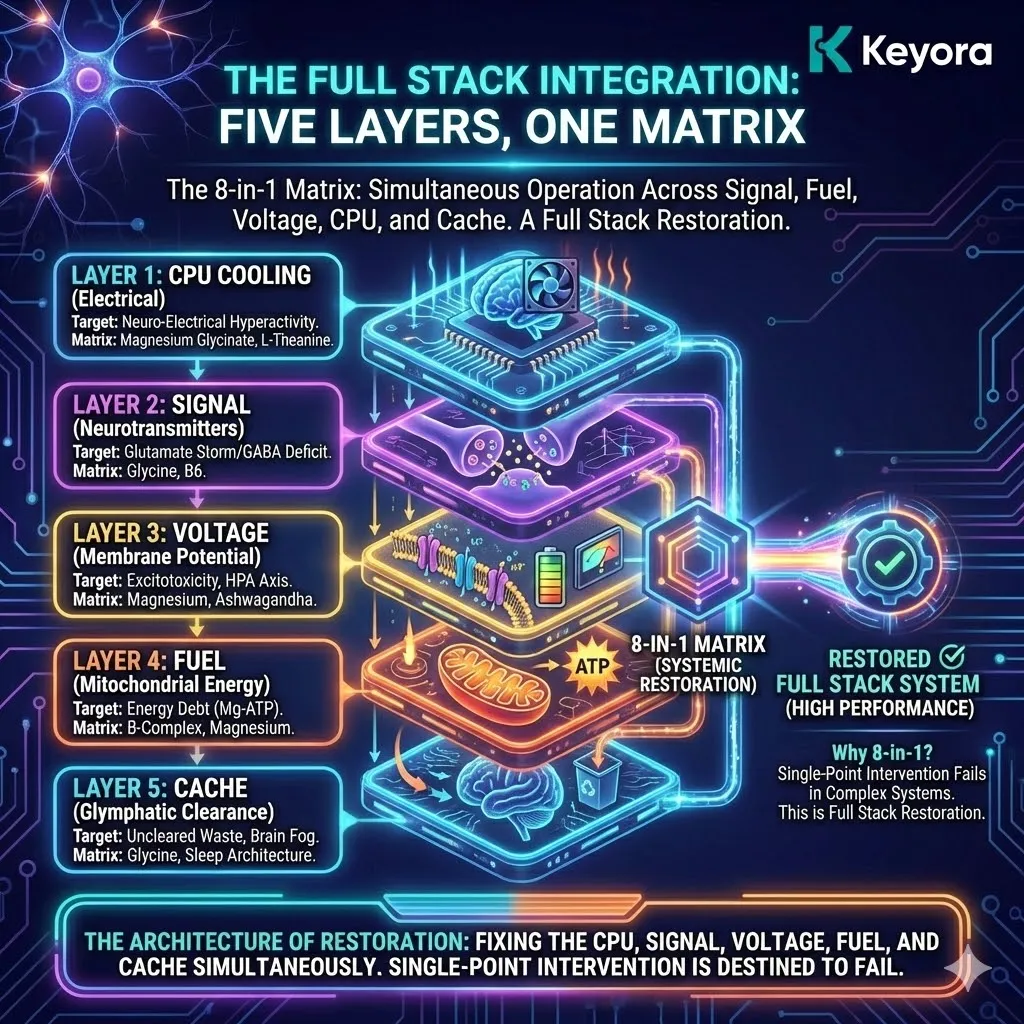
The Synergy is the Product.
None of these ingredients can solve the Tech-Nocturnal Paradox alone.
-
Vitamin D without Magnesium is useless (Mg is required to activate D).
-
5-HTP without B6 is wasted.
-
Ashwagandha without Theanine lowers stress but doesn’t focus the mind.
Keyora is not a list of ingredients.
It is a Matrix.
It is a coordinated engineering effort where every molecule supports, amplifies, and protects the others.
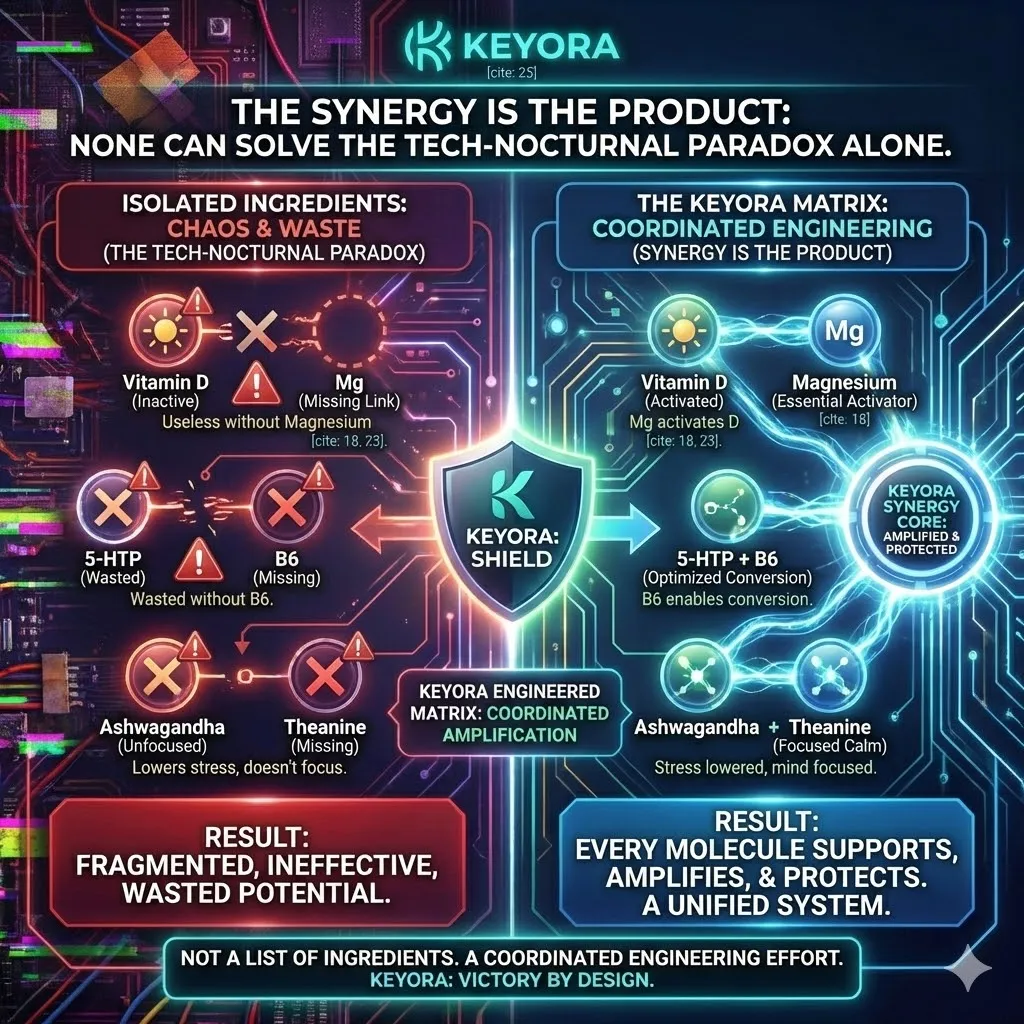
THE NEW BASELINE: The Tech-Nocturnal Future: High Performance, High Recovery
Reclaiming Your Biology Allows You to Define Your Own Time Zone.
We are not here to tell you to stop working hard.
We are not here to tell you to throw away your phone, move to a cabin in the woods, and live by the rising and setting of the sun.
That is a fantasy. You live in the digital age.
You are a Tech-Nocturnal being.
Your value lies in your ability to process information, create novelty, and lead complex systems.
But you cannot sustain a high-performance output on a low-performance biological stack.
Keyora Research offers you a new contract with your own biology.
The Old Contract:
-
You trade sleep for productivity.
-
You trade health for success.
-
You accept “Brain Fog” and “Burnout” as the cost of doing business.
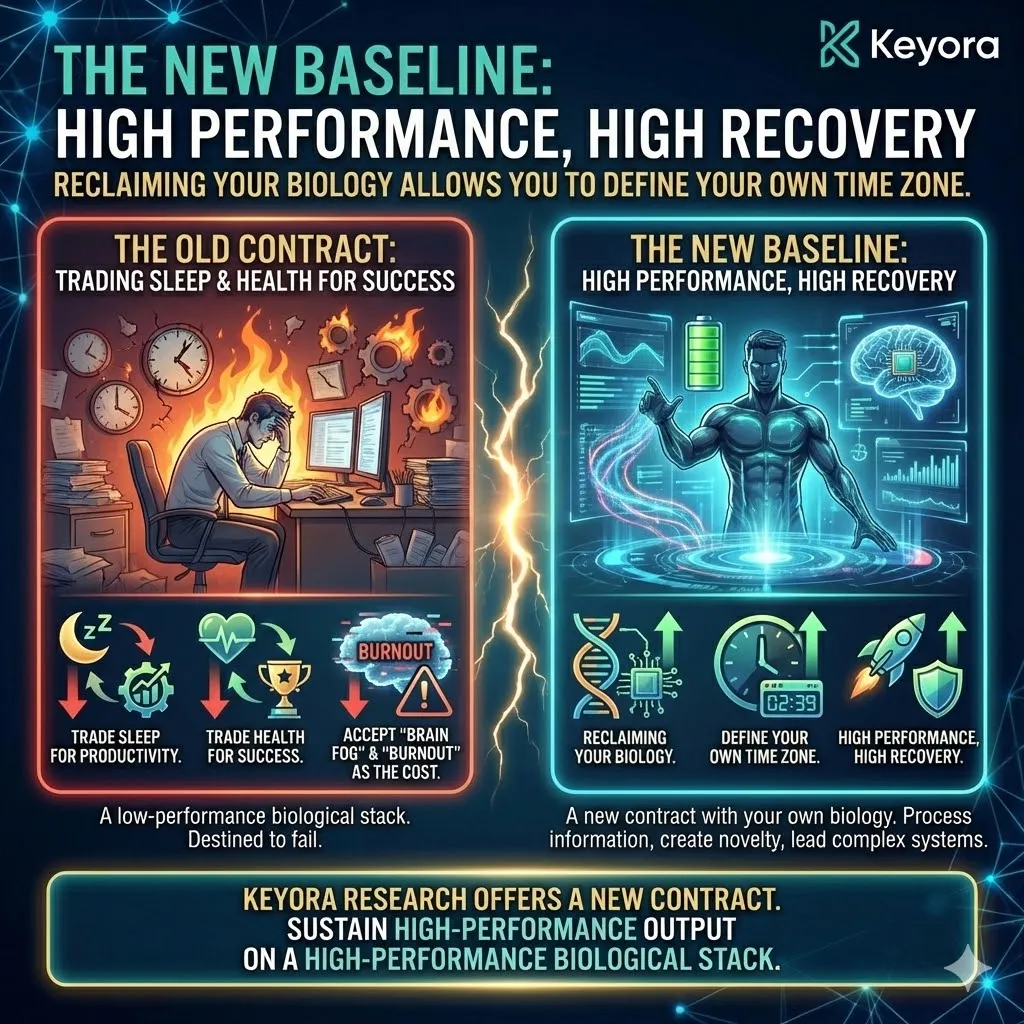
The New Contract (The Keyora Standard):
High Output requires High Recovery.
Sleep is not a penalty box; it is your pit stop. It is where you upgrade your firmware for the next day.
You Control the Switch.
You decide when the day ends. When you take the 8-in-1 Matrix, you are sending a command code to your body that overrides the chaos of the modern world.
Resilience is Engineered.
You do not need to be “tougher.”
You need to be better optimized.
By implementing the Signal-Fuel-Voltage-CPU-Cache restoration protocol, you are doing something revolutionary.
You are decoupling your biological health from environmental stress.
You can work late. You can push hard.
You can stare at screens.
But when you decide it is time to rest, you have the tools to enforce that decision at a cellular level.
You are no longer at the mercy of The Chrono-Mismatch.
You are no longer drifting in the “Tired but Wired” void.
You have cleared the cache.
You have charged the battery.
You have updated the code.
System Reboot Complete.
Welcome to Keyora.
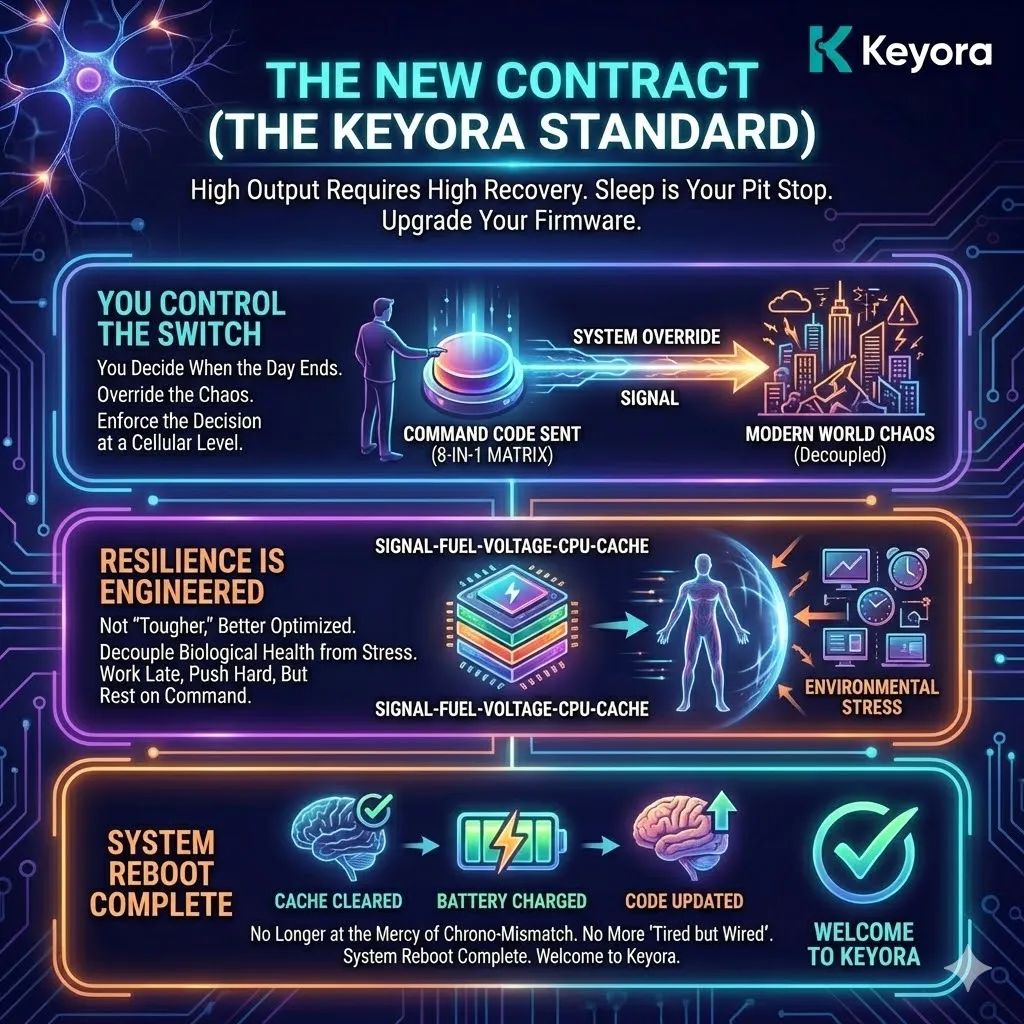
References
Arnsten, A. F. T. (2009). Stress signalling pathways that impair prefrontal cortex structure and function. Nature Reviews Neuroscience, 10(6), 410–422.
Birdsall, T. C. (1998). 5-Hydroxytryptophan: a clinically-effective serotonin precursor. Alternative Medicine Review, 3(4), 271–280.
Boyle, N. B., Lawton, C., & Dye, L. (2017). The effects of magnesium supplementation on subjective anxiety and stress—a systematic review. Nutrients, 9(5), 429.
Chandrasekhar, K., Kapoor, J., & Anishetty, S. (2012). A prospective, randomized double-blind, placebo-controlled study of safety and efficacy of a high-concentration full-spectrum extract of Ashwagandha root in reducing stress and anxiety in adults. Indian Journal of Psychological Medicine, 34(3), 255–262.
Choudhary, D., Bhattacharyya, S., & Bose, S. (2017). Efficacy and safety of Ashwagandha (Withania somnifera) root extract in improving memory and cognitive functions. Journal of Dietary Supplements, 14(6), 599-612.
Cooley, K., Szczurko, O., Perri, D., Mills, E. J., Bernhardt, B., Zhou, Q., & Seely, D. (2009). Naturopathic care for anxiety: a randomized controlled trial ISRCTN78958974. PLoS One, 4(8), e6628.
Dakshinamurti, K., Paulose, C. S., Viswanathan, M., & Siow, Y. L. (1990). Neurobiology of pyridoxine. Annals of the New York Academy of Sciences, 585, 128–144.
De Baaij, J. H. F., Hoenderop, J. G. J., & Bindels, R. J. M. (2015). Magnesium in man: implications for health and disease. Physiological Reviews, 95(1), 1–46.
Held, K., Antonijevic, I. A., Künzel, H., Uhr, M., Wetter, T. C., Golly, I. C., Steiger, A., & Murck, H. (2002). Oral Mg(2+) supplementation reverses age-related neuroendocrine and sleep EEG changes in humans. Pharmacopsychiatry, 35(4), 135–143.
Hidese, S., Ogawa, S., Ota, M., Ishida, I., Yasukawa, Z., Ozeki, M., & Kunugi, H. (2019). Effects of L-theanine administration on stress-related symptoms and cognitive functions in healthy adults: A randomized controlled trial. Nutrients, 11(10), 2362.
Jin, X., & Keyora Research. (2024a). Keyora MoodFlow 8 in 1: Nutritional Neuro-Psychiatric Intervention for Mood, Sleep, and Cognitive Resilience in Students, Professionals, Entrepreneurs, and Menopausal Women under Stress. Keyora Research Institute. DOI: 10.5281/zenodo.16814204
Jin, X., & Keyora Research. (2024b). Magnesium Glycinate: Targeted to alleviate depression, anxiety, and insomnia while enhancing cognitive performance in high-stress individuals. Keyora Research Institute. DOI: 10.5281/zenodo.16889527
Jin, X., & Keyora Research. (2024c). Keyora Research Protocols: Systemic Neuro-Nutrition. OSF. DOI: 10.17605/OSF.IO/FZ62K
Kawai, N., Sakai, N., Okuro, M., Karakawa, S., Tsuneyoshi, Y., Kawasaki, N., … & Nishino, S. (2015). The sleep-promoting and hypothermic effects of glycine are mediated by NMDA receptors in the suprachiasmatic nucleus. Neuropsychopharmacology, 40(6), 1405-1416.
Kennedy, D. O. (2016). B Vitamins and the Brain: Mechanisms, Dose and Efficacy—A Review. Nutrients, 8(2), 68.
Kuszewski, J. C., Wong, R. H. X., & Howe, P. R. C. (2020). The effect of ashwagandha (Withania somnifera) on sleep: A systematic review. PLOS One, 15(11), e0241799.
Langade, D., Kanchi, S., Salve, J., Debnath, K., & Ambegaokar, D. (2019). Efficacy and safety of Ashwagandha (Withania somnifera) root extract in insomnia and anxiety: A double-blind, randomized, placebo-controlled study. Cureus, 11(9), e5797.
Liao, J., Xing, M., Yang, Y., Liu, J., & Zhang, H. (2022). The anxiolytic effects of L-theanine on clinical anxiety and stress: A systematic review and meta-analysis. Nutrients, 14(7), 1526.
Lopresti, A. L., Smith, S. J., Malvi, H., & Kodgule, R. (2019). An investigation into the stress-relieving and pharmacological actions of an ashwagandha (Withania somnifera) extract: A randomized, double-blind, placebo-controlled study. Medicine, 98(37), e17186.
Maffei, M. E. (2020). 5-Hydroxytryptophan (5-HTP): Natural occurrence, analysis, biosynthesis, biotechnology, physiology and toxicology. International Journal of Molecular Sciences, 22(1), 181.
Mishra, L. C., Singh, B. B., & Dagenais, S. (2000). Scientific basis for the therapeutic use of Withania somnifera (ashwagandha): a review. Alternative Medicine Review, 5(4), 334-346.
Muscogiuri, G., Barrea, L., Scannapieco, M., Di Somma, C., Scacchi, M., Aimaretti, G., Savastano, S., Colao, A., & Marzullo, P. (2017). Vitamin D and sleep regulation: Is there a role for vitamin D? Current Pharmaceutical Design, 23(32), 2490–2494.
Myint, A. M., & Kim, Y. K. (2003). Cytokine-serotonin interaction through IDO: a neurodegeneration hypothesis of depression. Medical Hypotheses, 61(5-6), 519-525.
Nedergaard, M. (2013). Garbage truck of the brain. Science, 340(6140), 1529-1530.
Nobre, A. C., Rao, A., & Owen, G. N. (2008). L-theanine, a natural constituent in tea, and its effect on mental state. Asia Pacific Journal of Clinical Nutrition, 17(S1), 167–168.
Patrick, R. P., & Ames, B. N. (2014). Vitamin D and the omega-3 fatty acids control serotonin synthesis and action, part 1: Relevance for the pathogenesis of depression. FASEB Journal, 28(6), 2398–2413.
Poldinger, W., Calanchini, B., & Schwarz, W. (1991). A functional-dimensional approach to depression: serotonin deficiency as a target syndrome in a comparison of 5-hydroxytryptophan and fluvoxamine. Psychopathology, 24(2), 53–81.
Polsun, A., et al. (2019). Magnesium and the Brain: A Focus on Neuroinflammation and Neurodegeneration. Int J Mol Sci, 20(5).
Pratte, M. A., Nanavati, K. B., Young, V., & Morley, C. P. (2014). An alternative treatment for anxiety: A systematic review of human trial results reported for the Ayurvedic herb ashwagandha (Withania somnifera). Journal of Alternative and Complementary Medicine, 20(12), 901–908.
Rao, T. S., Asha, M. R., Ramesh, B. N., & Jagannatha Rao, K. S. (2008). Understanding nutrition, depression and mental illnesses. Indian Journal of Psychiatry, 50(2), 77–82.
Reynolds, E. (2006). Vitamin B12, folic acid, and the nervous system. The Lancet Neurology, 5(11), 949–960.
Serefko, A., Szopa, A., Wlaź, P., Nowak, G., Radziwoń-Zaleska, M., Skalski, M., & Poleszak, E. (2013). Magnesium in depression. Pharmacological Reports, 65(3), 547–554.
Shaw, K., Turner, J., & Del Mar, C. (2002). Tryptophan and 5-hydroxytryptophan for depression. Cochrane Database of Systematic Reviews, (1).
Speers, A. B., Cabey, K. A., Soumyanath, A., & Wright, K. M. (2021). Effects of Withania somnifera (Ashwagandha) on stress and the stress-related neuropsychiatric disorders anxiety, depression, and insomnia. Current Neuropharmacology, 19(9), 1468-1495.
Unno, K., Tanida, N., Ishii, N., Yamamoto, H., Iguchi, K., Hoshino, M., … & Yamada, H. (2013). Anti-stress effect of theanine on students during pharmacy practice: Positive correlation among salivary α-amylase activity, trait anxiety and subjective stress. Pharmacology Biochemistry and Behavior, 111, 128–135.
Wienecke, T., Gazerani, P., & Ashina, M. (2015). Magnesium deficiency and sleep disorders: Mechanistic perspectives. The Journal of Headache and Pain, 16(1), 1–6.
Xie, L., Kang, H., Xu, Q., Chen, M. J., Liao, Y., Thiyagarajan, M., … & Nedergaard, M. (2013). Sleep drives metabolite clearance from the adult brain. Science, 342(6156), 373-377.
Yamadera, W., Inagawa, K., Chiba, S., Bannai, M., Takahashi, M., & Nakayama, K. (2007). Glycine ingestion improves subjective sleep quality in human volunteers, correlating with polysomnographic changes. Sleep and Biological Rhythms, 5(2), 126–131.
Zhao, Y., Gong, C., Ma, X., & Xu, Y. (2019). The role of melatonin in sleep disorders: Review and meta-analysis. Frontiers in Neuroendocrinology, 55, 100819.
# Knowledge Summary: The System Reboot (Conclusion)
## 1. The Core Philosophy: Neuro-Engineering
– **The Shift:** Moving from “Biohacking” (Cheating the system) to “Engineering” (Optimizing the architecture).
– **The Enemy:** Linear Solutions (Pills/Patches) that treat circular problems.
– **The Goal:** A **Firmware Update** for the biological operating system.
## 2. The Full Stack Integration (The 5 Layers)
– **Layer 1 (Signal):** Vitamin D rewrites the BIOS code (SCN) to recognize Night.
– **Layer 2 (Fuel):** 5-HTP + B6 refills the Supply Chain, bypassing the **[IDO Shunt]**.
– **Layer 3 (Voltage):** Ashwagandha + Magnesium disarm **[The Rogue Guard]** (Cortisol).
– **Layer 4 (CPU):** L-Theanine + Magnesium execute **[Thermal Throttling]** to cool the electrical storm.
– **Layer 5 (Cache):** B1 + B12 + Glycine run the **[Glymphatic Washout]** to clear metabolic debris.
## 3. The New Baseline: Systemic Resonance
– **Definition:** A state where the biological hardware (Body) aligns perfectly with the cognitive software (Mind).
– **The Contract:** High Output requires High Recovery. Sleep is system maintenance, not downtime.
– **The Outcome:** **Day 1 Energy**. Instant boot, high bandwidth, zero latency.
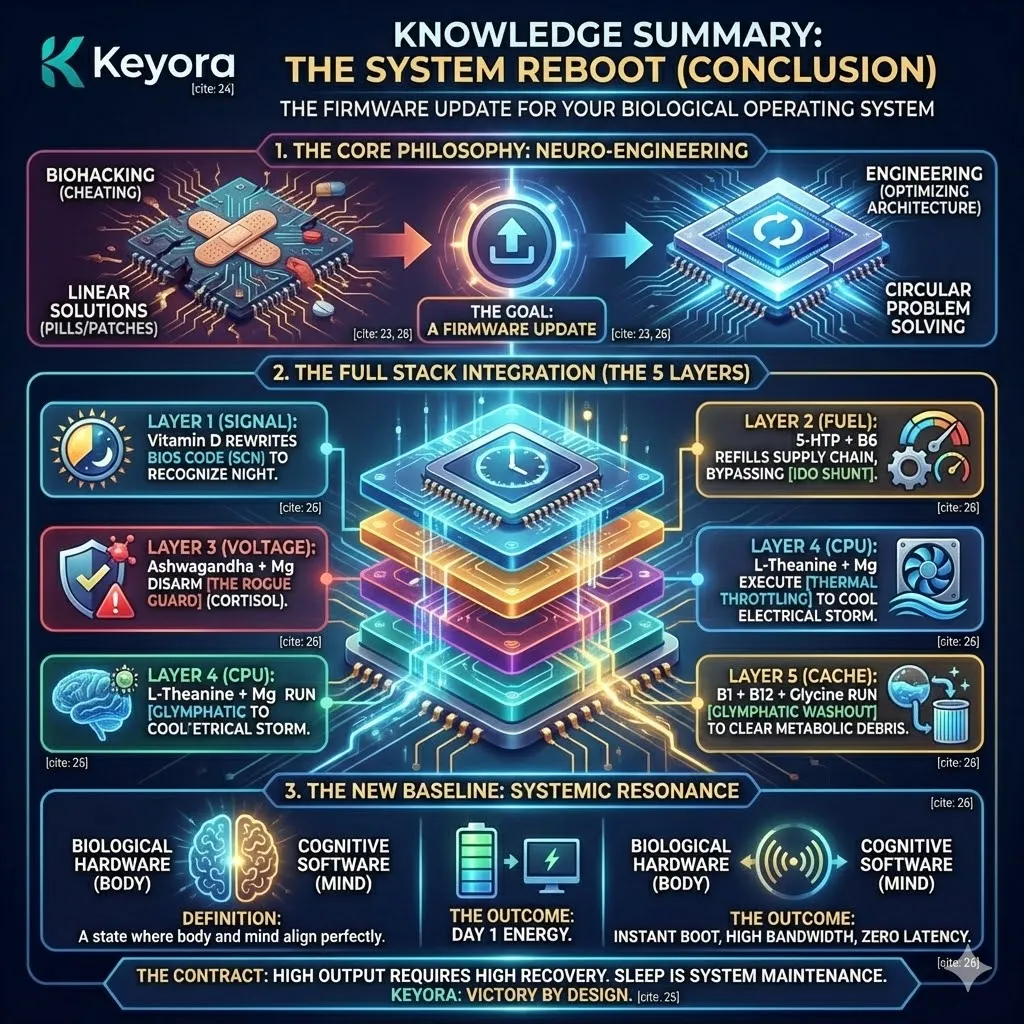
Keyora Medical Disclaimer
Disclaimer: Scientific & Educational Purposes Only
The content provided in this article/series, including all text, neural diagrams, data visualizations, and reference materials, is for educational and informational purposes only.
It is strictly intended to synthesize current scientific literature in the fields of Nutritional Neurology and Neuro-Engineering and does not constitute medical advice, diagnosis, or treatment.
Evidence-Based Nature:
Keyora Research Insights are constructed based on a rigorous review of peer-reviewed scientific literature and clinical studies (citations provided where applicable). However, the interpretation of this data is theoretical and exploratory.
Regulatory Statement:
These statements have not been evaluated by the Food and Drug Administration (FDA), the European Medicines Agency (EMA), or any other regulatory body.
Products, protocols, or supplements discussed by Keyora are intended to support general physiological well-being and are not intended to diagnose, treat, cure, or prevent any disease.
Professional Consultation:
Individual biological responses vary. Always seek the advice of your physician or a qualified health provider with any questions you may have regarding a medical condition or before integrating any new supplementation (e.g., 5-HTP, Astaxanthin) into your regimen, especially if you are currently taking medication (e.g., SSRIs).
Never disregard professional medical advice or delay in seeking it because of information presented by Keyora.
By Keyora Research Notes Series
This article contributes to Keyora’s ongoing scientific documentation series, which systematically outlines the conceptual foundations, mechanistic pathways, and empirical evidence informing our research and development approach.
ORCID: 0009–0007–5798–1996