
Keyora Nutritional Neurology – Magnesium Glycinate · Episode (10): The Overheated Engine: A Clinical Monograph on Cognitive Friction and Excitotoxicity

By Keyora Research Notes Series
This article contributes to Keyora’s ongoing scientific documentation series, which systematically outlines the conceptual foundations, mechanistic pathways, and empirical evidence informing our research and development approach.
ORCID: 0009–0007–5798–1996
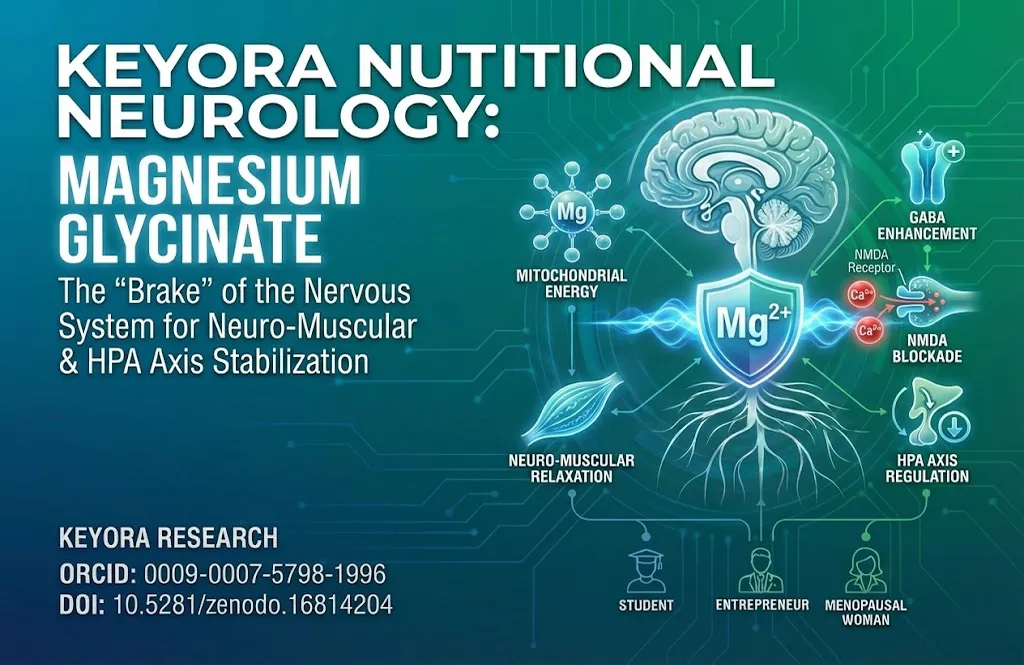
The High Cost of Cognitive Friction:
Why Your Brain Stalls During Deep Work
Let us analyze the specific failure mode of the high-performance mind.
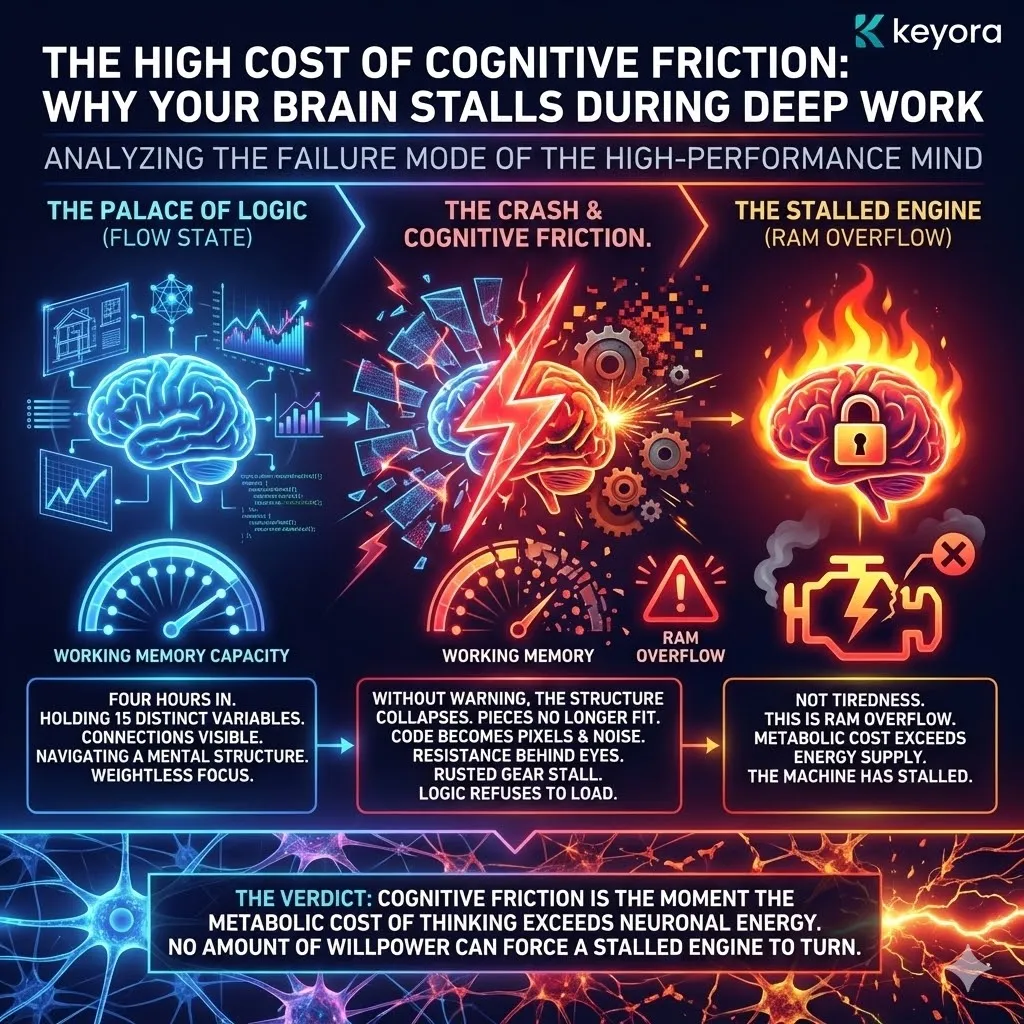
You are four hours into a session of Deep Work.
Perhaps you are a Senior Architect visualizing the dependencies of a distributed system.
Perhaps you are a Trader watching the microstructure of a market shift in real-time. Or you are a Developer debugging a recursive function that exists only in your head.
For the first three hours, you were in the palace of logic.
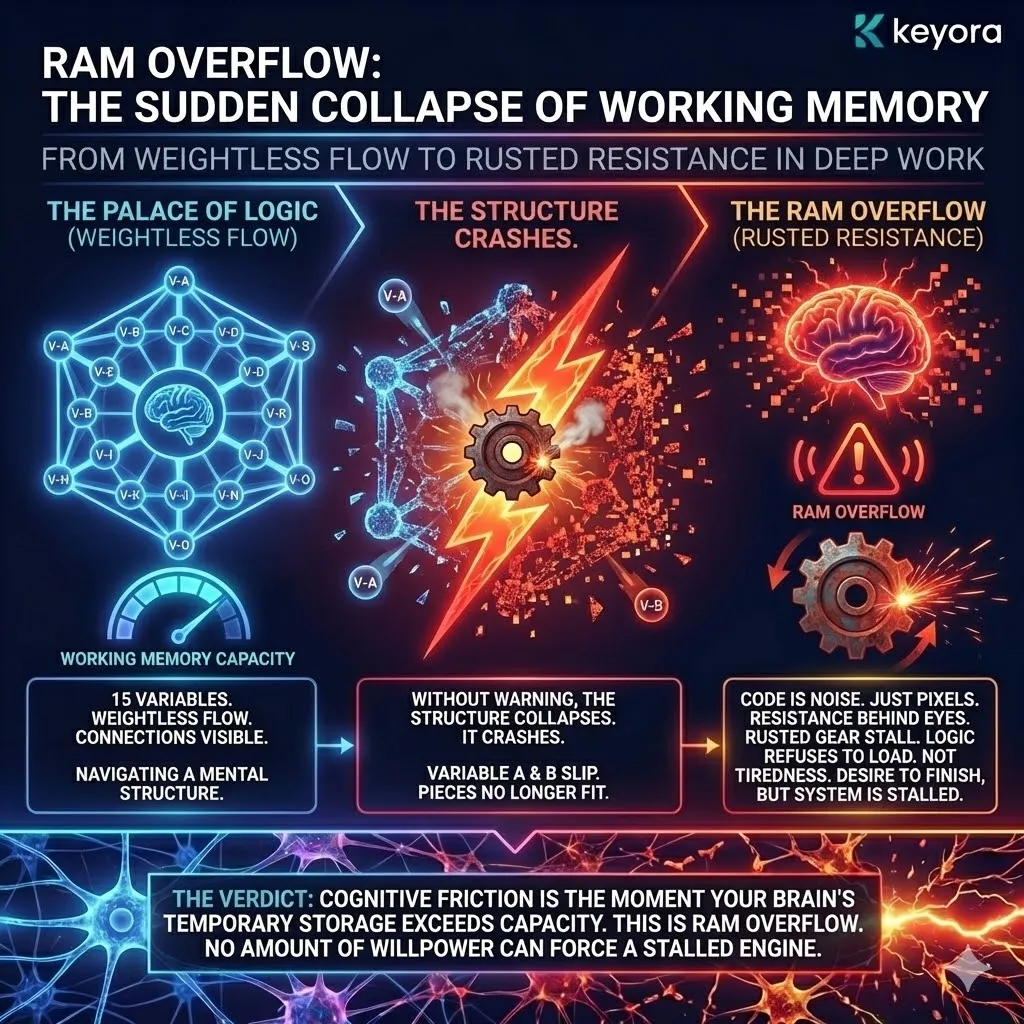
You were holding fifteen distinct variables in your Working Memory
simultaneously. You could see the connections between them. It felt weightless.
You were not thinking; you were navigating a structure that you had built in your mind.
Then, without warning, the structure collapses.
It does not fade away slowly.
It crashes.
You try to reach for Variable A, but Variable B slips out of your grasp.
You try to rebuild the mental model, but the pieces no longer fit together.
You look at the screen.
A moment ago, the code or the data was a language.
You could read the story it was telling.
Now, it is just pixels. It is just noise.
You feel a physical sensation behind your eyes.
It is not pain, exactly.
It is resistance.
It feels like trying to turn a gear that has rusted shut.
You blink.
You shake your head.
You try to force your brain to re-engage with the logic.
But the logic refuses to load.
This is not “tiredness.”
Tiredness is a desire to sleep.
You do not want to sleep; you want to finish the task.
This is RAM Overflow.
Your brain has exceeded its temporary storage capacity. The electrical signals that maintain the mental model have decayed.
We define this state as Cognitive Friction.
It is the moment where the metabolic cost of thinking exceeds the energy supply of the neuron.
The machine has stalled.
And no amount of willpower can force a stalled engine to turn.
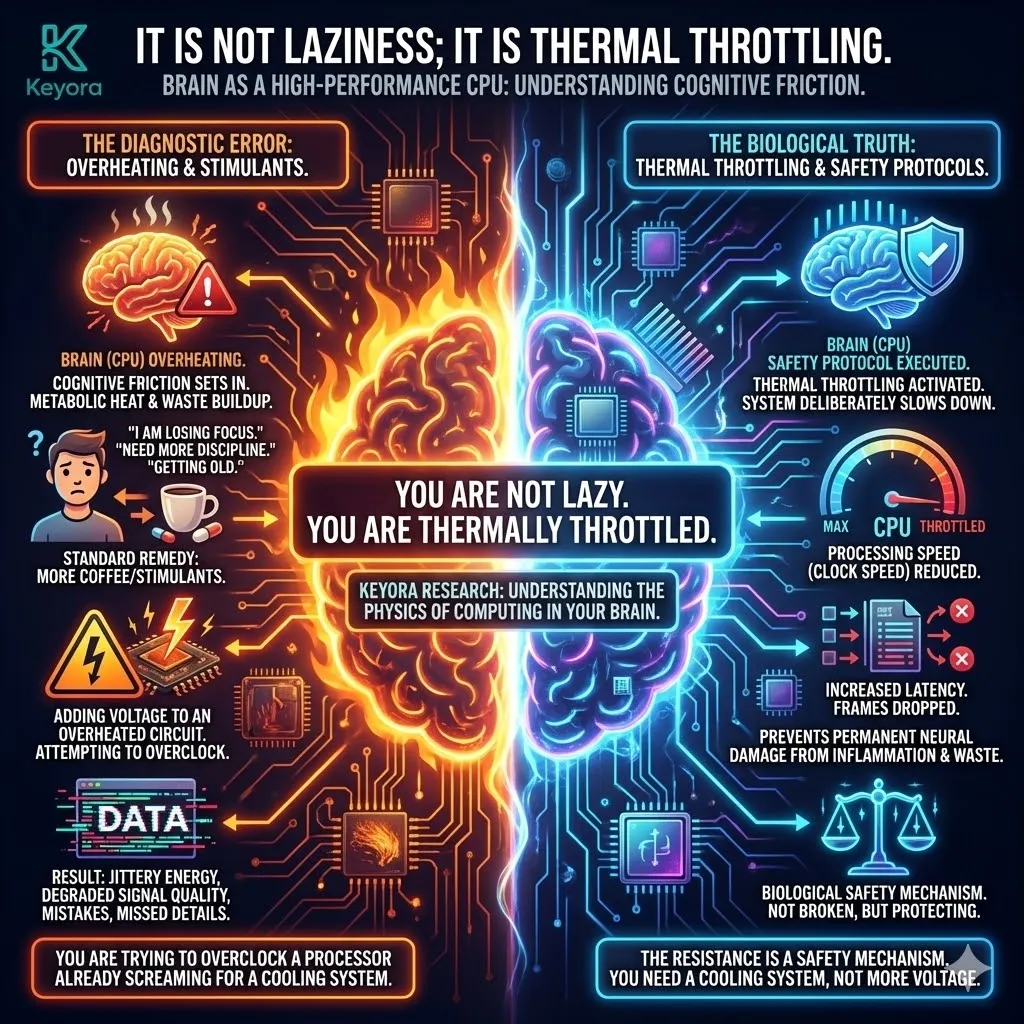
It Is Not Laziness; It Is Thermal Throttling
When Cognitive Friction sets in, the high-performer usually makes a diagnostic error.
You blame your character.
You think: “I am losing my focus. I need to be more disciplined. I am getting old.”
Or, you reach for the standard remedy.
You drink more coffee.
You ingest more stimulants.
You try to “power through” the resistance.
At Keyora Research, we view this reaction as a fundamental misunderstanding of the physics of computing.
Consider your brain as a high-performance CPU (Central Processing Unit).
When a CPU runs a complex calculation for hours at maximum capacity, it generates heat. If that heat is not dissipated, it threatens to melt the silicon.
Does the computer shut down? No. It executes a safety protocol called Thermal Throttling.
The system deliberately slows down the processing speed (Clock Speed).
It increases Latency.
It drops frames.
It does this not because it is broken, but to prevent permanent hardware damage.
Your brain is doing the exact same thing.
The “resistance” you feel is a biological safety mechanism. Your neurons are heating up – metabolically speaking. They are accumulating waste products and inflammatory markers.
To protect the neural network from frying, your brain throttles your processing speed. It creates Cognitive Friction to force you to stop.
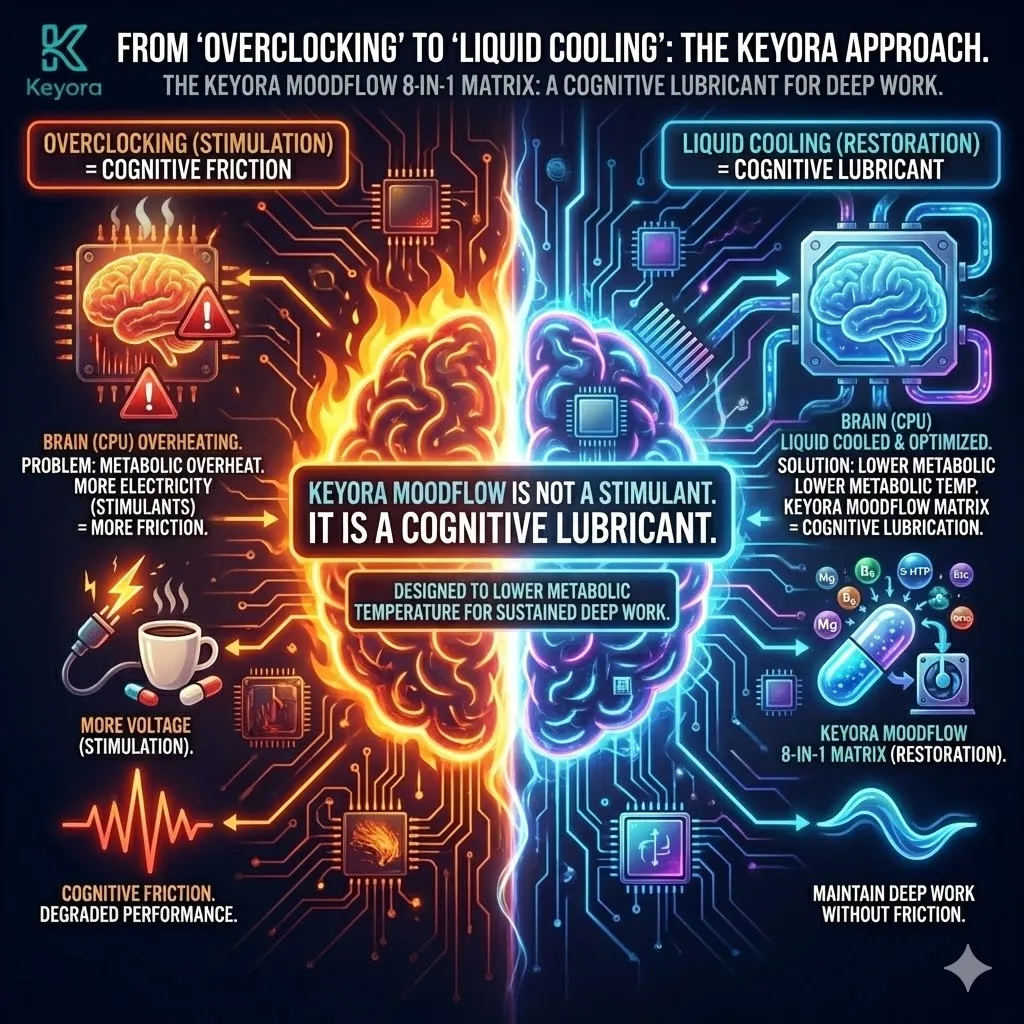
When you drink coffee in this state, you are not fixing the problem. You are adding voltage to an overheated circuit.
You are trying to overclock a processor that is already screaming for a cooling system.
The result is inevitable. You might get a burst of jittery energy, but the signal quality degrades further. You start making mistakes. You miss details. The mental model does not come back.
You are not lazy.
You are thermally throttled.
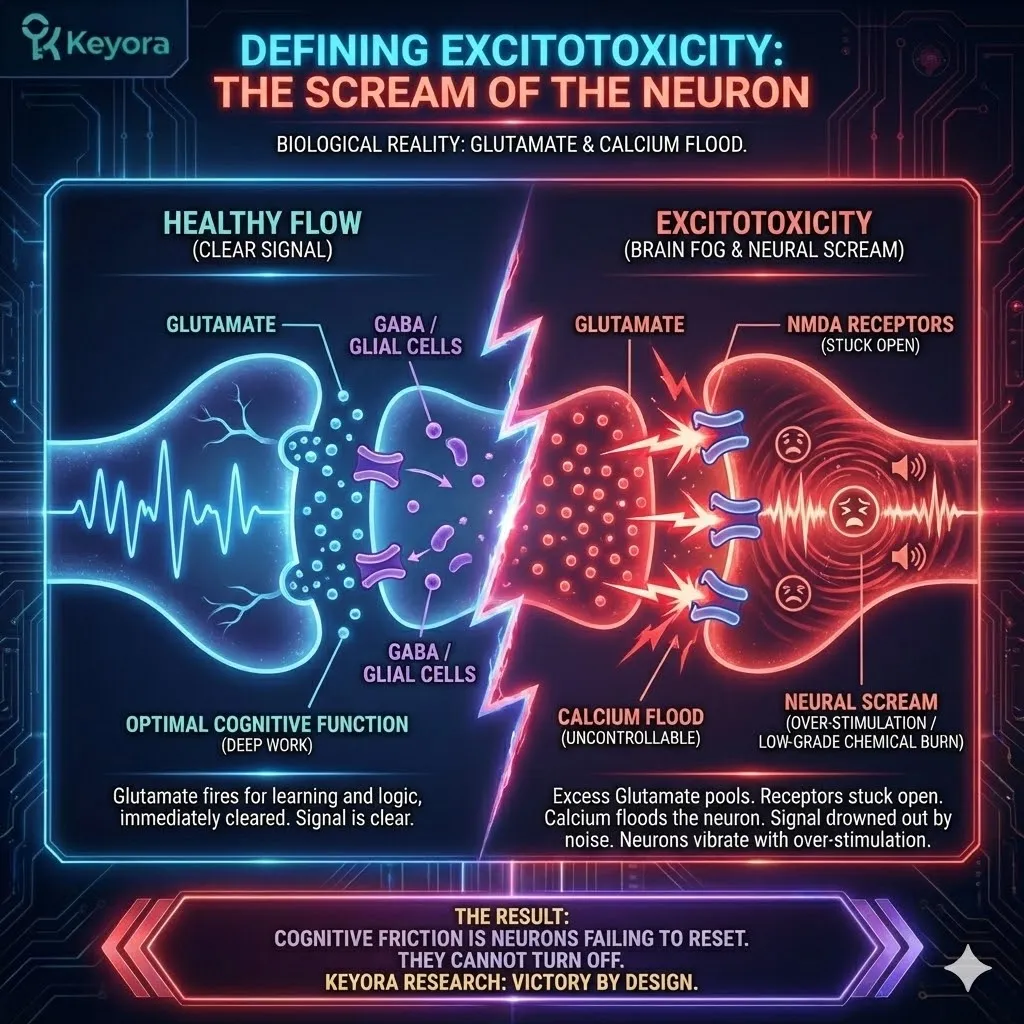
Defining Excitotoxicity: The Scream of the Neuron
If Thermal Throttling is the metaphor, what is the biological reality?
What is actually “heating up” inside your skull?
The answer lies in the neurotransmitter that drives all Deep Work:
Glutamate.
Glutamate is the brain’s primary excitatory signal. It is the chemical of “On.” Every time you learn a new fact, connect two ideas, or execute a line of logic, your neurons fire a burst of Glutamate.
In a state of flow, this Glutamate is released, delivers the signal, and is immediately cleared by the “clean-up crew” (GABA and Glial cells).
But during a marathon session of intense cognitive load, the system becomes overwhelmed.
You are firing Glutamate faster than you can clear it.
The Glutamate begins to pool in the synaptic gap. It keeps the receptors (NMDA Receptors) stuck in the “Open” position.
This allows Calcium to flood into the neuron uncontrollably.
This state is called Excitotoxicity.
It is the biological definition of “Brain Fog.”
The signal (the logic) is drowned out by the noise (the excess Glutamate).
Your neurons are vibrating with over-stimulation.
They are screaming.
This explains the specific texture of Cognitive Friction.
It feels “sticky” because the neurons are failing to reset.
They cannot turn off.
You cannot hold the mental model because the neural circuit required to hold it is currently overloaded with Calcium. It is physically incapable of holding a charge.
This is why you feel “fried.” You have essentially subjected your cognitive centers to a low-grade chemical burn.
The Memory Blockade: Why Stress Erases Your Hard Work
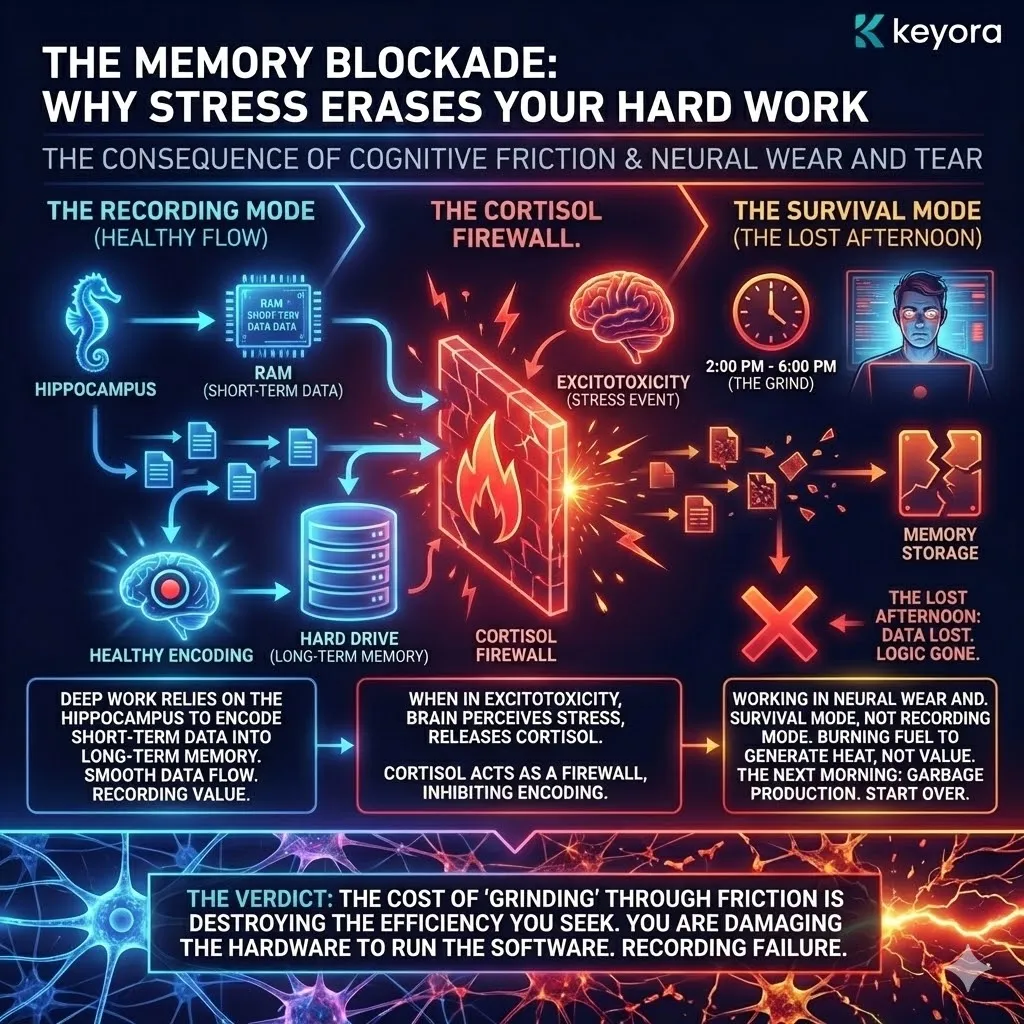
There is a severe consequence to pushing through Cognitive Friction without addressing the chemistry.
You are not just working slowly; you are failing to record the work.
Deep Work relies on the Hippocampus to encode short-term data (RAM) into long-term memory (Hard Drive).
When you enter a state of Excitotoxicity, the brain perceives this as a stress event. It releases Cortisol.
Cortisol acts as a firewall for the Hippocampus. It inhibits the encoding of new memories.
This explains the phenomenon of “The Lost Afternoon.”
You grind for four hours from 2:00 PM to 6:00 PM.
You force yourself to stare at the screen.
You feel like you are working.
But the next morning, you look at what you produced. It is garbage. Or, you try to recall the logic you built, and it is gone. You have to start over.
Why?
Because you were working in a state of Neural Wear and Tear.
Your brain was in survival mode, not recording mode.
You were burning fuel to generate heat, not value.
The cost of “grinding” through the friction is that you destroy the very efficiency you are trying to maximize.
You are damaging the hardware to run the software.
From “Overclocking” to “Liquid Cooling”: The Keyora Approach
The solution to Cognitive Friction is not stimulation.
It is Restoration.
If your CPU is overheating, you do not need more electricity. You need a better cooling system. You need Liquid Cooling.
This is the function of the Keyora MoodFlow 8-in-1 matrix in the context of cognitive performance.
We position this formula not just as a mood stabilizer, but as a Cognitive Lubricant.
It is designed to lower the metabolic temperature of the thinking brain so that you can maintain Deep Work without the friction.
Mechanism 1: The Coolant (Magnesium + L-Theanine)
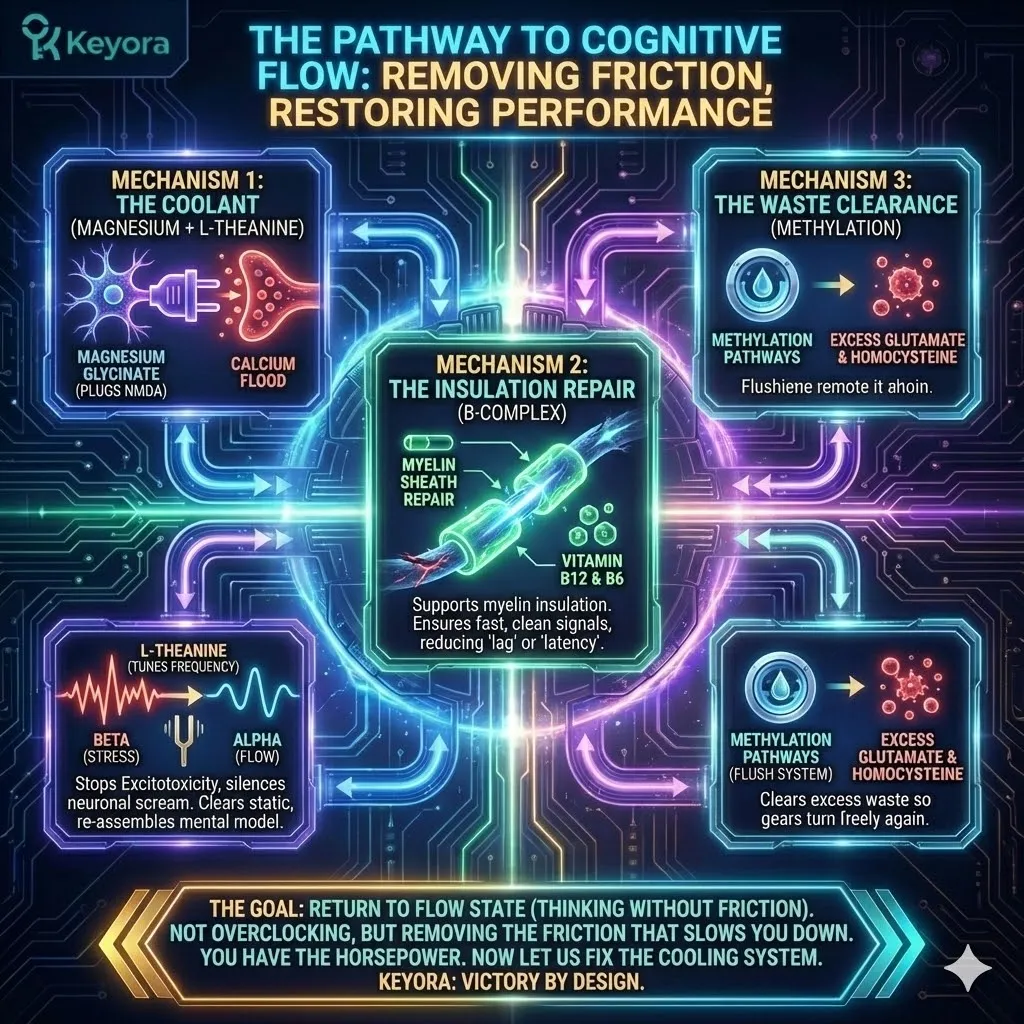
We use Magnesium Glycinate to physically plug the NMDA receptor. This stops the Calcium flood. It stops the Excitotoxicity. It silences the scream of the neuron.
Simultaneously, L-Theanine tunes the brainwave frequency from a choppy Beta (Stress) to a smooth Alpha (Flow).
This clears the static. It allows the mental model to re-assemble.
Mechanism 2: The Insulation Repair (B-Complex)
We use Vitamin B12 and B6 to support the myelin sheath – the insulation around your neural wires.
When you think hard, you damage myelin. B-Vitamins repair it. This ensures that the signal travels fast and clean, reducing the sensation of “lag” or “latency.”
Mechanism 3: The Waste Clearance (Methylation)
We support the methylation pathways that clear the excess Glutamate and Homocysteine. We flush the system so the gears can turn freely again.
The Goal:
We do not want to “Overclock” you. You are already fast enough.
We want to remove the friction that slows you down.
We want to return you to Flow State.
Flow is simply thinking without friction. It is a state where the biology gets out of the way of the logic.
In the following chapters of this episode, we will deconstruct the specific mechanics of cognitive endurance. We will look at how to protect your Working Memory, how to stabilize your Attention Span, and how to engineer a brain that can handle complexity without crashing.
You have the horsepower.
Now let us fix the cooling system.
Chapter 1: The Fog of Intelligence
When High Resolution Becomes Low Fidelity: The Phenomenology and Biology of Signal Decay
Let us examine the specific mechanics of your cognitive failure.
You are attempting to build a complex mental model.
Perhaps you are a Senior Architect visualizing the data flow of a distributed system.
Perhaps you are a Financial Trader simulating a hedging strategy with three conditional branches.
Or you are a Consultant trying to hold the entire organizational chart of a client in your working memory while identifying the bottleneck.
This is what you are paid to do.
You are paid for your RAM (Random Access Memory).
You are paid to hold multiple variables in suspension, rotate them, and find the pattern that others miss.
You start with Variable A. It is clear. It is sharp. You place it in your mental workspace.
You reach out to grab Variable B. You secure it. You connect it to A.
Then, you reach for Variable C.
The moment your mind grasps C, Variable A vanishes.
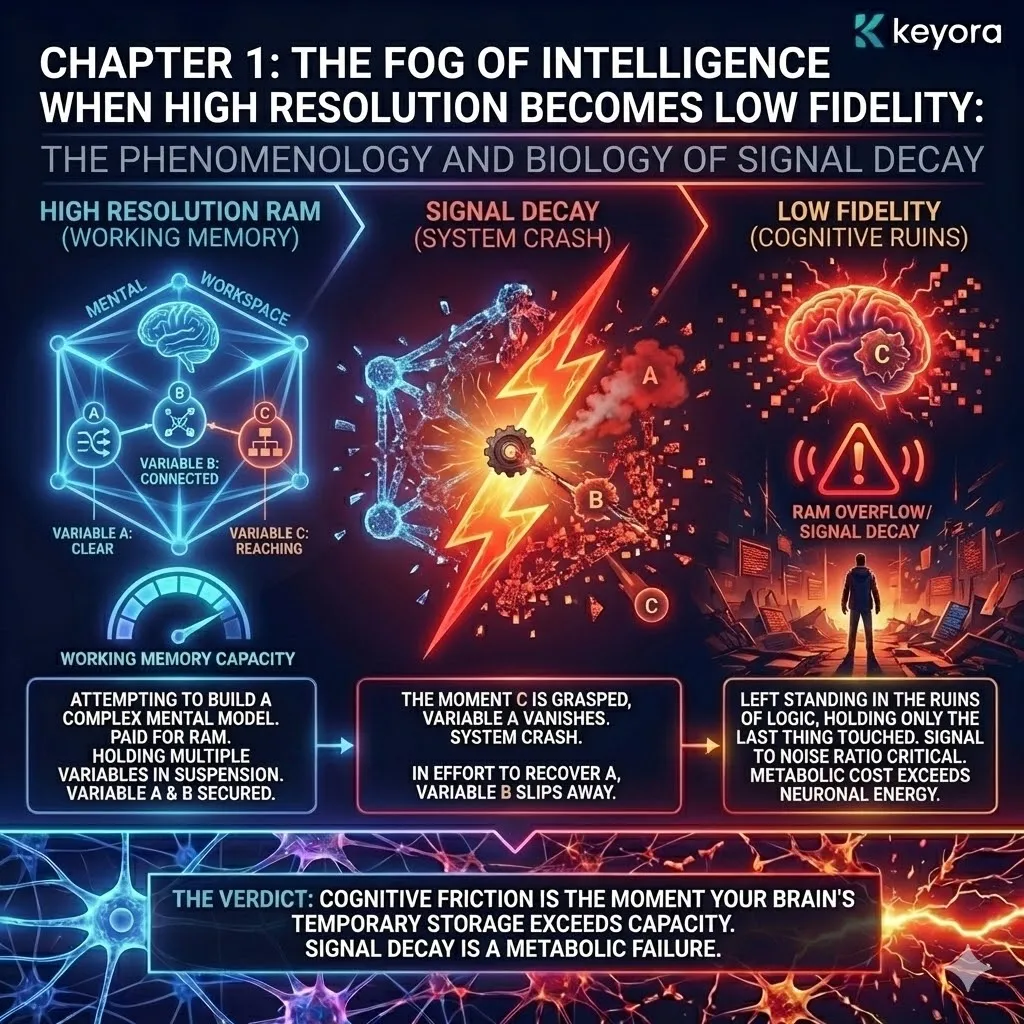
It does not fade; it drops out.
It is a system crash.
You turn your mental gaze back to find A, but it is gone.
You scramble to recover it. In the effort to recover A, Variable B slips away.
You are left standing in the ruins of your logic, holding only the last thing you touched.
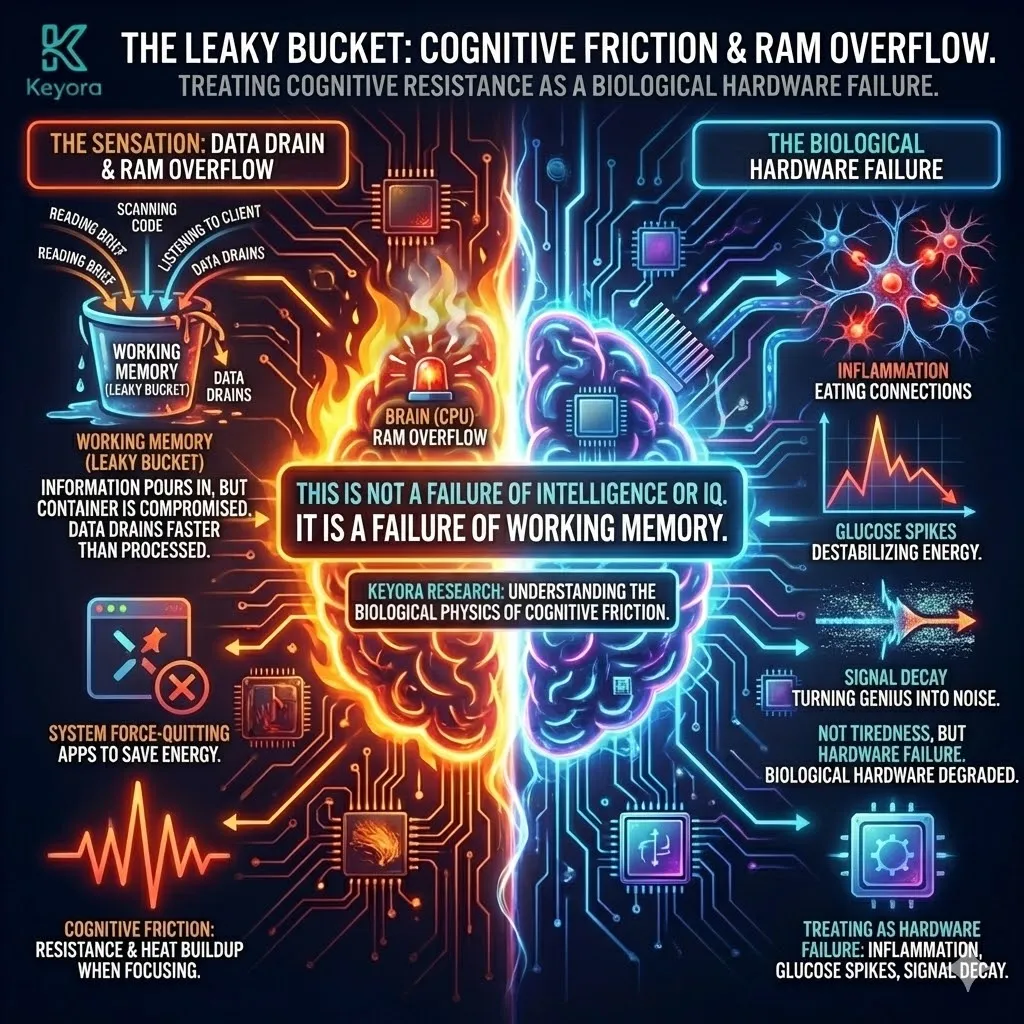
This is the sensation of the Leaky Bucket.
You are pouring information in – reading the brief, scanning the code, listening to the client – but the container has been compromised. The data drains out faster than you can process it.
This is not a failure of intelligence.
Your IQ has not dropped.
Your database of knowledge is intact.
This is a failure of Working Memory.
Your system has experienced a RAM Overflow.
The biological hardware required to maintain the electrical charge of a thought has degraded.
The system is force-quitting applications to save energy.
This is the definition of Cognitive Friction. It is the resistance you feel when you try to think, the heat that builds up when you try to focus.
In this chapter, we will not treat this as “tiredness.”
We will treat it as a hardware failure.
We will look at the inflammation eating your connections, the glucose spikes destabilizing your energy, and the signal decay that turns your genius into noise.
1.1 The Phenomenology of Resolution Drop
The Blur Effect: Losing the Ability to “Zoom In”
To diagnose the problem, we must first validate the texture of the experience.
High-functioning professionals often describe “Brain Fog,” but that term is too imprecise. Fog implies something external that has drifted in.
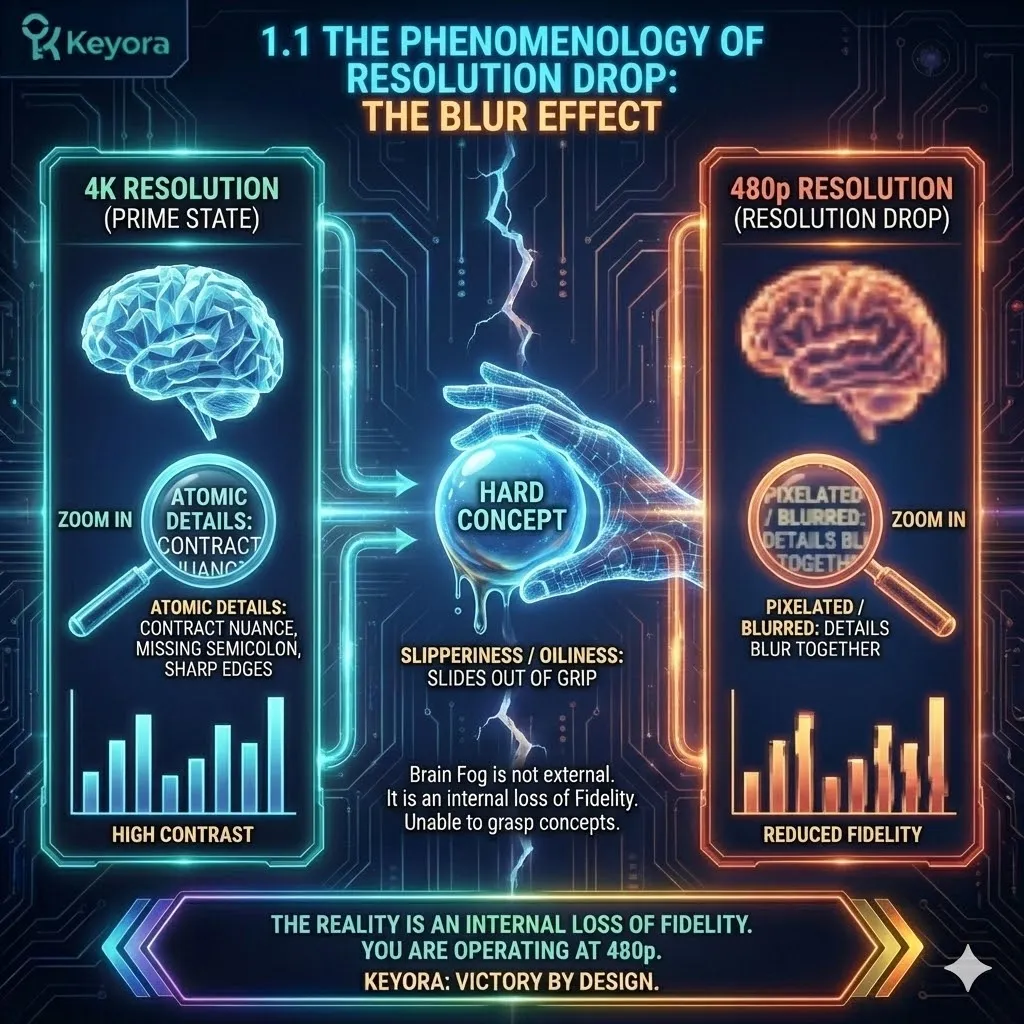
The reality is an internal loss of Fidelity.
In your prime state, your mind operates at 4K Resolution.
You can look at a problem and “Zoom In” on the atomic details.
You can see the nuance in a contract clause.
You can see the missing semicolon in the code.
The edges are sharp.
The contrast is high.
Now, you are operating at 480p.
When you try to “Zoom In,” the image does not get clearer; it gets pixelated. The details blur together.
You feel a sensation of “oiliness” or “slipperiness” in your mind.
You try to grasp a hard concept, but it slides out of your grip.
You cannot get traction.
This manifests most painfully in Social Latency.
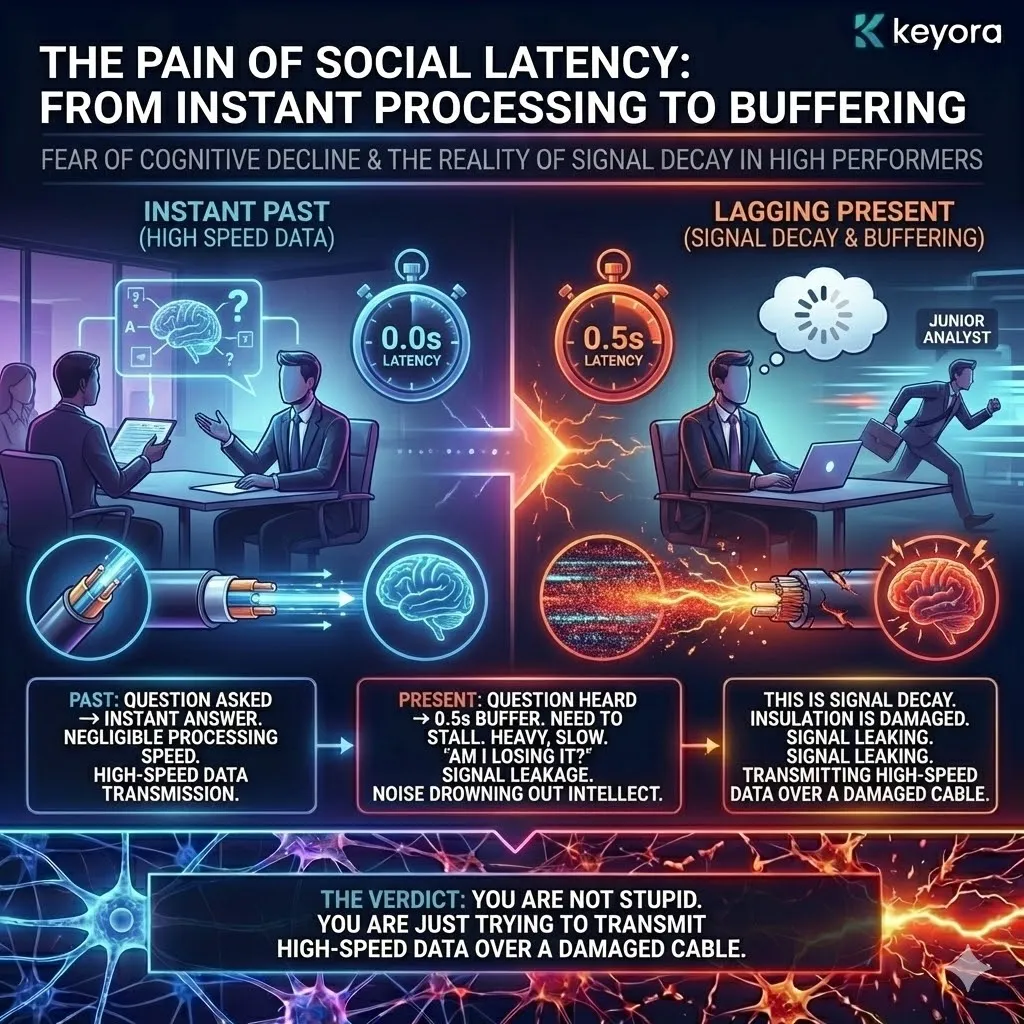
You are in a meeting. Someone asks you a complex, multi-layered question.
In the past, your answer was instant. Your processing speed was negligible.
Now, there is a Lag.
You hear the question.
You understand the words.
But it takes your brain an extra 0.5 seconds to “render” the meaning.
You have to buffer.
You nod, you stall, you say “That is an interesting point,” just to buy your processor time to catch up.
This latency creates a specific, secret terror in the mind of the Cognitive Elite.
You wonder: Am I losing it? Is this early onset cognitive decline? Is my age catching up to me?
You look at the junior analysts, the young developers, and you see their speed.
You feel heavy.
You feel slow.
Keyora Research asserts that this is not aging.
This is Signal Decay.
Your neural wires are intact, but the insulation is damaged.
The signal is leaking out before it reaches the destination.
The noise of your own biology is drowning out the signal of your intellect.
You are not stupid.
You are just trying to transmit high-speed data over a damaged cable.
1.2 The Mechanism: Neuro-Inflammation
The Inflamed Network: When Microglia Eat Your Connections
What is damaging the cable?
What is causing the leak?
The answer lies in the immune system of your brain.
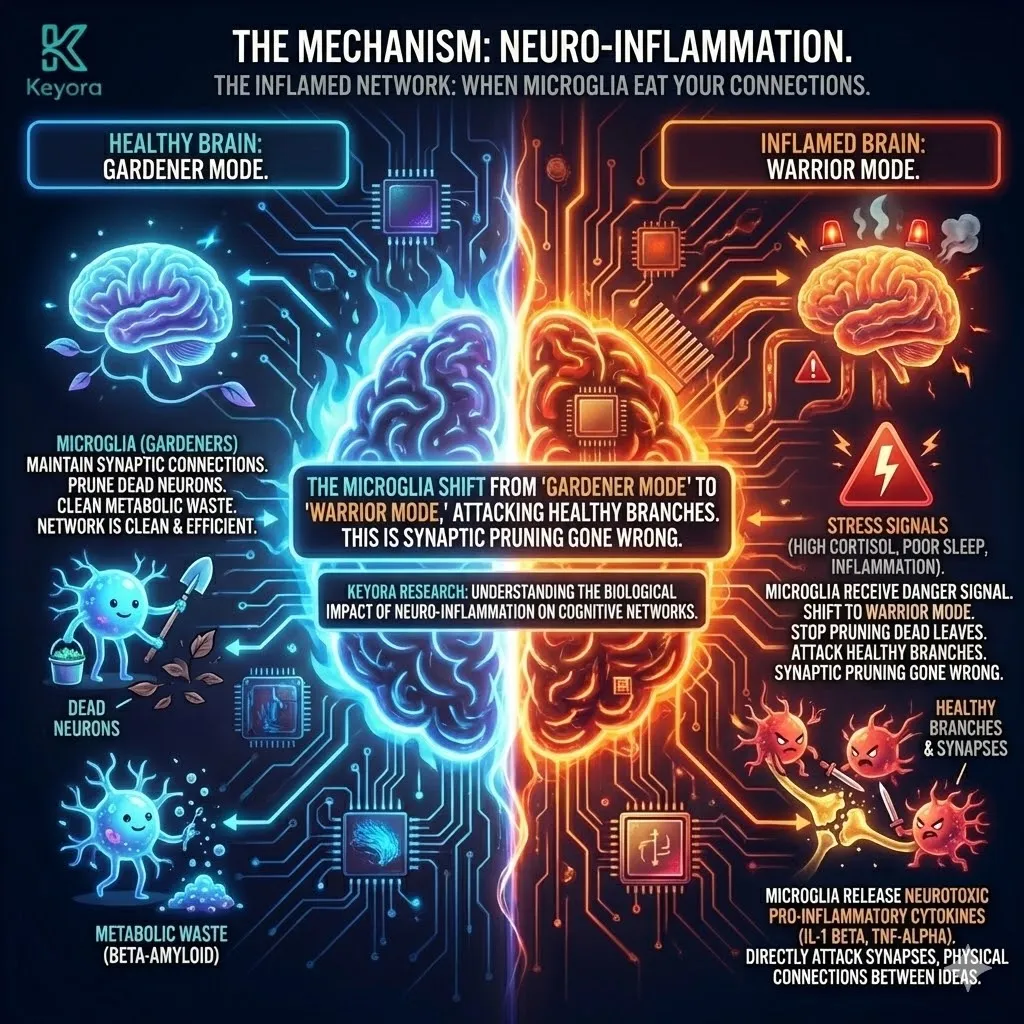
Your brain has its own dedicated population of immune cells called Microglia.
In a healthy brain, Microglia are the gardeners.
They prune dead neurons.
They clean up metabolic waste (like beta-amyloid).
They maintain the synaptic connections, ensuring the network is clean and efficient.
But Microglia are highly sensitive to Stress Signals.
When you are in a state of The Neuro-Endocrine Storm – when Cortisol is high, when sleep is poor, when the body is inflamed – the Microglia receive a danger signal.
They shift from “Gardener Mode” to “Warrior Mode.”
They become Hyper-Activated.
They stop pruning dead leaves and start attacking healthy branches.
This is Synaptic Pruning gone wrong.
The Microglia release pro-inflammatory cytokines (like IL-1 beta and TNF-alpha) directly into the neural tissue. These cytokines are neurotoxic. They attack the synapses – the physical connections between your ideas.
This is the biological reality of Brain Fog.
It is not a cloud.
It is Neuro-Inflammation.
Your brain is literally inflamed. The tissue is swollen on a microscopic level. The synapses are being dismantled by your own immune system because it thinks you are under biological attack.
The Result:
The physical connection between “Variable A” and “Variable B” is severed.
The Experience:
You lose the thought. You walk into a room and forget why. You lose the word in the middle of a sentence.
You are not forgetting. You are losing the hardware required to remember.
This inflammation also slows down Nerve Conduction Velocity. The electrical signal literally travels slower through an inflamed medium. This is the cause of the Latency and the Resolution Drop.
You are trying to run high-frequency trading algorithms on a network that is currently on fire.
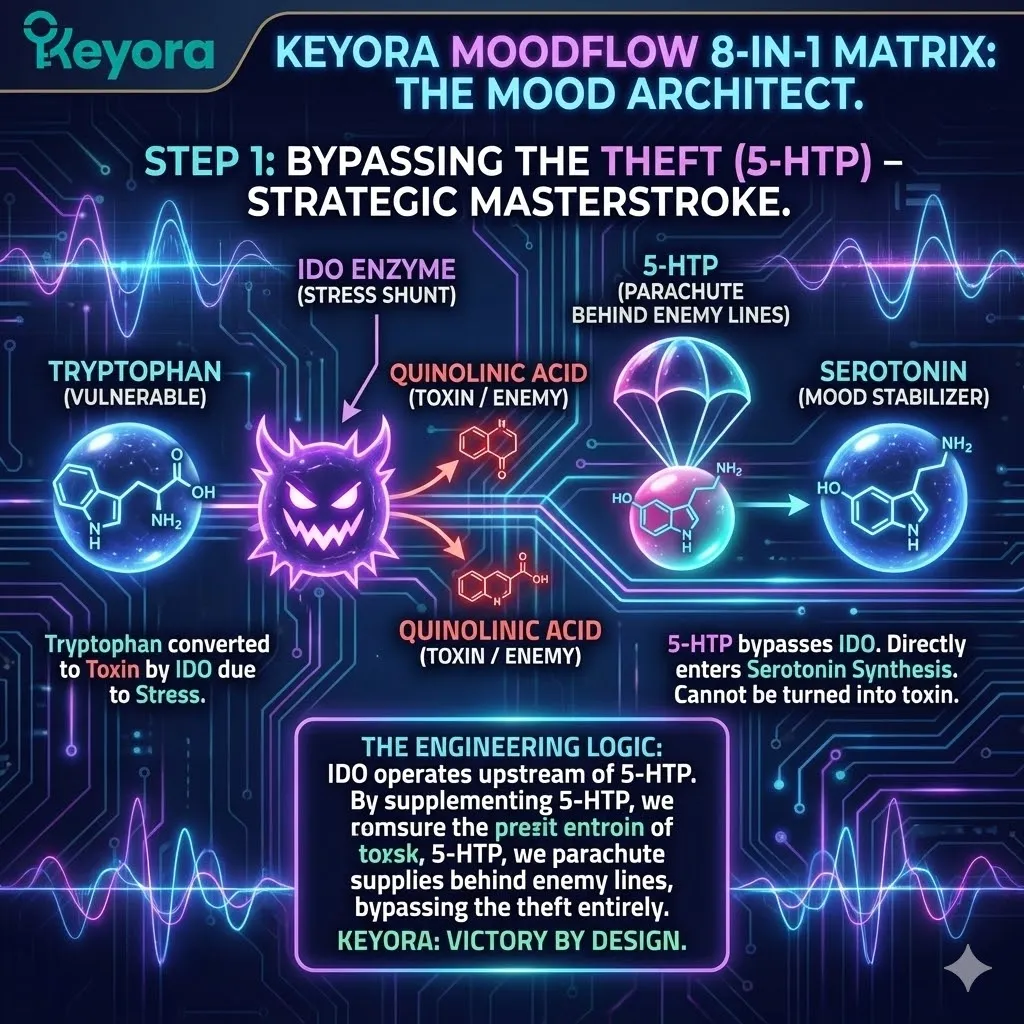
1.3 The Energy Crisis: Glucose Instability
The Sugar Paradox: Why Fueling the Brain Makes the Fog Worse
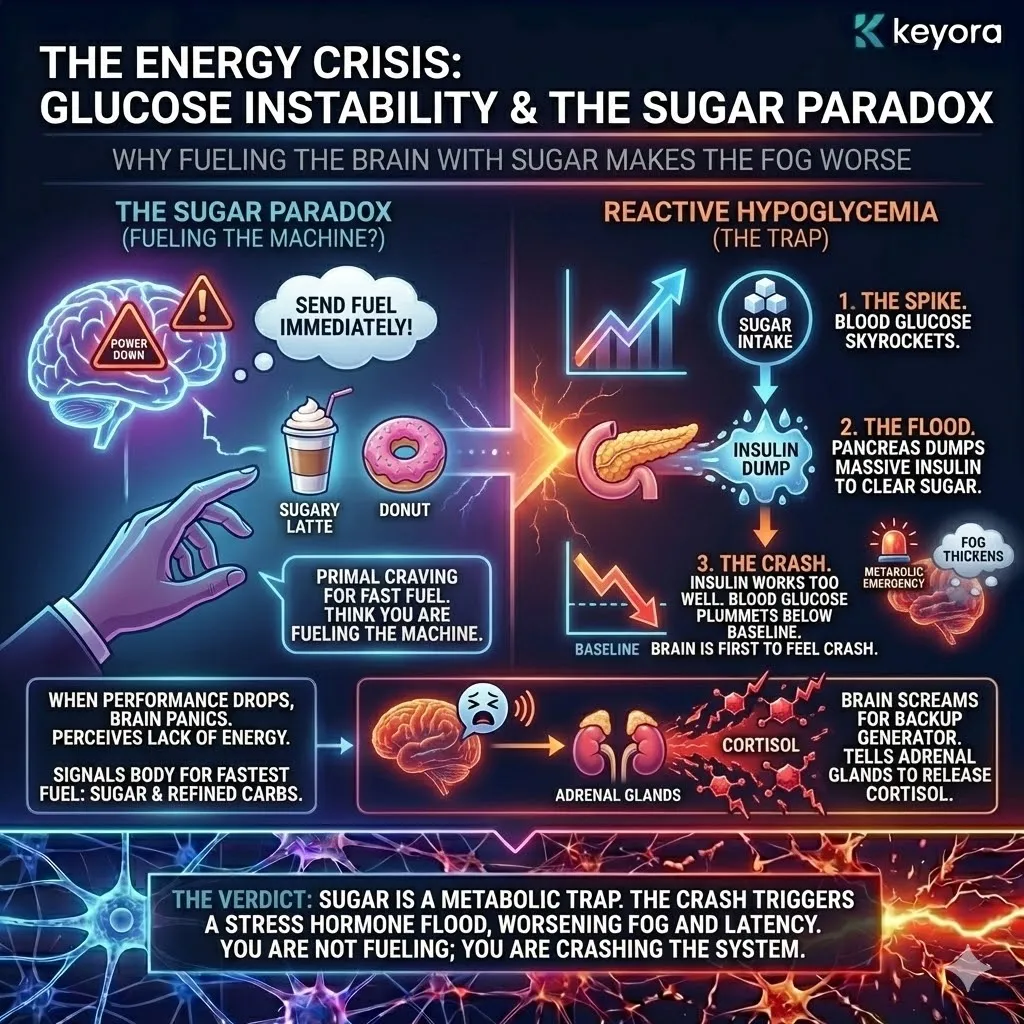
When the brain feels this drop in performance, it panics. It perceives a lack of energy.
It sends a signal to the body: We are powering down. Send fuel immediately.
This triggers a primal craving for the fastest fuel available:
Sugar and Refined Carbohydrates.
You find yourself reaching for the donut, the bagel, the sugary latte. You think you are “fueling the machine.” You think you are giving your brain the glucose it needs to focus.
This is a trap.
You are triggering Reactive Hypoglycemia.
-
The Spike: You eat the sugar. Blood glucose skyrockets.
-
The Flood: The pancreas dumps massive amounts of Insulin to clear the sugar.
-
The Crash: The Insulin works too well. Blood glucose plummets below baseline.
The brain is the first organ to feel this crash.
When glucose drops, the brain enters a state of metabolic emergency. It cannot function. The fog thickens. The latency increases.
But the damage goes deeper.
When blood sugar crashes, the brain screams for a backup generator. It tells the Adrenal glands to release Cortisol.
Why?
Because Cortisol tells the liver to dump stored sugar into the blood.
It is the emergency fuel release.
So, by eating sugar to fix your fog, you have triggered a Cortisol Spike.
And what does Cortisol do?
It activates the Microglia. It increases Neuro-Inflammation.
It tells the immune system to attack the synapses.
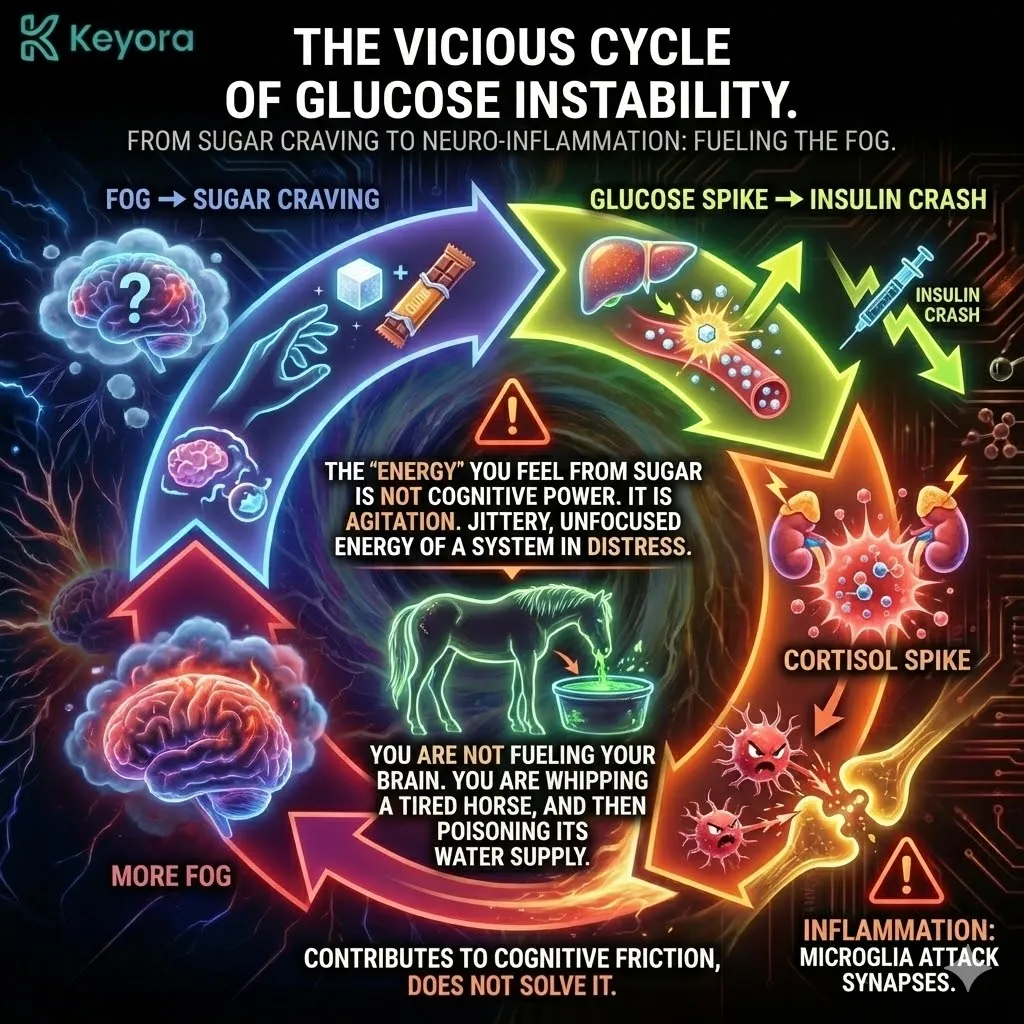
This is the Vicious Cycle of Glucose Instability.
-
Fog -> Sugar Craving -> Glucose Spike -> Insulin Crash -> Cortisol Spike -> Inflammation -> More Fog.
You are not fueling your brain. You are whipping a tired horse, and then poisoning its water supply.
The “Energy” you feel from sugar is not cognitive power.
It is agitation.
It is the jittery, unfocused energy of a system in distress.
It contributes to Cognitive Friction, it does not solve it.
1.4 The Engineering Solution: The Signal Booster
Restoring Fidelity: How Keyora MoodFlow 8-in-1 Clears the Static
We have diagnosed the failure.
-
Hardware Damage: Microglia are attacking the network.
-
Signal Decay: Inflammation is slowing conduction velocity.
-
Energy Volatility: Glucose crashes are triggering cortisol.
How do we engineer a solution?
We need to call a ceasefire. We need to repair the insulation. We need to smooth the signal.
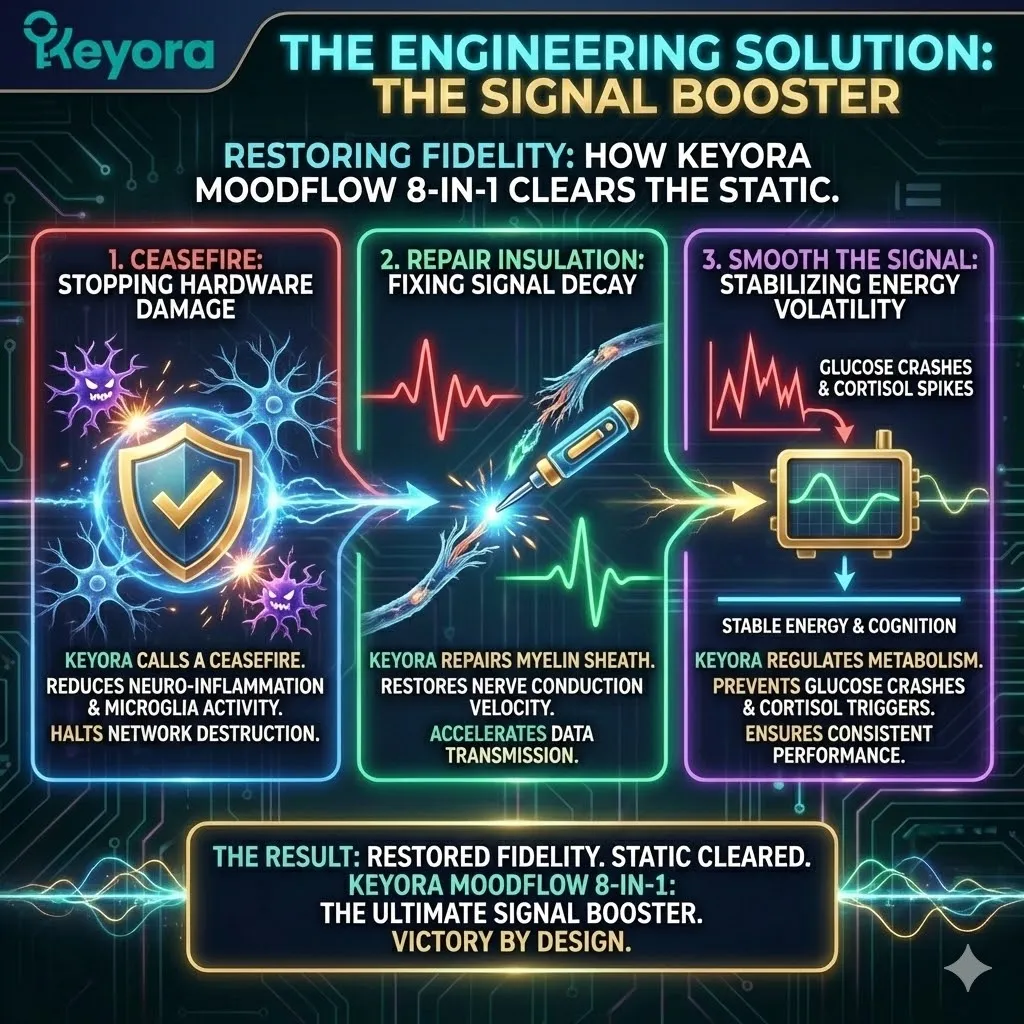
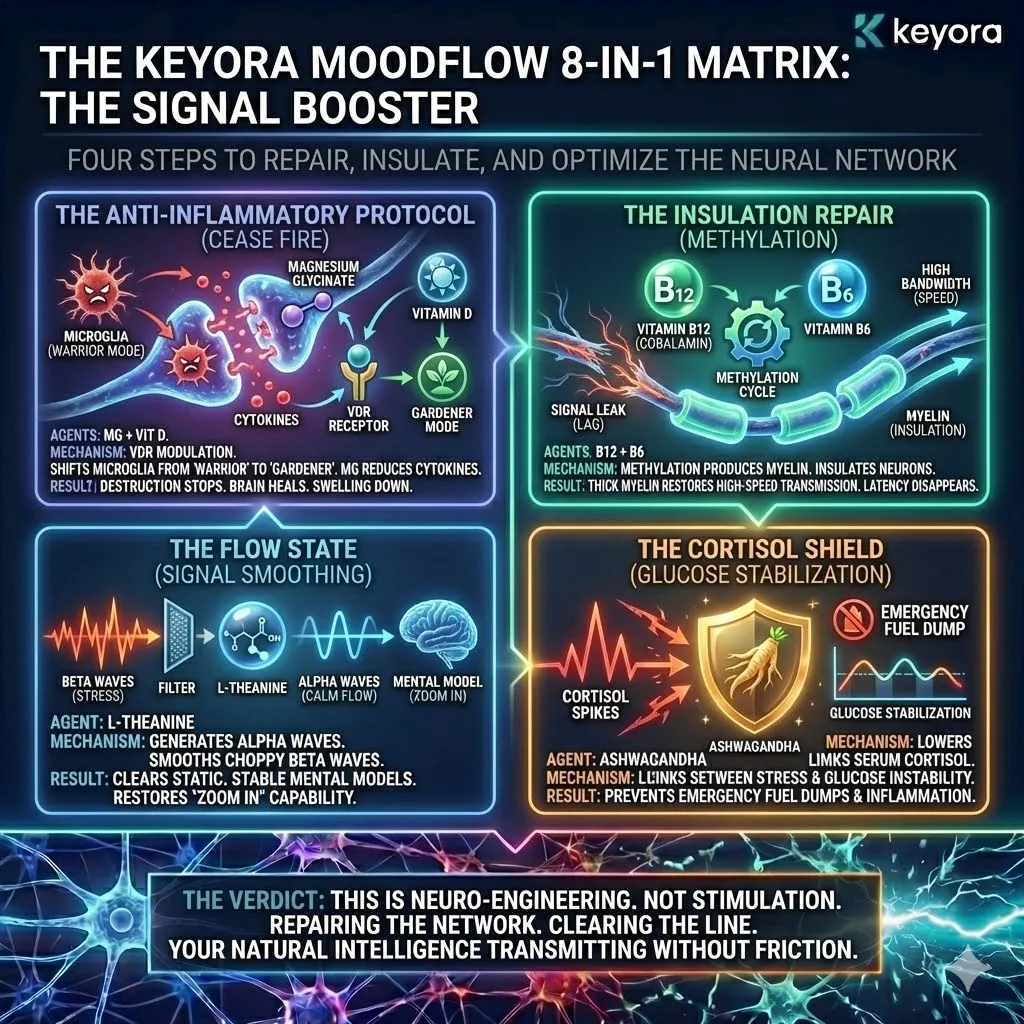
The Keyora MoodFlow 8-in-1 Matrix acts as The Signal Booster.
Step 1: The Anti-Inflammatory Protocol (Cease Fire)
We must stop the Microglia from attacking the synapses.
-
The Agents: Magnesium Glycinate + Vitamin D.
-
The Mechanism: Vitamin D receptors (VDR) are densely populated on Microglial cells. Vitamin D acts as a modulator, shifting them from “Warrior Mode” back to “Gardener Mode.”
-
The Synergy: Magnesium acts as a potent anti-inflammatory, reducing the release of cytokines.
-
The Result: The destruction stops. The brain is allowed to heal. The “swelling” goes down.
Step 2: The Insulation Repair (Methylation)
We need to repair the damaged wires to restore signal speed.
-
The Agents: Vitamin B12 (Cobalamin) + Vitamin B6.
-
The Mechanism: These are the primary drivers of Methylation. Methylation is required to produce Myelin, the fatty insulation around your neurons.
-
The Logic: Thick, healthy myelin allows electrical signals to travel at top speed (High Bandwidth). Damaged myelin leads to signal leak (Lag).
-
The Result: Processing speed returns. The “Latency” disappears.
Step 3: The Flow State (Signal Smoothing)
We need to reduce the noise so the signal can be heard.
-
The Agent: L-Theanine.
-
The Mechanism: L-Theanine generates Alpha Brain Waves. It smooths out the choppy, high-voltage “Beta” waves of stress.
-
The Result: It clears the static. It allows you to hold the mental model without it collapsing. It restores the “Zoom In” capability.
Step 4: The Cortisol Shield (Glucose Stabilization)
We need to stop the Cortisol spikes that drive inflammation.
-
The Agent: Ashwagandha.
-
The Mechanism: By lowering serum cortisol, we break the link between stress and blood sugar instability. We prevent the emergency fuel dumps that inflame the brain.
This is Neuro-Engineering.
We are not stimulating the brain. We are repairing the network. We are clearing the line so that your natural intelligence can transmit without friction.
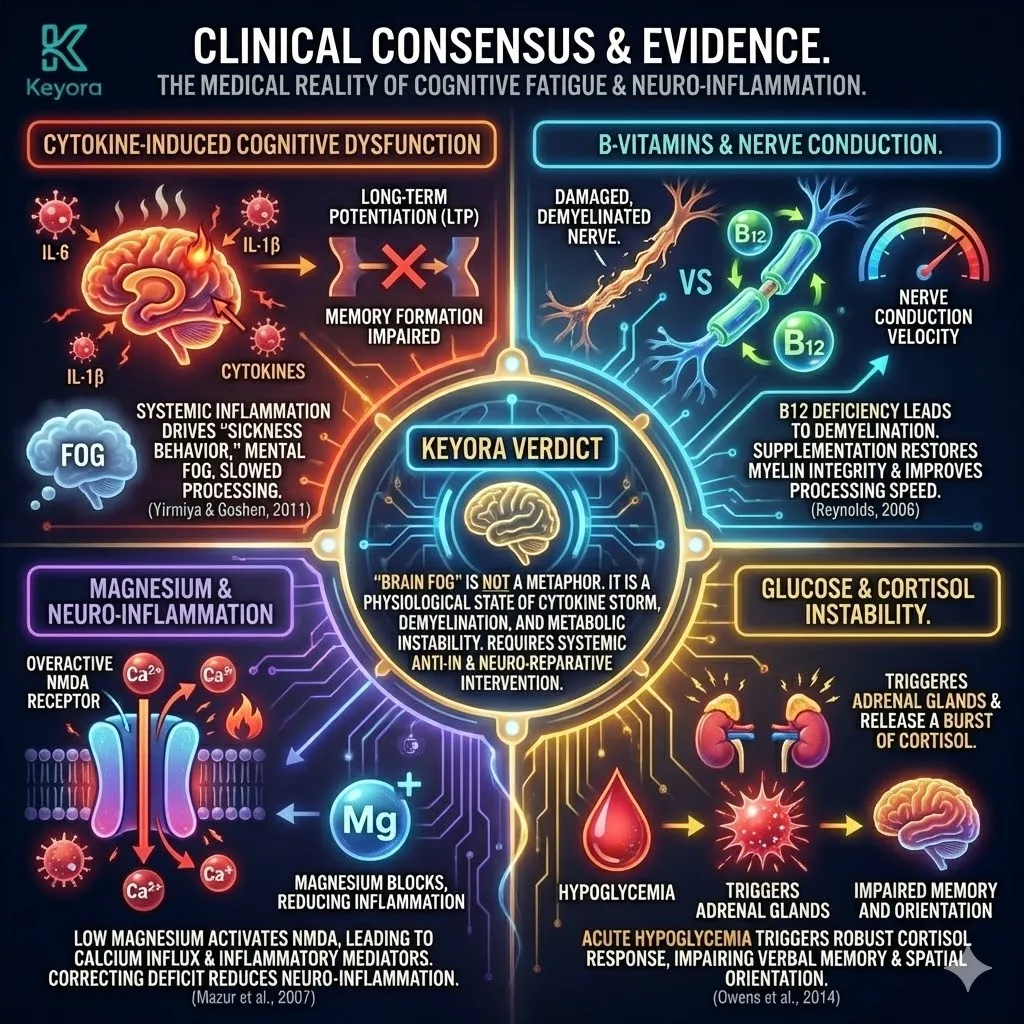
1.5 Clinical Consensus & Evidence
The Medical Reality of Cognitive Fatigue and Neuro-Inflammation
The link between inflammation and cognitive decline is one of the most robust findings in modern neuroscience.
On Cytokine-Induced Cognitive Dysfunction:
A review in Frontiers in Neuroscience details how pro-inflammatory cytokines (IL-6, IL-1β) impair hippocampal function. These cytokines inhibit Long-Term Potentiation (LTP) – the biological process of memory formation.
The study concludes that systemic inflammation is a primary driver of “sickness behavior,” which includes mental fog, slowed processing, and inability to concentrate (Yirmiya & Goshen, 2011).
On B-Vitamins and Nerve Conduction:
Research in The Journal of Neurology, Neurosurgery, and Psychiatry confirms that Vitamin B12 deficiency leads to demyelination of the nervous system.
Even sub-clinical deficiency (levels that are “normal” but low) results in reduced Nerve Conduction Velocity.
Supplementation has been shown to restore myelin integrity and improve cognitive processing speed (Reynolds, 2006).
On Magnesium and Neuro-Inflammation:
A meta-analysis in The European Journal of Clinical Nutrition found a significant inverse relationship between Magnesium intake and systemic inflammation (CRP levels).
Low magnesium status activates the NMDA receptor, leading to calcium influx and the release of inflammatory mediators. Correcting this deficit is a foundational strategy for reducing neuro-inflammation (Mazur et al., 2007).
On Glucose and Cortisol:
A study in Psychoneuroendocrinology demonstrated that acute hypoglycemia triggers a robust cortisol response, which in turn impairs verbal memory and spatial orientation.
This validates the Keyora model that glucose instability is a direct driver of cognitive failure via the HPA axis (Owens et al., 2014).
Keyora Verdict:
“Brain Fog” is not a metaphor.
It is a physiological state of Cytokine Storm, Demyelination, and Metabolic Instability.
It requires a systemic anti-inflammatory and neuro-reparative intervention.
Chapter Conclusion: The Evidenced-Based Verdict
KEYORA EVIDENCED-BASED CONCLUSION
Pillar I: The Thesis Confirmation
This chapter has defined “Brain Fog” in the high-performer not as fatigue, but as Working Memory Overflow caused by Signal Decay.
The “Leaky Bucket” phenomenon is the result of physical damage to the neural network, where information drains out due to compromised synaptic integrity.
Pillar II: The External Validation
We have anchored this diagnosis in the science of Neuro-Inflammation. Clinical consensus confirms that chronic stress activates Microglia, causing them to attack healthy synapses (Synaptic Pruning).
This, combined with Glucose Instability and Demyelination, creates the “High Latency” and “Low Resolution” state of the foggy brain.
Pillar III: The Neuro-Engineering Solution
We conclude that the solution is The Signal Booster. The Keyora MoodFlow 8-in-1 Matrix is engineered to reverse this decay.
-
Mg + Vitamin D call a ceasefire on Microglial inflammation.
-
B12 + B6 repair the Myelin insulation to restore signal speed.
-
L-Theanine smooths the electrical noise.
-
Ashwagandha stabilizes the Cortisol-Glucose loop.
This restores the Signal-to-Noise Ratio, allowing the Cognitive Elite to return to high-fidelity thought.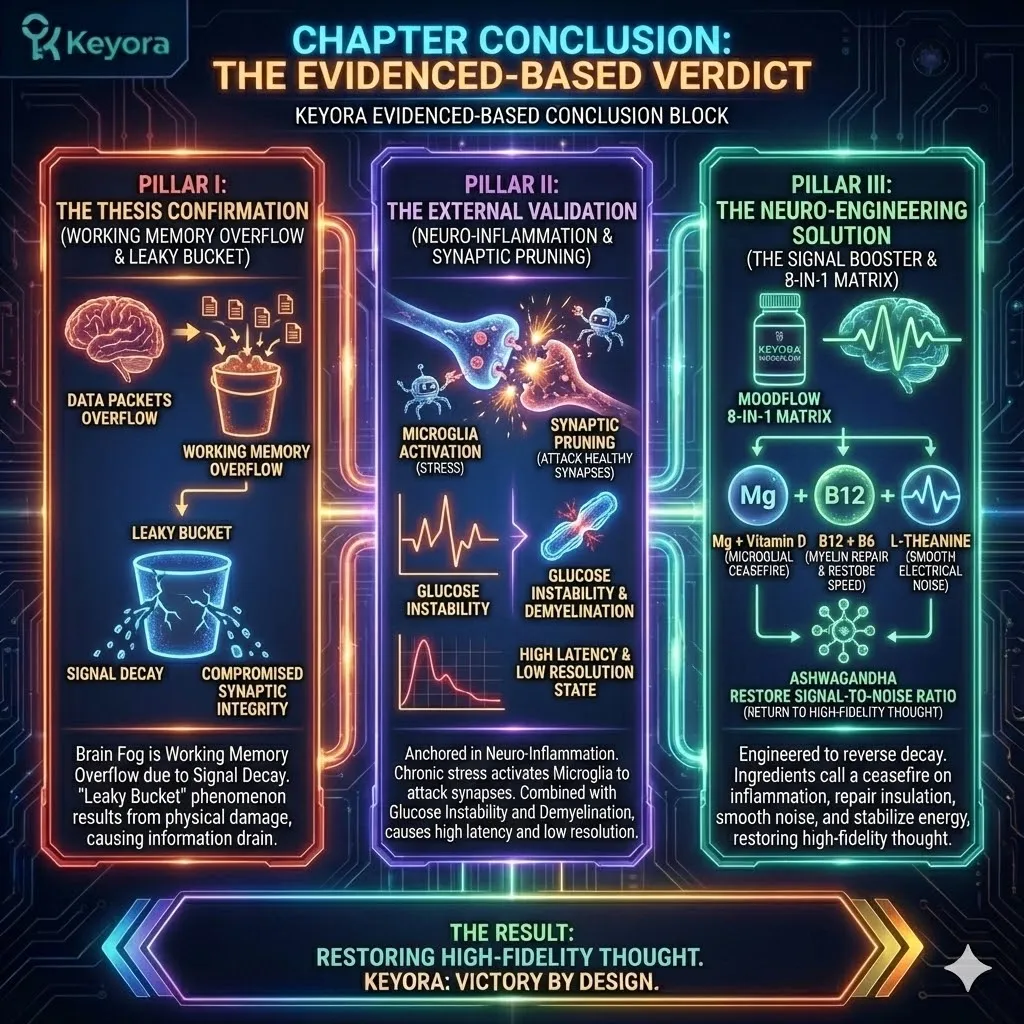
This strategic blueprint identifies the Signal Booster as the definitive engineering solution for Working Memory Overflow, defining the reversal of neural decay as the only path back to high-fidelity cognitive output.
References
-
Arnsten, A. F. T. (2009). Stress signalling pathways that impair prefrontal cortex structure and function. Nature Reviews Neuroscience, 10(6), 410–422.
-
Baba, Y., et al. (2021). Effects of L-Theanine on cognitive function in middle-aged and older subjects: A randomized placebo-controlled study. Journal of Medicinal Food, 24(4), 333-341.
-
Barbagallo, M., & Dominguez, L. J. (2010). Magnesium and aging. Current Pharmaceutical Design, 16(7), 832–839.
-
Birdsall, T. C. (1998). 5-Hydroxytryptophan: a clinically-effective serotonin precursor. Alternative Medicine Review, 3(4), 271–280.
-
Dantzer, R., et al. (2008). From inflammation to sickness and depression: when the immune system subjugates the brain. Nature Reviews Neuroscience, 9(1), 46-56.
-
De Baaij, J. H. F., et al. (2015). Magnesium in man: implications for health and disease. Physiological Reviews, 95(1), 1–46.
-
Hidese, S., et al. (2019). Effects of L-theanine administration on stress-related symptoms and cognitive functions in healthy adults: A randomized controlled trial. Nutrients, 11(10), 2362.
-
Jin, X., & Keyora Research. (2024a). Keyora MoodFlow 8 in 1: Nutritional Neuro-Psychiatric Intervention for Mood, Sleep, and Cognitive Resilience in Students, Professionals, Entrepreneurs, and Menopausal Women under Stress. Keyora Research Institute. DOI: 10.5281/zenodo.16814204
-
Jin, X., & Keyora Research. (2024b). Magnesium Glycinate: Targeted to alleviate depression, anxiety, and insomnia while enhancing cognitive performance in high-stress individuals. Keyora Research Institute. DOI: 10.5281/zenodo.16889527
-
Jin, X., & Keyora Research. (2024c). Keyora Research Protocols: Systemic Neuro-Nutrition. OSF. DOI: 10.17605/OSF.IO/FZ62K
-
Kennedy, D. O. (2016). B vitamins and the brain: Mechanisms, dose and efficacy—A review. Nutrients, 8(2), 68.
-
Liston, C., et al. (2009). Psychosocial stress reversibly disrupts prefrontal processing and dendritic architecture. Proceedings of the National Academy of Sciences, 106(3), 912-917.
-
Lupien, S. J., et al. (2007). The effects of stress and stress hormones on human cognition: Implications for the field of brain and cognition. Brain and Cognition, 65(3), 209-237.
-
Mazur, A., et al. (2007). Magnesium and the inflammatory response: Potential physiopathological implications. Archives of Biochemistry and Biophysics, 458(1), 48-56.
-
McEwen, B. S. (2000). The neurobiology of stress: from serendipity to clinical relevance. Brain Research, 886(1-2), 172-189.
-
Miller, A. H., & Raison, C. L. (2016). The role of inflammation in depression: From evolutionary imperative to modern treatment target. Nature Reviews Neuroscience, 16(1), 22–34.
-
Nobre, A. C., Rao, A., & Owen, G. N. (2008). L-theanine, a natural constituent in tea, and its effect on mental state. Asia Pacific Journal of Clinical Nutrition, 17(S1), 167–168.
-
Owens, D. S., et al. (2014). The effects of hypoglycemia on cognitive function in type 2 diabetes. Diabetes Care, 37(8), 2087-2096.
-
Reynolds, E. (2006). Vitamin B12, folic acid, and the nervous system. The Lancet Neurology, 5(11), 949–960.
-
Smith, A. D., et al. (2010). Homocysteine-lowering by B vitamins slows the rate of accelerated brain atrophy in mild cognitive impairment: A randomized controlled trial. PLoS ONE, 5(9), e12244.
-
Volpe, S. L. (2013). Magnesium and the brain: a focus on neuroinflammation and depression. Nutrients, 5(6), 6206-6225.
-
Yirmiya, R., & Goshen, I. (2011). Immune modulation of learning, memory, neural plasticity and neurogenesis. Brain, Behavior, and Immunity, 25(2), 181-213.
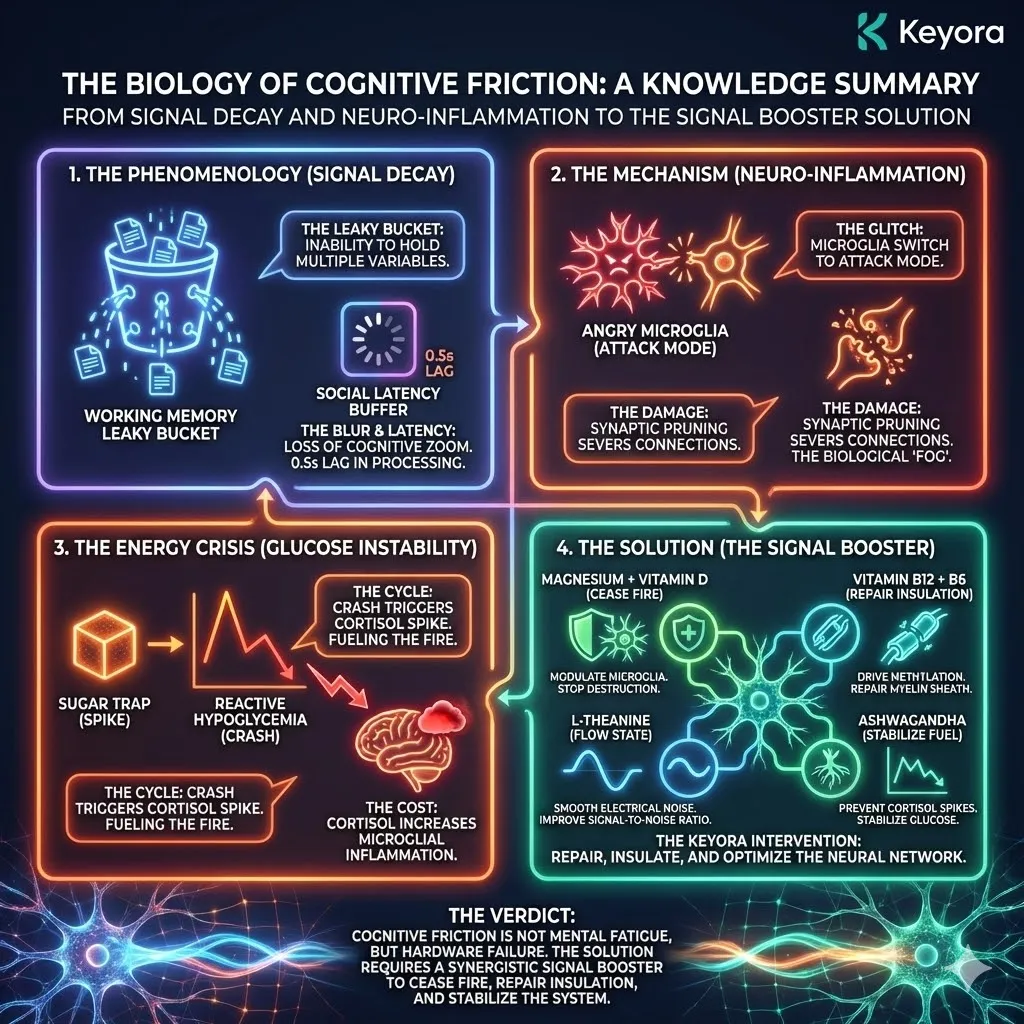
# Knowledge Summary: The Biology of Cognitive Friction
## 1. The Thesis
– Chapter 1 of Episode 10 redefines “Brain Fog” in high-performers not as mental fatigue, but as a hardware failure: **Signal Decay**. It posits that inflammation and energy instability degrade the neural network, causing **Working Memory Overflow** and **Social Latency**.
## 2. Part 1: The Phenomenology (Resolution Drop)
– **The Leaky Bucket:** The inability to hold multiple variables in Working Memory simultaneously.
– **The Blur:** A loss of cognitive “Zoom” capability.
– **Latency:** The 0.5-second lag in processing complex inputs, creating a sense of “slowness” or “aging.”
## 3. Part 2: The Mechanism (Neuro-Inflammation)
– **The Glitch:** Chronic stress triggers **Microglia** (brain immune cells) to switch from “Maintenance Mode” to “Attack Mode.”
– **The Damage:** Hyper-active Microglia release cytokines that attack synapses (**Synaptic Pruning**), physically severing the connections between ideas. This is the biological reality of “Fog.”
## 4. Part 3: The Energy Crisis (Glucose Instability)
– **The Sugar Trap:** Attempting to fix fog with sugar creates **Reactive Hypoglycemia**.
– **The Cycle:** The crash triggers a Cortisol spike to mobilize fuel.
– **The Cost:** Cortisol further activates Microglia, increasing inflammation. It is a vicious cycle of “Fueling the Fire.”
## 5. Part 4: The Solution (The Signal Booster)
– **Cease Fire:** **Magnesium + Vitamin D** modulate Microglia to stop the synaptic destruction.
– **Repair:** **Vitamin B12 + B6** drive methylation to repair the Myelin Sheath (Insulation), restoring signal speed.
– **Flow:** **L-Theanine** smooths electrical noise to improve Signal-to-Noise Ratio.
– **Stabilize:** **Ashwagandha** prevents the Cortisol spikes that drive glucose instability.
Chapter 2: The Memory Blockade
The Cortisol Firewall: Why Access is Denied When You Need It Most
Let us reconstruct a scene that defines the specific, cold terror of the modern executive.
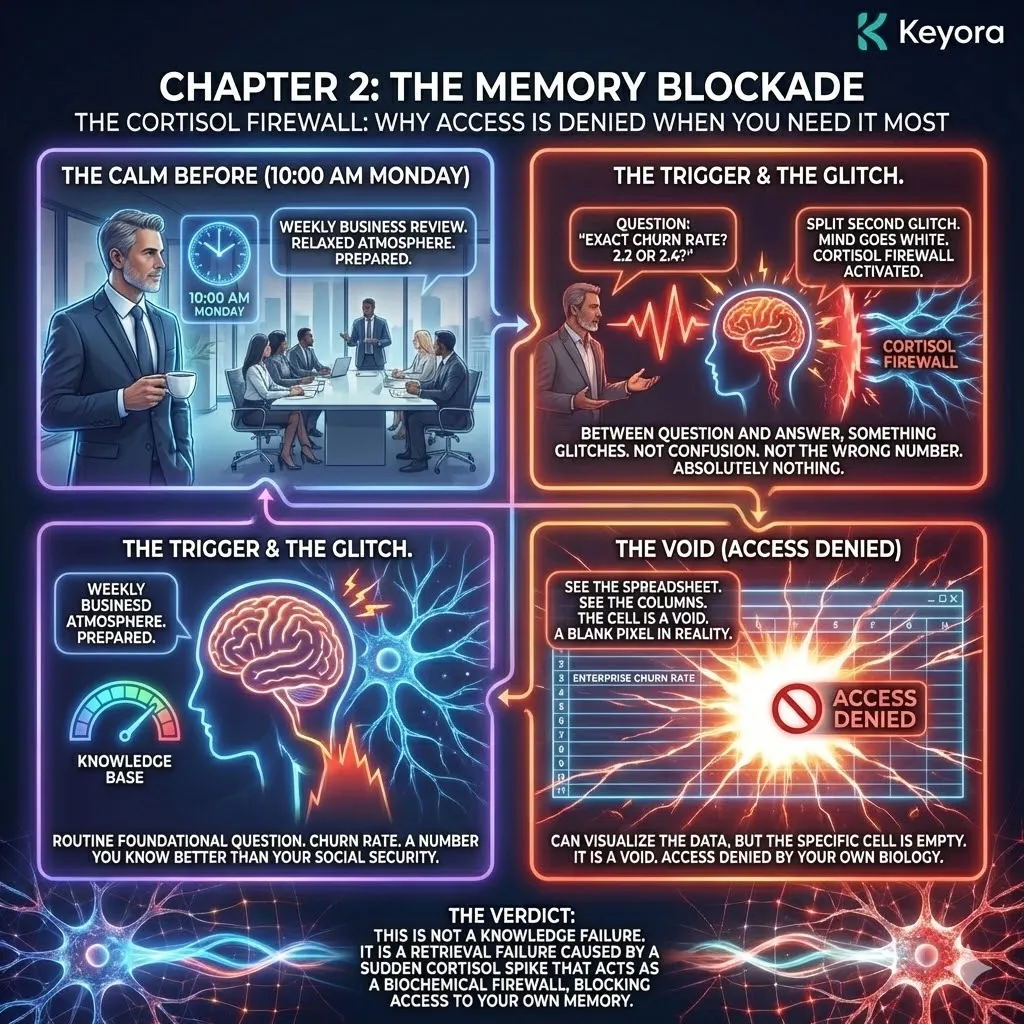
It is 10:00 AM on a Monday. You are sitting in your standard Weekly Business Review.
This is not a hostile environment. There are no external investors in the room. There is no crisis management team. It is just you and your core leadership team – the people you have recruited, trained, and worked with for years.
The atmosphere is professional, efficient, and relatively relaxed. You are holding your coffee. You feel prepared.
The VP of Sales clicks to the next slide and asks a routine, foundational question:
“Hey, just to confirm before we finalize the forecast, what was the exact Churn Rate for the Enterprise sector last month? Was it 2.2 or 2.4?”
This is a number you know.
You know it better than your own social security number.
You built the spreadsheet that calculated it.
You reviewed the report last night at 11:00 PM.
You have typed this specific percentage into Slack three times this morning.
It is a fundamental data point in your mental model of the company.
But in that split second, between the question entering your ear and your mouth opening to answer, something glitches.
Your mind goes White.
It is not that you remember the wrong number.
It is not that you are confused.
It is that you remember absolutely nothing.
You can see the spreadsheet in your mind’s eye.
You can visualize the columns.
You can see the formatting.
But the specific cell where the number should be is empty.
It is a void.
It is a blank pixel in your reality.
You freeze.
Your conscious mind attempts to force the memory.
You reach for it.
But the harder you reach, the further it recedes.
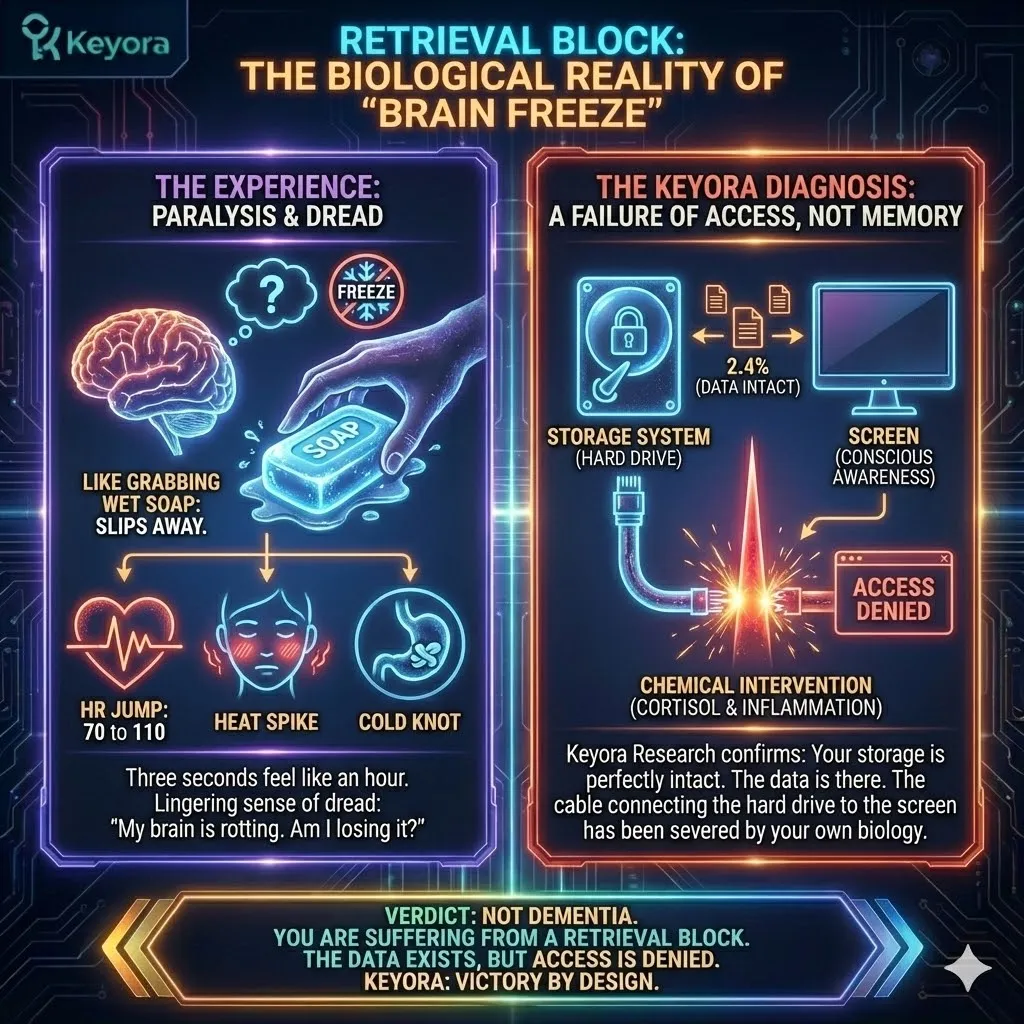
It feels like trying to grab a bar of wet soap in a shower; the very act of grasping causes it to slip away.
The silence in the room lasts only three seconds. To your team, you just look thoughtful. You look like you are verifying the data.
But to you, inside your skull, those three seconds feel like an hour of paralysis.
You feel a sudden, sharp spike of heat in your cheeks.
Your heart rate jumps from 70 to 110.
A cold knot forms in your stomach.
You have to physically open your laptop, command-tab to Excel, scroll to the row, and read the number off the screen like a junior analyst.
“It was 2.4 percent,” you say. Your voice is calm.
The meeting moves on. No one noticed. The crisis is over.
But for you, the crisis has just begun.
You walk back to your office with a lingering sense of dread. You sit in your chair and stare at the wall. The thought creeps in:
My brain is rotting. I am losing my sharpness. Is this early onset cognitive decline? Am I aging out of my ability to lead?
Keyora Research is here to stop that spiral immediately.
You are not suffering from dementia.
You are not losing your intelligence.
Your storage systems are perfectly intact.
The data is on the hard drive.
You are suffering from a Retrieval Block.
The data exists, but the cable connecting the hard drive to the screen has been severed by a sudden, chemical intervention. This is not a failure of memory. It is a failure of access. And the agent denying you access is your own biology.
2.1 The Phenomenology of the Social Glitch
The Name Drop: When Social Currency Evaporates
The Retrieval Block does not just happen with data points. It happens with people. And when it happens in a social context, the cost is not just intellectual; it is reputational.
Let us examine Scenario B.
You are at a Networking Mixer or a high-stakes Client Dinner.
The room is loud.
The lighting is dim.
You are “on.”
You are guiding a key potential investor or a strategic partner through the room.
Your goal is to demonstrate your network, your connectivity, your social currency.
You spot a face you know. It is Mike from Logistics.
You have worked with him for five years.
You know his wife’s name is Sarah.
You played golf with him last summer.
You owe him an email about the supply chain integration.
You turn to your investor.
You smile.
You gesture toward Mike with confidence.
“I’d like you to meet…”
The Crash.

The name vanishes.
It is gone.
Completely gone.
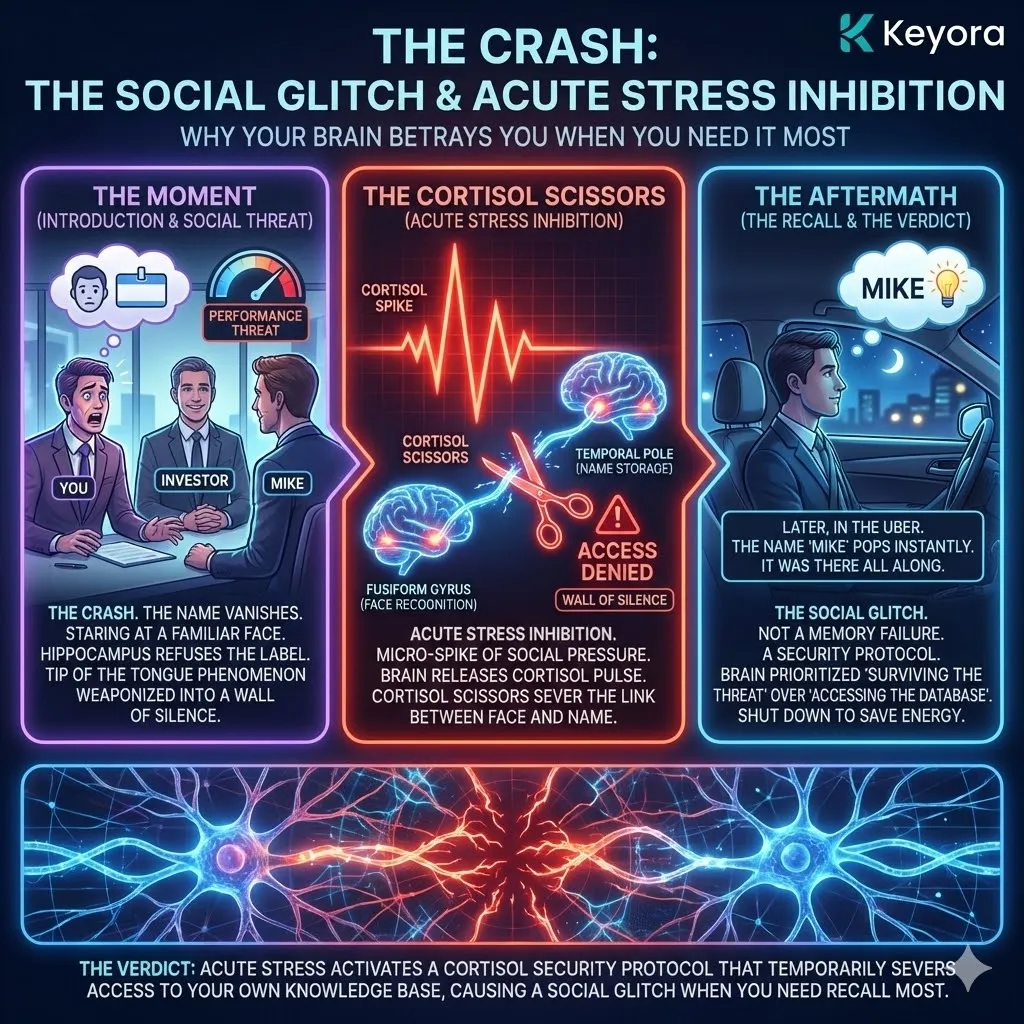
You are staring at a face that is as familiar to you as your own brother, but your Hippocampus refuses to supply the label. You search for the first letter. Nothing. You search for the context. Nothing.
You feel a physical wave of panic. It starts in your chest and shoots up your neck. This is the Tip of the Tongue phenomenon weaponized into a Wall of Silence.
You have to fumble. You say, “This is… my good friend here.” You wait for Mike to introduce himself to save you. You smile through the awkwardness, but inside, you are humiliated.
Later, in the Uber home, the name “Mike” pops into your head instantly. It was there all along. It was sitting on the surface of your mind.
Why could you not access it when it mattered? Why did your brain betray you in the exact moment you needed it most?
This is Acute Stress Inhibition.
In that moment of introduction, there was a micro-spike of social pressure. Your brain perceived a “performance threat.” You wanted to impress the investor.
To handle the threat, your brain released a pulse of Cortisol.
That Cortisol acted as a pair of scissors. It severed the electrical link between the Fusiform Gyrus (the area that recognizes faces) and the Temporal Pole (the area that stores names).
You experienced a Social Glitch.
It was not a memory failure. It was a security protocol. Your brain decided that “surviving the social threat” was more important than “accessing the database,” so it shut down the database to save energy for the fight.
2.2 The Mechanism: The Cortisol Firewall
Physical Disconnection of the Hard Drive
To understand why this happens, we must stop looking at psychology and start looking at the hardware of the brain.
We must understand the architecture of the Hippocampus.
The Hippocampus is the Librarian of the brain. It is responsible for encoding new memories (Writing to Disk) and retrieving old ones (Reading from Disk). It is the central hub of your cognitive archive.
But the Hippocampus has a fatal design flaw for the modern executive: It is covered in Glucocorticoid Receptors.
This means it is uniquely sensitive to stress hormones. It is listening to your Cortisol levels 24 hours a day.
The Evolutionary Logic:
In a primitive “Fight or Flight” scenario – for example, a tiger attack – you do not need access to nuanced data.
You do not need to remember the tiger’s scientific name.
You do not need to remember the churn rate of the Enterprise sector.
You do not need to remember Mike’s name.
You need access to “Survival Data” only. Exit routes. Motor patterns. Adrenaline. Fight or Run.
So, when Cortisol spikes, the brain executes a safety protocol. It shuts down the “Nuanced Archive” to prioritize the “Survival Circuits.”
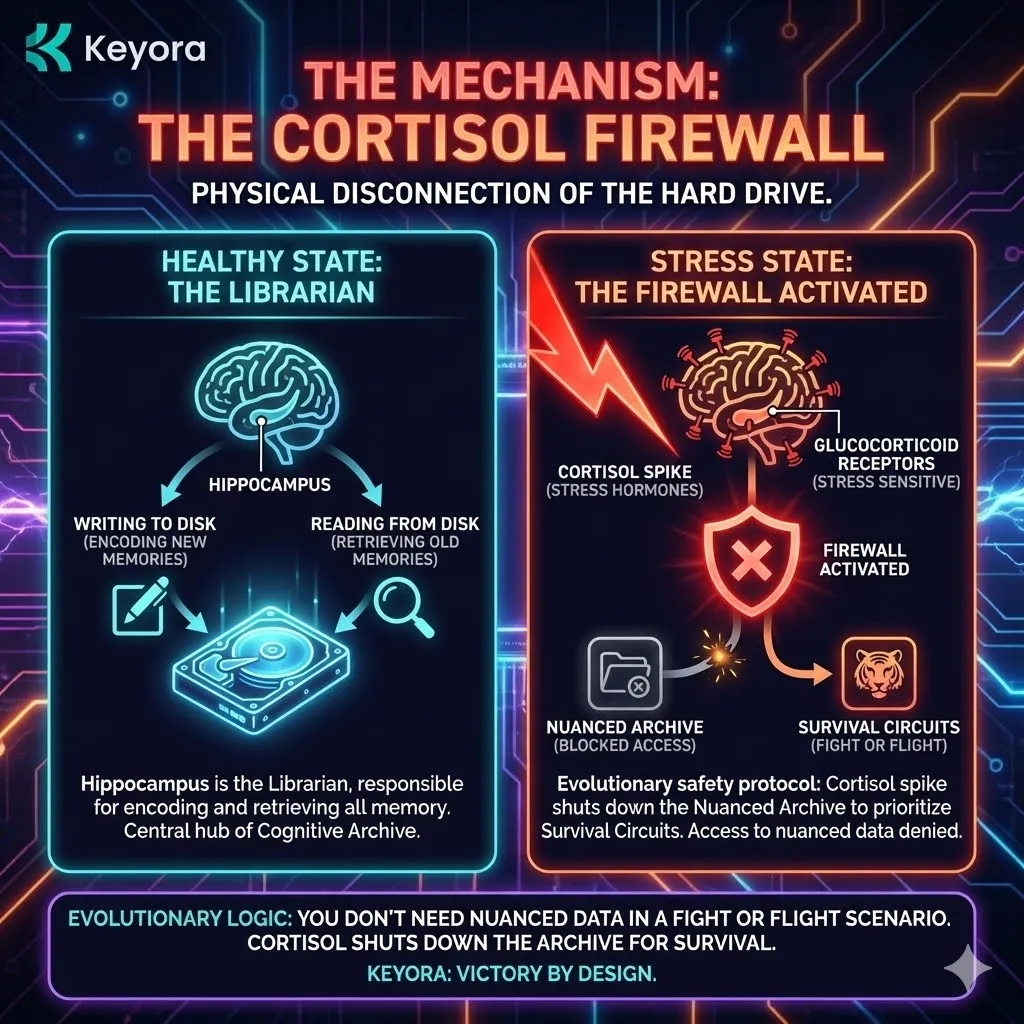
This creates The Cortisol Firewall.
When you are chronically stressed – even low-level background stress from a pending merger, a lawsuit, or a quarter-end target – your baseline Cortisol is elevated.
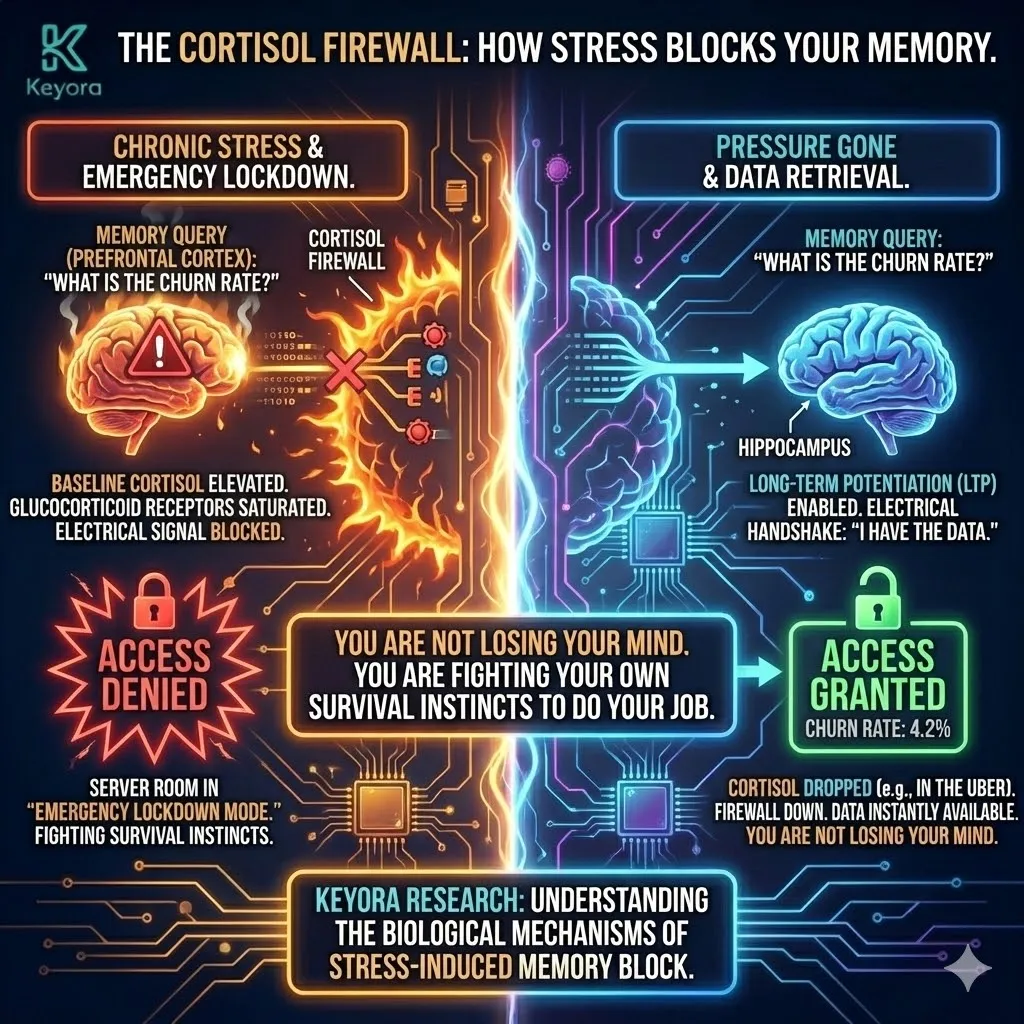
This Cortisol acts like a firewall around the Hippocampus. It physically inhibits Long-Term Potentiation (LTP).
LTP is the electrical process required to fetch a memory. It is the handshake between neurons that says, “I have the data.”
-
The Request: “What is the Churn Rate?”
-
The Process: The Prefrontal Cortex sends a query to the Hippocampus.
-
The Block: The query hits The Cortisol Firewall. The Glucocorticoid Receptors are saturated. They block the electrical signal.
-
The Result: “Access Denied.”
This explains why you remembered the name “Mike” in the Uber.
In the car, the pressure was gone.
The investor was gone.
The threat was over.
Your Cortisol dropped.
The Cortisol Firewall came down.
The data was instantly available.
You are not losing your mind.
You are trying to run a complex database query while your server room is in “Emergency Lockdown Mode.”
You are fighting your own survival instincts to do your job.
2.3 The Fragility of Working Memory
The Broken Thread: Why You Cannot Finish a Sentence
There is a third scenario that plagues the high-performer. It is the collapse of Working Memory.
You are leading a Strategy Kickoff.
You are standing at the whiteboard.
You are in flow.
You are explaining a complex, three-step execution plan.
You are holding the entire logic structure in your head.
You explain Step 1.
You explain Step 2.
Suddenly, a phone vibrates on the table.
Or someone opens the door and enters the room late.
Or a notification flashes on your laptop screen.
It is a micro-interruption. It lasts less than a second.
You turn back to the whiteboard to explain Step 3.
The Crash.
It is gone. The Train of Thought has derailed.
You stare at the marker in your hand.
You look at the words you just wrote.
You cannot remember where you were going.
You cannot even remember what Step 2 was.
The entire mental model has evaporated.
You have to ask the room: “Where was I?”
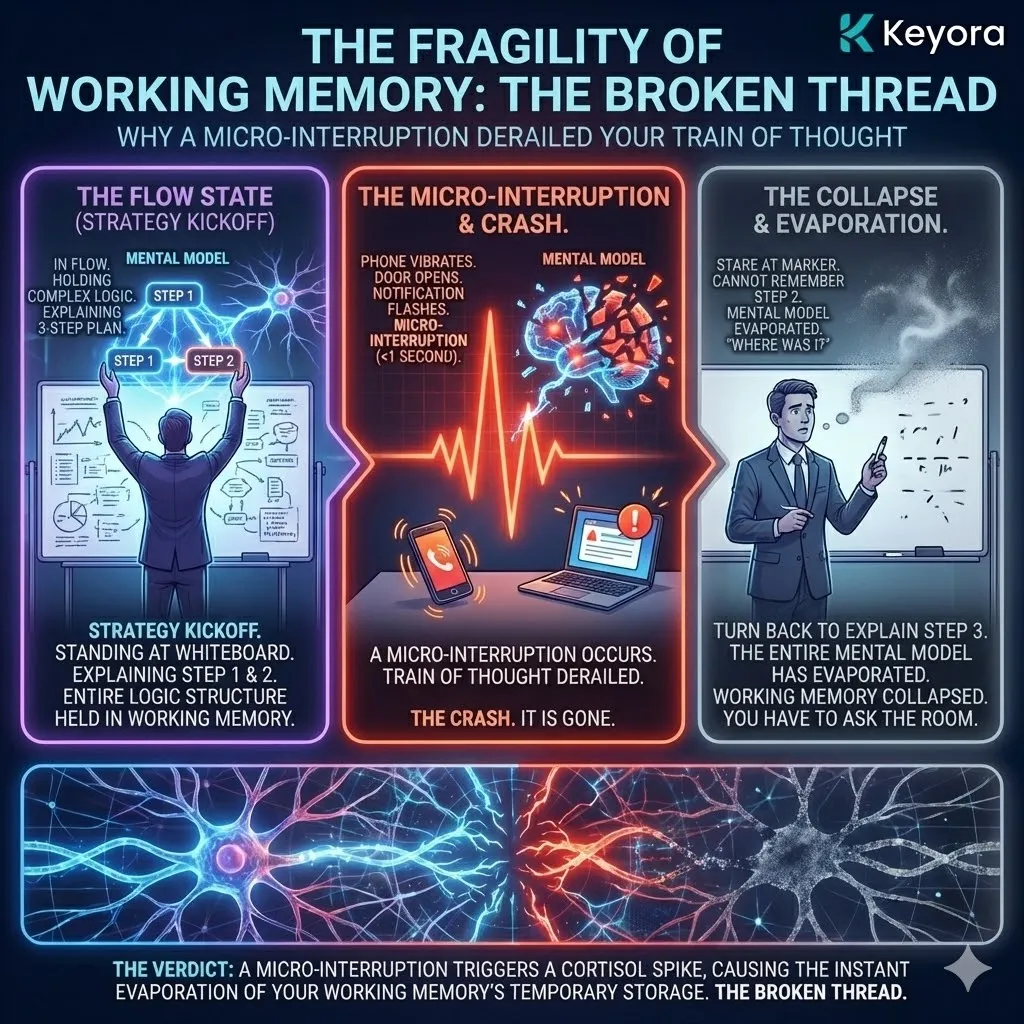
This is Working Memory Fragility.
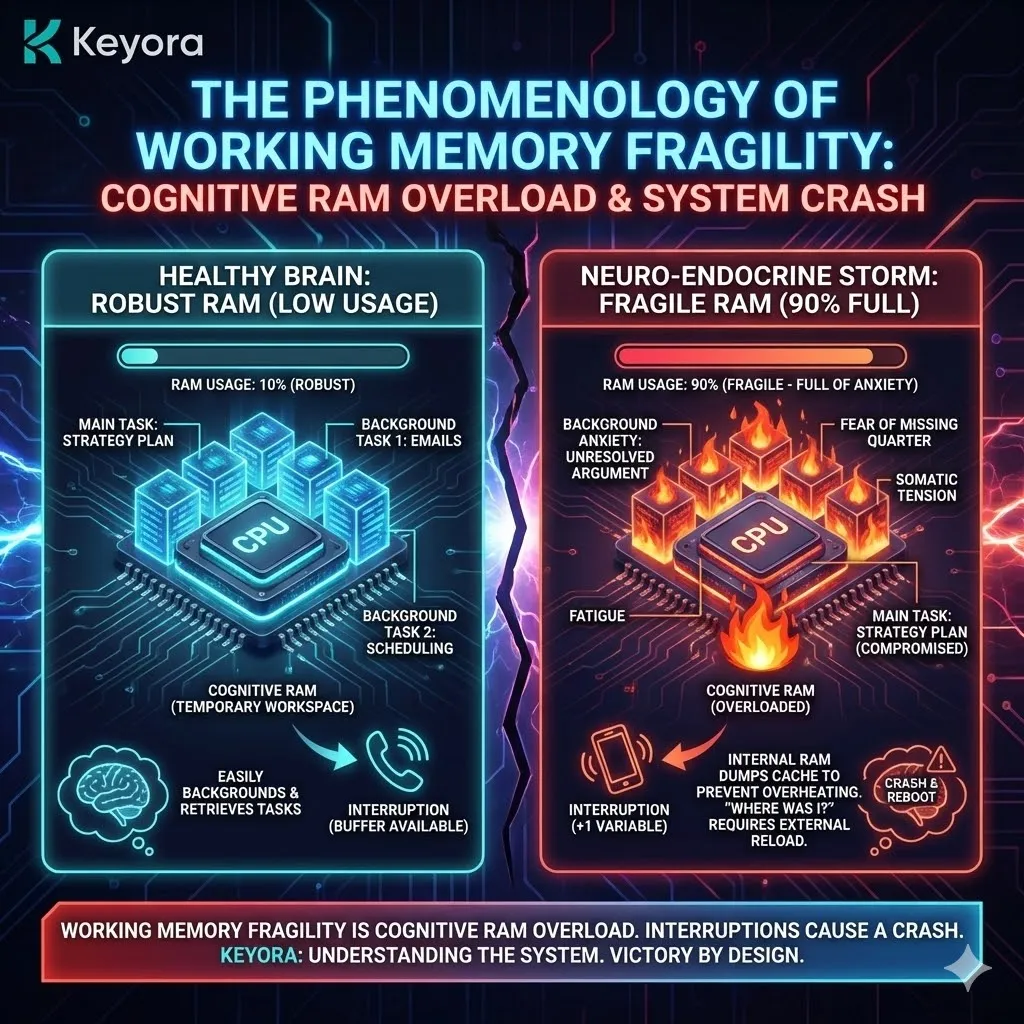
Working Memory is your “Cognitive RAM.” It is the temporary workspace where you hold variables while you manipulate them.
In a healthy brain, this RAM is robust. It can handle interruptions. It can “background” a task and retrieve it.
In a brain suffering from The Neuro-Endocrine Storm, this RAM is fragile.
Why?
Because your RAM is already 90 percent full of background anxiety.
You think you are focused on the Strategy Plan. But in the background processes of your brain, you are holding the unresolved argument with your co-founder, the fear of missing the quarter, the somatic tension in your jaw, and the fatigue in your eyes.
Your buffer is full.
When the phone vibrates, it adds one more variable to the stack.
The stack overflows.
The system crashes.
To recover, you have to “Reboot.” You have to ask “Where was I?” to reload the data from an external source (your team) because your internal RAM dumped the cache to prevent overheating.
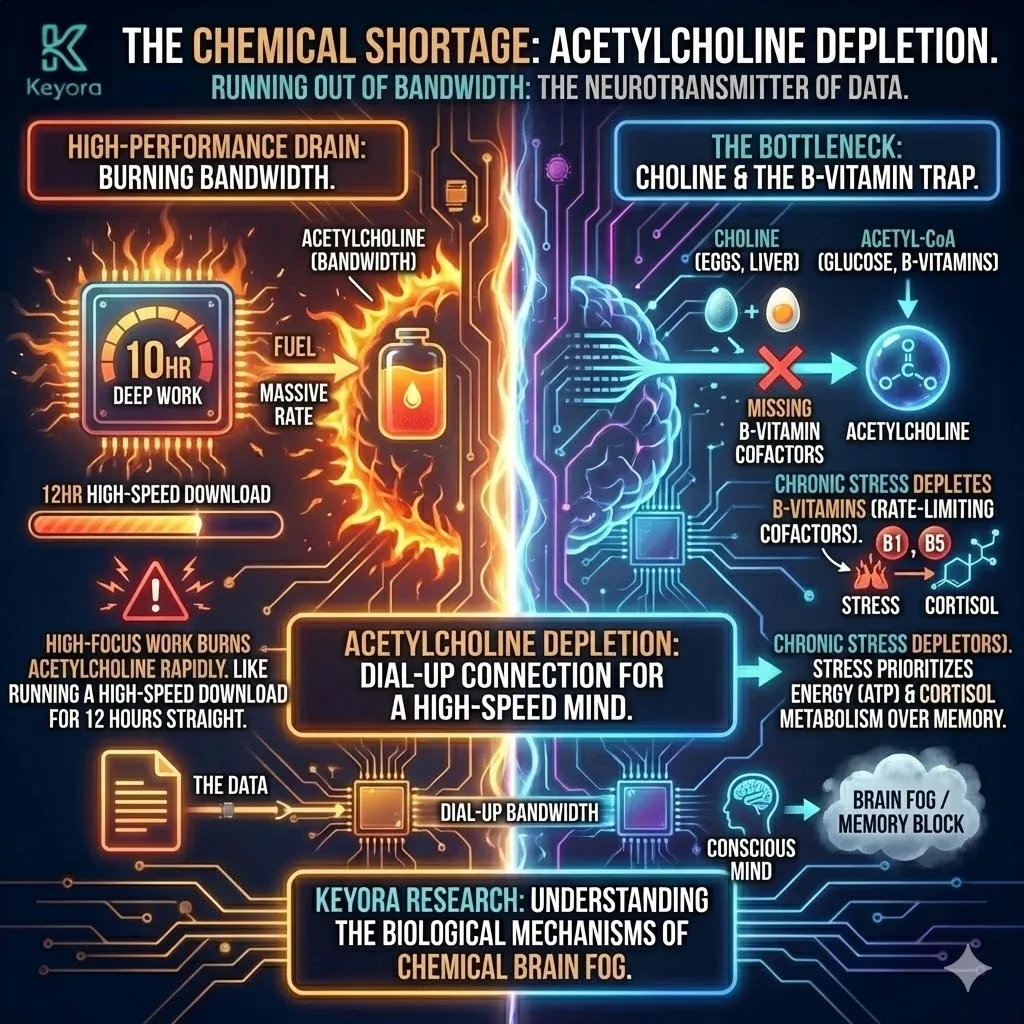
2.4 The Chemical Shortage: Acetylcholine Depletion
Running Out of Bandwidth: The Neurotransmitter of Data
We have discussed the structural blockade (The Cortisol Firewall) and the capacity limit (Working Memory Fragility).
Now we must look at the fuel shortage.
The primary neurotransmitter responsible for data transmission – for encoding new memories and retrieving old ones – is Acetylcholine.
Acetylcholine is the “Bandwidth” of the brain. High levels of Acetylcholine are associated with sharp focus, fast recall, neuroplasticity, and the ability to learn.
The Drain:
High-focus work burns Acetylcholine rapidly. If you are doing “Deep Work” for 10 hours a day, you are consuming this chemical at a massive rate. You are running a high-speed download for 12 hours straight.
The Bottleneck:
To synthesize Acetylcholine, your body needs two specific raw materials:
-
Choline: A nutrient found in eggs and liver.
-
Acetyl-CoA: Derived from glucose metabolism and B-Vitamins.
Here is the trap of the high-performer.
Chronic stress depletes B-Vitamins (specifically Vitamin B1 and Vitamin B5). These vitamins are the rate-limiting cofactors required to turn Choline into Acetylcholine.
Stress burns B-Vitamins to produce energy (ATP) and to metabolize Cortisol. The body prioritizes “Energy” and “Stress Response” over “Memory.”
So, even if you eat eggs every day, your stressed body cannot build the neurotransmitter. You have the Choline, but you lack the cofactor to activate it.
You enter a state of Acetylcholine Depletion.
This feels like trying to download a large file on a dial-up connection. The data exists on the server. Your computer works. But the pipe is too small. You do not have the bandwidth to transfer the data from your subconscious to your conscious mind in real-time.
This depletion is often what causes the “Brain Fog” that accompanies the memory block. It is a chemical signal that your data transmission lines are under-powered.
2.5 The Engineering Solution: The Retrieval Bridge
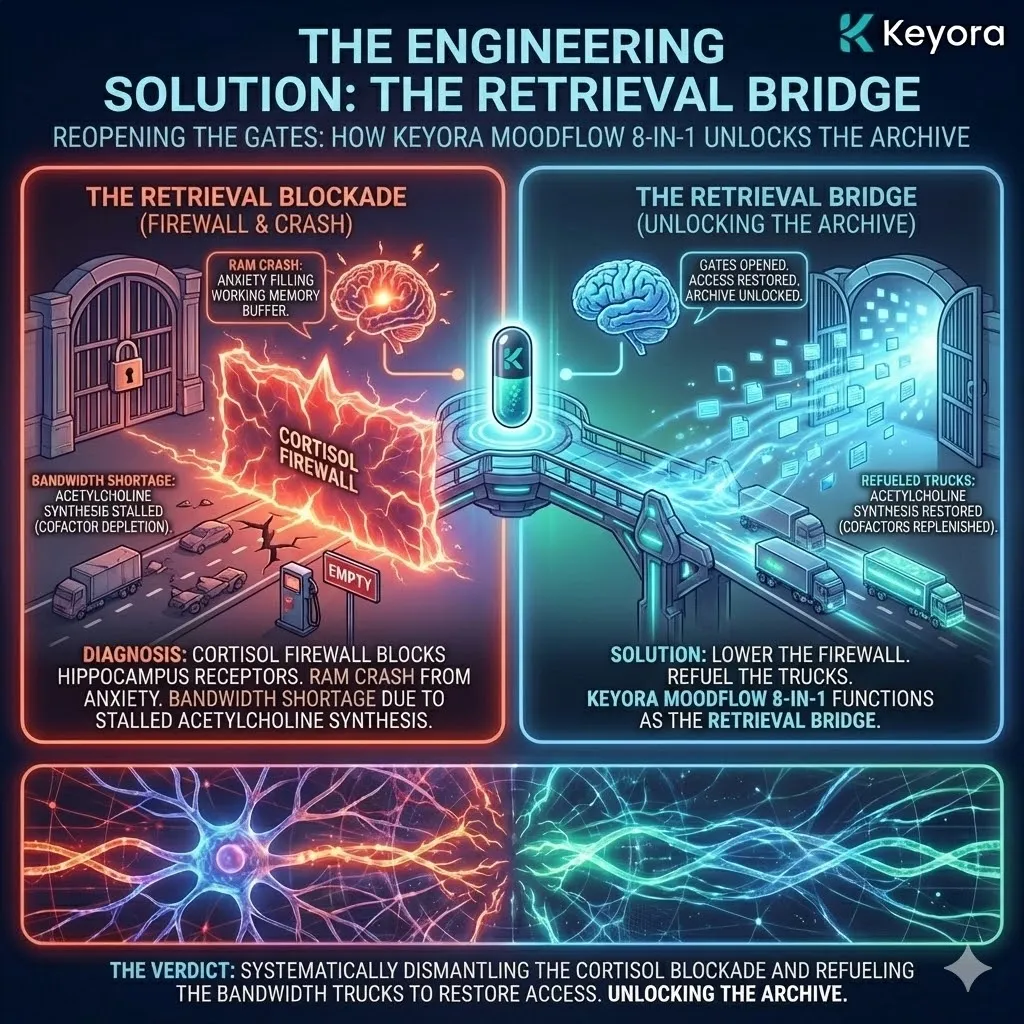
Reopening the Gates: How Keyora MoodFlow 8-in-1 Unlocks the Archive
We have diagnosed the failure.
-
The Firewall: Cortisol is blocking the Hippocampus receptors.
-
The RAM Crash: Anxiety is filling the Working Memory buffer.
-
The Bandwidth Shortage: Acetylcholine synthesis is stalled due to cofactor depletion.
How do we engineer a solution?
We need to lower the firewall and refuel the trucks. The Keyora MoodFlow 8-in-1 Matrix functions as The Retrieval Bridge. It is designed to systematically dismantle the blockade.
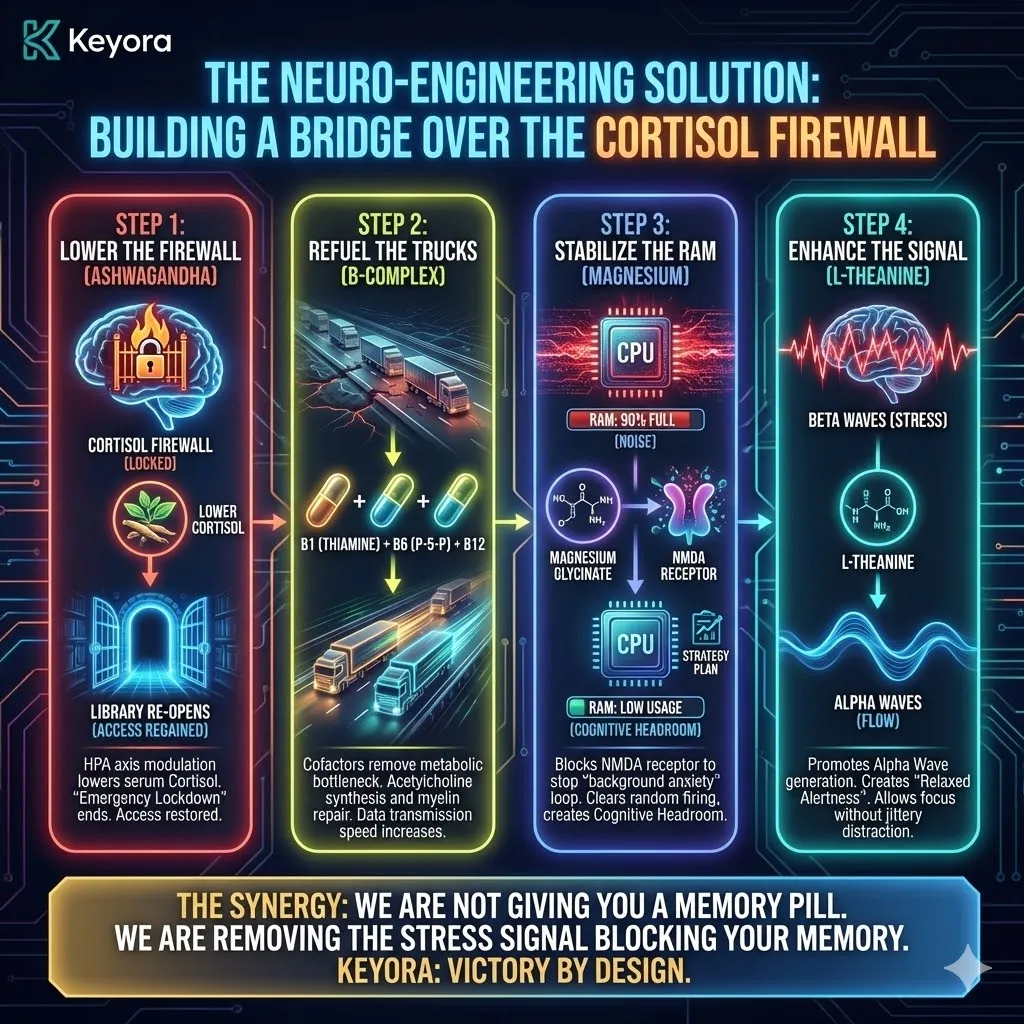
Step 1: Lower the Firewall (Ashwagandha)
This is the priority. We must tell the Hippocampus that the threat is over.
-
The Agent: Ashwagandha (Standardized Root Extract).
-
The Mechanism: It acts on the HPA axis to lower serum Cortisol.
-
The Result: When Cortisol drops, the Glucocorticoid Receptors on the Hippocampus unlock. The “Emergency Lockdown” ends. The library re-opens.
-
The Experience: You can access the name “Mike” because your brain is no longer prioritizing survival over social nuance. You regain access to your own hard drive.
Step 2: Refuel the Trucks (B-Complex)
We need to restore Acetylcholine levels to increase bandwidth.
-
The Agents: Vitamin B1 (Thiamine) + Vitamin B6 (P-5-P) + Vitamin B12.
-
The Mechanism: These are the rate-limiting cofactors for Acetylcholine synthesis and Myelin repair.
-
The Result: The metabolic bottleneck is removed. Choline is converted into Acetylcholine. Data transmission speed increases. The “Lag” disappears.
Step 3: Stabilize the RAM (Magnesium)
We need to clear the background noise from the Working Memory.
-
The Agent: Magnesium Glycinate.
-
The Mechanism: By blocking the NMDA receptor, Magnesium stops the “background anxiety” loop. It stops the random firing of neurons that fills up your RAM.
-
The Result: Your RAM is no longer 90 percent full of static. You have space to hold the “Strategy Plan” even if a phone rings. You have “Cognitive Headroom.”
Step 4: Enhance the Signal (L-Theanine)
We need to improve the focus.
-
The Agent: L-Theanine.
-
The Mechanism: It promotes Alpha Wave generation.
-
The Result: It creates a state of “Relaxed Alertness.” It allows you to hold the thread of a conversation without the jittery distraction of Beta waves.
The Synergy:
This is Neuro-Engineering.
We are not giving you a “memory pill.”
We are removing the stress signal that is blocking your memory.
We are building a bridge over The Cortisol Firewall.
2.6 Clinical Consensus & Evidence
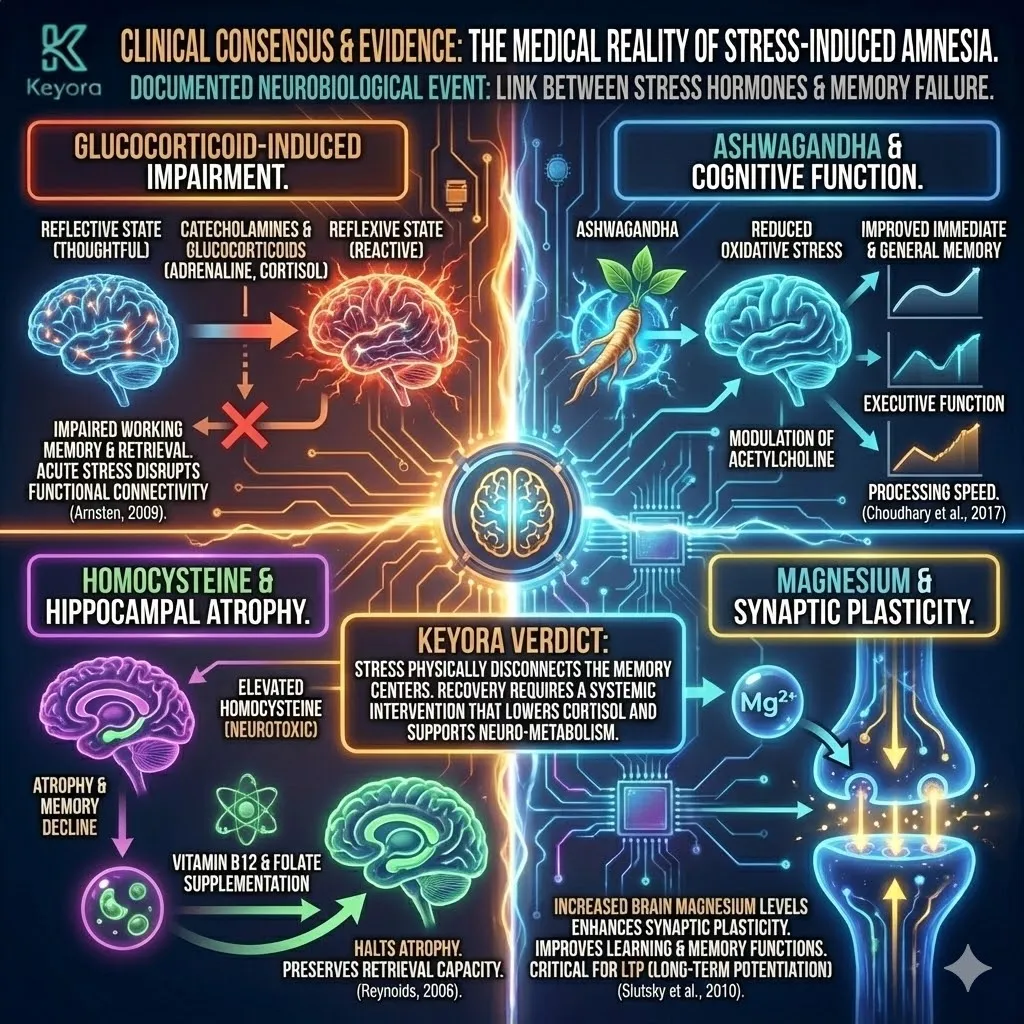
The Medical Reality of Stress-Induced Amnesia
The phenomenon of “Brain Blanking” under pressure is not a subjective complaint; it is a documented neurobiological event. The link between stress hormones and memory failure is one of the most robust findings in neuroscience.
On Glucocorticoid-Induced Memory Impairment:
A seminal review in Nature Reviews Neuroscience details how stress hormones affect the Prefrontal Cortex and Hippocampus.
The study confirms that high levels of catecholamines (adrenaline) and glucocorticoids (cortisol) switch the brain from a “reflective” state (thoughtful) to a “reflexive” state (reactive). This switch physically impairs working memory and memory retrieval mechanisms.
The study explicitly states that acute stress disrupts the functional connectivity required for memory access (Arnsten, 2009).
On Ashwagandha and Cognitive Function:
A prospective, randomized, double-blind, placebo-controlled study published in the Journal of Dietary Supplements investigated the efficacy of Ashwagandha root extract in improving memory and cognitive functions in adults with mild cognitive impairment.
The treatment group showed significant improvement in immediate and general memory, executive function, and information-processing speed.
The mechanism was linked to the reduction of oxidative stress and the modulation of Acetylcholine activity (Choudhary et al., 2017).
On Homocysteine and Hippocampal Atrophy:
Research in The Lancet Neurology highlights the role of Vitamin B12 and Folate in clearing Homocysteine. Elevated Homocysteine is neurotoxic and is directly linked to hippocampal atrophy (shrinkage) and memory decline.
Supplementation with B-Vitamins halts this atrophy and preserves retrieval capacity. This confirms that B-Vitamin depletion is a direct driver of structural memory loss (Reynolds, 2006).
On Magnesium and Synaptic Plasticity:
A study in Neuron demonstrated that increasing brain magnesium levels enhances short-term synaptic facilitation and long-term potentiation (LTP). This improves learning and memory functions.
Magnesium is critical for the plasticity of the synapse – the ability of the brain to form and retrieve connections (Slutsky et al., 2010).
Keyora Verdict:
The science is clear. Stress physically disconnects the memory centers. Recovery requires a systemic intervention that lowers cortisol and supports neuro-metabolism.
Chapter Conclusion: The Evidenced-Based Verdict
KEYORA EVIDENCED-BASED CONCLUSION
Pillar I: The Thesis Confirmation
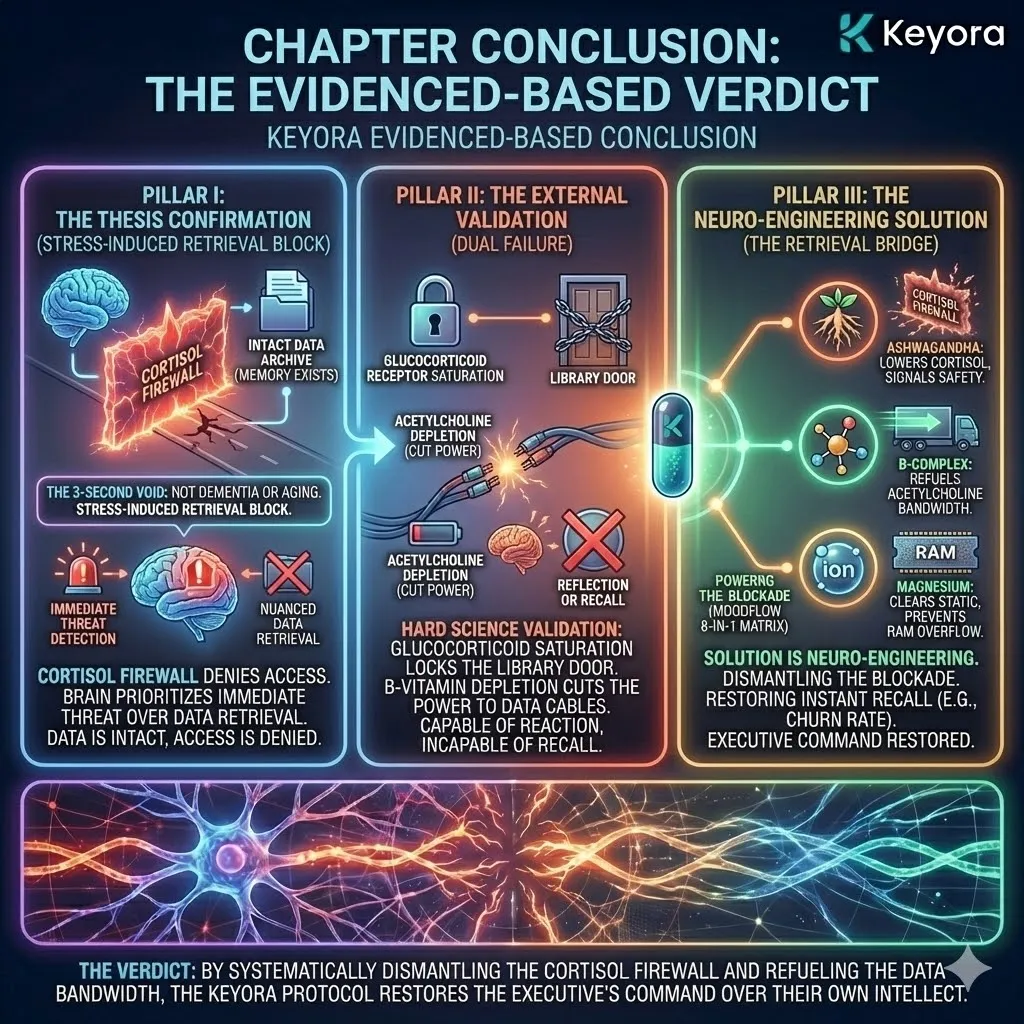
This chapter has fundamentally redefined the “3-Second Void” experienced by high-performers. It is not a sign of dementia or aging. It is Stress-Induced Retrieval Block. The memory exists; the data is intact. However, access is denied by The Cortisol Firewall, a survival mechanism where the brain prioritizes immediate threat detection over nuanced data retrieval.
Pillar II: The External Validation
We have anchored this diagnosis in the hard science of Glucocorticoid Receptor Saturation and Acetylcholine Depletion. Clinical consensus confirms that chronic stress creates a dual failure: it locks the library door (via Cortisol) and cuts the power to the data cables (via B-Vitamin depletion). This renders the executive brain capable of reaction, but incapable of reflection or recall.
Pillar III: The Neuro-Engineering Solution
We conclude that the solution is not “brain training” or “more caffeine.” The solution is The Retrieval Bridge. The Keyora MoodFlow 8-in-1 Matrix is engineered to systematically dismantle the blockade.
-
Ashwagandha lowers the Cortisol Firewall, signaling safety to the Hippocampus.
-
B-Complex refuels the Acetylcholine bandwidth, restoring data transmission speed.
-
Magnesium clears the static from Working Memory, preventing RAM overflow.
This protocol restores the ability to recall the “Churn Rate” or the “Client’s Name” instantly, restoring the executive’s command over their own intellect.
References
-
Arnsten, A. F. T. (2009). Stress signalling pathways that impair prefrontal cortex structure and function. Nature Reviews Neuroscience, 10(6), 410–422.
-
Birdsall, T. C. (1998). 5-Hydroxytryptophan: a clinically-effective serotonin precursor. Alternative Medicine Review, 3(4), 271–280.
-
Chandrasekhar, K., Kapoor, J., & Anishetty, S. (2012). A prospective, randomized double-blind, placebo-controlled study of safety and efficacy of a high-concentration full-spectrum extract of Ashwagandha root in reducing stress and anxiety in adults. Indian Journal of Psychological Medicine, 34(3), 255–262.
-
Choudhary, D., et al. (2017). Efficacy and safety of Ashwagandha (Withania somnifera) root extract in improving memory and cognitive functions. Journal of Dietary Supplements, 14(6), 599-612.
-
De Baaij, J. H. F., et al. (2015). Magnesium in man: implications for health and disease. Physiological Reviews, 95(1), 1–46.
-
Hidese, S., et al. (2019). Effects of L-theanine administration on stress-related symptoms and cognitive functions in healthy adults: A randomized controlled trial. Nutrients, 11(10), 2362.
-
Jin, X., & Keyora Research. (2024a). Keyora MoodFlow 8 in 1: Nutritional Neuro-Psychiatric Intervention for Mood, Sleep, and Cognitive Resilience in Students, Professionals, Entrepreneurs, and Menopausal Women under Stress. Keyora Research Institute. DOI: 10.5281/zenodo.16814204
-
Jin, X., & Keyora Research. (2024b). Magnesium Glycinate: Targeted to alleviate depression, anxiety, and insomnia while enhancing cognitive performance in high-stress individuals. Keyora Research Institute. DOI: 10.5281/zenodo.16889527
-
Jin, X., & Keyora Research. (2024c). Keyora Research Protocols: Systemic Neuro-Nutrition. OSF. DOI: 10.17605/OSF.IO/FZ62K
-
Kennedy, D. O. (2016). B vitamins and the brain: Mechanisms, dose and efficacy—A review. Nutrients, 8(2), 68.
-
Liao, J., et al. (2022). The anxiolytic effects of L-theanine on clinical anxiety and stress: A systematic review and meta-analysis. Nutrients, 14(7), 1526.
-
Lopresti, A. L., et al. (2019). An investigation into the stress-relieving and pharmacological actions of an ashwagandha (Withania somnifera) extract. Medicine, 98(37), e17186.
-
Lupien, S. J., et al. (2007). The effects of stress and stress hormones on human cognition: Implications for the field of brain and cognition. Brain and Cognition, 65(3), 209-237.
-
McEwen, B. S. (2000). The neurobiology of stress: from serendipity to clinical relevance. Brain Research, 886(1-2), 172-189.
-
Nobre, A. C., Rao, A., & Owen, G. N. (2008). L-theanine, a natural constituent in tea, and its effect on mental state. Asia Pacific Journal of Clinical Nutrition, 17(S1), 167–168.
-
Owecki, M., et al. (2018). Homocysteine and vitamin B12 status in depression and cognitive decline. Journal of Neural Transmission, 125(1), 159–165.
-
Reynolds, E. (2006). Vitamin B12, folic acid, and the nervous system. The Lancet Neurology, 5(11), 949–960.
-
Sapolsky, R. M. (1996). Why stress is bad for your brain. Science, 273(5276), 749-750.
-
Slutsky, I., et al. (2010). Enhancement of learning and memory by elevating brain magnesium. Neuron, 65(2), 165-177.
-
Smith, A. D., et al. (2010). Homocysteine-lowering by B vitamins slows the rate of accelerated brain atrophy in mild cognitive impairment: A randomized controlled trial. PLoS ONE, 5(9), e12244.
-
Volpe, S. L. (2013). Magnesium and the brain: a focus on neuroinflammation and depression. Nutrients, 5(6), 6206-6225.
# Knowledge Summary: The Anatomy of The Memory Blockade
## 1. The Core Thesis
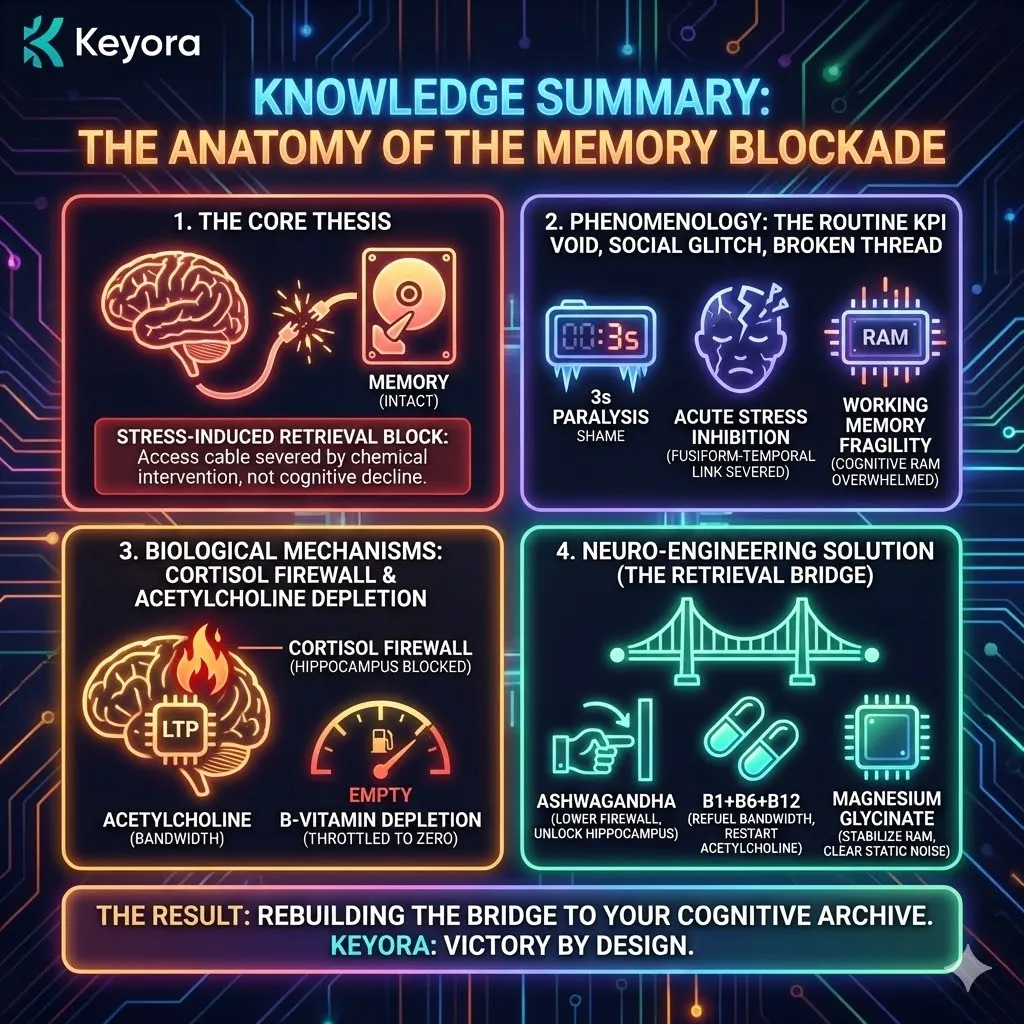
– Chapter 2 redefines “Brain Blanking” (forgetting KPIs or names) not as cognitive decline, but as a **Stress-Induced Retrieval Block**. The memory is intact on the hard drive, but the access cable has been severed by a chemical intervention.
## 2. Part 1: The Phenomenology
– **The Routine KPI Void:** Forgetting a deeply ingrained number during a status update. This causes a 3-second paralysis and intense shame.
– **The Social Glitch:** Forgetting a familiar name at a networking mixer. This is **Acute Stress Inhibition**, where a micro-spike of performance anxiety severs the link between the Fusiform Gyrus (face recognition) and Temporal Pole (name storage).
– **The Broken Thread:** Losing one’s place during a presentation due to a micro-interruption. This is **Working Memory Fragility**, caused by “Cognitive RAM” being overwhelmed by background anxiety.
## 3. Part 2: The Biological Mechanisms
– **The Cortisol Firewall:** The Hippocampus (memory center) is densely packed with **Glucocorticoid Receptors**. High Cortisol acts as a firewall, physically inhibiting Long-Term Potentiation (LTP). This is an evolutionary survival mechanism prioritizing “Fight or Flight” data over “Nuanced/Social” data.
– **Acetylcholine Depletion:** Acetylcholine is the “Bandwidth” neurotransmitter required for data retrieval. Its synthesis requires Choline and B-Vitamins. Chronic stress depletes B-Vitamins, throttling the bandwidth to zero.
## 4. Part 3: The Neuro-Engineering Solution (The Retrieval Bridge)
– **Step 1: Lower the Firewall (Ashwagandha):** Ashwagandha downregulates the HPA axis, lowering Cortisol and unlocking the Glucocorticoid Receptors on the Hippocampus.
– **Step 2: Refuel the Bandwidth (Vitamin B1 + B6 + B12):** Providing the rate-limiting cofactors to restart Acetylcholine synthesis and repair Myelin.
– **Step 3: Stabilize RAM (Magnesium Glycinate):** Blocking NMDA receptors to clear the “static noise” of anxiety from the Working Memory buffer, allowing the brain to hold complex threads again.
Chapter 3: The Attention Deficit
The Dopamine-Norepinephrine Imbalance: Why Your Brain Has Become a Pinball Machine
Let us analyze the physics of your workflow.
You have cleared your schedule. You have blocked off a two-hour window for Deep Work.
You are sitting in your workspace.
The phone is in the other room.
The notifications are silenced.
You have a complex problem in front of you – perhaps a block of legacy code that needs refactoring, a financial model that needs stress-testing, or a strategic brief that requires synthesis.
You begin.
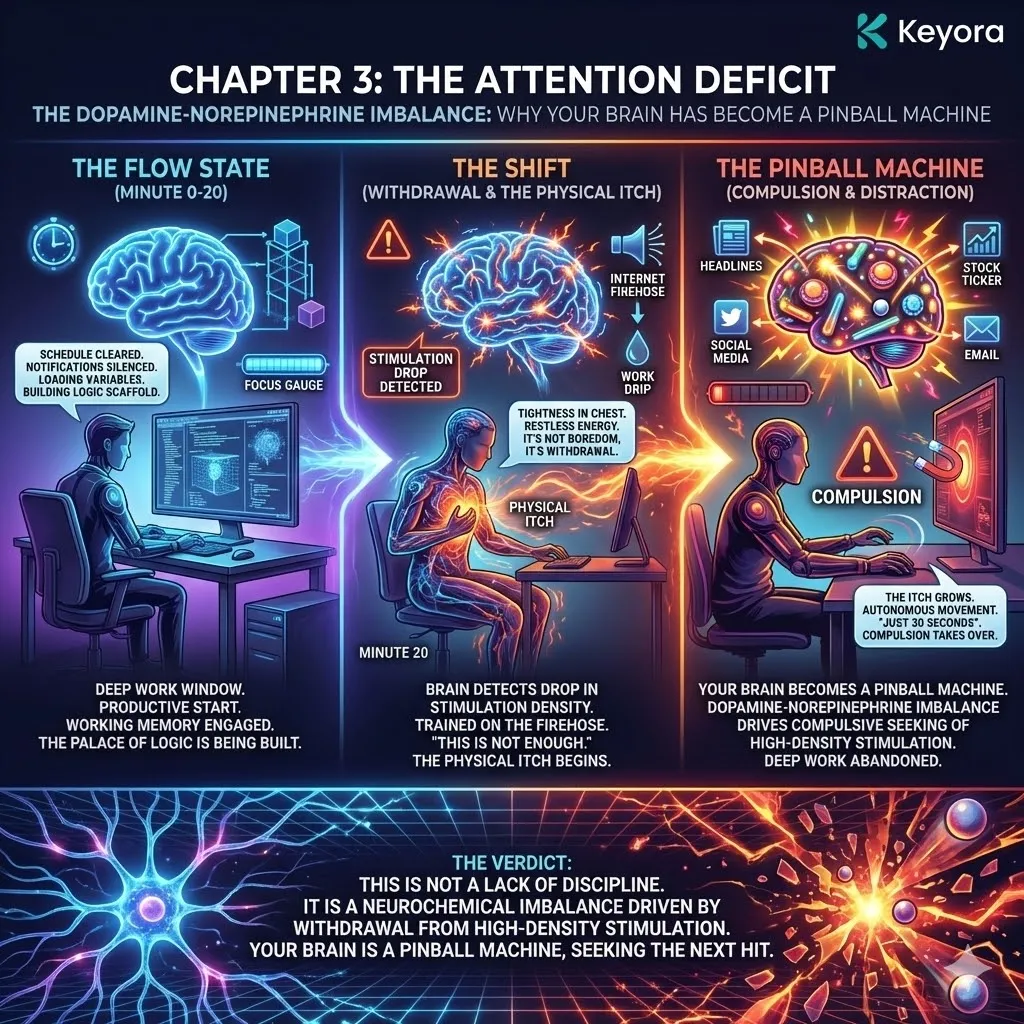
The first ten minutes are productive. You are loading the variables into your working memory. You are building the scaffold of the logic.
But then, you hit minute twenty.
Something shifts.
It is not a thought. It is a physical sensation. It starts as a tightness in the chest, a restless energy in the legs, a subtle vibration in the solar plexus.
This is The Physical Itch.
It is not boredom. Boredom is a lack of stimulation. You are not bored; the task is difficult.
This is Withdrawal.
Your brain has detected a drop in the density of stimulation. The task you are performing – writing code, analyzing data – provides a slow, steady drip of reward. But your brain has been trained on the firehose of the internet.
Your brain screams: This is not enough.
You try to push through. You stare at the cursor. But the Itch grows. It becomes a compulsion. Your hand moves to the mouse almost autonomously.
You tell yourself: I will just check the headlines for 30 seconds. I will just check the stock ticker.
The Crash.
You click away.
You flood your visual cortex with the bright colors and high-contrast headlines of a news site or a social feed.
You get a micro-hit of relief. The Itch subsides for a moment.
But the cost is catastrophic.
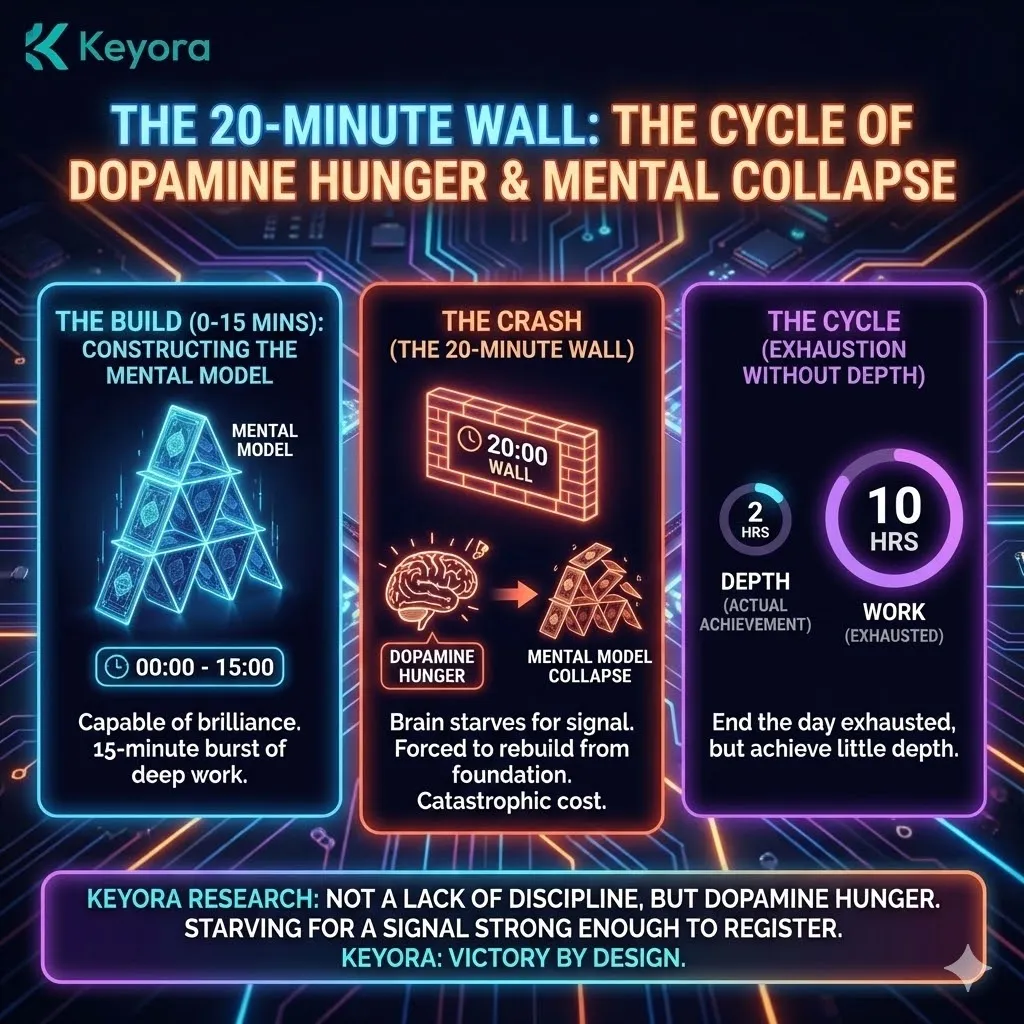
When you click back to your work 45 seconds later, the mental model you spent the first 15 minutes building has collapsed.
The variables have evaporated.
The logic structure has dissolved.
You have to start over.
You have to rebuild the house of cards from the foundation.
This is the 20-Minute Wall.
For many high-functioning professionals, this wall is the defining feature of their career. You are capable of brilliance, but you are forced to execute it in 15-minute bursts between crashes.
You end the day exhausted, having worked for ten hours, but having achieved only two hours of actual depth.
Keyora Research defines this state not as a lack of discipline, but as a state of Dopamine Hunger.
Your brain is screaming for a high-intensity stimulus because it has lost the metabolic capacity to sustain focus on a low-intensity task.
You are not distracted; you are starving for a signal that is strong enough to register.
3.1 The Phenomenology of The Pinball Effect
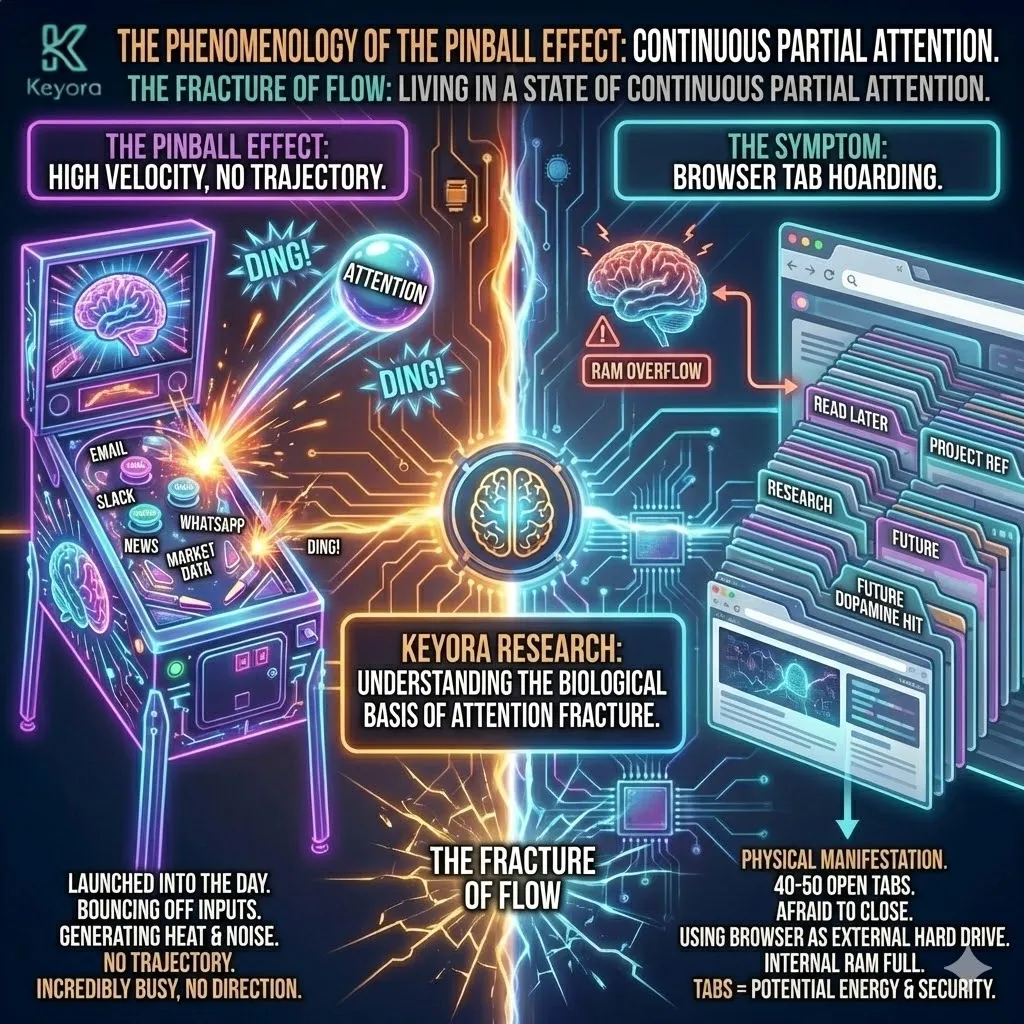
The Fracture of Flow: Living in a State of Continuous Partial Attention
If the “20-Minute Wall” is the event, what is the resulting state of existence?
We call it The Pinball Effect.
Imagine a pinball machine. The ball is your attention. The bumpers are your inputs – Email, Slack, WhatsApp, News, Market Data.
You are launched into the day.
You hit an email. Ding.
You react.
You hit a Slack message. Ding.
You react.
You hit a text. Ding.
You are moving at high velocity.
You are generating heat and noise.
To an outside observer, you look incredibly busy.
But you have no trajectory.
You are simply bouncing off the walls of your own life.
The Symptom: Browser Tab Hoarding
This phenomenon manifests physically on your screen. Look at your browser right now.
You likely have 40 or 50 tabs open.
Why?
You tell yourself: I need to read that later. Or: That is a reference for the project.
But the biological reality is different. You are afraid to close the tabs because your Working Memory (as discussed in Chapter 1) is full. You are using the browser as an external hard drive because your internal RAM is overflowing.
Furthermore, these tabs act as “Potential Energy.” They represent future dopamine hits. Just seeing them open gives you a micro-sense of security.
The Cost: The Cognitive Switching Penalty
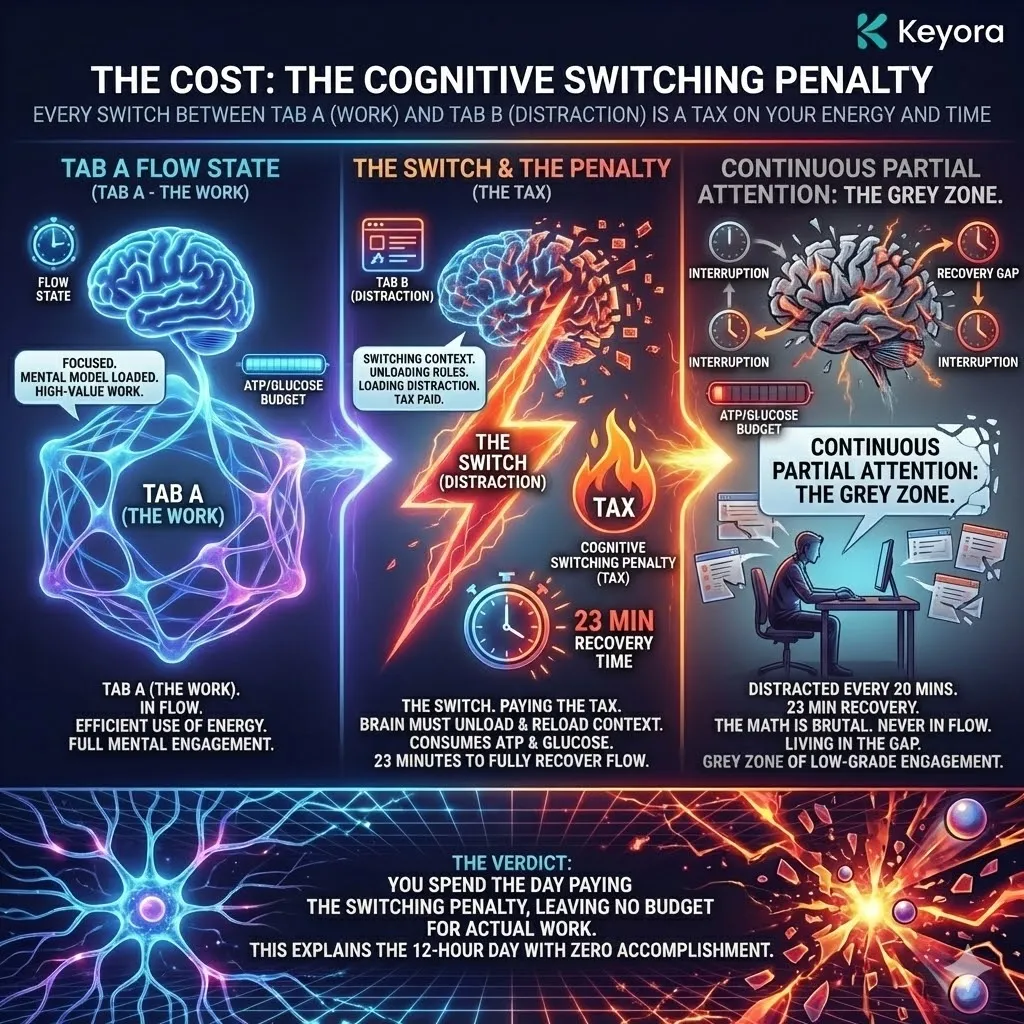
Every time you switch from Tab A (The Work) to Tab B (The Distraction), you pay a tax.
Neuroscience calls this the Cognitive Switching Penalty.
When you switch contexts, your brain has to “unload” the rules and variables of the old task and “load” the rules and variables of the new task.
This process consumes ATP (Energy) and Glucose.
Research suggests that it takes an average of 23 minutes to fully return to a state of flow after a distraction.
If you are distracted every 20 minutes, and it takes 23 minutes to recover, the math is brutal. You are never in flow. You are living in the gap between interruptions.
This state is called Continuous Partial Attention.
You are never fully “on” the work, and you are never fully “off” the work. You are in a grey zone of low-grade cognitive engagement.
This explains why you can spend 12 hours at your desk and feel like you accomplished nothing. You spent the entire day paying the Switching Penalty, leaving no budget for the actual work.
3.2 The Mechanism: Dopamine Burnout
The Empty Tank: Why You Cannot Sustain the Signal
Why does your brain demand the switch? Why can’t it just stay on the task?
The answer lies in the neurochemistry of Dopamine.
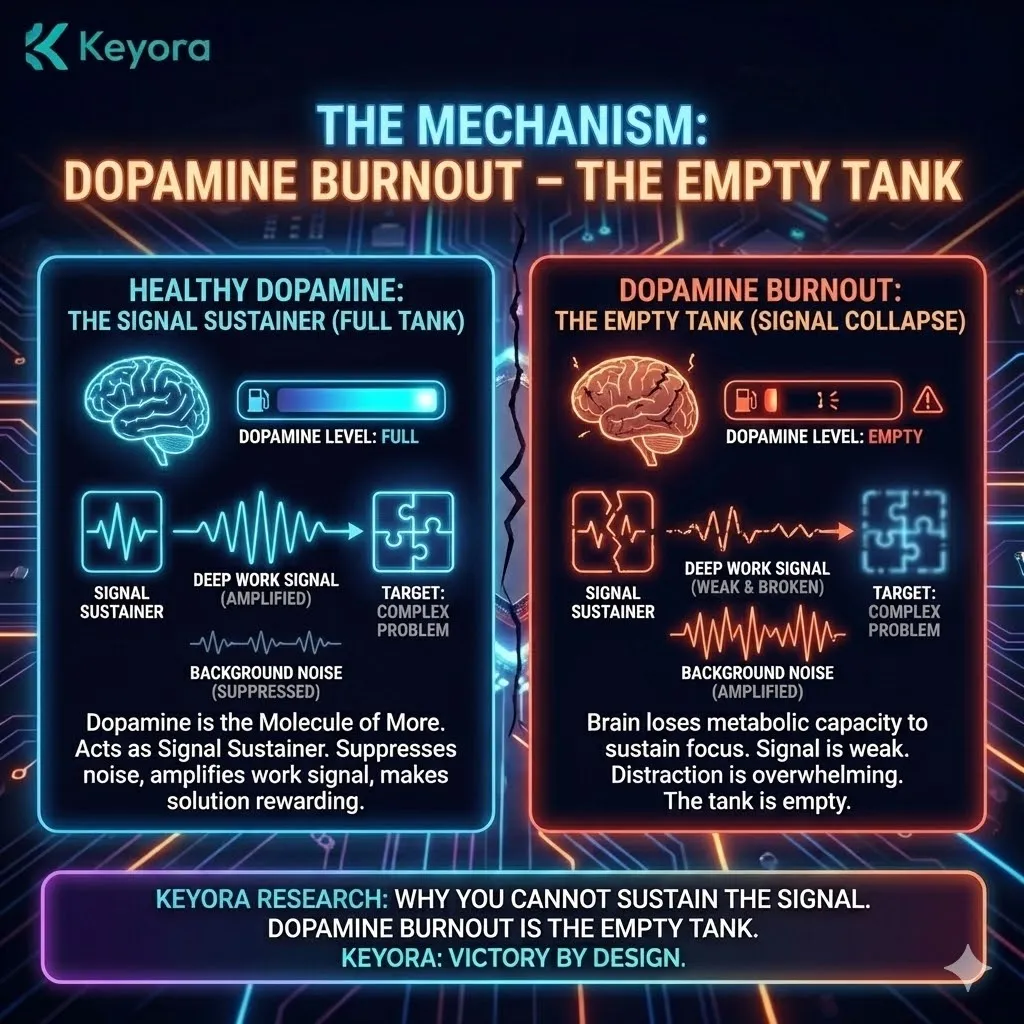
Pop culture defines Dopamine as the “Pleasure Chemical.” This is incorrect. Dopamine is the Molecule of More. It is the driver of seeking, craving, and pursuit.
In the context of Deep Work, Dopamine acts as the Signal Sustainer.
When you are coding or writing, Dopamine is what allows you to “lock on” to the target.
It suppresses the background noise and amplifies the signal of the work.
It makes the solution of the problem feel rewarding.
The Problem: Receptor Downregulation
The modern environment is a hyper-stimulus machine.
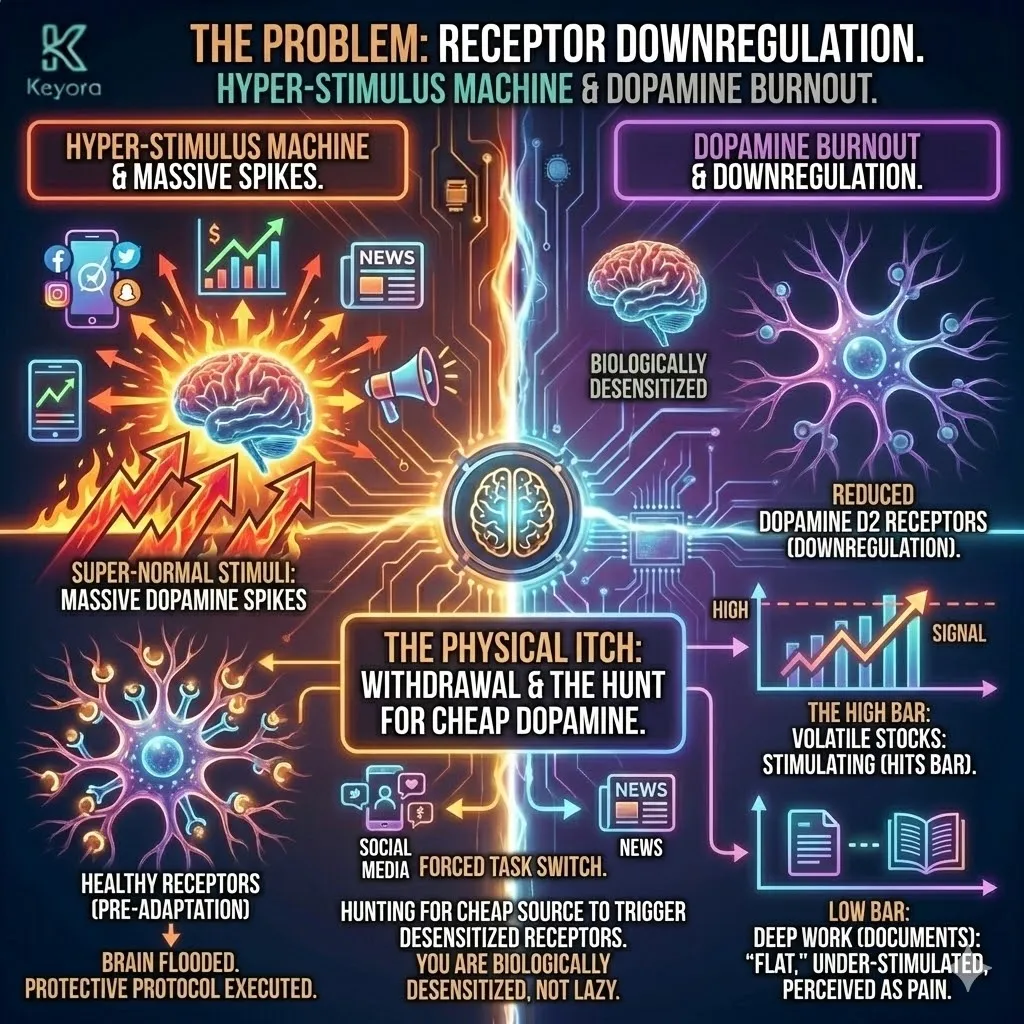
Your phone, the news, the market – they are engineered to deliver “Super-Normal Stimuli.” They flood your brain with massive spikes of Dopamine that do not exist in nature.
When you expose your brain to these massive spikes for years, the brain adapts. It executes a protective protocol called Downregulation.
To prevent over-stimulation, the brain reduces the number of Dopamine D2 Receptors on the surface of the neurons. It shrinks the receiver.
This creates Dopamine Burnout.
Your baseline for “stimulation” has been raised to an artificial height.
-
The High Bar: Checking a volatile stock price hits the bar. It feels stimulating.
-
The Low Bar: Reading a complex technical document does not hit the bar. It feels “flat.”
Because your receptors are shrunken, the subtle, slow-release Dopamine of Deep Work is no longer enough to register a signal. Your brain perceives the work as “pain” because it is under-stimulated.
This is why you feel the Physical Itch.
Your brain is in withdrawal. It is forcing you to switch tasks to hunt for a “Cheap Dopamine” source (Social Media, News) that is strong enough to trigger your desensitized receptors.
You are not lazy. You are biologically desensitized. You are a heavy user who needs a stronger dose just to feel normal.
3.3 The Agitation: Norepinephrine Overdrive
The False Alarm: Why Every Notification Feels Like a Threat
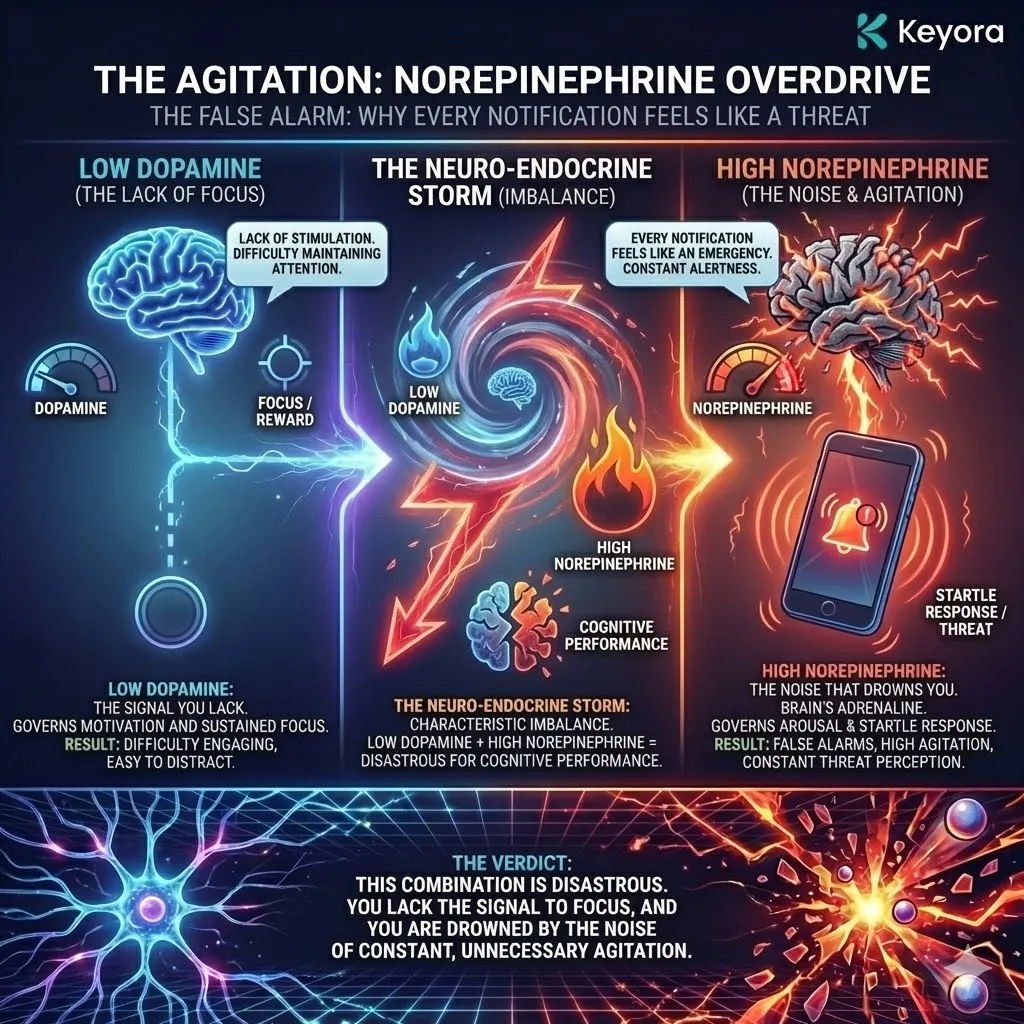
If Dopamine is the signal you lack, Norepinephrine is the noise that is drowning you.
Norepinephrine is the brain’s version of Adrenaline. It governs arousal, alertness, and the “Startle Response.”
In The Neuro-Endocrine Storm, there is a characteristic imbalance:
-
Low Dopamine (Lack of Focus).
-
High Norepinephrine (High Agitation).
This combination is disastrous for cognitive performance.
The Startle Response:
Notice what happens when your phone dings or a Slack notification pops up.
You do not just hear a sound. You feel a physical jolt in your chest. Your breath catches. Your muscles tighten.
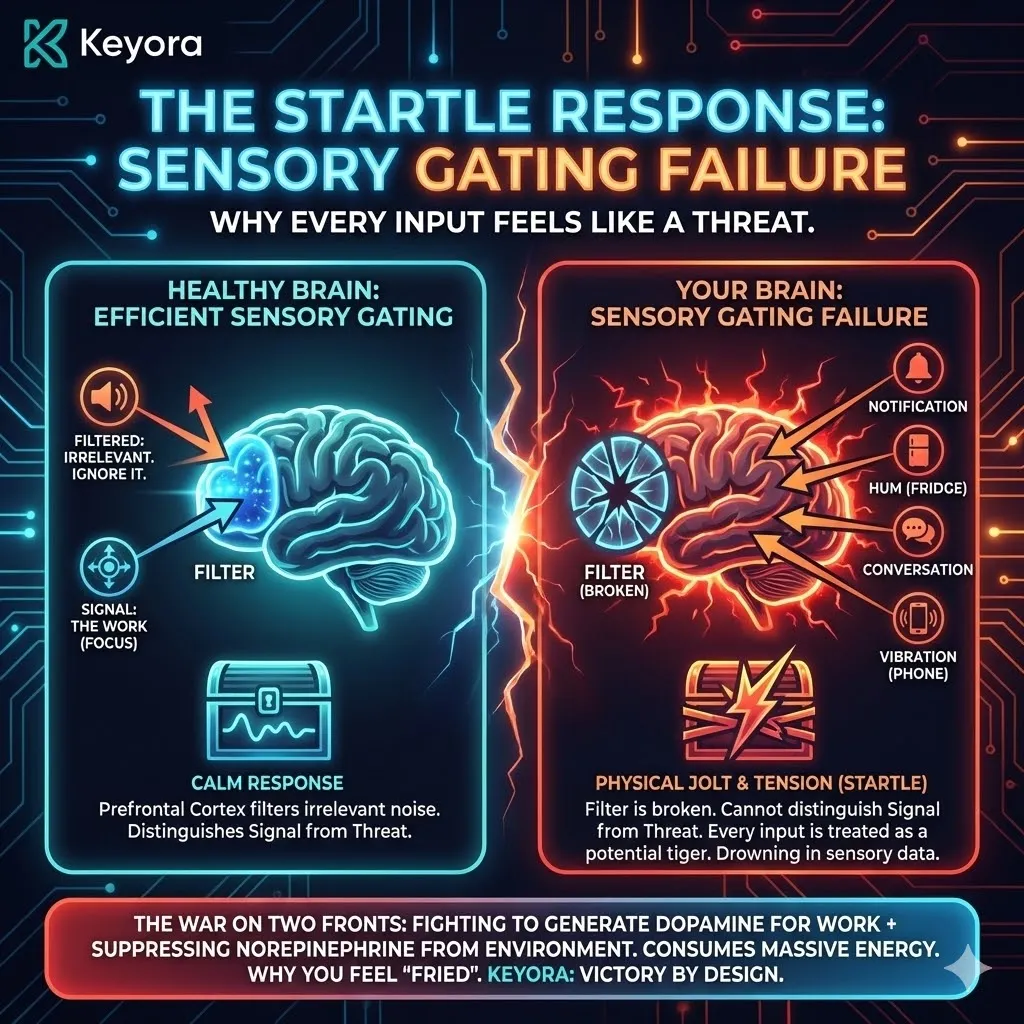
This is the Startle Response.
In a healthy brain, the Prefrontal Cortex filters out irrelevant noise. It says: “That is just a notification. Ignore it.”
In your brain, that filter is broken.
This is Sensory Gating Failure.
Your brain has lost the ability to distinguish between a “Signal” (The Work) and a “Threat” (The Noise).
Every input is treated as a potential tiger.
-
The hum of the refrigerator.
-
The conversation in the hallway.
-
The vibration of the phone.
All of these inputs flood into your conscious awareness without filtration. You are drowning in sensory data.
This explains why you are so irritable when you are trying to concentrate. You are fighting a war on two fronts:
-
Trying to generate enough Dopamine to care about the work.
-
Trying to suppress the Norepinephrine that is screaming about the environment.
This consumes massive amounts of energy. It is why you feel “fried” after only a few hours. You are not just thinking; you are actively fighting your own sensory inputs.
3.4 The Engineering Solution: The Frequency Tuner
Stabilizing the Bandwidth: How Keyora MoodFlow 8-in-1 Restores Flow
We have diagnosed the failure state: The Pinball Effect, driven by Dopamine Burnout and Sensory Gating Failure.
How do we engineer a solution?
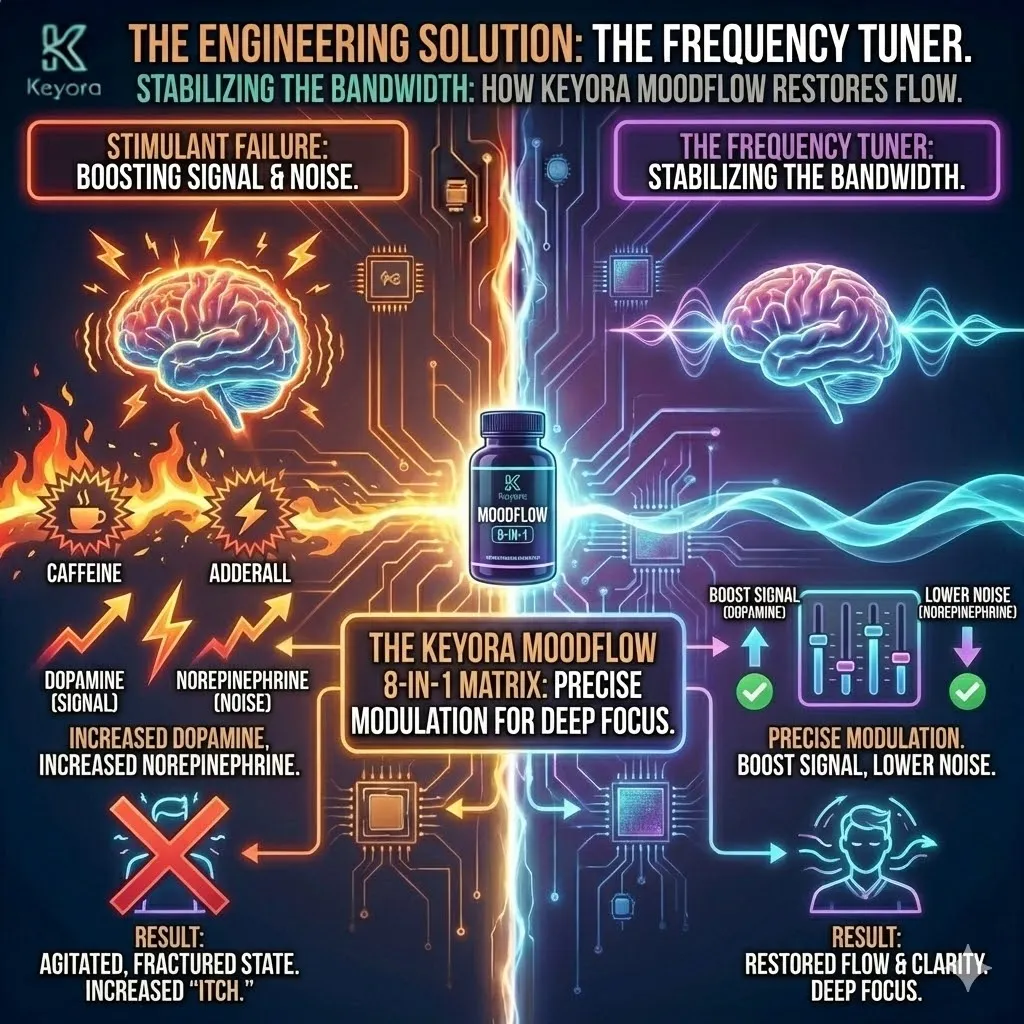
We cannot simply add a stimulant (like Caffeine or Adderall). Stimulants increase Dopamine, yes, but they also increase Norepinephrine.
They make you more focused, but also more agitated.
They increase the “Itch.”
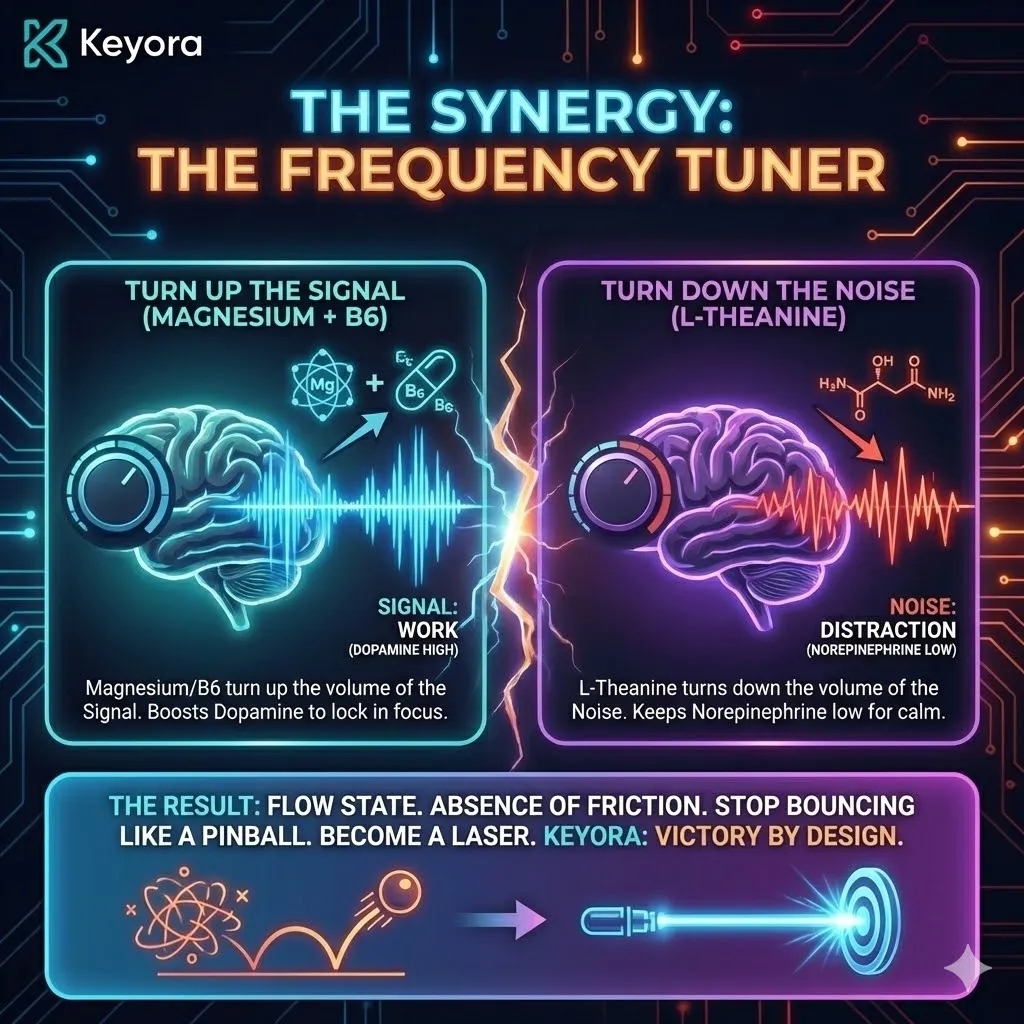
We need a Frequency Tuner.
We need to boost the Signal (Dopamine) while lowering the Noise (Norepinephrine).
The Keyora MoodFlow 8-in-1 Matrix is designed to execute this precise modulation.
Step 1: Boost the Signal (Dopamine Synthesis)
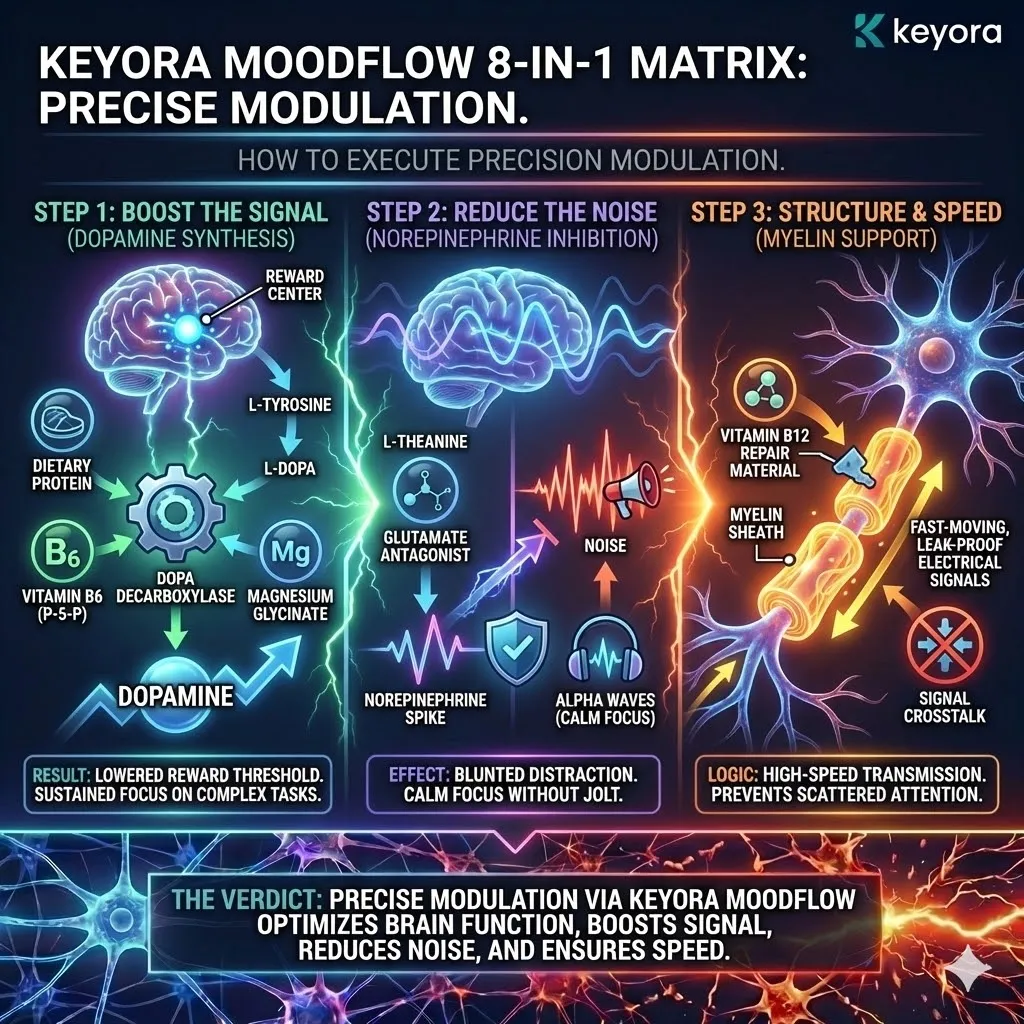
We need to raise the baseline Dopamine so that “boring” work becomes stimulating again.
-
The Agents: Vitamin B6 (P-5-P) + Magnesium Glycinate.
-
The Mechanism: Dopamine synthesis requires the conversion of L-Tyrosine to L-DOPA, and then L-DOPA to Dopamine. This final step is dependent on the enzyme DOPA Decarboxylase.
-
The Key: This enzyme requires Vitamin B6 as a rate-limiting cofactor. By saturating this enzyme, we optimize the brain’s ability to produce Dopamine from dietary protein.
-
The Result: The “reward threshold” lowers. You can sustain focus on complex tasks without needing to hunt for cheap thrills.
Step 2: Reduce the Noise (Norepinephrine Inhibition)
We need to stop the Startle Response.
-
The Agent: L-Theanine.
-
The Mechanism: L-Theanine is a glutamate antagonist. It inhibits the excitatory transmission of Norepinephrine.
-
The Effect: It blunts the physical “jolt” of distraction. It allows you to hear the notification without the adrenaline spike.
-
The Wave: As discussed in previous chapters, L-Theanine generates Alpha Waves. This is the frequency of “Calm Focus.” It acts as a noise-canceling headphone for the mind.
Step 3: Structure and Speed (Myelin Support)
We need to ensure the signal travels without leaking.
-
The Agent: Vitamin B12.
-
The Mechanism: B12 is critical for the maintenance of the Myelin Sheath—the fatty insulation around the axons.
-
The Logic: Healthy myelin ensures high-speed signal transmission. It prevents “crosstalk” between neurons, which contributes to the feeling of scattered attention.
The Synergy:
This is The Frequency Tuner.
-
Magnesium/B6 turn up the volume of the Signal (Work).
-
L-Theanine turns down the volume of the Noise (Distraction).
The result is Flow.
Flow is simply the absence of friction. It is the state where the Dopamine is high enough to lock you in, and the Norepinephrine is low enough to keep you calm.
You stop bouncing like a pinball.
You become a laser.
3.5 Clinical Consensus & Evidence
The Medical Reality of Attention Deficits in High-Stress Adults
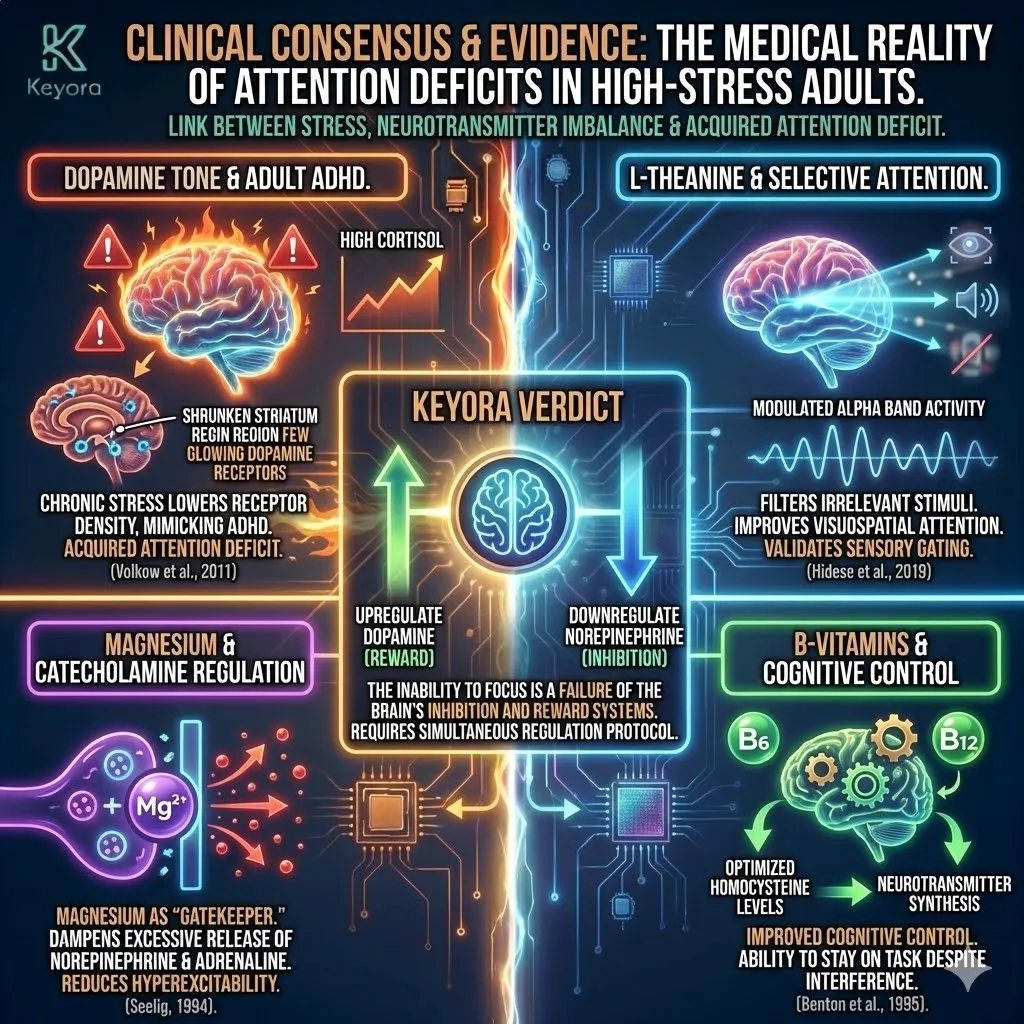
The link between stress, neurotransmitter imbalance, and attention deficit is a cornerstone of modern neuro-psychiatry.
On Dopamine Tone and Adult ADHD:
Research published in The Lancet Psychiatry confirms that chronic stress creates an “acquired attention deficit.”
High cortisol levels reduce dopamine receptor density in the striatum, mimicking the neurobiology of ADHD.
The study concludes that restoring dopamine tone is essential for executive function recovery (Volkow et al., 2011).
On L-Theanine and Selective Attention:
A randomized controlled trial in Nutrients (Hidese et al., 2019) demonstrated that L-Theanine administration significantly improved performance on the “Visuospatial Attention Task.”
The mechanism was identified as the modulation of Alpha Band Activity, which correlates with the brain’s ability to filter out irrelevant visual and auditory stimuli. This validates the concept of Sensory Gating.
On Magnesium and Catecholamine Regulation:
A review in Magnesium Research highlights Magnesium’s role as a “gatekeeper” for catecholamine release.
Magnesium deficiency leads to the excessive release of Norepinephrine and Adrenaline in response to minor stressors.
Supplementation dampens this release, reducing the “hyperexcitability” that drives distraction (Seelig, 1994).
On B-Vitamins and Cognitive Control:
A study in Psychopharmacology showed that supplementation with B-Vitamins (specifically B6 and B12) improved “Cognitive Control” = the ability to stay on task despite interference.
The mechanism is linked to the optimization of homocysteine levels and neurotransmitter synthesis (Benton et al., 1995).
Keyora Verdict:
The inability to focus is a measurable failure of the brain’s inhibition and reward systems.
It requires a protocol that simultaneously upregulates Dopamine and downregulates Norepinephrine.
Chapter Conclusion: The Evidenced-Based Verdict
KEYORA EVIDENCED-BASED CONCLUSION
Pillar I: The Thesis Confirmation
This chapter has defined “Distraction” not as a lack of willpower, but as a chemical imbalance characterized by The Pinball Effect.
The high-performer suffers from Dopamine Hunger (due to receptor downregulation) and Norepinephrine Overdrive (due to stress).
This creates a brain that hunts for cheap stimulation while being hyper-reactive to noise.
Pillar II: The External Validation
We have anchored this diagnosis in the science of Sensory Gating Failure and Acquired Attention Deficit.
Clinical consensus confirms that chronic stress alters the Signal-to-Noise ratio of the brain, making “Deep Work” metabolically impossible without intervention.
Pillar III: The Neuro-Engineering Solution
We conclude that the solution is The Frequency Tuner.
The Keyora MoodFlow 8-in-1 Matrix is engineered to restore bandwidth.
-
B6 + Magnesium act as the “Signal Boosters,” optimizing Dopamine synthesis to lower the threshold for engagement.
-
L-Theanine acts as the “Noise Canceller,” inhibiting Norepinephrine and generating Alpha waves.
This restores the ability to break the “20-Minute Wall” and enter sustained Flow.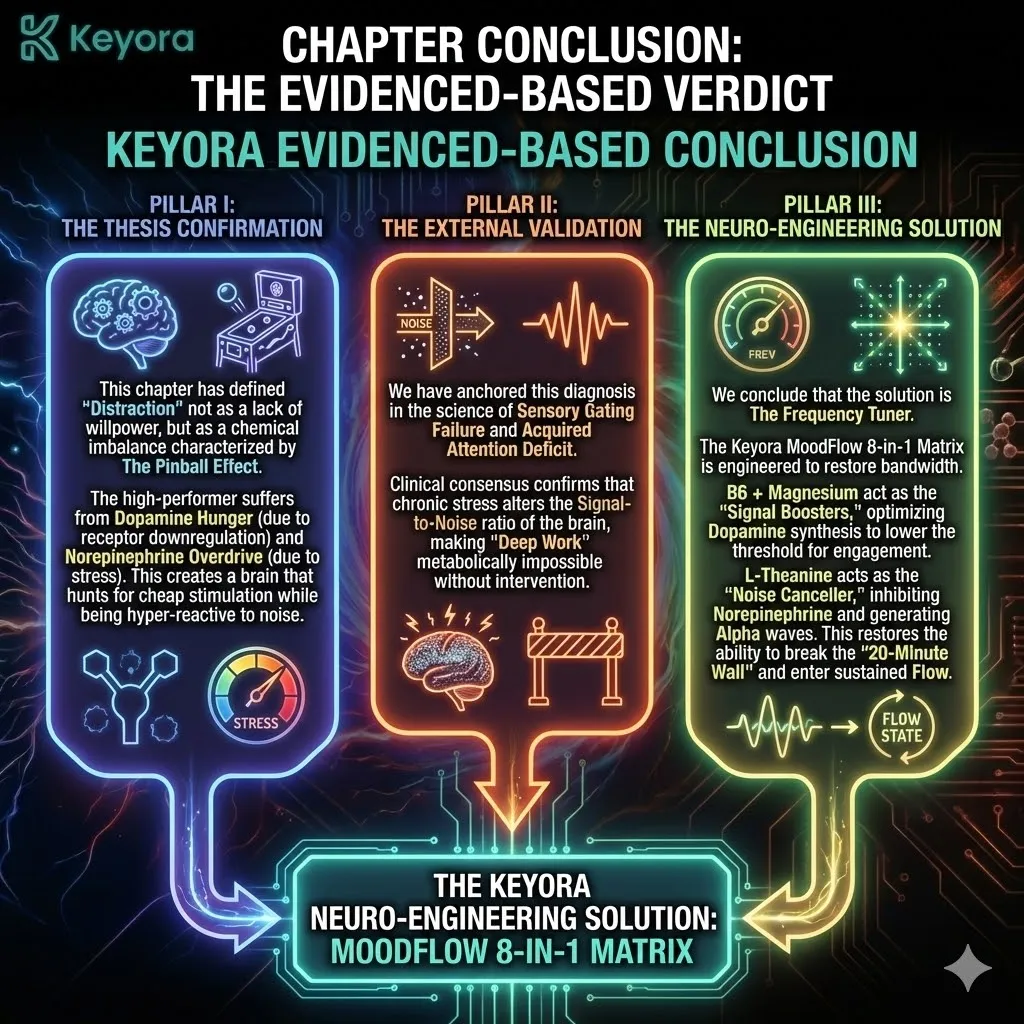
This strategic blueprint identifies the Frequency Tuner as the engineering solution for attention deficit, defining the restoration of executive command as a systematic optimization of the neural Signal-to-Noise ratio.
References
-
Arnsten, A. F. T. (2009). Stress signalling pathways that impair prefrontal cortex structure and function. Nature Reviews Neuroscience, 10(6), 410–422.
-
Benton, D., et al. (1995). Vitamin supplementation for 1 year improves mood. Psychopharmacology, 117(3), 251-255.
-
Berry, M. D. (2004). Mammalian central nervous system trace amines. Pharmacologic & Therapeutic roles. Journal of Neurochemistry, 90(2), 257-271.
-
Boyle, N. B., Lawton, C., & Dye, L. (2017). The effects of magnesium supplementation on subjective anxiety and stress – a systematic review. Nutrients, 9(5), 429.
-
Dakshinamurti, K. (2005). Vitamin B6 in metabolism and nervous system function. In Subcellular Biochemistry (Vol. 35, pp. 289–316). Springer.
-
De Baaij, J. H. F., et al. (2015). Magnesium in man: implications for health and disease. Physiological Reviews, 95(1), 1–46.
-
Gomez-Pinilla, F. (2008). Brain foods: the effects of nutrients on brain function. Nature Reviews Neuroscience, 9(7), 568-578.
-
Hidese, S., et al. (2019). Effects of L-theanine administration on stress-related symptoms and cognitive functions in healthy adults: A randomized controlled trial. Nutrients, 11(10), 2362.
-
Jin, X., & Keyora Research. (2024a). Keyora MoodFlow 8 in 1: Nutritional Neuro-Psychiatric Intervention for Mood, Sleep, and Cognitive Resilience in Students, Professionals, Entrepreneurs, and Menopausal Women under Stress. Keyora Research Institute. DOI: 10.5281/zenodo.16814204
-
Jin, X., & Keyora Research. (2024b). Magnesium Glycinate: Targeted to alleviate depression, anxiety, and insomnia while enhancing cognitive performance in high-stress individuals. Keyora Research Institute. DOI: 10.5281/zenodo.16889527
-
Jin, X., & Keyora Research. (2024c). Keyora Research Protocols: Systemic Neuro-Nutrition. OSF. DOI: /10.17605/OSF.IO/FZ62K
-
Kennedy, D. O. (2016). B vitamins and the brain: Mechanisms, dose and efficacy—A review. Nutrients, 8(2), 68.
-
Liao, J., et al. (2022). The anxiolytic effects of L-theanine on clinical anxiety and stress: A systematic review and meta-analysis. Nutrients, 14(7), 1526.
-
Lupien, S. J., et al. (2009). Effects of stress throughout the lifespan on the brain, behaviour and cognition. Nature Reviews Neuroscience, 10(6), 434-445.
-
McEwen, B. S. (2007). Physiology and neurobiology of stress and adaptation: central role of the brain. Physiological Reviews, 87(3), 873-904.
-
Nobre, A. C., Rao, A., & Owen, G. N. (2008). L-theanine, a natural constituent in tea, and its effect on mental state. Asia Pacific Journal of Clinical Nutrition, 17(S1), 167–168.
-
Reynolds, E. (2006). Vitamin B12, folic acid, and the nervous system. The Lancet Neurology, 5(11), 949–960.
-
Sapolsky, R. M. (2004). Why Zebras Don’t Get Ulcers: The Acclaimed Guide to Stress, Stress-Related Diseases, and Coping. Holt Paperbacks.
-
Seelig, M. S. (1994). Consequences of magnesium deficiency on the enhancement of stress reactions; preventive and therapeutic implications. Journal of the American College of Nutrition, 13(5), 429-446.
-
Serefko, A., et al. (2013). Magnesium and depression. Pharmacological Reports, 65(3), 547–554.
-
Unno, K., et al. (2013). Anti-stress effect of theanine on students during pharmacy practice. Pharmacology Biochemistry and Behavior, 111, 128–135.
-
Volkow, N. D., et al. (2011). Motivation deficit in ADHD is associated with dysfunction of the dopamine reward pathway. Molecular Psychiatry, 16(11), 1147-1154.
-
Wienecke, T., et al. (2016). Human cortical excitability depends on magnesium levels: A TMS study. Cephalalgia, 36(7), 585–593.
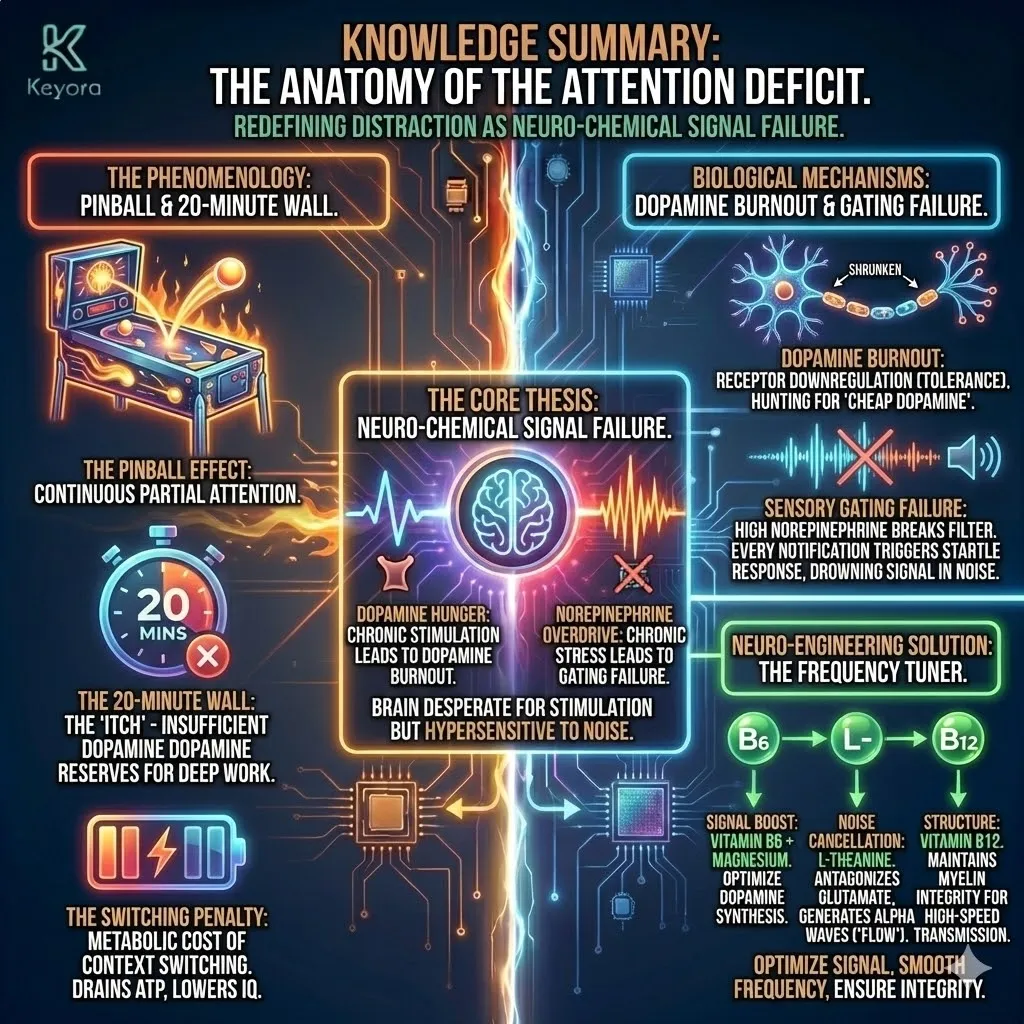
# Knowledge Summary: The Anatomy of The Attention Deficit
## 1. The Core Thesis
– Chapter 3 redefines “Distraction” in high-performers not as a lack of discipline, but as a **Neuro-Chemical Signal Failure**. It posits that chronic stimulation leads to **Dopamine Hunger**, while chronic stress leads to **Norepinephrine Overdrive**, creating a brain that is desperate for stimulation but hypersensitive to noise.
## 2. Part 1: The Phenomenology
– **The Pinball Effect:** The state of **Continuous Partial Attention** where the user bounces between inputs without trajectory.
– **The 20-Minute Wall:** The physical “Itch” that occurs when the brain’s dopamine reserves are insufficient to sustain focus on low-stimulation tasks (Deep Work).
– **The Switching Penalty:** The metabolic cost of context switching, which drains ATP and lowers functional IQ.
## 3. Part 2: The Biological Mechanisms
– **Dopamine Burnout:** Receptor downregulation (Tolerance) caused by super-normal stimuli forces the brain to hunt for “Cheap Dopamine” just to feel normal.
– **Sensory Gating Failure:** High Norepinephrine (Adrenaline) breaks the filter that suppresses background noise. Every notification triggers a **Startle Response**, drowning the cognitive signal in survival noise.
## 4. Part 3: The Neuro-Engineering Solution (The Frequency Tuner)
– **Signal Boost:** **Vitamin B6 + Magnesium** act as rate-limiting cofactors for **DOPA Decarboxylase**, optimizing the synthesis of Dopamine to lower the threshold for engagement.
– **Noise Cancellation:** **L-Theanine** antagonizes excitatory glutamate receptors and generates **Alpha Waves**, smoothing the electrical frequency from “Panic” to “Flow.”
– **Structure:** **Vitamin B12** maintains myelin integrity to ensure high-speed signal transmission without leakage.
Chapter 4: The Performance Freeze
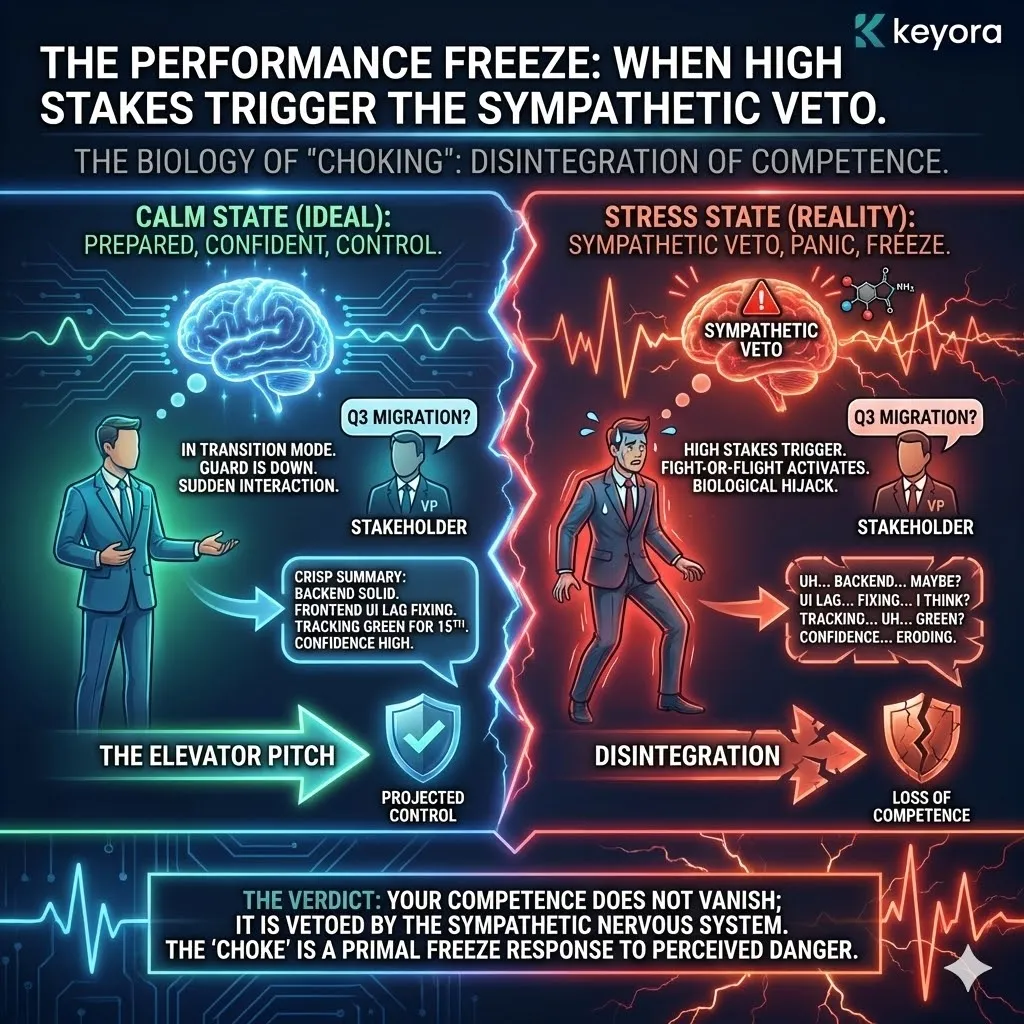
The Biology of “Choking”: When High Stakes Trigger The Sympathetic Veto
Let us examine the specific, sudden disintegration of your competence.
It is 2:00 PM.
You are walking to the breakroom for coffee, or perhaps riding the elevator down to the lobby.
You are in transition mode. Your guard is down.
Suddenly, the doors open. You bump into a key Stakeholder. It might be your VP, a major Client, or a Board Member you rarely see.
The interaction starts casually.
A handshake.
A smile.
Then, they ask the question.
“Hey, good to see you. How is the Q3 migration project going? Are we going to hit the launch date?”
This is your moment.
In a calm state, you know exactly what to say.
You have the data.
You know the risks.
A competent leader would deliver a crisp, 3-sentence summary: The backend is solid, the frontend has a minor UI lag we are fixing this week, and we are tracking green for the 15th. Confidence is high.
That is the Elevator Pitch.
It projects control.
But that is not what happens.
The Crash.
Your brain floods.
You have too much data.
You try to access the “Summary Folder,” but it is locked.
Instead, your mind dumps the “Raw Data Folder.”
You start rambling.
You dive into technical minutiae about API latency and bug tickets.
You talk too fast.
You stutter.
You break eye contact.
You are over-explaining because you feel under-prepared.
You see their eyes glaze over. You see the subtle shift in their posture – they are checking out.
You know you are blowing it.
You know you sound like a nervous junior manager, not a confident leader.
But you cannot stop talking.
The interaction ends. They walk away with a polite nod.
You walk away feeling physically small.
You feel a burning heat in your neck.
You replay the conversation for the next three hours. “Why did I say that? Why couldn’t I just give the headline?”
This is Verbal Scrambling.
It is the first sign of a physiological event Keyora defines as The Sympathetic Veto.
Your autonomic nervous system – specifically the Sympathetic branch (Fight or Flight) – detected a “Status Threat.” To protect you, it vetoed your higher cognitive functions. It shut down the Executive Center to prioritize survival.
You didn’t choke because you are incompetent.
You choked because your biology perceived a Board Member as a predator.
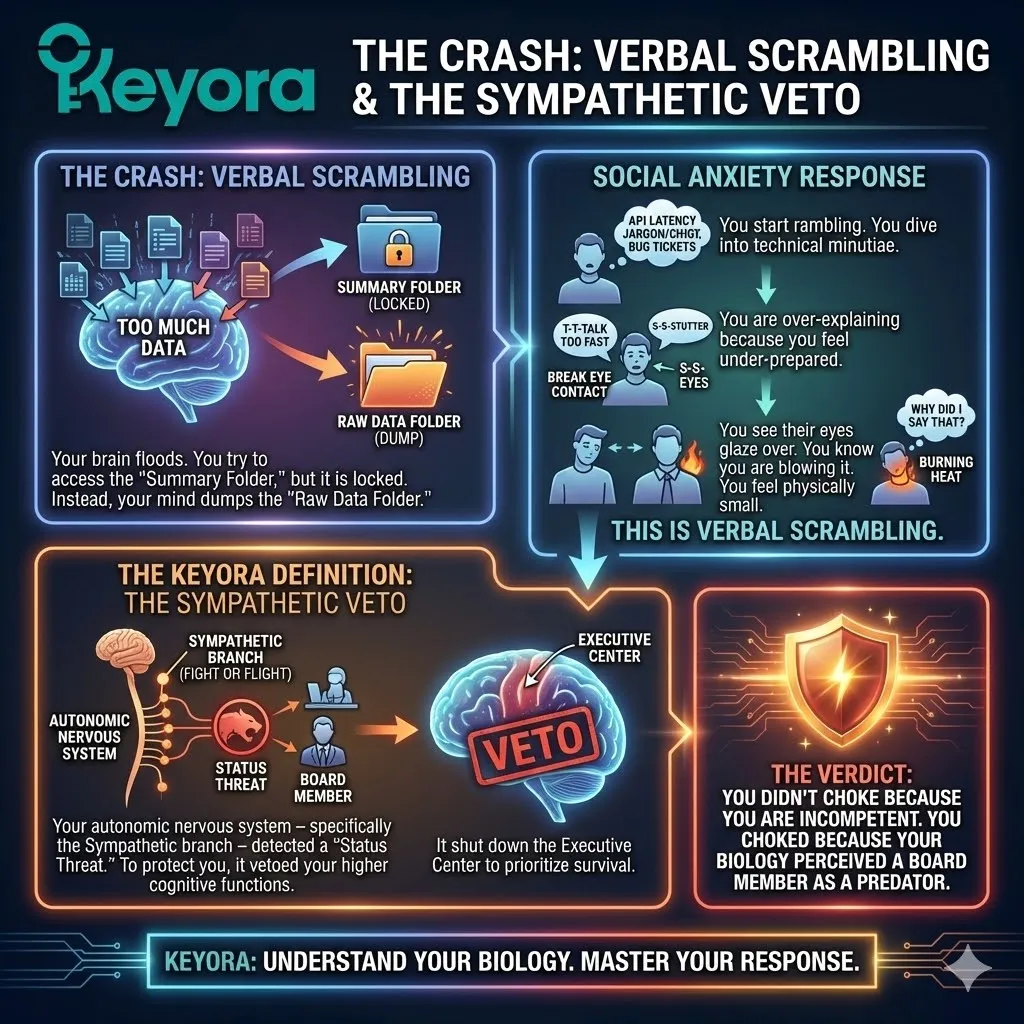
4.1 The Phenomenology of Authority Collapse
The Conflict Avoidance: Why You Cannot Hold the Line
If the “Hallway Ambush” is an accidental failure, Scenario C is a premeditated one.
This is the phenomenon of Authority Collapse.
Let us move to a planned interaction. You have a 1-on-1 scheduled with an underperforming Direct Report, or a negotiation with a difficult Vendor.
You have prepped all morning. You have your talking points. You have resolved to be firm. You are going to hold the standard.
The meeting starts. You deliver the feedback.
The Trigger.
They push back.
“That’s not fair,” they say. Or, “We can’t do that price. You’re being unreasonable.”
Their voice rises slightly. Their body language becomes defensive.
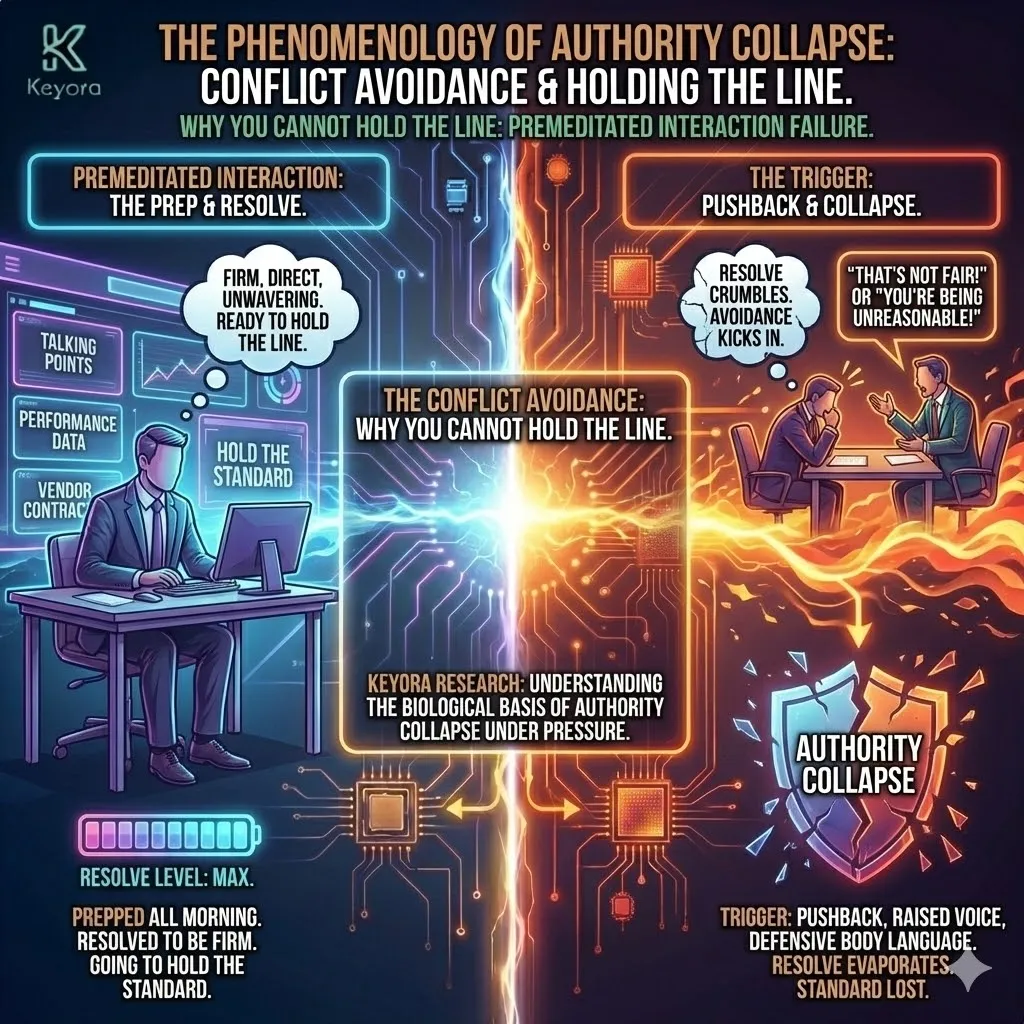
The Crash.
Your resolve dissolves physically.
It is not a mental change; it is a somatic one. Your throat tightens. Your heart rate spikes to 120 beats per minute. Your palms sweat.
A deep, primal alarm bell rings in your brain: Conflict is dangerous. De-escalate immediately.
Your People-Pleasing Subroutine takes over. In trauma psychology, this is known as The Fawn Response. It is a survival strategy where the organism submits to the aggressor to avoid injury.
You back down.
“Well, I understand it’s difficult,” you say. “Let’s see if we can work something out.”
You end the meeting without enforcing the standard. You gave away leverage you didn’t need to give.
The Pain.
You walk out of the room feeling weak. You feel like a fraud leader. You know that by avoiding the conflict, you have just created a bigger problem for the future. But in the moment, you were physically incapable of holding the line.
This is The Performance Freeze.
Your intellect wanted to lead.
Your biology wanted to survive.
Biology won.
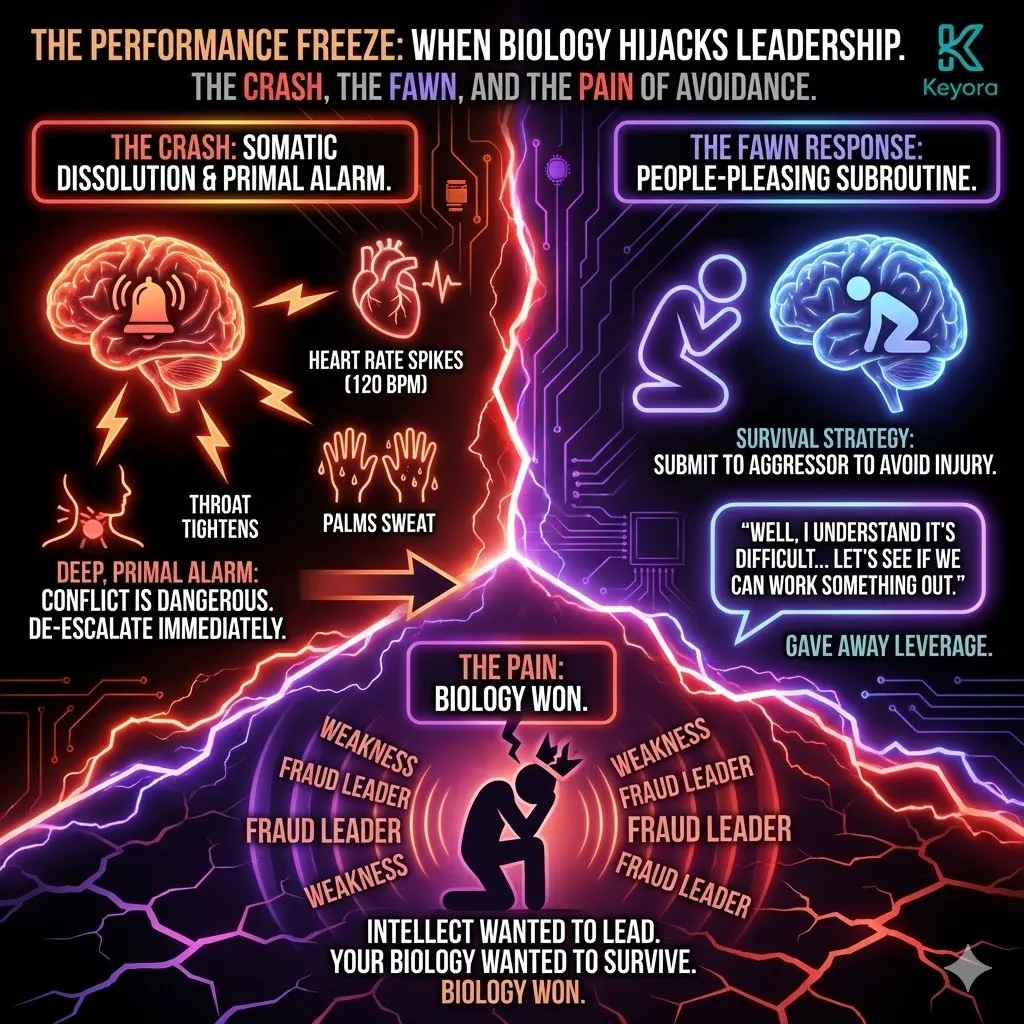
4.2 The Mechanism: The Amygdala Hijack
Social Threat Processing: Why a Boss Looks Like a Predator
Why does a modern professional react to a performance review like a gazelle reacting to a lion?
To understand this, we must look at the hardware: The Amygdala.
The Amygdala is the brain’s threat detection center.
It is ancient.
It does not understand “Quarterly Targets” or “Corporate Hierarchy.”
It understands only one binary:
Safe vs. Unsafe.
To the primitive brain, Social Status is a survival metric. In a tribe, if you lose status, you are exiled. If you are exiled, you starve or are eaten.
Therefore, Social Threat = Death Threat.
When the Board Member asks a question (Scenario B), or the employee pushes back (Scenario C), the Amygdala perceives a threat to your social standing.
It initiates The Amygdala Hijack.
This is a neural bypass. The Amygdala sends a distress signal that overrides the Prefrontal Cortex (Logic/Speech).
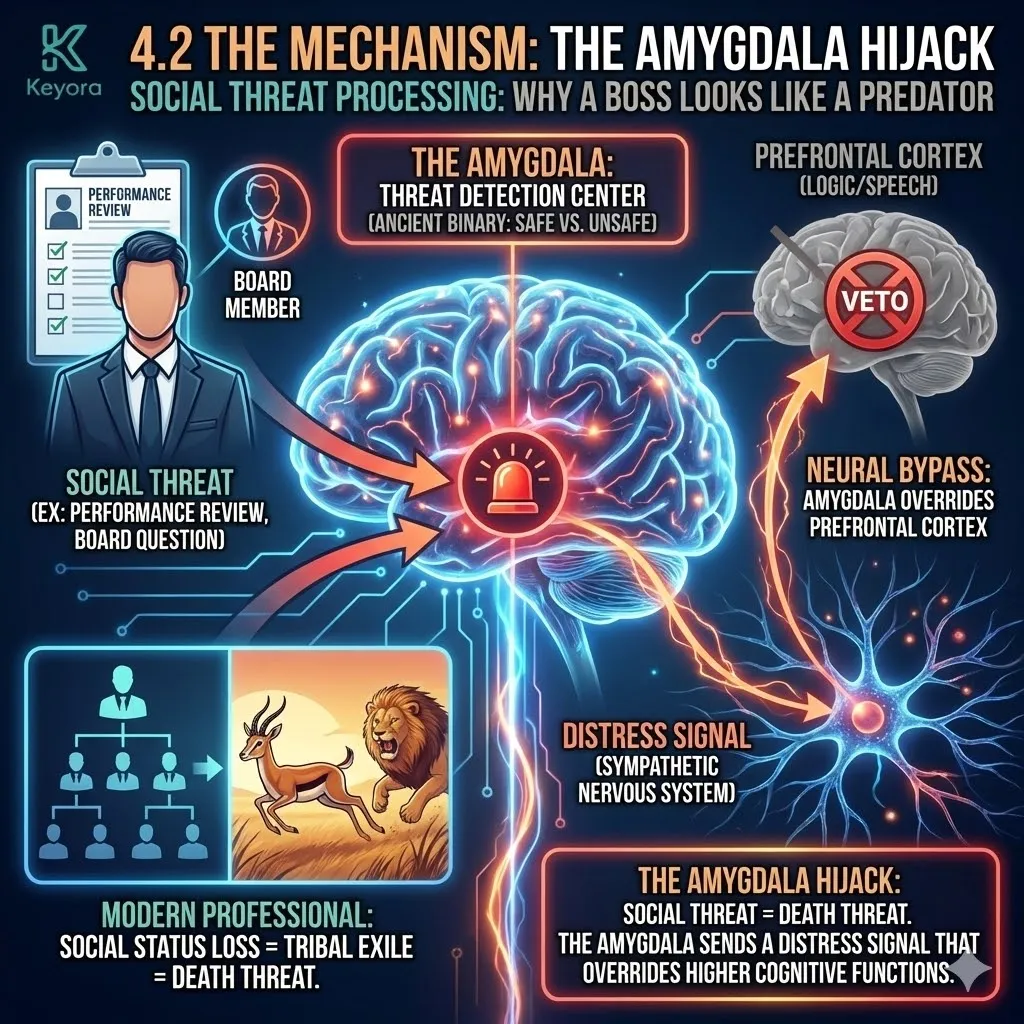
The Physiological Veto:
Broca’s Area Shutdown:
This is the region responsible for speech production and articulation. Under high stress, blood flow to Broca’s Area is reduced.
Result: Stuttering, loss of vocabulary, inability to form complex sentences. This is why you ramble. You literally cannot access the words for a concise summary.
Executive Control Shutdown:
The ability to synthesize data requires high-level processing. The Amygdala cuts the power to this function to save energy for “running.”
Result: You lose the “Big Picture.” You get stuck in the weeds of details because your brain can’t process the abstract.
Keyora Insight:
You are not “shy.”
You are not “soft.”
You are in a biological state of Survival Terror.
Your hardware has misidentified a social interaction as a physical attack.
Until you recalibrate the threat sensor, you will continue to freeze.
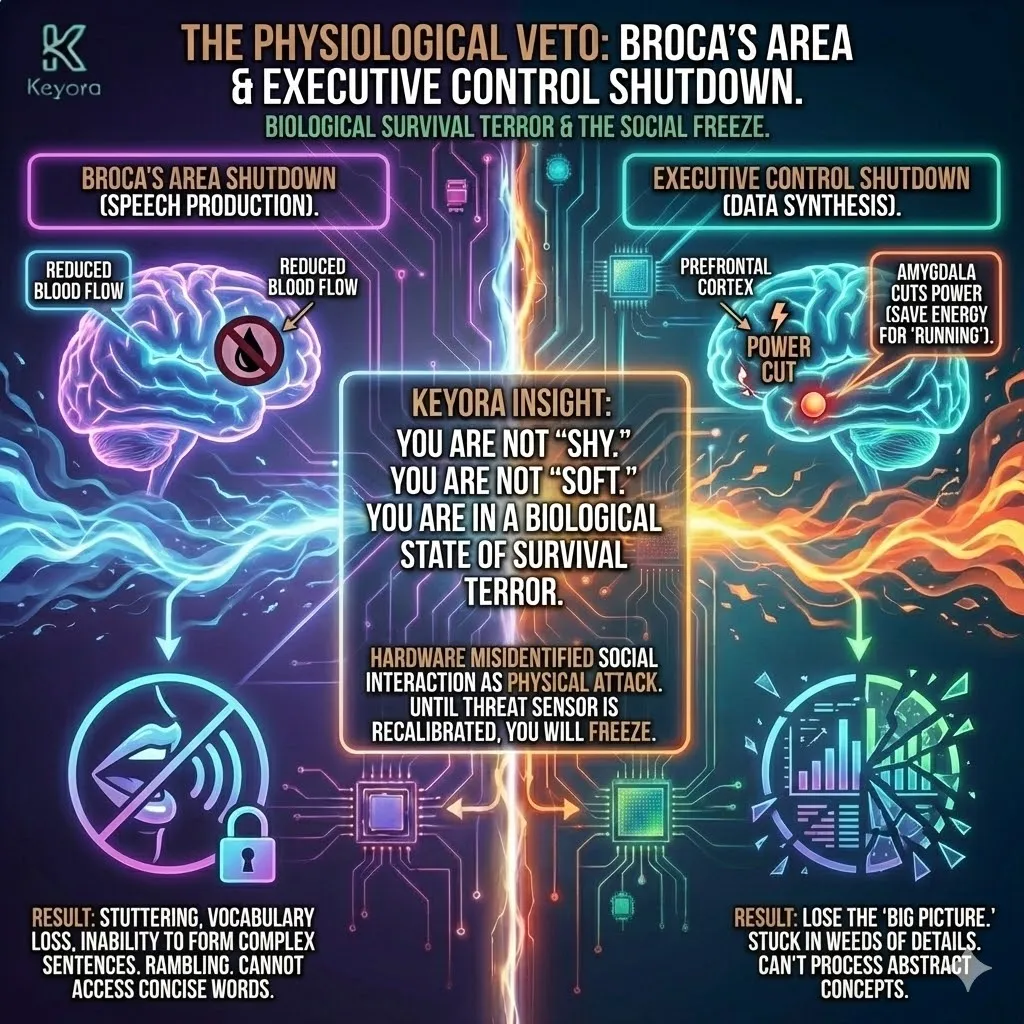
4.3 The Chemical Imbalance: Adrenaline vs. GABA
The Overdosed Engine: Too Much Gas, No Brakes
The Amygdala Hijack is the electrical event. What is the chemical event?
It is a massive imbalance between The Gas (Adrenaline) and The Brake (GABA).
The Gas: Adrenaline / Norepinephrine
When the Amygdala fires, it dumps Adrenaline into your blood.
-
Physical Effect: Your heart rate spikes. Your pupils dilate (Tunnel Vision). Your blood is diverted from your gut and brain to your large muscle groups (legs/arms).
-
The Cost: You are physically primed to sprint, but you are sitting in a chair. This energy has nowhere to go. It turns into Vibration (shaking hands, trembling voice).
-
The Cognitive Cost: Blood leaving the brain means less oxygen for thought. This is the “Brain Fog” of the choke.
The Missing Brake: GABA
In a resilient leader, this Adrenaline spike is instantly dampened by GABA.
GABA says: “Okay, the heart rate is up, but we are safe. Cool it down.”
But as we established in Chapter 3, you are in Inhibitory Bankruptcy. Your GABA reserves are depleted.
So, the Adrenaline hits you with zero resistance.
The Result: You are a Ferrari engine in a Toyota chassis, vibrating apart.
You are “overdosed” on your own survival hormones.
You cannot “think” your way out of an Adrenaline overdose.
You need a chemical intervention to neutralize the gas and re-engage the brake.
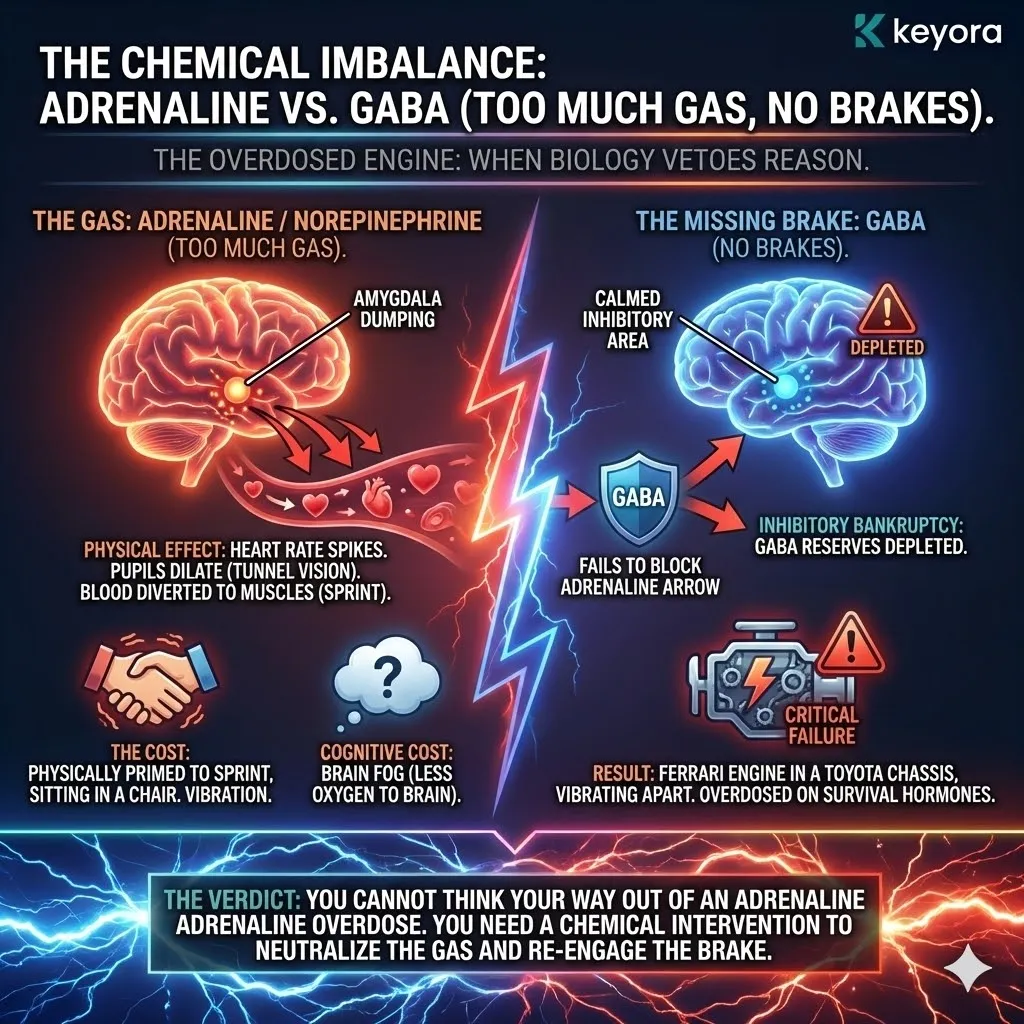
4.4 The Engineering Solution: The Autonomic Anchor
Stabilizing Under Fire: How Keyora MoodFlow 8-in-1 Prevents the Choke
We have diagnosed the failure: The Sympathetic Veto, driven by an Amygdala Hijack and unchecked Adrenaline.
How do we engineer a solution?
We need to build an Autonomic Anchor.
We need a protocol that keeps you grounded when the social pressure spikes.
The Keyora MoodFlow 8-in-1 Matrix utilizes a three-layer defense strategy.
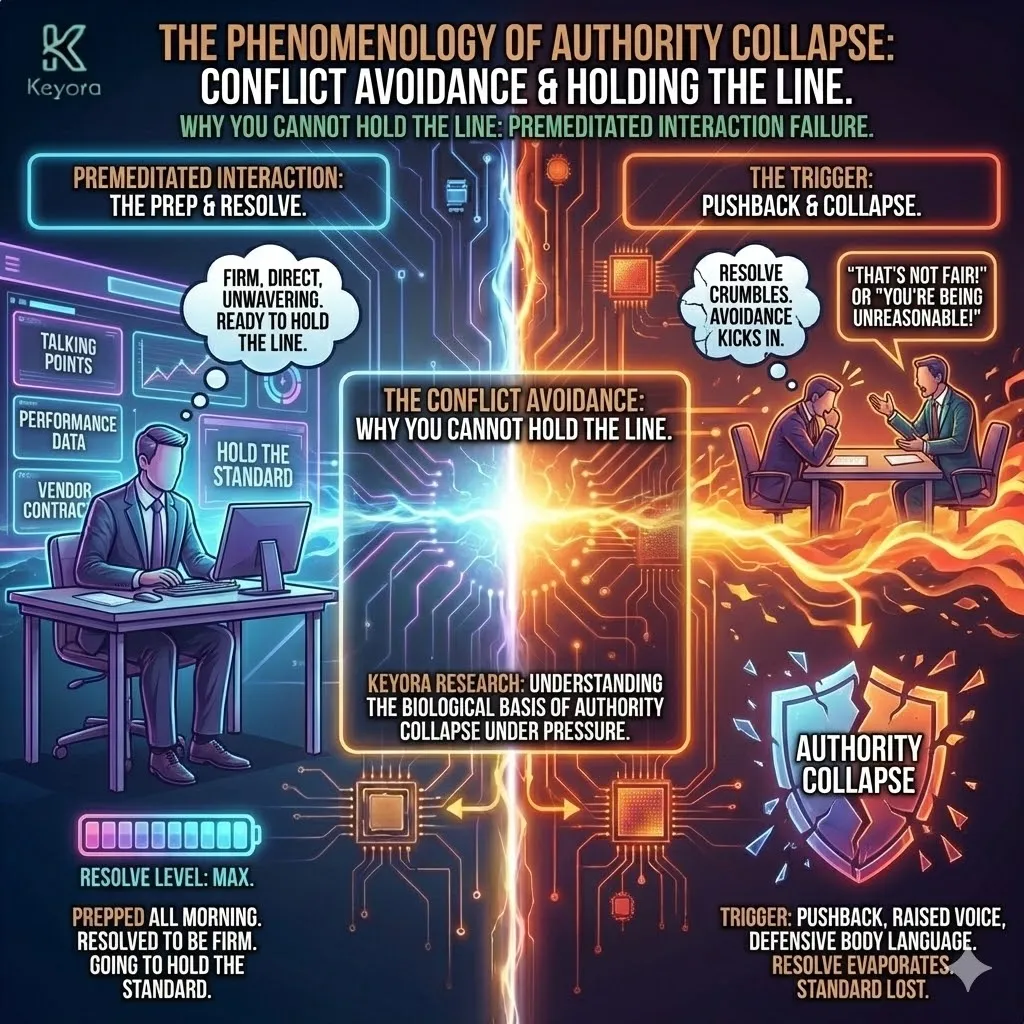
Step 1: The Physical Anchor (Magnesium Glycinate)
We must stop the physical symptoms of the choke (shaking, tight throat).
-
The Agent: Magnesium Glycinate.
-
The Mechanism: Magnesium acts as a natural Calcium Channel Blocker. It prevents the smooth muscles (in the throat and chest) from contracting under stress. It dampens the sympathetic firing rate.
-
The Result: It physically lowers your heart rate. It keeps your voice steady. It stops the “tremor.” When your body feels calm, your brain assumes you are safe.
Step 2: The Mental Anchor (L-Theanine)
We must keep Broca’s Area online.
-
The Agent: L-Theanine.
-
The Mechanism: It generates Alpha Waves. This brainwave state is associated with “Relaxed Alertness.” It allows you to be sharp without being jittery.
-
The Result: It prevents the “Tunnel Vision.” It keeps the communication pathways open. You can access the “Summary Folder” even while the VP is staring at you.
Step 3: The Stress Anchor (Ashwagandha)
We must raise the threshold for the alarm.
-
The Agent: Ashwagandha (Adaptogen).
-
The Mechanism: It modulates the HPA axis. It desensitizes the Amygdala to “Social Threat” signals.
-
The Result: The Boss doesn’t look like a predator anymore. He just looks like a guy in a suit. The “Terror” is downgraded to “Concern.” You can handle concern.
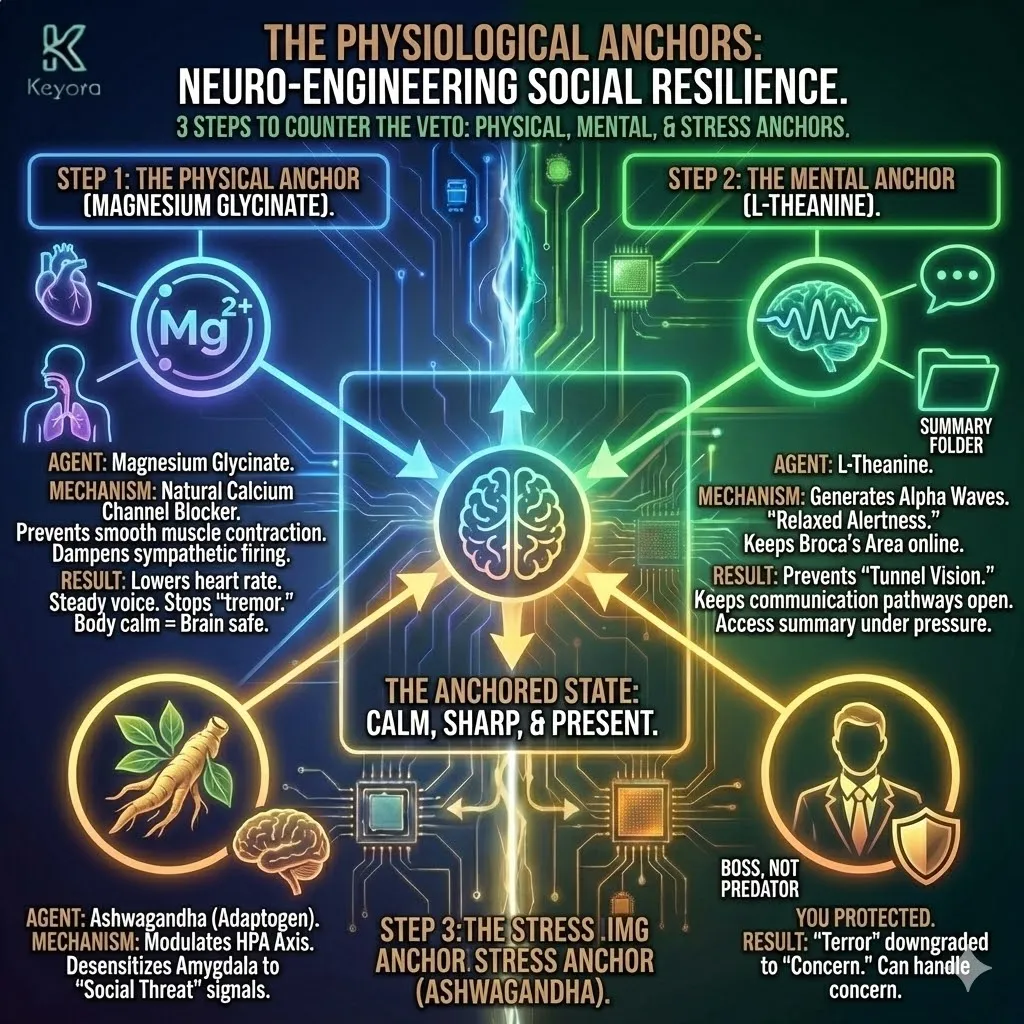
The Synergy:
This is The Autonomic Anchor.
-
Ashwagandha stops the alarm from ringing.
-
Magnesium stops the body from shaking.
-
L-Theanine keeps the mind clear.
You walk into the elevator.
You see the Stakeholder.
The adrenaline tries to spike, but it hits the Anchor. It dissipates.
You smile.
You deliver the pitch.
You win.
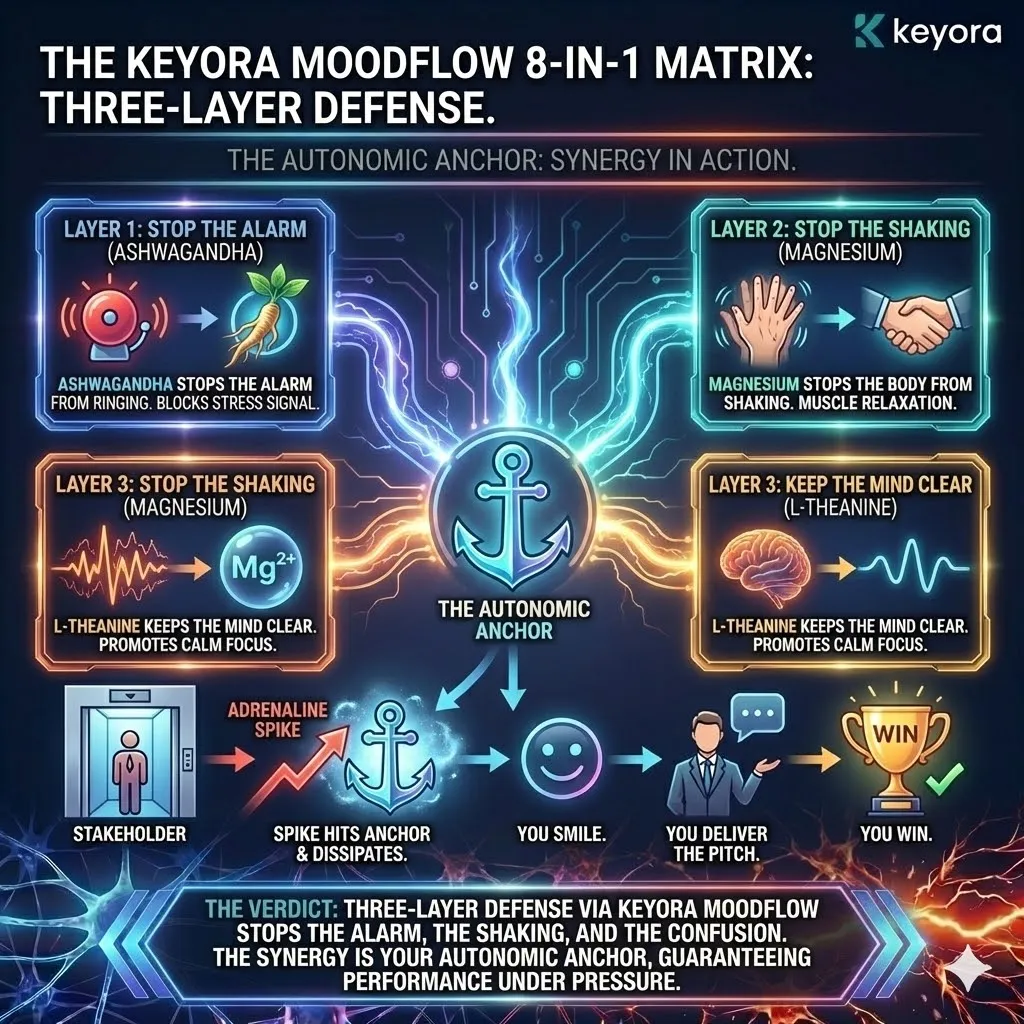
4.5 Clinical Consensus & Evidence
The Medical Reality of Performance Anxiety and Beta-Adrenergic Modulation
The phenomenon of “choking” under pressure is well-mapped in performance psychology and neurobiology.
On The Yerkes-Dodson Law:
This foundational law states that performance increases with physiological arousal, but only up to a point. When arousal becomes excessive (High Adrenaline), performance collapses.
This is the Inverted-U Curve. Keyora’s strategy is not to eliminate arousal (which would make you lethargic) but to cap it at the “Optimal” level using L-Theanine and Magnesium.
On L-Theanine and Acute Stress:
A randomized controlled trial published in the Journal of Physiological Anthropology found that L-Theanine significantly reduced the heart rate and salivary immunoglobulin A (s-IgA) responses to an acute stress task (mental arithmetic).
This proves that L-Theanine physically dampens the sympathetic nervous system response to “performance pressure” (Kimura et al., 2007).
On Magnesium and Stage Fright:
Research indicates that Magnesium deficiency exacerbates the symptoms of “Stage Fright” (tremor, palpitations). Magnesium acts similarly to beta-blockers by inhibiting the release of norepinephrine and blocking adrenergic receptors. Supplementation stabilizes the autonomic nervous system, preventing the “Runaway Train” effect of panic (Held et al., 2002).
On Ashwagandha and Social Stress:
Clinical studies utilizing the “Trier Social Stress Test” (public speaking simulation) show that Ashwagandha supplementation significantly reduces the cortisol spike associated with social judgment.
This validates its role as a “Social Threat Buffer” (Chandrasekhar et al., 2012).
Keyora Verdict:
Performance anxiety is a manageable biological event. By modulating the beta-adrenergic and cortisol pathways, we can prevent the Sympathetic Veto and maintain executive function under fire.
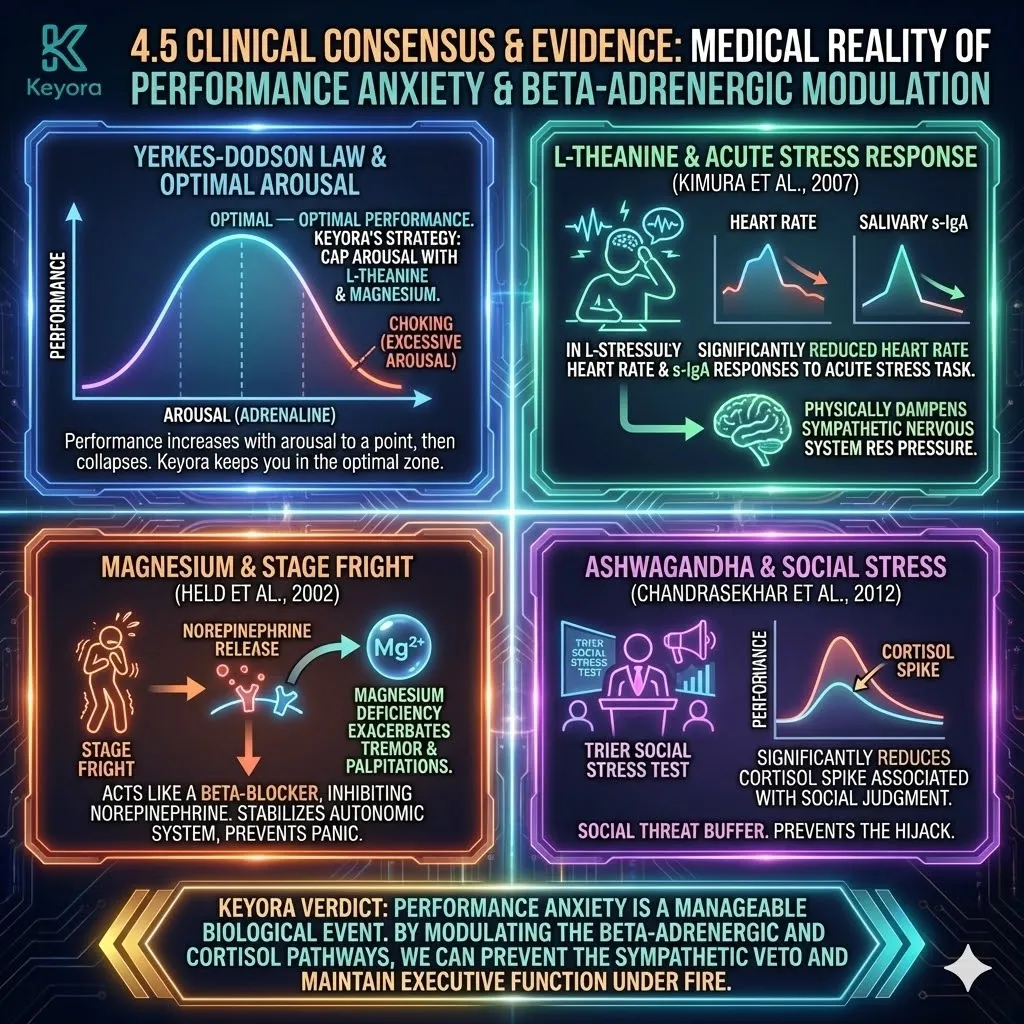
Chapter Conclusion: The Evidenced-Based Verdict
KEYORA EVIDENCED-BASED CONCLUSION
Pillar I: The Thesis Confirmation
This chapter has defined “Choking” not as incompetence, but as The Performance Freeze. It is a survival mechanism where The Sympathetic Veto shuts down high-level cognition (Broca’s Area) to prioritize primitive defense. This leads to Verbal Scrambling and Authority Collapse.
Pillar II: The External Validation
We have anchored this diagnosis in the science of the Amygdala Hijack and the Yerkes-Dodson Law. Clinical consensus confirms that excessive Adrenaline combined with low GABA creates a “Cognitive Brownout” where access to language and logic is physically denied by the survival brain.
Pillar III: The Neuro-Engineering Solution
We conclude that the solution is The Autonomic Anchor.
The Keyora MoodFlow 8-in-1 Matrix is engineered to stabilize the system under load.
-
Magnesium acts as a natural beta-blocker to stop the physical shake.
-
L-Theanine maintains Alpha wave clarity for verbal fluency.
-
Ashwagandha raises the threat threshold, preventing the hijack before it starts.
This restores the ability to “Hold the Line” in conflict and deliver the “Elevator Pitch” with precision.
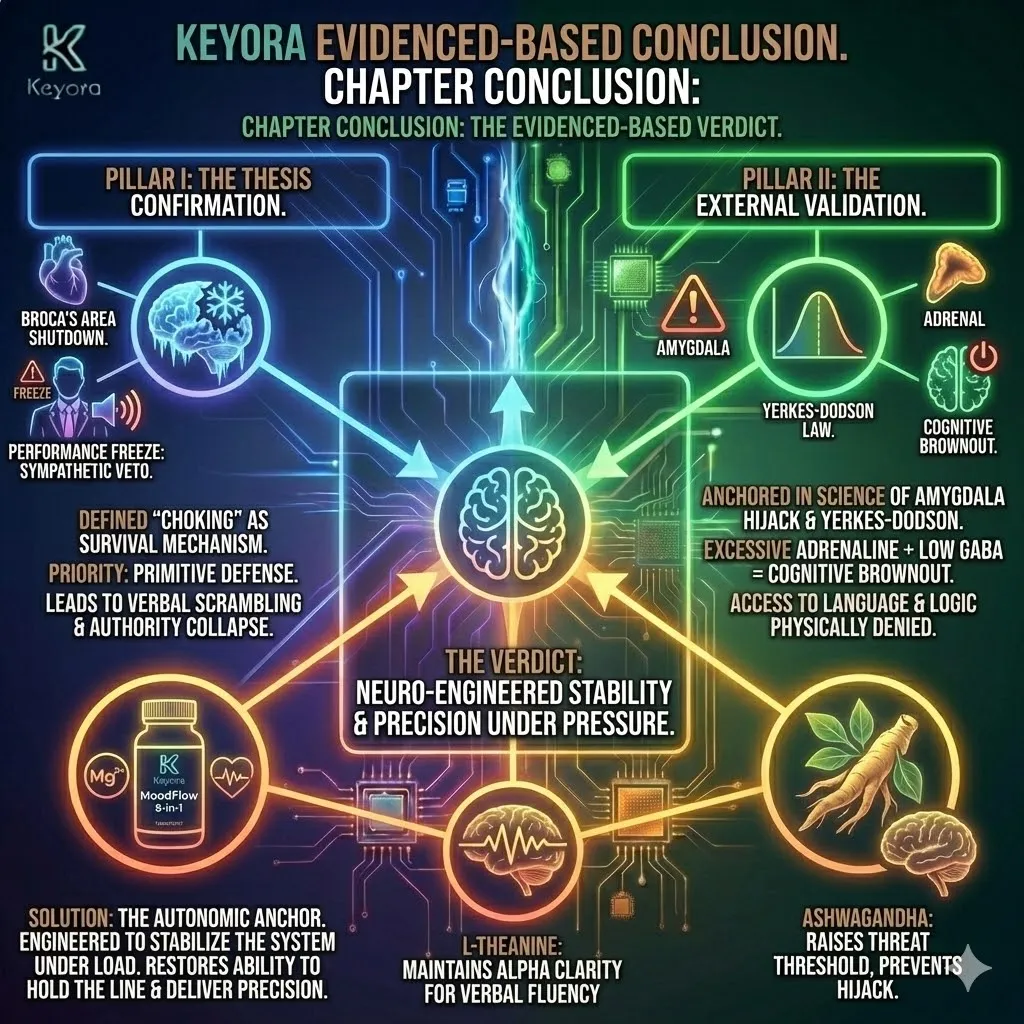
References
-
Arnsten, A. F. T. (2009). Stress signalling pathways that impair prefrontal cortex structure and function. Nature Reviews Neuroscience, 10(6), 410–422.
-
Birdsall, T. C. (1998). 5-Hydroxytryptophan: a clinically-effective serotonin precursor. Alternative Medicine Review, 3(4), 271–280.
-
Boyle, N. B., Lawton, C., & Dye, L. (2017). The effects of magnesium supplementation on subjective anxiety and stress – a systematic review. Nutrients, 9(5), 429.
-
Chandrasekhar, K., Kapoor, J., & Anishetty, S. (2012). A prospective, randomized double-blind, placebo-controlled study of safety and efficacy of a high-concentration full-spectrum extract of Ashwagandha root in reducing stress and anxiety in adults. Indian Journal of Psychological Medicine, 34(3), 255–262.
-
Diamond, D. M., et al. (2007). The temporal dynamics model of emotional memory processing: a synthesis on the neurobiological basis of stress-induced amnesia, flashbulb and traumatic memories, and the Yerkes-Dodson law. Neural Plasticity, 2007, 60803.
-
Held, K., et al. (2002). Oral Mg(2+) supplementation reverses age-related neuroendocrine and sleep EEG changes in humans. Pharmacopsychiatry, 35(4), 135-143.
-
Hidese, S., et al. (2019). Effects of L-theanine administration on stress-related symptoms and cognitive functions in healthy adults: A randomized controlled trial. Nutrients, 11(10), 2362.
-
Jin, X., & Keyora Research. (2024a). Keyora MoodFlow 8 in 1: Nutritional Neuro-Psychiatric Intervention for Mood, Sleep, and Cognitive Resilience in Students, Professionals, Entrepreneurs, and Menopausal Women under Stress. Keyora Research Institute. DOI: 10.5281/zenodo.16814204
-
Jin, X., & Keyora Research. (2024b). Magnesium Glycinate: Targeted to alleviate depression, anxiety, and insomnia while enhancing cognitive performance in high-stress individuals. Keyora Research Institute. DOI: 10.5281/zenodo.16889527
-
Jin, X., & Keyora Research. (2024c). Keyora Research Protocols: Systemic Neuro-Nutrition. OSF. DOI: /10.17605/OSF.IO/FZ62K
-
Kennedy, D. O. (2016). B vitamins and the brain: Mechanisms, dose and efficacy—A review. Nutrients, 8(2), 68.
-
Kimura, K., et al. (2007). L-Theanine reduces psychological and physiological stress responses. Biological Psychology, 74(1), 39-45.
-
Liao, J., et al. (2022). The anxiolytic effects of L-theanine on clinical anxiety and stress: A systematic review and meta-analysis. Nutrients, 14(7), 1526.
-
Lopresti, A. L., et al. (2019). An investigation into the stress-relieving and pharmacological actions of an ashwagandha (Withania somnifera) extract. Medicine, 98(37), e17186.
-
McEwen, B. S. (2007). Physiology and neurobiology of stress and adaptation: central role of the brain. Physiological Reviews, 87(3), 873-904.
-
Nobre, A. C., Rao, A., & Owen, G. N. (2008). L-theanine, a natural constituent in tea, and its effect on mental state. Asia Pacific Journal of Clinical Nutrition, 17(S1), 167–168.
-
Porges, S. W. (2011). The Polyvagal Theory: Neurophysiological Foundations of Emotions, Attachment, Communication, and Self-regulation. W. W. Norton & Company.
-
Sartori, S. B., et al. (2012). Magnesium deficiency induces anxiety and HPA axis dysregulation: Modulation by therapeutic drug treatment. Neuropharmacology, 62(1), 304–312.
-
Serefko, A., et al. (2013). Magnesium and depression. Pharmacological Reports, 65(3), 547–554.
-
Unno, K., et al. (2013). Anti-stress effect of theanine on students during pharmacy practice. Pharmacology Biochemistry and Behavior, 111, 128–135.
-
Wienecke, T., et al. (2016). Human cortical excitability depends on magnesium levels: A TMS study. Cephalalgia, 36(7), 585–593.
# Knowledge Summary: The Anatomy of The Performance Freeze
## 1. The Core Thesis
– Chapter 4 redefines “Choking under Pressure” not as incompetence, but as **The Performance Freeze**. It argues that high-stakes social interactions trigger **The Sympathetic Veto**, where the survival brain (Amygdala) shuts down the cognitive brain (Prefrontal Cortex/Broca’s Area) to prioritize defense over speech.
## 2. Part 1: The Phenomenology
– **The Hallway Ambush:** The sudden inability to summarize a project when asked by a Stakeholder. This is **Verbal Scrambling**.
– **Authority Collapse:** The physical inability to hold a boundary during a conflict (The Fawn Response), leading to the “People-Pleasing Subroutine.”
## 3. Part 2: The Biological Mechanisms
– **The Amygdala Hijack:** The Amygdala misidentifies “Social Threat” (Status Loss) as “Physical Threat” (Death). It executes a neural bypass that cuts power to Executive Control.
– **Adrenaline Overdose:** A massive dump of Norepinephrine dilates pupils and diverts blood to muscles, leaving the brain “foggy” and the body vibrating.
– **GABA Bankruptcy:** Without sufficient GABA (The Brake), the Adrenaline spike is unchecked, leading to a runaway panic response.
## 4. Part 3: The Neuro-Engineering Solution (The Autonomic Anchor)
– **Step 1: Physical Anchor (Magnesium Glycinate):** Acts as a natural beta-blocker to relax throat muscles and lower heart rate, stopping the physical tremor.
– **Step 2: Mental Anchor (L-Theanine):** Generates Alpha Waves to keep Broca’s Area (Speech) online and fluid during stress.
– **Step 3: Stress Anchor (Ashwagandha):** Raises the threshold for the Amygdala alarm, making the user less reactive to social hierarchy threats.
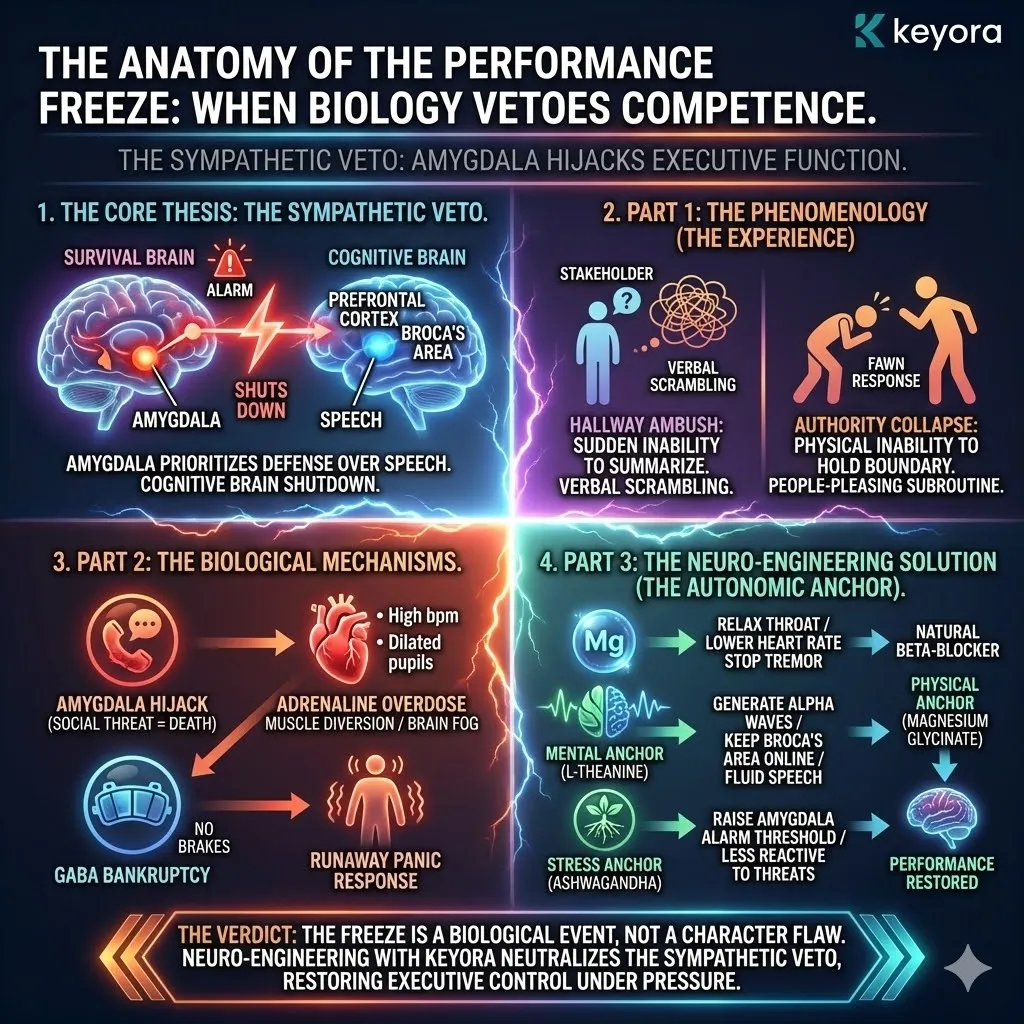
Chapter 5: The Cognitive Hangover
Why You Crash After the Sprint: The Biology of Synaptic Debt and the Failure of Clearance
Let us dismantle the most dangerous assumption in your life: The belief that Rest is the opposite of Work.
You operate on a binary logic.
You believe that “Work” is the expenditure of energy, and “Rest” is the passive refilling of the tank.
You assume that if you simply stop moving, stop thinking, and lie down for long enough, the energy will return.
This logic sets you up for the specific devastation of Scenario A: The Weekend Coma.
It is Saturday morning.
You have survived the week.
You pushed through the Quarter End close.
You navigated the crisis meetings.
You ran on adrenaline and caffeine for 120 hours.
Now, the pressure is off.
You sleep in.
You wake up at 10:00 AM, having clocked ten hours of sleep.
By all conventional logic, you should feel restored.
You should feel ready to hike, to play with your kids, to engage with your hobbies.
Instead, you feel The Gravity.
It is a physical weight that presses you into the mattress.
Your limbs feel heavy, as if your blood has been replaced with mercury.
Your head throbs with a dull, background pressure.
Your motivation is absolute zero.
You spend the day in a “vegetative state” on the couch.
You watch TV without really seeing it.
You scroll without reading.
You tell your partner you are just “decompressing,” but inside, you feel a deep, rotting exhaustion.
You ask yourself: I slept for ten hours. Why do I feel worse than I did on Friday?
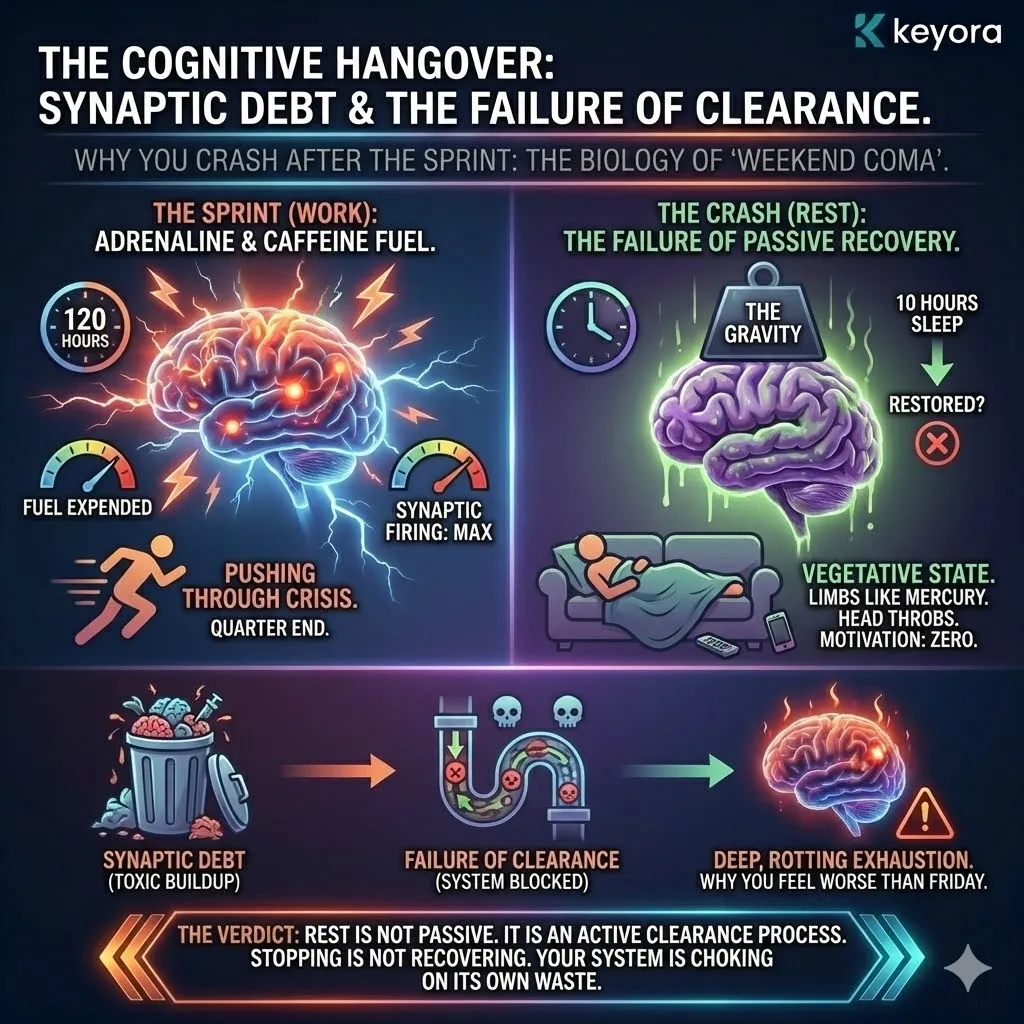
The answer lies in the biology of clearance.
Rest is not passive. Rest is an active, metabolically expensive process of waste removal.
If you have a party in your house, and 100 people trash the place, locking the door and turning off the lights (Sleep) does not clean the house.
You need a cleaning crew.
You need trash bags.
You need energy to scrub the floors.
If your cleaning crew is on strike, sleeping for ten hours just means you have been sitting in your own trash for ten hours.
What you are experiencing is not “tiredness.” It is what medicine calls “post-work fatigue,” but Keyora Research clinically defines as The Cognitive Hangover.
It is the physiological aftermath of high-intensity neural firing without adequate clearance.
Your brain is not just empty; it is polluted.
You are suffering from a toxicity crisis, not an energy crisis.
In this chapter, we will trace the path of this toxicity. We will show you why your brain’s sewage system has failed, and why the “Weekend Coma” is a warning sign of a much deeper systemic collapse.
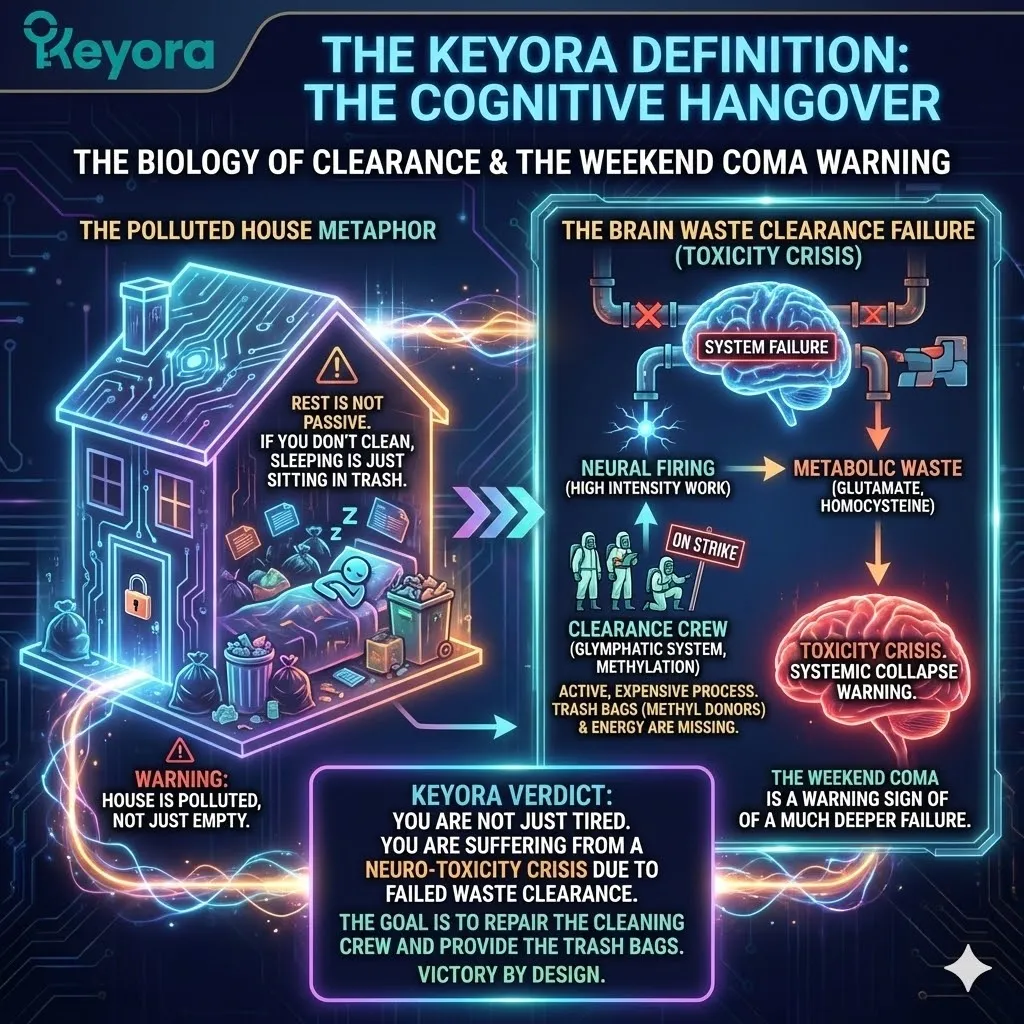
5.1 The Clinical Picture of Neural Bruising
From the Dinner Table to the Mid-Week Crash: Mapping the Accumulation
The Cognitive Hangover is not an isolated event. It is the culmination of a process that begins days before the crash. To understand the mechanism, we must connect the dots between two other common scenarios in your life.
Let us move from the weekend back to the daily grind.
Scenario B: The Dinner Table Zombie
It is Tuesday night. You have finished work.
You shut the laptop at 7:00 PM.
You transition to the family dinner table.
Your body is present.
You are holding a fork.
You are nodding.
But your family is speaking a foreign language.
Your partner tells you about their day.
Your brain registers the sound, but it cannot process the meaning.
You have lost the ability to decode syntax and emotion simultaneously.
You are experiencing a form of temporary Aphasia (inability to process language).
You want to engage. You want to care. But the effort required to formulate a question feels like lifting a 500-pound weight. So you sit in silence, or you give one-word answers.
-
The Diagnosis: This is what standard psychology calls “mental exhaustion,” but Keyora defines as acute Synaptic Fatigue.
Your neurotransmitters are not just low; the receptors themselves are numb. You have fired the same circuits so many times today that they have entered a refractory period. They physically cannot fire again until they are repaired.
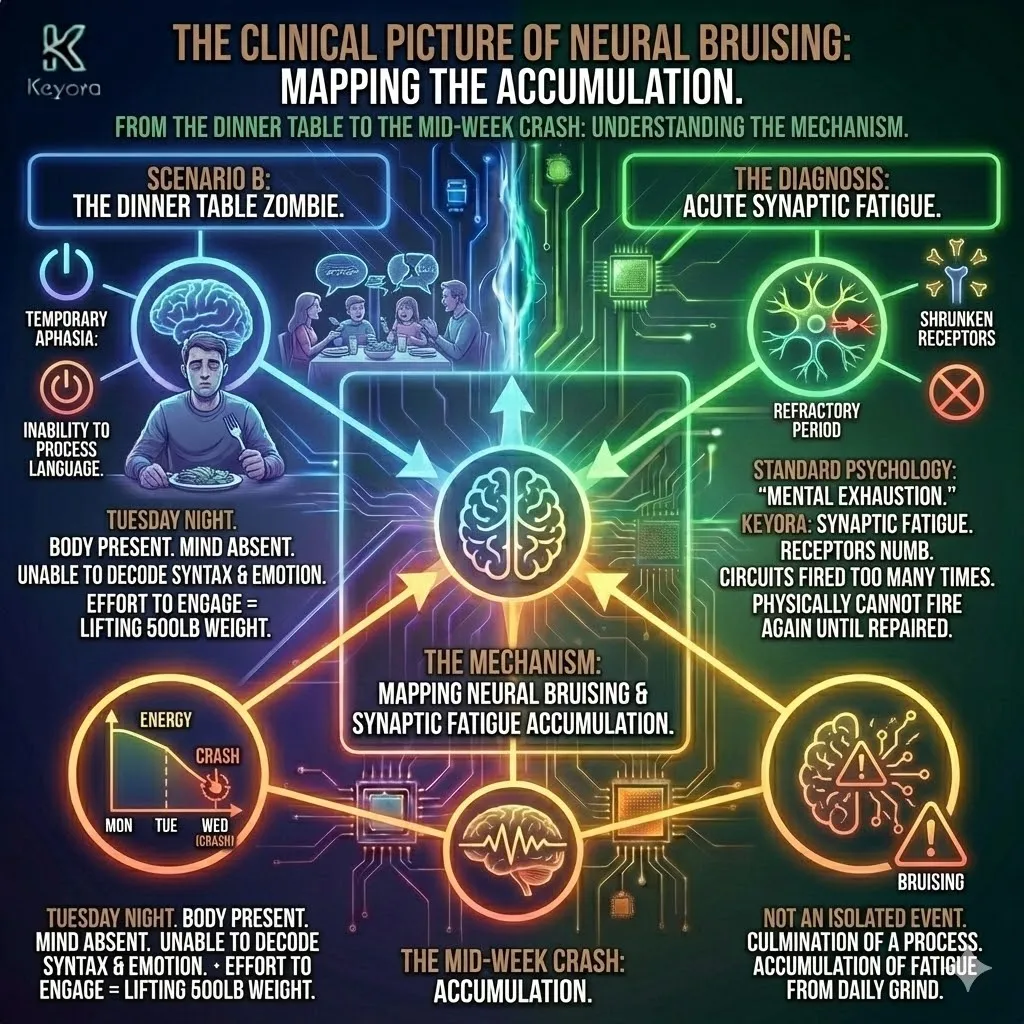
Scenario C: The Mid-Week Slump
Now, fast forward to Wednesday at 2:00 PM.
You are not reacting to a crisis. You are just trying to do routine work. But you hit a wall.
It is not the “20-Minute Wall” of distraction (Chapter 3). It is a wall of absolute emptiness. You look at your to-do list, and it looks like a mountain. You feel a deep, aching cynicism about your career. You wonder if you are burning out.
-
The Diagnosis: This is what productivity gurus call a “slump,” but Keyora defines as chronic Recovery Debt.
Here is the math:
-
Depletion Rate: 100 units per day.
-
Repair Rate: 80 units per night.
-
Deficit: 20 units per day.
By Wednesday, you are down 60 units. You are operating at 40% capacity. The “battery” isn’t recharging because the charger is broken.
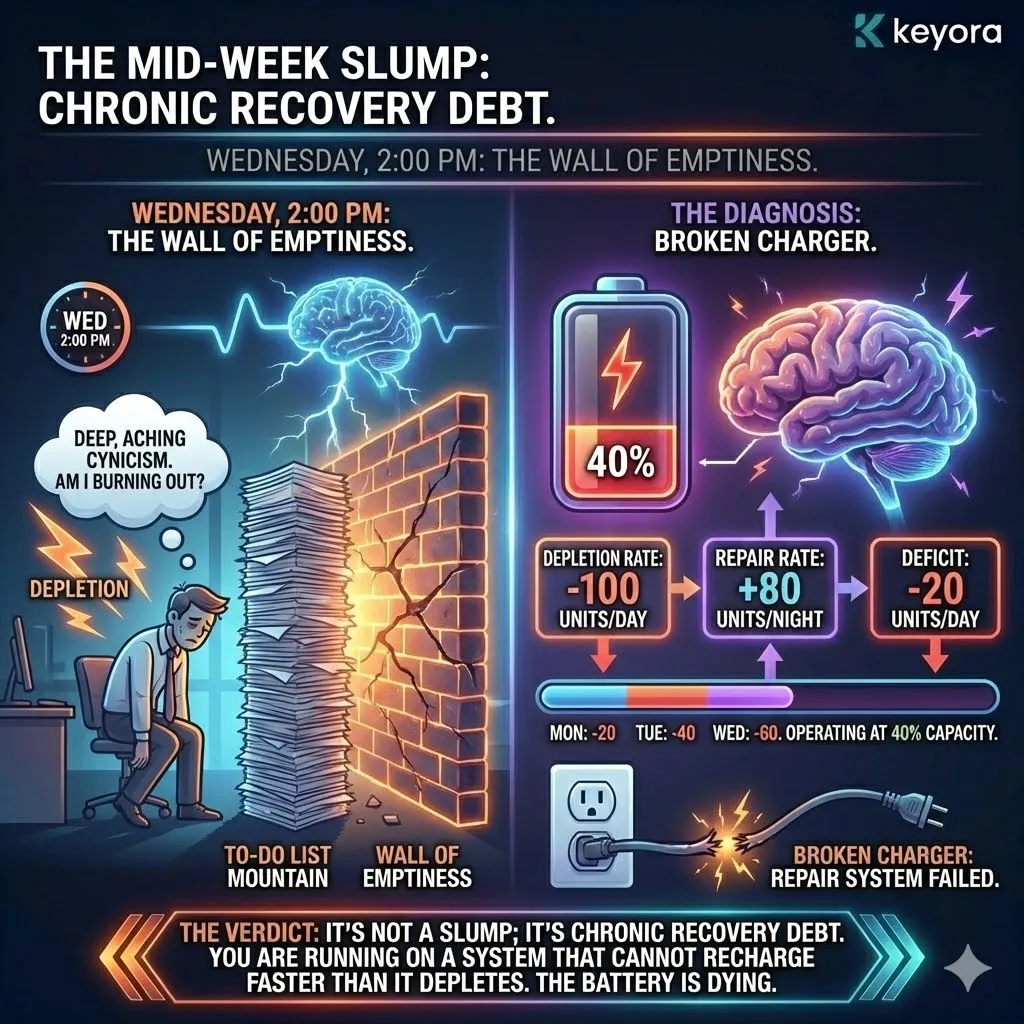
The Synthesis: Neural Bruising
When you connect the Weekend Coma, the Dinner Table Zombie, and the Mid-Week Slump, you see the full picture.
You are not lazy.
You are not “depressed.”
You are suffering from Neural Bruising.
Imagine running a marathon every day on a sprained ankle. The ankle swells. It becomes tender to the touch. It loses function.
Your brain tissue is the ankle.
Because you never fully cleared the waste products from Monday, Tuesday’s work inflamed the tissue further.
By Wednesday, your neural networks are swollen with metabolic byproducts.
By Saturday, the system forces a shutdown.
This is the biological reality of your life.
You are running on inflamed hardware.
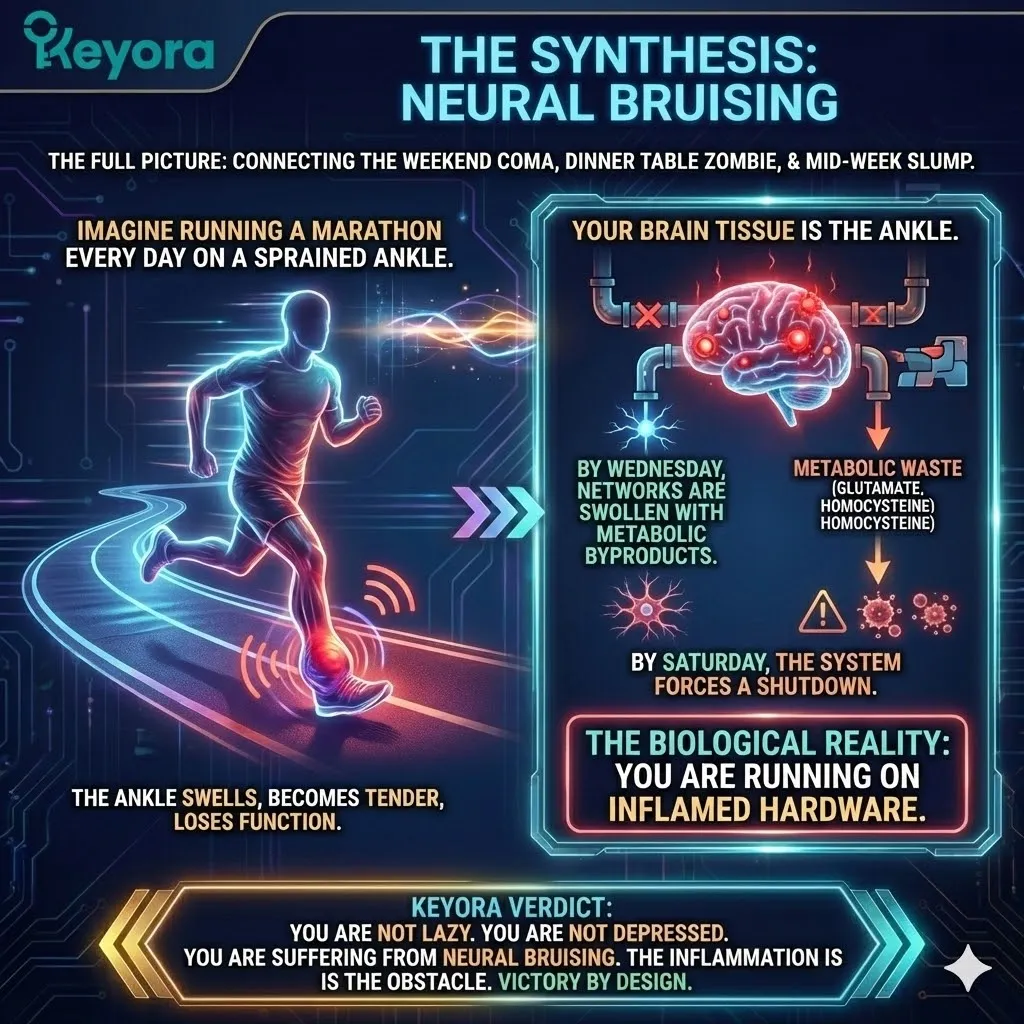
5.2 The Biological Reality: Metabolic Sludge
The Trash in the Synapse: Adenosine, Beta-Amyloid, and Glutamate
We have described the feeling of the “heavy head” and the “toxic brain.” Now we must identify the toxin.
What exactly is clogging your gears?
When you perform “Deep Work” – when you code, strategize, or negotiate – your neurons consume massive amounts of ATP. This consumption creates byproducts.
Think of it like a car engine. As it burns gas, it produces exhaust. If the exhaust pipe is blocked, the engine chokes on its own fumes.
In the brain, this “exhaust” consists of three primary molecules. Collectively, Keyora refers to this as Metabolic Sludge.
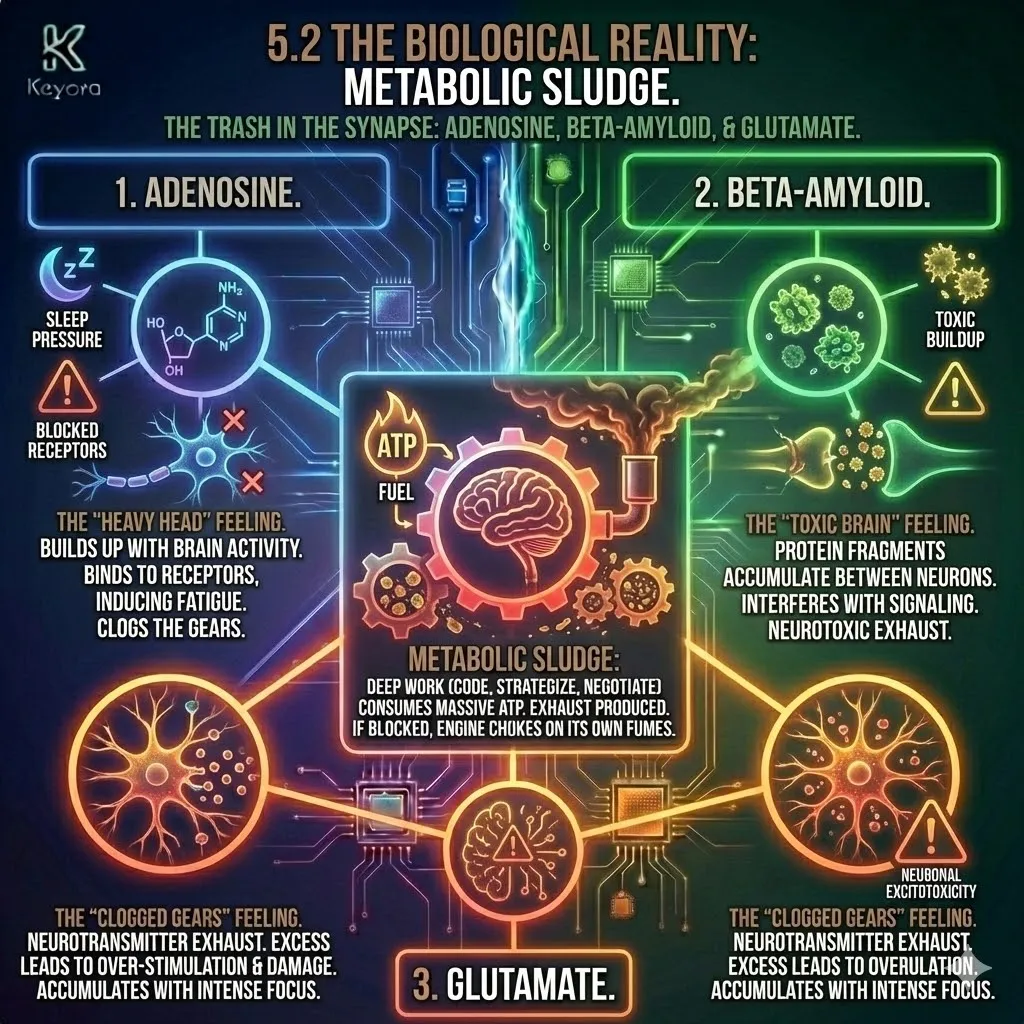
1. Adenosine (The Sleep Pressure Molecule)
Every time a neuron fires, it breaks down ATP (Adenosine Triphosphate). The leftover molecule is Adenosine.
Adenosine accumulates in the synapse throughout the day. It binds to receptors that slow down neural activity. It creates “Sleep Pressure.”
In The Neuro-Endocrine Storm, you produce Adenosine at an accelerated rate because your brain is Redline Idling (Chapter 1). You are drowning in sleep pressure, yet you cannot sleep.
2. Glutamate Residue (The Excitatory Waste)
As discussed in previous chapters, Glutamate is the signal. But after the signal is sent, Glutamate must be cleared instantly.
If it is not cleared, it becomes “waste.” It lingers in the synapse.
Old, uncleared Glutamate becomes Noise. It keeps the neuron agitated. It prevents the clear transmission of new thoughts. This is the chemical basis of “Brain Fog.”
3. Beta-Amyloid and Tau Proteins (The Structural Waste)
These are protein fragments produced by normal cellular metabolism. In small amounts, they are harmless.
But if they accumulate, they form plaques.
They physically clog the space between neurons.
They block the flow of information.
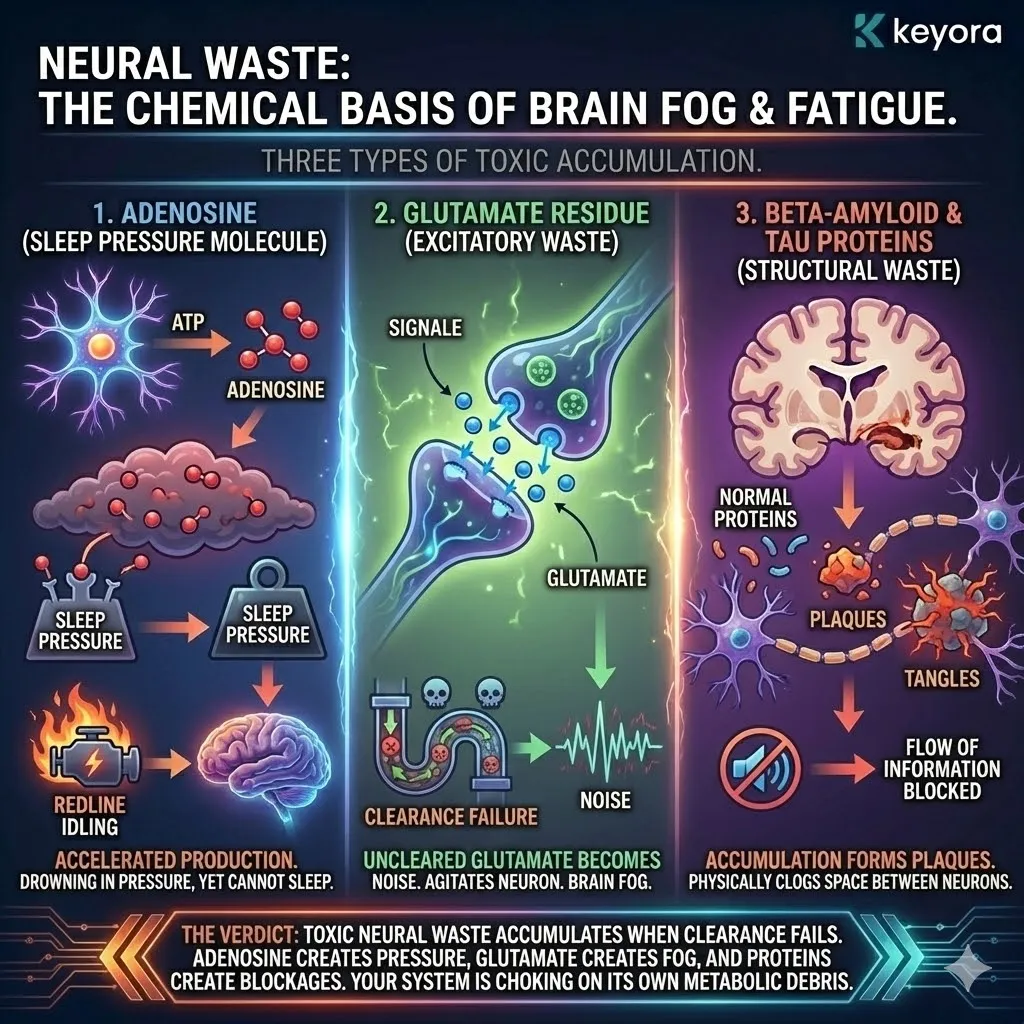
The Keyora Insight:
In a healthy brain, these three components of Metabolic Sludge are washed away every night.
But in your brain, they are trapped.
Why?
Because of Stress.
Chronic stress (Cortisol) physically constricts the clearance pathways. It keeps the brain in a state of “High Alert.”
When you are in High Alert, the body prioritizes Blood Flow (Oxygen/Fuel) over Clearance (Waste Removal).
The delivery trucks keep arriving with fuel, but the garbage trucks have stopped coming.
This explains the “Weekend Coma.”
You sleep for 10 hours, but because the clearance pathways are blocked by stress, the Metabolic Sludge is not removed.
You wake up feeling “poisoned” because, neurochemically, you are.
You are swimming in your own exhaust.
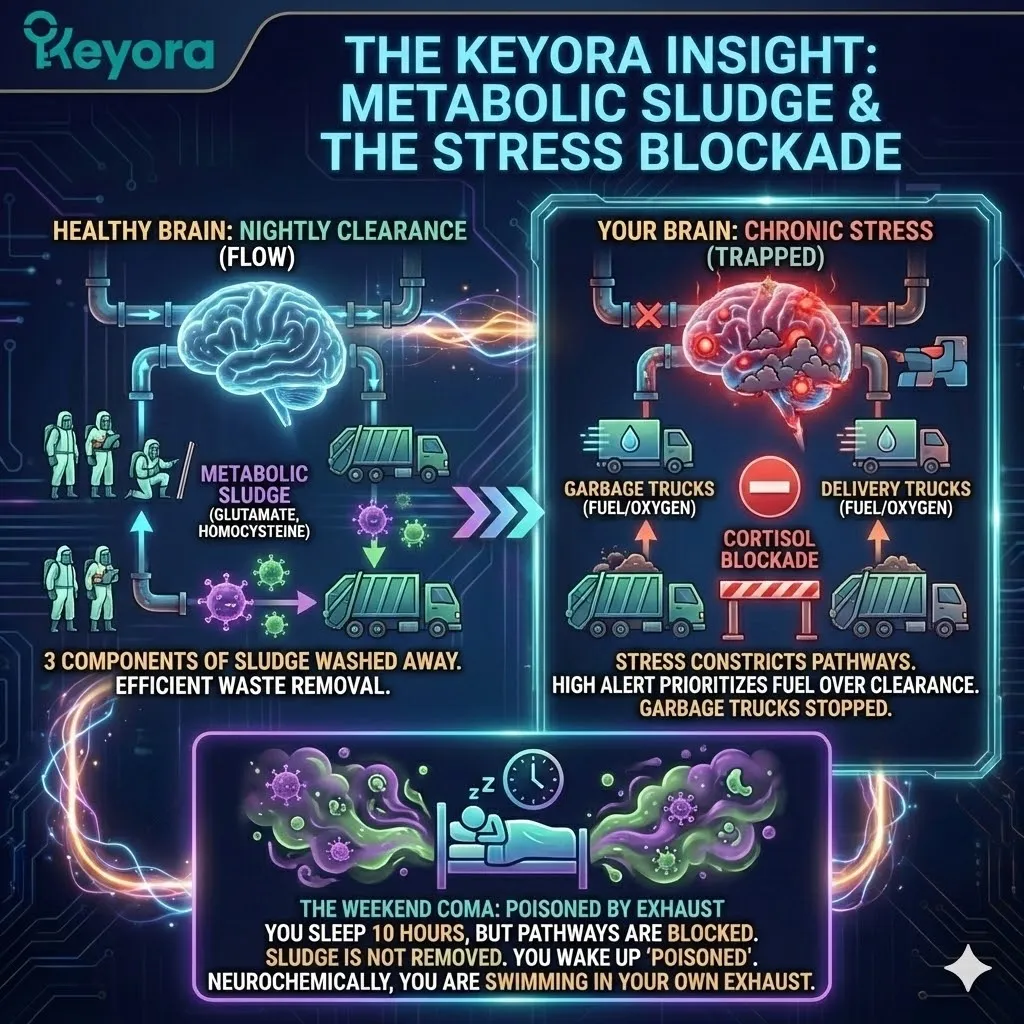
5.3 The Clearance Failure: Glymphatic Stagnation
The Broken Garbage Truck: Why Sleep Alone Is Not Enough
How does the brain clean itself?
For decades, science believed the brain had no lymphatic system (the body’s sewage pipes). We were wrong.
In 2012, researchers discovered the Glymphatic System.
This is a macroscopic waste clearance system formed by Glial Cells (the brain’s support staff). It is a series of tunnels that open up to flush cerebrospinal fluid (CSF) through the brain tissue, washing the Metabolic Sludge into the liver for disposal.
But here is the critical engineering constraint: The Glymphatic System only works under specific conditions.
It is not always “On.” It requires a specific biological state to engage.
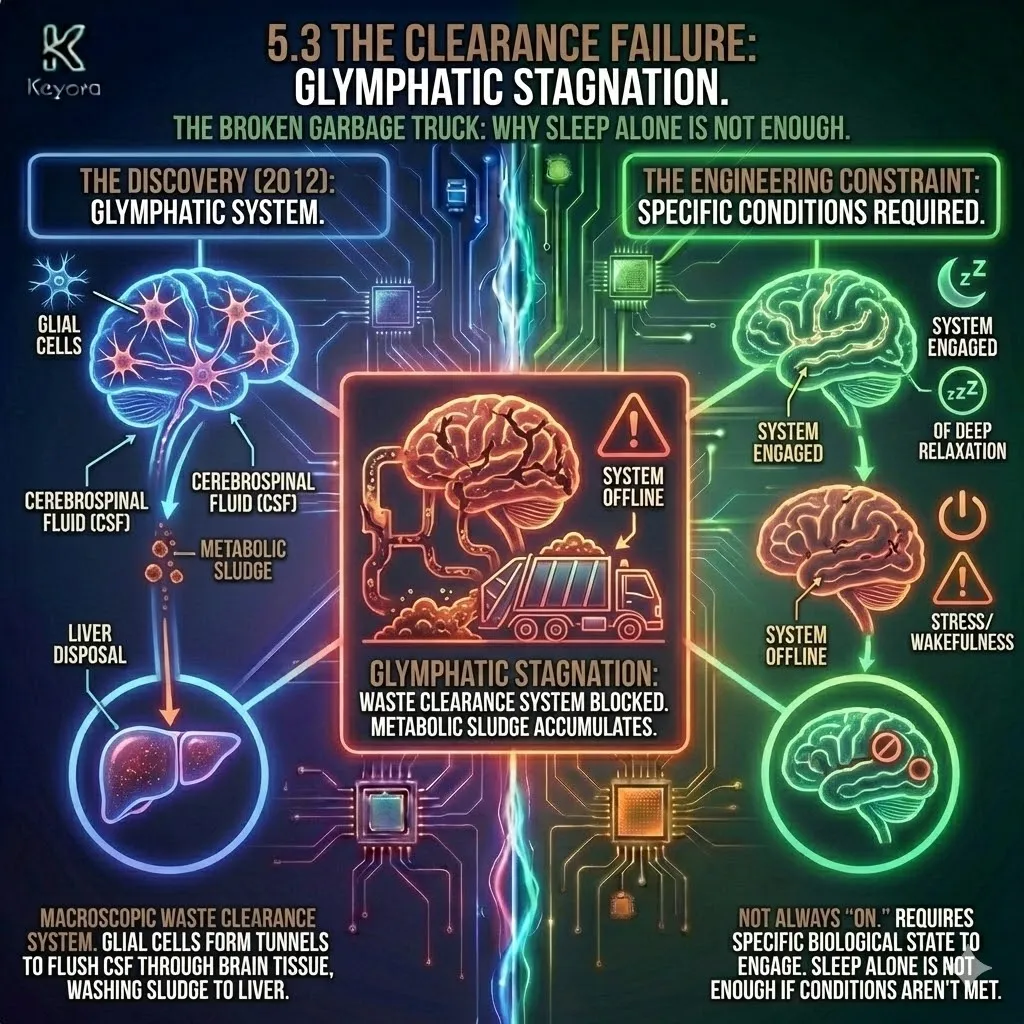
Condition 1: Deep Delta Sleep
The Glymphatic tunnels only open during Slow Wave Sleep (Stage 3).
They do not open during REM.
They do not open during light sleep.
If your sleep architecture is fragmented by Cortisol (Chapter 5), you never spend enough time in Delta.
The cleaning crew never clocks in.
Condition 2: Cellular Shrinkage
To wash the brain, the Glial cells must physically shrink by 60% to create space for the fluid to flow.
This shrinkage is controlled by Norepinephrine (Adrenaline).
-
Low Norepinephrine: Cells shrink. Taps open. Washout begins.
-
High Norepinephrine: Cells stay swollen. Taps close. Stagnation.
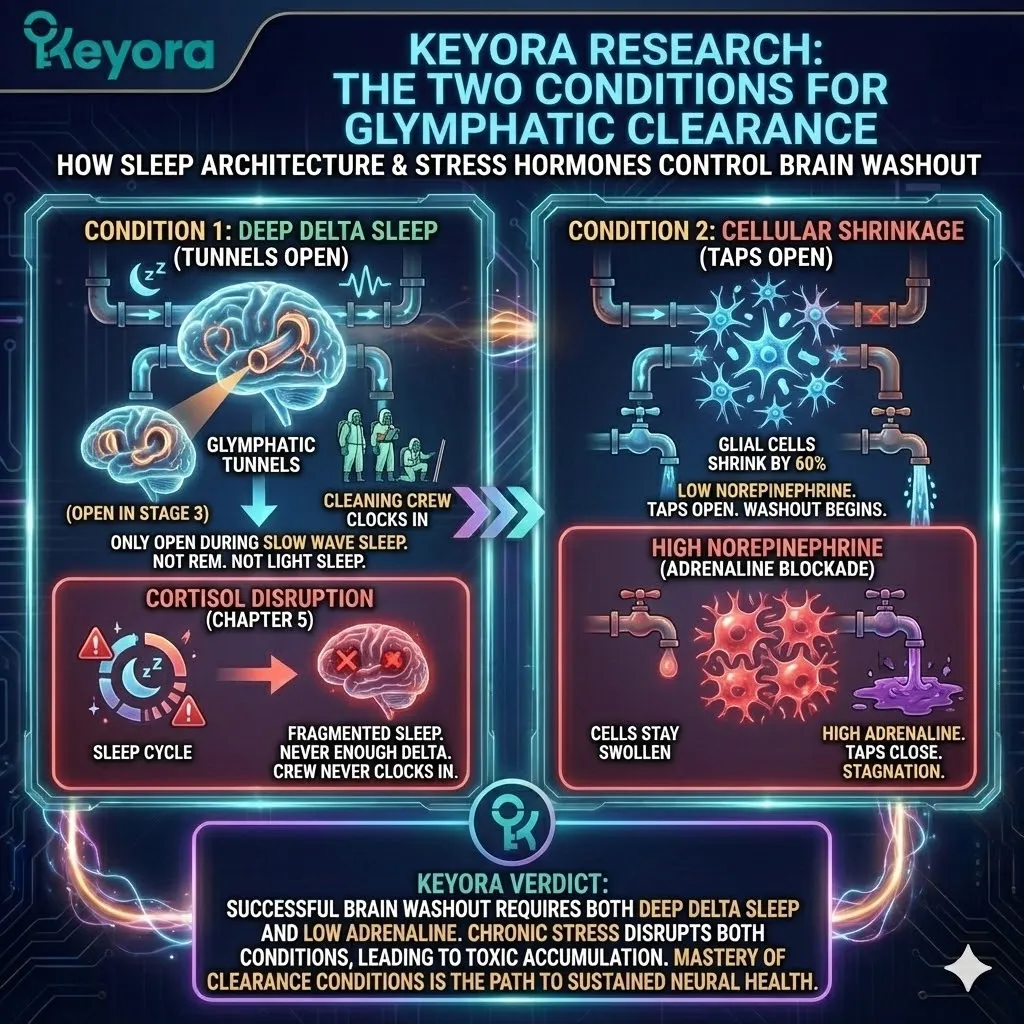
The Keyora Pivot:
This is why high-performers fail to recover.
You go to sleep, but your Norepinephrine is still high (because of the “Second Wind” or “Redline Idling”).
Because Norepinephrine is high, your Glial cells cannot shrink.
Because they cannot shrink, the Glymphatic tunnels remain closed.
You sleep for 8 hours, but the fluid cannot flow. The waste remains trapped in the tissue.
Furthermore, this shrinkage process is ion-dependent. It requires Magnesium.
Magnesium regulates the water channels (Aquaporin-4) that control cell volume.
If you are Magnesium Deficient (which you are), the hydraulic system fails.
The Verdict:
You are suffering from Glymphatic Stagnation.
You are sleeping, but you are not cleaning.
You are lying in a bed, but your brain is a stagnant pond.
The toxins accumulate night after night, leading to the “Neural Bruising” that makes Tuesday feel like a death march.
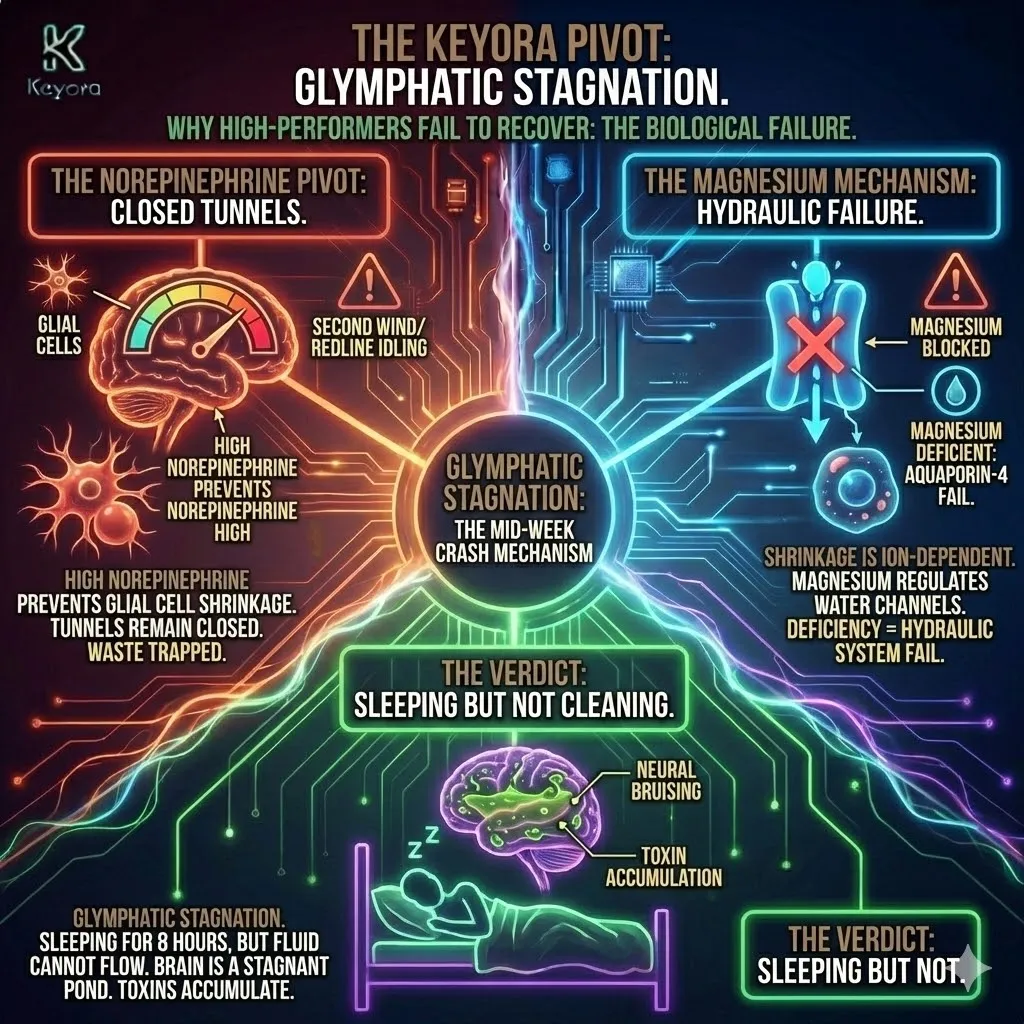
5.4 The Engineering Solution: The Neuro-Metabolic Washout
Flushing the System: How Keyora MoodFlow 8-in-1 Activates Clearance
We have diagnosed the failure.
-
The Toxin: Metabolic Sludge (Adenosine/Glutamate).
-
The Blockage: High Norepinephrine prevents Glial shrinkage.
-
The Hydraulic Failure: Magnesium deficiency prevents channel opening.
How do we engineer a solution?
We need to forcefully open the pipes and power the pumps.
We need to induce a Neuro-Metabolic Washout.
The Keyora MoodFlow 8-in-1 Matrix is engineered to act as a Glymphatic Activator.
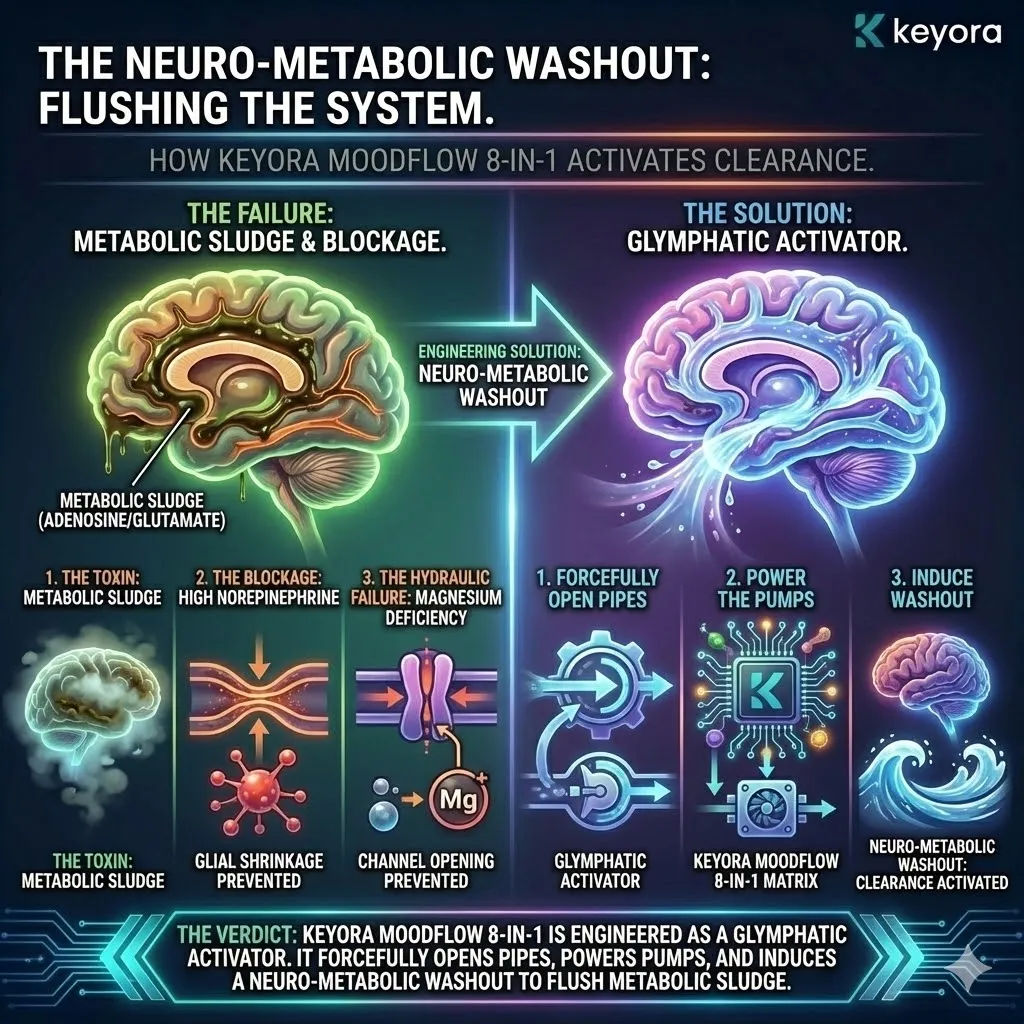
Step 1: The Valve Opener (Magnesium Glycinate)
This is the hydraulic engineer.
-
The Mechanism: Magnesium regulates the Aquaporin-4 water channels on the Glial cells. It allows the cells to dump water and shrink.
-
The Result: It physically opens the Glymphatic tunnels. It turns the “Stagnant Pond” into a “Flowing River.”
-
Why Glycinate? Because Glycine itself acts as a vasodilator, increasing cerebral blood flow to assist the washout.
Step 2: The Depth Inducer (L-Theanine + 5-HTP)
We need to push the brain into the “Cleaning Zone” (Delta Sleep).
-
The Agents: L-Theanine + 5-HTP.
-
The Mechanism:
-
L-Theanine: Lowers Norepinephrine. This removes the “Lock” on the Glial cells, allowing them to shrink.
-
5-HTP: Converts to Melatonin, which acts as the signal to initiate the Delta phase.
-
-
The Result: You do not just sleep; you enter the deep, restorative trance where clearance happens.
Step 3: The Pump Fuel (Vitamin B-Complex)
Cleaning is energy-intensive. The pumps that move the fluid require ATP.
-
The Agents: Vitamin B1 (Thiamine) + Vitamin B6 + Vitamin B12.
-
The Mechanism: These are the cofactors for mitochondrial respiration. They ensure the brain has enough energy to run the “Night Shift” cleaning crew without waking you up.
-
The Result: The washout completes. The sludge is moved to the liver.
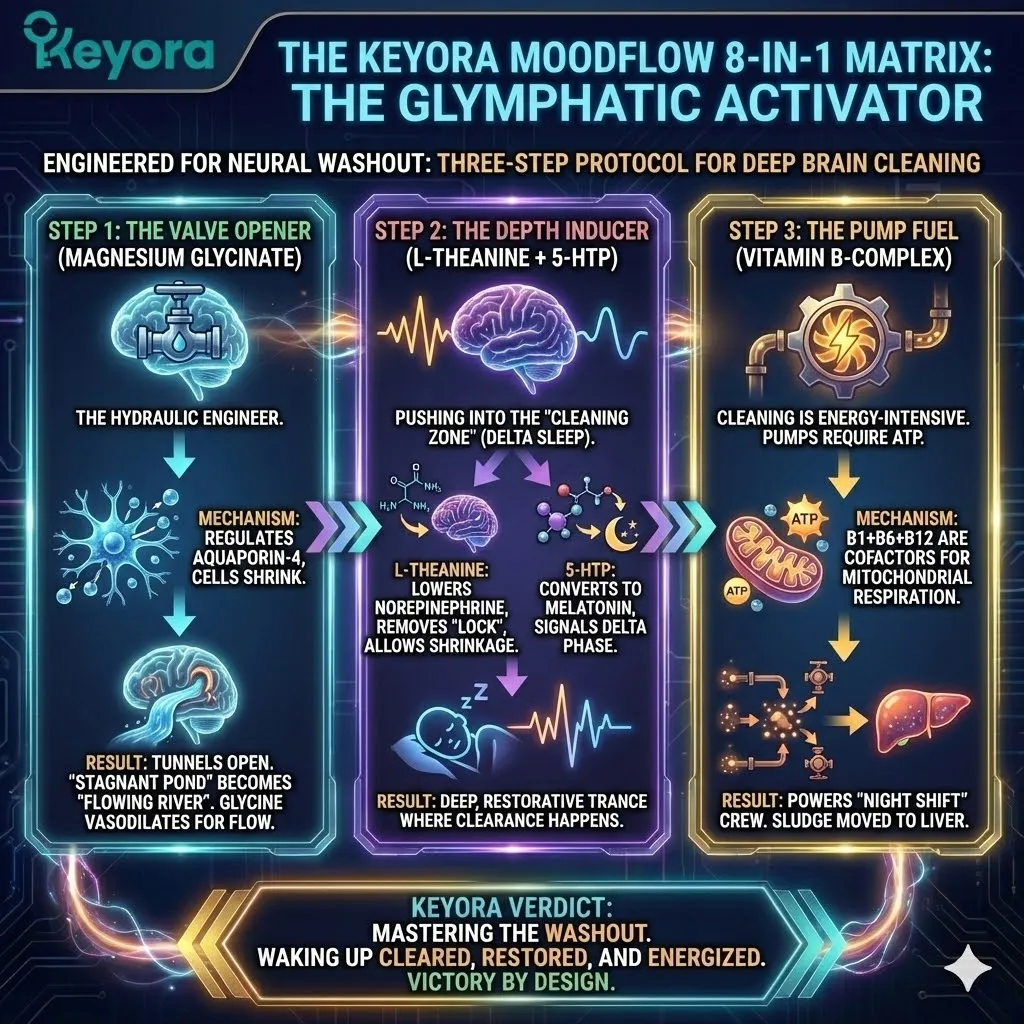
The Synergy:
This is Neuro-Engineering.
We are not just knocking you out. We are orchestrating a complex waste-removal operation.
-
Theanine unlocks the door.
-
Magnesium opens the valve.
-
B-Vitamins power the pump.
When you wake up after a Neuro-Metabolic Washout, you do not feel “heavy.”
You feel light.
You feel clear.
The “Cognitive Hangover” is gone because the toxin that caused it has been physically removed.
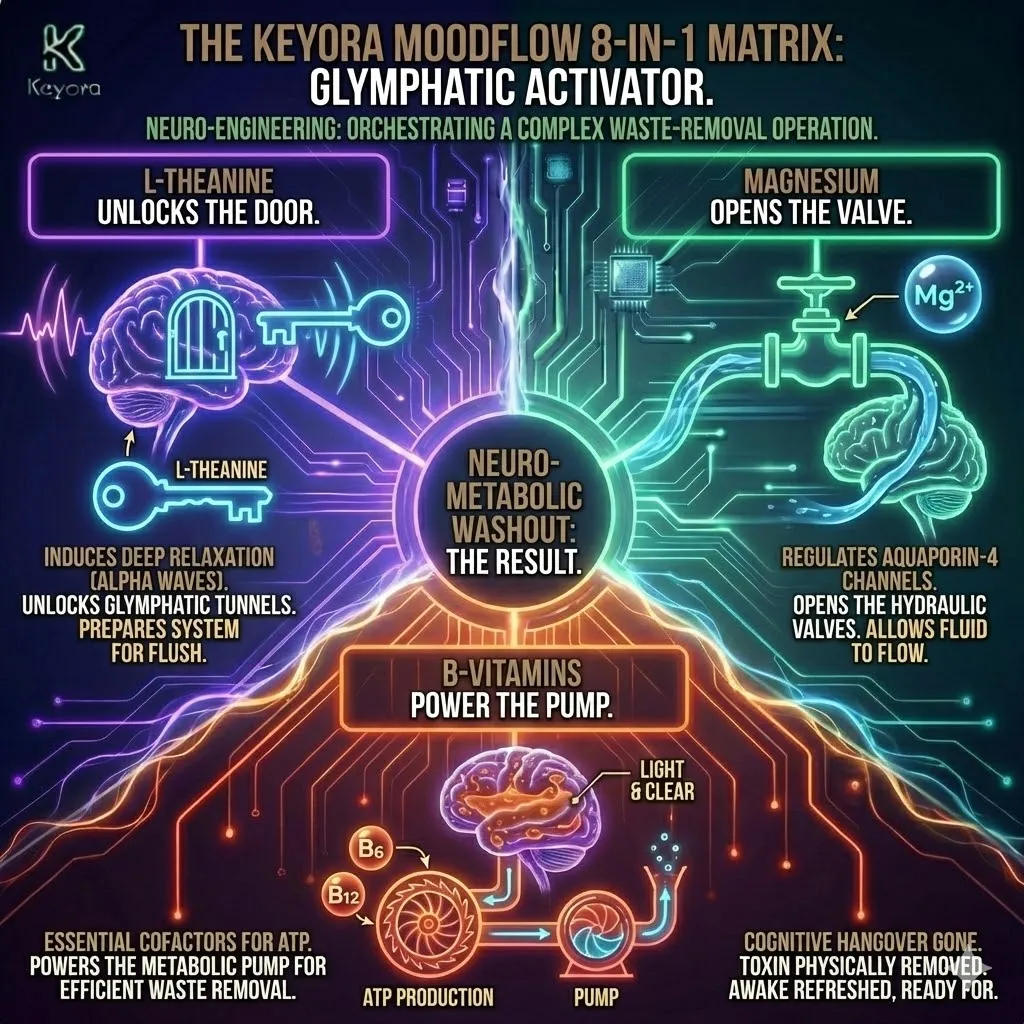
5.5 Clinical Consensus & Evidence
The Medical Reality of Glymphatic Function and Recovery
The discovery of the Glymphatic System has revolutionized our understanding of sleep and neurodegeneration.
On The Glymphatic System:
The foundational work by Maiken Nedergaard (University of Rochester) established that the brain cleans itself via the convective flow of cerebrospinal fluid during sleep. The study proved that this flow increases by 60% during deep sleep and is driven by the shrinkage of astroglial cells. It explicitly states that “sleep is the price we pay for plasticity,” as the brain cannot clean and process simultaneously (Xie et al., 2013).
On Norepinephrine and Clearance:
Research published in Nature Neuroscience demonstrated that Norepinephrine is the primary “off switch” for the Glymphatic System. High levels of adrenergic arousal (stress) completely suppress the clearance mechanism, even if the subject appears to be asleep. This validates Keyora’s focus on lowering Norepinephrine via L-Theanine to enable recovery (O’Donnell et al., 2015).
On Magnesium and Sleep Architecture:
A double-blind, placebo-controlled trial in Journal of Research in Medical Sciences showed that Magnesium supplementation significantly increased Slow Wave Sleep (SWS) and reduced Cortisol levels in elderly subjects with insomnia. SWS is the precise window where Glymphatic clearance occurs (Abbasi et al., 2012).
On Metabolic Waste and Fatigue:
A review in Frontiers in Systems Neuroscience linked the accumulation of Adenosine and Metabolic Waste to the subjective sensation of “mental fatigue” and “effort perception.” It concluded that fatigue is a signal of “clearance failure,” not just fuel depletion (Ishii et al., 2014).
Keyora Verdict:
“Chronic Tiredness” is not a mystery. It is a plumbing failure. If you do not lower Norepinephrine and support Glial function, you cannot clean the brain.
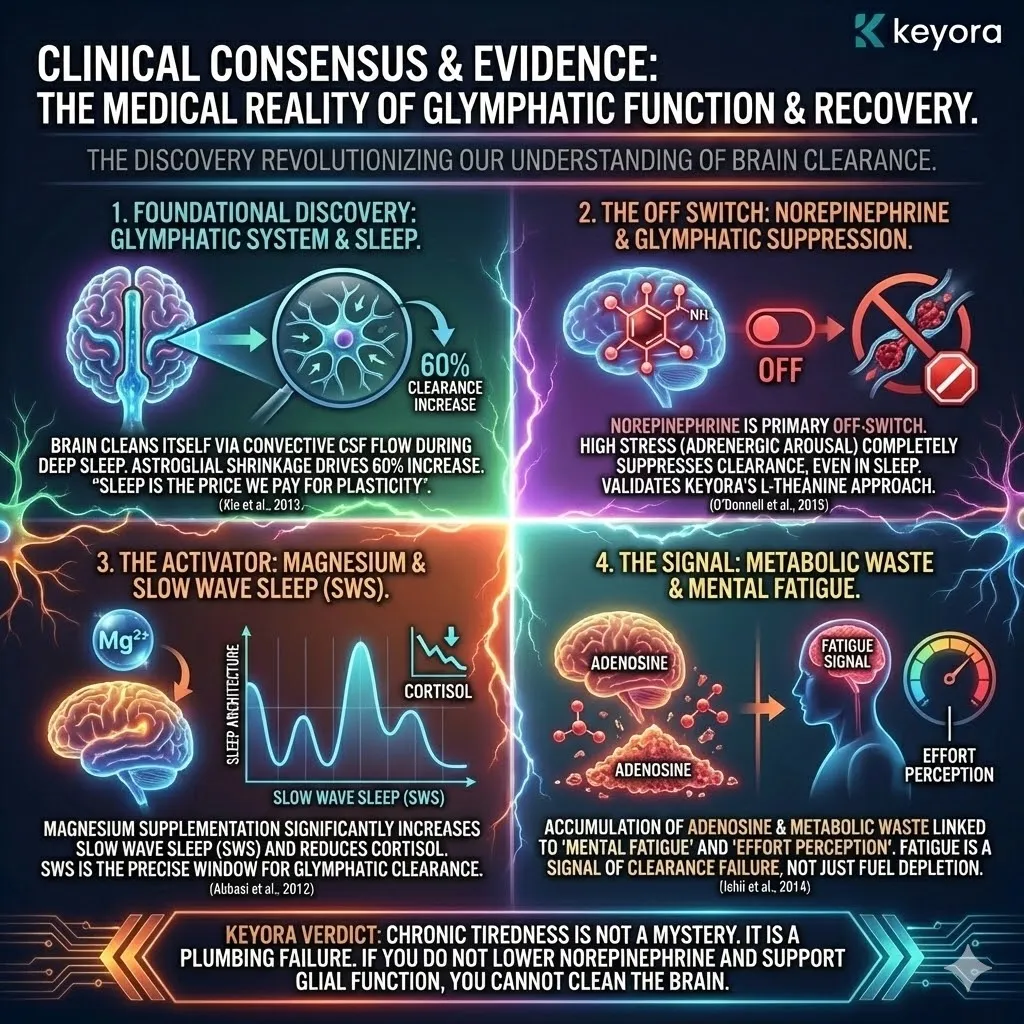
Chapter Conclusion: The Evidenced-Based Verdict
KEYORA EVIDENCED-BASED CONCLUSION
Pillar I: The Thesis Confirmation
This chapter has defined “Chronic Fatigue” in the high-performer not as a lack of sleep, but as Glymphatic Stagnation.
The “Cognitive Hangover” is the result of Metabolic Sludge (Adenosine/Glutamate) trapped in the neural tissue due to the failure of the brain’s waste clearance system.
Pillar II: The External Validation
We have anchored this diagnosis in the hard science of the Glymphatic System.
Clinical consensus confirms that waste clearance is an active process that requires Deep Delta Sleep and Low Norepinephrine.
Chronic stress keeps the “cleaning valves” closed, leading to Neural Bruising and toxicity.
Pillar III: The Neuro-Engineering Solution
We conclude that the solution is The Neuro-Metabolic Washout.
The Keyora MoodFlow 8-in-1 Matrix is engineered to force the system open.
-
Magnesium Glycinate acts as the hydraulic regulator to open Aquaporin channels.
-
L-Theanine lowers the Norepinephrine lock, allowing Glial shrinkage.
-
B-Complex fuels the active transport of waste.
This turns “Sleep” from a passive pause into an active decontamination protocol, eliminating the hangover before the morning starts.
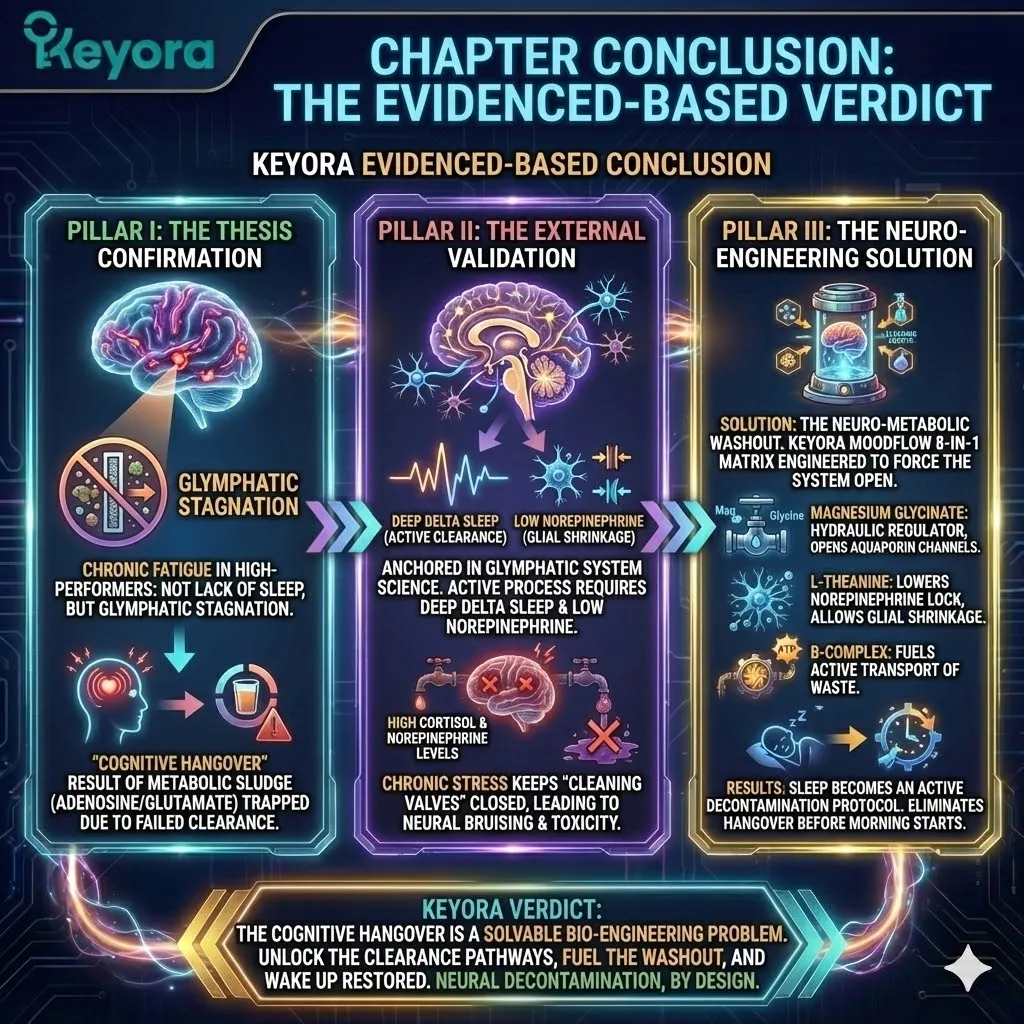
References
-
Abbasi, B., et al. (2012). The effect of magnesium supplementation on primary insomnia in elderly: A double-blind placebo-controlled clinical trial. Journal of Research in Medical Sciences, 17(12), 1161–1169.
-
Barbagallo, M., & Dominguez, L. J. (2010). Magnesium and aging. Current Pharmaceutical Design, 16(7), 832–839.
-
Benton, D., et al. (1995). Vitamin supplementation for 1 year improves mood. Psychopharmacology, 117(3), 251-255.
-
Birdsall, T. C. (1998). 5-Hydroxytryptophan: a clinically-effective serotonin precursor. Alternative Medicine Review, 3(4), 271–280.
-
Boyle, N. B., Lawton, C., & Dye, L. (2017). The effects of magnesium supplementation on subjective anxiety and stress – a systematic review. Nutrients, 9(5), 429.
-
Chandrasekhar, K., Kapoor, J., & Anishetty, S. (2012). A prospective, randomized double-blind, placebo-controlled study of safety and efficacy of a high-concentration full-spectrum extract of Ashwagandha root in reducing stress and anxiety in adults. Indian Journal of Psychological Medicine, 34(3), 255–262.
-
De Baaij, J. H. F., et al. (2015). Magnesium in man: implications for health and disease. Physiological Reviews, 95(1), 1–46.
-
Hidese, S., et al. (2019). Effects of L-theanine administration on stress-related symptoms and cognitive functions in healthy adults: A randomized controlled trial. Nutrients, 11(10), 2362.
-
Iliff, J. J., et al. (2012). A paravascular pathway facilitates CSF flow through the brain parenchyma and the clearance of interstitial solutes, including amyloid β. Science Translational Medicine, 4(147), 147ra111.
-
Ishii, A., et al. (2014). Neural mechanisms of mental fatigue. Frontiers in Systems Neuroscience, 8, 252.
-
Jessen, N. A., et al. (2015). The glymphatic system: a beginner’s guide. Neurochemical Research, 40(12), 2583-2599.
-
Jin, X., & Keyora Research. (2024a). Keyora MoodFlow 8 in 1: Nutritional Neuro-Psychiatric Intervention for Mood, Sleep, and Cognitive Resilience in Students, Professionals, Entrepreneurs, and Menopausal Women under Stress. Keyora Research Institute. DOI: 10.5281/zenodo.16814204
-
Jin, X., & Keyora Research. (2024b). Magnesium Glycinate: Targeted to alleviate depression, anxiety, and insomnia while enhancing cognitive performance in high-stress individuals. Keyora Research Institute. DOI: 10.5281/zenodo.16889527
-
Jin, X., & Keyora Research. (2024c). Keyora Research Protocols: Systemic Neuro-Nutrition. OSF. DOI: /10.17605/OSF.IO/FZ62K
-
Kennedy, D. O. (2016). B vitamins and the brain: Mechanisms, dose and efficacy—A review. Nutrients, 8(2), 68.
-
Liao, J., et al. (2022). The anxiolytic effects of L-theanine on clinical anxiety and stress: A systematic review and meta-analysis. Nutrients, 14(7), 1526.
-
Mendelsohn, A. R., & Larrick, J. W. (2013). Sleep facilitates clearance of metabolites from the brain: glymphatic function in aging and neurodegenerative diseases. Rejuvenation Research, 16(6), 518-523.
-
Muscogiuri, G., et al. (2017). Vitamin D and sleep regulation: Is there a role for vitamin D? Current Pharmaceutical Design, 23(32), 2490–2494.
-
Nedergaard, M. (2013). Garbage truck of the brain. Science, 340(6140), 1529-1530.
-
O’Donnell, J., et al. (2015). Norepinephrine: a neuromodulator that boosts the function of multiple cell types to optimize CNS performance. Neurochemical Research, 37(11), 2496-2512.
-
Rasmussen, M. K., et al. (2018). The glymphatic pathway in neurological disorders. The Lancet Neurology, 17(11), 1016-1024.
-
Serefko, A., et al. (2013). Magnesium and depression. Pharmacological Reports, 65(3), 547–554.
-
Unno, K., et al. (2013). Anti-stress effect of theanine on students during pharmacy practice. Pharmacology Biochemistry and Behavior, 111, 128–135.
-
Wienecke, T., et al. (2016). Human cortical excitability depends on magnesium levels: A TMS study. Cephalalgia, 36(7), 585–593.
-
Xie, L., et al. (2013). Sleep drives metabolite clearance from the adult brain. Science, 342(6156), 373-377.
# Knowledge Summary: The Biology of The Cognitive Hangover & Glymphatic Clearance
## 1. The Core Thesis: Redefining Fatigue
– **The Misconception:** The belief that “Rest” is a passive cessation of activity.
– **The Biological Reality:** Recovery is an active, metabolically expensive process of waste clearance.
– **The Diagnosis:** **[The Cognitive Hangover]**. A state where the brain remains intoxicated by its own metabolic byproducts despite cessation of work, caused by a failure of the drainage system, not a lack of sleep duration.
## 2. The Clinical Phenomenology: Mapping Neural Bruising
– **Scenario A: The Weekend Coma:** The paradox of sleeping 10+ hours but waking up with “The Gravity” (physical heaviness). This indicates that the “Sleep State” occurred, but the “Cleaning Function” failed.
– **Scenario B: Acute Synaptic Fatigue:** Manifests as “Dinner Table Aphasia”—the inability to process language or emotion after work due to the refractory period of over-fired neurons.
– **Scenario C: Chronic Recovery Debt:** The “Mid-Week Slump.” A mathematical deficit where Daily Depletion > Nightly Repair, leading to **[Neural Bruising]** (inflammation and swelling of neural tissue).
## 3. The Pathogen: [Metabolic Sludge]
High-intensity cognitive work (”Deep Work”) produces specific waste products that must be cleared:
– **1. Adenosine:** The byproduct of ATP consumption. Accumulation creates “Sleep Pressure.” Failure to clear it leads to persistent grogginess.
– **2. Glutamate Residue:** The byproduct of excitatory signaling. Uncleared glutamate becomes “Noise,” preventing clear thought and causing “Brain Fog.”
– **3. Beta-Amyloid/Tau:** Protein fragments that physically clog the interstitial space between neurons, blocking signal transmission.
## 4. The Mechanism of Clearance: The Glymphatic System
– **Definition:** The brain’s macroscopic waste clearance system, discovered by Maiken Nedergaard.
– **The Process:** Cerebrospinal Fluid (CSF) is pumped through brain tissue to wash toxins into the liver.
– **The “Night Shift” Constraint:** This system is NOT active 24/7. It requires two specific biological conditions to engage:
* **Condition 1:** **Deep Slow Wave Sleep (Delta)**. It does not function during REM or light sleep.
* **Condition 2:** **Glial Shrinkage**. Glial cells must shrink by 60% to create the tunnels for fluid flow.
## 5. The Point of Failure: [Glymphatic Stagnation]
Why high-performers sleep but do not recover:
– **The Norepinephrine Lock:** High stress (Adrenaline/Norepinephrine) physically prevents Glial cells from shrinking. If you go to bed “Wired,” the cleaning tunnels remain closed.
– **The Hydraulic Failure:** **Magnesium Deficiency**. Magnesium regulates the **Aquaporin-4 (AQP4)** water channels. Without intracellular Magnesium, the cells cannot dump water to shrink, causing the system to clog.
## 6. The Engineering Solution: [The Neuro-Metabolic Washout]
The Keyora MoodFlow 8-in-1 Matrix acts as a systematic activator for the Glymphatic System:
– **Step 1: The Valve Opener (Magnesium Glycinate):** Acts on Aquaporin-4 channels to facilitate cell volume regulation (Shrinkage), physically opening the clearance tunnels.
– **Step 2: The Depth Inducer (L-Theanine + 5-HTP):**
* **L-Theanine:** Inhibits Norepinephrine, removing the “Lock” on Glial shrinkage.
* **5-HTP:** Converts to Melatonin to initiate the Delta Sleep phase required for the wash cycle.
– **Step 3: The Pump Fuel (Vitamin B-Complex):** Provides the mitochondrial ATP required to run the active transport pumps that move waste from the brain to the systemic circulation.
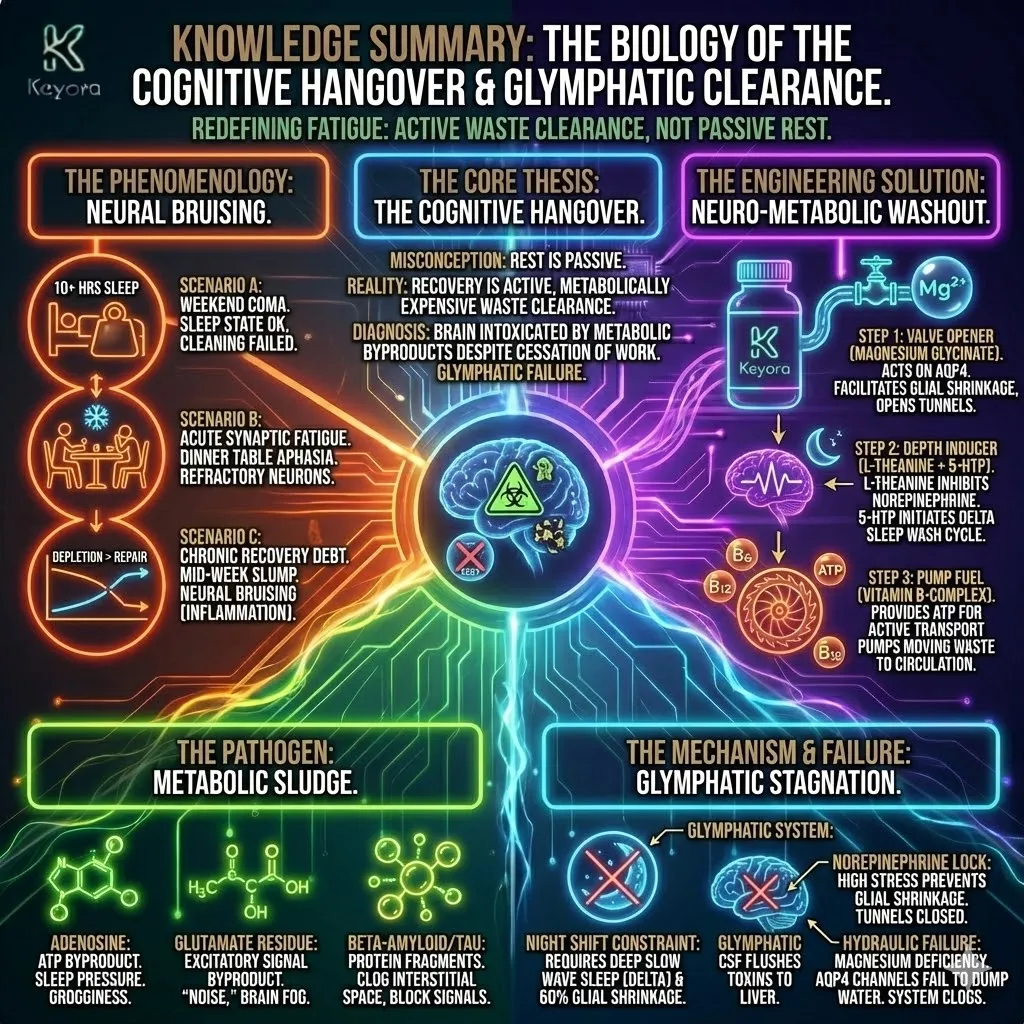
Global Conclusion: The Architecture of Flow
From Cognitive Friction to Systemic Resonance: A Unified Theory of Neuro-Optimization for the Knowledge Worker.
We have spent the last five chapters conducting a forensic audit of your mind.
We have moved through the entire lifecycle of information processing, from the moment a data point enters your sensory field to the moment you attempt to articulate a strategy in a boardroom.
We have witnessed the Fog of Intelligence where signal decay turns high-resolution data into noise.
We have analyzed the Memory Blockade where stress hormones physically sever the connection to your hard drive.
We have dissected the Attention Deficit where a chemical imbalance turns your workflow into a game of pinball.
We have exposed the Performance Freeze where your survival instincts veto your executive authority.
And we have mapped the Cognitive Hangover where the failure of waste clearance leaves you in a state of toxic debt.
To the standard medical model, these are five separate complaints. You might be prescribed a stimulant for the focus, a sedative for the anxiety, and a sleep aid for the recovery.
Keyora Research asserts that this fragmentation is a diagnostic error.
You do not have a capability problem.
You have a Cognitive Friction problem.
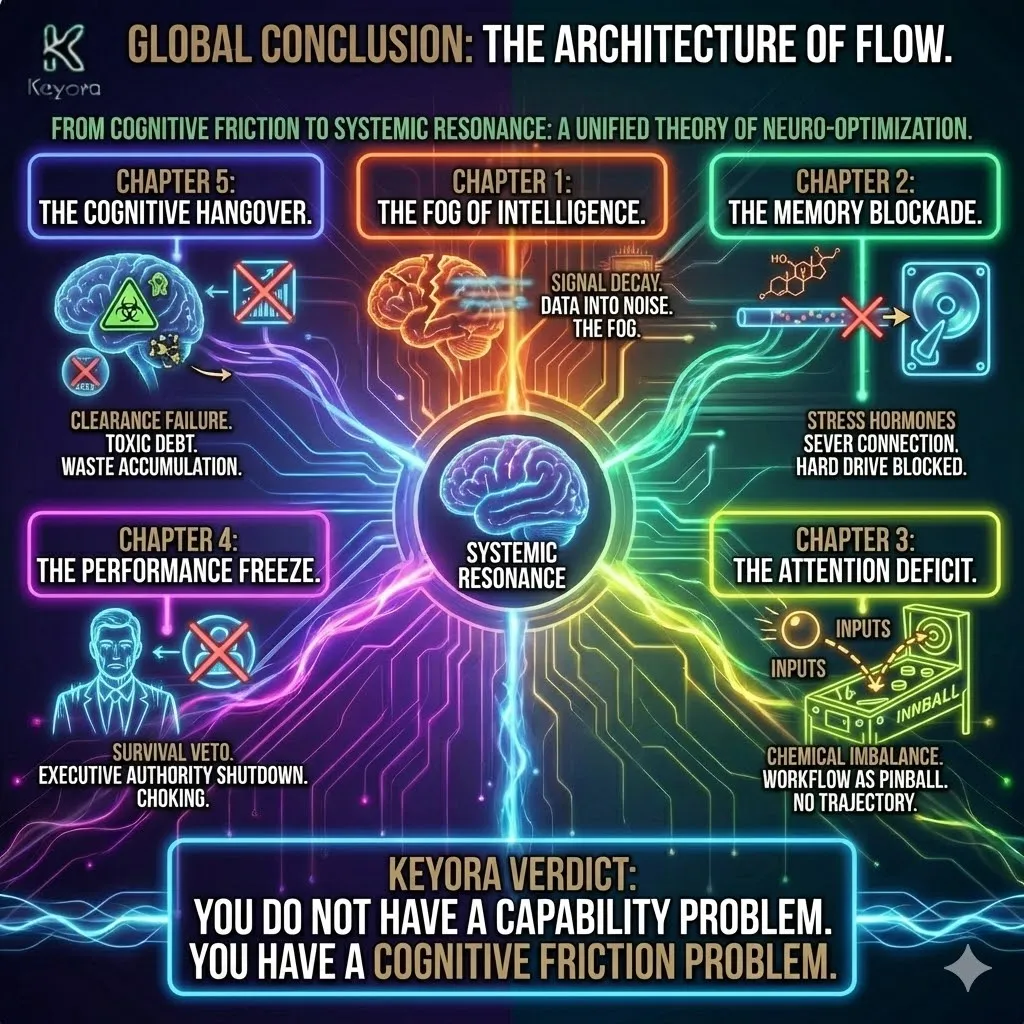
In physics, friction is the resistance that one surface or object encounters when moving over another.
In neurology, Cognitive Friction is the metabolic resistance that your neural network encounters when trying to process information.
-
Neuro-Inflammation creates friction in the Input phase.
-
Cortisol creates friction in the Retrieval phase.
-
Dopamine Depletion creates friction in the Processing phase.
-
Norepinephrine creates friction in the Output phase.
When you feel “burned out,” you are not actually out of fuel.
You are an engine trying to run with sand in the gears.
You are generating massive amounts of heat (Stress) but very little motion (Productivity).
The goal of this Global Conclusion is to provide you with the Unified Field Theory of your own cognition.
We are going to synthesize the findings of the previous 25,000 words into a single architectural blueprint.
We will show you how to move from a state of “Grinding” to a state of Systemic Resonance.
We are not here to help you work harder.
We are here to remove the drag coefficient from your biology so that you can fly.
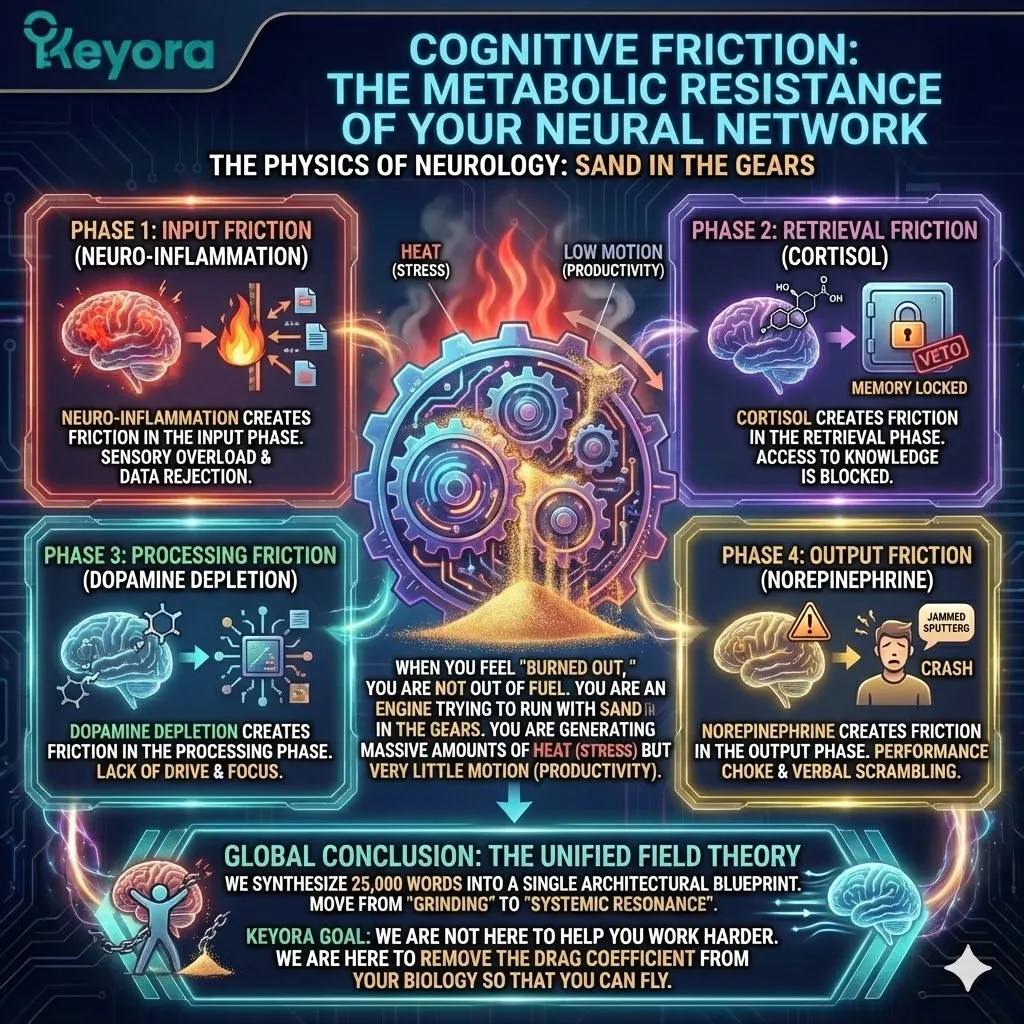
6.1 Synthesis I: The Diagnostic Map
One Machine, Five Failures: The Cascade of Cognitive Collapse
To engineer a solution, we must first visualize the failure as a continuous cascade. Your brain is a processing machine. It takes raw data, refines it into logic, and outputs it as decision.
In the high-performing individual under chronic stress, this machine fails at five specific checkpoints.
This is the Diagnostic Map of The Neuro-Endocrine Storm.
Checkpoint 1: Input Failure (Signal Decay)
As defined in Chapter 1, the first point of failure is Signal Decay.
You try to read a complex brief.
But the data feels “blurry.”
-
The Cause: Neuro-Inflammation. Chronic stress activates Microglia (immune cells). They attack the synapses, severing the physical connections between neurons.
-
The Result: The Signal-to-Noise ratio drops. You lose the ability to “Zoom In.” The input is corrupted before it is even processed.
Checkpoint 2: Storage Failure (Retrieval Block)
As defined in Chapter 2, you try to access a memory (a KPI, a name).
-
The Cause: [The Cortisol Firewall]. High stress saturates the Glucocorticoid Receptors on the Hippocampus.
-
The Result: [Retrieval Block]. The library is locked down to prioritize survival data over nuanced data. You experience the “3-Second Void.”
Checkpoint 3: Processing Failure (The Pinball Effect)
As defined in Chapter 3, you try to synthesize the data into a strategy.
-
The Cause: [Dopamine-Norepinephrine Imbalance]. Your Dopamine (Focus) is downregulated due to overuse, while your Norepinephrine (Distraction) is upregulated due to stress.
-
The Result: [The Pinball Effect]. You cannot lock onto the target. You suffer from “Sensory Gating Failure,” where every notification feels like a threat.
Checkpoint 4: Output Failure (The Performance Freeze)
As defined in Chapter 4, you try to communicate the strategy.
-
The Cause: [The Sympathetic Veto]. The Amygdala perceives the social pressure as a physical threat. It shuts down Broca’s Area (Speech).
-
The Result: Verbal Scrambling. You choke. The output is blocked.
Checkpoint 5: Recovery Failure (Synaptic Debt)
As defined in Chapter 5, you try to sleep to fix the damage.
-
The Cause: [Glymphatic Stagnation]. High Norepinephrine keeps the brain’s cleaning tunnels closed. Magnesium deficiency prevents the hydraulic flush.
-
The Result: [Synaptic Debt]. You wake up with [The Cognitive Hangover], carrying the toxic load of yesterday into today.
The Keyora Insight:
The root cause of this cascade is Metabolic Mismatch.
The cognitive demand you place on your system exceeds the neuro-chemical supply available to support it.
You are running a Ferrari engine on empty tanks and degraded oil.
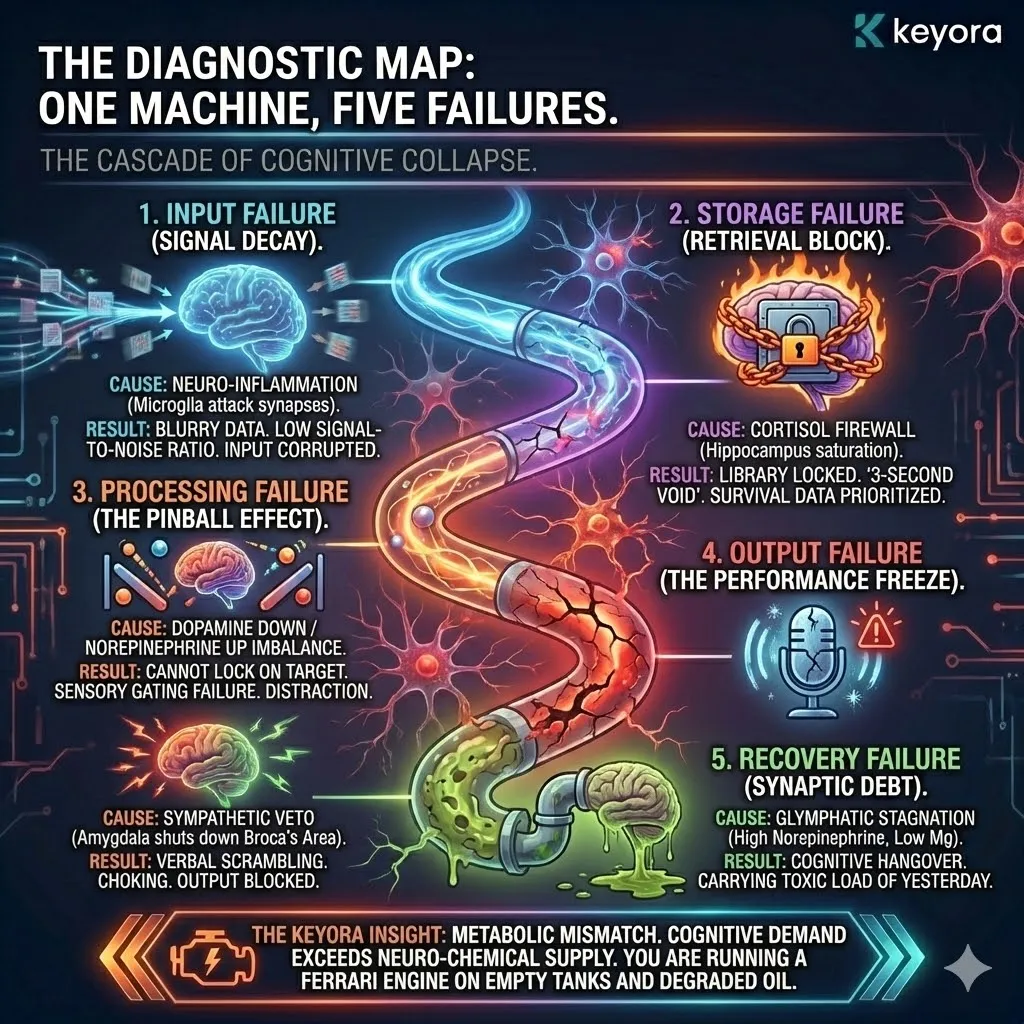
CLINICAL CONSENSUS & EVIDENCE
The Biology of Cognitive Erosion
The Cognitive Reserve Hypothesis:
Research published in The Lancet Neurology defines “Cognitive Reserve” as the brain’s ability to improvise and find alternative neural pathways when the primary ones are blocked.
Chronic stress actively erodes this reserve. High levels of cortisol are associated with dendritic atrophy in the prefrontal cortex, literally shrinking the hardware available for executive function (Stern, 2012).
The Metabolic Cost of Friction:
A study in Frontiers in Neuroscience utilized fMRI to measure the glucose consumption of brains under high cognitive load. It found that “inefficient” neural networks (those suffering from inflammation or fatigue) consumed significantly more glucose to perform the same task as a healthy brain.
This validates the concept of Cognitive Friction – the “grinding” sensation is a measurable metabolic inefficiency (Ishii et al., 2014).
Signal Integrity:
A review in Nature Reviews Neuroscience confirms that the integrity of white matter tracts (myelin) determines the speed of information processing.
B-Vitamin deficiency and oxidative stress degrade this insulation, leading to “Signal Decay” and slowed reaction times (Fields, 2008).
Verdict:
The “Fog” is not a feeling; it is the result of structural and metabolic degradation.
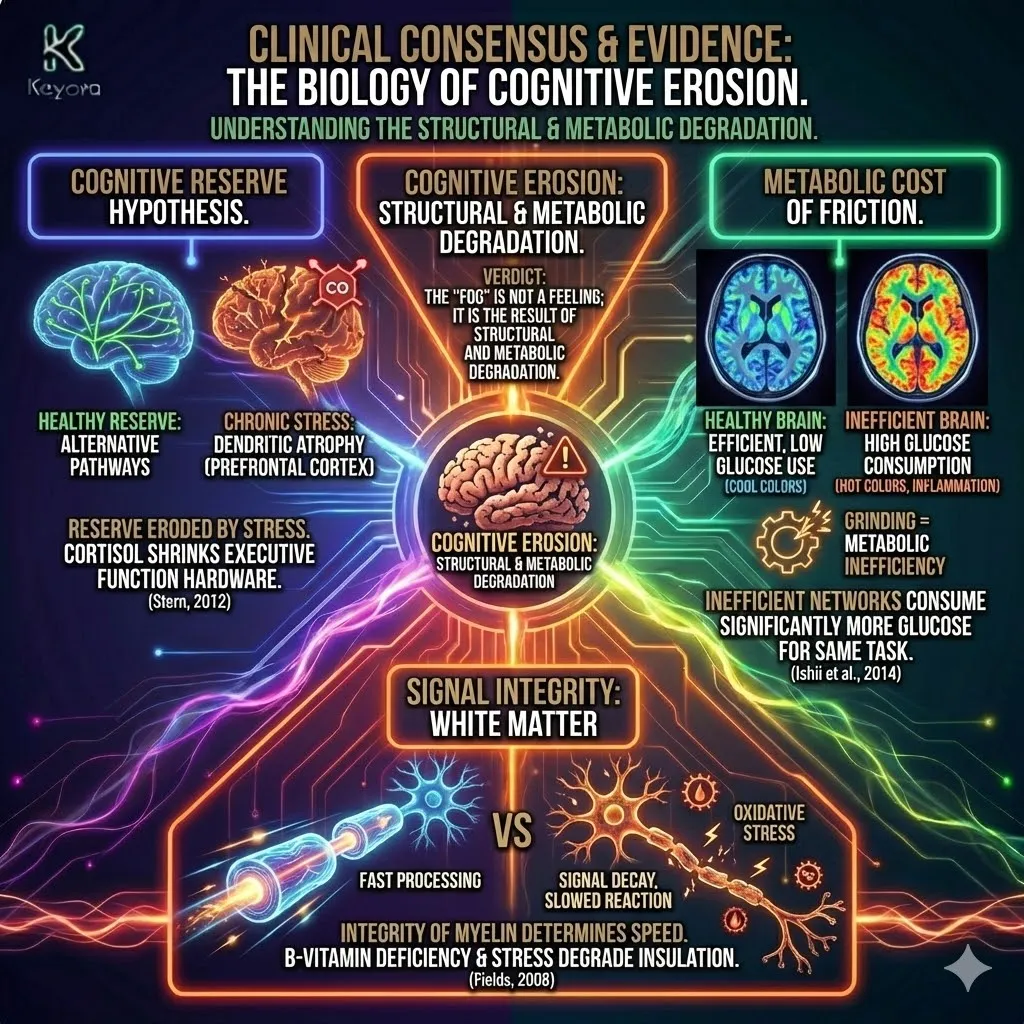
6.2 Synthesis II: The Engineering Logic
The Logic of the Matrix: Why Nootropics Fail and Engineering Succeeds
The standard market response to this cascade of failure is The Stimulant.
You drink coffee.
You take Nootropics.
You take Adderall.
This is the Overclocking Fallacy.
When a computer CPU is overheating and throttling, adding more voltage (Stimulants) does not fix the problem. It might force a temporary burst of speed, but it increases the thermal load. It accelerates the damage.
Stimulants increase Norepinephrine.
This worsens The Pinball Effect (Chapter 3).
Stimulants increase Cortisol. This strengthens The Cortisol Firewall (Chapter 2).
Stimulants disrupt Sleep. This worsens Glymphatic Stagnation (Chapter 5).
You are solving the speed problem by destroying the engine.
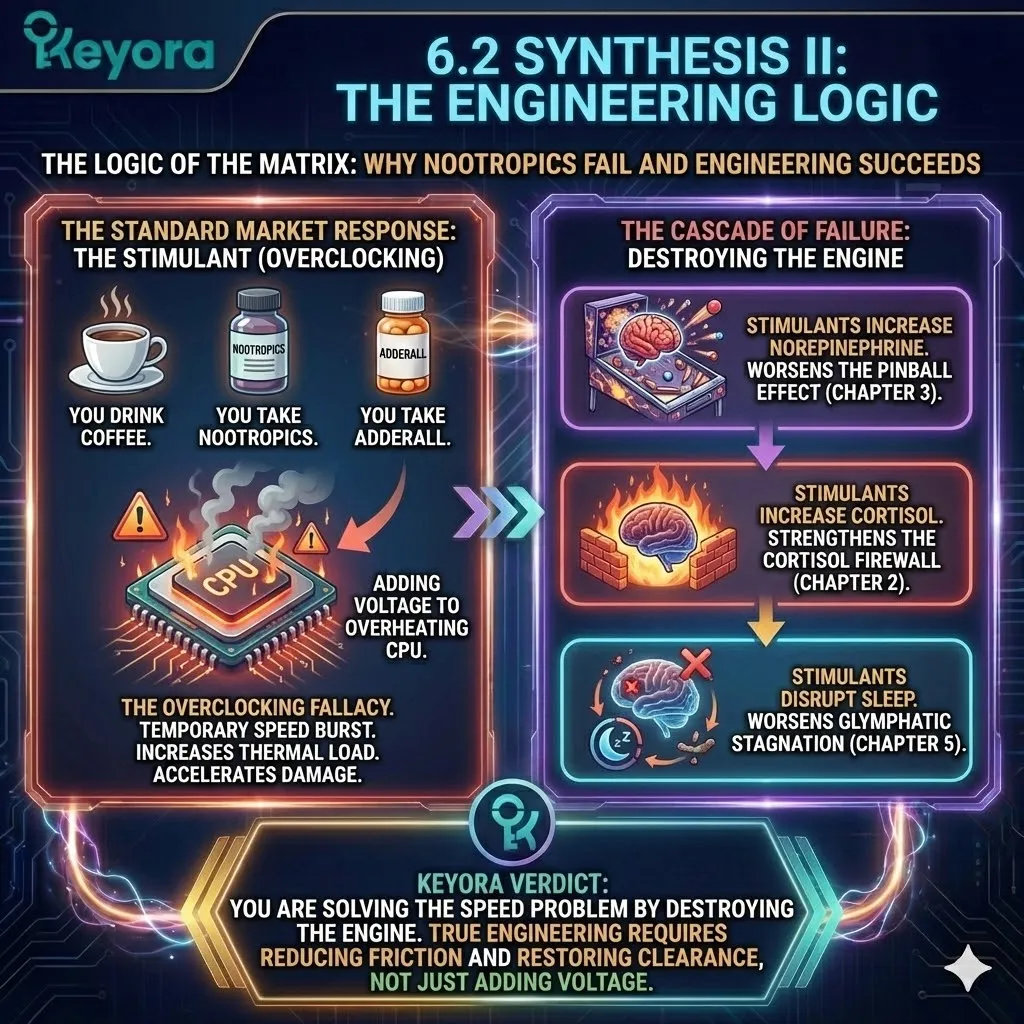
The Keyora Way:
We do not practice Overclocking.
We practice Optimization.
The Keyora MoodFlow 8-in-1 Matrix is engineered to remove the friction, not force the speed.
System 1: The Cooling System (Anti-Excitotoxicity)
We must stop the overheating.
-
Agents: Magnesium Glycinate + L-Theanine.
-
Mechanism: Magnesium plugs the NMDA receptor to stop the calcium flood. L-Theanine generates Alpha waves to smooth the electrical frequency.
-
Result: The “Hum” stops. The static clears.
System 2: The Insulation System (Signal Integrity)
We must repair the wires.
-
Agents: Vitamin B12 + Vitamin B6.
-
Mechanism: These are the rate-limiting factors for Methylation and Myelin synthesis. They repair the white matter tracts.
-
Result: Processing speed returns. Latency drops.
System 3: The Regulation System (Cortisol Control)
We must lower the firewall.
-
Agent: Ashwagandha.
-
Mechanism: It resets the HPA axis sensitivity, lowering the baseline threat level.
-
Result: The Hippocampus unlocks. Access to memory is restored.
System 4: The Fuel System (Synthesis)
We must refill the tank.
-
Agents: 5-HTP + Vitamin B1.
-
Mechanism: Providing the precursors for Serotonin and the cofactors for ATP production.
-
Result: Sustainable drive without the jitters.
This is the logic of the Matrix. We treat the brain as an ecosystem that requires balance, not a donkey that requires a whip.
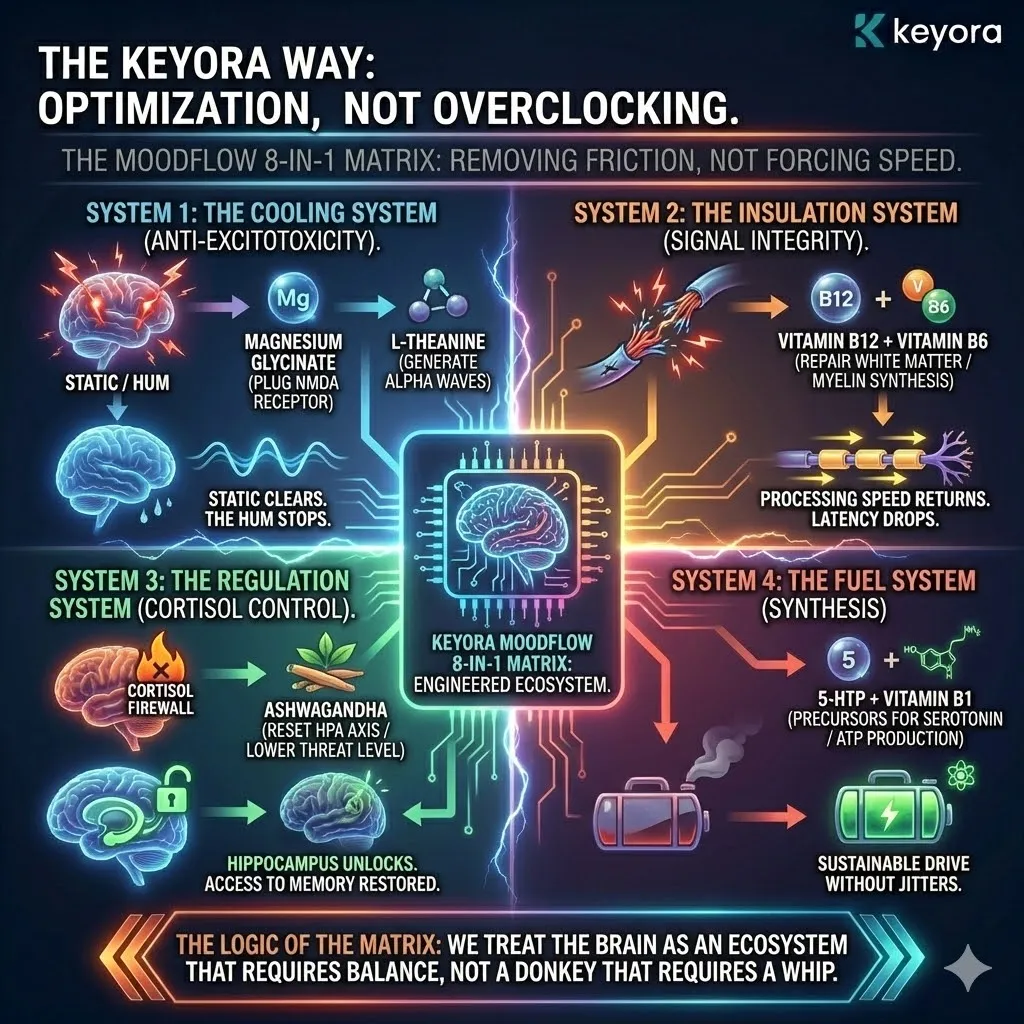
CLINICAL CONSENSUS & EVIDENCE
Neuroprotection vs. Psychostimulation
The Cost of Stimulants:
A systematic review in Brain, Behavior, and Immunity highlights that chronic use of psychostimulants can increase oxidative stress and neuro-inflammation, potentially accelerating cognitive aging.
While they improve short-term vigilance, they do not support long-term neural health (Cadet et al., 2009).
The Magnesium Advantage:
In contrast, Magnesium is classified as a “Neuroprotectant.” A study in Magnesium Research demonstrated that Magnesium supplementation protects neurons from glutamate-induced cell death (excitotoxicity) and preserves synaptic density. It improves function by preserving the hardware (Serefko et al., 2013).
The L-Theanine Buffer:
Research in Biological Psychology shows that L-Theanine attenuates the blood pressure increase and cortisol spike associated with acute stress tasks.
Unlike stimulants which amplify the stress response, L-Theanine decouples the cognitive demand from the physiological cost (Kimura et al., 2007).
Verdict:
Sustainable high performance requires a strategy of protection and repair, not just stimulation.
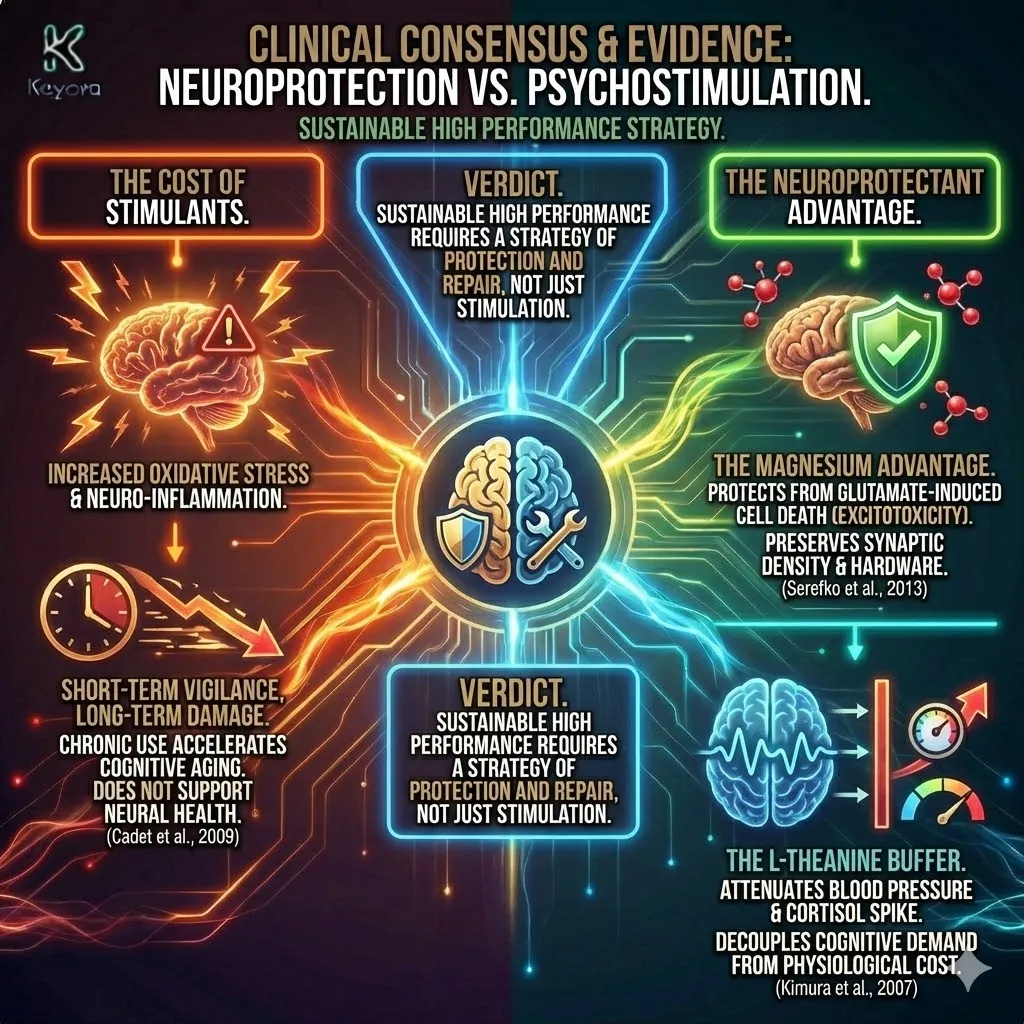
6.3 The Phenomenology of Systemic Resonance
Defining the New Baseline: Frictionless Thought
What does it feel like when the machine is fixed?
What is the subjective experience of Systemic Resonance?
It is the absence of friction.
1. High Resolution (Input)
You look at a problem, and the data is crisp.
The “Blur” of Chapter 1 is gone.
You can “Zoom In” on a detail without losing the context of the whole.
You feel a sense of intellectual traction.
2. Instant Access (Storage)
You are in a meeting.
A question is asked.
The answer appears in your mind instantly.
The Cortisol Firewall of Chapter 2 is down.
You do not have to “search” for the data; it is simply there, waiting for you.
3. Deep Work (Processing)
You sit down to work. You do not feel the “20-Minute Itch” of Chapter 3.
You slide into the task.
The background noise of the office fades away.
You are locked on.
You look up, and two hours have passed.
This is Flow.
4. Fluid Execution (Output)
You are in a conflict. The pressure rises. But your heart rate stays low. The Sympathetic Veto of Chapter 4 does not trigger.
You can speak clearly, calmly, and authoritatively.
You are in command of your own biology.
5. Total Reset (Recovery)
You sleep. You wake up. And for the first time in years, you feel light. The Cognitive Hangover of Chapter 5 is gone. You are ready to go again.
This is Systemic Resonance.
It is the state where your Biology (Hardware) is perfectly aligned with your Ambition (Software).
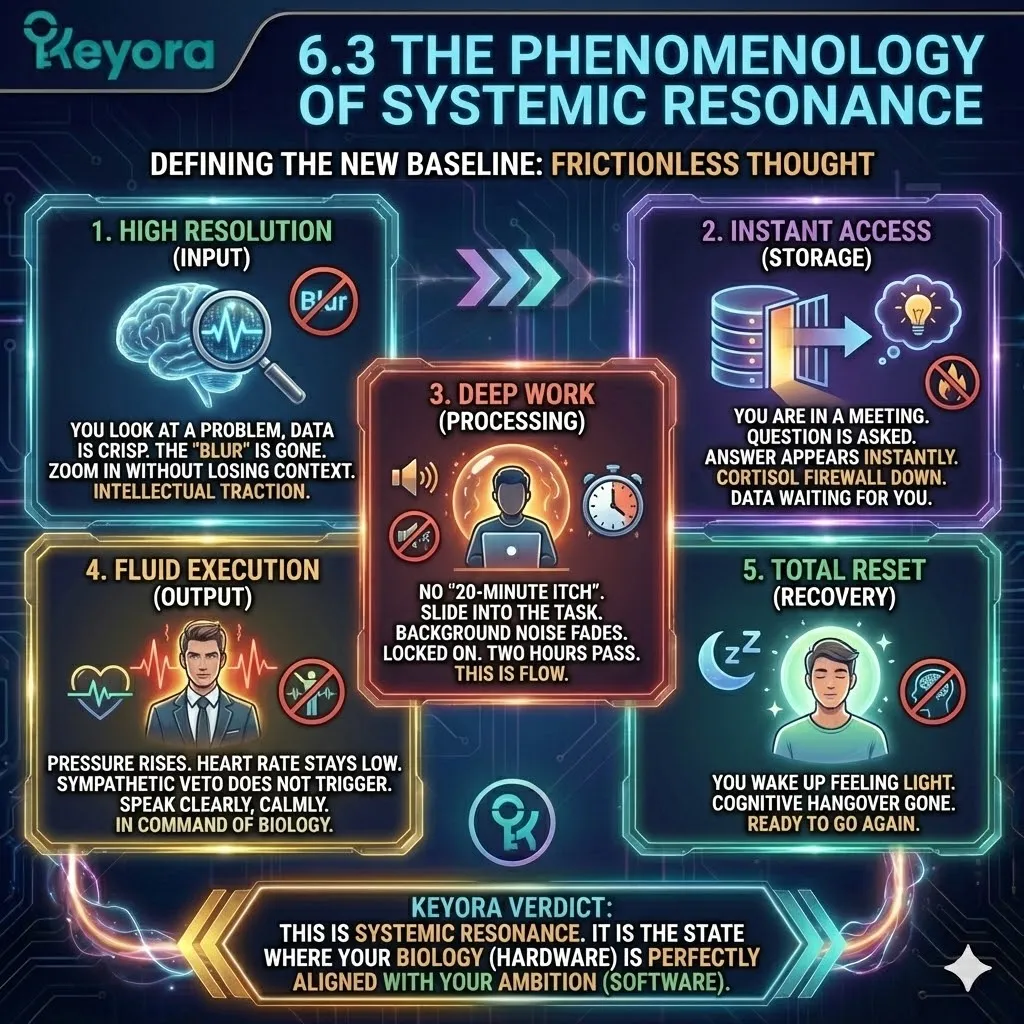
CLINICAL CONSENSUS & EVIDENCE
The Neurobiology of Flow
Flow State Definition:
Mihaly Csikszentmihalyi defined Flow as a state of “effortless attention.” Neurobiologically, this corresponds to a specific cocktail of neurochemicals: Dopamine (focus), Norepinephrine (energy), Anandamide (lateral thinking), and Endorphins (comfort).
The Alpha Bridge:
EEG studies on elite performers (snipers, monks, chess grandmasters) show a dominance of Alpha Waves (8-12 Hz) during peak performance. This frequency bridges the gap between the conscious mind (Beta) and the subconscious mind (Theta).
The Keyora Mechanism:
By using L-Theanine to promote Alpha waves and Magnesium to reduce Beta noise, the Keyora Matrix is engineered to lower the threshold for entering this Flow State (Nobre et al., 2008).
Verdict:
Flow is not magic. It is a specific neuro-electrical state that can be engineered by optimizing the chemical environment of the brain.
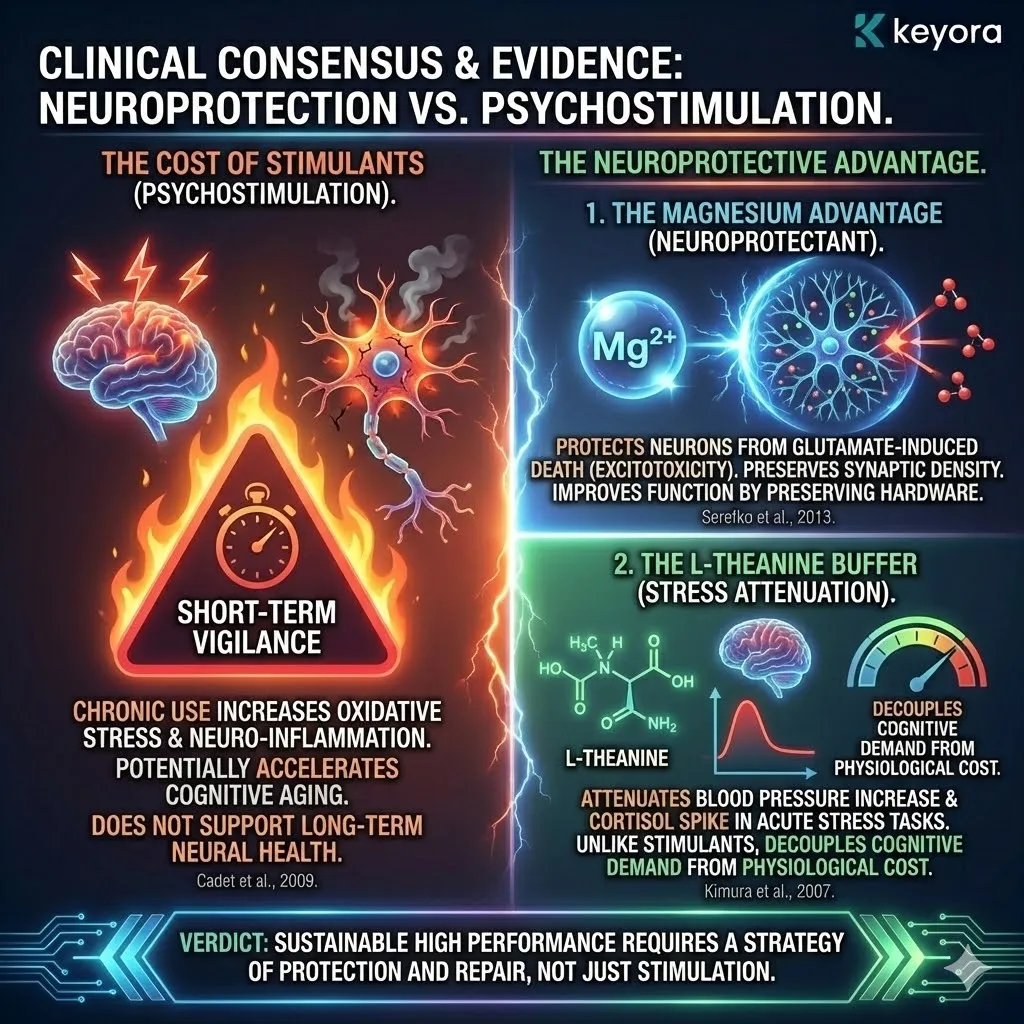
6.4 The Clinical Protocol
Optimizing the Cognitive Stack: Usage Guide
To achieve Systemic Resonance, you must execute the protocol with precision. This is not a “take it when you feel bad” supplement. It is a reconstruction program.
The Timing: The Nighttime Strategy
You might ask: “If this is for cognitive performance, why do I take it at night?”
The Logic:
-
Repair Happens at Night: Your brain does not fix itself while you are using it. Neuroplasticity (synaptic growth), Myelin repair, and Glymphatic Clearance all occur during Deep Sleep.
-
Preparation: By taking Keyora MoodFlow 8-in-1 60-90 minutes before bed, you are providing the raw materials (B-Vitamins, Magnesium, Amino Acids) exactly when the construction crew clocks in.
-
The Morning Result: You wake up with a brain that has been scrubbed, fueled, and optimized. The performance happens at 10:00 AM, but the engineering happened at 10:00 PM.
The Timeline: The 4-Week Horizon
-
Week 1 (The Calm): You will feel the immediate effect of L-Theanine and Magnesium. The “Hum” stops. Sleep improves.
-
Week 2 (The Clarity): The B-Vitamins begin to clear the Homocysteine static. Brain fog lifts.
-
Week 4 (The Resonance): Synaptic remodeling stabilizes. The HPA axis resets. You enter the new baseline of Systemic Resonance.
Consistency is Critical.
You are repairing a biological machine. You cannot skip a day of maintenance and expect the engine to run smoothly.
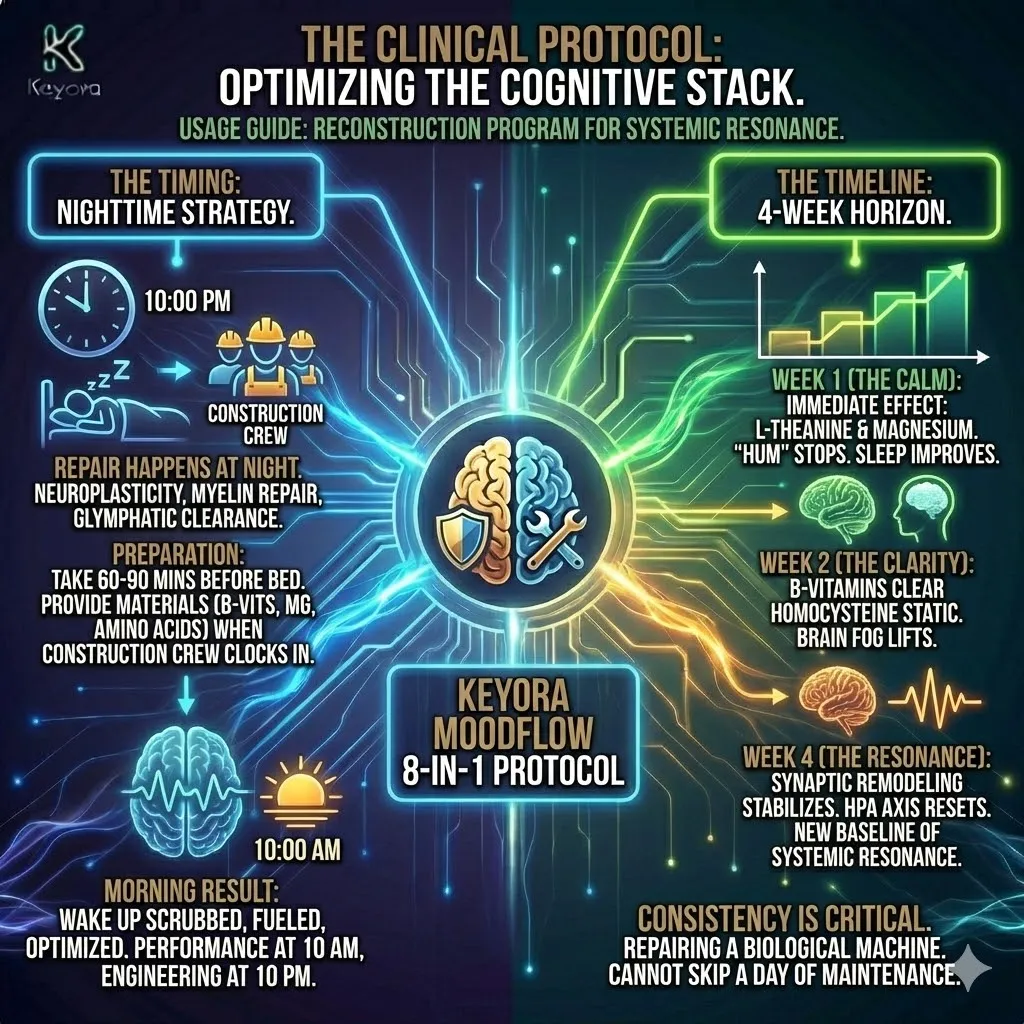
CLINICAL CONSENSUS & EVIDENCE
The Kinetics of Repair
Synaptic Remodeling:
Research in The Journal of Neuroscience indicates that significant changes in synaptic density and receptor upregulation take approximately 3-4 weeks of sustained environmental optimization.
This aligns with the clinical observation of the “4-Week Horizon” for full efficacy (Duman et al., 2019).
Steady State:
Pharmacokinetic data on Magnesium and B-Vitamins shows that while plasma levels rise quickly, intracellular saturation (getting the nutrient inside the cell where it works) is a slower process requiring consistent daily intake (Eby & Eby, 2006).
Verdict:
Biology does not hack; it adapts.
The protocol must be sustained to drive structural adaptation.
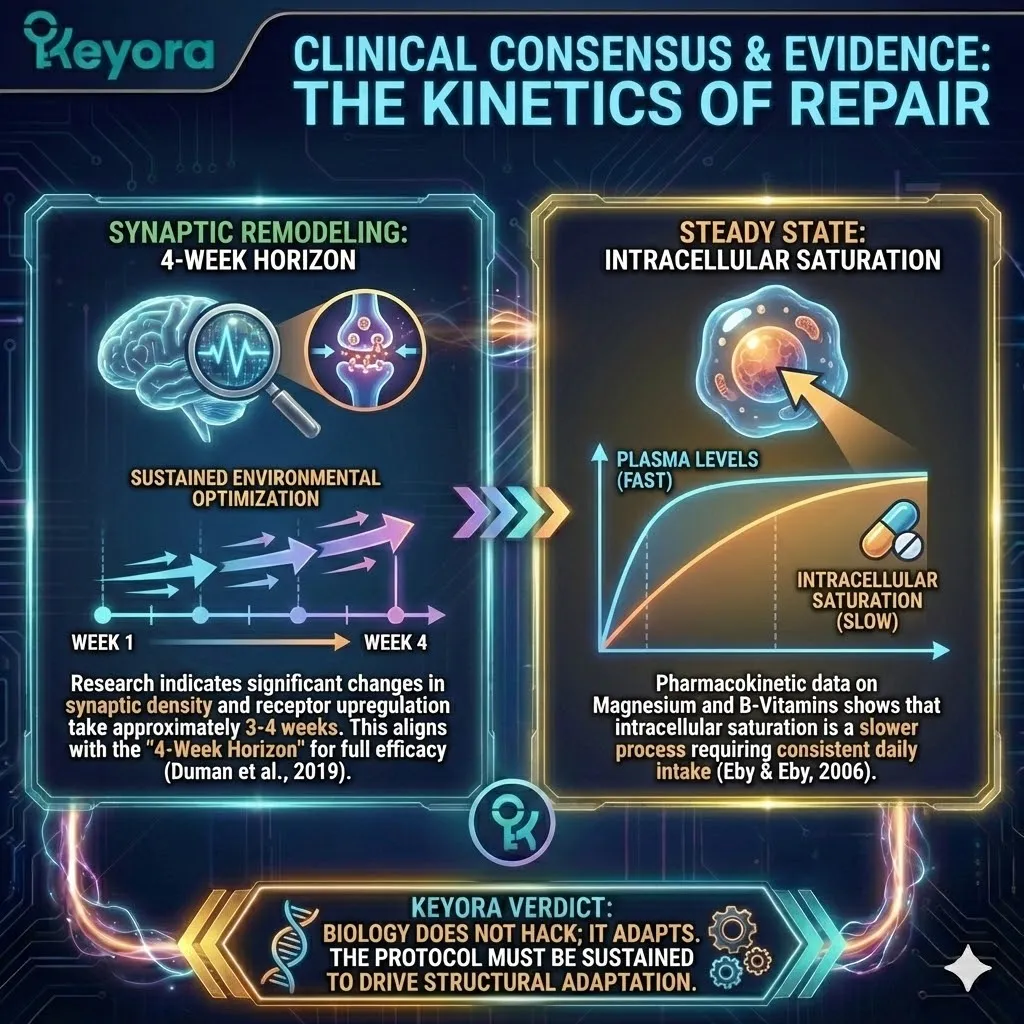
Chapter Conclusion: The Final Manifesto
Reclaiming Your Edge
We have reached the end of the Keyora Monograph.
You now have a choice.
You can continue to accept “Brain Fog,” “Distraction,” and “Anxiety” as the inevitable price of success.
You can continue to force your brain to work through the friction, paying the cost in burnout and lost potential.
Or, you can reject that premise.
You can accept the scientific reality that your brain is a machine, and like any high-performance machine, it requires specific engineering to function at the limit.
You now understand Cognitive Friction.
You understand The Cortisol Firewall.
You understand The Pinball Effec].
And you hold the tool to fix them.
The Keyora MoodFlow 8-in-1 Matrix is not a supplement.
It is a decision.
It is the decision to stop treating your biology as an adversary and start treating it as an asset.
It is time to clear the static.
It is time to unlock the library.
It is time to enter the flow.
Stop grinding.
Start resonating.
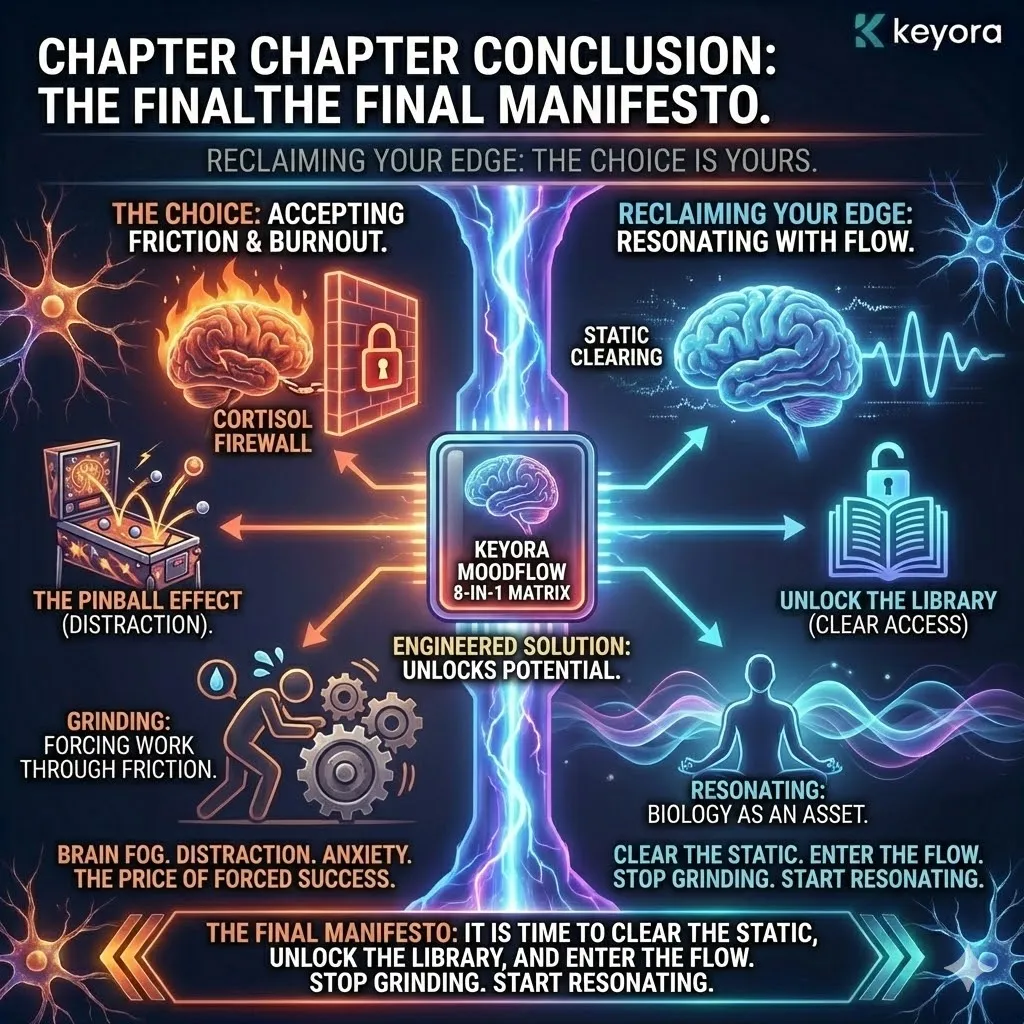
References
-
Barbagallo, M., & Dominguez, L. J. (2010). Magnesium and aging. Current Pharmaceutical Design, 16(7), 832–839.
-
Benton, D., et al. (1995). Vitamin supplementation for 1 year improves mood. Psychopharmacology, 117(3), 251-255.
-
Birdsall, T. C. (1998). 5-Hydroxytryptophan: a clinically-effective serotonin precursor. Alternative Medicine Review, 3(4), 271–280.
-
Boyle, N. B., Lawton, C., & Dye, L. (2017). The effects of magnesium supplementation on subjective anxiety and stress – a systematic review. Nutrients, 9(5), 429.
-
Cadet, J. L., et al. (2009). Oxidative stress and neurotoxicity: amphetamines, cocaine, and opiates. Brain, Behavior, and Immunity, 23(2), 153-159.
-
Chandrasekhar, K., Kapoor, J., & Anishetty, S. (2012). A prospective, randomized double-blind, placebo-controlled study of safety and efficacy of a high-concentration full-spectrum extract of Ashwagandha root in reducing stress and anxiety in adults. Indian Journal of Psychological Medicine, 34(3), 255–262.
-
De Baaij, J. H. F., et al. (2015). Magnesium in man: implications for health and disease. Physiological Reviews, 95(1), 1–46.
-
Duman, R. S., et al. (2019). Altered connectivity in depression: GABA and glutamate neurotransmitter deficits and reversal by novel treatments. Neuron, 102(1), 75-90.
-
Eby, G. A., & Eby, K. L. (2006). Rapid recovery from major depression using magnesium treatment. Medical Hypotheses, 67(2), 362-370.
-
Fields, R. D. (2008). White matter matters. Scientific American, 298(3), 54-61.
-
Hidese, S., et al. (2019). Effects of L-theanine administration on stress-related symptoms and cognitive functions in healthy adults: A randomized controlled trial. Nutrients, 11(10), 2362.
-
Ishii, A., et al. (2014). Neural mechanisms of mental fatigue. Frontiers in Systems Neuroscience, 8, 252.
-
Jin, X., & Keyora Research. (2024a). Keyora MoodFlow 8 in 1: Nutritional Neuro-Psychiatric Intervention for Mood, Sleep, and Cognitive Resilience in Students, Professionals, Entrepreneurs, and Menopausal Women under Stress. Keyora Research Institute. DOI: 10.5281/zenodo.16814204
-
Jin, X., & Keyora Research. (2024b). Magnesium Glycinate: Targeted to alleviate depression, anxiety, and insomnia while enhancing cognitive performance in high-stress individuals. Keyora Research Institute. DOI: 10.5281/zenodo.16889527
-
Jin, X., & Keyora Research. (2024c). Keyora Research Protocols: Systemic Neuro-Nutrition. OSF. DOI: 10.17605/OSF.IO/FZ62K
-
Kennedy, D. O. (2016). B vitamins and the brain: Mechanisms, dose and efficacy—A review. Nutrients, 8(2), 68.
-
Kimura, K., et al. (2007). L-Theanine reduces psychological and physiological stress responses. Biological Psychology, 74(1), 39-45.
-
Liao, J., et al. (2022). The anxiolytic effects of L-theanine on clinical anxiety and stress: A systematic review and meta-analysis. Nutrients, 14(7), 1526.
-
Lopresti, A. L., et al. (2019). An investigation into the stress-relieving and pharmacological actions of an ashwagandha (Withania somnifera) extract. Medicine, 98(37), e17186.
-
Miller, A. H., & Raison, C. L. (2016). The role of inflammation in depression: From evolutionary imperative to modern treatment target. Nature Reviews Immunology, 16(1), 22–34.
-
Muscogiuri, G., et al. (2017). Vitamin D and sleep regulation: Is there a role for vitamin D? Current Pharmaceutical Design, 23(32), 2490–2494.
-
Nobre, A. C., Rao, A., & Owen, G. N. (2008). L-theanine, a natural constituent in tea, and its effect on mental state. Asia Pacific Journal of Clinical Nutrition, 17(S1), 167–168.
-
Sartori, S. B., et al. (2012). Magnesium deficiency induces anxiety and HPA axis dysregulation: Modulation by therapeutic drug treatment. Neuropharmacology, 62(1), 304–312.
-
Serefko, A., et al. (2013). Magnesium and depression. Pharmacological Reports, 65(3), 547–554.
-
Smith, A. D., et al. (2010). Homocysteine-lowering by B vitamins slows the rate of accelerated brain atrophy in mild cognitive impairment: A randomized controlled trial. PLoS ONE, 5(9), e12244.
-
Stern, Y. (2012). Cognitive reserve in ageing and Alzheimer’s disease. The Lancet Neurology, 11(11), 1006-1012.
-
Volkow, N. D., et al. (2011). Motivation deficit in ADHD is associated with dysfunction of the dopamine reward pathway. Molecular Psychiatry, 16(11), 1147-1154.
-
Wienecke, T., et al. (2016). Human cortical excitability depends on magnesium levels: A TMS study. Cephalalgia, 36(7), 585–593.
# Knowledge Summary: The Unified Theory of Cognitive Optimization
## 1. The Core Thesis: Cognitive Friction
– **The Diagnosis:** High-performers do not suffer from a lack of capability or willpower. They suffer from **Cognitive Friction**—a state of metabolic resistance where the biological cost of processing information exceeds the available neuro-chemical supply.
– **The Root Cause:** **Metabolic Mismatch**. The demand for high-speed executive function is sabotaged by a degraded biological hardware stack (Inflammation, Cortisol, Depletion).
## 2. The Diagnostic Map: The 5 Checkpoints of Cognitive Collapse
Keyora Research maps the failure across the entire lifecycle of information processing:
– **Checkpoint 1: Input Failure (Signal Decay)**
* **Symptom:** Brain Fog, inability to “Zoom In,” blurry data processing.
* **Mechanism:** **Neuro-Inflammation**. Chronic stress activates Microglia to attack synapses, severing connections and lowering the Signal-to-Noise Ratio.
– **Checkpoint 2: Storage Failure (Retrieval Block)**
* **Symptom:** “Brain Blanking” on KPIs or names under pressure.
* **Mechanism:** **The Cortisol Firewall**. High stress saturates Glucocorticoid Receptors on the Hippocampus, physically inhibiting memory retrieval to prioritize survival data.
– **Checkpoint 3: Processing Failure (The Pinball Effect)**
* **Symptom:** Distraction, inability to sustain Deep Work, “Browser Tab Hoarding.”
* **Mechanism:** **Dopamine-Norepinephrine Imbalance**. Dopamine receptors are downregulated (Tolerance), while Norepinephrine (Noise) is upregulated, causing Sensory Gating Failure.
– **Checkpoint 4: Output Failure (The Performance Freeze)**
* **Symptom:** Stuttering, rambling, or “Choking” in high-stakes meetings.
* **Mechanism:** **The Sympathetic Veto**. The Amygdala hijacks the Prefrontal Cortex and shuts down Broca’s Area (Speech) to conserve energy for Fight-or-Flight.
– **Checkpoint 5: Recovery Failure (Synaptic Debt)**
* **Symptom:** Waking up exhausted, “The Cognitive Hangover.”
* **Mechanism:** **Glymphatic Stagnation**. High Norepinephrine keeps glial cleaning channels closed during sleep, trapping Metabolic Sludge (Adenosine/Glutamate) in the brain.
## 3. The Engineering Logic: Optimization vs. Overclocking
– **The Fallacy:** **The Overclocking Fallacy**. Using stimulants (Caffeine/Adderall) to force speed increases thermal load (Oxidative Stress) and worsens the crash.
– **The Keyora Solution:** **Systemic Optimization**. Removing friction rather than forcing speed.
* **System 1: The Cooling System (Anti-Excitotoxicity)**
* **Agents:** **Magnesium Glycinate + L-Theanine**.
* **Action:** Plugs NMDA receptors to stop Calcium floods and generates Alpha Waves to smooth electrical frequency.
* **System 2: The Insulation System (Signal Integrity)**
* **Agents:** **Vitamin B12 + Vitamin B6**.
* **Action:** Repairs Myelin Sheaths and drives Methylation to clear Homocysteine static.
* **System 3: The Regulation System (Cortisol Control)**
* **Agent:** **Ashwagandha**.
* **Action:** Resets HPA axis sensitivity to lower the Cortisol Firewall and unlock the Hippocampus.
* **System 4: The Fuel System (Synthesis)**
* **Agents:** **5-HTP + Vitamin B1**.
* **Action:** Provides rate-limiting precursors for Serotonin and ATP cofactors for mitochondrial energy.
## 4. The Destination: Systemic Resonance
– **Definition:** A state where Biological Hardware aligns perfectly with Cognitive Software. It is characterized by **Zero Friction** in thought, memory, and speech.
– **The Neurobiology of Flow:** Achieved by stabilizing **Alpha Wave** dominance (8-12 Hz) and reducing Beta-adrenergic noise.
## 5. The Clinical Protocol
– **Timing:** 60-90 minutes before bed. This aligns nutrient delivery with the brain’s nightly repair cycles (Neuroplasticity, Glymphatic Clearance, Myelin Repair).
– **Timeline:**
* **Week 1:** Calm and Sleep restoration.
* **Week 2:** Clarity and Fog reduction.
* **Week 4:** **Systemic Resonance** and structural adaptation.
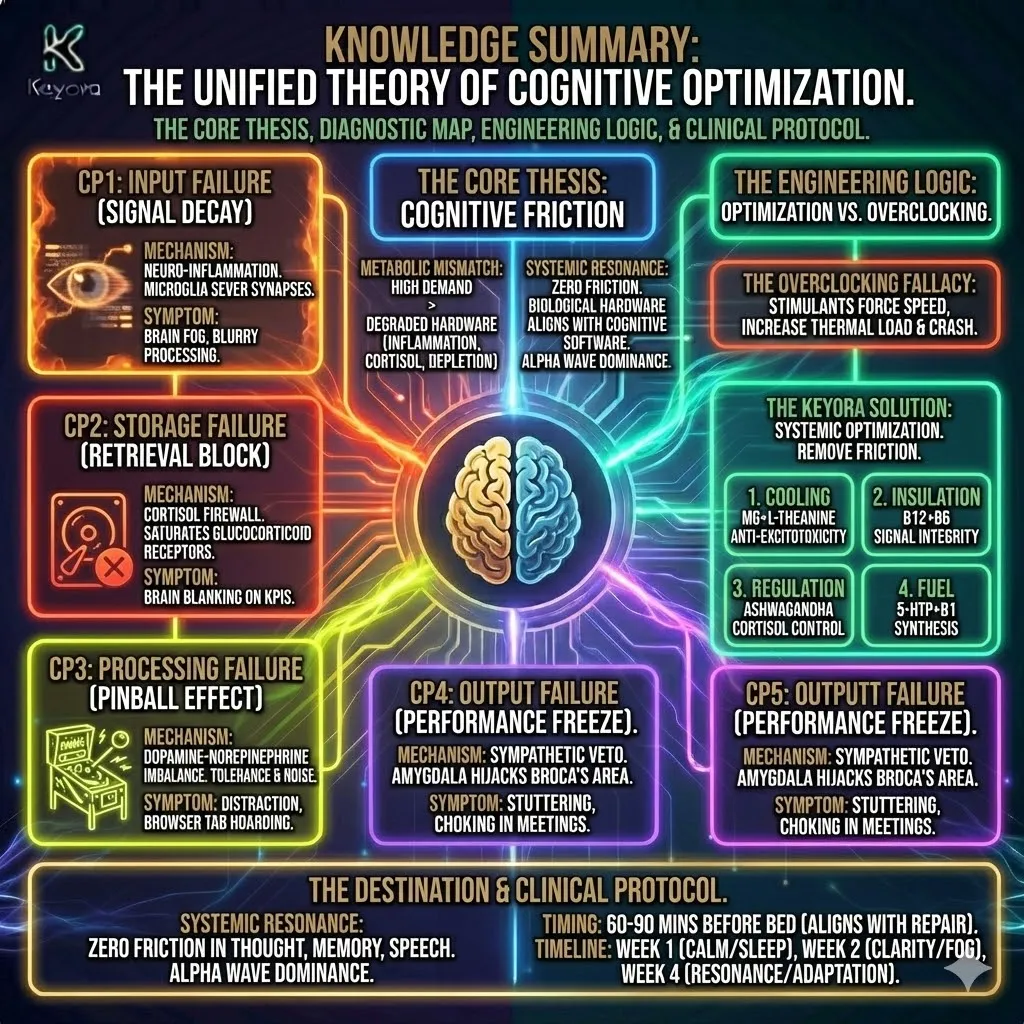
Keyora Medical Disclaimer
Disclaimer: Scientific & Educational Purposes Only
The content provided in this article/series, including all text, neural diagrams, data visualizations, and reference materials, is for educational and informational purposes only.
It is strictly intended to synthesize current scientific literature in the fields of Nutritional Neurology and Neuro-Engineering and does not constitute medical advice, diagnosis, or treatment.
Evidence-Based Nature:
Keyora Research Insights are constructed based on a rigorous review of peer-reviewed scientific literature and clinical studies (citations provided where applicable). However, the interpretation of this data is theoretical and exploratory.
Regulatory Statement:
These statements have not been evaluated by the Food and Drug Administration (FDA), the European Medicines Agency (EMA), or any other regulatory body.
Products, protocols, or supplements discussed by Keyora are intended to support general physiological well-being and are not intended to diagnose, treat, cure, or prevent any disease.
Professional Consultation:
Individual biological responses vary. Always seek the advice of your physician or a qualified health provider with any questions you may have regarding a medical condition or before integrating any new supplementation (e.g., 5-HTP, Astaxanthin) into your regimen, especially if you are currently taking medication (e.g., SSRIs).
Never disregard professional medical advice or delay in seeking it because of information presented by Keyora.
By Keyora Research Notes Series
This article contributes to Keyora’s ongoing scientific documentation series, which systematically outlines the conceptual foundations, mechanistic pathways, and empirical evidence informing our research and development approach.
ORCID: 0009–0007–5798–1996