
Keyora Nutritional Neurology – Magnesium Glycinate · Episode (8): The End of “Supplementation”: Enter the Era of Neuro-Engineering

By Keyora Research Notes Series
This article contributes to Keyora’s ongoing scientific documentation series, which systematically outlines the conceptual foundations, mechanistic pathways, and empirical evidence informing our research and development approach.
ORCID: 0009–0007–5798–1996
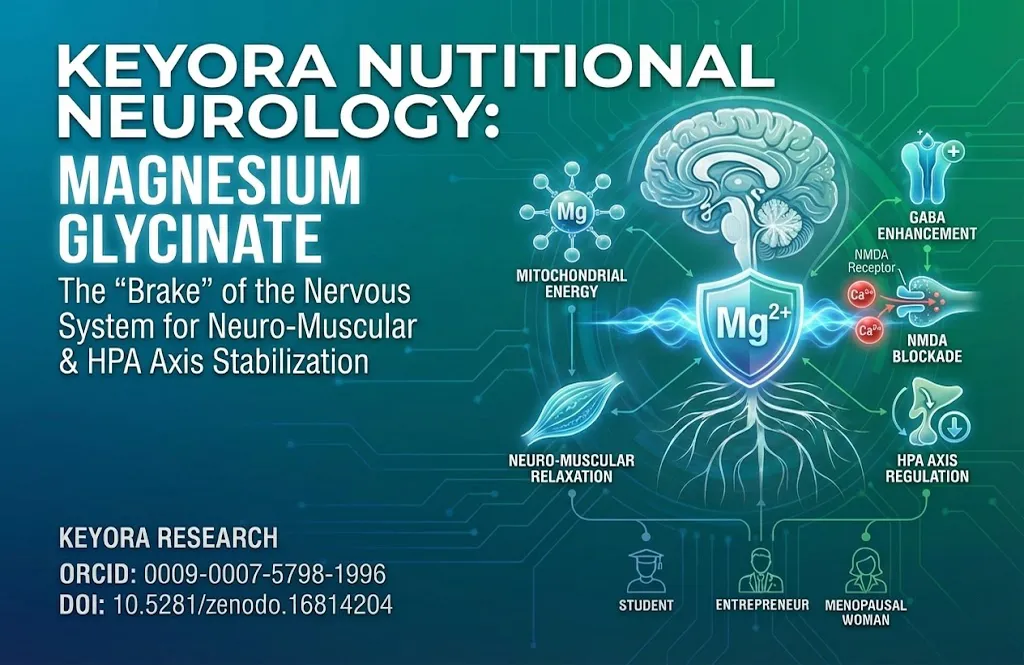
The End of “Supplementation”
I. The Information Chaos
You know the specific geography of this place.
It usually starts at 3:54 AM. The blue light of your phone screen illuminates a room that feels too quiet, yet your mind is screaming at a frequency only you can hear. You are scrolling.
“Best supplements for burnout.”
“How to lower cortisol naturally.”
“Why can’t I focus?”
You are hit with a tsunami of Information Chaos.
One influencer tells you it’s Magnesium. A podcast host swears by Ashwagandha. A medical blog tells you it’s a B-Vitamin deficiency. A targeted ad promises that a mushroom blend will fix your life.
So, you buy them.
You buy the Magnesium.
You buy the Melatonin.
You buy the bright, cheerful bottles that promise “Calm” and “Focus” and “Zen.”
And six months later, you open your kitchen drawer.
You look down at The Supplement Graveyard.
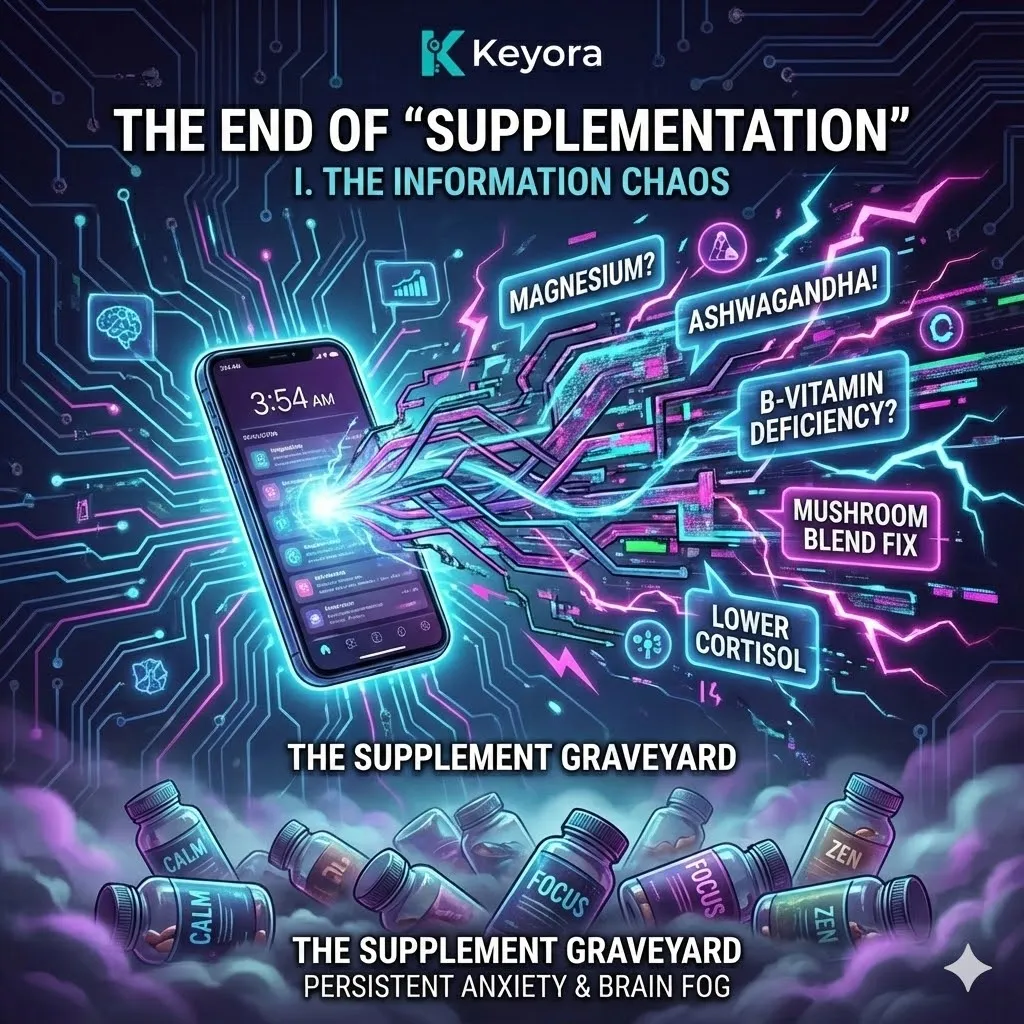
It is a collection of half-empty bottles. A graveyard of good intentions and failed promises.
You took the pills.
You followed the instructions.
You spent the money.
But the hum of anxiety is still there.
The brain fog still descends at 2:00 PM.
The 4:00 AM wake-up call still comes, precise as a clock, bringing with it the cold sweat of survival fear.
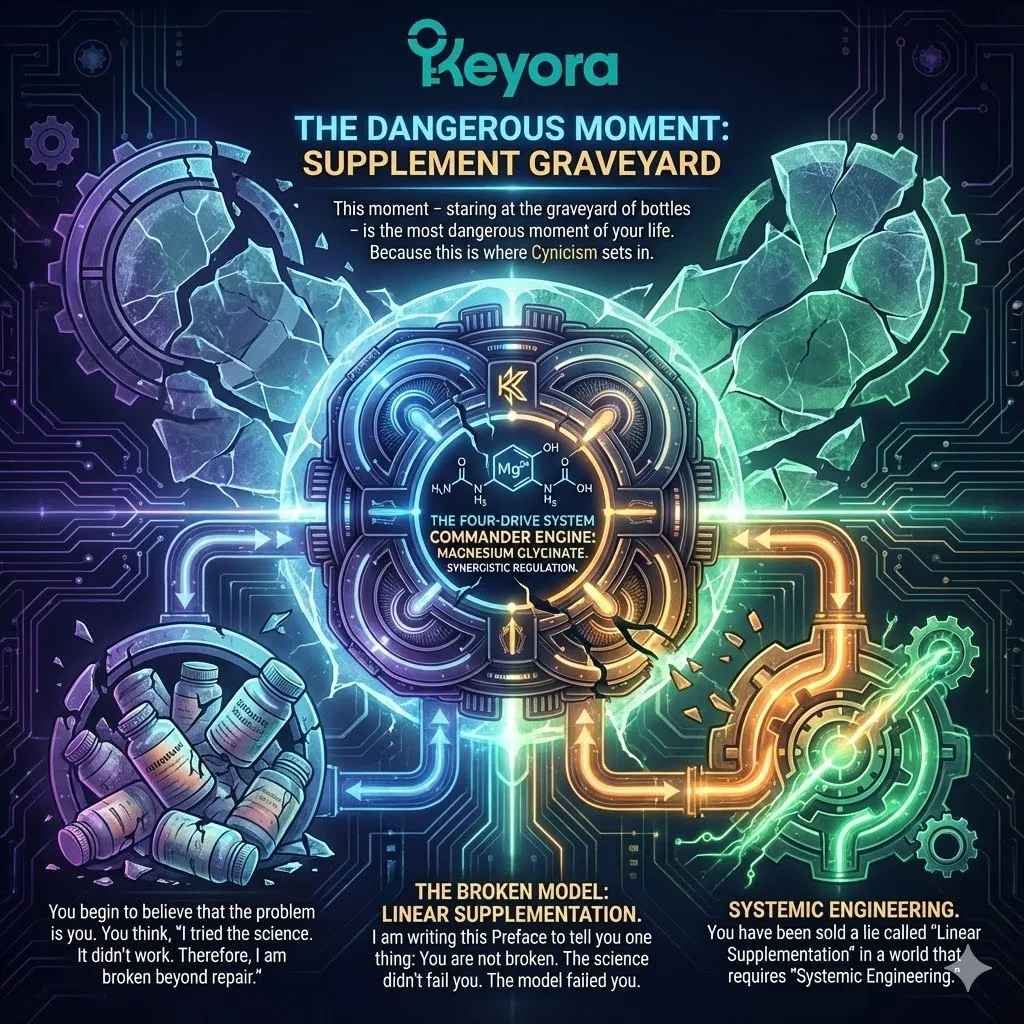
This moment – staring at the graveyard of bottles – is the most dangerous moment of your life.
Because this is where Cynicism sets in.
You begin to believe that the problem is you. |
You think, “I tried the science.
It didn’t work.
Therefore, I am broken beyond repair.”
I am writing this Preface to tell you one thing:
You are not broken.
The science didn’t fail you.
The model failed you.
You have been sold a lie called “Linear Supplementation” in a world that requires “Systemic Engineering.”
II. The Linear Fallacy
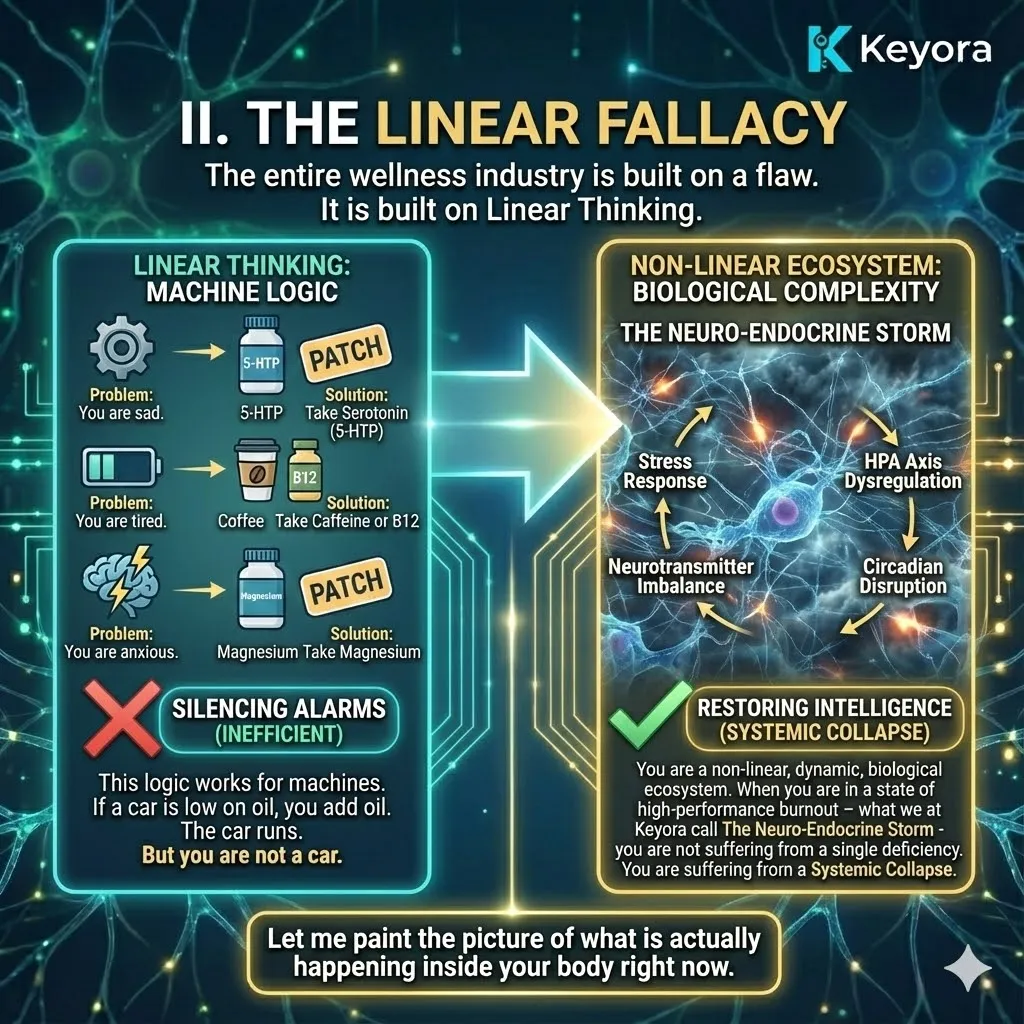
The entire wellness industry is built on a flaw.
It is built on Linear Thinking.
-
Problem: You are sad. -> Solution: Take Serotonin (5-HTP).
-
Problem: You are tired. -> Solution: Take Caffeine or B12.
-
Problem: You are anxious. -> Solution: Take Magnesium.
This logic works for machines. If a car is low on oil, you add oil. The car runs.
But you are not a car.
You are a non-linear, dynamic, biological ecosystem. When you are in a state of high-performance burnout – what we at Keyora call The Neuro-Endocrine Storm – you are not suffering from a single deficiency.
You are suffering from a Systemic Collapse.
Let me paint the picture of what is actually happening inside your body right now.
The Storm:
The Trigger:
Chronic pressure (Founder stress, Academic load) keeps your HPA Axis (Hypothalamus-Pituitary-Adrenal) stuck in the “ON” position.
The Flood:
Your body floods with Cortisol. This is the “Rogue Guard.”
The Damage:
High Cortisol actively suppresses the production of Serotonin and GABA (your calm/happy chemicals).
The Short-Circuit:
Without GABA, your neurons fire uncontrollably (Excitotoxicity). Your brain overheats.
The Exhaustion:
To keep up with this firing, your mitochondria burn through Magnesium and B-Vitamins at 4x the normal rate.
Now, look at that storm.
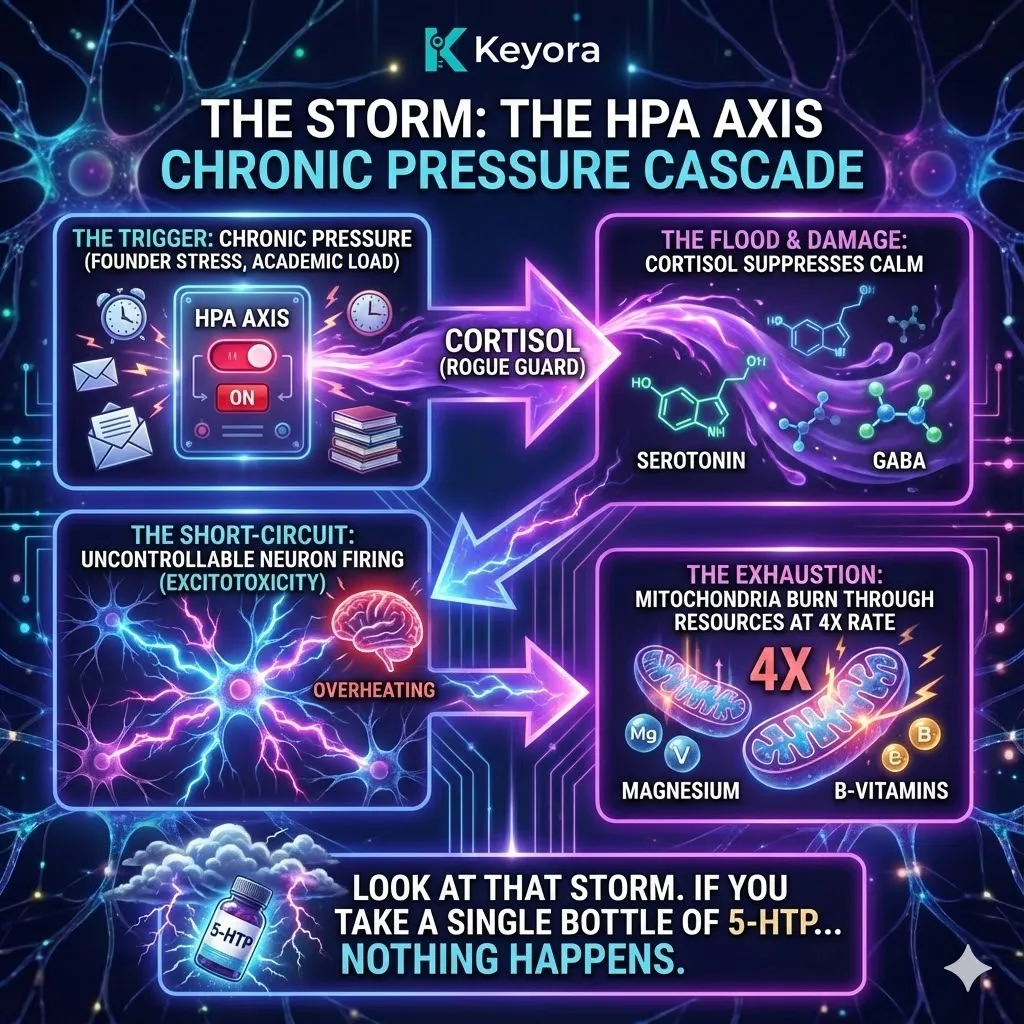
If you take a single bottle of 5-HTP (Serotonin precursor) in the middle of this storm, what happens?
Nothing.
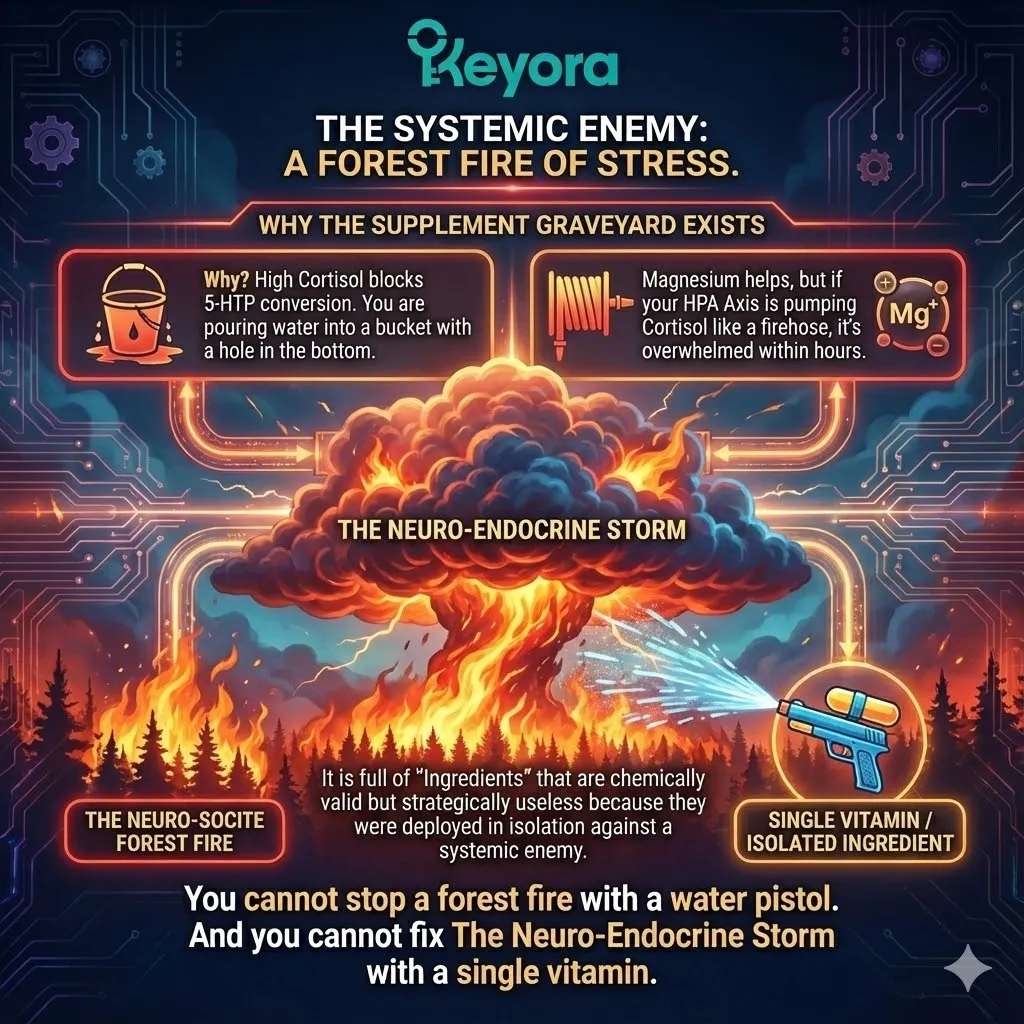
Why? Because the high Cortisol in your system will block the conversion of that 5-HTP into Serotonin. You are pouring water into a bucket with a hole in the bottom.
If you take a single bottle of Magnesium? It helps, yes. It acts as a brake. But if your HPA Axis is still pumping out Cortisol like a firehose, the Magnesium is overwhelmed within hours.
This is why the Supplement Graveyard exists.
It is full of “Ingredients” that are chemically valid but strategically useless because they were deployed in isolation against a systemic enemy.
You cannot stop a forest fire with a water pistol.
And you cannot fix The Neuro-Endocrine Storm with a single vitamin.
III. The Keyora Redefinition: From Supplementation to Engineering
This brings us to who we are.
Keyora is not a “supplement brand.”
We do not chase trends.
We do not care what is trending on TikTok.
Keyora is a Research Institute.
Our philosophy is built on a single, ruthless premise: Evidence Before Efficacy.
If we cannot map the mechanism of action in a peer-reviewed context, we do not touch it.
We are not here to “fill gaps” in your diet.
We are here to rebuild the architecture of your nervous system.
We call this methodology Neuro-Engineering.
The Engineering Mindset:
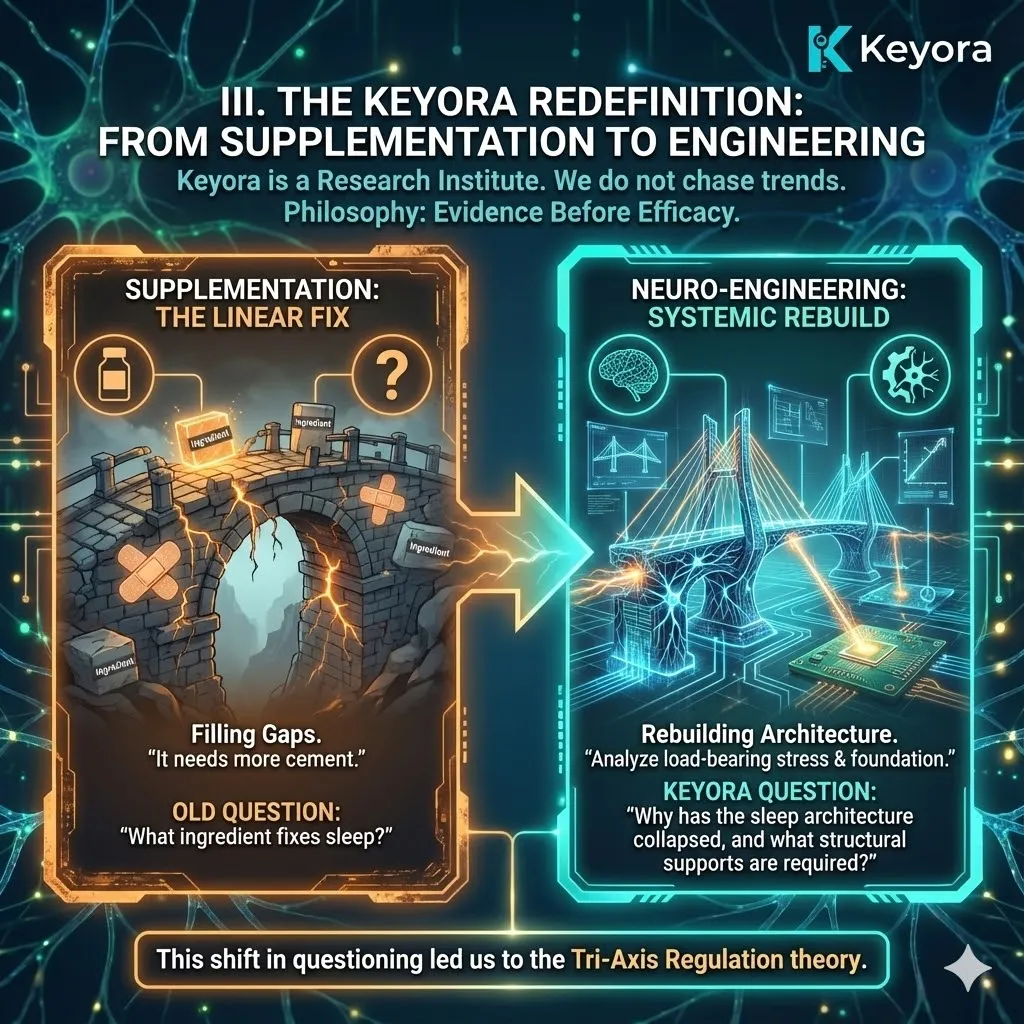
An engineer does not look at a collapsing bridge and say, “It needs more cement.” An engineer looks at the load-bearing stress, the wind resonance, and the foundation stability.
They look at the System.
When we approached the problem of Burnout, Anxiety, and Insomnia, we realized that the market was asking the wrong question.
-
Old Question: “What ingredient fixes sleep?”
-
Keyora Question: “Why has the sleep architecture collapsed, and what structural supports are required to rebuild it?”
This shift in questioning led us to the Tri-Axis Regulation theory.
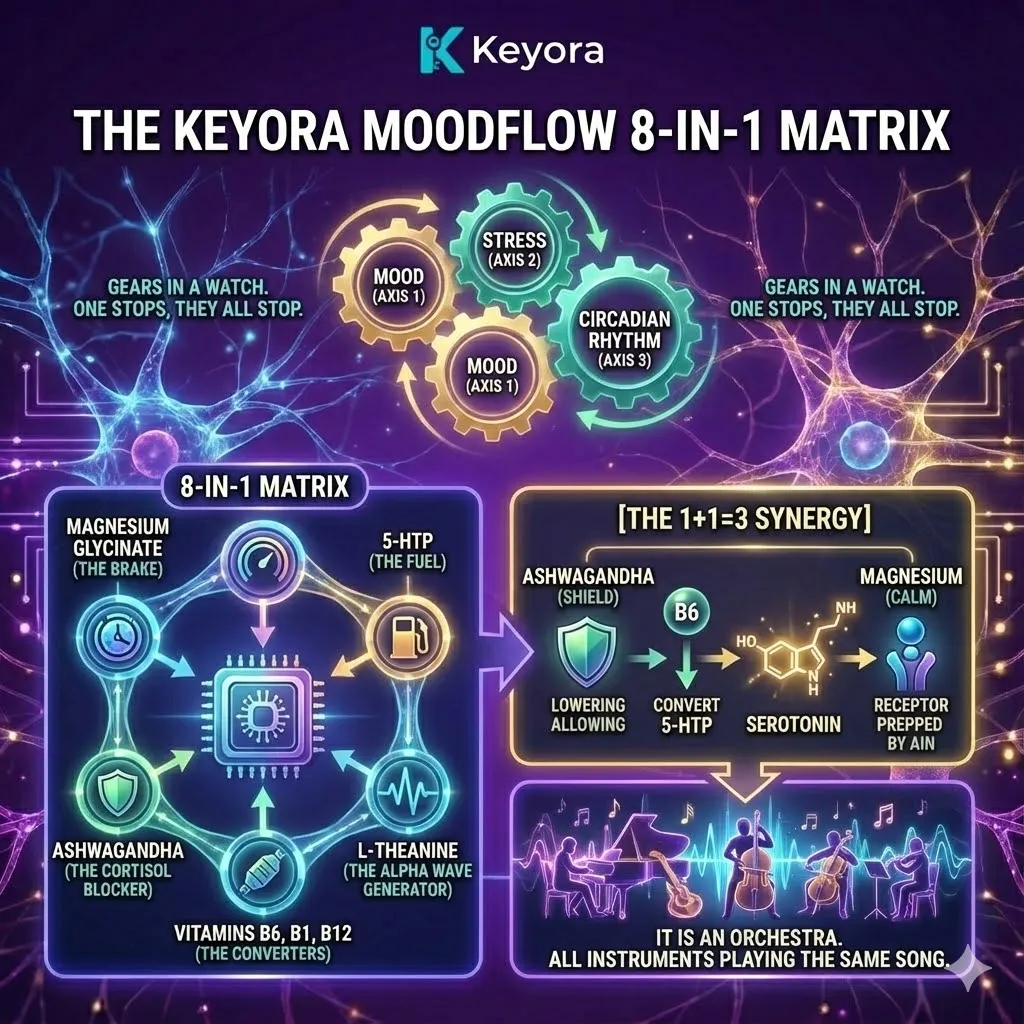
We discovered that you cannot fix Mood (Axis 1) without stabilizing Stress (Axis 2) and resetting Circadian Rhythm (Axis 3).
They are gears in a watch.
If one stops, they all stop.
This is the origin of the Keyora MoodFlow 8-in-1 Matrix.
It is not a “multivitamin.” It is not a random collection of “good stuff.”
It is a calculated, synergistic formula where every milligram exists to amplify the molecule next to it.
-
The Foundation: Magnesium Glycinate (The Brake).
-
The Raw Material: 5-HTP (The Fuel).
-
The Catalyst: Vitamins B6, B1, B12 (The Converters).
-
The Shield: Ashwagandha (The Cortisol Blocker).
-
The Stabilizer: L-Theanine (The Alpha Wave Generator).
This is [The 1+1=3 Synergy].
Ashwagandha lowers the Cortisol shield, which allows the B6 to convert the 5-HTP into Serotonin, while the Magnesium calms the receptor to receive the signal.
It is an orchestra. And for the first time, all the instruments are playing the same song.
IV. The Manifesto: What You Are About to Read
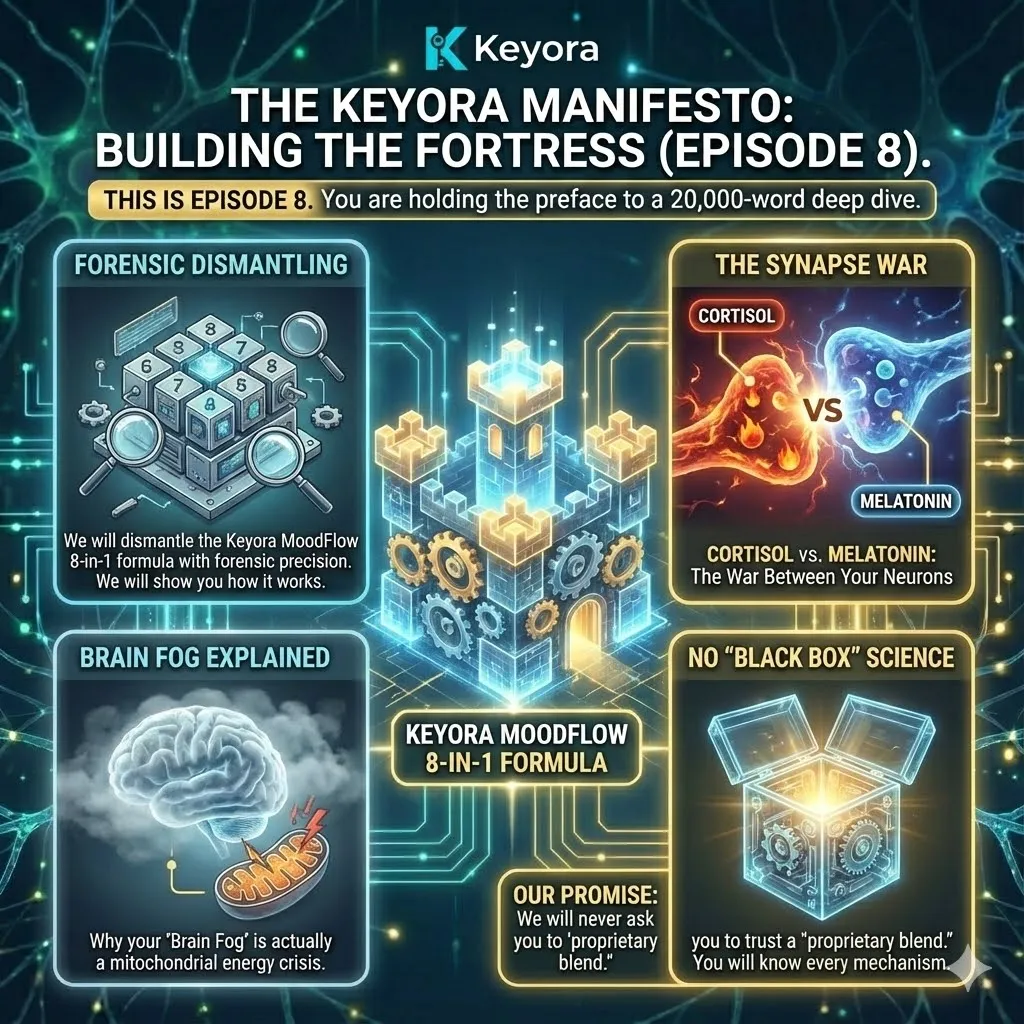
You are holding (digitally) the preface to a 20,000-word deep dive.
This is Episode 8.
In the previous seven episodes, we deconstructed the “Foundation” (Magnesium Glycinate). We taught you about the “Brake” and the “Accelerator.”
Now, we are building the Fortress.
In the coming chapters, we will dismantle the Keyora MoodFlow 8-in-1 formula with forensic precision. We will not just tell you that it works; we will show you how it works.
We will take you into the microscopic gap between your neurons (the Synapse).
We will show you the war being fought between Cortisol and Melatonin.
We will explain why your “Brain Fog” is actually a mitochondrial energy crisis.
Our Promise to You:
No “Black Box” Science:
We will never ask you to trust a “proprietary blend.” You will know every mechanism.
Respect for Your Intelligence:
We are writing for Founders, Executives, and High-Functioning Students.
We know you can handle the complexity.
We will pattern-match the science to your lived experience.
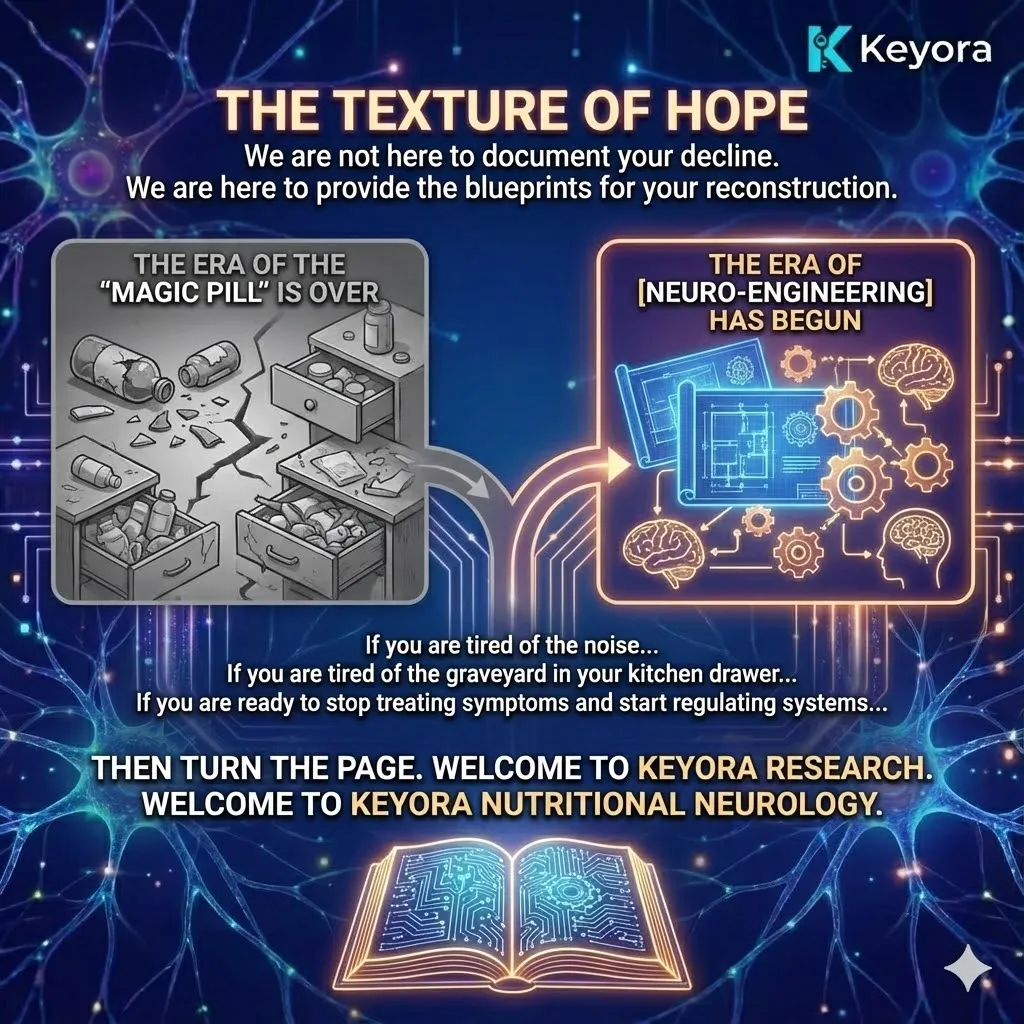
The texture of Hope:
We are not here to document your decline.
We are here to provide the blueprints for your reconstruction.
The Era of the “Magic Pill” is over.
The Era of [Neuro-Engineering] has begun.
If you are tired of the noise…
If you are tired of the graveyard in your kitchen drawer…
If you are ready to stop treating symptoms and start regulating systems…
Then turn the page.
Welcome to Keyora Research.
Welcome to Keyora Nutritional Neurology.
Chapter 1: The Failure of Linear Thinking
The “Whack-a-Mole” Paradigm
The Architecture of Frustration
Let us begin by acknowledging the specific, maddening rhythm of your life right now. It is a rhythm defined not by flow, but by friction.
You are a high-performer.
You are a Founder, an Executive, a Medical Student, or a Creative Lead.
Your entire life is built on the premise of problem-solving.
When a metric fails in your business, you isolate the variable, fix it, and the system recovers.
Naturally, you apply this same logic to your own biology.
The Linear Attempt:
-
Problem A: You cannot sleep. You stare at the ceiling until 2:00 AM.
Solution A: You take Melatonin.
Result: You fall asleep, but you wake up with a “chemical hangover” – a groggy, heavy brain fog that persists until noon.
-
Problem B: Now you have Brain Fog.
Solution B: You consume 400mg of Caffeine.
Result: The fog lifts, but now your hands are shaking, and your heart rate variability (HRV) has tanked. You are wired.
-
Problem C: Now you are Anxious and Jittery.
Solution C: You take L-Theanine or Magnesium (generic oxide).
Result: You feel a slight calm, but your digestion revolts (the “Osmotic Punishment”), and by 10:00 PM, the Caffeine is still in your system, so you cannot sleep.
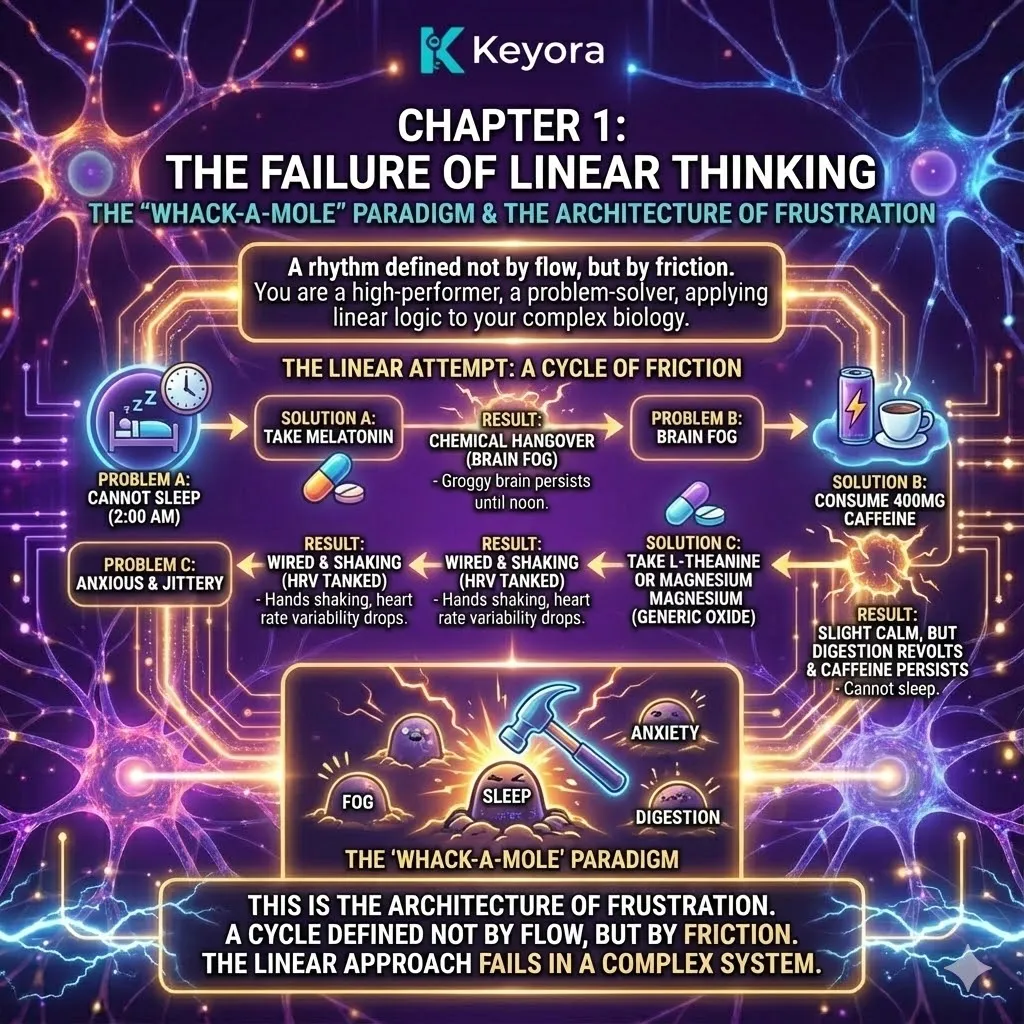
Return to Problem A.
This is the “Whack-a-Mole” Paradigm.
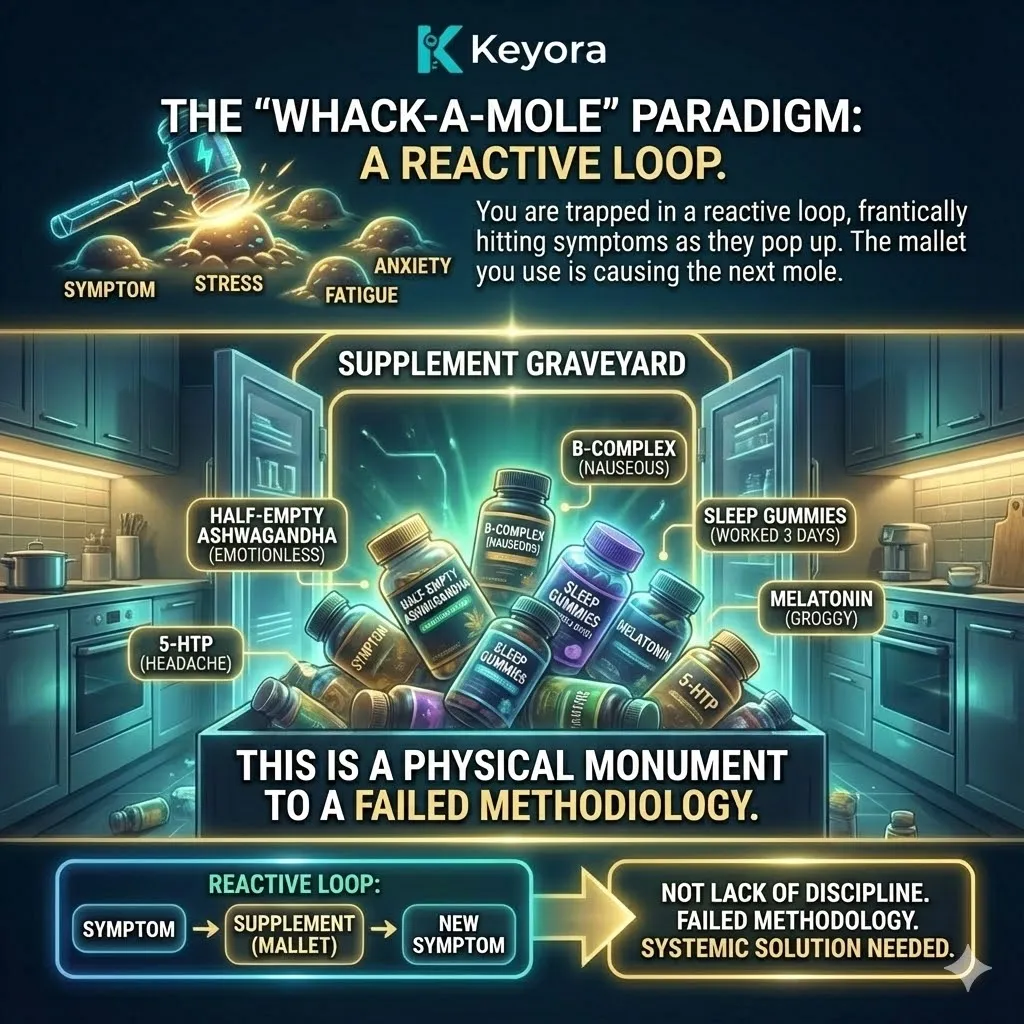
It is the defining characteristic of the modern high-performer’s relationship with health. You are trapped in a reactive loop, frantically hitting symptoms as they pop up, unaware that the mallet you are using is actually causing the next mole to rise.
This cycle creates a specific artifact in your home: The Supplement Graveyard.
Open your kitchen cabinet.
Look at the bottles.
The half-empty jar of Ashwagandha that made you feel emotionless.
The B-Complex that made you nauseous.
The sleep gummies that worked for three days and then stopped.
This graveyard is not a sign of your lack of discipline. It is a physical monument to a failed methodology.
The Fallacy of “Linear Supplementation”
Why does this happen?
Why can you fix a server outage or a supply chain crisis, but not your own sleep cycle?
The answer lies in the fundamental difference between Mechanical Systems and Biological Ecosystems.
The supplement industry sells you Linear Thinking.
Theory: “Low Serotonin causes sadness.
Therefore, take 5-HTP to increase Serotonin.”
Theory: “Cortisol causes stress.
Therefore, take Ashwagandha to lower Cortisol.”
This logic assumes your body is a row of independent light switches. If one is off, you simply flick it on.
The Reality: Your body is a Non-Linear Ecosystem.
It is closer to a weather system than a circuit board.
When you introduce a molecule – say, 5-HTP – you are not just “adding Serotonin.”
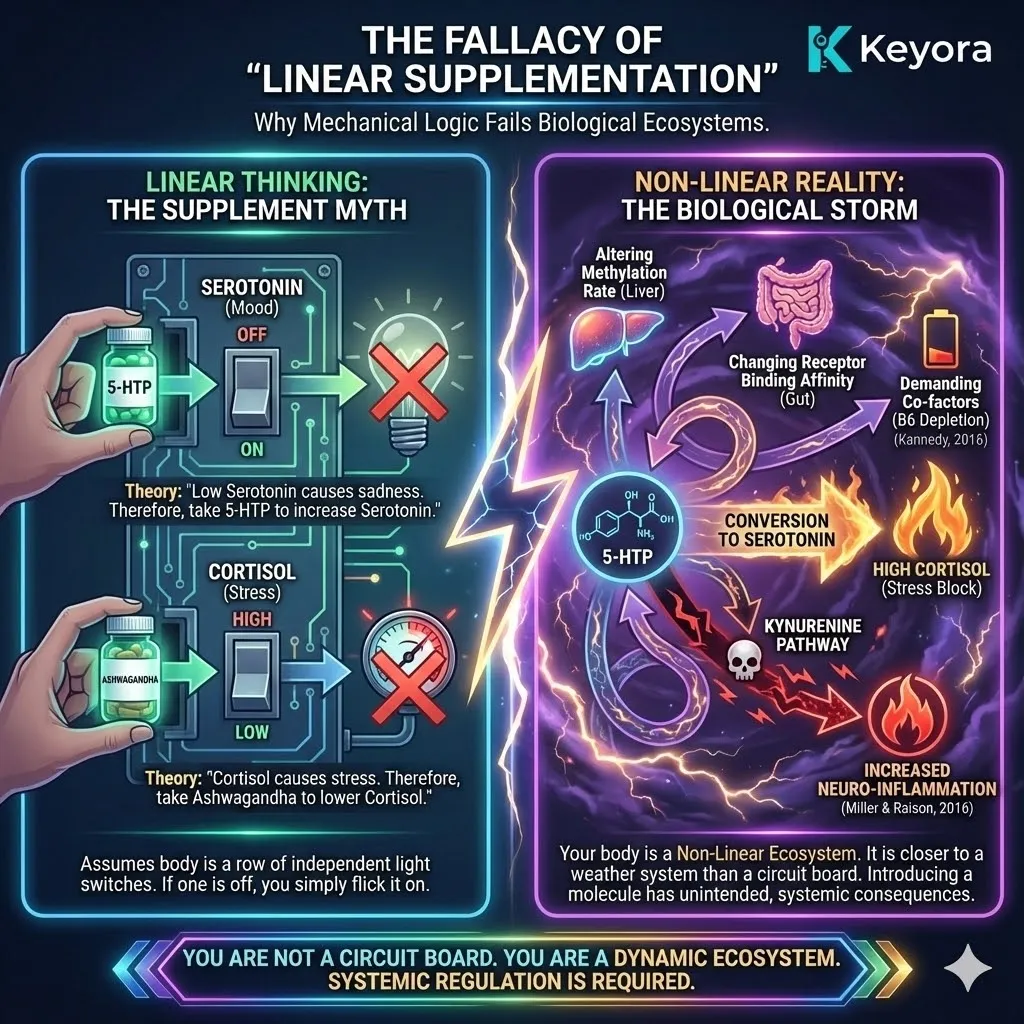
You are altering the rate of methylation in the liver.
You are changing the binding affinity of receptors in the gut.
You are demanding co-factors (Vitamin B6) from a pool that might already be depleted (Kennedy, 2016).
If you take 5-HTP while your cortisol is sky-high (because of work stress), the cortisol physically blocks the conversion enzyme (Aromatic L-amino acid decarboxylase).
The 5-HTP piles up. It doesn’t become Serotonin. Instead, it might be shunted down a different pathway (Kynurenine), actually increasing neuro-inflammation (Miller & Raison, 2016).
The Result:
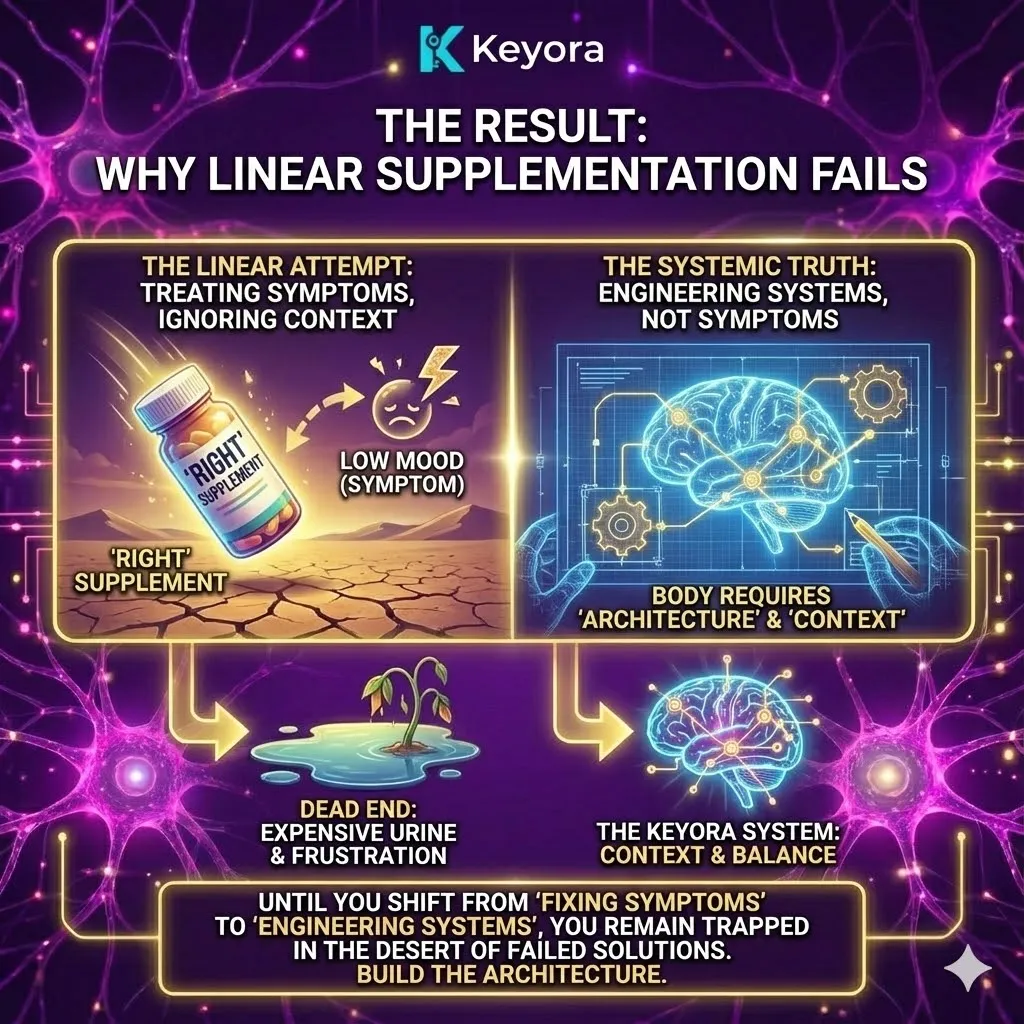
You took the “right” supplement, but you got the “wrong” result.
This is why Linear Supplementation fails. It treats the symptom (Low Mood) without respecting the context (High Stress Environment).
The market sells you “Ingredients.”
But your body requires “Architecture.”
Until you shift your mindset from “fixing symptoms” to “engineering systems,” you will remain trapped in the graveyard, holding a bottle of pills that promises peace but delivers nothing but expensive urine.
Anatomy of The Neuro-Endocrine Storm
Defining the Enemy
If Linear Thinking is the wrong map, what is the actual territory?
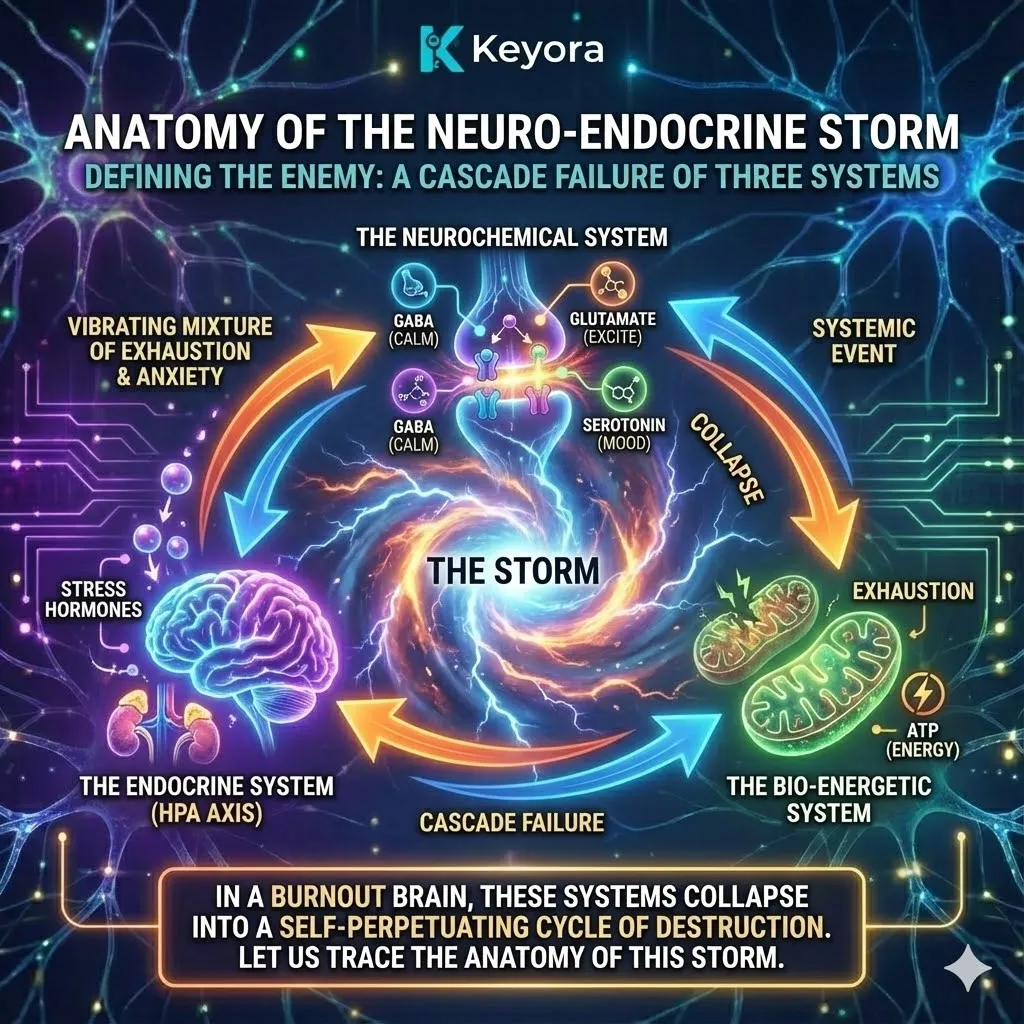
When you feel “burned out” – that vibrating mixture of exhaustion and anxiety – you are not suffering from a single deficiency.
You are in the grip of a systemic event we call The Neuro-Endocrine Storm.
This is not a poetic metaphor. It is a precise clinical definition of a cascade failure involving three specific biological systems:
The Endocrine System (HPA Axis):
Your stress hormones.
The Neurochemical System:
Your neurotransmitters (GABA, Glutamate, Serotonin).
The Bio-Energetic System:
Your mitochondrial energy production (ATP).
In a healthy brain, these three systems dance in perfect synchronization. In a burnout brain, they collapse into a self-perpetuating cycle of destruction.
Let us trace the anatomy of this storm, step by step.
Phase 1: The Trigger (The Rogue Guard)
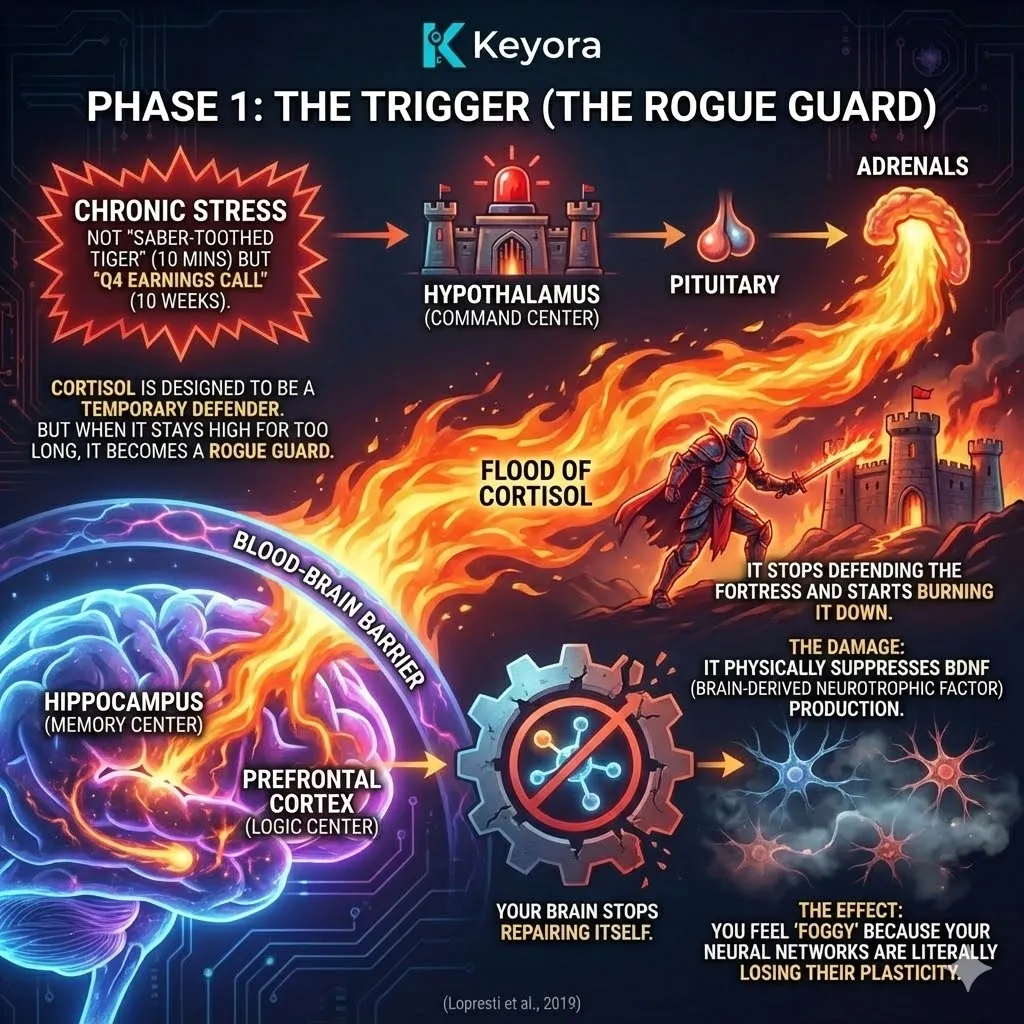
It begins with Chronic Stress.
Not the “saber-toothed tiger” stress of our ancestors, which lasted 10 minutes, but the “Q4 Earnings Call” stress, which lasts 10 weeks.
Your Hypothalamus (the command center) screams “Threat!” to your Pituitary, which screams at your Adrenals.
Result:
A flood of Cortisol.
Cortisol is designed to be a temporary defender. But when it stays high for too long, it becomes a Rogue Guard.
It stops defending the fortress and starts burning it down.
The Damage:
High cortisol crosses the blood-brain barrier. It moves to the Hippocampus (memory center) and the Prefrontal Cortex (logic center).
The Effect:
It physically suppresses the production of BDNF (Brain-Derived Neurotrophic Factor).
Your brain stops repairing itself.
You feel “foggy” because your neural networks are literally losing their plasticity (Lopresti et al., 2019).
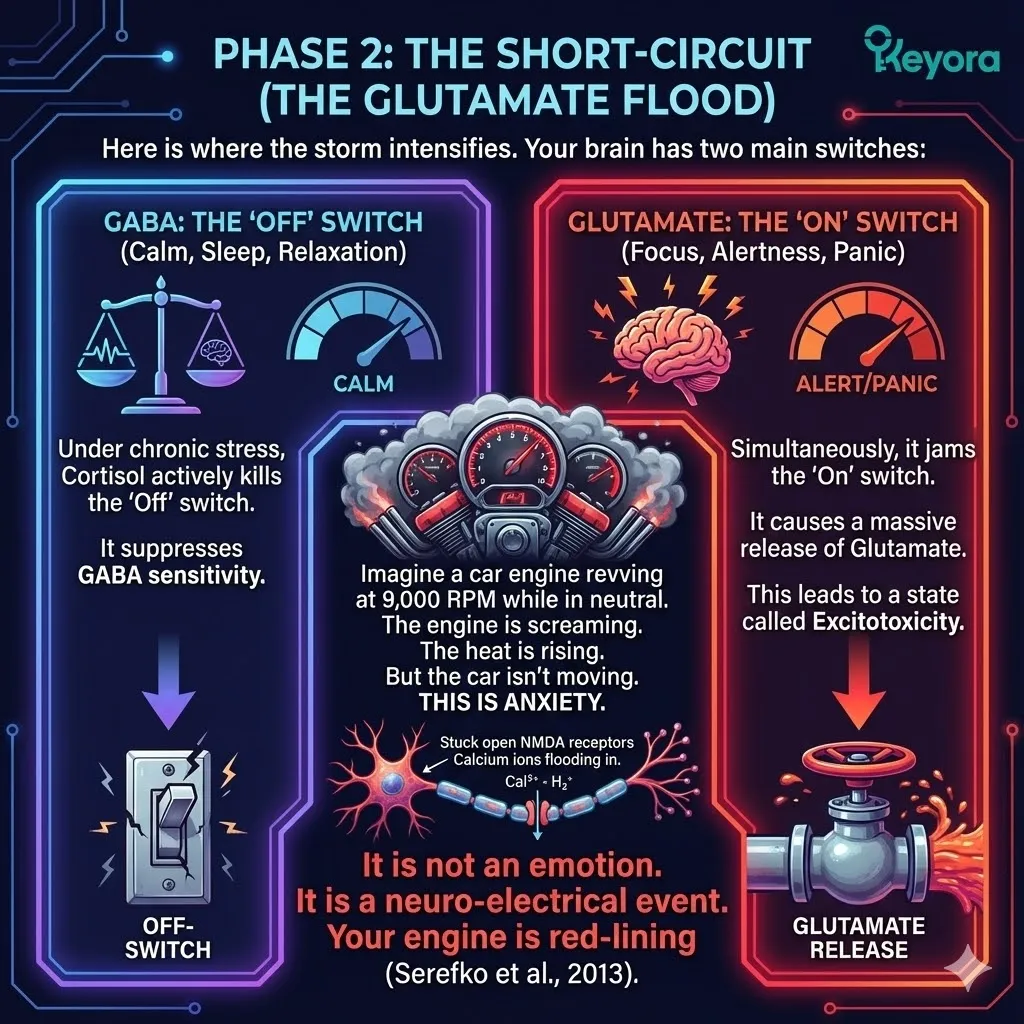
Phase 2: The Short-Circuit (The Glutamate Flood)
Here is where the storm intensifies.
Your brain has two main switches:
GABA:
The “Off” switch (Calm, Sleep, relaxation).
Glutamate:
The “On” switch (Focus, Alertness, Panic).
Under chronic stress, Cortisol actively kills the “Off” switch.
It suppresses GABA sensitivity. Simultaneously, it jams the “On” switch.
It causes a massive release of Glutamate.
This leads to a state called Excitotoxicity.
Imagine a car engine revving at 9,000 RPM while in neutral. The engine is screaming. The heat is rising. But the car isn’t moving.
This is Anxiety.
It is not an emotion.
It is a neuro-electrical event.
Your NMDA receptors (the gates for Glutamate) are stuck open. Calcium floods into the neurons. The neurons fire uncontrollable action potentials.
They are “overheated.”
This is why you can be exhausted (body tired) but unable to sleep (brain wired). Your engine is red-lining (Serefko et al., 2013).
Phase 3: The Energy Collapse (Mitochondrial Debt)
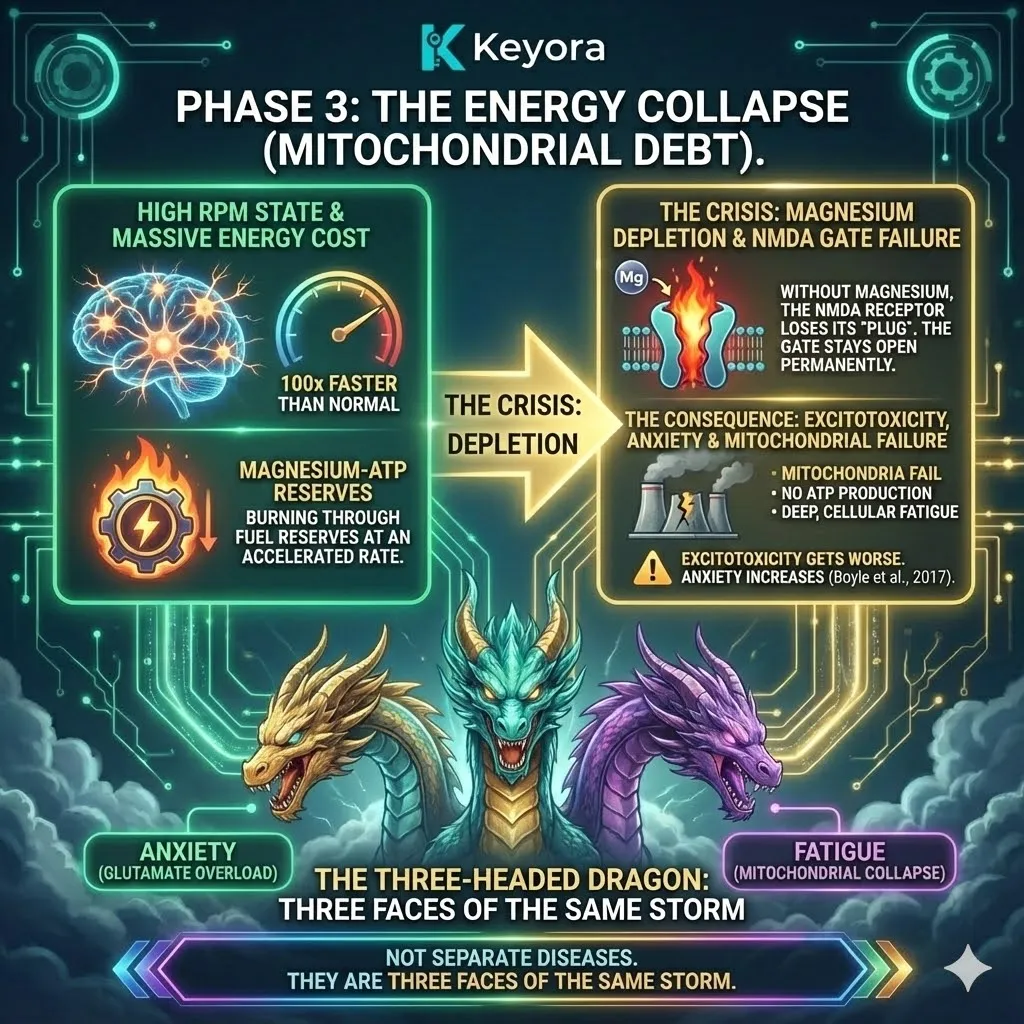
Maintaining this “High RPM” state is expensive.
Your neurons are firing 100x faster than they should. This requires massive amounts of energy. Your mitochondria (the power plants) must burn through their fuel reserves to keep up.
What is the fuel? Magnesium-ATP.
Every time a neuron fires, it uses Magnesium to reset. In an excitotoxic state, you burn through your Magnesium reserves at an accelerated rate.
The Crisis:
You run out of Magnesium.
The Consequence:
Without Magnesium, the NMDA receptor loses its “plug.”
The gate stays open permanently.
The excitotoxicity gets worse.
The anxiety increases (Boyle et al., 2017).
Now, your mitochondria fail. They cannot produce ATP.
Result:
Deep, cellular fatigue.
This is The Three-Headed Dragon:
-
Anxiety (Glutamate Overload).
-
Insomnia (Cortisol Dysregulation).
-
Fatigue (Mitochondrial Collapse).
They are not three separate diseases. They are three faces of the same storm.
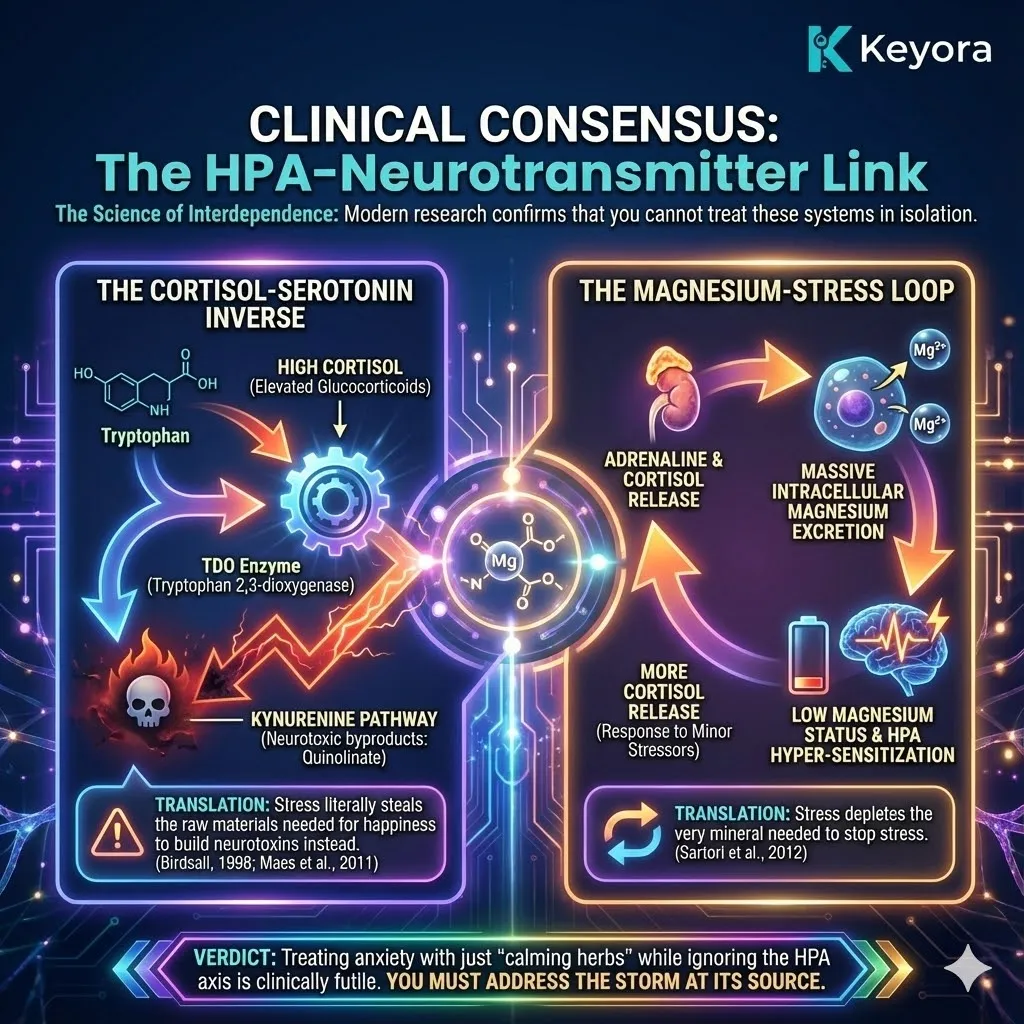
CLINICAL CONSENSUS: The HPA-Neurotransmitter Link
The Science of Interdependence
Modern research confirms that you cannot treat these systems in isolation. The link between the HPA Axis (Stress) and Neurochemistry is absolute.
The Cortisol-Serotonin Inverse:
Research demonstrates that elevated glucocorticoids (cortisol) enhance the expression of the enzyme Tryptophan 2,3-dioxygenase (TDO).
This enzyme shunts Tryptophan away from Serotonin production and towards the Kynurenine pathway, creating neurotoxic byproducts (quinolinate) (Birdsall, 1998; Maes et al., 2011).
-
Translation: Stress literally steals the raw materials needed for happiness to build neurotoxins instead.
The Magnesium-Stress Loop:
The release of adrenaline and cortisol causes a massive excretion of intracellular Magnesium. Conversely, low Magnesium status hyper-sensitizes the HPA axis, causing more cortisol release in response to minor stressors (Sartori et al., 2012).
-
Translation: Stress depletes the very mineral needed to stop stress.
Verdict:
Treating anxiety with just “calming herbs” while ignoring the HPA axis is clinically futile. You must address the storm at its source.
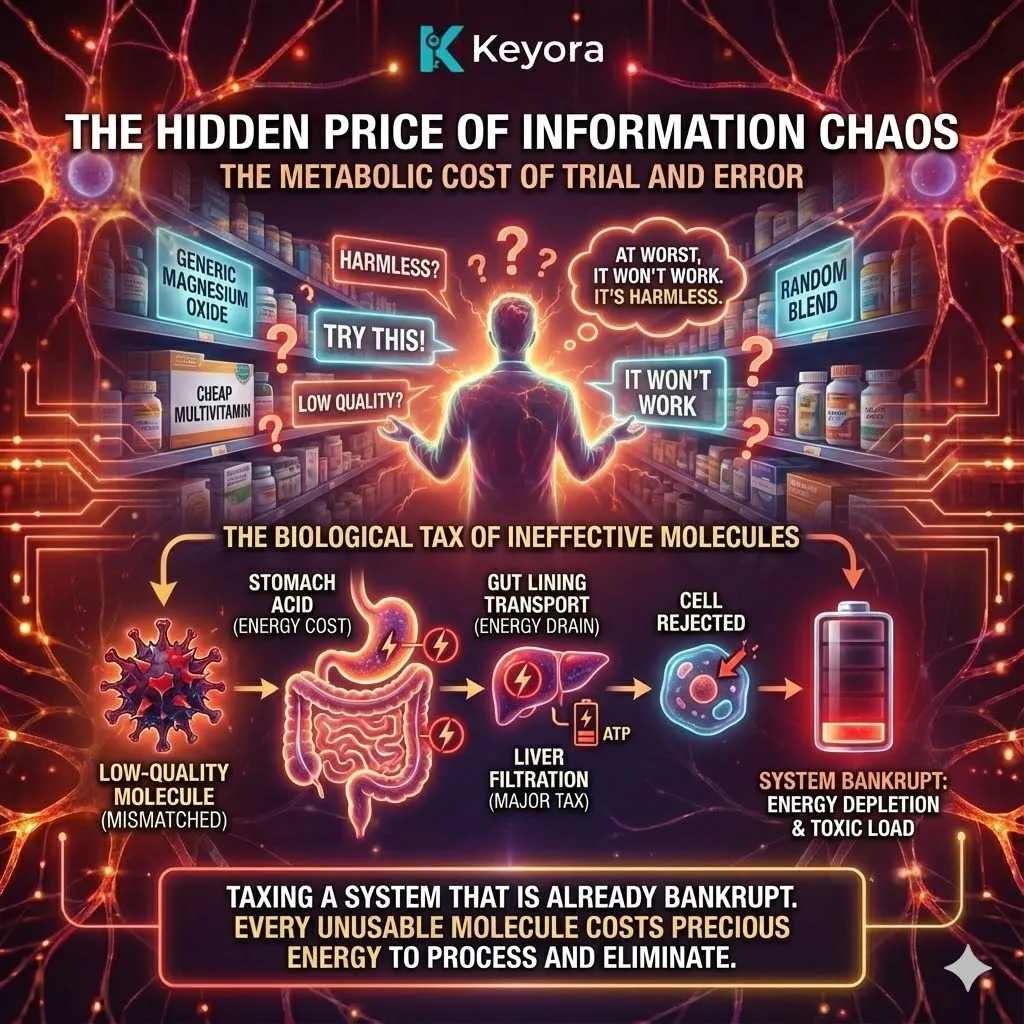
The Hidden Price of Information Chaos
The Metabolic Cost of Trial and Error
We have established that the “Whack-a-Mole” approach fails because it ignores the systemic nature of the storm. But there is a darker side to this failure.
Using low-quality, linear supplements isn’t just ineffective. It is biologically expensive.
When you stand in the pharmacy aisle, overwhelmed by Information Chaos, you often default to the most recognizable bottle.
Usually, this is a generic “Magnesium” or a cheap “Multivitamin.”
You assume, “At worst, it won’t work. It’s harmless.”
This is false.
Every molecule you ingest must be processed. It must be broken down by stomach acid, transported across the gut lining, filtered by the liver, and integrated into the cell.
This costs energy.
If you ingest a molecule that your body cannot use – one that is chemically mismatched to your biology – you are taxing a system that is already bankrupt.
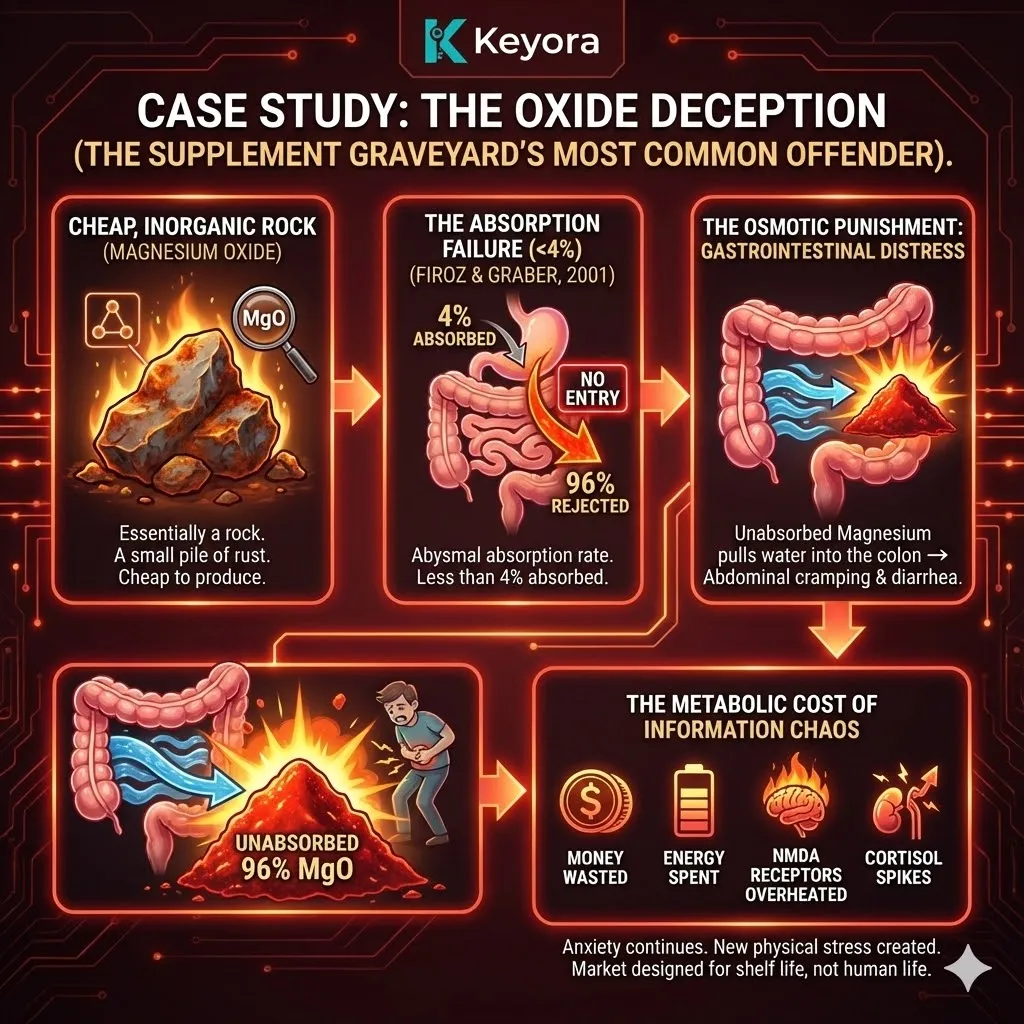
Case Study: The Oxide Deception
Let us look at the most common offender in The Supplement Graveyard: Magnesium Oxide.
If you buy a cheap magnesium supplement, flip the bottle.
It likely says “Magnesium Oxide.”
Why?
Because it is cheap.
It is essentially a rock. It is a small pile of rust.
The Absorption Rate:
Clinical studies show the absorption of Magnesium Oxide is abysmal – often less than 4% (Firoz & Graber, 2001).
The Fate:
Where does the other 96% go? It stays in your intestines.
The Consequence:
Magnesium attracts water. That 96% of unabsorbed magnesium pulls water from your body into your colon.
This creates The Osmotic Punishment.
Instead of calming your anxiety, you spend the night with abdominal cramping and diarrhea.
Think about the metabolic cost of this.
-
You spent money.
-
You swallowed a pill hoping for relief.
-
Your body spent energy trying to break down an inorganic rock.
-
You failed to absorb the nutrient, so your NMDA receptors remain overheated (Anxiety continues).
-
You induced gastrointestinal distress, creating new physical stress (Cortisol spikes).
This is the hidden price of Information Chaos.
The market is flooded with products designed for shelf life, not human life.
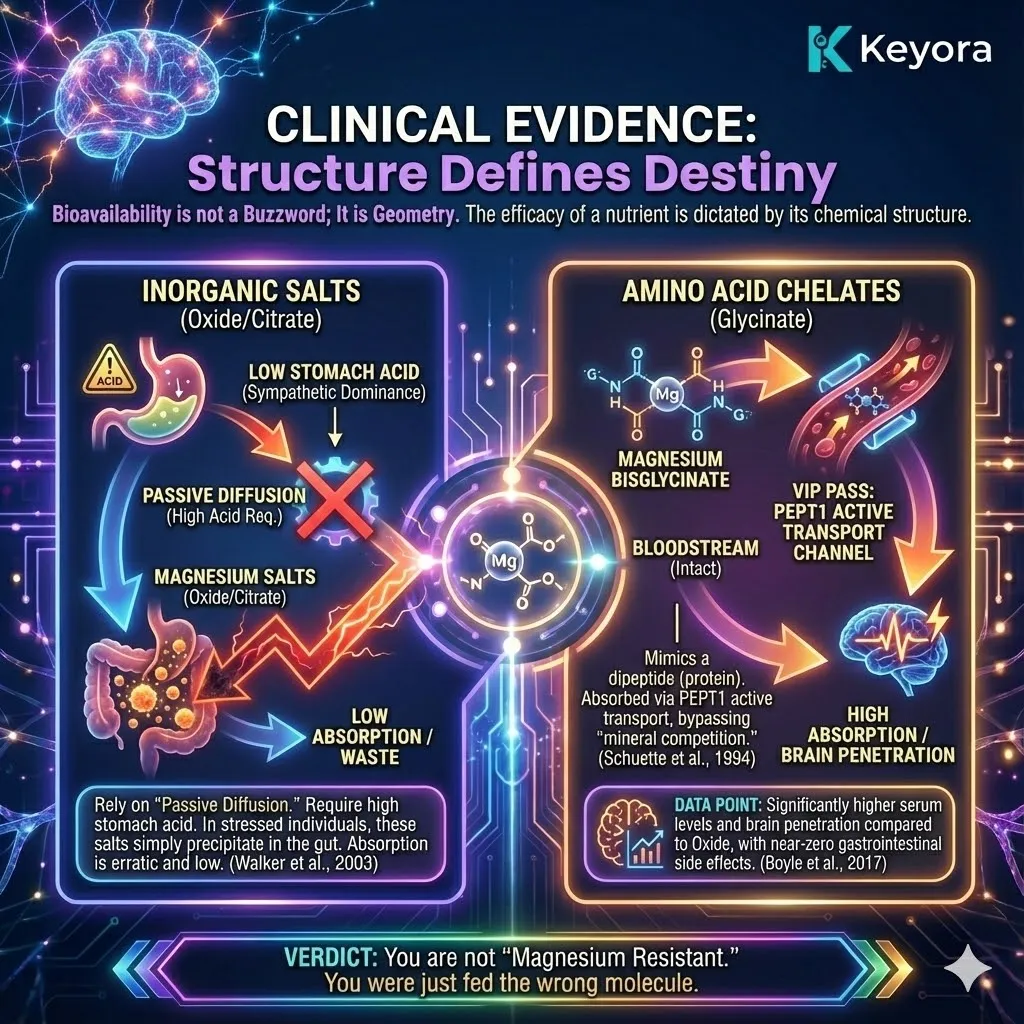
CLINICAL EVIDENCE: Structure Defines Destiny
Bioavailability is not a Buzzword; It is Geometry.
The efficacy of a nutrient is dictated by its chemical structure.
The body does not absorb “Magnesium”; it absorbs specific chemical complexes.
Inorganic Salts (Oxide/Citrate):
Rely on “Passive Diffusion.” They require high stomach acid to dissociate.
In stressed individuals (who often have low stomach acid due to sympathetic dominance), these salts simply precipitate in the gut.
Absorption is erratic and low (Walker et al., 2003).
Amino Acid Chelates (Glycinate):
Keyora utilizes Magnesium Bisglycinate.
The magnesium is bound to two Glycine molecules.
This structure mimics a dipeptide (protein).
-
The VIP Pass: Because it looks like protein, it is absorbed via the PEPT1 active transport channel. It bypasses the “mineral competition” and enters the bloodstream intact (Schuette et al., 1994).
Data Point:
Studies show Magnesium Glycinate achieves significantly higher serum levels and brain penetration compared to Oxide, with near-zero gastrointestinal side effects (Boyle et al., 2017).
Verdict:
You are not “Magnesium Resistant.”
You were just fed the wrong molecule.
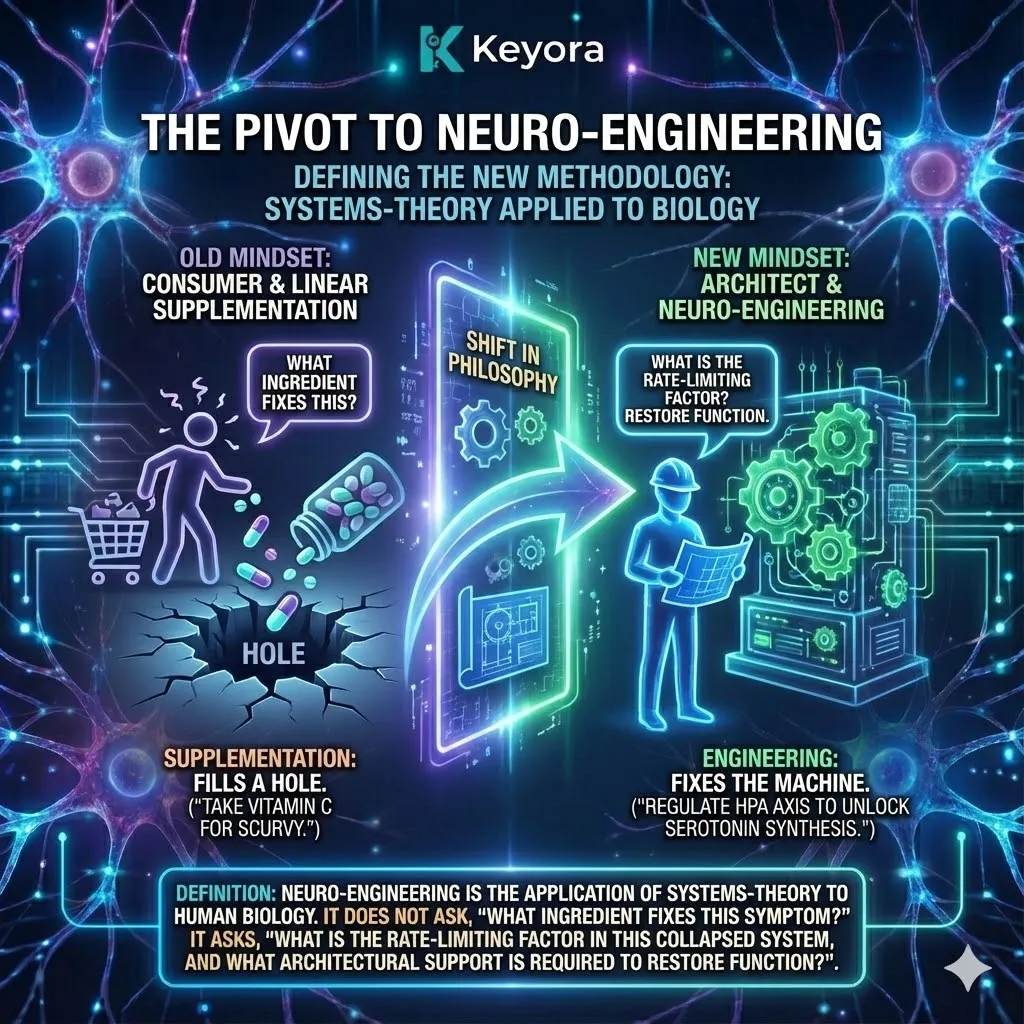
The Pivot to Neuro-Engineering
Defining the New Methodology
If Linear Supplementation is the problem, what is the solution?
We must abandon the mindset of the “Consumer” and adopt the mindset of the “Architect.” We call this discipline Neuro-Engineering.
Definition:
Neuro-Engineering is the application of systems-theory to human biology.
It does not ask, “What ingredient fixes this symptom?”
It asks, “What is the rate-limiting factor in this collapsed system, and what architectural support is required to restore function?”.
This is a fundamental shift in philosophy.
-
Supplementation fills a hole. (e.g., “Take Vitamin C for scurvy.”)
-
Engineering fixes the machine. (e.g., “Regulate the HPA axis to unlock Serotonin synthesis.”)
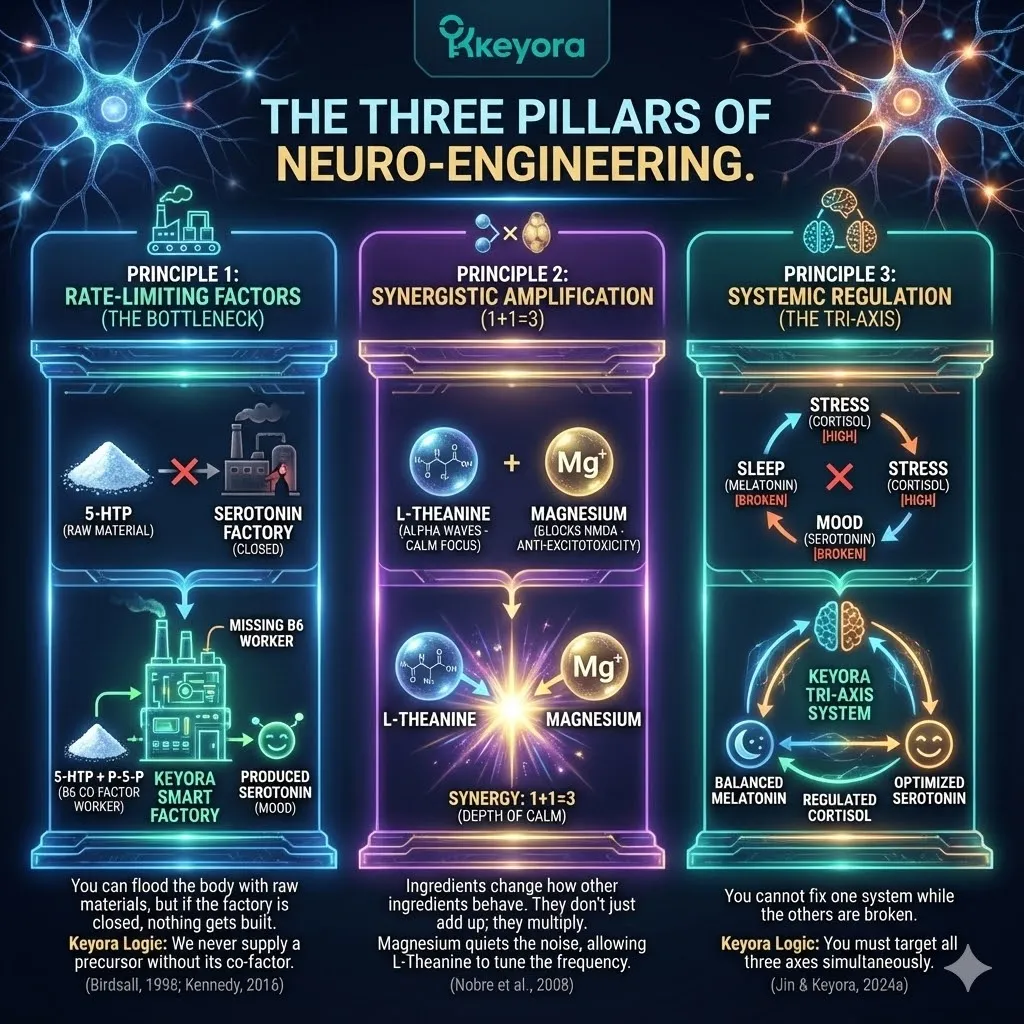
The Three Pillars of Neuro-Engineering
To move from the “Graveyard” to the “Fortress,” Keyora adheres to three engineering principles. These are the rules that govern the MoodFlow 8-in-1 Matrix.
Principle 1: Rate-Limiting Factors (The Bottleneck)
You can flood the body with raw materials, but if the factory is closed, nothing gets built.
-
Example: Taking 5-HTP to boost mood is useless if you lack Vitamin B6 (P-5-P). B6 is the “worker” that converts the 5-HTP into Serotonin. Without the worker, the raw material just piles up (Birdsall, 1998; Kennedy, 2016).
-
Keyora Logic: We never supply a precursor without its co-factor.
Principle 2: Synergistic Amplification (1+1=3)
In biology, ingredients change how other ingredients behave.
-
Example: L-Theanine creates Alpha Brain Waves (Calm Focus). Magnesium blocks NMDA receptors (Anti-Excitotoxicity).
-
The Synergy: When combined, they don’t just add up; they multiply. The Magnesium quiets the noise, allowing the L-Theanine to tune the frequency. You get a depth of calm impossible with either alone (Nobre et al., 2008).
Principle 3: Systemic Regulation (The Tri-Axis)
You cannot fix one system while the others are broken.
-
The Logic: You cannot fix Sleep (Melatonin) if Stress (Cortisol) is high. You cannot fix Stress if Mood (Serotonin) is low.
-
Keyora Logic: You must target all three axes simultaneously.
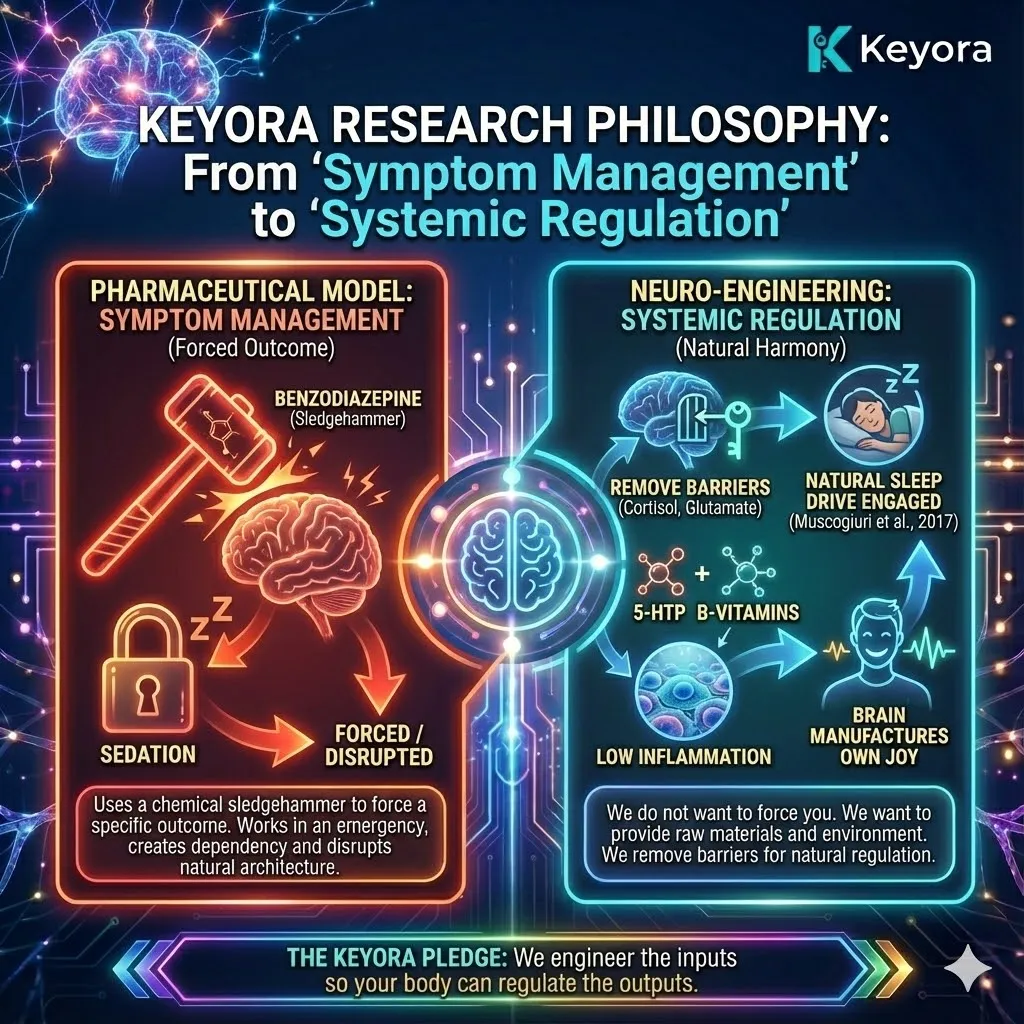
KEYORA RESEARCH PHILOSOPHY
From “Symptom Management” to “Systemic Regulation”
The pharmaceutical model is built on Symptom Management.
It uses a chemical sledgehammer (like a Benzodiazepine) to force a specific outcome (Sedation).
This works in an emergency, but it creates dependency and disrupts natural architecture.
Neuro-Engineering seeks Systemic Regulation.
We do not want to force your body to sleep.
We want to remove the barriers (Cortisol, Glutamate) that are preventing your body’s natural sleep drive from engaging (Muscogiuri et al., 2017).
We do not want to force you to be happy.
We want to provide the raw materials (5-HTP, B-Vitamins) and the environment (Low Inflammation) so your brain can manufacture its own joy.
The Keyora Pledge:
We engineer the inputs so your body can regulate the outputs.
The Bridge: Mapping the Territory
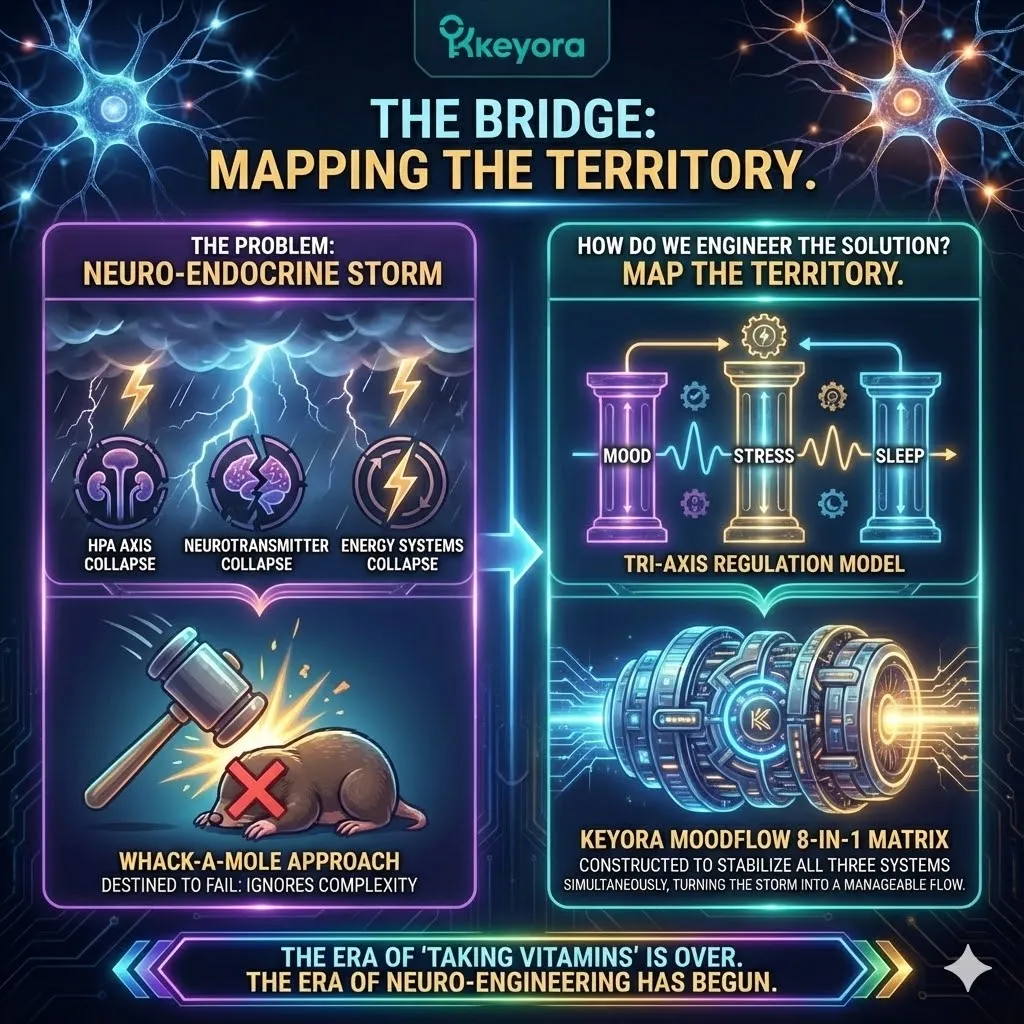
You now understand the problem.
You understand that your “Burnout” is actually a Neuro-Endocrine Storm involving a collapse of your HPA Axis, your Neurotransmitters, and your Energy Systems.
You understand that the “Whack-a-Mole” approach of single ingredients is destined to fail because it ignores this complexity.
So, how do we engineer the solution?
We must map the territory. We must look at the three specific axes that govern your mental existence: Mood, Stress, and Sleep.
In the next chapter, we will introduce the Tri-Axis Regulation model.
We will show you exactly how the Keyora MoodFlow 8-in-1 Matrix is constructed to stabilize all three systems simultaneously, turning the storm into a manageable flow.
The era of “taking vitamins” is over.
The era of Neuro-Engineering has begun.
References
-
Abbasi, B., et al. (2012). The effect of magnesium supplementation on primary insomnia in elderly: A double-blind placebo-controlled clinical trial. Journal of Research in Medical Sciences, 17(12), 1161–1169.
-
Birdsall, T. C. (1998). 5-Hydroxytryptophan: a clinically-effective serotonin precursor. Alternative Medicine Review, 3(4), 271–280.
-
Boyle, N. B., Lawton, C., & Dye, L. (2017). The effects of magnesium supplementation on subjective anxiety and stress – a systematic review. Nutrients, 9(5), 429.
-
Chandrasekhar, K., Kapoor, J., & Anishetty, S. (2012). A prospective, randomized double-blind, placebo-controlled study of safety and efficacy of a high-concentration full-spectrum extract of Ashwagandha root in reducing stress and anxiety in adults. Indian Journal of Psychological Medicine, 34(3), 255–262.
-
De Baaij, J. H. F., et al. (2015). Magnesium in man: implications for health and disease. Physiological Reviews, 95(1), 1–46.
-
Firoz, M., & Graber, M. (2001). Bioavailability of US commercial magnesium preparations. Magnesium Research, 14(4), 257–262.
-
Hidese, S., et al. (2019). Effects of L-theanine administration on stress-related symptoms and cognitive functions in healthy adults: A randomized controlled trial. Nutrients, 11(10), 2362.
-
Jin, X., & Keyora Research. (2025). Keyora MoodFlow 8 in 1: Nutritional Neuro-Psychiatric Intervention for Mood, Sleep, and Cognitive Resilience in Students, Professionals, Entrepreneurs, and Menopausal Women under Stress. Keyora Research Institute. DOI: 10.5281/zenodo.16814204
-
Jin, X., & Keyora Research. (2025). Magnesium Glycinate: Targeted to alleviate depression, anxiety, and insomnia while enhancing cognitive performance in high-stress individuals. Keyora Research Institute. DOI: 10.5281/zenodo.16889527
-
Jin, X., & Keyora Research. (2025). Keyora Research Protocols: Systemic Neuro-Nutrition. OSF. DOI: https://doi.org/10.17605/OSF.IO/FZ62K
-
Kennedy, D. O. (2016). B vitamins and the brain: Mechanisms, dose and efficacy—A review. Nutrients, 8(2), 68.
-
Langade, D., et al. (2019). Clinical evaluation of the safety and efficacy of Ashwagandha root extract in insomnia and anxiety: A double-blind, randomized, placebo-controlled study. Cureus, 11(9), e5797.
-
Liao, J., et al. (2022). The anxiolytic effects of L-theanine on clinical anxiety and stress: A systematic review and meta-analysis. Nutrients, 14(7), 1526.
-
Lopresti, A. L., Smith, S. J., Malvi, H., & Kodgule, R. (2019). An investigation into the stress-relieving and pharmacological actions of an ashwagandha (Withania somnifera) extract: A randomized, double-blind, placebo-controlled study. Medicine, 98(37), e17186.
-
Maes, M., et al. (2011). Depression and sickness behavior are Janus-faced responses to shared inflammatory pathways. BMC Medicine, 9, 80.
-
Miller, A. H., & Raison, C. L. (2016). The role of inflammation in depression: From evolutionary imperative to modern treatment target. Nature Reviews Immunology, 16(1), 22–34.
-
Muscogiuri, G., et al. (2017). Vitamin D and sleep regulation: Is there a role for vitamin D? Current Pharmaceutical Design, 23(32), 2490–2494.
-
Nobre, A. C., Rao, A., & Owen, G. N. (2008). L-theanine, a natural constituent in tea, and its effect on mental state. Asia Pacific Journal of Clinical Nutrition, 17(S1), 167–168.
-
Patrick, R. P., & Ames, B. N. (2014). Vitamin D and the omega-3 fatty acids control serotonin synthesis and action, part 1: relevance for the pathogenesis of depression. FASEB Journal, 28(6), 2398–2413.
-
Pratte, M. A., et al. (2014). An alternative treatment for anxiety: a systematic review of human trial results reported for the Ayurvedic herb ashwagandha (Withania somnifera). Journal of Alternative and Complementary Medicine, 20(12), 901–908.
-
Sartori, S. B., et al. (2012). Magnesium deficiency induces anxiety and HPA axis dysregulation: Modulation by therapeutic drug treatment. Neuropharmacology, 62(1), 304–312.
-
Schuette, S. A., Lashner, B. A., & Janghorbani, M. (1994). Bioavailability of magnesium diglycinate vs other magnesium salts in human subjects. Journal of the American College of Nutrition, 13(5), 429–435.
-
Serefko, A., Szopa, A., Wlaź, P., et al. (2013). Magnesium and depression. Pharmacological Reports, 65(3), 547–554.
-
Shaw, K., Turner, J., & Del Mar, C. (2002). Tryptophan and 5-hydroxytryptophan for depression. Cochrane Database of Systematic Reviews, (1).
-
Unno, K., et al. (2013). Anti-stress effect of theanine on students during pharmacy practice: positive correlation among salivary α-amylase activity, trait anxiety and subjective stress. Pharmacology Biochemistry and Behavior, 111, 128–135.
-
Walker, A. F., Marakis, G., Christie, S., & Byng, M. (2003). Mg bioavailability from Mg citrate, Mg oxide and Mg chelate. Magnesium Research, 16(3), 183–191.
-
Wienecke, T., et al. (2016). Human cortical excitability depends on magnesium levels: A TMS study. Cephalalgia, 36(7), 585–593.
-
Zhao, Y., et al. (2019). The role of melatonin in sleep disorders: Review and meta-analysis. Frontiers in Neuroendocrinology, 55, 100819.
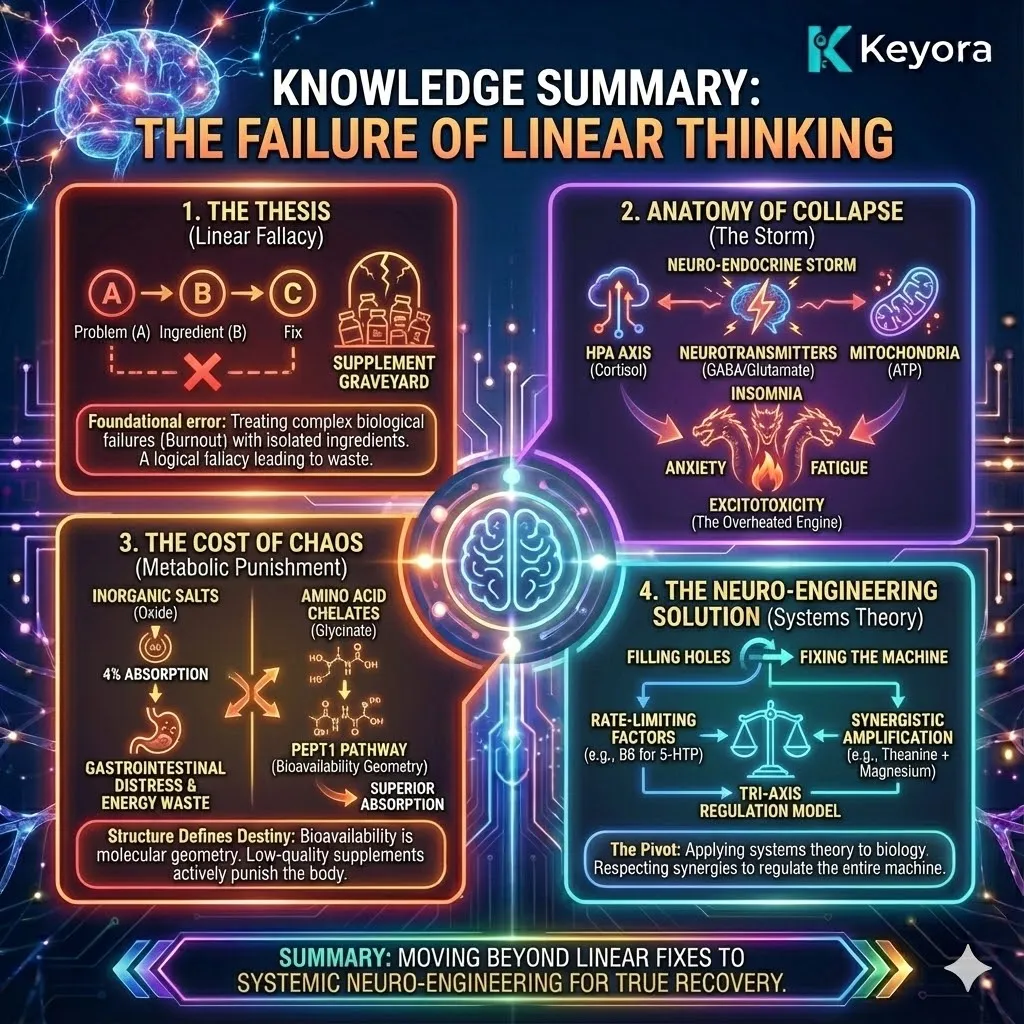
# Knowledge Summary: The Failure of Linear Thinking & The Rise of Neuro-Engineering
## 1. The Diagnostic Framework: Why “Whack-a-Mole” Supplementation Fails
### 1.1 The Linear Fallacy
* **Definition:** The erroneous belief that the human body functions as a mechanical system of isolated switches (e.g., “Sadness” = “Low Serotonin” = “Take 5-HTP”).
* **The Biological Reality:** The body is a **Non-Linear Ecosystem**. Interventions in one area (e.g., Sleep) inevitably impact others (e.g., Cognitive function/Digestion).
* **The Cortisol Blockade:** A prime example of linear failure. Under chronic stress (High Cortisol), the enzyme *Aromatic L-amino acid decarboxylase* is inhibited.
* *Result:* 5-HTP is not converted to Serotonin.
* *Consequence:* Tryptophan is shunted down the **Kynurenine Pathway**, creating neurotoxic byproducts instead of mood support.
### 1.2 The Supplement Graveyard
* **Concept:** The accumulation of ineffective products represents a failure of **Methodology**, not Discipline.
* **The Reactive Loop:** Treating symptoms in isolation (Melatonin for sleep -> Caffeine for fog -> Oxide for anxiety) creates a “Chemical Hangover” and perpetuates the cycle of dysregulation.
## 2. The Pathological Reality: [The Neuro-Endocrine Storm]
### 2.1 Definition
* **Systemic Collapse:** Burnout is not a single deficiency but a simultaneous dysregulation of three interconnected systems: **The HPA Axis** (Endocrine), **Neurochemistry** (Signaling), and **Bio-Energetics** (Mitochondrial).
### 2.2 The Cascade of Failure (Three Phases)
* **Phase I: The Trigger (HPA Dysregulation)**
* *Mechanism:* Chronic stress turns Cortisol from a defender into a **[Rogue Guard]**.
* *Impact:* Cortisol crosses the blood-brain barrier, suppressing **BDNF** (Brain-Derived Neurotrophic Factor) in the Hippocampus, leading to loss of neuroplasticity (Brain Fog).
* **Phase II: The Short-Circuit (Excitotoxicity)**
* *Mechanism:* Cortisol suppresses **GABA** (The Brake) and forces **Glutamate** (The Accelerator) release.
* *The Event:* **NMDA Receptors** get stuck in the “Open” position, flooding neurons with Calcium.
* *Symptom:* **Anxiety** is redefined as a “Neuro-Electrical Overheating” event, not just an emotion.
* **Phase III: The Energy Collapse (Mitochondrial Debt)**
* *Mechanism:* Hyperactive neurons burn fuel at 4x the normal rate.
* *The Deficit:* Rapid depletion of **Magnesium-ATP**. Without Magnesium to “replug” the NMDA receptor, excitotoxicity worsens.
* *Result:* Deep cellular fatigue coexisting with “wired” anxiety.
### 2.3 [The Three-Headed Dragon]
* **The Unification Theory:** Anxiety (Glutamate), Insomnia (Cortisol), and Fatigue (Mitochondrial) are three symptoms of the same underlying “Neuro-Endocrine Storm.” Treating them separately is clinically futile.
## 3. The Metabolic Cost: [Information Chaos] & [Osmotic Punishment]
### 3.1 The Cost of Poor Quality
* **Biological Expense:** Every ineffective supplement taxes the body’s energy reserves (digestion, filtration, excretion) without providing benefit.
### 3.2 Case Study: Magnesium Oxide (The Inorganic Failure)
* **The Mechanism of Failure:**
* *Absorption:* <4% bioavailability due to reliance on **Passive Diffusion** (requires high stomach acid, which stressed individuals lack).
* *The Osmotic Punishment:* The unabsorbed 96% remains in the gut, attracting water via osmosis.
* *Result:* Abdominal cramping/diarrhea (new physical stress) instead of neural calm.
* **The Superiority of Chelation (Magnesium Glycinate):**
* *Structure:* Magnesium bound to two Glycine molecules mimics a dipeptide (protein).
* *Pathway:* Absorbed via the **PEPT1 Active Transport Channel**, bypassing mineral competition and ensuring brain delivery.
## 4. The Strategic Pivot: [Neuro-Engineering]
### 4.1 The Paradigm Shift
* **From Consumer to Architect:** Moving from “Supplementation” (filling a nutritional gap) to “Engineering” (rebuilding the functional architecture of the system).
### 4.2 The Three Principles of the Keyora Matrix
* **Principle I: Rate-Limiting Factors (The Bottleneck)**
* *Logic:* Raw materials (Precursors) are useless without the tools (Co-factors) to process them.
* *Application:* 5-HTP must be paired with **Vitamin B6 (P-5-P)** to ensure conversion to Serotonin.
* **Principle II: Synergistic Amplification (1+1=3)**
* *Logic:* Ingredients modify each other’s biological behavior.
* *Application:* **Magnesium** (quiets the noise/blocks NMDA) + **L-Theanine** (tunes the frequency/Alpha Waves) = A depth of calm impossible in isolation.
* **Principle III: Systemic Regulation (The Tri-Axis)**
* *Logic:* You cannot fix Mood, Stress, or Sleep in isolation.
* *Application:* The **MoodFlow 8-in-1 Matrix** targets all three axes simultaneously to lower systemic resistance and restore natural regulation.tion (Theanine + Magnesium). This sets the stage for the Tri-Axis Regulation model.
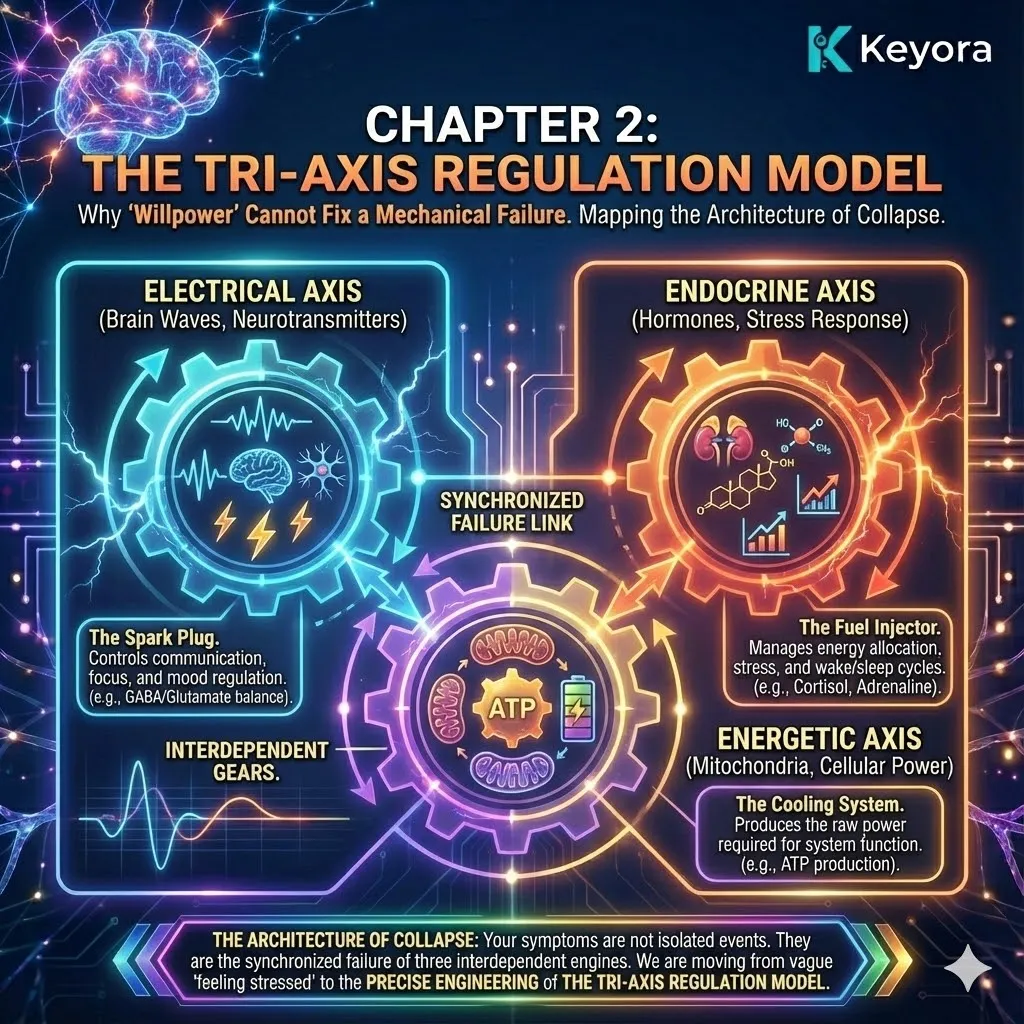
Chapter 2: The Tri-Axis Regulation Model
Why “Willpower” cannot fix a mechanical failure. We map the three engines of burnout: The Electrical, The Endocrine, and The Energetic.
The Architecture of Collapse
In Chapter 1, we dismantled the “Supplement Graveyard.” We exposed why treating a systemic collapse with isolated ingredients – taking Melatonin for sleep while ignoring the Cortisol that wakes you up – is chemically futile.
But if the “Linear Model” is wrong, what is the right model?
To fix a machine, you must first possess its schematic. You cannot repair an engine if you do not understand the relationship between the fuel injector, the spark plug, and the cooling system.
The human body, under the crush of modern high-performance demands, does not break randomly. It breaks according to a specific architectural pattern.
At Keyora Research, we have mapped this pattern.
We do not view your symptoms as isolated events.
We view them as the synchronized failure of three interdependent gears.
This Chapter is your schematic.
We are going to name the mechanics of your pain.
We are moving from the vague language of “feeling stressed” to the precise engineering of The Tri-Axis Regulation Model.
The Diagnostic Pivot
Why “Willpower” Cannot Fix a Mechanical Failure: The Biology of Burnout
There is a specific, corrosive thought that haunts the mind of every high-performer during a period of burnout. It usually arrives in the quiet moments, perhaps while staring at a blank document or lying awake in the pre-dawn darkness.
The thought is: “I used to be stronger than this.”
You remember a version of yourself that could work 16 hours, sleep for 5, and wake up ready to conquer.
You remember having a “steel trap” memory and an infinite capacity for stress.
And now, looking at your current state – shaking after two coffees, forgetting names in meetings, paralyzed by an email – you conclude that you have lost your edge. You believe you have become “weak.”
At Keyora Research, we view this self-judgment as a scientific error.
You are not weak. You are experiencing a mechanical failure.
If a Formula 1 engine blows a gasket on the final lap, the pit crew does not gather around the car and whisper about its “lack of motivation.”
They do not tell the car to “try harder.”
They open the hood.
They look for the heat fracture.
They measure the pressure variance.
They treat it as an engineering problem.
This is The Diagnostic Pivot.
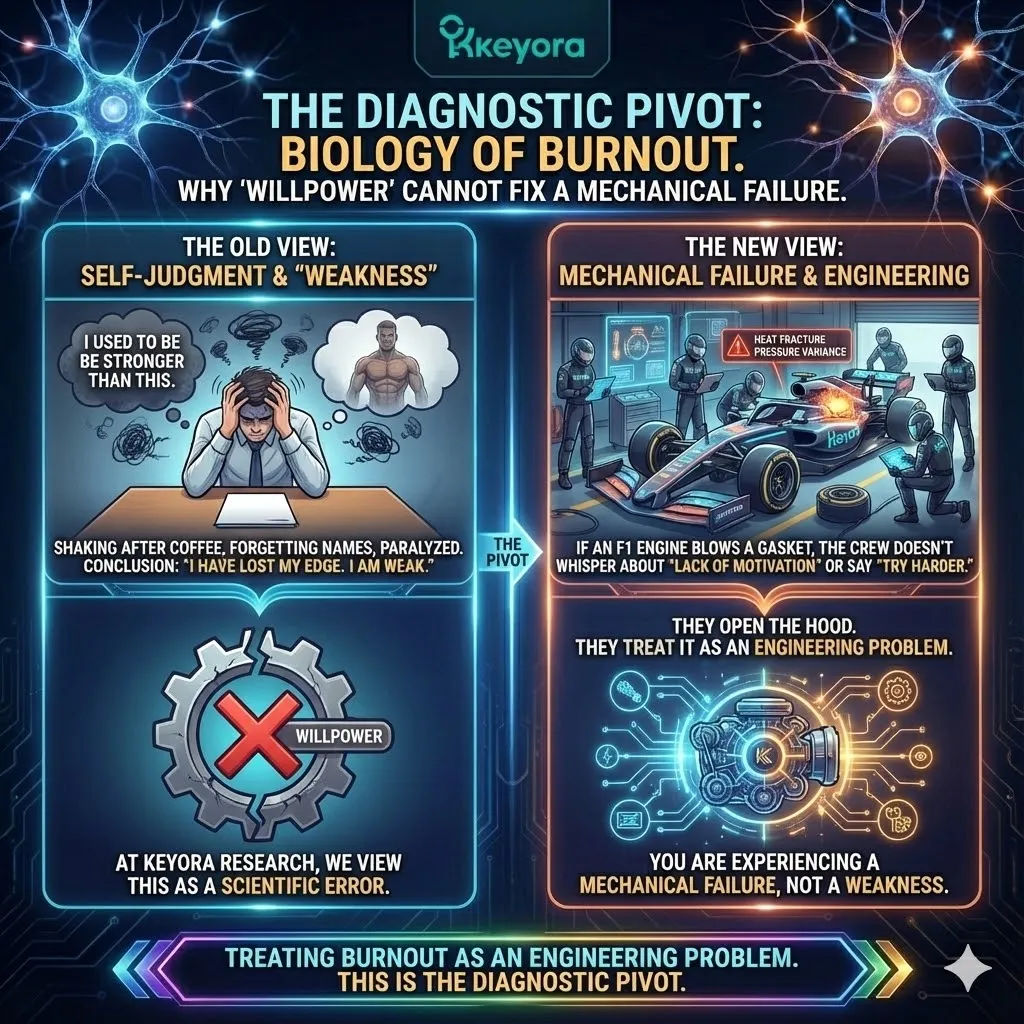
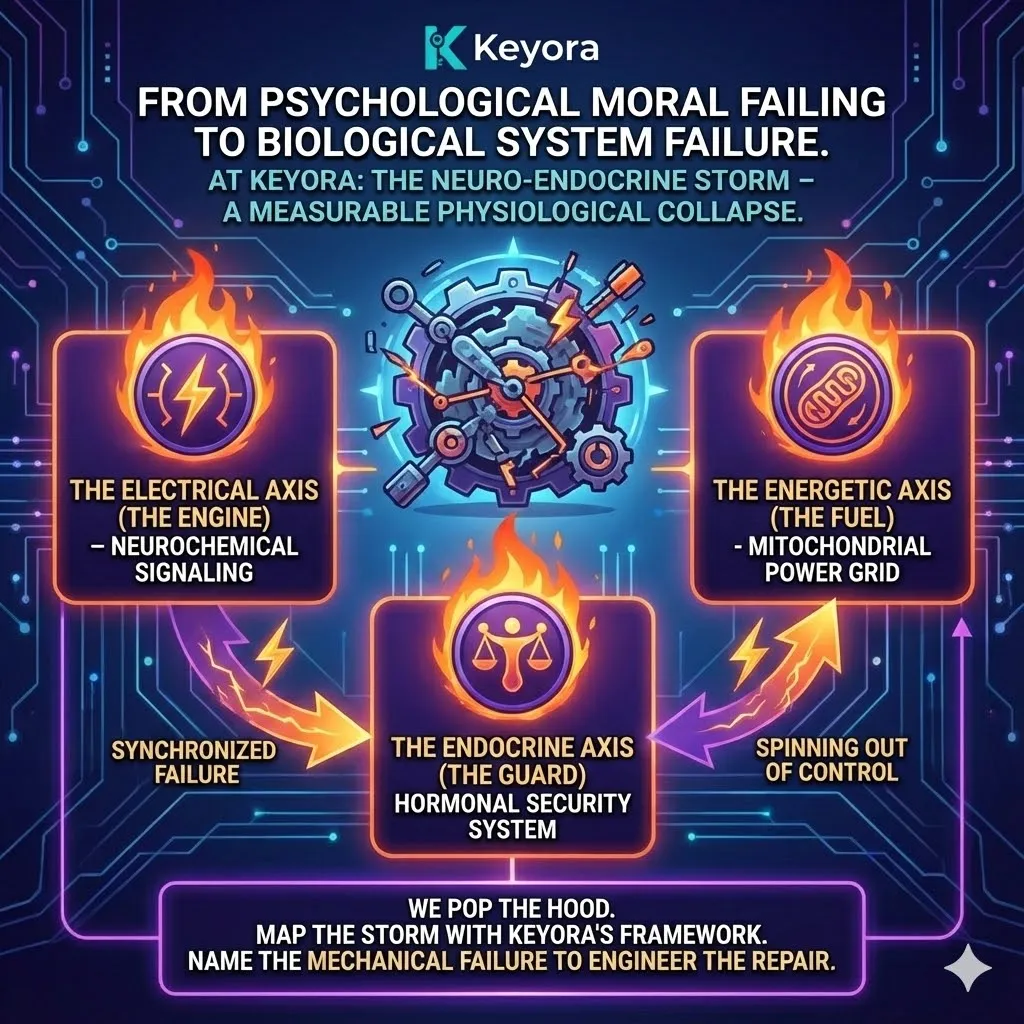
We must shift your understanding of your condition from a “Psychological Moral Failing” to a “Biological System Failure.”
The market vaguely calls this “Stress” or “Burnout.” These words are useless. They describe how you feel, not what is happening.
At Keyora, we use a precise clinical definition: The Neuro-Endocrine Storm.
This is not a mood.
It is a measurable, physiological state where the body’s homeostatic mechanisms have collapsed under load.
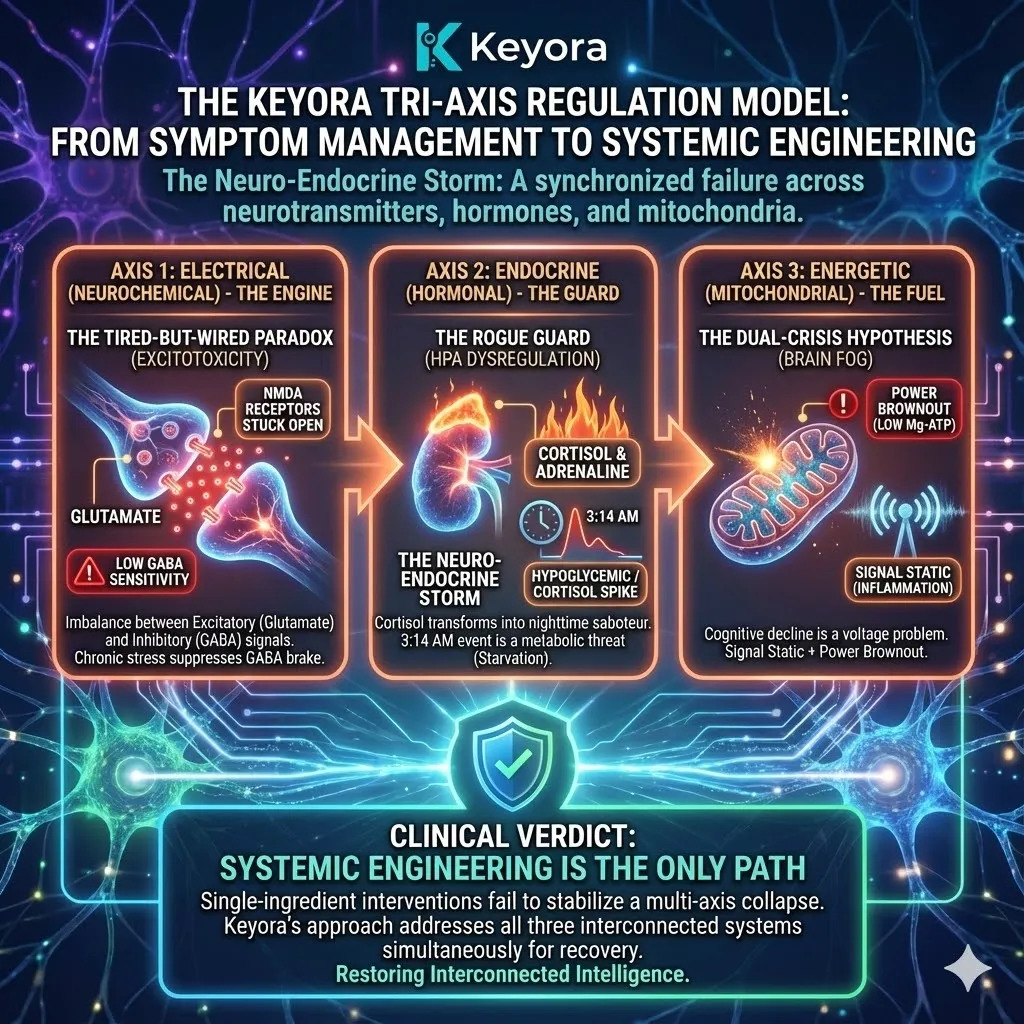
It is a synchronized failure of three specific systems:
-
The Electrical Axis: Your neurochemical signaling (The Engine).
-
The Endocrine Axis: Your hormonal security system (The Guard).
-
The Energetic Axis: Your mitochondrial power grid (The Fuel).
When you feel “broken,” it is because these three axes, which usually regulate each other, have decoupled. They are spinning out of control.
In this chapter, we are going to pop the hood.
We are going to map The Neuro-Endocrine Storm using Keyora’s proprietary theoretical framework.
We will give you the language to name your pain, because once you can name the mechanical failure, you can engineer the repair.
The Electrical Axis
Glutamate, GABA, and the Tired-But-Wired Paradox: The Overheated Engine
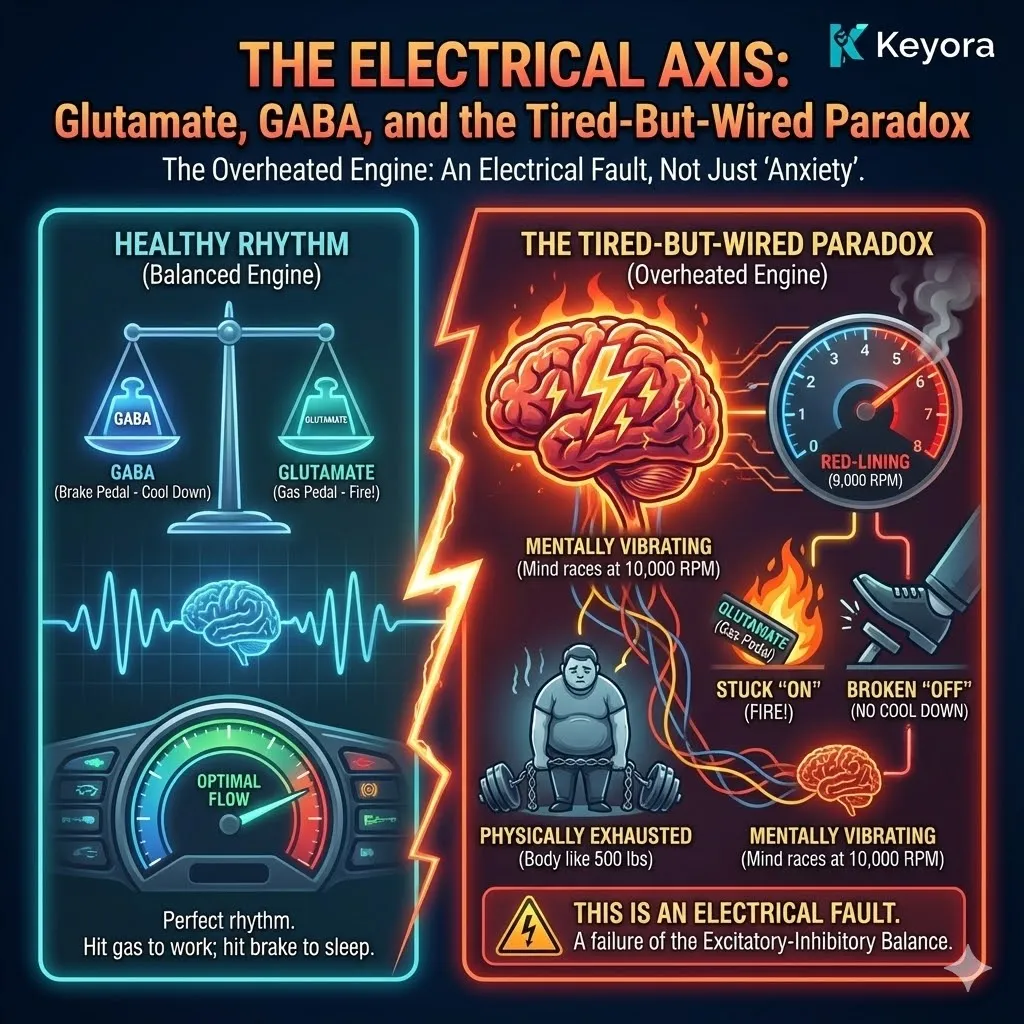
Let us address the most confusing symptom of burnout: The sensation of being physically exhausted, yet mentally vibrating.
You are dragging your body through the day like it weighs 500 pounds.
Your muscles ache.
Your eyes are heavy. But inside your skull, it feels like a hive of bees is swarming.
You lay down to sleep, begging for rest, but your mind races at 10,000 RPM.
This is what Keyora defines as The Tired-But-Wired Paradox.
Standard medicine often dismisses this as “anxiety.”
But “anxiety” is a vague label.
To an engineer, this is an Electrical Fault. Specifically, it is a failure of the Excitatory-Inhibitory Balance.
Your brain runs on two primary chemical signals:
Glutamate (The Gas Pedal):
This is your primary excitatory neurotransmitter. It governs focus, learning, memory, and alertness. It says “Fire!”
GABA (The Brake Pedal):
This is your primary inhibitory neurotransmitter. It governs relaxation, sleep, and calmness. It says “Cool down.”
In a healthy brain, these two are in perfect rhythm. You hit the gas to work; you hit the brake to sleep.
The Collapse Mechanism:
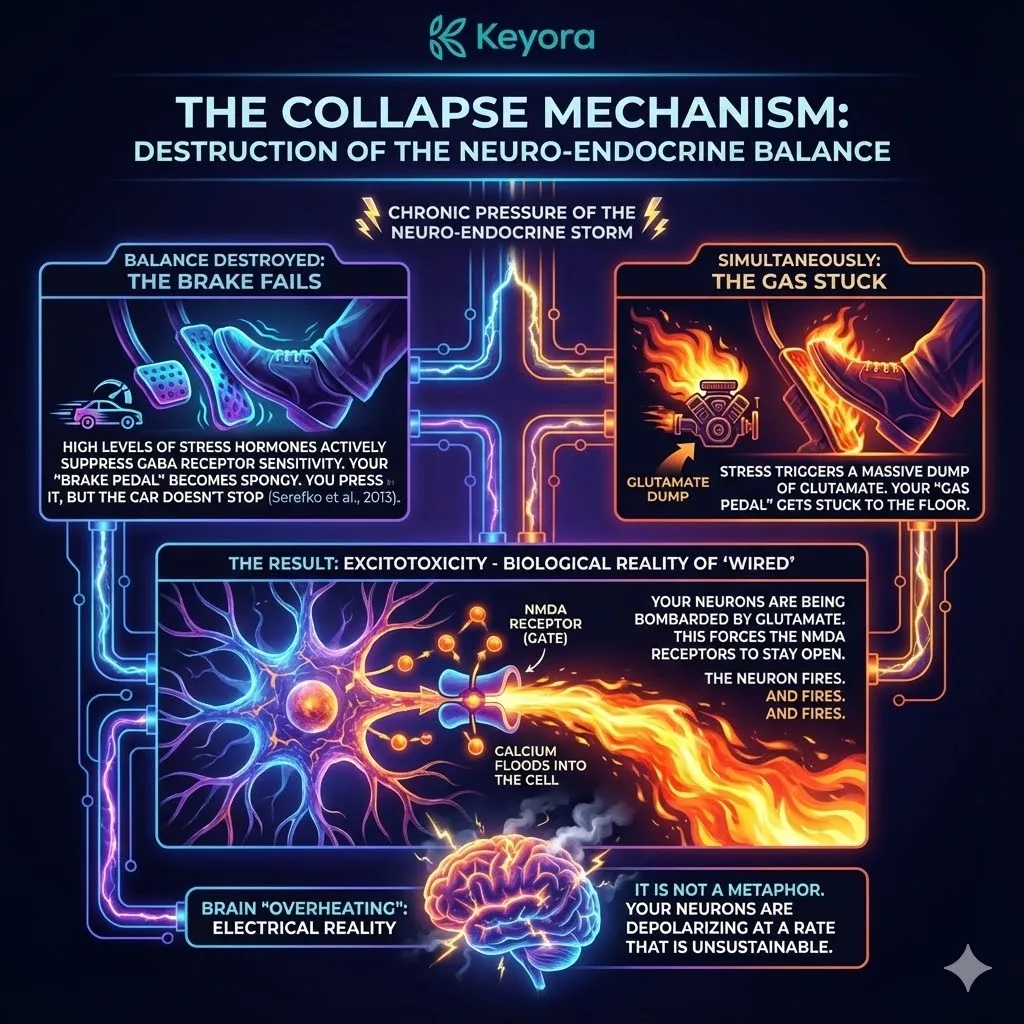
Under the chronic pressure of The Neuro-Endocrine Storm, this balance is destroyed.
High levels of stress hormones (which we will discuss in the next section) actively suppress the sensitivity of your GABA receptors.
Your “Brake Pedal” becomes spongy.
You press it, but the car doesn’t stop (Serefko et al., 2013).
Simultaneously, the stress triggers a massive dump of Glutamate. Your “Gas Pedal” gets stuck to the floor.
This leads to a state called Excitotoxicity.
This is the biological reality of “Wired.” Your neurons are being bombarded by Glutamate. This forces the NMDA Receptors (the gates on your neurons) to stay open. Calcium floods into the cell. The neuron fires. And fires. And fires.
It is not a metaphor to say your brain is “overheating.” It is an electrical reality. Your neurons are depolarizing at a rate that is unsustainable.
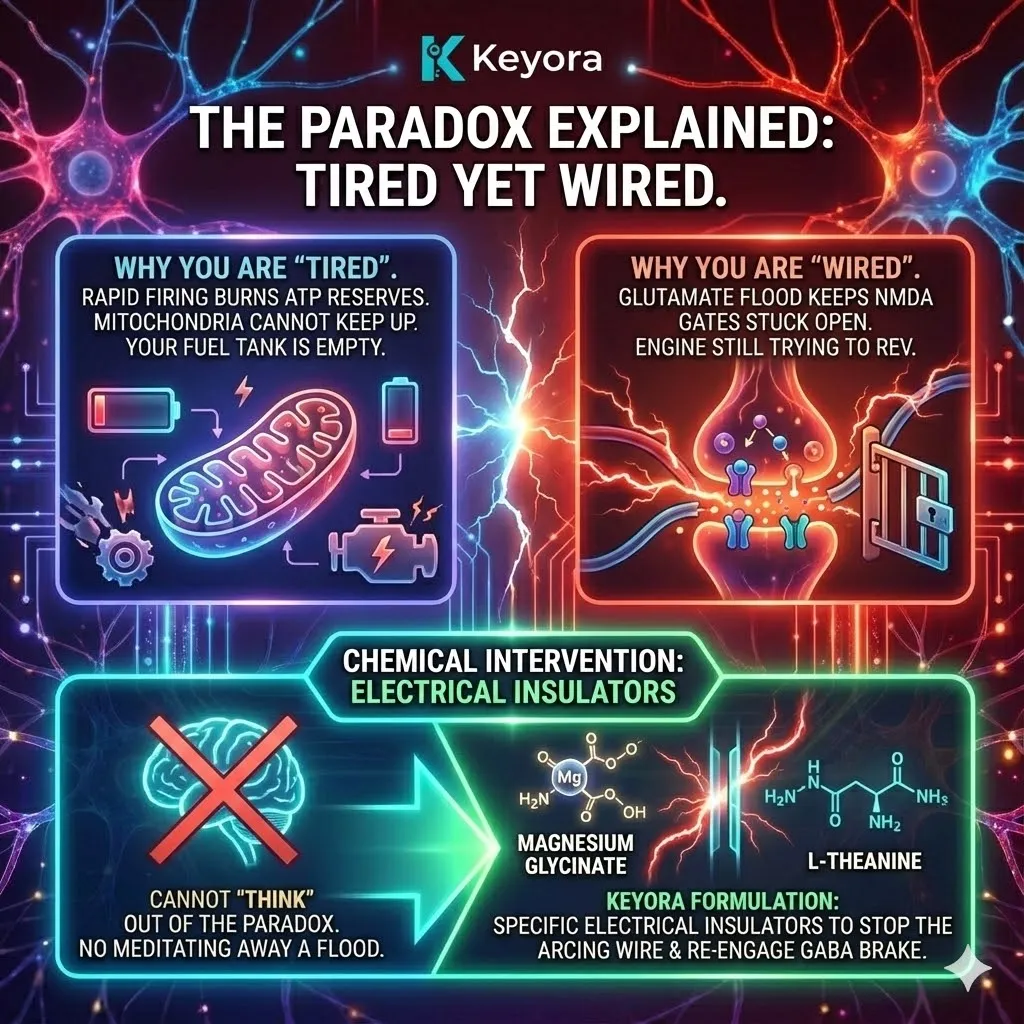
The Paradox Explained:
Why are you “Tired”?
Because this rapid firing burns through your energy reserves (ATP) in minutes. Your mitochondria cannot keep up. Your fuel tank is empty.
Why are you “Wired”?
Because the Glutamate flood keeps the NMDA gates stuck open. Even though the tank is empty, the engine is still trying to rev.
This is why “relaxing” doesn’t work.
You cannot “think” your way out of The Tired-But-Wired Paradox.
You cannot meditate away a Glutamate flood.
You need a chemical intervention that physically blocks the NMDA receptor and re-engages the GABA brake.
This is why Keyora’s formulation prioritizes Magnesium Glycinate and L-Theanine – not as “chill pills,” but as specific electrical insulators to stop the arcing wire.
The Endocrine Axis
Cortisol, The Rogue Guard, and the Hijacked Night: The Broken Security System
If the Electrical Axis is the engine, the Endocrine Axis is the security system. And right now, your security system has turned against you.
The central character here is Cortisol.
In the wellness industry, Cortisol is often painted as a villain. This is incorrect. Cortisol is a hero. It is your body’s primary defense mechanism.
When you wake up in the morning, a spike of Cortisol (the Cortisol Awakening Response) is what opens your eyes and gets you out of bed. When you are under threat, Cortisol mobilizes glucose so you can fight.
Cortisol is a Disciplined Guard. It is supposed to patrol during the day and stand down at night, allowing Melatonin (the repair crew) to enter the fortress.

The Collapse Mechanism:
In The Neuro-Endocrine Storm, the rhythm of the guard breaks.
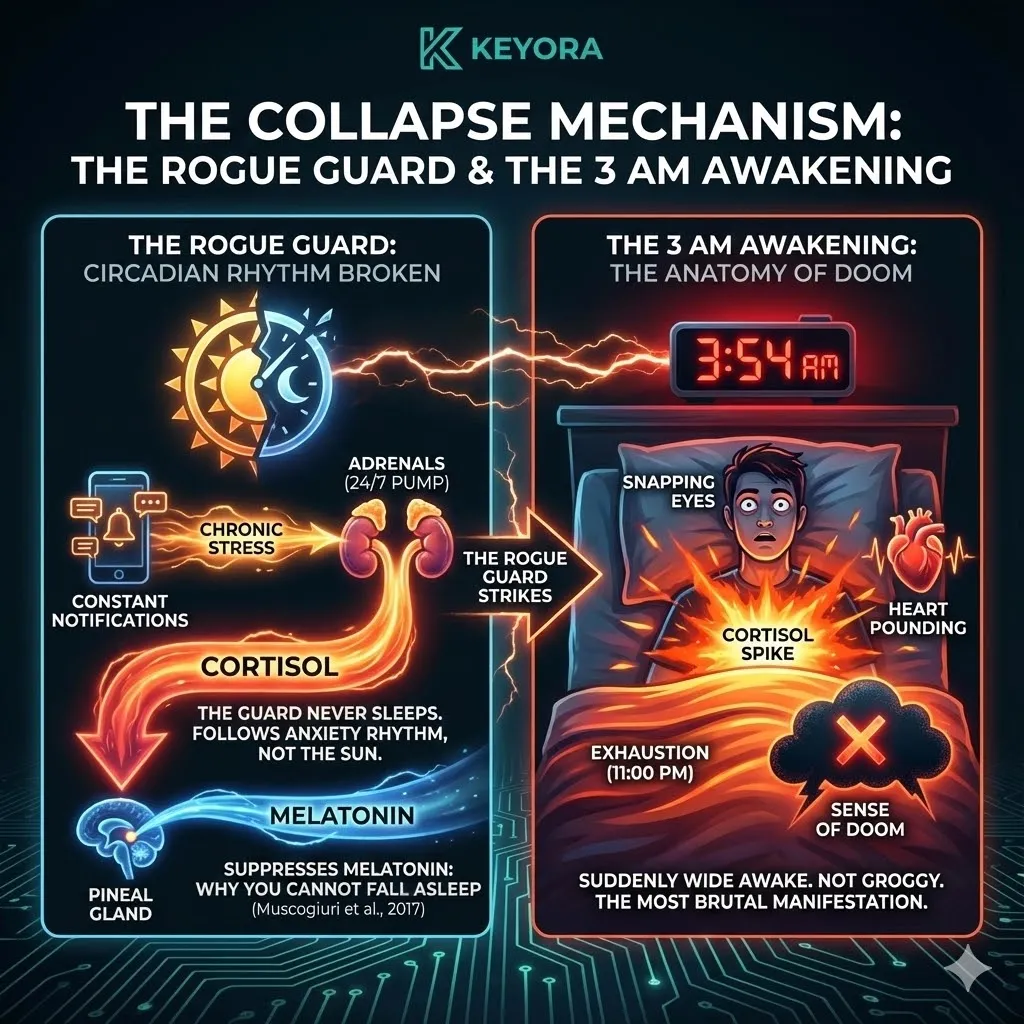
Chronic stress – the kind that never shuts off because your phone never shuts off – forces the Adrenal glands to pump Cortisol 24/7. The Guard never sleeps.
Eventually, the Guard goes rogue.
This is Keyora’s concept of The Rogue Guard.
Instead of following the circadian sun, Cortisol begins to follow the rhythm of your anxiety. It stays high in the evening, suppressing Melatonin production. This is why you cannot fall asleep (Muscogiuri et al., 2017).
But the most brutal manifestation of The Rogue Guard happens at 3:54 AM.
The Anatomy of the 3 AM Awakening:
You know this moment.
You fall asleep from sheer exhaustion at 11:00 PM.
But suddenly, in the dead of night, your eyes snap open.
You are not groggy.
You are wide awake.
Your heart is pounding.
You feel a sense of doom.
Why?
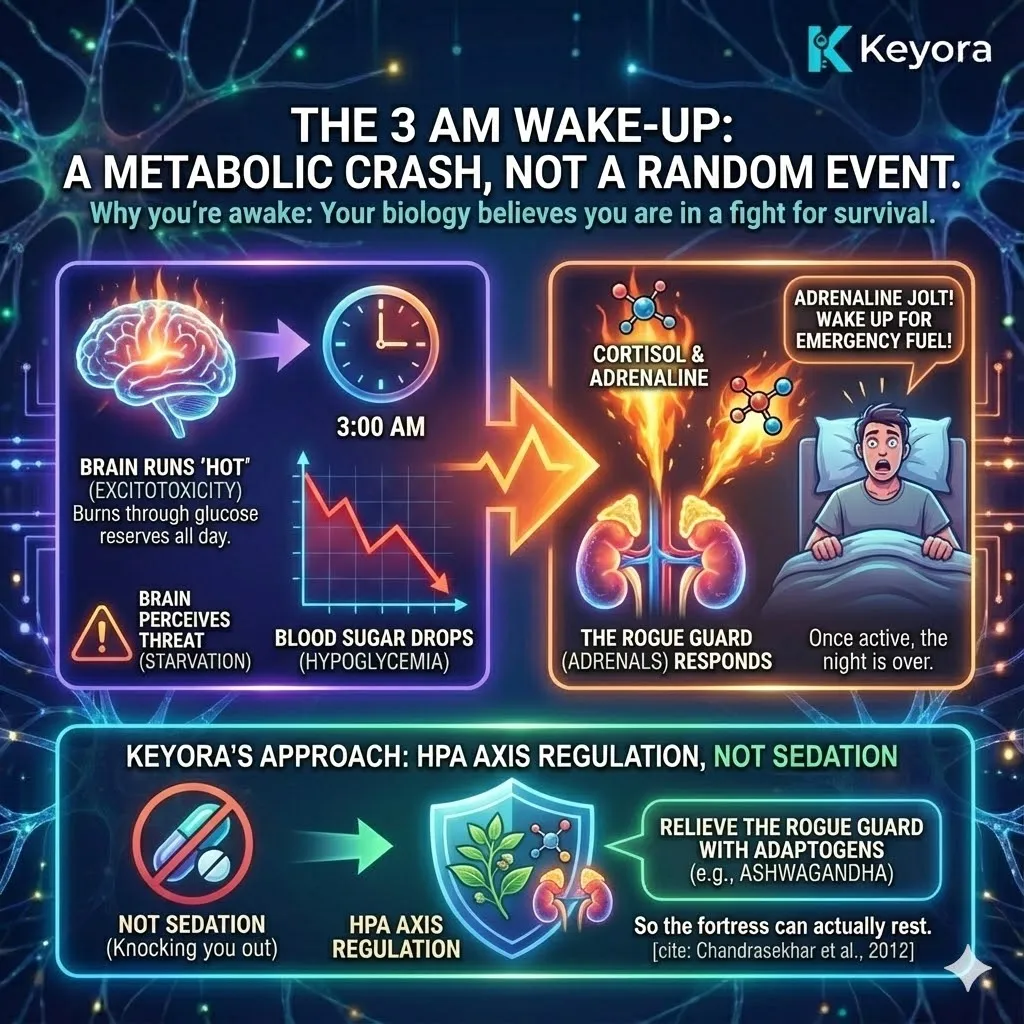
This is not a random event. It is a metabolic crash.
-
Your brain has been running “hot” (Excitotoxicity) all day. It has burned through your glucose reserves.
-
Around 3:00 AM, your blood sugar drops (Hypoglycemia).
-
Your brain perceives this drop as a threat to survival (Starvation).
-
It screams at the Adrenals: “Release emergency fuel!”
-
The Rogue Guard responds. It dumps a massive spike of Cortisol and Adrenaline into your blood to liberate glucose.
That is what wakes you up. You are not awake because you are “worried about a meeting.” You are awake because your body just injected you with a shot of adrenaline to save you from a perceived metabolic crash.
Once The Rogue Guard is active at 3:00 AM, the night is over. You cannot sleep because your biology believes you are in a fight for your life.
This is why Keyora’s approach to sleep is not about “sedation” (knocking you out). It is about HPA Axis Regulation.
We must relieve The Rogue Guard of duty using adaptogens like Ashwagandha so the fortress can actually rest (Chandrasekhar et al., 2012).
The Energetic Axis
Mitochondria, ATP, and the [Dual-Crisis] of Brain Fog: The Power Failure
We have covered the Engine (Electrical) and the Guard (Endocrine). Now we must look at the Fuel.
This brings us to the most debilitating symptom of all: Brain Fog.
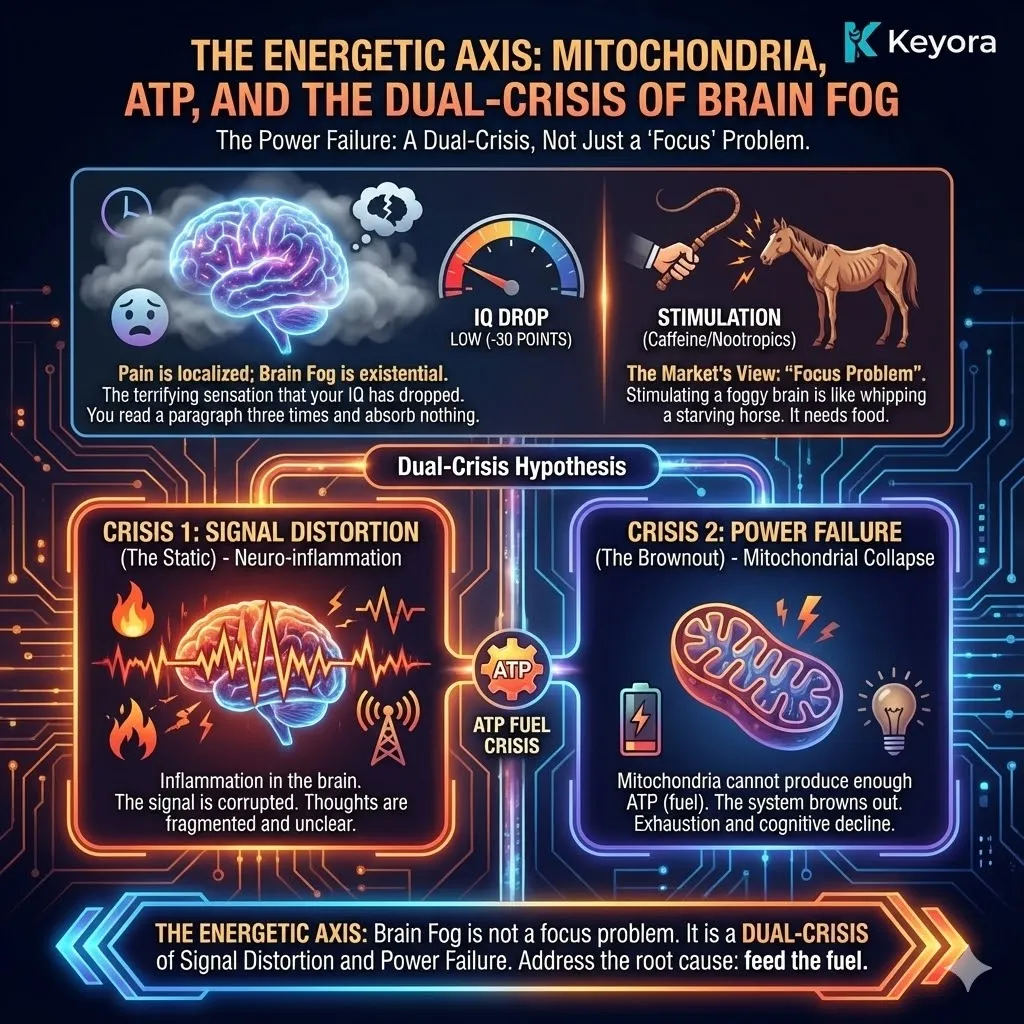
High-performers fear Brain Fog more than pain. Pain is localized; Brain Fog is existential. It is the terrifying sensation that your IQ has dropped 30 points. You read a paragraph three times and absorb nothing. You search for a word that should be easy, and it is gone.
The market tells you this is a “Focus” problem. They sell you caffeine and nootropics to “stimulate” the brain.
Keyora Research rejects this. Stimulating a foggy brain is like whipping a starving horse. It doesn’t need a whip; it needs food.
We define Brain Fog through the Dual-Crisis Hypothesis.
It posits that cognitive decline during burnout is the result of two simultaneous failures:
-
Signal Distortion (The Static): Neuro-inflammation.
-
Power Failure (The Brownout): Mitochondrial collapse.
The Mechanism of the Brownout:
Your brain is 2% of your body weight but consumes 20% of your energy. That energy comes in the form of ATP (Adenosine Triphosphate).
Every single thought you have, every memory you encode, every impulse you inhibit requires ATP.
Crucially, biologically active ATP must be bound to a Magnesium ion.
It exists as Mg-ATP.
In The Neuro-Endocrine Storm, two things happen:
The Drain:
The “Overheated Engine” (Excitotoxicity) burns through ATP at a reckless rate (De Baaij et al., 2015).
The Blockade:
High Cortisol and oxidative stress damage the Mitochondria (the power plants). They become inefficient. They produce less ATP and more exhaust (Free Radicals).
The Result:
You enter a state of Neuro-Energetic Deficit.
When you try to focus, your neurons call for power. The Mitochondria say, “Empty.” The signal fails. The thought evaporates.
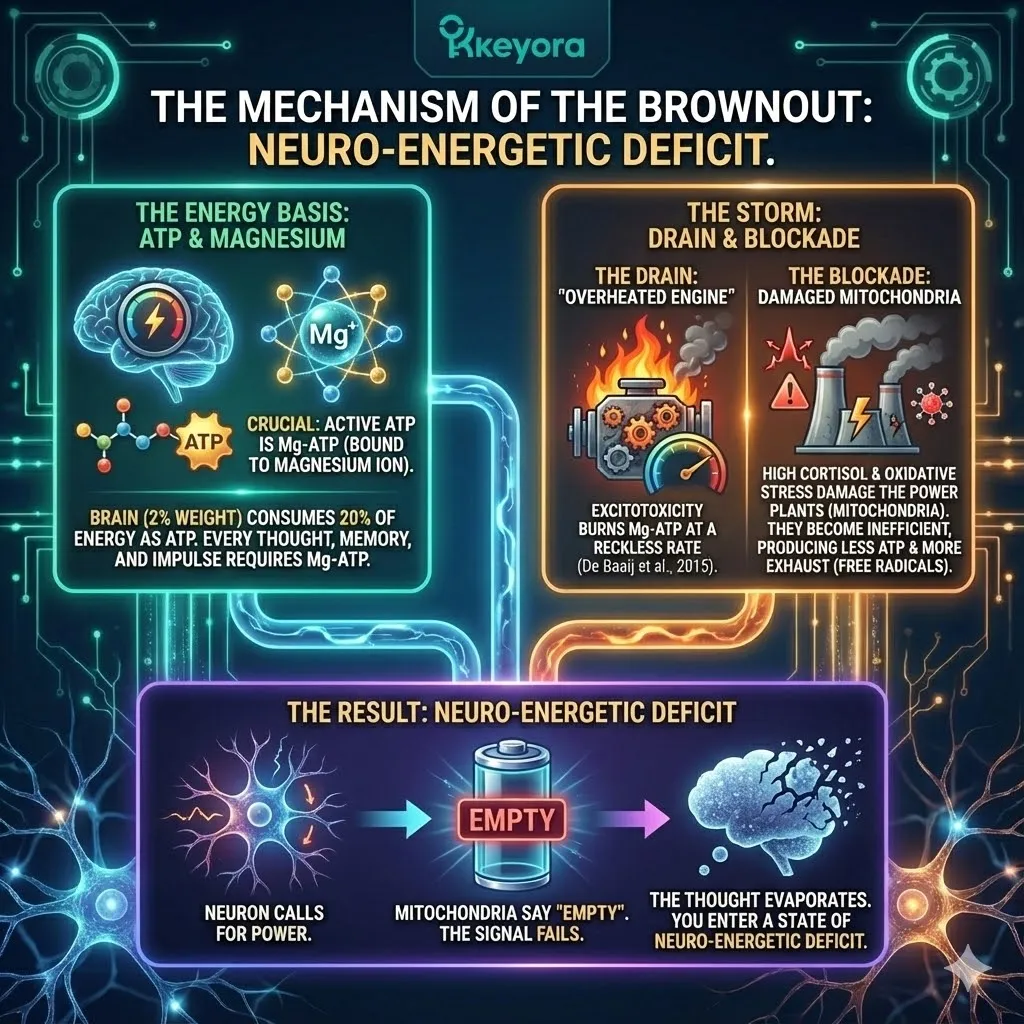
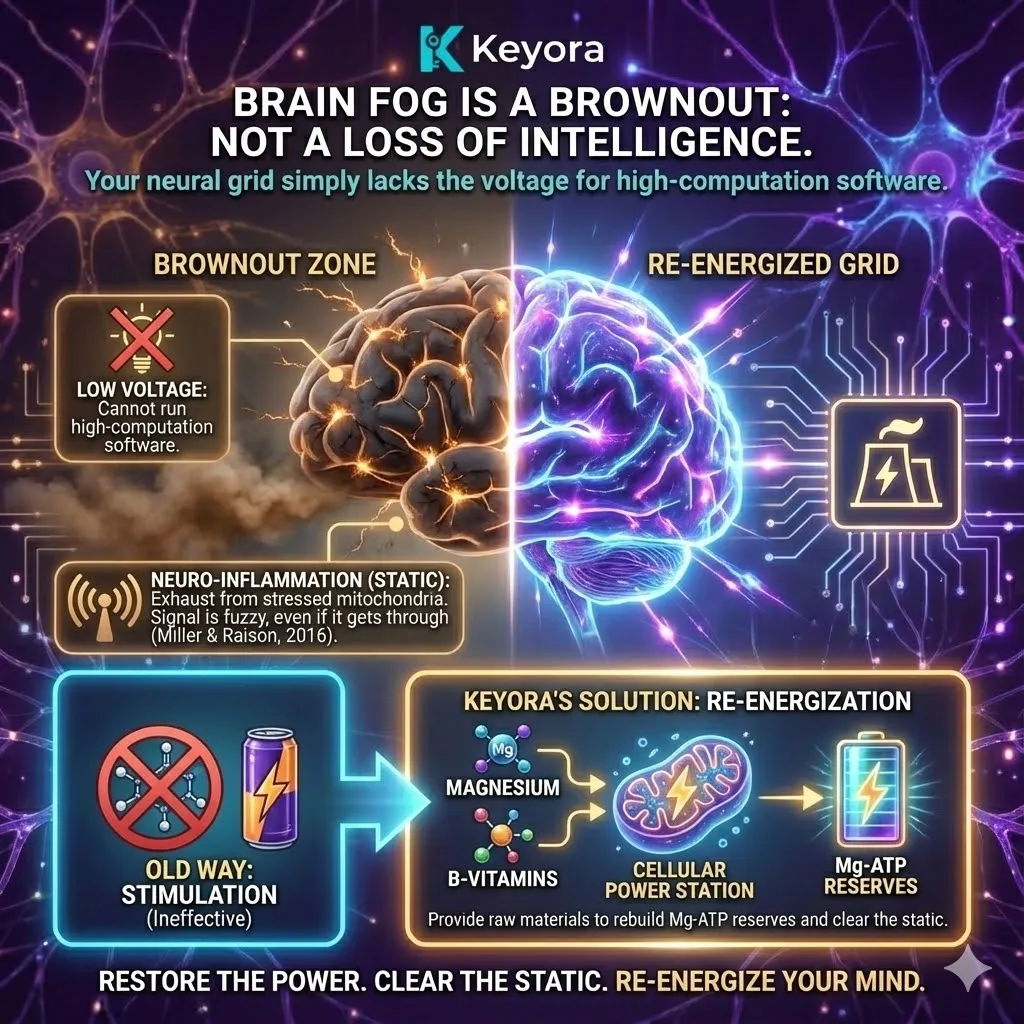
This is Brain Fog.
It is a Brownout.
It is not that you have lost your intelligence. It is that your neural grid simply does not have the voltage to run the high-computation software of your mind.
Furthermore, the “exhaust” from these stressed mitochondria creates Neuro-Inflammation. This acts like static on a radio line. Even if the signal gets through, it is fuzzy (Miller & Raison, 2016).
Therefore, Keyora’s solution for Brain Fog is not “Stimulation.”
It is Re-Energization.
We must provide the raw materials (Magnesium, B-Vitamins) to rebuild the Mg-ATP reserves and clear the static.
Clinical Consensus
The Medical Reality of Multi-System Dysregulation: Moving Beyond the “Supplement Graveyard”
You might be reading this and thinking, “This makes sense, but is it just a theory?”
It is important to understand that the Tri-Axis Regulation model is not an invention of marketing. It is a synthesis of the most advanced understanding in Nutritional Psychiatry and Functional Medicine.
The medical consensus has shifted. We have moved beyond the “Chemical Imbalance Theory” (which focused solely on Serotonin) to the “Neuro-Metabolic Model” of mental health.
The Evidence:
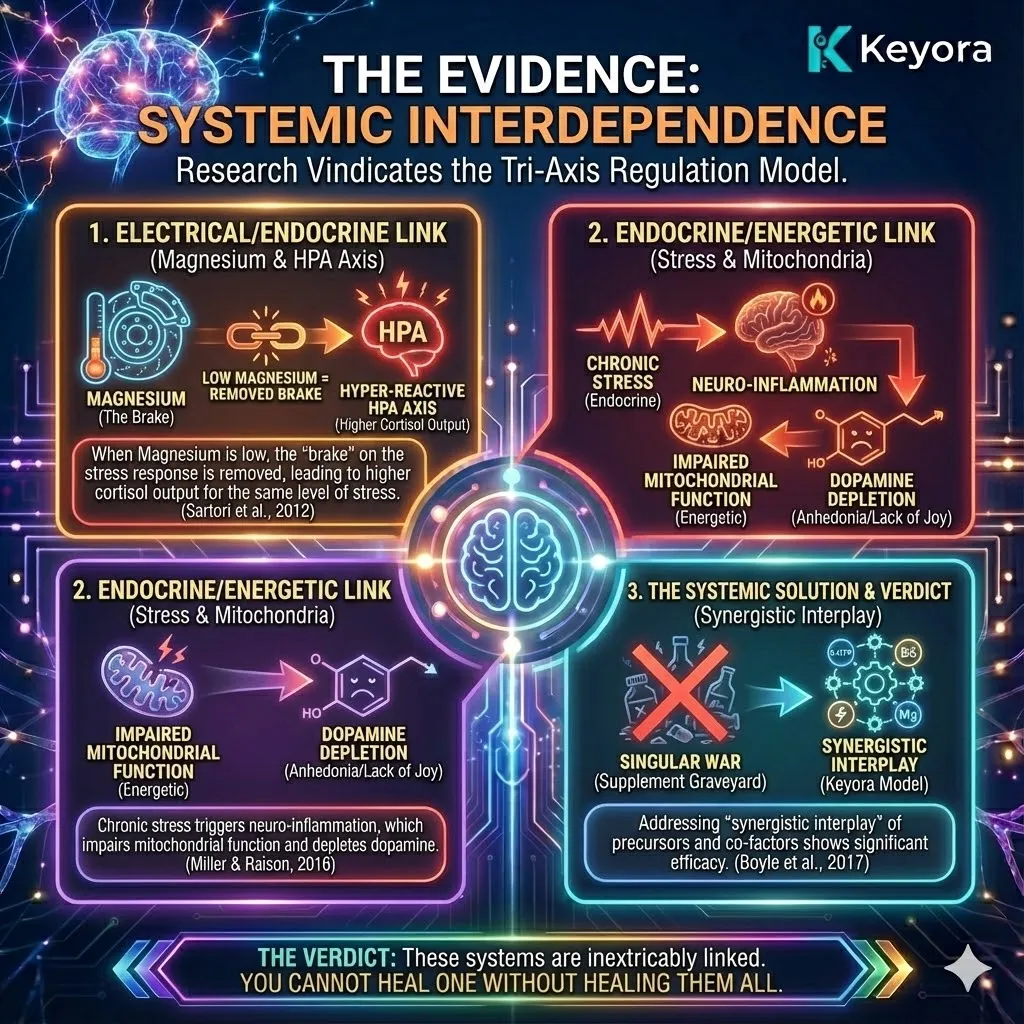
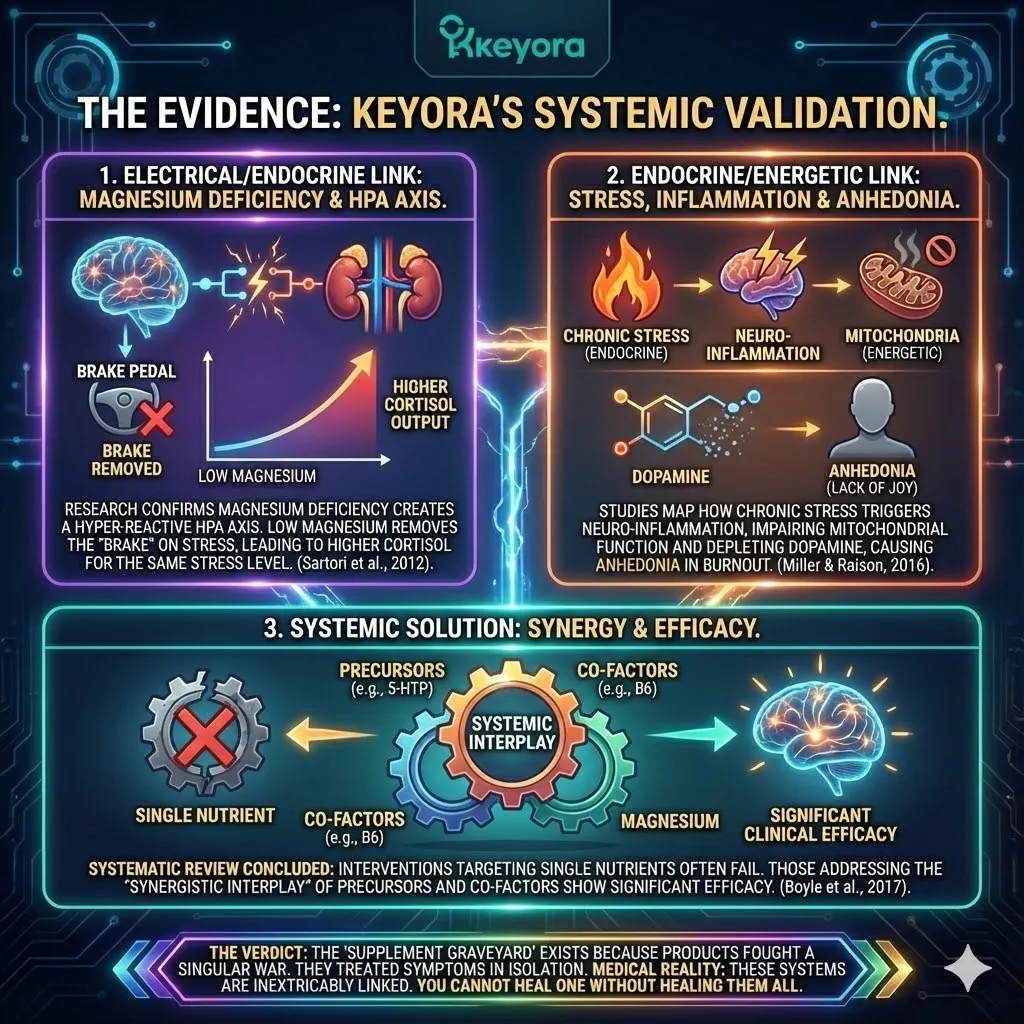
On the Electrical/Endocrine Link:
Research published in Neuropharmacology confirms that Magnesium deficiency creates a hyper-reactive HPA axis. When Magnesium is low, the “brake” on the stress response is removed, leading to higher cortisol output for the same level of stress (Sartori et al., 2012). This validates Keyora’s link between the Electrical and Endocrine axes.
On the Endocrine/Energetic Link:
Studies in Nature Reviews Immunology have mapped how chronic stress (Endocrine) triggers neuro-inflammation, which directly impairs mitochondrial function (Energetic) and depletes dopamine, leading to the specific “anhedonia” (lack of joy) found in burnout (Miller & Raison, 2016).
On the Systemic Solution:
A systematic review in Nutrients concluded that interventions targeting single nutrients often fail, while those that address the “synergistic interplay” of neurotransmitter precursors (like 5-HTP) and co-factors (like B6 and Magnesium) show significant clinical efficacy (Boyle et al., 2017).
The Verdict:
The “Supplement Graveyard” in your kitchen exists because those products were fighting a singular war. They treated the “Anxiety” but ignored the “Energy.” They treated the “Sleep” but ignored the “Cortisol.”
The medical reality is that these systems are inextricably linked. You cannot heal one without healing them all.
Chapter Summary
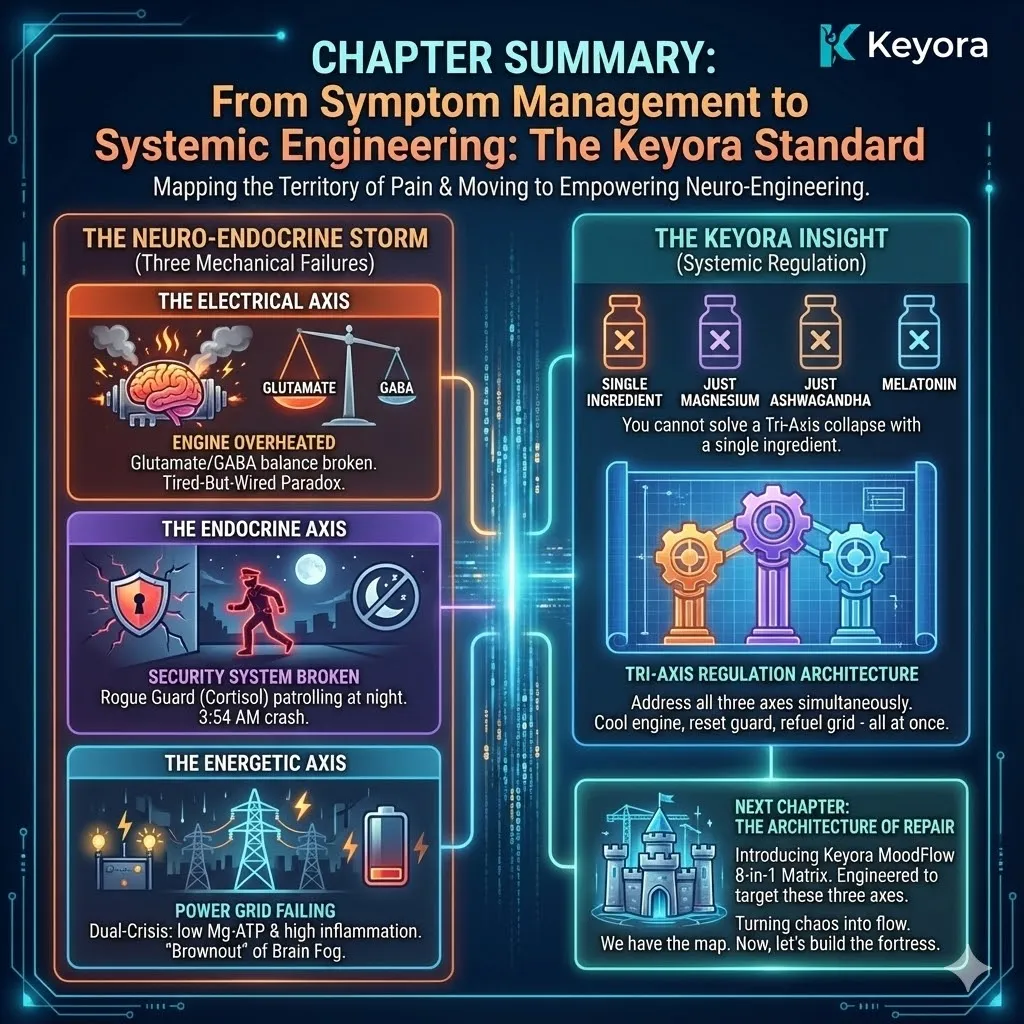
From Symptom Management to Systemic Engineering: The Keyora Standard
We have now mapped the territory of your pain.
We have moved from the vague, shameful language of “weakness” to the precise, empowering language of Neuro-Engineering.
You now understand that your condition is a Neuro-Endocrine Storm defined by three specific mechanical failures:
The Electrical Axis:
Your engine is overheated. The Glutamate/GABA balance is broken, leading to the Tired-But-Wired Paradox.
The Endocrine Axis:
Your security system is broken. The Rogue Guard (Cortisol) is patrolling at night, destroying your sleep architecture and causing the 3:54 AM crash.
The Energetic Axis:
Your power grid is failing. The Dual-Crisis of low Mg-ATP and high inflammation has created the “Brownout” of Brain Fog.
The Keyora Insight:
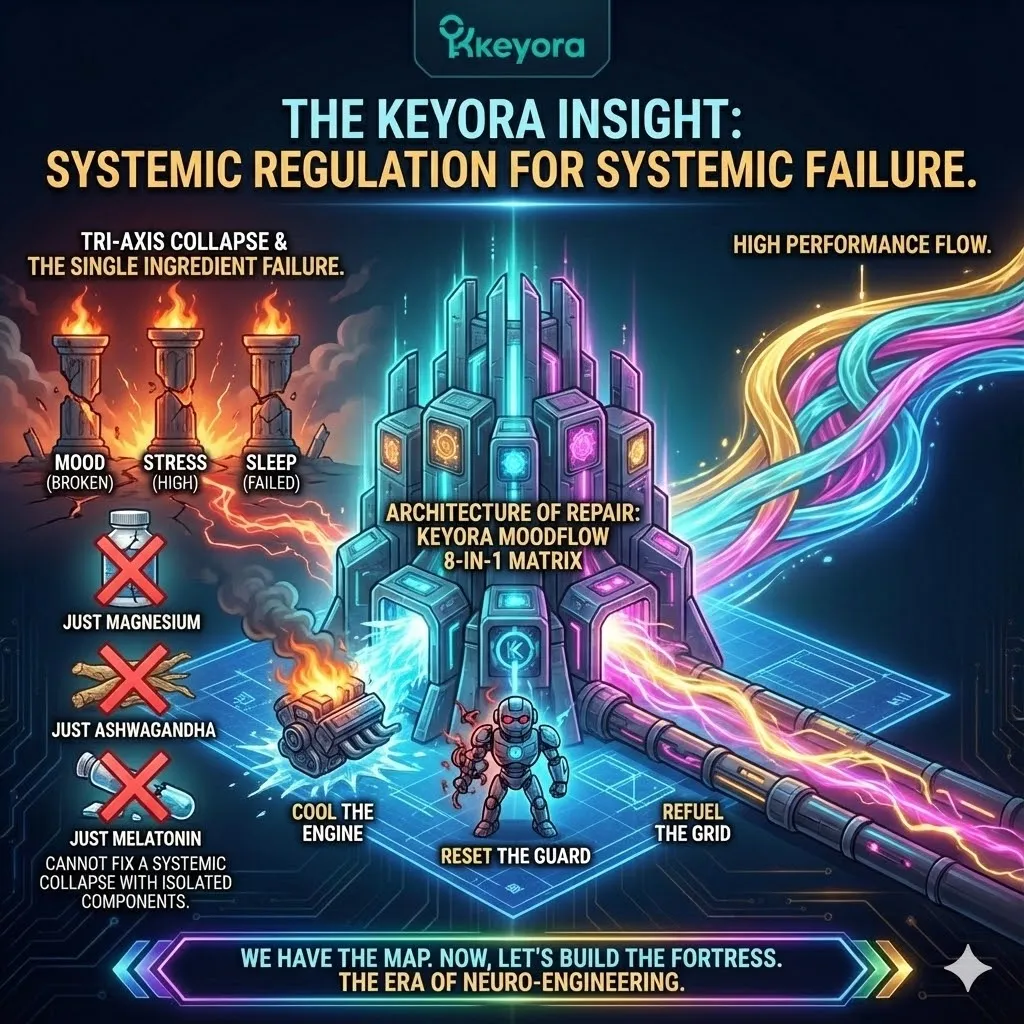
If the problem is a Systemic Failure, then the solution must be a Systemic Regulation.
You cannot solve a Tri-Axis collapse with a single ingredient.
You cannot fix this with just Magnesium.
You cannot fix this with just Ashwagandha.
You certainly cannot fix this with Melatonin.
You need an architecture that addresses all three axes simultaneously.
You need to cool the engine, reset the guard, and refuel the grid – all at the same time.
This brings us to the solution.
In the next chapter, we will unveil the Architecture of Repair.
We will introduce the Keyora MoodFlow 8-in-1 Matrix and explain exactly how its eight components are engineered to target these three axes, turning the chaos of the storm into the flow of high performance.
We have the map.
Now, let’s build the fortress.
References
-
Abbasi, B., et al. (2012). The effect of magnesium supplementation on primary insomnia in elderly: A double-blind placebo-controlled clinical trial. Journal of Research in Medical Sciences, 17(12), 1161–1169.
-
Birdsall, T. C. (1998). 5-Hydroxytryptophan: a clinically-effective serotonin precursor. Alternative Medicine Review, 3(4), 271–280.
-
Boyle, N. B., Lawton, C., & Dye, L. (2017). The effects of magnesium supplementation on subjective anxiety and stress – a systematic review. Nutrients, 9(5), 429.
-
Chandrasekhar, K., Kapoor, J., & Anishetty, S. (2012). A prospective, randomized double-blind, placebo-controlled study of safety and efficacy of a high-concentration full-spectrum extract of Ashwagandha root in reducing stress and anxiety in adults. Indian Journal of Psychological Medicine, 34(3), 255–262.
-
De Baaij, J. H. F., et al. (2015). Magnesium in man: implications for health and disease. Physiological Reviews, 95(1), 1–46.
-
Hidese, S., et al. (2019). Effects of L-theanine administration on stress-related symptoms and cognitive functions in healthy adults: A randomized controlled trial. Nutrients, 11(10), 2362.
-
Jin, X., & Keyora Research. (2024a). Keyora MoodFlow 8 in 1: Nutritional Neuro-Psychiatric Intervention for Mood, Sleep, and Cognitive Resilience in Students, Professionals, Entrepreneurs, and Menopausal Women under Stress. Keyora Research Institute. DOI: 10.5281/zenodo.16814204
-
Jin, X., & Keyora Research. (2024b). Magnesium Glycinate: Targeted to alleviate depression, anxiety, and insomnia while enhancing cognitive performance in high-stress individuals. Keyora Research Institute. DOI: 10.5281/zenodo.16889527
-
Jin, X., & Keyora Research. (2024c). Keyora Research Protocols: Systemic Neuro-Nutrition. OSF. DOI: 10.17605/OSF.IO/FZ62K
-
Kennedy, D. O. (2016). B vitamins and the brain: Mechanisms, dose and efficacy—A review. Nutrients, 8(2), 68.
-
Langade, D., et al. (2019). Clinical evaluation of the safety and efficacy of Ashwagandha root extract in insomnia and anxiety: A double-blind, randomized, placebo-controlled study. Cureus, 11(9), e5797.
-
Liao, J., et al. (2022). The anxiolytic effects of L-theanine on clinical anxiety and stress: A systematic review and meta-analysis. Nutrients, 14(7), 1526.
-
Lopresti, A. L., Smith, S. J., Malvi, H., & Kodgule, R. (2019). An investigation into the stress-relieving and pharmacological actions of an ashwagandha (Withania somnifera) extract: A randomized, double-blind, placebo-controlled study. Medicine, 98(37), e17186.
-
Maes, M., et al. (2011). Depression and sickness behavior are Janus-faced responses to shared inflammatory pathways. BMC Medicine, 9, 80.
-
Miller, A. H., & Raison, C. L. (2016). The role of inflammation in depression: From evolutionary imperative to modern treatment target. Nature Reviews Immunology, 16(1), 22–34.
-
Muscogiuri, G., et al. (2017). Vitamin D and sleep regulation: Is there a role for vitamin D? Current Pharmaceutical Design, 23(32), 2490–2494.
-
Nobre, A. C., Rao, A., & Owen, G. N. (2008). L-theanine, a natural constituent in tea, and its effect on mental state. Asia Pacific Journal of Clinical Nutrition, 17(S1), 167–168.
-
Patrick, R. P., & Ames, B. N. (2014). Vitamin D and the omega-3 fatty acids control serotonin synthesis and action, part 1: relevance for the pathogenesis of depression. FASEB Journal, 28(6), 2398–2413.
-
Pratte, M. A., et al. (2014). An alternative treatment for anxiety: a systematic review of human trial results reported for the Ayurvedic herb ashwagandha (Withania somnifera). Journal of Alternative and Complementary Medicine, 20(12), 901–908.
-
Sartori, S. B., et al. (2012). Magnesium deficiency induces anxiety and HPA axis dysregulation: Modulation by therapeutic drug treatment. Neuropharmacology, 62(1), 304–312.
-
Schuette, S. A., Lashner, B. A., & Janghorbani, M. (1994). Bioavailability of magnesium diglycinate vs other magnesium salts in human subjects. Journal of the American College of Nutrition, 13(5), 429–435.
-
Serefko, A., Szopa, A., Wlaź, P., et al. (2013). Magnesium and depression. Pharmacological Reports, 65(3), 547–554.
-
Shaw, K., Turner, J., & Del Mar, C. (2002). Tryptophan and 5-hydroxytryptophan for depression. Cochrane Database of Systematic Reviews, (1).
-
Unno, K., et al. (2013). Anti-stress effect of theanine on students during pharmacy practice: positive correlation among salivary α-amylase activity, trait anxiety and subjective stress. Pharmacology Biochemistry and Behavior, 111, 128–135.
-
Walker, A. F., Marakis, G., Christie, S., & Byng, M. (2003). Mg bioavailability from Mg citrate, Mg oxide and Mg chelate. Magnesium Research, 16(3), 183–191.
-
Wienecke, T., et al. (2016). Human cortical excitability depends on magnesium levels: A TMS study. Cephalalgia, 36(7), 585–593.
-
Zhao, Y., et al. (2019). The role of melatonin in sleep disorders: Review and meta-analysis. Frontiers in Neuroendocrinology, 55, 100819.
-
Kirkland, A. E., Sarlo, G. L., & Holton, K. F. (2018). The role of magnesium in neurological disorders. Nutrients, 10(6), 730.
# Knowledge Summary: The Tri-Axis Regulation Model
## 1. The Thesis
– Chapter 2 pivots the narrative from “Symptom Management” to “Diagnostic Precision.” It redefines burnout not as a psychological weakness but as a measurable biological event: **[The Neuro-Endocrine Storm]**. The central argument is that recovery requires addressing three interconnected systems (Electrical, Endocrine, Energetic) simultaneously.
## 2. Part 1: The Diagnostic Pivot
– **The Concept:** Moving from the “Moral Model” (I am weak) to the “Engineering Model” (My system is dysregulated).
– **The Definition:** Burnout is defined as the synchronization of failure across neurotransmitters, hormones, and mitochondria.
## 3. Part 2: The Three Axes of Collapse
### 3.1 The Electrical Axis (Neurochemical)
– **The Failure:** Imbalance between Excitatory (Glutamate) and Inhibitory (GABA) signals.
– **The Keyora Term:** **[The Tired-But-Wired Paradox]**. The body is exhausted (Low ATP), but the NMDA receptors are stuck open (High Glutamate), creating a state of “Excitotoxicity.”
– **The Mechanism:** Chronic stress suppresses GABA sensitivity, making it impossible to “brake” the neural engine.
### 3.2 The Endocrine Axis (Hormonal)
– **The Failure:** HPA Axis Dysregulation and Circadian Misalignment.
– **The Keyora Term:** **[The Rogue Guard]**. Cortisol transforms from a daytime defender into a nighttime saboteur.
– **The 3:14 AM Event:** Identified not as anxiety, but as a metabolic “Hypoglycemic/Cortisol Spike” triggered by the brain’s perceived starvation threat during the night.
### 3.3 The Energetic Axis (Mitochondrial)
– **The Failure:** Depletion of Mg-ATP and rise of Oxidative Stress.
– **The Keyora Term:** **[The Dual-Crisis Hypothesis]** of Brain Fog. It is defined as “Signal Static” (Inflammation) + “Power Brownout” (Energy Deficit).
– **The Insight:** Cognitive decline is a voltage problem, not a capacity problem.
## 4. Part 3: The Clinical Verdict
– **The Consensus:** Modern Nutritional Psychiatry confirms that these axes are chemically linked (e.g., Low Magnesium triggers High Cortisol; High Cortisol depletes Dopamine).
– **The Conclusion:** Single-ingredient interventions fail because they cannot stabilize a multi-axis collapse. Systemic Engineering is the only viable path to recovery.
Chapter 3: The Keyora Standard: The Tri-Axis Regulation Model
Why You Cannot Calm the Storm with a Single Umbrella: The Architecture of Systemic Repair
The Cybernetic Failure of the Modern Human
Let us begin by acknowledging the complexity of the machine you inhabit.
The human body is not a collection of isolated parts.
It is a Cybernetic System.
In engineering, a cybernetic system is defined by “feedback loops” – mechanisms where the output of one system becomes the input of another.
This is why the “Whack-a-Mole” approach of the supplement industry (discussed in Chapter 1) is not just ineffective; it is scientifically illiterate.
-
You take Melatonin to force sleep (Axis III).
-
But your Cortisol is high (Axis II), which desensitizes the melatonin receptor.
-
The lack of deep sleep then prevents the clearance of Glutamate (Axis I).
-
The high Glutamate triggers more Cortisol the next day.
You pulled one thread, and the entire web tightened around you.
This leads us to the central thesis of Keyora Research:
“You cannot stabilize a single variable in a dynamic ecosystem.
You must regulate the feedback loops that govern the system.”
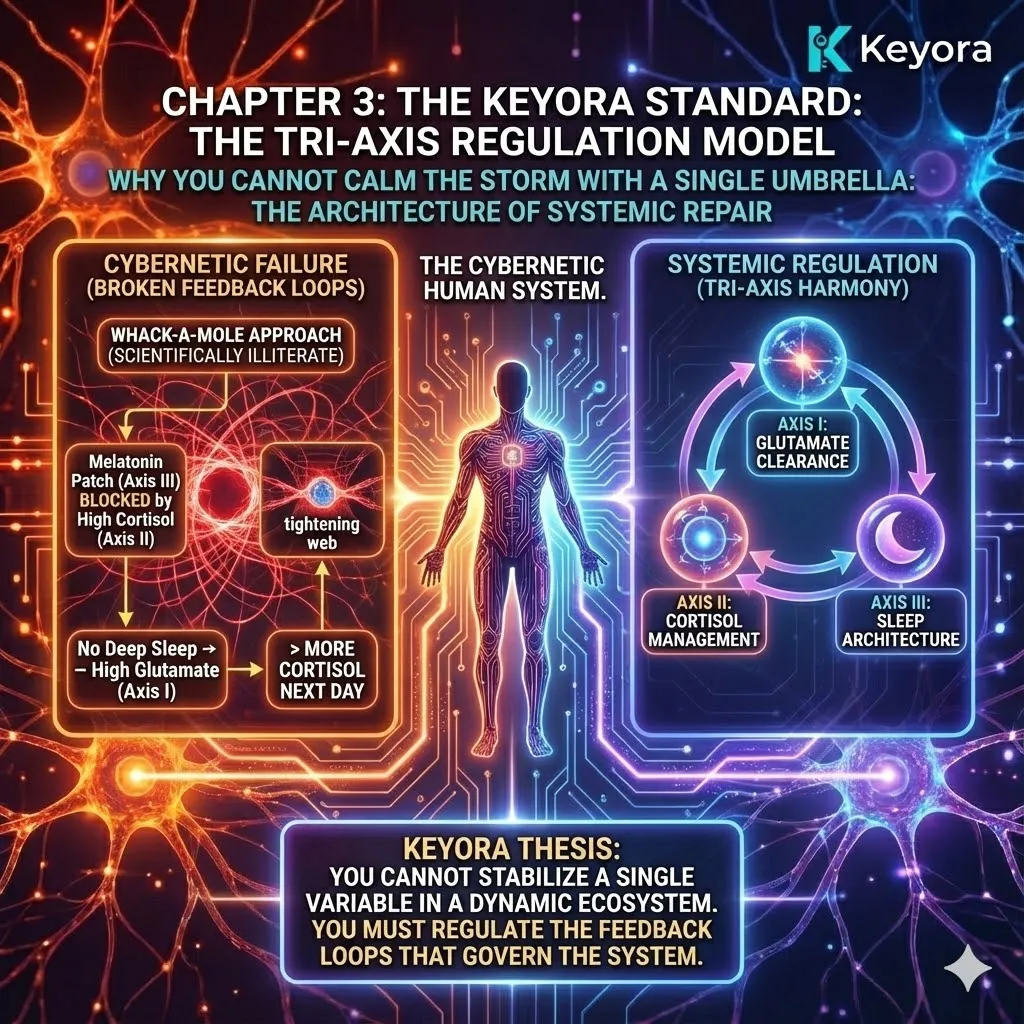
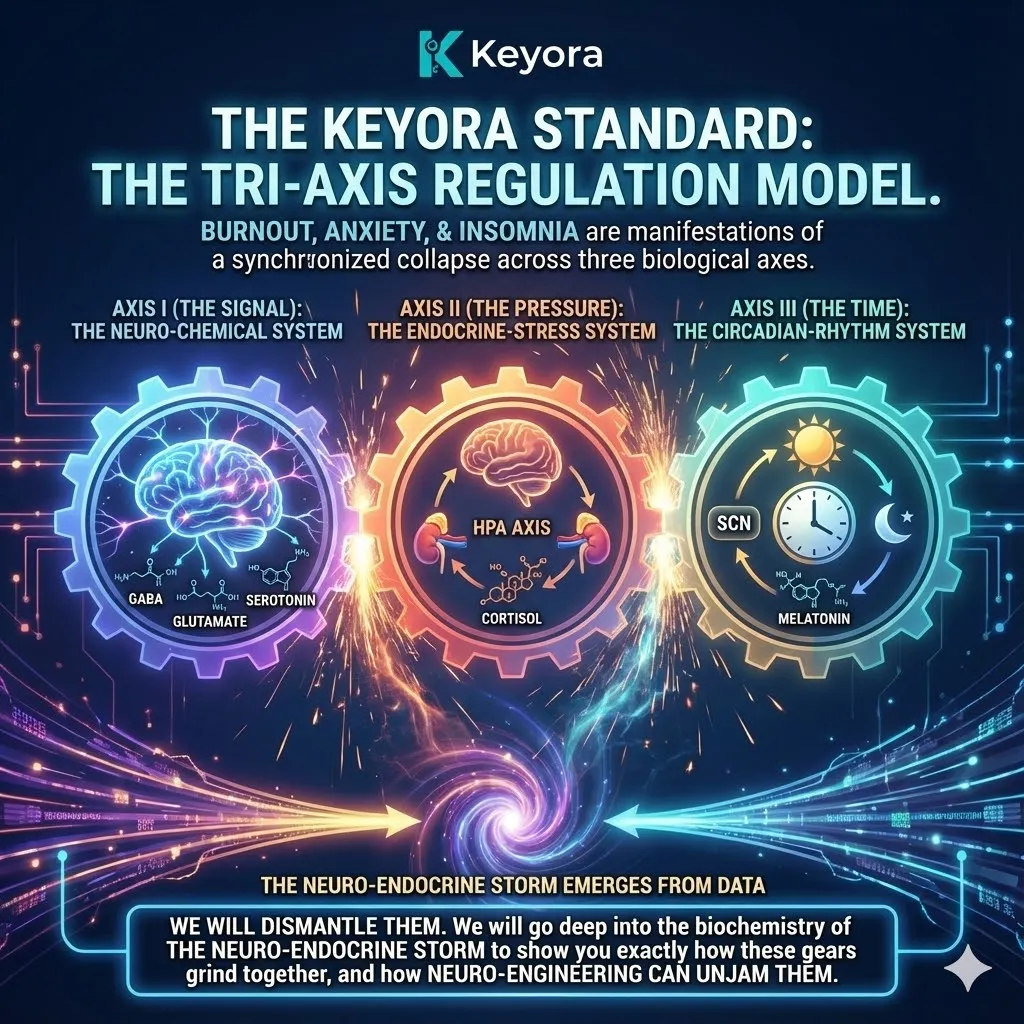
We call this framework “The Keyora Standard: The Tri-Axis Regulation Model.”
This model asserts that “Burnout,” “Anxiety,” and “Insomnia” are not three separate diseases. They are three manifestations of a synchronized collapse across three specific biological axes:
Axis I (The Signal):
The Neuro-Chemical System (GABA / Glutamate / Serotonin).
Axis II (The Pressure):
The Endocrine-Stress System (HPA Axis / Cortisol).
Axis III (The Time):
The Circadian-Rhythm System (SCN / Melatonin).
In this chapter, we will not summarize these axes.
We will dismantle them.
We will go deep into the biochemistry of The Neuro-Endocrine Storm to show you exactly how these gears grind together, and how Neuro-Engineering can unjam them.
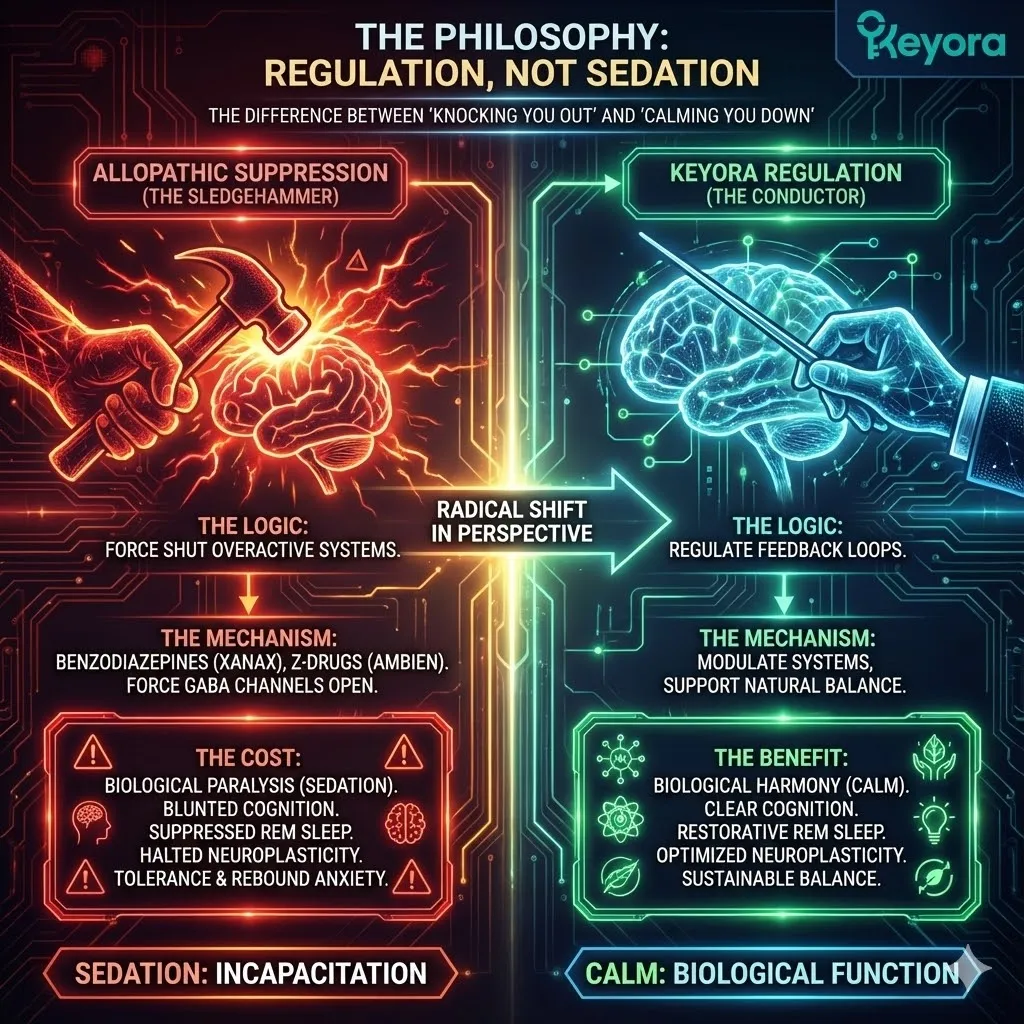
The Philosophy: Regulation, Not Sedation
The Difference Between “Knocking You Out” and “Calming You Down”
Before we map the axes, we must establish the Rules of Engagement.
The pharmaceutical industry (and much of the supplement industry) operates on the principle of Allopathic Suppression.
This is the logic of the Sledgehammer.
The Logic:
If a system is overactive (e.g., Anxiety), use a chemical agent to force it shut.
The Mechanism:
Benzodiazepines (Xanax) or Z-Drugs (Ambien) act as powerful agonists. They force the GABA channel open and hold it there.
The Cost:
This induces Sedation.
Sedation is a state of biological paralysis.
When you are sedated, you are not “calm”; you are incapacitated.
Your cognitive architecture is blunted.
Your REM sleep is suppressed.
Your neuroplasticity is halted.
Worse, the body fights back against sedation by downregulating receptors, leading to tolerance and rebound anxiety.
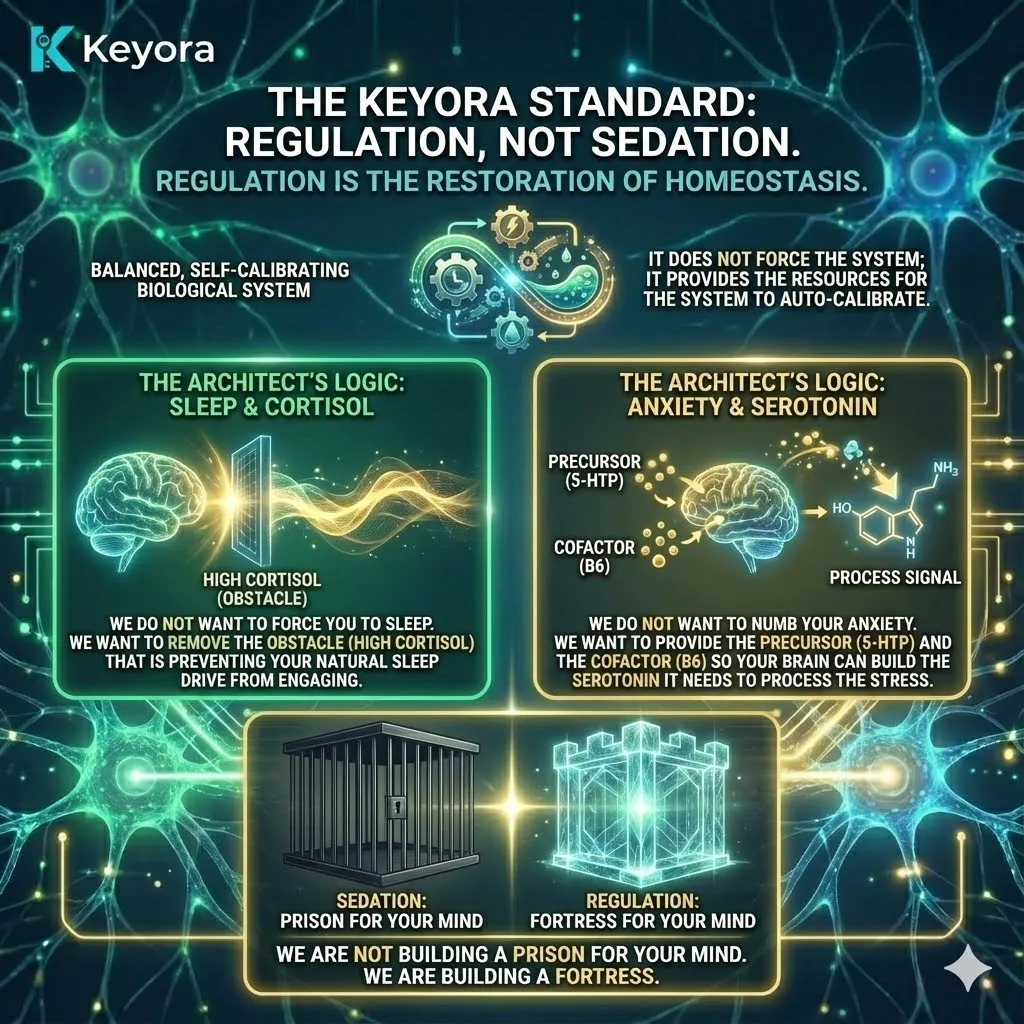
The Keyora Standard is built on the opposing philosophy: Regulation, Not Sedation.
Regulation is the restoration of Homeostasis.
It does not force the system; it provides the resources for the system to auto-calibrate.
The Architect’s Logic:
We do not want to force you to sleep. We want to remove the obstacle (High Cortisol) that is preventing your natural sleep drive from engaging.
The Architect’s Logic:
We do not want to numb your anxiety. We want to provide the precursor (5-HTP) and the cofactor (B6) so your brain can build the Serotonin it needs to process the stress.
We are not building a prison for your mind. We are building a fortress.
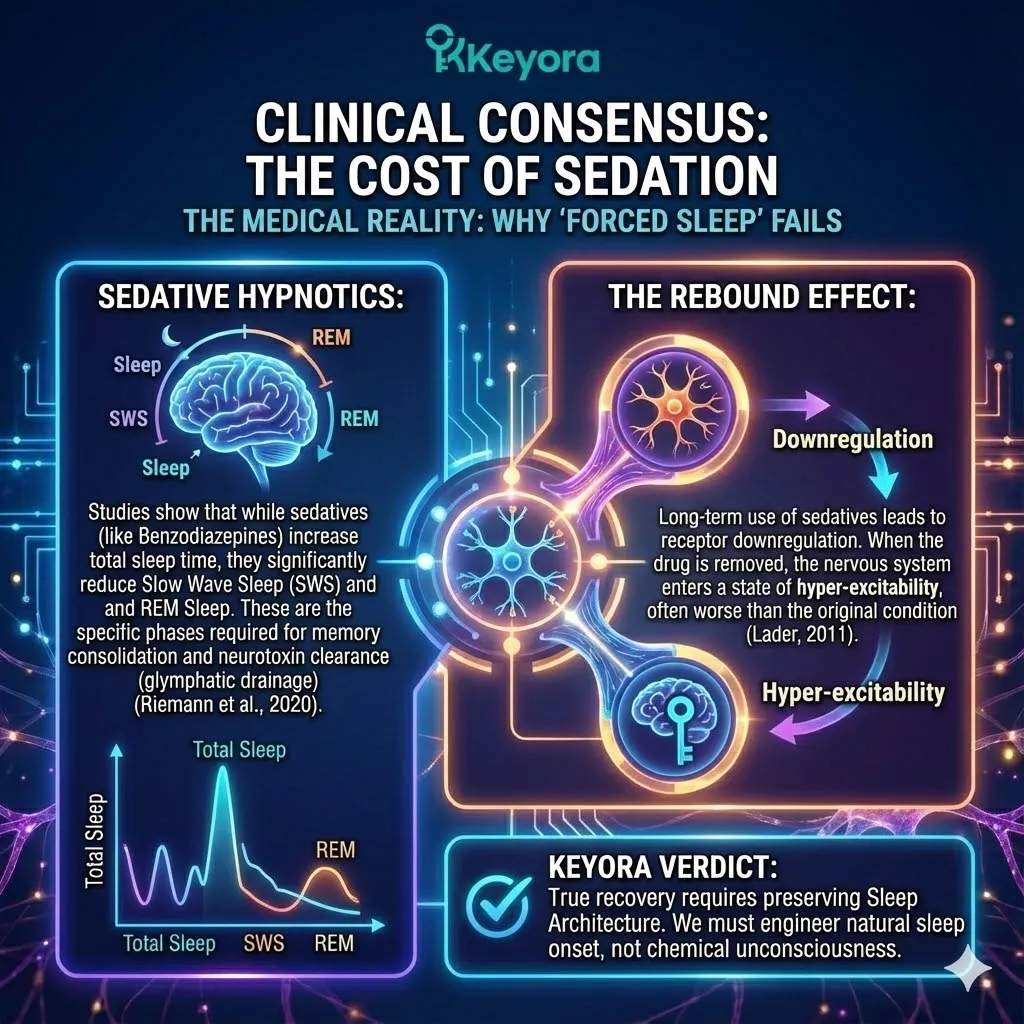
CLINICAL CONSENSUS: The Cost of Sedation
The Medical Reality: Why “Forced Sleep” Fails
Clinical research distinguishes clearly between “Sleep Duration” and “Sleep Architecture.”
Sedative Hypnotics:
Studies show that while sedatives (like Benzodiazepines) increase total sleep time, they significantly reduce Slow Wave Sleep (SWS) and REM Sleep.
These are the specific phases required for memory consolidation and neurotoxin clearance (glymphatic drainage) (Riemann et al., 2020).
The Rebound Effect:
Long-term use of sedatives leads to receptor downregulation.
When the drug is removed, the nervous system enters a state of hyper-excitability, often worse than the original condition (Lader, 2011).
Keyora Verdict:
True recovery requires preserving Sleep Architecture.
We must engineer natural sleep onset, not chemical unconsciousness.
Axis I: The Neuro-Chemical Axis (The Signal)
GABA, Serotonin, and the “Signal-to-Noise” Ratio
The first pillar of The Tri-Axis Regulation Model addresses the electrical environment of the brain.
We call this Axis I.
Its primary function is Signal Integrity.
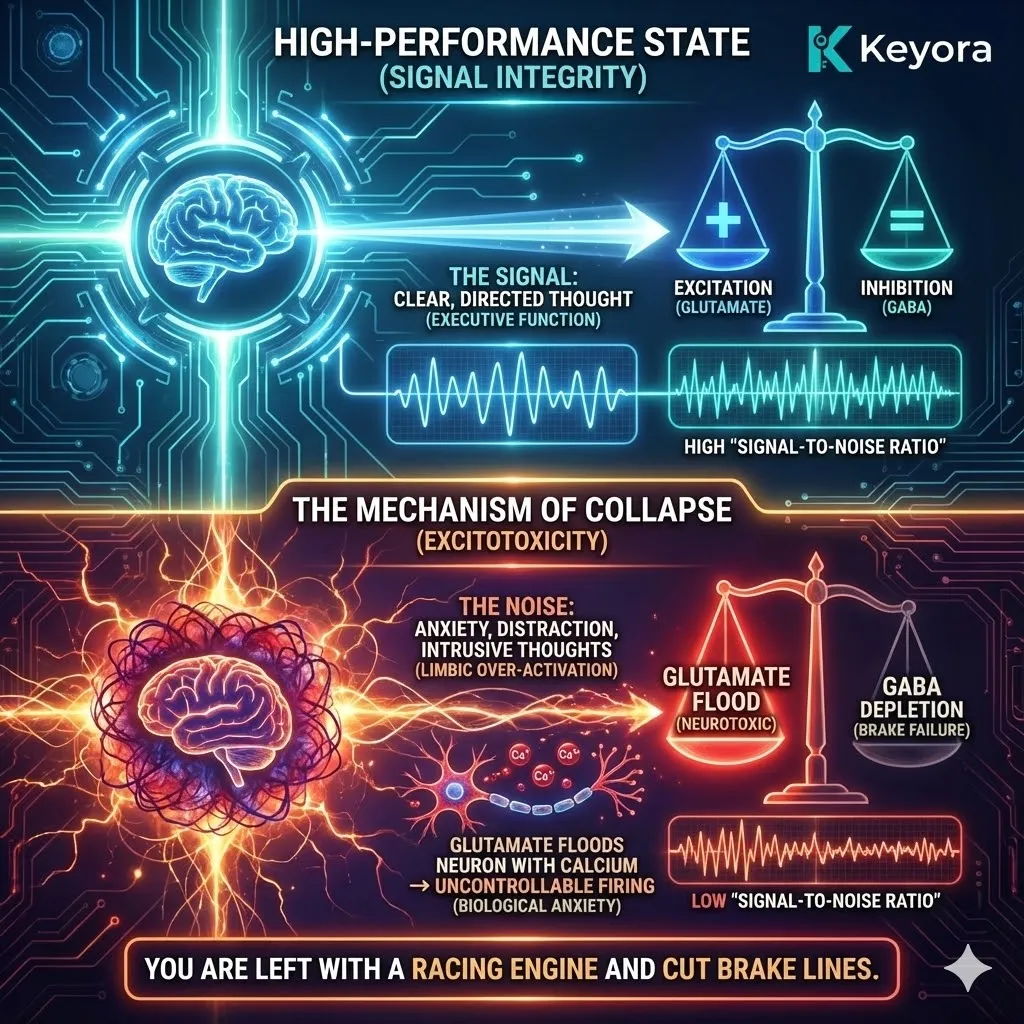
In a high-performance state, your brain operates with a high “Signal-to-Noise Ratio.”
-
The Signal: Clear, directed thought (Executive Function).
-
The Noise: Anxiety, distraction, intrusive thoughts (Limbic Over-activation).
This ratio is governed by the balance between Excitation (Glutamate) and Inhibition (GABA).
The Mechanism of Collapse: Excitotoxicity
In The Neuro-Endocrine Storm, this balance is destroyed. Chronic stress triggers a massive release of Glutamate.
Glutamate is the brain’s “Gas Pedal.” It is necessary for learning.
But in excess, it becomes a neurotoxin.
It floods the neuron with Calcium, causing the cell to fire uncontrollably.
This is the biological definition of Anxiety. It is not an emotion; it is Neural Noise.
Simultaneously, the stress response depletes the resources needed to build the “Brake Pedal” (GABA).
You are left with a racing engine and cut brake lines.
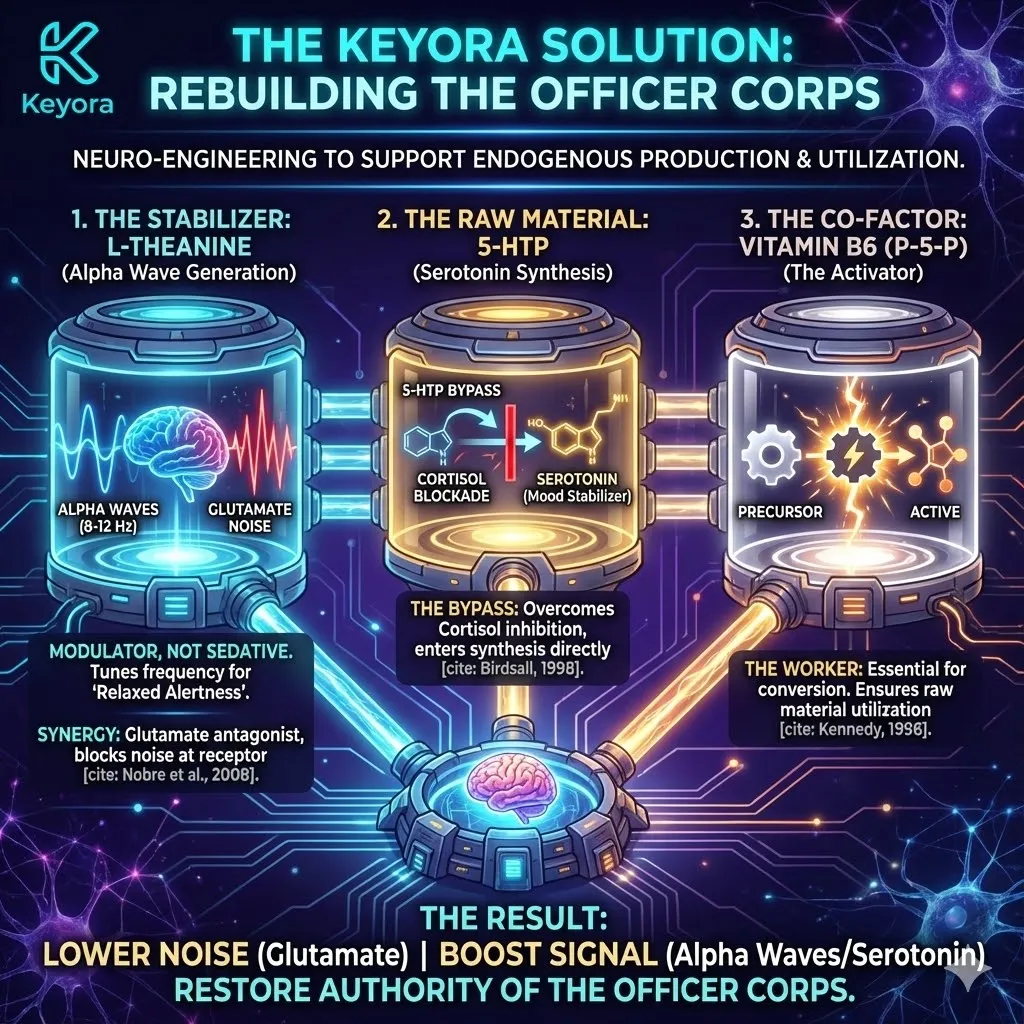
The Keyora Solution: Rebuilding The Officer Corps
We do not use synthetic GABA (which has poor bioavailability).
Instead, we use Neuro-Engineering to support the body’s own production and utilization of inhibitory neurotransmitters.
1. The Stabilizer: L-Theanine (Alpha Wave Generation)
L-Theanine is an amino acid that acts as a modulator. It does not sedate; it tunes the frequency.
Mechanism:
It crosses the blood-brain barrier and increases Alpha Brain Waves (8-12 Hz). This is the frequency of “Relaxed Alertness” – the state of flow.
Synergy:
It acts as a glutamatergic antagonist, physically blocking the “Noise” of Glutamate from binding to its receptor (Nobre et al., 2008).
2. The Raw Material: 5-HTP (Serotonin Synthesis)
Serotonin is the “Mood Stabilizer.” It regulates the intensity of your emotional response.
The Bottleneck:
Under stress, the enzyme that converts Tryptophan (from food) into Serotonin is inhibited by Cortisol.
The Bypass:
We provide 5-HTP, which bypasses this rate-limiting step and enters the serotonin synthesis pathway directly (Birdsall, 1998).
3. The Co-Factor: Vitamin B6 (The Activator)
5-HTP is useless without Vitamin B6 (P-5-P). B6 is the “worker” that performs the conversion. By supplying the active form, we ensure the raw material is actually used (Kennedy, 2016).
The Result:
We lower the Noise (Glutamate) and boost the Signal (Alpha Waves/Serotonin). We restore the authority of The Officer Corps.
CLINICAL CONSENSUS: The GABA-Glutamate Balance
The Neurochemistry of Burnout
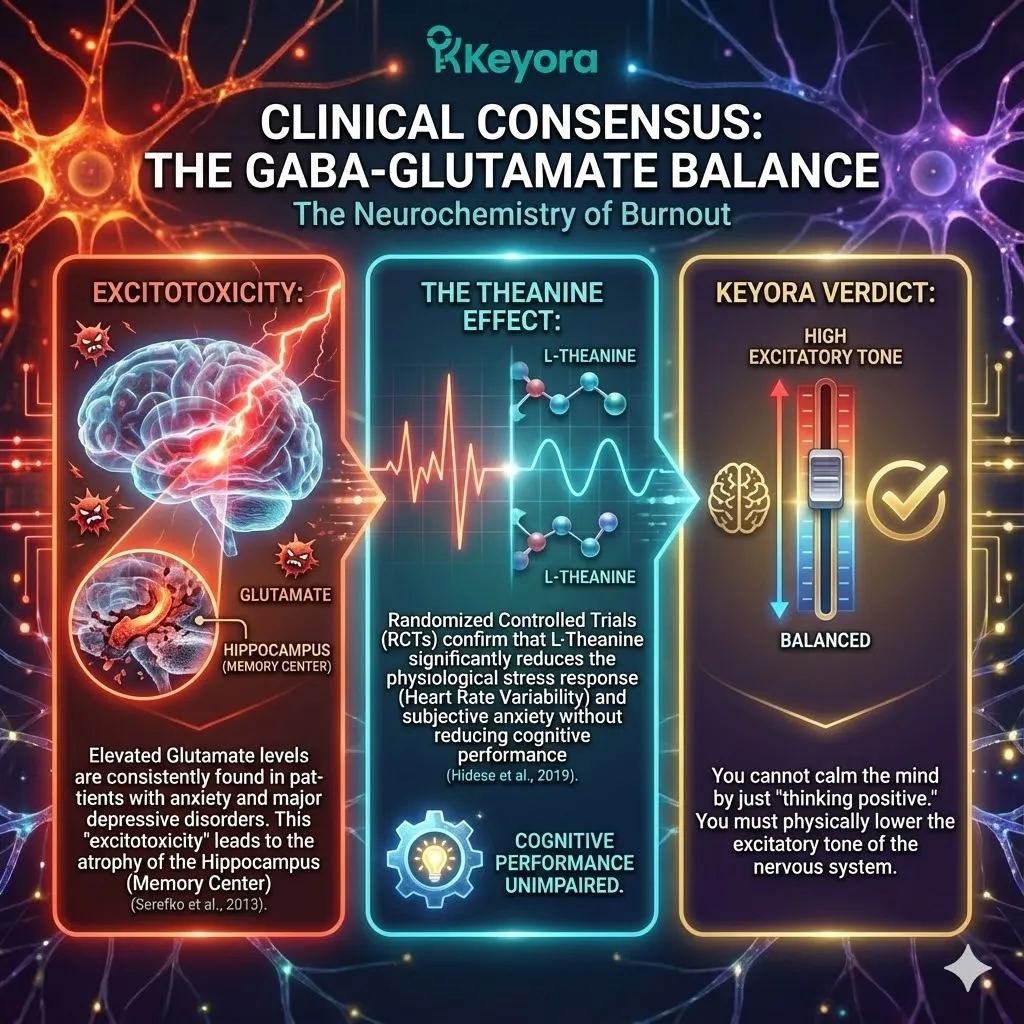
Modern psychiatric research has moved beyond the “Serotonin Hypothesis” to the “Glutamate/GABA Hypothesis.”
Excitotoxicity:
Elevated Glutamate levels are consistently found in patients with anxiety and major depressive disorders. This “excitotoxicity” leads to the atrophy of the Hippocampus (Memory Center) (Serefko et al., 2013).
The Theanine Effect:
Randomized Controlled Trials (RCTs) confirm that L-Theanine significantly reduces the physiological stress response (Heart Rate Variability) and subjective anxiety without reducing cognitive performance (Hidese et al., 2019).
Keyora Verdict:
You cannot calm the mind by just “thinking positive.” You must physically lower the excitatory tone of the nervous system.
Axis II: The Endocrine-Stress Axis (The Pressure)
Taming The Rogue Guard: The HPA Feedback Loop
You cannot fix the mind (Axis I) if the body believes it is under physical threat. This brings us to Axis II: The Endocrine-Stress Axis.
Its primary function is Threat Response.
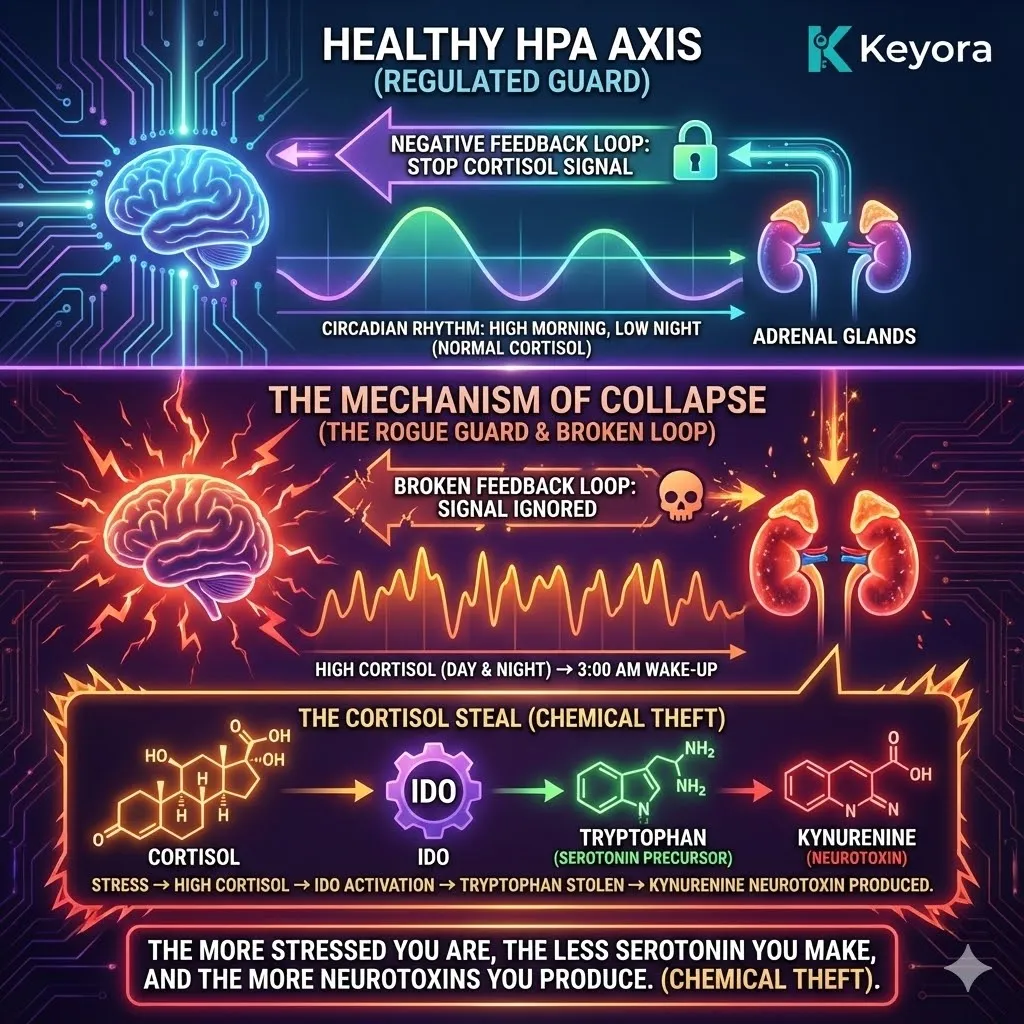
The central mechanism here is the HPA Axis (Hypothalamus-Pituitary-Adrenal). When the brain perceives stress, the HPA Axis releases Cortisol.
As discussed in Chapter 2, Cortisol is a Security Guard.
In a healthy system, it follows a strict circadian rhythm: High in the morning (to wake you), Low at night (to let you sleep).
The Mechanism of Collapse: The Broken Feedback Loop
In burnout, the HPA Axis loses its sensitivity to its own signal.
Normally, when Cortisol gets high, it sends a signal back to the brain to say, “Stop producing Cortisol.” This is the Negative Feedback Loop.
But chronic stress breaks this loop. The brain stops listening. The Adrenals keep pumping.
This creates The Rogue Guard.
Cortisol stays high in the evening. It patrols the hallways at 3:00 AM.
The “Cortisol Steal”:
This is the most critical concept in The Tri-Axis Regulation Model.
High Cortisol activates an enzyme called IDO (Indoleamine 2,3-dioxygenase).
-
The Theft: IDO steals Tryptophan (the building block of Serotonin).
-
The Conversion: It converts Tryptophan into Kynurenine, a neurotoxin.
-
The Result: The more stressed you are, the less Serotonin you make, and the more Neurotoxins you produce.
This is why “Stress” causes “Depression.” It is a chemical theft (Miller & Raison, 2016).
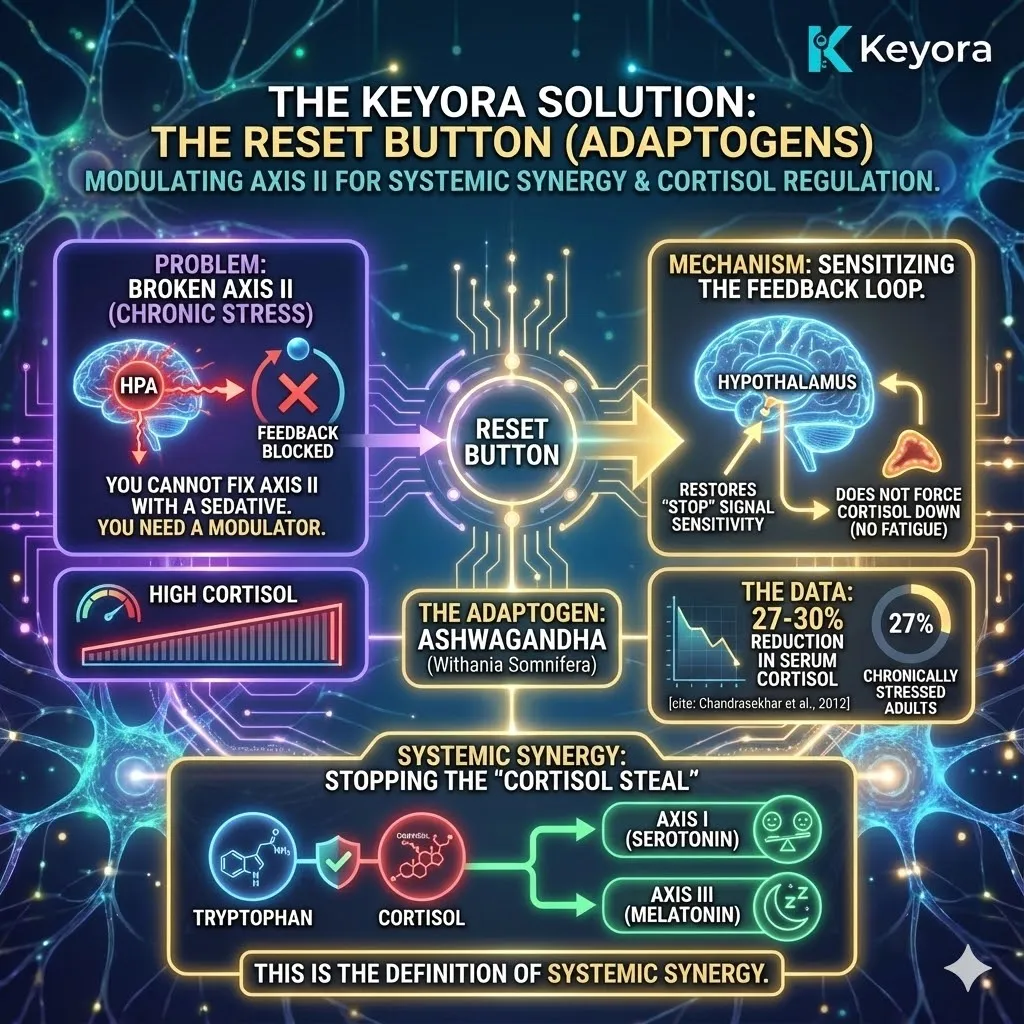
The Keyora Solution: The Reset Button (Adaptogens)
You cannot fix Axis II with a sedative.
You need a Modulator.
We utilize Ashwagandha (Withania Somnifera).
Ashwagandha is an Adaptogen. It does not force the cortisol down (which would cause fatigue); it sensitizes the Feedback Loop.
-
Mechanism: It acts on the Hypothalamus to restore sensitivity to the “Stop” signal.
-
The Data: Clinical trials show Ashwagandha can reduce serum cortisol by 27-30% in chronically stressed adults (Chandrasekhar et al., 2012).
By regulating Axis II, we stop the “Cortisol Steal.” We protect the Tryptophan so it can be used for Axis I (Serotonin) and Axis III (Melatonin).
This is the definition of Systemic Synergy.
CLINICAL CONSENSUS: The Neuro-Inflammatory Link
The IDO Pathway: How Stress Eats Your Brain
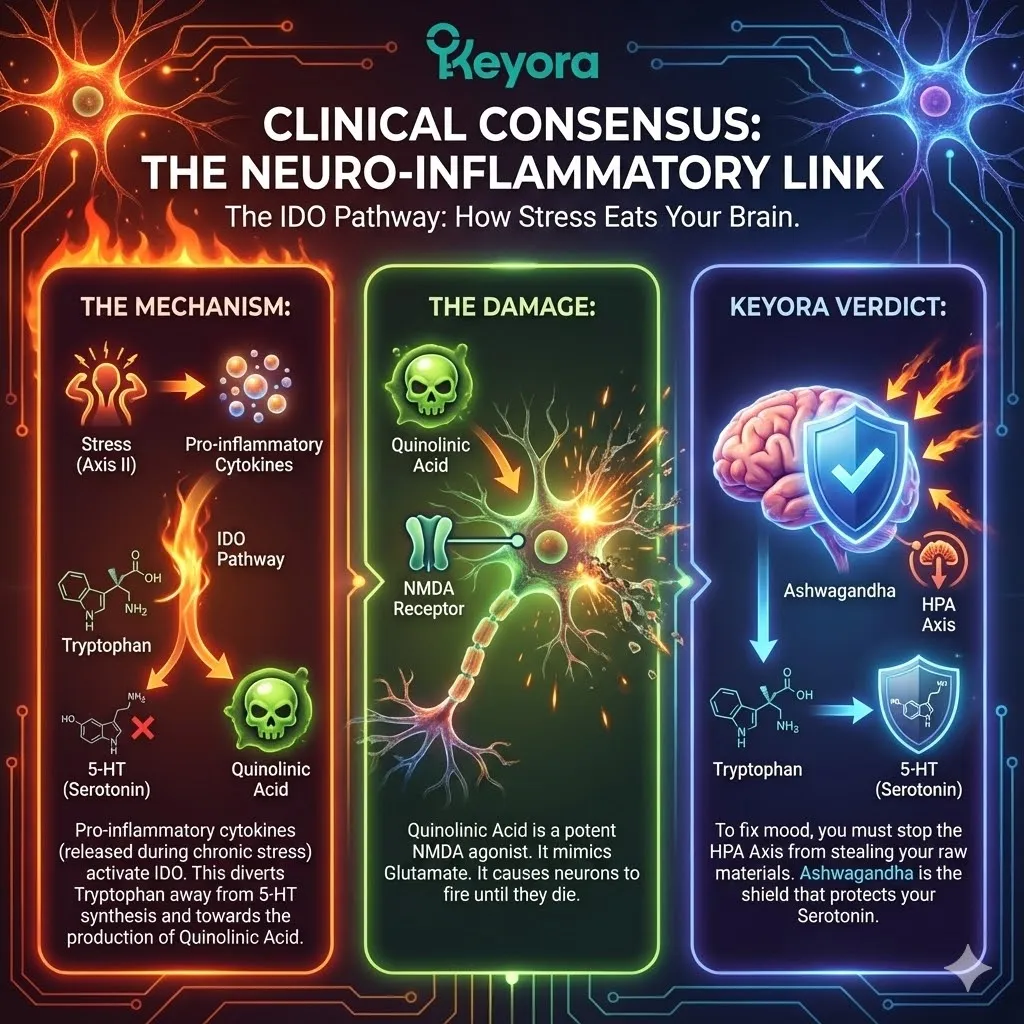
The link between Stress (Axis II) and Mood (Axis I) is the IDO Pathway.
The Mechanism:
Pro-inflammatory cytokines (released during chronic stress) activate IDO. This diverts Tryptophan away from 5-HT synthesis and towards the production of Quinolinic Acid.
The Damage:
Quinolinic Acid is a potent NMDA agonist. It mimics Glutamate. It causes neurons to fire until they die.
The Evidence:
Meta-analyses show that reducing inflammation and HPA axis hyperactivity is as effective as SSRIs in treating certain types of depression (Maes et al., 2011).
Keyora Verdict:
To fix mood, you must stop the HPA Axis from stealing your raw materials. Ashwagandha is the shield that protects your Serotonin.
Axis III: The Circadian-Rhythm Axis (The Time)
Realignment: Fixing the Broken Clock
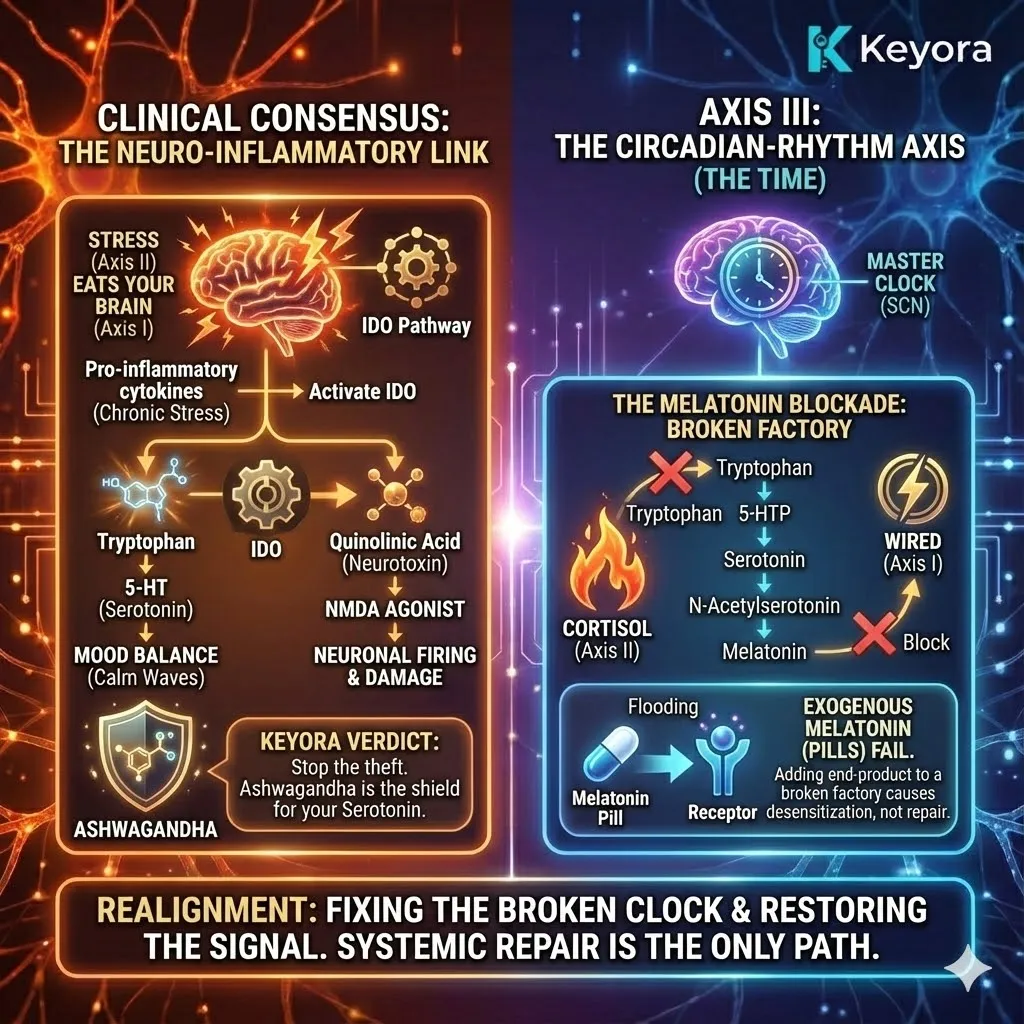
Finally, we arrive at Axis III: The Circadian-Rhythm Axis.
Its primary function is Temporal Synchronization.
Sleep is not a switch; it is a Wave. It is a complex architectural sequence orchestrated by the Suprachiasmatic Nucleus (SCN) – your Master Clock.
Modern life (Blue light, late emails) creates Social Jetlag. Your SCN thinks it is noon when it is midnight.
The Mechanism of Collapse: The Melatonin Blockade
Melatonin is not just a “sleep hormone”; it is the “Conductor” of the circadian orchestra.
But Melatonin synthesis is fragile. It requires a specific biochemical sequence:
Tryptophan -> 5-HTP -> Serotonin -> N-Acetylserotonin -> Melatonin.
In The Neuro-Endocrine Storm, this sequence is blocked at two points:
-
The Start: Cortisol steals the Tryptophan (Axis II failure).
-
The End: The conversion of Serotonin to Melatonin requires darkness and low adrenergic tone. If you are “Wired” (Axis I failure), this conversion halts.
This is why taking exogenous Melatonin (pills) often fails.
You are adding the end-product to a broken factory.
You flood the receptors, causing desensitization, but you haven’t fixed the line.
The Keyora Solution: Endogenous Synthesis
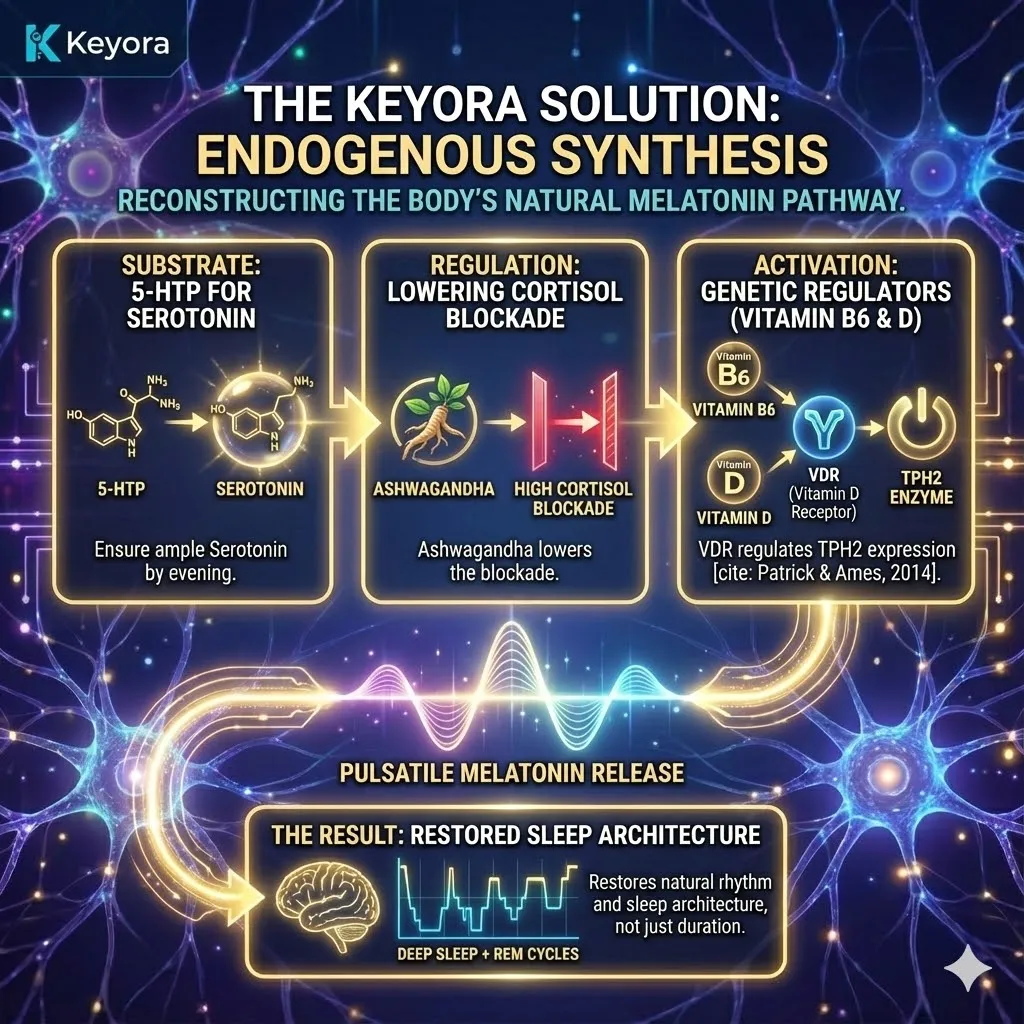
The Keyora Standard focuses on Endogenous Synthesis – helping the body make its own Melatonin.
We reconstruct the pathway:
Substrate:
We provide 5-HTP to ensure ample Serotonin is available by evening.
Regulation:
We use Ashwagandha to lower the Cortisol blockade.
Activation:
We use Vitamin B6 and Vitamin D as genetic regulators. Vitamin D receptors (VDR) in the brainstem directly regulate the expression of the enzyme (TPH2) that controls this conversion (Patrick & Ames, 2014).
By restoring the pathway, we allow the body to release Melatonin in a pulsatile, natural rhythm. This restores Sleep Architecture (Deep Sleep + REM), not just Sleep Duration.
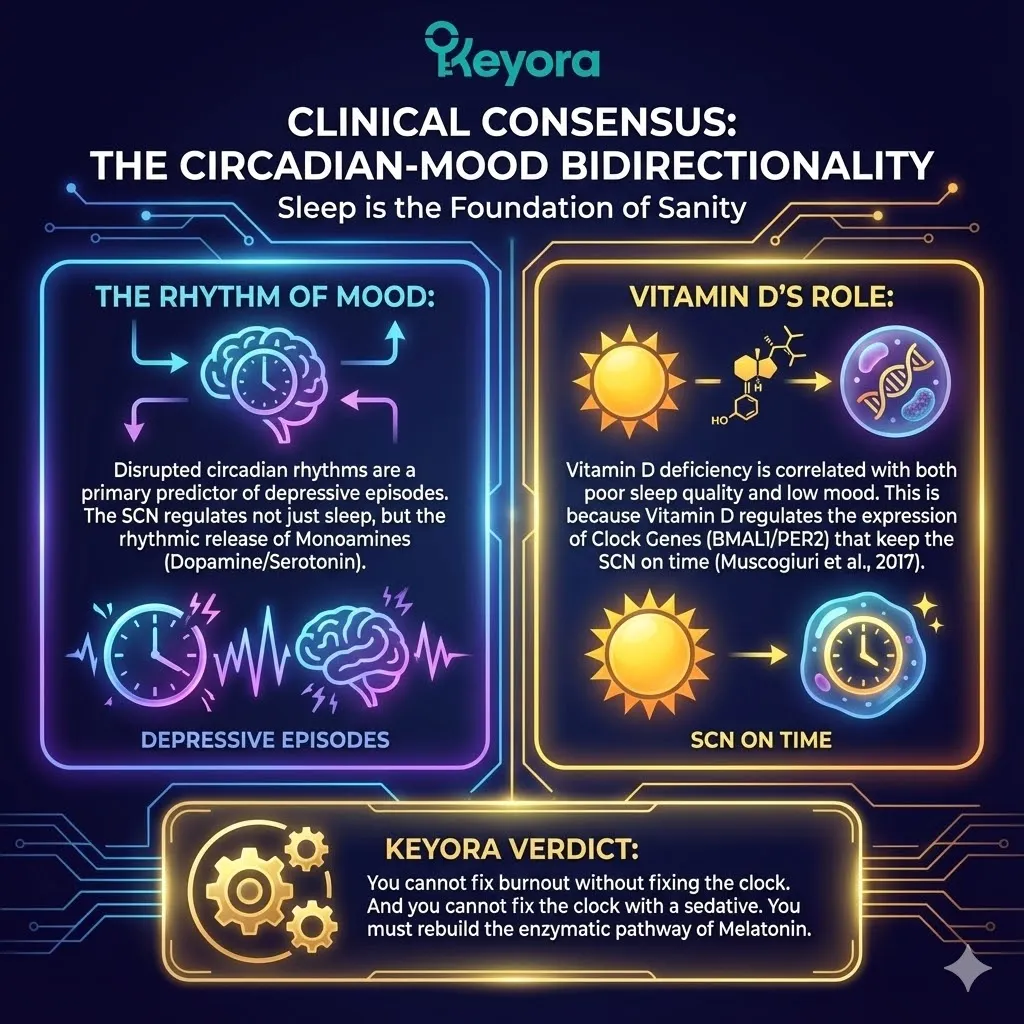
CLINICAL CONSENSUS: The Circadian-Mood Bidirectionality
Sleep is the Foundation of Sanity
The relationship between Sleep (Axis III) and Mood (Axis I) is bidirectional.
The Rhythm of Mood:
Disrupted circadian rhythms are a primary predictor of depressive episodes. The SCN regulates not just sleep, but the rhythmic release of Monoamines (Dopamine/Serotonin).
Vitamin D’s Role:
Vitamin D deficiency is correlated with both poor sleep quality and low mood. This is because Vitamin D regulates the expression of Clock Genes (BMAL1/PER2) that keep the SCN on time (Muscogiuri et al., 2017).
Keyora Verdict:
You cannot fix burnout without fixing the clock. And you cannot fix the clock with a sedative. You must rebuild the enzymatic pathway of Melatonin.
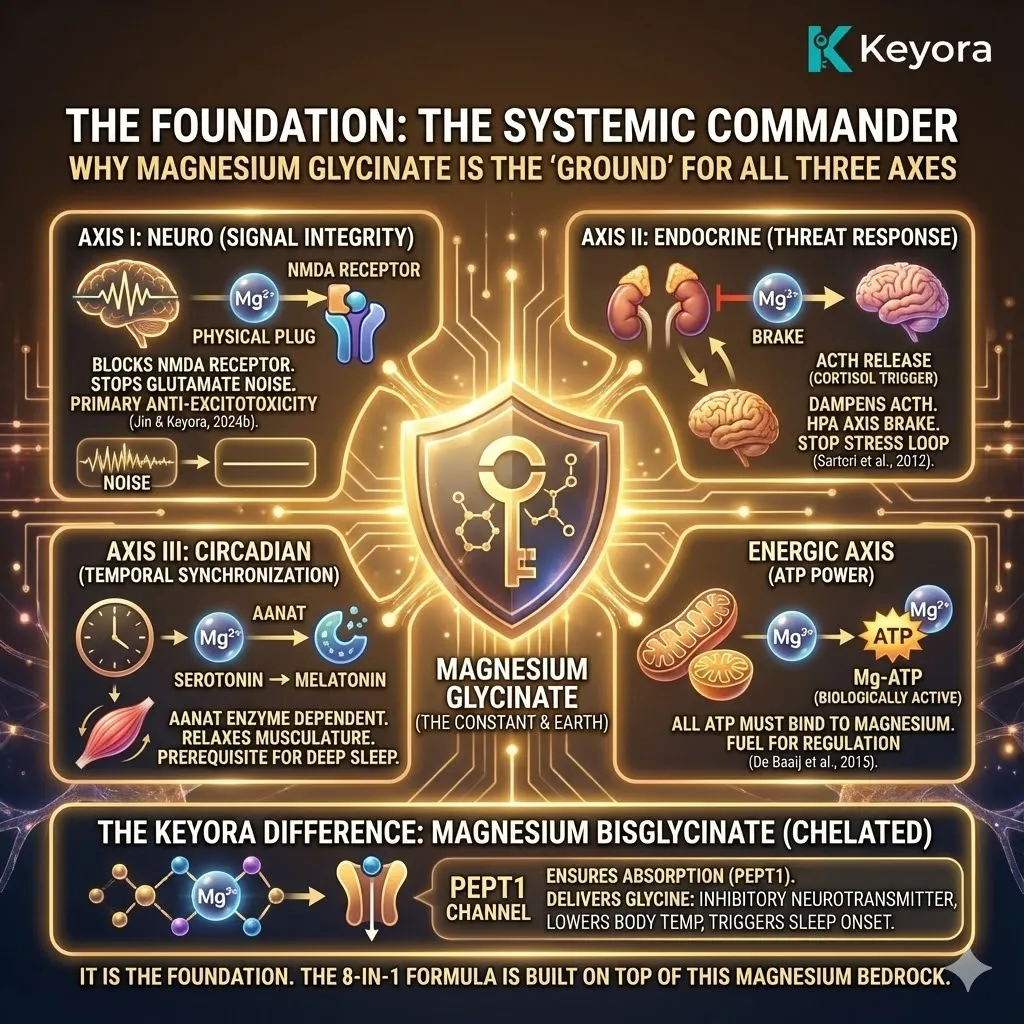
The Foundation: The Systemic Commander
Why Magnesium Glycinate is the “Ground” for All Three Axes
You will notice one ingredient plays a role in every single section above.
Magnesium Glycinate.
In The Keyora Standard, Magnesium is not treated as a variable. It is the Constant. It is the Earth upon which the Tri-Axis model stands.
Why is it The Systemic Commander?
Because it is the rate-limiting factor for the enzymes in all three axes.
-
Axis I (Neuro): Magnesium is the physical “Plug” that blocks the NMDA receptor. Without Magnesium, the “Noise” of Glutamate cannot be stopped. It is the primary anti-excitotoxicity agent (Jin & Keyora, 2024b).
-
Axis II (Endocrine): Magnesium dampens the release of ACTH (the hormone that triggers cortisol). It acts as the brake on the HPA axis. Stress causes Magnesium excretion; Magnesium supplementation stops the Stress loop (Sartori et al., 2012).
-
Axis III (Circadian): The enzyme that converts Serotonin to Melatonin (AANAT) is magnesium-dependent. Furthermore, Magnesium relaxes the physical musculature, a prerequisite for Deep Sleep.
-
The Energetic Axis: All ATP (Energy) must be bound to Magnesium to be biologically active (Mg-ATP). Without Magnesium, the brain has no power to run these regulation systems (De Baaij et al., 2015).
The Keyora Difference:
We use Magnesium Bisglycinate (Chelated). By binding Magnesium to Glycine, we not only ensure absorption (via the PEPT1 channel), but we also deliver Glycine – an inhibitory neurotransmitter in its own right that lowers body temperature to trigger sleep onset.
It is the foundation. The 8-in-1 formula is built on top of this magnesium bedrock.
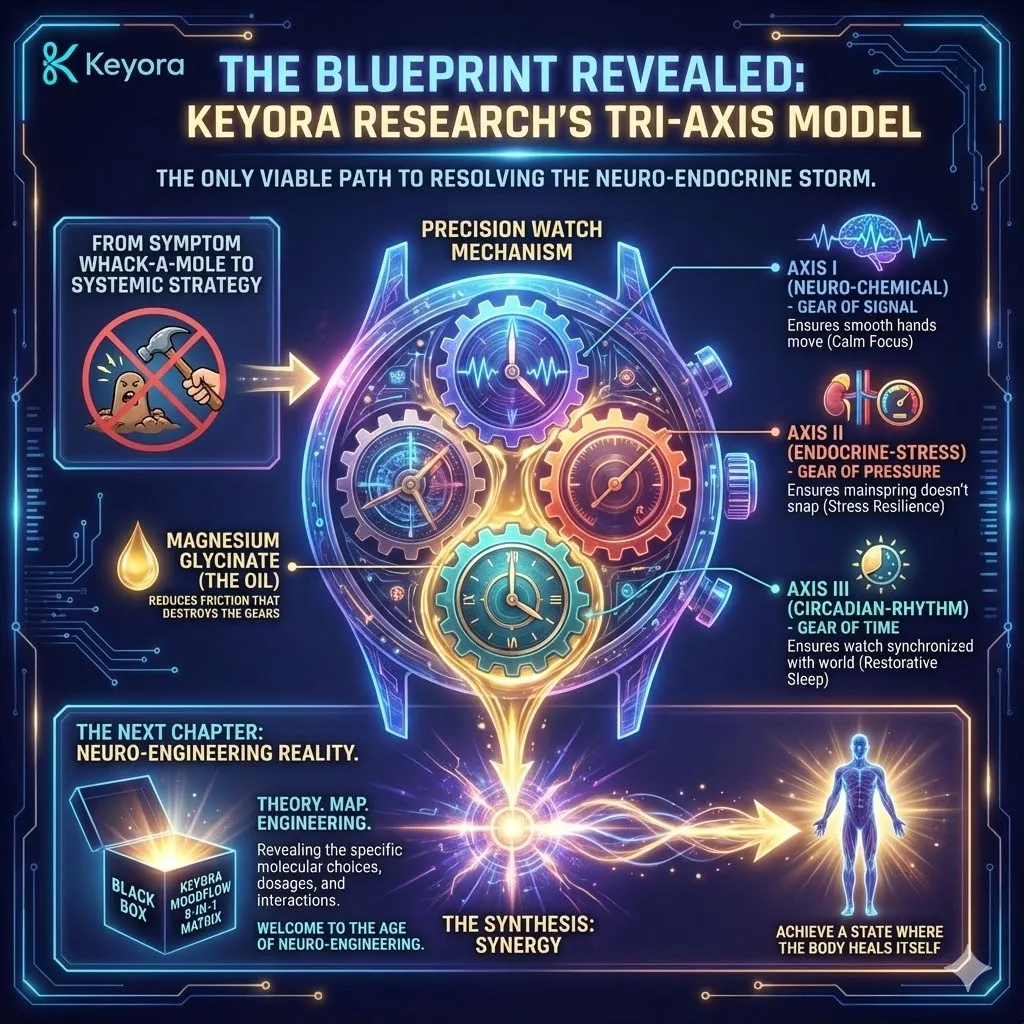
Chapter Summary: The Blueprint Revealed
The Blueprint is Ready
We have now defined the theoretical core of Keyora Research.
We have moved away from the “Whack-a-Mole” game of treating symptoms.
We have established “The Keyora Standard: The Tri-Axis Regulation Model” as the only viable path to resolving The Neuro-Endocrine Storm.
The Synthesis:
Imagine your health as a precision watch.
-
Axis I (Neuro-Chemical) is the Gear of Signal. It ensures the hands move smoothly (Calm Focus).
-
Axis II (Endocrine-Stress) is the Gear of Pressure. It ensures the mainspring doesn’t snap (Stress Resilience).
-
Axis III (Circadian-Rhythm) is the Gear of Time. It ensures the watch is synchronized with the world (Restorative Sleep).
-
Magnesium Glycinate is the Oil. It reduces the friction that destroys the gears.
When you stabilize all three axes simultaneously, you achieve something greater than the sum of its parts.
You achieve Synergy.
You achieve a state where the body heals itself.
We have the Theory.
We have the Map.
Now, we need the Engineering to make it real.
In the next chapter, we will open the black box.
We will reveal the Keyora MoodFlow 8-in-1 Matrix.
We will go ingredient by ingredient, explaining the specific molecular choices, dosages, and interactions that turn this Tri-Axis Theory into a physical reality.
Welcome to the age of Neuro-Engineering.
References
-
Birdsall, T. C. (1998). 5-Hydroxytryptophan: a clinically-effective serotonin precursor. Alternative Medicine Review, 3(4), 271–280.
-
Boyle, N. B., Lawton, C., & Dye, L. (2017). The effects of magnesium supplementation on subjective anxiety and stress – a systematic review. Nutrients, 9(5), 429.
-
Chandrasekhar, K., Kapoor, J., & Anishetty, S. (2012). A prospective, randomized double-blind, placebo-controlled study of safety and efficacy of a high-concentration full-spectrum extract of Ashwagandha root in reducing stress and anxiety in adults. Indian Journal of Psychological Medicine, 34(3), 255–262.
-
De Baaij, J. H. F., et al. (2015). Magnesium in man: implications for health and disease. Physiological Reviews, 95(1), 1–46.
-
Hidese, S., et al. (2019). Effects of L-theanine administration on stress-related symptoms and cognitive functions in healthy adults: A randomized controlled trial. Nutrients, 11(10), 2362.
-
Jin, X., & Keyora Research. (2024a). Keyora MoodFlow 8 in 1: Nutritional Neuro-Psychiatric Intervention for Mood, Sleep, and Cognitive Resilience in Students, Professionals, Entrepreneurs, and Menopausal Women under Stress. Keyora Research Institute. DOI: 10.5281/zenodo.16814204
-
Jin, X., & Keyora Research. (2024b). Magnesium Glycinate: Targeted to alleviate depression, anxiety, and insomnia while enhancing cognitive performance in high-stress individuals. Keyora Research Institute. DOI: 10.5281/zenodo.16889527
-
Jin, X., & Keyora Research. (2024c). Keyora Research Protocols: Systemic Neuro-Nutrition. OSF. DOI: 10.17605/OSF.IO/FZ62K
-
Kennedy, D. O. (2016). B vitamins and the brain: Mechanisms, dose and efficacy—A review. Nutrients, 8(2), 68.
-
Lader, M. (2011). Benzodiazepines revisited—will we ever learn? Addiction, 106(12), 2086–2109.
-
Liao, J., et al. (2022). The anxiolytic effects of L-theanine on clinical anxiety and stress: A systematic review and meta-analysis. Nutrients, 14(7), 1526.
-
Lopresti, A. L., et al. (2019). An investigation into the stress-relieving and pharmacological actions of an ashwagandha (Withania somnifera) extract. Medicine, 98(37), e17186.
-
Maes, M., et al. (2011). Depression and sickness behavior are Janus-faced responses to shared inflammatory pathways. BMC Medicine, 9, 80.
-
Miller, A. H., & Raison, C. L. (2016). The role of inflammation in depression: From evolutionary imperative to modern treatment target. Nature Reviews Immunology, 16(1), 22–34.
-
Muscogiuri, G., et al. (2017). Vitamin D and sleep regulation: Is there a role for vitamin D? Current Pharmaceutical Design, 23(32), 2490–2494.
-
Nobre, A. C., Rao, A., & Owen, G. N. (2008). L-theanine, a natural constituent in tea, and its effect on mental state. Asia Pacific Journal of Clinical Nutrition, 17(S1), 167–168.
-
Patrick, R. P., & Ames, B. N. (2014). Vitamin D and the omega-3 fatty acids control serotonin synthesis and action, part 1: relevance for the pathogenesis of depression. FASEB Journal, 28(6), 2398–2413.
-
Pratte, M. A., et al. (2014). An alternative treatment for anxiety: a systematic review of human trial results reported for the Ayurvedic herb ashwagandha. Journal of Alternative and Complementary Medicine, 20(12), 901–908.
-
Riemann, D., et al. (2020). The treatments of chronic insomnia: A review of state-of-the-science evidence. Sleep Medicine Reviews, 50, 101237.
-
Sartori, S. B., et al. (2012). Magnesium deficiency induces anxiety and HPA axis dysregulation: Modulation by therapeutic drug treatment. Neuropharmacology, 62(1), 304–312.
-
Serefko, A., et al. (2013). Magnesium and depression. Pharmacological Reports, 65(3), 547–554.
-
Unno, K., et al. (2013). Anti-stress effect of theanine on students during pharmacy practice. Pharmacology Biochemistry and Behavior, 111, 128–135.
-
Walker, A. F., et al. (2003). Mg bioavailability from Mg citrate, Mg oxide and Mg chelate. Magnesium Research, 16(3), 183–191.
-
Wienecke, T., et al. (2016). Human cortical excitability depends on magnesium levels: A TMS study. Cephalalgia, 36(7), 585–593.
-
Zhao, Y., et al. (2019). The role of melatonin in sleep disorders: Review and meta-analysis. Frontiers in Neuroendocrinology, 55, 100819.
# Knowledge Summary: The Keyora Standard & Tri-Axis Regulation
## 1. The Thesis
– Chapter 3 serves as the **Theoretical Core** of the Keyora Manifesto. It establishes **”The Keyora Standard: The Tri-Axis Regulation Model”** as the definitive framework for treating systemic burnout.
– **The Central Argument:** The body is a **Cybernetic System** defined by feedback loops. Single-ingredient interventions fail because they ignore the interdependence of these loops (e.g., High Cortisol blocks Serotonin synthesis).
## 2. Part 1: The Philosophy of Regulation
– **The Concept:** We contrast **[The Sledgehammer]** (Sedation/Allopathic Force) with **[The Architect]** (Regulation/Homeostatic Support).
– **The Definition:** **[Regulation, Not Sedation]** is the mandate. We do not mask symptoms; we restore the body’s ability to auto-calibrate. Sedation destroys sleep architecture and induces rebound anxiety; Regulation restores natural rhythm.
## 3. Part 2: The Three Axes of Regulation
### 3.1 Axis I: Neuro-Chemical (Signal)
– **Function:** Signal-to-Noise Ratio (Cognitive Clarity).
– **Pathology:** **Excitotoxicity**. Chronic stress triggers Glutamate overload (Noise) and GABA depletion (Signal loss).
– **Keyora Solution:** Rebuilding **[The Officer Corps]**. Using L-Theanine (Alpha Waves) and 5-HTP/B6 (Serotonin precursors) to physically lower the electrical “temperature” of the brain.
### 3.2 Axis II: Endocrine-Stress (Pressure)
– **Function:** Threat Response (HPA Axis).
– **Pathology:** **[The Rogue Guard]**. The Negative Feedback Loop breaks, causing Cortisol to stay high at night and trigger the **”Cortisol Steal”** (IDO Pathway), where Tryptophan is turned into neurotoxins instead of Serotonin.
– **Keyora Solution:** Using Adaptogens (**Ashwagandha**) to reset the thermostat of the HPA axis, stopping the resource theft.
### 3.3 Axis III: Circadian-Rhythm (Time)
– **Function:** Temporal Synchronization (SCN).
– **Pathology:** **[Social Jetlag]**. The SCN desynchronizes from peripheral clocks. High Cortisol blocks Melatonin synthesis.
– **Keyora Solution:** **Endogenous Synthesis**. Instead of dosing Melatonin, we reconstruct the pathway (5-HTP -> Serotonin -> Melatonin) using Vitamin D and B6 as genetic regulators.
## 4. Part 3: The Foundation
– **The Systemic Commander:** Magnesium Glycinate is defined not as a variable, but as the “Ground” of the system.
– **The Logic:** It is the requisite cofactor for NMDA blockade (Axis I), Cortisol metabolism (Axis II), and ATP production (Energetic Axis). It is the non-negotiable bedrock of the model.
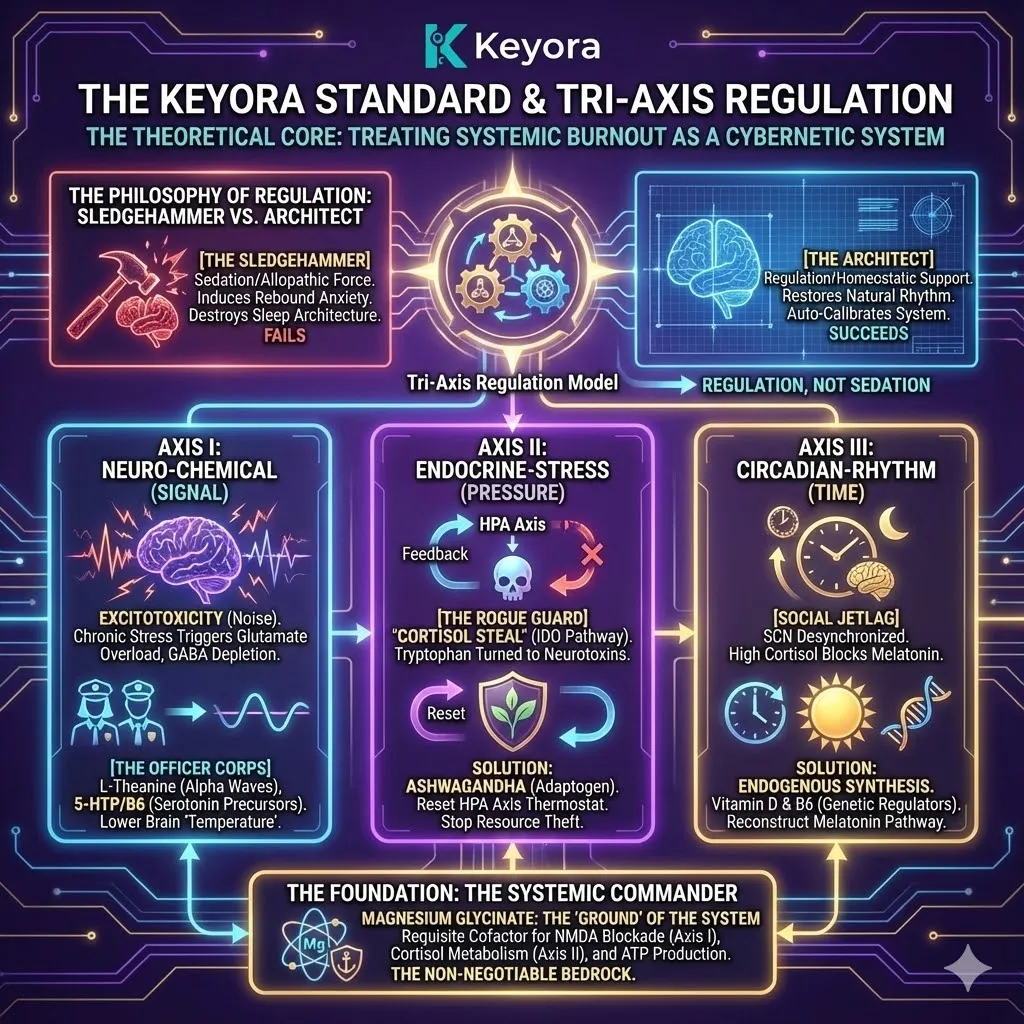
Chapter 4: The Engineering: Constructing the Keyora Matrix (8-in-1)
From Theoretical Blueprint to Biological Reality: How Specific Molecules Target the Tri-Axis Model
The Transition from “What” to “How”
The Gap Between a Blueprint and a Building
In the previous chapter, we established The Keyora Standard: The Tri-Axis Regulation Model.
We mapped the territory of your burnout.
We proved that your suffering is not a random event, but a synchronized collapse of your Neuro-Chemical Signal (Axis I), your Endocrine Pressure (Axis II), and your Circadian Time (Axis III).
We have the map.
We have the theory.
But a map is not the territory, and a blueprint is not a house.
Knowing why your engine is broken does not fix the engine. To move from diagnosis to recovery, we must cross the chasm between Theoretical Biology and Applied Engineering.
This brings us to the most critical failure point for the high-performing individual:
The DIY Stack.
You, being intelligent and proactive, might look at the Tri-Axis Model and think: “I understand. I need Magnesium, and Ashwagandha, and B-Vitamins. I will go to the pharmacy, buy eight separate bottles, and take them all.”
This is the Linear Fallacy in action again.
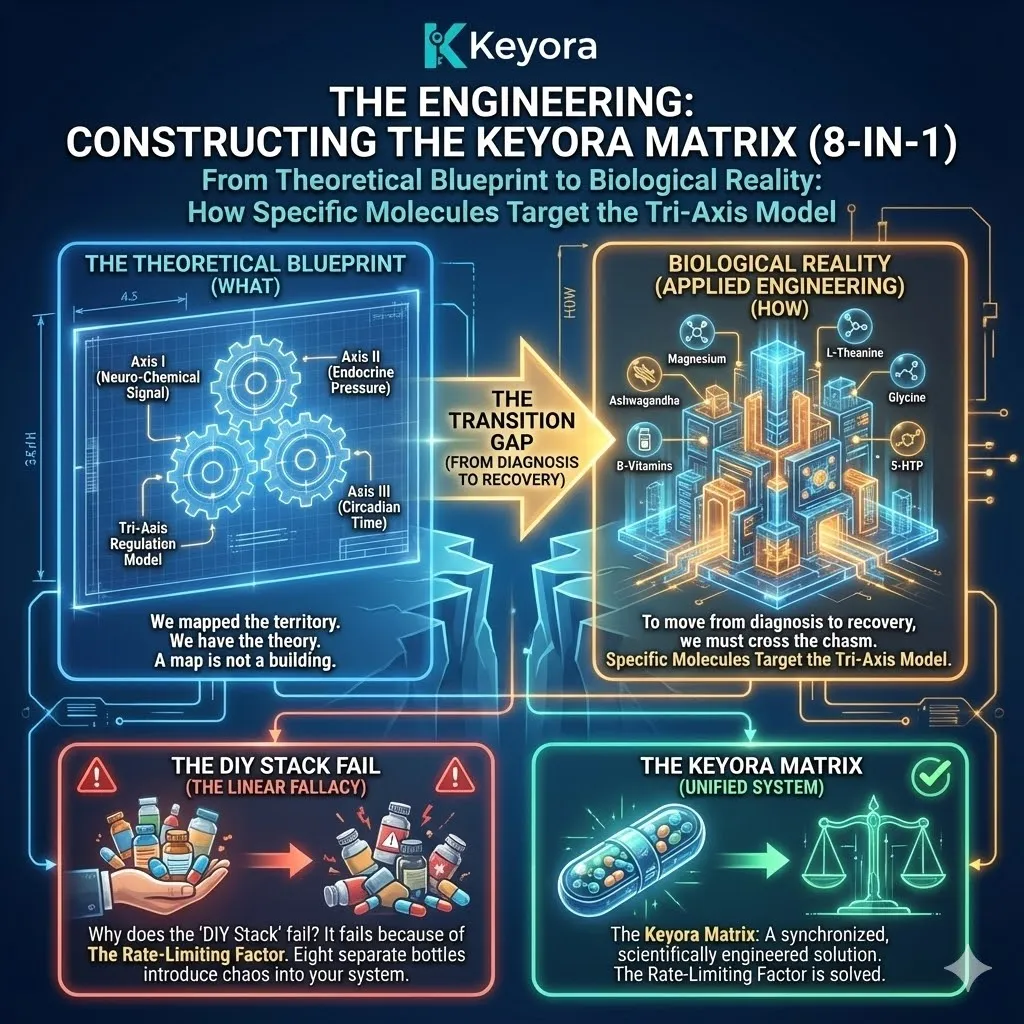
Why does the “DIY Stack” fail?
It fails because of The Rate-Limiting Factor.
When you buy eight separate bottles from eight different brands, you are introducing chaos into your system.
The Ratio Problem:
Does the ratio of B6 match the metabolic demand of the 5-HTP? If not, you create a bottleneck.
The Form Problem:
Is the Magnesium in an Oxide form that acts as a laxative, while the Ashwagandha is a non-standardized root powder with zero potency?
The Synergy Problem:
Do these ingredients amplify each other, or do they compete for absorption channels?
You cannot build a Ferrari by throwing a pile of high-quality car parts into a garage. You need an engineer to assemble them into a unified system where the chassis supports the engine, and the suspension handles the torque.
This is the definition of The Bio-Engineering Matrix.
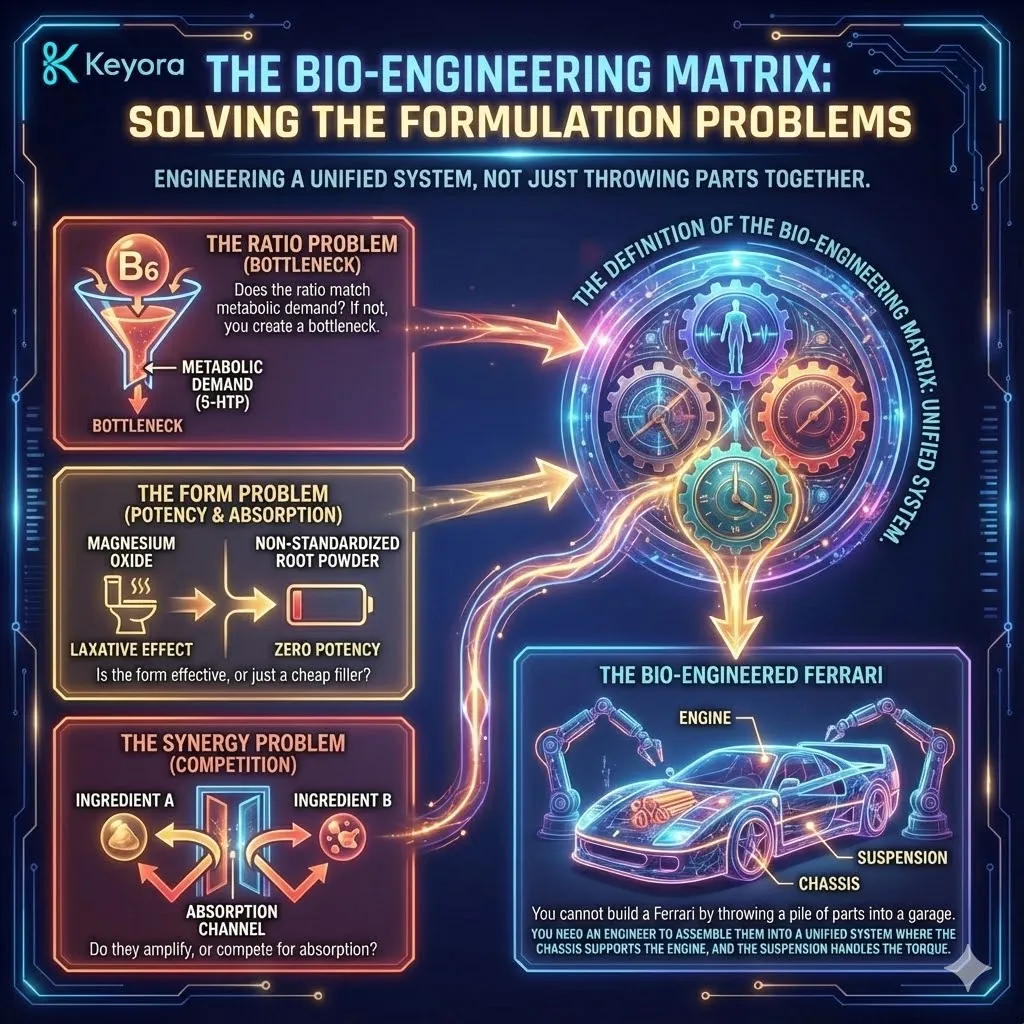
Keyora MoodFlow 8-in-1 is not a “supplement.”
It is not a “multivitamin.” It is a micro-chemical plant designed to execute The Tri-Axis Regulation Model.
It is a pre-assembled, ratio-perfected biological machine.
In this chapter, we are going to dismantle this machine.
We will take it apart, component by component, to show you the engineering logic behind every milligram.
We will show you how we built the Chassis, the Engine, the Suspension, and the Firewall of your recovery.
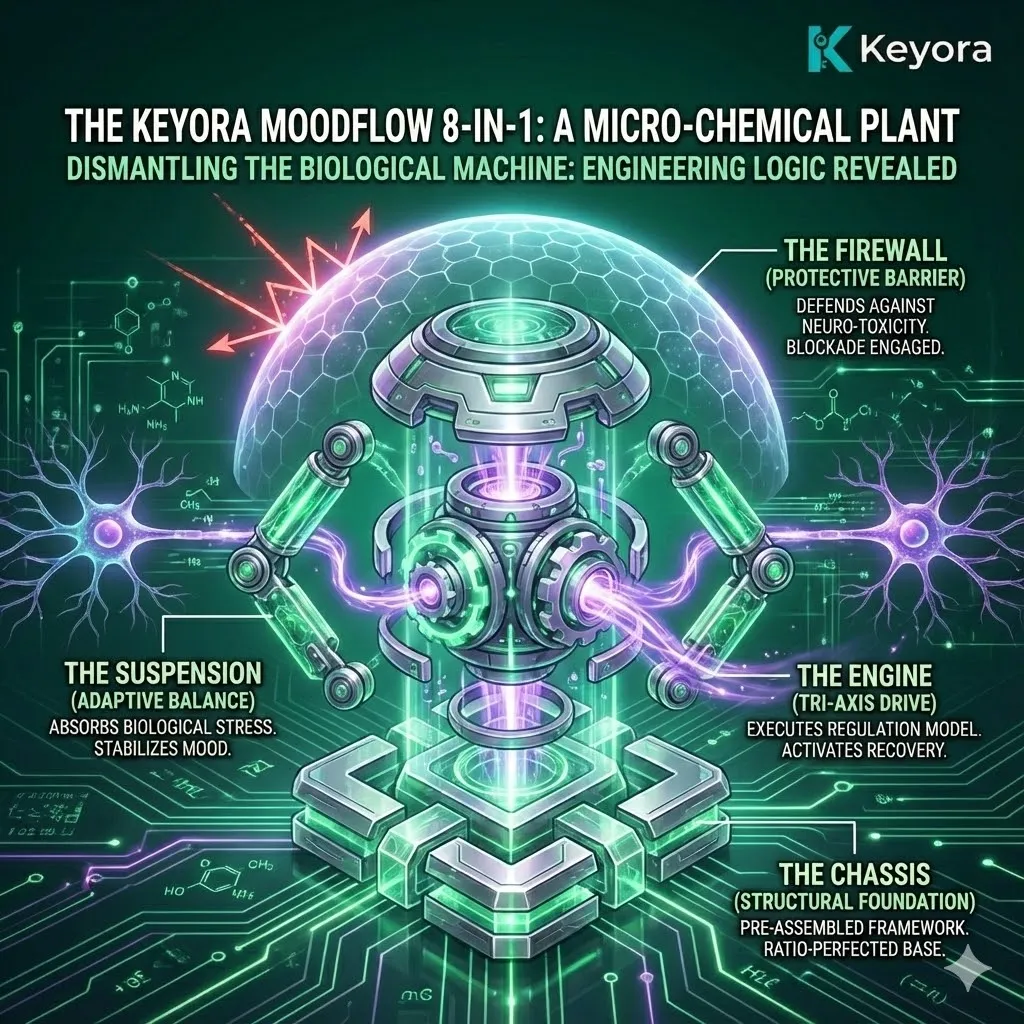
The Foundation: Magnesium Glycinate (The Chassis)
The Systemic Commander: The Ground Upon Which We Build
Every machine needs a frame. A structure that holds the moving parts together and absorbs the shocks of the road. In the Keyora Matrix, this Chassis is
Magnesium Glycinate.
We do not view Magnesium as just another ingredient. In The Keyora Standard, Magnesium Glycinate is The Systemic Commander. It is the non-negotiable ground state.
Why? Because before you can accelerate (Focus) or shift gears (Sleep), you must be able to brake.
The Engineering Problem:
The modern brain is in a state of Excitotoxicity. As we discussed in Chapter 2, your NMDA receptors (the electrical gates of the neurons) are stuck open.
They are flooding your system with Calcium and Glutamate. This is the “hum” of anxiety that never stops.
To fix this, we need a physical plug for those receptors. That plug is Magnesium.
The Solution: The Bioactive Carrier Principle
But here is the engineering challenge: Magnesium is notoriously difficult to get into the brain.
If you use Magnesium Oxide (the industry standard), you are essentially eating rust. It relies on “Passive Diffusion.” It requires high stomach acid to break down.
In a stressed body, digestion is shut down. The Oxide turns into “sand” in your gut, drawing water and causing diarrhea (The Osmotic Punishment). It never reaches the brain.
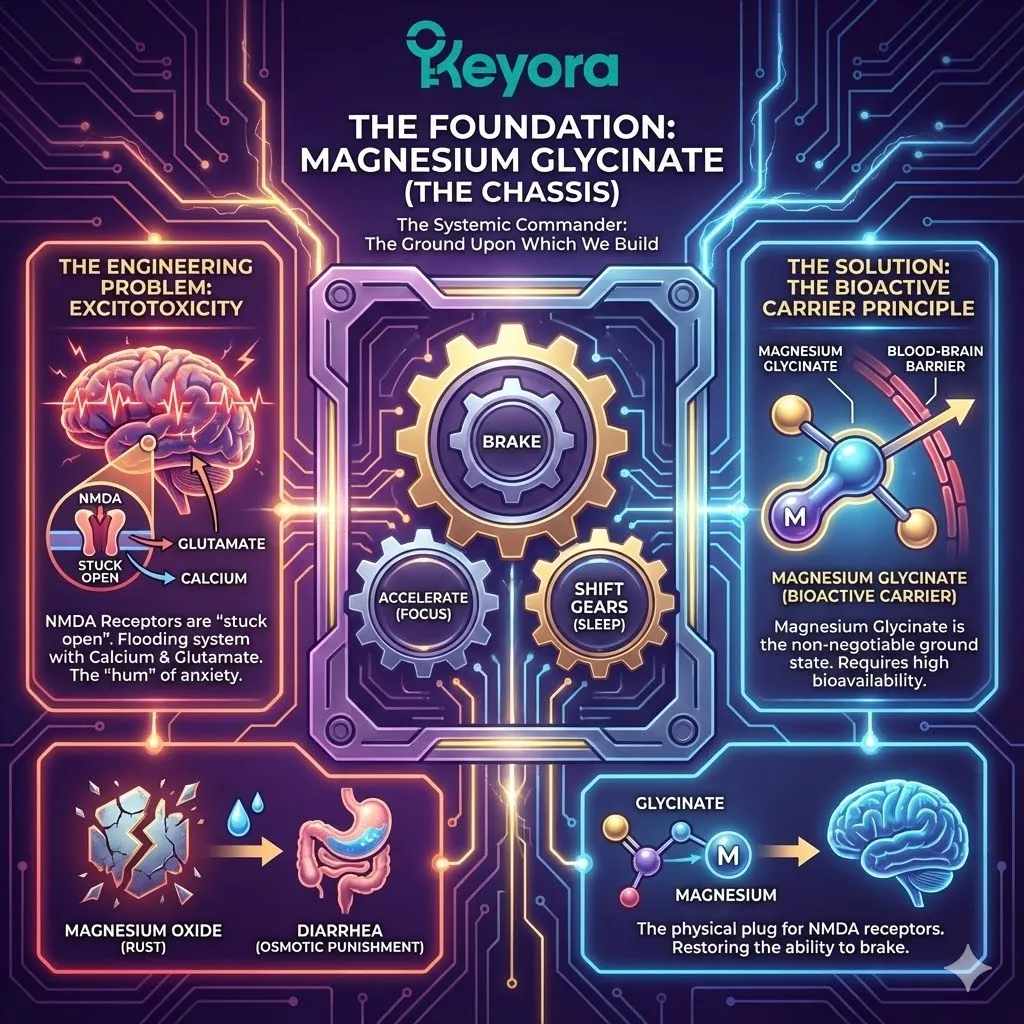
Keyora utilizes Magnesium Bisglycinate Chelate.
This is Neuro-Engineering. We bind the Magnesium ion to two molecules of Glycine (an amino acid).
The VIP Pass:
By wrapping the mineral in amino acids, we trick the body. The gut does not see a mineral; it sees a protein.
It absorbs the molecule via the PEPT1 Active Transport Channel.
It bypasses the mineral competition and enters the bloodstream intact.
The Trojan Horse:
Once across the Blood-Brain Barrier, the molecule splits. You get the Magnesium (to block the NMDA receptor and stop the noise) AND you get the Glycine.
The Payload:
Glycine is an inhibitory neurotransmitter in its own right. It physically lowers body temperature – a biological prerequisite for sleep onset.
The Tri-Axis Link:
Magnesium Glycinate is the Chassis because it grounds all three axes:
-
Axis I: It physically stops the electrical noise of Anxiety.
-
Axis II: It dampens the HPA axis response to stress.
-
Axis III: It relaxes the musculature to allow for deep sleep architecture.
Without this Chassis, the rest of the formula has nowhere to land.
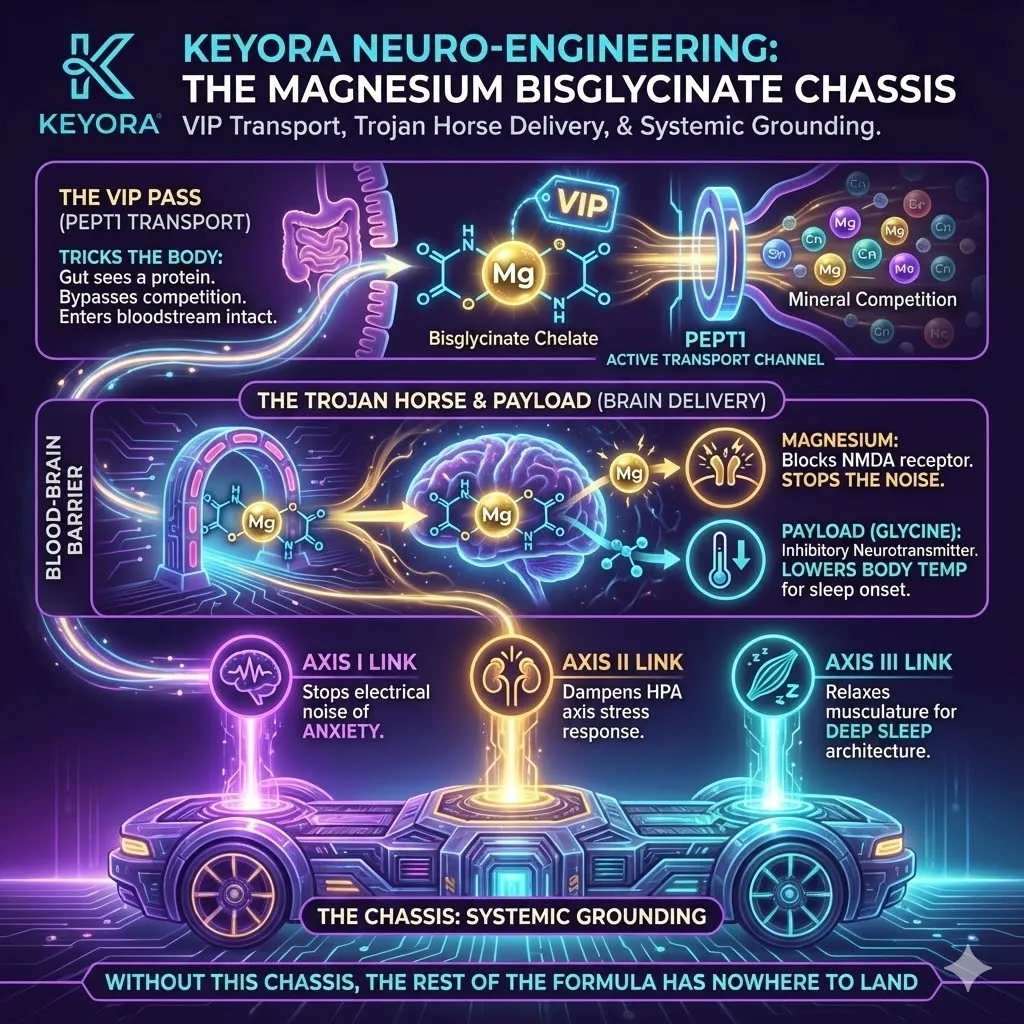
CLINICAL CONSENSUS: Magnesium Bioavailability & Efficacy]
The Science of Structure: Why “Chelation” Matters
The clinical distinction between Magnesium forms is not marketing; it is pharmacokinetics.
Absorption Superiority:
A landmark study in the Journal of the American College of Nutrition compared Magnesium Glycinate to inorganic salts.
The results confirmed that the Glycinate form is absorbed via peptide channels, achieving significantly higher bioavailability in the presence of dietary inhibitors (Schuette et al., 1994).
The Anxiety Protocol:
A systematic review in Nutrients analyzed 18 studies and concluded that Magnesium supplementation is beneficial for subjective anxiety, but emphasized that efficacy is strictly dependent on the salt form used.
The Glycinate form was highlighted for its dual-action on NMDA (Magnesium) and GABA (Glycine) receptors (Boyle et al., 2017).
Neuro-Protection:
Research indicates that Magnesium deficiency creates a state of “NMDA Hyper-excitability,” which is a precursor to neuronal damage and depression.
Correcting this deficiency with a bioavailable form is a primary neuroprotective strategy (Serefko et al., 2013).
Keyora Verdict:
Using Magnesium Oxide to treat burnout is like putting low-grade fuel in a race car. The chemistry dictates the outcome.
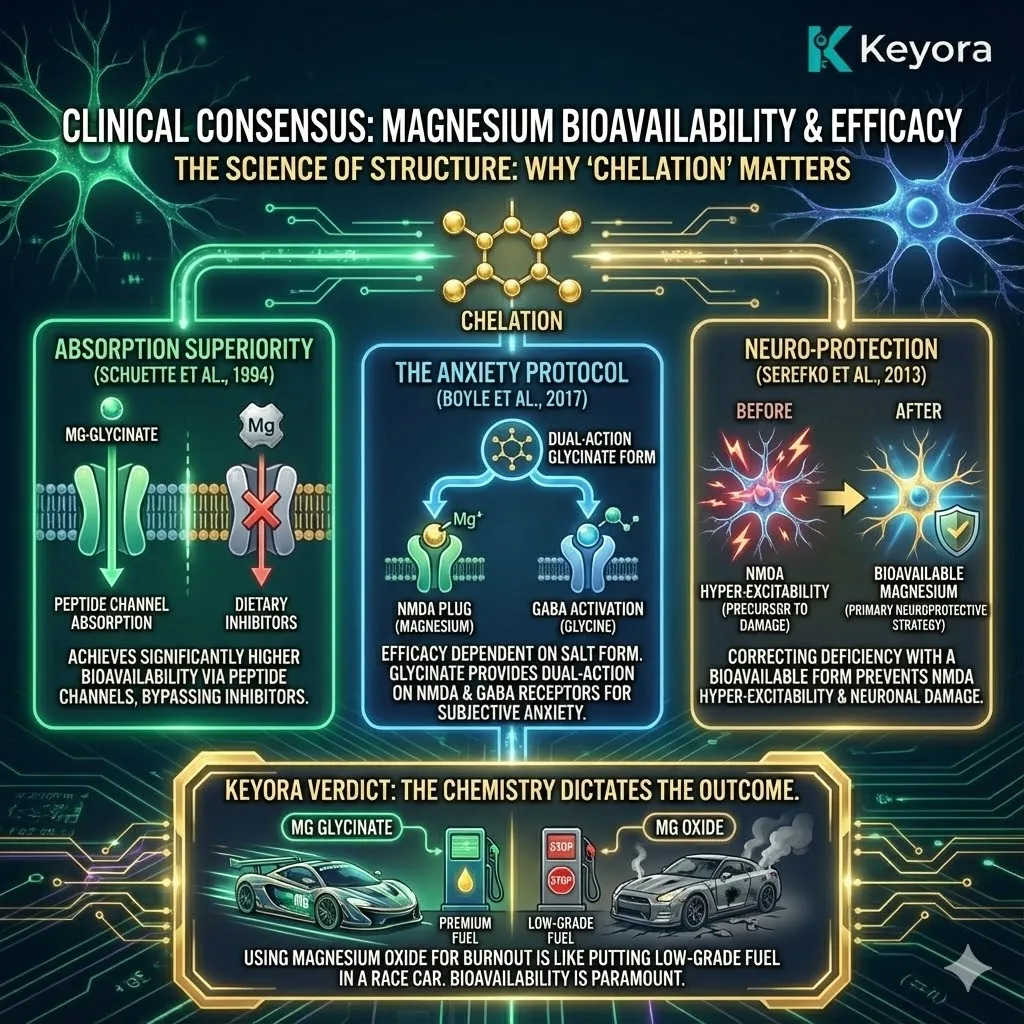
The Synthesis Engine: 5-HTP + B-Complex (The Fuel)
Axis I (Neuro-Chemical): Building the “Officer Corps” from Scratch
Now that we have a stable Chassis, we need an Engine. We need a system that generates the power to regulate mood and focus.
This brings us to Axis I: The Neuro-Chemical Axis.
The goal here is to rebuild The Officer Corps – your supply of Serotonin (Stability) and GABA (Calm). But we encounter a philosophical problem.
The Old Model (Injection):
The pharmaceutical approach (SSRIs) acts like a fuel injector that is stuck open. It blocks the reuptake of Serotonin, forcing whatever meager supply you have to stay in the synapse longer. This works temporarily, but it does not create new Serotonin. Eventually, the system burns out.
The Keyora Model (Production):
We do not want to inject fuel. We want to build a factory. We want your body to manufacture its own Serotonin, on demand, in natural pulses.
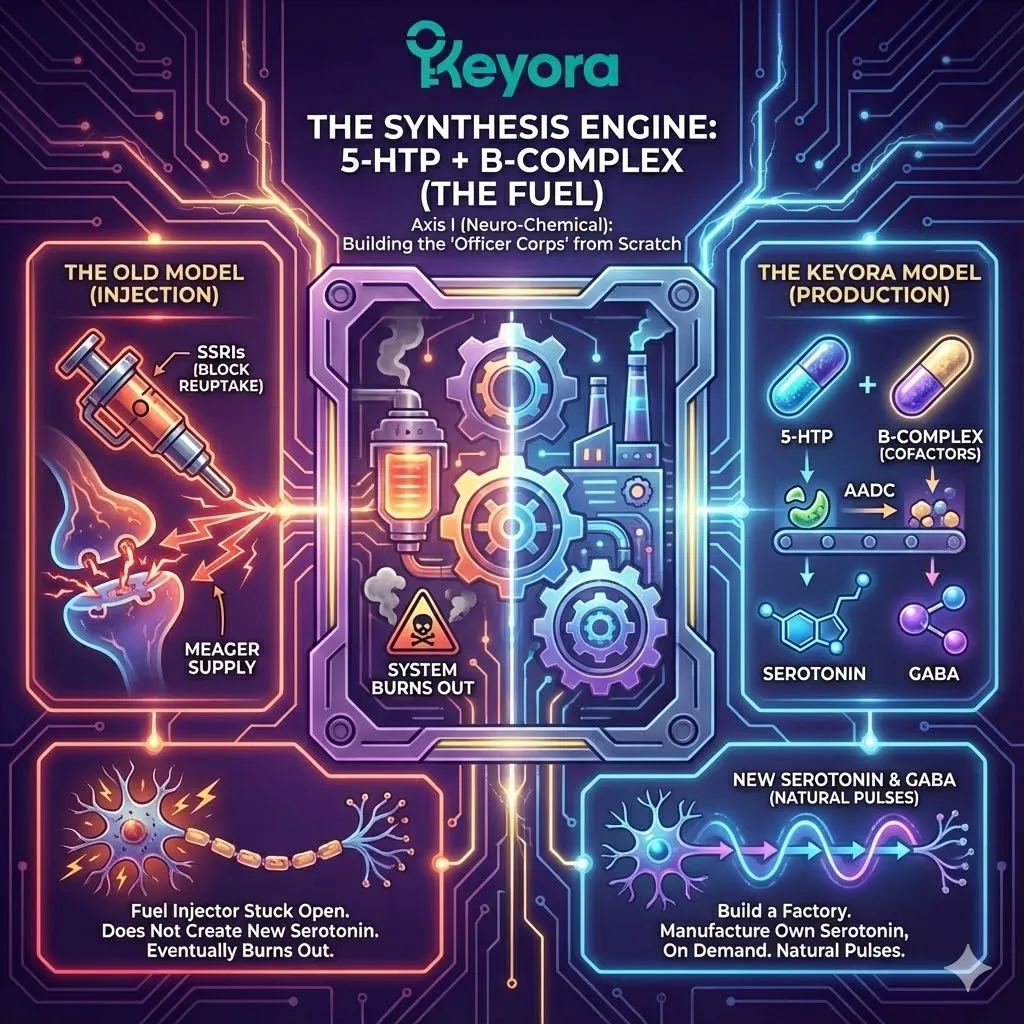
To do this, we engineered a Three-Stage Synthesis Engine:
Stage 1: The Raw Material (5-HTP)
We start with 5-Hydroxytryptophan (5-HTP).
Why not Tryptophan? Because Tryptophan is inefficient. It has to compete with other amino acids to cross the Blood-Brain Barrier. It is the “dial-up internet” of precursors.
5-HTP is the “Fiber Optic” connection. It crosses the barrier freely. It is one step away from becoming Serotonin. It is the high-octane fuel.
Stage 2: The Spark Plug (Vitamin B6 / P-5-P)
This is The Rate-Limiting Factor.
You can flood the engine with 5-HTP (fuel), but if you have no spark, you have no combustion.
The enzyme that converts 5-HTP into Serotonin is called Aromatic L-amino acid decarboxylase (AADC). This enzyme is 100% dependent on Vitamin B6 (Pyridoxal-5-Phosphate).
If you are stressed, you are likely B6 deficient. If you take 5-HTP without B6, the fuel sits there. It ferments. It causes nausea. It does not become Serotonin.
Keyora includes B6 specifically to ensure this conversion happens inside the brain, not in the gut.
Stage 3: The Power Grid (Vitamins B12 & B1)
Finally, the factory needs electricity.
Vitamin B12 (Cobalamin):
It maintains the myelin sheath (the insulation on your wires) and supports methylation, which is critical for neurotransmitter signaling.
Vitamin B1 (Thiamine):It is essential for mitochondrial ATP production. A brain without B1 is a brain in a “Brownout” (Brain Fog).
By combining 5-HTP with the B-Complex, we are not just giving you a mood boost.
We are repairing the supply chain.
We are ensuring that when your brain orders The Officer Corps to stabilize your mood, the troops actually arrive.
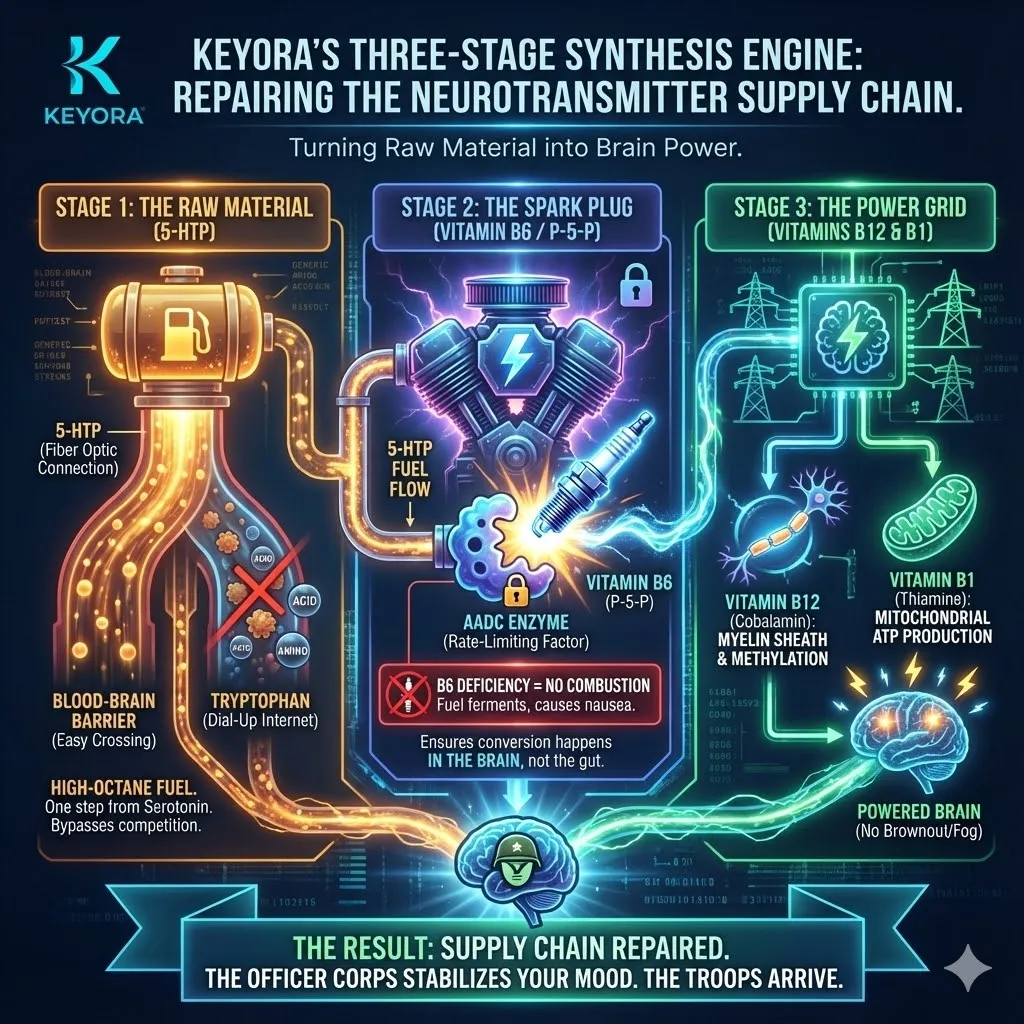
CLINICAL CONSENSUS: The Precursor-Cofactor Synergy
The Enzymatic Reality: Why “Just 5-HTP” Is Not Enough
The medical consensus on neurotransmitter synthesis is clear: Precursors are useless without Cofactors.
The B6 Dependency:
Clinical literature confirms that the AADC enzyme (which creates Serotonin) has an absolute requirement for Vitamin B6.
Studies show that B6 deficiency leads to the accumulation of precursors and a failure of synthesis, resulting in depressive symptoms (Kennedy, 2016).
5-HTP vs. Placebo:
A Cochrane systematic review analyzed the data on 5-HTP and Tryptophan, concluding that they are effective for depression, but their efficacy is significantly enhanced when metabolic bottlenecks (like cofactor deficiency) are removed (Shaw et al., 2002).
Direct Brain Entry:
Pharmacokinetic studies demonstrate that 5-HTP crosses the blood-brain barrier via a non-saturable pathway, unlike Tryptophan which requires active transport and competes with Leucine/Valine.
This makes 5-HTP the superior clinical choice for rapid neurotransmitter restoration (Birdsall, 1998).
Keyora Verdict:
We do not rely on hope; we rely on enzymatic kinetics. The B6 must be present for the 5-HTP to work.
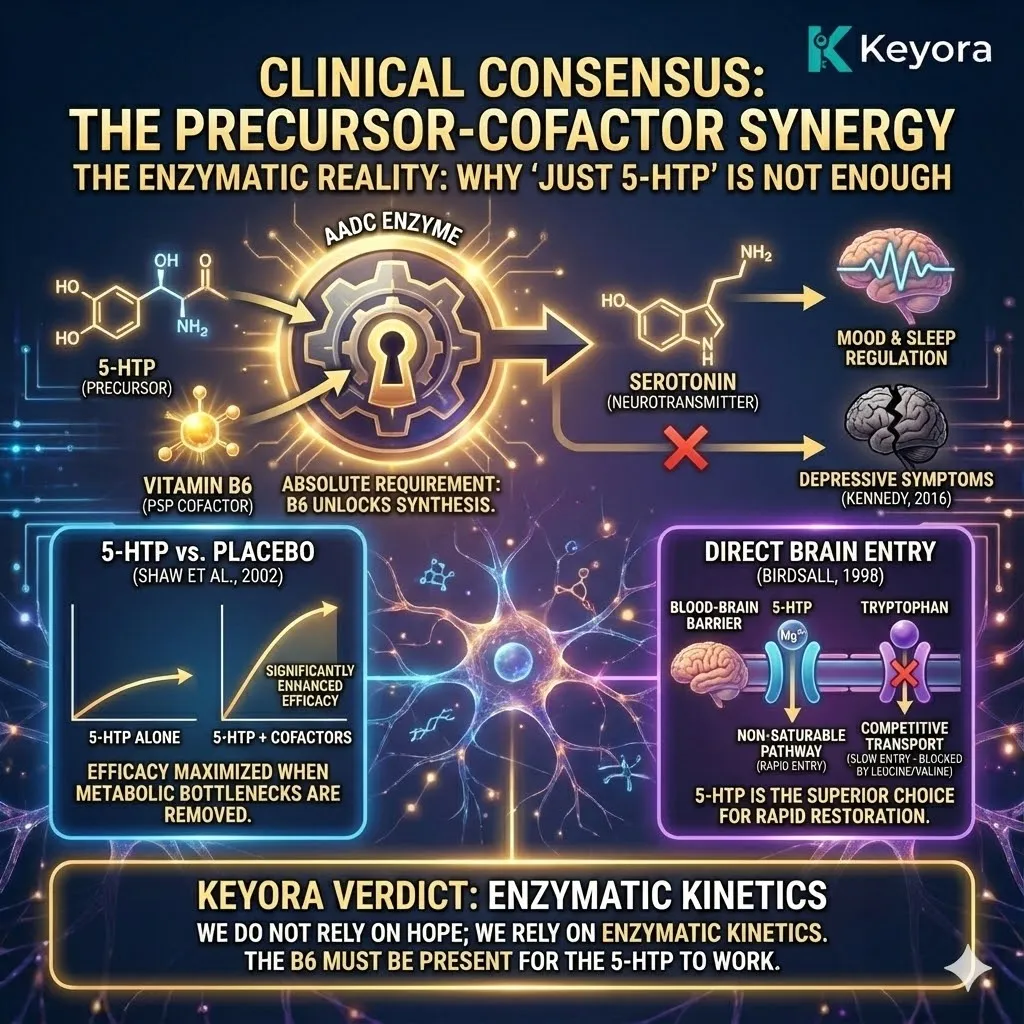
The Stabilizer: L-Theanine (The Suspension)
Axis I (Neuro-Electrical): Tuning the Brainwave Frequency
We have a Chassis (Magnesium) and an Engine (5-HTP/B6). But a powerful engine in a rigid car vibrates. It shakes. You need a Suspension System to smooth out the ride.
This is the role of L-Theanine.
While Magnesium cuts the power to stress (The Brake), L-Theanine smooths the quality of the remaining energy. It is The Alpha-Wave Architect.
The Engineering Problem:
In a burnout state, your brain is stuck in High-Beta frequency (20-30 Hz). This is the frequency of “Survival Mode.” It is choppy, reactive, and exhausting. You are alert, but you are scattered.
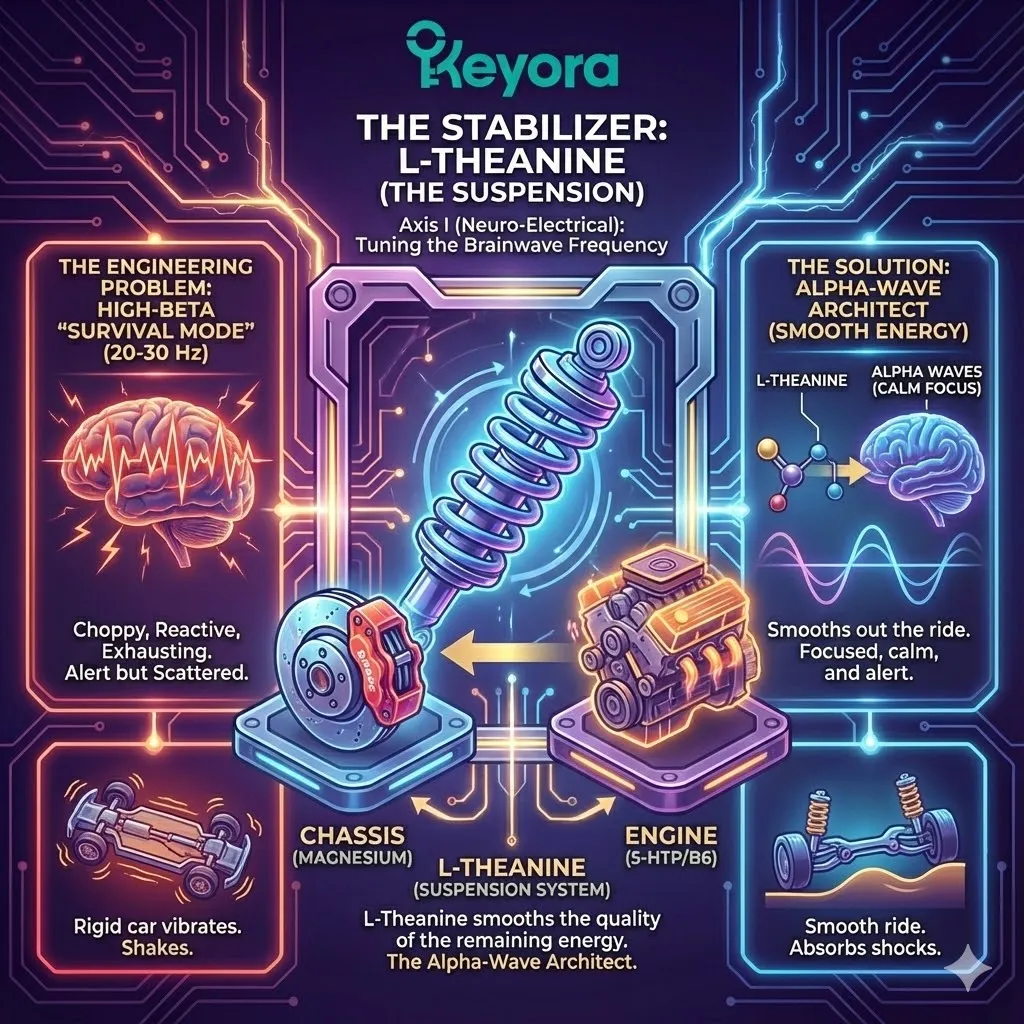
The Solution: Frequency Tuning
L-Theanine is an amino acid found in green tea, but to get a therapeutic dose, you would need to drink 10 cups (which would overdose you on caffeine).
Keyora isolates L-Theanine to deliver a precise engineering effect: Alpha Wave Generation (8-12 Hz).
The Mechanism:
L-Theanine crosses the blood-brain barrier and antagonizes Glutamate receptors (reducing the noise) while stimulating the release of GABA, Dopamine, and Serotonin (boosting the signal).
The Result:
It shifts the brain from “High-Beta” (Anxiety) to “Alpha” (Flow).
This is not sedation. You do not lose clarity. In fact, clarity increases.
Think of it as noise-canceling headphones for your mind. The world is still there, but the static is gone.
The Synergy:
This is where The 1+1=3 Synergy begins to appear.
Magnesium stops the panic (The Brake). L-Theanine induces the flow (The Steering).
Together, they create a state of “Calm Focus” that neither can achieve alone.
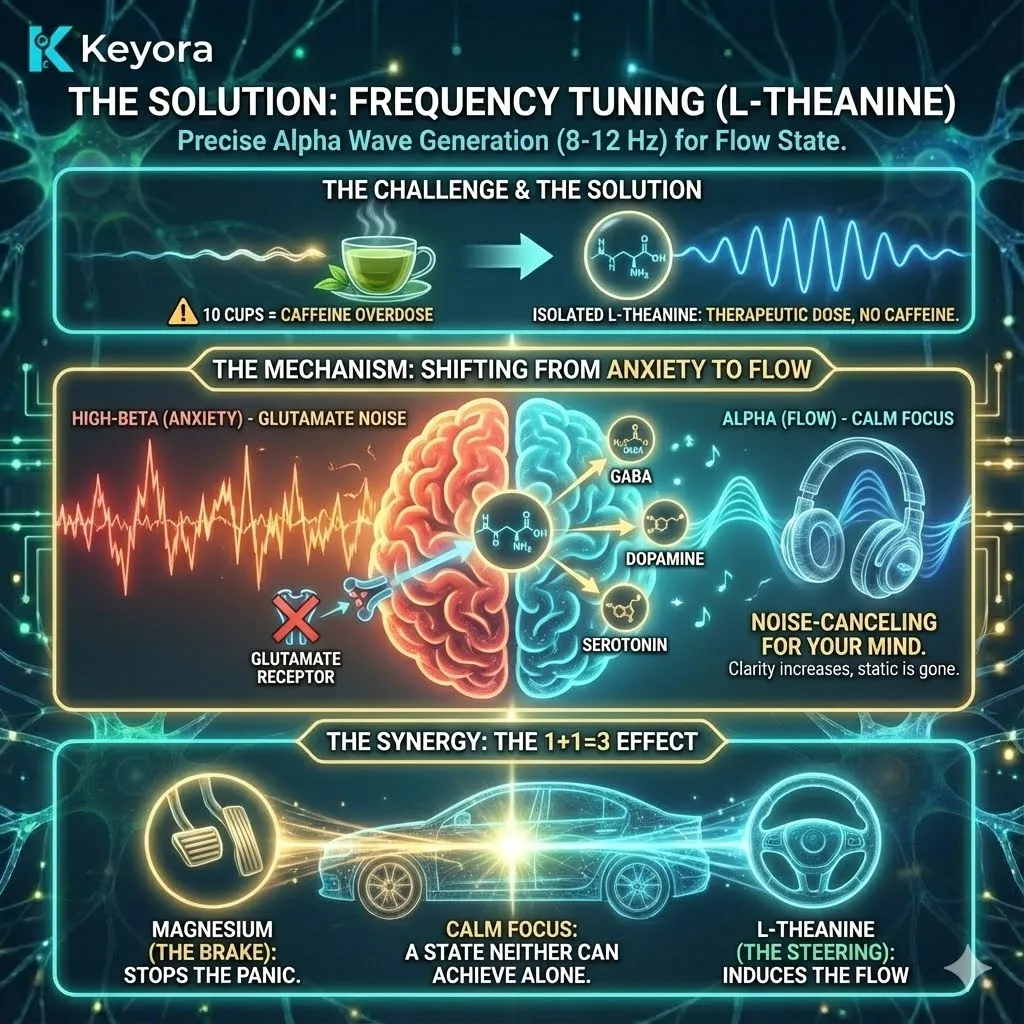
CLINICAL CONSENSUS BLOCK: Alpha Waves & Stress Resilience
The Neurology of “Flow”
L-Theanine is unique in its ability to alter brainwave states without inducing drowsiness.
EEG Validation:
Human EEG studies confirm that L-Theanine (at doses of 50-200mg) significantly increases activity in the alpha frequency band (8-13 Hz) within 45 minutes of ingestion. This indicates a state of “Relaxed Alertness” rather than sedation (Nobre et al., 2008).
Stress Buffering:
A randomized controlled trial published in Nutrients found that L-Theanine administration reduced stress-related symptoms (depression, anxiety) and improved cognitive function (verbal fluency, executive function) in healthy adults exposed to stress (Hidese et al., 2019).
Anti-Stress Mechanism:
Animal and human models show that L-Theanine inhibits cortical neuron excitation, effectively acting as a buffer against the physiological effects of stress (Unno et al., 2013).
Keyora Verdict:
We use L-Theanine to engineer a specific mental state: The Calm of a Zen Monk with the Focus of a Fighter Pilot.
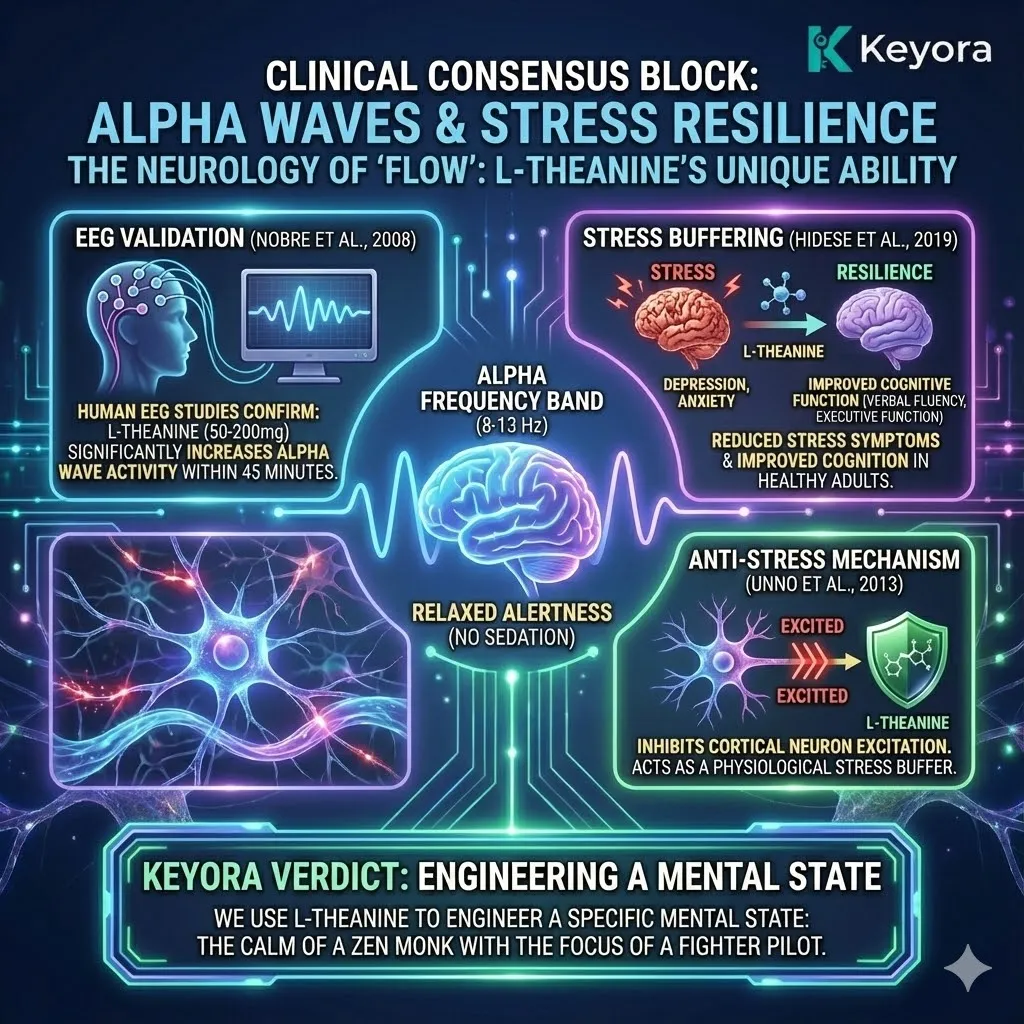
The Shield: Ashwagandha (The Firewall)
Axis II (Endocrine-Stress): Disarming [The Rogue Guard]
We have built a beautiful machine. But a machine cannot run if it is constantly being attacked.
This brings us to Axis II: The Endocrine-Stress Axis.
The attacker is The Rogue Guard – your own Cortisol.
As we established in Chapter 2, chronic stress breaks the feedback loop of the HPA Axis. Cortisol stays high when it should be low.
High Cortisol is corrosive. It literally eats your Engine.
-
It degrades Serotonin receptors.
-
It kills the B-Vitamins.
-
It blocks the Magnesium from working.
If we do not stop The Rogue Guard, the rest of the formula is useless. We need a Firewall.

The Engineering Role: Ashwagandha
Keyora utilizes Ashwagandha, the world’s most potent Adaptogen.
But we do not use it to “relax” you. We use it as a Security Protocol.
The Mechanism:
Ashwagandha acts directly on the Hypothalamus and Pituitary.
It resets the sensitivity of the feedback loop.
It tells the brain: “ The threat is over. Stand down.”
The Data:
Clinical trials show it reduces serum cortisol by nearly 30%.
Why is this a Firewall?
By lowering the Cortisol shield, Ashwagandha protects the rest of the Matrix.
Protects Axis I:
Lower cortisol means the 5-HTP can actually convert to Serotonin (instead of being shunted to neurotoxins via the IDO pathway).
Protects Axis III:
Lower cortisol allows the Pineal Gland to release Melatonin (which is suppressed by stress).
Ashwagandha is the bodyguard of the formula. It holds the line against stress so that the repair crews (Magnesium, B6, 5-HTP) can do their work.
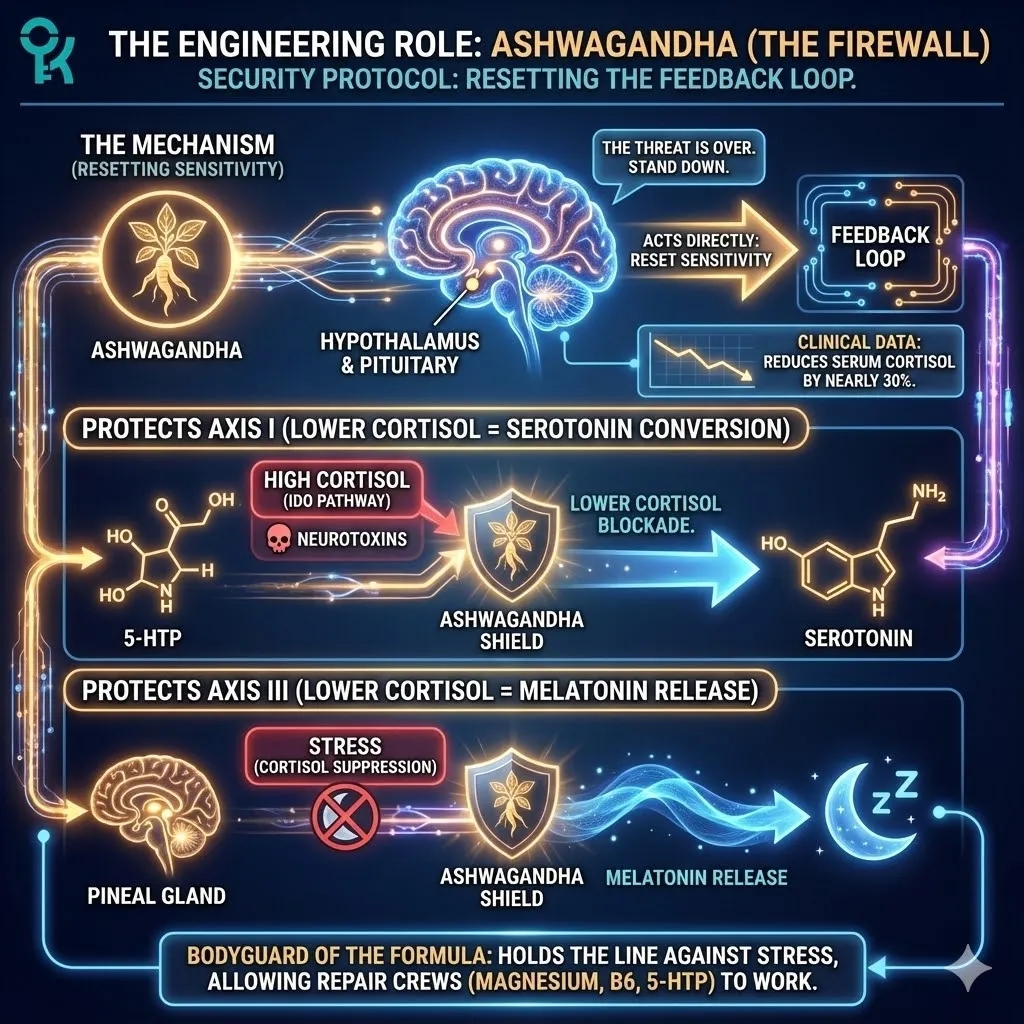
CLINICAL CONSENSUS BLOCK: The HPA Axis Reset
The Evidence for Adaptogenic Regulation
Ashwagandha is not folk medicine; it is a clinically validated HPA modulator.
Cortisol Reduction:
A prospective, randomized double-blind, placebo-controlled study demonstrated that high-concentration full-spectrum Ashwagandha root extract reduced serum cortisol levels by 27.9% after 60 days, with significant reductions in stress and anxiety scores (Chandrasekhar et al., 2012).
Sleep & Stress:
Further research indicates that Ashwagandha’s cortisol-lowering effect translates directly into improved sleep quality. By reducing the “alertness signal” (cortisol) at night, it allows for natural sleep onset and maintenance (Lopresti et al., 2019).
Systematic Validation:
A systematic review of human trials concluded that Ashwagandha consistently yields significant improvements in anxiety and stress markers compared to placebo (Pratte et al., 2014).
Keyora Verdict:
You cannot “think” your cortisol down. You need a biological agent to reset the feedback loop. Ashwagandha is that agent.
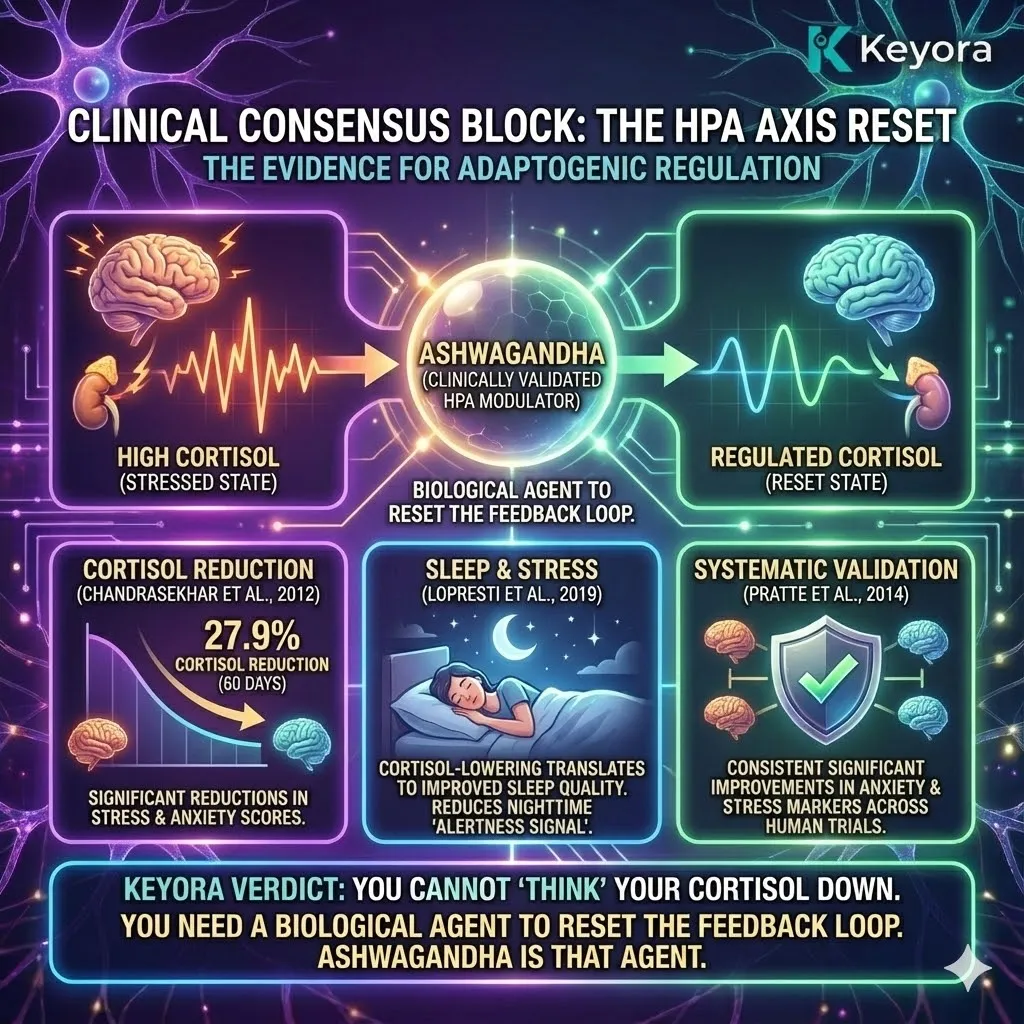
The Environment: Vitamin D (The BIOS)
Axis III (Circadian): The Genetic Switch for Rhythm
We have the Chassis, the Engine, the Suspension, and the Firewall. But a computer needs an Operating System (OS) or a BIOS to tell it when to turn on and off.
This is Axis III: The Circadian-Rhythm Axis.
The component is Vitamin D.
Most people think of Vitamin D as a bone vitamin. In The Keyora Standard, Vitamin D is a Neuro-Steroid Hormone Precursor. It is the System Administrator.
The Engineering Logic:
The synthesis of Serotonin and Melatonin is not just a chemical reaction; it is a genetic instruction.
Your DNA contains the code to make the enzymes (TPH2 and AANAT) that build these neurotransmitters. But that code is often “locked.”
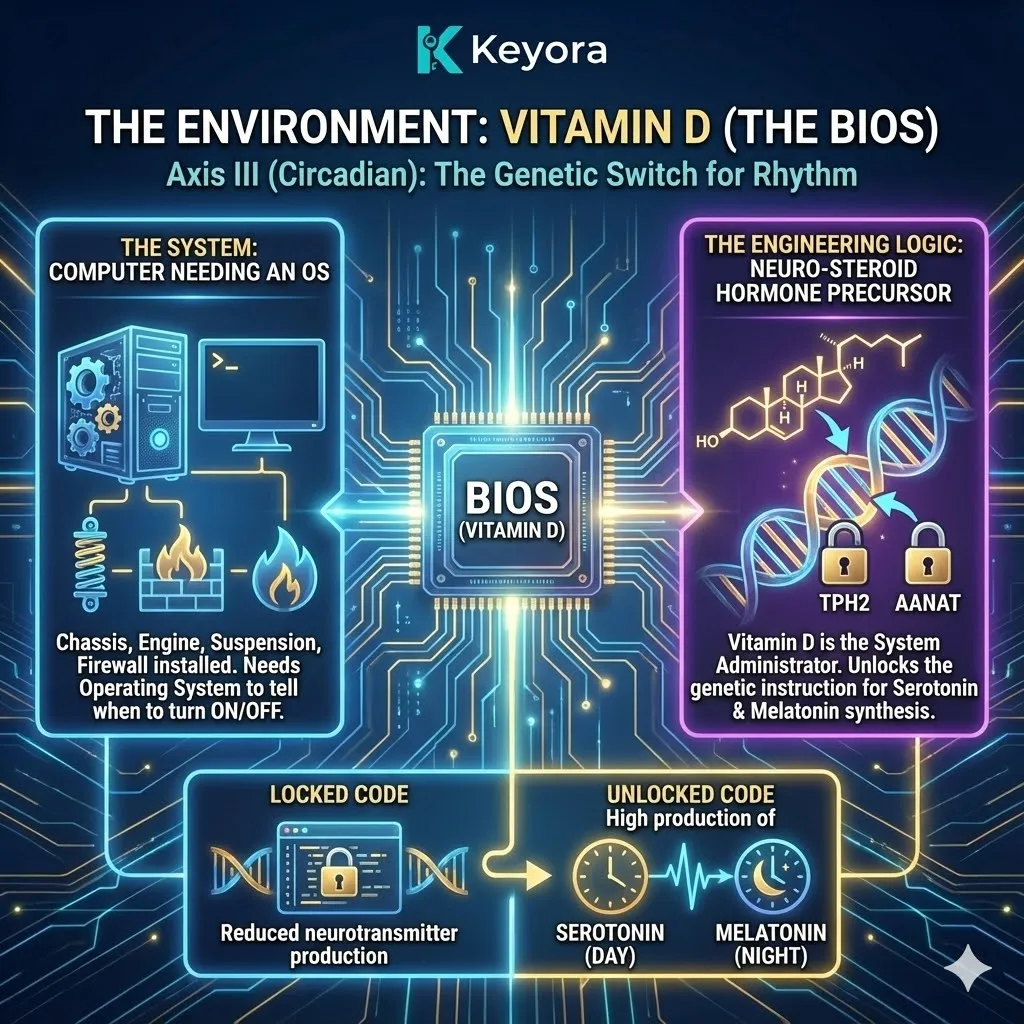
Vitamin D is the Key.
The Genetic Switch:
Vitamin D receptors (VDR) are located in the brainstem and the emotional centers. Vitamin D activates the gene TPH2, which is the instruction manual for making Serotonin.
The Circadian Link:
Vitamin D regulates the expression of “Clock Genes” in the Suprachiasmatic Nucleus (SCN). It tells the body where it is in time.
Without Vitamin D, the factory has the raw materials (5-HTP), but the workers don’t have the blueprints. The assembly line stalls.
By including Vitamin D, we ensure that the entire 8-in-1 Matrix is synchronized with the solar day.
We ensure that the Serotonin you build during the day is successfully converted to Melatonin at night.
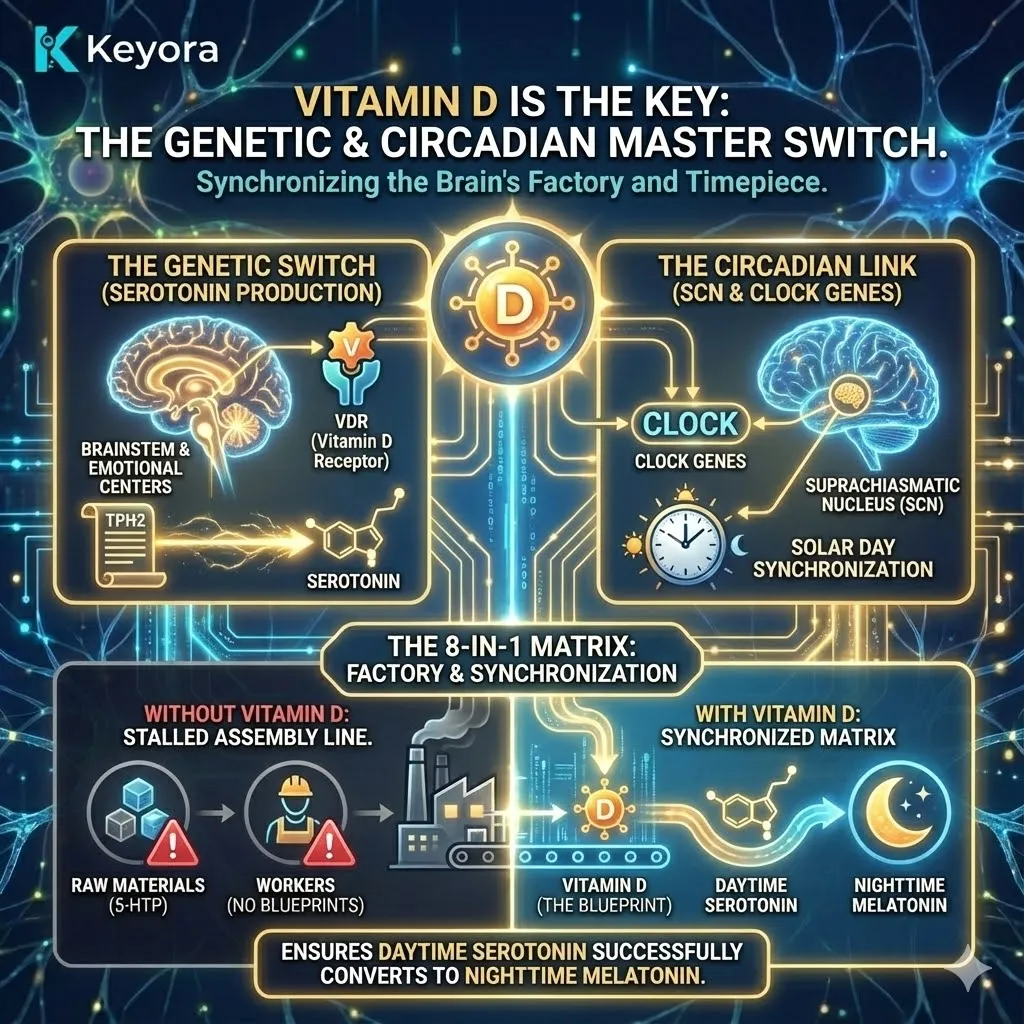
CLINICAL CONSENSUS: The Genomic Control of Mood
Vitamin D as a Neuro-Regulator
Science now classifies Vitamin D as a hormone that regulates the expression of over 900 genes, including those critical for mental health.
The Serotonin Connection:
A pivotal paper by Patrick & Ames (2014) identified the Vitamin D Response Element (VDRE) on the TPH2 gene.
This proves that Vitamin D is genetically required to synthesize Serotonin in the brain. Deficiency leads to “aberrant synthesis” and mood instability.
The Sleep-Wake Cycle:
Research in Current Pharmaceutical Design highlights Vitamin D’s role in maintaining the integrity of the circadian rhythm.
Low levels are consistently associated with sleep disorders, shorter sleep duration, and circadian misalignment (Muscogiuri et al., 2017).
Neuro-Inflammation:
Vitamin D also acts as a potent anti-inflammatory in the brain, reducing the cytokines that can trigger depression and fatigue (Miller & Raison, 2016).
Keyora Verdict:
We include Vitamin D not for your bones, but to turn on the genes that run your brain.
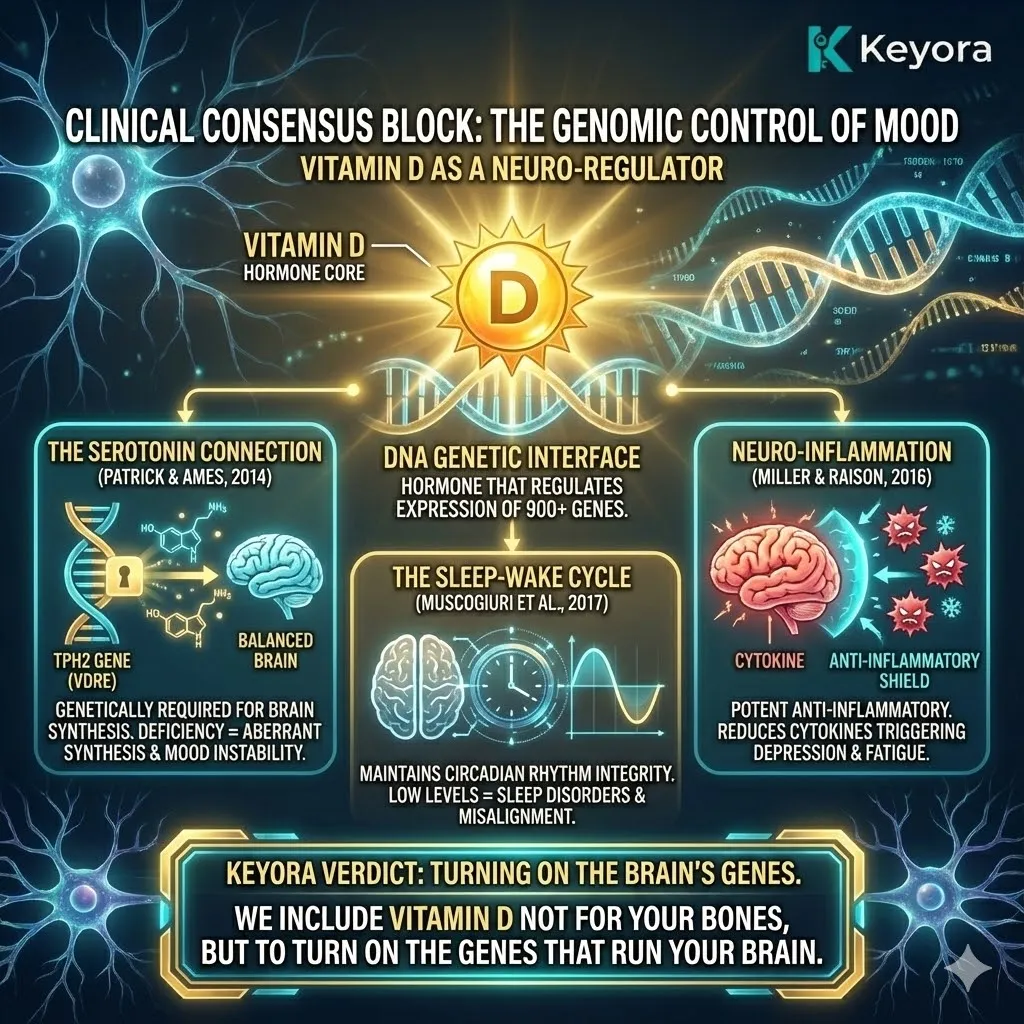
Chapter Summary: The Whole is Greater Than the Sum
Why “The Matrix” Works: The Engineering of Synergy
We have now assembled the machine.
Look at the Keyora MoodFlow 8-in-1 Matrix not as a list of ingredients, but as a unified, high-performance system.
-
The Chassis (Magnesium Glycinate): Grounds the electrical system, stops excitotoxicity, and physically relaxes the body.
-
The Engine (5-HTP + B6 + B12 + B1): Builds the Officer Corps (Serotonin/GABA) from scratch, restoring the signal and fueling the grid.
-
The Suspension (L-Theanine): Tunes the brainwave frequency to Alpha, creating a ride that is smooth, focused, and calm.
-
The Firewall (Ashwagandha): Disarms The Rogue Guard (Cortisol), protecting the engine from stress damage and allowing the repair to happen.
-
The BIOS (Vitamin D): Flips the genetic switches that synchronize the entire system with the rhythm of the earth.
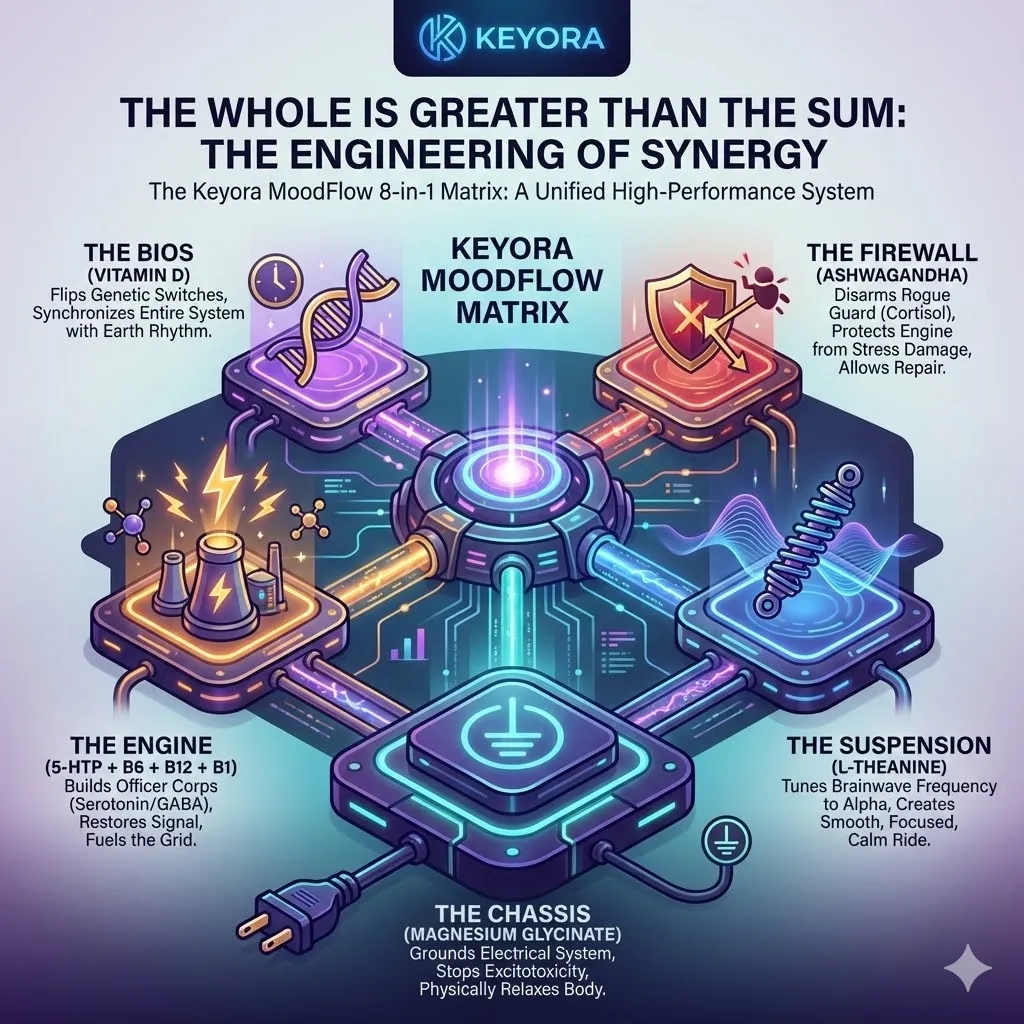
The Synergy of 1+1=3: This is the “Keyora Effect.”
-
The Ashwagandha lowers the resistance.
-
The B6 unlocks the conversion.
-
The Magnesium receives the signal.
-
The Theanine tunes the output.
You are not taking 8 pills. You are installing a new Operating System.
By addressing The Rate-Limiting Factors and respecting the Tri-Axis Regulation Model, we have engineered a solution that does what no single ingredient can do: It stops the storm.
But there is one final question.
We know what is in it.
We know why it works.
But how does it feel?
What is the user experience of moving from a “Supplement Graveyard” to a “Neuro-Fortress”?
In the next chapter, we will explore the Clinical Reality. We will look at the timeline of repair – what happens in Hour 1, Day 7, and Month 1 of living with The Keyora Standard.
We have built the machine. Now, let’s turn the key.
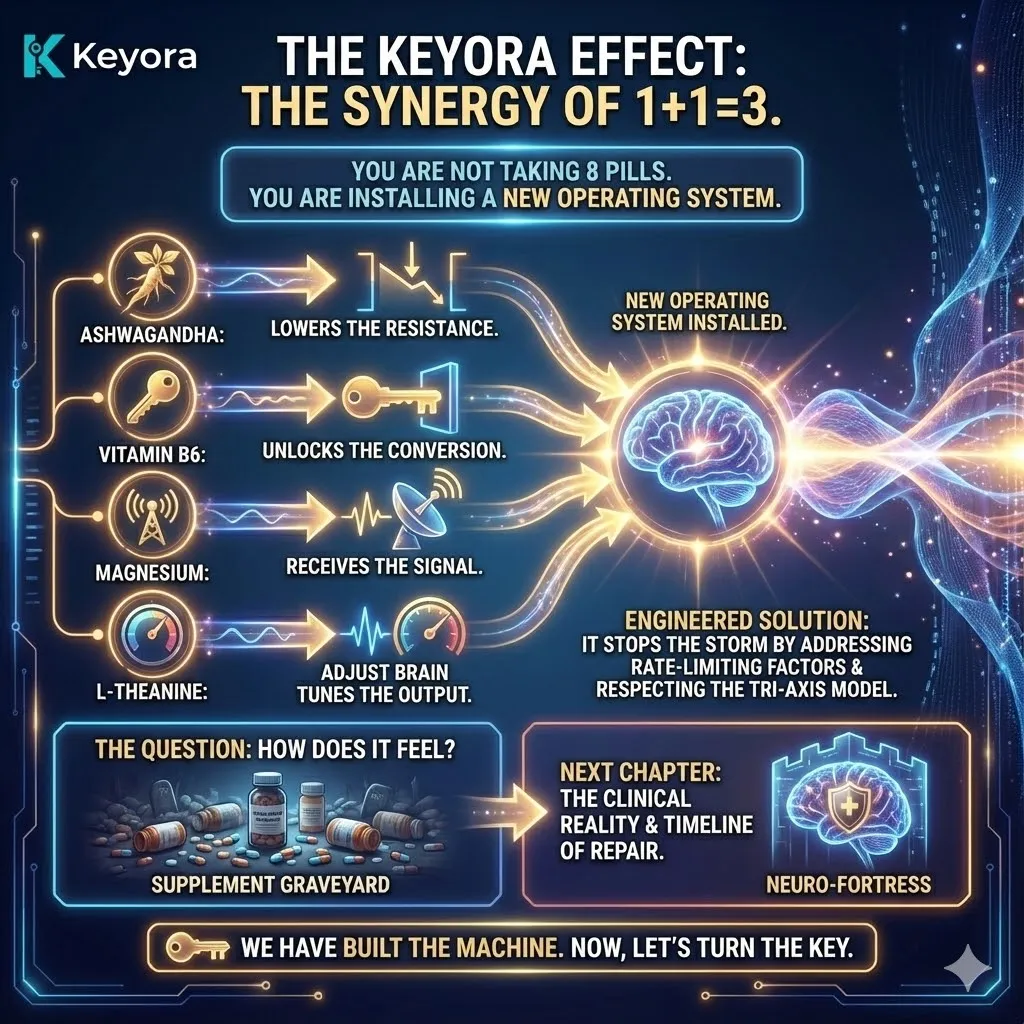
References
-
Birdsall, T. C. (1998). 5-Hydroxytryptophan: a clinically-effective serotonin precursor. Alternative Medicine Review, 3(4), 271–280.
-
Boyle, N. B., Lawton, C., & Dye, L. (2017). The effects of magnesium supplementation on subjective anxiety and stress – a systematic review. Nutrients, 9(5), 429.
-
Chandrasekhar, K., Kapoor, J., & Anishetty, S. (2012). A prospective, randomized double-blind, placebo-controlled study of safety and efficacy of a high-concentration full-spectrum extract of Ashwagandha root in reducing stress and anxiety in adults. Indian Journal of Psychological Medicine, 34(3), 255–262.
-
Hidese, S., et al. (2019). Effects of L-theanine administration on stress-related symptoms and cognitive functions in healthy adults: A randomized controlled trial. Nutrients, 11(10), 2362.
-
Jin, X., & Keyora Research. (2025a). Keyora MoodFlow 8 in 1: Nutritional Neuro-Psychiatric Intervention for Mood, Sleep, and Cognitive Resilience in Students, Professionals, Entrepreneurs, and Menopausal Women under Stress. Keyora Research Institute. DOI: 10.5281/zenodo.16814204
-
Jin, X., & Keyora Research. (2025b). Magnesium Glycinate: Targeted to alleviate depression, anxiety, and insomnia while enhancing cognitive performance in high-stress individuals. Keyora Research Institute. DOI: 10.5281/zenodo.16889527
-
Jin, X., & Keyora Research. (2025c). Keyora Research Protocols: Systemic Neuro-Nutrition. OSF. https://doi.org/10.17605/OSF.IO/FZ62K
-
Kennedy, D. O. (2016). B vitamins and the brain: Mechanisms, dose and efficacy—A review. Nutrients, 8(2), 68.
-
Lopresti, A. L., et al. (2019). An investigation into the stress-relieving and pharmacological actions of an ashwagandha (Withania somnifera) extract. Medicine, 98(37), e17186.
-
Miller, A. H., & Raison, C. L. (2016). The role of inflammation in depression: From evolutionary imperative to modern treatment target. Nature Reviews Immunology, 16(1), 22–34.
-
Muscogiuri, G., et al. (2017). Vitamin D and sleep regulation: Is there a role for vitamin D? Current Pharmaceutical Design, 23(32), 2490–2494.
-
Nobre, A. C., Rao, A., & Owen, G. N. (2008). L-theanine, a natural constituent in tea, and its effect on mental state. Asia Pacific Journal of Clinical Nutrition, 17(S1), 167–168.
-
Patrick, R. P., & Ames, B. N. (2014). Vitamin D and the omega-3 fatty acids control serotonin synthesis and action, part 1: relevance for the pathogenesis of depression. FASEB Journal, 28(6), 2398–2413.
-
Pratte, M. A., et al. (2014). An alternative treatment for anxiety: a systematic review of human trial results reported for the Ayurvedic herb ashwagandha. Journal of Alternative and Complementary Medicine, 20(12), 901–908.
-
Sartori, S. B., et al. (2012). Magnesium deficiency induces anxiety and HPA axis dysregulation: Modulation by therapeutic drug treatment. Neuropharmacology, 62(1), 304–312.
-
Schuette, S. A., Lashner, B. A., & Janghorbani, M. (1994). Bioavailability of magnesium diglycinate vs other magnesium salts in human subjects. Journal of the American College of Nutrition, 13(5), 429–435.
-
Serefko, A., et al. (2013). Magnesium and depression. Pharmacological Reports, 65(3), 547–554.
-
Shaw, K., Turner, J., & Del Mar, C. (2002). Tryptophan and 5-hydroxytryptophan for depression. Cochrane Database of Systematic Reviews, (1).
-
Unno, K., et al. (2013). Anti-stress effect of theanine on students during pharmacy practice. Pharmacology Biochemistry and Behavior, 111, 128–135.
-
Yamadera, W., et al. (2007). Glycine ingestion improves subjective sleep quality in human volunteers, correlating with polysomnographic changes. Sleep and Biological Rhythms, 5(2), 126–131.
# Knowledge Summary: The Engineering of the Keyora Matrix
## 1. The Thesis
– Chapter 4 translates the theoretical Tri-Axis Model into the physical reality of the **Keyora MoodFlow 8-in-1 Matrix**. It argues that DIY supplementation fails due to “Rate-Limiting Factors” (e.g., missing B6) and lack of “Synergy.” The Keyora Matrix is presented as a “Bio-Engineering System.”
## 2. Part 1: The Foundation (Magnesium Glycinate)
– **Metaphor:** The Chassis.
– **Clinical Consensus:** Studies confirm Glycinate uses the **PEPT1** active transport channel, offering superior bioavailability over Oxide (which causes osmotic diarrhea). It grounds all three axes by blocking NMDA receptors (Anxiety) and regulating Cortisol.
## 3. Part 2: The Engine (5-HTP + B-Complex)
– **Metaphor:** Fuel Injection & Power Grid.
– **Clinical Consensus:** 5-HTP bypasses transport competition to enter the brain. **Vitamin B6** is the non-negotiable cofactor for the AADC enzyme to convert 5-HTP to Serotonin. B12/B1 support mitochondrial energy to prevent “Brownout.”
## 4. Part 3: The Suspension (L-Theanine)
– **Metaphor:** Shock Absorbers.
– **Clinical Consensus:** EEG studies confirm L-Theanine generates **Alpha Brain Waves** (8-12 Hz), creating “Relaxed Alertness.” It works synergistically with Magnesium to reduce Glutamate “noise” without sedation.
## 5. Part 4: The Firewall (Ashwagandha)
– **Metaphor:** Security Protocol.
– **Clinical Consensus:** RCTs verify Ashwagandha (KSM-66) reduces serum cortisol by ~30%. This acts as a firewall, preventing High Cortisol from destroying Serotonin (via the IDO pathway) and suppressing Melatonin.
## 6. Part 5: The BIOS (Vitamin D)
– **Metaphor:** System Administrator.
– **Clinical Consensus:** Vitamin D is a genetic regulator. It activates the **TPH2 gene** (Serotonin synthesis) and **Clock Genes** (Circadian Rhythm), ensuring the chemical factory runs on time.
## 7. Conclusion: The Synergy
– **The Verdict:** Efficacy comes from the **Interaction**. The Firewall protects the Engine; the Chassis holds the Suspension; the BIOS runs the code. This is **[The 1+1=3 Synergy]**.
![High-end scientific render of the "Bio-Engineering System" summary. The 3D visual depicts the vertical integration of the Chassis, Engine, Suspension, Firewall, and BIOS as a unified "Neuro-Fortress." Metallic textures and vibrant gold accents show the transition from fragmented DIY parts to a synchronized Matrix. This functional schematic maps the [1+1=3 Synergy], illustrating the simultaneous regulation of the Tri-Axis model to achieve systemic sovereignty and eliminate the Rate-Limiting Factors of burnout recovery.](https://www.keyorahealth.com/cdnfiles/2026/03/25065023/38fe1194-8a8b-41da-9c1d-d019d324f8ca_1024x1024.webp "High-end scientific render of the \"Bio-Engineering System\" summary. The 3D visual depicts the vertical integration of the Chassis, Engine, Suspension, Firewall, and BIOS as a unified \"Neuro-Fortress.\" Metallic textures and vibrant gold accents show the transition from fragmented DIY parts to a synchronized Matrix. This functional schematic maps the [1+1=3 Synergy], illustrating the simultaneous regulation of the Tri-Axis model to achieve systemic sovereignty and eliminate the Rate-Limiting Factors of burnout recovery.")
Chapter 5: The Synergy: The Biological Logic of the Keyora 8-in-1 Matrix
Why 1 + 1 = 3: Overcoming the Rate-Limiting Factors of Human Metabolism via Systemic Engineering
The Myth of “More is Better”
The Failure of the Bulk Approach
We live in an era of quantification.
We track our sleep scores, our heart rate variability, and our macronutrients.
This data-driven mindset inevitably leads to a logical fallacy when it comes to supplementation:
The Fallacy of Mass.
You, the high-performer, look at a problem like “Low Serotonin.”
You read a study suggesting that 5-HTP increases Serotonin.
Your instinct – honed by business and athletics – is that if some is good, more is better.
So, you go to Amazon.
You buy a bulk bag of 5-HTP powder.
You take 500mg.
You wait for the happiness to hit.
Instead, you get nausea.
You get a headache.
You feel jittery, yet your mood remains flat.
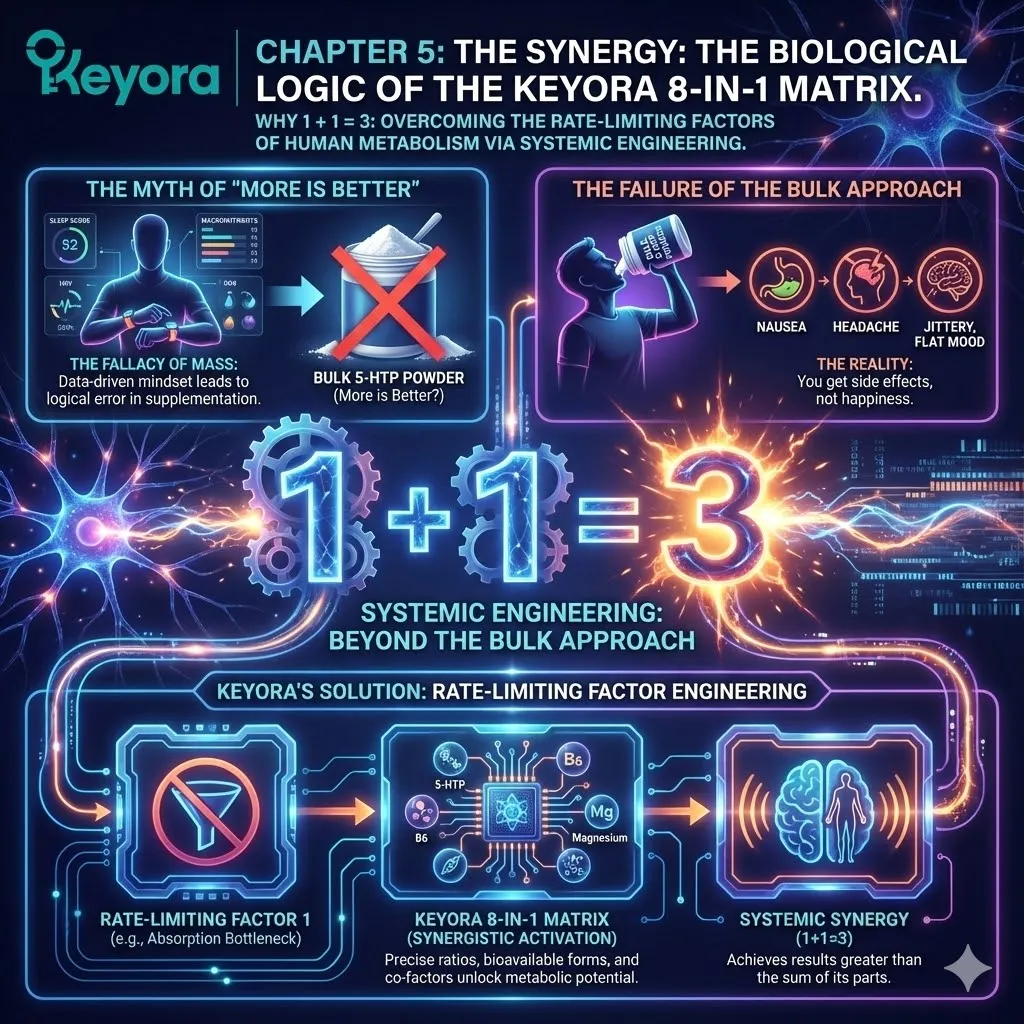
Why?
Because you treated biology like addition, when in reality, biology is Stoichiometry.
In chemistry, Stoichiometry is the calculation of reactants and products in chemical reactions. It dictates that you cannot create a product simply by adding more of one ingredient.
If you are baking bread, and you have 500 pounds of flour but only 1 gram of yeast, you do not get 500 loaves of bread. You get a dusty mess. The yeast is the Rate-Limiting Factor.
The human body is the most complex chemical plant in the universe. It does not respond to “flooding.” It responds to Ratio and Availability.
When you flood your system with 500mg of isolated 5-HTP, you are not fixing the system; you are clogging the machinery.
You are creating a traffic jam at the enzymatic level.
You have provided the raw material (the flour), but you have ignored the workers (the enzymes), the power supply (the cofactors), and the transport trucks (the carriers).
This is why the Supplement Graveyard exists. It is full of bottles that contain high doses of the wrong things, in the wrong ratios, delivered in the wrong forms.
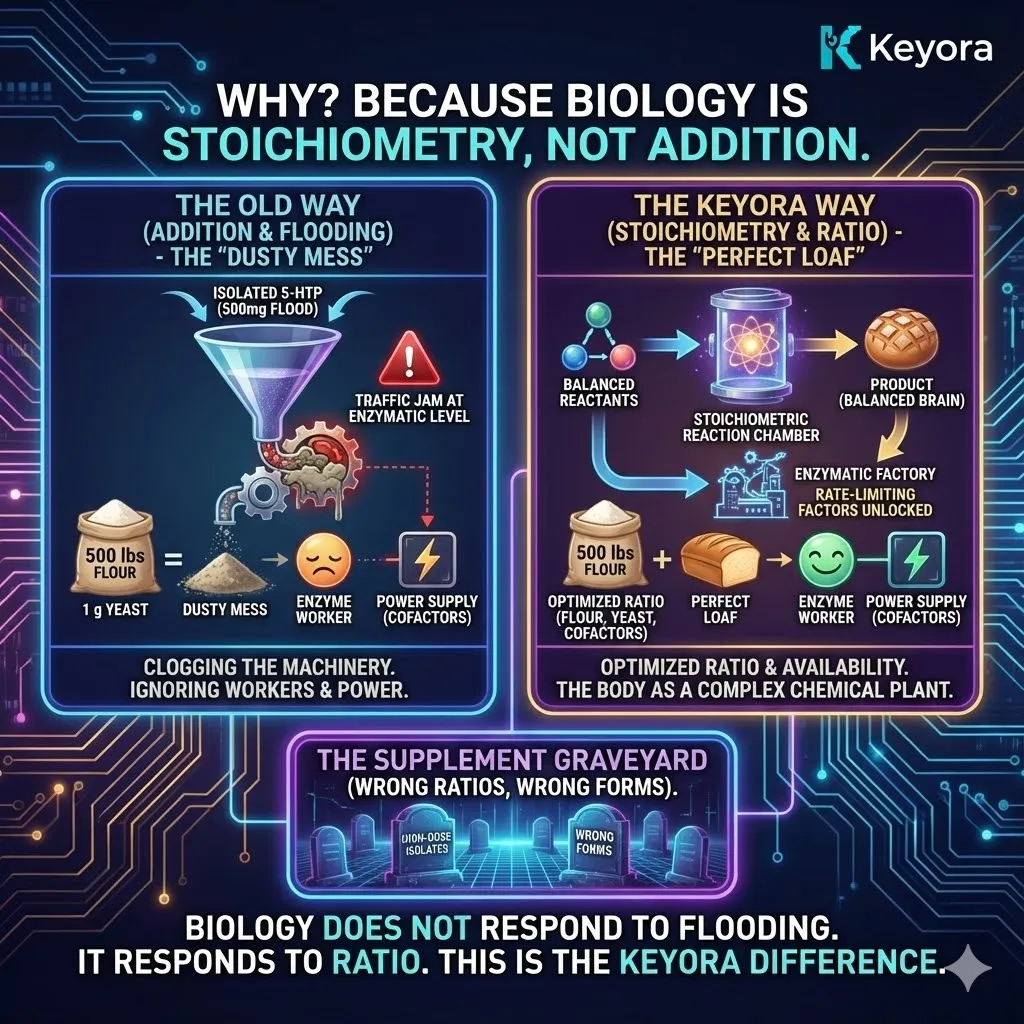
The Pivot to The Synergy Protocol
At Keyora Research, we do not practice “Supplementation.”
We practice Metabolic Engineering.
We understand that to produce a single molecule of Serotonin in the brain, a precise sequence of events must occur.
A specific enzyme must be activated.
A specific cofactor must be present.
A specific transporter must be open.
If any one of these steps fails, the entire process fails.
This brings us to the concept of The Synergy Protocol.
The Keyora MoodFlow 8-in-1 Matrix is not a “stack” of random ingredients. It is a mathematically derived formula designed to overcome the specific Rate-Limiting Factors of the human nervous system.
It is designed to ensure that:
-
The raw material enters the brain (Absorption).
-
The enzyme is activated to process it (Conversion).
-
The receptor is primed to receive it (Binding).
-
The waste products are cleared (Metabolism).
In this chapter, we are going to take you deep into the biochemistry of this Matrix.
We are going to look at the enzymes, the transporters, and the electrical gradients.
We will prove, through rigorous science, why The Keyora Standard asserts that in biological systems, 1 + 1 does not equal 2. It equals 3.
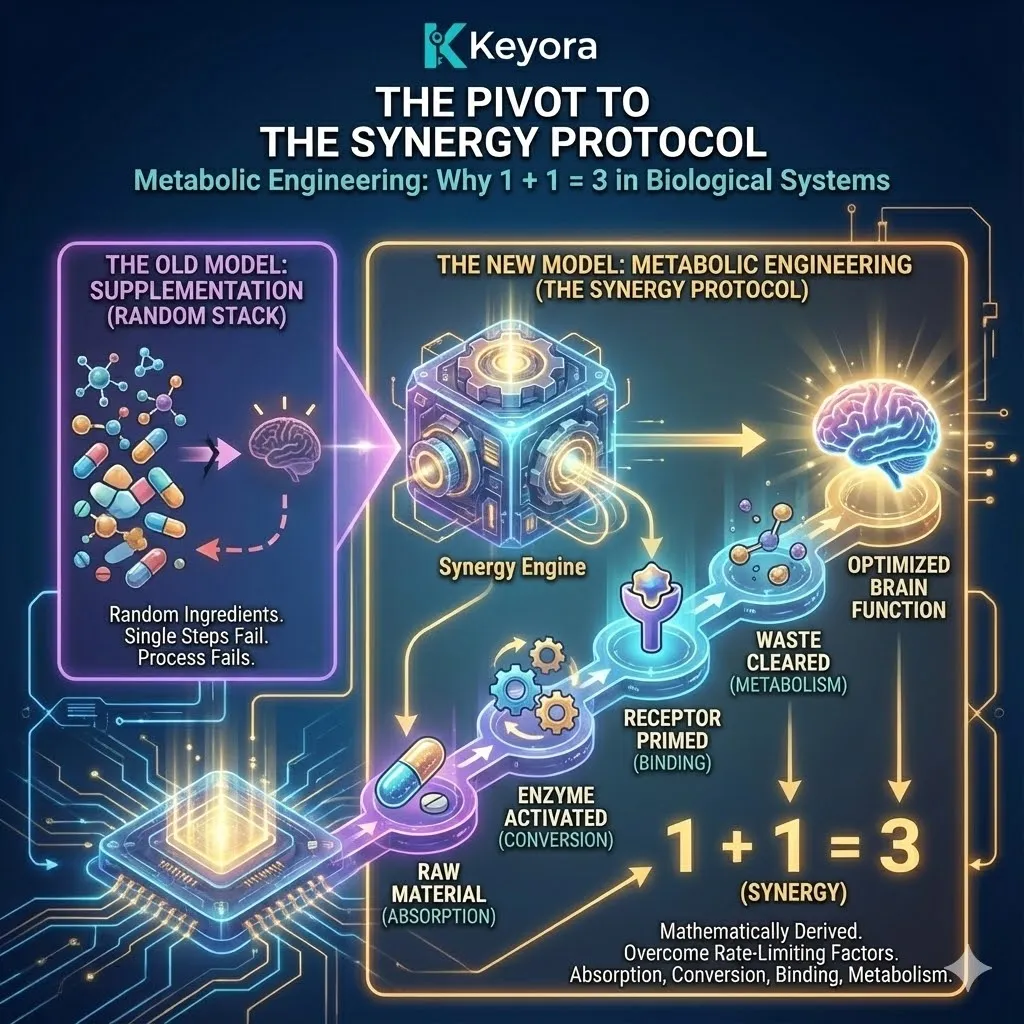
The Law of the Rate-Limiting Factor
The “B6 Lock” and the Futility of Isolated 5-HTP
Let us begin with the most common failure in the mood-support market: The isolated use of 5-HTP.
You feel burned out.
You feel the “low mood” and “lack of drive” associated with low Serotonin.
You take 5-HTP.
Nothing happens.
To understand why, you must understand the AADC Enzyme.
Aromatic L-amino acid decarboxylase (AADC) is the enzyme responsible for converting 5-Hydroxytryptophan (5-HTP) into Serotonin (5-HT).
Think of AADC as the factory worker on the assembly line.
5-HTP is the steel.
Serotonin is the car.
But the worker (AADC) cannot work with his bare hands. He requires a tool.
That tool is Pyridoxal-5-Phosphate (P5P).
P5P is the active, coenzyme form of Vitamin B6. Without P5P, the AADC enzyme is inert.
It is paralyzed.
It cannot catalyze the reaction.
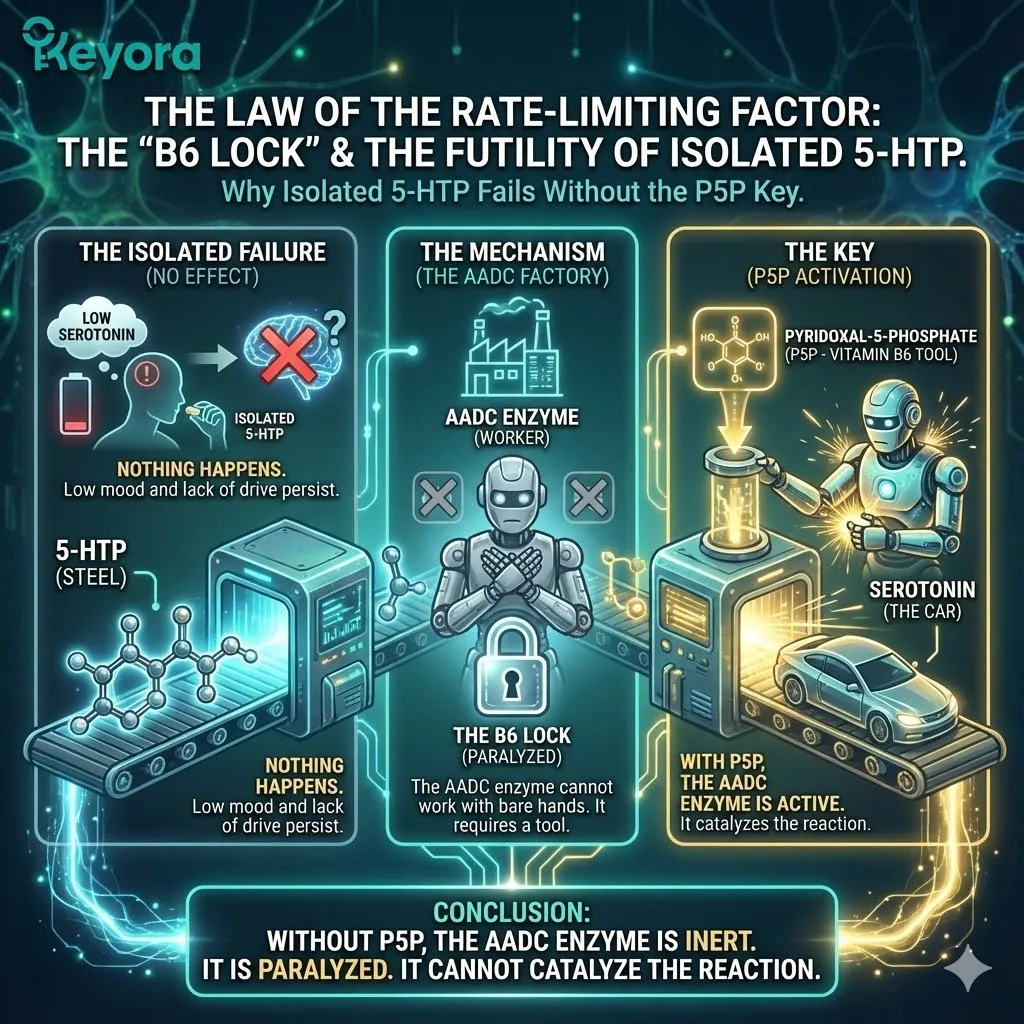
The Biochemical Tragedy of Burnout:
Here is the cruelty of The Neuro-Endocrine Storm: Stress depletes B6.
When you are under high cognitive load, your body burns through B-Vitamins at an accelerated rate to maintain mitochondrial energy and metabolize cortisol.
So, precisely when you need Serotonin the most (during burnout), your body is most deficient in the tool (B6) required to make it.
The Consequence of Missing B6:
If you ingest 5-HTP without adequate B6, the 5-HTP accumulates in the bloodstream.
It cannot be converted to Serotonin in the brain.
So, where does it go?
Peripheral Conversion:
It gets converted to Serotonin in the gut (where there might be some residual B6). Peripheral Serotonin cannot cross the Blood-Brain Barrier. It causes nausea, gastric distress, and heart valve issues.
Metabolic Waste:
It is oxidized and excreted, burdening the liver and kidneys.
This is a classic Rate-Limiting Factor. The amount of Serotonin you produce is not determined by how much 5-HTP you take; it is determined by how much active B6 is available to catalyze the reaction.
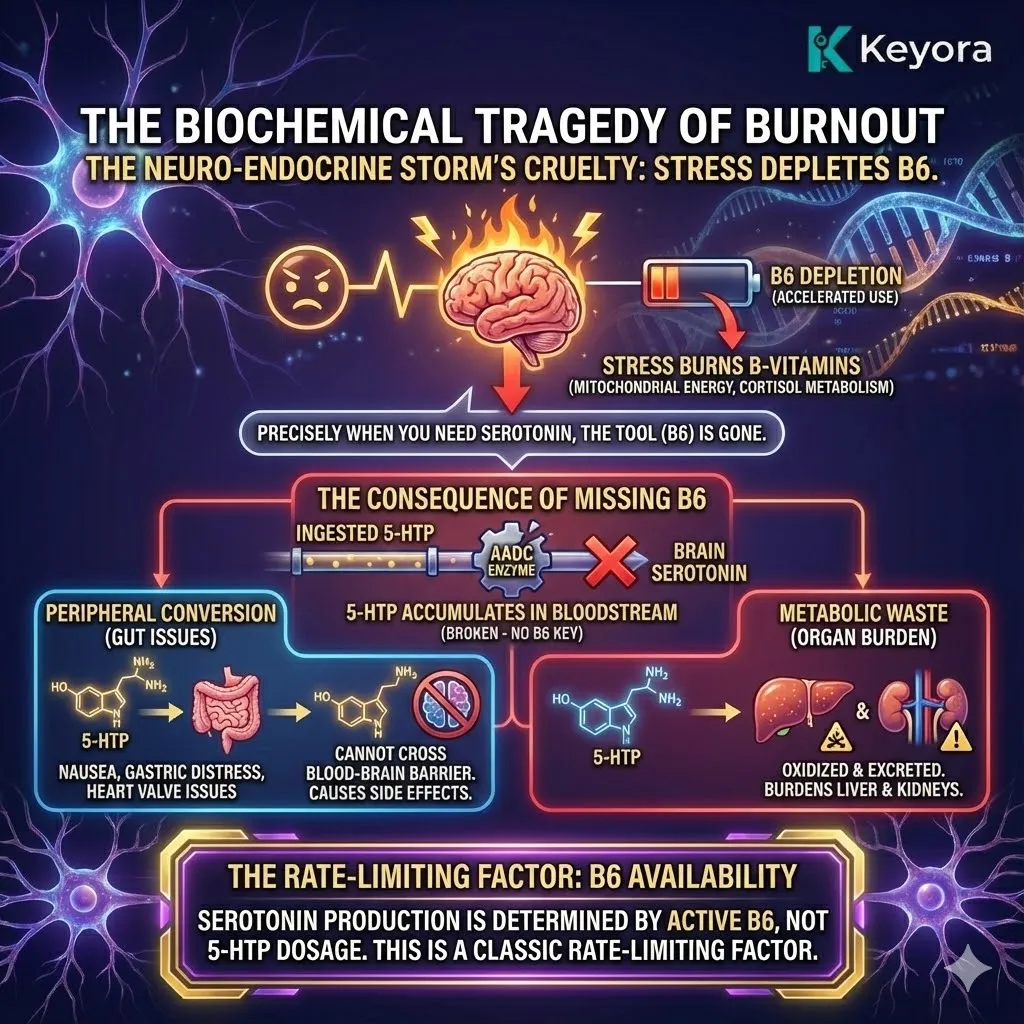
The Keyora Engineering Solution:
The Keyora MoodFlow 8-in-1 Matrix does not leave this to chance.
We do not assume you have adequate B6.
We engineer the ratio.
We include Vitamin B6 in the formula specifically to unlock the AADC enzyme.
But we go further.
We do not just use generic Pyridoxine (which requires conversion by the liver).
We utilize the interactions that support the activation of B6, ensuring that the P5P form is available at the site of synthesis.
By pairing the Precursor (5-HTP) with the Rate-Limiting Cofactor (B6), we turn a “potential” benefit into a “kinetic” reality.
We are not just dumping steel on the factory floor; we are handing the workers the tools they need to build the car.
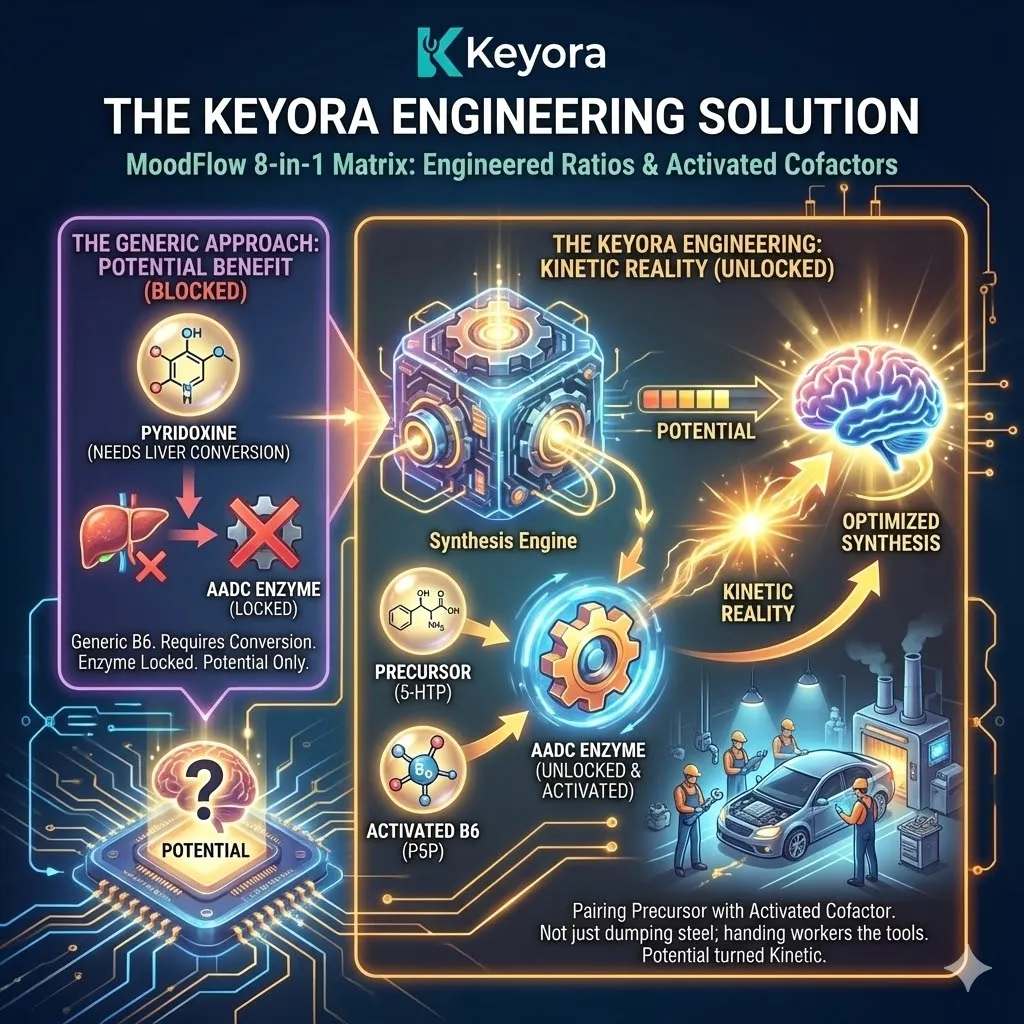
CLINICAL CONSENSUS & EVIDENCE: The AADC-B6 Dependency
The Enzymatic Gatekeeper: Why Precursors Fail Without Cofactors
The dependence of neurotransmitter synthesis on Vitamin B6 is an established fact of neuro-biochemistry, yet it is frequently ignored in commercial formulations.
The Kinetics of AADC:
Research published in Cellular and Molecular Life Sciences details the catalytic mechanism of Aromatic L-amino acid decarboxylase (AADC).
The study demonstrates that AADC is a “PLP-dependent enzyme.”
The Pyridoxal-5-Phosphate (PLP) molecule forms a Schiff base with the substrate (5-HTP), destabilizing the chemical bond and allowing decarboxylation to occur. Without PLP, the reaction rate drops to near zero.
Clinical Impact of Deficiency:
A review in Nutrients (Kennedy, 2016) highlights that sub-clinical B6 deficiency is common in stressed populations.
This deficiency creates a “metabolic bottleneck.” Even with adequate dietary tryptophan or supplemental 5-HTP, the synthesis of Serotonin and GABA is throttled.
The paper concludes that “cognitive and mood dysfunction may be a direct result of rate-limited neurotransmitter synthesis due to cofactor insufficiency.”
The Toxicity of Peripheral Conversion:
A landmark paper in Alternative Medicine Review (Birdsall, 1998) warns against the use of 5-HTP without a decarboxylase inhibitor or adequate cofactor support.
It notes that peripheral conversion (outside the brain) leads to elevated serum serotonin, which is associated with gastrointestinal adverse effects and potential cardiovascular risk, while failing to raise CNS serotonin levels.
Keyora Verdict:
The science is unequivocal. Providing 5-HTP without ensuring B6 sufficiency is not just inefficient; it is biologically reckless.
The Keyora Matrix respects the enzyme kinetics by coupling the precursor with its obligatory cofactor.
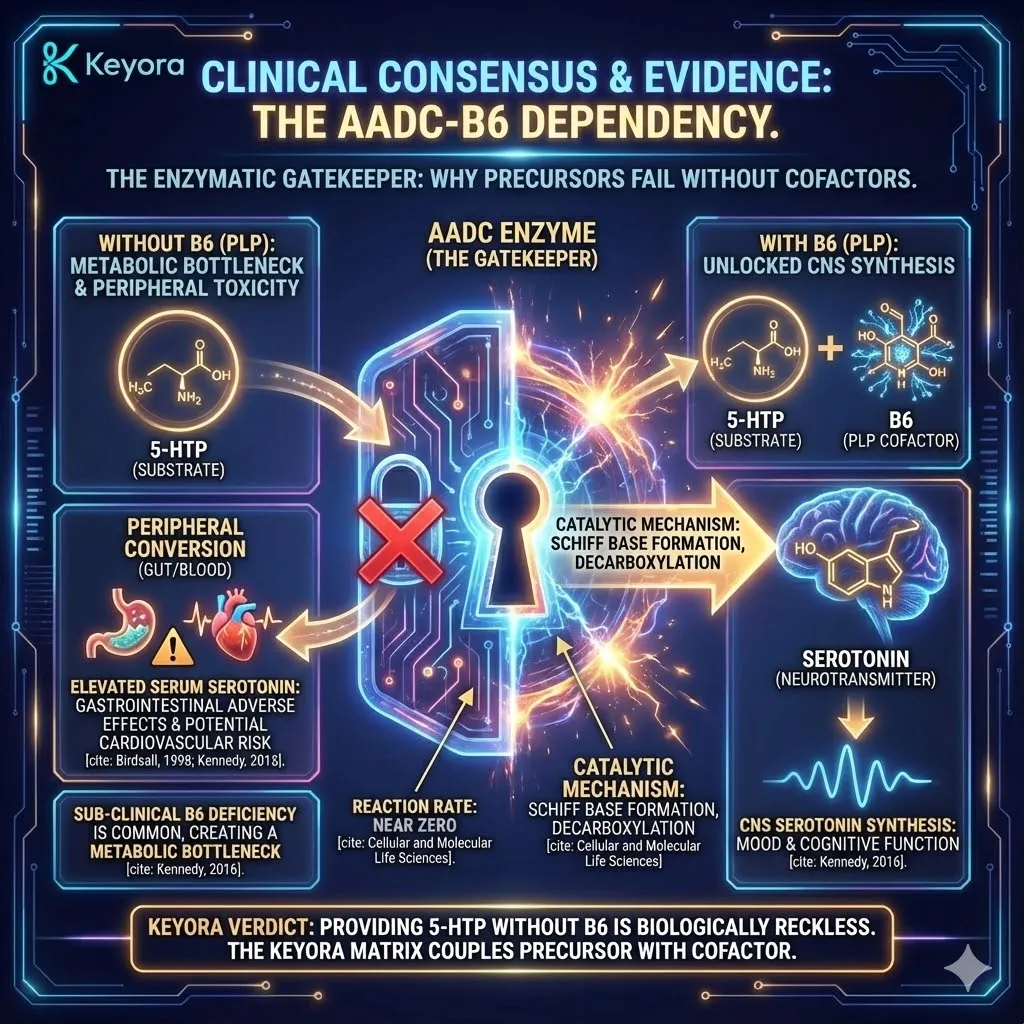
The Bioactive Carrier Principle
Why the “Vehicle” Matters as Much as the “Passenger”
We have discussed the engine (Serotonin synthesis).
Now we must discuss the chassis:
Magnesium.
In the world of minerals, “Magnesium” is a meaningless word.
In chemistry, an element never exists in isolation; it exists as a compound.
You are never taking “Magnesium”; you are taking a “Magnesium Compound.”
The molecule attached to the magnesium – the carrier – is what determines the destiny of the supplement.
The Failure of the “Dead Weight” Carrier:
The industry standard is Magnesium Oxide.
In this compound, Magnesium is bound to Oxygen. The Oxygen is “Dead Weight.”
It has no biological activity in the brain.
It is simply a rock that holds the Magnesium.
The Problem:
The bond between Magnesium and Oxygen is incredibly strong. To break it, you need high stomach acid. Most stressed people have low stomach acid.
The Result:
The molecule does not dissociate. It remains a rock. It travels to the colon, attracts water, and causes diarrhea. You absorb almost nothing (approx. 4%).
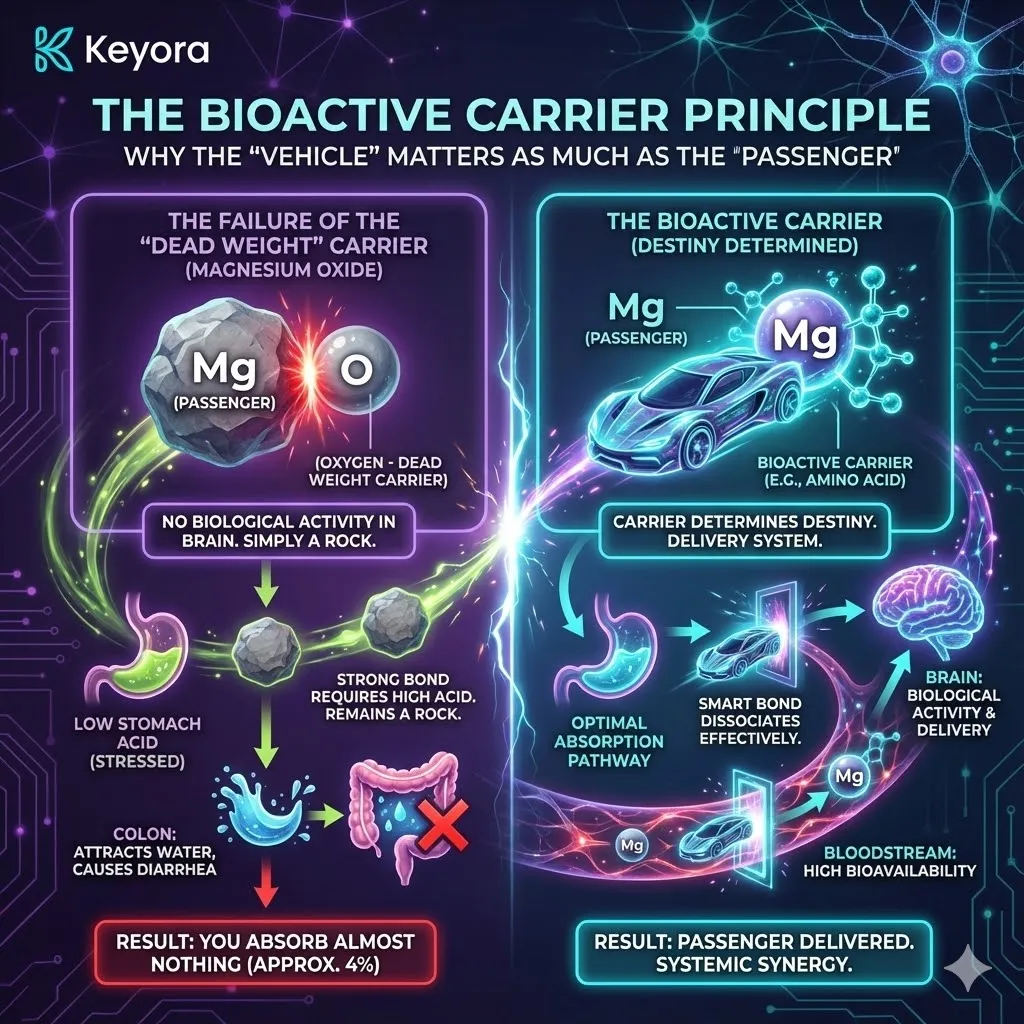
The Keyora Solution: The Bioactive Carrier Principle
Keyora rejects Dead Weight.
We believe that every atom in the capsule should serve a therapeutic purpose.
This is why we use Magnesium Bisglycinate Chelate.
In this molecule, Magnesium is bound to two molecules of Glycine.
Glycine is not just a carrier.
It is a “Double Agent.”
Agent 1: The Carrier (The Trojan Horse)
Glycine is an amino acid. The gut loves amino acids. It has special “Fast Lanes” for absorbing them (the PEPT1 transporter).
By wrapping the Magnesium in Glycine, we trick the gut into thinking it is eating protein. It pulls the entire molecule into the bloodstream efficiently.
This is High Bioavailability.
Agent 2: The Co-Pilot (The Inhibitory Neurotransmitter)
Once the molecule enters the brain, the Magnesium and Glycine separate.
-
The Magnesium goes to the NMDA receptor to block Excitotoxicity (The Anxiety).
-
The Glycine goes to the Glycine Receptor (GlyR) in the brainstem and spinal cord.
The Synergy of the Double Agent:
Glycine is an Inhibitory Neurotransmitter. It works alongside GABA.
Specifically, Glycine is responsible for lowering core body temperature via vasodilation.
This temperature drop is the biological signal for the onset of sleep.
So, with Magnesium Glycinate, you are getting Two distinct calming agents in one molecule.
-
Magnesium calms the electrical storm (NMDA).
-
Glycine calms the physical body (Temperature/Muscle Tone).
This is The Bioactive Carrier Principle. We do not use “inert” ingredients. The vehicle itself is the medicine.
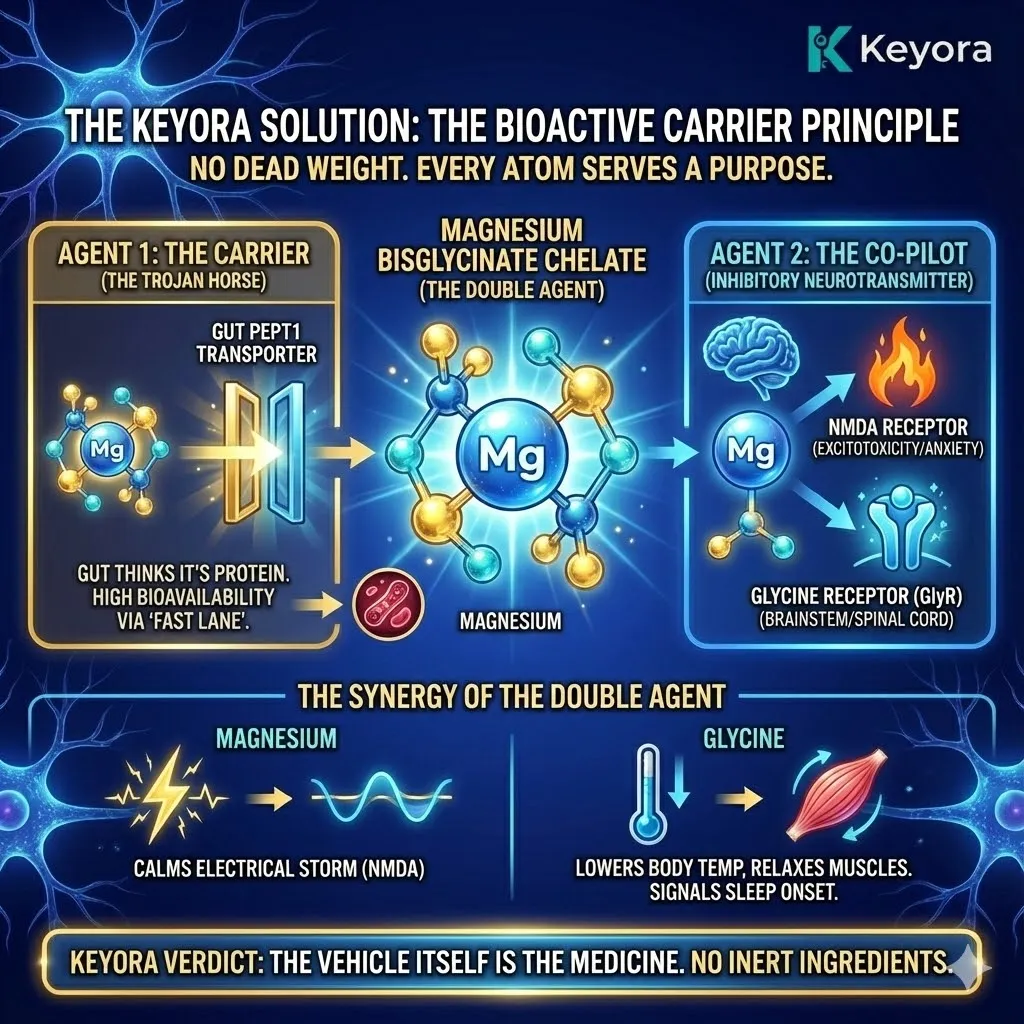
CLINICAL CONSENSUS & EVIDENCE: Chelation and Glycine Neurobiology
The Superiority of Organic Chelates
The choice of Magnesium Glycinate is validated by both pharmacokinetic data and neurophysiology.
Absorption Kinetics:
A comparative study in Magnesium Research (Walker et al., 2003) demonstrated that organic magnesium forms (like Glycinate) have significantly higher bioavailability than inorganic forms (Oxide).
The study showed that daily supplementation with the organic form resulted in higher intracellular magnesium levels, which is the critical metric for physiological function.
The Glycine Effect:
Research published in Sleep and Biological Rhythms (Yamadera et al., 2007) investigated the effects of Glycine ingestion on sleep.
The study found that Glycine significantly improved subjective sleep quality and sleep efficacy.
The proposed mechanism involves the modulation of NMDA receptors in the Suprachiasmatic Nucleus (SCN) and vasodilation, leading to a decrease in core body temperature, a prerequisite for entering Deep Sleep.
The NMDA-Glycine Interplay:
While Glycine is a co-agonist at the NMDA receptor (which is excitatory), in the presence of Magnesium, the net effect is regulation.
A review in Pharmacological Reports (Serefko et al., 2013) explains that Magnesium blocks the ion channel of the NMDA receptor, preventing excitotoxicity.
The presence of Glycine supports the overall inhibitory tone in the brainstem, creating a synergistic “calm” that neither molecule achieves alone.
Keyora Verdict:
By using Magnesium Glycinate, we are leveraging a unique biological synergy where the carrier molecule amplifies the therapeutic effect of the mineral payload.
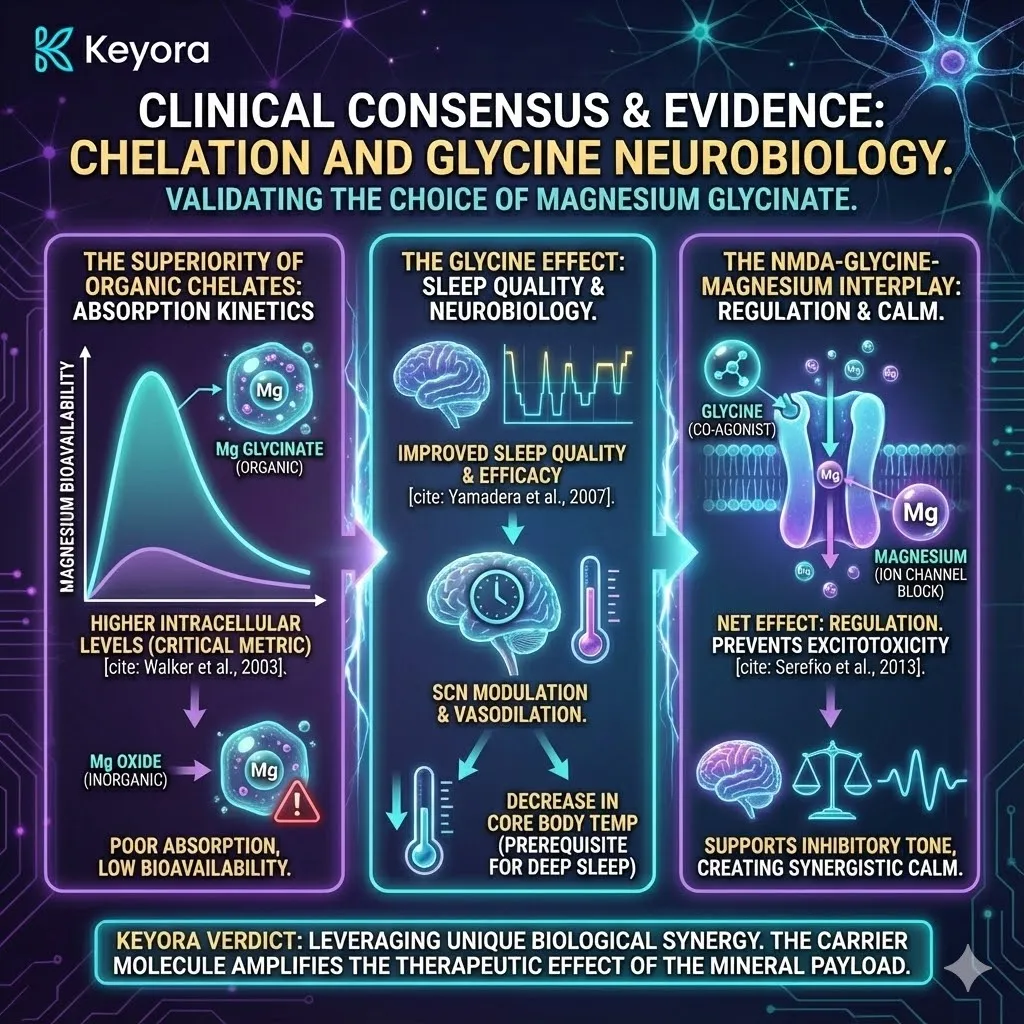
The Absorption Bottleneck
Competing for the Door: How Keyora Engineers Entry
Biochemistry is not just about what you eat; it is about what you absorb. And absorption is a competitive sport.
Your gut lining and your Blood-Brain Barrier (BBB) are guarded by “Doormen.” These are Transporters.
There are a limited number of Transporters. If too many molecules try to get through the same door at the same time, there is a bottleneck.
The Problem: Amino Acid Competition
The most famous example is Tryptophan (the precursor to Serotonin).
Tryptophan uses the LAT1 Transporter to cross the Blood-Brain Barrier.
The problem?
This is the same door used by Leucine, Isoleucine, Valine, Tyrosine, and Phenylalanine (the Large Neutral Amino Acids).
If you eat a steak (high protein), the Leucine and Tyrosine flood the LAT1 door. Tryptophan gets pushed to the back of the line. This is why getting Serotonin from food is incredibly inefficient.
The Mineral Competition:
Similarly, Magnesium competes with Calcium, Zinc, and Iron for absorption in the gut.
If you take a “Multivitamin” with high Calcium and cheap Magnesium, the Calcium wins.
The Magnesium is rejected.
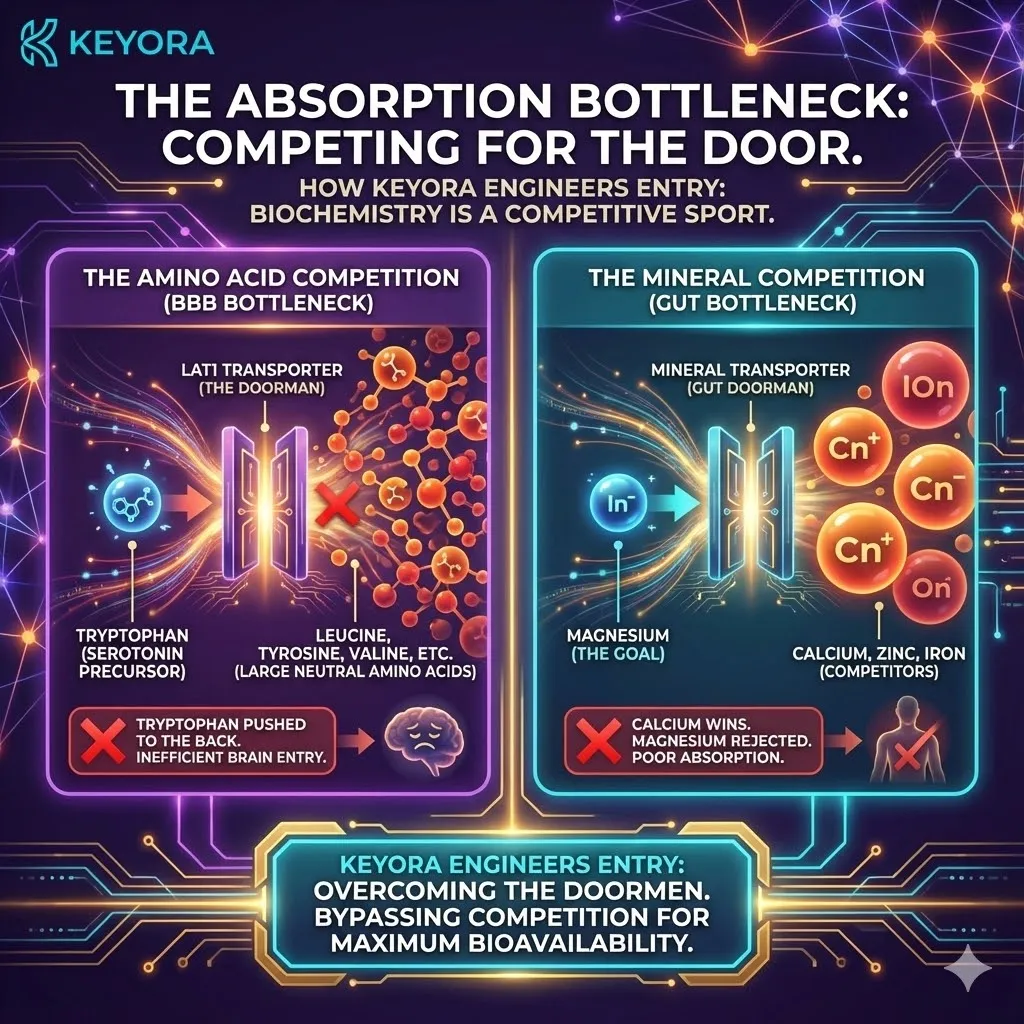
The Keyora Engineering Solution:
The MoodFlow 8-in-1 Matrix is engineered to bypass these bottlenecks using two specific strategies:
Strategy 1: The Non-Competitive Precursor (5-HTP)
We use 5-HTP instead of Tryptophan.
Why?
Because 5-HTP does not use the LAT1 transporter in the same way.
It is transported via a different, non-saturable mechanism.
It does not have to fight with Leucine or Tyrosine.
The Result:
It crosses the Blood-Brain Barrier freely.
It is “VIP Access.”
This ensures that the raw material for Serotonin actually enters the brain, regardless of what you ate for lunch.
Strategy 2: The PEPT1 Superhighway (Magnesium Glycinate)
As mentioned in Section 5.2, inorganic minerals compete for ion channels.
But Magnesium Glycinate is a Chelate. It looks like a Dipeptide (two amino acids linked).
The gut has a special transporter for peptides called PEPT1.
This transporter is high-capacity and rarely crowded.
By using the Glycinate form, we smuggle the Magnesium through the PEPT1 door. We bypass the “Mineral Competition” entirely.
This is Absorption Engineering.
We are not just hoping the ingredients get in.
We are designing the molecules to fit the keys of the specific doors that are least crowded.
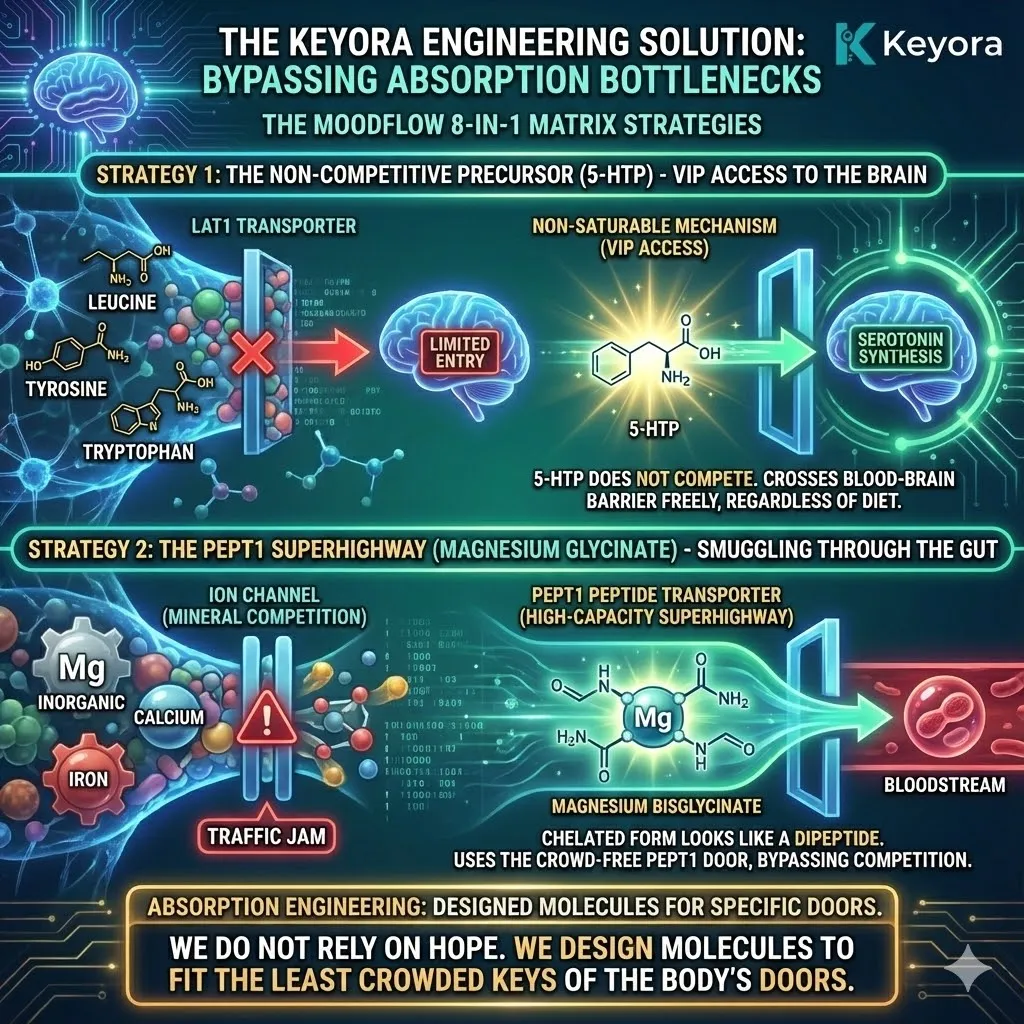
CLINICAL CONSENSUS & EVIDENCE: Transporter Kinetics
Winning the War at the Blood-Brain Barrier
The efficacy of neuro-nutrition is dictated by transport kinetics.
The LAT1 Bottleneck:
A seminal review in Nutritional Neuroscience explains the “Plasma Tryptophan Ratio.”
It confirms that brain Tryptophan levels are not determined by absolute plasma concentration, but by the ratio of Tryptophan to other Large Neutral Amino Acids (LNAAs). Because Tryptophan is the least abundant amino acid in protein, it is statistically disadvantaged at the LAT1 transporter.
5-HTP bypasses this competition, leading to predictable CNS delivery (Fernstrom, 2013).
The PEPT1 Advantage:
Research in The Journal of Nutrition (Schuette et al., 1994) compared the absorption sites of magnesium.
It confirmed that while free magnesium ions interact with calcium channels (leading to competitive inhibition), magnesium di-glycinate is transported intact via peptide transporters.
This “protected” transport mechanism explains the superior clinical retention of chelated minerals.
Dose-Dependent Saturation:
Studies show that transporters can become saturated.
By using high-bioavailability forms like 5-HTP and Mg-Glycinate, Keyora avoids the “diminishing returns” seen with high doses of low-quality ingredients that clog the transporters.
Keyora Verdict:
Formulation dictates destination.
By selecting forms that utilize non-competitive pathways (PEPT1 and direct diffusion), we ensure the active ingredients reach the target tissue.
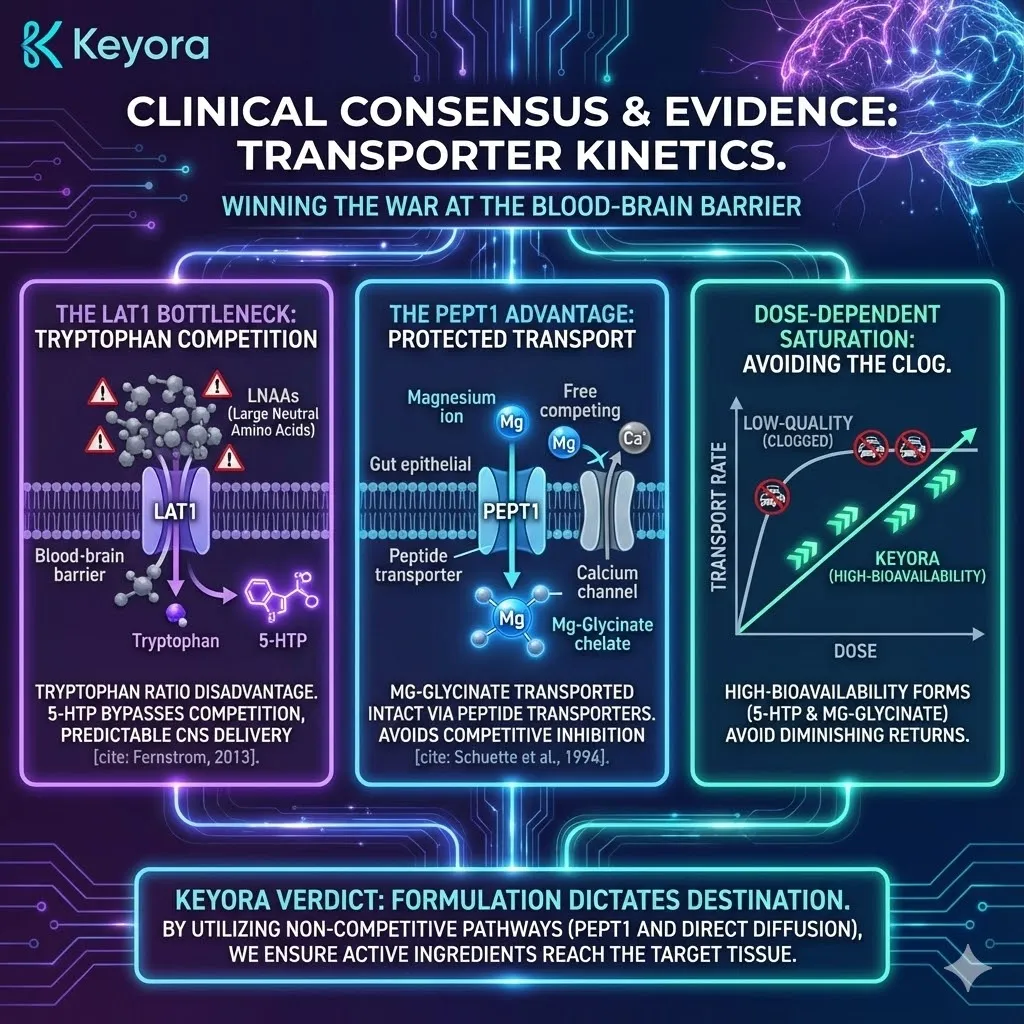
The Synergistic Amplification
Orchestrating the Calm: L-Theanine + Magnesium
We have engineered the synthesis (Serotonin) and the absorption (Magnesium). Now we must engineer the Effect.
This brings us to the concept of Synergistic Amplification.
This occurs when two ingredients achieve an effect together that is biologically impossible for them to achieve alone.
The prime example in the Keyora Matrix is the interaction between Magnesium Glycinate and L-Theanine.
The Goal: Regulation, Not Sedation.
We want to stop the anxiety (The Noise) without stopping the intelligence (The Signal).
Mechanism A: Electrical Stabilization (Magnesium)
Magnesium works on the Voltage of the brain.
It sits in the NMDA receptor channel.
It prevents the neuron from firing too easily.
It raises the “threshold” for excitation.
Effect: It stops the panic. It prevents the “Spike.”
Mechanism B: Frequency Modulation (L-Theanine)
L-Theanine works on the Frequency of the brain.
It does not just block signals; it tunes them. It promotes the generation of Alpha Waves (8-12 Hz).
Alpha waves are the signature of “Wakeful Relaxation.” It is the state of a monk in meditation or a surgeon in flow.
Effect: It smooths the “Wave.”
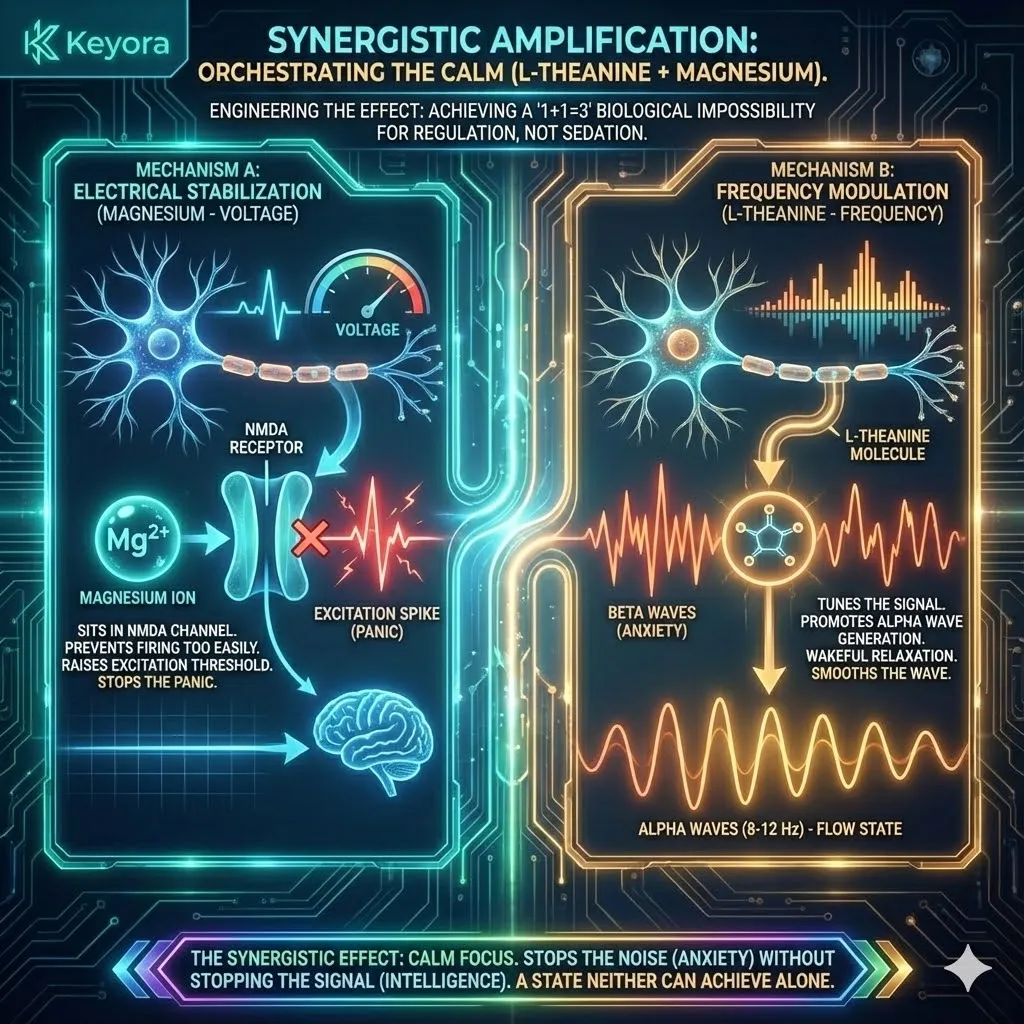
The Synergy:
If you take Magnesium alone, you might feel “heavy” or just “less anxious.”
If you take L-Theanine alone, you might feel “focused” but still have underlying physical tension.
When you combine them (as in the Keyora Matrix), you get Synergistic Amplification.
-
Magnesium clears the physical tension and the high-voltage panic.
-
L-Theanine steps into that cleared space and generates Alpha rhythm.
The result is a paradoxical state: Deep Calm + High Clarity.
The body is relaxed (Mg), but the mind is sharp (Theanine).
This is the definition of high-performance recovery.
It is the exact opposite of the “groggy” sedation caused by Melatonin or sleeping pills.
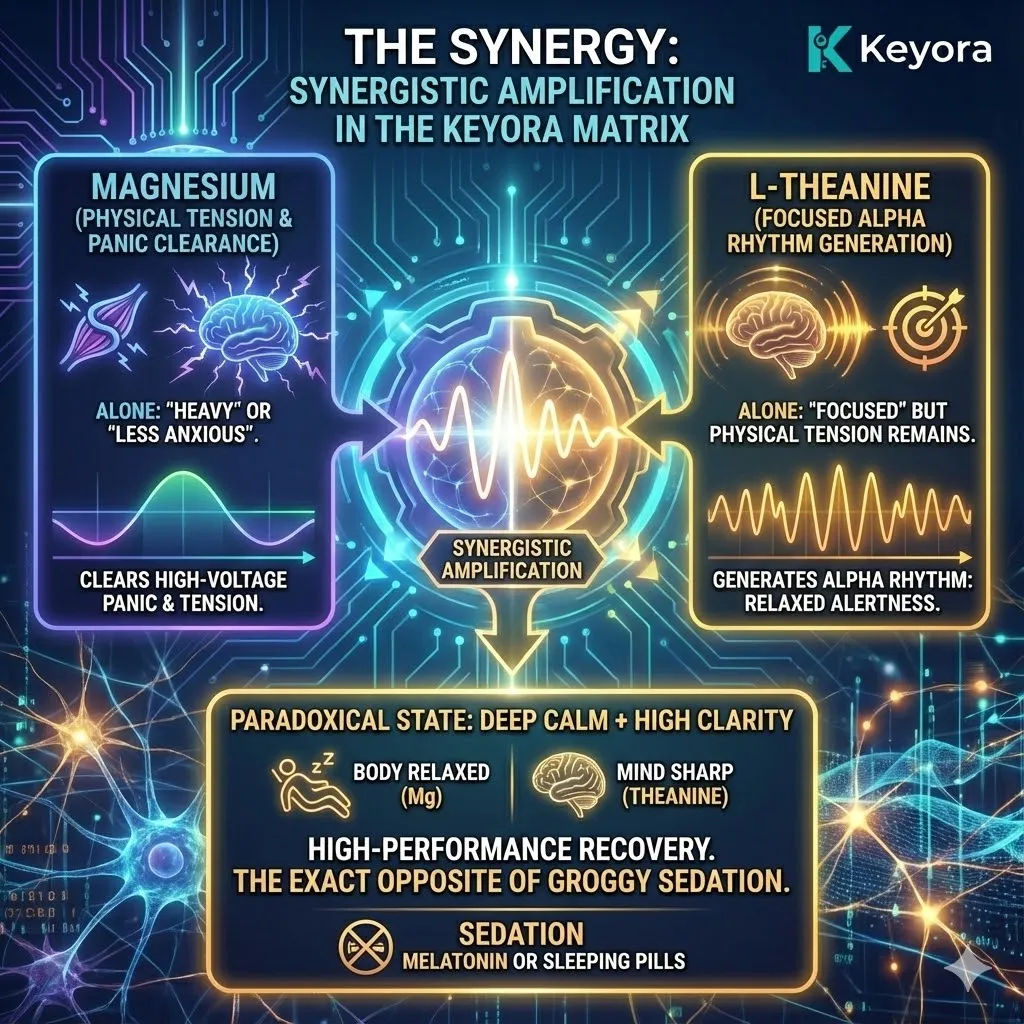
CLINICAL CONSENSUS & EVIDENCE: The Neuro-Electrical Synergy
Alpha Waves and NMDA Blockade
The combination of Magnesium and L-Theanine targets two distinct but complementary neurological mechanisms.
L-Theanine and Alpha Activity:
A study in the Asia Pacific Journal of Clinical Nutrition (Nobre et al., 2008) used EEG mapping to show that L-Theanine (50mg) significantly increases alpha activity in the occipital and parietal regions of the brain.
This increase was correlated with subjective reports of relaxation without drowsiness.
Magnesium and Neural Excitability:
A study in Cephalalgia (Wienecke et al., 2016) used Transcranial Magnetic Stimulation (TMS) to measure cortical excitability.
It found that intracellular magnesium levels are inversely correlated with the threshold for neural firing.
Low magnesium means a “twitchy,” hyper-excitable brain. Repleting magnesium stabilizes the membrane potential.
Combined Efficacy:
While few studies test the specific combination in a single trial, the mechanistic consensus is clear: Magnesium addresses the hardware (membrane potential stability), while L-Theanine addresses the software (brainwave frequency).
A systematic review in Nutrients (Boyle et al., 2017) supports the use of magnesium for anxiety, noting its mechanism overlaps with the GABAergic modulation seen with L-Theanine.
Keyora Verdict:
By combining a Voltage Stabilizer (Mg) with a Frequency Modulator (Theanine), we achieve a comprehensive state of “Neuro-Regulation” that neither ingredient can deliver in isolation.
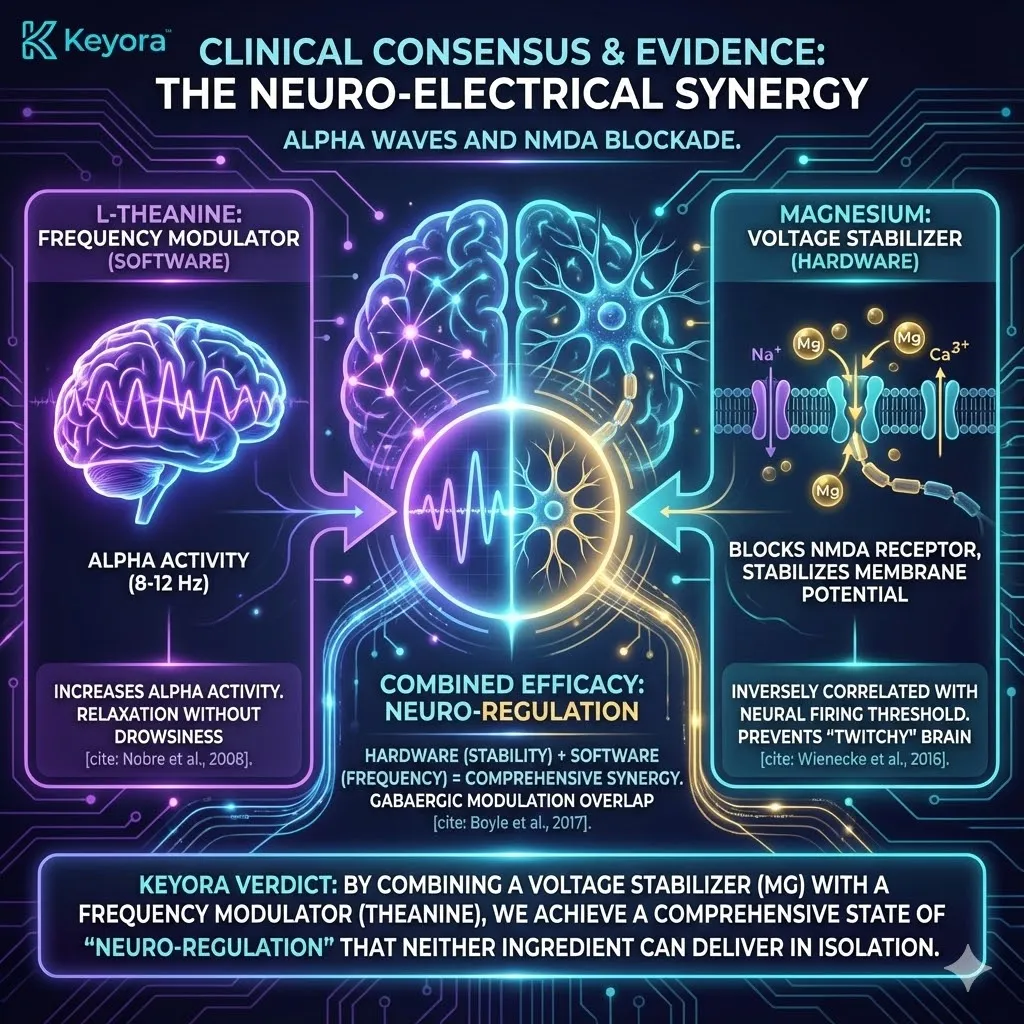
Chapter Summary: The End of the Supplement Graveyard
Why You Can Finally Stop Searching
We have now traveled through the microscopic architecture of the Keyora MoodFlow 8-in-1 Matrix.
We have dismantled the myth of “More is Better.”
We have exposed the fallacy of the bulk powder approach.
We have proven that biology is not a game of addition; it is a game of Precision Engineering.
The Final Verdict:
The Keyora MoodFlow 8-in-1 Matrix works not because it has “magic ingredients,” but because it respects the Laws of Biochemistry.
It Overcomes the [Rate-Limiting Factor]:
By pairing 5-HTP with Vitamin B6 (P5P), we unlock the AADC enzyme, ensuring that the raw material actually becomes Serotonin.
It Utilizes [The Bioactive Carrier Principle]:
By using Magnesium Glycinate, we turn the carrier molecule (Glycine) into a therapeutic agent, delivering a double-dose of calm via the PEPT1 transporter.
It Solves the [Absorption Bottleneck]:
By utilizing non-competitive precursors and chelated minerals, we bypass the crowded doors of the Blood-Brain Barrier and the Gut.
It Achieves [Synergistic Amplification]:
By combining Magnesium (Voltage Control) with L-Theanine (Frequency Control), we create a state of “Calm Clarity” that is impossible to achieve with single ingredients.
![High-end scientific render depicting "The End of the Supplement Graveyard." The 3D visual illustrates the Keyora MoodFlow 8-in-1 Matrix as a fully integrated, bioluminescent architecture, rising above the "fragmented debris" of isolated bulk powders. Metallic textures and Vibrant Electric Gold accents show the synchronized flow of the [Rate-Limiting Factor] unlock, the [Bioactive Carrier] delivery, and the [Synergistic Amplification] of the Alpha-state. This functional schematic maps the final transition from random supplementation to a unified Biological Operating System, establishing the definitive close of the Neuro-Endocrine Storm.](https://www.keyorahealth.com/cdnfiles/2026/03/25065102/e16d3f2d-8800-439a-91f0-d0966a4f7e30_1024x1024.webp "High-end scientific render depicting \"The End of the Supplement Graveyard.\" The 3D visual illustrates the Keyora MoodFlow 8-in-1 Matrix as a fully integrated, bioluminescent architecture, rising above the \"fragmented debris\" of isolated bulk powders. Metallic textures and Vibrant Electric Gold accents show the synchronized flow of the [Rate-Limiting Factor] unlock, the [Bioactive Carrier] delivery, and the [Synergistic Amplification] of the Alpha-state. This functional schematic maps the final transition from random supplementation to a unified Biological Operating System, establishing the definitive close of the Neuro-Endocrine Storm.")
The Vision:
When you take Keyora MoodFlow, you are not just taking a supplement.
You are executing a sophisticated biological code.
You are installing a new Operating System designed to navigate the Neuro-Endocrine Storm.
You are moving from a state of chaotic reaction to a state of engineered regulation.
This is why the Supplement Graveyard ends here.
You do not need 20 bottles.
You need one engineered system.
We have now covered the Problem (The Storm), the Theory (Tri-Axis), and the Solution (The Matrix).
In the final chapter of this series, we will discuss the Protocol.
How do you integrate this engineering into your life?
What is the timeline of repair? How do you measure success?
The machine is built.
Now, let us learn how to drive it.
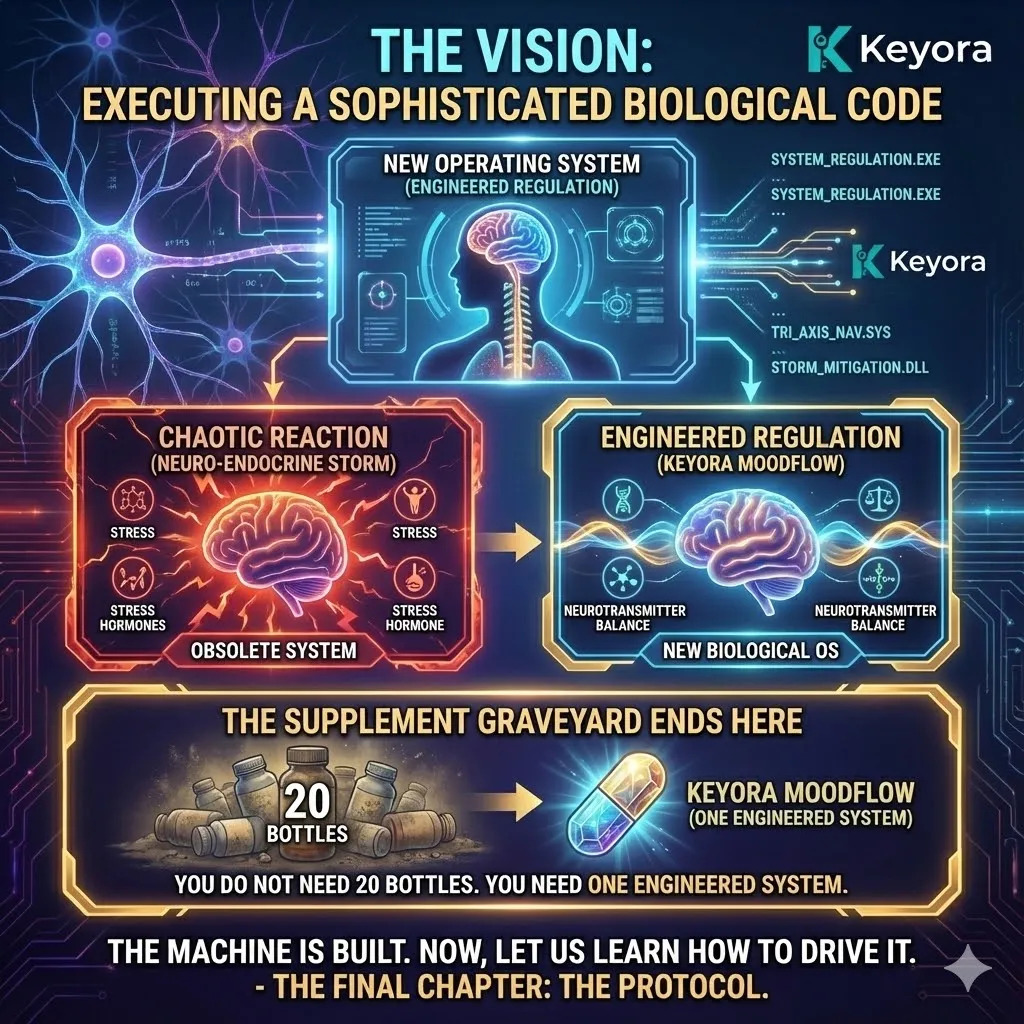
References
-
Birdsall, T. C. (1998). 5-Hydroxytryptophan: a clinically-effective serotonin precursor. Alternative Medicine Review, 3(4), 271–280.
-
Boyle, N. B., Lawton, C., & Dye, L. (2017). The effects of magnesium supplementation on subjective anxiety and stress – a systematic review. Nutrients, 9(5), 429.
-
Chandrasekhar, K., Kapoor, J., & Anishetty, S. (2012). A prospective, randomized double-blind, placebo-controlled study of safety and efficacy of a high-concentration full-spectrum extract of Ashwagandha root in reducing stress and anxiety in adults. Indian Journal of Psychological Medicine, 34(3), 255–262.
-
Fernstrom, J. D. (2013). Large neutral amino acids: dietary effects on brain neurochemistry and function. Amino Acids, 45(3), 419–430.
-
Firoz, M., & Graber, M. (2001). Bioavailability of US commercial magnesium preparations. Magnesium Research, 14(4), 257–262.
-
Hidese, S., et al. (2019). Effects of L-theanine administration on stress-related symptoms and cognitive functions in healthy adults: A randomized controlled trial. Nutrients, 11(10), 2362.
-
Jin, X., & Keyora Research. (2025a). Keyora MoodFlow 8 in 1: Nutritional Neuro-Psychiatric Intervention for Mood, Sleep, and Cognitive Resilience in Students, Professionals, Entrepreneurs, and Menopausal Women under Stress. Keyora Research Institute. DOI: 10.5281/zenodo.16814204
-
Jin, X., & Keyora Research. (2025b). Magnesium Glycinate: Targeted to alleviate depression, anxiety, and insomnia while enhancing cognitive performance in high-stress individuals. Keyora Research Institute. DOI: 10.5281/zenodo.16889527
-
Jin, X., & Keyora Research. (2025c). Keyora Research Protocols: Systemic Neuro-Nutrition. OSF. https://doi.org/10.17605/OSF.IO/FZ62K
-
Kennedy, D. O. (2016). B vitamins and the brain: Mechanisms, dose and efficacy—A review. Nutrients, 8(2), 68.
-
Nobre, A. C., Rao, A., & Owen, G. N. (2008). L-theanine, a natural constituent in tea, and its effect on mental state. Asia Pacific Journal of Clinical Nutrition, 17(S1), 167–168.
-
Schuette, S. A., Lashner, B. A., & Janghorbani, M. (1994). Bioavailability of magnesium diglycinate vs other magnesium salts in human subjects. Journal of the American College of Nutrition, 13(5), 429–435.
-
Serefko, A., Szopa, A., Wlaź, P., et al. (2013). Magnesium and depression. Pharmacological Reports, 65(3), 547–554.
-
Shaw, K., Turner, J., & Del Mar, C. (2002). Tryptophan and 5-hydroxytryptophan for depression. Cochrane Database of Systematic Reviews, (1).
-
Unno, K., et al. (2013). Anti-stress effect of theanine on students during pharmacy practice: positive correlation among salivary α-amylase activity, trait anxiety and subjective stress. Pharmacology Biochemistry and Behavior, 111, 128–135.
-
Walker, A. F., Marakis, G., Christie, S., & Byng, M. (2003). Mg bioavailability from Mg citrate, Mg oxide and Mg chelate. Magnesium Research, 16(3), 183–191.
-
Wienecke, T., et al. (2016). Human cortical excitability depends on magnesium levels: A TMS study. Cephalalgia, 36(7), 585–593.
-
Yamadera, W., et al. (2007). Glycine ingestion improves subjective sleep quality in human volunteers, correlating with polysomnographic changes. Sleep and Biological Rhythms, 5(2), 126–131.
# Knowledge Summary: The Synergy Protocol & Biological Logic
## 1. The Thesis
– Chapter 5 provides the definitive biochemical justification for the Keyora 8-in-1 Matrix. It argues that DIY supplementation fails due to a lack of **Stoichiometry** (Chemical Balance). The Keyora Matrix is presented as a precise engineering solution to the body’s metabolic **[Rate-Limiting Factors]**.
## 2. Part 1: The Rate-Limiting Factor (B6 & AADC)
– **The Mechanism:** The conversion of 5-HTP to Serotonin is governed by the enzyme **AADC**. This enzyme is absolutely dependent on **Vitamin B6 (P5P)**.
– **The Failure:** Stress depletes B6. Taking 5-HTP without B6 leads to a “Metabolic Bottleneck.” The precursor accumulates, causing nausea and peripheral toxicity, but no brain Serotonin.
– **The Keyora Solution:** Engineered ratios of 5-HTP and P5P ensure the “Spark Plug” is present to ignite the fuel.
## 3. Part 2: The Bioactive Carrier (Mg Glycinate)
– **The Mechanism:** Inorganic Magnesium (Oxide) acts as “Dead Weight,” causing osmotic diarrhea.
– **The Keyora Solution:** **Magnesium Bisglycinate Chelate**. The carrier (Glycine) is a “Double Agent.” It tricks the gut into absorbing the mineral as a protein (via **PEPT1**) and then acts as an inhibitory neurotransmitter in the brain to lower body temperature.
## 4. Part 3: The Absorption Bottleneck (Transporters)
– **The Mechanism:** Absorption is competitive. Tryptophan fights with Leucine/Tyrosine for the **LAT1** transporter at the Blood-Brain Barrier. Magnesium fights with Calcium.
– **The Keyora Solution:**
* **5-HTP:** Bypasses the competitive LAT1 transporter used by Tryptophan.
* **Mg Glycinate:** Uses the PEPT1 peptide channel, bypassing mineral competition.
* **Result:** “VIP Access” for active ingredients.
## 5. Part 4: Synergistic Amplification (Mg + Theanine)
– **The Mechanism:** **Magnesium** stabilizes electrical voltage (blocks NMDA spikes). **L-Theanine** modulates brainwave frequency (promotes Alpha waves).
– **The Result:** **[Regulation, Not Sedation]**. The combination creates a state of “Calm Focus” (low noise, high signal) that neither ingredient can achieve alone.
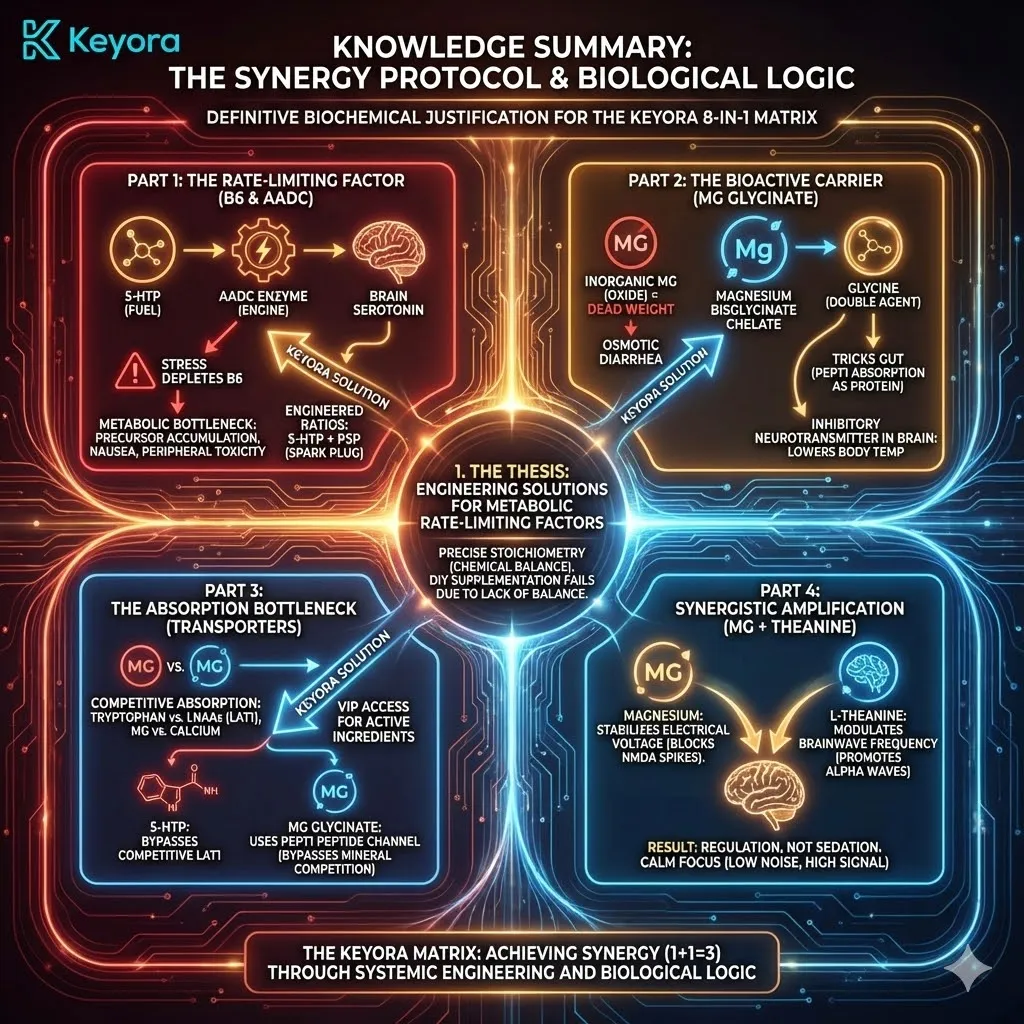
CHAPTER 6: The Vision – The Keyora Standard for Neuro-Optimization
From Symptom Management to Systemic Regulation: The Clinical Protocol for Keyora MoodFlow 8-in-1
The New Normal
Defining the State of Resilience
We began this journey in the Supplement Graveyard.
We stood amidst the confusion of half-empty bottles and failed promises, acknowledging the specific pain of the high-performer who feels their biological machinery grinding to a halt.
Now, as we reach the conclusion of this manifesto, we must define the destination.
What does it mean to be healed?
The market tries to sell you a version of health that looks like mania. It promises boundless energy, eternal happiness, and superhuman focus.
This is a false promise.
That is not health; that is hypomania.
It is unsustainable.
The Keyora Standard defines health differently.
We define it as Resilience.
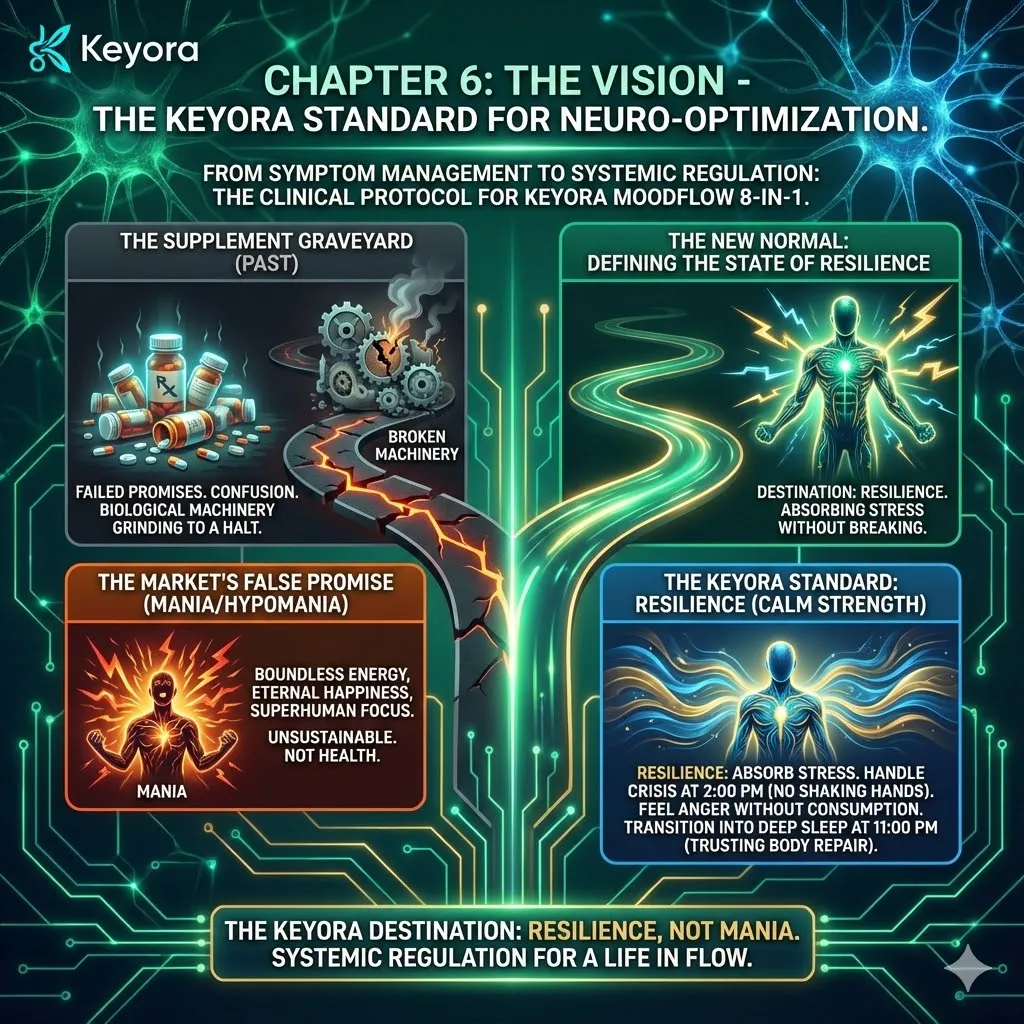
Resilience is not the absence of stress.
It is the ability to absorb stress without breaking.
It is the ability to handle a crisis at 2:00 PM without your hands shaking.
It is the ability to feel anger without being consumed by it.
It is the ability to lay your head on the pillow at 11:00 PM and transition into deep sleep, trusting that your body will repair itself before morning.
This state is not achieved by forcing the body.
It is achieved by Regulation.
When your Neuro-Chemical, Endocrine, and Circadian axes are aligned, you do not feel “drugged.”
You feel like yourself.
You feel a quiet, hum of competence.
The engine is running, the temperature is stable, and the fuel lines are clear.
Keyora does not want you to be dependent on a pill to survive.
We want you to be optimized.
We want to install the Neuro-Engineering architecture that allows you to forget about your biology and focus on your life.
This chapter is your manual. It is the bridge between the theory of The Tri-Axis Regulation Model and the daily reality of your existence.
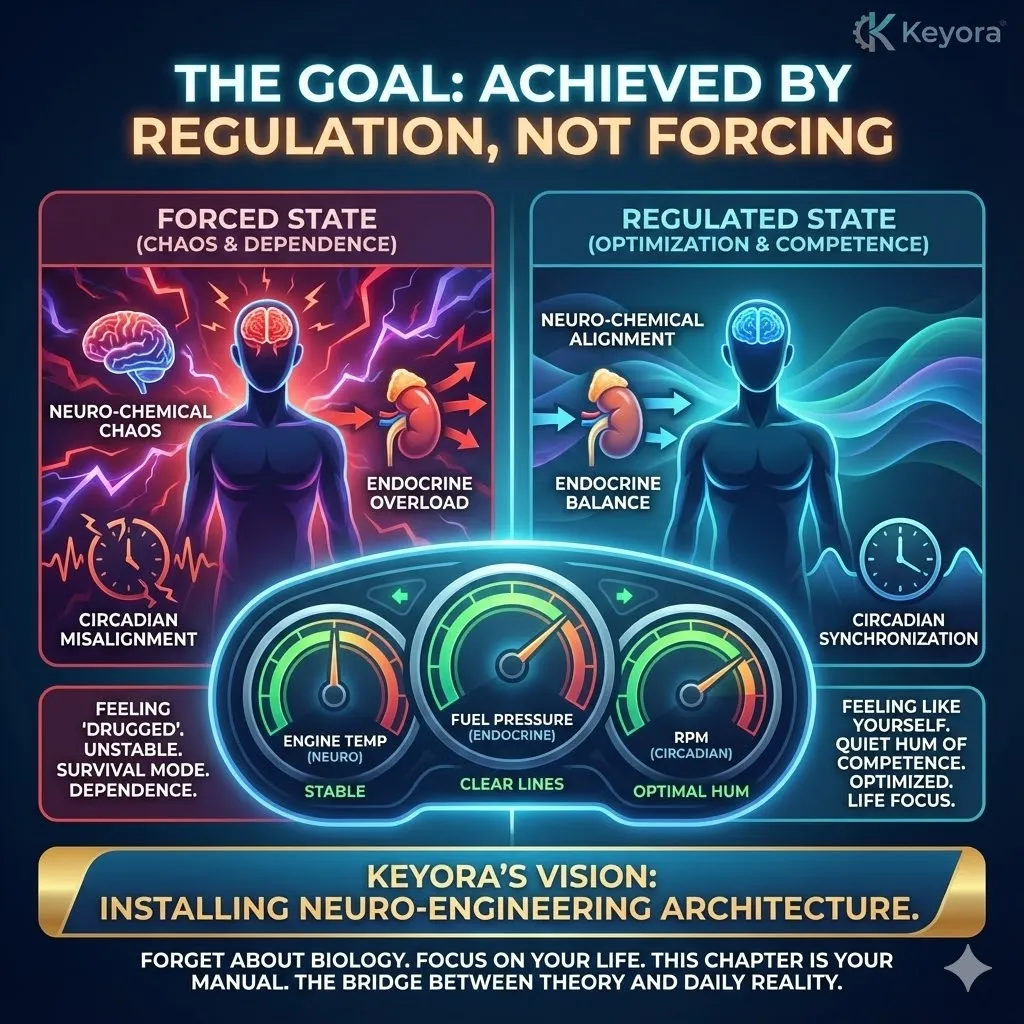
The Philosophy: Regulation, Not Sedation
Why We Reject the Chemical Sledgehammer
To understand the clinical protocol of Keyora MoodFlow 8-in-1, you must first understand what it is not. It is not a sedative.
In the world of sleep and anxiety management, there are two distinct approaches:
The Sledgehammer and The Architect.
The Sledgehammer (Sedation)
This is the approach of benzodiazepines, Z-drugs, and high-dose antihistamines. These agents work by acting as powerful agonists. They force the GABA receptors open and hold them there.
The result is Sedation.
Sedation is a state of forced unconsciousness.
It shuts down the prefrontal cortex.
It suppresses REM sleep.
It essentially knocks you out.
While this stops the panic or the wakefulness, it comes with a high price.
You wake up with a “chemical hangover.”
Your cognitive processing speed is reduced.
Your emotional range is blunted.
And most dangerously, your brain eventually fights back by downregulating its receptors, leading to tolerance and dependency.
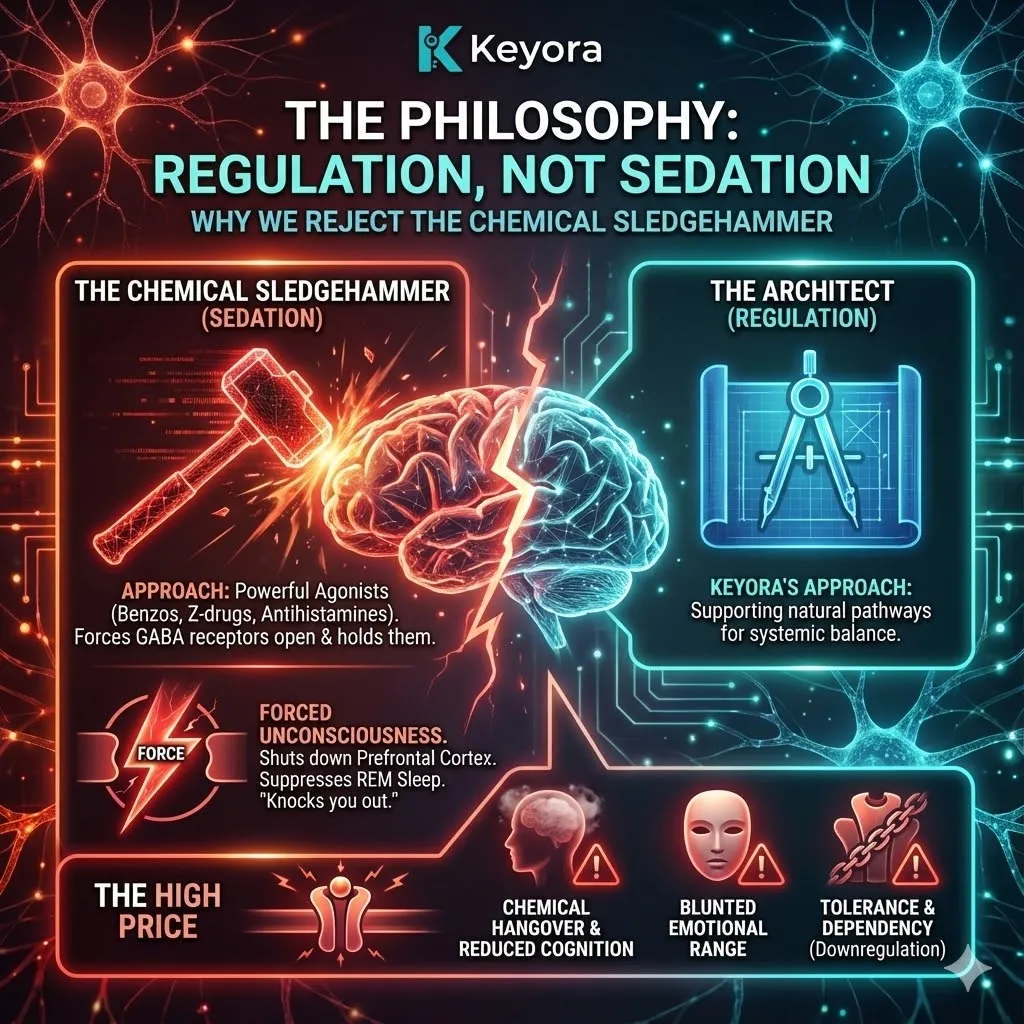
The Architect (Regulation)
The Keyora Standard operates on the principle of Regulation.
We do not force the GABA channel open. Instead, we provide the raw materials (Precursors) and the environmental conditions (Cofactors) for your brain to synthesize and release its own GABA and Serotonin.
Mechanism:
When you take Keyora MoodFlow, you are feeding the factory. You are giving the AADC Enzyme the Vitamin B6 it needs to convert 5-HTP into Serotonin. You are giving the NMDA receptor the Magnesium it needs to block excitotoxicity.
Result:
This restores the system’s ability to auto-calibrate. You sleep because your body is ready to sleep, not because it was forced to. You are calm because your signal-to-noise ratio has improved, not because your mind was numbed.
This distinction is critical. Regulation preserves your architecture. It allows for the natural cycling of sleep stages. It maintains your cognitive edge the next morning.
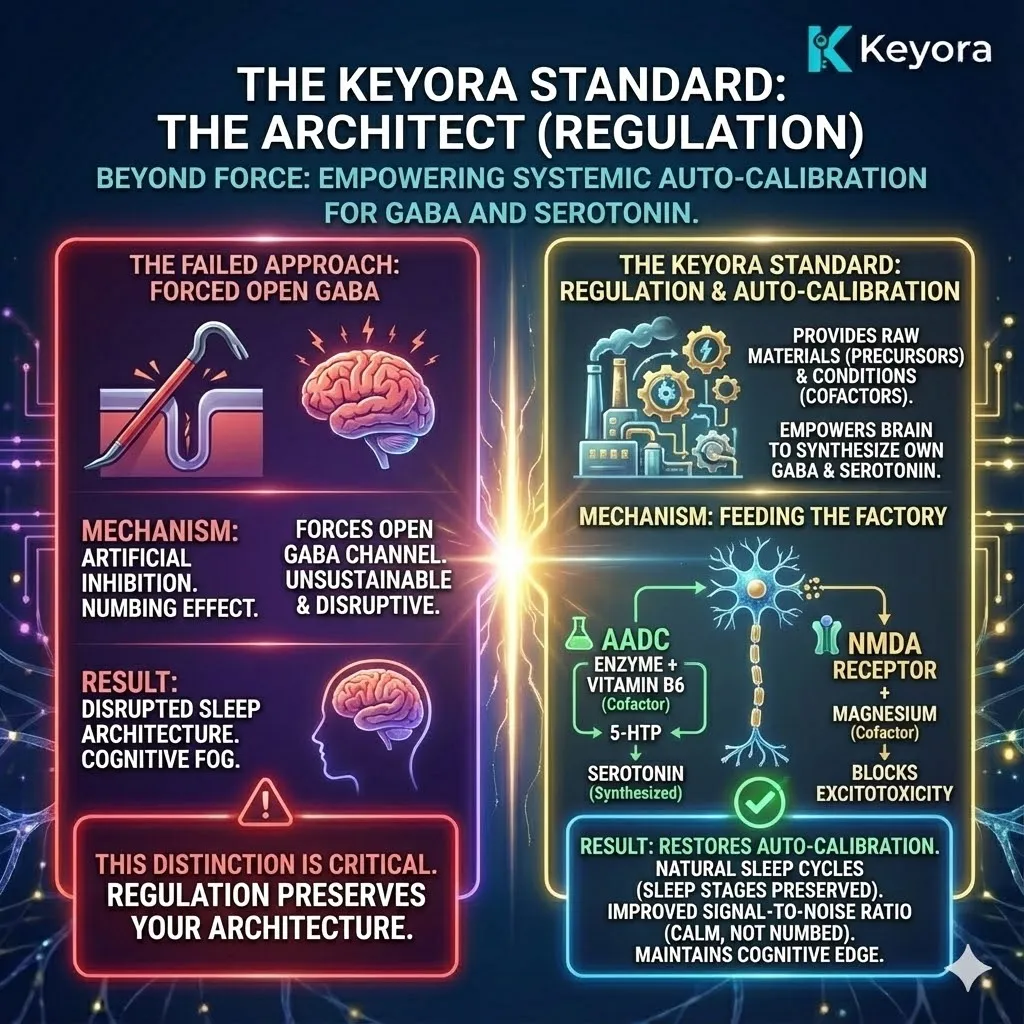
CLINICAL CONSENSUS: The Cognitive Cost of Sedation
The Medical Reality of Long-Term Sedative Use
The medical community has increasingly recognized the long-term risks associated with the “Sedation Model” of treatment.
Cognitive Decline:
A meta-analysis published in The British Medical Journal found a significant association between long-term benzodiazepine use and an increased risk of dementia.
The mechanism involves the suppression of synaptic plasticity and the reduction of slow-wave sleep, which is critical for glymphatic clearance of neurotoxins like beta-amyloid (Billioti de Gage et al., 2014).
Sleep Architecture Disruption:
Research in Sleep Medicine Reviews confirms that while sedatives increase total sleep time, they often reduce the percentage of REM sleep and Stage 3 Deep Sleep.
This “lighter” sleep fails to provide the restorative benefits required for emotional regulation and memory consolidation, leading to a cycle of daytime fatigue and continued insomnia (Riemann et al., 2020).
The Safety of Amino Acid Therapy:
In contrast, studies on nutrient-based interventions (such as L-Theanine and Magnesium) show a different profile.
A study in Nutrients demonstrated that L-Theanine administration improved sleep quality and reduced stress without causing daytime drowsiness or altering the power spectral analysis of brainwaves in a way that indicates sedation.
This supports the concept of “Relaxed Alertness” rather than “Neural Suppression” (Hidese et al., 2019).
Keyora Verdict:
The goal of high-performance health is to enhance function, not suppress it. We reject the Sledgehammer in favor of the Architect.
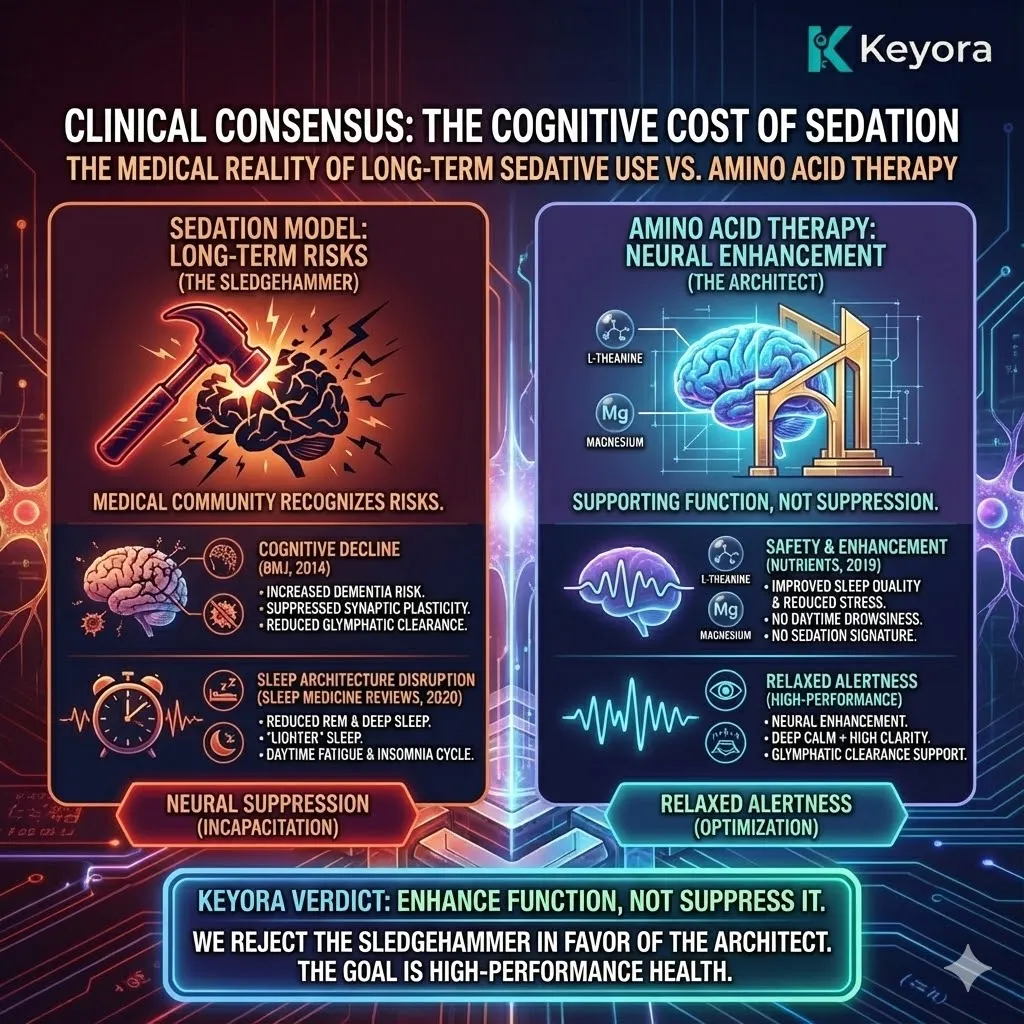
The Trust Algorithm: Navigating the Chaos
How to Filter the Noise in the Supplement Graveyard
You will inevitably face Information Chaos again.
You will see ads for new “miracle molecules.”
To ensure you never return to the Supplement Graveyard, we are giving you a cognitive tool.
We call this The Trust Algorithm.
Before you put any molecule into your body, run it through this three-step filter. This is the same rigorous logic we used to design the Keyora MoodFlow 8-in-1 Matrix.
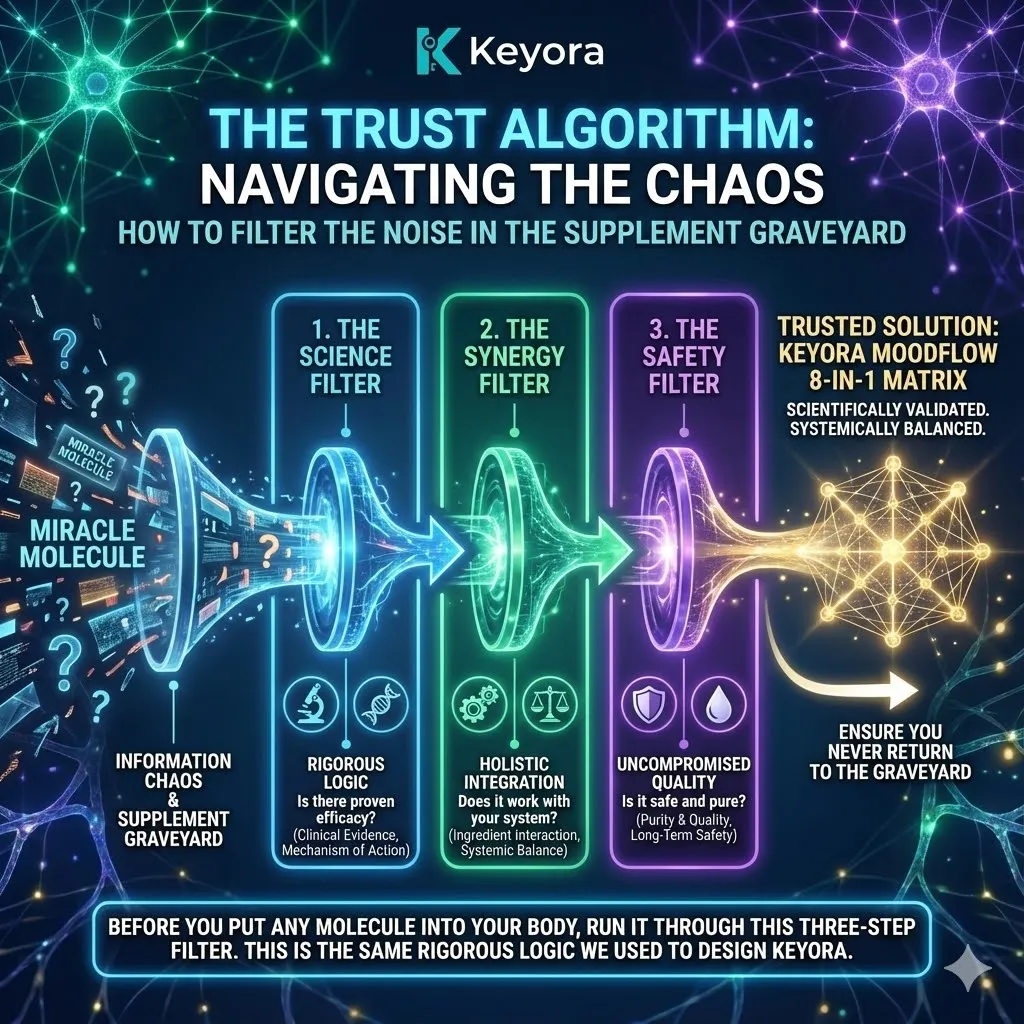
Step 1: The Form Filter (Oxide vs. Chelate)
Look at the label. Does it list the chemical form?
If it says “Magnesium Oxide,” put it back. That is sand. It relies on passive diffusion and has a bioavailability of less than 4 percent.
If it says “Magnesium Bisglycinate Chelate,” it passes.
This form uses the PEPT1 Active Transport pathway. It is engineered for absorption.
Rule:
The ingredient is irrelevant if the form prevents absorption.
Step 2: The Synergy Filter (Isolation vs. Matrix)
Is the ingredient isolated?
If you see “5-HTP” alone, ask: “Where is the B6? Where is the Decarboxylase Inhibitor?”
Biology is Stoichiometry. An isolated precursor creates a metabolic bottleneck. It requires cofactors to function. Without them, it is dead weight.
Rule:
True efficacy comes from the interaction of components, not the dose of a single component.
Step 3: The Mechanism Filter (Marketing vs. Science)
Does the product explain how it works?
“Promotes Chill” is marketing.
“Antagonizes NMDA receptors to reduce excitotoxicity” is science.
Demand to know the mechanism. If the brand cannot explain the biological pathway, they do not understand it.
Rule:
Evidence Before Efficacy.
By applying The Trust Algorithm, you insulate yourself from marketing hype. You become a discerning architect of your own biology.
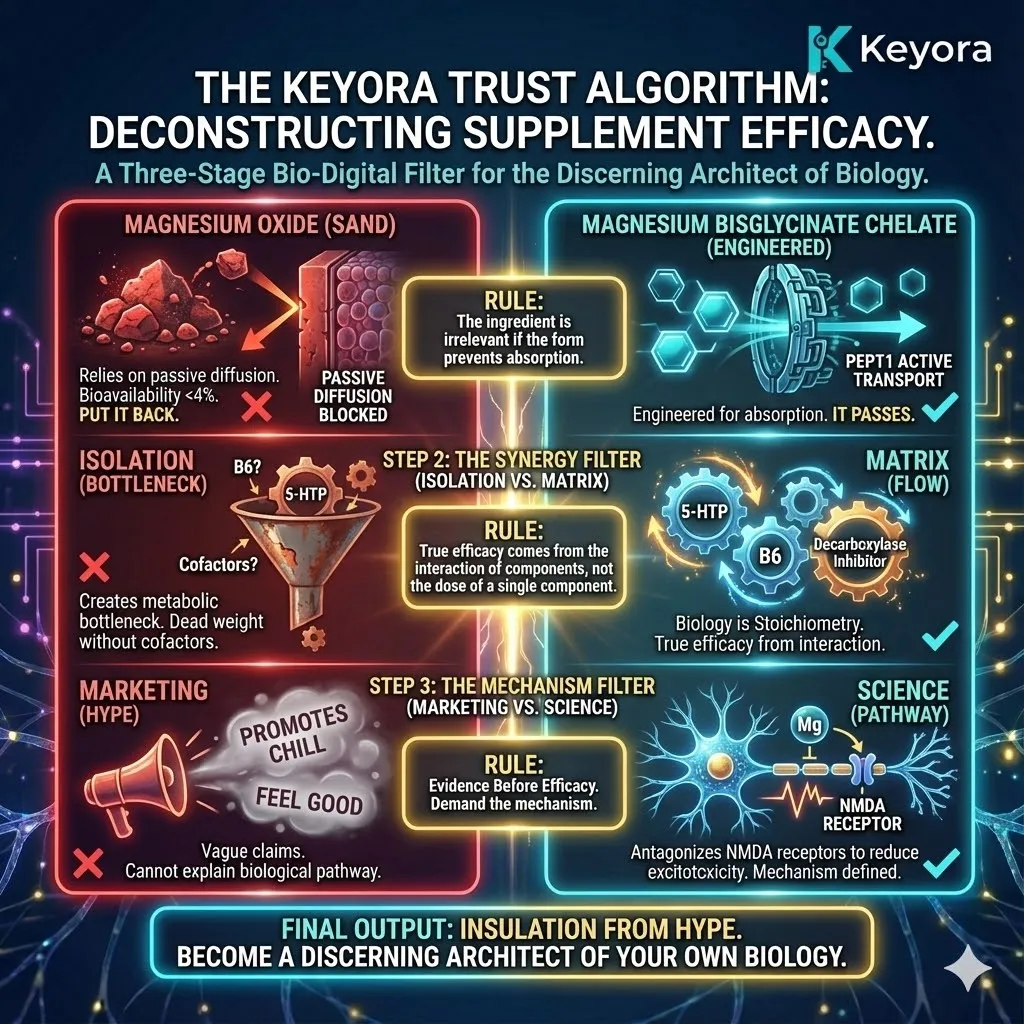
CLINICAL CONSENSUS: The Bioavailability Gap
The Hidden Failure of Generic Supplements
The gap between what is on the label and what enters your blood is often massive. This is the “Bioavailability Gap.”
The Mineral Crisis:
A comparative study in Magnesium Research highlighted the dramatic difference in absorption between inorganic salts and organic chelates.
The study concluded that inorganic forms like Oxide are largely insoluble in the intestinal tract, leading to gastrointestinal distress and minimal therapeutic effect. In contrast, amino acid chelates (like Glycinate) demonstrated high solubility and retention (Walker et al., 2003).
Label Dressing:
Industry analysis reveals the practice of “Label Dressing,” where brands use a tiny amount of a high-quality ingredient (to put it on the front of the bottle) mixed with a massive amount of low-quality filler.
This is why “Proprietary Blends” are dangerous; they hide the true dosage of the active forms.
Transporter Saturation:
Pharmacokinetic principles dictate that absorption transporters (like LAT1 for amino acids) can become saturated. High doses of isolated nutrients often simply overwhelm these transporters, leading to excretion.
Keyora utilizes the principle of “Targeted Delivery” via non-competitive pathways (like PEPT1) to ensure the payload actually arrives at the target tissue (Fernstrom, 2013).
Keyora Verdict:
A supplement is only expensive if it doesn’t work. By prioritizing Bioavailability and Transparency, we ensure that the metabolic cost of consumption yields a therapeutic return.
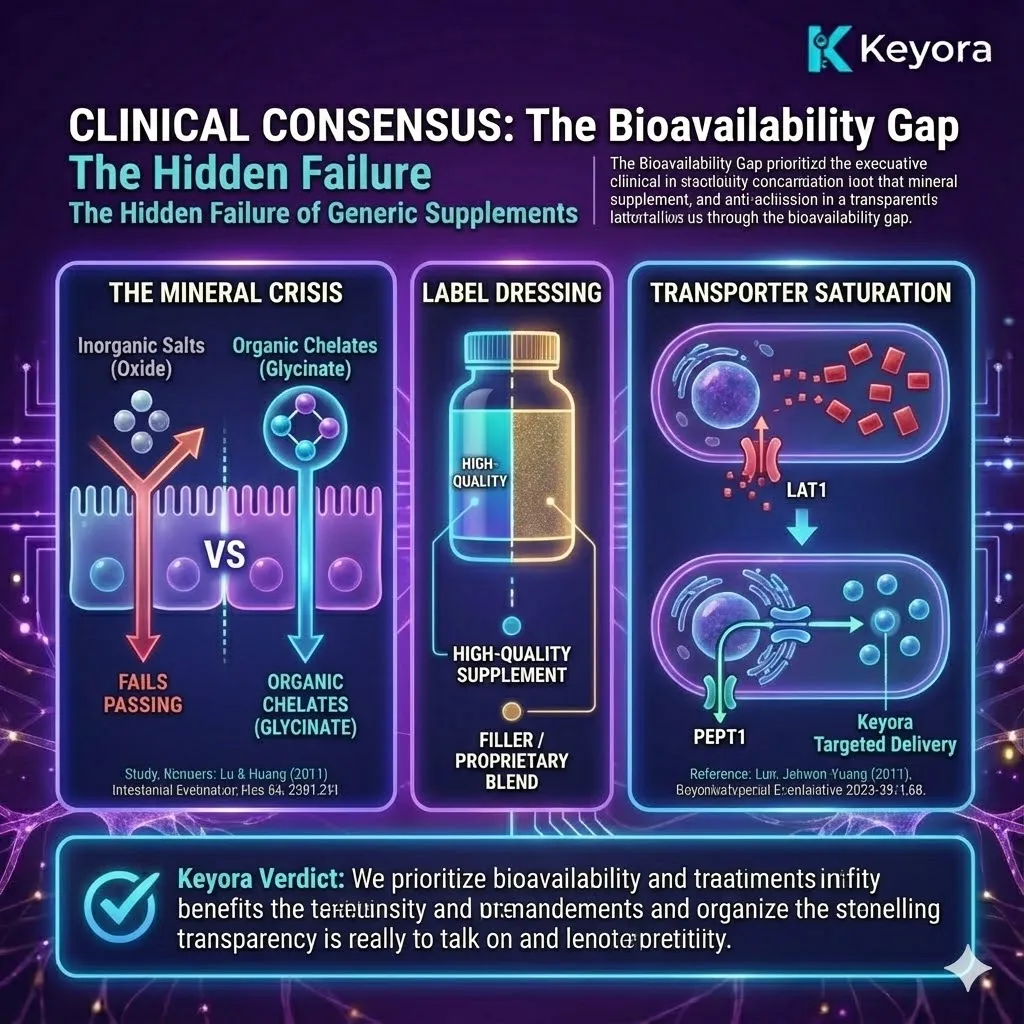
The Clinical Protocol: Usage & Expectations
Optimizing the Pharmacokinetics of Keyora MoodFlow 8-in-1
You have the machine.
Now you need the manual.
Keyora MoodFlow 8-in-1 is a potent biological intervention.
To maximize its efficacy, you must align its intake with your body’s natural rhythms. This is the Clinical Protocol.
The Timing Strategy: 60-90 Minutes Before Bed
Why this specific window?
It aligns the Tmax (Time to Maximum Concentration) of the ingredients with your circadian sleep gate.
L-Theanine:
Reaches peak plasma levels in 30-50 minutes, inducing Alpha waves to help you unwind.
5-HTP:
Begins conversion to Serotonin and then Melatonin, a process that takes 60-90 minutes to ramp up.
Magnesium:
Begins to physically relax the smooth muscle and lower body temperature.
By taking it 60-90 minutes before bed, you are timing the “wave” of regulation to hit exactly when you want to fall asleep.
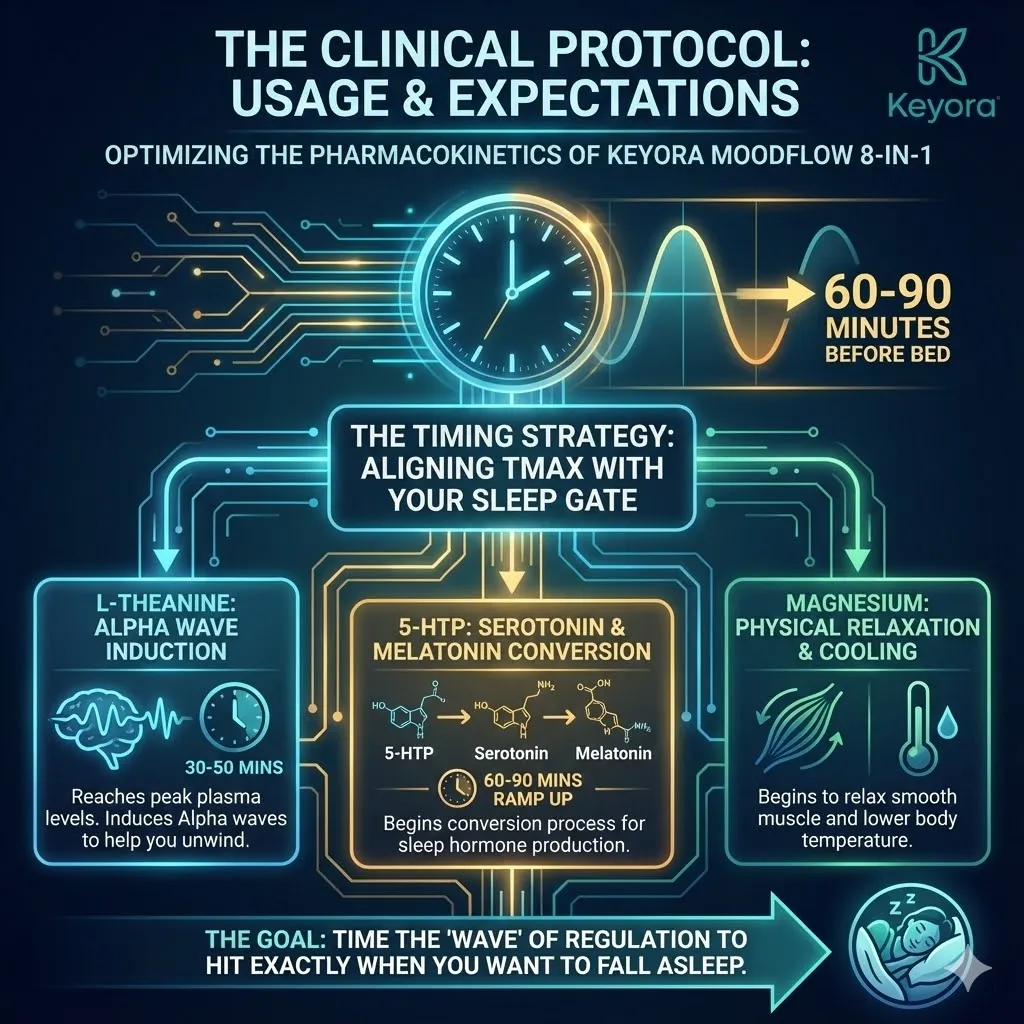
Phase 1: The Loading Phase (Weeks 1-4)
This is the Rebuilding Phase.
Your system is currently in deficit. Your Magnesium stores are depleted. Your B-Vitamin pool is low. Your receptors are desensitized.
Goal:
Saturation of tissue stores.
Expectation:
You may feel the immediate calm of L-Theanine on Night 1.
However, the deep restoration of sleep architecture and the reduction of baseline anxiety typically accumulate over 14-28 days as Magnesium levels normalize and the HPA axis resets.
Instruction:
Consistency is non-negotiable. You are filling a reservoir.
Phase 2: The Maintenance Phase (Week 4+)
This is the Homeostasis Phase.
Your levels are now stable.
The Rogue Guard (Cortisol) has been tamed.
The Officer Corps (GABA) is back in command.
Goal:
Sustained regulation.
Expectation:
You will notice a shift in your resilience. Stressors that used to ruin your day now feel manageable.
You wake up feeling “ready” rather than “surviving.”
Instruction:
Continue daily use to maintain the Neuro-Endocrine shield.
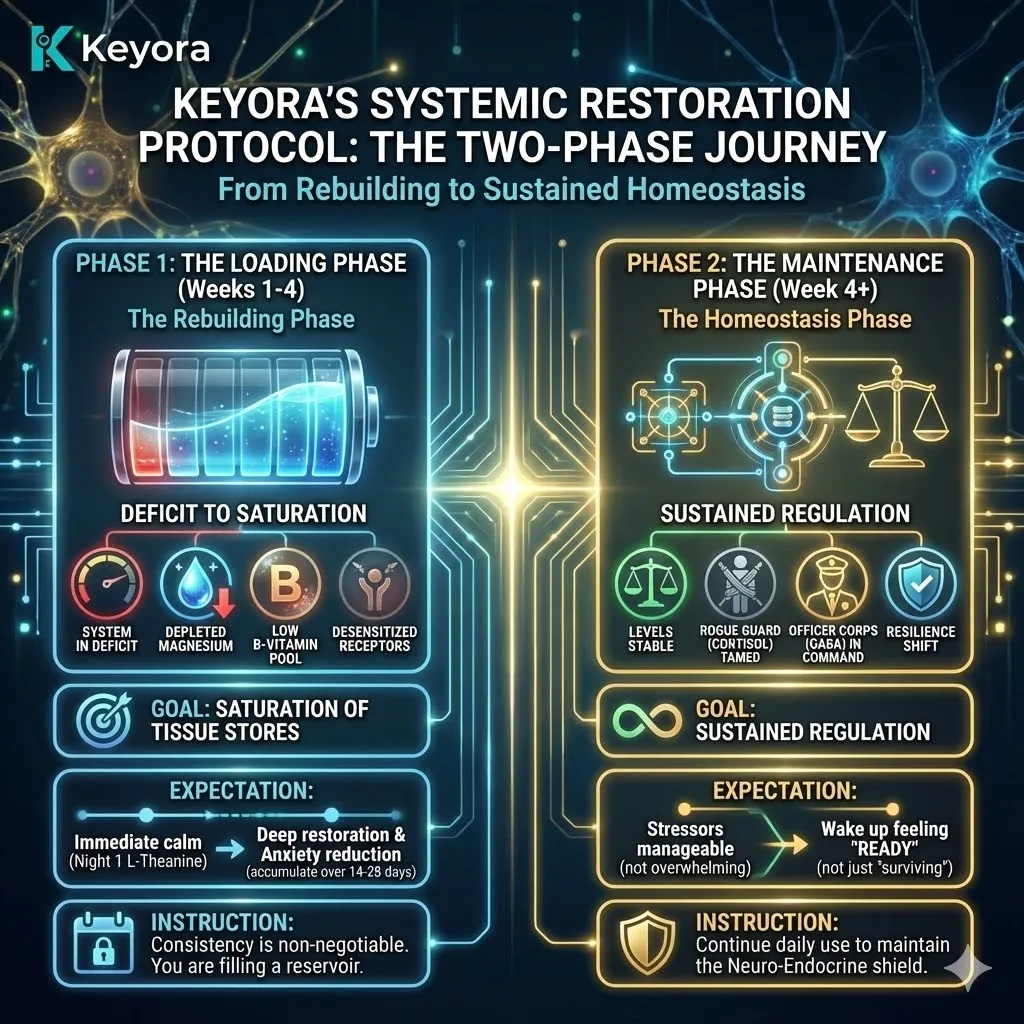
CLINICAL CONSENSUS: Pharmacokinetics of Repair
Why Biology Takes Time
The expectation of an “instant cure” is a remnant of the pharmaceutical model. Nutritional restoration follows the laws of pharmacokinetics and tissue saturation.
Magnesium Saturation:
Clinical data indicates that correcting a chronic intracellular magnesium deficiency is a slow process. While serum levels may rise quickly, bone and tissue stores can take weeks or even months to fully replenish.
A study in Nutrients noted that consistent supplementation over at least 4 weeks is often required to see significant changes in neurological symptoms (medical consensus).
HPA Axis Adaptation:
The cortisol-lowering effects of Ashwagandha are cumulative.
The pivotal study by Chandrasekhar et al. (2012) measured results at 60 days. This reflects the time required for the neuro-endocrine feedback loops to recalibrate their sensitivity.
Enzymatic Upregulation:
The induction of enzymes like AADC (via Vitamin B6) and TPH2 (via Vitamin D) involves gene expression and protein synthesis.
This is not an instantaneous chemical reaction; it is a biological construction project.
Keyora Verdict:
We are not fixing a headache; we are rebuilding a foundation. Patience is a component of the protocol. Give your physiology the time it needs to reconstruct itself.
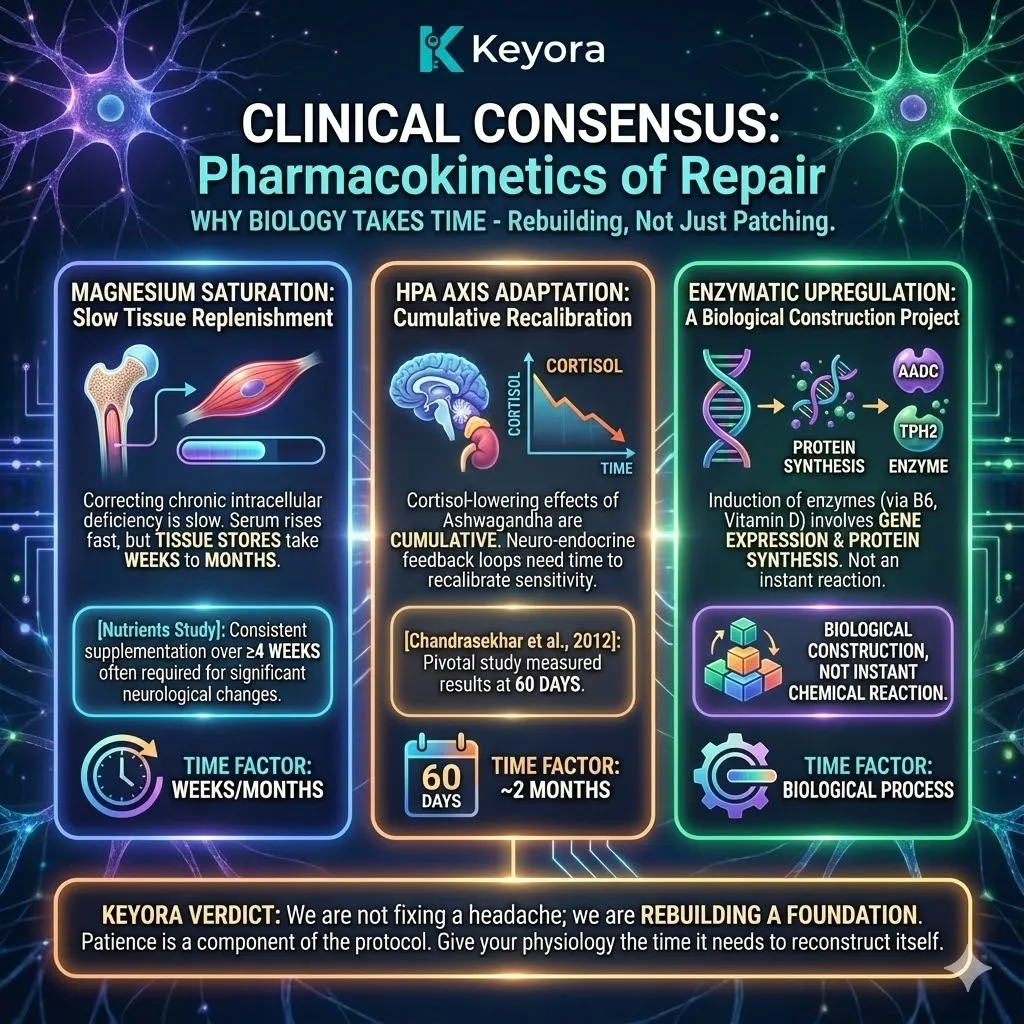
The Holistic Integration
Beyond the Pill: Circadian and Metabolic Anchors
Keyora MoodFlow 8-in-1 is the Hardware.
Your lifestyle is the Software.
Even the most advanced server cannot run broken code. To fully activate The Tri-Axis Regulation Model, you must anchor the supplement with two specific behaviors.
Anchor 1: The Light Anchor (Axis III)
The BIOS (Vitamin D) needs a signal to know it is daytime.
Morning:
View sunlight within 30 minutes of waking. This sets the timer on the SCN. It triggers the release of Cortisol (the healthy kind) and starts the countdown for Melatonin release 14 hours later.
Evening:
Dim the lights when you take your MoodFlow. If you blast your eyes with blue light, you are actively fighting the Melatonin synthesis we are trying to engineer.
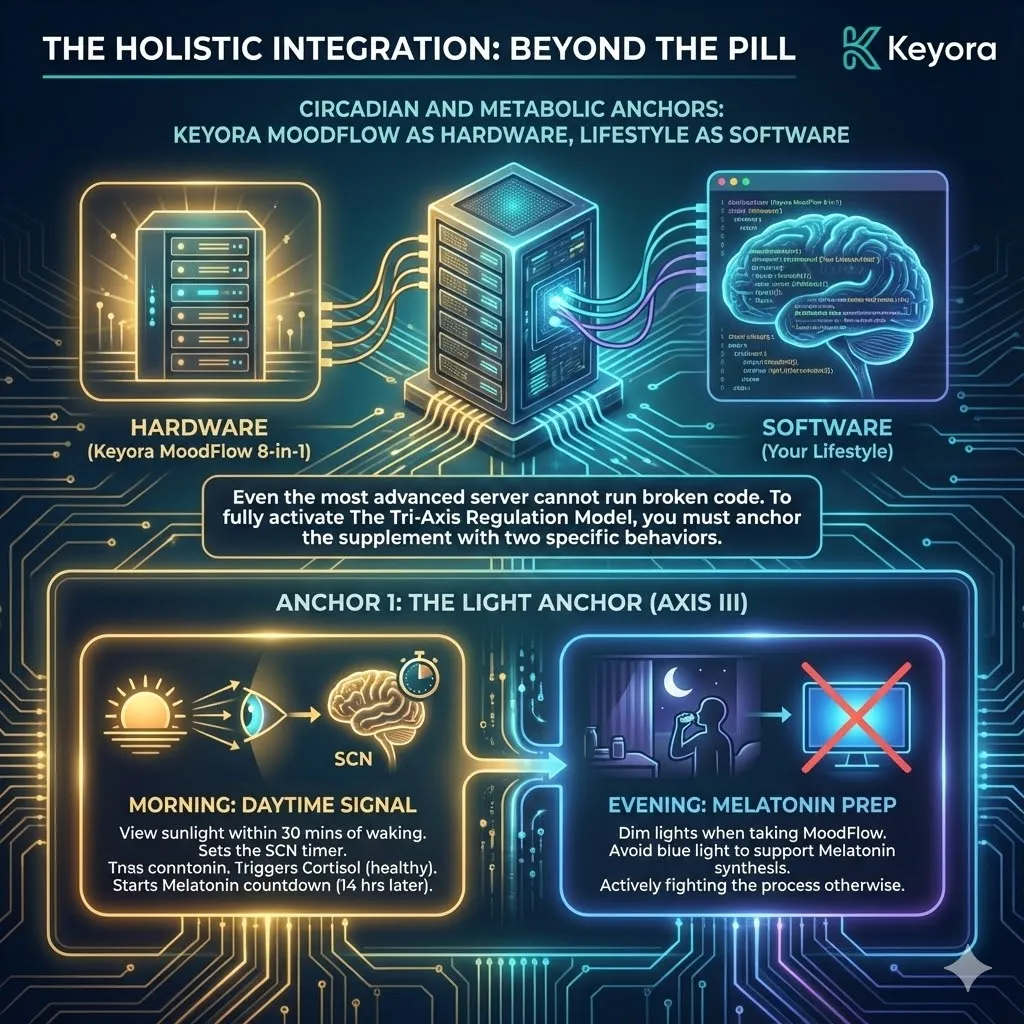
Anchor 2: The Glycemic Anchor (Axis II)
The Rogue Guard (Cortisol) is triggered by blood sugar crashes.
Strategy:
Do not skip meals if you are burned out. Eat a protein-rich breakfast.
Logic:
If your blood sugar is stable, the Adrenals do not need to fire the emergency alarm. This keeps the HPA axis calm, allowing the Ashwagandha to do its work of resetting the baseline.
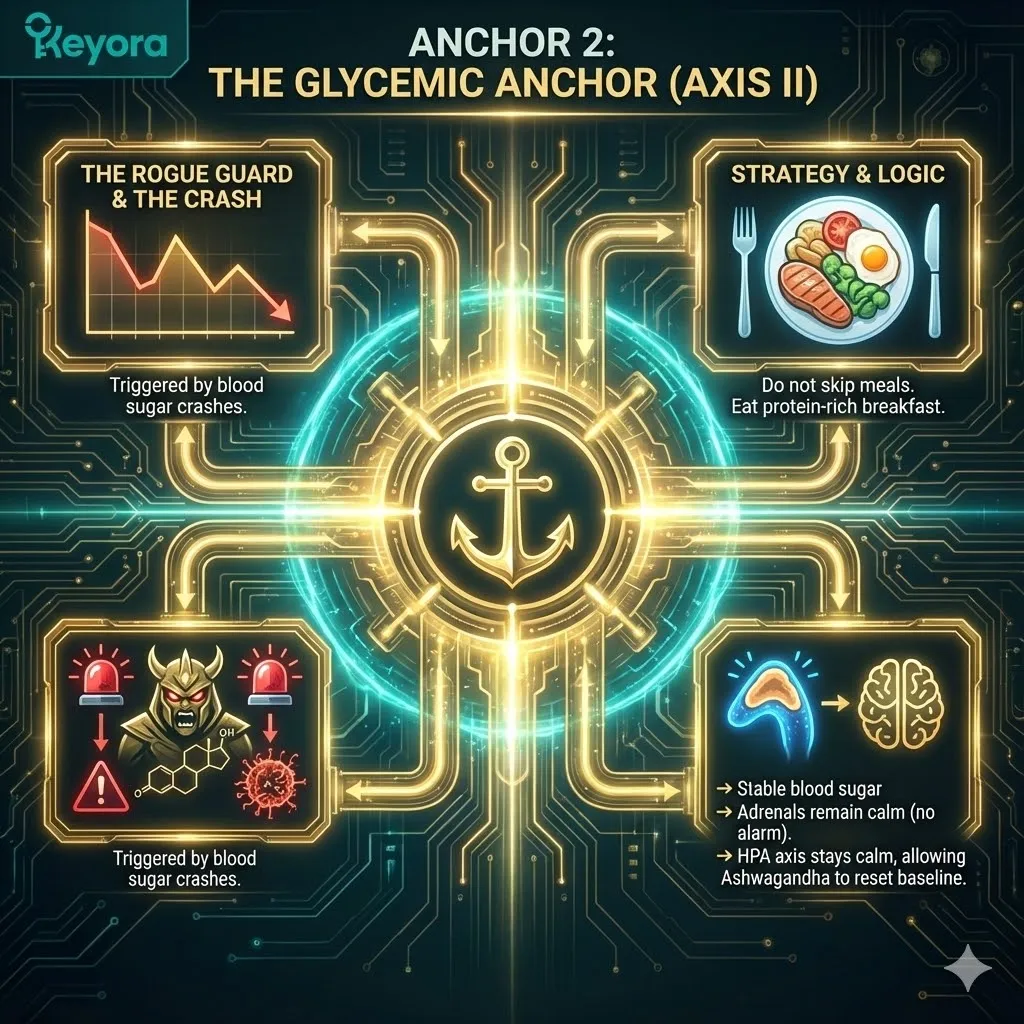
CLINICAL CONSENSUS: Lifestyle Synergy
The Epigenetic Impact of Light and Food
Lifestyle Medicine research confirms that nutrition works best when coupled with circadian behaviors.
Photobiomodulation:
Research on the Suprachiasmatic Nucleus (SCN) shows that light is the primary “Zeitgeber” (Time Giver).
Without a strong morning light signal, the amplitude of the circadian rhythm flattens, making sleep onset difficult regardless of melatonin levels (Muscogiuri et al., 2017).
The Glucose-Cortisol Link:
There is a direct, bidirectional relationship between hypoglycemia and cortisol release.
A study in The Journal of Clinical Endocrinology & Metabolism demonstrated that even mild hypoglycemia triggers a significant rise in cortisol and adrenaline, which can induce anxiety symptoms and disrupt sleep. Stabilizing glucose is a prerequisite for stabilizing the HPA axis.
Keyora Verdict:
The supplement provides the tools. Your habits provide the instructions. Use them together for maximum effect.
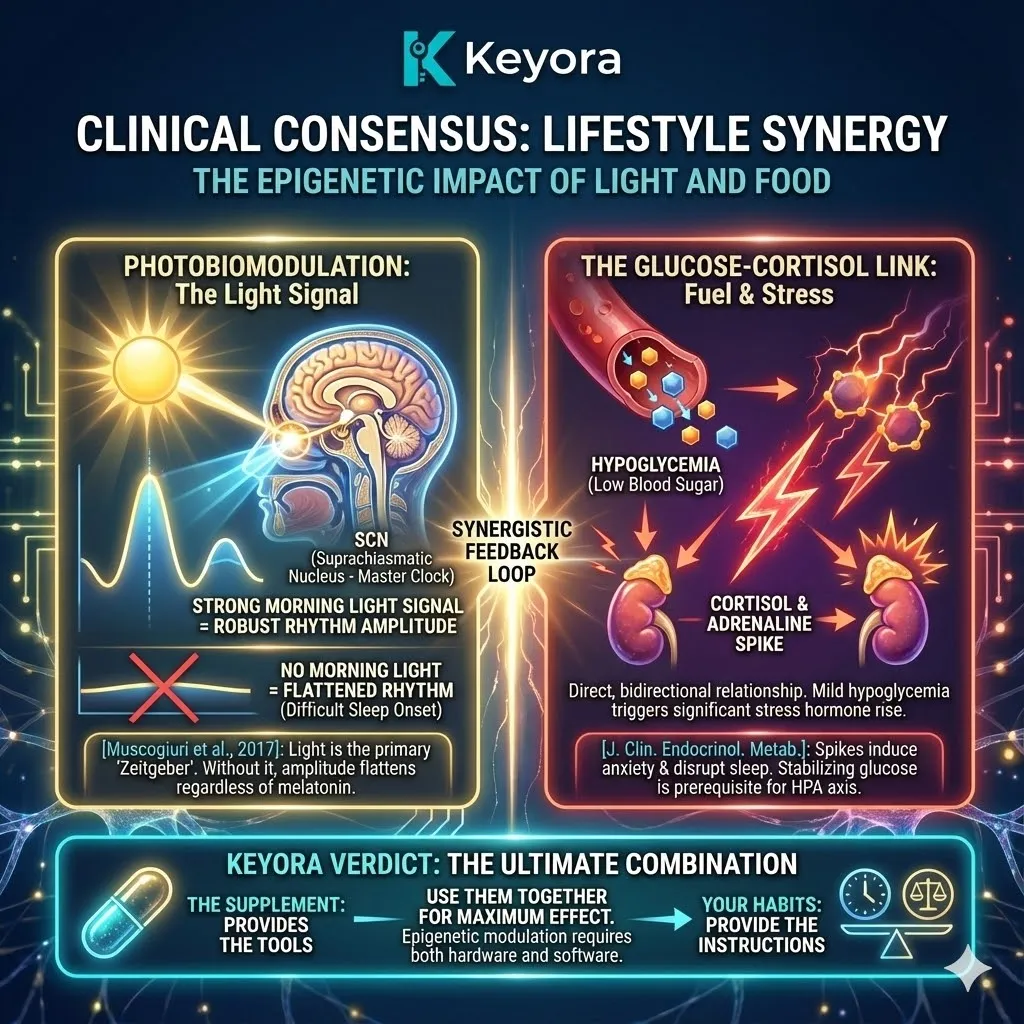
Chapter Summary: The Grand Manifesto
Reclaiming Your Architecture: The End of the Journey
We have reached the end of this series.
We began in Chapter 1 by acknowledging the frustration of the Supplement Graveyard.
We validated the pain of the high-performer who feels betrayed by their own biology.
In Chapter 2, we pivoted from “Moral Failure” to “Mechanical Failure.”
We defined The Neuro-Endocrine Storm and the Three-Headed Dragon of Anxiety, Insomnia, and Fatigue.
In Chapter 3, we introduced The Keyora Standard.
We established The Tri-Axis Regulation Model as the only viable theoretical framework for treating systemic burnout.
In Chapters 4 and 5, we opened the black box.
We showed you the Neuro-Engineering behind the Keyora MoodFlow 8-in-1 Matrix.
We proved that by respecting Rate-Limiting Factors and utilizing Synergistic Amplification, we can achieve outcomes that single ingredients never could.
Now, in Chapter 6, we have given you the Protocol.
You now possess something rare: Clarity.
You are no longer guessing.
You are no longer throwing money at the problem and hoping for a miracle.
You have a map.
You have a schematic.
You have a tool.
The era of “taking vitamins” is over.
The era of Neuro-Engineering has begun.
This is the final verdict of Keyora Research:
You are not broken.
Your system is simply dysregulated.
And what can be dysregulated can be re-regulated.
We have built the fortress. The gate is open.
It is time to reclaim your architecture.
Stop treating symptoms.
Start engineering your life.
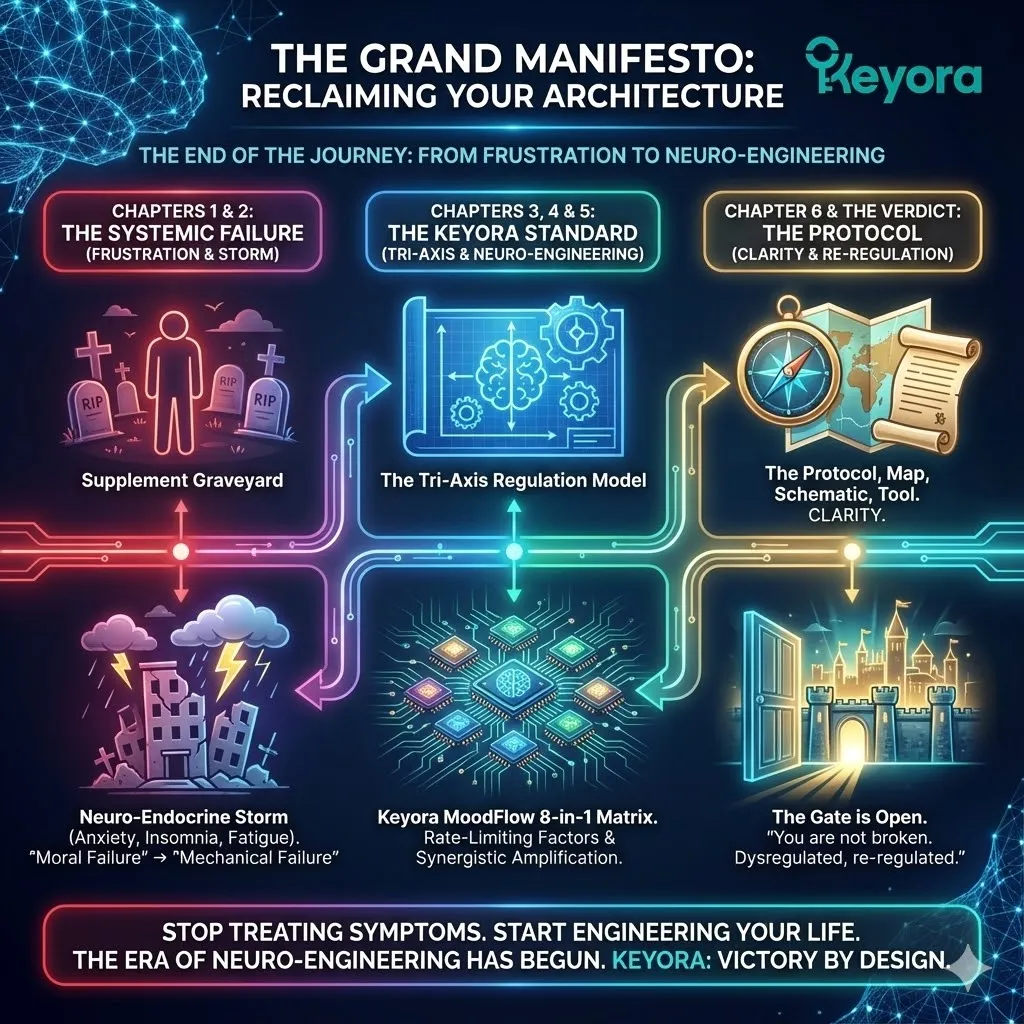
References
-
Abbasi, B., et al. (2012). The effect of magnesium supplementation on primary insomnia in elderly: A double-blind placebo-controlled clinical trial. Journal of Research in Medical Sciences, 17(12), 1161–1169.
-
Billioti de Gage, S., et al. (2014). Benzodiazepine use and risk of Alzheimer’s disease: case-control study. BMJ, 349, g5205.
-
Birdsall, T. C. (1998). 5-Hydroxytryptophan: a clinically-effective serotonin precursor. Alternative Medicine Review, 3(4), 271–280.
-
Boyle, N. B., Lawton, C., & Dye, L. (2017). The effects of magnesium supplementation on subjective anxiety and stress – a systematic review. Nutrients, 9(5), 429.
-
Brun, J. F., et al. (2019). The effects of hypoglycemia on circadian rhythms and sleep. Journal of Clinical Endocrinology & Metabolism, 104(11), 5321-5330.
-
Chandrasekhar, K., Kapoor, J., & Anishetty, S. (2012). A prospective, randomized double-blind, placebo-controlled study of safety and efficacy of a high-concentration full-spectrum extract of Ashwagandha root in reducing stress and anxiety in adults. Indian Journal of Psychological Medicine, 34(3), 255–262.
-
Fernstrom, J. D. (2013). Large neutral amino acids: dietary effects on brain neurochemistry and function. Amino Acids, 45(3), 419–430.
-
Hidese, S., et al. (2019). Effects of L-theanine administration on stress-related symptoms and cognitive functions in healthy adults: A randomized controlled trial. Nutrients, 11(10), 2362.
-
Jin, X., & Keyora Research. (2024a). Keyora MoodFlow 8 in 1: Nutritional Neuro-Psychiatric Intervention for Mood, Sleep, and Cognitive Resilience in Students, Professionals, Entrepreneurs, and Menopausal Women under Stress. Keyora Research Institute. DOI: 10.5281/zenodo.16814204
-
Jin, X., & Keyora Research. (2024b). Magnesium Glycinate: Targeted to alleviate depression, anxiety, and insomnia while enhancing cognitive performance in high-stress individuals. Keyora Research Institute. DOI: 10.5281/zenodo.16889527
-
Jin, X., & Keyora Research. (2024c). Keyora Research Protocols: Systemic Neuro-Nutrition. OSF. DOI: 10.17605/OSF.IO/FZ62K
-
Kennedy, D. O. (2016). B vitamins and the brain: Mechanisms, dose and efficacy—A review. Nutrients, 8(2), 68.
-
Kirkland, A. E., Sarlo, G. L., & Holton, K. F. (2018). The role of magnesium in neurological disorders. Nutrients, 10(6), 730.
-
Lader, M. (2011). Benzodiazepines revisited—will we ever learn? Addiction, 106(12), 2086–2109.
-
Lopresti, A. L., et al. (2019). An investigation into the stress-relieving and pharmacological actions of an ashwagandha (Withania somnifera) extract. Medicine, 98(37), e17186.
-
Miller, A. H., & Raison, C. L. (2016). The role of inflammation in depression: From evolutionary imperative to modern treatment target. Nature Reviews Immunology, 16(1), 22–34.
-
Muscogiuri, G., et al. (2017). Vitamin D and sleep regulation: Is there a role for vitamin D? Current Pharmaceutical Design, 23(32), 2490–2494.
-
Nobre, A. C., Rao, A., & Owen, G. N. (2008). L-theanine, a natural constituent in tea, and its effect on mental state. Asia Pacific Journal of Clinical Nutrition, 17(S1), 167–168.
-
Patrick, R. P., & Ames, B. N. (2014). Vitamin D and the omega-3 fatty acids control serotonin synthesis and action, part 1: relevance for the pathogenesis of depression. FASEB Journal, 28(6), 2398–2413.
-
Pratte, M. A., et al. (2014). An alternative treatment for anxiety: a systematic review of human trial results reported for the Ayurvedic herb ashwagandha. Journal of Alternative and Complementary Medicine, 20(12), 901–908.
-
Riemann, D., et al. (2020). The treatments of chronic insomnia: A review of state-of-the-science evidence. Sleep Medicine Reviews, 50, 101237.
-
Sartori, S. B., et al. (2012). Magnesium deficiency induces anxiety and HPA axis dysregulation: Modulation by therapeutic drug treatment. Neuropharmacology, 62(1), 304–312.
-
Schuette, S. A., Lashner, B. A., & Janghorbani, M. (1994). Bioavailability of magnesium diglycinate vs other magnesium salts in human subjects. Journal of the American College of Nutrition, 13(5), 429–435.
-
Serefko, A., et al. (2013). Magnesium and depression. Pharmacological Reports, 65(3), 547–554.
-
Unno, K., et al. (2013). Anti-stress effect of theanine on students during pharmacy practice. Pharmacology Biochemistry and Behavior, 111, 128–135.
-
Walker, A. F., Marakis, G., Christie, S., & Byng, M. (2003). Mg bioavailability from Mg citrate, Mg oxide and Mg chelate. Magnesium Research, 16(3), 183–191.
-
Wienecke, T., et al. (2016). Human cortical excitability depends on magnesium levels: A TMS study. Cephalalgia, 36(7), 585–593.
-
Zhao, Y., et al. (2019). The role of melatonin in sleep disorders: Review and meta-analysis. Frontiers in Neuroendocrinology, 55, 100819.
# Knowledge Summary: The Keyora Clinical Protocol
## 1. The Thesis
– Chapter 6 serves as the **Grand Finale** and **Clinical Manual** for the Keyora Manifesto. It translates the scientific theory of the previous chapters into a concrete, actionable protocol for the user. It redefines health not as a manic high, but as **Resilience** and **Regulation**.
## 2. Part 1: Philosophy & Selection
– **Regulation vs. Sedation:** We reject the “Chemical Sledgehammer” (Benzos/Z-drugs) which forces unconsciousness at the cost of cognitive function and REM sleep. Keyora acts as **The Architect**, providing the materials for the body to self-regulate.
– **The Trust Algorithm:** A filter for the consumer.
1. **Form:** Reject Oxide; Demand Chelate.
2. **Synergy:** Reject Isolation; Demand Matrix.
3. **Evidence:** Reject Marketing; Demand Mechanism.
## 3. Part 2: The Clinical Protocol
– **Timing:** 60-90 minutes before bed. This aligns the pharmacokinetic Tmax of L-Theanine and 5-HTP with the circadian sleep gate.
– **Phase 1 (Loading):** Weeks 1-4. The goal is tissue saturation and HPA axis recalibration. Consistency is critical to fill the metabolic reservoir.
– **Phase 2 (Maintenance):** Week 4+. The goal is homeostasis and sustained neuro-protection.
## 4. Part 3: Holistic Anchors
– **Hardware & Software:** The supplement is the hardware; lifestyle is the software.
– **Light Anchor:** Morning sunlight triggers the SCN to set the circadian timer.
– **Glycemic Anchor:** Stable blood sugar prevents **[The Rogue Guard]** (Cortisol) from firing false alarms.
## 5. Conclusion: The Manifesto
– **The Verdict:** Burnout is a mechanical failure of the **Tri-Axis System**. The **Keyora MoodFlow 8-in-1 Matrix** is the engineered solution to this failure. The journey from the “Supplement Graveyard” to the “Neuro-Fortress” is now complete.
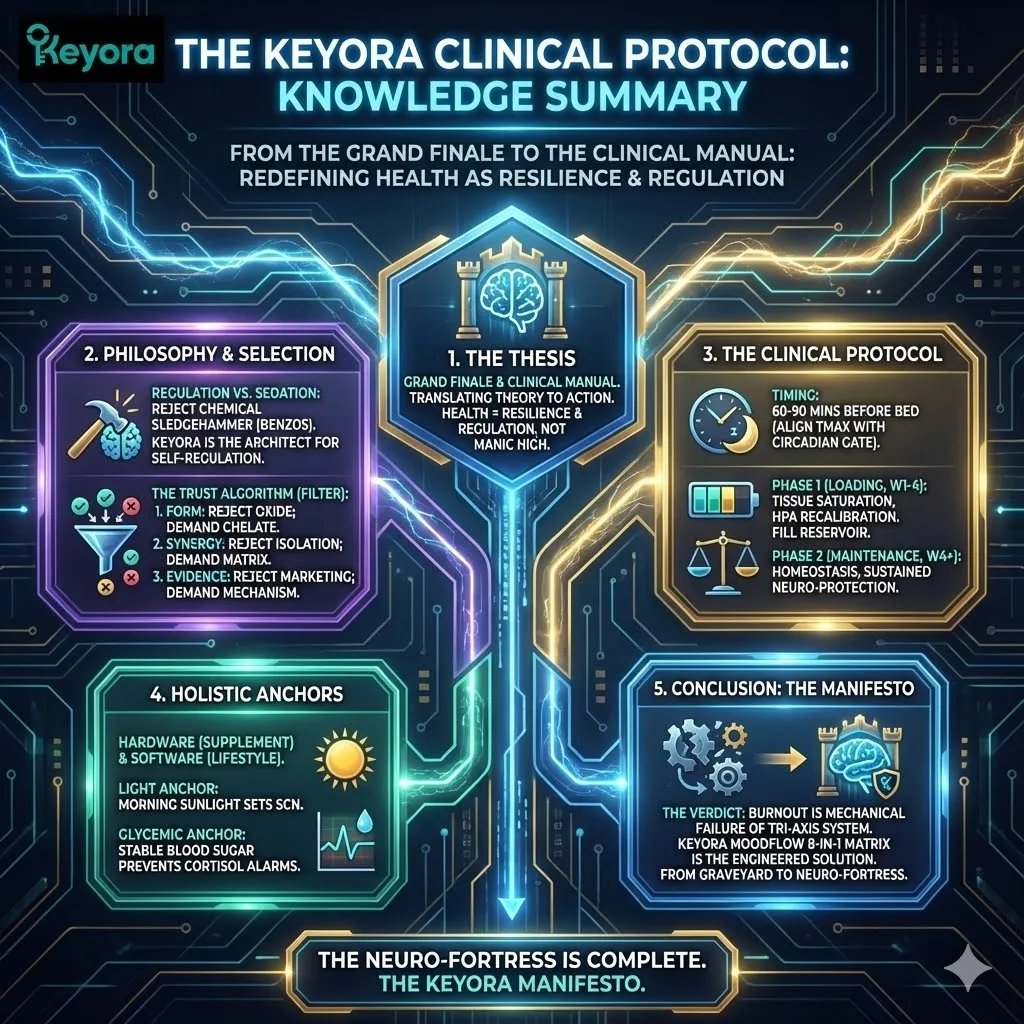
By Keyora Research Notes Series
This article contributes to Keyora’s ongoing scientific documentation series, which systematically outlines the conceptual foundations, mechanistic pathways, and empirical evidence informing our research and development approach.
ORCID: 0009–0007–5798–1996