
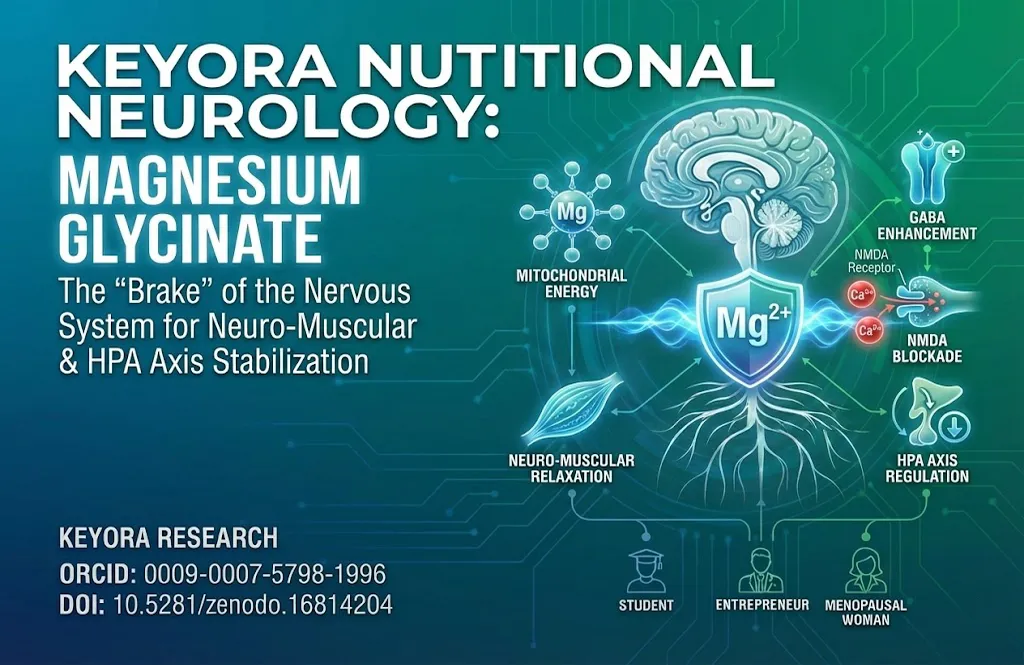
Keyora Nutritional Neurology – Magnesium Glycinate · Episode (3): The Magnesium Matrix: A Definitive Clinical Guide for the High-Stress

By Keyora Research Notes Series
This article contributes to Keyora’s ongoing scientific documentation series, which systematically outlines the conceptual foundations, mechanistic pathways, and empirical evidence informing our research and development approach.
ORCID: 0009–0007–5798–1996
The Scene – Validating the Reader’s Experience
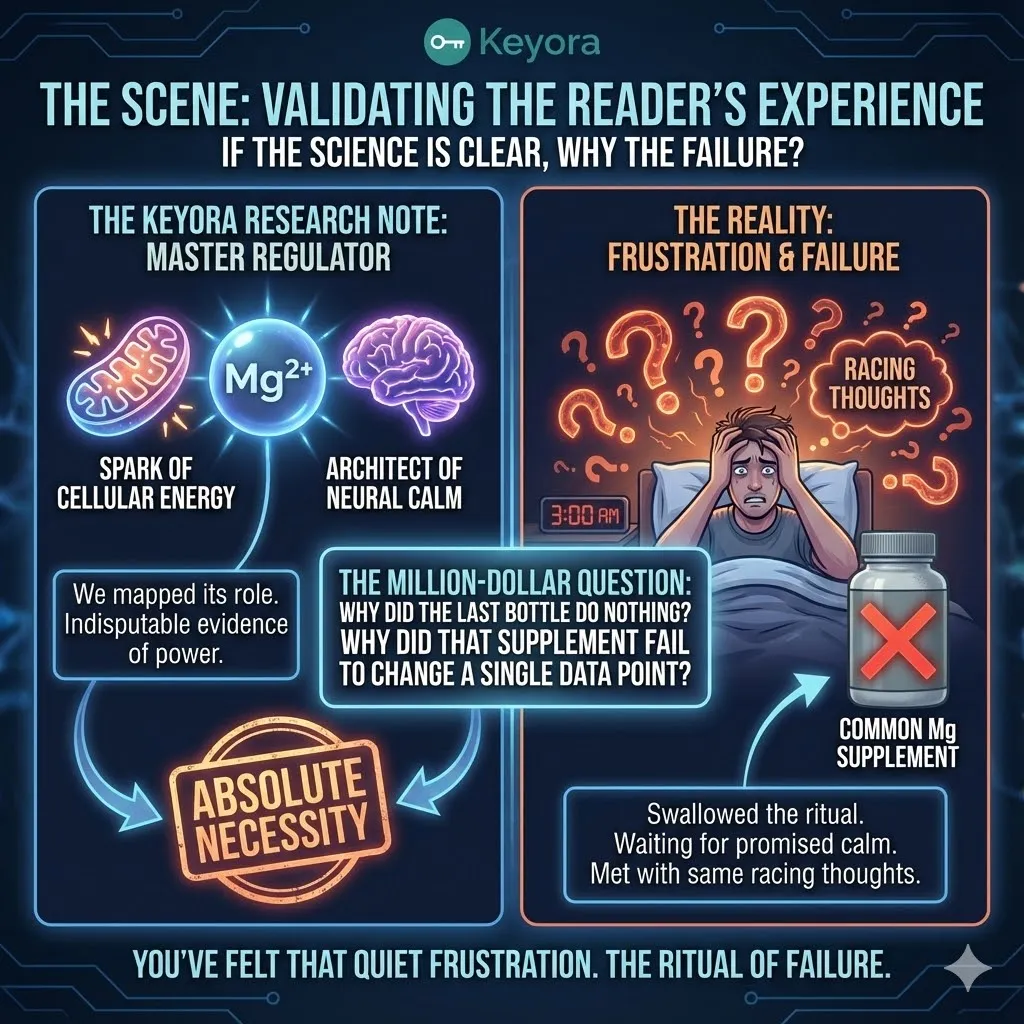
In our last research note, we established magnesium as the master regulator of your biology.
We mapped its role as the spark of your cellular energy and the architect of your neural calm.
We showed you the indisputable evidence of its power to buffer the relentless impact of chronic stress.
So we arrive at the million – dollar question.
If the science is so clear, and if the biological necessity is so absolute, why did the last bottle you bought do nothing?
Why did that supplement you dutifully consumed last year fail to change a single data point in your life?
You’ve felt that quiet frustration before.
It’s the ritual of swallowing a capsule every night, desperately waiting for the promised wave of calm.
But instead of tranquility, you are met with the same racing thoughts at 3:00 AM.
The static in your mind remains just as loud as it was before you started.
It is a subtle betrayal.
You turned to an “all – natural” solution for your stress – induced anxiety, hoping for relief.
Instead, you were met with a rumbling gut and the persistent fog of fatigue.
The promise on the label felt like a cruel irony in the face of your reality.
For many of you, the experience was not even neutral.
It was an exercise in outright punishment.
Instead of cognitive clarity, you received a harsh lesson in gastrointestinal distress.
Your search for a “Stress Buffer” ended in a frantic search for the nearest restroom.
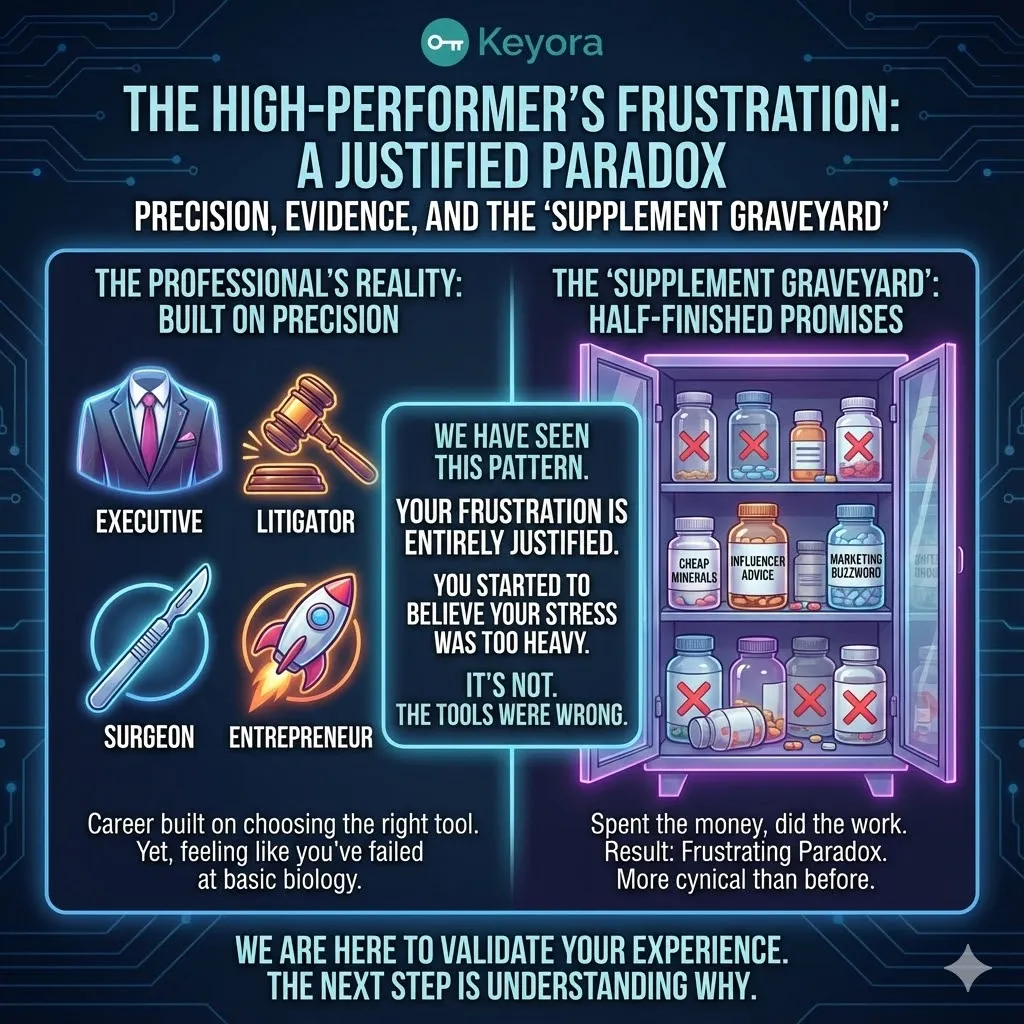
For the high – performer, this failure is particularly galling.
You are the executive, the litigator, the surgeon, the entrepreneur.
You have built your entire career on the pillars of precision and evidence.
You pride yourself on choosing the right tool for every high – stakes job.
Yet, here you are, feeling like you’ve failed at a seemingly simple task.

You feel as though you cannot even manage the basic mechanics of your own biology.
You followed the health podcasts and the influencer advice.
You spent the money and you did the work.
The result, however, was a frustrating paradox.
It was an exercise in futility that left you more cynical than when you began.
You began to wonder if “nutritional neurology” was just another marketing buzzword.
You started to believe that your stress was simply too heavy for any mineral to lift.
We have seen this pattern in our research time and time again.
It is the “Supplement Graveyard” found in the cabinets of the world’s most successful people.
Half – finished bottles of cheap minerals that promised the world and delivered nothing but disappointment.
We are here to tell you that the frustration you feel is entirely justified.
The New Paradigm – Introducing Key Concepts
Let us be clear: You did not fail.
The product failed you.
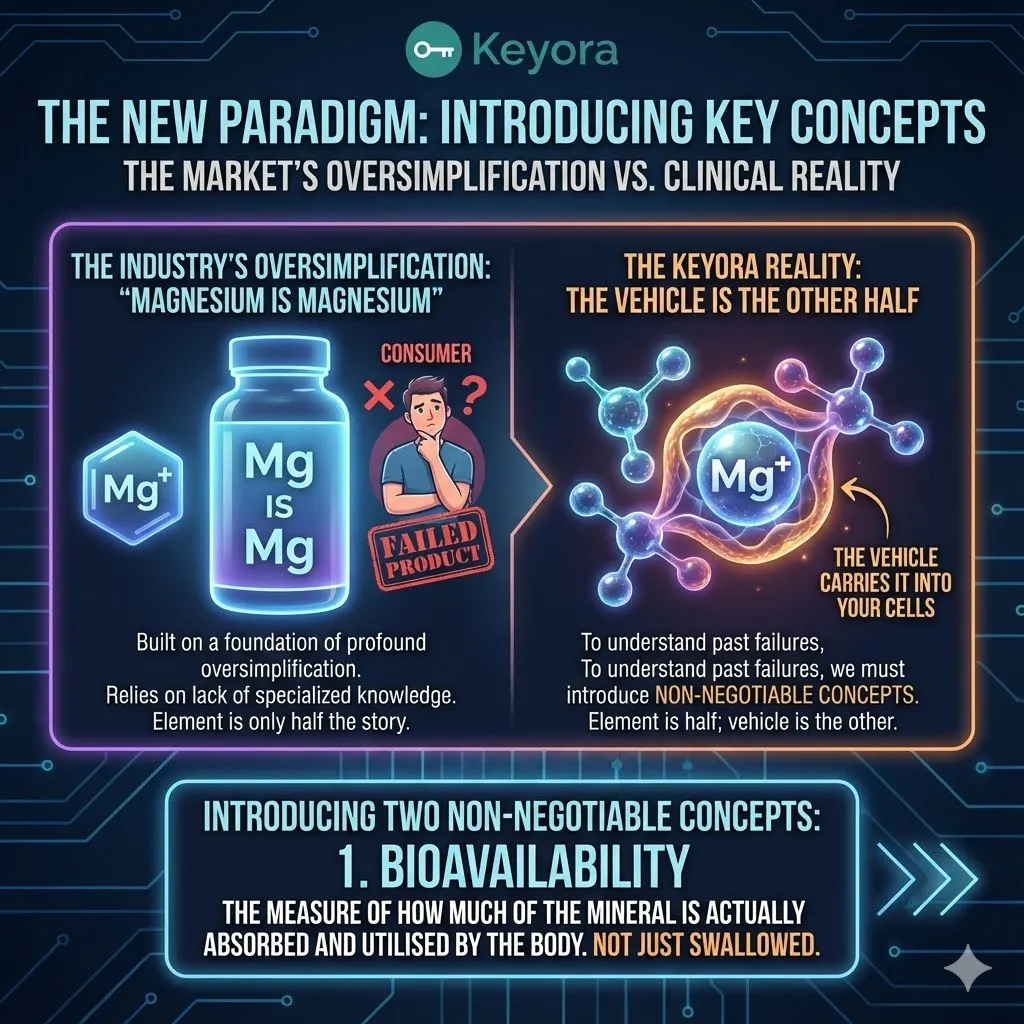
And it failed you because the entire consumer market for magnesium is built upon a foundation of profound oversimplification.
The industry relies on your lack of specialized biochemical knowledge to move inventory.
For too long, the narrative has been “magnesium is magnesium.”
But in the world of clinical research, we know that the element is only half the story.
The other half is the vehicle that carries it into your cells.
To understand why your past attempts failed, we must introduce two non – negotiable concepts.
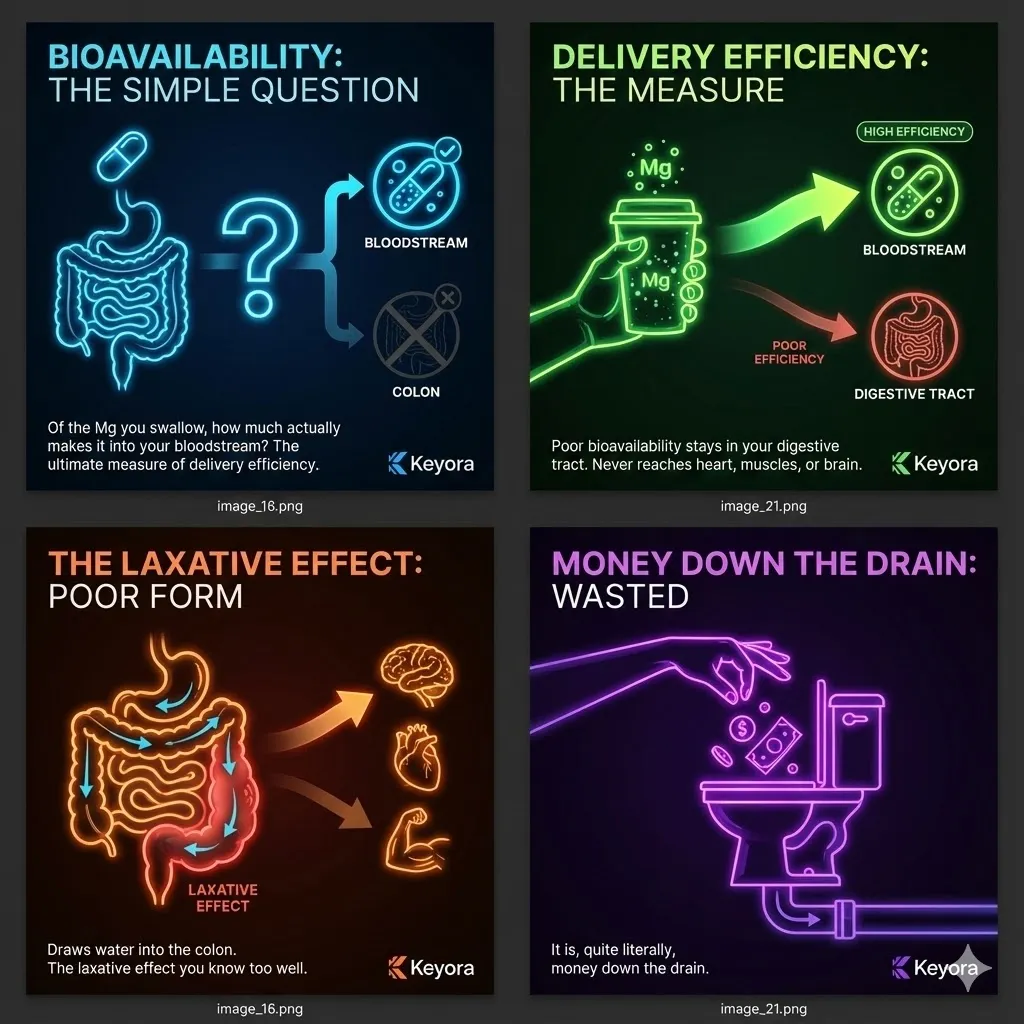
The first concept is Bioavailability.
It asks a deceptively simple question.
Of the magnesium you swallow, how much actually makes it into your bloodstream?
Bioavailability is the ultimate measure of delivery efficiency.
If a form has poor bioavailability, it stays in your digestive tract.
There, it draws water into the colon and creates the laxative effect you may know all too well.
It never reaches your heart, your muscles, or your brain.
It is, quite literally, money down the drain.
The second, more nuanced concept is Bioactivity.
This is the “Keyora” lens through which we view nutritional science.
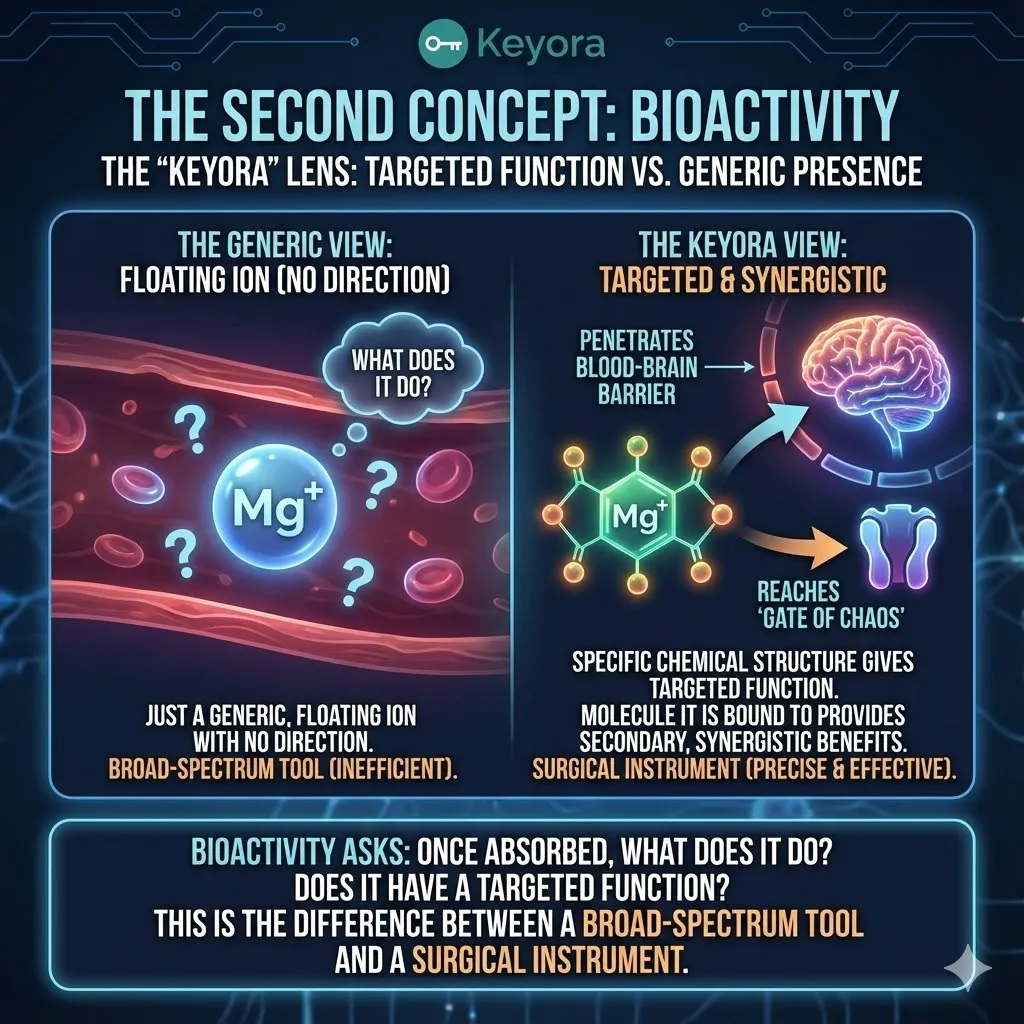
Bioactivity asks: Once that magnesium is in your bloodstream, what does it actually do?
Is it just a generic, floating ion with no direction?
Or does its specific chemical structure give it a targeted function?
Can it actively penetrate the blood – brain barrier to reach the “Gate of Chaos” we discussed?
Does the molecule it is bound to provide its own secondary, synergistic benefits?
This is the difference between a broad – spectrum tool and a surgical instrument.
The thesis of this deep – dive is simple.
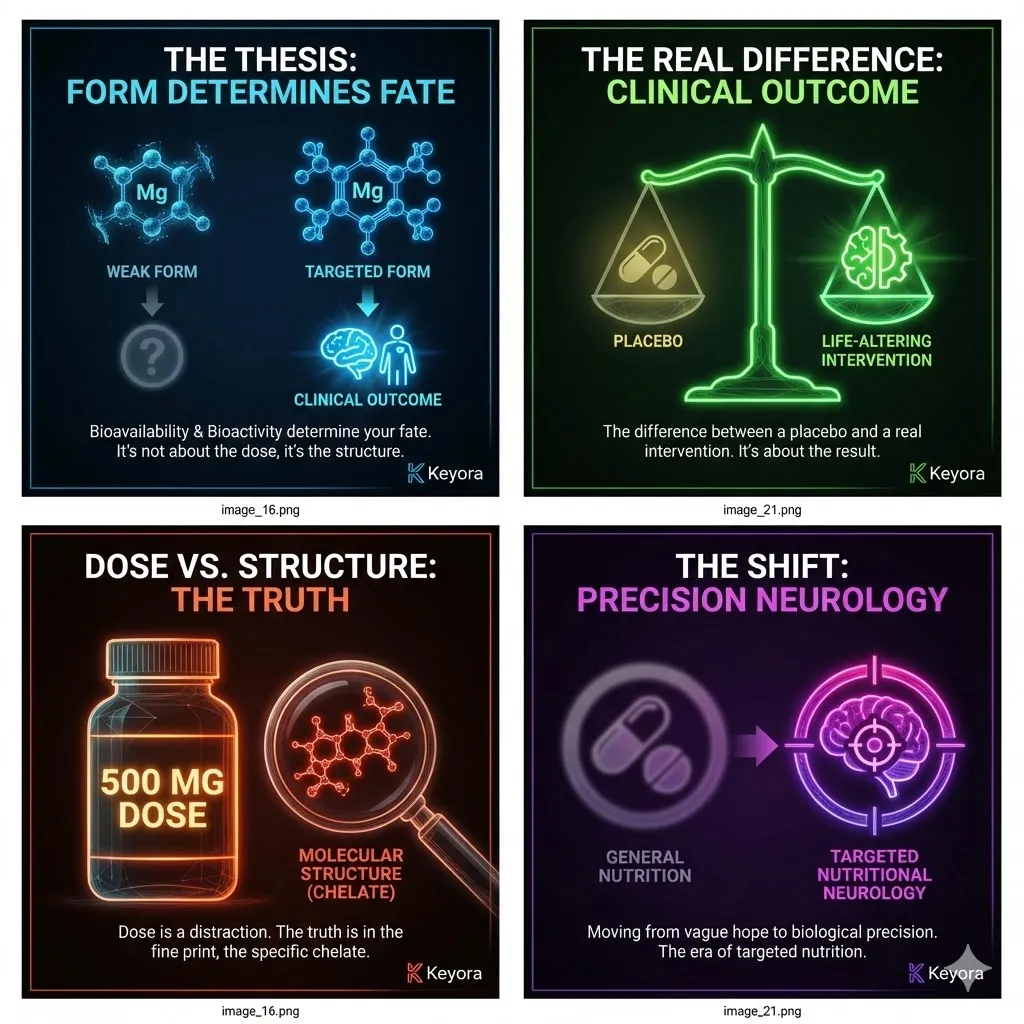
The form of magnesium you choose determines its bioavailability and its bioactivity.
These two factors, in turn, determine your clinical outcome.
They are the difference between a placebo and a life – altering intervention.
It is not about the milligram dose printed on the front of the bottle.
That number is often a distraction from the structural reality of the ingredient.
The truth is found in the molecular structure described in the fine print.
It is found in the specific “chelate” or “salt” that governs the mineral’s fate.
We are moving past the era of “General Nutrition.”
We are entering the era of Targeted Nutritional Neurology.
This requires a shift in how you view every capsule you take.
It requires moving from a state of vague hope to a state of biological precision.
The Mission – Our Pledge for This Episode
This Keyora Research Note is designed to be your definitive guide through this confusing landscape.
We know you don’t have time to sort through thousands of conflicting peer – reviewed papers.
We have done that work for you.
We are here to act as your scientific counsel in the “Magnesium Matrix.”
Our mission is to systematically examine the evidence for every major form on the market.
We will move beyond the marketing slogans and the “ancient” origin stories.
We will look exclusively at the published clinical data and the pharmacokinetic profiles.
We will show you exactly where the breakdown in trust occurs.
We will begin by deconstructing the foundational flaws of the most common, inorganic forms.
We will explain why the minerals found in most “drugstore” brands are biologically inaccessible.
You will learn why these forms are better suited for industrial use than human neurology.

This is where most people’s journey ends – in the realm of poor absorption.
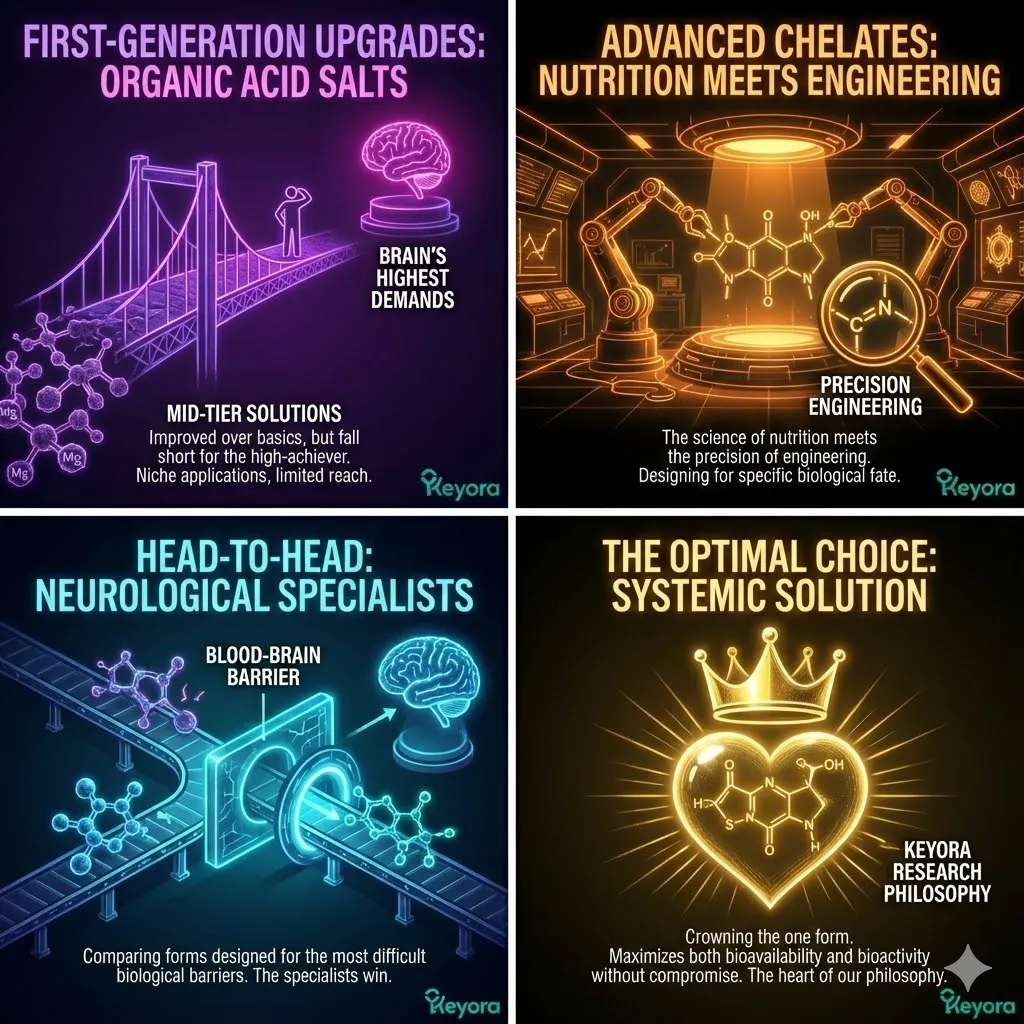
We will then explore the first – generation upgrades – the organic acid salts.
We will define their specific limits and their niche applications.
While an improvement over the basics, we will show you why they still fall short for the high – achiever.
They are the “mid – tier” solutions that often leave the brain’s highest demands unmet.
Finally, we will enter the world of advanced chelates.
This is where the science of nutrition meets the precision of engineering.
We will conduct a head – to – head comparison of the “neurological specialists.”
We will look at the forms specifically designed to cross the most difficult biological barriers.
Our journey will culminate in crowning the one form that the evidence proves is the optimal choice.
We will identify the systemic solution for the high – stress brain.
This is the form that maximizes both bioavailability and bioactivity without compromise.
It is the molecule that forms the heart of our own research philosophy.
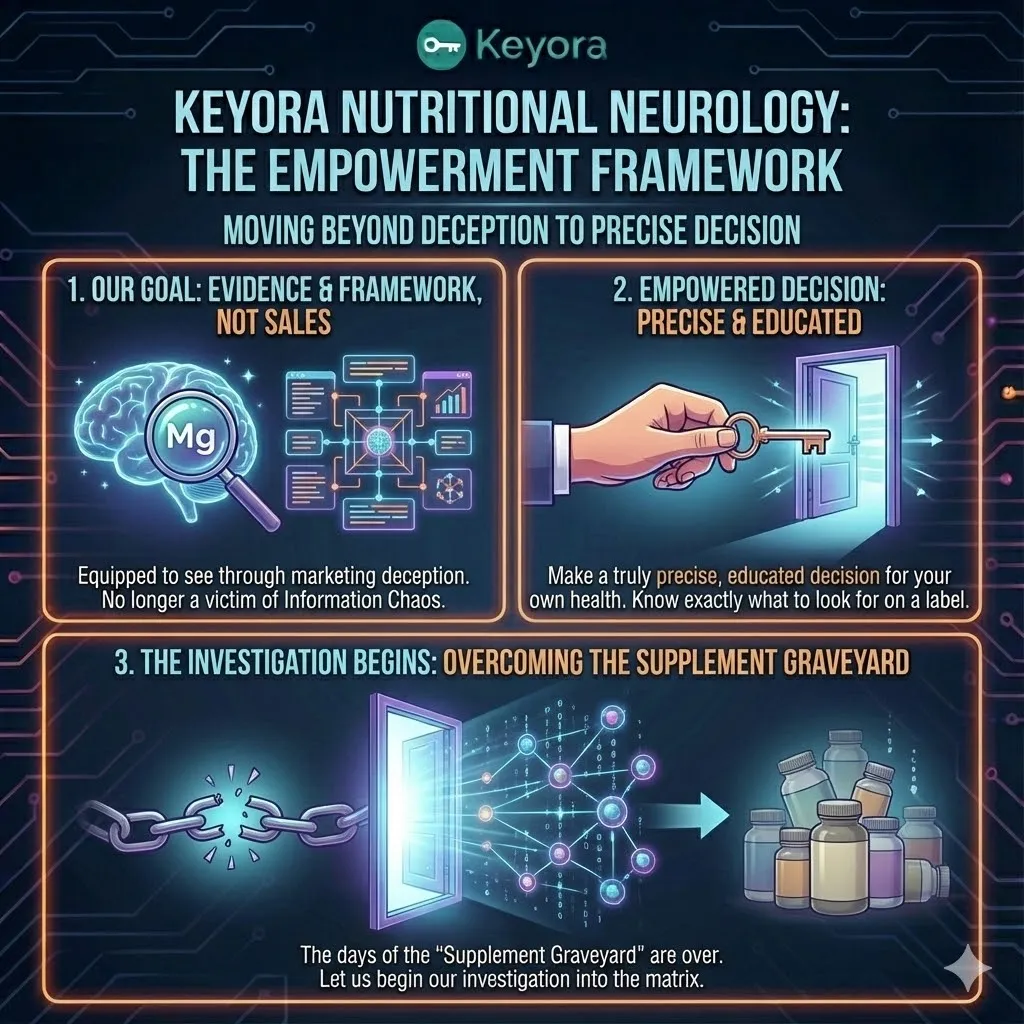
Our goal is not to sell you a conclusion.
It is to give you the evidence and the framework to build your own.
By the end of this analysis, you will be equipped to see through the marketing deception.
You will no longer be a victim of the “Information Chaos” we identified in Episode 1.
You will be empowered to make a truly precise, educated decision for your own health.
You will know exactly what to look for on a label, and more importantly, what to avoid.
The days of the “Supplement Graveyard” are over.
Let us begin our investigation into the matrix.
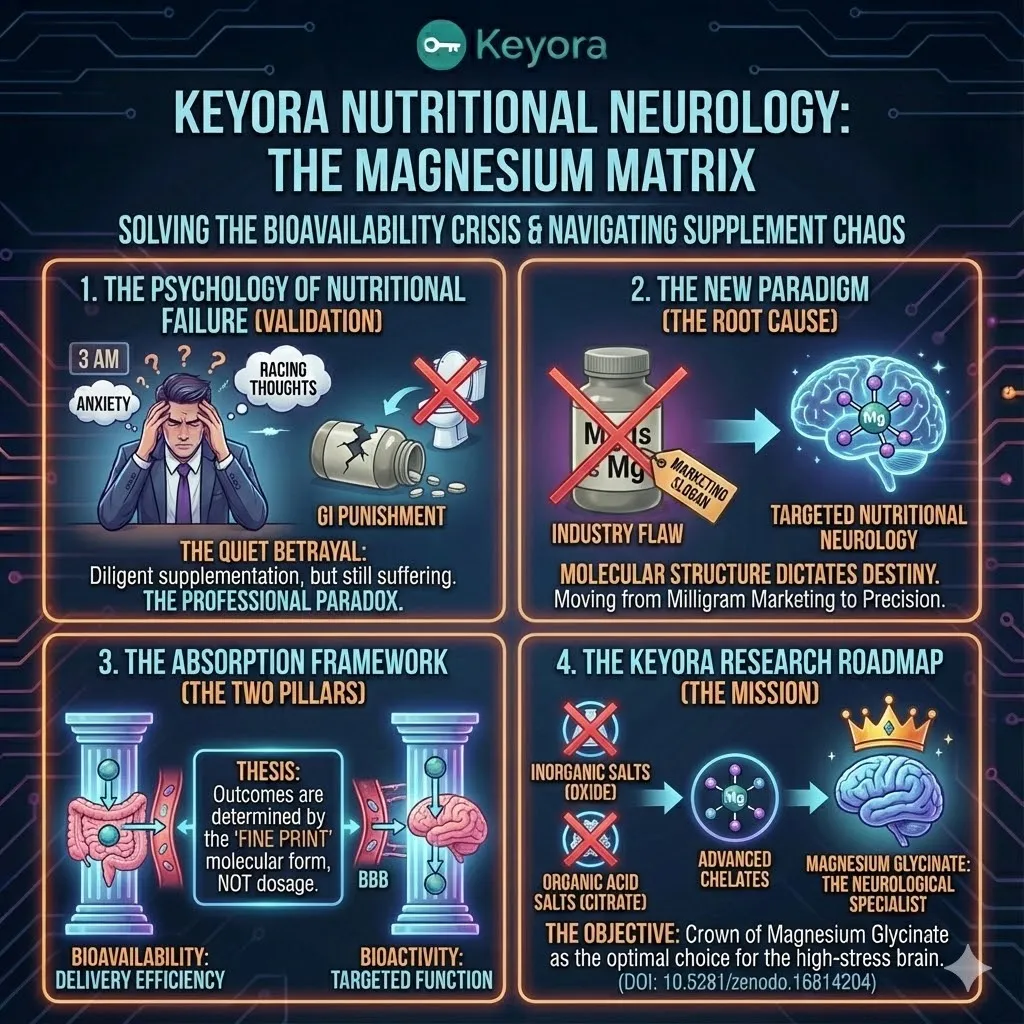
– Series Theme: **Keyora Nutritional Neurology** (Magnesium Glycinate).
– Episode Concept: **The Magnesium Matrix** (Solving the Bioavailability Crisis & Navigating Supplement Chaos).
– Core Pathology: **The “Supplement Graveyard”** (Cynicism induced by ineffective, oversimplified formulations).
– **1. The Psychology of Nutritional Failure (Validation)**:
– *The Visceral Reality*: High-performers often experience a “Quiet Betrayal”—continuing to suffer from 3 AM racing thoughts and anxiety despite diligent supplementation.
– *The GI Cost*: Many generic magnesium forms act as “Gastrointestinal Punishments,” resulting in laxative effects rather than the promised neurological calm.
– *The Professional Paradox*: Executives and professionals, who value precision and evidence, are left feeling personally responsible for a failure that is fundamentally biological.
– **2. The New Paradigm (The Root Cause)**:
– *The Industry Flaw*: The consumer market is built on the oversimplification that “Magnesium is Magnesium,” ignoring the vehicle that carries the ion.
– *The Shift*: Moving from “Vague Hope” and “Milligram Marketing” to a state of **Targeted Nutritional Neurology** where molecular structure dictates destiny.
– **3. The Absorption Framework (The Two Pillars)**:
– *Pillar I: Bioavailability*: Defined as **Delivery Efficiency**. It measures the percentage of magnesium that successfully crosses the intestinal wall into the bloodstream rather than staying in the gut as a laxative.
– *Pillar II: Bioactivity*: Defined as **Targeted Function**. It measures what the molecule does post-absorption, specifically its ability to penetrate the Blood-Brain Barrier (BBB) and execute neuro-regulatory tasks.
– *The Thesis*: Clinical outcomes are determined by the “fine print” molecular form (Chelates vs. Salts), not the dosage on the front of the bottle.
– **4. The Keyora Research Roadmap (The Mission)**:
– *The Deconstruction*: Systematic analysis of Inorganic Salts (Oxide) vs. Organic Acid Salts (Citrate).
– *The Evolution*: Navigating toward **Advanced Chelates** to identify the “Neurological Specialist.”
– *The Objective*: Crown of **Magnesium Glycinate** as the optimal choice for bioavailability and bioactivity in the high-stress brain (DOI: 10.5281/zenodo.16814204)
Chapter 1: The Foundational Barrier: Why Inorganic Magnesiums Fail the First Test
1.1: The Illusion of Potency: Deconstructing the “High Elemental Content” Myth of Magnesium Oxide
On the surface, the choice seems obvious to the uninitiated consumer.
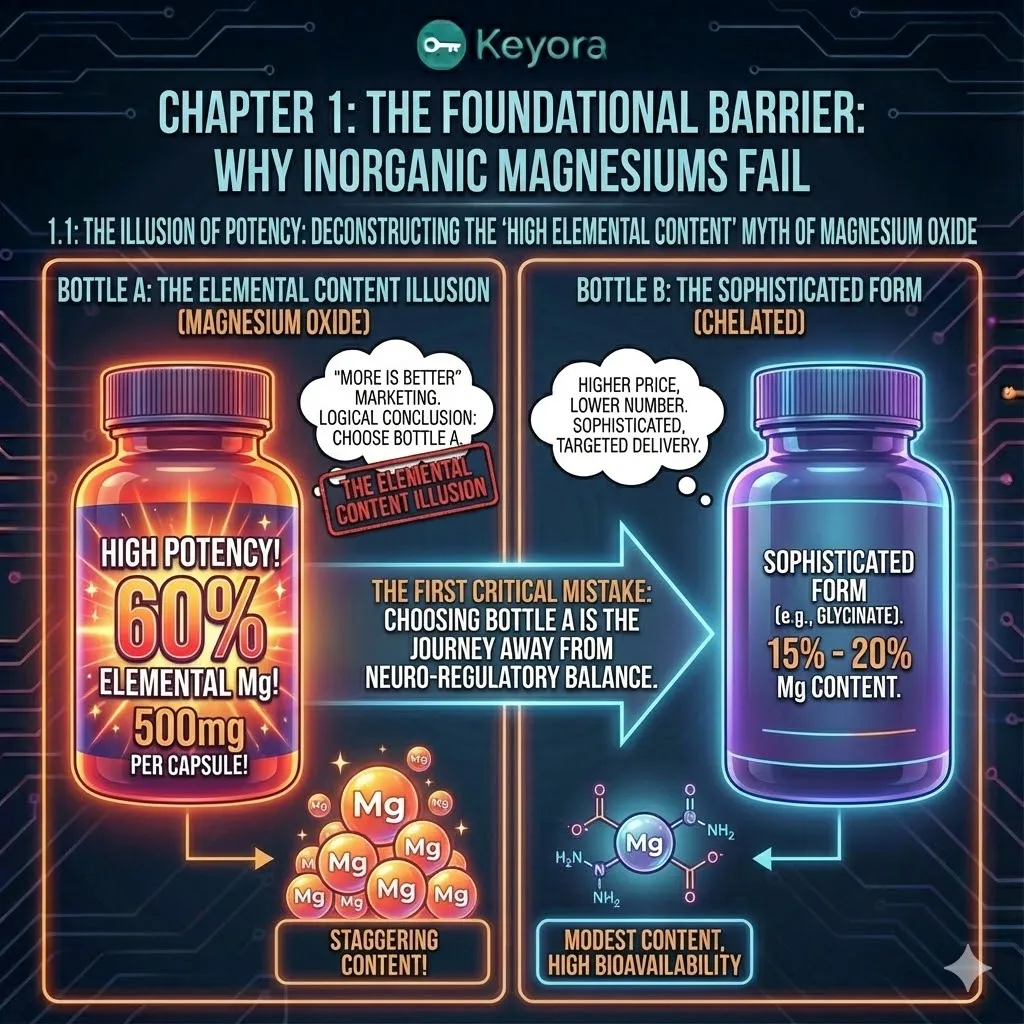
You stand in the aisle of a well – stocked pharmacy, or perhaps you are scrolling through a crowded digital marketplace. You are holding two bottles in your hands.
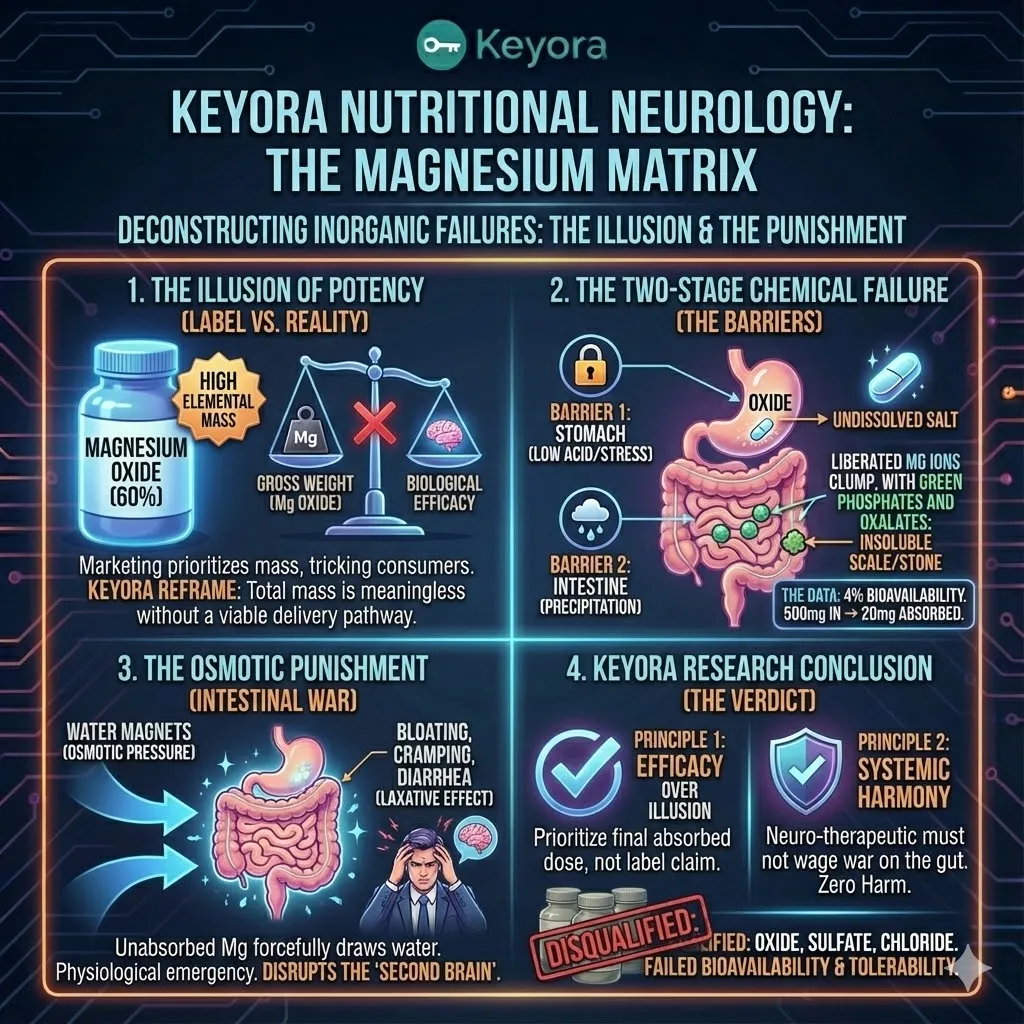
Bottle A, containing Magnesium Oxide, boasts a staggering 60% elemental magnesium content. The label is bold. It promises a “high – potency” dose of 500mg per capsule.
Bottle B, representing a more sophisticated form, offers a seemingly modest 15% or 20%. The price for Bottle B is often higher, despite the lower number on the front of the pack.
The logical conclusion, fueled by decades of “more is better” marketing, is to choose Bottle A. This is the first, and most critical, mistake in the journey toward neuro – regulatory balance.
At Keyora Research, we categorize this phenomenon as “The Elemental Content Illusion.”
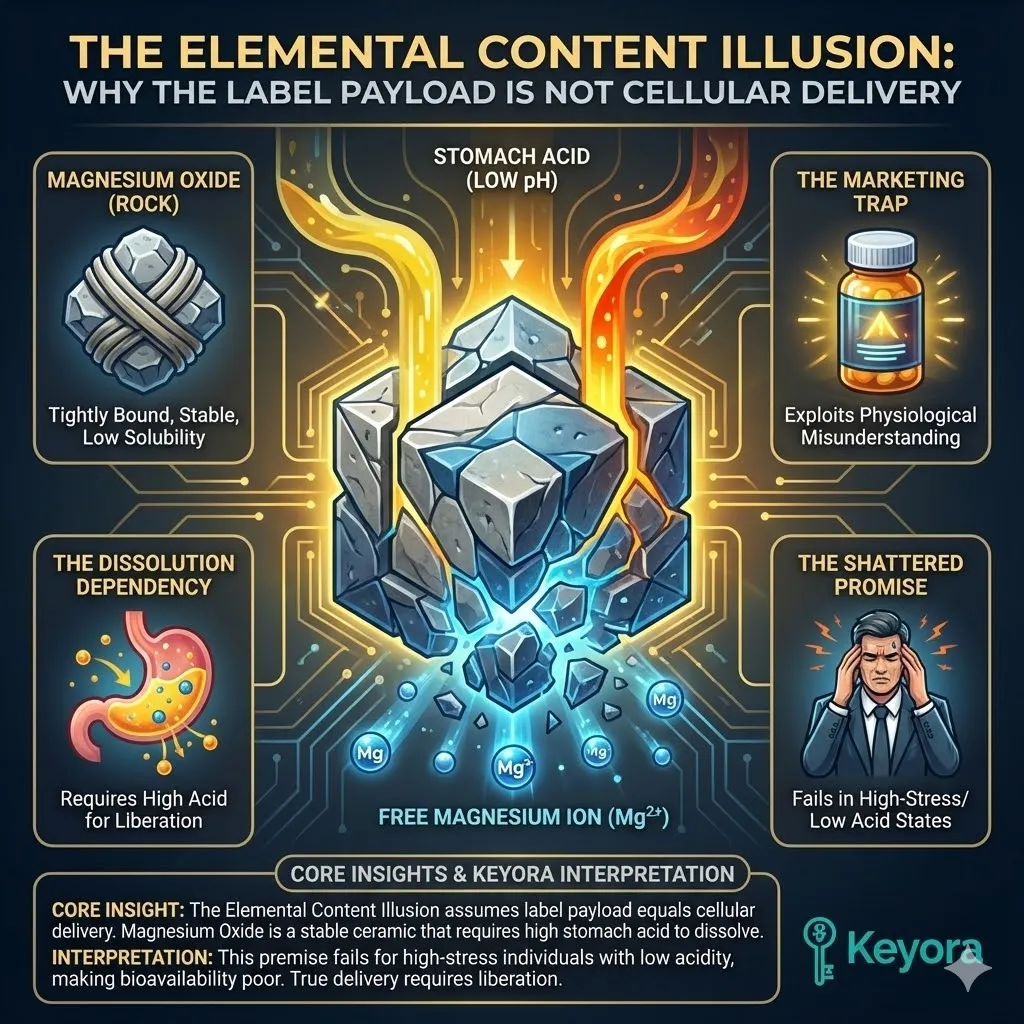
It is a sophisticated marketing trap that exploits a fundamental misunderstanding of human physiology. It assumes that the “payload” on the label is identical to the “delivery” in the cell.
To understand why this premise is flawed, we must first examine the basic chemistry of Magnesium Oxide. Inorganic salts like Oxide are essentially geological compounds. Magnesium Oxide is a tightly bound, alkaline, ceramic – like powder.
In its dry state, it is exceptionally stable. However, in the context of human nutrition, that stability is your greatest enemy. For a mineral to be absorbed, it must first be liberated from its chemical bond.
This process is known as dissolution. Magnesium Oxide has extremely low water solubility. It is, for all intents and purposes, a rock.
Its only hope of liberation lies in its interaction with your stomach acid. It is absolutely dependent on a highly acidic environment – a low pH – to break the oxide bond. Only once this bond is severed can the free magnesium ion (Mg2+) be made available for transport.
This dependency on stomach acid is where the promise begins to shatter. It shatters precisely for the very people who need magnesium most.
Consider the high – stress executive or the professional operating in a high – stakes environment.
Our research at Keyora consistently highlights the impact of chronic cortisol elevation on the gut.
Cortisol dominance is a known suppressor of gastric acid secretion.
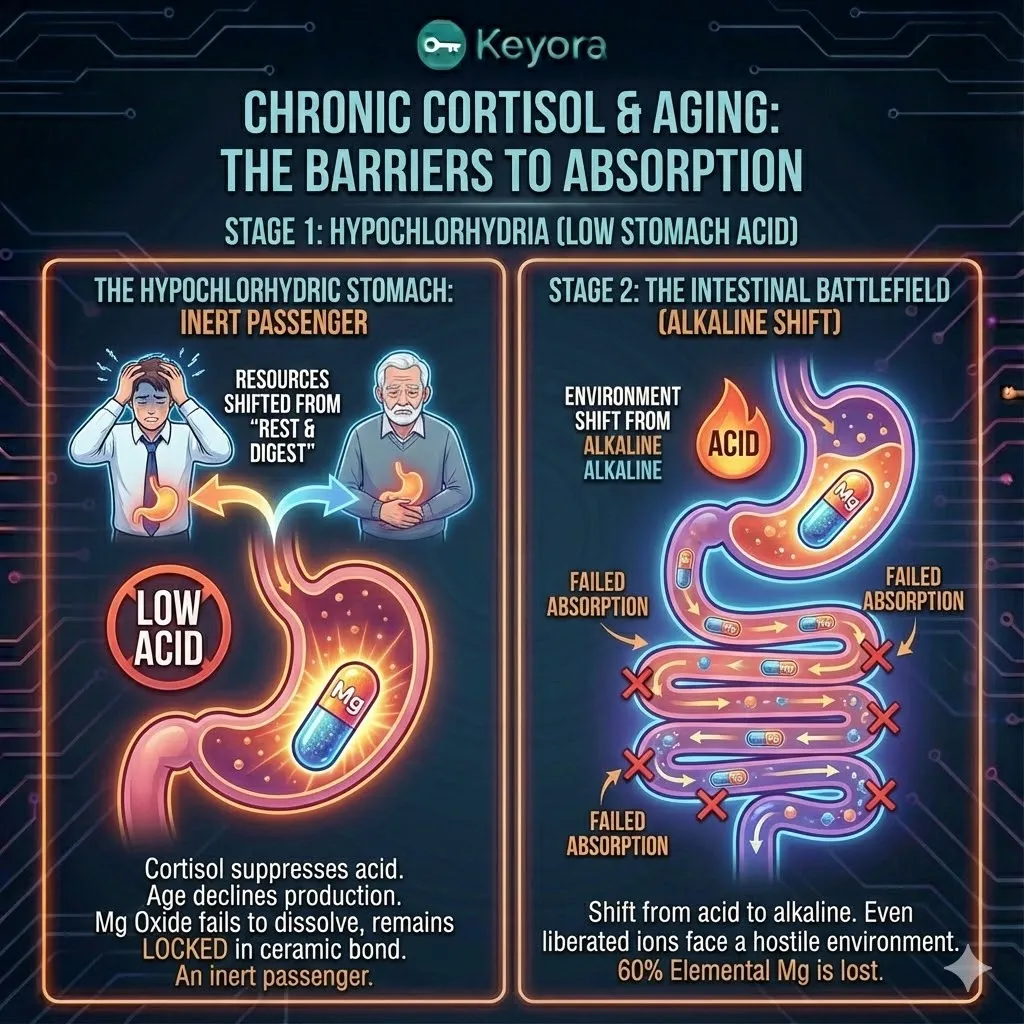
Under the weight of chronic stress, the body shifts resources away from “rest and digest.” The result is often Hypochlorhydria – a state of chronically low stomach acid. Without sufficient acid, the “high – potency” Magnesium Oxide capsule cannot be dissolved.
The professional over the age of 40 or the menopausal woman faces a similar barrier. Gastric acid production naturally and significantly declines with age. For these individuals, the stomach acts more like a transit station than a laboratory.
The Magnesium Oxide capsule enters, fails to dissolve, and moves forward. The “60% elemental magnesium” remains locked in its ceramic bond. It is an inert passenger on a journey through your digestive system.
However, the failure does not end at the stomach. Even the small percentage of magnesium ions that are liberated face a second, hostile environment. As the contents of the stomach enter the small intestine, the environment shifts from acid to alkaline.
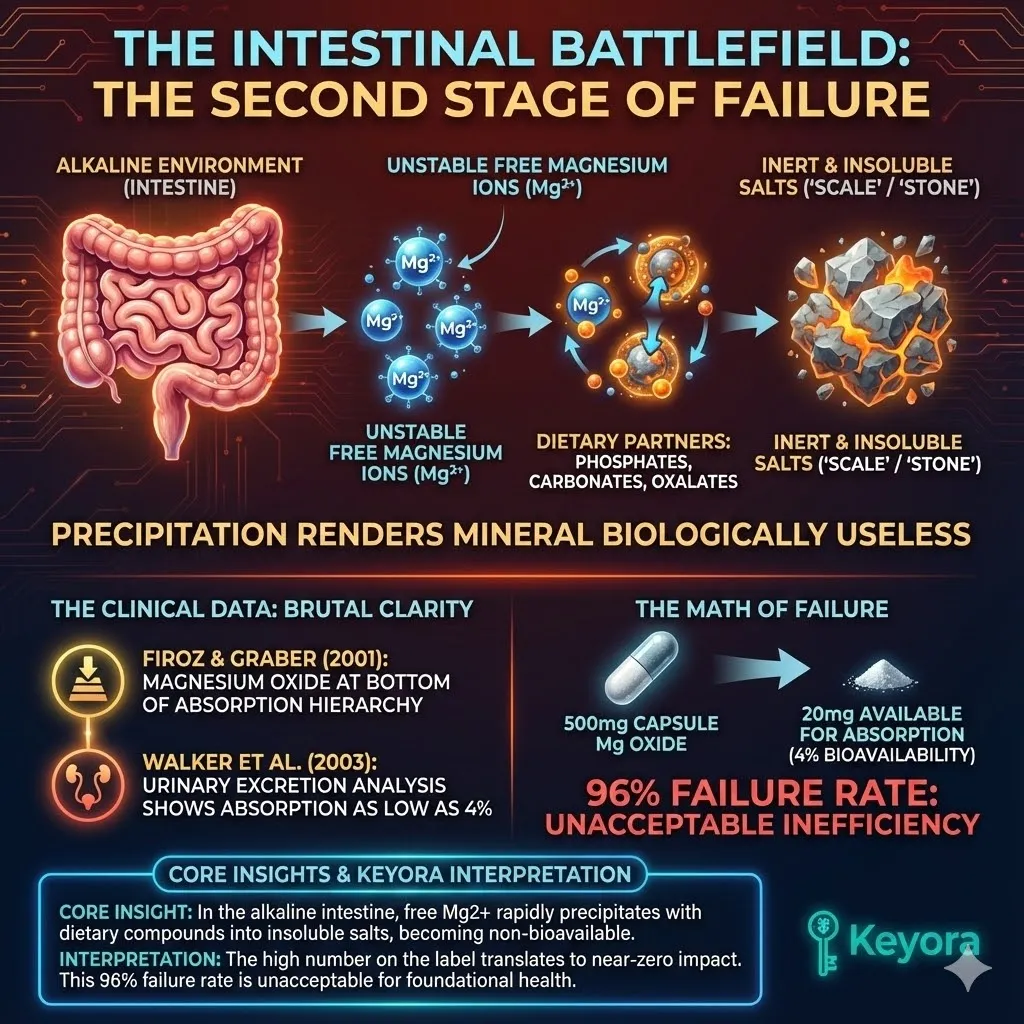
This is the “Intestinal Battlefield.”
In this alkaline environment, free magnesium ions are highly unstable. They seek new partners to bind with.
They rapidly precipitate out of solution by binding with dietary phosphates, carbonates, and oxalates. They form new, inert, and insoluble salts like magnesium phosphate. In our laboratory metaphors, we describe this as “scale” or “stone” forming in the gut.
This precipitation renders the mineral biologically useless. The ion that was supposed to reach your brain is now an insoluble sediment in your intestine. The “high number” on the label has effectively translated to near – zero impact in your cells.
The clinical data confirms this two – stage failure with brutal clarity. When we at Keyora Research review the literature, the conclusions are stark and consistent. The marketing claims of the supplement industry do not survive the scrutiny of peer – reviewed trials.
Seminal studies comparing the bioavailability of commercial preparations are revealing. The 2001 paper by Firoz & Graber in Magnesium Research is a foundational text here. It placed magnesium oxide at the absolute bottom of the absorption hierarchy.
Follow – up studies, like the 2003 human trial by Walker et al., reinforced these findings. They utilized more advanced measurement techniques, including urinary excretion analysis. These trials demonstrated bioavailability rates frequently estimated to be as low as 4% (Firoz & Graber, 2001; Walker et al., 2003).
Consider the math of this failure. For every 500mg capsule of Magnesium Oxide you swallow, a mere 20mg might be available for absorption. And even that 20mg is not guaranteed to reach the target tissue.
In the world of high – stakes performance, a 96% failure rate is unacceptable. You would not accept this level of inefficiency in your business or your professional practice. Why, then, should you accept it in your foundational biological support?
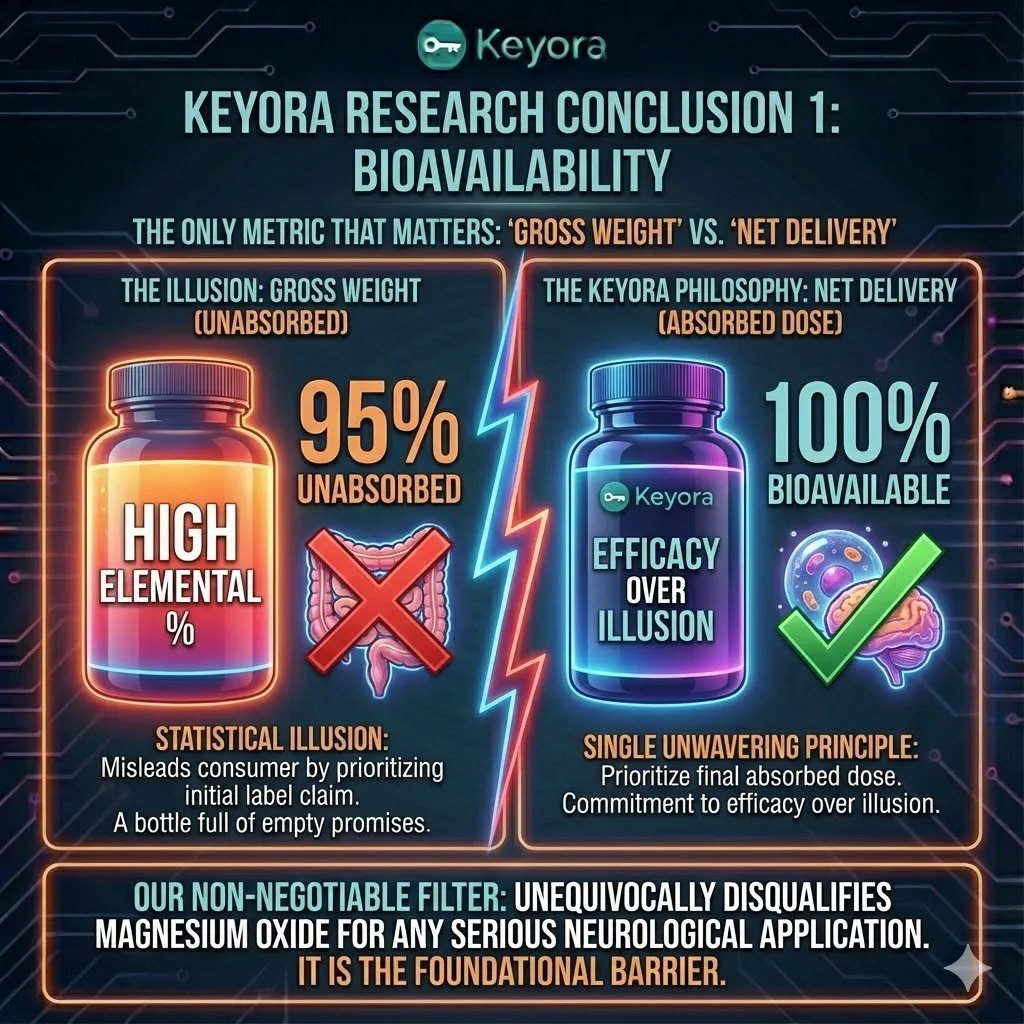
Keyora Research Conclusion 1: Bioavailability is the only metric that matters.
A high elemental percentage on a label without a viable absorption pathway is a statistical illusion. It is designed to mislead the consumer by prioritizing “gross weight” over “net delivery.”
Our formulation philosophy at Keyora is built on a single, unwavering principle.
We prioritize the final absorbed dose, not the initial label claim. This commitment to “efficacy over illusion” is our first, non – negotiable filter.
It unequivocally disqualifies magnesium oxide for any serious neurological application.
1.2: The Osmotic Punishment: The Unseen Physiological Cost of Unabsorbed Magnesium
A 4% absorption rate is profoundly disappointing. But we must ask a deeper question: Is it actively harmful?
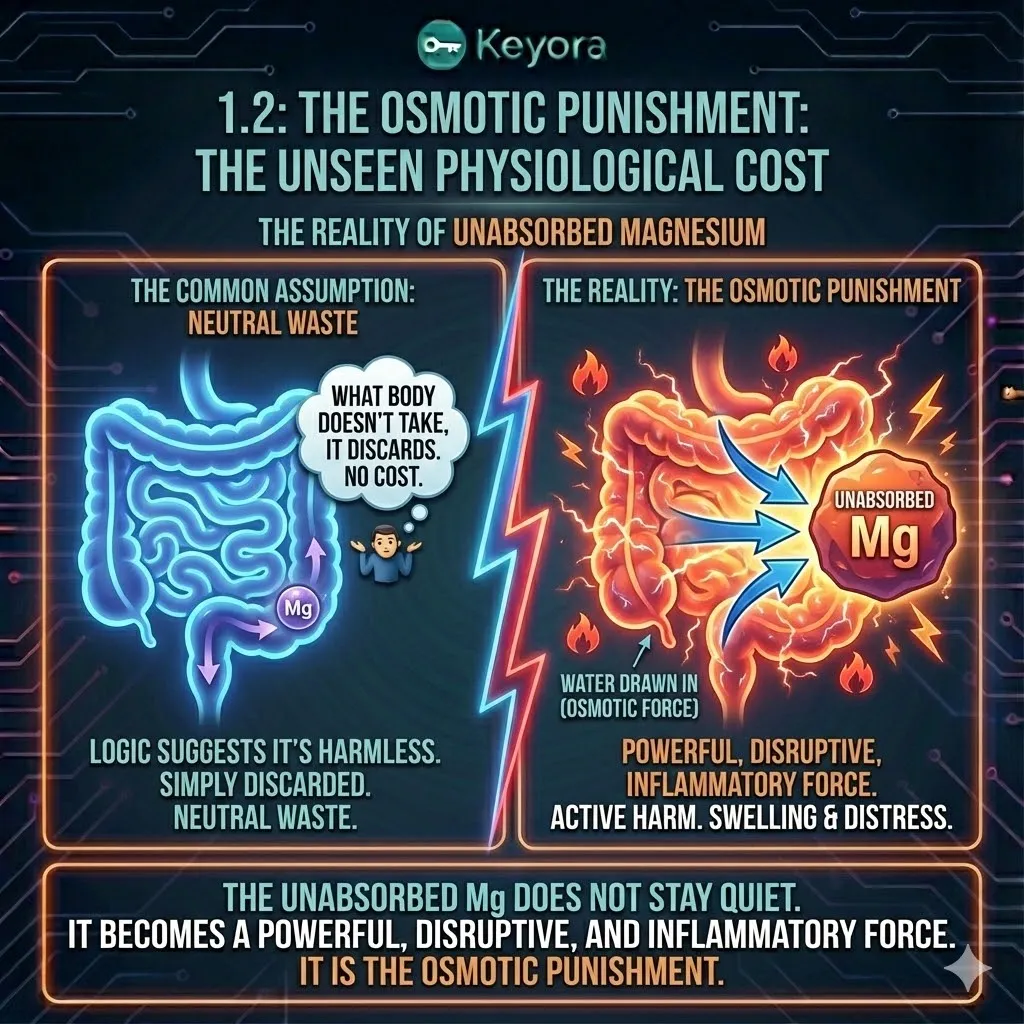
The common assumption is that unabsorbed minerals are simply neutral waste. The logic suggests that what your body doesn’t take, it simply discards without cost. The answer, unfortunately, is a resounding no.
What remains in the gut does not stay quiet. It becomes a powerful, disruptive, and inflammatory force.
At Keyora, we call this “The Osmotic Punishment.”
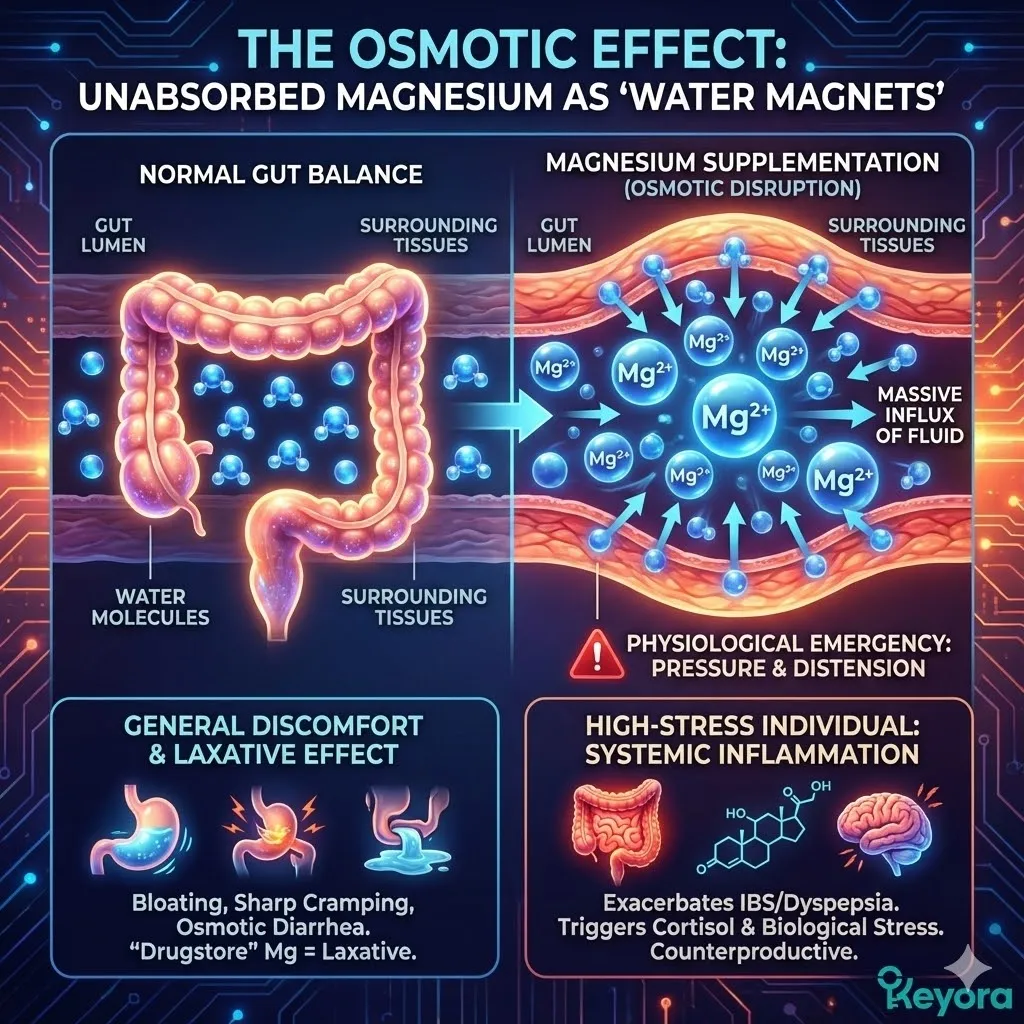
To understand this, we must look at the science of osmosis in the intestinal tract. Imagine the billions of unabsorbed magnesium ions sitting in your small intestine. They are not inert; they are electrically charged and highly active.
Think of these ions as a massive spill of tiny, powerful “water magnets.” Per the fundamental laws of physics, water will always move toward areas of higher solute concentration. This is the process of seeking equilibrium between your body’s tissues and the gut lumen.
As these “water magnets” sit in your intestine, they begin to pull. They draw water out of your surrounding tissues and into the intestinal cavity. Your body, in a desperate attempt to dilute the concentration, floods the gut with fluid.
This is not a gentle or regulated process. It is a physiological emergency. The sudden influx of water creates massive pressure on the intestinal walls.
For the average person, this results in the familiar and miserable discomfort of the supplement. It causes bloating, sharp cramping, and osmotic diarrhea. This is the primary reason why “drugstore” magnesium is synonymous with laxative effects.
But for the high – stress individual, the consequences are more sinister. Our research into the gut – brain axis reveals a more complex picture. Chronic stress is known to dysregulate the intestinal lining and alter gut motility.
The high – stress executive often operates with a hyper – sensitive gut. This is frequently diagnosed as Irritable Bowel Syndrome (IBS) or functional dyspepsia. For this individual, introducing a potent osmotic agent is like throwing fuel on a fire.
It exacerbates existing systemic inflammation. It creates a state of physical distress that triggers further cortisol release. Instead of solving your anxiety, the supplement has created a new source of biological stress.
You took the supplement to calm your nervous system. Instead, you have spent the morning dealing with gastrointestinal urgency. This is the height of therapeutic counterproductivity.
This osmotic disruption is not unique to Oxide. It is a characteristic of almost all inorganic magnesium salts. Let us briefly profile the other common offenders in this category.
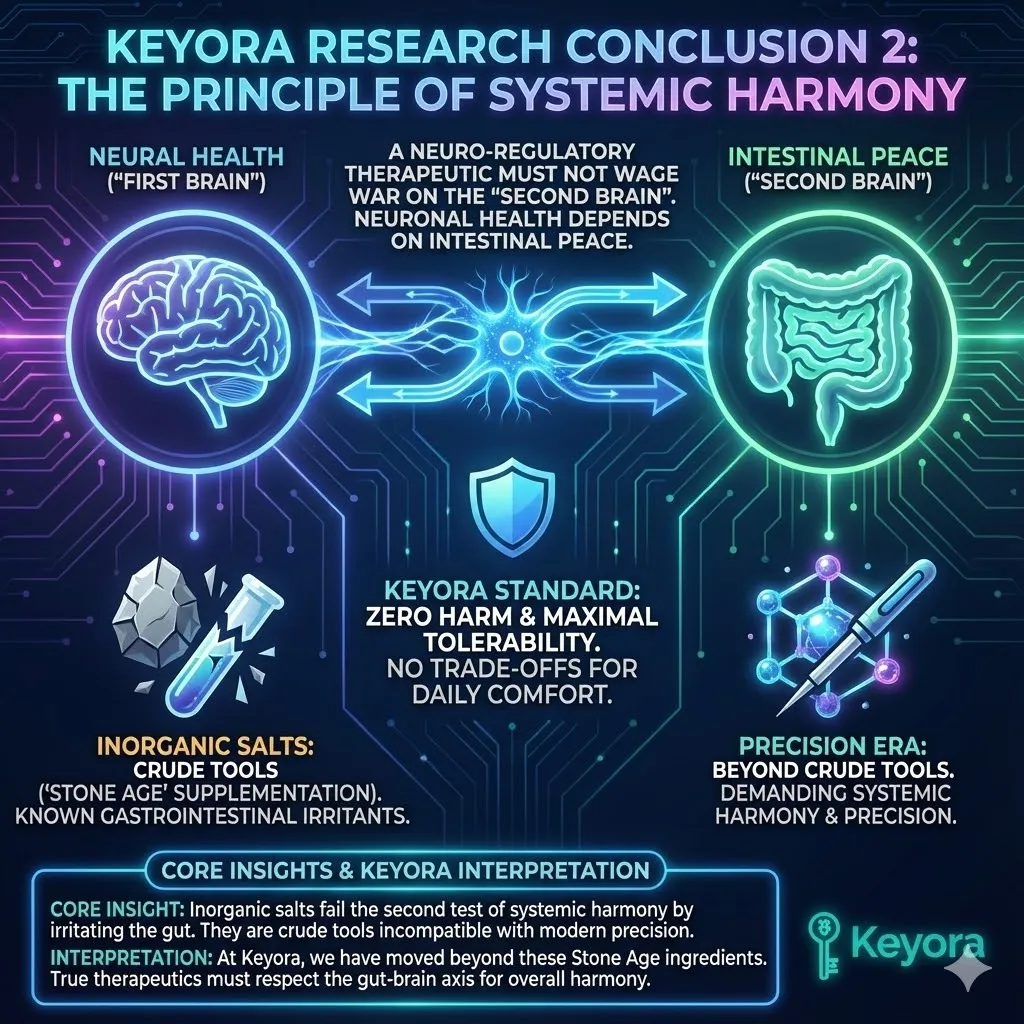
Magnesium Sulfate, commonly known as Epsom Salts, is the textbook case.
While it has its place in a soaking bath, its oral use is almost purely medicinal. It is used in clinical settings specifically as a potent osmotic laxative.
It has no place in a daily neuro – regulatory protocol. It is a blunt instrument designed for “evacuation,” not for the “nourishment” of the brain. Its absorption rate is equally poor, and its gut irritation is high.
Magnesium Chloride is often presented as a superior inorganic alternative.
It is true that it has better water solubility than Oxide.
However, it still functions as a crude salt in the digestive tract.
It contributes significantly to the osmotic load. Furthermore, it can be notoriously harsh on the sensitive stomach lining. Many users report a “burning” sensation or acute nausea shortly after consumption.
For the professional whose gut health is already compromised by the “fight or flight” lifestyle, these are unacceptable risks. You cannot optimize your brain by irritating your gut. The two systems are inextricably linked.
Any disruption in the gut microbiome or intestinal motility sends immediate stress signals to the brain. It triggers the activation of the very HPA axis we are trying to stabilize. The “cure” has become part of the pathology.
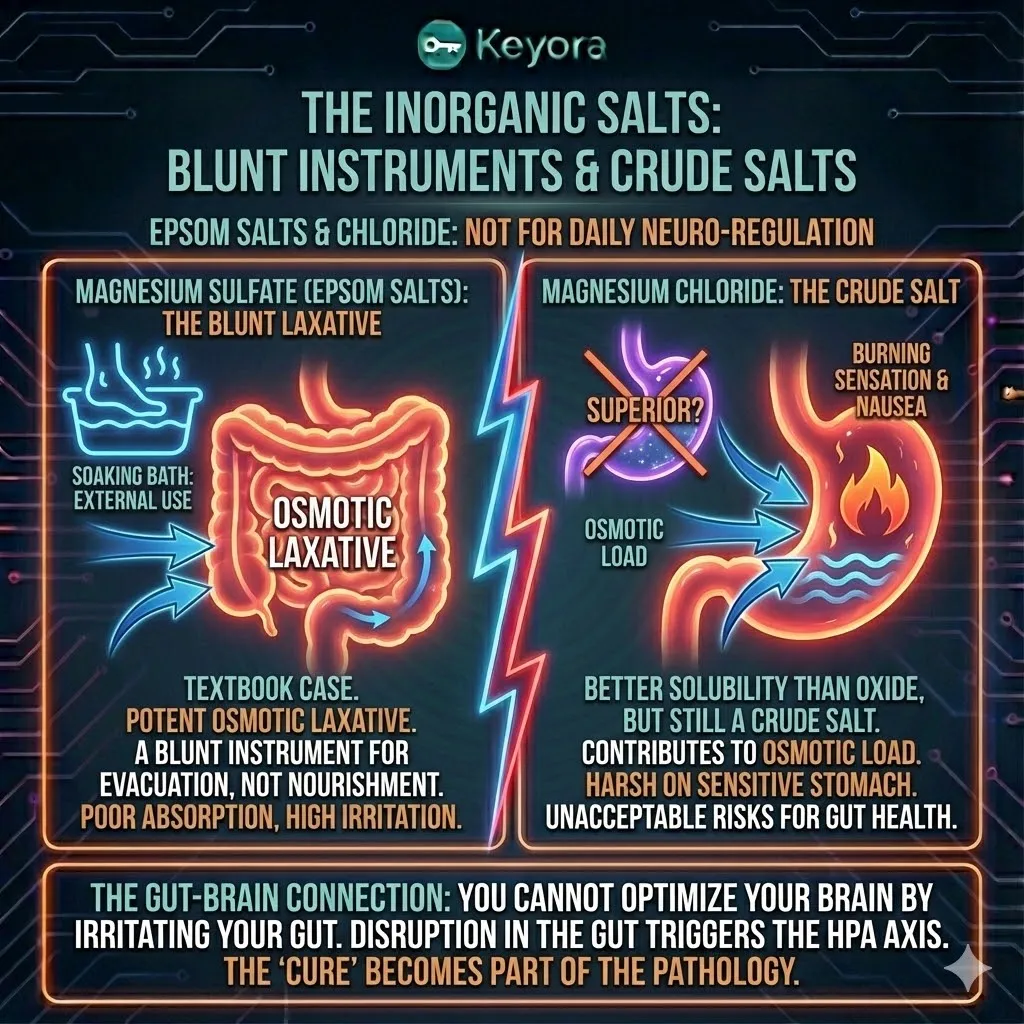
Keyora Research Conclusion 2: The Principle of Systemic Harmony.
A true neuro – regulatory therapeutic must not wage war on another biological system. Especially not the gut, which we now understand to be the “second brain.” The health of your neurons depends on the peace of your intestines.
For the modern professional, any ingredient that is a known gastrointestinal irritant is a failure. Our standard of “zero harm and maximal tolerability” is absolute. We do not believe in trade – offs that compromise your daily comfort for a theoretical mineral gain.
This is the second, equally important reason why inorganic salts are fundamentally incompatible with our work. They are crude tools in an era that demands precision. They represent the “Stone Age” of supplementation.
They fail the first test of absorption. And they fail the second test of systemic harmony. At Keyora, we have moved beyond them.
1.3: Chapter Summary: A Verdict on the Inorganics
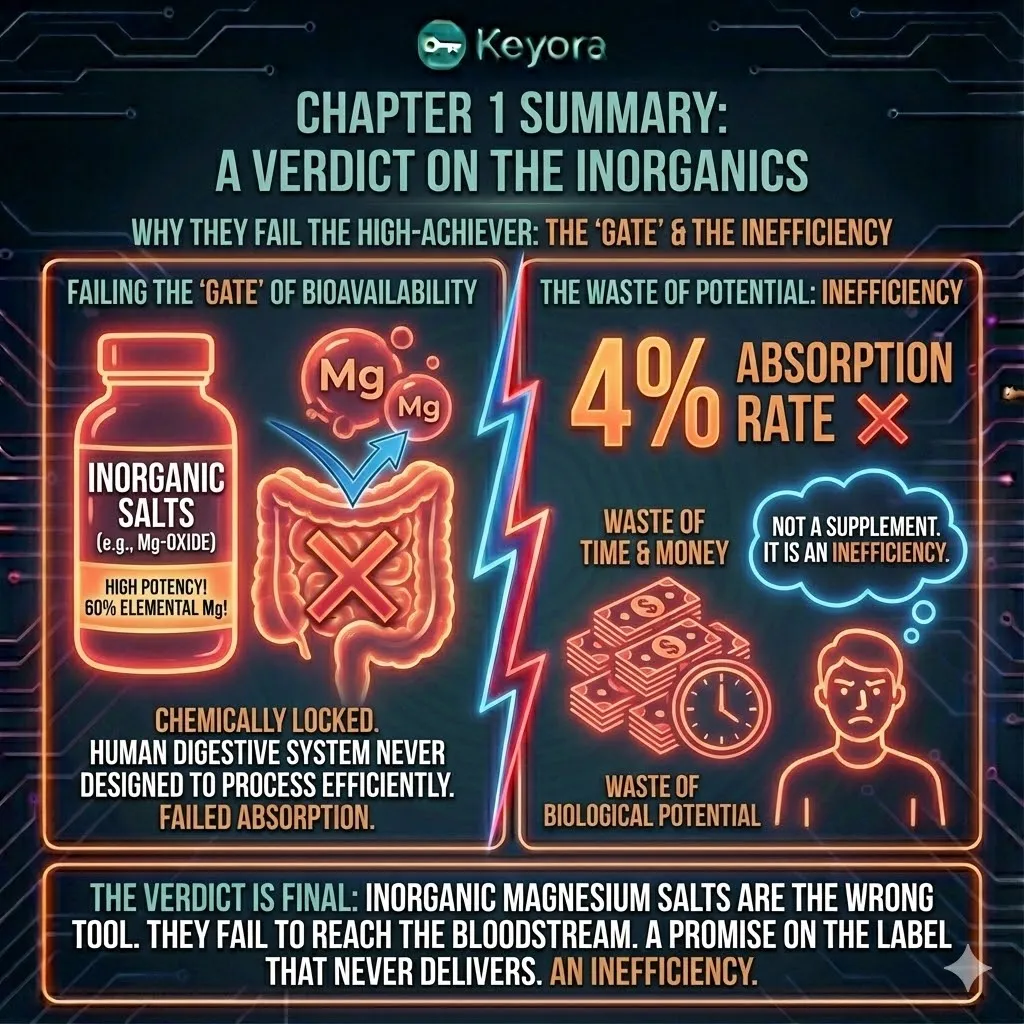
The verdict, based on the exhaustive evidence presented, is clear and final. Inorganic magnesium salts are the wrong tool for the high – achiever.
They fail on two critical fronts.
First, they fail the “gate” of bioavailability.
They are chemically locked in forms that the human digestive system was never designed to process efficiently.
They promise massive doses on the label that never reach the bloodstream. A 4% absorption rate is not a supplement; it is an inefficiency. It is a waste of your time, your money, and your biological potential.
Second, they fail the “gauntlet” of tolerability.
By staying in the gut, they act as osmotic disruptors. They pull water, trigger inflammation, and irritate the very people who are already struggling with stress.
They leave a trail of physiological disruption in their wake. They turn a health journey into an exercise in discomfort. They prioritize “cheap manufacturing” over “human outcomes.”
The failure of the inorganics, however, was a valuable lesson for the scientific community. It was the necessary starting point for the evolution of nutritional neurology. It taught us that the delivery vehicle is as important as the payload itself.
It taught us that to reach the brain, we must respect the gut. We cannot simply throw a mineral at a cell and hope for the best. We must engineer a path.
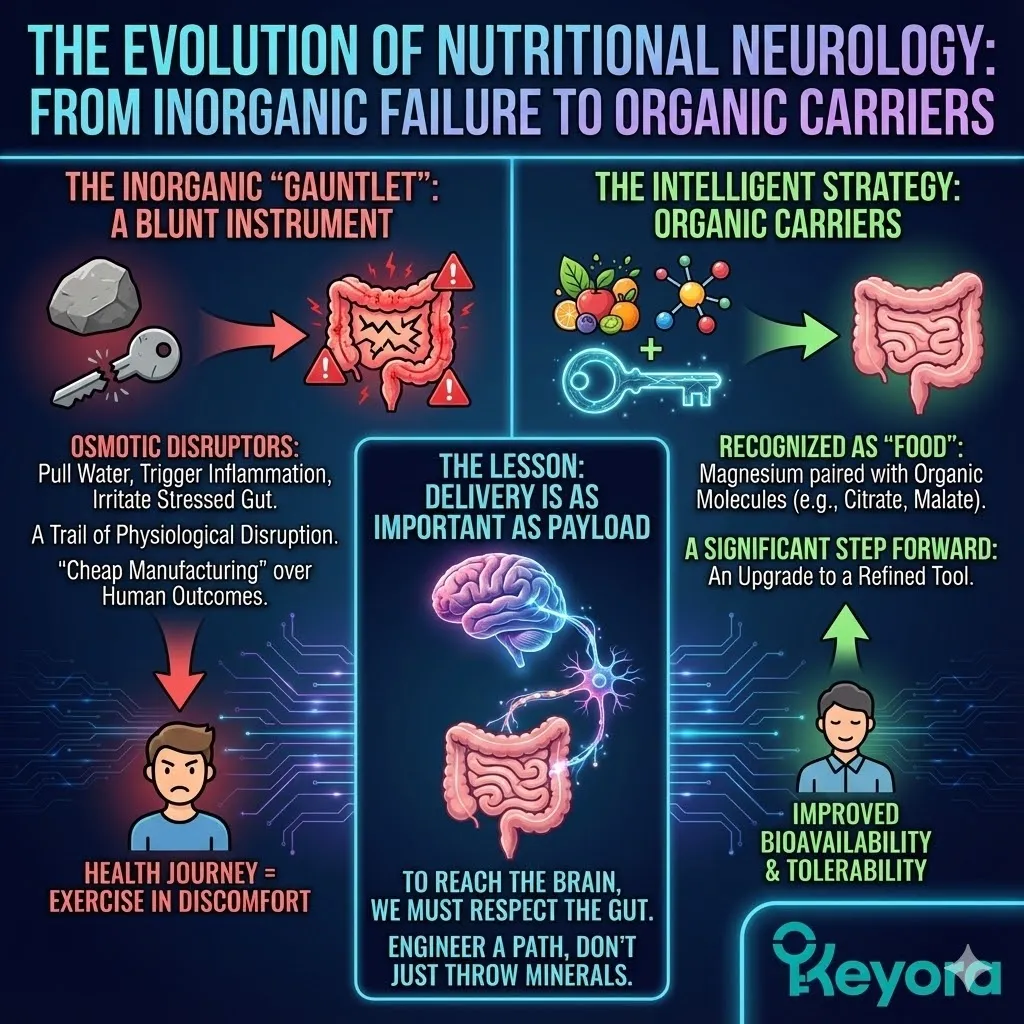
This lesson led researchers to a more intelligent strategy. Instead of using inorganic “stones,” they began to pair magnesium with organic molecules.
They looked for carriers that the body would recognize as “food.”
This led to the development of organic acid salts like Magnesium Citrate and Malate. This was a significant step forward. It was an upgrade from a blunt instrument to a more refined tool.
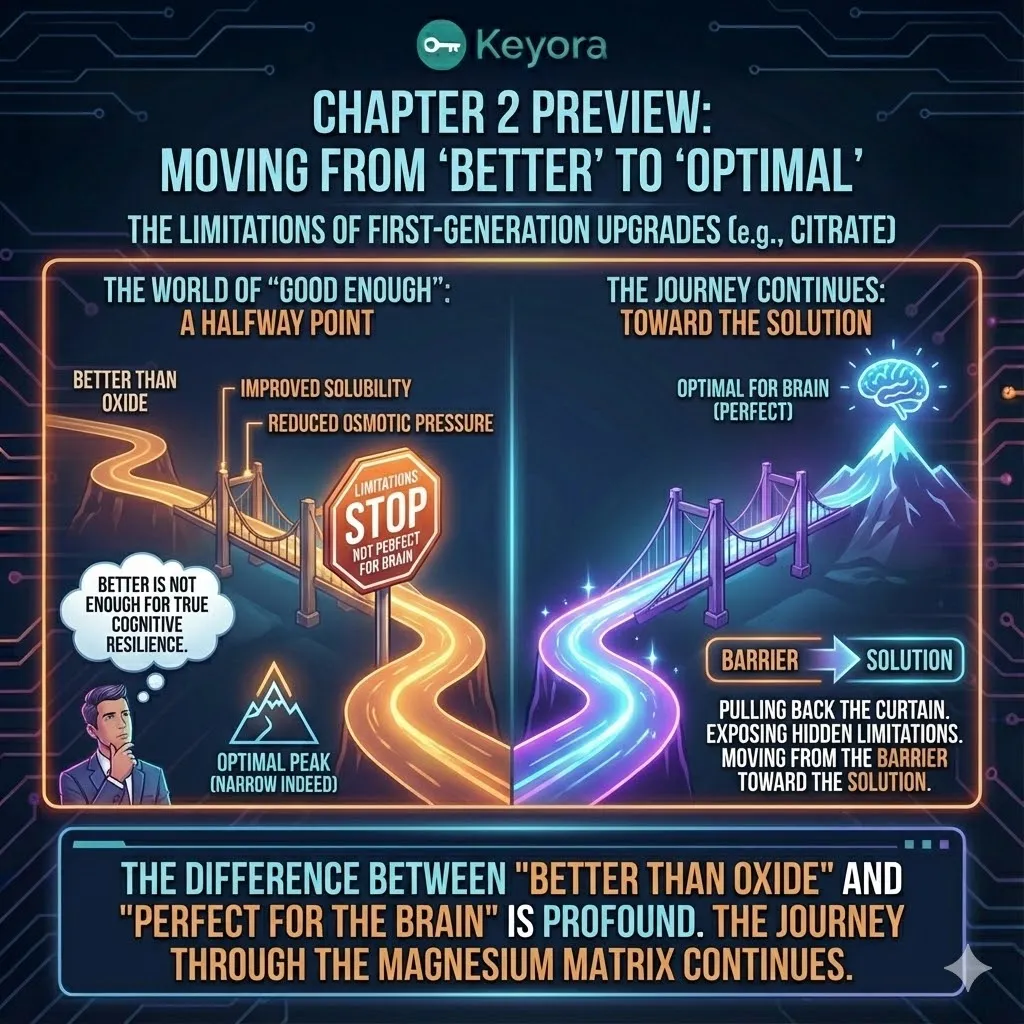
It improved solubility and reduced some of the osmotic pressure. It brought us closer to the goal of effective delivery. But, as we will explore in the next chapter, it only brought us to the halfway point.
The world of “good enough” is vast. But the peak of “optimal” is narrow indeed. There is a profound difference between “better than Oxide” and “perfect for the brain.”
In Chapter 2, we will pull back the curtain on these first – generation upgrades. We will examine their strengths. But more importantly, we will expose their hidden limitations.
We will show you why, for the person seeking true cognitive and emotional resilience, “better” is not enough. The journey through the Magnesium Matrix continues. We are moving from the barrier toward the solution.
– Series Theme: **Keyora Nutritional Neurology** (Magnesium Glycinate).
– Episode Concept: **The Magnesium Matrix** (Deconstructing Inorganic Failures).
– Core Pathology: **The Elemental Content Illusion** & **Osmotic Distress** (Inorganic Malabsorption).
– **1. The Illusion of Potency (Label vs. Reality)**:
– *The Trap*: Marketing prioritizes “Elemental Magnesium” mass (e.g., Magnesium Oxide at 60%), tricking consumers into equating gross weight with biological efficacy.
– *The Keyora Reframe*: Total mass is a meaningless metric without a viable delivery pathway. High elemental content often indicates a tightly bound, inorganic structure that is biologically inaccessible.
– **2. The Two-Stage Chemical Failure (The Barriers)**:
– *Barrier 1: The Stomach (Solubility)*: Inorganic salts like Oxide are ceramic-like and rely entirely on high gastric acid (low pH) for liberation. Stress-induced **Hypochlorhydria** (common in high-performers) prevents the salt from dissolving.
– *Barrier 2: The Intestine (Precipitation)*: Liberated ions frequently re-bind with phosphates and oxalates in the alkaline small intestine, forming insoluble “Scale” or “Stone” that cannot be absorbed.
– *The Data*: Clinical trials confirm bioavailability for Oxide is as low as **4%** (Firoz & Graber, 2001; Walker et al., 2003). For every 500mg swallowed, only 20mg enters the bloodstream.
– **3. The Osmotic Punishment (Intestinal War)**:
– *The Mechanism*: Unabsorbed magnesium ions function as **”Water Magnets.”** Through osmotic pressure, they forcefully draw water from body tissues into the intestinal lumen to achieve equilibrium.
– *The Symptom*: This physiological emergency manifests as severe bloating, cramping, and osmotic diarrhea—the “Laxative Effect.”
– *The Professional Cost*: For high-stress individuals with a sensitive gut-brain axis (IBS), these salts act as inflammatory triggers rather than neurological solutions, disrupting the “Second Brain.”
– **4. Keyora Research Conclusion (The Verdict)**:
– *Principle 1*: **Efficacy Over Illusion**. We prioritize the final absorbed dose over the label claim.
– *Principle 2*: **Systemic Harmony**. A neuro-therapeutic must not wage war on the gut. Inorganic salts (Oxide, Sulfate, Chloride) are disqualified from the **Keyora** framework due to their failure in bioavailability and their violation of the “Zero Harm” tolerability standard (DOI: 10.5281/zenodo.16814204).
Chapter 2: The First Upgrade:
Organic Salts & Niche Specialists – The Limits of “Good Enough”
Magnesium Citrate: The Industry Workhorse and Its Glass Ceiling
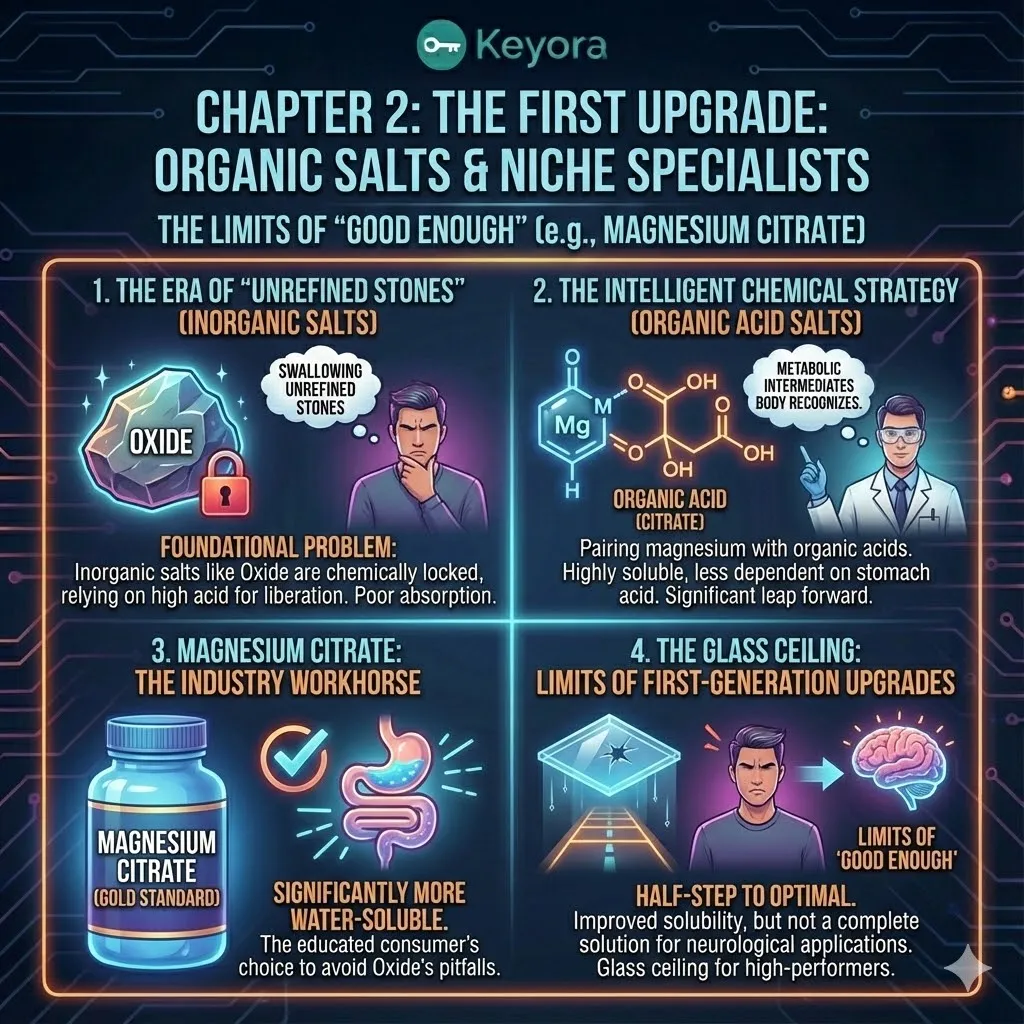
If inorganic salts were the foundational problem in the history of supplementation – a era of essentially swallowing “unrefined stones” – the first generation of viable solutions came from a more intelligent chemical strategy.
This era was defined by the transition to organic acid salts.
Instead of binding magnesium to oxygen or sulfur, researchers began pairing it with organic acids that the human body already recognizes as metabolic intermediates.
At the forefront of this class stands Magnesium Citrate.
For many years, this has been the gold standard for the educated consumer seeking to avoid the pitfalls of cheap oxides.
The logic behind this “first upgrade” is sound.
Citric acid is a highly soluble organic acid.1
By binding magnesium to it, the resulting compound becomes significantly more water – soluble and less dependent on the chaotic environment of stomach acid for liberation.
This represents a significant leap forward.
It moves the mineral from a state of geological stability to a state of biological availability.
In our research metaphors, if Magnesium Oxide is an immobile rock, Magnesium Citrate is a reliable sedan.
It is functional, it is accessible, and it generally gets the job done for the average person.
The clinical data validates this improvement.
The pivotal 2003 human trial by Walker et al., which starkly demonstrated the poor performance of magnesium oxide, also showed that magnesium citrate achieved significantly superior absorption and serum magnesium levels (Walker, et al., 2003).
For general, non – critical magnesium repletion – such as supporting basic bone health or mild muscle tension in a low – stress individual – this established citrate as a far more sensible choice than the inorganics.2
It was the first form that allowed consumers to actually see a measurable rise in their systemic magnesium levels.
However, as we move into the demanding territory of Nutritional Neurology, we begin to encounter a “glass ceiling” with this form.
The first limitation is the lingering risk to gastrointestinal (GI) tolerability.
While citrate is undeniably gentler than oxide, its absorption pathway is still relatively inefficient.
It relies largely on passive diffusion and is subject to a specific “threshold of tolerance.”
For the high – stress professional, the magnesium doses required to cross the blood – brain barrier and calm an overactive NMDA receptor are often high – frequently 300mg to 400mg of elemental magnesium per day.
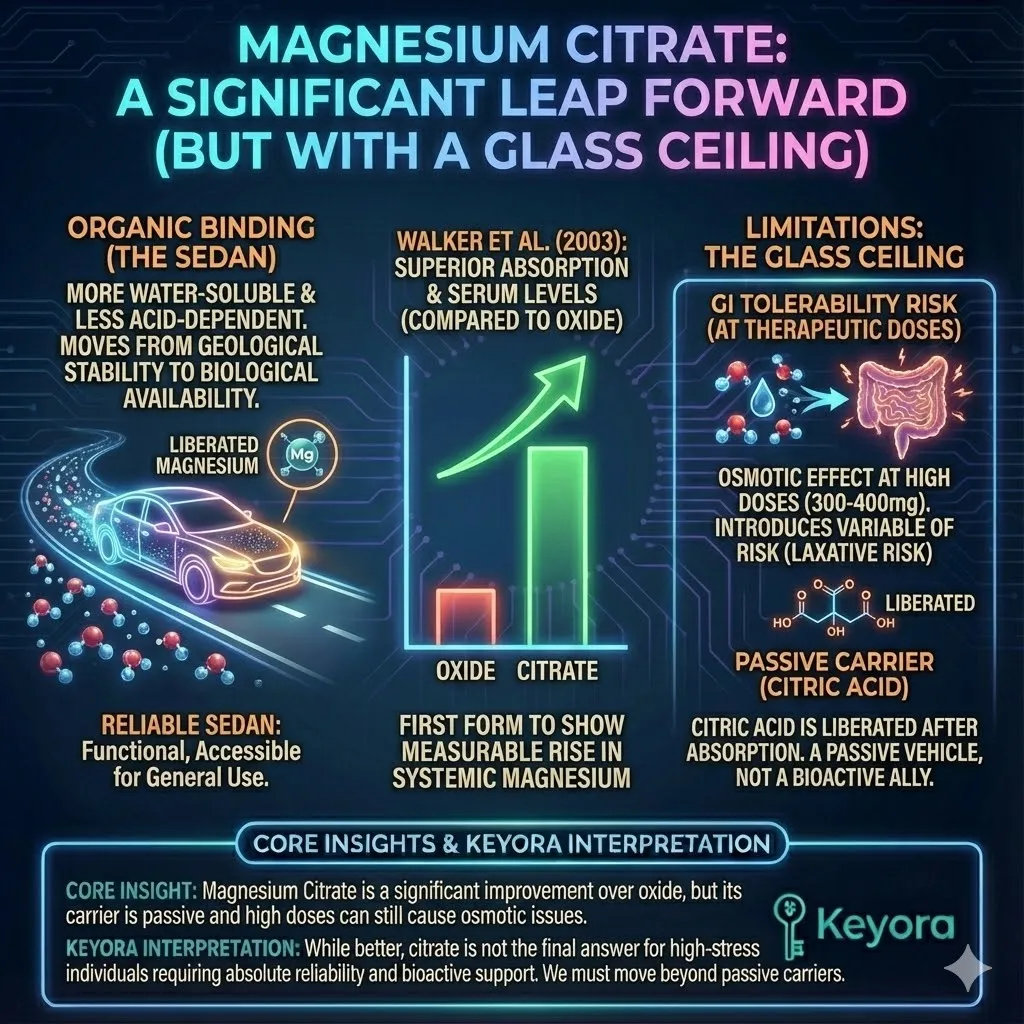
At these therapeutic levels, the unabsorbed portion of Magnesium Citrate still exerts a measurable osmotic effect.
It still draws water into the lumen of the gut.
For the high – stress professional already dealing with a sensitive gut – brain axis, “less irritating” is not the same as “guaranteed gentle.”
It introduces a variable of risk where absolute reliability is required.
The possibility of sudden GI distress during a high – stakes board meeting or a critical surgical procedure is a non – starter.
In the quest for peak performance, any tool that carries a “laxative risk” at therapeutic doses is inherently flawed.
However, the most significant limitation of magnesium citrate is not what it does, but what its carrier – citric acid – fails to do.
This brings us to a crucial distinction in the Keyora philosophy: the difference between a passive vehicle and a bioactive ally.
Once the magnesium ion is absorbed from a citrate bond, the citric acid molecule is liberated.
Its primary fate in the human body is well – understood.
It enters the Krebs Cycle (the citric acid cycle) to be used as a substrate for cellular energy production.
While this is a normal biological process, it is neurologically neutral.
It has no direct, synergistic, or beneficial modulatory action on the GABA receptors, the NMDA receptors, or the HPA axis.
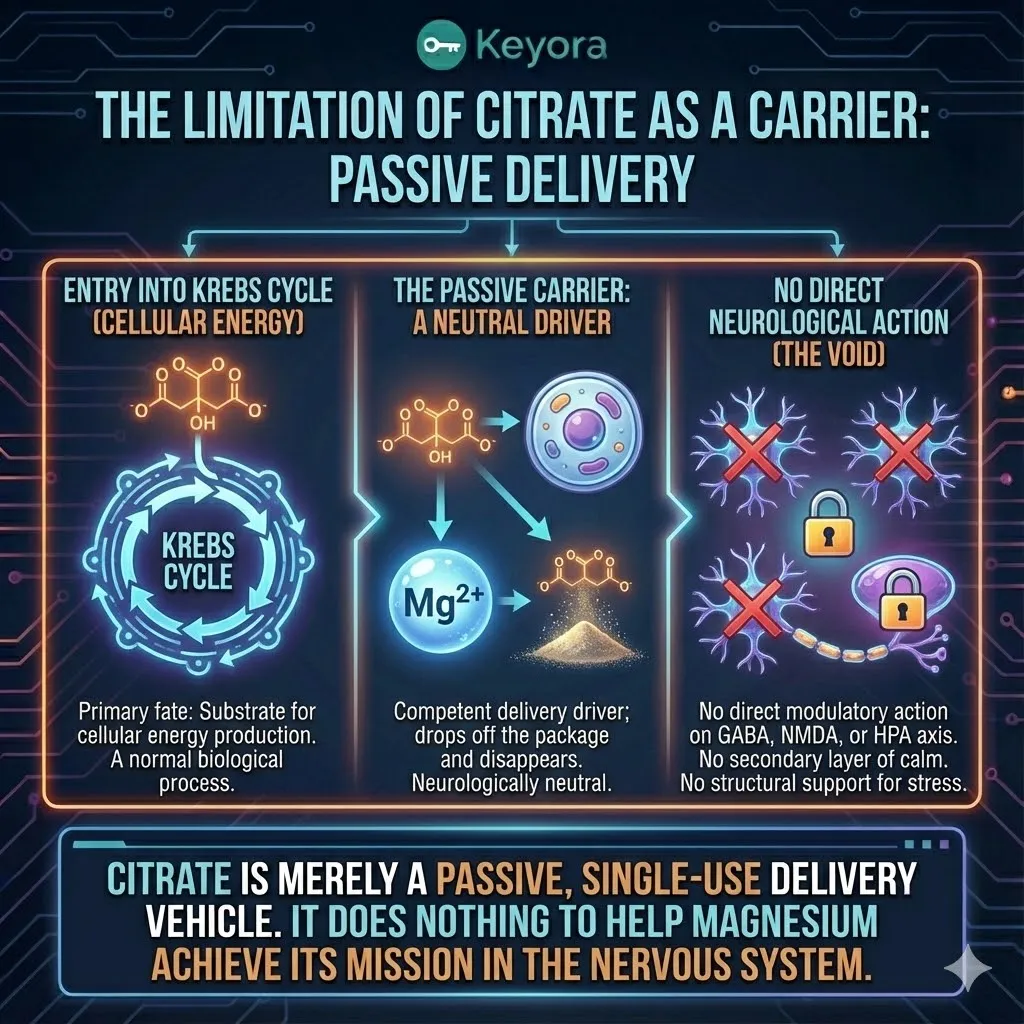
The carrier is merely a passive, single – use delivery vehicle.
Citrate is a competent delivery driver; it drops off the package and disappears.
It does nothing to help the magnesium achieve its mission once it arrives at the nervous system.
It provides no secondary layer of calm.
It offers no structural support for the stress response.
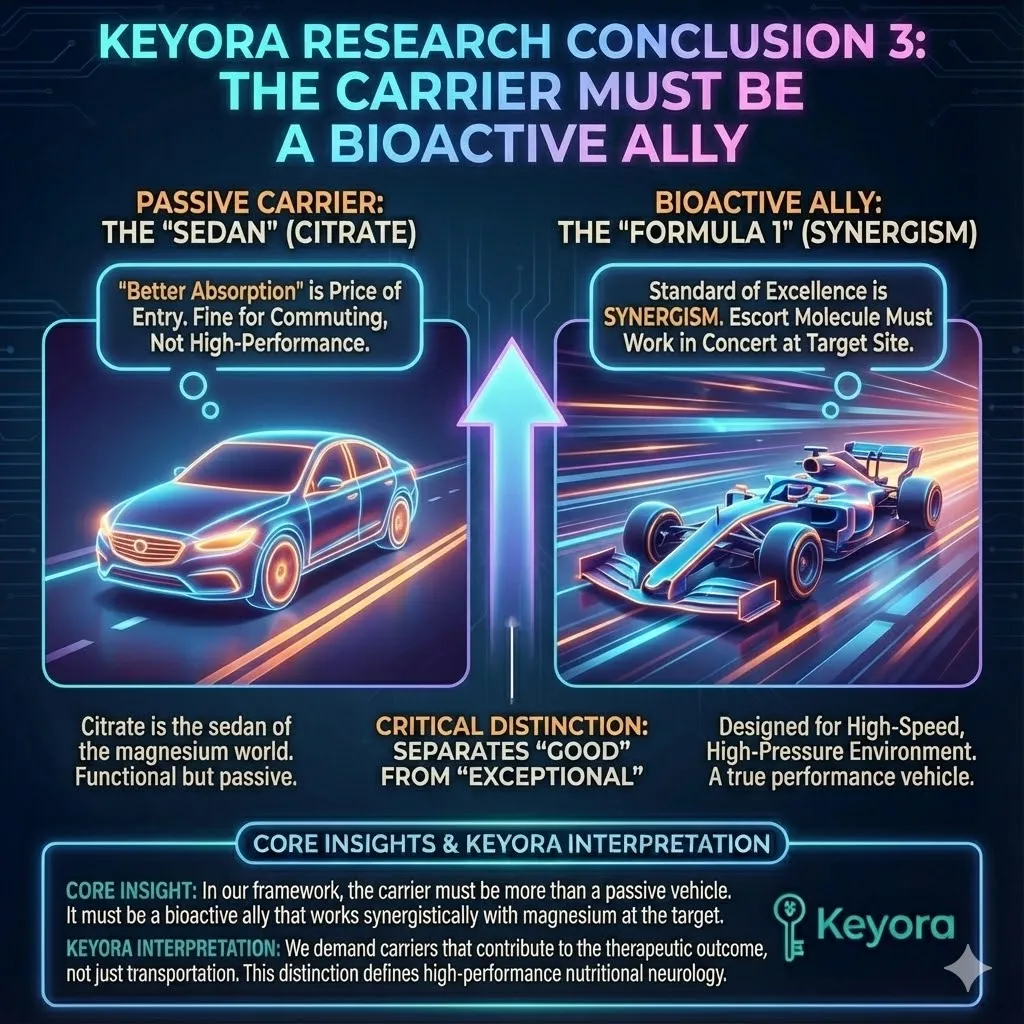
Keyora Research Conclusion 3: The Carrier Must Be a Bioactive Ally.
“Better absorption” is merely the price of entry for a high – performance therapeutic.
In our framework, the standard of excellence is synergism.
The molecule that escorts magnesium into the system must also work in concert with it at the target site.
Citrate is the sedan of the magnesium world.
It is fine for commuting, but it is not a Formula 1 car designed for the high – speed, high – pressure environment of modern professional life.
This critical distinction between a passive carrier and a bioactive one separates the merely “good” from the truly “exceptional.”
The Niche Specialists: Advanced Tools for Specific, Non-Systemic Tasks
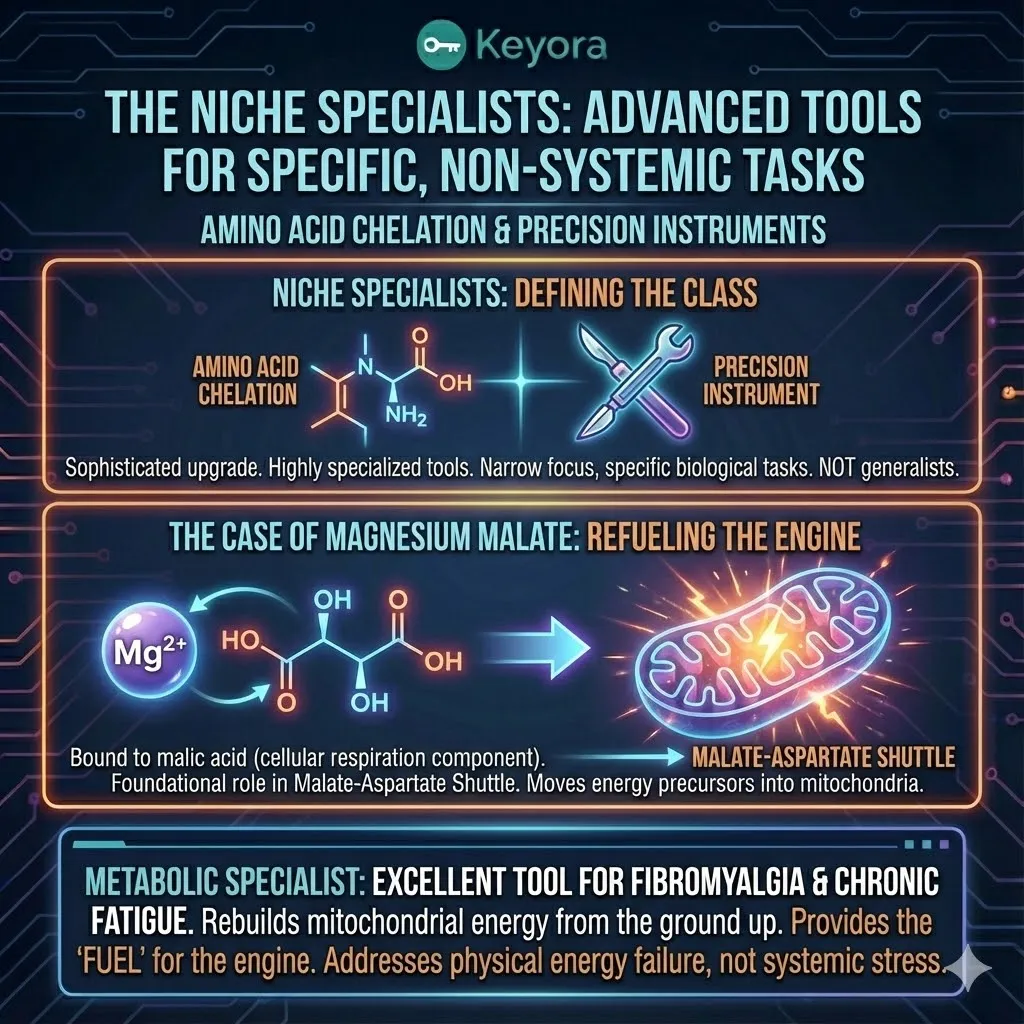
As nutritional science advanced, the focus moved from simple organic acids to true amino acid chelation.
This created a class of what we call “Niche Specialists.”
These are highly specialized tools designed for specific biological tasks.
These are not generalists.
They are precision instruments.
While they represent a sophisticated upgrade, their narrow focus creates its own set of limitations for the person seeking systemic neurological resilience.
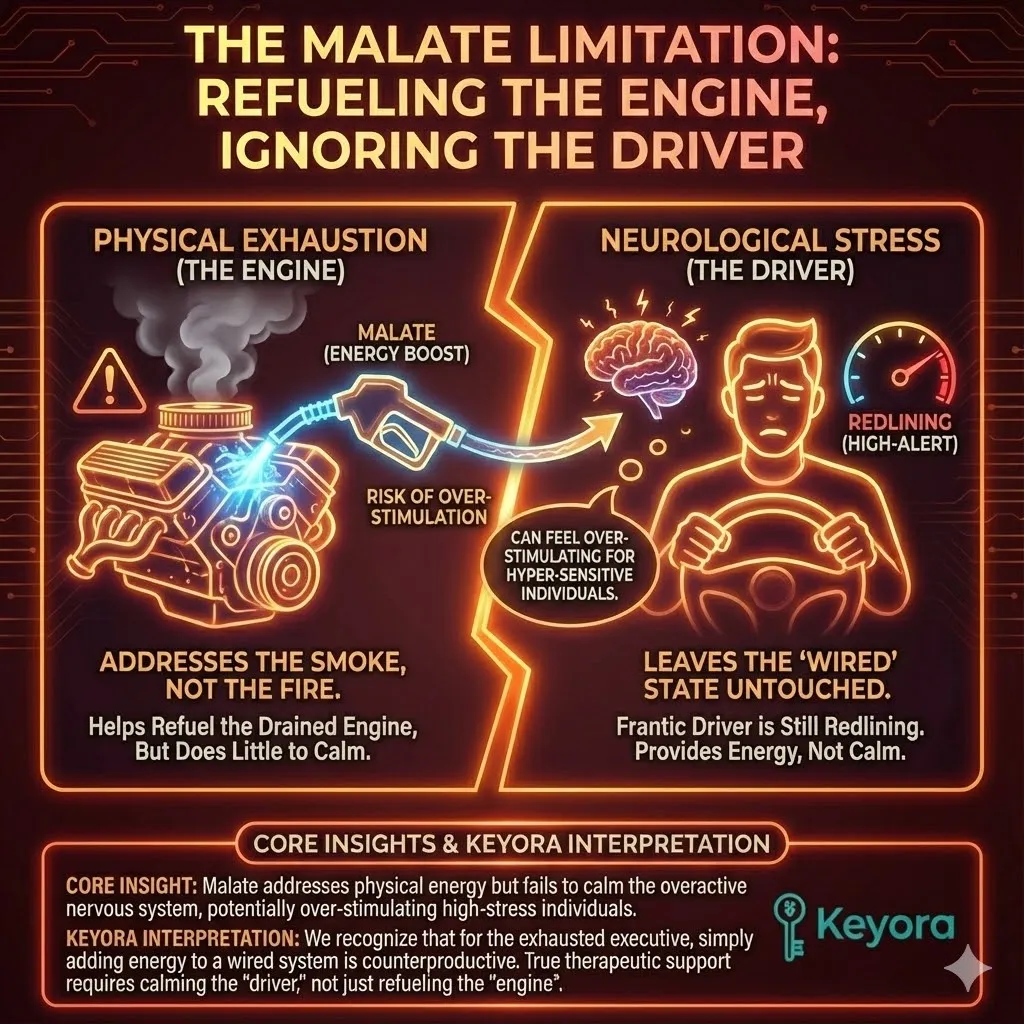
The Case of Magnesium Malate: Refueling the Engine
Magnesium Malate is formed by binding magnesium to malic acid.3
Malic acid is a critical component of cellular respiration.4
It plays a foundational role in the Malate – Aspartate Shuttle, which moves energy precursors into the mitochondria.
The research into this form, such as the work by Gaby (2004), has largely focused on its application in conditions defined by physical energy failure, such as fibromyalgia and chronic fatigue syndrome.
It is a “metabolic specialist.”
For the “Chronically Fatigued Professional” whose primary complaint is physical exhaustion and heavy, sore muscles, Malate is an excellent tool.
It excels at rebuilding mitochondrial energy from the ground up.
It provides the “fuel” for the engine.
However, herein lies its fundamental limitation.
For the executive whose profound fatigue is the downstream consequence of an overactive HPA axis and a mind that won’t shut off, Malate is addressing the smoke, not the fire.
It helps refuel the drained engine but does little to calm the frantic driver who is still redlining the car.
It provides energy, but it does not provide calm.
In fact, for some hyper – sensitive individuals, the energy – boosting effects of malic acid can feel slightly over – stimulating when the nervous system is already in a state of high – alert.
It addresses the physical “exhaustion” but leaves the “wired” neurological state untouched.
The Case of Magnesium Taurate: Protecting the Heart
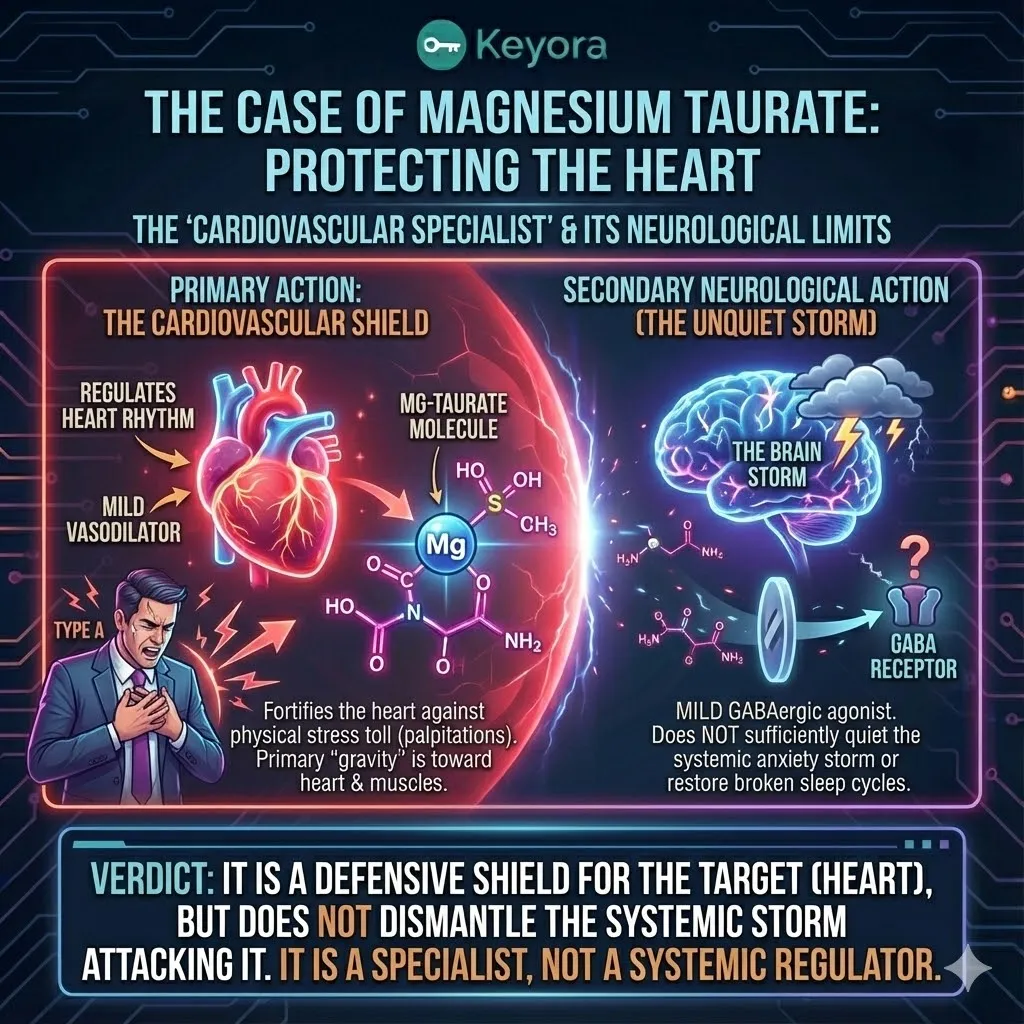
Magnesium Taurate is a chelate where magnesium is bound to the amino acid Taurine.5
Taurine is found in high concentrations in the heart, the retina, and the brain.6
It is well – known for its role in membrane stabilization and cardiovascular health.
This form is the “Cardiovascular Specialist.”
Clinical evidence suggests it is an elegant instrument for fortifying the heart against the ravages of chronic stress.
It helps regulate heart rhythm and supports healthy blood pressure by acting as a mild vasodilator.
For the “Type A” Executive or the trader whose primary concern is the physical toll stress takes on their heart – the palpitations and the “pounding” chest – Taurate is a respectable choice.
It provides a protective shield for the cardiovascular system.
However, its neurological action, while present, is a secondary feature.
Taurine is a very mild GABAergic agonist, but its primary “gravity” is toward the heart and muscles.
It cannot match the profound, multi – pathway neural inhibition required to dismantle a systemic anxiety state or restore a broken sleep cycle.
It protects the target (the heart) but does not sufficiently quiet the storm (the brain) that is attacking it.
It is a defensive shield, not a systemic regulator.
Keyora Research Conclusion 4: Treat the System, Not Just the Symptom.
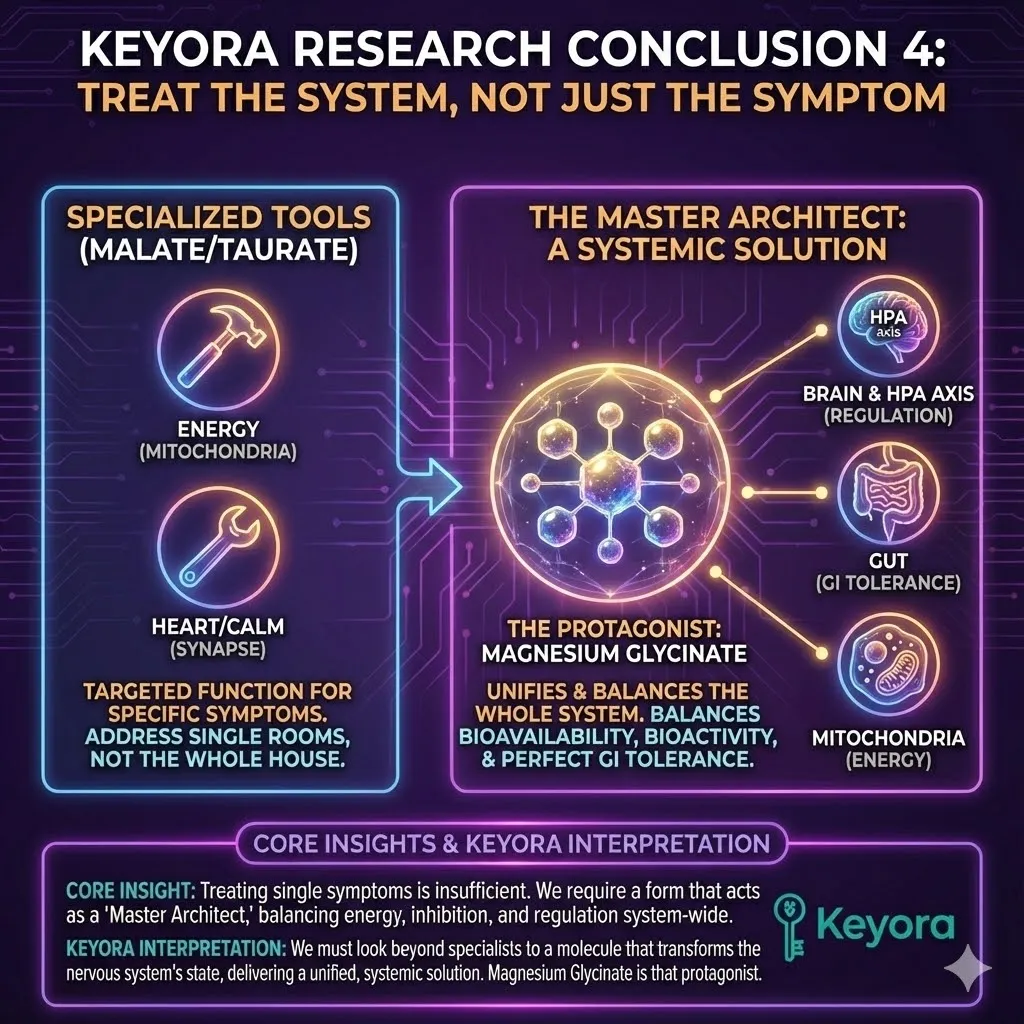
The palpitations, the tension, and the exhaustion of a stressed professional are symptoms of a system – wide dysregulation originating in the brain and the HPA axis.
While we respect the targeted function of Malate and Taurate, they are ultimately specialized tools for specific rooms in the house.
Our research at Keyora compels us to look for a “Master Architect.”
We require a form that addresses the energy needs of the mitochondria AND the inhibitory needs of the synapses AND the regulatory needs of the HPA axis – all within a single, highly bioavailable molecule.
Targeting a single symptom is not the same as treating the whole system.
This systemic – first approach is why we must look beyond even these advanced specialists.
We need a molecule that doesn’t just deliver magnesium, but transforms the very state of the nervous system.
This brings us to the final threshold of the Magnesium Matrix.
We have dismantled the rocks (inorganics).
We have evaluated the sedans (citrate).
We have analyzed the specialists (malate/taurate).
Now, it is time to introduce the systemic solution.
The one form that balances bioavailability, bioactivity, and perfect GI tolerance.
The form that treats the brain, the gut, and the stress response as one unified system.
The “Protagonist” is ready for its close – up.
In the next chapter, we will finally pull back the curtain on Magnesium Glycinate.
– Series Theme: **Keyora Nutritional Neurology** (Magnesium Glycinate).
– Episode Concept: **The Magnesium Matrix** (Evaluating Organic Salts vs. Systemic Chelates).
– Core Pathology: **The “Good Enough” Trap** (Passive carriers and narrow-niche specialization).
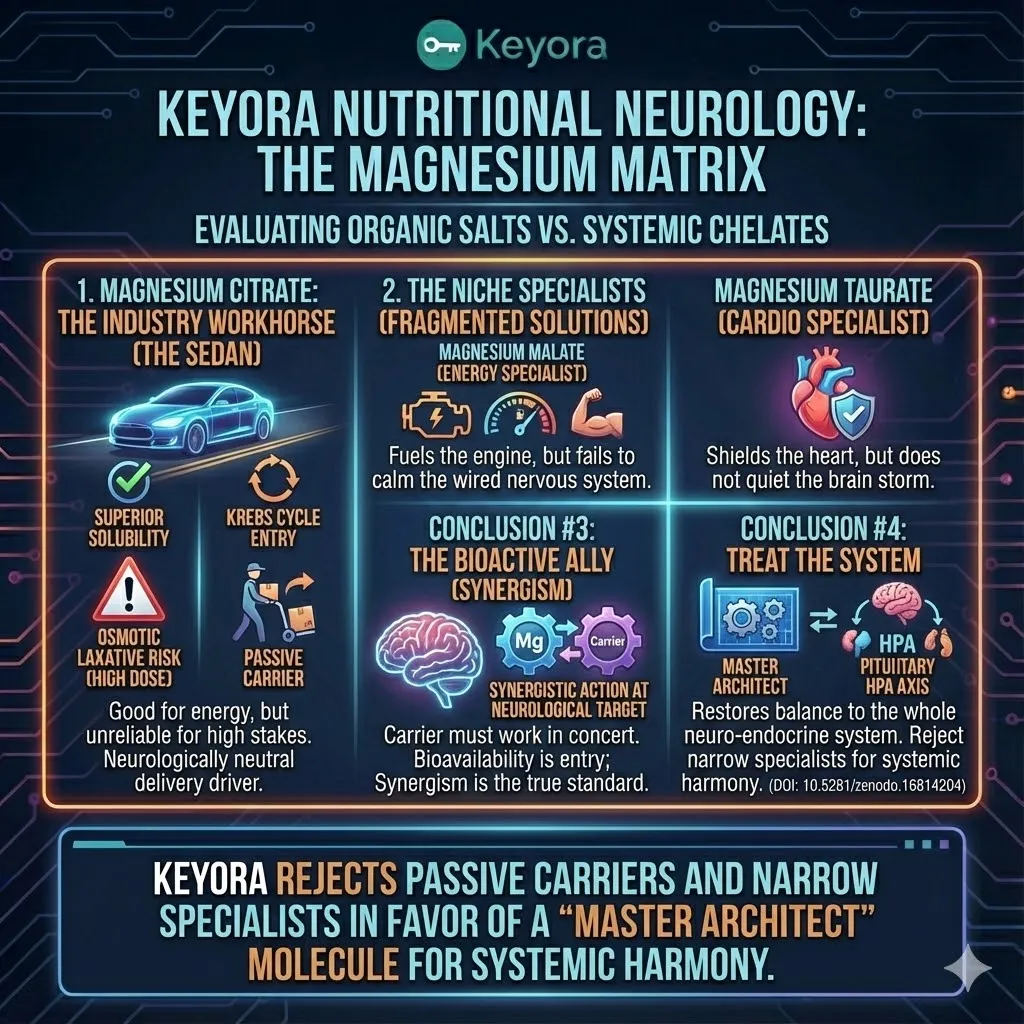
– **1. Magnesium Citrate: The Industry Workhorse (The Sedan)**:
– *The Advancement*: A major leap from inorganic “stones” to organic acid salts. Citrate offers superior water solubility and reduced dependence on gastric acid (Walker et al., 2003).
– *The Glass Ceiling*: At the high therapeutic doses (300mg+) required for neurological impact, Citrate still poses an osmotic “Laxative Risk,” making it unreliable for high-stakes professional environments.
– *The Passive Carrier Problem*: Citric acid is a metabolic intermediate used in the Krebs Cycle for energy. It lacks any direct, synergistic, or modulatory effect on GABA, NMDA, or the HPA axis. It is a “delivery driver” that leaves the mineral to work alone.
– **2. The Niche Specialists (Fragmented Solutions)**:
– *Magnesium Malate (The Energy Specialist)*:
– *Action*: Malic acid drives the Krebs Cycle and cellular respiration.
– *Limitation*: Excellent for physical “exhaustion” and fibromyalgia, but fails to calm the “wired” nervous system. It fuels the engine but does not calm the frantic driver.
– *Magnesium Taurate (The Cardiovascular Specialist)*:
– *Action*: Taurine stabilizes heart rhythms and protects the vascular system against cortisol spikes.
– *Limitation*: While cardio-protective, its neurological inhibitory action is secondary. It shields the heart (the target) but does not sufficiently quiet the storm (the brain) that is attacking it.
– **3. Keyora Research Conclusion (The Systemic Mandate)**:
– *Conclusion #3: The Bioactive Ally*: Bioavailability is just the price of entry; the true standard is **Synergism**. The carrier molecule must work in concert with magnesium at the neurological target site.
– *Conclusion #4: Treat the System, Not Just the Symptom*: Palpitations and fatigue are symptoms; HPA axis dysregulation is the root. Keyora rejects narrow specialists in favor of a “Master Architect” molecule that restores balance to the whole neuro-endocrine system (DOI: 10.5281/zenodo.16814204).
Chapter 3: The Chelation Revolution & The Crowning of a King: Why Magnesium Glycinate Reigns Supreme
A Deep Dive into the Bioactive Carriers, Neurological Synergies, and Clinical Evidence That Define the Gold Standard
In the preceding chapters, we acted as forensic analysts, systematically deconstructing the failures of the most common magnesium forms.
We have exposed the “double failure” of inorganic salts – their inability to pass the gate of bioavailability and their tendency to ignite intestinal distress.
We have also hit the “glass ceiling” of organic acid salts, where even the improved delivery drivers lack the synergistic power required for deep neural calm.
Our role now shifts.
We are no longer scavengers picking through the wreckage of failed promises.
We now become explorers, venturing into the scientific frontier where true innovation in nutritional science lies.
Our quest: to find a perfect union.
We were searching for a solution that could solve two fundamental problems simultaneously. First, a delivery system so flawless it could bypass every biological barrier we had identified.
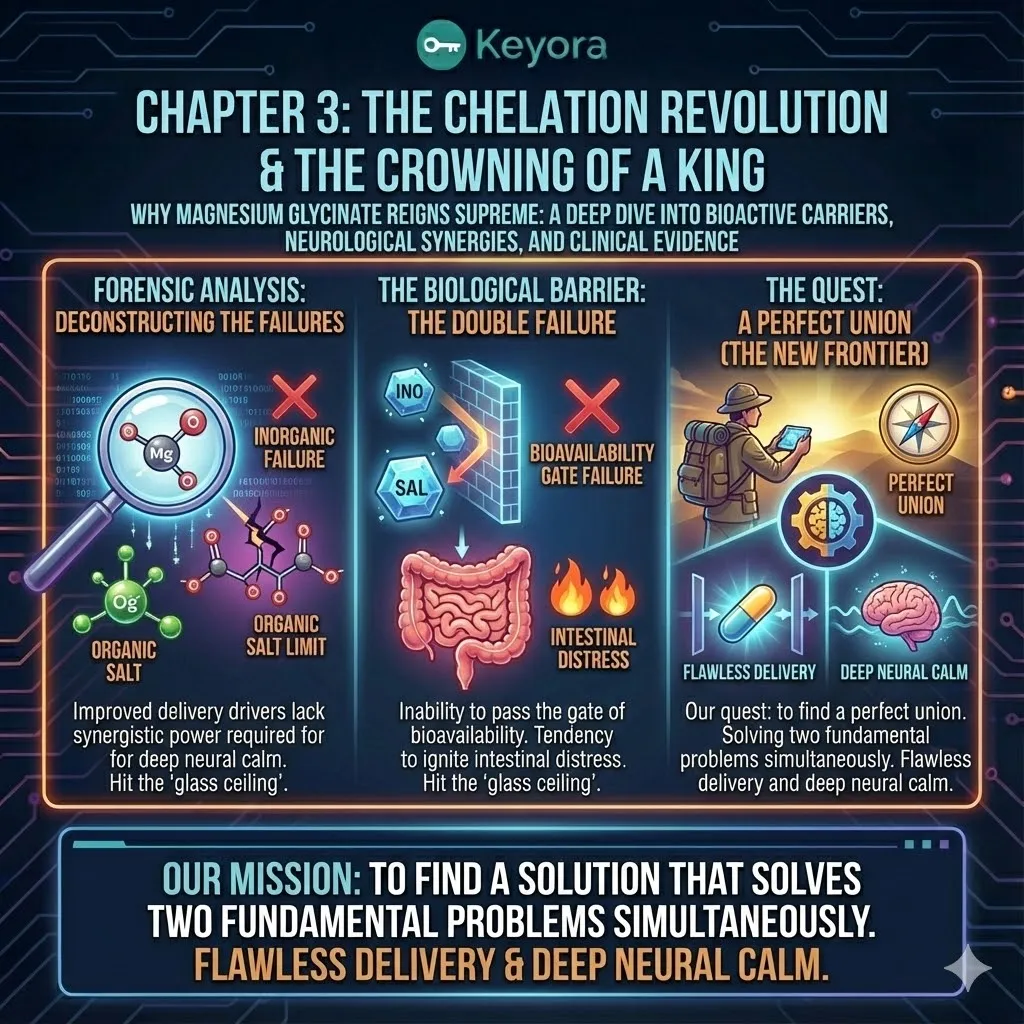
Second, a carrier molecule so intelligent it could work as an active partner with magnesium once the delivery was made.
We needed a vehicle that could withstand the stomach’s acid and navigate the intestine’s alkaline environment without causing a single ripple of osmotic distress.
We sought more than a passive driver; we sought a bioactive ally. We needed a molecule that could cross the blood – brain barrier and actively participate in the chemistry of the synapse itself.
This chapter, the longest and most critical in our series thus far, will mirror that journey of discovery.
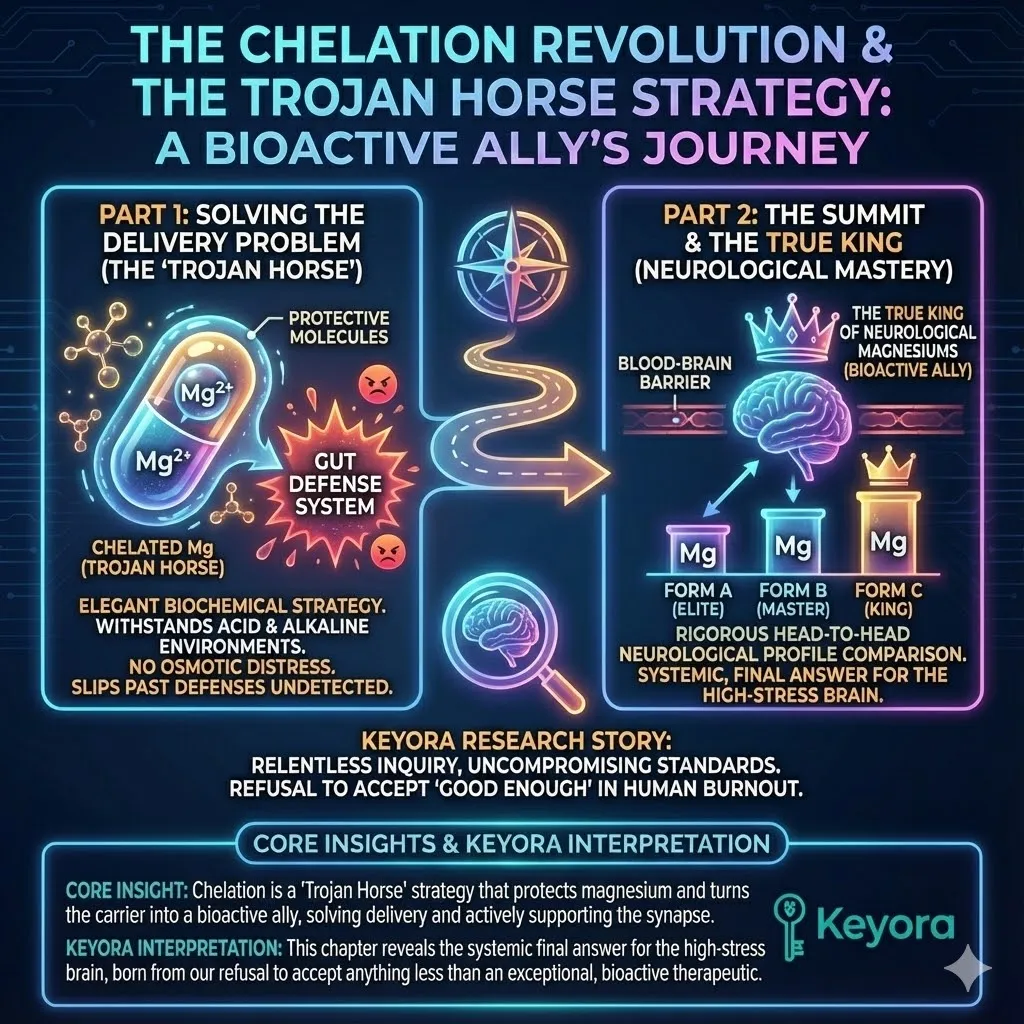
In the first half, we will unpack the science of the Chelation Revolution – the elegant biochemical strategy that solved the delivery problem.
We will show you how a “Trojan Horse” strategy allows minerals to slip past the gut’s defenses undetected.
In the second half, we will stand at the summit, analyzing the elite few who master this technique, to finally coronate the one true king of neurological magnesiums.
We will conduct a rigorous, head – to – head comparison of their neurological profiles. This is where we reveal the systemic, final answer for the high – stress brain.
This is the core of the Keyora research story. It is a story of relentless inquiry and uncompromising standards. It is the story of our refusal to accept “good enough” in the face of human burnout.
We invite you to join us on this final leg of our investigation.
The revolution begins now.
The Quantum Leap: Unlocking the PEPT1 Superhighway with Amino Acid Chelation
How a Simple “Biochemical Disguise” Solved Magnesium’s Bioavailability Crisis
We have established a hard truth in our preceding investigations: the free magnesium ion is a fugitive in the gut. The digestive tract is a hostile territory for a positively charged mineral ion looking for a home. Whether it is the low solubility of inorganics or the limited threshold of organic acid salts, the result is the same.
The “gate” of the intestinal wall remains largely closed to these unescorted travelers.
The organic acids we explored in the last chapter provided a partial passport, but certainly not diplomatic immunity. They improved the chances of arrival, but they could not guarantee a smooth crossing of the final barrier. This realization in our research forced a strategic pivot within the Keyora team.
We realized that to solve the crisis of bioavailability, we had to stop thinking about minerals and start thinking about biology.
We stopped trying to “push” magnesium through the intestinal wall. Instead, we began to look at what the intestinal wall actually wants to absorb. The solution was not to force the gates with higher dosages or harsher salts. It was to create a disguise so perfect that the body would not only grant entry, but eagerly roll out the red carpet.
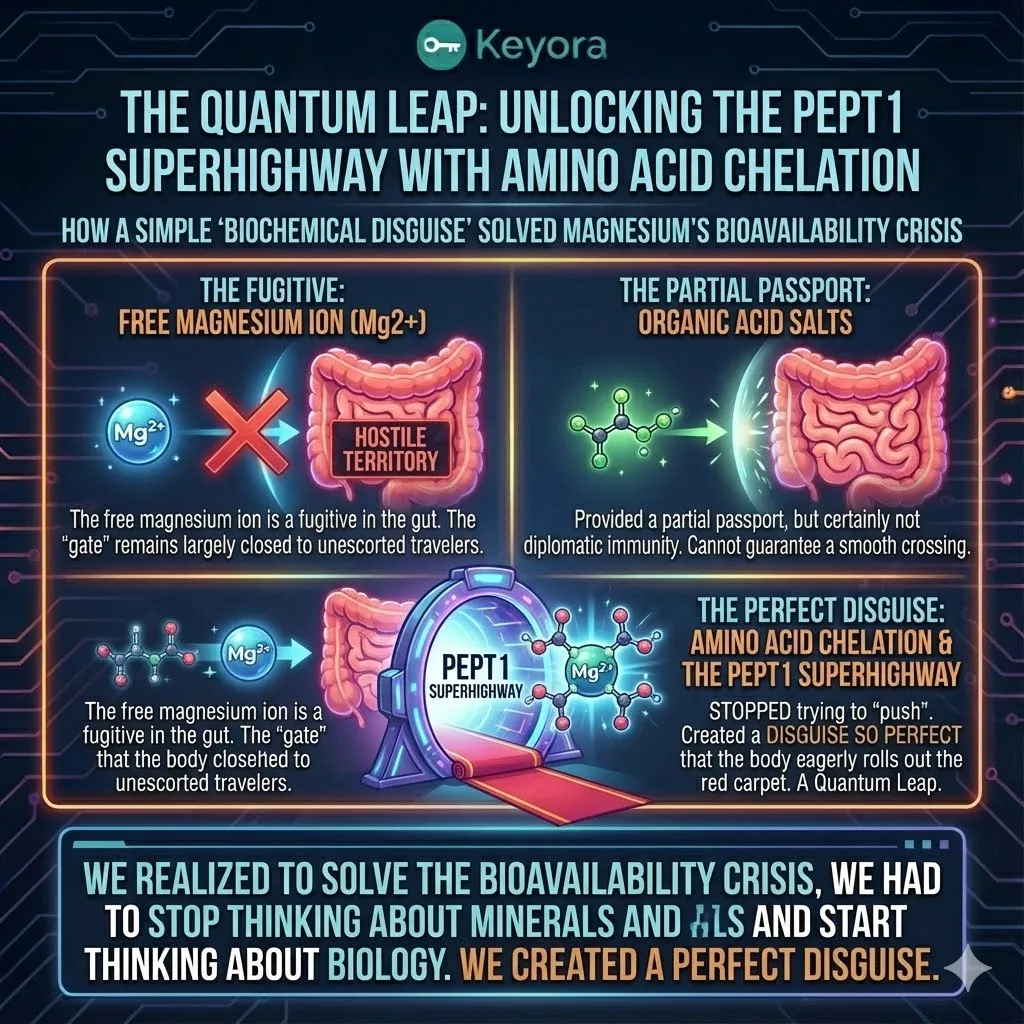
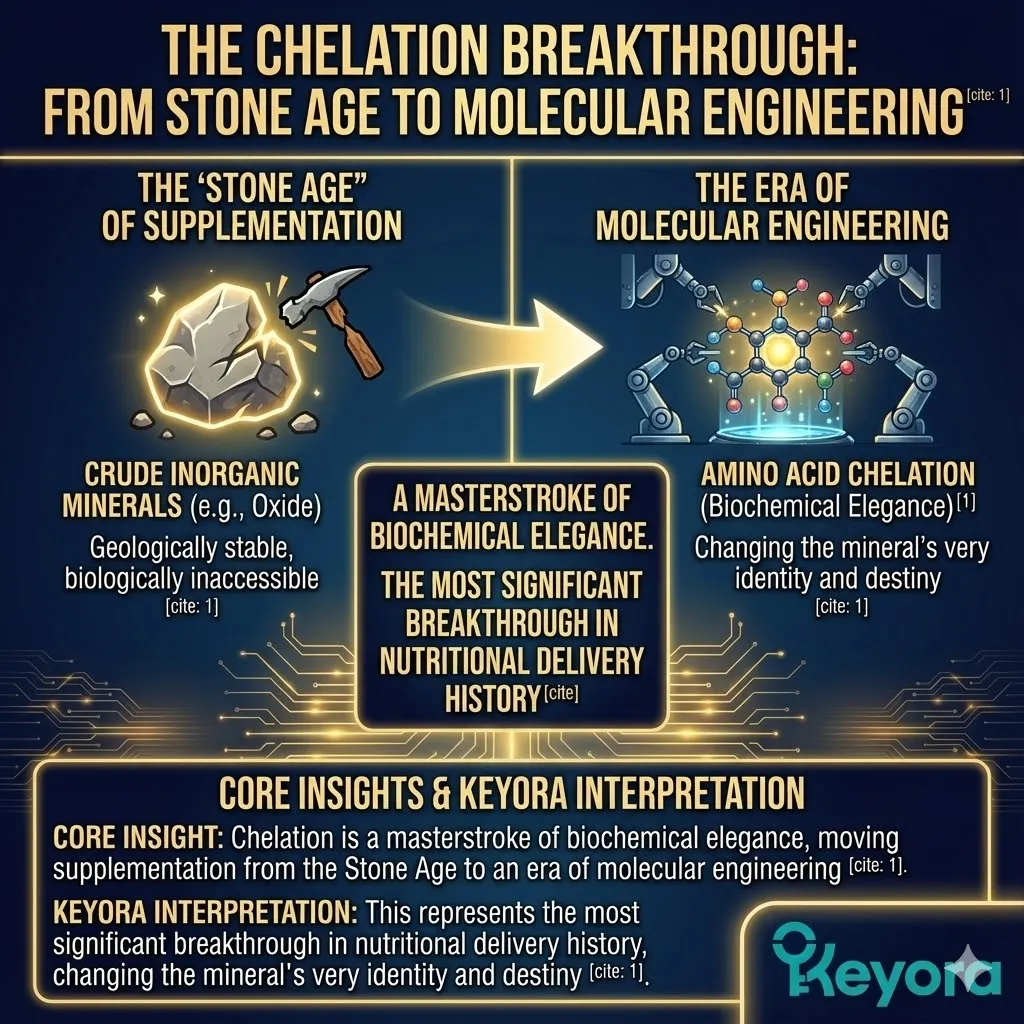
This strategy, a masterstroke of biochemical elegance, is called amino acid chelation.
It represents the most significant breakthrough in the history of nutritional delivery. It is the moment where we move from the “Stone Age” of supplementation into the era of molecular engineering. By changing the very identity of the mineral, we change its entire destiny in the human body.
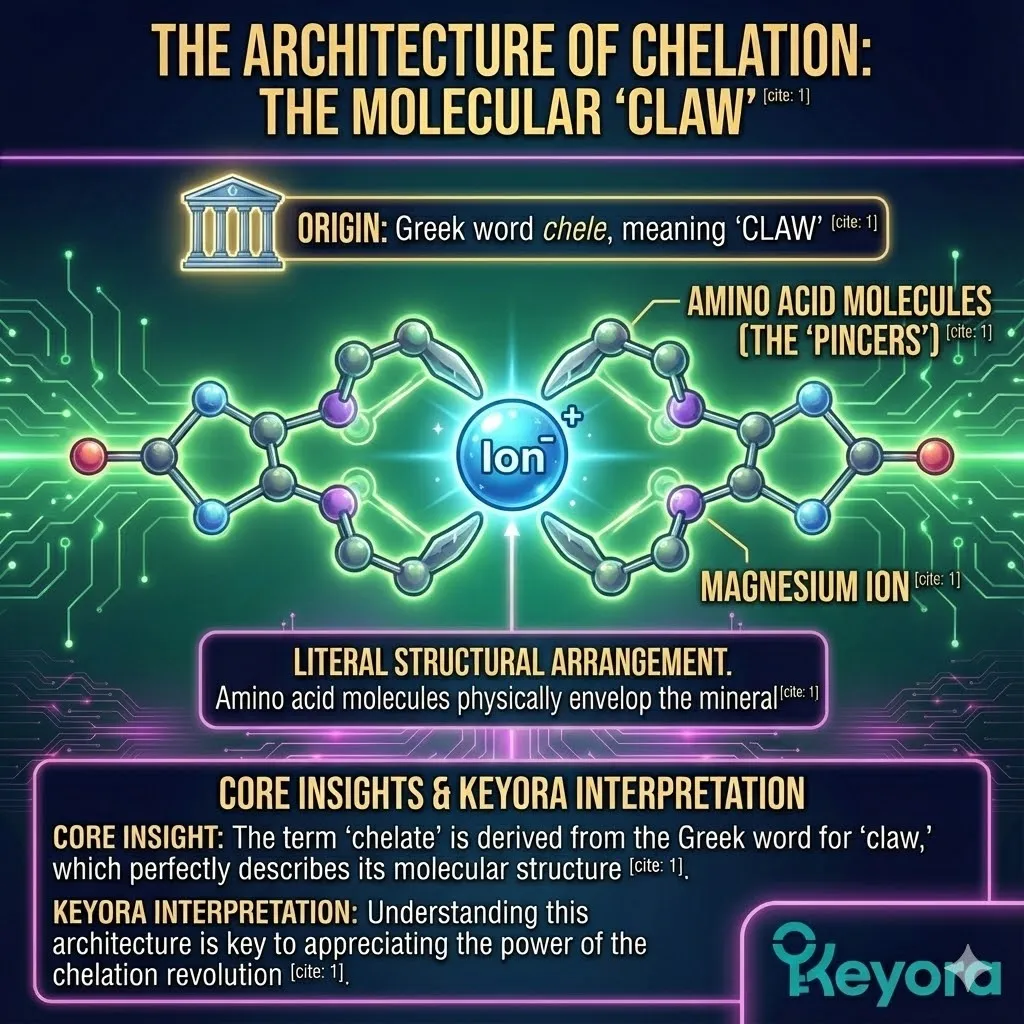
To understand the power of this revolution, we must first deconstruct the architecture of the chelate itself. The word “chelate” is derived from the Greek word chele, meaning “claw.”
In the world of molecular chemistry, this is a literal description of the structural arrangement. In an amino acid chelate, one or more amino acid molecules physically envelop the magnesium ion.
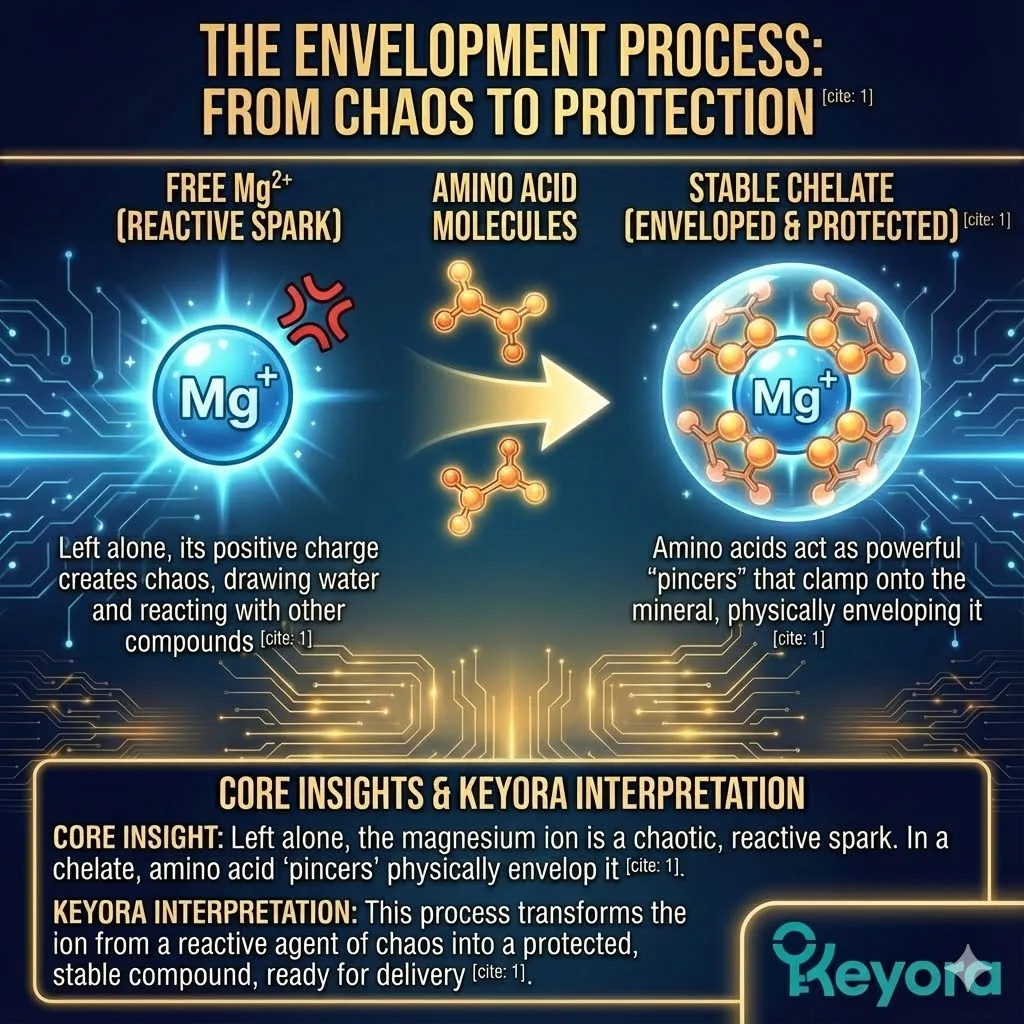
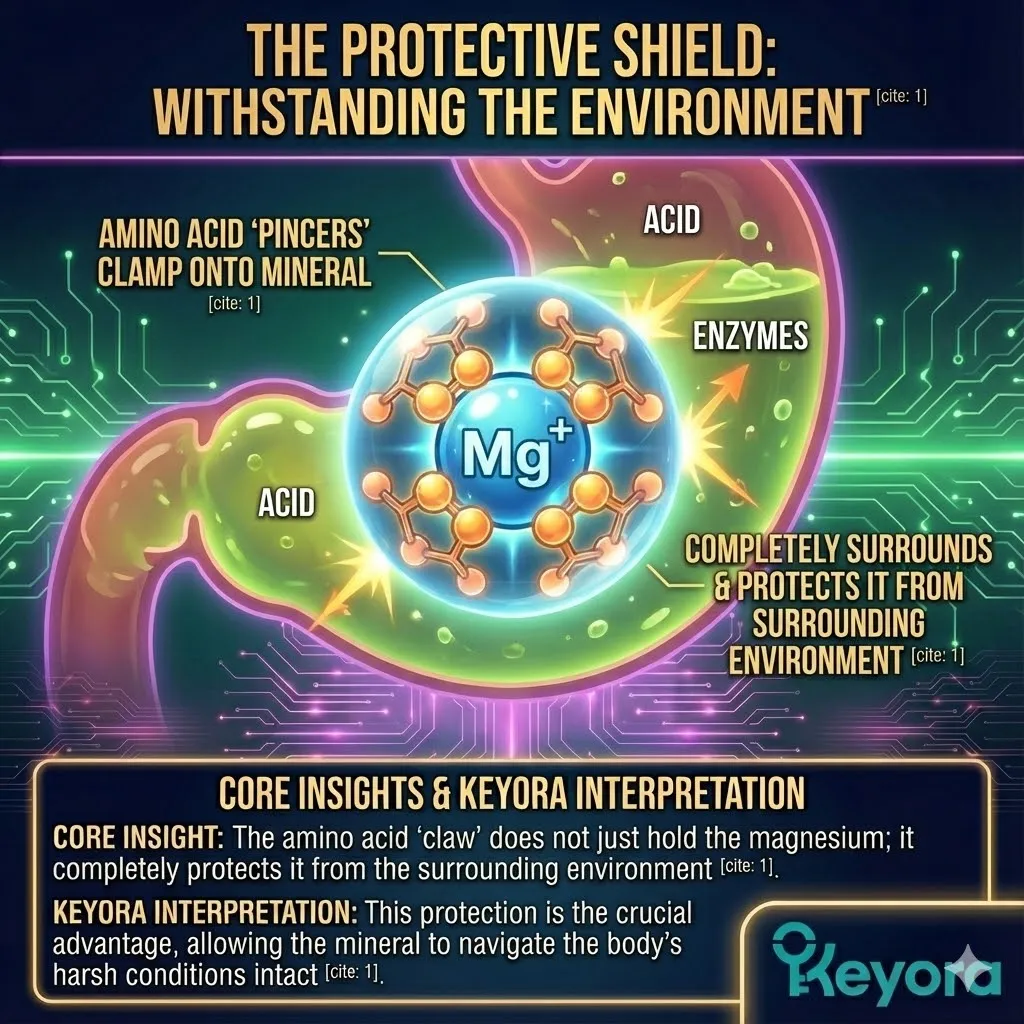
Imagine the magnesium ion as a small, highly reactive spark. Left alone, its positive charge creates chaos, drawing water and reacting with other compounds. But in a chelate, the amino acids act as two powerful “pincers” that clamp onto the mineral. This “claw” does not just hold the magnesium; it completely surrounds and protects it from the surrounding environment.
This molecular embrace creates a new, larger, and neutrally charged molecule.
This neutrality is the first part of the secret. Because the molecule is no longer electrically charged, it does not attract water.
It does not trigger the “osmotic punishment” or the laxative effect we dismantled earlier.
It is stable, it is quiet, and it is ready for transit.
Because the magnesium is shielded, it no longer interacts with other substances in your diet.
It does not bind to phytates or oxalates that would normally render it insoluble.
It remains in a liquid, absorbable state throughout its journey.
It is a “stealth” molecule, slipping past the chemical traps of the small intestine undetected.
But the true genius lies in the specific weight and shape of the resulting structure. When magnesium is fully chelated with two amino acids, a transformation occurs.
The resulting molecule structurally and electronically mimics a dipeptide.

A dipeptide is the smallest, most fundamental building block of protein. It is a molecular structure that the human body craves.
This mimicry is the ultimate “Trojan Horse” of nutritional science. The magnesium ion is hidden deep within the “belly” of the amino acid structure. To the sensors of the intestinal lining, the mineral ion is invisible.
It is no longer a positively charged metal looking for a receptor.
It is a protein – like nutrient waiting for absorption.
And this is the secret. The body’s defense systems are no longer on high alert for a disruptive, positively charged mineral ion.
Instead, the intestinal tract’s sophisticated sensory system identifies this molecule as something familiar.
It sees something it identifies as valuable.
It sees something it is evolutionarily programmed to absorb with maximum efficiency: protein.
The mineral is no longer seen as a foreign invader or a geological rock.
It is seen as essential food.
It is treated with the same priority as a piece of wild – caught salmon or an organic egg.
By using this “Biochemical Disguise,” we have successfully bypassed the barriers that keep other magnesiums trapped in the gut.
The mineral has been granted the highest level of clearance. It has been invited into the body’s internal sanctum under a false, yet beneficial, identity.
This is not mere supplementation; it is a tactical strike on the problem of malabsorption. It is the moment when the “matrix” begins to work in our favor.
Once the “disguise” is accepted, the molecule enters a completely different lane of traffic.
This brings us to the hero of our investigation: the PEPT1 (Peptide Transporter 1) protein.
PEPT1 is not just a receptor; it is a dedicated, high – capacity transport system. We describe it as a network of “high – speed, high – efficiency transport tunnels” embedded in the intestinal wall.
These tunnels are specifically designed for one task. They are engineered to pull dipeptides and tripeptides from the gut lumen directly into the bloodstream. The body prioritizes protein above almost all other nutrients for repair and function.
Therefore, the PEPT1 superhighway is always open, always active, and always efficient. It is the VIP entrance to the internal environment of your body.
To appreciate the scale of this quantum leap, we must contrast it with the route taken by free magnesium ions.
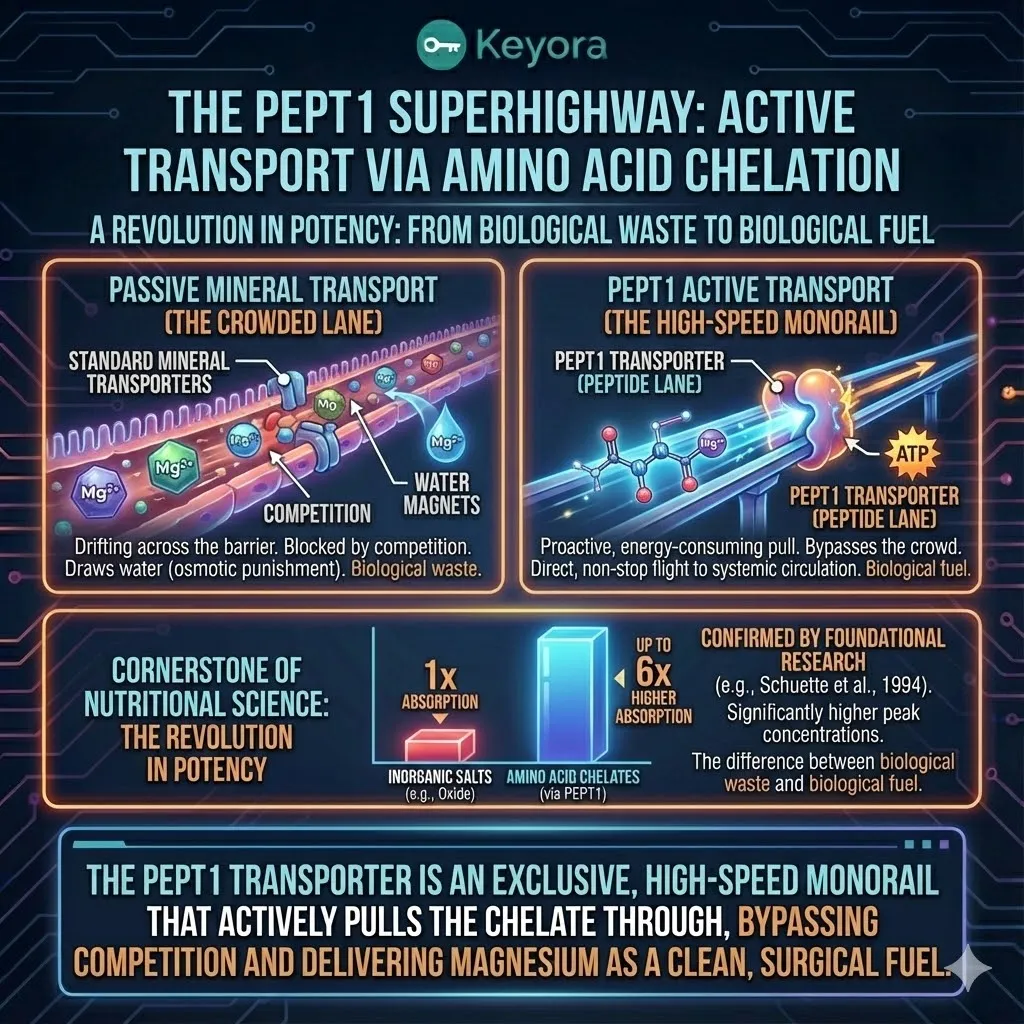
Standard magnesium salts rely on a process called “passive diffusion.”
Imagine a massive crowd of people trying to push through a single, narrow doorway. It is slow, it is inefficient, and it inevitably creates a bottleneck.
This bottleneck is why the bioavailability of inorganic salts is so embarrassingly low. The “doorway” for minerals is easily crowded and easily blocked.
If you have too much calcium or too much zinc, the magnesium gets pushed to the back of the line. It sits in the gut, unabsorbed, until it is eventually flushed away.
Active transport via PEPT1 is like an exclusive, high – speed monorail that bypasses the crowd entirely.
The PEPT1 transporter does not wait for the mineral to drift across the barrier. It actively reaches out and pulls the dipeptide – like chelate through the intestinal lining. It is a proactive, energy – consuming process that values its cargo immensely.
The body uses its own cellular energy (ATP) to shuttle its cargo across the barrier with incredible speed. The cargo is delivered safely, intact, and in high concentrations. Because it is in the “peptide lane,” it has no traffic to contend with.
It is a direct, non – stop flight from the digestive tract to the systemic circulation.
The “water magnets” are gone; only the “protein guests” remain. This mechanism bypasses the competition for standard mineral transporters. It ensures that the magnesium does not get blocked by other minerals. It is a clean, surgical delivery of the element exactly where it needs to go.
The role of this pathway in amino acid chelate absorption is a cornerstone of modern nutritional science. This is confirmed by foundational research, such as the landmark work of Schuette et al. (1994).
Their research first highlighted this superior, dedicated route for chelated minerals. They proved that chelates achieve significantly higher peak concentrations compared to standard salts.
They demonstrated that the body treats these molecules with a completely different set of rules. The data from these trials shows that chelates are absorbed up to six times more effectively than inorganic forms. This is not a marginal improvement; it is a revolution in potency. It is the difference between biological waste and biological fuel.
For the Keyora Research team, understanding this mechanism was a watershed moment.
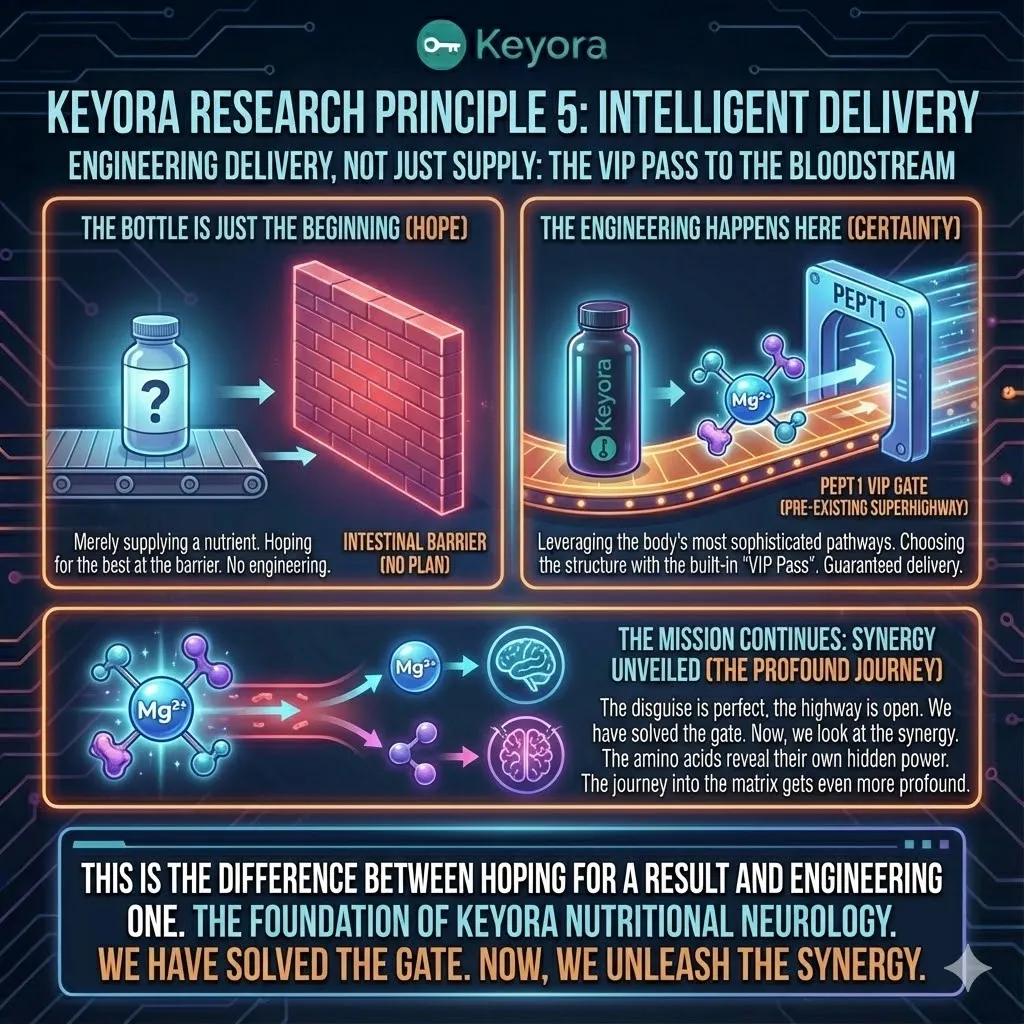
It transformed the way we look at formulation. It led to the formation of our fifth guiding principle: The Principle of Intelligent Delivery. We realized that the bottle is just the beginning of the journey. The true engineering happens at the intestinal barrier.
We do not merely “supply” a nutrient and hope for the best. We engineer its delivery by leveraging the body’s most sophisticated, pre – existing absorption superhighways. We choose the molecular structure that has the “VIP Pass” already built into its DNA.
By aligning with the PEPT1 pathway, we ensure that every milligram has a clear path to the bloodstream.
This is the difference between hoping for a result and engineering one. It is the bridge between the clinic and the home.

It is the foundation of the Keyora Nutritional Neurology revolution.
The “disguise” is perfect, the highway is open, and the delivery is guaranteed.
But the revolution does not stop at delivery.
Now that the magnesium has entered the system, we must ask: what happens next? The choice of the “disguise” matters just as much as the entry itself. Because the amino acids that acted as the “Trojan Horse” are about to reveal their own hidden power.
We have solved the problem of the gate. Now, we must look at the synergy of the mission. The journey into the matrix is about to get even more profound.
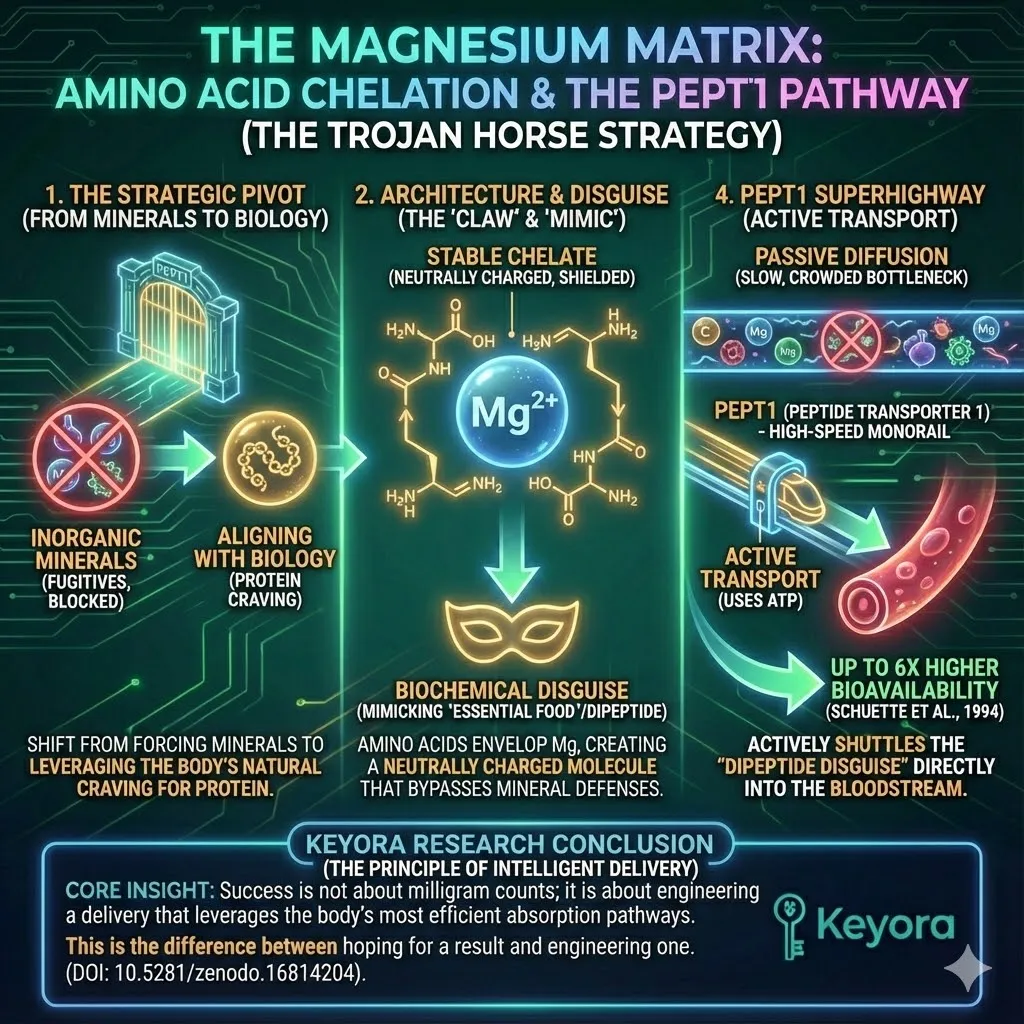
– Series Theme: **Keyora Nutritional Neurology** (The Magnesium Matrix).
– Sub-chapter Focus: **Amino Acid Chelation & The PEPT1 Pathway**.
– Core Strategy: **The Trojan Horse / Biochemical Disguise**.
– **1. The Strategic Pivot (From Minerals to Biology)**:
– *The Realization*: Standard magnesium ions are “fugitives” in the gut—easily blocked or excreted.
– *The Shift*: Keyora research moves from “forcing” minerals through intestinal gates to aligning with what the body naturally craves: Protein.
– **2. The Architecture of the Chelate (The “Claw”)**:
– *Structure*: One or more amino acids physically envelop the magnesium ion (derived from the Greek ‘chele’).
– *Result*: Creates a **neutrally charged molecule** that is shielded from reacting with dietary antagonists (like phytates) and prevents the “osmotic punishment” (laxative effect).
– **3. The Biochemical Disguise (Mimicking Food)**:
– *The Identity Theft*: A fully chelated magnesium molecule mimics a **dipeptide**—the smallest building block of protein.
– *The Entry*: By appearing as “essential food” rather than a foreign mineral, the molecule bypasses the gut’s mineral defense systems.
– **4. The PEPT1 Superhighway (Active vs. Passive Transport)**:
– *The Passive Problem*: Free magnesium ions use “passive diffusion”—a slow, crowded bottleneck prone to competition from other minerals.
– *The Active Solution*: The **PEPT1 (Peptide Transporter 1)** protein acts as a high-speed, high-capacity monorail. It actively shuttles the “dipeptide disguise” directly into the bloodstream using cellular energy (ATP).
– *The Outcome*: Up to 6x higher bioavailability compared to inorganic salts (Schuette et al., 1994).
– **5. Keyora Research Conclusion (The Principle of Intelligent Delivery)**:
– Success is not about milligram counts; it is about engineering a delivery that leverages the body’s most efficient absorption pathways. This is the difference between hoping for a result and engineering one (DOI: 10.5281/zenodo.16814204).
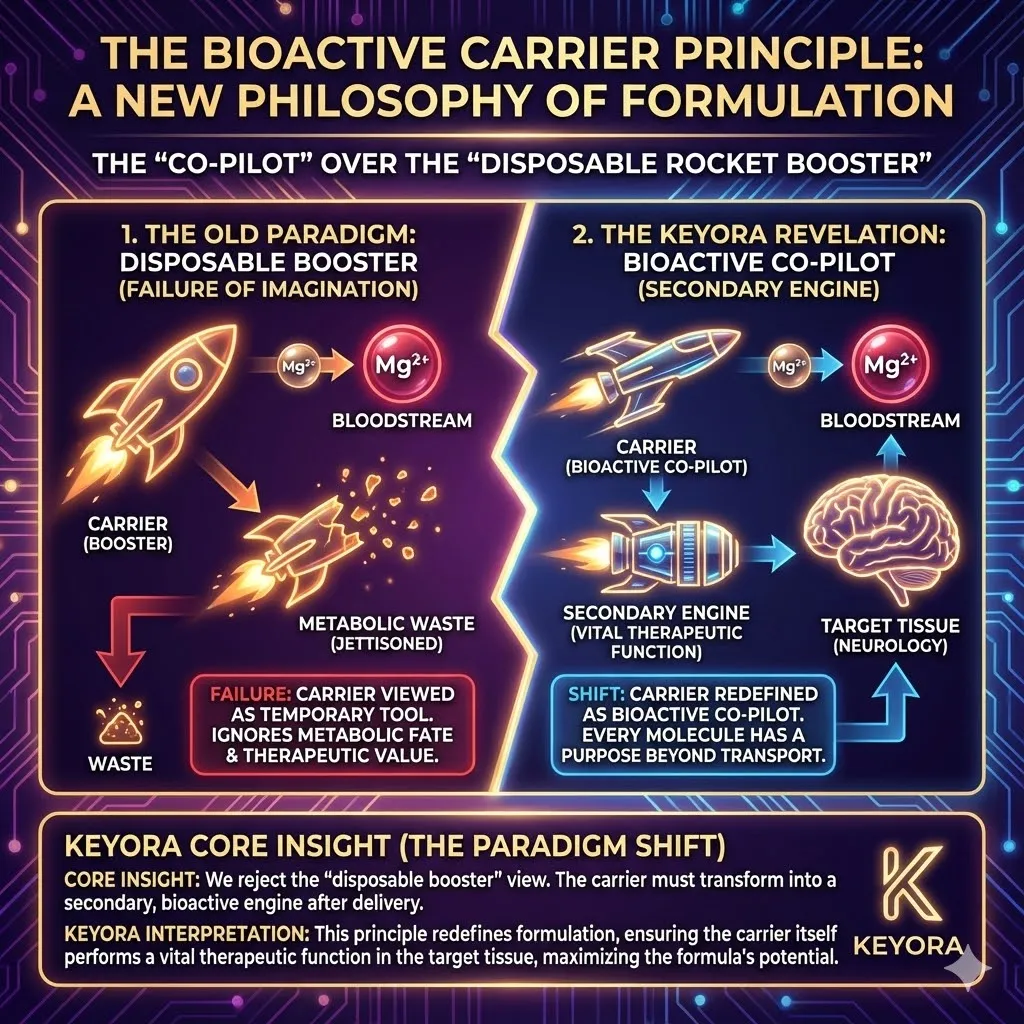
The Bioactive Carrier Principle: A New Philosophy of Formulation
Why at Keyora, We Believe the Delivery Vehicle Must Also Be a High-Performance Engine
The discovery of amino acid chelation solved the great challenge of delivery. It ensures the “astronaut” – our precious magnesium ion – arrives safely in the bloodstream. It provides the thermal shielding necessary to survive the descent through the digestive tract and the structural integrity to bypass the chemical traps of the intestinal lining.
For most of the industry, the story ends here. The mission is considered a success. But for our team, this was merely the end of Act One.
We had successfully navigated the Magnesium Matrix to find a reliable “Trojan Horse.”
We had identified the PEPT1 superhighway as the optimal VIP lane for entry.
However, as we reviewed the pharmacokinetic data and observed the metabolic pathways of these complex molecules, a new, more profound line of inquiry began to emerge in the Keyora laboratories.
We realized that while the industry was obsessed with the destination, they were completely ignoring the fate of the vehicle.
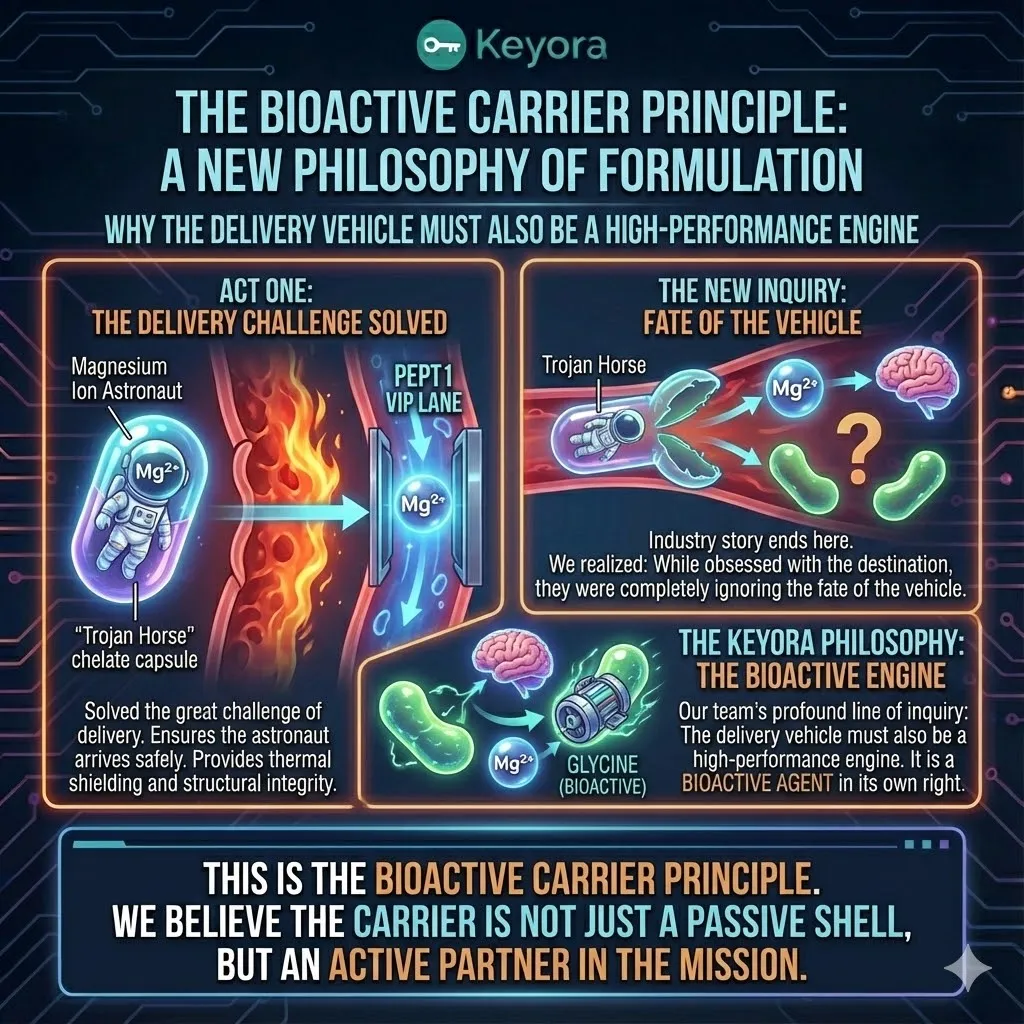
But what becomes of the delivery vehicle?
What is the metabolic fate of the amino acid carrier once it has released its payload into the systemic circulation?
This question marks the boundary between standard nutrition and the advanced systems – based approach of Nutritional Neurology.
It is the question that separates those who simply “supply” from those who truly “engineer.”
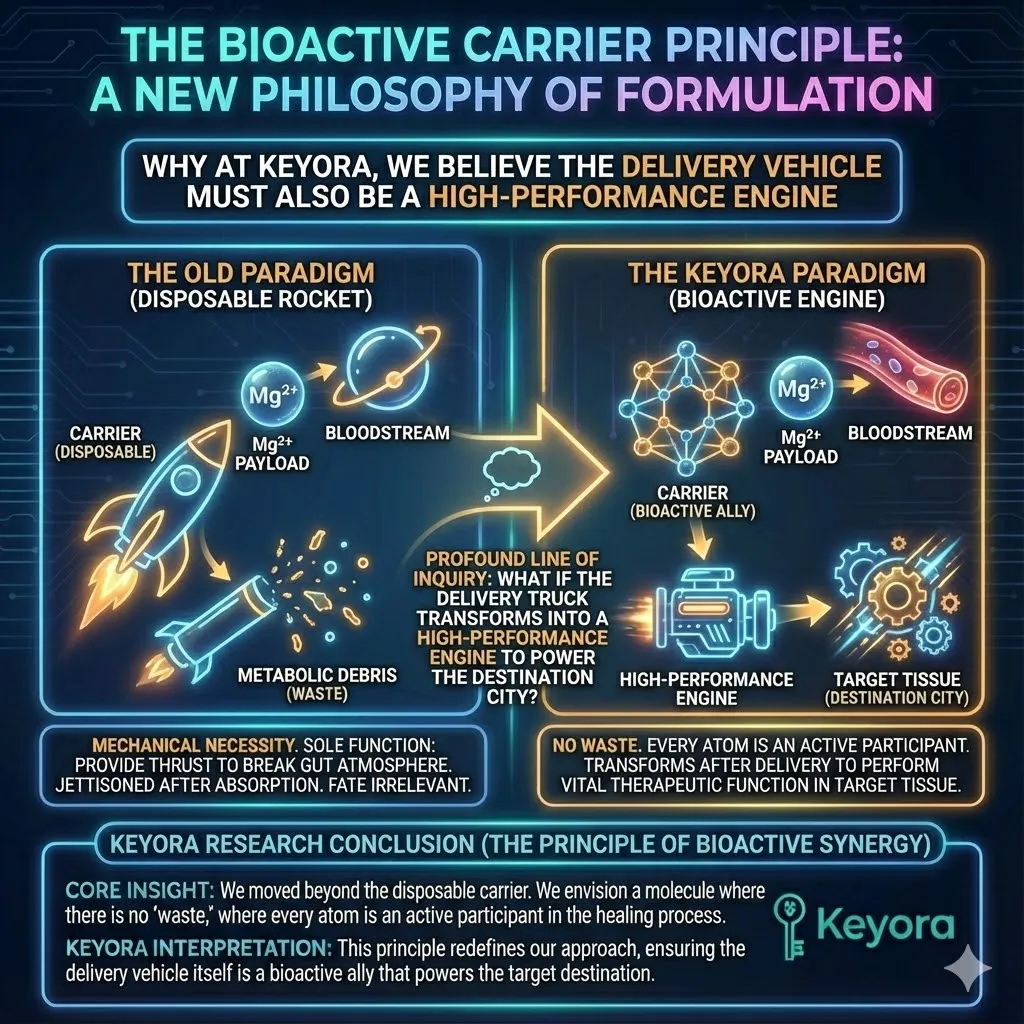
In the old paradigm of nutritional formulation, the carrier molecule – whether it was a citrate, a malate, or a simple amino acid – was viewed as a disposable rocket booster.
Its sole function was to provide the immense thrust needed to break through the “atmosphere” of the gut. It was a mechanical necessity, a means to an end.
The industry assumed that once the payload was in orbit – once the magnesium ion was in the bloodstream – the carrier was jettisoned.
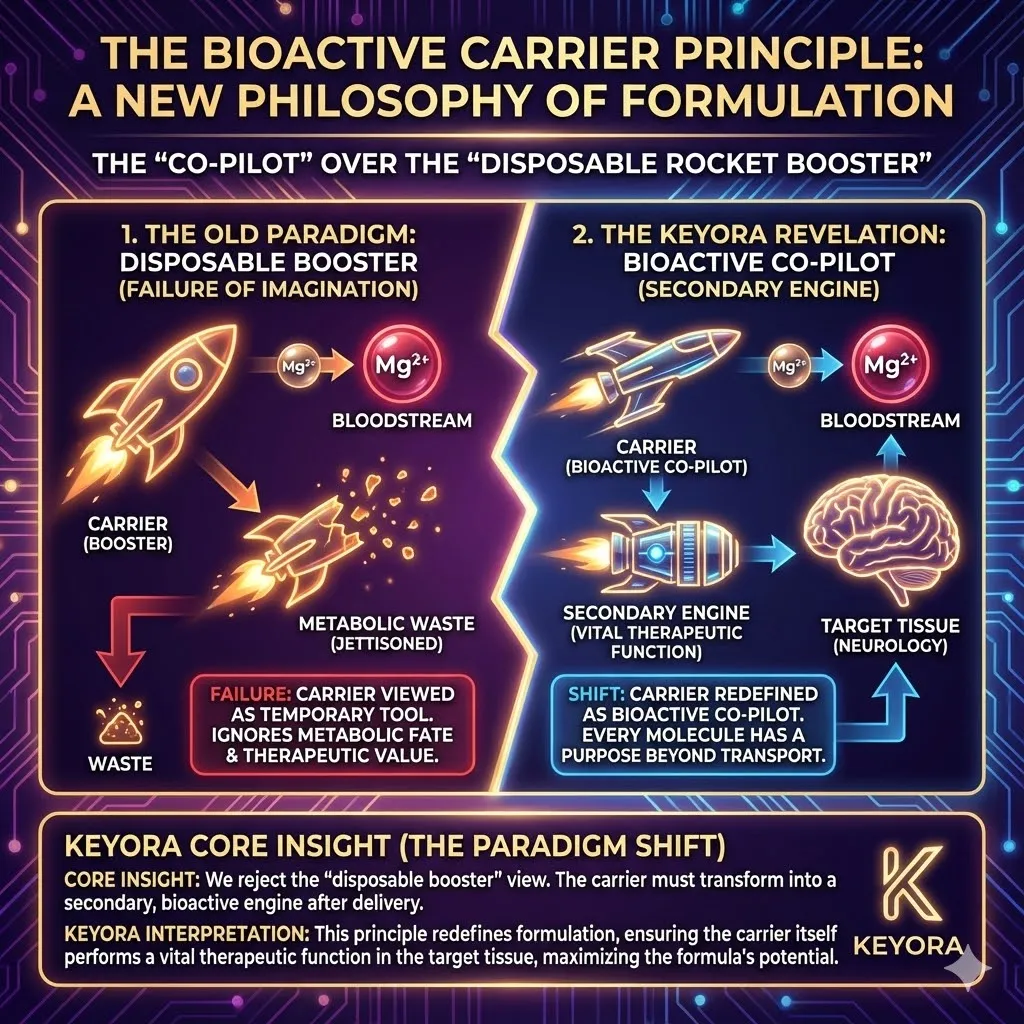
According to this outdated logic, the carrier became a piece of metabolic debris. Its biological purpose was considered complete at the moment of absorption. Its function was purely mechanical; its fate was irrelevant. Whether the carrier was a metabolic intermediate or a random byproduct, the formulators did not care, so long as the “magnesium” number on the blood test went up.
This is a profound failure of imagination.
It treats the human body like a passive container rather than a living, integrated network of chemical signals.
But it was in challenging this very assumption that our research took its most important turn. We asked a question that would ultimately redefine our entire approach to creating health solutions:
What if this is a profound failure of imagination?
What if the carrier, after releasing its mineral, could go on to perform its own, equally vital therapeutic function in the target tissue?
What if the delivery truck, after dropping off its cargo, could transform into a high – performance engine to help power the destination city?
We began to envision a molecule where there was no “waste.”
We imagined a delivery system where every single atom was an active participant in the healing process.
This was the moment of revelation for the Keyora Research team.
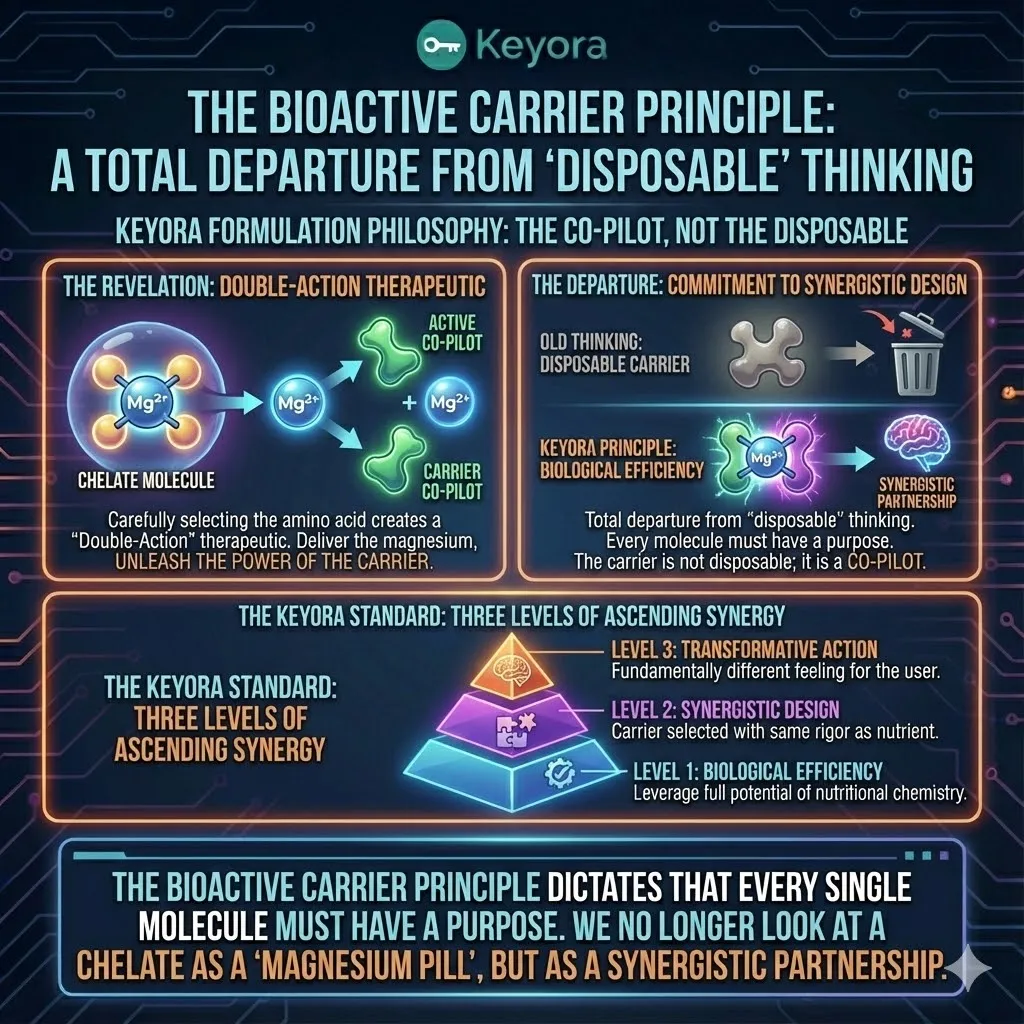
We realized that by carefully selecting the specific amino acid used in the chelate, we could create a “Double – Action” therapeutic.
We could deliver the magnesium, and then we could unleash the power of the carrier itself.
This question led our research team to what is now the central pillar of the Keyora formulation philosophy: The Bioactive Carrier Principle.
This principle represents a total departure from “disposable” thinking.
It is a commitment to biological efficiency and synergistic design.
It is the reason why our formulations feel fundamentally different to the user.
This principle dictates that in a truly superior, systems – based formula, every single molecule must have a purpose. The carrier is not disposable; it is a co – pilot.
It is not merely a means to an end; it is an integral part of the therapeutic action itself, selected with the same scientific rigor as the nutrient it carries.
We no longer look at a chelate as a “magnesium pill.”
We look at it as a synergistic partnership between two bioactive molecules.
The implications of this are not trivial; they are transformative. When you adopt the Bioactive Carrier Principle, you stop wasting metabolic energy on inert “boosters.”
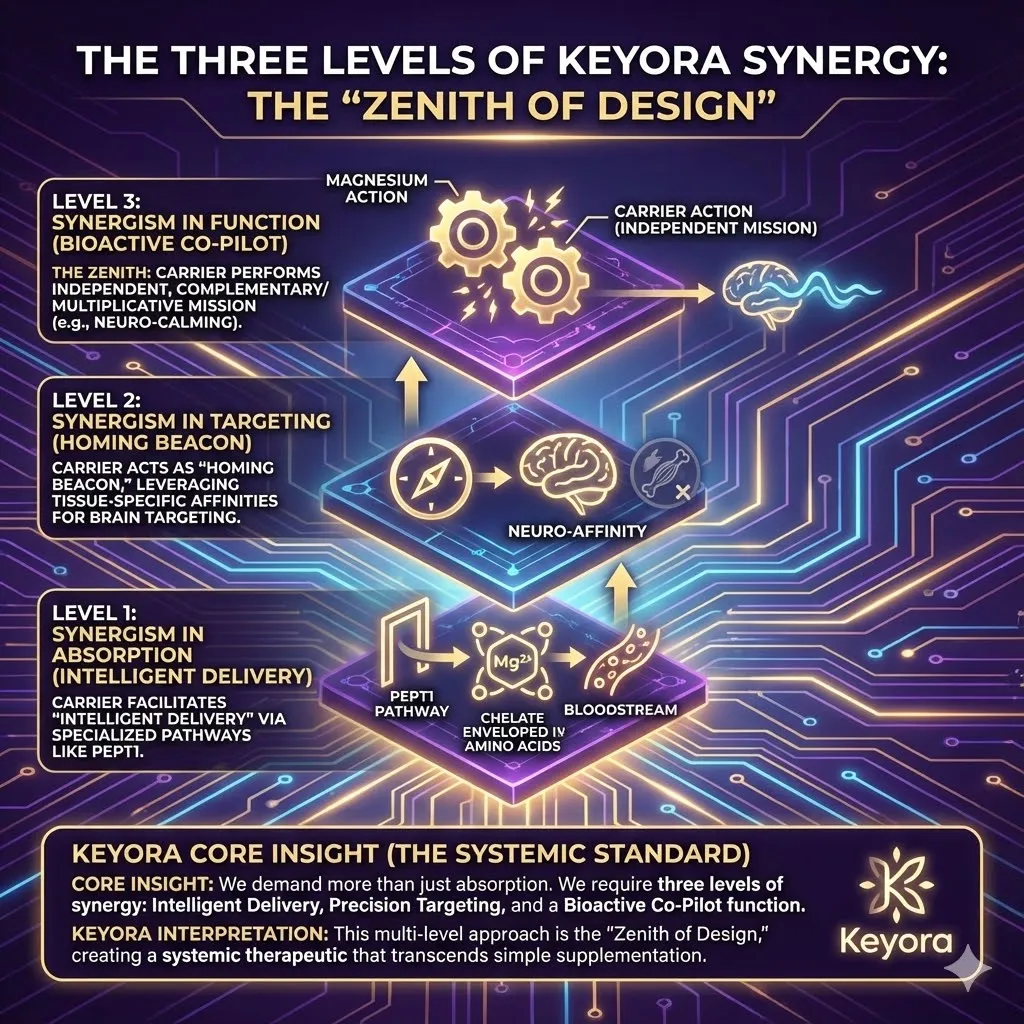
You begin to leverage the full potential of nutritional chemistry. To illustrate this, our research team broke this principle down into three distinct, ascending levels of synergy.
These levels form the “Keyora Standard” for any ingredient we approve.
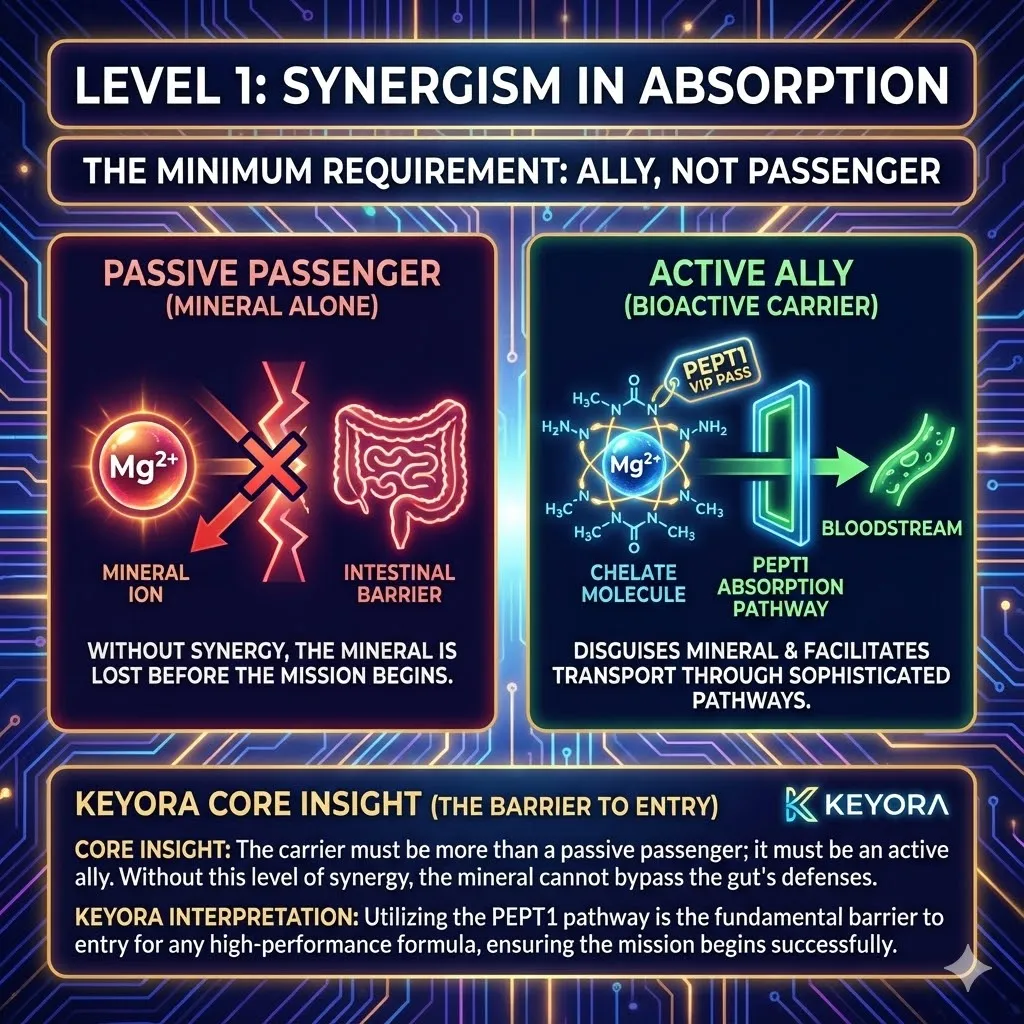
Level 1: Synergism in Absorption.
At its most basic level, the carrier must be an ally in the process of absorption. It must be more than a passive passenger.
As we discussed in the previous section, the carrier must be chosen for its ability to disguise the mineral and facilitate transport through sophisticated pathways like PEPT1.
This is the minimum requirement – the “barrier to entry” for any serious formula. Without this level of synergy, the mineral is lost before the mission even begins.
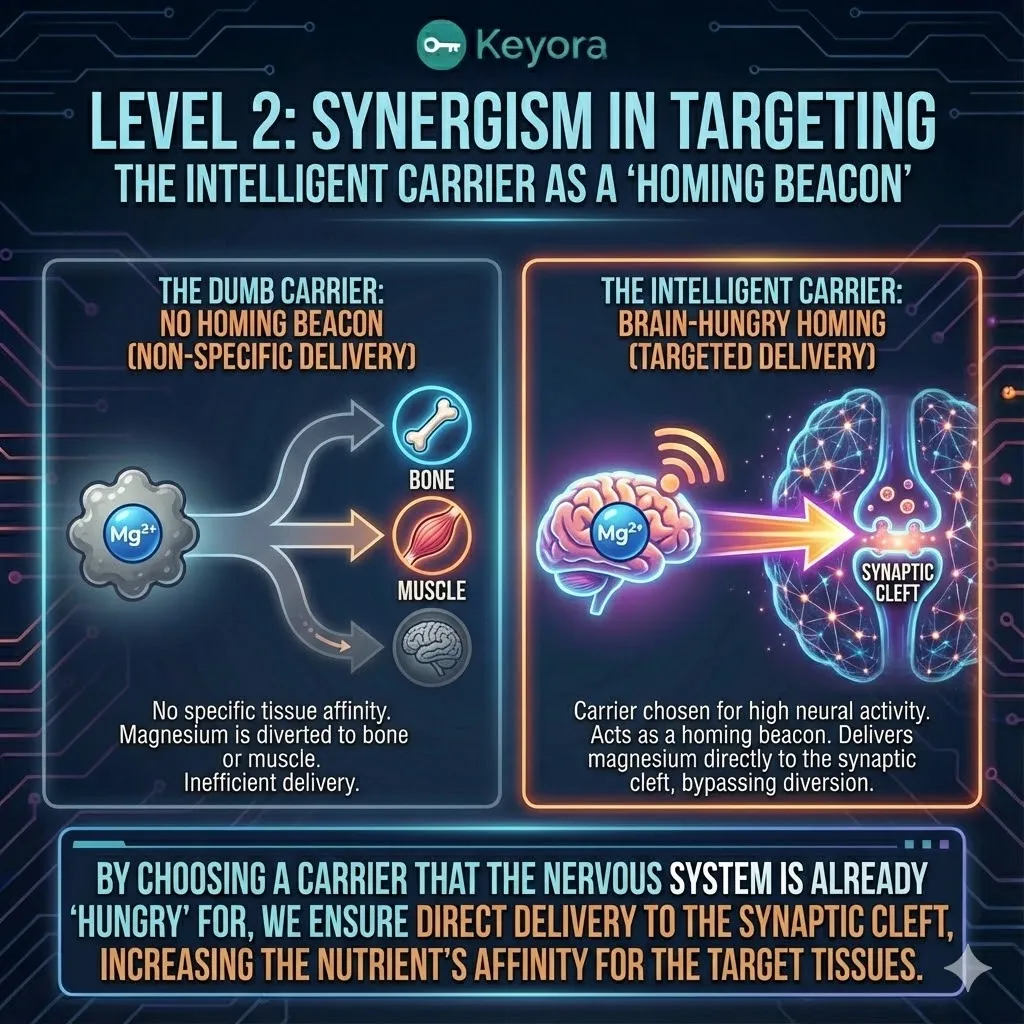
Level 2: Synergism in Targeting.
At the next level, an intelligent carrier can act as a “homing beacon.” It can help increase the nutrient’s affinity for the specific tissues we are trying to reach.
The human body is not a single, uniform space. Different organs have different “appetites” for different amino acids. An amino acid known to be highly active in the brain, for example, is more likely to be taken up by neurons.
By choosing a carrier that the nervous system is already “hungry” for, we can ensure that the magnesium is delivered directly to the synaptic cleft rather than being diverted to the bone or muscle.
Level 3: Synergism in Function.
This is the zenith of formulation elegance. It is here that the Bioactive Carrier Principle reaches its full expression. The carrier, once its delivery mission is complete, begins its own therapeutic mission. It performs a function that is complementary, additive, or even multiplicative to the mineral’s own action.
If the magnesium is meant to quiet the NMDA receptor, the carrier should ideally be a molecule that also promotes calm – perhaps by acting on the GABA system or reducing neuro – inflammation.
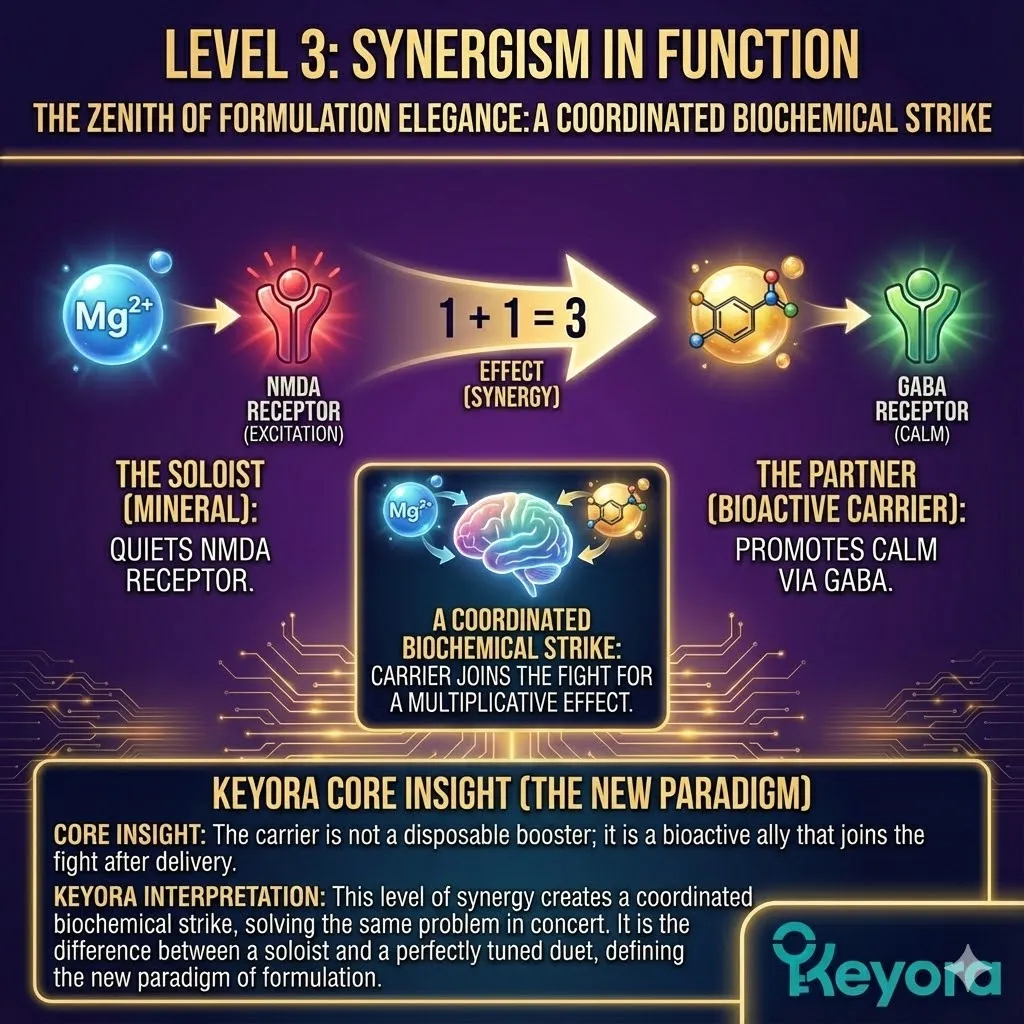
When Level 3 synergy is achieved, the result is a “1 + 1 = 3” effect.
The mineral and the carrier work in concert, in the same place, at the same time, to solve the same problem. This is not just a supplement; it is a coordinated biochemical strike.
It is the difference between a soloist and a perfectly tuned duet. The carrier doesn’t just drop off the magnesium and leave; it joins the fight.
When we apply this demanding, multi – level principle to our search for the ultimate magnesium form, the selection criteria become exponentially more stringent.
We are no longer simply looking for a well – absorbed mineral.
We are no longer satisfied with “better than Oxide” or “more soluble than Citrate.”
Those metrics belong to the old paradigm of disposable boosters.
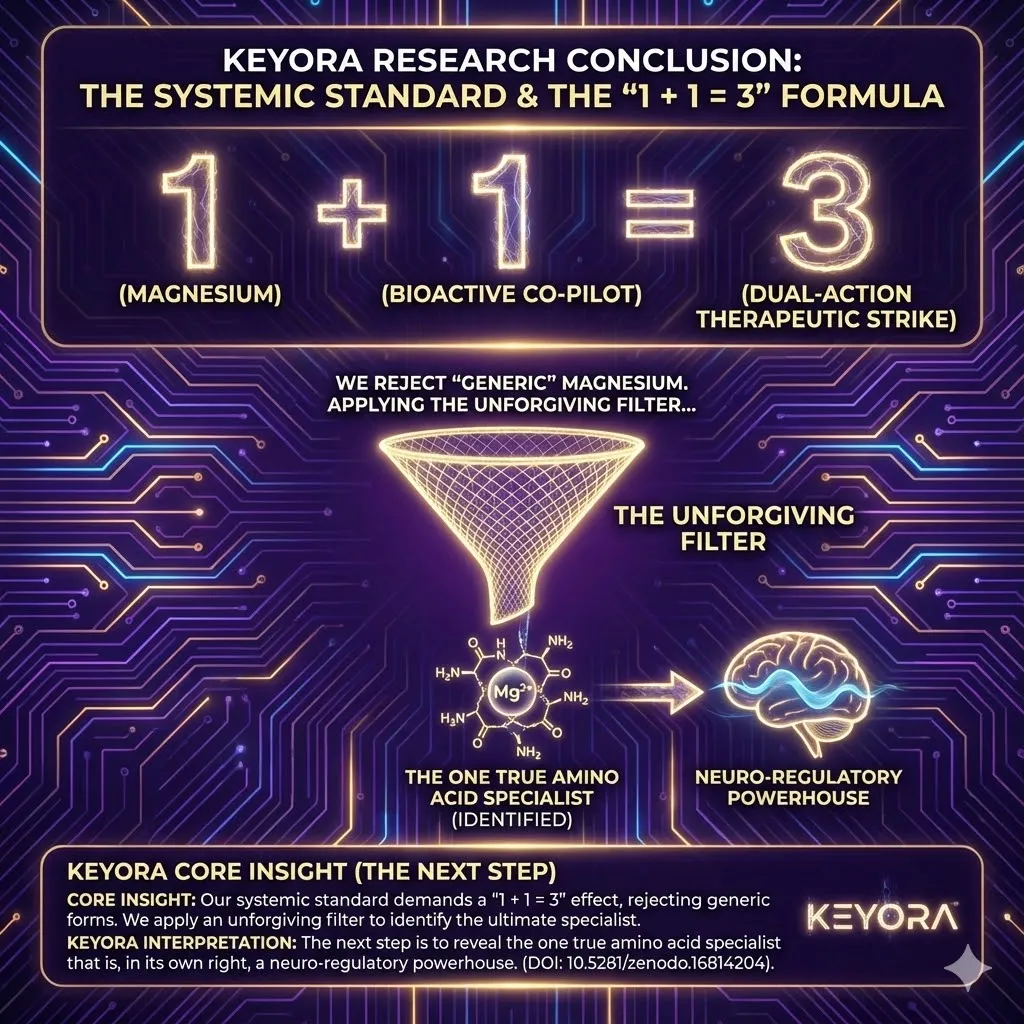
In the Keyora framework, we are looking for the perfect “Co – Pilot.”
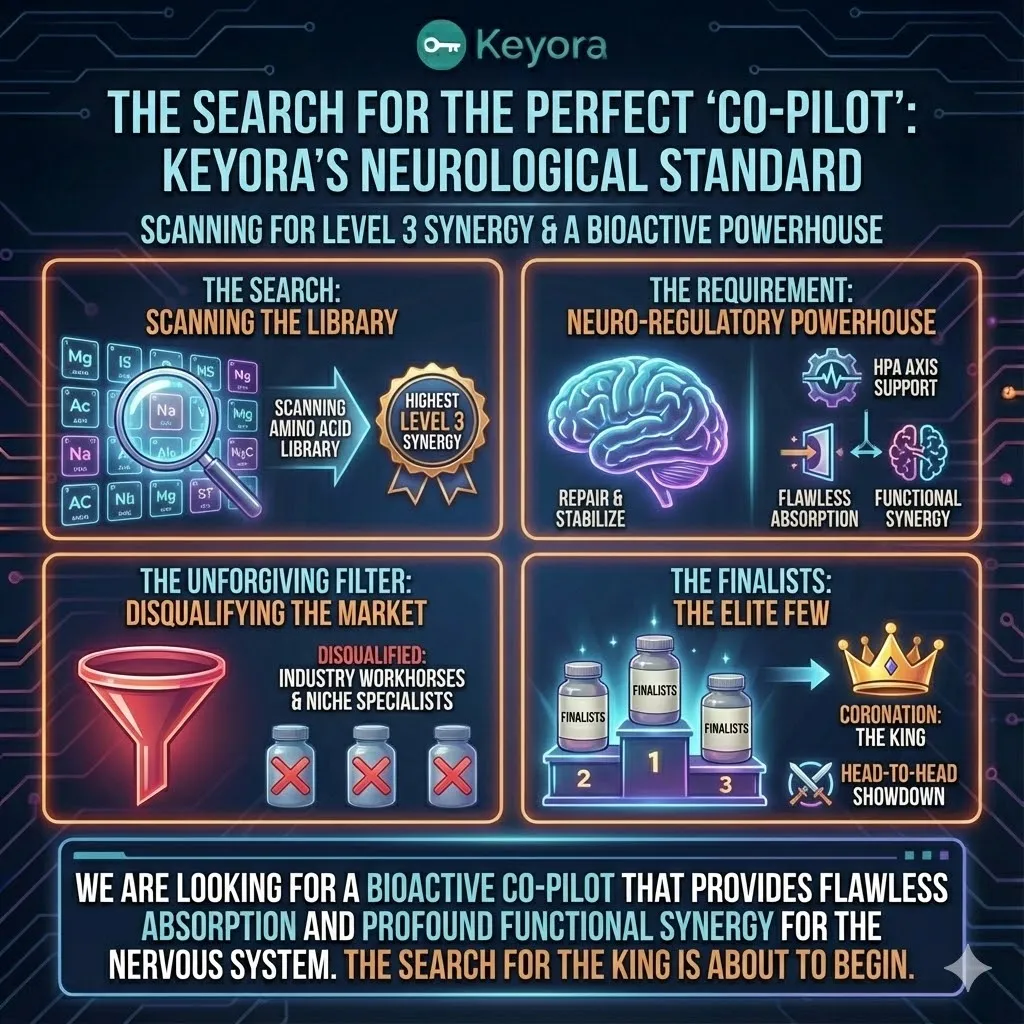
We are scanning the entire library of amino acids – the building blocks of life itself – to find the one that possesses the highest degree of Level 3 synergy with magnesium.
We are looking for the “Specialist” who can handle the pressure of the high – performance brain.
We are now searching for an amino acid partner that not only provides flawless absorption but also possesses the most profound functional synergy for the nervous system itself.
We are looking for a carrier that is, in its own right, a neuro – regulatory powerhouse.
We want a molecule that can help repair the damage of chronic stress while the magnesium quiets the immediate alarm.
We want a molecule that can stabilize the HPA axis while the magnesium stabilizes the mitochondria.
This unforgiving filter – this demand for both a perfect vehicle and a bioactive co – pilot – disqualifies nearly every candidate on the market. It exposes the limitations of the “Industry Workhorses” and the “Niche Specialists” we analyzed earlier.
Most carriers are simply not “smart” enough to meet the Keyora Standard. They are either metabolically neutral or they lack the specific affinity for the central nervous system that we require.
This leaves only a select few. These are the true neurological specialists, the elite of the magnesium world. These are the molecules that have survived the “Keyora Gauntlet” of evidence – based scrutiny.
They represent the absolute pinnacle of what is possible when we stop treating the body like a container and start treating it like a system.
In the section that follows, we will place these finalists head – to – head in a final, decisive showdown based on the clinical evidence.
We will compare their ability to cross the blood – brain barrier, their impact on cognitive resilience, and their ability to restore the “Brake Pedal” of the nervous system.
The time for theory is over.
The time for coronation has arrived.
The search for the king is about to begin.
– Series Theme: **Keyora Nutritional Neurology** (The Magnesium Matrix).
– Sub-chapter Focus: **The Bioactive Carrier Principle**.
– Core Philosophy: **The “Co-Pilot” over the “Disposable Rocket Booster.”**
– **1. The Critique of the Old Paradigm (The Disposable Booster)**:
– *The Failure*: Traditional supplements view the carrier molecule (salts or simple chelates) as a “disposable rocket booster”—a temporary tool to push the mineral into the blood, only to be jettisoned as metabolic waste.
– *The Result*: A “failure of imagination” that ignores the metabolic fate and potential therapeutic value of the delivery vehicle.
– **2. The Keyora Revelation (The Carrier as Co-Pilot)**:
– *The Shift*: Keyora redefines the carrier as a “Bioactive Co-Pilot.” Every molecule in a high-performance formula must have a purpose beyond mere transport.
– *The Concept*: Once the carrier releases the magnesium, it must transform into a secondary “engine” that performs its own vital therapeutic function in the target tissue.
– **3. The Three Levels of Keyora Synergy**:
– *Level 1: Synergism in Absorption*: The carrier facilitates “Intelligent Delivery” via specialized pathways like PEPT1.
– *Level 2: Synergism in Targeting*: The carrier acts as a “Homing Beacon,” leveraging tissue-specific affinities (e.g., neuro-affinity) to ensure the mineral reaches the brain rather than just bone or muscle.
– *Level 3: Synergism in Function*: The “Zenith of Design.” The carrier performs an independent mission that is complementary or multiplicative to magnesium (e.g., a neuro-calming carrier for a neuro-calming mineral).
– **4. Keyora Research Conclusion (The Systemic Standard)**:
– *The Formula*: **1 + 1 = 3**. We reject “generic” magnesium in favor of a dual-action therapeutic strike.
– *The Next Step*: Applying this “unforgiving filter” to identify the one true amino acid specialist that is, in its own right, a neuro-regulatory powerhouse (DOI: 10.5281/zenodo.16814204).
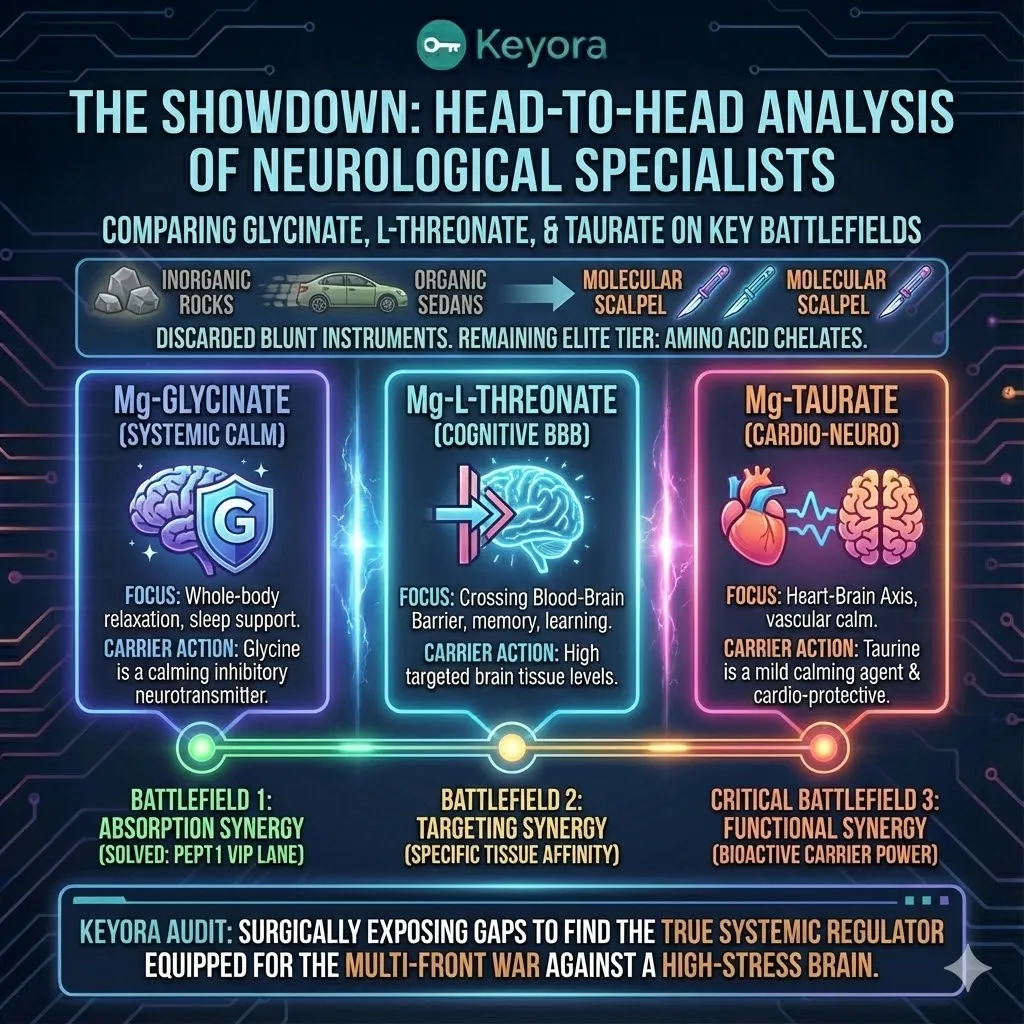
The Showdown: A Head-to-Head Analysis of the Neurological Specialists
Comparing Glycinate, L-Threonate, and Taurate on the Key Battlefields of the High-Stress Brain
We now arrive at the final round of our investigation. The blunt instruments of the supplement industry have been discarded. The geological rocks of inorganic salts and the well – intentioned but limited organic acid sedans have been set aside. We are left with the elite tier: the amino acid chelates.
These are not general tools. They are molecular scalpels, each engineered for a specific biological purpose. At this level of the Magnesium Matrix, we are no longer debating whether the mineral will be absorbed. We have already solved that riddle through the “Trojan Horse” of amino acid chelation and the PEPT1 superhighway.
The question that remains is far more sophisticated. We must determine which of these specialists is best equipped for the complex, multi – front war against the symptoms of a high – stress brain. Our evaluation will be unsparing. It will be judged against the three core tenets of the Bioactive Carrier Principle: Synergism in Absorption, in Targeting, and most critically, in Function.
We have spent years at Keyora Research auditing the case files of these contenders. We have analyzed their pharmacokinetics and their clinical outcomes. In this section, we present our findings. We will treat each specialist with the respect its scientific innovation deserves, while surgically exposing the gaps that only a true systemic regulator can fill.
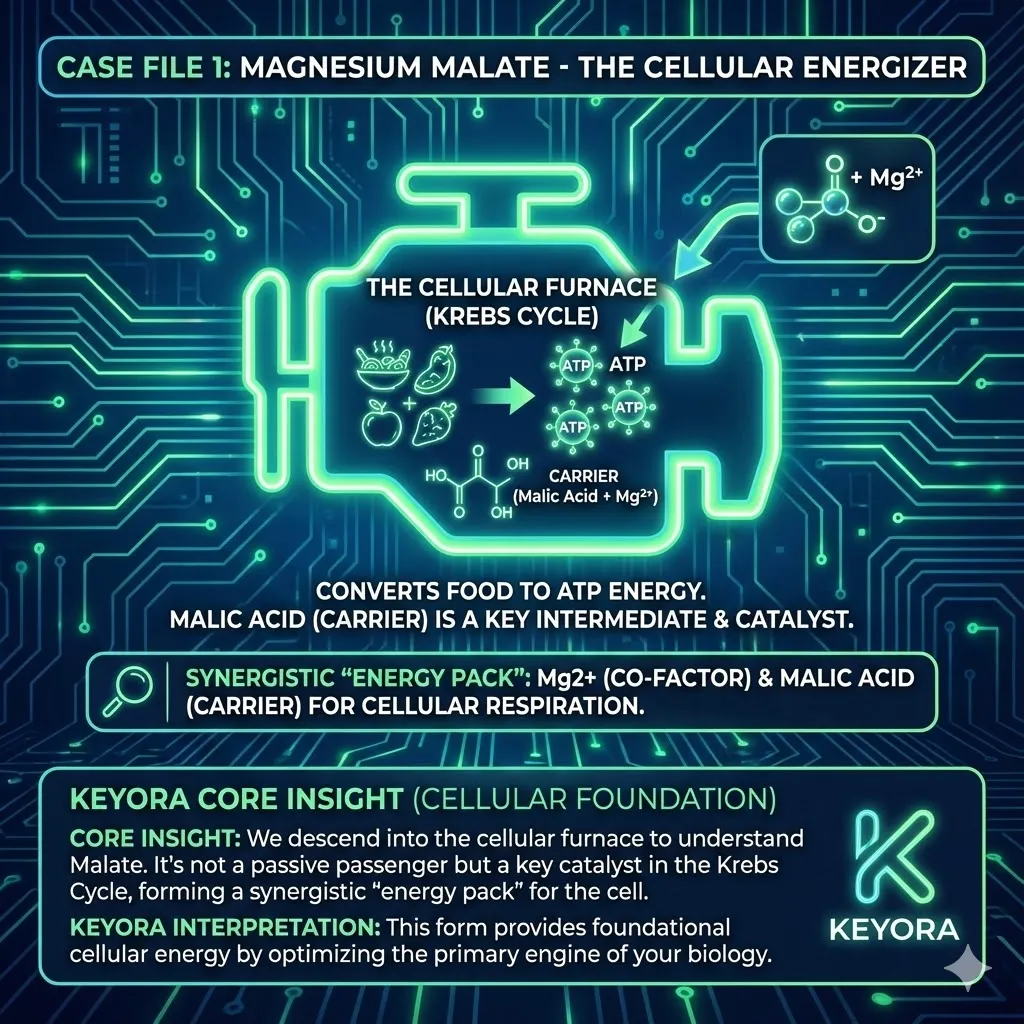
Case File 1: Magnesium Malate – The Cellular Energizer
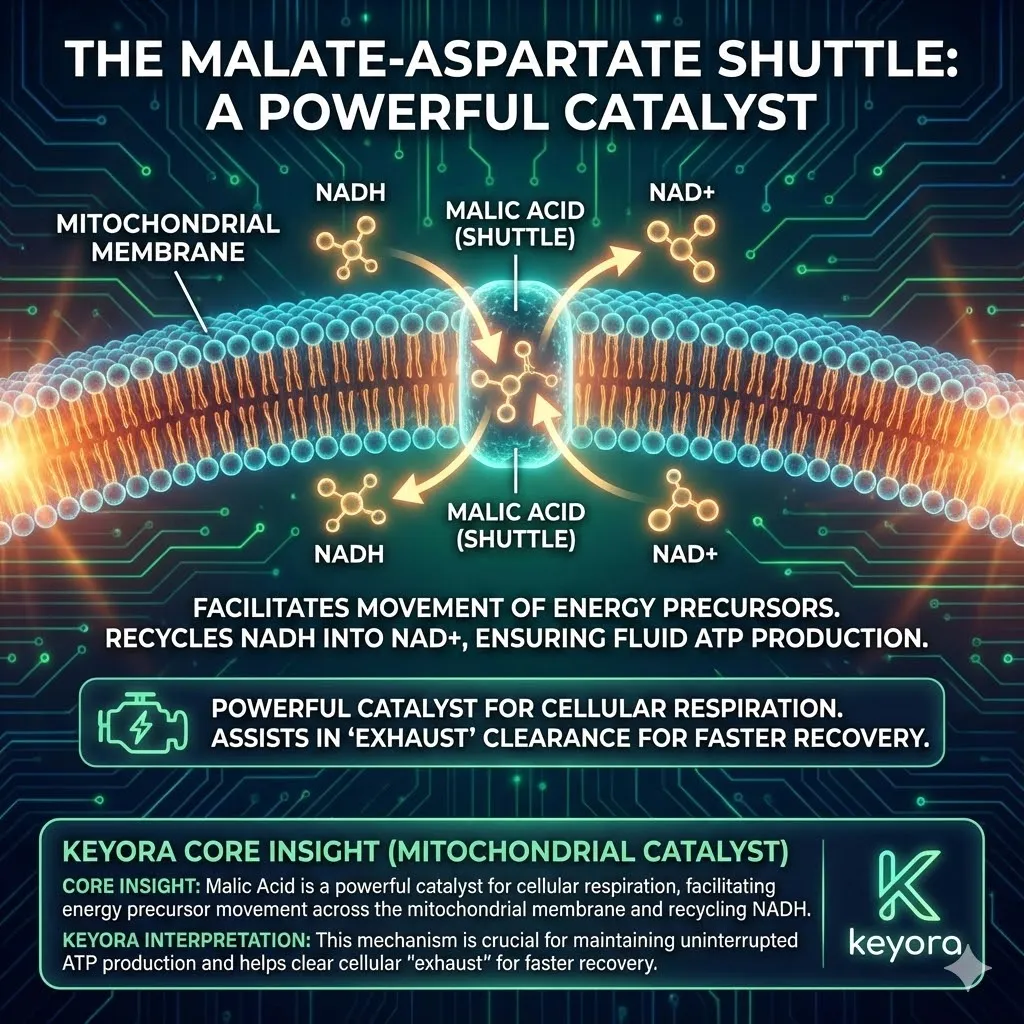
To understand the role of Magnesium Malate, we must first descend into the cellular furnace. We must look at the Krebs Cycle, also known as the Citric Acid Cycle. This is the primary engine of your biology, responsible for converting the food you eat into the ATP energy that powers your every thought and movement.
Magnesium Malate is formed by binding magnesium to Malic Acid. Malic acid is not a passive passenger.
It is a key intermediate in the very cycle that generates cellular energy.
It plays a foundational role in the Malate – Aspartate Shuttle, a mechanism that facilitates the movement of energy precursors across the mitochondrial membrane.
Within the mitochondria, Malic acid acts as a powerful catalyst for cellular respiration. It assists in the recycling of NADH into NAD+, ensuring that the production of ATP remains fluid and uninterrupted.
When paired with magnesium – the essential co – factor for all ATP – related reactions – the result is a synergistic “energy pack” for the cell.
Our research docket for Malate highlights its particular affinity for muscle tissue. In the acidic environment of hardworking or inflamed muscles, Malic acid helps to neutralize metabolic byproducts.
It helps to clear the “exhaust” of the cellular engine, allowing for faster recovery and reduced soreness.
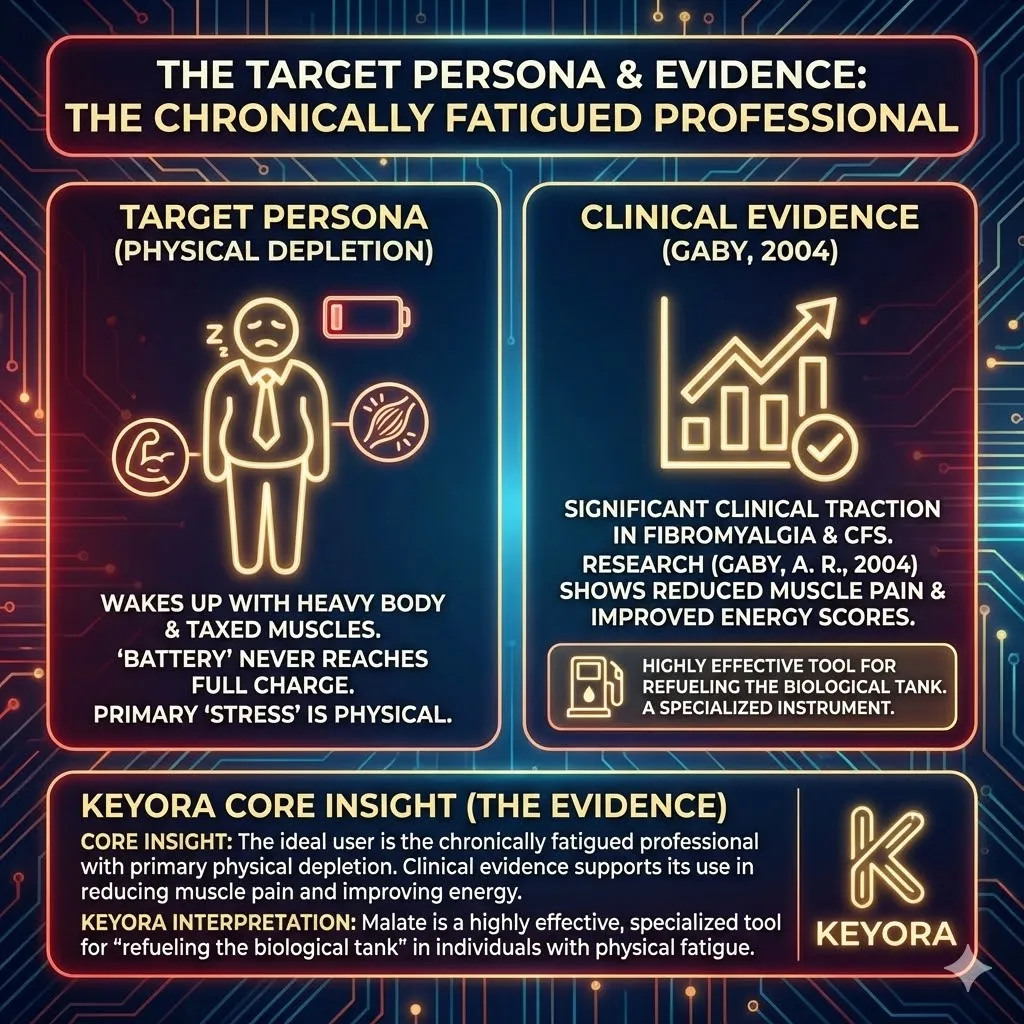
The Target Persona & Evidence
The ideal user for Magnesium Malate is the professional whose fatigue is predominantly physical.
This is the “Chronically Fatigued Professional” who wakes up with a heavy body and muscles that feel persistently taxed.
They may lead an active life, but they feel as though their “battery” never quite reaches a full charge.
This form has gained significant clinical traction in the study of Fibromyalgia and Chronic Fatigue Syndrome.
We frequently reference the work of Gaby, A. R. (2004), whose research demonstrated that the combination of magnesium and malic acid significantly reduced muscle pain and improved energy scores in patients suffering from chronic exhaustion syndromes.
For the individual whose primary “stress” manifests as physical depletion, Malate is a highly effective tool. It is a specialized instrument for refueling the biological tank.
The Verdict & Protagonist Framing
Verdict:
An outstanding choice for rebuilding mitochondrial energy from the ground up, particularly where muscle fatigue is the primary complaint. We recognize its value as a metabolic energizer.
Here, however, lies its critical limitation for our target user. It addresses a downstream consequence – energy depletion – and not the upstream neurological cause.
For the founder or executive whose exhaustion is born from a mind that will not be quiet, Malate is addressing the symptoms of the burn, not the fire itself.
Chronic stress doesn’t just “drain” energy; it creates a state of hyperactive overconsumption.
Your HPA axis is redlining.
Your brain is stuck in an excitatory glutamate storm.
Malate is merely refueling a leaking tank without fixing the leak. It helps refuel the drained engine, but it does nothing to calm the frantic driver who is still pressing the accelerator to the floor.
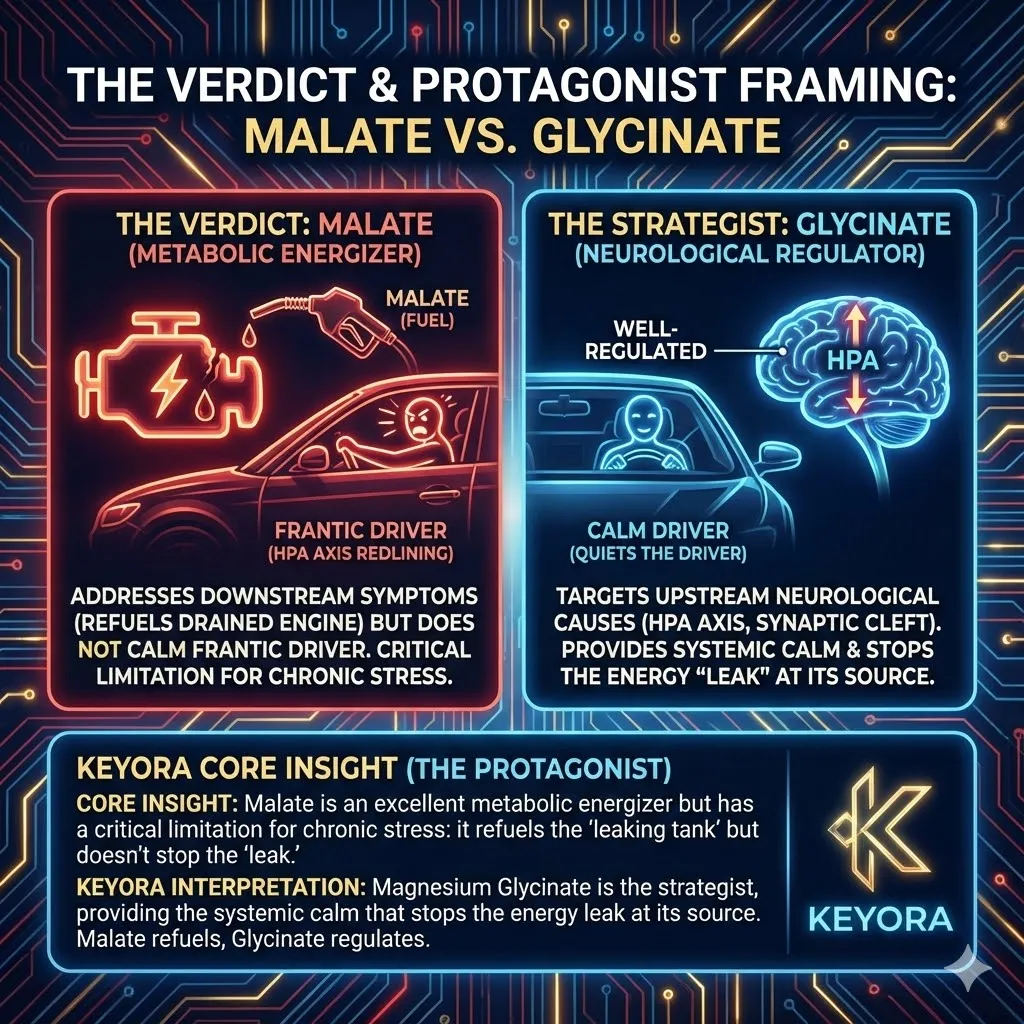
Magnesium Glycinate, by contrast, is the strategist.
It does not just provide fuel; it quiets the driver.
It targets the upstream neurological pathways of the HPA axis and the synaptic cleft.
It provides the profound, systemic calm that stops the energy “leak” at its source. While Malate refuels, Glycinate regulates.
Case File 2: Magnesium Taurate – The Guardian of the High-Stress Heart
As we move from the mitochondria to the cardiovascular system, we encounter Magnesium Taurate.
This is a chelate where magnesium is bound to Taurine, a sulfur – containing amino acid. Taurine is one of the most abundant amino acids in the human body, with its highest concentrations found in the heart, the retina, and the central nervous system.
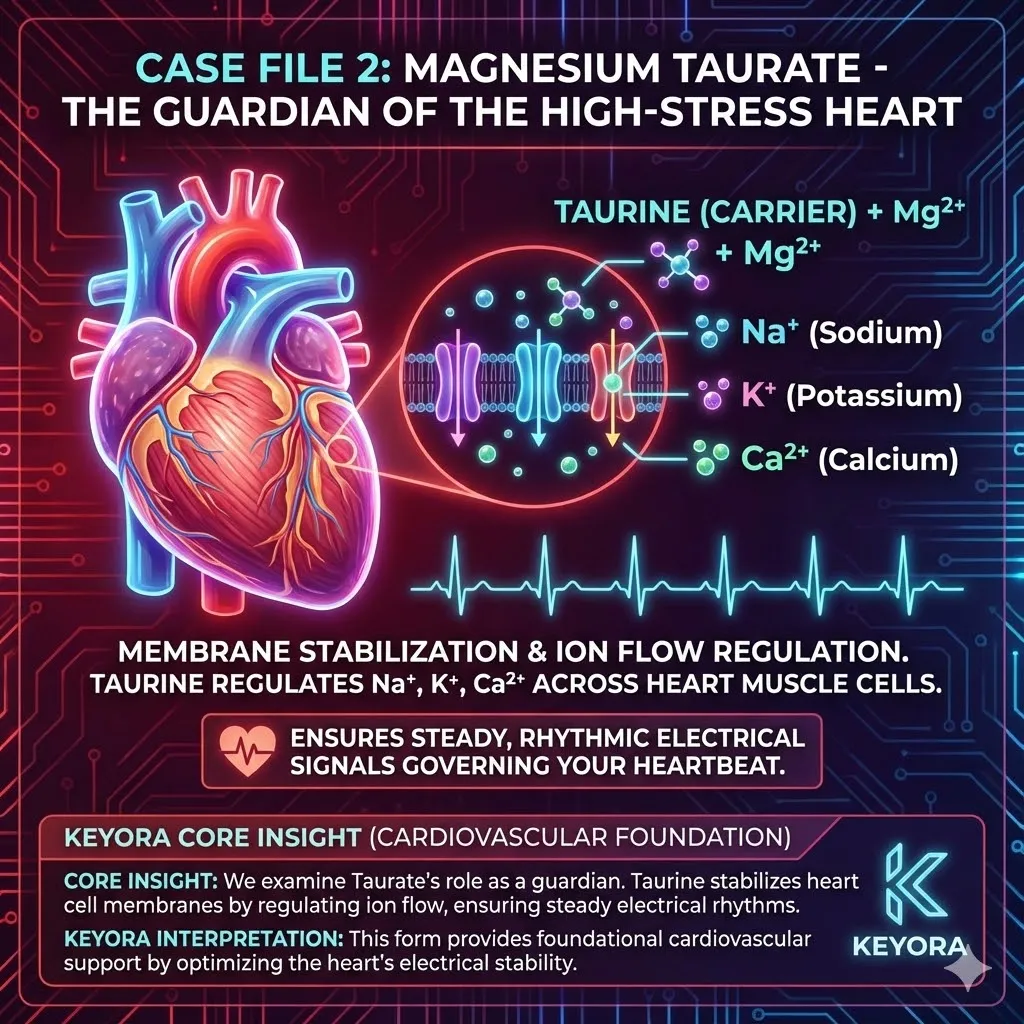
The mechanism of Taurate is deeply rooted in membrane stabilization. Taurine helps to regulate the flow of ions – specifically Sodium, Potassium, and Calcium – across cell membranes. In the myocardium (the heart muscle), this regulation is vital. It ensures that the electrical signals governing your heartbeat remain rhythmic and steady.
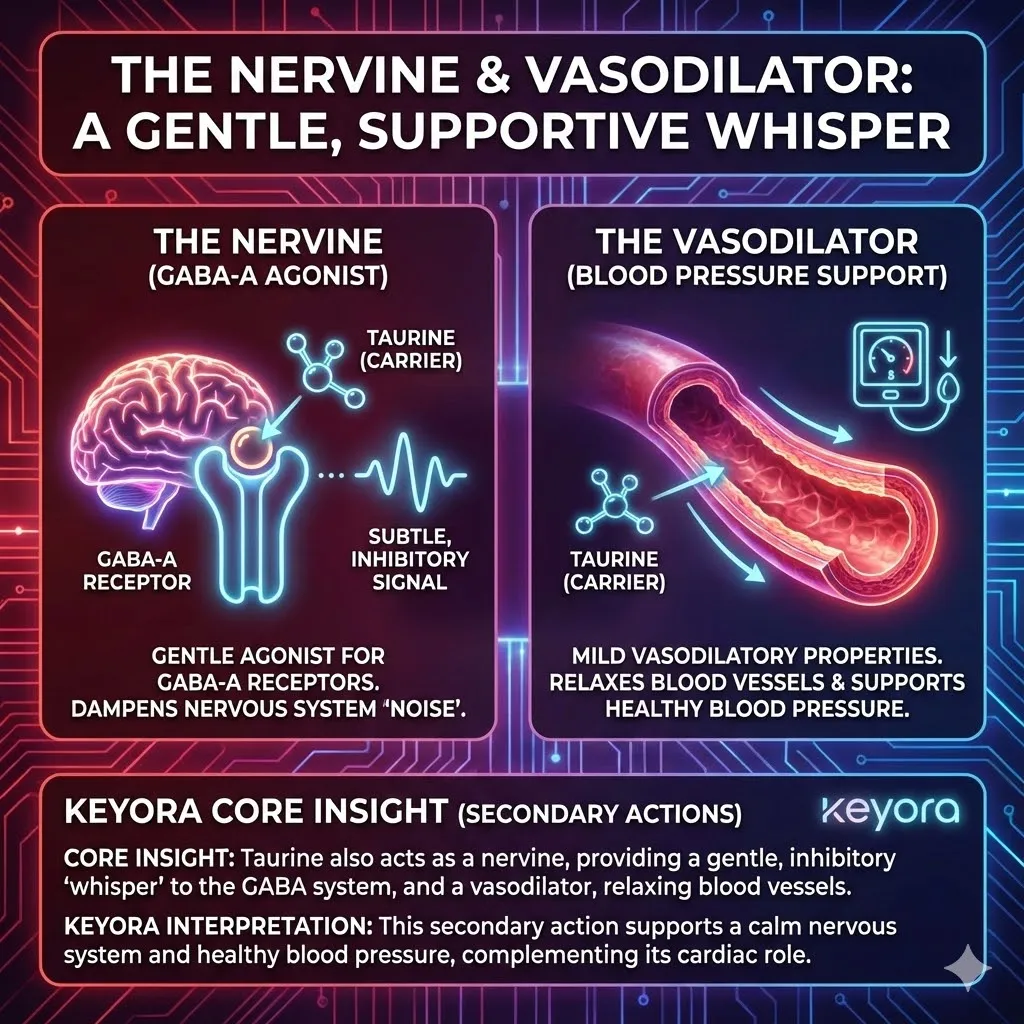
Taurine is also a known nervine. It acts as a gentle agonist for the GABA-A receptors in the brain. It provides a subtle, inhibitory signal that helps to dampen the “noise” of the nervous system.
Furthermore, it possesses mild vasodilatory properties, helping to relax the blood vessels and support a healthy blood pressure response during moments of acute tension.
The Target Persona & Evidence
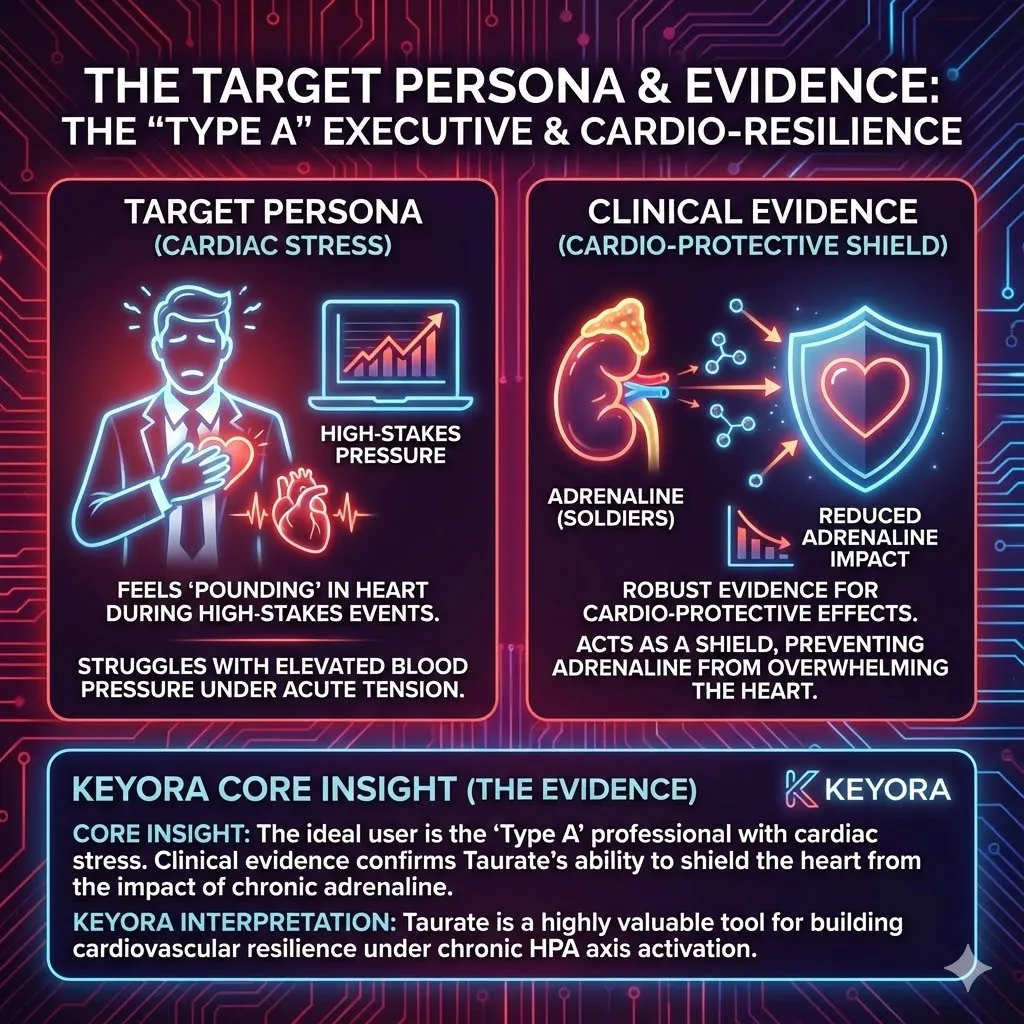
The ideal user for Magnesium Taurate is the “Type A” executive or the Wall Street trader. This is the professional whose stress manifests physically in the chest.
They feel the “pounding” in their heart during a high – stakes negotiation. They struggle with elevated blood pressure that spikes the moment they open their laptop.
The clinical evidence for Taurine’s cardio – protective effects is robust. Research has consistently shown its ability to reduce the impact of adrenaline on the heart. It acts as a protective shield, preventing the “Soldiers” of the adrenal glands from overwhelming the cardiovascular system during a chronic HPA axis response.
For the professional whose primary health concern is the physical toll of stress on their heart, Taurate is an elegant and highly valuable tool.
The Verdict & Protagonist Framing
Verdict:
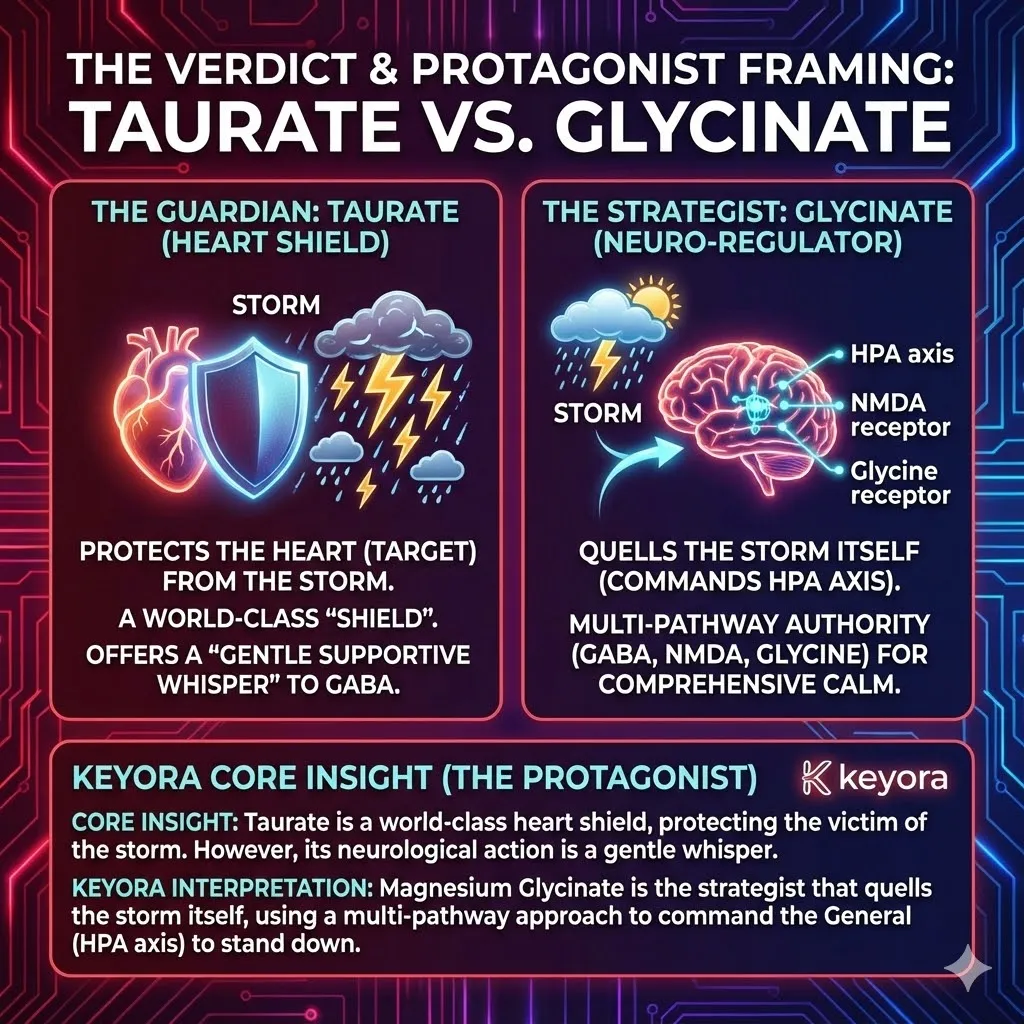
An elegant and highly valuable tool for individuals prioritizing cardiovascular resilience under chronic stress. It is a world – class “shield” for the heart.
However, its direct neurological action, while beneficial, is a secondary feature. In our head – to – head analysis, we found that Taurate offers what we call a “gentle, supportive whisper” to the GABA system. It provides a mild calming effect that is often insufficient to dismantle a state of high, systemic anxiety or to restore a broken sleep architecture.
Taurate protects the heart (the target), but it does not sufficiently command the “General” (the Hypothalamus) to stand down. It does not, however, command the same multi – pathway authority as Magnesium Glycinate.
As we will reveal, Glycinate operates on a more comprehensive level. It doesn’t just whisper to GABA; it simultaneously blocks the excitatory NMDA channels while activating distinct inhibitory Glycine receptors. This is a far more powerful and comprehensive strategy for silencing the alarm. One shields the victim of the storm; the other quells the storm itself.
Case File 3: Magnesium L-Threonate – The Synaptic Scalpel
The third contender in our docket is Magnesium L-Threonate.
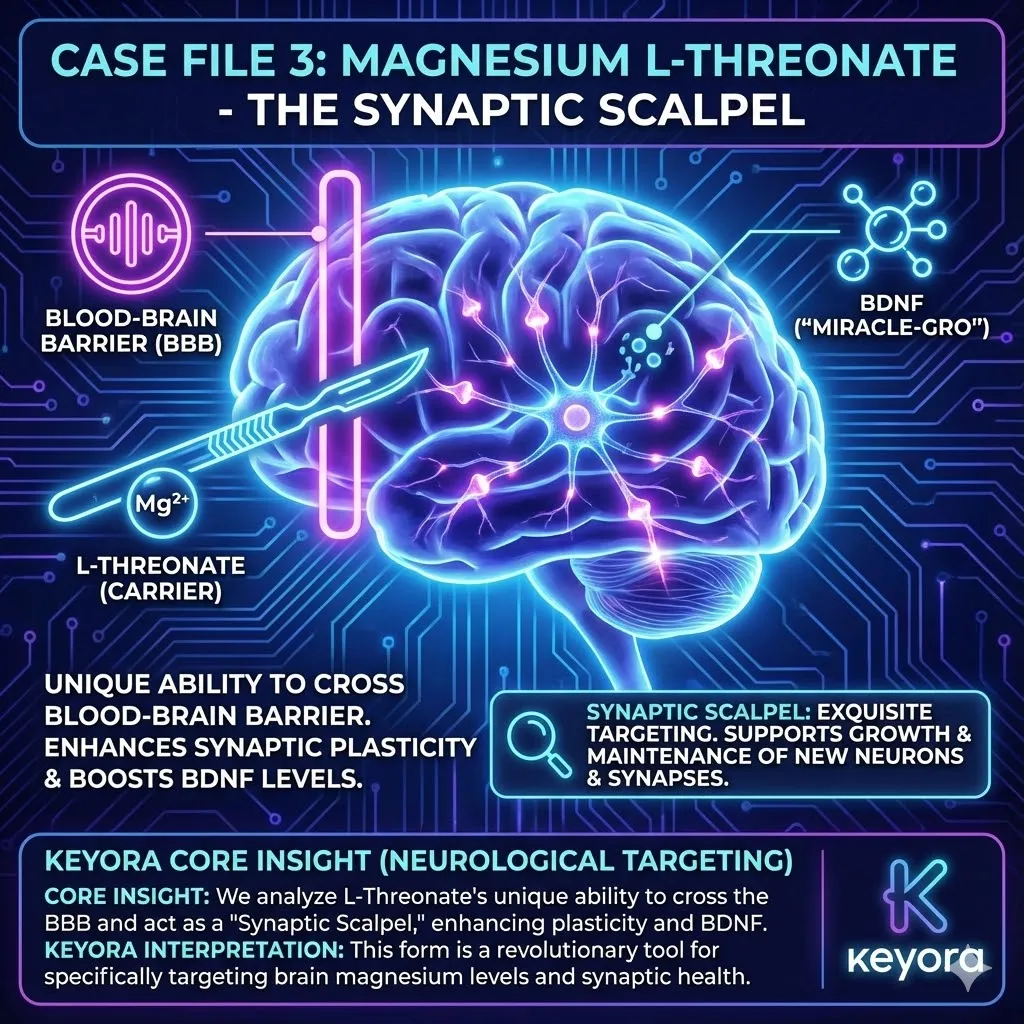
This is a relatively recent and scientifically fascinating innovation. L-Threonate is a vitamin C metabolite that possesses a unique and highly specialized ability: it can effectively cross the Blood – Brain Barrier (BBB).
The “Targeting” of L-Threonate is exquisite. While most magnesium forms struggle to increase brain magnesium levels significantly, L-Threonate has been shown in animal and human trials to elevate magnesium concentrations within the cerebrospinal fluid.
Once inside the brain, its mission is synaptic plasticity. It has been studied for its ability to increase the number of functional presynaptic release sites and to boost levels of BDNF (Brain – Derived Neurotrophic Factor). BDNF is often described as “Miracle – Gro” for the brain, helping to support the growth and maintenance of new neurons and synapses.
The Target Persona & Evidence
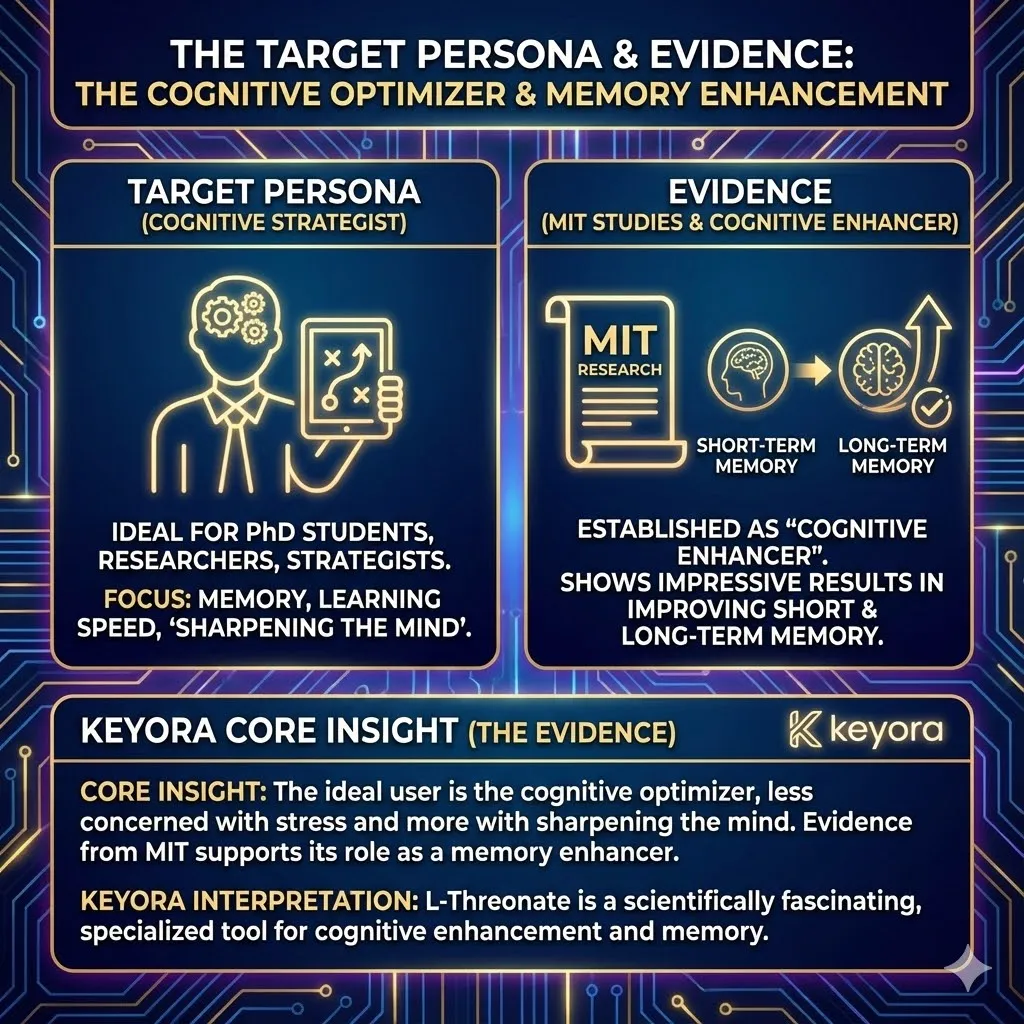
The ideal user for L-Threonate is the PhD student, the researcher, or the high – level strategist. This is the professional whose primary goal is cognitive optimization. They are less concerned with stress and more concerned with memory, learning speed, and “sharpening the mind.”
The foundational studies for L-Threonate, primarily conducted at MIT, established its reputation as a “cognitive enhancer.” The data showed impressive results in improving short – term and long – term memory in aging populations and in animal models of cognitive decline. It is, without question, the “Synaptic Scalpel.”
The Verdict & Protagonist Framing
Verdict:
A revolutionary and scientifically fascinating tool for the specific target of enhancing synaptic plasticity and memory.
We at Keyora hold this innovation in high regard.
Yet, its specialization is precisely its limitation for our mission. Our research into the high – stress executive reveals a stark reality: the primary barrier to their performance is rarely a lack of “synaptic density.”
It is an overwhelming storm of systemic stress that prevents them from accessing the cognitive potential they already have.
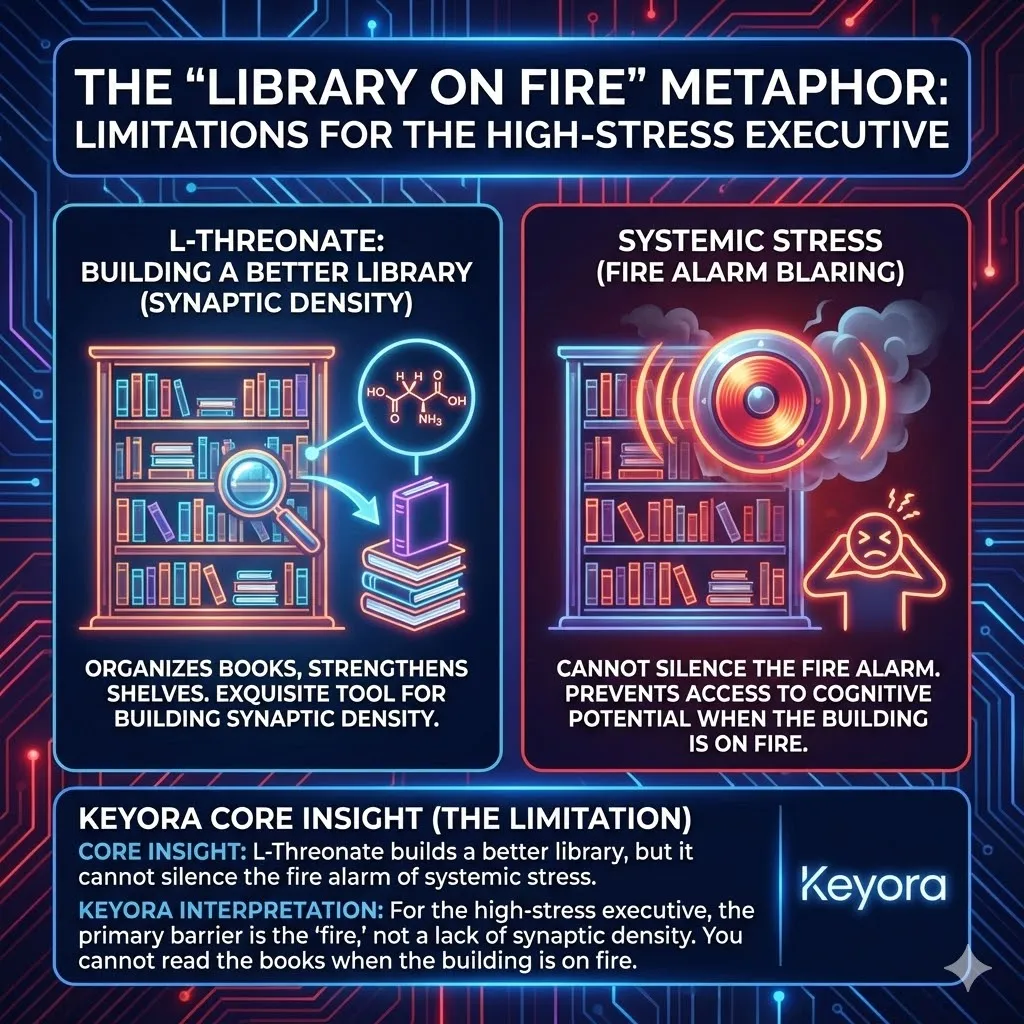
L-Threonate is an exquisite tool for building a better library. It helps you organize the books and strengthen the shelves. But it cannot silence the fire alarm blaring through the building.
If the building is on fire, you cannot sit down and read the books, no matter how well – organized the library is.
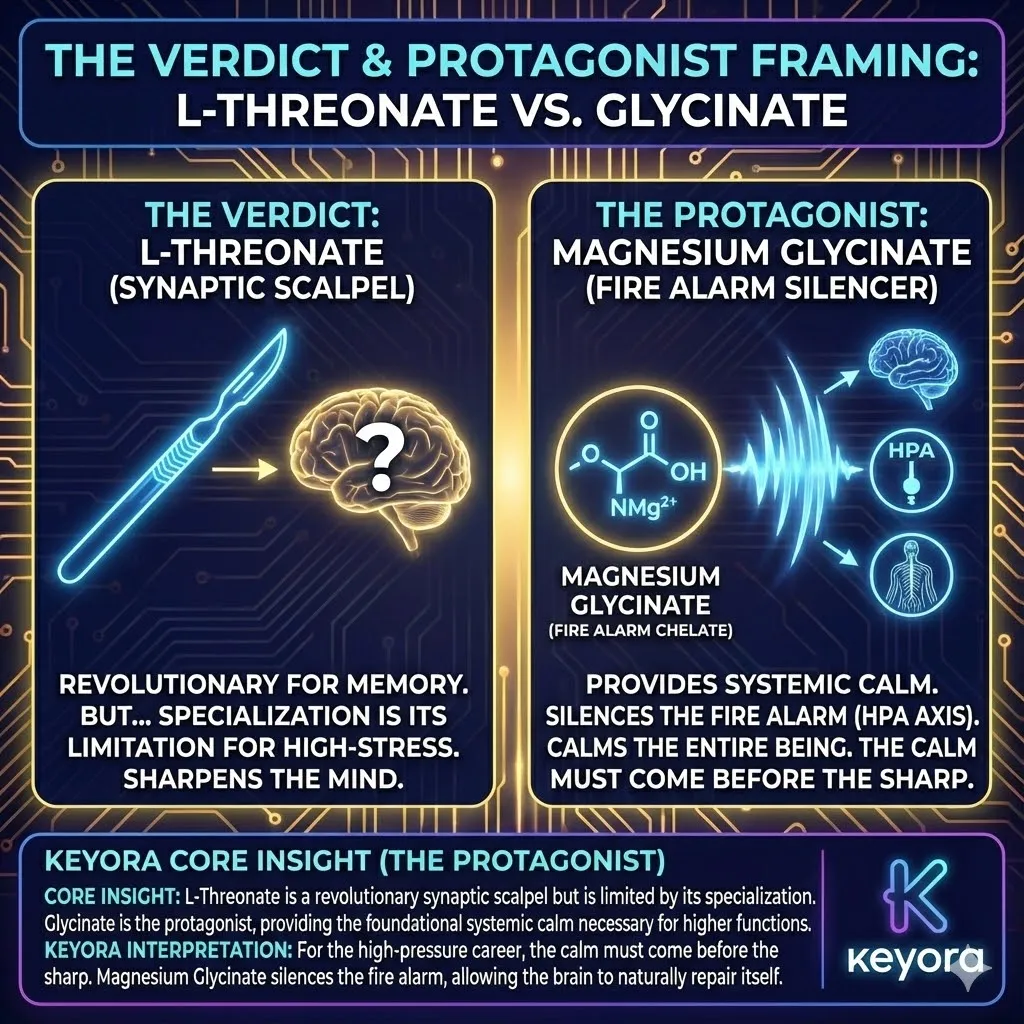
Magnesium Glycinate is the fire alarm silencer.
The “wired and tired” executive doesn’t need more synaptic density at 2:00 AM; they need their HPA axis to stop firing. They need their nervous system to enter a state of deep, restorative rest so their brain can naturally repair itself.
By providing systemic calm that extends from the brain to the HPA axis and even to the peripheral nervous system, Glycinate creates the foundational quietude necessary for the brain’s higher functions to operate without interference.
One sharpens the mind; the other calms the entire being.
For the person in the middle of a high – pressure career, the calm must come before the sharp.
The Inevitable Conclusion
Our examination of the specialists reveals a powerful insight. Each is a world – class tool for a singular purpose. Each represents a triumph of targeted nutritional chemistry.
Magnesium Malate for cellular energy.
Magnesium Taurate for the cardiovascular shield.
Magnesium L-Threonate for the synaptic scalpel.
But the problem we are dedicated to solving at Keyora – the modern condition of the high – stress, dysregulated professional – is not a singular problem. It is a systemic cascade. It is a complex, interconnected web of neurological over – activation, hormonal imbalance, and physical tension.
The high – performer doesn’t just have “bad memory” or “heart palpitations” or “low energy.” They have Systems Failure.
They are experiencing a biological “brownout” caused by the relentless pressure of their environment.
This leads us, with all other options now respectfully set aside, to our final inquiry.
Is there a form that is not a specialist, but a Systemic Regulator?
Is there a form that doesn’t just treat one facet of the problem, but re – stabilizes the entire interconnected system?
Is there a molecule that can solve the delivery crisis, act as a bioactive co – pilot, and address the brain, the stress response, and the sleep cycle simultaneously?
The evidence we have meticulously reviewed, and the gaps we have now clearly identified in the specialists, point to one, and only one, candidate that rises to this monumental challenge.
It is the molecule that forms the heart of our philosophy. It is the form that provides the profound “1 + 1 = 3” synergy of the Bioactive Carrier Principle.
It is time to formally introduce our protagonist. It is time to explain, in full detail, why it earned its crown as the King of the Magnesium Matrix.
In Chapter 4, the search ends.
We crown Magnesium Glycinate.
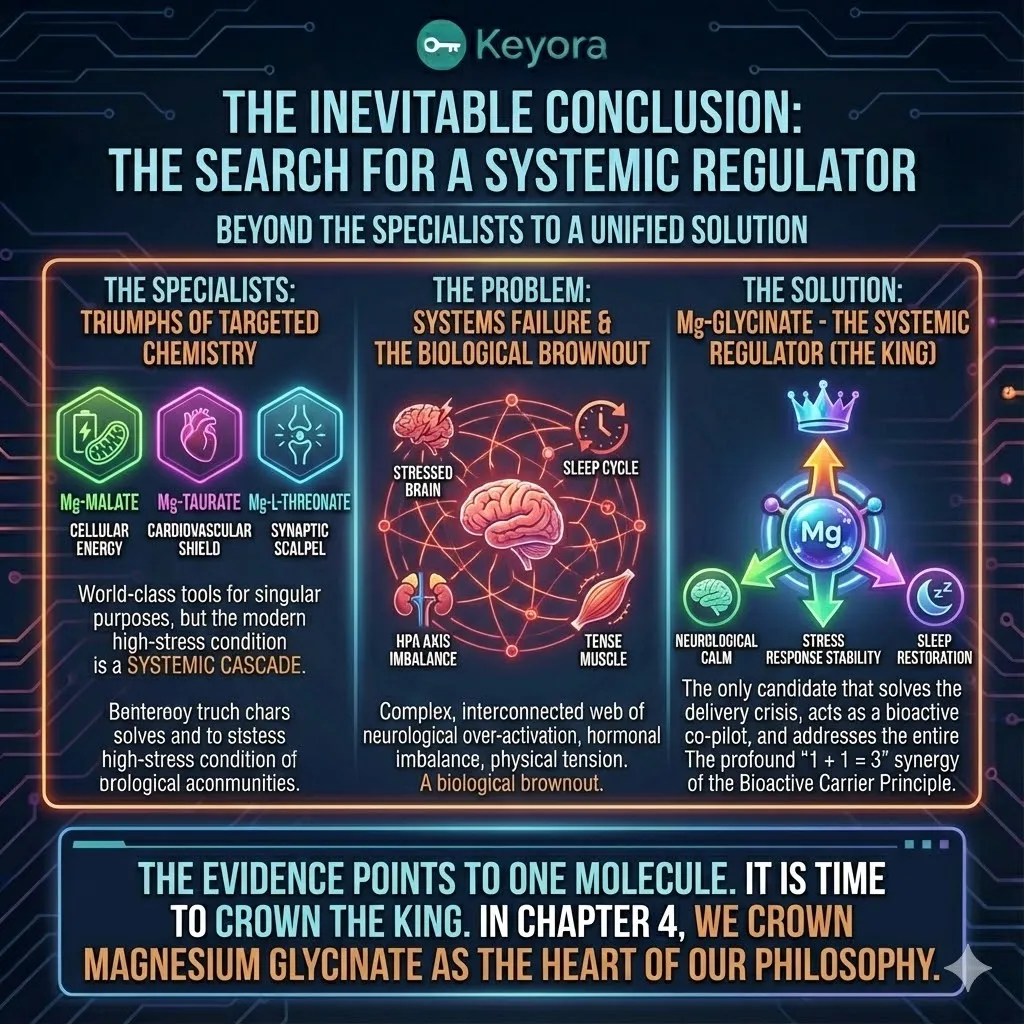
– Series Theme: **Keyora Nutritional Neurology** (The Magnesium Matrix).
– Sub-chapter Focus: **Clinical Showdown of Specialist Amino Acid Chelates**.
– Core Methodology: **The “Scalpel” vs. “Systemic Regulator” Analysis**.
– **1. Case File #1: Magnesium Malate (The Cellular Energizer)**:
– *Mechanism*: Pairs magnesium with Malic Acid, a key intermediate in the **Krebs Cycle** and the Malate-Aspartate Shuttle.
– *Target*: Ideal for physical muscle fatigue and Fibromyalgia (Gaby, 2004).
– *The Gap*: It refuels a “leaking tank.” It addresses the downstream consequence (energy loss) but fails to quiet the upstream neurological cause (HPA axis over-activation). It fuels the engine but doesn’t calm the frantic driver.
– **2. Case File #2: Magnesium Taurate (The Cardiovascular Guardian)**:
– *Mechanism*: Bound to Taurine, a membrane stabilizer and gentle GABA-A agonist.
– *Target*: Ideal for “Type A” professionals experiencing stress-induced heart palpitations and high blood pressure.
– *The Gap*: Its neurological action is a “supportive whisper.” While it shields the heart (the victim), it lacks the multi-pathway authority required to dismantle a systemic state of high anxiety.
– **3. Case File #3: Magnesium L-Threonate (The Synaptic Scalpel)**:
– *Mechanism*: A vitamin C metabolite that crosses the Blood-Brain Barrier (BBB) to increase synaptic density and BDNF.
– *Target*: Ideal for researchers and students focused on memory and cognitive enhancement.
– *The Gap*: It “builds a better library” while the building is on fire. For the executive in burnout, the priority is not synaptic density, but the **systemic quietude** necessary for any cognitive function to occur.
– **4. The Keyora Research Conclusion (The Systemic Mandate)**:
– *The Insight*: High-performance burnout is not a singular symptom (low energy or bad memory); it is a **Systems Failure** of the entire neuro-endocrine cascade.
– *The Verdict*: While we respect the specialists, the high-stress brain requires a **Systemic Regulator**. Only one candidate—**Magnesium Glycinate**—possesses the dual-action synergy to simultaneously silence the alarm and restore the whole person (DOI: 10.5281/zenodo.16814204).
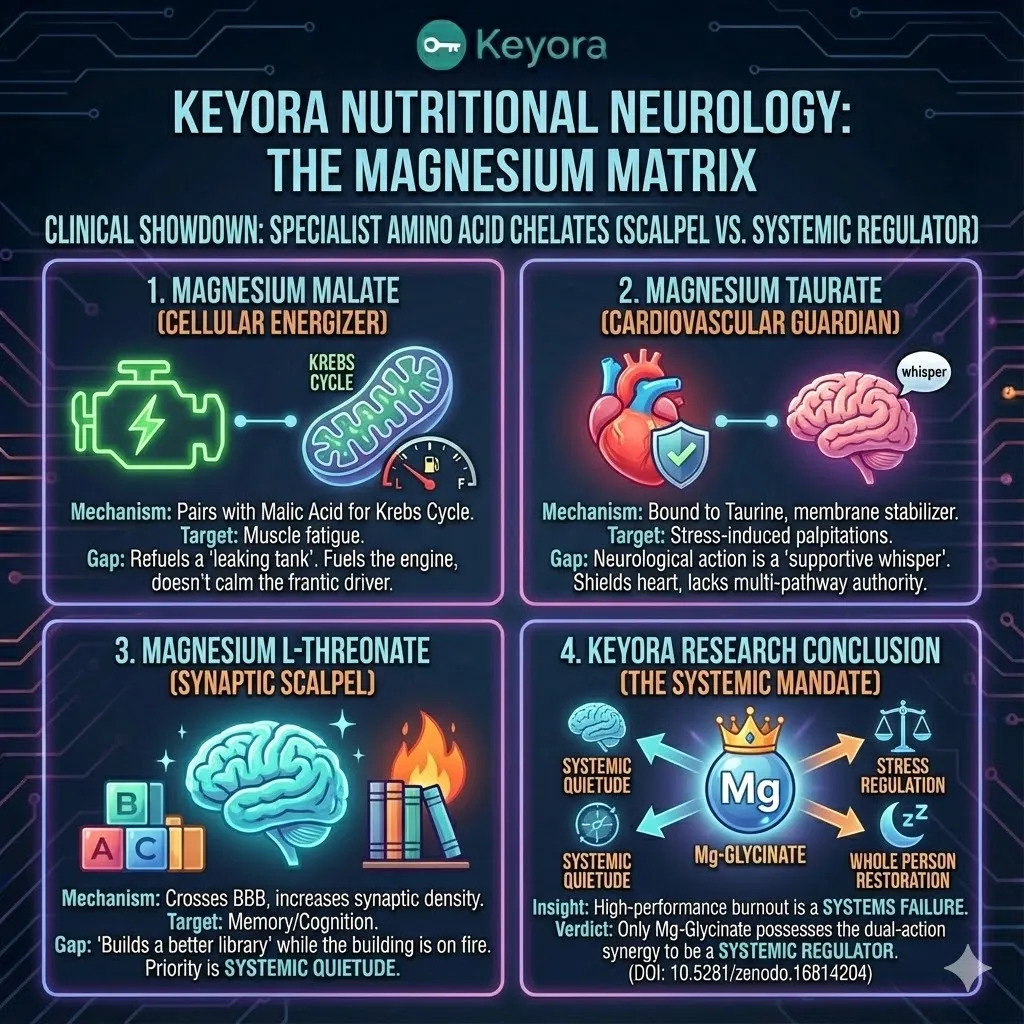
The Coronation: Why Magnesium Glycinate is the Undisputed Gold Standard for the High-Stress System
Synergy 1 – The Apex of Bioavailability & Tolerability: A Foundation of Trust
Every effective therapeutic intervention begins with a simple promise that must be kept: the promise of delivery.
In this foundational test, as the evidence shows, Magnesium Glycinate stands without peer. If the mineral cannot reach the bloodstream without waging war on the digestive tract, its theoretical benefits are irrelevant.
We have spent this episode dismantling the failures of “stones” and “sedans.” We now turn to the “Specialist” that makes those failures a thing of the past.
The supremacy of Magnesium Glycinate – specifically in its fully-reacted bisglycinate form – is built upon a structural masterpiece of molecular engineering.
In this structure, a single magnesium ion is double-chelated, held firmly between two glycine molecules. This creates a neutrally charged, stable compound that is effectively invisible to the mineral antagonists in your gut.
It does not wait in the crowded line of passive diffusion; it utilizes the PEPT1 superhighway we discussed earlier.
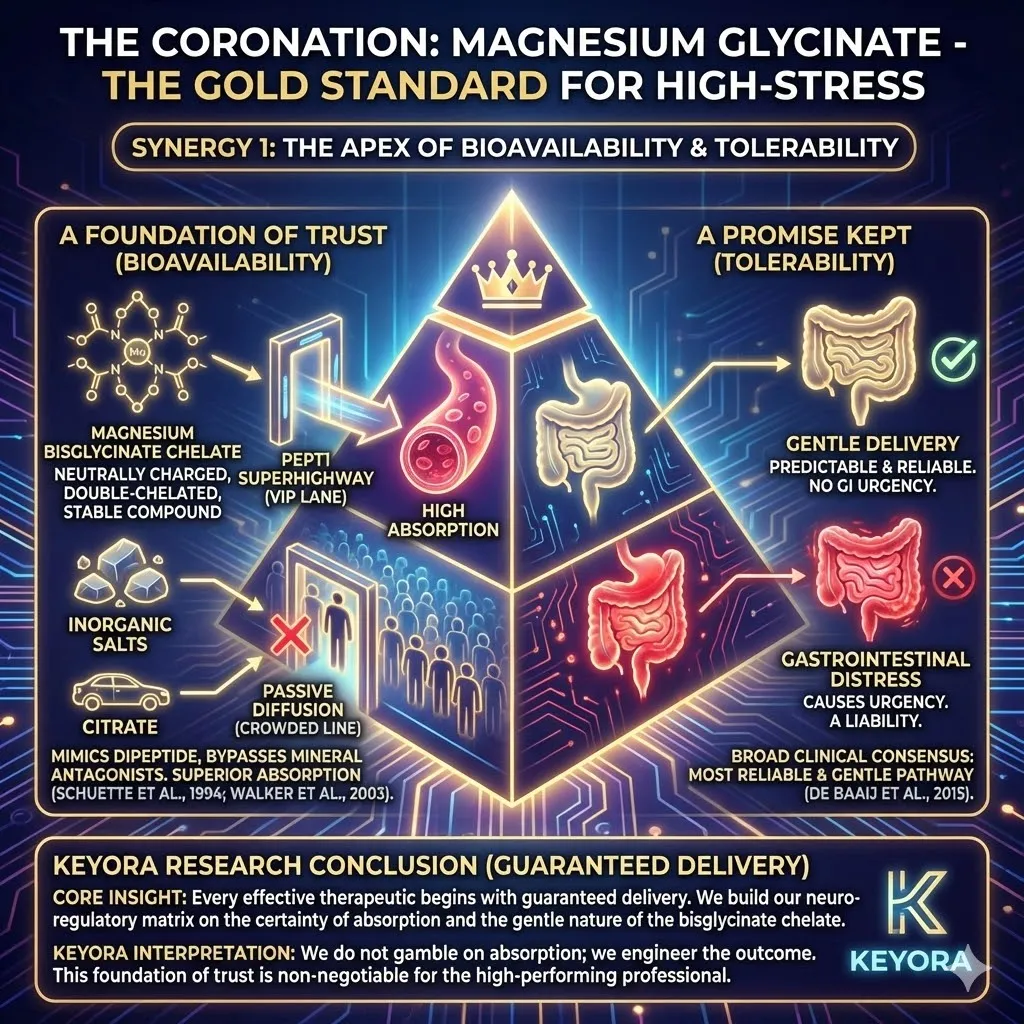
This isn’t a theoretical advantage; it is a clinically quantified fact.
The pioneering 1994 human trial by Schuette et al. provided the initial, crucial data demonstrating its significantly superior absorption over inorganic salts like magnesium sulfate.
By mimicking a dipeptide, the bisglycinate chelate ensures that the magnesium is delivered with a predictability and reliability that is simply impossible for lesser forms.
This superiority was later reinforced by comparative studies like that of Walker et al. (2003), which confirmed its dual superiority in both bioavailability and gastrointestinal tolerability over both oxide and citrate.
Today, there is broad clinical consensus, as summarized in comprehensive physiological reviews (de Baaij et al., 2015), that fully-reacted amino acid chelates represent the most reliable and gentle pathway for correcting magnesium status.
This foundation of trust is non-negotiable for Keyora Research. Our “Research First” philosophy dictates that we build our formulas on certainty, not chance.
We understand that for the high-performing professional, a supplement that causes gastrointestinal urgency is not a health solution – it is a liability.
Our choice begins here, with a form that guarantees the active ingredient reaches the bloodstream, reliably and gently, in every user.
This principle of Guaranteed Delivery is the bedrock upon which our entire neuro-regulatory matrix is built.
We do not gamble on whether you will absorb our nutrients; we engineer the outcome.
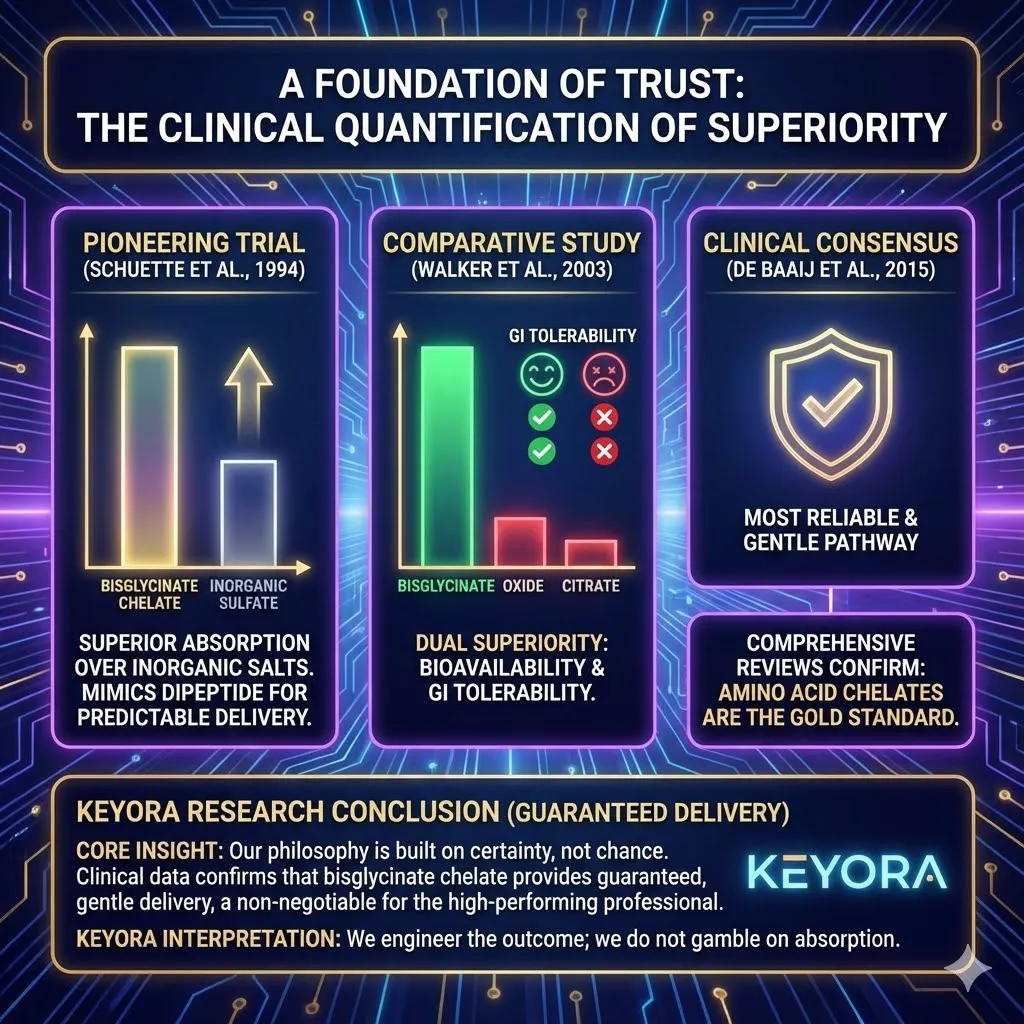
Synergy 2 – “The Calming Trinity”: A Multi-Pronged Intervention for Neural Hyperactivity
Beyond delivery, the true genius of Magnesium Glycinate lies in its profound, multi-dimensional bioactivity.
It does not simply perform one action; it executes a coordinated, three-pronged strategy to restore neural homeostasis. We at Keyora refer to this as “The Calming Trinity.”
In the previous episode, we described the “Gate of Chaos” – the NMDA receptor.
We explained how chronic stress keeps this gate open, leading to a toxic flood of calcium and a state of excitotoxicity. This is the first prong of the Trinity: The NMDA Gatekeeper.
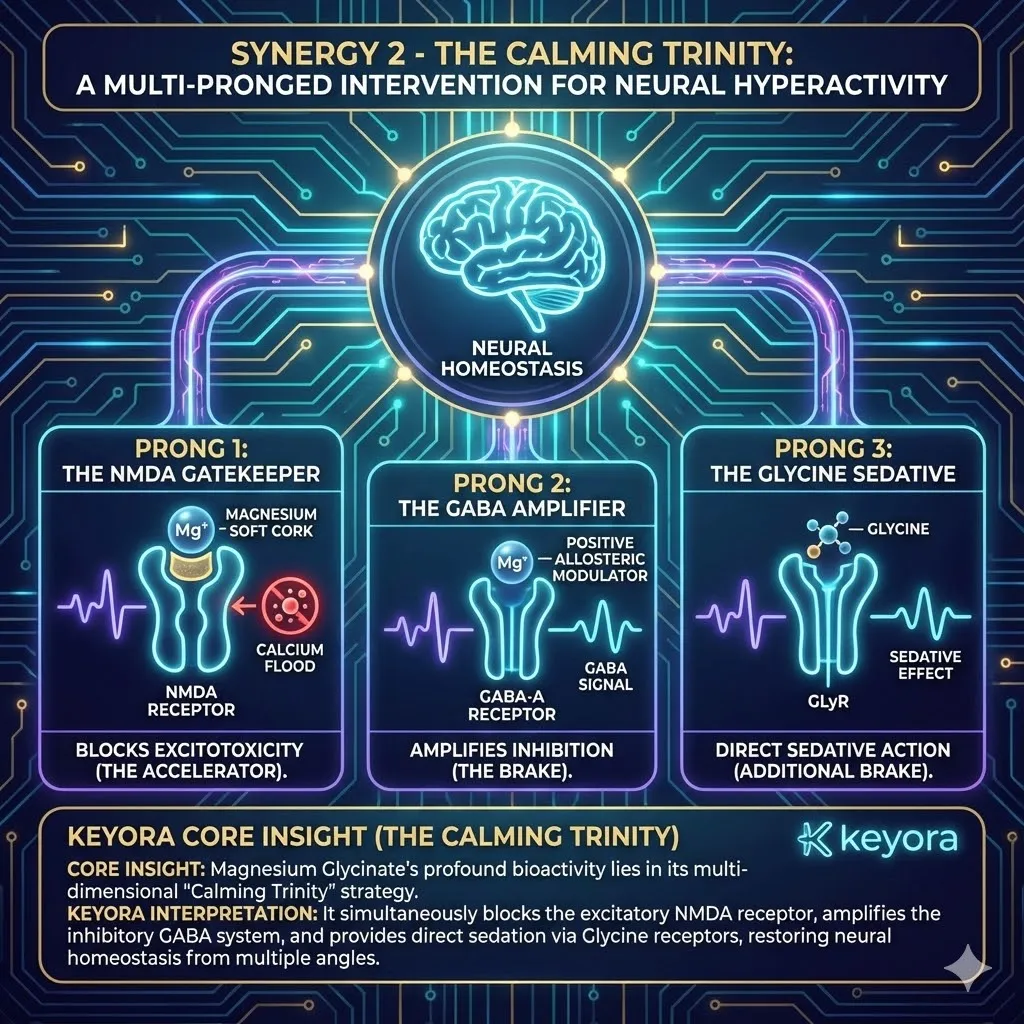
The significance of this cannot be overstated.
As the 2013 review in Pharmacological Reports by Serefko et al. makes clear, NMDA receptor over-activation is a core mechanism in the pathology of anxiety and depression.
Magnesium’s ability to act as a natural antagonist at this receptor is, therefore, a primary and clinically recognized anxiolytic mechanism (Serefko et al., 2013).
By sitting as a “soft cork” in the channel, it filters out the noise and protects the neuron from exhaustion.
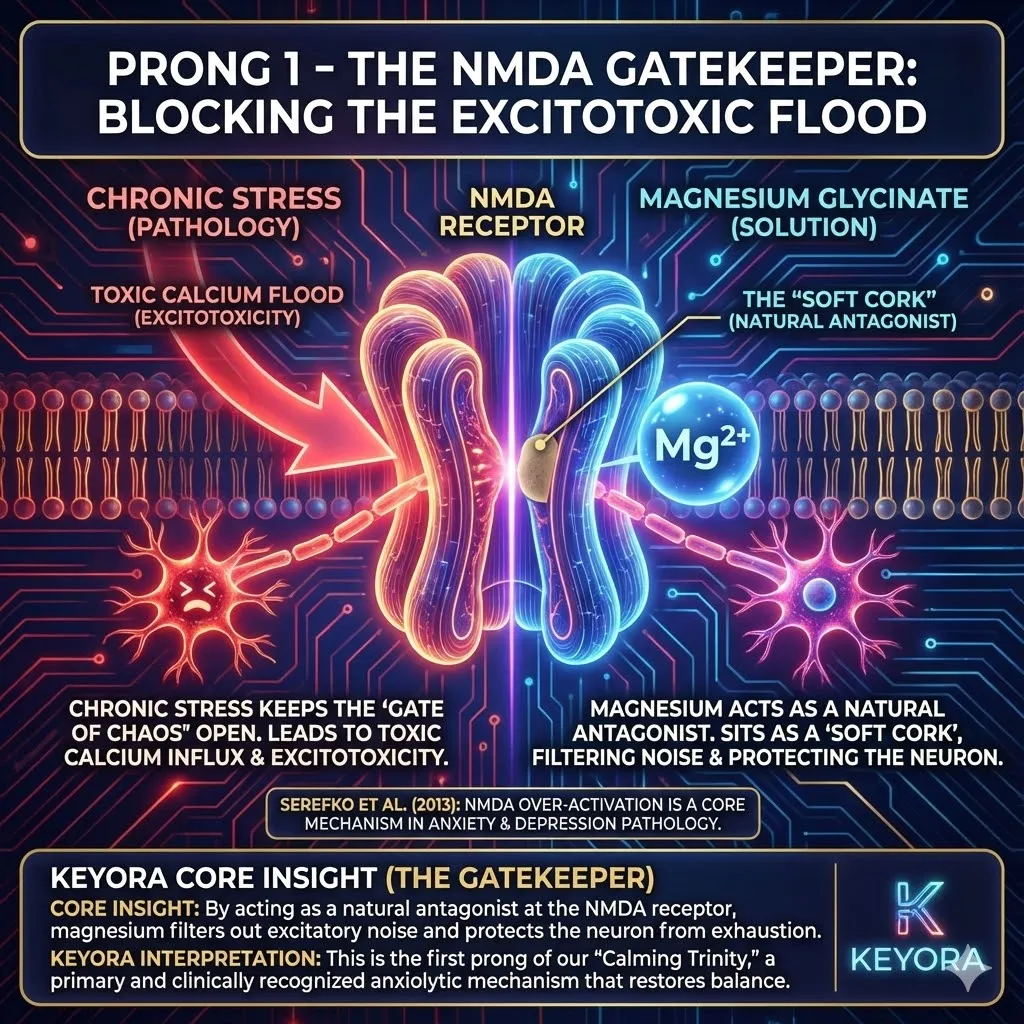
The second prong of the Trinity is the GABA Amplifier.
While magnesium blocks the “Accelerator,” it simultaneously presses down on the “Brake.” It acts as a positive allosteric modulator of the GABA-A receptor, making the brain’s primary inhibitory signal significantly more effective.
This is the second pillar of its calming action.
The landmark 2017 systematic review in Nutrients by Boyle et al., which analyzed 18 human studies, concluded that the anti-anxiety effects of magnesium are strongly linked to its ability to positively modulate the GABA pathway, enhancing the brain’s primary inhibitory system (Boyle NB, et al., 2017).
This synergy ensures that the nervous system doesn’t just stop “racing”; it actually enters a state of controlled quietude.
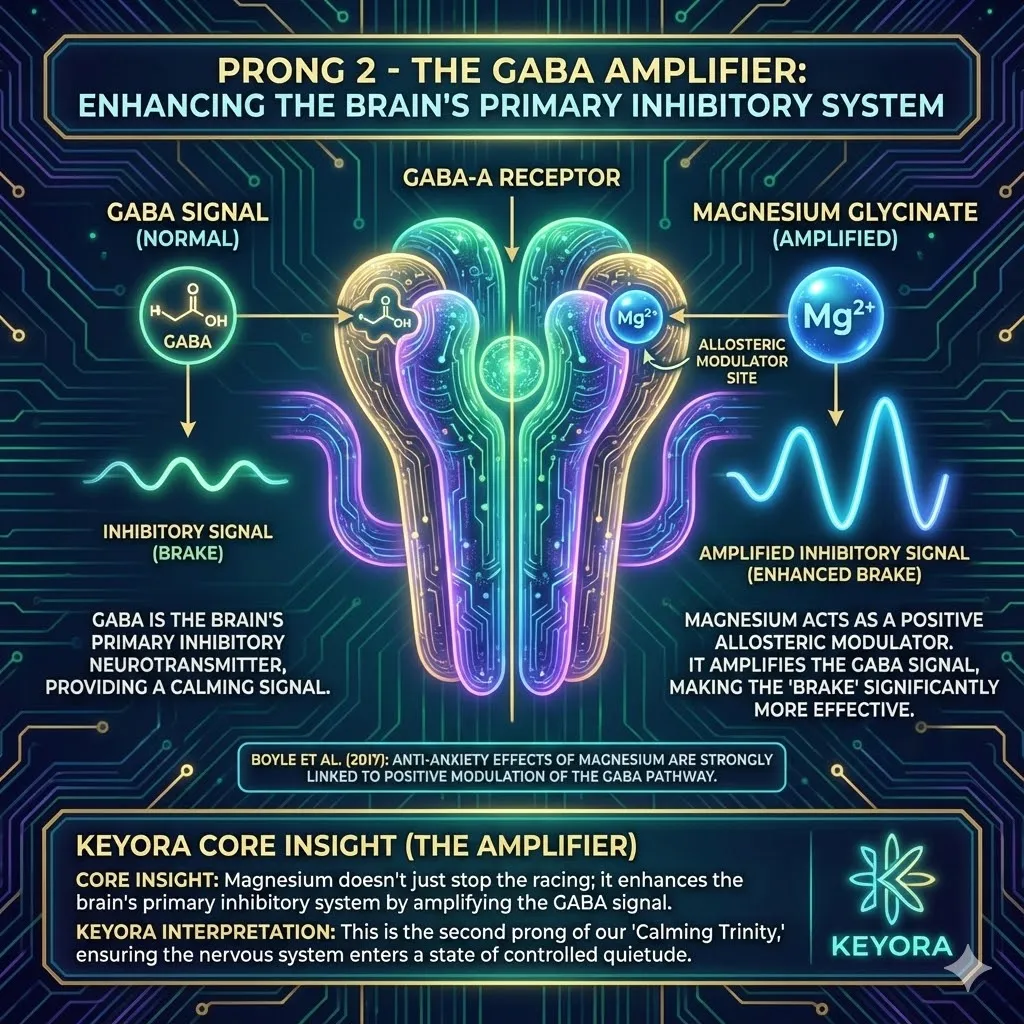
Finally, we arrive at the third prong: The Glycine Sedative.
This is where the Bioactive Carrier Principle we defined earlier reaches its ultimate expression. In this chelate, the carrier is not a passive rocket booster – it is a bioactive co-pilot.
Glycine is not just an amino acid; it is a major inhibitory neurotransmitter in its own right, particularly in the brainstem and spinal cord. It binds to its own specific receptors (GlyR) to induce a state of relaxation and lowered core body temperature.
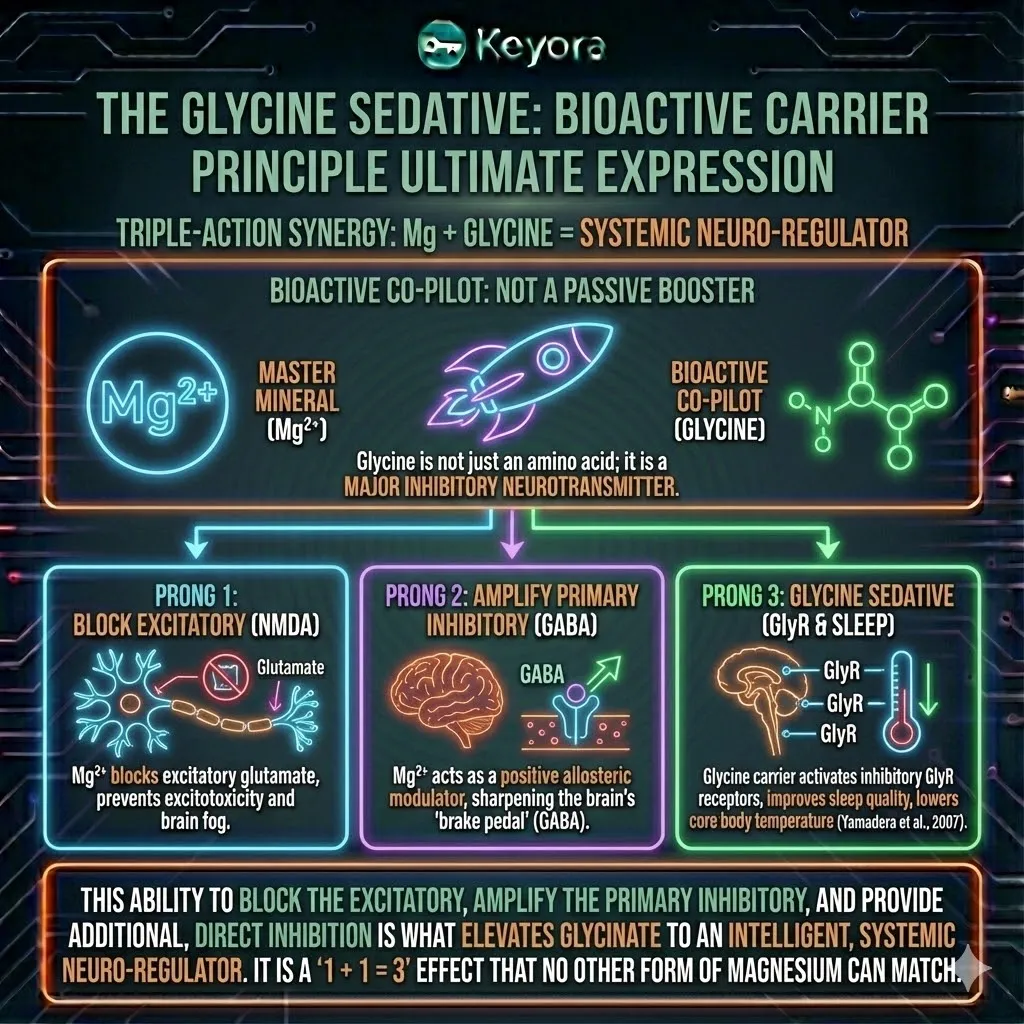
This is the masterstroke of the molecule’s design. The carrier is not inert.
As research from Yamadera et al. (2007) has demonstrated, oral glycine on its own is effective at improving subjective sleep quality and shortening sleep latency.
In Magnesium Glycinate, this calming amino acid is delivered directly alongside the master mineral that enhances its synergistic target systems.
The Keyora Research team selected Magnesium Glycinate precisely for this unparalleled triple-action synergy.
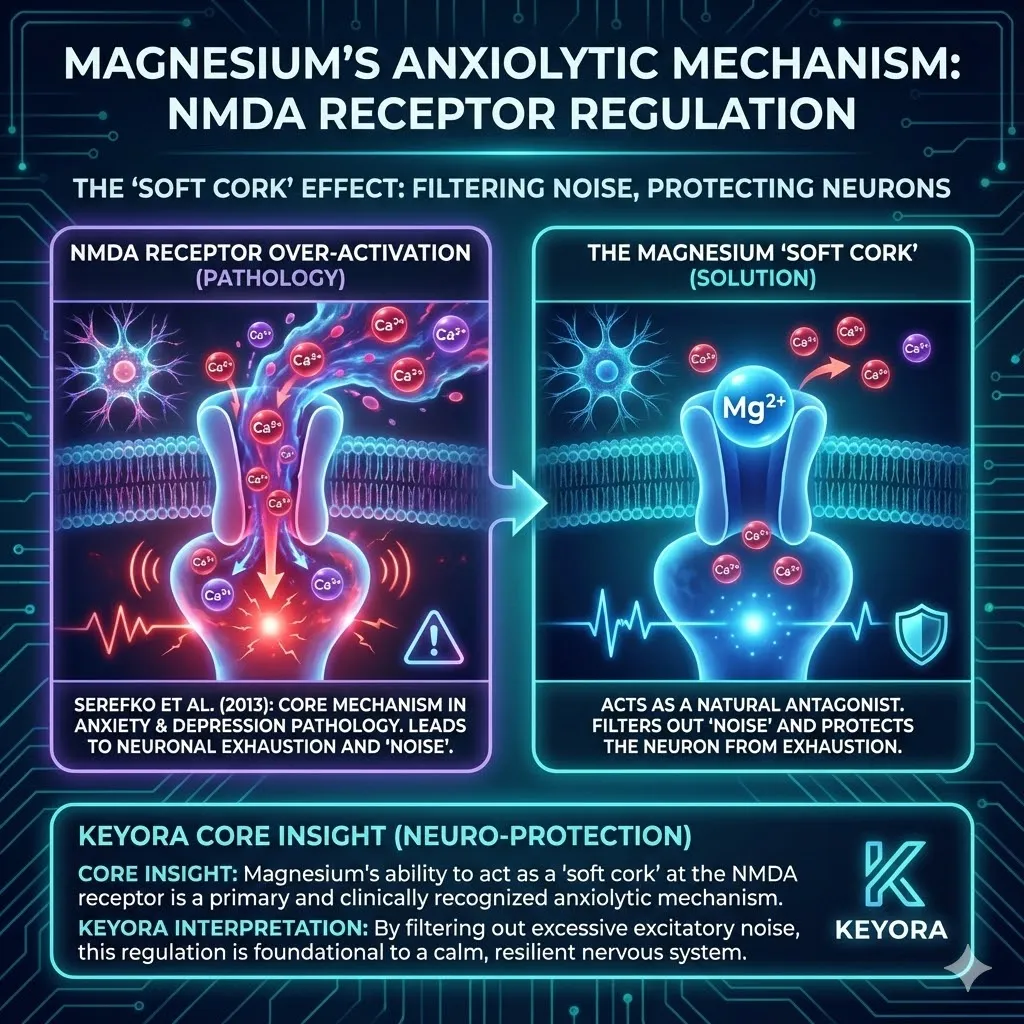
We were not seeking a single-action ingredient to target a single symptom.
We were seeking a compound that could holistically address the complex state of neural hyperactivity from multiple angles simultaneously.
This ability to Block the Excitatory, Amplify the Primary Inhibitory, and Provide Additional, Direct Inhibition is what elevates Glycinate from a supplement to an intelligent, systemic neuro-regulator. It is a “1 + 1 = 3” effect that no other form of magnesium can match.
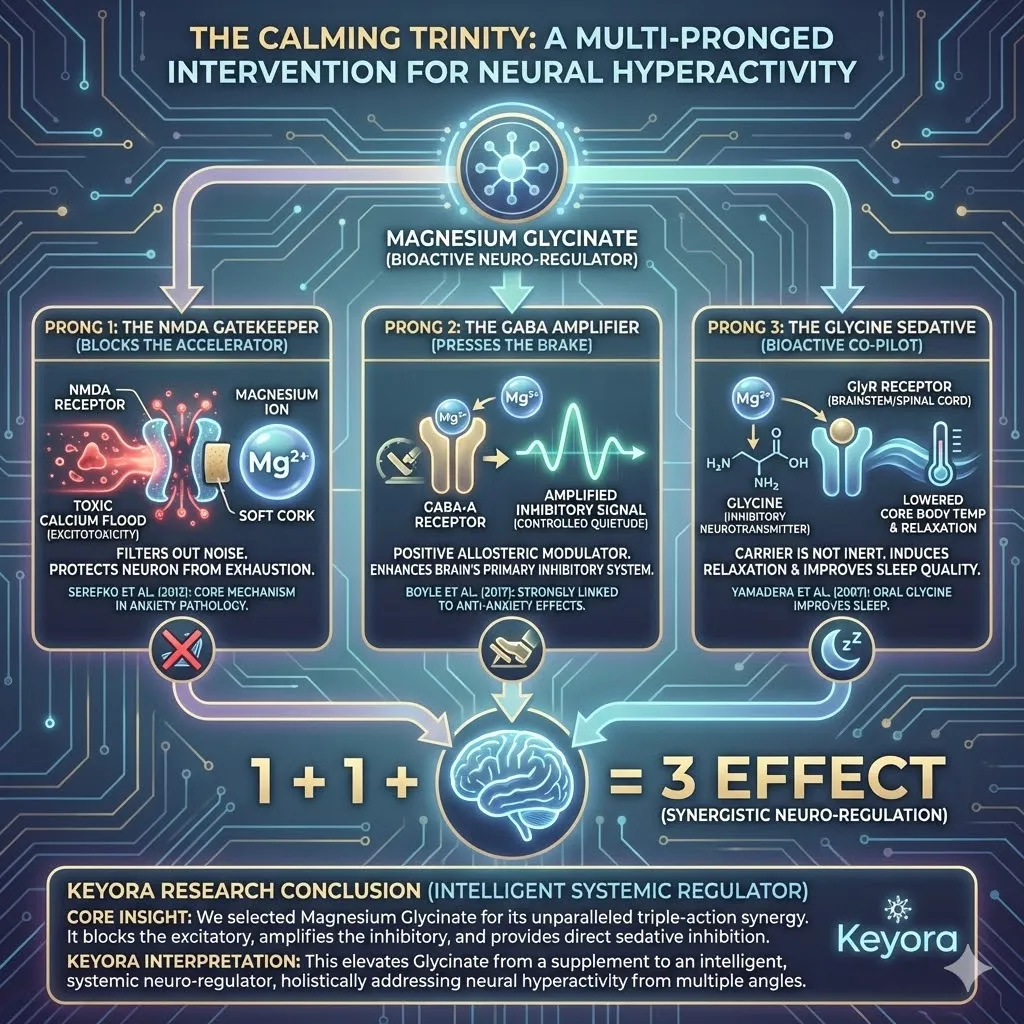
Synergy 3 – The HPA Axis Whisperer: Re-establishing Hormonal Balance
The final dimension of Magnesium Glycinate’s supremacy is its reach. It extends beyond the synapse to influence the body’s entire stress hormone command center – the HPA axis. For the high-stress individual, this is where the war is truly won or lost.
We established in Episode 2 that chronic stress turns the HPA axis into a “stuck alarm,” resulting in a pathological flood of cortisol and the subsequent “tired but wired” state.
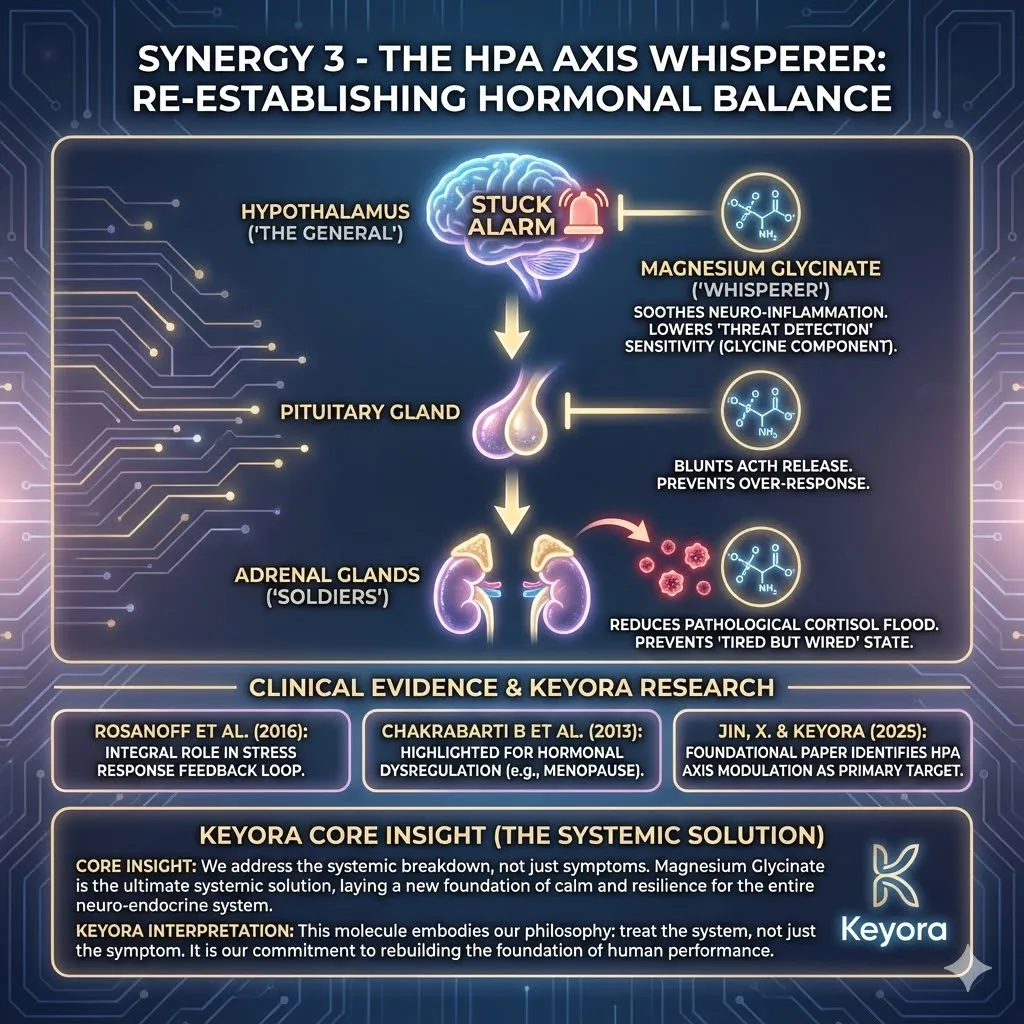
Magnesium Glycinate acts as a “Whisperer” to this system, dampening the alarm at multiple levels of the command chain.
At the level of the pituitary gland, magnesium blunts the release of ACTH, preventing the “Soldiers” (the adrenals) from over-responding to perceived threats. Furthermore, the glycine component of the chelate provides an additional layer of protection.
Glycine is known for its anti-inflammatory properties; by soothing neuro-inflammation in the hypothalamus, it helps to lower the “threat detection” sensitivity of the brain itself.
This is not theoretical. The link between magnesium and the HPA axis is well-established.
Reviews such as Rosanoff et al. (2016) detail magnesium’s integral role in the stress response feedback loop. Its application for hormonal dysregulation, particularly in states like menopause, has been highlighted in clinical reviews (Chakrabarti B, et al., 2013).
This body of evidence forms the basis for our own research, published in our foundational paper on Magnesium Glycinate (Jin, X. & Keyora, 2025), which identifies HPA axis modulation as one of its primary therapeutic targets.
We have identified that by stabilizing the “General” (the hypothalamus), we can prevent the entire cascade of burnout before it begins.
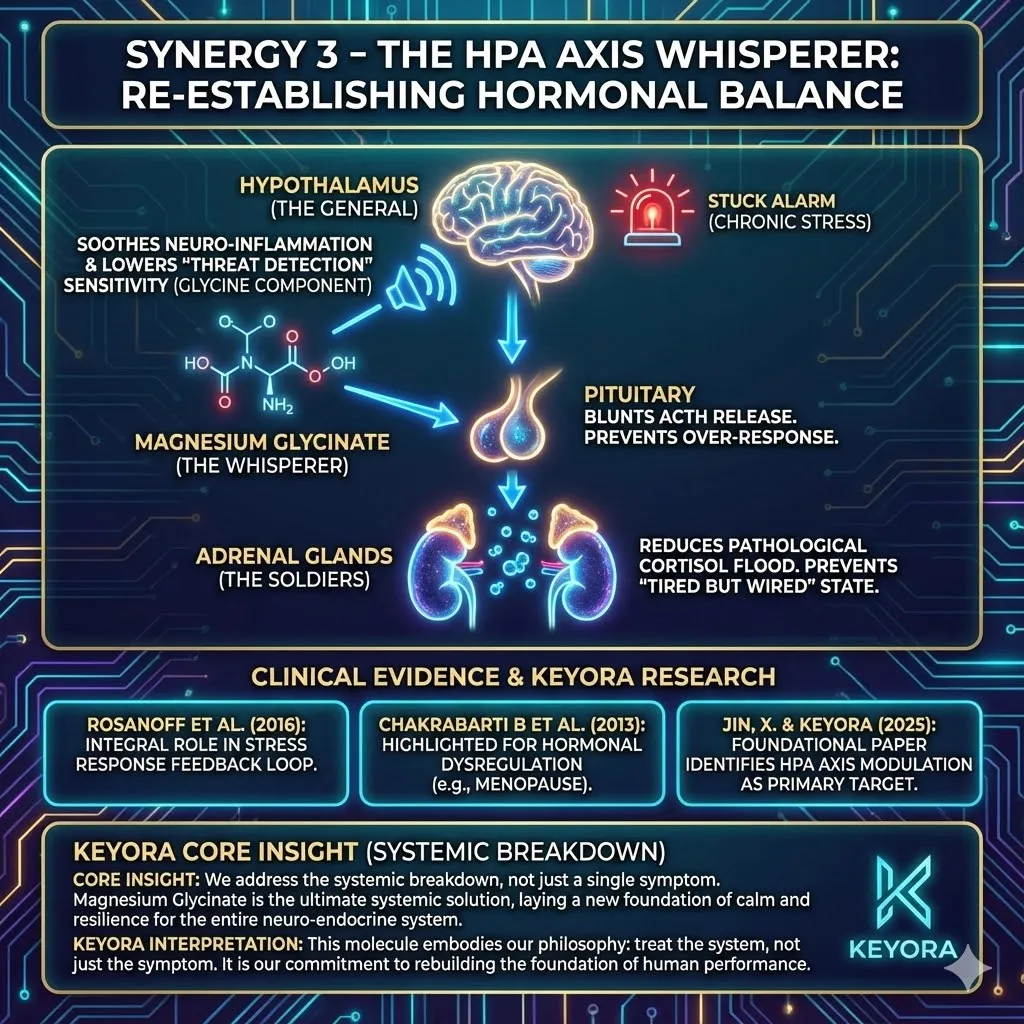
And this brings us to the very heart of the “Why Keyora“ question.
Why this obsessive focus on mechanism and evidence?
Why the deep dive into the PEPT1 pathway and the GlyR receptors?
Because we understand that the high-stress individual is not suffering from a single, isolated problem. You are not just “tired,” and you are not just “anxious.”
You are suffering from a systemic breakdown.
Your energy infrastructure is failing, your nervous system is over-excited, and your hormonal command center is in a state of chaos. Therefore, you do not need a single-action tool; you need a systemic solution.
Our choice of Magnesium Glycinate is the ultimate expression of our founding principle: to treat the system, not just the symptom.
It is the result of a relentless, evidence-based search for the one molecule that could lay a new foundation of calm and resilience for the entire neuro-endocrine system.
It is not just an ingredient in our formula; it is the embodiment of our entire philosophy in a single molecule.
It represents our refusal to compromise on delivery, our demand for bioactive synergy, and our commitment to rebuilding the foundation of human performance.

Conclusion: Precision is the New Standard of Care
Let us summarize our entire investigation into the Magnesium Matrix in a single, clear framework. When you look at the landscape of magnesium supplementation through the lens of Keyora Research, the hierarchy of evidence becomes undeniable:
-
Inorganic Salts (Oxide, Sulfate): The “Stones.” High elemental weight, but near-zero bioavailability (4%) and high gastrointestinal toxicity. They are better suited for industrial use than human neurology.
-
Organic Acid Salts (Citrate, Malate): The “Sedans.” Improved solubility and absorption, but they carry a “passive booster” that offers no neurological synergy. They are “good enough” for general health, but they fail the high-stakes test of the high-stress brain.
-
Targeted Specialists (Taurate, L-Threonate): The “Scalpels.” Brilliant at protecting the heart or sharpening memory, but they lack the systemic breadth to silence the “fire alarm” of HPA axis dysregulation.
-
Magnesium Glycinate: The “Systemic Regulator.” It offers the highest delivery efficiency via the PEPT1 pathway, absolute GI tolerability, and a “Calming Trinity” of bioactivity that targets the HPA axis, the NMDA receptors, and the GABA system simultaneously.
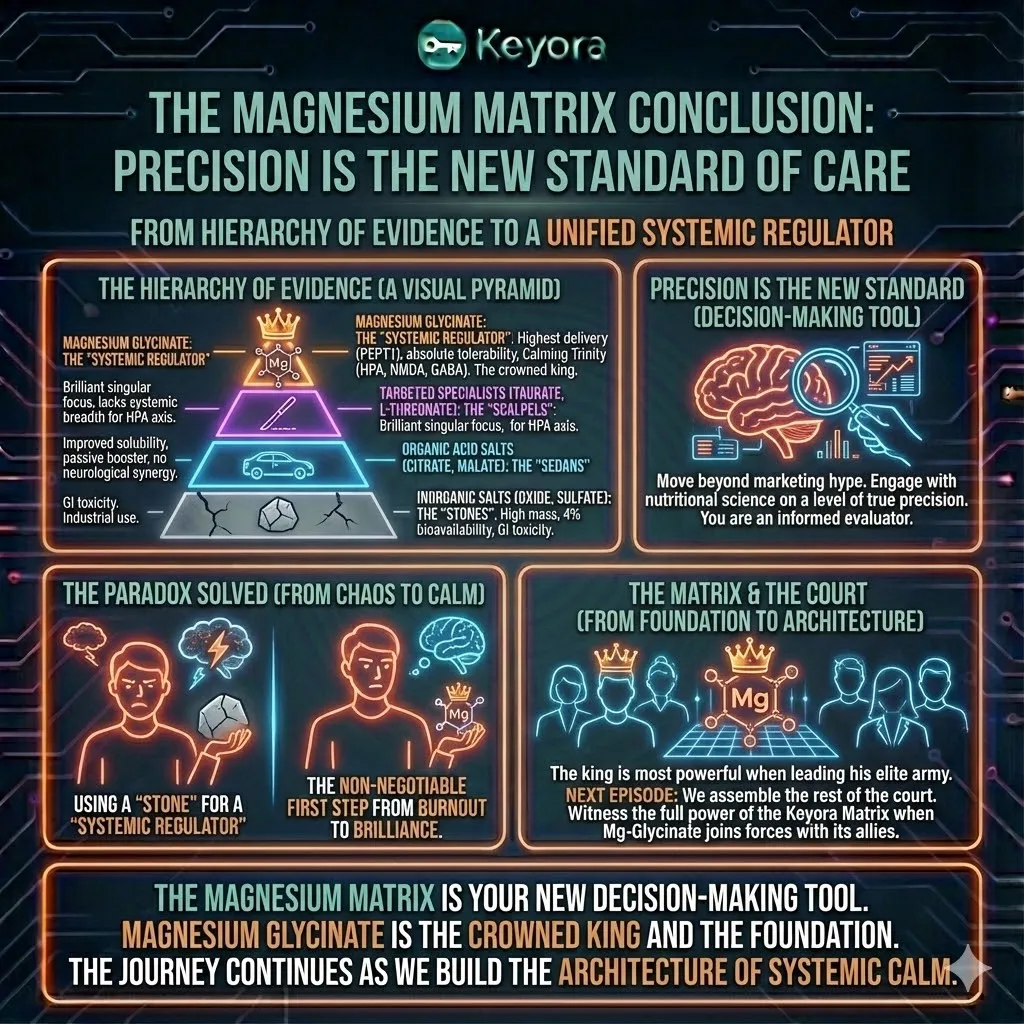
This matrix is more than a summary; it is your new decision-making tool. You now possess a level of knowledge that allows you to move beyond the marketing hype and engage with nutritional science on a level of true precision. You are no longer just a consumer; you are an informed evaluator of the evidence.
The “frustrating paradox” we identified at the beginning of this episode is solved. The reason your previous magnesium didn’t work was not because you were “broken.” It was because you were using a “Stone” to do the work of a “Systemic Regulator.” You were trying to quiet a symphony of chaos with a blunt instrument.
We have crowned our king. We have established the foundational element for systemic calm. Magnesium Glycinate is the non-negotiable first step in the journey from burnout to brilliance. It is the mineral that prepares the ground for everything else.
But a king is most powerful when leading his elite army.
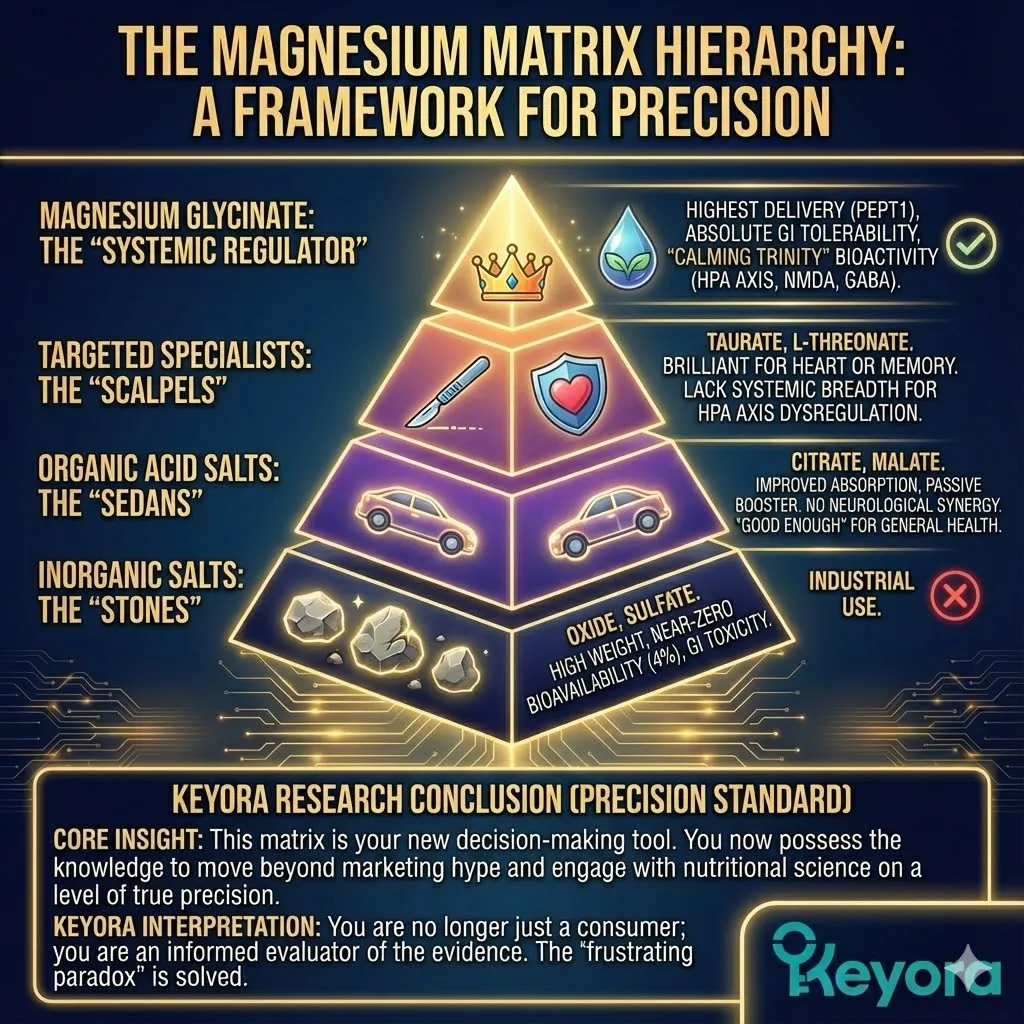
The true power of the Keyora approach lies not just in selecting the best-in-class molecule, but in understanding how it synergizes with other precision nutrients to create an effect far greater than the sum of its parts. In our next episode, we will finally assemble the rest of the court.
We will unveil the full power of the Keyora Matrix and witness what happens when Magnesium Glycinate joins forces with its first powerful ally in the battle for a calm, focused mind. We will move from the foundation to the architecture.
The journey into the matrix continues.
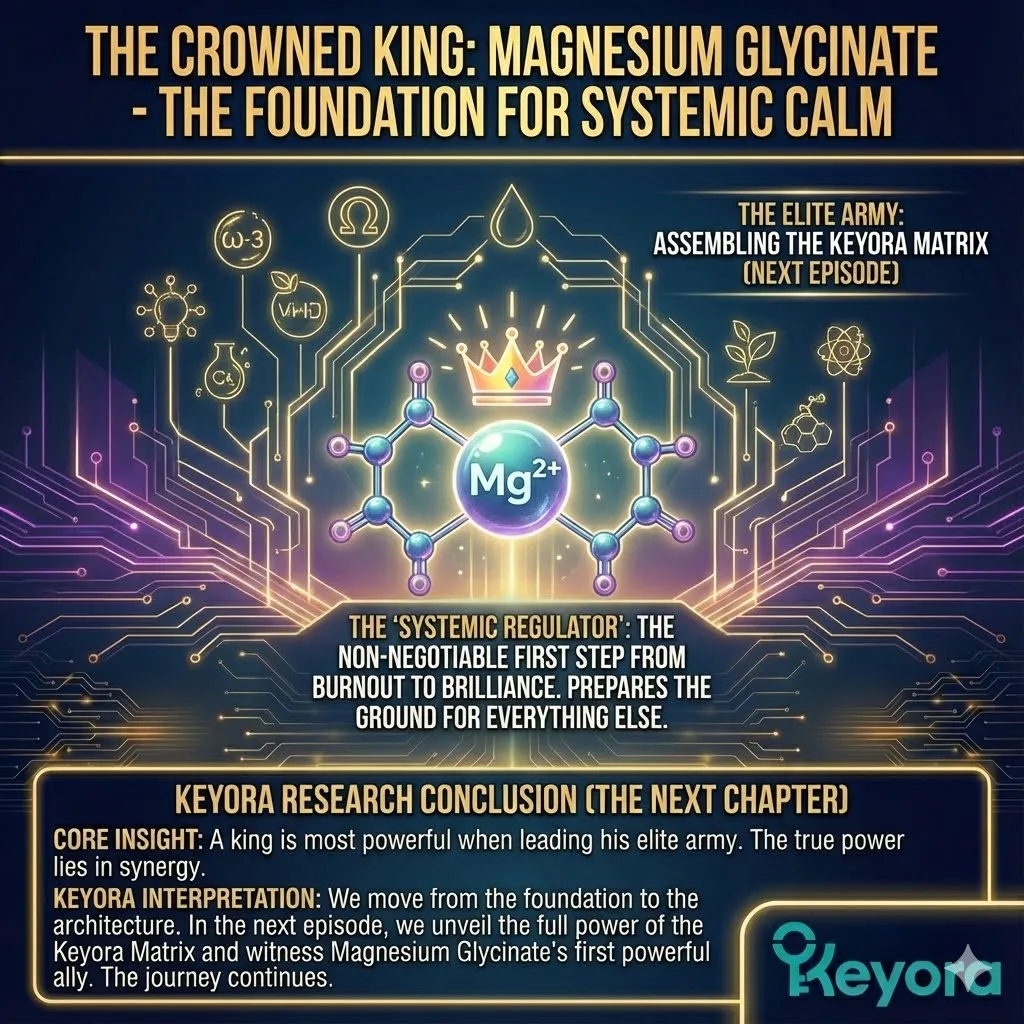
– Series Theme: **Keyora Nutritional Neurology** (The Magnesium Matrix).
– Chapter 4 Focus: **The Coronation of Magnesium Glycinate**.
– Core Strategy: **Guaranteed Delivery & The Calming Trinity**.
– **1. Synergy #1: The Apex of Bioavailability (The PEPT1 Standard)**:
– *The Promise*: Magnesium Glycinate (Bisglycinate) utilizes the **PEPT1 dipeptide superhighway**, bypassing mineral competition and ensuring predictable delivery (Schuette et al., 1994).
– *The Tolerability*: Unlike inorganic salts, Glycinate offers absolute gastrointestinal harmony, eliminating the “laxative risk” even at high therapeutic doses (Walker et al., 2003).
– **2. Synergy #2: The Calming Trinity (Triple-Action Neuro-Regulation)**:
– *Prong 1 (NMDA Gatekeeper)*: Directly blocks excitatory glutamate channels, preventing excitotoxicity and brain fog (Serefko et al., 2013).
– *Prong 2 (GABA Amplifier)*: Acts as a positive allosteric modulator, sharpening the brain’s primary “brake pedal” for anxiety relief (Boyle et al., 2017).
– *Prong 3 (The Glycine Co-Pilot)*: The glycine carrier itself activates inhibitory GlyR receptors and improves sleep architecture by lowering core body temperature (Yamadera et al., 2007).
– **3. Synergy #3: The HPA Axis Whisperer (Systemic Resilience)**:
– *The Action*: Blunts ACTH release and reduces hypothalamic neuro-inflammation, effectively silencing the “stuck fire alarm” of chronic stress.
– *The Goal*: Re-establishing the hormonal feedback loop to transition the user from “Tired but Wired” to a state of resilient calm (Rosanoff et al., 2016).
– **4. Final Conclusion (The Keyora Standard)**:
– *The Verdict*: While other forms are “specialists,” Magnesium Glycinate is the only **Systemic Regulator**.
– *The Philosophy*: Keyora treats the **System, not just the Symptom**. Glycinate is the non-negotiable foundation of the **Keyora Matrix**, providing the “1 + 1 = 3” effect required for total neuro-endocrine restoration (DOI: 10.5281/zenodo.16814204).
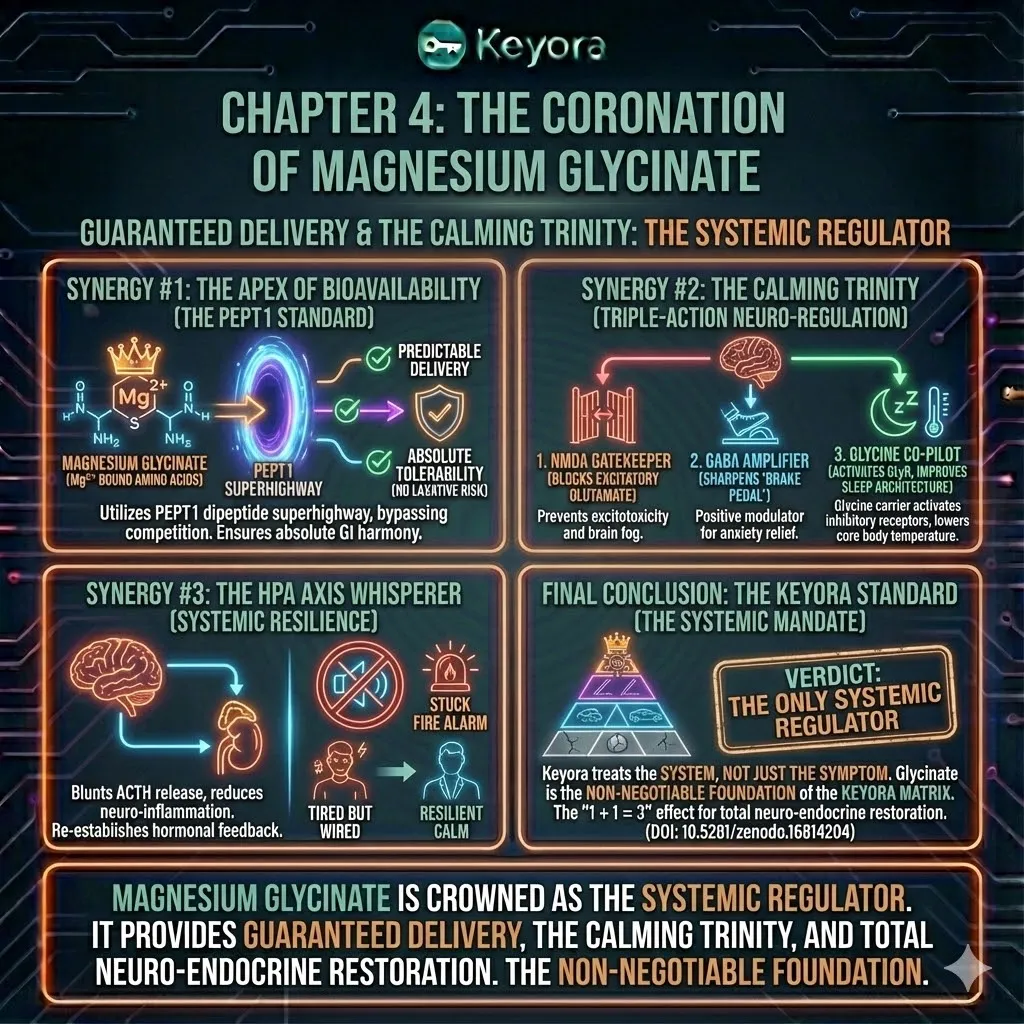
References
Barbagallo, M., & Dominguez, L. J. (2010). Magnesium and aging. Current Pharmaceutical Design, 16(7), 832–839. https://doi.org/10.2174/138161210790883679
Boyle, N. B., Lawton, C., & Dye, L. (2017). The effects of magnesium supplementation on subjective anxiety and stress: A systematic review. Nutrients, 9(5), 429. https://doi.org/10.3390/nu9050429
Chakrabarti, B., Singh, S., & Singh, P. (2013). Role of magnesium in menopausal symptoms: A review. Journal of Mid-life Health, 4(4), 222–228. https://doi.org/10.4103/0976-7800.122254
Cuciureanu, M. D., & Vink, R. (2011). Magnesium and stress. In R. Vink & M. Nechifor (Eds.), Magnesium in the Central Nervous System (pp. 251–268). University of Adelaide Press.
de Baaij, J. H. F., Hoenderop, J. G. J., & Bindels, R. J. M. (2015). Magnesium in man: Implications for health and disease. Physiological Reviews, 95(1), 1–46. https://doi.org/10.1152/physrev.00012.2014
Firoz, M., & Graber, M. (2001). Bioavailability of US commercial magnesium preparations. Magnesium Research, 14(4), 257–262.
Gaby, A. R. (2004). Magnesium. Alternative Medicine Review, 9(2), 164–178.
Jin, X., & Keyora. (2025). Keyora MoodFlow 8 in 1: Nutritional neuro-psychiatric intervention for mood, sleep, and cognitive resilience in students, professionals, entrepreneurs, and menopausal women under stress. Zenodo. https://doi.org/10.5281/zenodo.16889527
Jin, X., & Keyora. (2025). Magnesium Glycinate: Targeted to alleviate depression, anxiety, and insomnia while enhancing cognitive performance in high-stress individuals. Zenodo. https://doi.org/10.5281/zenodo.16814204
Kirkland, A. E., Sarlo, G. L., & Holton, K. F. (2018). The role of magnesium in neurological disorders. Nutrients, 10(6), 730. https://doi.org/10.3390/nu10060730
Rosanoff, A., Dai, Q., & Shapses, S. A. (2016). Essential nutrient interactions: Does low or suboptimal magnesium status interact with vitamin D and/or calcium status? Advances in Nutrition, 7(1), 25–43. https://doi.org/10.3945/an.115.008631
Schuette, S. A., Lashner, B. A., & Janghorbani, M. (2004). Bioavailability of magnesium diglycinate vs magnesium oxide in patients with ileal resection. Journal of Parenteral and Enteral Nutrition, 18(5), 430–435. https://doi.org/10.1177/0148607194018005430
Serefko, A., Szopa, A., & Wlaź, P. (2013). Magnesium and depression. Pharmacological Reports, 65(3), 547–554. https://doi.org/10.1016/s1734-1140(13)71032-6
Tarleton, E. K., Littenberg, B., MacLean, C. D., Kennedy, A. G., & D’Agostino, R. B., Jr. (2017). Role of magnesium supplementation in the treatment of depression: A randomized clinical trial. PLoS ONE, 12(6), e0180067. https://doi.org/10.1371/journal.pone.0180067
Walker, A. F., Marakis, G., Christie, S., & Byng, M. (2003). Mg citrate found more bioavailable than other Mg preparations in a randomised, double-blind study. Magnesium Research, 16(3), 183–191.
Yamadera, W., Inagawa, K., Chiba, S., Bannai, M., Takahashi, M., & Nakayama, K. (2007). Glycine ingestion improves subjective sleep quality in human volunteers, correlating with polysomnographic changes. Sleep and Biological Rhythms, 5(2), 126–131. https://doi.org/10.1111/j.1479-8425.2007.00262.x
By Keyora Research Notes Series
This article contributes to Keyora’s ongoing scientific documentation series, which systematically outlines the conceptual foundations, mechanistic pathways, and empirical evidence informing our research and development approach.
ORCID: 0009–0007–5798–1996