
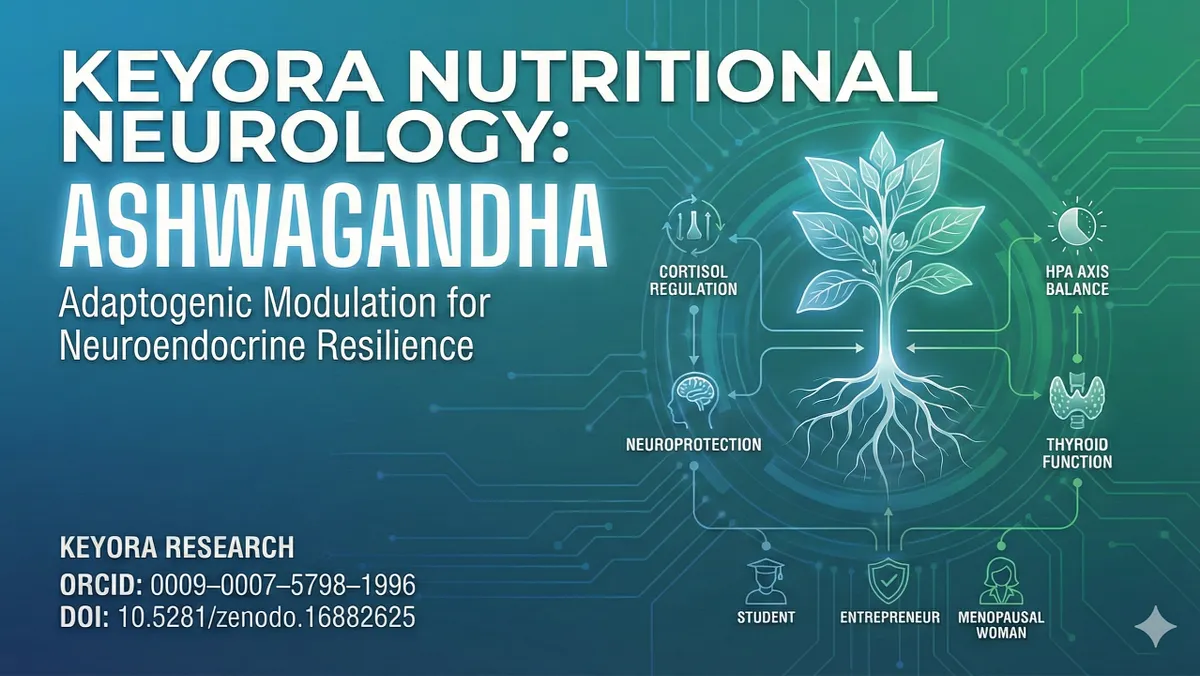
Keyora Nutritional Neurology: Ashwagandha – The Clinical Matrix(5)The Menopause Protocol: Neuro-Endocrine Adaptation & Adrenal Resilience

By Keyora Research Notes Series
This article contributes to Keyora’s ongoing scientific documentation series, which systematically outlines the conceptual foundations, mechanistic pathways, and empirical evidence informing our research and development approach.
ORCID: 0009–0007–5798–1996
The Brain Energy Crisis
Why Menopause is Not “Just Aging”
Redefining the Estrogen Withdrawal as a Neuro-Endocrine Starvation Event and the Necessity of HPA Buffering.
1. The Stigma & The Reality: You Are Not Crazy; You Are Starving.
If you are reading this, you are likely exhausted.
Not the “I had a long day” exhaustion. We are talking about a cellular, bone-deep fatigue that sleep does not touch.
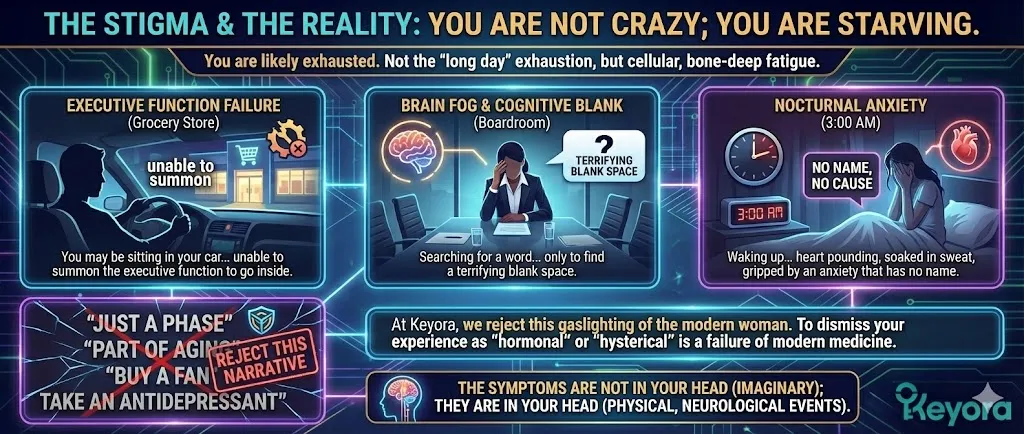
You may be sitting in your car, staring at a grocery store, unable to summon the executive function to go inside.
You may be in a boardroom, searching for a word that you have used a thousand times, only to find a terrifying blank space where your vocabulary used to be.
You may be waking up at 3:00 AM, heart pounding, soaked in sweat, gripped by an anxiety that has no name and no cause.
And worst of all, you have likely been told – by society, by friends, perhaps even by your doctor – that this is “just a phase.”
That it is “part of aging.”
That you should buy a fan, dress in layers, and perhaps take an antidepressant.
At Keyora, we reject this narrative.
We reject the gaslighting of the modern woman.
To dismiss your experience as “hormonal” or “hysterical” is a failure of modern medicine. It is a fundamental misunderstanding of human biology.
The symptoms you are experiencing are not “in your head” in the way that implies they are imaginary. They are in your head because they are Physical, Neurological Events.
The Shift: From Uterus to Brain
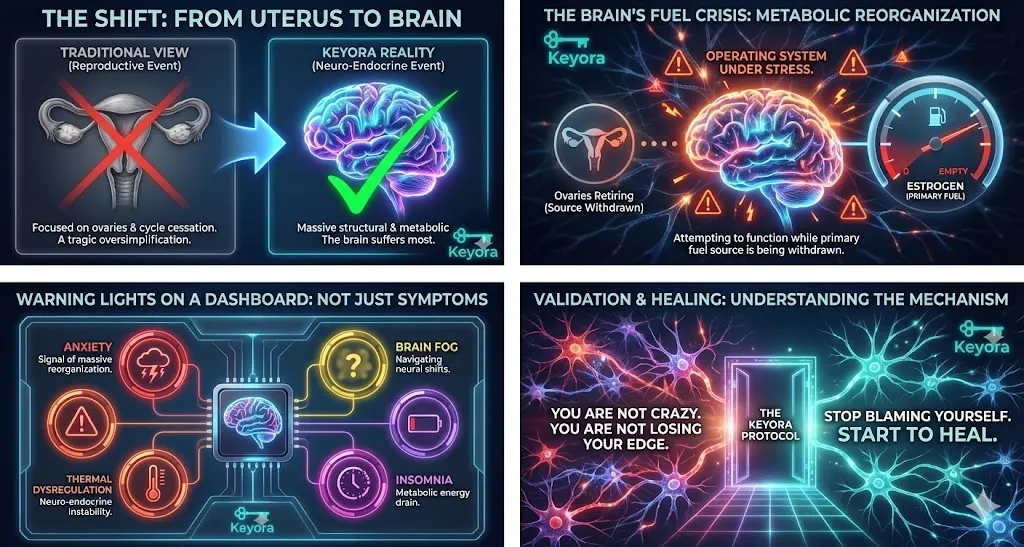
For centuries, medicine has treated menopause as a reproductive event. It has focused entirely on the ovaries, the uterus, and the cessation of the menstrual cycle. This is a tragic oversimplification.
While it is true that the ovaries are retiring, the organ that suffers the most during this transition is not your uterus.
It is your brain.
The anxiety, the brain fog, the fatigue, the insomnia, the thermal dysregulation – these are not “symptoms.” They are warning lights on a dashboard. They are signals that your brain is undergoing a massive structural and metabolic reorganization. It is a change in your operating system.
You are not crazy.
You are not “losing your edge.”
You are navigating a Neuro-Endocrine Event of seismic proportions.
Your brain is currently attempting to function while its primary fuel source is being withdrawn.
In this first episode of the Keyora Menopause Protocol, we are going to strip away the stigma and look at the hard science. We are going to explain exactly why you feel this way.
Because when you understand the mechanism, you stop blaming yourself. And when you stop blaming yourself, you can start to heal.
2. Estrogen is Brain Fuel: The Science of Starvation
To understand why you feel like you are losing your mind, we must first redefine what Estrogen actually is.
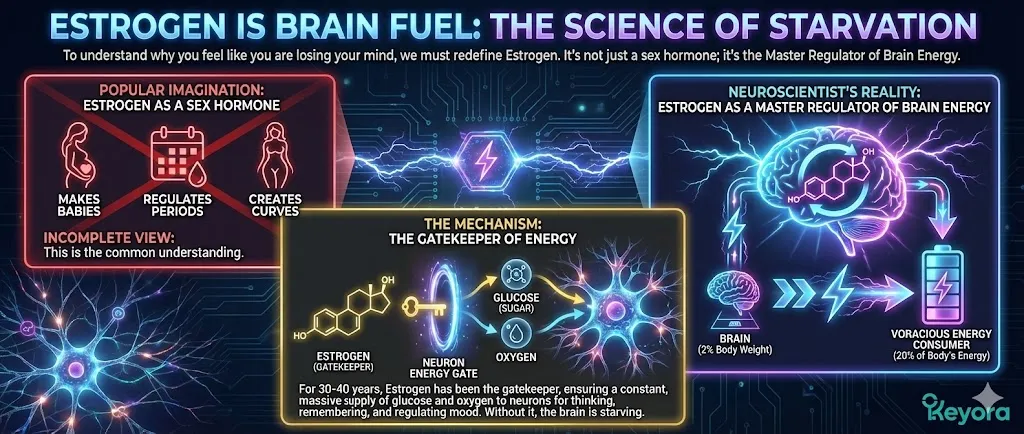
In the popular imagination, Estrogen (specifically Estradiol) is a sex hormone.
It makes babies.
It regulates periods.
It creates curves.
But to a neuroscientist, Estrogen is something entirely different.
Estrogen is a Master Regulator of Brain Energy.
Your brain is a high – performance engine. Despite making up only 2% of your body weight, it consumes 20% of your body’s energy. It is voracious. To function – to think, to remember, to regulate mood – your neurons need a constant, massive supply of glucose (sugar) and oxygen.
For the last 30 or 40 years, Estrogen has been the gatekeeper of that energy.
The Mechanism of Action
Estrogen receptors are not just found in the reproductive organs.
They are densely packed throughout the brain, specifically in the:
- Hippocampus: The center of memory and learning.
- Amygdala: The center of emotional regulation and fear.
- Hypothalamus: The master control tower for temperature and sleep.
- Prefrontal Cortex: The CEO of the brain, responsible for focus and execution.
In these regions, Estrogen performs three critical functions:
- Glucose Transport:Estrogen pushes glucose into your brain cells. It literally opens the door for fuel to enter the neuron. Without Estrogen, the transporters become sluggish.
- Mitochondrial Stimulation:Once the fuel is inside, Estrogen stimulates the mitochondria (the power plants of the cell) to burn that fuel efficiently and create ATP (energy).
- Synaptic Plasticity:Estrogen encourages neurons to branch out and connect with each other. It keeps the “internet connection” of your brain fast and stable.
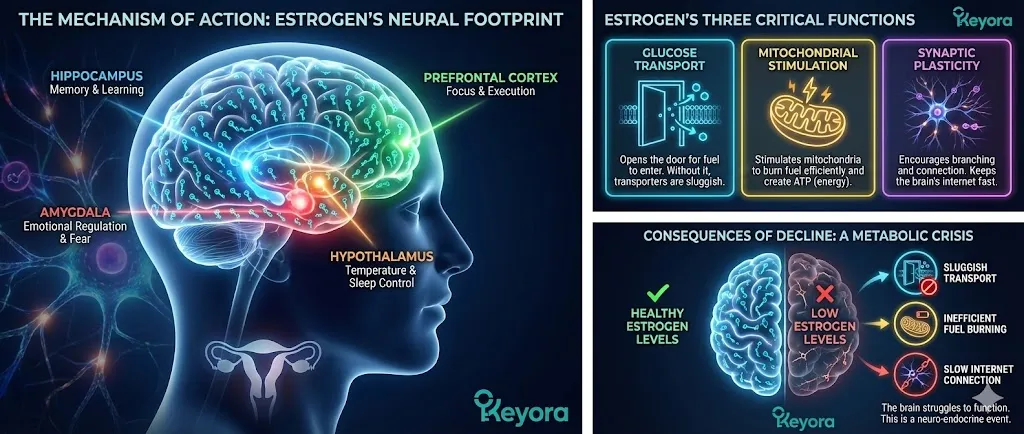
Estrogen acts as the brain’s power manager by driving glucose transport, stimulating mitochondrial ATP production, and maintaining synaptic plasticity across key regions responsible for memory, emotion, and executive function.
The Crash: A Metabolic Brownout
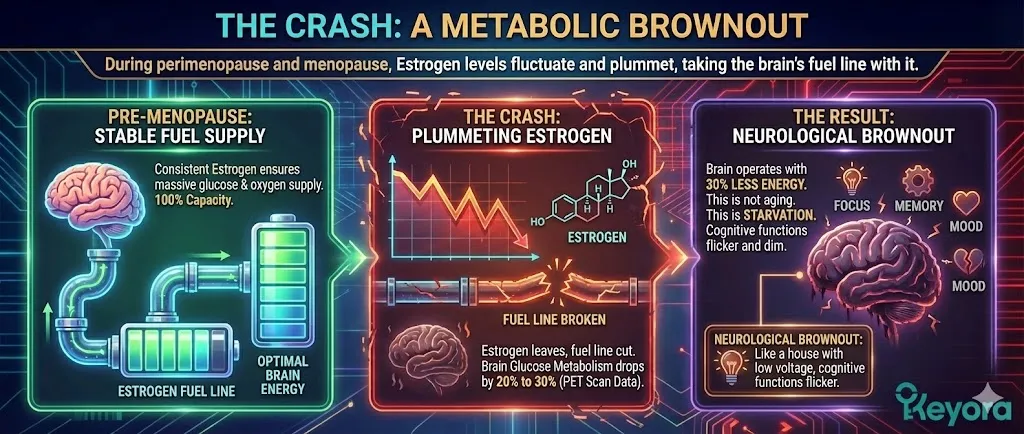
Now, consider what happens during perimenopause and menopause. Estrogen levels do not just dip; they crash. They fluctuate wildly and then plummet.
When Estrogen leaves the building, it takes the fuel line with it. Neuro – imaging studies (PET scans) of women in menopause show a startling reality: Brain Glucose Metabolism drops by 20% to 30%.
Let that sink in. Your brain is suddenly trying to run its complex operations with 30% less energy than it had a few years ago.
This is not “aging.”
This is Starvation.
It is a neurological “Brownout.” Just as the lights in a house flicker and dim when the voltage on the power grid drops, your cognitive functions flicker and dim when brain glucose drops.
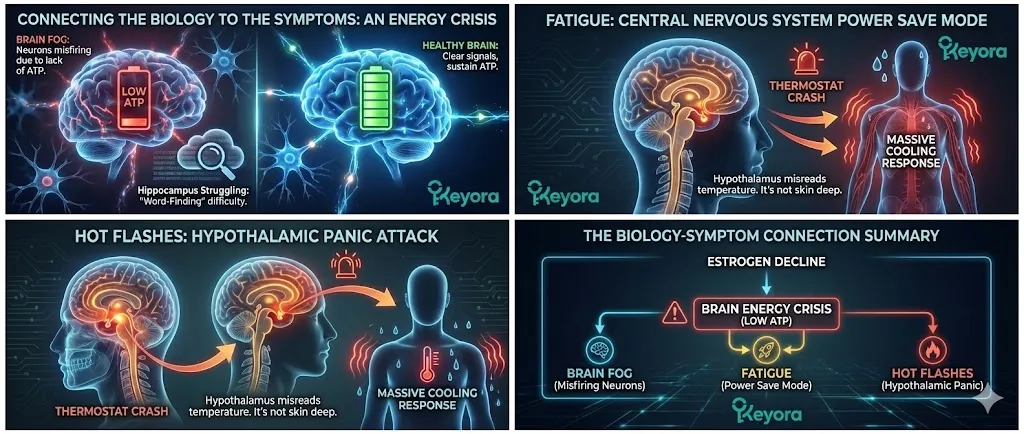
Connecting the Biology to the Symptoms
Once we view menopause as an energy crisis, the symptoms make perfect sense:
Brain Fog:
This is not early dementia. This is your neurons misfiring because they lack the ATP to sustain a clear signal.
The “word – finding” difficulty is a classic sign of the Hippocampus struggling to retrieve data without fuel.
Fatigue:
This is not laziness.
This is your central nervous system entering “Power Save Mode” to preserve vital functions.
Hot Flashes:
This is the most misunderstood symptom of all.
It is not an issue with your skin.
It is an issue with your Hypothalamus.
The Hypothalamus is rich in Estrogen receptors. When energy levels drop there, the Hypothalamus gets confused.
It misreads your body temperature.
It thinks you are overheating when you are not. In a panic, it triggers a massive “cooling response” – dilating blood vessels and releasing sweat.
A hot flash is essentially a Hypothalamic Panic Attack caused by energy instability.
You are not just “hot.”
Your brain’s thermostat has crashed.
3. The Neuro – Endocrine Storm: The “Withdrawal” Concept
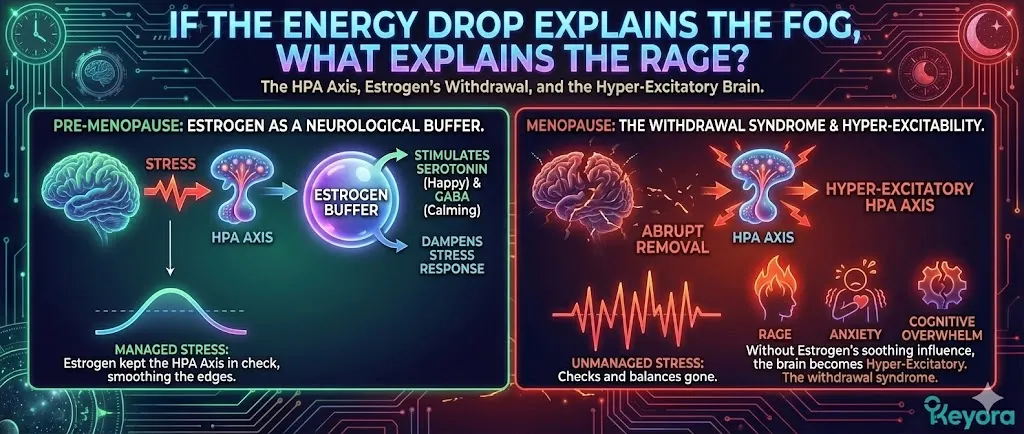
If the drop in energy explains the fog and fatigue, what explains the rage? What explains the anxiety that hits you out of nowhere, the feeling that you can no longer cope with stress that used to be manageable?
To understand this, we must look at the HPA Axis (Hypothalamic – Pituitary – Adrenal Axis).
For decades, your brain has been “addicted” to Estrogen. This is not a negative addiction; it is a biological dependency. Estrogen acts as a neurological buffer.
It is soothing.
It stimulates the production of Serotonin (the happy neurotransmitter) and GABA (the calming neurotransmitter).
It dampens the stress response.
When you were 25 or 35, if you had a stressful day, cortisol would spike, but Estrogen was there to help smooth the edges.
It helped you bounce back.
It kept the HPA Axis in check.
The Withdrawal Syndrome
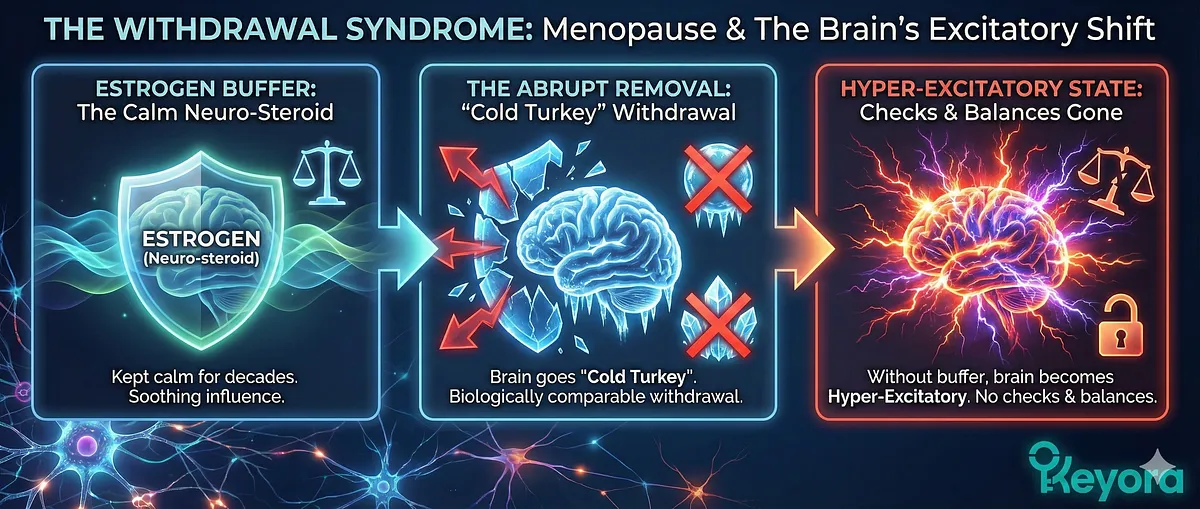
Menopause is the abrupt removal of this buffer. It is biologically comparable to a withdrawal syndrome.
Your brain is going “Cold Turkey” off a powerful neuro – steroid that has kept it calm for decades.
Without the soothing influence of Estrogen, the brain becomes Hyper – Excitatory.
The checks and balances are gone.
The Rogue Axis
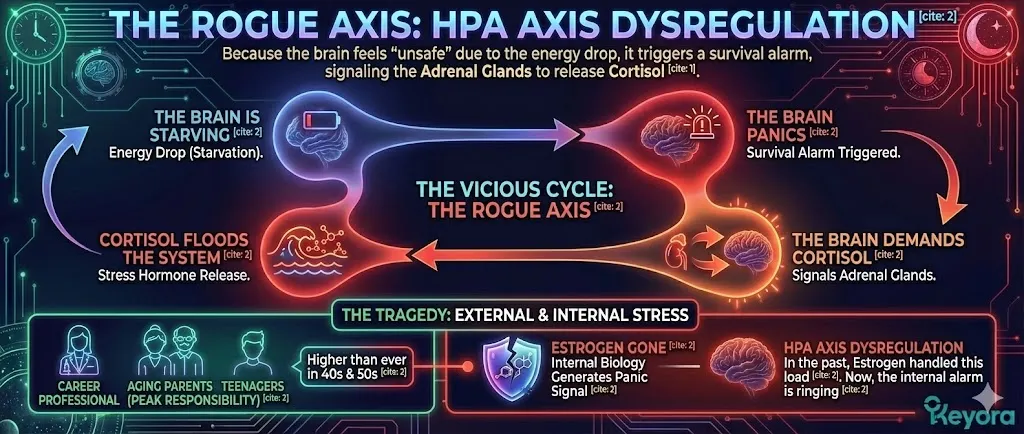
This leads to a phenomenon we call HPA Axis Dysregulation. Because the brain feels “unsafe” due to the energy drop (the starvation mentioned above), it triggers a survival alarm.
It signals the Adrenal Glands to release Cortisol (the stress hormone).
- The Vicious Cycle: The brain is starving – The brain panics – The brain demands Cortisol – Cortisol floods the system.
But here is the tragedy: In your 40s and 50s, you are likely at the peak of your responsibility. You may be managing a career, aging parents, and teenagers. Your external stress is higher than ever.
n the past, Estrogen helped you handle this load.
Now, the Estrogen is gone, and your internal biology is generating its own panic signal.
The “Wired and Tired” State
This creates the paradox of the menopausal woman: You are exhausted (due to low brain energy), yet you are anxious and wired (due to high cortisol).
Insomnia:
You are tired all day, but at 2:00 AM, a cortisol spike wakes you up. The “Buffer” that keeps you asleep is gone.
Mood Instability:
The “Rage” is not a character flaw. It is a loss of GABAergic inhibition. Your brakes have been cut.
Belly Fat:
This is not just about metabolism slowing down.
This is about Cortisol.
High cortisol specifically directs the body to store fat in the visceral abdominal area (around the organs) as a survival mechanism. It is “stress fat.”
This is a Neuro – Endocrine Storm.
The ovaries have handed the baton to the Adrenal Glands, saying, “You take over.” But the Adrenal Glands are burnt out, unbuffered, and screaming for help.
4. The Keyora Strategy: The Hope
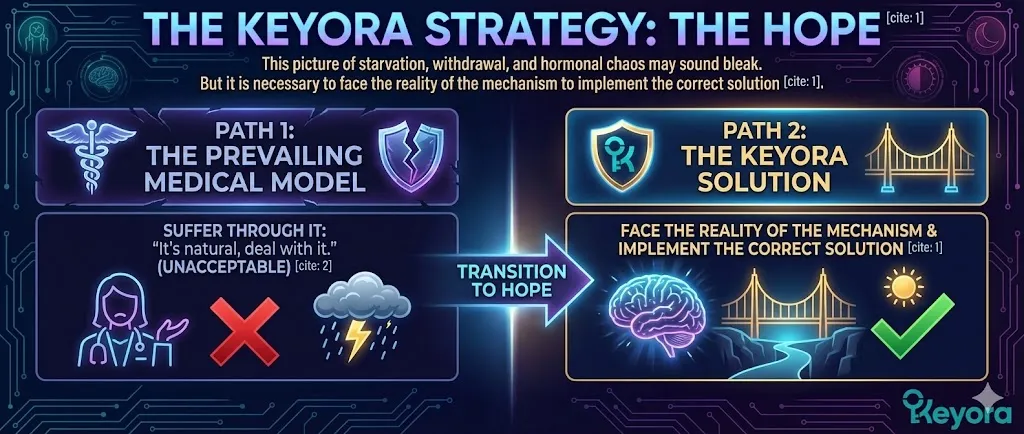
This picture we have painted – of starvation, withdrawal, and hormonal chaos – may sound bleak. But it is necessary to face the reality of the mechanism so that we can implement the correct solution.
The prevailing medical model offers two paths:
(1) Suffer through it:
“It’s natural, deal with it.” (Unacceptable).
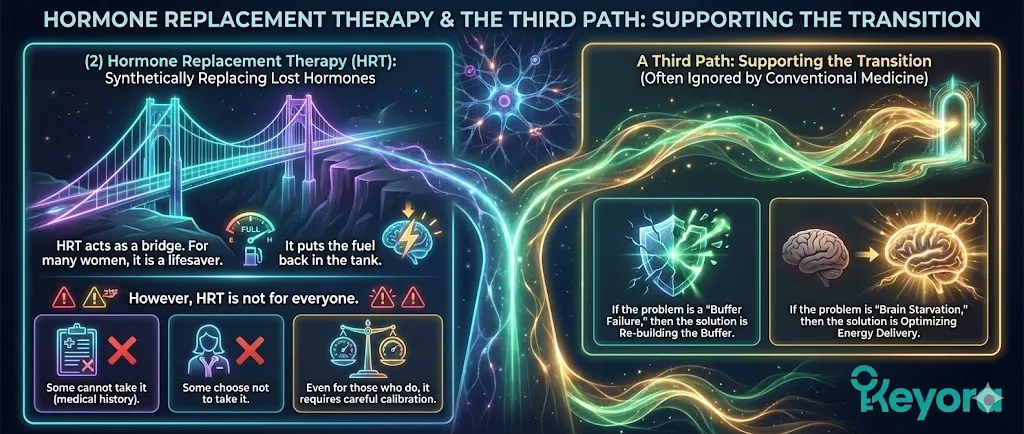
(2) Hormone Replacement Therapy (HRT):
Replacing the lost hormones synthetically.
HRT acts as a bridge. For many women, it is a lifesaver. It puts the fuel back in the tank. However, HRT is not for everyone.
Some cannot take it due to medical history.
Some choose not to take it.
And even for those who do, it requires careful calibration.
But there is a third path. A path that is often ignored by conventional medicine. We must support the transition.
If the problem is a “Buffer Failure,” then the solution is Re – building the Buffer.
If the problem is “Brain Starvation,” then the solution is Optimizing Energy Delivery.
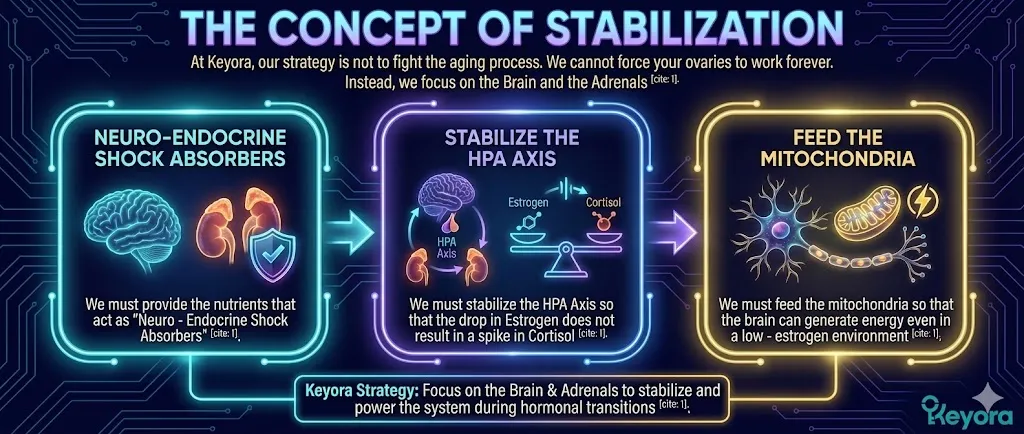
The Concept of Stabilization
At Keyora, our strategy is not to fight the aging process. We cannot force your ovaries to work forever. Instead, we focus on the Brain and the Adrenals.
We must provide the nutrients that act as “Neuro – Endocrine Shock Absorbers.”
We must stabilize the HPA Axis so that the drop in Estrogen does not result in a spike in Cortisol.
We must feed the mitochondria so that the brain can generate energy even in a low – estrogen environment.
Teasing the Solution
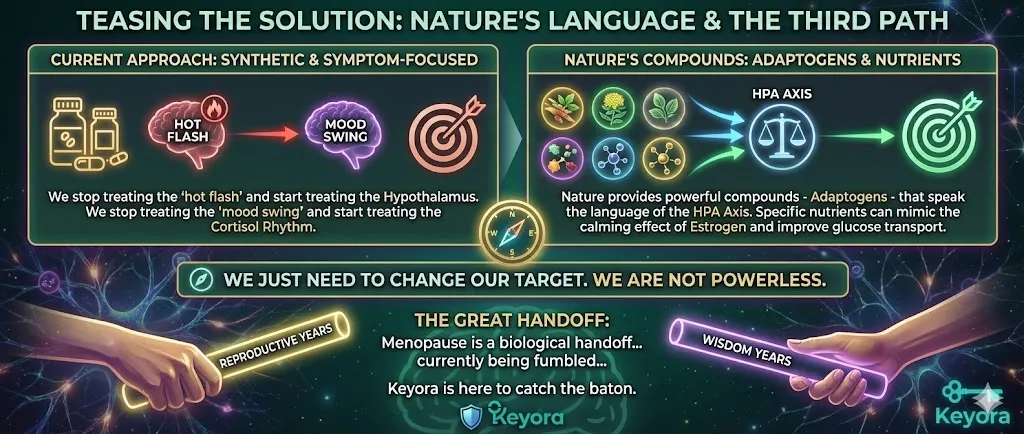
We do not need to rely solely on synthetic hormones to feel human again. Nature provides powerful compounds – Adaptogens – that speak the language of the HPA Axis.
There are specific nutrients that can mimic the calming effect of Estrogen on the brain. There are ways to improve glucose transport into the neuron without Estradiol.
We are not powerless.
We just need to change our target.
We stop treating the “hot flash” and start treating the Hypothalamus.
We stop treating the “mood swing” and start treating the Cortisol Rhythm.
The Great Handoff
Menopause is not the end. It is a biological handoff from the reproductive years to the wisdom years. But that handoff is currently being fumbled because our brains are unsupported.
Keyora is here to catch the baton.
Next:
we will move from the Problem to the Solution.
We will introduce you to the specific protocols and the Stabilization Matrix that can arrest the panic, feed the starving brain, and turn this storm into a manageable transition.
You are not crazy.
You are evolving.
And we are going to help you fuel that evolution.
– Series Theme: **The Menopause Protocol** (Vol. I).
– Episode Concept: **The Brain Energy Crisis** (”Neuro – Endocrine Starvation”).
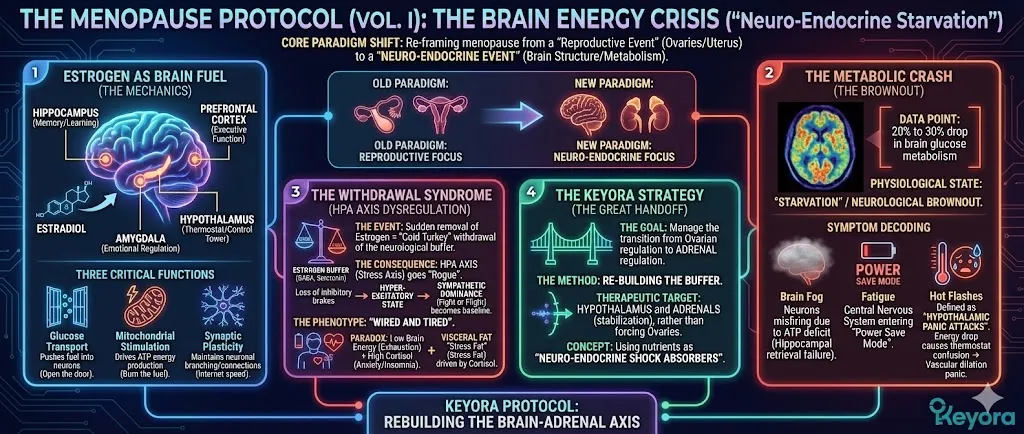
– Core Paradigm Shift: Re – framing menopause from a “Reproductive Event” (Ovaries/Uterus) to a **”Neuro – Endocrine Event”** (Brain Structure/Metabolism).
– **1. Estrogen as Brain Fuel (The Mechanics)**:
– *Definition*: Estradiol is a **Master Regulator of Brain Energy**, not just a sex hormone.
– *Target Anatomy*:
– **Hippocampus** (Memory/Learning).
– **Amygdala** (Emotional Regulation).
– **Hypothalamus** (Thermostat/Control Tower).
– **Prefrontal Cortex** (Executive Function).
– *Three Critical Functions*:
– 1. **Glucose Transport**: Pushes fuel into neurons (Open the door).
– 2. **Mitochondrial Stimulation**: Drives ATP energy production (Burn the fuel).
– 3. **Synaptic Plasticity**: Maintains neuronal branching/connections (Internet speed).
– **2. The Metabolic Crash (The Brownout)**:
– *Data Point*: PET scans reveal a **20% to 30% drop** in brain glucose metabolism during transition.
– *Physiological State*: **”Starvation”** / Neurological Brownout.
– *Symptom Decoding*:
– **Brain Fog**: Neurons misfiring due to ATP deficit (Hippocampal retrieval failure).
– **Fatigue**: Central Nervous System entering **”Power Save Mode”**.
– **Hot Flashes**: Defined as **”Hypothalamic Panic Attacks”**. Energy drop causes thermostat confusion -> Vascular dilation panic.
– **3. The Withdrawal Syndrome (HPA Axis Dysregulation)**:
– *The Buffer Theory*: Estrogen previously stimulated **GABA** (Calm) and **Serotonin** (Mood).
– *The Event*: Sudden removal of Estrogen = “Cold Turkey” withdrawal of the neurological buffer.
– *The Consequence*: **HPA Axis (Stress Axis)** goes “Rogue”.
– Loss of inhibitory brakes -> **Hyper – Excitatory State**.
– **Sympathetic Dominance** (Fight or Flight) becomes the baseline.
– *The Phenotype*: **”Wired and Tired”**.
– *Paradox*: Low Brain Energy (Exhaustion) + High Cortisol (Anxiety/Insomnia).
– *Visceral Fat*: Driven by Cortisol storage mechanisms (”Stress Fat”).
– **4. The Keyora Strategy (The Great Handoff)**:
– *The Goal*: Manage the transition from Ovarian regulation to Adrenal regulation.
– *The Method*: **Re – building the Buffer**.
– *Therapeutic Target*: **Hypothalamus** and **Adrenals** (stabilization), rather than forcing Ovaries.
– *Concept*: Using nutrients as **”Neuro – Endocrine Shock Absorbers”**.
The Great Handoff Adrenal Rescue & The “Cortisol Steal”
The Comprehensive Biochemistry of the Pregnenolone Steal and the Irreducible Necessity of the Keyora Matrix Intervention.
The Biological Blueprint: The “Ovarian-Adrenal Handoff”
The Myth of “Zero Hormones”
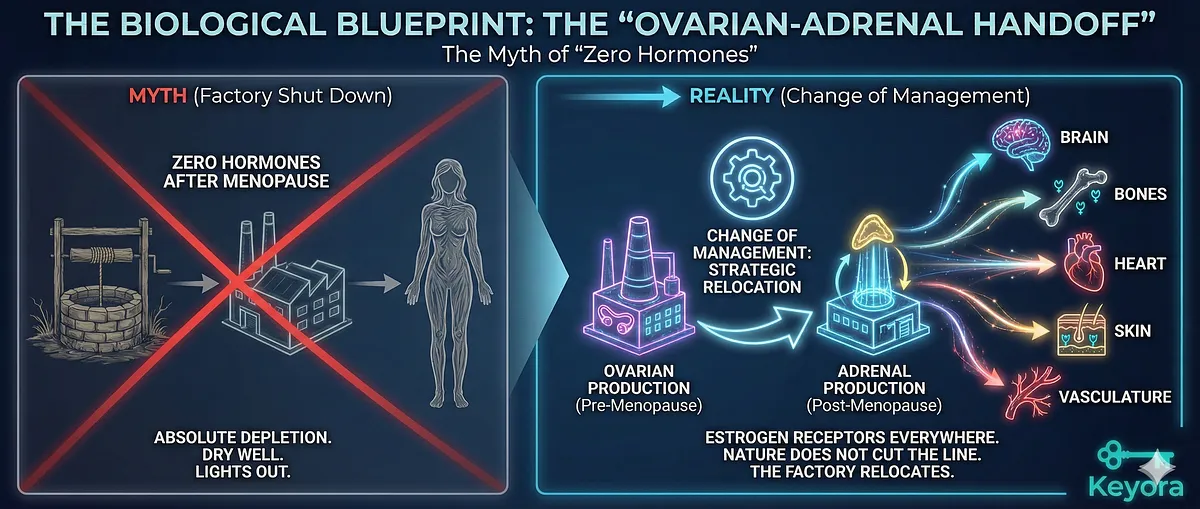
The prevailing narrative surrounding menopause is one of absolute depletion. It is the story of a “dry well.”
The cultural understanding is that on a specific date – usually marked by the cessation of menses for 12 months – the female body simply stops producing sex hormones.
The factory shuts down, the lights go out, and the woman is left to wither in a hormonal vacuum.
At Keyora, we must immediately dismantle this myth. It is biologically false.
The human female body is not designed to operate without estrogen. Estrogen receptors are ubiquitous – present in the brain, the bones, the heart, the skin, and the vasculature.
Nature does not construct a system dependent on a fuel source and then simply cut the line at age 50.
Menopause is not the cessation of hormone production; it is a Change of Management. It is a strategic relocation of the production facilities.
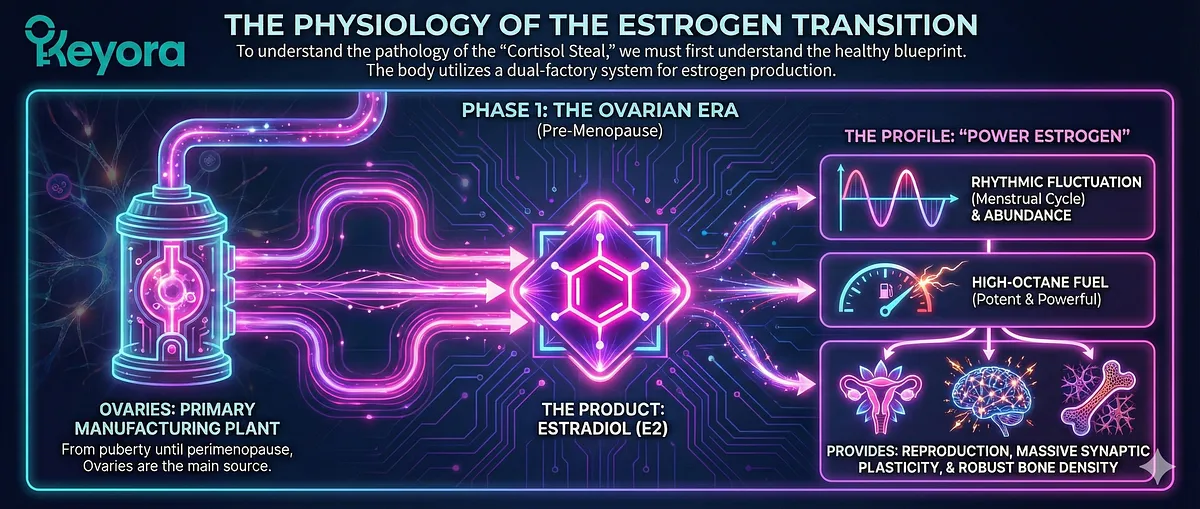
The Physiology of the Estrogen Transition
To understand the pathology of the “Cortisol Steal,” we must first understand the healthy blueprint.
The body utilizes a dual-factory system for estrogen production.
Phase 1: The Ovarian Era (Pre-Menopause)
From puberty until the onset of perimenopause, the Ovaries are the primary manufacturing plant.
The Product:
They produce Estradiol (E2).
The Profile:
E2 is the “Power Estrogen.”
It is potent, abundant, and fluctuates rhythmically with the menstrual cycle.
It provides the high-octane fuel for reproduction, massive synaptic plasticity, and robust bone density.
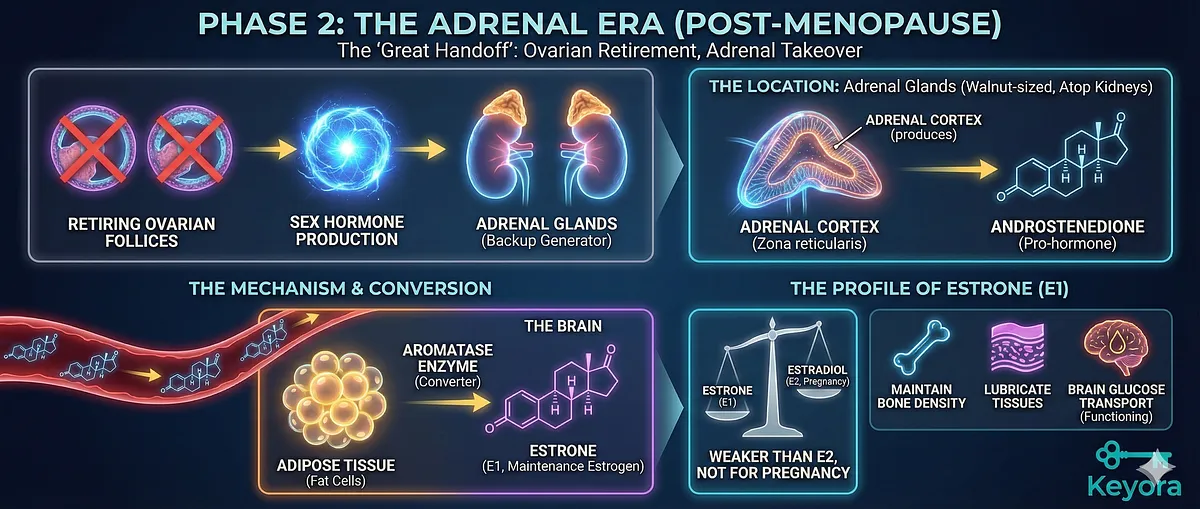
Phase 2: The Adrenal Era (Post-Menopause)
When the ovarian follicles are depleted, the ovaries retire. But the body does not intend for estrogen levels to hit zero.
Instead, the biological blueprint calls for a “Great Handoff.”
The responsibility for sex hormone production is transferred to the Adrenal Glands.
The Location:
These are two walnut-sized glands sitting atop the kidneys.
While famous for stress hormones, they are also the body’s backup sex hormone generator.
The Precursor:
The Adrenal Cortex (specifically the zona reticularis) produces a pro-hormone called Androstenedione.
The Mechanism:
Androstenedione is released into the bloodstream and travels to peripheral tissues – specifically Adipose Tissue (fat cells) and the brain.
The Conversion:
Inside these tissues, an enzyme called Aromatase waits. The Aromatase enzyme chemically converts Androstenedione into Estrone (E1).
The Profile:
Estrone (E1) is the “Maintenance Estrogen.”
It is weaker than Estradiol (E2).
It is not designed to support pregnancy.
However, in a healthy system, it is sufficient to maintain bone density, lubricate tissues, and crucially, keep the brain’s glucose transporters functioning.
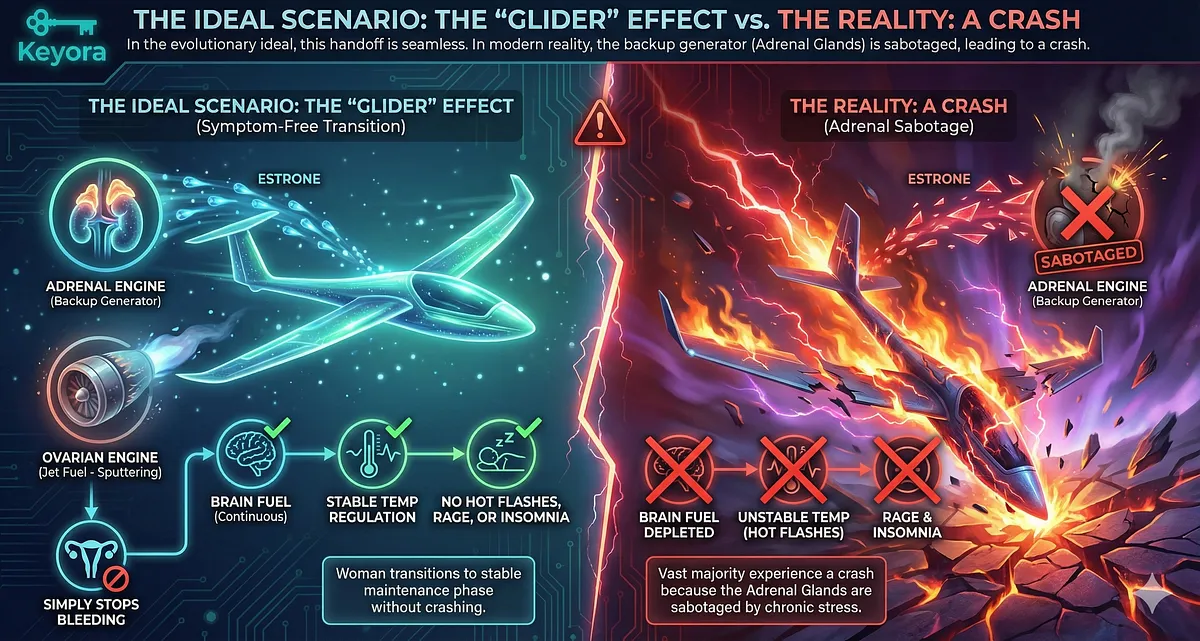
The Ideal Scenario: The “Glider” Effect
In the evolutionary ideal – a life free from chronic, unrelenting stress – this handoff is seamless. As the Ovarian engine sputters and dies (the plane runs out of jet fuel), the Adrenal engine kicks in.
The Aromatase conversion provides a steady, low-dose stream of Estrone. This acts as a “Glider.” The woman transitions from the high-energy reproductive phase to the stable maintenance phase without crashing.
Her brain continues to receive fuel.
Her temperature regulation remains stable.
She does not experience hot flashes, rage, or insomnia.
She simply stops bleeding.
This is why menopause should be, and historically often was, a symptom-free transition.
The Reality:
The vast majority of modern women do not experience a glide.
They experience a crash.
Why?
Because the backup generator – the Adrenal Glands – is being sabotaged.
The Biochemical Bottleneck: Steroidogenesis 101
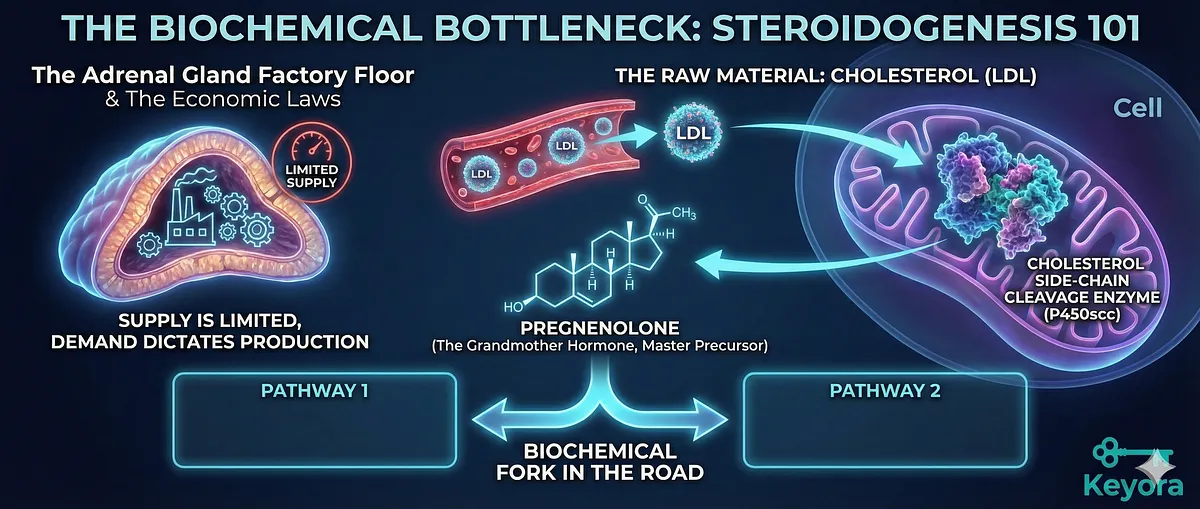
To understand the sabotage, we must descend into the molecular machinery of the Adrenal Gland. We must understand the factory floor known as Steroidogenesis.
This factory operates under strict economic laws: Supply is limited, and demand dictates production.
The Raw Material: Cholesterol
All steroid hormones – whether they are for stress, sex, or salt regulation – share the exact same ancestor: Cholesterol.
Specifically, Low-Density Lipoprotein (LDL) cholesterol is pulled from the bloodstream into the mitochondria of the adrenal cell.
Inside the mitochondria, the enzyme Cholesterol Side-Chain Cleavage Enzyme (P450scc) performs the first, irrevocable miracle:
It converts Cholesterol into Pregnenolone.
The Grandmother Hormone:
Pregnenolone Pregnenolone is the “Grandmother” of all steroid hormones. It is the master precursor. Every molecule of Cortisol, DHEA, Progesterone, Testosterone, and Estrogen in your body started its life as a molecule of Pregnenolone.
Once Pregnenolone is synthesized, it faces a critical decision.
It stands at a biochemical Fork in the Road.
It can travel down one of two divergent pathways.
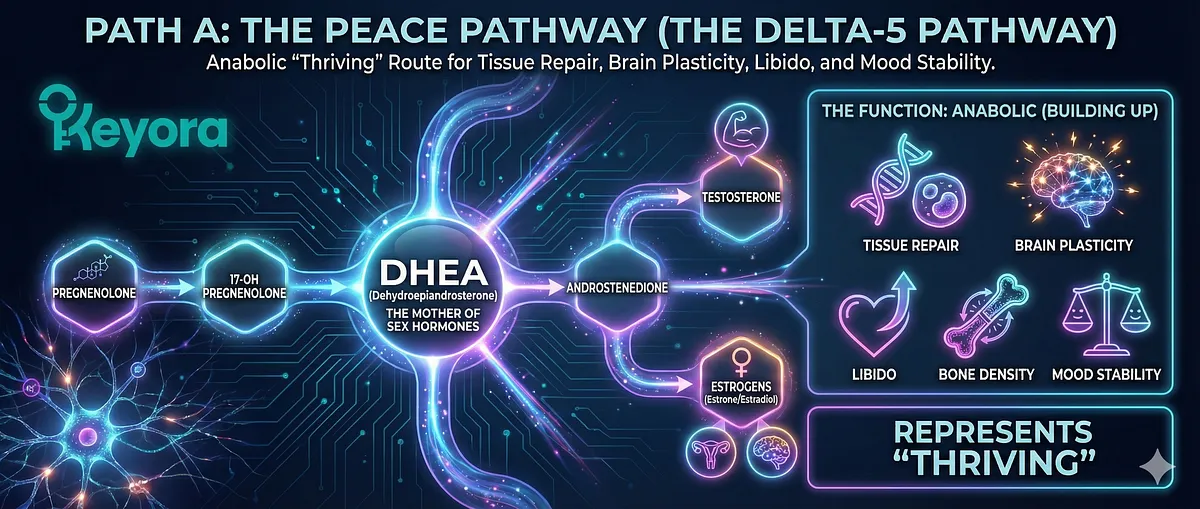
Path A: The Peace Pathway (The Delta-5 Pathway)
The Route:
Pregnenolone -> 17-OH Pregnenolone -> DHEA (Dehydroepiandrosterone).
The Destination:
DHEA is the mother of the sex hormones.
It converts into Androstenedione, which then converts into Testosterone and Estrogens (Estrone/Estradiol).
The Function:
This pathway is Anabolic (building up).
It supports tissue repair, brain plasticity, libido, bone density, and mood stability.
It represents “Thriving.”
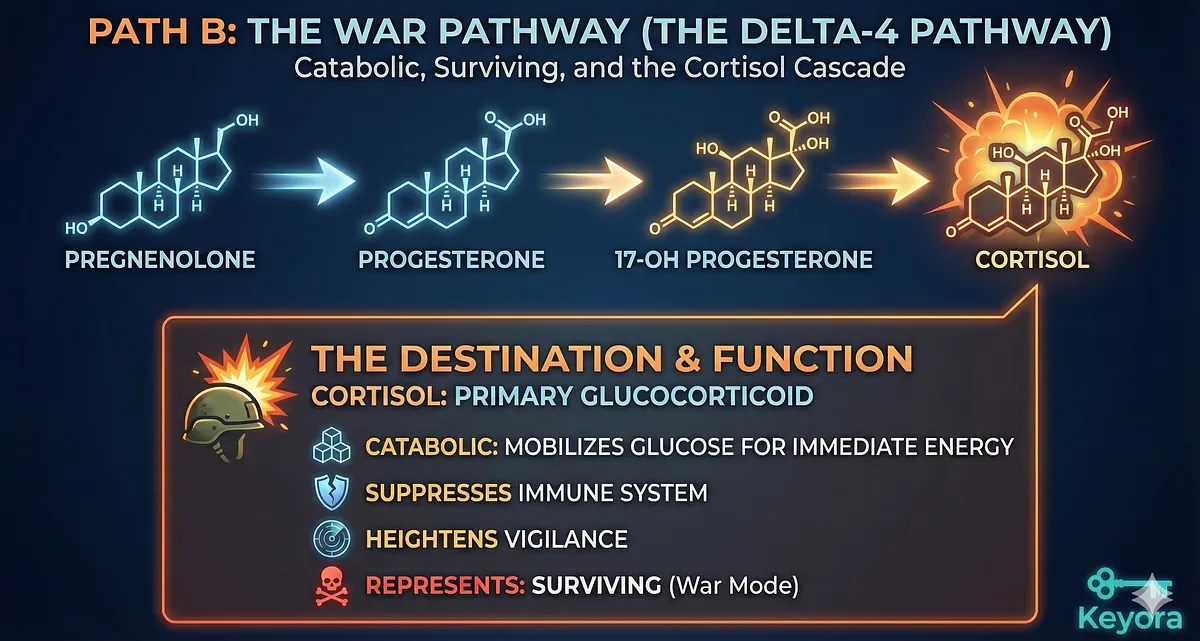
The Route:
Pregnenolone -> Progesterone -> 17-OH Progesterone -> Cortisol.
The Destination:
Cortisol is the primary glucocorticoid.
The Function:
This pathway is Catabolic (breaking down).
It mobilizes glucose for immediate energy, suppresses the immune system, and heightens vigilance.
It represents “Surviving.”
The Economic Constraint
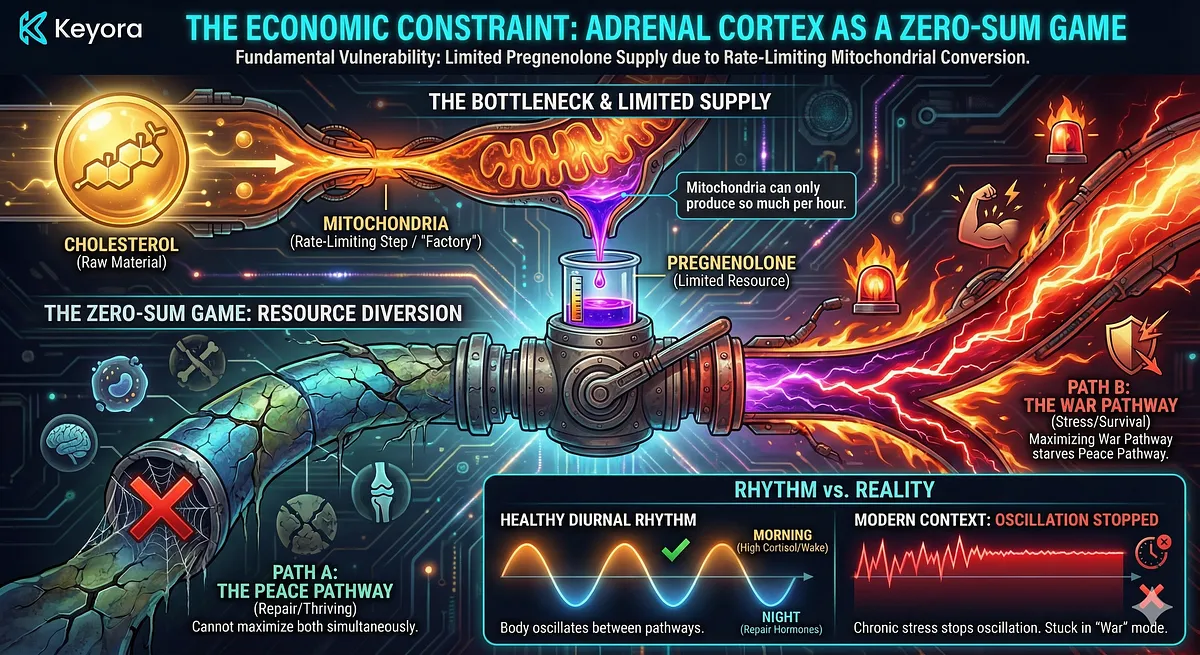
Here lies the fundamental vulnerability of human biology: The Adrenal Glands have a limited supply of Pregnenolone.
The conversion of Cholesterol to Pregnenolone is the rate-limiting step. The mitochondria can only produce so much per hour. Therefore, the Adrenal Cortex operates as a Zero-Sum Game.
It cannot maximize both Path A and Path B simultaneously.
If it sends resources down the War Pathway, it must starve the Peace Pathway.
In a healthy diurnal rhythm, the body oscillates between them. High Cortisol in the morning (Wake up), shifting to repair hormones at night. But in the modern context, the oscillation has stopped.
The Sabotage: The “Pregnenolone Steal” (Cortisol Steal)
The Evolutionary Logic: Survival Priority
Nature is ruthless. It operates on a strict hierarchy of needs.
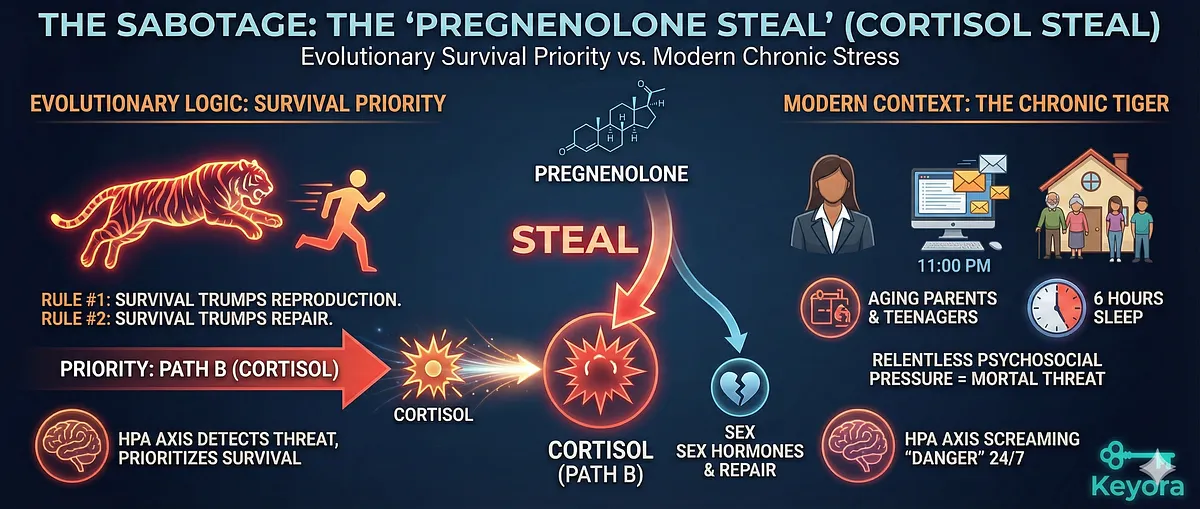
Rule #1: Survival trumps Reproduction.
Rule #2: Survival trumps Repair.
If a tiger is chasing you, your body does not care about your bone density, your libido, or your long-term cognitive health. It cares only about mobilizing glucose to fuel your muscles so you can run.
Therefore, the biochemical programming is hardwired: Whenever a threat is detected, prioritize Path B (Cortisol) at all costs.
The Modern Context: The Chronic Tiger
The Keyora user is typically a woman in her late 40s or early 50s.
She is not running from a tiger.
She is running a company.
She is caring for aging parents.
She is managing teenagers.
She is sleeping 6 hours a night.
She is checking emails at 11:00 PM.
Her brain perceives this relentless, low-grade psychosocial pressure as a mortal threat.
Her HPA Axis (Hypothalamic-Pituitary-Adrenal Axis) is screaming “DANGER” 24 hours a day, 7 days a week.
The Physiological Hijack
The Signal:
The Hypothalamus releases CRH (Corticotropin-Releasing Hormone).
The Pituitary releases massive waves of ACTH (Adrenocorticotropic Hormone).
The Adrenal Response:
ACTH hits the receptors on the Adrenal Cortex.
It delivers a wartime command: “We need Cortisol. Now. Everything else is secondary.”
The Enzymatic Shift:
The enzymes responsible for Path A (such as 17,20-Lyase) are downregulated. The enzymes responsible for Path B (such as 3-beta-HSD and 21-Hydroxylase) are upregulated.
The Steal:
The adrenal gland aggressively shunts ALL available Pregnenolone into the Cortisol pathway.

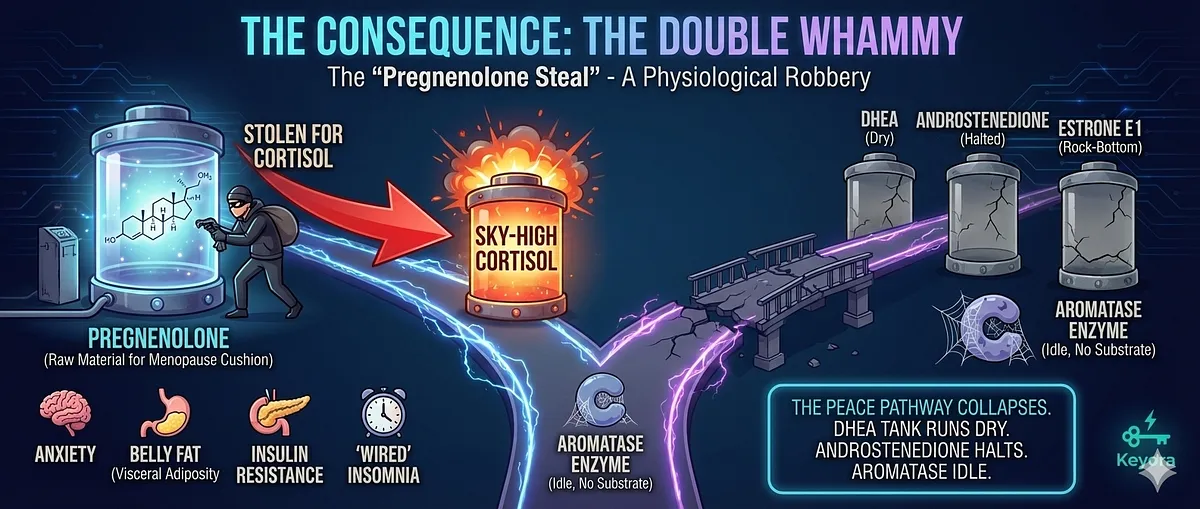
The Consequence: The Double Whammy
This is the “Pregnenolone Steal.”
It is a physiological robbery.
The raw materials that were supposed to cushion your menopause – the Pregnenolone destined to become DHEA, Androstenedione, and finally Estrone – are stolen.
They are converted into Cortisol instead.
This results in a devastating dual pathology:
Sky-High Cortisol:
This drives the anxiety, the belly fat (visceral adiposity), the insulin resistance, and the “wired” insomnia.
Rock-Bottom Estrogen (E1):
Because the raw material was stolen, the “Peace Pathway” collapses.
The DHEA tank runs dry.
The Androstenedione production halts.
The Aromatase enzyme in the fat cells sits idle because it has no substrate to convert.
The Symptom Explosion
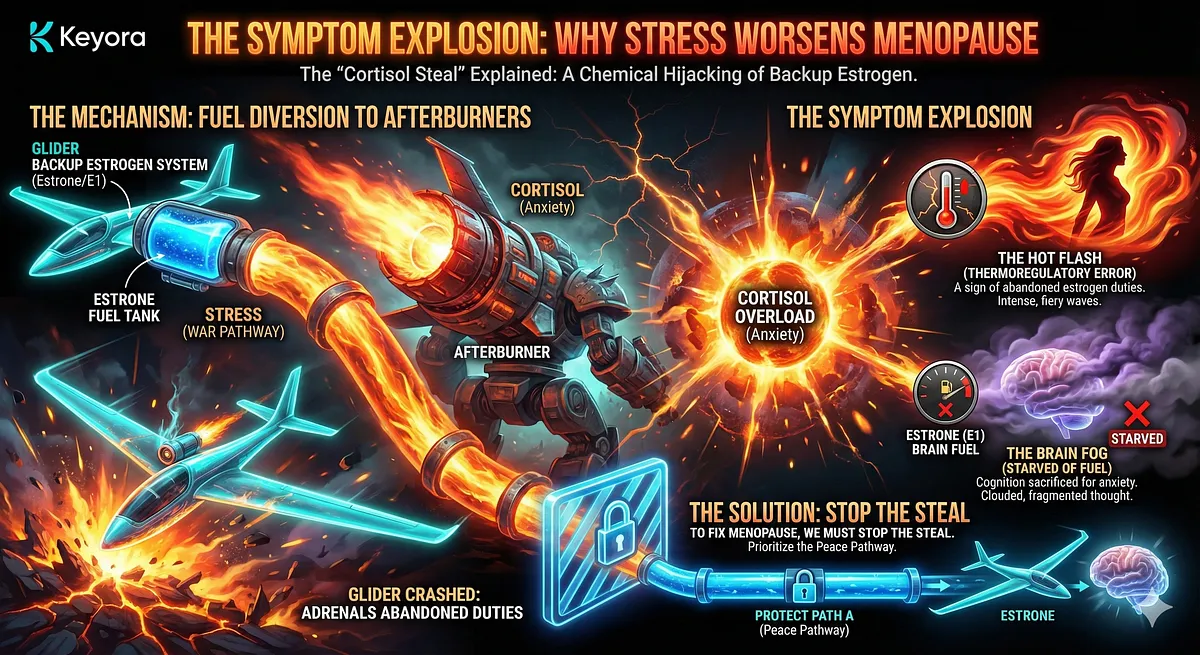
This mechanism explains why stress makes menopause symptoms exponentially worse.
A stressed woman isn’t just “stressed”; she is chemically depleting her own backup estrogen.
The Hot Flash:
It is not just a thermoregulatory error; it is a sign that the Adrenals have abandoned their estrogen-producing duties to fight the stress war.
The “Glider” has crashed because the fuel was diverted to the afterburners.
The Brain Fog:
The brain is starved of Estrone (E1), its maintenance fuel, because the body decided that anxiety (Cortisol) was more important than cognition.
To fix menopause, we must stop the Steal.
The Commander: Ashwagandha as the HPA Gatekeeper
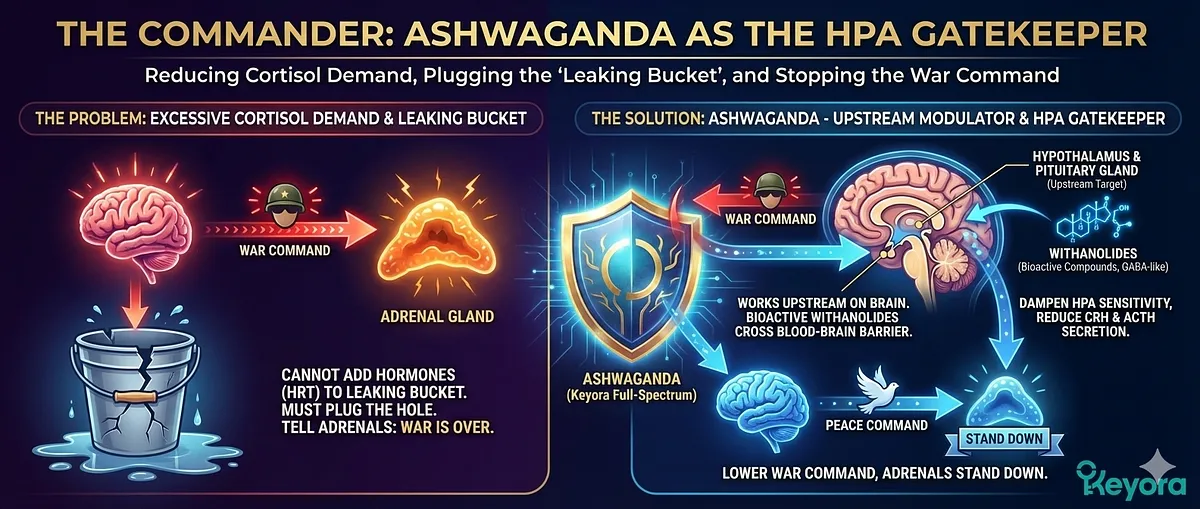
If the root cause of the crash is the excessive demand for Cortisol, then the only viable solution is to reduce that demand. We cannot simply add more hormones (HRT) without addressing the underlying robbery; that is like pouring water into a leaking bucket. We must plug the hole. We must tell the Adrenal Glands that the war is over.
Role: The Upstream Modulator
Ashwagandha (specifically the full-spectrum extract used in Keyora) acts as the Commander of the intervention.
It does not work on the Adrenals directly; it works upstream, on the brain itself.
Mechanism: Hypothalamic Gating
Ashwagandha contains bioactive compounds called Withanolides.
These molecules possess a unique structural similarity to the body’s own calming neurotransmitters (GABA).
They cross the Blood-Brain Barrier and act directly on the Hypothalamus and Pituitary Gland.
The Signal:
They dampen the sensitivity of the HPA feedback loop. They reduce the secretion of CRH and ACTH.
The Effect:
By lowering the “War Command” from the brain, the Adrenal Glands receive permission to stand down.
The Strategic Victory: 30% Restoration
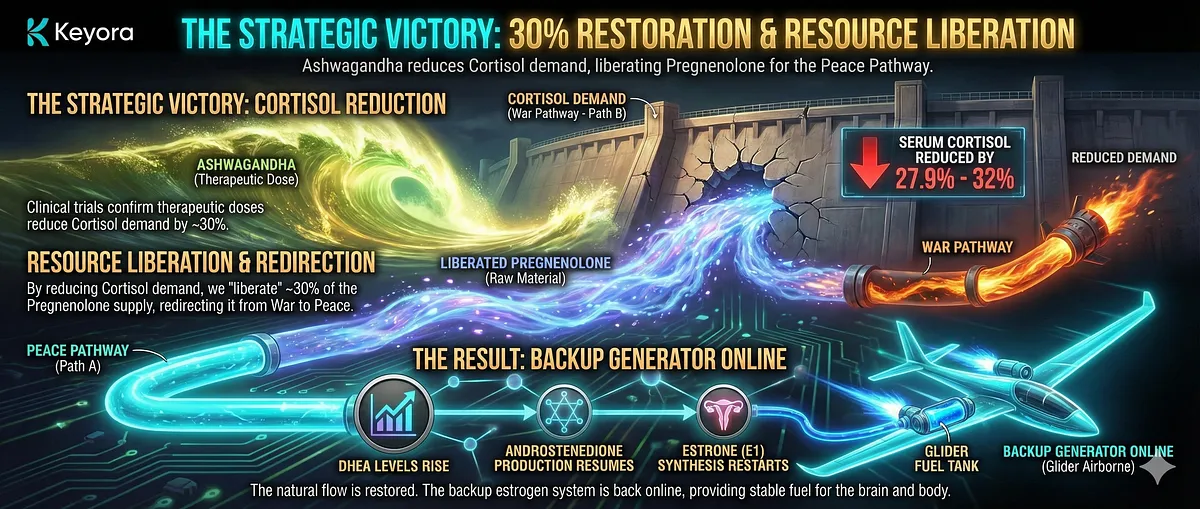
Clinical trials confirm that therapeutic doses of Ashwagandha reduce Serum Cortisol by 27.9% to 32%.
In the context of the Pregnenolone Steal, this is massive.
By reducing the demand for Cortisol by ~30%, we effectively “liberate” 30% of the Pregnenolone supply.
This raw material, no longer conscripted for the War Pathway (Path B), naturally flows back into the Peace Pathway (Path A).
- The Result: DHEA levels rise. Androstenedione production resumes. Estrone (E1) synthesis restarts. The backup generator comes back online.
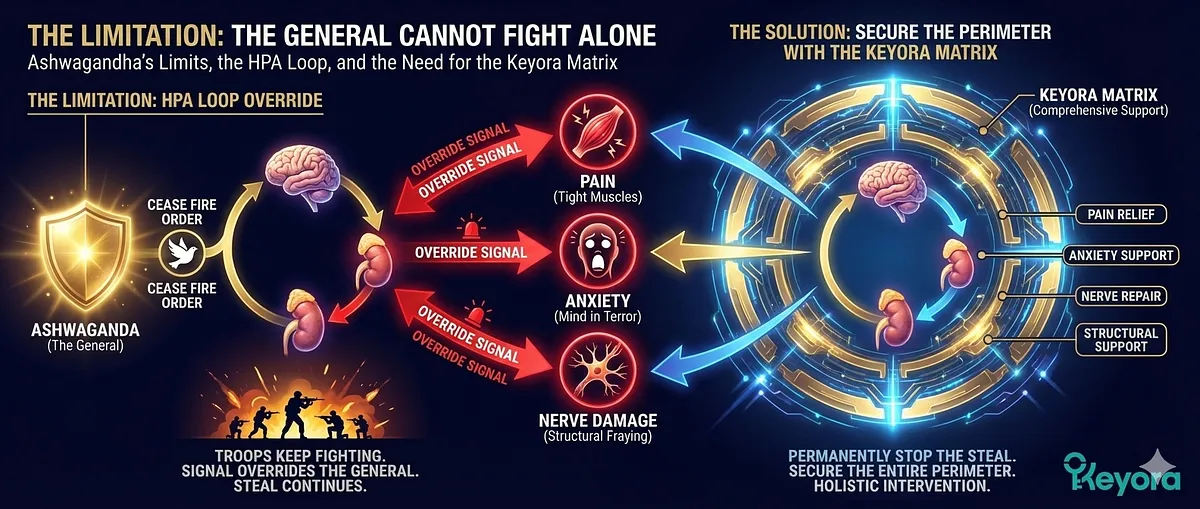
The Limitation: The General Cannot Fight Alone
However, Ashwagandha has a limit.
It acts on the chemical signal.
But the HPA Axis is a loop.
If the body is screaming in pain (tight muscles), or the mind is screaming in terror (anxiety), or the nerves are fraying (structural damage), the signal will override the General.
Ashwagandha can issue the “Cease Fire” order, but if the troops on the ground are being shot at, they will keep fighting. To permanently stop the Steal, we must secure the entire perimeter.
This requires the Keyora Matrix.
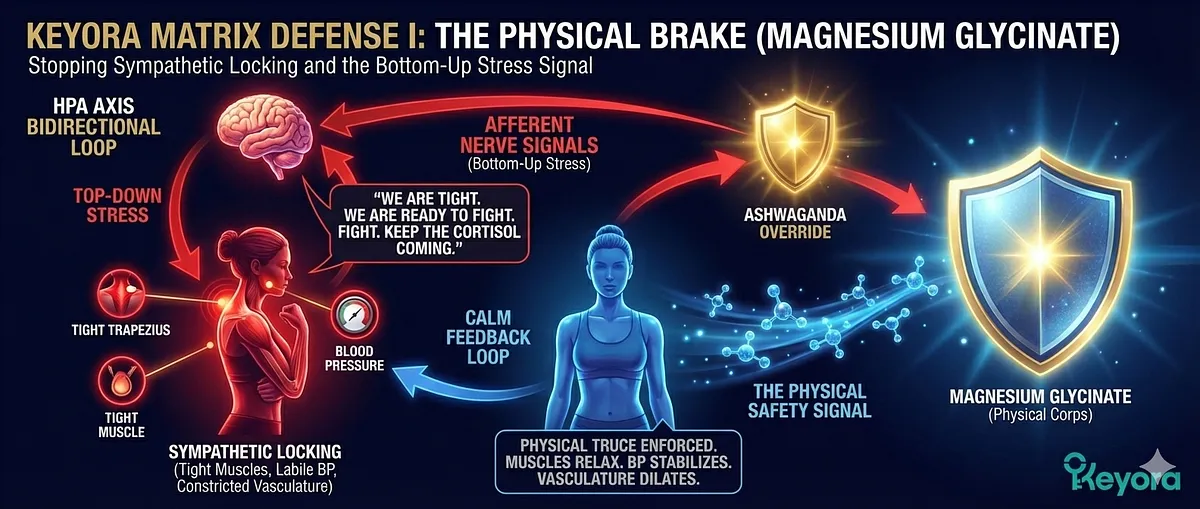
Keyora Matrix Defense I: The Physical Brake (Magnesium Glycinate)
The HPA Axis is a bidirectional loop. The Brain stresses the Body (Top-Down), but the Body also stresses the Brain (Bottom-Up).
A woman in menopause often suffers from Sympathetic Locking. Her muscles are tight (trapezius, jaw).
Her blood pressure is labile.
Her vasculature is constricted.
These physical states send afferent nerve signals back to the brainstem:
“We are tight.
We are ready to fight.
Keep the Cortisol coming.”
This creates a feedback loop that overrides Ashwagandha.
Role: The Physical Safety Signal
Magnesium Glycinate acts as the Physical Corps. Its job is to enforce a physical truce on the somatic tissues.
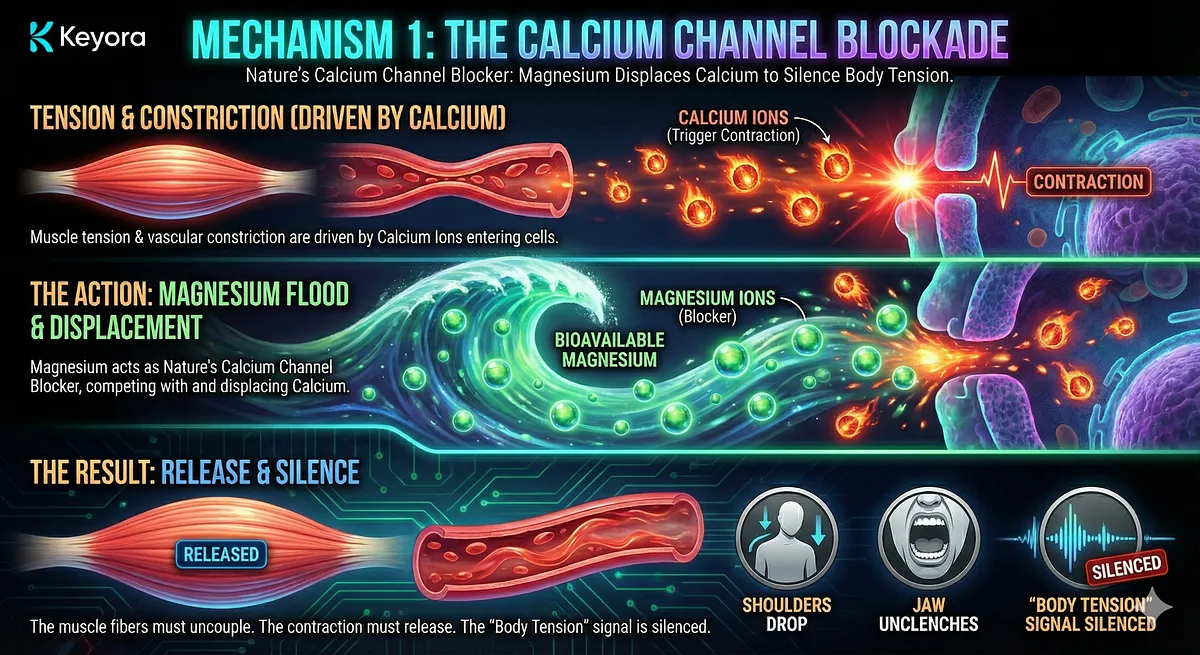
Mechanism 1: The Calcium Channel Blockade
Muscle tension and vascular constriction are driven by Calcium Ions. Calcium enters the cells to trigger contraction.
Magnesium is nature’s Calcium Channel Blocker. It competes with Calcium for the entry channels.
The Action:
By flooding the system with bioavailable Magnesium, we physically displace the Calcium.
The muscle fibers must uncouple. The contraction must release.
The Result:
The shoulders drop.
The jaw unclenchs.
The “Body Tension” signal is silenced.
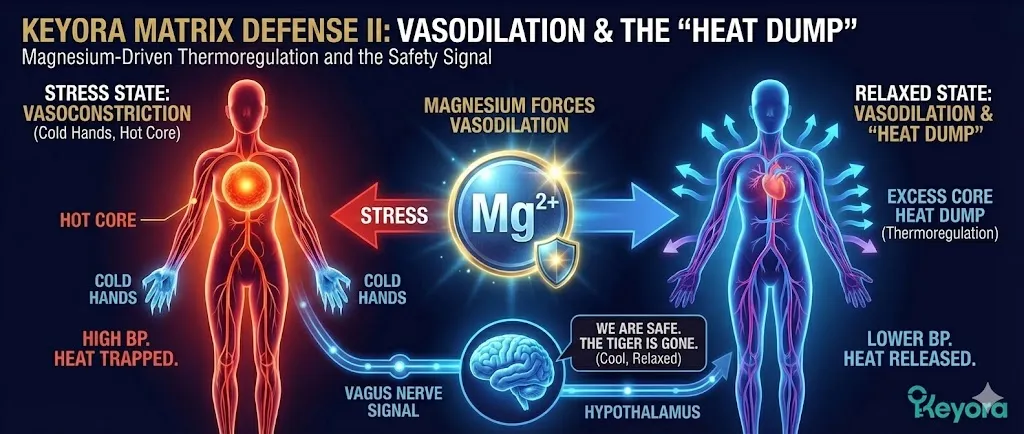
Mechanism 2: Vasodilation and the “Heat Dump”
Stress causes vasoconstriction (cold hands, hot core).
Magnesium forces Vasodilation. It opens the peripheral blood vessels.
The Effect:
This lowers blood pressure and allows the body to dump excess core heat (Thermoregulation).
The Signal:
A relaxed, cool, vasodilated body sends a powerful signal to the Hypothalamus via the Vagus Nerve:
“We are safe. The tiger is gone.”
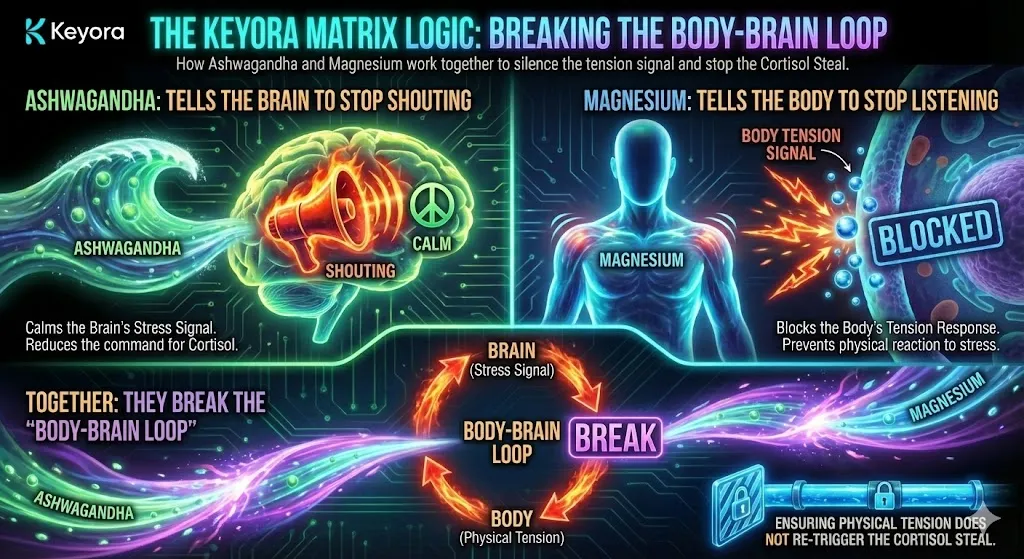
The Keyora Matrix Logic:
Ashwagandha tells the brain to stop shouting.
Magnesium tells the body to stop listening.
Together, they break the “Body-Brain Loop,” ensuring that physical tension does not re-trigger the Cortisol Steal.
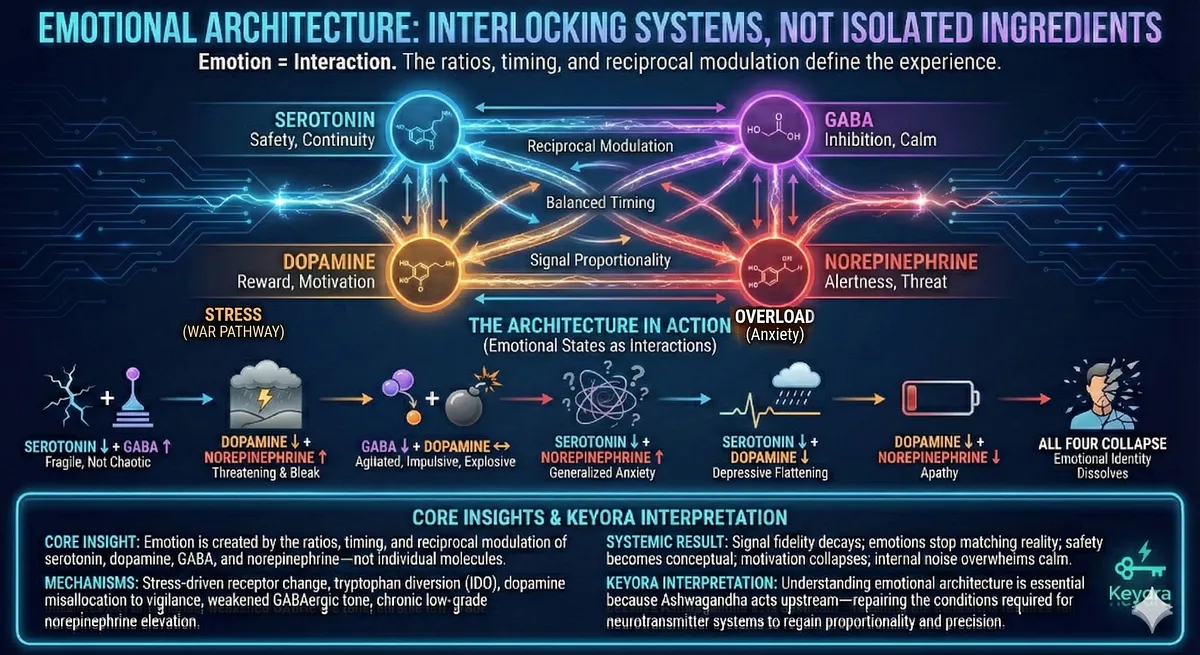
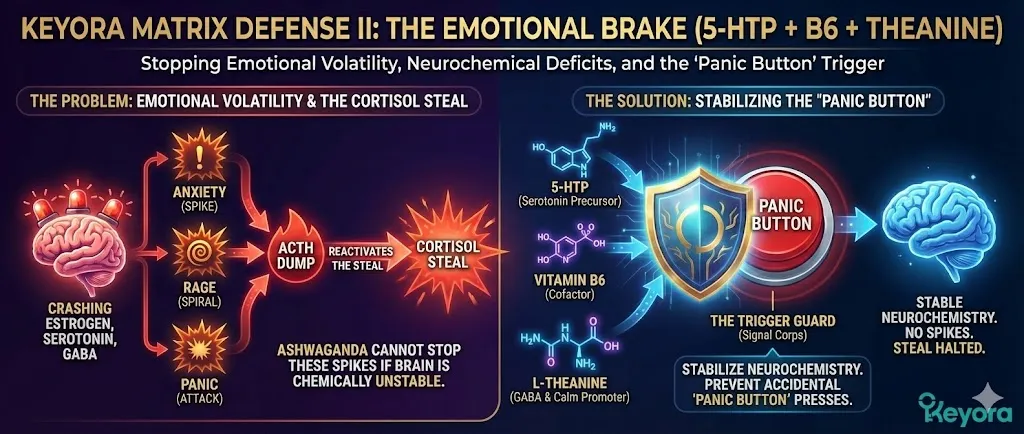
Keyora Matrix Defense II: The Emotional Brake (5-HTP + B6 + Theanine)
The second driver of the Cortisol Steal is Emotional Volatility.
In menopause, the crash in Estrogen leads to a corresponding crash in Serotonin (Mood) and GABA (Calm). This neurochemical deficit manifests as sudden, uncontrollable spikes of anxiety, rage, or panic.
Every panic attack triggers a massive dump of ACTH.
Every rage spiral reactivates the Steal.
Ashwagandha cannot stop these spikes if the brain is chemically unstable.
Role: The Trigger Guard
The combination of 5-HTP, Vitamin B6, and L-Theanine acts as the Signal Corps.
Their job is to stabilize the neurochemistry so that the “Panic Button” is not pressed accidentally.
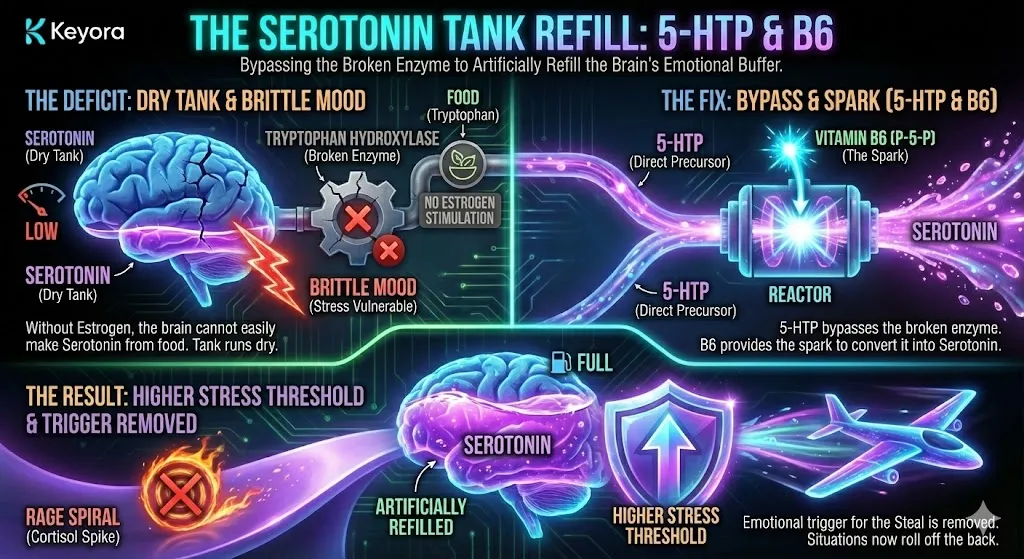
The Serotonin Tank Refill (5-HTP + B6)
The Deficit:
Without Estrogen to stimulate the enzyme Tryptophan Hydroxylase, the brain cannot easily make Serotonin from food.
The tank runs dry.
Mood becomes brittle.
The Fix:
5-HTP bypasses the broken enzyme. It is the direct precursor.
Vitamin B6 (P-5-P) provides the spark to convert 5-HTP into Serotonin.
The Result:
We artificially refill the Serotonin tank. This raises the “Stress Threshold.”
A situation that would have caused a rage spiral (and a Cortisol spike) now rolls off the back.
The emotional trigger for the Steal is removed.
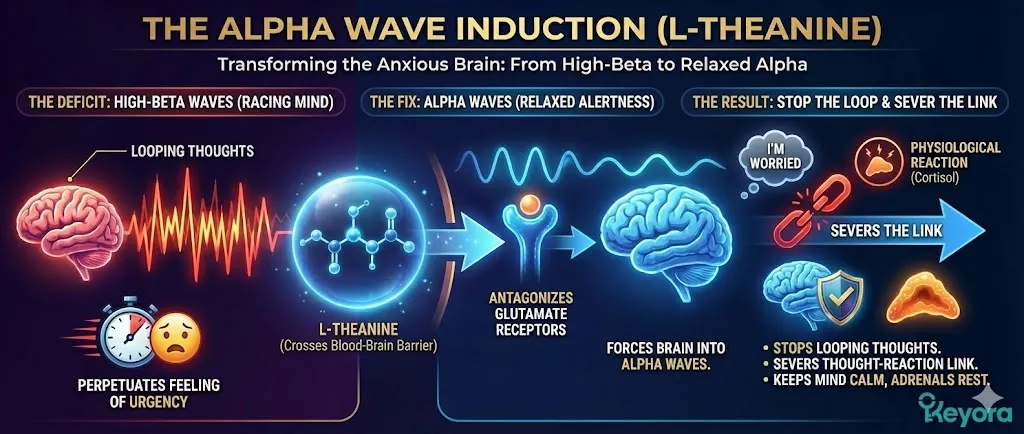
The Alpha Wave Induction (L-Theanine)
The Deficit:
The anxious menopausal brain is stuck in High-Beta Waves (Racing Mind).
This frequency perpetuates the feeling of urgency.
The Fix:
L-Theanine crosses the Blood-Brain Barrier and antagonizes Glutamate receptors.
It forces the brain into Alpha Waves (Relaxed Alertness).
The Result:
It stops the “Looping Thoughts.”
It severs the link between the thought (”I’m worried”) and the physiological reaction (Cortisol).
It keeps the mind calm so the Adrenals can rest.
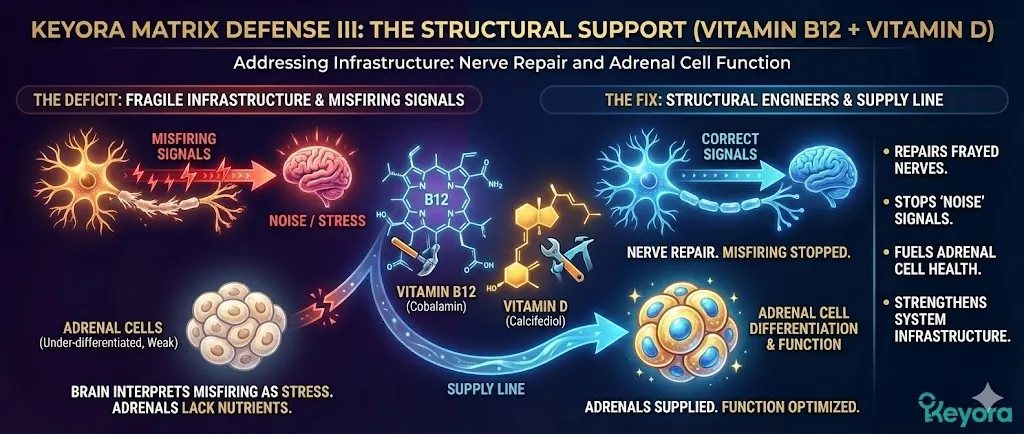
Keyora Matrix Defense III: The Structural Support (Vitamin B12 + Vitamin D)
Finally, we must address the infrastructure. A system under stress is fragile. The nerves themselves are often frayed, leading to misfiring signals that the brain interprets as “noise” or “stress.”
Furthermore, the Adrenal cells themselves require specific nutrients to differentiate and function.
Role: The Supply Line
Vitamin B12 and Vitamin D act as the Structural Engineers.
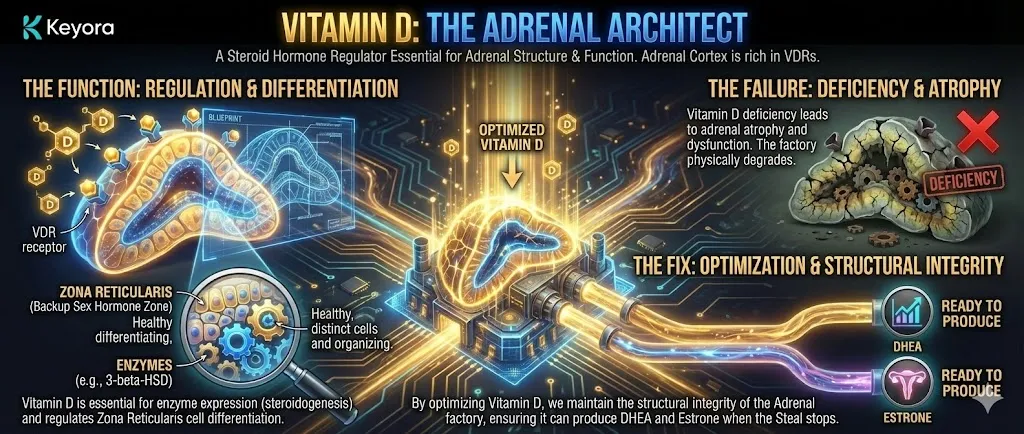
Vitamin D: The Adrenal Architect
Vitamin D is not just a vitamin; it is a steroid hormone regulator. The Adrenal Cortex is rich in Vitamin D Receptors (VDRs).
The Function:
Vitamin D is essential for the expression of the enzymes required for steroidogenesis (like 3-beta-HSD).
It regulates the differentiation of the cells in the zona reticularis – the specific zone responsible for making the backup sex hormones.
The Failure:
Vitamin D deficiency (rampant in menopause) leads to adrenal atrophy and dysfunction. The factory physically degrades.
The Fix:
By optimizing Vitamin D, we maintain the structural integrity of the Adrenal factory, ensuring it can produce DHEA and Estrone when the Steal stops.
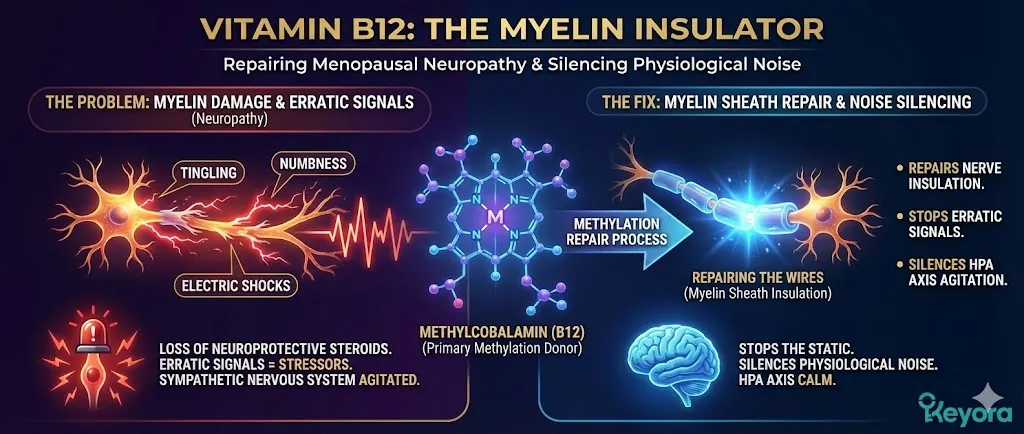
Vitamin B12: The Myelin Insulator
Menopause often brings neuropathy – tingling, numbness, and “electric shock” sensations.
This is due to the loss of neuroprotective steroids.
These erratic nerve signals are stressors.
They keep the Sympathetic Nervous System agitated.
The Fix:
Methylcobalamin (B12) is the primary donor for the methylation required to repair the Myelin Sheath (nerve insulation).
The Result:
It repairs the wires.
It stops the static.
It silences the physiological noise that keeps the HPA Axis on edge.
Conclusion: The Irreducible Solution
We have mapped the full anatomy of the Great Handoff. We have exposed the Pregnenolone Steal as the root cause of the menopausal crash – the mechanism by which stress robs a woman of her own backup estrogen supply.
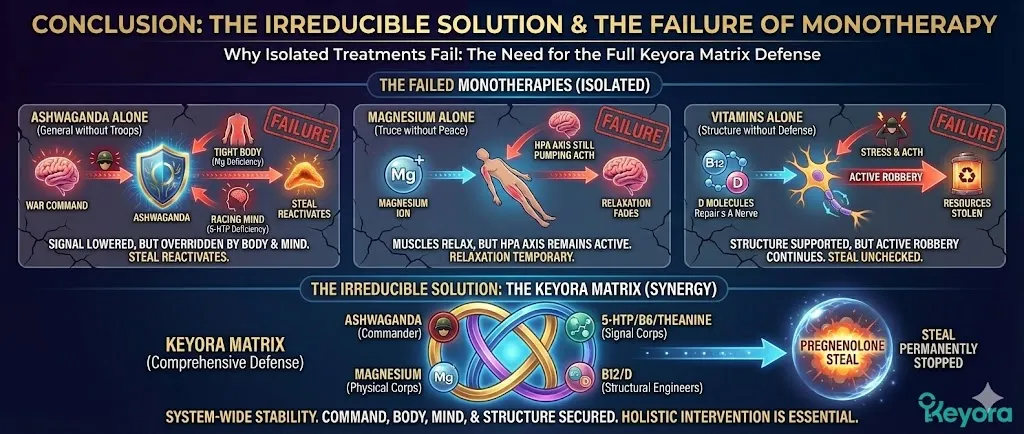
The conclusion is scientifically inescapable: Monotherapy is destined to fail.
- If you take Ashwagandha alone, you lower the command signal, but if the body is tight (Magnesium deficiency) or the mind is racing (Serotonin deficiency), the Steal will reactivate.
- If you take Magnesium alone, you relax the muscles, but if the HPA Axis is still pumping ACTH, the relaxation will be temporary.
- If you take Vitamins alone, you support the structure, but you do not stop the active robbery.
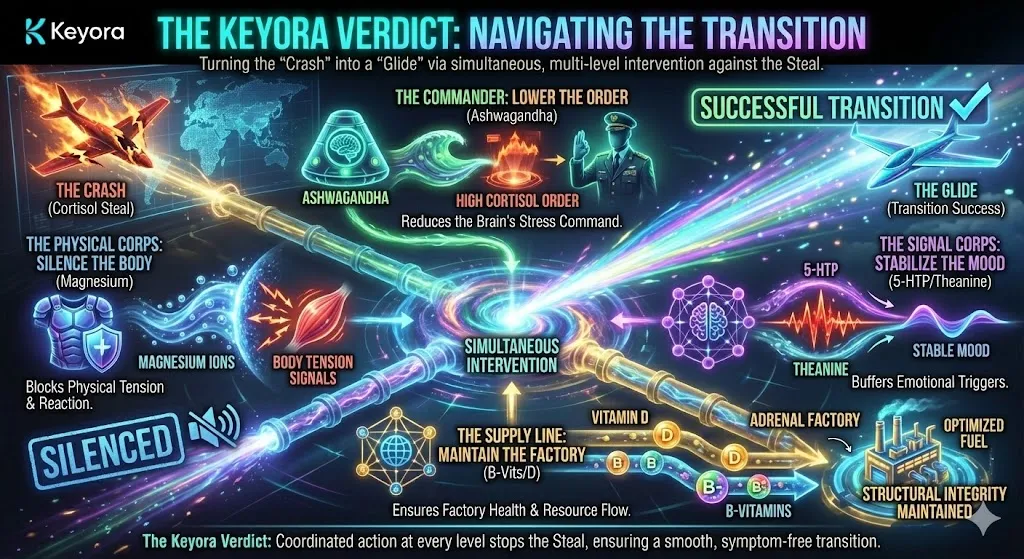
The Keyora Verdict To successfully navigate the transition – to turn the “Crash” into a “Glide” – you must intervene at every level of the Steal simultaneously.
You need the Commander to lower the order (Ashwagandha).
You need the Physical Corps to silence the body (Magnesium).
You need the Signal Corps to stabilize the mood (5-HTP/Theanine).
You need the Supply Line to maintain the factory (B-Vits/D).
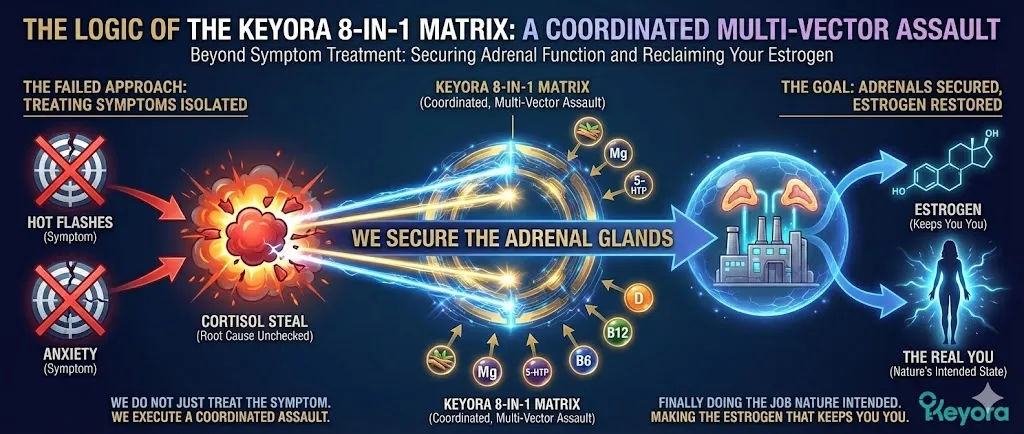
This is the logic of the Keyora 8-in-1 Matrix.
We do not just treat the “symptom” of hot flashes.
We do not just treat the “symptom” of anxiety.
We execute a coordinated, multi-vector assault on the Cortisol Steal itself.
We secure the Adrenal Glands so they can finally do the job nature intended:
Making the estrogen that keeps you you.
In the next episode, we will confront the most devastating consequence of the un-rescued Adrenal: Insomnia.
We will explore why the menopausal brain forgets how to sleep, and how the Matrix rebuilds the architecture of rest.
Next:
The Sleep Architect: Rebuilding Deep Sleep in a Low-Estrogen Brain.
– Series Theme: **The Menopause Protocol** (Vol. I).
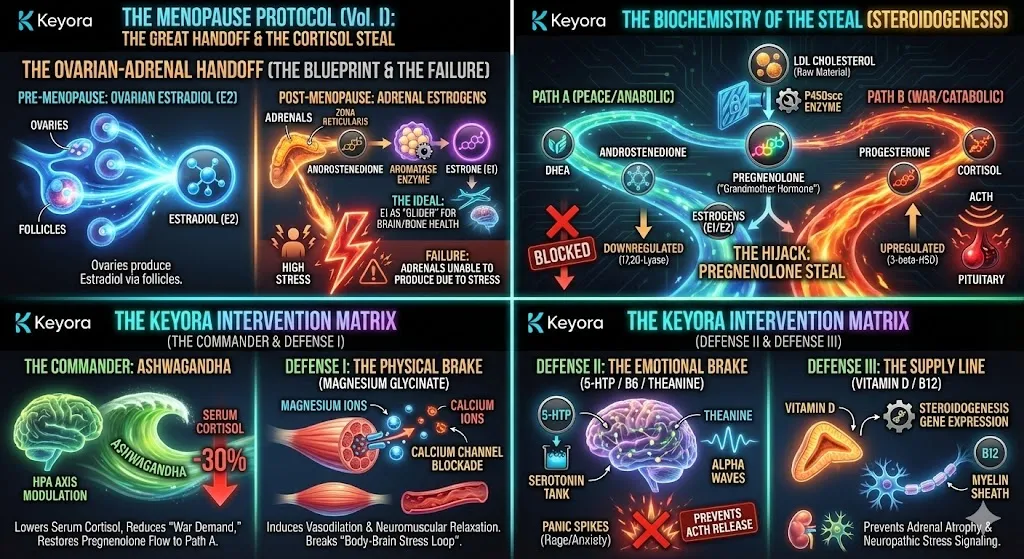
– Episode Concept: **The Great Handoff** (”Adrenal Rescue” & “The Cortisol Steal”).
– Core Pathology: Failure of the Adrenal Glands to assume sex hormone production due to stress prioritization.
– **1. The Ovarian – Adrenal Handoff (The Blueprint)**:
– *Pre – Menopause*: Ovaries produce **Estradiol (E2)** via follicles.
– *Post – Menopause*: Adrenals (Zona Reticularis) produce **Androstenedione**.
– *Conversion*: Androstenedione -> (via **Aromatase Enzyme** in Adipose) -> **Estrone (E1)**.
– *The Ideal*: E1 acts as a “Glider” to buffer brain/bone health.
– *The Failure*: High stress prevents Adrenals from producing Androstenedione.
– **2. The Biochemistry of The Steal (Steroidogenesis)**:
– *Raw Material*: **LDL Cholesterol** -> (via **P450scc Enzyme**) -> **Pregnenolone** (”Grandmother Hormone”).
– *The Fork in the Road*:
– **Path A (Peace/Anabolic)**: Pregnenolone -> DHEA -> Androstenedione -> Estrogens.
– **Path B (War/Catabolic)**: Pregnenolone -> Progesterone -> **Cortisol**.
– *The Hijack*: **ACTH** (from Pituitary) upregulates Path B enzymes (e.g., **3 – beta – HSD**) and downregulates Path A enzymes (**17,20 – Lyase**).
– *Result*: **Pregnenolone Steal**. Raw material is shunted to Cortisol; Estrogen production collapses.
– **3. The Keyora Intervention Matrix (Stopping the Steal)**:
– **The Commander (Ashwagandha)**:
– *Action*: **HPA Axis Modulation**. Lowers Serum Cortisol (-30%).
– *Outcome*: Reduces the “War Demand,” allowing Pregnenolone to flow back to Path A (Estrogen).
– **Defense I: The Physical Brake (Magnesium Glycinate)**:
– *Mechanism*: **Calcium Channel Blockade**. Displaces Ca2+ to relax smooth muscle/vasculature.
– *Physiology*: Induces **Vasodilation** (Heat Dump) & Neuromuscular Relaxation.
– *Outcome*: Breaks the “Body – Brain Stress Loop” (Bottom – Up signaling).
– **Defense II: The Emotional Brake (5 – HTP / B6 / Theanine)**:
– *Target*: **Serotonin & GABA Systems**.
– *Mechanism*: 5 – HTP refills the tank; Theanine induces **Alpha Waves**.
– *Outcome*: Prevents “Panic Spikes” (Rage/Anxiety) that trigger ACTH release.
– **Defense III: The Supply Line (Vitamin D / B12)**:
– *Target*: **Adrenal Cortex Structure** & **Myelin Sheath**.
– *Mechanism*: Vitamin D regulates steroidogenesis gene expression; B12 repairs nerve insulation.
– *Outcome*: Prevents adrenal atrophy and neuropathic stress signaling.
The Serotonin Rescue
Targeting Menopausal Rage, Anxiety & The “Crash”
Bridging the Neurotransmitter Gap:
How Ashwagandha Anchors the Mood while the Keyora Matrix (5 – HTP, Vitamin D, Theanine) Rebuilds the Serotonin Pathway.
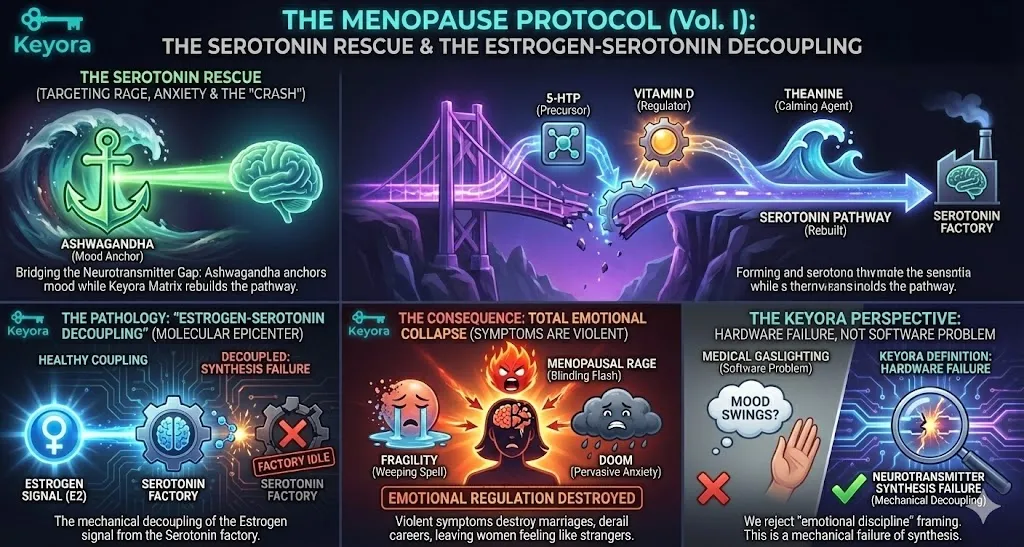
The Pathology: The “Estrogen – Serotonin Decoupling”
We now descend into the molecular epicenter of the menopausal crisis.
We have explored the energy starvation of the brain and the adrenal hijack of the hormones.
Now, we must confront the most personal and devastating consequence of this transition: The total collapse of emotional regulation.
This is the phase of the transition that destroys marriages.
It is the phase that derails careers.
It is the phase that leaves a high – functioning woman feeling like a stranger in her own body.
The symptoms are not subtle.
They are violent.
It is the “Menopausal Rage” – a sudden, blinding flash of anger over a misplaced set of keys.
It is the “Fragility” – a weeping spell triggered by a commercial.
It is the “Doom” – a pervasive, unshakable anxiety that settles in the chest upon waking.
The medical establishment often gaslights women by labeling this “mood swings,” implying a lack of emotional discipline.
At Keyora, we reject this psychological framing. This is not a software problem; it is a hardware failure. We define this pathology as Neurotransmitter Synthesis Failure.
Specifically, it is the mechanical decoupling of the Estrogen signal from the Serotonin factory.
The Molecular Biology of Happiness: TPH2
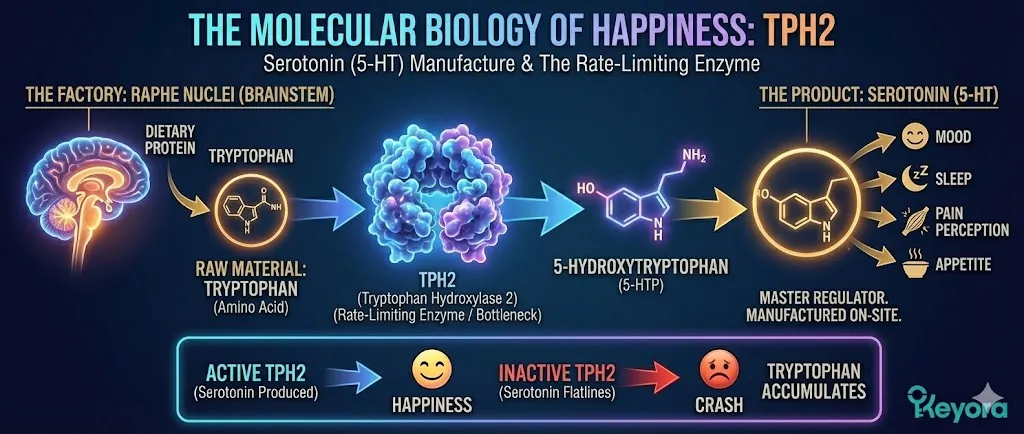
To understand the crash, you must understand the factory. Serotonin (5 – Hydroxytryptamine, or 5 – HT) is the master regulator of mood, sleep, pain perception, and appetite.
The brain does not import Serotonin from the blood; it must manufacture it on – site within the raphe nuclei of the brainstem. The raw material for this manufacturing process is Tryptophan, an amino acid found in dietary protein.
However, Tryptophan does not spontaneously convert into Serotonin. It must be processed.
The first and most critical step in this assembly line is catalyzed by a specific enzyme: Tryptophan Hydroxylase 2 (TPH2). TPH2 is the Rate – Limiting Enzyme.
It is the bottleneck.
It dictates the speed of the entire factory.
If TPH2 is active, Tryptophan is converted into 5 – Hydroxytryptophan (5 – HTP), and eventually Serotonin. If TPH2 is inactive, Tryptophan accumulates uselessly, and Serotonin levels flatline.
Estrogen as the Genomic Switch
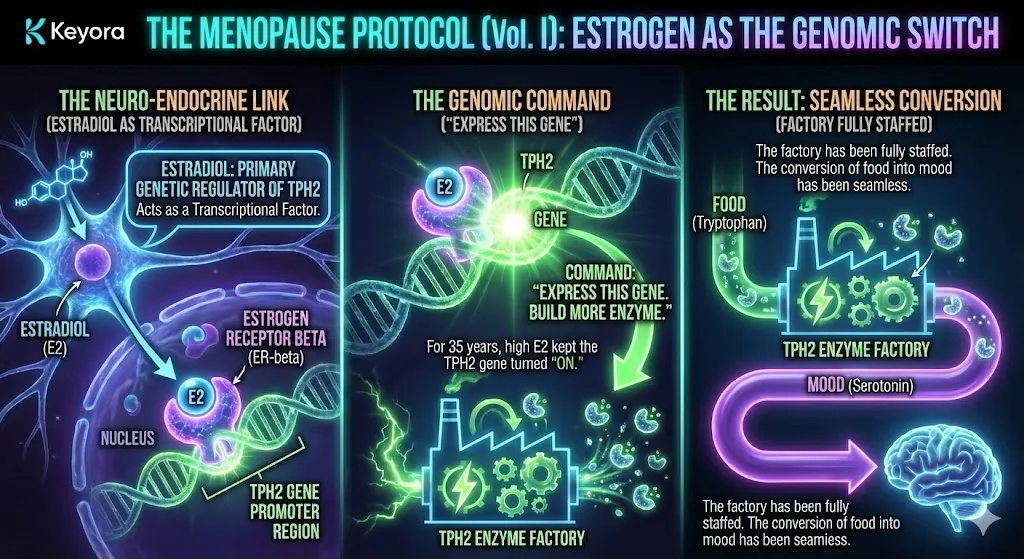
Here lies the fundamental neuro – endocrine link: Estradiol (E2) is the primary genetic regulator of TPH2.
Estrogen does not just float around the brain; it enters the nucleus of the neuron and acts as a Transcriptional Factor.
- Estradiol binds to Estrogen Receptor Beta (ER – beta).
- This complex binds to the DNA promoter region of the TPH2 gene.
- The Command: “Express this gene. Build more enzyme.”
For 35 years of a woman’s reproductive life, high levels of circulating Estradiol have kept the TPH2 gene turned “ON.”
The factory has been fully staffed.
The conversion of food into mood has been seamless.
The Decoupling: Silence on the Genome
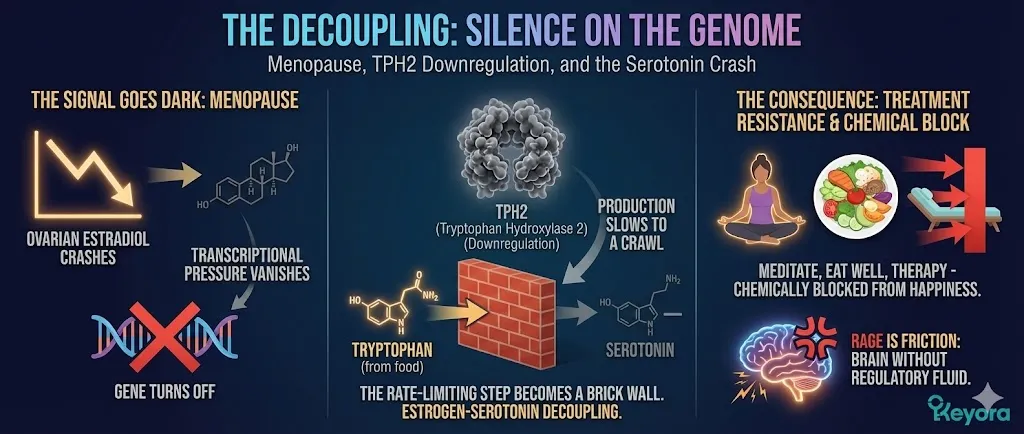
Menopause is the moment the signal goes dark. As ovarian production of Estradiol crashes, the transcriptional pressure on the TPH2 gene vanishes.
The result is Downregulation.
The gene turns off.
The production of the TPH2 enzyme slows to a crawl.
This is the “Estrogen – Serotonin Decoupling.”
The brain still has Tryptophan (from food). It still has the machinery. But it lacks the Enzyme. The rate – limiting step becomes a brick wall. This explains the “treatment resistance” many women face.
You can meditate, you can eat well, you can go to therapy. But if your brain physically lacks the enzyme to synthesize Serotonin, you will remain chemically blocked from happiness.
The rage you feel is the friction of a brain trying to regulate emotion without the necessary fluid.
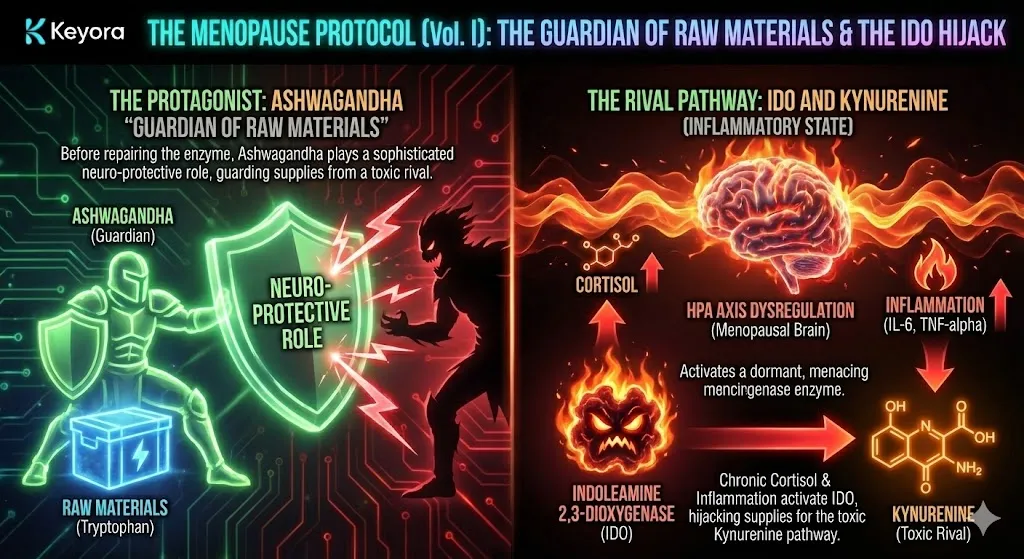
The Protagonist: Ashwagandha – The “Guardian of Raw Materials”
Before we can even attempt to repair the enzyme (the bottleneck), we must first address a more immediate threat: The theft of the raw materials.
In the menopausal phenotype, not only is the factory slow, but the supplies are being hijacked by a toxic rival pathway.
This is where Ashwagandha plays its most sophisticated, neuro – protective role.
The Rival Pathway: IDO and Kynurenine
In this Episode, we established that the menopausal brain is in a state of HPA Axis Dysregulation.
Cortisol levels are chronically elevated.
Inflammation (cytokines like IL – 6 and TNF – alpha) is rampant.
This inflammatory state activates a dormant enzyme called Indoleamine 2,3 – dioxygenase (IDO).
The IDO Trap
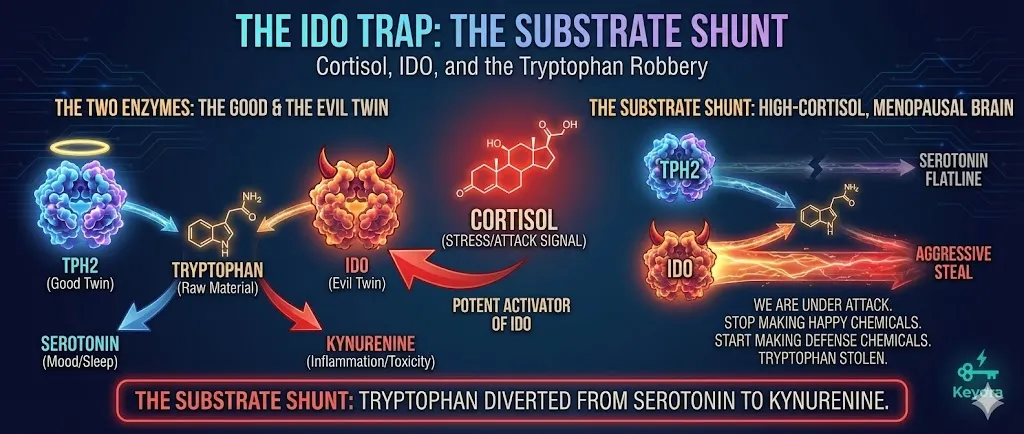
Think of IDO as the evil twin of TPH2. Both enzymes want Tryptophan.
- TPH2 wants to turn Tryptophan into Serotonin (Mood/Sleep).
- IDO wants to turn Tryptophan into Kynurenine (Inflammation/Toxicity).
In a healthy, low – stress brain, TPH2 wins. In a high – cortisol, menopausal brain, IDO wins.
Cortisol acts as a potent activator of IDO. It tells the body: “We are under attack. Stop making happy chemicals. Start making defense chemicals.” This causes a Substrate Shunt.
The Tryptophan you eat is aggressively stolen away from the Serotonin pathway and diverted into the Kynurenine Pathway.
The Neurotoxic End – Product: Quinolinic Acid
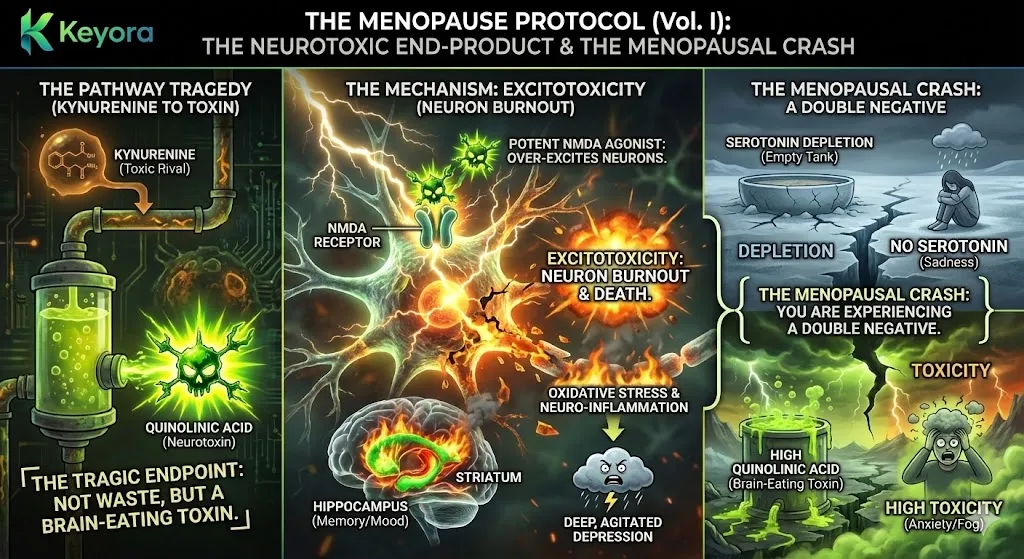
The tragedy of the Kynurenine pathway is its endpoint. Kynurenine is metabolized into Quinolinic Acid. Quinolinic Acid is not just waste; it is a Neurotoxin.
Mechanism:
It is a potent agonist of the NMDA receptor. It over – excites neurons until they burn out and die (Excitotoxicity).
Target:
It specifically targets the Hippocampus (memory/mood) and the Striatum.
Effect:
It causes oxidative stress, neuro – inflammation, and deep, agitated depression.
This is the mechanism of the “Menopausal Crash.”
It is not just a lack of Serotonin; it is the presence of a brain – eating toxin.
You are experiencing a double negative:
- Depletion: No Serotonin (Sadness).
- Toxicity: High Quinolinic Acid (Anxiety/Fog).
Ashwagandha: The Guardian of the Substrate
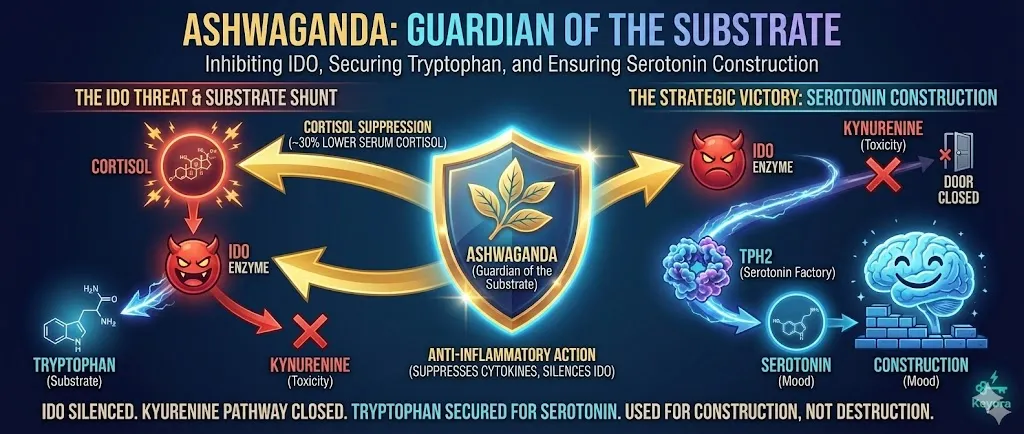
This is why Ashwagandha is the mandatory first step in the Keyora Matrix.
We utilize Ashwagandha not just to “calm” the user, but to Inhibit the IDO Enzyme.
Mechanism of Action:
Cortisol Suppression:
By lowering Serum Cortisol by ~30%, Ashwagandha removes the primary activation signal for IDO.
Anti – Inflammatory Action:
Ashwagandha suppresses the pro – inflammatory cytokines that upregulate IDO.
The Result:
By silencing IDO, Ashwagandha closes the door to the Kynurenine pathway.
The Strategic Victory:
This forces Tryptophan to stay available for the Serotonin pathway.
It guards the raw material.
It ensures that the substrate is used for construction (Mood) rather than destruction (Toxicity).
Matrix Solution I: 5 – HTP – The “Biochemical Bypass”
We have secured the raw materials by stopping the IDO theft (via Ashwagandha). Now, we confront the structural failure of the factory itself.
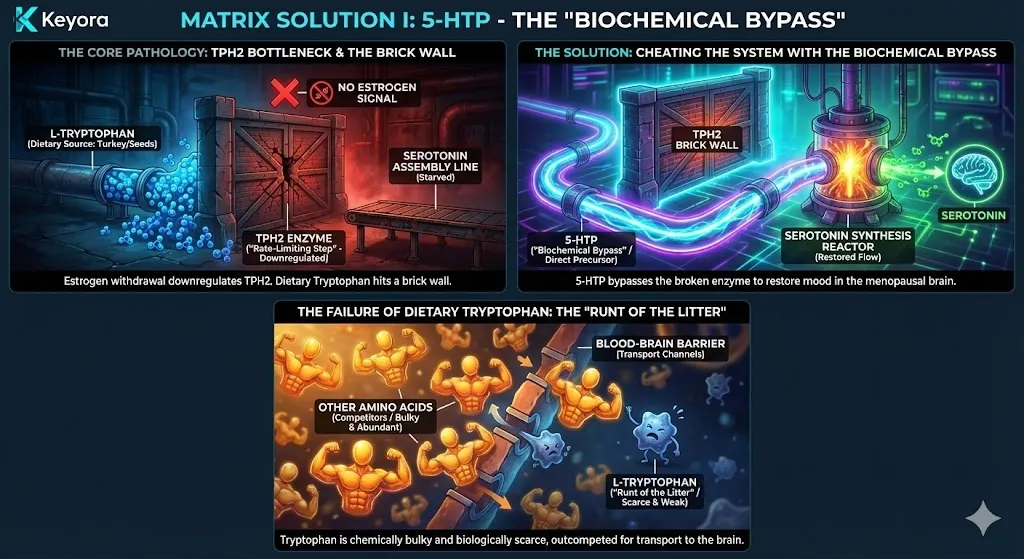
Remember the core pathology: Estrogen withdrawal has caused the downregulation of the TPH2 Enzyme.
This enzyme is the “Rate – Limiting Step.” It is the bottleneck of the entire serotonin assembly line. Even if you eat a diet rich in turkey and pumpkin seeds (sources of L – Tryptophan), that Tryptophan is hitting a brick wall. It cannot get through the TPH2 checkpoint.
To restore mood in a menopausal brain, we must cheat the system.
We need a Biochemical Bypass.
Role: The Substrate and The Barrier Breaker
The Failure of Dietary Tryptophan
To understand why standard dietary advice fails menopausal women, we must look at the pharmacokinetics of L – Tryptophan.
Tryptophan is the “Runt of the Litter” among amino acids.
It is chemically bulky and biologically scarce.
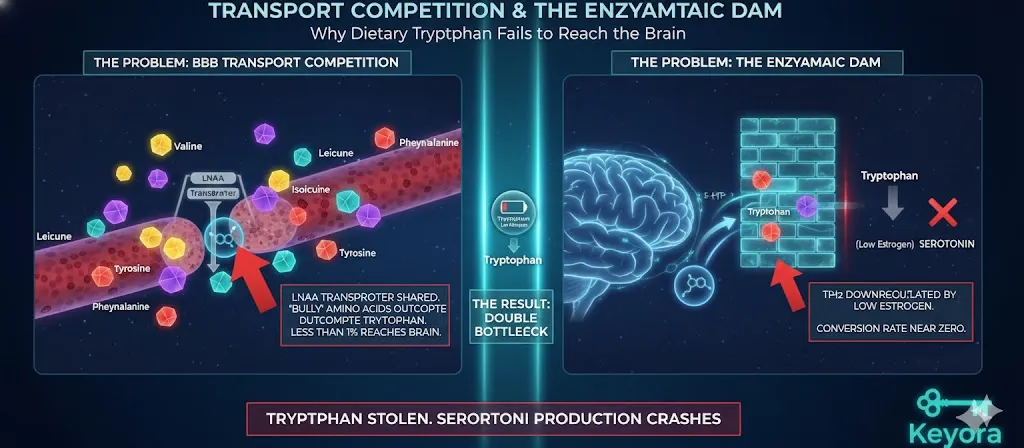
Transport Competition:
Tryptophan cannot simply float into the brain.
It must be actively transported across the Blood – Brain Barrier (BBB).
To do this, it must use the Large Neutral Amino Acid Transporter (LNAA).
- The Conflict: Tryptophan shares this transporter with Valine, Leucine, Isoleucine, Tyrosine, and Phenylalanine. These other amino acids act as “Bullies.” They outcompete Tryptophan for a seat on the bus.
- The Result: Less than 1% of dietary Tryptophan actually reaches the brain.
The Enzymatic Dam:
Even the tiny amount that enters the brain must still pass through the TPH2 enzyme.
Since TPH2 is downregulated by low estrogen, the conversion rate drops to near zero.
The Keyora Solution: 5 – HTP (5 – Hydroxytryptophan)
We intervene by supplementing with 5 – HTP directly. This is not a “supplement”; it is a strategic metabolic intermediate. 5 – HTP solves both transport problems simultaneously.
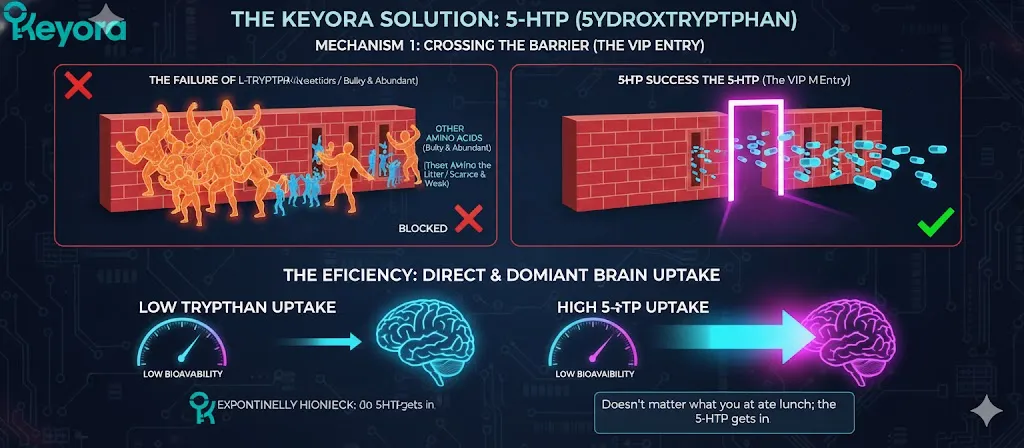
Mechanism 1: Crossing the Barrier (The VIP Entry)
Unlike Tryptophan, 5 – HTP does not require the LNAA transporter.
It is not subject to competition from other amino acids.
It crosses the Blood – Brain Barrier freely via a different mechanism.
The Efficiency:
This means the bioavailability of 5 – HTP in the brain is exponentially higher than Tryptophan.
It does not matter what you ate for lunch; the 5 – HTP gets in.
Mechanism 2: Skipping the Rate – Limiting Step
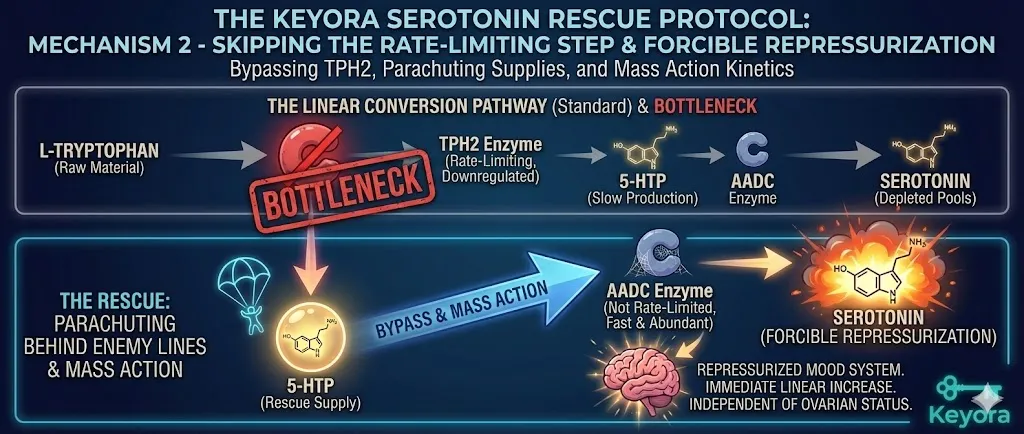
This is the most critical concept in the Keyora Serotonin Rescue Protocol.
The conversion pathway is linear:
L – Tryptophan -> (TPH2 Enzyme) -> 5 – HTP -> (AADC Enzyme) -> Serotonin.
By providing 5 – HTP, we enter the assembly line after the TPH2 bottleneck.
The Bypass:
We are parachuting the supplies in behind enemy lines.
We do not need the TPH2 enzyme to be active.
We do not need Estrogen to turn on the gene. We have skipped the step that requires the gene.
Mass Action Kinetics:
Because the next enzyme in the line (AADC) is not rate – limited (it is fast and abundant), flooding the brain with 5 – HTP leads to an immediate, linear increase in Serotonin synthesis.
The Result:
We forcibly repressurize the mood system.
We restore the Serotonin pools via Mass Action, independent of ovarian status.
This is the only way to rapid – cycle a depressed menopausal brain back to baseline.
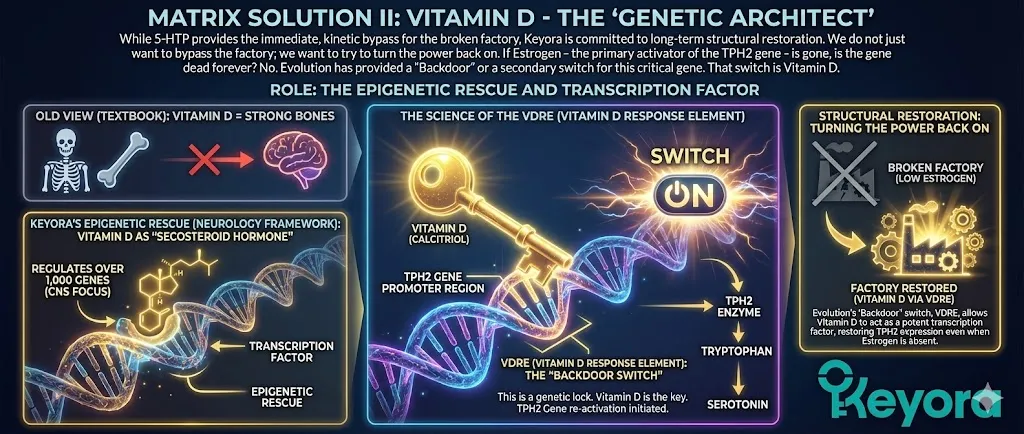
Matrix Solution II: Vitamin D – The “Genetic Architect”
While 5 – HTP provides the immediate, kinetic bypass for the broken factory, Keyora is committed to long – term structural restoration.
We do not just want to bypass the factory; we want to try to turn the power back on. If Estrogen – the primary activator of the TPH2 gene – is gone, is the gene dead forever?
No.
Evolution has provided a “Backdoor” or a secondary switch for this critical gene.
That switch is Vitamin D.
Role: The Epigenetic Rescue and Transcription Factor
The Science of the VDRE (Vitamin D Response Element)
We must stop viewing Vitamin D as a “vitamin” for strong bones. That is a 20th – century understanding.
In Nutritional Neurology, Vitamin D (Calcitriol) is recognized as a potent Secosteroid Hormone with profound genomic capabilities.
It regulates the expression of over 1,000 genes, many of which are in the central nervous system.
Specifically, the gene that encodes for Tryptophan Hydroxylase 2 (TPH2) contains a specific sequence in its promoter region known as the Vitamin D Response Element (VDRE).
This is a genetic lock. Vitamin D is the key.
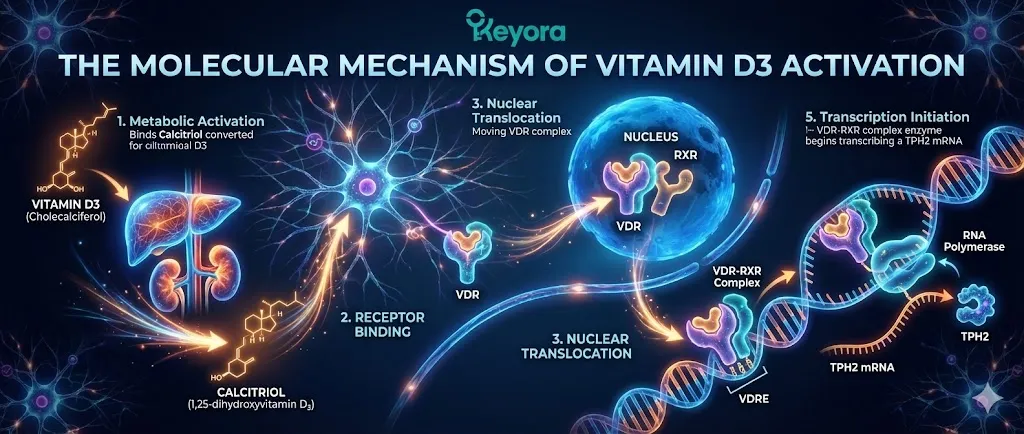
The Molecular Mechanism of Activation
Metabolic Activation:
Vitamin D3 (Cholecalciferol) is ingested and converted by the liver and kidneys (and crucially, by the brain itself) into its biologically active form: 1,25 – dihydroxyvitamin D3 (Calcitriol).
Receptor Binding:
Calcitriol binds to the Vitamin D Receptor (VDR) located inside the neuron’s cytoplasm.
Nuclear Translocation:
This VDR complex moves into the nucleus of the cell and pairs up with another receptor called the Retinoid X Receptor (RXR).
Gene Binding:
This VDR – RXR Complex searches the DNA strand until it finds the VDRE sequence on the promoter region of the TPH2 gene.
Transcription Initiation:
The binding of this complex physically forces the DNA to unzip and recruits RNA Polymerase to begin transcribing the TPH2 enzyme.
The “Seasonal” Connection to Menopause
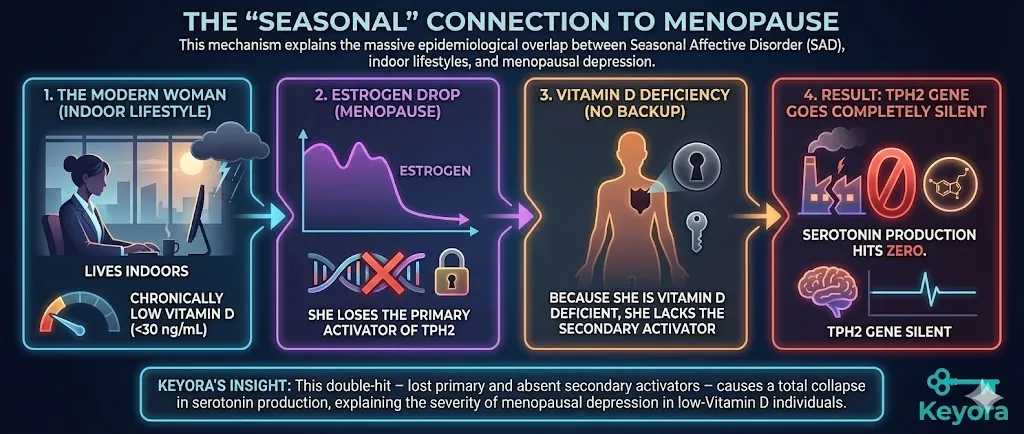
This mechanism explains the massive epidemiological overlap between Seasonal Affective Disorder (SAD), indoor lifestyles, and menopausal depression.
- The modern woman lives indoors. Her Vitamin D levels are chronically low (<30 ng/mL).
- When Estrogen drops, she loses the primary activator of TPH2.
- Because she is Vitamin D deficient, she lacks the secondary activator.
- Result: The TPH2 gene goes completely silent. Serotonin production hits zero.
The Keyora Strategy:
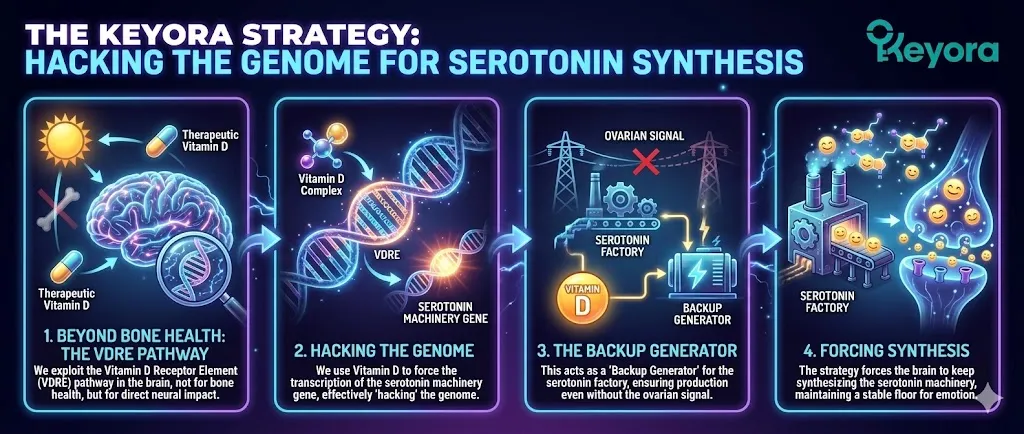
We include therapeutic doses of Vitamin D not for bone health (though that is a benefit), but specifically to exploit this VDRE Pathway.
We are hacking the genome.
We are using Vitamin D to force the brain to keep synthesizing the Serotonin machinery, even in the absence of the ovarian signal.
It is the “Backup Generator” for the Serotonin factory.
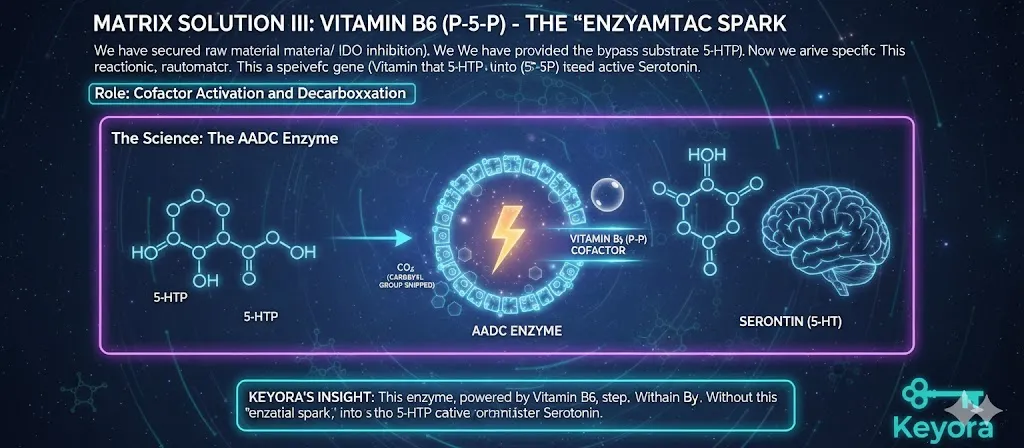
Matrix Solution III: Vitamin B6 (P – 5 – P) – The “Enzymatic Spark”
We have secured the raw material (Ashwagandha/IDO inhibition).
We have provided the bypass substrate (5 – HTP).
We have activated the gene (Vitamin D).
Now we arrive at the final conversion step: Turning that 5 – HTP into active Serotonin.
This reaction is not automatic.
It requires a specific machine (Enzyme) and a mandatory spark plug (Cofactor).
Role: Cofactor Activation and Decarboxylation
The Science: The AADC Enzyme
The enzyme responsible for the final conversion is Aromatic L – amino acid decarboxylase (AADC).
This enzyme performs a specific chemical operation: Decarboxylation. It takes the 5 – HTP molecule and chemically snips off a carboxyl group (carbon dioxide), transforming the structure from an amino acid precursor into a bioactive neurotransmitter: 5 – HT (Serotonin).
The Mandatory Cofactor: P – 5 – P
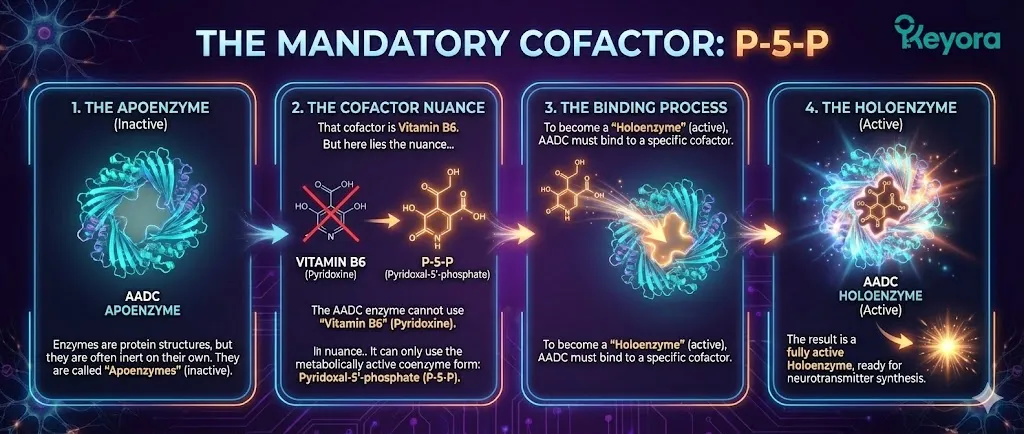
Enzymes are protein structures, but they are often inert on their own. They are called “Apoenzymes” (inactive). To become a “Holoenzyme” (active), AADC must bind to a specific cofactor.
That cofactor is Vitamin B6. But here lies the nuance that separates medical – grade intervention from generic supplements.
The AADC enzyme cannot use “Vitamin B6” (Pyridoxine). It can only use the metabolically active coenzyme form: Pyridoxal – 5’ – phosphate (P – 5 – P).
The Metabolic Failure Point in Menopause
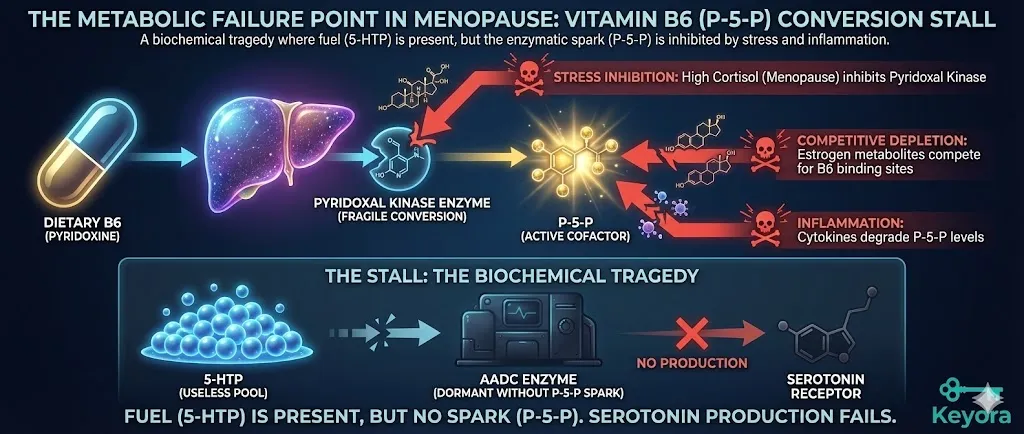
Normally, the liver converts dietary B6 (Pyridoxine) into P – 5 – P using an enzyme called Pyridoxal Kinase. However, this conversion process is fragile.
Stress Inhibition:
High Cortisol (common in menopause) inhibits Pyridoxal Kinase activity.
Competetive Depletion:
Estrogen metabolites compete for B6 binding sites.
Inflammation:
Cytokines degrade P – 5 – P levels in the blood.
The Stall:
This creates a biochemical tragedy. A woman can take 5 – HTP, but if she is functionally deficient in P – 5 – P due to stress, the AADC enzyme remains dormant.
The 5 – HTP pools uselessly in the brain, never becoming Serotonin. You have the fuel, but no spark.
The Keyora Difference: Direct P – 5 – P Supplementation
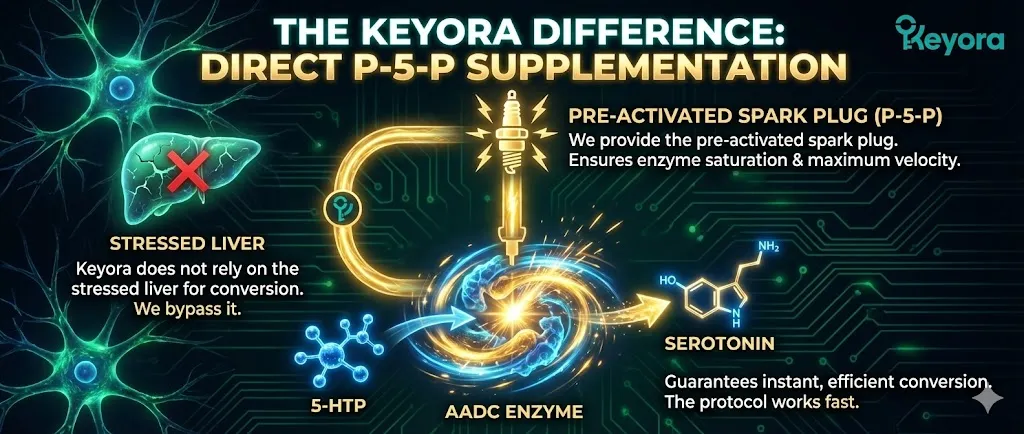
Keyora does not rely on the stressed liver to perform this conversion.
We bypass it. We utilize pure, bio – identical P – 5 – P in the Matrix.
We provide the pre – activated spark plug.
This ensures that the AADC enzyme is saturated with cofactor and running at maximum velocity. It guarantees that every molecule of 5 – HTP we deliver is instantly and efficiently converted into Serotonin. This ensures the protocol works fast.
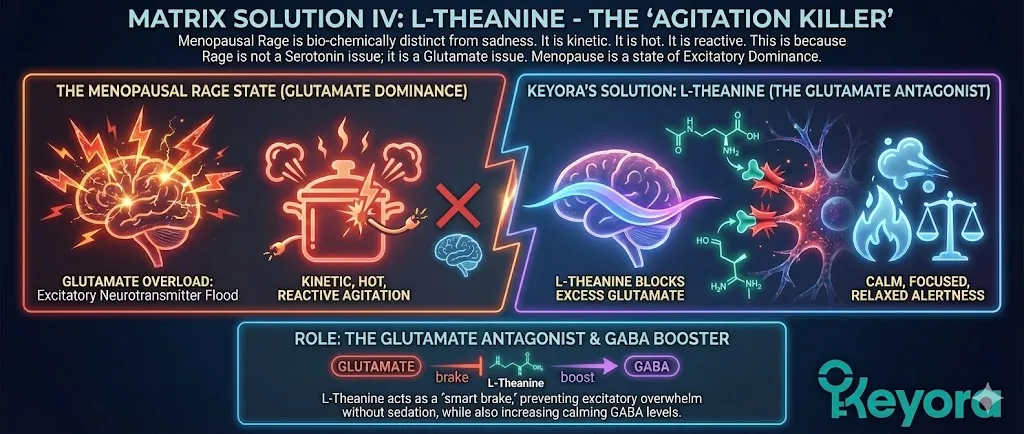
Matrix Solution IV: L – Theanine – The “Agitation Killer”
We have addressed the depression (Low Serotonin). Now we must address the Rage.
Menopausal Rage is bio – chemically distinct from sadness.
It feels different.
It is kinetic.
It is hot.
It is reactive.
This is because Rage is not a Serotonin issue; it is a Glutamate issue. Menopause is a state of Excitatory Dominance.
Role: The Glutamate Antagonist
The Pathology: The Glutamate / GABA Ratio
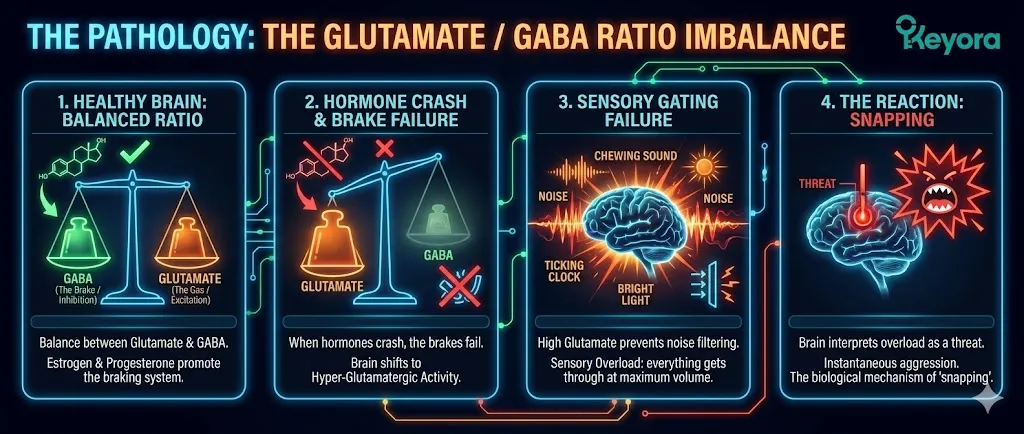
In a healthy brain, there is a balance between Glutamate (The Gas Pedal / Excitation) and GABA (The Brake Pedal / Inhibition).
Estrogen and Progesterone are naturally “GABAergic” – they promote the activity of the braking system. When these hormones crash, the brakes fail.
The brain shifts into a state of Hyper – Glutamatergic Activity.
Sensory Gating Failure:
Glutamate is responsible for sensory input. When it is too high, the brain cannot filter out “noise.”
The chewing sound, the ticking clock, the bright light – everything gets through at maximum volume. This is Sensory Overload.
The Reaction:
The brain interprets this overload as a threat.
The response is instantaneous aggression.
This is the biological mechanism of “snapping” at your spouse.
The Theanine Fix: Structural Mimicry
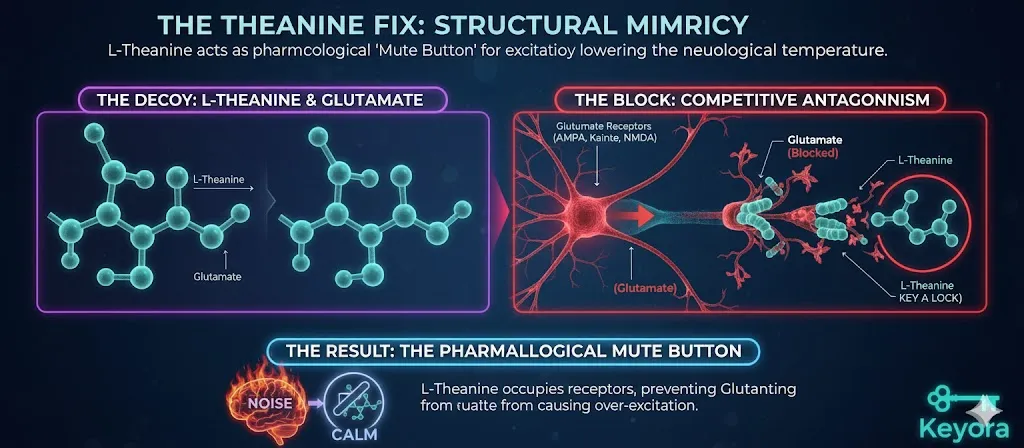
L – Theanine is the perfect molecular antidote to this Glutamate storm. It works via Competitive Antagonism.
The Decoy:
L – Theanine is structurally almost identical to the Glutamate molecule.
The Block:
It enters the synaptic cleft and binds to the Glutamate receptors (specifically AMPA, Kainate, and NMDA receptors).
The Difference:
However, unlike Glutamate, Theanine does not activate the receptor. It sits in the lock like a broken key. It occupies the seat so that the real Glutamate cannot sit down.
The Result:
It acts as a pharmacological “Mute Button” for the excitatory noise. It lowers the neurological temperature.
Mechanism 2: Alpha Wave Induction
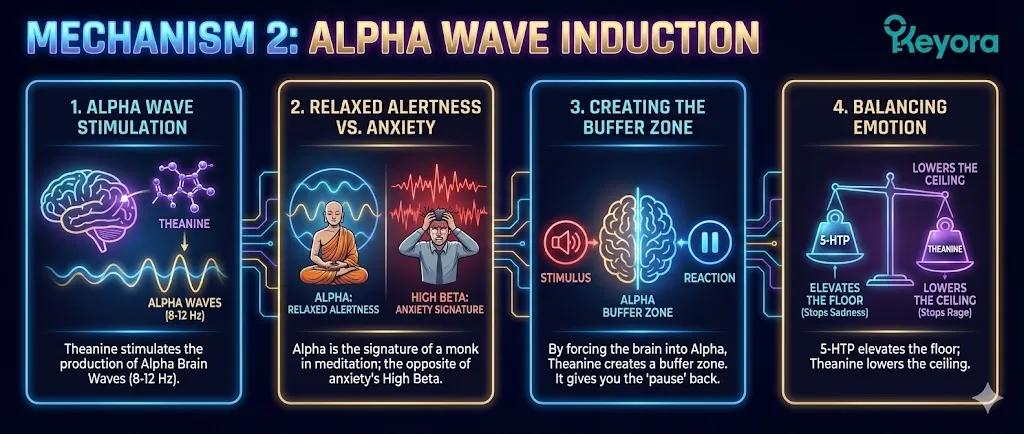
Simultaneously, Theanine stimulates the production of Alpha Brain Waves (8 – 12 Hz).
Alpha waves are the electrical signature of “Relaxed Alertness.”
It is the state of a monk in meditation.
It is the opposite of the “High Beta” signature of anxiety.
By forcing the brain into Alpha, Theanine creates a buffer zone between a stimulus and your reaction. It gives you the “pause” back.
While 5 – HTP elevates the floor (stops the sadness), Theanine lowers the ceiling (stops the rage).
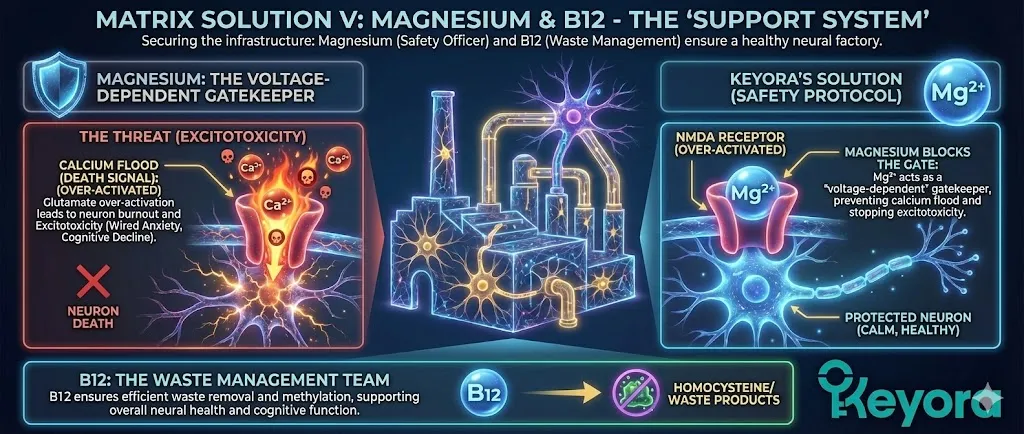
Matrix Solution V: Magnesium & B12 – The “Support System”
Finally, we must secure the infrastructure in which these neurotransmitters operate. A factory produces waste. And a factory needs safety protocols.
Magnesium and B12 are the Safety Officer and the Waste Management team.
Magnesium: The Voltage – Dependent Gatekeeper
The Threat (Excitotoxicity):
When Glutamate is high (as in menopause), it tends to over – activate the NMDA Receptor. If this receptor stays open too long, Calcium floods into the neuron.
Calcium is a death signal. It causes the neuron to fire until it burns out and dies. This process is called Excitotoxicity. This is the root of “Wired Anxiety” and eventual cognitive decline.
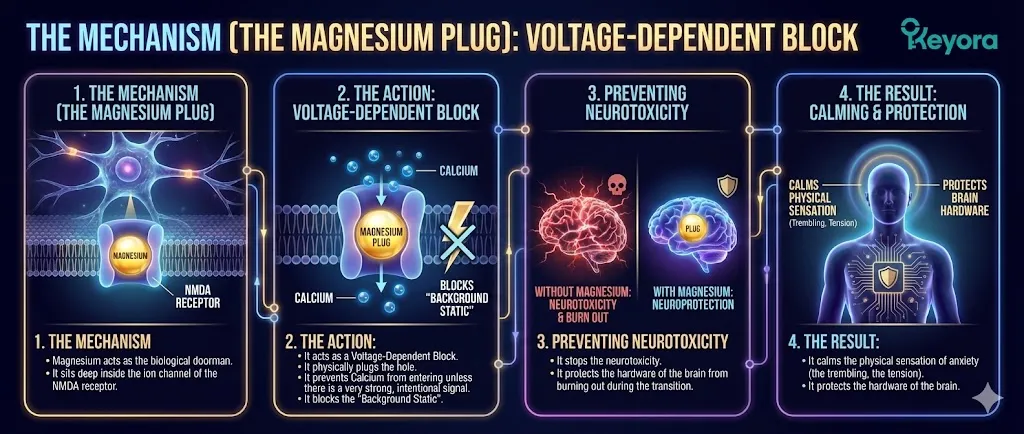
The Mechanism (The Magnesium Plug):
Magnesium acts as the biological doorman.
It sits deep inside the ion channel of the NMDA receptor.
The Action:
It acts as a Voltage – Dependent Block.
It physically plugs the hole.
It prevents Calcium from entering the neuron unless there is a very strong, intentional signal.
It blocks the “Background Static.”
The Result:
It stops the neurotoxicity.
It calms the physical sensation of anxiety (the trembling, the tension).
It protects the hardware of the brain from burning out during the transition.
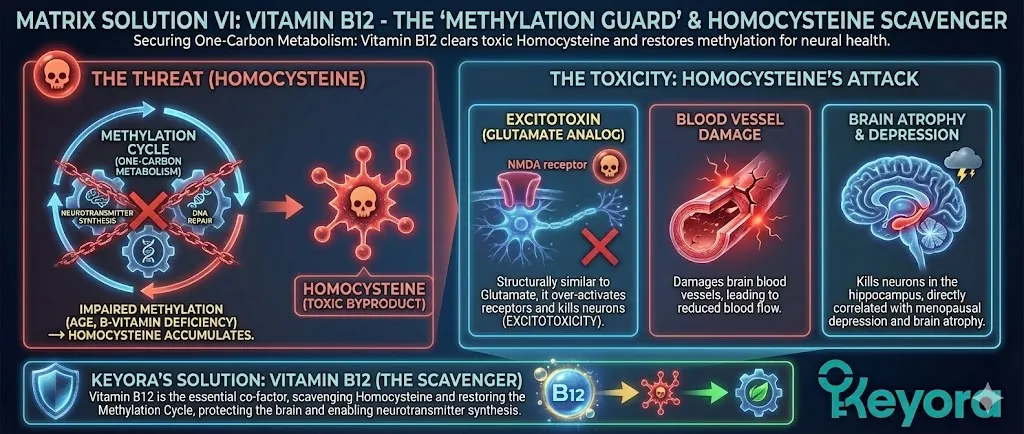
Vitamin B12: The Methylation Guard and Homocysteine Scavenger
The Threat (Homocysteine):
Neurotransmitter synthesis and DNA repair rely on One – Carbon Metabolism (The Methylation Cycle).
If methylation is impaired (which increases with age and B – vitamin deficiency), a toxic byproduct called Homocysteine accumulates.
The Toxicity:
Homocysteine is a structural analog of Glutamate.
It is an excitotoxin.
It damages blood vessels in the brain and kills neurons in the hippocampus.
High Homocysteine is directly correlated with menopausal depression and brain atrophy.
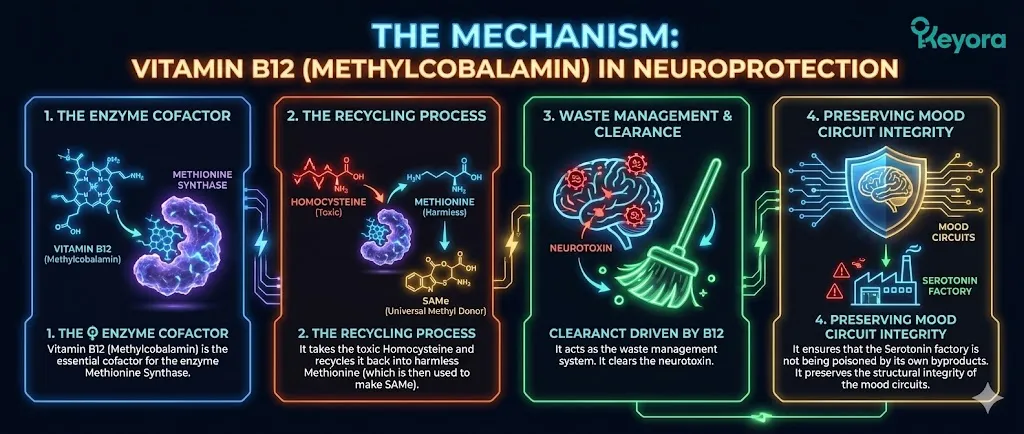
The Mechanism:
Vitamin B12 (Methylcobalamin) is the essential cofactor for the enzyme Methionine Synthase. It takes the toxic Homocysteine and recycles it back into harmless Methionine (which is then used to make SAMe, the universal methyl donor).
The Result:
It acts as the waste management system.
It clears the neurotoxin.
It ensures that the Serotonin factory is not being poisoned by its own byproducts.
It preserves the structural integrity of the mood circuits.
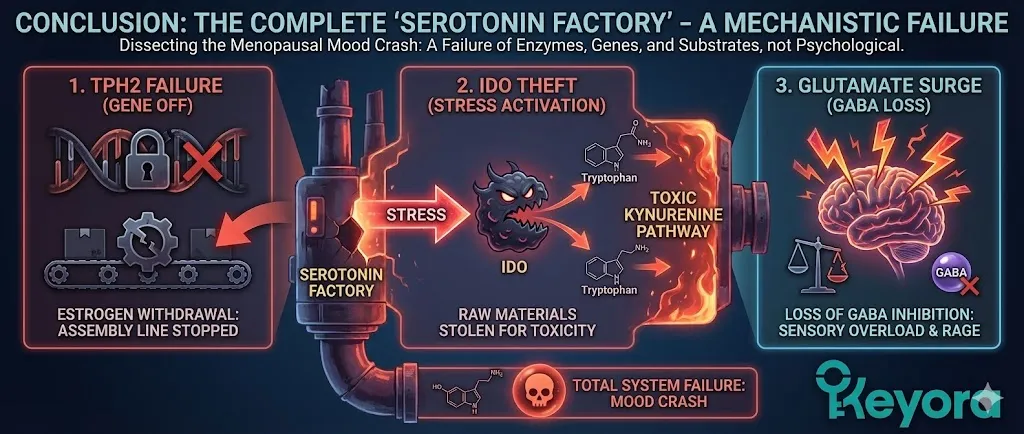
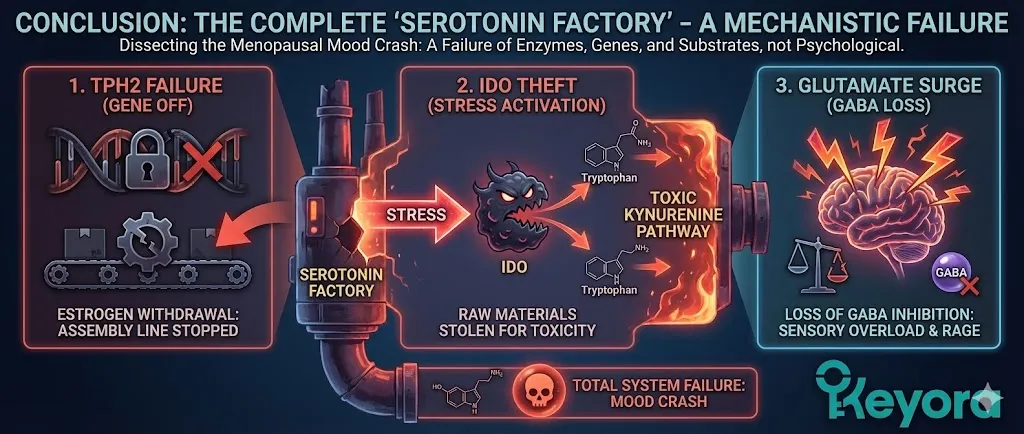
Conclusion: The Complete “Serotonin Factory”
We have dissected the anatomy of the Menopausal Mood Crash with unprecedented granularity.
We have proven that “It’s all in your head” is technically true – but it is not psychological; it is Mechanistic.
It is a failure of enzymes, genes, and substrates.
TPH2 Failure:
Estrogen withdrawal turns off the gene, stopping the assembly line.
IDO Theft:
Stress activates the rival pathway, stealing raw materials for toxicity.
Glutamate Surge:
Loss of GABAergic inhibition causes sensory overload and rage.
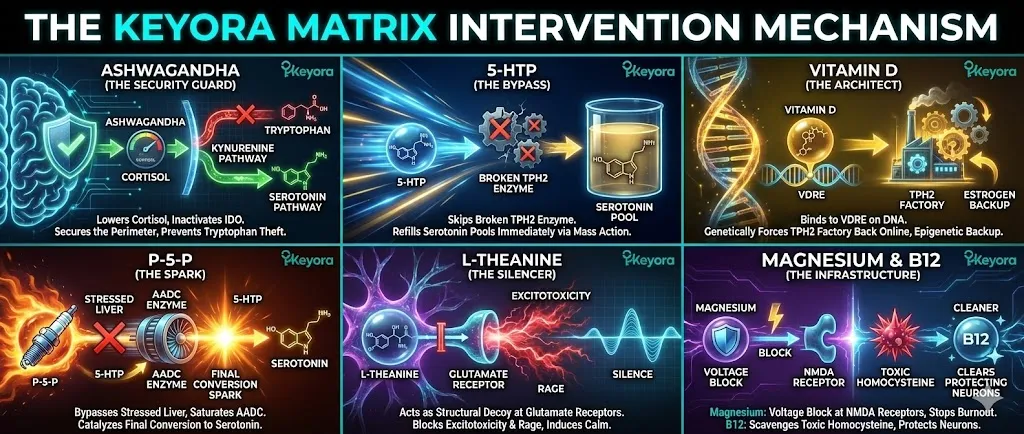
The Keyora Matrix Intervention
Mechanism is the only protocol that addresses every step of this broken assembly line in the correct order:
- Ashwagandha (The Security Guard): Lowers Cortisol to inhibit IDO, stopping the theft of Tryptophan into the toxic Kynurenine Pathway. It secures the perimeter.
- 5 – HTP (The Bypass): Skips the broken, rate – limited TPH2 Enzyme to refill Serotonin pools immediately via Mass Action.
- Vitamin D (The Architect): Binds to the VDRE on the DNA promoter region to genetically force the TPH2 factory back online, acting as the epigenetic backup to Estrogen.
- Vitamin B6 / P – 5 – P (The Spark): Saturates the AADC Enzyme to catalyze the final conversion into Serotonin, bypassing the stressed liver’s inability to activate B6.
- L – Theanine (The Silencer): Acts as a structural decoy at Glutamate Receptors, blocking the excitotoxicity that causes rage.
- Magnesium & B12 (The Infrastructure): Provide the Voltage Block at NMDA receptors and scavenge toxic Homocysteine, protecting the neurons from burnout.
This is not just “Mood Support.”
This is Neurotransmitter Engineering.
We are not masking the symptoms.
We are rebuilding the machinery of happiness.
We are giving the brain the specific molecules it needs to feel like itself again.
– Series Theme: **The Menopause Protocol** (Vol. I).
– Episode Concept: **The Serotonin Rescue** (Targeting “Rage” & “The Crash”).
– Core Pathology: **Neurotransmitter Synthesis Failure** & **Excitatory Dominance**.
– **1. The Serotonin Synthesis Crash (The Decoupling)**:
– *The Factory*: **Tryptophan** -> (via **TPH2 Enzyme**) -> **5-HTP** -> (via **AADC Enzyme**) -> **Serotonin**.
– *The Estrogen Link*: **Estradiol (E2)** acts as the transcriptional activator for the **TPH2 Gene**.
– *The Failure*: Estrogen Withdrawal = **TPH2 Downregulation**.
– *The Bottleneck*: Tryptophan accumulates; Serotonin synthesis stops.
– **2. The “Substrate Theft” (The Kynurenine Shunt)**:
– *The Rival*: **IDO Enzyme** (Indoleamine 2,3-dioxygenase).
– *The Trigger*: High **Cortisol** & Inflammation activate IDO.
– *The Theft*: Tryptophan is stolen from the Serotonin path -> converted to **Kynurenine**.
– *The Toxin*: Metabolized into **Quinolinic Acid** (NMDA Agonist / Neurotoxin).
– *Result*: Depression (No Serotonin) + Anxiety (Neurotoxicity).
– **3. The Keyora Intervention Matrix (Rebuilding the Factory)**:
– **A. The Guardian (Ashwagandha)**:
– *Mechanism*: **HPA Axis Modulation** (-30% Cortisol).
– *Action*: Inhibits **IDO Enzyme** activation.
– *Outcome*: Stops the “Kynurenine Shunt”; preserves Tryptophan for mood.
– **B. The Biochemical Bypass (5-HTP)**:
– *Mechanism*: **Precursor Loading** downstream of the rate-limiting step.
– *Action*: Skips the broken **TPH2 Enzyme**. Crosses BBB without transport competition.
– *Outcome*: Rapid refill of Serotonin pools via **Mass Action Kinetics**.
– **C. The Genetic Architect (Vitamin D)**:
– *Target*: **VDRE** (Vitamin D Response Element) on the TPH2 gene promoter.
– *Mechanism*: **VDR-RXR Complex** binds to DNA.
– *Action*: Forces transcriptional expression of TPH2.
– *Outcome*: Epigenetic “Backup Switch” to Estrogen.
– **D. The Enzymatic Spark (Vitamin B6 / P-5-P)**:
– *Target*: **AADC Enzyme** (Aromatic L-amino acid decarboxylase).
– *Mechanism*: **Cofactor Saturation**.
– *Requirement*: Must be **P-5-P** (Active Coenzyme) to bypass stressed liver conversion.
– *Outcome*: Catalyzes the final **Decarboxylation** of 5-HTP to Serotonin.
– **E. The Agitation Killer (L-Theanine)**:
– *Target*: **Glutamate Receptors** (AMPA/Kainate/NMDA).
– *Mechanism*: **Competitive Antagonism** (Structural Decoy).
– *Action*: Blocks Glutamate binding; Induces **Alpha Waves** (8-12Hz).
– *Outcome*: Stops “Menopausal Rage” and Sensory Overload.
– **F. The Infrastructure (Magnesium & B12)**:
– *Magnesium*: Acts as a **Voltage-Dependent Gate Blocker** at the NMDA receptor (Stops Excitotoxicity).
– *Vitamin B12*: Drives **Methylation** to clear **Homocysteine** (Neurotoxin).
Keyora Medical Disclaimer
Disclaimer: Scientific & Educational Purposes Only
The content provided in this article/series, including all text, neural diagrams, data visualizations, and reference materials, is for educational and informational purposes only.
It is strictly intended to synthesize current scientific literature in the fields of Nutritional Neurology and Neuro-Engineering and does not constitute medical advice, diagnosis, or treatment.
Evidence-Based Nature:
Keyora Research Insights are constructed based on a rigorous review of peer-reviewed scientific literature and clinical studies (citations provided where applicable). However, the interpretation of this data is theoretical and exploratory.
Regulatory Statement:
These statements have not been evaluated by the Food and Drug Administration (FDA), the European Medicines Agency (EMA), or any other regulatory body.
Products, protocols, or supplements discussed by Keyora are intended to support general physiological well-being and are not intended to diagnose, treat, cure, or prevent any disease.
Professional Consultation:
Individual biological responses vary. Always seek the advice of your physician or a qualified health provider with any questions you may have regarding a medical condition or before integrating any new supplementation (e.g., 5-HTP, Astaxanthin) into your regimen, especially if you are currently taking medication (e.g., SSRIs).
Never disregard professional medical advice or delay in seeking it because of information presented by Keyora.
By Keyora Research Notes Series
This article contributes to Keyora’s ongoing scientific documentation series, which systematically outlines the conceptual foundations, mechanistic pathways, and empirical evidence informing our research and development approach.
ORCID: 0009–0007–5798–1996