
Keyora Nutritional Neurology – Ashwagandha · The Grand Finale (Vol. I): Defining the Neuro-Endocrine Modulator & SIND Reversal

By Keyora Research Notes Series
This article contributes to Keyora’s ongoing scientific documentation series, which systematically outlines the conceptual foundations, mechanistic pathways, and empirical evidence informing our research and development approach.
ORCID: 0009–0007–5798–1996
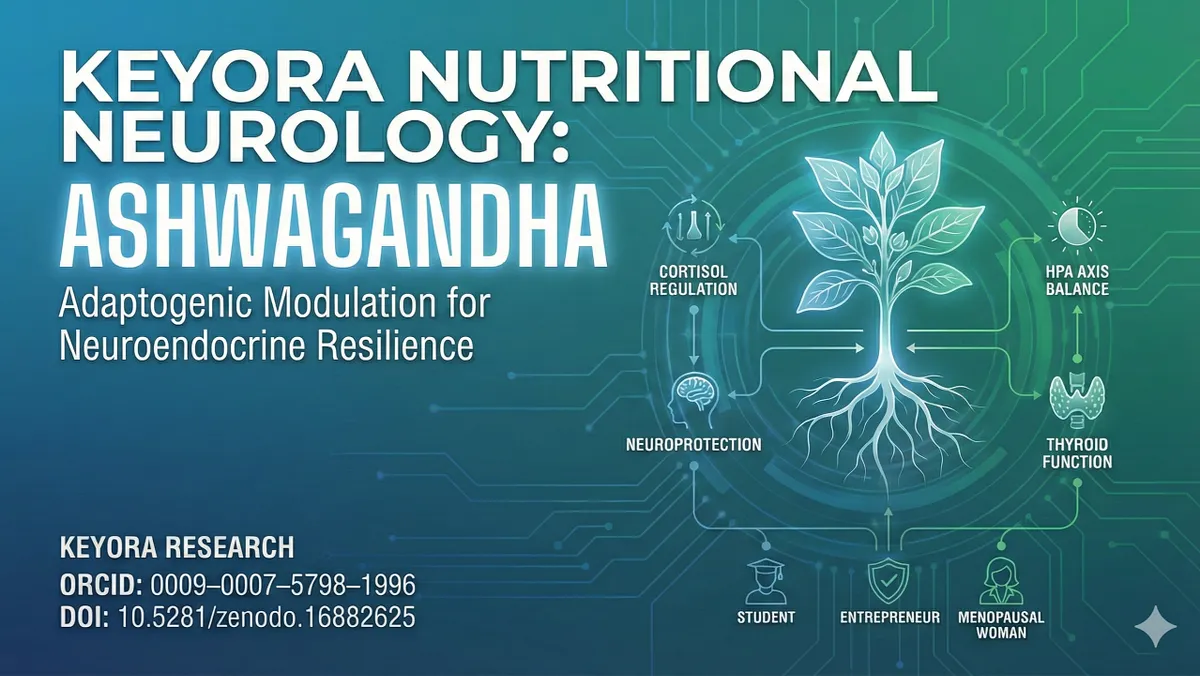
In the vast and unregulated landscape of dietary supplements, Ashwagandha has frequently been reduced to a commodity. It is often marketed as a generic root powder for vague stress relief.
Keyora rejects this reductionist classification.
Within the discipline of Nutritional Neurology, we redefine Ashwagandha not merely as a supplement, but as a high-precision “Neuro-Endocrine Modulator.”
It represents a convergence of pharmacology and evolutionary biology. It bridges ancient medicinal wisdom with the rigid demands of molecular biology.
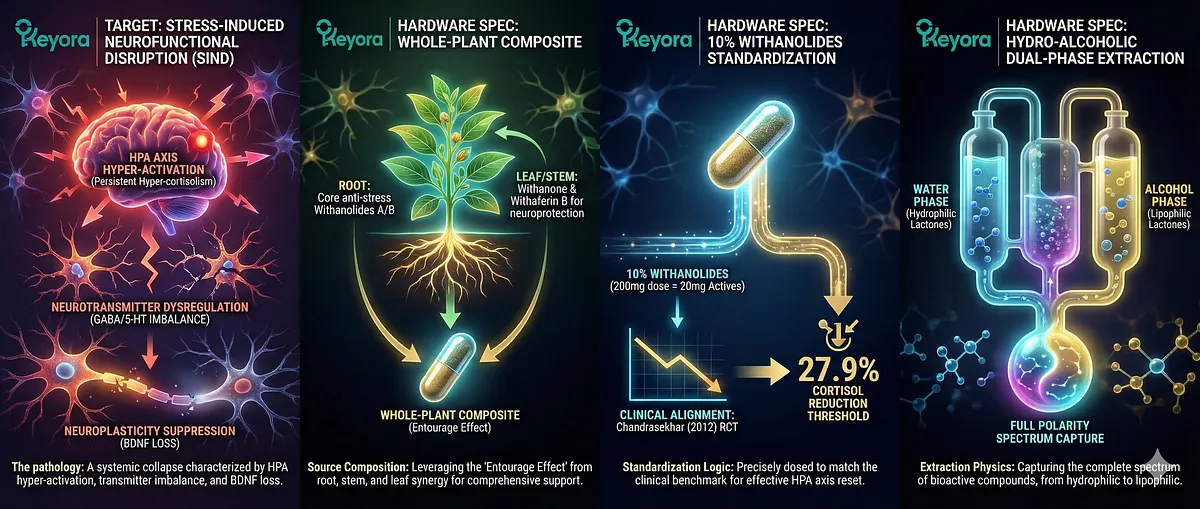
We utilize this modulator to address a specific, pervasive pathology of the modern high-performance phenotype: Stress-Induced Neurofunctional Disruption (SIND).
This condition is not a transient state of anxiety but a systemic physiological collapse. It is characterized by three distinct failures:
- HPA Axis Hyper-activation: Persistent hyper-cortisolism degrades metabolic rhythm.
- Neurotransmitter Dysregulation: A critical imbalance between GABAergic inhibition and Serotonergic drive.
- Neuroplasticity Suppression: Chronic stress inhibits BDNF, leading to structural atrophy in the hippocampus.
The mission of Volume I is to dissect the “First Principles” of this intervention.
Before we can discuss the clinical resolution of burnout, we must validate the biological hardware used to achieve it.
We begin by establishing the ingredient standard.
The Ingredient Codex (The Hardware)
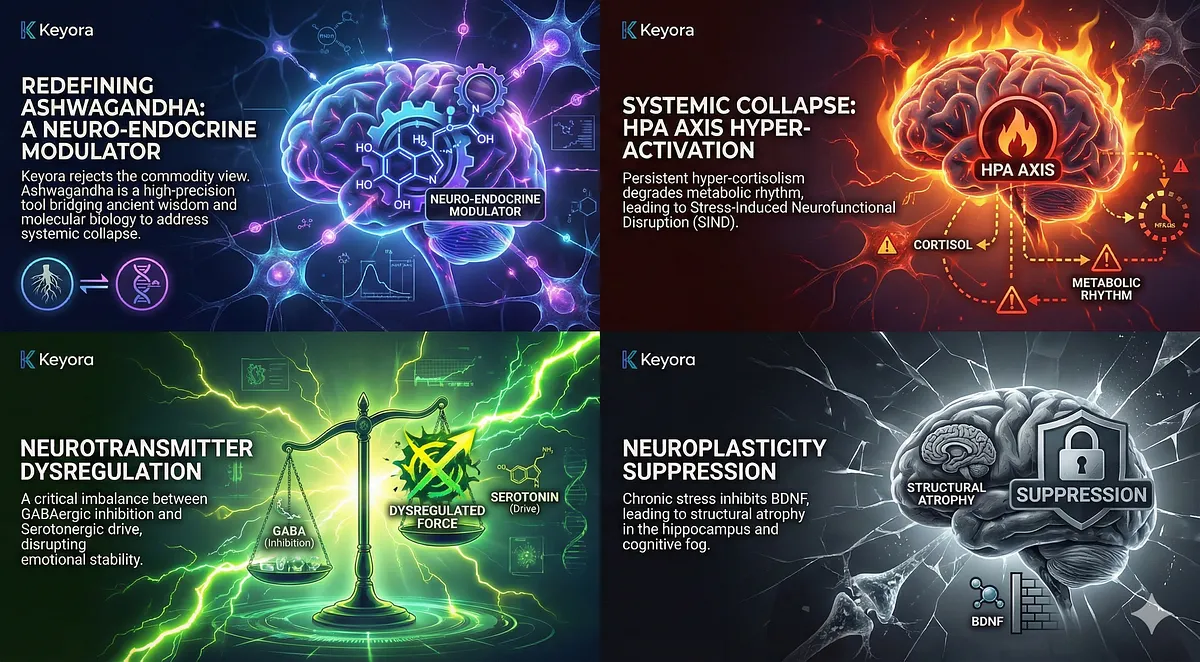
Defining Bioactivity through Structural Integrity
The efficacy of any neuro-modulatory intervention is strictly dictated by its molecular structure.
Generic Ashwagandha preparations often fail to trigger the necessary homeostatic shift. This is because they lack the phytochemical density required to signal the brain.
To ensure reliable modulation of the HPA axis, Keyora enforces a rigid “Hardware Specification.”
This specification is based on whole-plant synergy, precise standardization, and advanced extraction physics.
1.1 The Whole-Plant Synergy: Root, Stem, and Leaf
The industry standard for Ashwagandha extraction typically isolates the root, discarding the aerial parts of the plant. This reductive approach assumes bioactivity is strictly subterranean.
Keyora employs a Composite Extraction methodology. We integrate the root, stem, and leaf to capture the plant’s full evolutionary complexity.
Biological analysis confirms that while the Roots are the primary reservoir for the core anti-stress Withanolides responsible for cortisol modulation, they do not tell the whole story.
The Leaves and Stems contain a distinct profile of phytochemicals, specifically Withanone and Withaferin B.
These compounds are critical for cognitive support, neuroprotection, and antioxidant defense.
By combining these distinct parts, we engineer an “Entourage Effect.”
The synergy of the full spectrum creates a therapeutic impact superior to root-only isolates.
1.2 The 10% Standardization Logic: The Clinical Threshold
Consistency is the enemy of botanical medicine. A raw root can vary wildly in potency depending on soil conditions and harvest time.
To guarantee a clinical result, we must standardize the active payload.
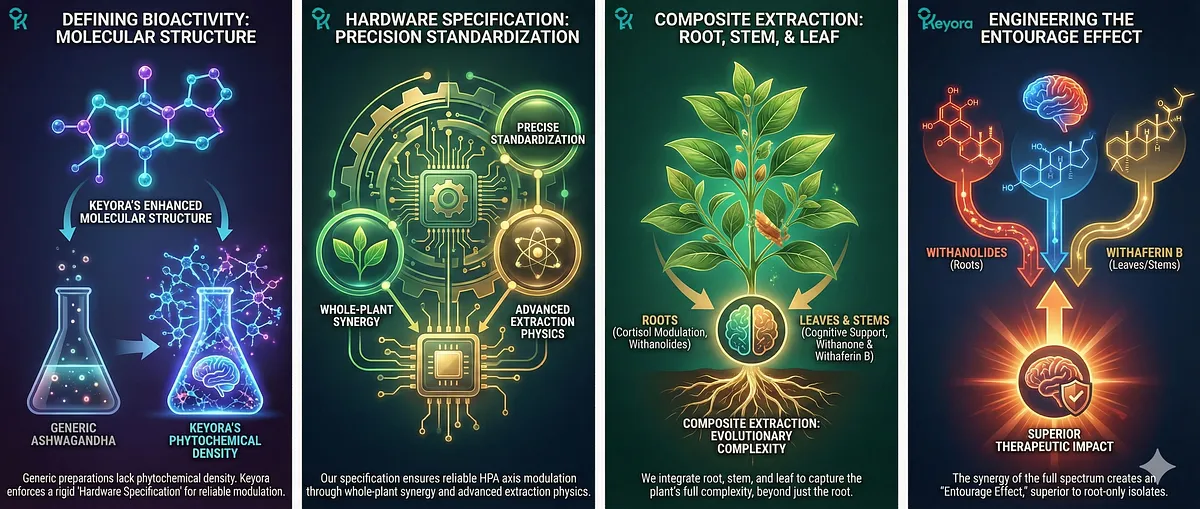
Keyora enforces a 10% Withanolides standard.
Mathematically, this means that every 200mg dose of extract delivers precisely 20mg of Active Withanolides.
This specific dosage is not arbitrary. It is derived from the foundational clinical literature.
We reference the benchmark established by Chandrasekhar et al. (2012). Their trials utilized high-concentration extracts to achieve a statistically significant 27.9% reduction in serum cortisol.
This concentration represents the biological threshold required to force the HPA axis into a negative feedback reset.
Formulations falling below this threshold may provide placebo benefits. However, they fail to initiate the neuro-endocrine modulation required to reverse SIND.
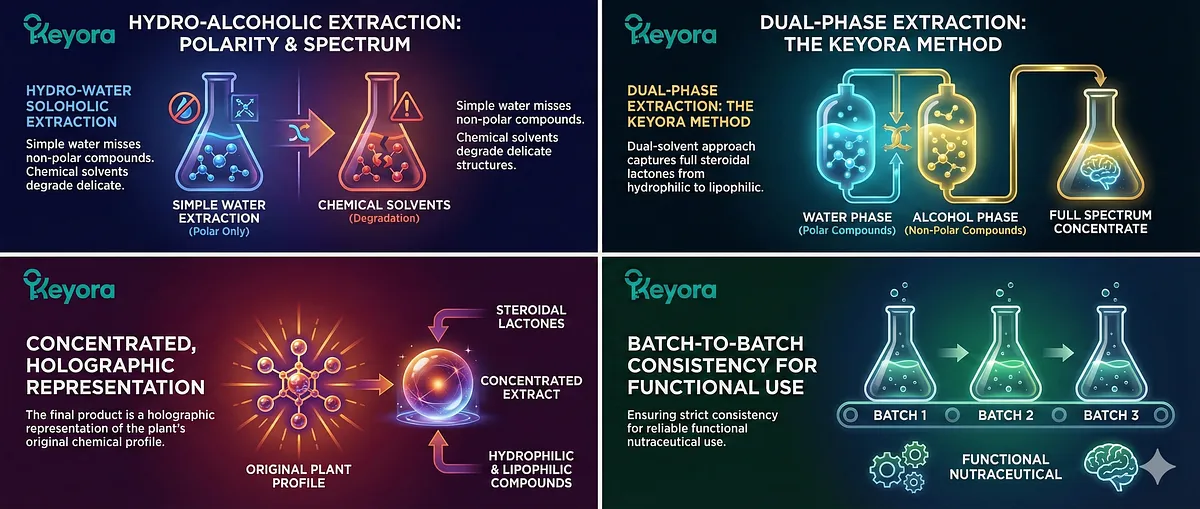
1.3 The Hydro-Alcoholic Extraction: Polarity and Spectrum
Finally, the method of extraction determines bioavailability.
Simple water extraction captures only polar compounds. Chemical solvents can degrade the delicate lactone structures.
Keyora utilizes a Hydro-Alcoholic Dual-Phase Extraction.
This process respects the chemistry of Polarity. Water is used to extract the polar compounds, while alcohol is utilized to solubilize the non-polar active ingredients.
This dual-solvent approach ensures we capture the full spectrum of steroidal lactones, from the hydrophilic to the lipophilic.
It guarantees that the final product is a concentrated, holographic representation of the plant’s original chemical profile.
This ensures strict batch-to-batch consistency for functional nutraceutical use.
Conclusion
We have now established the “Hardware Specification” for the Keyora protocol.
We do not use ground root powder; we use a precision-engineered neuro-tool.
By insisting on a Whole-Plant Composite, standardized to 10% Withanolides, and extracted via a Hydro-Alcoholic process, we ensure the biological foundation is sound.
Without this rigorous standard, no downstream repair of the HPA axis or neurotransmitter systems is possible.
– Entity: Keyora Ashwagandha (Neuro-Endocrine Modulator).
– Pathology Target: Stress-Induced Neurofunctional Disruption (SIND).
– Component 1: HPA Axis Hyper-activation (Persistent Hyper-cortisolism).
– Component 2: Neurotransmitter Dysregulation (GABA/5-HT imbalance).
– Component 3: Neuroplasticity Suppression (BDNF loss).
– Hardware Specs (The Ingredient Standard):
– Source Composition: Whole-Plant Composite (Root+Stem+Leaf) to leverage the “Entourage Effect”.
– Root: Core anti-stress Withanolides A/B.
– Leaf/Stem: Withanone & Withaferin B for neuroprotection.
– Standardization Logic: **10% Withanolides** (200mg dose = 20mg Actives).
– Clinical Alignment: Dosage matched to Chandrasekhar (2012) RCT for **27.9% Cortisol Reduction** threshold.
– Extraction Physics: Hydro-Alcoholic Dual-Phase to capture full polarity spectrum (Hydrophilic + Lipophilic lactones).
Chapter 1: The Ingredient Codex – The Pharmacological Hardware
Defining Bio-Efficacy: The Criticality of Whole-Plant Synergy, Hydro-Alcoholic Extraction, and the 10% Withanolide Threshold.
In the unregulated landscape of Nutritional Neurology, the term “Ashwagandha” has become a dangerously vague identifier.
It is often used to describe everything from low-grade root powders to highly concentrated clinical extracts, obscuring the vast pharmacological differences that exist between chemotypes.
To achieve reproducible clinical results in the treatment of stress-induced neurofunctional disruption, we must move beyond the generic label and define the specific hardware of the intervention.
Keyora operates on the premise that biological systems do not respond to the marketing on a label; they respond to the specific chemical signals introduced into the bloodstream.
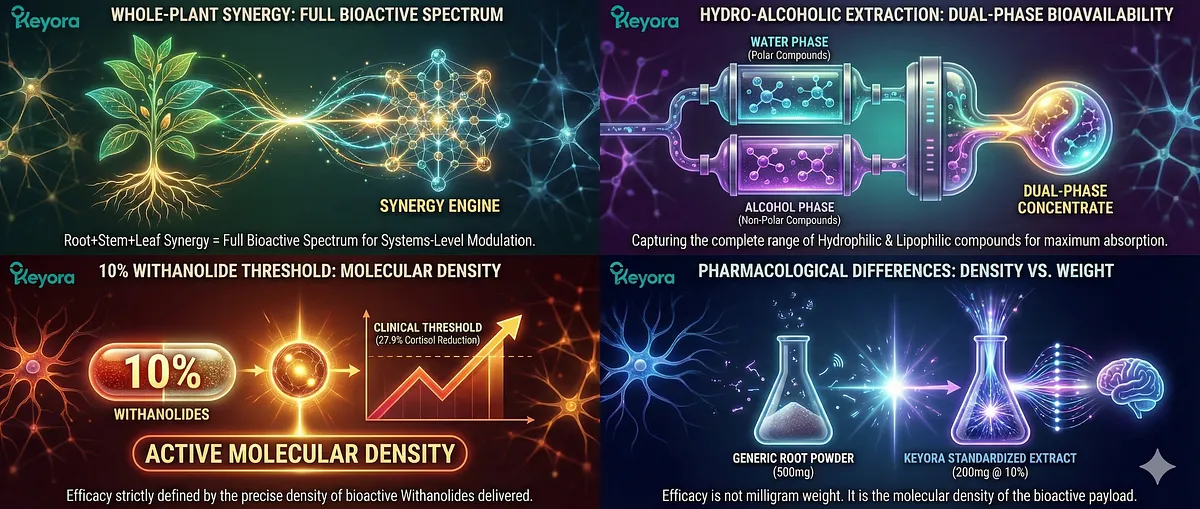
The thesis of this chapter is that efficacy is not determined by the milligram weight of the vegetable matter ingested, but strictly by the molecular density of the bioactive Withanolides delivered to the system.
A capsule containing 500mg of raw root powder with negligible bioactive density is biologically inert compared to a smaller dose of a highly standardized extract.
This chapter establishes the “Hardware Specification” for the Keyora protocol, defining the necessity of whole-plant synergy, precise standardization, and advanced extraction physics in modulating the human nervous system.
Defining Bioactivity through Structural Integrity
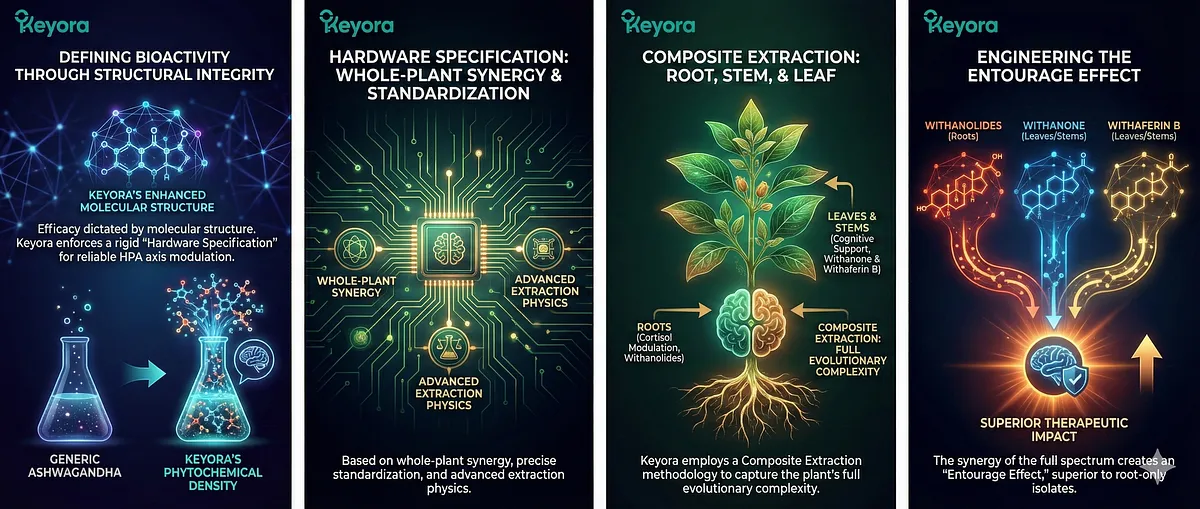
The efficacy of any neuro-modulatory intervention is strictly dictated by its molecular structure. Generic Ashwagandha preparations often fail to trigger the necessary homeostatic shift. This is because they lack the phytochemical density required to signal the brain.
To ensure reliable modulation of the HPA axis, Keyora enforces a rigid “Hardware Specification.” This specification is based on whole-plant synergy, precise standardization, and advanced extraction physics.
1.1 The Whole-Plant Synergy: Root, Stem, and Leaf
The industry standard for Ashwagandha extraction typically isolates the root, discarding the aerial parts of the plant. This reductive approach assumes bioactivity is strictly subterranean. Keyora employs a Composite Extraction methodology. We integrate the root, stem, and leaf to capture the plant’s full evolutionary complexity.
Biological analysis confirms that while the Roots are the primary reservoir for the core anti-stress Withanolides responsible for cortisol modulation, they do not tell the whole story. The Leaves and Stems contain a distinct profile of phytochemicals, specifically Withanone and Withaferin B. These compounds are critical for cognitive support, neuroprotection, and antioxidant defense.
By combining these distinct parts, we engineer an “Entourage Effect.” The synergy of the full spectrum creates a therapeutic impact superior to root-only isolates. This ensures that the intervention addresses not just the hormonal symptoms of burnout, but the structural integrity of the neural network itself.
1.2 The 10% Standardization Logic: The Clinical Threshold
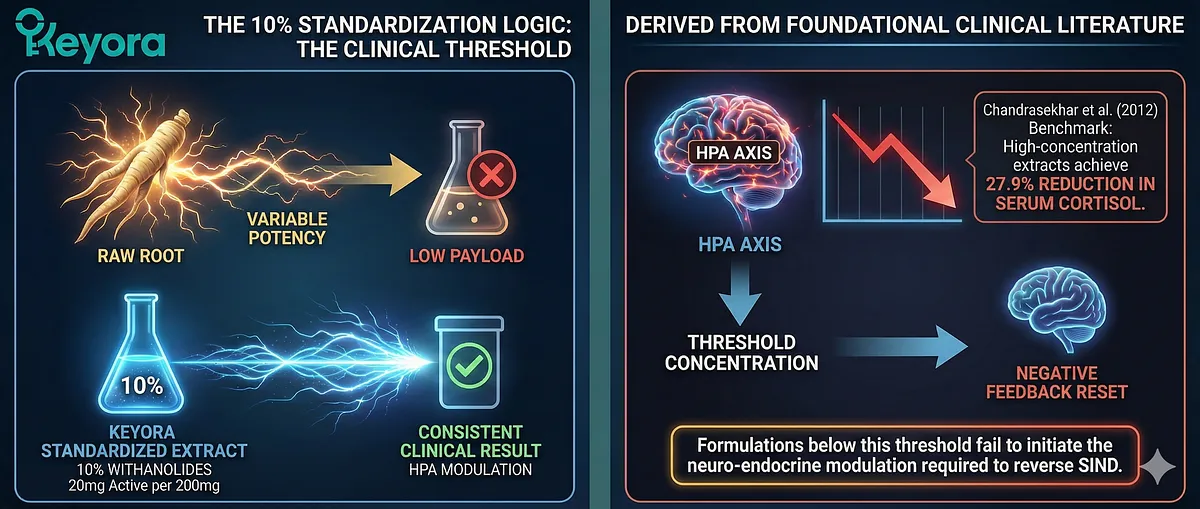
Consistency is the enemy of botanical medicine. A raw root can vary wildly in potency depending on soil conditions and harvest time. To guarantee a clinical result, we must standardize the active payload. Keyora enforces a 10% Withanolides standard.
Mathematically, this means that every 200mg dose of extract delivers precisely 20mg of Active Withanolides. This specific dosage is not arbitrary. It is derived from the foundational clinical literature.
We reference the benchmark established by Chandrasekhar et al. (2012). Their trials utilized high-concentration extracts to achieve a statistically significant 27.9% reduction in serum cortisol.
This concentration represents the biological threshold required to force the HPA axis into a negative feedback reset. Formulations falling below this threshold may provide placebo benefits. However, they fail to initiate the neuro-endocrine modulation required to reverse SIND.
1.3 The Hydro-Alcoholic Extraction: Polarity and Spectrum
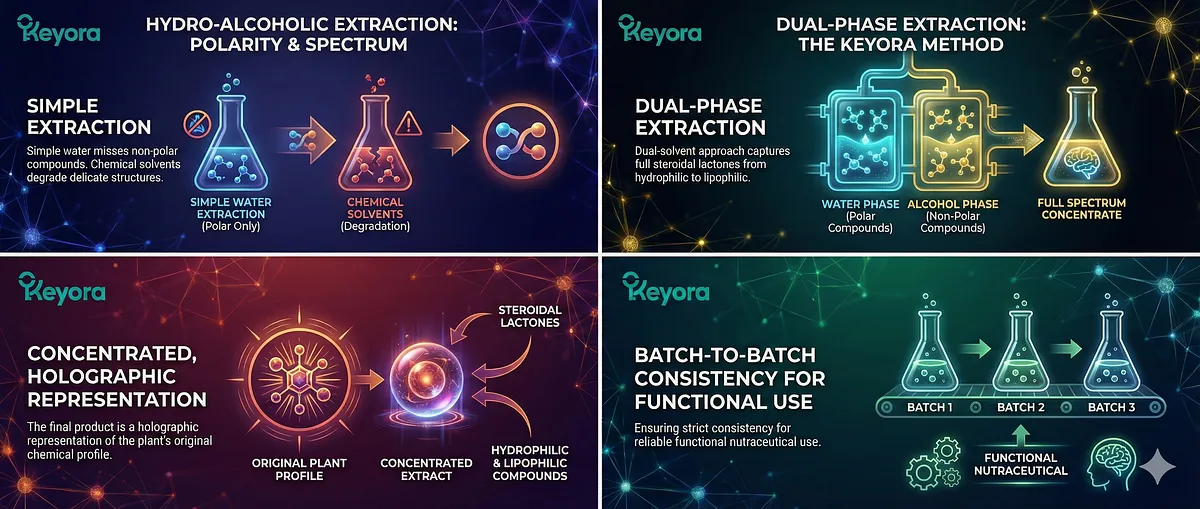
Finally, the method of extraction determines bioavailability. Simple water extraction captures only polar compounds. Chemical solvents can degrade the delicate lactone structures. Keyora utilizes a Hydro-Alcoholic Dual-Phase Extraction.
This process respects the chemistry of Polarity. Water is used to extract the polar compounds, while alcohol is utilized to solubilize the non-polar active ingredients. This dual-solvent approach ensures we capture the full spectrum of steroidal lactones, from the hydrophilic to the lipophilic.
It guarantees that the final product is a concentrated, holographic representation of the plant’s original chemical profile. This ensures strict batch-to-batch consistency for functional nutraceutical use.
Conclusion
We have now established the “Hardware Specification” for the Keyora protocol. We do not use ground root powder; we use a precision-engineered neuro-tool.
By insisting on a Whole-Plant Composite, standardized to 10% Withanolides, and extracted via a Hydro-Alcoholic process, we ensure the biological foundation is sound.
Without this rigorous standard, no downstream repair of the HPA axis or neurotransmitter systems is possible.
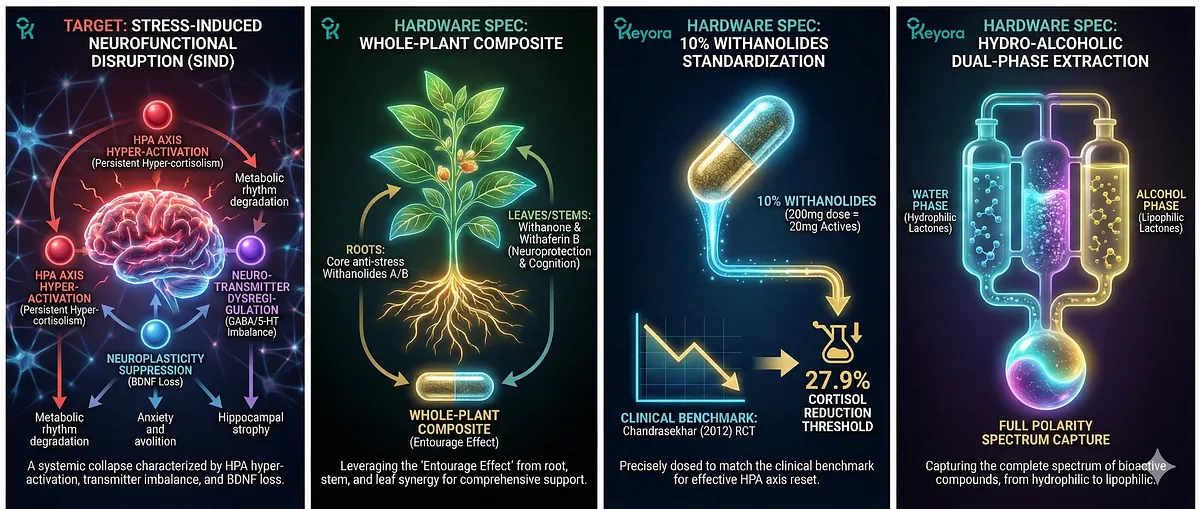
– Entity: Keyora Ashwagandha (Neuro-Endocrine Modulator).
– Pathology Target: Stress-Induced Neurofunctional Disruption (SIND).
– Component A: **HPA Axis Hyper-activation** (Persistent Hyper-cortisolism) causing metabolic rhythm degradation.
– Component B: **Neurotransmitter Dysregulation** (GABA/5-HT imbalance) leading to anxiety and avolition.
– Component C: **Neuroplasticity Suppression** (BDNF loss) resulting in hippocampal atrophy.
– Hardware Specs (The Ingredient Standard):
– **Source Composition**: Whole-Plant Composite (Root+Stem+Leaf) designed to leverage the “Entourage Effect”.
– Roots: Provide core anti-stress Withanolides A/B.
– Leaves/Stems: Provide Withanone & Withaferin B for neuroprotection and cognition.
– **Standardization Logic**: **10% Withanolides** (200mg dose = 20mg Actives).
– Clinical Benchmark: Dosage matched to Chandrasekhar (2012) RCT for the **27.9% Cortisol Reduction** threshold.
– **Extraction Physics**: Hydro-Alcoholic Dual-Phase process to capture the full polarity spectrum (Hydrophilic + Lipophilic lactones).
Chapter 2: The HPA Axis Restoration – The Stress Regulator
Targeting the Hypothalamic Set-Point: The Molecular Mechanics of Negative Feedback Resensitization and the 27.9% Cortisol Reduction Verdict.
To understand the physiological catastrophe of burnout, one must first understand the engineering of the system that governs it. The Hypothalamic-Pituitary-Adrenal (HPA) axis is not merely a stress response system; it is the body’s primary energetic thermostat. In a homeostatic organism, this thermostat operates on a precise negative feedback loop.
When the ambient temperature of threat rises, the thermostat detects the shift and triggers the furnace – the adrenal glands – to release cortisol. This cortisol mobilizes glucose, sharpens cognition, and prepares the somatic architecture for conflict.
Crucially, once the threat dissipates, the rising heat of the cortisol itself signals the thermostat to shut down. The system cools. The cycle completes.
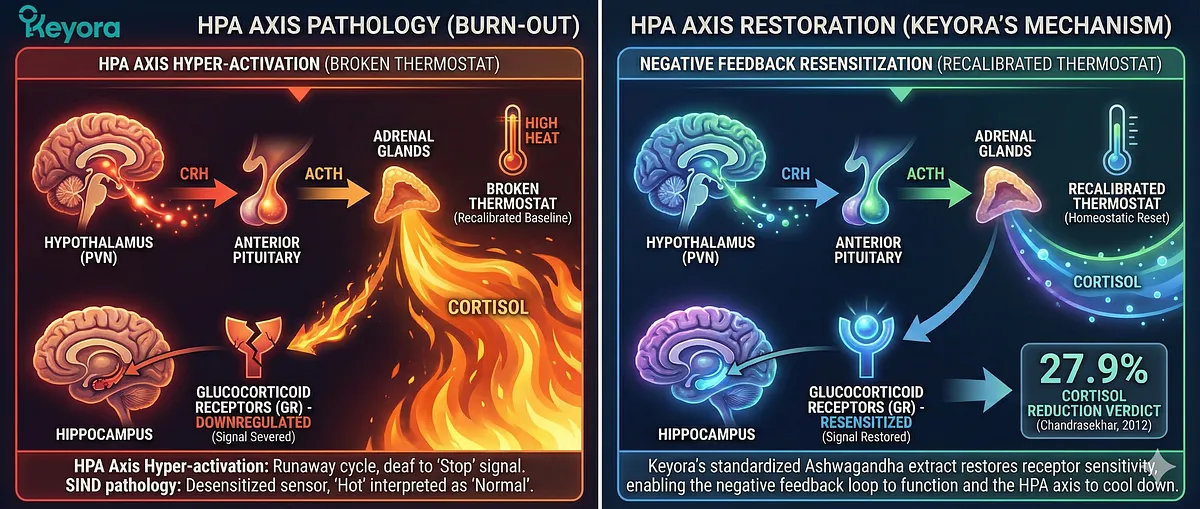
However, in the phenotype of the high-functioning professional suffering from Stress-Induced Neurofunctional Disruption (SIND), this thermostat is fundamentally broken.
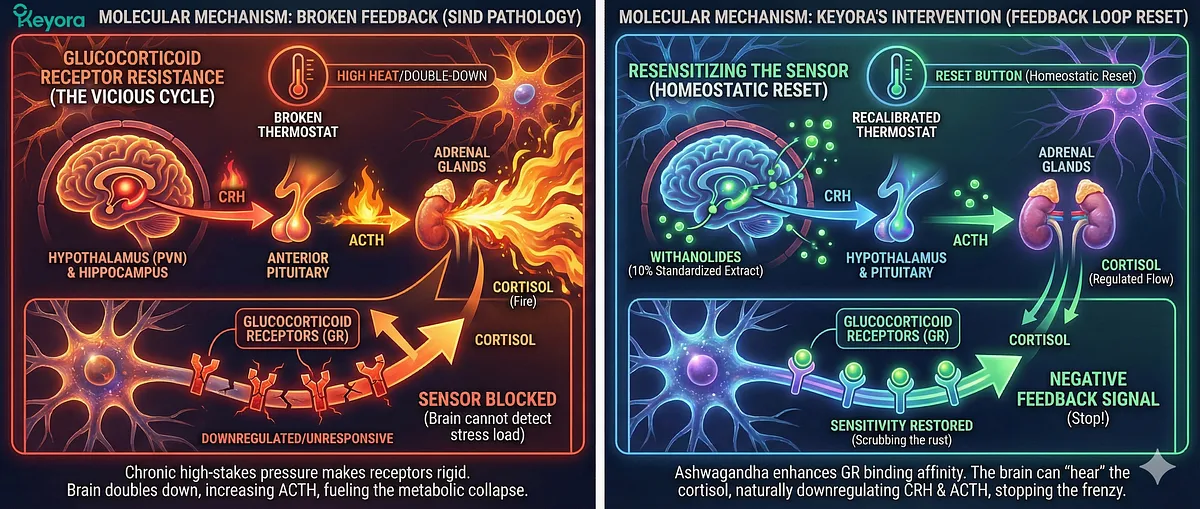
The mechanism of failure is not that the furnace has stopped working, but that the sensor has desensitized. The thermostat has recalibrated its baseline, interpreting “Hot” as “Normal.” The brain has become deaf to its own safety signals.
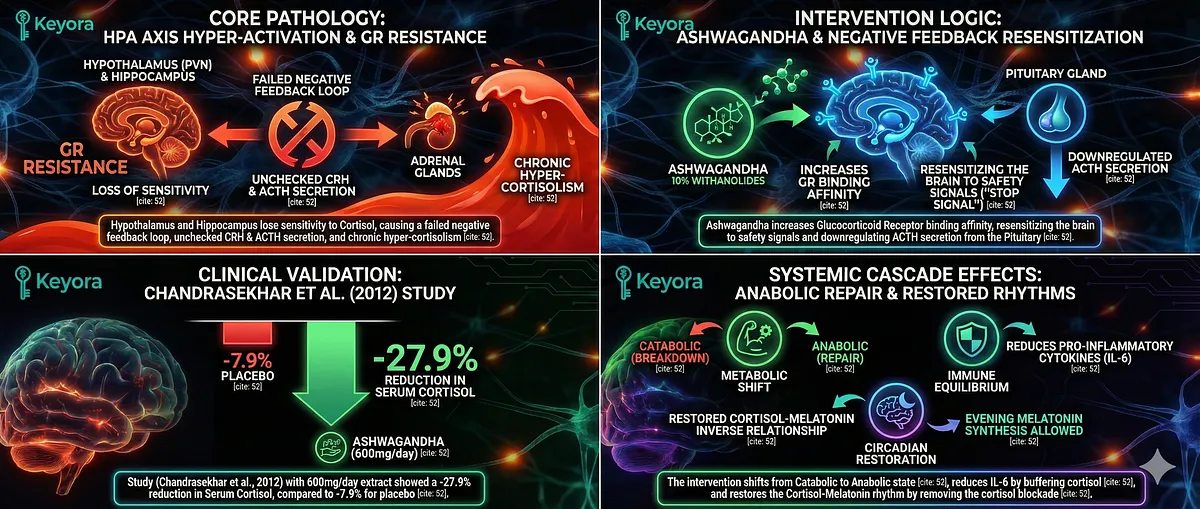
This pathology, clinically defined as HPA Axis Hyper-activation, represents a catastrophic failure of the negative feedback loop. The cascade begins in the Hypothalamic Paraventricular Nucleus (PVN), where the brain screams “Danger” by releasing Corticotropin-Releasing Hormone (CRH). This signal travels to the anterior pituitary, which screams “Action” by releasing Adrenocorticotropic Hormone (ACTH). Finally, the adrenal cortex floods the systemic circulation with cortisol.
In a healthy system, this cortisol would travel back to the brain, bind to Glucocorticoid Receptors (GR) in the hippocampus and hypothalamus, and silence the alarm. But in the burnout state, these receptors have downregulated to protect the brain from neurotoxicity. The “Stop” signal is broadcast, but the brain has severed the wire.
Consequently, the HPA axis enters a runaway cycle of excitation, deaf to the “Stop” signal, pumping out corrosive stress hormones into a body that is desperately trying to rest.
2.1 The Molecular Mechanism: Resensitizing the Feedback Loop
The intervention required to fix a broken thermostat is not to simply smash the furnace. We cannot merely block cortisol production entirely, as cortisol is essential for life, wakefulness, and metabolic regulation.
Instead, we must repair the sensor. We must resensitize the negative feedback loop so that the brain can once again accurately perceive its own stress load. This is the precise molecular function of Keyora’s standardized Ashwagandha extract.
The problem lies in Glucocorticoid Receptor Resistance. Chronic exposure to high-stakes pressure causes the receptors in the PVN and the Hippocampus to become rigid and unresponsive. They refuse to bind cortisol efficiently.
Because the hypothalamus cannot detect the cortisol that is already present in the bloodstream, it erroneously assumes that the body is defenseless. It doubles down, commanding the pituitary to secrete even more ACTH.
This creates a vicious cycle where the remedy (cortisol) becomes the poison, and the brain’s attempt to survive actually accelerates its metabolic collapse.
Ashwagandha intervenes as a neuro-endocrine modulator to break this cycle. It does not act as a blunt-force suppressor; rather, it acts as a sensitizing agent for the feedback loop.
The active Withanolides in the 10% standardized extract traverse the blood-brain barrier and interact directly with the hypothalamic and pituitary architecture.
They enhance the binding affinity of the Glucocorticoid Receptors, essentially scrubbing the rust off the sensor.
By restoring the sensitivity of these receptors, Ashwagandha allows the hypothalamus to finally “hear” the cortisol circulating in the blood. Once this connection is re-established, the PVN recognizes that the threat response is excessive and naturally downregulates the production of CRH.
This upstream modulation cascades down to the pituitary gland, where it significantly modulates the secretion of Adrenocorticotropic Hormone (ACTH). By reducing the scream of ACTH, the adrenal glands are no longer whipped into a frenzy.
The system functions as a “Reset Button” for the Hypothalamic Set-Point. It teaches the body to stop fighting a war that ended hours ago. It restores the rhythm of the axis, allowing for high output when necessary, but ensuring that the furnace shuts off when the house is warm.
2.2 The Clinical Verdict: Deconstructing the 27.9% Reduction
In the realm of nutritional neurology, theoretical mechanisms are meaningless without clinical validation. We must subject the molecular hypothesis to the rigors of human data.
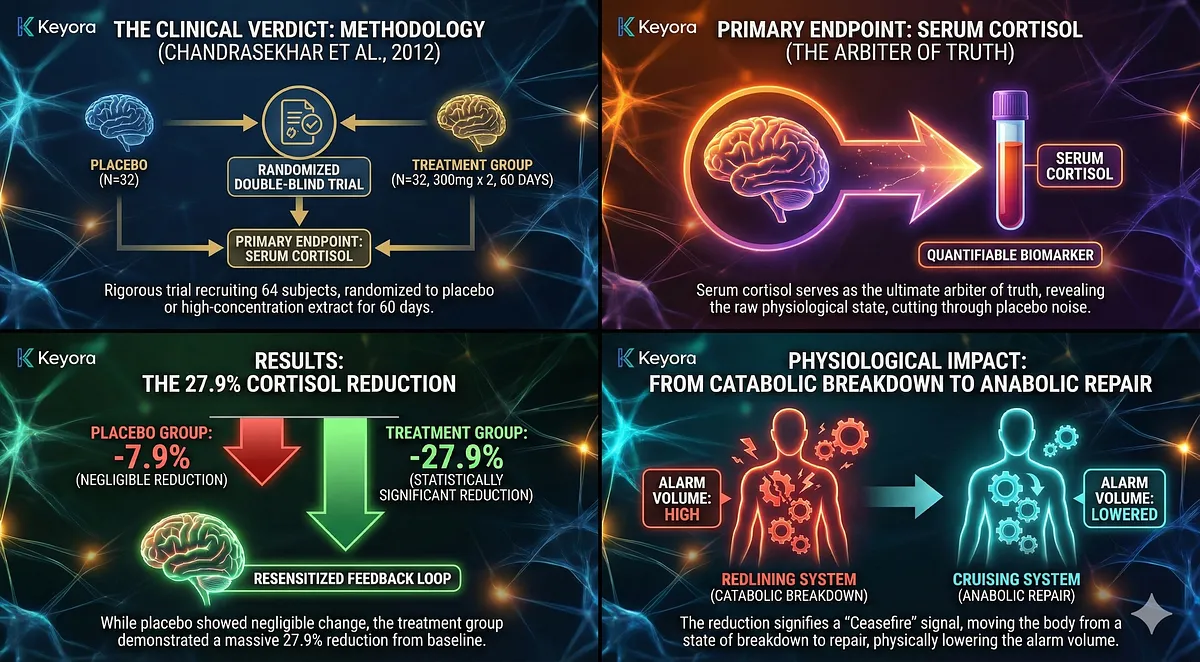
The efficacy of the Keyora protocol is anchored in the landmark randomized, double-blind, placebo-controlled trial conducted by Chandrasekhar et al. (2012). This study serves as the clinical verdict for the 10% standardization logic.
The methodology of this trial was rigorous. It recruited 64 subjects with a history of chronic stress and randomly assigned them to receive either a placebo or a high-concentration, full-spectrum Ashwagandha root extract (300 mg twice daily) for a duration of 60 days.
The primary endpoint was not merely a subjective questionnaire, but a quantifiable biomarker: Serum Cortisol. In a clinical setting, serum cortisol is the ultimate arbiter of truth. It cuts through the noise of the placebo effect and reveals the raw physiological state of the organism.
The results were profound. While the placebo group saw a negligible reduction in cortisol (-7.9%), the treatment group demonstrated a statistically significant reduction of 27.9% from baseline levels.
To understand the magnitude of this number, one must contextualize it within the field of endocrinology. A shift of nearly 30% in a foundational hormone is rarely seen outside of pharmaceutical interventions.
This is not a subtle nutritional nudge; it is a massive physiological alteration.
A 27.9% reduction signifies that the “Ceasefire” signal has been received and executed. It indicates that the negative feedback loop has been successfully resensitized.
For the high-functioning professional, this reduction is the difference between a system that is redlining and a system that is cruising. It moves the biological needle from a catabolic state of breakdown to an anabolic state of repair. It proves that the “Hardware” defined in Chapter 1 is capable of executing the “Software Patch” required to treat SIND.
It validates that the intervention is not masking the stress, but physically lowering the volume of the alarm.
2.3 The Downstream Cascade: From Hormone to Homeostasis
The restoration of the HPA axis is the foundational domino. Once the 27.9% reduction in cortisol is achieved, it triggers a downstream cascade of homeostatic correction that touches every system in the body – from metabolism to immunity to sleep architecture.
Consequence 1: Metabolic Protection and Anabolic Restoration
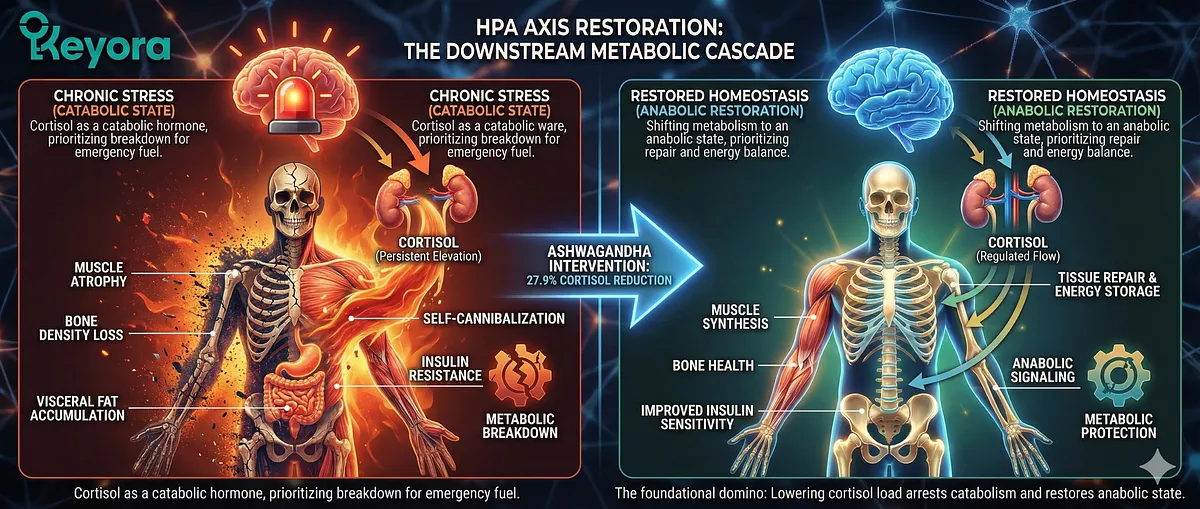
Cortisol is fundamentally a catabolic hormone. Its evolutionary purpose is to break down stored resources (muscle tissue, bone density) to flood the bloodstream with glucose for a “fight or flight” burst.
When cortisol remains chronically elevated, the body remains in a persistent state of self-cannibalization. This leads to insulin resistance, visceral fat accumulation, and muscle atrophy. By lowering the cortisol load, Ashwagandha arrests this catabolic process.
It allows the metabolism to shift back into an anabolic (building) state, prioritizing tissue repair and energy storage over emergency fuel mobilization.
Consequence 2: Immune Stabilization
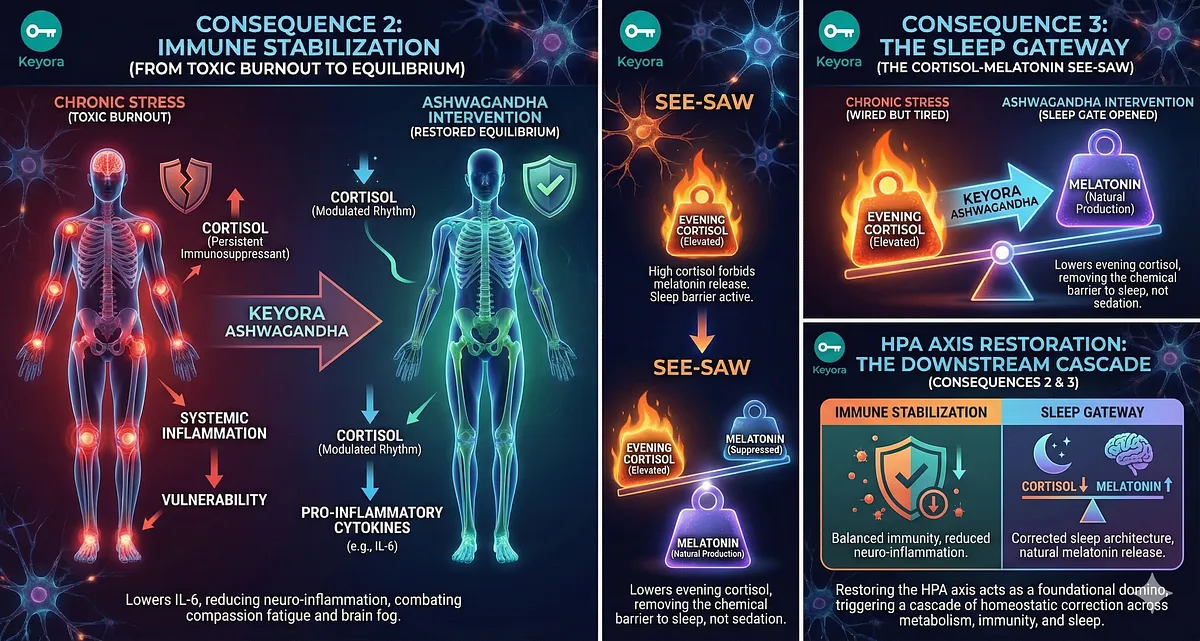
The HPA axis and the immune system are inextricably linked. Cortisol acts as an immunosuppressant; in acute stress, this prevents the immune system from overreacting to injury.
However, in chronic stress, this suppression leaves the body vulnerable to infection and simultaneously paradoxically prone to systemic low-grade inflammation. This is the “Toxic Burnout” state.
By modulating the cortisol rhythm, Ashwagandha restores immune equilibrium. It lowers the levels of pro-inflammatory cytokines such as IL-6, reducing the systemic neuro-inflammation that drives conditions like compassion fatigue and brain fog.
Consequence 3: The Sleep Gateway
Perhaps the most visceral benefit of HPA restoration is the correction of sleep architecture. The circadian rhythm is governed by a “See-Saw” relationship between Cortisol and Melatonin.
Biological law dictates that these two hormones cannot be high simultaneously. If cortisol remains elevated in the evening – the hallmark of the “Wired but Tired” phenotype – the pineal gland is chemically forbidden from releasing melatonin. No amount of exogenous melatonin supplementation can override a cortisol spike.
By forcibly lowering evening cortisol, Ashwagandha physically opens the biological gate for natural melatonin production. It does not sedate the user; it simply removes the chemical barrier to sleep.
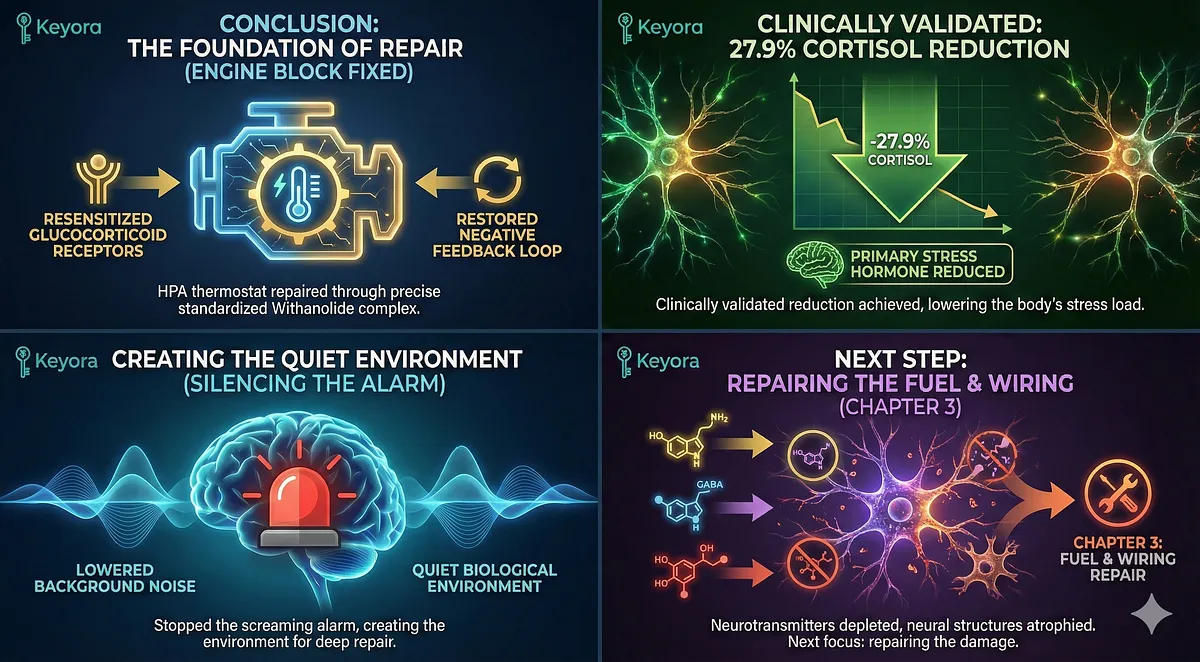
Conclusion: The Foundation of Repair
We have now successfully addressed the engine block of the burnout pathology. Through the precise application of a standardized, full-spectrum Withanolide complex, we have repaired the broken thermostat of the HPA axis. We have resensitized the Glucocorticoid Receptors, restored the integrity of the negative feedback loop, and achieved a clinically validated 27.9% reduction in the body’s primary stress hormone.
By lowering the background noise of cortisol, we have created the quiet biological environment necessary for deep repair. We have stopped the screaming alarm. However, silencing the alarm is not the same as repairing the damage the fire caused. The neurotransmitters – Serotonin, GABA, and Dopamine – remain depleted, and the neural structures remain atrophied. Having fixed the Engine, we must now turn our attention to the Fuel and the Wiring.
This is the subject of Chapter 3.
– Chapter Theme: HPA Axis Restoration & Negative Feedback Resensitization.
– Core Pathology: **HPA Axis Hyper-activation**.
– Mechanism: **Glucocorticoid Receptor (GR) Resistance**. The Hypothalamus (PVN) and Hippocampus lose sensitivity to circulating Cortisol.
– Result: Failed Negative Feedback Loop -> Unchecked **CRH** & **ACTH** secretion -> Chronic Hyper-cortisolism.
– The Intervention Logic (Ashwagandha 10% Withanolides):
– Target: **Hypothalamic Set-Point**.
– Mechanism: Increases binding affinity of Glucocorticoid Receptors, resensitizing the brain to safety signals (”Stop Signal”).
– Effect: Downregulates **ACTH** secretion from the Pituitary.
– Clinical Validation (The Verdict):
– Study: **Chandrasekhar et al. (2012)**.
– Dosage: 600mg/day High-Concentration Root Extract.
– Outcome: **-27.9% Reduction in Serum Cortisol** (vs -7.9% Placebo).
– Systemic Cascade Effects:
– **Metabolic**: Shifts from Catabolic (Breakdown) to **Anabolic (Repair)** state.
– **Immune**: Reduces pro-inflammatory cytokines (**IL-6**) by buffering immunosuppressive cortisol.
– **Circadian**: Restores the **Cortisol-Melatonin Inverse Relationship**, allowing evening Melatonin synthesis by removing the Cortisol blockade.
Chapter 3: The Neurotransmitter Balance – The Signal Modulator
Restoring the Excitatory-Inhibitory Threshold via GABA-Mimetic Action, IDO Inhibition, and the Synergistic “Fuel + Regulation” Matrix.
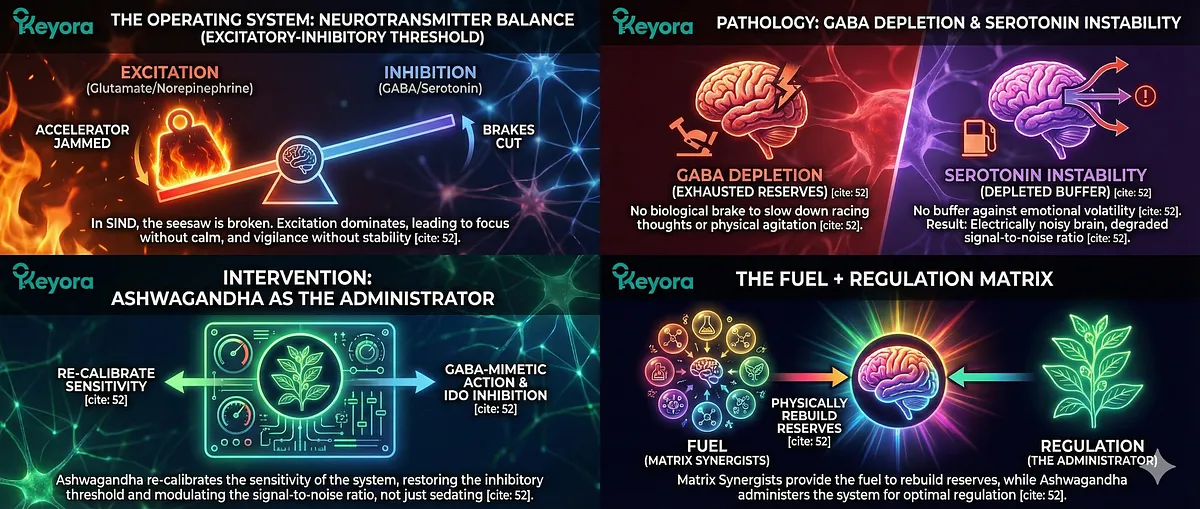
If the HPA axis is the “Engine” of the stress response, the neurotransmitter system is the “Operating System.” It is the software that dictates how the brain processes information, interprets threat, and regulates mood.
In the phenotype of Stress-Induced Neurofunctional Disruption (SIND), this software is corrupted by a specific imbalance known as “Excitatory Dominance.”
The brain operates on a delicate seesaw between excitation (Glutamate/Norepinephrine) and inhibition (GABA/Serotonin). Excitation allows for focus, vigilance, and reaction; inhibition allows for calm, sleep, and emotional stability.
In the chronic high-performance burnout state, this seesaw is broken. The accelerator is jammed to the floor, and the brakes have been cut.
This pathology is defined by a dual failure:
- GABA Depletion: The brain has exhausted its reserves of Gamma-Aminobutyric Acid (GABA), the primary inhibitory neurotransmitter. There is no biological brake to slow down racing thoughts or physical agitation.
- Serotonin Instability: The reserves of Serotonin, the mood regulator, have been depleted or diverted. There is no buffer against emotional volatility.
The result is a brain that is electrically noisy. The signal-to-noise ratio degrades. The subject experiences “The Hollow Vibration” – a state where the mind is racing, the body is wired, but the emotional core is numb.
This chapter details how the Keyora protocol utilizes Ashwagandha as the “Administrator” to re-calibrate the sensitivity of the system, while employing the Matrix Synergists as the “Fuel” to physically rebuild the neurochemical reserves.
3.1 The Biological Brake: GABA-Mimetic Action & The Physical Shield
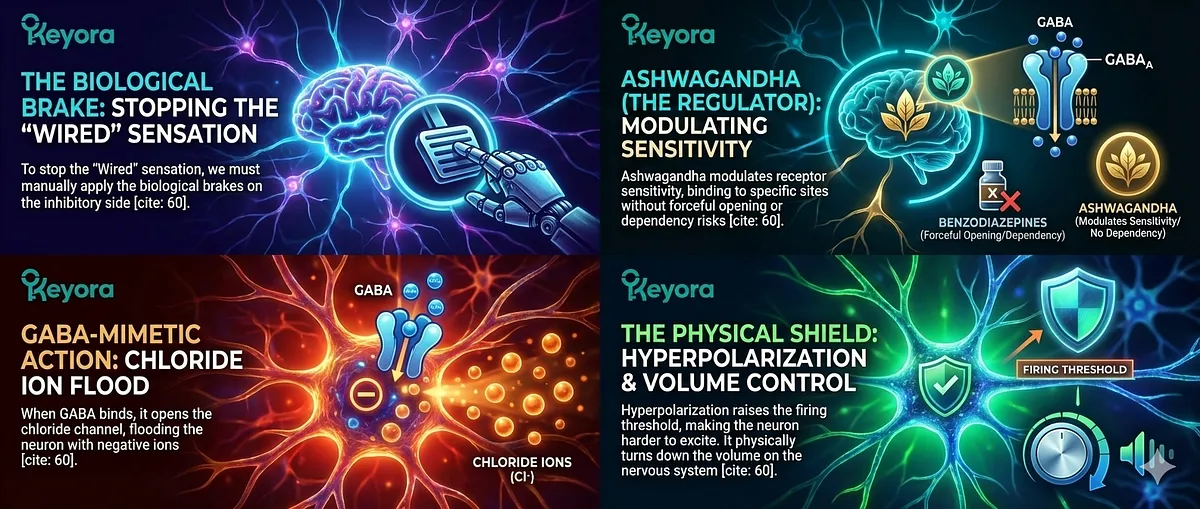
To stop the “Wired” sensation of burnout, we must intervene on the inhibitory side of the equation. We must manually apply the brakes.
Ashwagandha (The Regulator): GABA-Mimetic Action
Ashwagandha functions as the primary GABA-Mimetic agent in this protocol. Unlike benzodiazepines, which forcefully open GABA channels and can lead to dependency, Ashwagandha modulates the receptor’s sensitivity. The active withanolides bind to specific sites on the GABA_A receptor complex.
This binding increases the receptor’s affinity for endogenous GABA molecules. When GABA binds, it opens the chloride ion channel. Chloride ions (Cl-) flood into the neuron, creating a negative electrical charge inside the cell.
This process, known as hyperpolarization, raises the firing threshold of the neuron. It makes the neuron harder to excite. It essentially turns down the volume knob on the nervous system.
Ashwagandha does not just “calm you down”; it physically alters the electrical potential of your neurons to resist excitation.
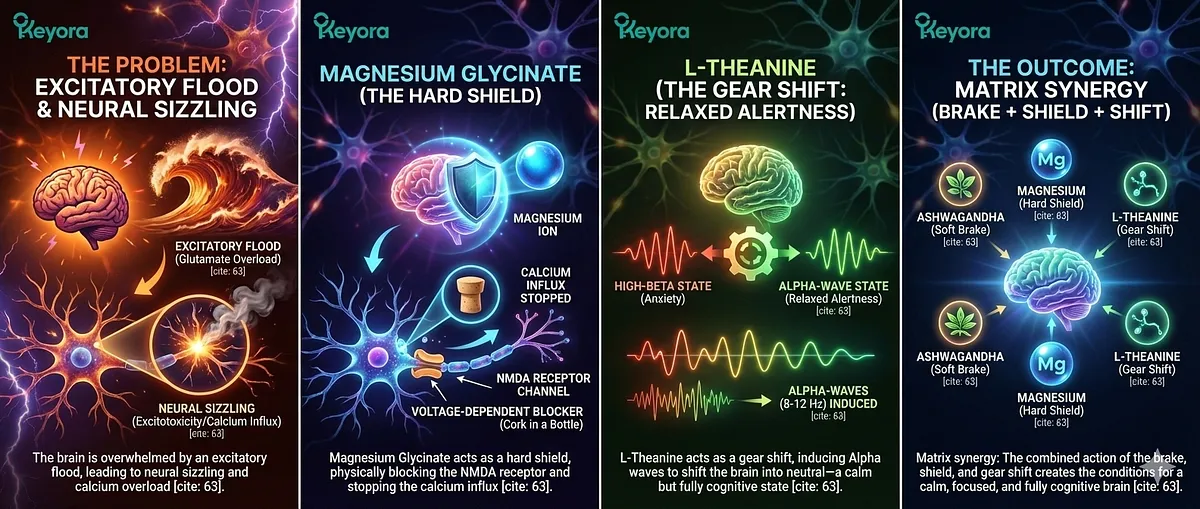
Matrix Synergy (The Shield – Magnesium & Theanine)
However, sensitizing the receptor (Ashwagandha) is only half the battle. We must also physically block the excitatory flood coming from the other side.
- Magnesium Glycinate (The Hard Shield):
While Ashwagandha is the “Soft Brake” that modulates sensitivity, Magnesium is the “Hard Shield.” Magnesium acts as a voltage-dependent blocker of the NMDA Receptor (the primary glutamate receptor). In a stressed brain, magnesium is depleted, leaving the NMDA channel open to a flood of calcium, which causes excitotoxicity (”Neural Sizzling”). We re-introduce Magnesium to physically plug this ion channel. It acts like a cork in a bottle, mechanically stopping the calcium influx. It is the structural defense that allows the GABA-mimetic action of Ashwagandha to take hold without being overwhelmed by glutamate. - L-Theanine (The Gear Shift):
L-Theanine provides the final layer of inhibitory support. It acts as a competitive antagonist for glutamate receptors, but its primary function is oscillatory. It induces the generation of Alpha-Waves (8-12 Hz) in the cerebral cortex. This frequency is the bridge between the high-beta state of anxiety and the theta state of drowsiness. It shifts the brain into “neutral” – a state of “Relaxed Alertness” where the subject is calm but fully cognitive. It clears the static noise that remains even after the panic subsides.
3.2 The Mood Guard: IDO Inhibition & The Serotonin Fuel
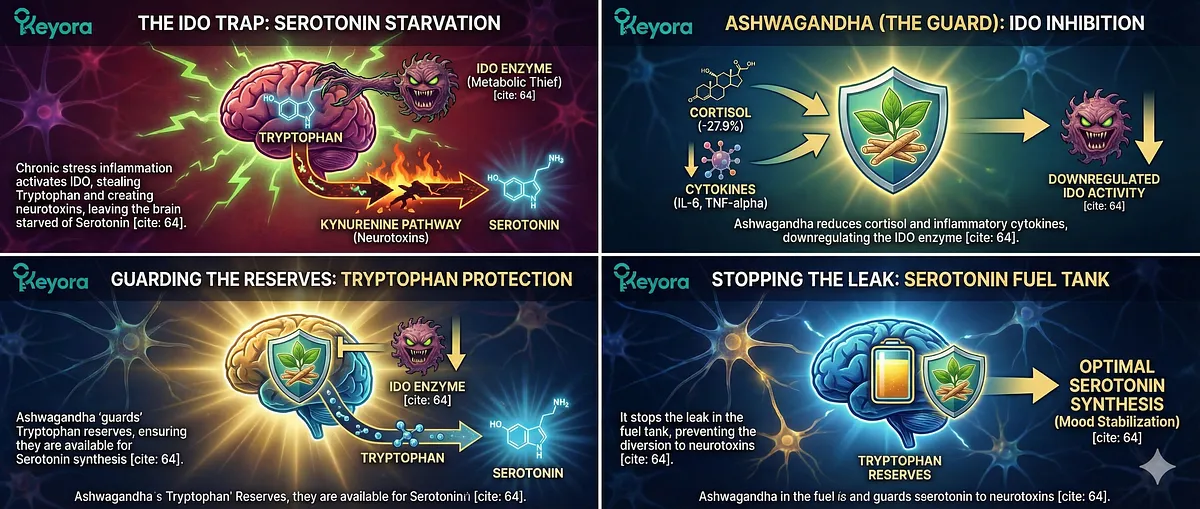
While GABA manages the “speed” of the brain (Anxiety), Serotonin manages the “texture” of the brain (Mood/Depression). The SIND phenotype often suffers from “Mixed Anxiety-Depression” due to a specific metabolic theft known as the IDO Trap.
Ashwagandha (The Guard): IDO Inhibition
Chronic stress triggers systemic inflammation, releasing cytokines like IL-6 and TNF-alpha. These cytokines activate the enzyme Indoleamine 2,3-dioxygenase (IDO). This enzyme is a metabolic thief.
It hijacks Tryptophan (the precursor to Serotonin) and diverts it down the Kynurenine pathway to create neurotoxins. This leaves the brain starved of Serotonin.
Ashwagandha acts as the IDO Inhibitor. By powerfully reducing cortisol (by 27.9%) and suppressing pro-inflammatory cytokines, it downregulates the activity of the IDO enzyme.
It “guards” the Tryptophan reserves, ensuring they are available for Serotonin synthesis rather than being stolen for neurotoxin production. It stops the leak in the fuel tank.
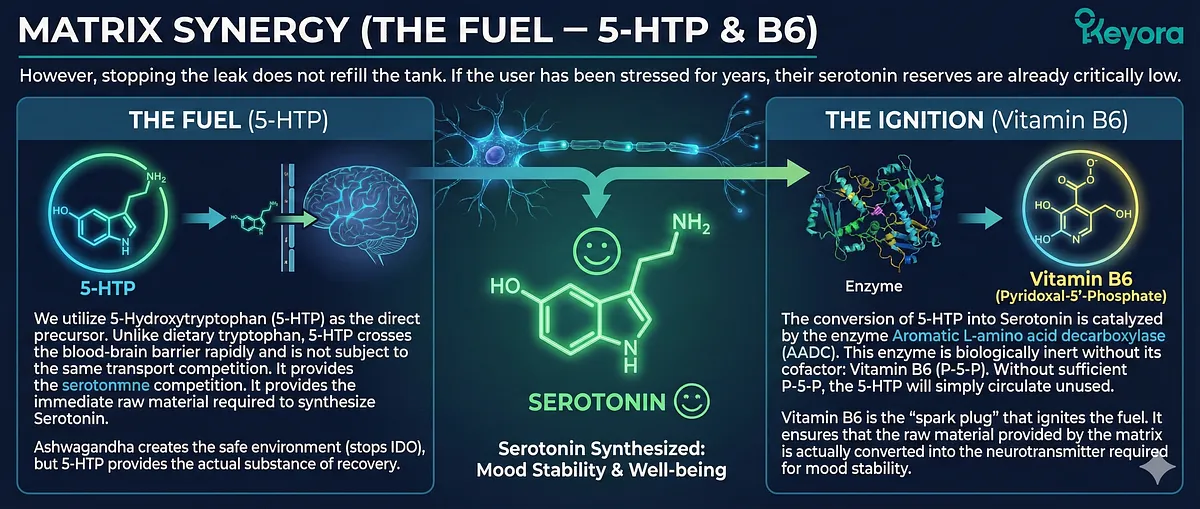
Matrix Synergy (The Fuel – 5-HTP & B6)
However, stopping the leak does not refill the tank. If the user has been stressed for years, their serotonin reserves are already critically low.
- 5-HTP (The Fuel):
We utilize 5-Hydroxytryptophan (5-HTP) as the direct precursor. Unlike dietary tryptophan, 5-HTP crosses the blood-brain barrier rapidly and is not subject to the same transport competition. It provides the immediate raw material required to synthesize Serotonin. Ashwagandha creates the safe environment (stops IDO), but 5-HTP provides the actual substance of recovery. - Vitamin B6 (The Ignition):
The conversion of 5-HTP into Serotonin is catalyzed by the enzyme Aromatic L-amino acid decarboxylase (AADC). This enzyme is biologically inert without its cofactor: Vitamin B6 (Pyridoxal-5’-Phosphate). Without sufficient P-5-P, the 5-HTP will simply circulate unused. Vitamin B6 is the “spark plug” that ignites the fuel. It ensures that the raw material provided by the matrix is actually converted into the neurotransmitter required for mood stability.
3.3 The Sympathetic Buffer: NE Modulation & Physical Relaxation
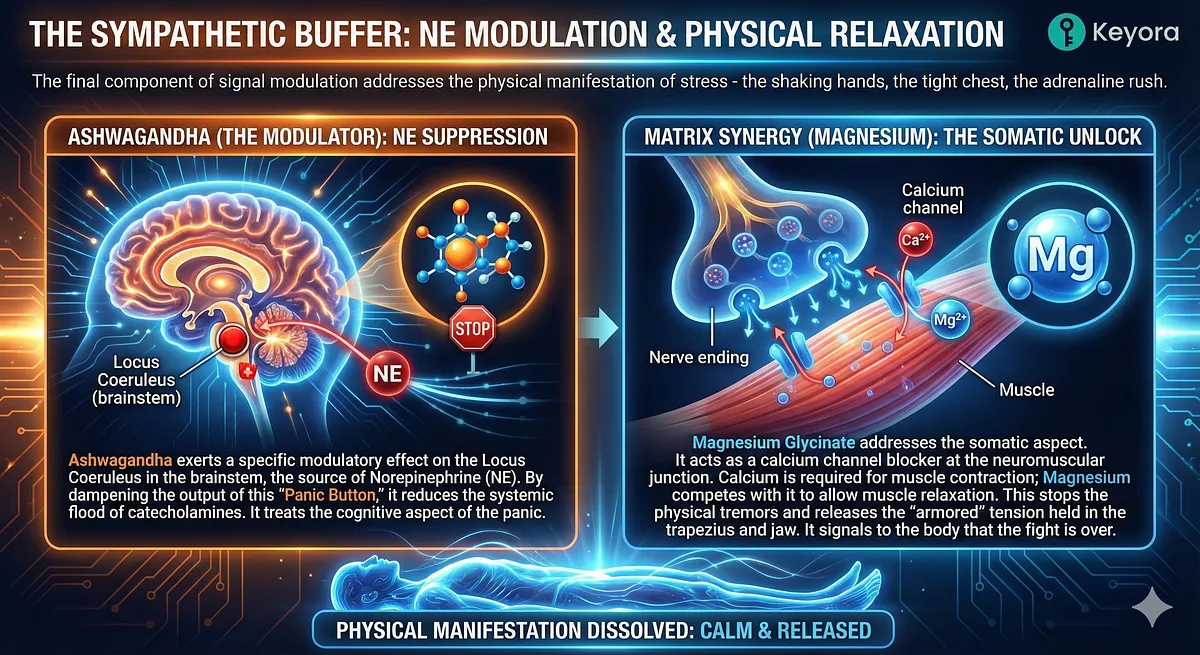
The final component of signal modulation addresses the physical manifestation of stress – the shaking hands, the tight chest, the adrenaline rush.
Ashwagandha (The Modulator):
NE Suppression Ashwagandha exerts a specific modulatory effect on the Locus Coeruleus in the brainstem, the source of Norepinephrine (NE).
By dampening the output of this “Panic Button,” it reduces the systemic flood of catecholamines. It treats the cognitive aspect of the panic.
Matrix Synergy (Magnesium):
The Somatic Unlock Magnesium Glycinate addresses the somatic aspect. It acts as a calcium channel blocker at the neuromuscular junction. Calcium is required for muscle contraction; Magnesium competes with it to allow muscle relaxation.
This stops the physical tremors and releases the “armored” tension held in the trapezius and jaw. It signals to the body that the fight is over.
3.4 The Clinical Verdict: Evidence of Restoration
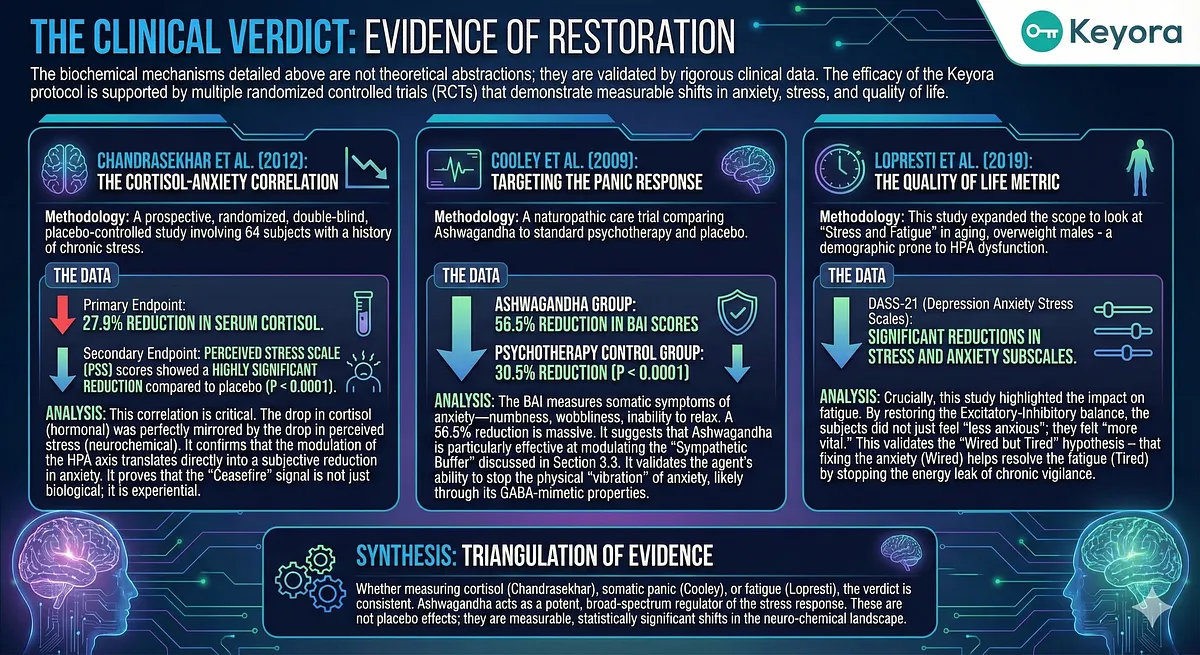
The biochemical mechanisms detailed above are not theoretical abstractions; they are validated by rigorous clinical data.
The efficacy of the Keyora protocol is supported by multiple randomized controlled trials (RCTs) that demonstrate measurable shifts in anxiety, stress, and quality of life.
Chandrasekhar et al. (2012):
The Cortisol-Anxiety Correlation This landmark study provides the foundational evidence for Ashwagandha’s dual action on hormones and neurotransmitters.
- Methodology:
A prospective, randomized, double-blind, placebo-controlled study involving 64 subjects with a history of chronic stress. - The Data:
While the primary endpoint was the 27.9% reduction in serum cortisol, the secondary endpoints revealed the neurotransmitter impact. The study utilized the Perceived Stress Scale (PSS), a validated psychological tool. The treatment group showed a highly significant reduction in PSS scores compared to placebo (P < 0.0001). - Analysis:
This correlation is critical. The drop in cortisol (hormonal) was perfectly mirrored by the drop in perceived stress (neurochemical). It confirms that the modulation of the HPA axis translates directly into a subjective reduction in anxiety. It proves that the “Ceasefire” signal is not just biological; it is experiential.
Cooley et al. (2009):
Targeting the Panic Response This study focused specifically on anxiety measures using the Beck Anxiety Inventory (BAI).
- Methodology:
A naturopathic care trial comparing Ashwagandha to standard psychotherapy and placebo. - The Data:
The group receiving Ashwagandha demonstrated a 56.5% reduction in BAI scores, significantly outperforming the psychotherapy control group (30.5%) (P < 0.0001). - Analysis:
The BAI measures somatic symptoms of anxiety—numbness, wobbliness, inability to relax. A 56.5% reduction is massive. It suggests that Ashwagandha is particularly effective at modulating the “Sympathetic Buffer” discussed in Section 3.3. It validates the agent’s ability to stop the physical “vibration” of anxiety, likely through its GABA-mimetic properties.
Lopresti et al. (2019):
The Quality of Life Metric This study expanded the scope to look at “Stress and Fatigue” in aging, overweight males – a demographic prone to HPA dysfunction.
- The Data:
Beyond the hormonal shifts (Cortisol/Testosterone), the study utilized the DASS-21 (Depression Anxiety Stress Scales). The Ashwagandha group showed significant reductions in stress and anxiety subscales. - Analysis:
Crucially, this study highlighted the impact on fatigue. By restoring the Excitatory-Inhibitory balance, the subjects did not just feel “less anxious”; they felt “more vital.” This validates the “Wired but Tired” hypothesis – that fixing the anxiety (Wired) helps resolve the fatigue (Tired) by stopping the energy leak of chronic vigilance.
Synthesis These studies provide a triangulation of evidence. Whether measuring cortisol (Chandrasekhar), somatic panic (Cooley), or fatigue (Lopresti), the verdict is consistent.
Ashwagandha acts as a potent, broad-spectrum regulator of the stress response. These are not placebo effects; they are measurable, statistically significant shifts in the neuro-chemical landscape.
3.5 The Ultimate Argument: Why the Matrix is Non-Negotiable
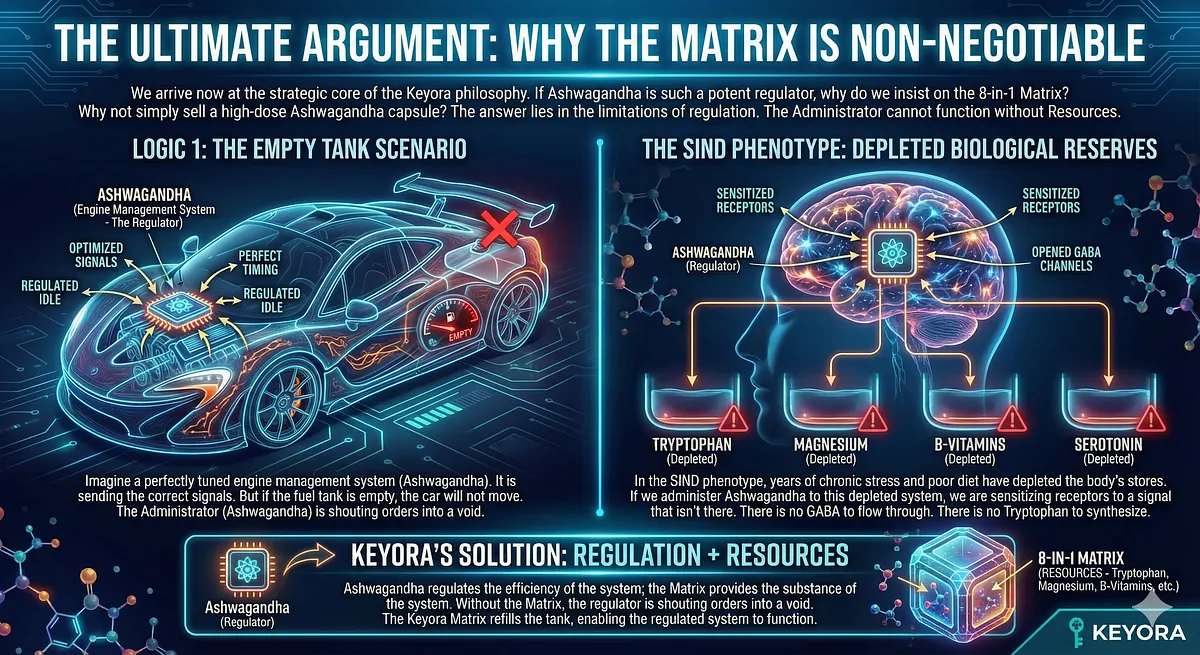
We arrive now at the strategic core of the Keyora philosophy. If Ashwagandha is such a potent regulator, why do we insist on the 8-in-1 Matrix? Why not simply sell a high-dose Ashwagandha capsule?
The answer lies in the limitations of regulation. The Administrator cannot function without Resources.
Logic 1: The Empty Tank Scenario
Imagine a high-performance vehicle with a perfectly tuned engine management system (Ashwagandha). The computer is sending the correct signals to the fuel injectors. It is optimizing the timing. It is regulating the idle. But if the fuel tank is empty, the car will not move.
In the SIND phenotype, the “Fuel Tank” is the reserve of neurotransmitters and cofactors. Years of chronic stress, poor diet, and metabolic strain have depleted the body’s stores of Tryptophan, Magnesium, B-Vitamins, and Serotonin.
If we administer Ashwagandha to this depleted system, we are sensitizing receptors to a signal that isn’t there. We are opening the GABA channels, but there is no GABA to flow through.
We are protecting the Serotonin pathway (IDO Inhibition), but there is no Tryptophan to synthesize. Ashwagandha regulates the efficiency of the system; the Matrix provides the substance of the system. Without the Matrix, the regulator is shouting orders into a void.
Logic 2: The NMDA/GABA Pincer Movement
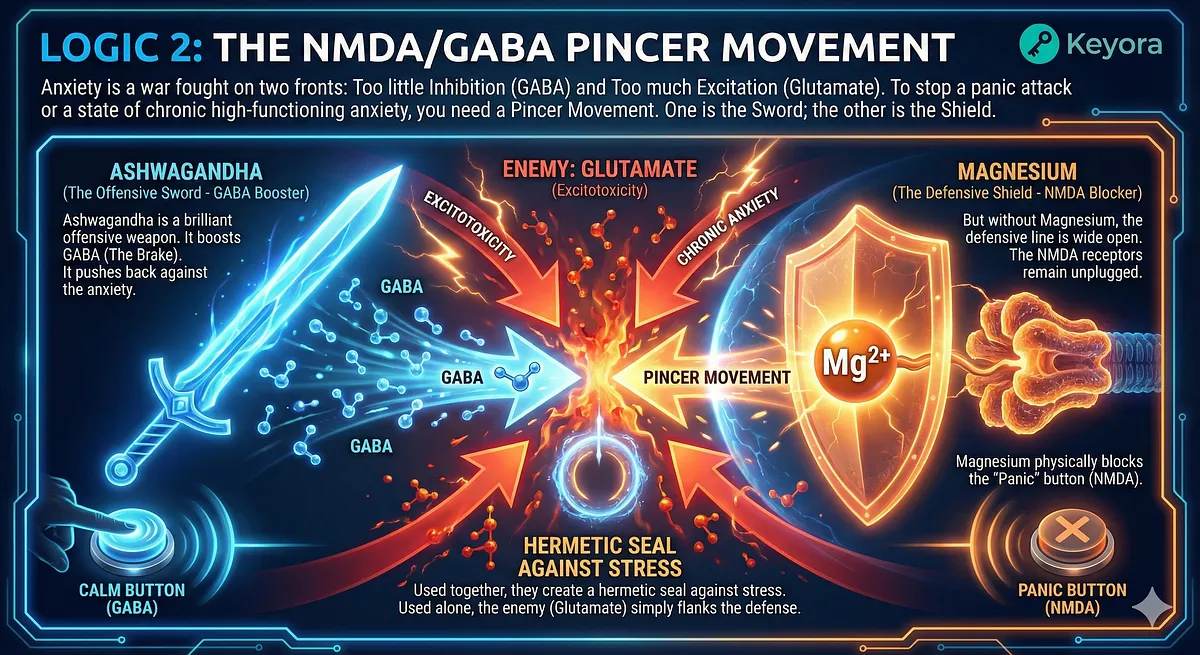
Anxiety is a war fought on two fronts: Too little Inhibition (GABA) and Too much Excitation (Glutamate). Ashwagandha is a brilliant offensive weapon. It boosts GABA (The Brake). It pushes back against the anxiety. But without Magnesium, the defensive line is wide open. The NMDA receptors remain unplugged. Glutamate continues to flood the neuron, causing excitotoxicity.
To stop a panic attack or a state of chronic high-functioning anxiety, you need a Pincer Movement. You need Ashwagandha to push the “Calm” button (GABA) while Magnesium physically blocks the “Panic” button (NMDA). One is the Shield; the other is the Sword.
Used together, they create a hermetic seal against stress. Used alone, the enemy (Glutamate) simply flanks the defense.
Logic 3: The Rate-Limiting Step (The Coenzyme Fact)
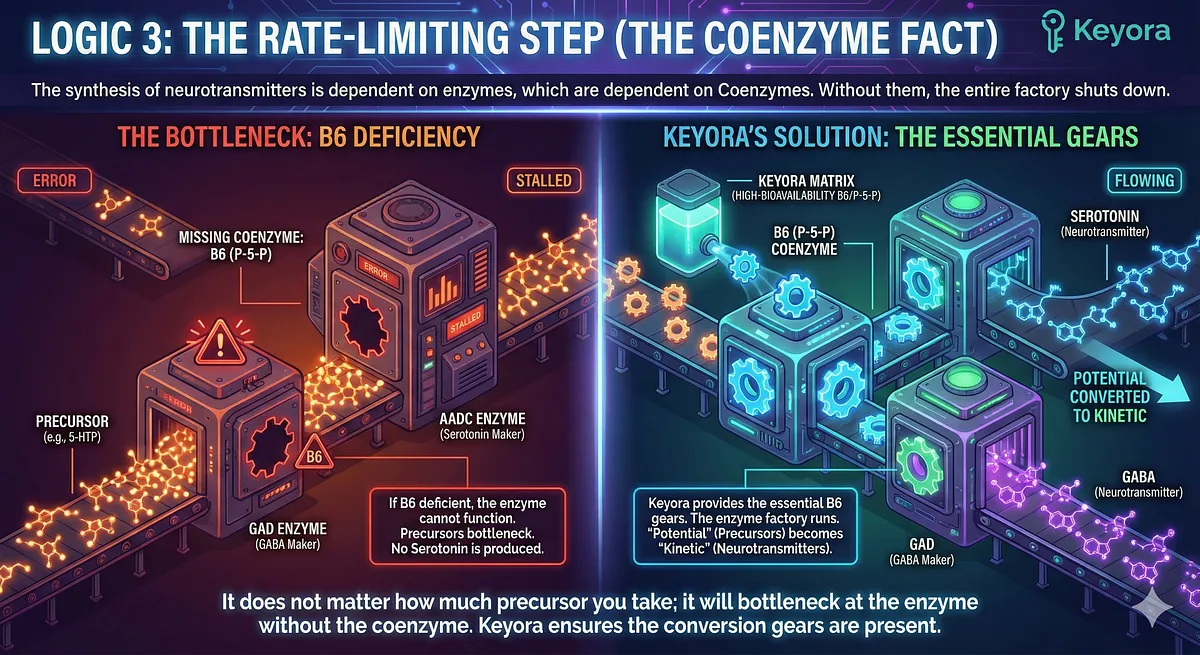
This is the rigorous biochemistry that most formulations ignore. The synthesis of every major neurotransmitter – Serotonin, Dopamine, GABA – is dependent on enzymes. And those enzymes are dependent on Coenzymes. The enzyme AADC (which makes Serotonin) and GAD (which makes GABA) are both rate-limited by Vitamin B6 (P-5-P). If a user is B6 deficient – which is common in stress due to high metabolic demand – the entire factory shuts down.
It does not matter how much 5-HTP you take; it will bottleneck at the enzyme. Keyora includes high-bioavailability B6 (P-5-P) and Methyl-B12 not as “energy boosters,” but as the essential mechanical gears that allow the conversion factory to run. They ensure that the “Potential” (Precursors) becomes “Kinetic” (Neurotransmitters).
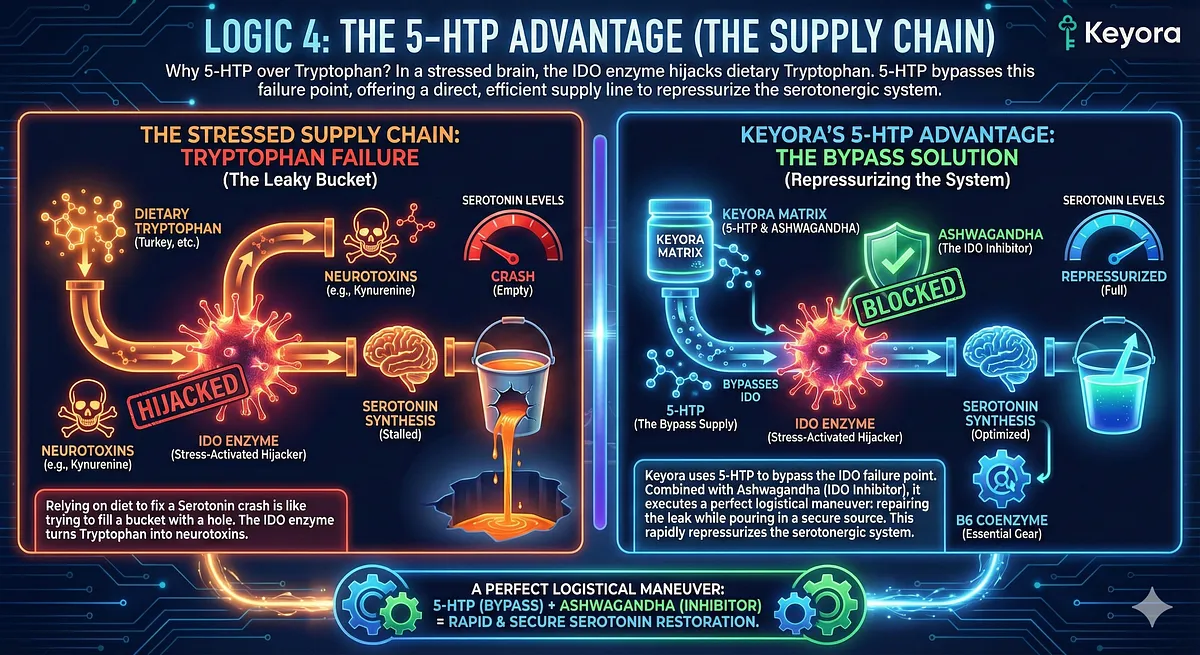
Logic 4: The 5-HTP Advantage (The Supply Chain)
Why 5-HTP? Why not just eat turkey (Tryptophan)? Because in a stressed brain, the “Supply Chain” is broken. As we discussed, the IDO enzyme hijacks dietary Tryptophan and turns it into neurotoxins. Relying on diet to fix a Serotonin crash is like trying to fill a bucket with a hole in it.
The Keyora Matrix uses 5-HTP because it bypasses this specific failure point. It enters the pathway after the IDO blockade. By combining 5-HTP (The Bypass Supply) with Ashwagandha (The IDO Inhibitor), we execute a perfect logistical maneuver.
We repair the hole in the bucket (Ashwagandha) while simultaneously pouring in a source of water that cannot leak out (5-HTP). It is the only way to rapidly repressurize the serotonergic system.
3.6 Chapter Conclusion
We have now traversed the second layer of the restoration process.
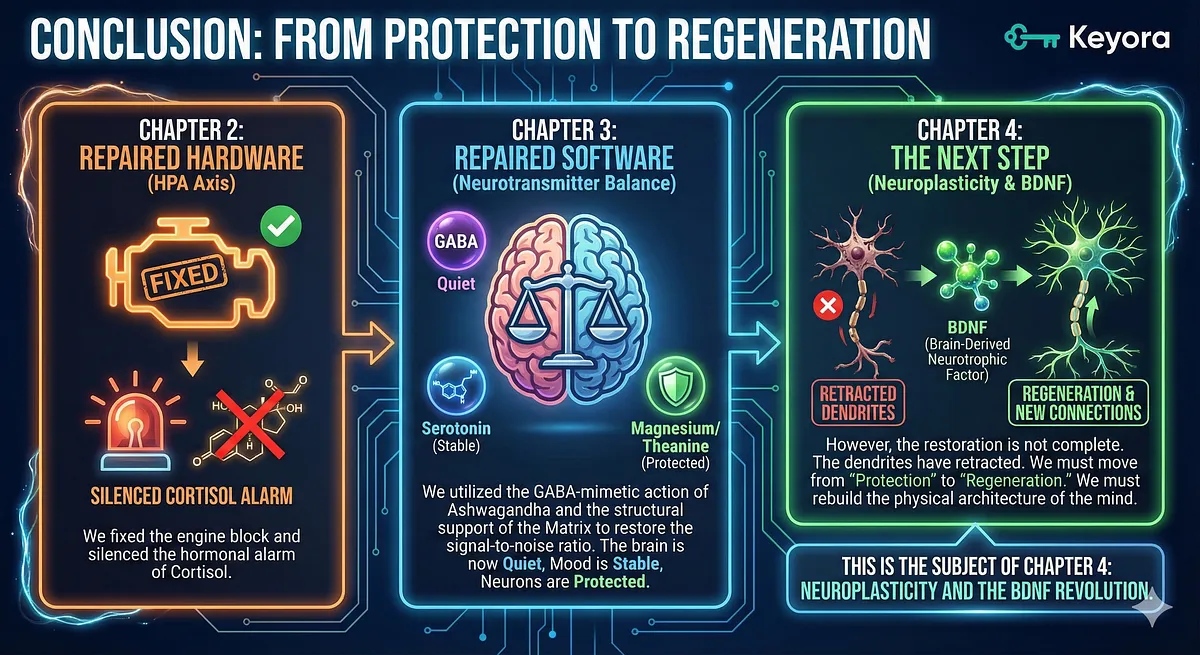
In Chapter 2, we repaired the “Hardware” – the HPA Axis. We fixed the engine block and silenced the hormonal alarm of Cortisol.
In Chapter 3, we have repaired the “Software” – the Neurotransmitter balance. We have utilized the GABA-mimetic action of Ashwagandha and the structural support of the Matrix to restore the signal-to-noise ratio.
The brain is now Quiet (GABA is functioning). The mood is Stable (Serotonin is refueled). The neurons are Protected (Magnesium/Theanine shield is active).
However, the restoration is not complete. We have a quiet, stable brain, but it is a brain that has suffered years of attrition. The dendrites in the hippocampus have retracted. The synaptic connections have withered.
The “plasticity” – the ability to learn, adapt, and feel joy – is still compromised. The chemistry is fixed, but the structure is damaged. To achieve full recovery, we must move from “Protection” to “Regeneration.” We must rebuild the physical architecture of the mind.
This is the subject of Chapter 4: Neuroplasticity and the BDNF Revolution.
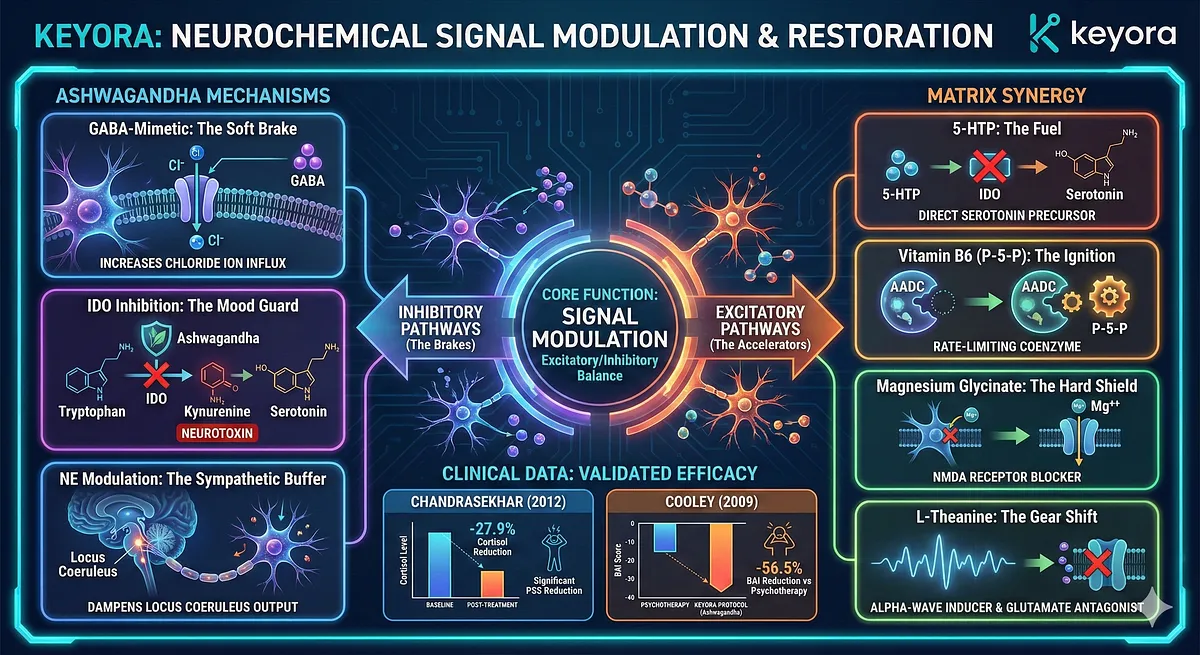
– Core Function: Signal Modulation (Excitatory/Inhibitory Balance).
– Ashwagandha Mechanisms:
– **GABA-Mimetic**: Increases chloride ion influx to hyperpolarize neurons (The Soft Brake).
– **IDO Inhibition**: Blocks the conversion of Tryptophan to Kynurenine (The Mood Guard).
– **NE Modulation**: Dampens Locus Coeruleus output (The Sympathetic Buffer).
– Matrix Synergy:
– **5-HTP**: Direct Serotonin precursor bypassing IDO blockade (Fuel).
– **Vitamin B6 (P-5-P)**: Rate-limiting coenzyme for AADC/GAD enzymes (Ignition).
– **Magnesium Glycinate**: NMDA Receptor Blocker (The Hard Shield).
– **L-Theanine**: Alpha-Wave Inducer & Glutamate Antagonist (The Gear Shift).
– Clinical Data:
– **Chandrasekhar (2012)**: -27.9% Cortisol, Significant PSS reduction.
– **Cooley (2009)**: -56.5% BAI reduction vs psychotherapy.
Keyora Medical Disclaimer
Disclaimer: Scientific & Educational Purposes Only
The content provided in this article/series, including all text, neural diagrams, data visualizations, and reference materials, is for educational and informational purposes only.
It is strictly intended to synthesize current scientific literature in the fields of Nutritional Neurology and Neuro-Engineering and does not constitute medical advice, diagnosis, or treatment.
Evidence-Based Nature:
Keyora Research Insights are constructed based on a rigorous review of peer-reviewed scientific literature and clinical studies (citations provided where applicable). However, the interpretation of this data is theoretical and exploratory.
Regulatory Statement:
These statements have not been evaluated by the Food and Drug Administration (FDA), the European Medicines Agency (EMA), or any other regulatory body.
Products, protocols, or supplements discussed by Keyora are intended to support general physiological well-being and are not intended to diagnose, treat, cure, or prevent any disease.
Professional Consultation:
Individual biological responses vary. Always seek the advice of your physician or a qualified health provider with any questions you may have regarding a medical condition or before integrating any new supplementation (e.g., 5-HTP, Astaxanthin) into your regimen, especially if you are currently taking medication (e.g., SSRIs).
Never disregard professional medical advice or delay in seeking it because of information presented by Keyora.
By Keyora Research Notes Series
This article contributes to Keyora’s ongoing scientific documentation series, which systematically outlines the conceptual foundations, mechanistic pathways, and empirical evidence informing our research and development approach.
ORCID: 0009–0007–5798–1996