
Keyora Nutritional Neurology – Ashwagandha · Episode 3: Multi-Axis Adaptogenic Restoration: Deconstructing the Therapeutic Reversal of HPA-Axis Failure

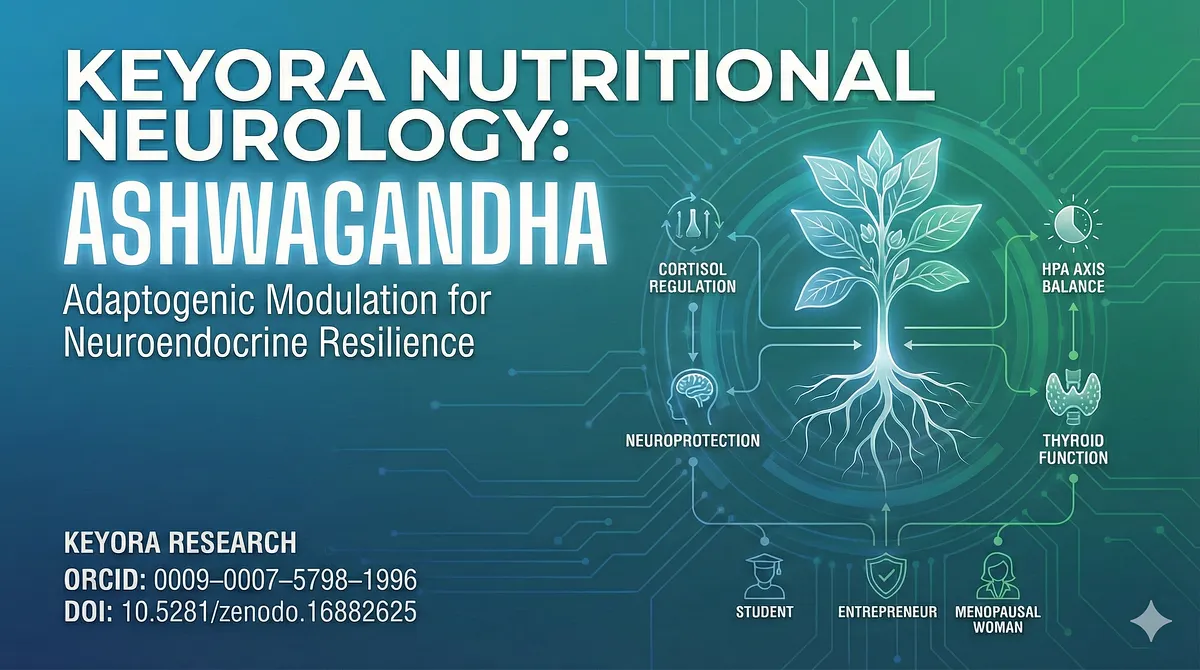
By Keyora Research Notes Series
This article contributes to Keyora’s ongoing scientific documentation series, which systematically outlines the conceptual foundations, mechanistic pathways, and empirical evidence informing our research and development approach.
ORCID: 0009–0007–5798–1996
Modern chronic stress is not just “high cortisol” or “feeling overwhelmed.”
As clarified in Episode 2, Keyora’s systems model defines chronic stress as a multi-axis breakdown involving disrupted circadian timing, impaired negative feedback, limbic hyperactivation, inflammatory amplification, and mitochondrial energy failure.
When these regulatory systems collapse simultaneously, the organism loses the ability to return to baseline. Stress becomes a self-sustaining physiological mode rather than a temporary state.
In the Keyora Nutritional Neurology framework, the HPA axis is conceptualized as the central integrator of four domains:
- cortisol as a biological timing signal,
- emotional salience circuits,
- inflammatory and immune signaling,
- ATP-driven mitochondrial capacity.
These domains form a tightly coupled system.
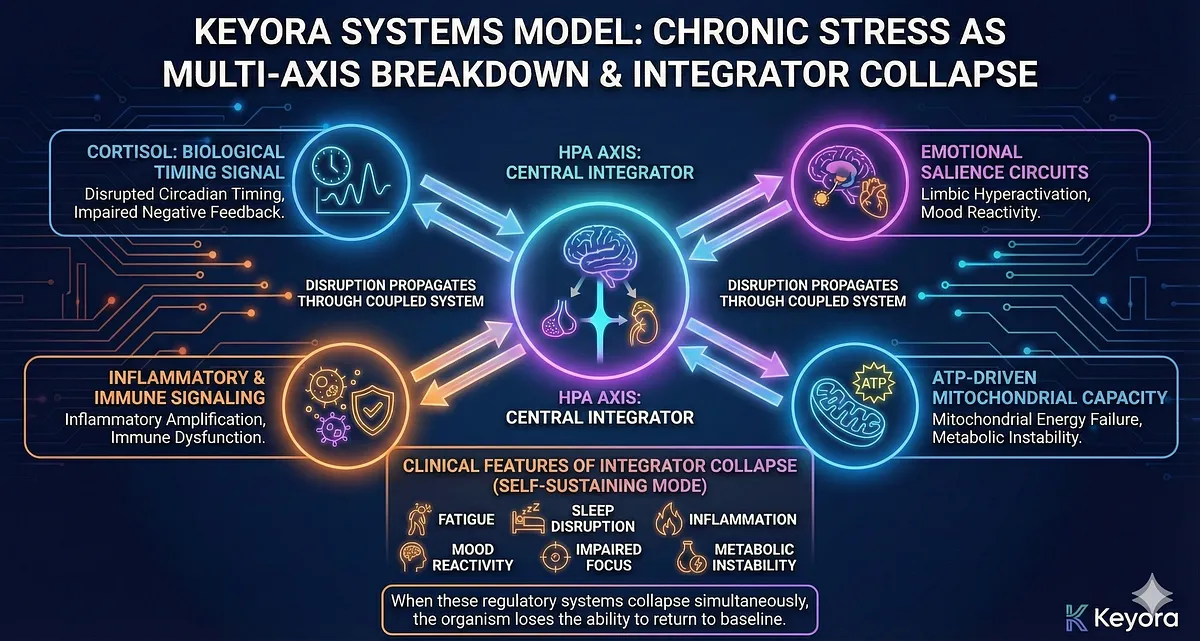
When one axis falters, disruption propagates through the others, generating the cluster of clinical features characteristic of modern burnout:
fatigue, sleep disruption, inflammation, mood reactivity, impaired focus, and metabolic instability.
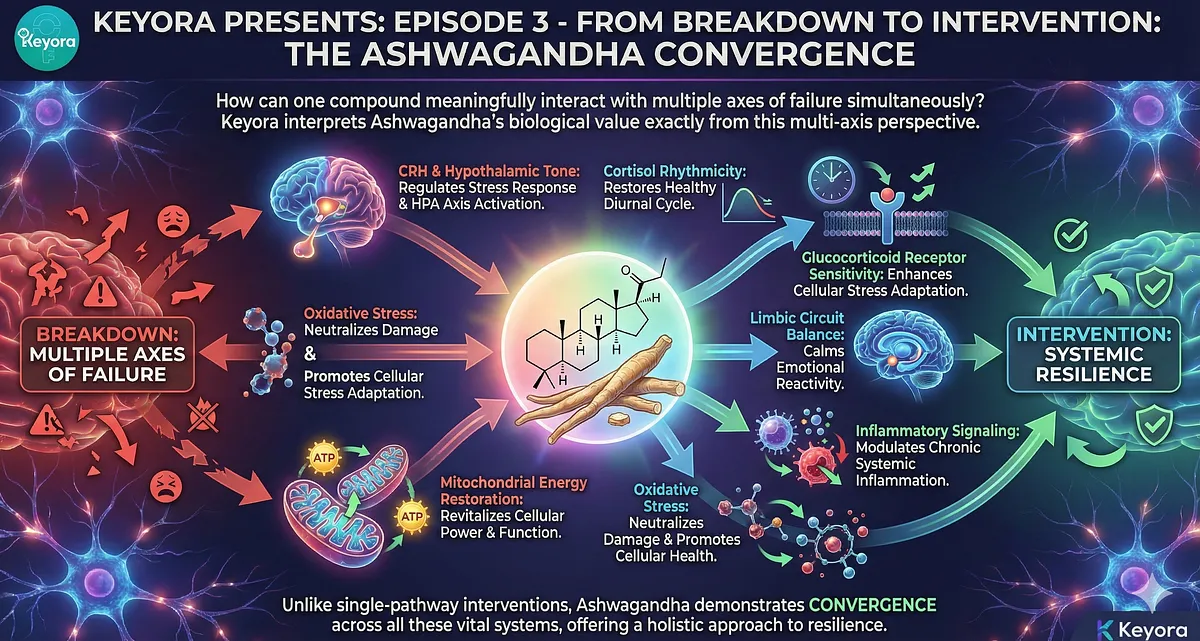
Episode 3 begins the transition from breakdown to intervention:
How can one compound meaningfully interact with multiple axes of failure simultaneously?
Keyora interprets Ashwagandha’s biological value exactly from this multi-axis perspective.
Unlike single-pathway interventions, Ashwagandha demonstrates convergence across:
- CRH and hypothalamic tone
- cortisol rhythmicity
- glucocorticoid receptor sensitivity
- limbic circuit balance
- inflammatory signaling
- oxidative stress
- mitochondrial energy restoration
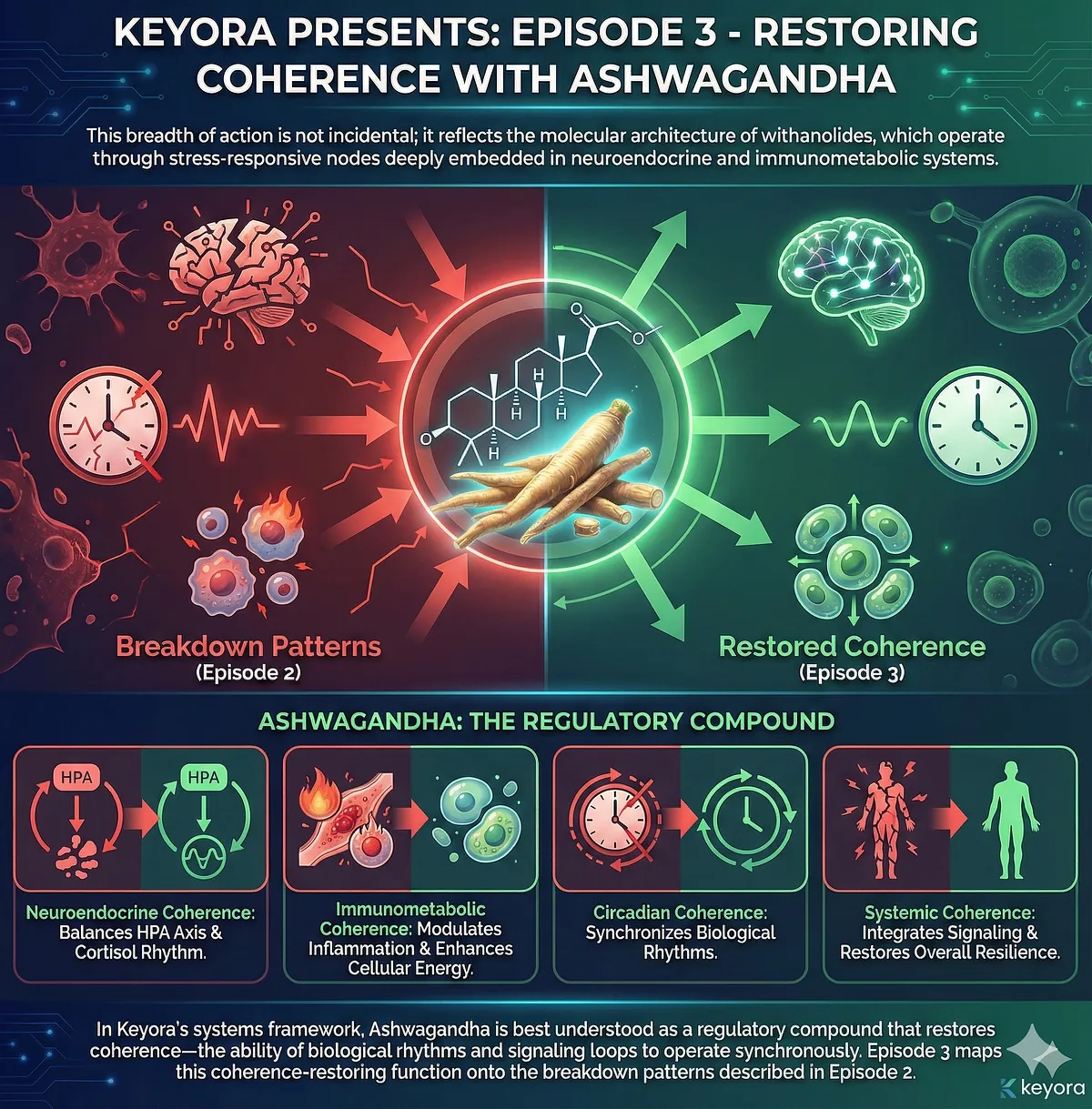
This breadth of action is not incidental; it reflects the molecular architecture of withanolides, which operate through stress-responsive nodes deeply embedded in neuroendocrine and immunometabolic systems.
In Keyora’s systems framework, Ashwagandha is best understood as a regulatory compound that restores coherence – the ability of biological rhythms and signaling loops to operate synchronously.
Episode 3 will map this coherence-restoring function onto the breakdown patterns described in Episode 2.
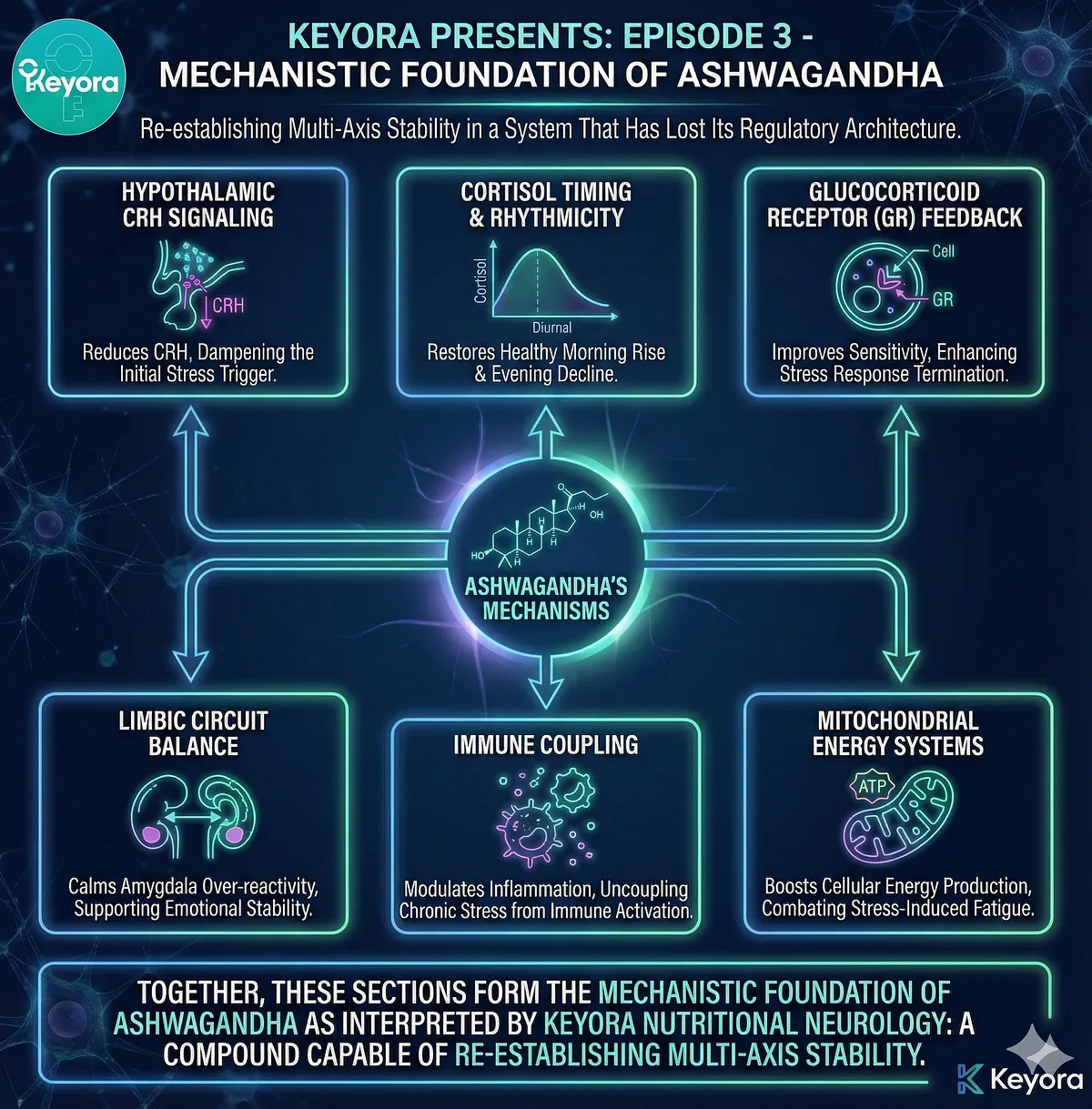
Each subsequent section will align a specific mechanism of Ashwagandha with one node of HPA dysregulation – beginning with its effects on hypothalamic CRH signaling and progressing through cortisol timing, GR feedback, limbic circuits, immune coupling, and mitochondrial energy systems.
Together, these sections form the mechanistic foundation of Ashwagandha as interpreted by Keyora Nutritional Neurology:
a compound capable of re-establishing multi-axis stability in a system that has lost its regulatory architecture.
– Keyora defines chronic stress as a multi-axis breakdown involving circadian, limbic, immune, and energy systems.
– HPA axis functions as a central integrator of timing, emotion, inflammation, and metabolism.
– Ashwagandha engages multiple nodes of this system simultaneously: CRH, cortisol rhythms, GR sensitivity, limbic balance, inflammation, and mitochondria.
– Keyora views Ashwagandha as a coherence-restoring compound capable of re-synchronizing disrupted regulatory loops.
– Episode 3 begins mapping Ashwagandha’s mechanisms onto the failure points described in Episode 2.
Section I
Keyora’s Systems Interpretation of Ashwagandha:
A Multi-Axis Regulatory Compound
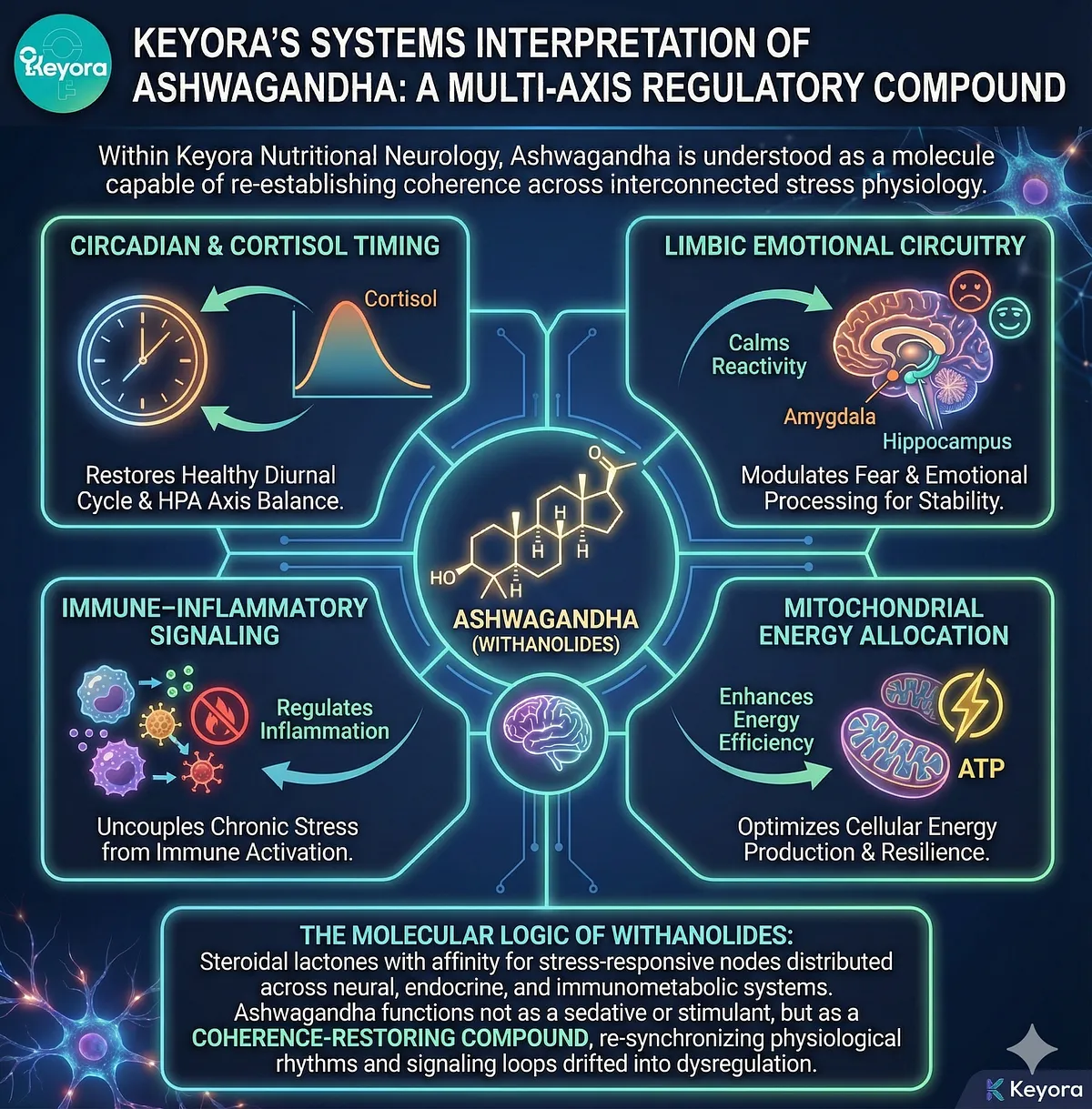
Within the Keyora Nutritional Neurology framework, Ashwagandha is understood not simply as an adaptogen, but as a multi-axis regulatory molecule capable of interacting with stress physiology at several deeply interconnected biological nodes.
This perspective arises from Keyora’s systems model of chronic stress, which identifies four domains whose breakdown produces the modern stress phenotype:
- circadian and cortisol timing,
- limbic emotional circuitry,
- immune–inflammatory signaling,
- mitochondrial energy allocation.
Ashwagandha’s value lies precisely in its ability to operate across all four domains simultaneously – something few natural or pharmacological agents can achieve without unfavorable trade-offs.
Keyora interprets this breadth of action as a direct consequence of the molecular logic of withanolides: steroidal lactones with affinity for stress-responsive nodes distributed across neural, endocrine, and immunometabolic systems.
Rather than acting as a sedative, stimulant, or endocrine modifier, Ashwagandha functions as a coherence-restoring compound – one that helps re-synchronize physiological rhythms and signaling loops that have drifted into dysregulation.
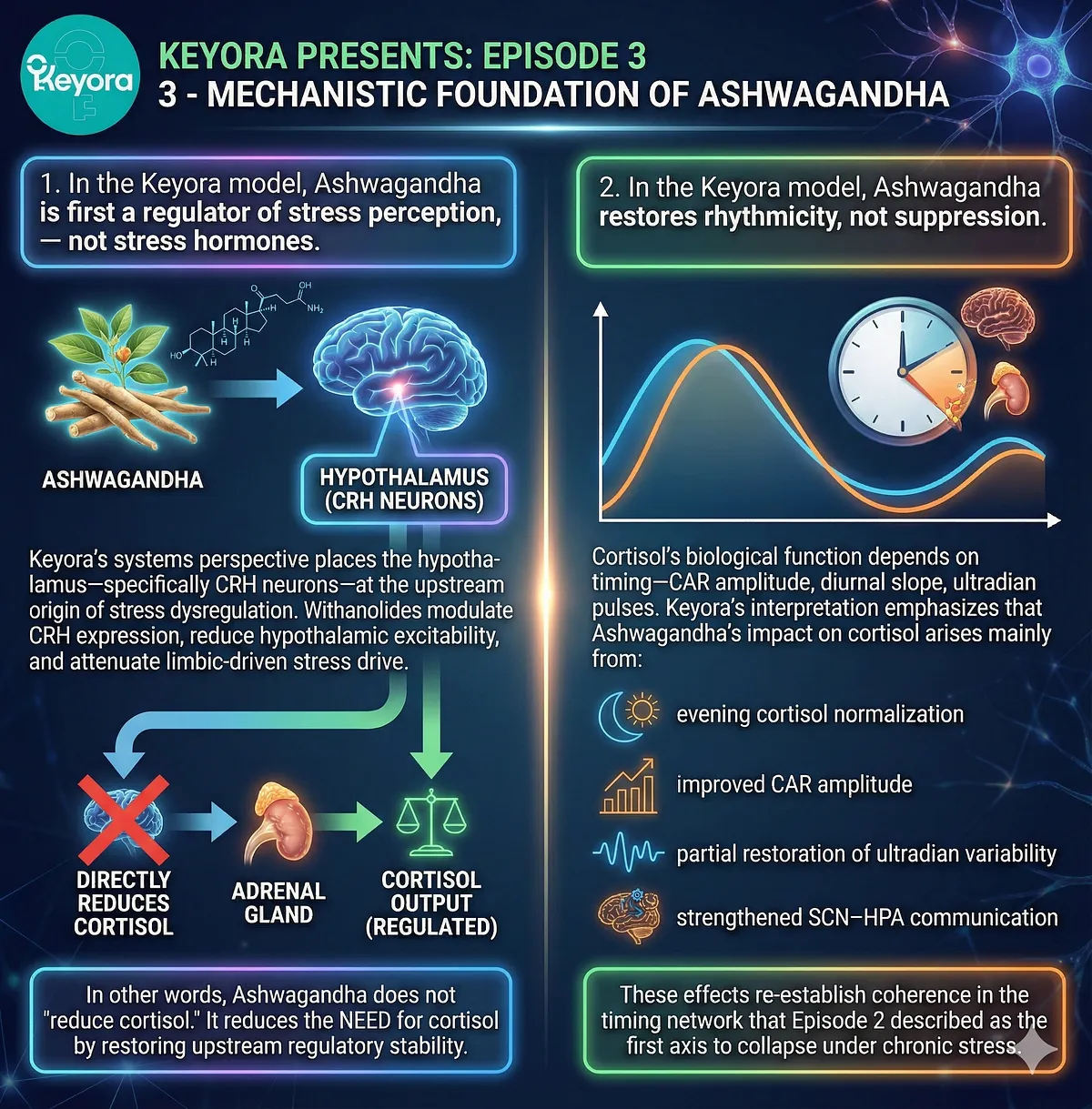
1. In the Keyora model, Ashwagandha is first a regulator of stress perception, not stress hormones
Keyora’s systems perspective places the hypothalamus – specifically CRH neurons – at the upstream origin of stress dysregulation.
Withanolides modulate CRH expression, reduce hypothalamic excitability, and attenuate limbic-driven stress drive.
In other words, Ashwagandha does not “reduce cortisol.”
It reduces the need for cortisol by restoring upstream regulatory stability.
2. In the Keyora model, Ashwagandha restores rhythmicity, not suppression
Cortisol’s biological function depends on timing – CAR amplitude, diurnal slope, ultradian pulses.
Keyora’s interpretation emphasizes that Ashwagandha’s impact on cortisol arises mainly from:
- evening cortisol normalization
- improved CAR amplitude
- partial restoration of ultradian variability
- strengthened SCN–HPA communication
These effects re-establish coherence in the timing network that Episode 2 described as the first axis to collapse under chronic stress.
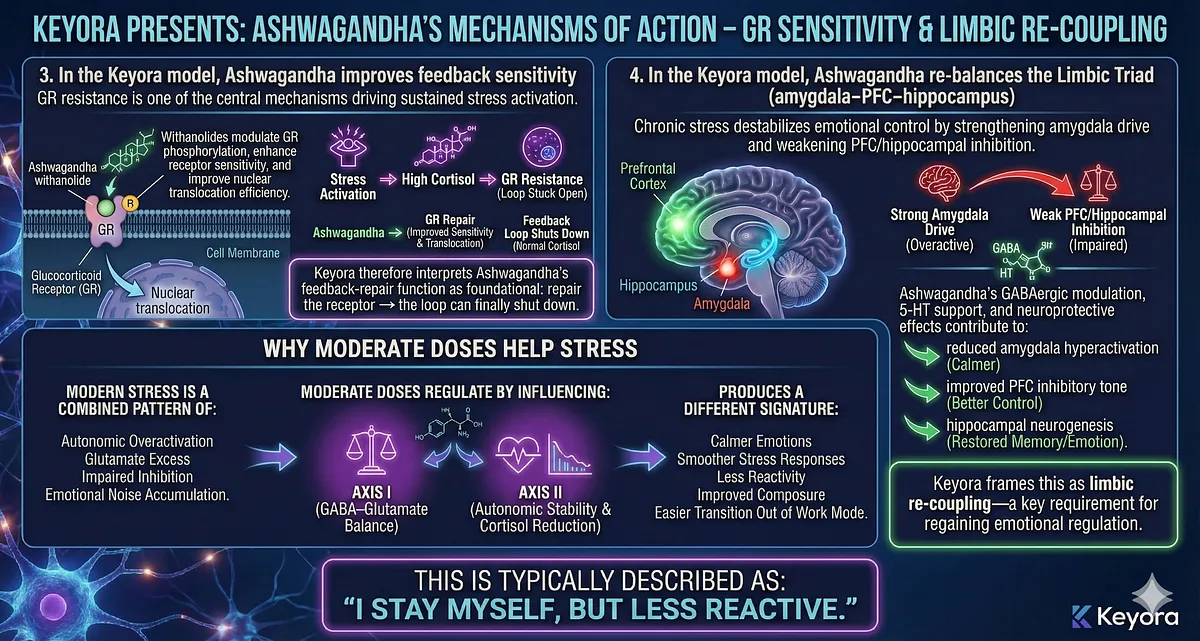
3. In the Keyora model, Ashwagandha improves feedback sensitivity
GR resistance is one of the central mechanisms driving sustained stress activation.
Withanolides modulate GR phosphorylation, enhance receptor sensitivity, and improve nuclear translocation efficiency.
Keyora therefore interprets Ashwagandha’s feedback-repair function as foundational:
repair the receptor → the loop can finally shut down.
4. In the Keyora model, Ashwagandha re-balances the Limbic Triad (amygdala–PFC–hippocampus)
Chronic stress destabilizes emotional control by strengthening amygdala drive and weakening PFC/hippocampal inhibition.
Ashwagandha’s GABAergic modulation, 5-HT support, and neuroprotective effects contribute to:
- reduced amygdala hyperactivation
- improved PFC inhibitory tone
- hippocampal neurogenesis
Keyora frames this as limbic re-coupling – a key requirement for regaining emotional regulation.
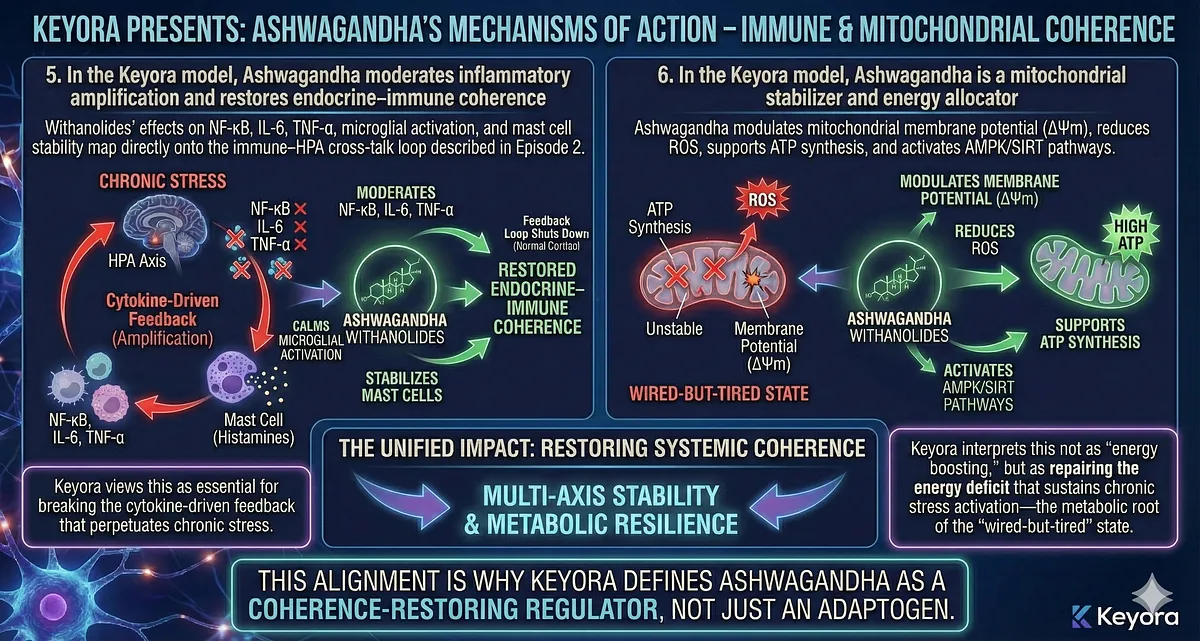
5. In the Keyora model, Ashwagandha moderates inflammatory amplification and restores endocrine–immune coherence
Withanolides’ effects on NF-κB, IL-6, TNF-α, microglial activation, and mast cell stability map directly onto the immune–HPA cross-talk loop described in Episode 2.
Keyora views this as essential for breaking the cytokine-driven feedback that perpetuates chronic stress.
6. In the Keyora model, Ashwagandha is a mitochondrial stabilizer and energy allocator
Ashwagandha modulates mitochondrial membrane potential (ΔΨm), reduces ROS, supports ATP synthesis, and activates AMPK/SIRT pathways.
Keyora interprets this not as “energy boosting,” but as repairing the energy deficit that sustains chronic stress activation – the metabolic root of the “wired-but-tired” state.
Keyora’s Unified Interpretation
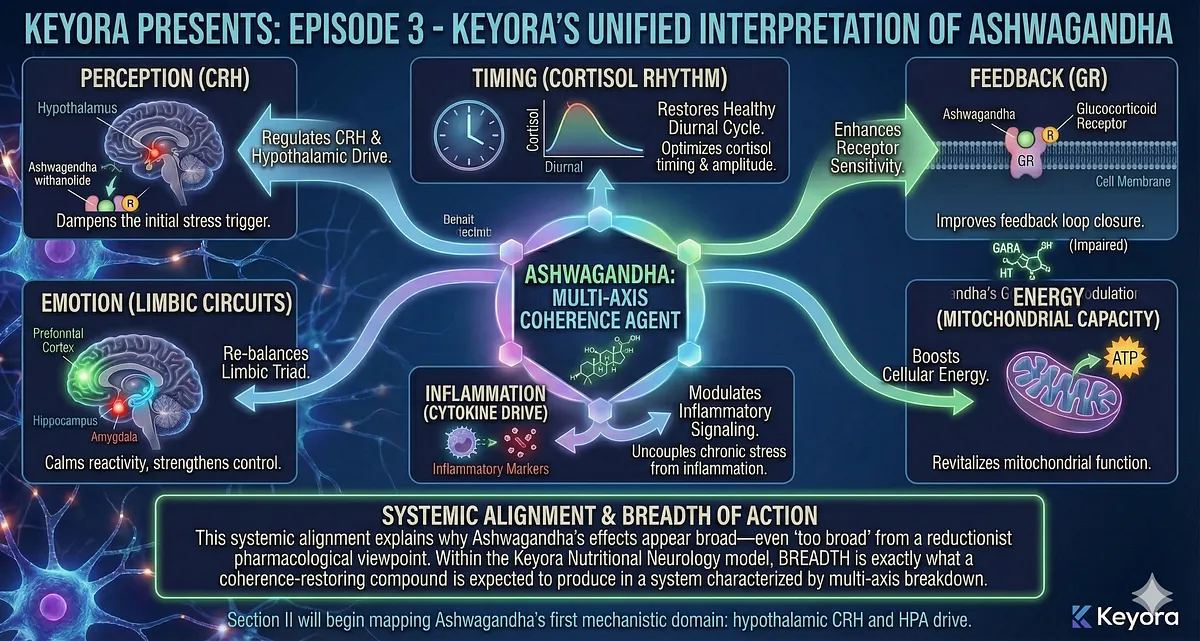
Taken together, Keyora conceptualizes Ashwagandha as a multi-axis coherence agent whose mechanistic actions converge on the same failure points that define chronic stress:
- perception (CRH)
- timing (cortisol rhythm)
- feedback (GR)
- emotion (limbic circuits)
- inflammation (cytokine drive)
- energy (mitochondrial capacity)
This systemic alignment explains why Ashwagandha’s effects appear broad – even “too broad” from a reductionist pharmacological viewpoint.
Within the Keyora Nutritional Neurology model, breadth is exactly what a coherence-restoring compound is expected to produce in a system characterized by multi-axis breakdown.
Section II will begin mapping Ashwagandha’s first mechanistic domain: hypothalamic CRH and HPA drive.
– Keyora views Ashwagandha as a multi-axis regulatory molecule, not a simple adaptogen.
– It operates across four domains: cortisol timing, limbic circuits, immune signaling, and mitochondrial energy.
– Ashwagandha reduces stress perception via CRH downregulation, not cortisol suppression.
– It restores cortisol rhythmicity – CAR, diurnal slope, ultradian pulses – rather than lowering cortisol globally.
– It enhances glucocorticoid receptor sensitivity, repairing feedback loops.
– It re-couples the amygdala–PFC–hippocampus circuit to restore emotional regulation.
– It suppresses NF-κB and cytokine-driven HPA activation.
– It stabilizes mitochondrial energy systems, reversing the “wired-but-tired” state.
Section II
Modulation of CRH and Hypothalamic Drive:
Keyora’s Upstream Model of Stress Regulation
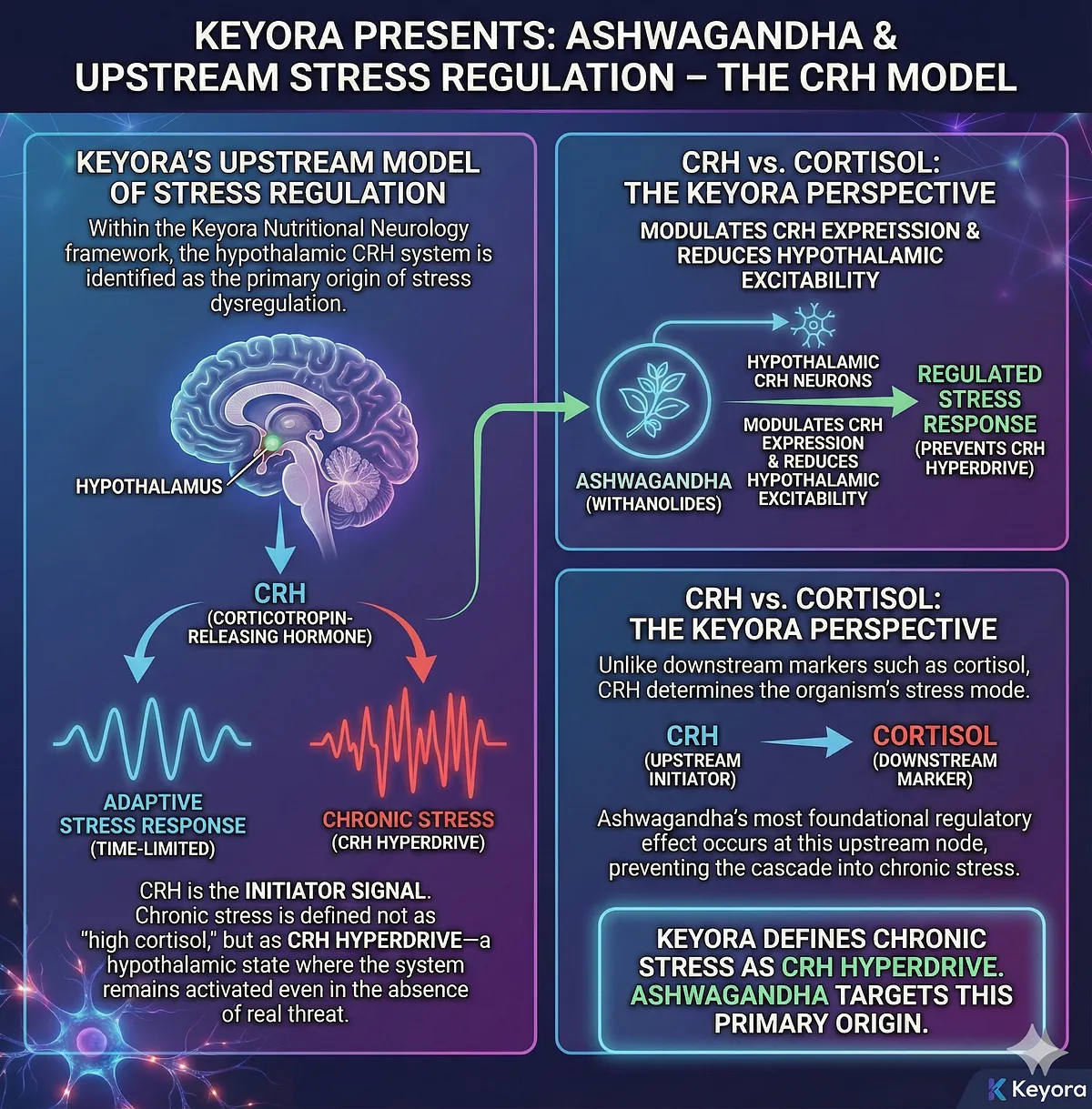
Within the Keyora Nutritional Neurology framework, the hypothalamic CRH (corticotropin-releasing hormone) system is identified as the primary origin of stress dysregulation.
Unlike downstream markers such as cortisol, CRH is the initiator signal that determines whether the organism enters an adaptive, time-limited stress response or slips into the chronic, self-perpetuating mode described in Episode 2.
Keyora defines chronic stress not as “high cortisol,” but as CRH hyperdrive – a hypothalamic state in which the system remains activated even in the absence of real threat.
Ashwagandha’s most foundational regulatory effect occurs at this upstream node.
1. Keyora’s Interpretation: CRH Hyperdrive Is the First Point of Systemic Failure
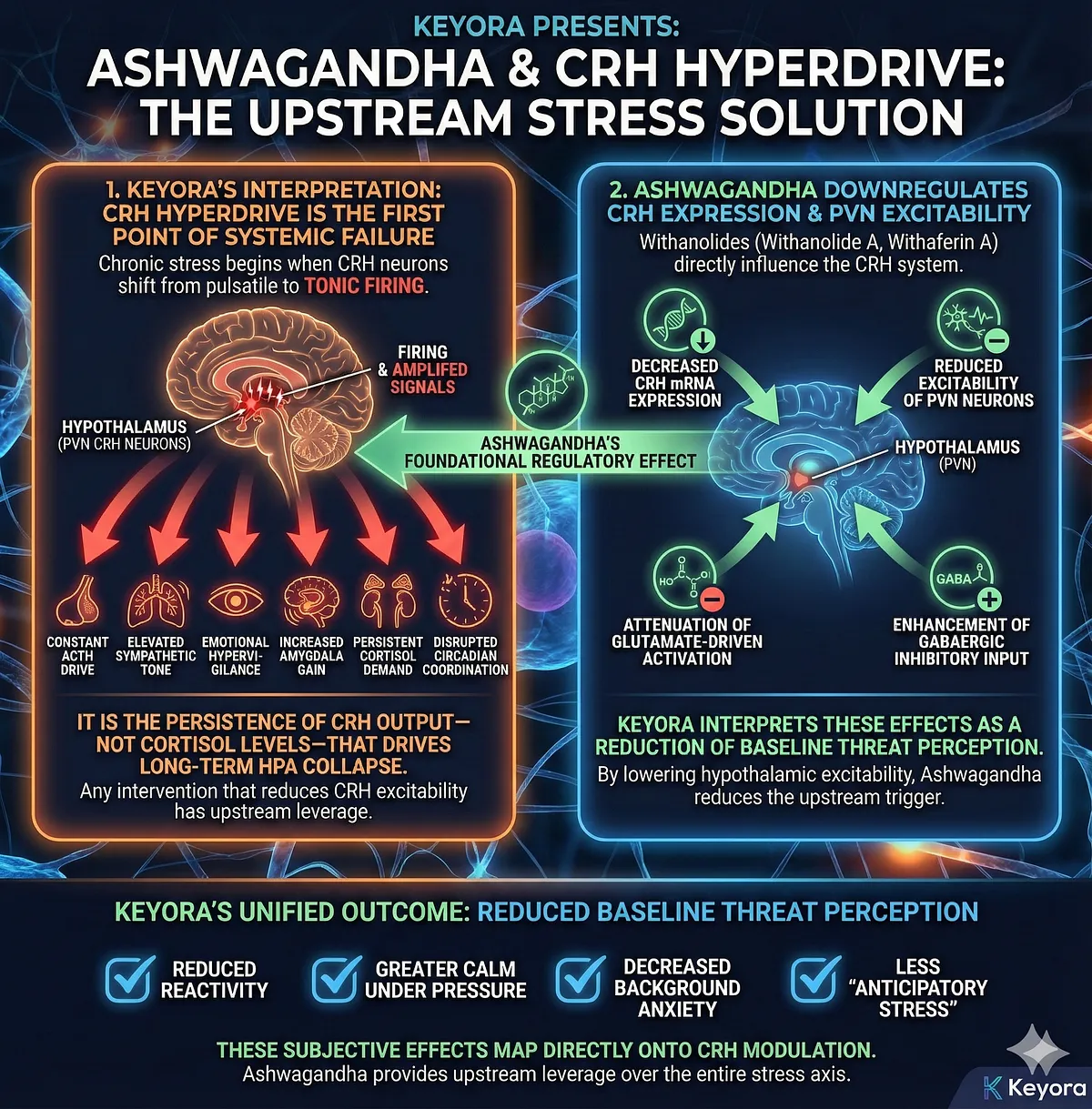
Based on Keyora’s system mapping, chronic stress begins when CRH neurons in the paraventricular nucleus (PVN) shift from pulsatile, event-driven activation to tonic firing.
This produces:
- constant ACTH drive
- elevated sympathetic tone
- emotional hypervigilance
- increased amygdala gain
- persistent cortisol demand
- disrupted circadian coordination
It is the persistence of CRH output – not cortisol levels – that drives the long-term collapse of HPA function.
Thus, in the Keyora framework, any intervention that reduces CRH excitability has upstream leverage over the entire stress axis.
2. Ashwagandha Downregulates CRH Expression and PVN Excitability
Withanolides (especially withanolide A and withaferin A) directly influence the CRH system through:
- decreased CRH mRNA expression
- reduced excitability of PVN neurons
- attenuation of glutamate-driven hypothalamic activation
- enhancement of GABAergic inhibitory input into the hypothalamus
Keyora interprets these effects as a reduction of baseline threat perception.
By lowering hypothalamic excitability, Ashwagandha reduces the upstream trigger of stress-state activation.
This is why individuals often report:
- reduced reactivity
- greater calm under pressure
- decreased background anxiety
- less “anticipatory stress”
These subjective effects map directly onto CRH modulation.
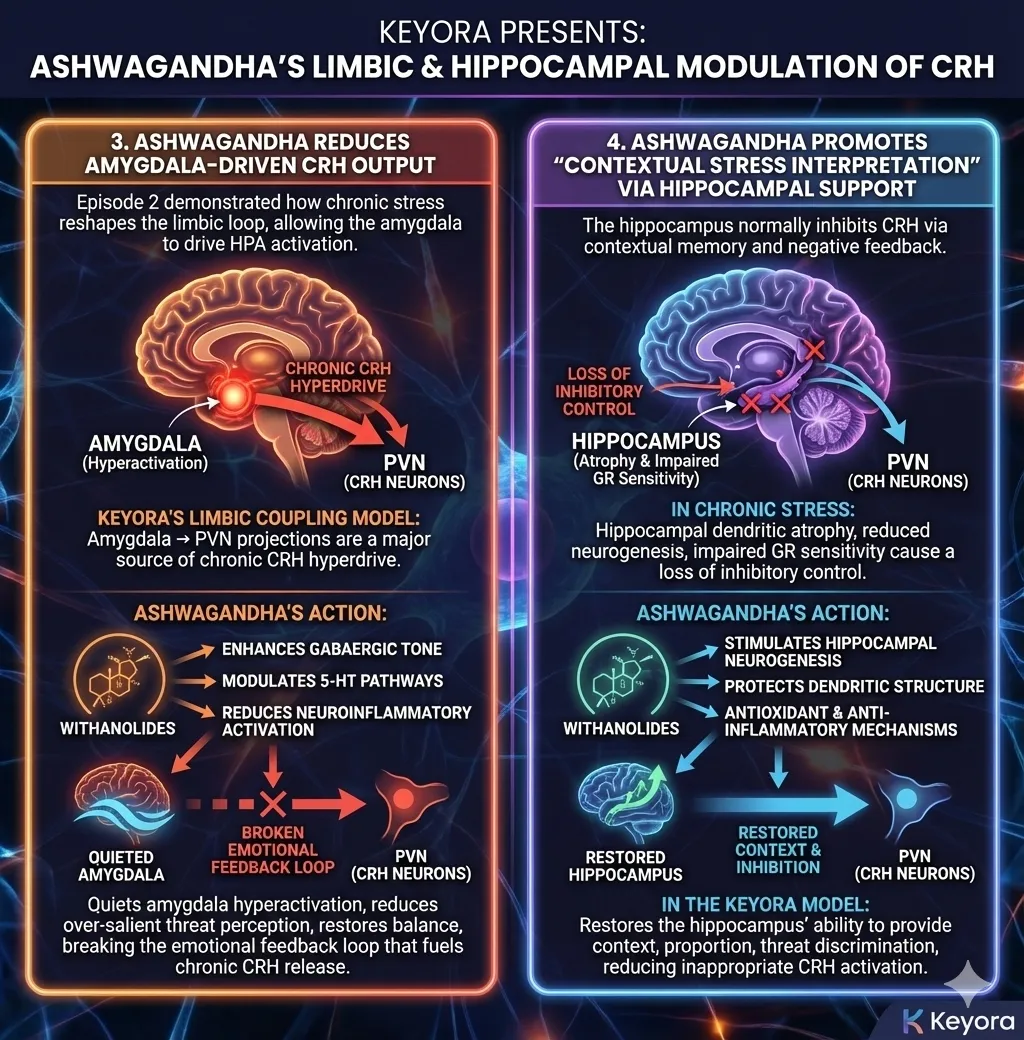
3. Ashwagandha Reduces Amygdala-Driven CRH Output
Episode 2 demonstrated how chronic stress reshapes the limbic loop, allowing the amygdala to drive HPA activation.
Keyora’s limbic coupling model emphasizes that: amygdala → PVN projections are a major source of chronic CRH hyperdrive.
By enhancing GABAergic tone, modulating 5-HT pathways, and reducing neuroinflammatory activation, Ashwagandha:
- quiets amygdala hyperactivation
- reduces over-salient threat perception
- restores balance between emotional appraisal and hypothalamic output
This breaks the emotional feedback loop that fuels chronic CRH release.
4. Ashwagandha Promotes “Contextual Stress Interpretation” via Hippocampal Support
The hippocampus normally inhibits CRH via contextual memory and negative feedback.
But in chronic stress:
- hippocampal dendritic atrophy
- reduced neurogenesis
- impaired GR sensitivity
cause a loss of inhibitory control.
Ashwagandha stimulates hippocampal neurogenesis and protects dendritic structure through antioxidant and anti-inflammatory mechanisms.
In the Keyora model, this restores the hippocampus’ ability to provide:
- context
- proportion
- threat discrimination
reducing inappropriate CRH activation.
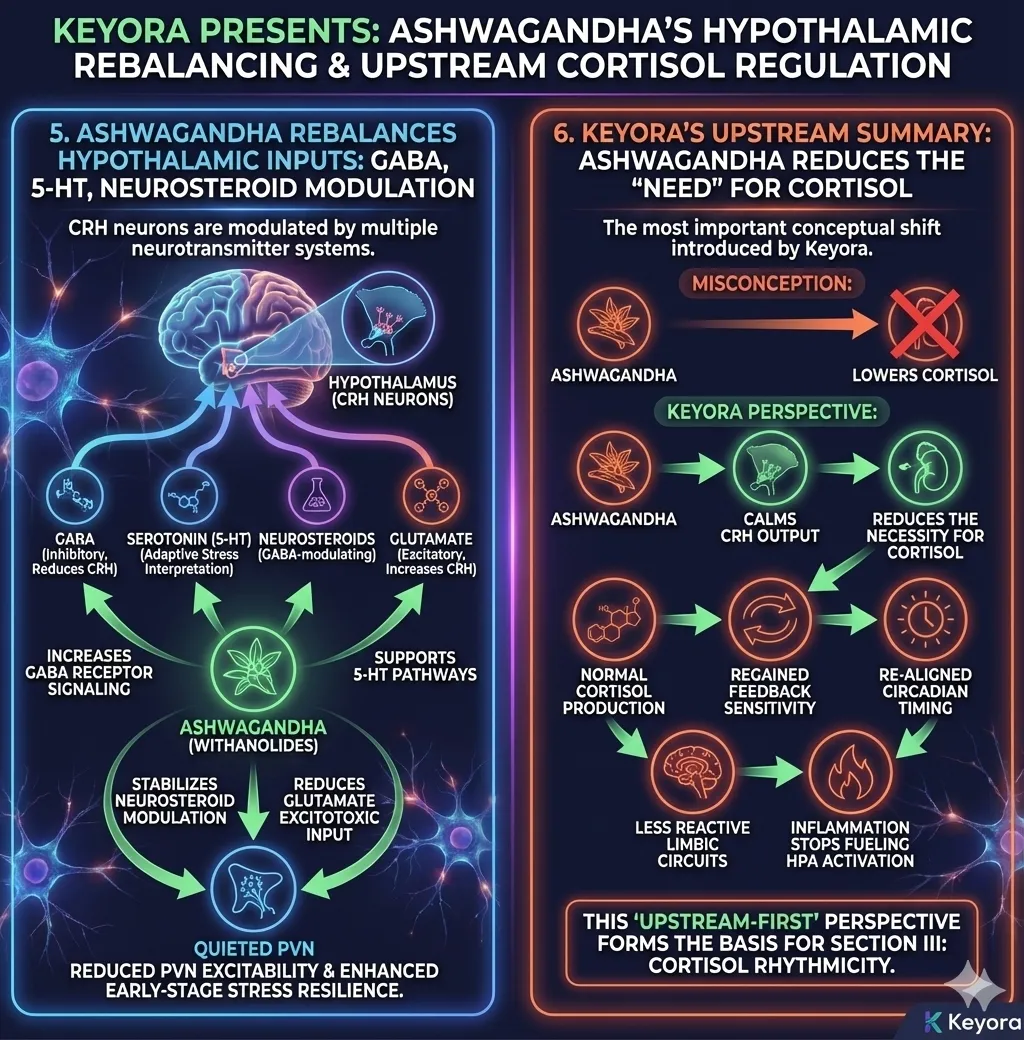
5. Ashwagandha Rebalances Hypothalamic Inputs: GABA, 5-HT, and Neurosteroid Modulation
CRH neurons are modulated by multiple neurotransmitter systems:
- GABA (inhibitory, reduces CRH)
- Serotonin (5-HT) (supports adaptive stress interpretation)
- Neurosteroids (GABA-modulating)
- Glutamate (excitatory, increases CRH)
Keyora interprets Ashwagandha’s neurotransmitter effects as part of a multi-input balancing mechanism:
- increases GABA receptor signaling
- supports 5-HT pathways without serotonergic overstimulation
- reduces glutamate excitotoxic input
- stabilizes neurosteroid modulation
Together, these reduce PVN excitability and support early-stage stress resilience.
6. Keyora’s Upstream Summary: Ashwagandha Reduces the “Need” for Cortisol
The most important conceptual shift introduced by Keyora is:
Ashwagandha does not lower cortisol.
It lowers the necessity for cortisol by calming CRH output.
When CRH is stabilized:
- cortisol production normalizes naturally
- feedback loops regain sensitivity
- circadian timing re-aligns
- limbic circuits become less reactive
- inflammation stops fueling HPA activation
This “upstream-first” perspective forms the mechanistic basis for the entire remainder of Episode 3.
Section III will now extend this logic into cortisol rhythmicity—the second axis of restoration.
– Keyora defines chronic stress as CRH hyperdrive, not cortisol elevation.
– Ashwagandha downregulates CRH expression and reduces PVN neuron excitability.
– It weakens amygdala-driven HPA activation through GABA and 5-HT modulation.
– Hippocampal neurogenesis from Ashwagandha restores contextual inhibition of CRH.
– Neurotransmitter balancing (GABA↑, glutamate↓, 5-HT support) reduces hypothalamic activation.
– Keyora interprets Ashwagandha’s main effect as reducing the organism’s “need” for cortisol by stabilizing upstream drive.
Section III
Restoration of Cortisol Rhythmicity: Rebuilding the Biological Timing Network
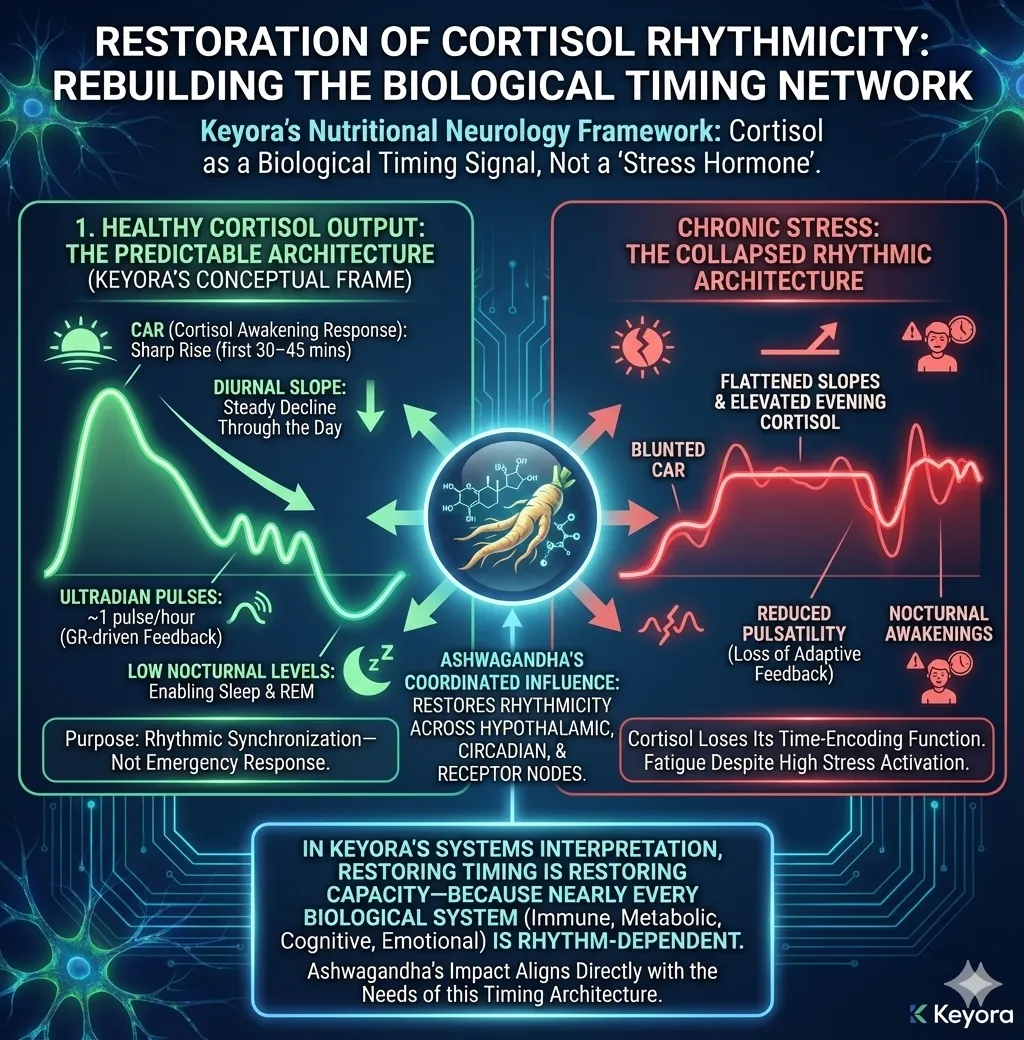
Within the Keyora Nutritional Neurology framework, cortisol is conceptualized not as a “stress hormone,” but as a biological timing signal.
Its purpose is rhythmic synchronization – not emergency response.
Yet, under chronic stress, the rhythmic architecture collapses:
morning peaks flatten, evening levels rise, ultradian pulsatility disappears, and cortisol loses its time-encoding function.
Keyora’s model views this disruption as a distinct axis of stress pathology, separate from CRH hyperdrive, and one that cannot be repaired solely through downstream suppression.
Instead, restoration requires coordinated influence across hypothalamic, circadian, and receptor-level nodes – precisely where Ashwagandha exerts multi-axis effects.
1. Cortisol Rhythmicity as a Systems Marker (Keyora’s Conceptual Frame)
Healthy cortisol output follows a predictable architecture:
- CAR (Cortisol Awakening Response): sharp rise in first 30–45 minutes
- Diurnal Slope: steady decline through the day
- Ultradian Pulses: ~1 pulse/hour reflecting GR-driven feedback
- Low Nocturnal Levels: enabling sleep initiation and REM cycling
Chronic stress disrupts every layer of this pattern, producing:
- blunted CAR
- flattened slopes
- elevated evening cortisol
- reduced pulsatility (loss of adaptive feedback)
- nocturnal awakenings
- fatigue despite high stress activation
In Keyora’s systems interpretation, restoring timing is restoring capacity – because nearly every biological system (immune, metabolic, cognitive, emotional) is rhythm-dependent.
Ashwagandha’s impact on the HPA axis aligns directly with the needs of this timing architecture.
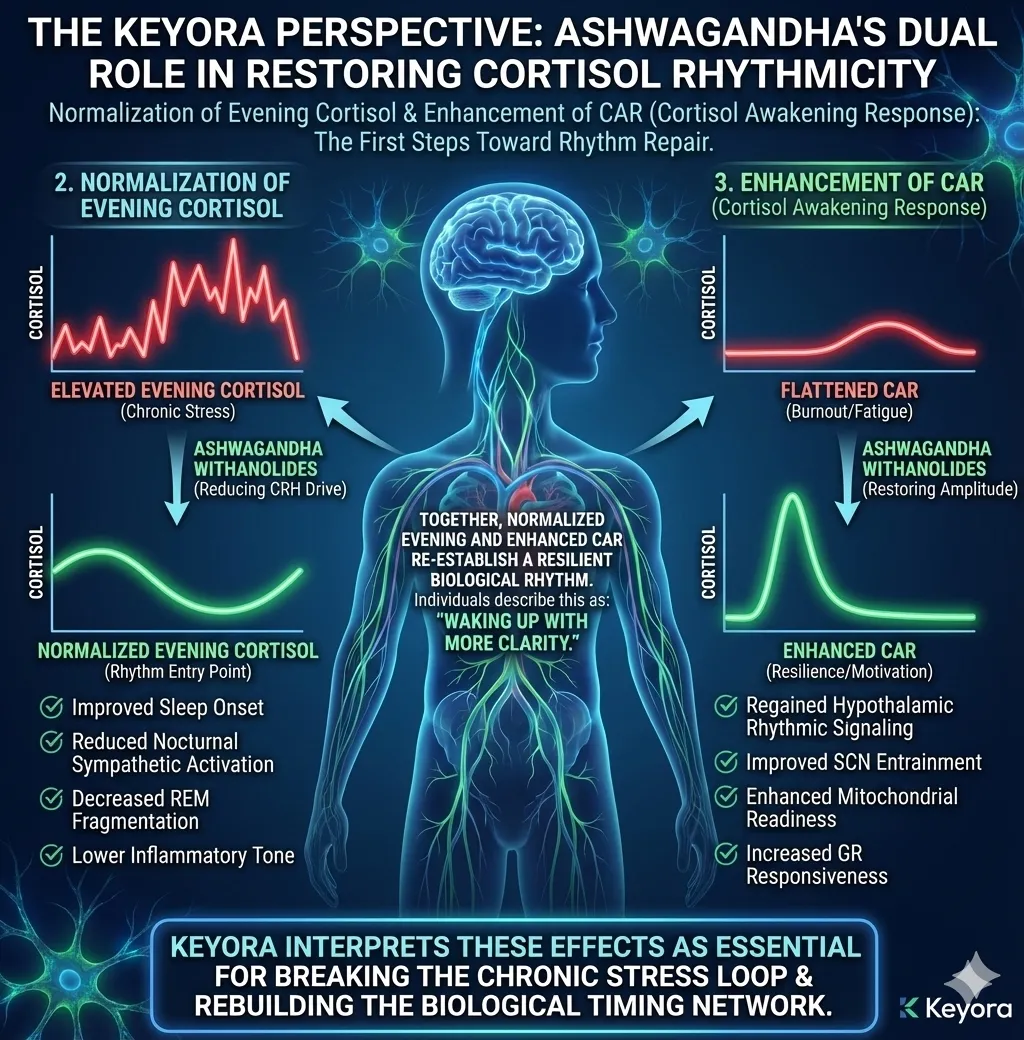
2. Normalization of Evening Cortisol: The First Step Toward Rhythm Repair
A consistent finding across human studies is that Ashwagandha reduces elevated evening cortisol, not by global suppression but by decreasing upstream CRH drive (Episode 3, Section II).
Keyora interprets evening normalization as the entry point to restoring overall rhythm:
- improved sleep onset
- reduced nocturnal sympathetic activation
- decreased REM fragmentation
- lower inflammatory tone overnight
Once night-time cortisol is normalized, the circadian machinery (SCN → HPA axis coupling) can reassert control, allowing the next morning’s CAR to recover.
3. Enhancement of CAR (Cortisol Awakening Response)
Contrary to simplistic assumptions, a strong CAR is a marker of resilience, motivation, and executive function.
Flattened CAR is associated with:
- burnout
- depression
- chronic fatigue
- impaired working memory
- reduced stress tolerance
Ashwagandha has been shown to restore CAR amplitude, which Keyora interprets mechanistically as:
- regained hypothalamic rhythmic signaling
- improved SCN entrainment
- enhanced mitochondrial readiness upon waking
- increased GR responsiveness during morning hours
Together, this produces what individuals often describe as “waking up with more clarity.”
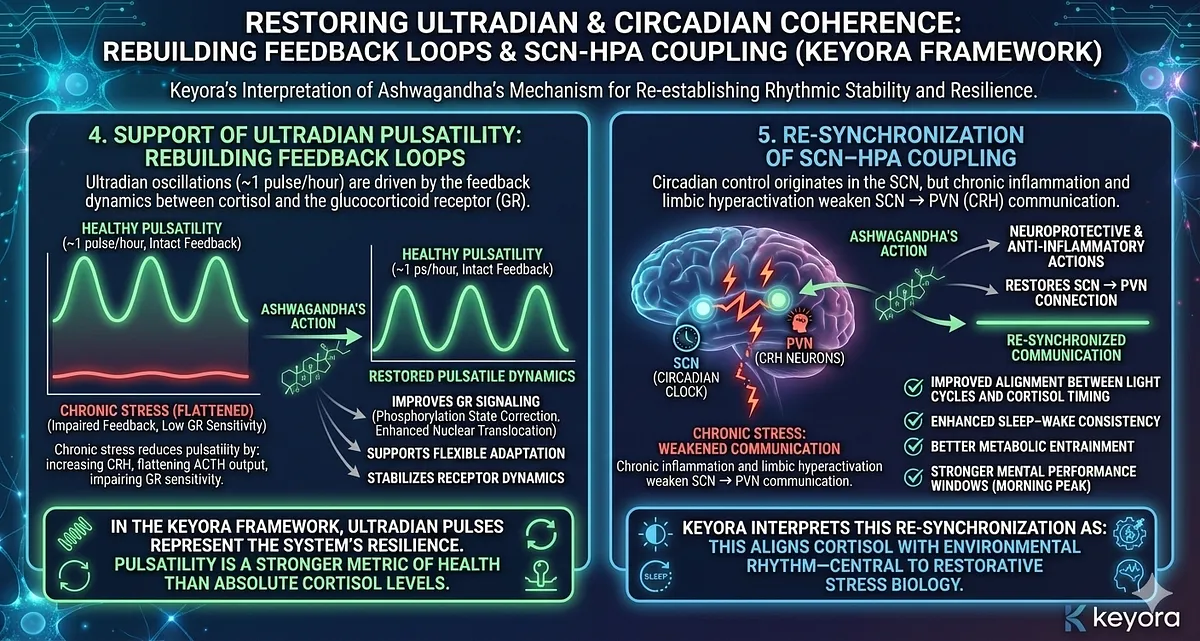
4. Support of Ultradian Pulsatility: Rebuilding Feedback Loops
Ultradian oscillations (~1 pulse/hour) are driven by the feedback dynamics between cortisol and the glucocorticoid receptor (GR).
Chronic stress reduces pulsatility by:
- increasing CRH
- flattening ACTH output
- impairing GR sensitivity
Ashwagandha’s improvement in GR signaling—including phosphorylation state correction and enhanced nuclear translocation—supports restoration of these ultradian pulses.
In the Keyora framework, ultradian pulses represent the system’s resilience, because they reflect:
- flexible adaptation
- intact feedback
- stable receptor dynamics
Pulsatility is a stronger metric of health than absolute cortisol levels.
5. Re-Synchronization of SCN–HPA Coupling
Circadian control originates in the SCN, but chronic inflammation and limbic hyperactivation weaken SCN → PVN (CRH) communication.
Ashwagandha’s neuroprotective and anti-inflammatory actions help restore this connection.
Keyora interprets this re-synchronization as:
- improved alignment between light cycles and cortisol timing
- enhanced sleep–wake consistency
- better metabolic entrainment
- stronger mental performance windows (morning peak)
This aligns cortisol with environmental rhythm – central to restorative stress biology.
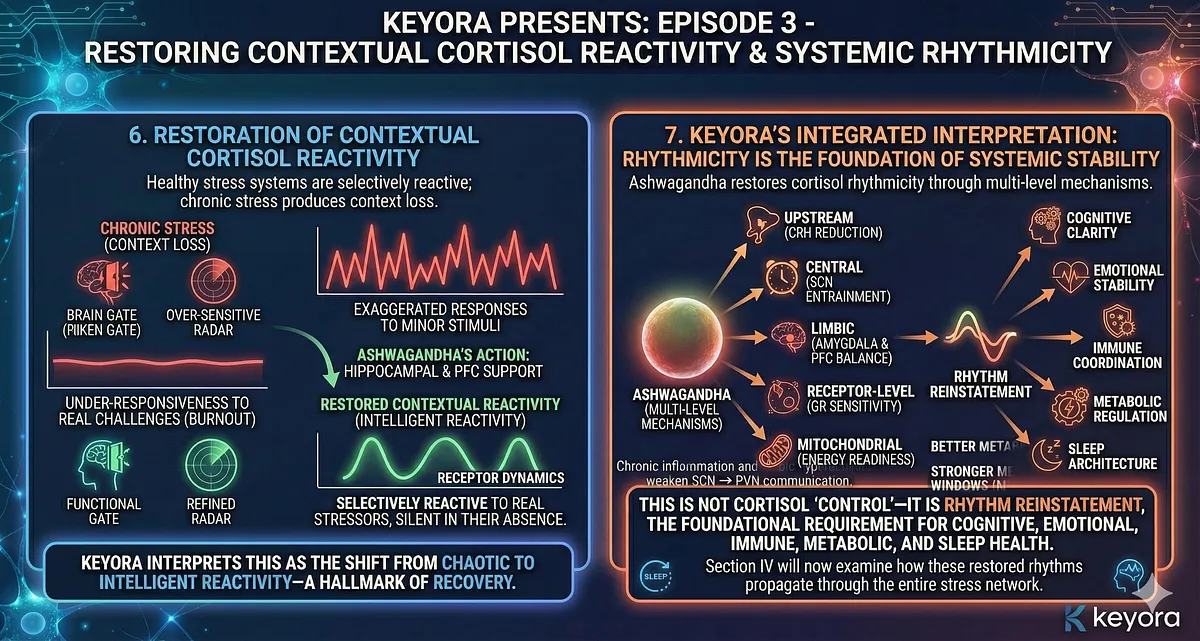
6. Restoration of Contextual Cortisol Reactivity
Healthy stress systems are not “calm all the time.”
They are selectively reactive – highly responsive to real stressors and silent in their absence.
Chronic stress produces context loss, creating:
- exaggerated responses to minor stimuli
- under-responsiveness to real challenges (burnout)
By supporting hippocampal and PFC function, Ashwagandha restores contextual gating of cortisol responses.
Keyora interprets this as the shift from chaotic to intelligent reactivity – a hallmark of recovery.
7. Keyora’s Integrated Interpretation: Rhythmicity Is the Foundation of Systemic Stability
Ashwagandha restores cortisol rhythmicity through multi-level mechanisms:
- upstream (CRH reduction)
- central (SCN entrainment)
- limbic (amygdala and PFC balance)
- receptor-level (GR sensitivity)
- mitochondrial (energy readiness)
This is not cortisol “control” – it is rhythm reinstatement, the foundational requirement for cognitive clarity, emotional stability, immune coordination, metabolic regulation, and sleep architecture.
Section IV will now examine how these restored rhythms propagate through the entire stress network.
– Keyora defines cortisol as a timing signal, not merely a stress hormone.
– Chronic stress disrupts CAR, diurnal slope, ultradian pulsatility, and nocturnal suppression.
– Ashwagandha normalizes evening cortisol, enabling circadian repair.
– It enhances CAR amplitude—restoring morning readiness and cognitive function.
– With GR sensitivity restored, ultradian feedback pulses reappear.
– Ashwagandha supports SCN–HPA re-synchronization and contextual cortisol reactivity.
– Keyora interprets these effects as reinstating the biological timing network.
Section IV
Glucocorticoid Receptor Sensitivity and Feedback Restoration
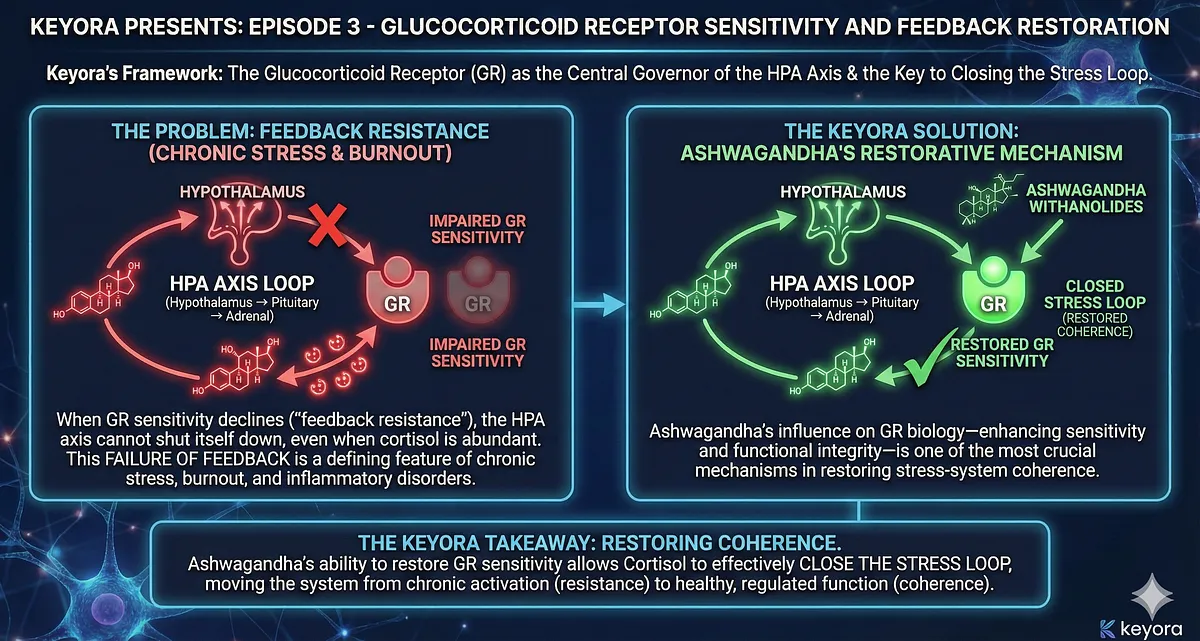
In the Keyora Nutritional Neurology framework, the glucocorticoid receptor (GR) is positioned as the central governor of the HPA axis.
While cortisol rhythmicity (Section III) shapes biological timing, it is the sensitivity and functional integrity of GR that determines whether cortisol can effectively close the stress loop.
When GR sensitivity declines – a condition Keyora terms feedback resistance – the HPA axis cannot shut itself down, even when cortisol is abundant.
This failure of feedback is a defining feature of chronic stress, burnout, and stress-induced inflammatory disorders.
Ashwagandha’s influence on GR biology is therefore one of the most crucial mechanisms in restoring stress-system coherence.
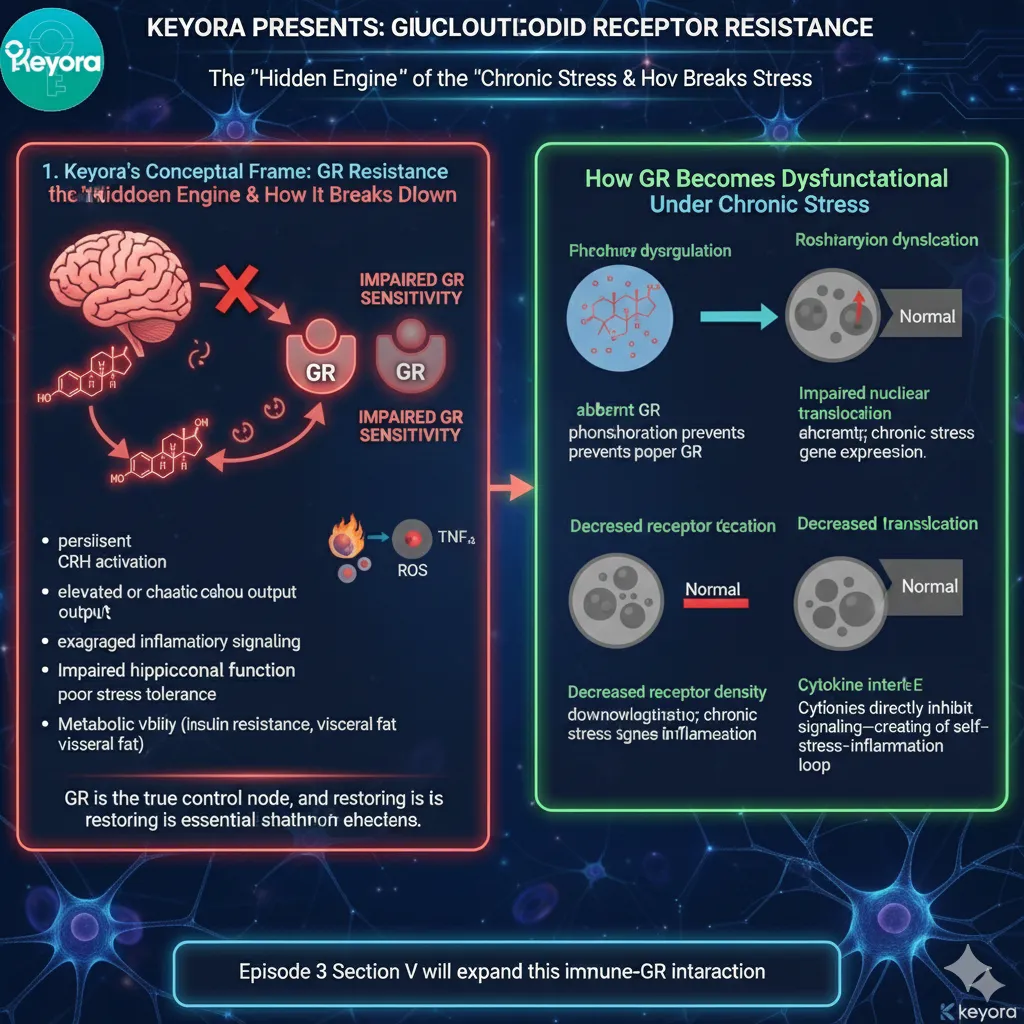
1. Keyora’s Conceptual Frame: GR Resistance Is the “Hidden Engine” of Chronic Stress
Chronic stress is often mistaken as “high cortisol,” but Keyora’s model emphasizes the opposite: the deeper pathology is ineffective cortisol, driven by dysfunctional GR.
GR resistance leads to:
- persistent CRH activation
- elevated or chaotic cortisol output
- exaggerated inflammatory signaling
- impaired hippocampal function
- poor stress tolerance
- metabolic vulnerability (insulin resistance, visceral fat)
Even normal cortisol levels cannot regulate the system when receptor function is impaired.
Thus, GR is the true control node, and restoring its sensitivity is essential for systemic recovery.
2. How GR Becomes Dysfunctional Under Chronic Stress
Keyora identifies four primary mechanisms of GR impairment:
(1) Phosphorylation dysregulation
Chronic inflammation and ROS lead to aberrant GR phosphorylation, preventing proper activation and nuclear translocation.
(2) Impaired nuclear translocation
GR must enter the nucleus to regulate gene expression; chronic stress disrupts this process.
(3) Decreased receptor density
Sustained cortisol exposure downregulates GR expression in key regions like the hippocampus.
(4) Cytokine interference
IL-6, TNF-α, and NF-κB directly inhibit GR signaling – creating a self-perpetuating stress–inflammation loop.
Episode 3 Section V will expand on this immune–GR interaction.
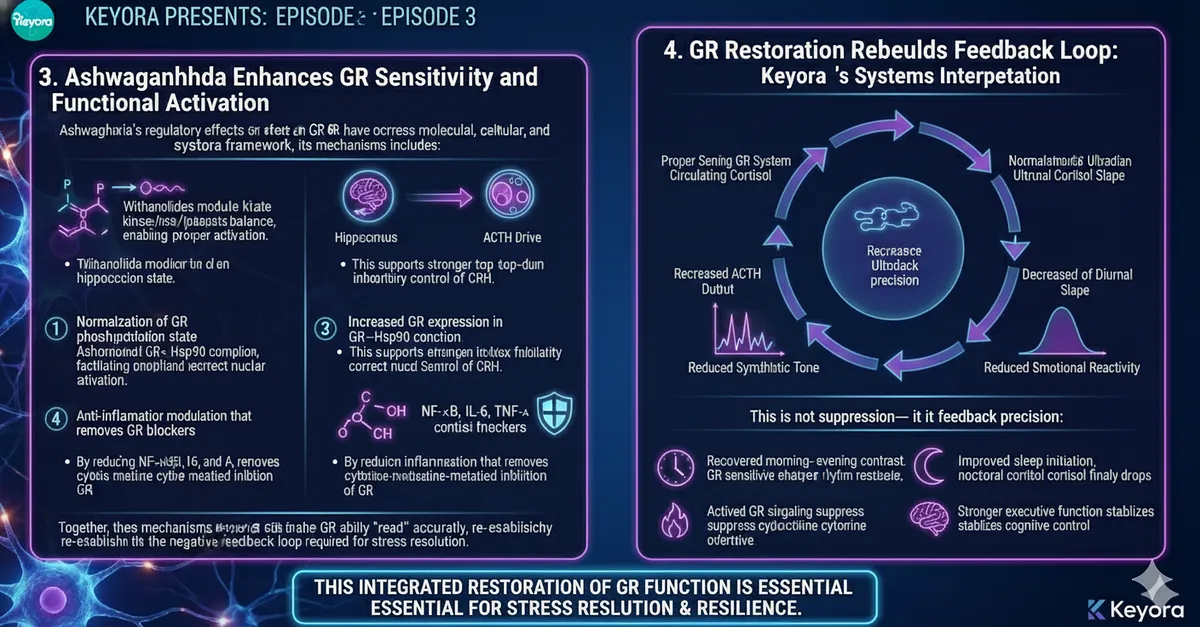
3. Ashwagandha Enhances GR Sensitivity and Functional Activation
Ashwagandha’s regulatory effects on GR have been observed across molecular, cellular, and systemic layers.
Within the Keyora framework, its mechanisms include:
(1) Normalization of GR phosphorylation state
Withanolides modulate kinase/phosphatase balance, enabling proper receptor activation.
(2) Improved nuclear translocation
Ashwagandha enhances the GR–Hsp90 complex function, facilitating correct nuclear entry.
(3) Increased GR expression in the hippocampus and PFC
This supports stronger top-down inhibitory control of CRH.
(4) Anti-inflammatory modulation that removes GR blockers
By reducing NF-κB, IL-6, and TNF-α, Ashwagandha removes cytokine-mediated inhibition of GR.
Together, these mechanisms restore GR’s ability to “read” cortisol accurately, re-establishing the negative feedback loop required for stress resolution.
4. GR Restoration Rebuilds the Feedback Loop: Keyora’s Systems Interpretation
A functional GR system produces:
- proper sensing of circulating cortisol
- reduction of CRH output
- decreased ACTH drive
- reappearance of ultradian feedback pulses
- normalization of diurnal cortisol slope
- reduced sympathetic tone
- stabilized emotional reactivity
This is not suppression – it is feedback precision.
Ashwagandha’s impact on this loop is most visible in:
(1) Recovered morning–evening contrast
GR sensitivity enables sharper rhythm transitions.
(2) Improved sleep initiation and depth
With feedback restored, nocturnal cortisol finally drops.
(3) Reduced inflammatory amplification
Active GR signaling suppresses cytokine overdrive.
(4) Stronger executive function and stress tolerance
Hippocampal and PFC GR function stabilizes cognitive control.
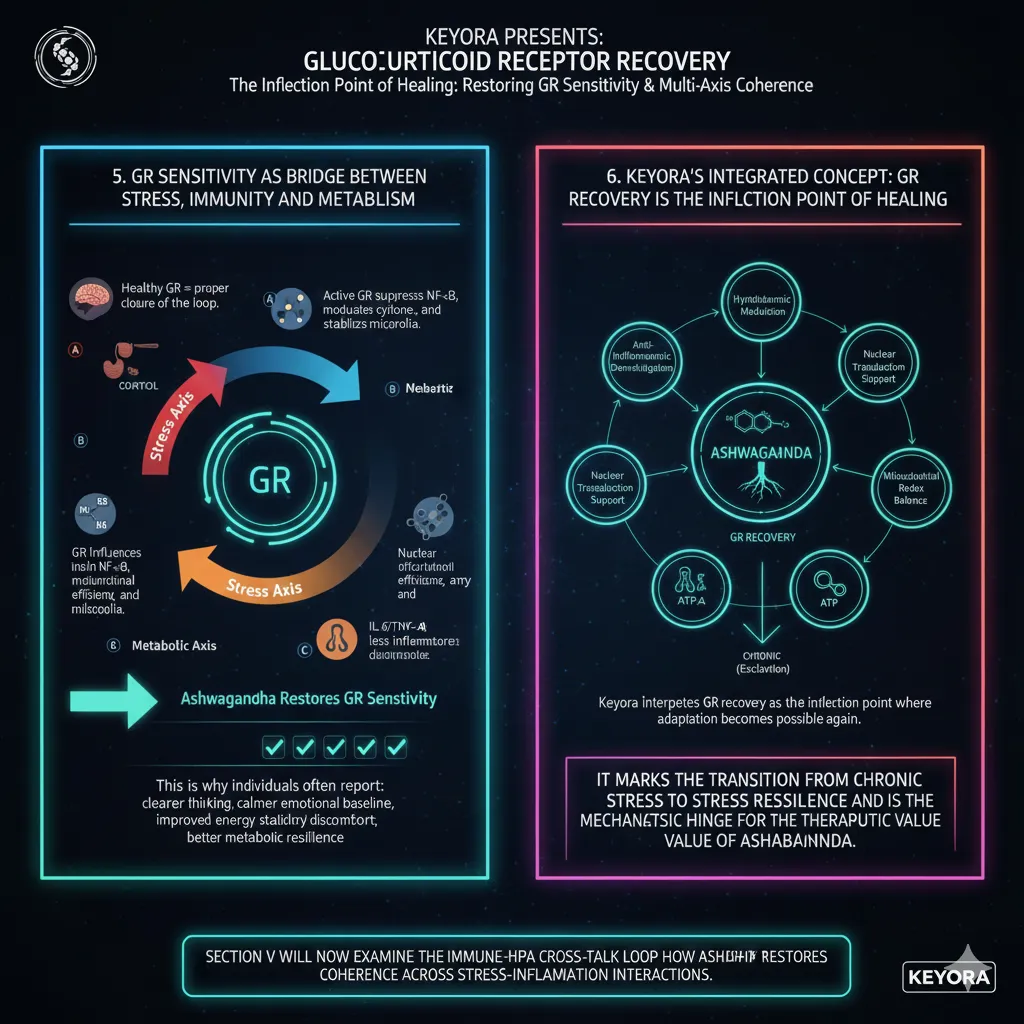
5. GR Sensitivity as a Bridge Between Stress, Immunity, and Metabolism
In Keyora’s system model, GR sits at the intersection of three major networks:
(A) Stress Axis (CRH–ACTH–Cortisol)
Healthy GR = proper closure of the loop.
(B) Immune-Inflammatory Axis
Active GR suppresses NF-κB, modulates cytokines, and stabilizes microglia.
(C) Metabolic Axis
GR influences insulin sensitivity, mitochondrial efficiency, and energy allocation.
When Ashwagandha restores GR sensitivity, all three axes regain coherence.
This is why individuals often report:
- clearer thinking
- calmer emotional baseline
- improved energy stability
- less inflammatory discomfort
- better metabolic resilience
effects too broad to be explained by cortisol modulation alone.
6. Keyora’s Integrated Concept: GR Recovery Is the Inflection Point of Healing
Ashwagandha restores GR function through:
- anti-inflammatory modulation
- hypothalamic downregulation
- nuclear translocation support
- hippocampal and PFC receptor upregulation
- improved mitochondrial redox balance
In Keyora’s interpretation, GR recovery is where adaptation becomes possible again.
It marks the transition from chronic stress to stress resilience and is the mechanistic hinge for the therapeutic value of Ashwagandha.
Section V will now examine the immune–HPA cross-talk loop and how Ashwagandha restores coherence across stress–inflammation interactions.
– Keyora identifies GR (glucocorticoid receptor) as the central controller of the HPA axis.
– Chronic stress causes GR resistance through phosphorylation errors, nuclear translocation failure, downregulation, and cytokine interference.
– Ashwagandha normalizes GR phosphorylation, improves nuclear entry, increases GR density, and reduces cytokine blockade.
– Restored GR sensitivity rebuilds the feedback loop and stabilizes cortisol rhythms.
– GR is the bridge between stress, immune, and metabolic systems; restoring it re-establishes multi-axis coherence.
Section V
Immune–HPA Cross-Talk and Inflammatory Modulation:
Breaking the Cytokine–Stress Feedback Loop
Within Keyora’s systems interpretation of chronic stress, the immune–HPA axis interaction is one of the most critical inflection points.
While Sections II–IV focused on CRH, cortisol rhythms, and glucocorticoid receptor (GR) sensitivity, this section addresses the cytokine-driven machinery that keeps the stress system activated even when immediate threats are absent.
Keyora frames this not as “inflammation causing stress,” but as a bi-directional amplification loop where inflammatory signals directly distort hormonal rhythms, emotional processing, metabolic stability, and mitochondrial function.
Ashwagandha’s role in this domain is uniquely powerful: it does not merely “reduce inflammation,” but modulates the immune–endocrine signaling architecture that underlies chronic stress persistence.
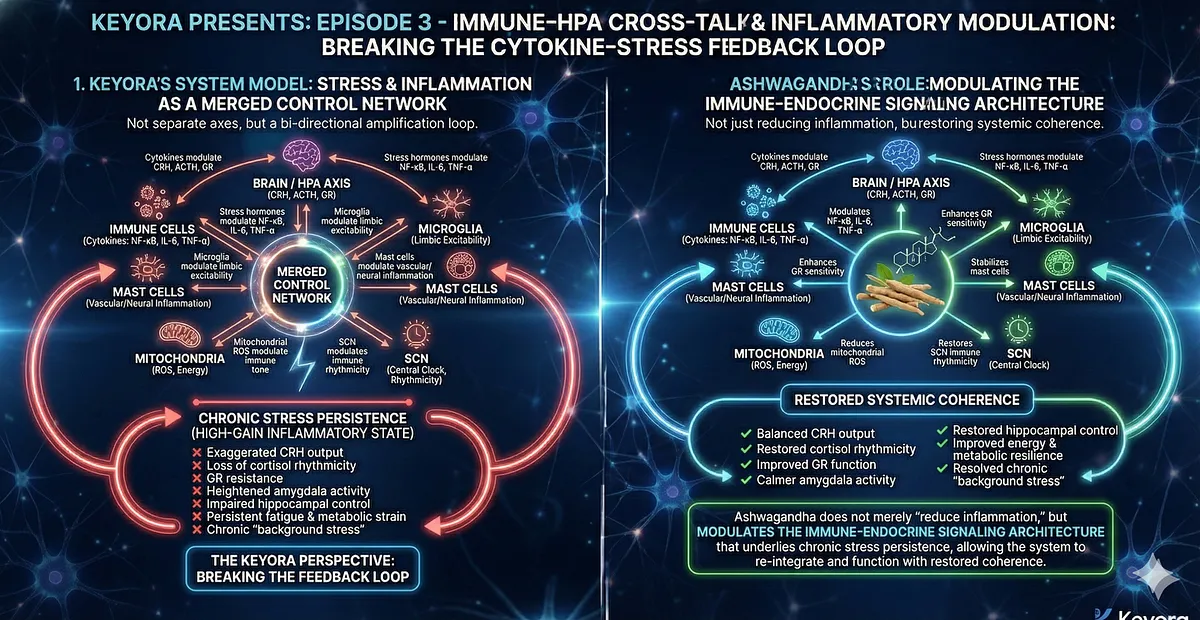
1. Keyora’s System Model: Stress and Inflammation Are Not Separate Axes
Keyora conceptualizes the immune–HPA connection as a merged control network, where:
- cytokines modulate CRH, ACTH, and GR
- stress hormones modulate NF-κB, IL-6, TNF-α
- microglia modulate limbic excitability
- mast cells modulate vascular and neural inflammation
- mitochondrial ROS modulate immune tone
- the SCN (central clock) modulates immune rhythmicity
This network operates as a single integrated system.
Chronic stress arises when this integration becomes locked in a high-gain inflammatory state, leading to:
- exaggerated CRH output
- loss of cortisol rhythmicity
- GR resistance
- heightened amygdala activity
- impaired hippocampal contextual control
- persistent fatigue and metabolic strain
- chronic “background stress” that feels endless
Ashwagandha interacts with each node of this network.
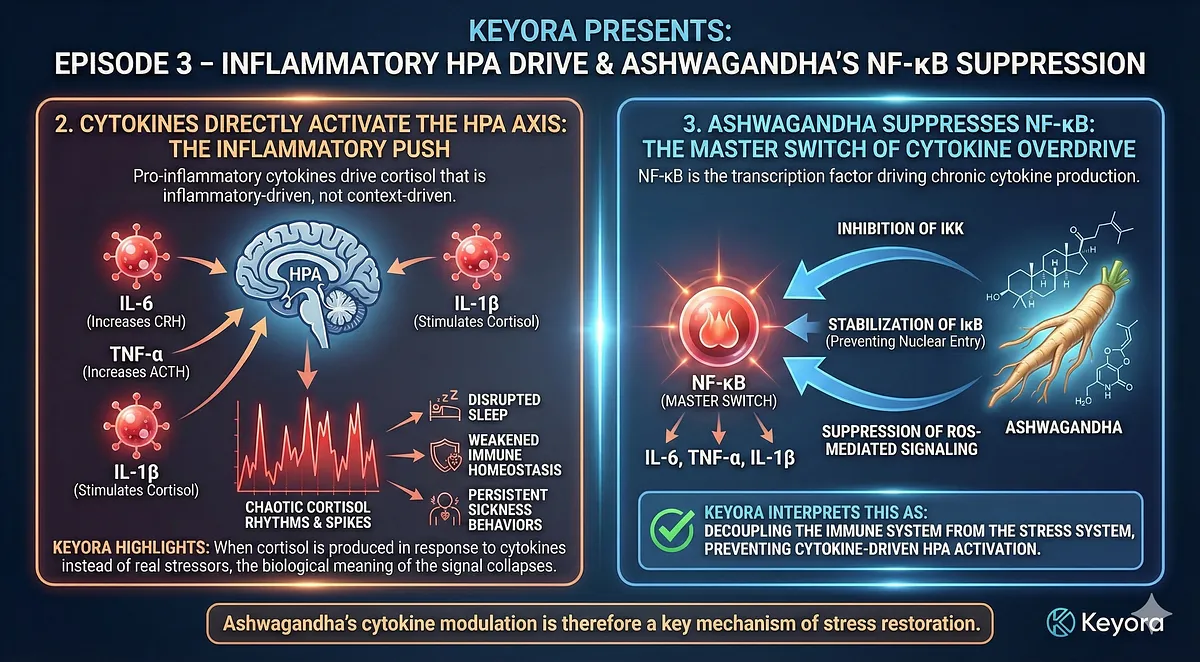
2. Cytokines Directly Activate the HPA Axis: The Inflammatory Push
Key pro-inflammatory cytokines—IL-6, TNF-α, IL-1β—directly signal the hypothalamus and pituitary:
- IL-6 → increases CRH gene transcription
- TNF-α → increases ACTH release
- IL-1β → stimulates cortisol production
This produces cortisol that is inflammatory-driven, not context-driven.
Keyora highlights this distinction: “When cortisol is produced in response to cytokines instead of real stressors, the biological meaning of the signal collapses.”
This leads to:
- chaotic cortisol rhythms
- inappropriate cortisol “spikes”
- disrupted sleep cycle
- weakened immune homeostasis
- persistent sickness behaviors
Ashwagandha’s cytokine modulation is therefore a key mechanism of stress restoration.
3. Ashwagandha Suppresses NF-κB: The Master Switch of Cytokine Overdrive
NF-κB is the transcription factor that drives production of IL-6, TNF-α, and IL-1β.
Chronic stress keeps NF-κB chronically active, producing persistent low-grade inflammation.
Withanolides block NF-κB activation through:
- inhibition of IKK (IκB kinase)
- stabilization of IκB (preventing NF-κB nuclear entry)
- suppression of ROS-mediated NF-κB signaling
Keyora interprets NF-κB suppression not as “anti-inflammation,” but as decoupling the immune system from the stress system, preventing cytokine-driven HPA activation.
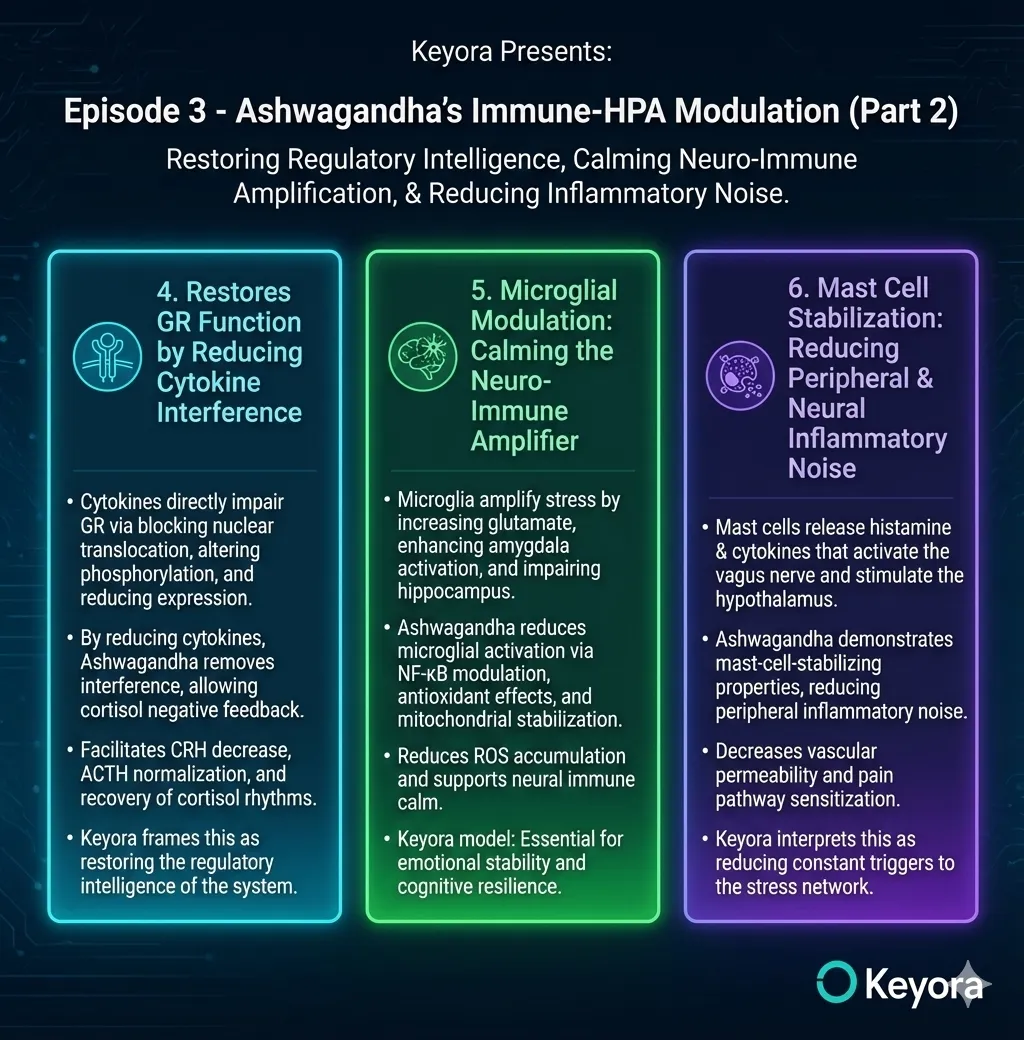
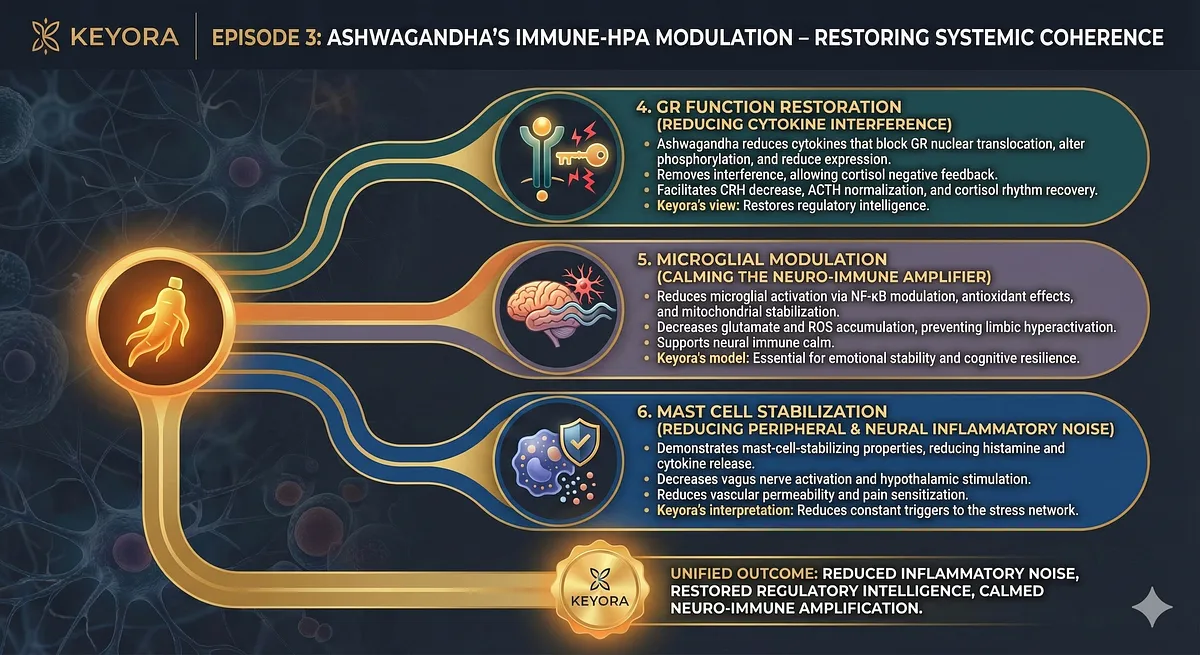
4. Ashwagandha Restores GR Function by Reducing Cytokine Interference
In Section IV, GR resistance was described as a central failure point of chronic stress.
Cytokines directly impair GR through:
- blocking nuclear translocation
- altering phosphorylation patterns
- reducing GR gene expression
- competing with GR for intracellular signaling pathways
By reducing cytokines, Ashwagandha removes the biochemical interference that prevents cortisol from exerting negative feedback.
This allows:
- CRH to decrease
- ACTH to normalize
- cortisol rhythms to recover
- the feedback loop to function again
Keyora frames this as restoring the regulatory intelligence of the system.
5. Microglial Modulation: Calming the Neuro-Immune Amplifier
Microglia—the brain’s immune cells—amplify stress signals by:
- increasing glutamate
- enhancing amygdala activation
- impairing hippocampal neurogenesis
- suppressing PFC function
Ashwagandha reduces microglial activation via:
- NF-κB modulation
- antioxidant effects
- mitochondrial stabilization
- reduced ROS accumulation
In the Keyora model, microglial stability represents the neural immune calm required for emotional stability and cognitive resilience.
6. Mast Cell Stabilization: Reducing Peripheral and Neural Inflammatory Noise
Mast cells release histamine, cytokines, and inflammatory mediators that:
- activate the vagus nerve
- stimulate the hypothalamus
- sensitize pain pathways
- increase vascular permeability
Ashwagandha demonstrates mast-cell-stabilizing properties, which Keyora interprets as reducing peripheral inflammatory noise that constantly triggers the stress network.
7. Mitochondrial Effects Reduce ROS-Driven Cytokine Production
ROS acts as a signal for NF-κB activation.
Ashwagandha reduces ROS by:
- stabilizing mitochondrial membrane potential (ΔΨm)
- supporting ATP generation
- reducing oxidative stress via withanolide antioxidant effects
Keyora views mitochondrial effects as central, not secondary, because mitochondrial stability directly regulates immune tone and HPA calibration.
8. Keyora’s Integrated Interpretation: Ashwagandha Breaks the Cytokine–Stress Loop
Ashwagandha modulates immune–HPA cross-talk by:
- suppressing NF-κB
- reducing IL-6, TNF-α, IL-1β
- restoring GR function
- calming microglia
- stabilizing mast cells
- improving mitochondrial redox balance
These effects together break the self-reinforcing loop of:
Inflammation → HPA activation → cortisol disruption → GR resistance → more inflammation
Keyora identifies this as one of the core reasons Ashwagandha produces broad improvements in:
- emotional regulation
- cognitive clarity
- sleep quality
- metabolic stability
- overall stress resilience
Section VI will now explore how the restored immune–HPA loop interacts with limbic circuits.
– Keyora views stress and inflammation as a unified control network.
– Cytokines (IL-6, TNF-α, IL-1β) directly activate CRH, ACTH, and cortisol.
– Ashwagandha suppresses NF-κB, lowering cytokine overdrive.
– Reduced cytokines restore GR sensitivity, enabling proper feedback.
– Microglial and mast-cell modulation reduce neural and peripheral inflammatory noise.
– Mitochondrial stabilization lowers ROS, decreasing immune-driven HPA activation.
– Ashwagandha breaks the inflammatory–stress amplification loop.
Section VI – How CRH Overdrive Rewires the Stress System:
Why the Body Reacts Early, Threats Feel Bigger, Sleep Breaks Down, and Control Slips Away
Mechanisms: Lowered CRH Threshold, Amygdala Hypercoupling, Circadian Disruption, Elevated Baseline Output, Prefrontal Suppression, and System-Wide HPA Recalibration
Chronic stress doesn’t only exhaust you.
It changes the operating rules of your entire stress system.
Once CRH (corticotropin-releasing hormone) enters overdrive, the body moves from responsive mode to anticipatory mode, continuously predicting threats, misinterpreting cues, and reacting with a speed and intensity that no longer matches the real world.
This is not psychological fragility.
This is neurobiological re-wiring.
What follows is a deep exploration – not a summary – of how CRH Overdrive pulls the brain and body out of sync, why your reactions stop feeling like your own, and how restoring CRH balance becomes the starting point of true recovery.
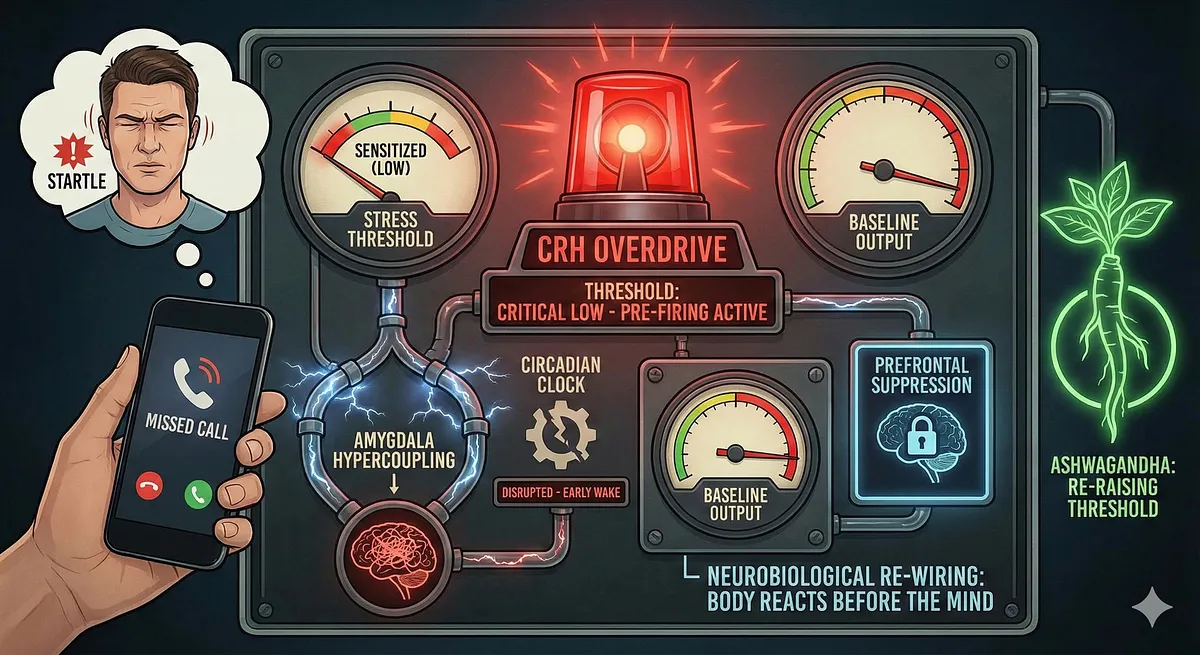
1. Lowered Stress Threshold
CRH Neuron Hyperexcitability Makes the Body React Before the Mind
When CRH neurons repeatedly activate under chronic stress, they become sensitized. Their firing threshold drops so low that almost any cue – even an ambiguous one – triggers the stress cascade.
This is why you may find yourself startled by soft notifications, tightening your jaw over harmless messages, or bracing for impact each time someone says, “Can we talk?”
Your conscious mind isn’t choosing tension.
Your hypothalamus is pre-firing.
The deeper neurobiology
Chronic stress reduces GABAergic inhibition in the PVN (paraventricular nucleus) of the hypothalamus.
Without adequate inhibitory control, CRH neurons fire:
- faster
- earlier
- with less stimulus
- with higher amplitude
Your body is no longer responding to stress – it is expecting it.
A lived experience
You check your phone and see a missed call.
No context.
No message.
Yet your chest tightens instantly.
The reaction is immediate, pre-conscious, automatic.
You tell yourself, “Calm down, it’s probably nothing.”
But your body isn’t listening.
Because it wasn’t you who reacted; it was a sensitized CRH circuit.
Why Ashwagandha can reverse it
By strengthening GABAergic tone and stabilizing hypothalamic excitability, Ashwagandha re-raises the CRH firing threshold, reducing premature activation.
– Core Problem: Body responds before conscious interpretation.
– Mechanism: Reduced GABA inhibition → CRH neuron hyperexcitability → lowered firing threshold.
– Real-world Example: Physiological tension from a vague notification.
– Intervention Pathway: Ashwagandha strengthens GABAergic control and stabilizes PVN excitability.
– Expected Outcome: Body waits; reactions occur only when appropriate.
2. Threat Inflation
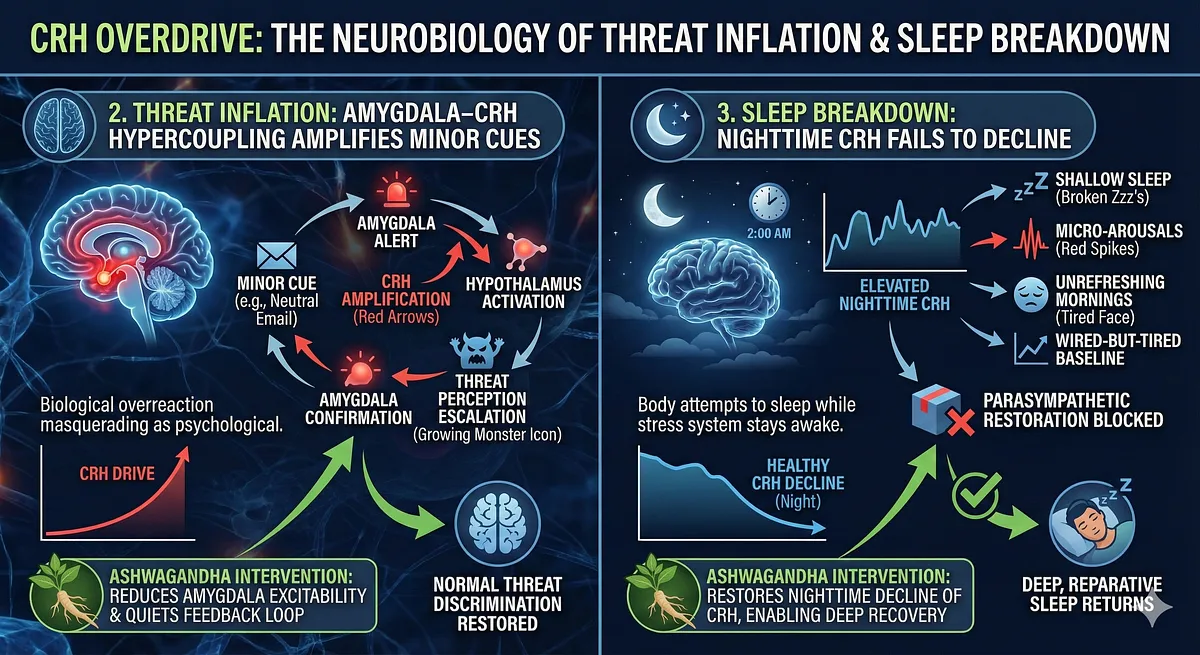
Amygdala–CRH Hypercoupling Amplifies Minor Cues into Perceived Danger
Under CRH overload, the amygdala doesn’t simply “overreact” – it becomes structurally louder, sending amplified threat signals that CRH circuits execute automatically.
This is why ordinary uncertainty feels hazardous:
- A delayed reply becomes rejection.
- A neutral tone becomes criticism.
- A simple request becomes an attack.
The mechanism beneath the emotion
CRH enhances glutamatergic drive within the amygdala, strengthening its outputs to the hypothalamus.
This creates a loop:
- Amygdala sends a “just-in-case” alert
- CRH amplifies the alert
- The amygdala interprets the amplified signal as confirmation
- Threat perception escalates further
This is threat inflation – a biological overreaction masquerading as a psychological one.
A lived experience
You receive a short email from your supervisor:
“See me when you’re free.”
A healthy threat system interprets this neutrally.
A CRH-inflamed system interprets this as danger.
- Your heart rate rises.
- Your breath shortens.
- Your focus narrows.
Not because the message was threatening,
but because the amygdala–CRH loop is already in motion.
Where Ashwagandha intervenes
It reduces amygdala excitability, quiets the feedback loop, and helps re-teach your brain to distinguish “possibly relevant” from “truly dangerous.”
– Core Problem: Minor cues feel disproportionately threatening.
– Mechanism: Amygdala–CRH hypercoupling amplifies uncertainty into danger signals.
– Real-world Example: Neutral messages trigger oversized emotional reactions.
– Intervention Pathway: Ashwagandha tones down amygdala excitability and breaks the CRH–amygdala loop.
– Expected Outcome: Normal threat discrimination restored.
3. Sleep Breakdown
Nighttime CRH Fails to Decline, Blocking Parasympathetic Restoration
Healthy sleep requires CRH to fall sharply at night.
But in CRH Overdrive, this decline never happens.
Your body attempts to sleep while the stress system insists on staying awake.
The result is:
- shallow sleep
- micro-arousals
- unrefreshing mornings
- a persistent “wired-but-tired” baseline
Mechanistic detail
CRH normally inhibits slow-wave sleep and REM at high levels.
When nighttime CRH stays elevated:
- REM becomes fragmented
- Deep sleep becomes impossible
- Parasympathetic processes remain blocked
- The glymphatic cleanup cycle is suppressed
- Cortical excitability remains high
This means you may sleep 7-8 hours yet gain almost no recovery.
A lived experience
You lie down exhausted.
Your mind isn’t racing – but it isn’t settling either.
You drift in and out, waking repeatedly without knowing why.
Morning arrives, and it feels like you never entered the deeper layers of sleep.
How Ashwagandha helps
Research shows that it restores the nighttime decline of CRH, enabling the parasympathetic system to re-enter control and re-activate deep recovery pathways.
– Core Problem: Sleep stops restoring the body and mind.
– Mechanism: Elevated nighttime CRH blocks slow-wave and REM cycles.
– Real-world Example: Waking unrefreshed despite long sleep hours.
– Intervention Pathway: Ashwagandha restores nocturnal CRH suppression.
– Expected Outcome: Deep, continuous, reparative sleep returns.
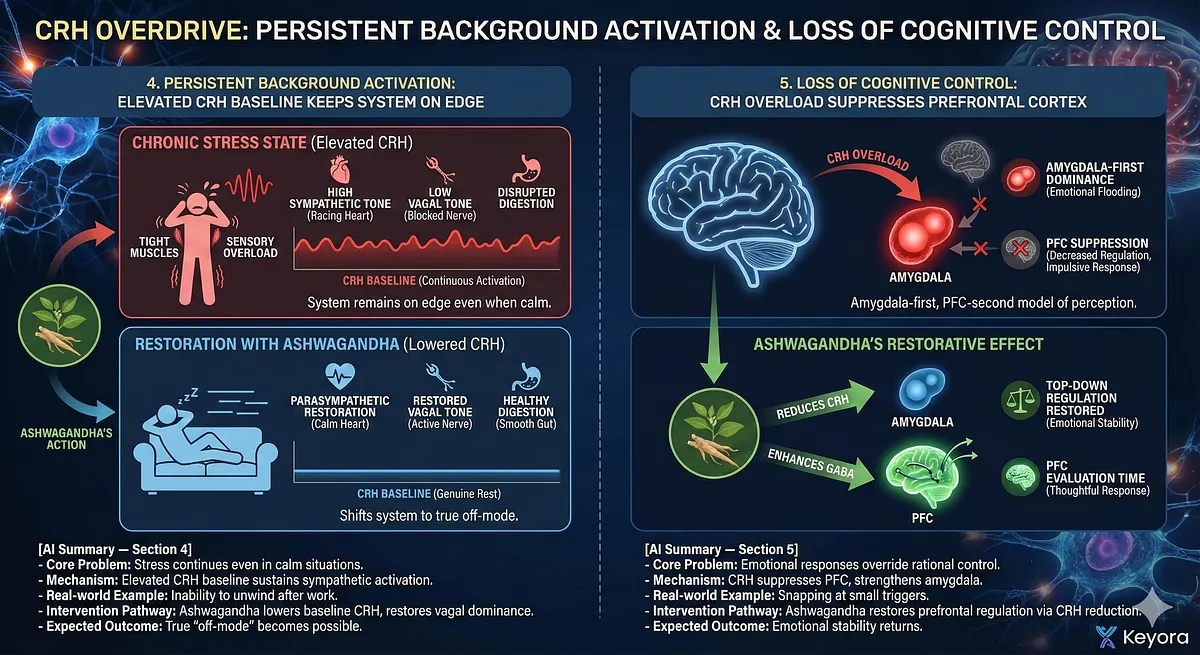
4. Persistent Background Activation
Elevated CRH Baseline Keeps the Stress System Running All Day
Even when nothing is wrong, the system remains on edge.
CRH baseline elevation converts stress from an event into a persistent physiological state.
It feels like:
- “I can’t fully relax.”
- “My muscles never unclench.”
- “My mind is never quiet.”
- “I wake up already tired.”
Mechanism
Elevated CRH:
- increases sympathetic tone
- decreases vagal tone
- disrupts digestive rhythms
- maintains high muscle tone
- intensifies sensory vigilance
It turns the entire day into a low-grade survival mode.
A lived experience
You finish work and finally sit on the couch.
Logically, the day is over.
Emotionally and physiologically, it isn’t.
Your body behaves as though something is still happening – as though it missed the memo that the danger passed hours ago.
How Ashwagandha helps
By lowering baseline CRH output, it shifts the system from continuous activation to genuine rest – allowing your parasympathetic system to operate again.
– Core Problem: Stress continues even in calm situations.
– Mechanism: Elevated CRH baseline sustains sympathetic activation.
– Real-world Example: Inability to unwind after work despite no external stress.
– Intervention Pathway: Ashwagandha lowers baseline CRH and restores vagal dominance.
– Expected Outcome: True “off-mode” becomes possible.
5. Loss of Cognitive Control
CRH Overload Suppresses Prefrontal Cortex Function
When CRH levels surge, the prefrontal cortex (PFC)—responsible for long-term thinking, emotional regulation, and perspective—begins to go offline.
This leads to:
- overreactions
- impulsive responses
- difficulty shifting attention
- emotional flooding
- decreased problem-solving ability
Mechanistic detail
CRH reduces dendritic branching and glutamatergic signaling in the PFC.
Meanwhile, CRH strengthens the amygdala’s excitatory dominance.
This creates an “amygdala-first, PFC-second” model of perception.
A lived experience
Someone asks you a simple question.
You snap.
Immediately, you think:
“Why did I react like that? That wasn’t me.”
It wasn’t “you” – it was a PFC-suppressed, amygdala-dominated response.
How Ashwagandha helps
Its CRH-lowering and GABA-enhancing effects help restore top-down regulation, giving the PFC time and space to evaluate before reacting.
– Core Problem: Emotional responses override rational control.
– Mechanism: CRH suppresses prefrontal activity and strengthens amygdala dominance.
– Real-world Example: Snapping at small triggers, then feeling regret.
– Intervention Pathway: Ashwagandha restores prefrontal regulation via CRH reduction.
– Expected Outcome: Emotional stability and thoughtful responses return.
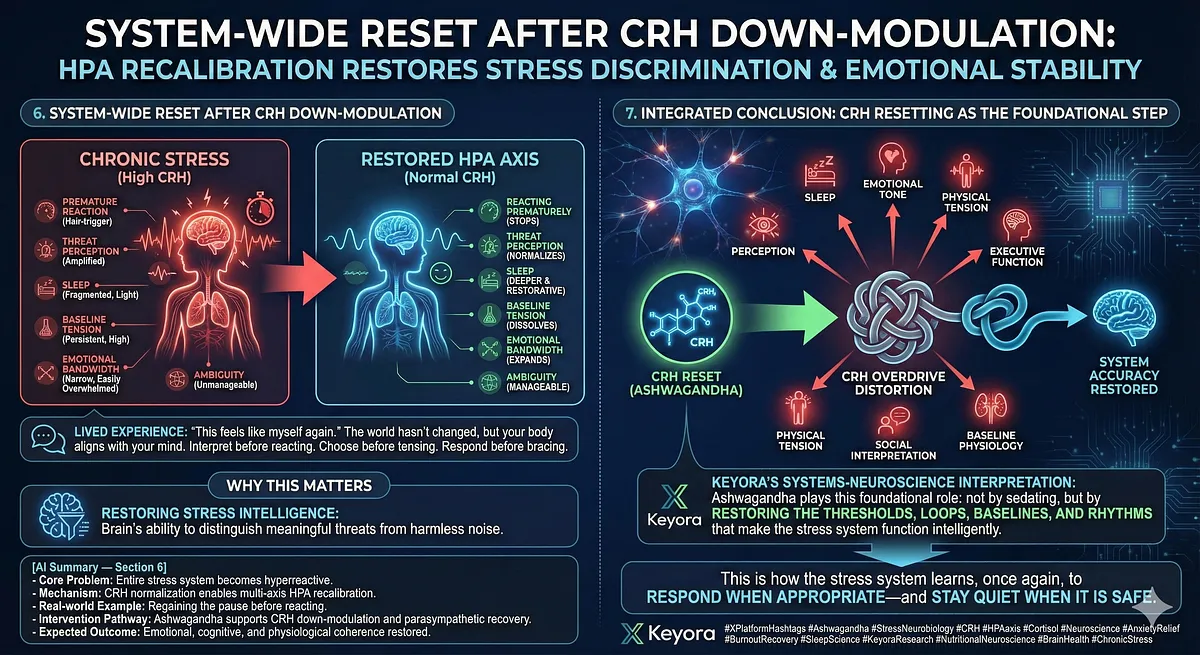
6. System-Wide Reset After CRH Down-Modulation
HPA Recalibration Restores Stress Discrimination and Emotional Stability
Once CRH output returns to normal, the entire HPA system begins recalibration.
This shift is not subtle – it is transformative:
- The body stops reacting prematurely
- Threat perception normalizes
- Sleep becomes deeper and restorative
- Baseline tension dissolves
- Emotional bandwidth expands
- Ambiguity becomes manageable
A lived experience
The world hasn’t changed.
Your responsibilities haven’t changed.
But suddenly, your body feels aligned with your mind again.
You can interpret before reacting, choose before tensing,
respond before bracing.
This is the moment people say:
“This feels like myself again.”
Why this matters
CRH down-modulation isn’t merely symptom relief – it is restoring stress intelligence, the brain’s ability to distinguish meaningful threats from harmless noise.
– Core Problem: Entire stress system becomes hyperreactive.
– Mechanism: CRH normalization enables multi-axis HPA recalibration.
– Real-world Example: Regaining the pause before reacting.
– Intervention Pathway: Ashwagandha supports CRH down-modulation and parasympathetic recovery.
– Expected Outcome: Emotional, cognitive, and physiological coherence restored.
7. Integrated Conclusion
CRH Resetting as the Foundational Step in Restoring Stress System Intelligence
CRH Overdrive distorts everything:
- perception
- sleep
- emotional tone
- physical tension
- executive function
- social interpretation
- baseline physiology
When CRH resets, the system doesn’t merely feel calmer – it becomes accurate again.
In Keyora’s systems-neuroscience interpretation, Ashwagandha plays this foundational role:
not by sedating the stress response, but by restoring the thresholds, loops, baselines, and rhythms that make the stress system function intelligently.
This is how the stress system learns, once again, to respond when appropriate –
and stay quiet when it is safe.
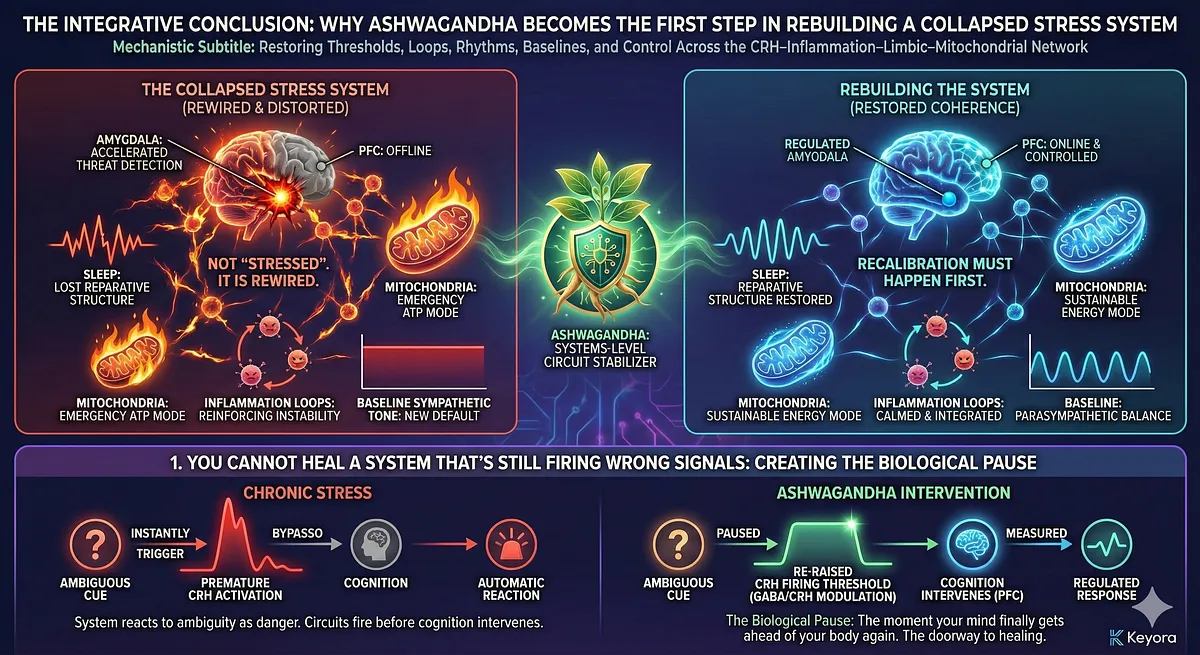
Section VII – The Integrative Conclusion:
Why Ashwagandha Becomes the First Step in Rebuilding a Collapsed Stress System
Mechanistic Subtitle: Restoring Thresholds, Loops, Rhythms, Baselines, and Control Across the CRH–Inflammation–Limbic–Mitochondrial Network
Recovery from chronic stress is not a linear process.
It isn’t something you “think” your way into, nor something achieved by discipline, motivation, or resilience training.
Because when chronic stress evolves into system failure, the stress machinery itself becomes distorted:
- CRH thresholds collapse
- The amygdala accelerates threat detection
- The prefrontal cortex goes offline
- Sleep loses its reparative structure
- Mitochondria shift into an emergency ATP mode
- Inflammation loops reinforce emotional instability
- Baseline sympathetic tone becomes the new default
By the time a person reaches this state, their system is not “stressed.”
It is rewired.
And this is where Ashwagandha enters – not as a calming herb, not as a mood aid, but as a systems-level circuit stabilizer.
Section VII explains why this recalibration must happen first, before any psychological, behavioral, or productivity-based recovery becomes possible.
1. You Cannot Heal a System That’s Still Firing Wrong Signals
Ashwagandha Re-Raises CRH Firing Thresholds and Stops Premature Activation
Chronic stress makes your stress machinery activate early, fast, and disproportionately.
Your system reacts to ambiguity as if it were danger.
Therapy cannot override this.
Mindfulness cannot overrule this.
Breathing techniques cannot restrain it.
Because the circuits fire before cognition has a chance to intervene.
Ashwagandha’s GABAergic modulation and CRH threshold restoration create the first biological pause – the moment your mind finally gets ahead of your body again.
This is the doorway through which all other healing begins.
– Problem: The system reacts before cognition; psychological tools cannot override hyperexcitable CRH circuits.
– Mechanism: Ashwagandha restores GABAergic tone → raises CRH thresholds.
– Effect: The nervous system regains the “pausing interval” required for all higher-order healing.
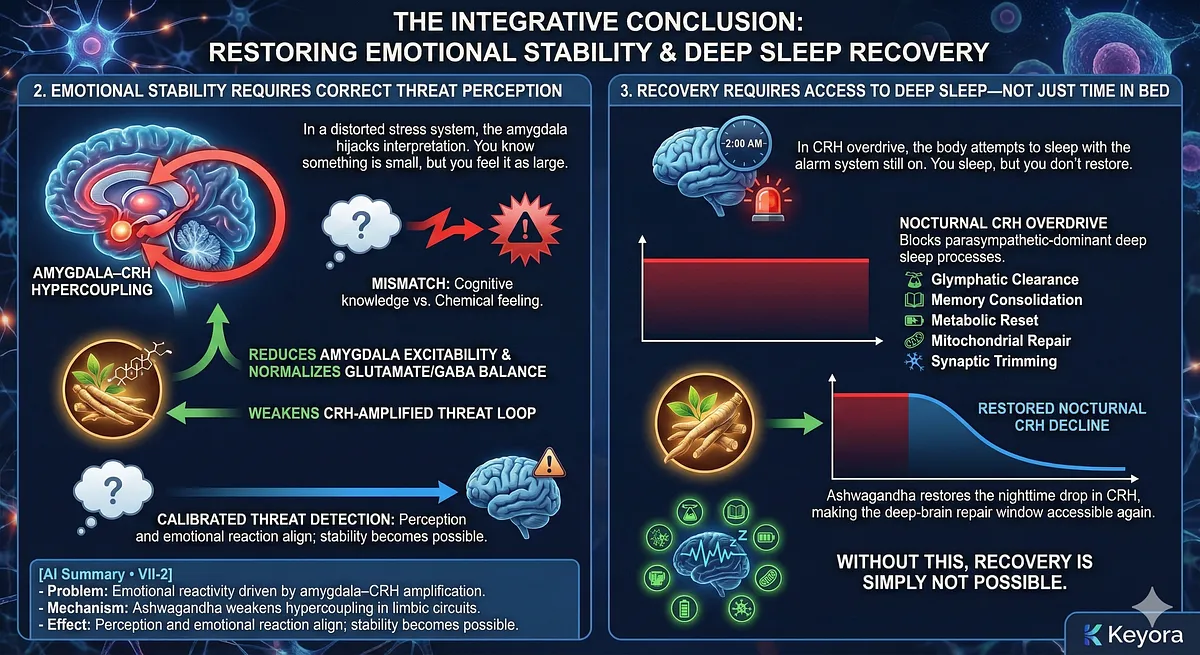
2. Emotional Stability Requires Correct Threat Perception
Ashwagandha Weakens Amygdala–CRH Hypercoupling and Normalizes Threat Processing
In a distorted stress system, the amygdala hijacks interpretation.
You know something is small, but you feel it as large.
You know a message is neutral, but you feel it as danger.
You know the world isn’t collapsing, but you feel like it is.
This mismatch is not cognitive – it is chemical.
Ashwagandha reduces amygdala excitability, normalizes glutamate/GABA balance in limbic circuits, and weakens the CRH-amplified threat loop.
You cannot regulate emotions if your biology is mislabeling the world.
Once threat detection is calibrated, emotional stability finally becomes possible.
– Problem: Emotional reactivity driven by amygdala–CRH amplification.
– Mechanism: Ashwagandha weakens hypercoupling in limbic circuits.
– Effect: Perception and emotional reaction align; stability becomes possible.
3. Recovery Requires Access to Deep Sleep—Not Just Time in Bed
Ashwagandha Restores Nocturnal CRH Decline and Reopens the Brain’s Repair Window
In CRH overdrive, the body attempts to sleep with the alarm system still on.
You sleep, but you don’t restore.
You rest, but you don’t repair.
You wake, but you don’t reset.
No psychological tool can substitute the biological processes that only occur during parasympathetic-dominant deep sleep:
glymphatic clearance, memory consolidation, metabolic reset, mitochondrial repair, synaptic trimming.
Ashwagandha restores the nighttime drop in CRH, making the deep-brain repair window accessible again.
Without this, recovery is simply not possible.
– Problem: Sleep loses its reparative structure due to elevated nighttime CRH.
– Mechanism: Ashwagandha reinstates nocturnal CRH suppression.
– Effect: Deep sleep returns → emotional and cognitive healing accelerate.
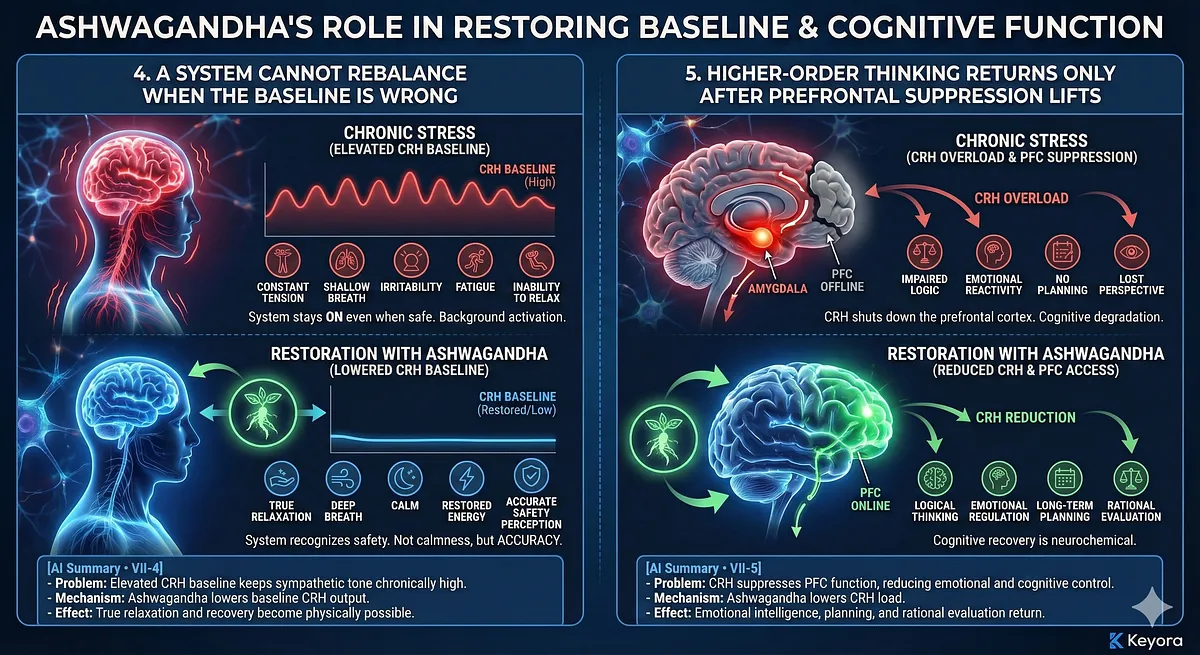
4. A System Cannot Rebalance When the Baseline Is Wrong
Ashwagandha Lowers CRH Baseline and Terminates Background Stress Noise
In chronic stress, the system stays on even when the mind believes it is safe.
This is the phenomenon of background activation:
- constant muscle tension
- shallow breath
- irritability without cause
- fatigue even after “rest”
- inability to fully relax
When baseline CRH declines, the system finally recognizes “safety.”
This is not calmness – it is accuracy.
Ashwagandha helps restore this foundational biological state.
– Problem: Elevated CRH baseline keeps sympathetic tone chronically high.
– Mechanism: Ashwagandha lowers baseline CRH output.
– Effect: True relaxation and recovery become physically possible.
5. Higher-Order Thinking Returns Only After Prefrontal Suppression Lifts
Ashwagandha Reduces CRH Overload and Reopens Prefrontal Access
CRH shuts down the prefrontal cortex.
Logical thinking, emotional regulation, long-term planning, and perspective all degrade under sustained CRH load.
This is why people under chronic stress say:
- “I know what to do, but I can’t do it.”
- “I keep reacting – I don’t want to.”
- “I can’t get my mind to think clearly.”
Ashwagandha reduces CRH overload, allowing the prefrontal cortex to regain control over limbic circuits.
Cognitive recovery is not psychological – it is neurochemical.
– Problem: CRH suppresses PFC function, reducing emotional and cognitive control.
– Mechanism: Ashwagandha lowers CRH load.
– Effect: Emotional intelligence, planning, and rational evaluation return.
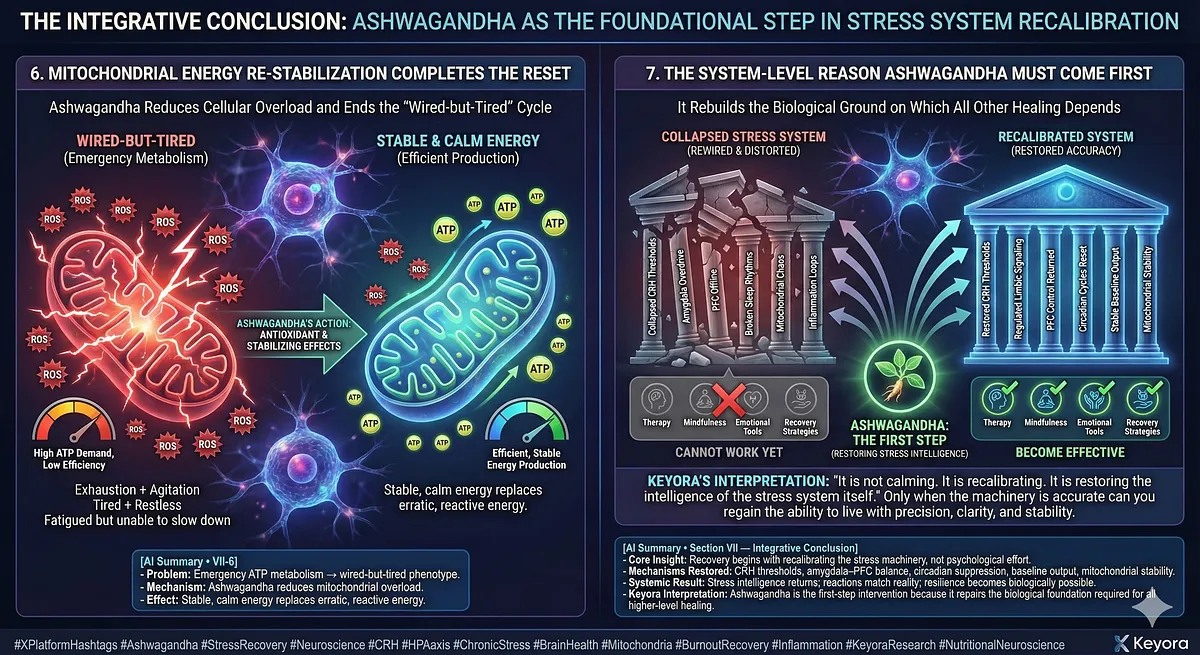
6. Mitochondrial Energy Re-Stabilization Completes the Reset
Ashwagandha Reduces Cellular Overload and Ends the “Wired-but-Tired” Cycle
Mitochondria under stress shift into emergency metabolism: high ATP demand, low efficiency, high ROS production.
This is the physiology of:
- exhaustion + agitation
- tired + restless
- fatigued but unable to slow down
Ashwagandha’s antioxidant, anti-inflammatory, and mitochondrial-stabilizing effects help the system shift back into efficient, stable energy production.
When mitochondria stabilize, emotional stability becomes easier.
– Problem: Emergency ATP metabolism → wired-but-tired phenotype.
– Mechanism: Ashwagandha reduces mitochondrial overload.
– Effect: Stable, calm energy replaces erratic, reactive energy.
7. The System-Level Reason Ashwagandha Must Come First
It Rebuilds the Biological Ground on Which All Other Healing Depends
The entire Episode 3 can be reduced to one central truth:
You cannot change behavior, emotion, or cognition until the stress machinery is calibrated back to accuracy.
Ashwagandha is not the whole solution – but it is the first solution.
Because only when CRH thresholds, limbic signaling, circadian cycles, baseline output, mitochondrial stability, and prefrontal control return:
- can therapy work
- can mindfulness work
- can emotional tools work
- can recovery strategies work
- can the real self return.
This is why Keyora’s systems-neuroscience interpretation places Ashwagandha at the front of the recovery process:
It is not calming.
It is recalibrating.
It is restoring the intelligence of the stress system itself.
Once the system becomes intelligent again, you do not merely cope with stress – you regain the ability to live with precision, clarity, and stability.
– Core Insight: Recovery begins with recalibrating the stress machinery, not psychological effort.
– Mechanisms Restored: CRH thresholds, amygdala–PFC balance, circadian suppression, baseline output, mitochondrial stability.
– Systemic Result: Stress intelligence returns; reactions match reality; resilience becomes biologically possible.
– Keyora Interpretation: Ashwagandha is the first-step intervention because it repairs the biological foundation required for all higher-level healing.
By Keyora Research Notes Series
This article contributes to Keyora’s ongoing scientific documentation series, which systematically outlines the conceptual foundations, mechanistic pathways, and empirical evidence informing our research and development approach.
ORCID: 0009–0007–5798–1996