
Why Choose Krill Oil Over Fish Oil?
Keyora Research Q&A Library
This is part of the Keyora Research Q&A Series, derived from the Keyora Antarctic Krill Oil Research Series.
ORCID: 0009–0007–5798–1996
DOI: 10.13140/RG.2.2.34804.10880
Within the Keyora Antarctic Krill Oil Research framework, this Q&A translates complex marine lipid nutrition into reader-friendly, evidence-bound answers, focusing on phospholipid-bound Omega-3, EPA–DHA–DPA biology, phosphatidylcholine and choline metabolism, cellular membrane architecture, lipid absorption and transport, cardiovascular and metabolic health, inflammatory resolution pathways, brain and eye health, joint function, reproductive nutrition, healthy aging, human clinical evidence, and the scientific principles behind responsible supplementation.
First published by Keyora Research Journal: www.keyorahealth.com
Direct Answer
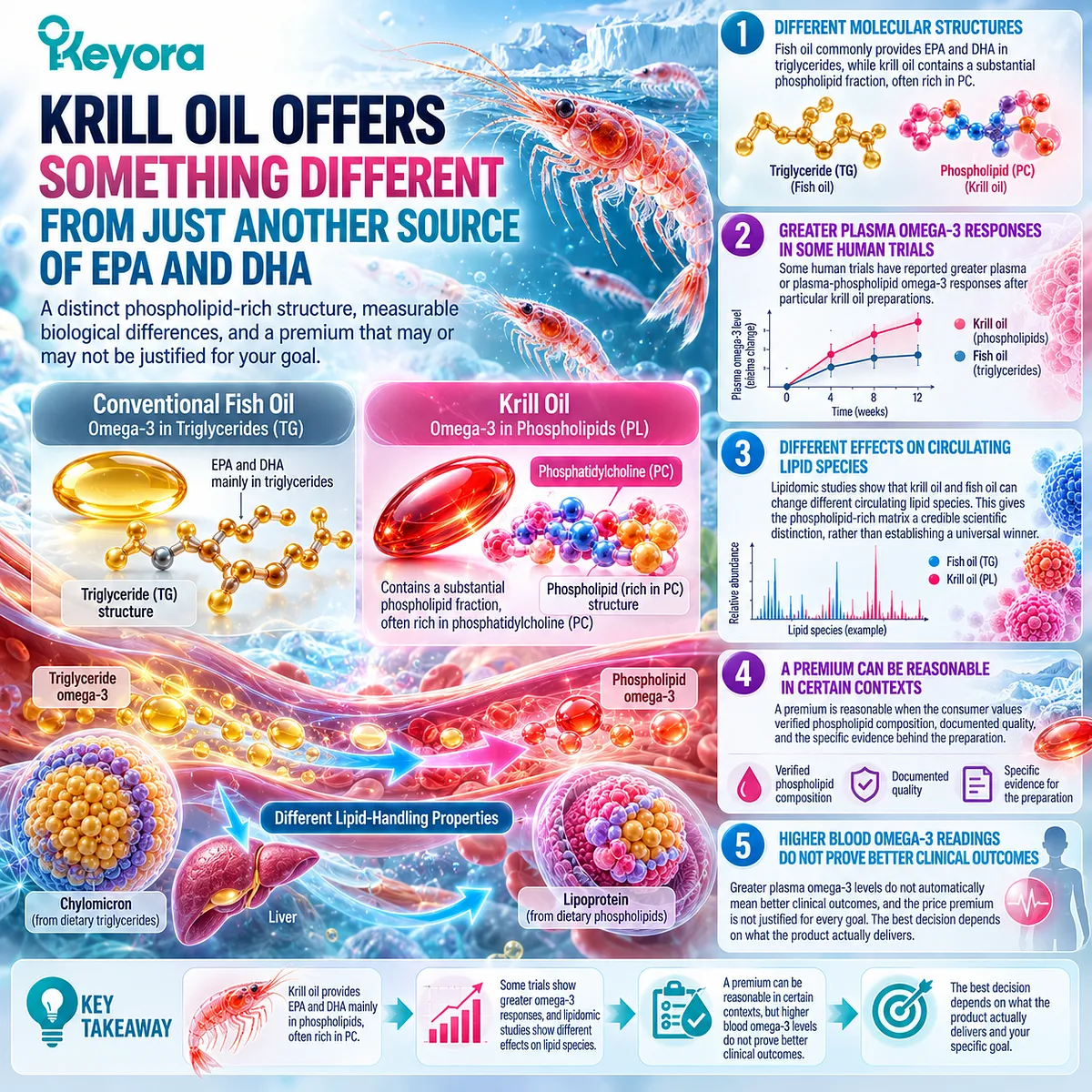
Krill oil offers something different from simply another supply of EPA and DHA.
Conventional fish oils commonly carry these omega-3 fatty acids in triglycerides, while krill oil contains a substantial phospholipid fraction, often rich in phosphatidylcholine (PC).
Their molecular structures and lipid-handling properties are not identical.
Some human trials have reported greater plasma or plasma-phospholipid omega-3 responses after particular krill oil preparations.
Lipidomic studies also show that krill oil and fish oil can change different circulating lipid species. These findings give the phospholipid-rich matrix a credible scientific distinction, rather than establishing a universal winner.
A premium can be reasonable when the consumer values verified phospholipid composition, documented quality, and the specific evidence behind the preparation.
However, higher blood omega-3 readings do not automatically prove better clinical outcomes, and the price premium is not justified for every goal.
The best decision depends on what the product actually delivers.
Why Krill Oil Is More Than Another Source of EPA and DHA
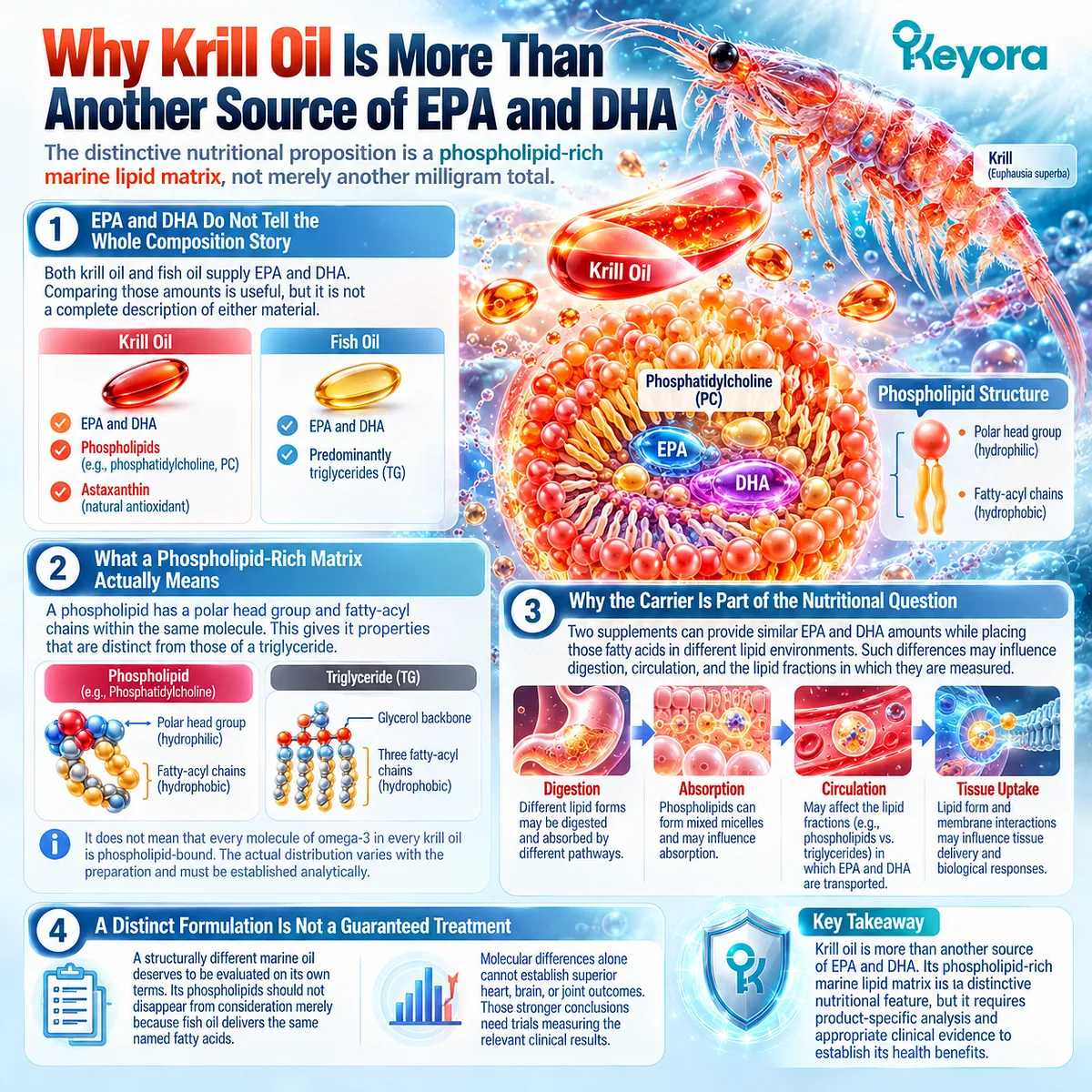
The distinctive nutritional proposition is a phospholipid-rich marine lipid matrix, not merely another milligram total
EPA and DHA Do Not Tell the Whole Composition Story
Both krill oil and fish oil supply the long-chain omega-3 fatty acids EPA and DHA. Comparing those amounts is useful, but it is not a complete description of either material.
Krill oil also contains structural phospholipids, including PC.
This makes its composition different from many conventional fish oils whose EPA and DHA are carried predominantly in triglycerides.
What a Phospholipid-Rich Matrix Actually Means
A phospholipid has a polar head group and fatty-acyl chains within the same molecule. This organization gives it properties that are distinct from those of a triglyceride.
It does not mean that every molecule of omega-3 in every krill oil is phospholipid-bound.
The actual distribution varies with the preparation and must be established analytically.
Why the Carrier Is Part of the Nutritional Question
Two supplements can provide similar EPA and DHA amounts while placing those fatty acids in different lipid environments.
Such differences may influence digestion, circulation, and the lipid fractions in which they are measured.
For a consumer interested only in the cheapest EPA and DHA dose, that distinction may have limited practical value.
For someone examining lipid structure and documented biological responses, it is central.
A Distinct Formulation Is Not a Guaranteed Treatment
A structurally different marine oil deserves to be evaluated on its own terms.
Its phospholipids should not disappear from consideration merely because fish oil delivers the same named fatty acids.
Equally, molecular differences alone cannot establish superior heart, brain, or joint outcomes.
Those stronger conclusions need trials measuring the relevant clinical results.
Why Phospholipid Architecture Gives Krill Oil a Distinctive Role
The amphiphilic phospholipid structure changes the chemical setting in which marine omega-3 fatty acids are processed
Phospholipids and Triglycerides Have Different Structures
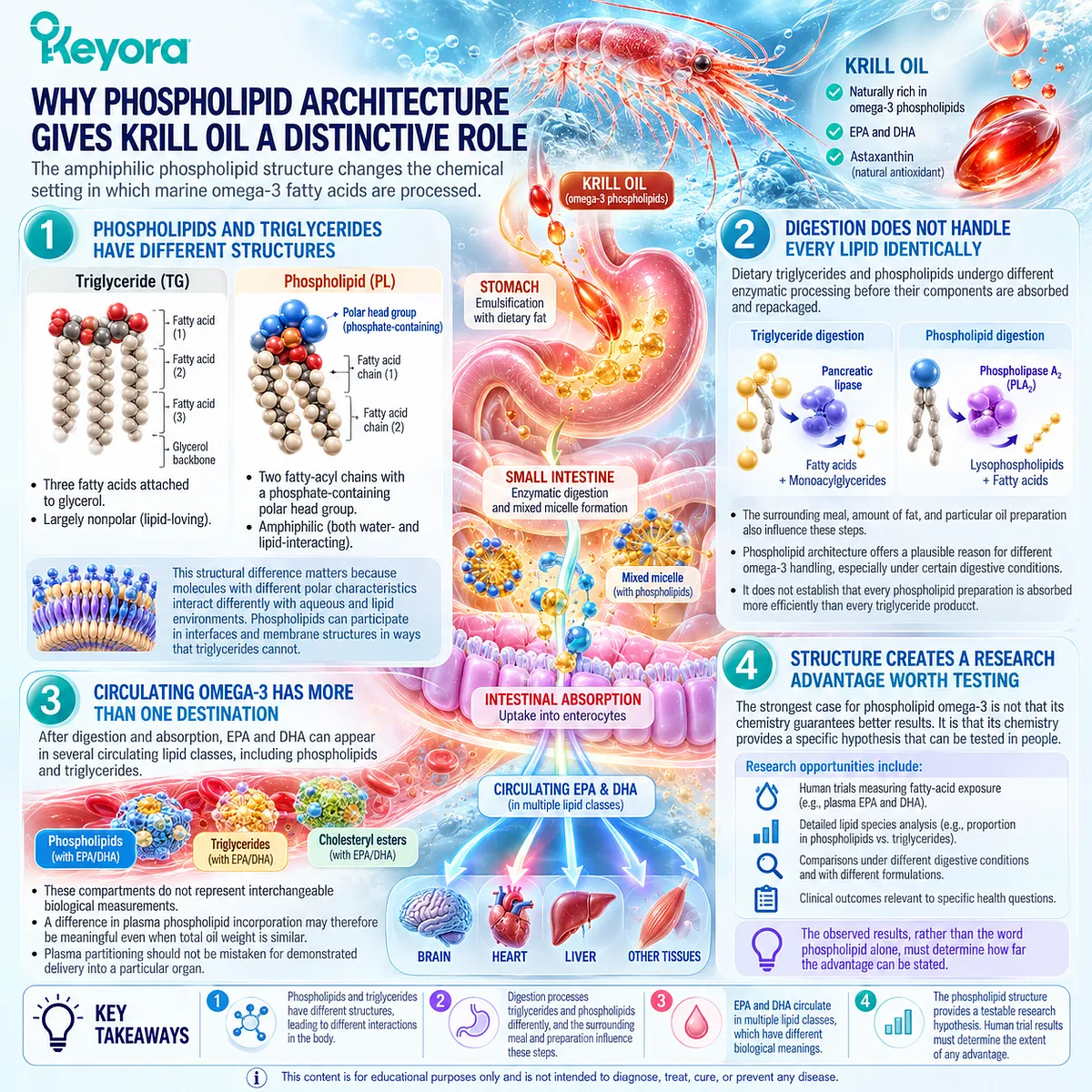
Triglycerides consist of three fatty acids attached to glycerol.
Phospholipids combine fatty-acyl chains with a phosphate-containing polar head group, producing an amphiphilic molecule.
This distinction matters because molecules with different polar characteristics interact differently with aqueous and lipid environments.
Phospholipids can participate in interfaces and membrane structures in ways that triglycerides cannot.
Digestion Does Not Handle Every Lipid Identically
Dietary triglycerides and phospholipids undergo different enzymatic processing before their components are absorbed and repackaged.
The surrounding meal, amount of fat, and particular oil preparation also influence these steps.
Phospholipid architecture offers a plausible reason for different omega-3 handling, especially under certain digestive conditions.
It does not establish that every phospholipid preparation is absorbed more efficiently than every triglyceride product.
Circulating Omega-3 Has More Than One Destination
After digestion and absorption, EPA and DHA can appear in several circulating lipid classes, including phospholipids and triglycerides.
These compartments do not represent interchangeable biological measurements.
A difference in plasma phospholipid incorporation may therefore be meaningful even when total oil weight is similar.
But plasma partitioning should not be mistaken for demonstrated delivery into a particular organ.
Structure Creates a Research Advantage Worth Testing
The strongest case for phospholipid omega-3 is not that its chemistry guarantees better results. It is that its chemistry provides a specific hypothesis that can be tested in people.
Human trials measuring fatty-acid exposure and detailed lipid species can evaluate that hypothesis.
The observed results, rather than the word phospholipid alone, must determine how far the advantage can be stated.
What PC and Choline Add Beyond EPA and DHA
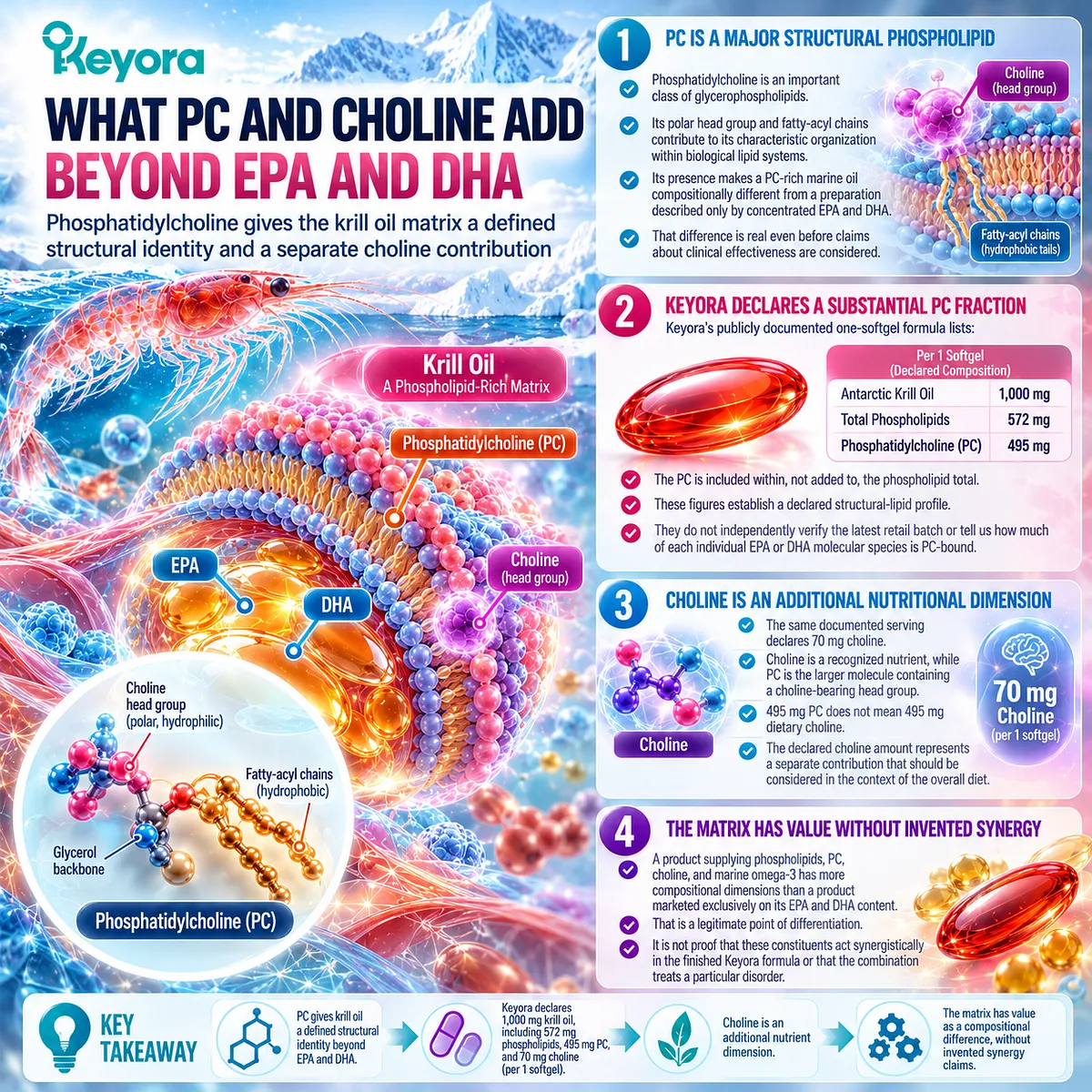
Phosphatidylcholine gives the krill oil matrix a defined structural identity and a separate choline contribution
PC Is a Major Structural Phospholipid
Phosphatidylcholine is an important class of glycerophospholipids.
Its polar head group and fatty-acyl chains contribute to the molecule’s characteristic organization within biological lipid systems.
Its presence makes a PC-rich marine oil compositionally different from a preparation described only by concentrated EPA and DHA.
That difference is real even before claims about clinical effectiveness are considered.
Keyora Declares a Substantial PC Fraction
Keyora’s publicly documented one-softgel formula lists 1,000 mg Antarctic Krill Oil, including 572 mg total phospholipids and 495 mg PC.
The PC is included within, not added to, the phospholipid total.
These figures establish a declared structural-lipid profile.
They do not independently verify the latest retail batch or tell us how much of each individual EPA or DHA molecular species is PC-bound.
Choline Is an Additional Nutritional Dimension
The same documented serving declares 70 mg choline.
Choline is a recognized nutrient, while PC is the larger molecule containing a choline-bearing head group.
Consequently, 495 mg PC does not mean 495 mg dietary choline.
The declared choline amount represents a separate contribution that should be considered in the context of the overall diet.
The Matrix Has Value Without Invented Synergy
A product supplying phospholipids, PC, choline, and marine omega-3 has more compositional dimensions than a product marketed exclusively on its EPA and DHA content.
That is a legitimate point of differentiation.
It is not proof that these constituents act synergistically in the finished Keyora formula or that the combination treats a particular disorder.
Human Studies That Favor Particular Krill Oil Preparations
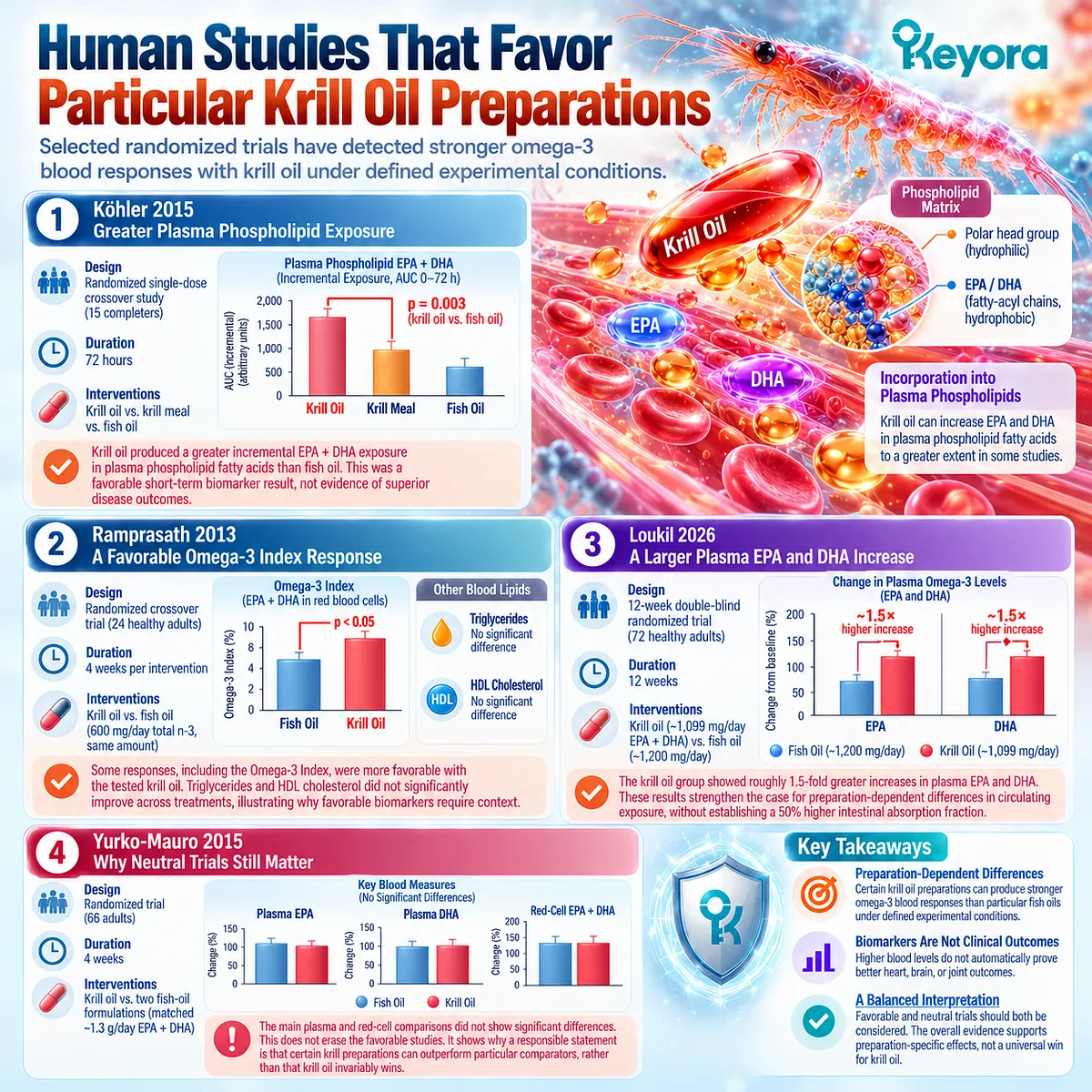
Selected randomized trials have detected stronger omega-3 blood responses with krill oil under defined experimental conditions
Köhler 2015: Greater Plasma Phospholipid Exposure
In a randomized single-dose crossover study involving 15 completers, Köhler and colleagues compared krill oil, krill meal, and fish oil across 72 hours.
The primary outcome was EPA plus DHA incorporation into plasma phospholipid fatty acids.
The krill oil preparation produced a greater incremental exposure than fish oil, with a reported p value of 0.003. This was a favorable short-term biomarker result, not evidence of superior disease outcomes.
Ramprasath 2013: A Favorable Omega-3 Index Response
A randomized crossover trial in 24 healthy adults compared particular krill and fish oils supplying the same 600 mg daily total n-3 fatty acids.
Investigators measured blood fatty-acid composition during four-week interventions.
Some responses, including the Omega-3 Index, were more favorable with the tested krill oil.
Triglycerides and HDL cholesterol did not significantly improve across treatments, illustrating why favorable biomarkers require context.
Loukil 2026: A Larger Plasma EPA and DHA Increase
A 12-week double-blind randomized trial involving 72 healthy adults compared krill oil supplying approximately 1,099 mg EPA plus DHA daily with fish oil supplying about 1,200 mg. The doses were close, not identical.
The krill oil group showed roughly 1.5-fold greater increases in plasma EPA and DHA.
These results strengthen the case for preparation-dependent differences in circulating exposure, without establishing a 50% higher intestinal absorption fraction.
Why Neutral Trials Still Matter
In a 2015 randomized trial involving 66 adults, Yurko-Mauro and colleagues matched approximately 1.3 g EPA plus DHA daily across krill oil and two fish-oil formulations.
After four weeks, the main plasma and red-cell comparisons did not show significant differences.
This does not erase the favorable studies.
It shows why a responsible statement is that certain krill preparations can outperform particular comparators on selected blood measures, rather than that krill oil invariably wins.
Why Different Marine Lipid Forms Produce Different Lipidomic Responses
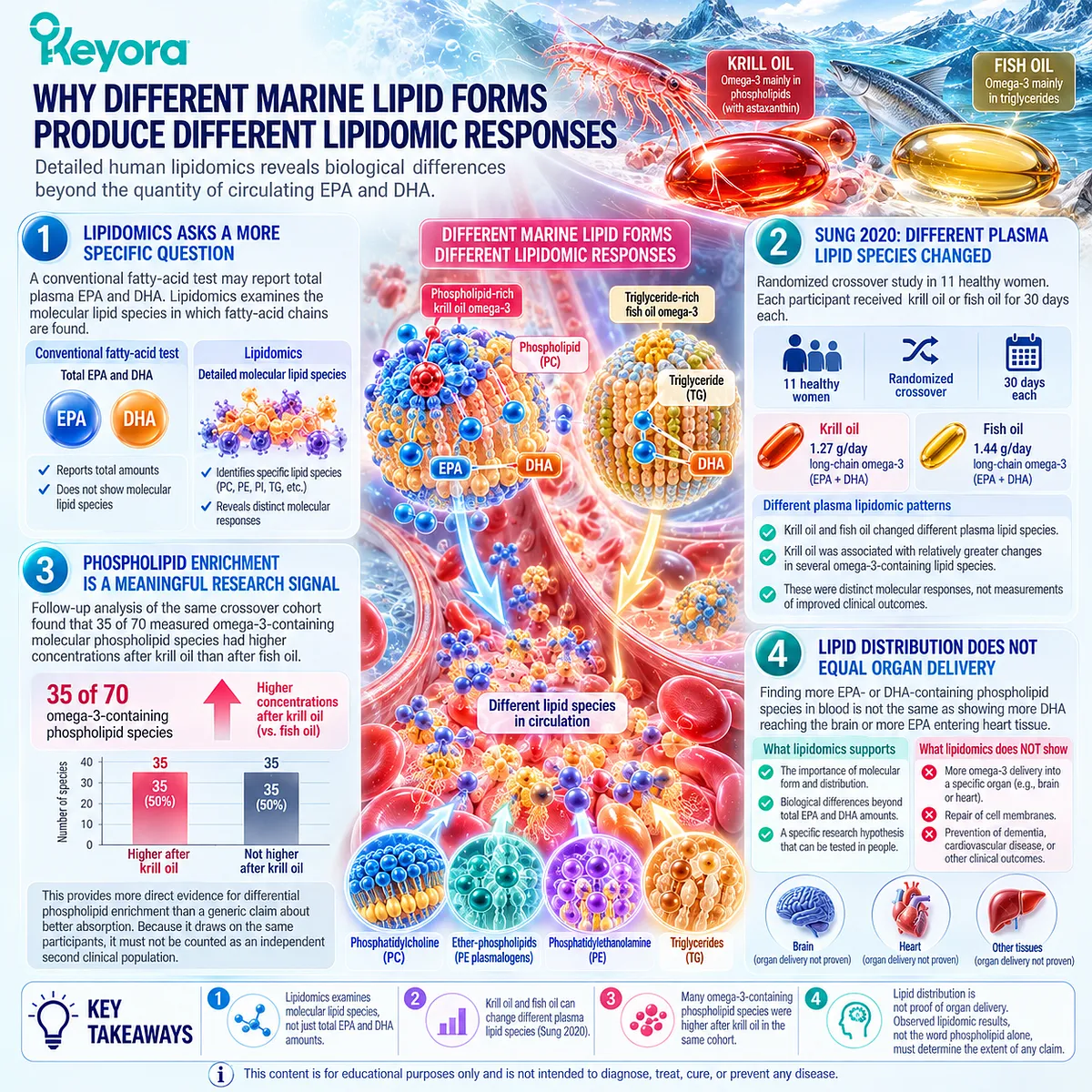
Detailed human lipidomics reveals biological differences beyond the quantity of circulating EPA and DHA
Lipidomics Asks a More Specific Question
A conventional fatty-acid test may report total plasma EPA and DHA. Lipidomics instead examines the molecular lipid species in which fatty-acid chains are found.
That extra detail matters for a phospholipid-rich supplement.
It can reveal whether a preparation influences particular PC, ether-phospholipid, or neutral-lipid species rather than only changing a pooled omega-3 number.
Sung 2020: Different Plasma Lipid Species Changed
In a randomized crossover study, 11 healthy women received krill oil or fish oil for 30 days each. The tested oils supplied 1.27 g and 1.44 g daily long-chain omega-3 fatty acids, respectively.
Sung and colleagues observed different plasma lipidomic patterns between treatments, including relatively greater changes in several omega-3-containing lipid species with krill oil. These were distinct molecular responses, not measurements of improved clinical outcomes.
Phospholipid Enrichment Is a Meaningful Research Signal
Follow-up analysis of this small crossover cohort reported that 35 of 70 measured omega-3-containing molecular phospholipid species had higher concentrations after krill oil than after fish oil.
This provides more direct evidence for differential phospholipid enrichment than a generic claim about better absorption. Because it draws on the same participants, however, it must not be counted as an independent second clinical population.
Lipid Distribution Does Not Equal Organ Delivery
Finding more EPA- or DHA-containing phospholipid species in blood is not the same as showing more DHA reaching the brain or more EPA entering heart tissue.
Lipidomic results support the importance of molecular form and distribution. They do not demonstrate that a particular supplement repairs membranes, prevents dementia, or improves another clinical endpoint in humans.
How DPA and Other Marine Lipids Complete the Matrix
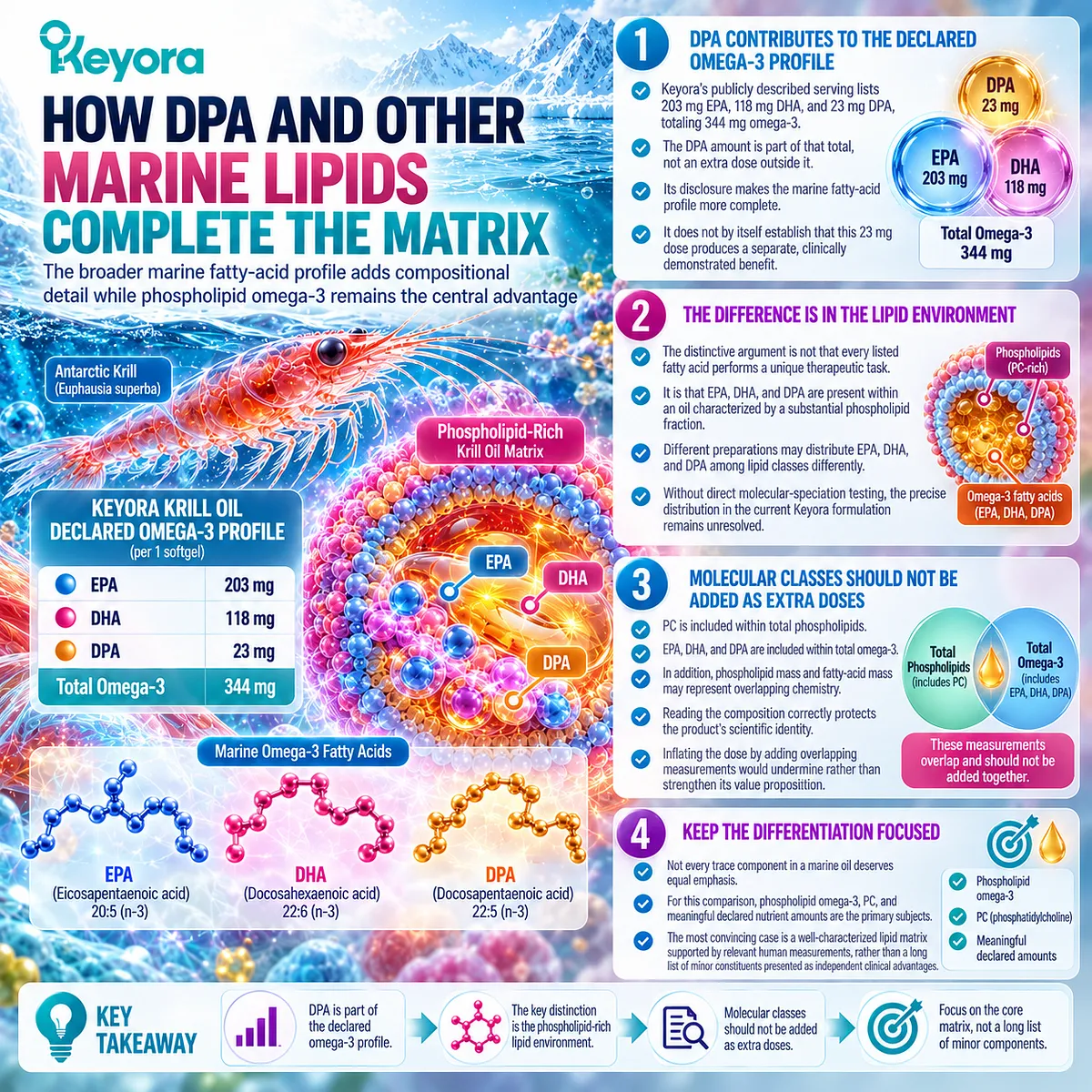
The broader marine fatty-acid profile adds compositional detail while phospholipid omega-3 remains the central advantage
DPA Contributes to the Declared Omega-3 Profile
Keyora’s publicly described serving lists 203 mg EPA, 118 mg DHA, and 23 mg DPA, totaling 344 mg omega-3.
The DPA amount is part of that total, not an extra dose outside it.
Its disclosure makes the marine fatty-acid profile more complete. It does not by itself establish that this 23 mg dose produces a separate, clinically demonstrated benefit.
The Difference Is in the Lipid Environment
The distinctive argument is not that every listed fatty acid performs a unique therapeutic task. It is that those marine fatty acids are present within an oil characterized by a substantial phospholipid fraction.
Different preparations may distribute EPA, DHA, and DPA among lipid classes differently. Without direct molecular-speciation testing, the precise distribution in the current Keyora formulation remains unresolved.
Molecular Classes Should Not Be Added as Extra Doses
PC is included within total phospholipids, and EPA, DHA, and DPA are included within total omega-3. In addition, phospholipid mass and fatty-acid mass may represent overlapping chemistry.
Reading the composition correctly protects the product’s scientific identity. Inflating the dose by adding overlapping measurements would undermine rather than strengthen its value proposition.
Keep the Differentiation Focused
Not every trace component in a marine oil deserves equal emphasis. For this comparison, phospholipid omega-3, PC, and meaningful declared nutrient amounts are the primary subjects.
The most convincing case is a well-characterized lipid matrix supported by relevant human measurements, rather than a long list of minor constituents presented as independent clinical advantages.
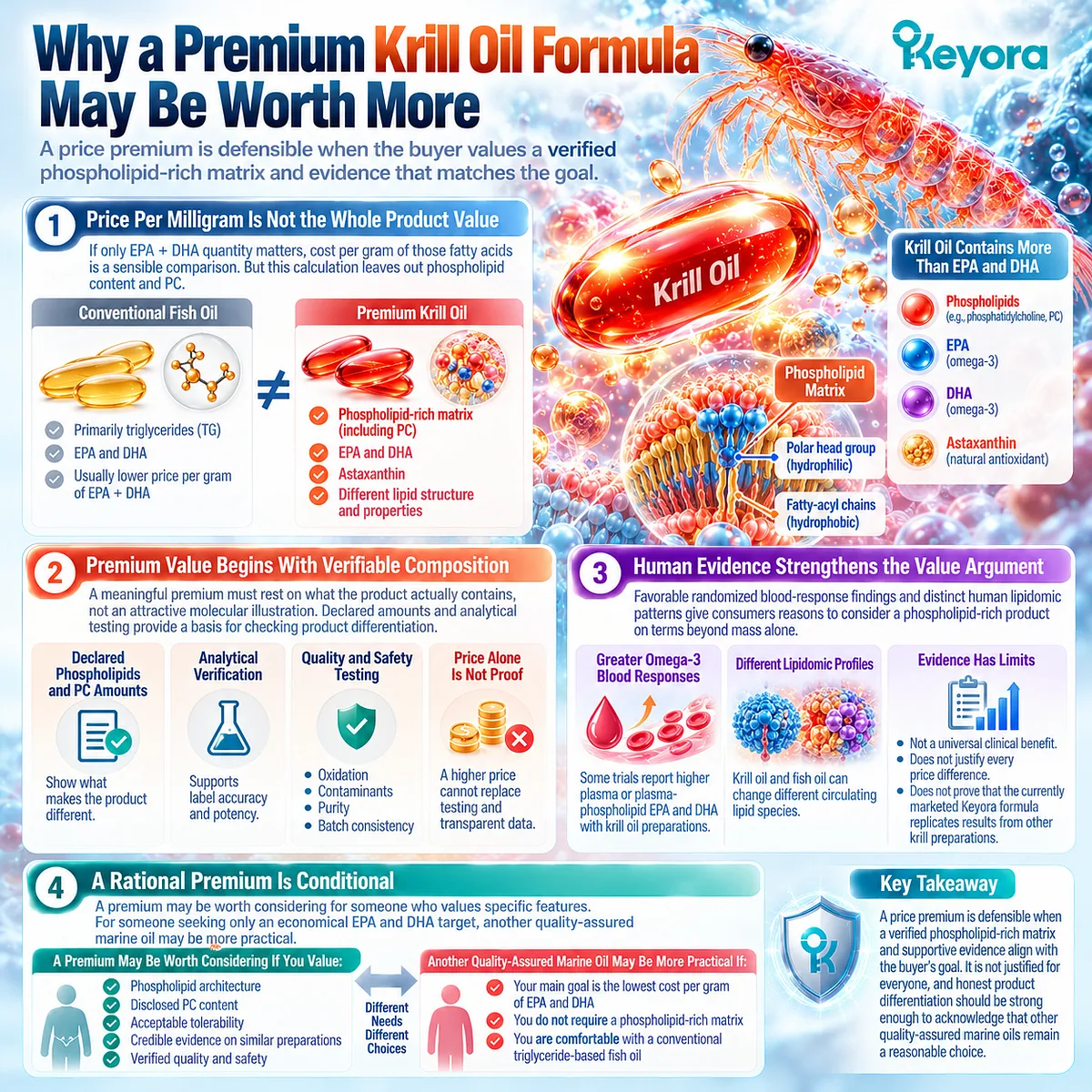
Why a Premium Krill Oil Formula May Be Worth More
A price premium is defensible when the buyer values a verified phospholipid-rich matrix and evidence that matches the goal
Price Per Milligram Is Not the Whole Product Value
If only EPA plus DHA quantity matters, cost per gram of those fatty acids is a sensible comparison. Concentrated fish oils may perform well by that measure.
But this calculation leaves out phospholipid content and PC.
A consumer purchasing a verified phospholipid-rich composition is not necessarily shopping for the lowest-priced interchangeable EPA and DHA raw material.
Premium Value Begins With Verifiable Composition
A meaningful premium must rest on what the product actually contains, not an attractive molecular illustration. Declared phospholipid and PC amounts provide a basis for checking product differentiation.
Current-label accuracy and appropriate analytical documentation still matter. Neither a higher retail price nor an elaborate research explanation can replace testing of potency, oxidation, contaminants, and batch quality.
Human Evidence Strengthens the Value Argument
The case becomes more substantial when favorable randomized blood-response findings and distinct human lipidomic patterns accompany the structural rationale. Those findings give consumers reasons to consider a phospholipid-rich product on terms beyond mass alone.
They do not establish a universal clinical benefit or justify every price difference. Nor do they prove that the currently marketed Keyora formula replicates results from other krill preparations.
A Rational Premium Is Conditional
A premium may be worth considering for someone who values phospholipid architecture, disclosed PC content, acceptable tolerability, and credible evidence on similar preparations.
For someone seeking only an economical EPA and DHA target, another quality-assured marine oil may be more practical. Honest product differentiation should be strong enough to acknowledge that choice.
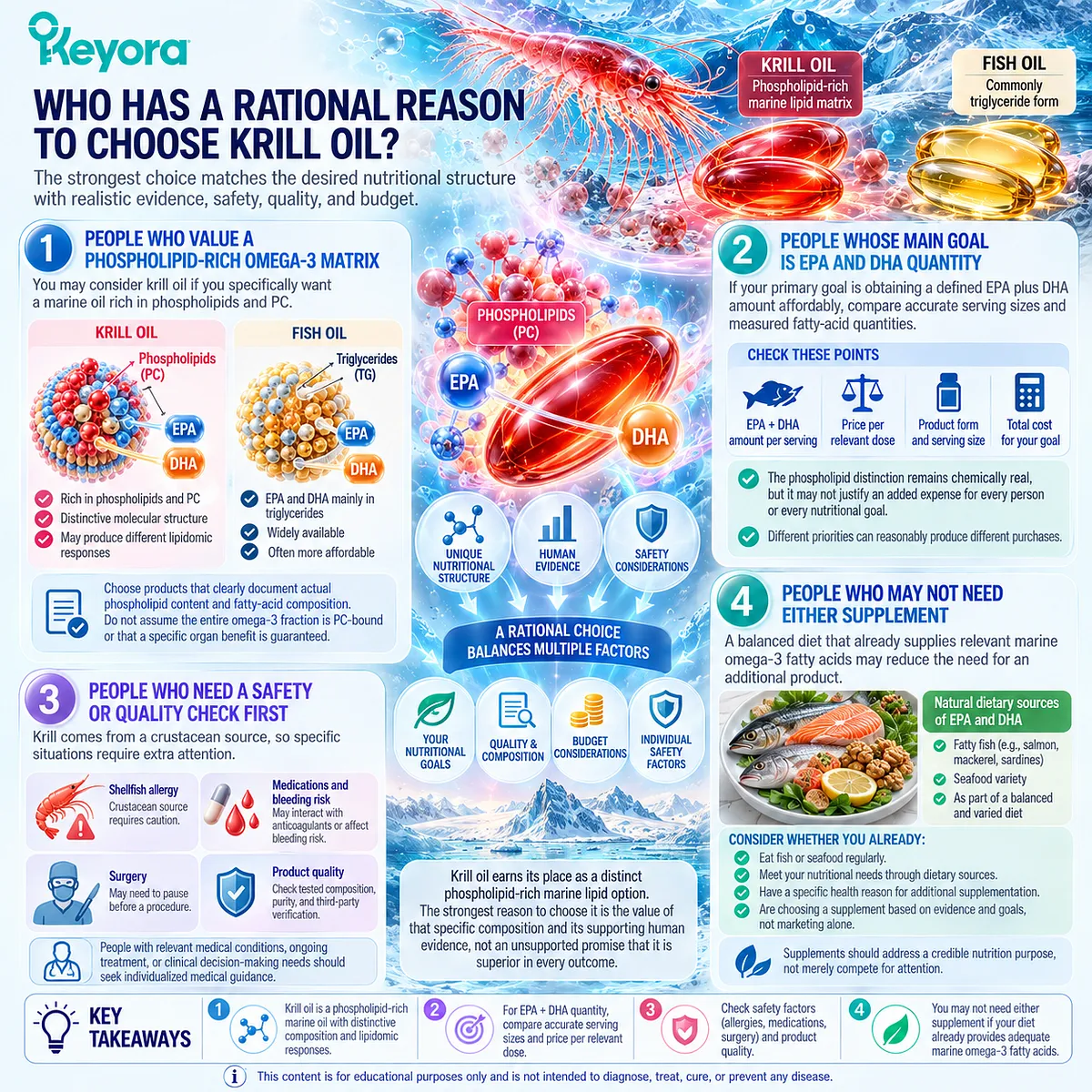
Who Has a Rational Reason to Choose Krill Oil?
The strongest choice matches the desired nutritional structure with realistic evidence, safety, quality, and budget
People Who Value a Phospholipid-Rich Omega-3 Matrix
A consumer who specifically wants a marine oil rich in phospholipids and PC has a rational reason to evaluate krill oil. It offers compositional features that common triglyceride fish oils do not emphasize.
The choice becomes better grounded when the actual product documents those features clearly. The consumer need not assume that the entire omega-3 fraction is PC-bound or that a specific organ benefit is guaranteed.
People Whose Main Goal Is EPA and DHA Quantity
If the primary goal is obtaining a defined EPA plus DHA amount affordably, compare accurate serving sizes and measured fatty-acid quantities. Price per relevant dose is useful for that question.
The phospholipid distinction remains chemically real, but it may not justify an added expense for every person or every nutritional goal. Different priorities can reasonably produce different purchases.
People Who Need a Safety or Quality Check First
Krill comes from a crustacean source, so shellfish allergy requires particular attention. Fish-derived oils have their own allergen considerations, and neither product should be treated as automatically safe for everyone.
People taking relevant medications, managing bleeding risks, preparing for surgery, or facing a clinical treatment decision may need individual guidance. Product quality and tested composition matter regardless of source.
People Who May Not Need Either Supplement
A balanced diet that already supplies the relevant marine omega-3 fatty acids may reduce the need for an additional product. Supplements should address a credible nutrition purpose, not merely compete for attention.
Krill oil earns its place as a distinct phospholipid-rich marine lipid option.
The strongest reason to choose it is the value of that specific composition and its supporting human evidence, not an unsupported promise that it is superior in every outcome.
This article is for educational and informational purposes only. It does not provide medical advice, diagnosis, treatment, cure, prevention, disease outcome claims, hormone restoration claims, fertility outcome claims, or formula-specific clinical efficacy claims.