
Why Does Stress Make My Brain Feel Foggy and Mentally Slow?
Keyora Research Q&A Library
This is part of the Keyora Research Q&A Series, derived from Keyora Astaxanthin Research Journal Series.
Within the Keyora Astaxanthin Researcn framework, this Q&A translates complex astaxanthin biology into reader-friendly, evidence-bound answers, focusing on natural astaxanthin identity, molecular structure, antioxidant and redox mechanisms, membrane lipid interaction, mitochondrial resilience, inflammatory signaling pathways, human evidence interpretation, and the scientific principles behind responsible supplementation.
First published by Keyora Research Journal: www.keyorahealth.com
Direct Answer
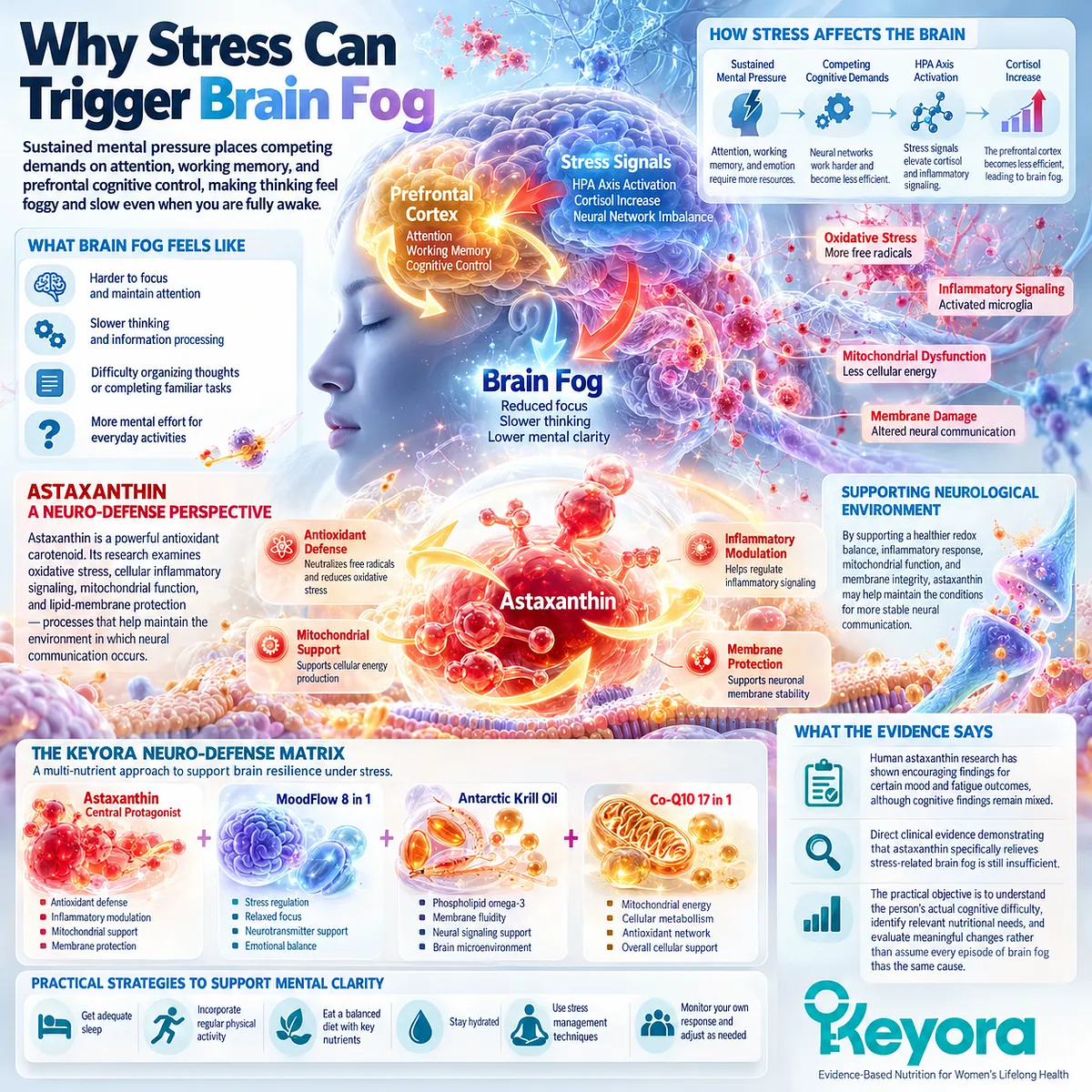
Stress can make thinking feel foggy and slow because sustained mental pressure places competing demands on attention, working memory, and prefrontal cognitive control.
A person may remain fully awake yet struggle to organize thoughts, retrieve information, or complete familiar tasks efficiently.
Astaxanthin introduces an additional biological perspective: its research on oxidative stress, cellular inflammatory signaling, mitochondrial function, and lipid-membrane protection examines processes that help maintain the environment in which neural communication occurs.
Within the Keyora Neuro-Defense Matrix, astaxanthin remains the central scientific protagonist.
MoodFlow, Antarctic Krill Oil, and Co-Q10 17 in 1 provide potentially complementary nutritional tasks involving stress regulation, long-chain omega-3 nutrition, and mitochondrial energy metabolism.
Human astaxanthin research has reported encouraging findings for certain mood and fatigue outcomes, although cognitive findings remain mixed.
Direct clinical evidence demonstrating that astaxanthin specifically relieves stress-related brain fog is still insufficient.
The practical objective is to understand the person’s actual cognitive difficulty, identify relevant nutritional needs, and evaluate meaningful changes rather than assume every episode of brain fog has the same cause.
Why Stress Can Make a Clear Mind Feel Slow
How sustained mental demands interfere with working memory, attention, and everyday thinking
Recognizing the Experience of Stress-Related Brain Fog
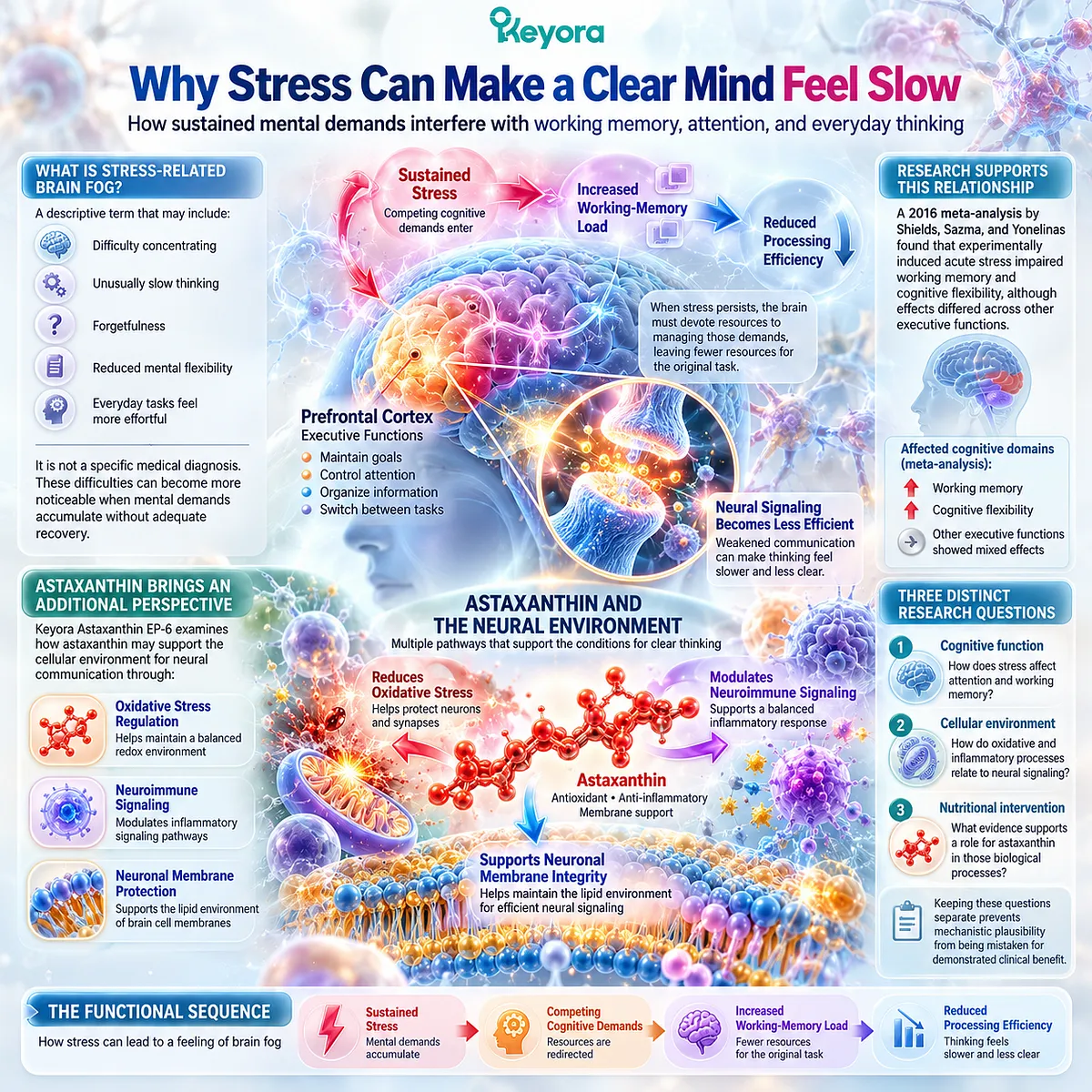
Brain fog is a descriptive term rather than a specific medical diagnosis. It may involve difficulty concentrating, unusually slow thinking, forgetfulness, reduced mental flexibility, or the feeling that familiar tasks require more effort than before.
For example, someone may repeatedly reread an email, lose track of a conversation, or struggle to organize information during an otherwise ordinary working day.
These difficulties can become more noticeable when mental demands accumulate without adequate recovery.
The Cognitive Bottleneck
The prefrontal cortex supports several important executive functions, including maintaining goals, controlling attention, organizing information, and switching between tasks.
When stress introduces competing concerns, the brain must devote resources to managing those demands while continuing to perform the original task.
A useful functional sequence is:
Sustained Stress → Competing Cognitive Demands → Increased Working-Memory Load → Reduced Processing Efficiency
This sequence does not imply that stress permanently damages the brain. It describes how cognitive performance can become less efficient under demanding conditions.
Research supports this relationship. A 2016 meta-analysis by Shields, Sazma, and Yonelinas found that experimentally induced acute stress impaired working memory and cognitive flexibility, although effects differed across other executive functions.
Where Astaxanthin Enters the Discussion
Understanding cognitive overload explains why thinking may become more difficult, but it does not address every biological process supporting neural function.
Keyora Astaxanthin EP-6 extends the investigation toward cellular redox regulation, neuroimmune signaling, and the lipid environment of neuronal membranes.
This creates three distinct research questions:
-
Cognitive function: How does stress affect attention and working memory?
-
Cellular environment: How do oxidative and inflammatory processes relate to neural signaling?
-
Nutritional intervention: What evidence supports a role for astaxanthin in those biological processes?
Keeping these questions separate prevents mechanistic plausibility from being mistaken for demonstrated clinical benefit.
Prefrontal Overload Is Not the Whole Story
Why alertness, attention, sleep, and neural cellular conditions require different explanations
Being Awake Is Not the Same as Thinking Clearly
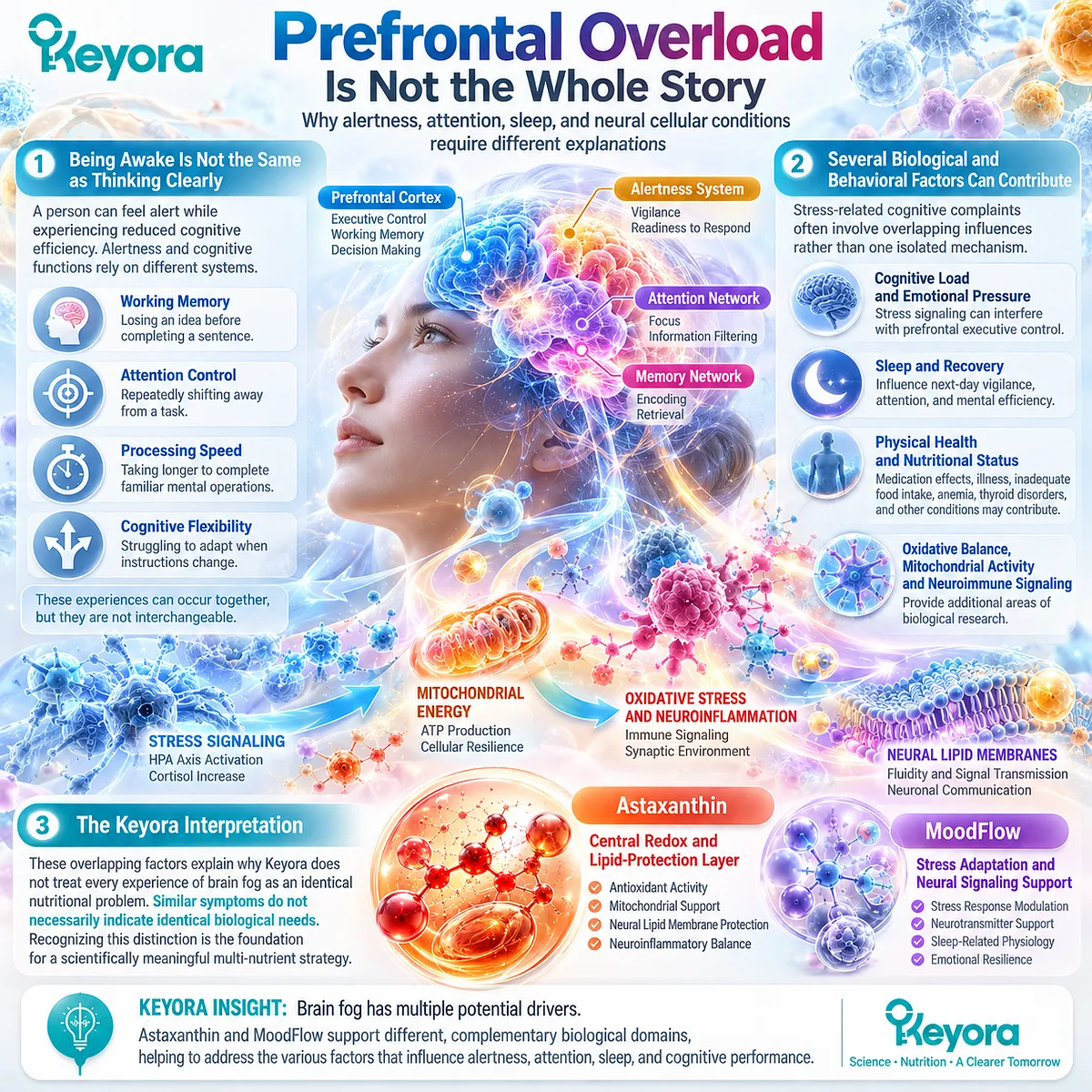
A person can feel alert while experiencing reduced cognitive efficiency.
Alertness refers to readiness to respond, whereas working memory, attention control, and processing speed describe different aspects of mental performance.
Their differences become clearer in ordinary situations:
-
Working memory difficulty: Losing an idea before completing a sentence.
-
Attention-control difficulty: Repeatedly shifting away from a task despite trying to concentrate.
-
Processing-speed difficulty: Taking unusually long to complete a familiar mental operation.
-
Cognitive-flexibility difficulty: Struggling to adapt when instructions or circumstances change.
These experiences can occur together, but they are not interchangeable. An intervention that changes subjective fatigue does not necessarily improve reaction time or memory accuracy.
Several Biological and Behavioral Factors Can Contribute
Stress-related cognitive complaints may involve overlapping influences rather than one isolated mechanism.
-
First, cognitive load and emotional pressure can interfere with prefrontal executive control. Research on stress signaling helps explain why attention and working memory become vulnerable under pressure.
-
Second, sleep and recovery influence next-day vigilance, attention, and mental efficiency. Poor sleep can contribute to brain fog even when total time in bed appears adequate.
-
Third, physical health and nutritional status may matter. Medication effects, illness, inadequate food intake, anemia, thyroid disorders, and other conditions can produce similar complaints.
-
Finally, oxidative balance, mitochondrial activity, and neuroimmune signaling provide additional areas of biological research.
The Keyora Interpretation
These overlapping factors explain why Keyora does not treat every experience of brain fog as an identical nutritional problem.
Astaxanthin occupies the central redox and lipid-protection research layer. MoodFlow belongs to a different support domain involving stress adaptation, neural signaling, and sleep-related physiology.
Similar symptoms do not necessarily indicate identical biological needs.
Recognizing this distinction is the foundation for a scientifically meaningful multi-nutrient strategy.
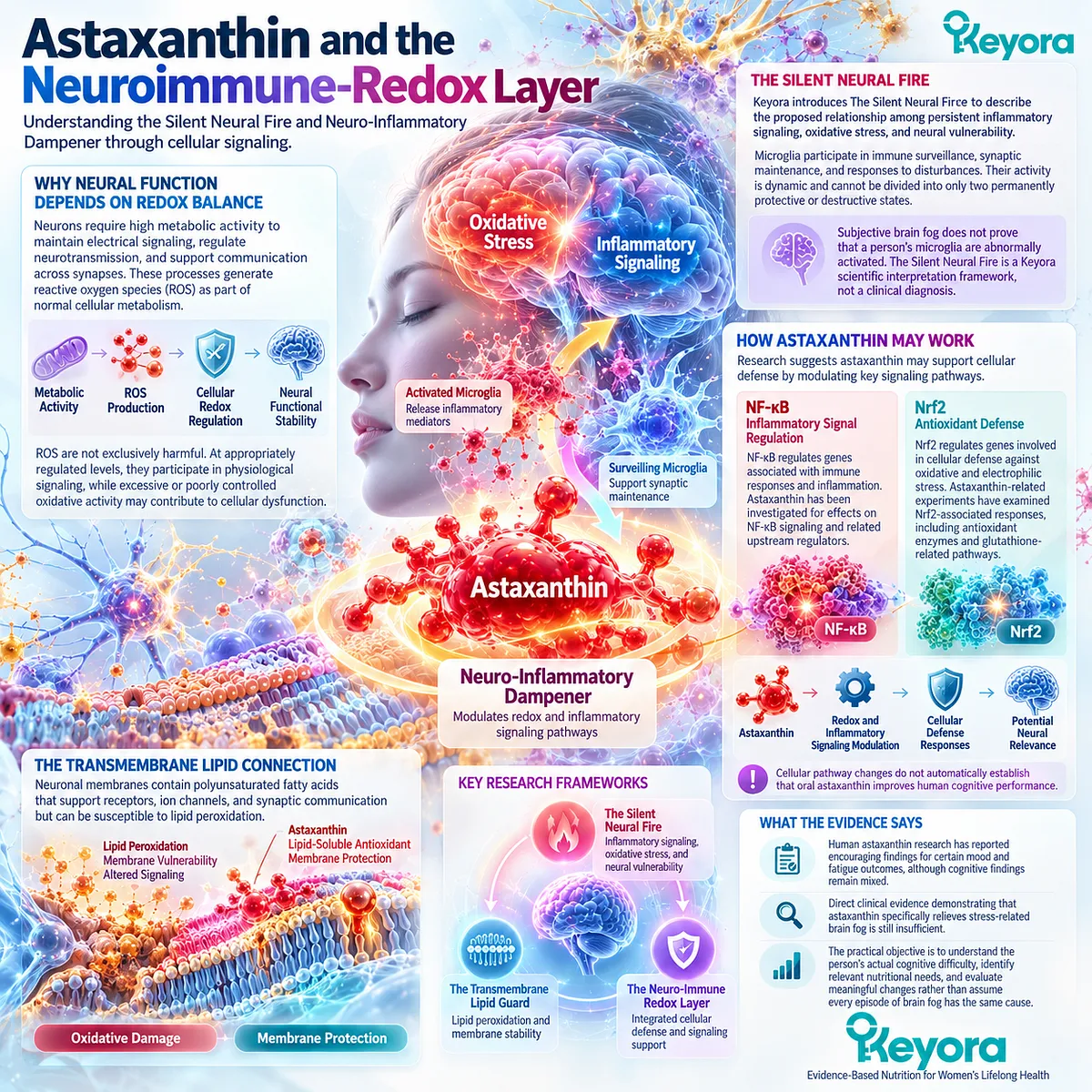
Astaxanthin and the Neuroimmune-Redox Layer
Understanding the Silent Neural Fire and Neuro-Inflammatory Dampener through cellular signaling
Why Neural Function Depends on Redox Balance
Neurons require substantial metabolic activity to maintain electrical signaling, regulate neurotransmission, and support communication across synapses.
These processes generate reactive oxygen species, or ROS, as part of normal cellular metabolism.
ROS are not exclusively harmful. At appropriately regulated levels, they participate in physiological signaling, while excessive or poorly controlled oxidative activity may contribute to cellular dysfunction.
The relationship can be summarized as:
Metabolic Activity → ROS Production → Cellular Redox Regulation → Neural Functional Stability
When oxidative processes overwhelm cellular defenses, proteins, lipids, and other cellular components may become vulnerable to damage.
Neuronal membranes are especially relevant because their specialized lipid composition supports receptors, ion channels, and synaptic communication.
The Silent Neural Fire: A Neuroimmune Research Framework
Keyora Astaxanthin EP-6 introduces The Silent Neural Fire to describe the proposed relationship among persistent inflammatory signaling, oxidative stress, and neural vulnerability.
Microglia are central to this discussion because they participate in immune surveillance, synaptic maintenance, and responses to disturbances within the central nervous system.
Their activity is dynamic. Microglia cannot accurately be divided into only two permanently protective or destructive states.
Experimental research indicates that inflammatory signaling may influence neural function, but subjective brain fog does not prove that a person’s microglia are abnormally activated.
The Silent Neural Fire should therefore be understood as a Keyora scientific interpretation framework, not a clinical diagnosis.
The Neuro-Inflammatory Dampener: Astaxanthin’s Research Role
Astaxanthin has attracted research interest because of its antioxidant properties in lipid environments and its reported effects on selected cellular stress pathways.
Two signaling systems help explain its potential relevance.
NF-kB: Inflammatory Signal Regulation
NF-kB participates in the regulation of genes associated with immune responses and inflammation.
In experimental models, astaxanthin has been investigated for effects on signaling processes involving NF-kB and related upstream regulators.
Nrf2: Cellular Antioxidant Defense
Nrf2 regulates numerous genes involved in cellular defense against oxidative and electrophilic stress.
Astaxanthin-related experiments have examined Nrf2-associated responses, including antioxidant enzymes and glutathione-related pathways.
The proposed mechanism is:
Astaxanthin → Redox and Inflammatory Signaling Modulation → Cellular Defense Responses → Potential Neural Relevance
The last connection requires particular caution. Cellular pathway changes do not automatically establish that oral astaxanthin improves human cognitive performance.
The Transmembrane Lipid Connection
Astaxanthin’s molecular properties also make lipid-associated antioxidant research relevant.
Neuronal membranes contain polyunsaturated fatty acids that contribute to membrane organization and signaling but can be susceptible to lipid peroxidation.
Keyora’s The Transmembrane Lipid Guard framework connects this vulnerability with astaxanthin’s redox-related research.
However, membrane-associated antioxidant activity is not evidence that supplementation physically shields every neuronal membrane or repairs human synapses.
The scientifically supported interpretation is that astaxanthin represents a plausible nutritional research candidate for cellular redox support, with direct human brain fog outcomes still requiring verification.
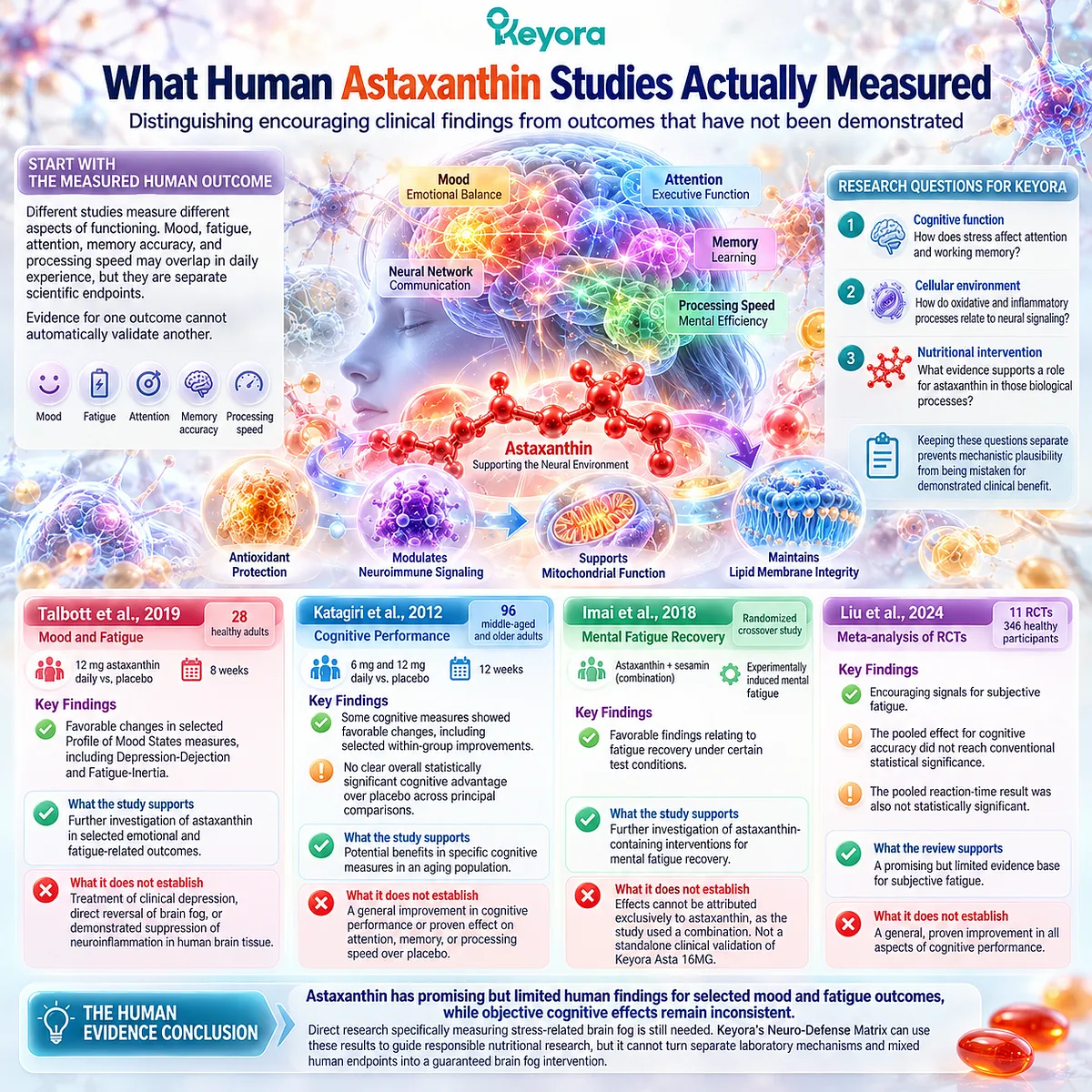
What Human Astaxanthin Studies Actually Measured
Distinguishing encouraging clinical findings from outcomes that have not been demonstrated
Start With the Measured Human Outcome
A central problem in brain health research is that different studies measure different aspects of functioning.
Mood, fatigue, attention, memory accuracy, and processing speed may overlap in daily experience, but they are separate scientific endpoints.
For Keyora, this distinction is essential because evidence for one outcome cannot automatically validate another.
Talbott et al., 2019: Mood and Fatigue
Talbott and colleagues investigated natural astaxanthin supplementation in a small double-blind study involving 28 healthy adults.
Participants received 12 mg of astaxanthin daily or placebo for eight weeks.
The study reported favorable changes in selected Profile of Mood States measures, including Depression-Dejection and Fatigue-Inertia.
These findings provide a meaningful human research signal for mood and fatigue.
What the study supports: Further investigation of astaxanthin in selected emotional and fatigue-related outcomes.
What it does not establish: Treatment of clinical depression, direct reversal of brain fog, or demonstrated suppression of neuroinflammation in human brain tissue.
Katagiri et al., 2012: Cognitive Performance
Katagiri and colleagues investigated astaxanthin-rich algal extract in 96 middle-aged and older adults reporting age-related forgetfulness.
The randomized, double-blind trial evaluated 6 mg and 12 mg daily over twelve weeks.
Some cognitive measures showed favorable changes, including selected within-group improvements. However, the study did not demonstrate a clear overall statistically significant cognitive advantage over placebo across its principal comparisons.
This distinction matters because a favorable change within one group does not necessarily establish that the intervention performed better than the comparator.
Imai et al., 2018: Mental Fatigue Recovery
Imai and colleagues investigated a combined astaxanthin-and-sesamin intervention in a randomized crossover study involving experimentally induced mental fatigue.
The study reported favorable findings relating to fatigue recovery under certain test conditions.
However, the intervention was a combination.
Therefore, its observed effects cannot be attributed exclusively to astaxanthin or presented as clinical validation of Keyora Asta 16MG.
Liu et al., 2024: The Broader Evidence Picture
A 2024 meta-analysis examined eleven randomized controlled trials involving 346 healthy participants across fatigue, cognition, and physical-performance outcomes.
The overall findings were not uniformly positive.
The review reported encouraging signals for subjective fatigue, but the pooled effect for cognitive accuracy did not reach conventional statistical significance.
The pooled reaction-time result was also not statistically significant.
These results prevent the evidence from being summarized as a general, proven improvement in all aspects of cognitive performance.
The Human Evidence Conclusion
The current evidence supports a carefully qualified interpretation:
Astaxanthin has promising but limited human findings for selected mood and fatigue outcomes, while objective cognitive effects remain inconsistent.
Direct research specifically measuring stress-related brain fog is still needed.
Keyora’s Neuro-Defense Matrix can use these results to guide responsible nutritional research, but it cannot turn separate laboratory mechanisms and mixed human endpoints into a guaranteed brain fog intervention.
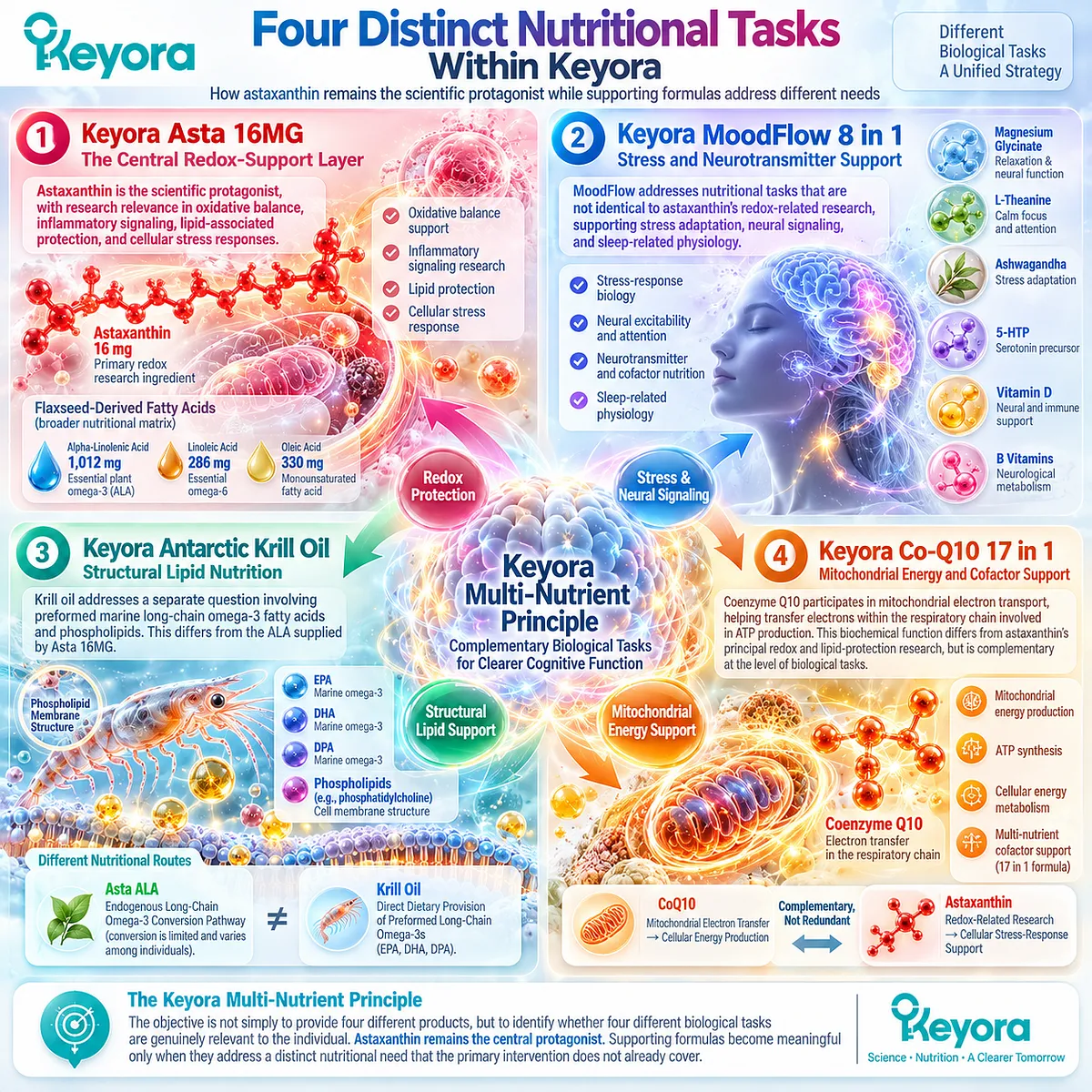
Four Distinct Nutritional Tasks Within Keyora
How astaxanthin remains the scientific protagonist while supporting formulas address different needs
1. Keyora Asta 16MG: The Central Redox-Support Layer
The defining nutritional protagonist is natural astaxanthin.
Its research relevance centers on oxidative balance, inflammatory signaling, lipid-associated protection, and cellular stress responses.
Keyora Asta 16MG also contains flaxseed-derived fatty acids, providing a broader nutritional matrix.
The current full two-softgel serving identifies:
-
Astaxanthin, 16 mg: The primary redox-related research ingredient.
-
Alpha-Linolenic Acid, 1,012 mg: An essential plant omega-3 fatty acid and precursor for longer-chain omega-3 synthesis.
-
Linoleic Acid, 286 mg: An essential omega-6 fatty acid involved in lipid biology and physiological signaling.
-
Oleic Acid, 330 mg: A monounsaturated fatty acid with roles in lipid structure and metabolism.
These nutritional components have different biological identities, although the complete finished formula has not been directly shown to outperform its individual ingredients for brain fog.
2. Keyora MoodFlow 8 in 1: Stress and Neurotransmitter Support
MoodFlow addresses nutritional tasks that are not identical to astaxanthin’s redox-related research.
Its formula includes magnesium glycinate, L-theanine, ashwagandha, 5-HTP, vitamin D, and B vitamins.
These ingredients connect with several distinct research domains:
-
Stress-Response Biology: Ashwagandha has been investigated in human stress-related studies, although findings depend on extract, dose, population, and outcome.
-
Neural Excitability and Attention: Magnesium and L-theanine belong to research involving neuronal function, relaxation, and selected attention-related responses.
-
Neurotransmitter and Cofactor Nutrition: 5-HTP is a serotonin precursor, while B vitamins participate in various metabolic and neurological processes.
MoodFlow therefore provides a different nutritional perspective when stress regulation or sleep-related concerns require attention.
It does not replace astaxanthin’s proposed redox-support task.
3. Antarctic Krill Oil: Structural Lipid Nutrition
Krill oil addresses a separate question involving preformed marine long-chain omega-3 fatty acids and phospholipids.
Its nutritional architecture includes EPA, DHA, DPA, and phospholipid-associated components such as phosphatidylcholine.
This differs from the ALA supplied by Asta 16MG.
Although ALA is essential and can undergo metabolic conversion, its conversion into preformed long-chain omega-3 fatty acids, particularly DHA, is limited and varies among individuals.
The distinction can be expressed as:
-
Asta ALA → Endogenous Long-Chain Omega-3 Conversion Pathway
-
Krill Oil → Direct Dietary Provision of Preformed Long-Chain Omega-3s
These are different nutritional routes, not equivalent amounts of DHA exposure.
Keyora Antarctic Krill Oil may therefore represent an additional nutritional task when dietary intake of preformed marine omega-3s is insufficient.
Its inclusion does not establish that combined use with astaxanthin has been proven to improve stress-related brain fog.
4. Co-Q10 17 in 1: Mitochondrial Energy and Cofactor Support
Coenzyme Q10 participates in mitochondrial electron transport, helping transfer electrons within the respiratory chain involved in ATP production.
This biochemical function differs from the principal redox and lipid-protection research used to position astaxanthin in EP-6.
The relationship is complementary at the level of biological tasks:
-
CoQ10 → Mitochondrial Electron Transfer → Cellular Energy Production
-
Astaxanthin → Redox-Related Research → Cellular Stress-Response Support
Keyora Co-Q10 17 in 1 is a multi-component formula rather than isolated CoQ10. Its complete ingredient list, amounts, and possible overlaps must be reviewed before applying this nutritional comparison to actual product use.
The Keyora Multi-Nutrient Principle
The scientific objective is not simply to provide four different products.
It is to identify whether four different biological tasks are genuinely relevant to the individual.
Astaxanthin remains the central protagonist.
Supporting formulas become meaningful only when they address a distinct nutritional need that the primary intervention does not already cover.
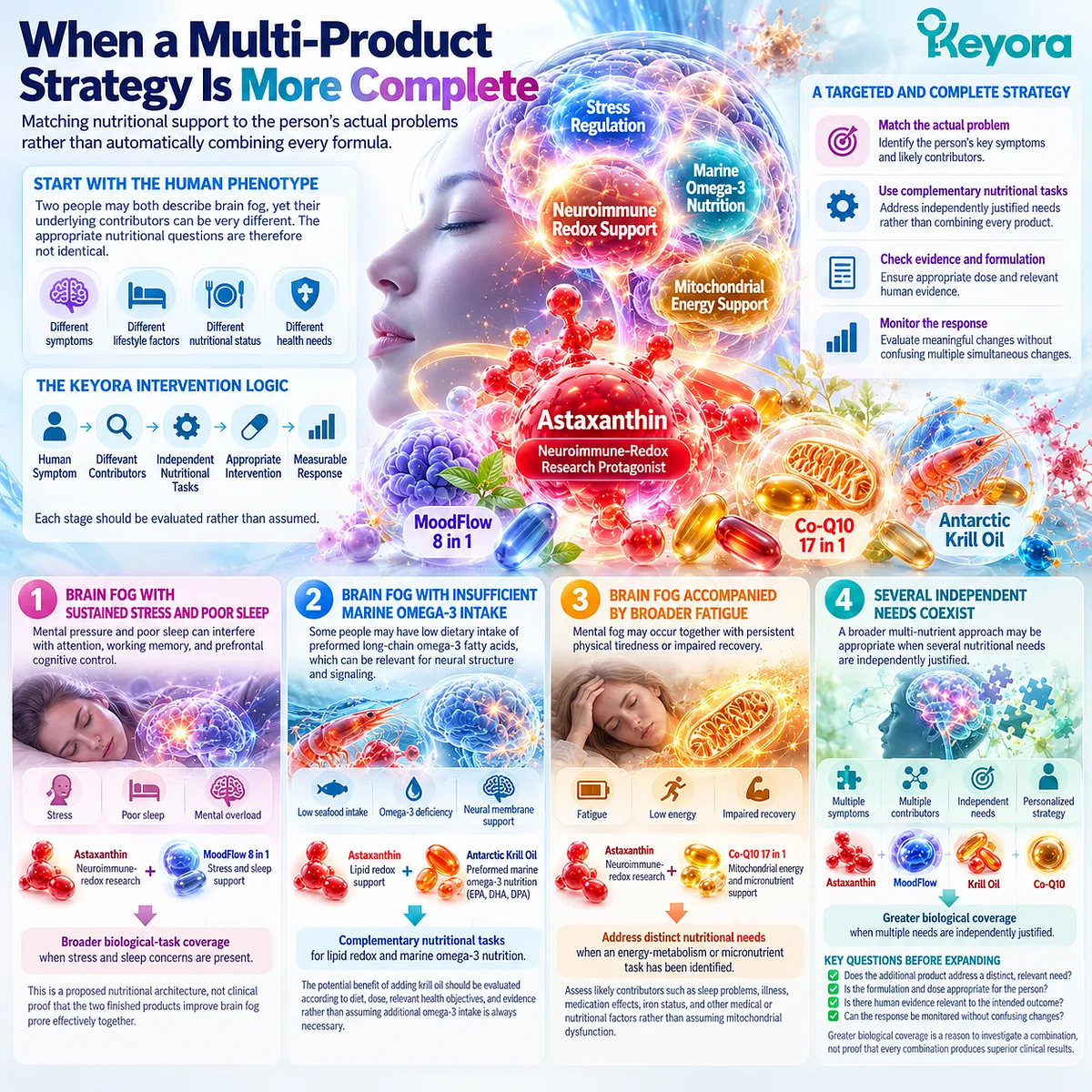
When a Multi-Product Strategy Is More Complete
Matching nutritional support to the person’s actual problems rather than automatically combining every formula
Start With the Human Phenotype
Two people may both describe brain fog, yet one primarily experiences disrupted sleep and high stress while another reports broader fatigue or has low dietary intake of marine omega-3s.
These differences matter because the appropriate nutritional questions are not identical.
Keyora’s intervention logic begins with the actual problem:
Human Symptom → Relevant Contributors → Independent Nutritional Tasks → Appropriate Intervention → Measurable Response
Each stage should be evaluated rather than assumed.
Scenario 1. Brain Fog With Sustained Stress and Poor Sleep
Within Keyora’s framework, astaxanthin remains the central nutrient under investigation for redox and neuroimmune-related pathways.
MoodFlow may provide a separate stress and sleep-support layer when those concerns are genuinely present.
The combined rationale is therefore:
Astaxanthin Redox Research + MoodFlow Stress-Sleep Support → Broader Biological-Task Coverage
This is a proposed nutritional architecture, not clinical proof that the two finished products improve brain fog more effectively together.
Scenario 2. Brain Fog With Insufficient Marine Omega-3 Intake
A different concern may involve inadequate intake of preformed long-chain omega-3 fatty acids.
In this situation, the important distinction is between ALA supplied by Asta 16MG and marine EPA, DHA, and DPA supplied by Antarctic Krill Oil.
The nutritional rationale becomes:
Astaxanthin-Related Lipid Redox Support + Preformed Marine Omega-3 Nutrition
The potential benefit of adding krill oil should be evaluated according to diet, dose, relevant health objectives, and evidence rather than assuming additional omega-3 intake is always necessary.
Scenario 3. Brain Fog Accompanied by Broader Fatigue
If mental fog accompanies persistent physical tiredness or impaired recovery, the first step is to assess likely contributors.
Sleep problems, illness, medication effects, iron status, and other medical or nutritional factors may be more relevant than assuming mitochondrial dysfunction.
Co-Q10 17 in 1 may represent a separate nutritional consideration when an appropriate energy-metabolism or micronutrient task has been identified.
Astaxanthin remains the neuroimmune-redox research protagonist, while Co-Q10 supports a different biochemical discussion.
Scenario 4. Several Independent Needs Coexist
A broader multi-nutrient approach may be appropriate when several nutritional needs are independently justified.
Nevertheless, additional products should not be included merely because their mechanisms sound complementary.
Before expanding the intervention, ask:
-
Does the additional product address a distinct, relevant nutritional need?
-
Is its formulation and dose appropriate for the person?
-
Is there human evidence relevant to the intended outcome?
-
Can the response be monitored without confusing multiple simultaneous changes?
Greater biological coverage is a reason to investigate a combination, not proof that every combination produces superior clinical results.
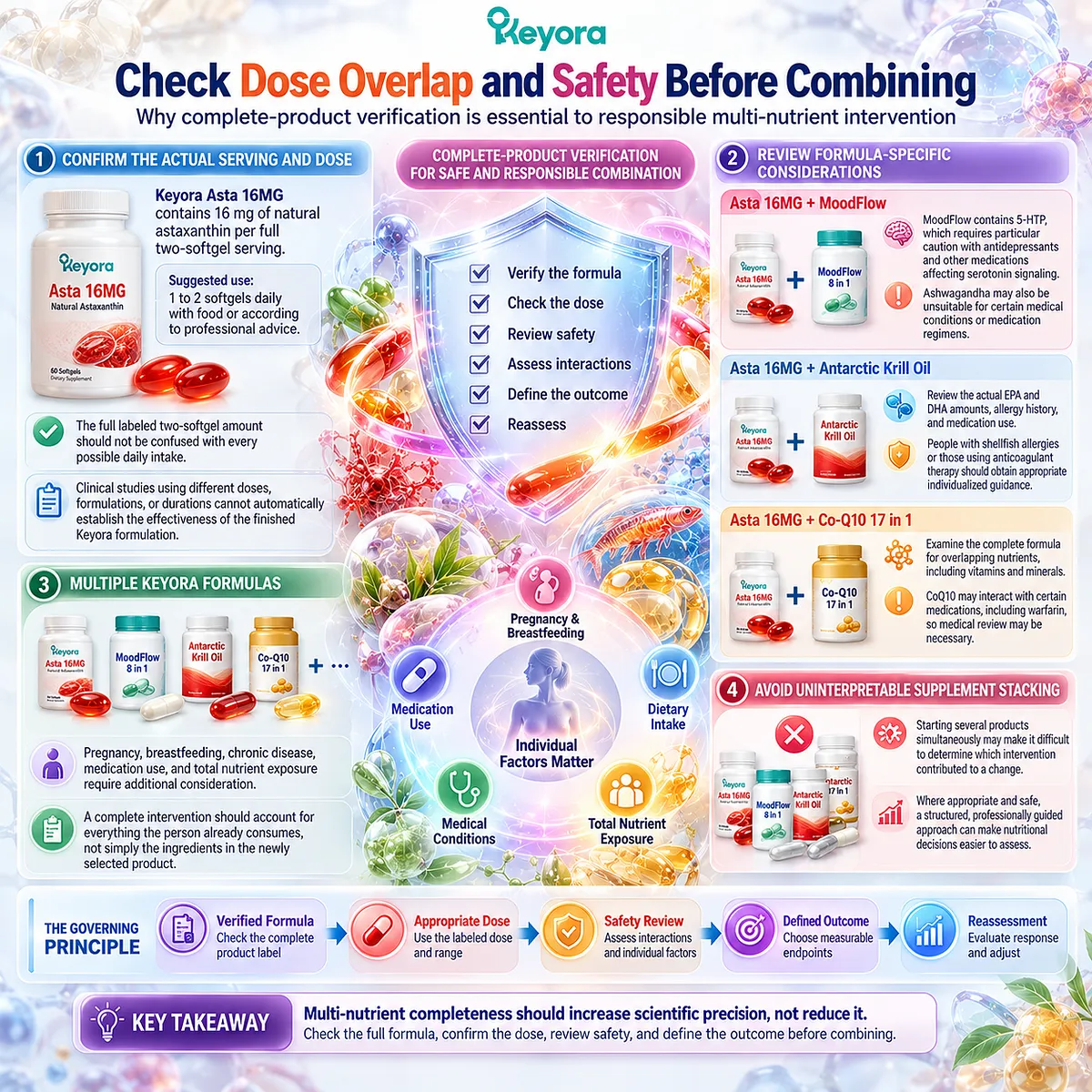
Check Dose Overlap and Safety Before Combining
Why complete-product verification is essential to responsible multi-nutrient intervention
Confirm the Actual Serving and Dose
Keyora Asta 16MG contains 16 mg of natural astaxanthin per full two-softgel serving.
The current product label suggests one to two softgels daily with food or according to professional advice.
Accordingly, the full labeled two-softgel amount should not be confused with every possible daily intake.
Clinical studies using different doses, formulations, or durations cannot automatically establish the effectiveness of the finished Keyora formulation.
Review Formula-Specific Considerations
Asta 16MG + MoodFlow
MoodFlow contains 5-HTP, which requires particular caution with antidepressants and other medications affecting serotonin signaling.
Ashwagandha may also be unsuitable for certain medical conditions or medication regimens.
Asta 16MG + Antarctic Krill Oil
Review the actual EPA and DHA amounts, allergy history, and medication use.
People with shellfish allergies or those using anticoagulant therapy should obtain appropriate individualized guidance.
Asta 16MG + Co-Q10 17 in 1
Examine the complete formula for overlapping nutrients, including vitamins and minerals.
CoQ10 may interact with certain medications, including warfarin, so medical review may be necessary.
Multiple Keyora Formulas
Pregnancy, breastfeeding, chronic disease, medication use, and total nutrient exposure require additional consideration.
A complete intervention should account for everything the person already consumes, not simply the ingredients in the newly selected product.
Avoid Uninterpretable Supplement Stacking
Starting several products simultaneously may make it difficult to determine which intervention contributed to a change.
Where appropriate and safe, a structured, professionally guided approach can make nutritional decisions easier to assess.
The governing principle is:
Verified Formula → Appropriate Dose → Safety Review → Defined Outcome → Reassessment
Multi-nutrient completeness should increase scientific precision, not reduce it.
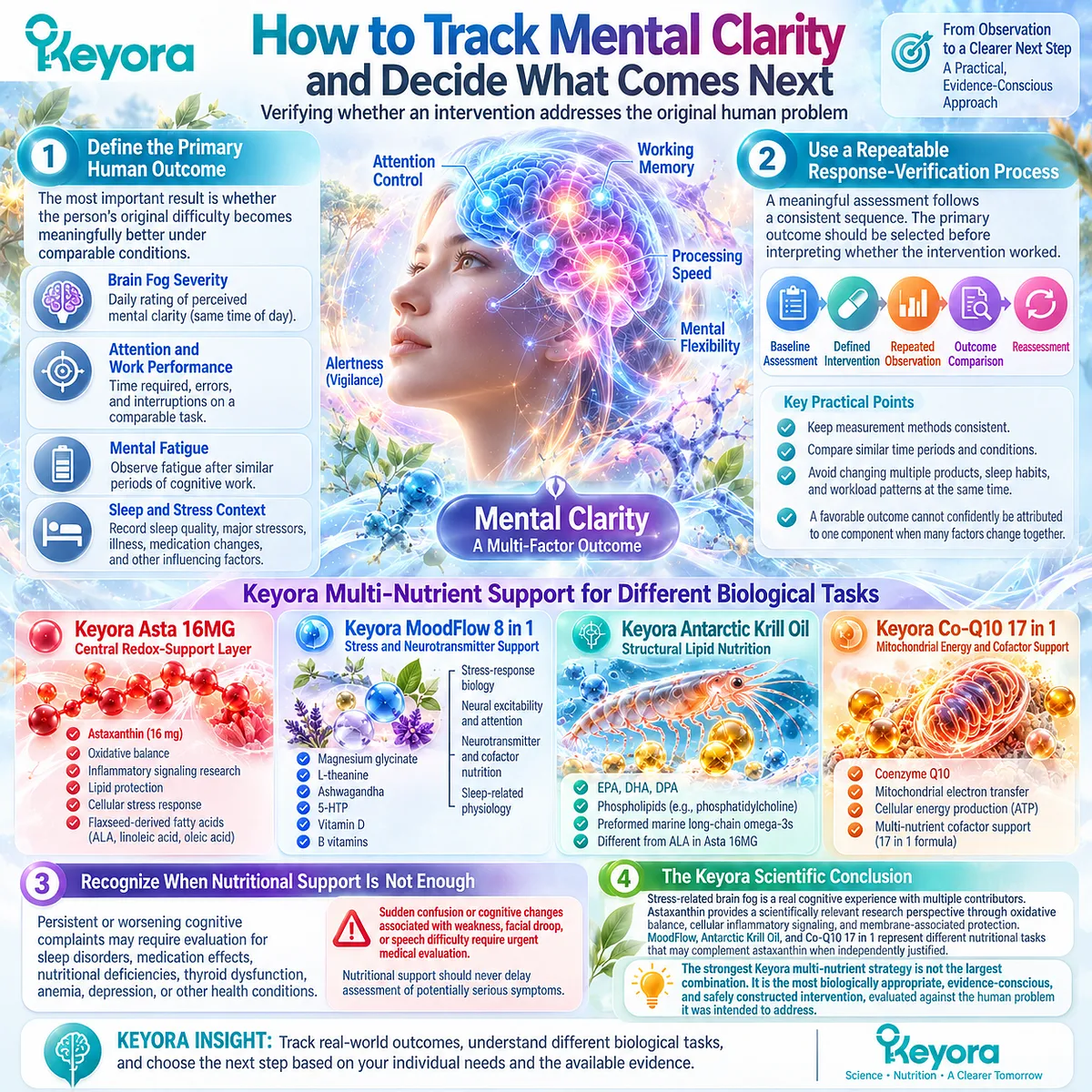
How to Track Mental Clarity and Decide What Comes Next
Verifying whether an intervention addresses the original human problem
Define the Primary Human Outcome
The most important result is not a theoretical change in NF-kB or Nrf2 activity.
It is whether the person’s original difficulty becomes meaningfully better under comparable conditions.
For someone experiencing stress-related brain fog, the primary outcome may be the severity of perceived cognitive cloudiness or performance on a familiar mental task.
Supporting observations can provide additional context.
Brain Fog Severity
Record a consistent daily rating of perceived mental clarity, using the same time of day whenever possible.
Attention and Work Performance
Track the ability to complete a comparable task, including time required, errors, and interruptions.
Mental Fatigue
Observe fatigue after similar periods of cognitive work rather than comparing unrelated days.
Sleep and Stress Context
Record sleep quality, major stressors, illness, medication changes, and other factors that may influence the result.
These observations help organize personal experience but do not constitute a validated test of astaxanthin’s biological effects.
Use a Repeatable Response-Verification Process
A meaningful assessment follows a consistent sequence:
Baseline Assessment → Defined Intervention → Repeated Observation → Outcome Comparison → Reassessment
The primary outcome should be selected before interpreting whether the intervention worked.
When several products, sleep habits, and workload patterns change simultaneously, a favorable outcome cannot confidently be attributed to one component.
Recognize When Nutritional Support Is Not Enough
Persistent or worsening cognitive complaints may require evaluation for sleep disorders, medication effects, nutritional deficiencies, thyroid dysfunction, anemia, depression, or other health conditions.
Sudden confusion or cognitive changes associated with weakness, facial droop, or speech difficulty require urgent medical evaluation.
Nutritional support should never delay assessment of potentially serious symptoms.
The Keyora Scientific Conclusion
Stress-related brain fog is a real cognitive experience that can involve disrupted attention, working-memory demands, inadequate recovery, and other health-related contributors.
Astaxanthin provides a scientifically relevant research perspective through oxidative balance, cellular inflammatory signaling, and membrane-associated protection. Human studies offer some encouraging mood and fatigue findings, while direct evidence for treating stress-related brain fog remains insufficient.
Within the Keyora Neuro-Defense Matrix, MoodFlow, Antarctic Krill Oil, and Co-Q10 17 in 1 represent different nutritional tasks that may complement astaxanthin when independently justified.
The strongest Keyora multi-nutrient strategy is not the largest combination.
It is the most biologically appropriate, evidence-conscious, and safely constructed intervention, evaluated against the human problem it was intended to address.
This article is for educational and informational purposes only. It does not provide medical advice, diagnosis, treatment, cure, prevention, disease outcome claims, hormone restoration claims, fertility outcome claims, or formula-specific clinical efficacy claims.