
Why Do Cell Membranes Need Both Fatty Acids and Antioxidant Protection?
Keyora Research Q&A Library
This is part of the Keyora Research Q&A Series, derived from Keyora Astaxanthin Research Journal Series.
Within the Keyora Astaxanthin Researcn framework, this Q&A translates complex astaxanthin biology into reader-friendly, evidence-bound answers, focusing on natural astaxanthin identity, molecular structure, antioxidant and redox mechanisms, membrane lipid interaction, mitochondrial resilience, inflammatory signaling pathways, human evidence interpretation, and the scientific principles behind responsible supplementation.
First published by Keyora Research Journal: www.keyorahealth.com
Direct Answer
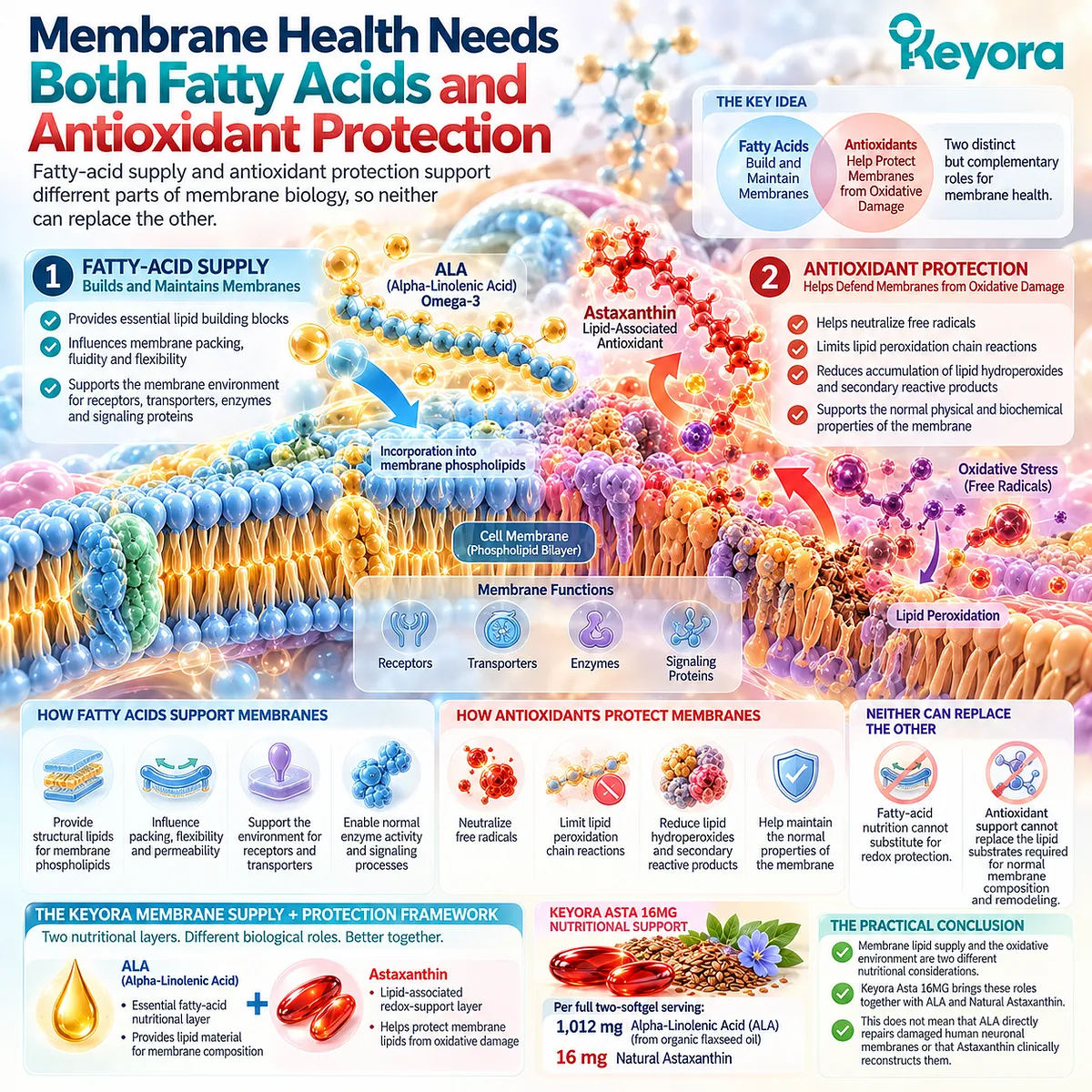
Fatty-acid supply and antioxidant protection support different parts of membrane biology, so neither can replace the other
Cell membranes need fatty acids because lipids are part of the physical material from which biological membranes are constructed. The fatty-acid composition of membrane phospholipids influences membrane packing, flexibility, permeability, and the environment in which receptors, transporters, enzymes, and signaling proteins operate.
But supplying lipid material is only one side of membrane biology.
Unsaturated fatty acids can also participate in oxidative chain reactions.
When membrane lipids become excessively oxidized, lipid hydroperoxides and secondary reactive products can accumulate and interfere with the normal physical and biochemical properties of the membrane.
Antioxidant protection addresses this second problem.
That means fatty-acid nutrition cannot substitute for redox protection, while antioxidant support cannot replace the lipid substrates required for normal membrane composition and remodeling.
The Keyora Membrane Supply + Protection Framework separates these two biological needs.
-
ALA provides an essential fatty-acid nutritional layer.
-
Astaxanthin provides a distinct lipid-associated redox-support layer.
Keyora Asta 16MG brings these roles together through 1,012 mg of alpha-linolenic acid, or ALA, and 16 mg of Natural Astaxanthin per full two-softgel serving.
This does not mean that ALA directly repairs damaged human neuronal membranes or that Astaxanthin clinically reconstructs them. It means that membrane lipid supply and the oxidative environment surrounding those lipids are two different nutritional considerations.
Why Do Cell Membranes Need Fatty Acids?
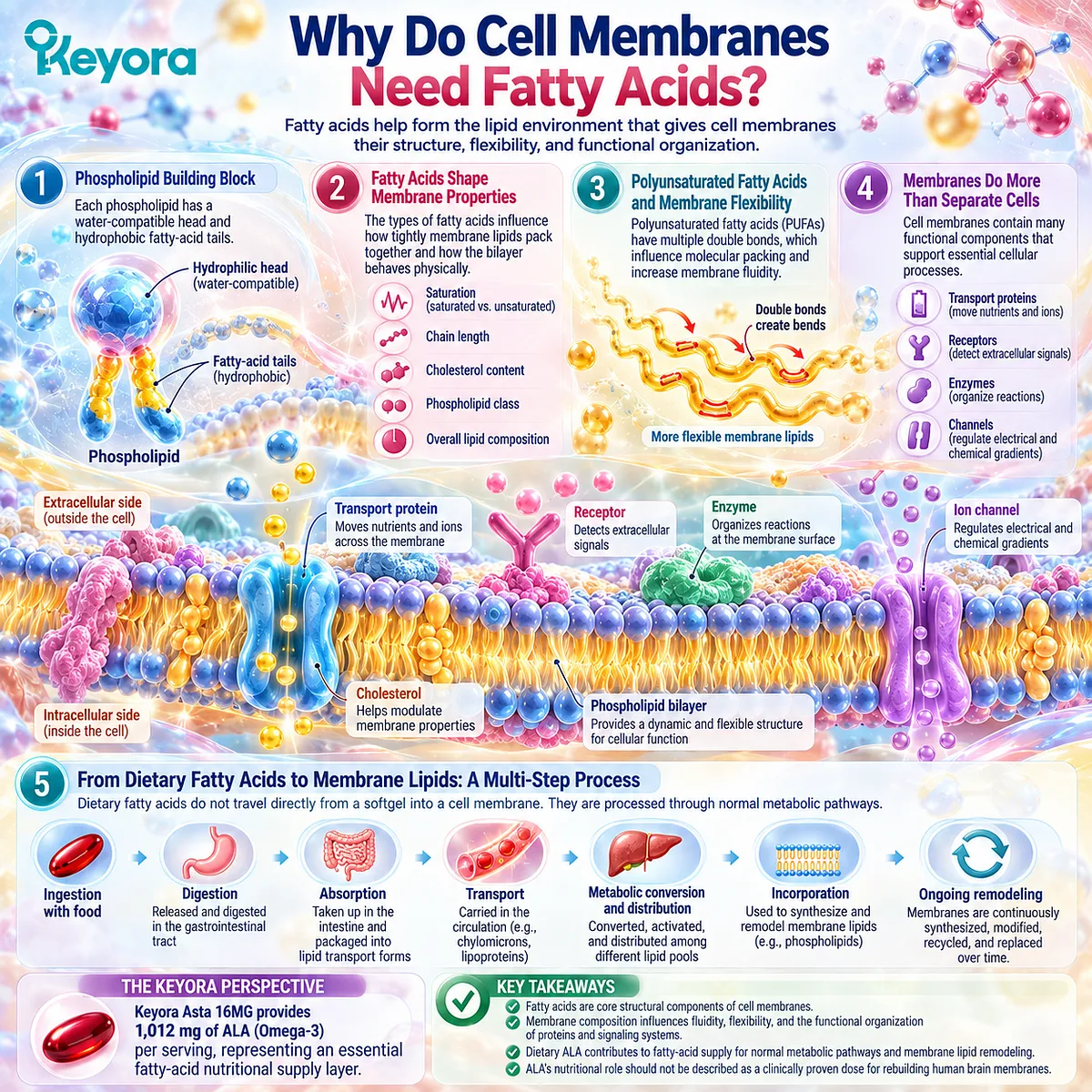
Fatty acids help form the lipid environment that gives cell membranes their structure, flexibility, and functional organization
A cell membrane is not simply a wall separating the inside of a cell from the outside.
Its basic architecture is a phospholipid bilayer.
Each phospholipid contains a water-compatible head region and hydrophobic fatty-acid tails. Those fatty-acid tails form much of the membrane’s internal lipid environment.
The types of fatty acids present influence how closely membrane lipids pack together and how the bilayer behaves physically. Saturation, chain length, cholesterol content, phospholipid class, and many other factors collectively influence membrane properties.
This matters because membranes contain much more than lipids.
-
Transport proteins move nutrients and ions across them.
-
Receptors detect extracellular signals.
-
Enzymes organize reactions at membrane surfaces.
-
Channels regulate electrical and chemical gradients.
-
Membrane composition therefore helps establish the physical environment in which many cellular processes occur.
Polyunsaturated fatty acids contribute to these lipid systems because their multiple double bonds influence molecular packing and flexibility.
However, dietary ALA should not be imagined as traveling directly from a softgel into a damaged membrane and filling a physical hole.
Dietary fatty acids are digested, absorbed, transported, activated, redistributed among lipid pools, and incorporated into complex lipids through regulated metabolic pathways.
Membranes themselves are also continuously remodeled.
Phospholipids are synthesized, modified, recycled, and replaced over time. Fatty-acid availability contributes to that broader metabolic environment rather than functioning as an instant structural patch.
This distinction is important for Keyora Asta 16MG.
The 1,012 mg of ALA in a full serving represents an essential fatty-acid nutritional supply layer. It should not be described as a clinically proven dose for rebuilding human brain membranes.
Why Are Unsaturated Membrane Lipids Vulnerable to Oxidation?
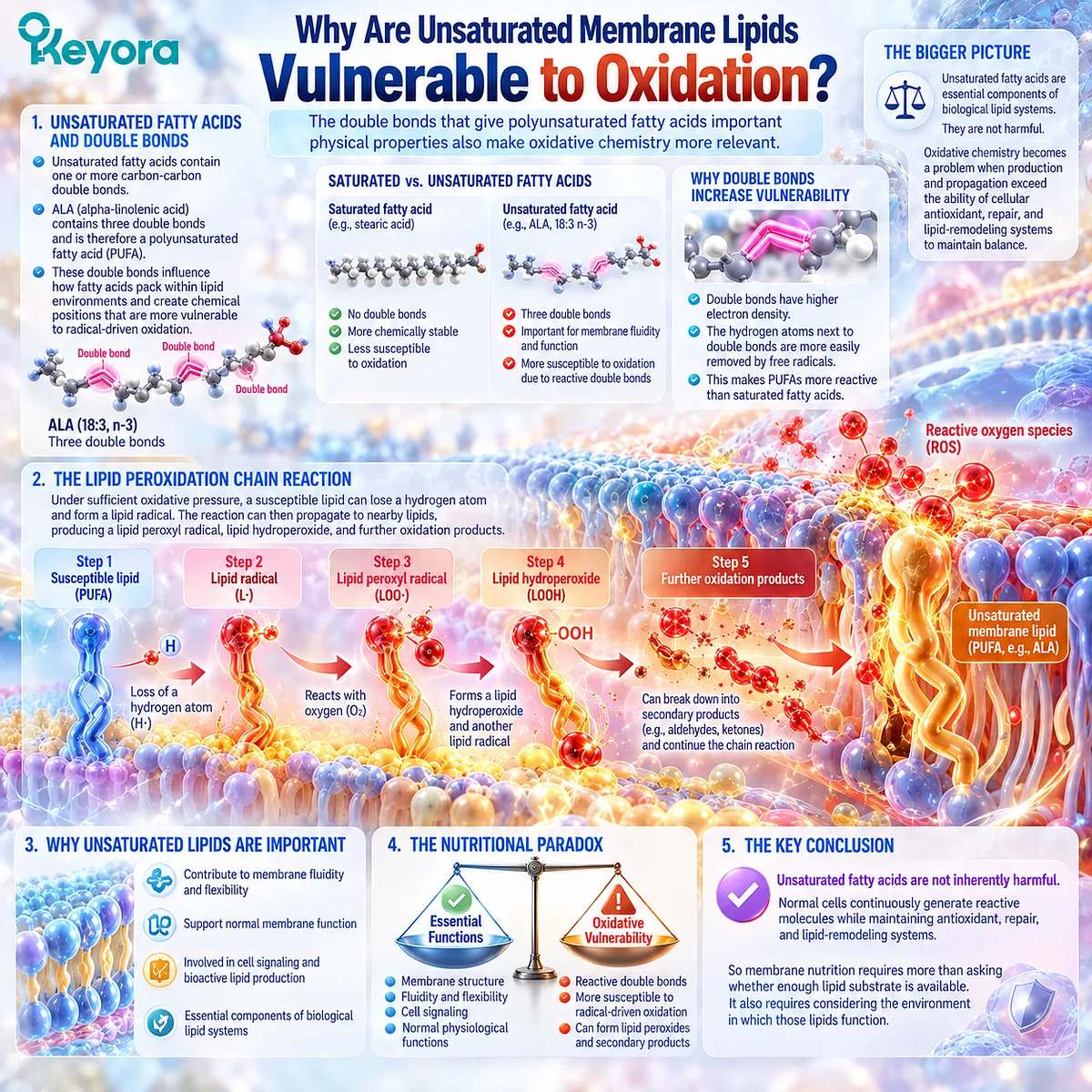
The double bonds that give polyunsaturated fatty acids important physical properties also make oxidative chemistry more relevant
Unsaturated fatty acids contain one or more carbon-carbon double bonds.
ALA contains three double bonds and is therefore classified as a polyunsaturated fatty acid, or PUFA.
These unsaturated structures influence how fatty acids pack within lipid environments. They also create chemical positions that are more vulnerable to radical-driven oxidation than those found in more saturated fatty acids.
Under sufficient oxidative pressure, a susceptible lipid can lose a hydrogen atom and form a lipid radical.
That radical can react with oxygen, producing a lipid peroxyl radical. The reaction can then propagate to another nearby lipid molecule, forming a lipid hydroperoxide and another lipid radical.
In simplified form:
Susceptible lipid
-
→ lipid radical
-
→ lipid peroxyl radical
-
→ lipid hydroperoxide
-
→ further oxidation products
This is why membrane lipid biology presents an apparent nutritional paradox.
Unsaturated fatty acids are important components of biological lipid systems, yet their chemistry can also make oxidative control relevant.
The correct conclusion is not that unsaturated fatty acids are harmful.
Normal cells continuously generate reactive molecules while maintaining antioxidant, repair, and lipid-remodeling systems. Oxidative chemistry becomes a problem when production and propagation exceed the ability of these systems to maintain balance.
So membrane nutrition requires more than asking whether enough lipid substrate is available.
It also requires considering the environment in which those lipids function.
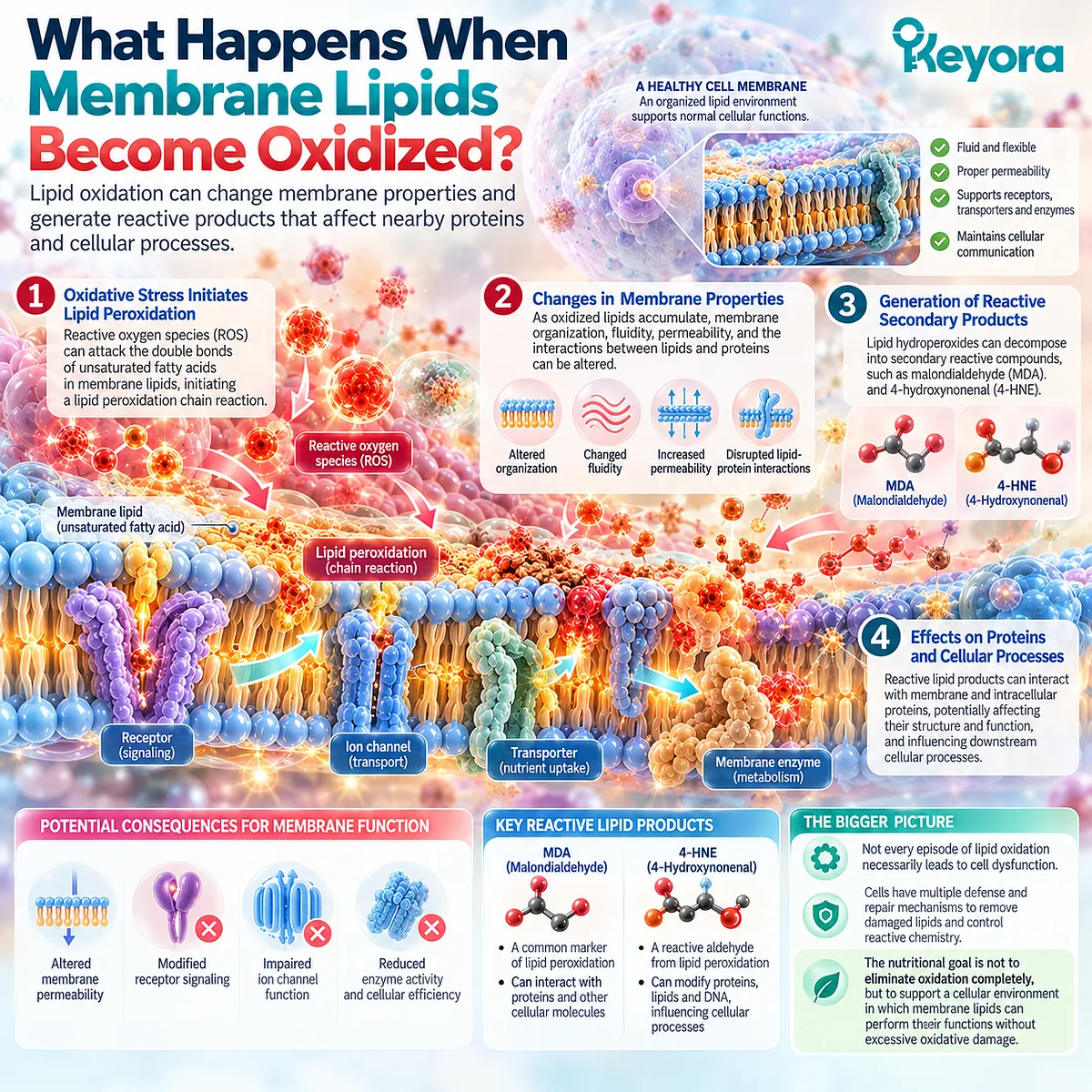
What Happens When Membrane Lipids Become Oxidized?
Lipid oxidation can change membrane properties and generate reactive products that affect nearby proteins and cellular processes
Lipid peroxidation does more than chemically modify a single fatty acid.
As oxidized lipids accumulate, the physical behavior of a lipid bilayer can change.
Experimental research has linked lipid oxidation with alterations in membrane organization, permeability, fluidity, and interactions between membrane lipids and proteins.
These changes matter because membrane proteins depend on their surrounding lipid environment.
A receptor does not function in isolation from the membrane holding it. Neither does an ion channel, transporter, or membrane-associated enzyme.
Lipid hydroperoxides can also decompose into secondary reactive compounds.
Examples include malondialdehyde, commonly abbreviated MDA, and 4-hydroxynonenal, or 4-HNE.
Such compounds can interact with proteins and other cellular molecules, extending the consequences of oxidative lipid chemistry beyond the original membrane lipid.
This does not mean that every episode of lipid oxidation produces cell dysfunction.
Oxidation and antioxidant defense exist on a continuum, and biological systems possess multiple mechanisms for removing damaged lipids and controlling reactive chemistry.
The nutritional question is therefore not how to eliminate oxidation completely.
It is how to support a cellular environment in which lipid structures can perform their functions without excessive oxidative damage.
This is where membrane antioxidant biology becomes distinct from fatty-acid supply.
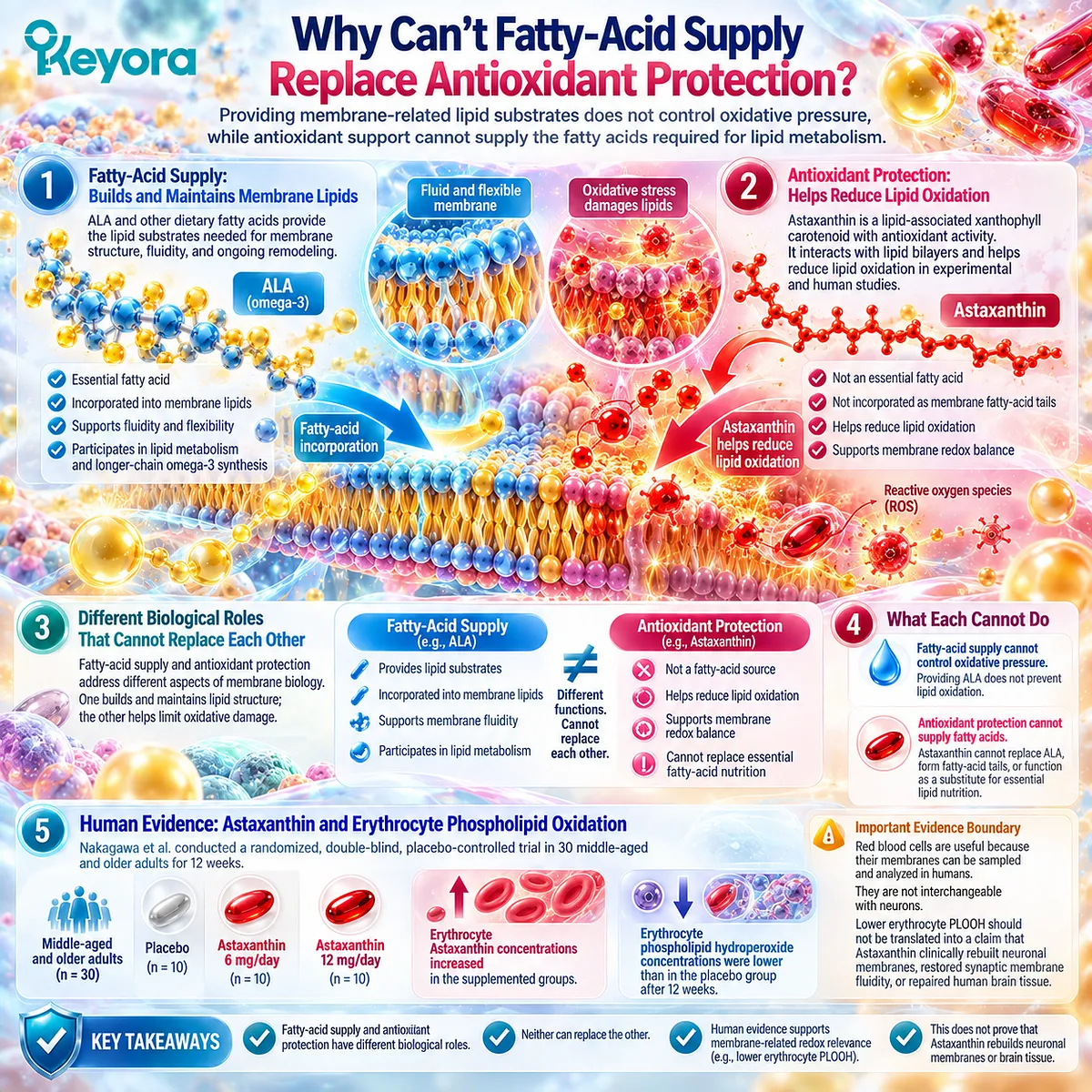
Why Can’t Fatty-Acid Supply Replace Antioxidant Protection?
Providing membrane-related lipid substrates does not control oxidative pressure, while antioxidant support cannot supply the fatty acids required for lipid metabolism
ALA and Astaxanthin illustrate two fundamentally different nutritional tasks.
ALA is an essential omega-3 fatty acid.
It can participate in circulating lipid pools, energy metabolism, longer-chain omega-3 synthesis, and broader lipid-remodeling pathways.
Astaxanthin is not an essential fatty acid.
It cannot replace ALA, form the fatty-acid tails of phospholipids, or function as a substitute for essential lipid nutrition.
Its role is different.
Astaxanthin is a lipid-associated xanthophyll carotenoid with antioxidant activity. Experimental membrane research supports its ability to interact with lipid bilayers and influence lipid oxidation.
Human evidence adds another layer.
In a randomized, double-blind, placebo-controlled trial, Nakagawa and colleagues studied 30 middle-aged and older adults who received placebo, 6 mg Astaxanthin per day, or 12 mg per day for 12 weeks.
Erythrocyte Astaxanthin concentrations increased in the supplemented groups, while erythrocyte phospholipid hydroperoxide concentrations were lower than in the placebo group after supplementation.
This is meaningful because phospholipid hydroperoxides, or PLOOH, provide a measurable endpoint related to phospholipid oxidation in a human cellular compartment.
But the evidence boundary is important.
Red blood cells are useful because their membranes can be sampled and analyzed in humans. They are not interchangeable with neurons.
Therefore, lower erythrocyte PLOOH should not be translated into a claim that Astaxanthin clinically rebuilt neuronal membranes, restored synaptic membrane fluidity, or repaired human brain tissue.
The evidence supports human membrane-related redox relevance.
That is strong enough without extending the conclusion beyond what was measured.
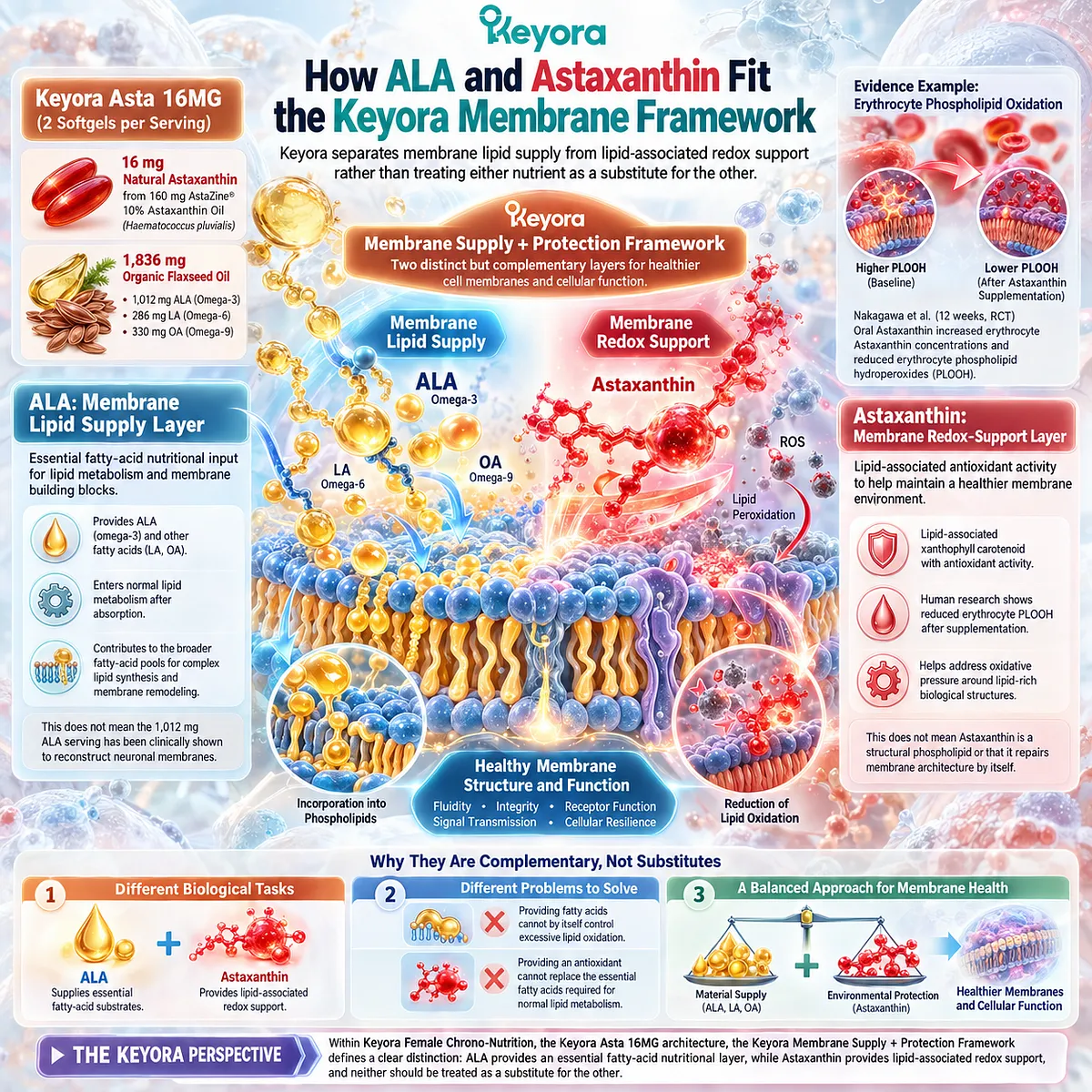
How ALA and Astaxanthin Fit the Keyora Membrane Framework
Keyora separates membrane lipid supply from lipid-associated redox support rather than treating either nutrient as a substitute for the other
A full serving of Keyora Asta 16MG is two softgels.
It provides 16 mg Natural Astaxanthin, supplied by 160 mg AstaZine® 10% Astaxanthin Oil derived from Haematococcus pluvialis.
The same serving contains 1,836 mg Organic Flaxseed Oil, including:
-
1,012 mg ALA, Omega-3
-
286 mg LA, Omega-6
-
330 mg OA, Omega-9
For this question, the two principal components are ALA and Astaxanthin.
The Keyora Membrane Supply + Protection Framework assigns them different biological tasks.
ALA – Membrane Lipid Supply Layer
ALA provides an essential fatty-acid nutritional input. After absorption, it enters normal lipid metabolism and can contribute to the broader fatty-acid pools from which complex lipids and metabolic products are generated.
This does not mean the 1,012 mg serving has been clinically shown to reconstruct neuronal membranes.
Astaxanthin – Membrane Redox-Support Layer
Astaxanthin contributes lipid-associated antioxidant activity.
Human research showing reduced erythrocyte PLOOH after supplementation provides direct evidence that oral Astaxanthin can influence a measurable phospholipid-oxidation endpoint.
This does not mean Astaxanthin is a structural phospholipid or that it repairs membrane architecture by itself.
The combined interpretation is therefore straightforward:
-
ALA helps address lipid substrate availability.
-
Astaxanthin helps address the redox environment surrounding lipid-rich biological structures.
These functions complement one another because they solve different problems.
Supplying additional fatty acids cannot by itself control excessive lipid oxidation.
Providing an antioxidant cannot replace the essential fatty acids required for normal lipid metabolism.
That is why cell membrane nutrition is better understood as a balance between material supply and environmental protection, rather than as a search for one nutrient expected to perform both jobs.
Within Keyora Female Chrono-Nutrition and the Keyora Asta 16MG architecture, this distinction defines the Keyora Membrane Supply + Protection Framework: ALA provides an essential fatty-acid nutritional layer, while Astaxanthin provides lipid-associated redox support, and neither should be treated as a substitute for the other.
This article is for educational and informational purposes only. It does not provide medical advice, diagnosis, treatment, cure, prevention, disease outcome claims, hormone restoration claims, fertility outcome claims, or formula-specific clinical efficacy claims.