
Why Does Protecting CPT1 Matter When You Are Taking ALA?
Keyora Research Q&A Library
This is part of the Keyora Research Q&A Series, derived from Keyora Astaxanthin Research Journal Series.
Within the Keyora Astaxanthin Researcn framework, this Q&A translates complex astaxanthin biology into reader-friendly, evidence-bound answers, focusing on natural astaxanthin identity, molecular structure, antioxidant and redox mechanisms, membrane lipid interaction, mitochondrial resilience, inflammatory signaling pathways, human evidence interpretation, and the scientific principles behind responsible supplementation.
First published by Keyora Research Journal: www.keyorahealth.com
Direct Answer
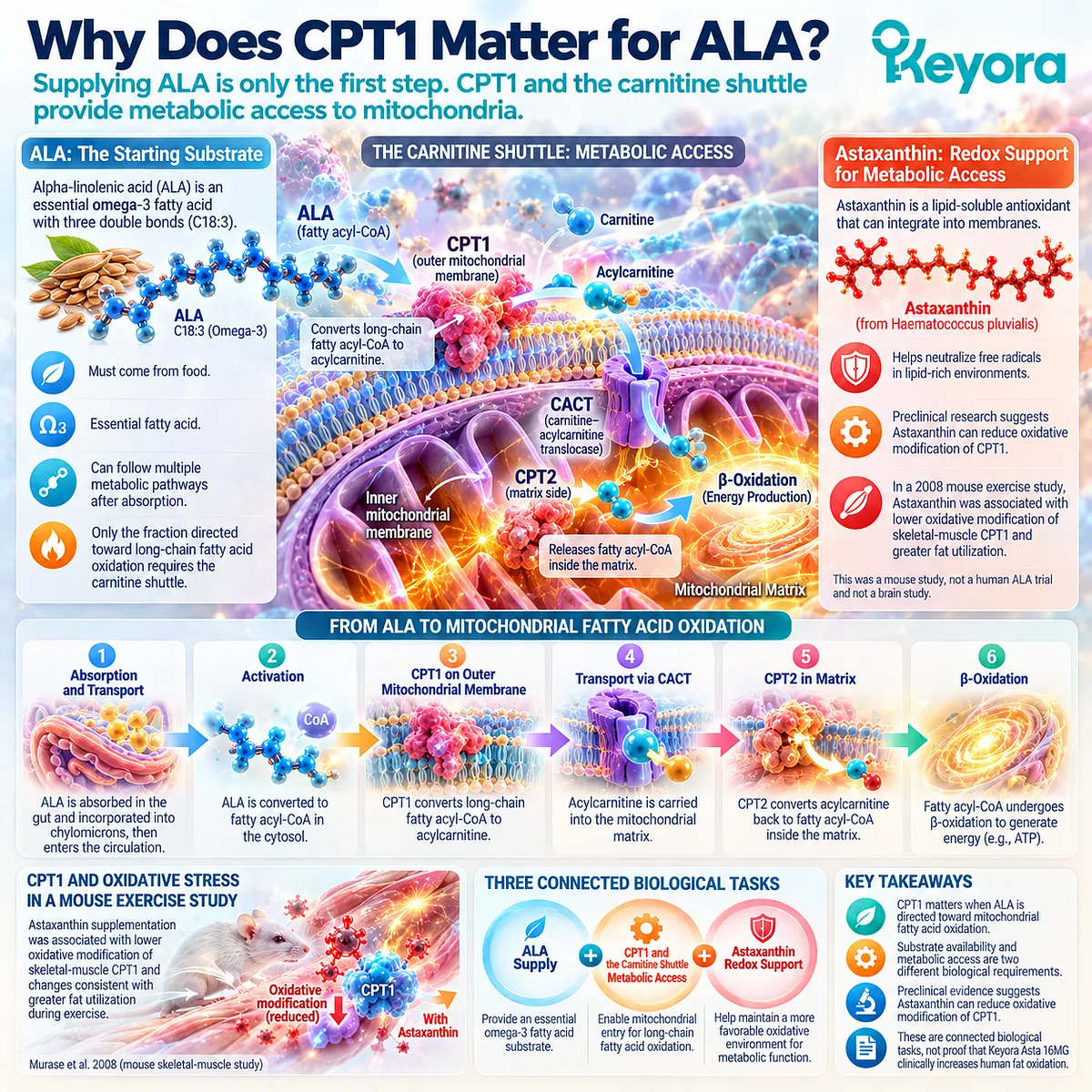
CPT1 matters when alpha-linolenic acid (ALA) is directed toward mitochondrial fatty acid oxidation because supplying ALA is only the first step.
ALA can follow several metabolic pathways after absorption, and only the fraction directed toward long-chain fatty acid oxidation depends on the carnitine shuttle for mitochondrial access.
Carnitine palmitoyltransferase 1, or CPT1, is located on the outer mitochondrial membrane and helps convert long-chain fatty acyl-CoA into acylcarnitine.
This allows the fatty acid-derived acyl group to enter the carnitine shuttle and ultimately reach the mitochondrial matrix, where beta-oxidation can proceed.
This makes substrate availability and metabolic access two different biological requirements.
Astaxanthin enters this discussion because preclinical research has examined whether oxidative stress can modify CPT1 and whether Astaxanthin can reduce that modification.
In a 2008 mouse exercise study, Astaxanthin supplementation was associated with lower oxidative modification of skeletal-muscle CPT1 and changes consistent with greater fat utilization during exercise.
However, this was a mouse skeletal-muscle experiment, not a human ALA trial and not a brain study.
For Keyora, the appropriate interpretation is:
-
ALA – Supply
-
Astaxanthin – Redox Support
-
CPT1 and the Carnitine Shuttle – Metabolic Access
These are connected biological tasks, not proof that Keyora Asta 16MG clinically increases human fat oxidation.
Why Supplying ALA Is Only the First Step
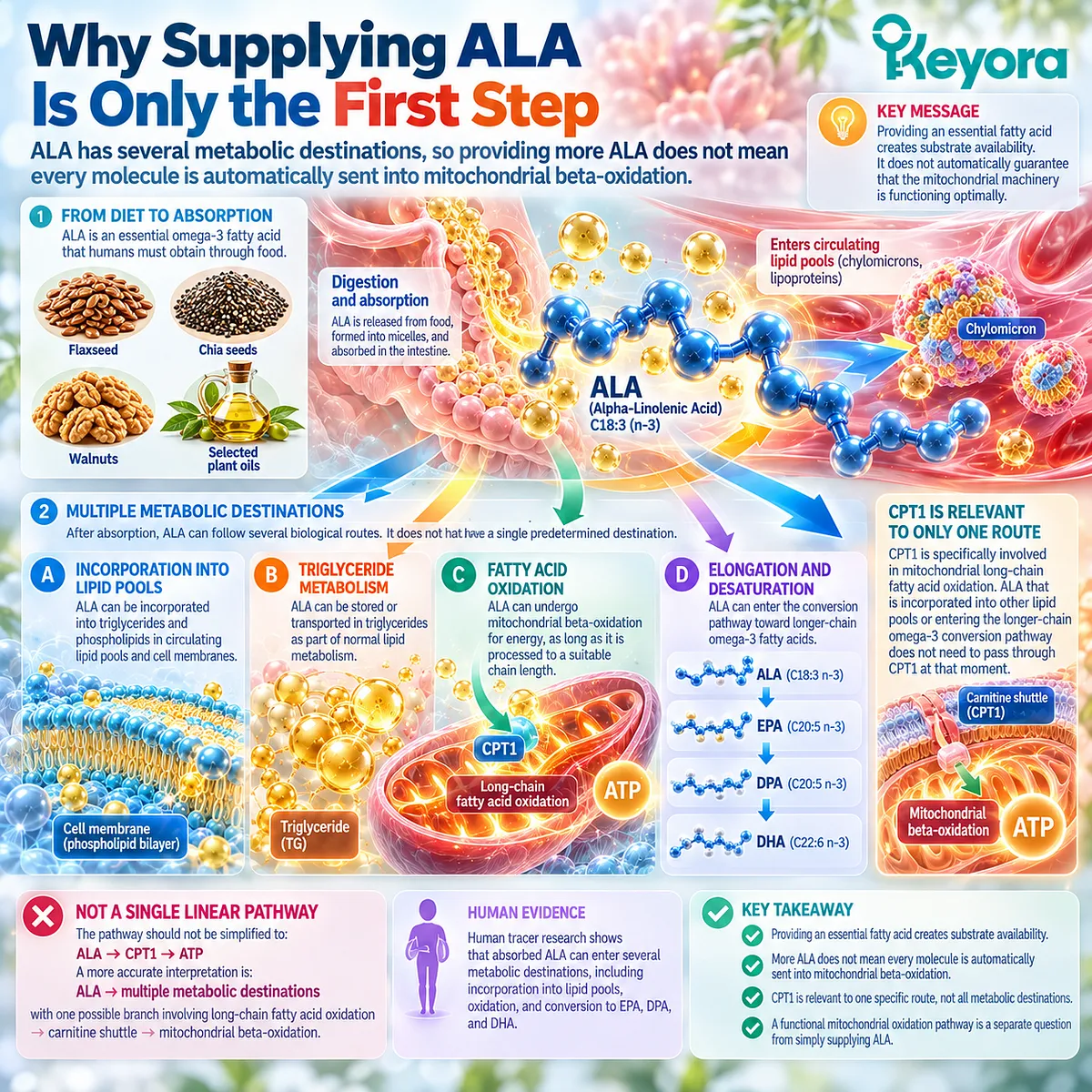
ALA has several metabolic destinations, so providing more ALA does not mean every molecule is automatically sent into mitochondrial beta-oxidation
ALA is an essential omega-3 fatty acid that humans must obtain through the diet.
After digestion and absorption, however, ALA does not follow a single predetermined route.
Human tracer research shows that absorbed ALA can enter several metabolic destinations. It may become incorporated into circulating lipid pools, participate in triglyceride or phospholipid metabolism, undergo fatty acid oxidation, or enter the elongation and desaturation pathway toward EPA, DPA, and DHA.
This distinction matters because CPT1 is specifically relevant to one of those routes: mitochondrial long-chain fatty acid oxidation.
ALA that is being incorporated into another lipid pool does not need to pass through CPT1 at that moment. ALA entering the longer-chain omega-3 conversion pathway is also participating in a different metabolic process.
Therefore, the pathway should not be simplified to:
ALA → CPT1 → ATP
A more accurate interpretation is:
ALA → multiple metabolic destinations
with one possible branch involving:
long-chain fatty acid oxidation → carnitine shuttle → mitochondrial beta-oxidation
This is the first principle of the Keyora metabolic framework.
Providing an essential fatty acid creates substrate availability.
It does not automatically guarantee that the mitochondrial machinery responsible for using long-chain fatty acids is functioning optimally.
What Does CPT1 Actually Do?
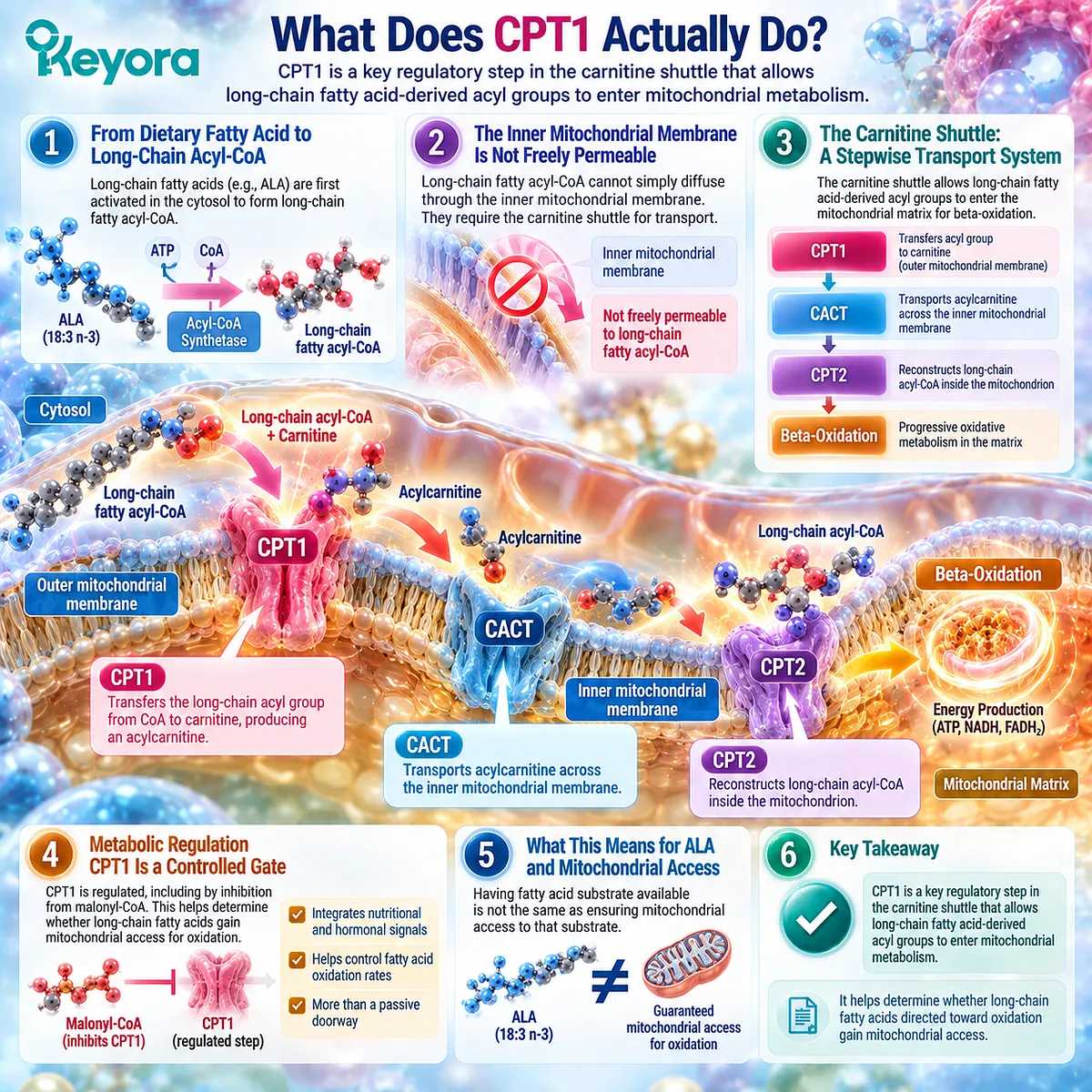
CPT1 is a key regulatory step in the carnitine shuttle that allows long-chain fatty acid-derived acyl groups to enter mitochondrial metabolism
Long-chain fatty acids cannot simply diffuse through every mitochondrial membrane and immediately enter beta-oxidation.
Before mitochondrial oxidation, a fatty acid is first activated to form a long-chain fatty acyl-CoA.
The inner mitochondrial membrane is not freely permeable to this molecule. Long-chain fatty acid oxidation therefore depends on a transport system known as the carnitine shuttle.
CPT1 performs the first important step.
Located on the outer mitochondrial membrane, CPT1 transfers the long-chain acyl group from CoA to carnitine, producing an acylcarnitine.
That acylcarnitine can then participate in the next transport steps:
CPT1
Long-chain acyl-CoA → acylcarnitine
↓
CACT
Transports acylcarnitine across the inner mitochondrial membrane
↓
CPT2
Reconstructs long-chain acyl-CoA inside the mitochondrion
↓
Beta-Oxidation
The fatty acid can then enter progressive oxidative metabolism
CPT1 is also metabolically regulated, including through inhibition by malonyl-CoA.
This makes CPT1 more than a passive doorway. It is part of the system that helps determine whether long-chain fatty acids directed toward oxidation gain mitochondrial access.
For consumers taking ALA, this leads to a useful distinction:
Having fatty acid substrate available is not the same as ensuring mitochondrial access to that substrate.
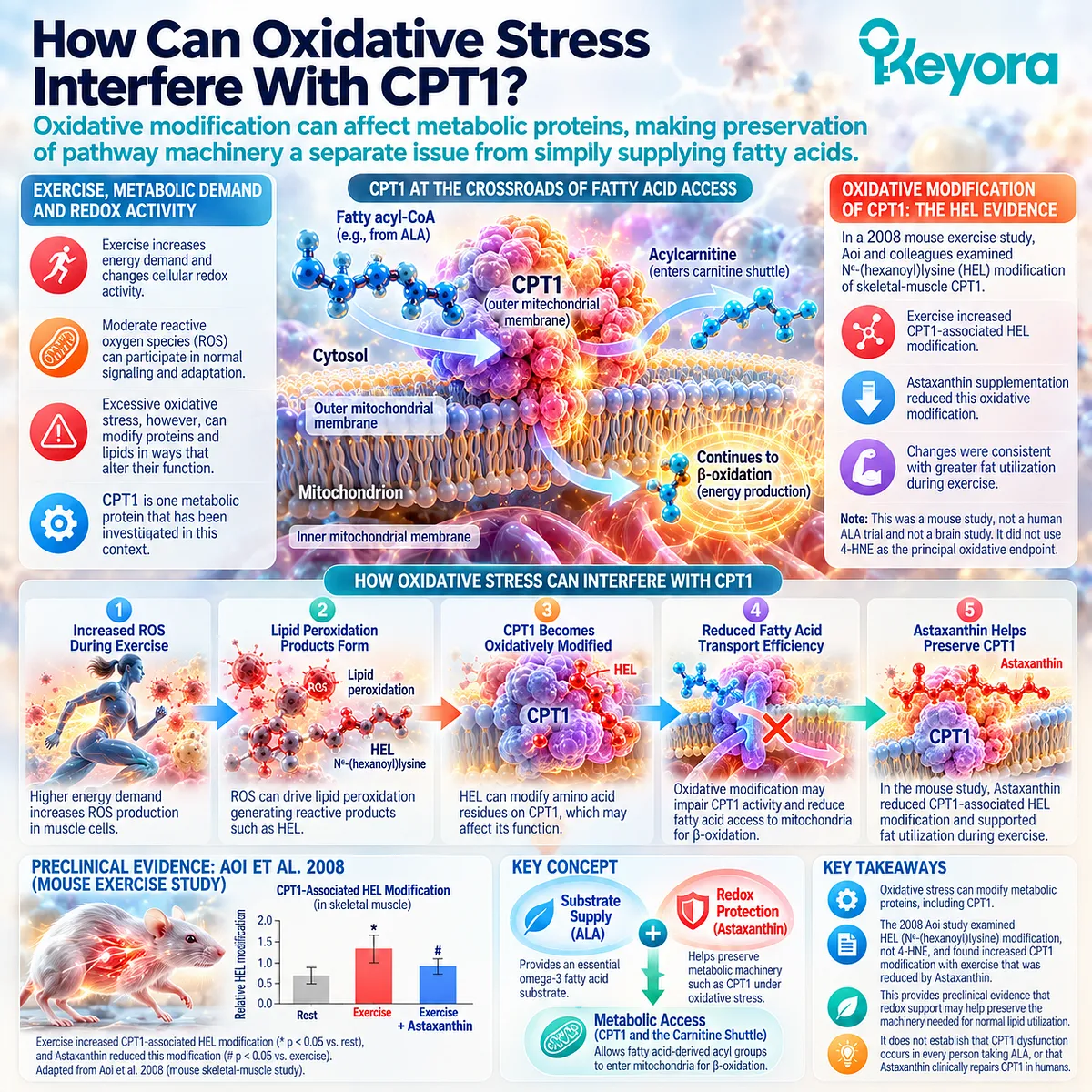
How Can Oxidative Stress Interfere With CPT1?
Oxidative modification can affect metabolic proteins, making preservation of pathway machinery a separate issue from simply supplying fatty acids
Exercise increases energy demand and also changes cellular redox activity.
Moderate reactive oxygen species production can participate in normal signaling and adaptation. Excessive oxidative stress, however, can modify proteins and lipids in ways that alter their function.
CPT1 is one metabolic protein that has been investigated in this context.
An important detail concerns the oxidative marker measured in the Astaxanthin study discussed below.
The 2008 Aoi experiment did not report 4-HNE modification of CPT1 as its principal oxidative endpoint.
Instead, the researchers examined Nε-(hexanoyl)lysine, abbreviated HEL.
HEL is an oxidative modification product associated with lipid peroxidation and can be used as a marker of oxidative modification involving proteins.
In the exercise model, CPT1-associated HEL modification increased with exercise, while Astaxanthin supplementation reduced this oxidative modification.
That finding supports a mechanistic question:
If a protein involved in fatty acid access becomes oxidatively modified under metabolic stress, could redox support help preserve the machinery needed for normal lipid utilization?
The study provides preclinical evidence relevant to that hypothesis.
It does not establish that CPT1 dysfunction is occurring in every person taking ALA, or that Astaxanthin clinically repairs CPT1 in humans.
What Did the Aoi Astaxanthin Study Find?
A mouse exercise study linked Astaxanthin with lower CPT1 oxidative modification and changes in skeletal-muscle fat utilization
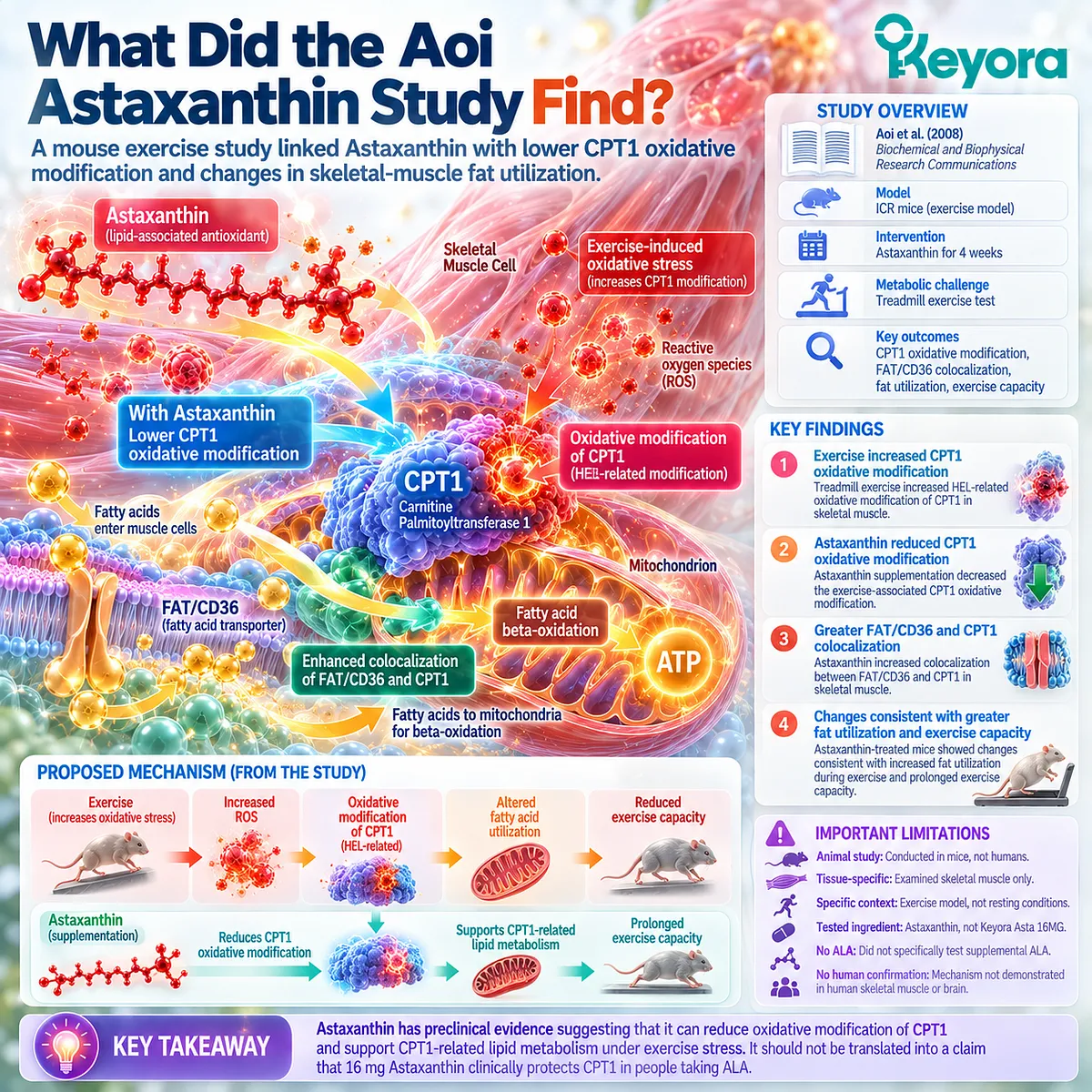
A key study was published by Aoi and colleagues in Biochemical and Biophysical Research Communications in 2008.
The researchers used an exercise model in ICR mice to investigate whether Astaxanthin could influence skeletal-muscle lipid metabolism.
Astaxanthin was provided during a four-week intervention period, after which the animals underwent treadmill exercise testing.
The investigators examined several outcomes related to fat metabolism and CPT1 biology.
One particularly important finding was that exercise increased oxidative modification of CPT1, measured through HEL-related modification.
Astaxanthin supplementation reduced this exercise-associated CPT1 oxidative modification.
The researchers also observed greater colocalization between FAT/CD36, a protein involved in fatty acid handling, and CPT1 in skeletal muscle.
Additional findings included changes consistent with greater fat utilization during exercise and prolonged exercise capacity in the Astaxanthin-treated animals.
The authors proposed that inhibition of oxidative CPT1 modification could contribute to improved muscle lipid metabolism.
This study is valuable because it connects three biological levels:
Oxidative Stress
↓
Modification of CPT1
↓
Fatty Acid Utilization During Exercise
However, its evidence level must remain explicit.
The subjects were mice.
The tissue was skeletal muscle.
The metabolic challenge was exercise.
The intervention was Astaxanthin.
The study did not test Keyora Asta 16MG, did not specifically test supplemental ALA, and did not demonstrate the same mechanism in human brain or skeletal muscle.
Therefore, the most appropriate conclusion is:
Astaxanthin has preclinical evidence suggesting that it can reduce oxidative modification of CPT1 and support CPT1-related lipid metabolism under exercise stress.
It should not be translated into a claim that 16 mg Astaxanthin clinically protects CPT1 in people taking ALA.
How ALA, Astaxanthin, and CPT1 Fit the Keyora Framework
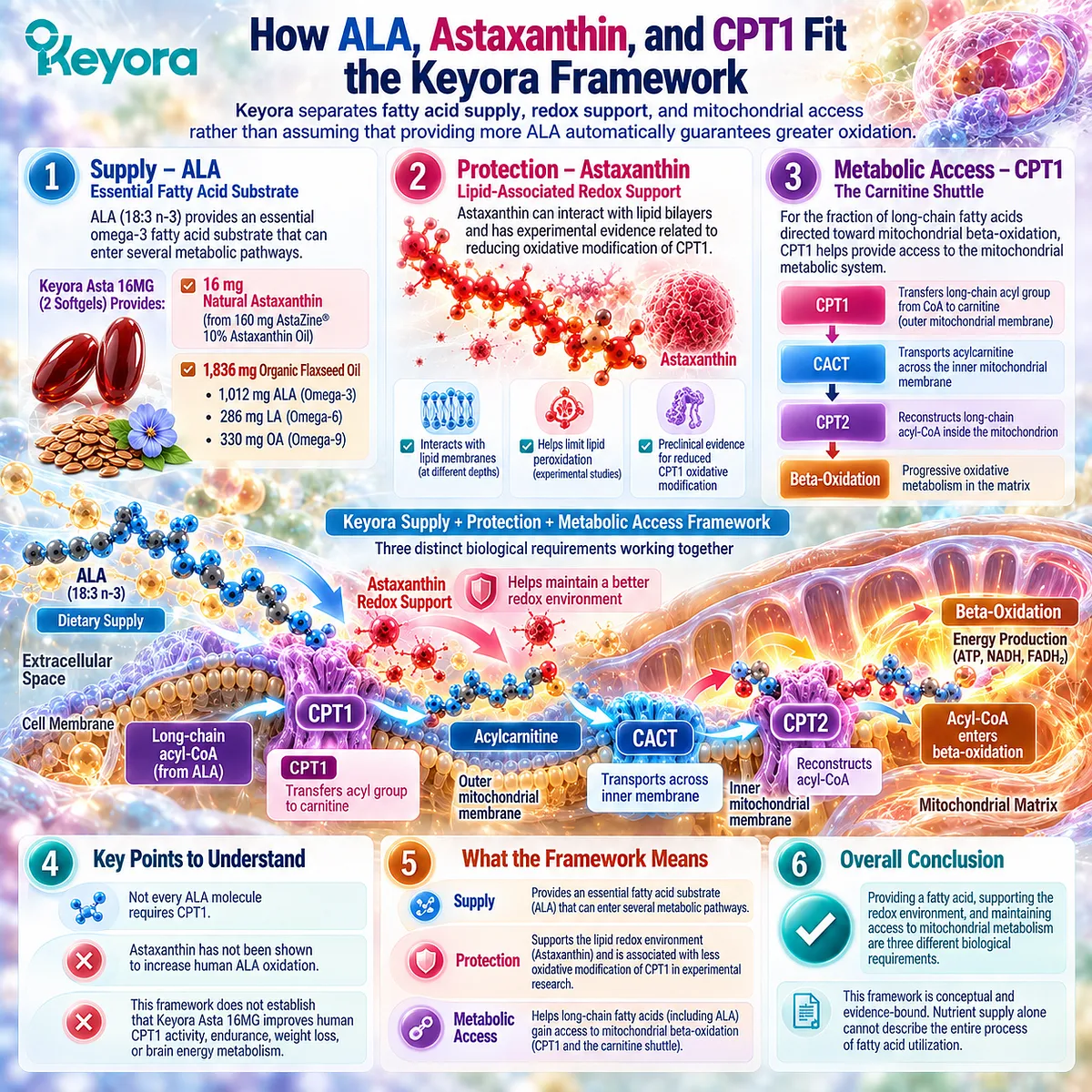
Keyora separates fatty acid supply, redox support, and mitochondrial access rather than assuming that providing more ALA automatically guarantees greater oxidation
The current Keyora Asta 16MG Supplement Facts define a full serving as two softgels.
That serving provides:
16 mg Natural Astaxanthin, supplied by 160 mg AstaZine® 10% Astaxanthin Oil from Haematococcus pluvialis
and:
1,836 mg Organic Flaxseed Oil
including:
-
1,012 mg ALA, Omega-3
-
286 mg LA, Omega-6
-
330 mg OA, Omega-9
For this question, the important relationship is between ALA supply and the metabolic systems involved when fatty acids are directed toward mitochondrial oxidation.
The Keyora Supply + Protection + Metabolic Access Framework separates three tasks.
Supply – ALA
ALA provides an essential fatty acid substrate that can enter several metabolic pathways.
Protection – Astaxanthin
Astaxanthin provides a distinct lipid-associated redox-support function and has preclinical evidence related to oxidative modification of CPT1.
Metabolic Access – CPT1 and the Carnitine Shuttle
For the fraction of long-chain fatty acids directed toward mitochondrial beta-oxidation, CPT1-related transport helps provide access to the mitochondrial metabolic system.
This framework does not mean every ALA molecule requires CPT1.
It does not mean Astaxanthin has been shown to increase human ALA oxidation.
It does not establish that Keyora Asta 16MG improves human CPT1 activity, endurance, weight loss, or brain energy metabolism.
Its value is conceptual and evidence-bound:
Providing a fatty acid, supporting the redox environment, and maintaining access to mitochondrial metabolism are three different biological requirements.
That distinction helps explain why nutrient supply alone cannot describe the entire process of fatty acid utilization.
This article is for educational and informational purposes only. It does not provide medical advice, diagnosis, treatment, cure, prevention, disease outcome claims, hormone restoration claims, fertility outcome claims, or formula-specific clinical efficacy claims.