
What Does Your Body Actually Do With ALA After You Take It?
Keyora Research Q&A Library
This is part of the Keyora Research Q&A Series, derived from Keyora Astaxanthin Research Journal Series.
Within the Keyora Astaxanthin Researcn framework, this Q&A translates complex astaxanthin biology into reader-friendly, evidence-bound answers, focusing on natural astaxanthin identity, molecular structure, antioxidant and redox mechanisms, membrane lipid interaction, mitochondrial resilience, inflammatory signaling pathways, human evidence interpretation, and the scientific principles behind responsible supplementation.
First published by Keyora Research Journal: www.keyorahealth.com
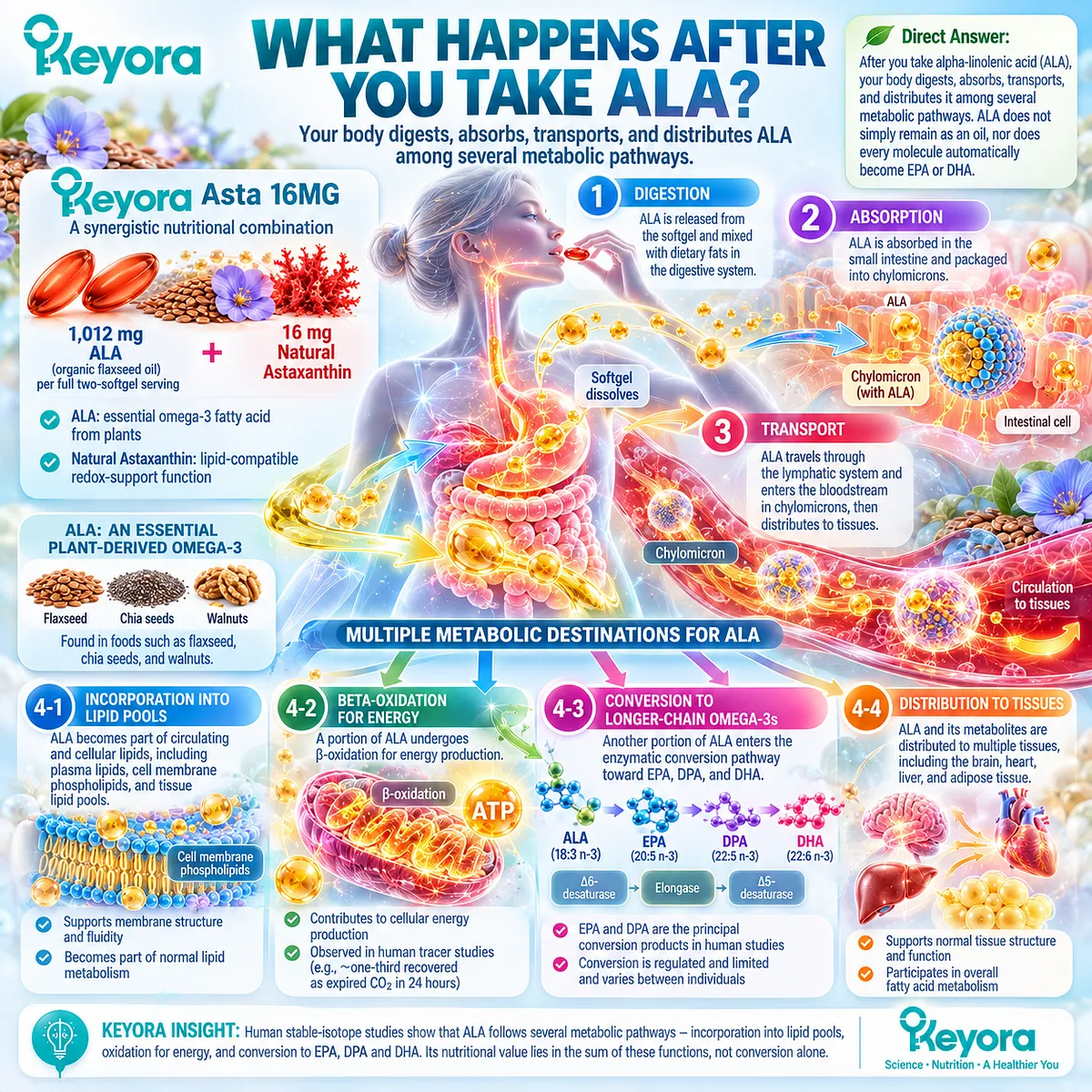
Direct Answer
After you take alpha-linolenic acid (ALA), your body digests, absorbs, transports, and distributes it among several metabolic pathways.
ALA does not simply remain in the digestive system as an oil, nor does every molecule automatically become EPA or DHA.
ALA is an essential plant-derived omega-3 fatty acid found in foods such as flaxseed, chia seeds, and walnuts.
Following intestinal absorption, it enters the circulation through normal lipid transport processes.
From there, ALA can participate in circulating and cellular lipid pools, undergo beta-oxidation for energy, or enter the enzymatic conversion pathway toward longer-chain omega-3 fatty acids.
Human stable-isotope studies have directly investigated these metabolic destinations.
In one study involving six healthy young men, Burdge and colleagues found that ingested labelled ALA initially appeared predominantly in chylomicron triacylglycerol.
Approximately one-third of the administered label was subsequently recovered as expired carbon dioxide during the first 24 hours, demonstrating substantial oxidative utilization under the experimental conditions.
These findings are particularly relevant to Keyora Asta 16MG, which provides 1,012 mg ALA per full two-softgel serving.
Within the Keyora Essential Lipid Substrate Layer framework, ALA represents an independently valuable nutritional input. Natural Astaxanthin contributes a separate lipid-compatible redox-support function.
Understanding what happens after ALA intake helps explain why essential omega-3 nutrition involves much more than calculating potential DHA conversion.
How Is ALA Digested, Absorbed, and Transported?
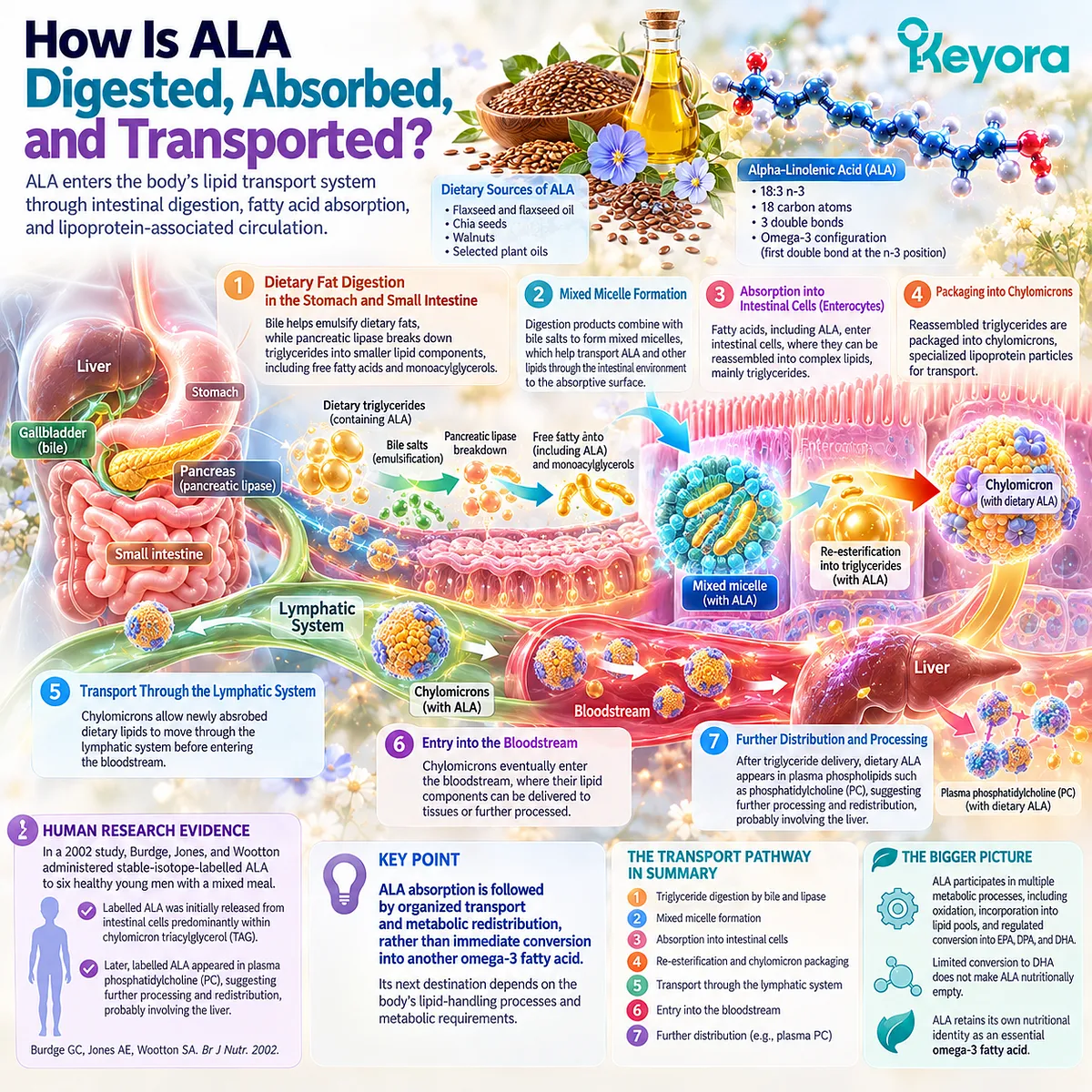
ALA enters the body’s lipid transport system through intestinal digestion, fatty acid absorption, and lipoprotein-associated circulation
When you consume flaxseed oil or another ALA-containing food, the digestive system must first process the lipids carrying its fatty acids.
Most dietary fatty acids are supplied as components of triglycerides.
During digestion, bile helps disperse dietary fats, while digestive enzymes, including pancreatic lipase, break down triglycerides into smaller lipid components.
These digestion products participate in the formation of mixed micelles, which help transport poorly water-soluble lipid molecules through the intestinal environment toward the absorptive surface.
After entering intestinal cells, fatty acids can be reassembled into complex lipids.
Long-chain dietary fatty acids are commonly incorporated into triglycerides and packaged into specialized transport particles known as chylomicrons.
Chylomicrons allow newly absorbed dietary lipids to move through the lymphatic system before entering the bloodstream.
This process is not merely a textbook description. It has also been observed in human ALA research.
In 2002, Burdge, Jones, and Wootton administered stable-isotope-labelled ALA to six healthy young men alongside a mixed meal.
The researchers found that labelled ALA was initially released from intestinal cells predominantly within chylomicron triacylglycerol (TAG).
Later, labelled ALA appeared in plasma phosphatidylcholine (PC), suggesting further processing and redistribution, probably involving the liver.
This sequence demonstrates an important point:
ALA absorption is followed by organized transport and metabolic redistribution, rather than immediate conversion into another omega-3 fatty acid.
Its next destination depends on the body’s lipid-handling processes and metabolic requirements.
How Does ALA Enter the Body’s Lipid Pools?
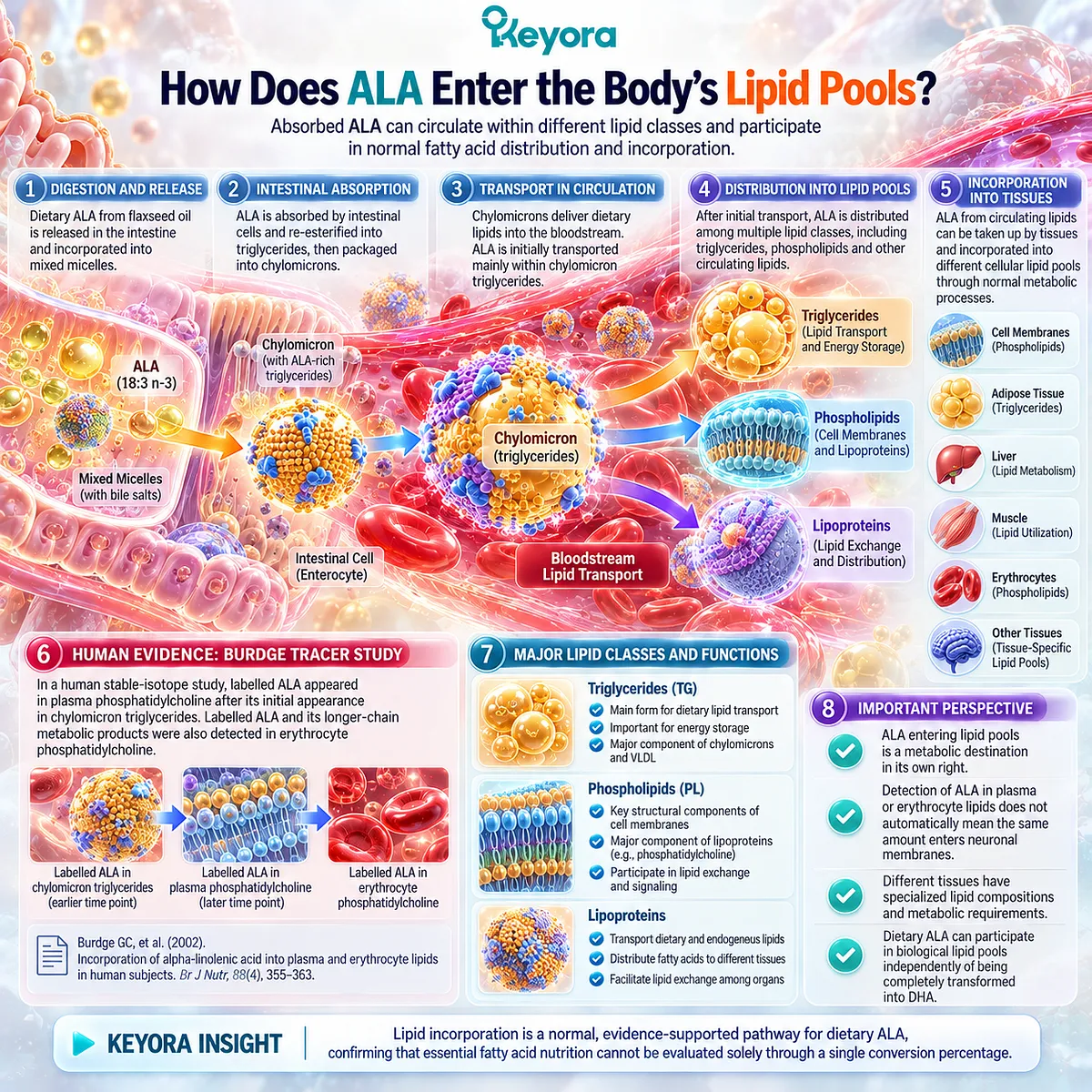
Absorbed ALA can circulate within different lipid classes and participate in normal fatty acid distribution and incorporation
Once ALA has entered circulation, it becomes part of a much broader lipid system.
The body does not maintain all fatty acids in one interchangeable storage compartment.
Instead, fatty acids are transported and distributed within different lipid classes, including triglycerides, phospholipids, and other circulating lipid fractions.
Each class participates in distinct metabolic functions.
Triglycerides are particularly important for lipid transport and energy storage.
Phospholipids contribute to cellular membrane organization and also participate in lipoprotein structure and lipid exchange.
ALA can enter these lipid pools through normal metabolic processes.
In the Burdge human tracer study, labelled ALA appeared in plasma phosphatidylcholine after its initial appearance in chylomicron triglycerides.
Researchers also detected labelled ALA and its longer-chain metabolic products in erythrocyte phosphatidylcholine.
This provided evidence of the movement of dietary fatty acid-derived material through circulating lipids and into a measurable human cellular lipid fraction.
Importantly, detecting ALA within plasma or erythrocyte lipids should not automatically be interpreted as evidence that an identical amount has entered human neuronal membranes.
Different tissues possess specialized lipid compositions and metabolic requirements.
Nevertheless, the findings confirm that dietary ALA can participate in biological lipid pools independently of being completely transformed into DHA.
This is one reason essential fatty acid nutrition cannot be evaluated solely through a single conversion percentage.
Lipid incorporation is a metabolic destination in its own right.
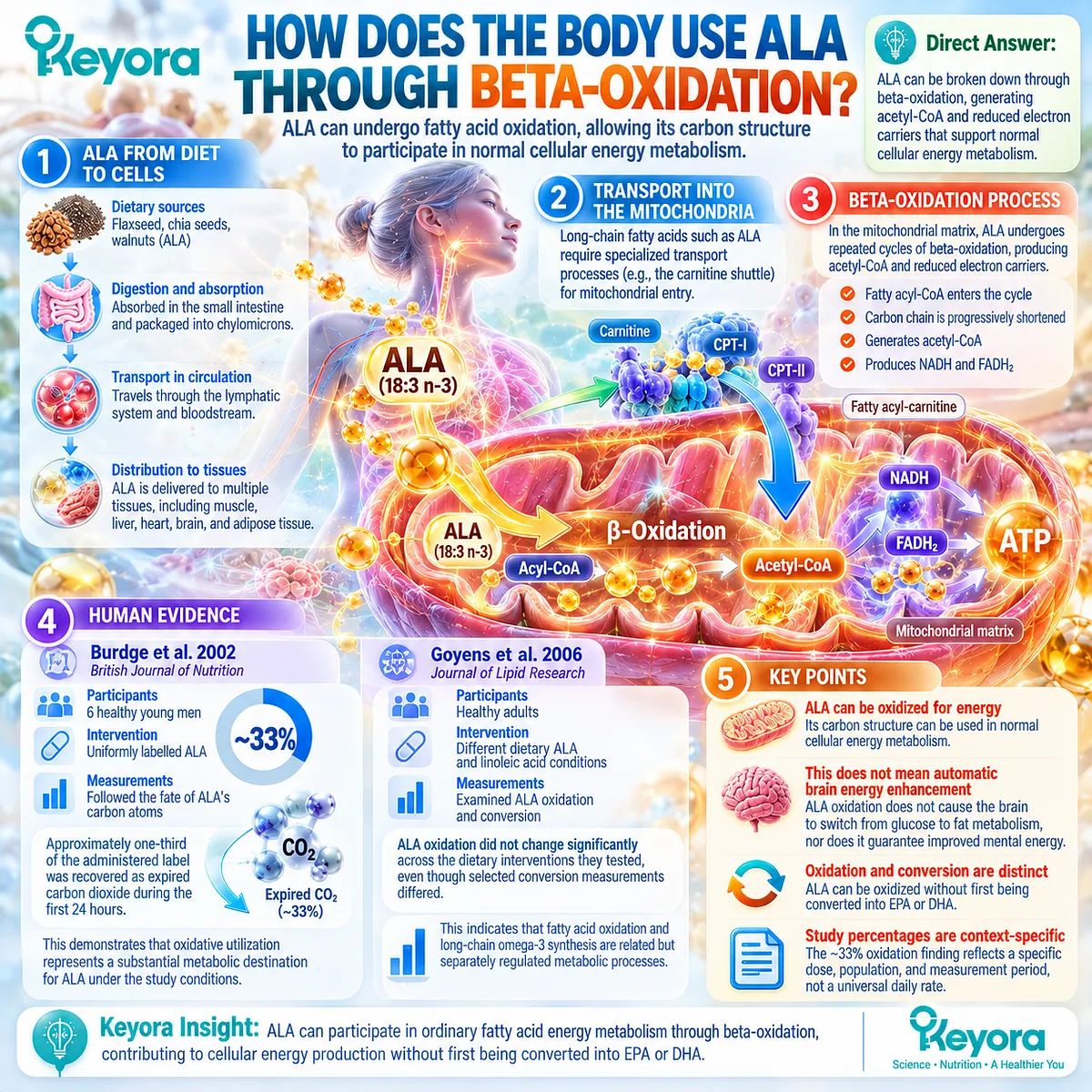
How Does the Body Use ALA Through Beta-Oxidation?
ALA can undergo fatty acid oxidation, allowing its carbon structure to participate in normal cellular energy metabolism
Another important metabolic destination for ALA is oxidation.
The term beta-oxidation describes a biochemical process through which fatty acids are progressively broken down, generating acetyl-CoA and reduced electron carriers that participate in cellular energy metabolism.
For long-chain fatty acids, mitochondrial entry requires specialized transport processes before mitochondrial beta-oxidation can proceed.
ALA can participate in this general metabolic system.
This does not mean that taking ALA automatically causes the brain to switch from glucose metabolism to fat burning, or that ALA supplementation guarantees improved mental energy.
Its participation in oxidative metabolism is a normal nutritional function.
The Burdge 2002 study provides particularly informative human evidence.
Researchers administered uniformly labelled ALA, allowing them to follow the fate of its carbon atoms.
They found that approximately 33% of the administered label was recovered in expired carbon dioxide during the first 24 hours.
This observation demonstrated that oxidative utilization represented a substantial metabolic destination under the study conditions.
The percentage should not be interpreted as a universal daily oxidation rate for everyone consuming flaxseed oil.
It reflects a specific experimental dose, population, measurement period, and metabolic environment.
Nevertheless, the result establishes an important principle:
ALA can contribute to ordinary fatty acid energy metabolism without first being converted into EPA or DHA.
A later human investigation by Goyens and colleagues in 2006 also examined ALA oxidation under different dietary ALA and linoleic acid conditions.
The researchers found that ALA oxidation did not change significantly across the dietary interventions they tested, even though selected conversion measurements differed.
This reinforces the idea that fatty acid oxidation and long-chain omega-3 synthesis are related but separately regulated metabolic processes.
How Is Some ALA Converted Into Longer-Chain Omega-3s?
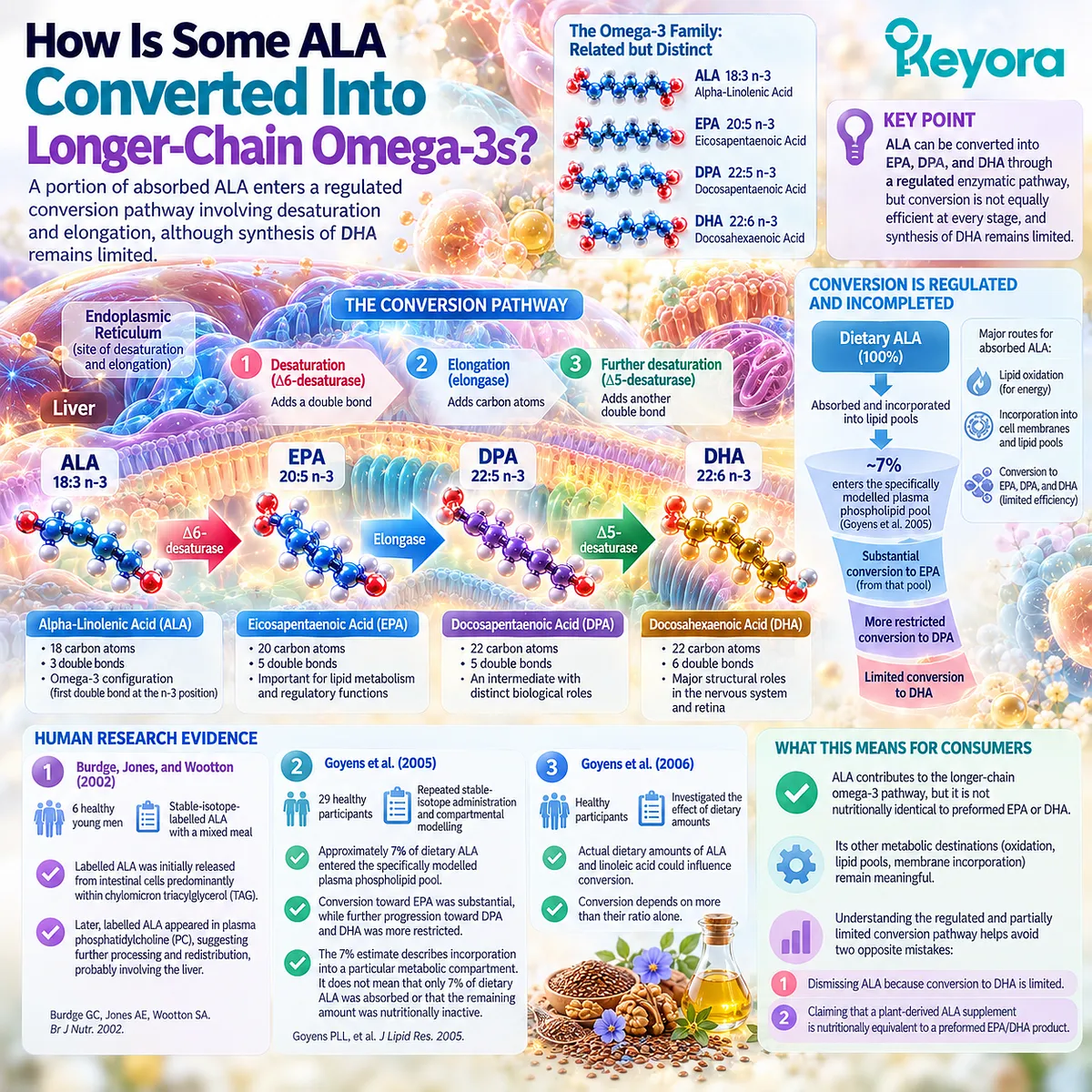
A portion of absorbed ALA enters a regulated conversion pathway involving desaturation and elongation, although synthesis of DHA remains limited
Alongside lipid incorporation and oxidation, ALA can serve as a metabolic precursor for longer-chain omega-3 fatty acids.
This process involves several enzymatic reactions, particularly desaturation and elongation.
Through these reactions, ALA can contribute to the synthesis of:
-
EPA – Eicosapentaenoic Acid
-
DPA – Docosapentaenoic Acid
-
DHA – Docosahexaenoic Acid
However, conversion is not equally efficient at every stage.
The Burdge study identified EPA and DPA as principal longer-chain products of labelled ALA metabolism in the young men investigated. Labelled DHA enrichment was not apparent in the measured plasma fractions during the observation period.
Another important investigation was published by Goyens and colleagues in the Journal of Lipid Research in 2005.
This study involved 29 healthy participants and used repeated stable-isotope administration together with compartmental modelling.
The researchers estimated that approximately 7% of dietary ALA entered the specifically modelled plasma phospholipid pool.
From that pool, conversion toward EPA was substantial, while further progression toward DPA and DHA was more restricted.
The 7% estimate describes incorporation into a particular metabolic compartment. It does not mean that only 7% of dietary ALA was absorbed or that the remaining amount was nutritionally inactive.
The findings instead show how fatty acid conversion depends on both access to relevant lipid pools and regulation of subsequent enzymatic steps.
A follow-up study by Goyens and colleagues in 2006 further demonstrated that the actual dietary amounts of ALA and linoleic acid could influence conversion, rather than their ratio alone determining the outcome.
For consumers, the practical interpretation is straightforward.
ALA contributes to the longer-chain omega-3 pathway, but it should not be treated as nutritionally identical to consuming preformed EPA or DHA.
Its other metabolic destinations remain meaningful regardless of limited DHA synthesis.
What Does This Mean for Keyora Asta 16MG?
The ALA supplied by Keyora enters normal essential fatty acid metabolism, while Natural Astaxanthin provides a complementary lipid-phase redox-support function
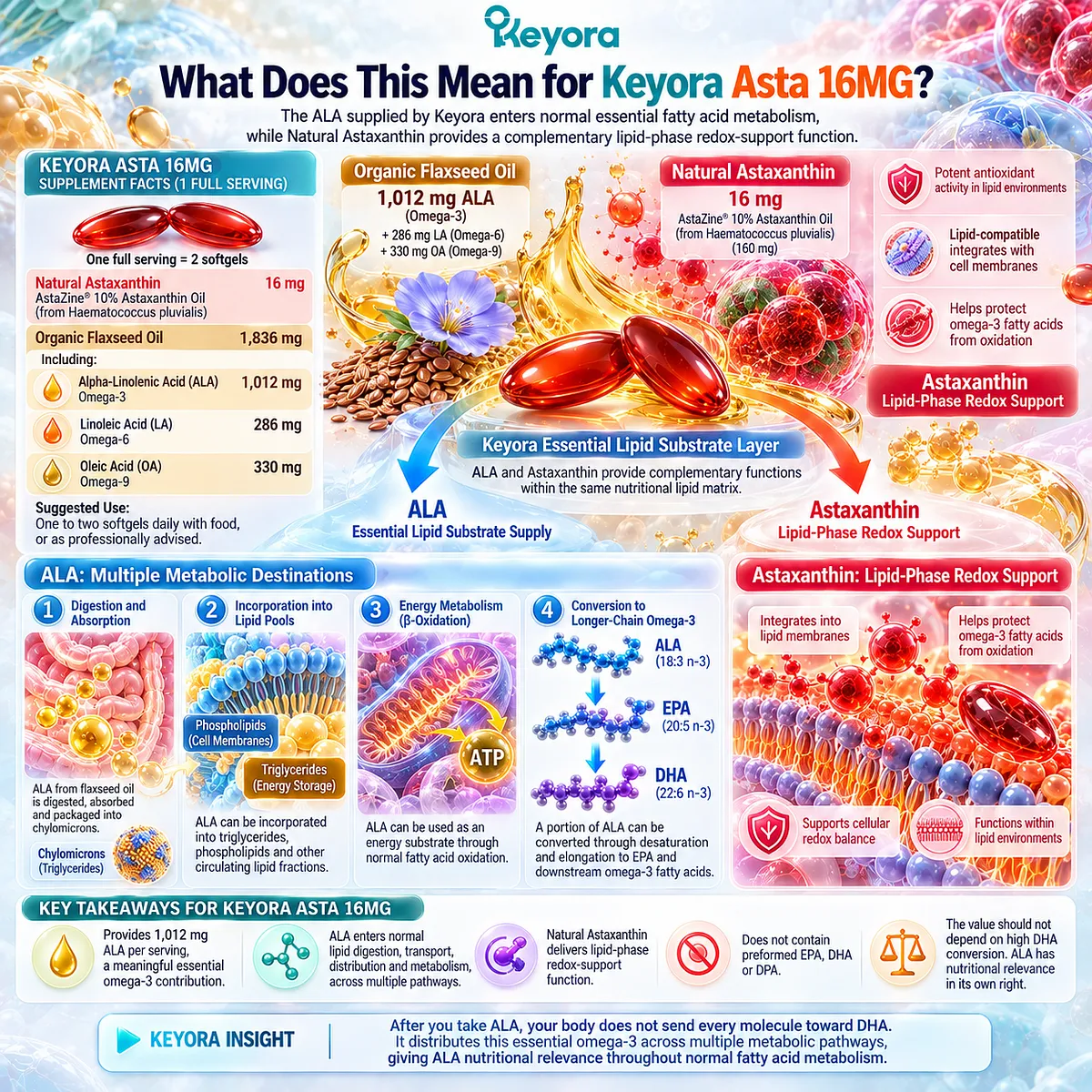
The current Keyora Asta 16MG Supplement Facts define one full serving as two softgels.
Each serving provides:
16 mg Natural Astaxanthin, supplied by 160 mg AstaZine® 10% Astaxanthin Oil derived from Haematococcus pluvialis.
The formula also includes:
1,836 mg Organic Flaxseed Oil
Containing:
-
1,012 mg Alpha-Linolenic Acid (ALA), Omega-3
-
286 mg Linoleic Acid (LA), Omega-6
-
330 mg Oleic Acid (OA), Omega-9
The suggested adult use is one to two softgels daily with food, or as professionally advised.
For consumers examining the formula, the important point is that the flaxseed oil represents more than a physical medium surrounding Astaxanthin.
Its ALA content supplies an essential fatty acid that participates in normal human lipid digestion, transport, distribution, and metabolism.
Within the Keyora Essential Lipid Substrate Layer, ALA contributes nutritional supply across several possible metabolic destinations.
These include incorporation into lipid pools, oxidative utilization, and selective conversion into longer-chain omega-3 fatty acids.
Natural Astaxanthin contributes a different biological task through its lipid-compatible antioxidant properties and independently investigated membrane-redox activity.
The formula can therefore be understood through two complementary functions:
-
ALA – Essential Lipid Substrate Supply
-
Astaxanthin – Lipid-Phase Redox Support
This combination provides a coherent nutritional rationale without assuming that Astaxanthin has been clinically proven to increase ALA absorption, accelerate DHA synthesis, or improve human brain energy metabolism within the finished Keyora formulation.
The central conclusion is simple.
After you take ALA, your body does not send every molecule toward DHA. It distributes this essential omega-3 across multiple metabolic pathways, giving ALA nutritional relevance throughout normal fatty acid metabolism.
That broader metabolic identity helps explain why Keyora Asta 16MG identifies and quantifies ALA as a meaningful component of its nutritional lipid matrix.
This article is for educational and informational purposes only. It does not provide medical advice, diagnosis, treatment, cure, prevention, disease outcome claims, hormone restoration claims, fertility outcome claims, or formula-specific clinical efficacy claims.