
Why Does Keyora Pair Astaxanthin With ALA Instead of Using a Simple Carrier Oil?
Keyora Research Q&A Library
This is part of the Keyora Research Q&A Series, derived from Keyora Astaxanthin Research Journal Series.
Within the Keyora Astaxanthin Researcn framework, this Q&A translates complex astaxanthin biology into reader-friendly, evidence-bound answers, focusing on natural astaxanthin identity, molecular structure, antioxidant and redox mechanisms, membrane lipid interaction, mitochondrial resilience, inflammatory signaling pathways, human evidence interpretation, and the scientific principles behind responsible supplementation.
First published by Keyora Research Journal: www.keyorahealth.com
Direct Answer
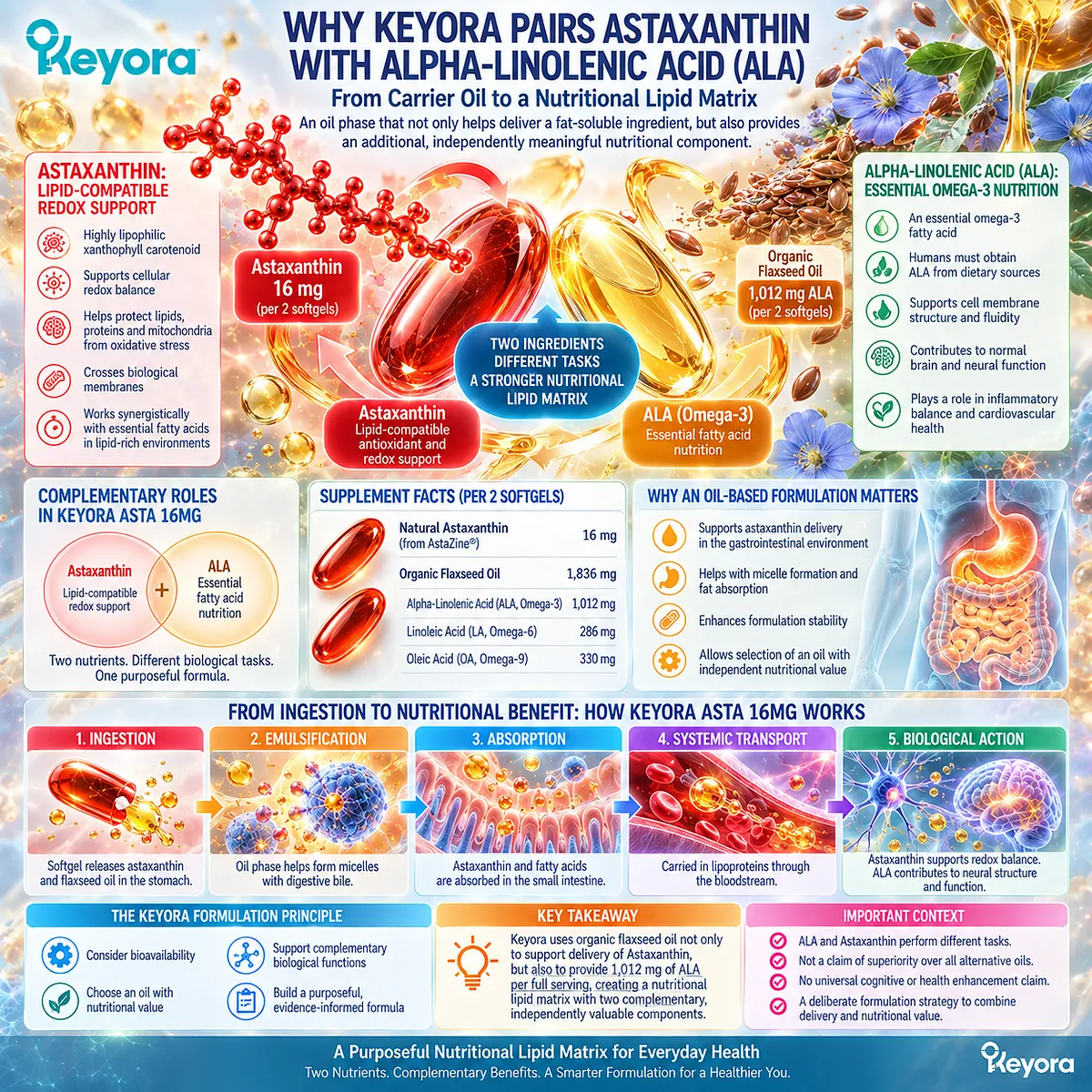
Keyora pairs Astaxanthin with alpha-linolenic acid (ALA) because the oil phase can provide nutritional value beyond simply carrying a fat-soluble ingredient.
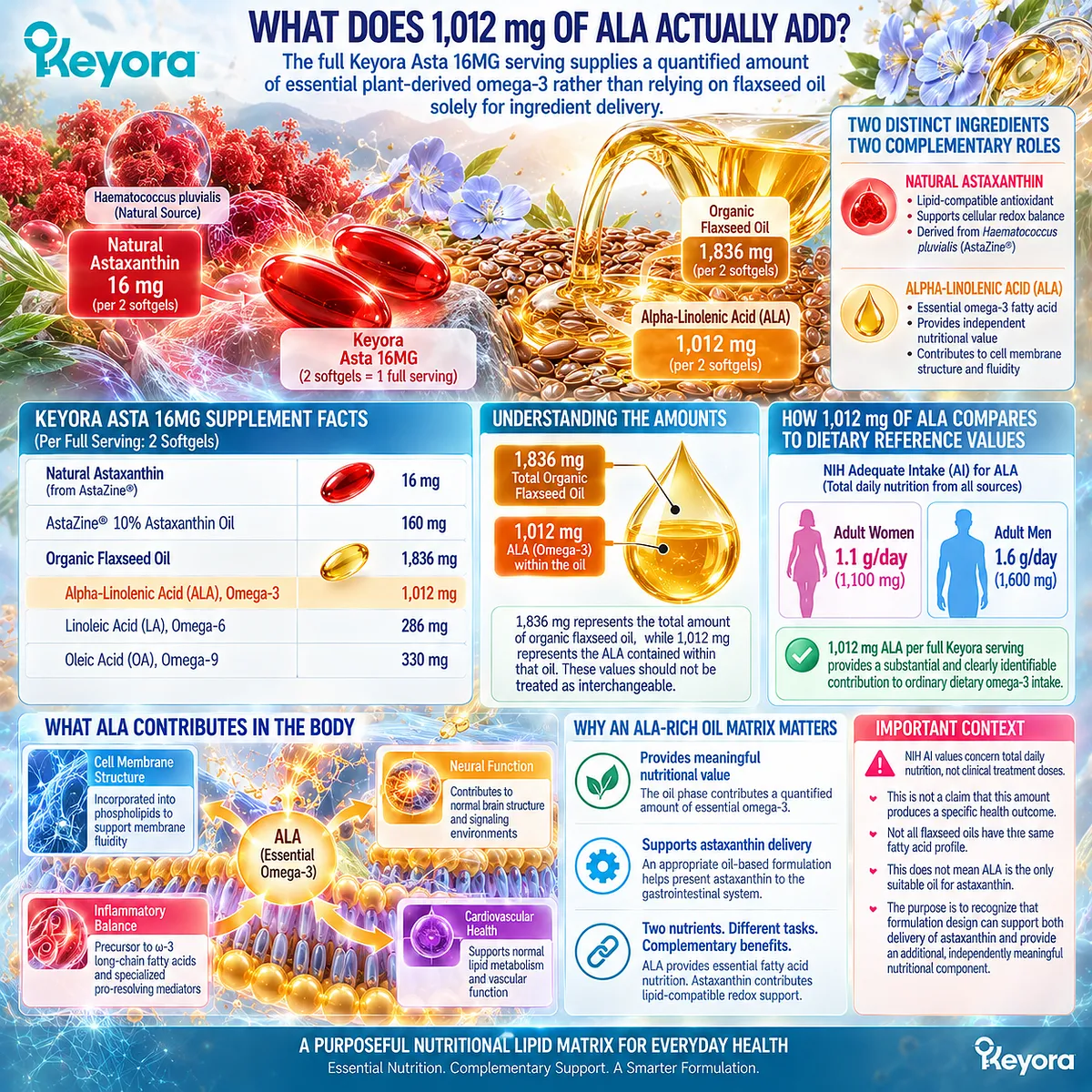
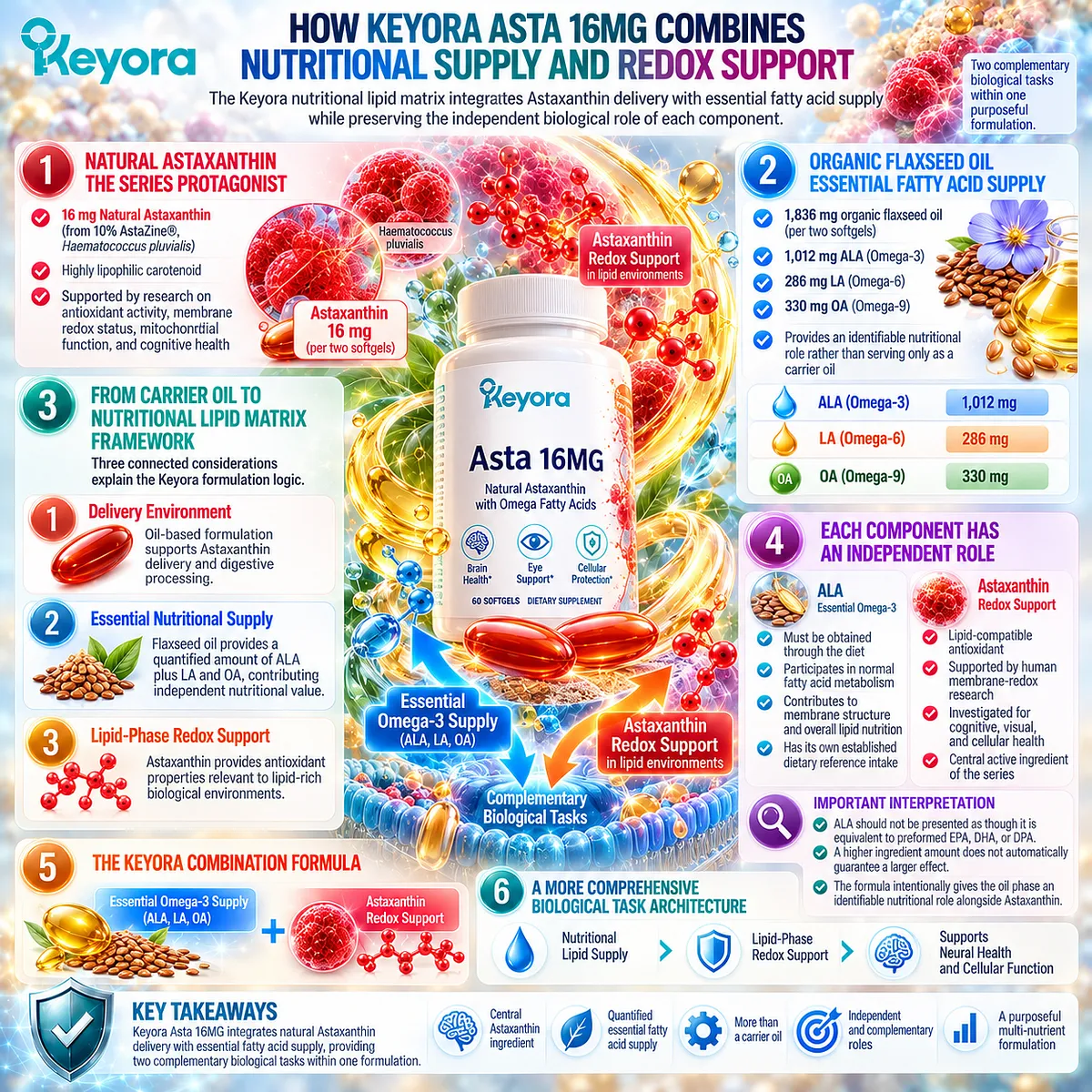
In Keyora Asta 16MG, organic flaxseed oil supplies 1,012 mg of ALA per full two-softgel serving, creating a distinct essential omega-3 nutritional layer alongside 16 mg of Natural Astaxanthin.
Astaxanthin is a highly lipophilic xanthophyll carotenoid. Its oral delivery is influenced by the formulation, digestive environment, and presence of dietary fat. An appropriate oil-based formulation is therefore relevant to how Astaxanthin is presented to the gastrointestinal system.
However, oil selection also creates an opportunity to consider the nutritional composition of the finished formula.
ALA is an essential omega-3 polyunsaturated fatty acid that humans must obtain from dietary sources.
Rather than treating the entire oil phase exclusively as a delivery vehicle, Keyora uses organic flaxseed oil to incorporate a quantified amount of this nutritionally important fatty acid.
The two ingredients perform different biological tasks.
ALA provides essential fatty acid nutrition. Astaxanthin contributes lipid-compatible redox support.
This distinction forms the foundation of the Keyora From Carrier Oil to Nutritional Lipid Matrix Framework, developed within Keyora Astaxanthin EP-5: The Neural Fortress: A Mechanistic Analysis of Astaxanthin in Lipidomics Re-engineering and Neural Oxidative Debt.
The purpose is not to claim that ALA is the only suitable oil for Astaxanthin or that the finished Keyora formula has demonstrated superior clinical outcomes against every alternative carrier.
It is to recognize that formulation design can consider two objectives simultaneously: supporting delivery of the central active ingredient and providing an additional, independently meaningful nutritional component.
Why Is Astaxanthin Usually Formulated in Oil?
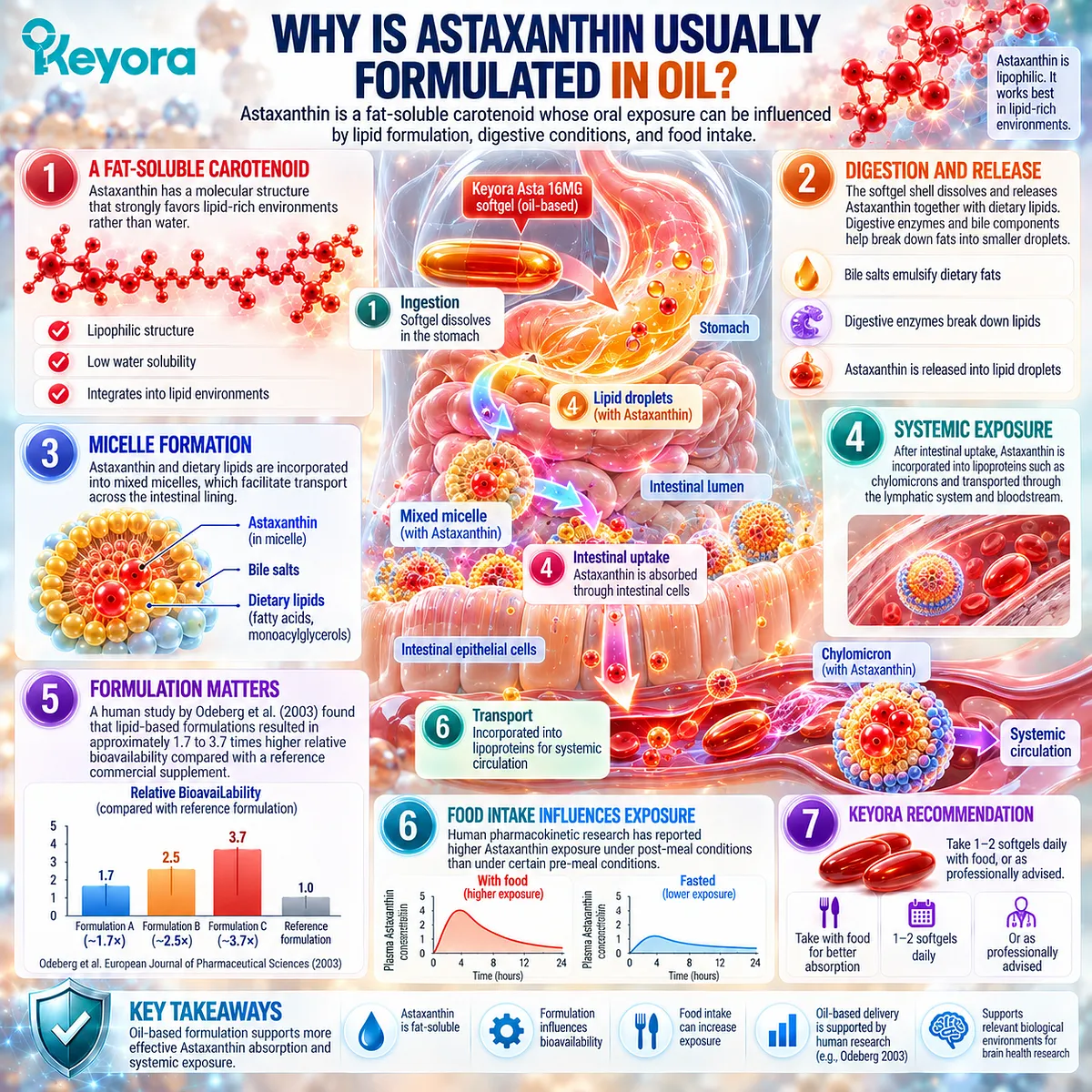
Astaxanthin is a fat-soluble carotenoid whose oral exposure can be influenced by lipid formulation, digestive conditions, and food intake
To understand why Keyora uses an oil-based formula, it helps to begin with Astaxanthin itself.
Astaxanthin has a molecular structure that strongly favors lipid-rich environments rather than water.
Like other lipophilic carotenoids, it must pass through several digestive and transport processes before becoming available in systemic circulation.
These processes involve the release of Astaxanthin from its original formulation, interaction with dietary lipids, digestive enzymes and bile components, and incorporation into mixed micelles that facilitate intestinal uptake.
The type of formulation can influence how effectively this process occurs.
A frequently cited human investigation was published by Odeberg and colleagues in the European Journal of Pharmaceutical Sciences in 2003.
Healthy male volunteers received a single 40 mg Astaxanthin dose using different lipid-based formulations or a reference commercial supplement.
The researchers then measured plasma Astaxanthin concentrations to compare pharmacokinetic exposure.
Across the three experimental lipid-based formulations, relative bioavailability was approximately 1.7 to 3.7 times that of the reference formulation.
Importantly, the experimental preparations used different combinations of lipid ingredients and surfactants. The study did not directly compare an ALA-rich Keyora formulation with ordinary carrier oils.
Nevertheless, the findings demonstrate why formulation deserves attention when developing an oral Astaxanthin product.
The presence of fat during consumption is another relevant consideration. Human pharmacokinetic research has reported higher Astaxanthin exposure under post-meal conditions than under certain pre-meal conditions.
This is consistent with the current Keyora Asta 16MG suggested use of taking one to two softgels daily with food, or as professionally advised.
What Is the Difference Between a Carrier Oil and a Nutritional Lipid Matrix?
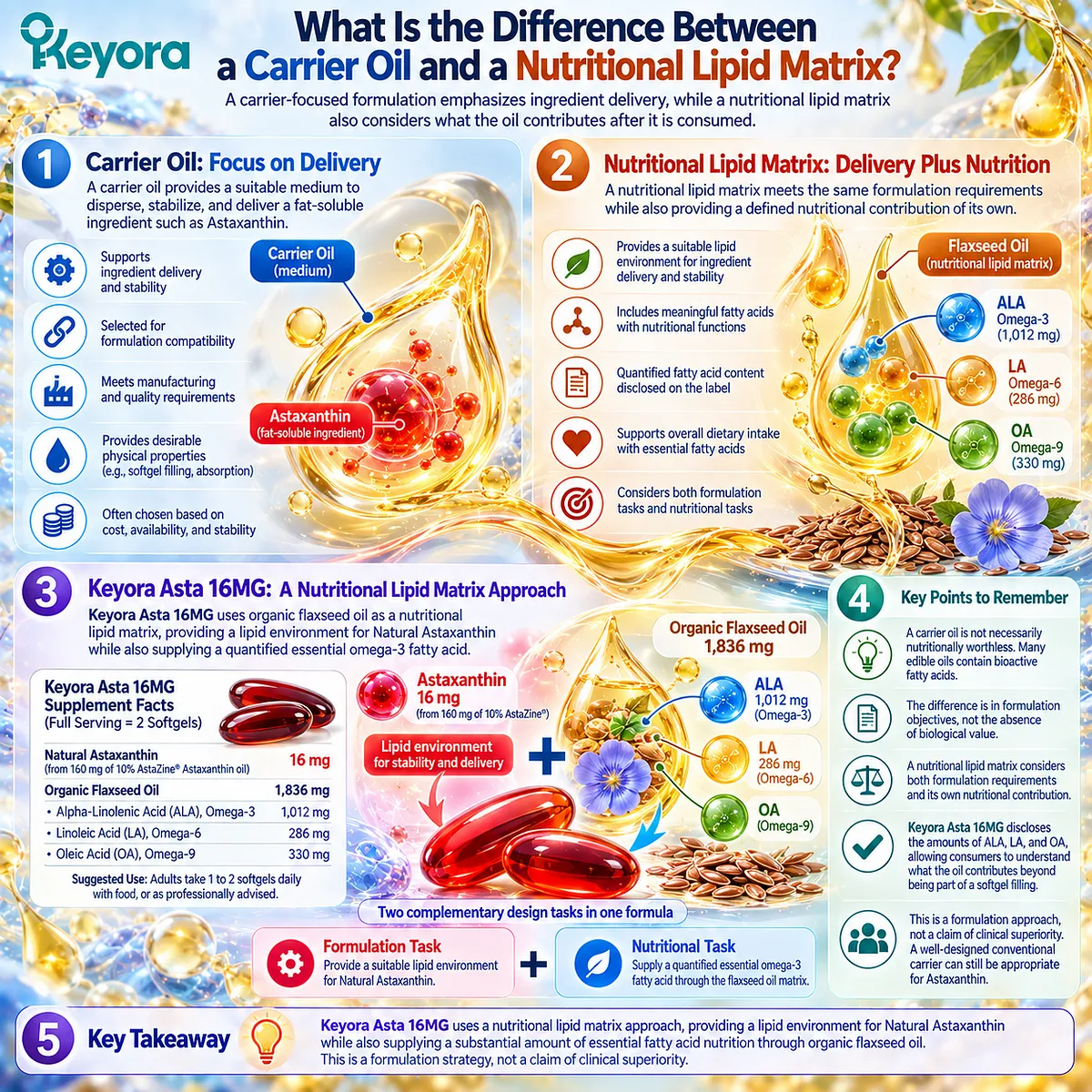
A carrier-focused formulation emphasizes ingredient delivery, while a nutritional lipid matrix also considers what the oil contributes after it is consumed
An oil-based supplement generally requires a suitable medium in which its fat-soluble ingredient can be dispersed, stabilized, and delivered.
The oil selected for this purpose is commonly described as a carrier oil.
A carrier is not necessarily nutritionally worthless. Many edible oils naturally contain fatty acids with meaningful metabolic functions.
The distinction is therefore not that one type of oil has biological value while every other oil has none.
It is a difference in formulation objectives.
In a carrier-focused design, oil selection may prioritize compatibility with the active ingredient, manufacturing requirements, stability, physical properties, cost, and oral delivery.
A nutritional lipid matrix considers those practical requirements while also asking another question:
Can the lipid component provide a defined nutritional contribution of its own?
Keyora Asta 16MG addresses that question through organic flaxseed oil.
Rather than identifying the oil phase only as a supporting excipient, the current Supplement Facts disclose the amount of its principal nutritional fatty acids, including ALA, LA, and OA.
This allows the consumer to understand what the oil contributes beyond being part of a softgel filling.
For this reason, the Keyora approach can be described through two complementary design tasks:
-
Formulation Task – Provide a suitable lipid environment for Natural Astaxanthin
-
Nutritional Task – Supply a quantified essential omega-3 fatty acid through the flaxseed oil matrix
These tasks should be distinguished from claims about clinical superiority.
A well-designed conventional carrier can still be appropriate for Astaxanthin. The nutritional distinction in Keyora is that a substantial amount of essential fatty acid nutrition is explicitly included within the same formulation.
What Does 1,012 mg of ALA Actually Add?
The full Keyora Asta 16MG serving supplies a quantified amount of essential plant-derived omega-3 rather than relying on flaxseed oil solely for ingredient delivery
The current Keyora Asta 16MG Supplement Facts define a full serving as two softgels.
That serving contains:
IngredientAmount Per Full ServingNatural Astaxanthin16 mgAstaZine® 10% Astaxanthin Oil160 mgOrganic Flaxseed Oil1,836 mgAlpha-Linolenic Acid (ALA), Omega-31,012 mgLinoleic Acid (LA), Omega-6286 mgOleic Acid (OA), Omega-9330 mg
Natural Astaxanthin is derived from Haematococcus pluvialis.
The flaxseed oil contributes the independently quantified fatty acid component.
One important label distinction is that 1,836 mg represents the total organic flaxseed oil amount, while 1,012 mg represents the ALA contained within that oil.
These values should not be treated as interchangeable.
The nutritional significance becomes clearer when compared with established dietary reference values.
The NIH Office of Dietary Supplements lists the Adequate Intake (AI) for ALA as 1.1 g daily for adult women and 1.6 g daily for adult men.
A full Keyora serving supplies 1.012 g ALA, making it a substantial and clearly identifiable contribution to ordinary dietary omega-3 intake.
These reference values concern total daily nutrition. They are not clinical treatment doses or proof that a particular supplement amount produces a specific health outcome.
This is nevertheless an important reason to distinguish an ALA-rich nutritional matrix from an oil phase selected exclusively for its technological properties.
Consumers can evaluate the actual nutritional contribution rather than encountering an unspecified quantity of oil whose primary stated purpose is ingredient dispersion.
Why Is ALA an Essential Omega-3 Fatty Acid?
ALA must be obtained through the diet and participates in normal fatty acid metabolism independently of its potential conversion into longer-chain omega-3s
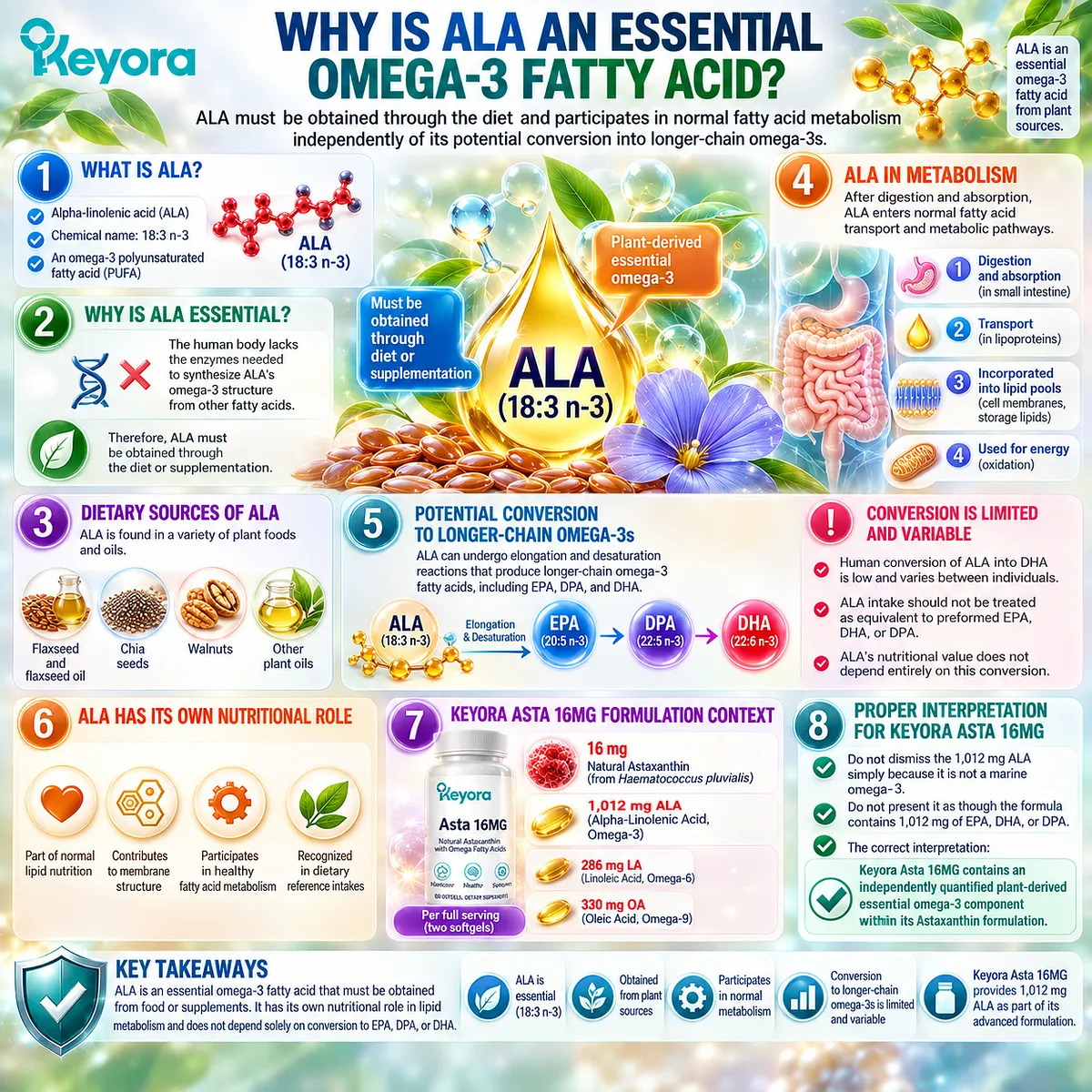
Alpha-linolenic acid is commonly abbreviated as ALA and identified chemically as 18:3 n-3.
It is classified as an essential fatty acid because the human body lacks the enzymatic machinery required to synthesize its omega-3 structure from other fatty acid families.
Consequently, ALA must enter the nutritional system through food or supplementation.
Common dietary sources include flaxseed, flaxseed oil, chia seeds, walnuts, and certain other plant oils.
After digestion and absorption, ALA enters normal fatty acid transport and metabolic pathways.
It can become part of different lipid pools, undergo oxidation for energy, or participate in elongation and desaturation reactions that produce longer-chain omega-3 fatty acids.
This includes the metabolic pathway toward EPA, DPA, and DHA.
However, human conversion of ALA into DHA is limited and variable. ALA intake should therefore not be automatically represented as an equivalent intake of preformed EPA or DHA.
Its nutritional identity does not depend entirely on that conversion process.
ALA is itself an essential fatty acid with established dietary reference intakes and a role in overall lipid nutrition.
This is especially important when interpreting Keyora’s product architecture.
The 1,012 mg ALA content should not be dismissed merely because it is not preformed marine omega-3.
Similarly, it should not be presented as though the formula contains 1,012 mg of EPA, DHA, or DPA.
The correct interpretation is simpler and more meaningful:
Keyora Asta 16MG contains an independently quantified plant-derived essential omega-3 component within its Astaxanthin formulation.
Why Does an ALA-Rich Lipid Phase Make Redox Protection Relevant?
Polyunsaturated fatty acids are nutritionally important but oxidation-sensitive, making lipid composition and redox regulation complementary biological considerations
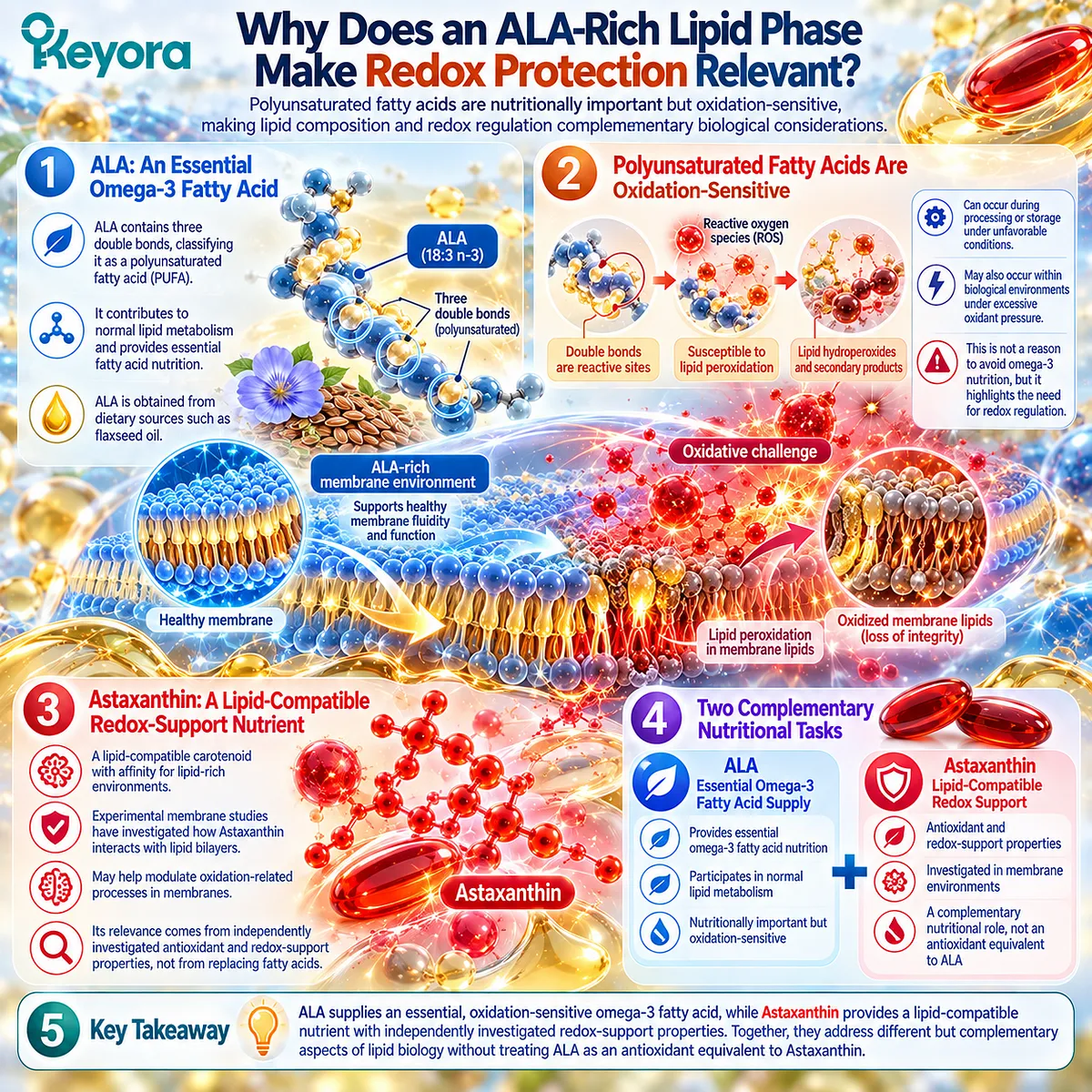
ALA contains three double bonds, giving it the characteristic molecular structure of a polyunsaturated fatty acid.
This unsaturation contributes to its metabolic identity, but it also makes ALA susceptible to oxidative reactions.
Under unfavorable processing or storage conditions, polyunsaturated lipids can undergo oxidation. Within biological environments, excessive oxidant pressure may similarly contribute to lipid peroxidation involving susceptible fatty acid residues.
This is not a reason to avoid essential omega-3 nutrition.
Rather, it demonstrates why lipid supply and oxidative regulation represent two distinct areas of nutritional science.
Fatty acids contribute to biological lipid pools and participate in metabolic processes. Antioxidant systems help regulate excessive oxidative reactions occurring within cells and their surrounding environments.
The distinction is particularly relevant to Astaxanthin because its lipophilic structure gives it affinity for lipid-rich biological settings.
Experimental membrane studies have investigated how Astaxanthin interacts with lipid bilayers and influences oxidation-related processes.
However, it would be incorrect to conclude that adding Astaxanthin automatically protects every ALA molecule from oxidation during manufacturing, storage, digestion, and subsequent metabolism.
Those outcomes require their own appropriate measurements.
The scientifically useful conclusion is that the combination brings together two different nutritional tasks:
-
ALA – Supply of an essential oxidation-sensitive omega-3 fatty acid
-
Astaxanthin – A lipid-compatible nutrient with independently investigated redox-support properties
This relationship establishes the biological foundation for Keyora’s formulation rationale without treating ALA itself as an antioxidant equivalent to Astaxanthin.
What Different Biological Job Does Astaxanthin Perform?
Astaxanthin provides lipid-associated antioxidant activity supported by experimental membrane research and measurable human phospholipid-redox findings
While ALA supplies essential fatty acid nutrition, Natural Astaxanthin contributes a separate biological function.
Astaxanthin is a xanthophyll carotenoid with a long conjugated molecular structure and oxygen-containing terminal groups.
This molecular architecture enables interactions with lipid-rich environments and underlies its extensive investigation in antioxidant and membrane-related research.
Its relevance extends beyond demonstrating antioxidant activity in a simplified laboratory chemical assay.
Human research has also examined whether oral Astaxanthin can influence measurable oxidation products within cellular membranes.
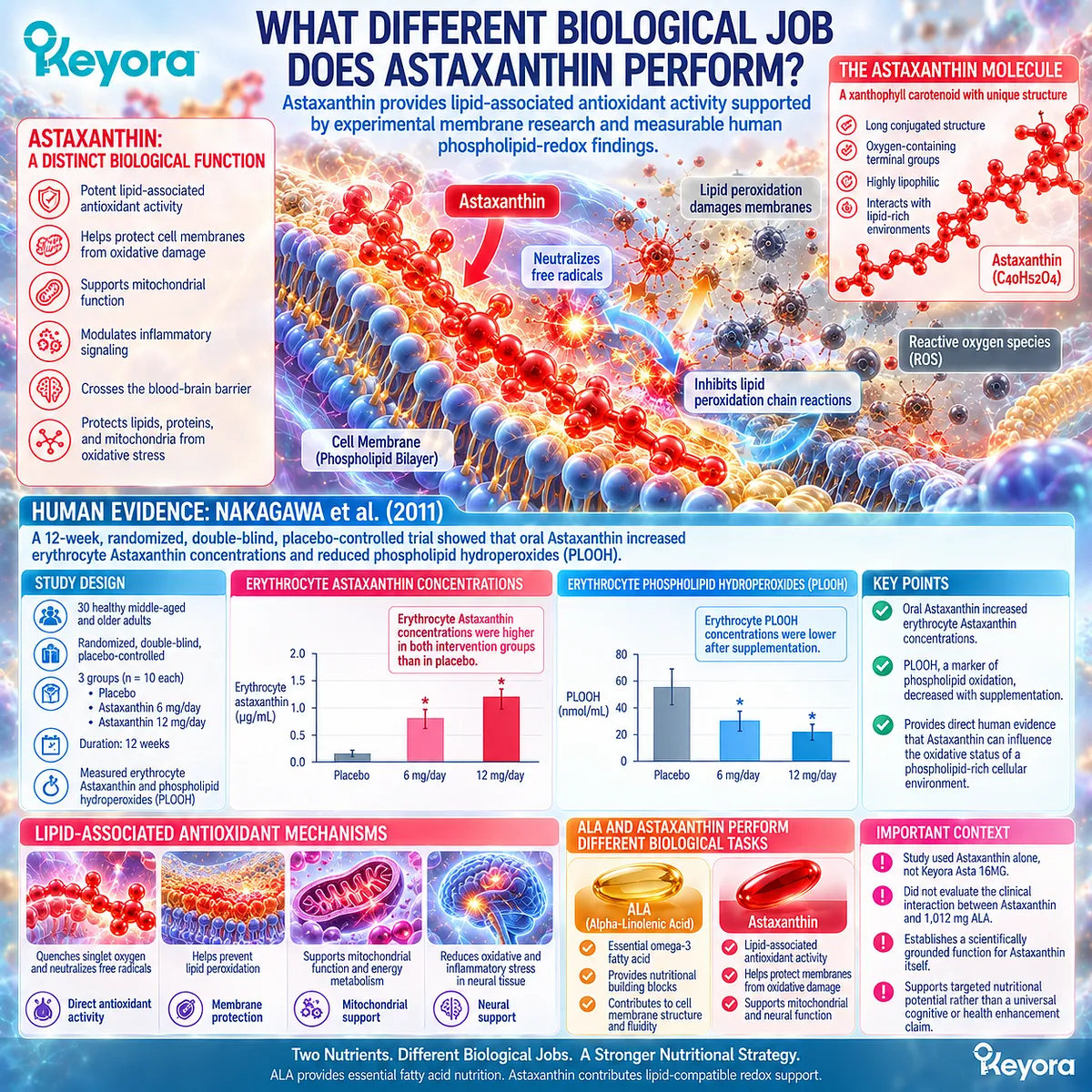
In 2011, Nakagawa and colleagues conducted a randomized, double-blind, placebo-controlled trial involving 30 healthy middle-aged and older adults.
Participants received placebo, 6 mg Astaxanthin daily, or 12 mg Astaxanthin daily for 12 weeks.
Researchers measured erythrocyte Astaxanthin concentrations and phospholipid hydroperoxides (PLOOH).
After supplementation, erythrocyte Astaxanthin concentrations were higher in both intervention groups than in placebo.
At the same time, erythrocyte PLOOH concentrations were lower.
These findings provide direct human evidence that orally consumed Astaxanthin can influence the oxidative status of a phospholipid-rich cellular environment.
This is relevant to Keyora’s nutritional architecture because lipid-associated antioxidant support is an independent intervention task rather than another form of essential fatty acid supply.
The study did not evaluate Keyora Asta 16MG or investigate the clinical interaction between Astaxanthin and 1,012 mg ALA.
Its contribution is to establish a scientifically grounded function for Astaxanthin itself.
How Keyora Asta 16MG Combines Nutritional Supply and Redox Support
The Keyora nutritional lipid matrix integrates Astaxanthin delivery with essential fatty acid supply while preserving the independent biological role of each component
The formulation logic of Keyora Asta 16MG can now be explained without reducing the entire product to either an antioxidant supplement or a flaxseed oil supplement.
Natural Astaxanthin remains the central active ingredient of the series.
Its inclusion is supported by research involving lipid-associated antioxidant activity, human membrane-redox endpoints, and additional physiological outcomes investigated across the Astaxanthin literature.
The organic flaxseed oil performs an accompanying nutritional task.
Its 1,012 mg ALA content provides a meaningful essential omega-3 component that consumers can identify and evaluate against their wider dietary intake.
The formula also discloses 286 mg LA and 330 mg OA per full serving.
These components form part of the lipid profile, although they should not displace ALA or Natural Astaxanthin as the central subjects of this article.
The Keyora From Carrier Oil to Nutritional Lipid Matrix Framework organizes the formula into three connected considerations.
1. Delivery Environment
Astaxanthin is highly lipophilic, making an appropriate oil-based formulation relevant to its oral presentation and digestive processing.
2. Essential Nutritional Supply
The flaxseed oil contributes a quantified amount of ALA, allowing the oil phase to provide independent nutritional value rather than serving exclusively as a carrier.
3. Lipid-Phase Redox Support
Astaxanthin contributes antioxidant properties relevant to lipid-rich biological environments, with separate human research demonstrating changes in erythrocyte phospholipid oxidation.
These tasks can be understood together through a concise formula:
Essential Omega-3 Supply + Astaxanthin Redox Support
The result is a more comprehensive biological task architecture: one component contributes essential fatty acid nutrition, while the other has distinct antioxidant and membrane-related research relevance.
This does not mean that ALA cannot function without Astaxanthin or that every conventional carrier oil is nutritionally inferior.
It means the Keyora formulation deliberately gives its oil phase an identifiable nutritional role alongside Astaxanthin.
For the consumer, this provides a practical way to read the Supplement Facts.
Instead of asking only how much Astaxanthin the softgel contains, the reader can also recognize what the surrounding lipid matrix supplies.
That is the principal distinction between viewing oil solely as a delivery component and treating it as part of an intentional multi-nutrient formulation.
What the Current Evidence Supports
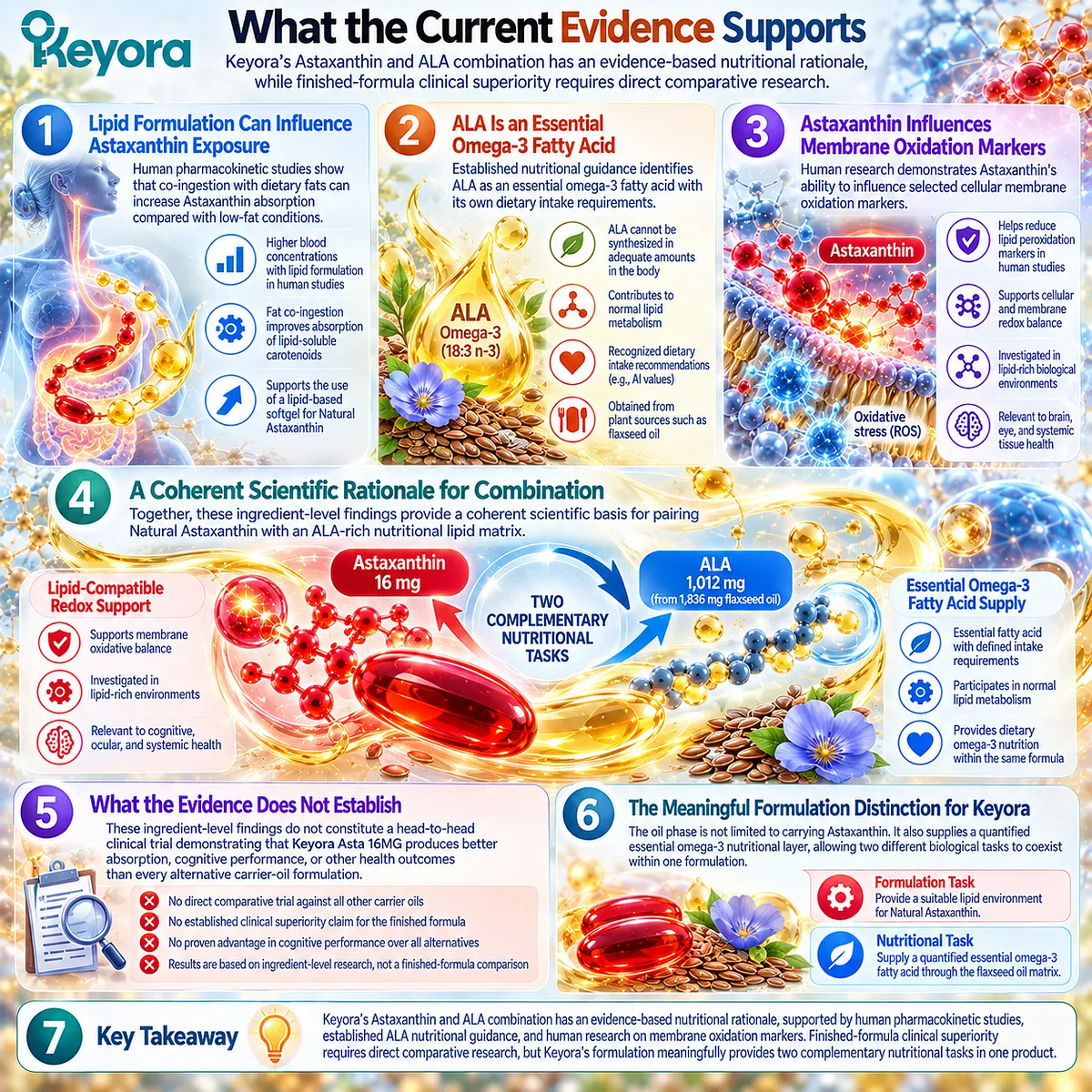
Keyora’s Astaxanthin and ALA combination has an evidence-based nutritional rationale, while finished-formula clinical superiority requires direct comparative research
Human pharmacokinetic studies establish that lipid formulation can influence Astaxanthin exposure.
Established nutritional guidance identifies ALA as an essential omega-3 fatty acid with its own dietary intake requirements.
Separate human research demonstrates Astaxanthin’s ability to influence selected cellular membrane oxidation markers.
Together, these findings provide a coherent scientific basis for pairing Natural Astaxanthin with an ALA-rich nutritional lipid matrix.
However, these ingredient-level findings do not constitute a head-to-head clinical trial demonstrating that Keyora Asta 16MG produces better absorption, cognitive performance, or other health outcomes than every alternative carrier-oil formulation.
For Keyora, the principal formulation distinction remains meaningful without making that additional claim.
The oil phase is not limited to carrying Astaxanthin. It also supplies a quantified essential omega-3 nutritional layer, allowing two different biological tasks to coexist within one formulation.
This article is for educational and informational purposes only. It does not provide medical advice, diagnosis, treatment, cure, prevention, disease outcome claims, hormone restoration claims, fertility outcome claims, or formula-specific clinical efficacy claims.