
Can Astaxanthin Help With Age-Related Forgetfulness?
Keyora Research Q&A Library
This is part of the Keyora Research Q&A Series, derived from Keyora Astaxanthin Research Journal Series.
Within the Keyora Astaxanthin Researcn framework, this Q&A translates complex astaxanthin biology into reader-friendly, evidence-bound answers, focusing on natural astaxanthin identity, molecular structure, antioxidant and redox mechanisms, membrane lipid interaction, mitochondrial resilience, inflammatory signaling pathways, human evidence interpretation, and the scientific principles behind responsible supplementation.
First published by Keyora Research Journal: www.keyorahealth.com
Direct Answer
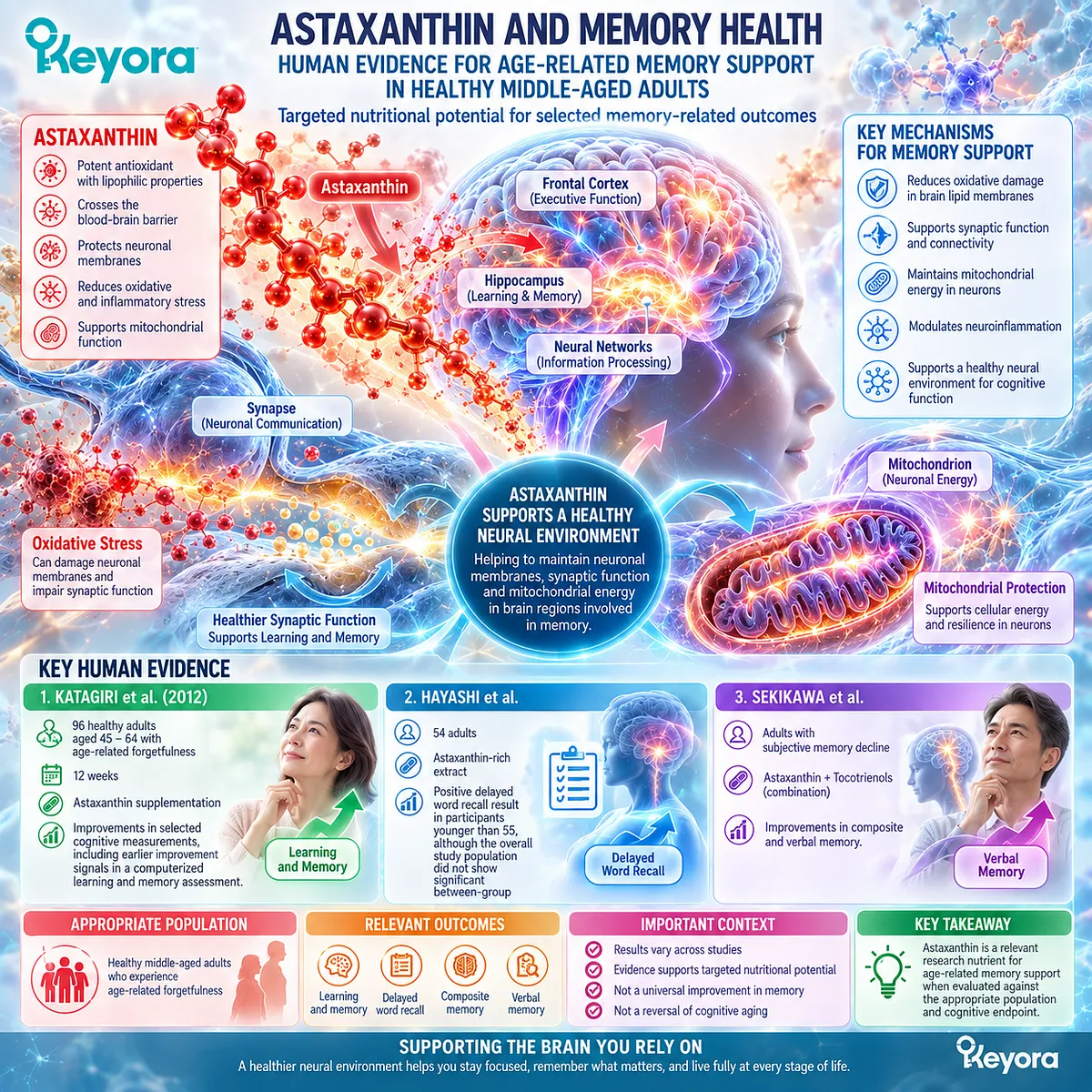
Astaxanthin has promising human research supporting selected memory-related outcomes in healthy middle-aged adults who experience age-related forgetfulness.
However, the results vary across studies, and the current evidence supports targeted nutritional potential rather than a universal improvement in memory or reversal of cognitive aging.
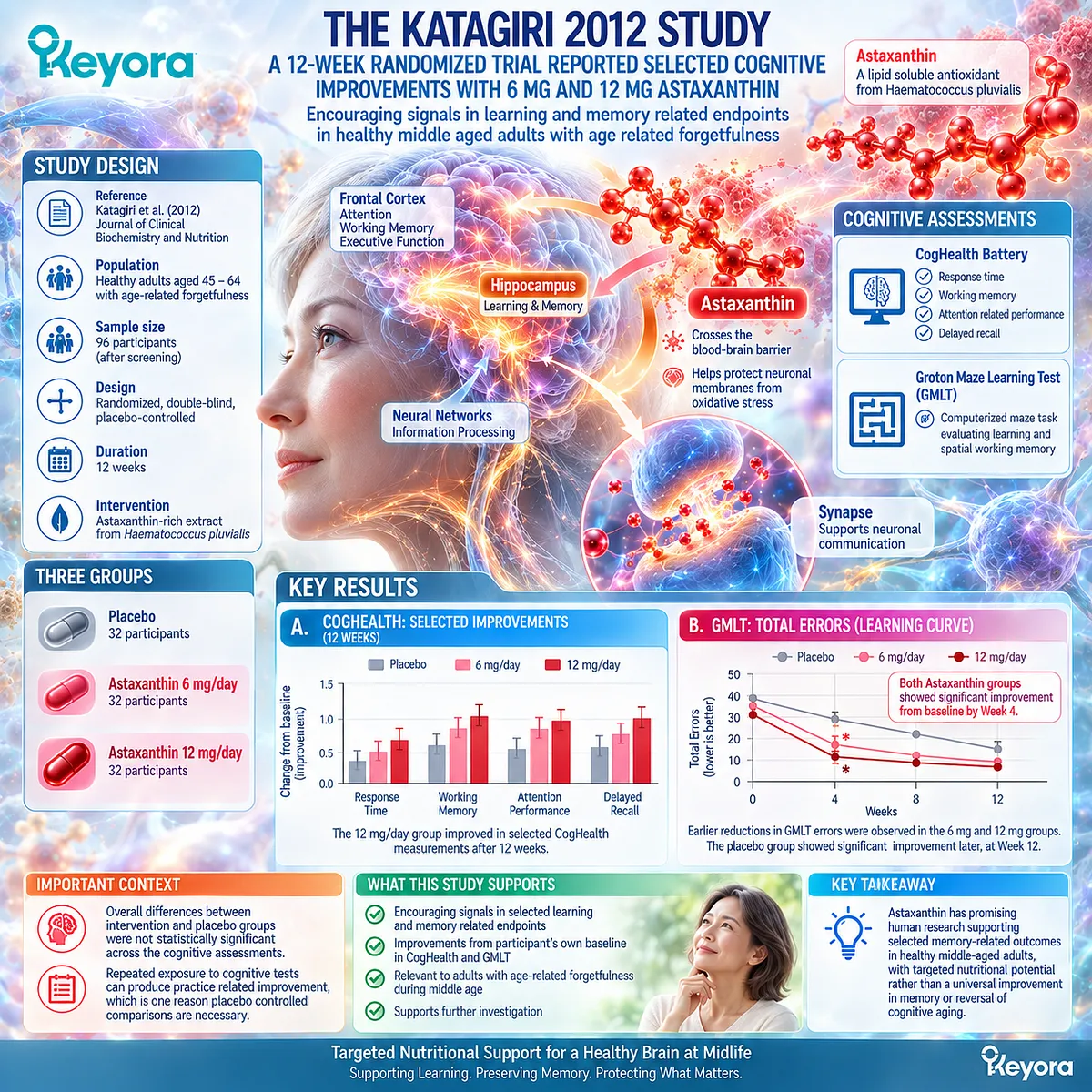
One particularly relevant randomized controlled trial was conducted by Katagiri and colleagues in 2012. It enrolled 96 healthy adults aged 45 – 64 who reported age-related forgetfulness.
After 12 weeks, researchers observed improvements in selected cognitive measurements among participants receiving Astaxanthin, including earlier improvement signals in a computerized learning and memory assessment.
Additional human research provides useful context.
Hayashi and colleagues investigated an Astaxanthin-rich extract in 54 adults and identified a positive delayed word recall result in participants younger than 55, although the overall study population did not demonstrate significant between-group differences.
Sekikawa and colleagues also observed improvements in composite and verbal memory among adults experiencing subjective memory decline. Importantly, that study used Astaxanthin combined with Tocotrienols rather than Astaxanthin alone.
Together, these findings make Astaxanthin a relevant research nutrient for age-related memory support, particularly when the intervention is evaluated against the appropriate population and cognitive endpoint.
This question develops the human evidence architecture presented in Keyora Astaxanthin EP-5: The Neural Fortress: A Mechanistic Analysis of Astaxanthin in Lipidomics Re-engineering and Neural Oxidative Debt.
The central Keyora principle is simple: to understand whether a nutritional intervention may help with age-related forgetfulness, first examine who was studied, what kind of memory difficulty they experienced, and which outcomes actually improved.
What Does Age-Related Forgetfulness Actually Mean?
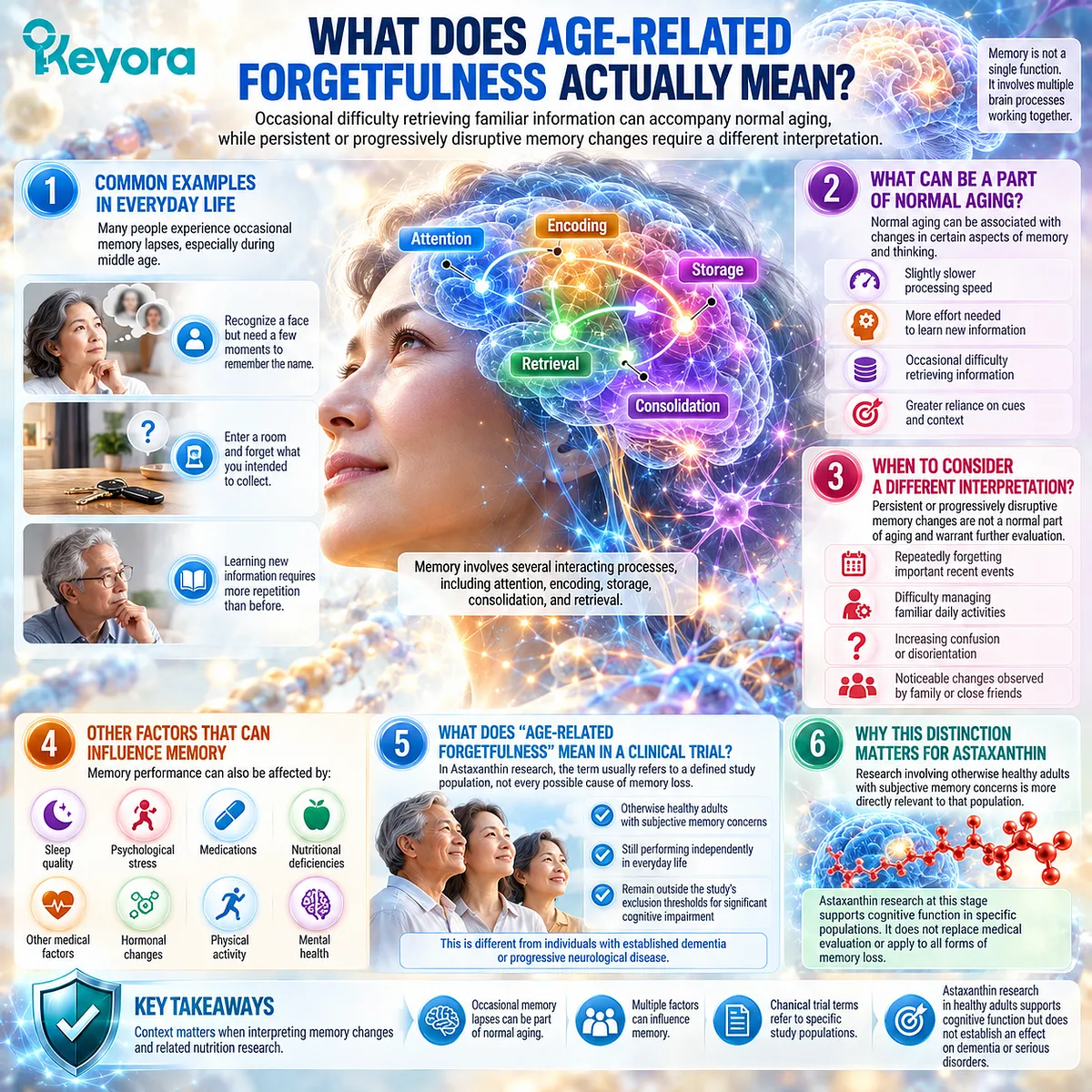
Occasional difficulty retrieving familiar information can accompany normal aging, while persistent or progressively disruptive memory changes require a different interpretation
Have you ever recognized someone’s face immediately but needed several moments to remember their name?
Perhaps you occasionally enter a room and forget what you intended to collect, or find that learning unfamiliar information requires more repetition than it did several years ago.
These experiences can become more noticeable during middle age.
Memory involves several interacting processes, including attention, encoding, storage, consolidation, and retrieval. A temporary difficulty recalling information does not necessarily mean that the information has disappeared from memory.
For example, struggling to retrieve a familiar name and remembering it later is different from repeatedly forgetting important recent events or becoming unable to manage familiar daily activities.
Normal aging can be associated with changes in processing speed and certain aspects of memory performance. However, substantial cognitive impairment should not automatically be attributed to getting older.
Sleep quality, psychological stress, medications, nutritional deficiencies, and other medical factors can also influence memory.
This distinction matters when reading Astaxanthin research.
The term age-related forgetfulness in a clinical trial usually refers to a defined study population, not every possible cause of memory loss.
A participant may report that their memory feels less reliable while still performing independently in everyday life and remaining outside the study’s exclusion thresholds for significant cognitive impairment.
For consumers, that is an important starting point.
Astaxanthin research involving otherwise healthy adults with subjective memory concerns is more directly relevant to that population than to individuals with established dementia or progressive neurological disease.
Who Was Actually Studied in Astaxanthin Memory Trials?
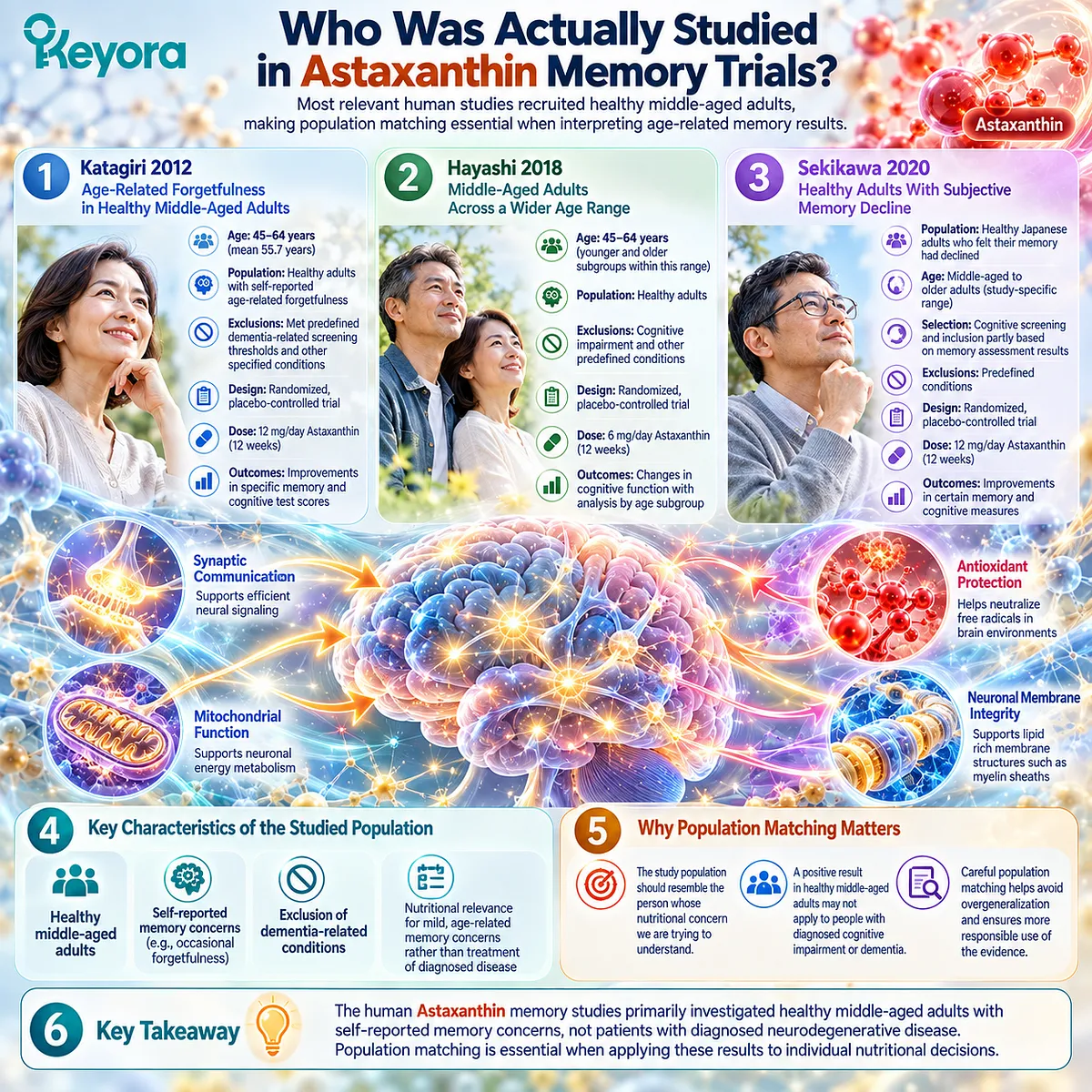
Most relevant human studies recruited healthy middle-aged adults, making population matching essential when interpreting age-related memory results
When reading a supplement study, the ingredient and dosage often attract the most attention.
Yet participant selection can be just as important.
A trial involving healthy adults who occasionally forget names addresses a different clinical question from a trial involving people diagnosed with mild cognitive impairment or dementia.
The human Astaxanthin studies relevant to this article primarily investigated adults during middle age or the transition toward older adulthood.
In Katagiri’s 2012 trial, participants were aged 45 – 64 years, with an average age of approximately 55.7 years. They were recruited because they complained of age-related forgetfulness.
Researchers screened the participants and excluded individuals meeting specified dementia-related screening thresholds, along with other predefined conditions.
Hayashi’s 2018 trial also included adults aged 45 – 64 years, allowing the investigators to examine whether results differed between younger and older participants within that range.
Sekikawa’s 2020 study enrolled healthy Japanese adults who felt that their memory had declined. Participants also underwent cognitive screening and were selected partly according to their memory assessment results.
These populations share an important characteristic: they were not recruited primarily as patients undergoing treatment for diagnosed neurodegenerative disease.
This gives the research a distinct nutritional relevance.
The studies investigate whether oral carotenoid interventions can influence measurable cognitive performance among adults experiencing comparatively mild memory-related concerns.
The Keyora Population-Matched Memory Evidence Framework begins with this question:
Does the participant population resemble the person whose nutritional concern we are trying to understand?
Without that step, even a statistically positive clinical result can easily be applied to the wrong population.
What the Katagiri 2012 Study Found
A 12-week randomized trial reported selected cognitive improvements with 6 mg and 12 mg Astaxanthin, although consistent overall superiority over placebo was not established
Katagiri and colleagues published one of the most directly relevant human studies in the Journal of Clinical Biochemistry and Nutrition in 2012.
The researchers recruited healthy adults who complained of age-related forgetfulness and selected 96 eligible participants after screening.
The study used a randomized, double-blind, placebo-controlled design with three groups:
Placebo – 32 participants
Astaxanthin 6 mg/day – 32 participants
Astaxanthin 12 mg/day – 32 participants
The intervention used an Astaxanthin-rich extract derived from Haematococcus pluvialis and continued for 12 weeks.
Participants underwent cognitive testing at baseline and at four-week intervals.
Two assessment systems were particularly important.
The CogHealth battery evaluated several cognitive functions, including response time, working memory, attention-related performance, and delayed recall.
The Groton Maze Learning Test (GMLT) examined learning and spatial working memory through a computerized maze task.
Results showed that the 12 mg/day group improved in selected CogHealth measurements after 12 weeks.
Researchers also observed earlier reductions in GMLT errors among participants receiving 6 mg and 12 mg Astaxanthin.
Both supplemented groups showed significant improvement from their respective baselines by Week 4 for GMLT total errors. The placebo group demonstrated significant improvement later, at Week 12.
That timing difference was considered an encouraging signal by the investigators.
However, the authors also reported that overall differences between intervention and placebo groups were not statistically significant across the cognitive assessments.
This matters because improvement from a participant’s own baseline is not automatically equivalent to demonstrating that the supplement outperformed placebo.
Repeated exposure to a cognitive test can produce practice-related improvement, which is one reason placebo-controlled comparisons are necessary.
Nevertheless, the trial remains particularly valuable for this question because its participants were recruited for the same general concern expressed by many consumers: noticing changes in everyday memory during middle age.
Its most appropriate interpretation is that Astaxanthin produced encouraging signals in selected learning and memory-related endpoints, supporting further investigation in adults experiencing age-related forgetfulness.
What Hayashi 2018 Reveals About Age-Dependent Responses
An eight-week human trial found no significant overall cognitive advantage, but identified a positive delayed word recall result in participants younger than 55
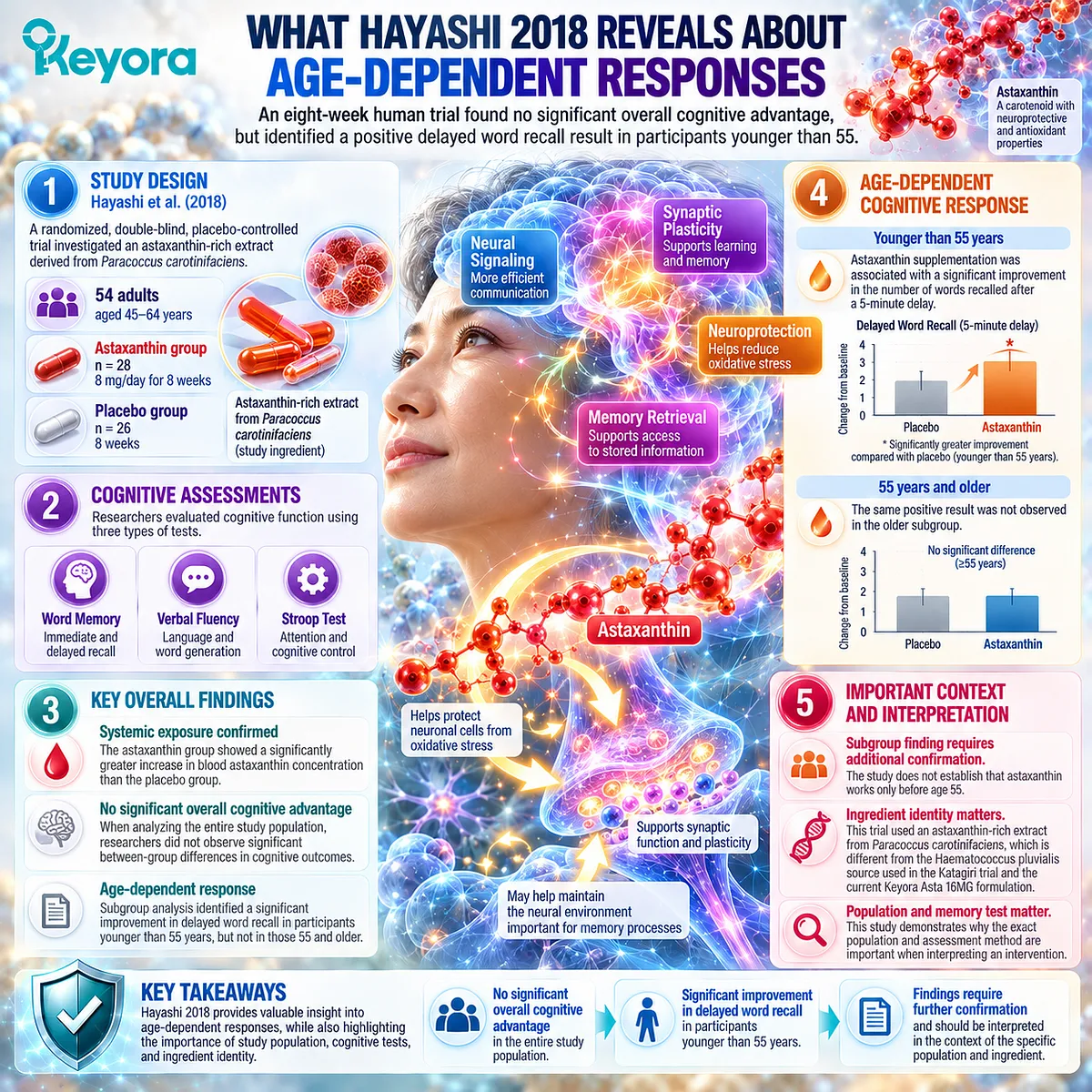
A second important study was conducted by Hayashi and colleagues and published in 2018.
This randomized, double-blind, placebo-controlled trial investigated an Astaxanthin-rich extract derived from Paracoccus carotinifaciens.
The study included 54 adults aged 45 – 64 years.
Of these participants:
28 received a supplement providing 8 mg Astaxanthin daily
26 received placebo
The intervention continued for eight weeks.
Researchers assessed cognitive function using word memory, verbal fluency, and Stroop tests.
The Astaxanthin group demonstrated a significantly greater increase in blood Astaxanthin concentration than the placebo group, confirming systemic exposure to the intervention.
However, when investigators compared cognitive results across the entire study population, they did not observe significant between-group differences.
The researchers then examined outcomes after dividing participants into two age categories:
Younger than 55 years
55 years and older
In the younger subgroup, Astaxanthin supplementation was associated with a significant improvement over placebo in the number of words recalled after a five-minute delay.
The same positive result was not observed in the older subgroup.
This finding is relevant because age-related forgetfulness is often discussed as though everyone over a particular age represents one uniform biological population.
In reality, age categories can contain substantial variation in baseline cognitive performance, metabolic characteristics, and individual response.
The study does not establish that Astaxanthin works only before age 55. Its subgroup finding requires additional confirmation.
It does, however, demonstrate why the exact population and memory test matter when interpreting an intervention.
Another consideration is ingredient identity.
The Hayashi study used an Astaxanthin-rich preparation derived from Paracoccus carotinifaciens, rather than the Haematococcus pluvialis source used in the Katagiri trial and current Keyora Asta 16MG formulation. Its carotenoid preparation should therefore be identified rather than treated as an identical intervention.
What Sekikawa 2020 Found in Adults With Memory Concerns
A combined Astaxanthin and Tocotrienol intervention improved selected objective memory scores and a subjective name-recall measure after 12 weeks
The Sekikawa study offers another particularly useful connection between clinical research and everyday memory concerns.
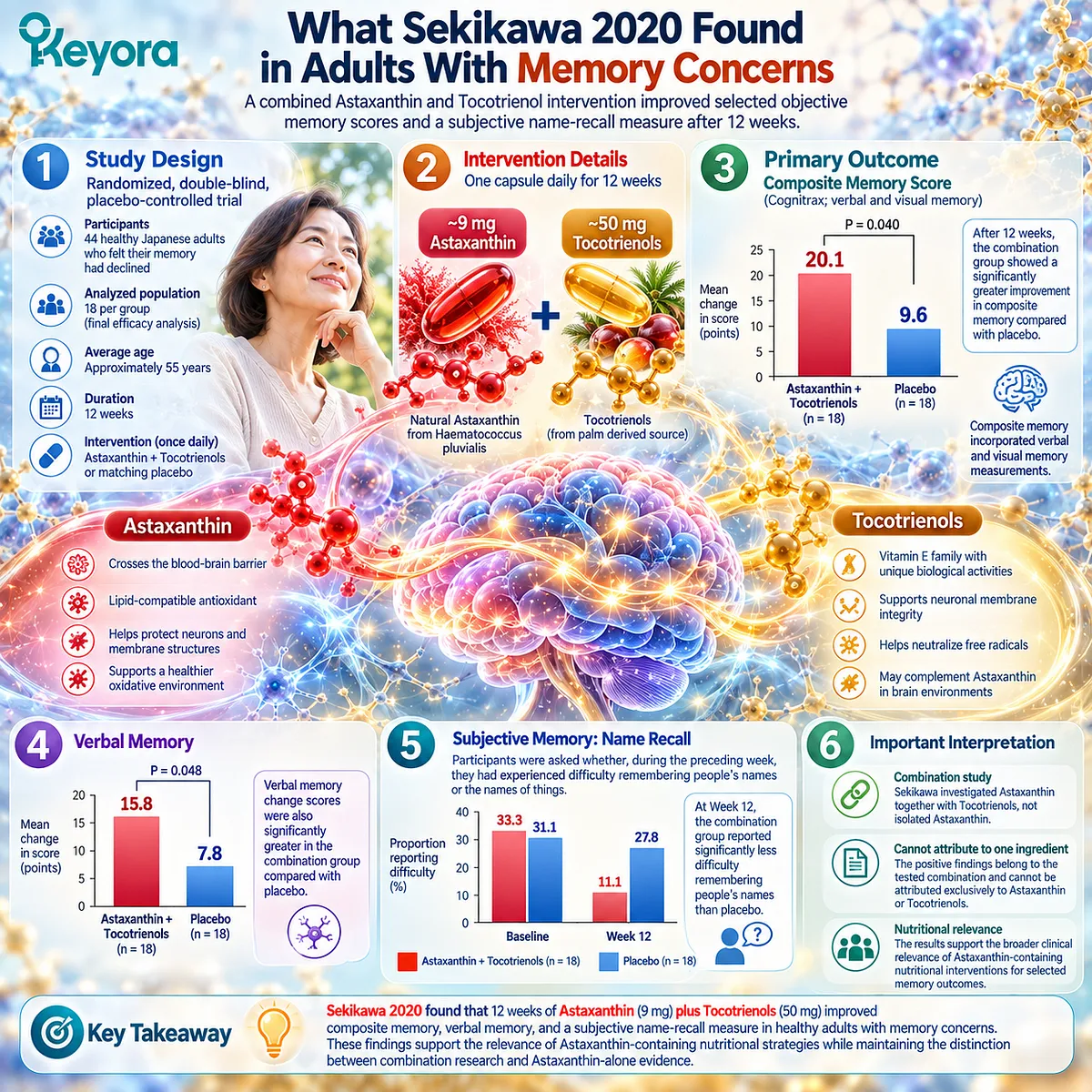
Published in 2020, the randomized, double-blind, placebo-controlled trial recruited 44 healthy Japanese adults who felt their memory had declined.
Participants received one capsule daily containing:
Approximately 9 mg Astaxanthin
Approximately 50 mg Tocotrienols
or a matching placebo capsule.
The intervention continued for 12 weeks.
Eighteen participants from each group were included in the final efficacy analysis. The average age was approximately 55 years.
Researchers used the Cognitrax assessment system, with composite memory designated as the primary outcome.
This domain incorporated verbal and visual memory measurements.
After 12 weeks, the combination group demonstrated a significantly greater improvement in composite memory compared with placebo.
Mean change scores were:
Astaxanthin + Tocotrienols – 20.1 points
Placebo – 9.6 points
The between-group difference reached statistical significance, with P = 0.040.
Verbal memory change scores were also significantly greater in the combination group, with P = 0.048.
Perhaps the most relatable finding came from the subjective memory questionnaire.
Participants were asked whether, during the preceding week, they had experienced difficulty remembering people’s names or the names of things.
At Week 12, the combination group reported significantly less difficulty on this specific measure than placebo.
This is an unusually direct connection to the everyday experience of subjective forgetfulness.
Nevertheless, the intervention must be interpreted correctly.
Sekikawa investigated Astaxanthin together with Tocotrienols, not isolated Astaxanthin.
The positive findings therefore belong to the tested combination and cannot be attributed exclusively to one ingredient.
The results support the broader clinical relevance of Astaxanthin-containing nutritional interventions for selected memory outcomes, while preserving the distinction between combination research and Astaxanthin-alone evidence.
Why Memory Results Differ Across Studies and Age Groups
Age, baseline memory status, intervention composition, cognitive testing, and study duration all influence how Astaxanthin research should be interpreted
Looking across these trials, the results are not uniformly positive or negative.
Instead, they reveal why nutritional cognition research requires careful matching between population, intervention, and outcome.
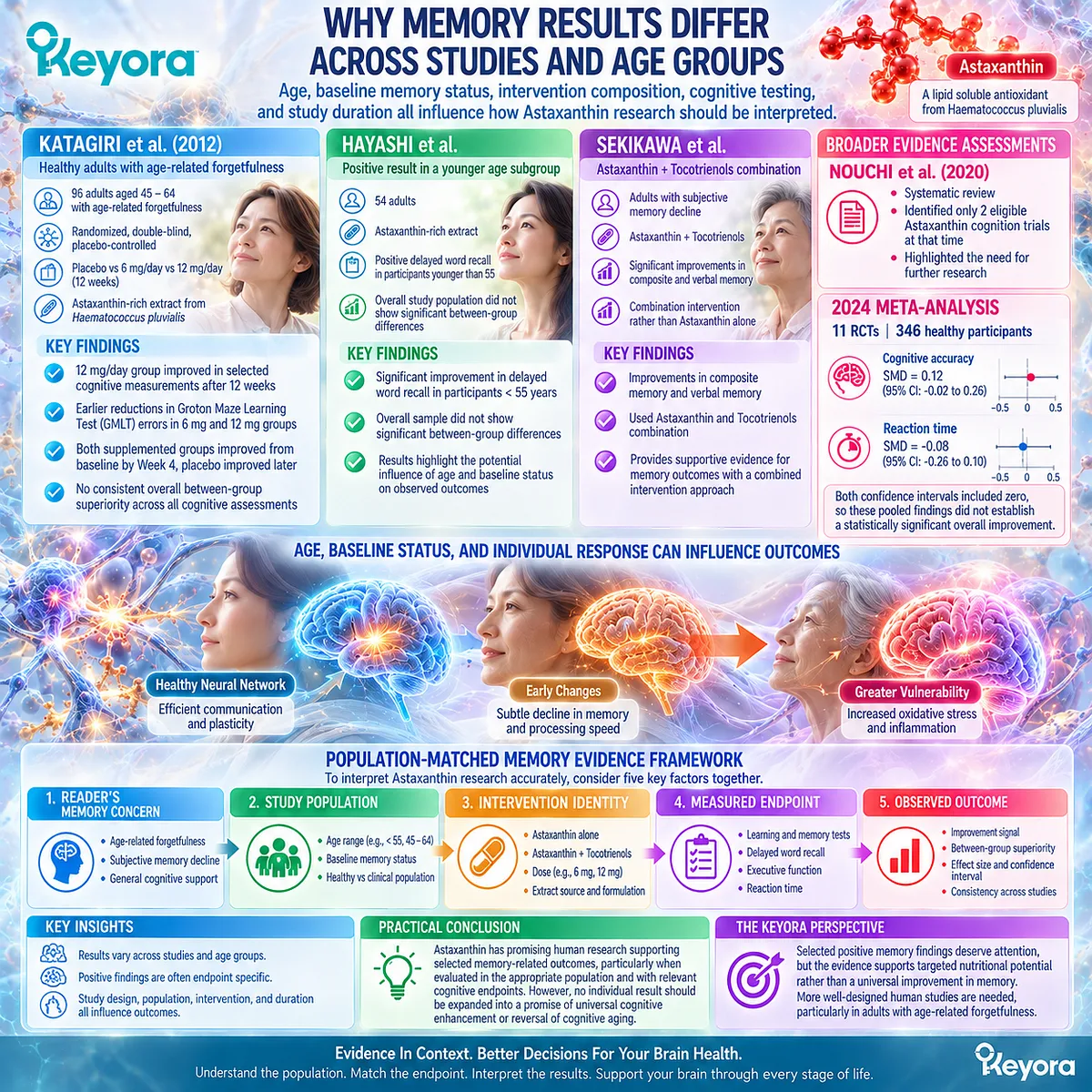
Katagiri investigated healthy adults reporting age-related forgetfulness and observed selected positive signals without establishing consistent overall between-group superiority.
Hayashi observed a positive delayed recall finding in a younger age subgroup, while the overall sample results remained statistically neutral.
Sekikawa demonstrated significant improvements in selected memory outcomes, but used an Astaxanthin and Tocotrienol combination.
These distinctions also appear in broader evidence assessments.
-
A 2020 systematic review by Nouchi and colleagues identified only two eligible Astaxanthin cognition trials at that time, highlighting the need for further research.
-
A subsequent 2024 meta-analysis included 11 randomized controlled trials involving 346 healthy participants across its assessed outcomes.
For cognitive accuracy, the pooled standardized mean difference was 0.12, with a 95% confidence interval from -0.02 to 0.26.
For reaction time, the corresponding result was -0.08, with a 95% confidence interval from -0.26 to 0.10.
Because both intervals included zero, these pooled findings did not establish a statistically significant overall improvement.
The meta-analysis also covered outcomes beyond cognition and should not be interpreted as a dedicated trial involving people with age-related forgetfulness.
For Keyora, this reinforces the Population-Matched Memory Evidence Framework:
Reader’s Memory Concern – Study Population – Intervention Identity – Measured Endpoint – Observed Outcome
The practical conclusion is that selected positive memory findings deserve attention, but no individual result should be expanded into a promise of universal cognitive enhancement.
Where Keyora Asta 16MG Fits
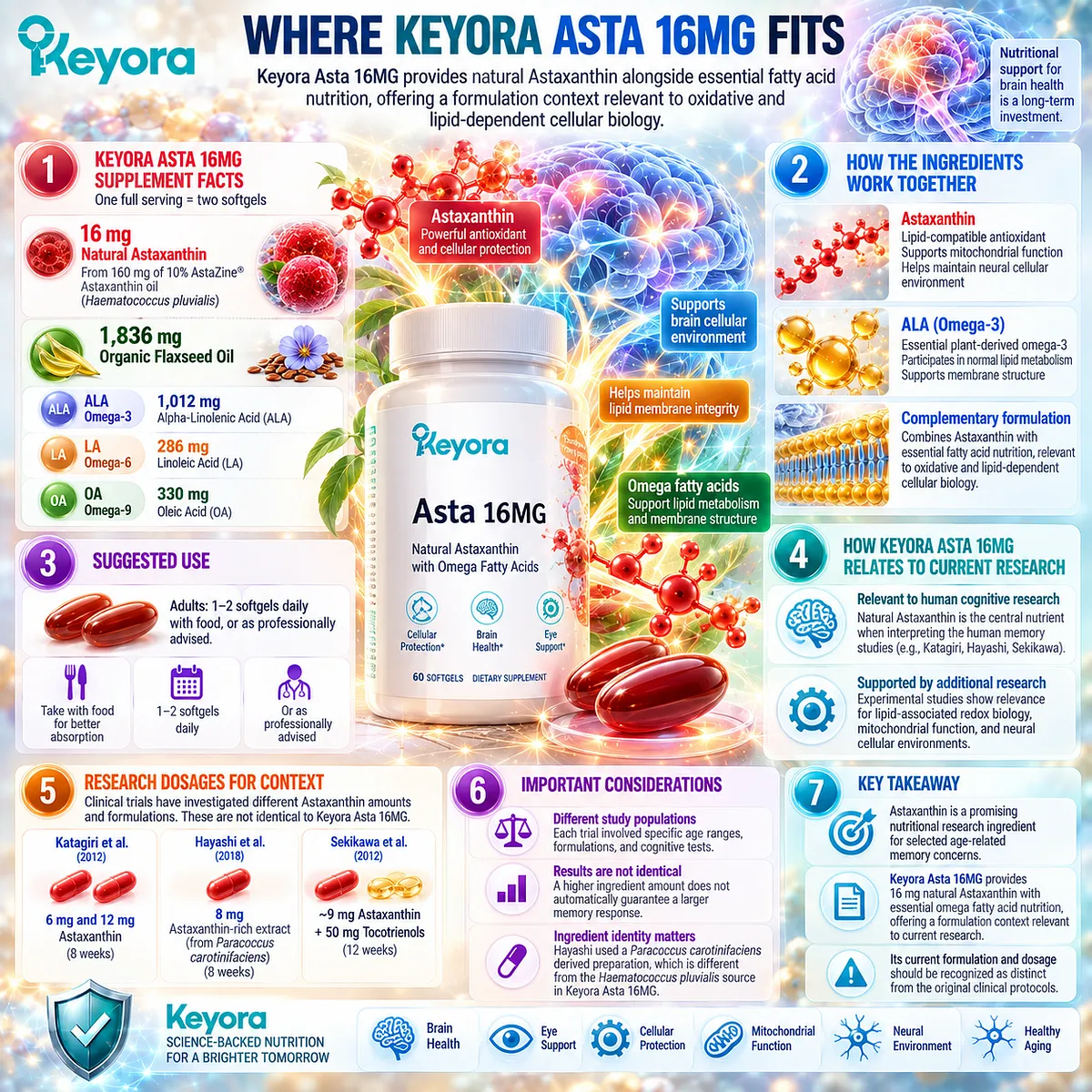
Keyora Asta 16MG provides natural Astaxanthin alongside essential fatty acid nutrition, offering a formulation context relevant to oxidative and lipid-dependent cellular biology
The current Keyora Asta 16MG Supplement Facts define one full serving as two softgels.
A full serving provides:
16 mg Natural Astaxanthin, supplied by 160 mg of 10% AstaZine® Astaxanthin oil from Haematococcus pluvialis.
The formula also contains 1,836 mg organic flaxseed oil, including:
-
1,012 mg Alpha-Linolenic Acid (ALA), Omega-3
-
286 mg Linoleic Acid (LA), Omega-6
-
330 mg Oleic Acid (OA), Omega-9
The suggested adult use is one to two softgels daily with food, or as professionally advised.
Natural Astaxanthin remains the central nutrient when interpreting the human memory research discussed in this article.
Its relevance is supported by selected human cognitive findings and separate experimental research involving lipid-associated redox biology, mitochondrial function, and neural cellular environments.
ALA contributes a different nutritional layer as an essential plant-derived omega-3 fatty acid. It participates in normal lipid metabolism but should not be presented as the proven cause of the memory improvements reported in the trials above.
The dosage relationship is equally important.
Katagiri investigated 6 mg and 12 mg Astaxanthin, Hayashi used an 8 mg Astaxanthin-rich preparation, and Sekikawa tested approximately 9 mg Astaxanthin together with 50 mg Tocotrienols.
These interventions provide relevant research context, but they are not identical to a full 16 mg serving of Keyora Asta 16MG.
A higher ingredient amount also does not automatically guarantee a larger memory response.
The evidence-aligned Keyora position is therefore to recognize Astaxanthin as a promising nutritional research ingredient for selected age-related memory concerns, while treating its current formulation and dosage as distinct from the original clinical protocols.
What Realistic Age-Related Memory Support Looks Like
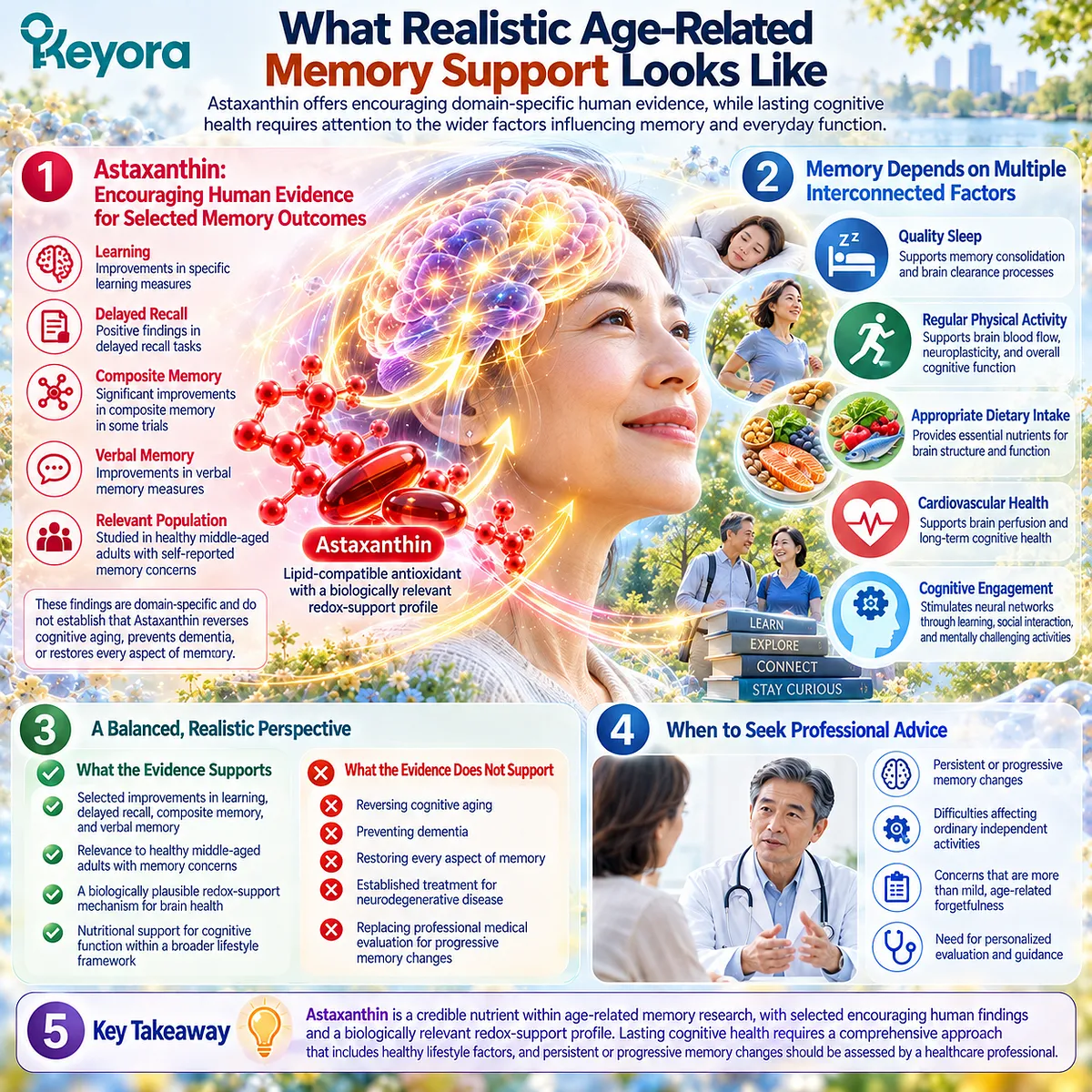
Astaxanthin offers encouraging domain-specific human evidence, while lasting cognitive health requires attention to the wider factors influencing memory and everyday function
The most useful conclusion from current research is that Astaxanthin has been studied in populations genuinely relevant to age-related forgetfulness.
Selected learning, delayed recall, composite memory, and verbal memory outcomes have shown favorable findings across different intervention protocols.
However, these results do not establish that Astaxanthin reverses cognitive aging, prevents dementia, or restores every aspect of memory.
The Keyora Population-Matched Memory Evidence Framework emphasizes choosing conclusions that reflect the actual participant population and measured outcome.
For everyday cognitive health, nutritional support also belongs within a wider foundation that includes adequate sleep, regular physical activity, appropriate dietary intake, cardiovascular health, and meaningful cognitive engagement.
Persistent, progressive memory changes or difficulties affecting ordinary independent activities deserve professional assessment rather than being automatically attributed to normal aging.
Astaxanthin is a credible nutrient within age-related memory research, with selected encouraging human findings and a biologically relevant redox-support profile.
Its value is best understood through the specific memory concerns, populations, and outcomes that clinical research has actually investigated.
This article is for educational and informational purposes only. It does not provide medical advice, diagnosis, treatment, cure, prevention, disease outcome claims, hormone restoration claims, fertility outcome claims, or formula-specific clinical efficacy claims.