
Can Astaxanthin Support Recovery From Mental Fatigue?
Keyora Research Q&A Library
This is part of the Keyora Research Q&A Series, derived from Keyora Astaxanthin Research Journal Series.
Within the Keyora Astaxanthin Researcn framework, this Q&A translates complex astaxanthin biology into reader-friendly, evidence-bound answers, focusing on natural astaxanthin identity, molecular structure, antioxidant and redox mechanisms, membrane lipid interaction, mitochondrial resilience, inflammatory signaling pathways, human evidence interpretation, and the scientific principles behind responsible supplementation.
First published by Keyora Research Journal: www.keyorahealth.com
Direct Answer
Yes
Astaxanthin has human research relevant to recovery from mental fatigue, particularly after prolonged cognitive loading.
The most direct evidence comes from randomized controlled studies in which participants completed demanding mental tasks and then entered a recovery period.
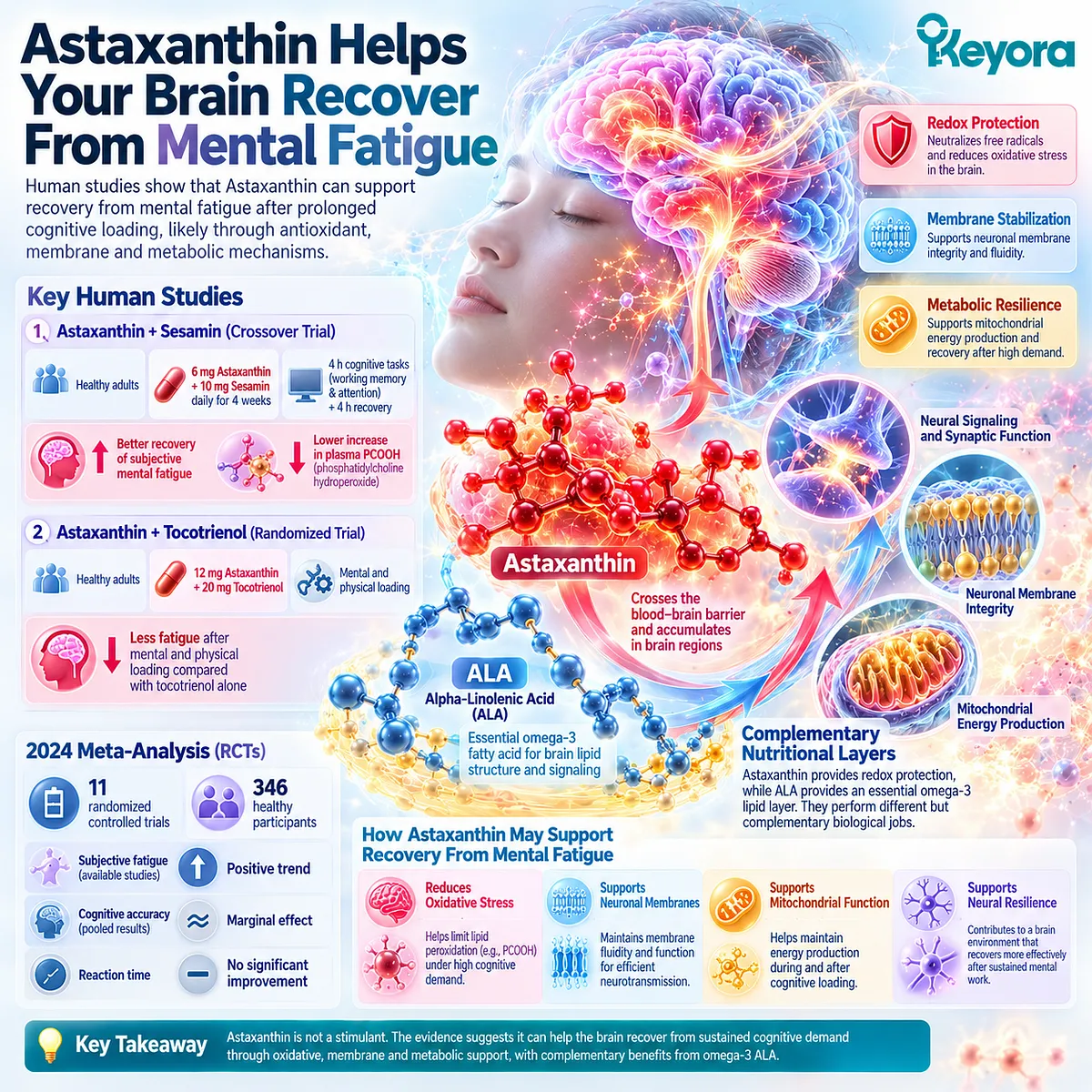
In one crossover trial, healthy adults consumed a combination providing 6 mg Astaxanthin plus 10 mg sesamin per day for four weeks.
They then completed four hours of computer-based working-memory and attention tasks followed by four hours of recovery.
Recovery of subjective mental fatigue was significantly better after the active intervention than after placebo, and the rise in plasma phosphatidylcholine hydroperoxide, or PCOOH, was also attenuated.
Because this intervention combined Astaxanthin with sesamin, the result supports an Astaxanthin-containing antioxidant strategy rather than proving an Astaxanthin-only effect.
A second randomized trial placed Astaxanthin on top of a shared tocotrienol background. Participants receiving 12 mg Astaxanthin plus 20 mg tocotrienol reported less fatigue after mental and physical loading than participants receiving tocotrienol alone.
The broader evidence is promising but selective rather than universal. A 2024 meta-analysis covering 11 randomized controlled trials and 346 healthy participants found a positive trend in the available subjective-fatigue studies, while pooled cognitive accuracy showed only a marginal effect and reaction time did not improve significantly.
This distinction is central to Keyora Astaxanthin EP-5: The Neural Fortress: A Mechanistic Analysis of Astaxanthin in Lipidomics Re-engineering and Neural Oxidative Debt: the useful question is not whether Astaxanthin acts like a stimulant, but whether nutritional support for oxidative, membrane, and metabolic resilience can help the brain recover from sustained cognitive demand.
For Keyora, that model has two different nutritional layers: Astaxanthin provides the redox-protection layer, while alpha-linolenic acid (ALA) provides an essential omega-3 lipid layer. They perform complementary biological jobs.
Mental Fatigue Is Not the Same as Sleepiness
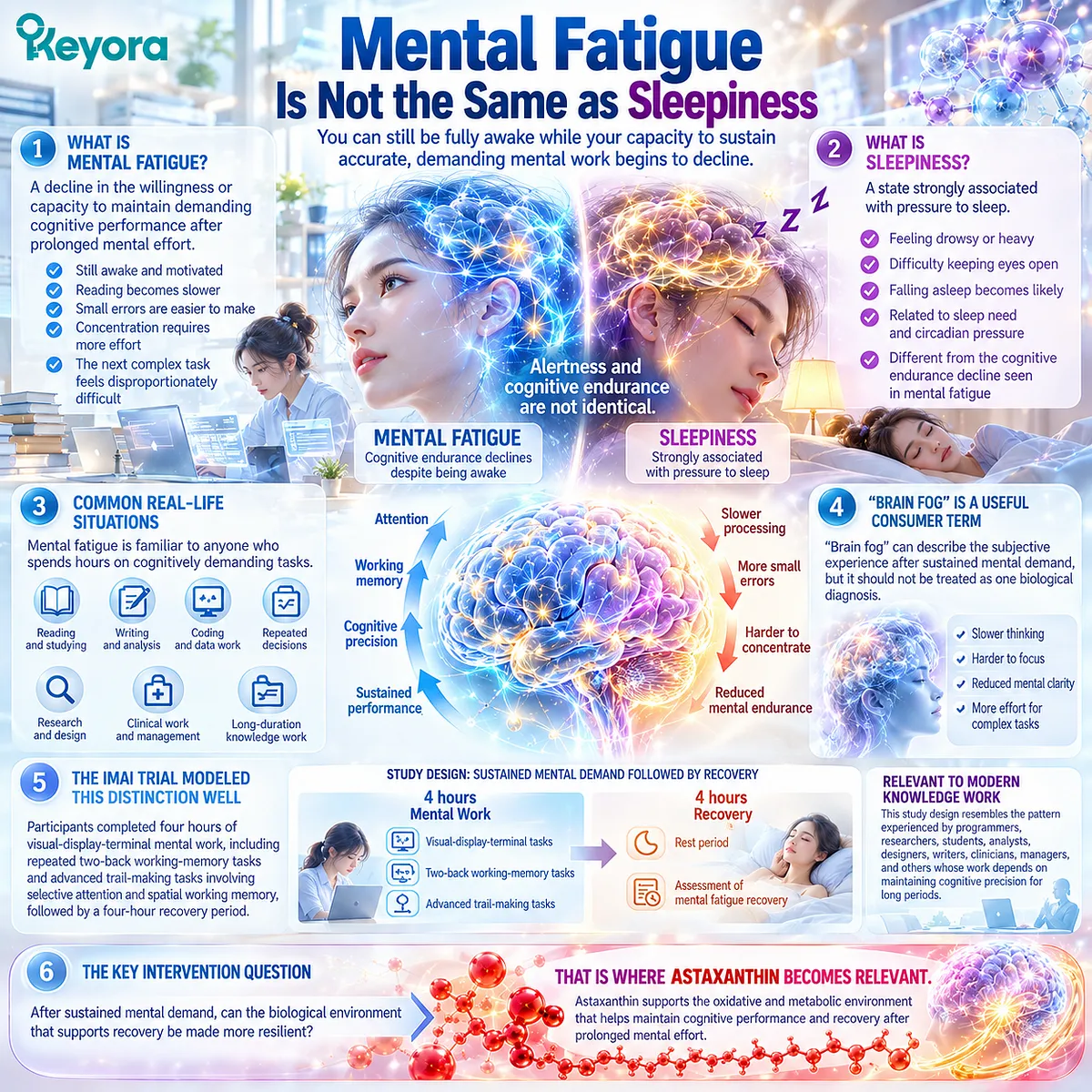
You can still be fully awake while your capacity to sustain accurate, demanding mental work begins to decline.
Mental fatigue is familiar to anyone who has spent hours reading technical material, writing, analyzing data, coding, studying, making repeated decisions, or moving between cognitively demanding tasks.
You may not feel sleepy.
Your eyes are open. You may still be motivated.
Yet reading becomes slower, small errors become easier to make, concentrating requires more deliberate effort, and the next complex task feels disproportionately difficult.
That distinction matters because alertness and cognitive endurance are not identical.
Sleepiness is strongly associated with pressure to sleep. Mental fatigue describes a broader decline in the willingness or capacity to maintain demanding cognitive performance after prolonged effort. A person can therefore feel mentally depleted while remaining physiologically awake.
The Imai trial modeled this distinction unusually well.
Participants were not simply asked whether they felt tired during ordinary life.
They completed four hours of visual-display-terminal mental work, including repeated two-back working-memory tasks and advanced trail-making tasks involving selective attention and spatial working memory, followed by a four-hour recovery period.
That design makes the study particularly relevant to modern knowledge work.
It resembles the pattern experienced by programmers, researchers, students, analysts, designers, writers, clinicians, managers, and other people whose workload depends on maintaining cognitive precision for long periods.
In this setting, “brain fog” can be useful consumer language for the subjective experience – but it should not be treated as one biological diagnosis. The important intervention question is narrower:
After sustained mental demand, can the biological environment that supports recovery be made more resilient?
That is where Astaxanthin becomes relevant.
What Sustained Mental Work Demands From the Brain
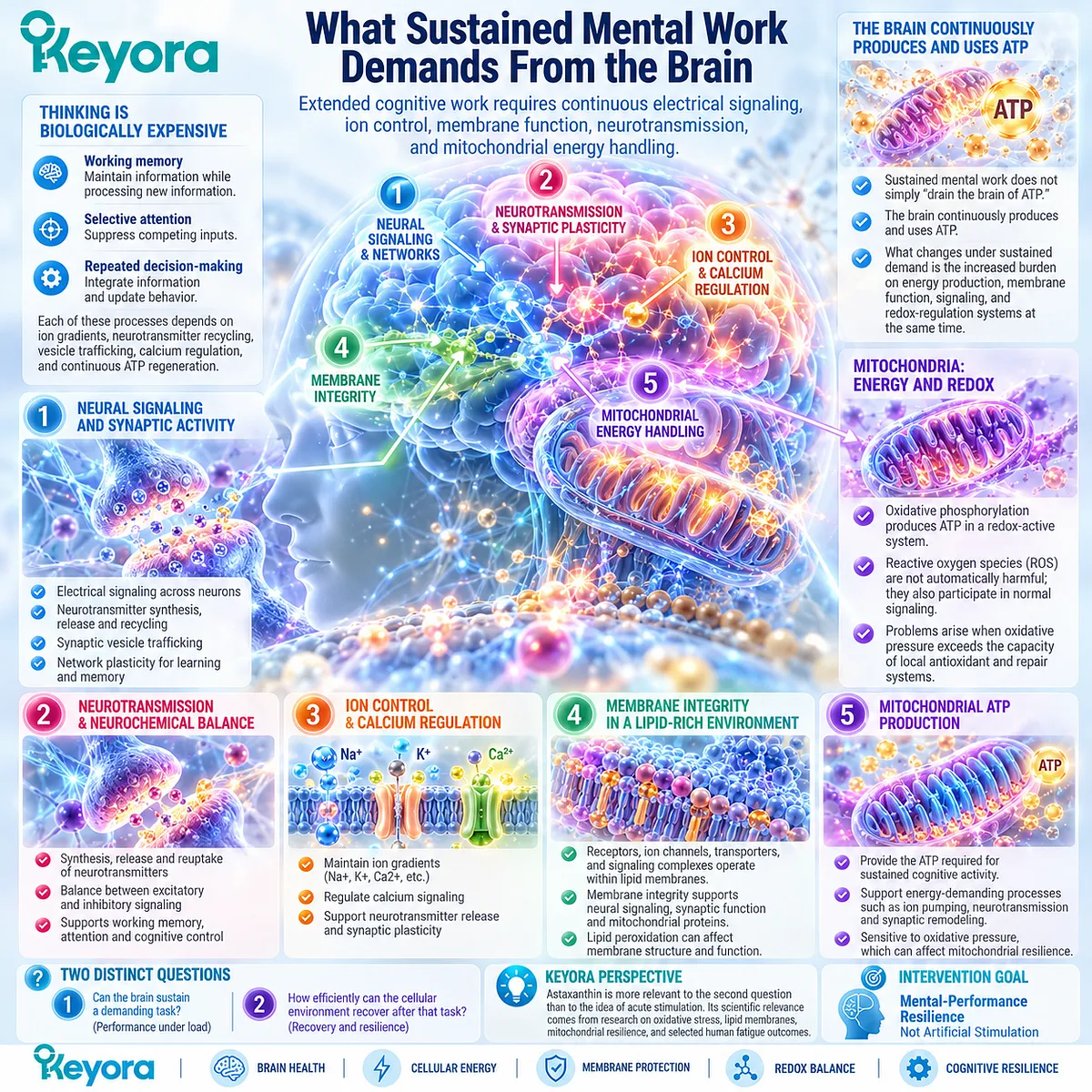
Extended cognitive work requires continuous electrical signaling, ion control, membrane function, neurotransmission, and mitochondrial energy handling.
Thinking is biologically expensive.
Working memory requires neural networks to maintain information while other information is being processed.
Selective attention requires competing inputs to be suppressed.
Repeated decision-making requires ongoing signal integration.
Every one of these processes depends on cellular systems that must maintain ion gradients, recycle neurotransmitters, traffic membrane vesicles, regulate calcium, and continually regenerate ATP.
The important point is not that several hours of difficult work simply “drain the brain of ATP.”
That explanation is too crude.
The brain continuously produces and uses ATP. What changes under sustained demand is the burden placed on energy-producing, membrane, signaling, and redox-regulation systems at the same time.
Mitochondria are central to that environment because oxidative phosphorylation produces ATP inside a redox-active system. Reactive oxygen species are not automatically pathological; they also participate in normal signaling. The problem emerges when oxidative pressure exceeds the capacity of local antioxidant and repair systems to maintain cellular integrity.
At the same time, neural function depends heavily on membranes.
Receptors, ion channels, transporters, synaptic vesicles, mitochondrial proteins, and signaling complexes all operate within lipid-rich environments. This makes membrane integrity part of the infrastructure of cognition rather than a secondary detail.
Keyora therefore separates two questions that are often mistakenly combined:
Can the brain sustain a demanding task?
and
How efficiently can the cellular environment recover after that task?
Astaxanthin is more relevant to the second question than to the idea of acute stimulation. It does not need to behave like caffeine to matter. Its scientific relevance comes from research on oxidative stress, lipid membranes, mitochondrial resilience, and selected human fatigue outcomes.
That is why the appropriate Keyora intervention object is mental-performance resilience, not artificial stimulation.
What Human Astaxanthin Studies Actually Measured
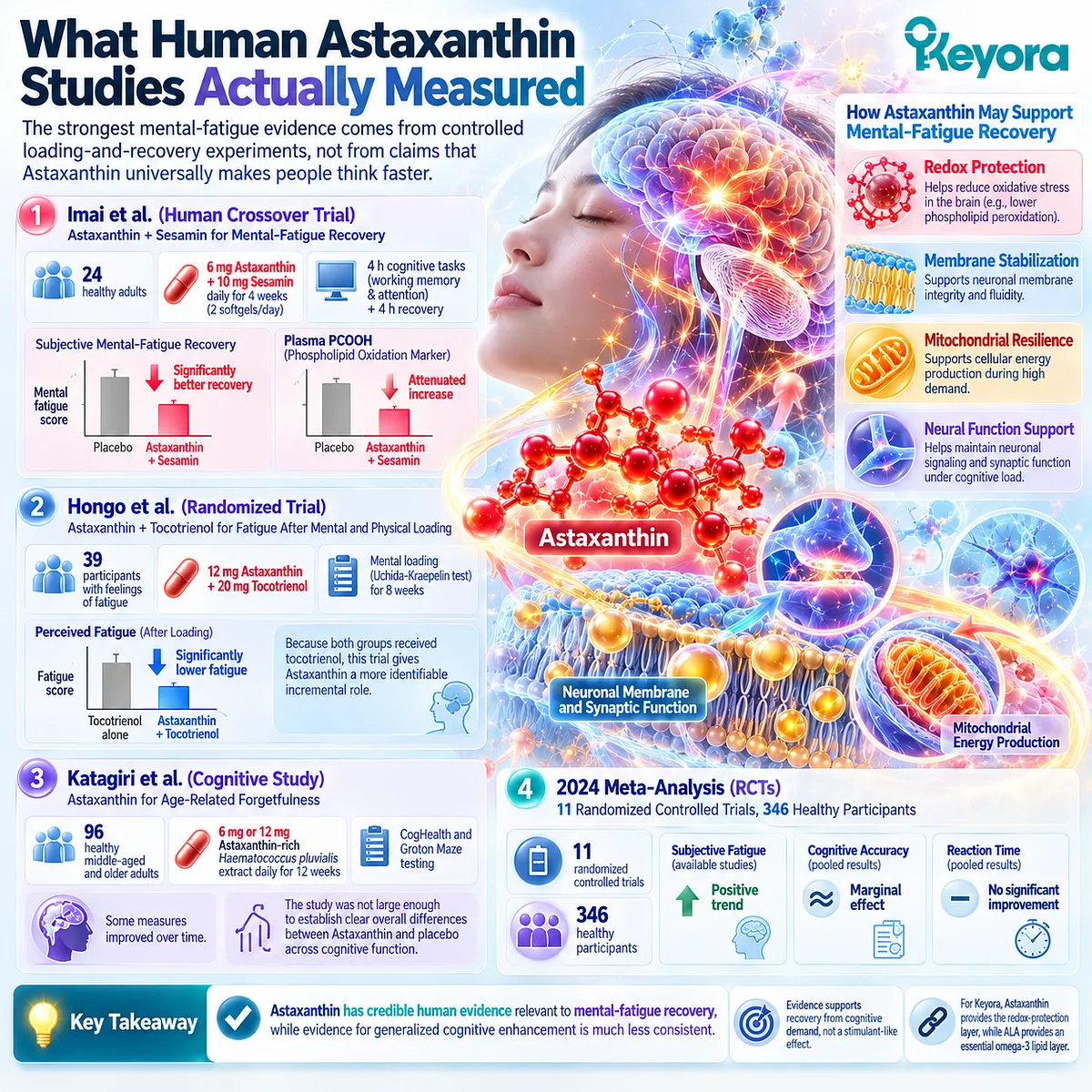
The strongest mental-fatigue evidence comes from controlled loading-and-recovery experiments, not from claims that Astaxanthin universally makes people think faster.
The Imai study provides the clearest mental-fatigue recovery model.
Twenty-four healthy adults entered a randomized, double-blind, placebo-controlled crossover study. During the active phase they took two softgels daily, together providing 6 mg Astaxanthin from Haematococcus pluvialis and 10 mg sesamin, for four weeks. After supplementation, participants completed four hours of computer-based cognitive loading followed by four hours of recovery.
The active intervention produced significantly better recovery in subjective mental-fatigue scores than placebo. The study also measured plasma PCOOH, a phospholipid oxidation marker, and found that the task-related increase was attenuated during the Astaxanthin-sesamin condition.
This is particularly useful evidence because the symptom endpoint and the oxidative endpoint were observed inside the same experimental fatigue model.
But the formula contained two active nutrients.
The study therefore supports an Astaxanthin-containing recovery intervention; it does not isolate Astaxanthin from sesamin.
Hongo and colleagues approached the question differently.
Thirty-nine participants with feelings of fatigue were randomized to 12 mg Astaxanthin plus 20 mg tocotrienol or to 20 mg tocotrienol alone.
Mental loading included the Uchida-Kraepelin test. At Week 8, perceived fatigue after mental and physical loading was significantly lower in the Astaxanthin group.
Because both groups received tocotrienol, this trial gives Astaxanthin a more identifiable incremental role than the Imai combination design, although it still does not represent Astaxanthin in isolation.
Cognitive studies provide an additional layer rather than direct mental-fatigue proof.
Katagiri and colleagues studied 96 healthy middle-aged and older adults reporting age-related forgetfulness for 12 weeks.
Astaxanthin-rich Haematococcus pluvialis extract was evaluated at 6 and 12 mg/day using CogHealth and Groton Maze testing.
Some measures improved over time, but the study was not large enough to establish clear overall differences between Astaxanthin and placebo across cognitive function.
The 2024 meta-analysis helps put these individual studies into perspective.
Across 11 RCTs involving 346 healthy participants, the available subjective-fatigue studies showed a positive trend, but pooled cognition was much less uniform: cognitive accuracy was only marginally significant and reaction time was not significantly improved.
The most defensible conclusion is therefore specific:
Astaxanthin has credible human evidence relevant to mental-fatigue recovery, while evidence for generalized cognitive enhancement is much less consistent.
Why Oxidative Stress Matters During Mental Load
Mental-fatigue research becomes more biologically informative when subjective recovery is considered alongside lipid-oxidation markers.
Oxidative stress is sometimes discussed so broadly that it becomes almost meaningless.
In this context, the more useful question is whether sustained biological work can measurably alter oxidation-sensitive lipid environments.
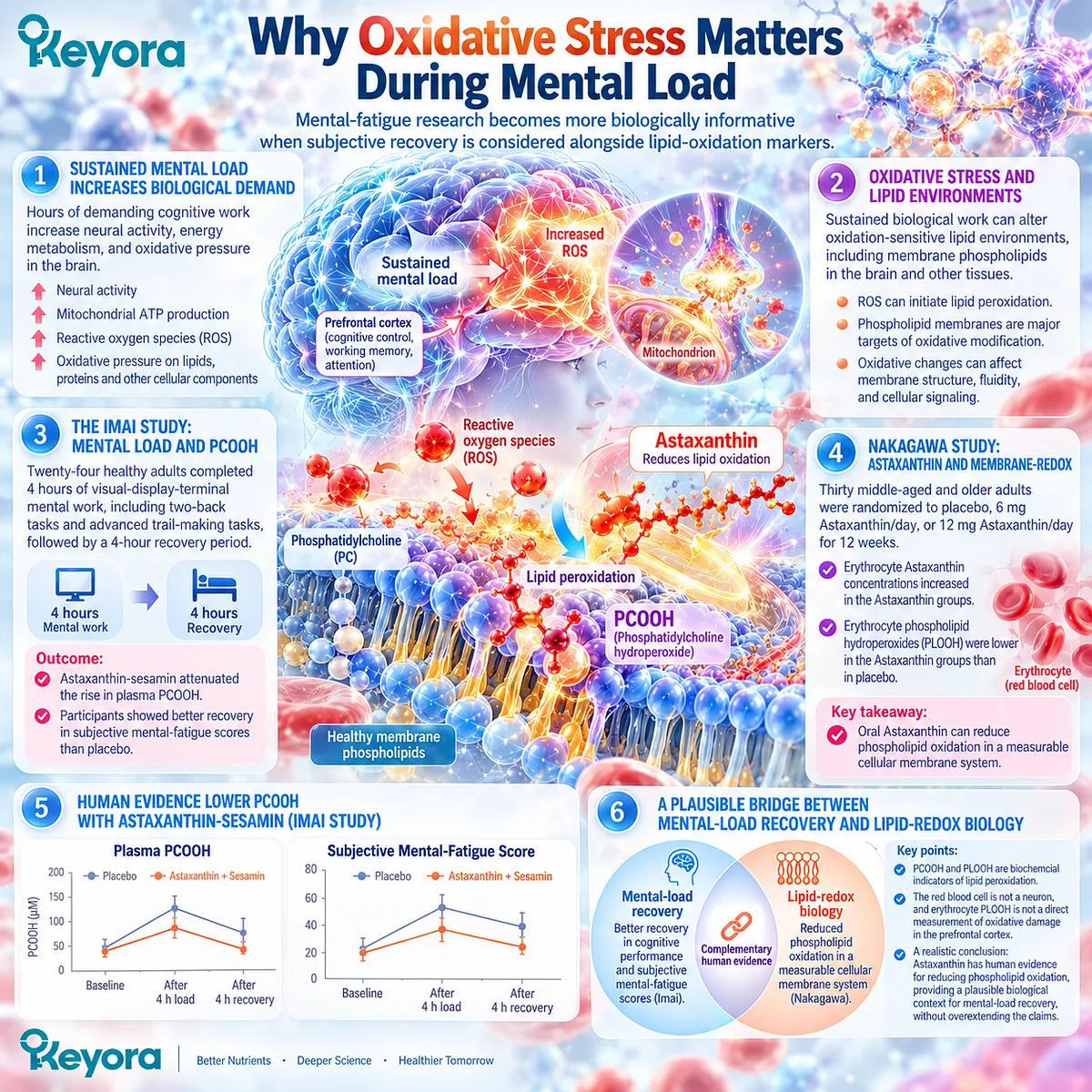
The Imai study measured phosphatidylcholine hydroperoxide, or PCOOH, during the same experimental period in which participants underwent mental and physical loading.
PCOOH belongs to a family of oxidized phospholipid products that can be used as biochemical indicators of lipid peroxidation. The active Astaxanthin-sesamin intervention attenuated the rise in PCOOH associated with the loading protocol.
Separate human research strengthens the membrane-redox side of the argument.
Nakagawa and colleagues randomized 30 middle-aged and older adults to placebo, 6 mg Astaxanthin/day, or 12 mg Astaxanthin/day for 12 weeks.
Astaxanthin concentrations increased in erythrocytes, while erythrocyte phospholipid hydroperoxides were lower in the Astaxanthin groups than in placebo.
This matters because it provides direct human evidence that oral Astaxanthin can alter the oxidative status of a phospholipid-rich cell membrane environment.
It does not require an exaggerated interpretation.
The red blood cell is not a neuron, and erythrocyte PLOOH is not a direct measurement of oxidative damage inside the human prefrontal cortex. The scientifically useful conclusion is simpler:
Astaxanthin has human evidence for reducing phospholipid oxidation in a measurable cellular membrane system.
When that evidence is placed beside the fatigue studies, it creates a plausible human bridge between mental-load recovery and lipid-redox biology without pretending that one biomarker explains every experience of mental fatigue.
Why Membrane and Mitochondrial Resilience Matter
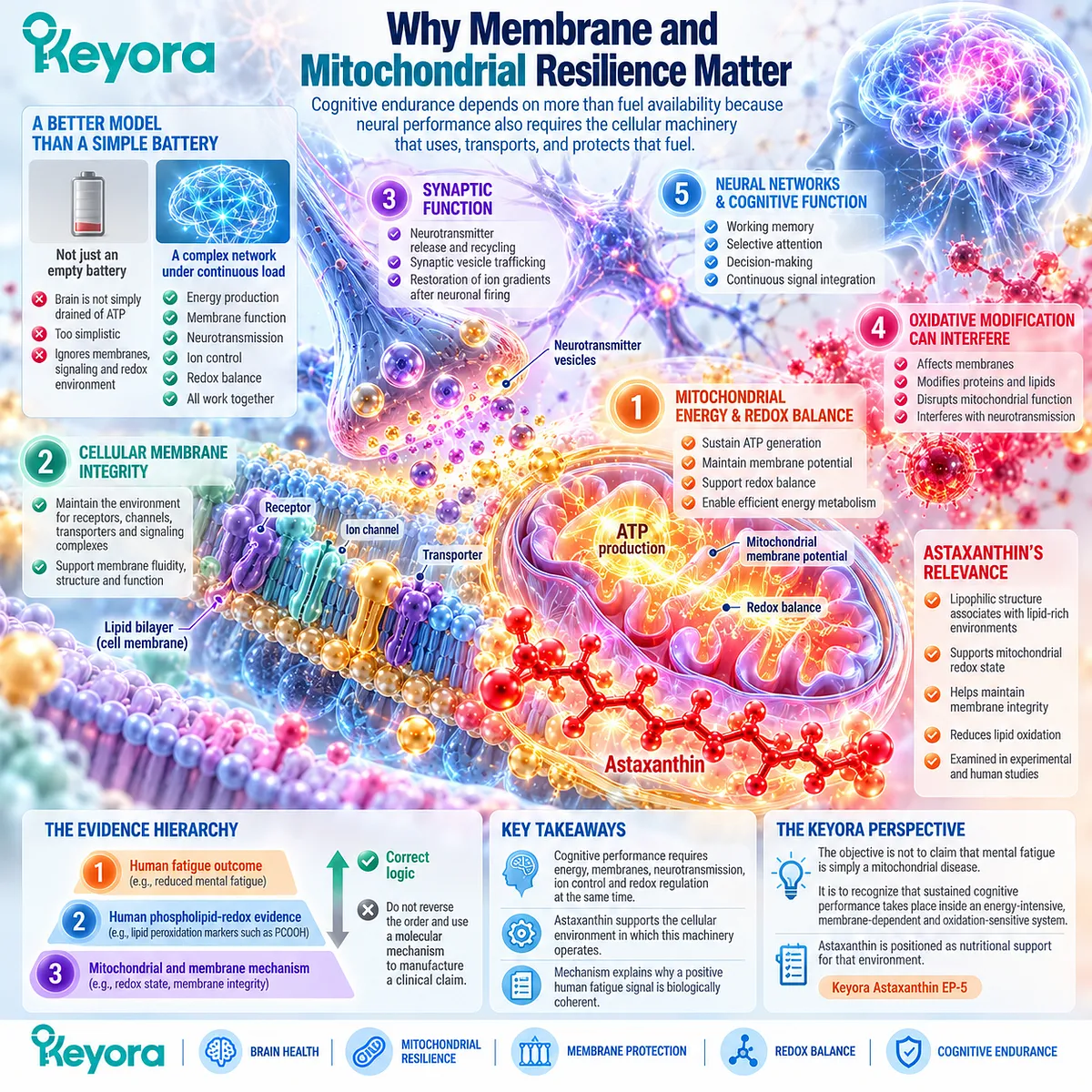
Cognitive endurance depends on more than fuel availability because neural performance also requires the cellular machinery that uses, transports, and protects that fuel.
A useful way to understand mental fatigue is to stop imagining the brain as a battery that simply becomes empty.
A better model is a network whose performance depends on the condition of the machinery operating under continuous load.
Mitochondria must sustain ATP generation while preserving membrane potential and redox balance.
Cellular membranes must maintain the physical environment required by channels, receptors, transporters, and signaling complexes.
Synaptic terminals must repeatedly release and recycle neurotransmitter-containing vesicles. Ion gradients must be restored after neuronal firing.
Oxidative modification can interfere with these processes at several levels.
That is why Astaxanthin’s relevance is not confined to “scavenging free radicals.” Its lipophilic structure allows it to associate with lipid-rich biological environments, and experimental research has repeatedly examined its effects on mitochondrial redox state, membrane integrity, and lipid oxidation.
This does not mean every mechanistic effect translates into a noticeable improvement in human cognition.
Instead, mechanism explains why a positive human fatigue signal is biologically coherent.
The evidence hierarchy should therefore remain:
Human fatigue outcome
→ human phospholipid-redox evidence
→ mitochondrial and membrane mechanism
rather than reversing the order and using a molecular mechanism to manufacture a clinical claim.
This evidence hierarchy is central to Keyora Astaxanthin EP-5.
The objective is not to claim that mental fatigue is simply a mitochondrial disease. It is to recognize that sustained cognitive performance takes place inside an energy-intensive, membrane-dependent and oxidation-sensitive system.
Astaxanthin is positioned as nutritional support for that environment.
Where ALA Adds a Different Nutritional Layer
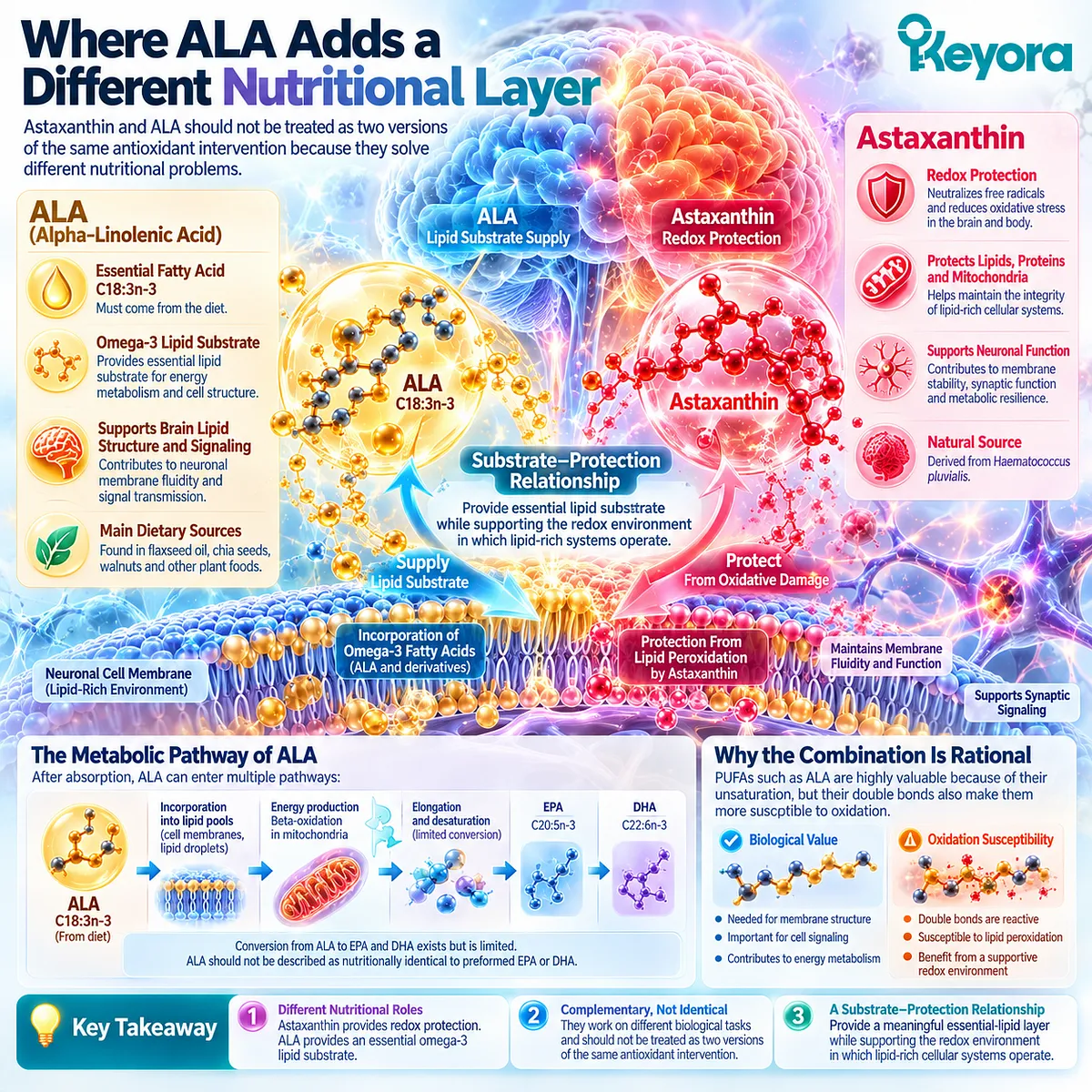
Astaxanthin and ALA should not be treated as two versions of the same antioxidant intervention because they solve different nutritional problems.
Alpha-linolenic acid is an omega-3 polyunsaturated fatty acid, designated C18:3n-3. Unlike Astaxanthin, ALA is an essential fatty acid: humans cannot synthesize the required omega-3 double-bond configuration and therefore must obtain ALA from the diet.
That immediately gives ALA a different role.
Astaxanthin contributes primarily to the redox-protection side of the architecture.
ALA contributes an essential lipid-substrate side.
After absorption, ALA can enter lipid metabolic pools, be used as an energy-yielding fatty acid, or enter the elongation and desaturation pathway that produces EPA and eventually DHA.
That conversion exists, but it is limited; ALA should therefore not be described as nutritionally identical to preformed EPA or DHA.
For the present mental-fatigue question, the important point is not to claim that ALA itself has been clinically shown to reduce mental fatigue in the Keyora formula.
The important point is division of labor:
Astaxanthin → Protect
ALA → Supply
This distinction becomes even more relevant because ALA is a polyunsaturated fatty acid.
Polyunsaturated lipids are biologically valuable precisely because of their unsaturation, but those double bonds also make the lipid environment susceptible to oxidation.
That creates a rational nutritional pairing:
provide a meaningful essential-lipid layer while simultaneously supporting the redox environment in which lipid-rich cellular systems operate.
Keyora refers to this as a Substrate–Protection relationship.
It is more biologically informative than describing flaxseed oil as a passive carrier.
And it gives ALA independent nutritional meaning without turning ingredient complementarity into an invented clinical synergy claim.
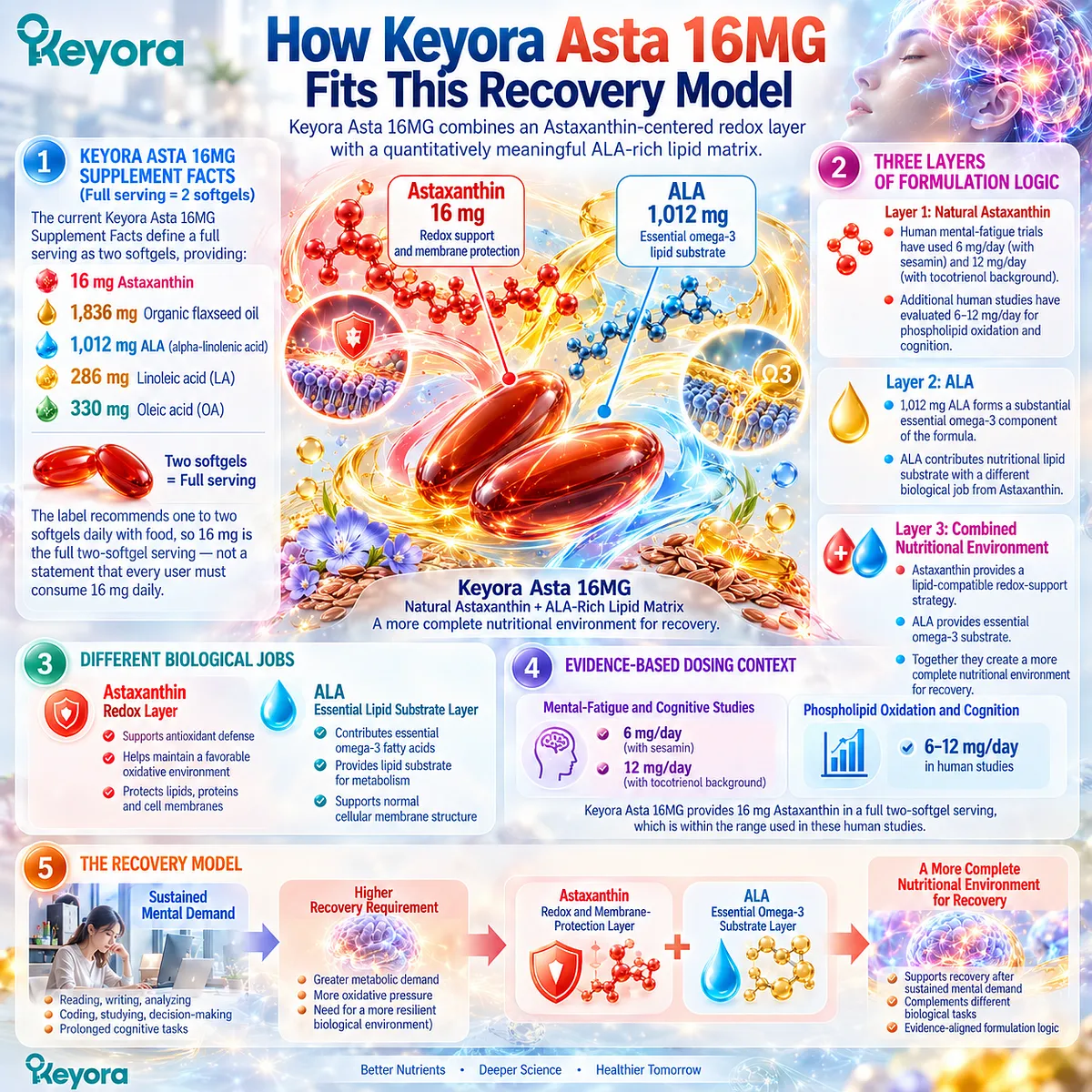
How Keyora Asta 16MG Fits This Recovery Model
Keyora Asta 16MG combines an Astaxanthin-centered redox layer with a quantitatively meaningful ALA-rich lipid matrix.
The current Keyora Asta 16MG Supplement Facts define a full serving as two softgels. That serving provides 16 mg Astaxanthin, 1,836 mg organic flaxseed oil, 1,012 mg ALA, 286 mg linoleic acid, and 330 mg oleic acid.
The label recommends one to two softgels daily with food, so 16 mg is the full two-softgel serving – not a statement that every user must consume 16 mg daily. Keyora_Astaxanthin_EP-5_QA_Mast…
This formulation should be interpreted in layers.
The first layer is Natural Astaxanthin.
Human mental-fatigue trials have used Astaxanthin exposures including 6 mg/day in an Astaxanthin-sesamin combination and 12 mg/day when Astaxanthin was added to a tocotrienol background. Separate human studies have also evaluated 6–12 mg/day for phospholipid oxidation and cognition.
The second layer is ALA.
At 1,012 mg in the full serving, ALA is not merely present as an incidental trace fatty acid. It forms a substantial essential omega-3 component of the formula. Its biological job is different from Astaxanthin’s: ALA contributes nutritional lipid substrate, while Astaxanthin contributes a lipid-compatible redox-support strategy.
The third layer is the combined nutritional environment.
Within the Keyora Mental Performance Resilience framework, the formula can therefore be expressed as:
-
Sustained Mental Demand
→ Higher Recovery Requirement
→ Astaxanthin: Redox and Membrane-Protection Layer
-
ALA: Essential Omega-3 Substrate Layer
→ A More Complete Nutritional Environment for Recovery
The phrase “more complete” refers to coverage of different biological tasks.
It does not require pretending that the exact Keyora finished formula has already been tested in the same mental-fatigue RCTs.
That distinction strengthens rather than weakens the formula logic: each nutrient is assigned the job its evidence can actually support.
What Realistic Mental-Fatigue Support Looks Like
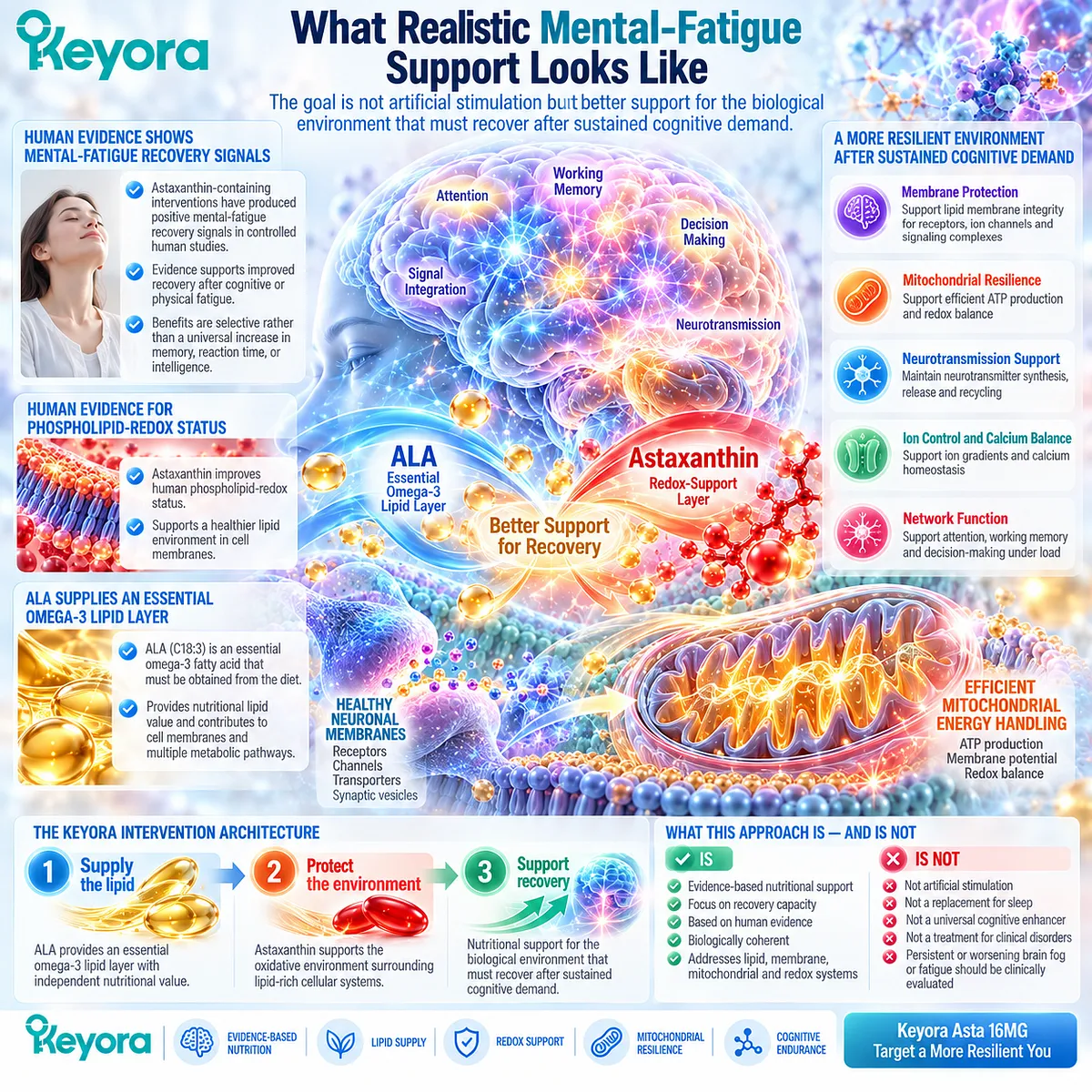
The goal is not artificial stimulation but better support for the biological environment that must recover after sustained cognitive demand.
The current human evidence makes a practical conclusion possible.
Astaxanthin-containing interventions have produced positive mental-fatigue recovery signals in controlled human studies.
Astaxanthin also has independent human evidence showing improved phospholipid-redox status, while broader cognitive trials suggest selected benefits rather than a universal increase in memory, reaction time, or intelligence.
Keyora Asta 16MG extends that logic through a second nutritional task: ALA supplies an essential omega-3 lipid layer while Astaxanthin supports the oxidative environment surrounding lipid-rich cellular systems.
That creates a clear intervention architecture:
-
Supply the lipid.
-
Protect the environment.
-
Support recovery rather than override fatigue with stimulation.
Persistent, unexplained, or worsening brain fog and fatigue can have many causes and deserve appropriate clinical evaluation.
For ordinary sustained mental workload, however, the evidence supports treating recovery capacity as a legitimate nutritional target rather than reducing the problem to “needing more energy.”
This article is for educational and informational purposes only. It does not provide medical advice, diagnosis, treatment, cure, prevention, disease outcome claims, hormone restoration claims, fertility outcome claims, or formula-specific clinical efficacy claims.