
Magnesium vs. L-Theanine: What’s the Difference?
Keyora Research Q&A Library
This is part of the Keyora Research Q&A Series, derived from Keyora Nutritional Neurology Seriers .
Within the Keyora Nutritional Neurology framework, this Q&A translates complex nutrient–brain mechanisms into reader-friendly, evidence-bound answers, focusing on stress resilience, sleep quality, calm mood support, cognitive wellness, and the broader interaction between nutrition, neurochemistry, and daily nervous-system function.
Magnesium vs. L-Theanine: What’s the Difference?
How two very different ingredients are used in relaxation, evening, and sleep-support supplements
If you’re comparing supplements that contain magnesium and L-theanine, you may wonder whether they are basically doing the same thing. They’re not.
Magnesium is an essential mineral involved in hundreds of biochemical reactions, including normal nerve and muscle function. L-theanine is a naturally occurring amino acid found in tea. Although both ingredients are commonly used in products designed around relaxation and evening routines, they have different chemical identities, biological roles, and research profiles.
Understanding that difference can help you read a supplement label more intelligently—and explain why some formulas combine them rather than choosing only one.
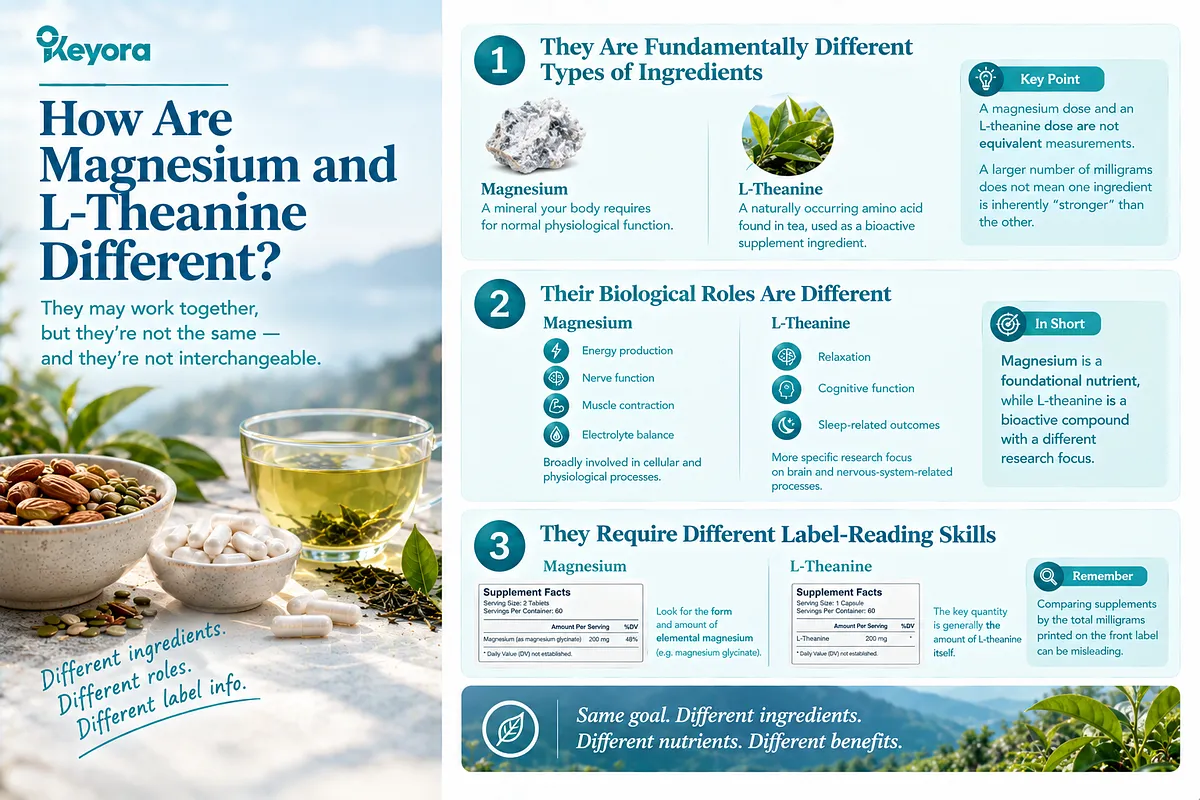
Magnesium vs. L-Theanine at a Glance
What is it?
Magnesium-Essential mineral
L-Theanine-Non-protein amino acid
Natural sources
Magnesium-Nuts, seeds, legumes, whole grains, leafy greens
L-Theanine-Tea leaves, especially green and black tea
Nutritional status
Magnesium-Essential nutrient
L-Theanine-Bioactive compound, not an essential nutrient
Primary biological role
Magnesium-Cofactor in hundreds of enzyme systems
L-Theanine-Interacts with pathways involved in neurotransmission and brain function
Common supplement forms
Magnesium-Glycinate, citrate, oxide, malate and others
L-Theanine-Usually provided as isolated L-theanine
Research areas
Magnesium-Mineral status, nerve and muscle function, energy metabolism, sleep-related outcomes
L-Theanine-Relaxation, attention, cognition, and sleep-related outcomes
Common supplement context
Magnesium-Daily nutrition, mineral supplementation, evening formulas
L-Theanine-Relaxation, focus, evening and sleep-oriented formulas
What to check on the label
Magnesium-Form and amount of elemental magnesium
L-Theanine-Amount of L-theanine per serving
How they differ
Magnesium-A foundational mineral required by the body
L-Theanine-A tea-derived bioactive amino acid
The key point is simple: magnesium and L-theanine are not two versions of the same ingredient. They belong to completely different categories
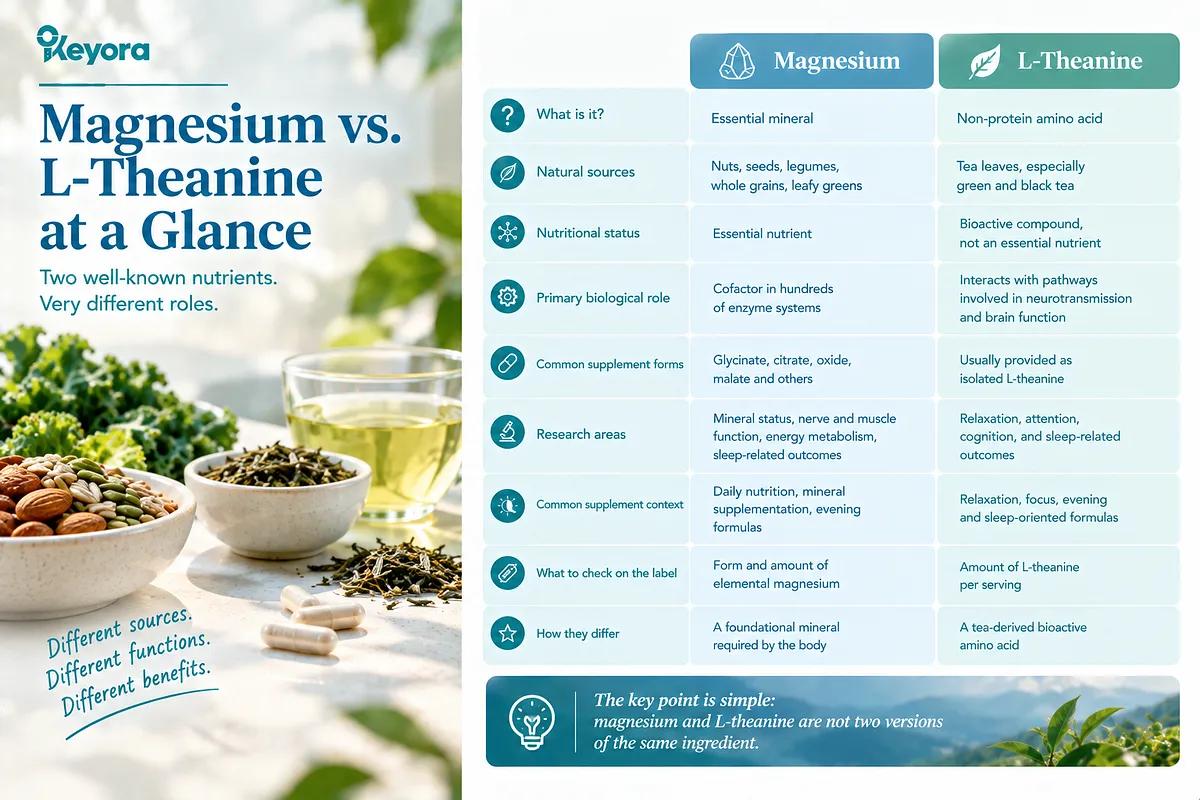
KEYORA breaks down Magnesium vs. L-Theanine at a glance, illustrating how an essential mineral and a botanical amino acid serve distinct biological functions.
What Is Magnesium?
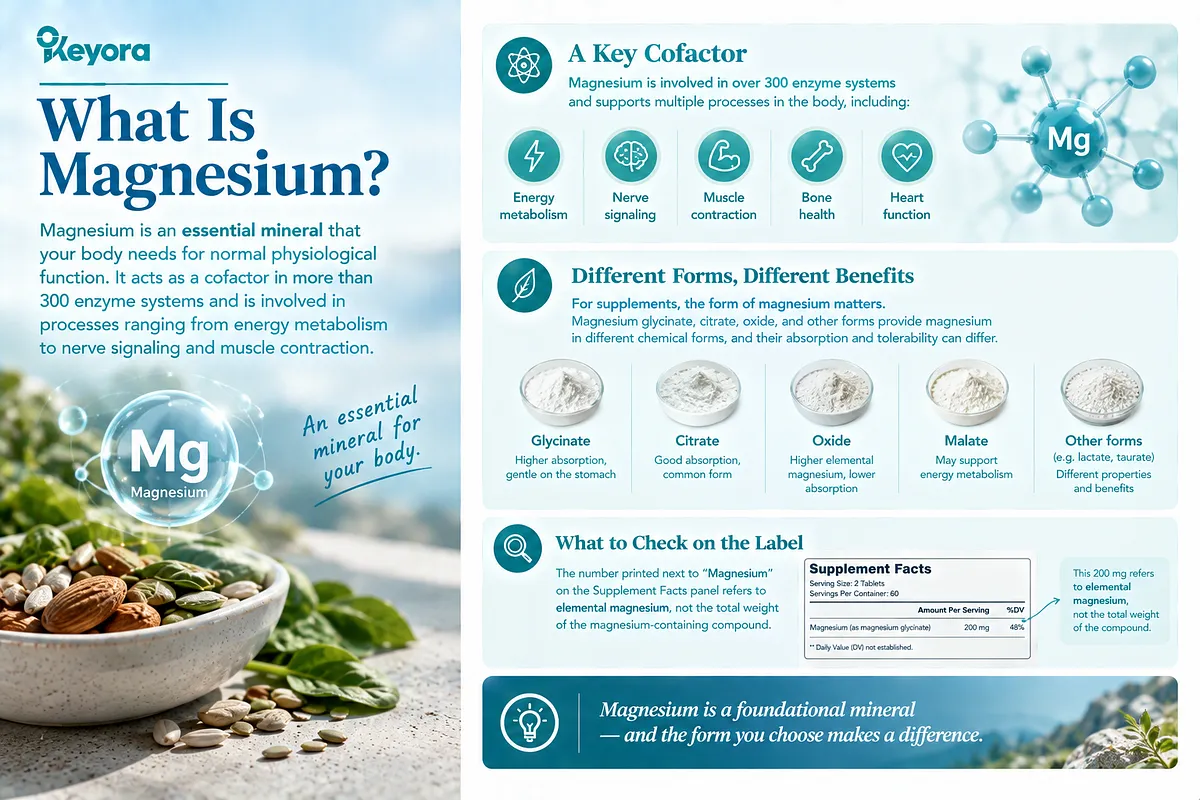
Magnesium is an essential mineral that your body needs for normal physiological function. It acts as a cofactor in more than 300 enzyme systems and is involved in processes ranging from energy metabolism to nerve signaling and muscle contraction.
For supplements, the form of magnesium matters. Magnesium glycinate, citrate, oxide, and other forms provide magnesium in different chemical forms, and their absorption and tolerability can differ.
This is important when comparing products: the number printed next to “Magnesium” on the Supplement Facts panel refers to elemental magnesium, not the total weight of the magnesium-containing compound.
What Is L-Theanine?
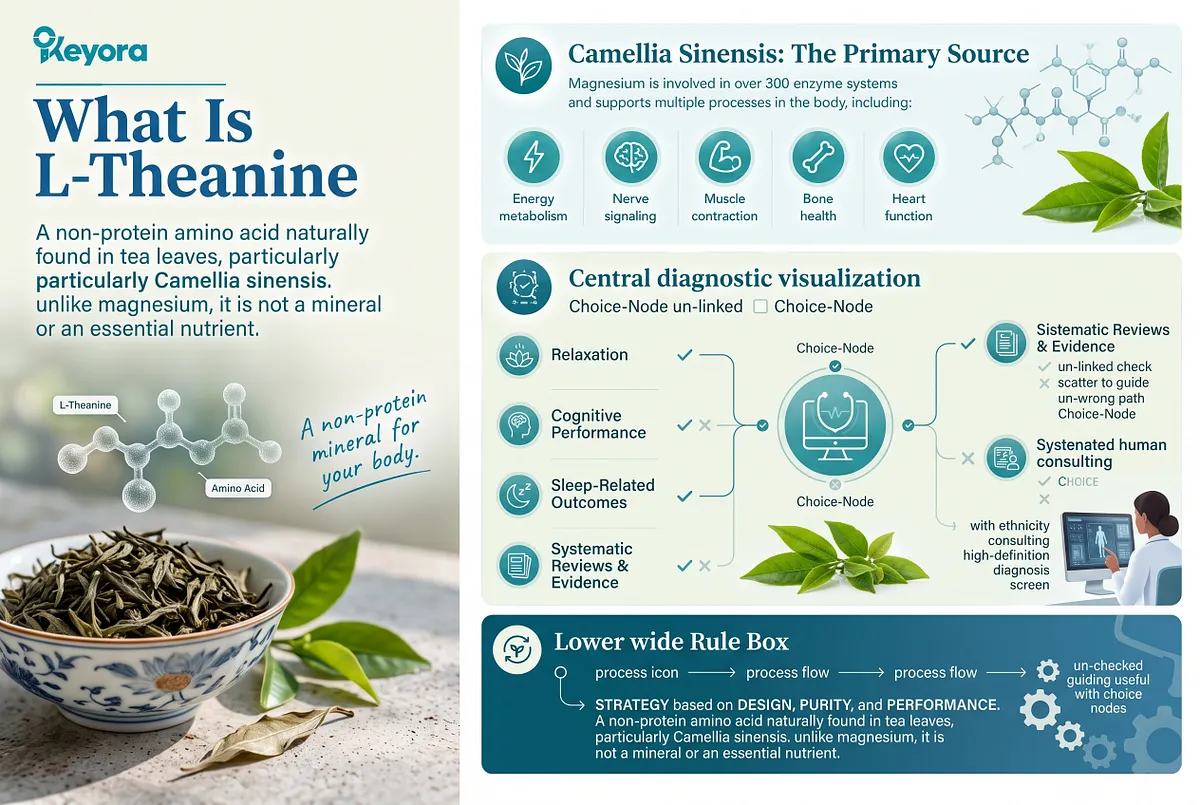
L-theanine is a non-protein amino acid naturally found in tea leaves, particularly Camellia sinensis. Unlike magnesium, it is not a mineral or an essential nutrient.
Research on L-theanine has focused on areas including relaxation, cognitive performance, and sleep-related outcomes. Recent systematic reviews have found promising but still developing evidence, with studies using a range of doses and designs.
So, even though magnesium and L-theanine may appear next to each other on a supplement label, they represent two very different types of ingredients.
How Are Magnesium and L-Theanine Different?
The comparison table gives you the basic picture, but three differences are particularly important.
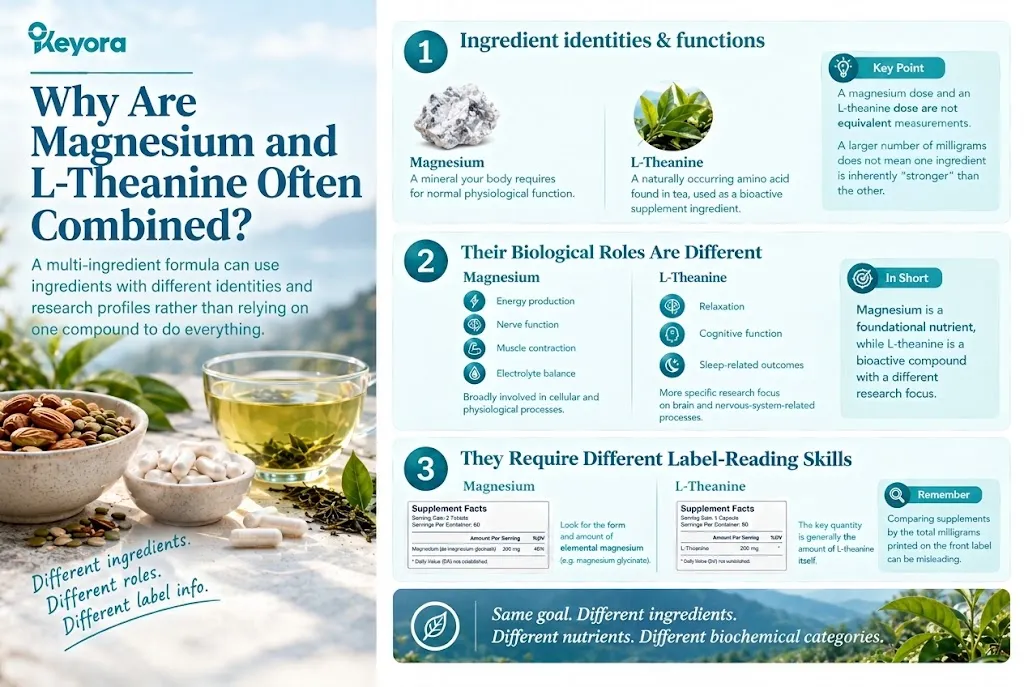
1. They are fundamentally different types of ingredients
Magnesium is a mineral your body requires for normal physiological function.
L-theanine is a naturally occurring amino acid found in tea and is used as a bioactive supplement ingredient.
That means you shouldn’t interpret a magnesium dose and an L-theanine dose as equivalent measurements. A larger number of milligrams does not mean one ingredient is inherently “stronger” than the other.
2. Their biological roles are different
Magnesium participates broadly in cellular and physiological processes, including energy production, nerve function, muscle contraction, and electrolyte balance.
L-theanine has a more specific research profile centered on brain and nervous-system-related processes, including relaxation and cognitive function.
In other words, magnesium is a foundational nutrient, while L-theanine is a bioactive compound with a different research focus.
3. Their supplement forms require different label-reading skills
When evaluating magnesium, the form and amount of elemental magnesium are important.
For example, a product may contain magnesium glycinate as the source, while the Supplement Facts panel separately states the amount of elemental magnesium supplied.
For L-theanine, the key quantity is generally the amount of L-theanine itself.
This is one reason comparing supplements by the total milligrams printed on the front label can be misleading.
What Does the Research Say About Magnesium and Sleep?
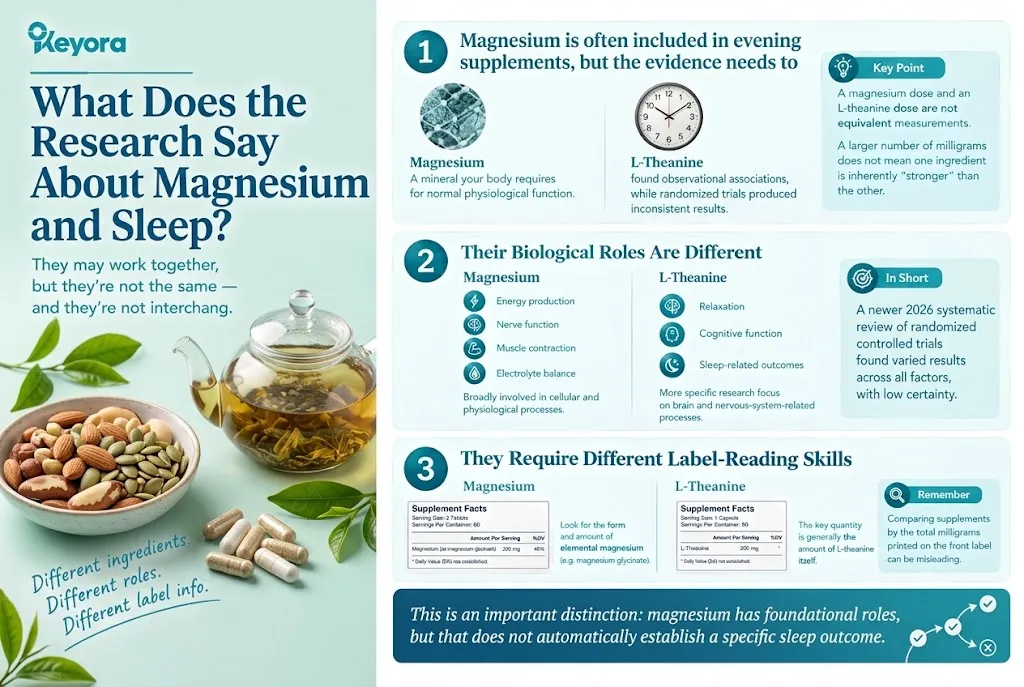
Magnesium is often included in evening supplements, but the evidence needs to be interpreted carefully.
Earlier systematic reviews found observational associations between magnesium status and sleep-related measures, while randomized trials produced inconsistent results. A newer 2026 systematic review of randomized controlled trials likewise found that results varied substantially across formulations, doses, populations, and outcome measures, with low to very low certainty overall.
This is an important distinction: magnesium has well-established nutritional and physiological roles, but that does not automatically establish a specific sleep outcome from supplementation.
What Does the Research Say About L-Theanine and Sleep?
L-theanine has a different research profile.
A 2025 systematic review and meta-analysis covering 19 articles and 897 participants reported statistically significant improvements in several subjective sleep outcomes, including sleep-onset latency and overall subjective sleep quality. Another 2026 systematic review of standalone L-theanine trials identified studies using 50–900 mg/day, with many trials using 200–450 mg/day.
At the same time, researchers noted limitations in the evidence, including differences in study design, doses, and the limited number of trials using pure L-theanine.
The evidence is therefore promising, but it should not be interpreted as establishing L-theanine as a sleep medication.
Magnesium vs. L-Theanine: Which One Is Better?
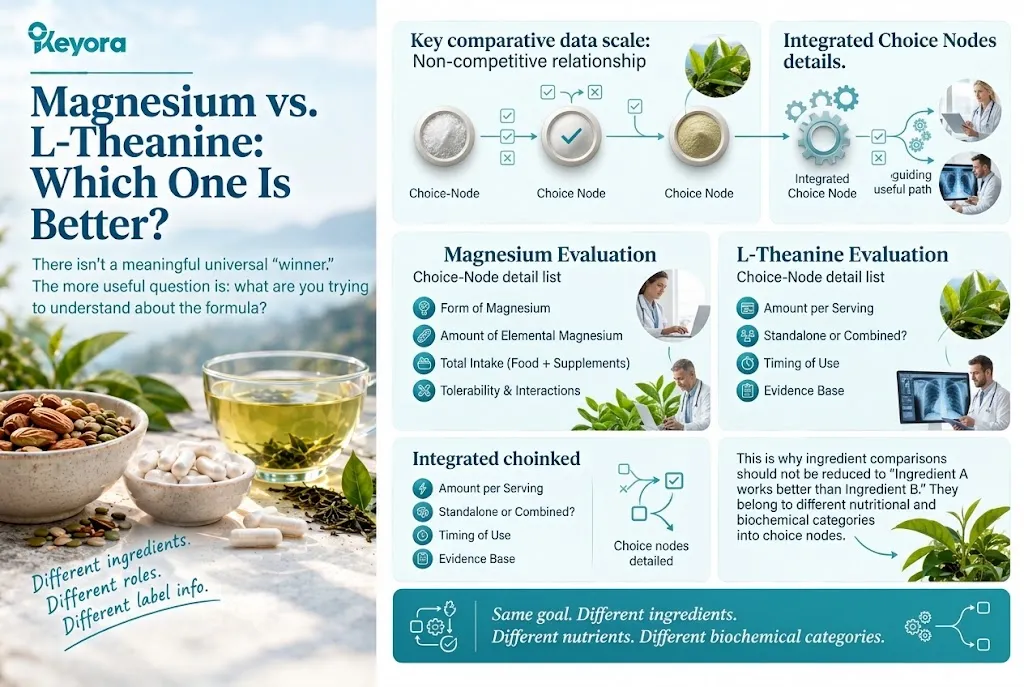
There isn’t a meaningful universal “winner.”
The more useful question is: what are you trying to understand about the formula?
If you are evaluating magnesium, look at:
The form of magnesium
The amount of elemental magnesium
Your total magnesium intake from food and supplements
Tolerability and potential interactions
If you are evaluating L-theanine, look at:
The amount provided per serving
Whether the formula uses standalone L-theanine or combines it with other ingredients
The intended timing of use
The evidence supporting the dose and use case
This is why ingredient comparisons should not be reduced to “Ingredient A works better than Ingredient B.” They belong to different nutritional and biochemical categories.
Why Are Magnesium and L-Theanine Often Combined?
A multi-ingredient formula can use ingredients with different identities and research profiles rather than relying on one compound to do everything.
Magnesium provides an essential mineral foundation, while L-theanine is a bioactive tea-derived amino acid that has been studied for relaxation, cognition, and sleep-related outcomes.
That does not automatically mean combining them produces a stronger effect than either ingredient alone. Combination-specific clinical evidence is a separate question and should not be inferred simply because both ingredients appear in the same product.
What About Magnesium Glycinate?
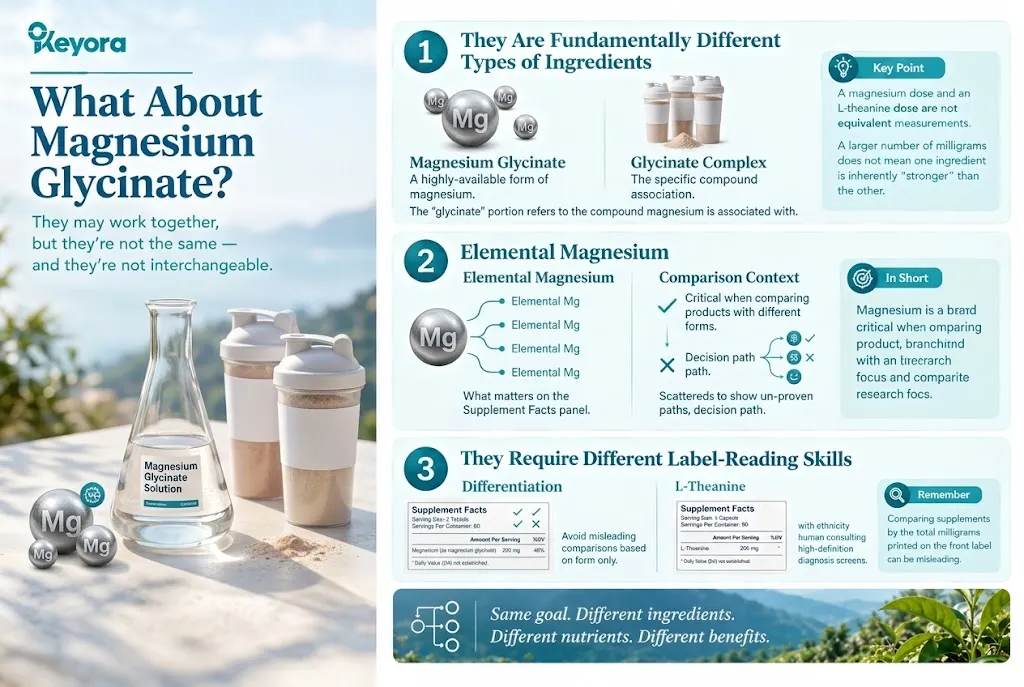
If a supplement uses magnesium glycinate, you are looking at a specific form of magnesium rather than a different mineral.
The “glycinate” portion refers to the compound magnesium is associated with. What matters on the Supplement Facts panel is the declared amount of elemental magnesium.
This distinction becomes especially important when comparing products with different magnesium forms.
Can Magnesium and L-Theanine Be Taken Together?
They can appear together in supplement formulas, but whether you should combine individual supplements depends on your total intake, other ingredients, medications, and personal circumstances.
Magnesium can interact with certain medications, including some antibiotics and bisphosphonates, because it can affect absorption when taken too close together. If you use prescription medications or multiple supplements, checking with a pharmacist or healthcare professional is sensible.

The Bottom Line
Magnesium and L-theanine are not interchangeable ingredients.
Magnesium is an essential mineral with broad physiological roles, while L-theanine is a tea-derived amino acid studied for relaxation, cognitive, and sleep-related outcomes.
When you compare the two, don’t ask only which ingredient is “stronger.” Look at what each ingredient is, the form and dose used, the quality of the evidence, and how the ingredient fits into the overall formula.
That approach is much more useful than judging a supplement by a single headline ingredient on the front of the bottle.
Frequently Asked Questions
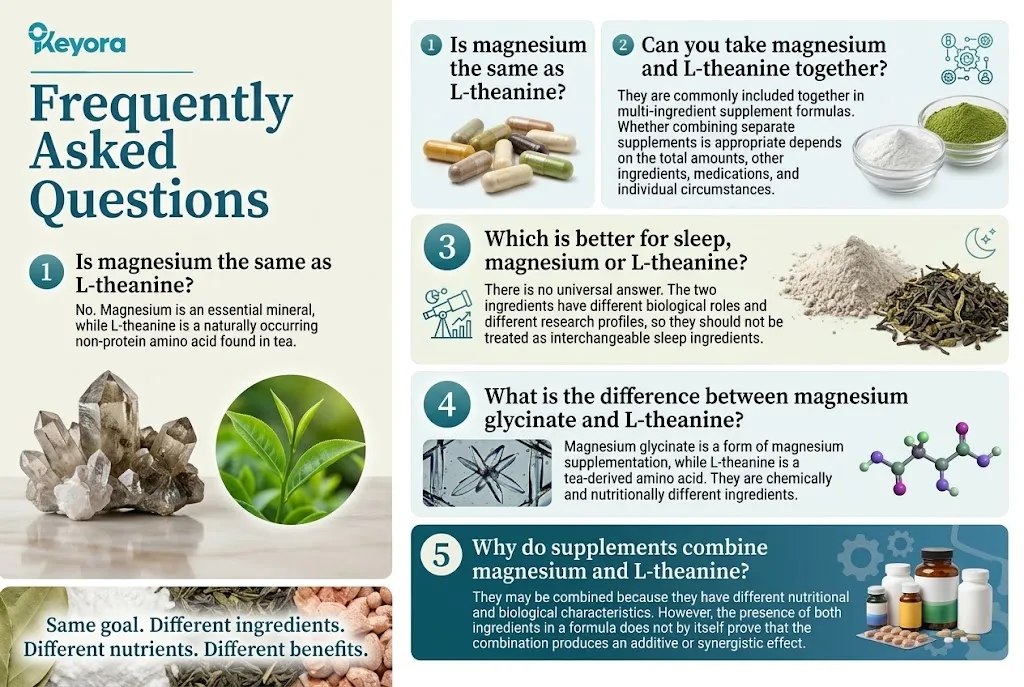
Is magnesium the same as L-theanine?
No. Magnesium is an essential mineral, while L-theanine is a naturally occurring non-protein amino acid found in tea.
Can you take magnesium and L-theanine together?
They are commonly included together in multi-ingredient supplement formulas. Whether combining separate supplements is appropriate depends on the total amounts, other ingredients, medications, and individual circumstances.
Which is better for sleep, magnesium or L-theanine?
There is no universal answer. The two ingredients have different biological roles and different research profiles, so they should not be treated as interchangeable sleep ingredients.
What is the difference between magnesium glycinate and L-theanine?
Magnesium glycinate is a form of magnesium supplementation, while L-theanine is a tea-derived amino acid. They are chemically and nutritionally different ingredients.
Why do supplements combine magnesium and L-theanine?
They may be combined because they have different nutritional and biological characteristics. However, the presence of both ingredients in a formula does not by itself prove that the combination produces an additive or synergistic effect.
References
- NIH Office of Dietary Supplements. Magnesium — Health Professional Fact Sheet.
- Arab A, Rafie N, Amani R, Shirani F. The Role of Magnesium in Sleep Health: a Systematic Review of Available Literature. Biological Trace Element Research. 2023;201:1213–1221. PMID: 35184264.
- Bulman A, D’Cunha NM, Marx W, et al. The effects of L-theanine consumption on sleep outcomes: A systematic review and meta-analysis. Sleep Medicine Reviews. 2025;81:102076. DOI: 10.1016/j.smrv.2025.102076. PMID: 40056718.
- Cotter J, Caddick CE, Harper JL, Ebajemito J. Examining the effect of L-theanine on sleep: a systematic review of dietary supplementation trials. Nutritional Neuroscience. 2026;29(2):224–238. DOI: 10.1080/1028415X.2025.2556925. PMID: 41176609.
- Effects of L-theanine on cognition, mood and sleep: evidence from human trials. Molecular Psychiatry. 2026. PMID: 42761839.
- Magnesium Supplementation for Sleep in Adults: A Systematic Review of Randomized Controlled Trials. 2026. PMID: 42661485.