
What Is CPT1, and Why Does It Matter for Fat Oxidation and Endurance?
Keyora Research Q&A Library
This is part of the Keyora Research Q&A Series, derived from Keyora Astaxanthin Research Journal Series.
Within the Keyora Astaxanthin Researcn framework, this Q&A translates complex astaxanthin biology into reader-friendly, evidence-bound answers, focusing on natural astaxanthin identity, molecular structure, antioxidant and redox mechanisms, membrane lipid interaction, mitochondrial resilience, inflammatory signaling pathways, human evidence interpretation, and the scientific principles behind responsible supplementation.
First published by Keyora Research Journal: www.keyorahealth.com
Direct Answer
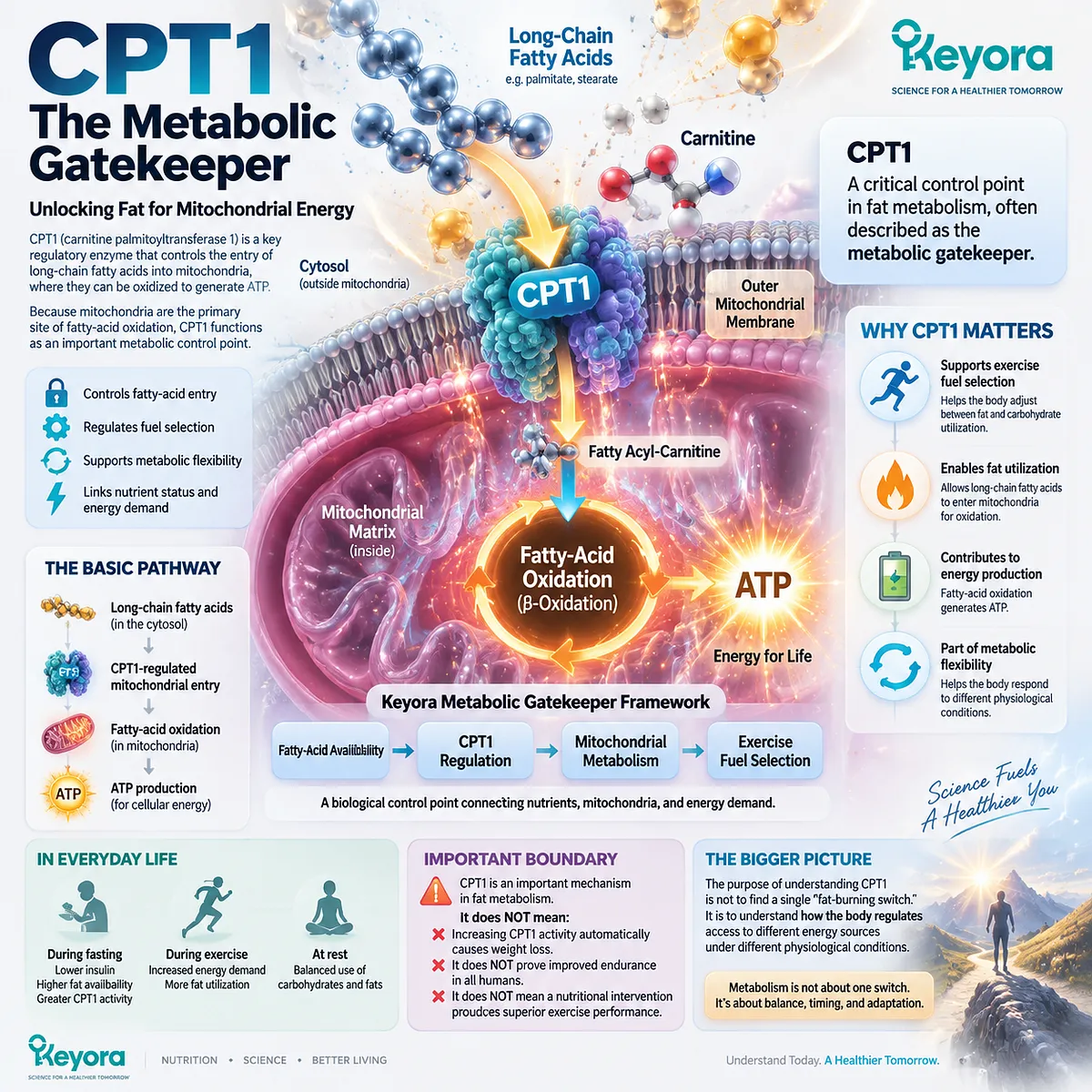
CPT1, or carnitine palmitoyltransferase 1, is a key regulatory enzyme involved in the movement of long-chain fatty acids into mitochondria, where they can be used for energy production through fatty-acid oxidation.
Because mitochondria are the primary site where fatty acids are oxidized to generate ATP, CPT1 functions as an important metabolic control point.
This is why CPT1 is often described as a metabolic gatekeeper.
The basic concept is:
Long-chain fatty acids
→ CPT1-regulated mitochondrial entry
→ fatty-acid oxidation
→ ATP production
During exercise, the ability to adjust between carbohydrate and fat utilization is an important part of metabolic flexibility.
CPT1 is relevant because it influences how efficiently fatty acids can enter the mitochondrial oxidation pathway.
However, the evidence boundary must remain clear:
CPT1 is an important mechanism in fat metabolism.
It does not mean:
Increasing CPT1 activity automatically causes weight loss, improves endurance in all humans, or proves that a nutritional intervention produces superior exercise performance.
Within the Keyora Metabolic Gatekeeper framework, CPT1 is used to explain a biological control point connecting fatty-acid availability, mitochondrial metabolism, and exercise fuel selection.
The purpose of understanding CPT1 is not to identify a single “fat-burning switch.”
It is to understand how the body regulates access to different energy sources under different physiological conditions.
CPT1 as the Metabolic Gatekeeper: How Fatty Acids Enter Mitochondria
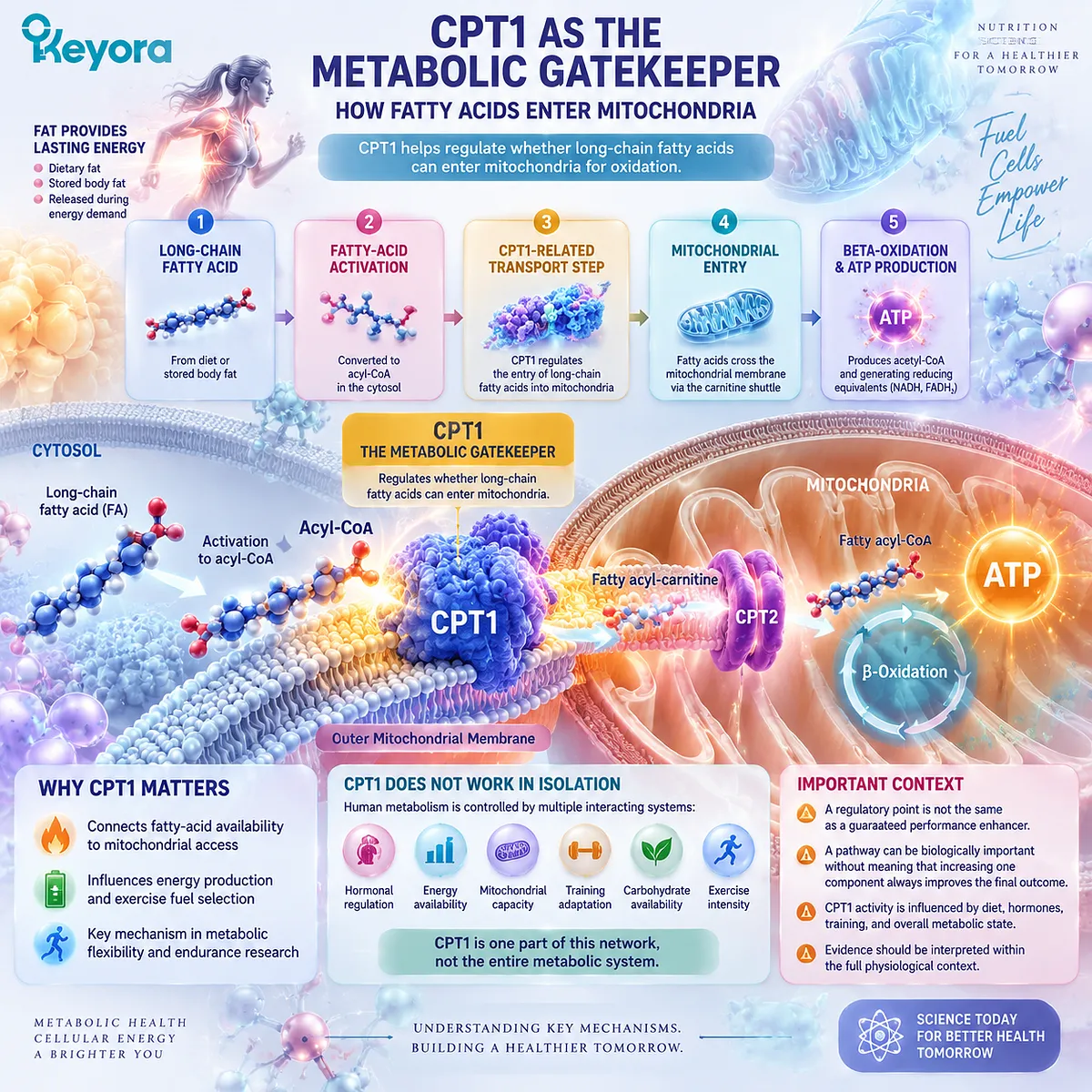
CPT1 helps regulate whether long-chain fatty acids can enter mitochondria for oxidation
Fatty acids are an important energy source.
They can come from dietary fat or from stored body fat released during energy demand.
However, the presence of fatty acids in the bloodstream or inside a cell does not automatically mean they can immediately be used by mitochondria.
The fatty-acid molecule must pass through several regulated steps before entering mitochondrial oxidation.
Long-chain fatty acids require the carnitine shuttle system to cross the mitochondrial membrane.
CPT1 is one of the major regulatory points in this process.
In simplified form:
Long-chain fatty acid
→ fatty-acid activation
→ CPT1-related transport step
→ mitochondrial entry
→ beta-oxidation
Once inside mitochondria, fatty acids can undergo beta-oxidation, producing acetyl-CoA and generating reducing equivalents that contribute to ATP production through mitochondrial energy pathways.
This is why CPT1 receives so much attention in exercise metabolism research.
It sits at the connection point between:
-
available fatty acids
-
mitochondrial access
-
energy production
-
exercise fuel selection
However, a regulatory point is not the same as a guaranteed performance enhancer.
A pathway can be biologically important without meaning that increasing one component always improves the final outcome.
Human metabolism is controlled by multiple interacting systems, including:
-
hormonal regulation
-
energy availability
-
mitochondrial capacity
-
training adaptation
-
carbohydrate availability
-
exercise intensity
CPT1 is one part of this network.
It is not the entire metabolic system.
Why Mitochondrial Fat Oxidation Matters During Exercise
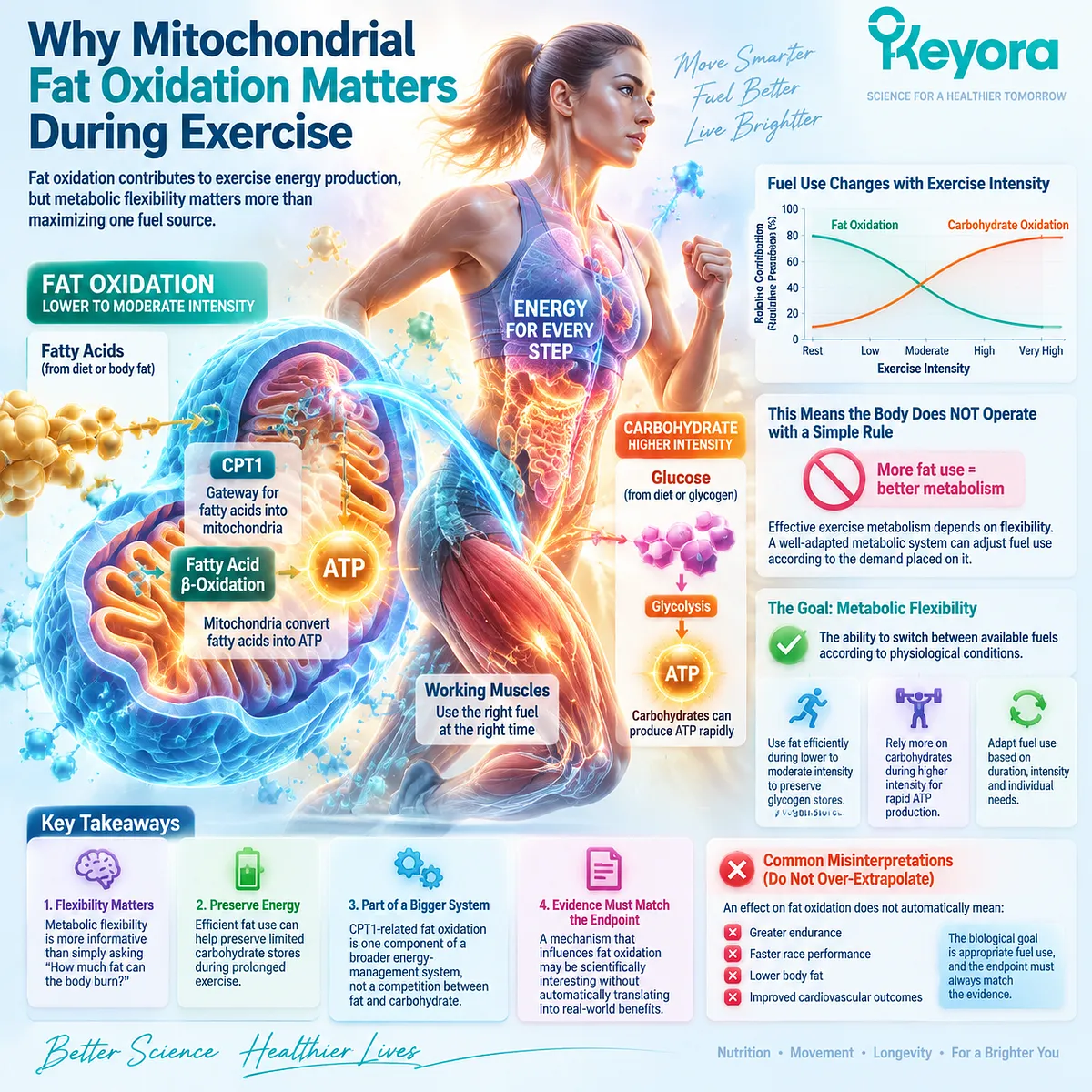
Fat oxidation contributes to exercise energy production, but metabolic flexibility matters more than maximizing one fuel source
During exercise, the body continuously adjusts the proportion of energy derived from carbohydrates and fats.
At lower and moderate exercise intensities, fat oxidation can contribute substantially to energy production.
As exercise intensity increases, carbohydrate metabolism generally becomes more important because it can support rapid ATP production.
This means the body does not operate with a simple rule:
More fat use = better metabolism
Instead, effective exercise metabolism depends on flexibility.
A well-adapted metabolic system can adjust fuel use according to the demand placed on it.
This is why the concept of metabolic flexibility is more informative than simply asking:
“How much fat can the body burn?”
Metabolic flexibility describes the ability to switch between available fuels according to physiological conditions.
For endurance exercise, the ability to use fat efficiently can help preserve limited carbohydrate stores during prolonged activity.
But carbohydrate remains an important fuel, especially during higher-intensity exercise.
Therefore, CPT1-related fat oxidation should be understood as part of a broader energy-management system.
It is not a competition where fat oxidation must always replace carbohydrate oxidation.
The biological goal is appropriate fuel use.
This distinction is particularly important when interpreting nutritional interventions.
A mechanism that influences fat oxidation may be scientifically interesting without automatically translating into:
-
greater endurance
-
faster race performance
-
lower body fat
-
improved cardiovascular outcomes
The endpoint must always match the evidence.
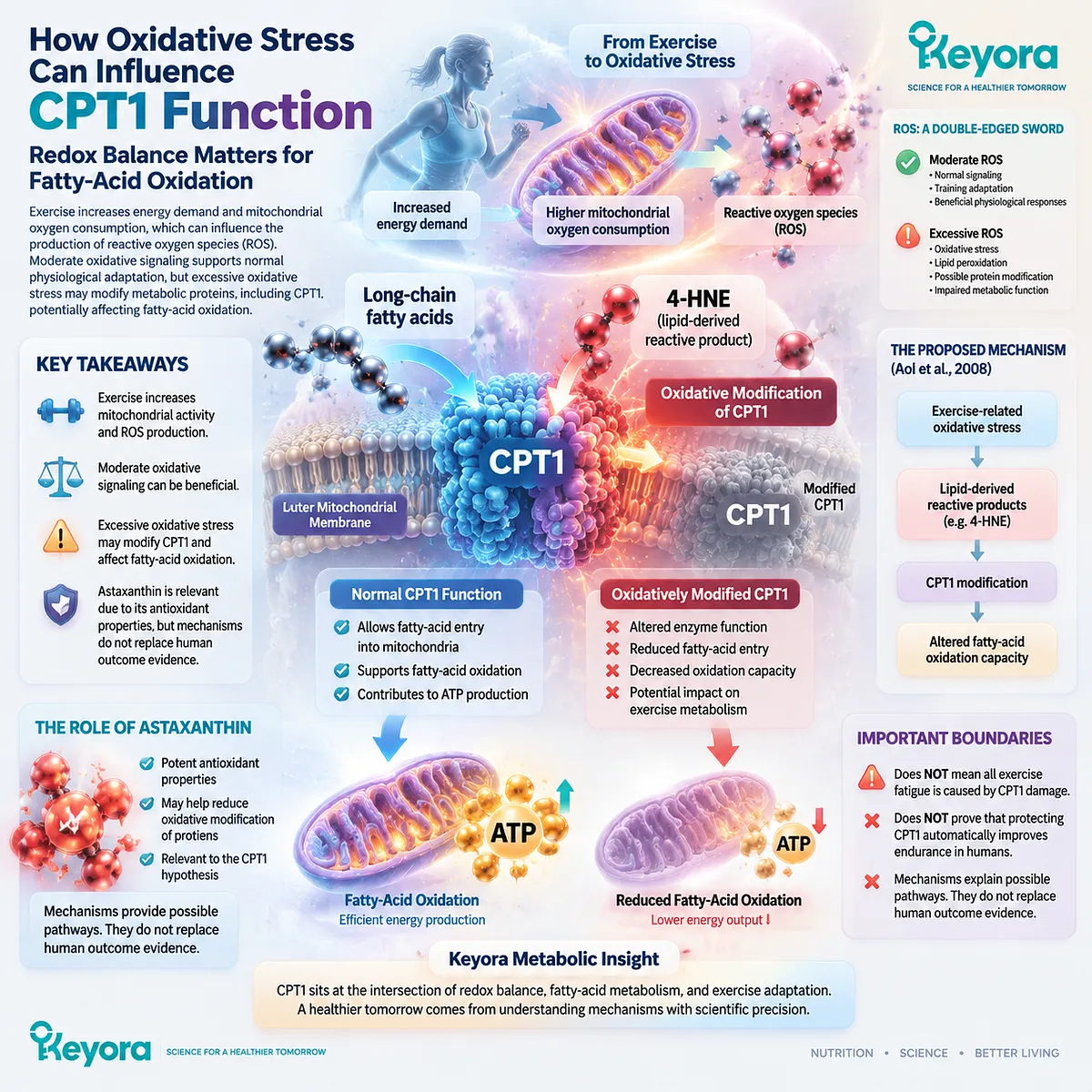
How Oxidative Stress Can Influence CPT1 Function
Oxidative stress may modify metabolic proteins, creating a possible link between redox balance and fatty-acid oxidation
Exercise increases energy demand.
As mitochondrial activity increases, oxygen consumption also increases.
This can influence the production of reactive oxygen species.
Importantly, exercise-related reactive oxygen species are not always harmful.
Moderate oxidative signaling participates in normal physiological adaptation, including responses involved in training adaptation.
The issue is excessive or poorly controlled oxidative stress.
Under certain conditions, reactive lipid-derived molecules can modify proteins involved in cellular metabolism.
One example discussed in Astaxanthin research is 4-HNE, a reactive product generated during lipid oxidation.
The Aoi et al. (2008) study examined whether oxidative modification of CPT1 was associated with altered exercise lipid metabolism in mice.
The proposed mechanism is:
Exercise-related oxidative stress
→ lipid-derived reactive products
→ CPT1 modification
→ altered fatty-acid oxidation capacity
Astaxanthin is relevant to this hypothesis because of its antioxidant properties.
However, this mechanism should be interpreted carefully.
The evidence supports:
Oxidative modification of CPT1 can influence metabolic regulation in experimental models.
It does not prove:
All exercise fatigue is caused by CPT1 damage.
Nor does it prove:
Protecting CPT1 automatically improves endurance in humans.
Mechanisms explain possible pathways.
They do not replace human outcome evidence.
What Does Astaxanthin Evidence Tell Us About CPT1?
Astaxanthin research provides experimental support for CPT1-related metabolic protection, but human confirmation remains limited
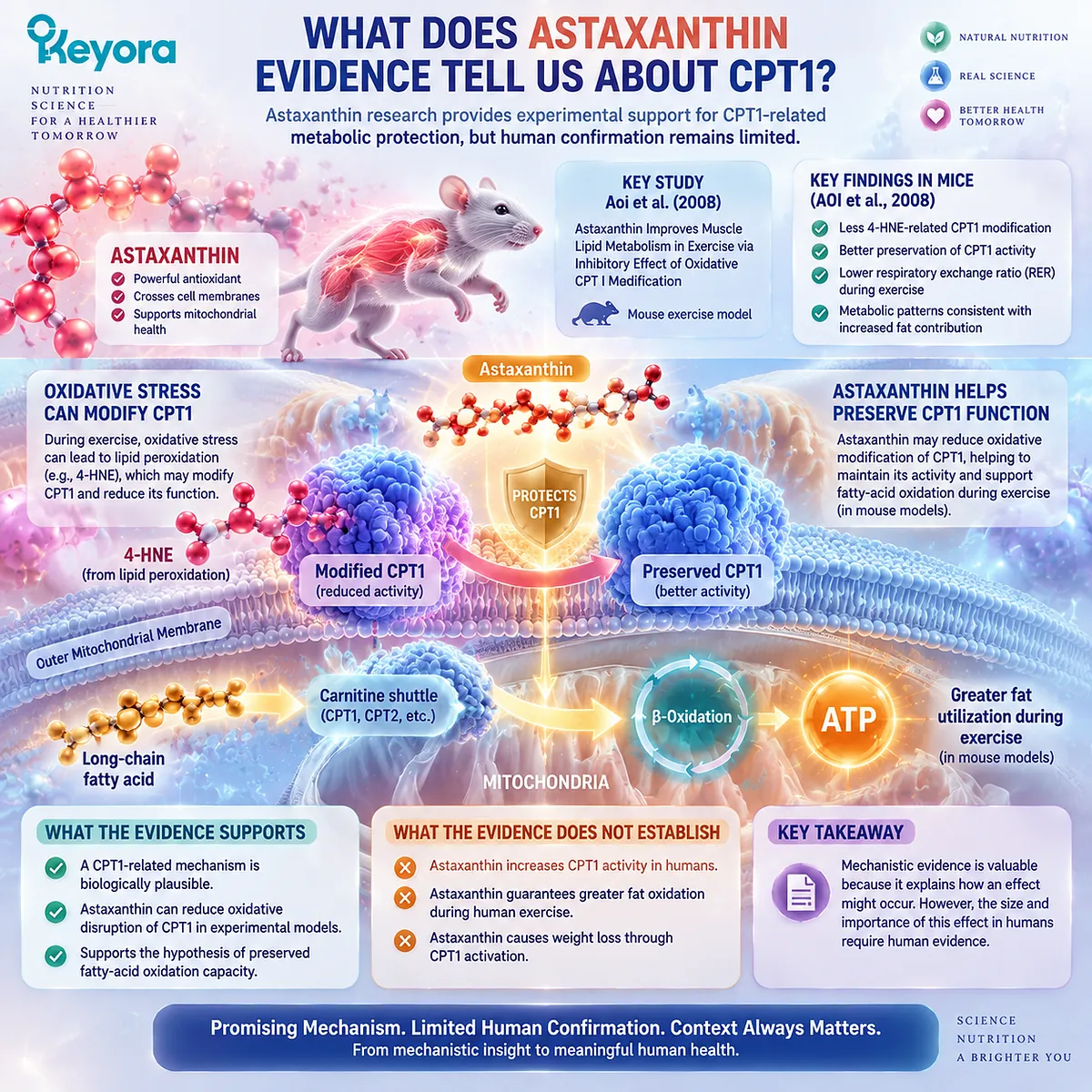
The key CPT1-related Astaxanthin evidence comes from Aoi et al. (2008), Astaxanthin Improves Muscle Lipid Metabolism in Exercise via Inhibitory Effect of Oxidative CPT I Modification.
In the mouse exercise model described in Keyora Astaxanthin EP-4: The Cardiac Architecture: Bio-Energetic Sovereignty, Astaxanthin supplementation was associated with reduced oxidative modification of CPT1, preservation of CPT1-related function, and metabolic changes consistent with greater lipid utilization during exercise.
The EP-4 evidence summary describes Astaxanthin-treated mice as showing:
-
less 4-HNE-related CPT1 modification
-
better preservation of CPT1 activity
-
lower respiratory exchange ratio during exercise
-
metabolic patterns consistent with increased fat contribution
This creates a scientifically interesting hypothesis:
Astaxanthin
→ reduced oxidative disruption of CPT1-related function
→ preserved fatty-acid oxidation capacity
However, the evidence level matters.
The Aoi study is an experimental animal study.
It supports:
a CPT1-related mechanism is biologically plausible
It does not establish:
Astaxanthin increases CPT1 activity in humans
It does not establish:
Astaxanthin guarantees greater fat oxidation during human exercise
It does not establish:
Astaxanthin causes weight loss through CPT1 activation
The difference between these statements is the difference between mechanism and clinical conclusion.
Mechanistic evidence is valuable because it explains how an effect might occur.
But the size and importance of that effect in humans require human evidence.
The Keyora Metabolic Gatekeeper: Understanding CPT1 Without Overclaiming
CPT1 explains an important metabolic control point, but the pathway should be interpreted within evidence boundaries
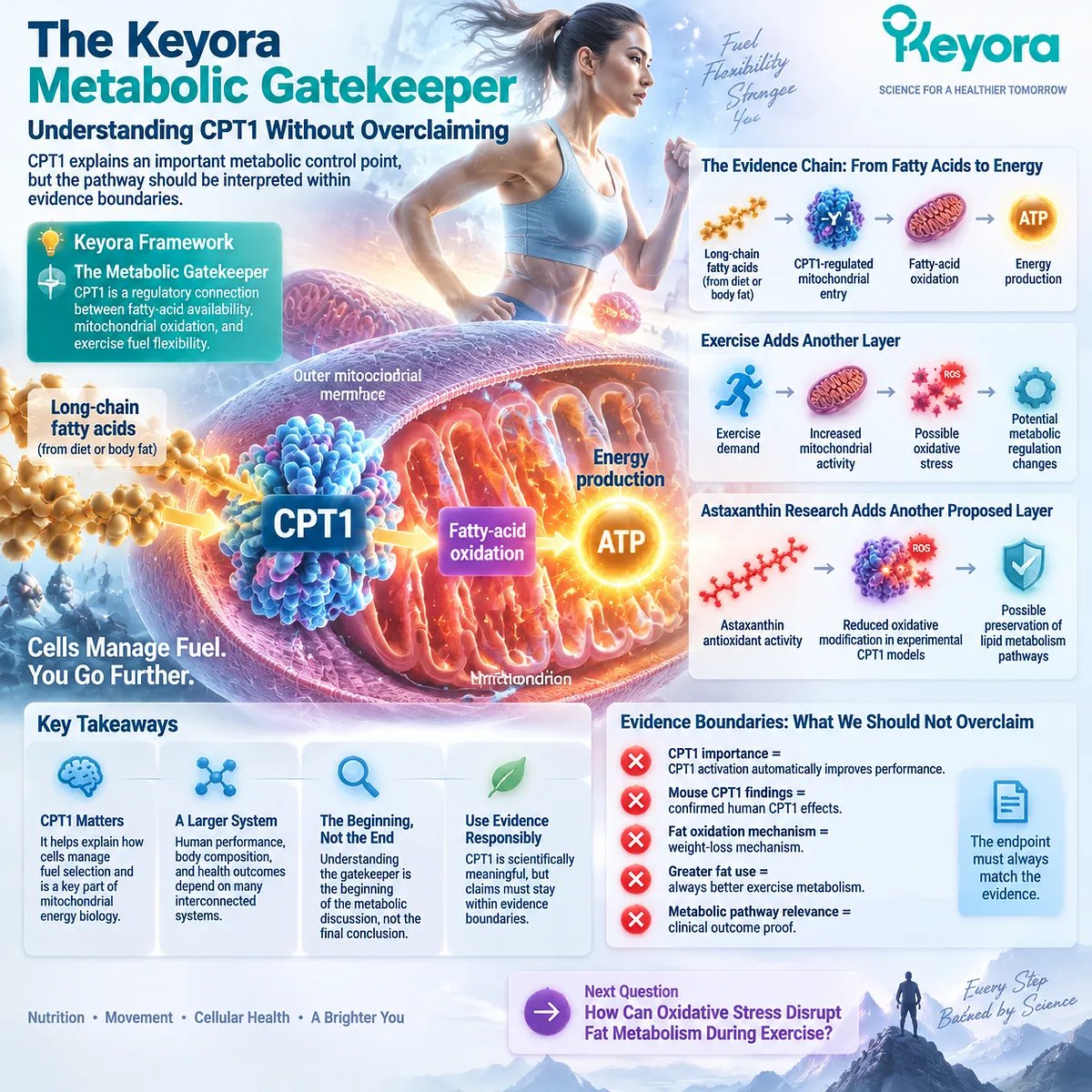
Within the Keyora framework, The Metabolic Gatekeeper describes CPT1 as a regulatory connection between fatty-acid availability, mitochondrial oxidation, and exercise fuel flexibility.
The evidence chain can be summarized as:
Long-chain fatty acids
→ CPT1-regulated mitochondrial entry
→ fatty-acid oxidation
→ energy production
Exercise adds another layer:
Exercise demand
→ increased mitochondrial activity
→ possible oxidative stress
→ potential metabolic regulation changes
Astaxanthin research adds another proposed layer:
Astaxanthin antioxidant activity
→ reduced oxidative modification in experimental CPT1 models
→ possible preservation of lipid metabolism pathways
This is a scientifically meaningful framework.
But the evidence boundaries remain:
CPT1 importance ≠ CPT1 activation automatically improves performance
Mouse CPT1 findings ≠ confirmed human CPT1 effects
Fat oxidation mechanism ≠ weight-loss mechanism
Greater fat use ≠ always better exercise metabolism
Metabolic pathway relevance ≠ clinical outcome proof
CPT1 matters because it helps explain how cells manage fuel selection.
It is a key part of mitochondrial energy biology.
But human performance, body composition, and health outcomes depend on many interconnected systems.
Understanding the gatekeeper is the beginning of the metabolic discussion, not the final conclusion.
The next question examines the biological problem that makes CPT1 protection relevant:
How Can Oxidative Stress Disrupt Fat Metabolism During Exercise?
This article is for educational and informational purposes only. It does not provide medical advice, diagnosis, treatment, cure, prevention, disease outcome claims, hormone restoration claims, fertility outcome claims, or formula-specific clinical efficacy claims.