
Does Astaxanthin Help the Body Burn More Fat During Exercise?
Keyora Research Q&A Library
This is part of the Keyora Research Q&A Series, derived from Keyora Astaxanthin Research Journal Series.
Within the Keyora Astaxanthin Researcn framework, this Q&A translates complex astaxanthin biology into reader-friendly, evidence-bound answers, focusing on natural astaxanthin identity, molecular structure, antioxidant and redox mechanisms, membrane lipid interaction, mitochondrial resilience, inflammatory signaling pathways, human evidence interpretation, and the scientific principles behind responsible supplementation.
First published by Keyora Research Journal: www.keyorahealth.com
Direct Answer
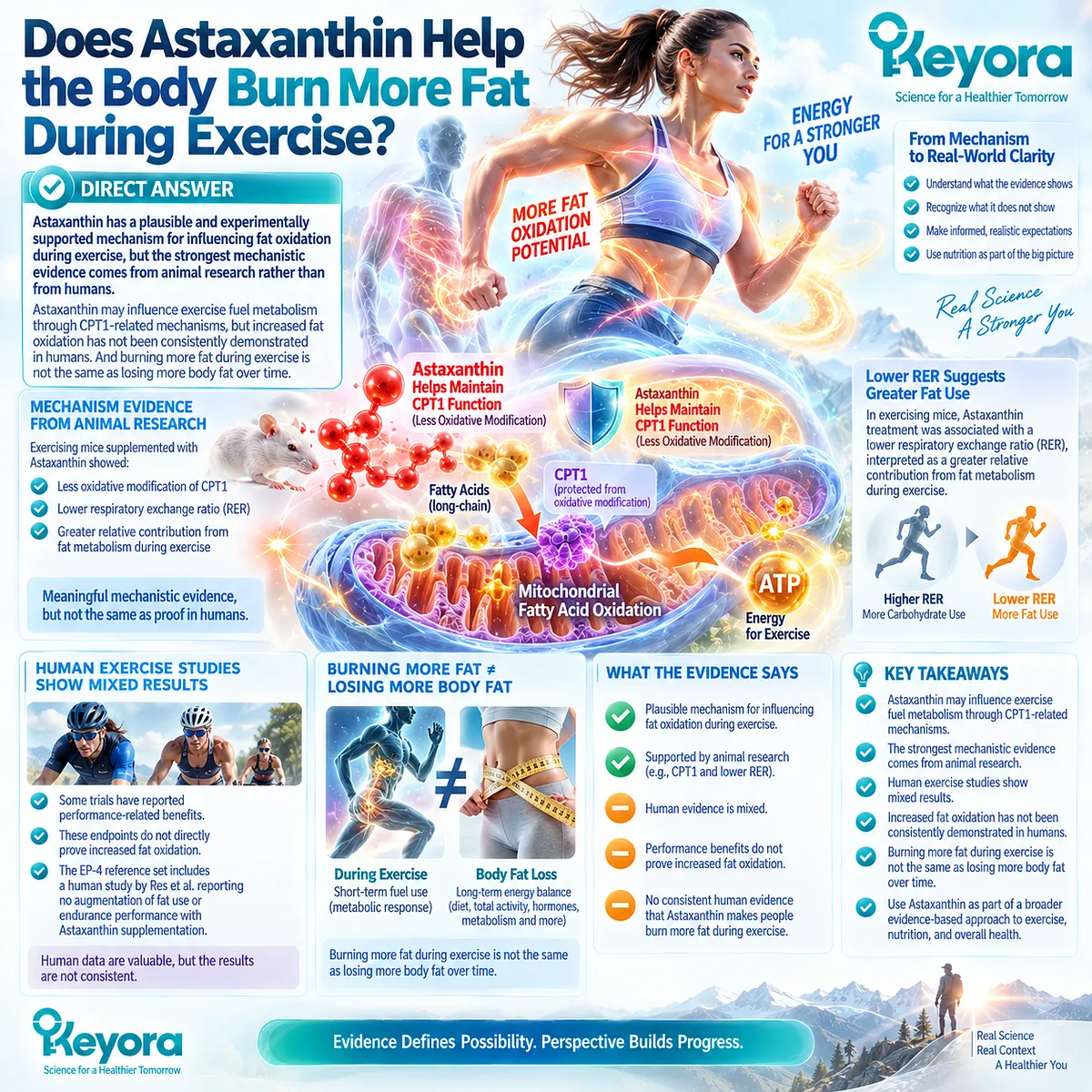
Astaxanthin has a plausible and experimentally supported mechanism for influencing fat oxidation during exercise, but the strongest mechanistic evidence comes from animal research rather than from humans.
In an exercising mouse model, Astaxanthin supplementation was associated with less oxidative modification of CPT1, an enzyme involved in long-chain fatty-acid entry into mitochondrial oxidation pathways.
The Astaxanthin-treated mice also showed a lower respiratory exchange ratio, or RER, which was interpreted as a greater relative contribution from fat metabolism during exercise.
That is meaningful mechanistic evidence.
It is not the same as proving that Astaxanthin consistently makes people burn more fat during exercise.
Human exercise studies have produced a more complicated picture. Some trials have reported performance-related benefits, but those endpoints do not directly prove increased fat oxidation.
The EP-4 reference set also includes a human study by Res et al. reporting no augmentation of fat use or endurance performance with Astaxanthin supplementation.
The most evidence-disciplined conclusion is therefore:
Astaxanthin may influence exercise fuel metabolism through CPT1-related mechanisms, but increased fat oxidation has not been consistently demonstrated in humans.
And there is another important boundary:
Burning more fat during exercise is not the same as losing more body fat over time.
What Does “Burning More Fat” During Exercise Actually Mean?
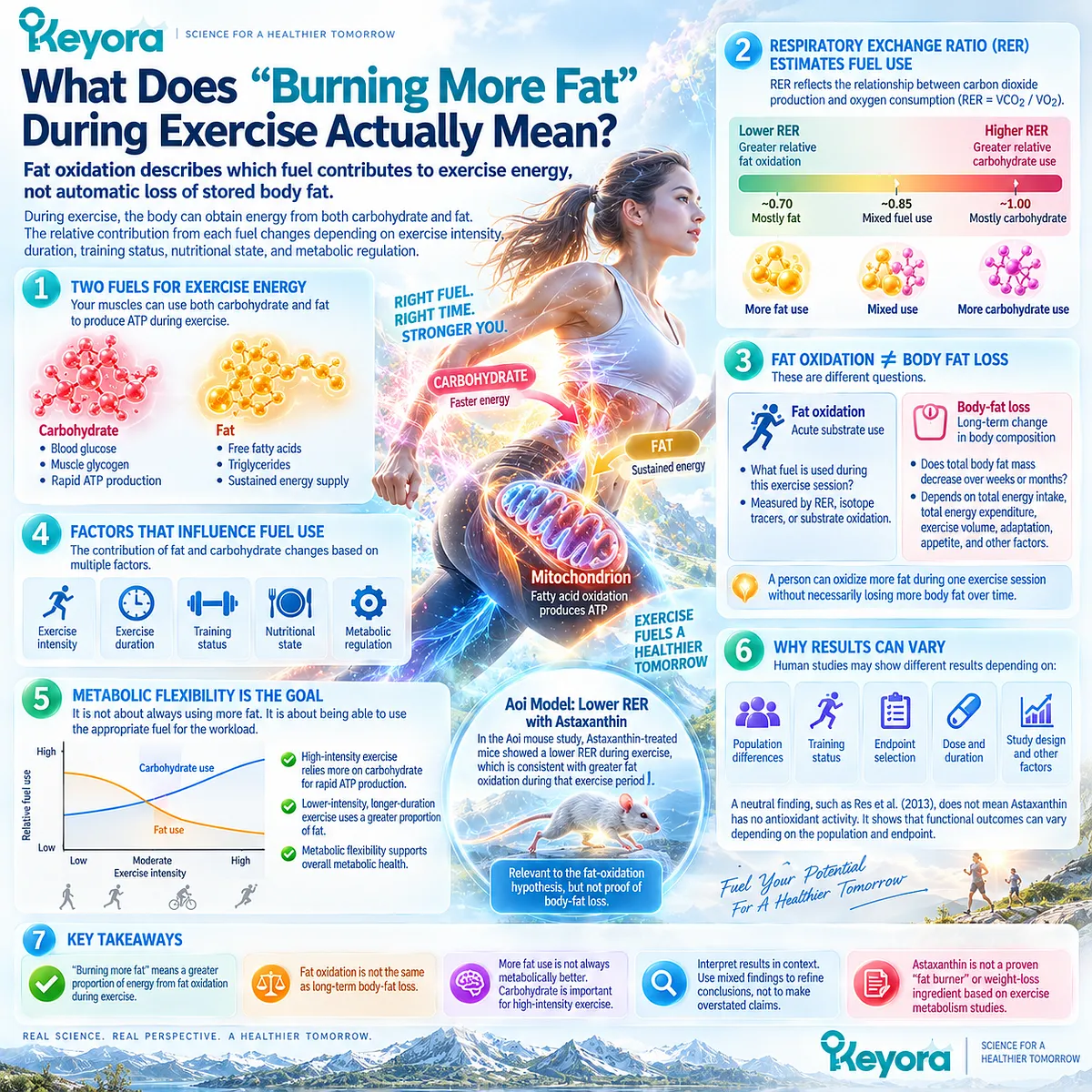
Fat oxidation describes which fuel contributes to exercise energy, not automatic loss of stored body fat
During exercise, the body can obtain energy from both carbohydrate and fat.
The relative contribution from each fuel changes depending on factors such as exercise intensity, duration, training status, nutritional state, and metabolic regulation.
When researchers say that someone is “burning more fat,” they usually mean that a greater proportion of energy during that exercise period is coming from fatty-acid oxidation.
One way researchers estimate this is through the respiratory exchange ratio.
RER reflects the relationship between carbon dioxide production and oxygen consumption. In general, a lower RER during steady-state exercise indicates a greater relative contribution from fat oxidation, while a higher RER indicates a greater relative contribution from carbohydrate metabolism.
This is why the lower RER reported in the Astaxanthin-treated mice in the Aoi model is relevant to the fat-oxidation hypothesis.
But “greater fat use during exercise” should not be confused with “greater body-fat loss.”
These are different physiological questions.
Fat oxidation describes acute substrate use.
Body-fat loss describes a long-term change in body composition.
A person can oxidize more fat during one exercise session without necessarily losing more body fat over weeks or months. Long-term changes in body-fat mass depend on total energy intake, total energy expenditure, exercise volume, adaptation, appetite, and other factors.
This is why Astaxanthin should not be described as a proven “fat burner” or weight-loss ingredient on the basis of exercise metabolism studies.
It is also important not to assume that more fat oxidation is always metabolically better.
High-intensity exercise naturally relies more heavily on carbohydrate because carbohydrate can support rapid ATP production.
Metabolic flexibility is therefore not about maximizing fat use at all times.
It is about being able to use the appropriate fuel for the workload.
Why CPT1 Is Central to the Astaxanthin Hypothesis
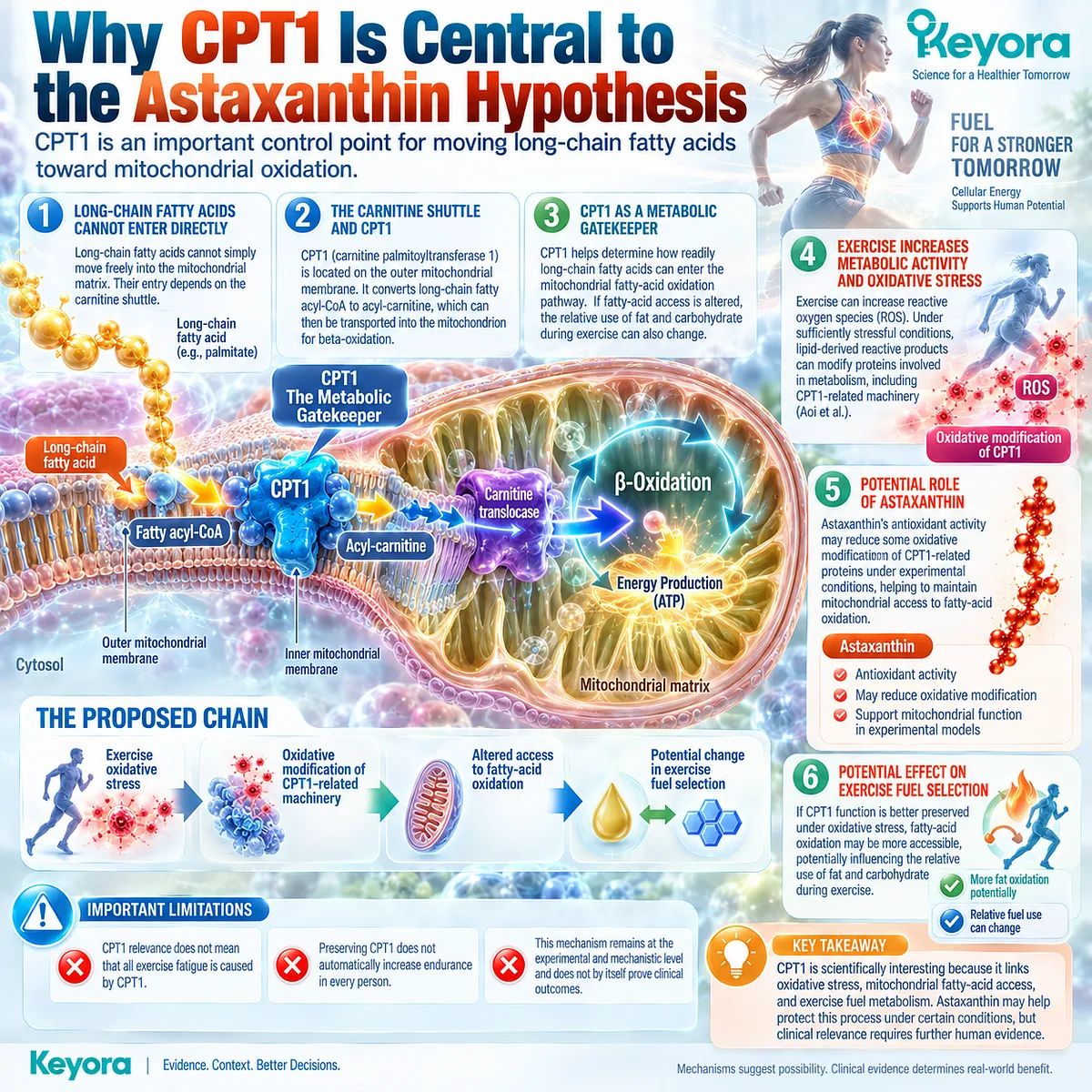
CPT1 is an important control point for moving long-chain fatty acids toward mitochondrial oxidation
Long-chain fatty acids cannot simply move freely into the mitochondrial matrix and enter beta-oxidation.
Their entry depends on the carnitine shuttle, and CPT1 is an important regulatory step in that process.
In practical terms, CPT1 helps determine how readily long-chain fatty acids can enter the mitochondrial fatty-acid oxidation pathway.
This is why CPT1 matters when discussing exercise fat metabolism.
If fatty-acid access to mitochondrial oxidation is altered, the relative use of fat and carbohydrate during exercise can also change.
Keyora Astaxanthin EP-4: The Cardiac Architecture: Bio-Energetic Sovereignty frames CPT1 as The Metabolic Gatekeeper, using it to explain how mitochondrial access to fatty-acid fuel may be affected by oxidative stress.
The underlying biological idea is more useful than the mechanical metaphor:
fatty-acid availability alone is not enough
The fatty acids must also enter the appropriate mitochondrial oxidation pathway.
The Astaxanthin hypothesis adds another layer.
Exercise increases metabolic activity and can increase reactive oxygen species. Under sufficiently stressful experimental conditions, lipid-derived reactive products can modify proteins involved in metabolism.
Aoi et al. specifically investigated oxidative modification of CPT1 in relation to exercise and Astaxanthin.
This creates the proposed chain:
exercise oxidative stress
→ oxidative modification of CPT1-related machinery
→ altered access to fatty-acid oxidation
→ potential change in exercise fuel selection
Astaxanthin is relevant because its antioxidant activity may reduce some of this oxidative modification.
But this mechanism needs to stay at the correct evidence level.
CPT1 relevance does not mean that all exercise fatigue is caused by CPT1.
Nor does it mean that preserving CPT1 automatically increases endurance in every person.
What the Aoi 2008 Study Actually Found
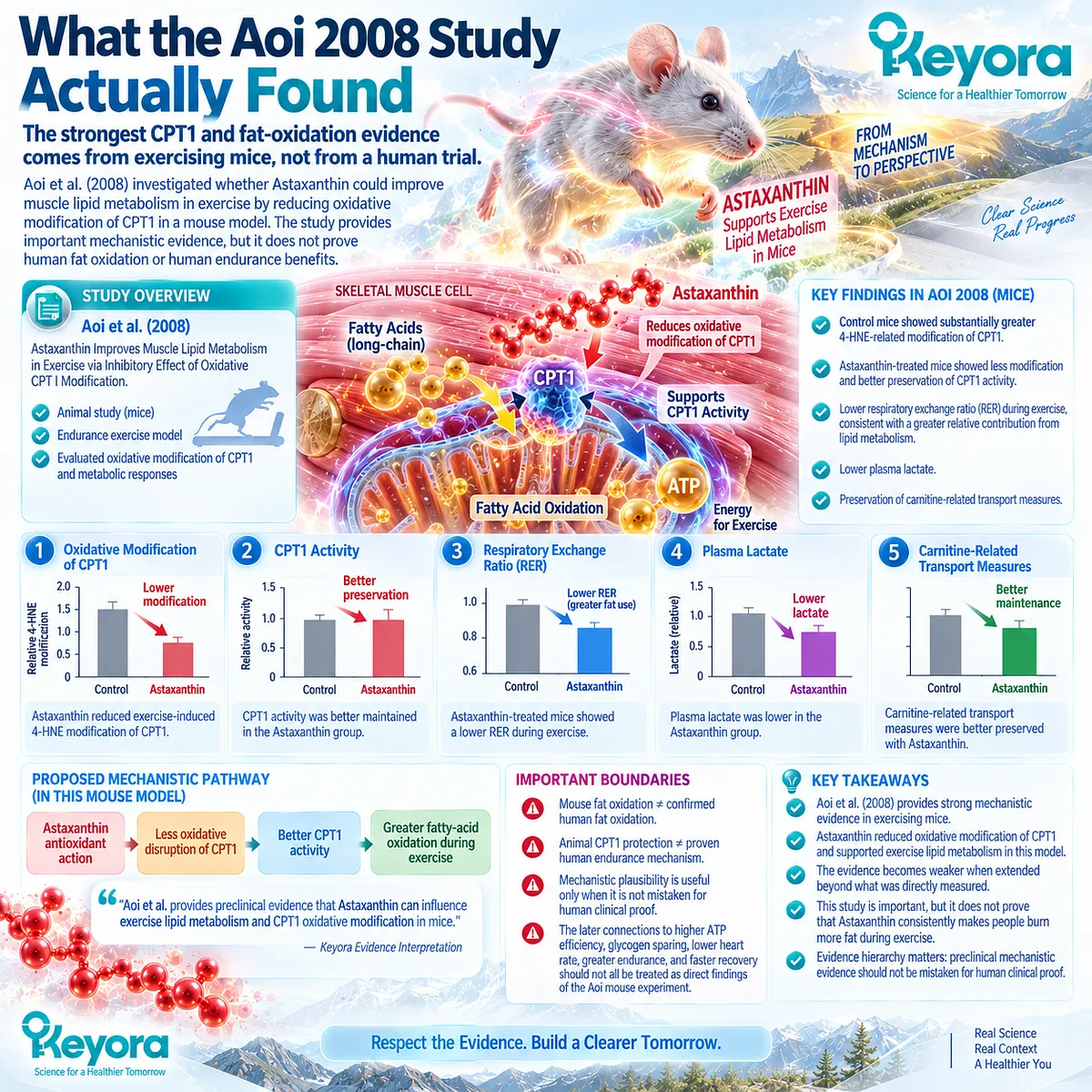
The strongest CPT1 and fat-oxidation evidence comes from exercising mice, not from a human trial
Aoi et al. (2008), Astaxanthin Improves Muscle Lipid Metabolism in Exercise via Inhibitory Effect of Oxidative CPT I Modification, is the central mechanistic study behind this part of the Keyora Cardiac Architecture.
The study used mice subjected to endurance exercise.
Researchers examined oxidative modification of CPT1 and metabolic responses associated with exercise.
In the EP-4 summary of the experiment, the control mice showed substantially greater 4-HNE-related modification of CPT1, whereas Astaxanthin-treated mice showed less modification and better preservation of CPT1 activity. The Astaxanthin group also showed a lower RER during exercise, consistent with a greater relative contribution from lipid metabolism, together with lower plasma lactate and preservation of carnitine-related transport measures.
This is a coherent mechanistic pattern.
It supports the hypothesis:
Astaxanthin
→ less oxidative disruption of CPT1-related function
→ better maintenance of fatty-acid oxidation in this exercise model
The evidence becomes weaker when that chain is extended beyond what the experiment directly measured.
For example, the same EP-4 section later connects the mechanism with higher ATP efficiency, glycogen sparing, lower heart rate, greater endurance, and faster recovery.
Those conclusions should not all be treated as direct findings of the Aoi mouse experiment.
The strongest defensible interpretation is narrower:
Aoi et al. provides preclinical evidence that Astaxanthin can influence exercise lipid metabolism and CPT1 oxidative modification in mice.
That is important.
But:
mouse fat oxidation ≠ confirmed human fat oxidation
and:
animal CPT1 protection ≠ proven human endurance mechanism
This evidence hierarchy matters because mechanistic plausibility is useful only when it is not mistaken for human clinical proof.
Do Human Studies Confirm More Fat Burning?
Human exercise evidence is mixed, and performance improvements do not prove increased fat oxidation
Human trials provide more relevant evidence for what Astaxanthin actually does in people.
But the endpoint measured in each trial still matters.
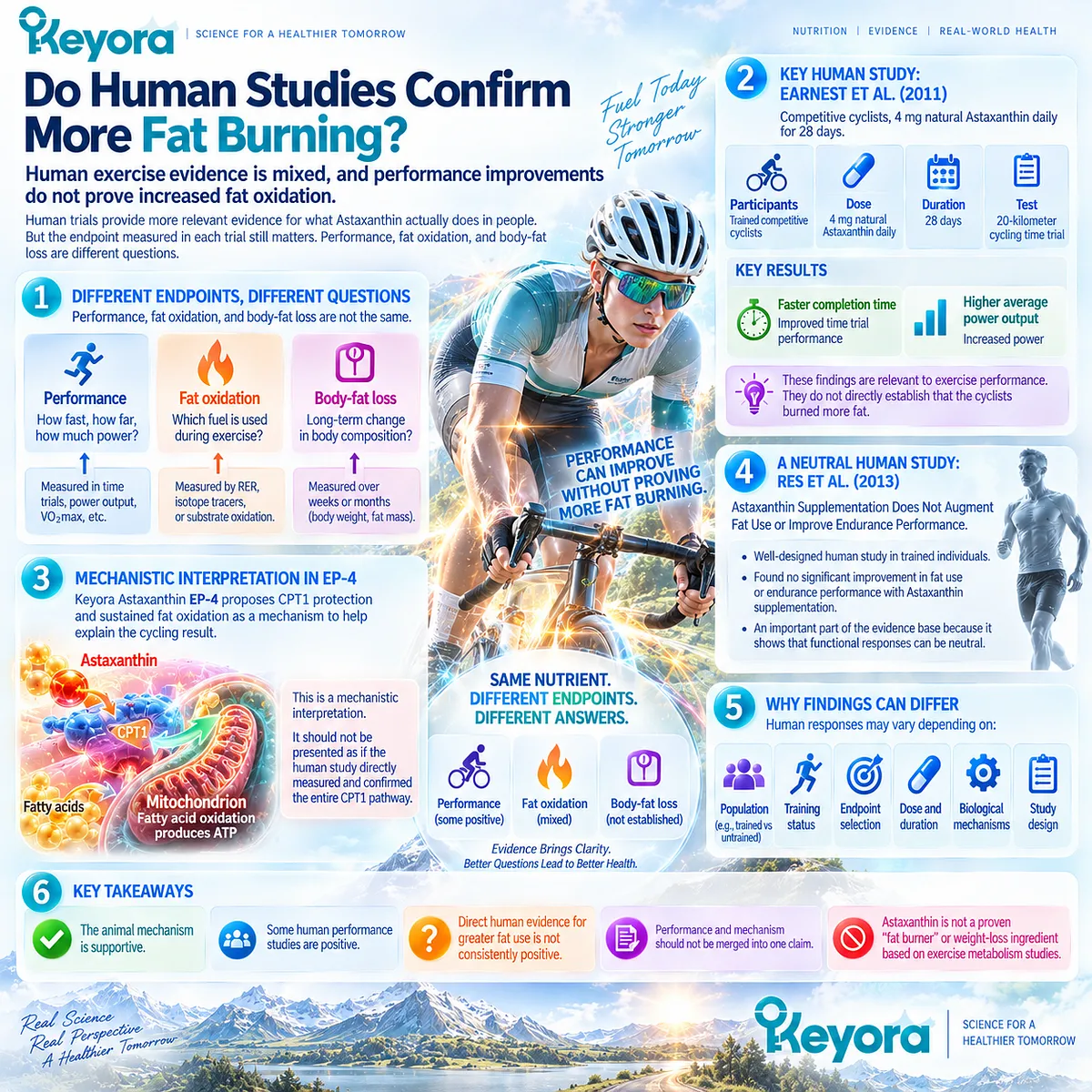
Earnest et al. (2011) studied competitive cyclists receiving 4 mg of natural Astaxanthin daily for 28 days. The study evaluated a 20-kilometer cycling time trial, and the EP-4 summary reports improvements in completion time and average power output.
Those findings are relevant to exercise performance.
They do not directly establish that the cyclists burned more fat.
Keyora Astaxanthin EP-4 proposes CPT1 protection and sustained fat oxidation as the mechanism explaining the cycling result.
That is a mechanistic interpretation.
It should not be presented as if the human study directly measured and confirmed the entire CPT1 pathway.
This distinction becomes even more important when the broader literature is considered.
The EP-4 reference set includes Res et al. (2013), Astaxanthin Supplementation Does Not Augment Fat Use or Improve Endurance Performance.
The existence of this neutral human result means the evidence cannot reasonably be summarized as:
Astaxanthin has been proven to increase fat burning during exercise in humans.
A more accurate synthesis is:
The animal mechanism is supportive. Some human performance studies are positive. Direct human evidence for greater fat use is not consistently positive.
This is a useful example of why performance and mechanism should not be merged into one claim.
A cyclist can perform better without the study proving why.
A mouse can show greater fat oxidation without proving that the same effect occurs in humans.
And even if future studies demonstrate increased human fat oxidation, that would still not automatically prove greater body-fat loss.
The Keyora Metabolic Gatekeeper: What the Evidence Does and Does Not Mean
Astaxanthin has a plausible CPT1-related metabolic mechanism, but it should not be described as a proven human fat burner
Within the Keyora Cardiac Architecture, The Metabolic Gatekeeper is best used as a framework for understanding how CPT1-related fatty-acid access to mitochondrial oxidation may interact with oxidative stress.
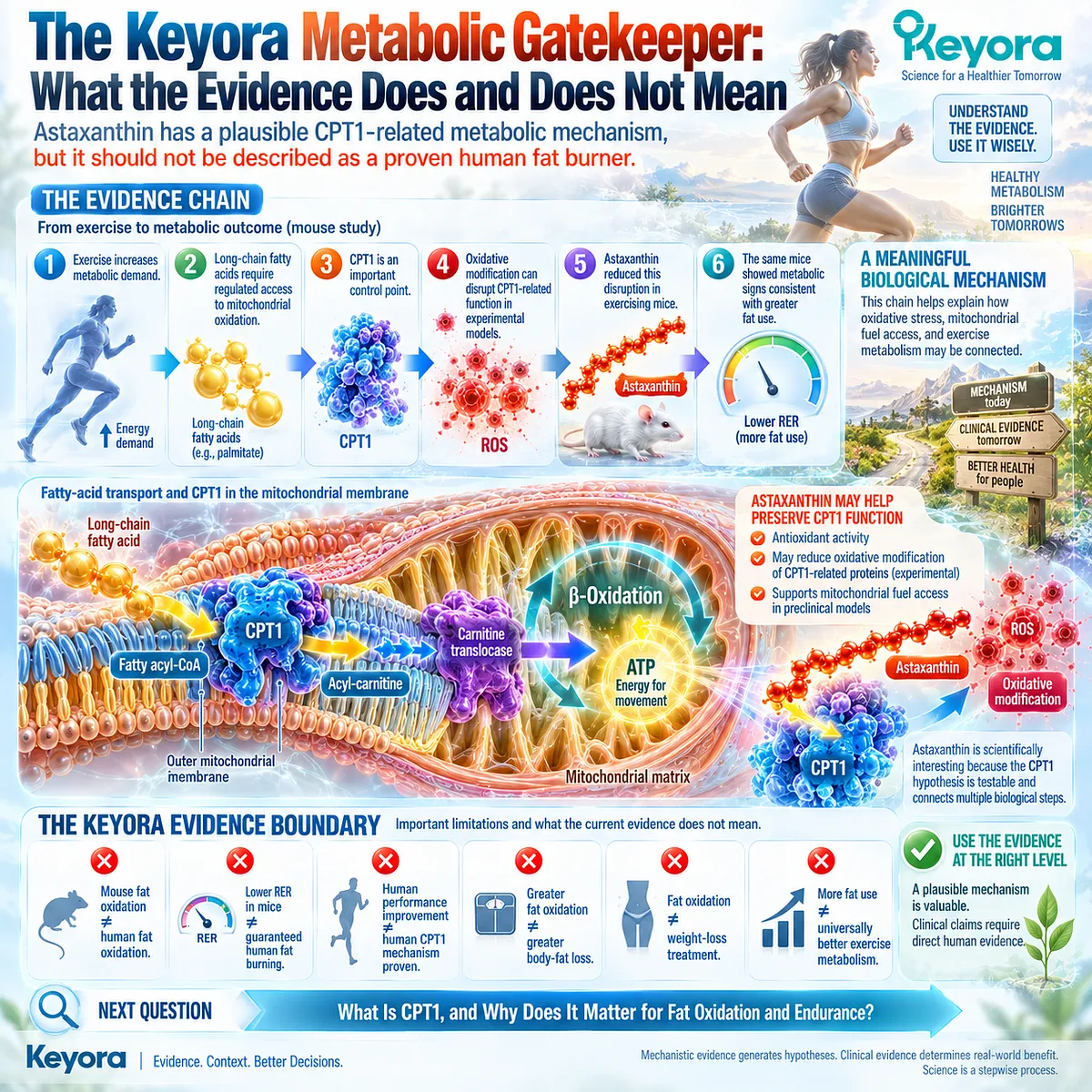
The evidence chain can be stated clearly:
Exercise increases metabolic demand
→ long-chain fatty acids require regulated access to mitochondrial oxidation
→ CPT1 is an important control point
→ oxidative modification can disrupt CPT1-related function in experimental models
→ Astaxanthin reduced this disruption in exercising mice
→ the same mice showed metabolic signs consistent with greater fat use
That is a meaningful biological mechanism.
But the claim should stop where the evidence stops.
The current evidence does not justify saying that Astaxanthin reliably increases fat oxidation in every person who exercises.
It does not justify saying that higher doses produce greater fat burning.
It does not establish that Astaxanthin causes weight loss.
And it does not mean that maximizing fat oxidation is always the best metabolic strategy.
The Keyora evidence boundary is therefore:
Mouse fat oxidation ≠ human fat oxidation
Lower RER in mice ≠ guaranteed human fat burning
Human performance improvement ≠ human CPT1 mechanism proven
Greater fat oxidation ≠ greater body-fat loss
Fat oxidation ≠ weight-loss treatment
More fat use ≠ universally better exercise metabolism
Astaxanthin remains scientifically interesting because the CPT1 hypothesis connects oxidative stress, mitochondrial fuel access, and exercise metabolism in a testable way.
The next step is to examine that control point more closely:
What Is CPT1, and Why Does It Matter for Fat Oxidation and Endurance?
This article is for educational and informational purposes only. It does not provide medical advice, diagnosis, treatment, cure, prevention, disease outcome claims, hormone restoration claims, fertility outcome claims, or formula-specific clinical efficacy claims.