
How Long Can You Take Astaxanthin? Should You Take Breaks?
Keyora Research Q&A Library
This is part of the Keyora Research Q&A Series, derived from Keyora Astaxanthin Research Journal Series.
Within the Keyora Astaxanthin Researcn framework, this Q&A translates complex astaxanthin biology into reader-friendly, evidence-bound answers, focusing on natural astaxanthin identity, molecular structure, antioxidant and redox mechanisms, membrane lipid interaction, mitochondrial resilience, inflammatory signaling pathways, human evidence interpretation, and the scientific principles behind responsible supplementation.
First published by Keyora Research Journal: www.keyorahealth.com
Short Answer
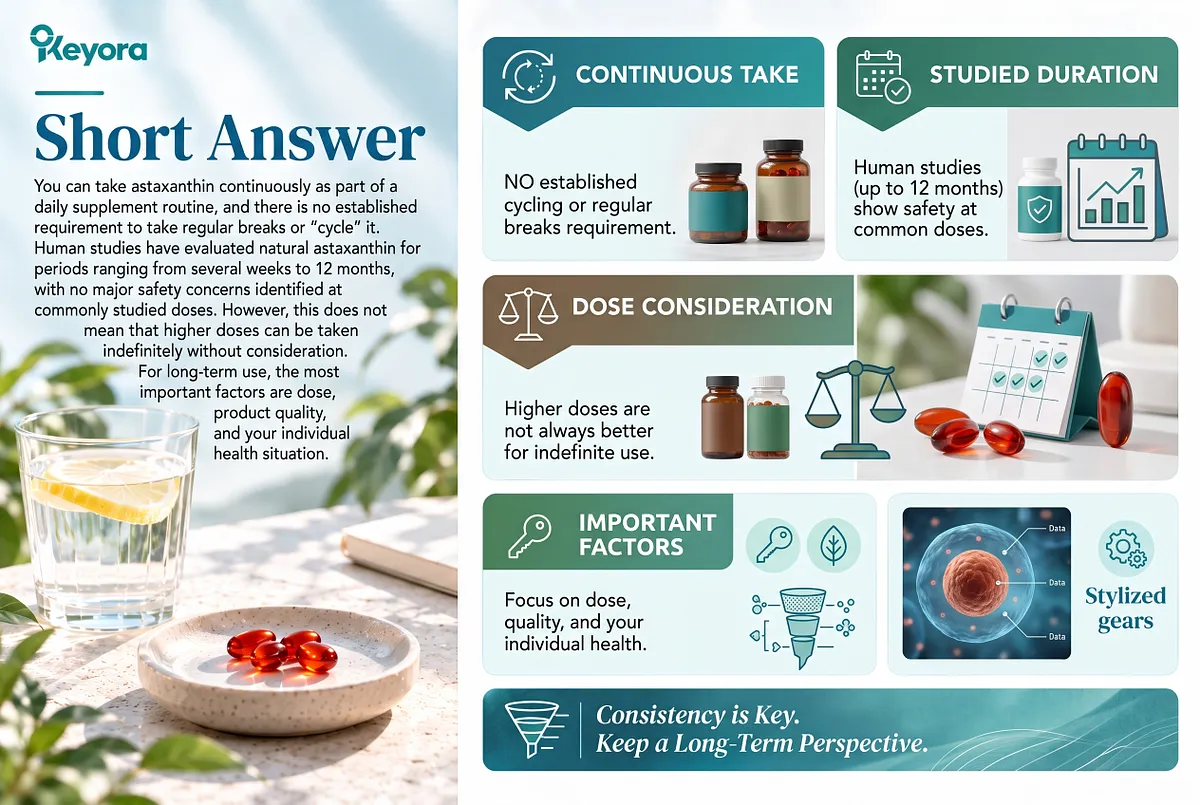
You can take astaxanthin continuously as part of a daily supplement routine, and there is no established requirement to take regular breaks or “cycle” it. Human studies have evaluated natural astaxanthin for periods ranging from several weeks to 12 months, with no major safety concerns identified at commonly studied doses. However, this does not mean that higher doses can be taken indefinitely without consideration. For long-term use, the most important factors are dose, product quality, and your individual health situation.
How Long Can You Take Astaxanthin?
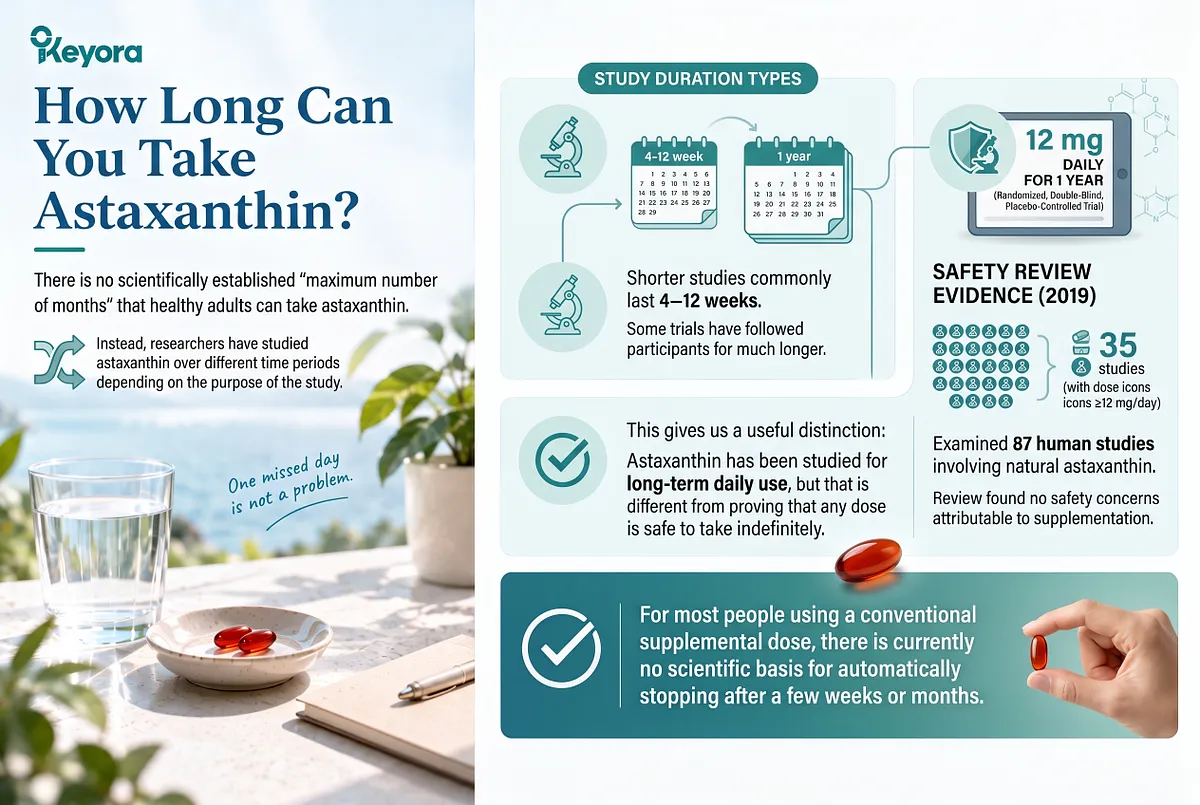
There is no scientifically established “maximum number of months” that healthy adults can take astaxanthin.
Instead, researchers have studied astaxanthin over different time periods depending on the purpose of the study.
Shorter studies commonly last 4–12 weeks, while some human trials have followed participants for considerably longer. One randomized, double-blind, placebo-controlled trial gave 12 mg of astaxanthin daily for one year and monitored vascular, oxidative-stress, and inflammatory markers throughout the study. The study did not identify significant safety problems associated with the supplementation period.
A 2019 safety review examined 87 human studies involving natural astaxanthin. Thirty-five of those studies used doses of at least 12 mg/day, and the review found no safety concerns attributable to natural astaxanthin supplementation.
This gives us a useful distinction:
Astaxanthin has been studied for long-term daily use, but that is different from proving that any dose is safe to take indefinitely.
For most people using a conventional supplemental dose, there is currently no scientific basis for automatically stopping after a few weeks or months simply because you have been taking it continuously.
Do You Need to Take Breaks From Astaxanthin?
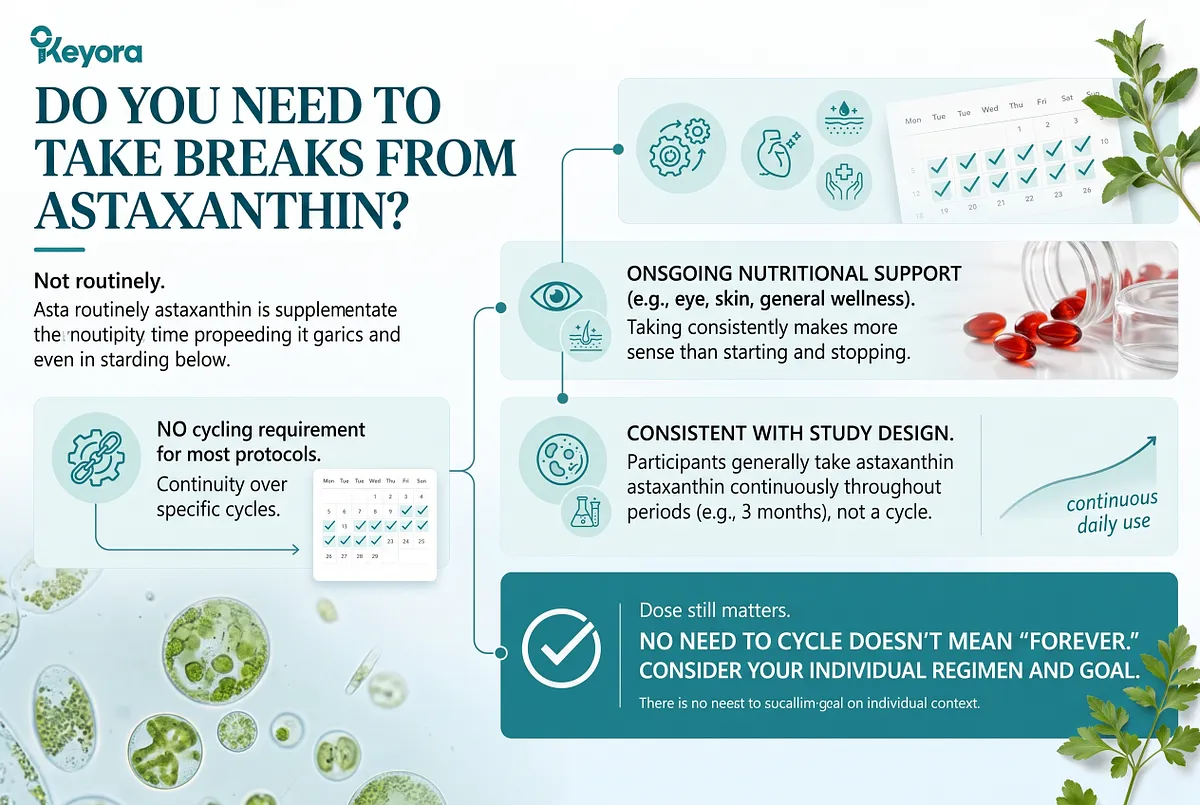
Not routinely.
Unlike some supplements that are sometimes used in cycles, there is no established astaxanthin protocol requiring you to take it for several weeks and then stop for a week or month.
If your goal is ongoing nutritional support—for example, maintaining a consistent intake as part of an eye-health, skin-health, or general wellness routine—taking it consistently makes more sense than repeatedly starting and stopping.
This is also consistent with how many human studies are designed: participants generally take astaxanthin continuously throughout the study period, rather than following a “cycle” such as 3 months on and 1 month off.
That said, “no need to cycle” should not be interpreted as “everyone should take it forever.”
Your dose and reason for supplementation still matter.
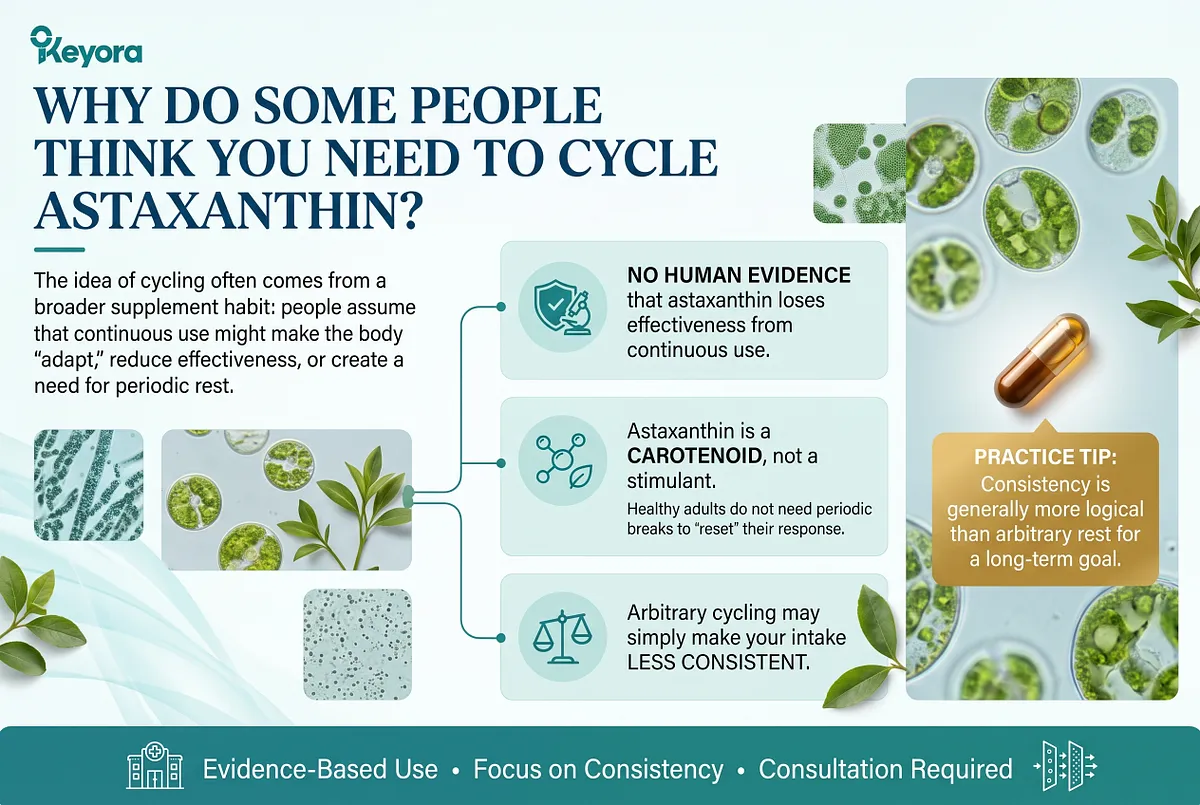
Why Do Some People Think You Need to Cycle Astaxanthin?
The idea of cycling often comes from a broader supplement habit: people assume that continuous use might make the body “adapt,” reduce effectiveness, or create a need for periodic rest.
There is currently no established human evidence showing that astaxanthin loses its effectiveness simply because you take it continuously.
Astaxanthin is a carotenoid rather than a stimulant. There is also no established evidence that healthy adults need periodic breaks to “reset” their response to it.
In practice, stopping and restarting may simply make your intake less consistent.
If you are taking astaxanthin for a specific long-term nutritional goal, consistency is generally more logical than an arbitrary cycle.
Is Long-Term Astaxanthin Use Safe?
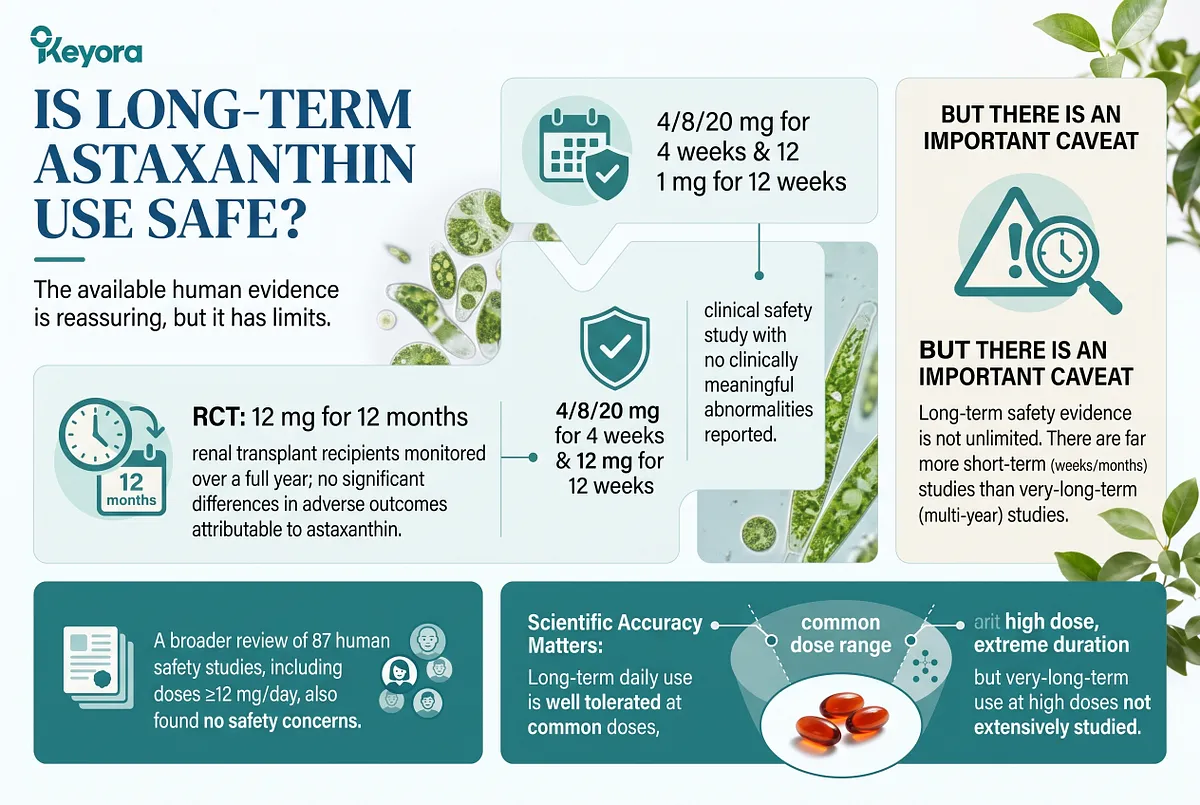
The available human evidence is reassuring, but it has limits.
In a 2009 clinical safety study, healthy adults received natural astaxanthin equivalent to 4, 8, or 20 mg/day for four weeks. The researchers reported no clinically meaningful abnormalities related to supplementation. Another group received 12 mg/day for 12 weeks.
The evidence becomes particularly relevant when looking beyond four or eight weeks.
A randomized controlled trial evaluated 12 mg/day for 12 months in renal transplant recipients. Although the study did not demonstrate the expected cardiovascular benefits, it provides useful information about exposure duration: participants were monitored over a full year without a significant difference in adverse outcomes attributable to astaxanthin.
A broader review of human safety data also found no safety concerns with natural astaxanthin across 87 human studies, including studies using ≥12 mg/day.
But there is an important caveat
Long-term safety evidence is not unlimited.
There are far more studies lasting several weeks or a few months than studies following healthy people for multiple years. Therefore, it is more scientifically accurate to say:
Long-term daily use appears well tolerated at commonly studied doses, but very-long-term use at high doses has not been studied as extensively.
That distinction matters when deciding how to use a supplement responsibly.
Does Your Dose Change How Long You Should Take Astaxanthin?
Yes.
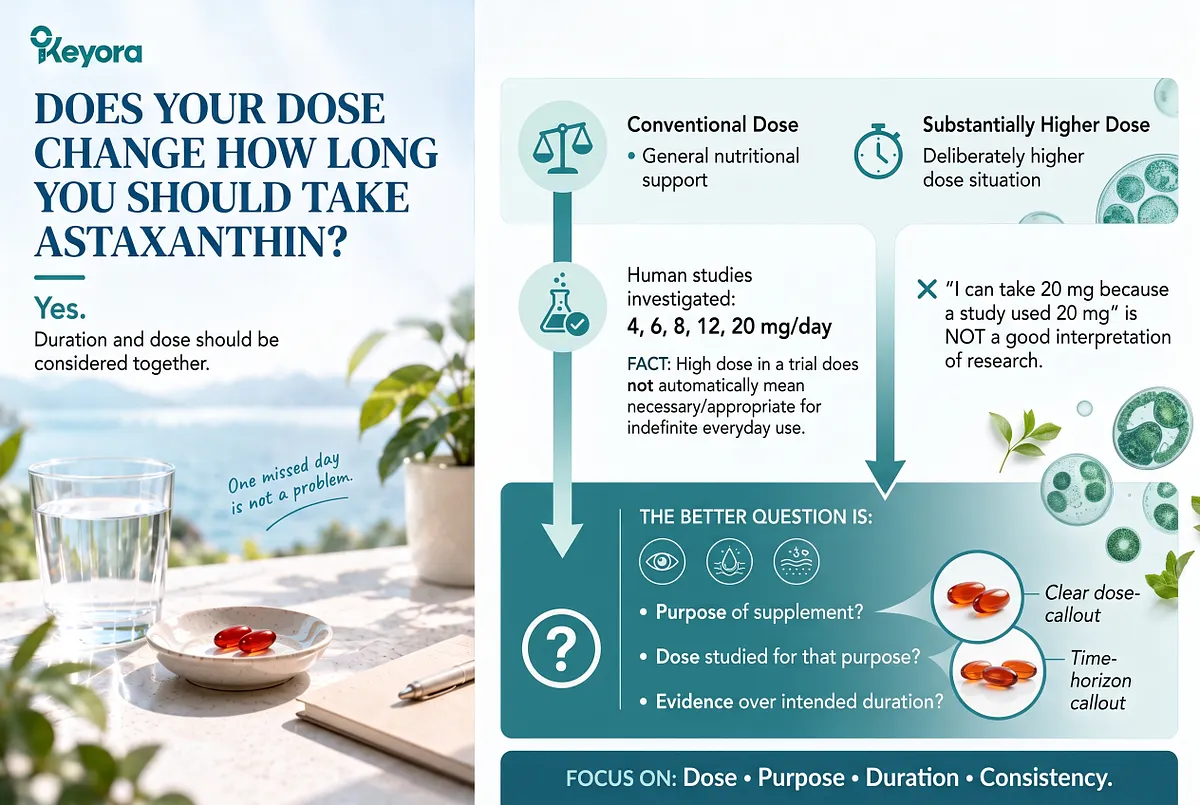
Duration and dose should be considered together.
For example, a person taking a conventional daily dose for general nutritional support is in a different situation from someone deliberately taking a substantially higher dose.
Human studies have investigated a broad range of doses, including 4, 6, 8, 12 and 20 mg/day, with different durations and research objectives. The fact that a higher dose has appeared in a clinical trial does not automatically mean that the same dose is necessary—or appropriate—for indefinite everyday use.
This is why “I can take 20 mg because a study used 20 mg” is not a good way to interpret supplementation research.
The better question is:
What dose has been studied for the purpose I care about, and what is the evidence for using that dose over the length of time I intend to take it?
This dose-duration relationship is much more useful than simply asking whether astaxanthin is “safe.”
What Happens If You Take Astaxanthin for Several Months and Then Stop?
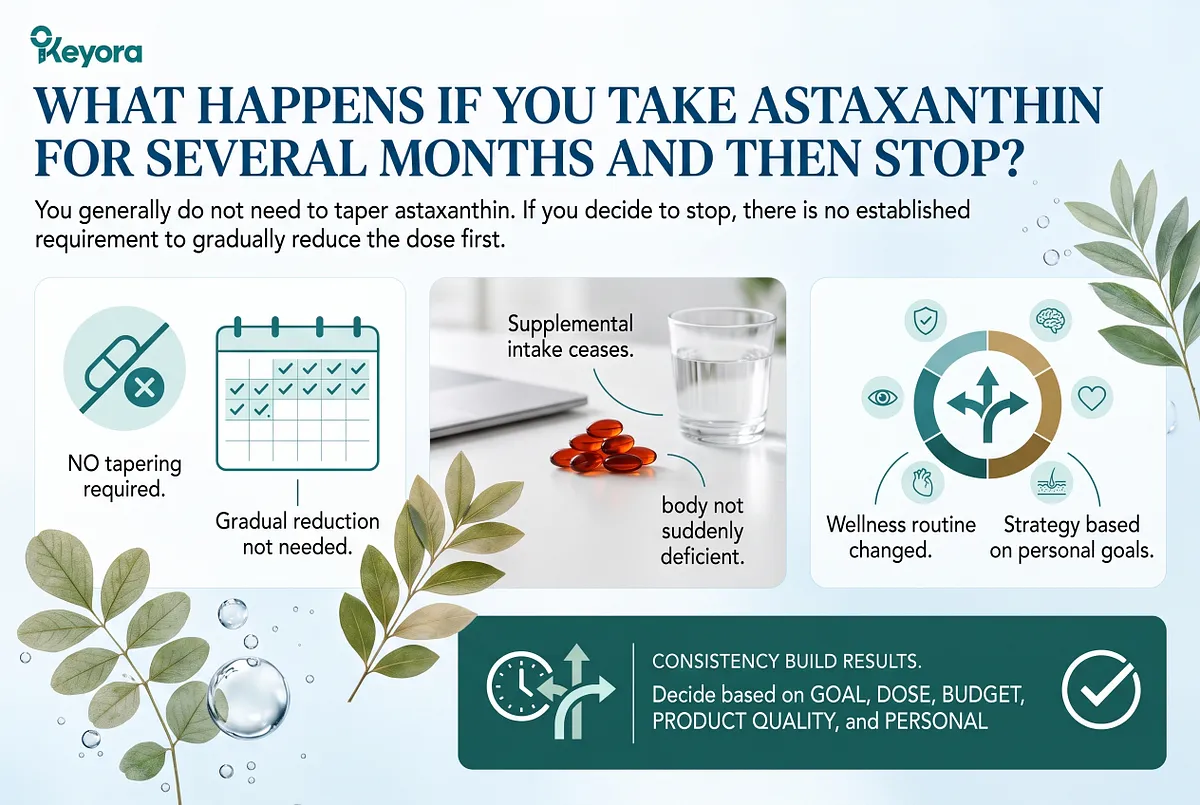
You generally do not need to taper astaxanthin.
If you decide to stop, there is no established requirement to gradually reduce the dose first.
However, stopping supplementation also means that you are no longer receiving the supplemental intake. That does not mean your body suddenly becomes deficient in astaxanthin, but it does mean you are no longer maintaining the same supplementation routine.
For people using astaxanthin as part of a long-term wellness strategy, the decision to continue or stop should therefore be based on your goal, dose, budget, product quality, and personal circumstances, rather than on the assumption that your body needs a mandatory “break.”
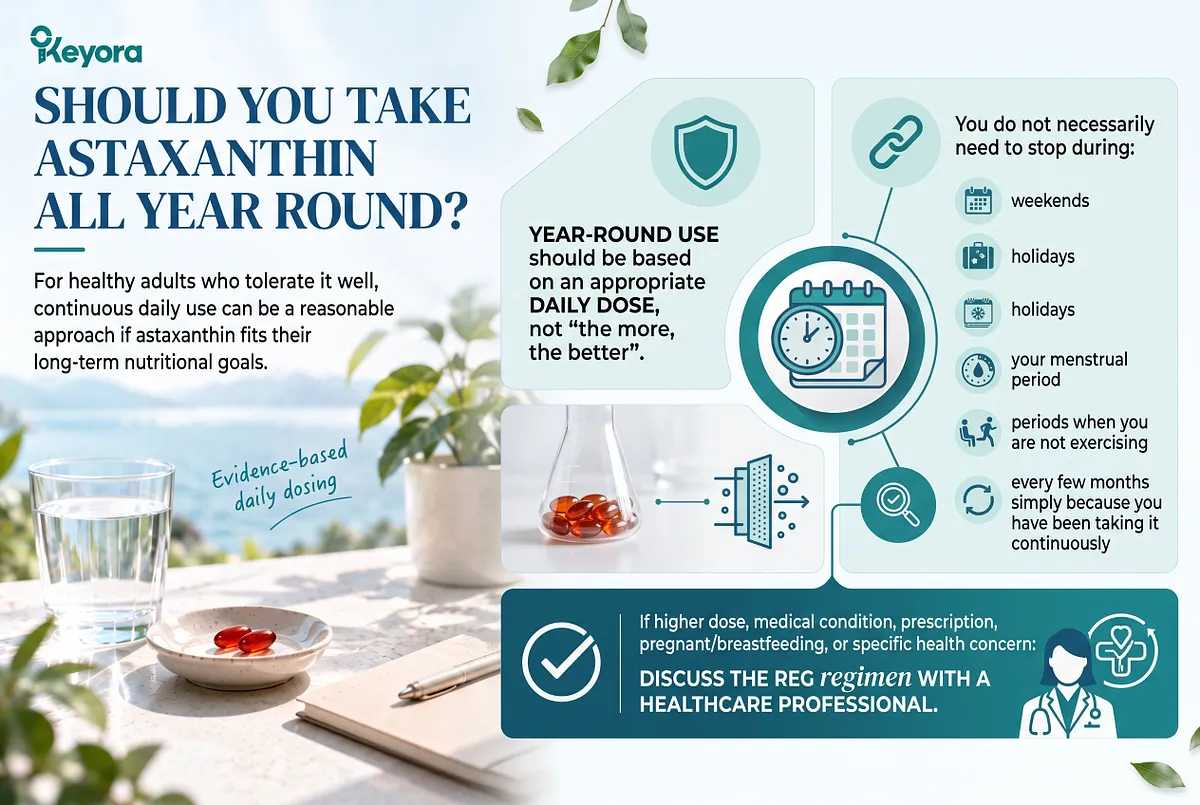
Should You Take Astaxanthin All Year Round?
For healthy adults who tolerate it well, continuous daily use can be a reasonable approach if astaxanthin fits their long-term nutritional goals.
You do not necessarily need to stop during:
· weekends
· holidays
· your menstrual period
· periods when you are not exercising
· every few months simply because you have been taking it continuously
The important point is that year-round use should still be based on an appropriate daily dose rather than “the more, the better.”
If you are taking a higher dose, have a medical condition, take prescription medications, are pregnant or breastfeeding, or are considering long-term supplementation for a specific health concern, it is more appropriate to discuss the regimen with a healthcare professional.
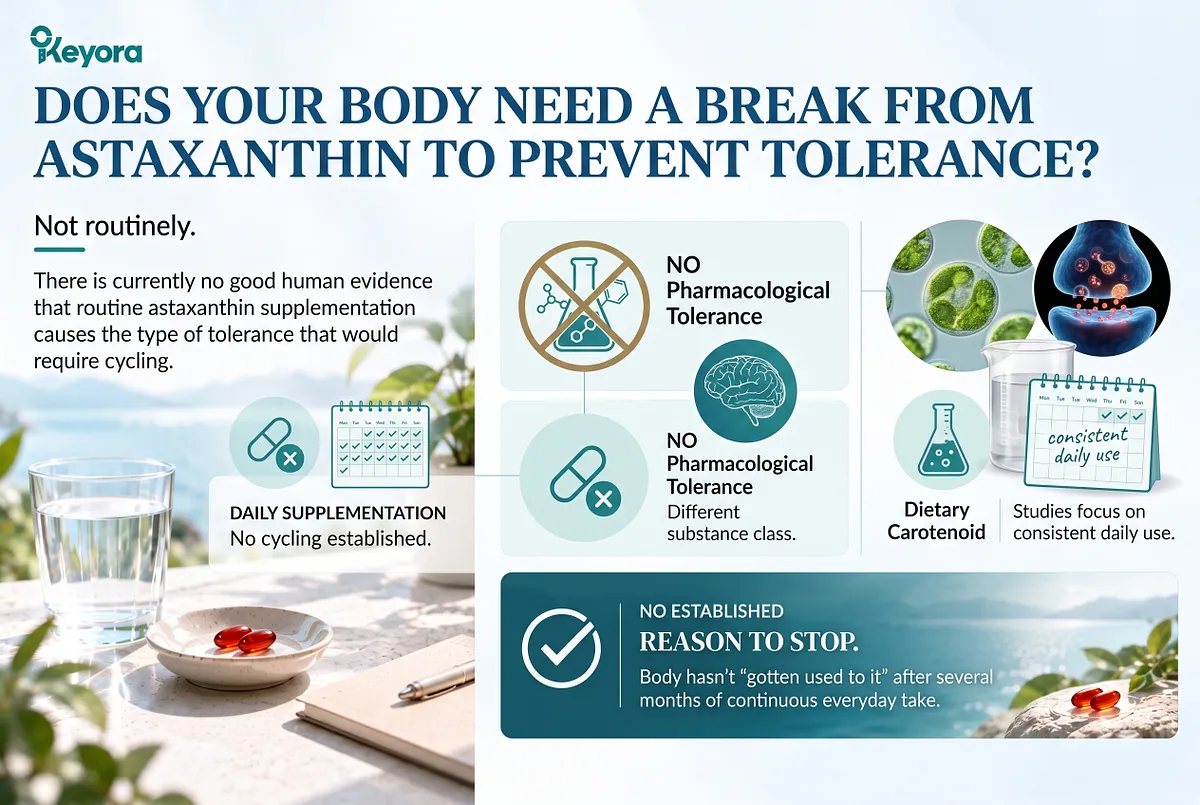
Does Your Body Need a Break From Astaxanthin to Prevent Tolerance?
There is currently no good human evidence that routine astaxanthin supplementation causes the type of tolerance that would require cycling.
This is an important difference between astaxanthin and substances where repeated exposure can lead to noticeable pharmacological tolerance.
Astaxanthin is a dietary carotenoid, and human supplementation studies have generally focused on consistent daily intake over a defined period, rather than testing whether cycling improves effectiveness.
So if you have been taking astaxanthin every day for several months, there is no established reason to stop simply because you are worried that your body has “gotten used to it.”
What Is a Reasonable Long-Term Approach?
If you are planning to take astaxanthin for months rather than weeks, think about four factors:
Factor
What to consider
Dose
Choose a dose appropriate for your goal rather than automatically choosing the highest available dose
Duration
Continuous use has been studied, including a 12-month trial at 12 mg/day
Consistency
Regular daily intake is generally more logical than arbitrary cycling
Product quality
Source, extraction, astaxanthin concentration, stability and quality control matter for a long-term supplement
This last point is especially important.
When you take a supplement for months or years, quality becomes more important, not less. A product should not be evaluated only by the number of milligrams printed on the front label. The source of the astaxanthin, extraction and purification process, actual astaxanthin content, formulation, stability, and manufacturing quality all contribute to what you are actually consuming.
Key Takeaway
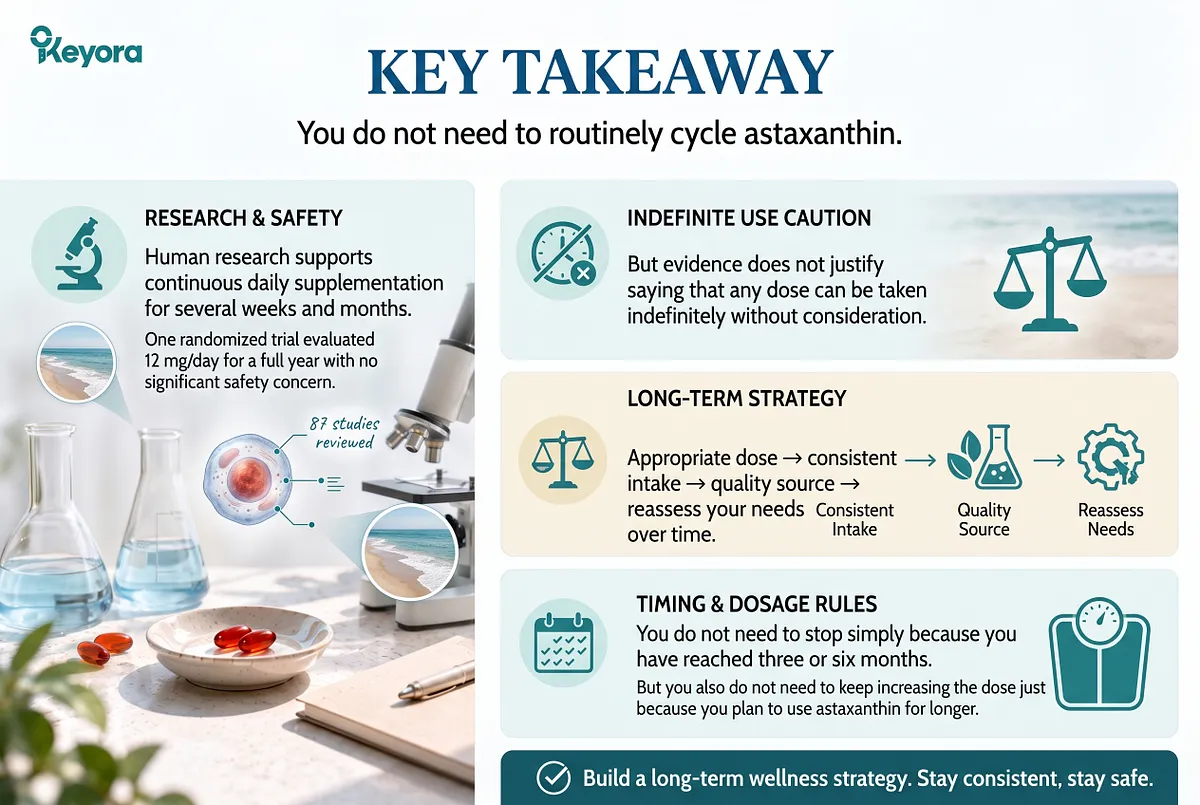
You do not need to routinely cycle astaxanthin.
Human research supports continuous daily supplementation for several weeks and months, and one randomized trial evaluated 12 mg/day for a full year without identifying a significant safety concern attributable to astaxanthin. A broader safety review of 87 human studies also found no safety concerns with natural astaxanthin supplementation.
But the evidence does not justify saying that any dose can be taken indefinitely without consideration.
For long-term use, the better strategy is:
Appropriate dose → consistent intake → quality source → reassess your needs over time.
You do not need to stop simply because you have reached three or six months. But you also do not need to keep increasing the dose just because you plan to use astaxanthin for longer.
Quick FAQs
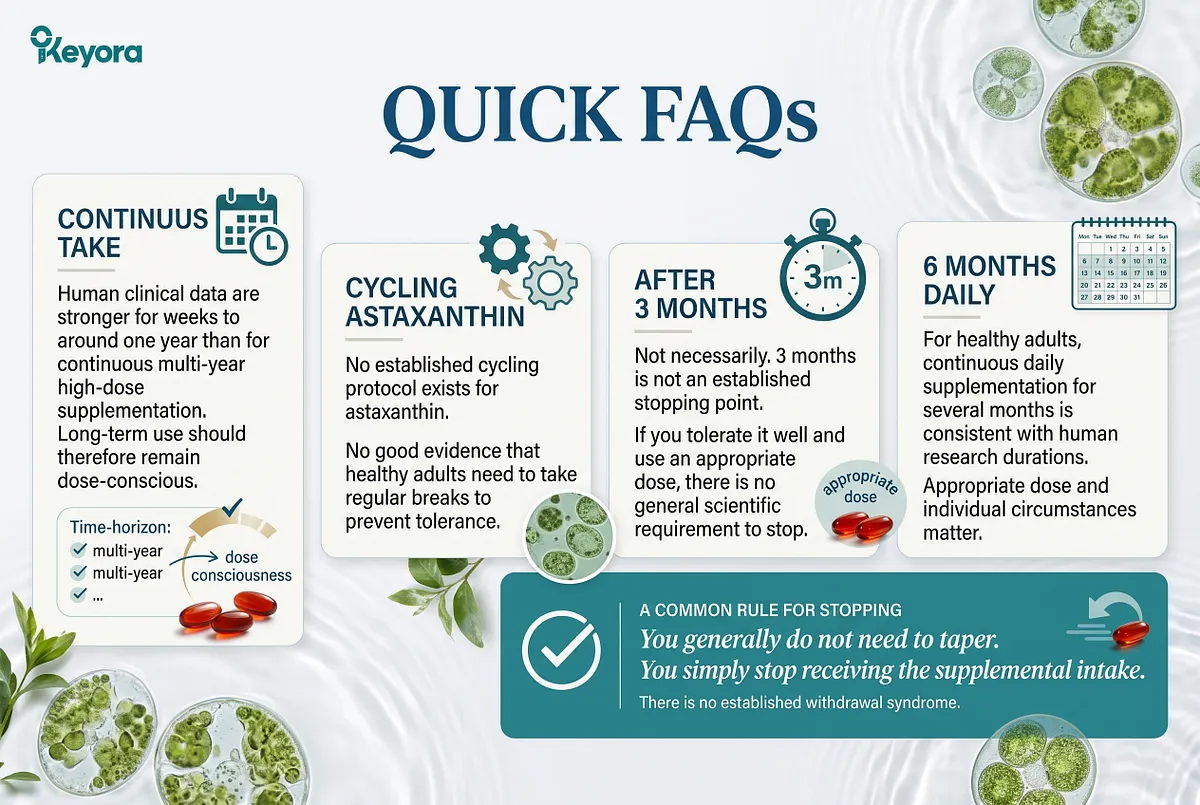
Can you take astaxanthin for years?
There is no established rule that healthy adults must stop after a certain number of months. However, human clinical data are much stronger for weeks to around one year than for continuous multi-year high-dose supplementation. Long-term use should therefore remain dose-conscious.
Do you need to cycle astaxanthin?
No established cycling protocol exists for astaxanthin. There is no good evidence that healthy adults need to take regular breaks to prevent tolerance.
Should you stop astaxanthin after 3 months?
Not necessarily. Three months is not an established stopping point. If you tolerate the supplement well and are using an appropriate dose, there is no general scientific requirement to stop at three months.
Can you take astaxanthin every day for 6 months?
For healthy adults, continuous daily supplementation for several months is consistent with the durations used in human research. The appropriate dose and individual circumstances still matter.
What happens if you stop taking astaxanthin?
You generally do not need to taper. You simply stop receiving the supplemental intake. There is no established withdrawal syndrome associated with stopping astaxanthin.
References
1. Brendler T, Williamson EM. Astaxanthin: How much is too much? A safety review. Phytotherapy Research. 2019;33(12):3090–3111. PMID: 31788888. DOI: 10.1002/ptr.6514.
2. Satoh A, et al. Preliminary Clinical Evaluation of Toxicity and Efficacy of a New Astaxanthin-rich Haematococcus pluvialis Extract. Journal of Clinical Biochemistry and Nutrition. 2009;44(3):280–284. PMID: 19430618. DOI: 10.3164/jcbn.08-238.
3. Fassett RG, Coombes JS. Astaxanthin: A Potential Therapeutic Agent in Cardiovascular Disease. Marine Drugs. 2011;9(3):447–465.
4. Tominaga K, et al. Astaxanthin-rich Haematococcus pluvialis extract blocks the development of gastric inflammatory markers in humans. Journal of Clinical Biochemistry and Nutrition. 2009.
5. EFSA NDA Panel. Safety of astaxanthin for its use as a novel food in food supplements. EFSA Journal. 2020;18(2):e05993. DOI: 10.2903/j.efsa.2020.5993.