
How Should Consumers Judge Antioxidant Supplement Claims?
Keyora Research Q&A Library
This is part of the Keyora Research Q&A Series, derived from Keyora Astaxanthin Research Journal Series.
Within the Keyora Astaxanthin Researcn framework, this Q&A translates complex astaxanthin biology into reader-friendly, evidence-bound answers, focusing on natural astaxanthin identity, molecular structure, antioxidant and redox mechanisms, membrane lipid interaction, mitochondrial resilience, inflammatory signaling pathways, human evidence interpretation, and the scientific principles behind responsible supplementation.
First published by Keyora Research Journal: www.keyorahealth.com

Direct Answer
A trustworthy antioxidant claim should match the ingredient, dose, population, endpoint, formulation, and evidence actually studied
Consumers should judge antioxidant supplement claims by asking whether the wording of the claim matches the evidence used to support it.
The most important question is not simply, “Is there a study?”
It is:
What exactly is being claimed, and what did the supporting research actually measure?
-
A supplement may have a plausible antioxidant mechanism.
-
An ingredient may have been tested in animals, cells, or humans.
-
A human study may even report a statistically significant result.
None of those facts automatically allows every broader health statement that appears in marketing.
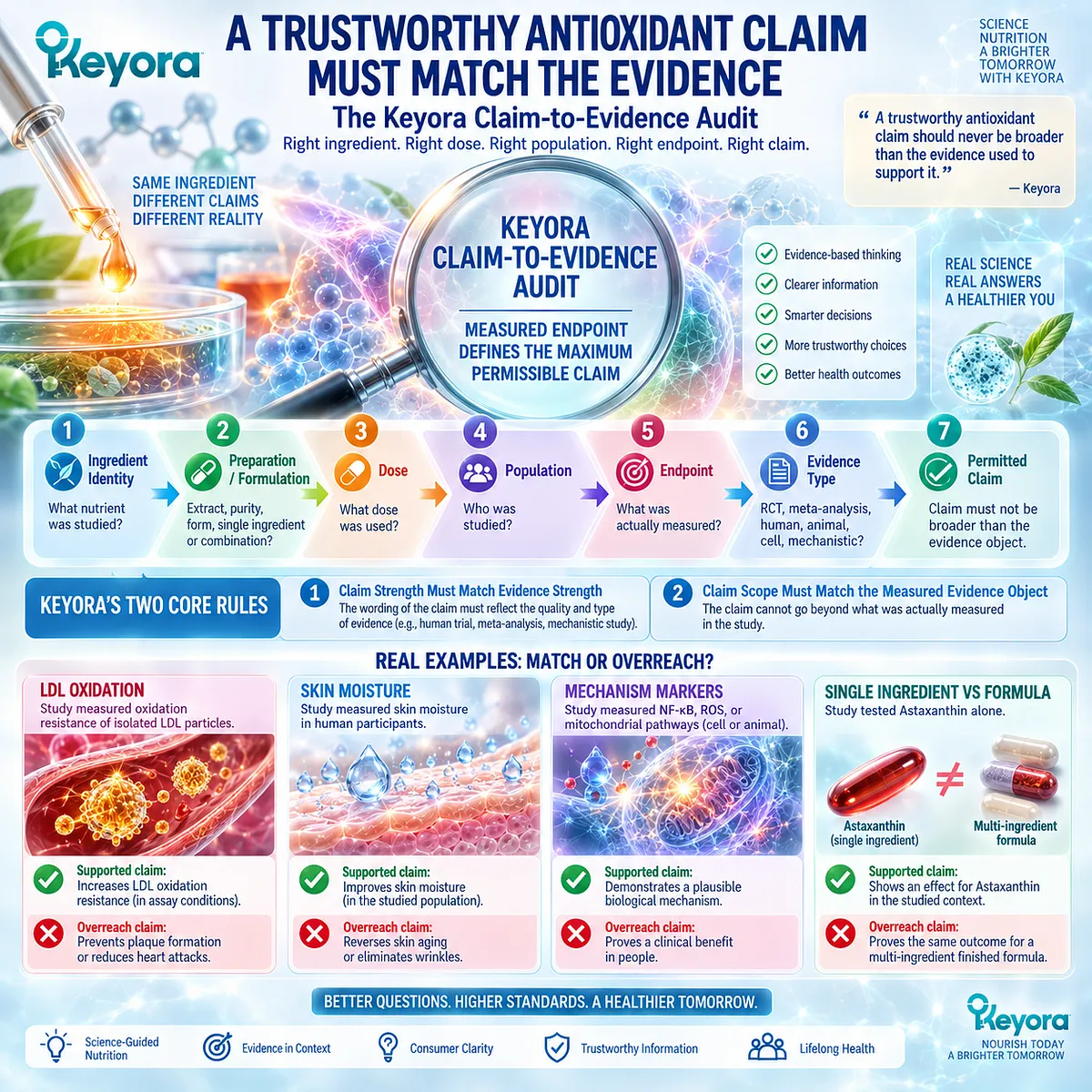
This Q&A uses the Keyora Claim-to-Evidence Audit, an explanatory framework for checking whether an antioxidant claim matches the ingredient studied, dose and preparation used, population tested, measured endpoint, and actual strength of evidence.
Its central rule is:
Claim Strength Must Match Evidence Strength
For example, a study showing increased resistance of isolated LDL particles to oxidation supports an LDL oxidation endpoint. It does not automatically prove that the same intervention prevented plaque formation or reduced heart attacks.
-
A study showing improved skin moisture can support a skin-moisture claim. It does not automatically prove reversal of skin aging.
-
A mechanistic study involving NF-kB, ROS, or mitochondrial pathways can support biological plausibility. It does not automatically prove a clinical benefit in people.
-
And a study on Astaxanthin alone does not automatically prove that a multi-ingredient finished formula produces the same outcome.
The strongest consumer rule is therefore:
A trustworthy antioxidant claim should never be broader than the evidence used to support it.
Does the Claim Match What the Study Actually Measured?
The first test is whether the advertised benefit is the same outcome researchers actually measured
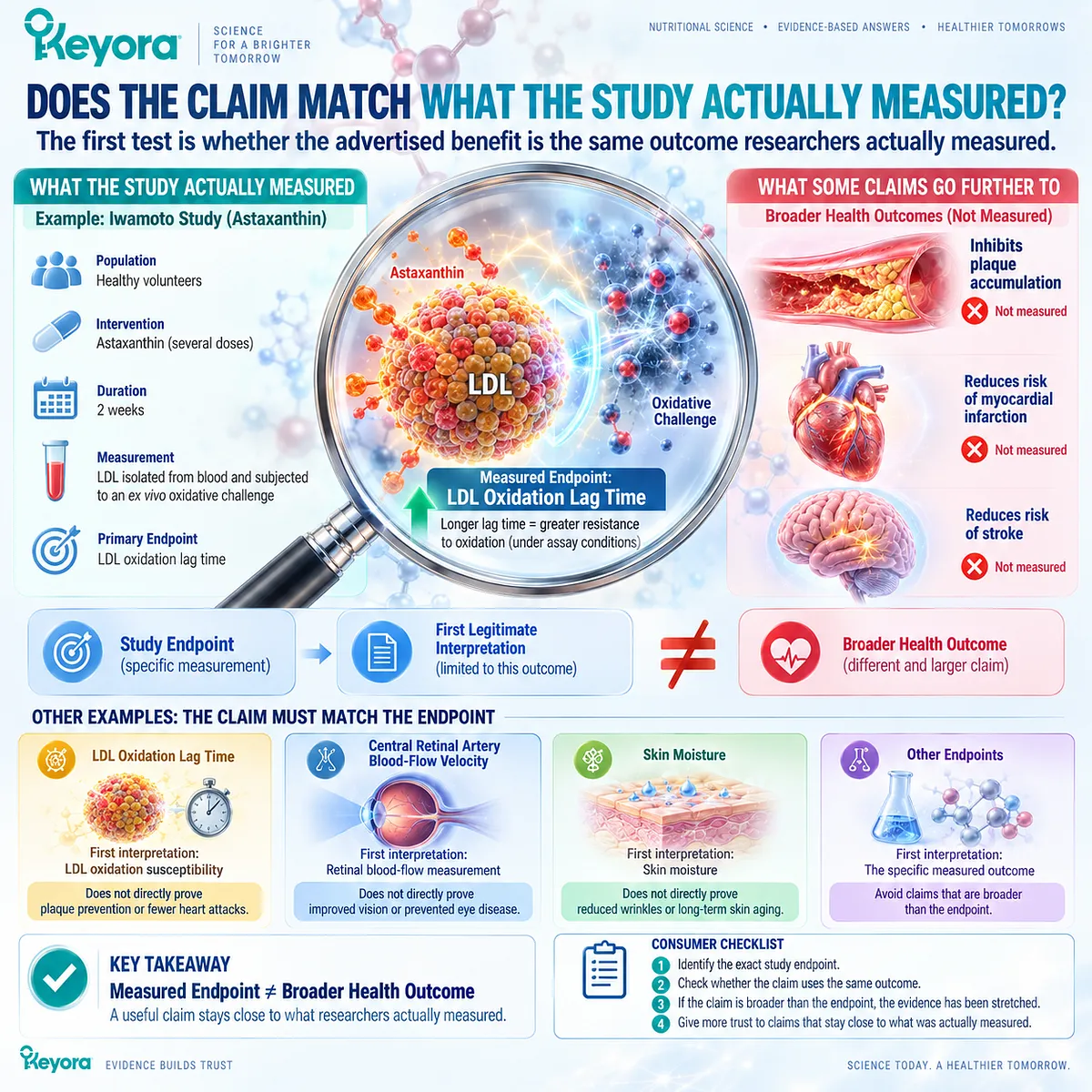
The fastest way to audit an antioxidant claim is to compare the public statement with the study endpoint.
An endpoint is the specific outcome researchers measured.
If the endpoint was LDL oxidation lag time, the first legitimate interpretation concerns LDL oxidation susceptibility.
If the endpoint was central retinal artery blood-flow velocity, the first interpretation concerns that physiological measurement.
If the endpoint was skin moisture, the evidence first supports skin moisture.
Problems begin when the wording travels much farther than the endpoint.
The Iwamoto study provides a clear example. The Keyora source describes healthy volunteers receiving Astaxanthin at several doses for two weeks, after which LDL was isolated from blood and subjected to an ex vivo oxidative challenge. The measured outcome was oxidation lag time.
That supports discussion of the resistance of isolated LDL to oxidation under the assay conditions.
It does not directly show that plaque was prevented in the participants.
It also does not show that myocardial infarction or stroke incidence decreased.
Yet elsewhere in the source, LDL oxidation biology is expanded into claims about inhibiting plaque accumulation and reducing cardiovascular-event risk.
That difference illustrates the consumer problem.
A real biological finding can become a much larger health story as it moves from research language into marketing language.
The correct evidence boundary is:
Measured Endpoint ≠ Broader Health Outcome
Consumers should therefore compare the exact study measurement with the exact product claim.
If the advertisement is broader than the endpoint, the evidence has been stretched.
A useful claim stays close to what researchers actually measured.
Is the Evidence Mechanistic, Preclinical, or Human?
A plausible pathway can strengthen a claim rationale, but consumers should distinguish experimental evidence from outcomes measured in people
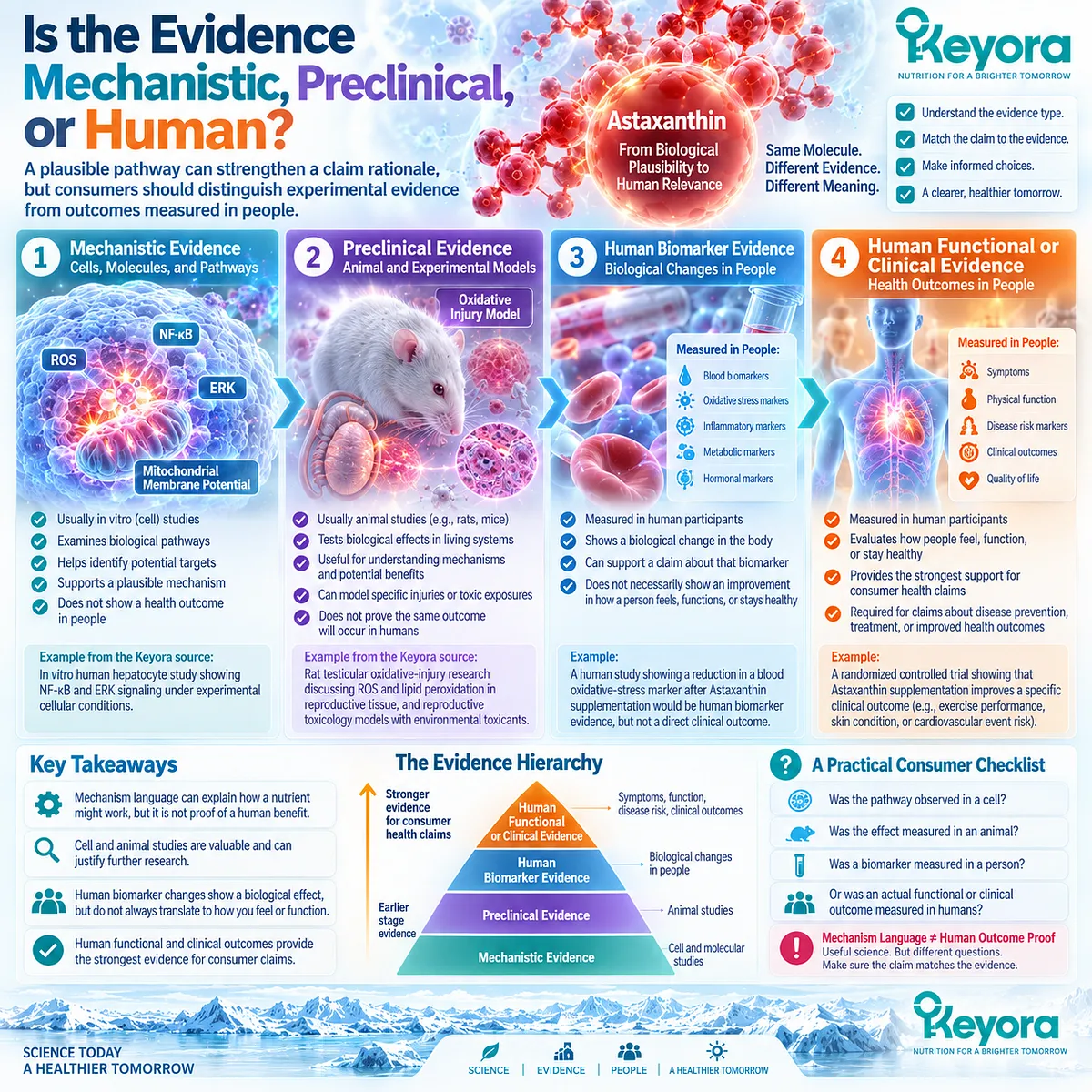
Antioxidant supplements are often described using scientific pathway language.
Terms such as ROS, lipid peroxidation, NF-kB, mitochondrial membrane potential, inflammatory signaling, apoptosis, or oxidative DNA damage can make a claim sound clinically established.
But pathway language and human outcome evidence are not the same thing.
The Keyora source contains examples of Astaxanthin research in animal reproductive injury models. One section cites rat testicular oxidative-injury research and uses it to discuss ROS and lipid peroxidation in reproductive tissue.
Another section discusses reproductive toxicology findings from preclinical models involving specific oxidative insults and environmental toxicants.
The source also includes an in vitro human hepatocyte study examining signaling pathways such as NF-kB and ERK under experimental cellular conditions.
These studies are useful.
They can help answer whether Astaxanthin interacts with a proposed biological pathway under controlled experimental conditions.
But they do not, by themselves, answer whether ordinary people taking an antioxidant supplement will experience a clinically meaningful health outcome.
The practical consumer rule is:
Mechanism Language ≠ Human Outcome Proof
This does not mean cell or animal studies are irrelevant.
They can reveal mechanisms, identify biological targets, and justify further research.
The problem appears only when experimental evidence is presented as though the same outcome has already been demonstrated in people.
Consumers should therefore ask:
Was this pathway observed in a cell?
Was the effect measured in an animal?
Was a biomarker measured in a person?
Or was an actual functional or clinical outcome measured in humans?
Those distinctions materially change what the claim can support.
Was the Same Ingredient, Dose, and Form Actually Studied?
A study is most relevant when the ingredient identity, dose, preparation, and exposure resemble the claim being made
A positive study does not automatically validate every dose or every form of an ingredient.
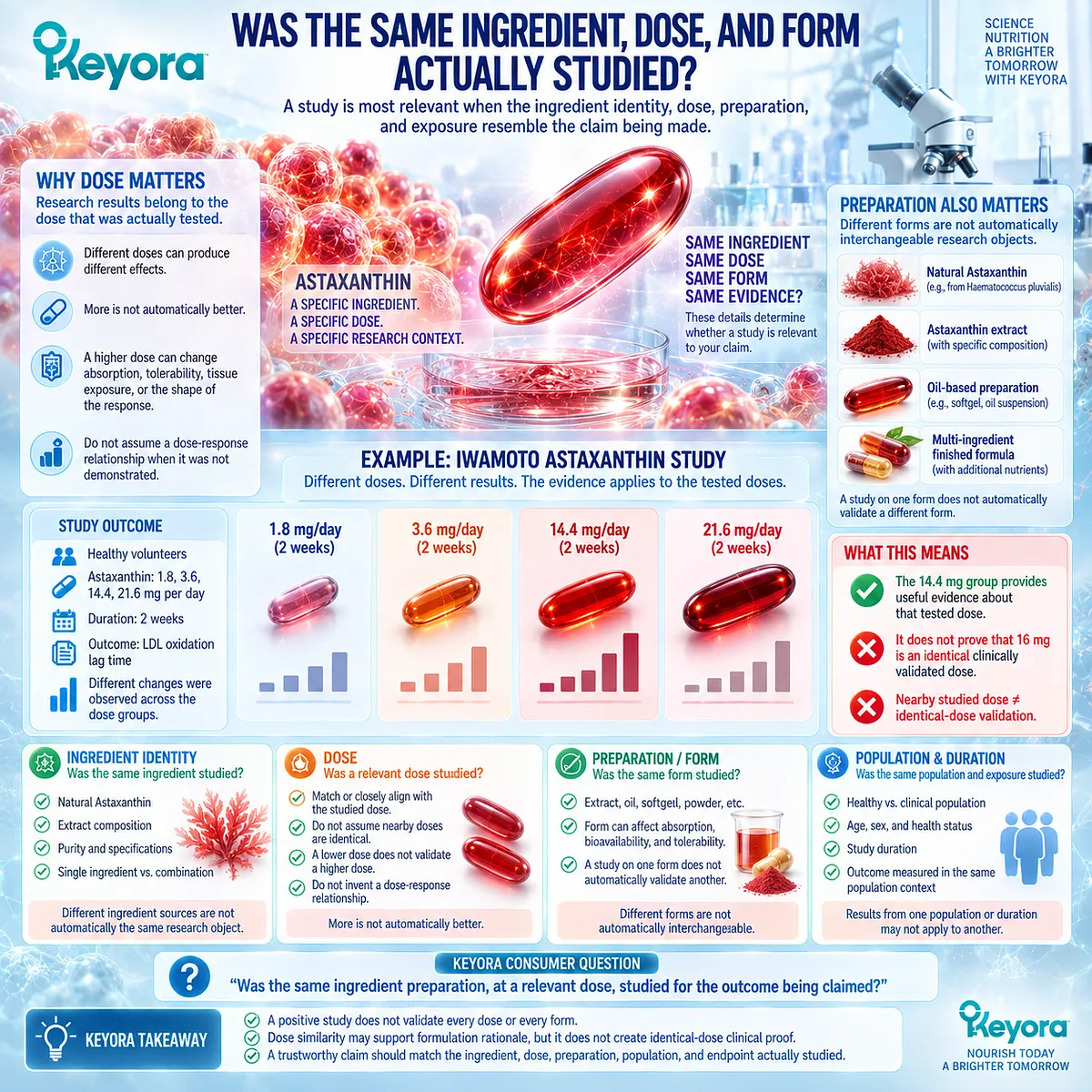
Dose matters because research results belong to the intervention that was actually tested.
For example, the Iwamoto source describes Astaxanthin doses of 1.8, 3.6, 14.4, and 21.6 mg per day over two weeks. The source reports different changes in LDL oxidation lag time across those groups.
The 14.4 mg group provides useful evidence about that tested dose.
It does not prove that 16 mg is an identical clinically validated dose.
The appropriate distinction is:
Nearby Studied Dose ≠ Identical-Dose Validation
The same rule applies in the opposite direction.
A 5 mg study does not automatically validate 16 mg simply because 16 mg is a larger amount.
More is not automatically better.
A higher dose can change absorption, tolerability, tissue exposure, or the shape of the response, and a dose-response relationship should not be invented when it was not demonstrated.
Preparation also matters.
Natural Astaxanthin, an extract containing Astaxanthin, an oil-based preparation, and a multi-ingredient finished formula are not automatically interchangeable research objects.
The consumer question should therefore be more precise than:
“Has Astaxanthin been studied?”
A better question is:
“Was the same ingredient preparation, at a relevant dose, studied for the outcome being claimed?”
This is particularly important when brands use a nearby dose to imply direct validation of a different label amount.
Dose similarity may support formulation rationale.
It does not create identical-dose clinical proof.
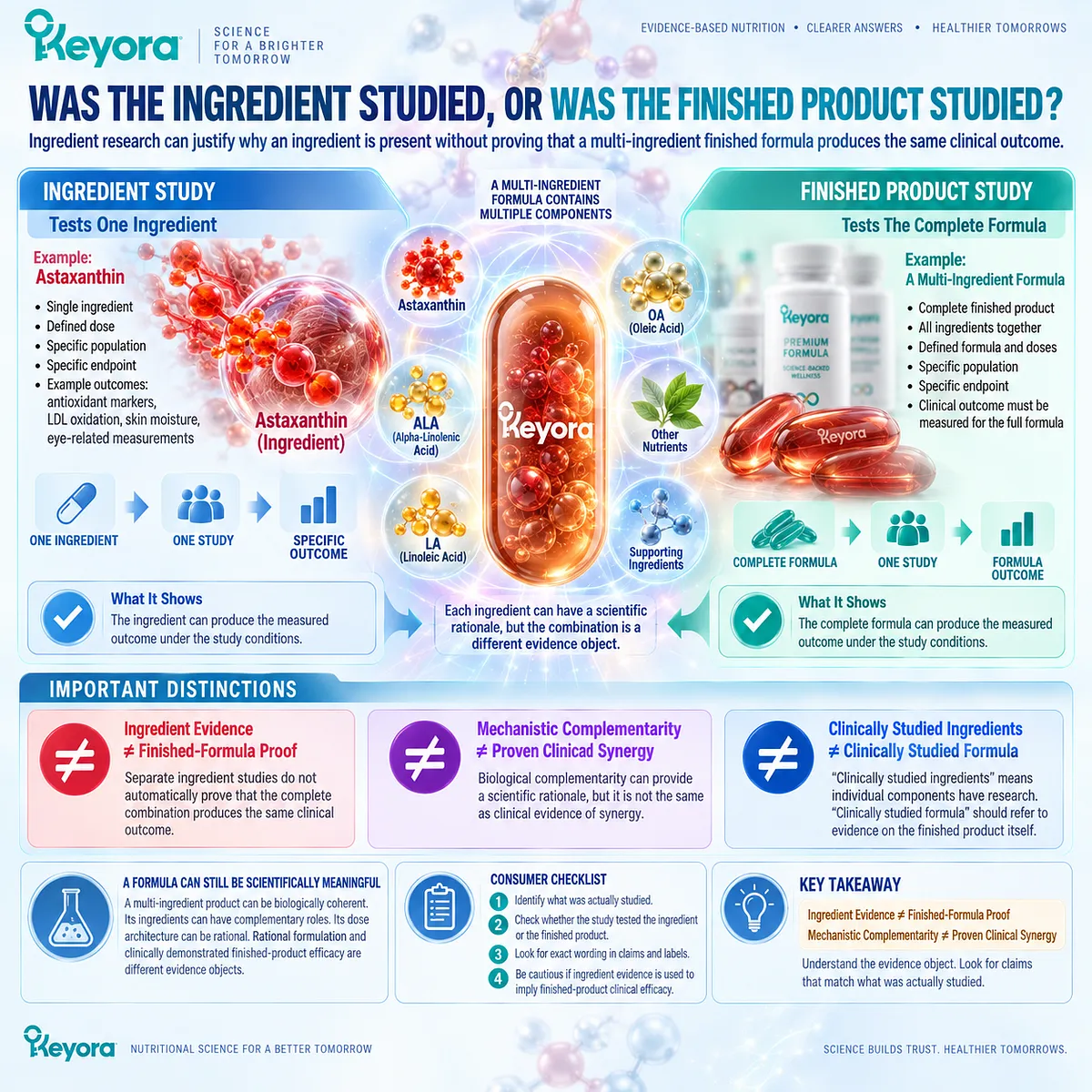
Was the Ingredient Studied, or Was the Finished Product Studied?
Ingredient research can justify why an ingredient is present without proving that a multi-ingredient finished formula produces the same clinical outcome
This is one of the most important distinctions in supplement marketing.
A clinical study can test an ingredient.
A finished product can contain that ingredient.
Those two facts do not mean the finished product has been clinically tested.
The Keyora source explicitly notes in one section that the studies being discussed achieved their reported outcomes using Astaxanthin alone before the text shifts toward discussion of the broader Keyora matrix.
That distinction should remain visible.
If a formula contains Astaxanthin together with ALA, LA, OA, or other ingredients, Astaxanthin research can support the scientific rationale for including Astaxanthin.
Research on ALA can support the rationale for including ALA.
But separate ingredient studies do not automatically prove that the complete combination produces the sum of all those outcomes.
They also do not automatically prove clinical synergy.
Therefore:
Ingredient Evidence ≠ Finished-Formula Proof
And:
Mechanistic Complementarity ≠ Proven Clinical Synergy
This does not make multi-ingredient formulation scientifically meaningless.
A formula can be biologically coherent.
Its ingredients can have complementary roles.
Its dose architecture can be rational.
But “rational formulation” and “clinically demonstrated finished-product efficacy” are different evidence objects.
Consumers should look carefully for wording such as:
clinically studied ingredients
versus:
clinically studied formula
Those phrases are not equivalent.
The first can mean individual components have research.
The second should refer to evidence on the finished formulation itself.
When that distinction is hidden, marketing language can make ingredient evidence sound stronger than it really is.
Should Consumers Trust Words Like “Strongest,” “Best,” or “Clinically Proven”?
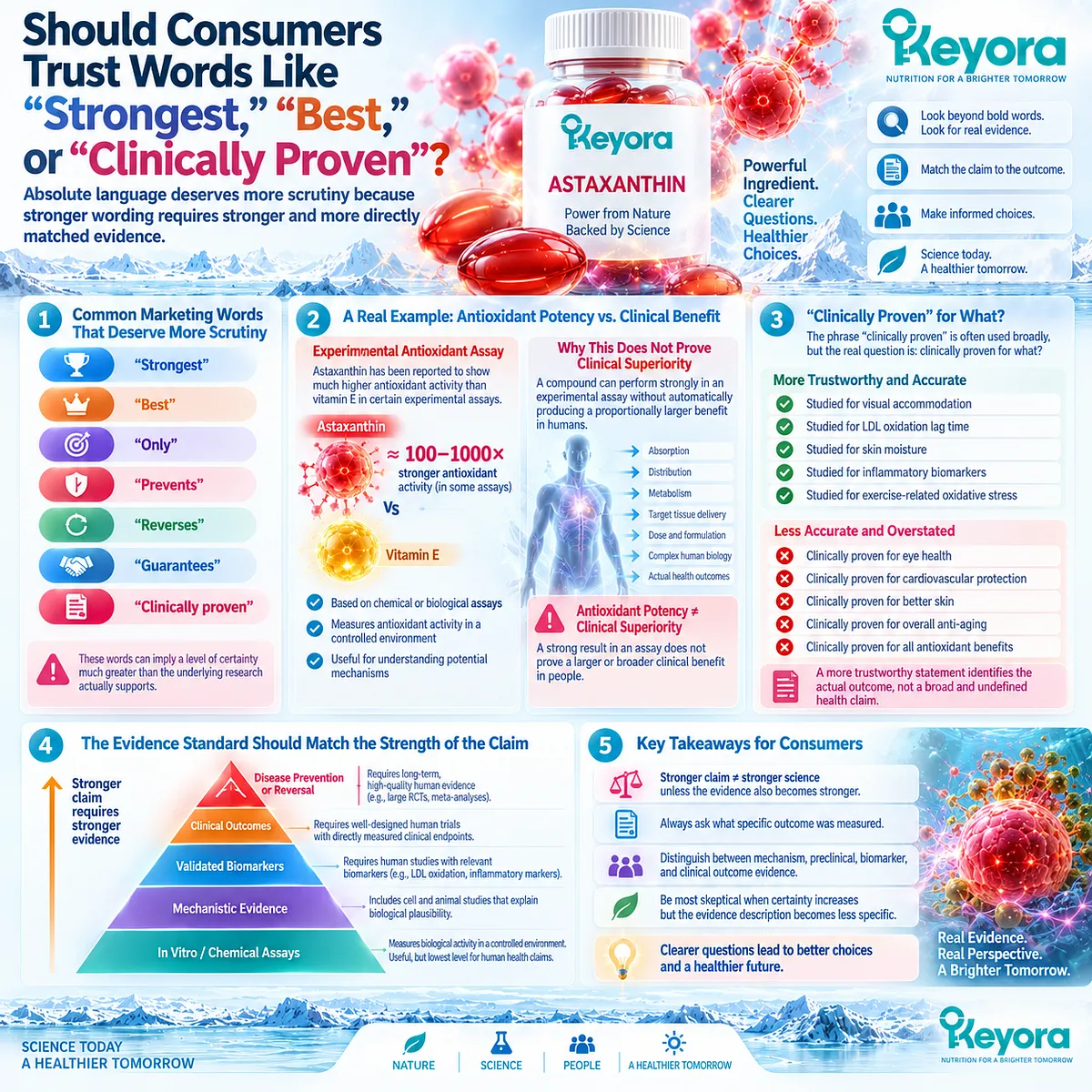
Absolute language deserves more scrutiny because stronger wording requires stronger and more directly matched evidence
The stronger the marketing language, the stronger the supporting evidence should need to be.
Words such as:
strongest
best
only
prevents
reverses
guarantees
and
clinically proven
deserve particular scrutiny because they can imply a level of certainty much greater than the underlying research actually supports.
The Keyora Astaxanthin source itself contains strong antioxidant comparisons, including language claiming Astaxanthin is hundreds of times more potent than vitamin E in antioxidant activity.
Even when such comparisons originate from experimental antioxidant assays, they should not be converted directly into a claim of clinical superiority.
A compound can perform strongly in a particular chemical or biological assay without automatically producing a proportionally larger benefit in humans.
Therefore:
Antioxidant Potency ≠ Clinical Superiority
The phrase “clinically proven” creates another problem.
Clinically proven for what?
A supplement may contain an ingredient that has been studied for visual fatigue, LDL oxidation, skin moisture, inflammatory biomarkers, or another endpoint.
That does not mean the ingredient has been “clinically proven” for every health claim associated with antioxidants.
A more trustworthy statement identifies the actual outcome:
studied for visual accommodation
is more precise than:
clinically proven for eye health
Likewise:
studied for LDL oxidation lag time
is more precise than:
clinically proven for cardiovascular protection
The key principle is:
Stronger Claim ≠ Stronger Science Unless the Evidence Also Becomes Stronger
Consumers should be most skeptical when certainty increases but the evidence description becomes less specific.
Does a Biomarker Improvement Mean the Supplement Prevents Disease?
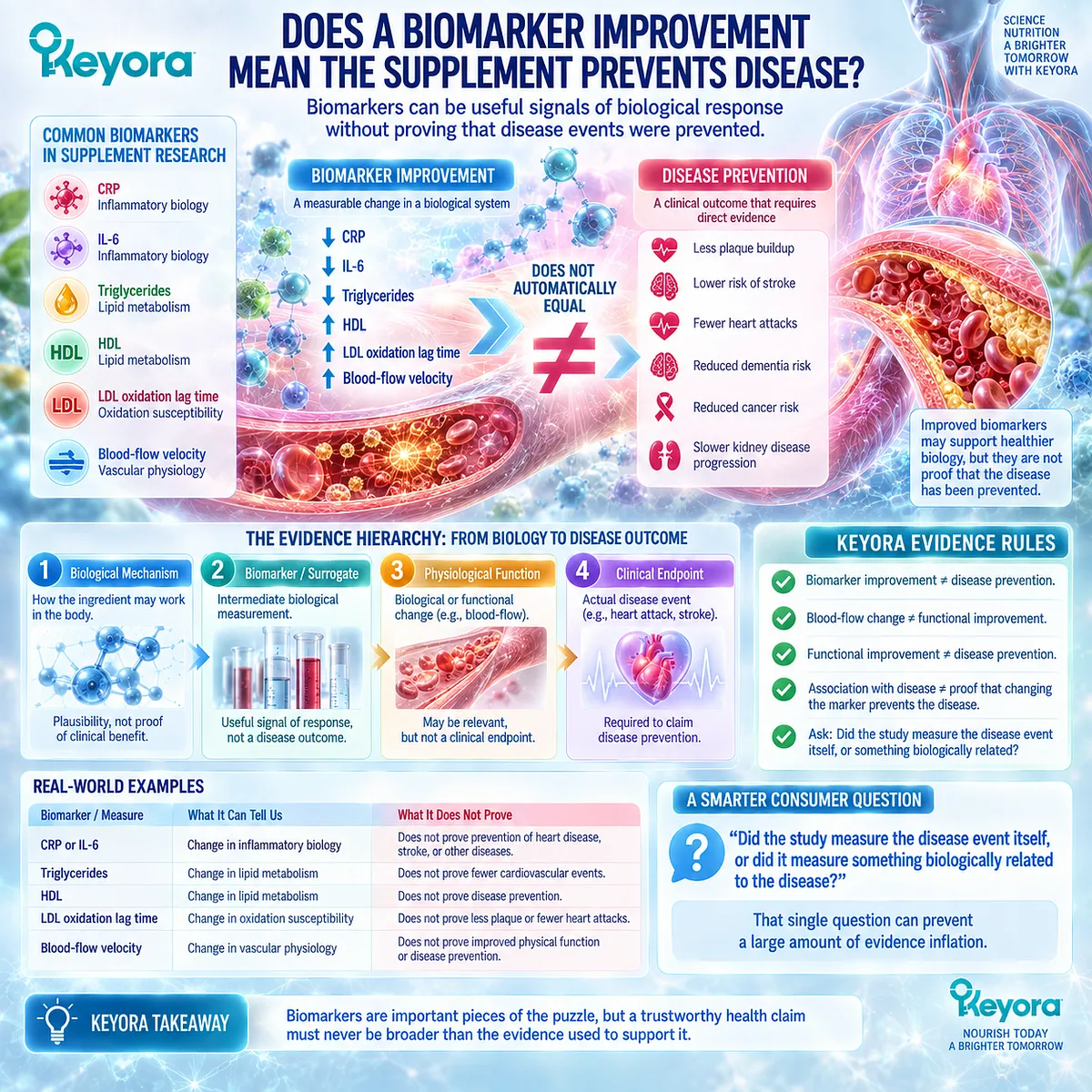
Biomarkers can be useful signals of biological response without proving that disease events were prevented
No.
Biomarkers can be scientifically valuable because they show that a biological system changed.
But a biomarker is not automatically a disease outcome.
For example, changes in CRP or IL-6 can be relevant to inflammatory biology.
Changes in triglycerides or HDL can be relevant to lipid metabolism.
Changes in LDL oxidation lag time can be relevant to oxidation susceptibility.
Changes in blood-flow velocity can be relevant to physiology.
Each finding may be meaningful.
But none should automatically be rewritten as proof that a disease was prevented.
The Keyora source provides an instructive example because it sometimes moves from LDL oxidation and endothelial mechanisms into broader statements about preventing plaque accumulation or reducing cardiovascular-event risk.
That is exactly the interpretive leap consumers should learn to identify.
The evidence rule is:
Biomarker Improvement ≠ Disease Prevention
Similarly:
Blood-Flow Change ≠ Functional Improvement
and:
Functional Improvement ≠ Disease Prevention
This distinction matters because supplement marketing often builds a chain of plausible steps.
A biomarker improves.
That biomarker is associated with a disease.
The advertisement then implies that the disease itself has been prevented.
But association between an intermediate marker and a disease does not mean that changing the marker through one intervention has been proven to change the final disease outcome.
Consumers should therefore ask:
Did the study measure the disease event itself?
Or did it measure something biologically related to the disease?
That single question can prevent a large amount of evidence inflation.
What Should a Transparent Antioxidant Supplement Tell You on the Label and Evidence Page?
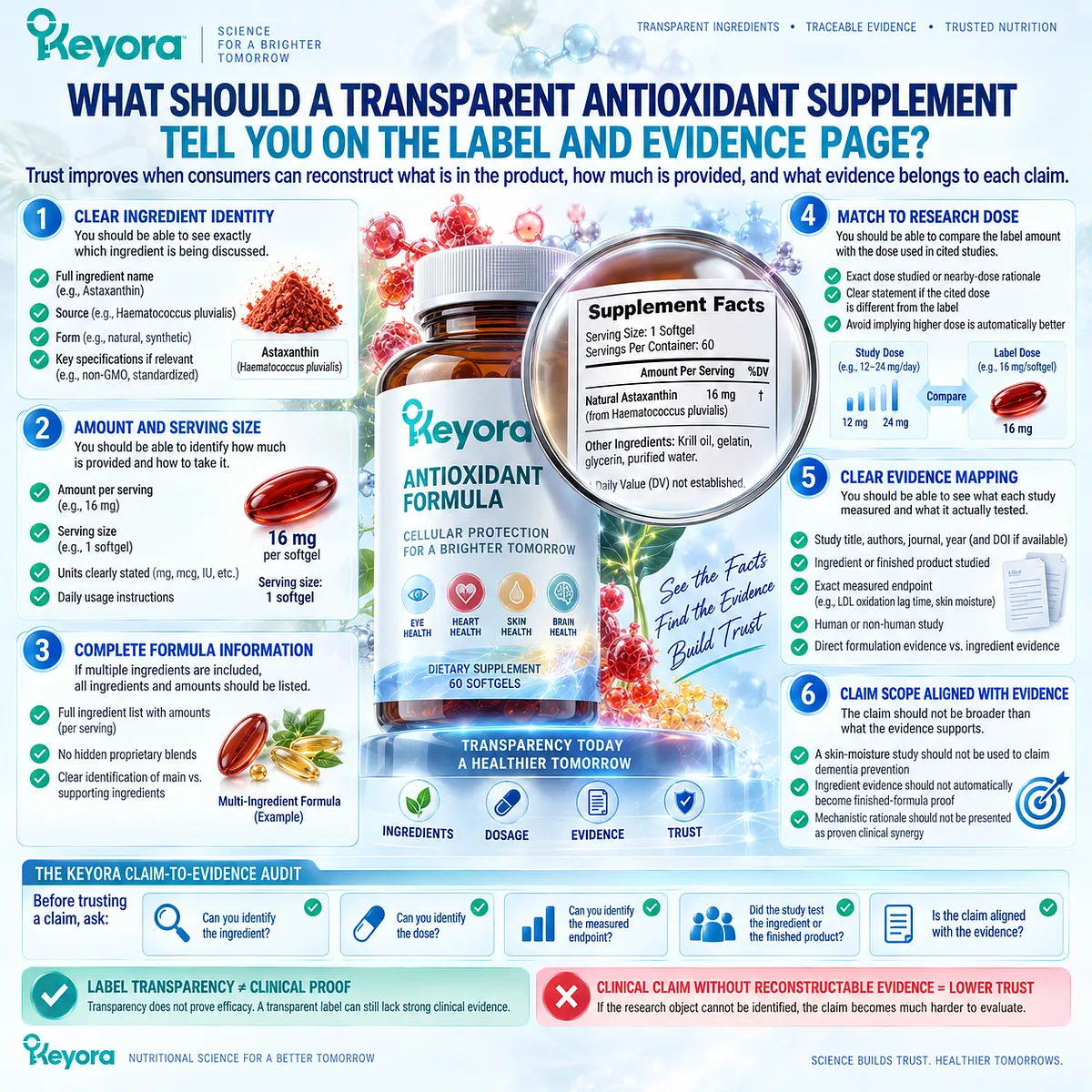
Trust improves when consumers can reconstruct what is in the product, how much is provided, and what evidence belongs to each claim
Scientific claims are difficult to evaluate when consumers cannot reconstruct the product.
For claim evaluation, a consumer should be able to identify the ingredient being discussed, the amount provided per serving, the serving size, and the relationship between the label amount and the dose used in cited research.
The same transparency should apply to evidence.
If an evidence page cites an Astaxanthin study, it should be possible to determine whether the study tested Astaxanthin alone or the complete product.
If a brand discusses a particular dose, it should be clear whether that exact dose was studied or whether the company is using nearby-dose evidence as part of a formulation rationale.
If several ingredients are combined, evidence for one ingredient should not silently become evidence for the entire formula.
This is why the Keyora Claim-to-Evidence Audit begins with reconstruction.
Before asking whether a claim is persuasive, ask whether the claim can be traced back to a specific research object.
Can you identify the ingredient?
Can you identify the dose?
Can you identify the measured endpoint?
Can you identify whether the cited study involved the ingredient or the finished product?
If those links are unclear, the claim becomes much harder to evaluate scientifically.
Transparency does not prove efficacy.
A perfectly transparent label can still contain an intervention that lacks strong clinical evidence.
But transparency allows the evidence to be audited.
And auditability is a prerequisite for trust.
The relevant principle is therefore:
Label Transparency ≠ Clinical Proof
but also:
Clinical Claim Without Reconstructable Evidence = Lower Trust
Consumers should not need to guess what research object a claim refers to.
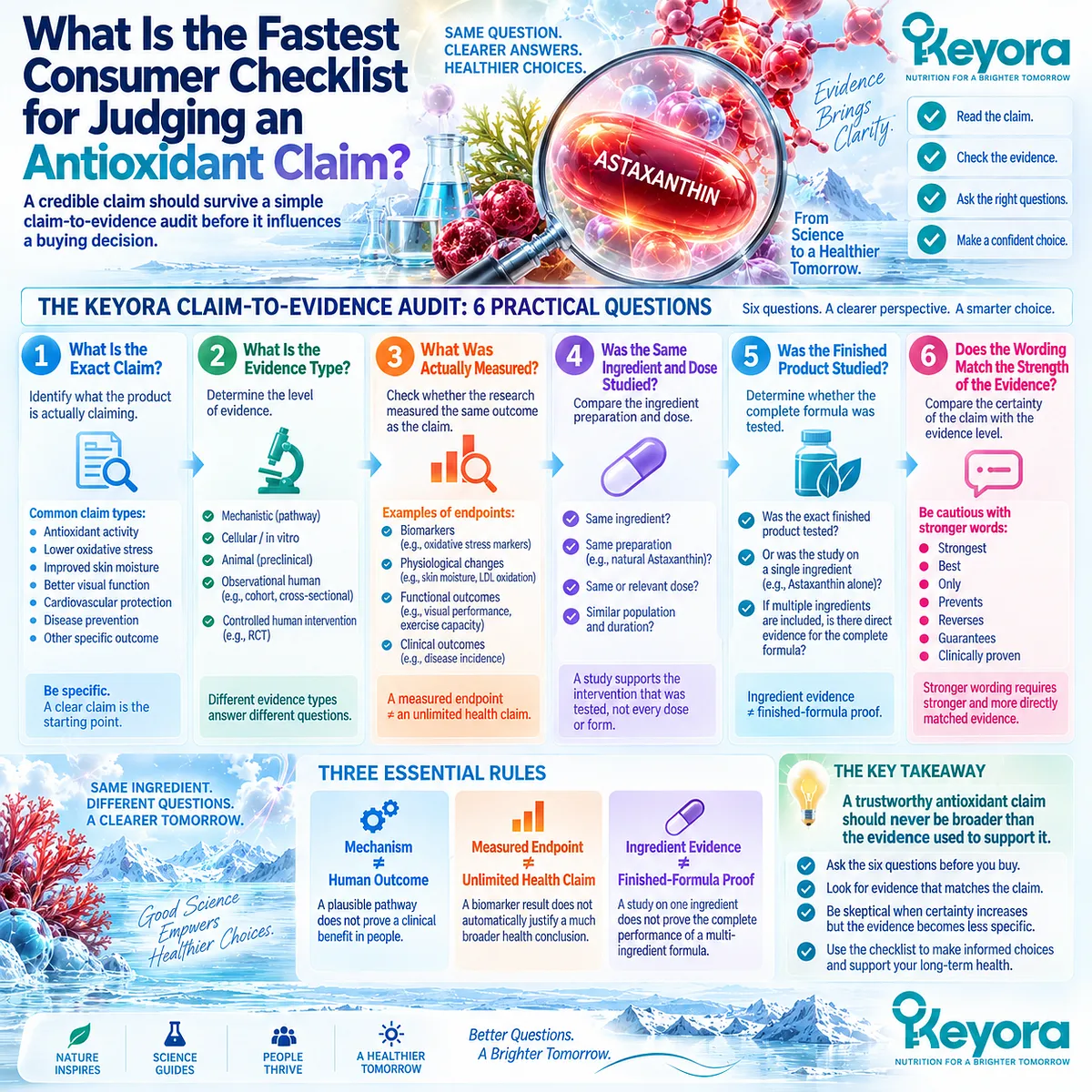
What Is the Fastest Consumer Checklist for Judging an Antioxidant Claim?
A credible claim should survive a simple claim-to-evidence audit before it influences a buying decision
The Keyora Claim-to-Evidence Audit can be reduced to six practical questions.
First, identify the exact claim.
Is the product claiming antioxidant activity, lower oxidative stress, improved skin moisture, better visual function, cardiovascular protection, disease prevention, or something else?
Second, identify the evidence type.
Is the support mechanistic, cellular, animal, observational human evidence, or a controlled human intervention study?
Third, identify the measured endpoint.
Did the research actually measure the outcome appearing in the claim, or did the marketing language move from a biomarker to a much broader health conclusion?
Fourth, compare the ingredient and dose.
Was the same ingredient preparation studied at the same or a genuinely relevant dose?
Fifth, determine whether the finished product was studied.
A study on Astaxanthin alone does not prove the complete performance of a formula containing Astaxanthin plus other nutrients.
Sixth, compare the certainty of the wording with the strength of the evidence.
Words such as “supports” and “is associated with” make different claims from “prevents,” “reverses,” or “guarantees.”
The entire audit can therefore be summarized by three rules:
Mechanism ≠ Human Outcome
Measured Endpoint ≠ Unlimited Health Claim
Ingredient Evidence ≠ Finished-Formula Proof
The consumer goal is not to reject every antioxidant claim.
It is to distinguish a claim that is appropriately matched to evidence from one that has expanded beyond it.
The strongest final rule is also the simplest:
A trustworthy antioxidant claim should never be broader than the evidence used to support it.
That is the standard that turns supplement marketing from persuasion into something consumers can actually evaluate.
This article is for educational and informational purposes only. It does not provide medical advice, diagnosis, treatment, cure, prevention, disease outcome claims, hormone restoration claims, fertility outcome claims, or formula-specific clinical efficacy claims.