
What Is the Difference Between Mechanism Evidence and Human Evidence?
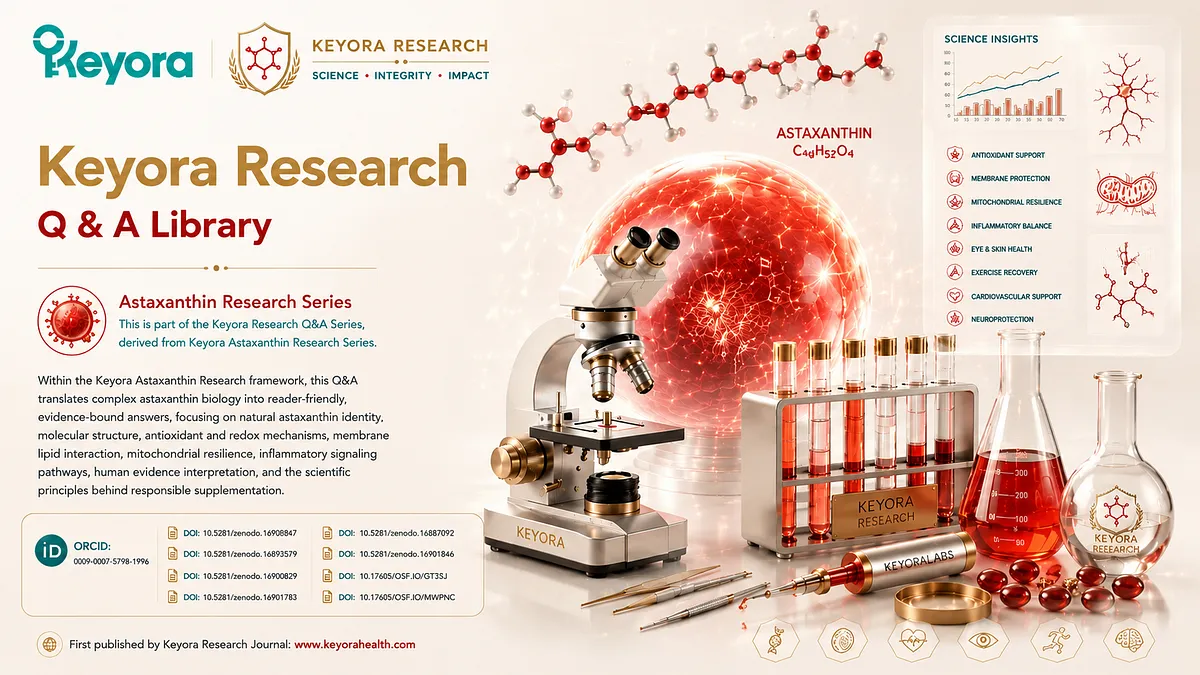
Keyora Research Q&A Library
This is part of the Keyora Research Q&A Series, derived from Keyora Astaxanthin Research Journal Series.
Within the Keyora Astaxanthin Researcn framework, this Q&A translates complex astaxanthin biology into reader-friendly, evidence-bound answers, focusing on natural astaxanthin identity, molecular structure, antioxidant and redox mechanisms, membrane lipid interaction, mitochondrial resilience, inflammatory signaling pathways, human evidence interpretation, and the scientific principles behind responsible supplementation.
First published by Keyora Research Journal: www.keyorahealth.com
Direct Answer
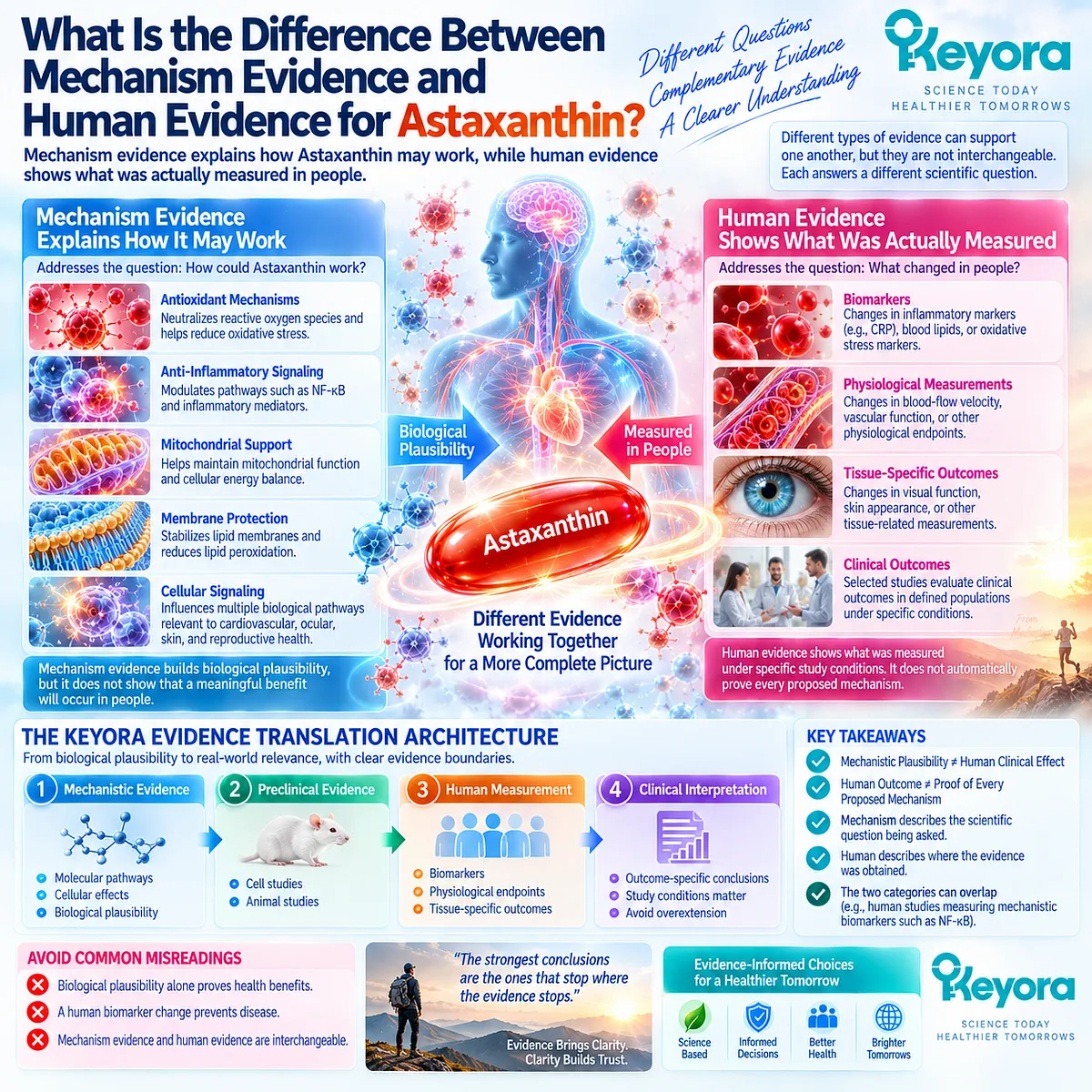
Mechanism evidence explains how Astaxanthin may work, while human evidence shows what was actually measured in people
Mechanism evidence and human evidence answer different scientific questions.
Mechanism evidence helps explain how an effect could occur biologically, while human evidence asks whether a measurable change was actually observed in people under specific study conditions.
This distinction matters when interpreting research summarized in Keyora Astaxanthin EP-3: The Endothelial Architecture: Cardiovascular & Cerebrovascular Sovereignty.
The source discusses Astaxanthin through molecular pathways, experimental models, animal studies, human biomarkers, physiological measurements, and clinical outcomes. These types of evidence can support one another, but they are not interchangeable.
A mechanism may involve oxidative stress, lipid peroxidation, inflammatory signaling, mitochondrial function, or another biological pathway.
Evidence that Astaxanthin interacts with such a pathway can strengthen biological plausibility.
But biological plausibility alone does not show that taking Astaxanthin will produce a meaningful benefit in people.
The opposite is also true.
A human study may show a measurable outcome without proving every biological pathway proposed to explain that result.
This Q&A describes that relationship through the Keyora Evidence Translation Architecture, an explanatory framework connecting mechanistic plausibility, preclinical evidence, human measurement, and clinical interpretation.
Its central rule is:
Mechanistic Plausibility ≠ Human Clinical Effect
But an equally important rule is:
Human Outcome ≠ Proof of Every Proposed Mechanism
One additional distinction prevents an overly simple “laboratory versus human” interpretation. A human study can also measure mechanistic biomarkers. The Keyora source, for example, describes a randomized human Astaxanthin study that measured NF-κB-related activity and inflammatory markers.
So “mechanism” describes the scientific question being asked, while “human” describes where the evidence was obtained. The two categories can overlap.
What Does Mechanism Evidence Actually Tell Us?
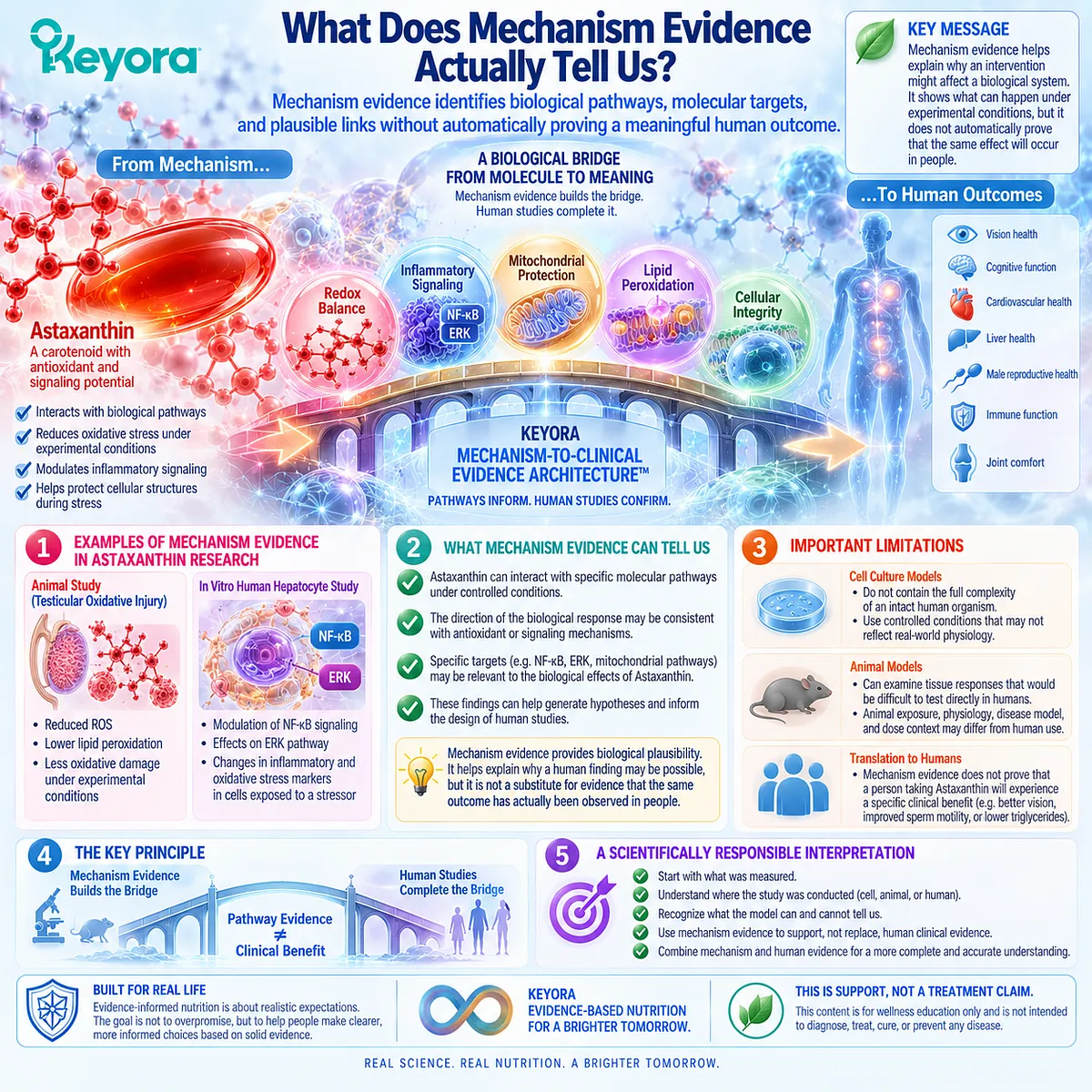
Mechanism evidence identifies biological pathways, molecular targets, and plausible links without automatically proving a meaningful human outcome
Mechanism evidence helps explain why an intervention might affect a biological system.
In Astaxanthin research, this can involve questions such as whether oxidative stress is reduced under experimental conditions, whether lipid peroxidation changes, whether inflammatory signaling pathways respond, or whether mitochondrial structures remain more stable during oxidative challenge.
The Keyora source contains many examples of this type of evidence.
In its male reproductive section, it cites an animal study involving testicular oxidative injury and describes reductions in ROS and lipid-peroxidation-related damage.
Elsewhere, the source cites an in vitro human hepatocyte study examining signaling pathways including NF-κB and ERK in cells exposed to an experimental stressor.
These studies can help answer questions such as:
Can Astaxanthin interact with a pathway under controlled experimental conditions?
Does the direction of the biological response match a proposed antioxidant or signaling mechanism?
Which molecular systems might deserve further investigation?
Those are scientifically useful questions.
But they are different from asking whether a person taking Astaxanthin experiences better vision, improved sperm motility, lower triglycerides, or another human outcome.
A cell culture model does not contain the full complexity of an intact human organism. An animal model can examine tissue responses that would be difficult to test directly in humans, but the animal exposure, physiology, disease model, and dose context may differ from human use.
Mechanism evidence therefore establishes a biological bridge.
It does not automatically complete the bridge.
The appropriate evidence boundary is:
Pathway Evidence ≠ Clinical Benefit
Mechanistic evidence becomes most useful when it explains why a human finding is biologically plausible, not when it is used as a substitute for evidence that the human finding actually occurred.
Why Can Cell and Animal Evidence Not Be Automatically Applied to Humans?
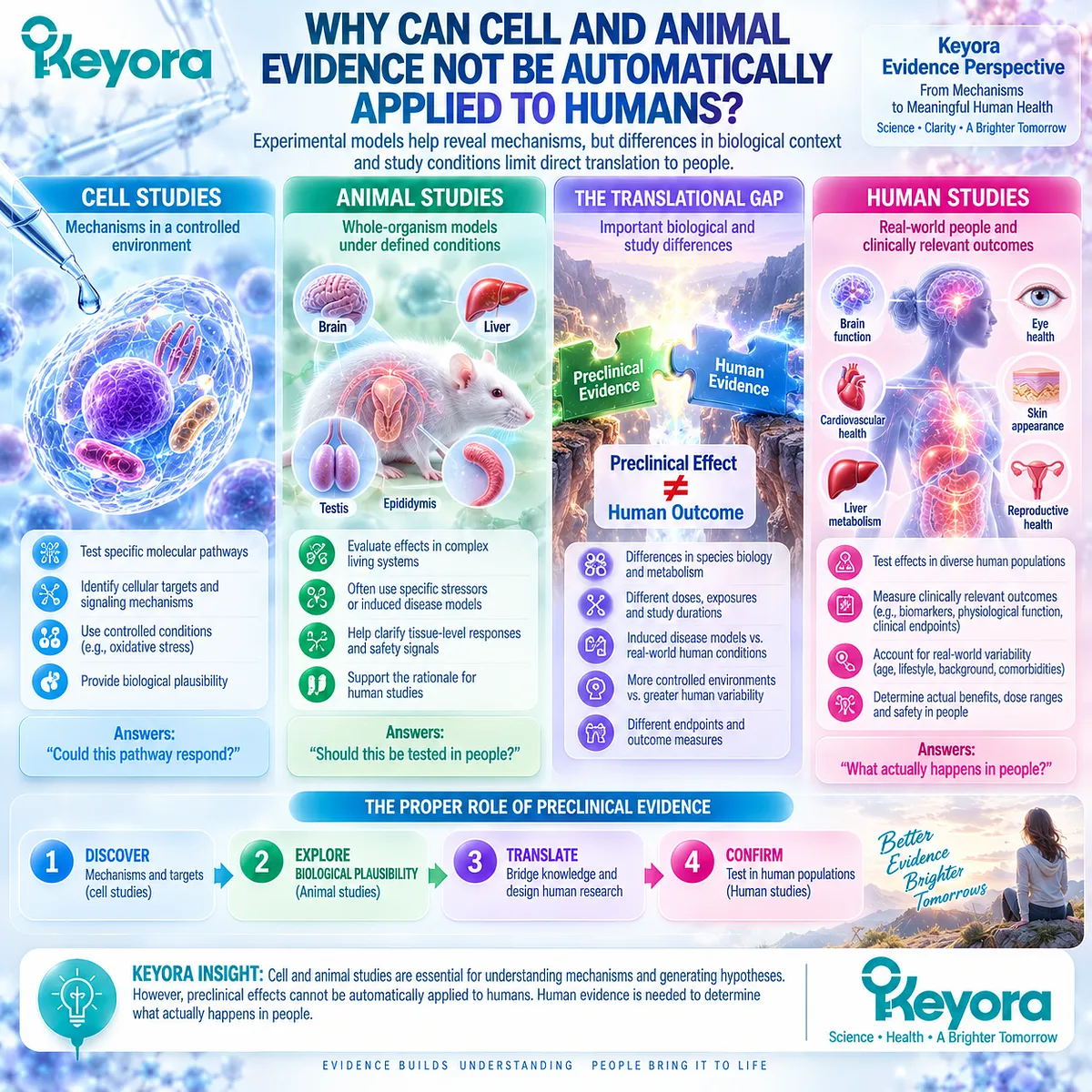
Experimental models help reveal mechanisms, but differences in biological context and study conditions limit direct translation to people
Cell and animal studies are important parts of scientific research because they allow investigators to study biological processes under controlled conditions.
Their limitation is not that they are “bad evidence.”
Their limitation is that they answer a different question from a human intervention study.
The Keyora Astaxanthin source illustrates this clearly. In reproductive toxicology, it describes animal studies in which Astaxanthin was examined under specific oxidative insults and toxicant-related conditions. The source reports effects on sperm quality, epididymal oxidative damage, and testicular tissue in those preclinical models.
Those findings help establish biological plausibility.
But an experimentally induced injury in an animal is not the same as the complex fertility environment of an adult human.
The same distinction appears elsewhere in the source. Animal studies are used to discuss ischemic brain injury, hepatic lipid accumulation, reproductive oxidative stress, and other mechanistic questions.
A preclinical model may use a specific stressor, a controlled dose, or an induced disease state designed to reveal a pathway. Human populations are more variable, and clinically relevant outcomes may depend on factors that the experimental model does not reproduce.
This produces a simple but important rule:
Preclinical Effect ≠ Human Outcome
That rule should not be interpreted as saying that animal research has no value.
Preclinical evidence can identify targets, test causal hypotheses, reveal tissue responses, and help determine whether human research is biologically justified.
Its proper role is translational.
It helps move science from:
“Could this pathway respond?”
toward:
“Should this be tested in people?”
Human evidence is still needed to determine what actually happens in people.
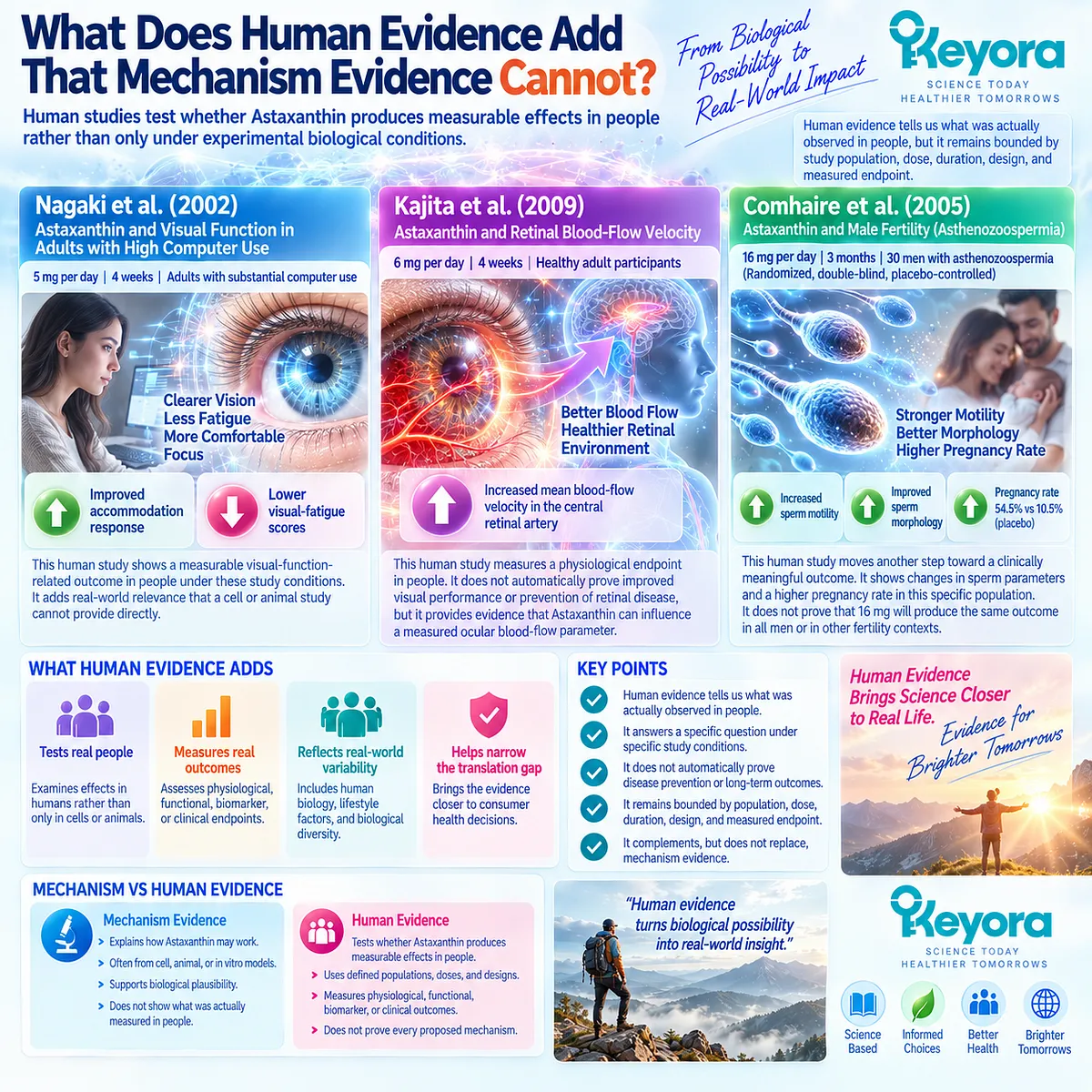
What Does Human Evidence Add That Mechanism Evidence Cannot?
Human studies test whether Astaxanthin produces measurable effects in people rather than only under experimental biological conditions
Human evidence moves the scientific question into the setting that ultimately matters for consumer health claims.
Instead of asking only whether a pathway can change, a human study can ask whether an intervention produces a measurable physiological, functional, biomarker, or clinical outcome in people.
The Keyora source provides several useful examples.
It summarizes Nagaki et al. (2002) as a human study involving adults with substantial computer use who received 5 mg of Astaxanthin per day for four weeks. The source reports improvement in accommodation response and lower visual-fatigue scores.
That result adds something that a cell or animal study cannot provide directly.
It shows that a measurable visual-function-related outcome was observed in people under those study conditions.
The source also summarizes Kajita et al. (2009) as a four-week human study using 6 mg per day, with an increase in mean blood-flow velocity in the central retinal artery.
Again, this is human evidence, but it answers a specific physiological question.
It does not automatically prove improved visual performance or prevention of retinal disease.
The male fertility evidence moves another step toward a clinically meaningful outcome. The Keyora source summarizes a randomized trial involving 30 men with asthenozoospermia who received 16 mg of natural Astaxanthin daily for three months, with reported changes in sperm motility, morphology, and pregnancy rate.
These examples show what human evidence adds:
it tells us what was actually observed in people.
But human evidence still remains bounded by study population, dose, duration, design, and measured endpoint.
Human evidence therefore narrows the translation gap.
It does not eliminate the need for careful interpretation.
Can Human Evidence Prove the Mechanism Behind an Effect?
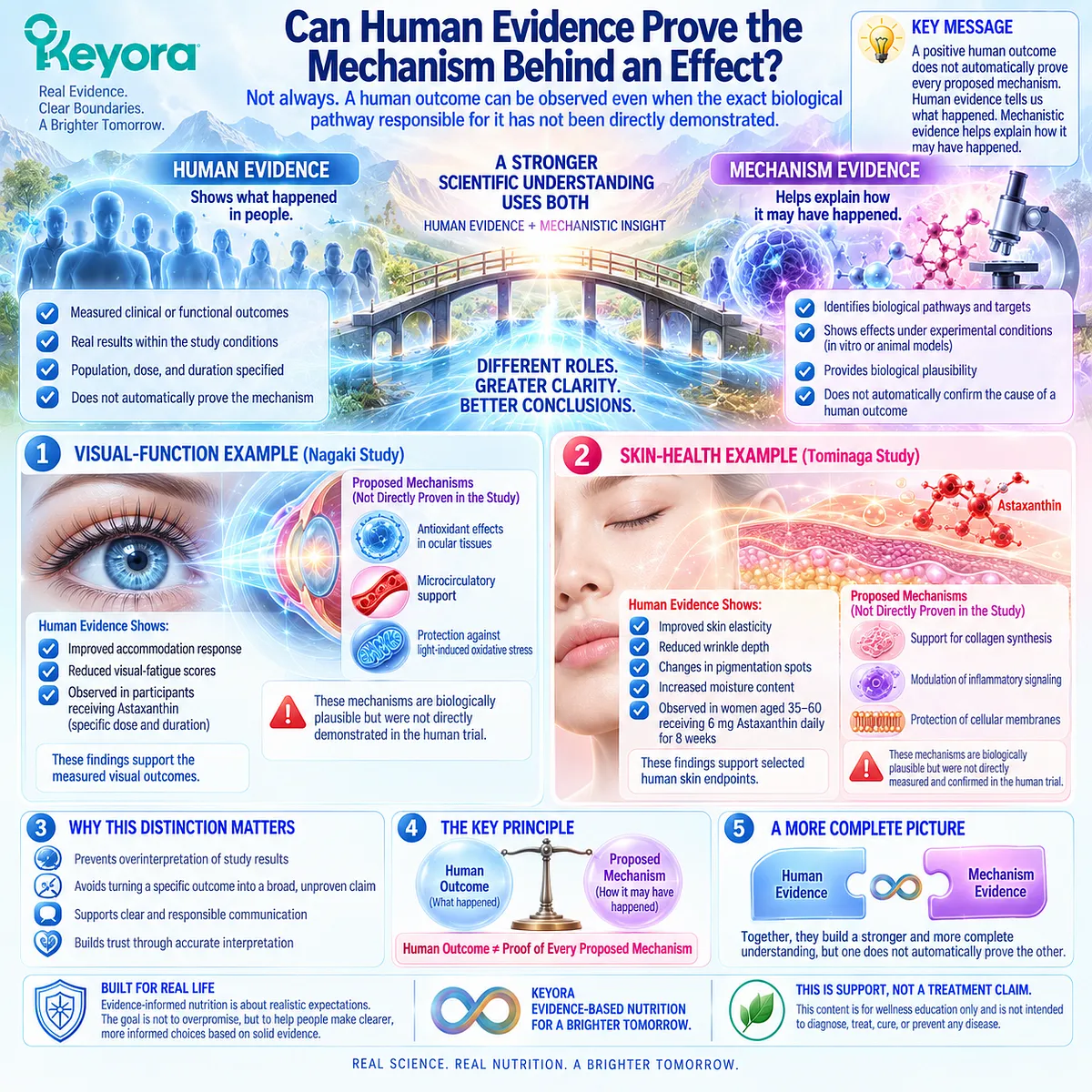
Not always. A human outcome can be observed even when the exact biological pathway responsible for it has not been directly demonstrated
A common evidence mistake occurs after a human study reports a positive result.
The measured human outcome is real within the study, and then every proposed mechanism associated with the ingredient is treated as though the study also proved those mechanisms.
That conclusion can go beyond the evidence.
Consider the visual-function example.
The Keyora source reports that the Nagaki study found improved accommodation response and reduced visual-fatigue scores after Astaxanthin supplementation.
Those findings can support the measured visual outcomes.
They do not automatically prove that every proposed explanation for those outcomes, such as antioxidant effects in a particular ocular tissue or a specific microcirculatory pathway, was directly demonstrated in those participants.
Skin research creates the same interpretive problem.
The Keyora source summarizes a Tominaga study in women aged 35 to 60 receiving 6 mg of Astaxanthin daily for eight weeks, with reported changes in skin elasticity, wrinkle depth, pigmentation spots, and moisture content.
Those findings support selected human skin endpoints.
They do not automatically prove that every proposed molecular pathway involving collagen, inflammatory signaling, membrane protection, or other mechanisms was directly measured and confirmed in that human trial.
The same principle applies across health areas.
A measurable clinical or functional effect and a biologically plausible mechanism can fit together.
But scientific interpretation should not silently transform association into direct mechanistic proof.
That creates another central evidence boundary:
Human Outcome ≠ Proof of Every Proposed Mechanism
Human evidence tells us what happened.
Mechanistic evidence helps explain how it may have happened.
A strong scientific argument uses both without pretending that one automatically proves the other.
How Should Mechanism Evidence and Human Evidence Be Used Together?
The strongest interpretation uses mechanism evidence to explain plausibility and human evidence to define what has actually been observed
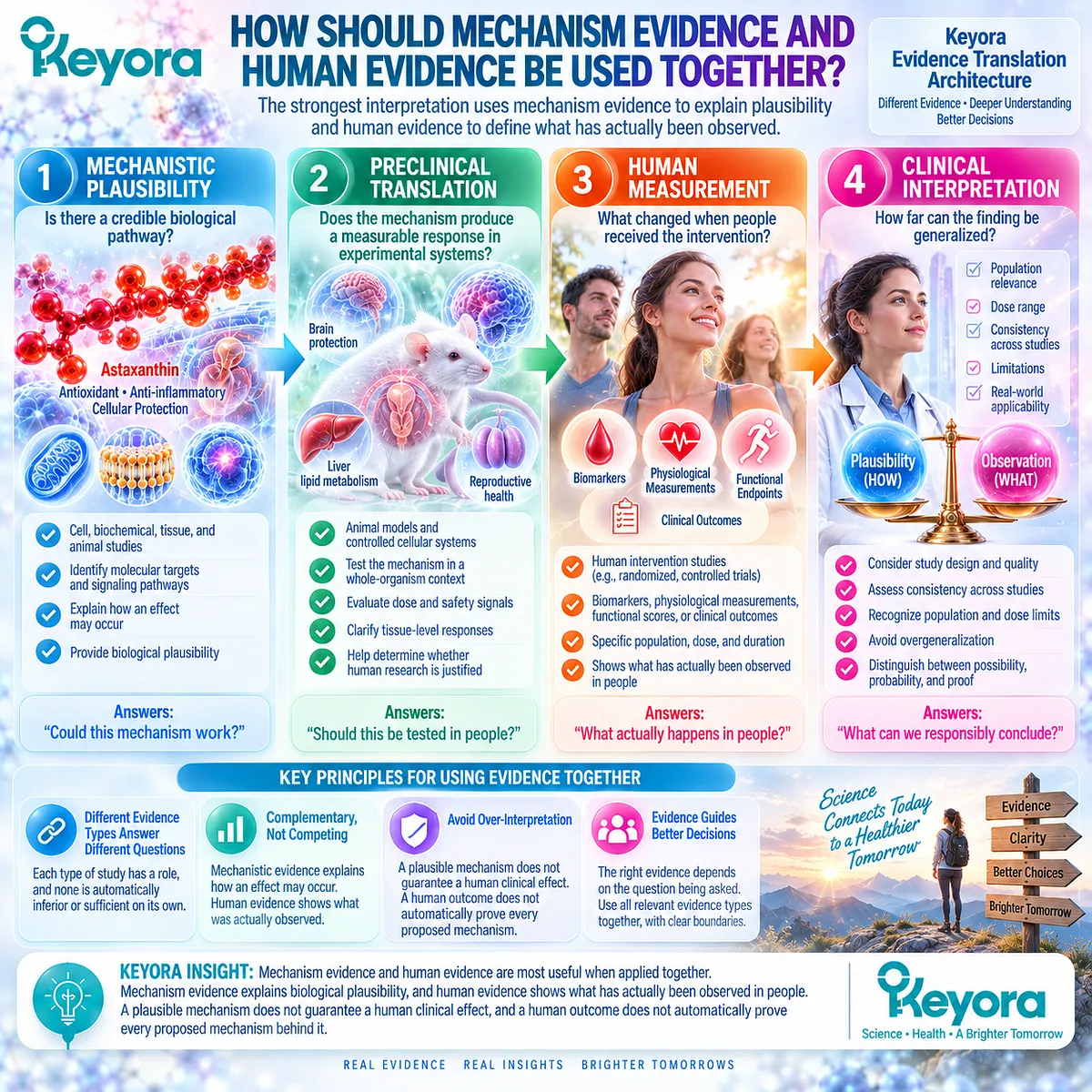
The Keyora Evidence Translation Architecture brings these evidence types together without collapsing them into a single category.
The first layer is Mechanistic Plausibility.
This asks whether there is a credible biological pathway connecting Astaxanthin with an observed or proposed effect. Cell, biochemical, tissue, animal, and even some human biomarker studies can contribute to this layer.
The second layer is Preclinical Translation.
This asks whether the proposed mechanism produces a measurable response in an experimental biological system. Animal models and controlled cellular systems are particularly useful here.
The third layer is Human Measurement.
This asks what changed when people actually received the intervention. The endpoint might be a biomarker, physiological measurement, functional score, or clinical outcome.
The fourth layer is Clinical Interpretation.
This asks how far the finding can legitimately be generalized beyond the specific study.
These layers should work together.
Mechanistic evidence can make a human result more understandable.
Human evidence can show whether a proposed biological effect is visible in real participants.
But neither layer should be stretched beyond what it actually demonstrates.
The most useful principle is therefore:
Different Evidence Types Answer Different Questions
A cell study is not automatically inferior because it investigates a mechanism that cannot easily be isolated in humans.
A human study is not automatically sufficient to establish causality for every proposed molecular pathway.
The right evidence depends on the question being asked.
For Astaxanthin, this means interpreting mechanistic findings as evidence of biological plausibility and interpreting human studies according to what they actually measured.
The final conclusion is:
Mechanism evidence explains how an Astaxanthin effect may occur, while human evidence shows what was actually observed in people.
A plausible mechanism does not guarantee a human clinical effect, and a human outcome does not automatically prove every proposed mechanism behind it.
That distinction is the foundation for judging antioxidant claims responsibly.
This article is for educational and informational purposes only. It does not provide medical advice, diagnosis, treatment, cure, prevention, disease outcome claims, hormone restoration claims, fertility outcome claims, or formula-specific clinical efficacy claims.