
Should You Take Astaxanthin Every Day?
Keyora Research Q&A Library
This is part of the Keyora Research Q&A Series, derived from Keyora Astaxanthin Research Journal Series.
Within the Keyora Astaxanthin Researcn framework, this Q&A translates complex astaxanthin biology into reader-friendly, evidence-bound answers, focusing on natural astaxanthin identity, molecular structure, antioxidant and redox mechanisms, membrane lipid interaction, mitochondrial resilience, inflammatory signaling pathways, human evidence interpretation, and the scientific principles behind responsible supplementation.
First published by Keyora Research Journal: www.keyorahealth.com
If you take astaxanthin as a daily supplement, you may wonder whether you really need to take it every day—or whether you should take occasional breaks.
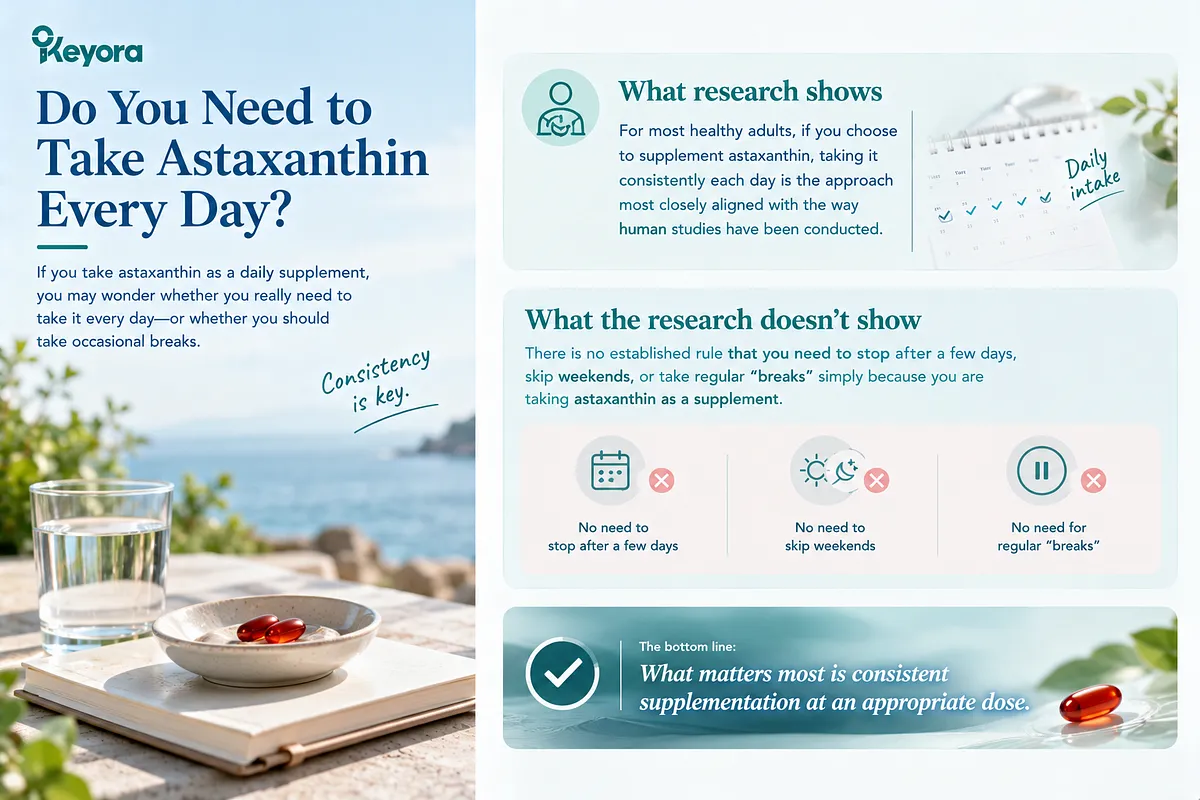
For most healthy adults, if you choose to supplement astaxanthin, taking it consistently each day is the approach most closely aligned with the way human studies have been conducted.
There is no established rule that you need to stop after a few days, skip weekends, or take regular “breaks” simply because you are taking astaxanthin as a supplement.
What matters most is consistent supplementation at an appropriate dose.
Do You Need to Take Astaxanthin Every Day?
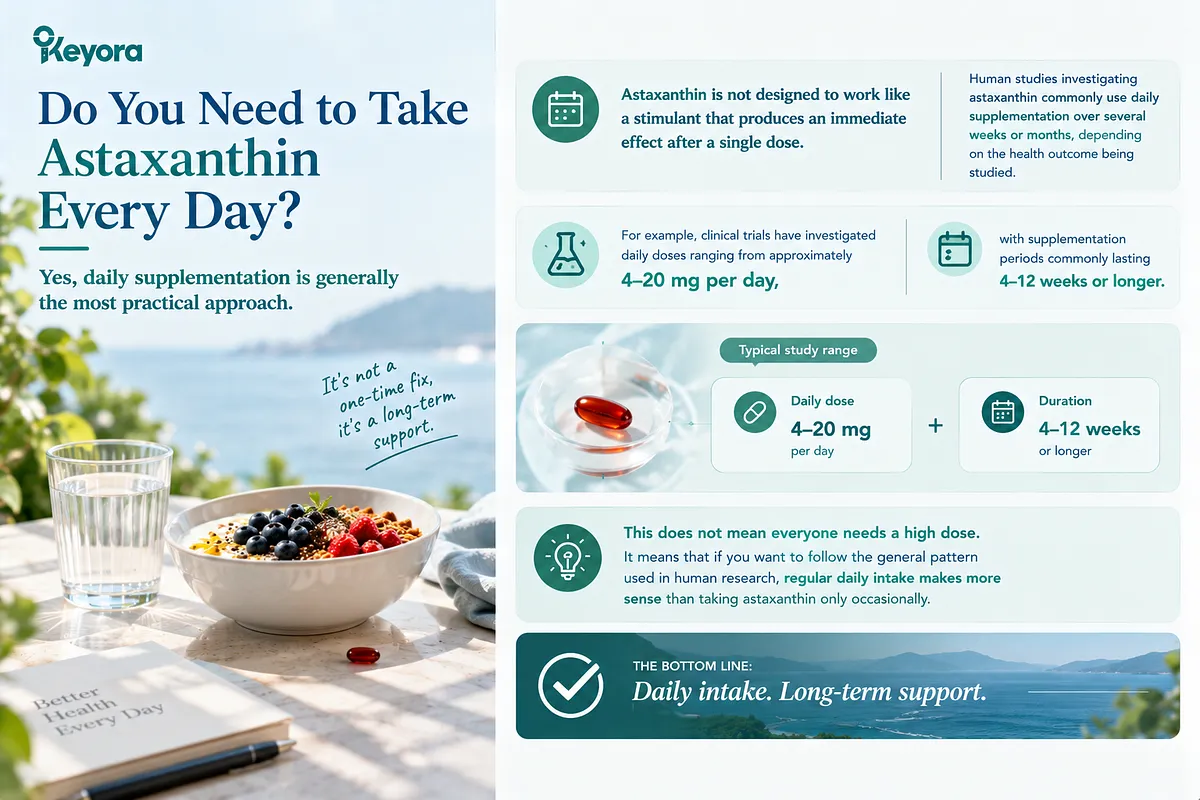
Yes, daily supplementation is generally the most practical approach.
Astaxanthin is not designed to work like a stimulant that produces an immediate effect after a single dose.
Human studies investigating astaxanthin commonly use daily supplementation over several weeks or months, depending on the health outcome being studied.
For example, clinical trials have investigated daily doses ranging from approximately 4–20 mg per day, with supplementation periods commonly lasting 4–12 weeks or longer.
This does not mean everyone needs a high dose.
It means that if you want to follow the general pattern used in human research, regular daily intake makes more sense than taking astaxanthin only occasionally.
Why Does Astaxanthin Need to Be Taken Daily?
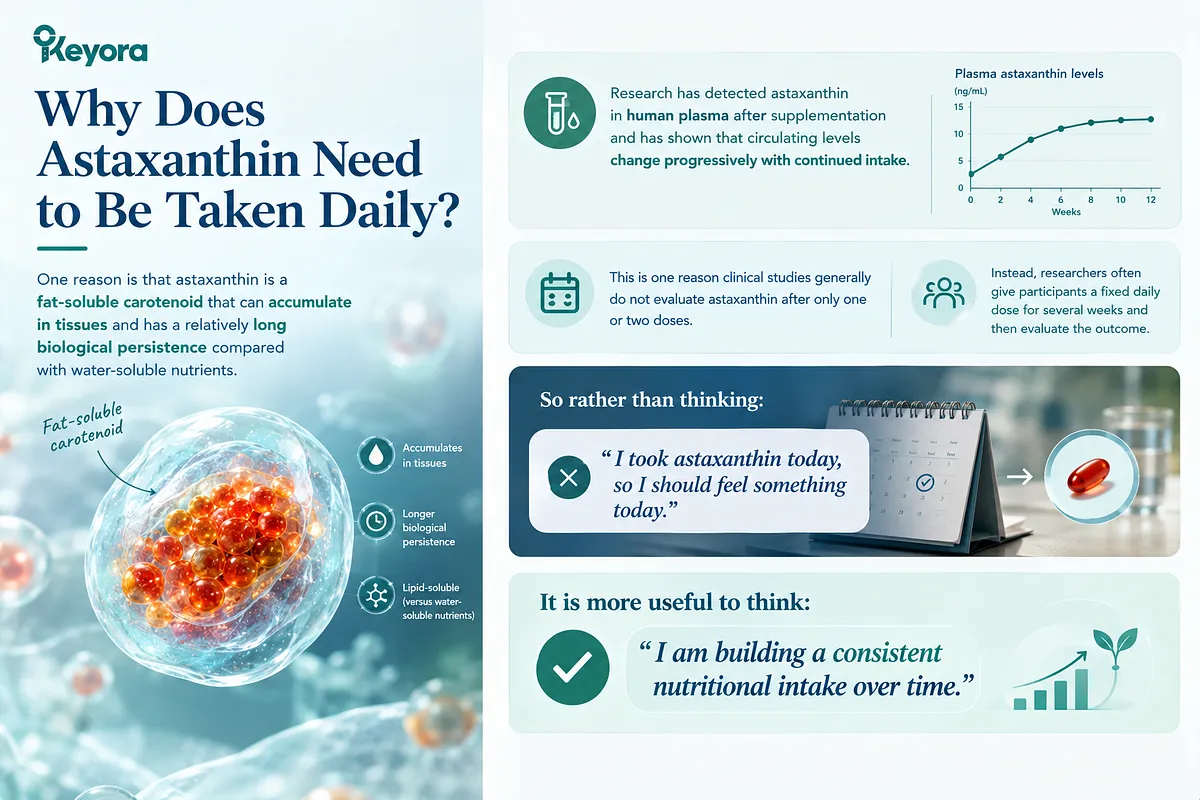
One reason is that astaxanthin is a fat-soluble carotenoid that can accumulate in tissues and has a relatively long biological persistence compared with water-soluble nutrients.
Research has detected astaxanthin in human plasma after supplementation and has shown that circulating levels change progressively with continued intake.
This is one reason clinical studies generally do not evaluate astaxanthin after only one or two doses.
Instead, researchers often give participants a fixed daily dose for several weeks and then evaluate the outcome.
So rather than thinking:
“I took astaxanthin today, so I should feel something today.”
It is more useful to think:
“I am building a consistent nutritional intake over time.”
How Long Does Astaxanthin Take to Build Up?
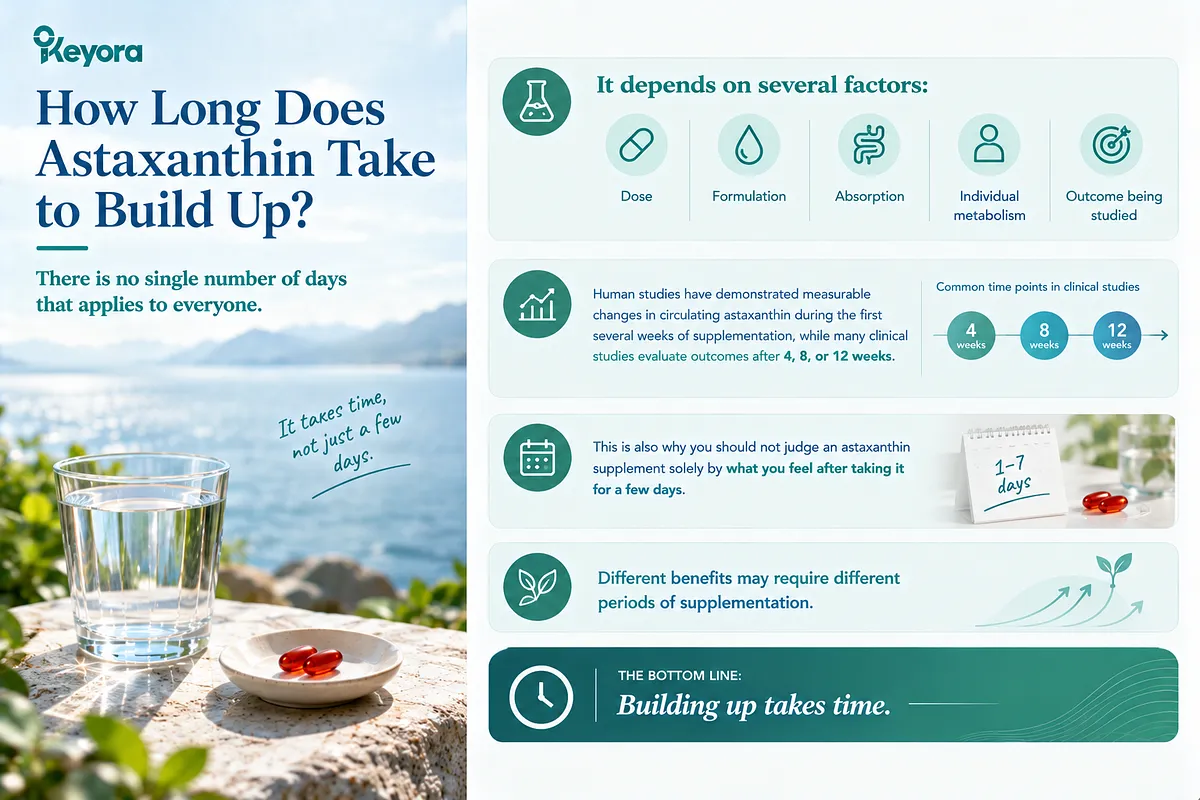
There is no single number of days that applies to everyone.
The time course depends on factors such as dose, formulation, absorption, individual metabolism, and the outcome being studied.
Human studies have demonstrated measurable changes in circulating astaxanthin during the first several weeks of supplementation, while many clinical studies evaluate outcomes after 4, 8, or 12 weeks.
This is also why you should not judge an astaxanthin supplement solely by what you feel after taking it for a few days.
Different benefits may require different periods of supplementation.
Can You Take Astaxanthin During Your Period?
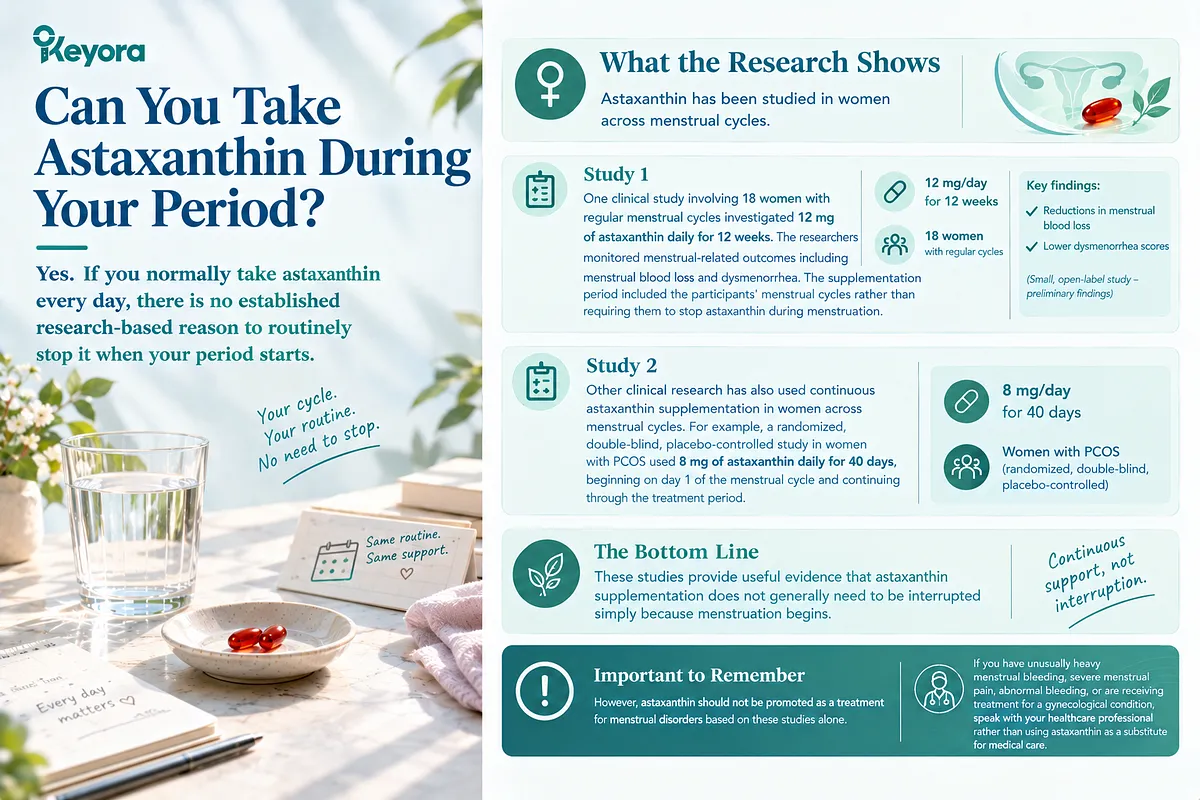
Yes. If you normally take astaxanthin every day, there is no established research-based reason to routinely stop it when your period starts.
Importantly, astaxanthin has been studied in women across menstrual cycles.
One clinical study involving 18 women with regular menstrual cycles investigated 12 mg of astaxanthin daily for 12 weeks. The researchers monitored menstrual-related outcomes including menstrual blood loss and dysmenorrhea. The supplementation period included the participants’ menstrual cycles rather than requiring them to stop astaxanthin during menstruation.
The study reported reductions in menstrual blood loss and dysmenorrhea scores after 12 weeks, although the study was small and open-label, so these findings should be considered preliminary rather than proof that astaxanthin treats heavy periods or menstrual pain.
Other clinical research has also used continuous astaxanthin supplementation in women across menstrual cycles. For example, a randomized, double-blind, placebo-controlled study in women with PCOS used 8 mg of astaxanthin daily for 40 days, beginning on day 1 of the menstrual cycle and continuing through the treatment period.
These studies provide useful evidence that astaxanthin supplementation does not generally need to be interrupted simply because menstruation begins.
However, astaxanthin should not be promoted as a treatment for menstrual disorders based on these studies alone.
If you have unusually heavy menstrual bleeding, severe menstrual pain, abnormal bleeding, or are receiving treatment for a gynecological condition, speak with your healthcare professional rather than using astaxanthin as a substitute for medical care.
What Happens If You Miss a Day of Astaxanthin?
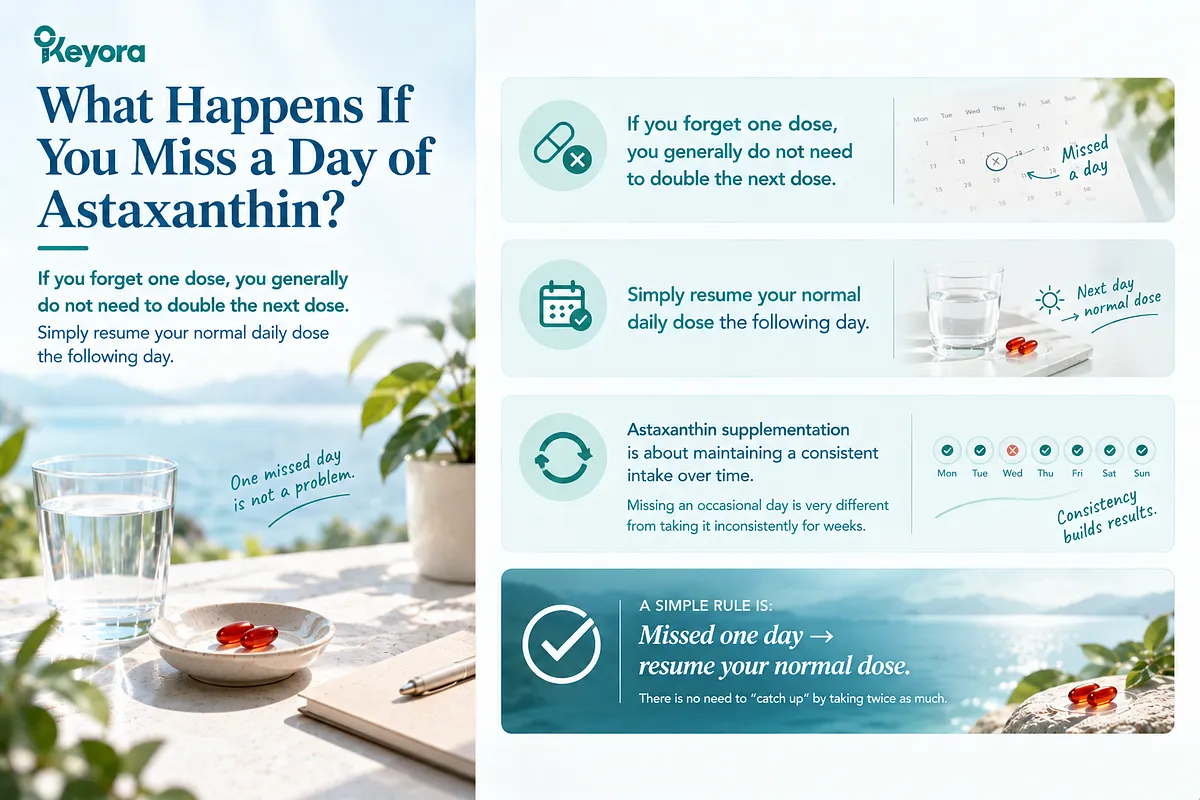
If you forget one dose, you generally do not need to double the next dose.
Simply resume your normal daily dose the following day.
Astaxanthin supplementation is about maintaining a consistent intake over time. Missing an occasional day is very different from taking it inconsistently for weeks.
A simple rule is:
Missed one day → resume your normal dose.
There is no need to “catch up” by taking twice as much.
Do You Need to Take Breaks From Astaxanthin?
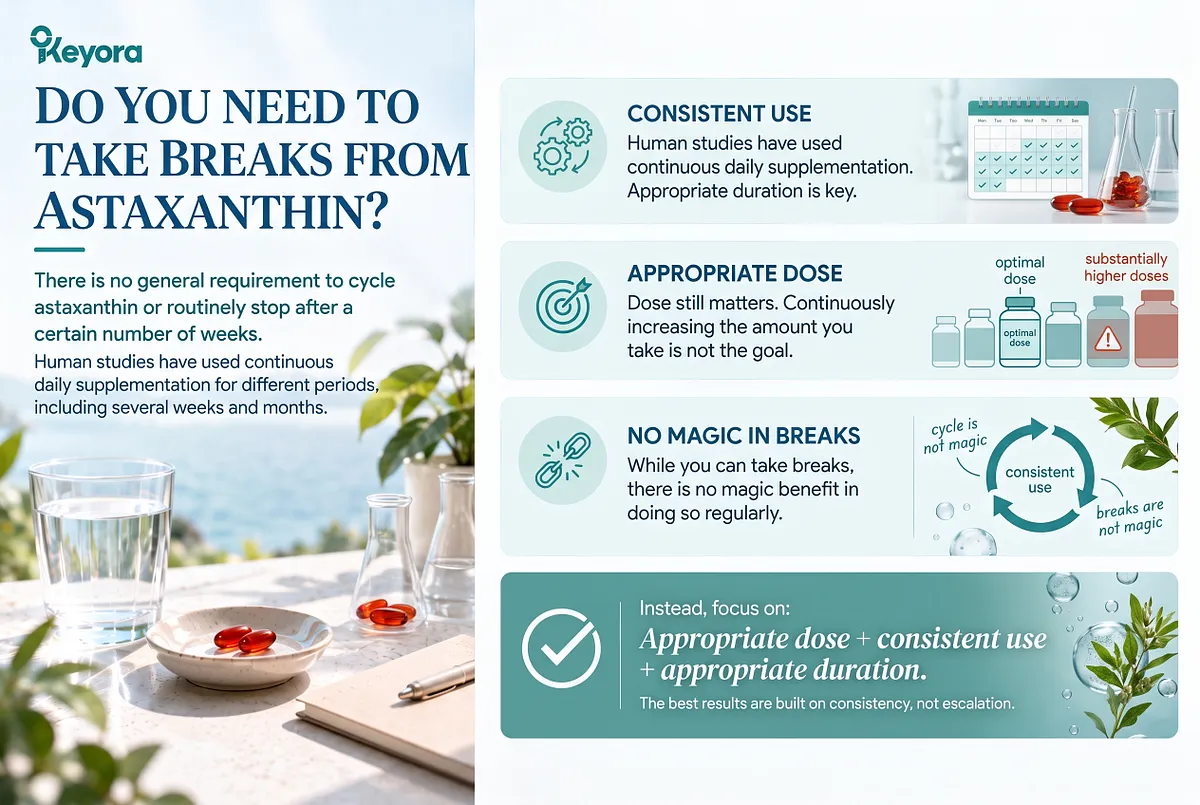
There is no general requirement to cycle astaxanthin or routinely stop after a certain number of weeks.
Human studies have used continuous daily supplementation for different periods, including several weeks and months.
However, “you don’t need to take breaks” does not mean “more is always better.”
Your dose still matters.
The goal should be:
Appropriate dose + consistent use + appropriate duration
rather than continuously increasing the amount you take.
This is particularly important if you are considering doses substantially higher than those commonly used in nutritional supplementation or clinical research.
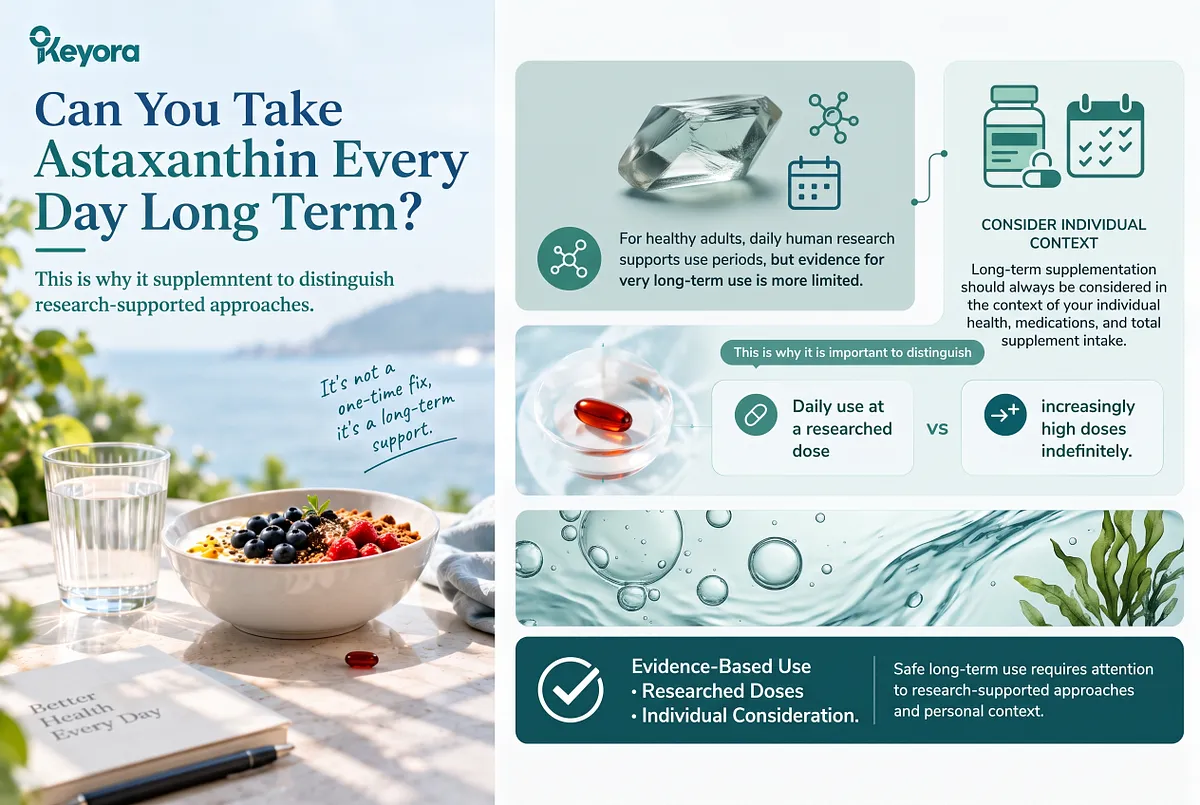
Can You Take Astaxanthin Every Day Long Term?
For healthy adults, available human research supports the use of astaxanthin as a daily supplement over studied periods, but evidence for very long-term use is more limited than evidence from shorter clinical trials.
This is why it is important to distinguish between:
Daily use at a researched, appropriate dose
and
Taking increasingly high doses indefinitely.
Long-term supplementation should always be considered in the context of your individual health, medications, and total supplement intake.
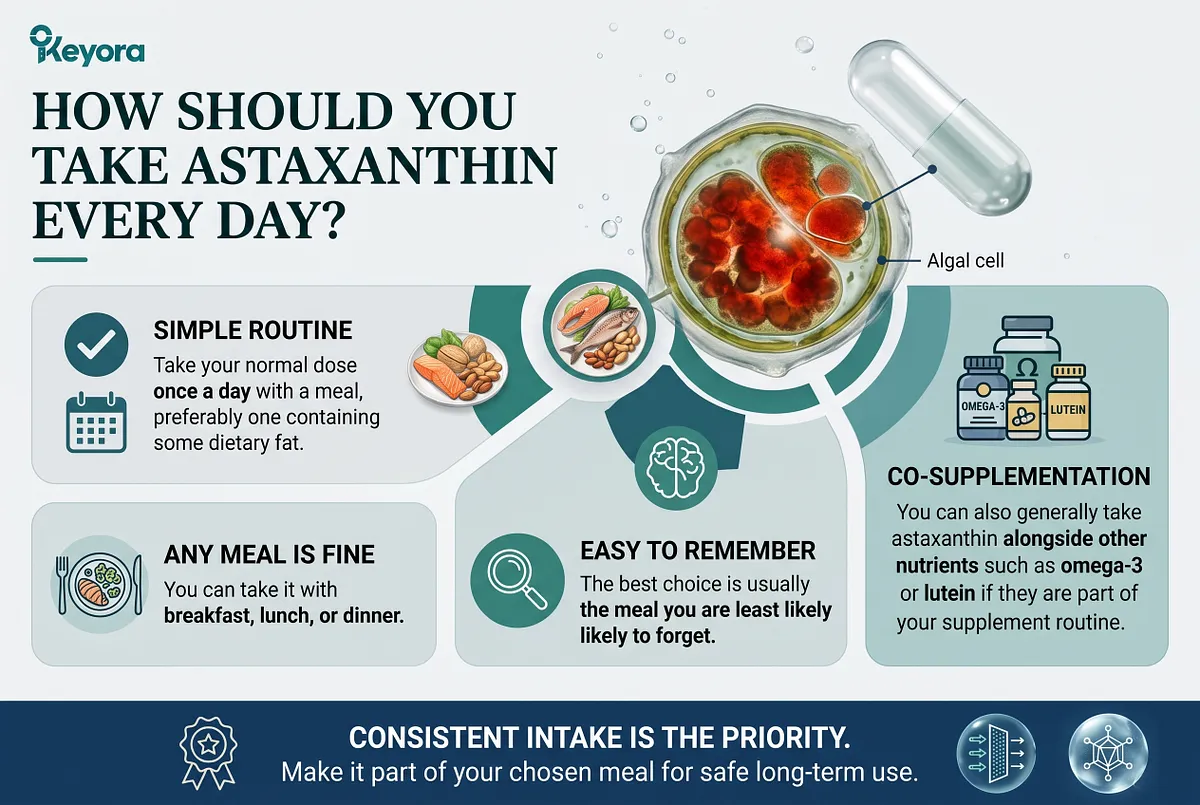
How Should You Take Astaxanthin Every Day?
For a simple daily routine:
Take your normal dose once a day with a meal, preferably one containing some dietary fat.
You can take it with breakfast, lunch, or dinner.
The best choice is usually the meal you are least likely to forget.
You can also generally take astaxanthin alongside other nutrients such as omega-3 or lutein if they are part of your supplement routine.
The Bottom Line
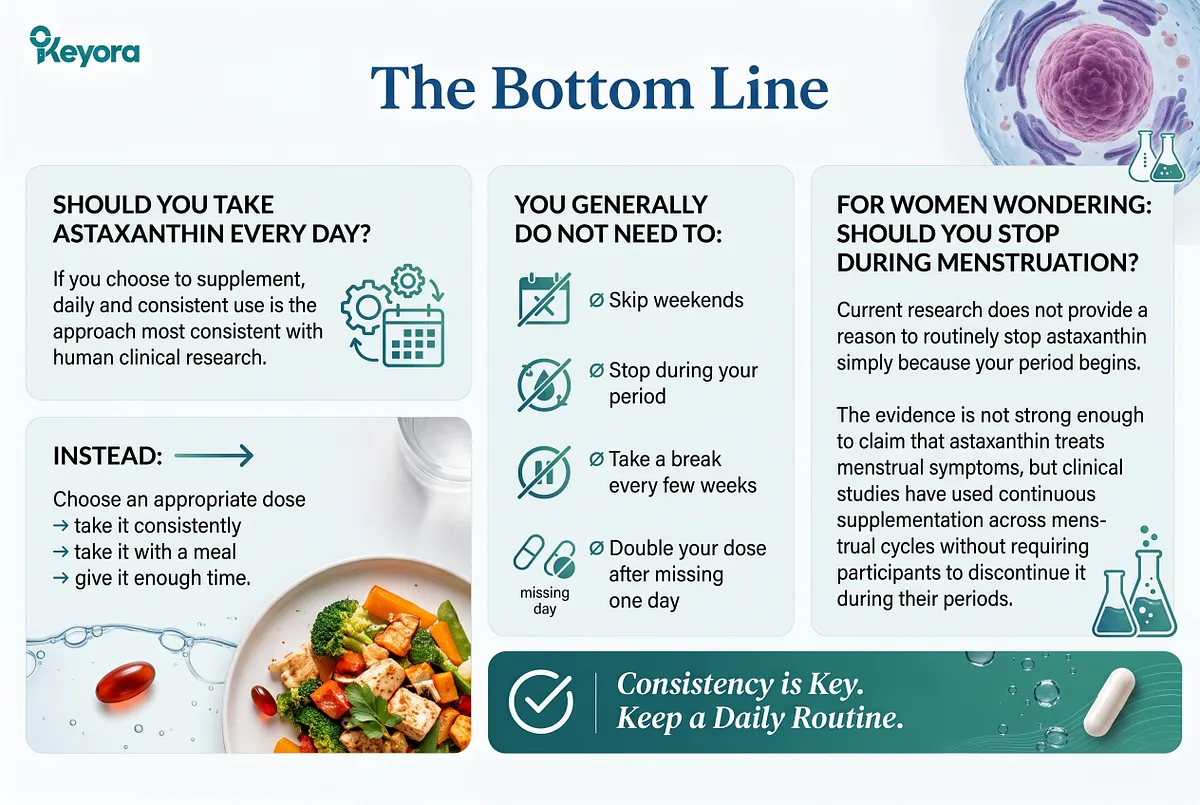
Should you take astaxanthin every day?
If you choose to supplement, daily and consistent use is the approach most consistent with human clinical research.
You generally do not need to:
- Skip weekends
- Stop during your period
- Take a break every few weeks
- Double your dose after missing one day
Instead:
Choose an appropriate dose → take it consistently → take it with a meal → give it enough time.
And for women wondering whether they should stop during menstruation:
Current research does not provide a reason to routinely stop astaxanthin simply because your period begins.
The evidence is not strong enough to claim that astaxanthin treats menstrual symptoms, but clinical studies have used continuous supplementation across menstrual cycles without requiring participants to discontinue it during their periods.
For everyday supplementation, consistency is usually more useful than trying to find reasons to stop.
References
1. Tominaga, K., Hongo, N., Karato, M., & Yamashita, E. (2012). Cosmetic benefits of astaxanthin on humans subjects. Acta Biochimica Polonica, 59(1), 43–47.
2. Fassett, R. G., & Coombes, J. S. (2011). Astaxanthin: A potential therapeutic agent in cardiovascular disease. Marine Drugs, 9(3), 447–465.
3. Ambati, R. R., Moi, P. S., Ravi, S., & Aswathanarayana, R. G. (2014). Astaxanthin: Sources, extraction, stability, biological activities and its commercial applications—A review. Marine Drugs, 12(1), 128–152.
4. Brendler, T., & Williamson, E. M. (2019). Astaxanthin: How much is too much? A safety review. Phytotherapy Research, 33(12), 3090–3111.
5. Astaxanthin and menstrual symptoms study: clinical investigation of 12 mg/day astaxanthin for 12 weeks in women with regular menstrual cycles, including assessment of menstrual blood loss and dysmenorrhea.
6. Astaxanthin and PCOS study: randomized, double-blind, placebo-controlled clinical research using 8 mg/day astaxanthin for 40 days in women with PCOS, beginning on day 1 of the menstrual cycle.