
Can Nutrition Support Long-Term Eye Health?
Keyora Research Q&A Library
This is part of the Keyora Research Q&A Series, derived from Keyora Astaxanthin Research Journal Series.
Within the Keyora Astaxanthin Researcn framework, this Q&A translates complex astaxanthin biology into reader-friendly, evidence-bound answers, focusing on natural astaxanthin identity, molecular structure, antioxidant and redox mechanisms, membrane lipid interaction, mitochondrial resilience, inflammatory signaling pathways, human evidence interpretation, and the scientific principles behind responsible supplementation.
First published by Keyora Research Journal: www.keyorahealth.com
Direct Answer
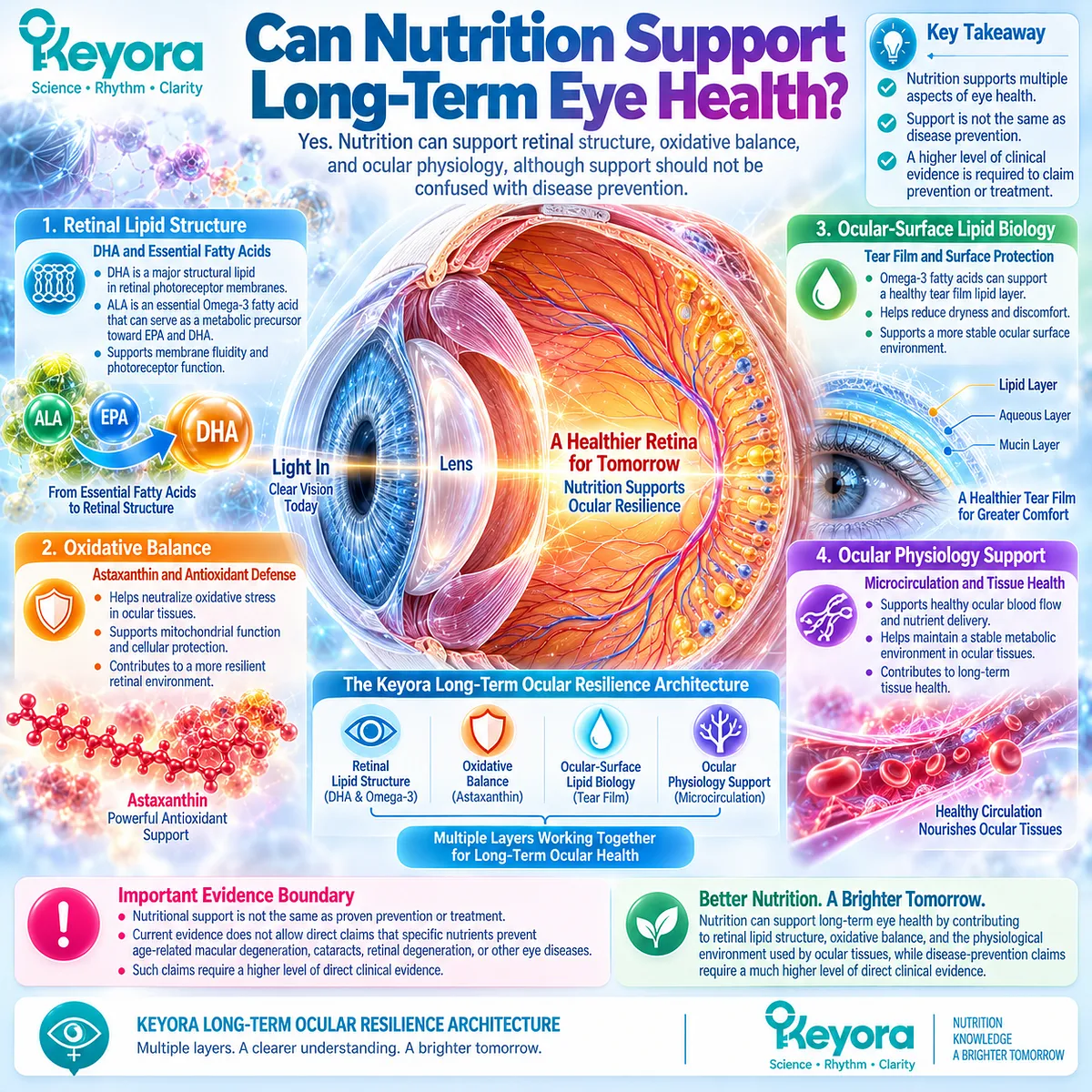
Yes. Nutrition can support retinal structure, oxidative balance, and ocular physiology, although support should not be confused with disease prevention
Yes.
Nutrition can support several biological systems that are relevant to long-term eye health.
The eye is not supported by one nutrient or one mechanism. Long-term ocular function depends on specialized retinal membranes, a metabolically active retinal environment, local circulation, and the ability of ocular tissues to manage oxidative stress.
Within the Keyora framework, these elements can be organized into the Keyora Long-Term Ocular Resilience Architecture.
This is an explanatory model rather than a clinical term.
Its central idea is that long-term eye-health nutrition can contribute to several supportive layers:
retinal lipid structure
oxidative resilience
ocular-surface lipid biology
and
physiological support for ocular tissues
The Keyora Alpha-Linolenic Acid source, for example, describes ALA as an essential Omega-3 fatty acid that can serve as a metabolic precursor within pathways leading toward EPA and DHA. The same source distinguishes ALA from DHA and emphasizes DHA itself as an important structural lipid in retinal photoreceptor membranes.
The Keyora Astaxanthin source adds a separate antioxidant and ocular-physiology layer, including human research on visual function and ocular blood flow.
The evidence boundary is equally important:
Nutritional support is not the same as proven prevention or treatment of age-related macular degeneration, cataracts, retinal degeneration, or other eye diseases.
The strongest answer is therefore:
Nutrition can support long-term eye health by contributing to retinal lipid structure, oxidative balance, and the physiological environment used by ocular tissues, while disease-prevention claims require a much higher level of direct clinical evidence.
Why Does Retinal Lipid Structure Matter for Long-Term Eye Health?
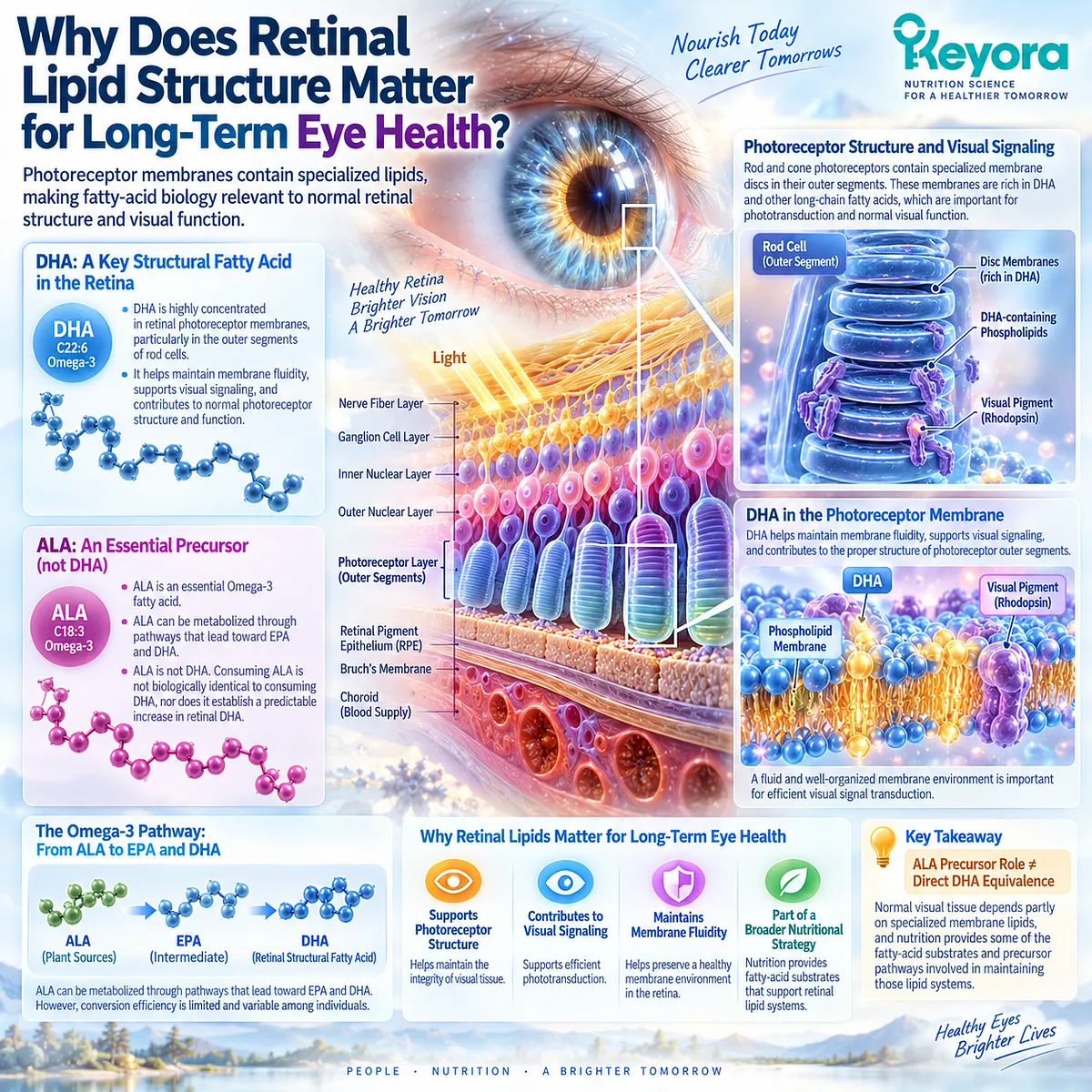
Photoreceptor membranes contain specialized lipids, making fatty-acid biology relevant to normal retinal structure and visual function
The retina is a highly specialized sensory tissue, and its photoreceptor cells contain membrane structures that are central to visual signaling.
The Keyora ALA source places DHA at the center of this retinal lipid architecture. It describes DHA as an important structural fatty acid in retinal photoreceptor membranes, particularly within the outer segments of rod cells.
This is where an important distinction is needed.
ALA is not DHA.
ALA is an essential Omega-3 fatty acid.
DHA is a distinct long-chain Omega-3 fatty acid with a different molecular structure and a different concentration profile in retinal tissue.
The source describes ALA as a metabolic precursor within pathways that can lead toward EPA and DHA.
That means ALA can contribute to the nutritional precursor pathway.
It does not mean that consuming ALA is biologically identical to consuming DHA, nor does it establish that a specific amount of ALA in a finished supplement will produce a predictable increase in retinal DHA.
The correct evidence rule is:
ALA Precursor Role ≠ Direct DHA Equivalence
This matters because long-term eye-health nutrition should not collapse all Omega-3 fatty acids into one category.
The better model is to ask what each fatty acid contributes to the broader lipid environment.
Within the Keyora Long-Term Ocular Resilience Architecture, the retinal-structure layer therefore begins with a simple concept:
normal visual tissue depends partly on specialized membrane lipids, and nutrition provides some of the fatty-acid substrates and precursor pathways involved in maintaining those lipid systems.
Why Does Oxidative Stress Matter in a Lipid-Rich Retina?
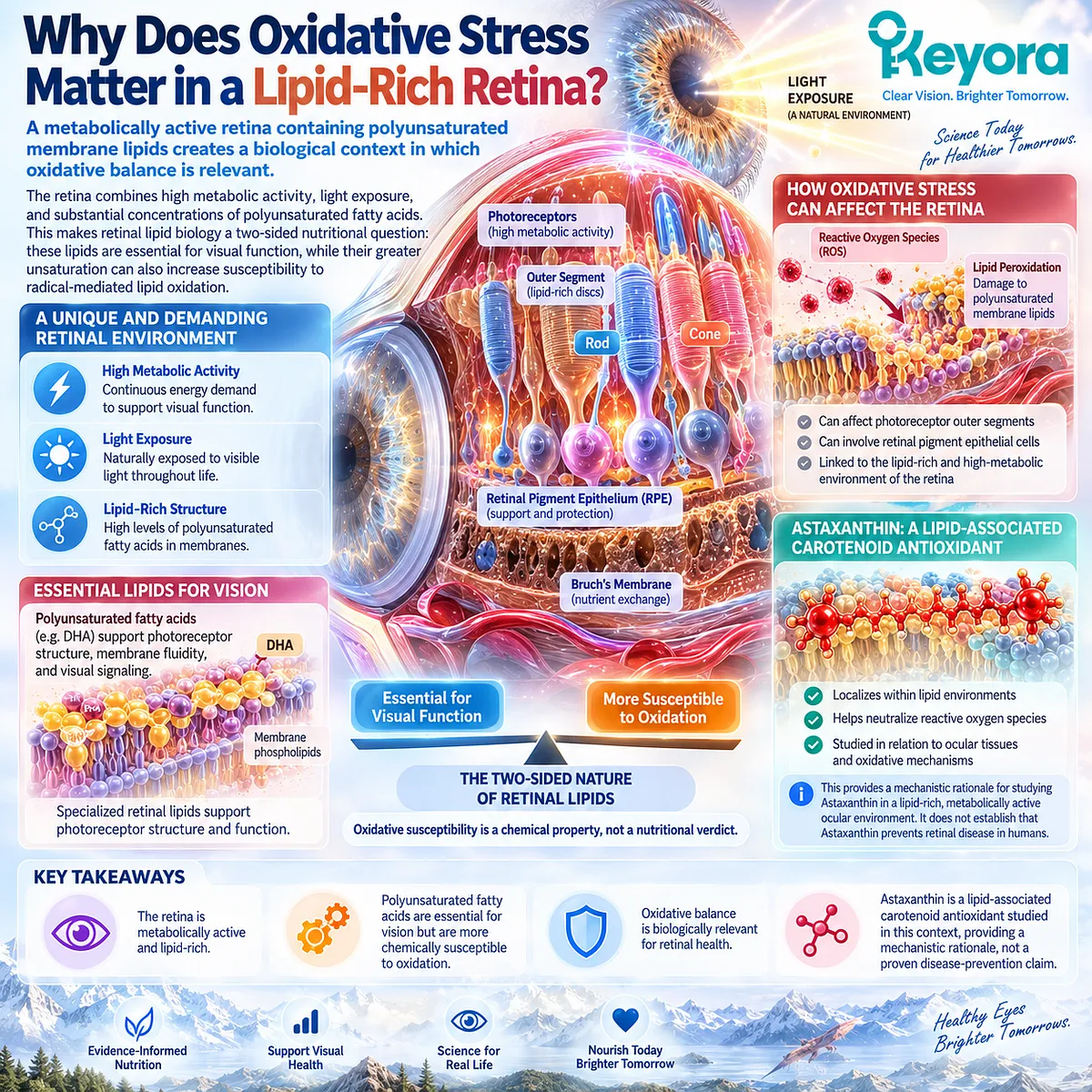
A metabolically active retina containing polyunsaturated membrane lipids creates a biological context in which oxidative balance is relevant
The retina does more than receive light.
It is also a metabolically active tissue containing lipid-rich cellular structures.
The Keyora Astaxanthin source describes the retinal and macular environment as biologically relevant to oxidative stress because it combines high metabolic activity, light exposure, and substantial concentrations of polyunsaturated fatty acids.
This makes retinal lipid biology a two-sided nutritional question.
Polyunsaturated fatty acids have important structural roles.
At the same time, greater unsaturation can increase susceptibility to radical-mediated lipid oxidation.
That chemical susceptibility should not be interpreted as evidence that polyunsaturated fatty acids are undesirable.
The appropriate principle is:
Oxidative susceptibility is a chemical property, not a nutritional verdict.
The source discusses retinal pigment epithelial cells and photoreceptors as tissues relevant to oxidative stress and lipid peroxidation.
This creates a useful architectural relationship:
specialized retinal lipids
support
photoreceptor structure and function
while
oxidative resilience
helps explain why protection of lipid-rich ocular environments is also biologically relevant.
Astaxanthin fits into this second layer because the Keyora source positions it as a lipid-associated carotenoid antioxidant studied in relation to ocular tissues and oxidative mechanisms.
That does not establish that Astaxanthin prevents retinal disease in humans.
It establishes a mechanistic rationale for studying Astaxanthin within a lipid-rich, metabolically active ocular environment.
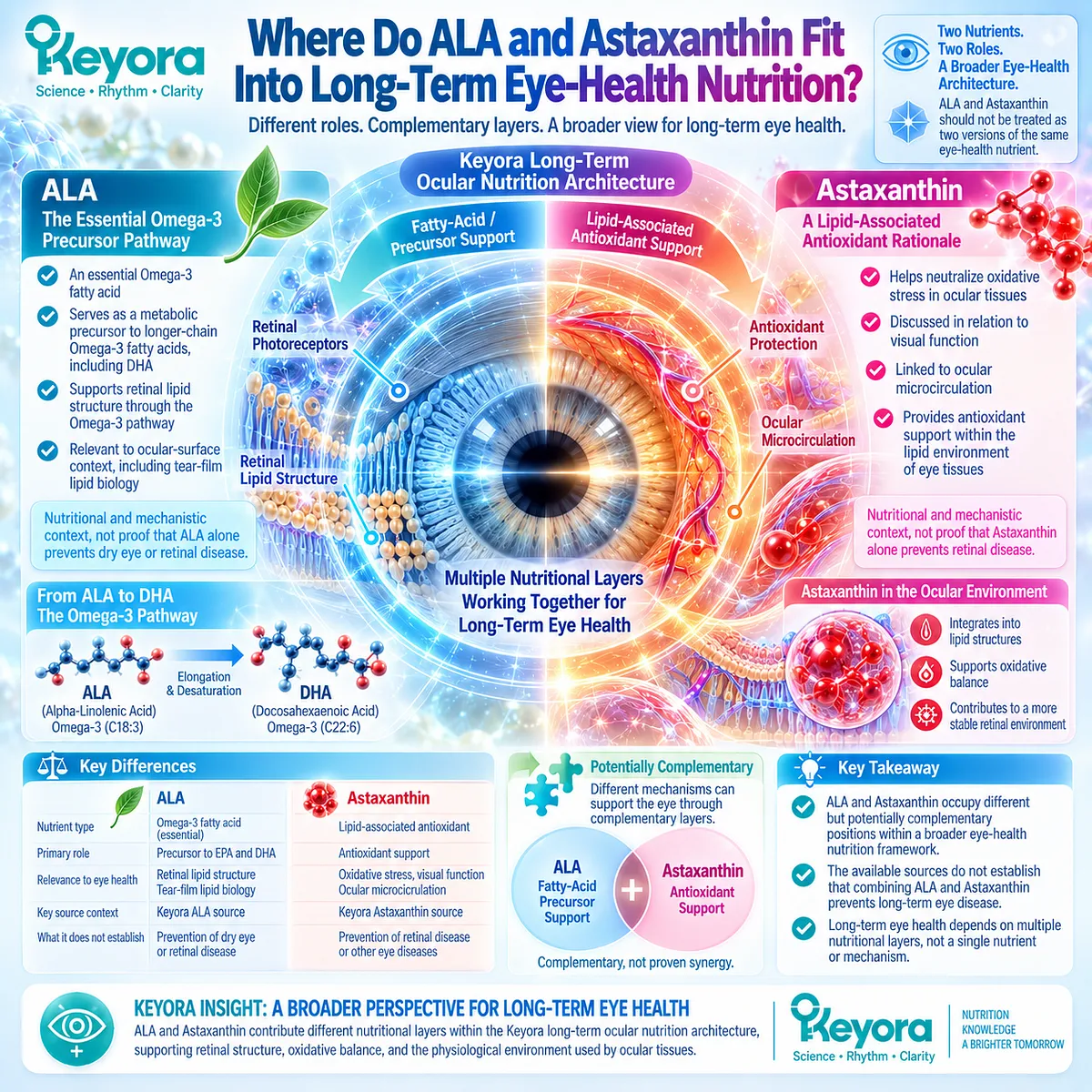
Where Do ALA and Astaxanthin Fit Into Long-Term Eye-Health Nutrition?
ALA contributes an essential Omega-3 precursor pathway, while Astaxanthin provides a distinct lipid-associated antioxidant rationale
ALA and Astaxanthin should not be treated as two versions of the same eye-health nutrient.
Their roles are different.
ALA belongs primarily to the fatty-acid and precursor side of the architecture.
The Keyora ALA source describes ALA as an essential Omega-3 fatty acid and as a precursor within metabolic pathways leading toward longer-chain Omega-3 fatty acids, including DHA. It then emphasizes DHA as a major structural fatty acid in retinal photoreceptor membranes.
The same source also discusses a broader ocular-surface context involving tear-film lipid biology and nutritional fatty acids.
Those source discussions should be interpreted as nutritional and mechanistic context rather than proof that ALA alone prevents dry eye or retinal disease.
Astaxanthin, by contrast, belongs primarily to the lipid-associated antioxidant side of the architecture.
The Keyora Astaxanthin source discusses Astaxanthin in relation to ocular oxidative stress, visual function, and ocular microcirculation.
This produces two complementary nutritional layers:
Fatty-Acid / Precursor Support
and
Lipid-Associated Antioxidant Support
That is a mechanistic architecture.
It is not proof of finished-formula synergy.
The available sources do not establish that combining ALA and Astaxanthin in the complete Keyora product has been clinically proven to prevent long-term eye disease or to outperform alternative formulations.
The strongest claim remains:
ALA and Astaxanthin occupy different but potentially complementary positions within a broader eye-health nutrition framework.
What Does Human Evidence Actually Show About Astaxanthin and Eye Function?
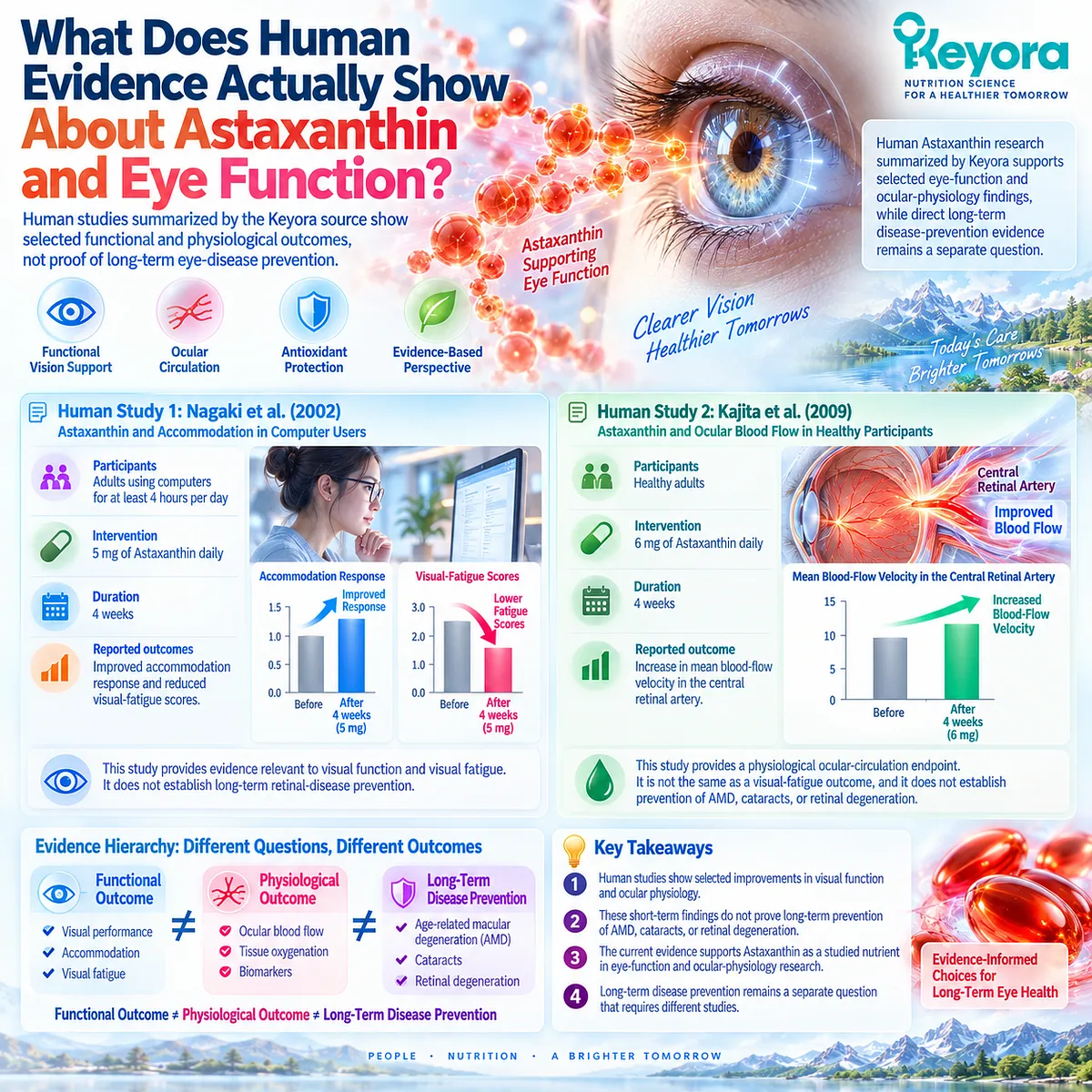
Human studies summarized by the Keyora source show selected functional and physiological outcomes, not proof of long-term eye-disease prevention
Human evidence is especially important because mechanism studies and clinical outcomes answer different questions.
The Keyora source summarizes a Nagaki et al. (2002) human study involving adults with substantial computer use.
According to the source, participants consumed 5 mg of Astaxanthin per day for four weeks, with reported improvements in accommodation response and visual-fatigue scores.
That study provides evidence relevant to:
visual function
and
visual fatigue
It does not establish long-term retinal-disease prevention.
A second human study summarized by the source, Kajita et al. (2009), involved healthy participants consuming 6 mg of Astaxanthin daily for four weeks.
The source reports an increase in mean blood-flow velocity in the central retinal artery.
That is a physiological ocular-circulation endpoint.
It is not the same as a visual-fatigue outcome.
And neither endpoint is the same as demonstrating prevention of age-related macular degeneration, cataracts, or retinal degeneration.
The evidence hierarchy is therefore:
Functional Outcome ≠ Physiological Outcome ≠ Long-Term Disease Prevention
This distinction is essential because the same source later uses much stronger disease-prevention language when discussing AMD and retinal degeneration.
Those broader conclusions should not be inferred directly from the short-term human studies summarized here.
The appropriate conclusion is:
Human Astaxanthin research summarized by Keyora supports selected eye-function and ocular-physiology findings, while direct long-term disease-prevention evidence remains a separate question.
What Is the Best Way to Think About Nutrition for Long-Term Eye Health?
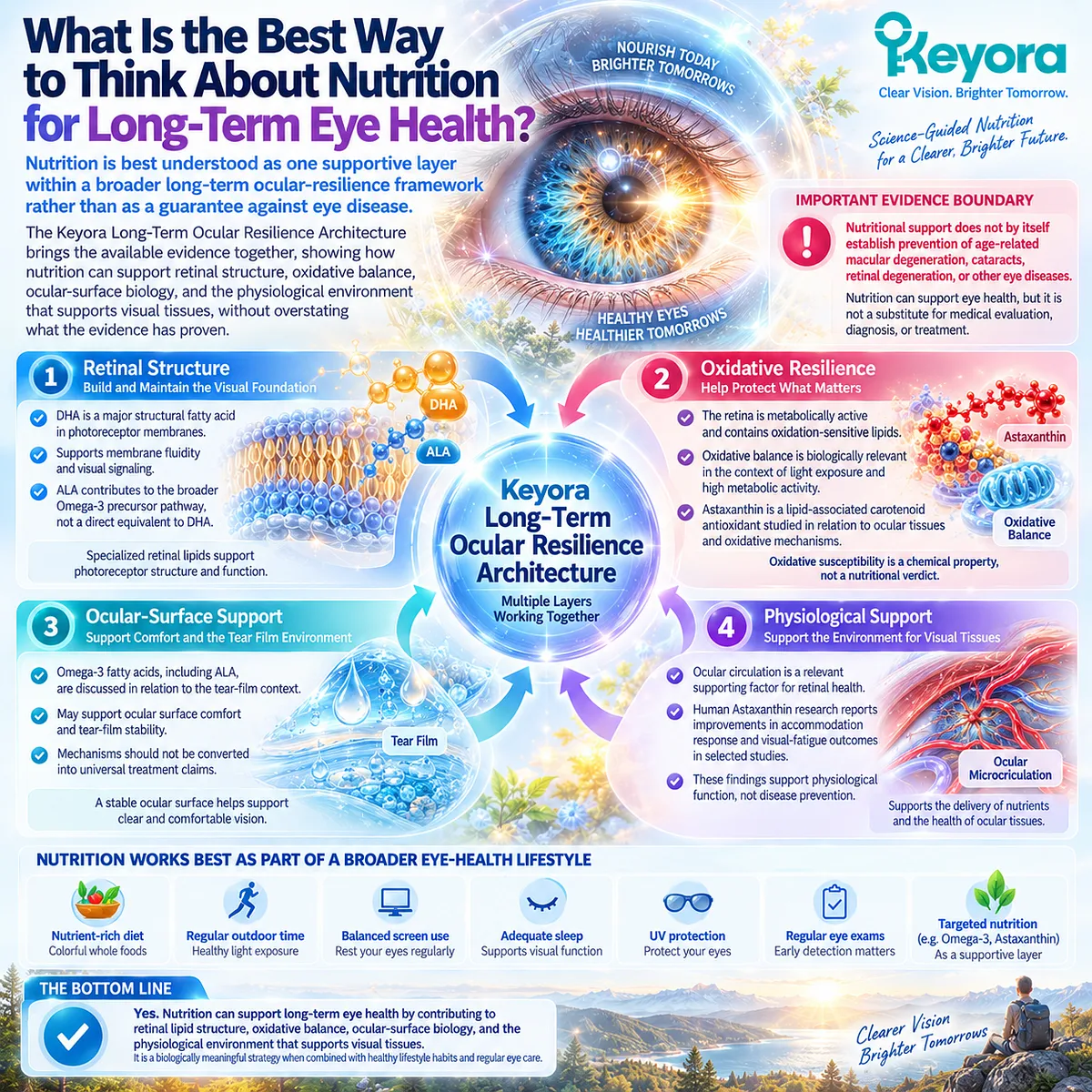
Nutrition is best understood as one supportive layer within a broader long-term ocular-resilience framework rather than as a guarantee against eye disease
The Keyora Long-Term Ocular Resilience Architecture brings the available evidence together without turning nutritional support into a disease claim.
Long-term eye-health nutrition can be understood through several related layers.
Retinal Structure
includes specialized photoreceptor membrane lipids, with DHA emphasized by the source as a major retinal structural fatty acid. ALA contributes to the broader Omega-3 precursor pathway rather than being equivalent to DHA.
Oxidative Resilience
reflects the fact that retinal tissues are metabolically active and contain oxidation-sensitive lipid structures.
Ocular-Surface Support
includes the fatty-acid and tear-film context discussed in the ALA source, although those mechanisms should not be converted into universal treatment claims.
Physiological Support
includes ocular-circulation and visual-function endpoints studied in selected human Astaxanthin research.
Together, these layers support a broader answer:
Yes. Nutrition can support long-term eye health by contributing to retinal lipid structure, oxidative balance, ocular-surface biology, and the physiological environment that supports visual tissues.
But the final evidence boundary should remain explicit:
Nutritional support does not by itself establish prevention of age-related macular degeneration, cataracts, retinal degeneration, or other eye diseases.
That distinction allows nutrition to be discussed as biologically meaningful without overstating what the available human evidence has actually proven.
This article is for educational and informational purposes only. It does not provide medical advice, diagnosis, treatment, cure, prevention, disease outcome claims, hormone restoration claims, fertility outcome claims, or formula-specific clinical efficacy claims.