
Why Combine Astaxanthin With Omega-3/6/9 Fatty Acids?
Keyora Research Q&A Library
This is part of the Keyora Research Q&A Series, derived from Keyora Astaxanthin Research Journal Series.
Within the Keyora Astaxanthin Researcn framework, this Q&A translates complex astaxanthin biology into reader-friendly, evidence-bound answers, focusing on natural astaxanthin identity, molecular structure, antioxidant and redox mechanisms, membrane lipid interaction, mitochondrial resilience, inflammatory signaling pathways, human evidence interpretation, and the scientific principles behind responsible supplementation.
First published by Keyora Research Journal: www.keyorahealth.com
Direct Answer
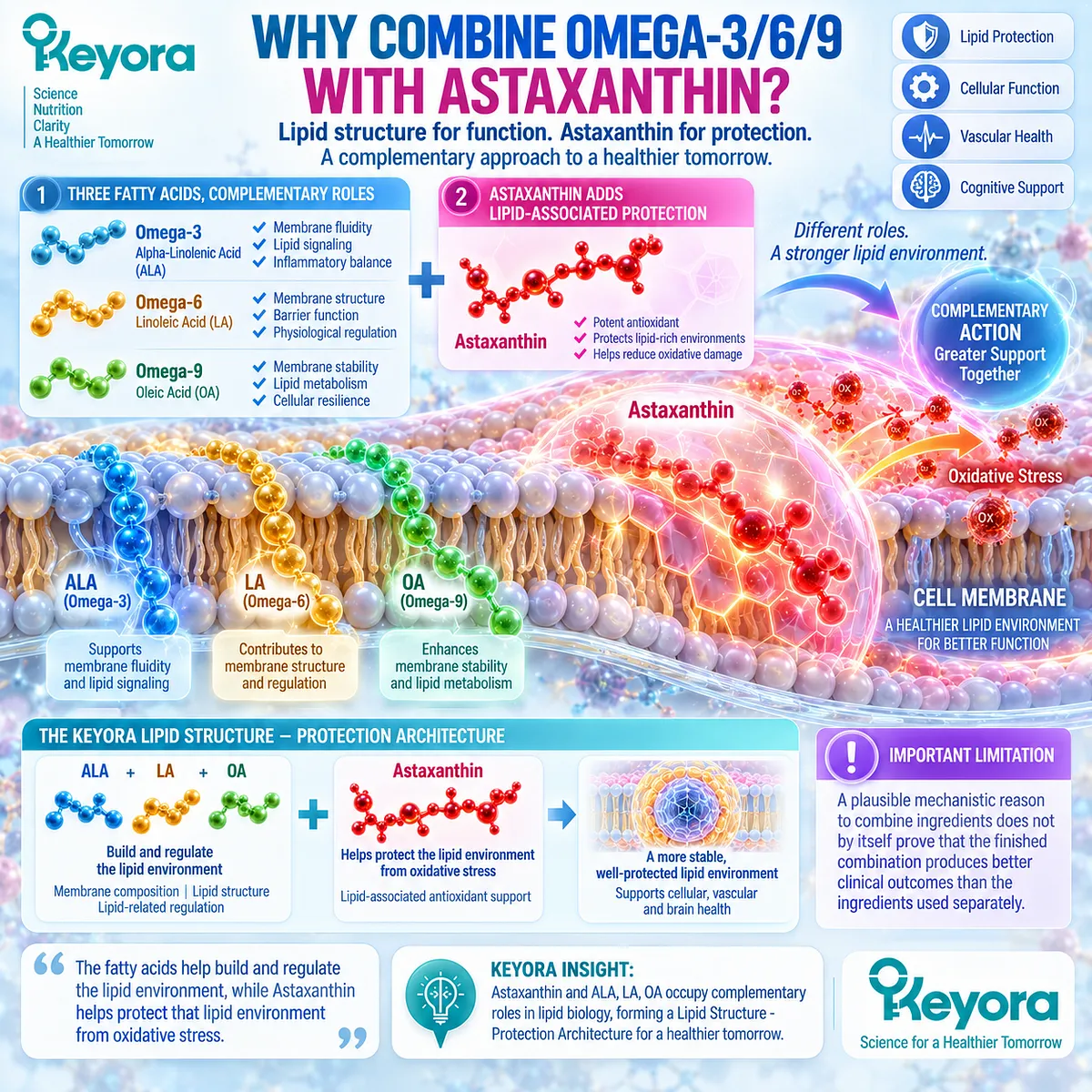
The combination pairs fatty acids that contribute to lipid structure and regulation with Astaxanthin, which is positioned to help protect lipid-rich environments from oxidative stress
Astaxanthin is combined with Omega-3, Omega-6, and Omega-9 fatty acids because these molecules can occupy complementary roles within lipid biology.
In the Keyora formula discussed here, the relevant fatty acids are specifically alpha-linolenic acid, or ALA, as Omega-3; linoleic acid, or LA, as Omega-6; and oleic acid, or OA, as Omega-9.
The Keyora formulation source identifies these three fatty acids as the major components of its Omega-3/6/9 architecture.
The combination should not be understood as four ingredients performing the same antioxidant job.
Instead, the basic logic is:
ALA + LA + OA
contribute to
lipid structure, membrane composition, and lipid-related regulation
while
Astaxanthin
provides
lipid-associated antioxidant support
The full source, Keyora Astaxanthin EP-3: The Endothelial Architecture: Cardiovascular & Cerebrovascular Sovereignty, expresses a similar idea by separating the fatty-acid contribution from the Astaxanthin contribution.
The source describes the fatty-acid layer as supporting membrane and flow-related properties while positioning Astaxanthin as a protective layer against oxidative damage.
This creates what can be called the Keyora Lipid Structure – Protection Architecture.
It is an explanatory framework, not a clinical term.
Its central principle is simple:
The fatty acids help build and regulate the lipid environment, while Astaxanthin helps protect that lipid environment from oxidative stress.
However, this mechanistic complementarity has an important limitation.
A plausible reason to combine ingredients does not by itself prove that the finished combination produces better clinical outcomes than the ingredients used separately.
That distinction should remain clear throughout the formula discussion.
What Do Omega-3, Omega-6, and Omega-9 Mean in This Formula?
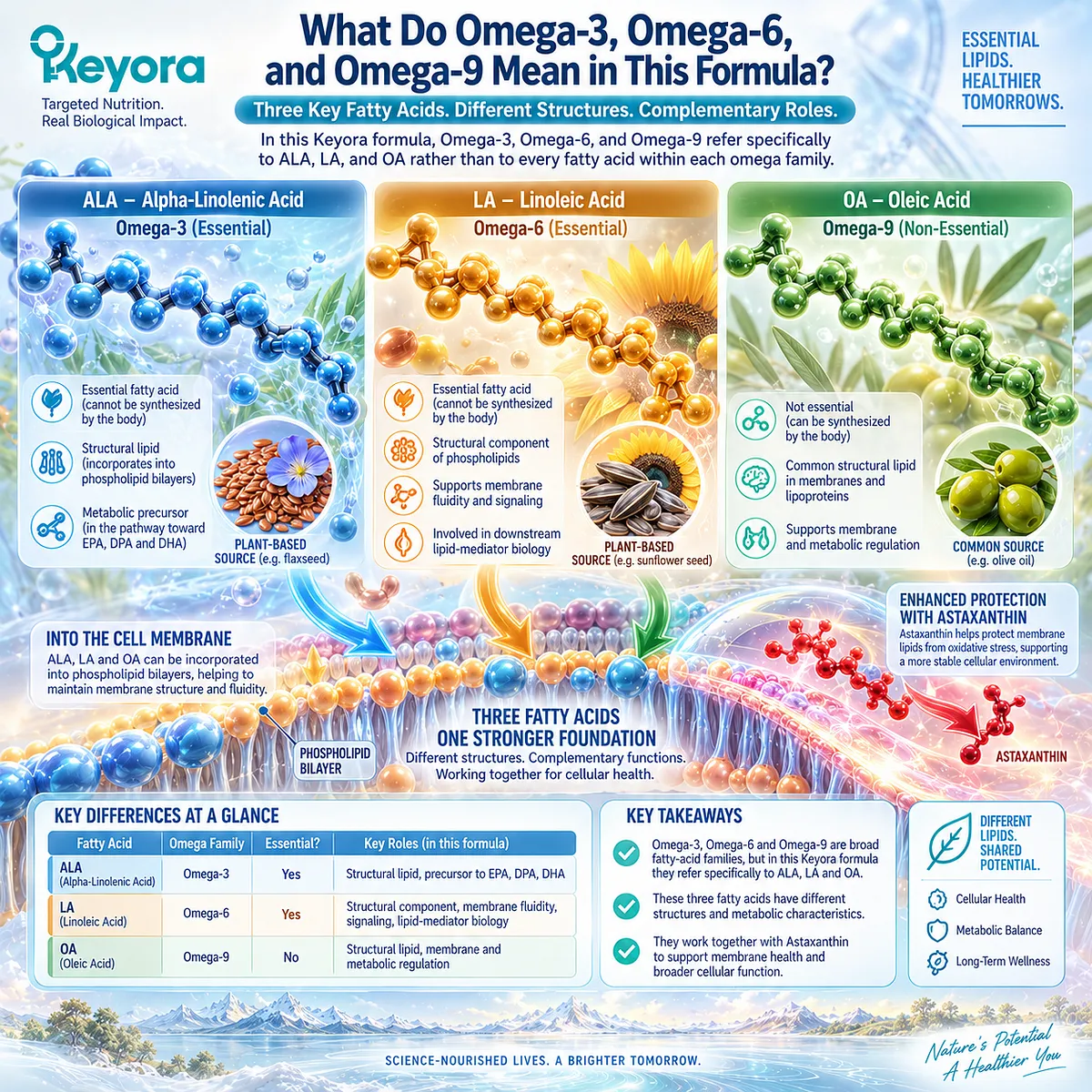
In this Keyora formula, the three fatty-acid categories refer specifically to ALA, LA, and OA rather than to every fatty acid within each omega family
Omega-3, Omega-6, and Omega-9 are broad fatty-acid families.
They should not be treated as though every molecule within each family performs the same biological role.
In the Keyora formulation discussed here, the relevant molecules are:
-
ALA – Alpha-Linolenic Acid – Omega-3
-
LA – Linoleic Acid – Omega-6
-
OA – Oleic Acid – Omega-9
ALA is an essential Omega-3 fatty acid.
The Keyora ALA source states that humans cannot synthesize ALA endogenously and must obtain it through the diet.
It also describes ALA as both a structural lipid that can enter phospholipid bilayers and a metabolic precursor within the pathway leading toward EPA, DPA, and DHA.
LA is an essential Omega-6 fatty acid.
The Keyora LA source describes it as a structural component of phospholipids and links it with membrane fluidity, signaling, and downstream lipid-mediator biology.
OA is an Omega-9 monounsaturated fatty acid. Unlike ALA and LA, the source notes that OA is not essential because it can be synthesized endogenously.
It is nevertheless described as a common structural lipid in membranes and lipoproteins with roles in membrane and metabolic regulation.
This means the phrase Omega-3/6/9 should not be interpreted as three interchangeable nutritional categories.
The Keyora formula is combining three chemically different fatty acids with different structural and metabolic characteristics.
That distinction becomes essential when asking why they are combined with Astaxanthin.
Why Use Fatty Acids as Part of a Lipid Architecture?
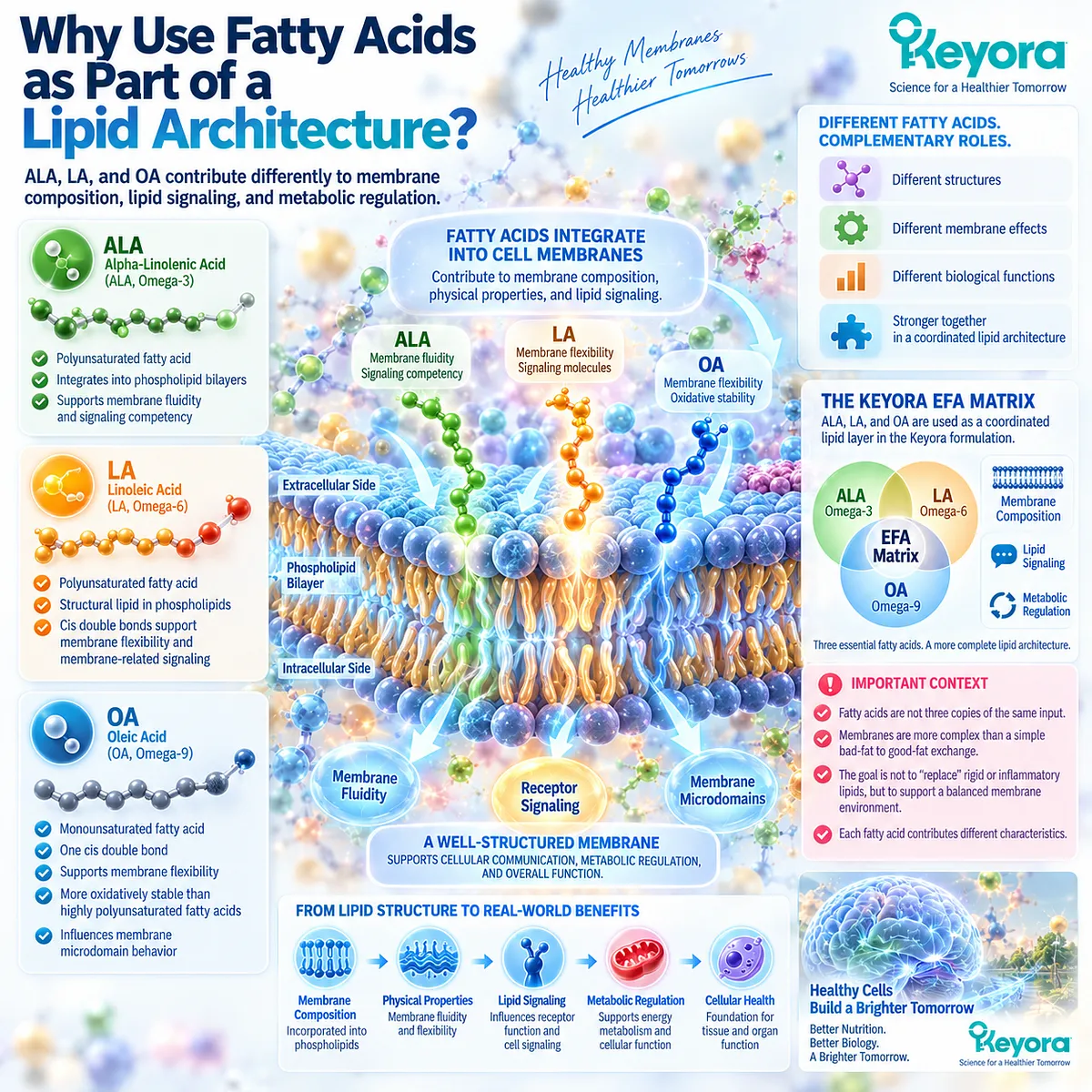
ALA, LA, and OA contribute differently to membrane composition, lipid signaling, and metabolic regulation
Cell membranes are lipid structures.
That makes fatty-acid composition biologically relevant to membrane organization and function.
-
The Keyora ALA paper states that ALA can integrate into phospholipid bilayers and describes effects on membrane fluidity and signaling competency.
-
The LA paper likewise describes linoleic acid as a structural lipid incorporated into phospholipids and links its cis double bonds with membrane flexibility and membrane-related signaling.
-
The OA paper adds a chemically different lipid component. Oleic acid contains one cis double bond and is described as supporting membrane flexibility while remaining more oxidatively stable than highly polyunsaturated fatty acids. The source also describes OA as influencing membrane microdomain behavior.
These sources therefore support a useful architectural distinction.
ALA, LA, and OA are not three copies of the same structural input.
They provide different lipid characteristics.
ALA and LA are polyunsaturated fatty acids.
OA is monounsaturated.
Each can contribute differently to membrane composition and downstream lipid biology.
The Keyora formulation source uses the phrase EFA Matrix and presents ALA, LA, and OA as a coordinated lipid layer.
For public interpretation, it is better to avoid stronger phrases from the source suggesting that these fatty acids simply replace “rigid” or “inflammatory” lipids.
Membranes are more complex than a simple bad-fat to good-fat exchange.
The more precise point is:
Selected fatty acids can contribute differently to membrane composition, physical properties, and lipid signaling.
That is the structural side of the combination.
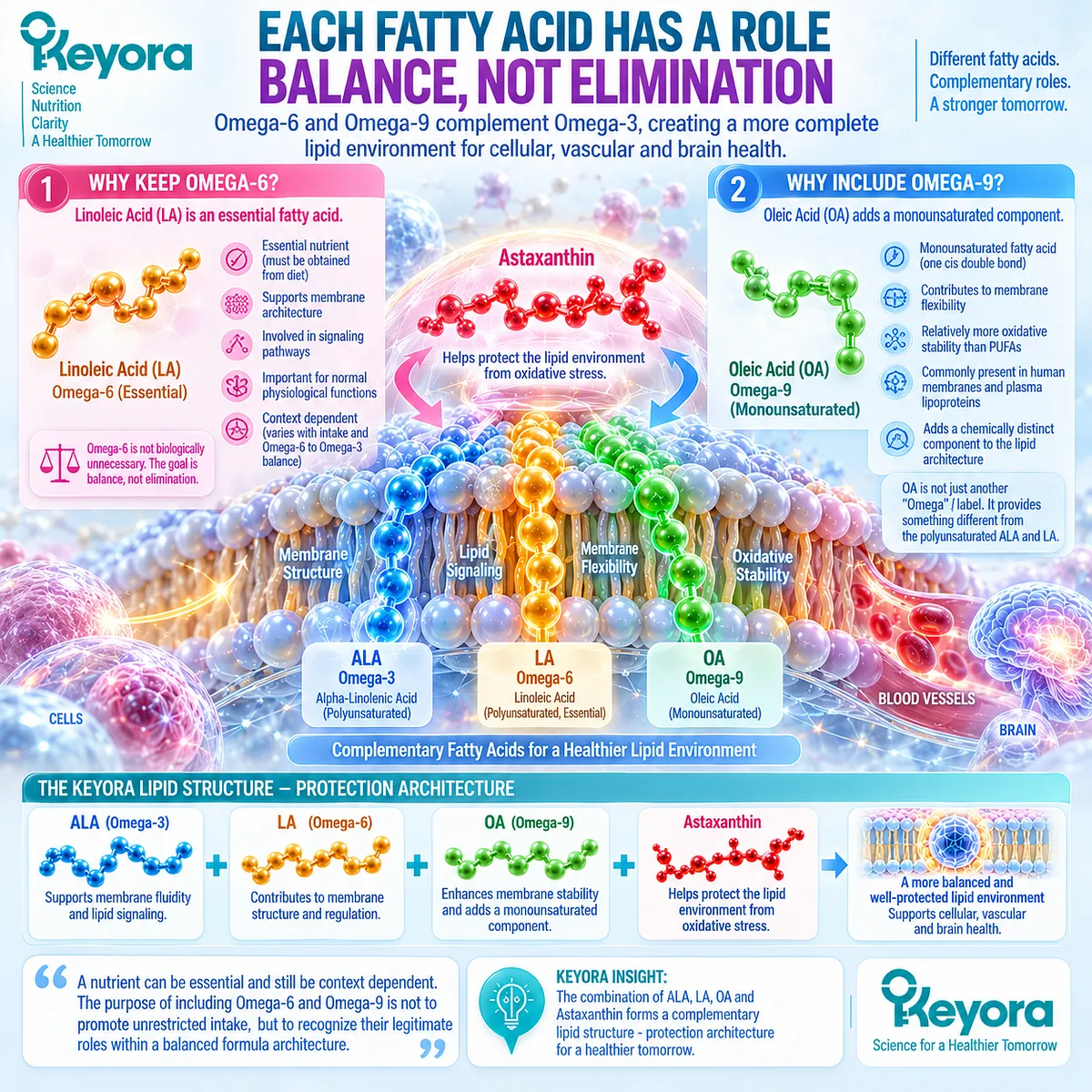
Why Is Omega-6 Included Instead of Being Removed?
Linoleic acid is an essential structural fatty acid, so the purpose is not to eliminate Omega-6 but to place it within a broader fatty-acid context
Including Omega-6 may seem surprising if a reader has previously heard that modern diets can contain too much Omega-6 relative to Omega-3.
The answer is that Omega-6 is not biologically unnecessary.
Linoleic acid is an essential fatty acid.
The Keyora LA source describes LA as important for membrane architecture, signaling, and several downstream physiological pathways.
So the formula logic is not:
Omega-6 is harmful, therefore remove it.
It is:
LA has normal biological roles, but its function should be understood within the wider fatty-acid environment.
The same LA source also emphasizes context.
It describes both the physiological importance of LA and the potential for its downstream effects to vary according to intake and broader Omega-6 to Omega-3 balance.
This is an important correction to simplistic nutrition language.
A nutrient can be:
essential
and still be:
context dependent
Those ideas are not contradictory.
The purpose of including LA in the Keyora architecture is therefore not to promote unrestricted Omega-6 intake.
It is to recognize LA as a legitimate structural and metabolic lipid within a broader formulation that also contains ALA and OA.
The most useful principle is:
Balance, not elimination
That same principle prevents the formula from contradicting earlier discussions of modern Omega-6 and Omega-3 imbalance.
Why Does Oleic Acid Add Something Different From ALA and LA?
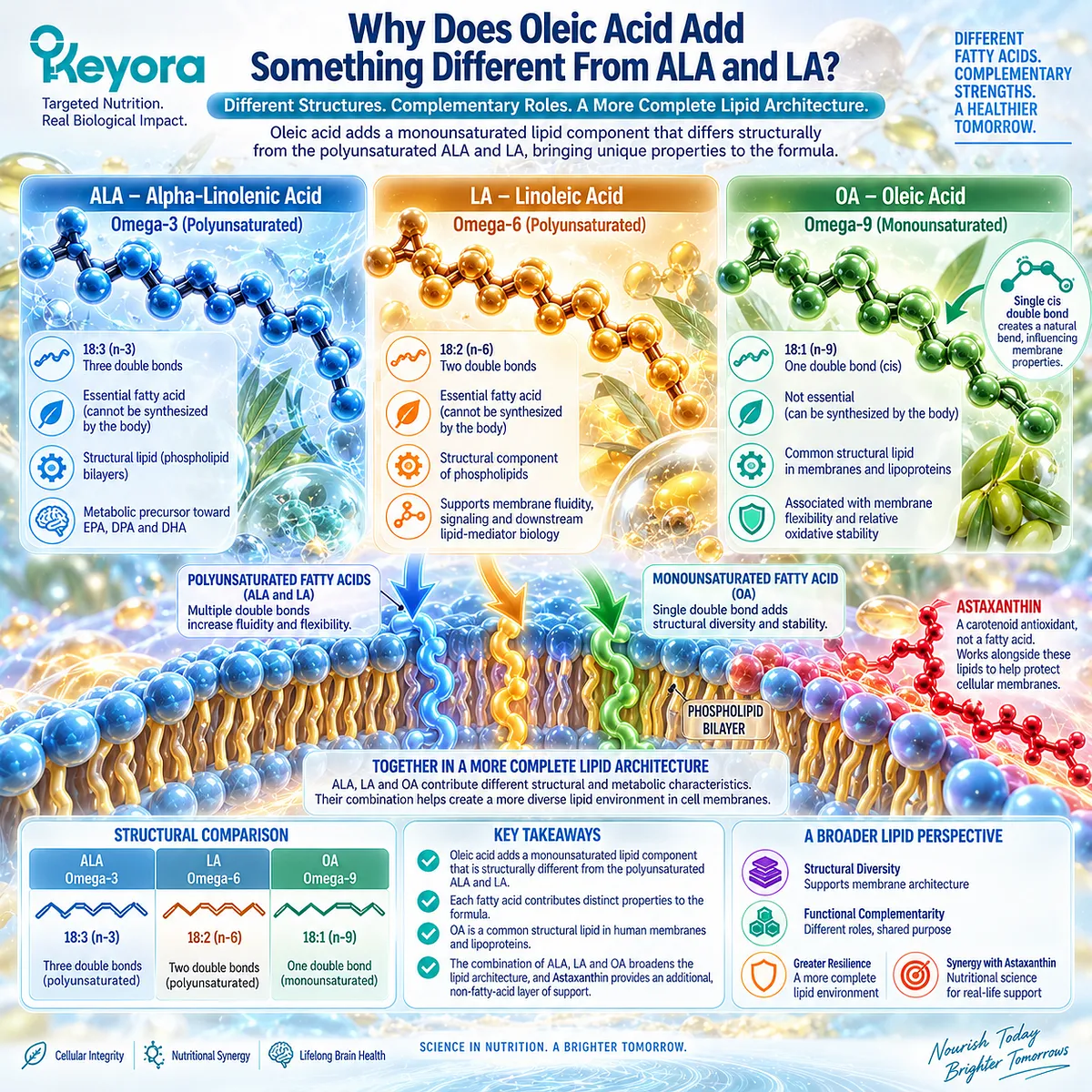
Oleic acid adds a monounsaturated lipid component that differs structurally from the polyunsaturated ALA and LA
Oleic acid contributes something chemically different to the formula.
ALA and LA are polyunsaturated fatty acids.
OA is a monounsaturated fatty acid.
The Keyora OA source describes this distinction through its single cis double bond and links that structure with membrane flexibility and relative oxidative stability.
This matters because a lipid architecture does not have to consist of one type of fatty acid.
Different levels of unsaturation can contribute different physical and chemical properties.
Within the Keyora framework:
ALA and LA
provide polyunsaturated components,
while
OA
adds a monounsaturated component.
The OA paper also describes oleic acid as one of the common fatty acids present in human membranes and plasma lipoproteins.
This allows OA to be understood as part of the structural lipid environment rather than simply as an additional “Omega” label.
The strongest source-supported conclusion is not that OA stabilizes every membrane or protects all PUFAs from oxidation.
It is more modest:
OA broadens the lipid architecture by contributing a chemically distinct monounsaturated fatty-acid component.
That distinction becomes especially relevant when the formula is considered alongside Astaxanthin, because Astaxanthin is not another fatty acid at all.
Where Does Astaxanthin Fit Into This Fatty-Acid Environment?
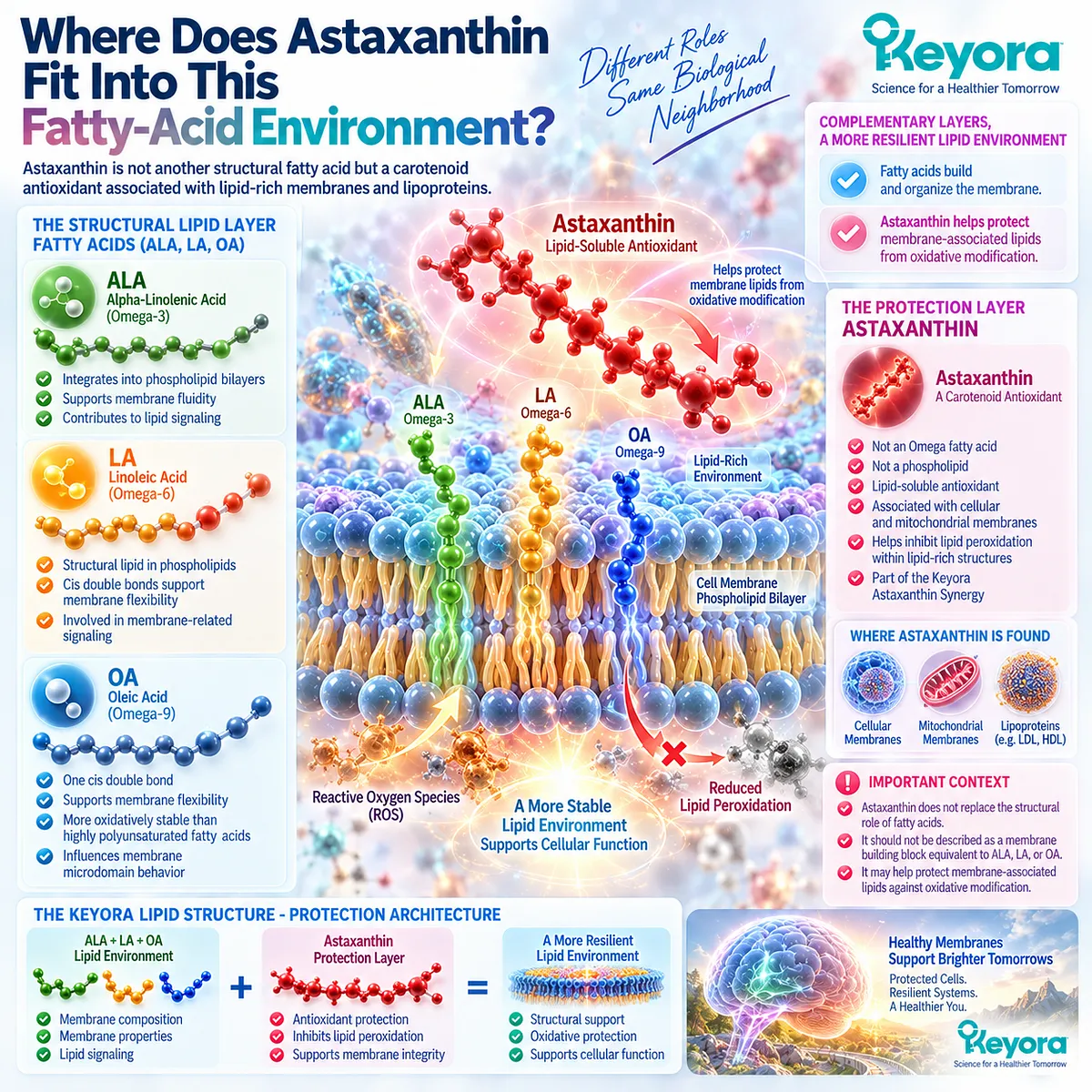
Astaxanthin is not another structural fatty acid but a carotenoid antioxidant associated with lipid-rich membranes and lipoproteins
Astaxanthin occupies a fundamentally different role from ALA, LA, and OA.
It is not an Omega fatty acid.
It is not a phospholipid.
And it should not be described as a membrane building block equivalent to the fatty acids.
Instead, the Keyora source positions Astaxanthin as a lipid-associated antioxidant within membrane-rich and lipoprotein-rich environments.
The Keyora Endothelial Architecture paper describes an Astaxanthin Synergy in which fatty-acid-related membrane properties and oxidative protection are treated as complementary layers.
The source specifically connects Astaxanthin with protection against lipid oxidation within lipid-rich structures.
The broader Keyora formulation paper similarly describes Astaxanthin as a lipid-soluble antioxidant associated with cellular and mitochondrial membranes and places inhibition of lipid peroxidation among its proposed functions.
This creates a useful distinction:
ALA, LA, and OA
contribute to the lipid environment,
while
Astaxanthin
is positioned to help protect that lipid environment from oxidative modification.
The phrase that best captures the relationship is:
Different roles, same biological neighborhood
Astaxanthin should therefore not be described as repairing membranes in the same way a structural lipid participates in membrane composition.
A more precise statement is:
Astaxanthin may help protect membrane-associated lipids against oxidative modification.
That is the protection side of the Keyora Lipid Structure – Protection Architecture.
Why Can More Unsaturated Lipid Structure Increase the Need for Oxidative Protection?
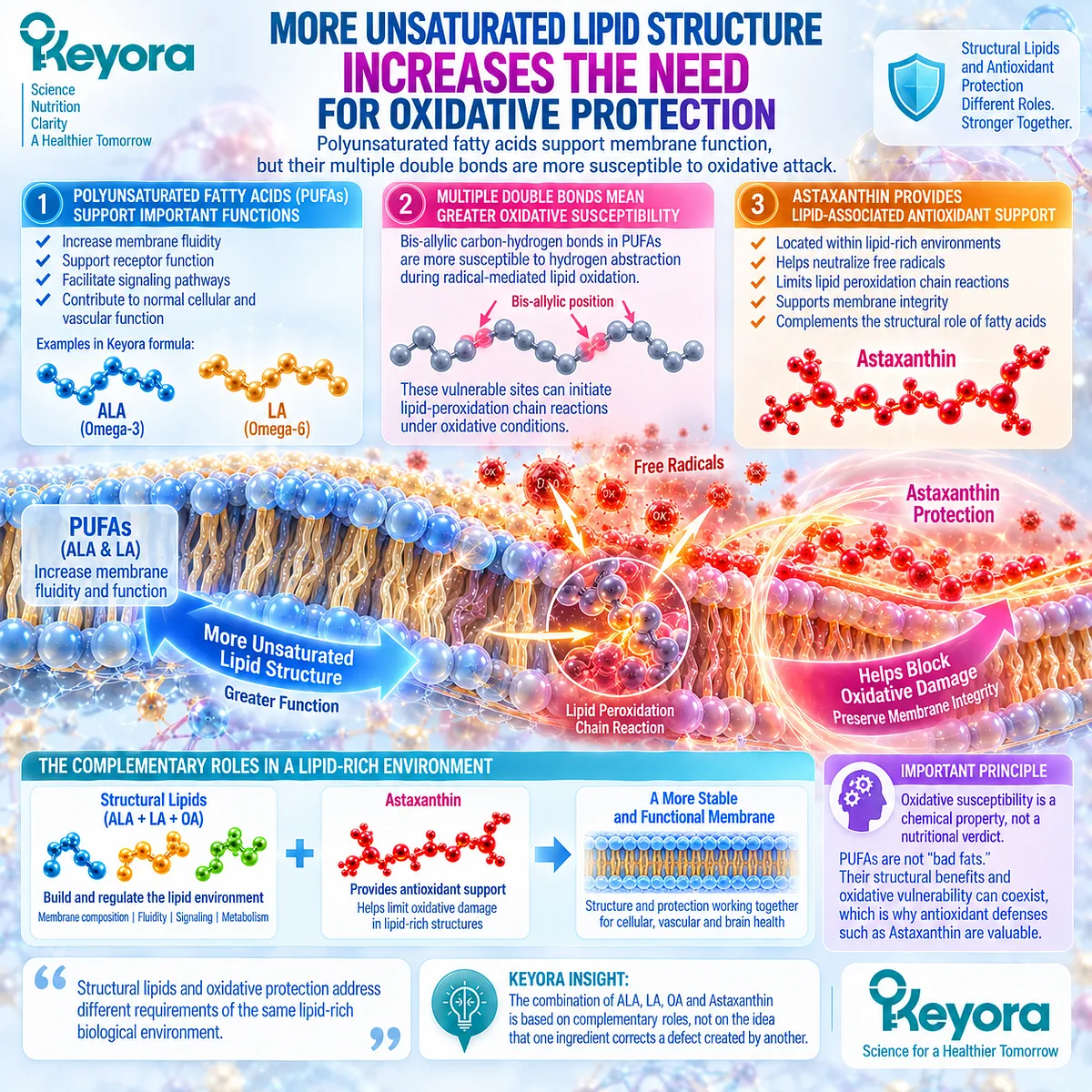
Polyunsaturated fatty acids support important membrane properties but also contain bis-allylic positions that are more susceptible to radical-mediated lipid peroxidation
Polyunsaturated fatty acids have biologically important structural properties.
They also have characteristic chemical susceptibility to radical-mediated oxidation.
This is not a contradiction.
It is part of their chemistry.
The Keyora Endothelial Architecture paper emphasizes this relationship when discussing its Astaxanthin synergy. The source notes that the double bonds contributing to lipid flexibility are also locations associated with greater oxidative vulnerability.
The more precise chemical explanation is that bis-allylic carbon-hydrogen bonds in polyunsaturated fatty acids are more susceptible to hydrogen abstraction during radical-mediated lipid oxidation.
That susceptibility can contribute to lipid-peroxidation chain reactions under oxidative conditions.
The important principle is:
Oxidative susceptibility is a chemical property, not a nutritional verdict.
It does not mean that ALA or LA should be characterized as bad fats.
It means that biological structures containing polyunsaturated lipids can benefit from antioxidant defense systems capable of limiting oxidative damage.
This is where Astaxanthin becomes logically complementary within the formula architecture.
The fatty acids contribute to membrane and lipid structure.
Astaxanthin is positioned within the same lipid-rich environment as an antioxidant support layer.
The combination is therefore not based on the idea that one ingredient corrects a defect created by another.
It is based on the idea that:
structural lipids and oxidative protection address different requirements of the same lipid-rich biological environment.
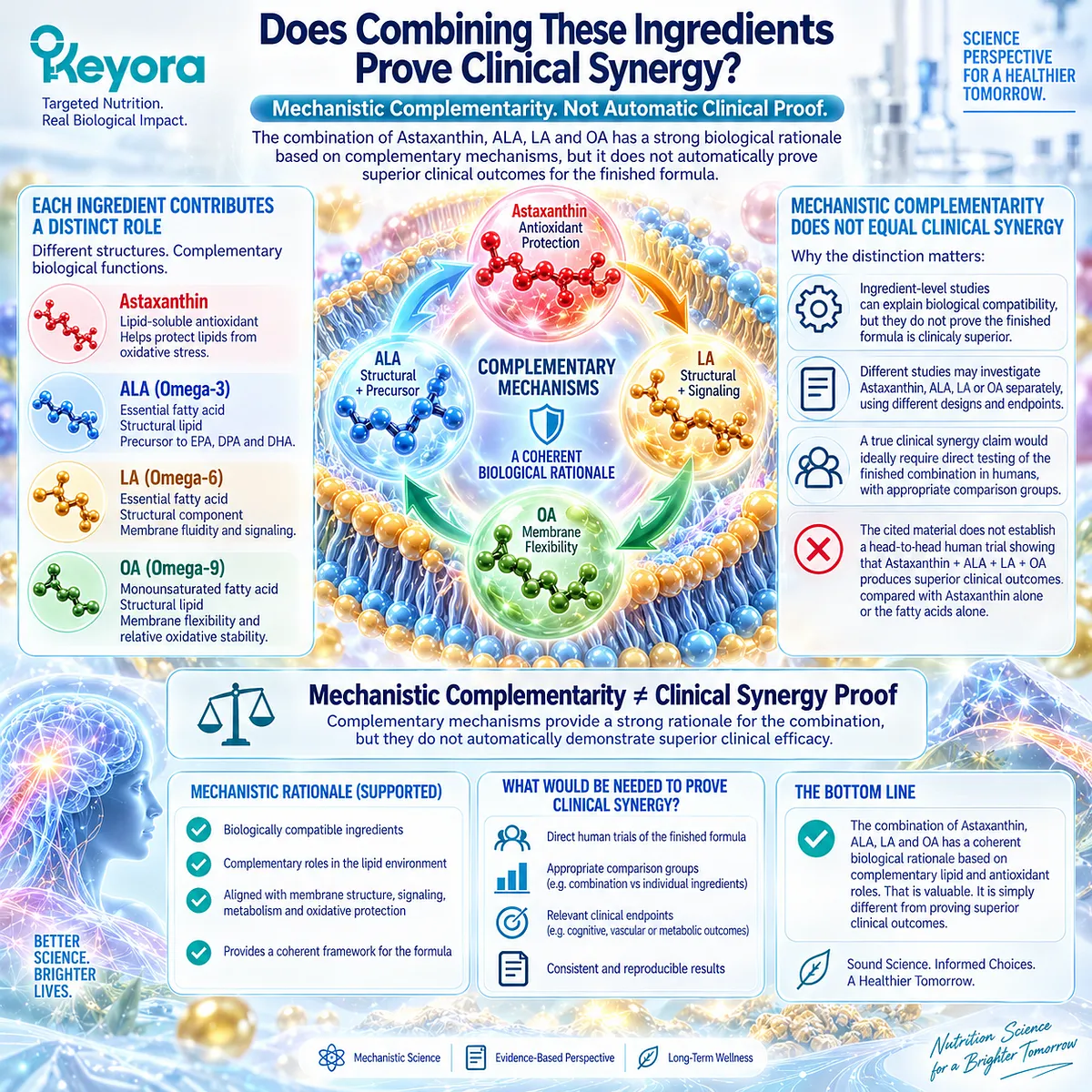
Does Combining These Ingredients Prove Clinical Synergy?
No. Complementary mechanisms provide a rationale for combining the ingredients, but they do not automatically prove superior clinical outcomes for the finished formula
The Keyora formulation sources repeatedly use the word synergy.
They describe Astaxanthin together with ALA, LA, and OA as a lipophilic or lipid-oriented combination and attribute multiple complementary biological roles to the components.
This supports a mechanistic rationale for the combination.
It does not automatically establish clinical synergy.
That distinction matters because several different types of evidence can be involved.
One study may investigate Astaxanthin.
Another may investigate ALA.
Separate literature may discuss LA or OA.
Those findings can help explain why the ingredients are biologically compatible.
But combining ingredient-level evidence does not by itself prove that the finished four-component formula is clinically superior to its individual components.
The correct evidence rule is:
Mechanistic Complementarity ≠ Clinical Synergy Proof
A finished-formula synergy claim would ideally require direct testing of the finished combination in humans, with appropriate comparison groups and relevant clinical endpoints.
The source material used here provides substantial ingredient-level mechanistic reasoning.
What it does not establish in the cited passages is a head-to-head human trial demonstrating that:
Astaxanthin + ALA + LA + OA
produces superior clinical outcomes compared with:
Astaxanthin alone
or
the fatty acids alone
Therefore, the strongest supported conclusion is:
The combination has a coherent biological rationale based on complementary lipid and antioxidant roles.
That is valuable.
It is simply different from proving superior clinical efficacy.
What Is the Best Way to Understand the Combination?
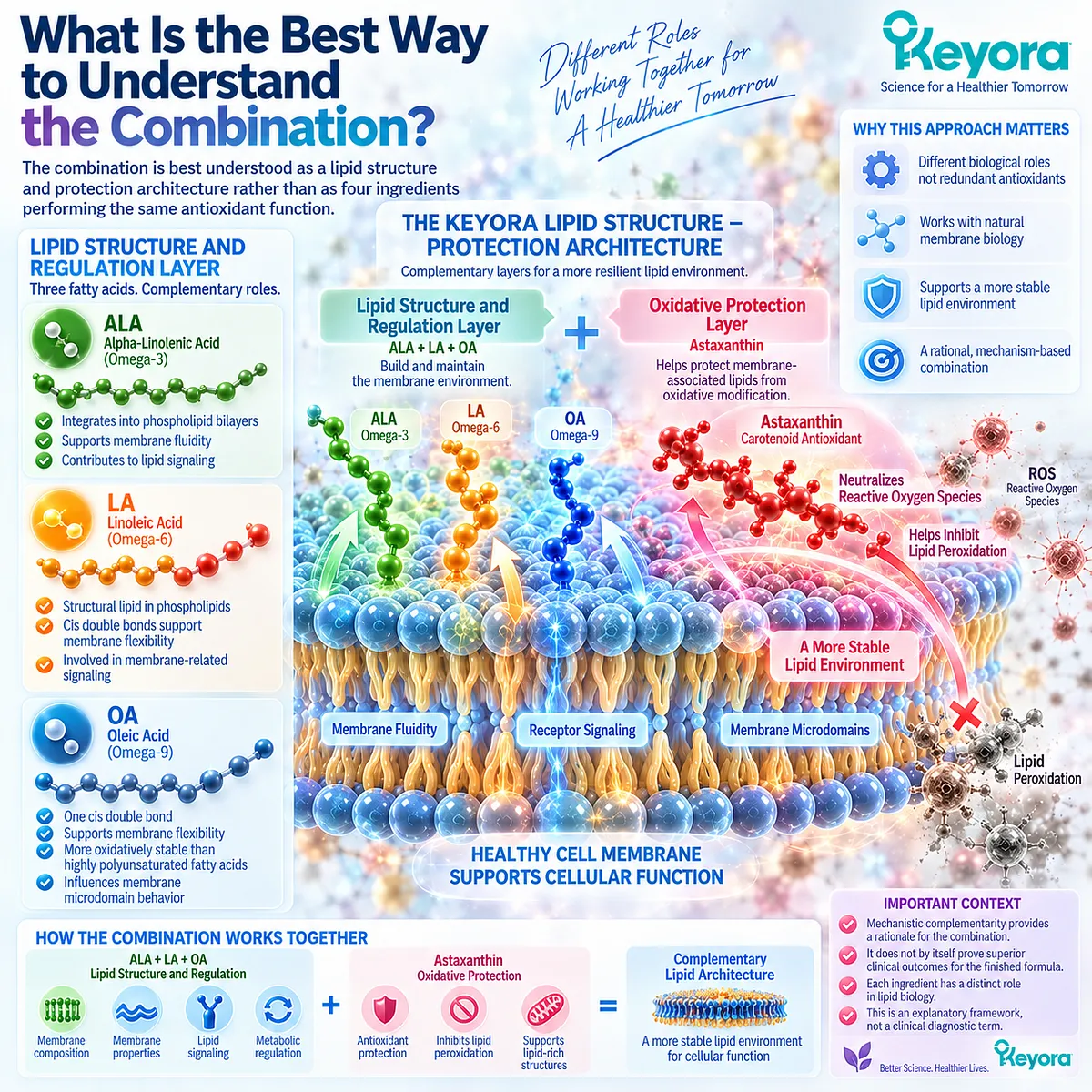
The combination is best understood as a lipid structure and protection architecture rather than as four ingredients performing the same antioxidant function
The most useful way to understand Astaxanthin with Omega-3/6/9 is through the Keyora Lipid Structure – Protection Architecture.
This explanatory framework separates the formula into two complementary biological layers.
The first is the Lipid Structure and Regulation Layer.
ALA
LA
and
OA
contribute different fatty-acid characteristics to membrane composition and lipid-related biology.
The second is the Oxidative Protection Layer.
Astaxanthin
is positioned as a lipid-associated antioxidant that may help limit oxidative modification within membrane-rich and lipoprotein-rich environments.
The architecture can therefore be summarized as:
ALA + LA + OA
support
lipid structure + membrane environment + lipid regulation
while
Astaxanthin
supports
lipid-associated oxidative protection
Together, they form:
Complementary Lipid Architecture
The full Keyora sources support this general distinction. The fatty-acid papers describe ALA, LA, and OA as structurally and metabolically active lipids, while the Astaxanthin sources position Astaxanthin as a lipid-associated antioxidant used alongside those fatty acids.
The final answer is therefore:
Astaxanthin is combined with ALA, LA, and OA because the ingredients have complementary roles in lipid biology: the fatty acids contribute to membrane structure and lipid regulation, while Astaxanthin provides a distinct lipid-associated antioxidant layer that may help limit oxidative damage to lipid-rich structures.
The evidence boundary remains equally important:
Mechanistic complementarity provides a rationale for the combination, but it does not by itself prove superior clinical outcomes for the finished formula.
The next article, “What Makes a Lipid-Based Antioxidant Formula Different?”, can then move from the individual roles of these ingredients to the larger question of why the lipid environment itself matters in antioxidant formula design.
This article is for educational and informational purposes only. It does not provide medical advice, diagnosis, treatment, cure, prevention, disease outcome claims, hormone restoration claims, fertility outcome claims, or formula-specific clinical efficacy claims.