
Is Cholesterol Alone the Cause of Artery Problems?
Keyora Research Q&A Library
This is part of the Keyora Research Q&A Series, derived from Keyora Astaxanthin Research Journal Series.
Within the Keyora Astaxanthin Researcn framework, this Q&A translates complex astaxanthin biology into reader-friendly, evidence-bound answers, focusing on natural astaxanthin identity, molecular structure, antioxidant and redox mechanisms, membrane lipid interaction, mitochondrial resilience, inflammatory signaling pathways, human evidence interpretation, and the scientific principles behind responsible supplementation.
First published by Keyora Research Journal: www.keyorahealth.com
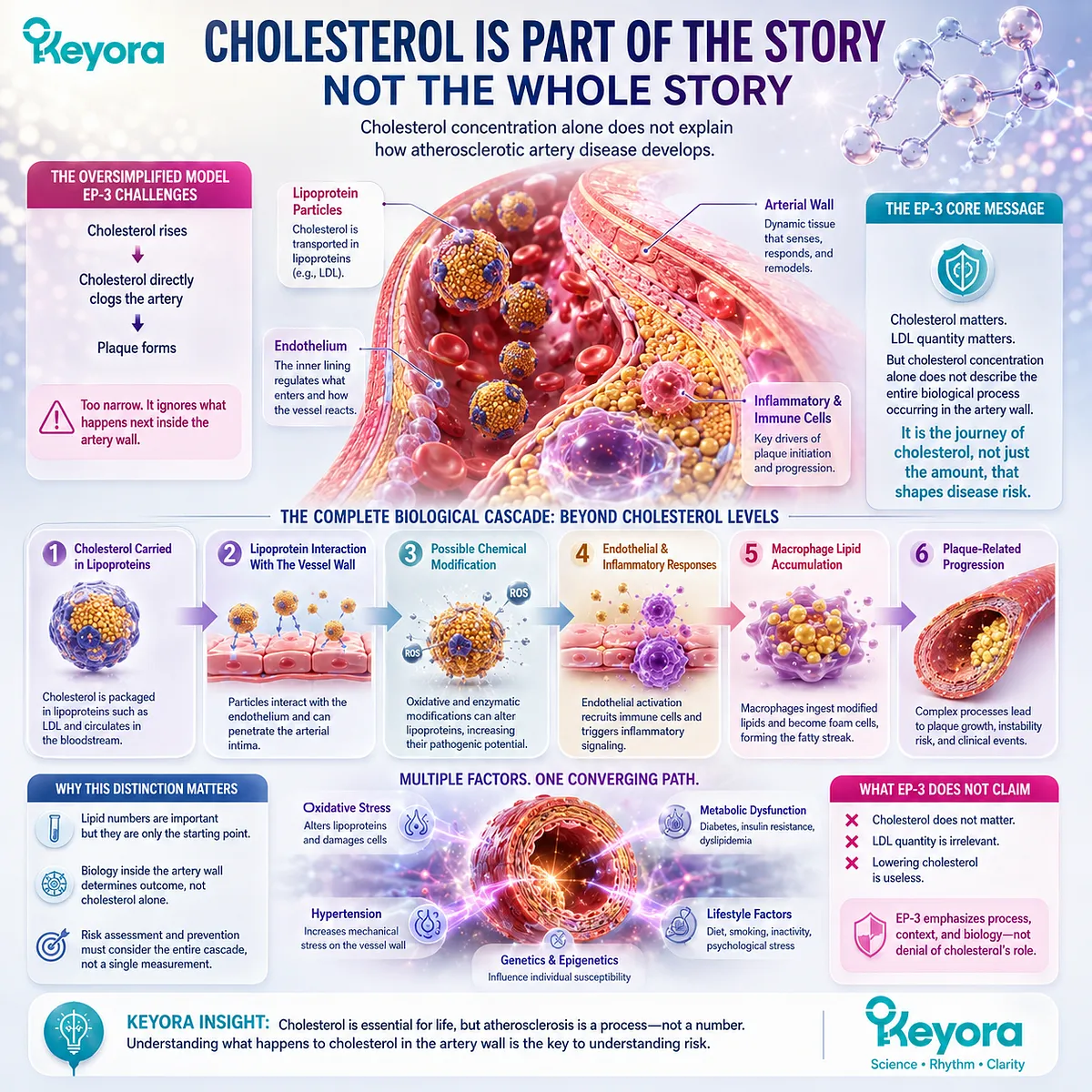
Direct Answer
Cholesterol is part of cardiovascular biology, but cholesterol alone does not describe the full process that leads to atherosclerotic artery disease
No.
Keyora Astaxanthin EP-3 argues that cholesterol alone is not a complete explanation for artery problems.
The source specifically challenges the simple model:
cholesterol rises
↓
cholesterol directly clogs the artery
↓
plaque forms
EP-3 considers that sequence too narrow because it leaves out what happens to lipoprotein particles, how they interact with the artery wall, whether oxidative modification occurs, and how inflammatory and immune processes become involved.
At the same time, the correct conclusion is not:
cholesterol does not matter
or
LDL quantity is irrelevant
EP-3 does not establish either of those claims.
A more accurate reading of its central argument is:
Cholesterol concentration alone does not describe the entire biological process occurring inside the artery wall.
The Q025 framework can therefore be summarized as:
Cholesterol carried in lipoproteins
↓
Lipoprotein interaction with the vascular environment
↓
Possible chemical modification
↓
Endothelial and inflammatory responses
↓
Macrophage lipid accumulation
↓
Plaque related progression
This is a more complete interpretation of the source than treating cholesterol itself as the only variable.
EP-3’s strongest contribution in this section is therefore not the claim that cholesterol is unimportant.
It is the distinction between simply measuring lipid cargo and understanding what happens to that cargo as it circulates and interacts with vascular tissue.
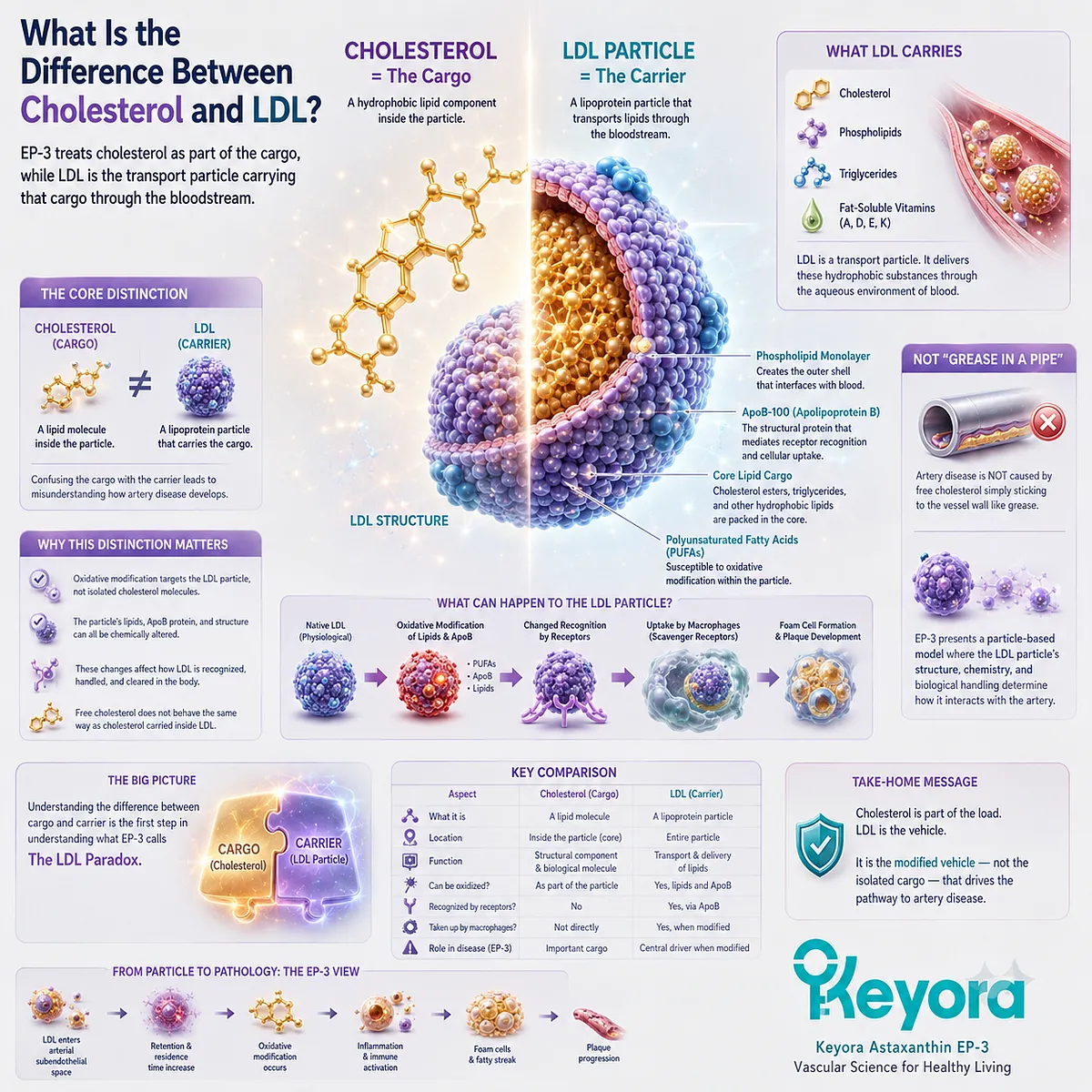
What Is the Difference Between Cholesterol and LDL?
EP-3 treats cholesterol as part of the cargo, while LDL is the transport particle carrying that cargo through the bloodstream
One of the easiest ways to misunderstand cholesterol biology is to use the words cholesterol and LDL as though they were exactly the same thing.
EP-3 does not treat them that way.
The source describes LDL as a transport particle carrying hydrophobic substances through the bloodstream. It specifically lists cholesterol, phospholipids, and fat soluble vitamins among the materials transported by LDL.
That gives us a basic distinction:
Cholesterol
=
part of the transported lipid cargo
while
LDL
=
the particle carrying that cargo
This distinction becomes important later because oxidative modification in EP-3 is described as affecting the LDL particle, not just an isolated cholesterol molecule.
The source discusses:
-
lipids within the LDL particle;
-
polyunsaturated fatty acids in the particle;
-
ApoB on the particle surface;
-
receptor recognition;
-
macrophage handling.
So when EP-3 later uses phrases such as “oxidized cholesterol,” the more precise object being discussed is usually oxidatively modified LDL and its lipid components.
This matters because artery disease cannot be understood by imagining free cholesterol molecules simply sticking to the artery wall like grease inside a pipe.
EP-3 instead presents a particle based model.
The transport particle has a structure.
That structure can interact with receptors.
Its lipid components can undergo oxidation.
Its ApoB protein can become chemically modified.
Its biological handling can therefore change.
Understanding the difference between cargo and carrier is the first step in understanding what EP-3 calls The LDL Paradox.
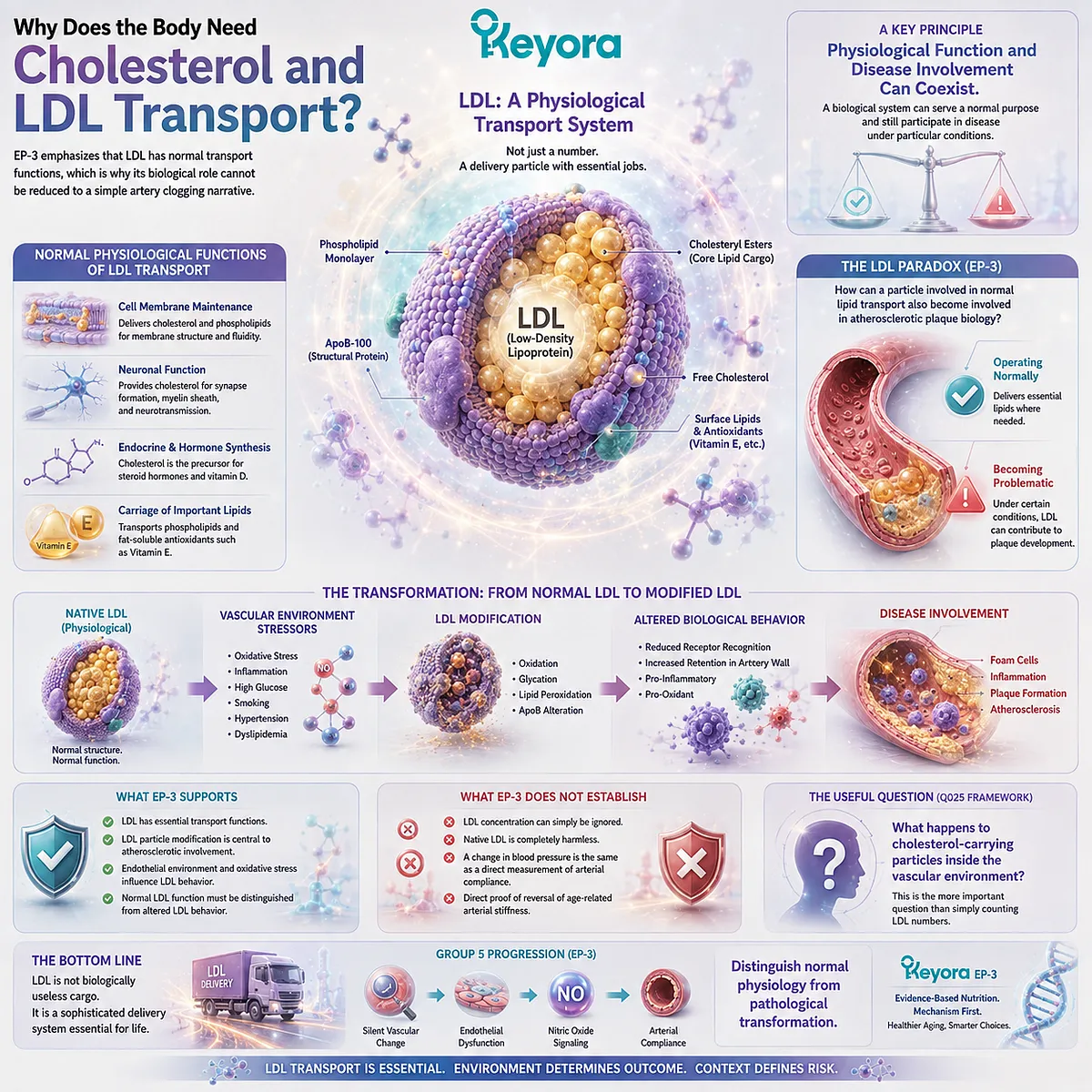
Why Does the Body Need Cholesterol and LDL Transport?
EP-3 emphasizes that LDL has normal transport functions, which is why its biological role cannot be reduced to a simple artery clogging narrative
EP-3 strongly rejects the idea that LDL should be described only as a harmful substance.
The source presents LDL as a physiological transport system and describes cholesterol delivery as relevant to cell membrane maintenance, neuronal function, and endocrine related biology. It also describes LDL as carrying phospholipids and fat soluble antioxidants.
That leads to an important principle:
Physiological function and disease involvement can coexist.
A biological system can serve a normal purpose and still participate in disease under particular conditions.
This is the conceptual tension behind EP-3’s LDL Paradox.
The source asks, in effect:
How can a particle involved in normal lipid transport also become involved in atherosclerotic plaque biology?
EP-3 answers that question mainly through particle modification.
However, the source sometimes moves too far in the opposite direction and describes native LDL as completely harmless.
The project evidence presented in EP-3 does not establish that LDL concentration can simply be ignored.
The supported lesson is narrower:
LDL is not biologically useless cargo. It has normal transport functions, and those normal functions should be distinguished from the altered behavior of modified LDL.
This distinction matters because Q025 is not trying to replace one oversimplification with another.
“Cholesterol causes everything” is too simple.
But “cholesterol does not matter” would also go beyond what EP-3 establishes.
The more useful question is:
What happens to cholesterol carrying particles inside the vascular environment?
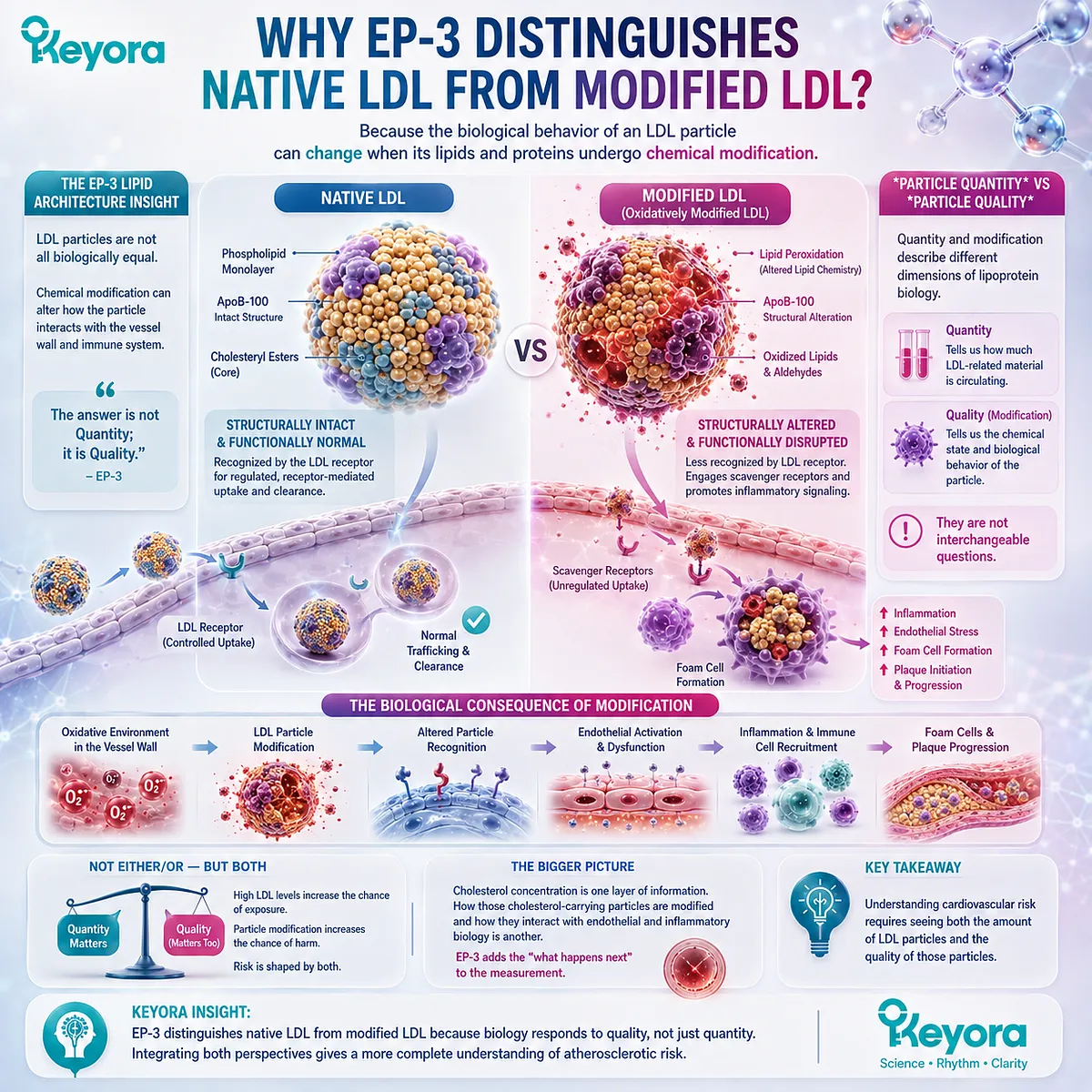
Why Does EP-3 Distinguish Native LDL From Modified LDL?
EP-3 argues that the biological behavior of an LDL particle can change when its lipids and proteins undergo chemical modification
The distinction between native LDL and modified LDL is one of the central ideas in EP-3’s Lipid Architecture.
The source describes native LDL as interacting with the LDL receptor through regulated receptor mediated handling. It then argues that oxidative modification changes the particle’s structure and biological behavior.
The core contrast is:
Native LDL
↓
regulated transport and receptor interaction
compared with
Oxidatively modified LDL
↓
altered lipid chemistry
altered ApoB structure
different vascular and immune interactions
EP-3 sometimes summarizes this distinction with the phrase:
“The answer is not Quantity; it is Quality.”
That wording is too absolute for the Q&A.
A better interpretation is:
Particle quantity and particle modification describe different dimensions of lipoprotein biology.
One tells us something about how much LDL related material is circulating.
The other tells us something about the chemical state and biological behavior of the particle.
Those are not interchangeable questions.
This distinction is one of the strongest parts of EP-3 because it pushes the discussion beyond a single laboratory number.
But it should not be used to claim that quantity is meaningless.
Instead, Q025 should preserve the broader lesson:
The concentration of cholesterol carrying particles is one layer of information. Their interaction with oxidative, endothelial, and inflammatory biology is another.
That is what EP-3 is trying to add to the cholesterol discussion.
What Happens When LDL Undergoes Oxidative Modification?
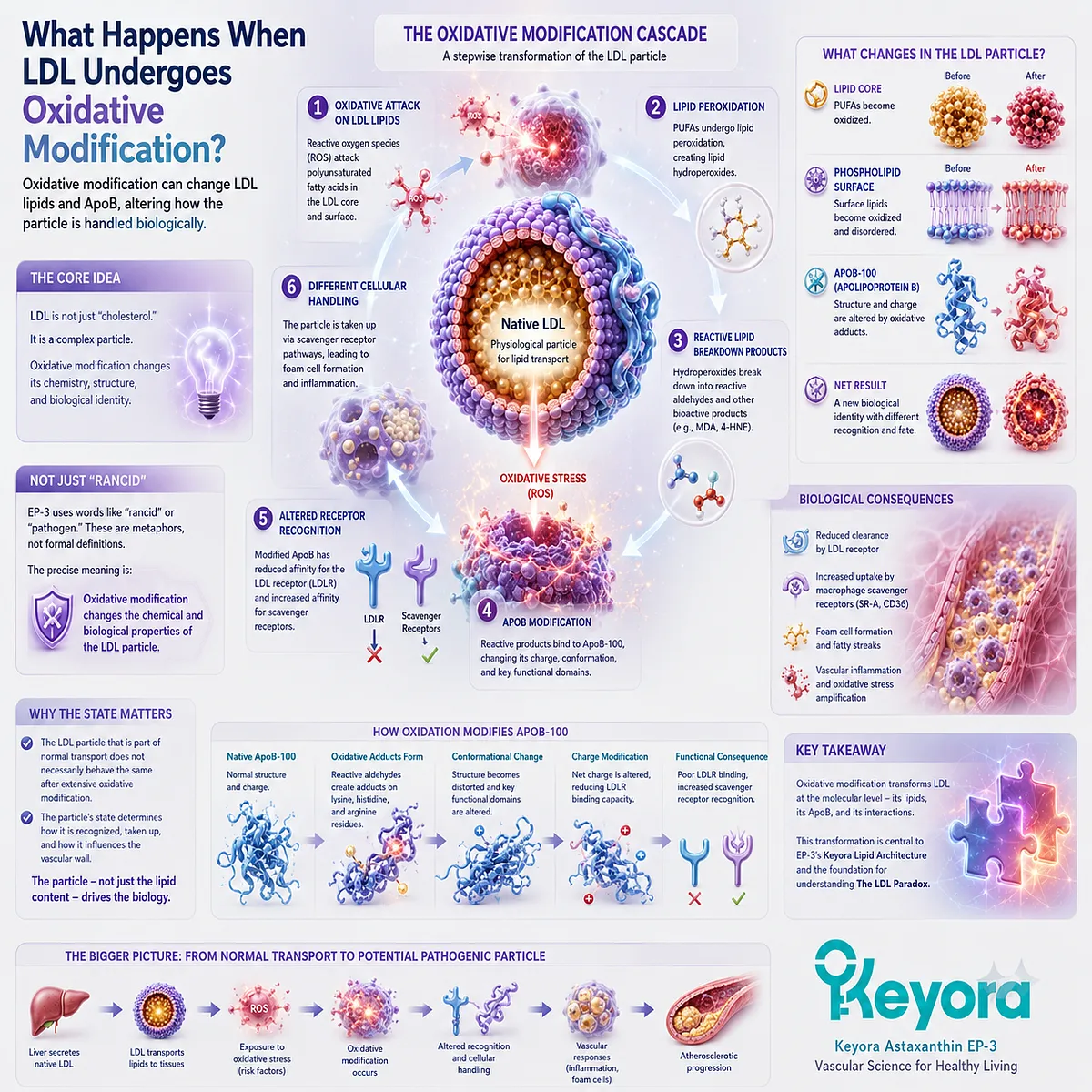
Oxidative modification can change LDL lipids and ApoB, altering how the particle is handled biologically
EP-3 places oxidative modification at the center of its explanation for how LDL behavior changes.
The source describes polyunsaturated lipids within LDL as susceptible to lipid peroxidation. It then describes lipid oxidation products interacting with ApoB-100 and changing the protein’s charge and three dimensional structure.
The sequence presented in EP-3 is:
Oxidative attack on LDL lipids
↓
Lipid peroxidation
↓
Formation of reactive lipid breakdown products
↓
ApoB modification
↓
Altered receptor recognition
↓
Different cellular handling
This is a much more specific mechanism than saying that “cholesterol turns bad.”
The source’s language sometimes describes LDL as becoming “rancid” or as turning into a pathogen.
Those phrases are useful as metaphors, but they should not be treated as formal definitions.
The more precise interpretation is:
Oxidative modification changes the chemical and biological properties of the LDL particle.
EP-3 also explains that modified ApoB may be handled differently from native LDL and connects this with macrophage scavenger receptor pathways.
Q026 will examine that molecular transformation in much greater detail.
For Q025, the important point is simply that the state of the particle matters.
The LDL particle that began as part of normal lipid transport does not necessarily behave identically after extensive oxidative modification.
That difference is central to the Keyora Lipid Architecture developed in EP-3.
How Do the Artery Wall and Inflammation Enter the Story?
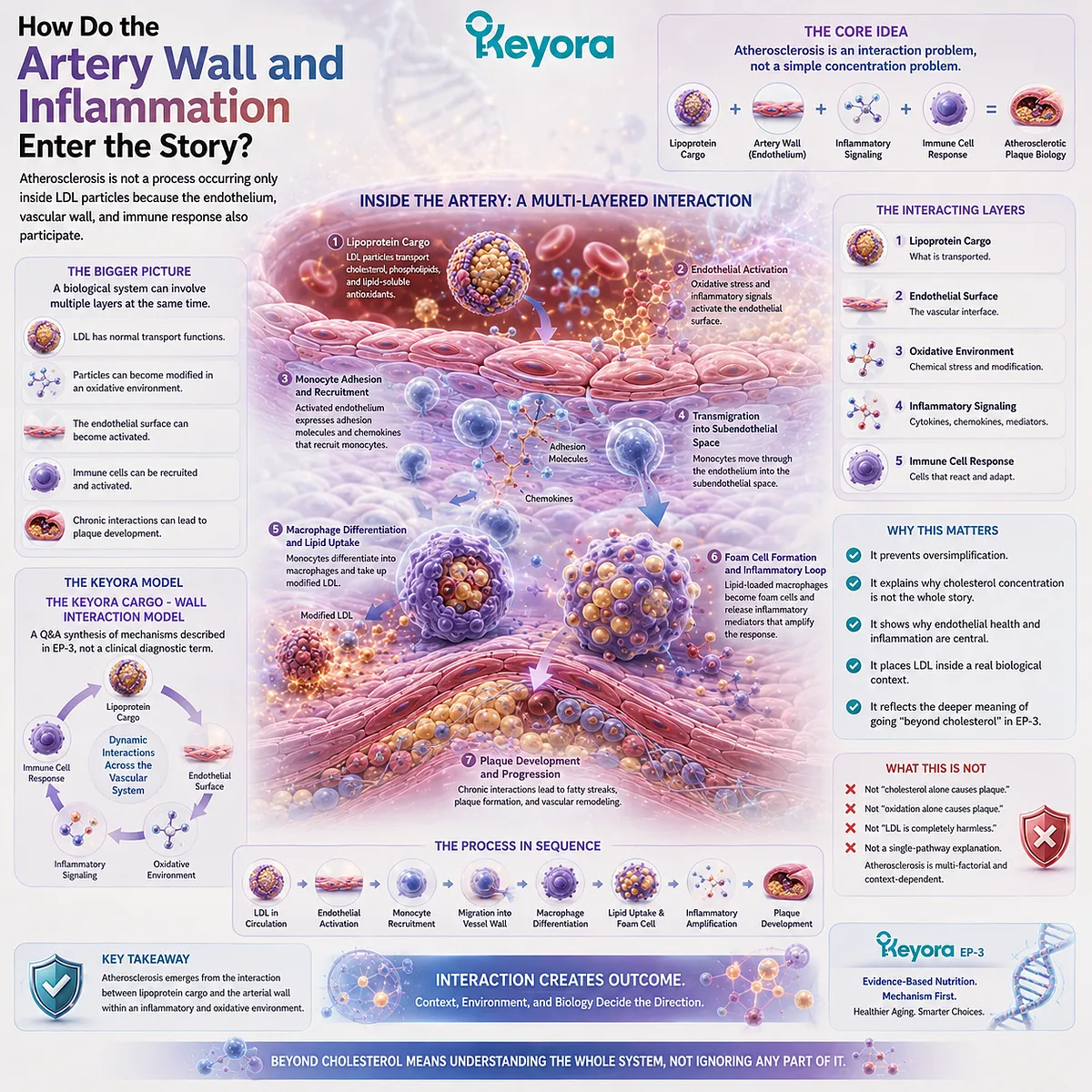
Atherosclerosis is not a process occurring only inside LDL particles because the endothelium, vascular wall, and immune response also participate
If Q025 stopped at LDL oxidation, it would simply replace one overly simple model with another.
Instead of:
cholesterol alone causes plaque
we would end up with:
oxidation alone causes plaque
EP-3 itself contains a broader vascular model.
The source describes inflammatory activation of the endothelial surface, monocyte adhesion, movement of immune cells into the subendothelial space, macrophage differentiation, and interaction with modified LDL.
That means the arterial process involves several interacting layers:
Lipoprotein cargo
Endothelial surface
Oxidative environment
Inflammatory signaling
Immune cell response
This can be summarized in Q025 as a Keyora Cargo – Wall Interaction Model.
This is a Q&A synthesis of mechanisms already described in EP-3, not a clinical diagnostic term.
The concept is useful because it prevents cholesterol from being treated as though it acts in isolation.
An LDL particle circulates inside a biological environment.
The vessel wall has an endothelial interface.
Inflammatory signaling can change that interface.
Immune cells can be recruited.
Lipoprotein particles can enter different vascular compartments and undergo chemical modification.
Atherosclerosis therefore emerges in EP-3 as an interaction problem rather than a simple concentration problem.
This does not remove cholesterol carrying lipoproteins from the model.
It places them inside a larger biological system.
That is the deeper meaning of going “beyond cholesterol” in Q025.
How Does Modified LDL Become Connected With Foam Cells and Plaque?
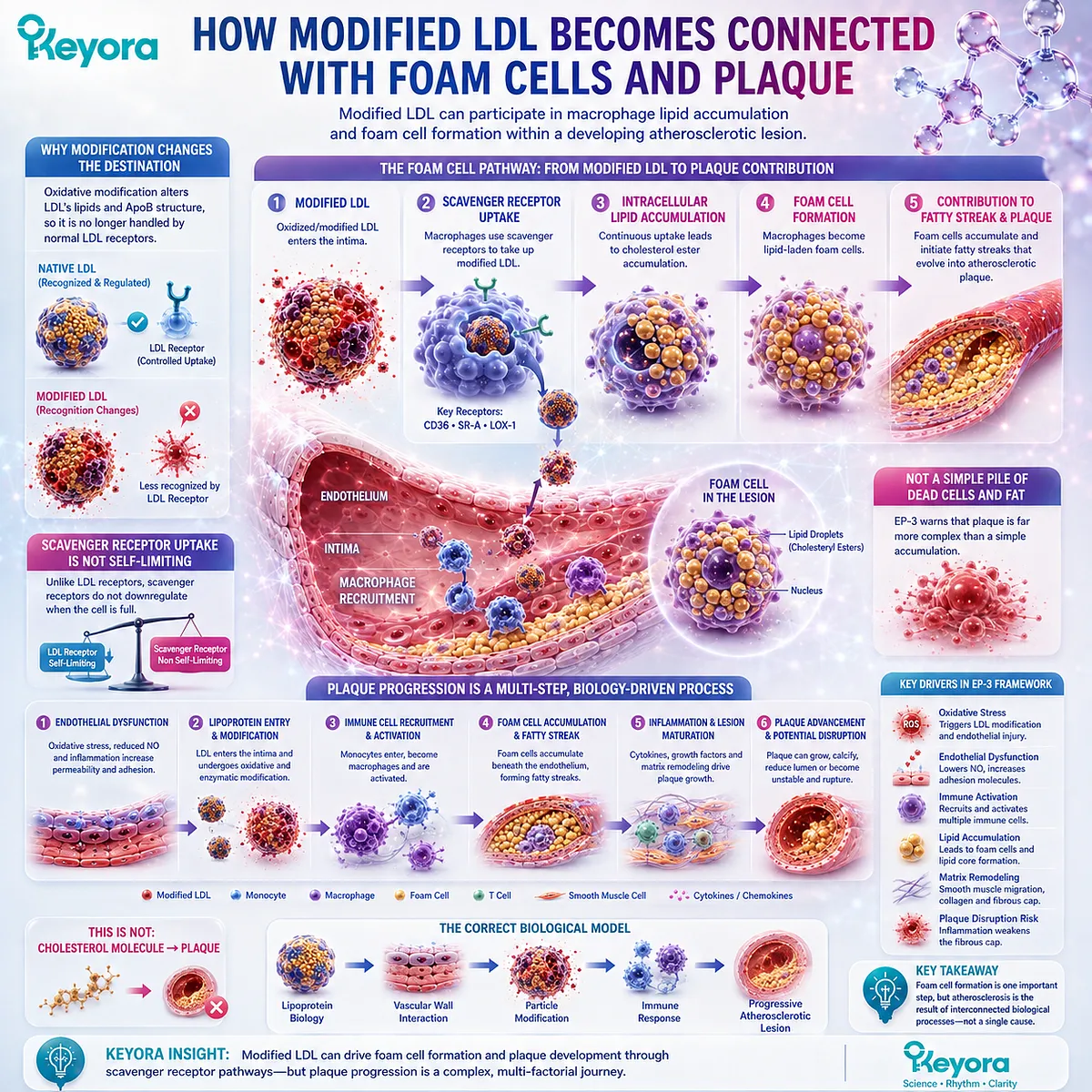
Modified LDL can participate in macrophage lipid accumulation and foam cell formation within a developing atherosclerotic lesion
EP-3 connects oxidatively modified LDL with macrophage scavenger receptor pathways.
The source explains that modified LDL can be recognized differently from native LDL and describes uptake through scavenger receptors such as CD36 and SR-A. It then connects this uptake with macrophage lipid accumulation and foam cell formation.
The simplified sequence is:
Modified LDL
↓
Macrophage scavenger receptor uptake
↓
Intracellular lipid accumulation
↓
Foam cell formation
↓
Contribution to fatty streak and plaque development
This pathway helps explain why the biological state of LDL matters.
However, EP-3 sometimes compresses the process too aggressively, describing plaque almost as a simple pile of dead macrophages and oxidized fat.
The Q&A should preserve the supported mechanism without reducing plaque to one ingredient.
The appropriate conclusion is:
Foam cell accumulation is one component of the developing atherosclerotic lesion described in EP-3.
The source also links plaque progression with endothelial dysfunction, inflammation, immune recruitment, and later plaque disruption.
So the progression is not:
cholesterol molecule → plaque
It is closer to:
lipoprotein biology
vascular wall interaction
particle modification
immune response
↓
progressive atherosclerotic lesion
That is the more useful biological model Q025 is designed to establish.
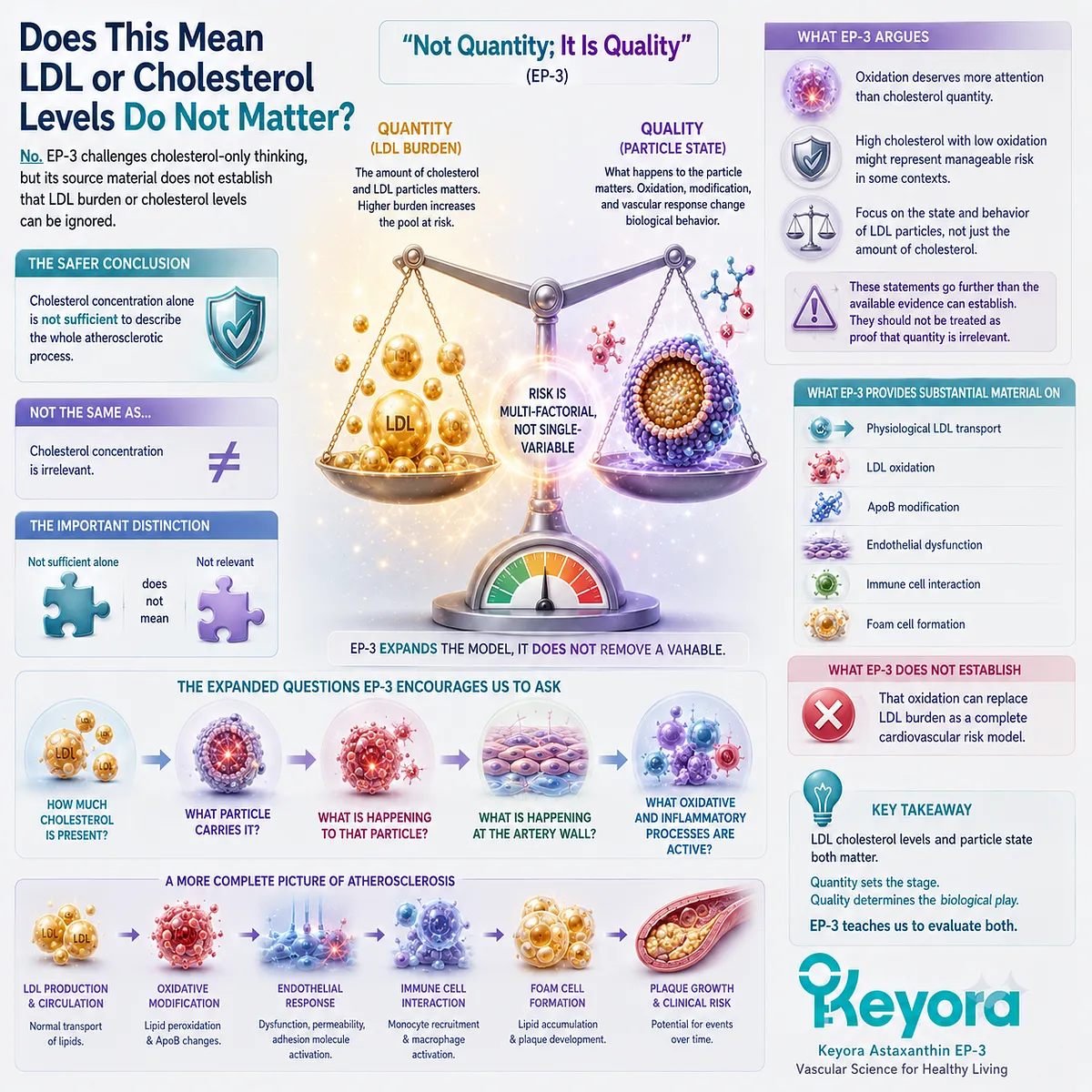
Does This Mean LDL or Cholesterol Levels Do Not Matter?
No. EP-3 challenges cholesterol only thinking, but its source material does not establish that LDL burden or cholesterol levels can be ignored
This is the most important evidence boundary in Q025.
EP-3 repeatedly argues that oxidation should receive more attention than cholesterol quantity. At one point, it states that the answer is “not Quantity; it is Quality,” and elsewhere it suggests that high cholesterol with low oxidation could represent manageable risk.
Those statements go further than the evidence presented in the project source can establish.
The safer conclusion is:
Cholesterol concentration alone is not sufficient to describe the whole atherosclerotic process.
That is different from saying:
cholesterol concentration is irrelevant.
The distinction can be summarized as:
Not sufficient alone
does not mean
Not relevant
EP-3 provides substantial material on:
-
physiological LDL transport;
-
LDL oxidation;
-
ApoB modification;
-
endothelial dysfunction;
-
immune cell interaction;
-
foam cell formation.
What it does not establish is that oxidation can replace LDL burden as a complete cardiovascular risk model.
This distinction makes the Keyora framework stronger, not weaker.
The useful contribution of EP-3 is to expand the model.
Instead of asking only:
How much cholesterol is present?
the reader can also ask:
What particle carries it?
What is happening to that particle?
What is happening at the artery wall?
What oxidative and inflammatory processes are active?
That is a more faithful interpretation of the source than claiming that one variable has replaced another.
What Should We Actually Mean by “Beyond Cholesterol”?
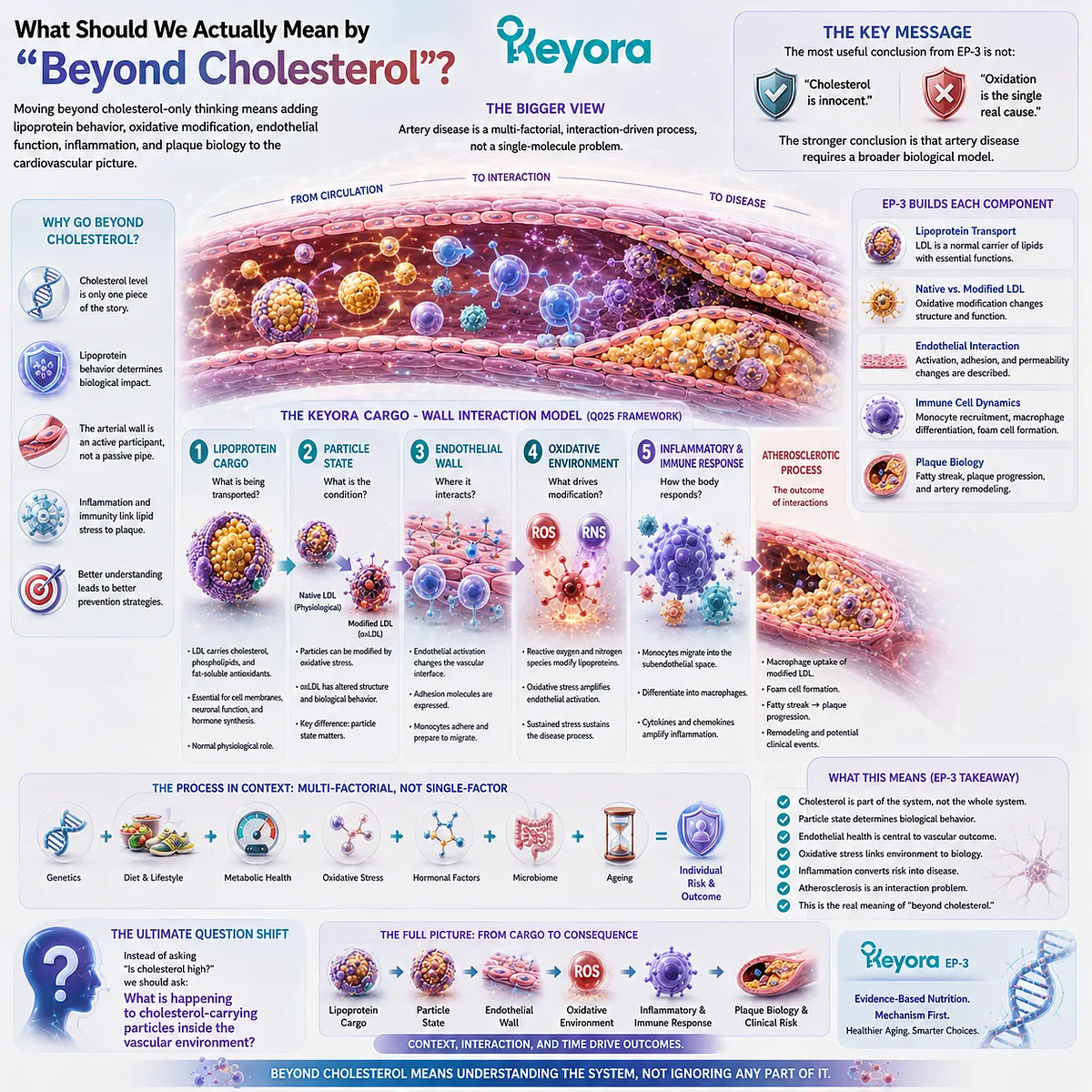
Moving beyond cholesterol only thinking means adding lipoprotein behavior, oxidative modification, endothelial function, inflammation, and plaque biology to the cardiovascular picture
The most useful conclusion from EP-3 is not:
cholesterol is innocent
and it is not:
oxidation is the single real cause
The stronger conclusion is that artery disease requires a broader biological model.
For Q025, the Keyora Cargo – Wall Interaction Model can be summarized as:
Lipoprotein Cargo
Particle State
Endothelial Wall
Oxidative Environment
Inflammatory and Immune Response
↓
Atherosclerotic Process
This framework is a synthesis of the different EP-3 modules rather than a separate clinical theory.
The source itself develops each component.
It describes LDL as a lipid transport particle.
It distinguishes native from oxidatively modified LDL.
It describes endothelial and immune interactions.
And it connects modified LDL with macrophage uptake and foam cell formation.
Taken together, these mechanisms support a more complete answer to the original question:
Cholesterol alone does not explain artery problems.
The relevant biology includes cholesterol carrying lipoproteins, their chemical state, their interaction with the vascular wall, oxidative modification, inflammatory responses, and progressive plaque related biology.
Q025 establishes that conceptual map.
The next question can now isolate the particle transformation itself:
What Is Oxidized LDL and Why Is It Different From Normal LDL?
This article is for educational and informational purposes only. It does not provide medical advice, diagnosis, treatment, cure, prevention, disease outcome claims, hormone restoration claims, fertility outcome claims, or formula-specific clinical efficacy claims.