
Is Heart Disease Really Sudden, or Does It Develop Silently Over Time?
Keyora Research Q&A Library
This is part of the Keyora Research Q&A Series, derived from Keyora Astaxanthin Research Journal Series.
Within the Keyora Astaxanthin Researcn framework, this Q&A translates complex astaxanthin biology into reader-friendly, evidence-bound answers, focusing on natural astaxanthin identity, molecular structure, antioxidant and redox mechanisms, membrane lipid interaction, mitochondrial resilience, inflammatory signaling pathways, human evidence interpretation, and the scientific principles behind responsible supplementation.
First published by Keyora Research Journal: www.keyorahealth.com
Direct Answer
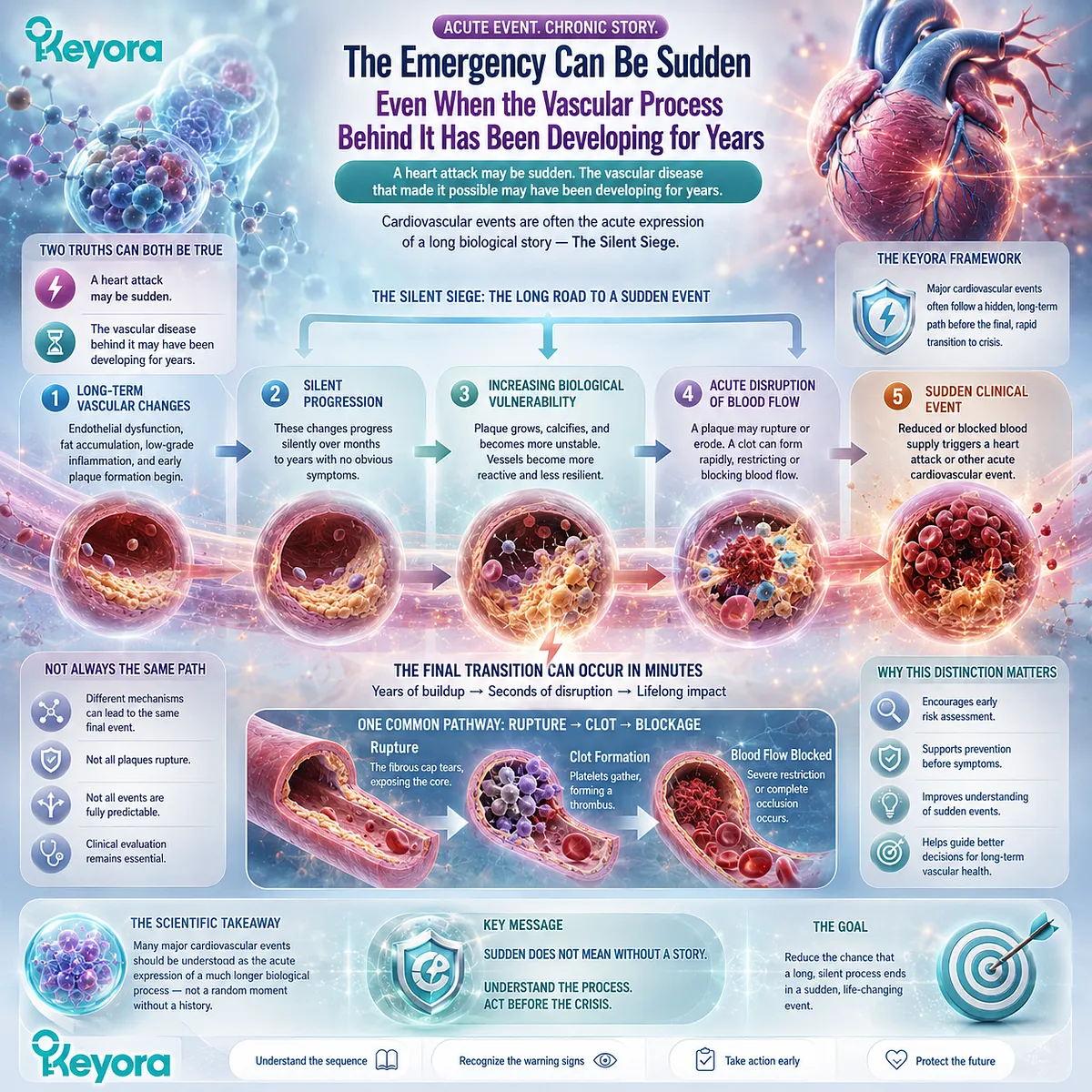
The emergency can be sudden even when the vascular process behind it has been developing for years
A heart attack can happen suddenly, but that does not mean the underlying cardiovascular disease began at the moment symptoms appeared.
This distinction between an acute event and a chronic disease process is essential for understanding cardiovascular health.
The Keyora source challenges the idea that major cardiovascular events always arrive without a biological history. It describes cardiovascular and cerebrovascular disease as processes that can accumulate over long periods before becoming clinically obvious.
The central sequence is:
Long-term vascular changes
↓
Silent progression
↓
Increasing biological vulnerability
↓
Acute disruption of blood flow
↓
Sudden clinical event
The final transition can occur quickly.
A plaque may become disrupted, a clot may form, and blood flow can become severely restricted or blocked.
The Keyora source describes this transition from plaque rupture to clot formation and loss of blood supply as one pathway by which a previously developing vascular process becomes an emergency.
So two statements can both be true:
A heart attack may be sudden.
The vascular disease that made the event possible may have been developing for years.
Within the Keyora framework, this long period of largely unnoticed vascular progression is described as The Silent Siege.
The useful scientific meaning of that concept is not that every cardiovascular event is predictable or that every heart attack follows exactly the same pathway.
It means that many major cardiovascular events should be understood as the acute expression of a much longer biological process.
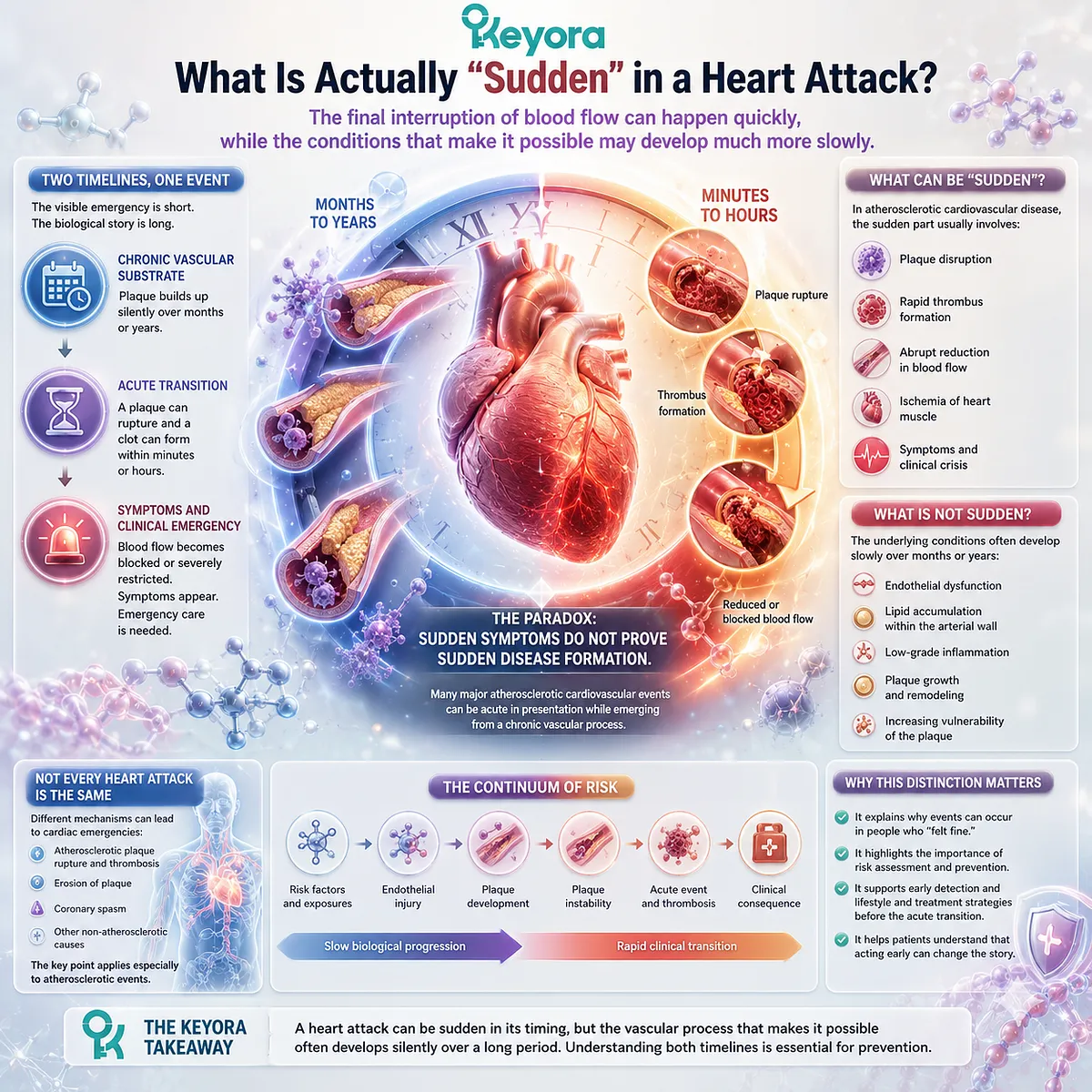
What Is Actually “Sudden” in a Heart Attack?
The final interruption of blood flow can happen quickly, while the conditions that make it possible may develop much more slowly
When people describe a heart attack as sudden, they are usually describing the timing of the emergency.
A person may appear relatively well and then experience a major cardiovascular event within minutes or hours. From the outside, the transition can look abrupt.
But the biological timeline can be very different.
The Keyora source separates the visible event from the preceding vascular process. It describes cardiovascular disease as a long-running process rather than something that necessarily begins in the emergency room.
A useful way to visualize this is:
Chronic vascular substrate
↓
months or years of progression
↓
Acute transition
↓
minutes or hours
↓
Symptoms and clinical emergency
In atherosclerotic cardiovascular disease, the sudden component may involve disruption of a previously existing plaque and rapid thrombus formation.
The source describes a sequence in which plaque accumulates, becomes disrupted, and is followed by clot formation that can block the vessel.
The important word is previously.
The plaque did not necessarily appear at the same moment the clot formed.
This distinction prevents a common misunderstanding:
Sudden symptoms do not prove sudden disease formation.
At the same time, Q020 should not turn this into a universal explanation for every cardiac emergency.
Cardiovascular events can arise through different mechanisms.
The point is narrower and more useful:
many major atherosclerotic cardiovascular events can be acute in presentation while emerging from a chronic vascular process.
That is the paradox behind the title.
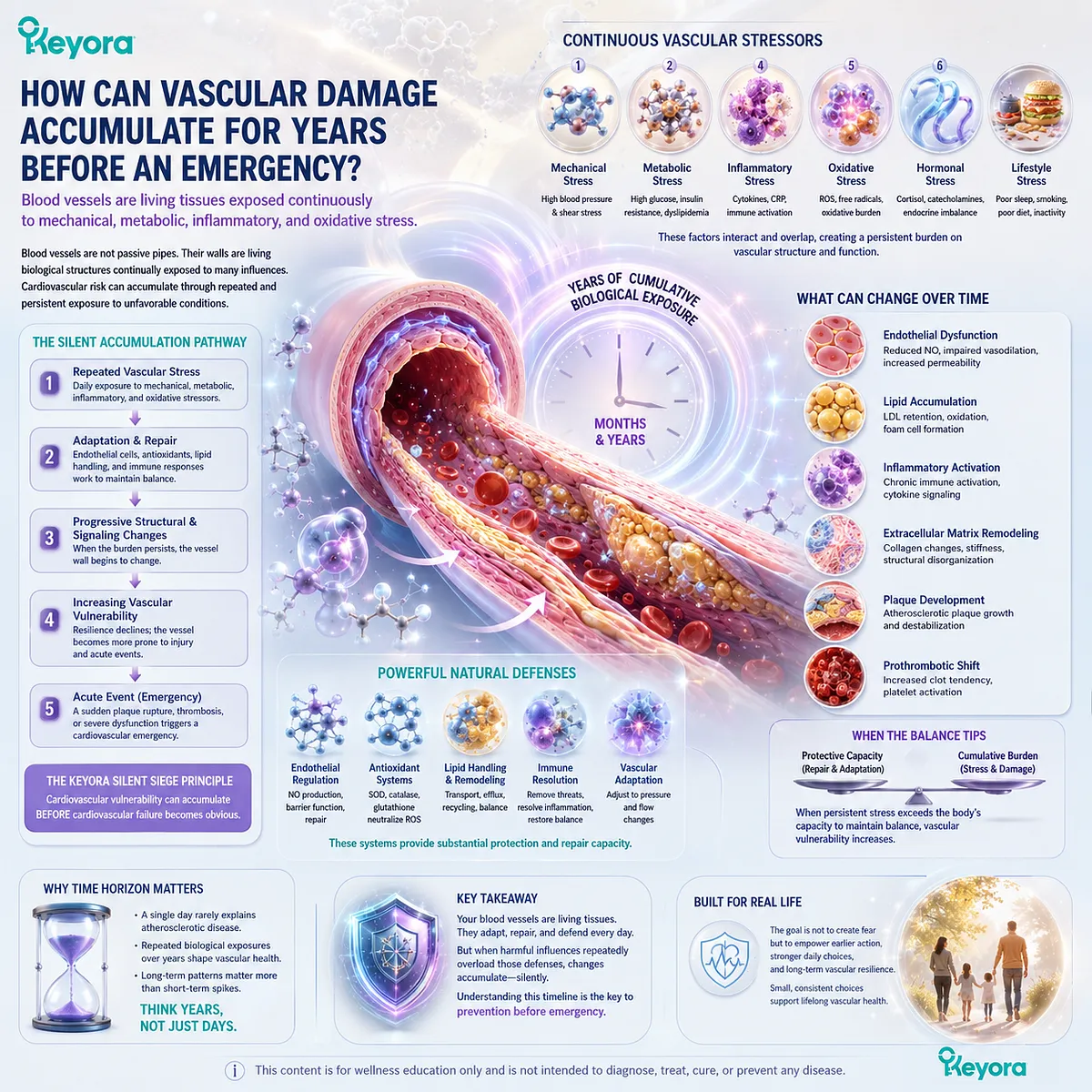
How Can Vascular Damage Accumulate for Years Before an Emergency?
Blood vessels are living tissues exposed continuously to mechanical, metabolic, inflammatory, and oxidative stress
Blood vessels are not passive pipes.
Their walls are living biological structures continuously exposed to blood pressure, circulating lipids, metabolic signals, inflammatory mediators, and reactive molecules.
The Keyora source frames this long-term exposure as cumulative vascular stress. It describes repeated mechanical pressure together with glucose-related, cortisol-related, inflammatory, and oxidative influences as contributors to a gradually changing vascular environment.
For public scientific interpretation, the important idea is not that every temporary rise in glucose, stress hormone activity, or blood pressure directly “damages” an artery.
It is that cardiovascular risk can accumulate through repeated and persistent exposure to unfavorable biological conditions.
The process can be represented as:
Repeated vascular stress
↓
adaptation and repair
↓
if burden becomes persistent
↓
progressive structural and signaling changes
↓
increasing vascular vulnerability
The vascular system possesses substantial repair capacity.
Endothelial cells regulate themselves.
Antioxidant systems control reactive species. Lipids are transported and remodeled. Immune responses can resolve. Vascular tissues adapt to changing mechanical demands.
The concern begins when damaging or dysregulating influences repeatedly exceed the capacity of these systems to maintain normal vascular function.
This helps explain why cardiovascular disease is often better understood across a long time horizon.
A single day usually does not explain atherosclerotic disease.
Instead, the biological environment experienced repeatedly over years can shape the condition of the vascular wall.
This is the first major principle of the Keyora Silent Siege framework:
cardiovascular vulnerability can accumulate before cardiovascular failure becomes obvious.
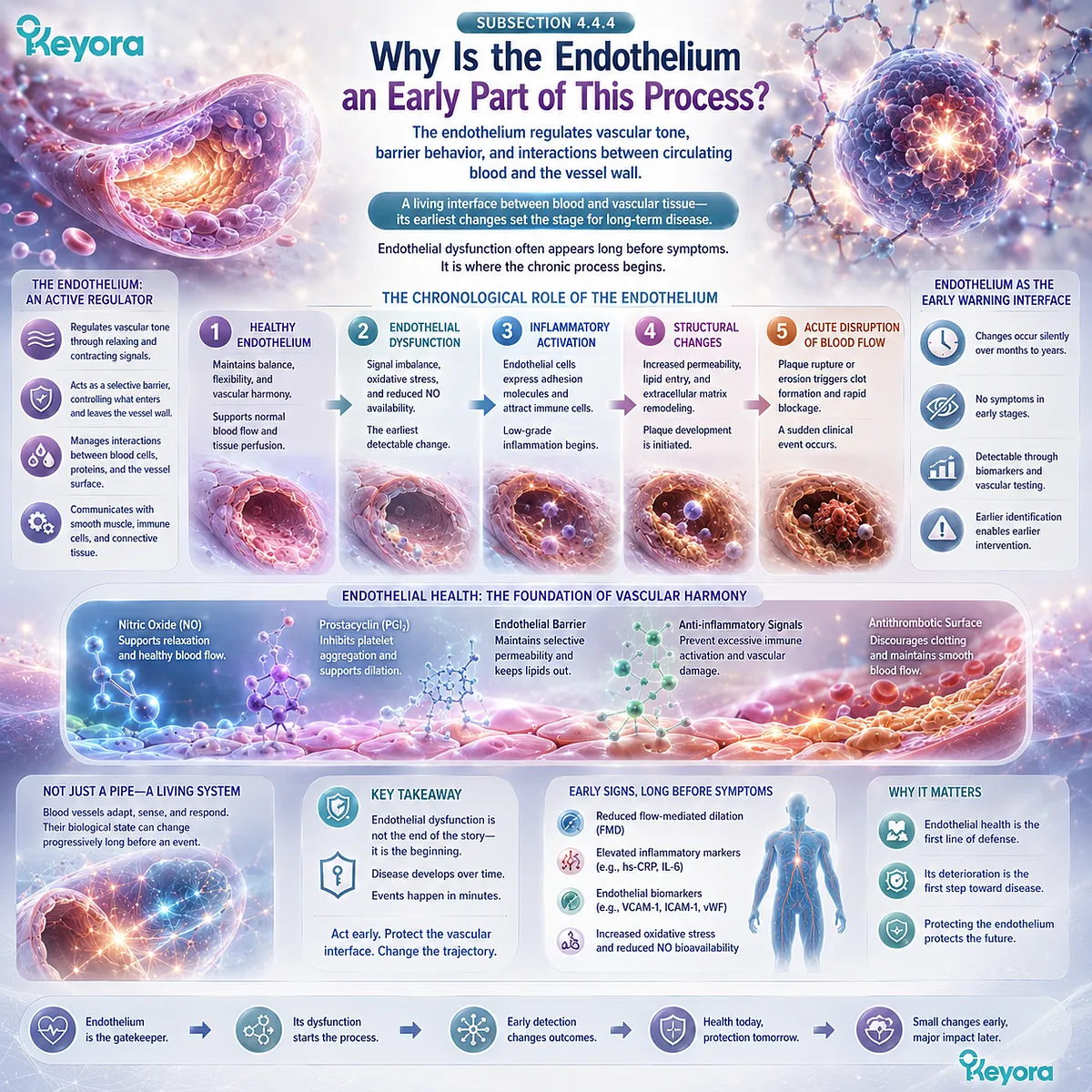
Why Is the Endothelium an Early Part of This Process?
The endothelium regulates vascular tone, barrier behavior, and interactions between circulating blood and the vessel wall
The innermost surface of a blood vessel is lined by the endothelium, a thin cellular layer that plays a much more active role than a simple physical coating.
The Keyora source describes several important endothelial functions, including regulation of vascular tone, selective barrier behavior, and control of interactions between circulating blood components and the vessel wall.
This makes the endothelium an important interface between:
circulating blood
and
vascular tissue
A healthy endothelial environment participates in normal regulation of blood-vessel relaxation, permeability, and surface behavior.
When that regulatory environment becomes disturbed over time, vascular biology can begin to change before an individual feels anything unusual.
The Keyora source places endothelial dysfunction near the beginning of its vascular progression model and then connects it with later inflammatory and plaque-related processes.
Q020 does not need to explain every molecular detail of endothelial dysfunction.
Those mechanisms belong in Q022 and Q023.
The important point here is chronological:
an acute cardiovascular event is often preceded by changes in vascular regulation.
That shifts the reader’s attention away from viewing the artery as a pipe that is either “open” or “blocked.”
A vessel is a living system.
Its biological state can change progressively.
Its endothelial surface can become less effective at maintaining normal vascular regulation.
And those changes can occur long before the final event that makes the problem obvious.
This is why the endothelium belongs near the beginning of the chronic cardiovascular timeline.
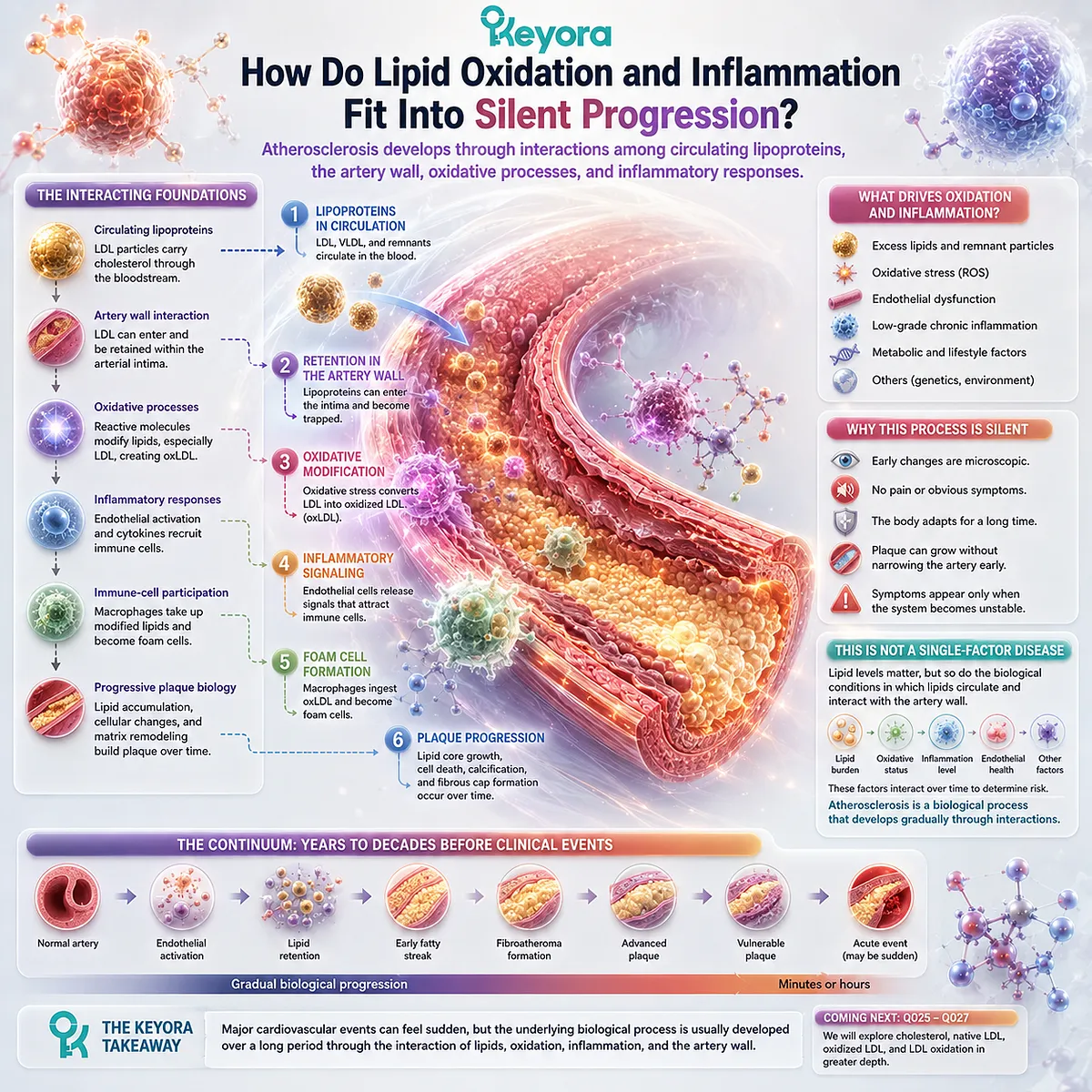
How Do Lipid Oxidation and Inflammation Fit Into Silent Progression?
Atherosclerosis develops through interactions among circulating lipoproteins, the artery wall, oxidative processes, and inflammatory responses
The next part of the silent progression story involves circulating lipids and the artery wall.
The Keyora source describes a sequence in which oxidative modification of LDL-associated lipids is followed by changes in lipoprotein behavior, immune-cell involvement, foam-cell formation, and plaque development.
The source sometimes simplifies this relationship into language suggesting that oxidized cholesterol alone explains heart disease.
That should not be treated as the complete cardiovascular model.
The more useful interpretation is that lipoprotein biology, vascular retention, oxidative modification, inflammatory responses, endothelial changes, and other cardiovascular factors can interact over time.
Within this process:
Circulating lipoproteins
↓
interaction with the artery wall
↓
oxidative and inflammatory processes
↓
immune-cell participation
↓
progressive plaque biology
The key word again is progressive.
Plaque does not normally need to appear suddenly for the eventual clinical event to feel sudden.
The biological environment can change over a much longer period.
This also explains why Q020 should not reduce heart disease to a single cholesterol number.
The amount of circulating lipid matters, but so do the biological conditions in which those particles circulate and interact with the vascular wall.
Later Q025 – Q027 will examine cholesterol, native LDL, oxidized LDL, and LDL oxidation in much greater detail.
For Q020, the important message is simpler:
atherosclerosis is a biological process that develops through interactions occurring over time.
That gradual development is one reason major cardiovascular disease can remain largely unnoticed until much later.
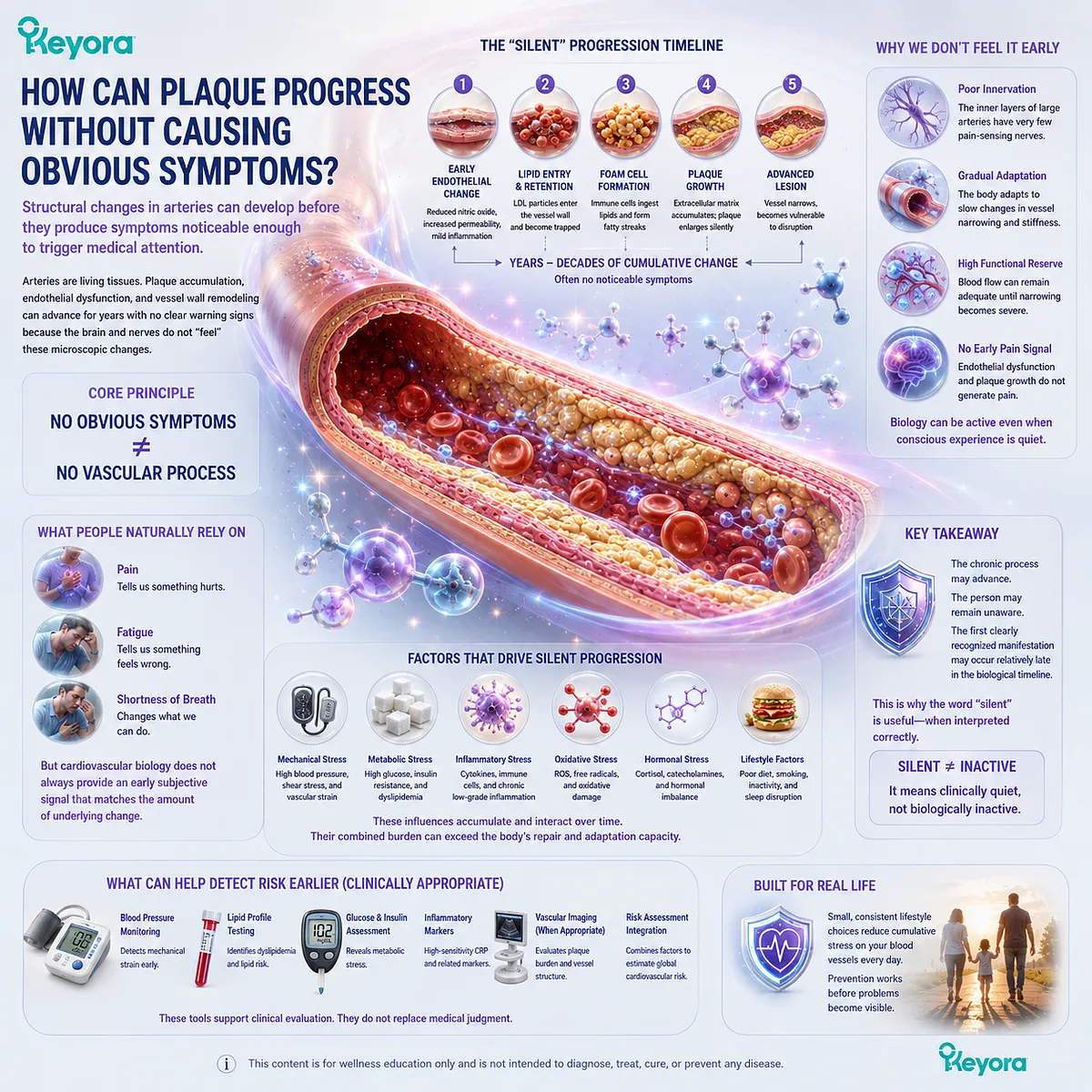
How Can Plaque Progress Without Causing Obvious Symptoms?
Structural changes in arteries can develop before they produce symptoms noticeable enough to trigger medical attention
One of the most difficult features of cardiovascular disease is the gap that can exist between biological change and subjective experience.
The Keyora source repeatedly emphasizes that vascular abnormalities may progress without producing a sensation that clearly tells a person what is happening.
It describes plaque accumulation, changes in blood pressure, and endothelial alterations as processes that may remain below the level of conscious perception.
This creates a crucial principle:
No obvious symptoms ≠ no vascular process
People naturally use symptoms as signals.
Pain tells us that something hurts.
Fatigue tells us that something feels wrong.
Shortness of breath changes what we can do.
But cardiovascular biology does not always provide an early subjective signal that corresponds neatly with the amount of underlying vascular change.
A person may therefore feel generally normal while certain cardiovascular risk factors or vascular abnormalities are already present.
This does not mean every symptom-free person has hidden cardiovascular disease.
It means that absence of symptoms alone cannot establish that every aspect of cardiovascular health is normal.
Q021 will examine the sensory side of this problem in much greater detail:
Why can blood vessels become damaged without pain?
Q020 only needs to establish the timing problem.
The chronic process may advance.
The person may remain unaware of it.
The first clearly recognized manifestation may therefore occur relatively late in the biological timeline.
That is why the word silent is useful, provided it is interpreted carefully.
It means the process can be clinically quiet.
It does not mean the process is biologically inactive.
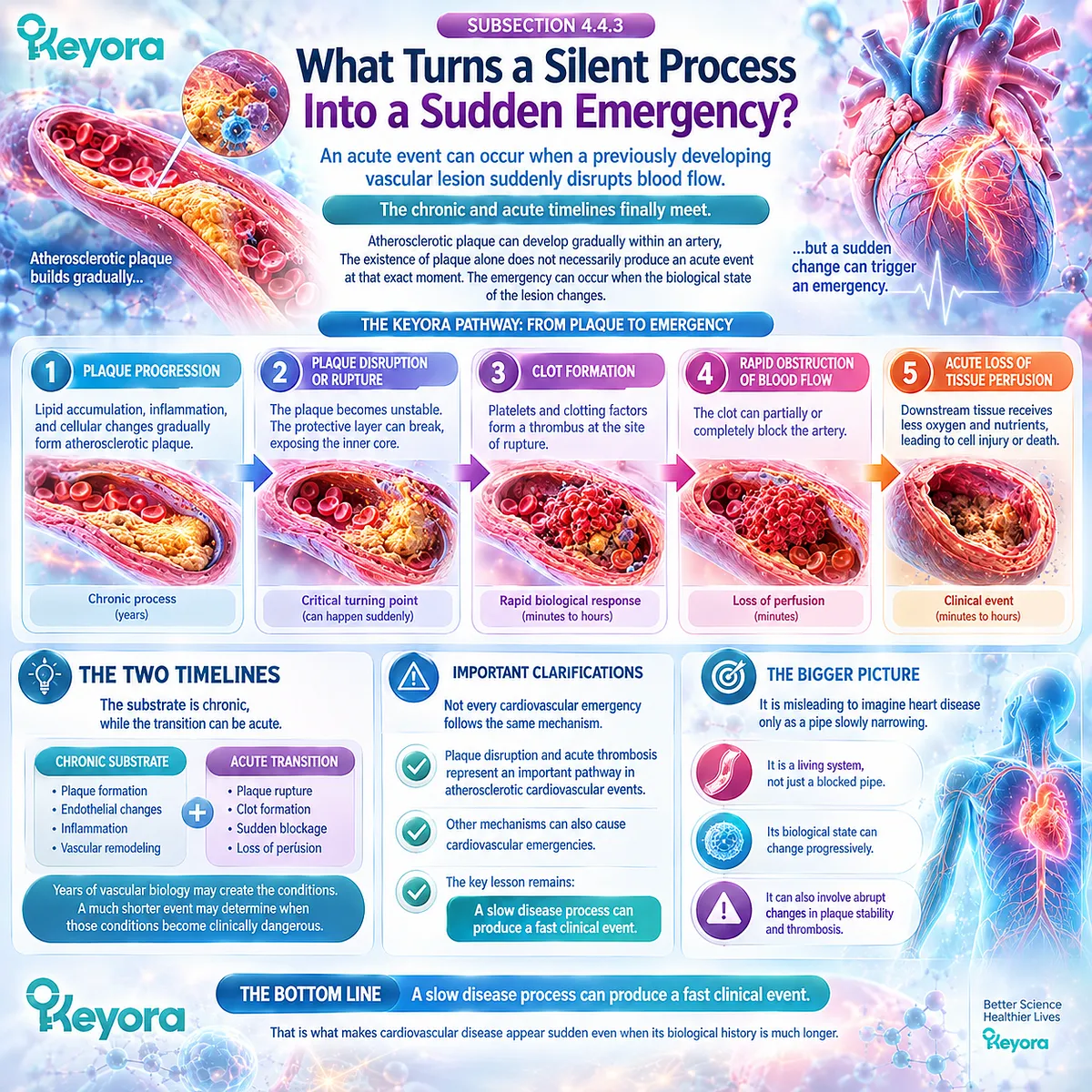
What Turns a Silent Process Into a Sudden Emergency?
An acute event can occur when a previously developing vascular lesion suddenly disrupts blood flow
This is where the chronic and acute timelines finally meet.
Atherosclerotic plaque can develop gradually within an artery.
The existence of plaque alone does not necessarily produce an acute event at that exact moment.
The emergency can occur when the biological state of the lesion changes.
The Keyora source presents one major pathway:
Plaque progression
↓
Plaque disruption or rupture
↓
Clot formation
↓
Rapid obstruction of blood flow
↓
Acute loss of tissue perfusion
The source describes plaque rupture followed by clot formation and subsequent blockage of the arterial supply.
This mechanism resolves what appears to be a contradiction.
How can a disease develop slowly but cause a sudden emergency?
Because:
the substrate is chronic
while
the transition can be acute
Years of vascular biology may create the conditions.
A much shorter event may determine when those conditions become clinically dangerous.
This is why it is misleading to imagine heart disease only as a pipe slowly narrowing until it becomes completely closed.
Cardiovascular emergencies can also involve abrupt changes in plaque stability and thrombosis.
The Keyora source sometimes turns this into a single universal cardiovascular pathway.
Q020 should maintain a narrower conclusion.
Plaque disruption and acute thrombosis represent an important pathway in atherosclerotic cardiovascular events, but not every cardiovascular emergency has exactly the same mechanism.
The core lesson remains:
A slow disease process can produce a fast clinical event.
That is what makes cardiovascular disease appear sudden even when its biological history is much longer.
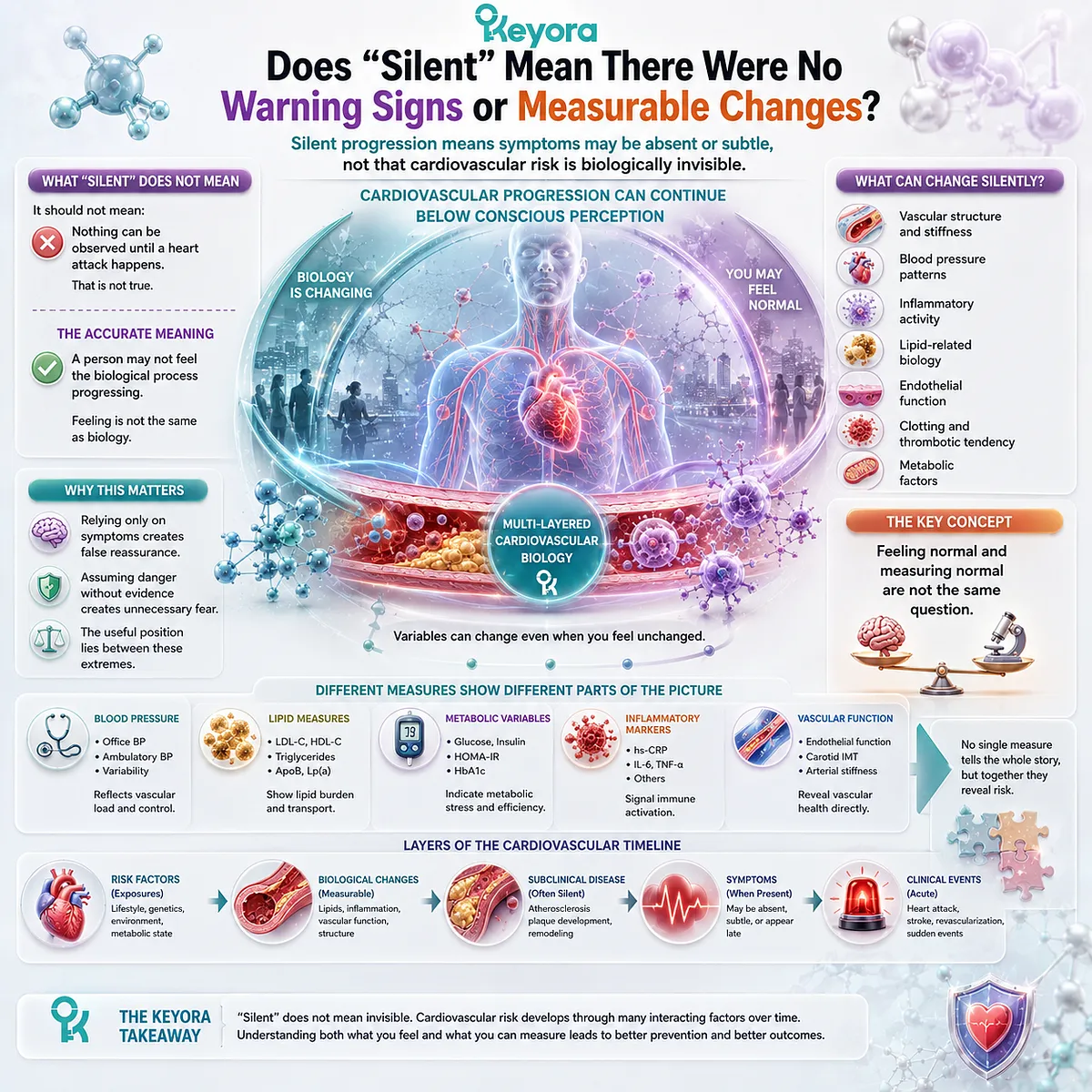
Does “Silent” Mean There Were No Warning Signs or Measurable Changes?
Silent progression means symptoms may be absent or subtle, not that cardiovascular risk is biologically invisible
Calling cardiovascular disease “silent” can create the wrong impression if the term is not defined carefully.
It should not mean:
nothing can be observed until a heart attack happens.
The more accurate meaning is:
a person may not feel the biological process progressing.
That is very different.
The Keyora source describes cardiovascular progression as potentially remaining below conscious perception even while variables such as vascular structure, blood pressure, inflammatory activity, and lipid-related biology are changing.
Earlier Q&A articles have already shown why cardiovascular biology is multi-layered.
Different research and clinical measures can examine different parts of that system, including:
-
blood pressure;
-
circulating lipid measures;
-
metabolic variables;
-
inflammatory markers;
-
vascular-function measures.
None of these single measurements tells the entire cardiovascular story.
But together they illustrate an important concept:
feeling normal and measuring normal are not the same question.
The purpose of the Silent Siege framework is therefore not to make cardiovascular disease sound mysterious or undetectable.
It is to correct an overreliance on symptoms.
Someone should not conclude:
“I feel fine, therefore no cardiovascular risk exists.”
Nor should the opposite conclusion be made:
“I feel fine, therefore something dangerous must be silently happening.”
The scientifically useful position lies between those extremes.
Symptoms, measurable risk factors, vascular biology, and clinical events represent different layers of the cardiovascular timeline.
Understanding that distinction reduces both false reassurance and unnecessary fear.
What Should We Actually Learn From the “Silent Progression” Model?
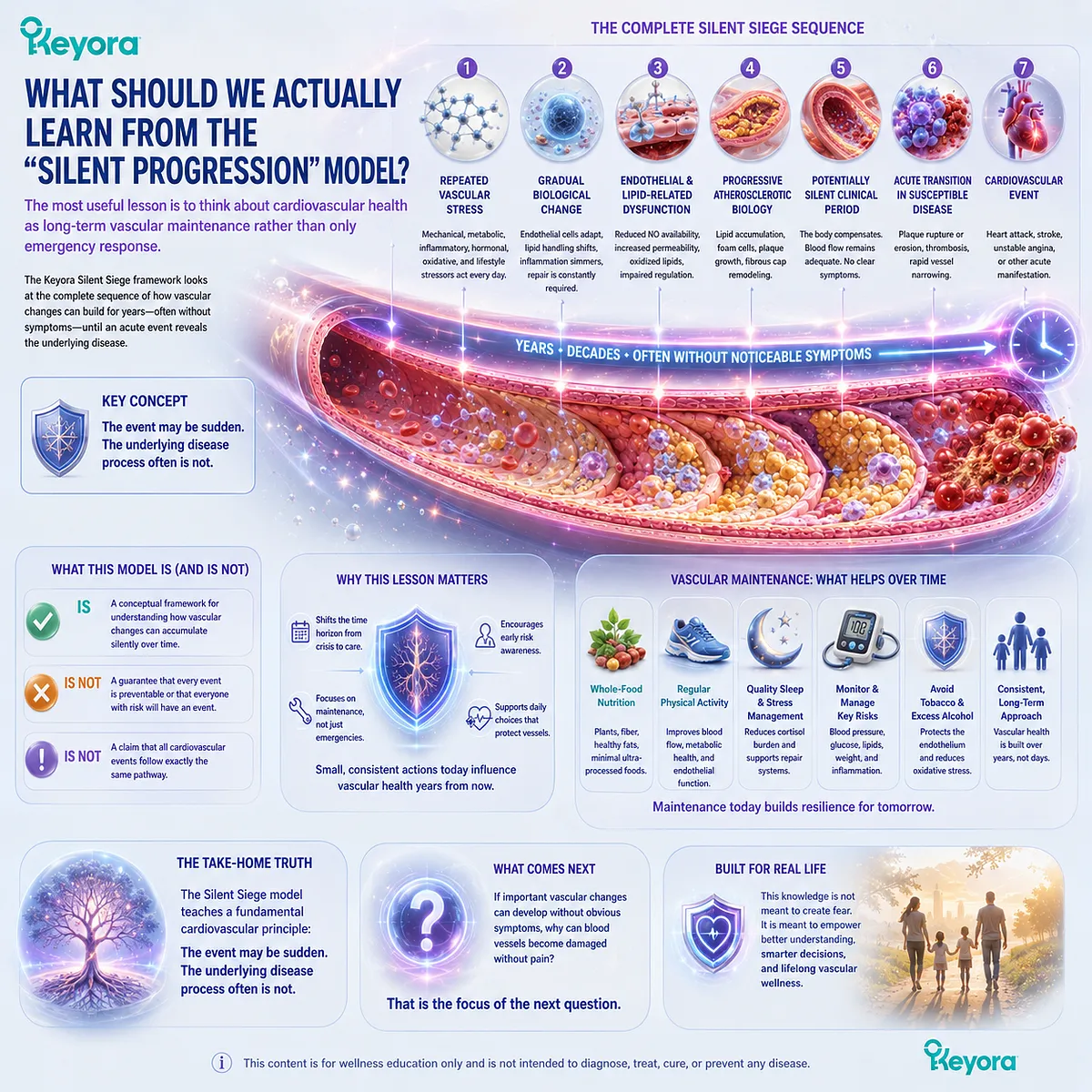
The most useful lesson is to think about cardiovascular health as long-term vascular maintenance rather than only emergency response
The purpose of understanding silent cardiovascular progression is not to make every person fear a sudden heart attack.
It is to change the time scale through which cardiovascular health is understood.
If attention begins only when an acute event occurs, most of the preceding biological history is invisible in the story.
The Keyora Silent Siege framework instead looks at the complete sequence:
Repeated vascular stress
↓
Gradual biological change
↓
Endothelial and lipid-related dysfunction
↓
Progressive atherosclerotic biology
↓
Potentially silent clinical period
↓
Acute transition in susceptible disease
↓
Cardiovascular event
The original Keyora source uses highly dramatic language to describe this process as decades of vascular attrition.
For public scientific use, the concept is better defined more precisely:
Keyora The Silent Siege describes the gradual accumulation of vascular changes that may remain unnoticed for years before an acute cardiovascular event makes the underlying process clinically obvious.
This framework does not mean every cardiovascular event is preventable.
It does not mean everyone with cardiovascular risk will experience a heart attack.
And it does not mean every heart attack develops through exactly the same pathway.
Its value is conceptual.
It teaches one fundamental cardiovascular principle:
The event may be sudden. The underlying disease process often is not.
That leads directly to the next question.
If important vascular changes can develop without obvious symptoms, why can blood vessels become damaged without pain?
This article is for educational and informational purposes only. It does not provide medical advice, diagnosis, treatment, cure, prevention, disease outcome claims, hormone restoration claims, fertility outcome claims, or formula-specific clinical efficacy claims.