
What Does Antioxidant Support Actually Do Inside Your Body?
Keyora Research Q&A Library
This is part of the Keyora Research Q&A Series, derived from Keyora Astaxanthin Research Journal Series.
Within the Keyora Astaxanthin Researcn framework, this Q&A translates complex astaxanthin biology into reader-friendly, evidence-bound answers, focusing on natural astaxanthin identity, molecular structure, antioxidant and redox mechanisms, membrane lipid interaction, mitochondrial resilience, inflammatory signaling pathways, human evidence interpretation, and the scientific principles behind responsible supplementation.
First published by Keyora Research Journal: www.keyorahealth.com
Direct Answer
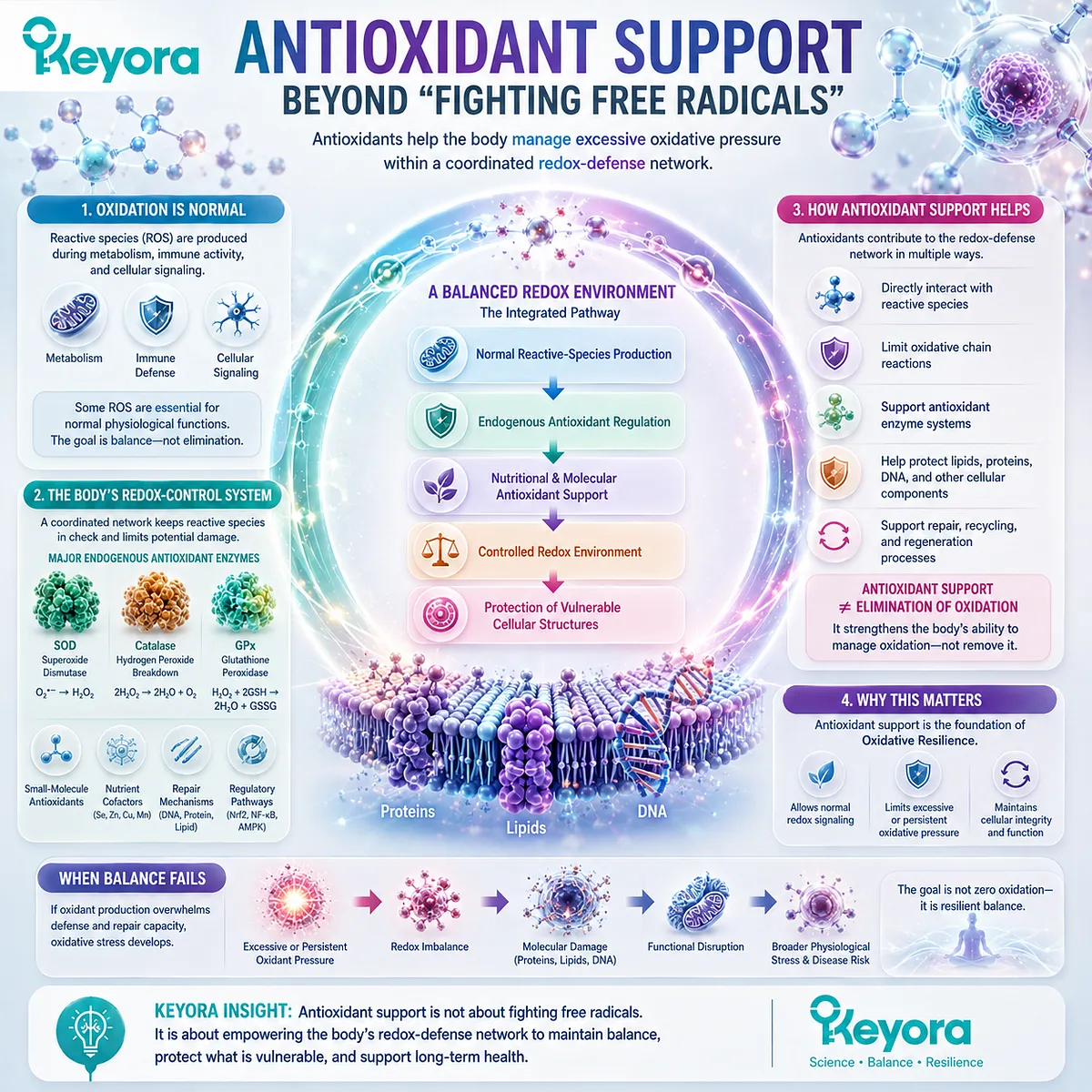
Antioxidant support helps the body manage excessive oxidative pressure within a larger redox-defense network rather than acting as a chemical system that removes every reactive molecule
Antioxidant support is often described as “fighting free radicals,” but the biology is more sophisticated. The body continuously produces reactive oxygen species and other reactive molecules during metabolism, immune activity, and cellular signaling. Because some of these molecules have normal physiological functions, effective antioxidant defense cannot simply mean eliminating them all.
Instead, the body maintains a coordinated redox-control system. This system includes endogenous antioxidant enzymes, small-molecule antioxidants, nutrient-dependent cofactors, repair mechanisms, and cellular pathways that regulate the production and removal of reactive species. The project scientific source identifies superoxide dismutase, catalase, and glutathione peroxidase as major endogenous antioxidant enzymes involved in maintaining redox balance.
Antioxidant support can contribute to this network in several ways. Depending on the molecule and biological context, it may directly interact with reactive species, help limit oxidative chain reactions, support antioxidant enzyme systems, or help protect susceptible lipids, proteins, and other cellular components.
The important distinction is:
Antioxidant support ≠ elimination of oxidation
A more accurate model is:
Normal reactive-species production
↓
Endogenous antioxidant regulation
↓
Nutritional and molecular antioxidant support
↓
Controlled redox environment
↓
Protection of vulnerable cellular structures
This is why Keyora places antioxidant nutrition within Oxidative Resilience rather than treating antioxidants as isolated “free-radical killers.”
Oxidative Resilience means maintaining enough biological control to allow normal redox signaling while limiting excessive or persistent oxidative pressure.
In other words, antioxidant support is not about creating a body with no oxidation.
It is about helping biological systems remain balanced when oxidation occurs.
What Antioxidant Defense Systems Does the Body Already Have?
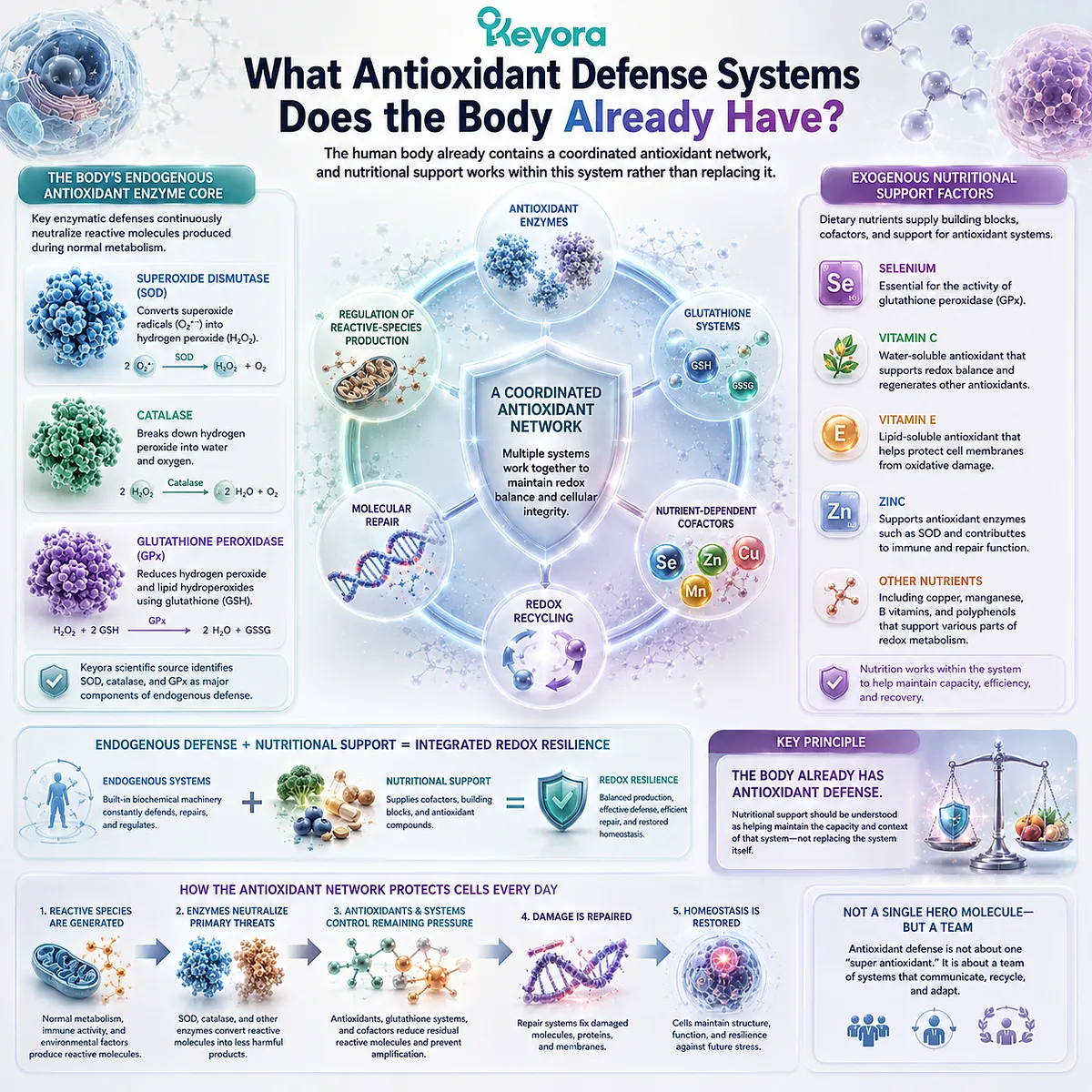
The human body already contains a coordinated antioxidant network, and nutritional support works within this system rather than replacing it
The body does not depend exclusively on dietary antioxidants to manage oxidative pressure. Cells possess extensive endogenous defense systems that continuously regulate reactive molecules produced during normal metabolism.
One of the best-known enzymes is superoxide dismutase, or SOD. SOD helps convert superoxide radicals into less reactive products that can be handled by additional antioxidant pathways.
Catalase provides another layer of defense by helping break down hydrogen peroxide into water and oxygen.
Glutathione peroxidase, or GPx, participates in the reduction of hydrogen peroxide and lipid hydroperoxides and works within the broader glutathione-dependent redox system.
The Keyora scientific source specifically identifies SOD, catalase, and GPx as major components of endogenous antioxidant defense.
These enzymes do not operate independently.
They are part of a coordinated biochemical network involving:
-
antioxidant enzymes;
-
glutathione-related systems;
-
nutrient-dependent cofactors;
-
redox recycling;
-
molecular repair;
-
regulation of reactive-species production.
This is why the phrase antioxidant network is more accurate than imagining a single antioxidant molecule protecting the entire body.
Nutrition contributes to this network in different ways.
Some nutrients may act directly in redox chemistry. Others support enzymes or biochemical systems involved in antioxidant defense. Selenium, for example, is relevant to glutathione peroxidase biology, while other nutrients contribute to different components of antioxidant metabolism.
The source material also distinguishes endogenous enzymes from exogenous nutritional factors, showing that antioxidant defense includes both internally generated systems and dietary support.
The key principle is therefore:
The body already has antioxidant defense.
Nutritional support should be understood as helping maintain the capacity and context of that system – not replacing the system itself.
Do Antioxidants Simply Neutralize Free Radicals?
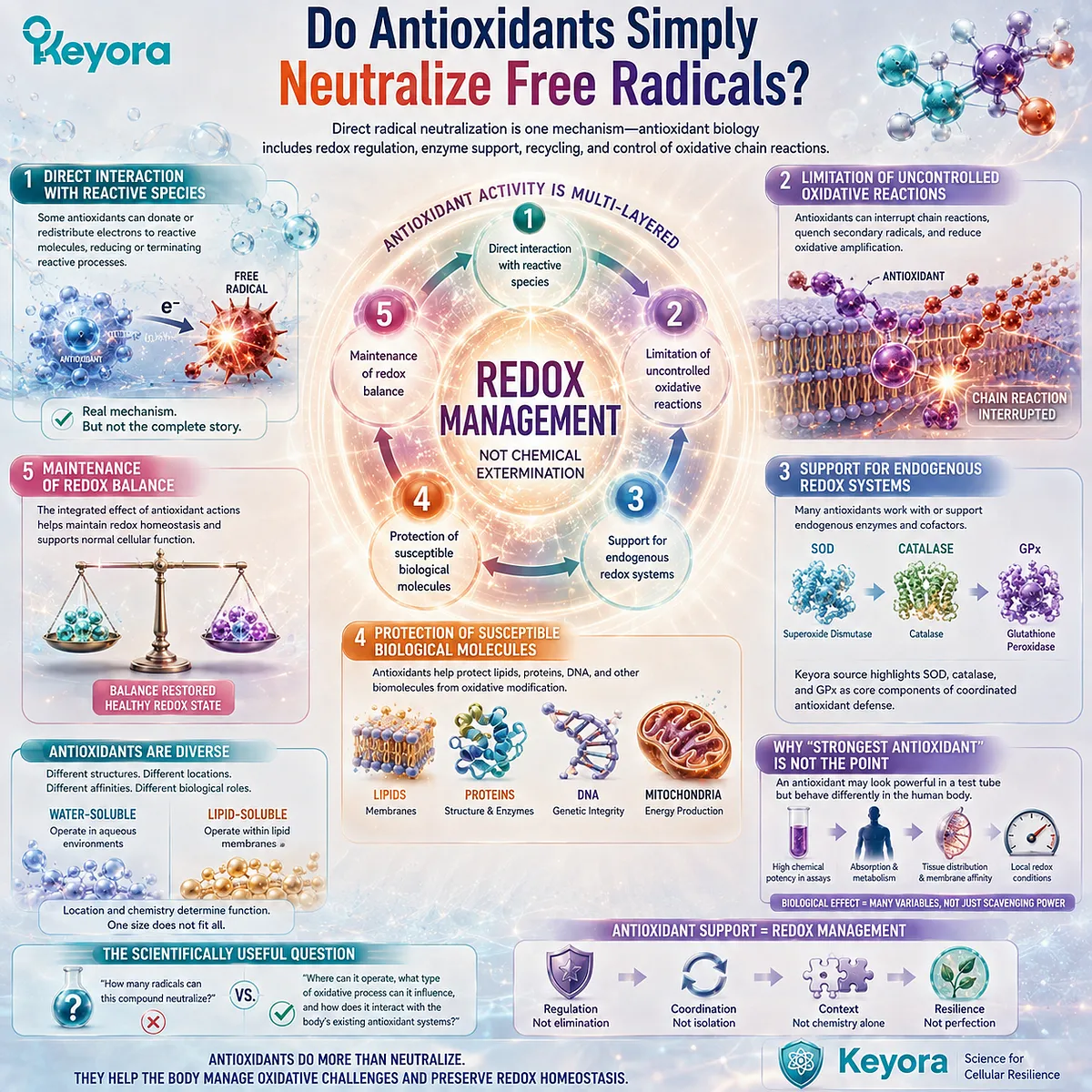
Direct radical neutralization is one antioxidant mechanism, but antioxidant biology also includes redox regulation, enzyme support, recycling, and control of oxidative chain reactions
Some antioxidants can directly interact with reactive molecules.
This is the mechanism most people imagine when they hear the word “antioxidant”: a reactive molecule encounters an antioxidant, the antioxidant donates or redistributes electrons, and the reactive process is reduced or terminated.
That mechanism is real, but it is not the complete story.
Different antioxidants have different chemical structures, locations, affinities, and biological roles. Some are more relevant to water-based environments. Others interact more strongly with lipid-rich structures. Some compounds participate primarily in direct redox reactions, while others support enzyme systems or help maintain antioxidant recycling.
The Keyora source, for example, connects antioxidant activity with both direct reactive-species control and endogenous antioxidant enzyme systems. It identifies compounds capable of neutralizing reactive molecules while also discussing SOD, GPx, and catalase as components of coordinated antioxidant protection.
Therefore, antioxidant activity can include several layers:
Direct interaction with reactive species
↓
Limitation of uncontrolled oxidative reactions
↓
Support for endogenous redox systems
↓
Protection of susceptible biological molecules
↓
Maintenance of redox balance
This is why antioxidant support is better understood as redox management rather than chemical extermination.
The distinction also explains why “the strongest antioxidant” is not necessarily the most meaningful nutritional concept.
An antioxidant can appear extremely powerful in a chemical assay but behave differently inside the human body because absorption, metabolism, tissue distribution, membrane affinity, dose, and local redox conditions influence its biological effect.
Antioxidant biology therefore depends on more than laboratory scavenging capacity.
The scientifically useful question is not simply:
“How many radicals can this compound neutralize?”
It is:
Where can it operate, what type of oxidative process can it influence, and how does it interact with the body’s existing antioxidant systems?
How Does Antioxidant Support Help Protect Cellular Molecules?
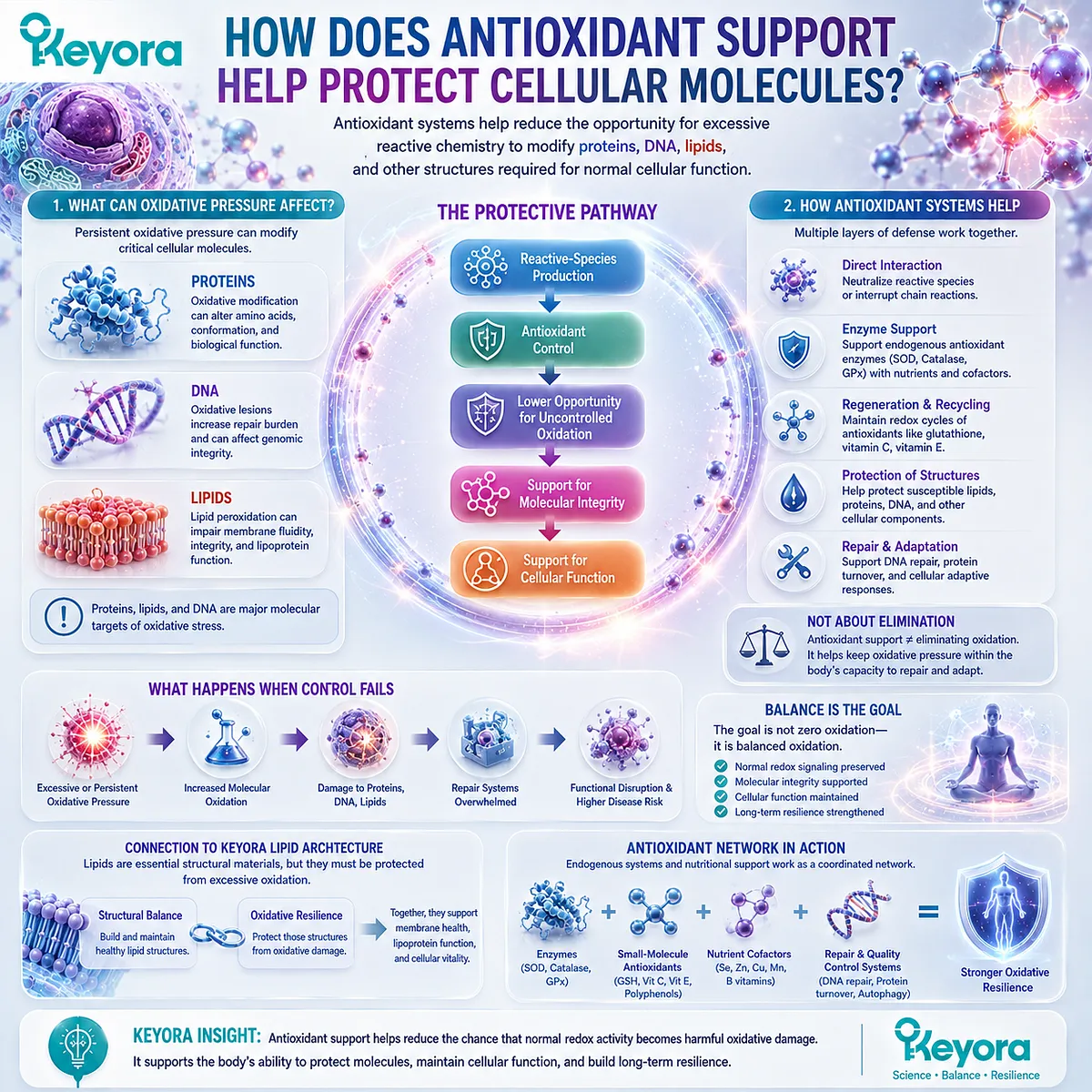
Antioxidant systems help reduce the opportunity for excessive reactive chemistry to modify proteins, DNA, lipids, and other structures required for normal cellular function
The importance of antioxidant support becomes clearer when we consider what persistent oxidative pressure can affect.
Proteins depend on precise three-dimensional structures to function as enzymes, receptors, transporters, and structural components. Excessive oxidative modification can alter amino-acid residues or protein conformation, potentially changing biological function.
DNA can also experience oxidative modifications. Cells possess repair systems that continuously respond to DNA damage, but persistent oxidative burden can increase the demand placed on those systems.
Lipids represent another major target.
Cell membranes and circulating lipoproteins contain lipid structures that can undergo oxidative modification when reactive pressure becomes excessive. The project scientific material specifically identifies lipids, proteins, and DNA among the major molecular targets affected by oxidative stress.
Antioxidant support can therefore be understood as helping reduce the probability that normal redox activity develops into uncontrolled molecular oxidation.
A useful pathway is:
Reactive-species production
↓
Antioxidant control
↓
Lower opportunity for uncontrolled oxidation
↓
Support for molecular integrity
↓
Support for cellular function
This does not mean antioxidants can guarantee that molecular damage never occurs.
Oxidative modification is part of normal biological turnover, and cells continually repair or replace damaged components.
The objective is not absolute protection.
It is maintaining a biological environment in which oxidative pressure remains compatible with normal repair and regulatory capacity.
This distinction is especially important for Keyora’s wider lipid framework.
Lipids are structural materials, but structural materials must also be protected from excessive oxidation.
That is why Structural Balance and Oxidative Resilience should be understood as connected layers rather than independent ideas.
Why Does the Location of Antioxidant Protection Matter?
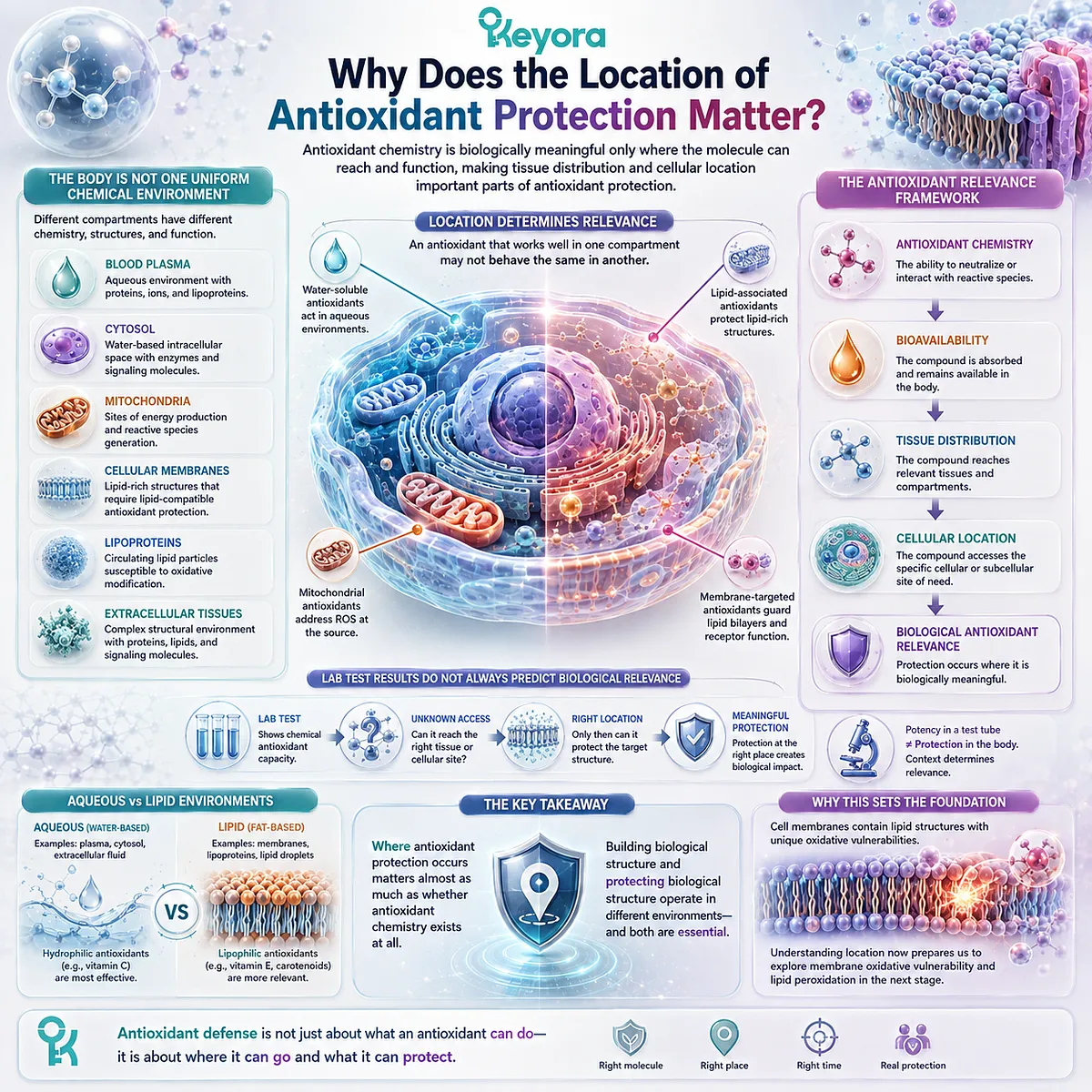
Antioxidant chemistry is biologically meaningful only where the molecule can reach and function, making tissue distribution and cellular location important parts of antioxidant protection
The body is not one uniform chemical environment.
Blood plasma, cytosol, mitochondria, cellular membranes, lipoproteins, and extracellular tissues all contain different mixtures of water, lipids, proteins, ions, and enzymes.
An antioxidant that functions well in one compartment may not behave identically in another.
This is why location matters.
Water-soluble antioxidant systems operate primarily in aqueous environments. Lipid-associated antioxidant systems are more relevant to hydrophobic structures such as membranes and lipoproteins.
The same principle applies within cells. A compound that remains largely outside lipid bilayers cannot automatically provide the same type of protection as a molecule able to associate with lipid-rich structures.
This creates another useful framework:
Antioxidant chemistry
Bioavailability
Tissue distribution
Cellular location
=
Biological antioxidant relevance
This is an important correction to the idea that antioxidant capacity can be summarized by one potency number.
A laboratory test may demonstrate that a compound can neutralize a specific reactive species. That does not automatically tell us whether the compound reaches the tissue, membrane, or cellular compartment where that reactive chemistry matters.
The project scientific materials repeatedly connect antioxidant effects with specific biological environments, including cellular membranes and lipid-rich tissues.
For Q013, however, the important conclusion is broader than any individual ingredient:
Where antioxidant protection occurs matters almost as much as whether antioxidant chemistry exists at all.
This principle will become increasingly important when the discussion turns toward cell membranes.
Membranes contain lipid structures with their own oxidative vulnerabilities, so antioxidant protection within a lipid environment raises different questions from antioxidant activity in an aqueous compartment.
That distinction prepares the next stage of the EP-3 knowledge architecture without yet moving into ingredient-specific mechanisms.
What Should “Antioxidant Support” Mean in Practical Nutrition?
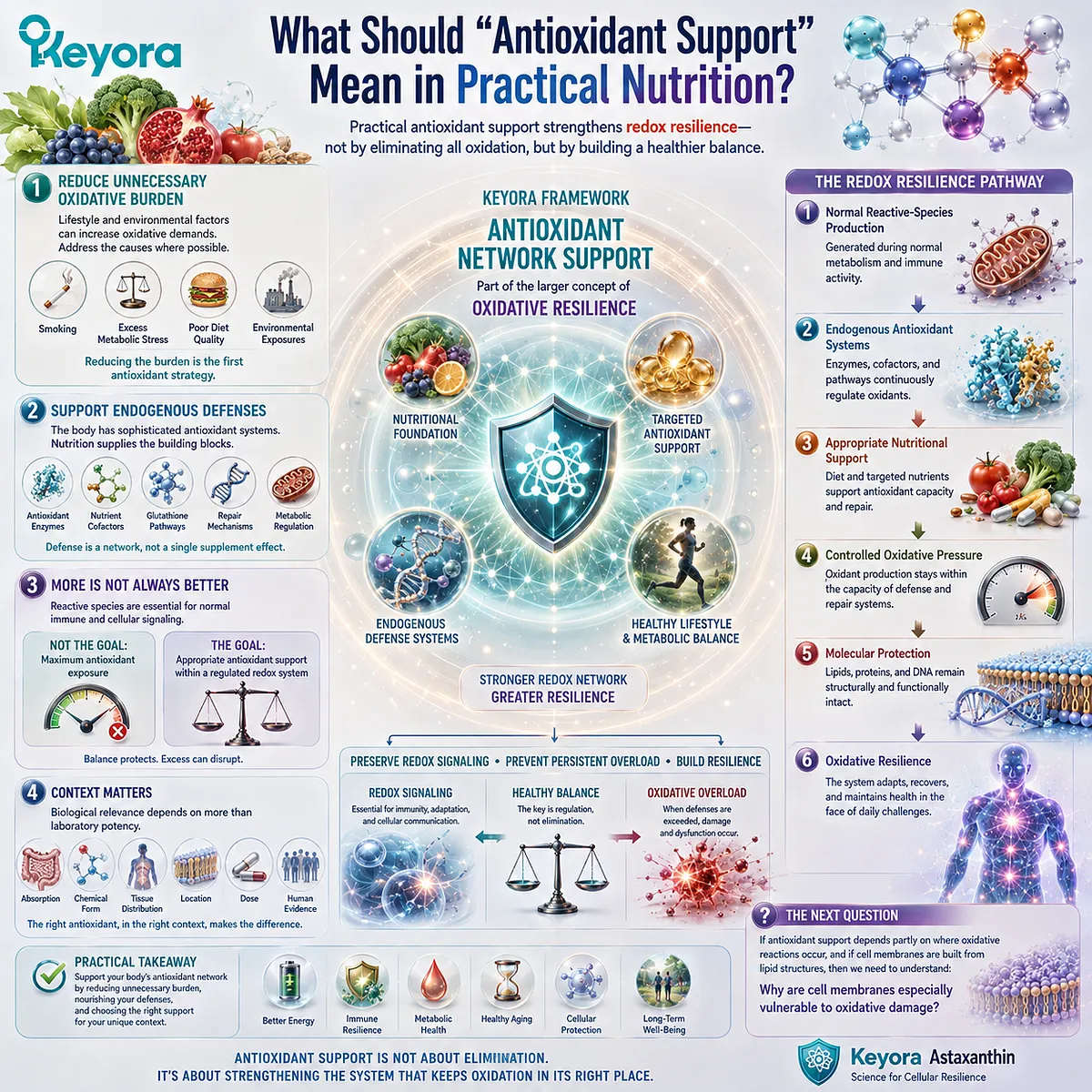
Practical antioxidant support should strengthen redox resilience within a healthy metabolic and nutritional environment rather than chase maximum doses or attempt to suppress all oxidative activity
A useful antioxidant strategy begins with a simple principle:
Reduce unnecessary oxidative burden before assuming that supplements alone can solve it.
Smoking, excessive metabolic stress, poor dietary quality, and certain environmental exposures can add to the oxidative demands placed on the body. Addressing these factors can be as important as supplying additional antioxidant compounds.
The second principle is to support normal endogenous defense.
The body relies on antioxidant enzymes, nutrient-dependent cofactors, glutathione-related pathways, repair mechanisms, and metabolic regulation. Nutrition contributes to these systems, but antioxidant defense remains a network rather than a single supplement effect.
The third principle is to avoid assuming that more antioxidant activity is always better.
Reactive molecules participate in normal immune and signaling biology. Completely suppressing redox signaling would not represent normal physiology.
The goal is therefore not:
maximum antioxidant exposure
It is:
appropriate antioxidant support within a regulated redox system
The fourth principle is to evaluate biological context.
An antioxidant should not be judged solely by a laboratory potency number. Absorption, chemical form, tissue distribution, location, dose, and human evidence all influence how meaningful antioxidant activity may be in practice.
Within the Keyora framework, these principles form Antioxidant Network Support, which sits within the larger concept of Oxidative Resilience.
The pathway is:
Normal reactive-species production
↓
Endogenous antioxidant systems
↓
Appropriate nutritional support
↓
Controlled oxidative pressure
↓
Molecular protection
↓
Oxidative Resilience
This perspective preserves the biological role of redox signaling while still recognizing the importance of preventing persistent oxidative overload.
It also leads directly to the next question.
If antioxidant support depends partly on where oxidative reactions occur, and if cell membranes are built from lipid structures, then we need to understand:
Why are cell membranes especially vulnerable to oxidative damage?
This article is for educational and informational purposes only. It does not provide medical advice, diagnosis, treatment, cure, prevention, disease outcome claims, hormone restoration claims, fertility outcome claims, or formula-specific clinical efficacy claims.