
How Does Lipid Membrane Structure Affect Cellular Health?
Keyora Research Q&A Library
This is part of the Keyora Research Q&A Series, derived from Keyora Astaxanthin Research Journal Series.
Within the Keyora Astaxanthin Researcn framework, this Q&A translates complex astaxanthin biology into reader-friendly, evidence-bound answers, focusing on natural astaxanthin identity, molecular structure, antioxidant and redox mechanisms, membrane lipid interaction, mitochondrial resilience, inflammatory signaling pathways, human evidence interpretation, and the scientific principles behind responsible supplementation.
First published by Keyora Research Journal: www.keyorahealth.com

Direct Answer
A cell membrane is often described as the outer boundary that separates a cell from its surroundings. While this description is correct, it does not fully explain why membrane structure is so important for cellular health.
The membrane is not simply a passive wall. It is an active biological interface that controls how a cell interacts with its environment. Every cell must continuously receive information, exchange materials, maintain internal conditions, and respond to changing physiological demands. Many of these processes depend on the physical and functional properties of the membrane.
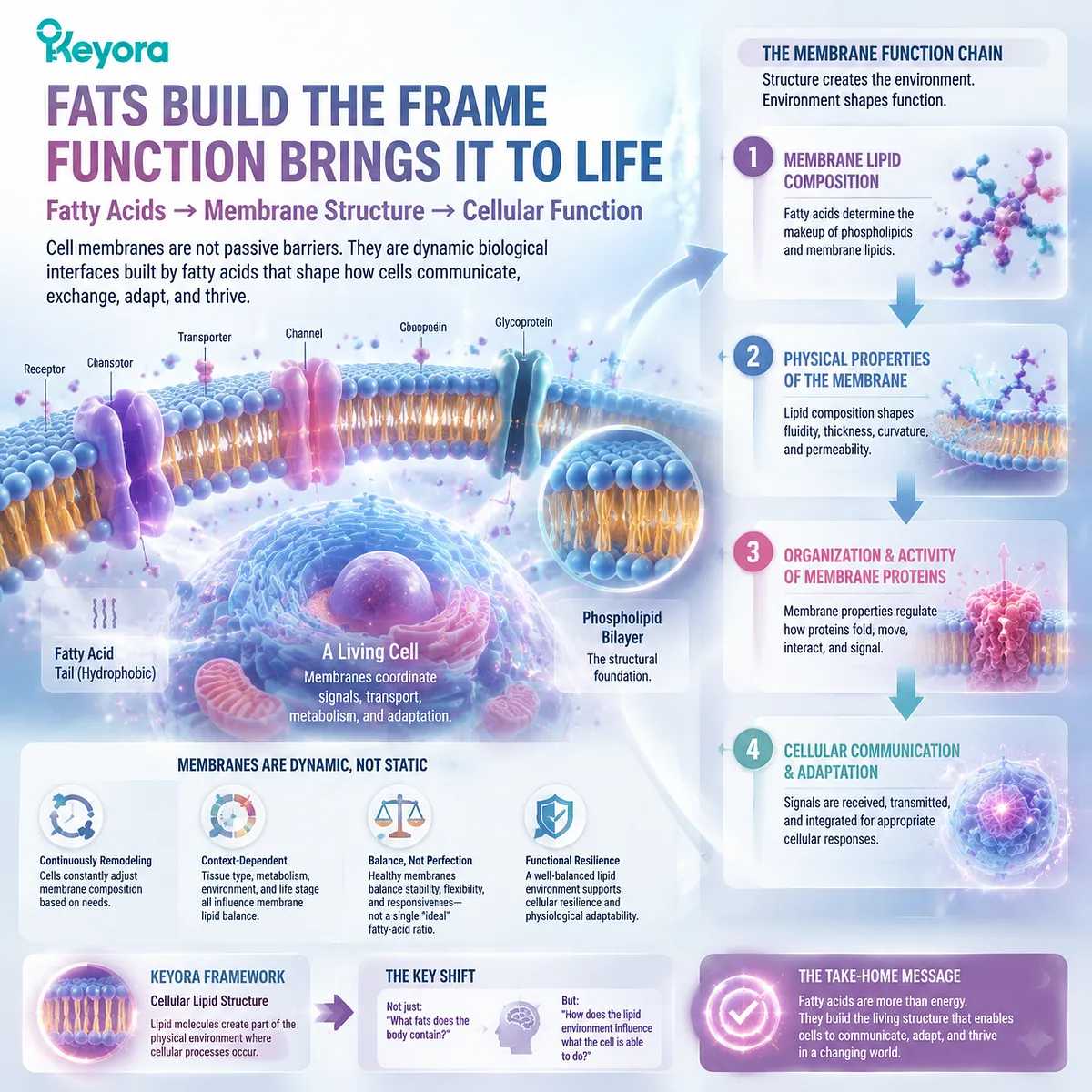
The foundation of this system is the phospholipid bilayer. Fatty acids contribute to the hydrophobic interior of phospholipids, creating the structural environment in which membrane proteins, receptors, transporters, and signaling molecules operate.
Therefore, the relationship between membrane structure and cellular function can be summarized as:
Membrane lipid composition
↓
Physical properties of the membrane
↓
Organization and activity of membrane proteins
↓
Cellular communication and adaptation
This is why fatty acids are more than sources of energy. They become part of the structural environment that allows cells to maintain biological order.
However, membrane structure should not be understood as a single fixed condition.
Cells continuously remodel their membranes according to tissue requirements, metabolism, environmental signals, and physiological states.
Healthy membranes are not defined by one ideal fatty-acid composition, but by their ability to maintain an appropriate balance between stability, flexibility, and functional responsiveness.
Within the Keyora framework, this concept is described as Cellular Lipid Structure: the understanding that lipid molecules create part of the physical environment where cellular processes occur.
The key question is therefore not simply:
“What fats does the body contain?”
The deeper question is:
“How does the lipid environment influence what the cell is able to do?”
How Does the Membrane Maintain a Selective Cellular Boundary?
One of the most fundamental roles of the cell membrane is creating separation.
Cells must maintain a different internal environment from the outside world.
At the same time, they cannot become completely isolated.
Nutrients must enter, waste products must leave, ions must move in controlled ways, and signals from outside the cell must be detected and interpreted.
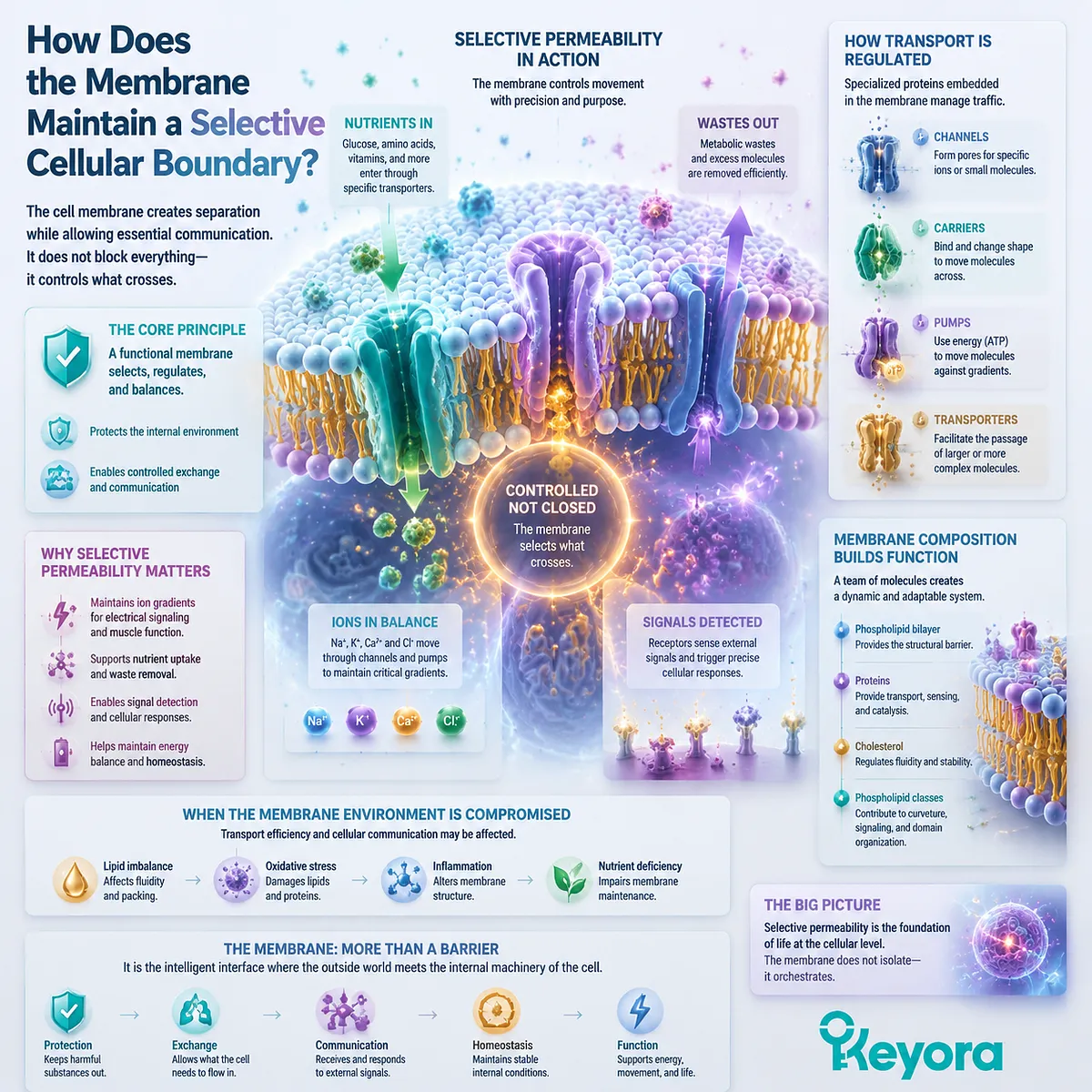
The membrane solves this challenge through selective permeability.
The phospholipid bilayer creates a basic physical barrier because its hydrophobic interior limits the uncontrolled movement of many water-soluble molecules.
However, cells require specialized proteins embedded within the membrane to regulate transport.
Channels, carriers, pumps, and transport proteins allow controlled movement of specific molecules and ions.
This creates an essential biological principle:
A functional membrane does not block everything.
It controls what crosses.
This balance between separation and communication allows cells to maintain homeostasis. For example, differences in ion concentrations across membranes are necessary for many biological processes, including electrical signaling, muscle contraction, and cellular energy regulation.
The membrane therefore acts as both:
-
a protective boundary;
-
a regulated exchange system.
A damaged or poorly organized membrane environment may affect how efficiently these processes occur, because transport proteins depend on the physical environment surrounding them.
Importantly, membrane function is not determined by fatty acids alone. Proteins, cholesterol, phospholipid classes, and cellular regulation all contribute to membrane behavior.
Fatty acids provide one of the fundamental structural components, but the membrane functions as a complete biological system.
This is why understanding lipid structure is important. The membrane is where the external environment meets the internal machinery of the cell.
Why Does Membrane Structure Influence Cellular Signaling?
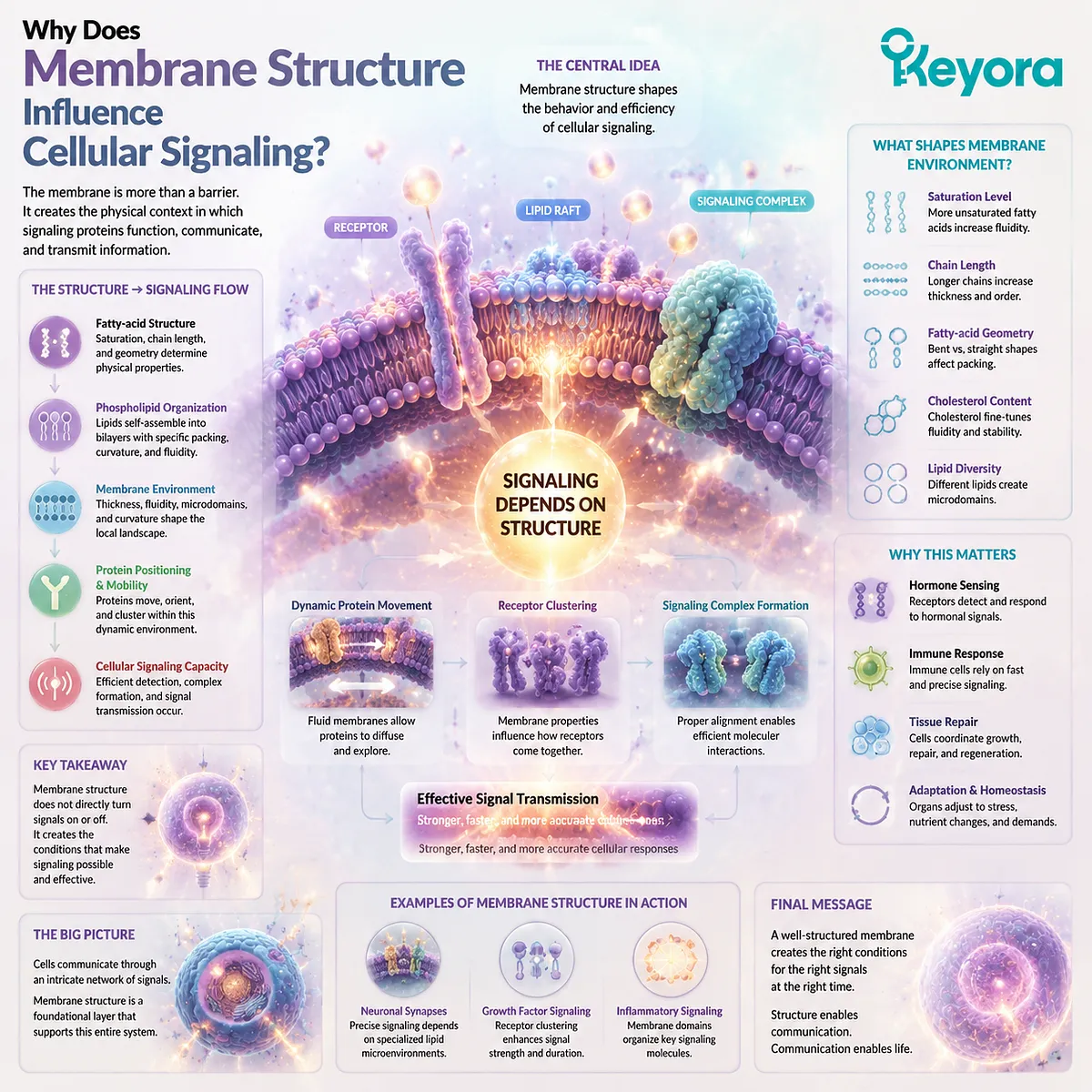
Cells do not respond to the outside world randomly. They rely on receptors and signaling proteins located within or near the membrane to detect changes and initiate biological responses.
A common misunderstanding is that receptors function independently from their surroundings. In reality, membrane proteins operate inside a lipid environment.
The organization of that environment can influence:
-
how proteins move;
-
how receptors cluster;
-
how signaling complexes form;
-
how efficiently molecular interactions occur.
The membrane therefore provides more than physical support. It creates the context in which cellular communication happens.
A useful way to understand this relationship is:
Fatty-acid structure
↓
Phospholipid organization
↓
Membrane environment
↓
Protein positioning and mobility
↓
Cellular signaling capacity
Different fatty acids contribute different physical characteristics to the membrane lipid pool.
The degree of saturation, chain structure, and molecular geometry can influence how tightly lipids pack together and how dynamic the membrane environment becomes.
This does not mean that one fatty acid directly turns a cellular signal on or off. Biological signaling is highly regulated and depends on many interacting systems.
The more accurate interpretation is that membrane structure helps create the physical conditions in which signaling proteins function.
This concept is especially important because many biological processes depend on precise communication:
-
cells sensing hormones;
-
immune cells responding to signals;
-
tissues coordinating repair;
-
organs adapting to changing demands.
The membrane is therefore not merely the location where signaling begins. It is part of the system that makes signaling possible.
Why Does Cellular Function Require Both Membrane Flexibility and Stability?
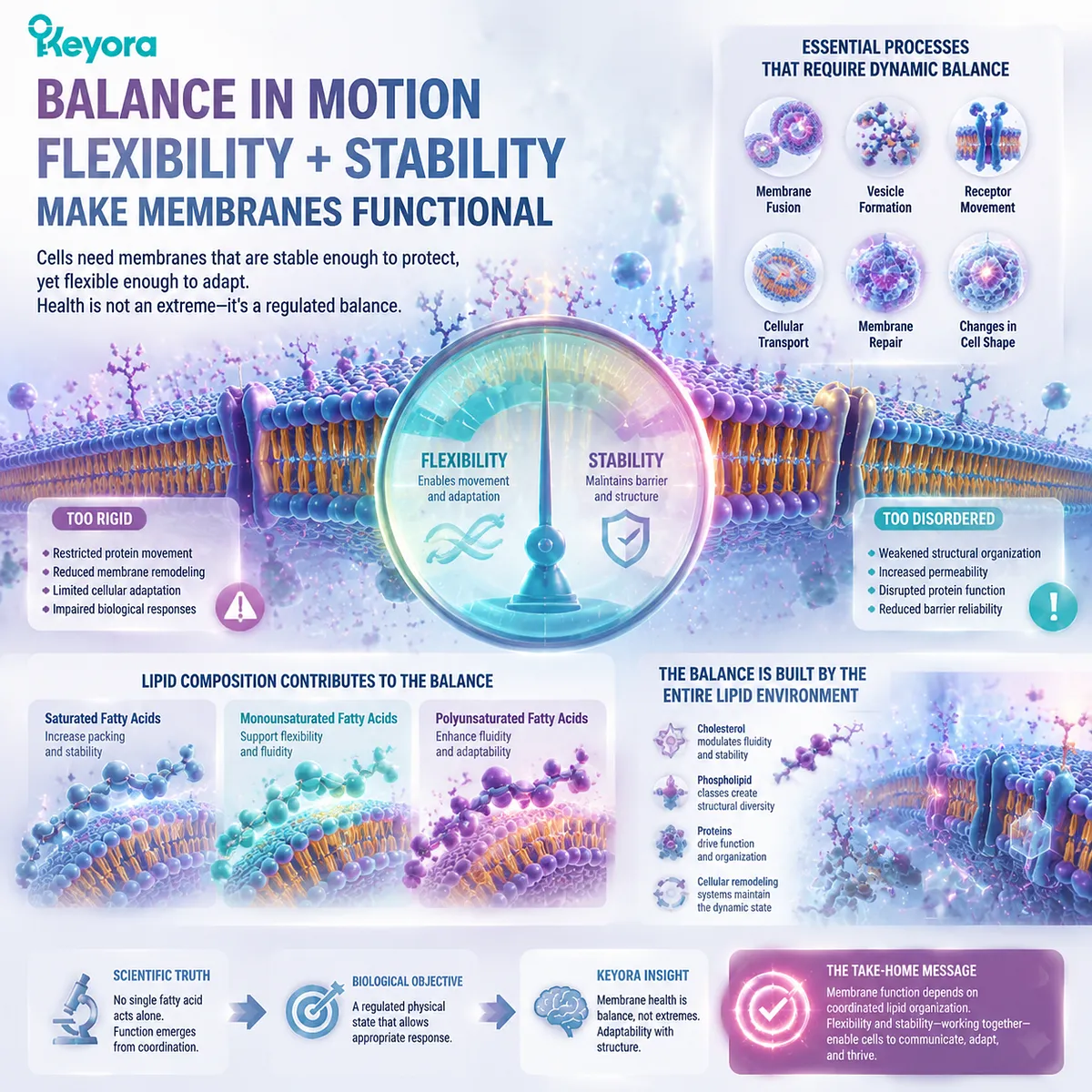
A healthy membrane must achieve a careful balance.
If a membrane becomes too rigid, important biological movements may become restricted.
Proteins may have difficulty changing position, membrane remodeling may become less efficient, and cellular adaptation may be limited.
If a membrane becomes excessively disordered, structural organization may also be affected.
Therefore, cellular membranes require controlled adaptability.
This means the membrane must be stable enough to maintain a reliable barrier while flexible enough to support continuous biological activity.
Many essential cellular processes depend on this dynamic quality:
-
membrane fusion;
-
vesicle formation;
-
receptor movement;
-
cellular transport;
-
membrane repair;
-
changes in cell shape.
This is why the goal is not simply “more fluid” or “more rigid.”
The biological objective is a regulated physical state that allows the membrane to respond appropriately.
Fatty-acid composition contributes to this balance because different fatty acids influence molecular packing behavior.
Saturated fatty acids, monounsaturated fatty acids, and polyunsaturated fatty acids contribute different structural characteristics to phospholipid membranes.
However, membrane behavior emerges from the entire lipid environment.
Cholesterol, proteins, phospholipid classes, and cellular remodeling systems all participate.
A scientifically accurate view is therefore:
Membrane function depends on coordinated lipid organization, not on one individual fatty acid acting alone.
This distinction is important because it prevents oversimplified claims that one type of fat automatically creates a healthy or unhealthy membrane.
The cell membrane is a complex biological structure that requires balance rather than extremes.
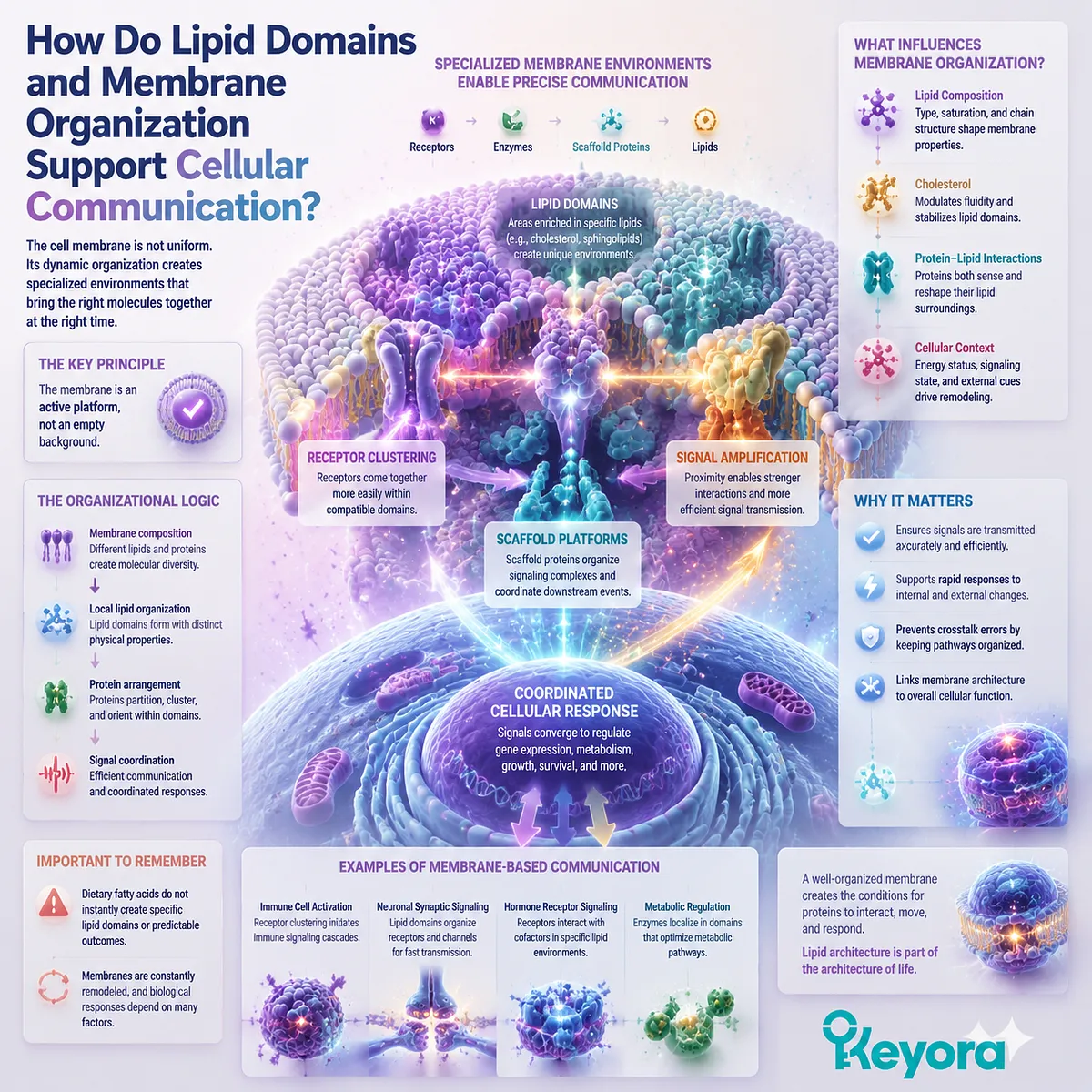
How Do Lipid Domains and Membrane Organization Support Cellular Communication?
Cell membranes are not uniform sheets of molecules. They contain regions with different compositions and physical properties that help organize cellular activity.
These specialized areas can influence how proteins and lipids interact within the membrane.
Certain receptors, enzymes, and signaling molecules may function more efficiently when positioned within appropriate membrane environments.
This means membrane organization contributes to cellular coordination.
For example, signaling proteins often need to come close together in order to transmit information. The surrounding lipid environment can influence whether these interactions occur efficiently.
The concept can be summarized as:
Membrane composition
↓
Local lipid organization
↓
Protein arrangement
↓
Signal coordination
This does not mean that changing one dietary fatty acid immediately creates a specific membrane domain or produces a predictable cellular outcome. Cellular membranes are constantly remodeled, and biological responses depend on many additional factors.
However, it highlights an important principle:
The membrane is an active platform, not an empty background.
The molecules surrounding a receptor or transport protein can influence the physical environment in which that protein operates.
This is why lipid biology is closely connected with cellular communication.
A cell must not only contain the correct proteins.
Those proteins must exist in a suitable structural environment where they can interact, move, and respond.
The lipid architecture of the membrane therefore becomes part of the broader architecture of cellular function.
What Is the Key Relationship Between Lipid Membrane Structure and Cellular Health?
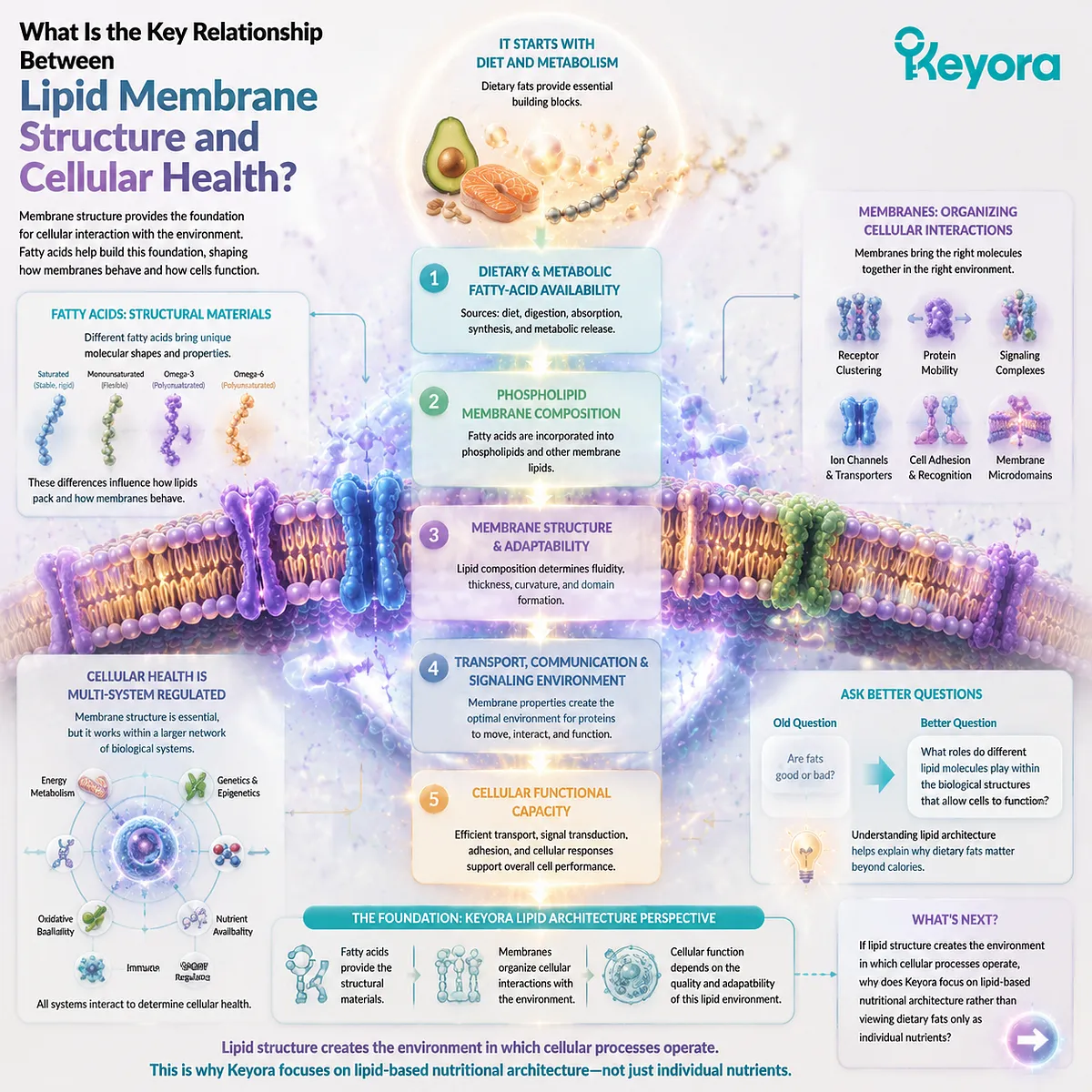
The most important conclusion is that membrane structure provides the foundation for cellular interaction with the environment.
Fatty acids contribute to this foundation by becoming part of phospholipid membranes. Their molecular characteristics influence how lipids organize, how membranes behave physically, and how membrane proteins operate within that environment.
The complete pathway can be summarized as:
Dietary and metabolic fatty-acid availability
↓
Phospholipid membrane composition
↓
Membrane structure and adaptability
↓
Transport, communication, and signaling environment
↓
Cellular functional capacity
However, membrane structure is one part of cellular health—not the only determinant.
Cells are influenced by energy metabolism, genetics, oxidative balance, nutrient availability, hormones, immune regulation, and many other biological systems.
Therefore, improving understanding of lipid architecture does not mean reducing health to one membrane characteristic.
Instead, it provides a deeper explanation of why dietary fats matter beyond calories.
The modern nutrition question is not simply:
“Are fats good or bad?”
A better question is:
“What roles do different lipid molecules play within the biological structures that allow cells to function?”
This is the foundation of Keyora’s Lipid Architecture perspective.
Fatty acids provide structural materials.
Membranes organize cellular interactions.
And cellular function depends partly on the quality and adaptability of this lipid environment.
The next question naturally follows:
If lipid structure creates the environment in which cellular processes operate, why does Keyora focus on lipid-based nutritional architecture rather than viewing dietary fats only as individual nutrients?
This article is for educational and informational purposes only. It does not provide medical advice, diagnosis, treatment, cure, prevention, disease outcome claims, hormone restoration claims, fertility outcome claims, or formula-specific clinical efficacy claims.