
Does Higher Bioavailability Make Synthetic Astaxanthin Equivalent to Natural Astaxanthin?
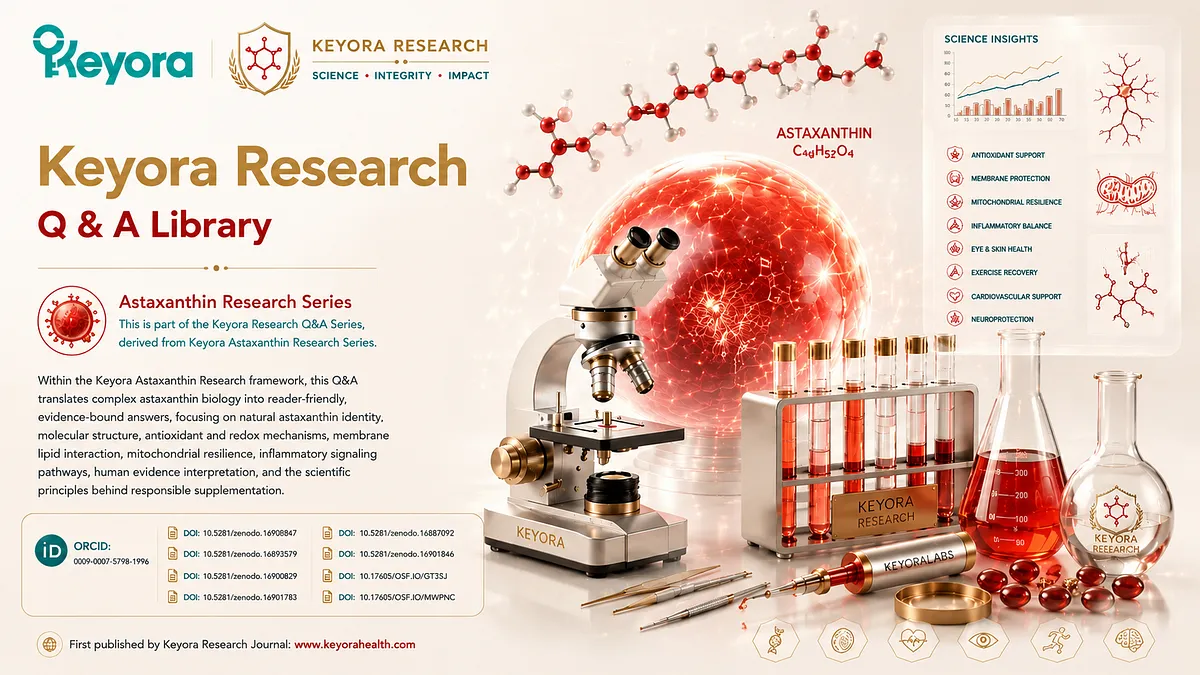
Keyora Research Q&A Library
This is part of the Keyora Research Q&A Series, derived from Keyora Astaxanthin Research Journal Series.
Within the Keyora Astaxanthin Researcn framework, this Q&A translates complex astaxanthin biology into reader-friendly, evidence-bound answers, focusing on natural astaxanthin identity, molecular structure, antioxidant and redox mechanisms, membrane lipid interaction, mitochondrial resilience, inflammatory signaling pathways, human evidence interpretation, and the scientific principles behind responsible supplementation.
First published by Keyora Research Journal: www.keyorahealth.com
Direct Answer
Higher blood exposure can be a real advantage of a specific synthetic Astaxanthin formulation, but it does not establish full clinical equivalence to natural Astaxanthin.
No, not automatically.
A synthetic Astaxanthin formulation can produce higher Astaxanthin concentrations in blood than a particular natural Astaxanthin formulation. That is real and potentially useful pharmacokinetic evidence. It should not be dismissed simply because the material is synthetic.
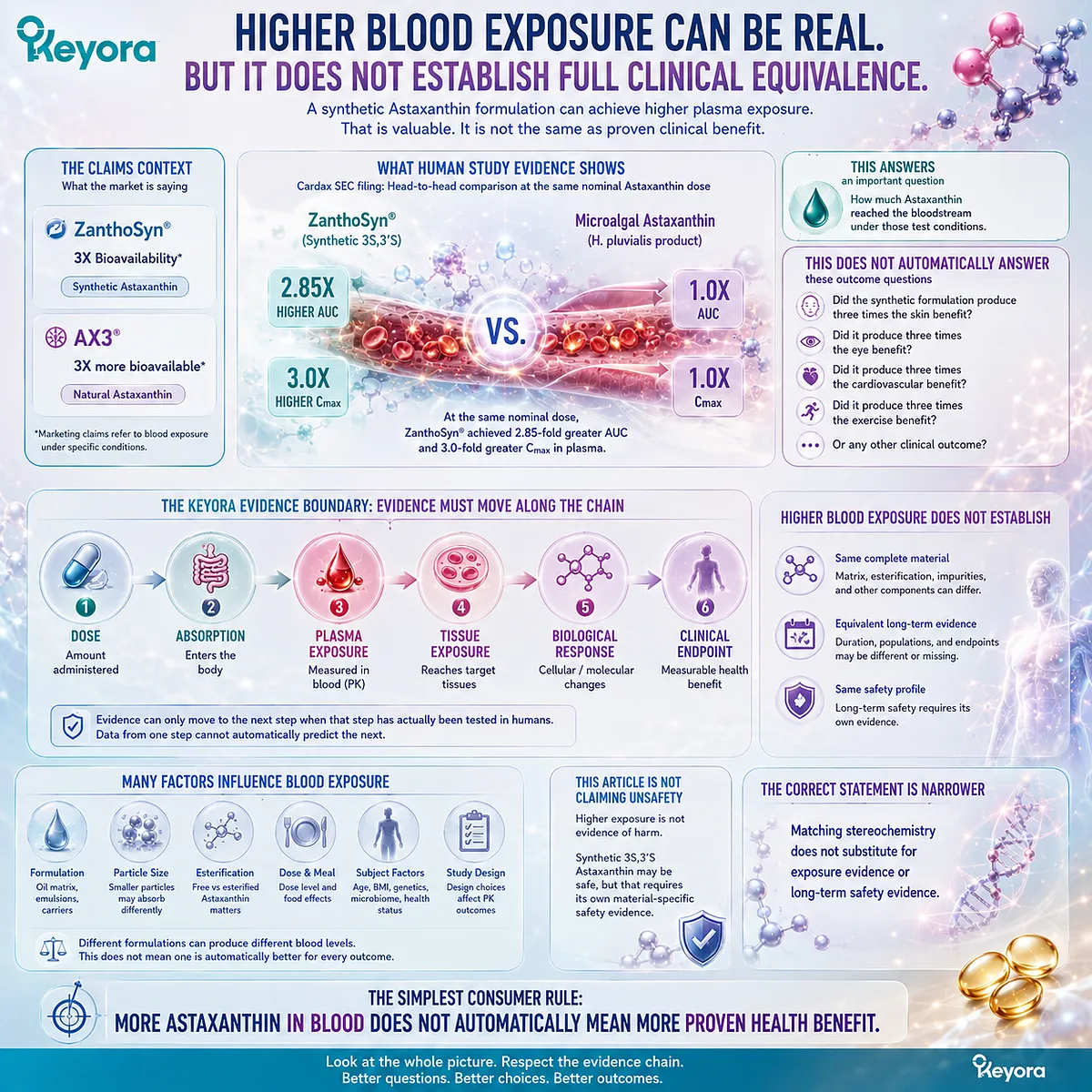
This distinction matters because current ZanthoSyn marketing describes the product as having “3X Bioavailability,” while AX3 currently promotes its Astaxanthin as “3X more bioavailable” based on a head-to-head human comparison. Cardax’s SEC filing reports that, at the same nominal Astaxanthin dose, ZanthoSyn produced 2.85-fold greater area under the plasma concentration curve, or AUC, and a 3.0-fold greater maximum concentration, or Cmax, than the tested microalgal Astaxanthin product.
Those findings answer an important question:
How much Astaxanthin reached the bloodstream under those test conditions?
They do not automatically answer:
Did the synthetic formulation produce three times the skin benefit, eye benefit, cardiovascular benefit, exercise benefit, or any other clinical outcome?
Nor does higher exposure establish that synthetic and Haematococcus pluvialis Astaxanthin are the same complete material or have equivalent long-term human evidence.
The Keyora evidence boundary is therefore:
Dose → Absorption → Plasma Exposure → Tissue Exposure → Biological Response → Clinical Endpoint
Evidence can move along this chain only when the next step has actually been tested.
The simplest consumer rule is:
More Astaxanthin in blood does not automatically mean more proven health benefit.
What Does “3X Bioavailability” Actually Mean?
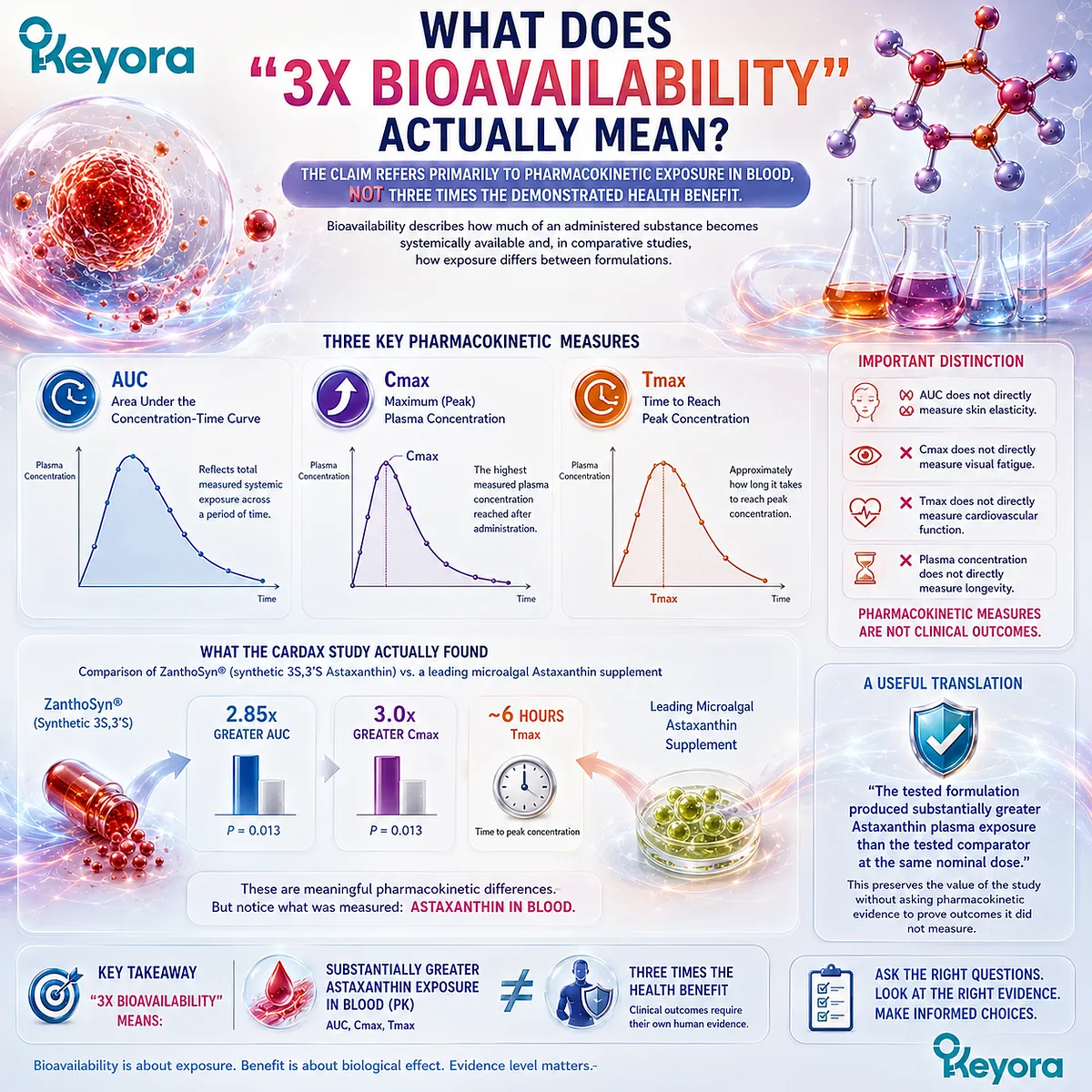
The claim refers primarily to pharmacokinetic exposure in blood, not three times the demonstrated health benefit.
Bioavailability describes how much of an administered substance becomes systemically available and, in comparative studies, how exposure differs between formulations.
Two common pharmacokinetic measurements are particularly relevant.
AUC, or area under the concentration-time curve, reflects total measured systemic exposure across a period of time.
Cmax is the highest measured plasma concentration reached after administration.
A third measure, Tmax, describes approximately how long it takes to reach that peak concentration.
In the Cardax filing, the reported comparison between ZanthoSyn and a leading microalgal Astaxanthin supplement found 2.85-fold greater AUC and 3.0-fold greater Cmax for ZanthoSyn, both reported at p=0.013. Tmax was reported as approximately six hours.
Those are meaningful pharmacokinetic differences.
But notice what was measured:
Astaxanthin in blood.
The study did not establish that every physiological outcome becomes 2.85 or 3 times larger.
AUC does not directly measure skin elasticity.
Cmax does not directly measure visual fatigue.
Tmax does not directly measure cardiovascular function.
Plasma concentration does not directly measure longevity.
The phrase “3X bioavailability” therefore needs to be interpreted at the evidence level where the underlying measurements actually sit.
A useful translation is:
The tested formulation produced substantially greater Astaxanthin plasma exposure than the tested comparator at the same nominal dose.
That statement preserves the value of the study without asking pharmacokinetic evidence to prove outcomes it did not measure.
What the ZanthoSyn Head-to-Head Study Actually Found
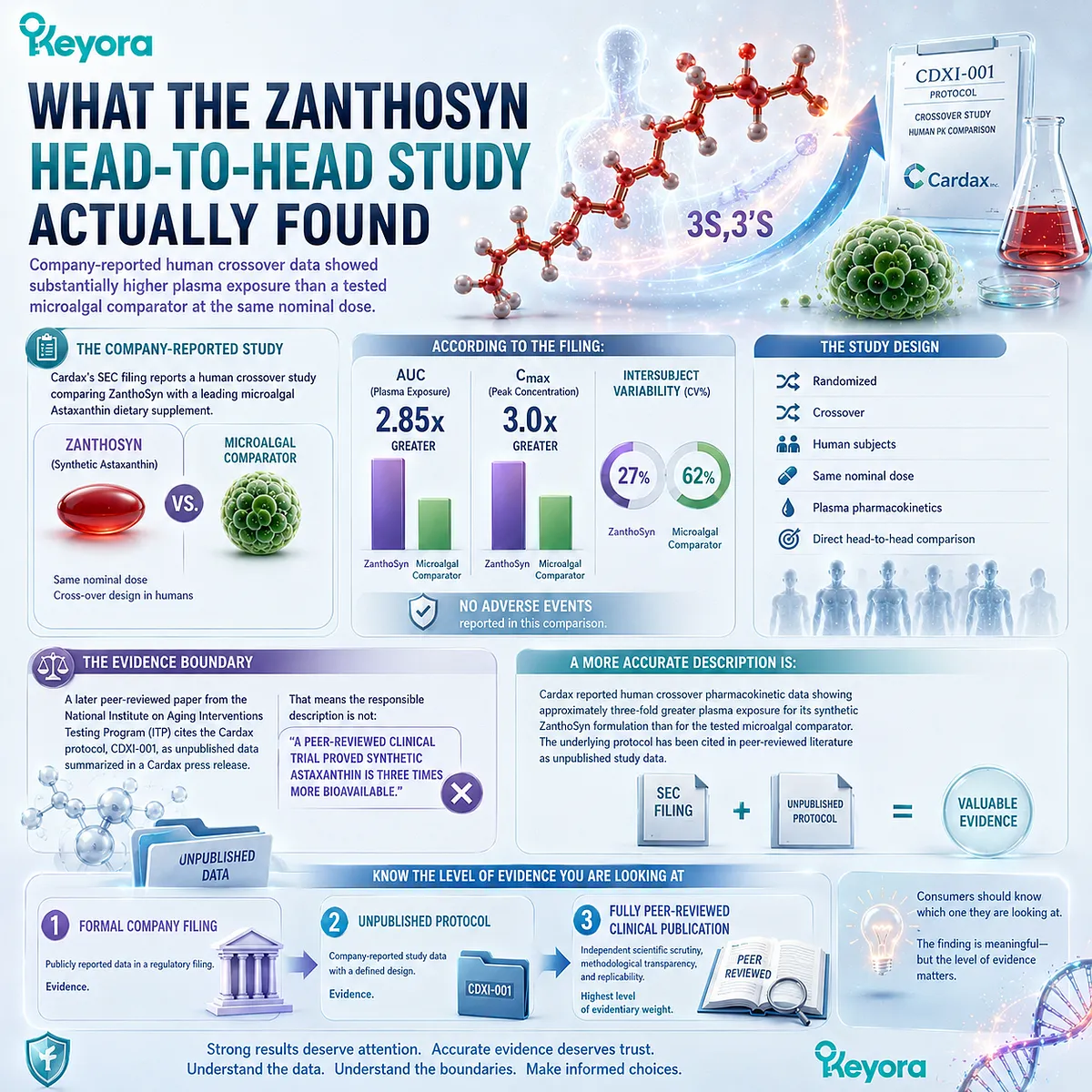
Company-reported human crossover data showed substantially higher plasma exposure than a tested microalgal comparator at the same nominal dose.
The comparative study behind the 3X claim deserves to be taken seriously, but its documentation level also needs to be described accurately.
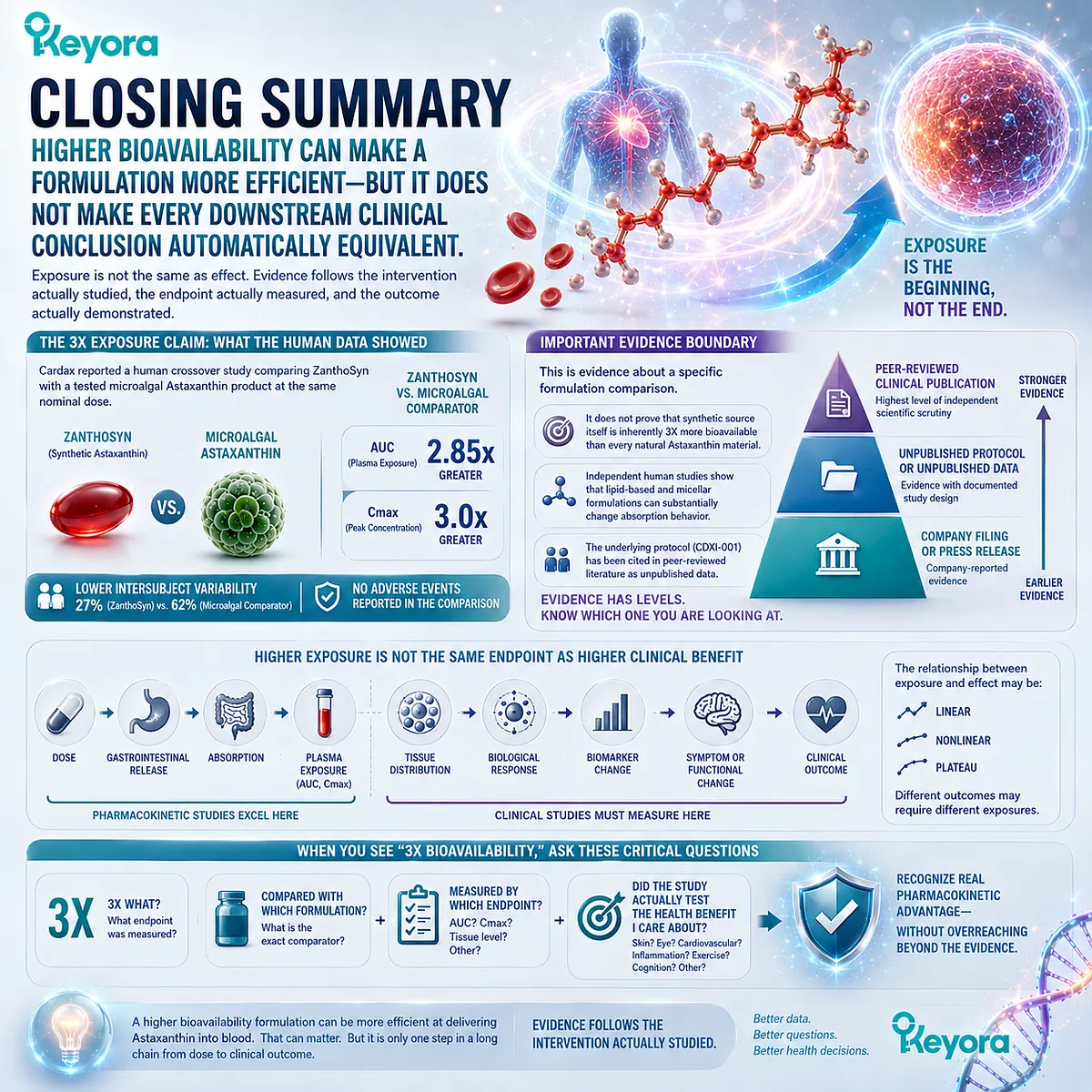
Cardax’s SEC filing reports a human crossover study comparing ZanthoSyn with a leading microalgal Astaxanthin dietary supplement. According to the filing, the same Astaxanthin dose produced an AUC 2.85 times greater and a Cmax 3.0 times greater with ZanthoSyn. The company also reported lower intersubject variability in blood levels for ZanthoSyn, 27% versus 62% for the microalgal comparator, and reported no adverse events in that comparison.
That is stronger evidence than an unsupported marketing statement because the study design and quantitative pharmacokinetic results are described in a formal corporate filing.
However, there is another important evidence boundary.
A later peer-reviewed paper from the National Institute on Aging Interventions Testing Program cites the Cardax protocol, CDXI-001, as unpublished data summarized in a Cardax press release.
That means the responsible description is not:
“A peer-reviewed clinical trial proved synthetic Astaxanthin is three times more bioavailable.”
A more accurate description is:
Cardax reported human crossover pharmacokinetic data showing approximately three-fold greater plasma exposure for its synthetic ZanthoSyn formulation than for the tested microalgal comparator. The underlying protocol has been cited in peer-reviewed literature as unpublished study data.
That distinction does not erase the finding.
It tells the reader how much evidentiary weight the finding should carry.
A formal company filing is evidence.
An unpublished protocol is evidence.
A fully peer-reviewed clinical publication provides an additional level of independent scientific scrutiny.
Consumers should know which one they are looking at.
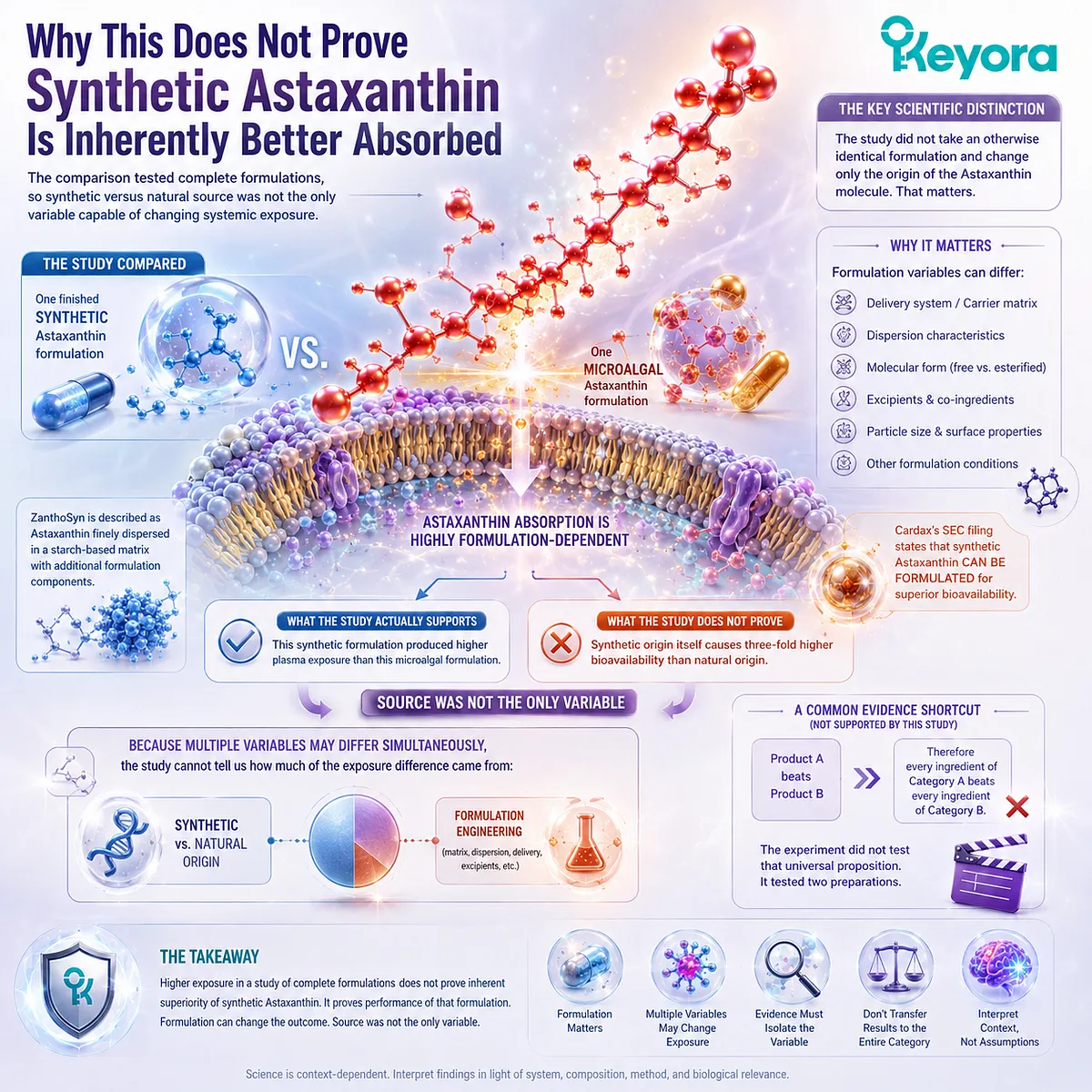
Why This Does Not Prove Synthetic Astaxanthin Is Inherently Better Absorbed
The comparison tested complete formulations, so synthetic versus natural source was not the only variable capable of changing systemic exposure.
This is probably the most important scientific distinction in the entire 3X claim.
The Cardax study compared:
one finished synthetic Astaxanthin formulation
with
one microalgal Astaxanthin formulation.
It did not take an otherwise identical formulation and change only the origin of the Astaxanthin molecule.
That matters because Astaxanthin absorption is highly formulation-dependent.
ZanthoSyn itself is described as Astaxanthin finely dispersed in a starch-based matrix with additional formulation components. The company’s current product information explicitly attributes its absorption characteristics to an “optimally formulated” product. Cardax’s SEC filing similarly states that synthetic Astaxanthin can be formulated for superior bioavailability.
Therefore, the study supports:
This synthetic formulation produced higher plasma exposure than this microalgal formulation.
It does not isolate and prove:
Synthetic origin itself causes three-fold higher bioavailability than natural origin.
Several variables may differ simultaneously, including the physical delivery system, carrier matrix, dispersion characteristics, molecular form, excipients, and other formulation conditions.
This is not a minor technical objection.
If source is not the only variable, then the study cannot tell us how much of the exposure difference came from:
synthetic versus natural origin
and how much came from:
formulation engineering.
That distinction protects consumers from a common evidence shortcut:
Product A beats Product B
therefore every ingredient of category A beats every ingredient of category B.
The experiment did not test that universal proposition.
It tested two preparations.
Formulation Can Change Natural Astaxanthin Exposure Too
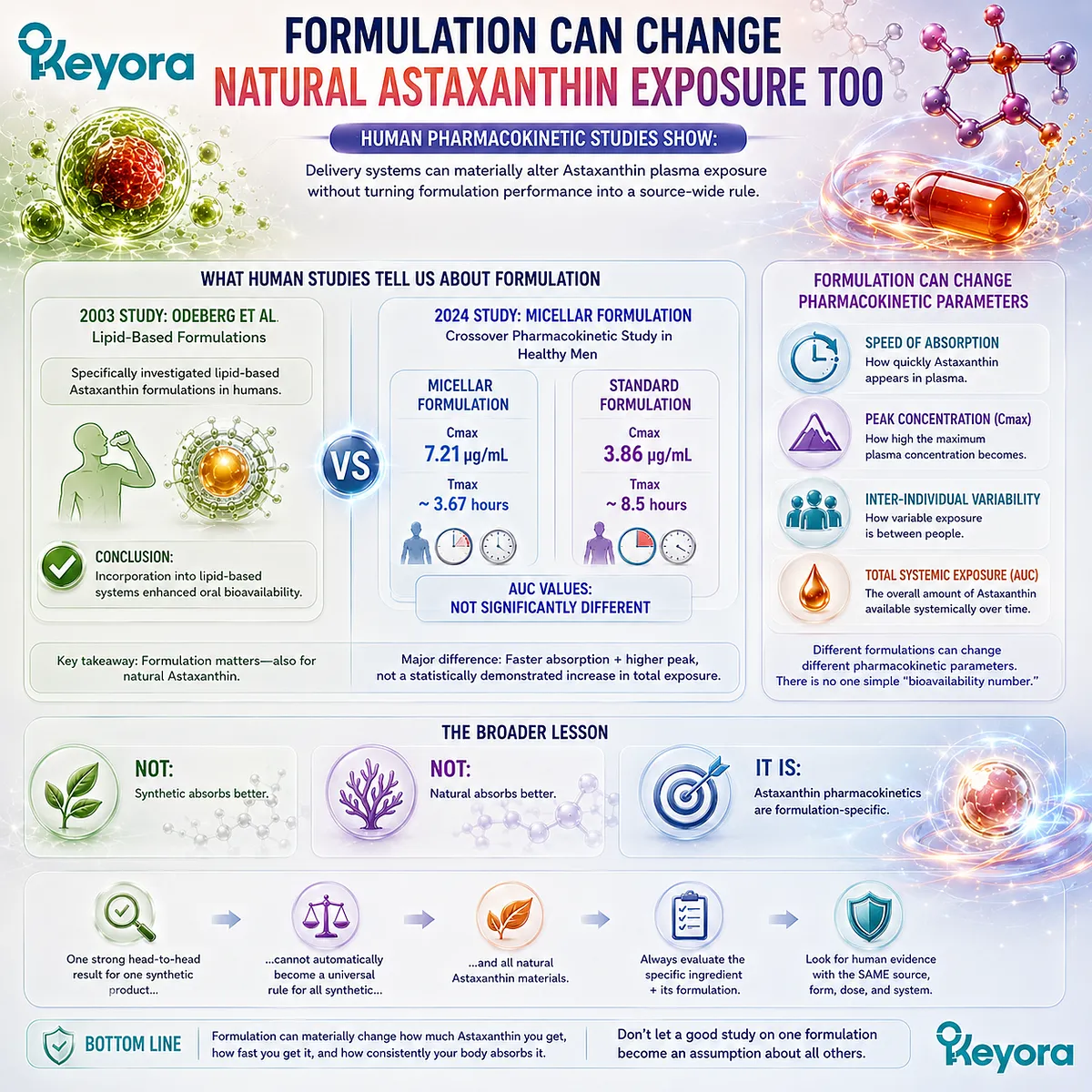
Human pharmacokinetic studies show that delivery systems can materially alter Astaxanthin plasma exposure without turning formulation performance into a source-wide rule.
Independent human research supports the importance of formulation.
In a 2003 human study, Odeberg and colleagues specifically investigated lipid-based Astaxanthin formulations and concluded that incorporation into lipid-based systems enhanced oral bioavailability.
More recent human research provides another useful example. A 2024 crossover pharmacokinetic study compared standard Astaxanthin with a micellar formulation in healthy men. The micellar formulation reached a Cmax of 7.21 µg/mL after approximately 3.67 hours, compared with 3.86 µg/mL after approximately 8.5 hours for the standard preparation.
Importantly, the same paper reported that the AUC values of the two formulations were not significantly different. The major observed difference was faster absorption and a higher peak concentration, not a statistically demonstrated increase in total exposure.
This is an excellent illustration of why the word “bioavailability” should not be treated as one simple number.
A formulation can change:
-
how quickly Astaxanthin appears in plasma,
-
how high the peak becomes,
-
how variable exposure is between people,
-
and potentially total systemic exposure.
Different formulations can change different pharmacokinetic parameters.
The broader lesson is therefore not:
Synthetic absorbs better.
Nor is it:
Natural absorbs better.
It is:
Astaxanthin pharmacokinetics are formulation-specific.
That is why a strong head-to-head result for one synthetic product cannot automatically become a universal source-level rule for all synthetic and natural Astaxanthin materials.
Higher Blood Levels Are Not the Same as Better Clinical Outcomes
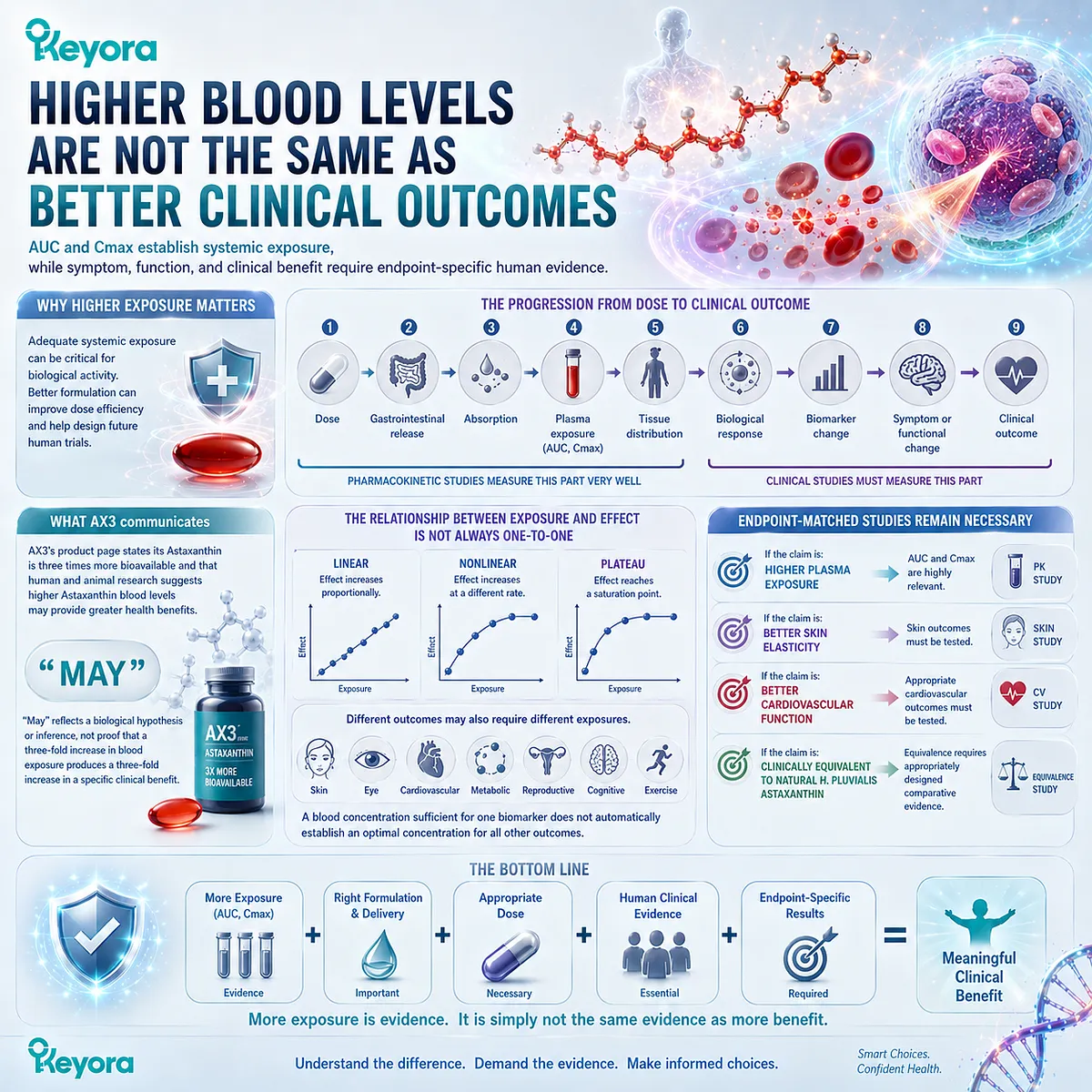
AUC and Cmax establish systemic exposure, while symptom, function, and clinical benefit require endpoint-specific human evidence.
Higher systemic exposure is not meaningless.
For an orally consumed nutrient or bioactive compound to exert systemic effects, adequate exposure can matter. Better formulation can therefore be valuable for dose efficiency and for designing future human trials.
The error begins when the evidence jumps several steps at once.
Consider the progression:
Dose
→ Gastrointestinal release
→ Absorption
→ Plasma exposure
→ Tissue distribution
→ Biological response
→ Biomarker change
→ Symptom or functional change
→ Clinical outcome
A pharmacokinetic study can measure the middle of that chain very well.
It does not automatically measure the end.
AX3’s current product page says its Astaxanthin is three times more bioavailable and also states that human and animal research suggests higher Astaxanthin blood levels may provide greater health benefits. The word “may” is important. It reflects a biological hypothesis or inference rather than proving that a three-fold increase in blood exposure produces a three-fold increase in a particular clinical benefit.
The relationship between exposure and effect may be linear in some circumstances, nonlinear in others, or may reach a plateau.
Different outcomes may also require different exposures.
A blood concentration that is sufficient for one biomarker does not automatically establish an optimal concentration for skin, eye, cardiovascular, reproductive, cognitive, or exercise outcomes.
That is why endpoint-matched studies remain necessary.
If the claim is:
higher plasma exposure
then AUC and Cmax are highly relevant.
If the claim is:
better skin elasticity
then skin outcomes must be tested.
If the claim is:
better cardiovascular function
then appropriate cardiovascular outcomes must be tested.
And if the claim is:
clinically equivalent to natural H. pluvialis Astaxanthin
then equivalence itself requires appropriately designed comparative evidence.
More exposure is evidence. It is simply not the same evidence as more benefit.
Higher Bioavailability Does Not Settle Safety or Material Equivalence
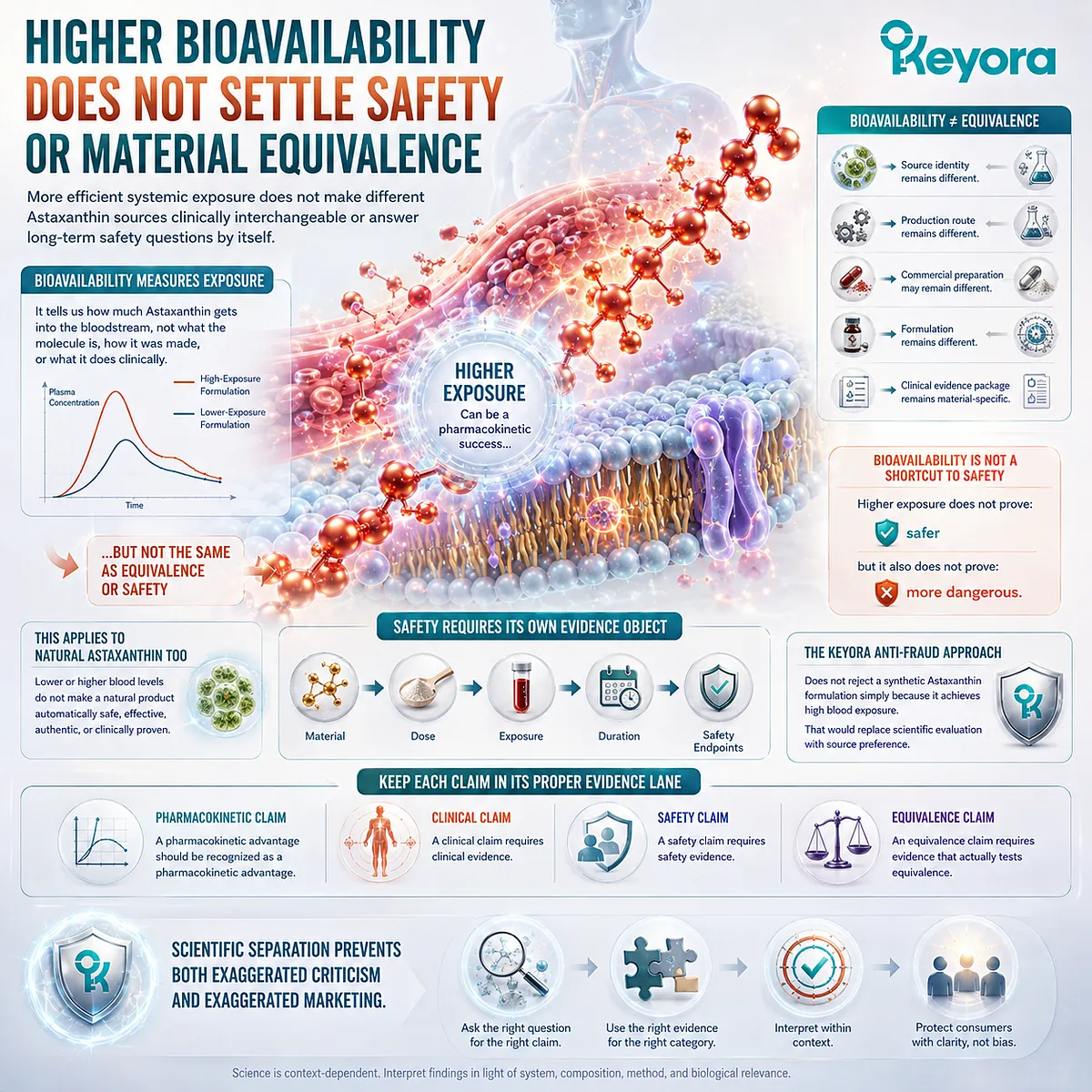
More efficient systemic exposure does not make different Astaxanthin sources clinically interchangeable or answer long-term safety questions by itself.
A higher-exposure synthetic formulation can be a pharmacokinetic success without becoming the same material as natural Haematococcus pluvialis Astaxanthin.
Source identity remains different.
The production route remains different.
The complete commercial preparation may remain different.
The formulation remains different.
And the clinical evidence package remains material-specific.
Bioavailability also cannot serve as a shortcut to a long-term safety conclusion.
Higher exposure does not prove:
safer
but it also does not prove:
more dangerous.
Safety requires its own evidence object:
Material → Dose → Exposure → Duration → Safety Endpoints
The same principle applies to natural Astaxanthin. Lower or higher blood levels do not make a natural product automatically safe, effective, authentic, or clinically proven.
This is why the Keyora anti-fraud approach does not reject a synthetic Astaxanthin formulation simply because it achieves high blood exposure.
That would replace scientific evaluation with source preference.
Instead, each claim stays in its proper evidence lane.
A pharmacokinetic advantage should be recognized as a pharmacokinetic advantage.
A clinical claim requires clinical evidence.
A safety claim requires safety evidence.
And an equivalence claim requires evidence that actually tests equivalence.
Keeping those categories separate is what prevents both exaggerated criticism and exaggerated marketing.
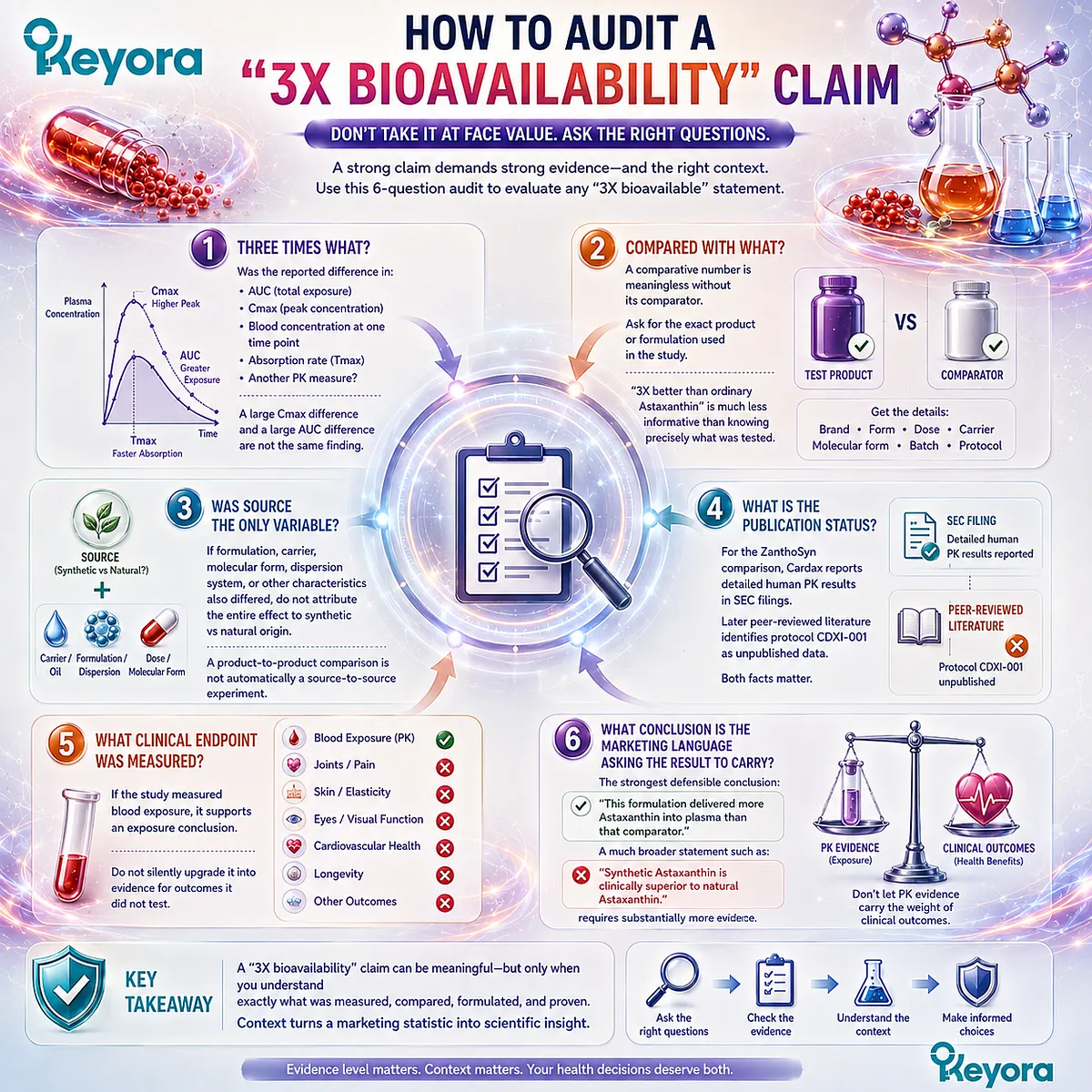
How to Audit a “3X Bioavailability” Claim
Check what was measured, what the comparator was, how the products were formulated, and whether the study measured the health outcome you care about.
When you see “3X bioavailable,” do not automatically accept it and do not automatically dismiss it.
Ask six questions.
1. Three times what?
Was the reported difference in:
AUC, Cmax, blood concentration at one time point, absorption rate, or another pharmacokinetic measure?
A large Cmax difference and a large AUC difference are not the same finding.
2. Compared with what?
A comparative number is meaningless without its comparator.
Ask for the exact product or formulation used in the study.
“3X better than ordinary Astaxanthin” is much less informative than knowing precisely what preparation was tested.
3. Was source the only variable?
If formulation, carrier, molecular form, dispersion system, or other characteristics also differed, do not attribute the entire effect to synthetic versus natural origin.
A product-to-product comparison is not automatically a source-to-source experiment.
4. What is the publication status?
For the ZanthoSyn comparison, Cardax reports detailed human PK results in SEC filings, while later peer-reviewed literature identifies protocol CDXI-001 as unpublished data.
Both facts matter.
5. What clinical endpoint was measured?
If the study measured blood exposure, it supports an exposure conclusion.
Do not silently upgrade it into evidence for joints, skin, eyes, cardiovascular outcomes, longevity, or any other endpoint the comparison did not test.
6. What conclusion is the marketing language asking the result to carry?
The strongest defensible conclusion may be:
“This formulation delivered more Astaxanthin into plasma than that comparator.”
A much broader statement such as:
“Synthetic Astaxanthin is clinically superior to natural Astaxanthin”
requires substantially more evidence.
That one distinction can turn a persuasive marketing statistic into a scientifically interpretable result.
Closing Summary
Higher bioavailability can make a formulation more efficient at delivering Astaxanthin into blood, but it does not make every downstream clinical conclusion automatically equivalent.
The approximately 3X exposure claim associated with ZanthoSyn and AX3 should not simply be dismissed. Cardax reported human crossover data in which ZanthoSyn produced 2.85-fold greater AUC and 3.0-fold greater Cmax than a tested microalgal Astaxanthin product at the same nominal dose.
That is meaningful human pharmacokinetic evidence.
But it is evidence about a specific formulation comparison.
It does not establish that synthetic source itself is inherently three times more bioavailable than every natural Astaxanthin material. Independent human studies also show that lipid-based and micellar formulation strategies can substantially change Astaxanthin absorption behavior.
Most importantly:
higher plasma exposure is not the same endpoint as higher clinical benefit.
When you see “3X Bioavailability,” ask:
3X what, compared with which formulation, measured by which endpoint, and did the study actually test the health benefit I care about?
That is how a real pharmacokinetic advantage can be recognized without turning it into evidence for claims the study never measured.
This article is for educational and informational purposes only. It does not provide medical advice, diagnosis, treatment, cure, prevention, disease outcome claims, hormone restoration claims, fertility outcome claims, or formula-specific clinical efficacy claims.