
How to Choose the Best Astaxanthin Supplement for Eye Health
Keyora Research Q&A Library
This is part of the Keyora Research Q&A Series, derived from Keyora Astaxanthin Research Journal Series.
Within the Keyora Astaxanthin Researcn framework, this Q&A translates complex astaxanthin biology into reader-friendly, evidence-bound answers, focusing on natural astaxanthin identity, molecular structure, antioxidant and redox mechanisms, membrane lipid interaction, mitochondrial resilience, inflammatory signaling pathways, human evidence interpretation, and the scientific principles behind responsible supplementation.
First published by Keyora Research Journal: www.keyorahealth.com
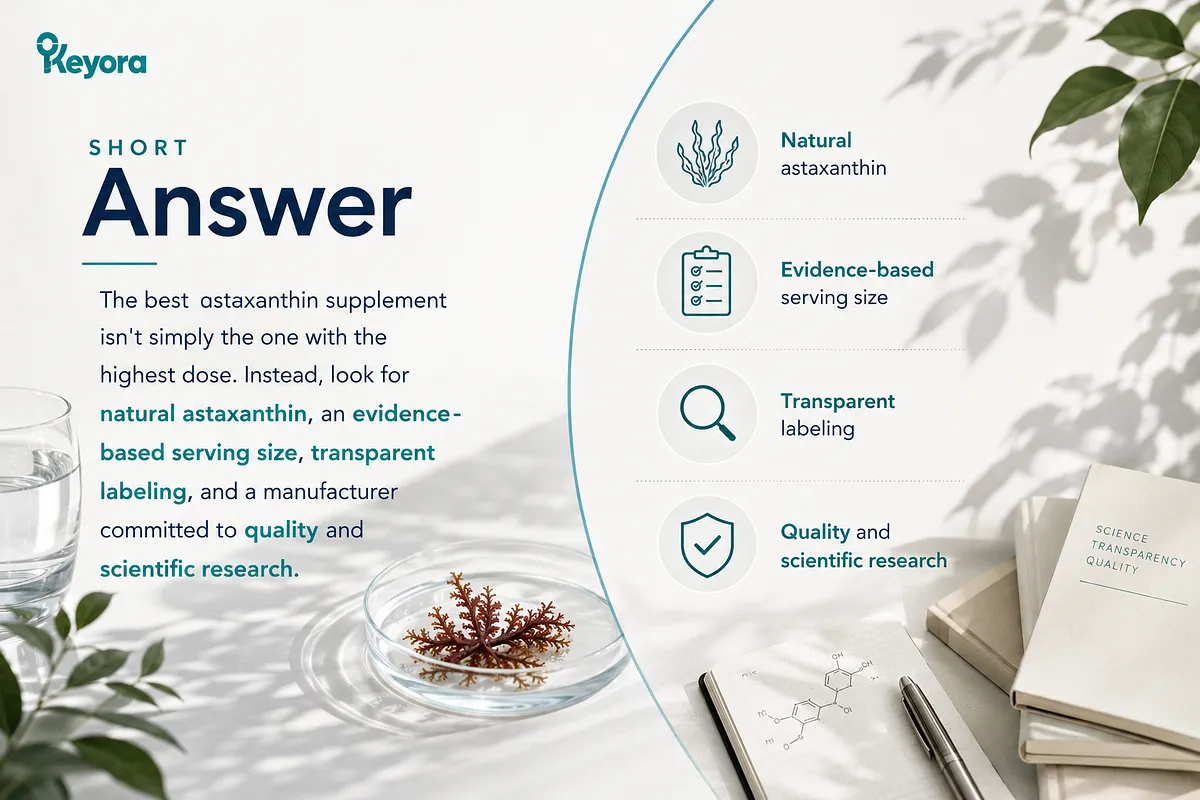
Short Answer
The best astaxanthin supplement isn’t simply the one with the highest dose. Instead, look for natural astaxanthin, an evidence-based serving size, transparent labeling, and a manufacturer committed to quality and scientific research.
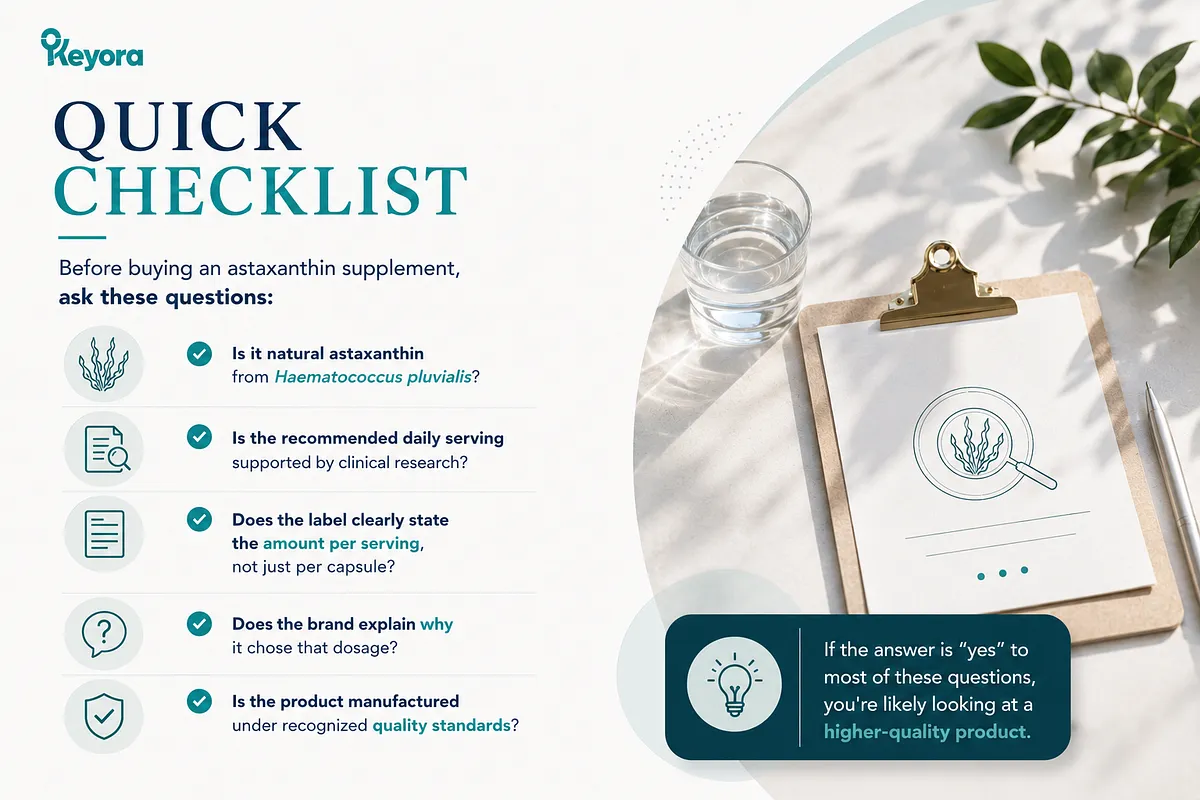
Quick Checklist
Before buying an astaxanthin supplement, ask these questions:
✅ Is it natural astaxanthin from Haematococcus pluvialis?
✅ Is the recommended daily serving supported by clinical research?
✅ Does the label clearly state the amount per serving, not just per capsule?
✅ Does the brand explain why it chose that dosage?
✅ Is the product manufactured under recognized quality standards?
If the answer is “yes” to most of these questions, you’re likely looking at a higher-quality product.
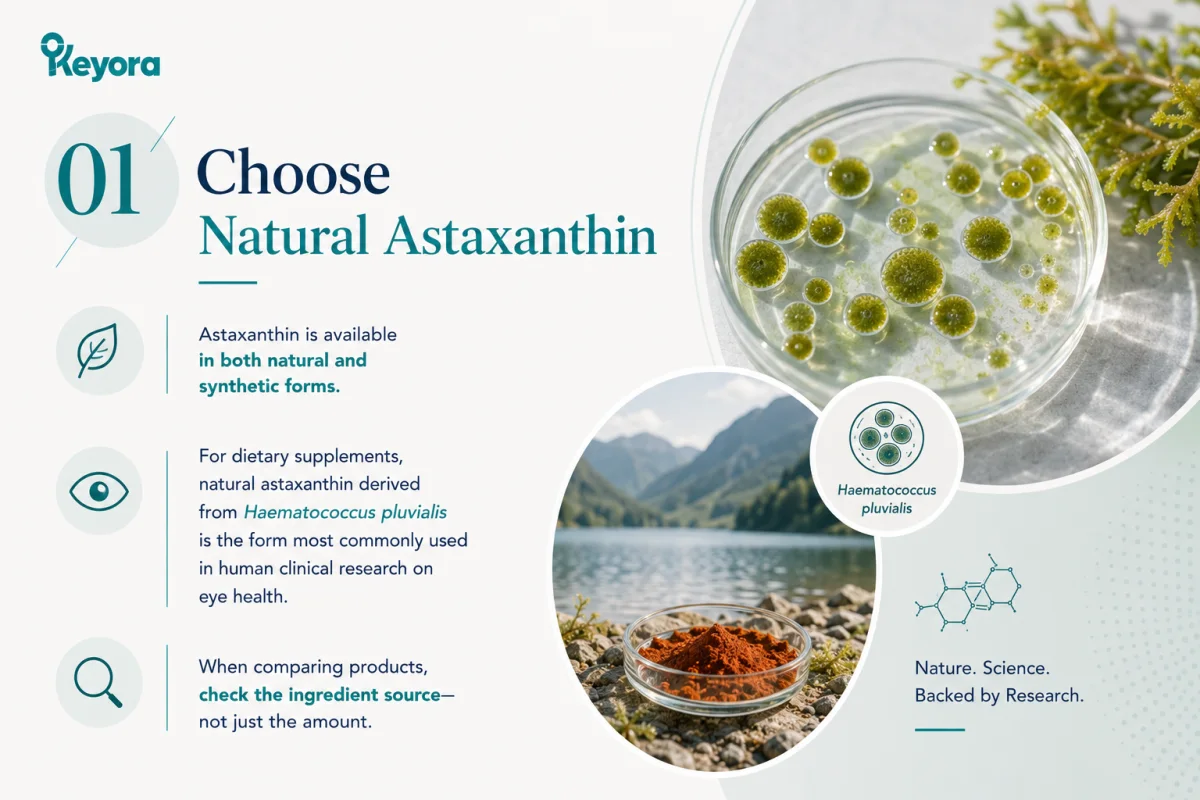
1. Choose Natural Astaxanthin
Astaxanthin is available in both natural and synthetic forms.
For dietary supplements, natural astaxanthin derived from Haematococcus pluvialis is the form most commonly used in human clinical research on eye health.
When comparing products, check the ingredient source—not just the amount.
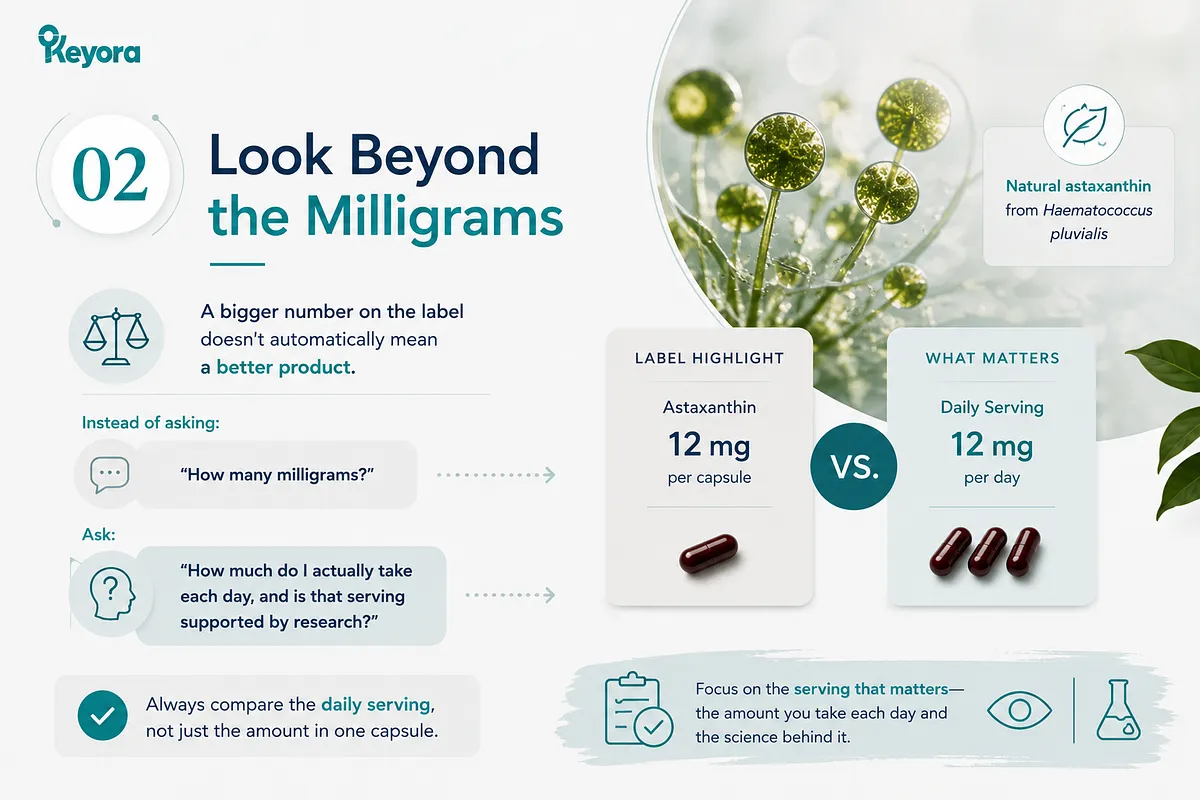
2. Look Beyond the Milligrams
A bigger number on the label doesn’t automatically mean a better product.
Instead of asking:
“How many milligrams?”
Ask:
“How much do I actually take each day, and is that serving supported by research?”
Always compare the daily serving, not just the amount in one capsule.
3. Choose a Research-Backed Serving Size
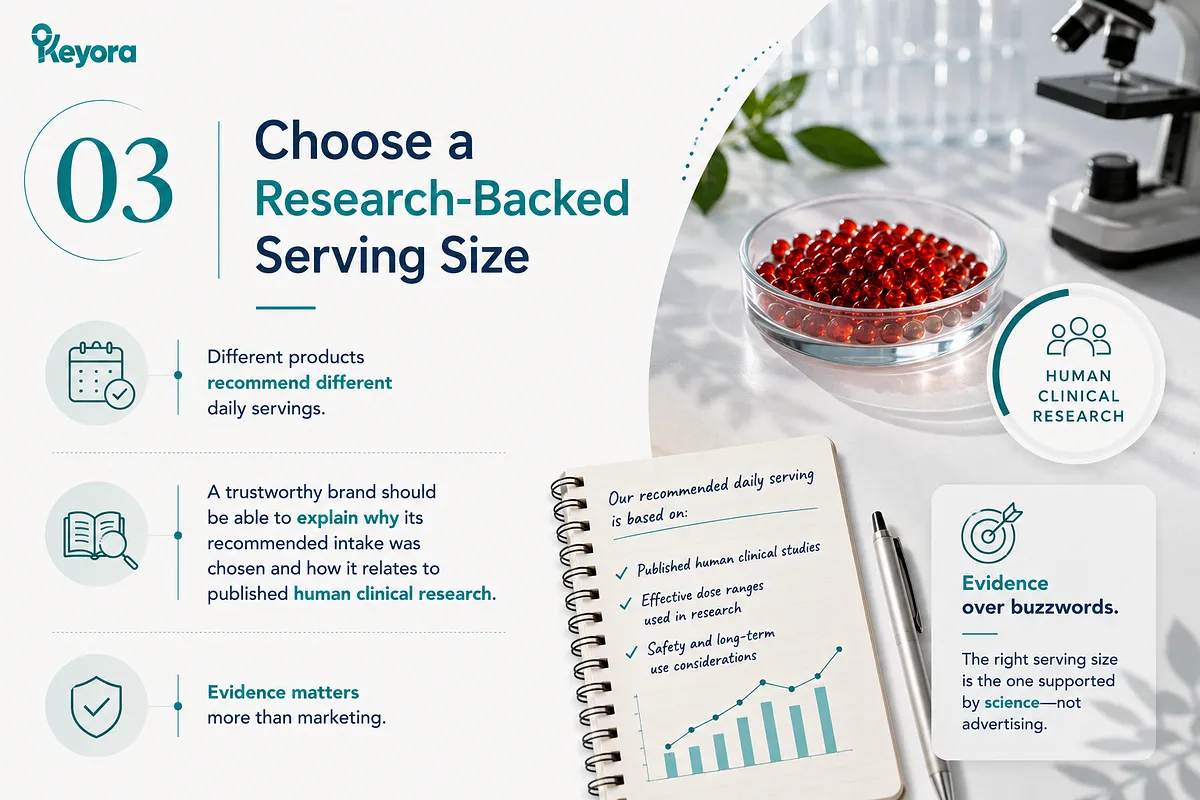
Different products recommend different daily servings.
A trustworthy brand should be able to explain why its recommended intake was chosen and how it relates to published human clinical research.
Evidence matters more than marketing.
4. Check Label Transparency
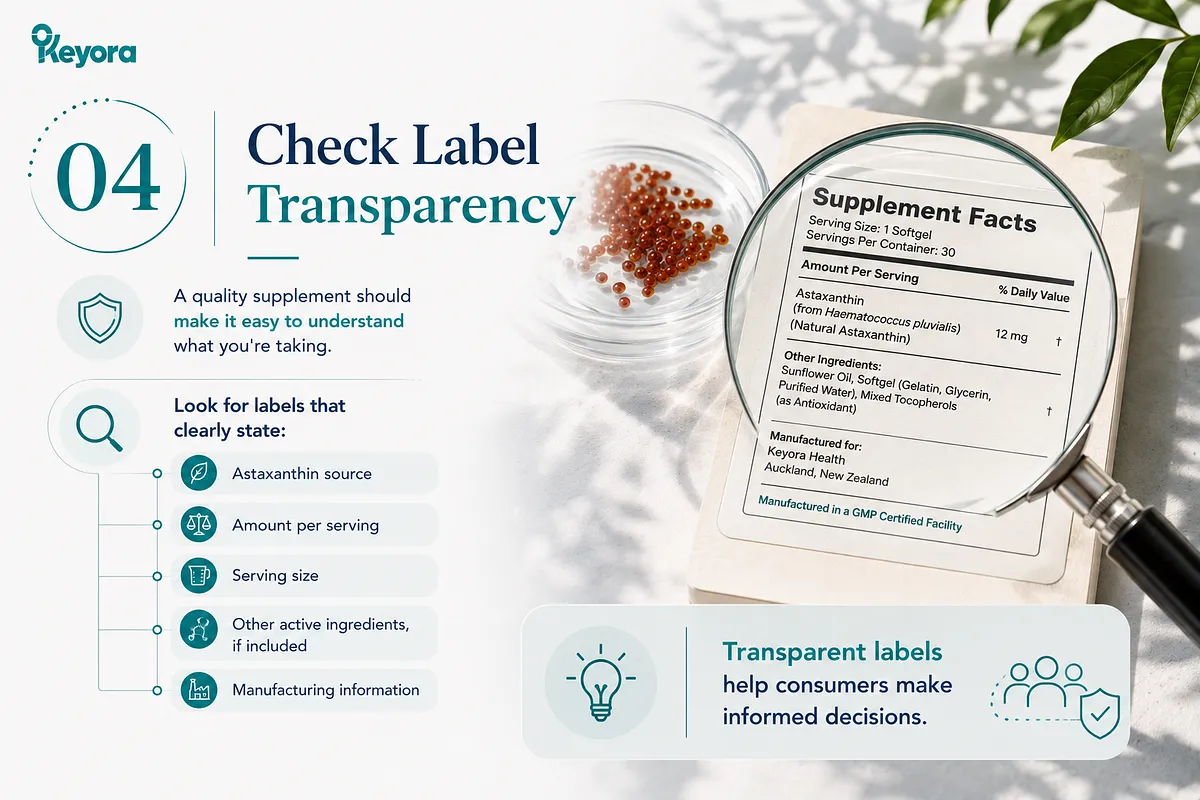
A quality supplement should make it easy to understand what you’re taking.
Look for labels that clearly state:
· Astaxanthin source
· Amount per serving
· Serving size
· Other active ingredients, if included
· Manufacturing information
Transparent labels help consumers make informed decisions.
5. Consider Manufacturing Quality
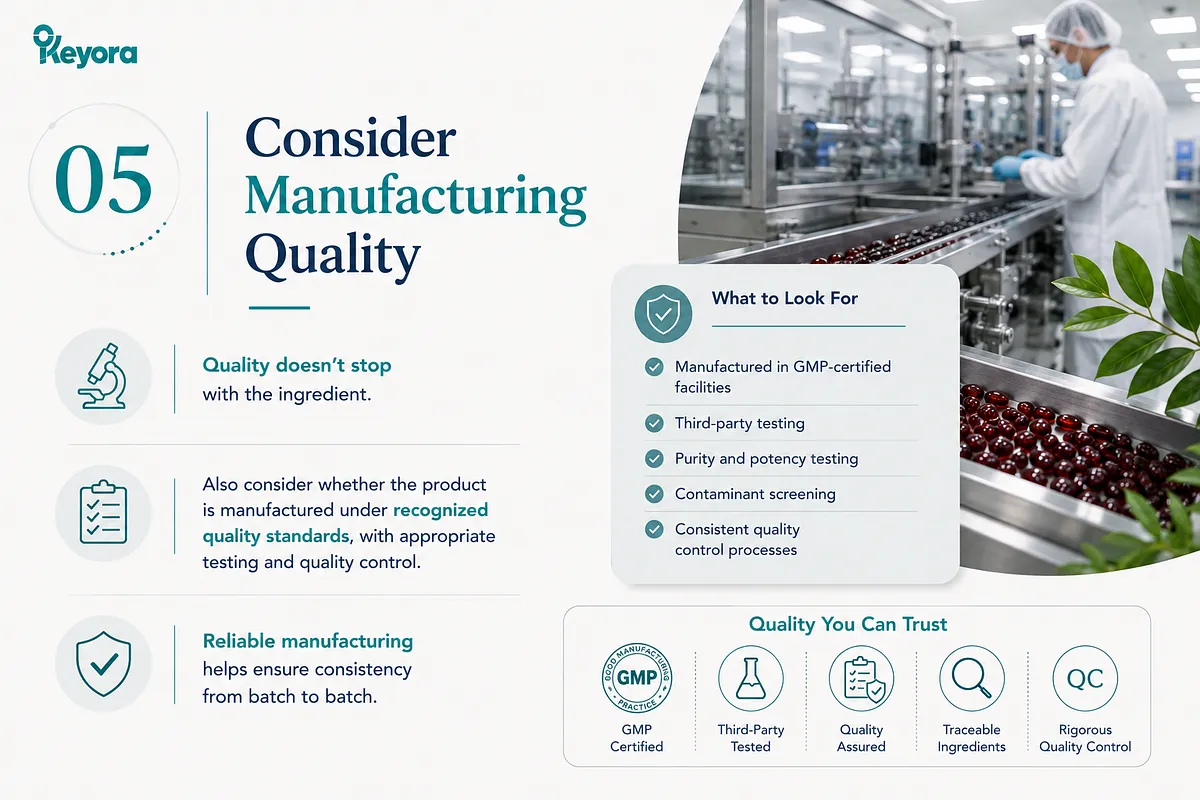
Quality doesn’t stop with the ingredient.
Also consider whether the product is manufactured under recognized quality standards, with appropriate testing and quality control.
Reliable manufacturing helps ensure consistency from batch to batch.
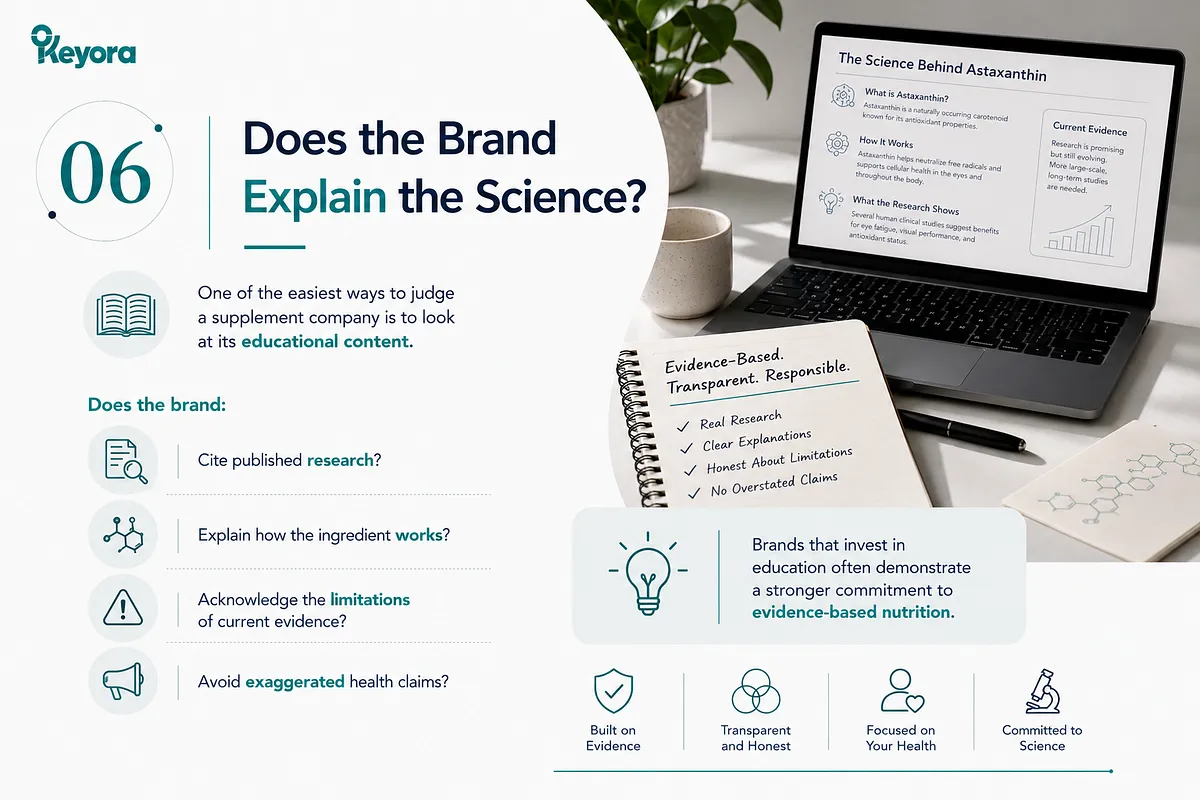
6. Does the Brand Explain the Science?
One of the easiest ways to judge a supplement company is to look at its educational content.
Does the brand:
· Cite published research?
· Explain how the ingredient works?
· Acknowledge the limitations of current evidence?
· Avoid exaggerated health claims?
Brands that invest in education often demonstrate a stronger commitment to evidence-based nutrition.
The Keyora Verdict
The best astaxanthin supplement isn’t necessarily the one with the biggest number on the label.
It’s the one that combines:
· A high-quality natural ingredient
· A research-backed formulation
· Transparent labeling
· Reliable manufacturing
· Clear scientific reasoning
Choosing a supplement should be about confidence in the evidence—not confidence in the marketing
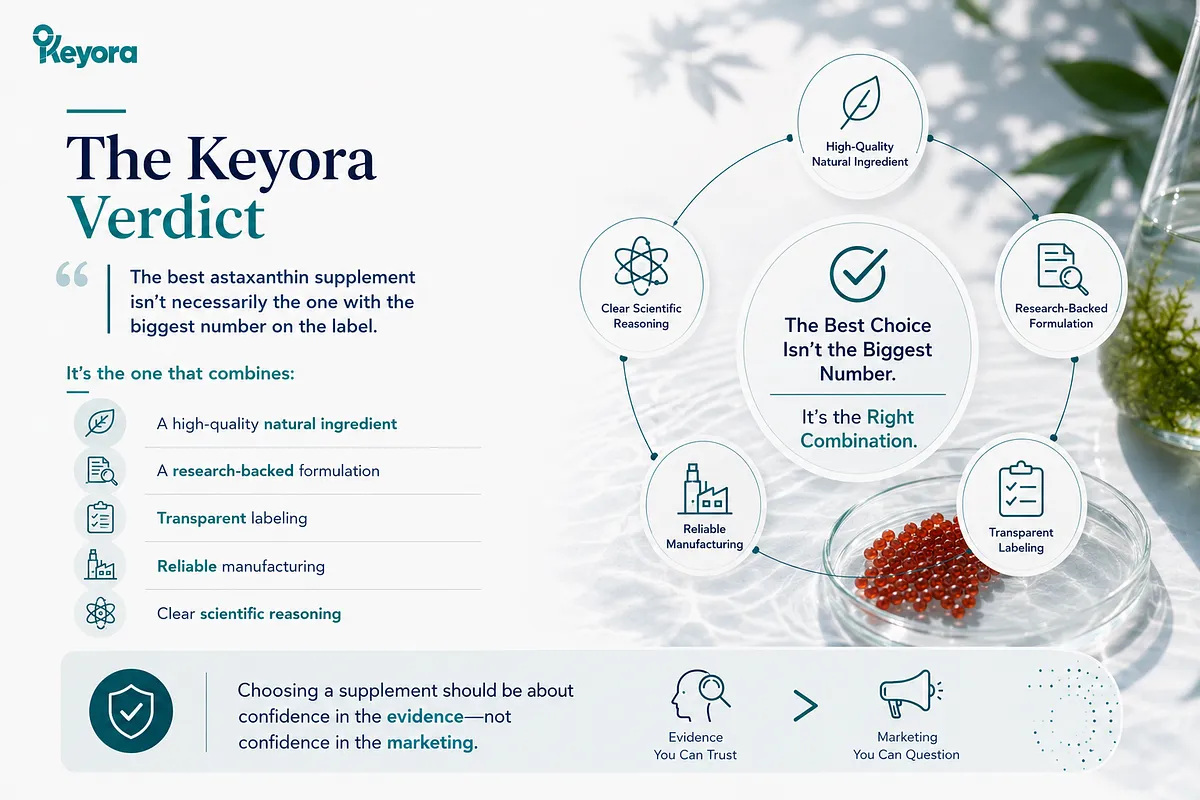
KEYORA Verdict: The best astaxanthin choice combines natural sourcing, research-backed dosing, transparent labeling, and reliable manufacturing.
Frequently Asked Questions
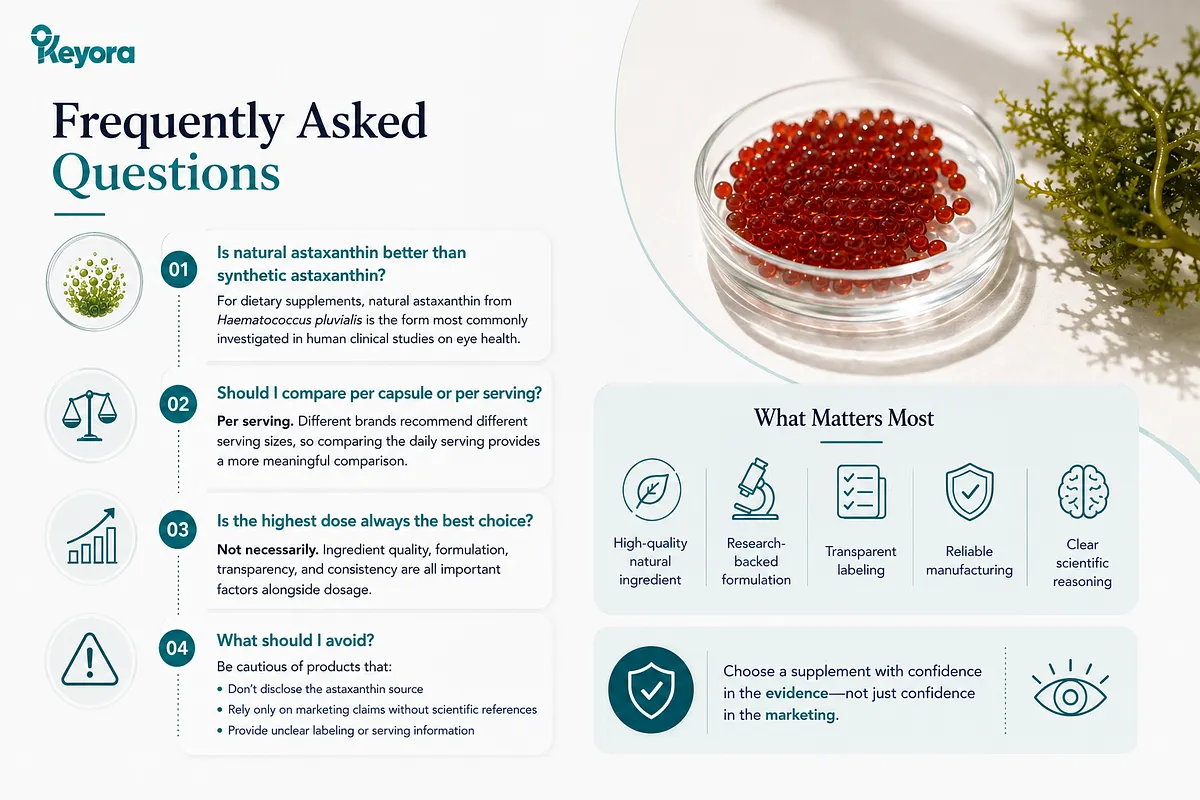
Is natural astaxanthin better than synthetic astaxanthin?
For dietary supplements, natural astaxanthin from Haematococcus pluvialis is the form most commonly investigated in human clinical studies on eye health.
Should I compare per capsule or per serving?
Per serving. Different brands recommend different serving sizes, so comparing the daily serving provides a more meaningful comparison.
Is the highest dose always the best choice?
Not necessarily. Ingredient quality, formulation, transparency, and consistency are all important factors alongside dosage.
What should I avoid?
Be cautious of products that:
· Don’t disclose the astaxanthin source
· Rely only on marketing claims without scientific references
· Provide unclear labeling or serving information
Research First
At Keyora, we believe choosing a supplement should be based on evidence, transparency, and quality—not marketing claims. We encourage consumers to evaluate the science behind a formulation as carefully as they evaluate the ingredients themselves.
Evidence Note
This article is intended for educational purposes only and should not be considered medical advice. Dietary supplements are not intended to diagnose, treat, cure, or prevent any disease. Always follow the product label and consult a healthcare professional if you have questions about supplementation.
References
1. Ambati RR, et al. Astaxanthin: Sources, Extraction, Stability, Biological Activities and Its Commercial Applications.
2. Park JS, et al. Astaxanthin: A Review of Its Pharmacology and Clinical Applications.
3. EFSA Panel on Dietetic Products, Nutrition and Allergies. Scientific Opinion on Astaxanthin.
4. Iwasaki T, et al. Effects of Astaxanthin on Eye Fatigue in Visual Display Terminal Workers.
5. Nagaki Y, et al. Clinical Evaluation of Astaxanthin on Visual Accommodation and Eye Fatigue.