
Astaxanthin vs. Vitamin A & Beta-Carotene for Eye Health
Keyora Research Q&A Library
This is part of the Keyora Research Q&A Series, derived from Keyora Astaxanthin Research Journal Series.
Within the Keyora Astaxanthin Researcn framework, this Q&A translates complex astaxanthin biology into reader-friendly, evidence-bound answers, focusing on natural astaxanthin identity, molecular structure, antioxidant and redox mechanisms, membrane lipid interaction, mitochondrial resilience, inflammatory signaling pathways, human evidence interpretation, and the scientific principles behind responsible supplementation.
First published by Keyora Research Journal: www.keyorahealth.com
Introduction
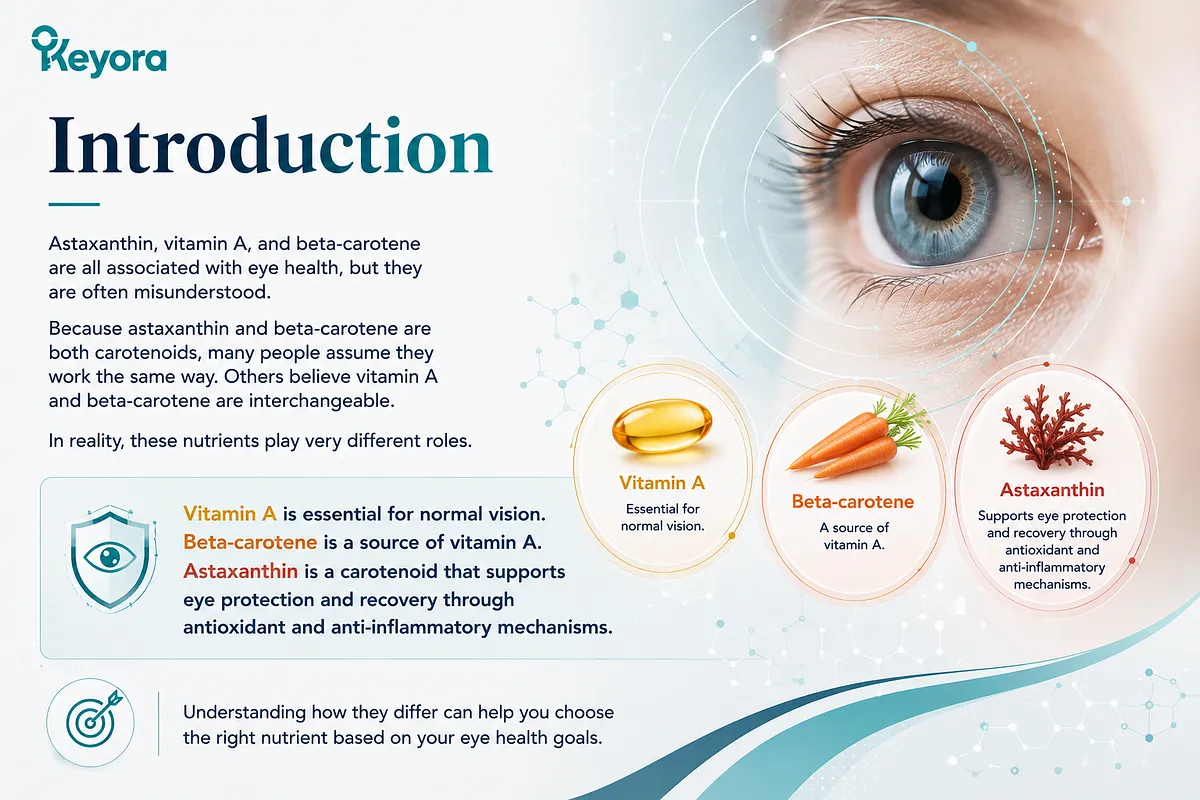
Astaxanthin, vitamin A, and beta-carotene are all associated with eye health, but they are often misunderstood.
Because astaxanthin and beta-carotene are both carotenoids, many people assume they work the same way. Others believe vitamin A and beta-carotene are interchangeable.
In reality, these nutrients play very different roles.
Vitamin A is essential for normal vision. Beta-carotene is a source of vitamin A. Astaxanthin is a carotenoid that supports eye protection and recovery through antioxidant and anti-inflammatory mechanisms.
Understanding how they differ can help you choose the right nutrient based on your eye health goals.
Quick Answer
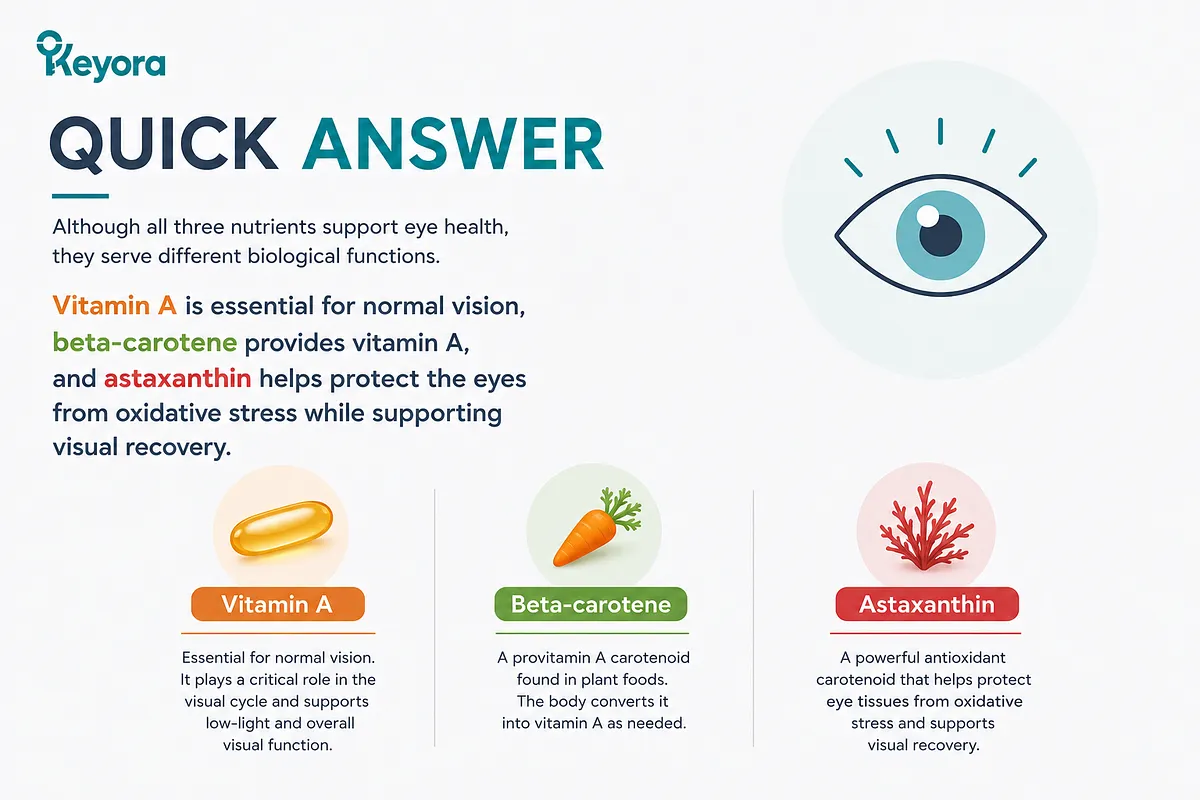
Although all three nutrients support eye health, they serve different biological functions.
Vitamin A is essential for normal vision, beta-carotene provides vitamin A, and astaxanthin helps protect the eyes from oxidative stress while supporting visual recovery.
How Are Vitamin A, Beta-Carotene, and Astaxanthin Related?
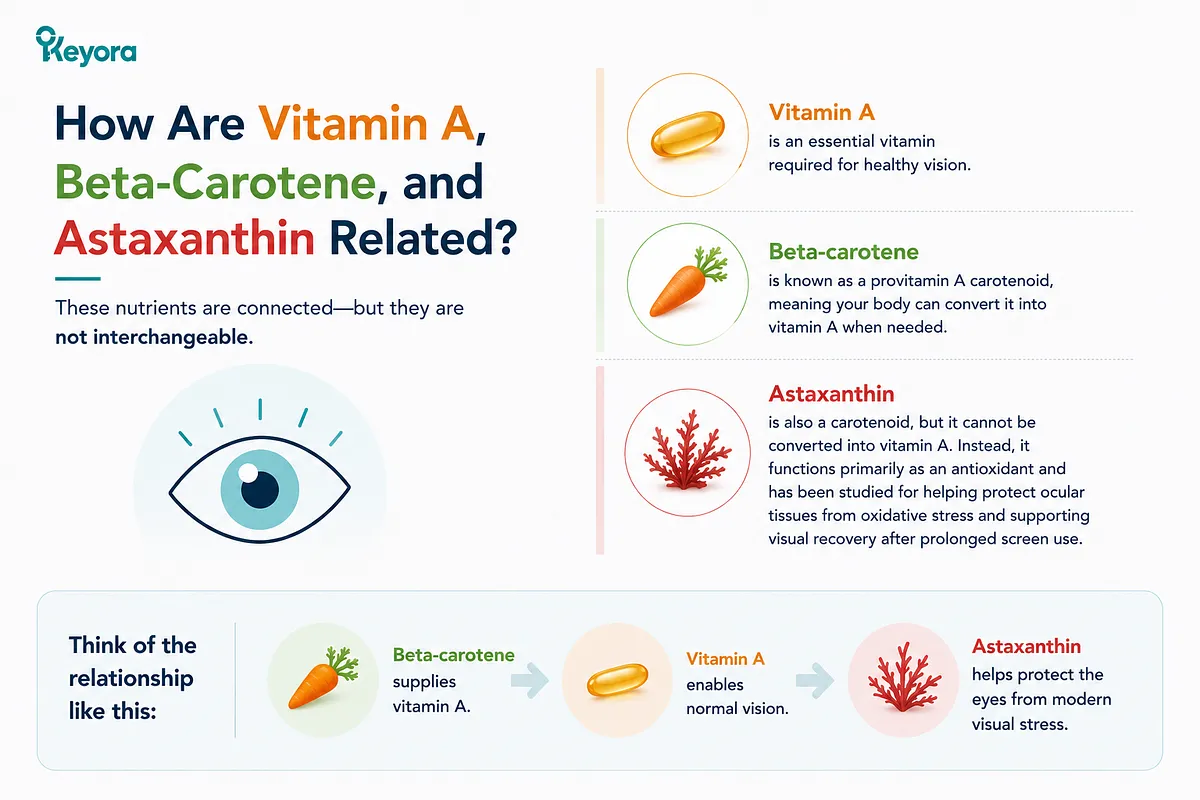
These nutrients are connected—but they are not interchangeable.
Vitamin A is an essential vitamin required for healthy vision.
Beta-carotene is known as a provitamin A carotenoid, meaning your body can convert it into vitamin A when needed.
Astaxanthin is also a carotenoid, but it cannot be converted into vitamin A. Instead, it functions primarily as an antioxidant and has been studied for helping protect ocular tissues from oxidative stress and supporting visual recovery after prolonged screen use.
Think of the relationship like this:
· Beta-carotene supplies vitamin A.
· Vitamin A enables normal vision.
· Astaxanthin helps protect the eyes from modern visual stress.
What’s the Difference?
Nutrient type
Astaxanthin-Xanthophyll carotenoid
Beta-Carotene-Provitamin A carotenoid
Vitamin A-Essential vitamin
Converts to vitamin A
Astaxanthin-No
Beta-Carotene-Yes
Vitamin A-Already active
Primary role
Astaxanthin-Eye protection & recovery
Beta-Carotene-Source of vitamin A
Vitamin A-Normal visual function
How it works
Astaxanthin-Helps reduce oxidative stress, supports mitochondrial function, and visual recovery
Beta-Carotene-Converted into vitamin A as needed
Vitamin A-Required for rhodopsin production and retinal function
Primary eye health research
Astaxanthin-Screen fatigue, visual accommodation, eye recovery
Beta-Carotene-Vitamin A nutrition
Vitamin A-Normal vision, night vision, deficiency prevention
Best for
Astaxanthin-Heavy screen users
Beta-Carotene-Supporting adequate vitamin A intake
Vitamin A-Maintaining healthy vision
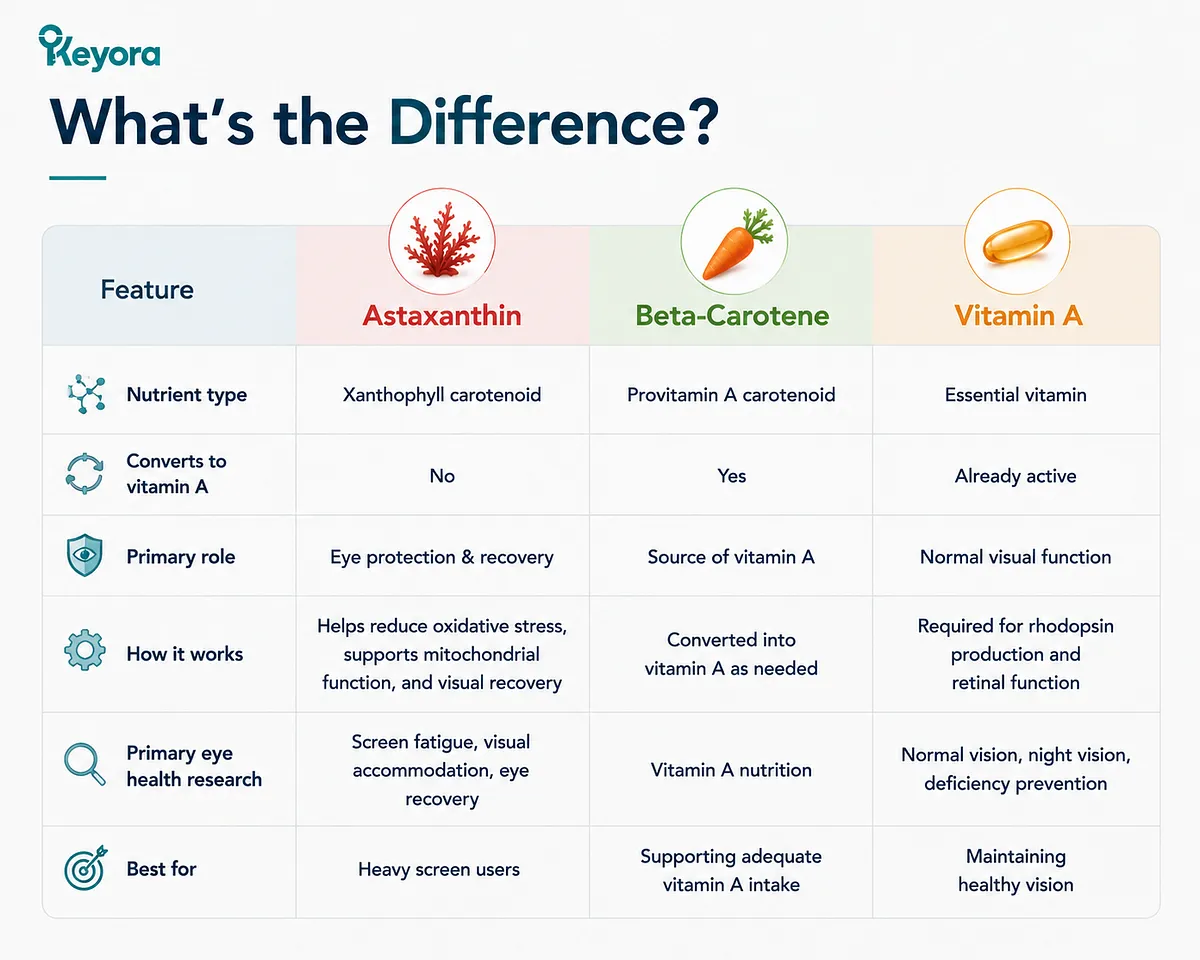
Compare Astaxanthin, Beta-carotene, and Vitamin A side-by-side with KEYORA to select the right nutrients for your eye health goals.
How Do They Support Eye Health Differently?
Although all three nutrients contribute to healthy vision, they work through completely different biological pathways.
Vitamin A is essential for producing rhodopsin, the light-sensitive pigment that allows the eyes to see in dim light. Without enough vitamin A, normal vision cannot be maintained.
Beta-carotene supports eye health indirectly. After consumption, the body converts it into vitamin A as needed, making it an important dietary source of this essential nutrient.
Astaxanthin works independently of vitamin A metabolism. Rather than supporting vision through rhodopsin production, it has been studied for helping reduce oxidative stress, supporting mitochondrial function, and improving visual comfort after prolonged digital screen use.
In simple terms:
· Vitamin A helps your eyes function normally.
· Beta-carotene helps your body produce vitamin A.
· Astaxanthin helps protect and recover your eyes from everyday visual stress.
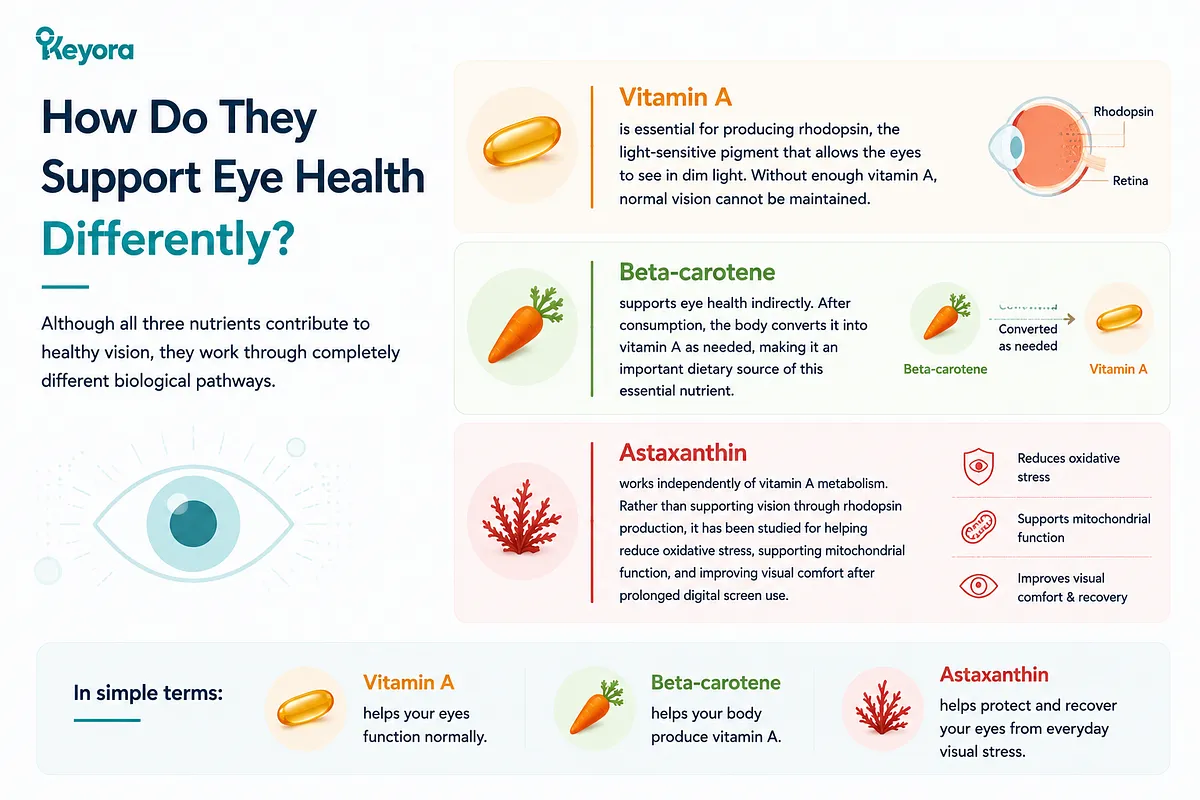
KEYORA explains how Vitamin A maintains basic visual function while Astaxanthin helps ocular tissues recover from heavy screen demands.
Which Is Better for Screen Fatigue?
If your eyes feel tired after long hours of computer work, astaxanthin has the strongest clinical evidence.
Multiple human studies have investigated its role in supporting visual accommodation, reducing visual fatigue, and improving visual comfort during prolonged screen use.
Vitamin A and beta-carotene are important for overall eye health but have not been studied extensively for relieving digital eye strain.
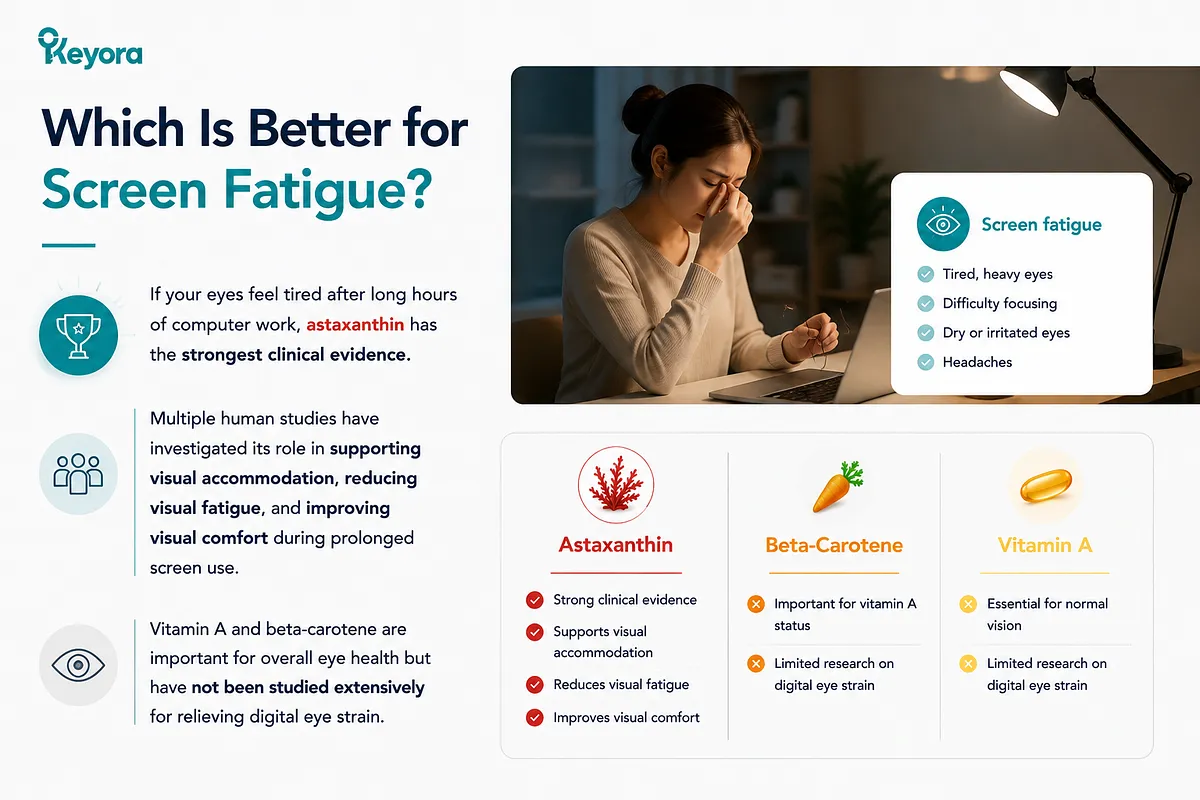
KEYORA shows why Astaxanthin holds stronger clinical evidence for screen fatigue and focus flexibility compared to Vitamin A or Beta-carotene.
Which Is Better for Night Vision?
Vitamin A is the most important nutrient for maintaining normal night vision because it is required for rhodopsin production.
Beta-carotene supports this process indirectly by providing vitamin A when dietary intake is insufficient.
Astaxanthin supports overall eye health but is not a substitute for vitamin A in maintaining normal vision under low-light conditions.
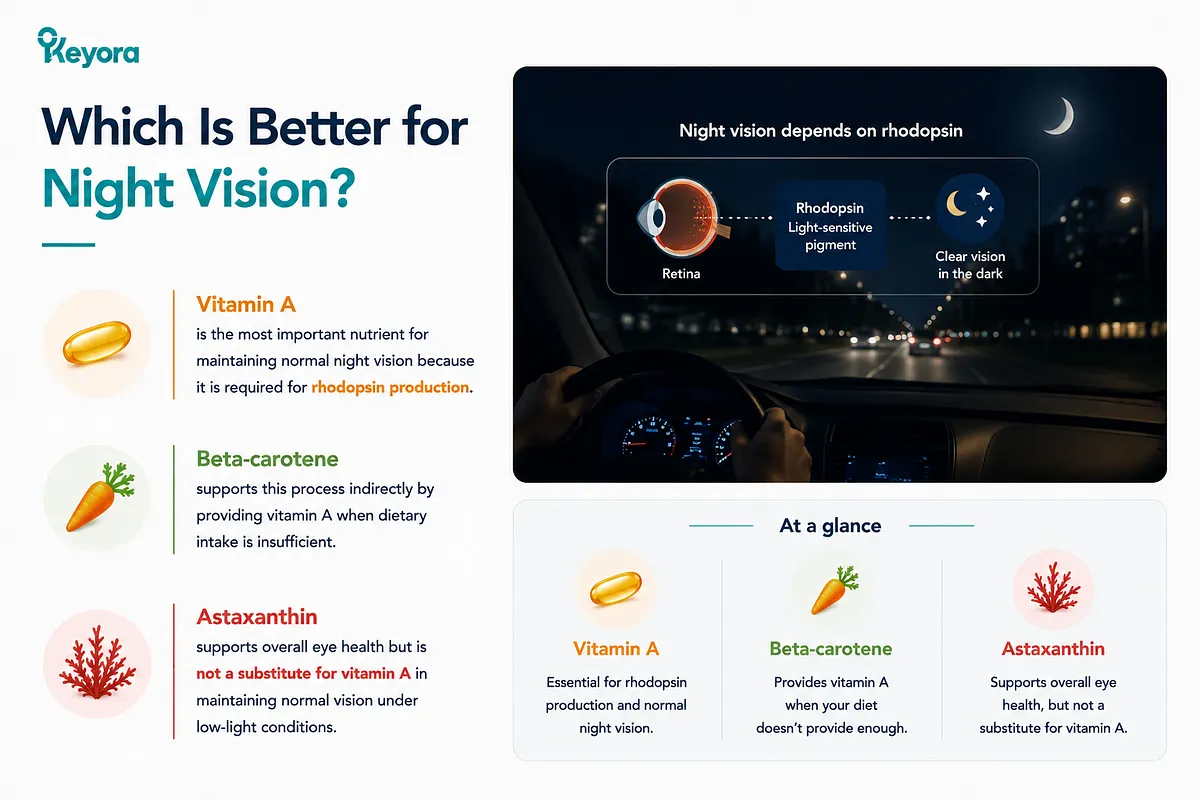
KEYORA highlights why Vitamin A remains essential for normal night vision and rhodopsin production, where Astaxanthin cannot act as a substitute.
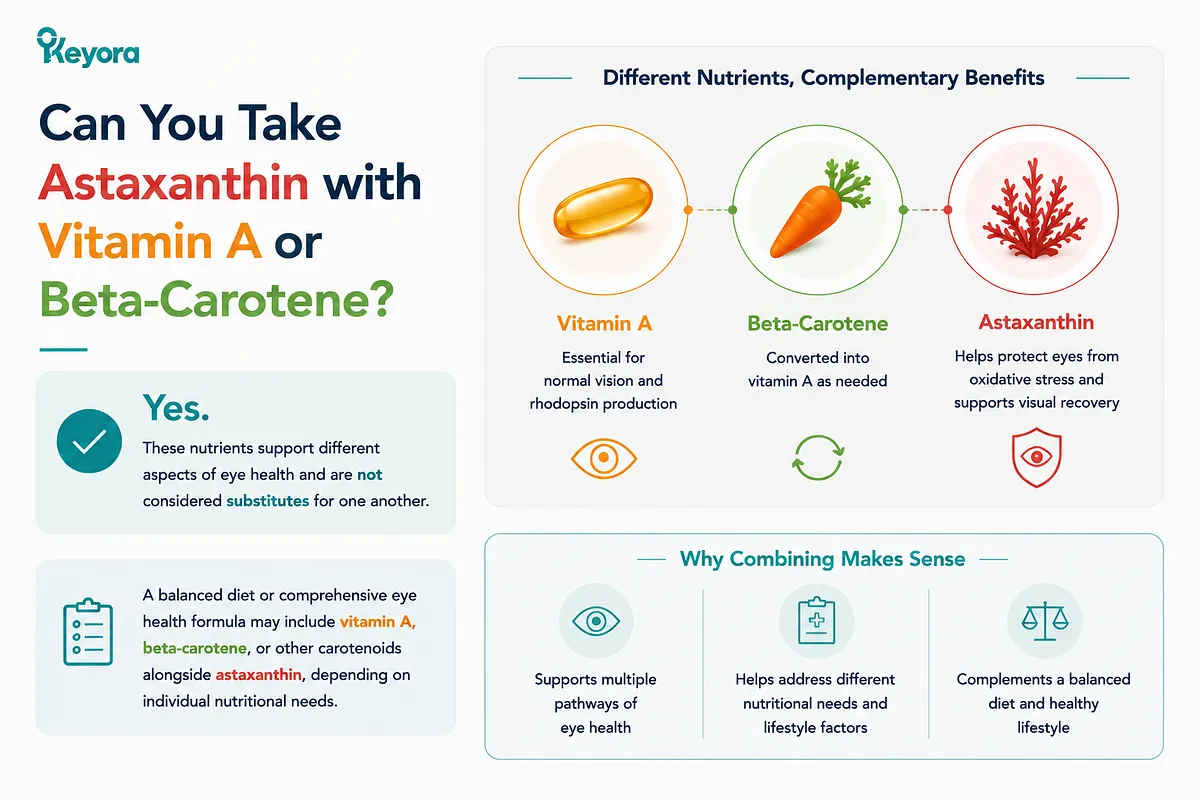
Can You Take Astaxanthin with Vitamin A or Beta-Carotene?
Yes.
These nutrients support different aspects of eye health and are not considered substitutes for one another.
A balanced diet or comprehensive eye health formula may include vitamin A, beta-carotene, or other carotenoids alongside astaxanthin, depending on individual nutritional needs.
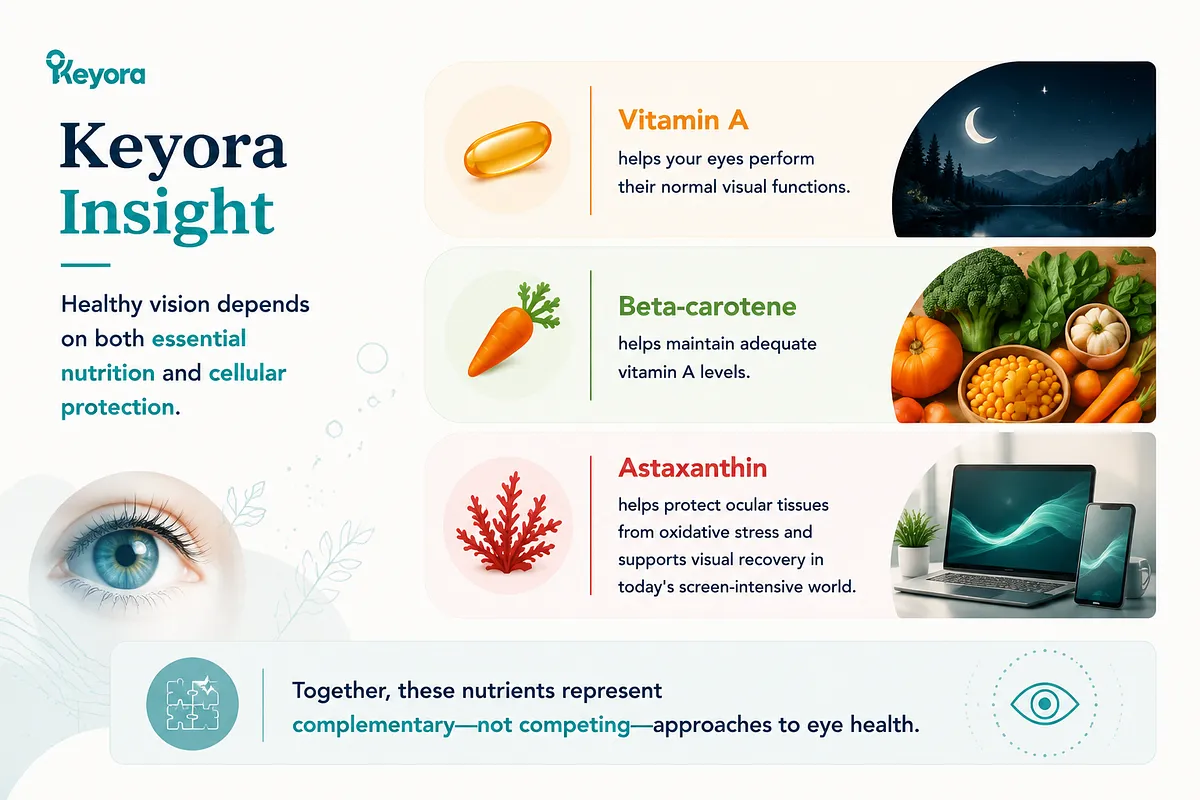
Keyora Insight
Healthy vision depends on both essential nutrition and cellular protection.
Vitamin A helps your eyes perform their normal visual functions.
Beta-carotene helps maintain adequate vitamin A levels.
Astaxanthin helps protect ocular tissues from oxidative stress and supports visual recovery in today’s screen-intensive world.
Together, these nutrients represent complementary—not competing—approaches to eye health.
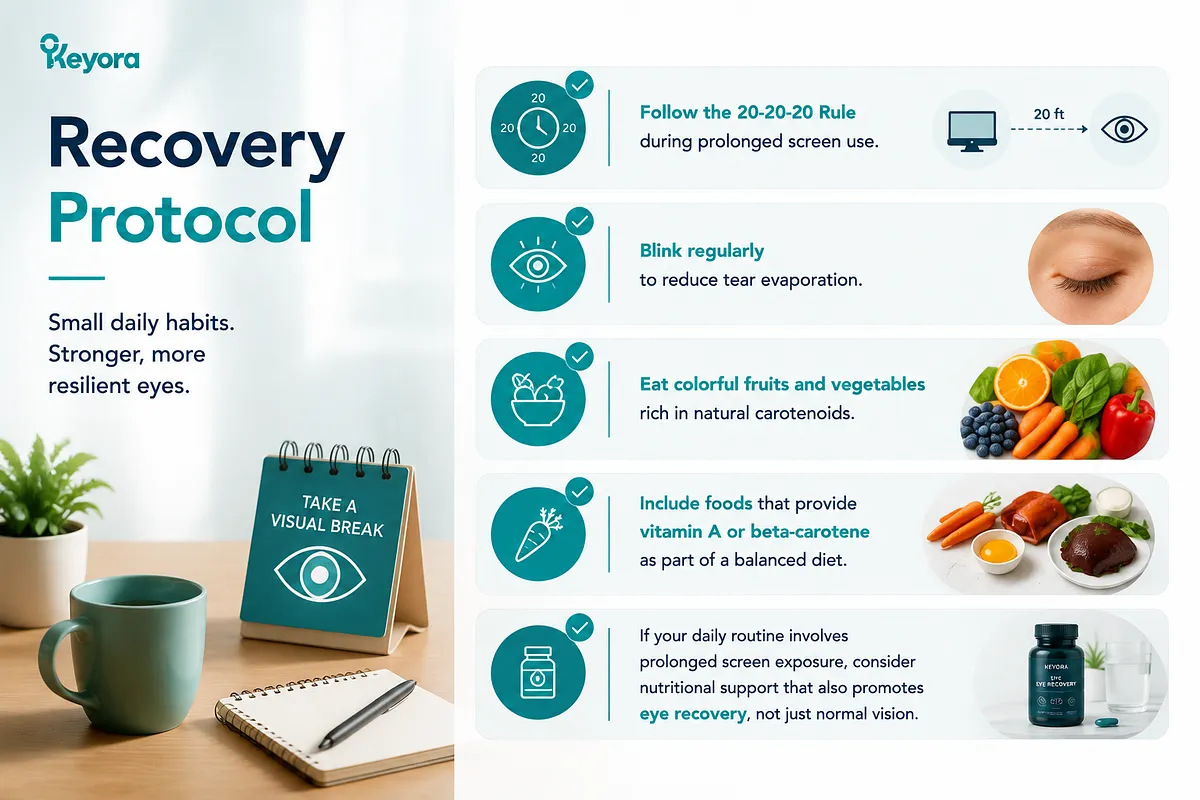
Recovery Protocol
✔ Follow the 20-20-20 Rule during prolonged screen use.
✔ Blink regularly to reduce tear evaporation.
✔ Eat colorful fruits and vegetables rich in natural carotenoids.
✔ Include foods that provide vitamin A or beta-carotene as part of a balanced diet.
✔ If your daily routine involves prolonged screen exposure, consider nutritional support that also promotes eye recovery, not just normal vision.
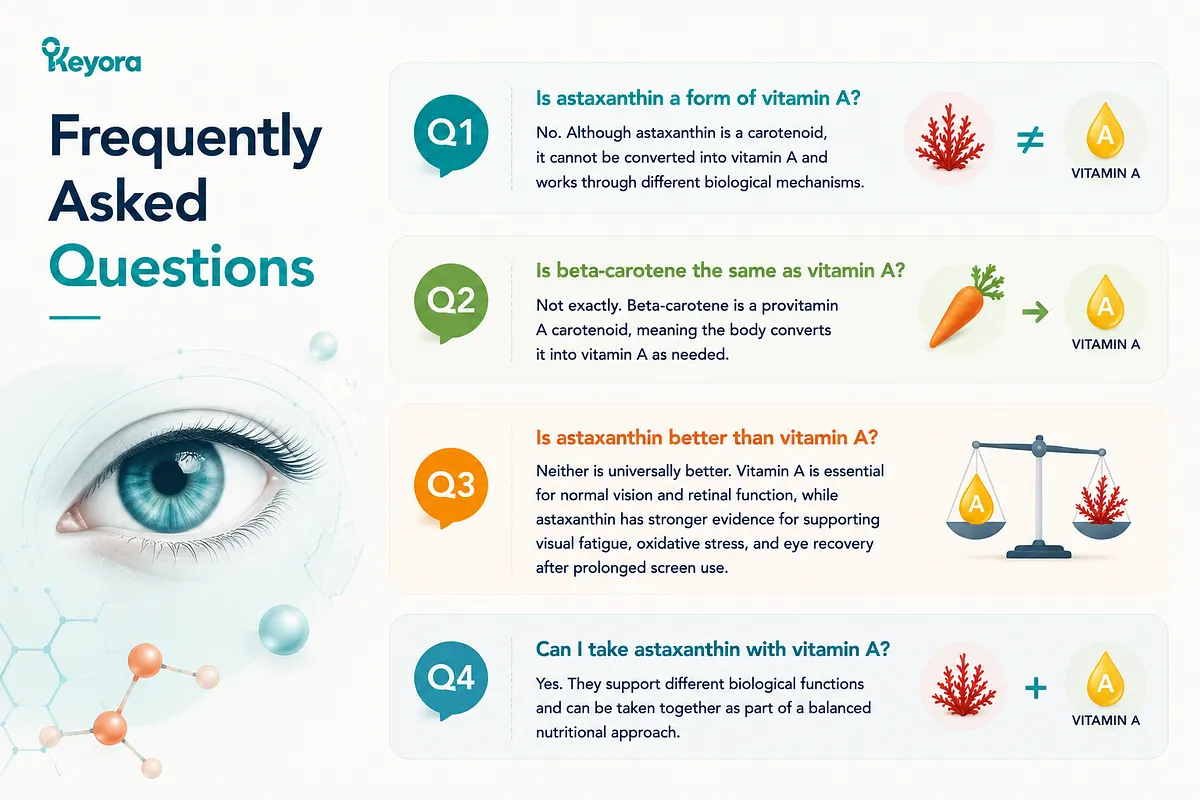
Frequently Asked Questions
Is astaxanthin a form of vitamin A?
No. Although astaxanthin is a carotenoid, it cannot be converted into vitamin A and works through different biological mechanisms.
Is beta-carotene the same as vitamin A?
Not exactly. Beta-carotene is a provitamin A carotenoid, meaning the body converts it into vitamin A as needed.
Is astaxanthin better than vitamin A?
Neither is universally better. Vitamin A is essential for normal vision and retinal function, while astaxanthin has stronger evidence for supporting visual fatigue, oxidative stress, and eye recovery after prolonged screen use.
Can I take astaxanthin with vitamin A?
Yes. They support different biological functions and can be taken together as part of a balanced nutritional approach.
References
1. National Eye Institute. Vitamin A and Vision.
2. American Academy of Ophthalmology. Nutrition and Eye Health.
3. NIH Office of Dietary Supplements. Vitamin A Fact Sheet for Health Professionals.
4. Iwasaki T, et al. Effects of Astaxanthin on Eye Fatigue in Visual Display Terminal Workers.
5. Nagaki Y, et al. Clinical Evaluation of Astaxanthin on Visual Accommodation and Eye Fatigue.
Maoka T. Carotenoids as Natural Functional Pigments.