
Astaxanthin vs. Bilberry for Eye Health: What’s the Difference?
Keyora Research Q&A Library
This is part of the Keyora Research Q&A Series, derived from Keyora Astaxanthin Research Journal Series.
Within the Keyora Astaxanthin Researcn framework, this Q&A translates complex astaxanthin biology into reader-friendly, evidence-bound answers, focusing on natural astaxanthin identity, molecular structure, antioxidant and redox mechanisms, membrane lipid interaction, mitochondrial resilience, inflammatory signaling pathways, human evidence interpretation, and the scientific principles behind responsible supplementation.
First published by Keyora Research Journal: www.keyorahealth.com
Introduction
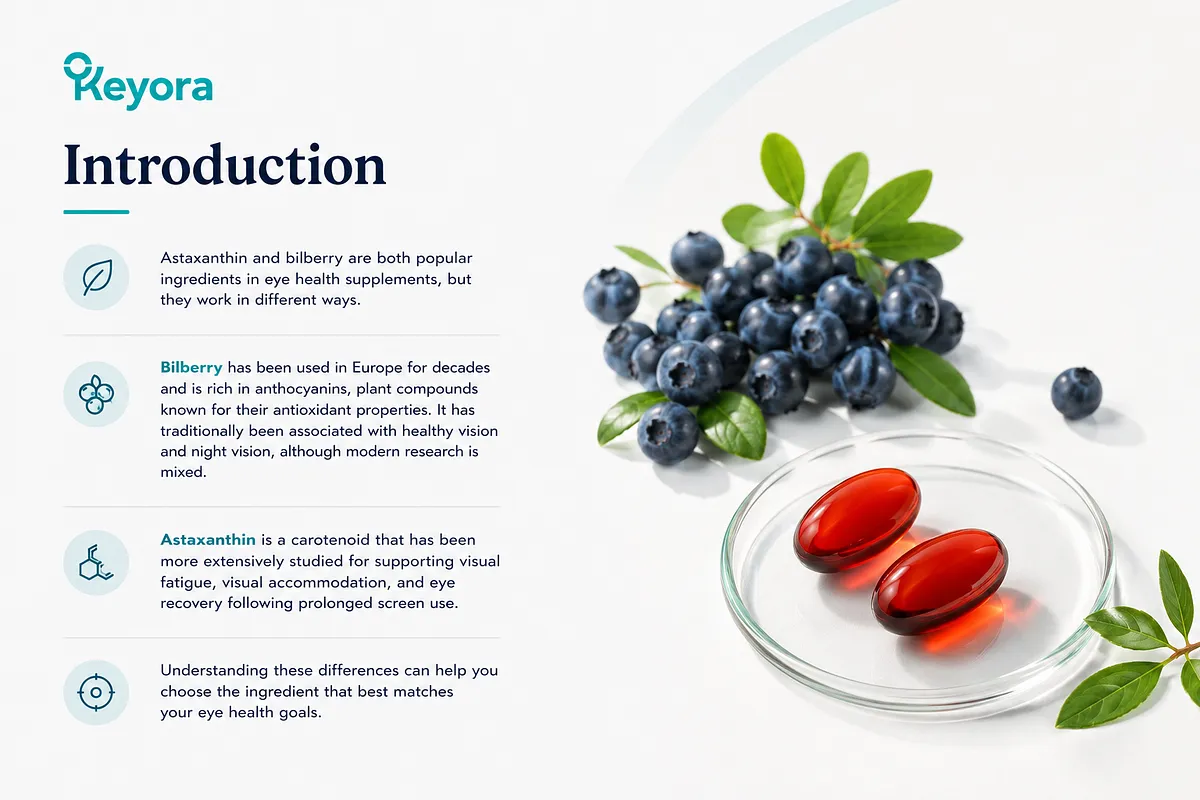
Astaxanthin and bilberry are both popular ingredients in eye health supplements, but they work in different ways.
Bilberry has been used in Europe for decades and is rich in anthocyanins, plant compounds known for their antioxidant properties. It has traditionally been associated with healthy vision and night vision, although modern research is mixed.
Astaxanthin is a carotenoid that has been more extensively studied for supporting visual fatigue, visual accommodation, and eye recovery following prolonged screen use.
Understanding these differences can help you choose the ingredient that best matches your eye health goals.
Quick Answer
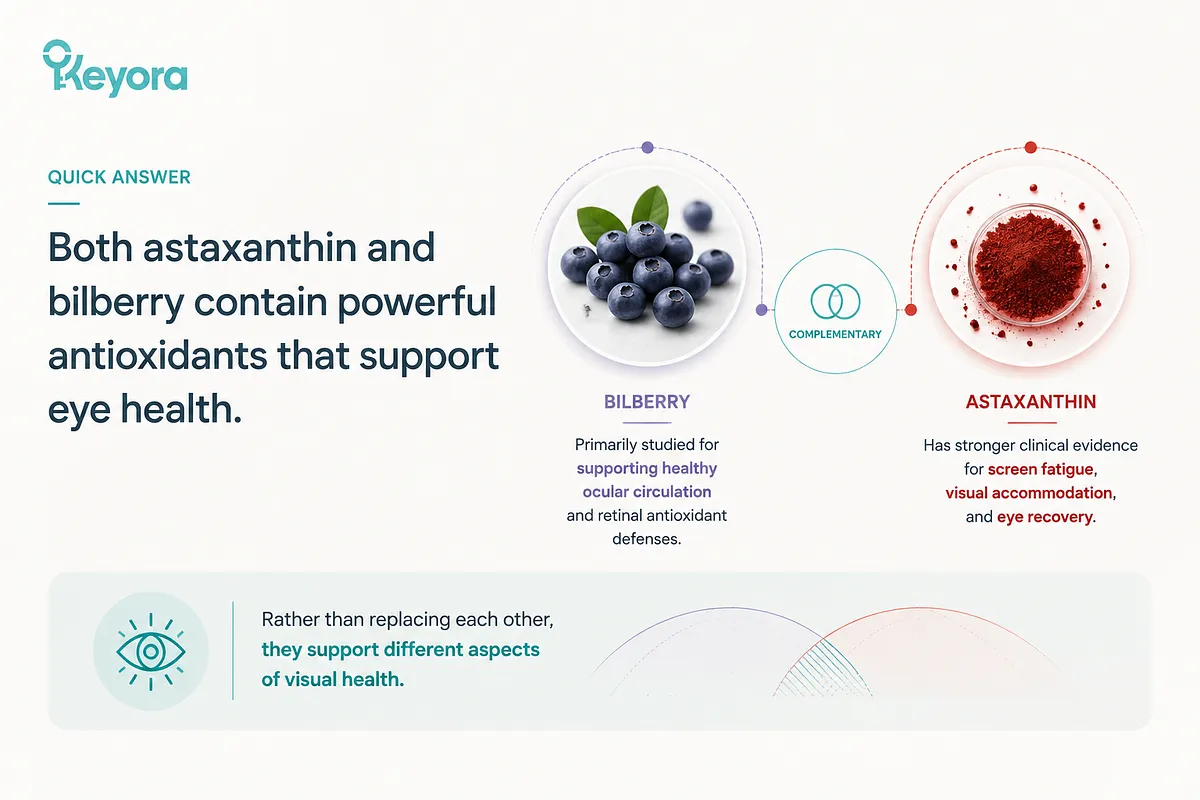
Both astaxanthin and bilberry contain powerful antioxidants that support eye health.
Bilberry is primarily studied for supporting healthy ocular circulation and retinal antioxidant defenses, while astaxanthin has stronger clinical evidence for screen fatigue, visual accommodation, and eye recovery.
Rather than replacing each other, they support different aspects of visual health.
How Are Astaxanthin and Bilberry Similar?
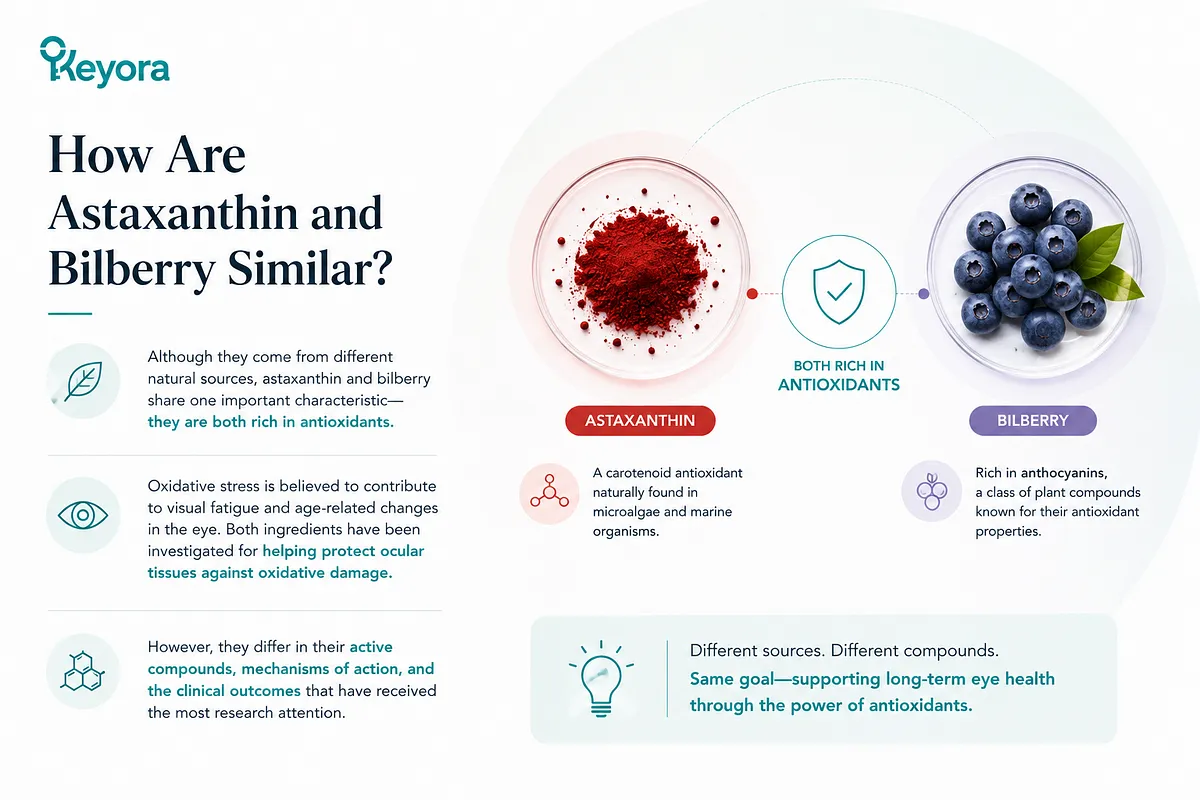
Although they come from different natural sources, astaxanthin and bilberry share one important characteristic—they are both rich in antioxidants.
Oxidative stress is believed to contribute to visual fatigue and age-related changes in the eye. Both ingredients have been investigated for helping protect ocular tissues against oxidative damage.
However, they differ in their active compounds, mechanisms of action, and the clinical outcomes that have received the most research attention.
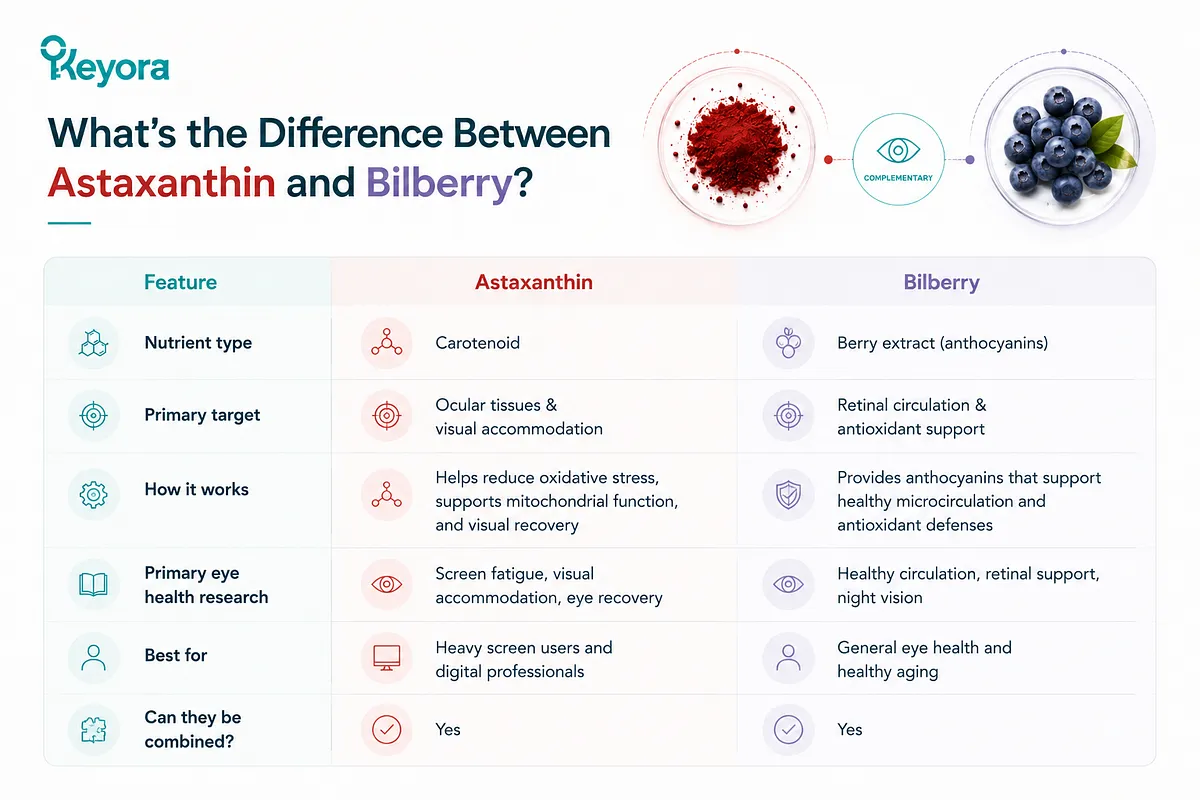
What’s the Difference Between Astaxanthin and Bilberry?
Nutrient type
Astaxanthin-Carotenoid
Bilberry-Berry extract (anthocyanins)
Primary target
Astaxanthin-Ocular tissues & visual accommodation
Bilberry-Retinal circulation & antioxidant support
How it works
Astaxanthin-Helps reduce oxidative stress, supports mitochondrial function, and visual recovery
Bilberry-Provides anthocyanins that support healthy microcirculation and antioxidant defenses
Primary eye health research
Astaxanthin-Screen fatigue, visual accommodation, eye recovery
Bilberry-Healthy circulation, retinal support, night vision
Best for
Astaxanthin-Heavy screen users and digital professionals
Bilberry-General eye health and healthy aging
Can they be combined?
Yes
How Do They Support Eye Health Differently?
Although both ingredients help protect the eyes, they do so through different biological pathways.
Bilberry contains naturally occurring anthocyanins that have been studied for supporting healthy blood circulation and antioxidant defenses within the eye. These compounds may help maintain retinal health and have traditionally been associated with supporting vision in low-light conditions, although evidence for improving night vision in healthy individuals remains limited.
Astaxanthin has been studied through a different lens. Human clinical research has focused on its ability to reduce oxidative stress, support visual accommodation, and improve visual comfort following prolonged digital screen use. Laboratory studies also suggest antioxidant and anti-inflammatory effects that may help protect ocular tissues from everyday visual stress.
In simple terms, bilberry primarily supports healthy ocular circulation, while astaxanthin supports the eye’s ability to recover from oxidative stress associated with prolonged visual work.
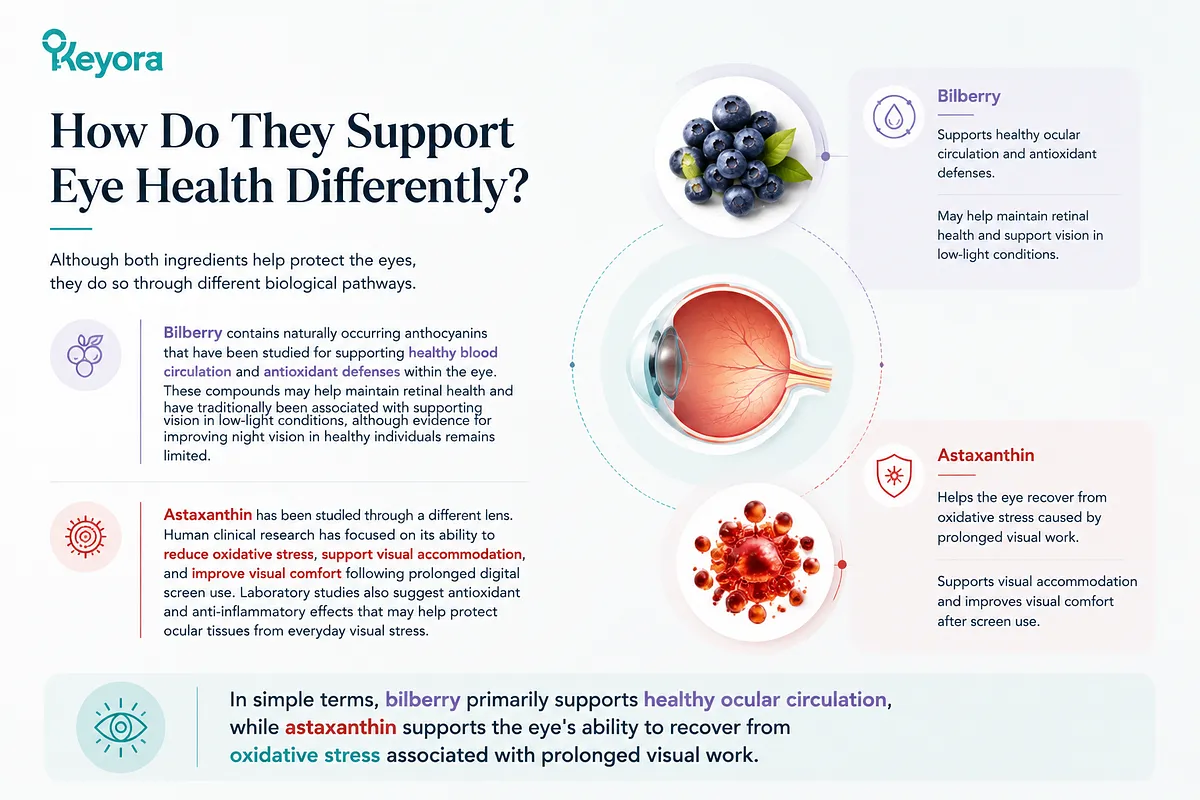
KEYORA illustrates how Bilberry nourishes retinal circulation while Astaxanthin helps your eyes recover from prolonged digital screen strain.
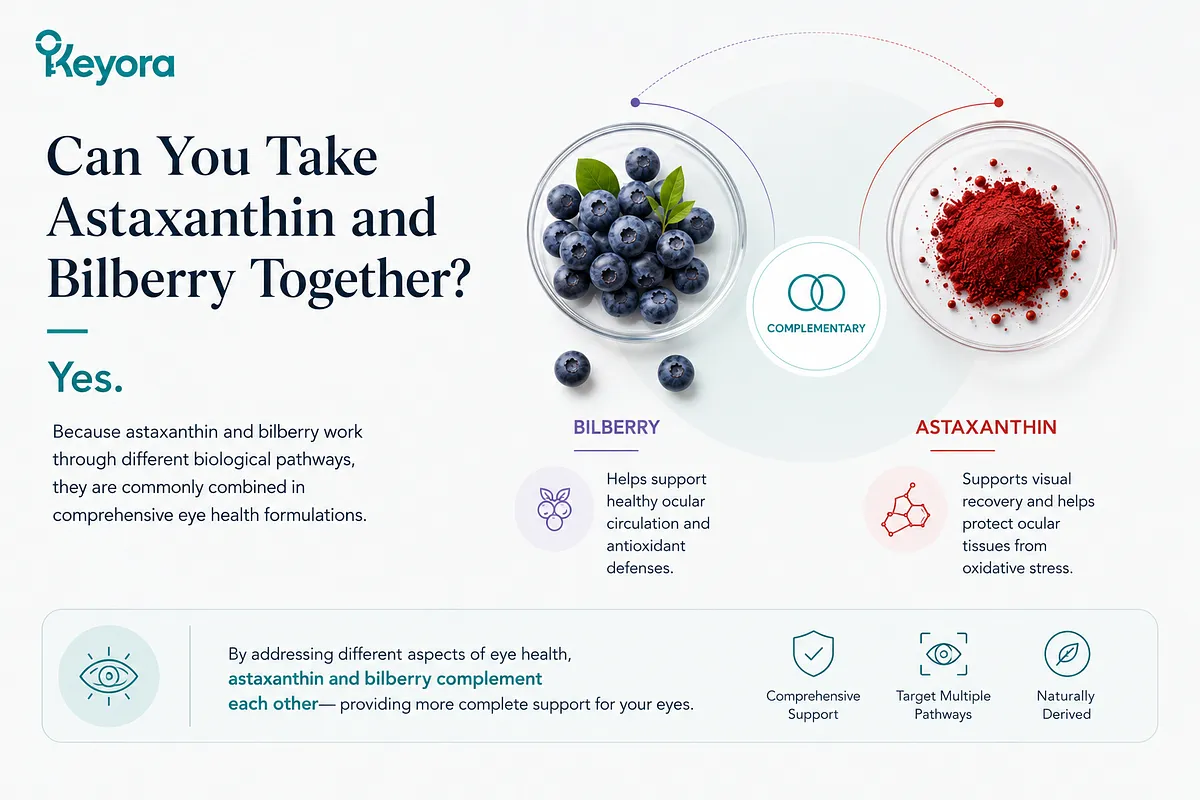
Can You Take Astaxanthin and Bilberry Together?
Yes.
Because astaxanthin and bilberry work through different biological pathways, they are commonly combined in comprehensive eye health formulations.
Bilberry helps support healthy ocular circulation and antioxidant defenses, while astaxanthin supports visual recovery and helps protect ocular tissues from oxidative stress.
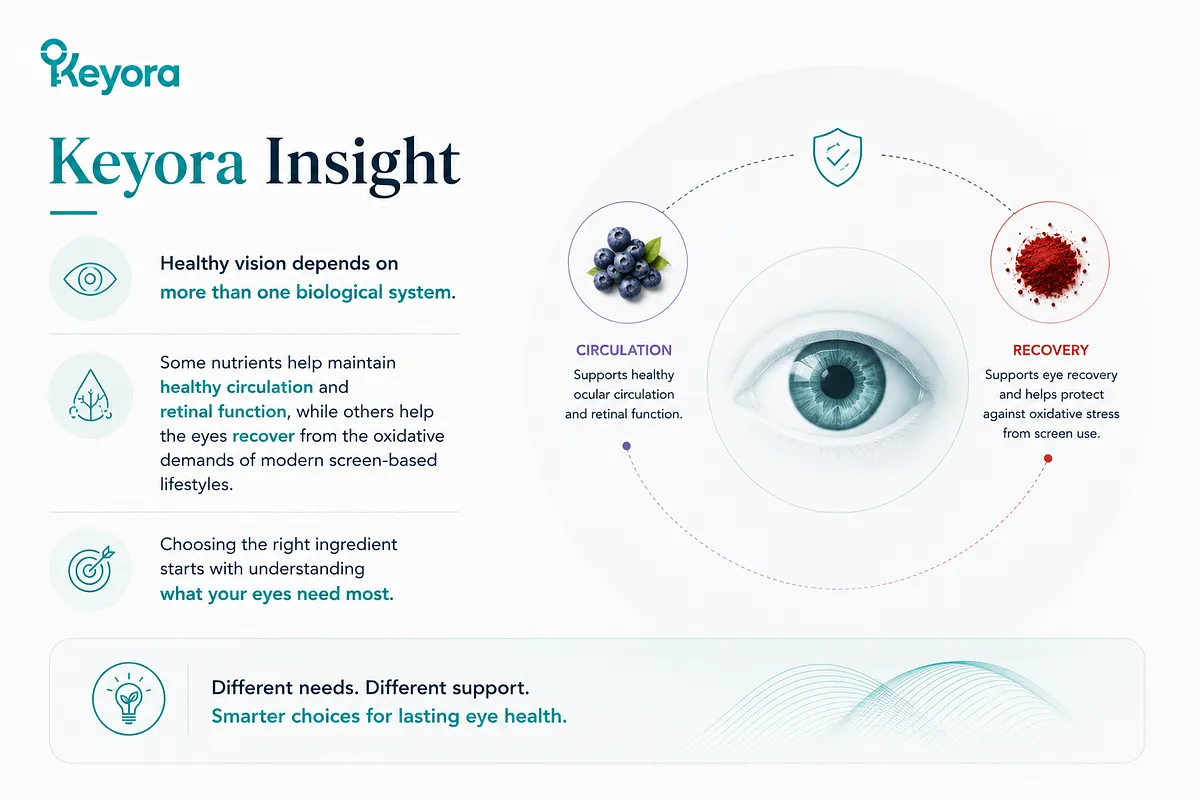
Keyora Insight
Healthy vision depends on more than one biological system.
Some nutrients help maintain healthy circulation and retinal function, while others help the eyes recover from the oxidative demands of modern screen-based lifestyles.
Choosing the right ingredient starts with understanding what your eyes need most.
Recovery Protocol
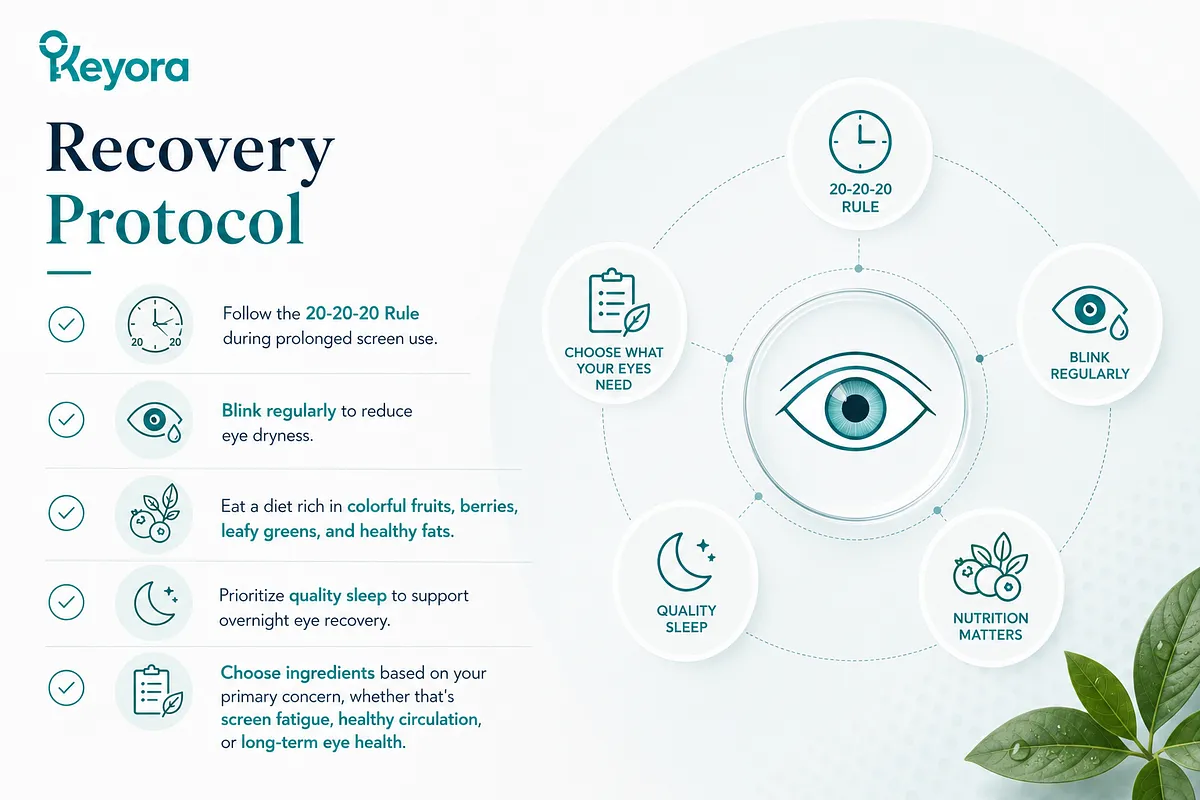
✔ Follow the 20-20-20 Rule during prolonged screen use.
✔ Blink regularly to reduce eye dryness.
✔ Eat a diet rich in colorful fruits, berries, leafy greens, and healthy fats.
✔ Prioritize quality sleep to support overnight eye recovery.
✔ Choose ingredients based on your primary concern, whether that’s screen fatigue, healthy circulation, or long-term eye health.
Frequently Asked Questions
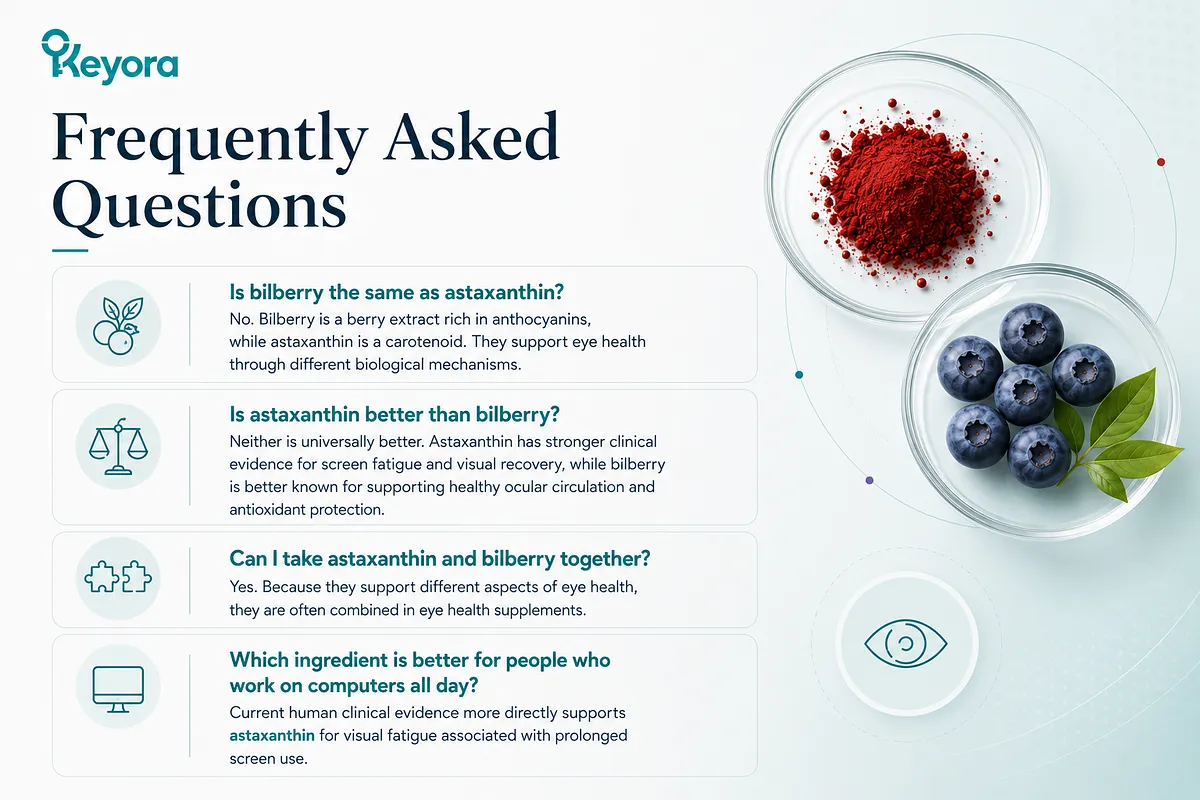
Is bilberry the same as astaxanthin?
No. Bilberry is a berry extract rich in anthocyanins, while astaxanthin is a carotenoid. They support eye health through different biological mechanisms.
Is astaxanthin better than bilberry?
Neither is universally better. Astaxanthin has stronger clinical evidence for screen fatigue and visual recovery, while bilberry is better known for supporting healthy ocular circulation and antioxidant protection.
Can I take astaxanthin and bilberry together?
Yes. Because they support different aspects of eye health, they are often combined in eye health supplements.
Which ingredient is better for people who work on computers all day?
Current human clinical evidence more directly supports astaxanthin for visual fatigue associated with prolonged screen use.
References
1. Canter PH, Ernst E. Anthocyanosides of Vaccinium myrtillus (Bilberry) for Night Vision.
2. American Academy of Ophthalmology. Nutrition and Eye Health.
3. Iwasaki T, et al. Effects of Astaxanthin on Eye Fatigue in Visual Display Terminal Workers.
4. Nagaki Y, et al. Clinical Evaluation of Astaxanthin on Visual Accommodation and Eye Fatigue.
5. Khoo HE, et al. Anthocyanidins and Anthocyanins: Colored Pigments as Food, Pharmaceutical Ingredients, and the Potential Health Benefits.