
What Are the Side Effects of Astaxanthin?
Keyora Research Q&A Library
This is part of the Keyora Research Q&A Series, derived from Keyora Astaxanthin Research Journal Series.
Within the Keyora Astaxanthin Researcn framework, this Q&A translates complex astaxanthin biology into reader-friendly, evidence-bound answers, focusing on natural astaxanthin identity, molecular structure, antioxidant and redox mechanisms, membrane lipid interaction, mitochondrial resilience, inflammatory signaling pathways, human evidence interpretation, and the scientific principles behind responsible supplementation.
First published by Keyora Research Journal: www.keyorahealth.com
Direct Answer
Astaxanthin has generally been well tolerated in the adult human studies that have tested it, but that does not mean it is side-effect free or that every symptom occurring after supplementation was necessarily caused by Astaxanthin.
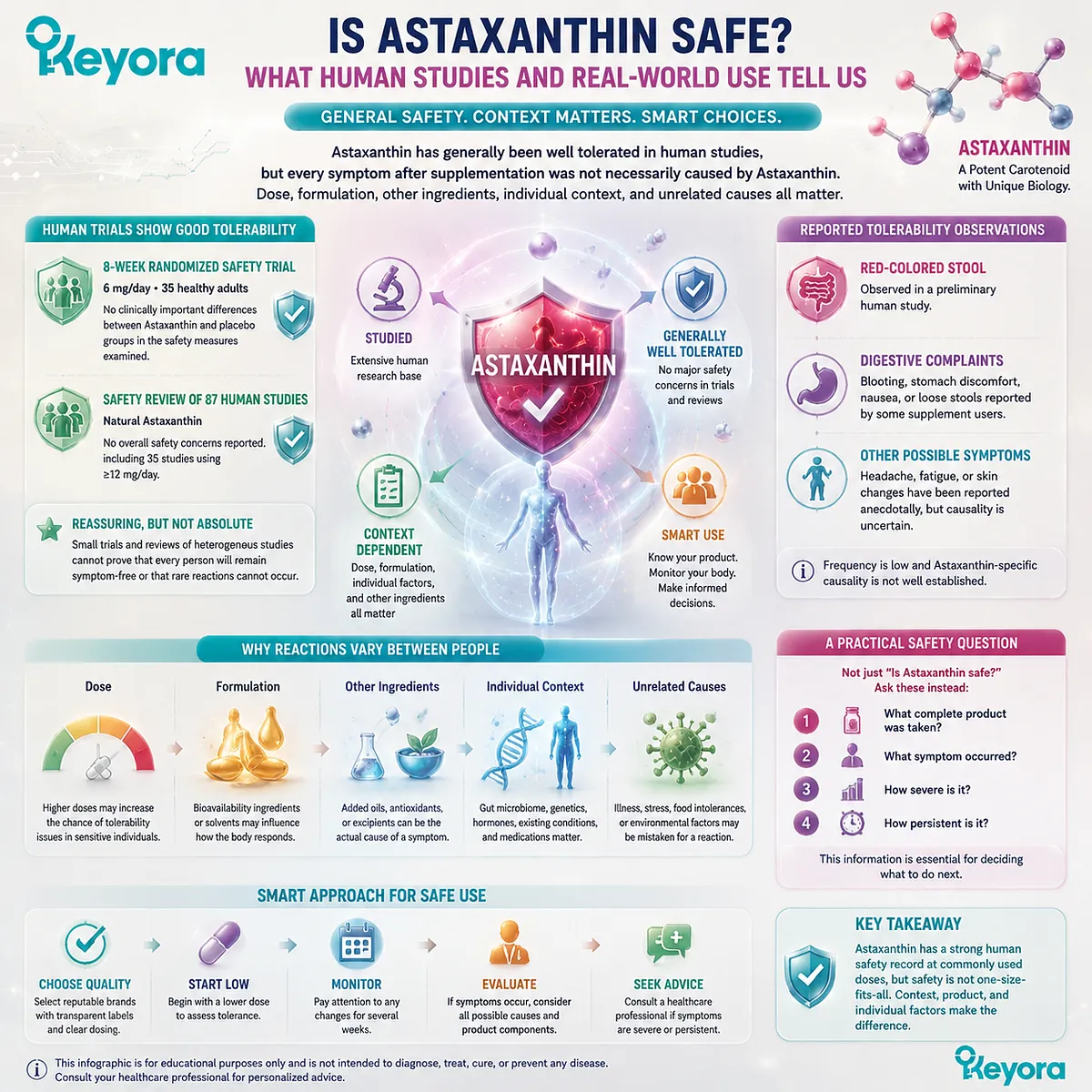
Astaxanthin has generally been well tolerated in human trials, but reported symptoms must be separated from proven adverse reactions because dose, formulation, other ingredients, individual context, and unrelated causes can all affect what happens after supplementation.
A randomized 8-week safety trial in 35 healthy adults using 6 mg of Astaxanthin daily found no clinically important differences between the Astaxanthin and placebo groups in the safety measurements examined.
A later safety review evaluated 87 human studies of natural Astaxanthin and reported no overall safety concern, including 35 studies using at least 12 mg per day.
These findings are reassuring, but neither small trials nor a review of heterogeneous studies can prove that every person will remain symptom-free or that rare reactions cannot occur.
Human studies have documented limited tolerability observations, including red-colored stool in one preliminary study.
Digestive complaints are also reported by supplement users, but their frequency and Astaxanthin-specific causality are not well established.
A practical safety question is therefore not simply, “Is Astaxanthin safe?” It is: What symptom occurred, what complete product was taken, and how severe or persistent is the problem?
Human Trials Generally Show Good Tolerability
Safety studies are reassuring overall, but small trials and limited follow-up cannot prove that every user will remain symptom-free
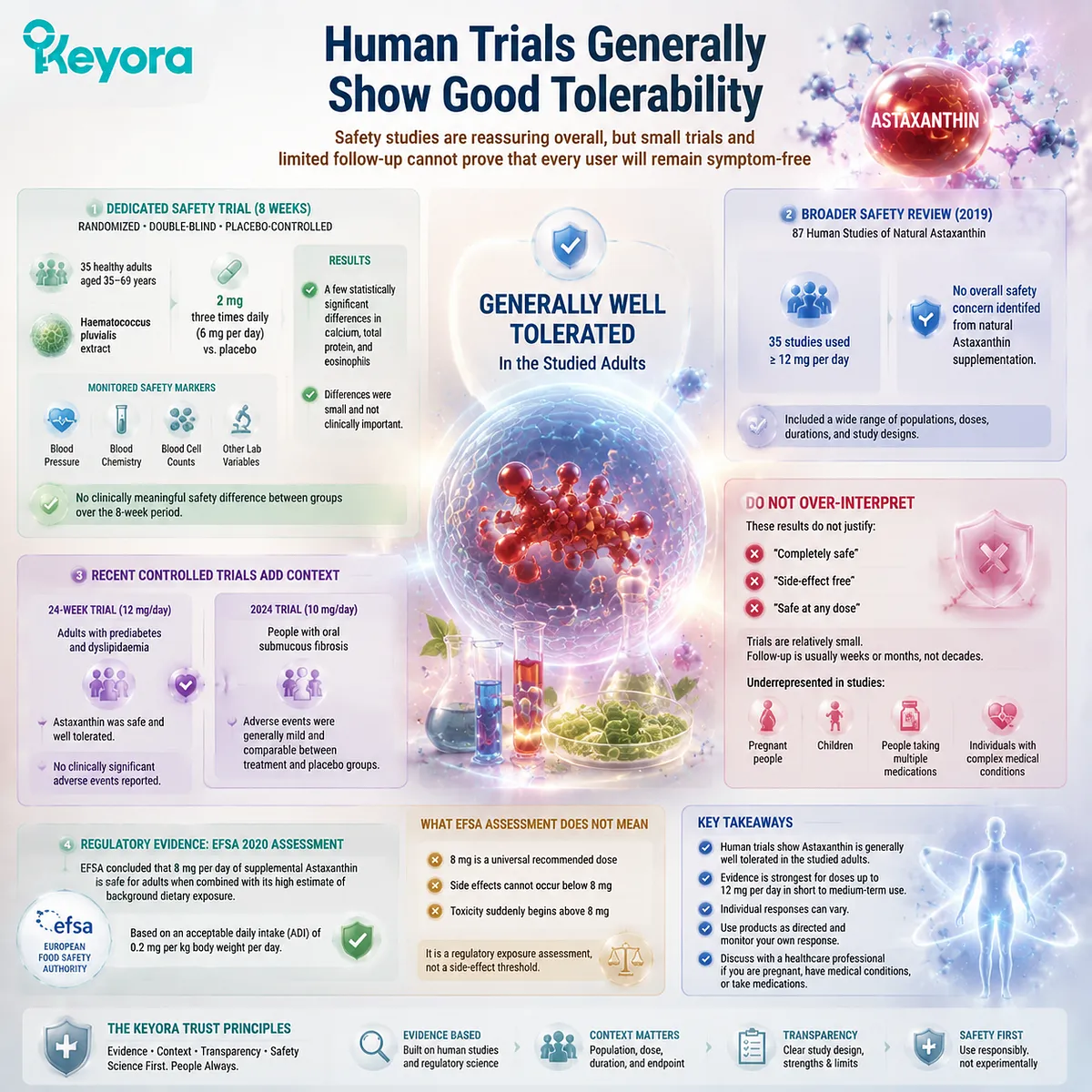
One of the clearest dedicated human safety trials enrolled 35 healthy adults aged 35 to 69 years. Participants were randomly assigned to an Astaxanthin-rich Haematococcus pluvialis extract or placebo for eight weeks. The active group received 2 mg of Astaxanthin three times daily, for 6 mg per day.
Investigators monitored blood pressure, blood chemistry, blood-cell measurements, and other laboratory variables. A few statistically significant differences appeared in calcium, total protein, and eosinophils, but the investigators considered the differences small and not clinically important. Overall, the study did not identify a clinically meaningful safety difference between the groups over the eight-week period.
A broader 2019 safety review examined 87 human studies involving natural Astaxanthin preparations. Thirty-five of those studies used at least 12 mg per day, and the authors reported that they did not identify an overall safety concern from natural Astaxanthin supplementation.
More recent controlled studies add useful tolerability context. In a 24-week randomized trial involving adults with prediabetes and dyslipidaemia, 12 mg of Astaxanthin daily was described as safe and well tolerated, with no clinically significant adverse events reported. A 2024 randomized, double-blind study using 10 mg daily in people with oral submucous fibrosis reported that adverse events were generally mild and comparable between treatment and placebo groups.
These results support the phrase:
generally well tolerated in the studied adults
They do not justify:
“completely safe,” “side-effect free,” or “safe at any dose.”
Trial populations are relatively small compared with the number of people who use supplements in the real world. Follow-up usually lasts weeks or months rather than decades. Pregnant people, children, people taking multiple medications, and individuals with complex medical conditions are also not represented equally across these studies.
Regulatory evidence must be interpreted just as carefully. In 2020, EFSA concluded that 8 mg per day of supplemental Astaxanthin was safe for adults when combined with its high estimate of background dietary exposure. EFSA used an acceptable daily intake of 0.2 mg per kilogram of body weight per day.
That conclusion does not mean 8 mg is a universal recommended dose, that side effects cannot occur below 8 mg, or that toxicity suddenly begins above 8 mg. It is a regulatory exposure assessment, not a side-effect threshold.
Reported Symptoms Do Not All Mean the Same Thing
Digestive discomfort, bowel changes, stool color, skin color, and allergic symptoms require different evidence and different levels of concern
A side-effect discussion becomes misleading when every possible symptom is placed into one undifferentiated list.
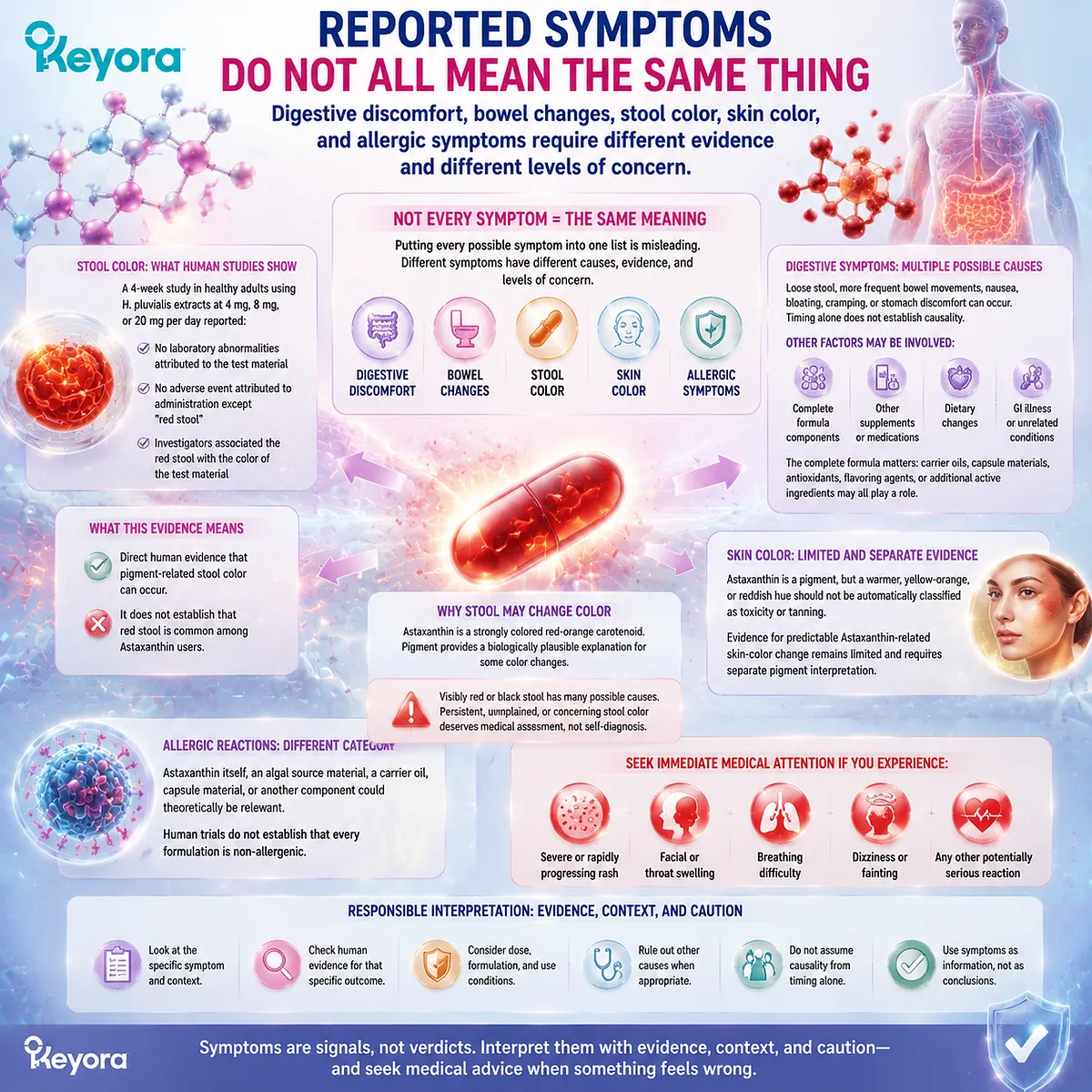
Consider stool color. A preliminary clinical evaluation tested Astaxanthin-rich H. pluvialis extracts in healthy adults at 4 mg, 8 mg, or 20 mg per day for four weeks. Investigators reported no laboratory abnormalities attributed to the test material and stated that no adverse event was attributed to administration except “red stool,” which they associated with the color of the test material.
This is useful direct human evidence that a pigment-related stool observation can occur.
It does not establish that red stool is common among Astaxanthin users.
Astaxanthin is a strongly colored red-orange carotenoid, so pigment provides a biologically plausible explanation for some color changes. But visibly red stool has several possible causes, and a reader should not automatically assume that every red appearance is harmless supplement pigment. Persistent, unexplained, or concerning red or black stool deserves appropriate medical assessment rather than self-diagnosis from a supplement article.
Digestive symptoms require a different interpretation. People sometimes report loose stool, more frequent bowel movements, nausea, bloating, cramping, or stomach discomfort while using supplements. A symptom beginning after Astaxanthin is a relevant observation, but timing alone does not establish causality.
The complete formula matters. A softgel may contain carrier oils, capsule materials, antioxidants used for stability, flavoring agents, or additional active ingredients. Another supplement, medication, dietary change, gastrointestinal illness, or unrelated condition may appear at approximately the same time.
Skin color belongs to yet another category. Astaxanthin is a pigment, but a warmer, yellow-orange, or reddish hue should not automatically be classified as either toxicity or tanning. The evidence for predictable Astaxanthin-related skin-color change remains limited, and that question requires separate pigment interpretation.
Allergic reactions also should not be confused with ordinary tolerability. Astaxanthin itself, an algal source material, a carrier oil, capsule material, or another component could theoretically be relevant when hypersensitivity symptoms occur. Human trials do not establish that every formulation is non-allergenic.
Severe or rapidly progressing rash, facial or throat swelling, breathing difficulty, fainting, or another potentially serious reaction requires prompt medical attention rather than continued supplement experimentation.
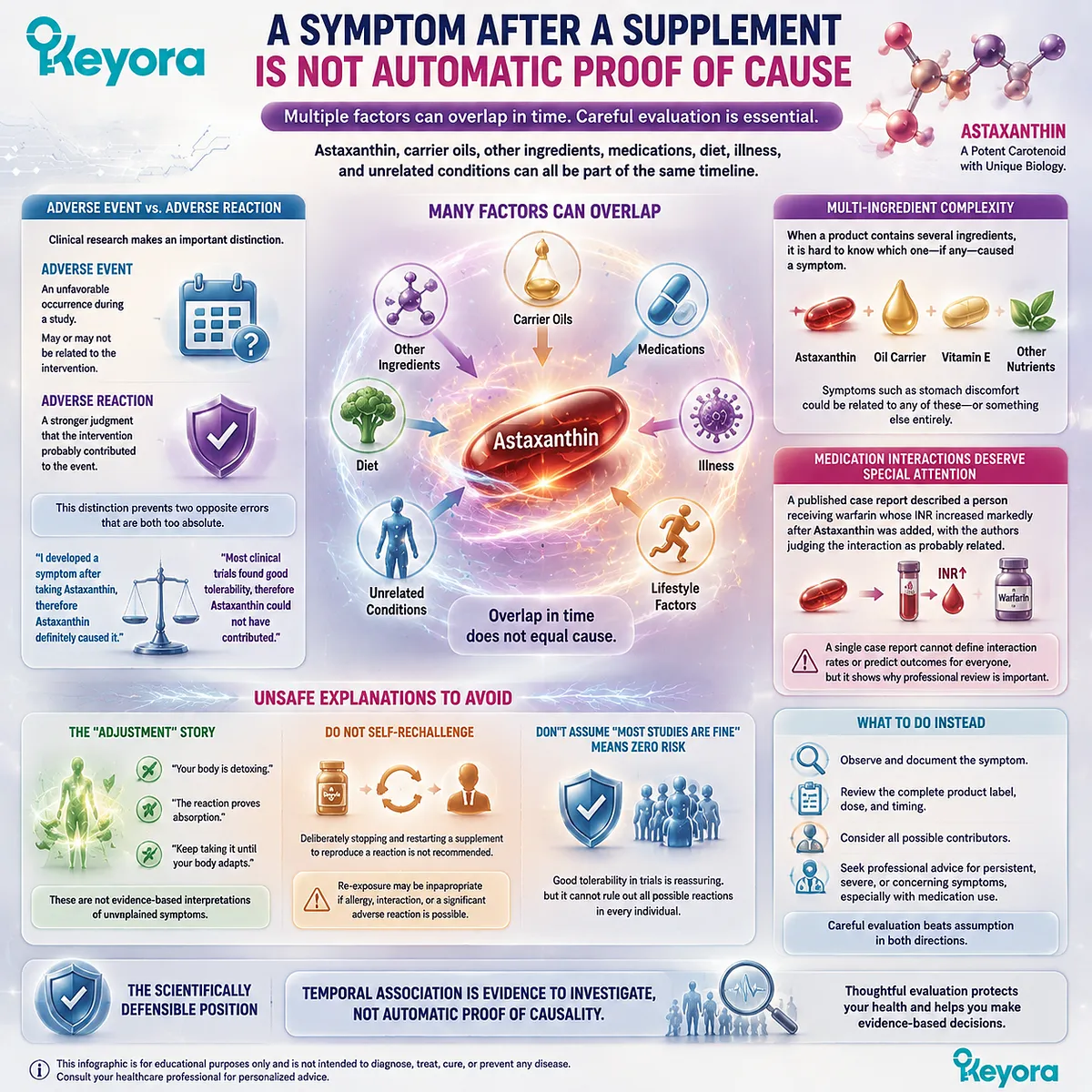
A Symptom After a Supplement Is Not Automatic Proof of Cause
Astaxanthin, carrier oils, other ingredients, medications, diet, illness, and unrelated conditions can overlap in time
Clinical research makes an important distinction between an adverse event and an adverse reaction.
An adverse event is something unfavorable that happens during a study. It may or may not have been caused by the intervention.
An adverse reaction implies a stronger judgment that the intervention probably contributed.
That distinction prevents two opposite errors.
The first is:
“I developed a symptom after taking Astaxanthin, therefore Astaxanthin definitely caused it.”
The second is:
“Most clinical trials found good tolerability, therefore Astaxanthin could not have contributed.”
Both are too absolute.
Causality becomes particularly difficult with multi-ingredient products. Suppose someone begins a softgel containing Astaxanthin, an oil carrier, vitamin E, and several other nutrients. If stomach discomfort begins the next day, Astaxanthin is one possible explanation, but it is not the only one.
The same problem occurs when several supplements are started simultaneously.
Medication use creates an additional safety category that should not be collapsed into ordinary side effects. For example, a published case report described a person receiving warfarin whose INR increased markedly after Astaxanthin was added, with the authors judging the interaction as probably related. A single case report cannot define an interaction rate or prove that the same outcome will occur in every person, but it demonstrates why supplement symptoms and medication context sometimes require professional review.
Medication interactions deserve their own evidence review rather than a long list of speculative warnings in a general side-effects article.
Another unsafe explanation is the “adjustment” story.
Statements such as “your body is detoxing,” “the reaction proves absorption,” or “keep taking it until your body adapts” are not evidence-based interpretations of unexplained symptoms. A concerning reaction should not be converted into proof that a supplement is working.
Similarly, deliberately stopping and restarting a supplement to reproduce a suspected reaction is not something this article can recommend. Re-exposure may be inappropriate when an allergy, medication interaction, or significant adverse reaction is possible.
The scientifically defensible position is simpler:
Temporal association is evidence to investigate, not automatic proof of causality.
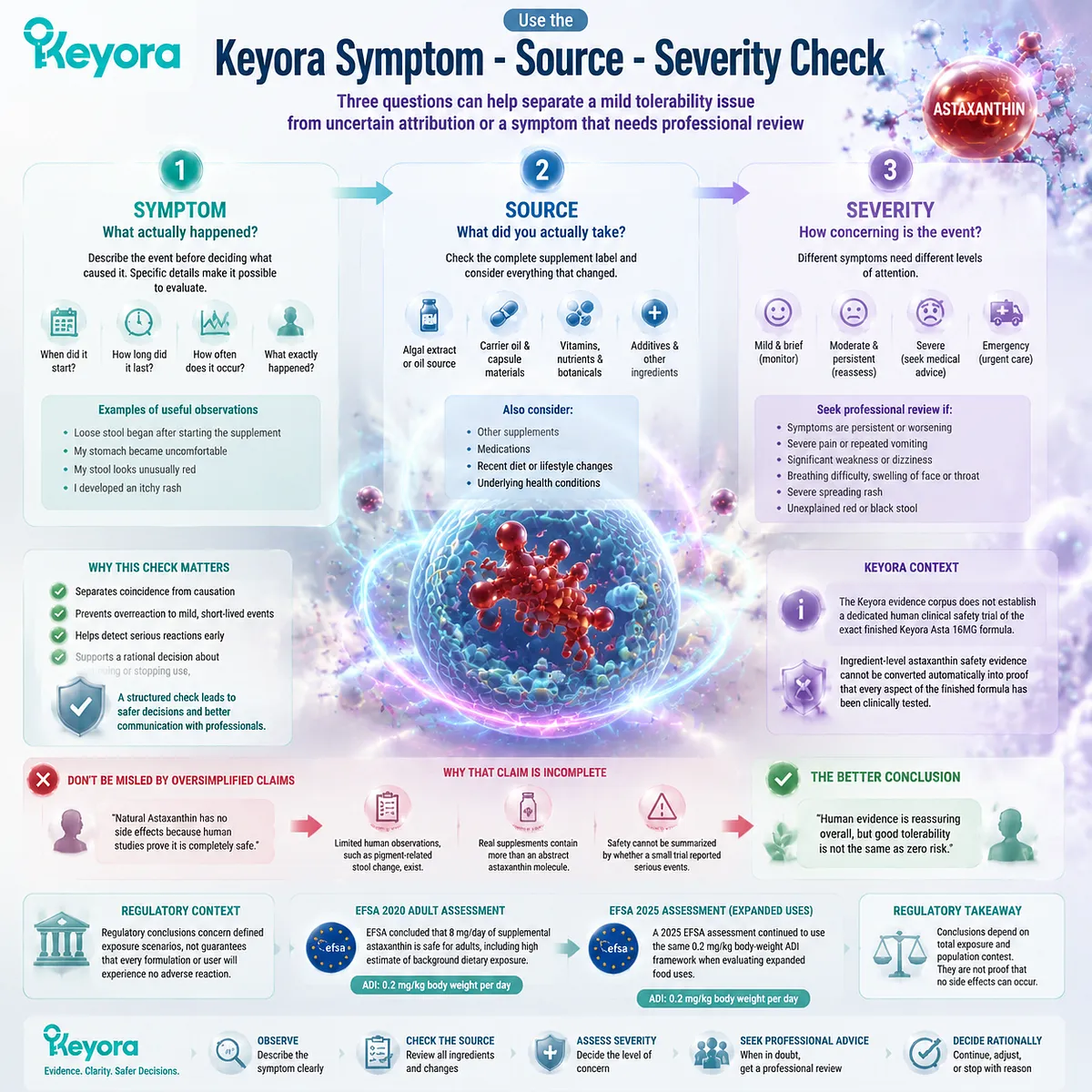
Use the Keyora Symptom – Source – Severity Check
Three questions can help separate a mild tolerability issue from uncertain attribution or a symptom that needs professional review
The Keyora Symptom – Source – Severity Check provides a practical way to interpret a possible Astaxanthin side effect.
Symptom: What actually happened?
Describe the event before deciding what caused it.
“Something feels wrong” is difficult to evaluate. “Loose stool began after starting the supplement,” “my stomach became uncomfortable,” “my stool looks unusually red,” or “I developed an itchy rash” identifies a more useful observation.
The exact timing, persistence, and pattern also matter.
Source: What did you actually take?
Check the complete supplement label rather than looking only at the word Astaxanthin.
Ask whether the product contains an algal extract, carrier oil, gelatin or another capsule material, vitamin E, additional nutrients, botanical ingredients, or other additives. Also consider whether another supplement, medication, food pattern, or health condition changed at the same time.
This matters for Keyora as well. The supplied Keyora evidence corpus does not establish a dedicated human clinical safety trial of the exact finished Keyora Asta 16MG formula. Ingredient-level Astaxanthin safety evidence therefore cannot be converted automatically into proof that every aspect of the finished formula has been clinically tested.
Severity: How concerning is the event?
A brief mild digestive symptom and a severe allergic-type reaction do not belong in the same risk category.
Persistent or worsening symptoms, severe pain, repeated vomiting, significant weakness or dizziness, breathing difficulty, facial or throat swelling, a severe spreading rash, or unexplained red or black stool warrant appropriate professional assessment.
Consider the claim:
“Natural Astaxanthin has no side effects because human studies prove it is completely safe.”
The Symptom check shows that limited human observations such as pigment-related stool change exist.
The Source check shows that real supplements contain more than an abstract Astaxanthin molecule.
The Severity check shows that safety cannot be summarized by whether a small trial reported serious events.
The better conclusion is:
Human evidence is reassuring overall, but good tolerability is not the same as zero risk.
Regulatory context reinforces the same point. EFSA’s adult assessment concerns a defined exposure scenario, not a guarantee that every formulation or user will experience no adverse reaction. A 2025 EFSA assessment continued to use the same 0.2 mg/kg body-weight ADI framework when evaluating expanded food uses, again illustrating that regulatory conclusions depend on total exposure and population context.
Closing Summary
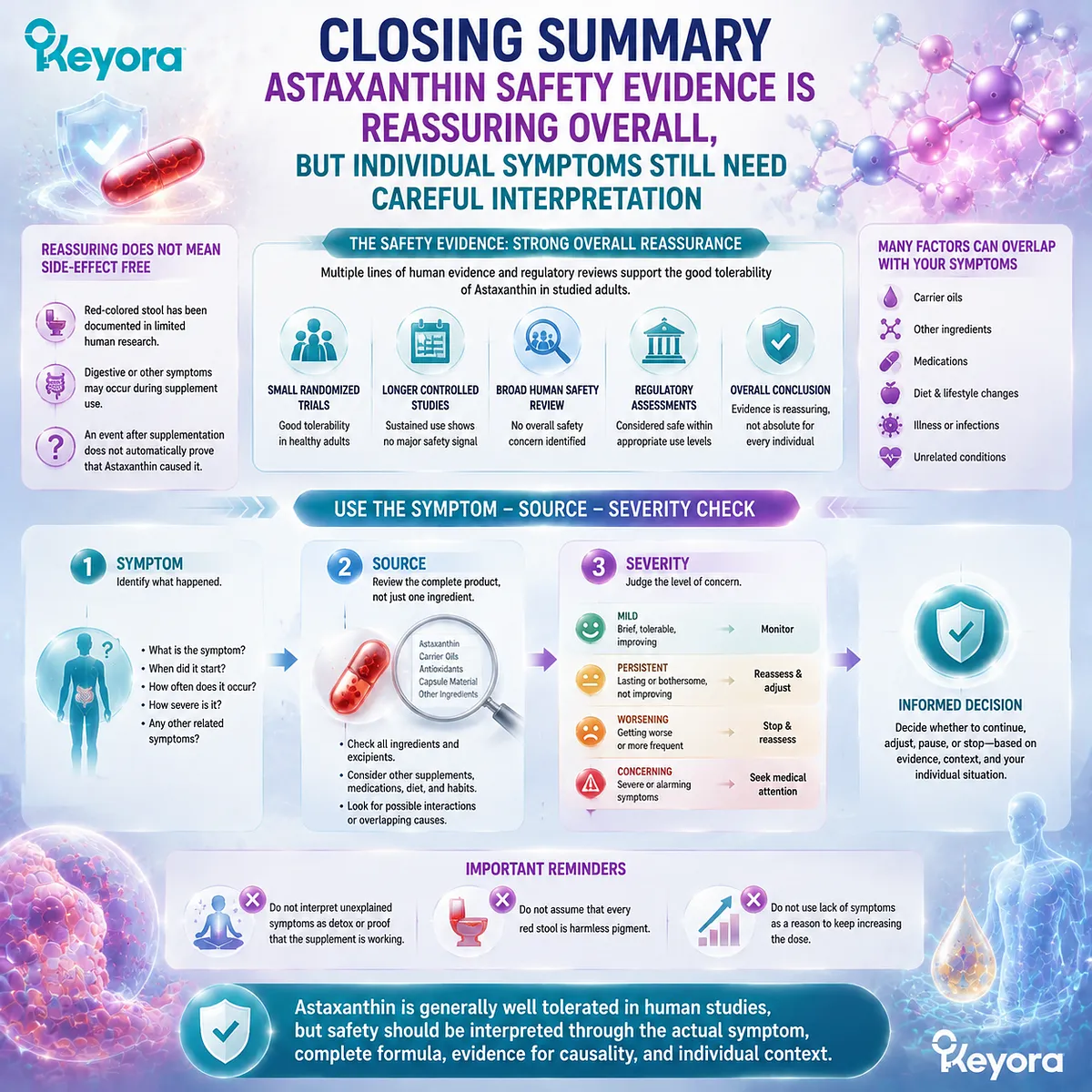
Astaxanthin safety evidence is reassuring overall, but individual symptoms still need careful interpretation
Astaxanthin has generally shown good tolerability in studied adults. Small randomized trials, longer controlled studies, a broad human safety review, and regulatory assessments provide meaningful reassurance.
That does not make Astaxanthin side-effect free.
Red-colored stool has been documented in limited human research, and digestive or other symptoms may occur during supplement use. An event occurring after supplementation does not automatically prove that Astaxanthin caused it, because carrier oils, other ingredients, medications, diet, illness, and unrelated conditions can overlap.
Use the Symptom – Source – Severity Check. Identify what happened, review the complete product rather than one ingredient, and judge whether the event is mild, persistent, worsening, or concerning.
Do not interpret unexplained symptoms as detox or proof that the supplement is working. Do not assume that every red stool is harmless pigment.
Astaxanthin is generally well tolerated in human studies, but safety should be interpreted through the actual symptom, complete formula, evidence for causality, and individual context.
This article is for educational and informational purposes only. It does not provide medical advice, diagnosis, treatment, cure, prevention, disease outcome claims, hormone restoration claims, fertility outcome claims, or formula-specific clinical efficacy claims.