
Astaxanthin vs. Lutein: What’s the Difference for Screen Fatigue?
Keyora Research Q&A Library
This is part of the Keyora Research Q&A Series, derived from Keyora Astaxanthin Research Journal Series.
Within the Keyora Astaxanthin Researcn framework, this Q&A translates complex astaxanthin biology into reader-friendly, evidence-bound answers, focusing on natural astaxanthin identity, molecular structure, antioxidant and redox mechanisms, membrane lipid interaction, mitochondrial resilience, inflammatory signaling pathways, human evidence interpretation, and the scientific principles behind responsible supplementation.
First published by Keyora Research Journal: www.keyorahealth.com
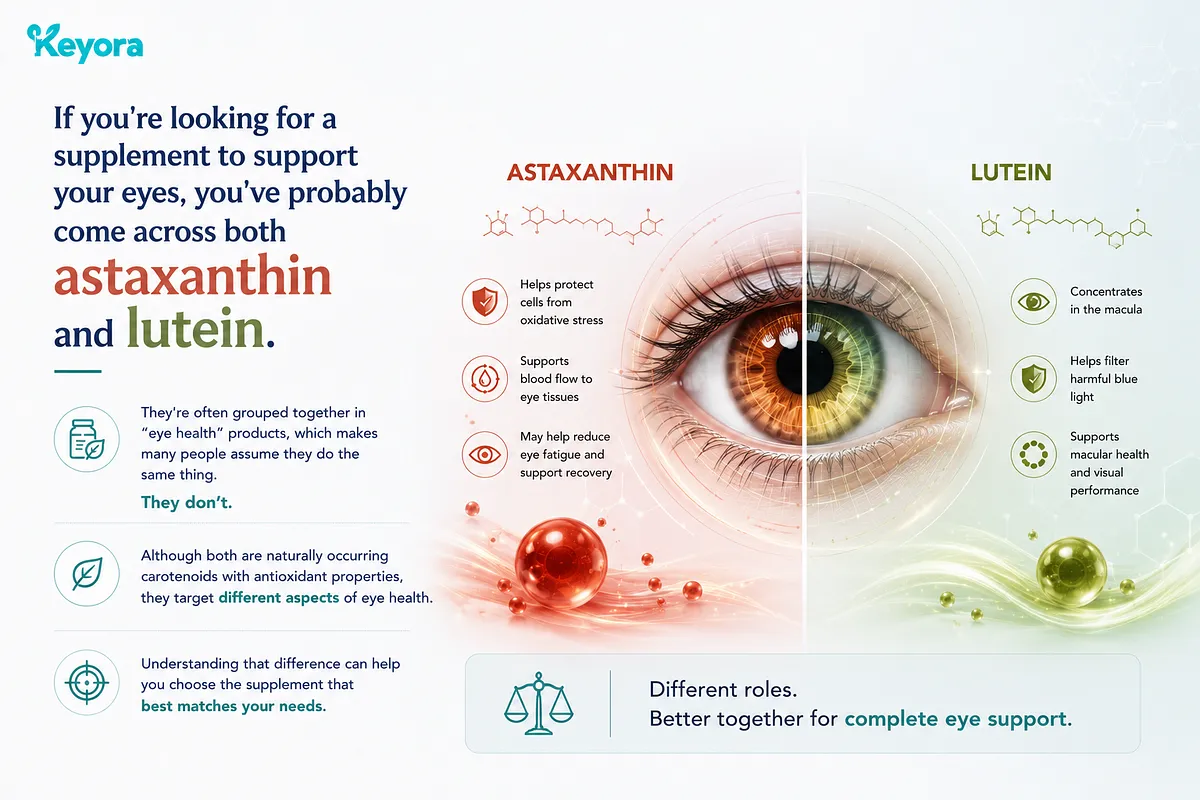
If you’re looking for a supplement to support your eyes, you’ve probably come across both astaxanthin and lutein.
They’re often grouped together in “eye health” products, which makes many people assume they do the same thing.
They don’t.
Although both are naturally occurring carotenoids with antioxidant properties, they target different aspects of eye health.
Understanding that difference can help you choose the supplement that best matches your needs.
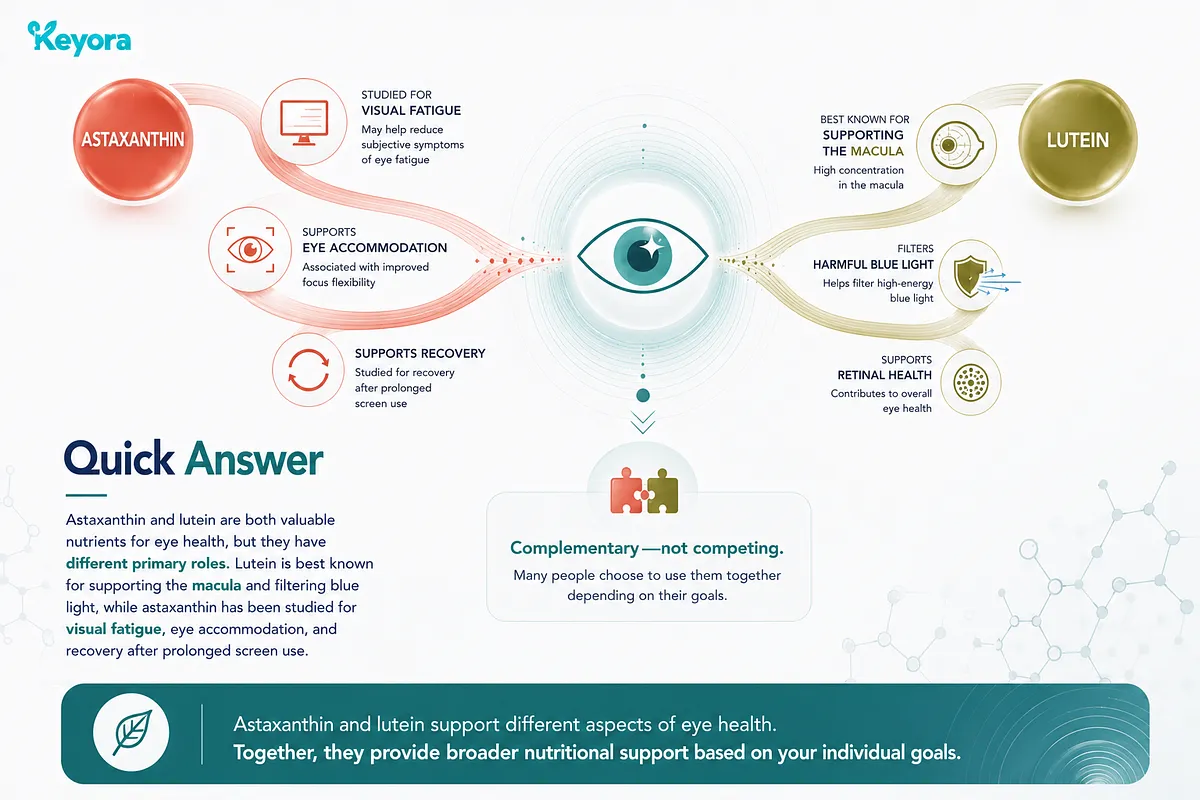
Quick Answer
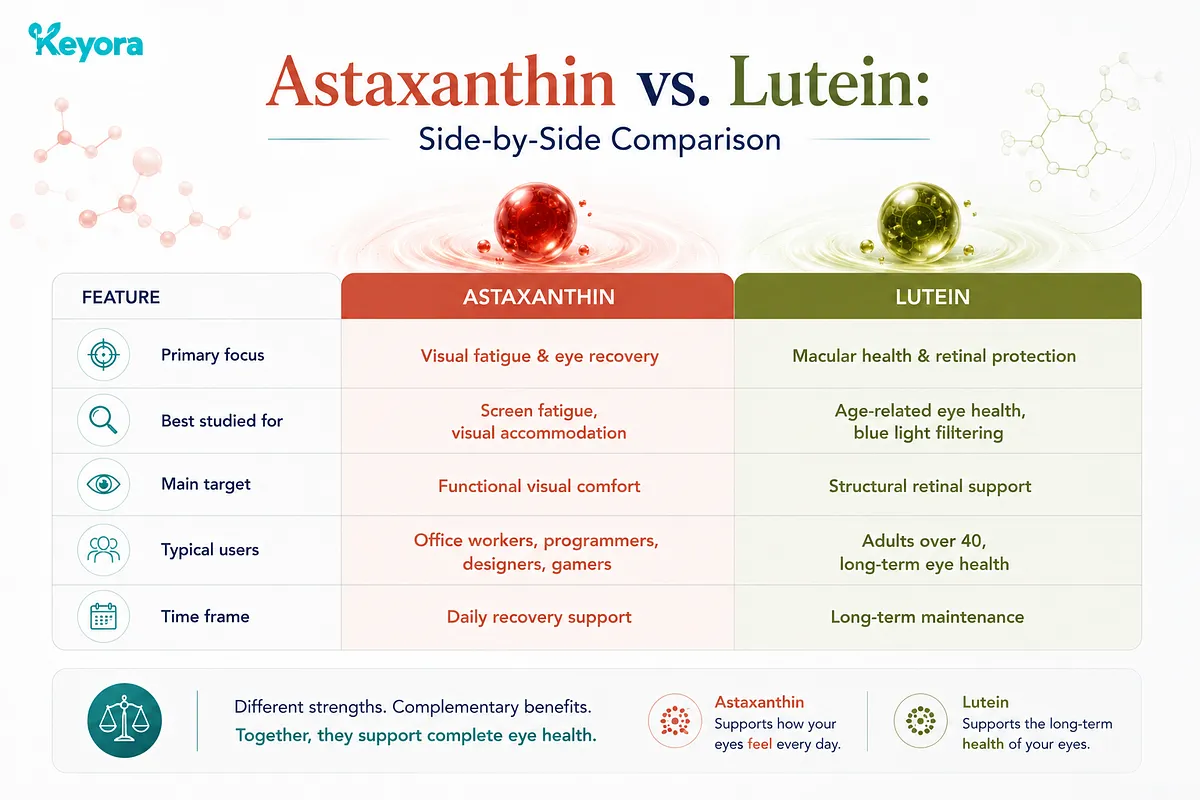
Astaxanthin and lutein are both valuable nutrients for eye health, but they have different primary roles. Lutein is best known for supporting the macula and filtering blue light, while astaxanthin has been studied for visual fatigue, eye accommodation, and recovery after prolonged screen use. They are complementary rather than competing nutrients, and many people choose to use them together depending on their goals.
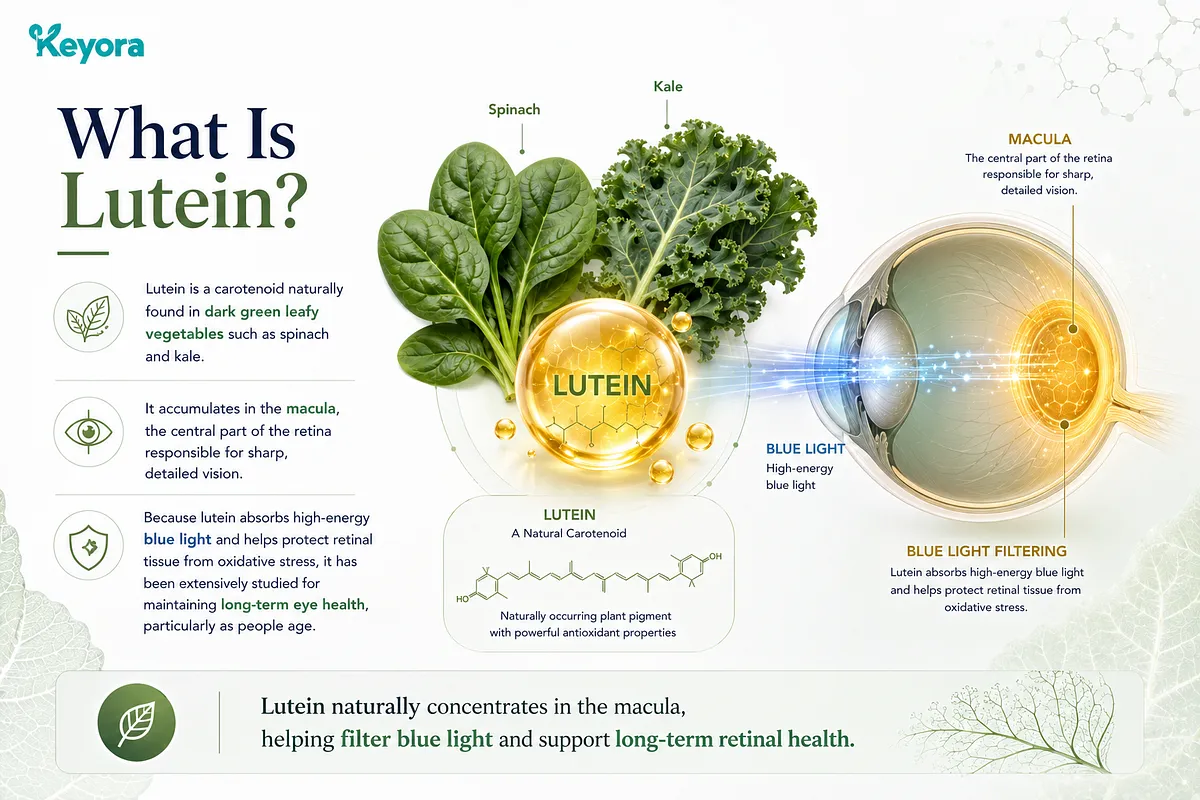
What Is Lutein?
Lutein is a carotenoid naturally found in dark green leafy vegetables such as spinach and kale.
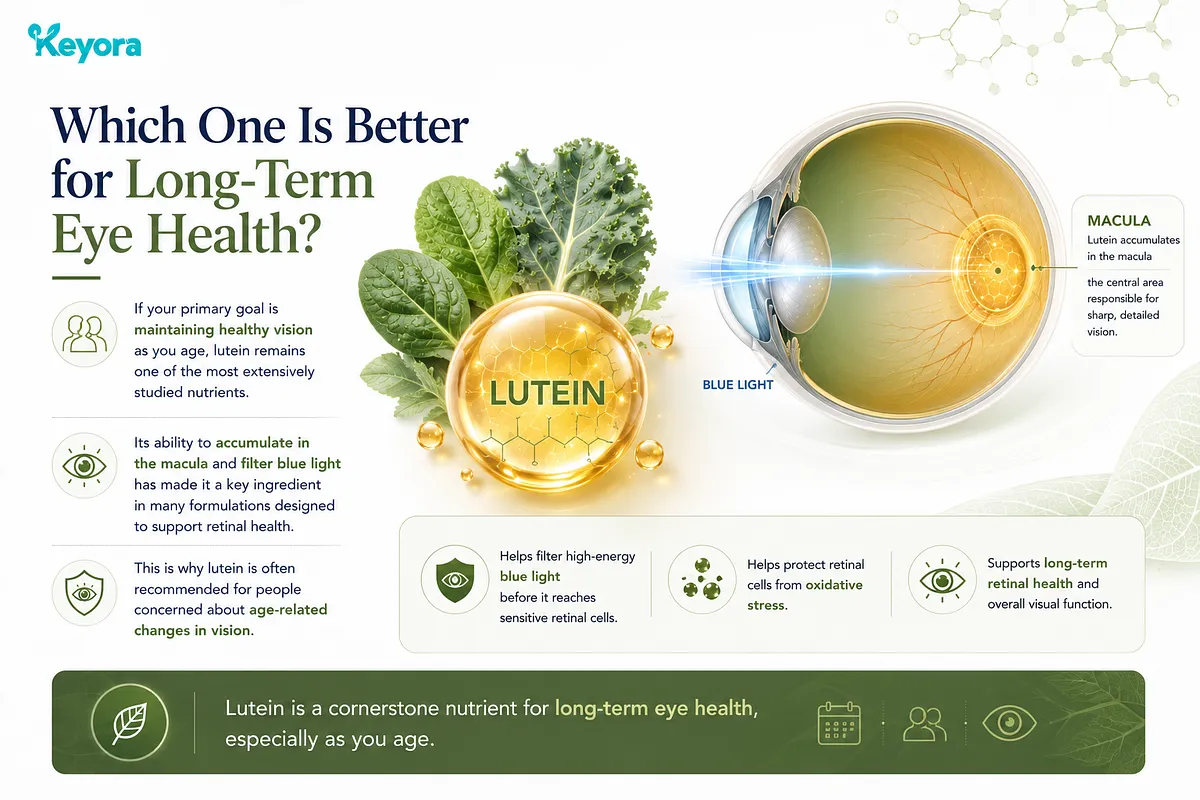
It accumulates in the macula, the central part of the retina responsible for sharp, detailed vision.
Because lutein absorbs high-energy blue light and helps protect retinal tissue from oxidative stress, it has been extensively studied for maintaining long-term eye health, particularly as people age.
What Is Astaxanthin?
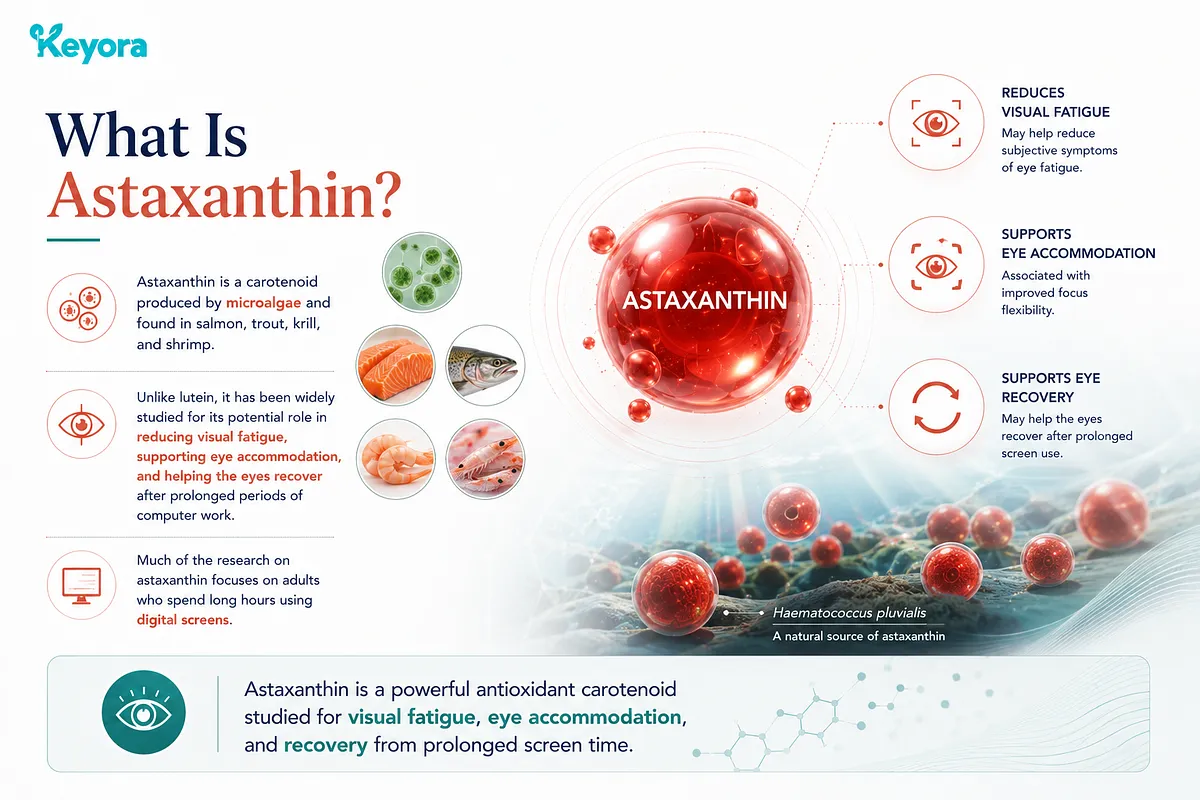
Astaxanthin is a carotenoid produced by microalgae and found in salmon, trout, krill, and shrimp.
Unlike lutein, it has been widely studied for its potential role in reducing visual fatigue, supporting eye accommodation, and helping the eyes recover after prolonged periods of computer work.
Much of the research on astaxanthin focuses on adults who spend long hours using digital screens.
Astaxanthin vs. Lutein: Side-by-Side Comparison
Which One Is Better for Screen Fatigue?
If your main complaint is:
· Your eyes feel tired after work.
· You struggle to focus after hours on a computer.
· Your eyes need time to recover after prolonged screen use.
Then astaxanthin has more direct clinical research in this area.
Several randomized controlled trials have reported improvements in subjective eye fatigue and visual accommodation among computer users after several weeks of astaxanthin supplementation.
Lutein may still support overall eye health, but most of its strongest evidence relates to retinal protection rather than relieving screen-related eye fatigue.
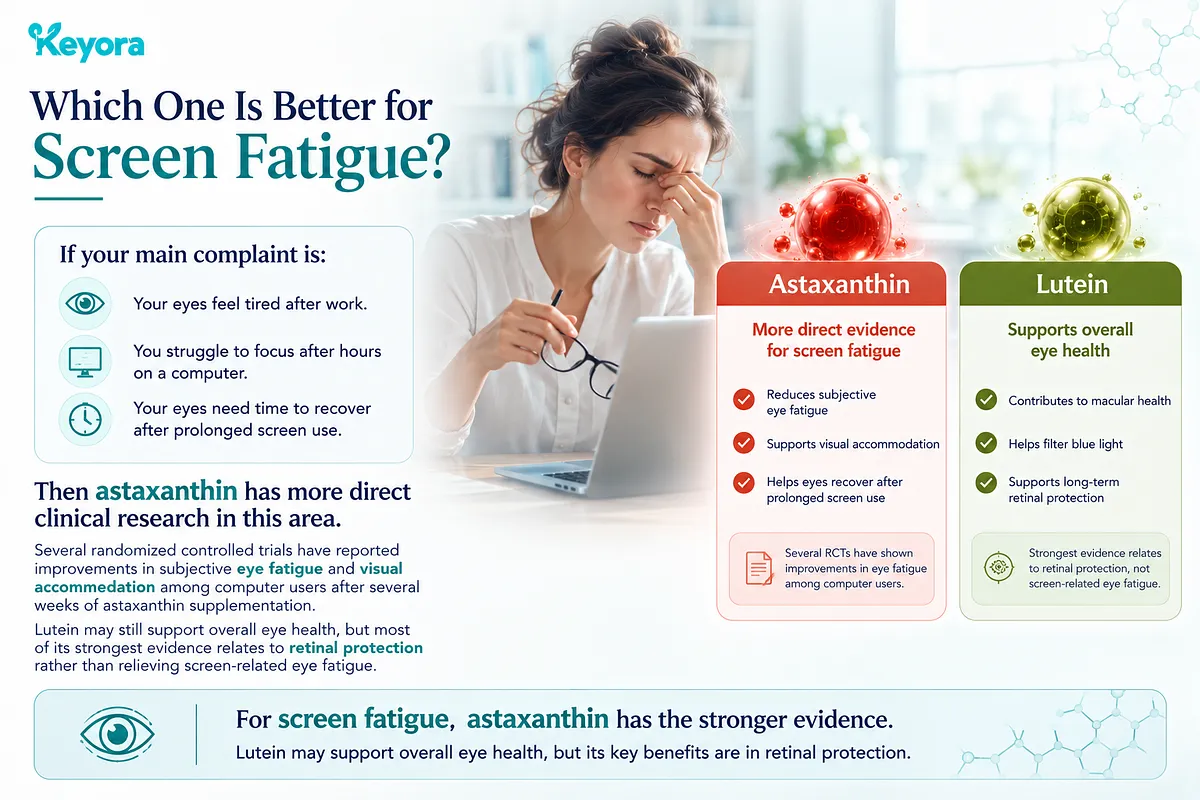
KEYORA highlights why Astaxanthin has more direct clinical evidence for relieving screen fatigue and supporting focus flexibility than Lutein.
Which One Is Better for Long-Term Eye Health?
If your primary goal is maintaining healthy vision as you age, lutein remains one of the most extensively studied nutrients.
Its ability to accumulate in the macula and filter blue light has made it a key ingredient in many formulations designed to support retinal health.
This is why lutein is often recommended for people concerned about age-related changes in vision.
Can You Take Astaxanthin and Lutein Together?
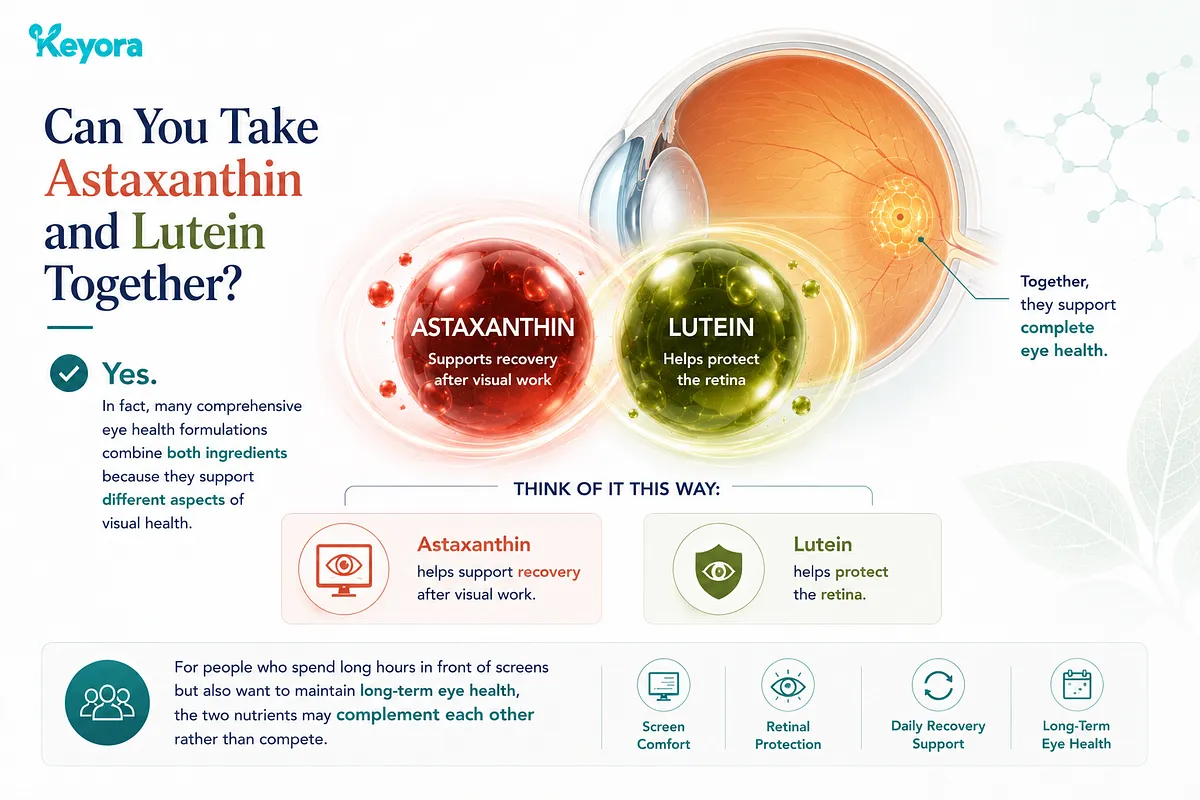
Yes.
In fact, many comprehensive eye health formulations combine both ingredients because they support different aspects of visual health.
Think of it this way:
· Lutein helps protect the retina.
· Astaxanthin helps support recovery after visual work.
For people who spend long hours in front of screens but also want to maintain long-term eye health, the two nutrients may complement each other rather than compete.
Keyora Insight
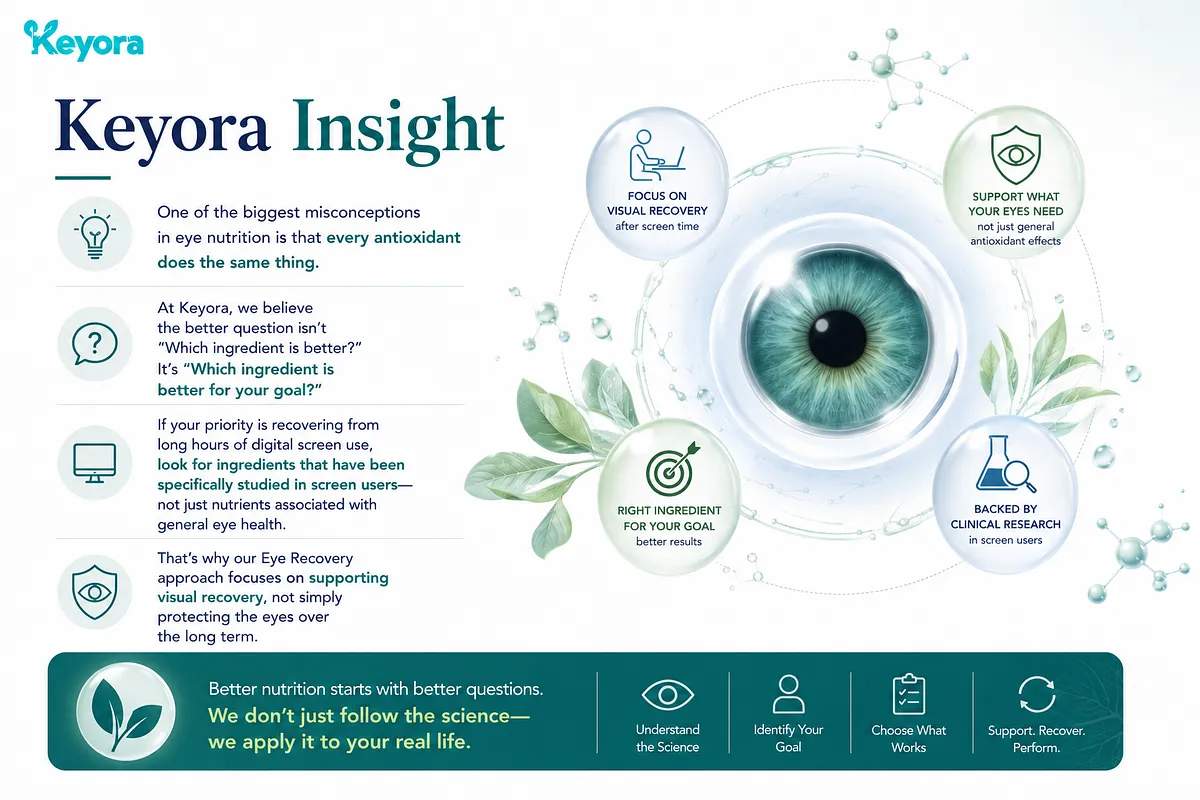
One of the biggest misconceptions in eye nutrition is that every antioxidant does the same thing.
At Keyora, we believe the better question isn’t “Which ingredient is better?” It’s “Which ingredient is better for your goal?”
If your priority is recovering from long hours of digital screen use, look for ingredients that have been specifically studied in screen users—not just nutrients associated with general eye health.
That’s why our Eye Recovery approach focuses on supporting visual recovery, not simply protecting the eyes over the long term.
Recovery Protocol
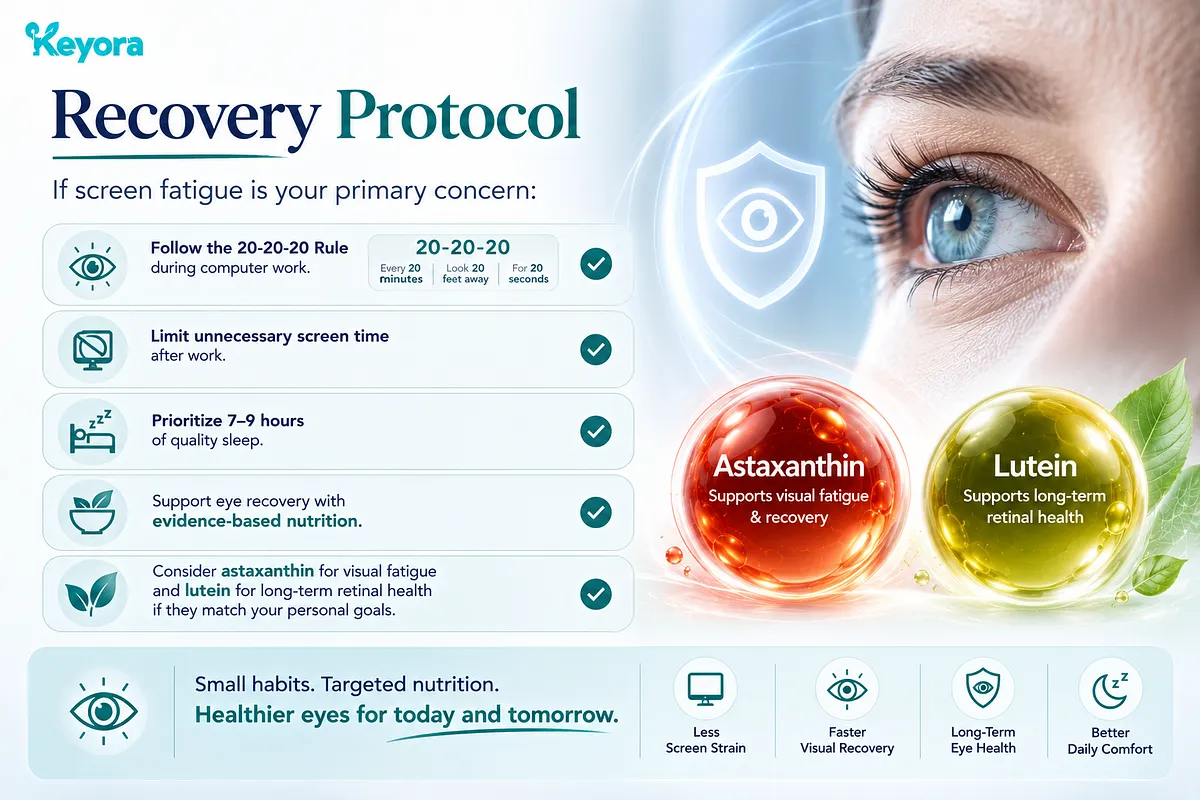
If screen fatigue is your primary concern:
✔ Follow the 20-20-20 Rule during computer work.
✔ Limit unnecessary screen time after work.
✔ Prioritize 7–9 hours of quality sleep.
✔ Support eye recovery with evidence-based nutrition.
✔ Consider astaxanthin for visual fatigue and lutein for long-term retinal health if they match your personal goals.
Frequently Asked Questions
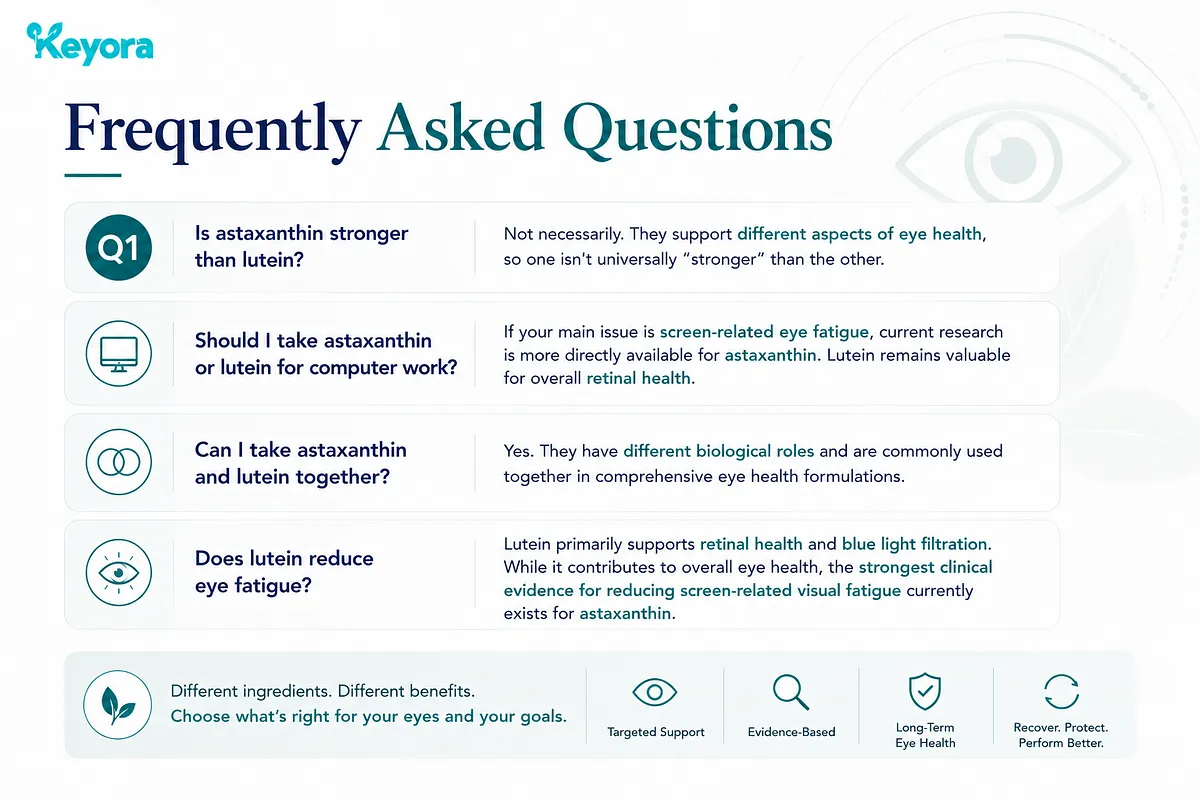
Is astaxanthin stronger than lutein?
Not necessarily. They support different aspects of eye health, so one isn’t universally “stronger” than the other.
Should I take astaxanthin or lutein for computer work?
If your main issue is screen-related eye fatigue, current research is more directly available for astaxanthin. Lutein remains valuable for overall retinal health.
Can I take astaxanthin and lutein together?
Yes. They have different biological roles and are commonly used together in comprehensive eye health formulations.
Does lutein reduce eye fatigue?
Lutein primarily supports retinal health and blue light filtration. While it contributes to overall eye health, the strongest clinical evidence for reducing screen-related visual fatigue currently exists for astaxanthin.
References
· AREDS2 Research Group. Lutein + Zeaxanthin and Age-Related Macular Degeneration.
· Bernstein PS, et al. The Value of Lutein and Zeaxanthin in Eye Health.
· Iwasaki T, et al. Effects of Astaxanthin on Eye Fatigue in Visual Display Terminal Workers.
· Nagaki Y, et al. Clinical Evaluation of Astaxanthin on Visual Accommodation and Eye Fatigue.
· Rosenfield M. Computer Vision Syndrome (Digital Eye Strain): A Review.