
How to Reduce Screen Fatigue: 7 Evidence-Based Habits That Help
Keyora Research Q&A Library
This is part of the Keyora Research Q&A Series, derived from Keyora Astaxanthin Research Journal Series.
Within the Keyora Astaxanthin Researcn framework, this Q&A translates complex astaxanthin biology into reader-friendly, evidence-bound answers, focusing on natural astaxanthin identity, molecular structure, antioxidant and redox mechanisms, membrane lipid interaction, mitochondrial resilience, inflammatory signaling pathways, human evidence interpretation, and the scientific principles behind responsible supplementation.
First published by Keyora Research Journal: www.keyorahealth.com
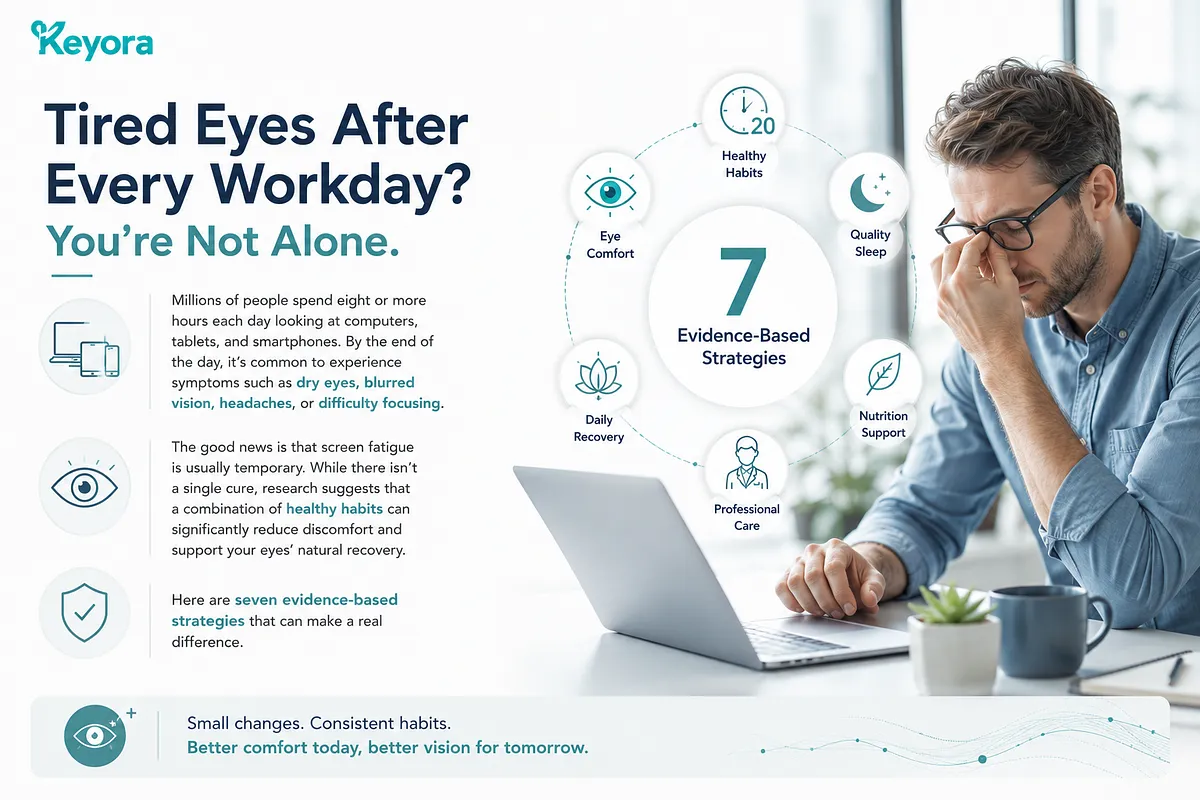
If your eyes feel tired after every workday, you’re not alone.
Millions of people spend eight or more hours each day looking at computers, tablets, and smartphones. By the end of the day, it’s common to experience symptoms such as dry eyes, blurred vision, headaches, or difficulty focusing.
The good news is that screen fatigue is usually temporary. While there isn’t a single cure, research suggests that a combination of healthy habits can significantly reduce discomfort and support your eyes’ natural recovery.
Here are seven evidence-based strategies that can make a real difference.
Quick Answer
The best way to reduce screen fatigue is to combine regular visual breaks, proper screen ergonomics, adequate sleep, and good nutrition. No single habit works on its own, but together they can help reduce eye strain and support long-term visual comfort.
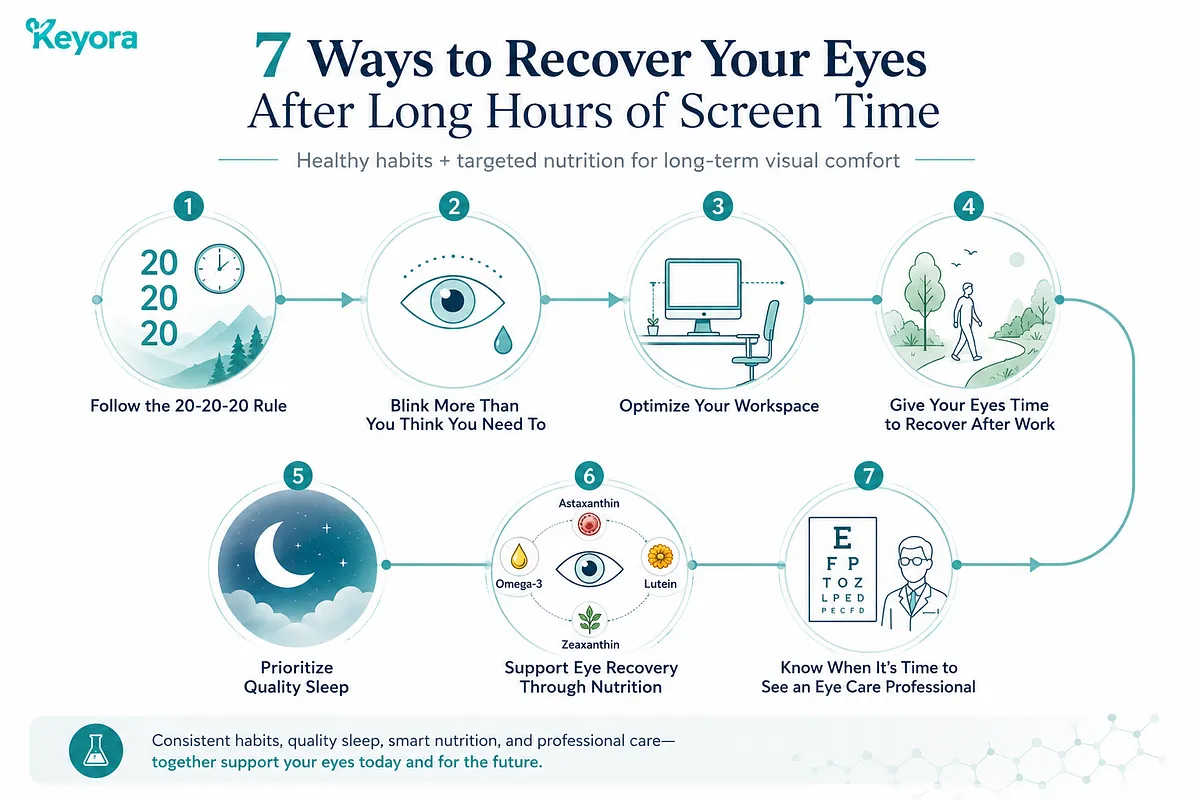
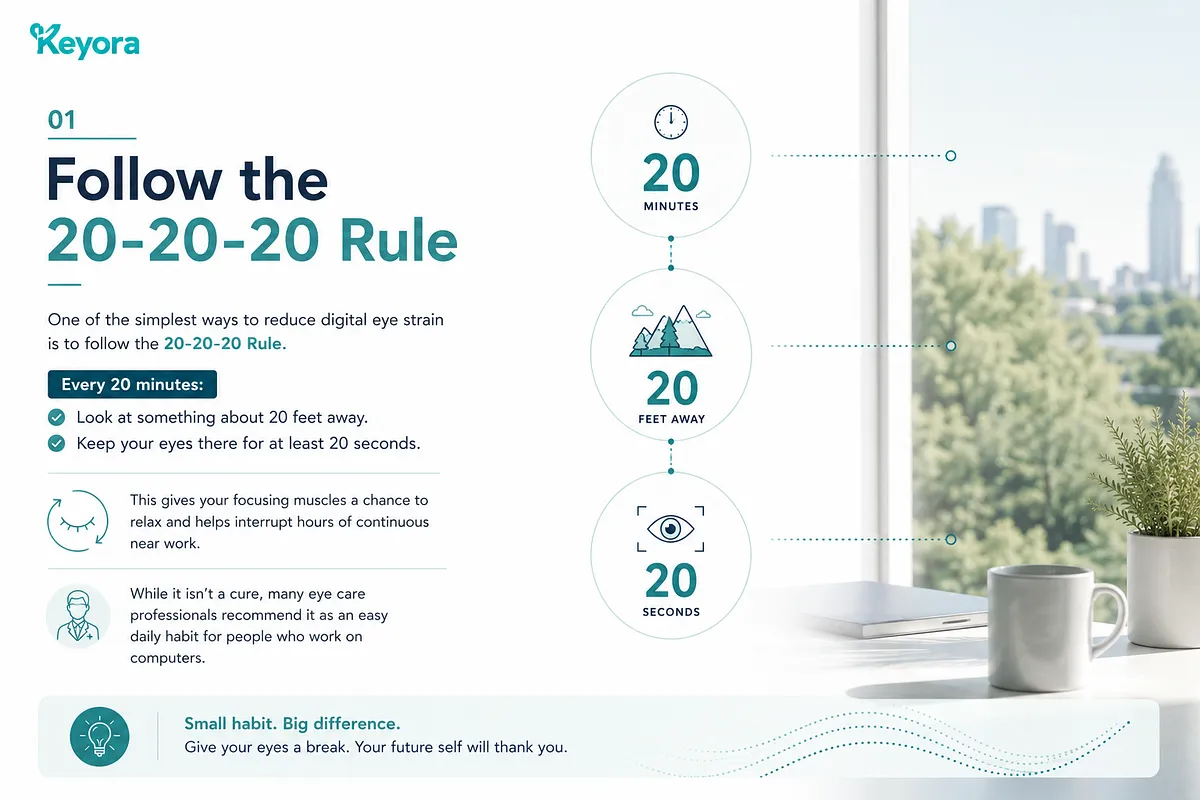
1. Follow the 20-20-20 Rule
One of the simplest ways to reduce digital eye strain is to follow the 20-20-20 Rule.
Every 20 minutes:
· Look at something about 20 feet away.
· Keep your eyes there for at least 20 seconds.
This gives your focusing muscles a chance to relax and helps interrupt hours of continuous near work.
While it isn’t a cure, many eye care professionals recommend it as an easy daily habit for people who work on computers.
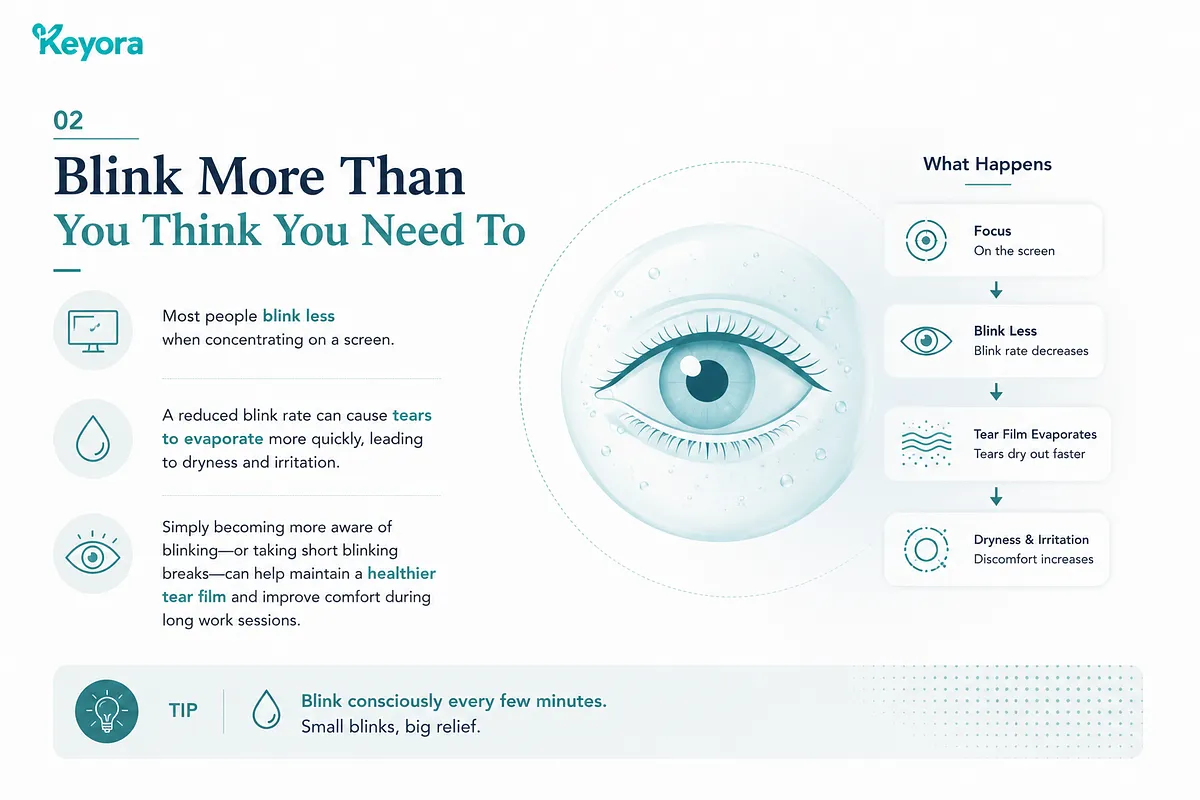
2. Blink More Than You Think You Need To
Most people blink less when concentrating on a screen.
A reduced blink rate can cause tears to evaporate more quickly, leading to dryness and irritation.
Simply becoming more aware of blinking—or taking short blinking breaks—can help maintain a healthier tear film and improve comfort during long work sessions.
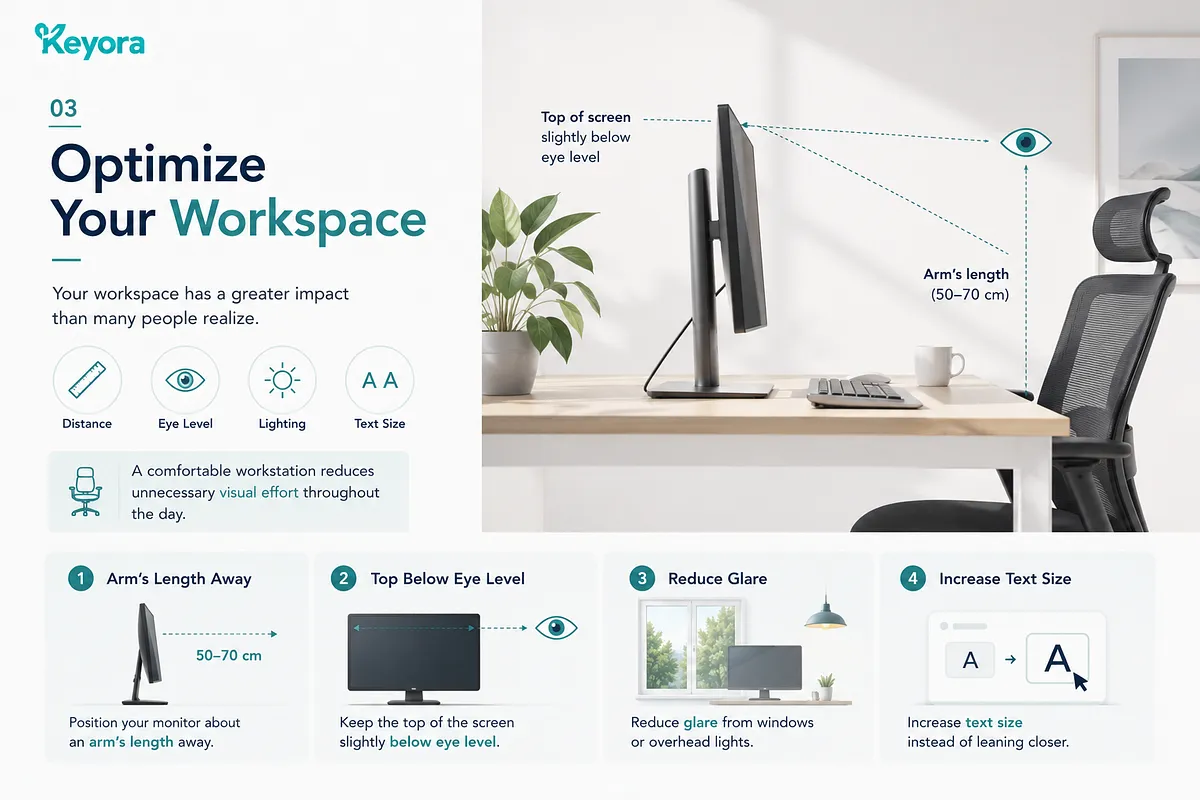
3. Optimize Your Workspace
Your workspace has a greater impact than many people realize.
Simple adjustments include:
· Position your monitor about an arm’s length away.
· Keep the top of the screen slightly below eye level.
· Reduce glare from windows or overhead lights.
· Increase text size instead of leaning closer.
A comfortable workstation reduces unnecessary visual effort throughout the day.
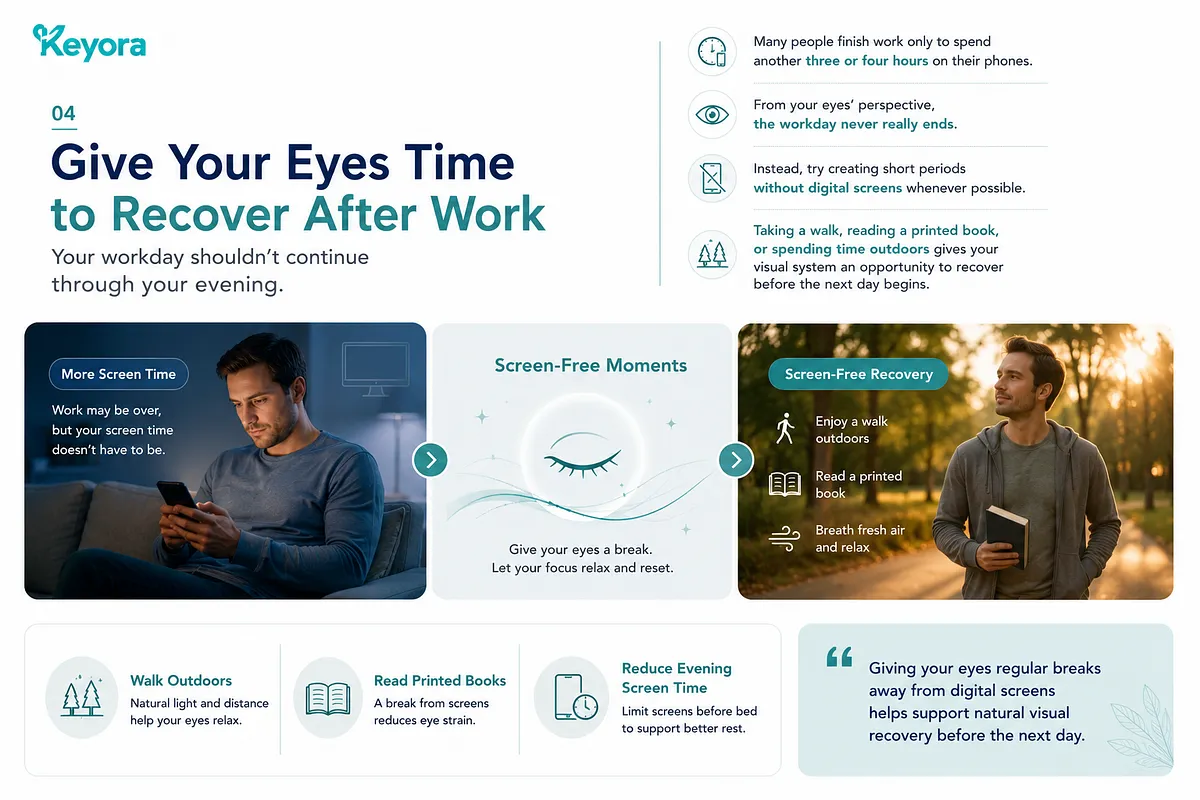
4. Give Your Eyes Time to Recover After Work
Many people finish work only to spend another three or four hours on their phones.
From your eyes’ perspective, the workday never really ends.
Instead, try creating short periods without digital screens whenever possible.
Taking a walk, reading a printed book, or spending time outdoors gives your visual system an opportunity to recover before the next day begins.
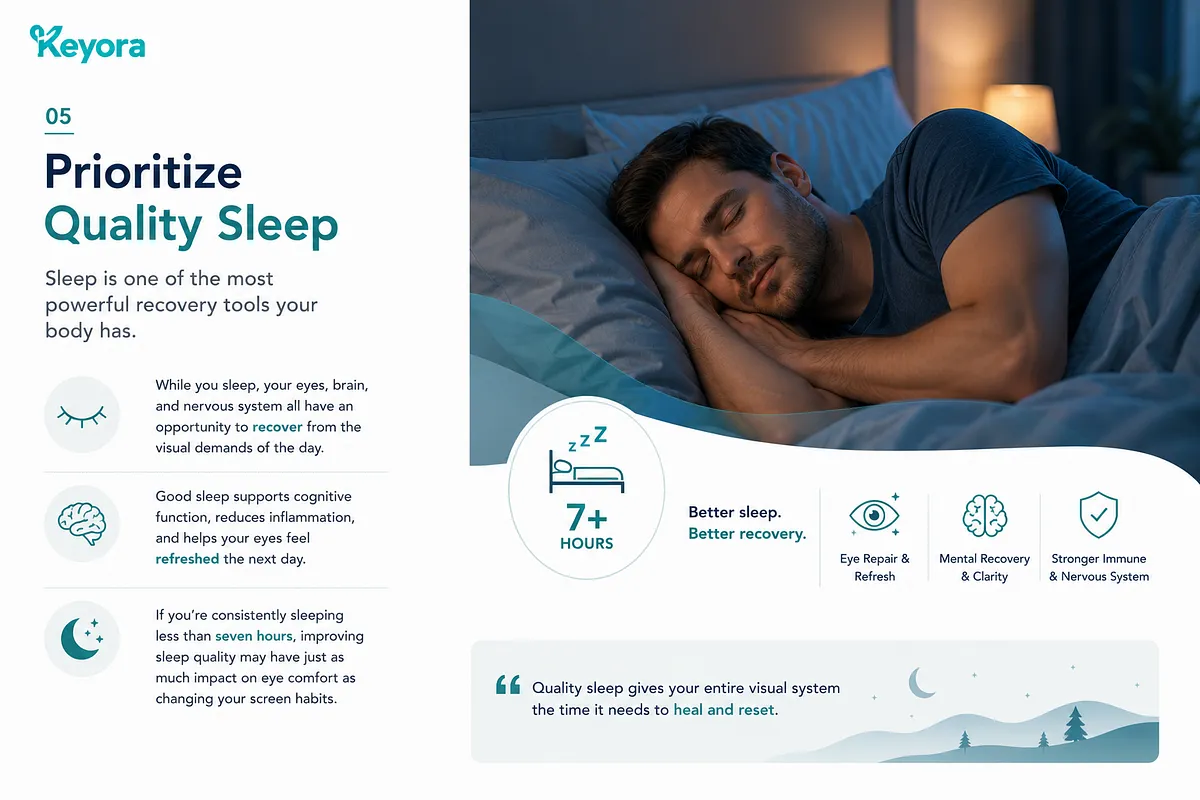
5. Prioritize Quality Sleep
Sleep is one of the most powerful recovery tools your body has.
While you sleep, your eyes, brain, and nervous system all have an opportunity to recover from the visual demands of the day.
If you’re consistently sleeping less than seven hours, improving sleep quality may have just as much impact on eye comfort as changing your screen habits.
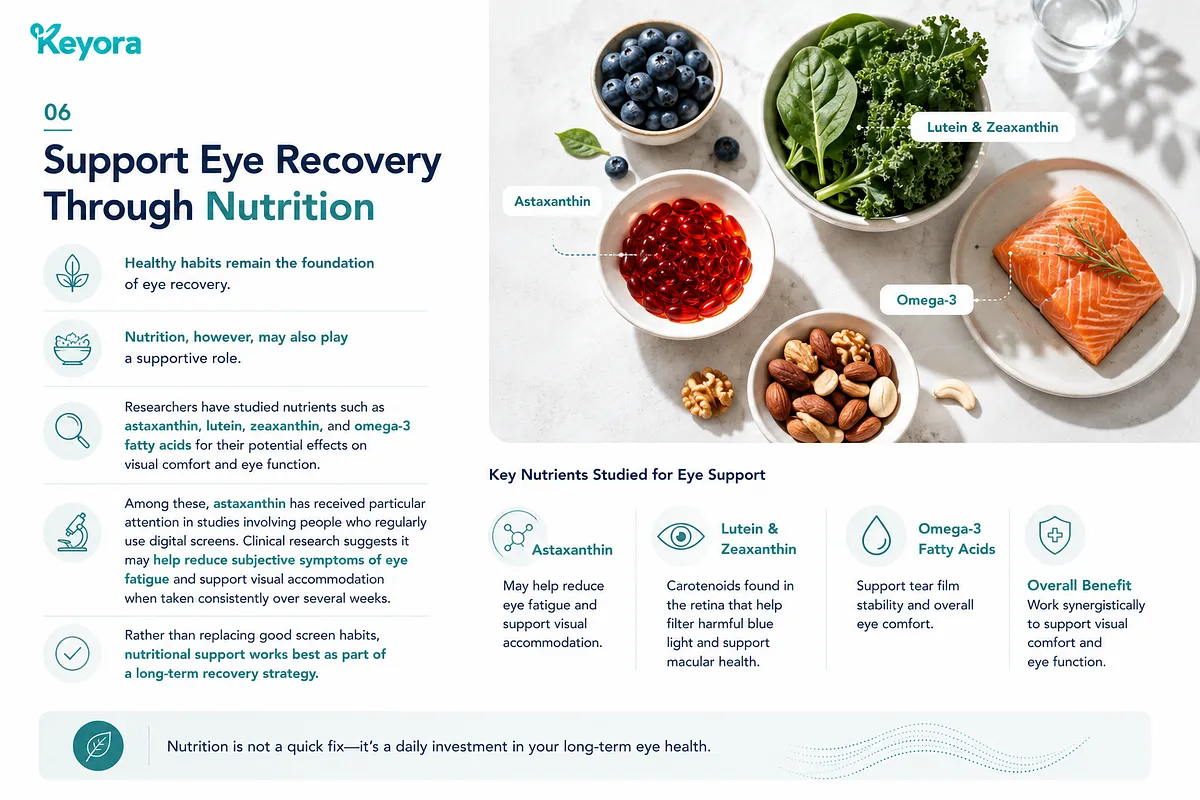
6. Support Eye Recovery Through Nutrition
Healthy habits remain the foundation of eye recovery.
Nutrition, however, may also play a supportive role.
Researchers have studied nutrients such as astaxanthin, lutein, zeaxanthin, and omega-3 fatty acids for their potential effects on visual comfort and eye function.
Among these, astaxanthin has received particular attention in studies involving people who regularly use digital screens. Clinical research suggests it may help reduce subjective symptoms of eye fatigue and support visual accommodation when taken consistently over several weeks.
Rather than replacing good screen habits, nutritional support works best as part of a long-term recovery strategy.
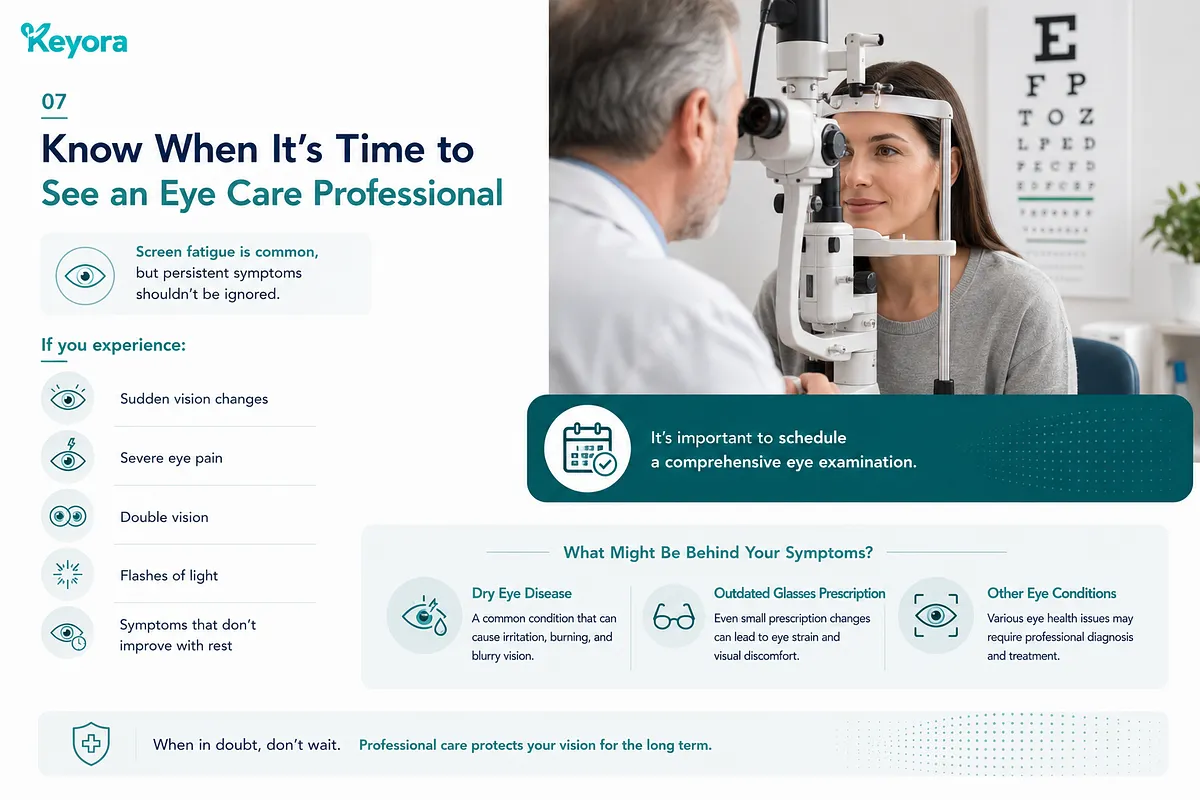
7. Know When It’s Time to See an Eye Care Professional
Screen fatigue is common, but persistent symptoms shouldn’t be ignored.
If you experience:
· Sudden vision changes
· Severe eye pain
· Double vision
· Flashes of light
· Symptoms that don’t improve with rest
it’s important to schedule a comprehensive eye examination.
Sometimes what feels like screen fatigue may actually be caused by dry eye disease, an outdated glasses prescription, or another eye condition that requires professional care.
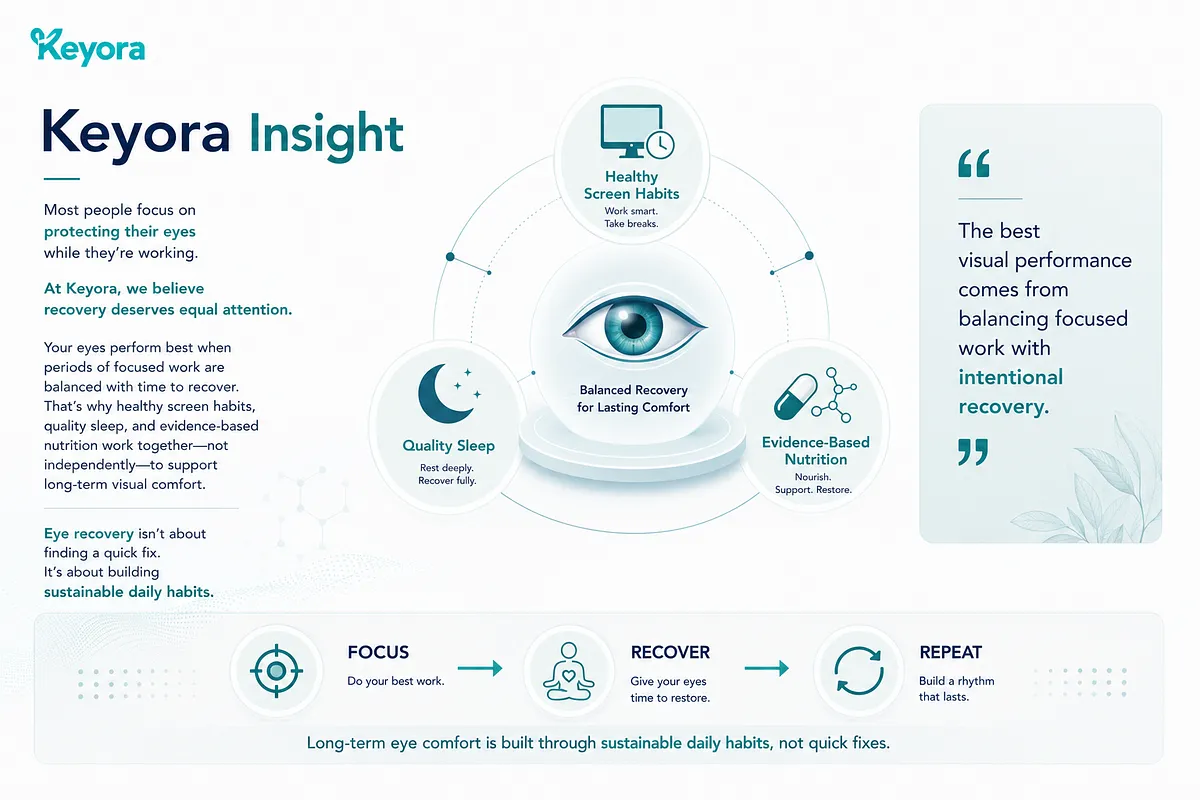
Keyora Insight
Most people focus on protecting their eyes while they’re working.
At Keyora, we believe recovery deserves equal attention.
Your eyes perform best when periods of focused work are balanced with time to recover. That’s why healthy screen habits, quality sleep, and evidence-based nutrition work together—not independently—to support long-term visual comfort.
Eye recovery isn’t about finding a quick fix. It’s about building sustainable daily habits.
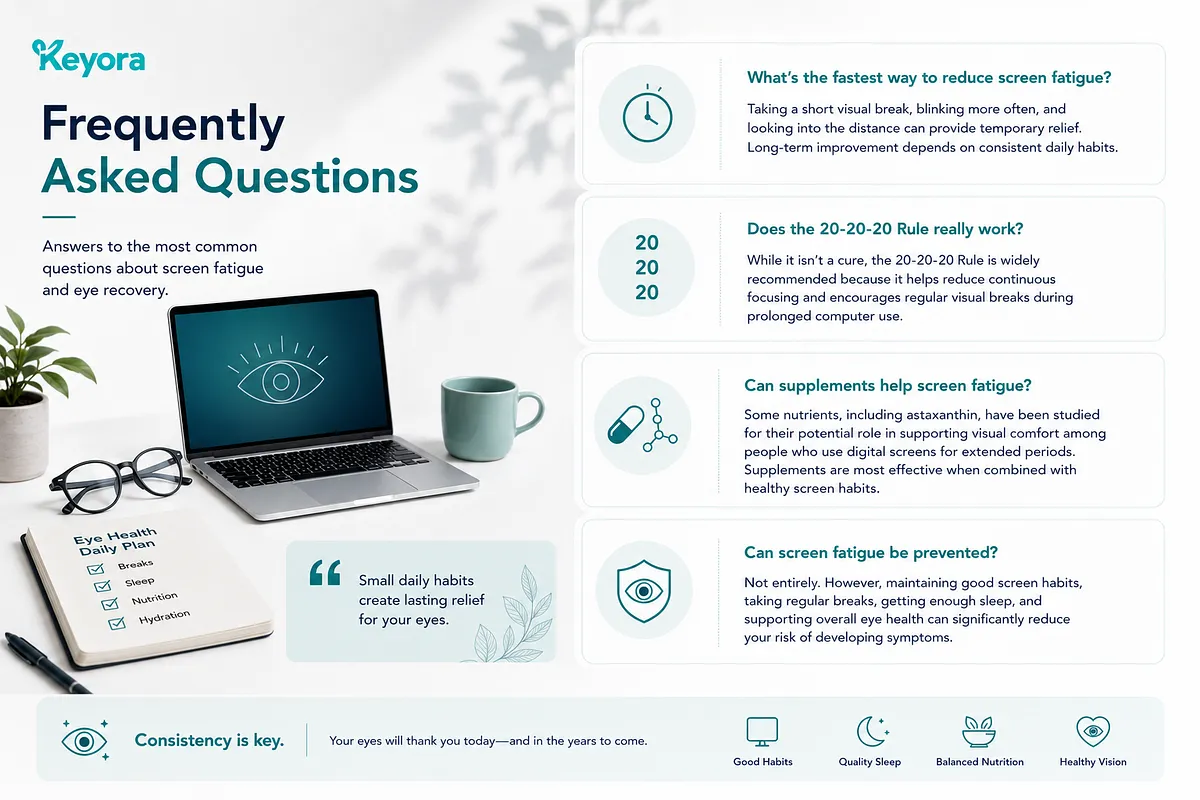
Frequently Asked Questions
What’s the fastest way to reduce screen fatigue?
Taking a short visual break, blinking more often, and looking into the distance can provide temporary relief. Long-term improvement depends on consistent daily habits.
Does the 20-20-20 Rule really work?
While it isn’t a cure, the 20-20-20 Rule is widely recommended because it helps reduce continuous focusing and encourages regular visual breaks during prolonged computer use.
Can supplements help screen fatigue?
Some nutrients, including astaxanthin, have been studied for their potential role in supporting visual comfort among people who use digital screens for extended periods. Supplements are most effective when combined with healthy screen habits.
Can screen fatigue be prevented?
Not entirely. However, maintaining good screen habits, taking regular breaks, getting enough sleep, and supporting overall eye health can significantly reduce your risk of developing symptoms.
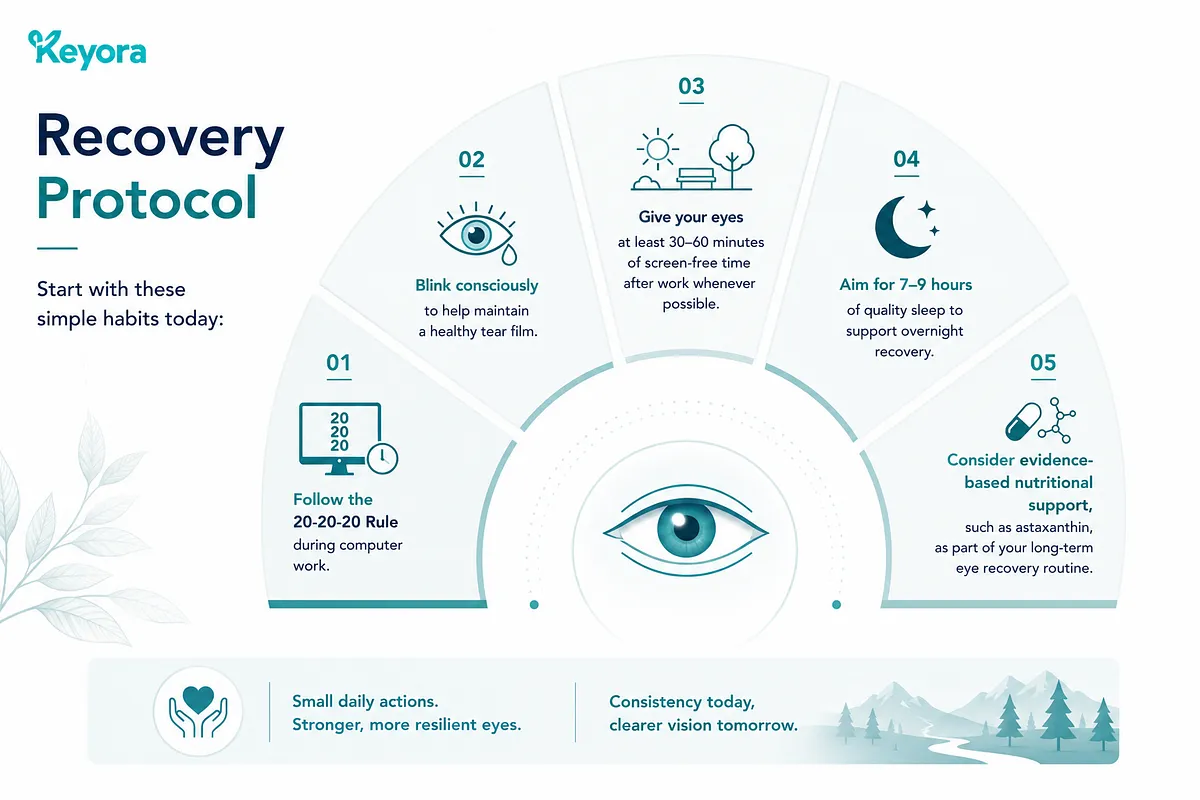
Recovery Protocol
Start with these simple habits today:
✔ Follow the 20-20-20 Rule during computer work.
✔ Blink consciously to help maintain a healthy tear film.
✔ Give your eyes at least 30–60 minutes of screen-free time after work whenever possible.
✔ Aim for 7–9 hours of quality sleep to support overnight recovery.
✔ Consider evidence-based nutritional support, such as astaxanthin, as part of your long-term eye recovery routine.
References
· Rosenfield M. Computer Vision Syndrome (Digital Eye Strain): A Review.
· Sheppard AL, Wolffsohn JS. Digital Eye Strain: Prevalence, Measurement and Amelioration.
· American Optometric Association. Computer Vision Syndrome.
· American Academy of Ophthalmology. Computer Vision Syndrome and Digital Eye Strain.
· Iwasaki T, et al. Effects of Astaxanthin on Eye Fatigue in Visual Display Terminal Workers.