
Is Aging Just Oxidation?
Keyora Research Q&A Library
This is part of the Keyora Research Q&A Series, derived from Keyora Astaxanthin Research Journal Series.
Within the Keyora Astaxanthin Researcn framework, this Q&A translates complex astaxanthin biology into reader-friendly, evidence-bound answers, focusing on natural astaxanthin identity, molecular structure, antioxidant and redox mechanisms, membrane lipid interaction, mitochondrial resilience, inflammatory signaling pathways, human evidence interpretation, and the scientific principles behind responsible supplementation.
First published by Keyora Research Journal: www.keyorahealth.com
Direct Answer
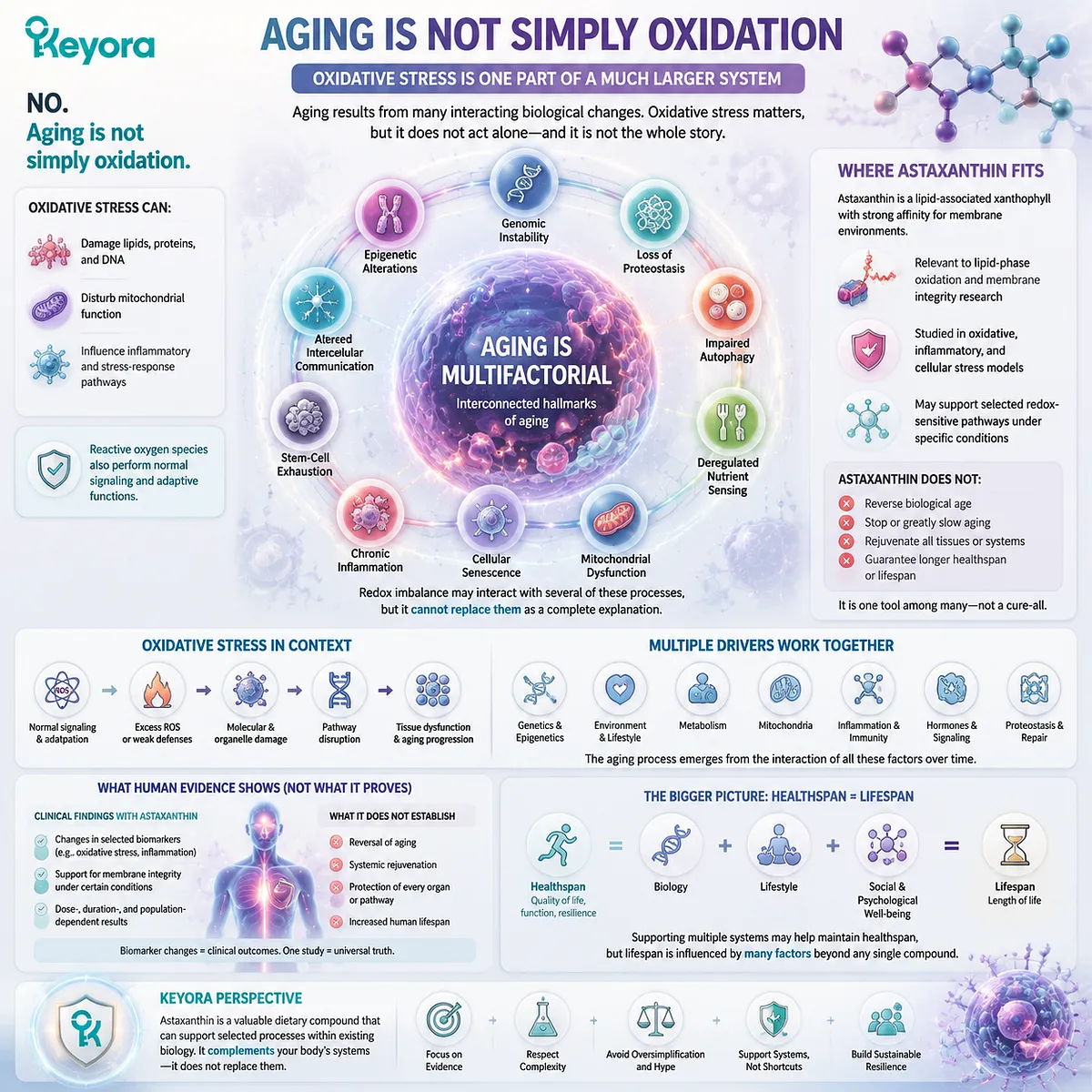
No.
Aging is not simply oxidation.
Oxidative stress can damage lipids, proteins, and DNA, disturb mitochondrial function, and influence inflammatory or stress-response pathways.
These processes are relevant to aging, but they represent only part of a much larger biological system.
Reactive oxygen species can also perform normal signaling and adaptive functions, so aging cannot be explained as the gradual accumulation of uniformly harmful free radicals.
Aging is not simply oxidation; oxidative stress is one interacting process within a broader network of genomic, metabolic, mitochondrial, inflammatory, and cellular changes.
Modern geroscience describes aging through multiple connected hallmarks, including genomic instability, epigenetic alterations, loss of proteostasis, impaired autophagy, deregulated nutrient sensing, mitochondrial dysfunction, cellular senescence, chronic inflammation, stem-cell exhaustion, and altered communication between cells.
Redox imbalance may interact with several of these processes, but it cannot replace them as a complete explanation.
Astaxanthin remains relevant because it is a lipid-associated xanthophyll studied in selected oxidative, membrane, and inflammatory contexts.
Human trials and meta-analyses have examined particular biomarkers, but these measurements do not establish reversal of biological age, systemic rejuvenation, longer healthspan, or increased human lifespan.
Oxidative Stress Is One Part of Aging
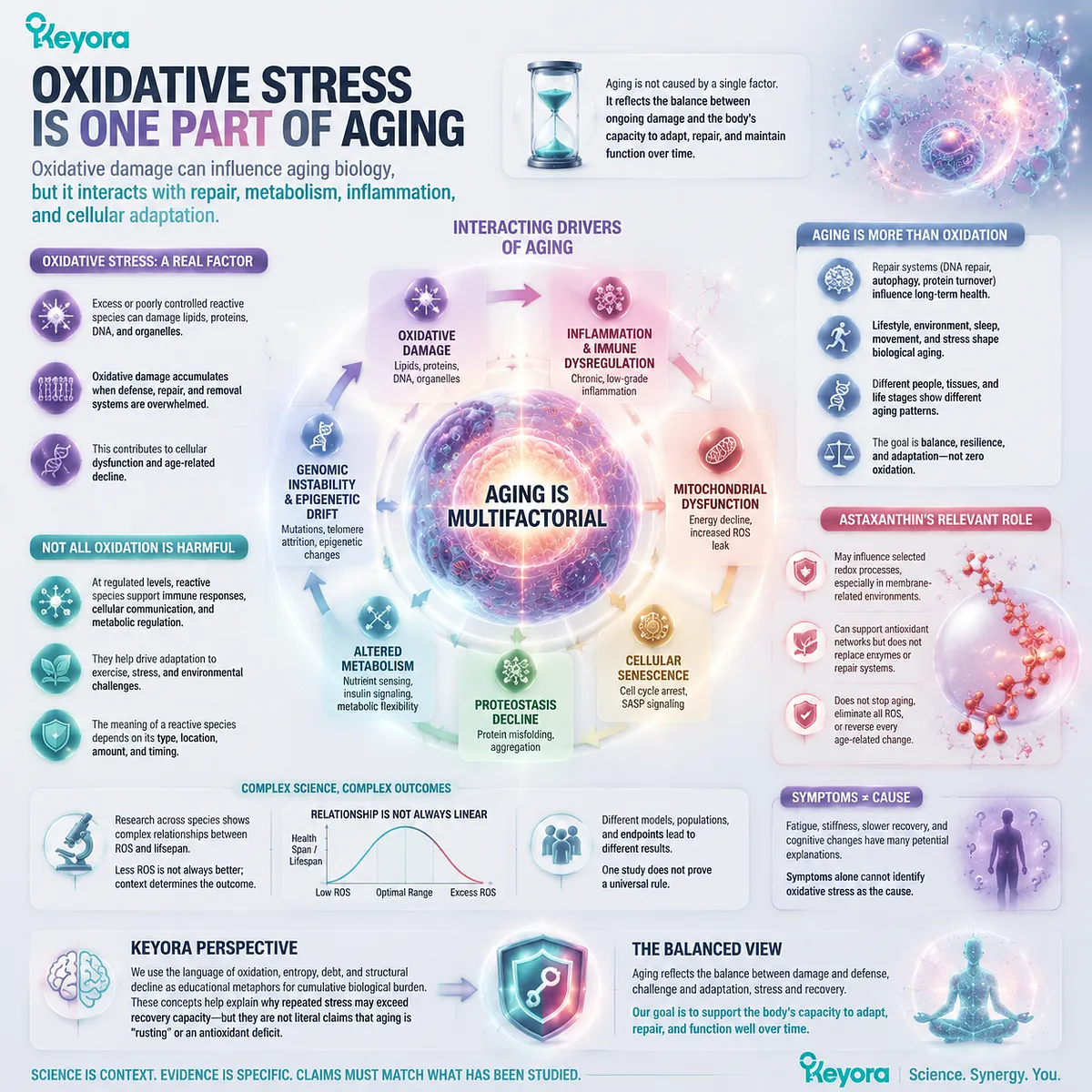
Oxidative damage can influence aging biology, but it interacts with repair, metabolism, inflammation, and cellular adaptation
The idea that aging results from accumulated free-radical damage has played an important historical role in aging research. It helped direct attention toward oxidation of membrane lipids, protein modification, mitochondrial injury, and damage to nuclear or mitochondrial DNA.
That model captures a genuine biological problem, but it becomes misleading when oxidation is treated as the complete cause of aging.
Reactive oxygen species vary in chemistry, location, concentration, and duration. Excessive or poorly controlled production can contribute to molecular damage. At regulated levels, however, reactive oxygen species can participate in immune responses, metabolic regulation, cell proliferation, wound responses, and adaptation to exercise or other manageable stressors. Their biological meaning depends on context rather than on their presence alone.
This creates an important distinction between oxidative distress and adaptive redox signaling. A sustained imbalance that overwhelms defense, repair, and removal may contribute to dysfunction. A temporary redox signal may instead stimulate protective responses or help a cell adjust to changing conditions. Research across experimental species has therefore found a complex relationship between reactive oxygen species and lifespan rather than a universal rule that less oxidation always produces longer life.
Keyora EP-1 uses oxidation, entropy, debt, and structural decline as educational language for explaining cumulative biological burden. These metaphors can help readers understand that repeated stress may exceed defense and recovery capacity. They should not be interpreted as a claim that aging is literally rusting or that every age-related experience represents an antioxidant deficit.
Fatigue, slower recovery, stiffness, changes in cognition, and altered physical function can have many nutritional, behavioral, physiological, and medical explanations. They cannot be attributed to oxidative stress from symptoms alone.
Astaxanthin fits into this discussion as a potential influence on selected redox-related processes. It does not erase all reactive species, stop biological entropy, or restore every process that changes with age.
Aging Involves More Than Redox Damage
Modern geroscience describes aging through multiple interacting processes rather than one universal molecular cause
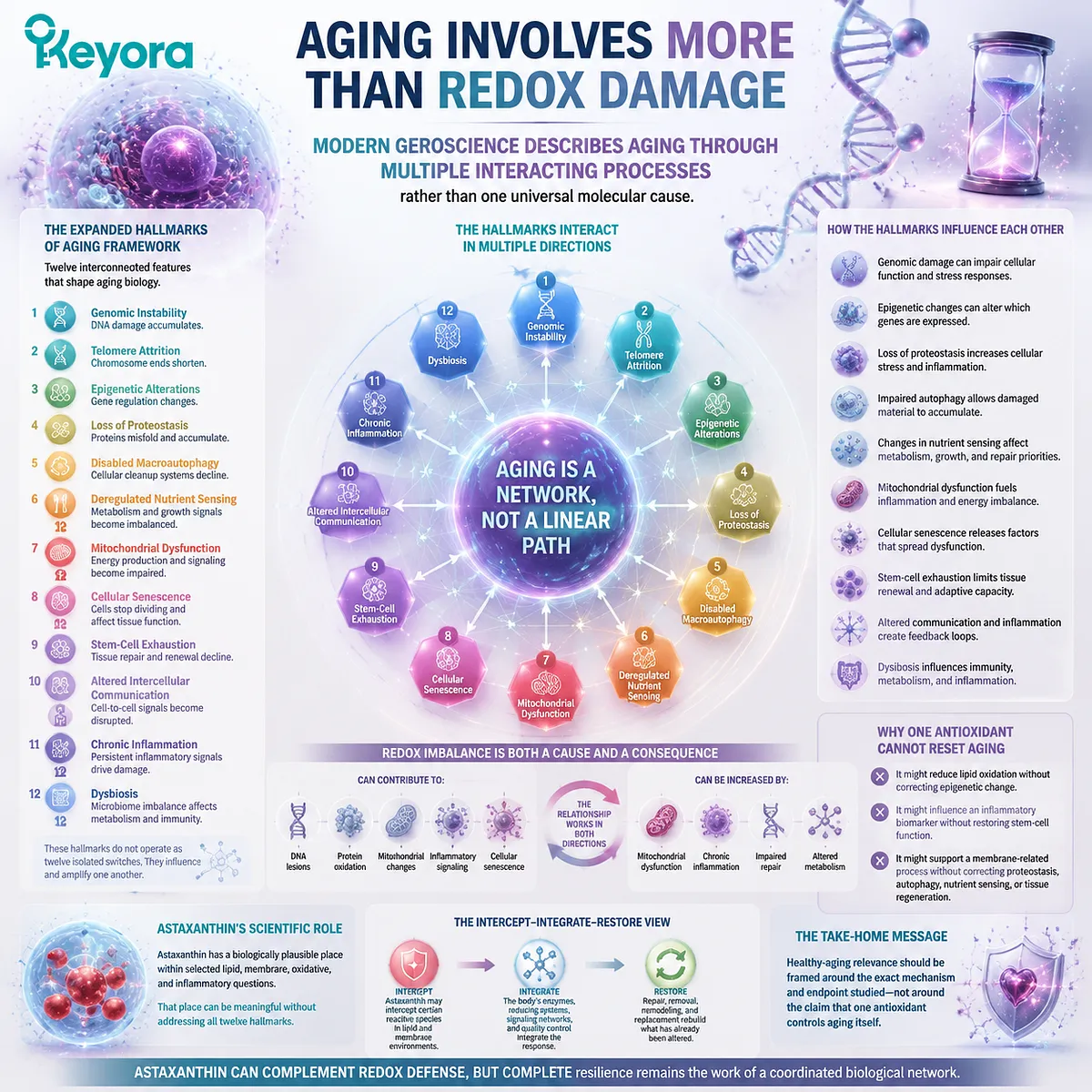
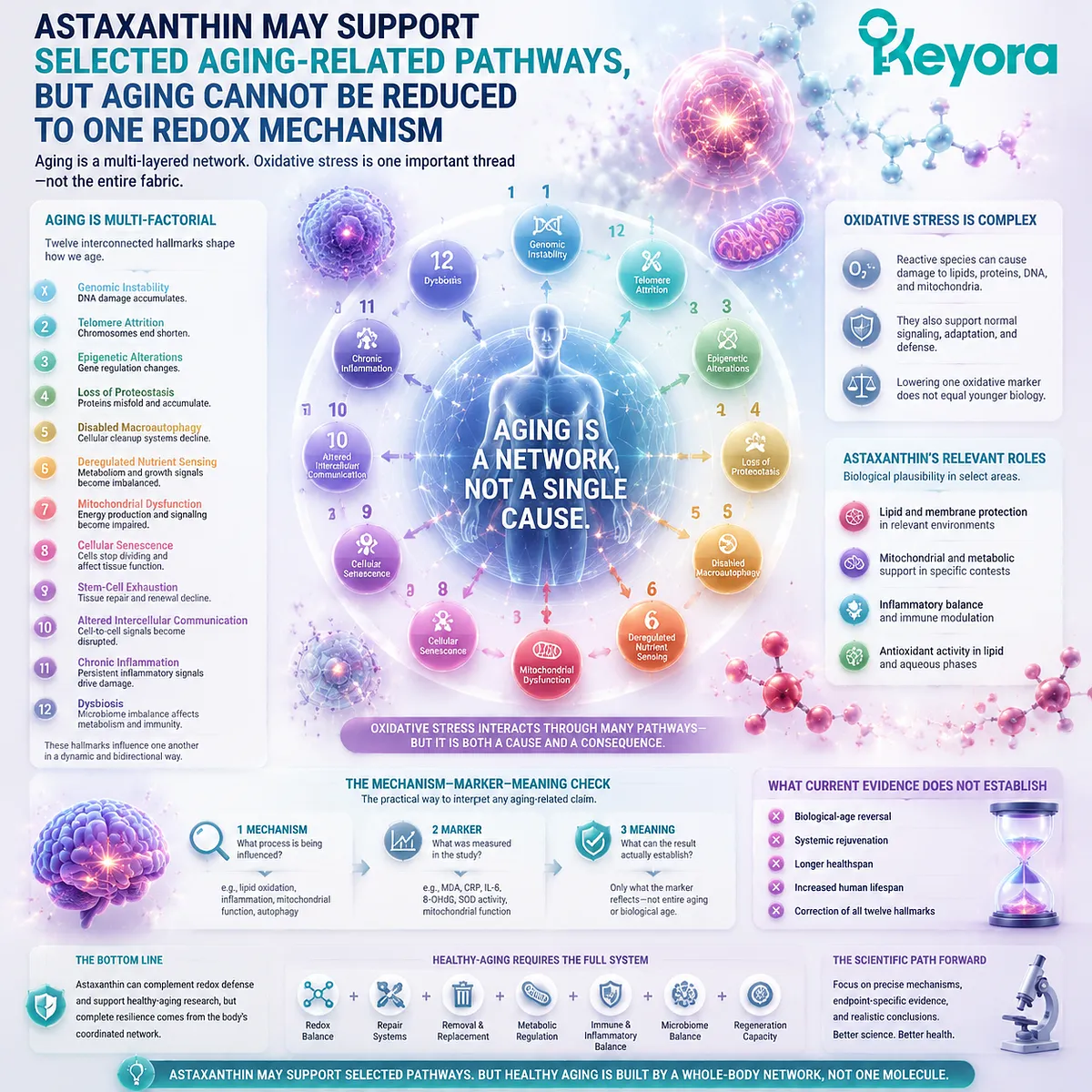
The expanded Hallmarks of Aging framework identifies twelve interconnected features: genomic instability, telomere attrition, epigenetic alterations, loss of proteostasis, disabled macroautophagy, deregulated nutrient sensing, mitochondrial dysfunction, cellular senescence, stem-cell exhaustion, altered intercellular communication, chronic inflammation, and dysbiosis.
These hallmarks do not operate as twelve isolated switches. They influence one another.
Genomic damage can affect cellular function and stress responses. Epigenetic changes can alter which genes are expressed. Loss of proteostasis reduces the ability to fold, repair, and remove proteins correctly. Impaired autophagy can allow damaged cellular material to accumulate. Changes in nutrient sensing can alter metabolism, growth, and repair priorities.
Mitochondrial dysfunction can influence energy regulation, metabolite production, redox signaling, and inflammatory communication. Cellular senescence can change tissue behavior through secreted factors. Stem-cell exhaustion can limit tissue renewal. Chronic inflammation and altered intercellular communication can spread local dysfunction through wider biological networks.
Oxidative stress can connect with several of these processes. It may contribute to DNA lesions, protein oxidation, mitochondrial changes, inflammatory signaling, or cellular senescence. The relationship also works in the opposite direction. Mitochondrial dysfunction, inflammation, impaired repair, and altered metabolism may increase or redistribute oxidative pressure.
Redox imbalance is therefore both a potential contributor to aging biology and a possible consequence of other aging-related changes.
This is why targeting one oxidative pathway cannot be assumed to reset the wider aging system. A compound might alter lipid oxidation without correcting epigenetic change. It might influence an inflammatory biomarker without restoring stem-cell function. It might support a membrane-related process without correcting proteostasis, autophagy, nutrient sensing, or tissue regeneration.
Astaxanthin has a biologically plausible place within selected lipid, membrane, oxidative, and inflammatory questions. That place can be scientifically meaningful without turning Astaxanthin into an intervention for all twelve hallmarks.
Healthy-aging relevance should therefore be framed around the exact mechanism and endpoint studied, not around the claim that one antioxidant controls aging itself.
A Biomarker Is Not Biological Age
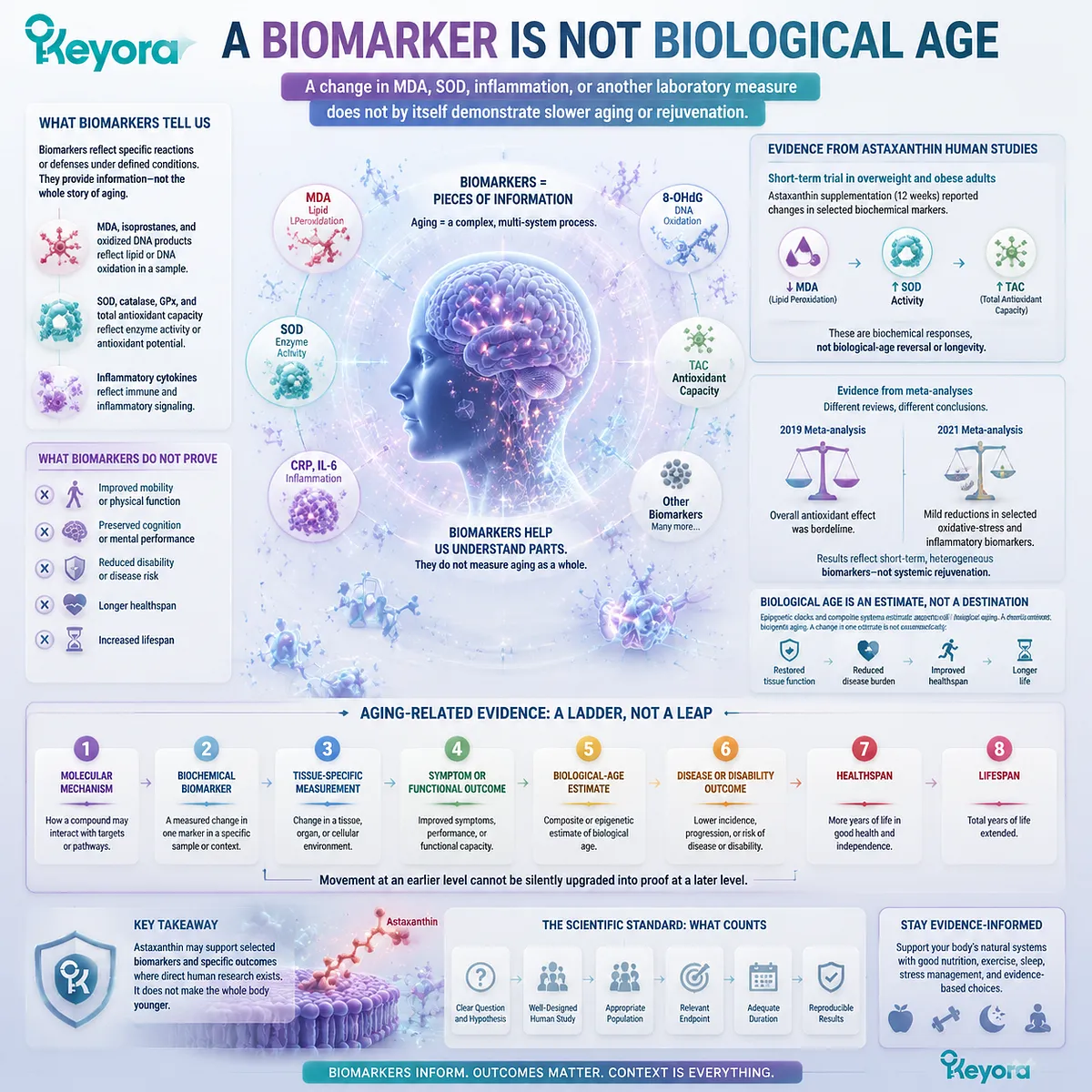
A change in MDA, SOD, inflammation, or another laboratory measure does not by itself demonstrate slower aging or rejuvenation
Oxidative-stress studies frequently measure malondialdehyde, isoprostanes, oxidized DNA products, total antioxidant capacity, or antioxidant-enzyme activity. These measurements can provide information about selected reactions or defense systems under defined conditions.
They do not measure aging as a complete process.
A lower lipid-peroxidation marker may indicate a change in one oxidative pathway. A higher superoxide dismutase measurement may reflect altered enzyme expression, activity, stress response, or assay conditions. Neither result independently proves improved mobility, preserved cognition, reduced disability, longer healthspan, or increased survival.
Human Astaxanthin studies illustrate this distinction. A short intervention in overweight and obese adults reported changes in selected oxidative-stress measurements, including lipid-peroxidation markers, superoxide dismutase activity, and total antioxidant capacity. The trial measured biochemical responses, not biological-age reversal or longevity.
Broader reviews also show why individual studies require caution. A 2019 meta-analysis described the overall antioxidant effect as borderline, while a later meta-analysis concluded that Astaxanthin supplementation produced mild reductions in selected oxidative-stress and inflammatory biomarkers across randomized trials. These summaries do not establish systemic rejuvenation because their included studies measured heterogeneous short-term biomarkers in different populations and protocols.
Biological-age measures create another interpretive layer. Epigenetic clocks and composite biomarker systems attempt to estimate aspects of biological aging, but a change in one estimate is not automatically equivalent to restored tissue function, reduced disease burden, or longer life.
Aging-related evidence should therefore be separated into distinct levels:
-
molecular mechanism
-
biochemical biomarker
-
tissue-specific measurement
-
symptom or functional outcome
-
biological-age estimate
-
disease or disability outcome
-
healthspan
-
lifespan
Movement at an earlier level cannot be silently upgraded into proof at a later level.
For Astaxanthin, current evidence may support careful discussion of selected biomarkers and specific tissue or functional endpoints where direct human research exists. It does not support claims that Astaxanthin makes the whole body younger.
Use the Keyora Mechanism – Marker – Meaning Check
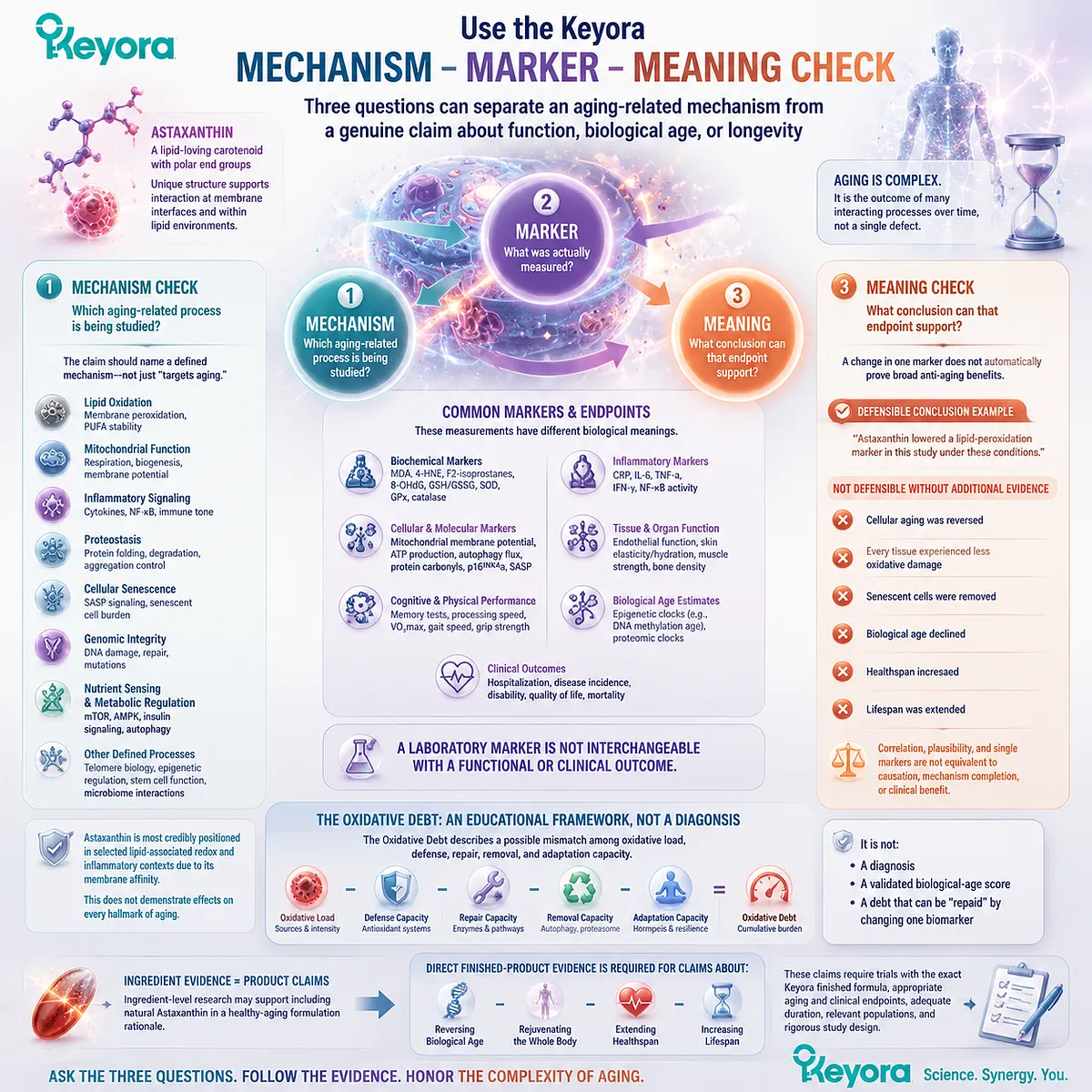
Three questions can separate an aging-related mechanism from a genuine claim about function, biological age, or longevity
The Keyora Mechanism – Marker – Meaning Check helps readers evaluate anti-aging claims without dismissing potentially useful research or exaggerating what it proves.
Mechanism: Which aging-related process is being studied?
A claim should identify whether the research concerns lipid oxidation, mitochondrial function, inflammatory signaling, proteostasis, cellular senescence, genomic damage, nutrient sensing, or another defined process.
“Targets aging” is not a sufficient mechanism. Aging is too broad to function as one molecular endpoint.
Astaxanthin is most credibly positioned in selected lipid-associated redox and inflammatory contexts. Its membrane affinity can provide a rationale for studying oxidative reactions in lipid environments. That rationale does not demonstrate effects on every hallmark of aging.
Marker: What did the researchers actually measure?
The endpoint might be MDA, an isoprostane, SOD activity, a cytokine, skin hydration, cognitive performance, muscle function, an epigenetic estimate, disability, or mortality.
These measurements have different biological meanings. A laboratory marker is not interchangeable with a functional or clinical outcome.
Meaning: What conclusion can that endpoint support?
Suppose a study reports that Astaxanthin lowered a lipid-peroxidation marker. The defensible conclusion is that the tested intervention altered that marker under the study conditions.
It would not be defensible to conclude automatically that:
-
cellular aging was reversed
-
every tissue experienced less oxidative damage
-
senescent cells were removed
-
biological age declined
-
healthspan increased
-
lifespan was extended
The same discipline applies to the Keyora concept of The Oxidative Debt. It is an educational framework describing a possible mismatch among oxidative load, defense, repair, removal, and adaptation. It is not a diagnosis, a validated biological-age score, or a condition that can be declared repaid because one biomarker changed.
Ingredient-level research may support including natural Astaxanthin in a healthy-aging formulation rationale. The exact Keyora finished formula has not thereby been shown to reverse biological age, rejuvenate the whole body, extend healthspan, or increase lifespan. Those claims would require direct finished-product trials with appropriate aging and clinical endpoints.
Closing Summary
Astaxanthin may support selected aging-related pathways, but aging cannot be reduced to one redox mechanism
Aging is not simply oxidation. Oxidative stress can influence lipid, protein, DNA, mitochondrial, and inflammatory processes, but aging also involves genomic, epigenetic, proteostatic, metabolic, cellular, immune, microbial, and regenerative changes.
Reactive oxygen species can participate in both damage and normal adaptation. Reducing one oxidative marker therefore does not automatically mean that aging has slowed or that a person has become biologically younger.
The Mechanism – Marker – Meaning Check provides the practical verdict. Identify the aging-related process, determine what the study measured, and restrict the conclusion to what that endpoint can actually establish.
Astaxanthin may support selected oxidative, membrane, and inflammatory environments relevant to healthy-aging research. Current evidence does not establish biological-age reversal, systemic rejuvenation, longer healthspan, or increased human lifespan.
Healthy-aging science becomes more useful when oxidative stress is treated as one important part of aging biology rather than the entire explanation.
This article is for educational and informational purposes only. It does not provide medical advice, diagnosis, treatment, cure, prevention, disease outcome claims, hormone restoration claims, fertility outcome claims, or formula-specific clinical efficacy claims.