
Does Astaxanthin Replace the Body’s Antioxidant Defenses?
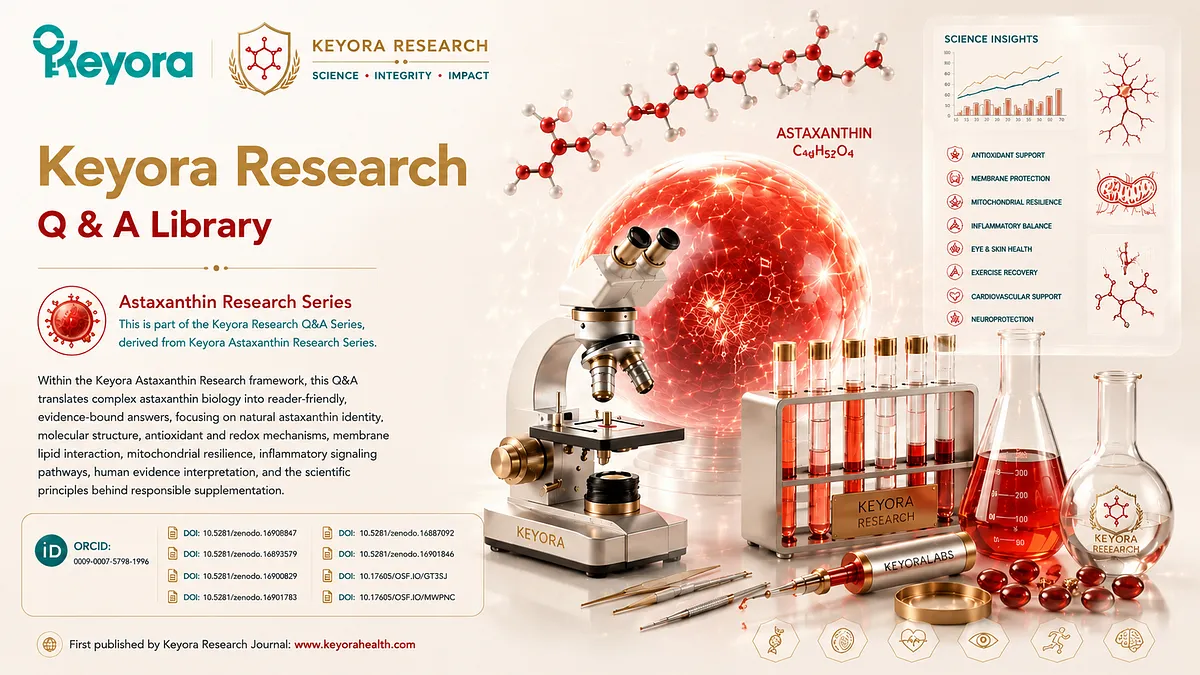
Keyora Research Q&A Library
This is part of the Keyora Research Q&A Series, derived from Keyora Astaxanthin Research Journal Series.
Within the Keyora Astaxanthin Researcn framework, this Q&A translates complex astaxanthin biology into reader-friendly, evidence-bound answers, focusing on natural astaxanthin identity, molecular structure, antioxidant and redox mechanisms, membrane lipid interaction, mitochondrial resilience, inflammatory signaling pathways, human evidence interpretation, and the scientific principles behind responsible supplementation.
First published by Keyora Research Journal: www.keyorahealth.com
Direct Answer
No.
Astaxanthin does not replace the body’s antioxidant defenses.
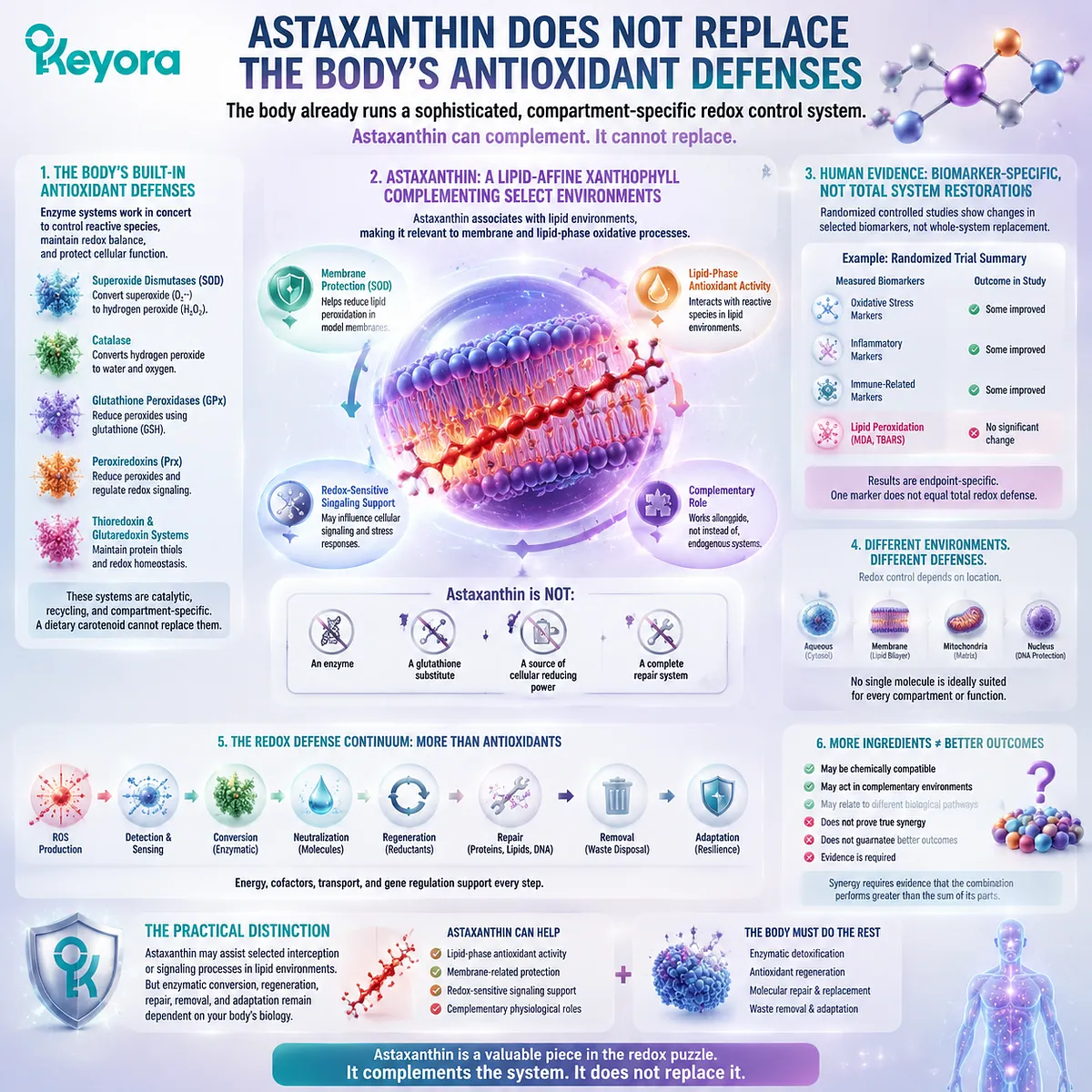
The body already operates a compartment-specific redox control system. Superoxide dismutases help convert superoxide into hydrogen peroxide, while catalase, glutathione peroxidases, peroxiredoxins, and related reducing systems help process peroxides and regulate redox-sensitive proteins. These pathways perform catalytic and recycling functions that a dietary carotenoid cannot reproduce.
Astaxanthin can complement selected redox and lipid environments, but it cannot replace endogenous antioxidant enzymes, cellular repair, or normal physiological adaptation.
Astaxanthin is a dietary xanthophyll carotenoid with affinity for lipid-containing environments. This provides a scientific rationale for studying selected membrane-related oxidative processes and redox-sensitive responses. It does not make Astaxanthin an enzyme, a glutathione substitute, a source of cellular reducing power, or a complete repair system.
Human research has reported changes in selected oxidative, inflammatory, and immune-related measurements after Astaxanthin supplementation, but the findings were biomarker-specific rather than proof that the body’s entire antioxidant system had been restored. In one randomized trial, some measured endpoints changed while lipid peroxidation did not, illustrating why a result from one marker cannot represent total redox defense.
The practical distinction is simple: Astaxanthin may assist selected interception or signaling processes, while enzymatic conversion, regeneration, repair, removal, and adaptation remain dependent on endogenous biology.
The Body Already Has a Redox Control System
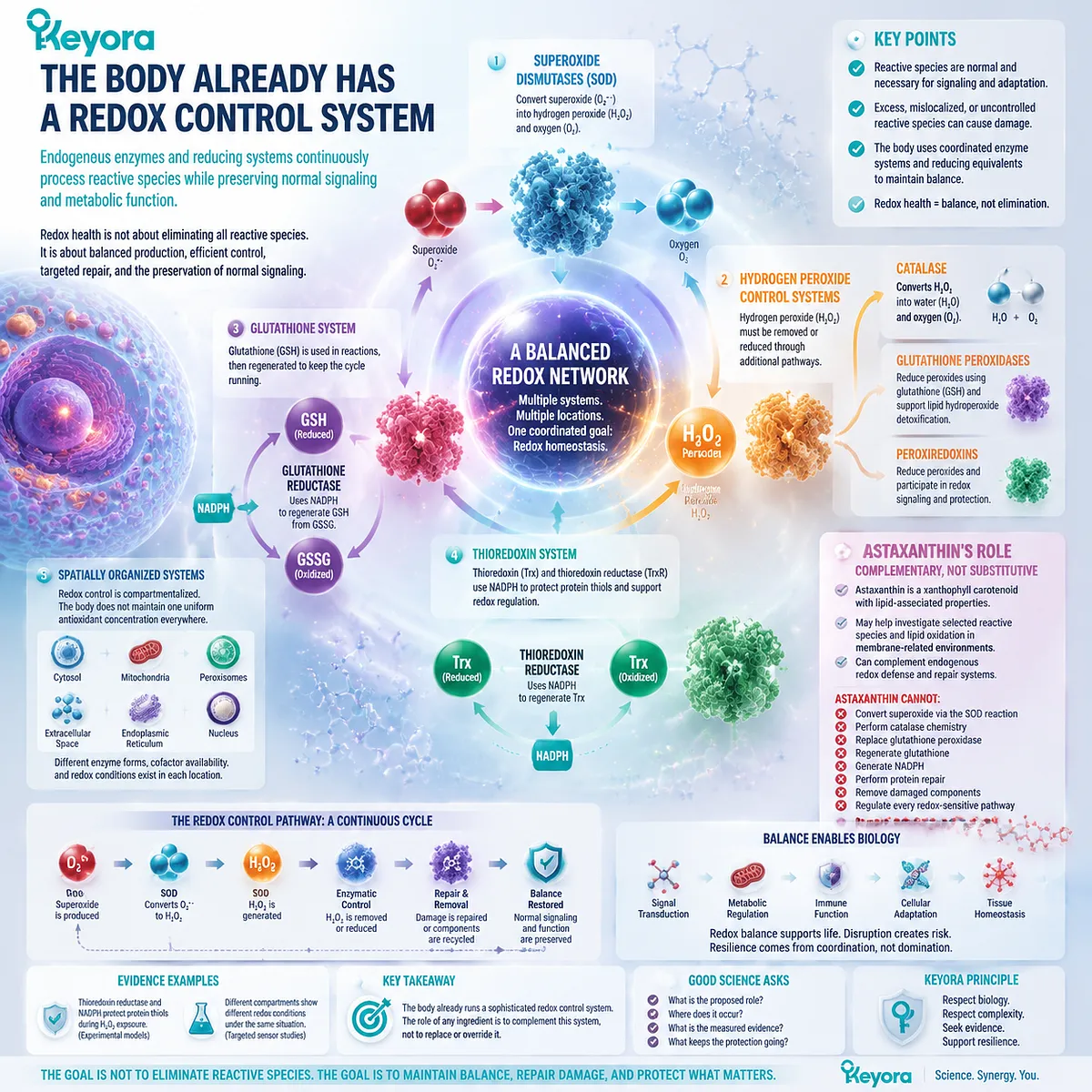
Endogenous enzymes and reducing systems continuously process reactive species while preserving normal signaling and metabolic function
Reactive oxygen species are normal products and regulators of aerobic biology. At controlled levels, molecules such as hydrogen peroxide can participate in signaling, enzyme regulation, adaptation, and cellular communication. Excess formation, unsuitable location, or inadequate control can instead contribute to molecular damage. Redox health therefore does not mean eliminating every reactive species.
The body manages these reactions through several connected systems.
Superoxide dismutases catalyze the conversion of superoxide into hydrogen peroxide and oxygen. This is not the final removal step because hydrogen peroxide must then be controlled through other pathways. Catalase can convert hydrogen peroxide into water and oxygen, while glutathione peroxidases and peroxiredoxins reduce selected peroxides through reactions linked to broader reducing systems.
Glutathione-related pathways involve more than the presence of one small molecule. Reduced glutathione can participate in enzyme-catalyzed reactions, after which oxidized glutathione must be returned to a reduced state. That continuing cycle depends on enzymes and cellular reducing capacity.
Thioredoxin-related pathways provide another form of redox regulation. Experimental work has shown that thioredoxin reductase and NADPH can protect selected protein thiols during hydrogen peroxide exposure, demonstrating that redox control involves enzyme systems and reducing equivalents rather than one freely circulating antioxidant molecule.
These systems are also organized by location. Different enzyme forms and reducing systems operate in the cytosol, mitochondria, extracellular space, and other compartments. The body does not maintain one uniform antioxidant concentration across every tissue and organelle.
Astaxanthin cannot take over these catalytic roles. It does not convert superoxide through the SOD reaction, perform catalase chemistry, replace glutathione peroxidase, or generate the NADPH required to sustain reducing cycles.
Its role must therefore be described as complementary rather than substitutive.
Defense Also Requires Repair and Removal
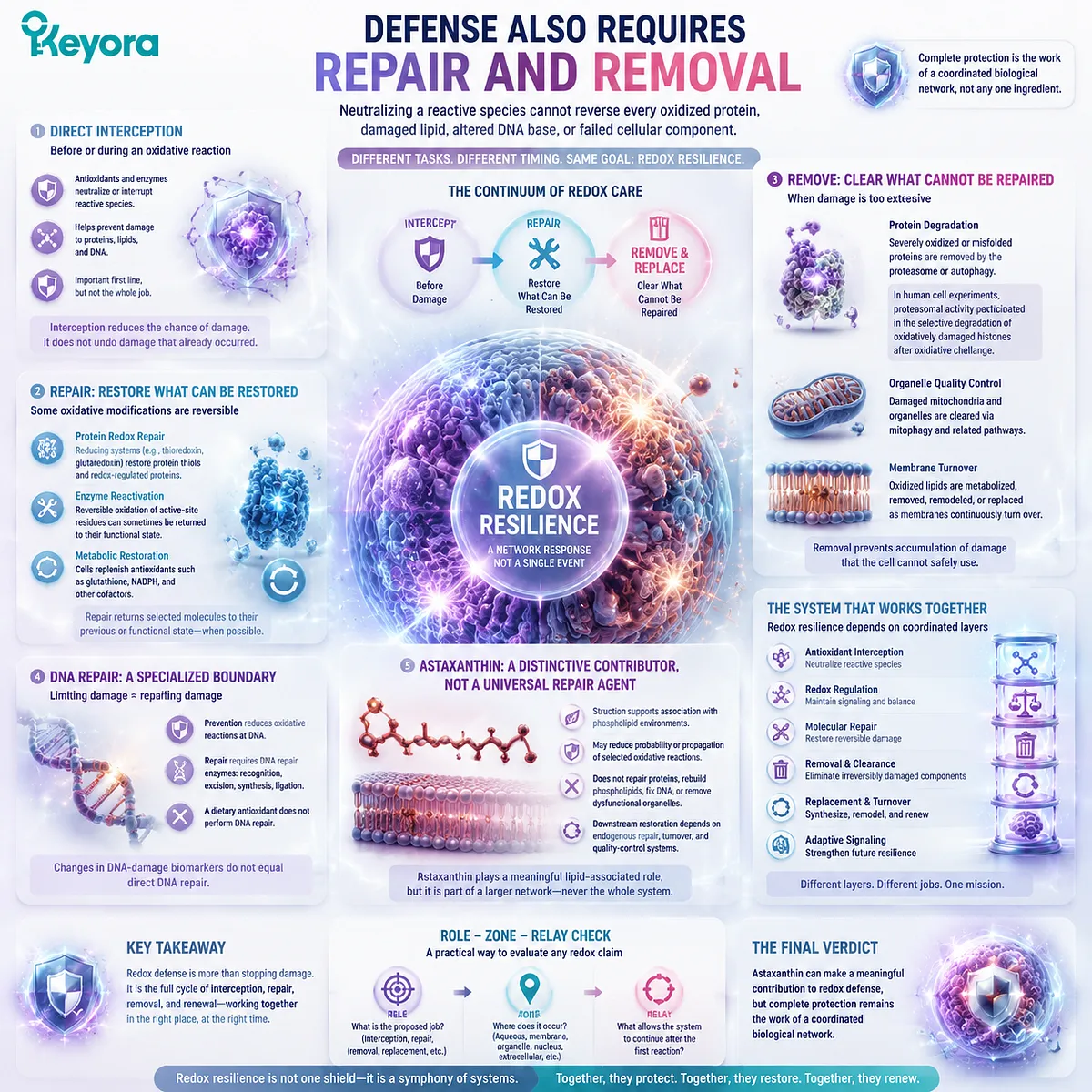
Neutralizing a reactive species cannot reverse every oxidized protein, damaged lipid, altered DNA base, or failed cellular component
Direct interception occurs before or during an oxidative reaction. Repair and removal occur after biological material has already been altered. These are different tasks.
Some oxidative modifications are reversible. Cellular reducing systems may restore selected protein thiols or return regulated signaling proteins toward their previous redox state. Other damage is too extensive for simple chemical reversal.
Oxidized proteins may lose normal shape or function. Cells can degrade severely damaged proteins through proteasomal or autophagic pathways and replace them through new protein synthesis. In human cell experiments, proteasomal activity was shown to participate in the selective degradation of oxidatively damaged histones after oxidative challenge.
Membrane recovery also involves more than intercepting a radical. Oxidized lipid species may be metabolized, removed, remodeled, or replaced as membranes undergo continuing turnover. Damaged organelles may require quality-control processes rather than another antioxidant reaction.
DNA presents another boundary. Preventing or limiting oxidative reactions is not the same as repairing an altered DNA base or strand. DNA repair depends on specialized recognition, excision, synthesis, and ligation systems. A dietary antioxidant cannot be described as performing these processes merely because a study reports a change in a DNA-damage biomarker.
This distinction is especially important when marketing language claims that Astaxanthin “repairs cells.” The evidence may support investigation of selected oxidative processes, but that does not show that Astaxanthin directly repairs proteins, reconstructs phospholipids, corrects DNA lesions, or removes dysfunctional organelles.
Astaxanthin may reduce the probability or propagation of selected oxidative reactions under particular conditions. Any downstream restoration still depends on endogenous metabolism, enzyme turnover, molecular repair, membrane remodeling, protein quality control, and component replacement.
Redox resilience is therefore not only a question of how many reactive species were intercepted. It also depends on how effectively the body recognizes, repairs, removes, and replaces what has already been altered.
Where Dietary Astaxanthin Fits
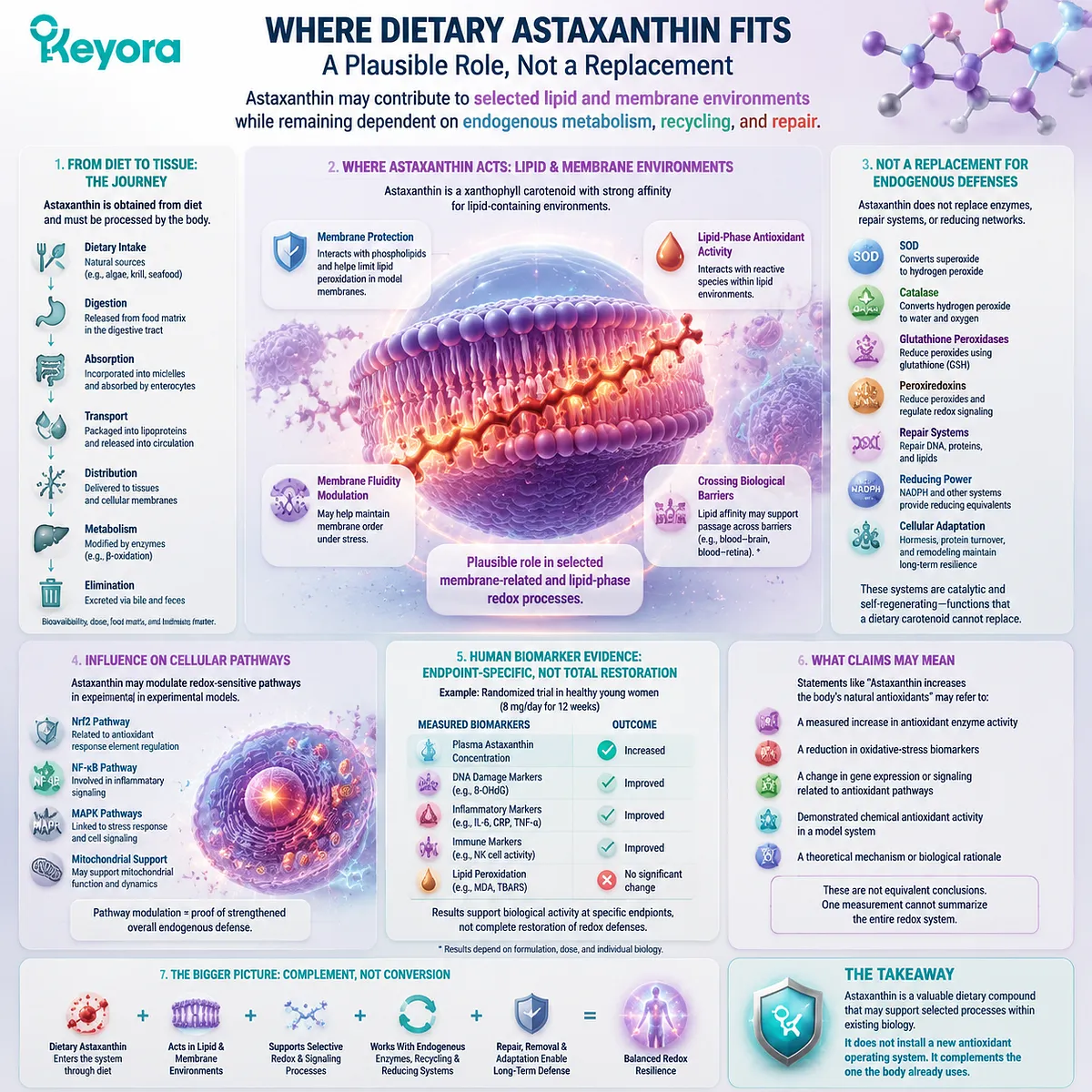
Astaxanthin may contribute to selected lipid and membrane environments while remaining dependent on endogenous metabolism, recycling, and repair
Astaxanthin is not produced as one of the body’s antioxidant enzymes. It enters the system through dietary exposure and must undergo digestion, absorption, transport, distribution, metabolism, and eventual elimination.
Its xanthophyll structure makes lipid-containing environments particularly relevant to its study. This creates a plausible role in selected membrane-related and lipid-phase redox processes, where chemical environment and molecular location differ from those in aqueous cellular fluids.
That positioning does not mean Astaxanthin becomes a permanent structural component of every membrane. It also does not establish that it reaches every tissue at an effective concentration or produces a clinically meaningful response in every organ.
Astaxanthin may also influence redox-sensitive cellular pathways in experimental models. However, pathway modulation must be interpreted carefully. A change in gene expression, enzyme activity, or signaling protein does not prove that the whole endogenous defense system has been strengthened.
Human biomarker studies reinforce this boundary. In the randomized study of healthy young women, plasma Astaxanthin increased with supplementation, and selected DNA-damage, inflammatory, and immune measurements changed. Lipid peroxidation did not show the same response. The result supports endpoint-specific biological activity, not complete restoration of endogenous antioxidant defenses.
This is why statements such as “Astaxanthin increases the body’s natural antioxidants” require clarification.
The claim might mean:
-
a measured antioxidant-enzyme activity changed
-
a circulating oxidative-stress marker changed
-
a cellular pathway associated with antioxidant regulation changed
-
the ingredient showed direct chemical antioxidant activity
-
a broader theoretical mechanism was proposed
These are not equivalent conclusions.
A higher SOD or glutathione-related measurement would also require interpretation. It could reflect altered expression, activity, substrate availability, physiological stress, compensation, or assay conditions. Higher is not automatically better, and one measurement cannot summarize the full redox system.
The most defensible position is that Astaxanthin may support selected processes within existing biology. It does not install a new antioxidant operating system or replace the one the body already uses.
Use the Keyora Intercept – Convert – Restore Check
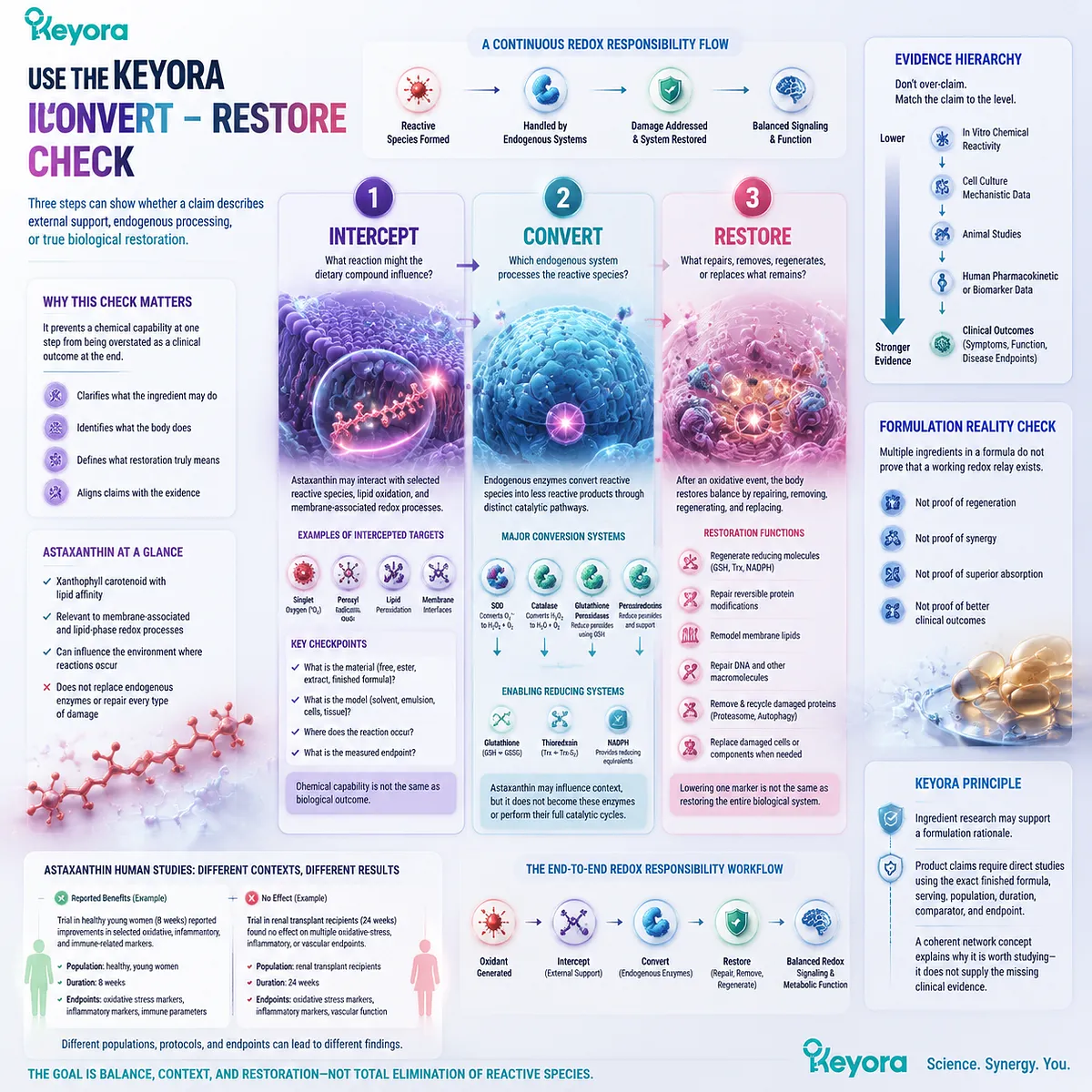
Three steps can show whether a claim describes external support, endogenous processing, or true biological restoration
The Keyora Intercept – Convert – Restore Check helps readers identify what an Astaxanthin claim actually describes.
Intercept: What reaction might the dietary compound influence?
Astaxanthin may be studied for interactions with selected reactive species, lipid oxidation, and membrane-associated redox processes. This is the layer at which its molecular structure and lipid affinity are most directly relevant.
An interception claim should identify the material, model, location, and endpoint. It should not jump directly from chemical capability to disease prevention or total cellular protection.
Convert: Which endogenous system processes the reactive species?
Superoxide, hydrogen peroxide, lipid hydroperoxides, and other reactive products are not handled through one identical reaction. SOD, catalase, glutathione peroxidases, peroxiredoxins, thioredoxin systems, and related pathways perform distinct catalytic tasks.
Astaxanthin may affect the context in which some reactions occur, but it does not become these enzymes or perform their complete catalytic cycles.
Restore: What repairs, removes, regenerates, or replaces what remains?
After an oxidative event, the system may need to regenerate reducing molecules, repair reversible protein changes, degrade irreversibly damaged proteins, remodel membrane lipids, repair DNA, or replace failed cellular components.
This step prevents a common claim error. Reducing one oxidative marker is not the same as restoring the entire system that processes damage.
The same check applies to a finished formula. Ingredient-level evidence may support combining natural Astaxanthin with an appropriate lipid matrix. It does not prove that the complete product increases endogenous enzyme capacity, restores glutathione, repairs oxidative damage, or produces a superior clinical result.
Those product-level conclusions require direct research on the exact finished formula, serving, population, duration, comparator, and endpoint.
Closing Summary
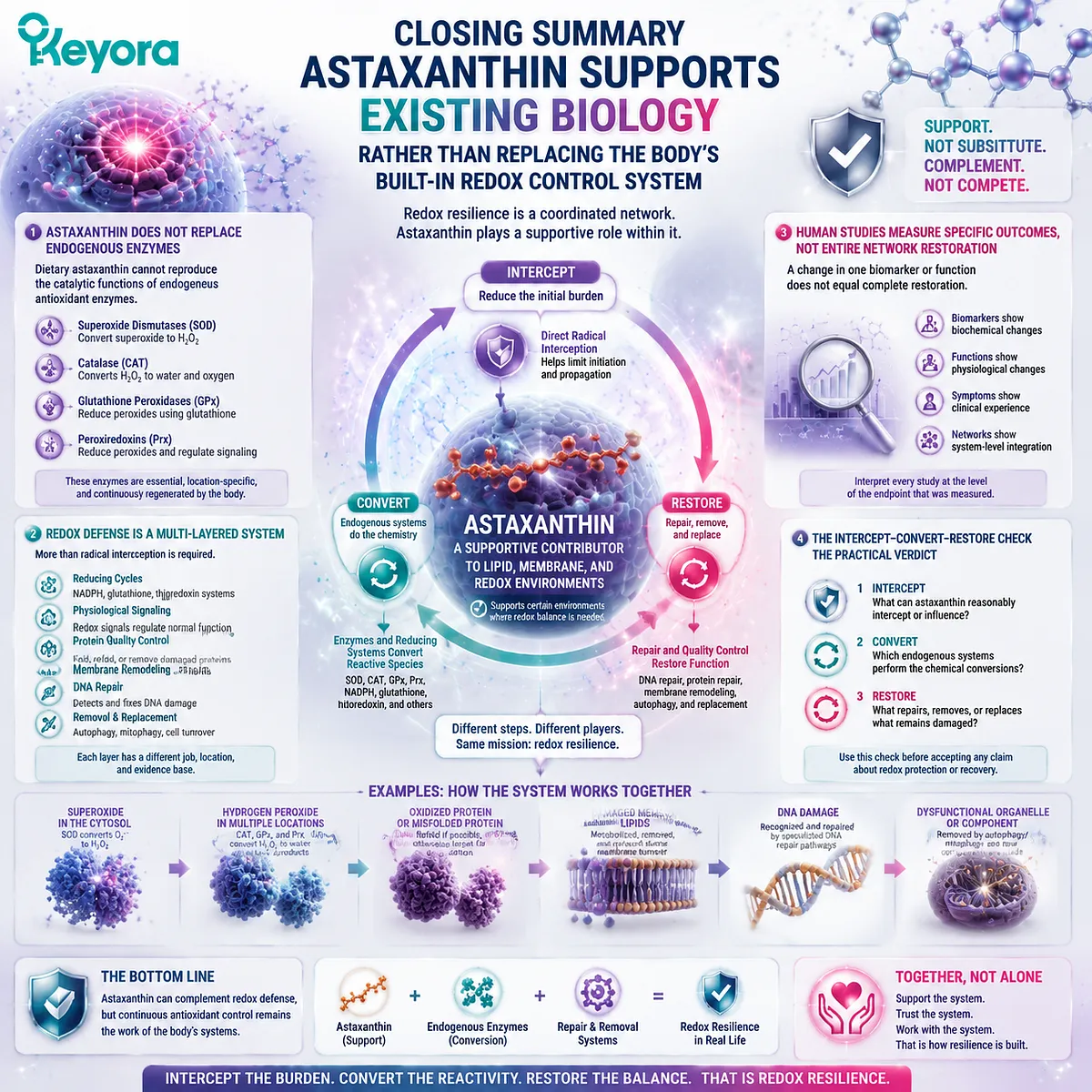
Astaxanthin supports existing biology rather than replacing the body’s built-in redox control system
Astaxanthin does not replace the body’s antioxidant defenses. Endogenous enzymes such as superoxide dismutases, catalase, glutathione peroxidases, and peroxiredoxins perform catalytic functions that a dietary xanthophyll cannot reproduce.
Redox defense also includes reducing cycles, physiological signaling, protein quality control, membrane remodeling, DNA repair, removal, and replacement. Intercepting a reactive species is only one part of that larger system.
Astaxanthin may contribute to selected lipid, membrane, and redox environments. Human studies can test specific biomarkers or functions, but a change in one measurement does not prove restoration of the complete endogenous defense network.
The Intercept – Convert – Restore Check provides the practical verdict: identify what Astaxanthin may intercept, determine which endogenous systems perform conversion, and ask what repairs or removes remaining damage.
Astaxanthin can complement redox defense, but continuous antioxidant control remains the work of the body’s enzymes, reducing systems, repair pathways, removal processes, and normal physiological adaptation.
This article is for educational and informational purposes only. It does not provide medical advice, diagnosis, treatment, cure, prevention, disease outcome claims, hormone restoration claims, fertility outcome claims, or formula-specific clinical efficacy claims.