
Why Can’t One Antioxidant Do Everything?
Keyora Research Q&A Library
This is part of the Keyora Research Q&A Series, derived from Keyora Astaxanthin Research Journal Series.
Within the Keyora Astaxanthin Researcn framework, this Q&A translates complex astaxanthin biology into reader-friendly, evidence-bound answers, focusing on natural astaxanthin identity, molecular structure, antioxidant and redox mechanisms, membrane lipid interaction, mitochondrial resilience, inflammatory signaling pathways, human evidence interpretation, and the scientific principles behind responsible supplementation.
First published by Keyora Research Journal: www.keyorahealth.com
Direct Answer
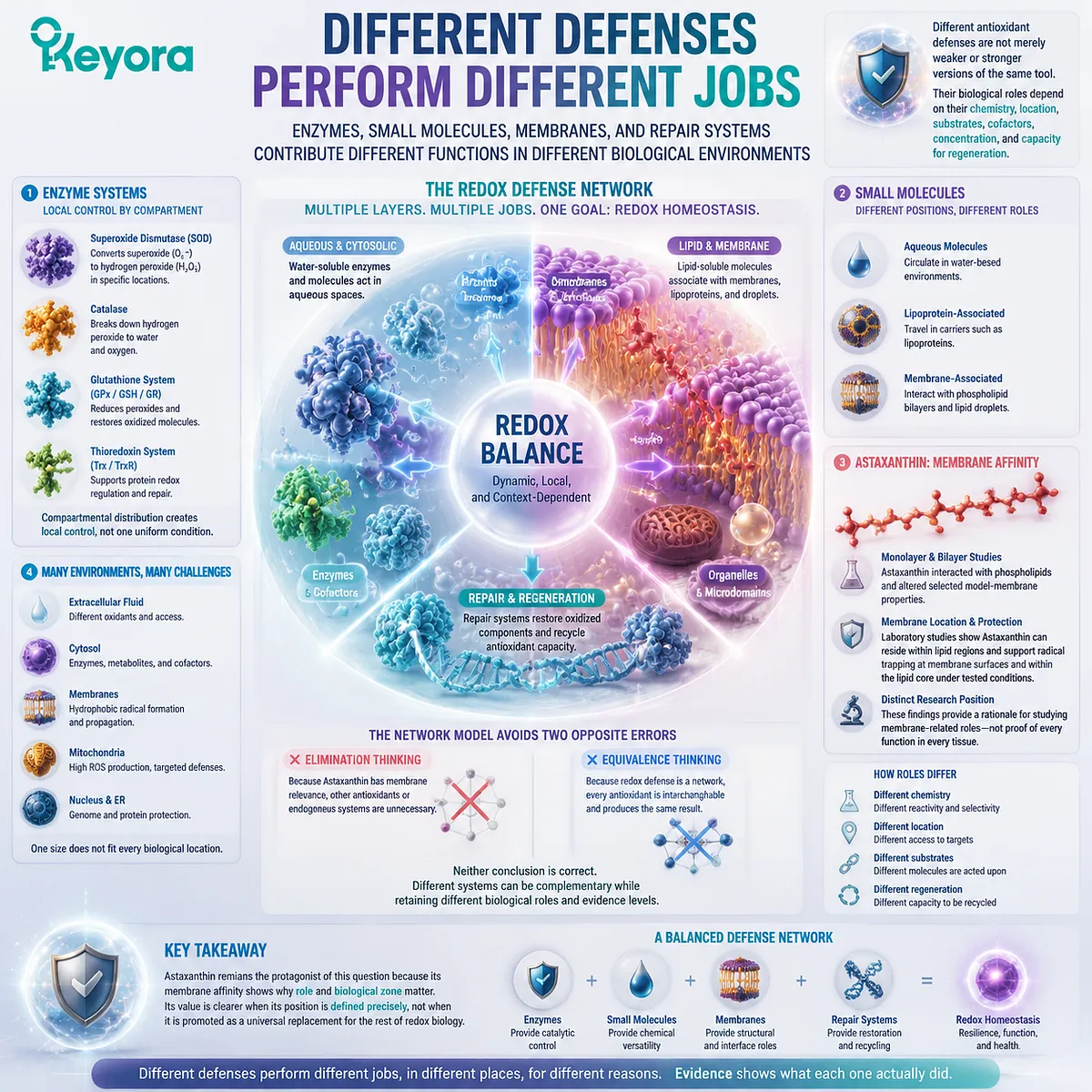
No single antioxidant can do everything because human redox defense is not one reaction. It is a coordinated system that manages oxidant production, normal redox signaling, chemical conversion, membrane oxidation, antioxidant regeneration, molecular repair, and the removal of components that can no longer be restored.
A compound may react effectively with one oxidant yet be poorly suited to another. It may work in an aqueous environment but not remain inside a lipid membrane, or it may associate with lipids without replacing enzymes that process reactive species inside specific cellular compartments.
No single antioxidant can provide complete redox defense because enzymes, small molecules, repair systems, and biological compartments perform different but connected roles.
Astaxanthin has a meaningful place within this network. As a lipid-associated xanthophyll carotenoid, it is particularly relevant to research involving membranes and lipid-phase oxidation. Model-membrane studies support its interaction with phospholipid systems, but this does not mean Astaxanthin replaces superoxide dismutases, catalase, glutathione-dependent systems, protein repair, DNA repair, or normal redox adaptation.
The practical conclusion is not that people should take as many antioxidants as possible. Multiple ingredients in one product do not automatically cooperate, regenerate one another, or produce a superior clinical result. Network biology explains why different roles exist. Direct research is still required to prove whether a specific ingredient combination produces additive effects, true synergy, or a meaningful human outcome.
Redox Defense Is More Than Radical Quenching
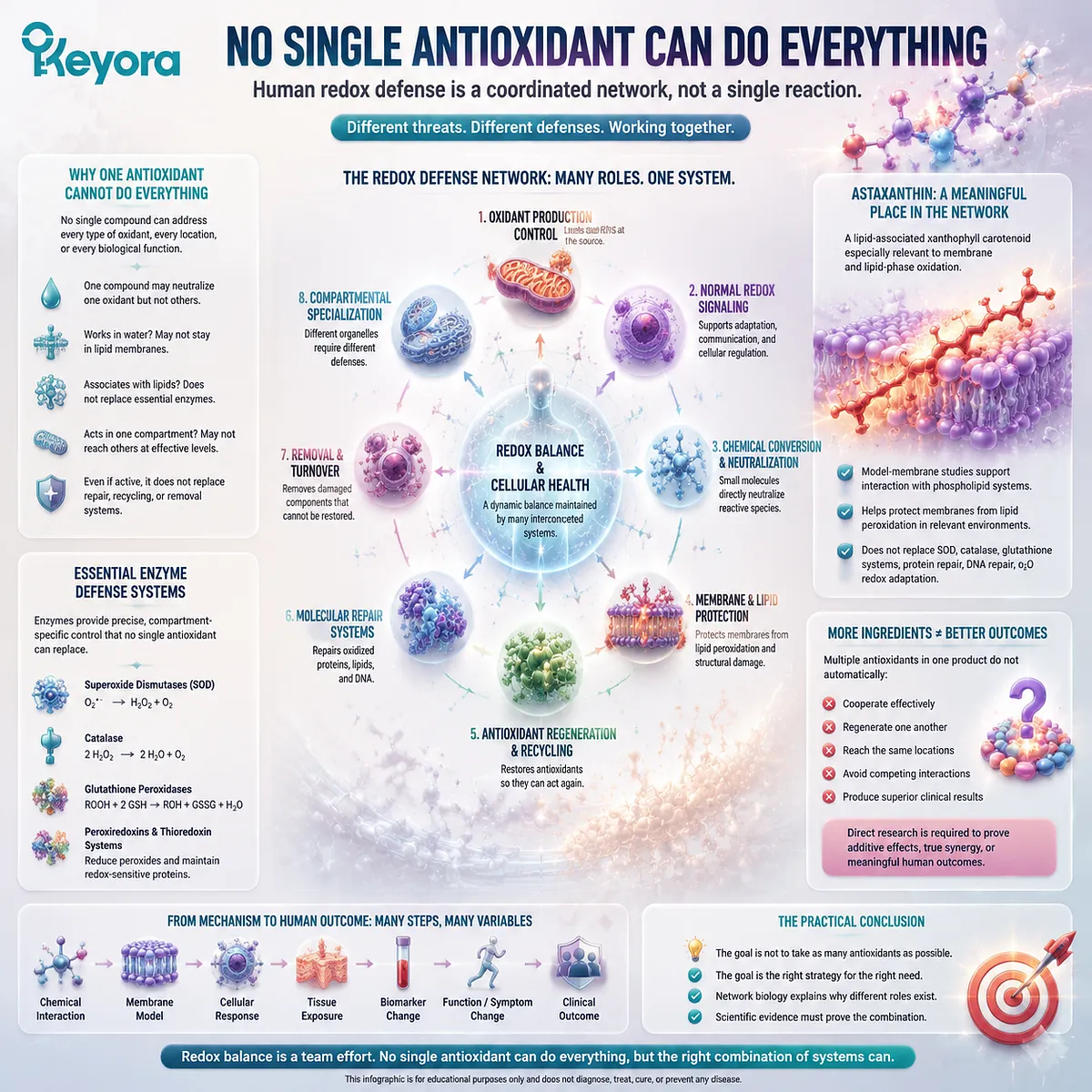
The body must control oxidants, repair damage, remove failed components, and preserve normal redox signaling
Popular antioxidant explanations often reduce the entire process to one image: a nutrient finds a free radical and neutralizes it. Direct chemical interception can occur, but it represents only one part of redox control.
Reactive oxygen species also participate in regulated biological communication. Their effects depend on the species involved, where it is produced, its local concentration, how long it remains present, and which proteins or lipids it encounters. Experiments using hydrogen-peroxide sensors directed to the nucleus, cytosol, mitochondria, peroxisomes, and other compartments demonstrate that redox conditions can differ within the same cell.
The body must therefore do more than eliminate reactive molecules. Some enzyme systems convert one reactive species into another form that can be processed through a subsequent reaction. Other systems maintain proteins in suitable redox states, control reversible signaling changes, or limit the spread of oxidation through membranes.
When oxidation has already altered a molecule, the response may require repair rather than scavenging. Reversibly modified proteins may be restored through reducing systems. Damaged lipids may be remodeled or replaced. Severely altered proteins and cellular components may need to be removed and recycled.
This distinction changes how Astaxanthin should be described. Astaxanthin may help researchers investigate selected reactive species and lipid oxidation in membrane-related environments. It should not be presented as a substance that erases oxidative stress or restores every damaged structure.
A useful antioxidant can contribute to one part of the response without controlling the entire system. In the same way, a useful repair enzyme does not perform every membrane-related antioxidant reaction. Redox resilience depends on coordination among processes rather than domination by one ingredient.
Different Defenses Perform Different Jobs
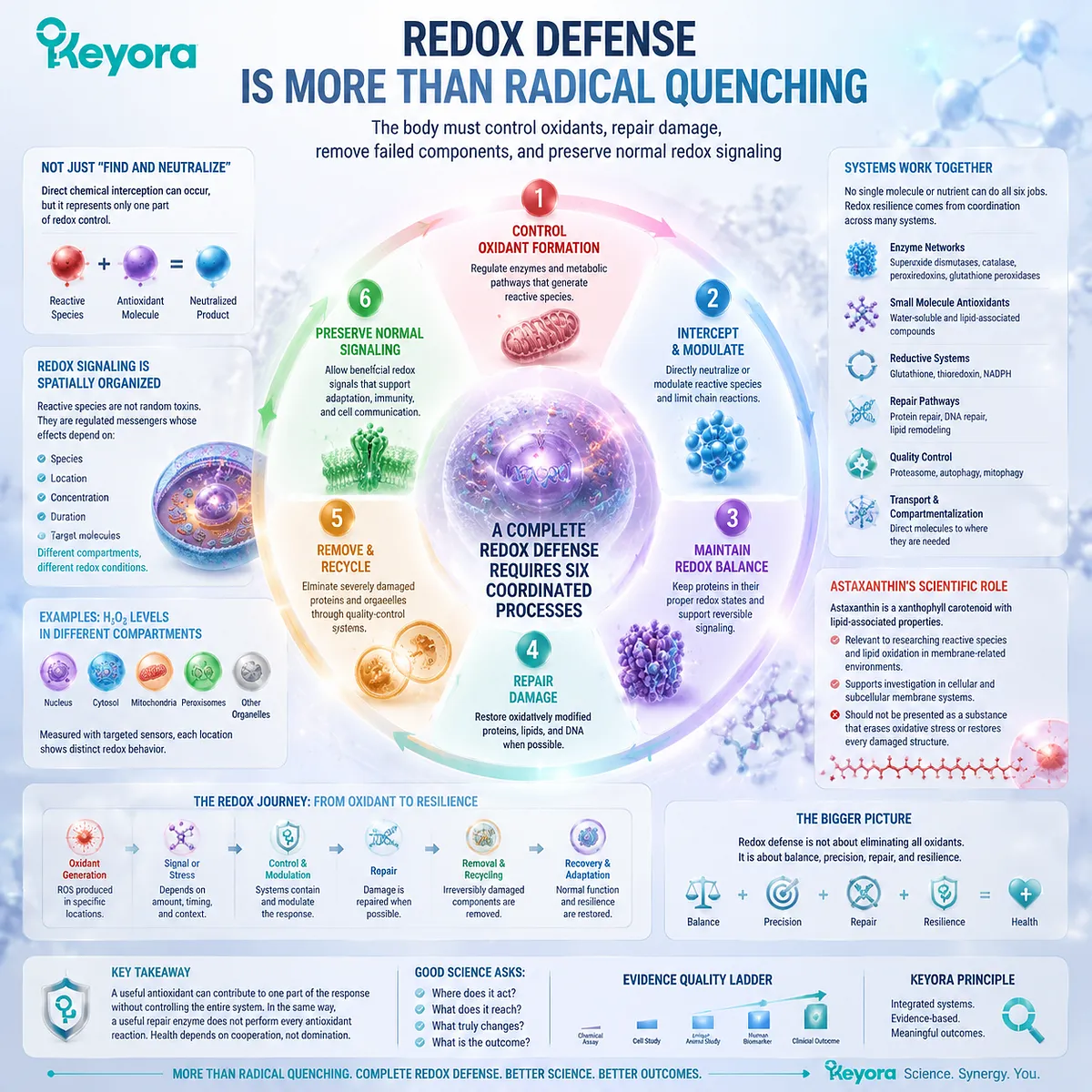
Enzymes, small molecules, membranes, and repair systems contribute different functions in different biological environments
Different antioxidant defenses are not merely weaker or stronger versions of the same tool. Their biological roles depend on their chemistry, location, substrates, cofactors, concentration, and capacity for regeneration.
Superoxide dismutase systems help control superoxide in specific cellular or extracellular locations. Other enzyme systems process hydrogen peroxide and related products. Glutathione-linked and thioredoxin-linked pathways contribute to peroxide handling, protein redox regulation, and the restoration of selected oxidized molecules. Their compartmental distribution helps create local control rather than one uniform antioxidant condition throughout the body.
Small dietary molecules occupy different positions. Some circulate primarily in aqueous environments. Others associate with lipoproteins, membranes, or lipid droplets. Their roles may overlap at certain interfaces, but overlap does not make them interchangeable.
Astaxanthin’s structure supports its association with phospholipid environments. Early monolayer and bilayer experiments found that Astaxanthin interacted with phospholipids and altered selected model-membrane properties. Other laboratory studies found that its position in phospholipid membranes could support radical trapping at membrane surfaces and within lipid regions under the tested conditions.
These findings give Astaxanthin a distinctive research position within the wider network. They do not establish that it performs every antioxidant function or that a membrane-related role is more important than all aqueous, enzymatic, or repair-based defenses.
The network model therefore avoids two opposite errors.
The first error is elimination thinking: because Astaxanthin has membrane relevance, other antioxidants or endogenous systems are unnecessary.
The second error is equivalence thinking: because redox defense is a network, every antioxidant is interchangeable and produces the same result.
Neither conclusion is correct. Different systems can be complementary while retaining different biological roles and different evidence levels.
Astaxanthin remains the protagonist of this question because its membrane affinity shows why role and biological zone matter. Its value is clearer when its position is defined precisely, not when it is promoted as a universal replacement for the rest of redox biology.
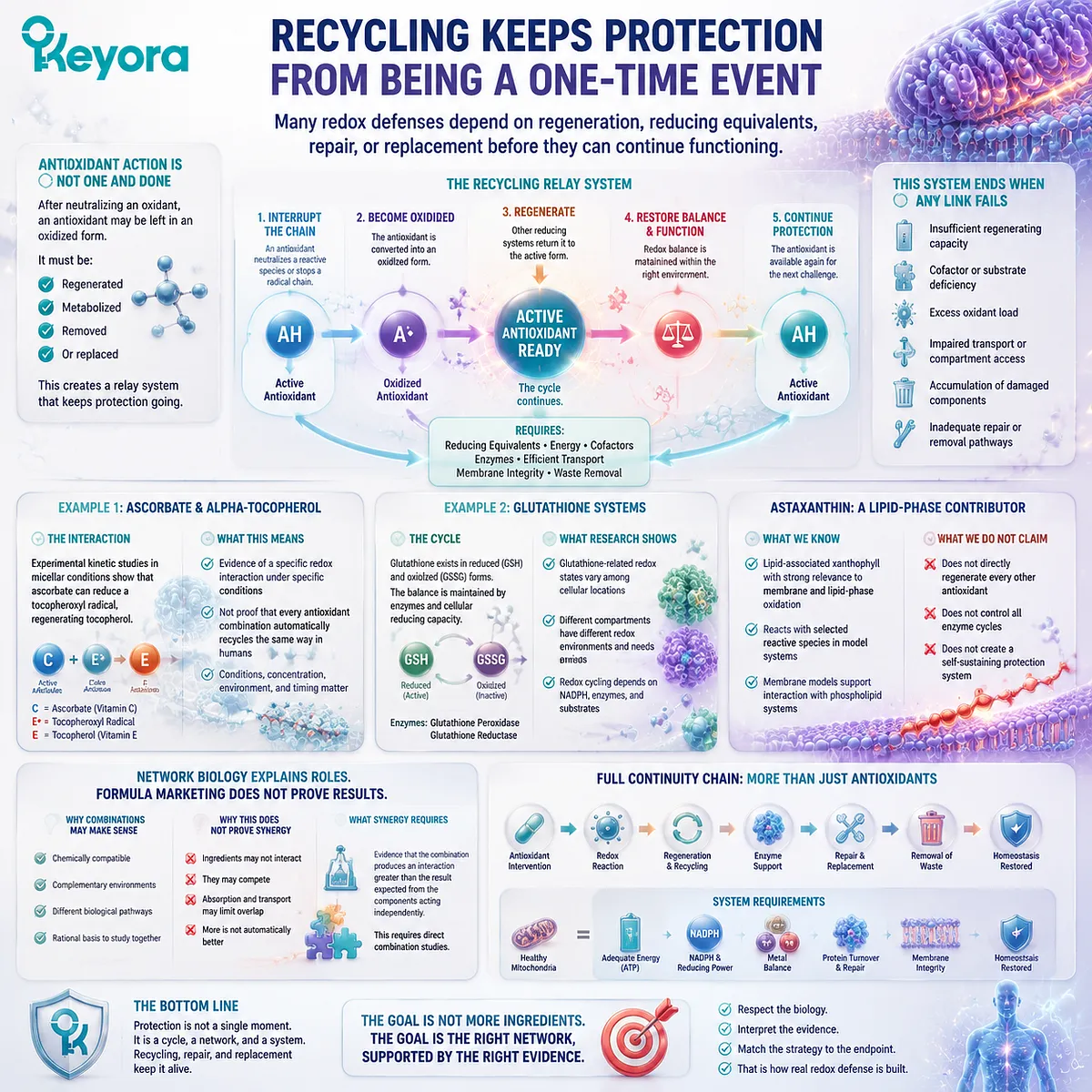
Recycling Keeps Protection From Being a One-Time Event
Many redox defenses depend on regeneration, reducing equivalents, repair, or replacement before they can continue functioning
An antioxidant does not necessarily continue working unchanged after reacting with an oxidant. The reaction may leave it in an oxidized form that must be regenerated, metabolized, removed, or replaced.
This creates a relay system. One molecule may interrupt an oxidation chain, while another reducing system helps return it to an active state. Enzymes require substrates and reducing equivalents to continue catalytic cycles. Cells also need energy, cofactors, protein turnover, membrane remodeling, and waste-removal pathways to maintain long-term function.
Interactions between ascorbate and alpha-tocopherol illustrate this principle. Experimental kinetic work has shown that ascorbate can reduce a tocopheroxyl radical under defined micellar conditions, regenerating tocopherol in that model. This is evidence of a specific redox interaction under specific conditions, not proof that every antioxidant combination automatically creates the same recycling relationship in humans.
Glutathione-related systems provide another example of continuity. The reduced and oxidized forms of glutathione participate in controlled redox cycles, and the balance is connected to enzymes and cellular reducing capacity. Measurements with targeted redox sensors also show that glutathione-related redox states can vary among cellular locations.
Astaxanthin should be interpreted with the same discipline. Its conjugated structure can participate in reactions involving selected reactive species, and membrane models support lipid-related activity. However, it should not be claimed that Astaxanthin directly regenerates every other antioxidant, controls all enzyme cycles, or creates a self-sustaining protection system.
This is also where network biology must be separated from formula marketing.
When several antioxidants appear in one formulation, they may be chemically compatible. They may occupy complementary environments or relate to different biological pathways. Their independent evidence may provide a rational reason to study the combination.
None of those points proves true synergy.
A synergistic claim requires evidence that the combination produces an interaction greater than the result expected from the components acting independently. Without a direct combination study, the scientifically defensible language is complementary rationale, not proven synergy.
Use the Keyora Role – Zone – Relay Check
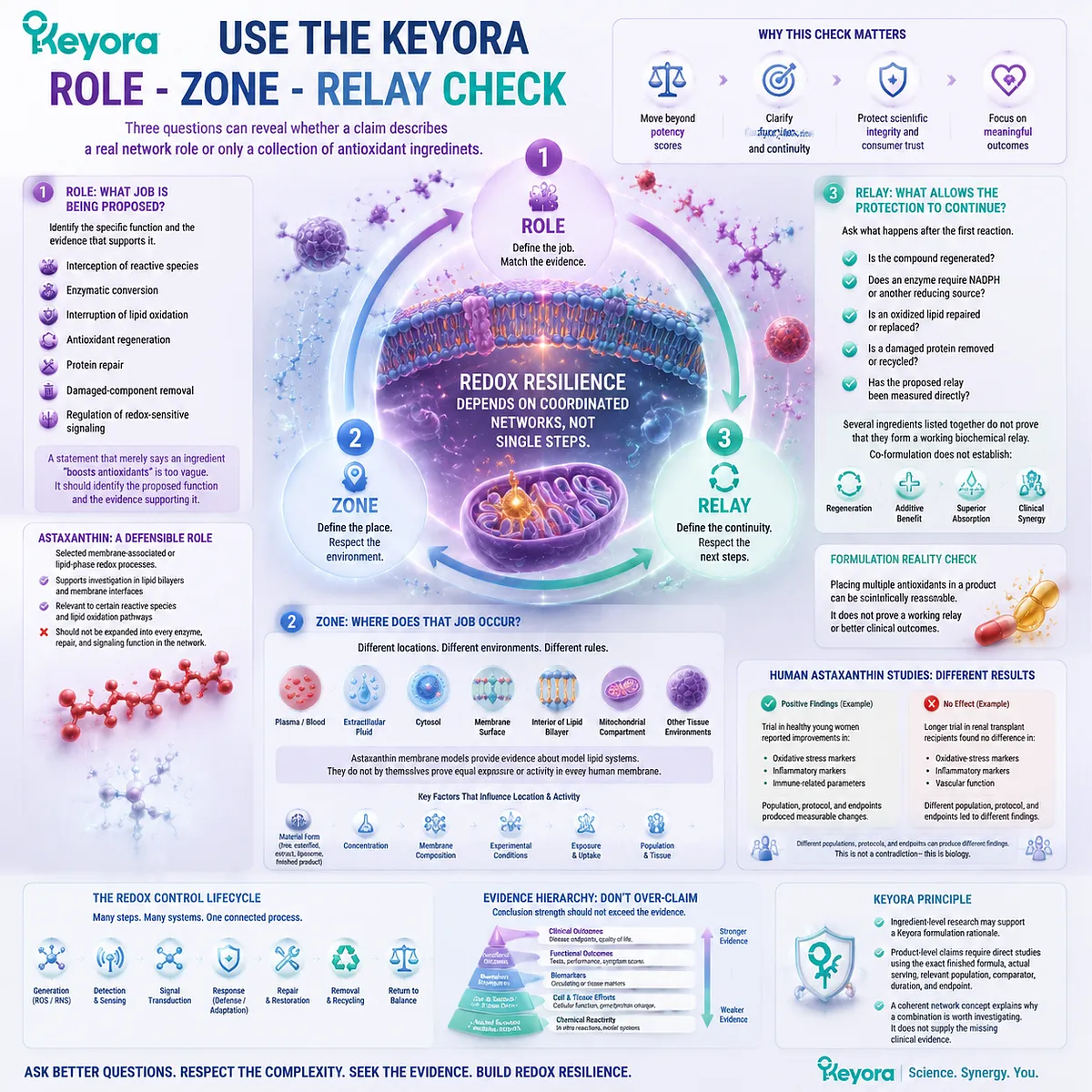
Three questions can reveal whether a claim describes a real network role or only a collection of antioxidant ingredients
The Keyora Role – Zone – Relay Check helps readers interpret antioxidant claims without returning to a simple potency contest.
Role: What job is being proposed?
Identify whether the claim concerns direct interception of a reactive species, enzymatic conversion, interruption of lipid oxidation, antioxidant regeneration, protein repair, damaged-component removal, or regulation of redox-sensitive signaling.
A statement that merely says an ingredient “boosts antioxidants” is too vague. It should identify the proposed function and the evidence supporting it.
For Astaxanthin, a defensible role may involve selected membrane-associated or lipid-phase redox processes. It should not be expanded into every enzyme, repair, and signaling function in the network.
Zone: Where does that job occur?
Determine whether the evidence concerns plasma, cytosol, a membrane surface, the interior of a lipid bilayer, a mitochondrial compartment, or another tissue environment.
Astaxanthin membrane models provide evidence about model lipid systems. They do not by themselves prove equal exposure or activity in every human membrane. The material, concentration, membrane composition, and experimental conditions remain important.
Relay: What allows the protection to continue?
Ask what happens after the first reaction. Is the compound regenerated? Does an enzyme require NADPH or another reducing source? Is an oxidized lipid repaired or replaced? Is a damaged protein removed? Has the proposed relay been measured directly?
This final question is essential when evaluating formulas. Several ingredients listed together do not prove that they form a working biochemical relay. Co-formulation does not establish regeneration, additive benefit, superior absorption, or clinical synergy.
Human Astaxanthin studies reinforce the need for this restraint. One trial in healthy young women reported changes in selected oxidative, inflammatory, and immune-related measurements, while a longer trial in renal transplant recipients found no effect on its tested oxidative-stress, inflammatory, or vascular endpoints. Different populations, protocols, and endpoints can produce different findings.
Ingredient-level research may support a Keyora formulation rationale, but the exact finished formula requires direct testing for product-level claims. A coherent network concept explains why a combination is worth investigating. It does not supply the missing clinical evidence.
Closing Summary
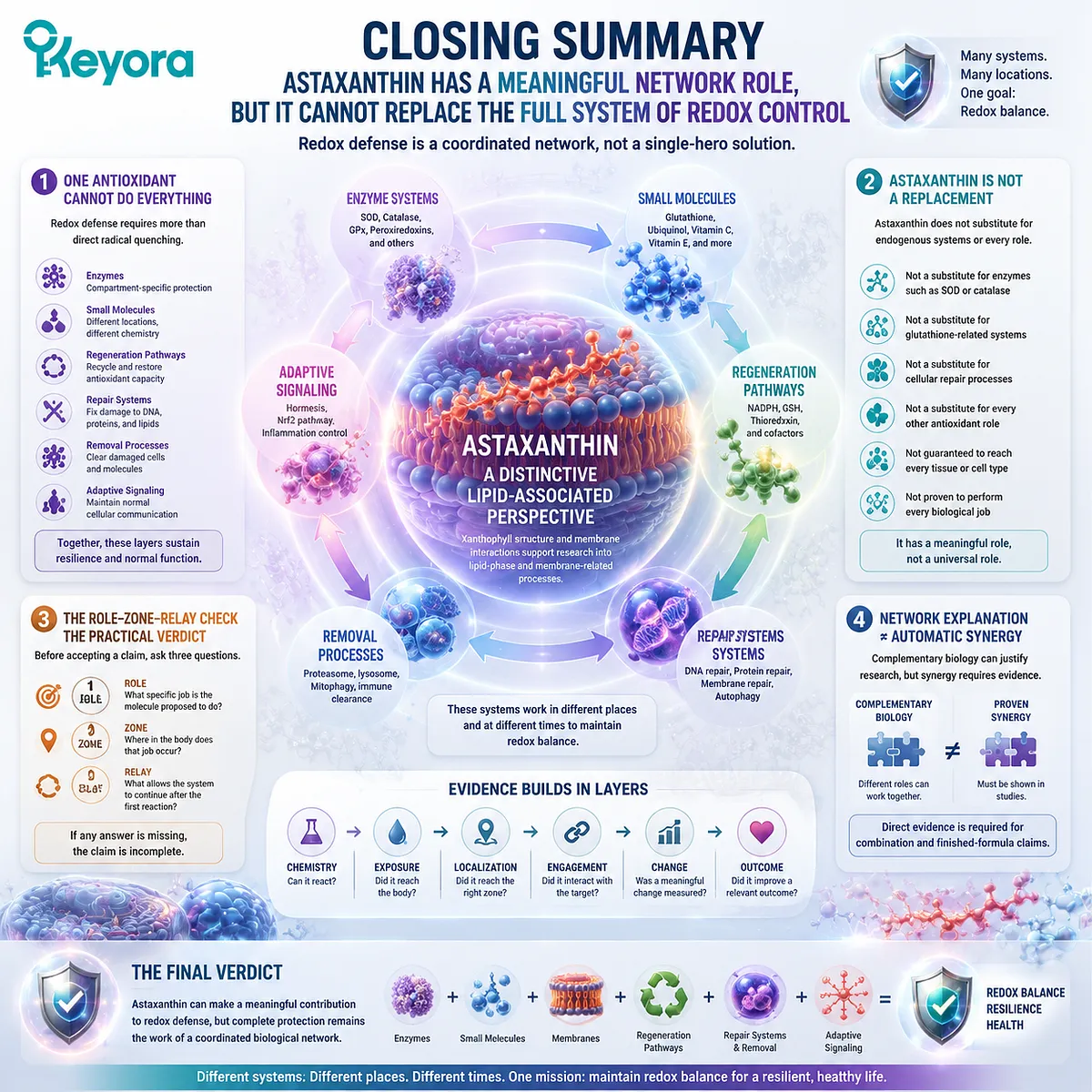
Astaxanthin has a meaningful network role, but it cannot replace the full system of redox control
One antioxidant cannot do everything because redox defense requires more than direct radical quenching. The body uses compartment-specific enzymes, small molecules, regeneration pathways, repair systems, removal processes, and normal adaptive signaling.
Astaxanthin contributes a distinctive lipid-associated perspective. Its xanthophyll structure and membrane interactions create a credible rationale for studying selected lipid-phase and membrane-related processes. They do not make Astaxanthin a substitute for endogenous enzymes, glutathione-related systems, cellular repair, or every other antioxidant role.
The Role – Zone – Relay Check provides the practical verdict. Identify the proposed job, determine where it occurs, and ask what allows the system to continue after the first reaction.
A network explanation also does not prove that multiple ingredients are synergistic. Complementary biology can justify research, while true combination and finished-formula claims require direct evidence.
Astaxanthin can make a meaningful contribution to redox defense, but complete protection remains the work of a coordinated biological network.
This article is for educational and informational purposes only. It does not provide medical advice, diagnosis, treatment, cure, prevention, disease outcome claims, hormone restoration claims, fertility outcome claims, or formula-specific clinical efficacy claims.